



Round faces and curls can be a lovely mix, but the wrong haircut makes every cheek turn into the main event. The best curly haircuts for round faces do the opposite: they pull the eye downward, break up width at the sides, and leave enough movement that the shape still feels soft.
Shrinkage is real.
A curl can spring up an inch or three after it dries, sometimes more if the pattern is tight. That is why a cut that looks balanced in the salon can land much higher at home, especially around the chin and cheekbones, where round faces already carry a lot of visual weight.
What matters most is where the haircut sits: above the cheeks, at the cheeks, or below them. Once you start paying attention to that one detail, a lot of “maybe” cuts become obvious yeses, and a few trendy shapes get cut from the list fast.
1. Collarbone Curly Lob with Soft Layers
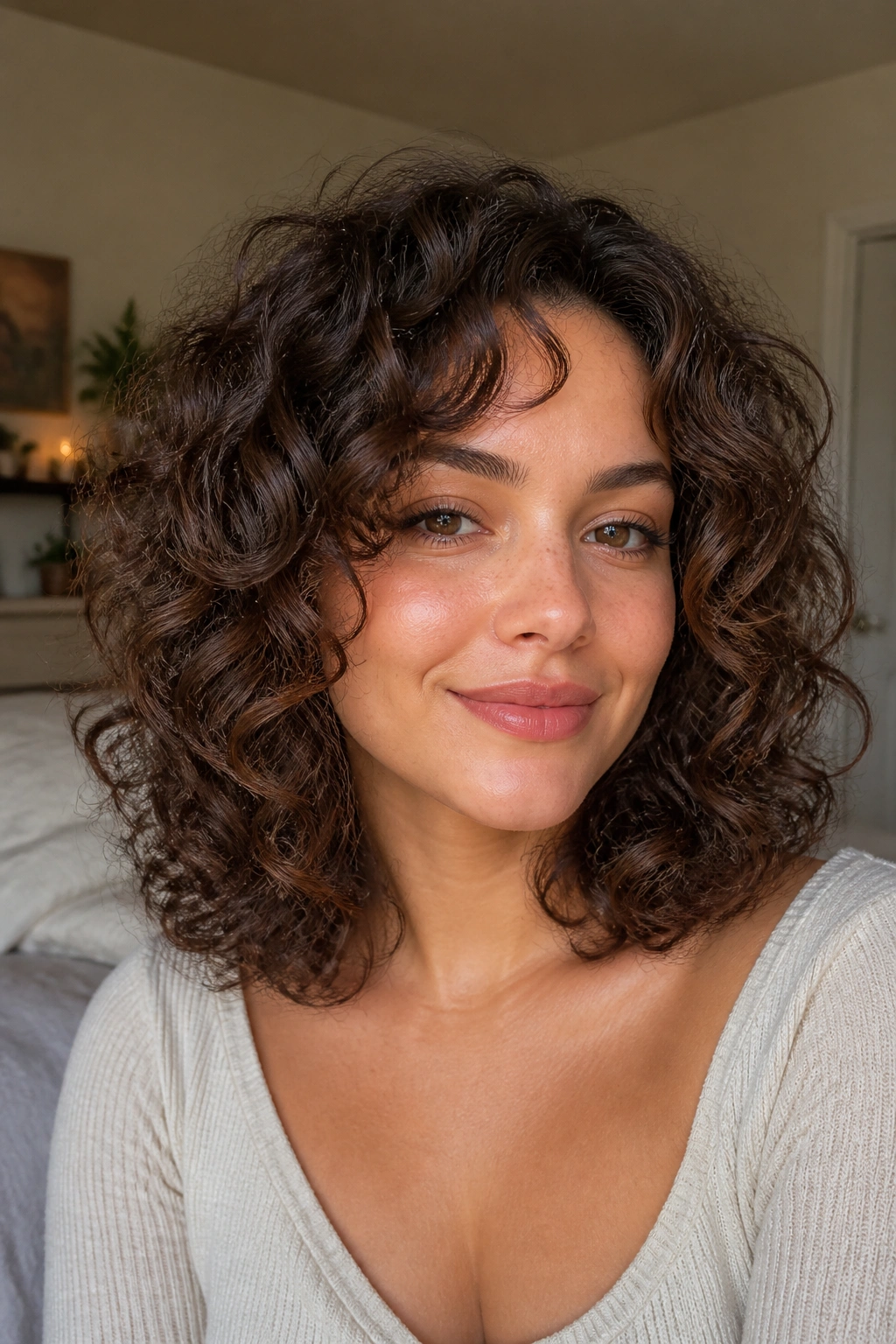
The collarbone lob is one of those cuts that earns its keep. It gives curly hair enough length to drop past the widest part of the face, but it does not drag everything down into a flat curtain.
Why It Works on Round Faces
The collarbone sits in a smart spot. It creates a vertical line without looking severe, and soft layers stop the sides from puffing out like a triangle.
Ask for the longest pieces to land right at the collarbone when dry, not wet. That tiny difference matters more than most people think.
- Best for medium to thick curls that need shape.
- Layers should start below the cheekbone, not at it.
- A side part or off-center part adds a little slant.
- Diffuse with the head tilted side to side to keep volume moving, not wide.
Pro tip: if your curls spring up a lot, ask the stylist to leave the front half an inch longer than you think you need.
2. Deep Side-Part Curly Bob

A deep side part can rescue a bob that feels too round. It breaks up the symmetry that makes a round face read even fuller, and it gives the curls a line to follow instead of letting them bloom evenly on both sides.
The trick is keeping the bob long enough to avoid the old “helmet” look. If the shape lands somewhere between the jaw and the top of the shoulder, the side part has room to work.
When styling, lift the root on the smaller side with a clip while it dries. That tiny lift keeps the part from collapsing and helps the whole cut feel more deliberate.
3. Shoulder-Length Curly Shag

Can a shag work on a round face? Absolutely. When the layers are placed well, a curly shag can be one of the easiest ways to add height at the crown and take bulk out of the sides.
What Makes It Different
A good curly shag does not build a shelf around the cheeks. It scatters the weight, which keeps the silhouette light and a little messy in a good way.
- Ask for layers that begin around the lip or chin, then soften as they fall.
- Keep the top a touch fuller than the sides.
- Use a curl cream with light hold, not a heavy butter.
- Air-dry or diffuse until the roots are dry and the ends still feel springy.
The cut looks relaxed, but it needs real shape. If the layers are too random, the curl pattern can turn fuzzy instead of soft.
4. Curly Pixie with Crown Lift
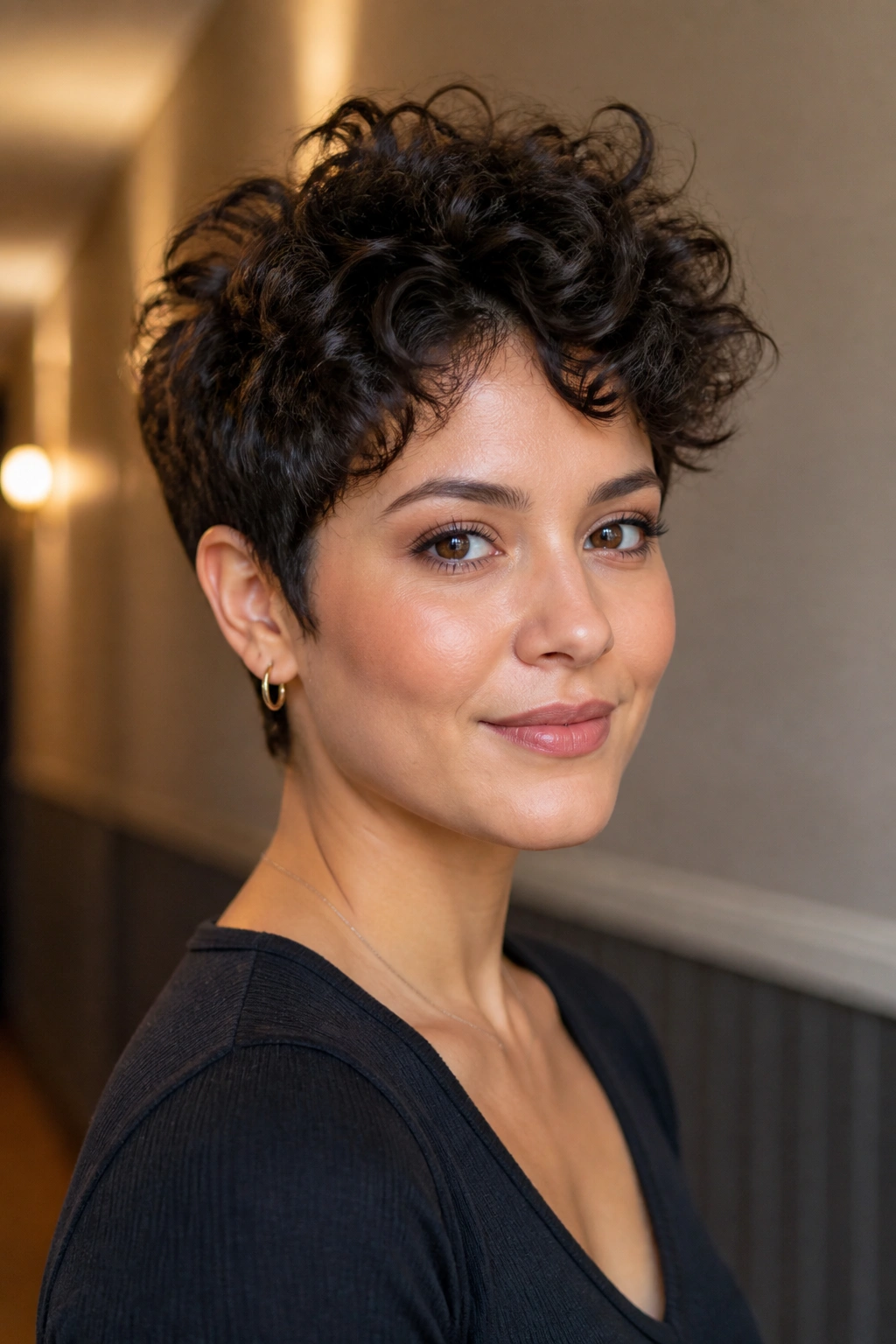
Short hair can flatter a round face, but only when the top has attitude. A curly pixie with height at the crown stretches the face upward and keeps the sides from taking over.
The sides and nape should stay close enough to show the jawline. You do not want width building at the temples, because that is exactly where a round face needs a little breathing room.
A little mousse at the root and a diffuser set on low heat can do more than a heavy product ever will. Keep the finish piecey, not fluffy.
5. Long Curly Layers with Face-Framing Pieces
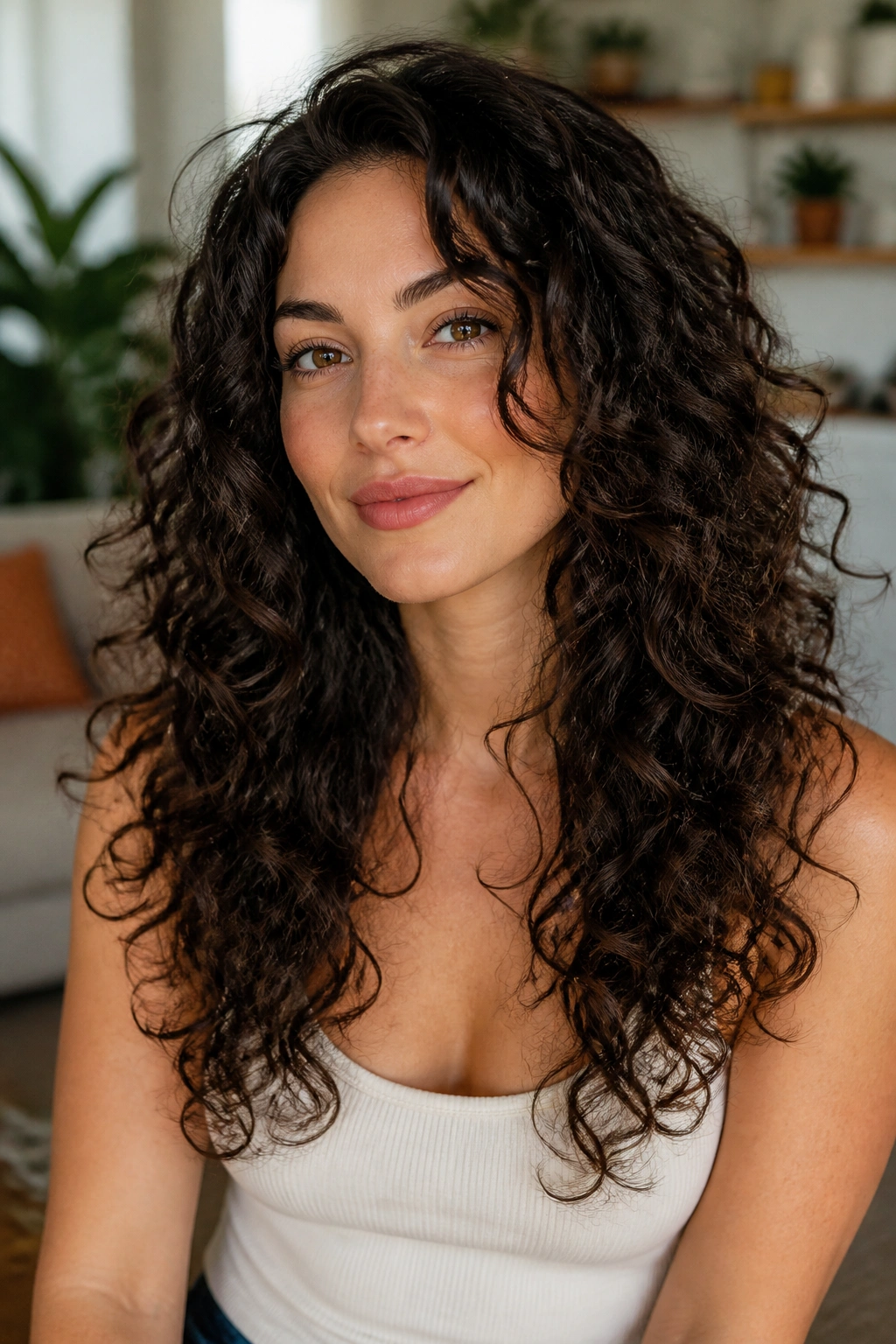
Long curls are not a cheat code, but they do make life easier if you like length. The key is putting the first layer where it helps, not where it just creates movement for movement’s sake.
Face-framing pieces should usually start below the cheekbone on a round face. If they start too high, they can widen the face instead of slimming it.
I like this cut for people who wear their curls in a loose natural pattern and do not want to restyle every morning. It holds up well because the length gives the curls room to fall in a clean line.
One thing to watch: the ends can look heavy if the hair is very thick. A few internal layers fix that without chopping away the length you wanted to keep.
6. Asymmetrical Curly Lob
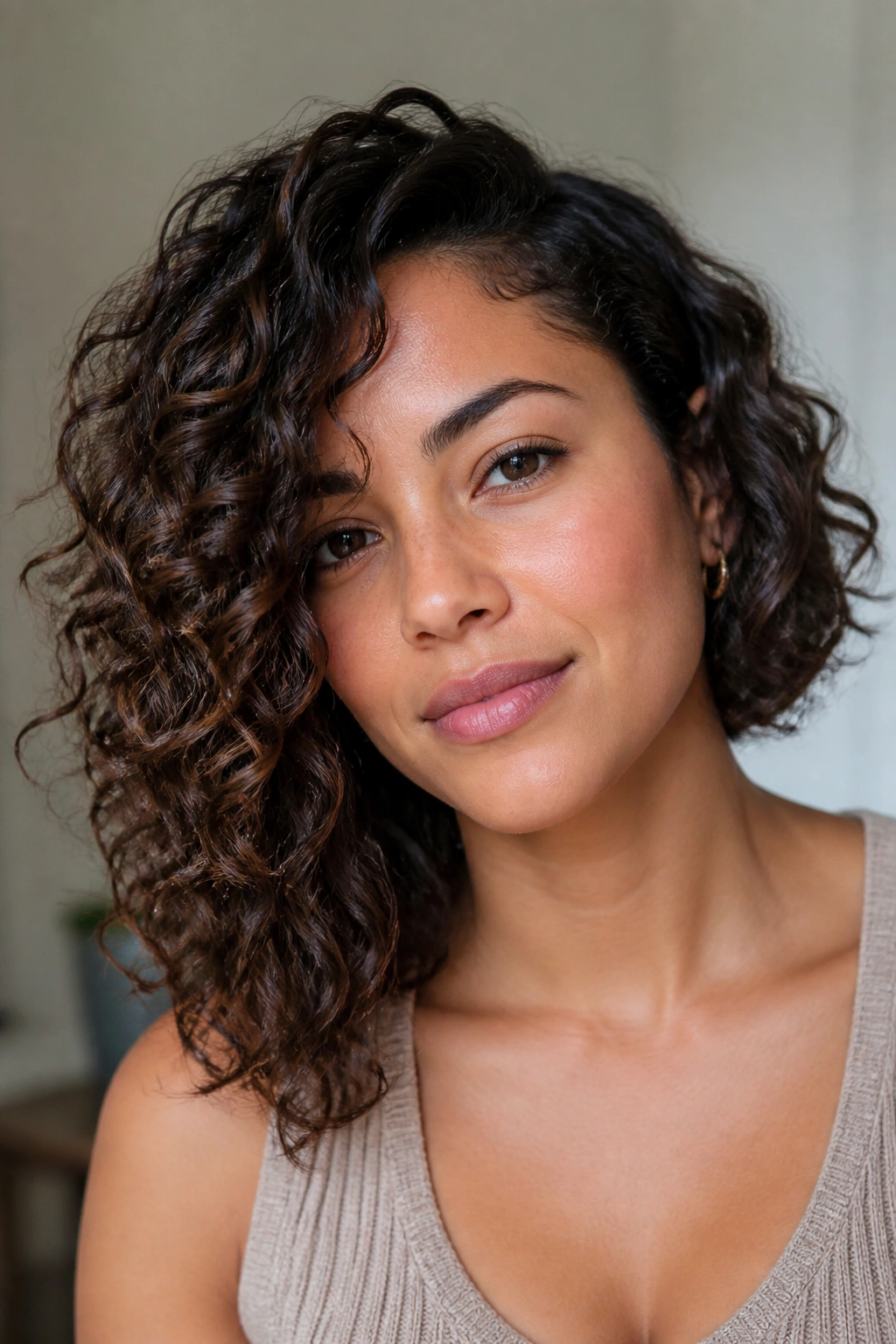
Unlike a blunt lob, this one gives you a diagonal line. That matters. Diagonal lines are friendly to round faces because they interrupt the circular shape without making the haircut look harsh.
The longer side should usually sit just past the collarbone, while the shorter side can hover near the jaw or just below it. That difference does the visual work quietly.
This is a good cut if you like structure but do not want anything too fussy. Let one side fall forward and tuck the other side behind the ear now and then; the cut will keep changing in small ways, and that makes it feel alive.
7. Curly Wolf Cut
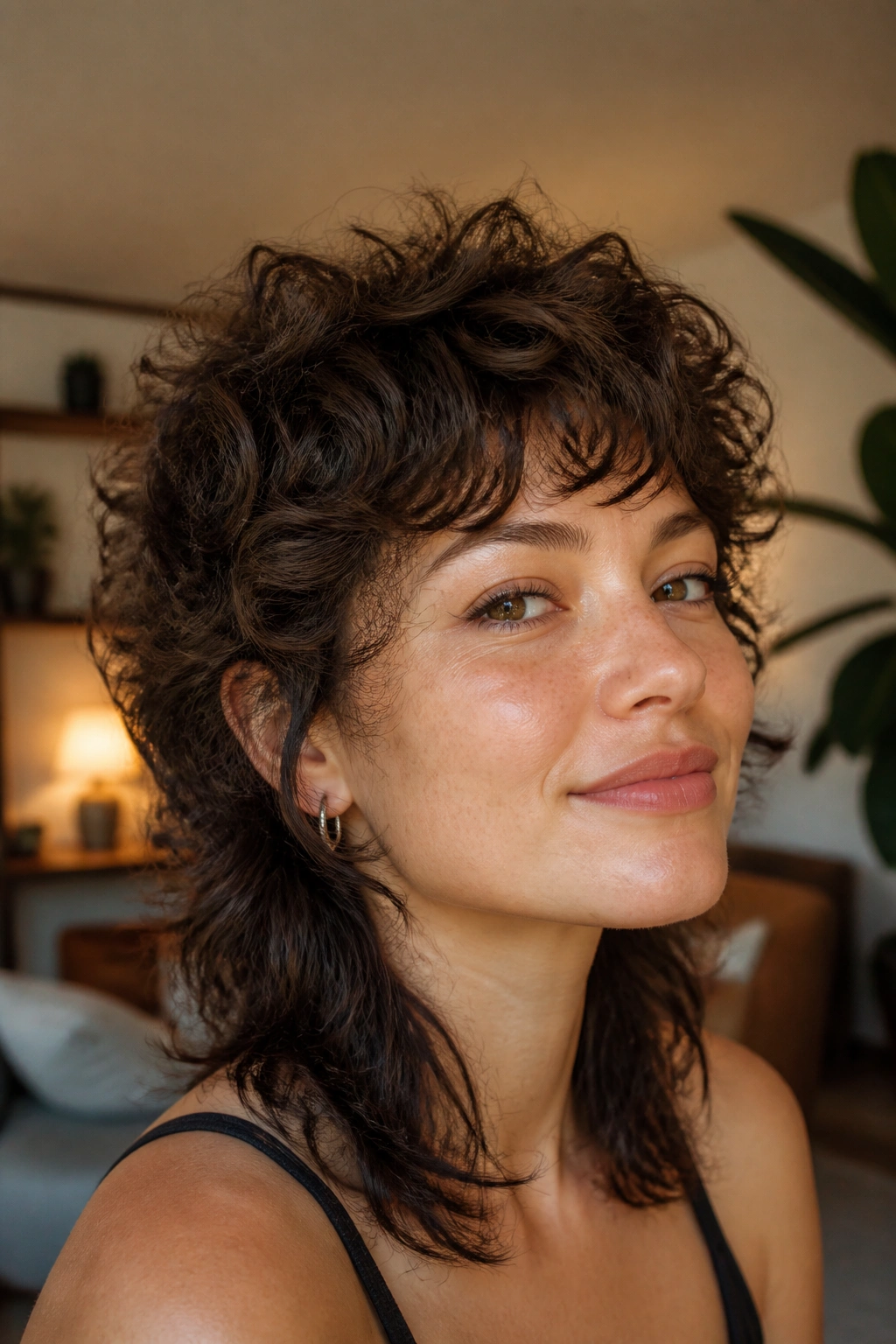
The curly wolf cut is not for someone who wants neatness. It is for someone who likes texture, lift, and a little swagger in the shape.
Where It Helps Most
On a round face, the wolf cut works because it shifts volume upward and away from the widest point of the cheeks. The perimeter stays lighter, which keeps the lower half from looking bulky.
Styling Notes
- Ask for the shortest layers near the crown, then length through the back.
- Keep the side layers soft so they do not stand out like shelves.
- Use a diffuser and scrunch only halfway through drying.
- Skip super-heavy oils; they can flatten the top and make the ends cling.
The cut can go too fluffy if the hair is fine, so it suits denser curls best. That is the honest version.
8. Tapered Curly Crop
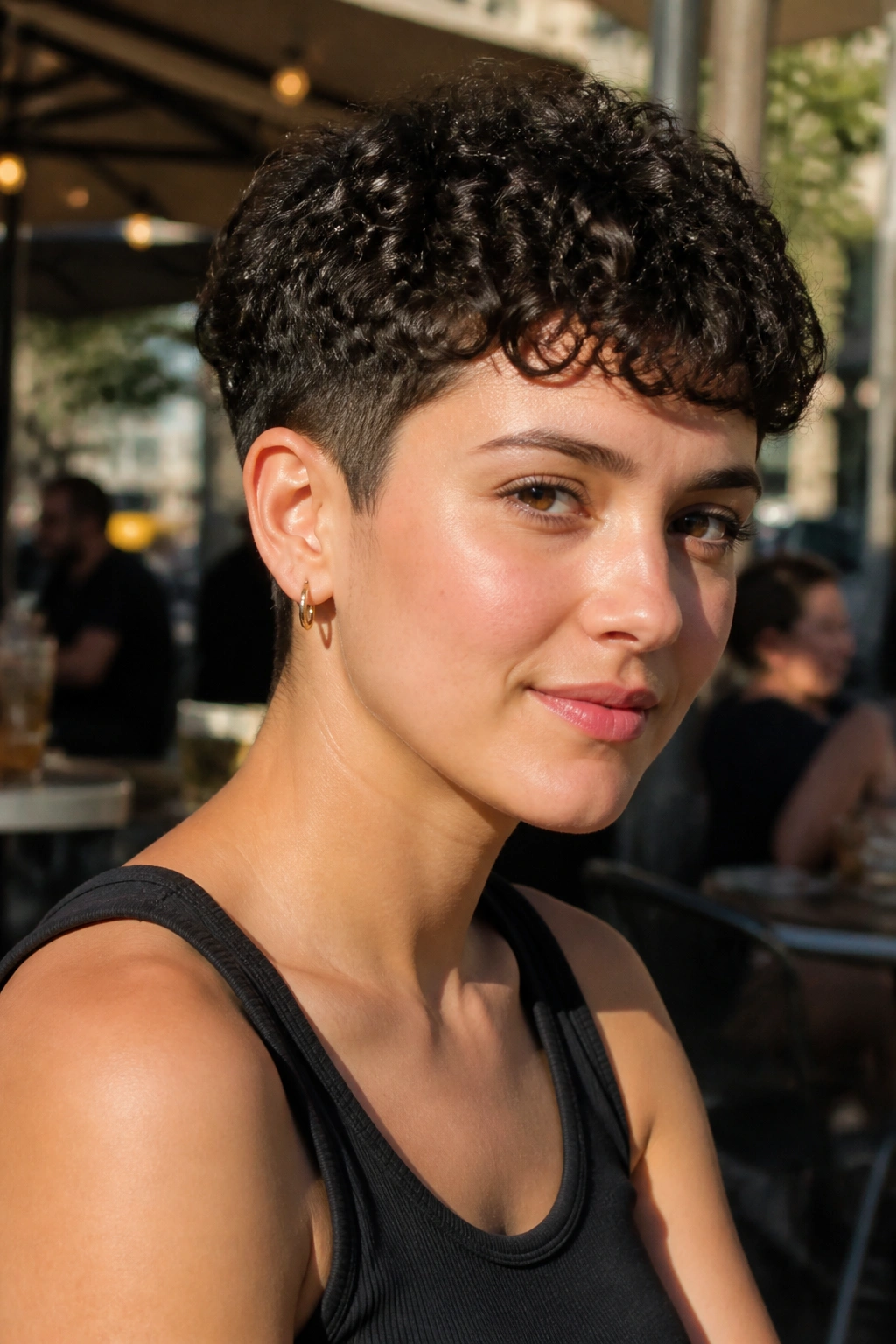
A tapered crop gives round faces a clean edge. The nape and sides stay tighter, while the top keeps enough lift to avoid looking boxy.
This shape works especially well with tighter curls that shrink a lot. A lot of people think short cuts are risky on a round face, and sometimes they are, but a tapered crop changes the game by removing side bulk where you do not want it.
The line around the ears matters. Keep it soft enough to look natural, but not so soft that the shape balloons out. A small amount of curl gel at the top can help the crown stay lifted through the day.
9. Curtain Bangs with Shoulder Curls
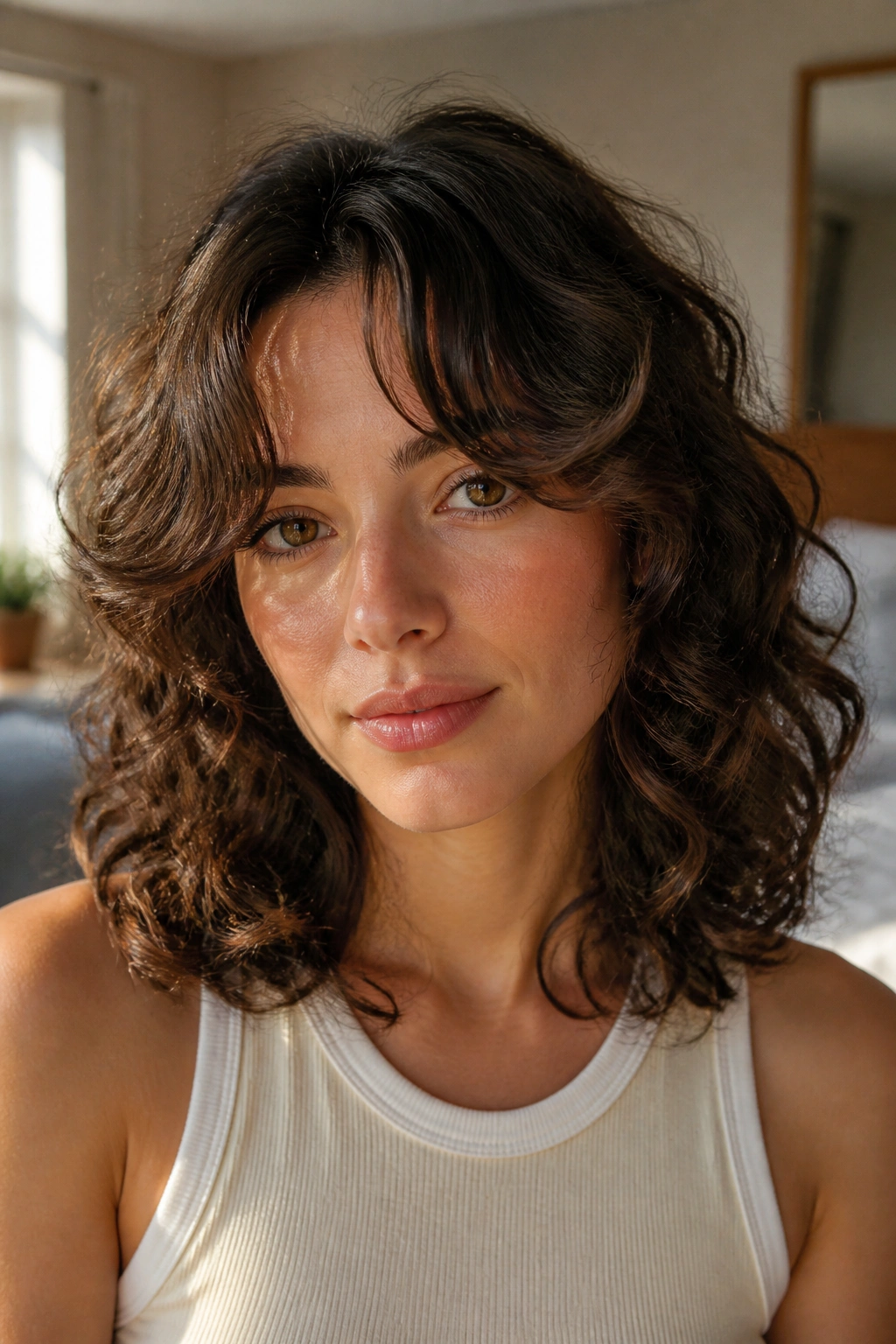
Can bangs work on a round face? Yes, if they open in the middle and fall away from the cheeks. Curtain bangs do exactly that.
Why They Sit Well
Curtain bangs create a center break that draws attention upward, then slide outward toward the temples. That keeps them from making the face feel shorter.
The trick is to keep the shortest point around the nose bridge or upper cheek, depending on curl tightness. Anything shorter can spring up too high and change the whole balance.
Style them while damp with a round brush or finger twist, then let them cool in place. That little bit of direction keeps them from sitting straight across the forehead like a block.
10. Side-Swept Bangs with Layered Mid-Length Hair
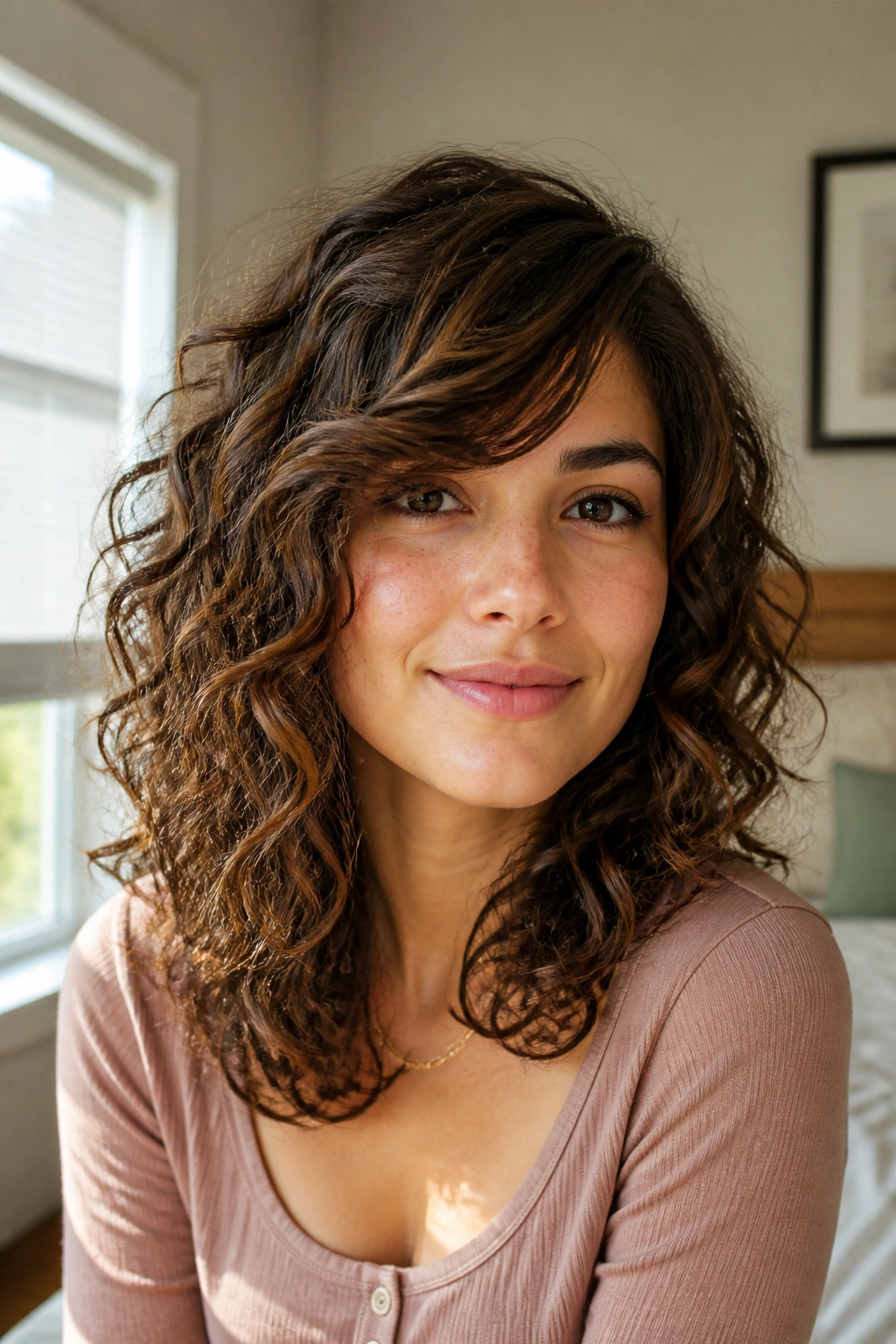
A side-swept fringe is a quiet little cheat. It breaks the face on a diagonal, and diagonal lines are one of the easiest ways to soften a round shape without making the haircut look forced.
A layered mid-length cut gives the fringe a place to blend. Without the layers, the bangs can look pasted on, which is never a good look with curls.
How to Get the Most From It
- Blow-dry the fringe in the direction you want it to fall.
- Keep the longest bang pieces just below the brow or cheekbone.
- Ask for the side section to blend into the front layer.
- Refresh the front with a mist of water and a pea-size amount of cream.
This cut is especially nice if your curls are loose enough to move, but not so loose that the fringe disappears.
11. Rounded Afro Shape with Height
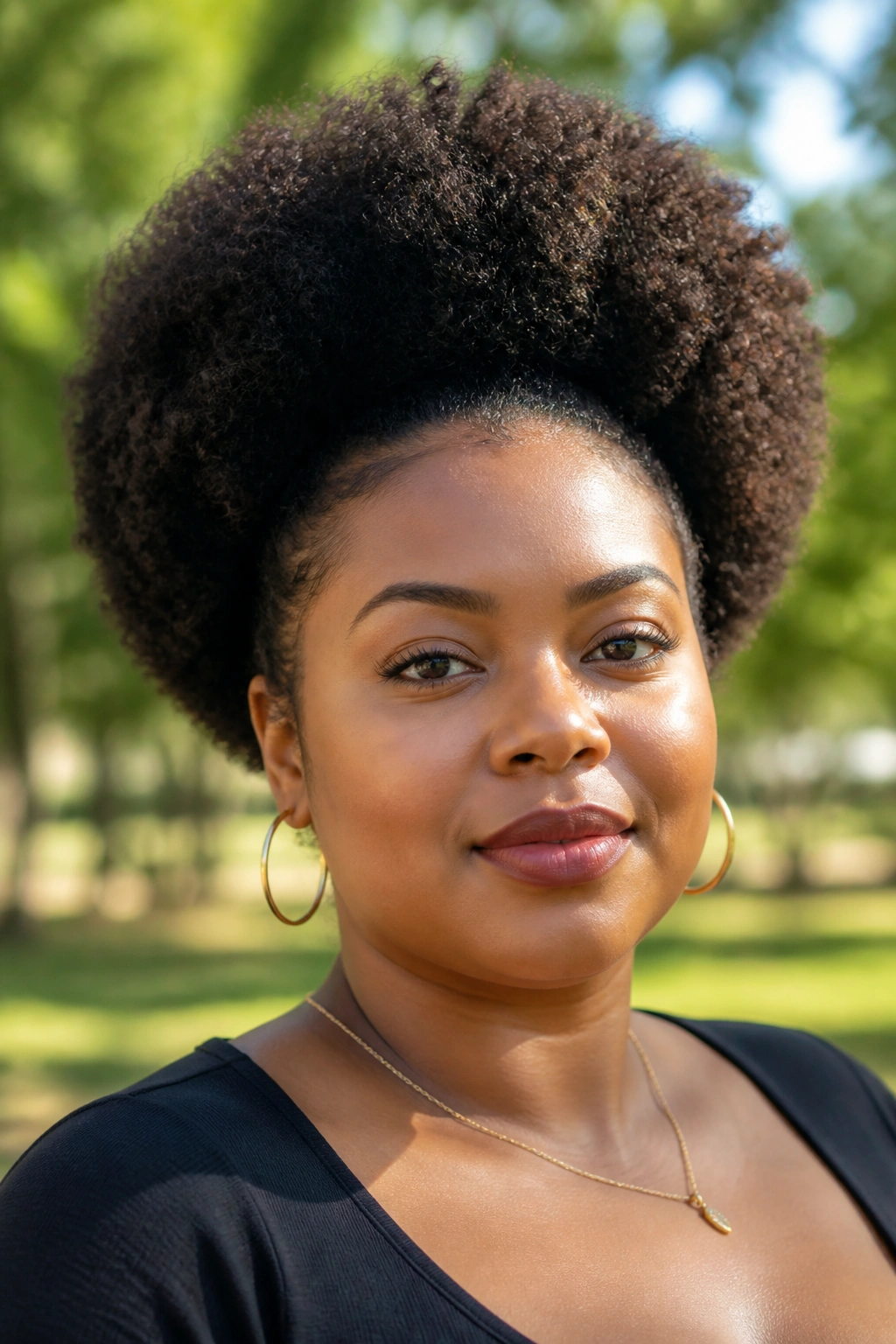
A rounded afro can flatter a round face when the shape is built upward instead of outward. That is the whole trick, really.
The best version sits a little higher at the crown and narrower through the widest parts of the cheeks. It still feels full, still feels soft, but it does not spread sideways like a perfect circle.
A good shape-up around the temples and nape makes a big difference. Keep the line clean enough to show intention, then let the natural texture do the rest. If your hair is coily or tightly curled, a pick at the roots can help set the height before styling products go in.
12. Deva Cut with Curl-by-Curl Layers
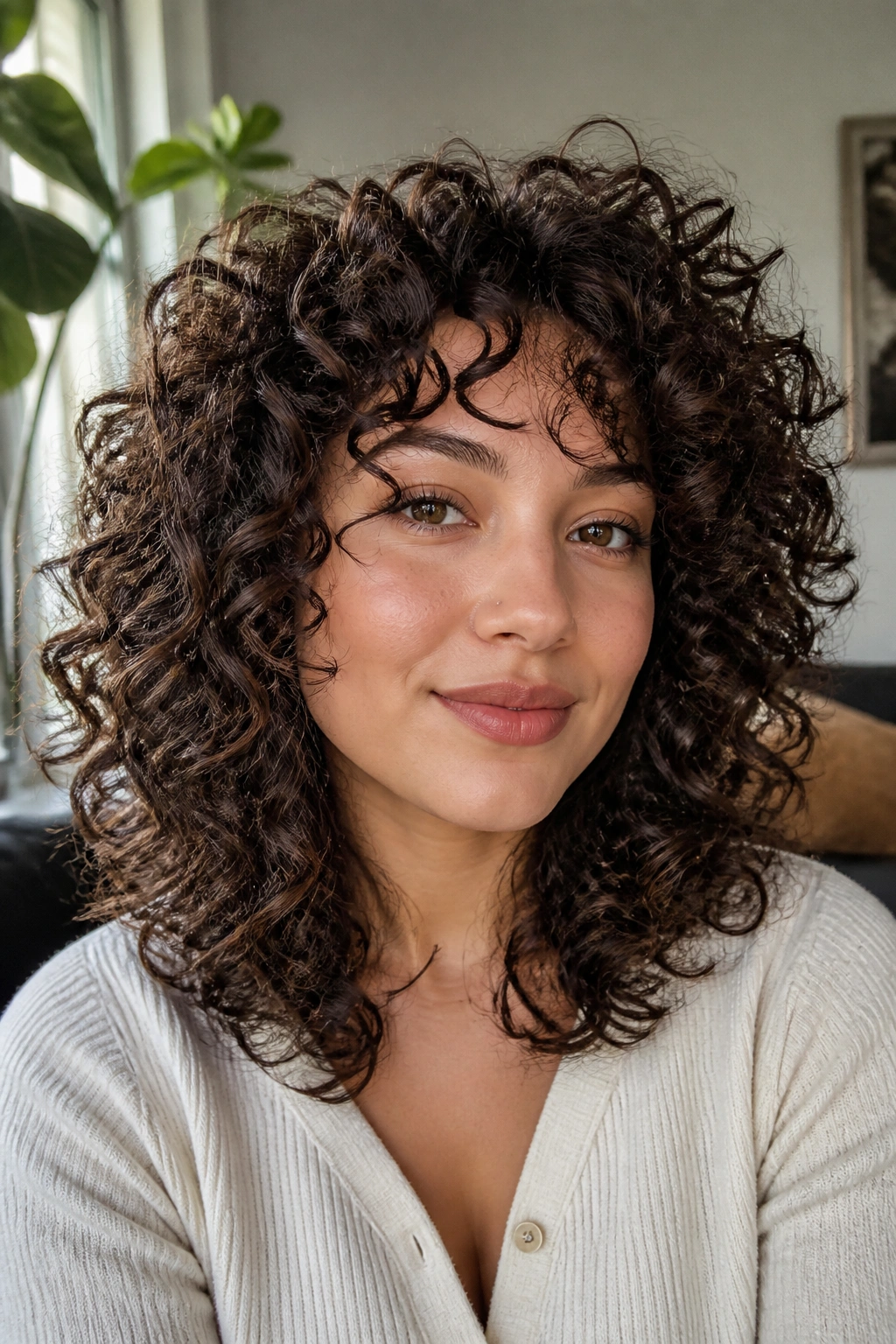
The Deva cut works because each curl gets its own job. Instead of cutting the hair as one big sheet, the stylist shapes it curl by curl, usually on dry hair or partly dry hair.
That matters for round faces because curls do not all sit the same way. Some spring out, some fall flat, and some twist in odd directions. A curl-by-curl cut can correct that unevenness before it becomes a shape problem.
It is a strong choice if you have mixed curl patterns or strong shrinkage. It is not the cheapest route, and it does ask for a stylist who knows what they are doing. Still, when it’s done well, the shape looks less like a haircut and more like a map of your actual curl pattern.
13. U-Shaped Long Curly Cut
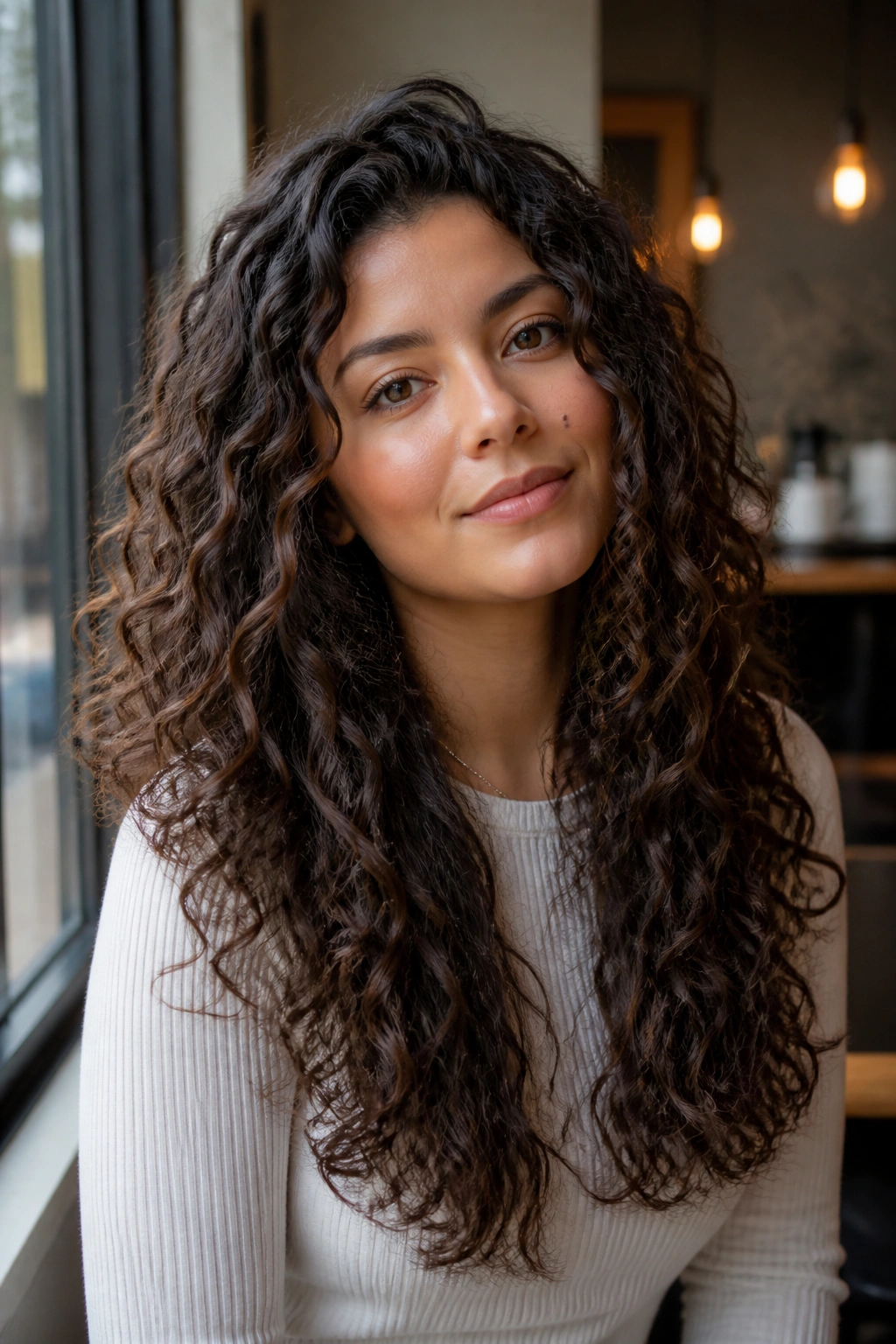
The U shape is softer than a blunt hem and less pointy than a V-cut. That makes it a nice middle ground for round faces that want length without a sharp edge.
Why It Flatters
The longest pieces stay in the back, while the front curves down slightly shorter. That keeps the eye moving vertically through the hair instead of stopping at one wide line.
A good U-cut should not feel heavy at the bottom. If the hair is thick, ask for a bit of hidden weight removal through the interior so the ends do not sit like a dense curtain.
What to Ask For
- A soft curve at the back, not a dramatic point.
- Front lengths that fall below the chin.
- Internal layers only if the curls are bulky.
- A dry check before the final snip.
14. Collarbone Cut with Internal Layers
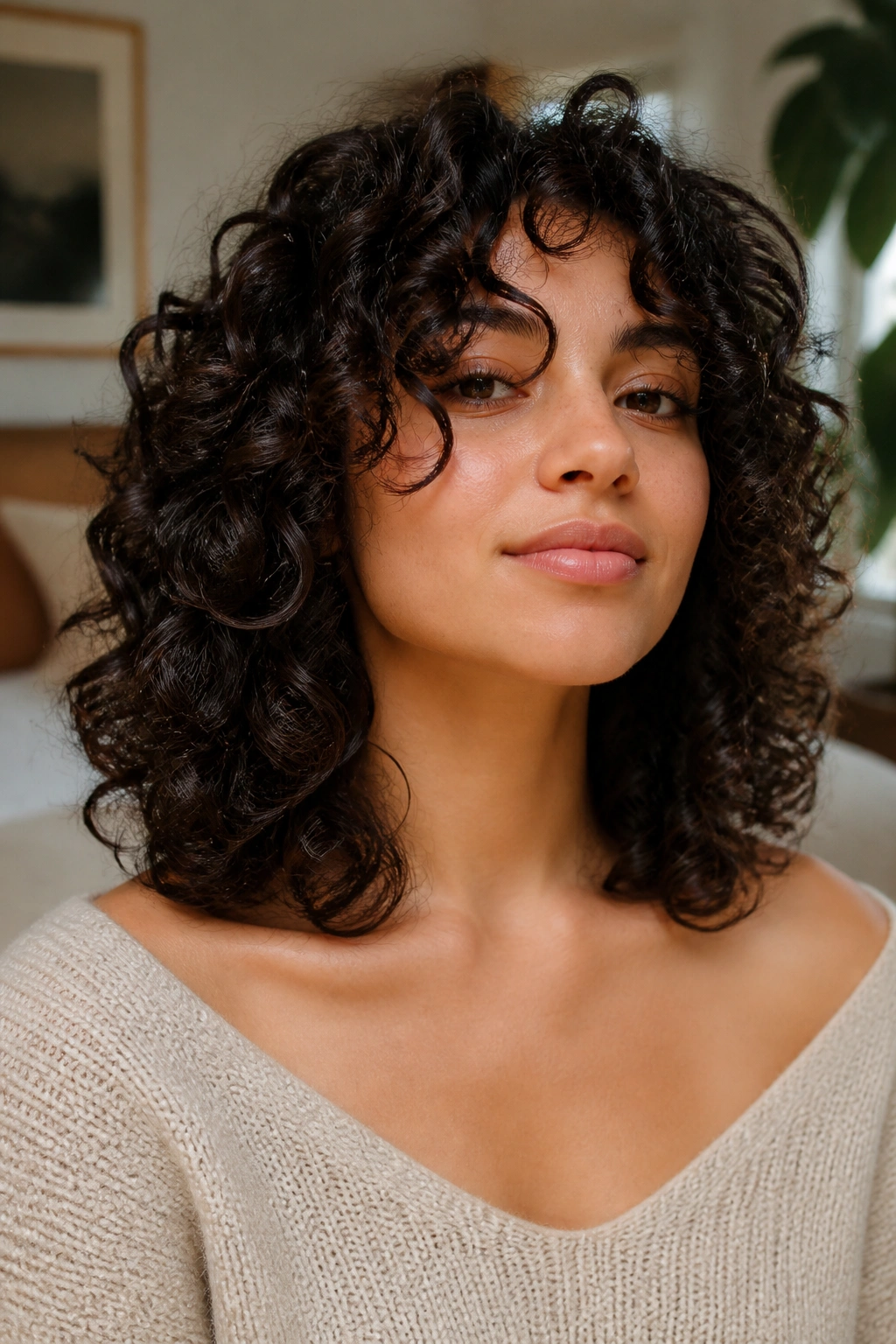
Hidden layers are the unsung hero of curly haircuts for round faces. They remove bulk without leaving obvious steps, so the silhouette stays smooth.
This is a nice cut for anyone who wants movement but hates the choppy look that some layered cuts can give. The outside line stays clean, which helps the face look longer, while the interior takes care of puffiness.
It works especially well on thick curls that expand sideways by mid-afternoon. Ask for the weight to come out below the cheek area, not around it. That one instruction saves a lot of trouble later.
If your hair dries with a little halo, good. If it turns into a mushroom, the layers probably started too high.
15. Curly French Bob
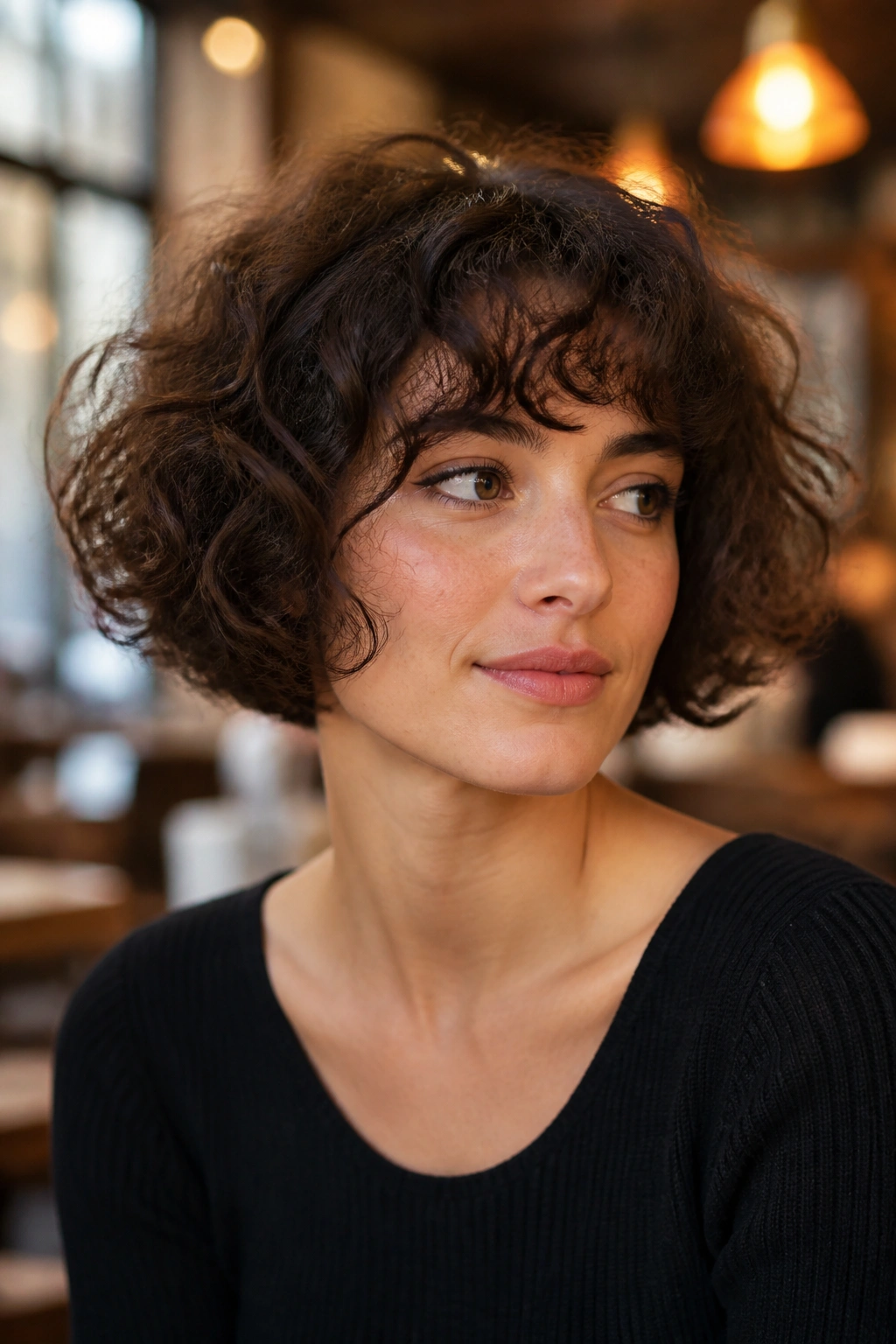
The French bob has attitude, but the curly version needs a softer hand. On a round face, the length should usually sit around the jaw or a touch below, never right at the widest part of the cheeks.
The charm here is in the airy finish. Curls keep the bluntness from feeling severe, while a soft fringe or side piece keeps the front from looking too square.
This cut is best for people who like a little polish with their texture. It asks for regular reshaping, because once the line grows out too much, the whole thing can lose its lift and start to feel puffy.
A small round brush at the roots and a diffuser on low heat can keep the shape from collapsing after wash day.
16. Mixie Cut with Soft Edges
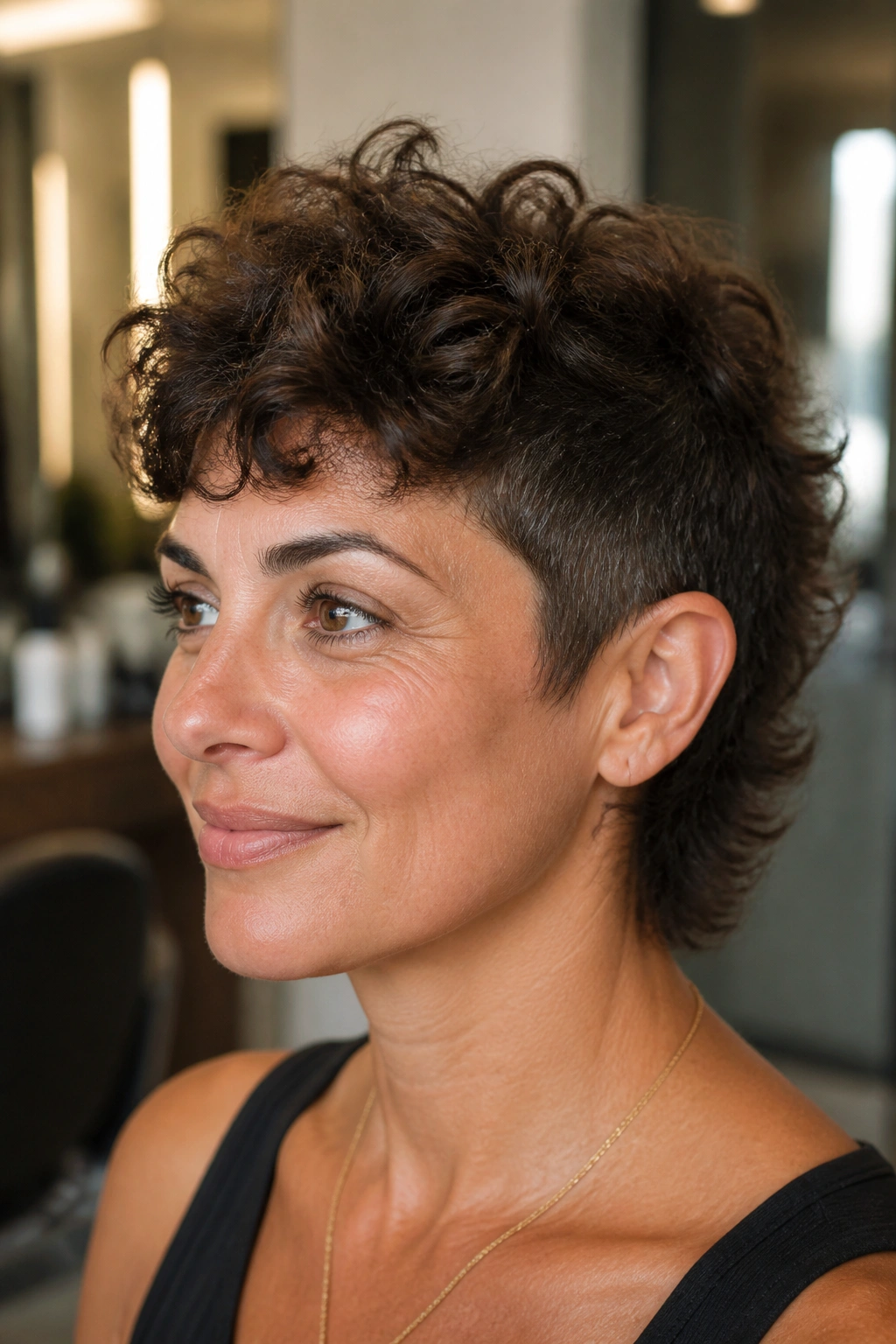
The mixie is part pixie, part mullet, and it is sharper than it sounds. For round faces, the appeal is in the contrast: close sides, some lift on top, and a little softness left in the back.
The top and crown should carry the visual weight. That keeps the face from reading wider than it is, while the longer nape adds a slim trailing line.
Best For
- Curl patterns that hold shape with little effort.
- People who want a short cut without a solid blocky outline.
- Hair that can tolerate short layers near the crown.
- Anyone who likes a bit of edge and does not mind a fast grow-out.
The mixie looks best when it stays airy. If the sides get too bulky, the shape loses its point fast.
17. Deep Side-Part Ringlet Bob
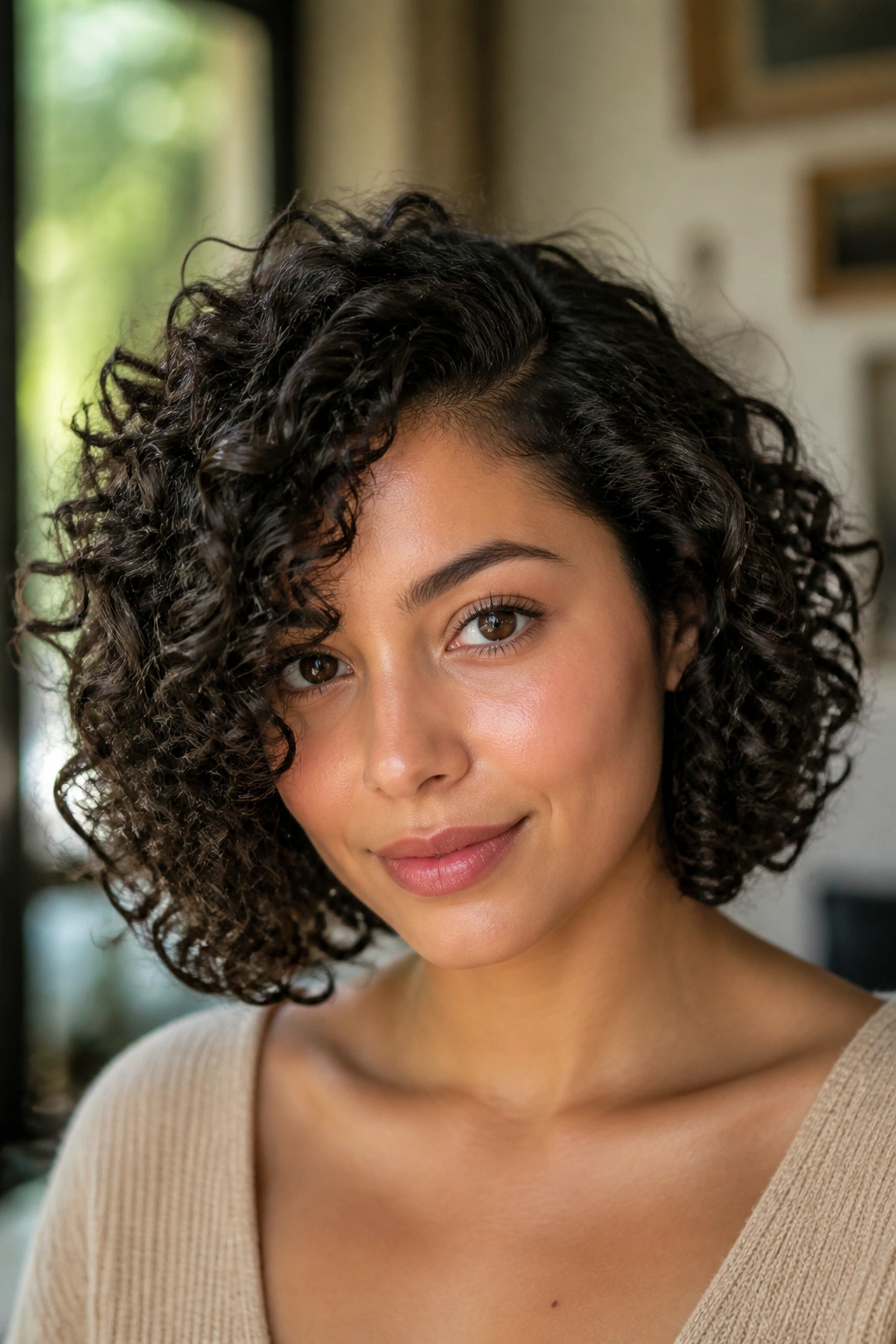
A deep side part can make ringlets look longer than they are. That is because the part shifts volume off-center and gives the hair a sweep, not a circle.
Ringlets are naturally springy, so the bob needs a bit of length past the chin to keep the face open. Too short, and the ends can bounce right back to the cheeks.
What I like about this cut is that it works with minimal styling. You can encourage the part with damp fingers, clip the root on the smaller side, and let the curls settle on their own. The result feels polished without looking stiff.
18. Layered Mid-Length Cut with Tapered Ends
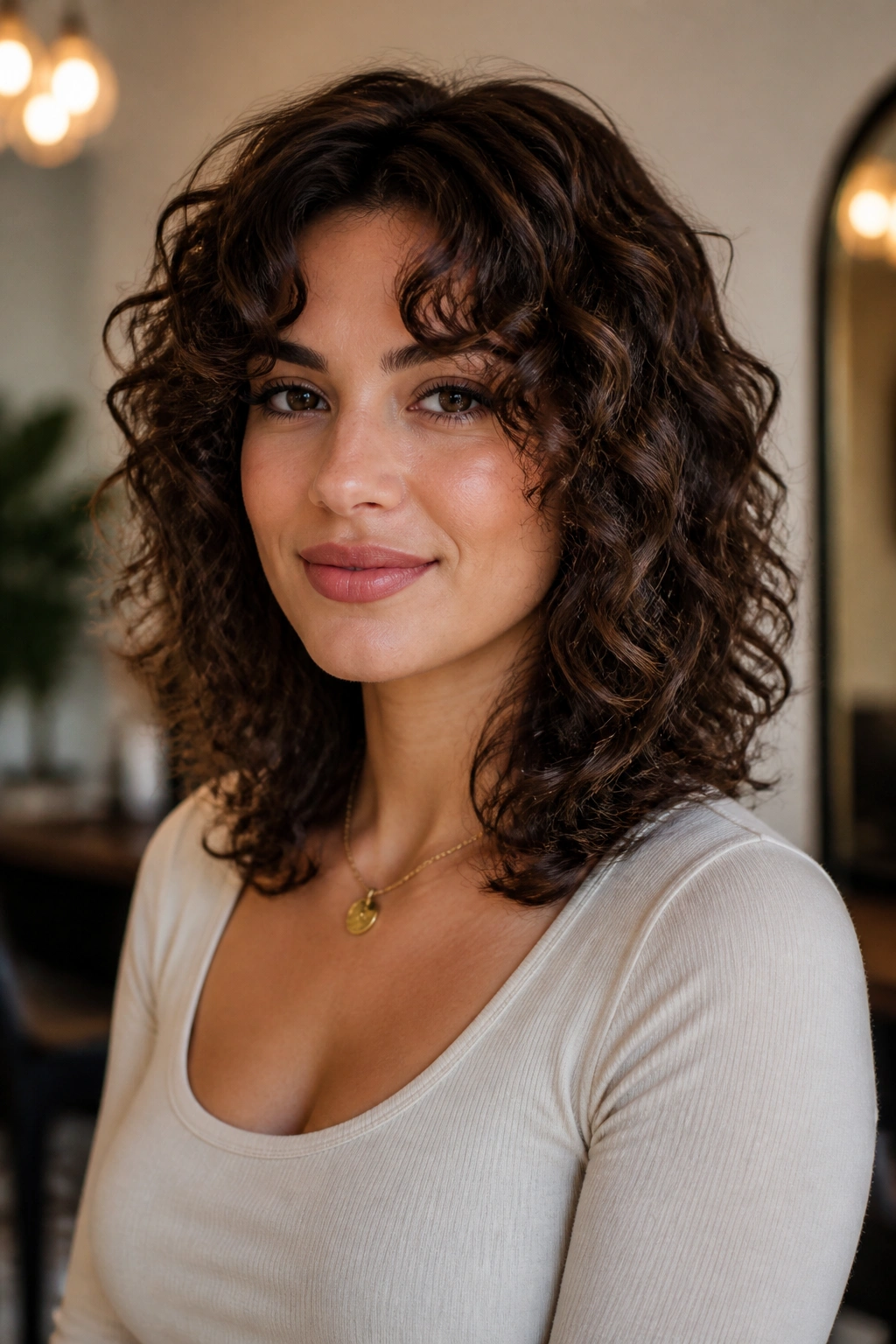
A layered mid-length cut gives round faces room to breathe, but tapered ends keep it from turning bulky. That combination is the whole reason this cut shows up so often.
The length usually sits somewhere between the collarbone and upper chest. That range gives the curls enough drop to elongate the face, while the taper at the bottom prevents the outline from widening too much.
This is one of the easier cuts to live with. It works for people who want shape without drama, and it handles most curl densities well. If your hair is fine, keep the layers lighter. If it is thick, let the stylist remove some interior weight so the sides do not puff out by noon.
19. Shoulder-Length Cut with Bottleneck Bangs
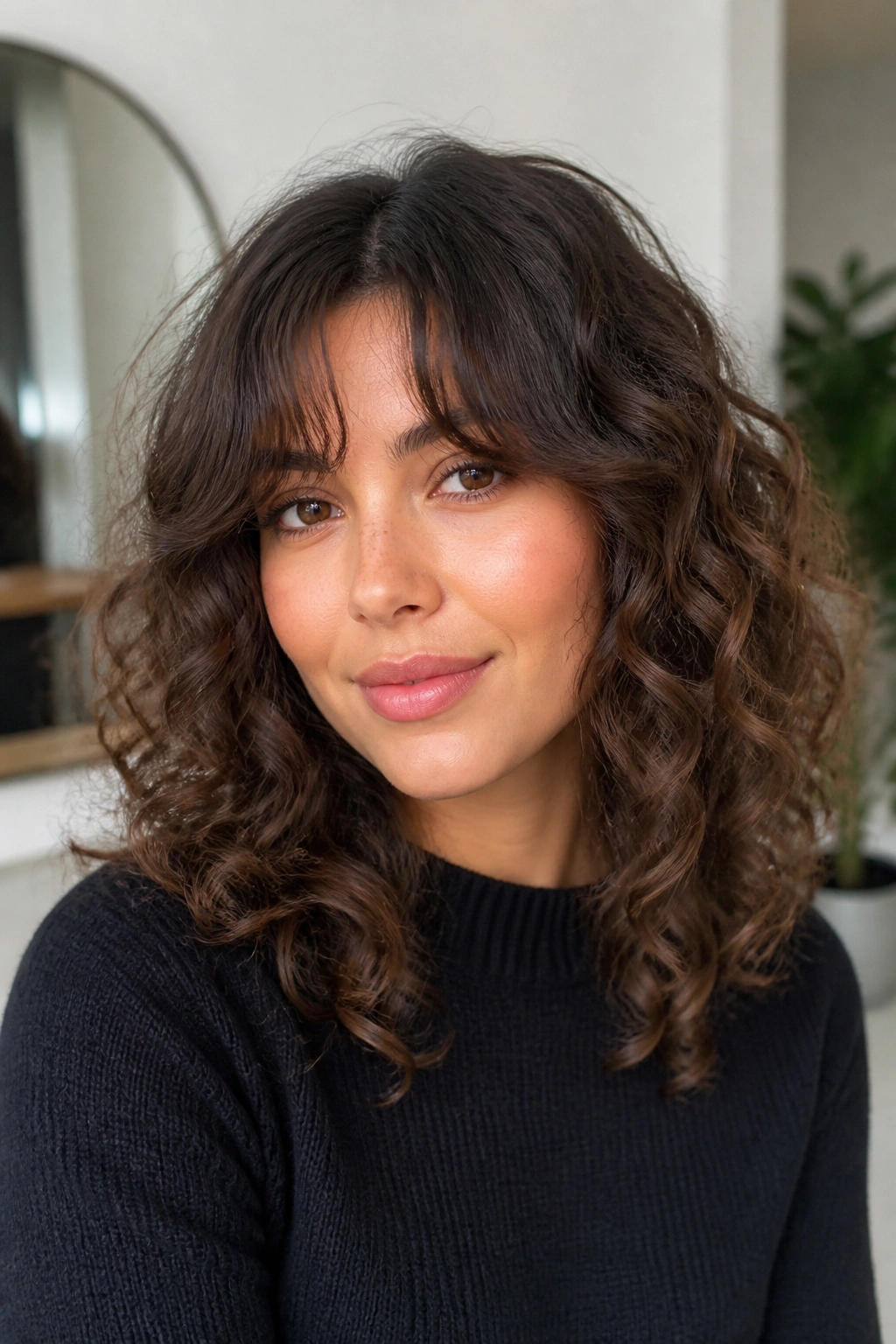
Bottleneck bangs are a smart answer to the “bangs on a round face” problem. They start narrower in the center and open wider toward the sides, which gives the forehead room and softens the cheeks.
The shoulder-length base matters here. It gives the fringe a long runway to blend into, so the whole look reads as one cut instead of a bang plus a haircut.
How It Should Sit
- Shortest point around the middle of the forehead or just above the brows.
- Longer sides that touch the cheekbone or just below.
- Soft blending into the front layers.
- A little movement around the temples, not a hard frame.
This shape feels modern without trying too hard. And that is a nice change.
20. Soft Curly Mullet
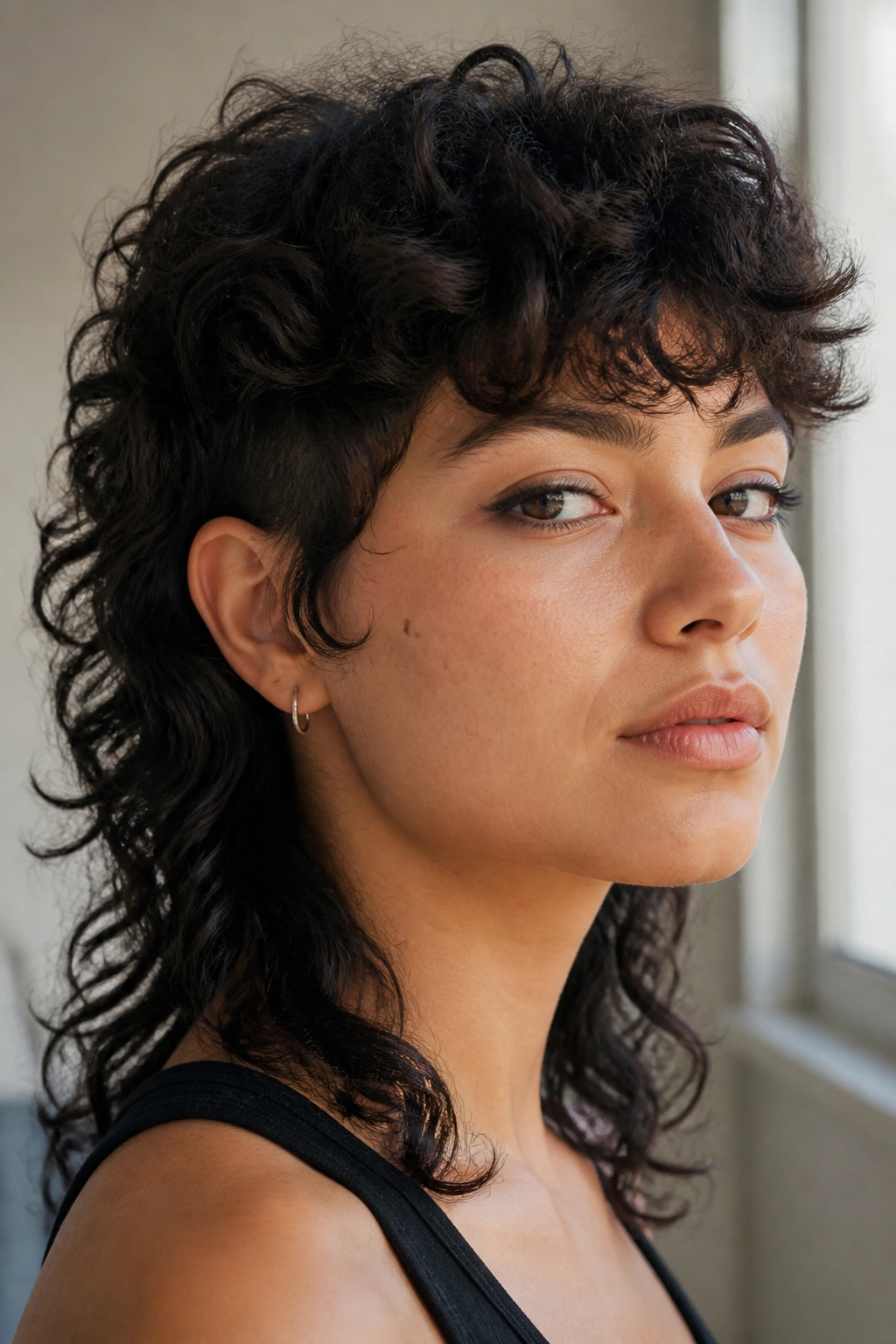
The soft curly mullet is gentler than the name sounds. The top stays airy, the back keeps length, and the sides are blended enough that the cut does not shout at you.
For a round face, the benefit is the vertical pull. The longer back drags the eye downward, while the shorter top keeps lift near the crown. That balance can work especially well if your hair is dense and likes to spread.
If the layers are too abrupt, though, the cut turns choppy fast. Ask for soft transitions and a little face length near the front. You want edge, not a helmet with attitude.
21. Long Spiral Layers with a Center Part
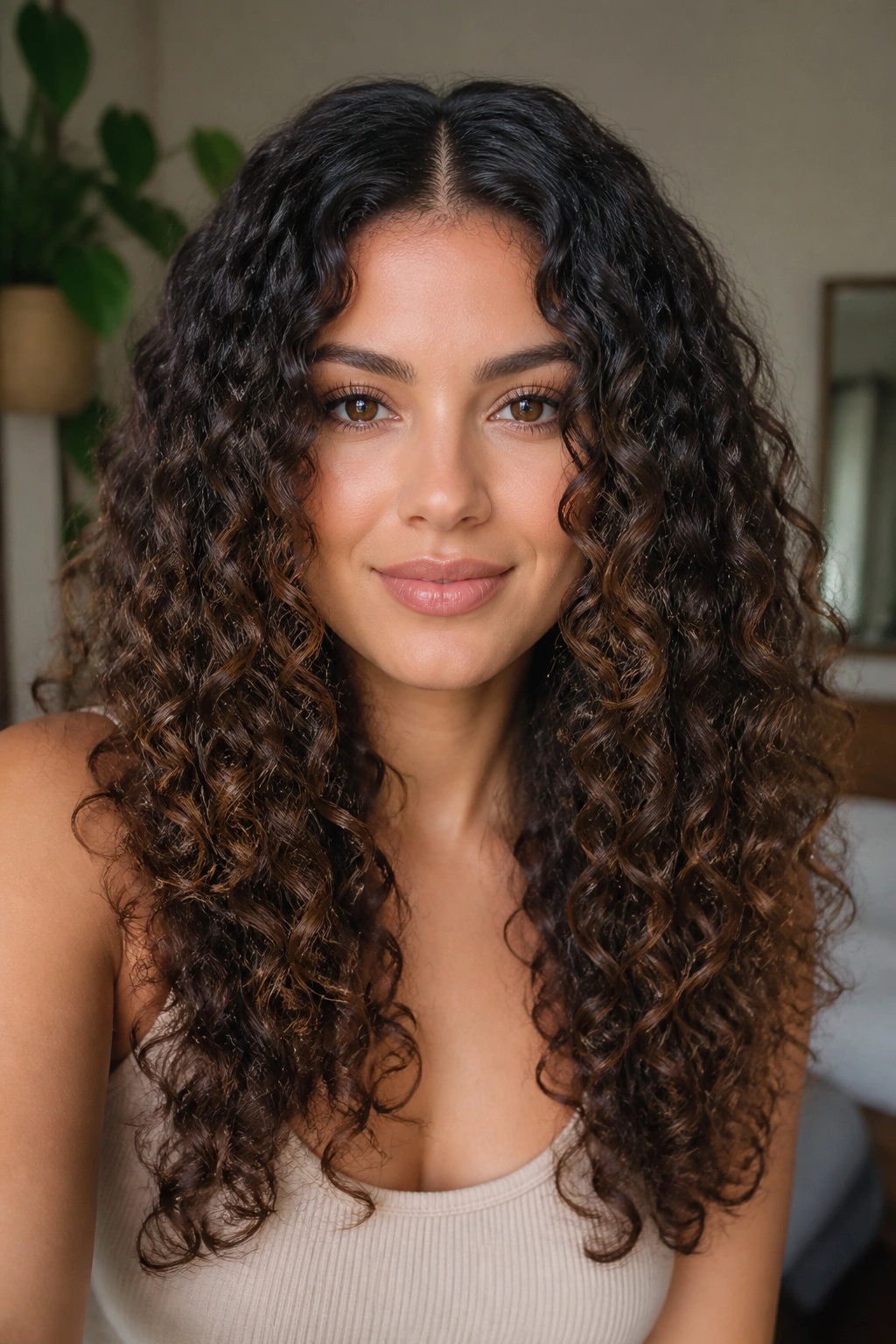
A center part does not automatically widen a round face. On long spiral curls, it can actually help, because the length and the vertical layer lines keep the eye moving down the hair.
The important part is the front. You need pieces that begin below the cheekbone and angle into the rest of the cut, or the center part can split the face in an unhelpful way.
This is a good choice if you like a clean, calm look. It feels less styled than a shag, less severe than a blunt line, and easier to refresh between washes. A light hold gel and a bit of water at the front are usually enough.
22. Short Curly Cut with a Tapered Nape
A tapered nape can make short curls look purposeful instead of puffy. That matters a lot on round faces, where extra width at the lower head can erase the neck and chin line.
The top should keep enough length to show curl pattern and movement. The sides can stay close, but not shaved unless that is the look you want. A little softness around the ears keeps the shape from feeling harsh.
Styling That Helps
- Dry the crown first so it keeps lift.
- Smooth the nape with a small amount of cream or gel.
- Use your fingers, not a brush, to keep the curl pattern intact.
- Trim the nape regularly so the shape does not blur.
This cut is low-fuss once it is shaped well, and that makes it a strong everyday option.
23. Blunt-ish Curly Bob with Hidden Layers
A blunt-ish bob sounds risky for a round face, and sometimes it is. But with the right curl density, it can look crisp and controlled instead of wide.
The perimeter should stay clean, while the inside gets just enough layer to stop the curls from stacking up too much. That hidden structure is what keeps the bob from turning into a bell shape.
This version works best if your curls are springy and hold shape on their own. Fine curls can collapse, and very thick curls can bulk out at the sides, so it is a specific cut for a specific head of hair. When it lands right, though, the effect is sharp in a good way.
24. Shoulder-Length Cut with Halo Volume
If your curls naturally rise at the crown, let them. Fighting that halo often makes the whole haircut look flatter and wider than it needs to.
A shoulder-length cut with halo volume keeps fullness above the cheek line. That means the face gets framed by lift and movement, not by a heavy band of curls sitting at jaw level.
The sides should stay soft, and the ends should not get too thick. A diffuser aimed upward can help the top keep shape while the lower sections dry with a bit of bend. This one works especially well for people who like big hair and do not want to pretend otherwise.
25. V-Cut for Long Curls
A V-cut gives long curls a pointed back, which creates a strong vertical shape. On round faces, that can be useful, because the eye follows the length instead of staying locked on the cheeks.
What Sets It Apart
Unlike the U-shape, the V-cut has a more dramatic drop in the back. That can be beautiful on thick curls that need some shape and movement, but it can look thin on fine hair.
Best If You Want
- Long hair with visible length in the back.
- A shape that feels lighter than a straight line.
- Curls that can handle layering without frizzing out.
- A cut that looks good in a half-up style too.
If your hair is very fine, go softer with the point. A sharp V can leave the ends looking stringy.
26. Curly Crop with Micro Fringe
Micro bangs are not a safe choice, and that is why they work here. On a round face, a tiny fringe can look sharp and interesting when the rest of the haircut stays lean and vertical.
The crop itself should be close at the sides with most of the shape sitting above the brow line. That way the fringe becomes a detail instead of the whole story.
This cut is best for someone who likes contrast and does not mind regular maintenance. Micro fringes grow out fast, and curly texture makes that grow-out even more obvious. Still, when the proportions are right, the result is crisp, a little artsy, and nowhere near boring.
27. Air-Dry Friendly Curly Layers
A good air-dry cut saves you from fighting your hair every morning. For round faces, the shape should already be doing the work before you touch a dryer.
The layers need to be placed so the curls fall below the cheekbones and do not spread out at the sides. That usually means keeping the top a bit shorter, the front a bit longer, and the bulk trimmed from the lower half.
I like this cut for people who want honest hair, not a polished blowout every day. A little leave-in, a scrunch, and patience are often enough. If the cut is right, it settles into place without much argument.
28. Side-Parted Curly Lob with a Tucked Side
A side-parted lob can look even better when one side gets tucked behind the ear. The tuck opens the jawline, shows a little neck, and keeps the shape from sitting too evenly around the face.
Why the Tuck Helps
The uncovered side creates a clean line from temple to shoulder, while the tucked side gives the illusion of length. That little asymmetry matters more than people expect.
Keep the front pieces long enough to skim the jaw or collarbone, depending on curl tightness. If they sit too high, the tuck can start to look accidental instead of intentional.
A styling cream with light hold will keep the tucked side from springing loose every five minutes. Tiny annoyance. Worth it.
29. Medium Curly Cut with a Sweeping Fringe
A sweeping fringe is different from side bangs. It moves in one long curve across the forehead and blends into the rest of the cut, which gives round faces a soft diagonal line.
This works well at medium length because the haircut has enough body to support the fringe. At the same time, the fringe keeps the upper half of the face from feeling too open or too broad.
Styling Details That Matter
- Dry the fringe in the direction you want it to live.
- Keep the fringe long enough to blend into the side layers.
- Avoid thinning it too much, or it can go stringy.
- Refresh with a little water before reshaping in the morning.
The cut feels romantic without being sugary. That is a nice line to walk.
30. Soft One-Length Curly Midi
A soft one-length curly midi sounds plain on paper, and that is part of the charm. When the curls are dense enough, a clean perimeter can make the hair fall straight down instead of puffing outward.
That downward motion helps round faces more than people expect. The shape feels neat, the length stays visible, and the curls keep enough room to move without turning into a layered cloud.
The catch is precision. The cut has to land at the right place—usually below the shoulders or just past the collarbone—and the ends need a gentle check so the line does not look boxy. If you want a haircut that feels calm, easy to live with, and less fussy than a shag, this is a strong finish to the list.
