



The conventional wisdom for years has been that a round face requires long, face-framing layers to “stretch” the features and create the illusion of length. It is a dated rule, frankly. If you have a round face, you possess a soft jawline and fuller cheeks—assets that look incredible when framed by the right short haircut. The French approach to hair is entirely different from the traditional American salon standard. It is not about hiding your face behind a curtain of hair; it is about highlighting it with precision, attitude, and a deliberate sense of undone elegance.
French hair philosophy centers on texture and movement. It is less about perfection and more about the way hair moves when you walk down the street. For someone with a round face, this is a massive advantage. A blunt, heavy cut can sometimes overwhelm a circular face shape, but a cut that incorporates texture, deliberate “messiness,” and the right angle of the jawline can actually carve out your features in a way that feels intentional and sharp.
You need to shift your perspective on what “short” means. We are moving away from the idea that short hair makes a round face look rounder. If you cut it correctly—by adding height at the crown, keeping the length away from the cheeks, or using bangs to change the visual focal point—you can look taller, leaner, and sharper. The following cuts are not just trends; they are timeless shapes that work with the geometry of a round face to provide balance and a effortless, chic finish.
1. Classic French Bob
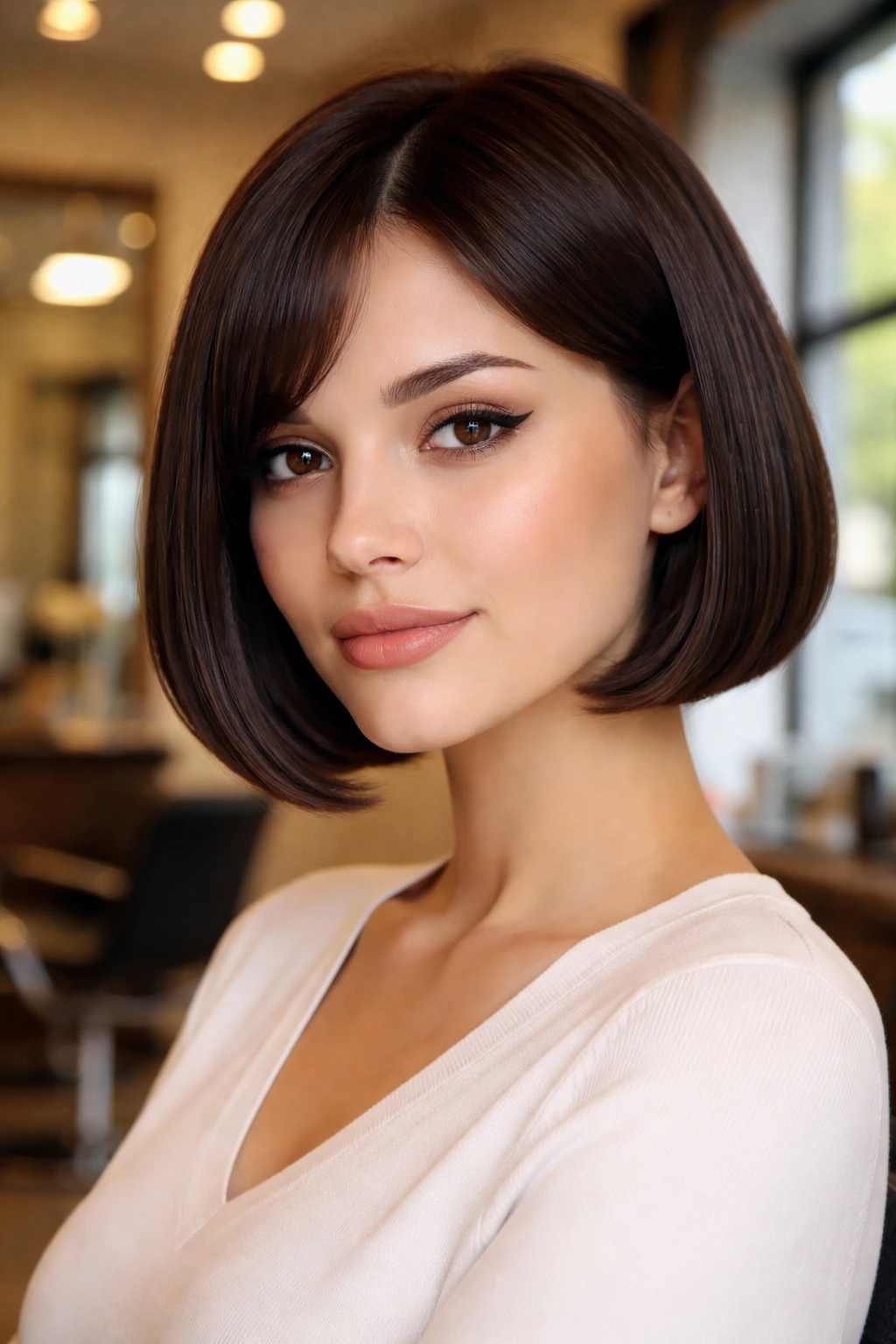
The classic French bob is the gold standard for a reason. It hits right at the jawline, sometimes a millimeter above, and relies on a clean, blunt edge to create a frame that sits perfectly against your skin. For a round face, the magic here is in the sharpness. That blunt line at the chin creates an immediate visual contrast, giving your jaw more definition than it might have otherwise.
Why It Works for You
The secret is the length. By ending the hair exactly where your jaw is, you are essentially drawing a line in the sand that highlights the structure of your face rather than the width of your cheeks. It is a bold, no-nonsense look that says you are confident.
Styling the Look
You do not want this to look like a helmet. To keep it from puffing out and widening your face, use a light smoothing cream on damp hair. Blow-dry it using a paddle brush, keeping the tension tight to ensure the ends stay straight and crisp.
Pro tip: If you have thick hair, ask your stylist to “de-bulk” the ends with interior layering. This prevents the “triangle” shape that can happen with blunt bobs and keeps the silhouette sleek.
2. Textured Wavy Bob
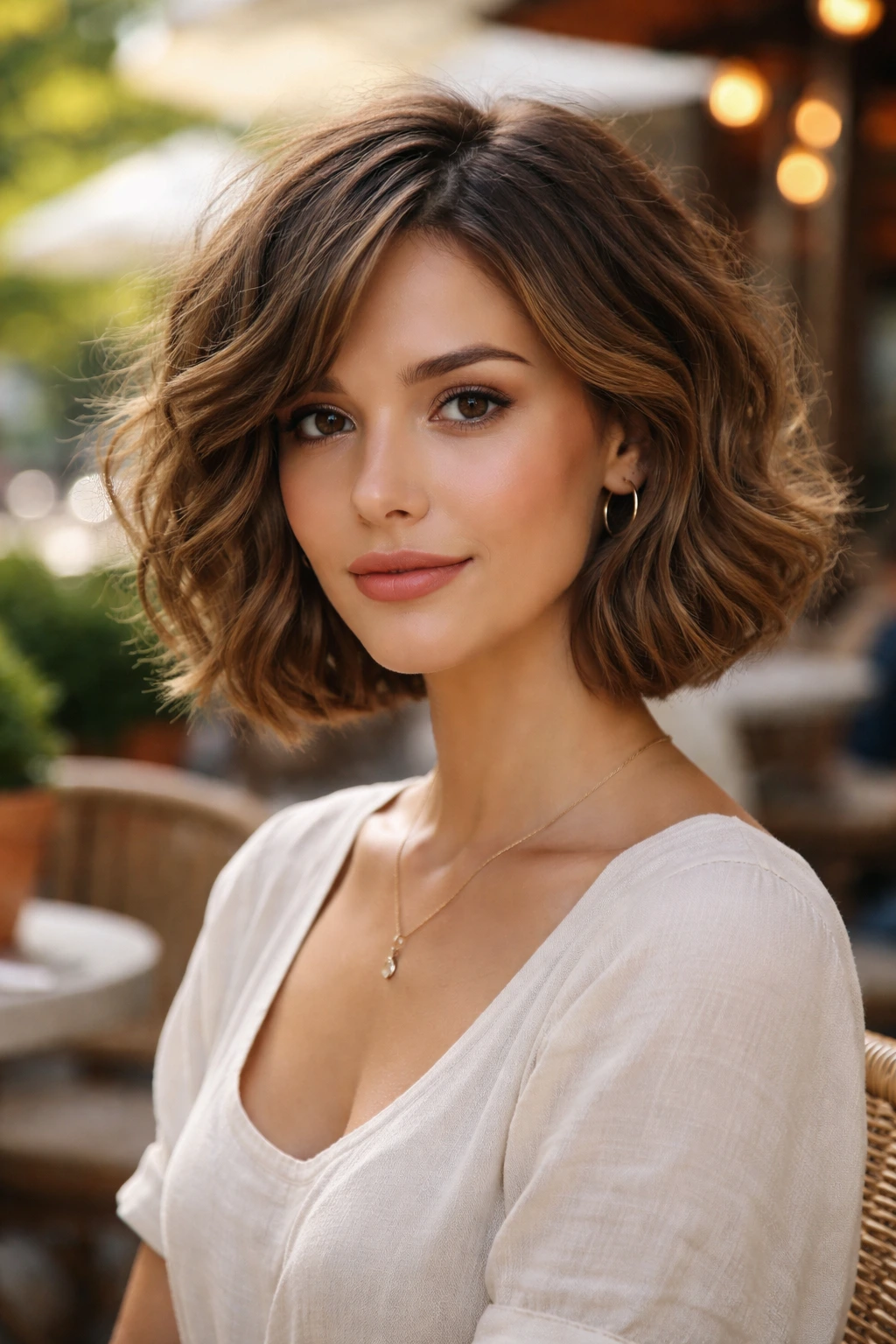
If you are intimidated by the precision of a blunt cut, the textured wavy bob is your entry point. This style keeps the length similar to a French bob, but the internal layers are point-cut to encourage your natural wave pattern. The movement in the hair breaks up the circular lines of a round face, making it look more oval and balanced.
Getting the Texture Right
You are looking for piecey-ness, not volume. Too much volume on the sides of your head will only emphasize the width of your face. Focus the product and the texture toward the back and the ends, keeping the hair closer to the scalp at the temples.
Essential Products
- Sea salt spray for that gritty, second-day feel.
- A light-hold texturizing paste to pinch individual strands.
- A diffuser attachment for your blow dryer to enhance curls without frizz.
3. The Micro-Bob
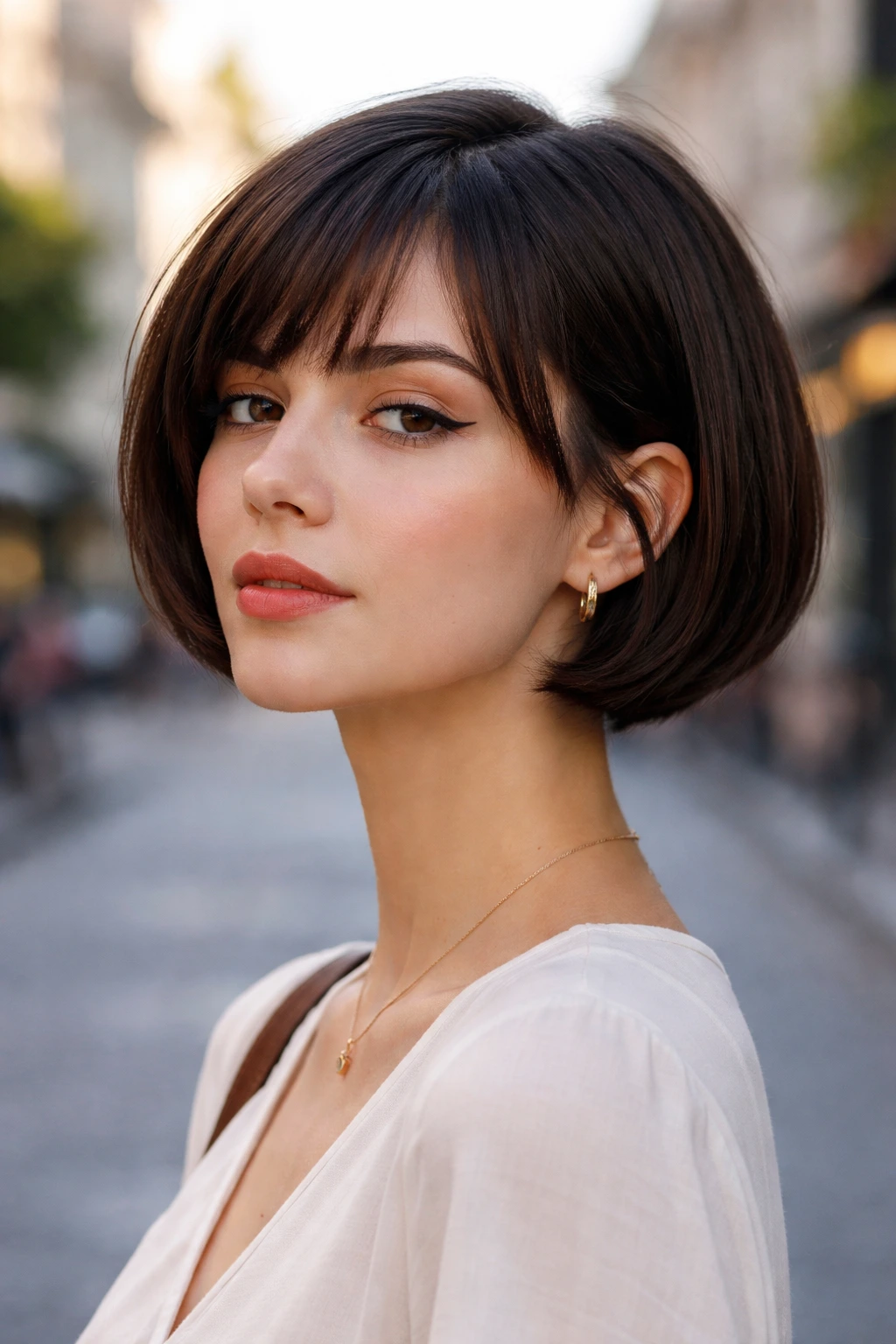
Let’s go shorter. The micro-bob sits somewhere between your cheekbones and your earlobes. It feels drastic, but it is incredibly flattering for a round face because it clears the neck and jawline entirely, drawing the eye upward. It makes your neck look longer, which naturally elongates the entire silhouette of your head.
The Psychological Benefit
There is a specific kind of liberation that comes with a micro-bob. You stop using your hair as a veil. When you remove that extra hair, you are forced to own your facial features. It works because it forces a vertical focus on the center of the face, rather than the width of the cheeks.
Who Should Avoid This
If you have a very short neck or if your jawline is not something you want to emphasize, this might feel too exposing. However, if you are looking to create a sharp, distinct frame for your eyes and lips, this is the cut to choose.
4. Curtain Bangs with Layers
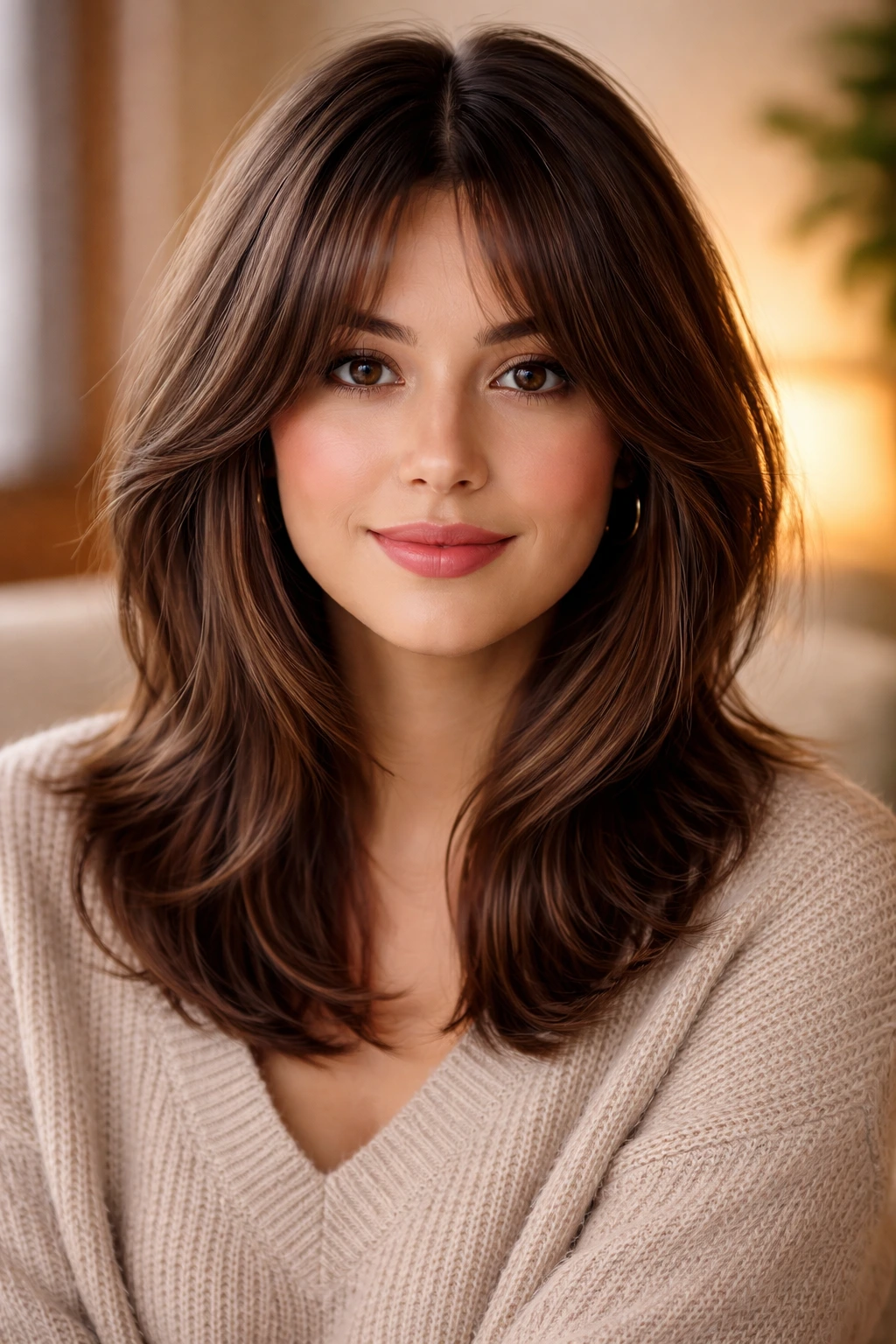
If you cannot let go of your length, or if you prefer a style that feels a bit softer, curtain bangs are the ultimate compromise. These are the soft, sweeping bangs that part in the middle and fan out toward the temples. They create an inverted V-shape, which is the exact geometric inverse of a round face.
The Illusion of Depth
Because curtain bangs taper, they create a narrow focal point in the center of your forehead, which makes your face appear slimmer. When combined with long, face-framing layers, they take the weight away from the widest part of your cheeks and move the focus down toward your neck and collarbone.
Maintenance Note
These are high-maintenance in terms of shape. You will need a trim every four to six weeks to keep the bangs from growing out into your eyes. If they get too long, they lose that “curtain” effect and just become messy face-hair.
5. The “Effortless” Shag
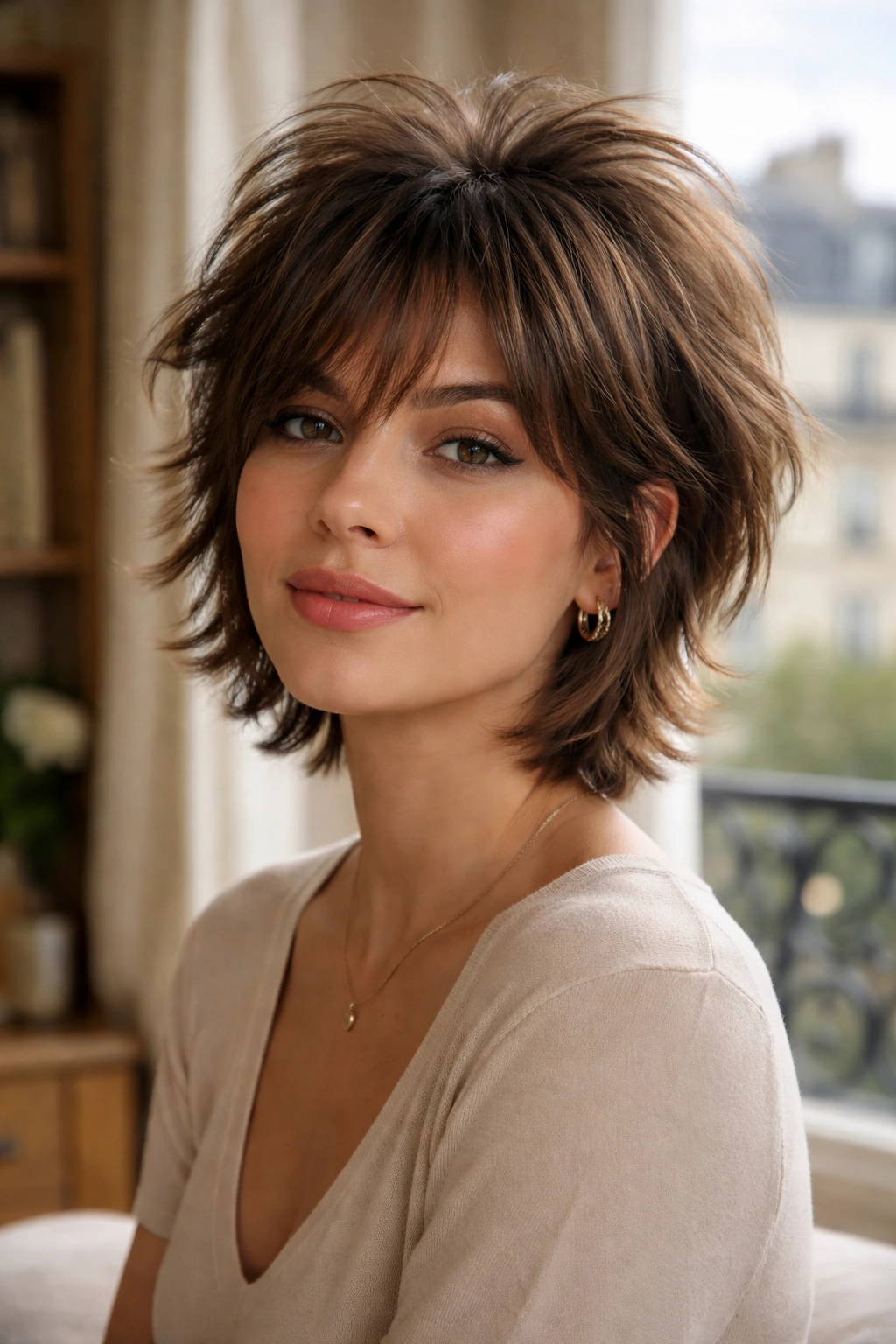
The shag is about volume and deliberate chaos. It is a cut that features choppy, short layers throughout the crown and longer, wispy ends. For a round face, the shag is brilliant because the layers at the top provide height. Adding volume to the top of your head is the oldest trick in the book for making a round face appear more oval.
Creating the Shape
You want the layers to start around the cheekbone. This creates a soft, layered frame that doesn’t add width. It looks best when you let it air dry. If you have straight hair, you might need a curling wand to add a few bends, but do not make them perfect. The goal is to look like you just woke up from a nap in a Parisian apartment.
Styling Mistake to Avoid
Do not over-style. The shag should look like it was cut with a razor and left to its own devices. If you try to make it look smooth or polished, you kill the vibe entirely. Embrace the frizz and the mess.
6. A-Line Bob
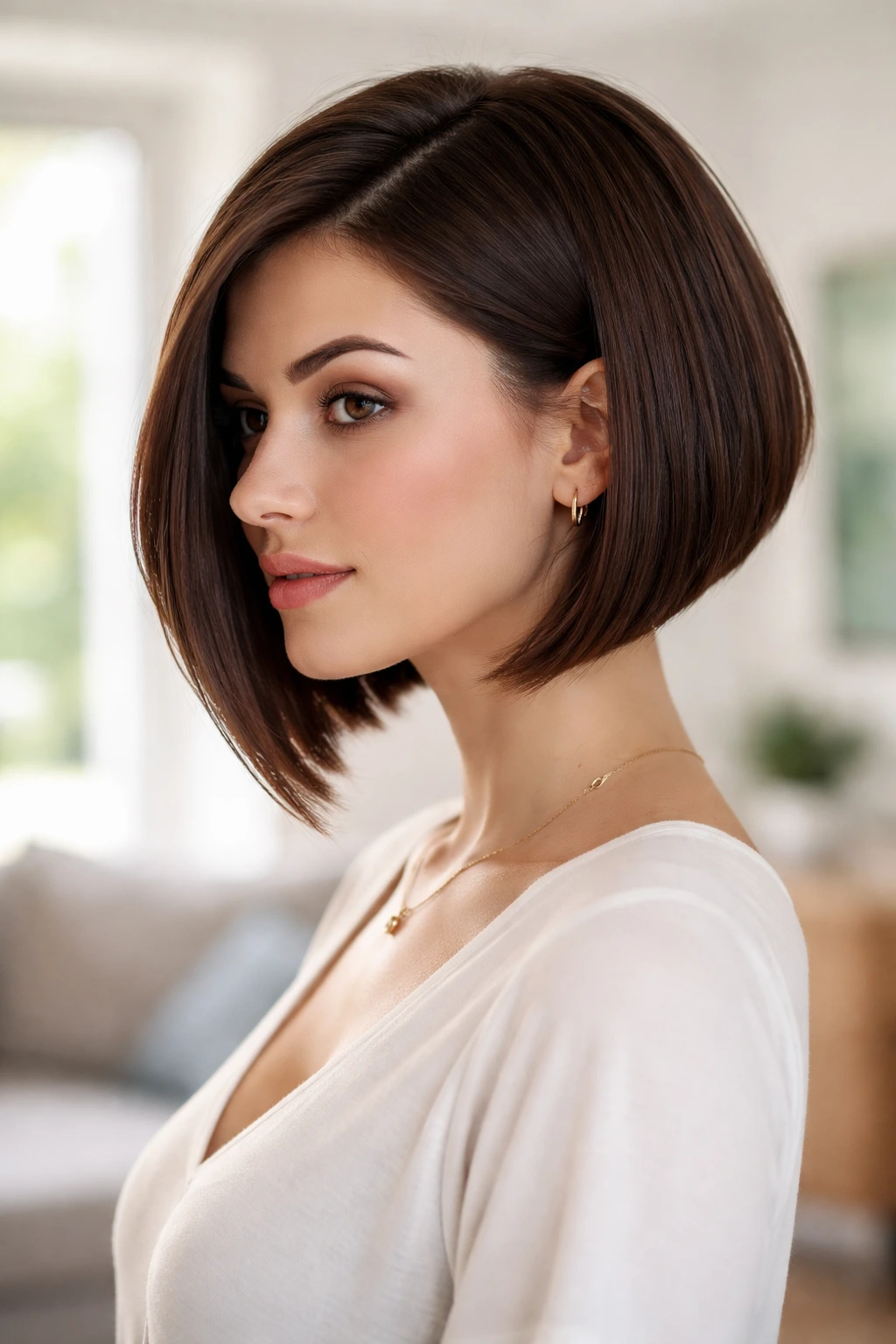
An A-line bob is shorter in the back and longer in the front. This is a classic corrective cut for round faces. The angle of the hair, sloping downward toward your chin, mimics the line of a jaw. It essentially acts as a shadow, carving out a more defined jawline than you might naturally have.
Why the Angle Matters
The steeper the angle, the more dramatic the effect. A subtle A-line is elegant and professional, while a deep, severe A-line is edgy and bold. For a round face, go for a moderate to deep angle. It draws the eyes down and forward, rather than out to the sides.
Styling Tip
To accentuate the A-line, flat iron the front sections so they sit straight and sleek. This emphasizes the geometry of the cut. Use a shine spray to catch the light on the edge of the hair, highlighting the slope.
7. Bottleneck Bangs
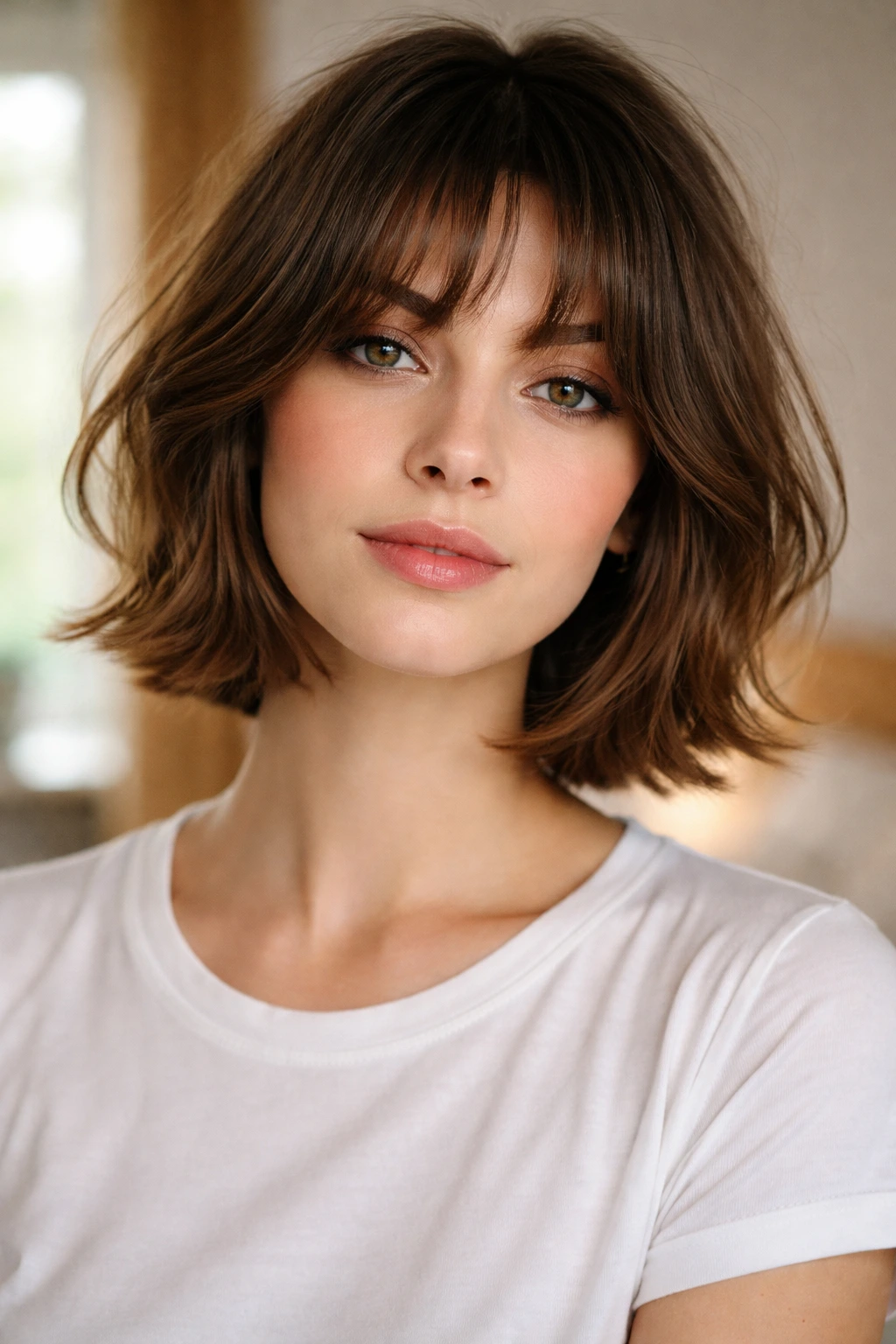
Bottleneck bangs are a variation of curtain bangs, but they are shorter in the middle and curve out to blend into your layers. They get their name because they resemble the neck of a bottle. They are fantastic for round faces because they break up the roundness of the forehead and temples while still allowing for that vertical opening in the center.
The “French Girl” Signature
These bangs are the embodiment of that specific French aesthetic. They look intentional yet lived-in. They frame the eyes beautifully, which is vital because your eyes are the strongest feature you can emphasize to distract from the width of your cheeks.
How to Ask Your Stylist
Do not just say “bangs.” Explain that you want them shorter in the center, tapering down to the length of your cheekbones, and—most importantly—textured at the ends. You want them to look soft, not blunt.
8. Curly French Bob
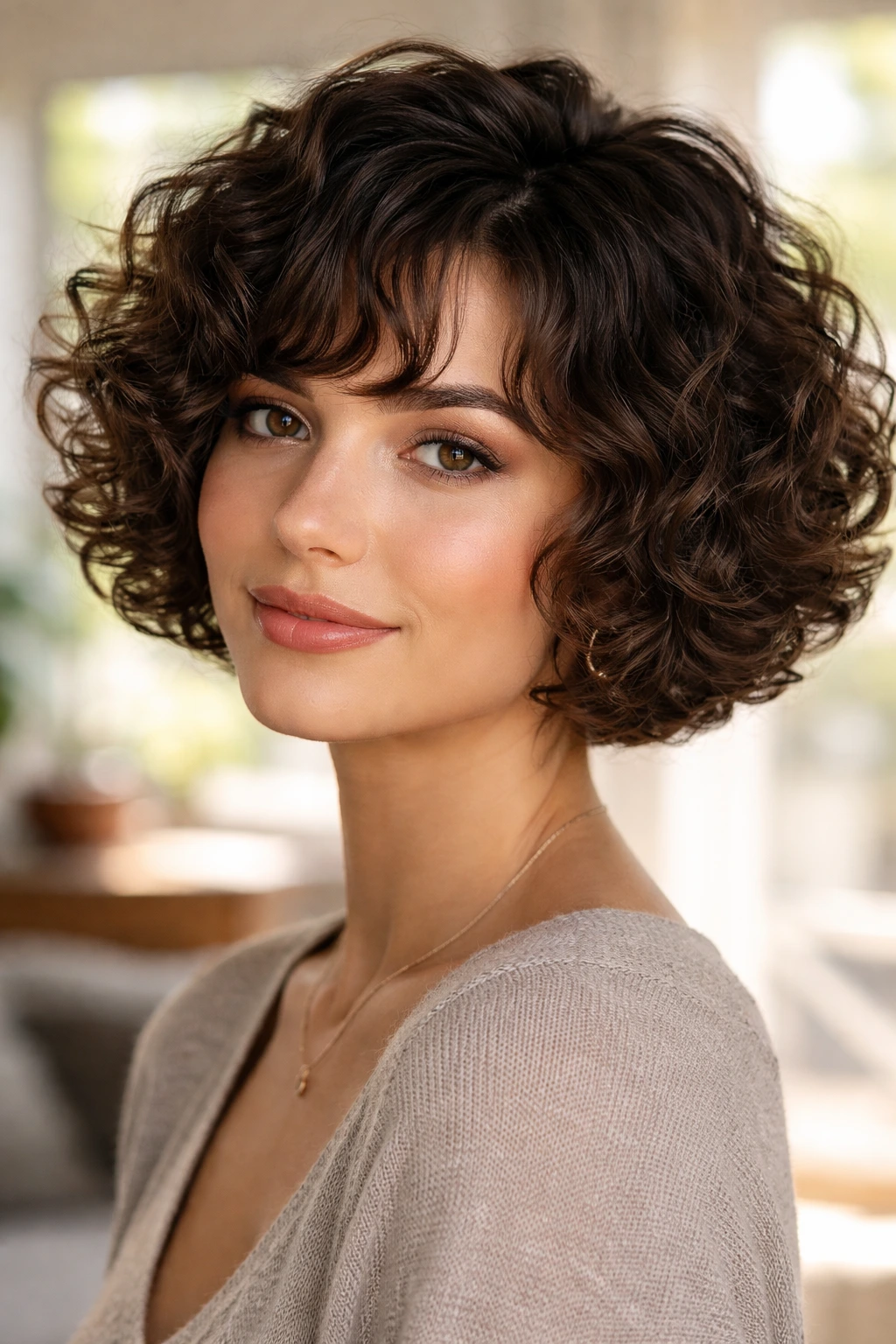
If you have tight curls, you might be terrified of the bob. Don’t be. A curly French bob is all about shape. You want to cut the hair so that the curls stack, creating a rounded (but elevated) shape. For a round face, the goal is to keep the volume on top and toward the back, avoiding too much width at the ears.
Managing the Volume
You need a stylist who is comfortable cutting hair dry. If they cut it wet, they won’t see how your curls bounce up. When you cut curly hair, it shrinks. You want the curls to graze the jaw, not puff out at the cheekbones.
Product Strategy
Use a curl-defining cream while the hair is soaking wet. Do not touch it while it dries. The less you touch your curls, the less frizz you will have.
9. Side-Swept Pixie
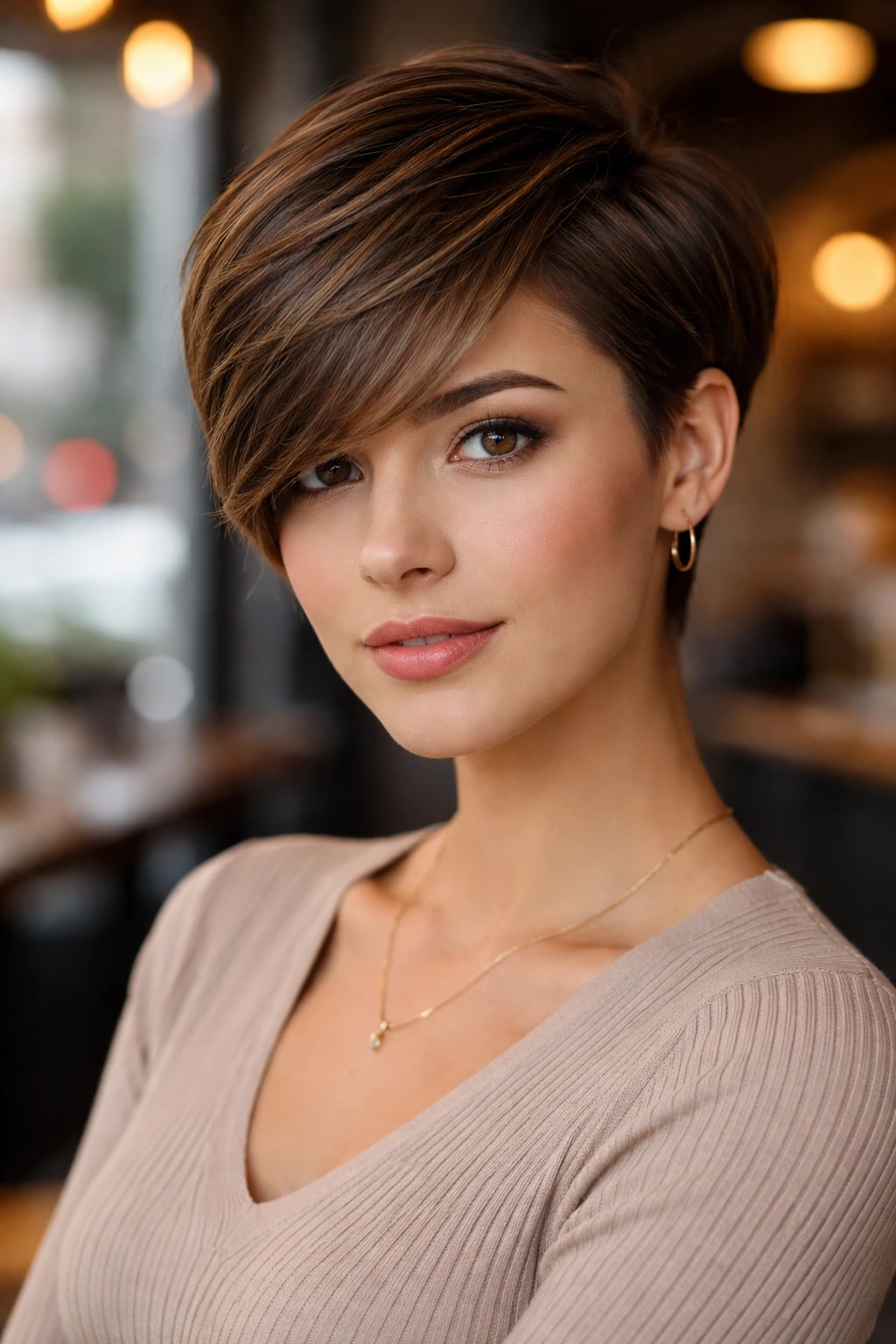
A pixie cut is the ultimate test of confidence, and for a round face, the side-swept version is the safest and most flattering. By sweeping the bangs across your forehead, you create a diagonal line. Diagonal lines are powerful because they disrupt the horizontal and circular planes of a round face, essentially slicing it into more interesting shapes.
The Benefit of Asymmetry
Asymmetry is a round face’s best friend. Because a round face is symmetrical by nature, adding an asymmetrical element—like a deep side part or a long, swept-over fringe—adds the interest and structure you are missing.
Styling for Daily Wear
You need a strong pomade or wax. Take a pea-sized amount, warm it between your fingers, and work it through the roots to lift the hair up and over. You want lift at the roots; you don’t want the hair to lie flat against the scalp.
10. Feathered Ends Bob
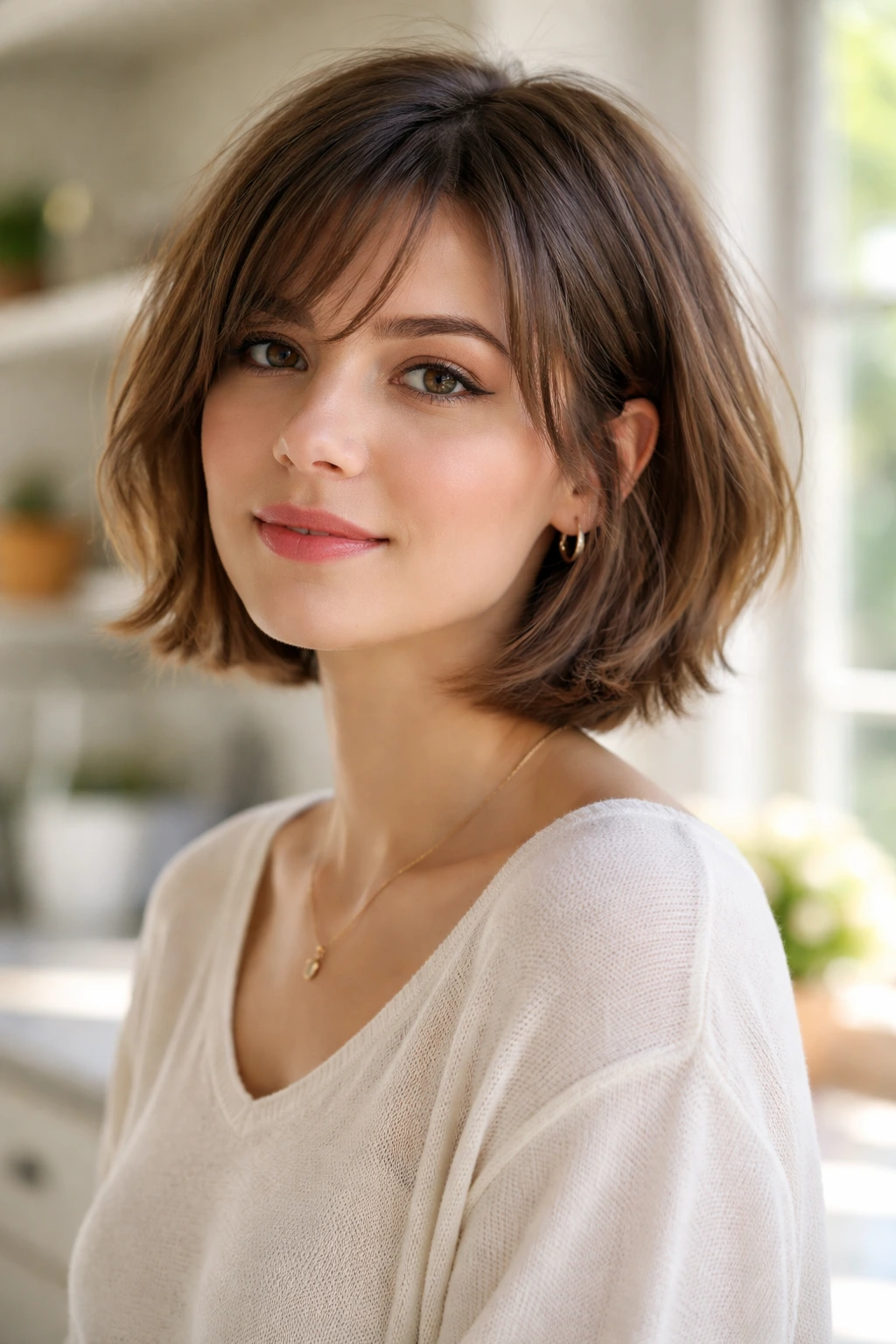
This cut is all about the finish of the hair. The main structure is a traditional bob, but the stylist uses a razor or texturizing shears to “feather” out the ends. This creates a soft, whispy perimeter rather than a harsh, solid line.
Why Softening Helps
Sometimes a blunt bob is too heavy for fine or thin hair, or it can look too severe on a face with very soft features. Feathered ends take the weight off, allowing the hair to lift and flick out naturally. This creates a lighter, airier look that complements a round face by not creating a “box” around the head.
The “No-Styling” Styling
Because the ends are already textured, this cut does most of the work for you. Apply a light mousse to damp hair, scrunch it with your hands, and let it air dry. The feathered ends will do their own thing, creating that piecey, effortless French look.
11. Blunt Cut with Wispy Fringe
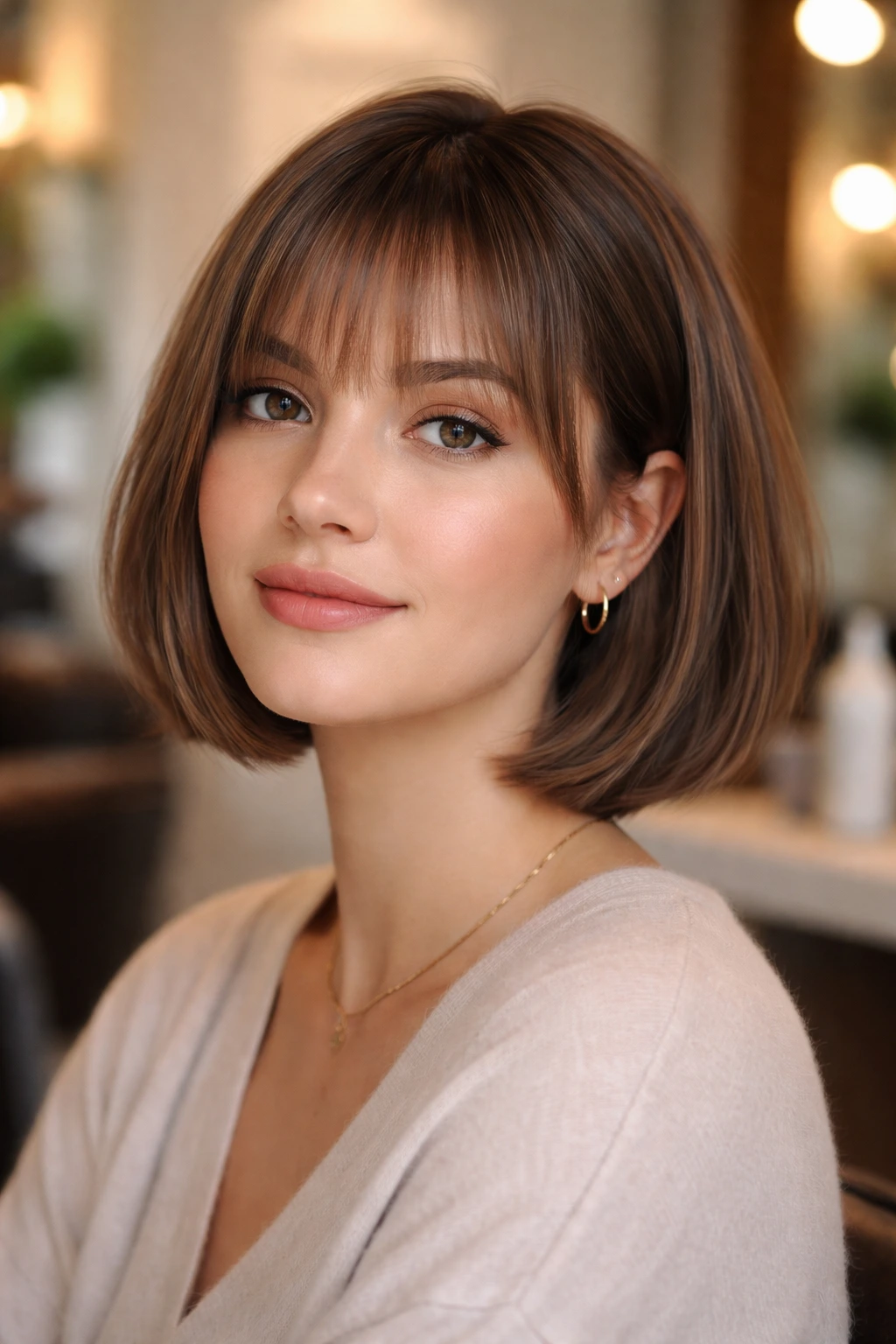
This is a play on contrasts. You take a very blunt, solid bob (maybe slightly longer, at the chin or just below) and pair it with a very fine, wispy fringe. The heavy bob provides structure to the jaw, while the wispy fringe softens the forehead and prevents the cut from feeling too “heavy.”
Balancing the Face
The fringe should be “see-through.” You don’t want a heavy, solid block of bangs. A see-through fringe keeps the forehead visible, which prevents the face from being “cut in half.” It adds a touch of sweetness while the blunt bob keeps it sharp.
Warning on Fringe Length
Keep the fringe just at or slightly above the eyebrows. If they are too long, they will drag your face down. You want them to open up your eyes, not hide them.
12. The “Bedhead” Long Bob (Lob)
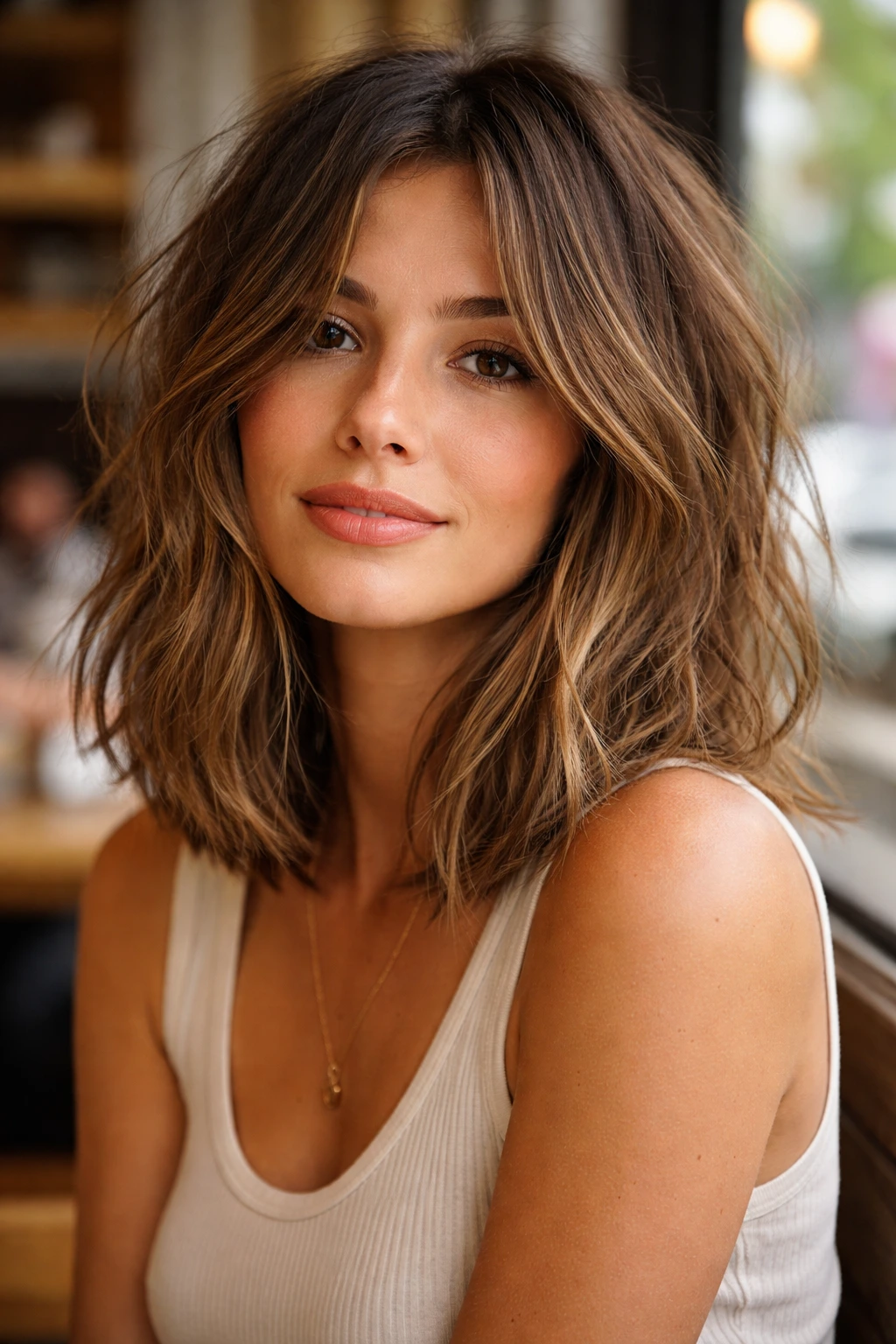
A long bob, or “lob,” that grazes the collarbone is often the most forgiving cut for anyone. The “bedhead” version adds a layer of styling that makes it cooler. By adding messy waves and keeping the layers long and inconsistent, you create a look that feels lived-in and comfortable.
The Elongation Effect
Because the hair extends well past the chin, it naturally pulls the eye downward. This is the simplest way to add length to your face without having to commit to a super short haircut. It is the perfect bridge between short and long.
Styling for the “Bedhead” Look
Use a straightener to create waves, but leave the ends straight. This is a crucial technique. By not curling the ends, you maintain the length and the modern, messy aesthetic.
13. Choppy Layered Pixie
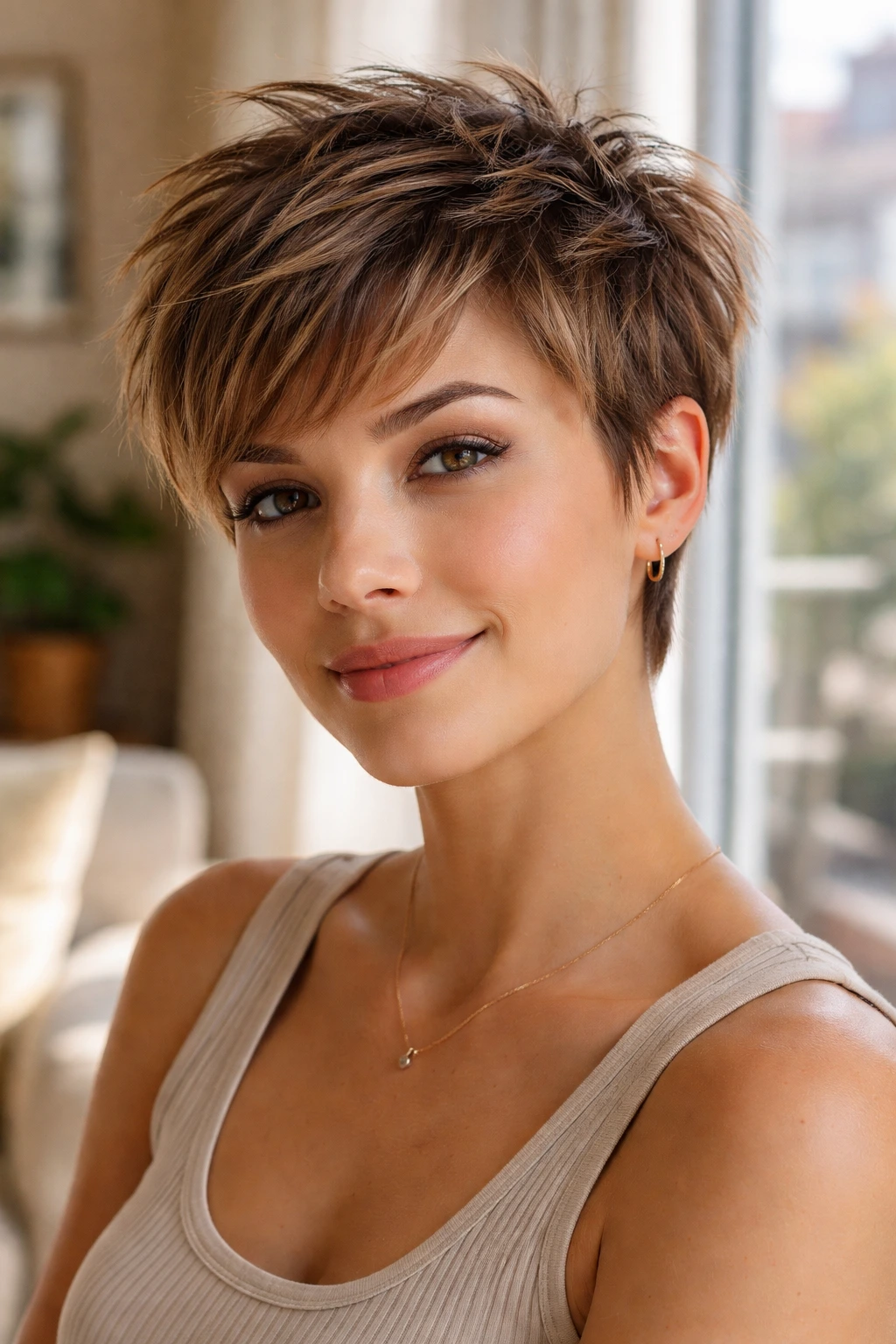
If the side-swept pixie feels too polished, go for the choppy, layered version. This involves cutting the top layers short and leaving the sides tighter. It’s all about texture and pieces that stick out in different directions.
The Height Factor
This cut is all about verticality. By using texturizing paste to spike the top layers, you add inches to your height. This visually lengthens your face. It is a fantastic choice if you want to look sharper and more “put together” without the maintenance of a bob.
The Maintenance Reality
Short cuts like this require a trim every four weeks. If you let it grow out, the shape gets lost, and it will start to look boxy, which is the opposite of what you want for a round face.
14. The French Mullet
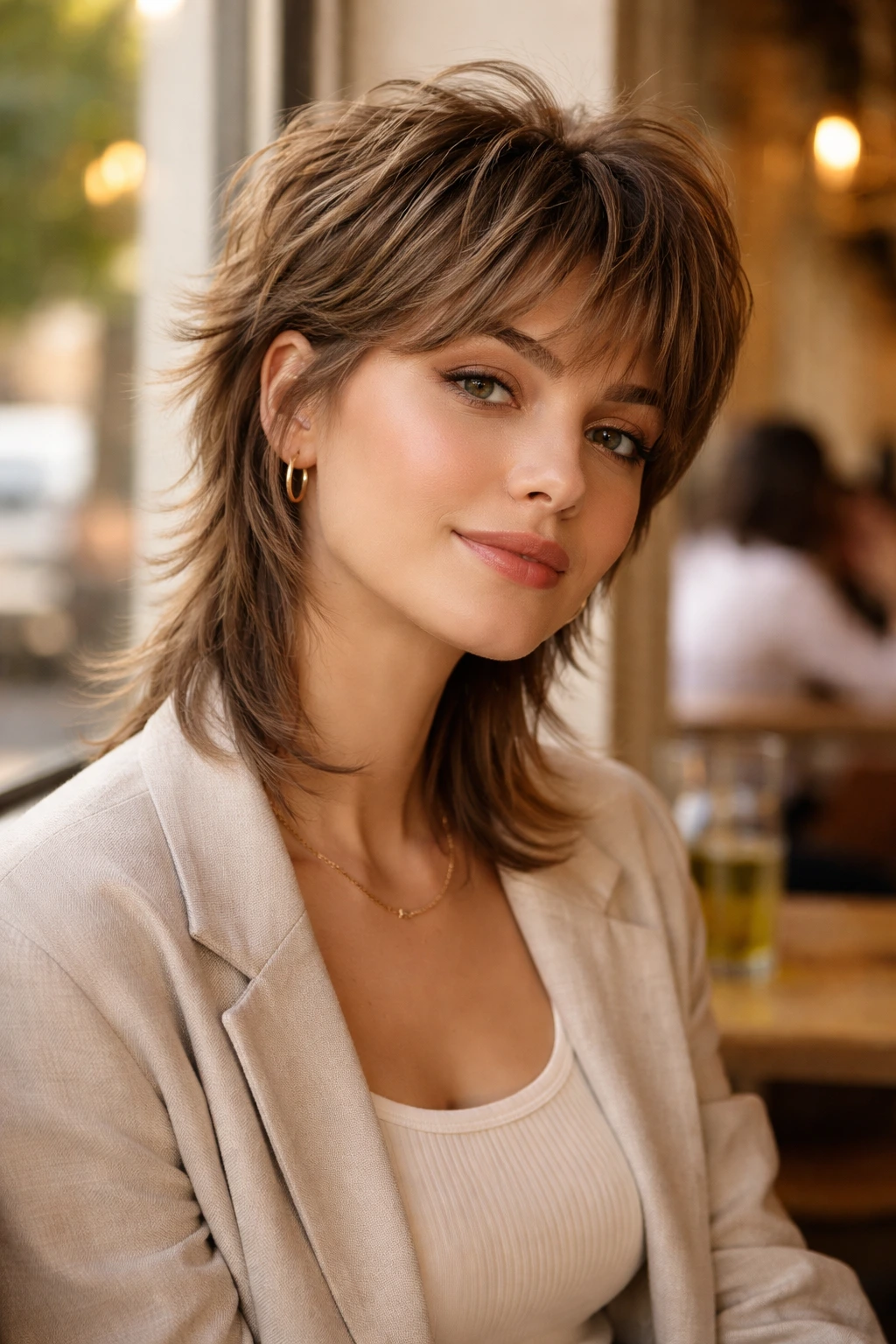
Before you recoil at the word, hear me out. The modern French mullet—or “wolf cut” variation—is not the 1980s version. It is about a short, layered crown and a longer, wispy tail at the nape. For a round face, it works because the layers on top add the height you need, and the longer pieces on the side of the neck frame the face and jaw.
Softening the Edge
The trick to making this work is to ensure the transition between the short layers and the longer hair is seamless. There should be no harsh lines. Everything should be blended and soft.
Who Should Wear This
This is a cut for someone with a sense of adventure. It is for the person who wants to look like a French rockstar from the 70s. It’s cool, it’s effortless, and it’s very, very chic.
15. Razored Bob
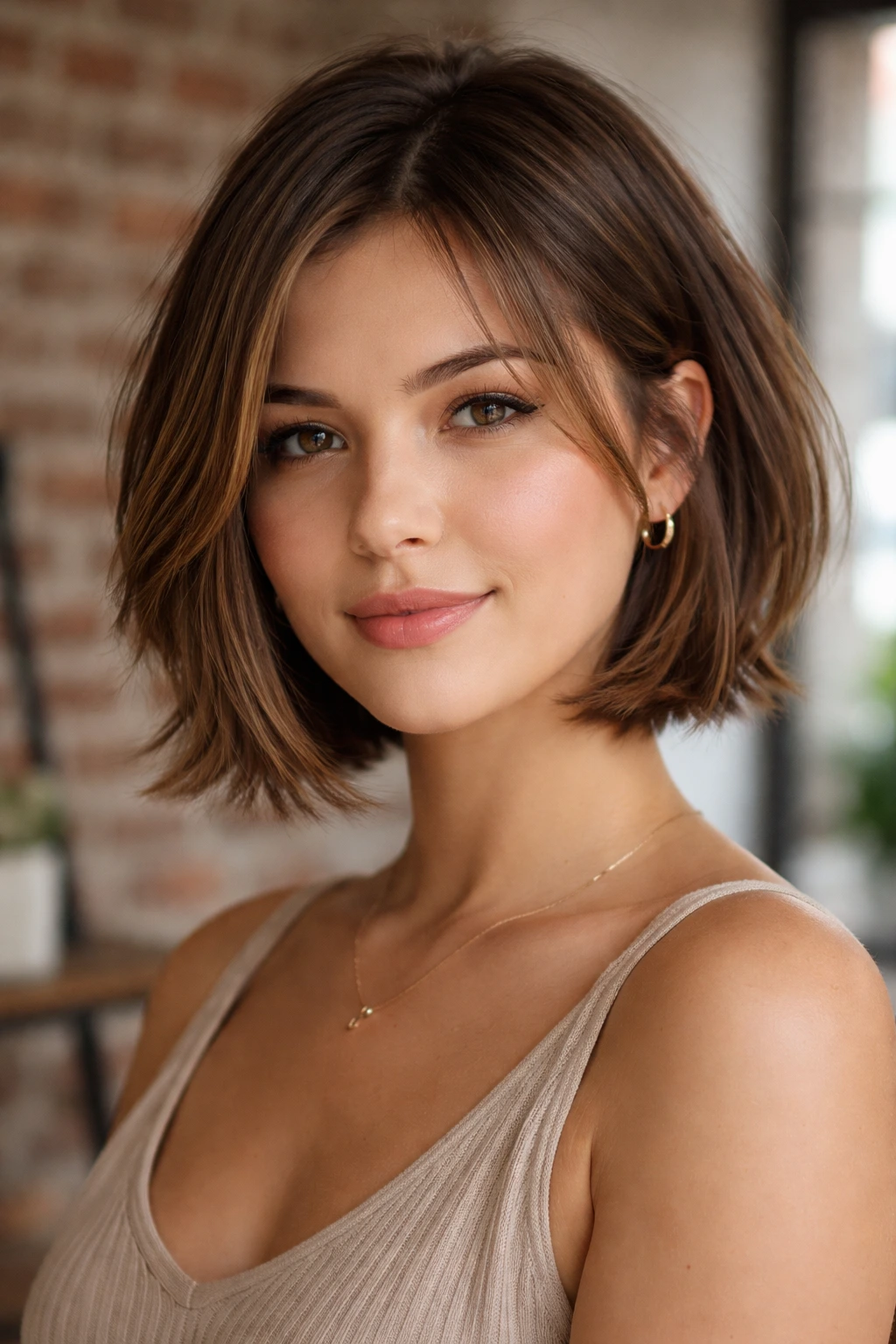
Using a razor instead of scissors creates a completely different effect. A razor creates tapered, uneven ends that naturally curl under or flick out. For a round face, this creates a “shattered” look that is far less rigid than a scissor-cut bob.
Why Razor Cutting Rocks
Scissors create blunt lines. Razors create movement. If your round face makes you feel like you need more movement to break up the shape, a razored bob is the answer. It creates a soft, hazy outline around your face that looks beautiful.
Skill Requirement
You must find a stylist who is proficient with a razor. This is not a technique you want a beginner to try on your hair. A bad razor cut creates frizz; a good razor cut creates magic.
16. Soft Undercut Pixie
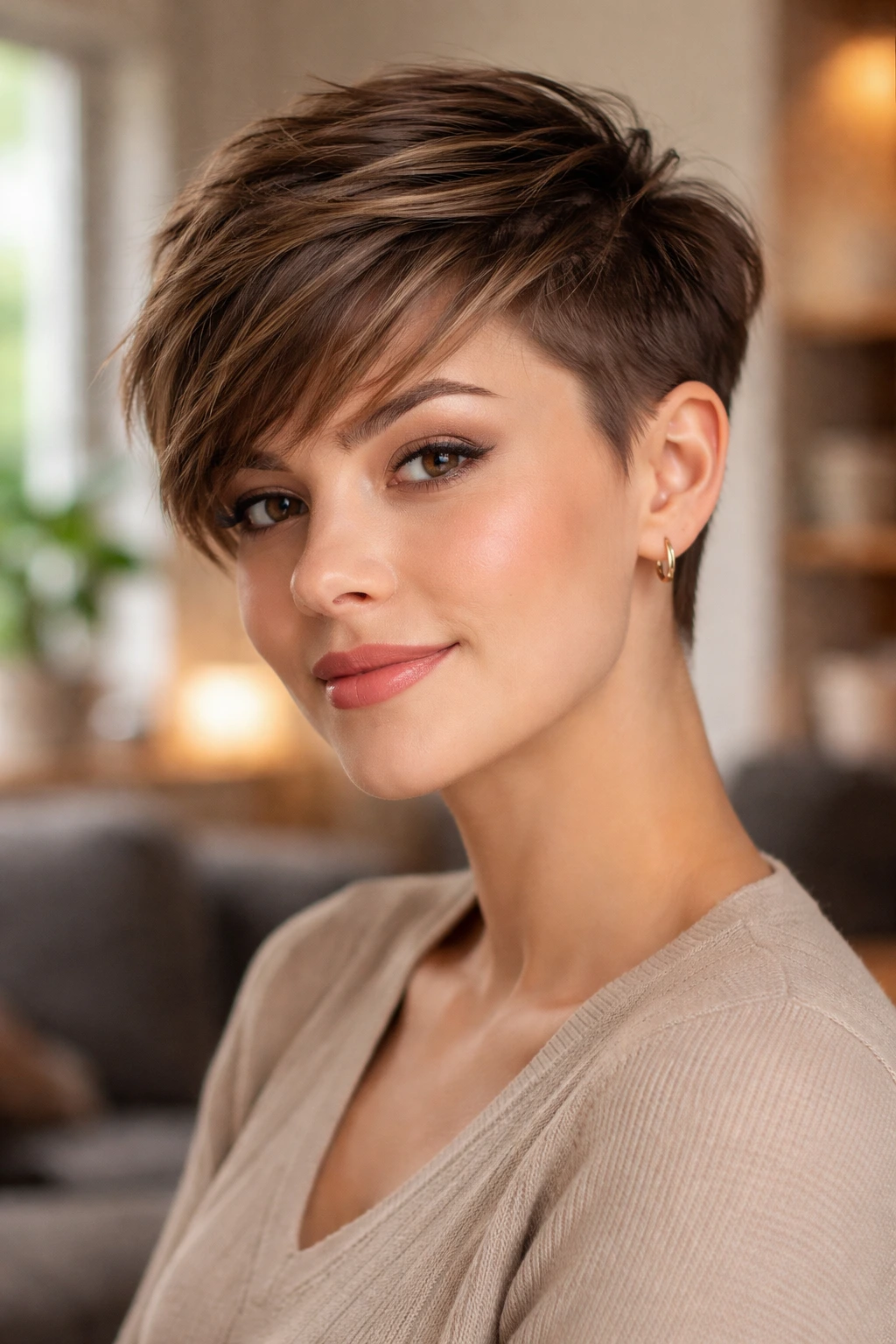
An undercut means the hair on the sides or the nape is shaved or cut extremely close to the scalp. A soft undercut keeps the top long and textured, allowing you to sweep it over. This removes bulk from the sides of your head—exactly where you do not want width if you have a round face.
The Contrast
The visual contrast between the tight sides and the voluminous top is visually arresting. It creates a silhouette that is all about verticality. It is arguably the most effective short cut for slimming a round face.
The Feminine Balance
To keep it from feeling too severe, ensure the top is kept long enough to be soft and touchable. You don’t want a buzz cut; you want a contrast in length.
17. The Blunt “Italian-French” Hybrid
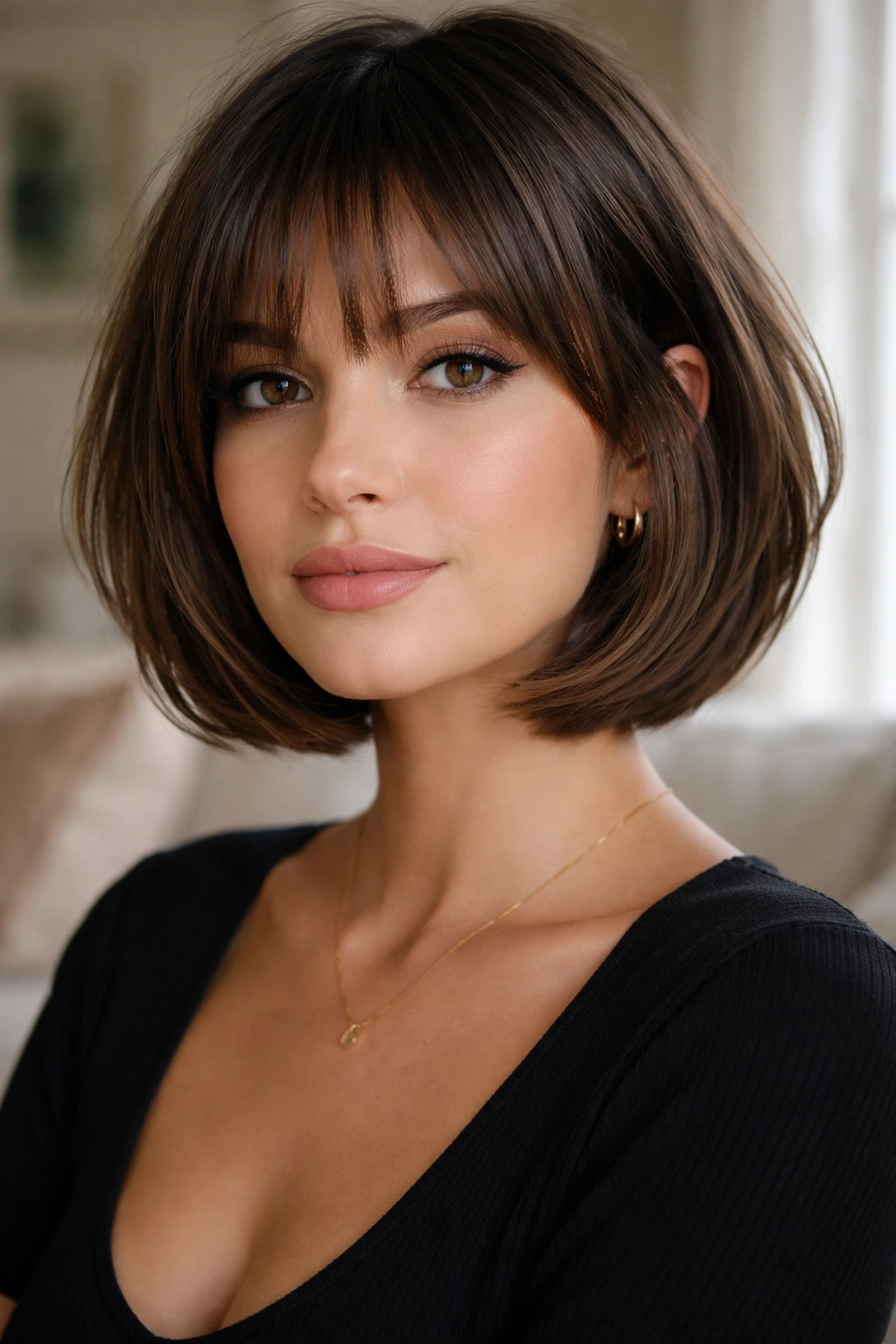
This cut combines the precision of a blunt bob with the internal layering of a shag. You get the solid perimeter of a bob (which adds weight and health to the hair) but the internal layers give it that messy, French-girl volume.
Why This is “Hybrid”
It gives you the best of both worlds. The blunt ends say “I am professional and put together,” while the messy, layered interior says “I am cool and relaxed.” It is a balanced look that doesn’t commit fully to one style.
Best Hair Type
This is best for medium-to-thick hair. If your hair is very fine, the internal layers might make it look stringy.
18. Curly Shag
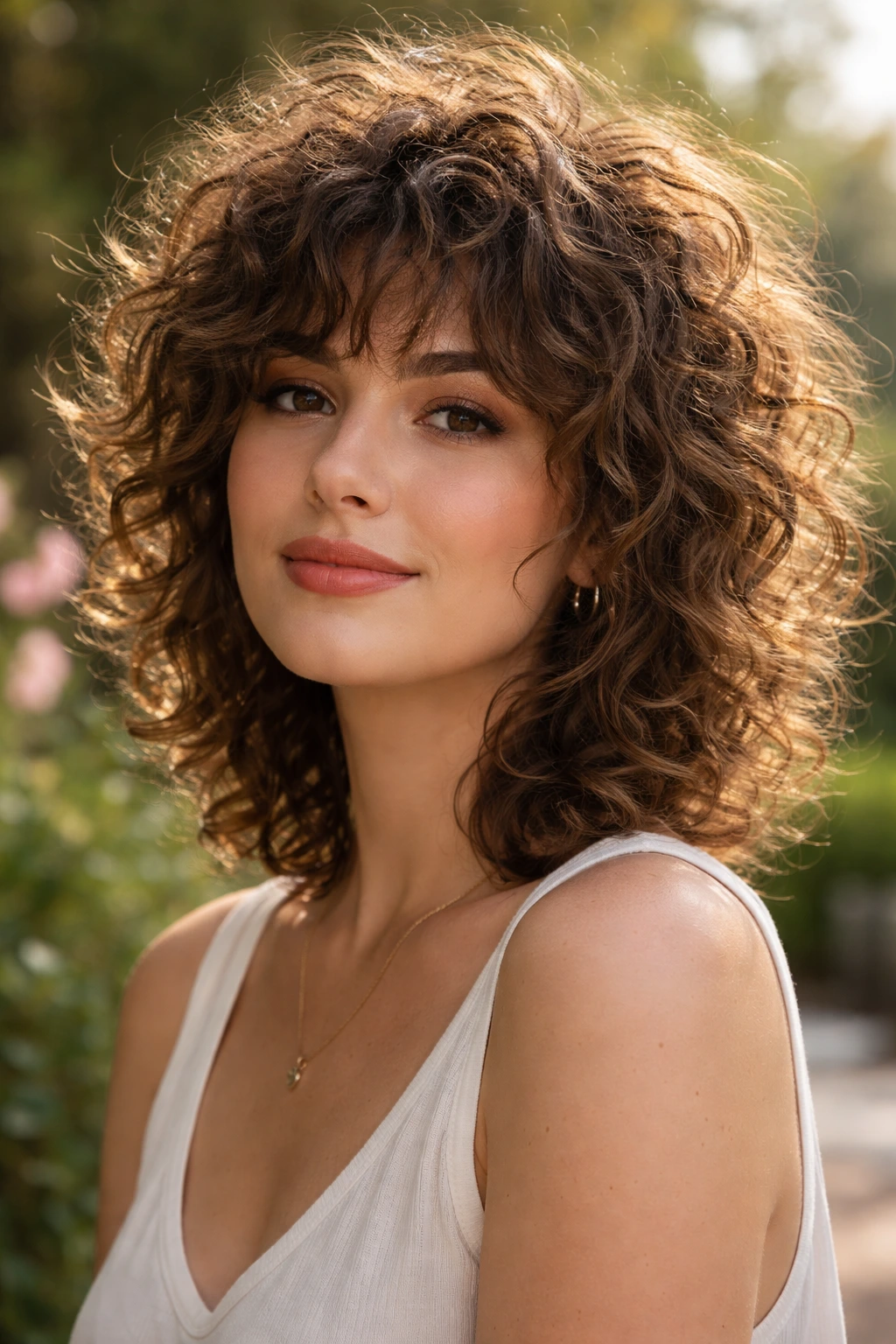
Yes, another shag, but this one is specific to curls. A curly shag utilizes the natural bounce of your curls to create a round shape on top of your head, which is perfect for round faces. The layers are cut to follow your curl pattern, creating a beautiful frame of ringlets around your face.
The Geometry of Curls
Curls naturally create volume. By placing that volume higher up on the head, you counteract the horizontal nature of a round face. The longer pieces in the back and on the sides keep the look from becoming a “fro” and instead make it look intentional.
Styling Secret
Use a spray bottle with water and a tiny bit of leave-in conditioner every morning to reactivate the curls. Do not shampoo every day; it will dry out your curls and make them frizz, which ruins the shape.
19. Ear-Length Bob
This is the ultimate “I’m not playing” bob. It sits right at the earlobe. It is incredibly exposing, but incredibly chic. It draws attention to the cheekbones and the jawline by literally highlighting that area.
Why It Flatters
By ending at the ear, you are removing all hair from the neck and the cheek area. This forces the eye to focus on your eyes and lips. If you love your facial features, this is the cut to showcase them.
Face Shape Caution
If you are self-conscious about your cheeks or your ears, skip this. This cut is for the bold. It is the haircut equivalent of wearing a bright red lip.
20. Center-Parted Textured Crop
A textured crop is a short, layered cut that is kept tight but not undercut. A center part is often feared by people with round faces, but when combined with a textured, messy crop, it actually works. The center part creates a vertical line right down the middle of the face, which acts as a guide for the eye to travel up and down.
The “Messy” Counter-Balance
The texture keeps the center part from looking too “strict.” A center part with stick-straight hair can be unforgiving on a round face. A center part with messy, textured, piecey hair is effortless and cool.
Styling Tip
Use a texturizing powder at the roots. It gives you that gritty, matte look that defines the French aesthetic and holds the center part in place without looking greasy.
21. The “Boyish” Pixie
Think of the iconic 1950s French cinema style. It is short, closely cropped, and incredibly sweet. It is about bringing attention to the neck and the eyes. For a round face, this works because the lack of hair allows the natural structure of your face to shine.
Why Less Is More
Sometimes, adding hair to “frame” a round face just creates more bulk. Removing it entirely creates a clean slate. It is the most confident way to wear hair.
Accessories
Because there is less hair, accessories become more important. A pair of bold earrings or a statement pair of glasses can completely change the vibe of this cut. It’s a versatile canvas.
22. Asymmetrical Bob
An asymmetrical bob is longer on one side than the other. This is a classic trick for round faces because the diagonal line of the cut creates instant, undeniable asymmetry. It breaks the “roundness” of the face immediately.
The Diagonal Advantage
The longer side draws the eye down, while the shorter side lifts the face up. It is a dynamic cut. It isn’t just a static shape; it changes depending on which way you turn your head.
The Styling Constraint
You have to be willing to style it. If you let it air dry haphazardly, the asymmetry can look like a mistake. Spend the five minutes to blow-dry or flat-iron it to ensure the line is crisp and deliberate.
23. Soft, Face-Framing Layers (No Bangs)
If you love your hair length but want it to be more flattering, you don’t always need a drastic chop. Ask for soft, face-framing layers that start at the chin or collarbone. These layers create a cascade of hair that draws the eye downward, lengthening the face.
The “No-Bang” Strategy
Bangs aren’t for everyone. If you find them annoying or hard to manage, you can still get the “framing” effect with long layers. The key is to ensure the shortest layer hits right at the jaw—not at the cheeks. Hitting at the cheeks will add width to your face. Hitting at the jaw will define it.
The Maintenance
This is the lowest maintenance cut on the list. You only need a trim when the ends get split.
24. The Midi-French Bob
This is the “in-between” French bob. It sits just below the chin, maybe an inch or two. It’s a bit longer than the classic, making it feel less severe and a bit more “everyday.” It’s a great length if you want to be able to tuck your hair behind your ears.
Tucking It In
Tucking your hair behind your ears is a subtle way to show off your face shape. When you tuck, you expose the ears and the jawline, creating a more “open” look. It’s a very French habit.
Softness
Because it’s a bit longer, you can afford a bit more wave and volume. This is a very versatile cut that works for almost any hair texture.
25. Tapered Back Pixie
This cut keeps the sides and the nape very short, but leaves length on top. The “taper” refers to how the hair gradually gets shorter toward the neck. This creates a very clean, polished silhouette.
Lifting the Features
By pulling the hair up and away from the neck, you create a lifted appearance for the entire face. It’s the closest thing to a “haircut facelift.” It emphasizes the cheekbones and the jaw, making them appear more prominent.
The Daily Polish
Keep the back clean. The key to a tapered cut is the neck. If it gets fuzzy or grows out, it loses its elegance. This is a cut that demands regular attention, but the reward is a sharp, sophisticated look that is unmatched by longer styles.
Final Thoughts
Choosing a short haircut when you have a round face is less about following arbitrary rules and more about understanding geometry. You want to avoid styles that add volume to the sides of your face, and you want to prioritize styles that add height, vertical lines, or sharp angles to your jaw. Whether you choose the blunt, jaw-grazing precision of a French bob or the messy, vertical lift of a shag, the most important element is how you carry it.
Short hair is not a hiding place. It is a frame. Once you commit to a shorter style, you will find that it not only changes how your face looks, but how you perceive yourself. It is a transition from hiding to highlighting. Start with a style that makes you feel comfortable, but do not be afraid to go shorter if you feel ready. The beauty of hair is that it grows back, but the confidence you gain from a great cut stays with you long after the hair has grown out.
