



Edgy short haircuts for round faces work best when they stop trying to be cute and start building shape. That sounds blunt, but it’s the truth I keep coming back to: if your cheeks are the widest part of your face, the cut needs to do something interesting with the line of sight.
A flat little bob that ends right on the fullest part of the cheeks can make everything look wider. A sharper fringe, a crooked part, a cropped nape, or a broken-up outline changes that fast. Hair texture matters too. Straight hair can carry a hard line; wavy hair needs more movement; curls need shape control or they balloon into a halo that does no favors.
I’ve always liked short cuts that look deliberate from the front and a bit unruly from the side. That’s where the edge lives. Not in trying too hard, and not in making the head look swallowed by layers either. The sweet spot is a cut that gives you angles, lift, and a little attitude without turning into a helmet.
1. Textured Pixie With a Side-Swept Fringe
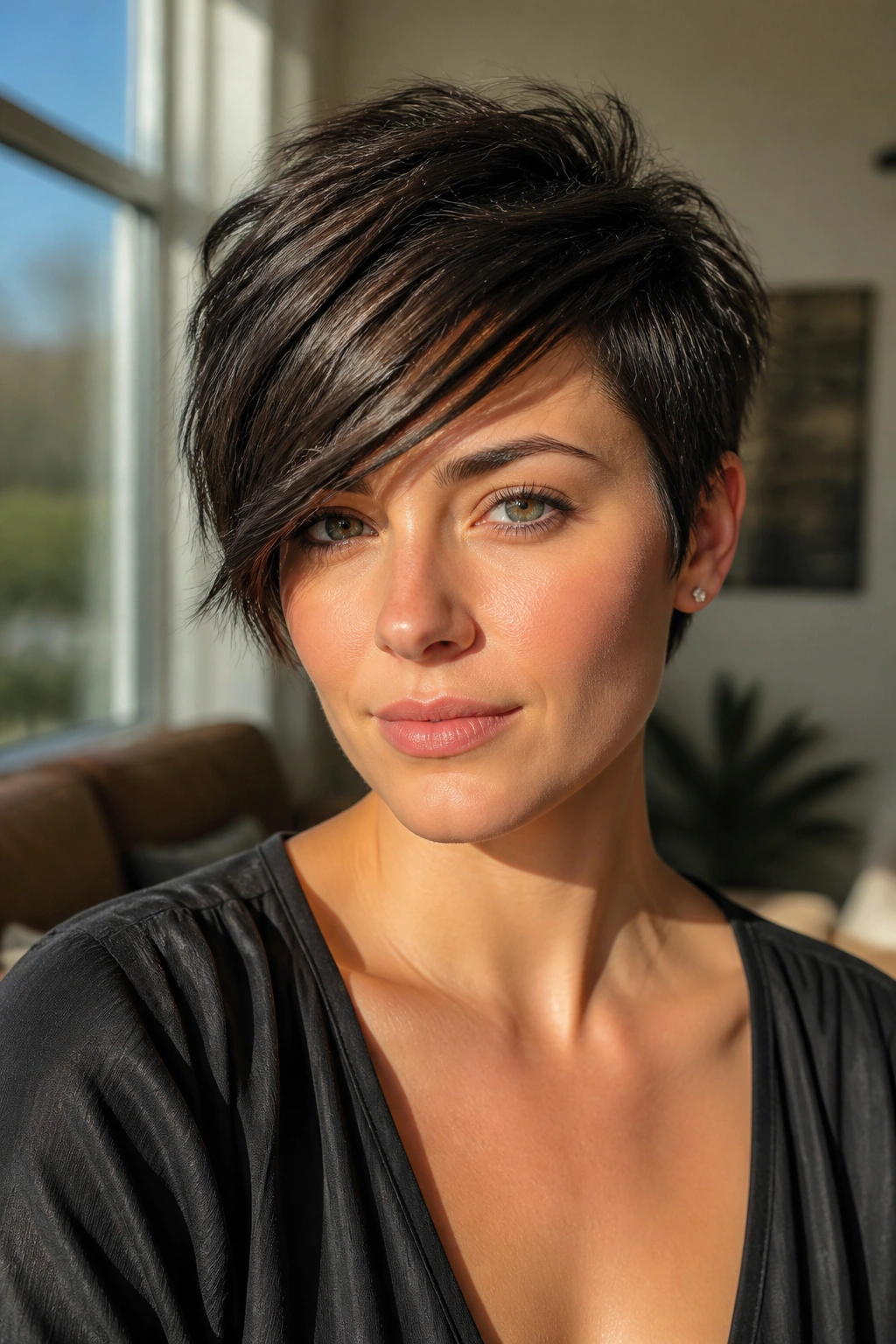
This is one of the easiest edgy short haircuts for round faces because it gives you a diagonal line right where you want it. The fringe sweeps across the forehead instead of stopping straight across, and that single move changes the whole mood of the cut. It feels sharp, but not severe.
Why It Works
Keep the top around 2½ to 3½ inches, with the sides shorter and the nape tight. Ask for point cutting so the ends stay soft and piecey rather than blocky. That slight messiness is doing real work here — it stops the cut from sitting like a solid shape on top of fuller cheeks.
A matte paste or light clay is enough. Work it through the roots first, then pinch the fringe into place with your fingers. You want the hair to look moved, not lacquered.
That’s the whole trick. Clean shape, broken edge.
2. Asymmetrical Pixie Bob
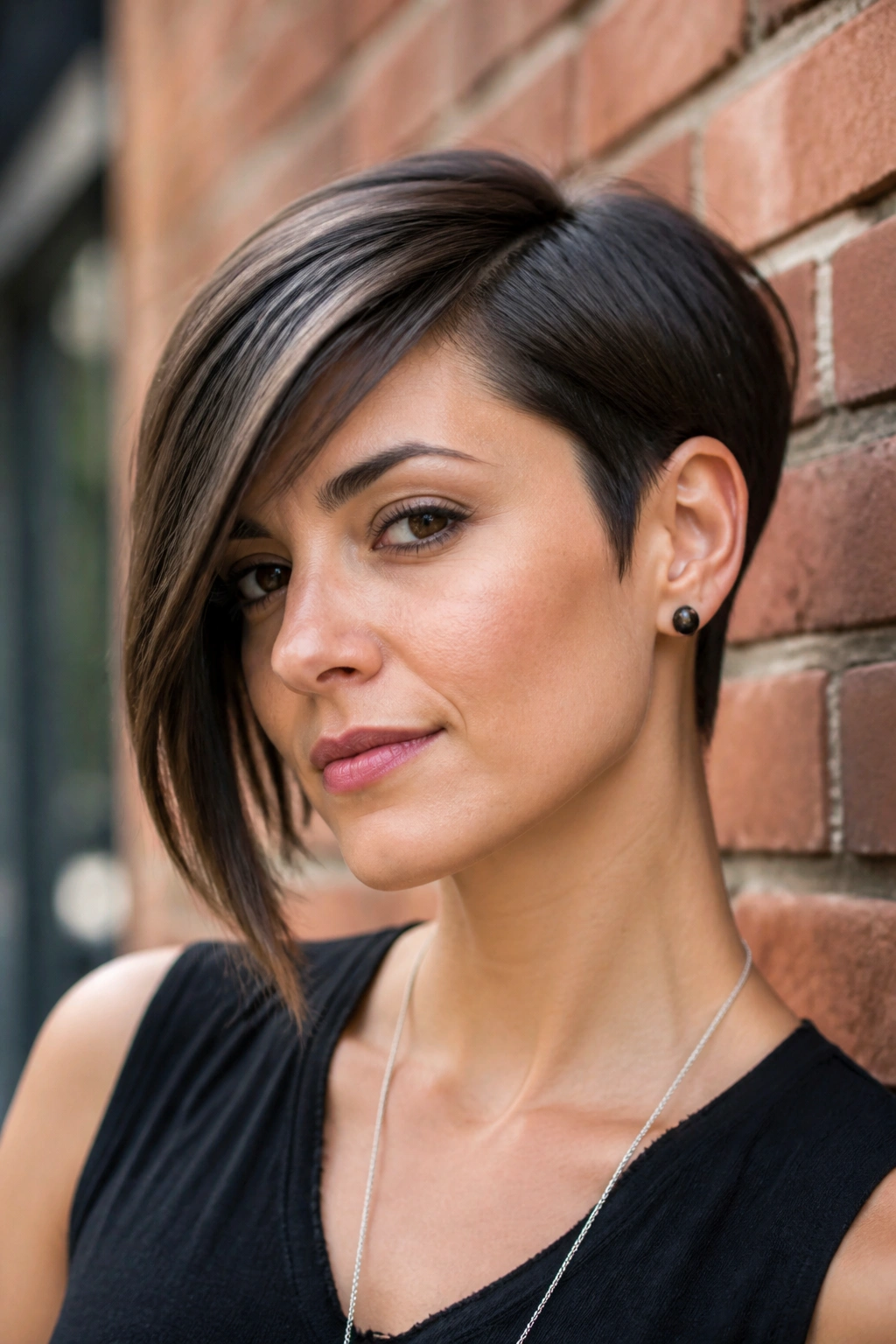
An asymmetrical pixie bob is sneaky good on a round face because it borrows the best parts of a pixie and a bob without sitting too politely in either camp. One side sits closer to the ear. The other falls longer, sometimes just brushing the jaw or cheekbone. That uneven hemline creates interest right away.
- Ask for one side to stay noticeably shorter than the other.
- Keep the back tapered so the cut doesn’t puff out at the nape.
- Let the longer side skim the face instead of hugging it.
This cut works especially well if you like to tuck hair behind one ear. The exposed side gives you a clean line, while the longer side softens the face in motion. It’s edgy because it looks intentional from every angle, and that matters more than most people think.
3. Micro Bob With a Deep Side Part
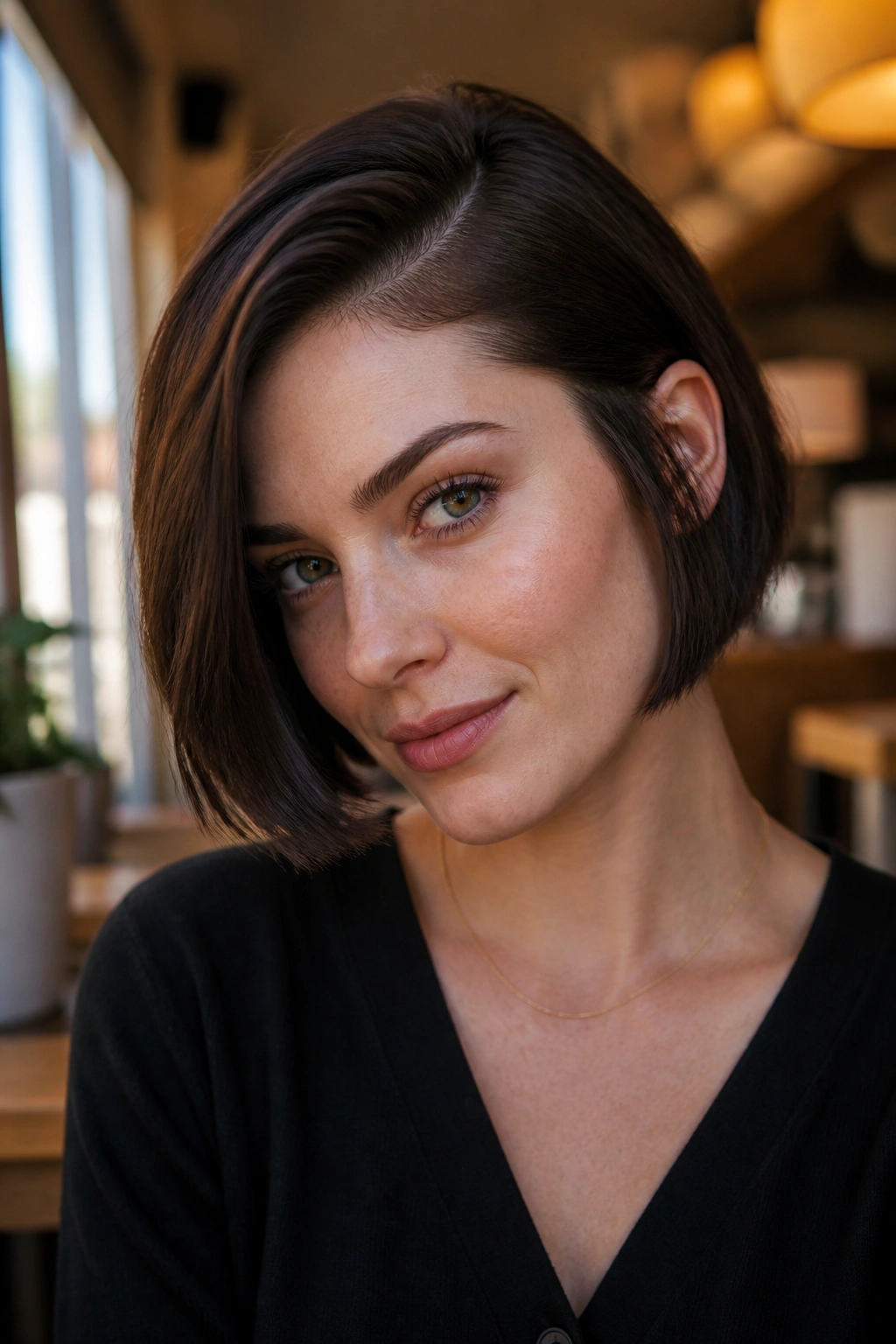
If your hair is pin-straight and refuses to hold much texture, a micro bob with a deep side part can still look sharp. The trick is to keep the line short enough to feel modern, but not so blunt that it lands exactly on the widest part of the face. I’d rather see it sit just below the chin or tuck behind the jaw.
A deep side part moves the weight off-center and creates a stronger shape at the crown. That shift matters. It pulls the eye upward and gives the face a longer read without needing extra length. If you want more edge, let the ends be slightly chipped instead of perfectly even.
This one is especially nice with a clean ear tuck on one side. Small detail. Big effect.
4. Choppy French Bob
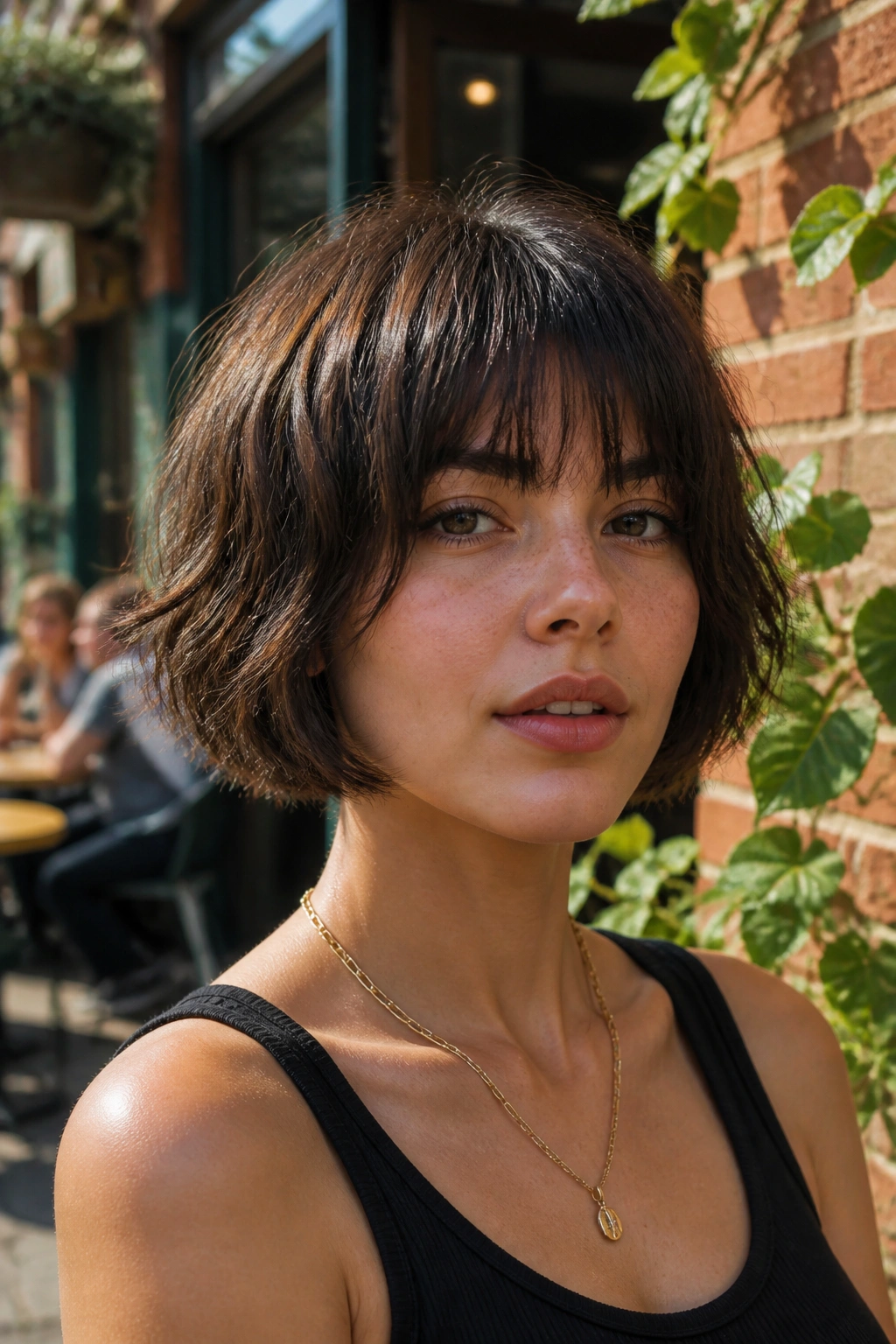
Why does the choppy French bob work so well on round faces? Because it refuses to be too neat. The blunt bob can be a trap when the hemline lands right on the cheeks, but a broken, piecey French bob looks lighter and more deliberate.
What to Ask For
Ask for soft interior layers, not stacked volume. You want the ends to feel fractured, with a fringe that brushes the brows or splits slightly off center. A razor can help here, though a sharp shear cut with point detailing works too. Keep the overall line around the jaw or a touch above it.
The attitude comes from the finish. Air-dry with a light cream if your hair bends naturally, or use a 1-inch iron to bend a few sections in different directions. Flat, uniform waves are the enemy of this cut. A little unevenness is the point.
5. Ear-Length Crop With Wispy Bangs
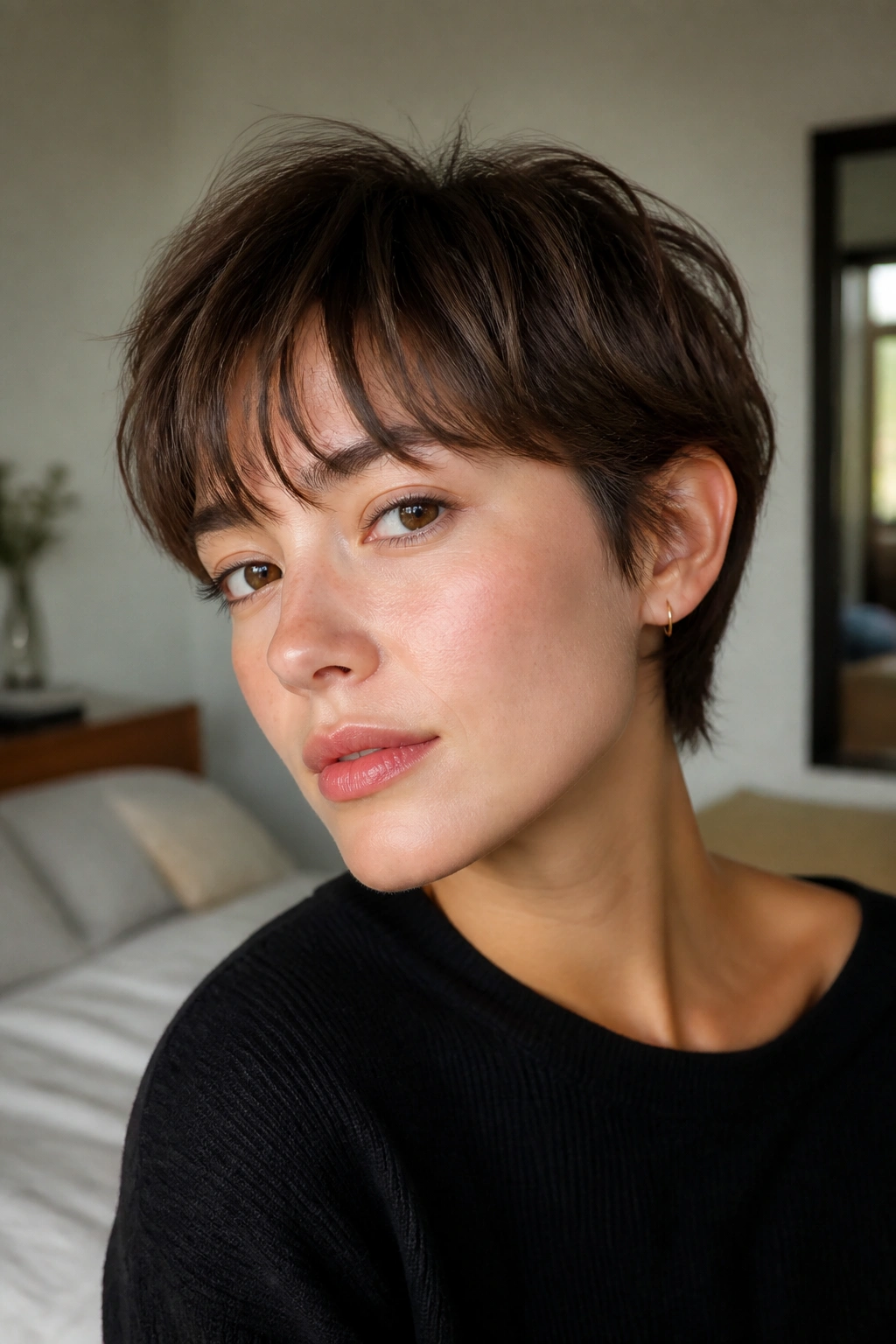
This one is tiny, and that’s why it works. An ear-length crop opens up the neck, shows off earrings, and puts the face front and center. On a round face, that exposure can look bold in the best way, especially when the bangs are wispy instead of dense.
The fringe should be broken, airy, and a little irregular. Heavy baby bangs can box the face in if they’re too thick, but a feather-light fringe gives you the same edge with less width through the forehead. Keep the sides close and the outline soft around the temples.
I like this cut on fine hair and on anyone who hates spending time with a blow dryer. A tiny amount of styling cream is enough. Finger-dry, tuck one side, and leave the rest alone.
6. Angled Jawline Bob
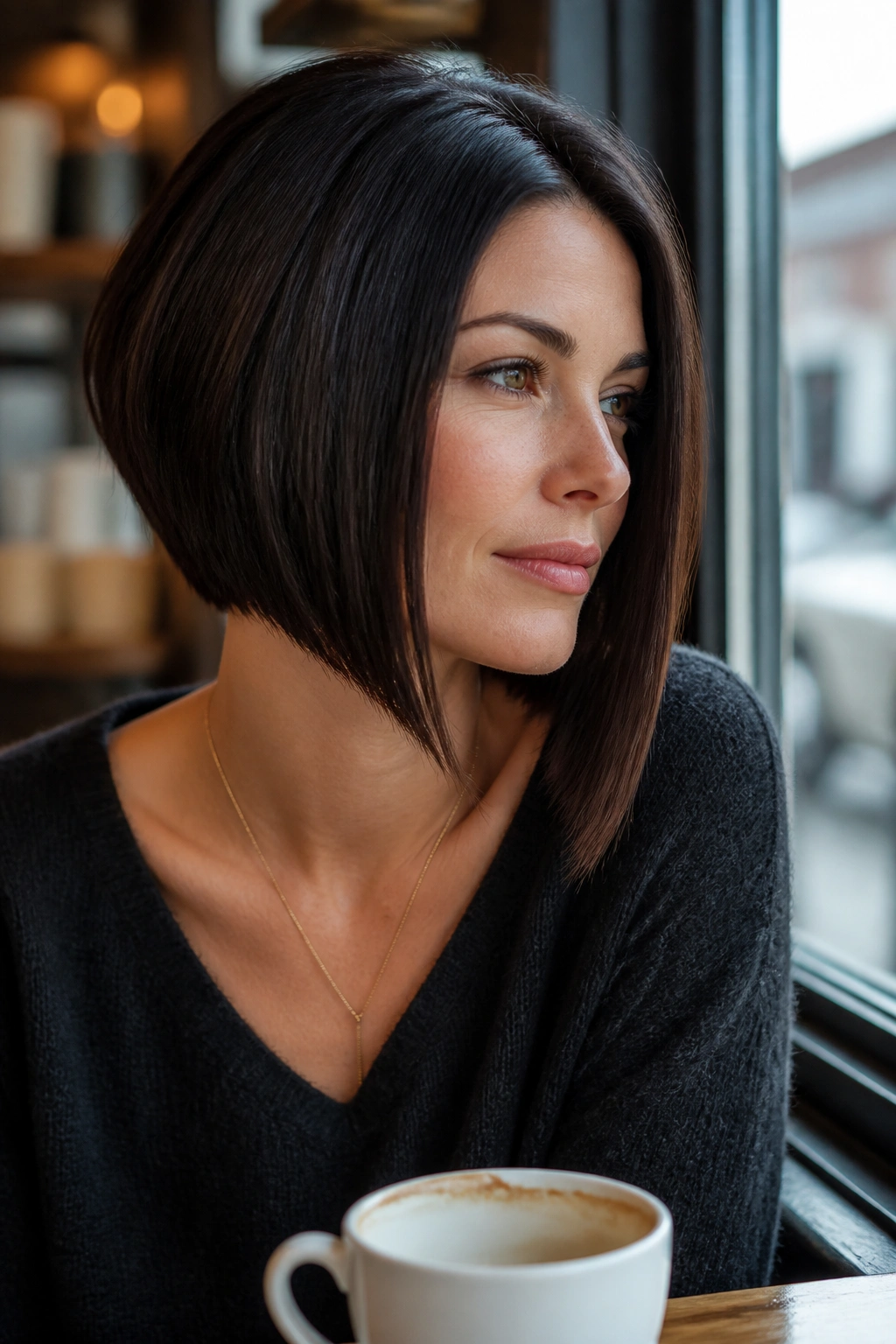
A sharply angled bob is one of the most reliable choices for round faces because it creates a clean downward line. The back sits shorter, the front drops longer, and the whole cut points the eye from the nape toward the chin. Simple. Direct. Effective.
Unlike a straight bob, this version doesn’t box the cheeks in. The front pieces can be cut an inch or two longer than the back, with the longest point landing below the jaw. That length difference is doing the heavy lifting. It gives the face somewhere to go.
If you wear your hair smooth, this cut looks crisp and expensive without trying. If you wear it slightly wavy, it gets a little rebellious, which I prefer. Either way, ask for the line to be obvious enough that you can actually see the angle.
7. Curly Layered Pixie
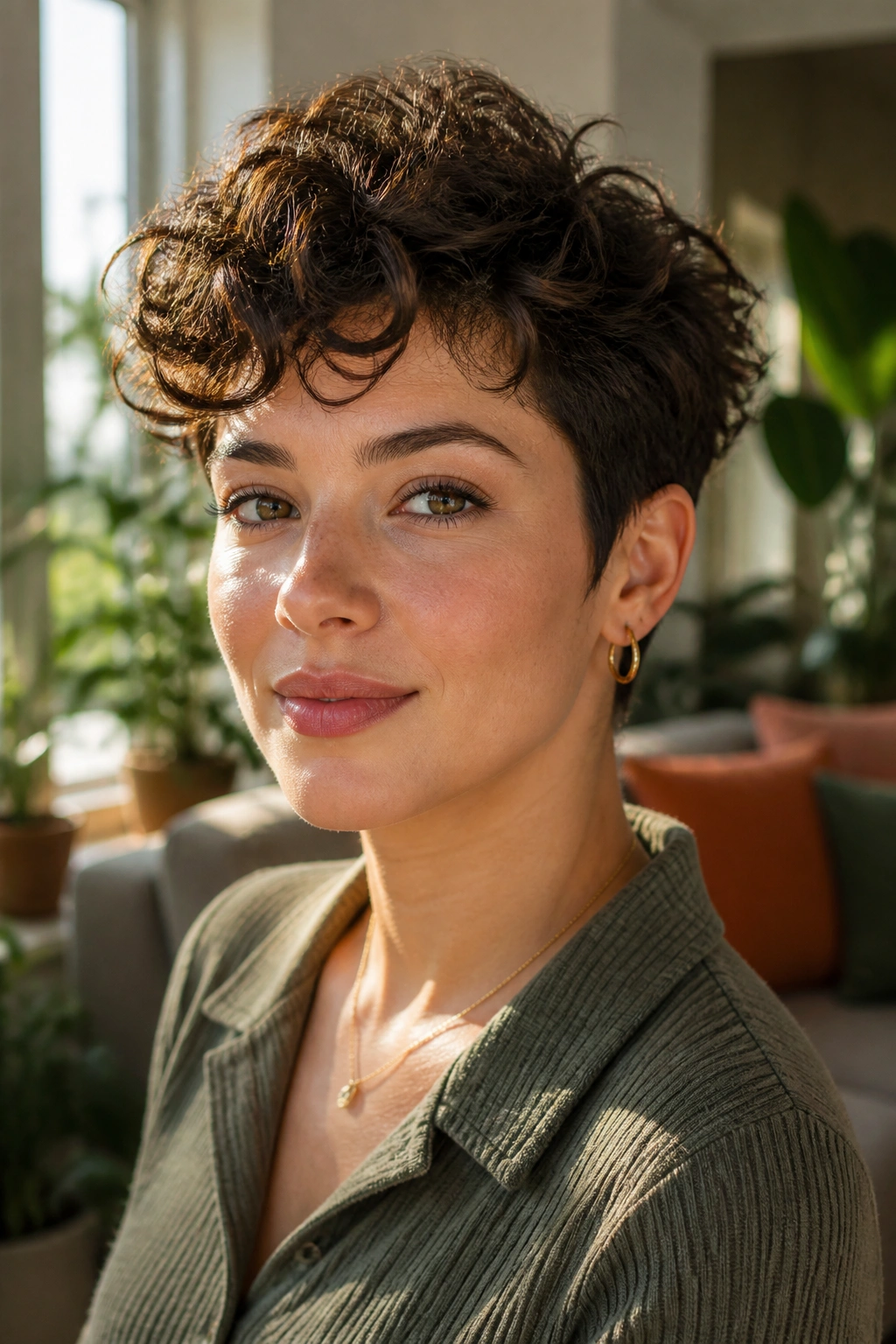
Curly hair needs a different kind of edge. A curly layered pixie keeps the sides tidy while letting the curls live on top, where they create height instead of width. That vertical lift helps a round face read a little longer, and it keeps the shape from turning into a puff ball.
Why the Shape Matters
A stylist should cut this by curl pattern, not by guessing at a dry shape and hoping for the best. The top can stay slightly longer — around 3 to 4 inches for many curl types — while the sides are tapered close enough to let the curls float upward. Too much thinning is a mistake. It can create frizz that sits wide at the temples.
Use a curl cream, then scrunch in a bit of gel if you want stronger hold. Let the curls set without touching them too much. The edge comes from the contrast between the clean sides and the lively top.
8. Undercut Pixie With Long Top
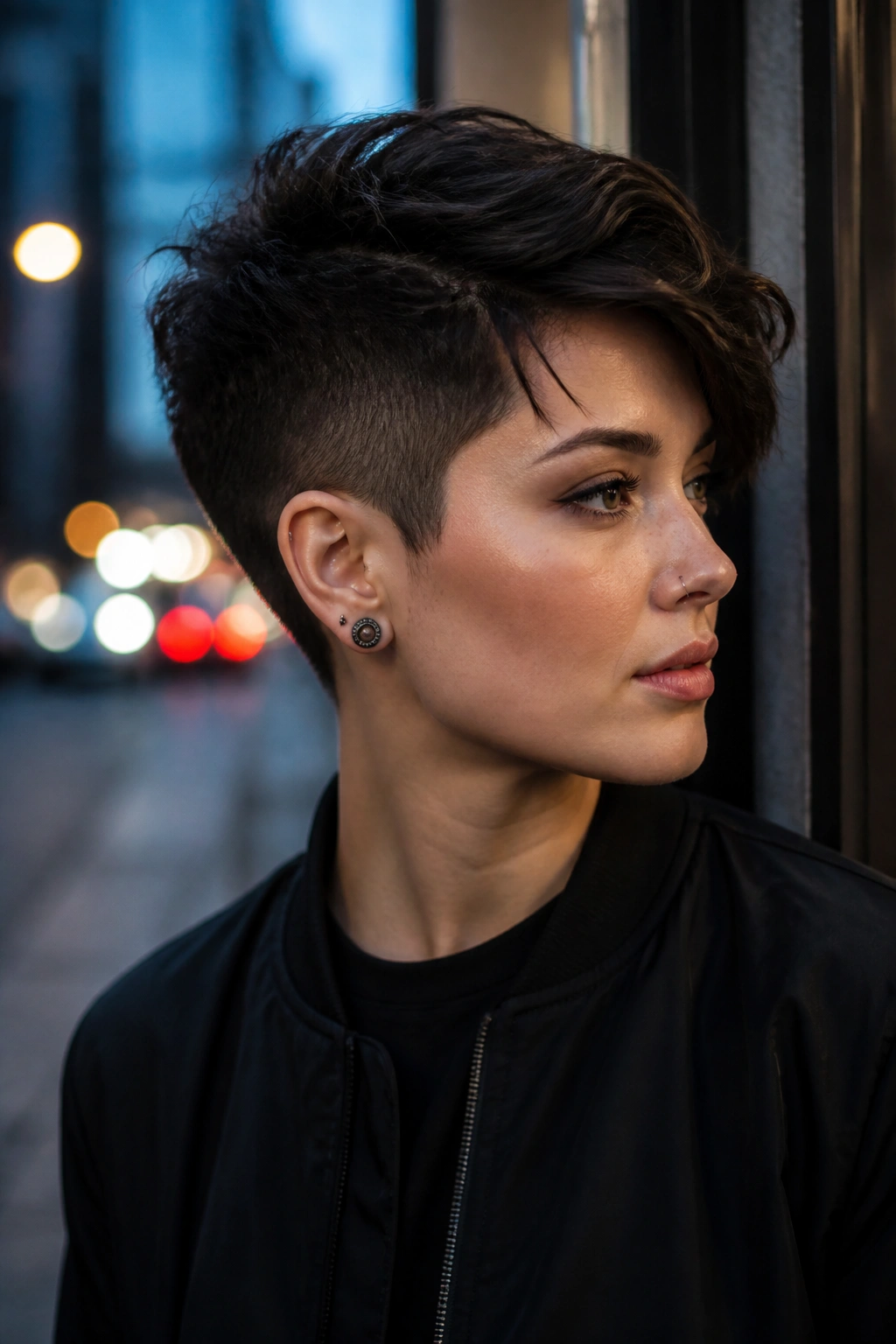
An undercut pixie with a long top is not shy. It puts the sides on a short leash — clippers or a very close taper — and leaves the top long enough to sweep, spike, or flop forward depending on your mood. That contrast is what makes it feel edgy instead of sweet.
- Keep the top around 4 to 6 inches if you want real styling options.
- Ask for the undercut to hug the head, especially behind the ears.
- Leave some length at the fringe so you can push it forward or over.
For a round face, this cut works because it changes the silhouette fast. The head looks narrower at the sides and taller through the crown. That’s a strong shape, and it photographs with real bite. Use a blow dryer first, then finish with paste or fiber cream.
9. Bixie Cut
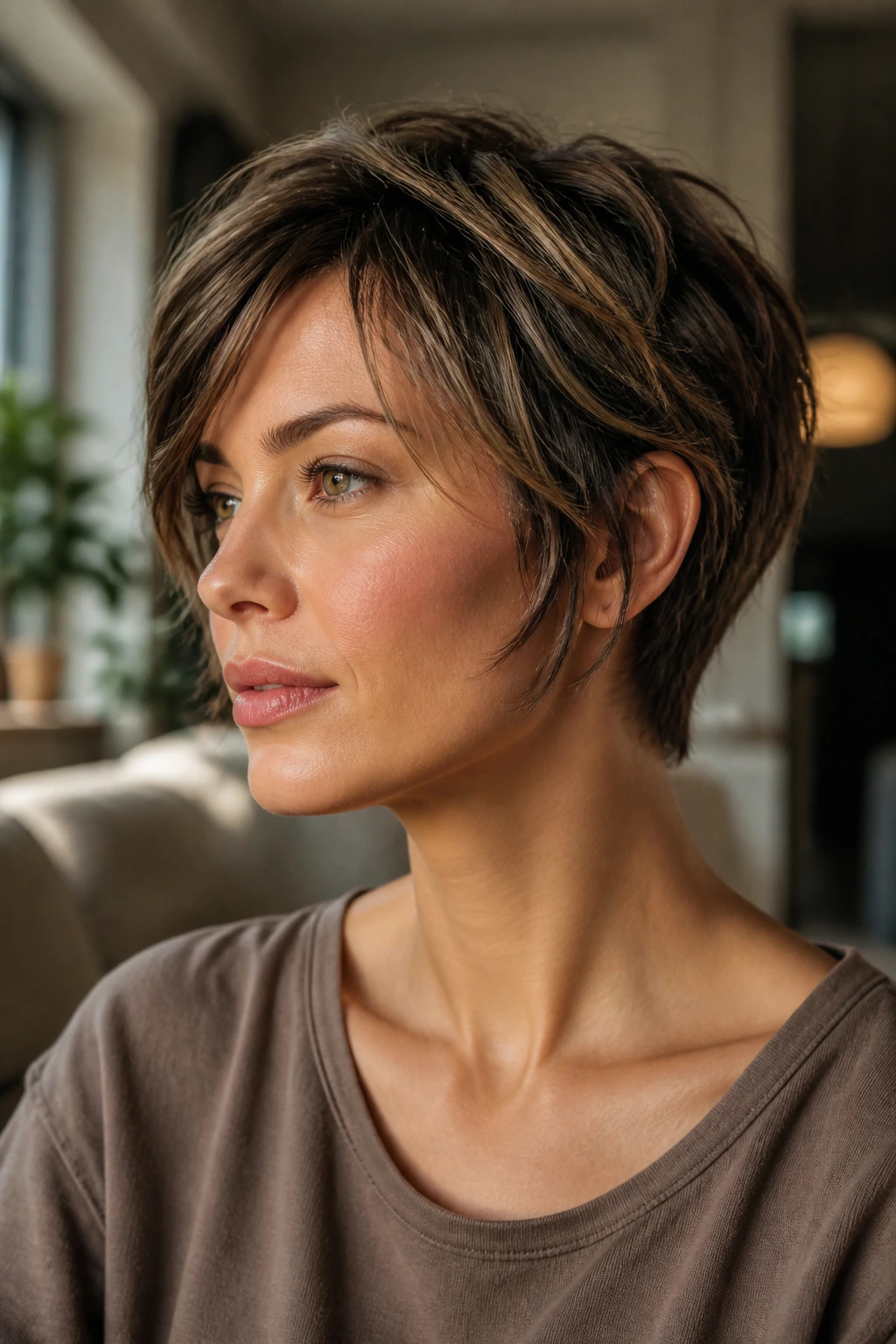
The bixie sits between a bob and a pixie, and that in-between quality is exactly why I like it for round faces. It’s softer than a true pixie, but it has more lift and grit than a tidy bob. The result feels lived-in rather than precious.
Ask for shattered layers around the cheekbones and ears. You want movement, not a smooth sheet of hair. A little length at the front keeps it flattering, while the shorter back gives the neck some shape. It’s a very good cut if you want something that grows out without turning awkward overnight.
This one looks especially good when it’s slightly mussed. A mist of texturizing spray, a quick scrunch, and done. No need to overwork it.
10. Shaggy Bob With Curtain Fringe
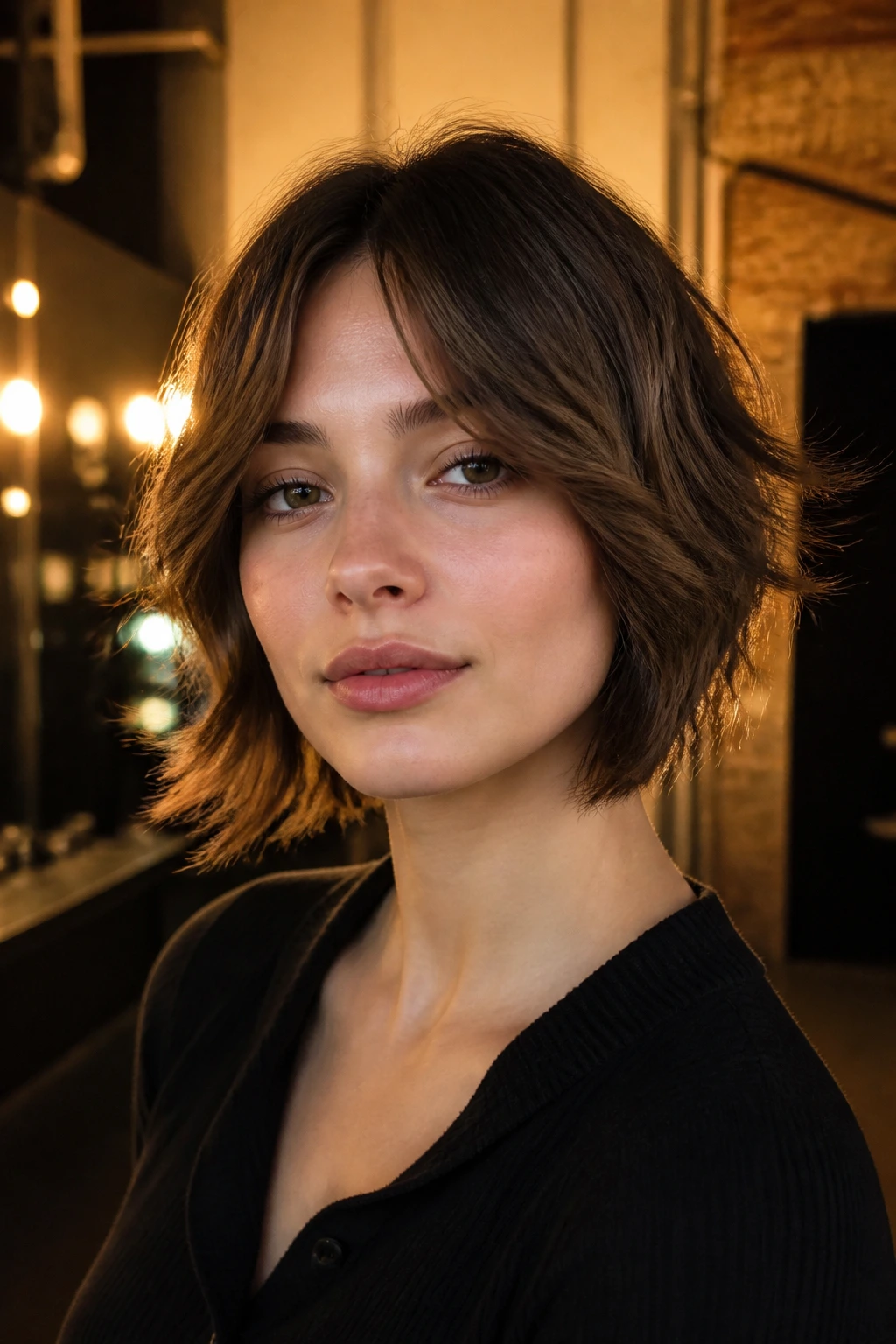
A shaggy bob with a curtain fringe brings a little rock-and-roll into the room without going full mullet. The fringe splits near the center and falls away from the face, which helps break up a round shape without adding heaviness at the cheeks. That matters.
The layers should feel feathered, not choppy in a jagged, overdone way. You want movement through the ends and a little swing when you turn your head. A chin-length version can work, but I usually like it just below the jaw so the outline doesn’t sit right on the widest part of the face.
This is a good one if you like a softer kind of edge. It has attitude, but it doesn’t shout.
11. Soft Mullet
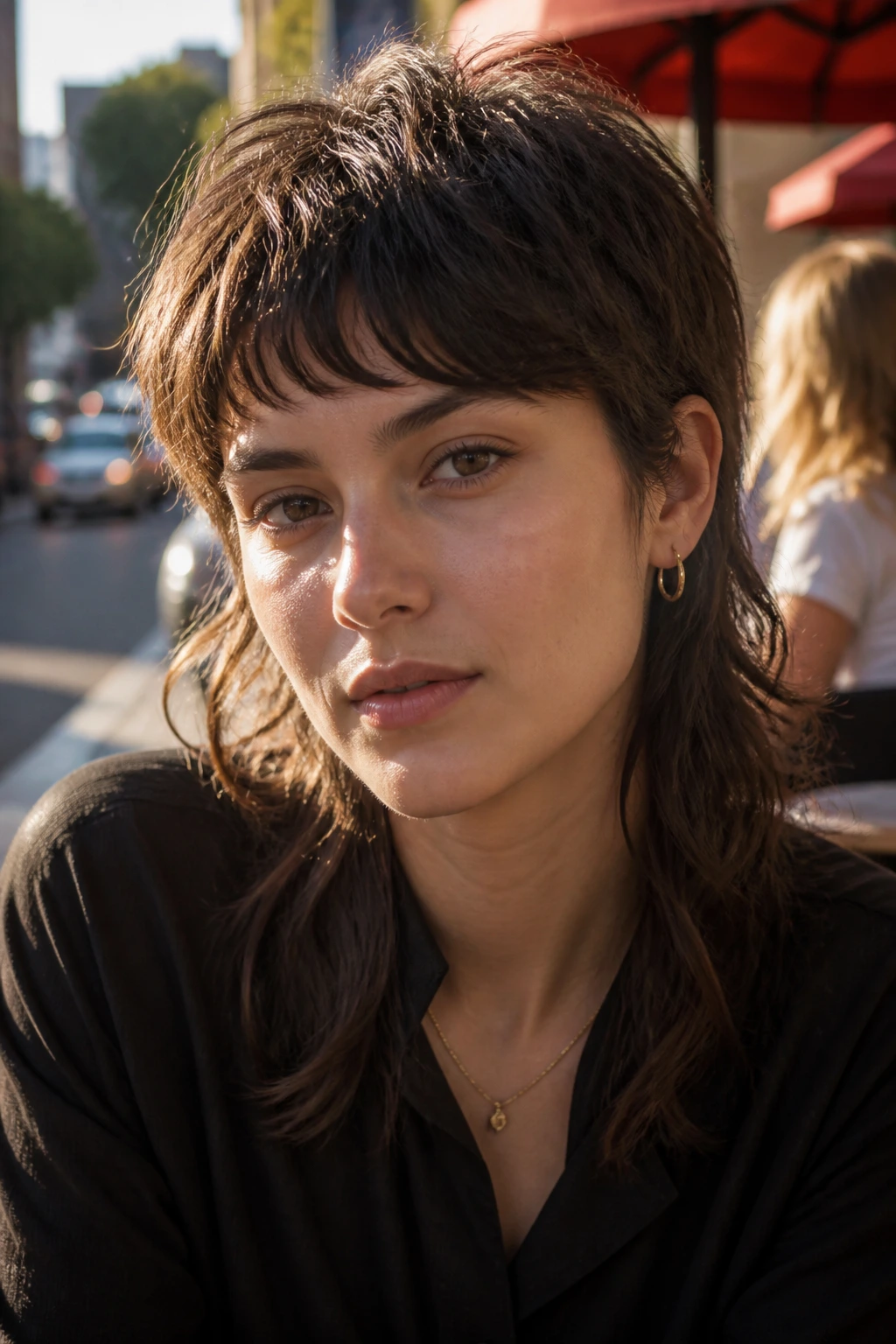
Soft mullets are having a long life for a reason: they give you shape up top, movement through the sides, and extra length at the nape without looking like a costume. On round faces, that longer back section can be useful because it pulls the shape downward while the shorter crown builds lift.
What Makes It Different
The sides stay narrower, the top is shaggy, and the back is just long enough to suggest a tail without becoming dramatic. That contrast is the whole point. It’s a cut for people who want a bit of grit but don’t want a hard punk look.
Keep the transition between sections soft. If the difference is too abrupt, it can feel costume-y fast. A razor or point cut keeps the movement relaxed. A matte styling cream gives it a lived-in finish.
12. Razor-Cut Wolf Bob
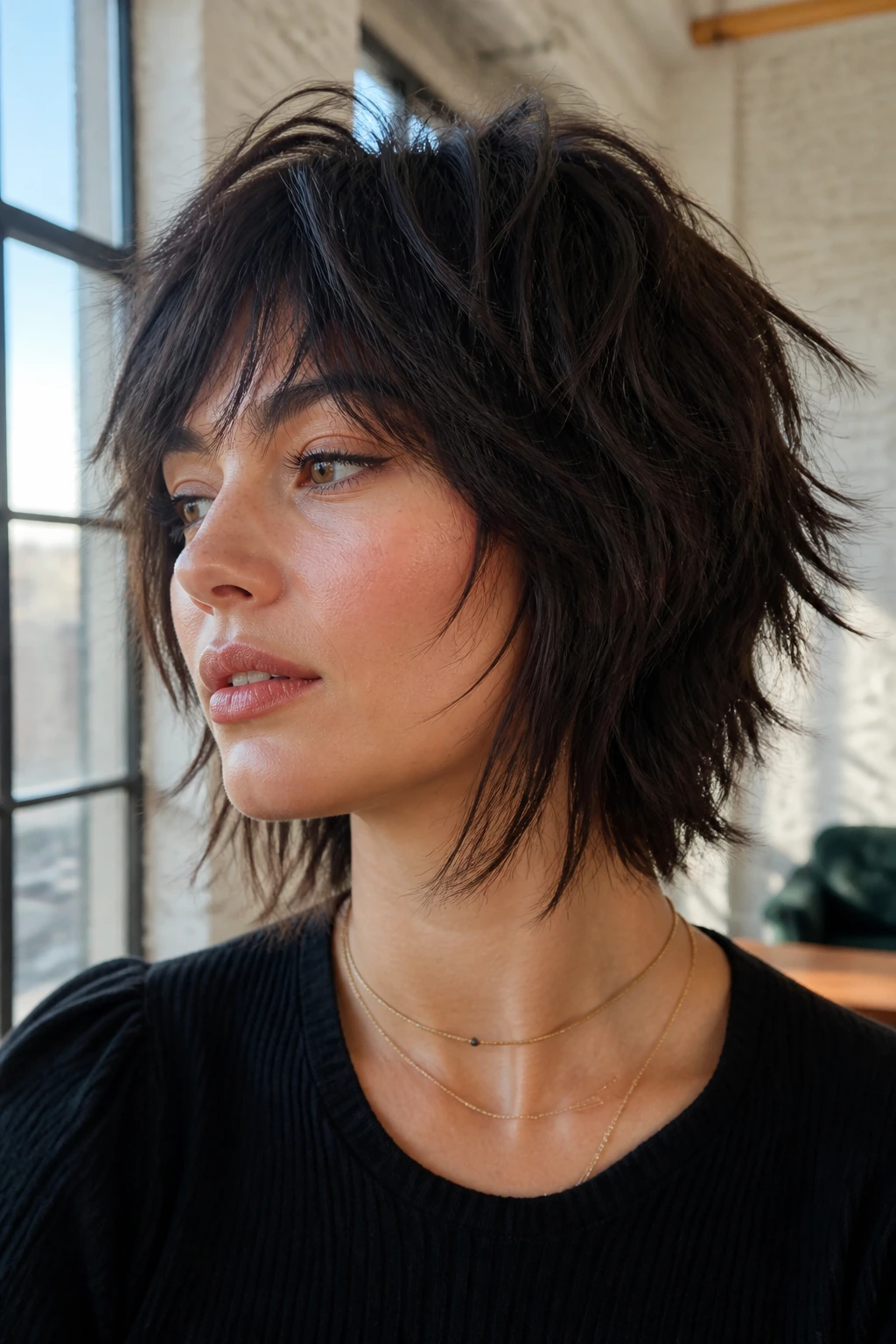
The wolf bob is the shag’s sharper cousin. It uses razored ends, short layers near the crown, and a slightly wild outline to create movement that feels messy in a good way. On a round face, the messiness helps because it breaks the circle instead of echoing it.
Unlike a classic bob, this version is not about precision. It’s about irregularity, which sounds odd until you see it work. The top gets lift, the sides get a little air, and the ends sit jagged instead of clean. That jagged edge is flattering because it adds visual angles.
I like it best on thicker hair, where the texture can support the shape. Fine hair can wear it too, but you’ll need a texturizing mist and a bit of root lift.
13. Tapered Nape Bob
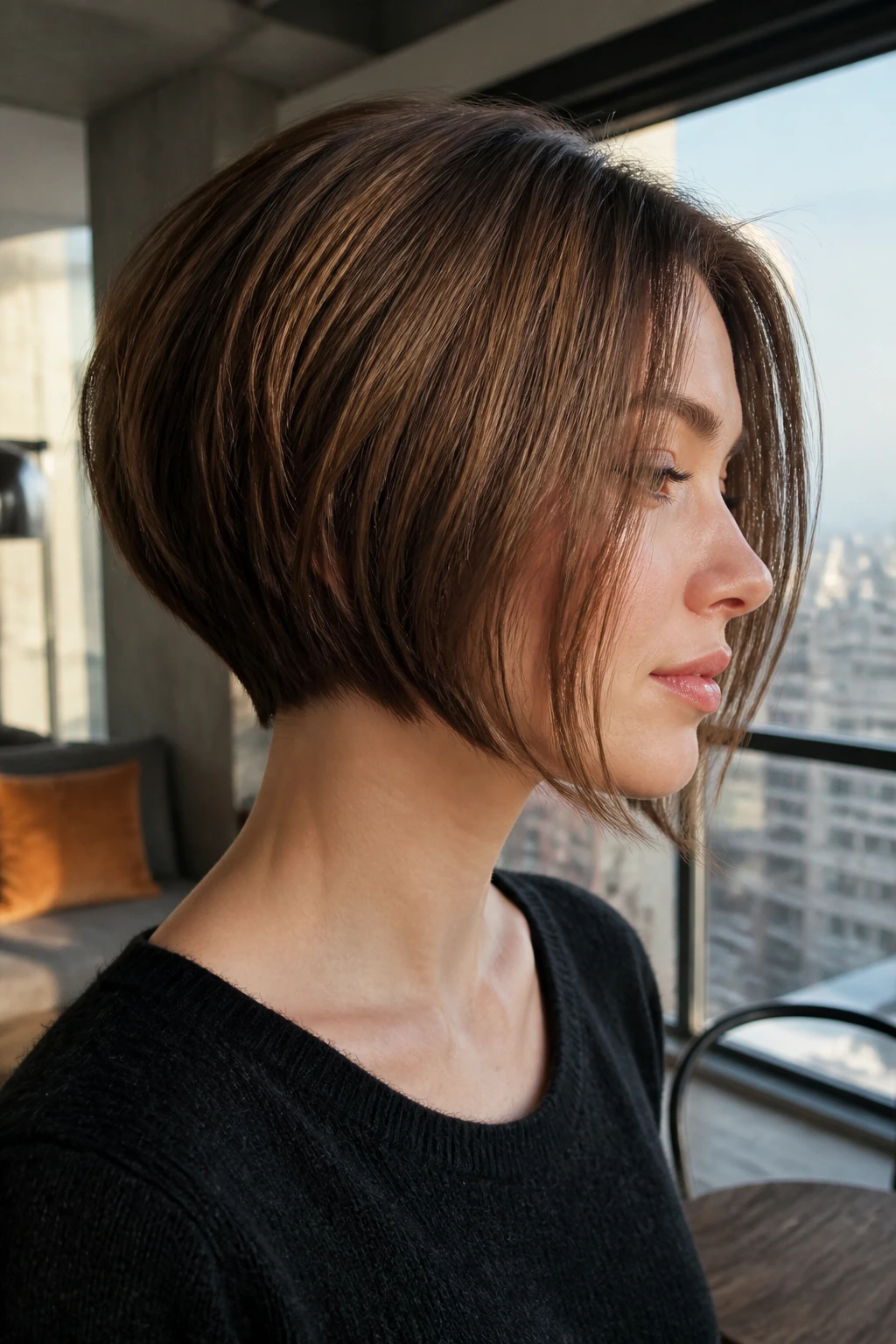
A tapered nape bob is one of those cuts that looks quiet from the front and clever from the side. The back hugs close to the neck, which keeps the silhouette narrow below the ears, and the front stays longer so the face doesn’t feel boxed in. It’s tidy, but not bland.
That taper is useful for round faces because it changes the balance of the haircut. Instead of building width at the cheeks, it draws the eye down to the jaw and neck. If your hair is dense, this can also remove that bulky triangle shape that bobs sometimes get when they grow out.
Keep the ends blunt enough to feel intentional. Too many feathery layers can make the shape lose its edge. A clean neckline matters here.
14. Piecey Crop With Baby Bangs
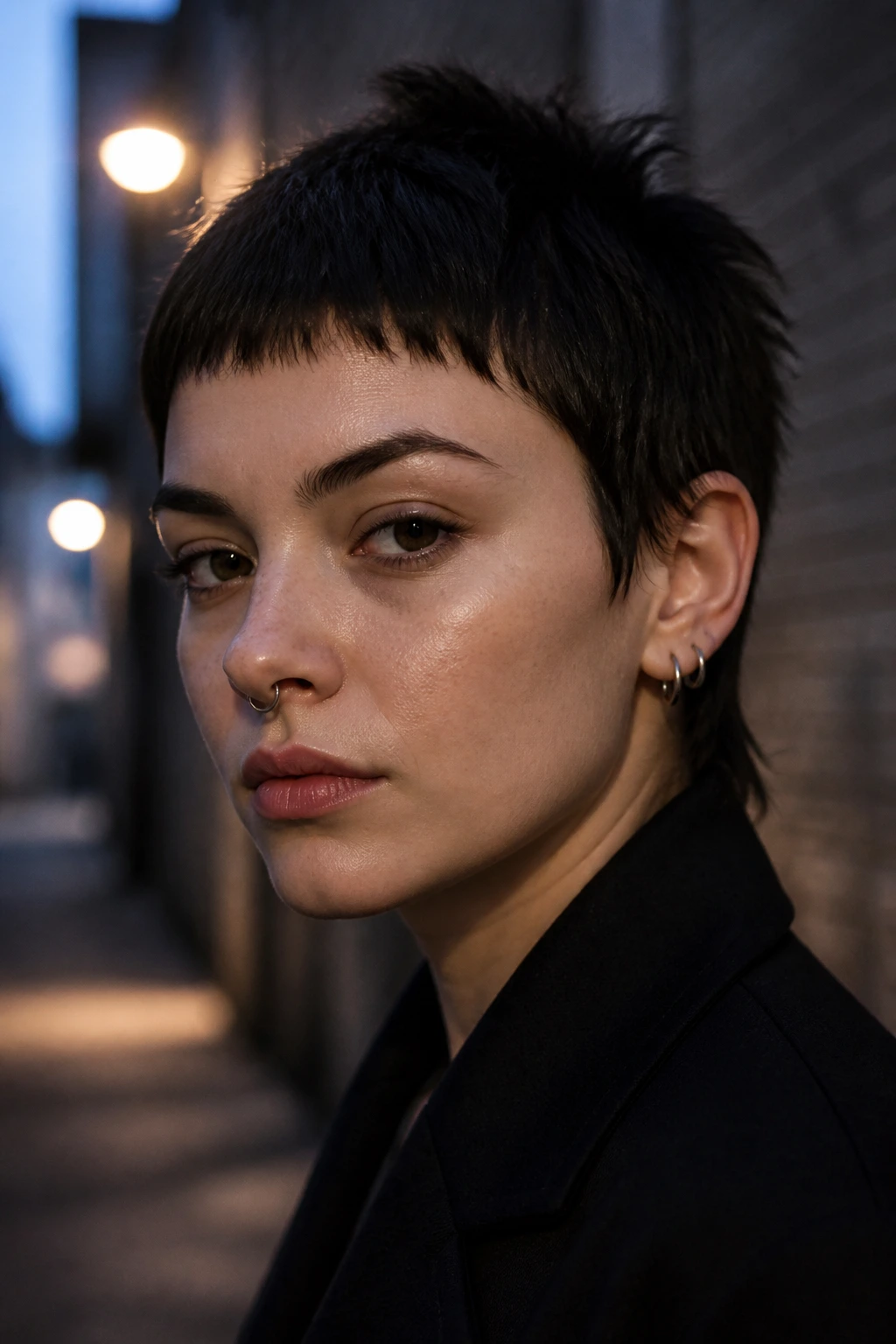
Piecey crop with baby bangs sounds risky, and honestly, it can be. But when it’s done with enough restraint, it looks sharp and editorial. The trick is to keep the bangs sparse and broken, not thick and solid. That matters on a round face because a heavy fringe can swallow the forehead.
The rest of the cut should stay short and separated, almost like little shards of hair around the head. You want texture at the crown and a bit of space around the ears. That negative space keeps the cut from feeling boxed in.
A tiny amount of styling paste goes a long way. Press it into the fringe and pinch a few pieces around the temples. The result is bold without being fussy.
15. Slicked-Back Pixie
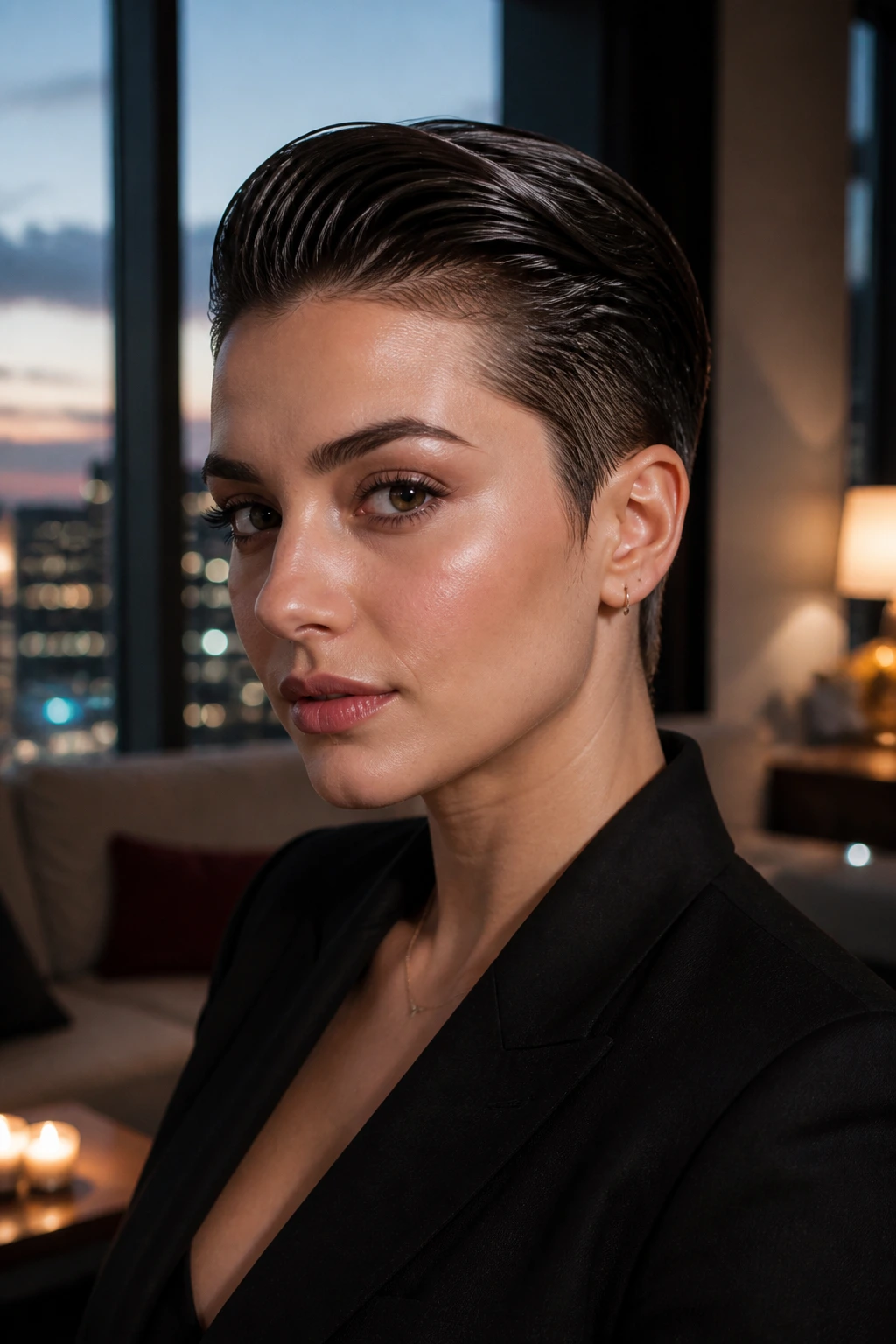
A slicked-back pixie is the haircut you wear when you want your face, not your hair, to do the talking. It exposes the forehead, opens the cheekbones, and creates a clean vertical line from hairline to crown. On a round face, that openness can be striking.
This is not about drowning the hair in gel. Keep the top long enough to comb back with control, then use a light gel or styling cream for shine and hold. The sides should stay close so the shape doesn’t widen near the ears. If you want a little more edge, leave one longer front piece and let it fall loose.
It works especially well for evenings, sharp earrings, and people who do not mind a more direct look.
16. Wavy Chin-Skimming Bob With Longer Front
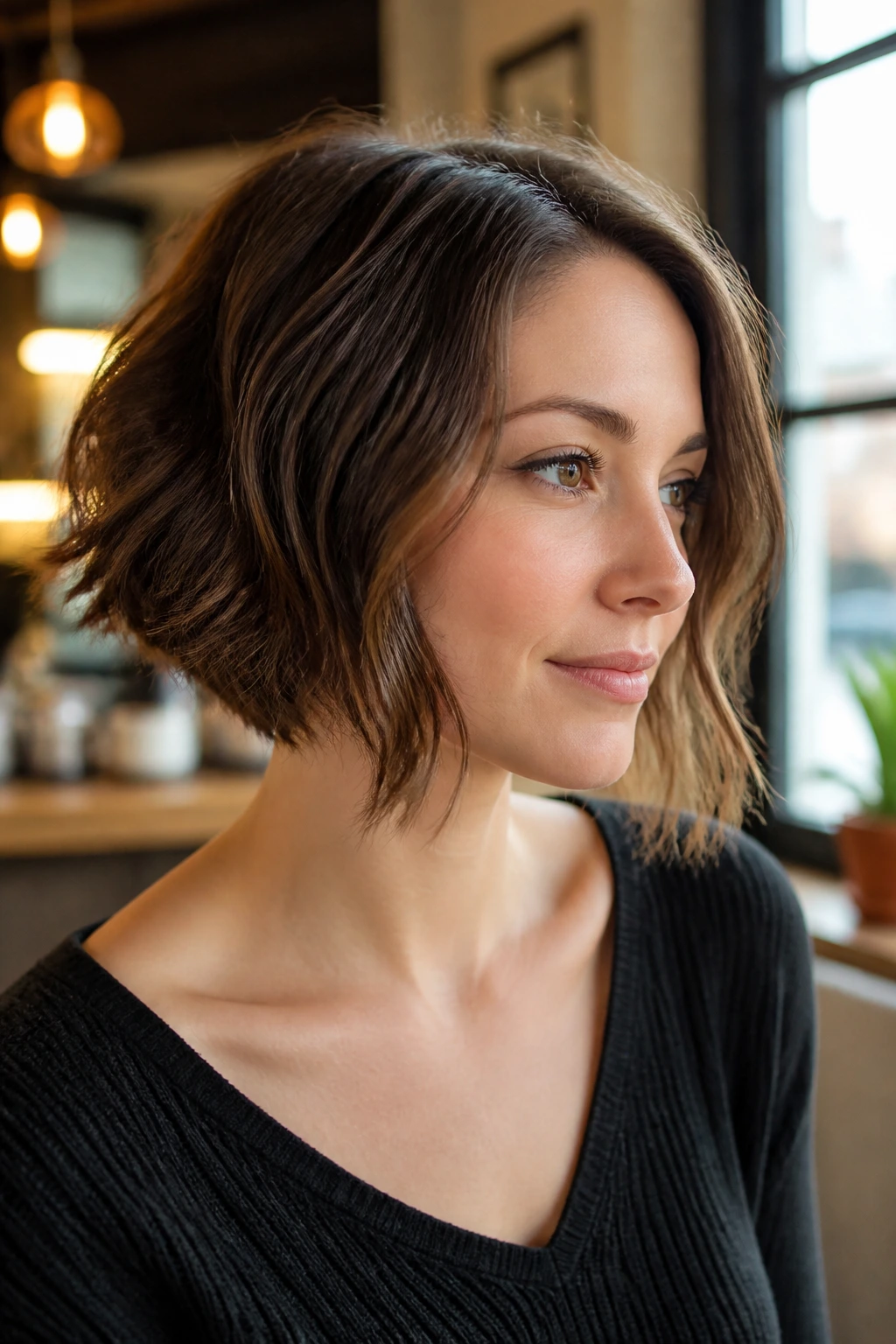
What makes a wavy chin-skimming bob different from a basic bob is the front. Those front pieces need to be a touch longer than the back so the line doesn’t stop dead at the cheeks. That small shift helps the cut slide past the widest part of a round face.
How to Wear It Well
The wave should look loose and lived-in, not brushed into one neat pattern. If the waves puff outward at the cheek line, the shape gets too broad. If they bend inward too hard, the cut can feel stiff. A soft bend with a side part usually lands in the right place.
Use a heat protectant, a 1-inch iron, and a quick touch of dry texture spray. That’s enough. The goal is movement with a little grit, not shiny perfection.
17. Layered Bowl Cut
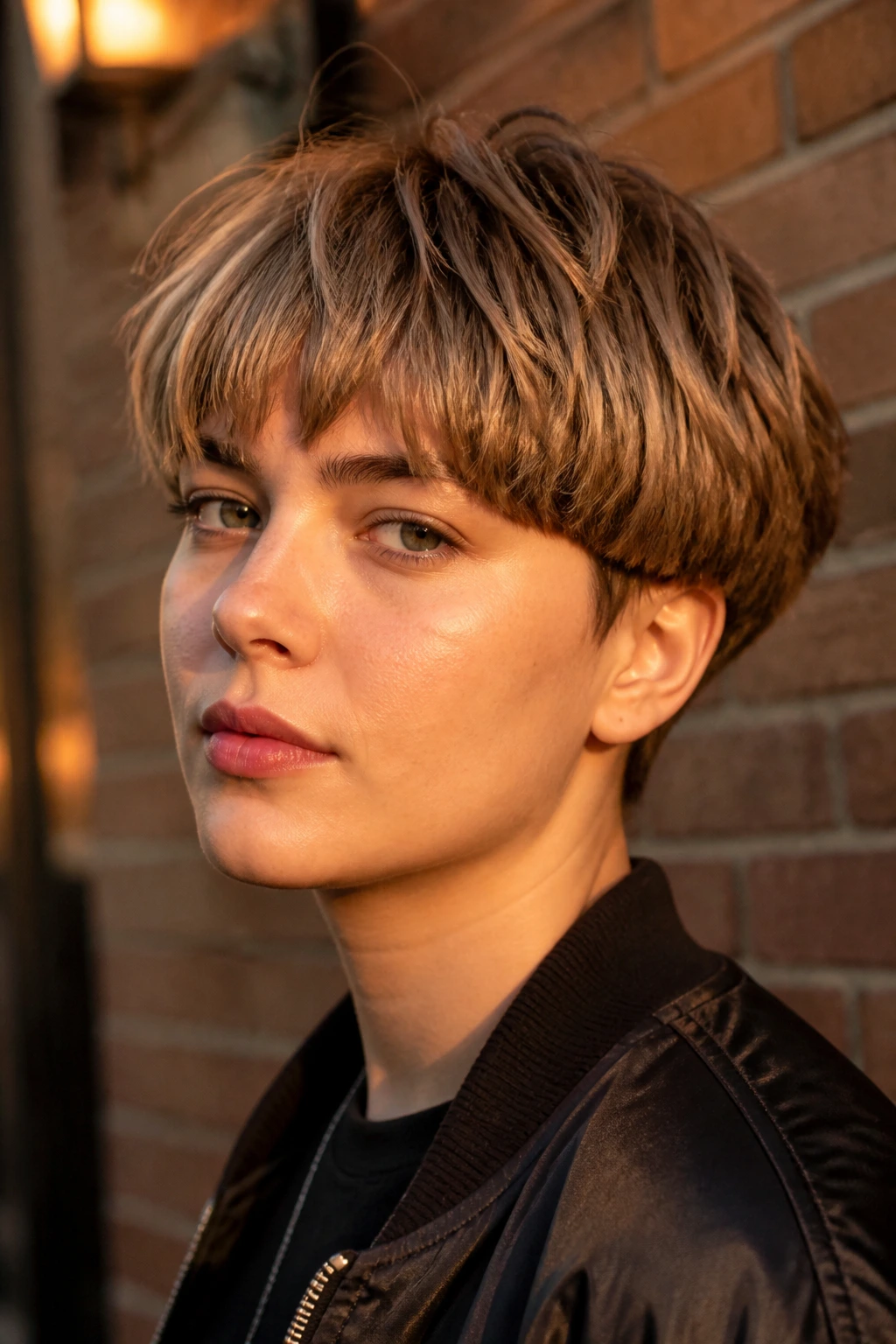
A layered bowl cut is one of the most misunderstood short cuts out there. The old version could look severe, but the modern one uses soft layering, tapered edges, and a cleaner neckline to make the shape feel current. On round faces, the curved outline can work if the crown is airy and the fringe isn’t too heavy.
I like this cut when it has just enough internal texture to keep the top from sitting flat. A blunt, helmet-like bowl is a bad idea. A layered one, though, can look sculptural and edgy. The shape sits close to the head, which can make the face itself feel more defined.
It’s a strong look. No pretending otherwise. If you like a little fashion risk, this one gives it to you immediately.
18. Side-Parted Cropped Shag
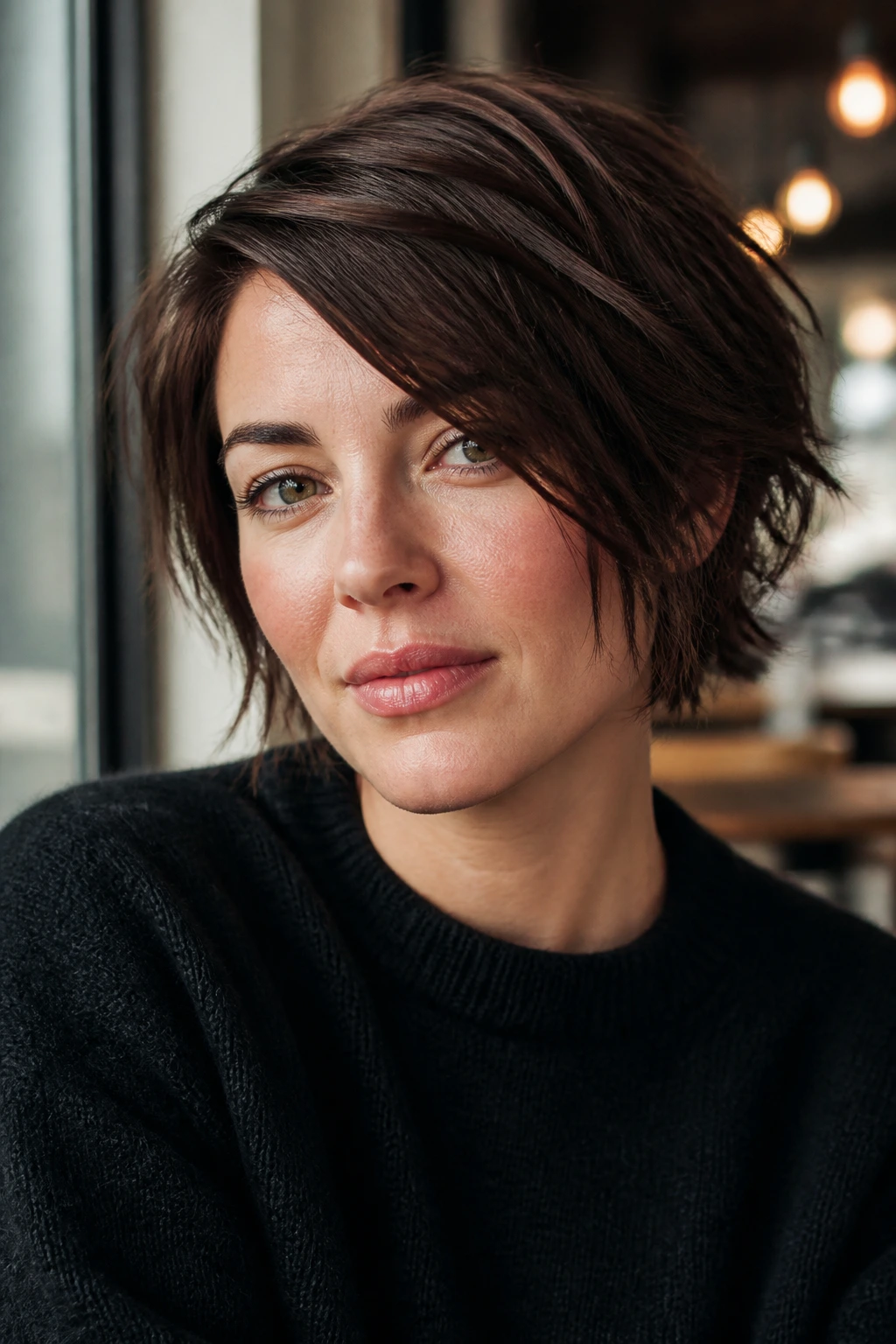
The side-parted cropped shag keeps the best part of a shag — the movement — and trims the bulk down to a shorter, more wearable length. The deep side part creates a diagonal line, while the layers keep the cut from feeling heavy around the jaw.
Compared with a standard shag, this version is tighter and more focused. The hair doesn’t sprawl outward as much, which is helpful on round faces that need shape rather than extra width. A few face-framing pieces can fall near the cheekbones, but they should be broken up enough to move.
This cut likes rough drying and a little scrunching. A soft mousse at the roots gives lift. Then leave it alone. The charm is in the imperfect finish.
19. Spiky Textured Crop
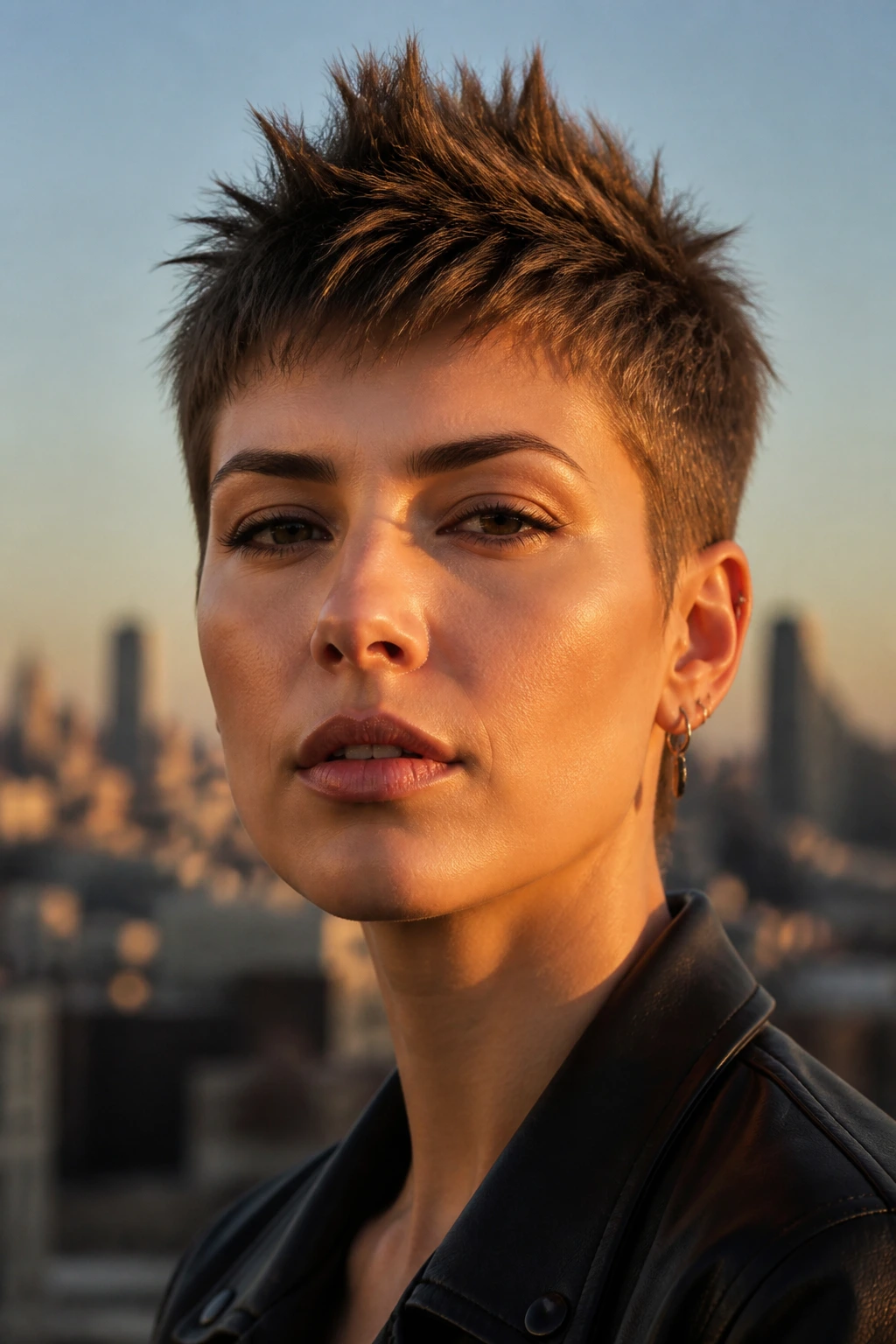
A spiky crop is blunt in the best possible way. It gives you short sides, a textured top, and enough separation to create actual shape instead of a smooth cap of hair. On a round face, the upward texture keeps the eye moving vertically, which is exactly what you want.
The Right Finish
Use a matte product, not anything glossy. Gloss can make the spikes collapse and the whole cut start to feel dated. Work a pea-sized amount through damp or dry hair, then pinch pieces upward with your fingertips. You do not want every strand cooperating. A bit of disorder looks better.
This style suits coarse hair especially well because coarse hair can hold the shape without falling flat in an hour. It’s one of the most low-maintenance edgy cuts on this list, though it still needs regular trimming to stay crisp.
20. Curly Bixie With Rounded Layers
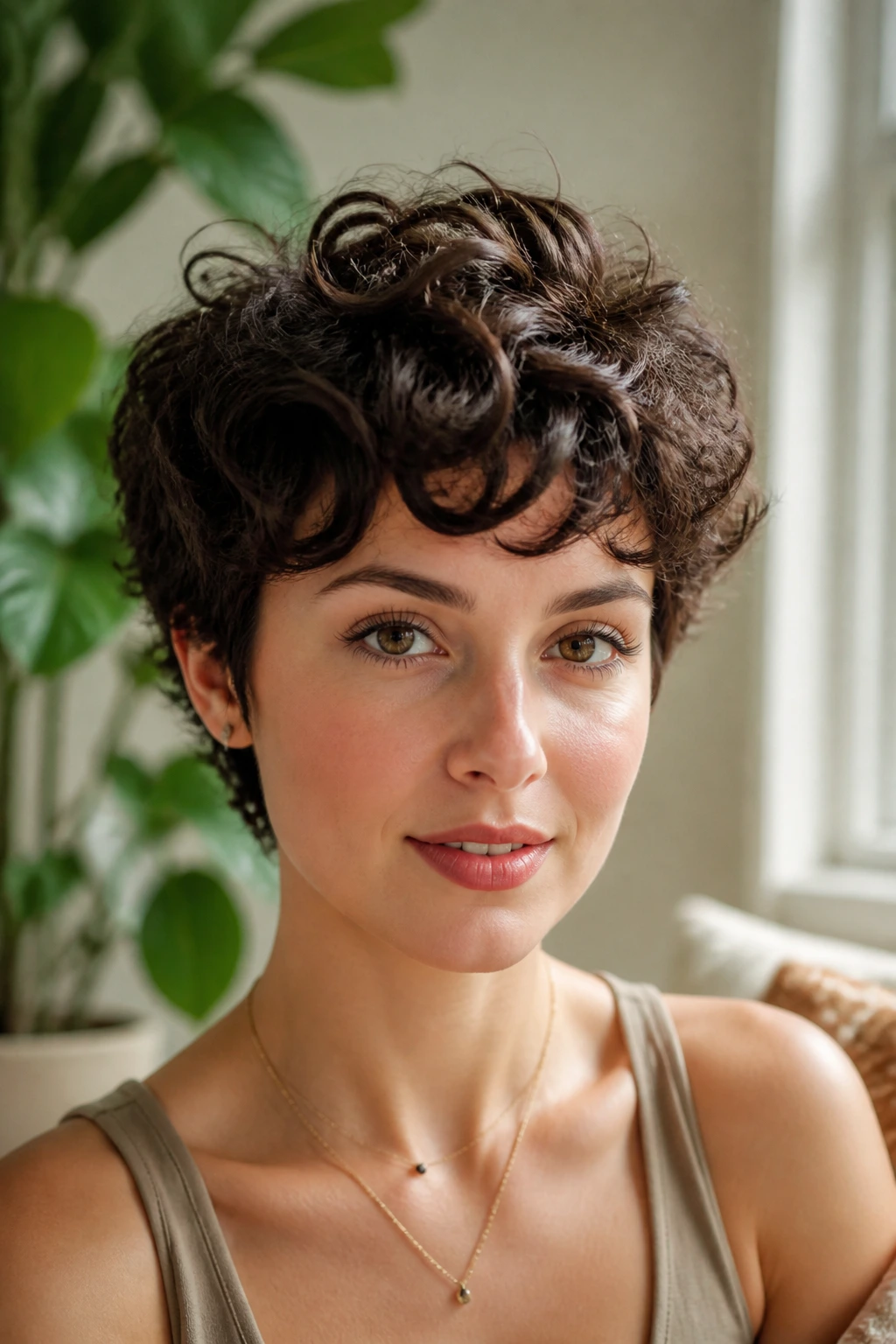
A curly bixie gives round faces a nice contradiction: soft curls, but a sharp overall shape. The length stays short enough to feel modern, while the layers are rounded and sculpted so the curls don’t explode outward at the sides. That balance is the whole job.
You want the curls to sit a little higher on the head and a little narrower through the temples. A stylist who knows curl cutting can shape the perimeter so it follows the head rather than puffing away from it. That’s the difference between polished and unruly in a bad way.
If your curl pattern is loose, a diffuser helps. If it’s tight, a cream-gel combo may give better hold. Either way, this cut feels fresh when the curls are defined and a little springy.
21. Feathered Short Crop
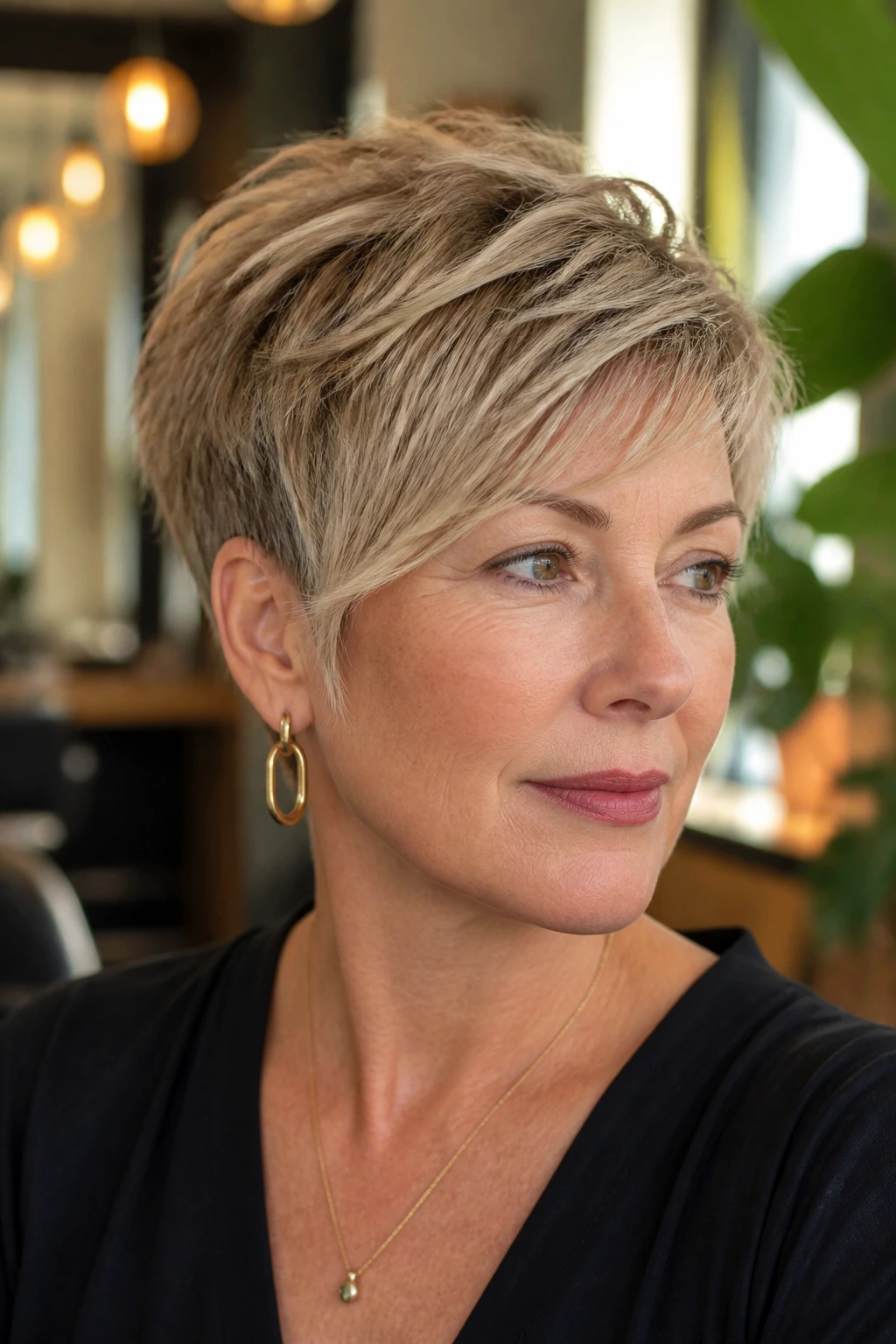
The feathered short crop is one of my favorite options for anyone who wants edge without a hard line. The layers are light and airy, with the ends brushed away from the face so the haircut moves instead of sitting in place. On a round face, that looseness helps keep the shape from getting too full at the cheeks.
- Ask for feathering through the crown and temples.
- Keep the nape neat so the silhouette stays narrow.
- Leave enough fringe to sweep to one side if you want more asymmetry.
This cut works beautifully with a round brush and a quick blow-dry at the roots. It’s not a high-drama look, but it has enough sharpness to feel modern.
22. Disconnected Bob
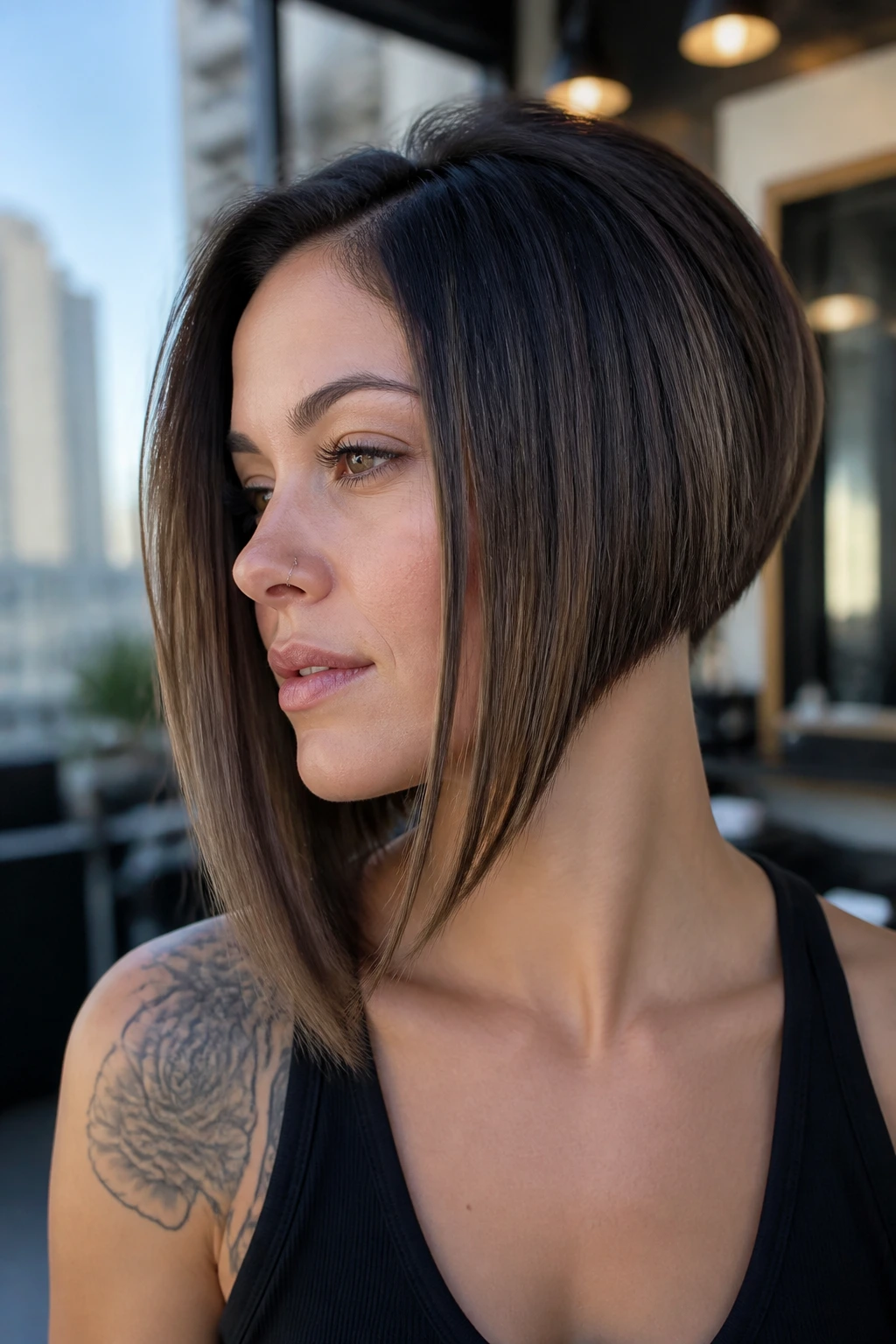
A disconnected bob is built on contrast. One section is clearly shorter, another stays longer, and the separation between the two creates a visual break that feels bold right away. That break is useful for round faces because it stops the haircut from becoming one smooth, circular shape.
Unlike a blended bob, this cut wants edges to show. You might see a hidden underlayer, a longer front panel, or a strong difference between the top and bottom sections. The point is to make the geometry obvious. It’s not subtle.
This is a smart cut for thick hair, too, because the disconnection removes bulk without flattening everything. If you like hair that looks sharp even on a tired day, this one is worth a serious look.
23. Hush Cut Pixie
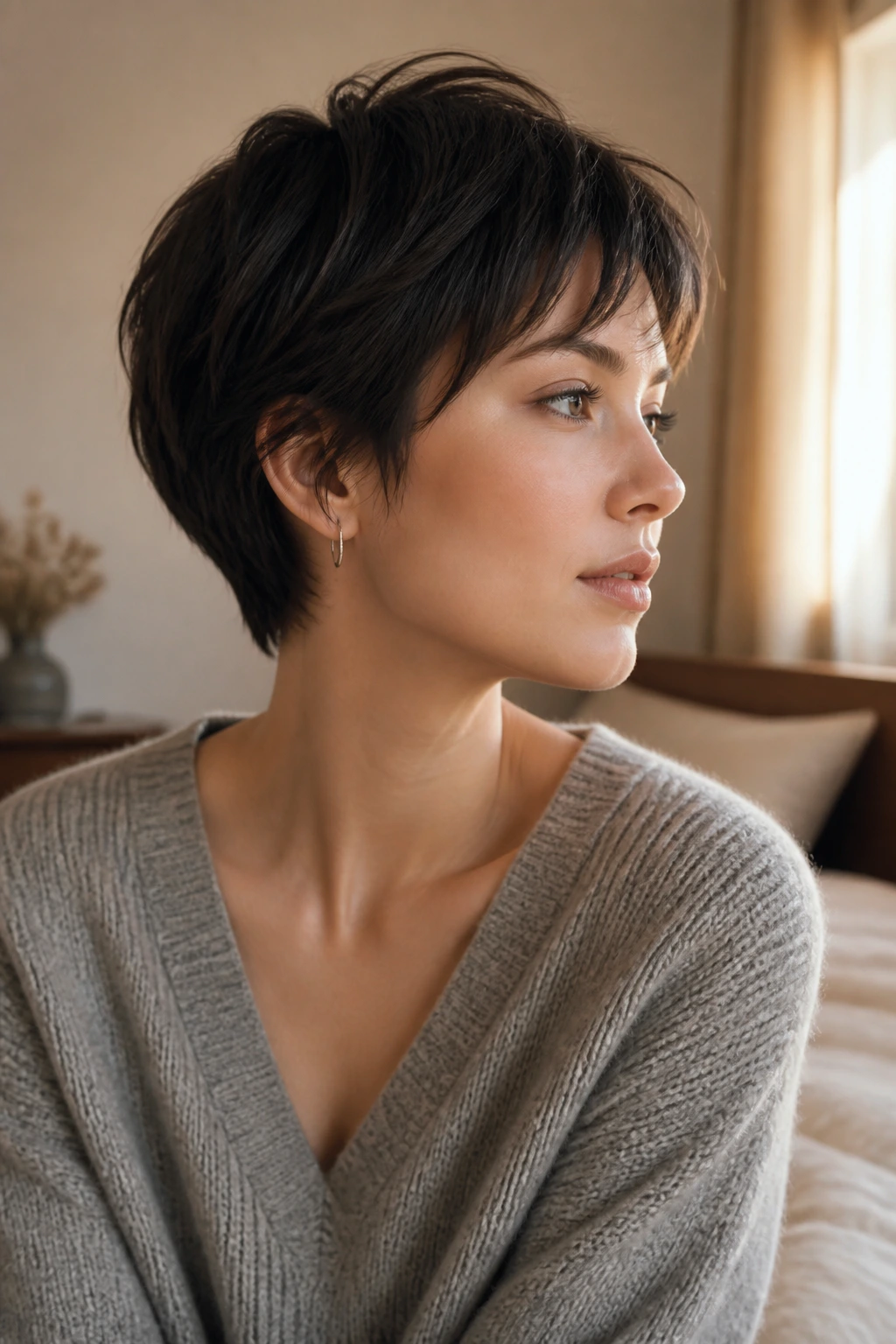
A hush cut pixie sits somewhere between softness and edge, which is why it feels more interesting than a standard cute pixie. The layers are whisper-light, the fringe is broken up, and the outline never looks too perfect. On a round face, that softness can be useful because it doesn’t add hard width.
Why It Feels Different
The term “hush” fits because the cut seems to hover rather than sit heavily on the head. The ends are airy, the crown has gentle lift, and the sides don’t cling too tightly. You get movement without the drama of a full shag.
This is one of those cuts that looks best when it’s not over-styled. A little cream, a little scrunch, maybe a fingertip bend at the fringe — that’s enough. If it’s blown to death, the charm disappears.
24. Short Mohawk Pixie
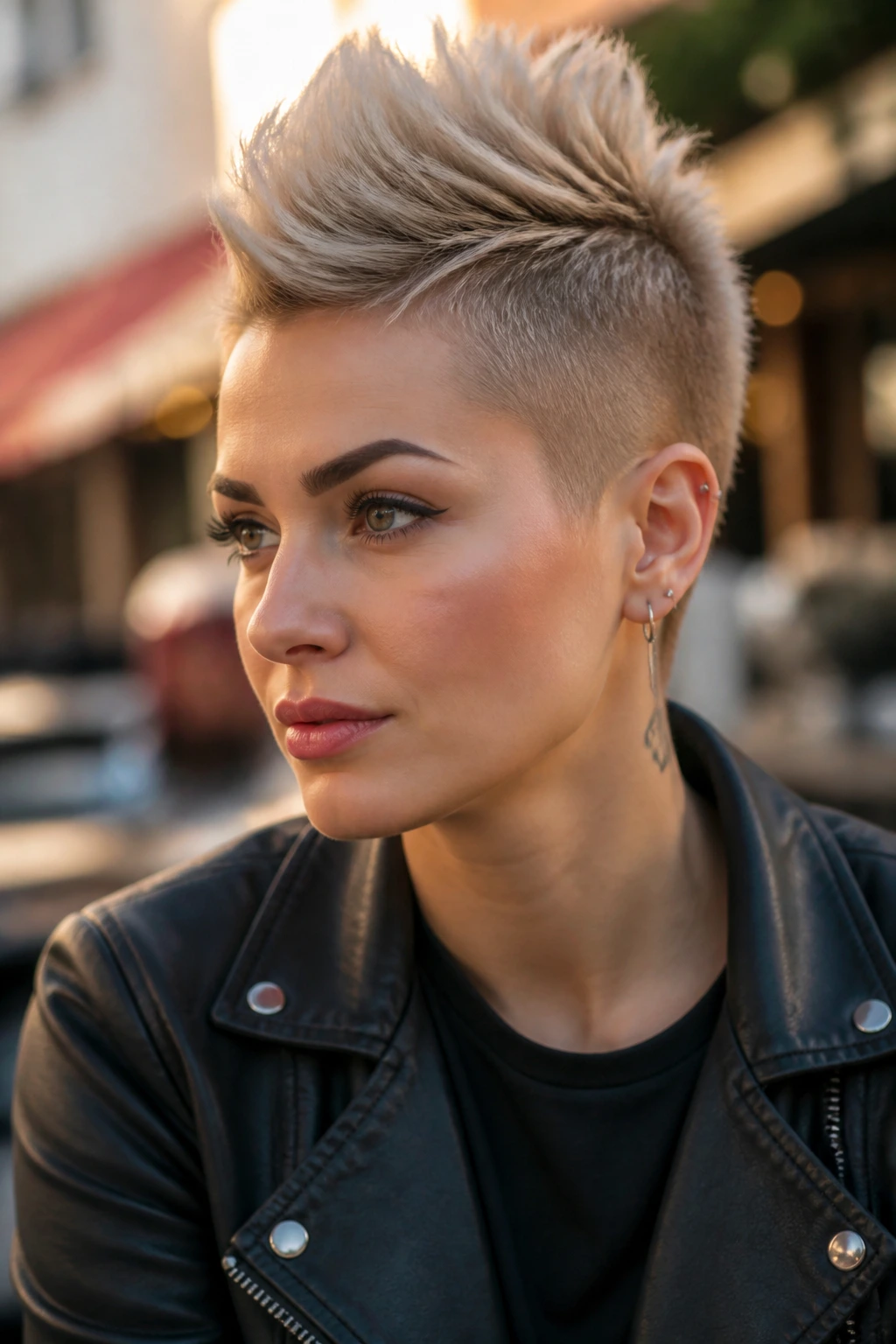
A short mohawk pixie is for someone who wants the edge to be visible from across the room. The sides are clipped or tapered tight, and the center strip stays longer from forehead to crown, sometimes with a little length at the front for extra shape. That central lift is flattering on round faces because it draws the eye up and narrows the sides.
- Keep the center section long enough to stand or sweep forward.
- Fade the sides cleanly so the shape reads intentional.
- Use strong-hold paste if you want the crest to stay upright.
This is not a shy haircut. It looks best when you lean into it with earrings, a bold brow, or nothing else at all. The hair gets the whole job.
25. Graduated Bob With a Stacked Back
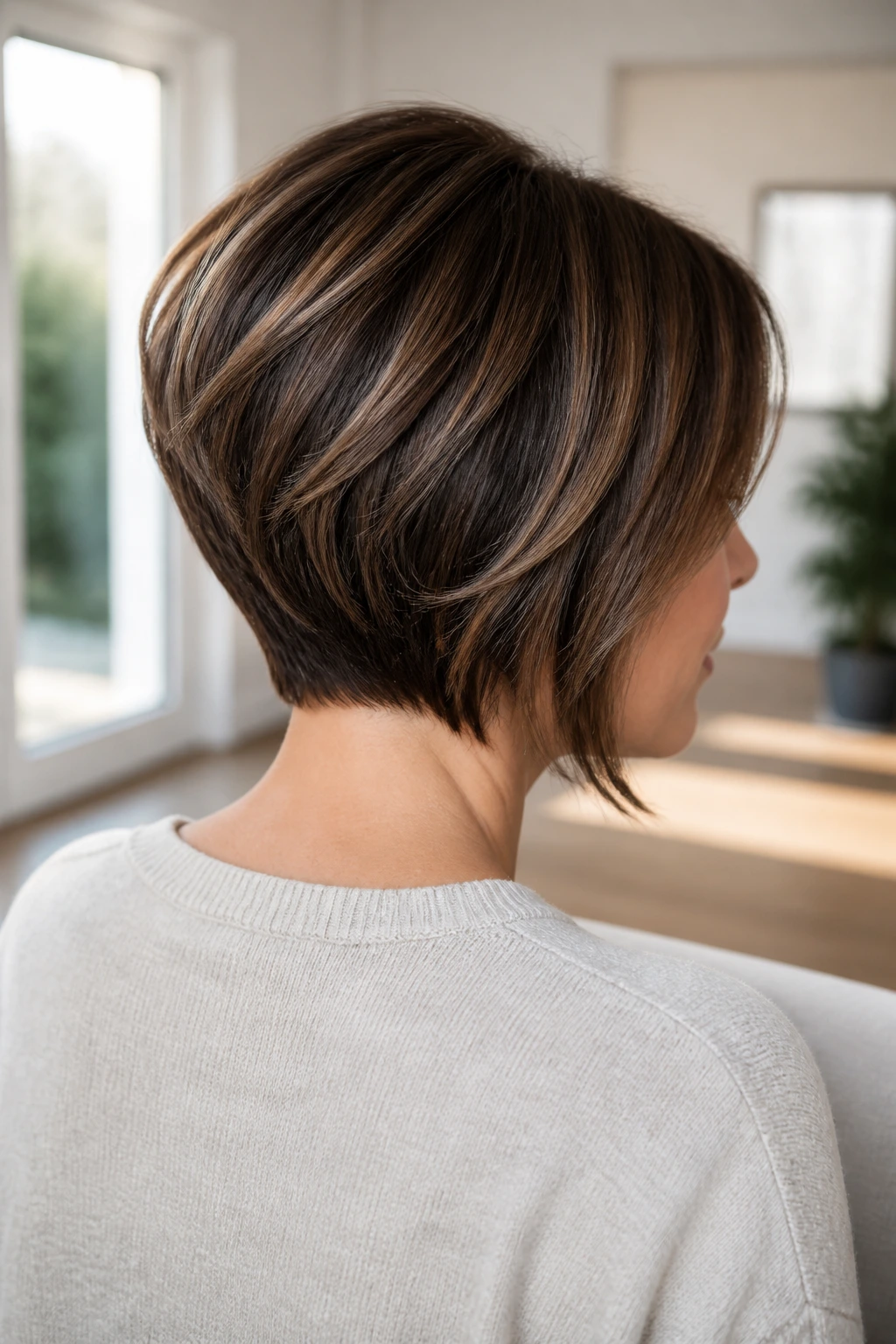
A graduated bob with a stacked back gives you structure without the heaviness of a blunt one-length bob. The back is cut in layers that build upward, creating volume at the crown, while the front stays longer and slimmer. For round faces, that lift at the back is useful because it changes the balance of the head shape.
The key is keeping the front pieces long enough to graze below the jaw. If they stop too high, the cut can widen the face right where you don’t want it. A slightly tucked side or side part helps even more.
This is one of the better choices if your hair is fine and you want it to look fuller without a lot of teasing or product. It has structure, but it still moves.
26. Shattered Bob With Face-Framing Pieces

A shattered bob is a blunt bob that got bored and decided to misbehave. The ends are broken up, the face-framing pieces are sliced at different lengths, and the line stops feeling stiff. On a round face, that broken edge helps because it avoids a smooth curve across the cheeks.
What to Watch For
The face-framing pieces should start a little below the cheekbone and angle down. If they sit too short and too round, they can add width. Better to let them travel past the jaw and then feather out. That gives the eye a place to land.
A dry texturizing spray makes this cut come alive. Spray at the roots, then lift and separate with your fingers. It looks better with a bit of grit than with polish.
27. Sculpted Crop With a Hard Part
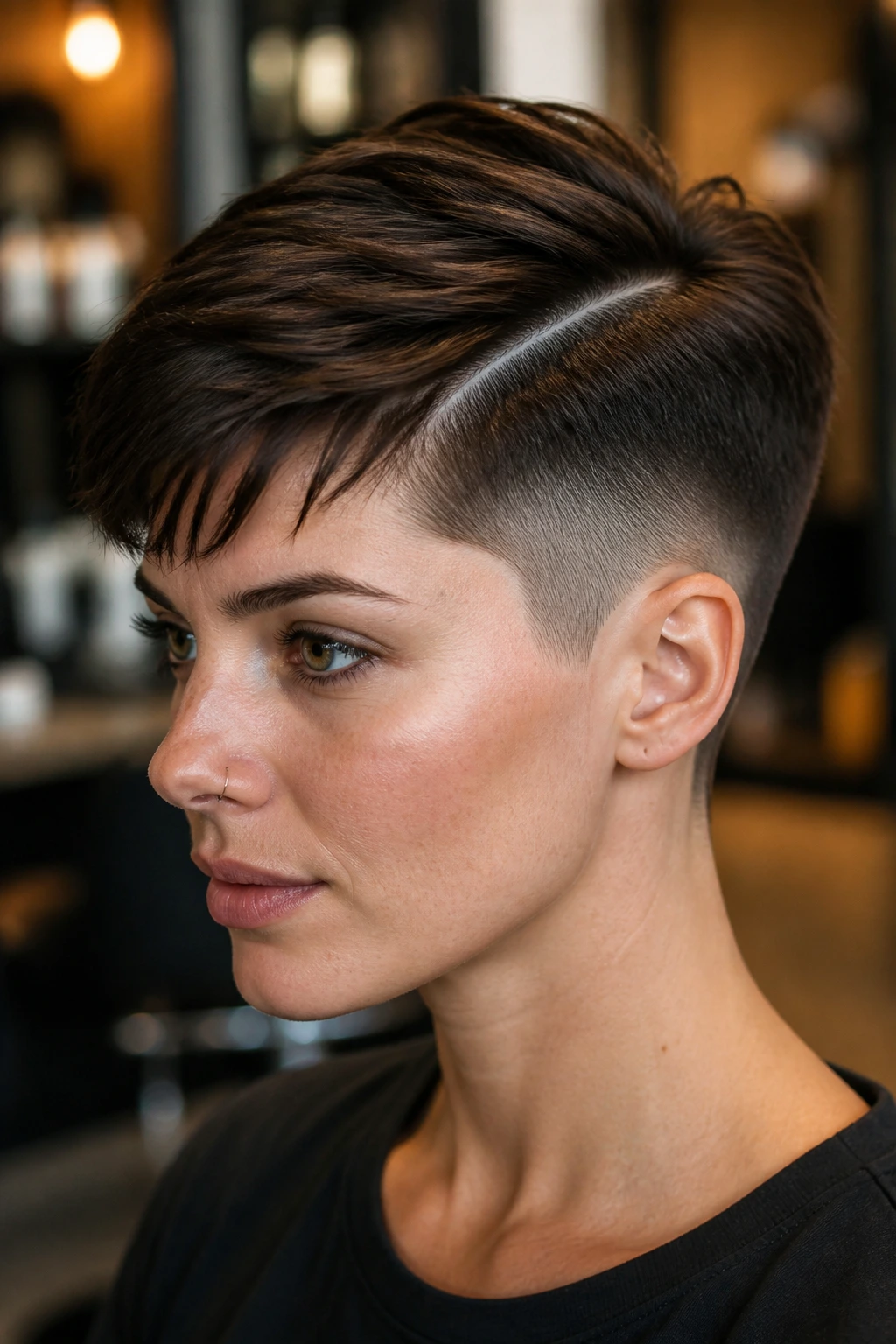
A sculpted crop with a hard part is clean, sharp, and a little unforgiving in the best way. The part line is carved in, the top is shaped with intent, and the sides are tight enough to make the whole silhouette feel precise. That precision gives round faces a firmer outline.
I like this style because it changes the face without hiding it. The hard part creates direction, while the cropped length exposes the neck and ears. You can wear it sleek with a shine cream, or rough it up with matte paste if you want the cut to feel less formal.
It’s a smart choice for anyone who likes a barbered finish. Not soft. Not fussy. Straight to the point.
28. Nape-Skimming Pixie Bob With Long Sideburns
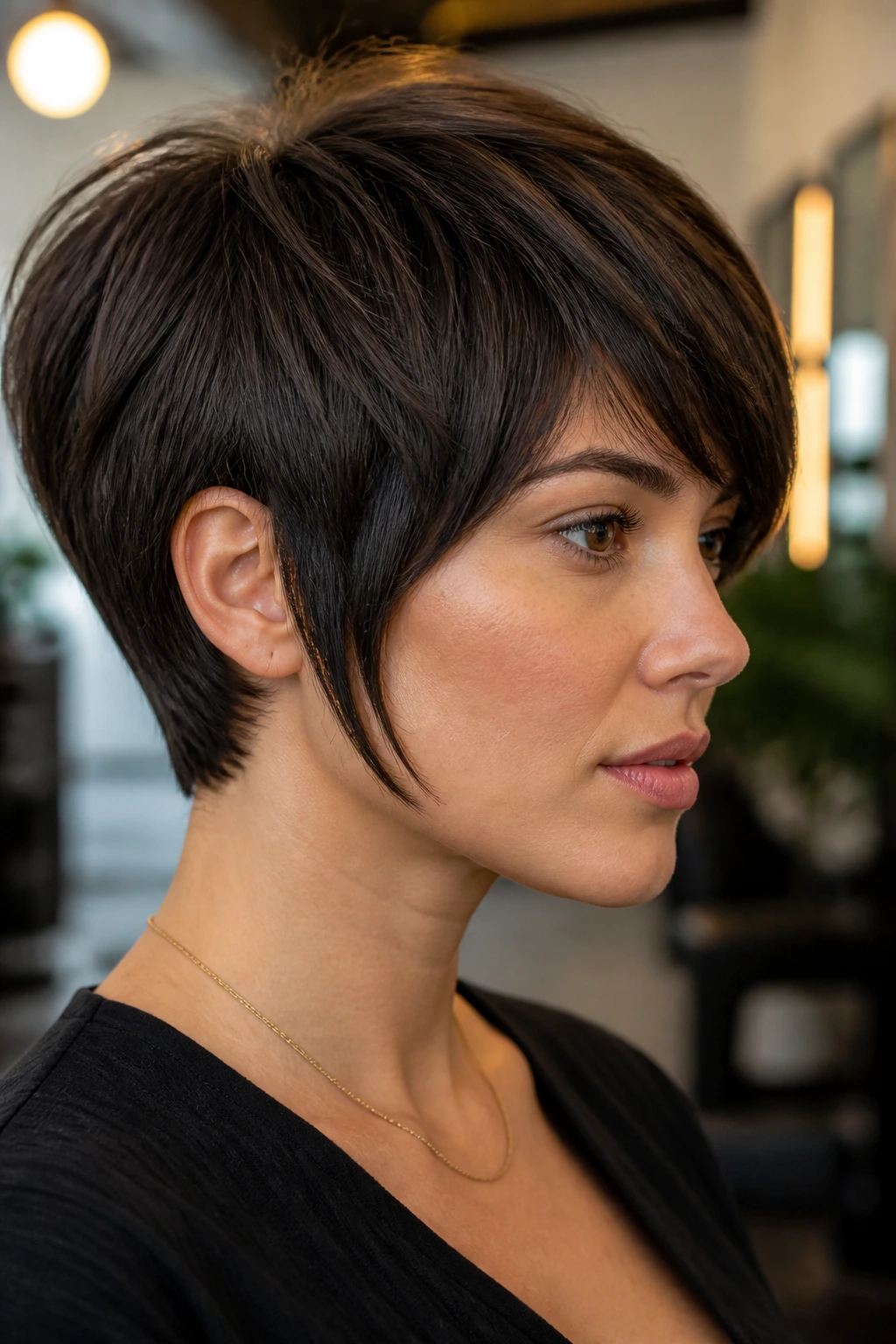
A nape-skimming pixie bob with long sideburns is a subtle way to get edge without going full dramatic. The back stays short and close to the neck, while the sideburns are left longer so they carve a thin line down the face. That extra length near the ears can slim the face shape in a way that feels sharper than a standard crop.
The front can be brushed forward or tucked slightly behind one ear. Either way, the sideburns do the quiet work. I like this cut on people who want a polished look with one small detail that feels a bit rebellious. It also grows out nicely, which matters more than people admit.
Keep the sideburns clean and intentional. If they’re left random, the cut loses its edge fast.
A round face does not need to be hidden. It needs a shape with some attitude. Short hair can absolutely do that — sometimes better than long hair, because the whole point is in the line, the angle, and the way the cut sits against the jaw.
Pick the version that matches your texture and your tolerance for styling. If you want the easiest path, start with a pixie bob or an angled bob. If you want more bite, the undercut, mohawk, or shattered styles bring it fast.
