



Brown hair can look flat fast when every strand sits in the same shade. One well-placed ribbon of color changes that in a second.
Brunette highlights for brown hair work best when they feel believable. Not striped. Not chunky. Just enough lift, warmth, or cool contrast to make the cut move and the color breathe. The trick is choosing the right family of tones — caramel, mocha, mushroom, chestnut, bronze — and then placing them where the light actually hits: around the face, through the mid-lengths, and across the ends that need a little lift.
A lot of bad highlight jobs happen because the shade is wrong, not because the hair was lightened too much. Too gold, and the result can read brassy. Too pale, and brown hair can lose its depth and start looking disconnected from the base. The best versions keep the brunette root story intact and build from there.
I care more about placement than brightness. Always have. A few softer foils around the crown can do more than a full head of lighter pieces, especially on layered cuts, wavy hair, and longer lengths that need movement. The first place to start is the caramel family — warm, easy, and hard to mess up.
1. Caramel Brunette Highlights for Brown Hair
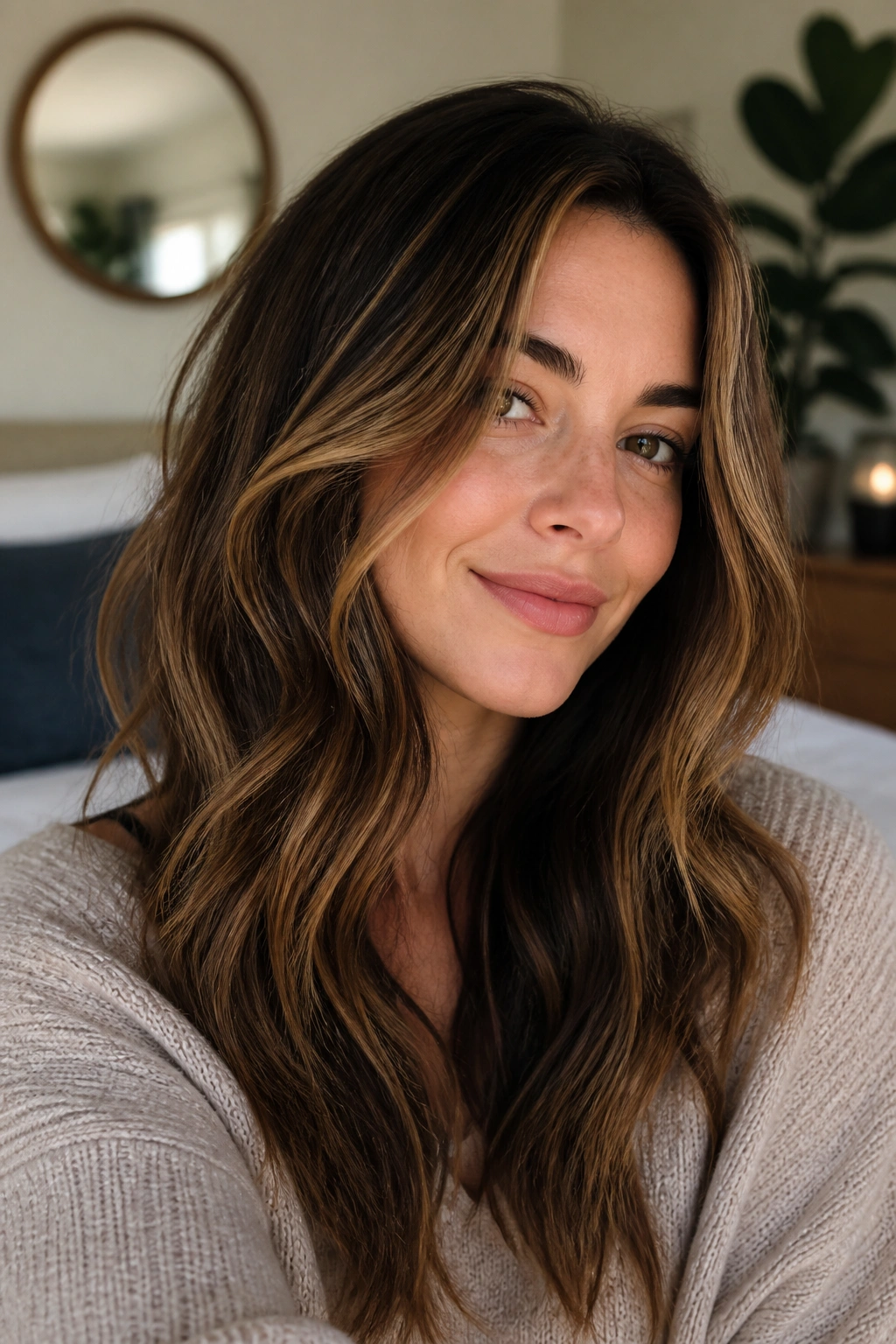
Caramel is the color most people mean when they say they want brown hair to look brighter without looking dyed. It sits right in that sweet spot between gold and beige, which is why it flatters medium brown, chocolate brown, and chestnut bases so well.
Why caramel works so cleanly
The best caramel pieces are usually one to two levels lighter than the base, not five. That keeps the hair from looking patched or streaky, and it gives the finish that soft, expensive-looking dimension people keep trying to describe with vague words.
Ask for fine foils or hand-painted ribbons through the mid-lengths and face frame. If your hair is layered, a few brighter ends can make the cut swing better. If it is blunt, keep the highlight placement a little tighter so the edge still looks dense.
- Best on medium brown and warm chocolate bases.
- Looks strongest around the cheekbones and collarbone.
- Needs a gloss every 6 to 8 weeks if you want the caramel to stay soft rather than orange.
- Works especially well on waves, because the bends break up the color.
My favorite part: caramel gives brown hair light without stealing the brunette character. That matters more than people think.
2. Mushroom Brown Dimension
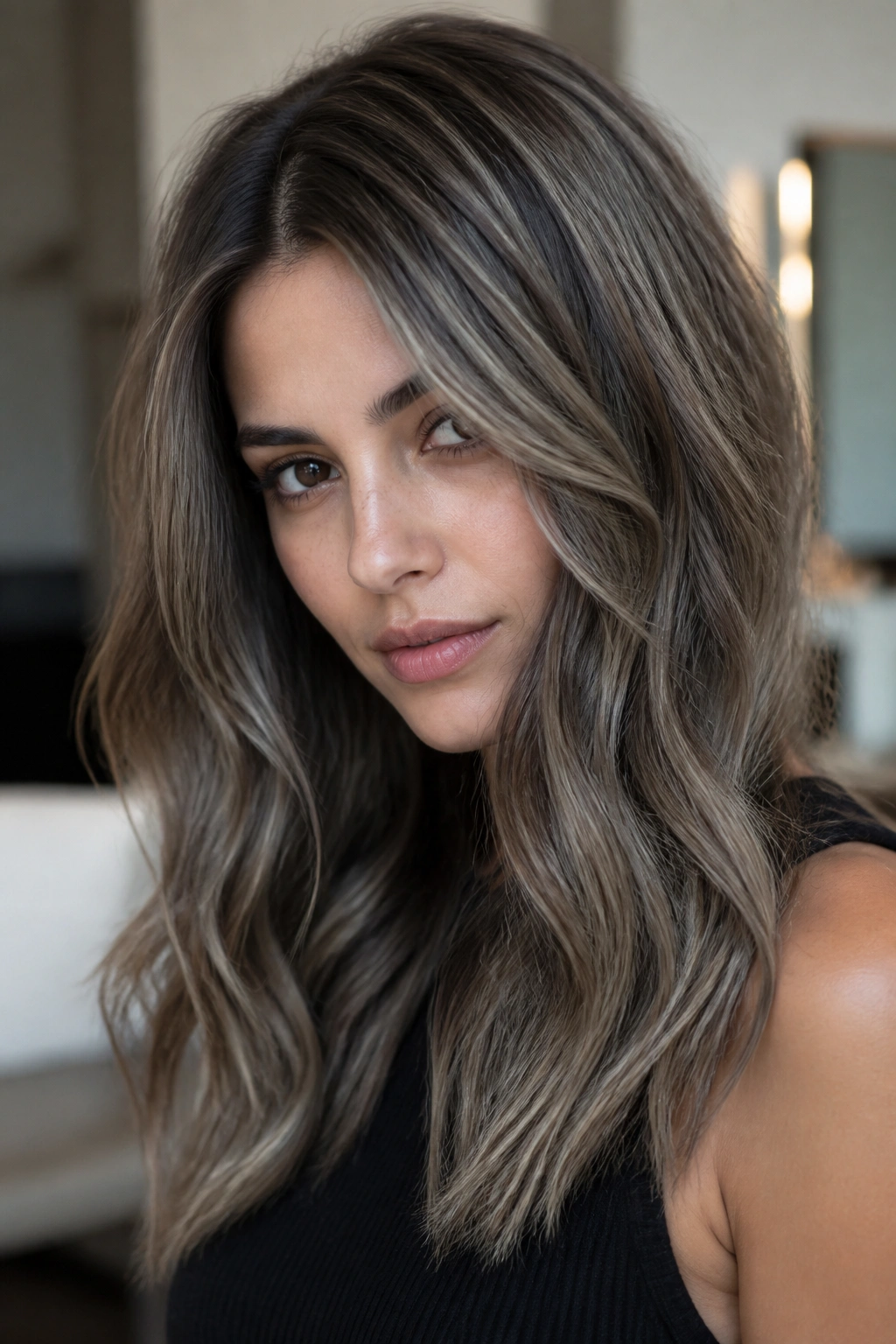
Mushroom brown is the cool cousin in the group. It has taupe, beige, and smoky brown tones that sit nicely on ash-brown or neutral bases, especially when you do not want warmth creeping in at the ends.
This shade is the one I reach for when someone says, “I want brightness, but I hate gold.” Fair enough. Gold can look rich on the right person, but mushroom tones are cleaner and quieter. They sit close to the natural brunette family, so the grow-out tends to look softer too.
The catch is toner maintenance. Cool brown tones can go muddy if the formula is too flat, and they can drift warm if the hair is porous. A good colorist will keep the lightened pieces airy, then tone them with a beige-smoky gloss so the result still has movement instead of looking one-note.
What to ask for
- Fine, cool ribbons through the top layer.
- A root shadow that stays close to your natural color.
- No yellow lift under the toner. That part matters.
If your skin runs cool or neutral, mushroom brown can look expensive in a very quiet way. If you like warm makeup and golden clothes, it may feel a little too muted. That is fine. Not every brunette needs to glow like honey.
3. Face-Framing Chestnut Money Pieces
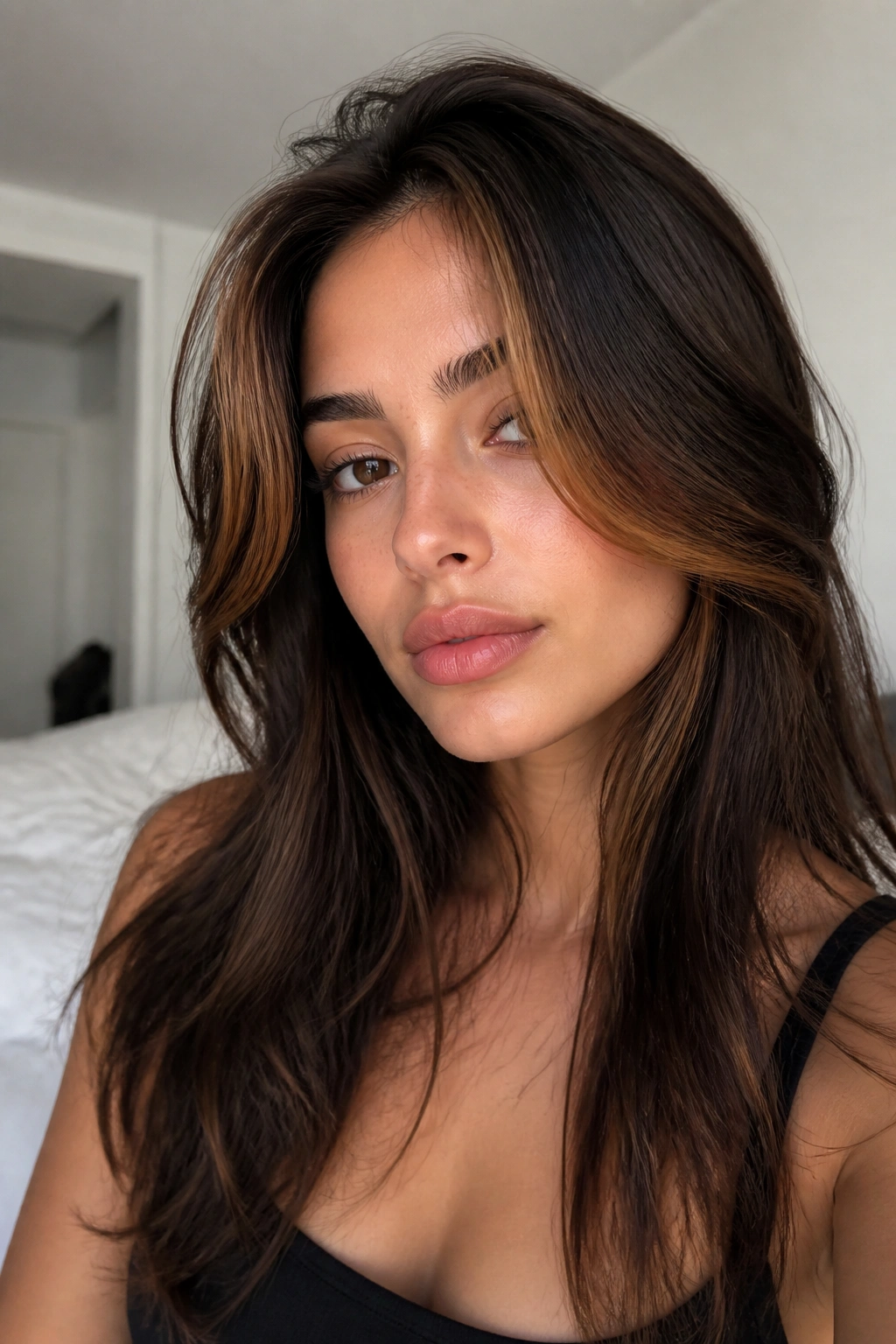
A bright money piece can change the whole haircut. Sometimes that is all a person needs.
Chestnut is the right version when you want the face to stand out but you do not want a hard blonde streak. It has enough warmth to wake up brown eyes and enough depth to stay believable next to darker brunettes. Around the face, it can make the skin look more awake, which is why stylists keep returning to it for layered cuts and curtain bangs.
Where the lightest strands should sit
Start the brightest chestnut a little below the root, then sweep it from temple to cheekbone. If you place it too high, it can look like a stripe. If you keep it too low, you lose the framing effect and end up with color that only shows when the hair is tucked behind the ear.
I like this look on shoulder-length cuts and long bobs. It gives a little drama without asking for full-head maintenance. That makes it easier to live with.
A good salon photo for this is not a blonde reference at all. Bring one where the front pieces are warm, soft, and clearly connected to the brunette base. That little detail saves a lot of disappointment.
4. Mocha Balayage
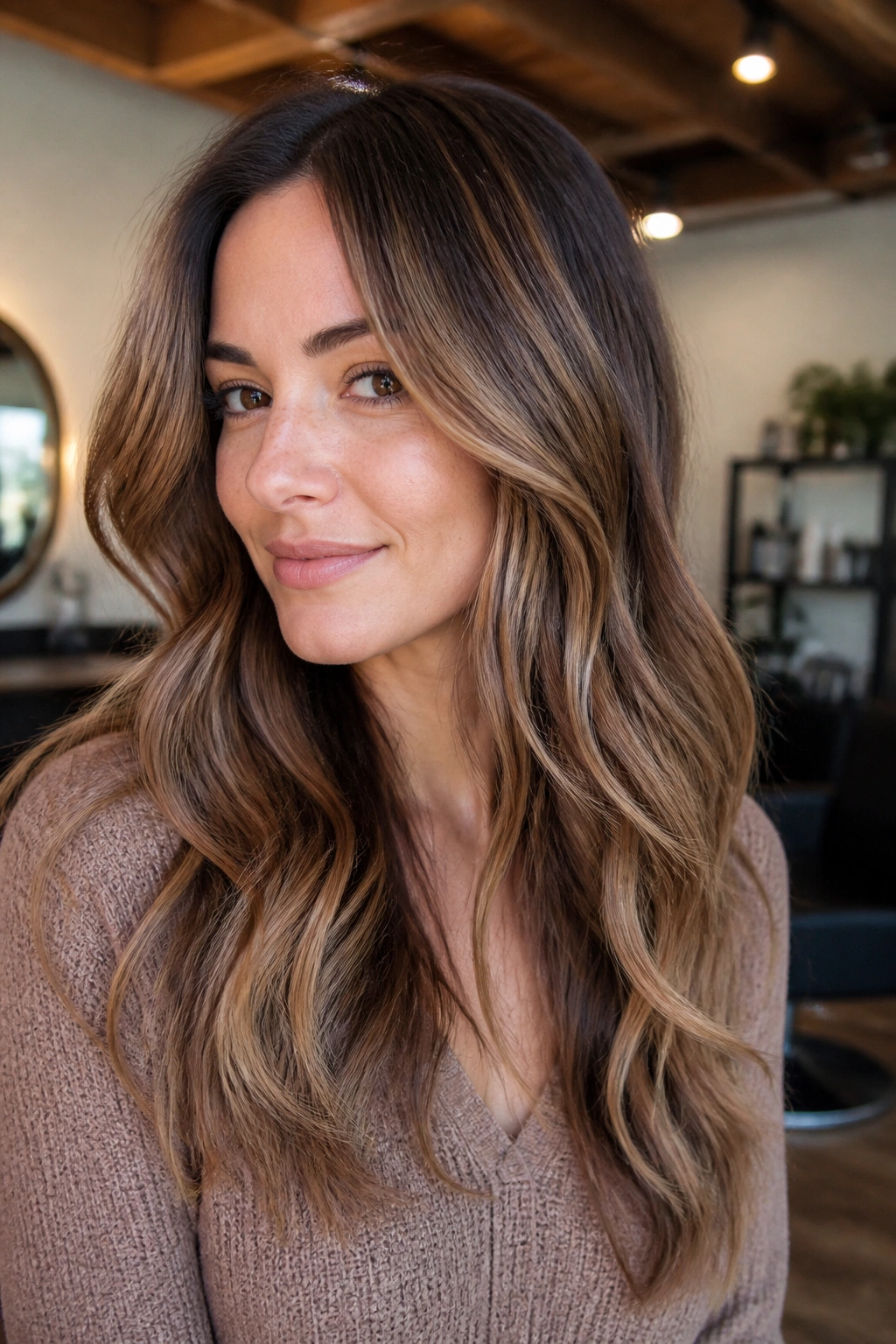
Mocha balayage is the quiet workhorse of brunette color. It does not shout. It just makes brown hair look deeper, cleaner, and more expensive in the way a tailored jacket does.
Picture a layered cut with a soft sweep of darker milk-chocolate and lighter mocha through the ends. That is the vibe. The hand-painted pieces should feel blended, not striped, so the eye reads the movement first and the color second.
For this look, the placement matters more than the tone. Keep the brightest pieces around the bend of the wave or the outer layer of a blowout. That is where the hair catches light when it moves. If you paint too much through the underneath, the color can lose its shape and start to look busy.
- Best on medium to long hair with layers.
- Keeps the root area low-maintenance.
- Looks especially good when the ends are slightly lighter than the crown.
- Needs very little styling to show well; a loose bend is enough.
Mocha balayage is the one I suggest when someone wants a change that still looks like their own hair, only better behaved.
5. Cinnamon Highlights
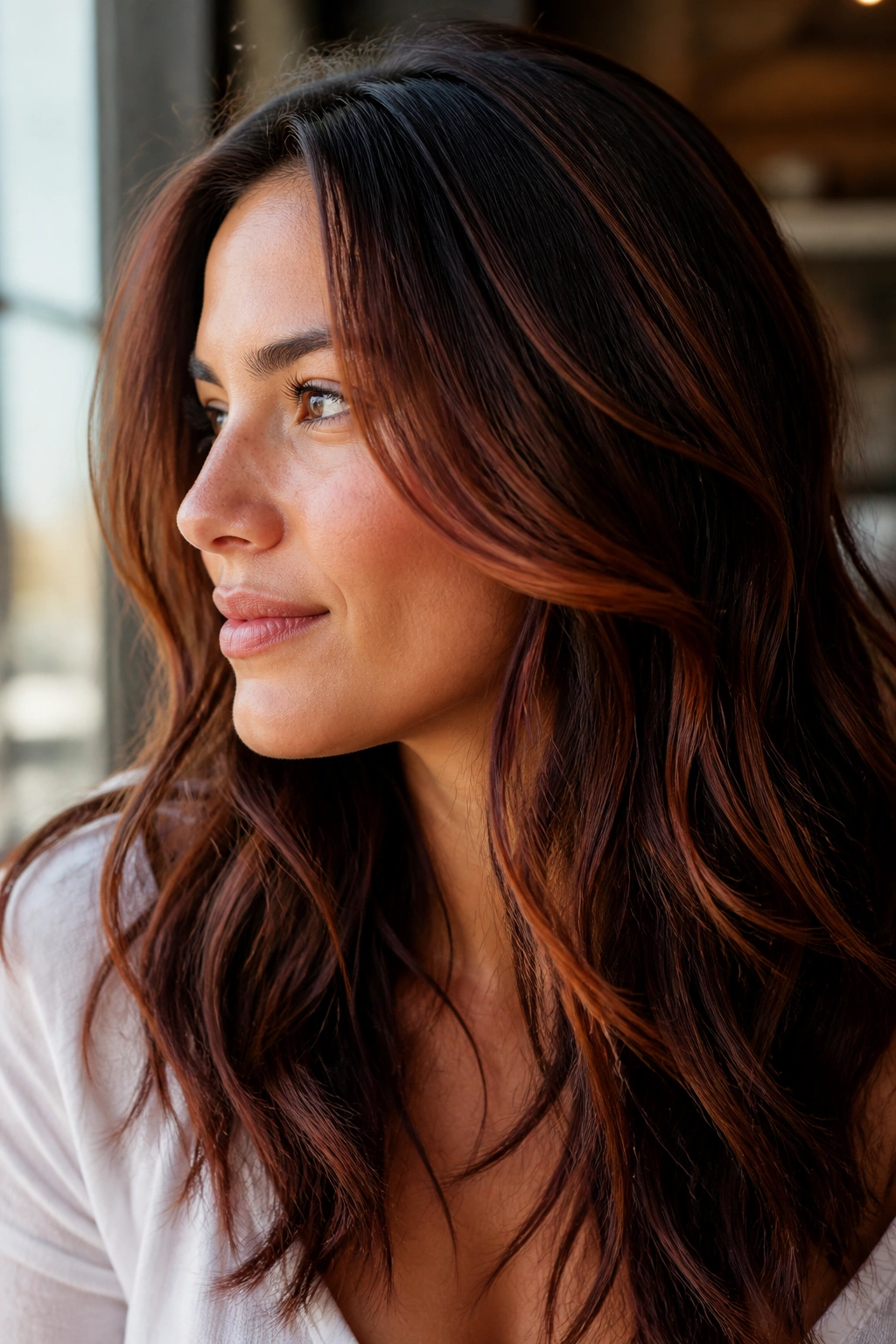
Cinnamon brings warmth, but it is not the same as copper. That is the part people miss. Cinnamon sits deeper, with a red-brown edge that feels richer than orange and less bright than auburn.
On brown hair, cinnamon highlights can make the whole head look shinier, especially if the base already has a little red in it. The color catches in sunlight and glows in indoor light without needing to be pale. That makes it a strong choice for brunettes who want movement but do not want a lot of contrast.
What makes cinnamon different
A true cinnamon highlight should look woven into the brown, not pasted on top. It works best when the stylist keeps the lift controlled and lets the warmth stay soft rather than fiery. If the ends get too red, the whole thing starts looking louder than it needs to.
I like cinnamon on warm skin tones, but it can also look sharp on neutral complexions if the red stays muted. Pair it with a soft blowout or loose curls and it gets even better. Straight hair can wear it too, though the shine shows more when the strands bend.
If you have been bored with chocolate brown, cinnamon is the quickest way to add life without going blonde.
6. Toffee Ribbons
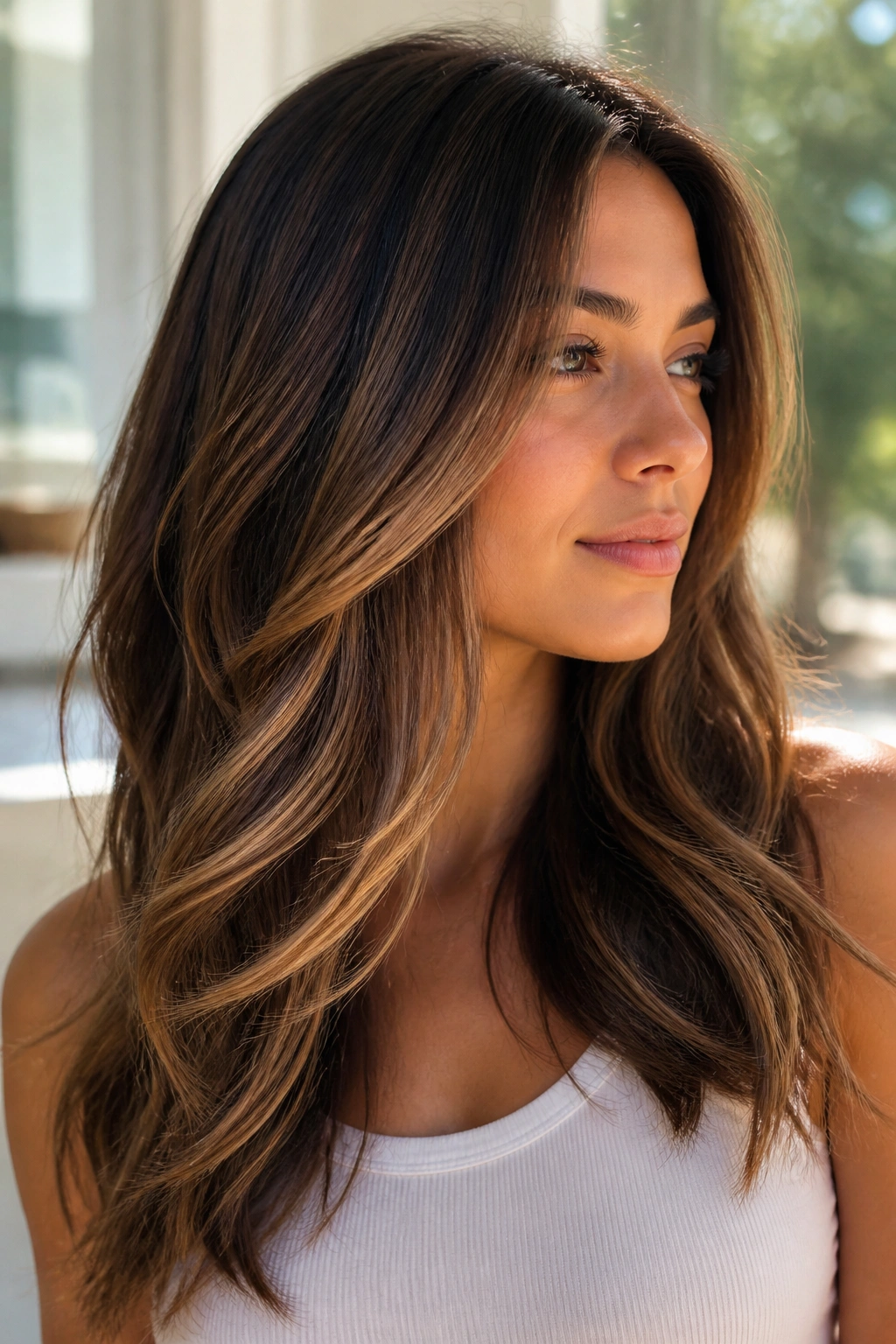
Toffee is what happens when caramel gets a little deeper and a little creamier. It is less golden, more buttery, and it tends to sit beautifully on long brown hair that needs visible movement.
The best toffee ribbons are broad enough to notice but soft enough to blend. Think of them as little lanes of light running through the hair, not thin streaks. On thick hair, that wider placement keeps the color from disappearing into the density. On finer hair, it can add the illusion of more body.
Best on layered cuts
Layers make toffee shine. Literally. The highlight catches on each fall of hair, so the cut looks fuller even when the actual amount of color is modest. That is one reason this tone photographs so well in real life — not because it is flashy, but because it follows the shape of the haircut.
If you want to ask for it at the salon, say you want warm beige-brown ribbons through the mid-lengths and ends, with the top kept a little darker. That keeps the blend believable and avoids the old striped effect people are trying to leave behind.
Toffee is a good choice when you want warmth, softness, and a color that won’t fight with your natural brunette base.
7. Ash Brown Babylights
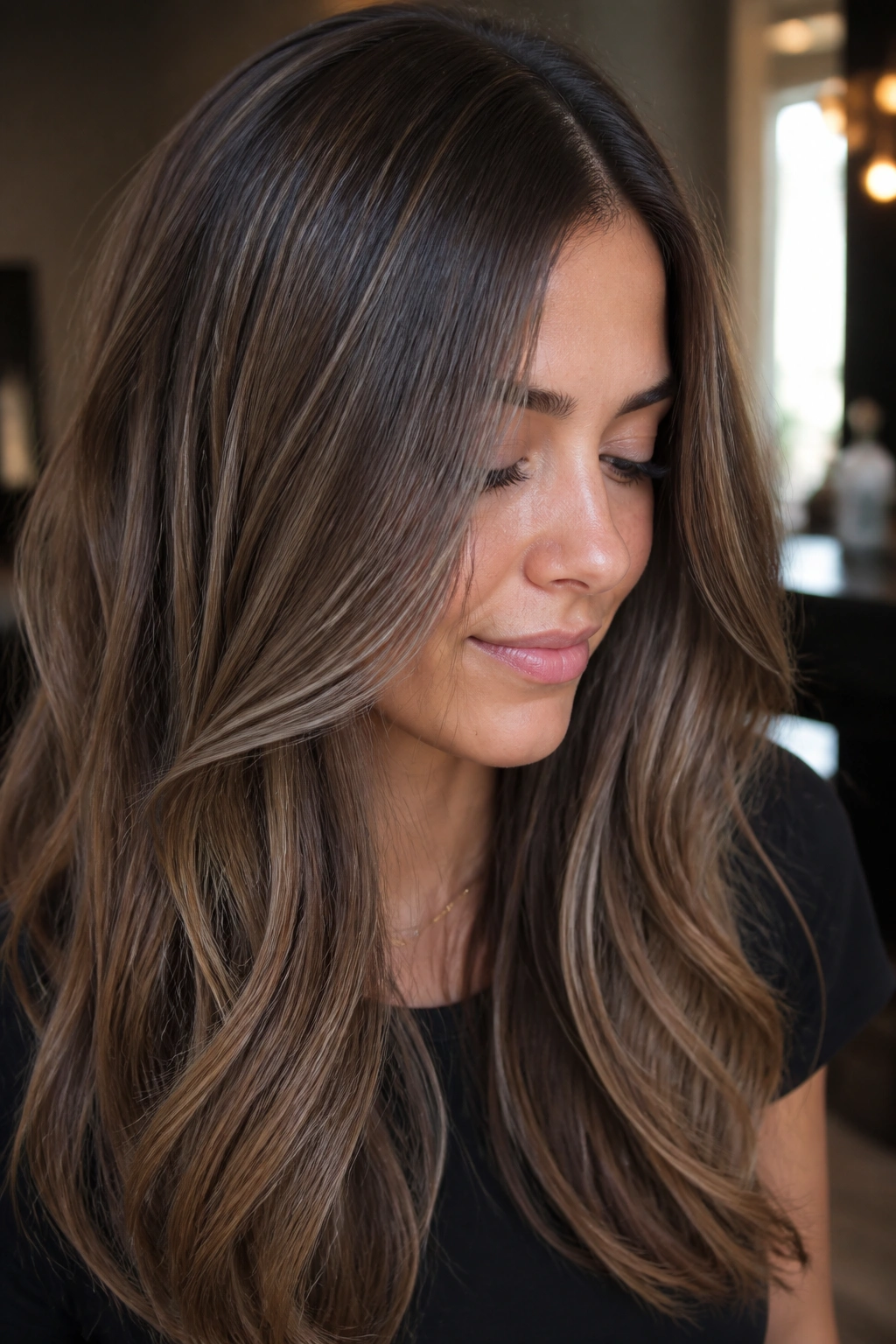
Ash brown babylights are tiny. That is the whole point.
These are the thinnest highlights on the list, the kind that look like your hair picked up a little sun through a window and never had a dramatic moment. On brown hair, babylights work especially well if you want dimension without obvious color stripes. They are also a nice way to soften a heavy one-tone brunette that feels a bit too solid.
The science behind the softness
Babylights use very fine sections, so the lightening stays delicate. That means the grow-out line is gentler, and the final color reads as texture rather than contrast. On fine hair, they can create the illusion of more density. On thicker hair, they stop the surface from looking like one large sheet of brown.
- Best for people who hate obvious highlights.
- Needs precise foil placement so the color does not vanish in the base.
- Works well with ash or neutral toners.
- Looks best when the lift stays subtle, usually just a couple of shades lighter.
I would not recommend this look if you want a dramatic makeover. It is the opposite. But if your goal is believable dimension that keeps getting compliments without people knowing exactly why, babylights are hard to beat.
8. Bronze Ends
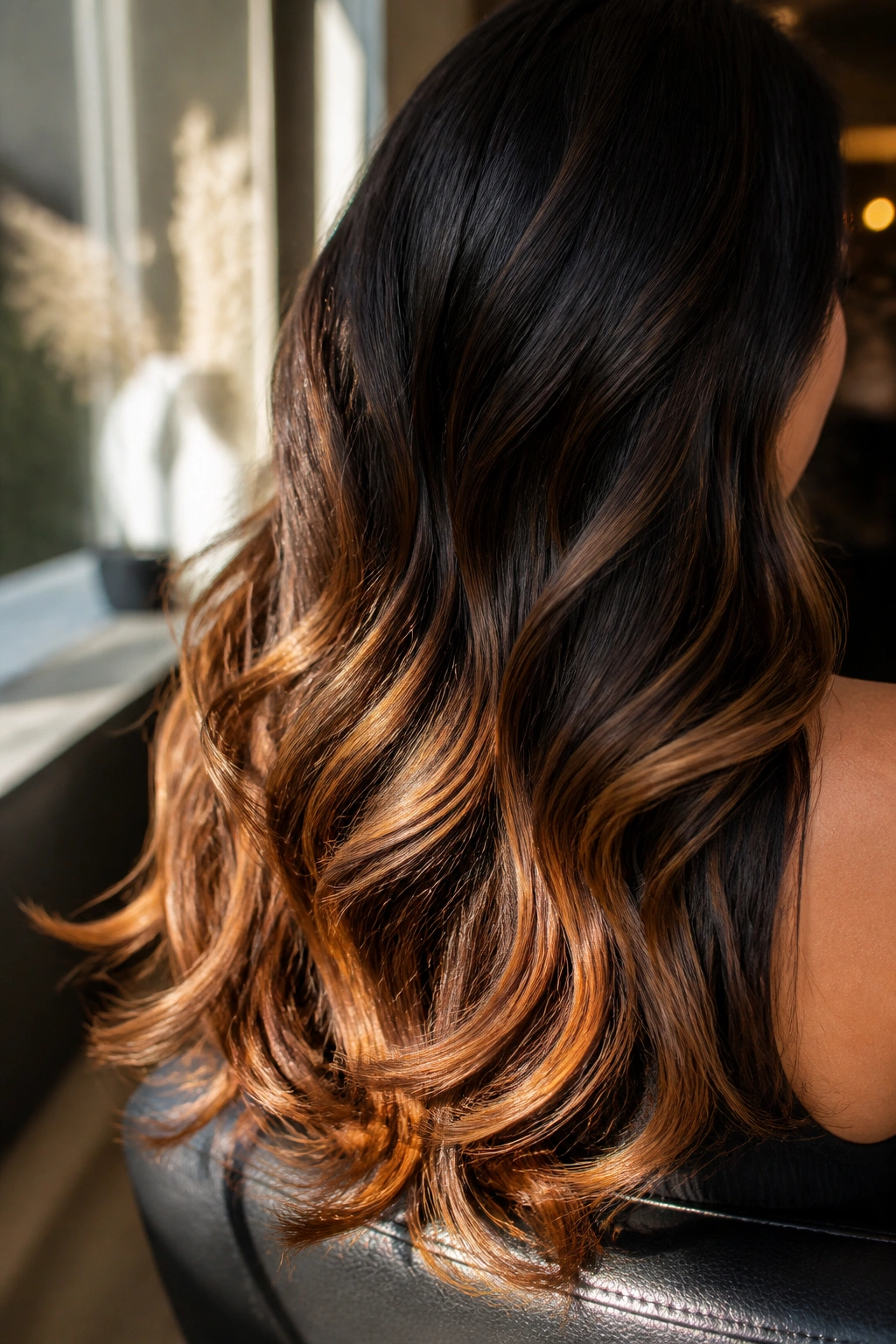
Bronze ends do one thing very well: they bring the eye down the length of the hair. That makes long brown hair look lush instead of heavy.
Instead of lighting up the entire head, bronze highlights concentrate brightness toward the lower half, where the hair moves the most. The tone is warmer than beige and more grounded than gold, so it keeps the brunette feeling intact. On waves, bronze tends to flash and fade in a way that looks natural, not fussy.
Do you want this look to feel expensive instead of beachy? Keep the bronze deeper and a little smoky. Too much gold can start reading yellow, and that is a fast way to lose the richness that makes bronze work in the first place.
Where it fits best
This is a smart pick for long layers, waist-length hair, or cuts with enough motion in the ends to show the color. If your hair is all one blunt length, the bronze can still work, but it needs softer styling so the ends do not look like a single colored block.
A gloss on the bottom half keeps the bronze reflective. Skip the rough matte finish. It fights the whole point.
9. Auburn Accents
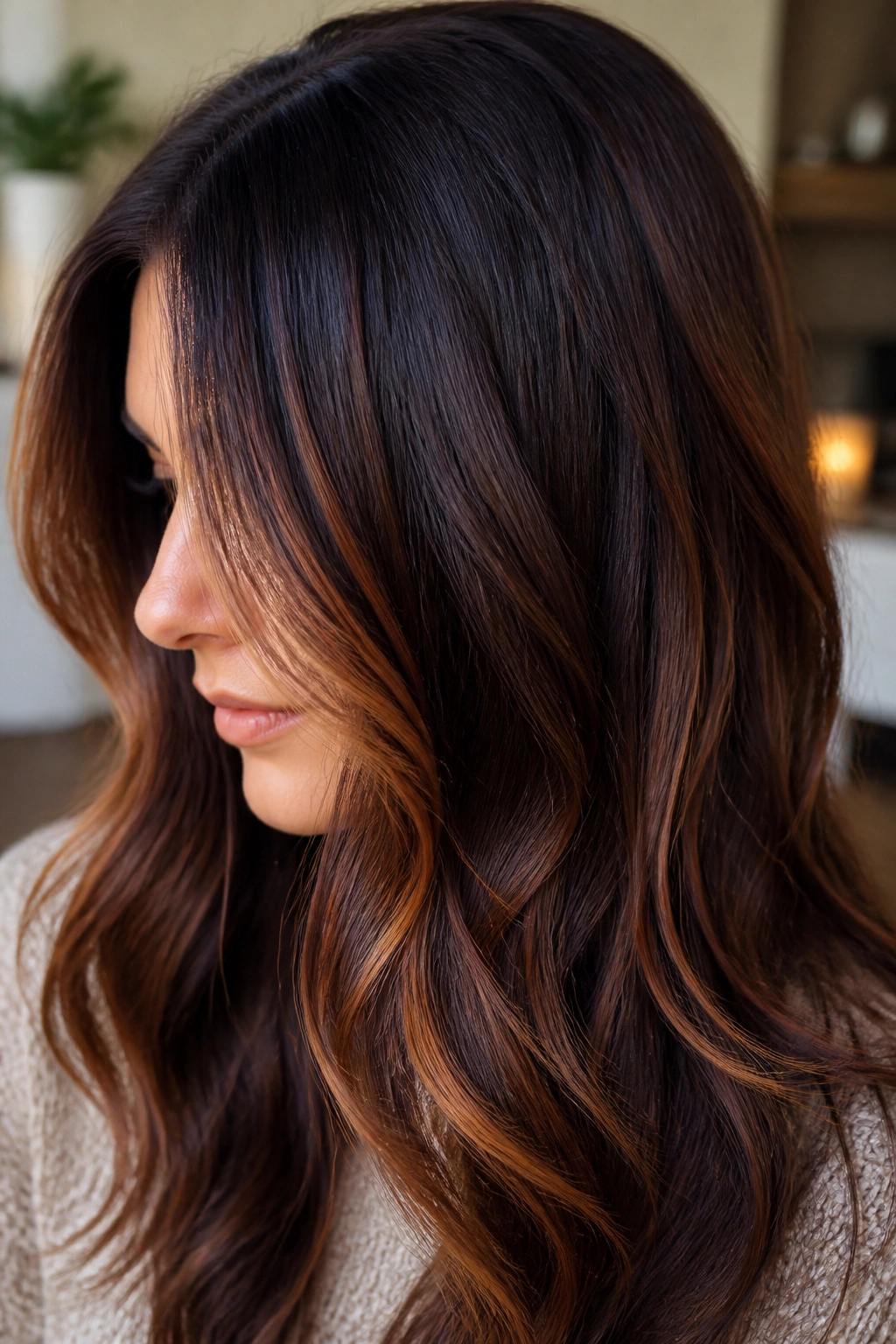
Auburn is for people who want brown hair to look warmer without sliding into copper territory. It has a red-brown depth that reads rich, not loud.
The best auburn accents are small and strategic. A few pieces near the front, some scattered through the mid-lengths, and a little extra warmth under the top layer can make brown hair seem fuller and more alive. Too much auburn, though, and the whole head can tip toward red. That’s a different mood.
How to use it well
- Ask for soft auburn glaze pieces, not bright red streaks.
- Keep the base brown visible so the color has contrast.
- Use auburn near the face if your skin looks dull next to ash tones.
- Let the ends stay a touch deeper if you want the color to feel grounded.
Auburn is especially nice on hair that already has a natural red cast. It tends to wake that up instead of fighting it. And on curls, the color appears and disappears as the coil bends, which gives a nice shifting effect that flat hair can’t quite match.
If you want warmth with a little edge, this is the one.
10. Hazelnut Glow
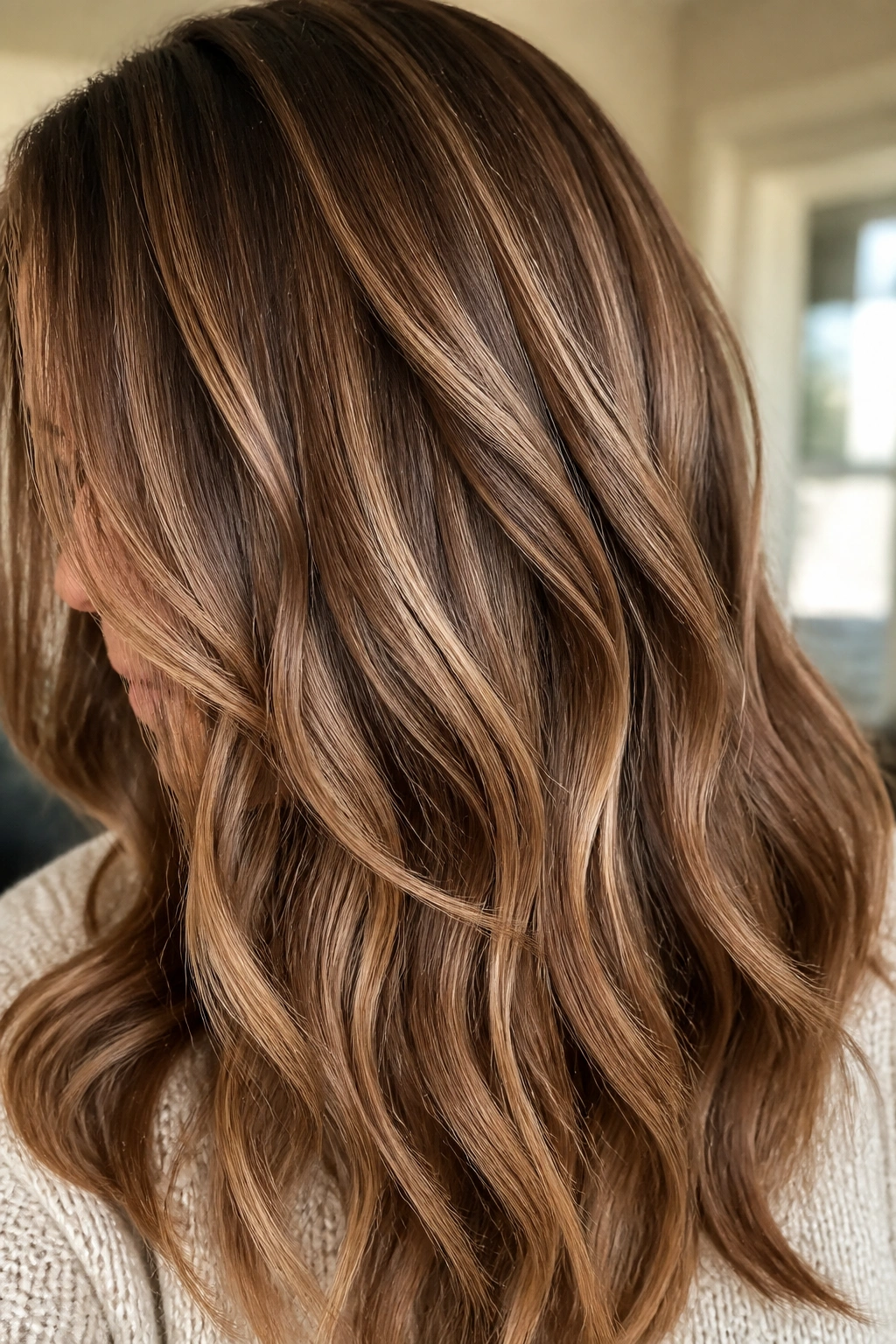
Hazelnut sits in that middle zone where almost nobody argues with it. It is softer than caramel, less cool than mushroom, and easier to live with than a stronger gold.
That is why I like it for people who want their brown hair to look fresh without making the color conversation obvious. Hazelnut highlights usually live in the mid-brown to light-brown range, which keeps the whole head connected. You get brightness, but the brunette story stays in place.
The thing that makes hazelnut useful is balance. It does not scream warm. It does not go flat and gray either. That middle ground is forgiving on a lot of skin tones, which is rare enough to matter.
Who it suits best
If your hair is naturally medium brown and you want a soft lift for everyday wear, hazelnut is a smart choice. It also works well if your wardrobe leans neutral — black, cream, denim, olive — because the color does not clash with much.
I’d ask for a soft hazelnut ribbon through the outer layers and a slightly deeper root to preserve depth. That contrast keeps the finish from looking washed out.
11. Beige Brunette Highlights
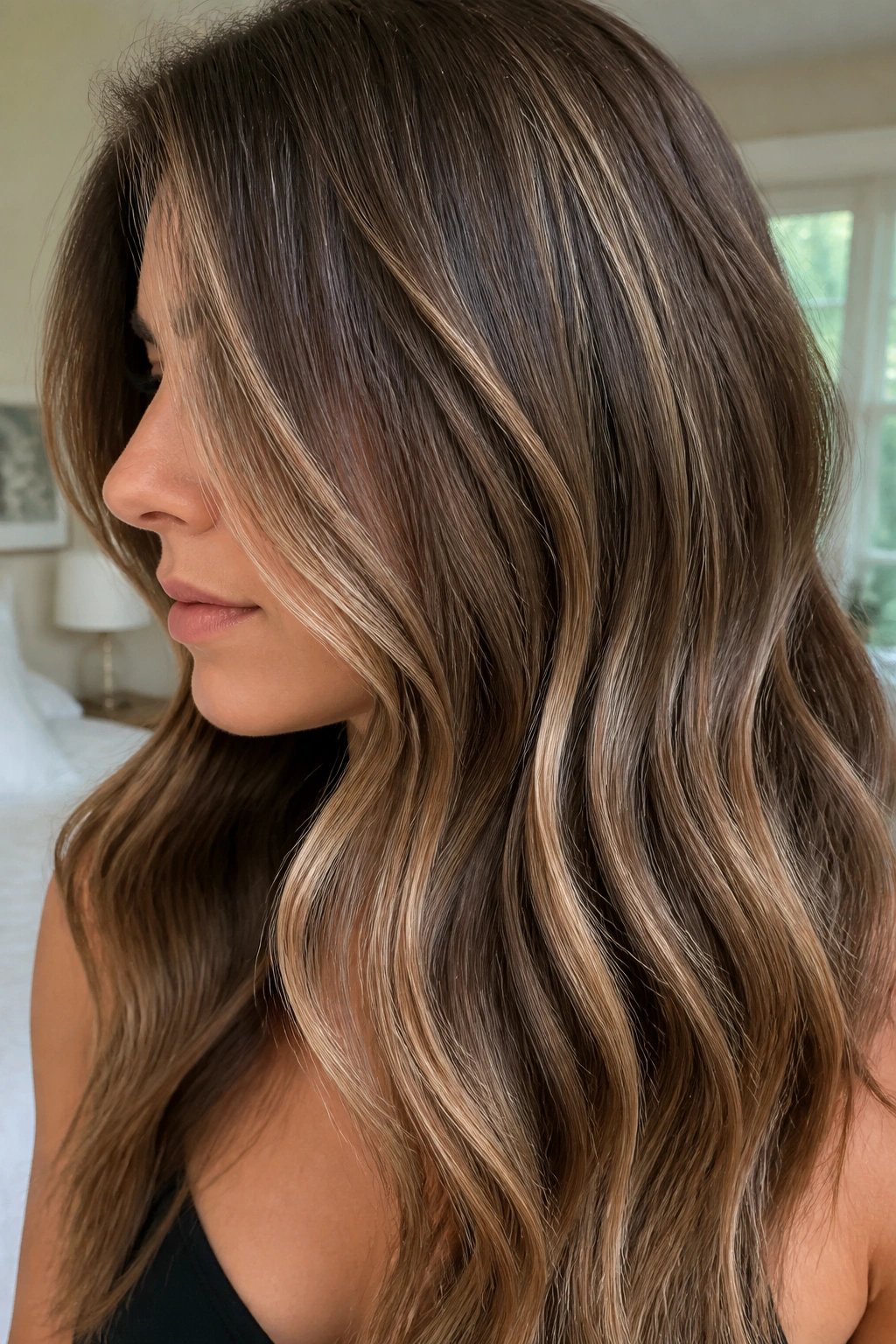
Beige brunette highlights are the answer when you want lightness but you do not want warmth to take over. Beige has that soft, filtered quality that can make brown hair look cleaner and more polished without leaning brassy.
This look depends on control. A beige highlight should feel muted, not dull. If it goes too cool, the hair can look dry or dusty. If it goes too warm, you lose the point. The sweet spot sits between ash and gold, which is harder to nail than it sounds, but worth the effort when you want a quiet finish.
I like beige highlights on medium brown hair that has a neutral base. They also work on darker brown hair if you keep the lift close to the face and the top layers. You do not need much. A few careful placements are enough.
If your hair is curly or wavy, beige shows even better because the texture breaks the color into soft pieces. Straight hair can wear it too, but it needs a cleaner cut so the tone has shape.
Beige is the one I would call the “soft light” option. Not dramatic. Not boring. Just clean.
12. Chestnut Lowlights and Highlights
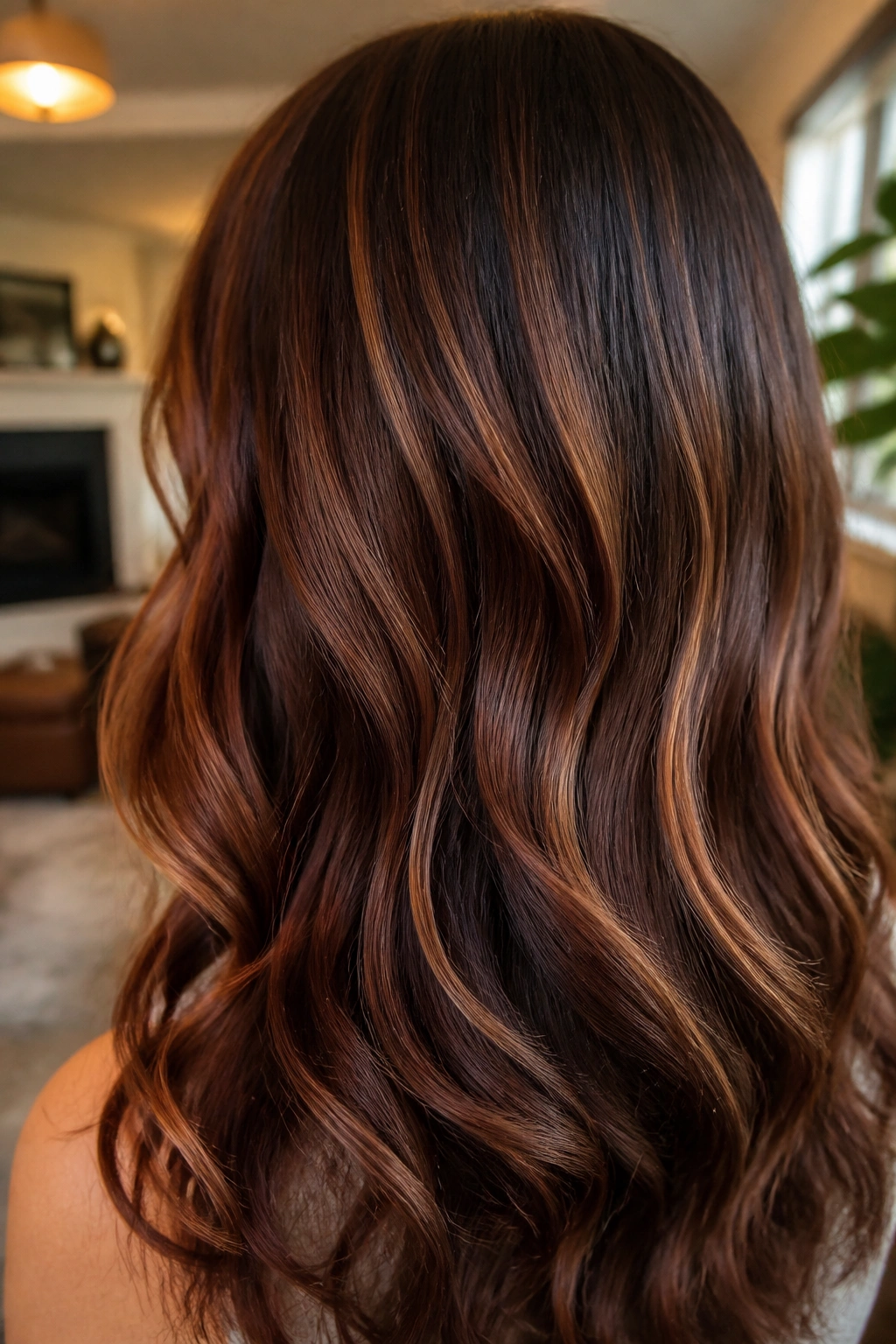
Brown hair with both lowlights and highlights has more life than hair that only goes lighter. That is the whole appeal here.
Chestnut lowlights add depth in between the brighter pieces, which keeps the color from floating on the surface. Chestnut highlights add warmth and a little lift, especially around the face and through the ends. Together, they give the hair a layered look that feels fuller and less flat. If your brown hair has been coloring one-dimensional for too long, this is the fix I reach for first.
Why the mix matters
A single highlight shade can sometimes flatten out after a few weeks. A mixed brunette palette holds better because there is still a range of tones even as the lighter pieces soften. The darker strands also make the lighter ones look brighter by comparison. Simple trick. Works every time.
- Use lowlights one shade deeper than your base.
- Place highlights where the cut needs movement.
- Keep both tones in the same warm or neutral family so they do not fight.
- Ask for a gloss that ties the pieces together after coloring.
This is a strong choice for anyone with thick hair, one-length cuts, or color that has gone a little blotchy from past sessions. It restores shape without forcing the hair to go blonde.
13. Espresso Ombré
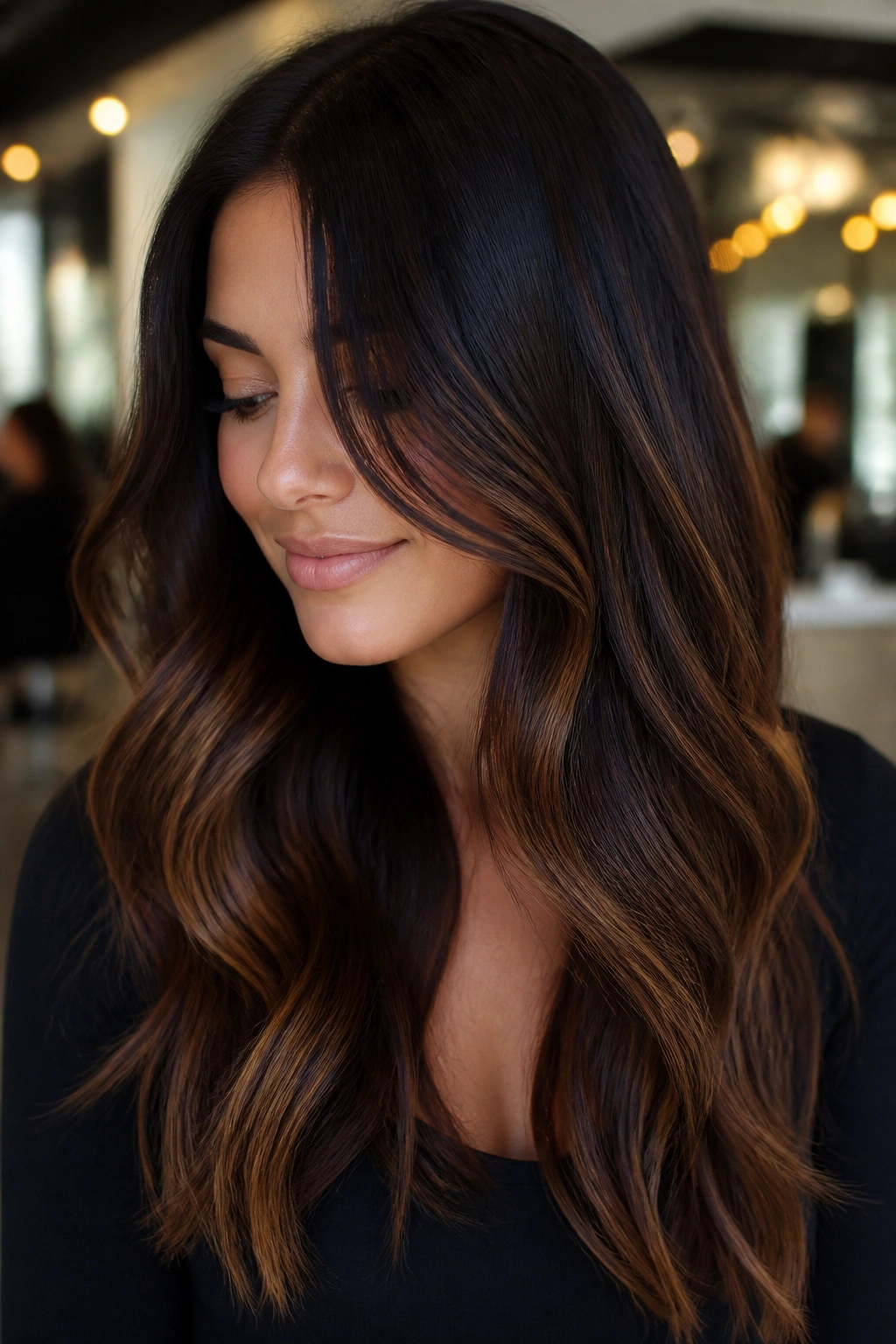
Espresso ombré is for the person who wants brown hair to look longer, softer, and a bit more dimensional without touching the roots very often.
The root area stays deep and rich, almost black-brown in some versions, while the lengths gradually lighten into chocolate, mocha, or soft caramel. The blend should be slow. If the transition is abrupt, the whole thing feels dated fast. A good ombré moves like a shadow growing lighter, not like two colors met in the middle and refused to speak.
This style makes the most sense on medium to long hair. The extra length gives the gradient room to unfold. On shorter cuts, the fade can feel compressed unless the stylist is careful with placement.
There is also a practical reason people keep liking it: grow-out is easy. The root stays dark on purpose, so you are not chasing a line every few weeks. That can be a relief if you are busy or if you hate frequent salon visits.
Espresso ombré is a little more dramatic than some of the other choices here, but it still stays in the brunette lane. That is why it works.
14. Honey-Bronze Waves
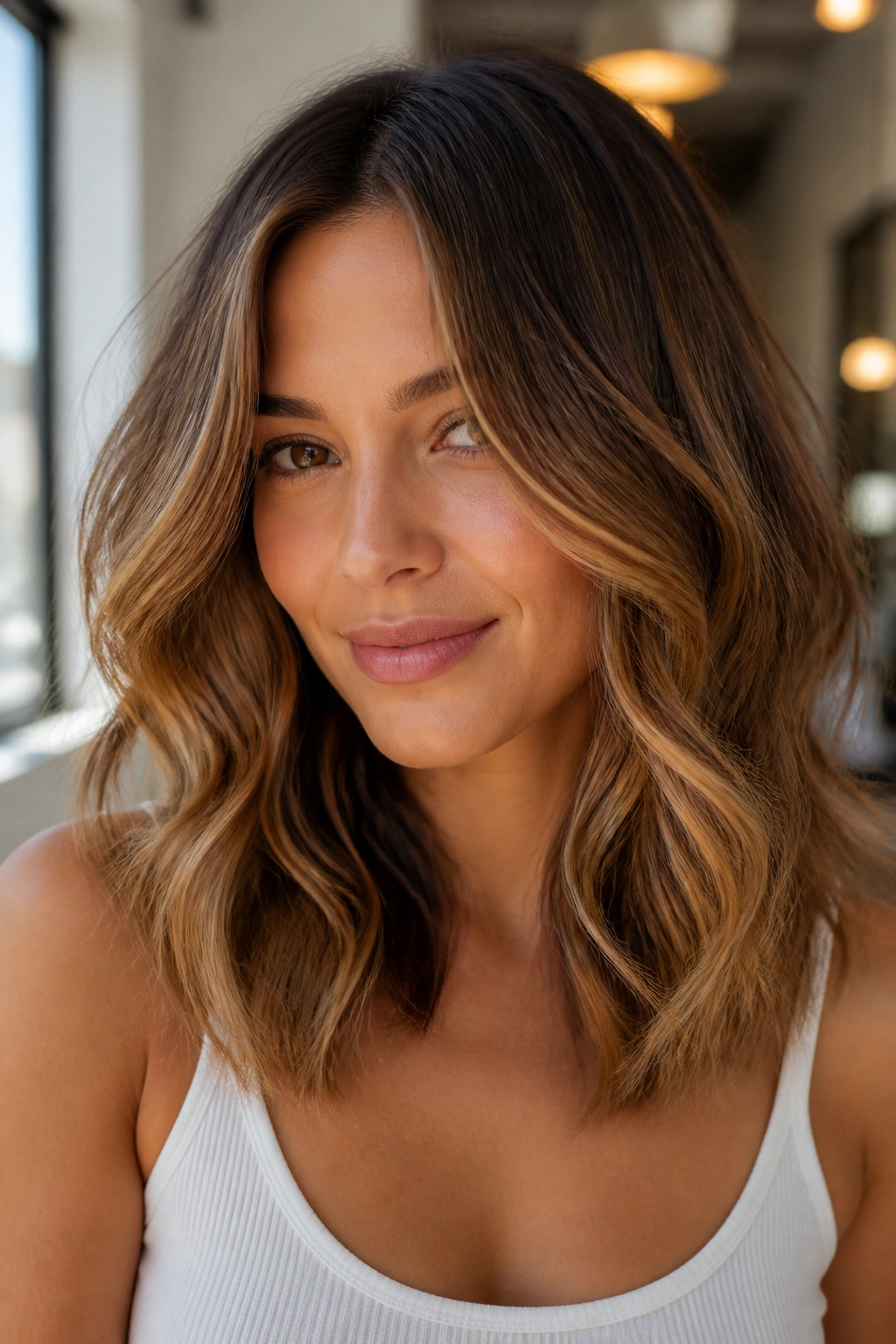
Honey-bronze is what I suggest when someone wants warmth that moves. Not a flat warm brown. A moving one.
The color works best on hair that already has a wave or a loose bend, because the honey and bronze pieces catch at different points. That creates the kind of depth that looks natural from a few feet away and a little more polished up close. It is a good look for hair that needs shine, especially if the ends have started to look tired.
How to wear it
A soft bend from a curling iron, a round brush, or even a good air-dry with a little styling cream is enough. The point is not perfect curls. The point is movement. Honey-bronze needs shape to show.
- Place the lightest pieces around the outer layer.
- Keep the inner section deeper for contrast.
- Use a gloss with warm gold-brown tone if the ends look dull.
- Avoid too much orange in the formula, or the honey can go loud.
This one is especially nice on shoulder-length cuts and long bobs. It gives the color some lift without asking the haircut to do too much work. And honestly, that is the kind of color I trust most.
15. Copper Curl Pops
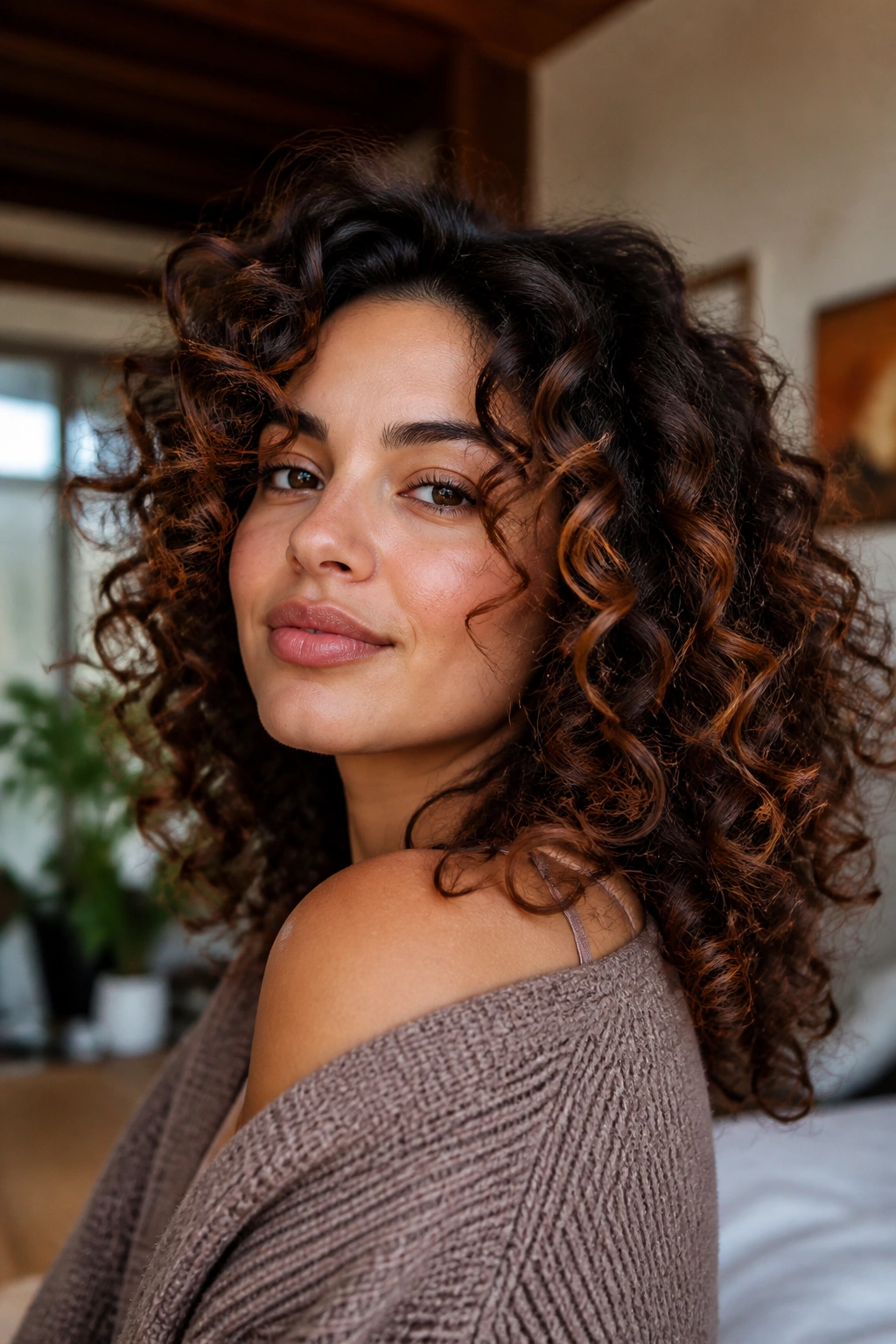
Copper on curls is different from copper on straight hair. Better, often. The bends in the curl catch the light in tiny flashes, so even a small amount of copper can look lively.
The trick is restraint. You do not want the whole head turning orange-red. You want a few copper pieces on the outer surface and around the face, where the curl pattern shows them off. Brown curls can carry copper beautifully because the darker base keeps the warmth from running away with the look.
Who should try it
If you have curly or coily hair and want a color that shows movement without heavy contrast, copper pops are a smart choice. The color can sit between auburn and bronze, which gives you warmth with a bit of edge. It also flatters styles that are worn curly most of the time, because the pattern does the heavy lifting.
I would keep the roots deeper and the copper softer near the crown. Concentrate the brighter pieces where the curl opens up — usually the mid-lengths and outer ring of the hair. That keeps the shape clean and the color readable.
A copper glaze after coloring helps the tone stay fresh. Without it, copper can fade faster than people expect.
16. Peekaboo Panels
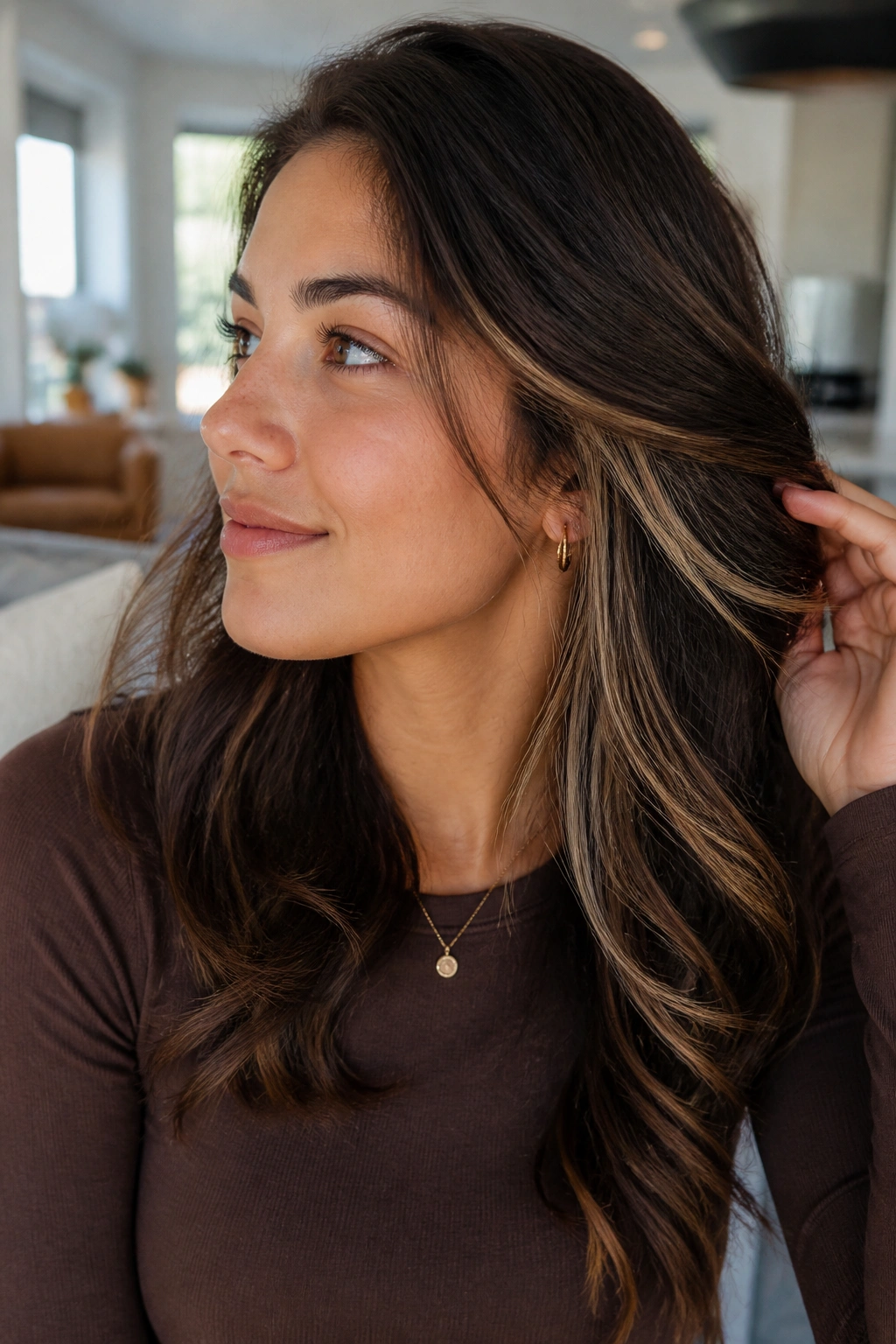
Peekaboo highlights are the fun option for people who want movement in brown hair but do not want the whole room to know about it at once.
The color lives under the top layer, so it shows when the hair swings, flips, or gets tucked behind the ear. That hidden placement gives you flexibility. At work, it can look almost all brunette. In motion, the color shows up and does its thing. Nice balance.
Why this placement works
Because the light pieces are hidden, they can be a little brighter or bolder than the front-facing highlights without taking over the whole look. That gives you room to play with caramel, copper, bronze, or even a cooler beige. You are not locked into one mood.
- Best for layered hair with some movement.
- Needs a clean sectioning plan so the panels show where you want them.
- Works well if you want color but not constant upkeep at the front hairline.
- Can be placed just underneath the crown or deeper in the back.
I like peekaboo panels for someone who likes a small surprise. They are not loud, but they are not boring either. And the grow-out tends to be forgiving, which is a nice bonus.
17. Ribbon Highlights for Long Layers
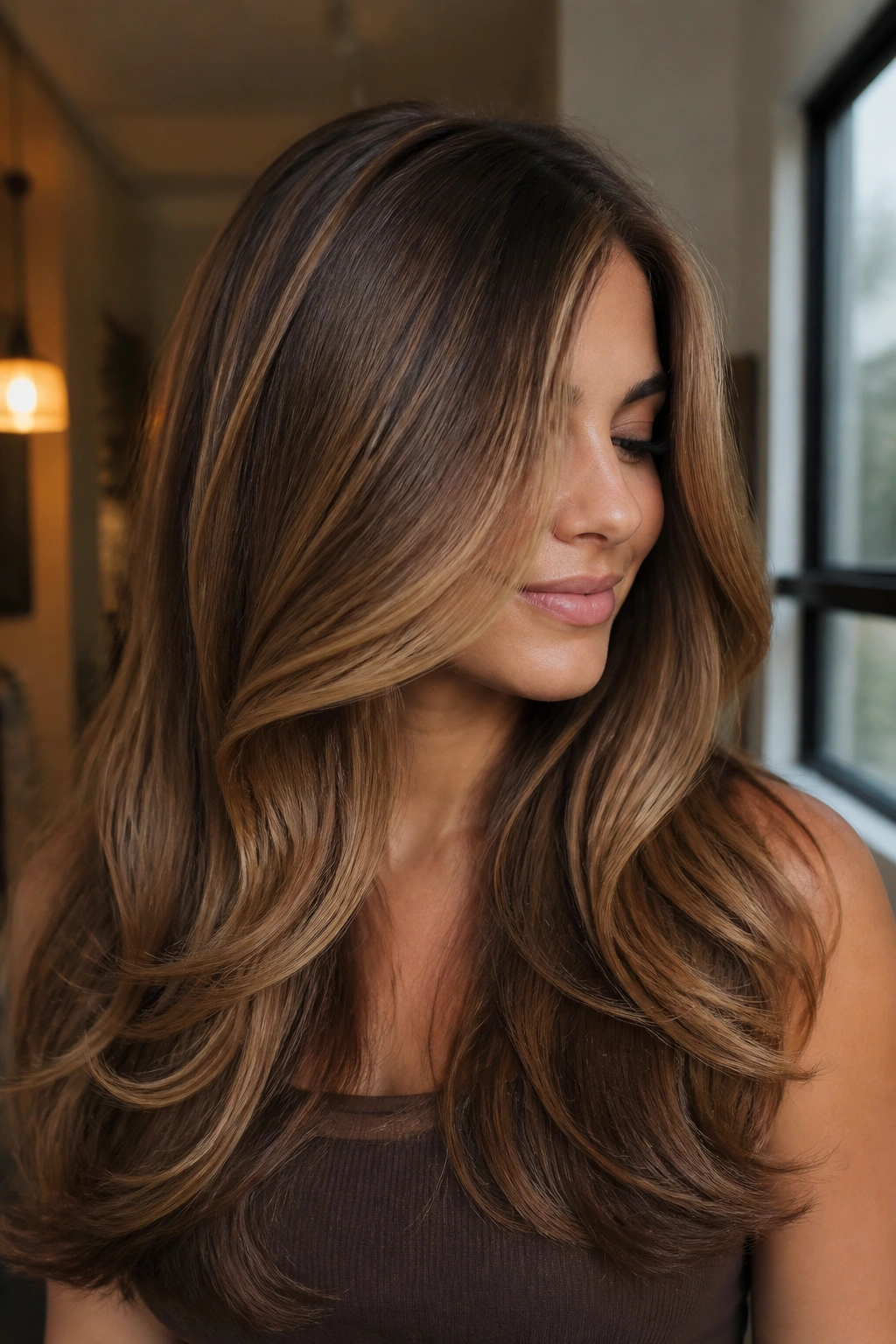
Long layers and ribbon highlights belong together. The cut gives the color space, and the color gives the cut shape.
Instead of tiny specks, ribbon highlights use longer painted sections that follow the movement of the hair. On brown hair, that can create a really pretty flow from top to bottom, especially when the ribbons shift between caramel, mocha, and soft gold-brown. The look is polished, but not stiff. It moves.
I like this style when the hair is thick or very long, because small highlights can disappear in the density. Wider ribbons solve that. They show up when the hair is down and still look good when it is half up or pulled into a loose wave.
Best placed along the haircut
The brightest strands should trace the outer curve of the layers. That is where the eye naturally goes. If you stack all the light at the crown, the ends can feel empty. If you keep everything at the ends, the top looks heavy. The ribbon approach balances both.
This is the kind of look that benefits from a good trim. Split ends and ribbon highlights do not get along. Clean edges make the movement read sharper.
18. Glossy Multidimensional Brunette Blend
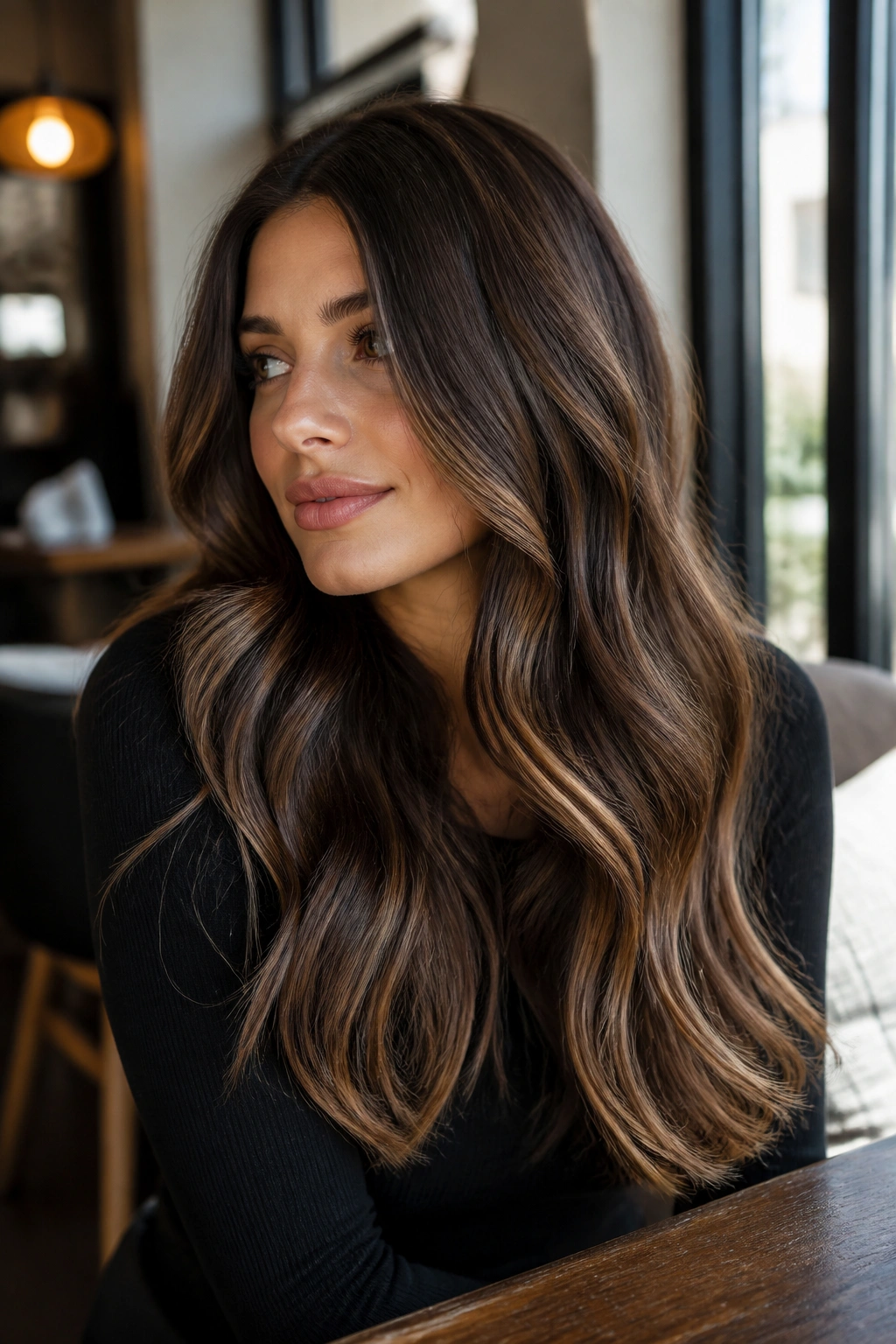
The best brunette color is often not one highlight shade at all. It is a mix.
A glossy multidimensional blend layers two or three tones — maybe mocha, caramel, and a touch of beige — so the hair changes as it moves. That is what gives brown hair that expensive, light-catching depth people keep trying to get with a single foil pattern. One shade can be pretty. Three shades can look alive.
What makes it different
The goal here is not contrast for its own sake. It is movement. A deeper root, a mid-tone ribbon, and a softer lighter piece near the ends can work together if they share the same warmth level or the same cool level. That keeps the finish from turning messy.
- Best when the base color is healthy and rich.
- Needs a gloss to pull the tones together after lightening.
- Works on straight, wavy, and curly hair, though the effect changes with texture.
- Looks strongest when the haircut has layers or face-framing pieces.
If you want the most natural-looking brunette color on the list, this is it. Not because it is invisible, but because it behaves like real hair behaves — different tones in different places, with shine in the right spots and depth where the hair needs weight.
Final Thoughts
Brown hair does not need to be turned blonde to feel fresh. A good brunette highlight plan respects the base color, then gives it a little lift where the light lands.
If you want the safest route, caramel, hazelnut, and mocha are hard to argue with. If you want more edge, mushroom brown, auburn, or copper can shift the mood fast without losing the brunette character. The shape of the cut matters too. So does the gloss. A flat tone is usually the real problem, not the lack of blondness.
Bring a photo, yes, but also be specific about warmth, contrast, and how much upkeep you want. That part saves more bad color jobs than any trendy reference ever will.
