



Chocolate highlights on brown hair fix a very specific problem: the color looks fine, but it feels flat. A few ribbons of milk chocolate, espresso, or cocoa can change that fast, giving brunette hair movement, depth, and a softer glow around the face without turning the whole head blonde.
That’s why this color family works so well. Chocolate sits close enough to brown that the grow-out is kinder, but it still catches the eye when the light hits a bend in the hair or a layered end flips forward. On a level 4 or level 5 brunette, the difference between a warm cocoa ribbon and a cool ash-chocolate streak can be surprisingly strong. Small shift. Big payoff.
Placement matters just as much as shade. A money piece around the hairline reads louder than a few scattered babylights through the crown, while lowlights underneath can make the top layers look thicker and more expensive-looking. A good brunette color job is usually about restraint, not drama.
So the question isn’t whether chocolate tones work. It’s which version works on your hair, your cut, and the amount of upkeep you’re willing to live with. Some of these are barely-there and whispery; others are bolder, chunkier, and built for people who want to see the color from across the room.
1. Milk Chocolate Face-Framing Pieces
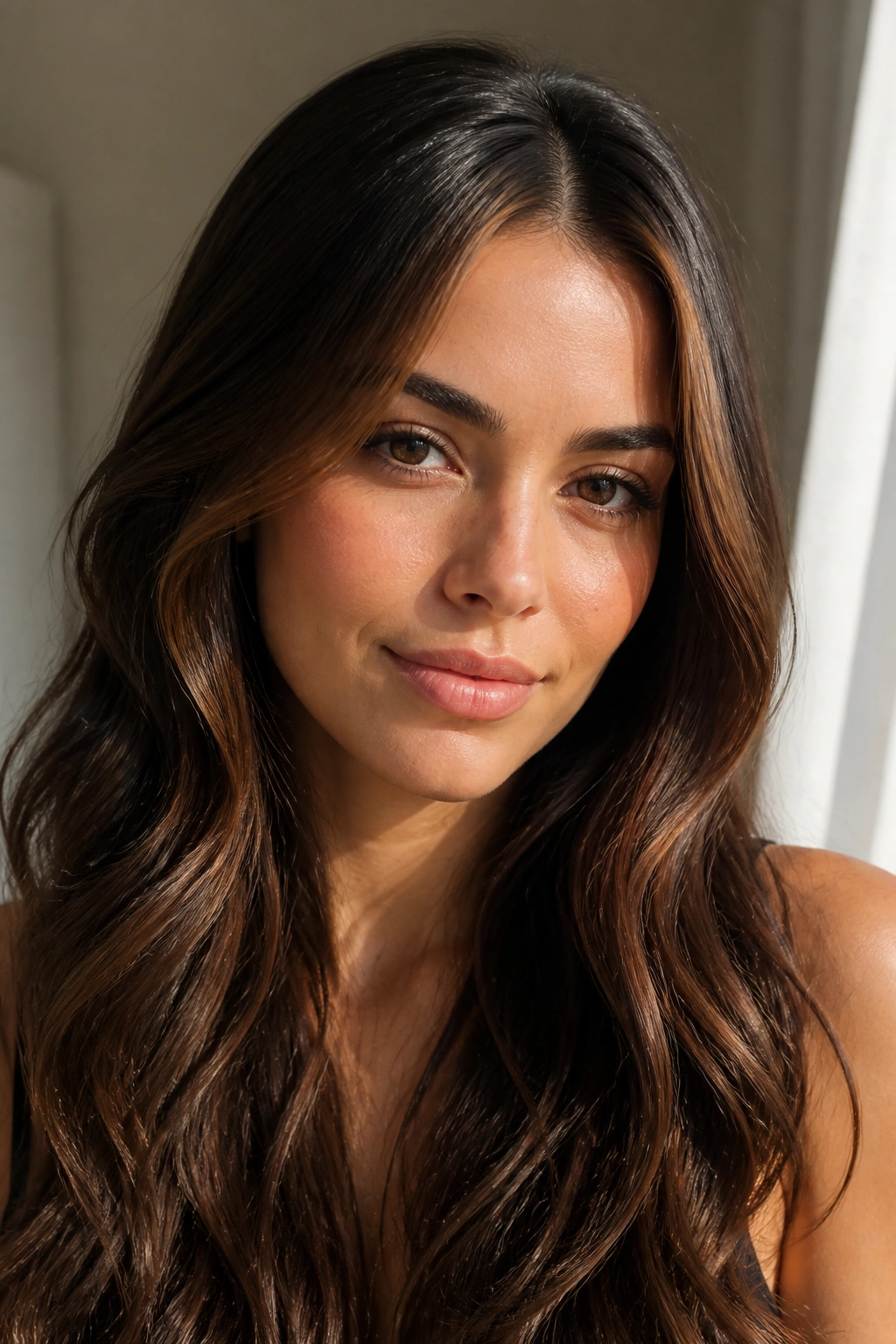
Milk chocolate highlights are the easiest place to start if you want movement without a full color overhaul. They sit a shade or two lighter than a medium brown base, so the result feels soft, glossy, and believable rather than streaky. Around the face, that little bit of lift wakes up tired brunette hair fast.
The key is keeping the front pieces narrow enough to blend. A good colorist usually paints them just inside the hairline and leaves the root area deeper, which helps the color grow out without a hard line. If your hair is shoulder-length or longer, these pieces can also make layers look fuller because the lighter strands catch more light as they move.
This is the kind of highlight that works when you want a quiet change. Not boring. Just smart.
2. Espresso Money Piece
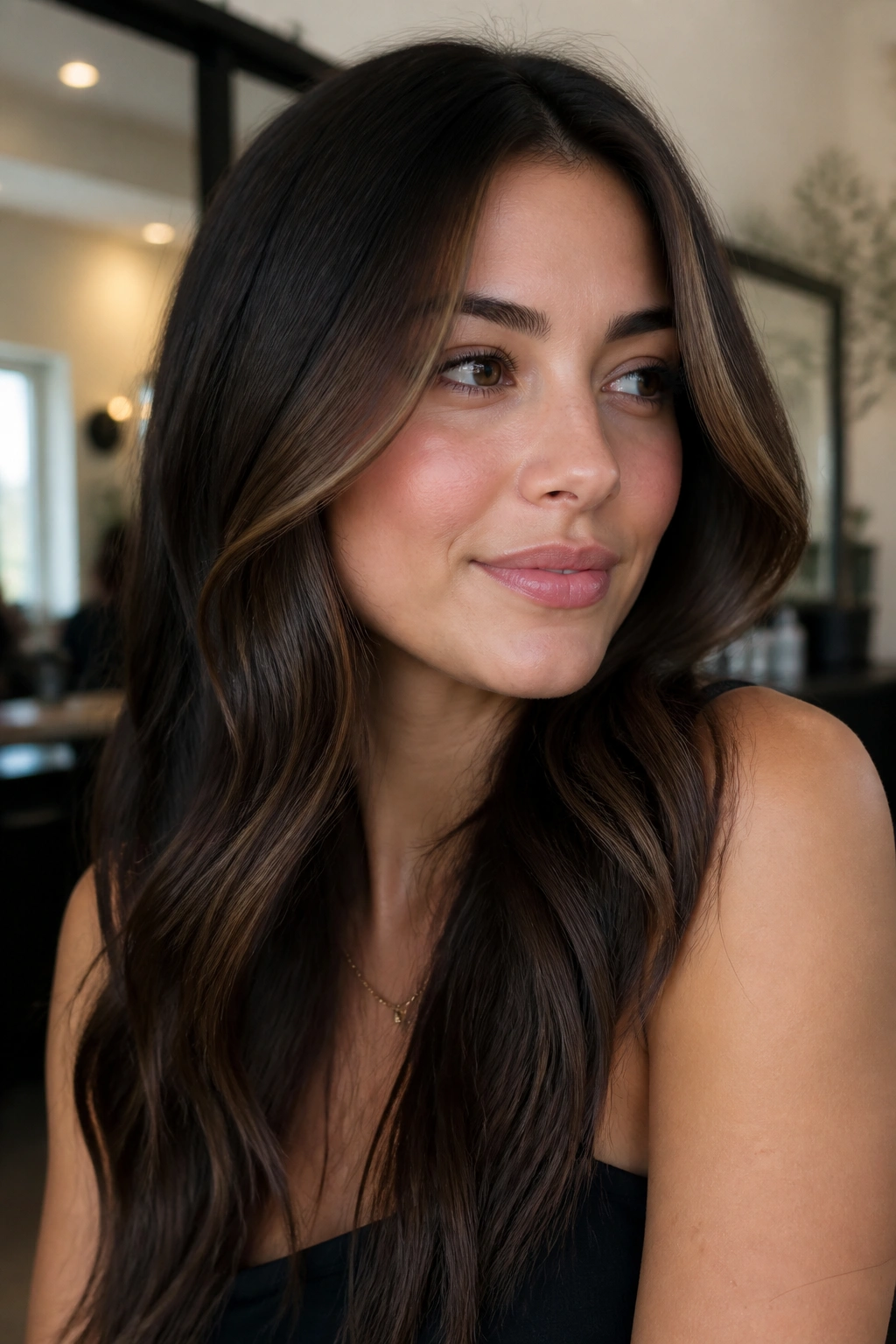
Why does an espresso money piece look so polished on brown hair? Because it gives contrast without making the whole head read lighter. The front sections stay deep and rich, then they’re lifted just enough with a dark-chocolate glaze or a cool espresso tone so the face gets shape and definition.
What Makes It Different
Unlike blonde money pieces, this version doesn’t fight your base color. It sits closer to brunette territory, so it can feel cleaner and less stripey, especially on thick hair or dark eyes. If your skin has a warm undertone, ask for a little red-brown warmth; if your base tends to go orange, a cooler espresso toner keeps things from drifting brassy.
The best espresso money pieces are usually painted in two to four slim sections on each side, with the brightest point starting around cheekbone level. That keeps the lift from looking too chunky.
Best for: people who want a clear face-framing effect and don’t want constant salon touch-ups.
3. Chocolate Balayage Through Mid-Lengths
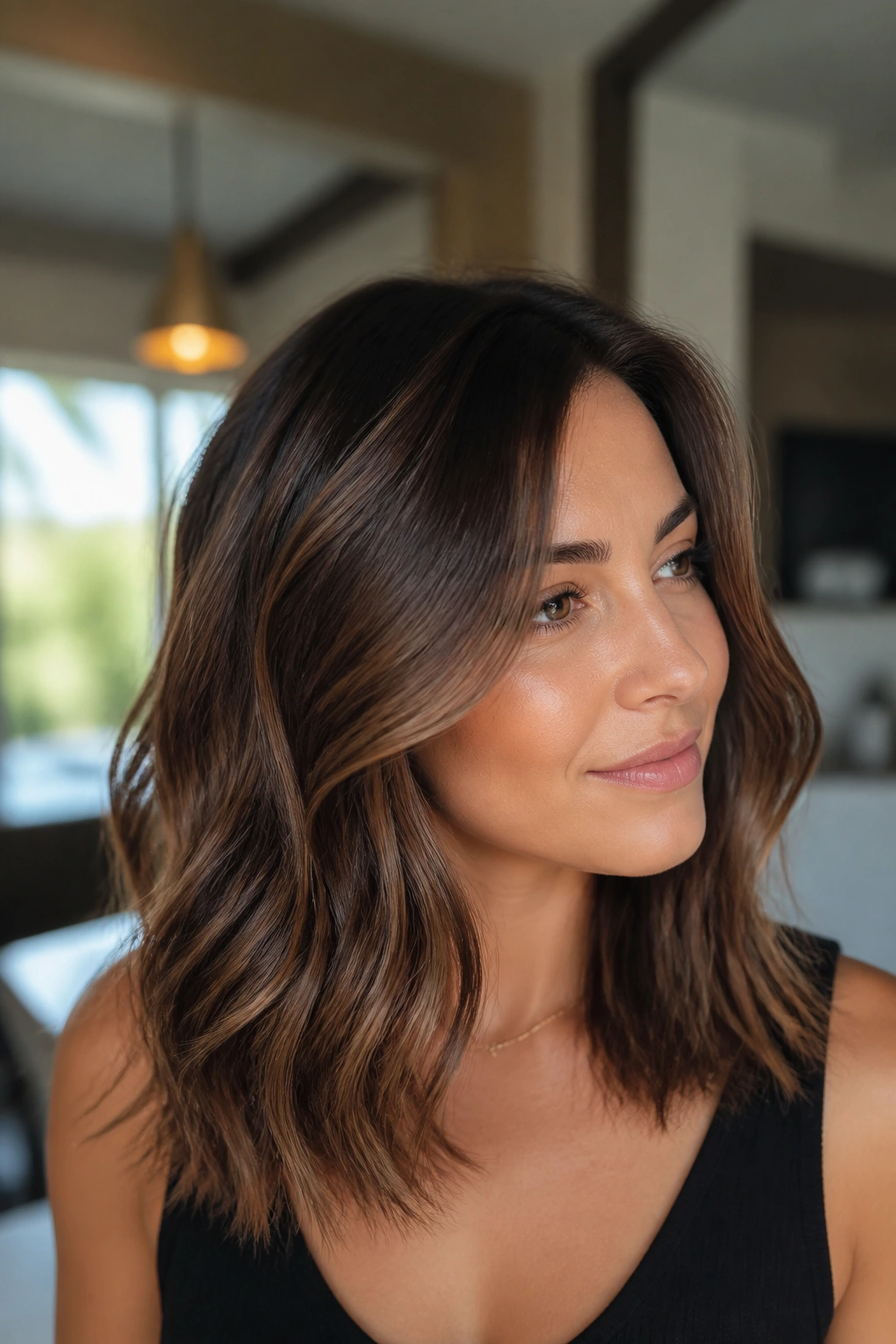
A well-placed chocolate balayage can make medium brown hair look like it has twice as much movement. The color painterly-feels spread through the mid-lengths and ends, not dumped in from root to tip, so the result looks sun-softened rather than striped. On layered hair, this is one of the easiest ways to show off the cut.
Placement Notes
- Ask for soft ribbons starting 2 to 3 inches below the root if you want easy grow-out.
- Keep the lightest pieces on the outer layers, where they’ll catch the most light.
- Leave the underside darker so the color does not flatten out.
- Finish with a neutral or warm chocolate gloss, depending on whether your base runs red or ash.
There’s a reason stylists lean on this placement. It gives brunette hair shape without making the regrowth line feel obvious after six weeks.
4. Mocha Babylights
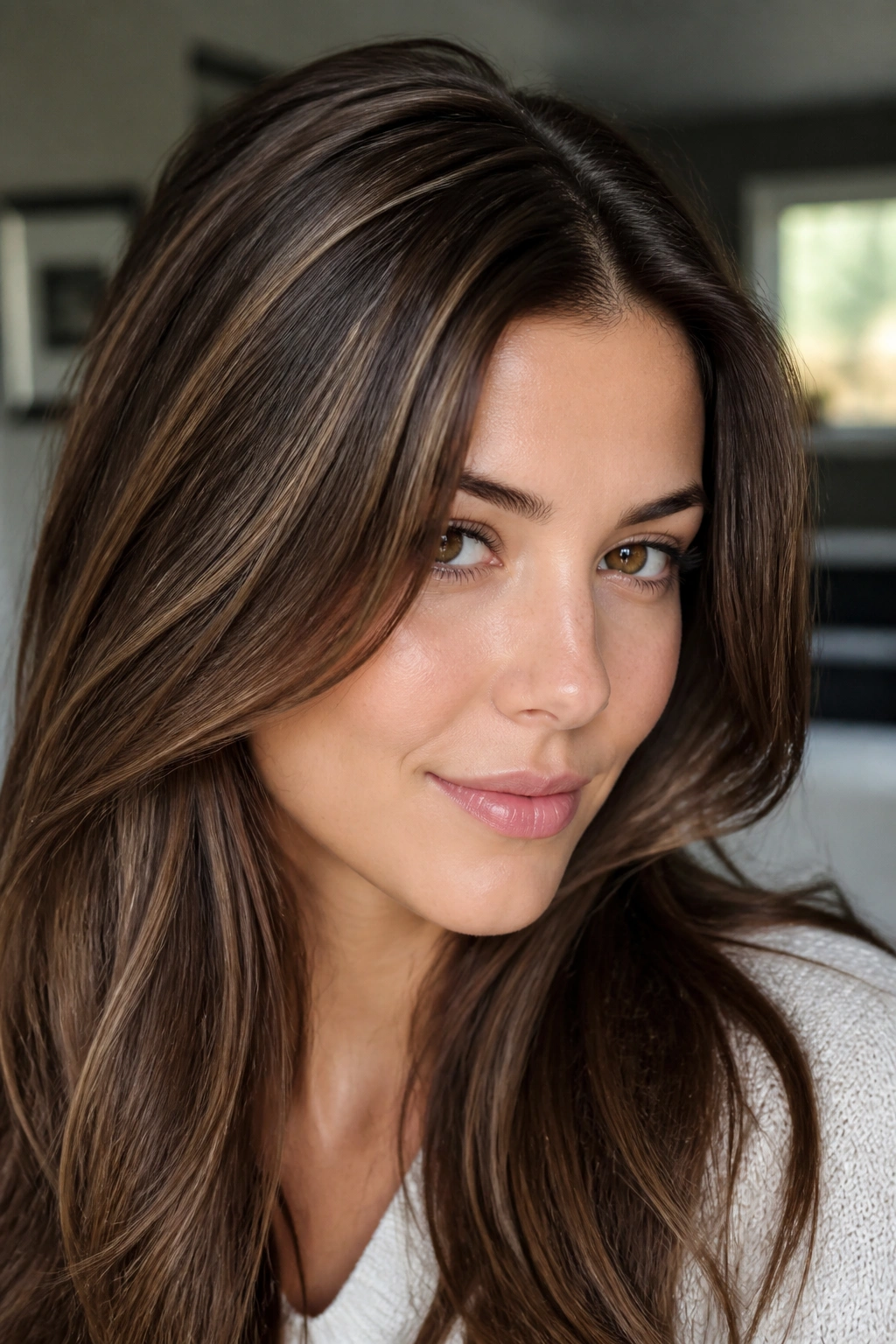
Mocha babylights are tiny, fine, almost threadlike highlights that slip through brown hair without announcing themselves. They’re subtle enough that someone might say your hair looks shinier before they realize color is doing the work. That’s the point.
These are especially good if your hair is fine or a little sparse at the ends. Big foils can overwhelm delicate strands, while babylights build a soft haze of dimension across the crown, part line, and temple area. Ask for a mocha tone rather than a golden one if you want the finish to stay cool and creamy instead of warm and coppery.
Pro tip: babylights look best when the toner is kept a touch darker than the lift. If they’re too light, they stop reading as chocolate and start looking like leftover blonde.
5. Caramel-Chocolate Ribbon Highlights
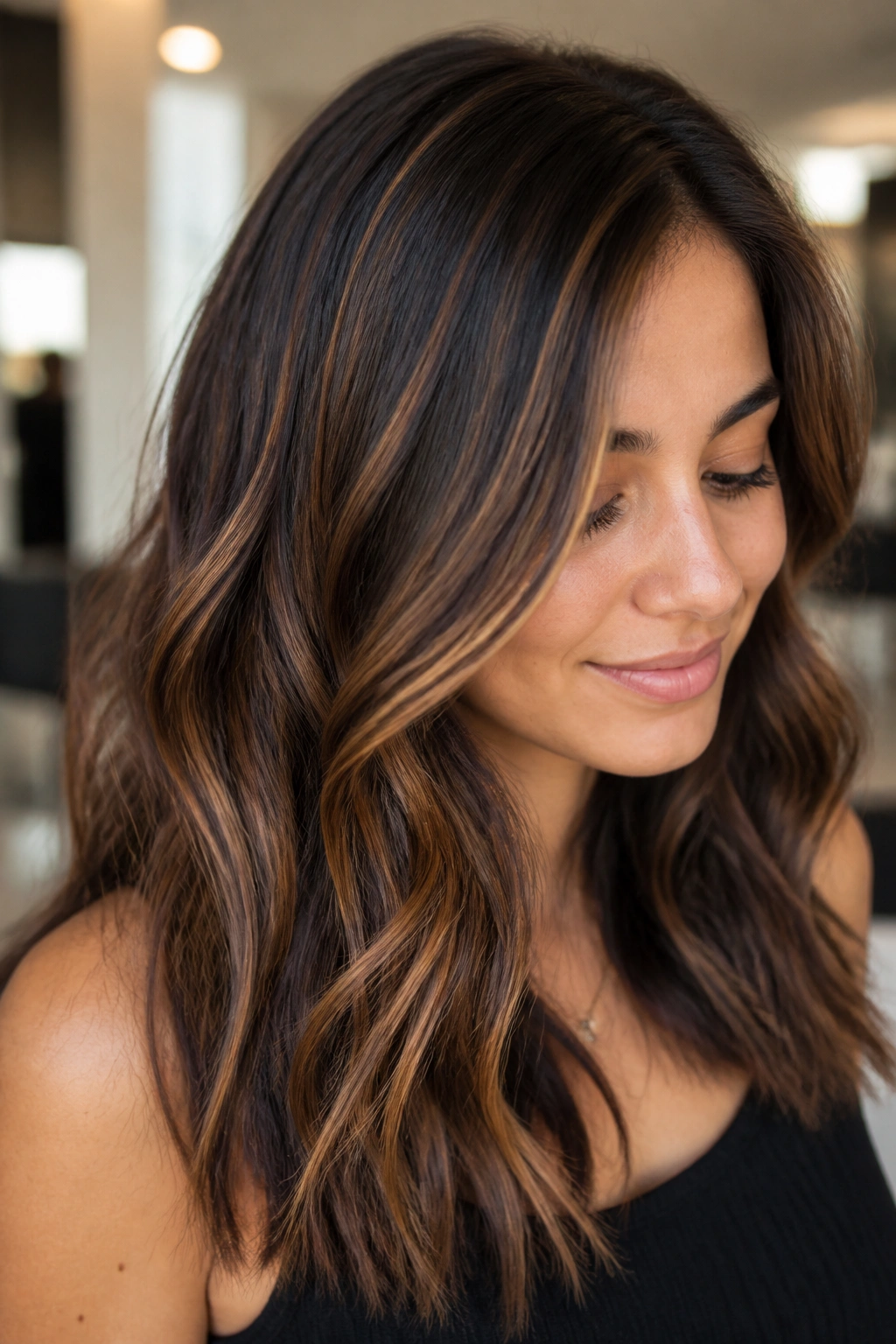
Caramel and chocolate together can get too sweet if the contrast is pushed too hard, but when the balance is right, the effect is gorgeous on brown hair. The caramel adds warmth, the chocolate keeps it grounded, and the whole thing moves like a ribbon through the lengths instead of a block of color.
Unlike a standard balayage, this look depends on alternating warm and deep pieces instead of one continuous fade. That makes it a nice choice for medium brown brunettes who want visible texture. It also flatters layered cuts, because the lighter ribbons can sit on top while the darker pieces peek through underneath.
If your hair has a naturally warm base, this shade combo can look especially easy. On cooler skin tones, ask for a caramel that leans beige rather than orange.
6. Chestnut Lowlights for Depth
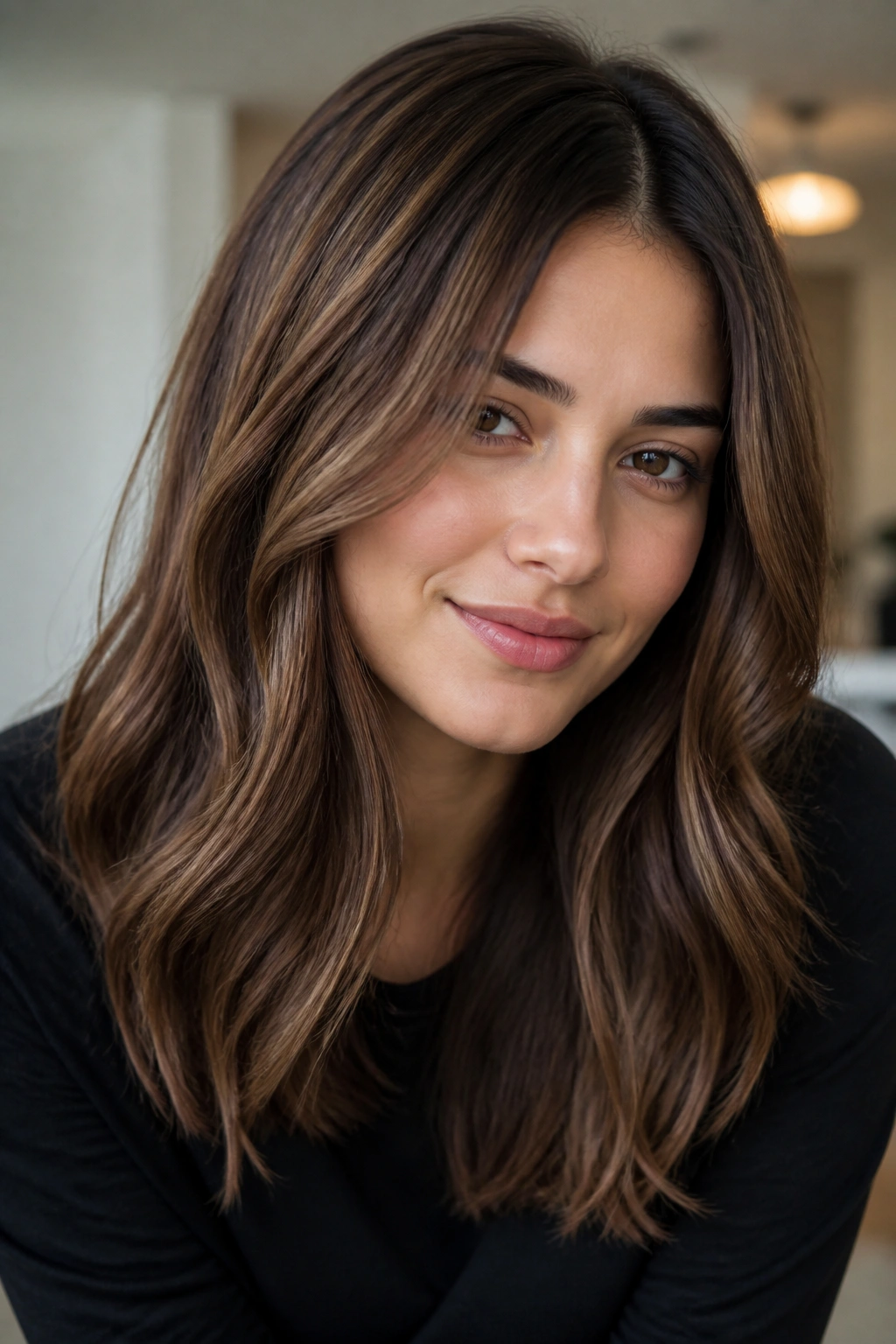
Chestnut lowlights do the opposite job of bright highlights, and that is why they matter. They slip darker strands into the underside and interior of brown hair, which makes the top layers look fuller, denser, and more dimensional. On thick hair, that shadow can be the difference between “nice color” and “I can’t stop looking at your hair.”
The sensation of this look is richer than flashy. You see it most when the hair moves and the darker strands open up under the lighter surface. If your brunette base is already warm, chestnut lowlights can deepen it without making it feel heavy. If your hair is flat at the roots, they add a little architecture to the cut.
This is one of my favorite choices for people who want their hair to look expensive in low light. It reads especially well on waves. Quiet, but not dull.
7. Chocolate Melt Ombré
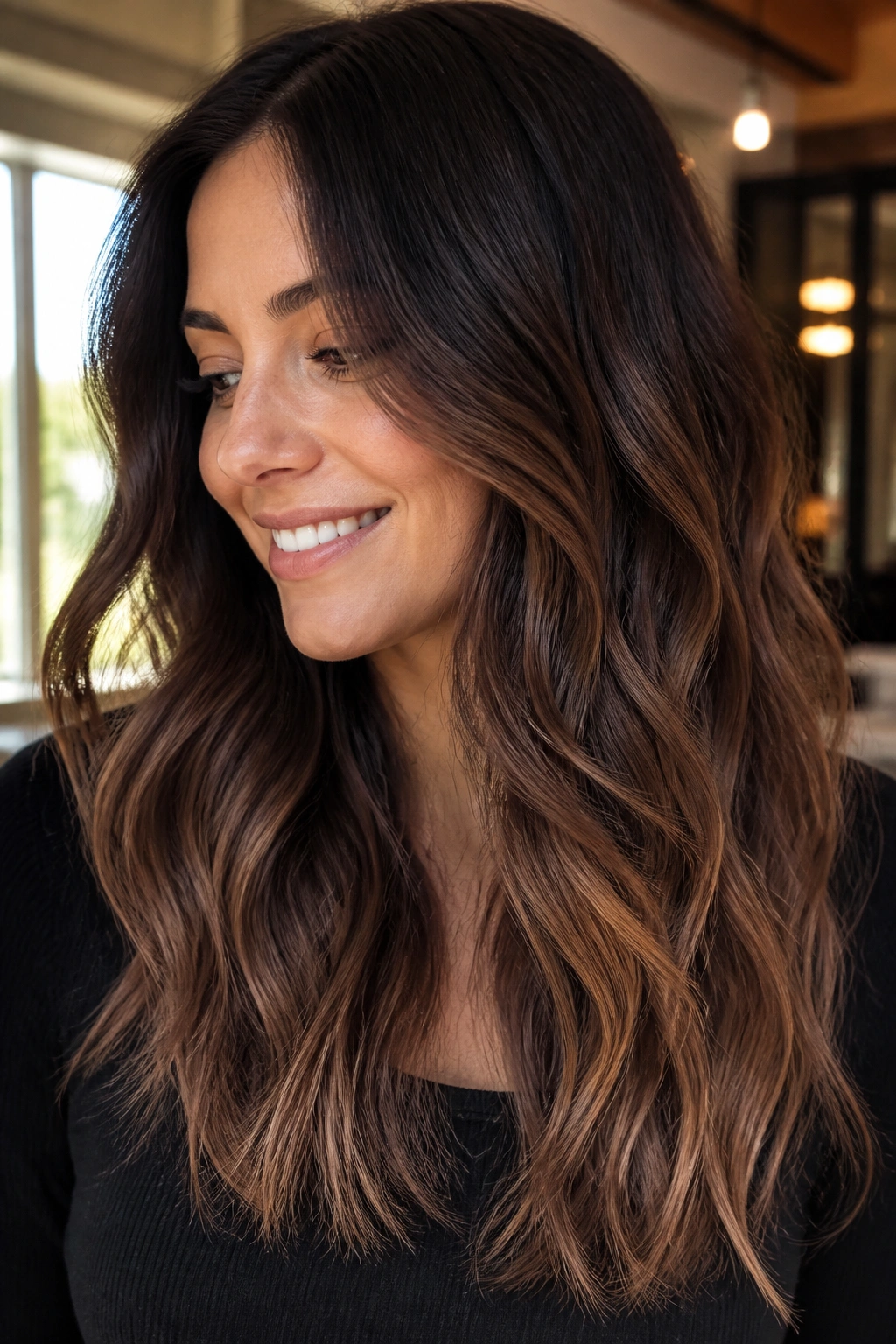
A chocolate melt ombré works because the transition is barely there when the color is done well. The roots stay deep, the mid-lengths soften into medium chocolate, and the ends fade into a lighter cocoa or mocha tone. It feels gradual, like the color is sinking through the hair instead of sitting on top.
How to Keep the Melt Soft
The big mistake is lifting the ends too high. Once the lower half goes too light, you lose the brunette identity and the ombré starts to look disconnected. Keep the fade within about two to three levels from root to tip, and tone the lighter ends with a brown-based gloss so they still belong to the same family.
A chocolate melt looks especially good on long hair that needs visual movement near the bottom. Straight hair benefits too, but waves show the fade much better. If you wear your hair up often, leave a little depth through the underlayer so the color still looks intentional in a ponytail.
8. Peekaboo Chocolate Panels
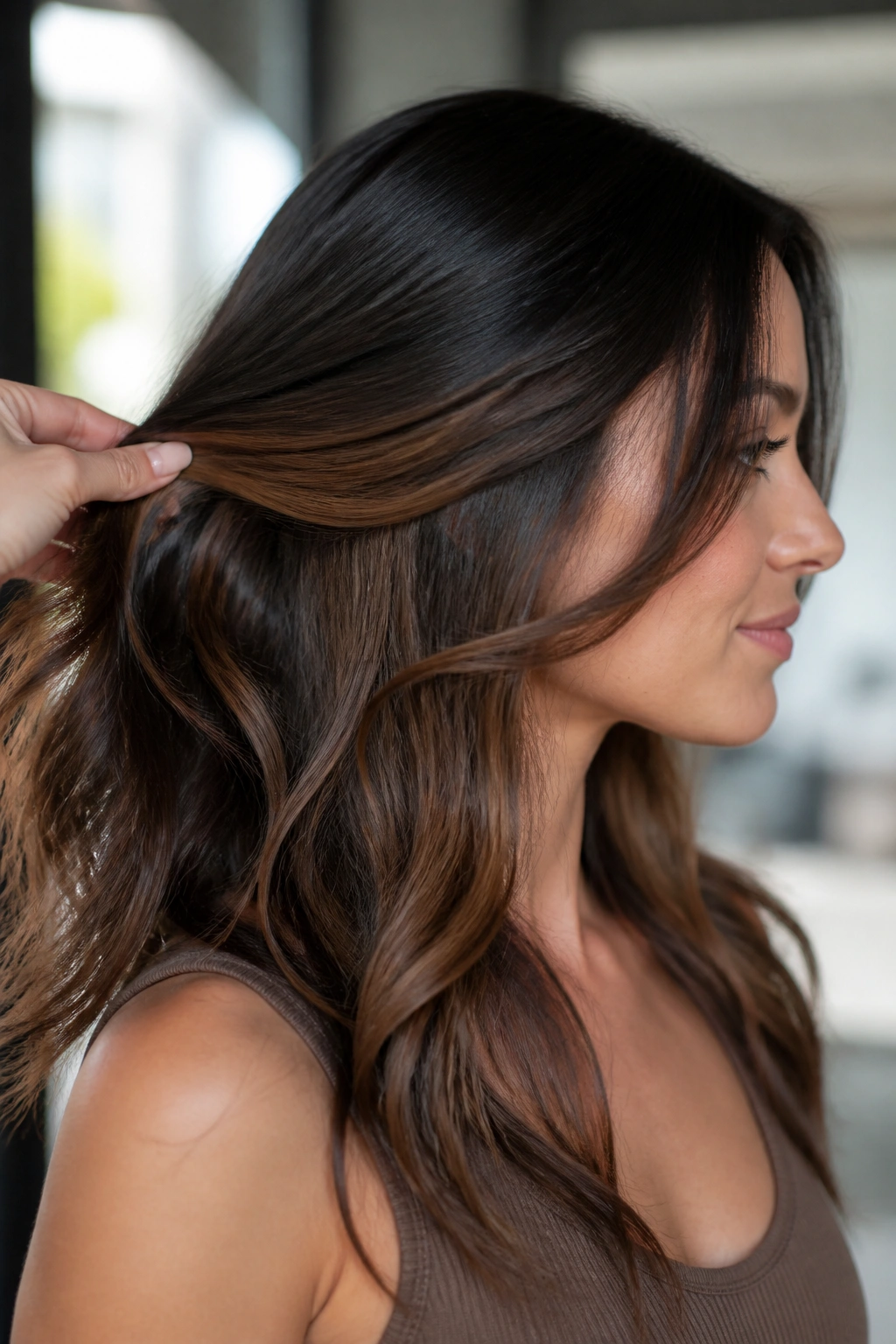
Peekaboo chocolate panels are for the person who wants color with a little mischief. The lighter brown pieces hide underneath the top layer, so the effect appears only when the hair swings, gets tucked behind the ear, or is pulled into a half-up style. Sneaky. In a good way.
These panels are useful when you work in a conservative setting or just do not want every highlight visible all the time. A colorist can place them beneath the crown and near the nape, then keep the top layer deeper so the contrast feels private. If you like your hair to reveal itself slowly, this one is hard to beat.
It’s also practical. Because the lighter pieces live underneath, they usually stay fresher-looking longer and need fewer visual touch-ups than face-framing color.
9. Cinnamon-Chocolate Swirls
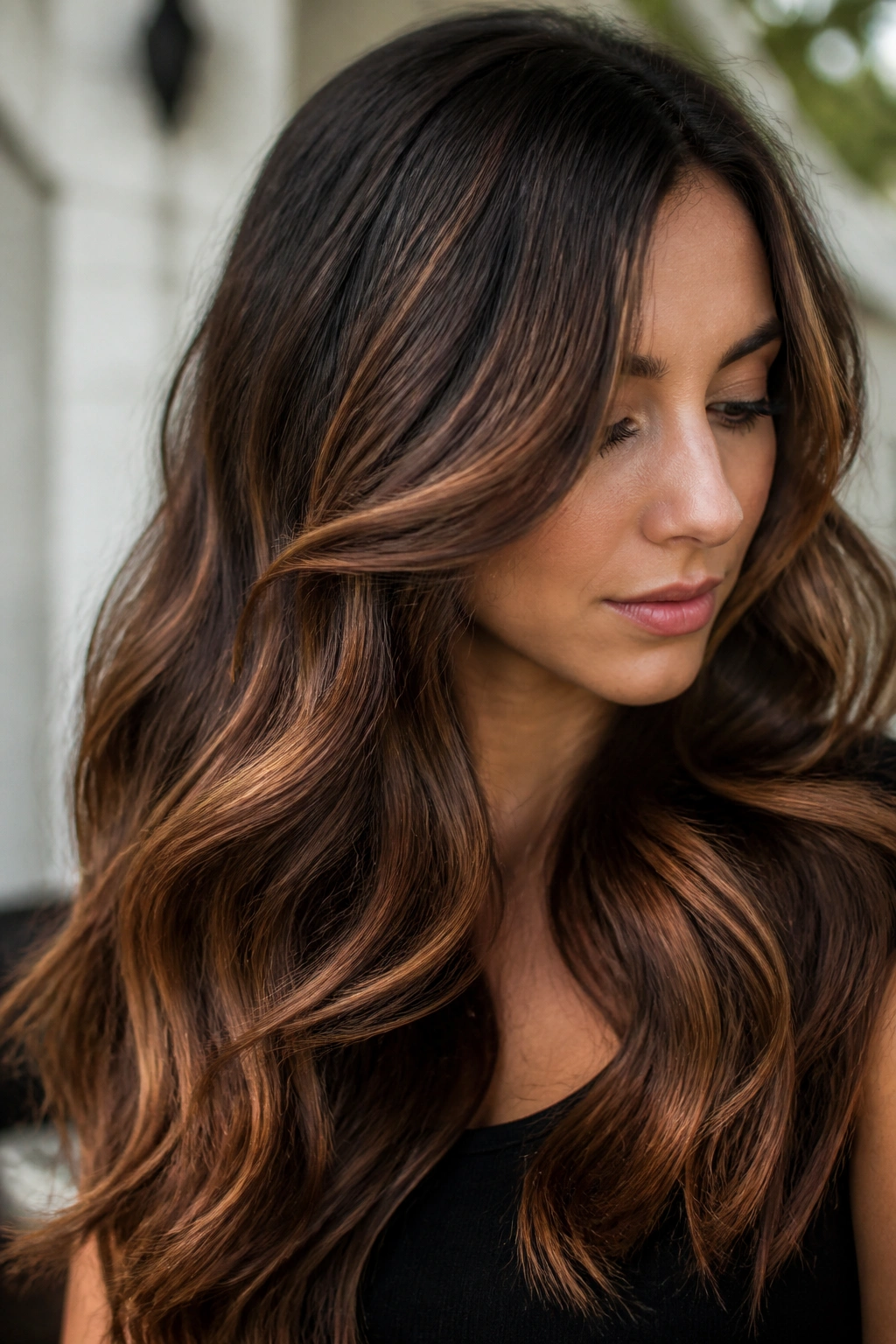
What makes cinnamon-chocolate swirls work is the warmth. Chocolate alone can sometimes read flat on a brown base, but a little cinnamon tone woven through the ribbons adds spice and movement without turning the hair copper. The color feels alive, especially in daylight.
The best version is not a stripey mix. You want thin, curved sections painted to follow the way your hair falls naturally, which keeps the warm pieces from looking random. On long layers, that pattern helps the hair look soft and bendy rather than one-dimensional. On a blunt cut, it adds a bit of softness around the edges.
If your hair tends to feel dull in winter light, this shade family can help more than ash tones do. It brings warmth back without making the color loud.
10. Ash Chocolate Veil
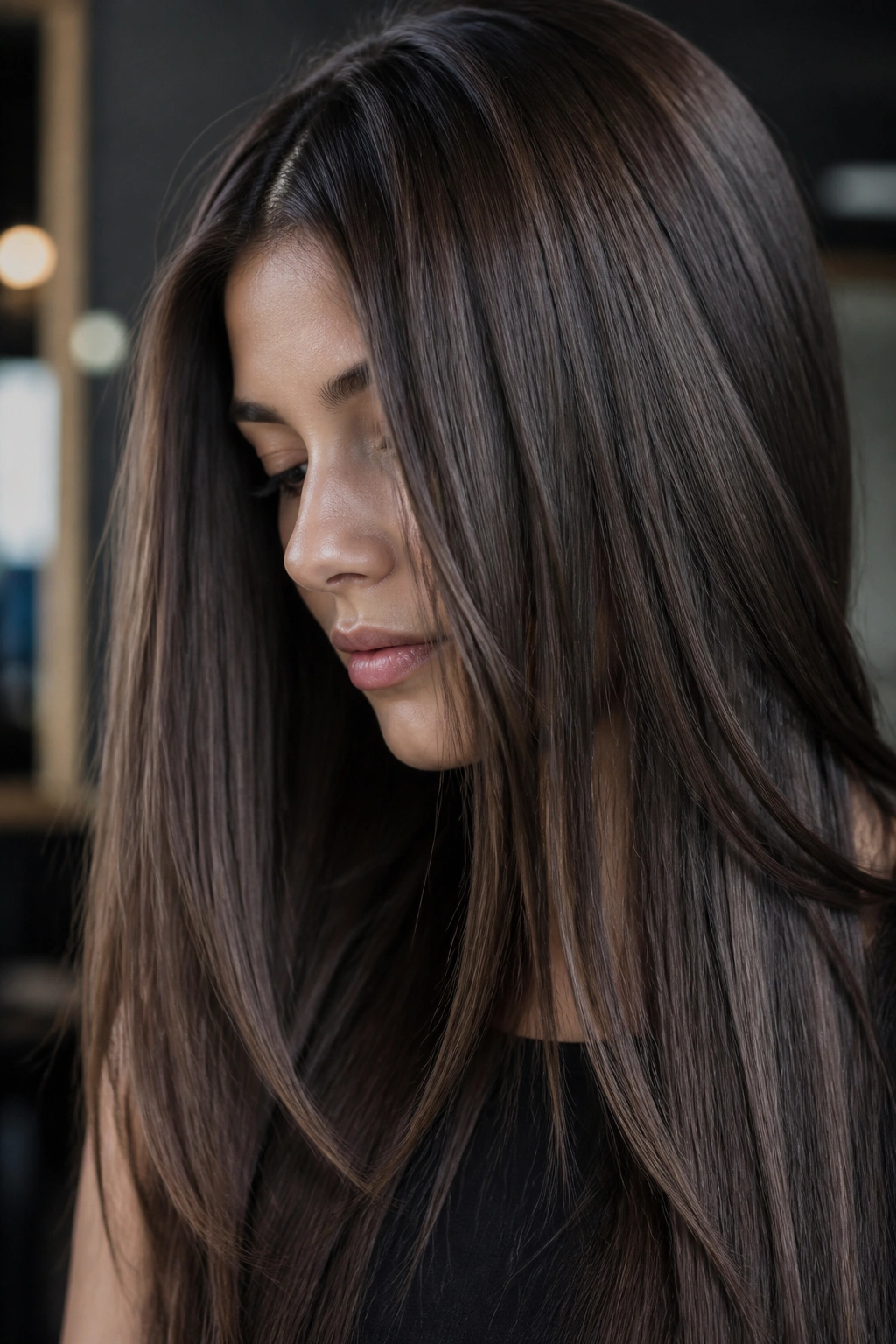
Ash chocolate highlights are the answer when you want dimension but hate orange tones. The finish is cooler, dustier, and more muted than warm chocolate, which makes it a strong choice for brown hair that pulls brass after lightening. The whole effect sits like a thin veil over the base instead of sharp stripes.
Why It Works on Darker Brunettes
- It softens red or orange undertones after lifting.
- It blends well with cool skin tones and silver jewelry.
- It gives straight hair a smoky, polished look.
- It keeps the contrast low enough for easy grow-out.
This is not the color for someone chasing warmth. It’s for someone who likes clean lines, cool mocha tones, and a brunette finish that looks deliberate under indoor light.
11. Cocoa Contour Highlights
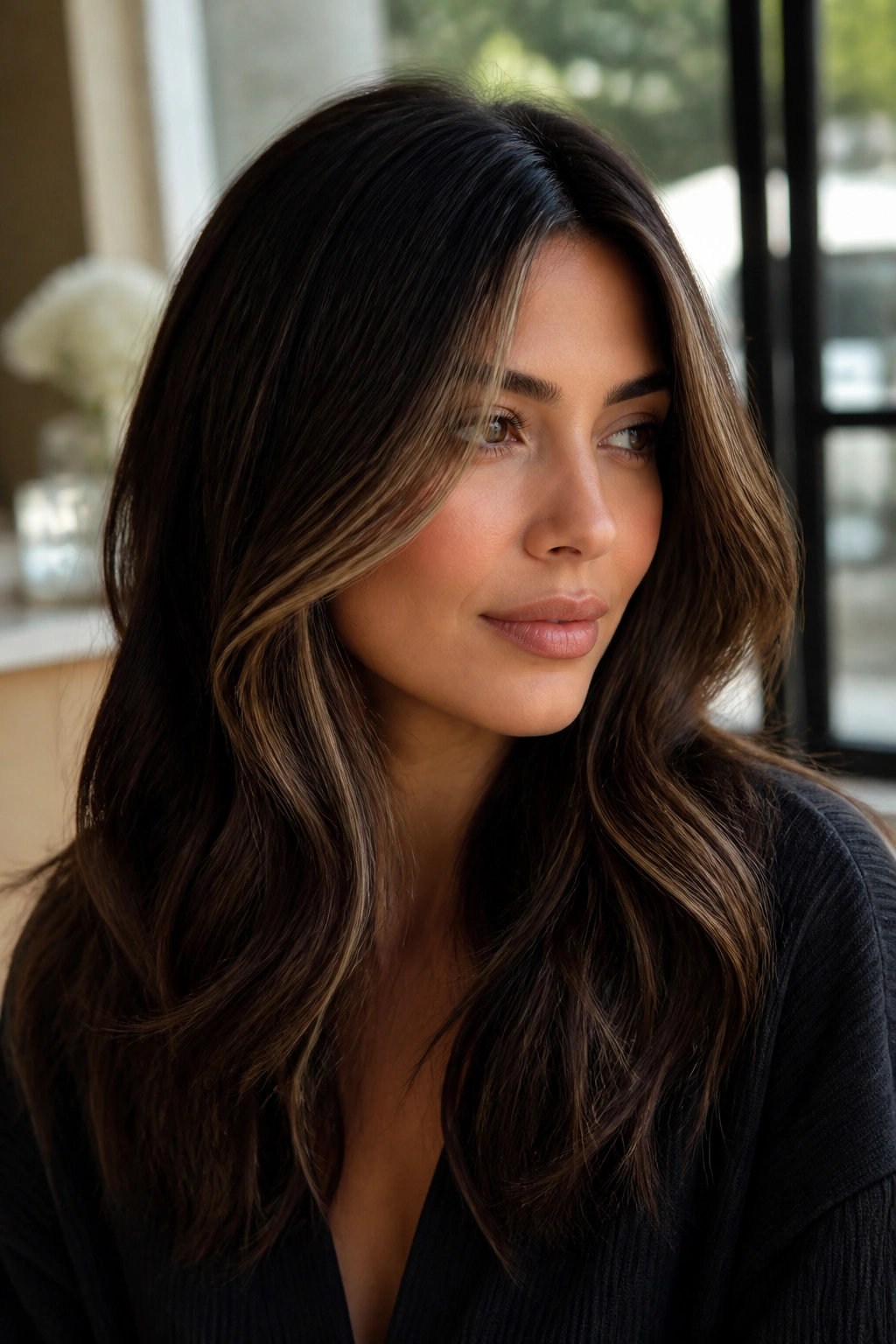
Cocoa contour highlights frame the face the way contour makeup frames cheekbones. The lighter chocolate pieces sit where the eye naturally goes: around the temples, cheek area, and front layers near the jaw. It’s a placement trick, not just a color trick.
The result is flattering because it changes the shape of the haircut. A round face can look a little more vertical, and a long face can feel softer if the lighter pieces start higher and drift outward. The color itself stays within the cocoa family, so the look feels brown-haired, not blonde-adjacent.
One nice detail: this placement works even if the rest of your hair stays deeper. You get lift where you want it and shadow where you do not.
12. Toffee-Drizzle Balayage
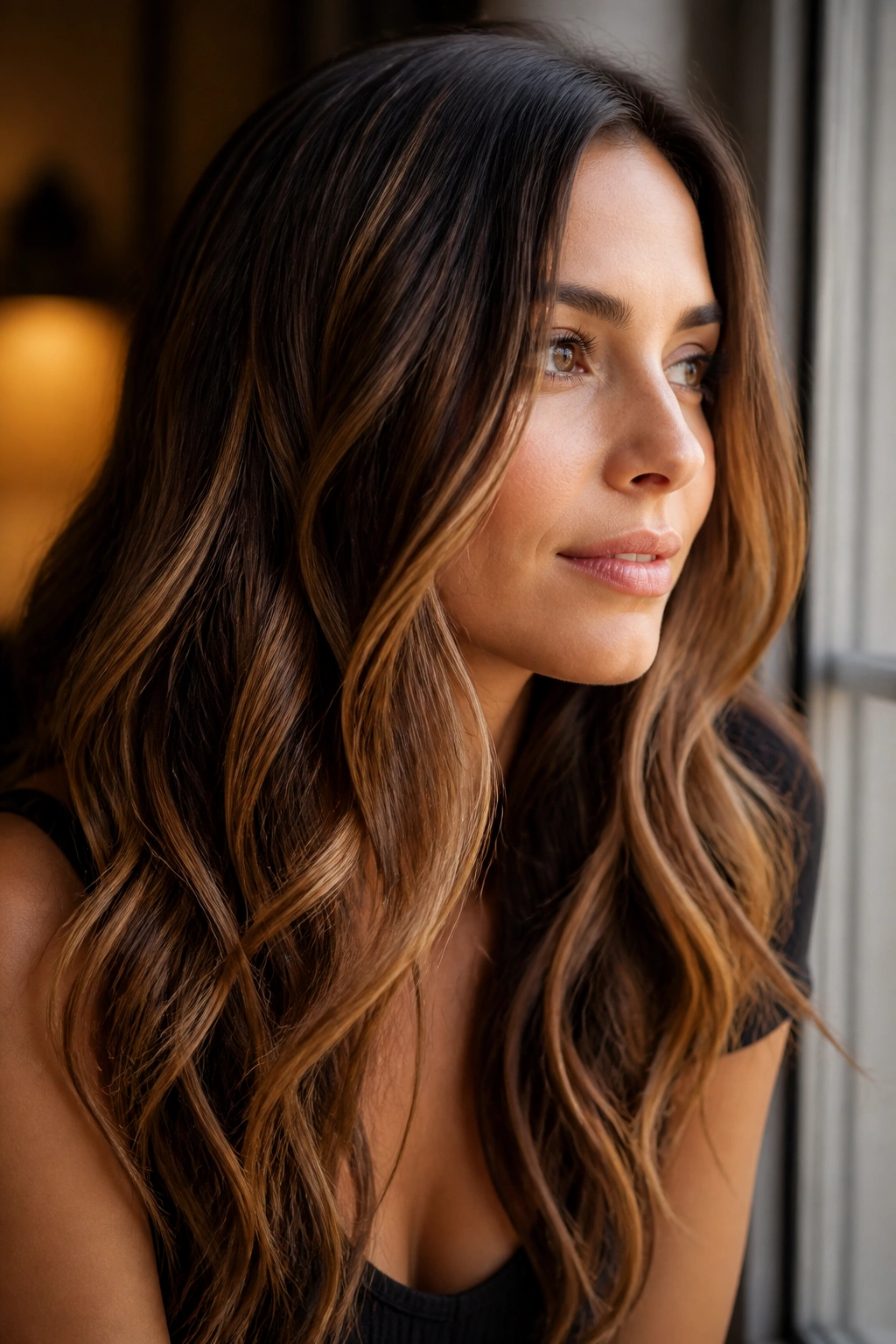
Toffee-drizzle balayage is warmer than straight chocolate, but it still lives in brunette territory. The toffee tones are painted in narrow ribbons across the mids and ends, then softened with a brown gloss so the whole thing reads as a seamless blend rather than a candy shop mix. It’s especially flattering on medium brown hair with natural warmth.
A version like this shines on layered cuts because the lighter ribbons break up the shape of the haircut. If the hair is one solid length, the effect can still work, but it needs more careful placement near the front and around the lower third of the hair so it does not disappear. The best toffee-chocolate blends have a little swing to them.
Not too sweet. That’s the line to keep in mind.
13. Dark Chocolate Underlights
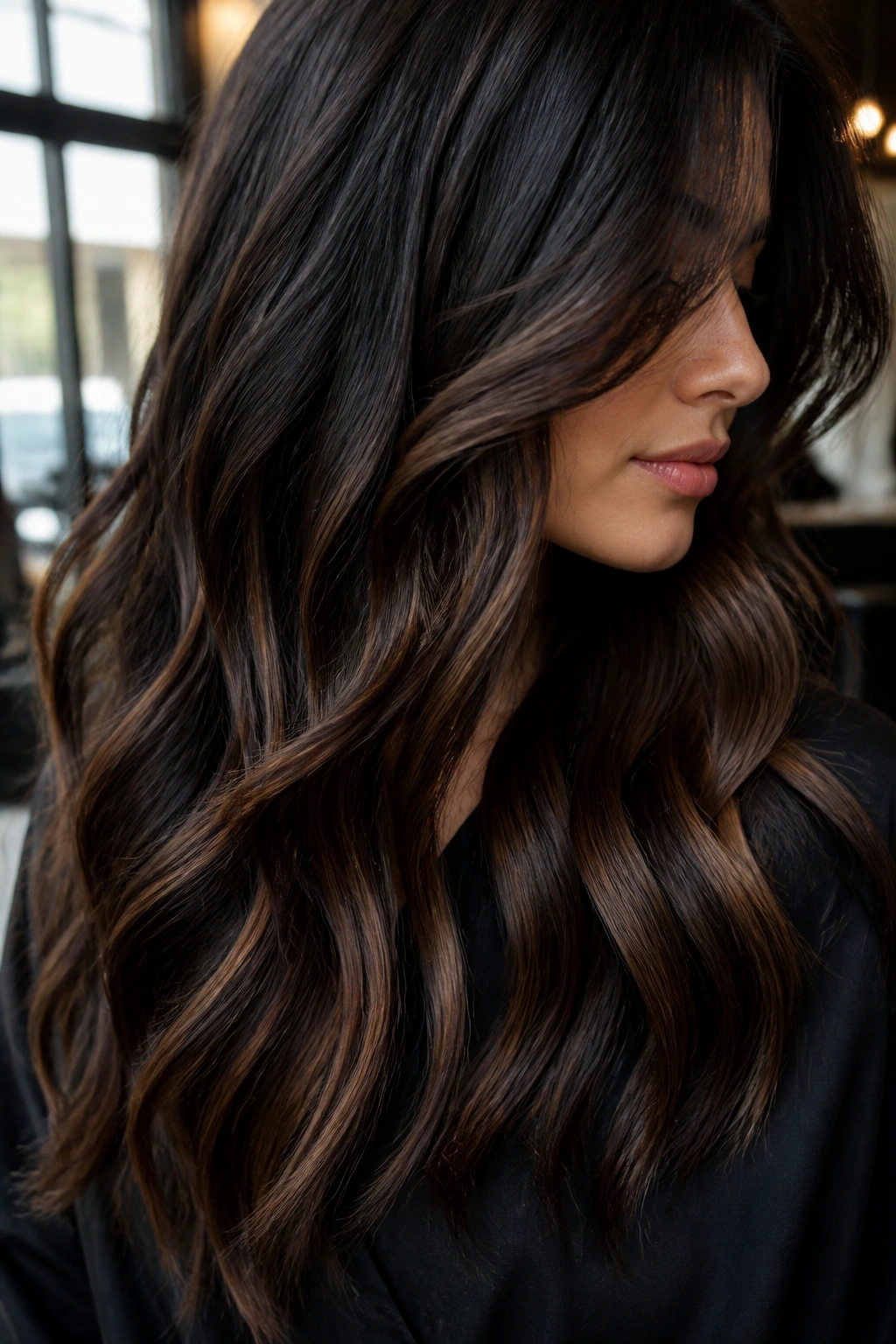
Dark chocolate underlights are for people who want dimension without changing the look of the surface too much. The lighter pieces sit underneath the top section, so the hair keeps its brunette depth while still gaining movement when it shifts or gets tucked behind the shoulder. It’s subtle, but not invisible.
Compared with surface highlights, underlights are easier on very dark hair because they do not force the whole head to brighten. They can also make thick hair feel lighter visually, since the darker top layer no longer looks like one solid mass. That little break in the pattern matters more than people expect.
If you wear waves, braids, or messy buns, this color pays off nicely. The contrast shows up in the weave and the twist, which gives the style more depth with almost no extra effort.
14. Velvet Chocolate Ends
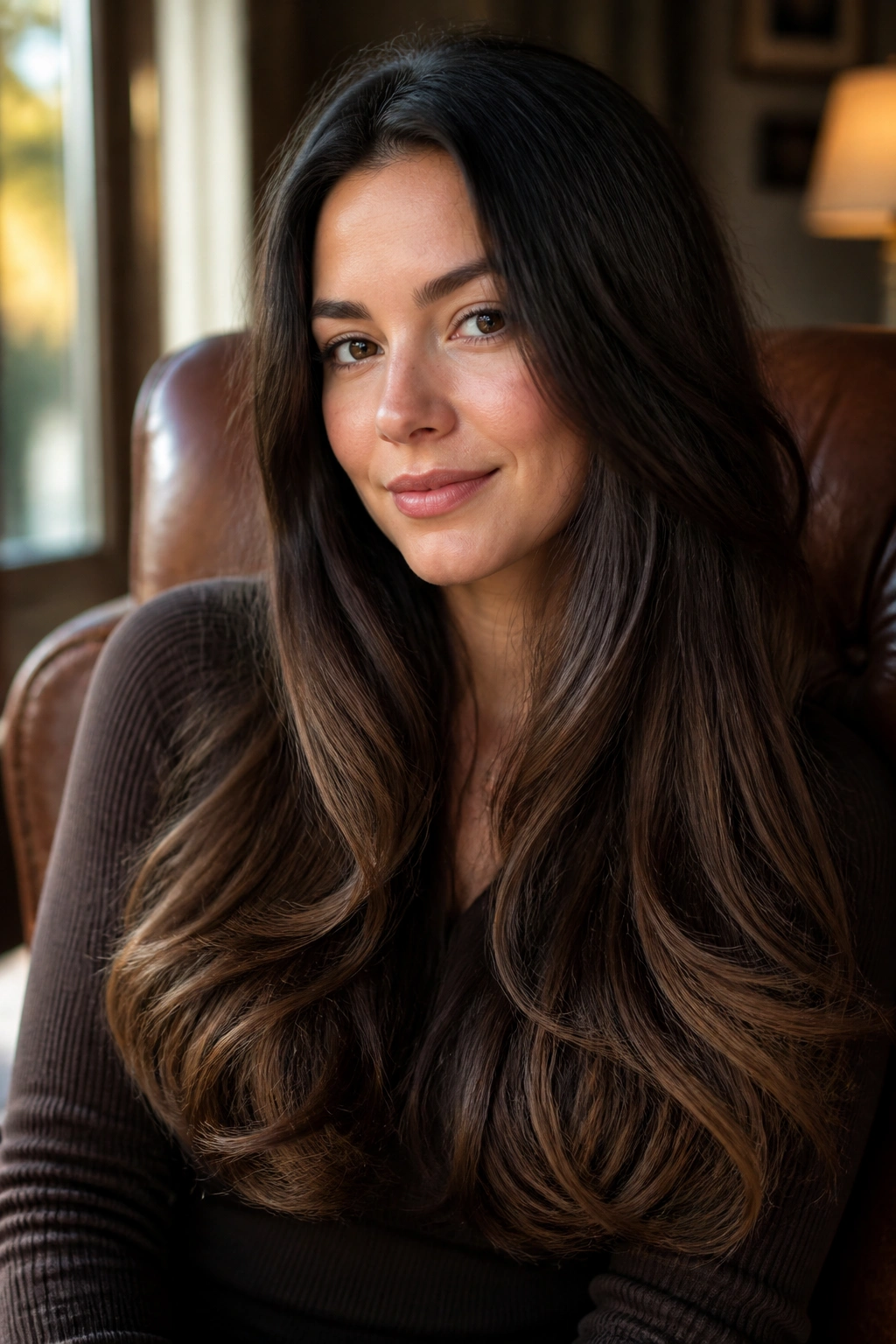
Velvet chocolate ends give brown hair a soft, plush finish. Instead of concentrating brightness around the face, this look leaves the root area deep and gradually lightens the last few inches of the hair with a rich cocoa or milk-chocolate tone. The ends feel cushioned, almost like fabric.
A small anecdote here: this is one of those colors that looks calmer in the chair than it does in motion. You see the real effect when the hair sways, because the ends catch light and separate from the mid-lengths. On long layers, that movement can make the haircut look healthier and thicker at the bottom.
Best On
- Hair that feels heavy at the ends.
- Long or medium-long brunettes.
- Waves that need more lift near the perimeter.
- Anyone who wants a softer alternative to ombré.
The key is leaving enough darkness through the middle so the ends do not float away from the rest of the head.
15. Marbled Brunette Highlights
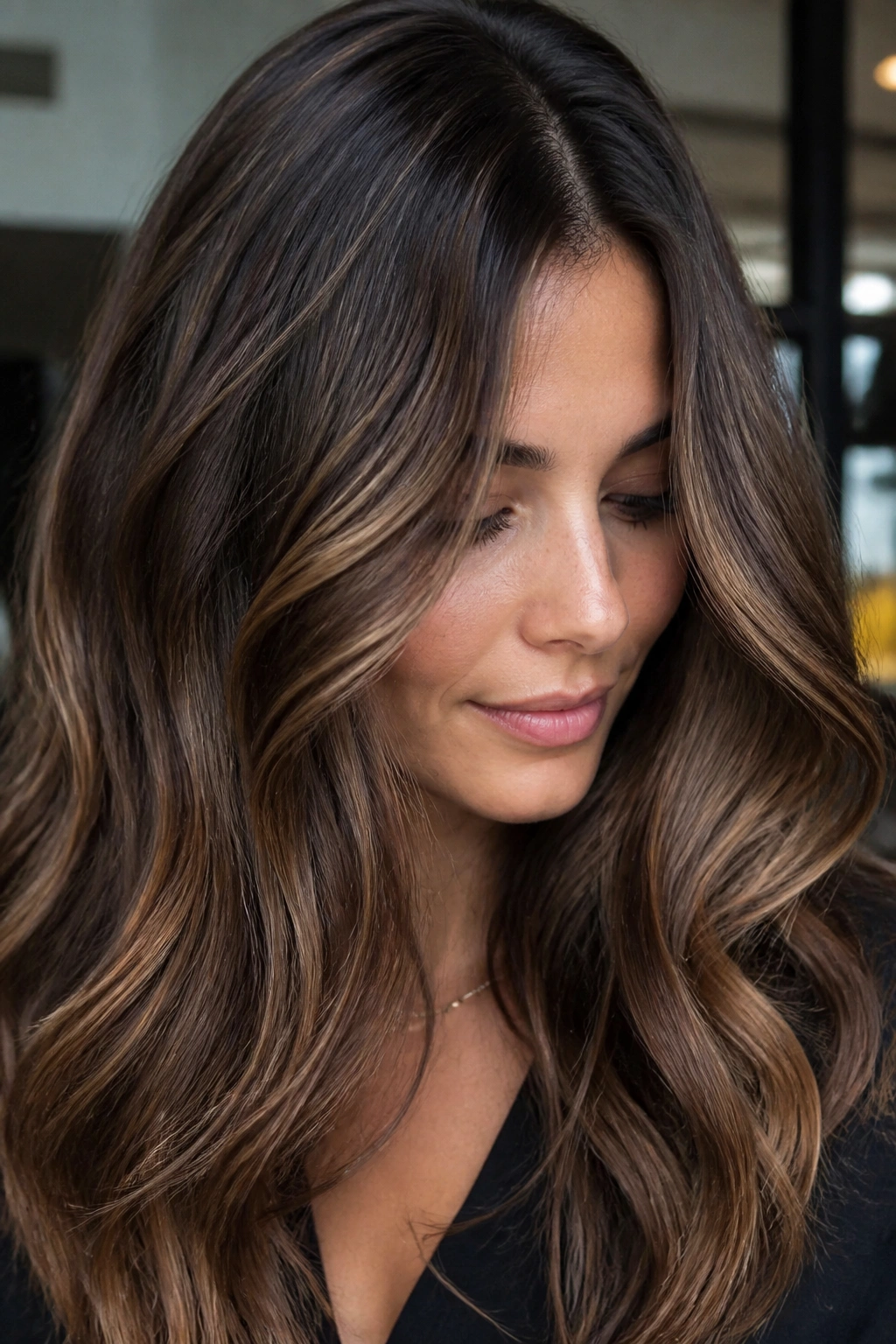
Marbled brunette highlights are bold in a quiet way. Instead of one obvious pattern, they mix several chocolate tones—milk, mocha, chestnut, and deeper brown—so the hair looks textured from every angle. It can remind you of stone or wood grain. Not flashy. Just layered and expensive-looking.
The reason this approach works is that the eye cannot pin down one stripe or one highlight path. The tones overlap, which makes the hair look fuller and more natural than a strict foil pattern. This is a smart move for thick or dense hair, where a single shade can look blocky.
If you want one color service that does a lot of work without shouting, this is a strong pick. Ask for no more than three to four chocolate tones so the blend stays readable.
16. Auburn-Chocolate Fusion Ribbons
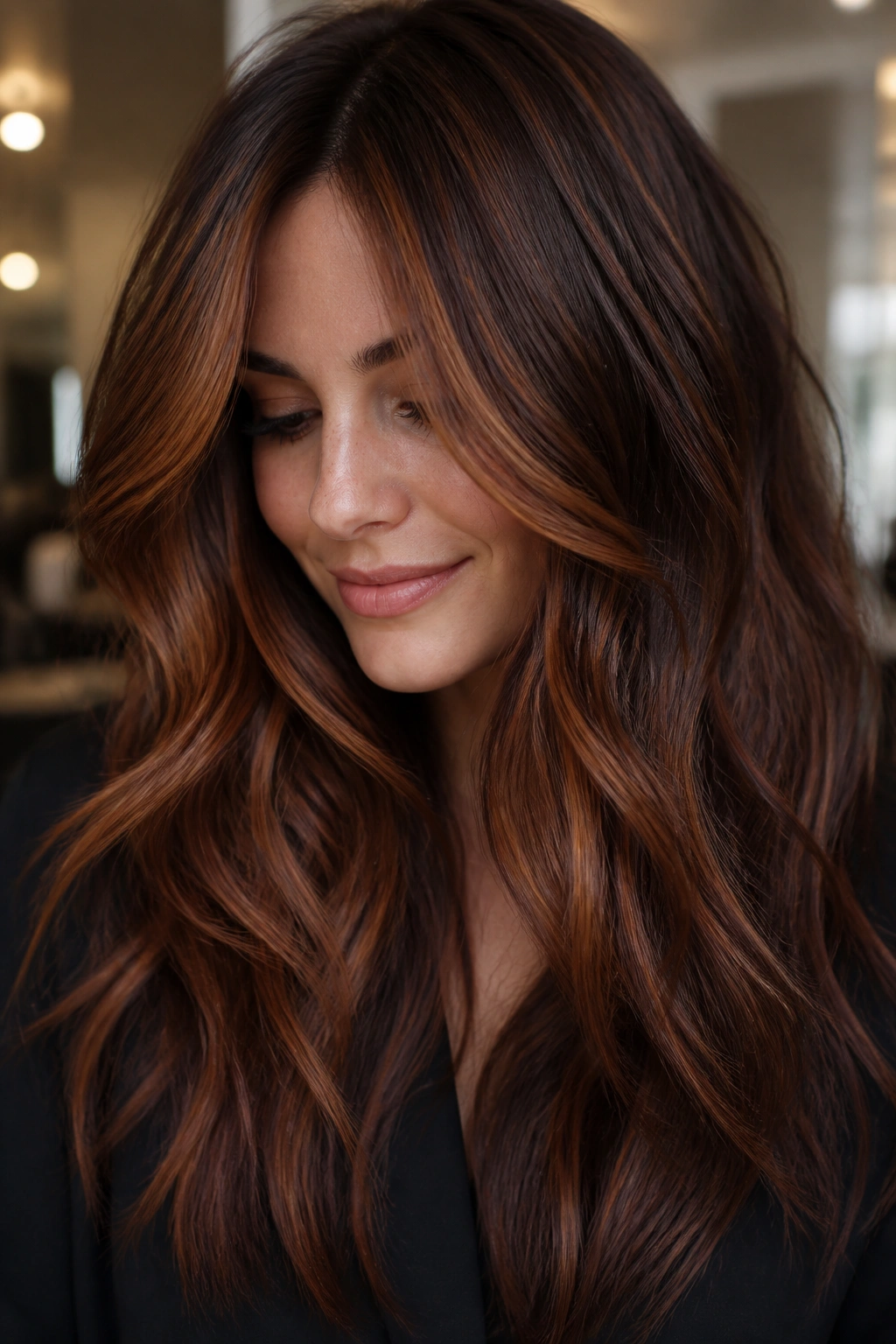
Can chocolate highlights lean a little auburn and still stay brunette? Absolutely. When the warm red-brown thread is woven lightly into chocolate ribbons, the hair picks up a smoky warmth that flatters olive skin, golden undertones, and darker eyes especially well. The color feels alive without crossing into copper territory.
What to Ask For
A colorist can place the warmest pieces around the mids and front layers, then keep the ends a touch deeper so the red-brown tones don’t take over. If your hair pulls orange after lightening, ask for a neutral chocolate glaze over the top. That keeps the warmth controlled instead of brassy.
This is a good route if plain brown hair feels a little too safe. The auburn thread gives the color personality while still being easy to wear at work, at dinner, or tied back in a clip.
17. Bronde Chocolate Slices
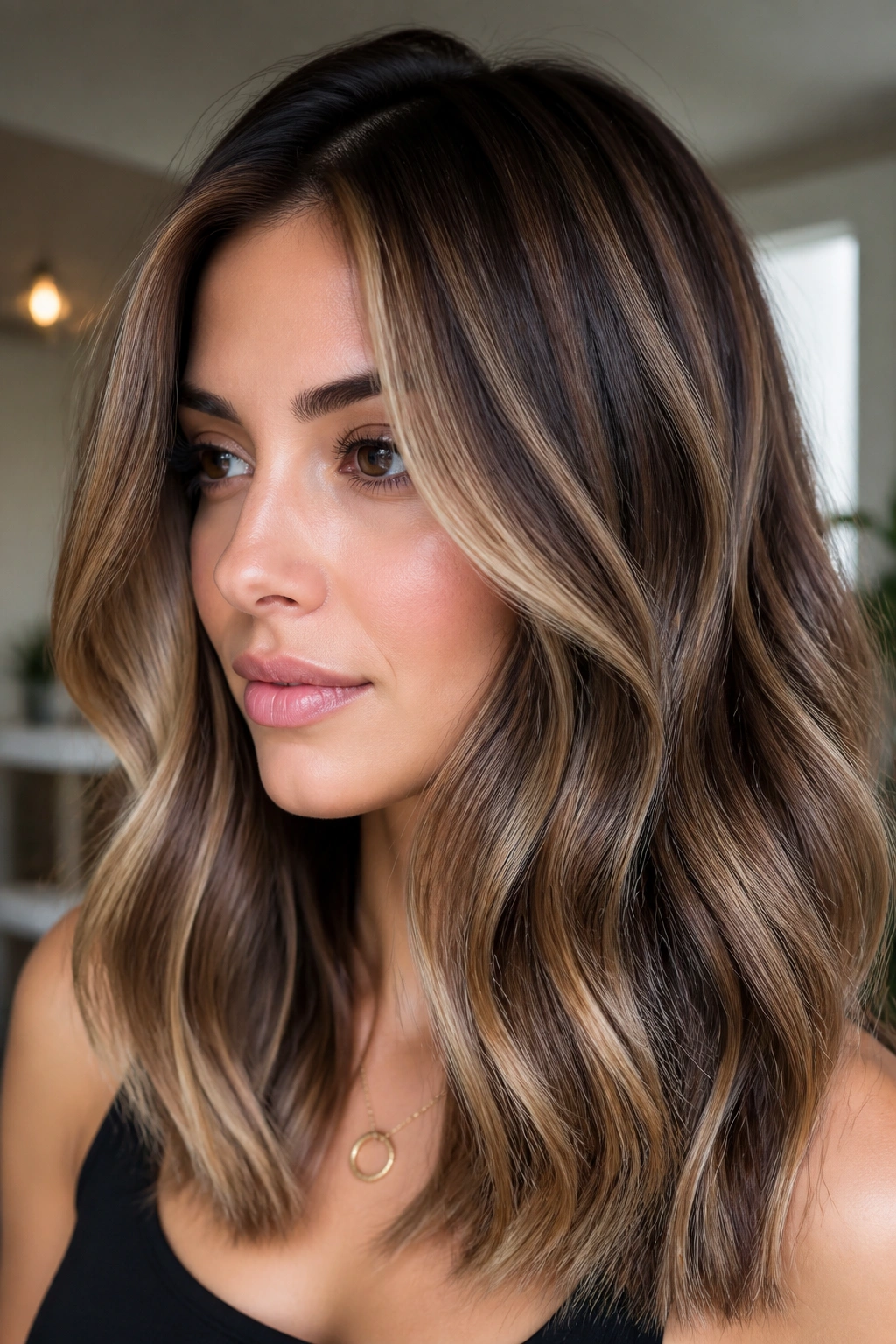
Bronde chocolate slices sit in the middle ground between brunette and soft brown blonde, but they keep the chocolate root shadow intact. The slices are wider than babylights and narrower than chunky panels, which gives them a clear shape without making the hair look streaked. On medium to long hair, that middle zone is where the magic happens.
Quick Placement Guide
- Put the brightest slices near the face and crown.
- Keep the underside one shade darker.
- Leave a deeper root shadow for easier grow-out.
- Tone with beige-brown, not gold, if you want the color to stay brunette.
This style suits people who want visible brightness but are not ready for high-contrast blonde. It has enough lift to read as color, yet enough brown in the mix to stay grounded.
18. Soft Money Piece With Chocolate Melt
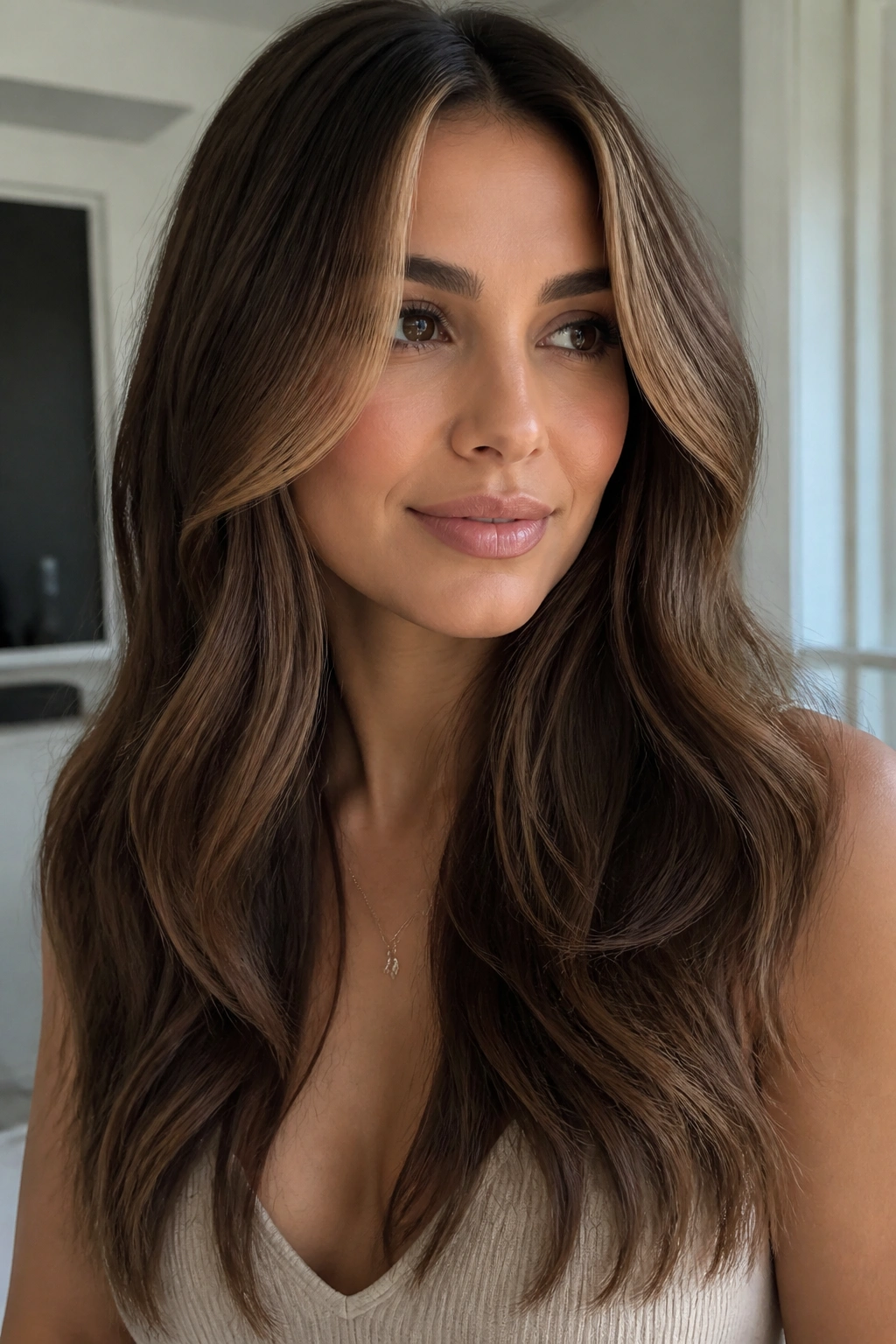
A soft money piece with a chocolate melt gives you the brightening effect of front highlights without making the front of the hair look disconnected. The money piece is lighter and a little more noticeable, then it fades back into a richer brown melt through the mids and ends. The transition matters more than the brightness.
This is a strong choice if your hair is cut around the face, because the lighter front pieces can show off layers, curtain bangs, or a cheekbone-length fringe. It also works on straight hair, where the melt needs to be smooth enough that the eye never lands on a hard line. The front should look lifted, not striped.
If you like a little drama but not a loud contrast, this hits the sweet spot.
19. Chocolate Gloss on Curly Brown Hair
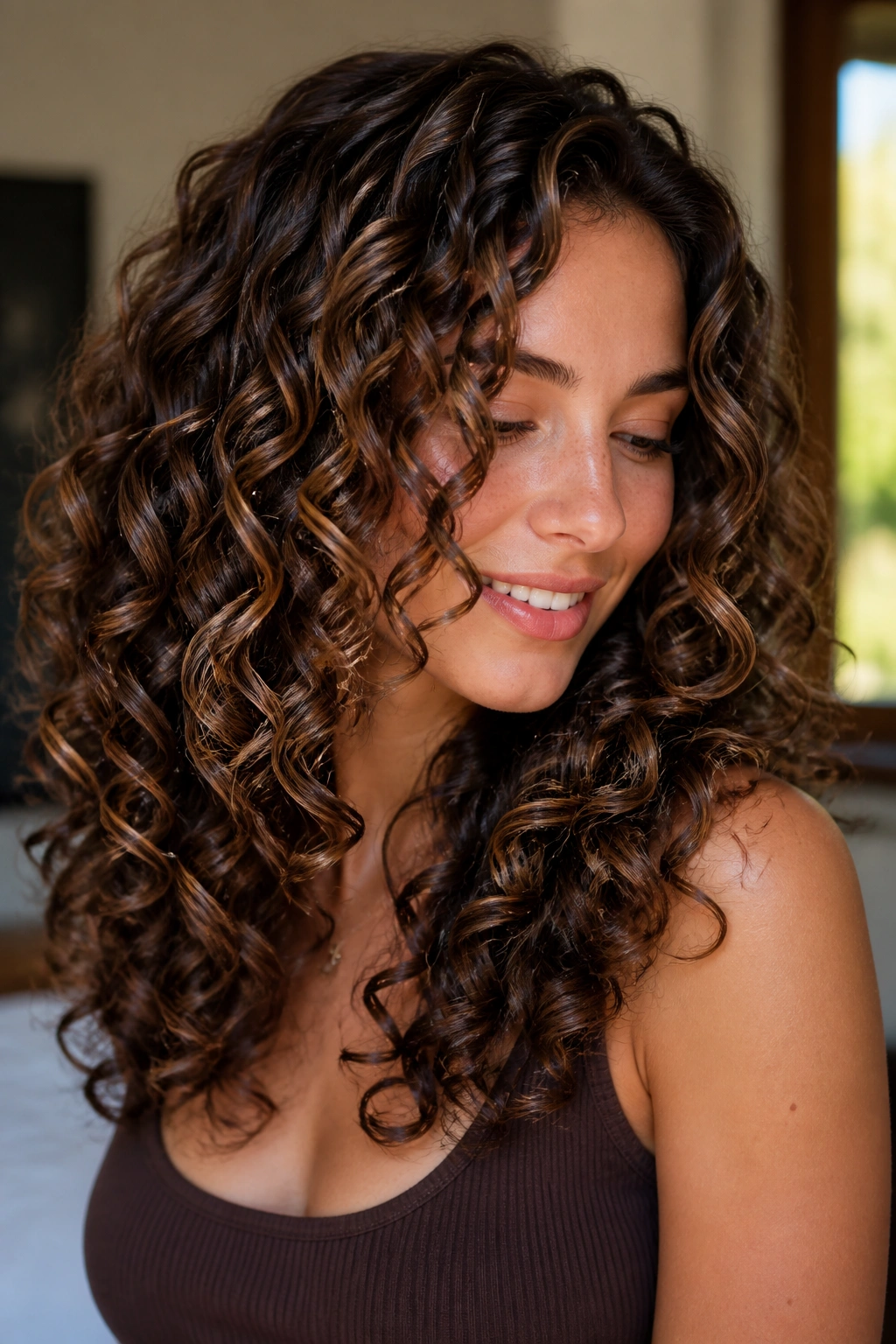
Curly hair handles chocolate highlights differently, and that difference is worth respecting. The pattern of the curls creates its own light and shadow, so a chocolate gloss over painted pieces can make the curl clumps look more defined without needing lots of brightness. The color sits inside the curl structure and changes as the ringlets move.
Unlike straight hair, curly hair usually needs a softer hand with the placement. Wider painted sections often work better than skinny foils because the curl pattern will break the color up on its own. A gloss in a medium chocolate or cocoa tone helps the lightened curls stay rich instead of flat and dry-looking.
If your curls already have texture, this is one of the most flattering ways to add dimension. The result feels soft when dry and shiny when the light hits.
20. Warm Cocoa Micro-Highlights
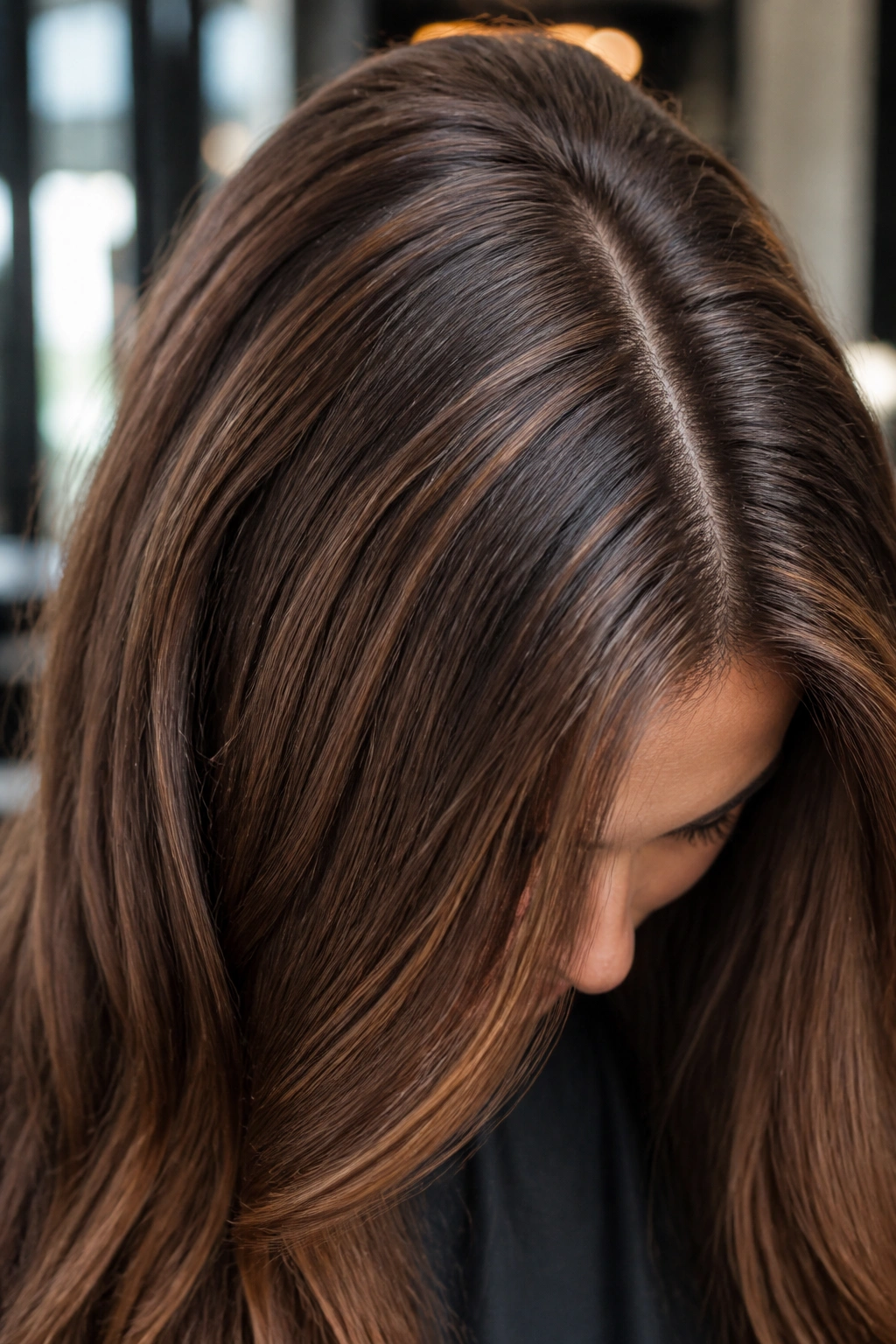
Why do micro-highlights look so believable on brown hair? Because they’re tiny enough to mimic natural sun brightening instead of obvious salon lines. Warm cocoa micro-highlights are especially nice on fine hair, where a few bigger foils can look too separated. The smaller pieces create a soft, dusty halo through the top layer.
Placement Details
Start the brightest pieces around the part line and crown, then keep them very fine through the sides. A good colorist may weave them so narrowly that you notice the shine before you notice the color itself. That’s the goal. The warmth should sit in the hair, not on top of it.
This is a quieter version of brunette dimension, but it has staying power. The regrowth is forgiving, and the texture tends to look better as the toner fades a little.
21. Chunky Chocolate Panels
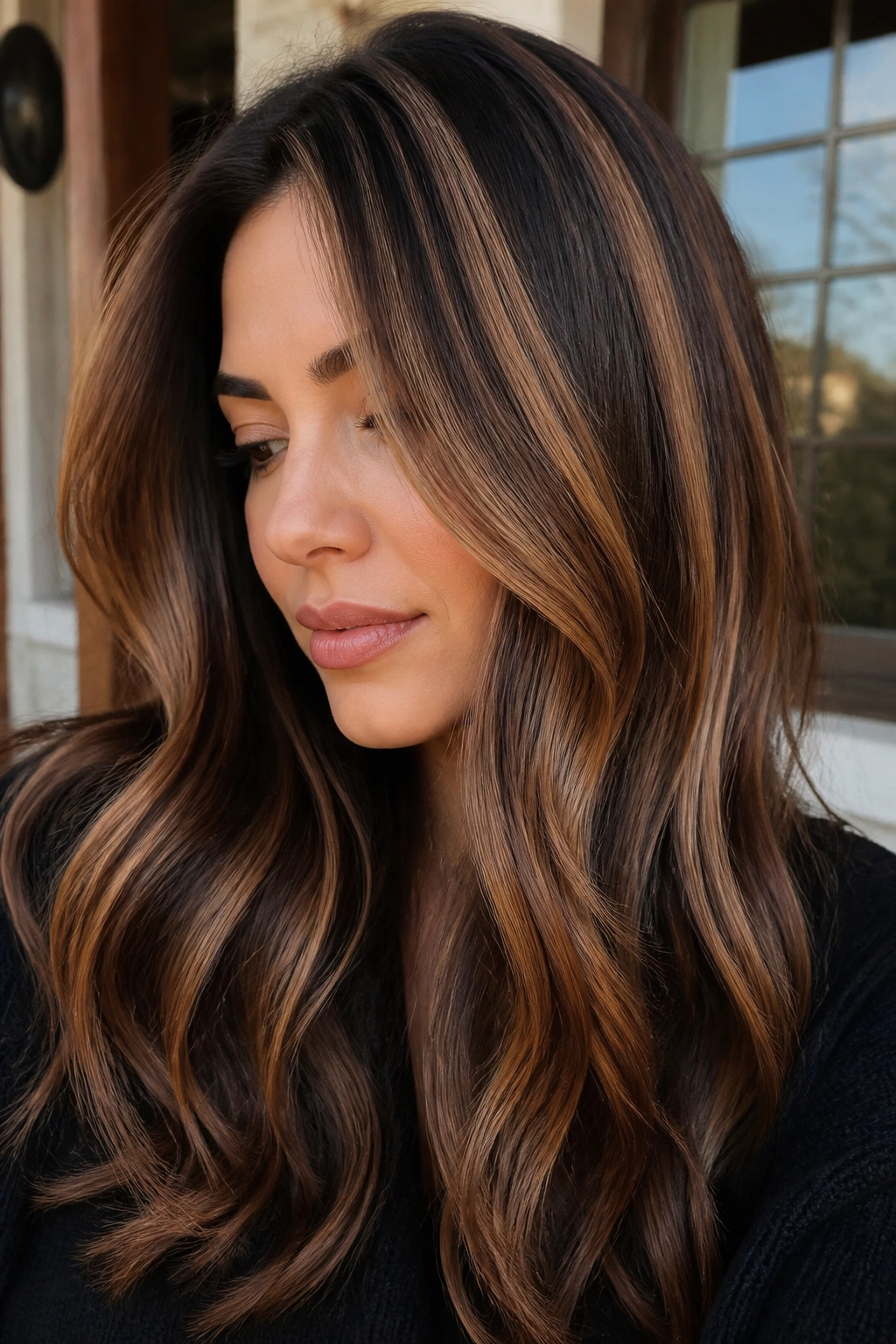
Chunky chocolate panels are not shy, and that’s exactly why they work for some brown hair. Wide sections of milk chocolate, mocha, or deep cocoa create strong contrast, especially on layered cuts or blunt bobs. The look has a little retro energy, but it can feel modern when the color is softened with a satin finish instead of a heavy stripe.
The trick is balance. If the panels are too even, the hair starts to look blocky. If they’re staggered, the color feels intentional and full of movement. This style suits people who want the highlight itself to be part of the haircut, not just a faint shimmer in the background.
Best on: thick hair, bold cuts, and brunettes who want people to notice the color from across the room.
22. Deep Espresso Lowlights
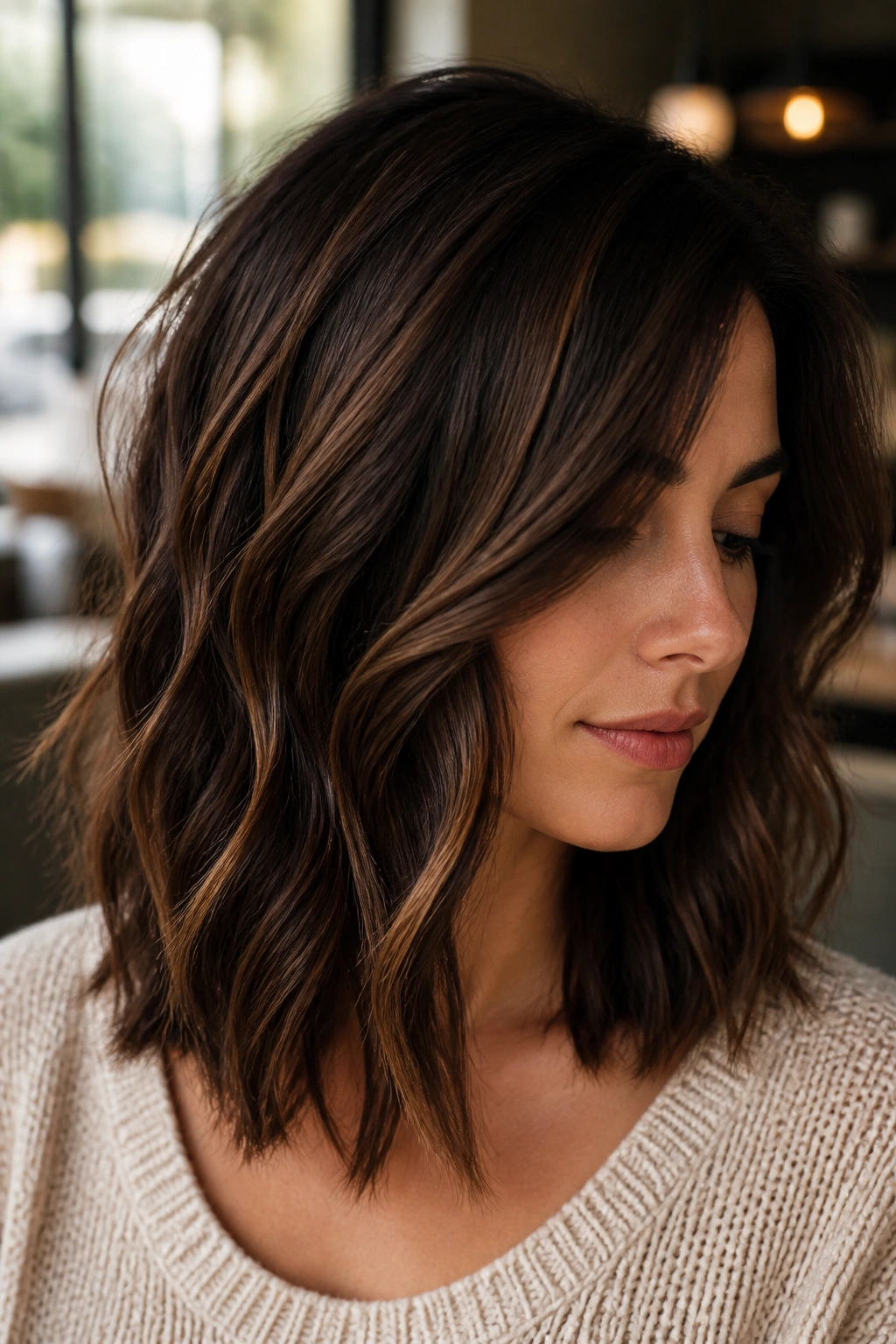
Deep espresso lowlights are the quiet workhorses of brunette color. They deepen the interior of brown hair so the lighter pieces on top look brighter by comparison. That contrast makes the whole head look denser, especially if the natural base has started to wash out or turn flat between salon visits.
A personal favorite detail: lowlights are often the reason a brunette color still looks good on day forty, not day one. They give the hair depth from underneath, so even when the toner softens, the style still has shape. On shoulder-length cuts, espresso lowlights can sharpen the outline of the haircut in a way one-dimensional brown never does.
This is not the flashiest option. It might be the smartest one.
23. Chocolate Balayage on Long Layers
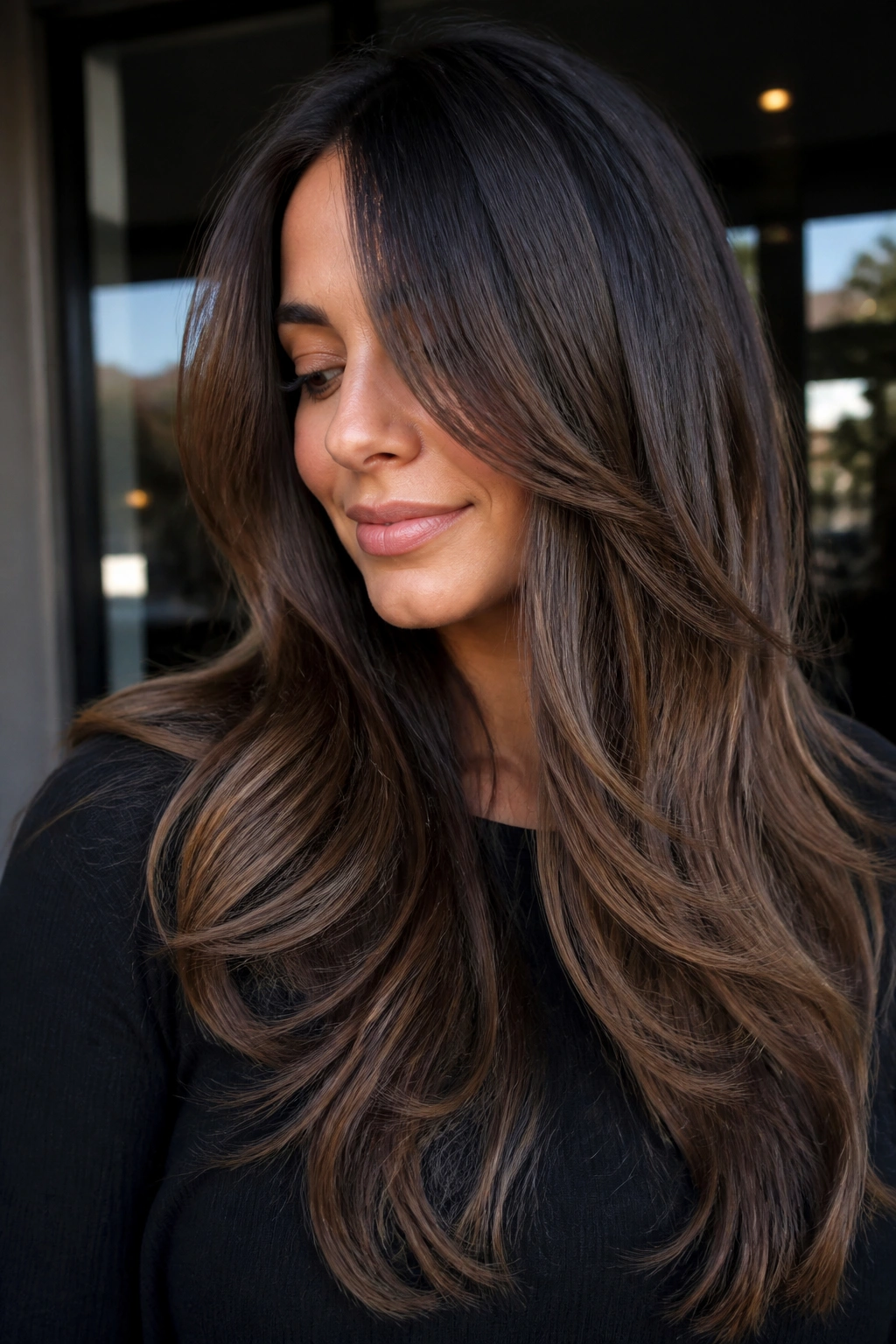
Long layers and chocolate balayage are a very friendly pair. The layers keep the hair moving, and the painted ribbons can follow that movement instead of fighting it. With enough length, the color has room to fade from a deeper root into a softer cocoa end without feeling crowded.
The best version usually keeps the brightest pieces on the outer layers and the front half of the head. That way the color shows when the hair is down, but it still leaves a rich underside so the style doesn’t go hollow. If your ends are thin, ask for the lightest tones to stop a little above the last inch of hair. That avoids a brittle-looking finish.
Long hair can swallow color fast. This placement keeps the dimension visible.
24. Seamless Chocolate Babylights
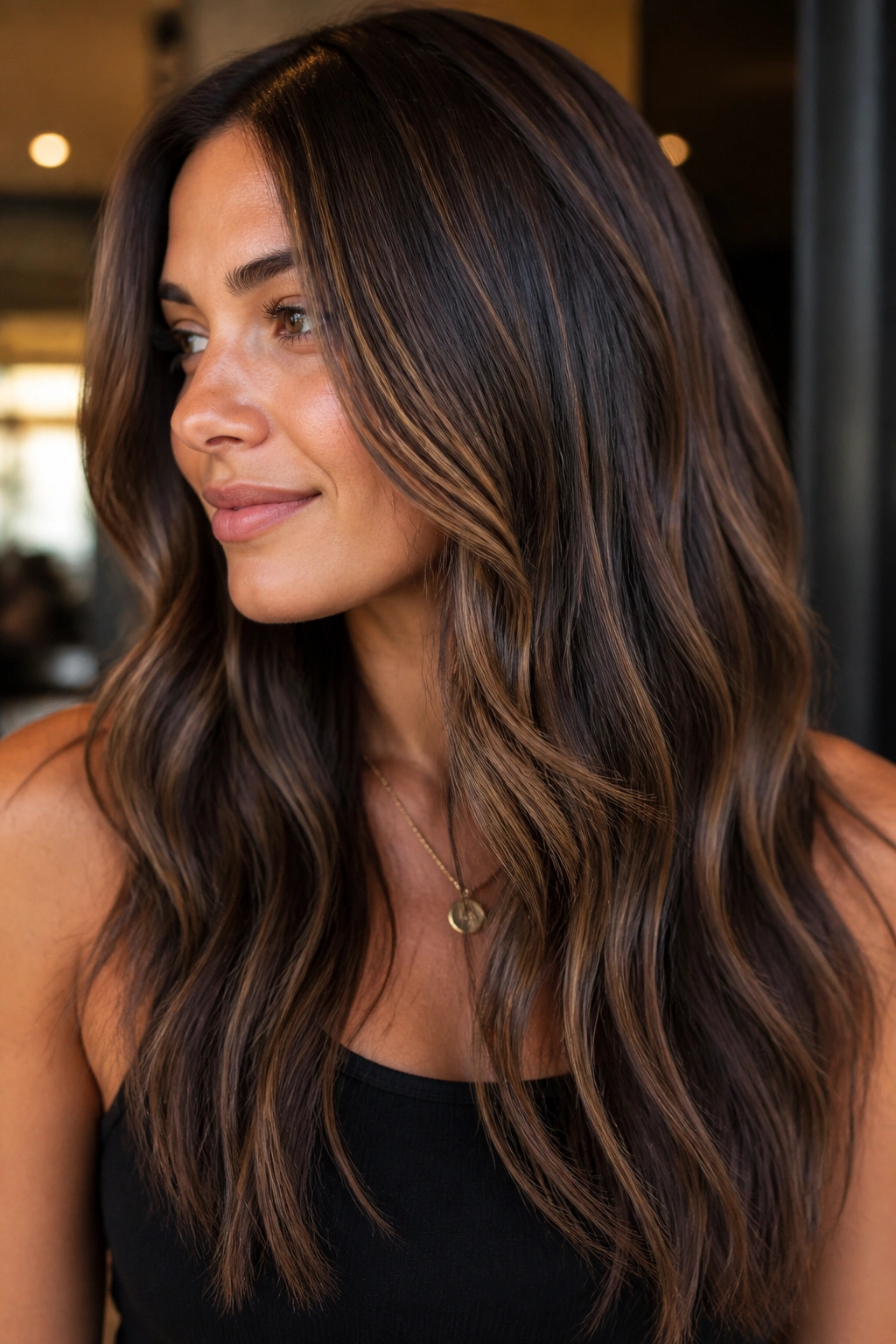
Seamless chocolate babylights are for someone who wants people to notice shine before shade. The pieces are so fine that the color almost disappears into the base, which leaves you with a soft, gleaming brunette finish rather than a defined highlight pattern. On healthy hair, it can look almost like a filter in real life.
The maintenance is kinder than more obvious highlighting because the regrowth line is blurred from the start. Still, the toner matters. A beige-chocolate or neutral-cocoa gloss keeps the fine pieces from turning brassy, especially around the hairline where sun and styling tools do the most damage.
If your hair is fine, straight, or naturally glossy, this one deserves a closer look. It adds dimension without making the color feel busy.
25. Satin Milk-Chocolate Highlights
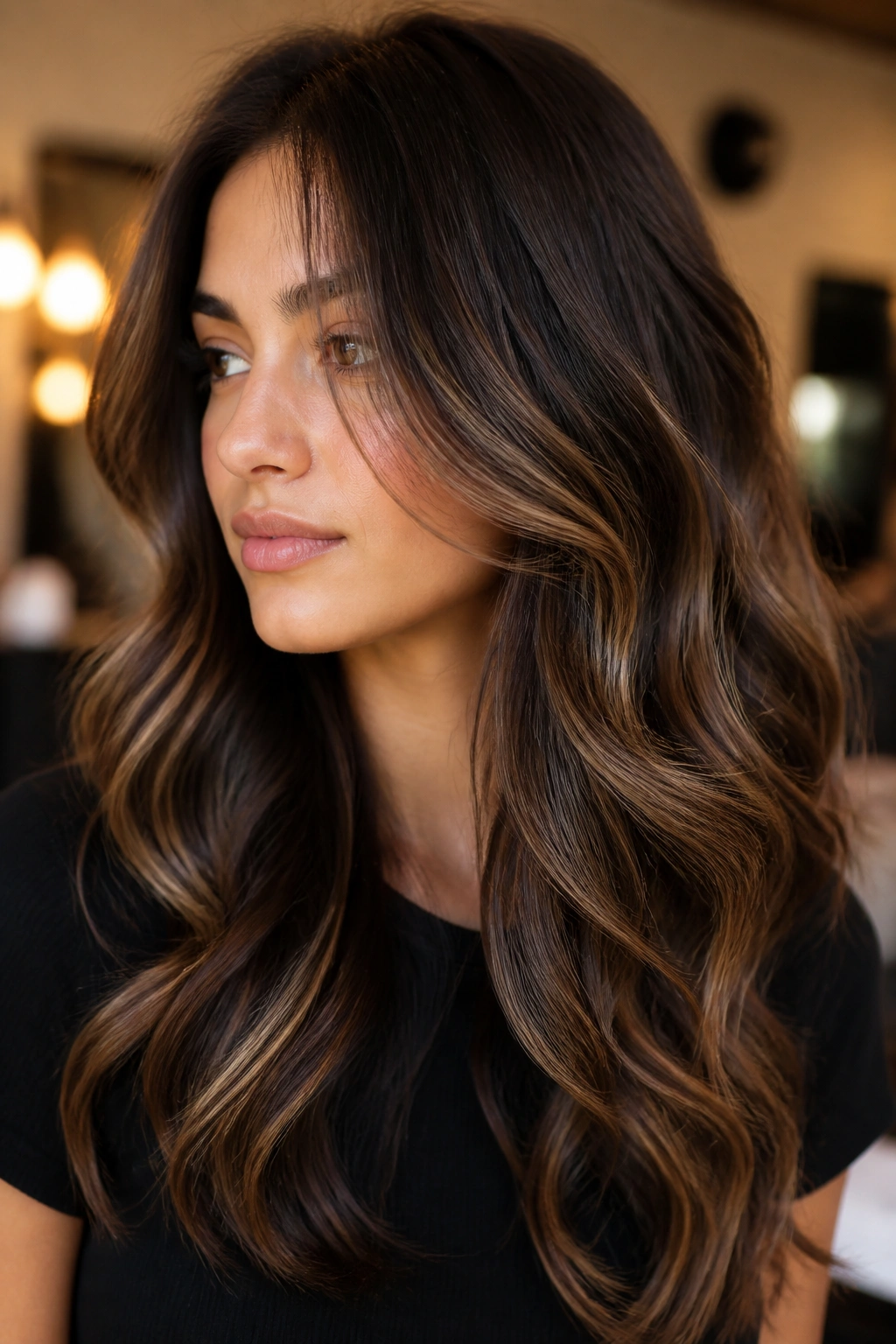
Satin milk-chocolate highlights bring the whole idea back to softness. The tone is smooth, creamy, and a shade lighter than a classic brunette base, which means it brightens the hair without turning it harsh. The satin finish is the part I like most: it looks polished, but not stiff.
This style is especially good if you want your hair to look healthy, not high-contrast. It works beautifully on medium brown hair, but it also helps very dark brunettes who want a gentle lift around the face and through the top layers. Ask for a gloss that keeps the highlights warm enough to read chocolate, not beige-blonde.
It’s the kind of brunette color that doesn’t need explaining. The hair just looks better, and that’s usually enough.
