



A good streak of purple can make a round face look longer without turning the hair into a blunt block of color. Placement does the heavy lifting. Shade matters too, but placement is what keeps the style flattering instead of busy.
Round faces usually read as widest through the cheeks, with soft lines around the jaw and chin. That means the smartest black purple highlights for round faces don’t sit evenly around the widest part of the face. They pull the eye up, down, or diagonally — anywhere but straight across.
The black base is half the appeal. Against a deep brunette or true black foundation, plum, eggplant, amethyst, and violet all look richer and shinier, while the face still keeps its shape and structure. On pre-lightened hair, the same colors can go louder fast, which is fine if that’s the mood you want. It’s just a different animal.
Some of the looks below are soft and wearable. Others are a little dramatic, and honestly, that can be fun. If your face tends to look fuller in photos or you want your cheek area to feel less wide, pay close attention to where the color starts and stops.
1. Black Purple Babylights Through the Crown
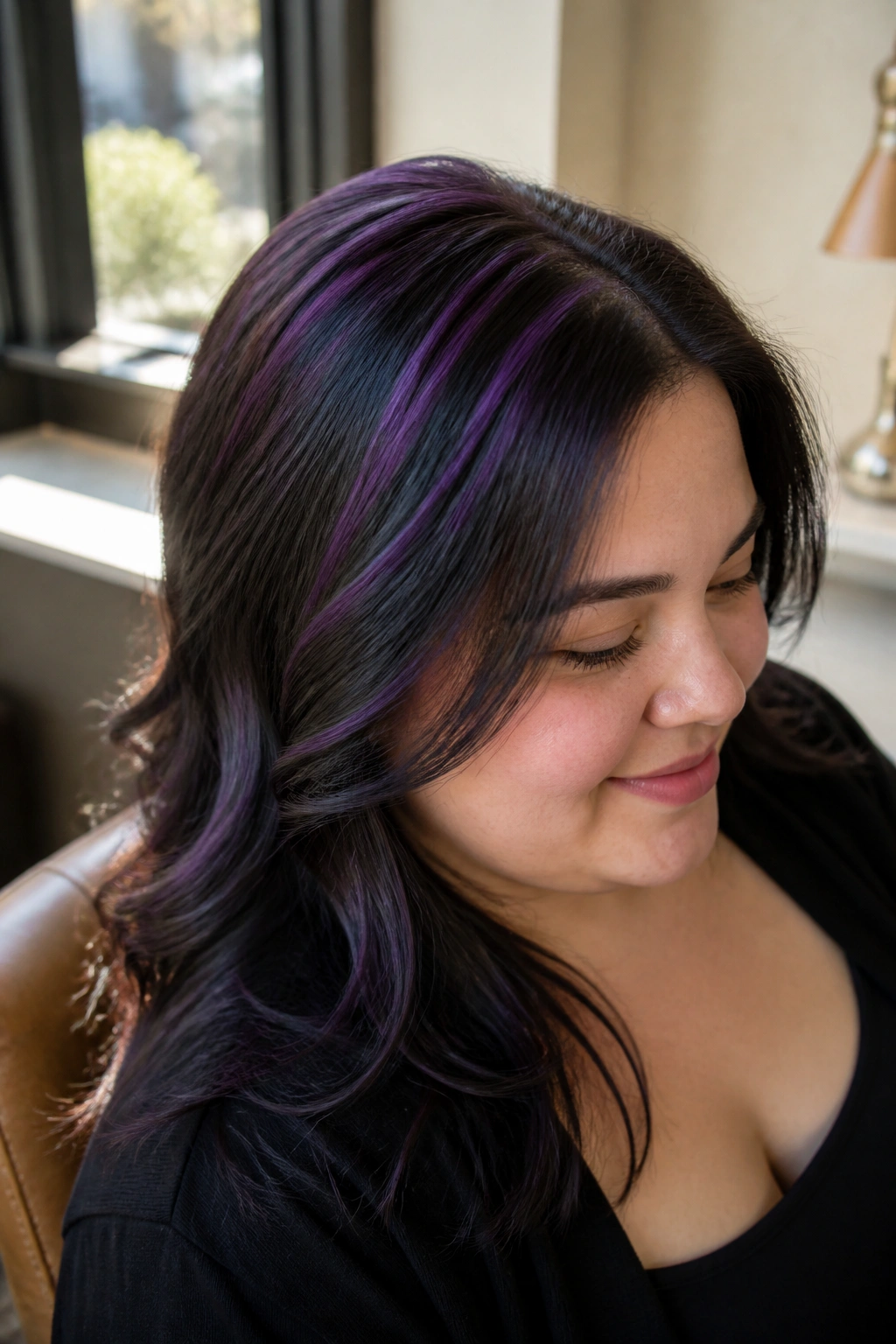
Tiny babylights are the quietest way to wear black purple color, and they’re one of the smartest choices for a round face. Instead of dropping a thick panel at the cheeks, these ultra-fine strands sit through the crown and upper top layer, where they create lift and movement without adding width.
Why the Crown Placement Works
The crown is your best friend if you want the eye to travel upward. A few soft violet threads near the root area break up a flat black cap and give the hair some height, which helps the face look a little longer. Keep the brightest pieces above the cheekbone line, not at it.
What to Ask For
- Fine babylights, not chunky stripes
- A plum or smoky violet toner over a black base
- Concentration at the top and front of the crown
- Soft blending at the mid-lengths so the color does not stop in a hard line
Best on: shoulder-length cuts, layered long hair, and blowouts with a little lift at the root.
Skip if: you want the purple to shout from across the room.
2. Violet Money Piece Beside the Cheekbones
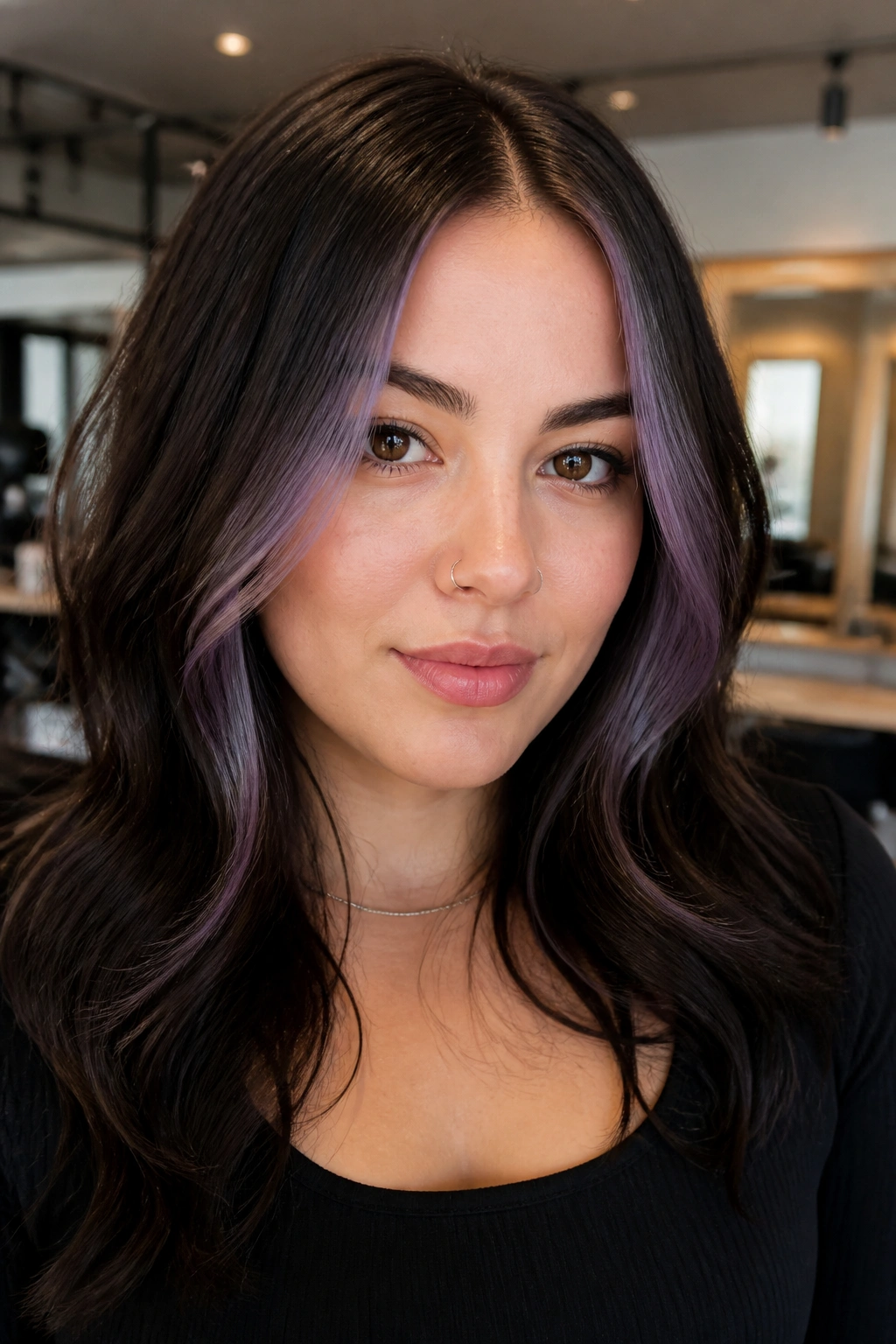
Can a money piece flatter a round face? Absolutely — if it’s thin, bright, and placed with some restraint. The trick is to keep the lightest purple just inside the front sections, where it can frame the face without making the cheeks look wider.
A thick money piece that hangs straight at cheek level can be a bad idea. A slimmer one, though, creates a vertical frame and gives the illusion of length. I like this look best when the purple leans cool — violet, iris, or blue-purple — because it feels sharper than a warm magenta and draws a cleaner line.
Wear it with a center part if you want balance, or a soft off-center part if you want to make the face look a touch narrower. Either way, keep the highlight narrow at the root and slightly feathered at the ends. That small detail keeps it from reading heavy.
3. Peekaboo Purple Underlayer
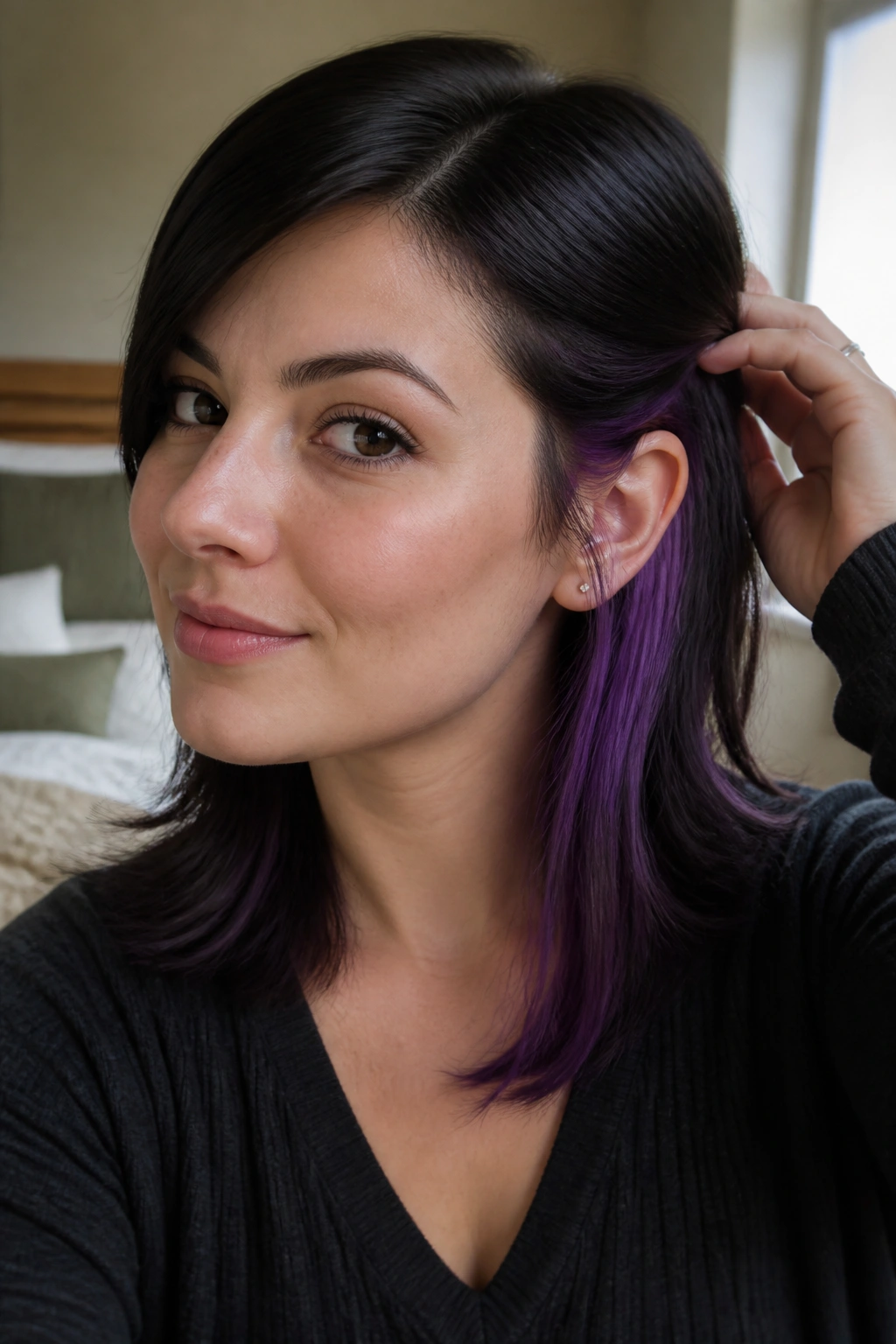
Peekaboo color is the sneakiest option, and that’s why it works so well on round faces. The purple sits underneath the top layer of black hair, so the face keeps a clean outline while the color flashes only when you move, tuck your hair behind your ear, or wear it half up.
It’s a good pick if you want drama without widening the sides of the face. The top layer stays dark and sleek, which creates that slim frame people often want from darker hair. Then the hidden purple shows at the ends, inside layers, or under the crown when the light catches it. The effect is richer than loud.
How to Ask for It
Ask for a dark violet or plum underlayer placed from mid-length to ends, with the top layer left mostly black. If your hair is thick, ask for the color to be concentrated closer to the nape and lower panels. That keeps the fullness down low, not around the cheeks.
One more thing: this is one of the easiest looks to grow out gracefully. No hard line. No panic.
4. Smoky Amethyst Balayage at the Ends
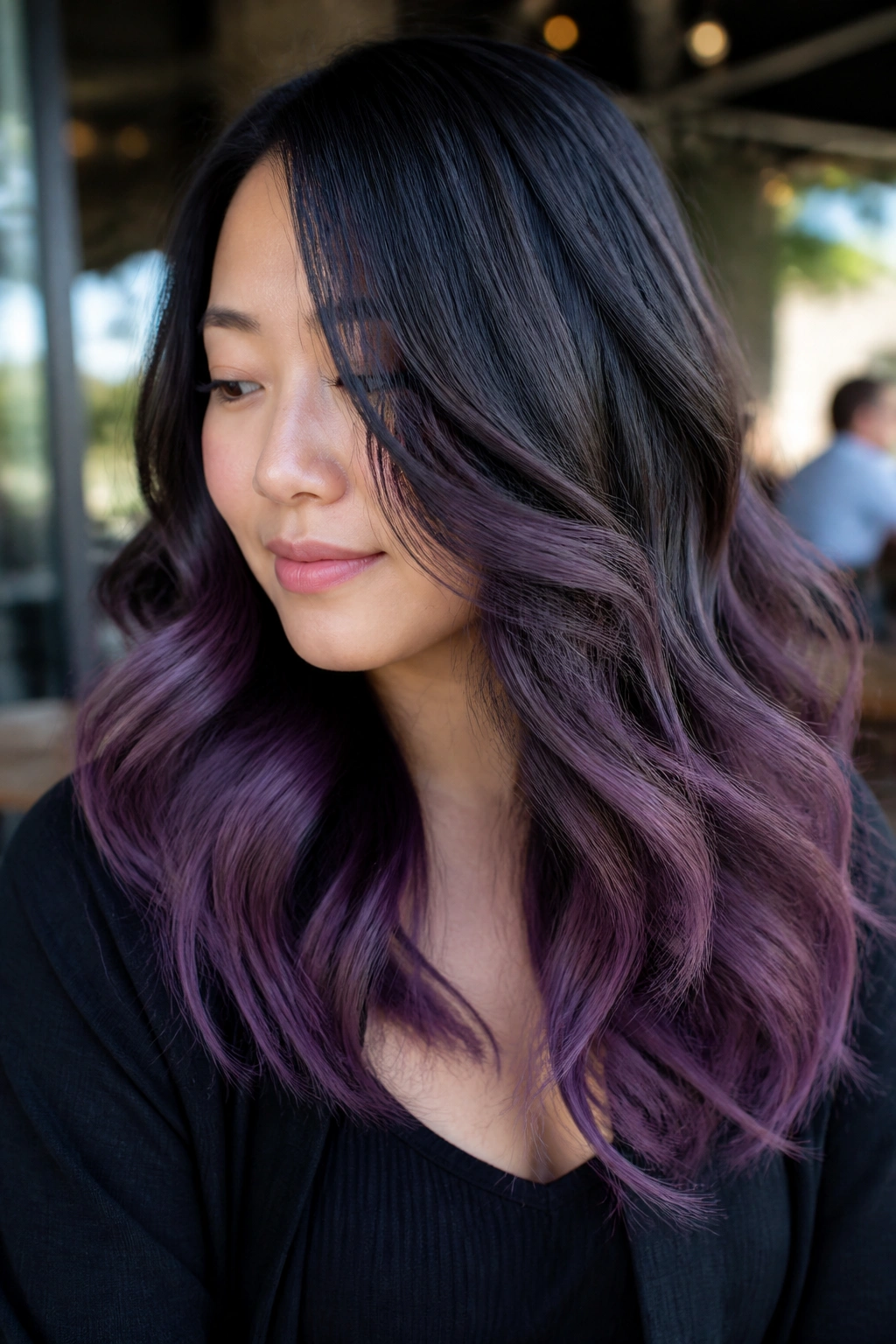
The ends are where the eye naturally finishes, so using smoky amethyst there pulls the face downward in a good way. It lengthens the look of the whole silhouette, which is a nice trick on a round face that needs a little more vertical shape.
Balayage works here because the color is painted in a soft sweep rather than dropped in blocks. You get a blur from black into purple, then a more saturated amethyst at the bottom two to four inches. That gradient keeps the style airy. It also keeps the cheek area from looking boxed in.
A good version of this style has a deep root, a soft fade through the mid-lengths, and ends that look polished rather than over-bleached. If you curl the hair, the movement helps even more. Straight hair can wear it, too, but the ends should stay slightly textured so the purple doesn’t look like a flat cap at the bottom.
5. Diagonal Ribbon Highlights From Temple to Jaw
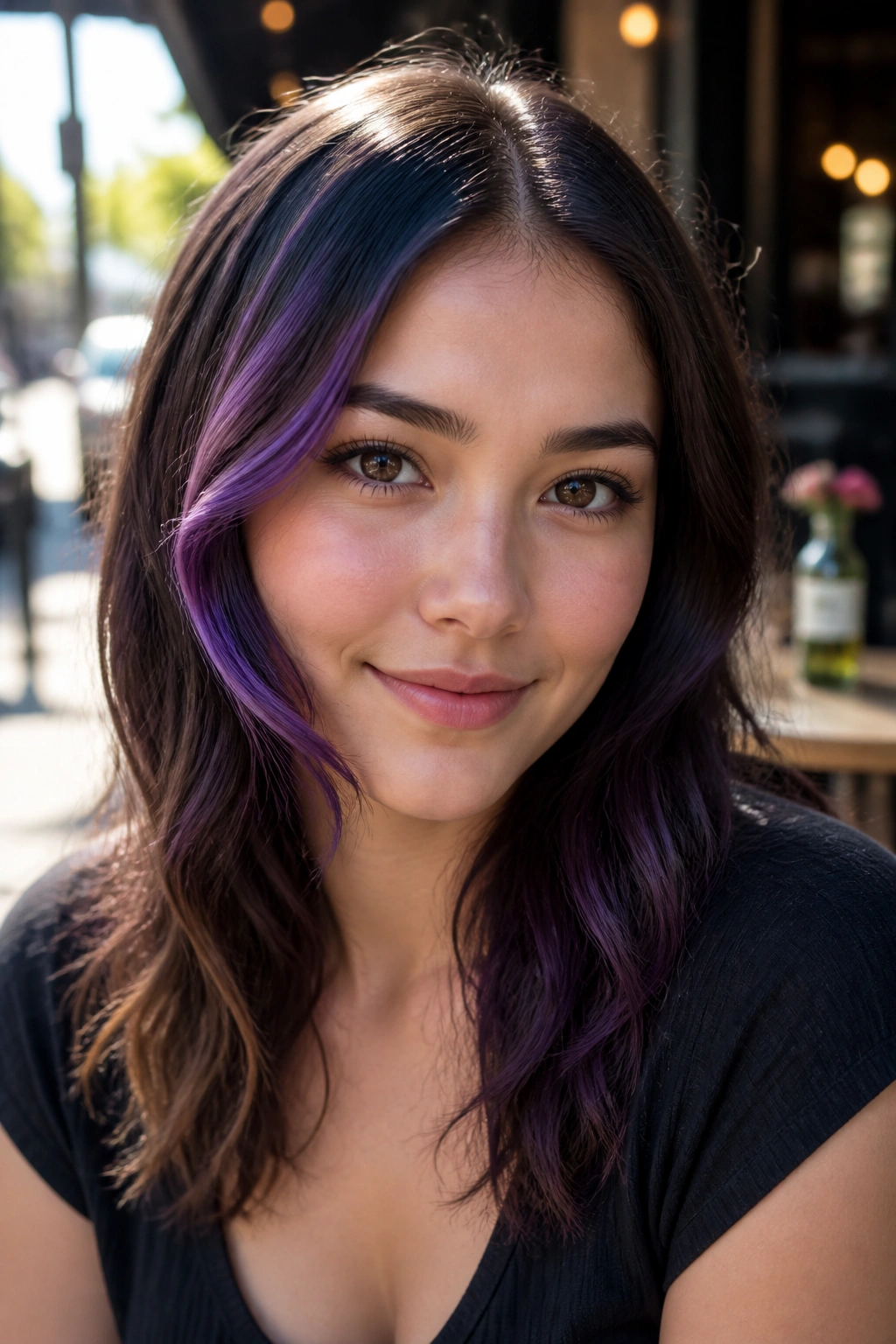
Diagonal placement changes everything. A straight horizontal line can widen a round face, while a slanted ribbon pulls the eye down and across the hair in a much more flattering way. That little angle is doing real work.
Think of this as a color cut built with the brush. The purple ribbon starts near the temple, then drops diagonally toward the jaw or collarbone. It should never sit as one blunt stripe right at cheek level. When the line slants, the face feels less circular and a little more sculpted.
This style looks sharp on sleek blowouts and softly waved hair. It also works well if you like side parts, because the diagonal highlight can echo the part and make the whole shape feel more intentional. Keep the ribbon medium-thin. Too much width kills the effect.
Best details to request
- A diagonal line, not a straight one
- Violet or plum on a black base
- Placement that starts above the cheekbone
- Soft ends so the highlight tapers rather than stops
6. Chunky Purple Panels Near the Part
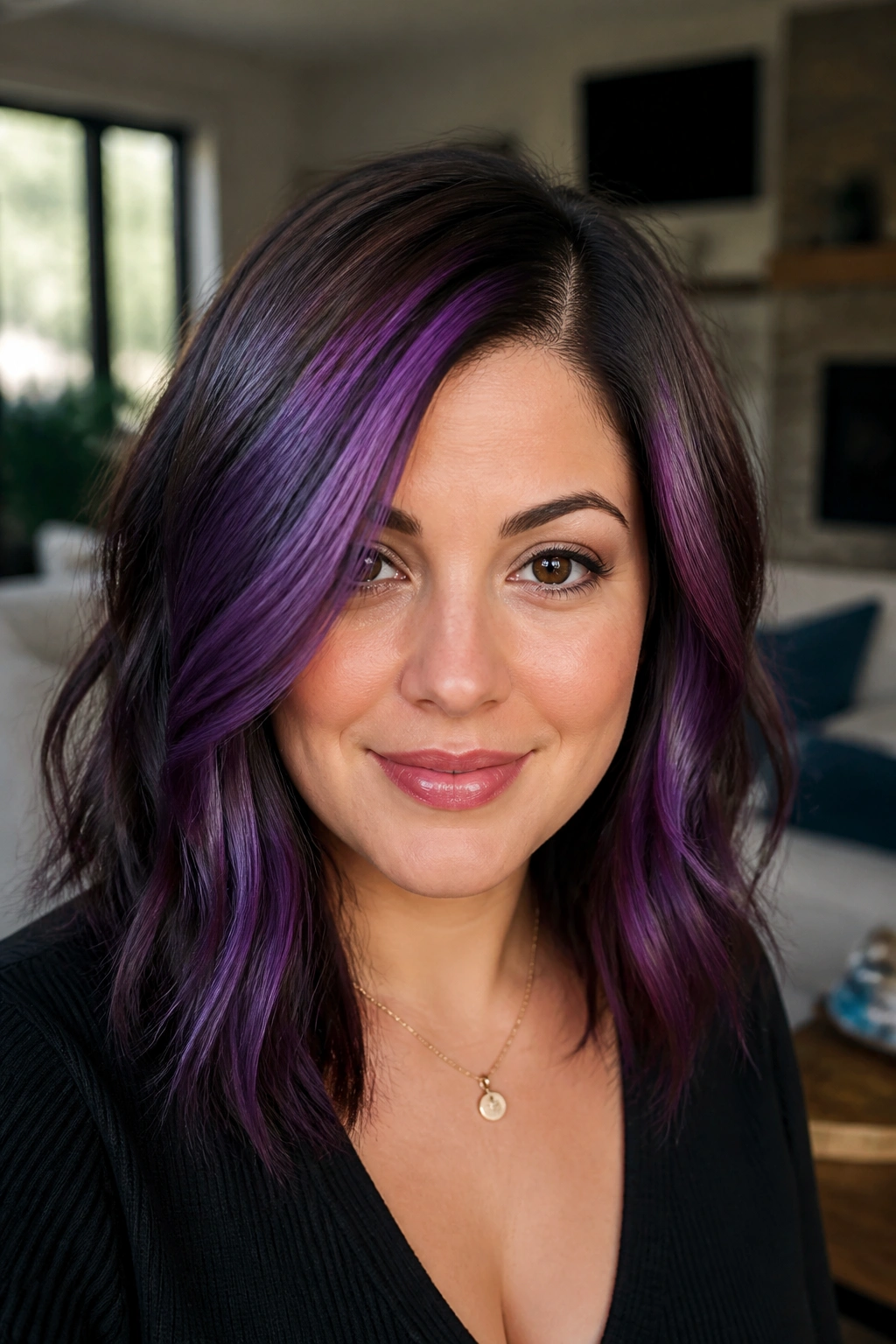
Some color stories need to be a little louder. Chunky purple panels near the part give strong contrast, and when they’re placed correctly they can make a round face look longer by creating an off-center focal point.
The key is the part. If you’re wearing a middle part, keep the panels narrow enough that they act like vertical strips, not side walls. If you wear a deep side part, one thicker purple panel can live on the heavier side and help the face look more balanced. That asymmetry is the whole point.
I like this one when the purple is slightly darker than neon — think blackberry, grape, or indigo-violet. You still get definition, but the hair keeps some depth. It’s also easier to pair with black makeup, strong brows, or a clean liner shape. The whole look feels deliberate rather than accidental.
Bold color has a downside. It grows out faster in the eye, even when the roots are dark. If you hate upkeep, don’t go too wide.
7. Black Cherry Melt With Violet Ribbons
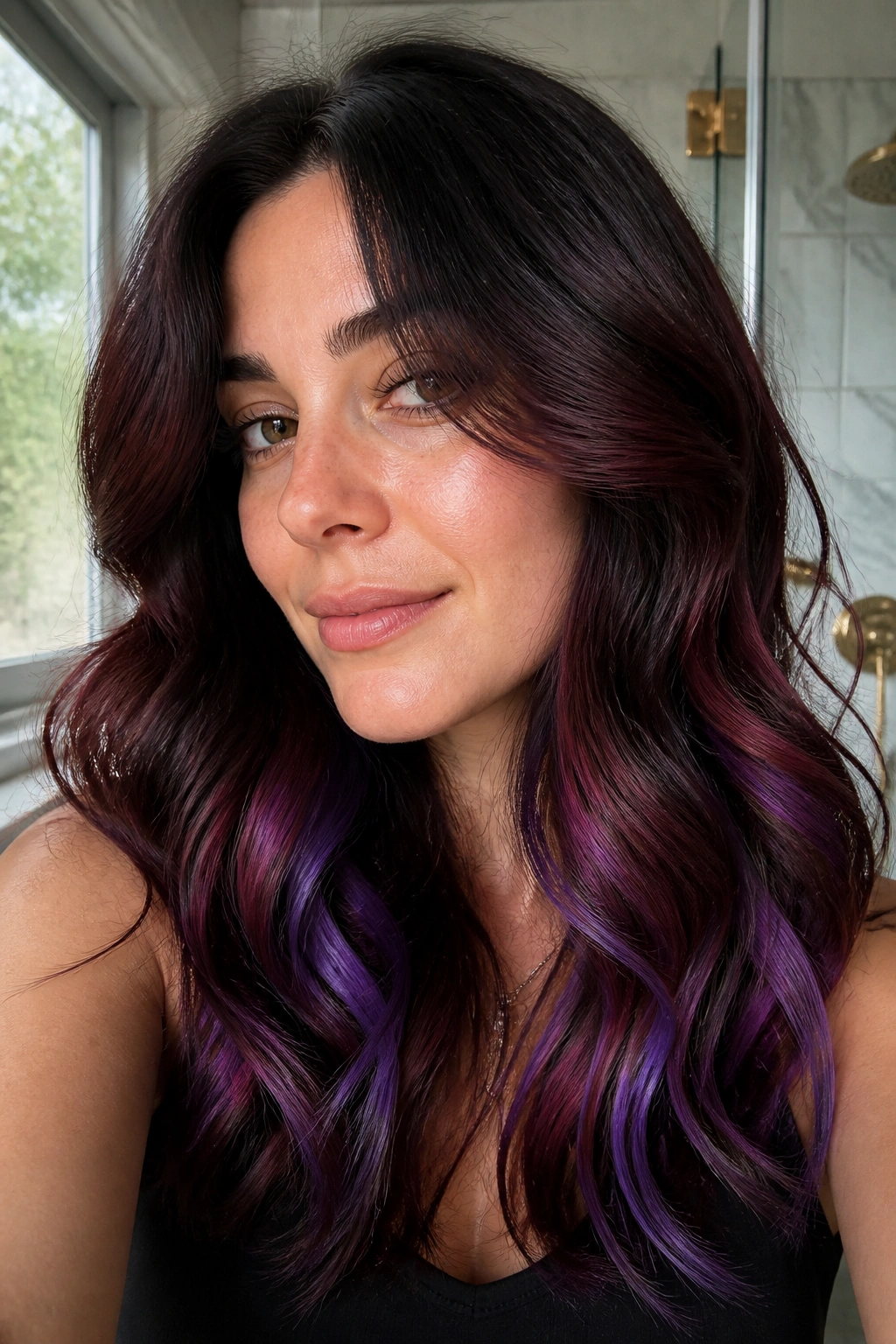
A black cherry melt is one of those color combinations that looks expensive without trying too hard. The hair starts near-black at the root, slips into deep cherry at the mid-lengths, then picks up narrow violet ribbons near the ends or inside the bend of the wave.
That melting effect is useful for round faces because it breaks up the width in a soft vertical path. Your eye follows the color downward. It does not stop and spread across the cheeks. That difference matters more than people think.
Wear this style with long layers if you can. The layers help each tone show separately, which keeps the melt from turning muddy. If the cut is one solid length, the color can still work, but it needs more visible movement from curls or waves.
One small note: cherry and violet need different toners to stay crisp. If the purple starts looking brown, it usually needs a refresh or a color-depositing mask with cooler pigment.
8. Halo Highlights Around the Hairline
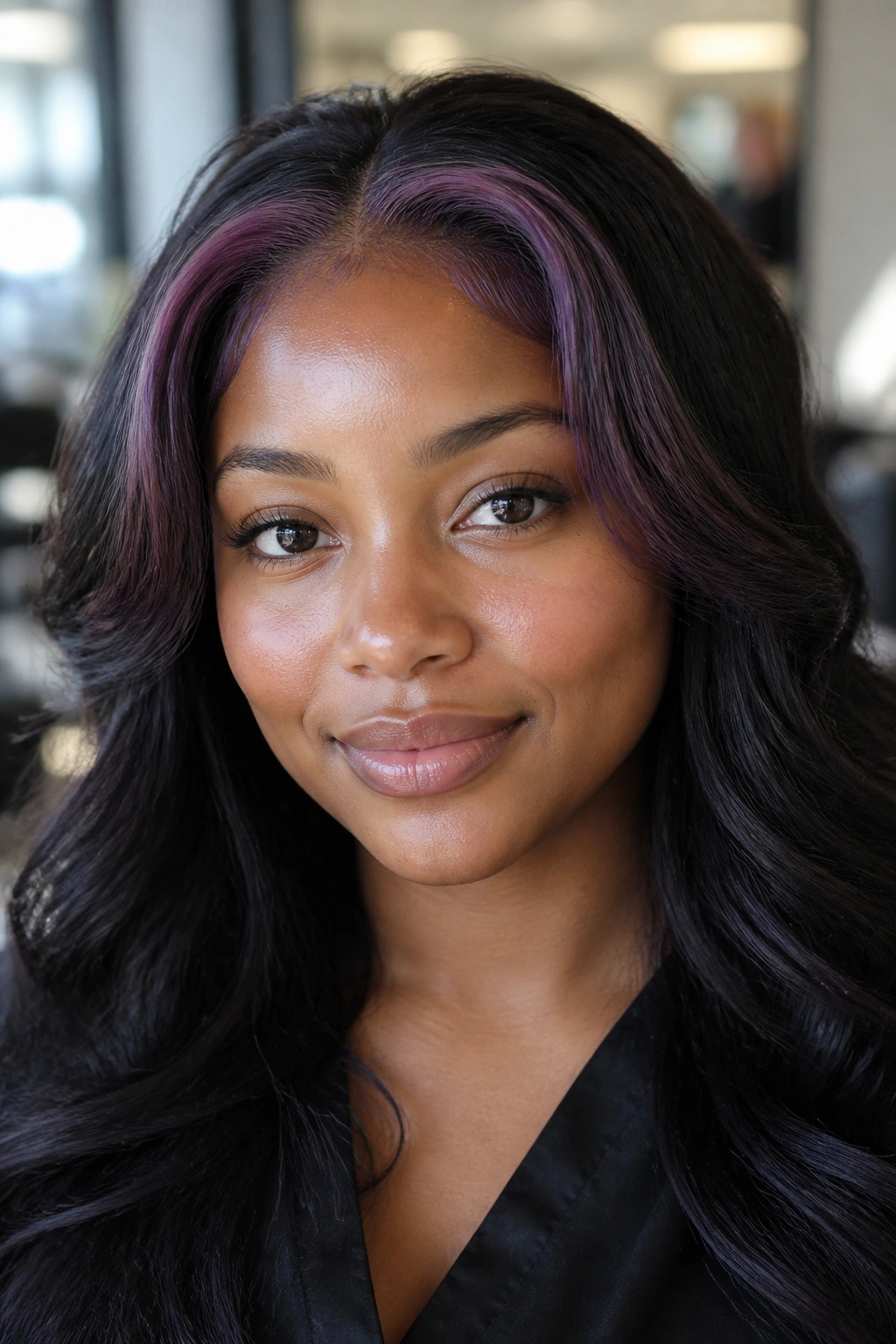
A halo highlight can be flattering on a round face, but only when it stays high and light. You want a soft ring of purple around the upper hairline, not a thick frame wrapping the widest part of the cheeks. That’s the line between pretty and puffy.
The best version uses thin violet strands around the temples, top front, and upper forehead area. The light follows the curve of the head and lifts the eye upward. Keep the color tight to the top layers so the lower face stays visually clean. That’s the part people often get wrong.
This style has a nice effect on ponytails, buns, and half-up looks because the highlight stays visible even when the hair is pulled back. It also gives black hair a little sparkle near the face, which is useful if your skin tone likes cool contrast.
If you want a softer finish, ask for a faded orchid or smoky lavender rather than a bright purple. It still reads as color. Just with a better sense of manners.
9. Deep Eggplant Lowlights for Extra Depth
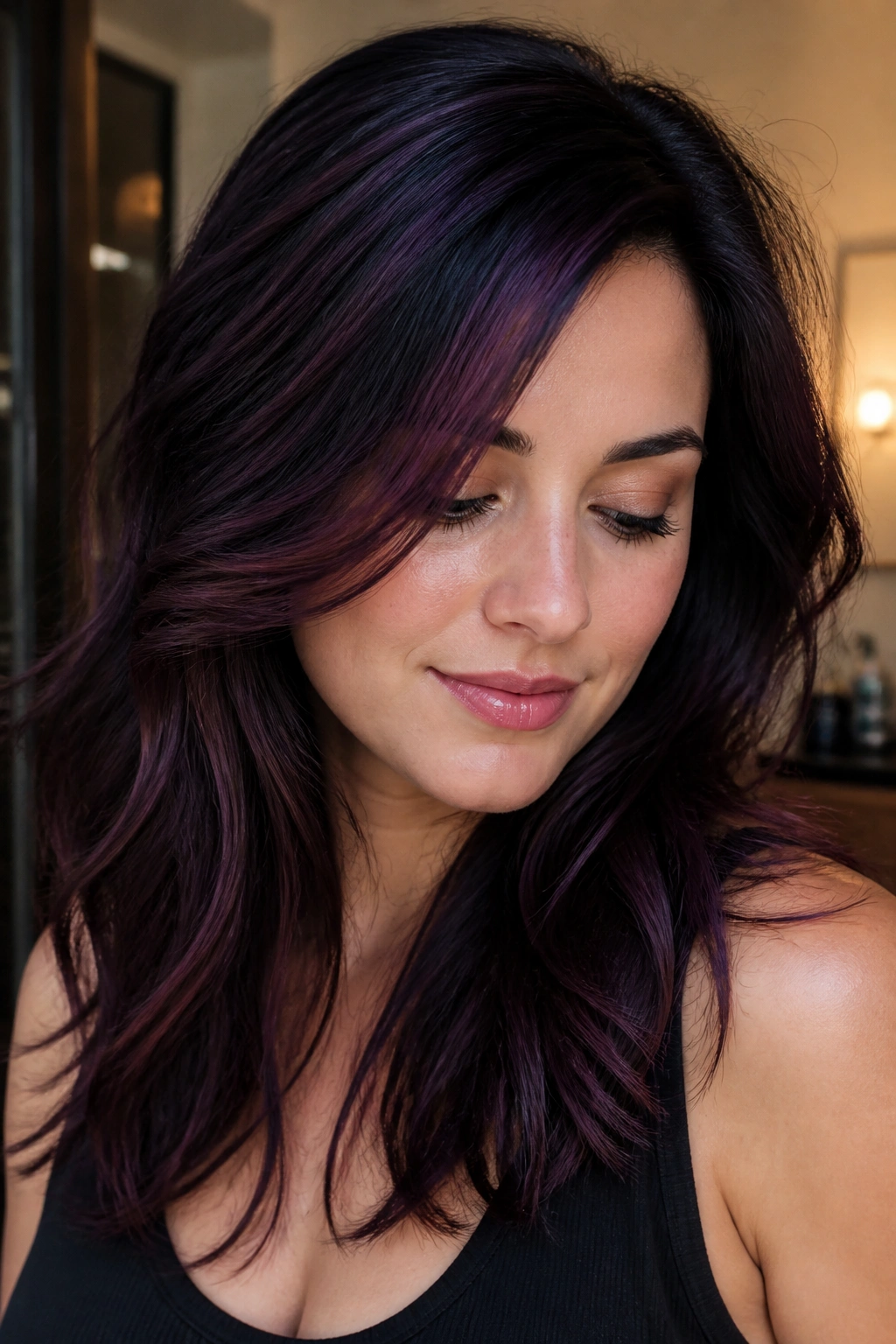
Not every flattering color move has to be bright. Deep eggplant lowlights carve shadow into the hair, and that shadow can make a round face look slimmer by reducing the sense of one wide, even shape.
What Makes Lowlights Useful
Lowlights are the opposite of highlights, but they matter just as much. By adding darker purple-brown pieces inside the surface, you break up bulky blonde or one-note black hair and create depth around the face. The result feels narrower and more layered.
Where to Place Them
- Through the sides, but not directly at cheek height
- Under the surface near the temple
- In the mid-lengths of layered cuts
- Around the back for movement, if the hair is thick
Eggplant lowlights work especially well if your hair already has some purple or brown in it and you want the color to look dimensional rather than flashy. They’re also easier to maintain than bright streaks. Fading is slower because the shade sits close to the base.
This is the least showy look on the list. It may also be one of the smartest.
10. Orchid Temple Strips for a Sharper Angle
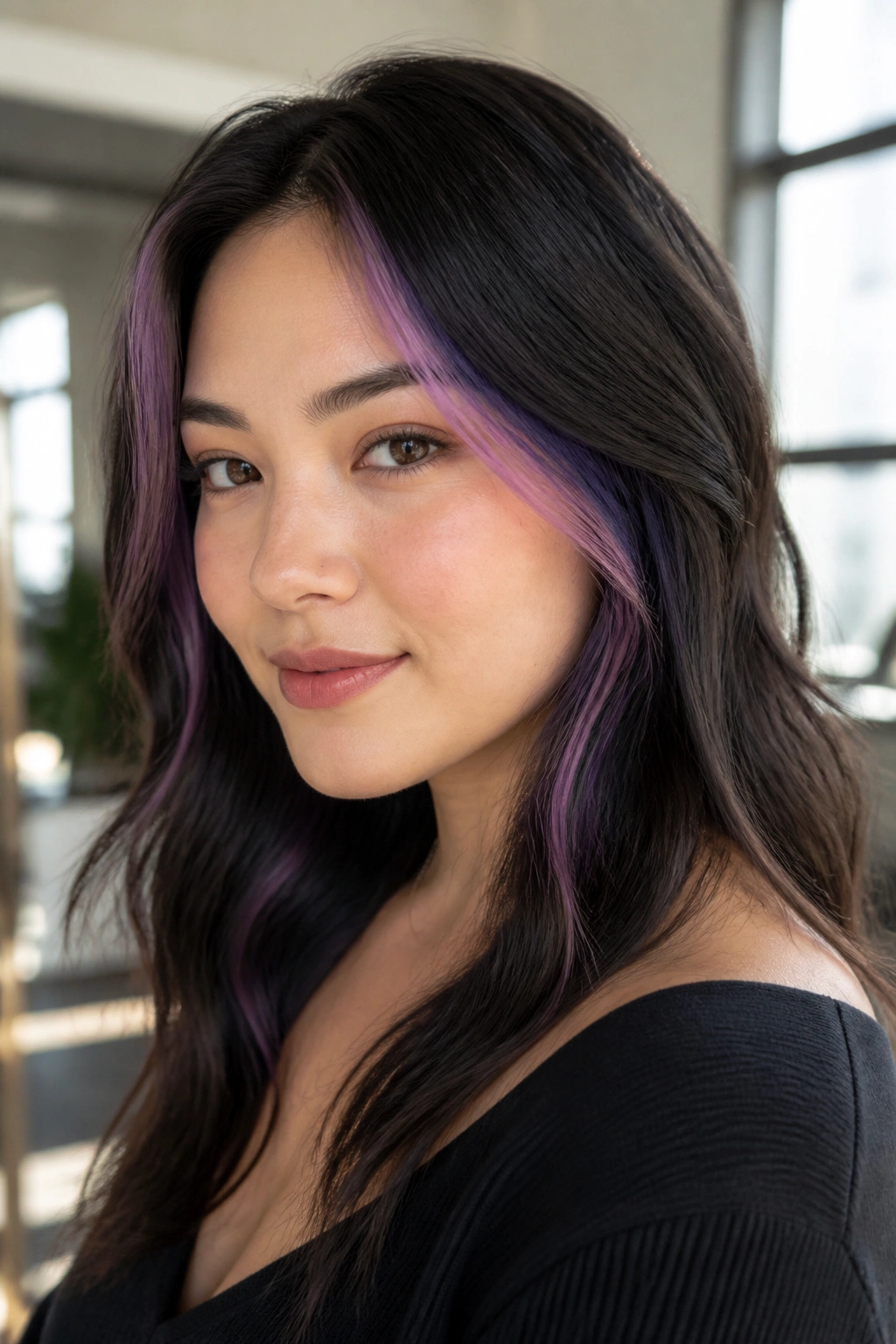
Temple strips are a neat trick when you want the face to look less circular. A thin orchid highlight at each temple creates a sharper angle and draws attention away from the widest part of the cheeks.
The placement is the whole point. Keep the strips slim and slightly forward, then let them fall into the front layers rather than sitting as a heavy block. If they’re too wide, they can spread the face out. If they’re too skinny, they disappear into the black base. You want that middle ground where they read clearly but still feel light.
This look does well on straight hair, but it really comes alive when the ends bend inward a little. A round brush blowout can make the temple strips sit like soft lines that point toward the jaw without clinging to it. That little separation from the face is flattering.
No need to overcomplicate the color. Orchid, soft violet, or mauve-purple all work. The placement matters more than the exact shade.
11. Midnight Black Gloss With Hidden Purple Sheen
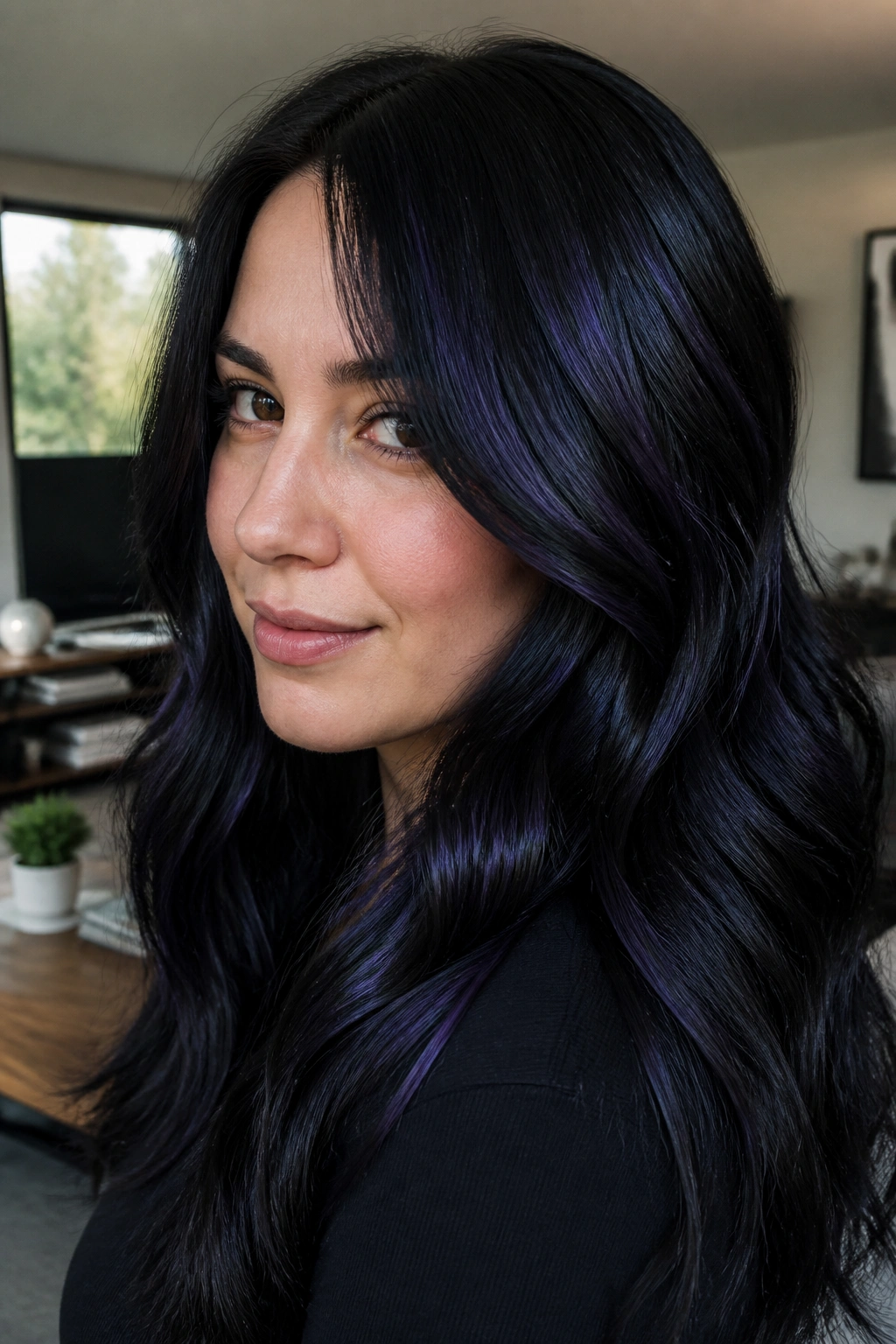
A hidden sheen is the kind of detail that makes dark hair look rich instead of flat. On a round face, that matters because shine can define the shape without adding bulk. The hair stays mostly black, but a blue-purple gloss lives underneath and flashes only when the light hits the right angle.
This is the most subtle look here. It does not scream purple. It murmurs it. And that makes it useful if you want color that feels polished in daylight and almost secret indoors. The face stays cleanly framed because the eye is not pulled to one wide bright section.
I like this on people who wear sleek styles a lot — low buns, straight blowouts, polished waves. The gloss makes the black look expensive, and the hidden purple keeps it from feeling plain. If your hair is coarse or porous, the gloss also helps smooth the surface a bit, which gives you more shine and less frizz.
It’s a low-drama option. Still pretty. Still smart.
12. Nape Underlights in Blue-Violet
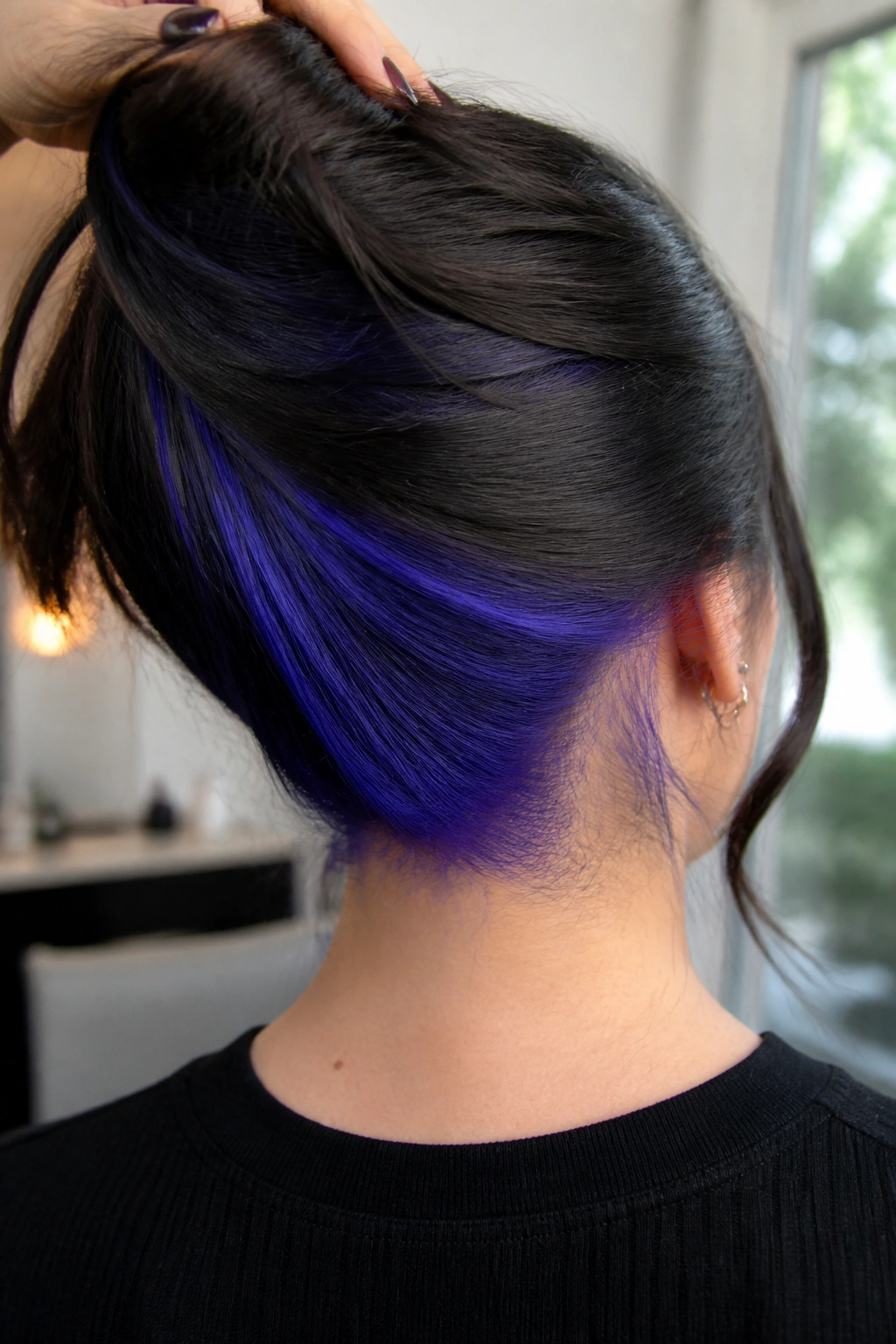
There’s something satisfying about color that moves only when the hair moves. Nape underlights sit low and hidden, so the purple shows when you turn your head or sweep the hair up. On a round face, that keeps the sides dark and slim while the color adds surprise from below.
Why It Flatters
The nape is a strong place for hidden color because it doesn’t compete with the cheeks. You keep the main frame dark, and the violet shows up farther down where it helps the head look longer. That downward pull matters more than people expect.
Best ways to wear it
- Half-up styles that reveal the lower panels
- Braids that open and close the color
- High ponytails with the underlayer left loose
- Curly styles that separate and show the blue-violet
Blue-violet works better than a red-purple here if you want the effect to feel cooler and cleaner. It also tends to pair well with black roots and medium-to-long cuts. If you’re a little bored of your hair but don’t want a full bright panel at the front, this is a good place to start.
13. Cool Mushroom Plum for Shorter Cuts
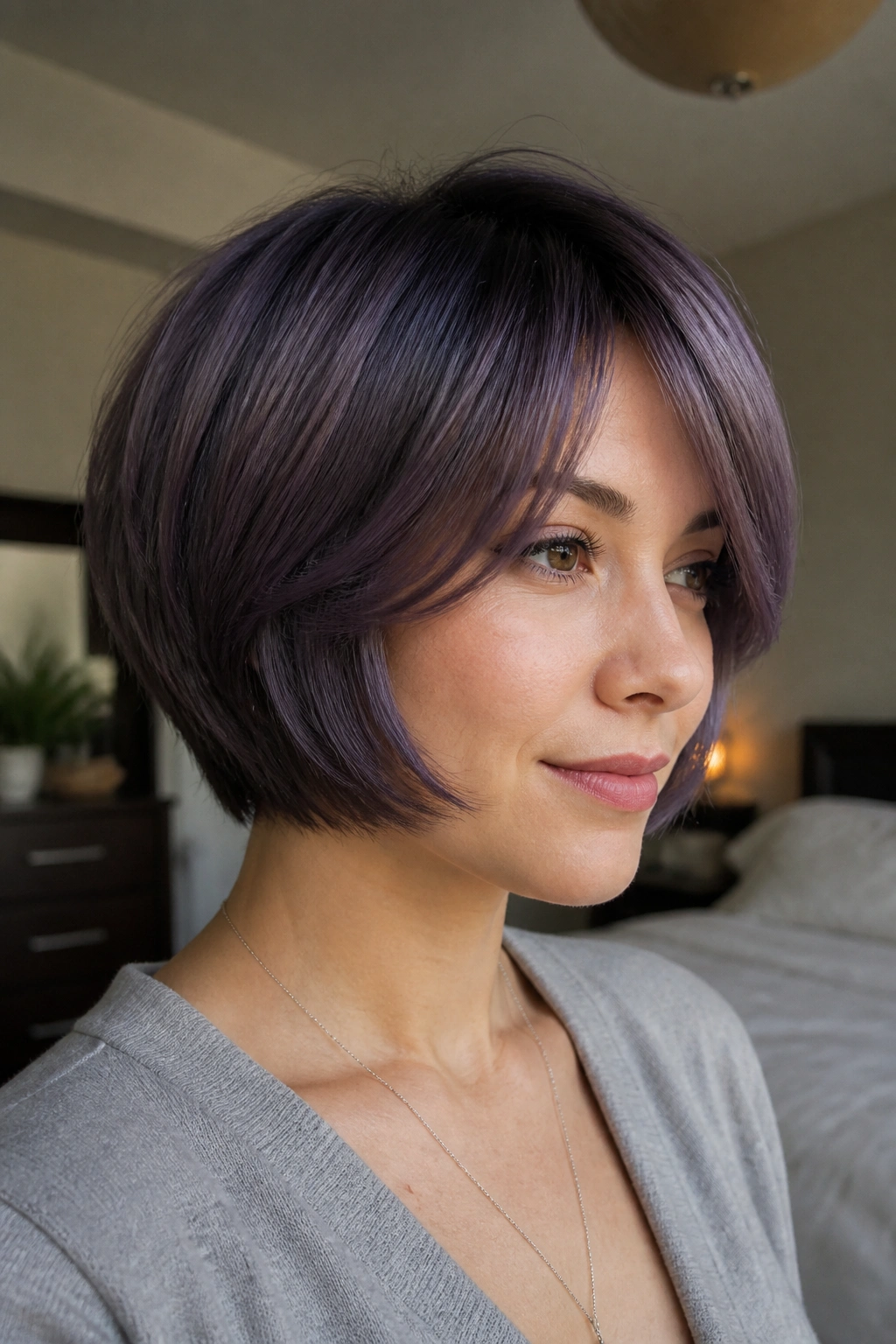
Short hair needs a different strategy. On a bob or pixie, too much purple at the sides can widen the face fast, so a cool mushroom plum shade is a smarter move. It keeps the color muted, soft, and slightly smoky, which helps the cut look light instead of boxy.
The cool base makes a big difference here. Mushroom plum blends black, taupe, and purple-gray into one shaded effect, and that works nicely with side-swept bangs or a deep off-center part. You get texture around the top, while the sides stay close and clean. That makes the face look less round and more angled.
This is also one of the easiest short-hair colors to style. A little bend at the ends is enough. You do not need perfect curls or a round brush blowout. In fact, a slightly undone finish looks better because it stops the color from reading helmet-like.
If you want purple but hate the upkeep of bright pieces, this is a strong compromise. Quiet. Controlled. Much less fussy.
14. Curved S-Pattern Balayage on Wavy Hair
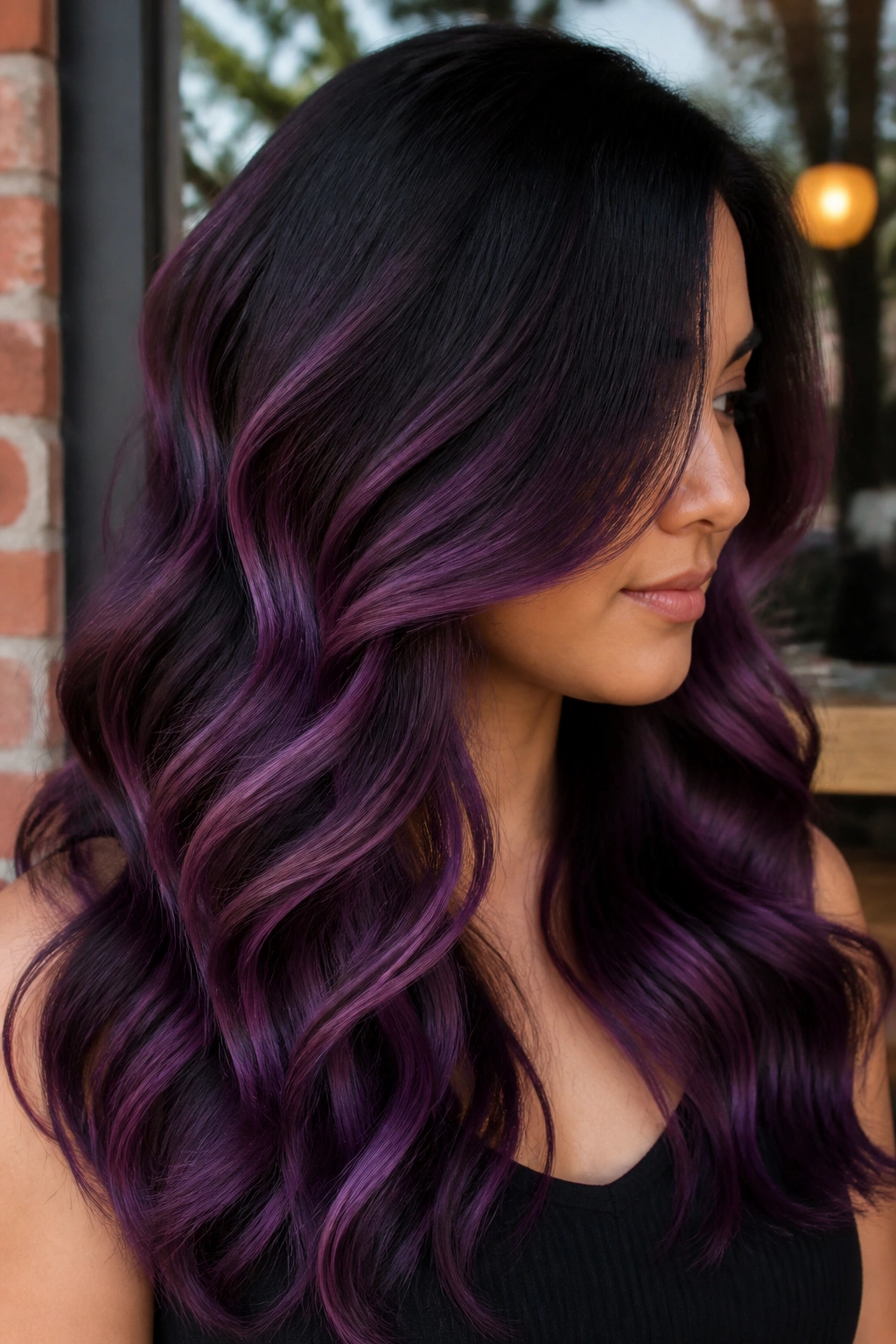
Wavy hair is a gift here, because the movement helps the color placement do its job. Curved S-pattern balayage follows the bend of the wave instead of fighting it, which gives the black and purple a more natural flow down the length of the hair.
That flow helps a round face because the highlights no longer sit in one flat band. They move. The eye follows the curve downward, then back out, then down again. It’s a softer way to create length, and it looks especially good when the waves are loose rather than tight.
A colorist usually paints this pattern with a free hand, keeping the lighter purple on the outer parts of the wave and the darker black or plum in the dips. That contrast gives the shape depth. On a round face, depth matters because it keeps the sides from looking too wide and uniform.
This style can be dressed up or left a little messy. Either way, it works. Maybe that’s why people keep coming back to it.
15. Jewel-Tone Violet Streaks on Long Layers
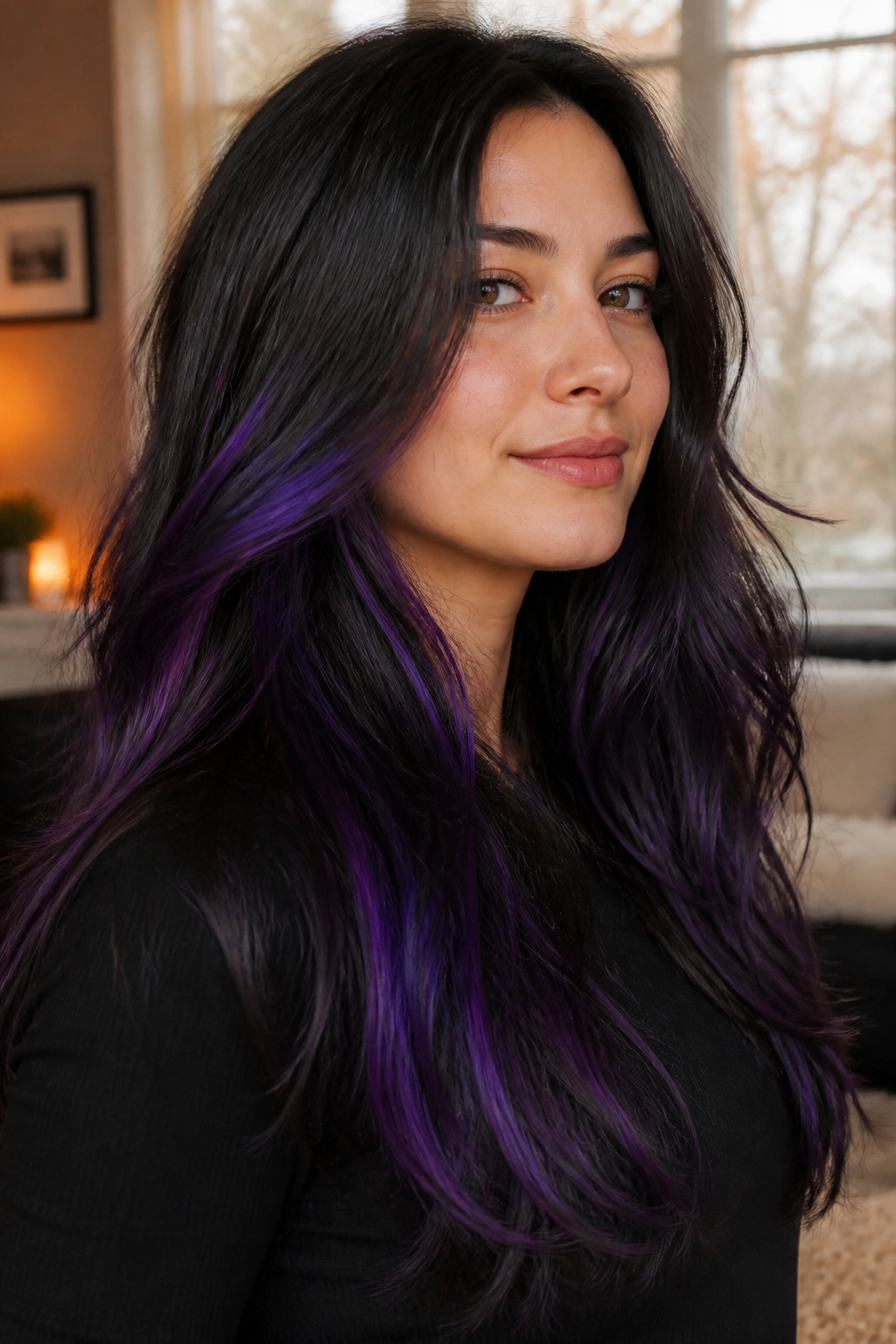
Long layers and jewel-toned violet streaks are a classic pair for a reason. The layers keep the weight moving downward, while the violet streaks act like vertical lines that guide the eye along the length of the hair instead of across the face.
How to Keep It Flattering
Start the brightest pieces below the cheekbone, then let them run through the mid-lengths and ends. That placement gives the face some breathing room. If the streaks begin too high and too wide, they can make the upper cheeks feel fuller. Nobody wants that.
Jewel tones like amethyst, royal violet, and deep orchid work well against black because they keep their richness. They don’t need to be neon to show up. A lot of people think brighter means better. Not here. A dense jewel tone usually looks better with dark hair and a round face because it adds contrast without screaming.
A few styling details help:
- Long layers cut through bulk
- Loose waves separate the color bands
- A center part can balance a fuller face
- A side part can sharpen the shape a bit more
This one has range. It can look elegant, moody, or a little rebellious depending on how you style it.
16. Shadow Root With Bright Orchid Tips
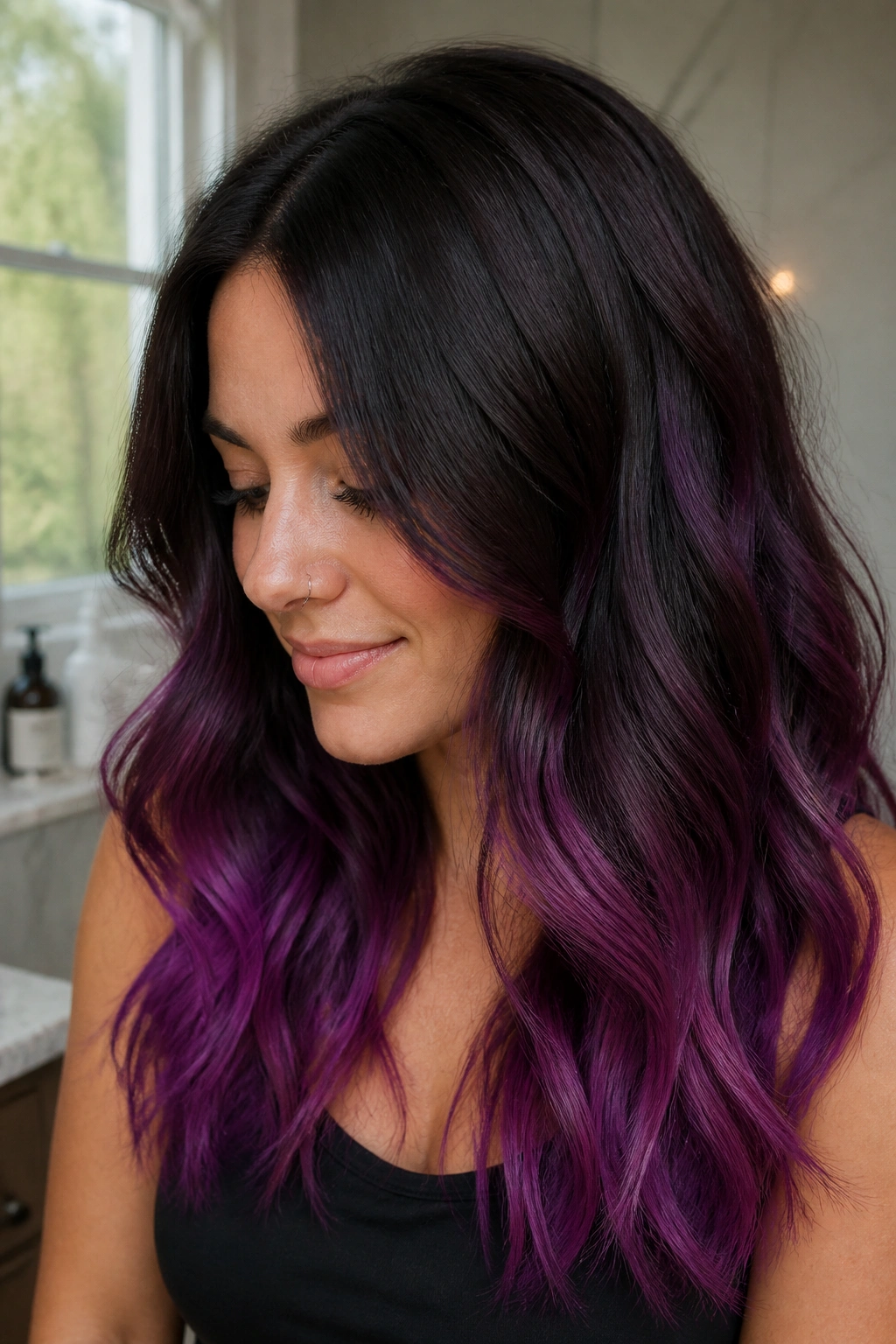
A shadow root is one of the easiest ways to keep purple highlights flattering. The dark root holds the top of the head visually in place, then the brighter orchid tips pull the eye downward. That downward movement is exactly what a round face needs when you want the shape to feel longer.
The root should stay deep and close to black, not muddy brown. That clean contrast makes the orchid tips look brighter and cleaner, especially on curled ends or feathered layers. If the root is too soft, the whole look can flatten out. If the tips are too thick, the ends can look heavy. The sweet spot is somewhere in the middle.
This style is also kind to grow-out. The dark root buys you time, and the bright tips keep the hair from looking dull as it fades. If you like your color to evolve instead of staying frozen, that’s a nice thing.
Use this when you want a purple look with a bit of attitude. It reads bolder than babylights, but it still has shape and direction.
17. One-Side Purple Accent Panel
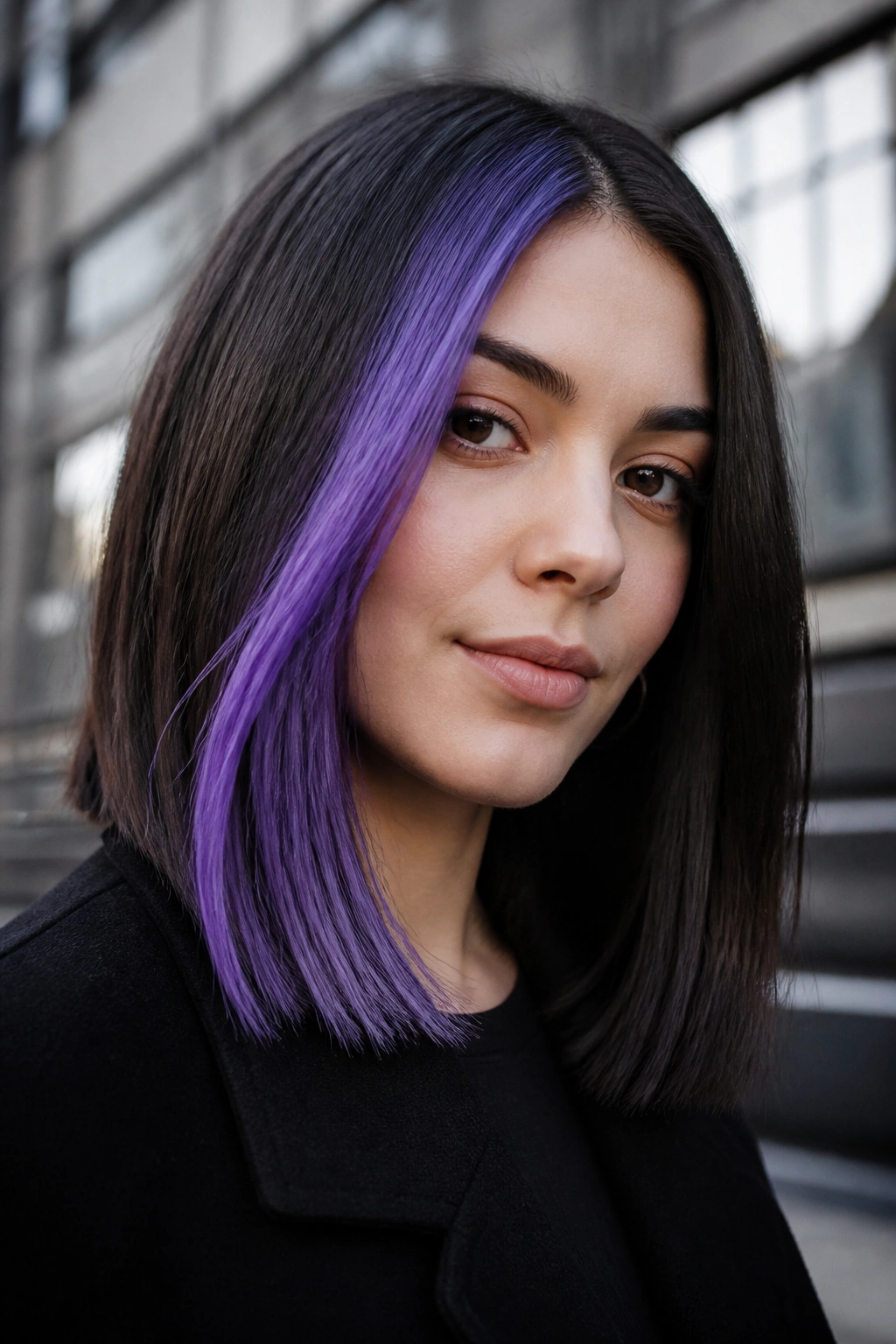
A one-side accent panel is a direct way to create asymmetry, and asymmetry is useful on a round face. Instead of balancing color evenly on both sides, you put the purple on one side only, usually the side that can carry more visual weight without widening the cheeks.
That one-sided approach gives the face a leaner outline. The dark side stays sleek and simple. The colored side becomes the focus. It’s a neat contrast, and it works especially well with side parts, shoulder-length cuts, and straight styles where the panel can drop in a clean line.
I like this look when the purple is rich rather than bright — black plum, blackberry, or indigo-violet. The panel should be thick enough to read as a deliberate block, but not so wide that it swallows the face. If you’ve got layers, keep the panel mostly on the longest front section so it hangs vertically.
This is not the shyest option on the list. Fine. Not everything needs to whisper.
18. Black Purple Micro-Babylights in Berry-Purple
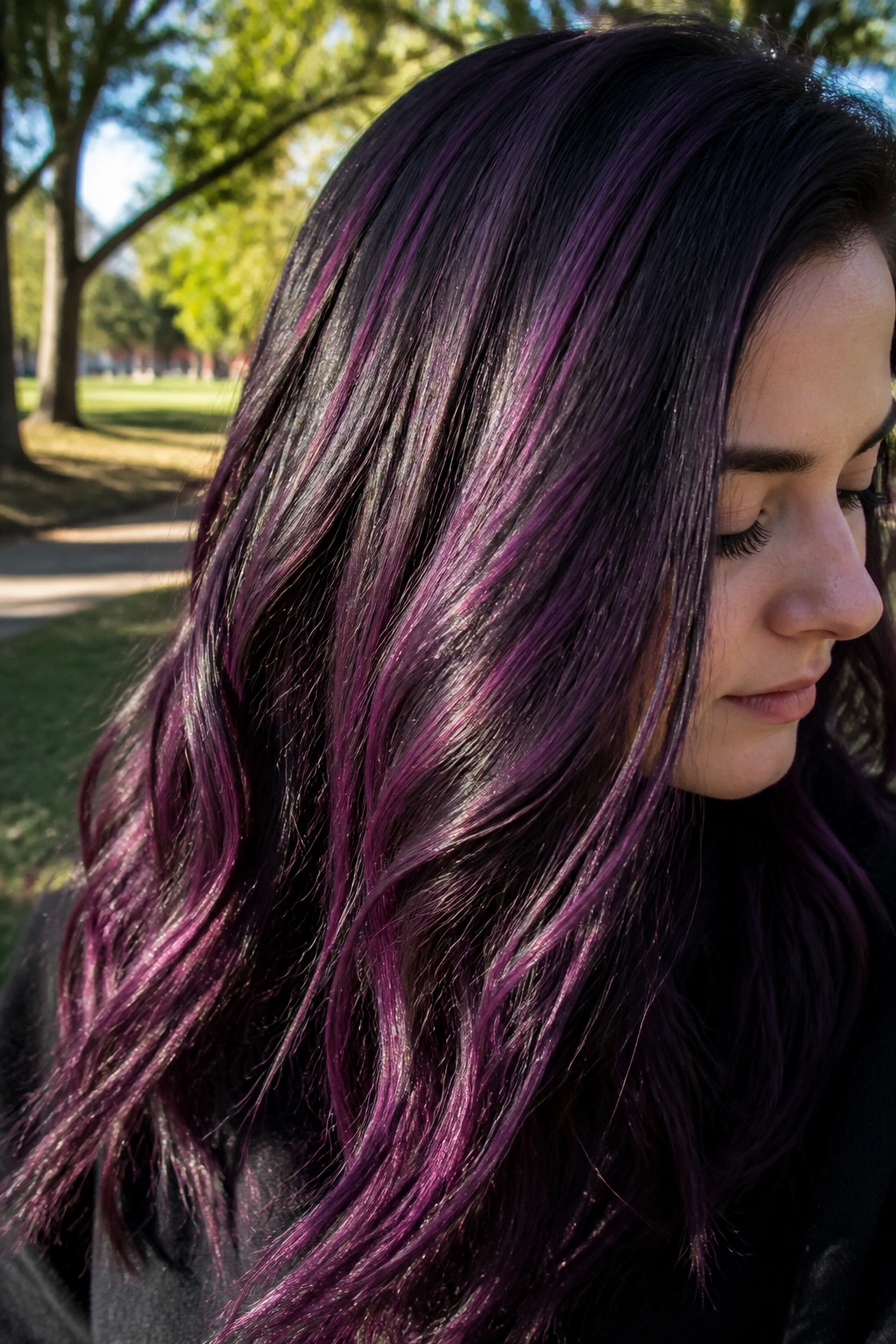
Micro-babylights are the softest finish here, and they may be the safest starting point if you want black purple highlights for round faces without a big commitment. The strands are tiny, close together, and scattered just enough to create shimmer instead of obvious stripes.
The beauty of this look is that it reads as texture first and color second. The hair keeps its dark frame, which is flattering for a round face, while the berry-purple threads catch the light in motion. It’s subtle enough for everyday wear, but it still gives black hair a real lift.
This works especially well if you wear your hair down most of the time and want a little movement around the face without extra width. It’s also a good choice if you’re nervous about maintenance, because tiny highlights fade more softly than chunky panels. They grow out with less drama. That alone is worth something.
If you want one style that feels balanced, easy to live with, and flattering from almost every angle, start here. Then, if you get bolder later, you’ll already know how purple behaves on your hair.
