



Brown hair can take blonde in a dozen different directions, and the trick is not “going lighter” as much as choosing the right kind of lightness. Blonde highlights for brown hair can look soft, expensive, sun-kissed, or stripy in a heartbeat, and the difference usually comes down to placement, tone, and how much contrast you’re willing to live with. A beige ribbon on chestnut hair tells a different story than an icy money piece on espresso roots. Very different story.
The best versions do not scream for attention. They sit where hair would naturally catch light: around the face, on the crown, through the ends, or in tiny woven pieces that make brown hair look fuller without turning it into a solid block of blonde. That’s why a good colorist spends so much time talking about your base shade, your texture, and how often you’re willing to come back for toner. Brown hair has warm pigment underneath it, and that warmth can help or fight you depending on the blonde family you pick.
I’ve always thought the sweet spot is somewhere between “I just came back from a beach week” and “I need three toners and a prayer.” Too subtle, and the hair can look flat. Too bright, and the contrast starts doing the talking for you. The styles below cover that whole range, from barely-there babylights to bolder blonde pieces that still feel wearable.
1. Caramel-Edged Face-Framing Pieces
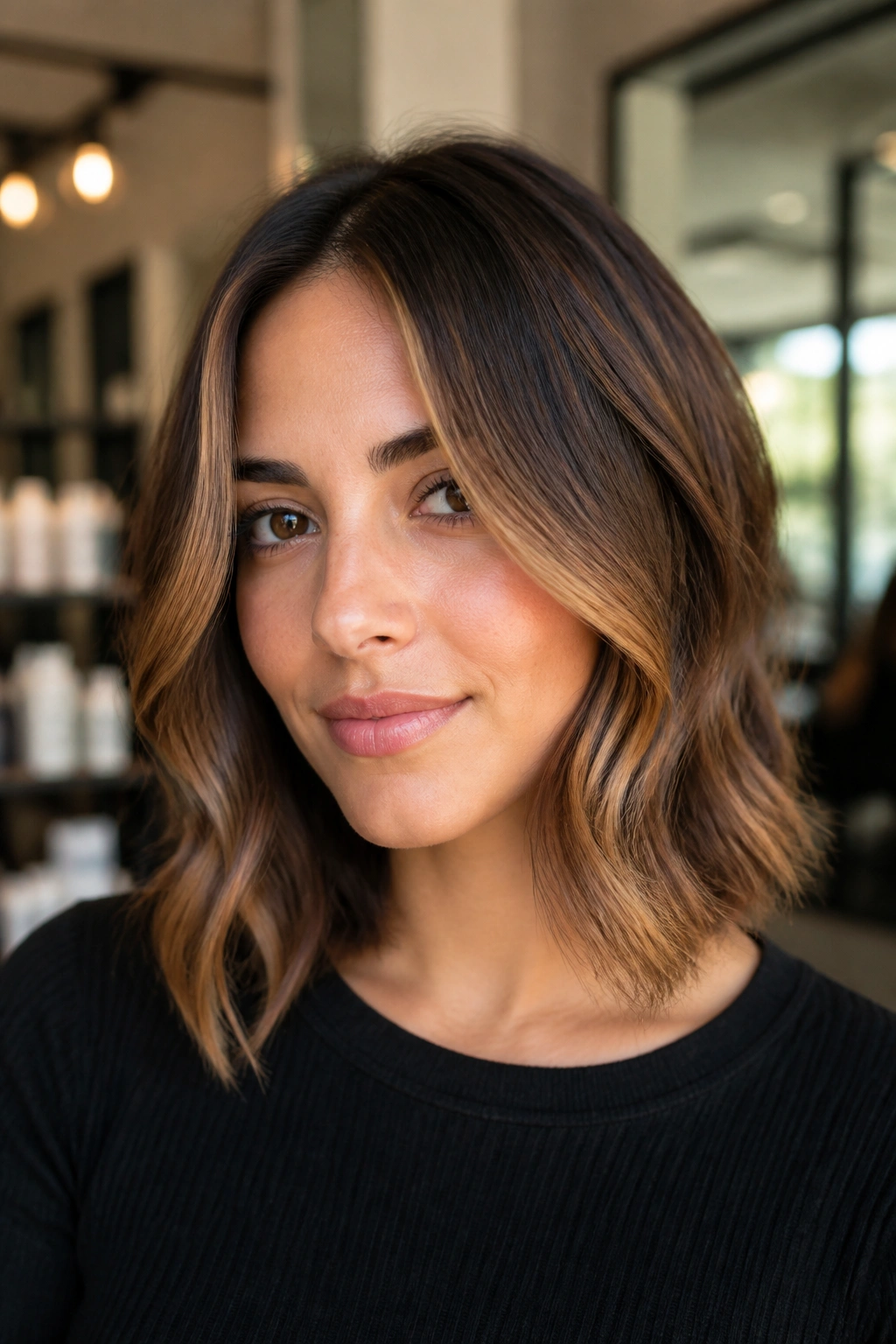
These are the easiest blonde highlights for brown hair if you want a visible change without turning the whole head lighter. The blonde stays concentrated around the face, so you get brightness where people actually look first. That alone makes the hair read fresher.
Why this placement works
A soft face frame works because it breaks up a dark base near the skin and makes the complexion look a little more awake. On medium and dark brown hair, I like a piece that starts around the cheekbone and thins out as it drops toward the jaw. That keeps the front from looking chunky.
Ask for two to four foils on each side, lifted to a warm beige or light caramel level rather than a pale blondest-blonde situation. If your hair is naturally wavy, the color will move more than you think, so keep the front pieces thin enough that they bend with the curl.
- Best on shoulder-length cuts, lobs, and long layers
- Looks polished with a center part or soft off-center part
- Grows out cleanly because the root stays close to your base
- Works well if you want one salon visit to do most of the talking
My favorite detail: leave a sliver of depth right behind the front pieces. It makes the blonde look brighter by contrast.
2. Soft Babylights Along the Part Line
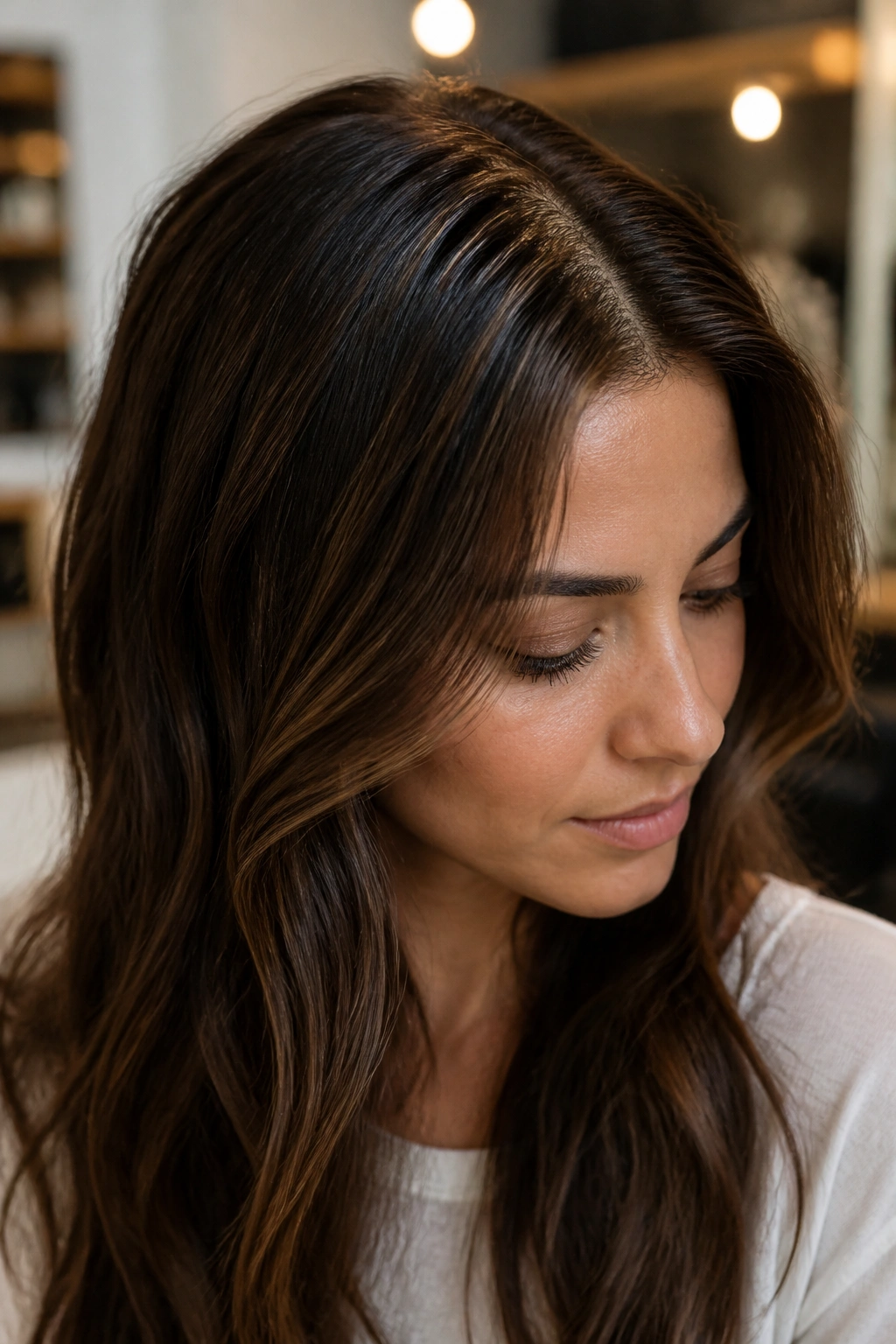
This one is sneaky. From a distance, it looks like your brown hair is just shinier. Up close, you notice tiny threads of blonde woven through the top layer, especially near the part. That’s the whole charm.
Babylights are thin enough that they don’t build obvious stripes, which makes them a strong choice if you like blonde highlights for brown hair but hate the early “I can see every foil” stage. The color floats on top instead of shouting from the roots.
What I like most here is the grow-out. Because the woven sections are so fine, your part can shift a little without making the color look messy. That matters more than people admit. Nobody wants a style that only looks good if you stand in one exact place.
What to ask for
- Micro-weaving through the crown and part line
- A blonde that lands one to two levels lighter than your ends
- A beige or soft honey toner, not a loud icy finish
- A subtle root blur so the line of demarcation stays soft
This is the style for someone who wants movement, not drama. Quiet, but not boring.
3. Sandy Beige Ribbon Highlights
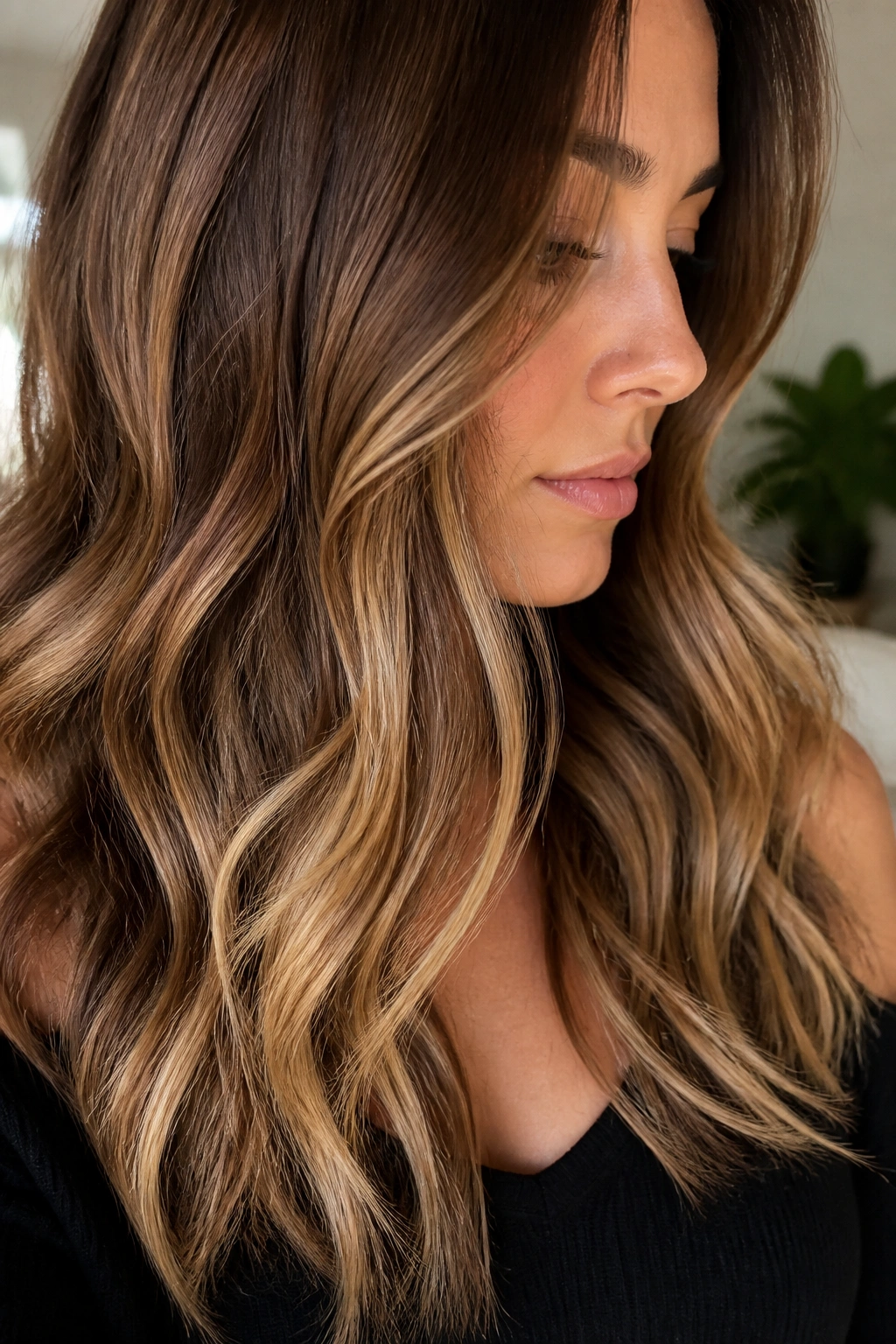
Why does beige work so well on brown hair? Because it sits in the middle. Not too gold, not too ash, not too chalky. It gives you brightness without making the hair look like it’s fighting its own undertone.
Sandy beige ribbons are painted in wider strokes than babylights, but they still need softness. The goal is a loose, blended shimmer through the mid-lengths and ends, not a set of hard stripes. On chestnut brown or medium brown hair, the effect can look expensive in a very understated way.
How to ask for it
Tell your colorist you want ribboned blonde pieces between level 7 and level 9 beige depending on how light your base is. The good ones will know to keep the sections wider around the curve of the head and thinner near the face. That little detail matters because it stops the color from looking too even.
A beige ribbon is also kind to textured hair. Curls and bends show off the dimension better than straight hair does, which is nice if your hair never sits still for long.
If brass usually shows up on your hair, this is a smarter lane than golden blonde. It stays calmer.
4. Honey Balayage Through the Ends
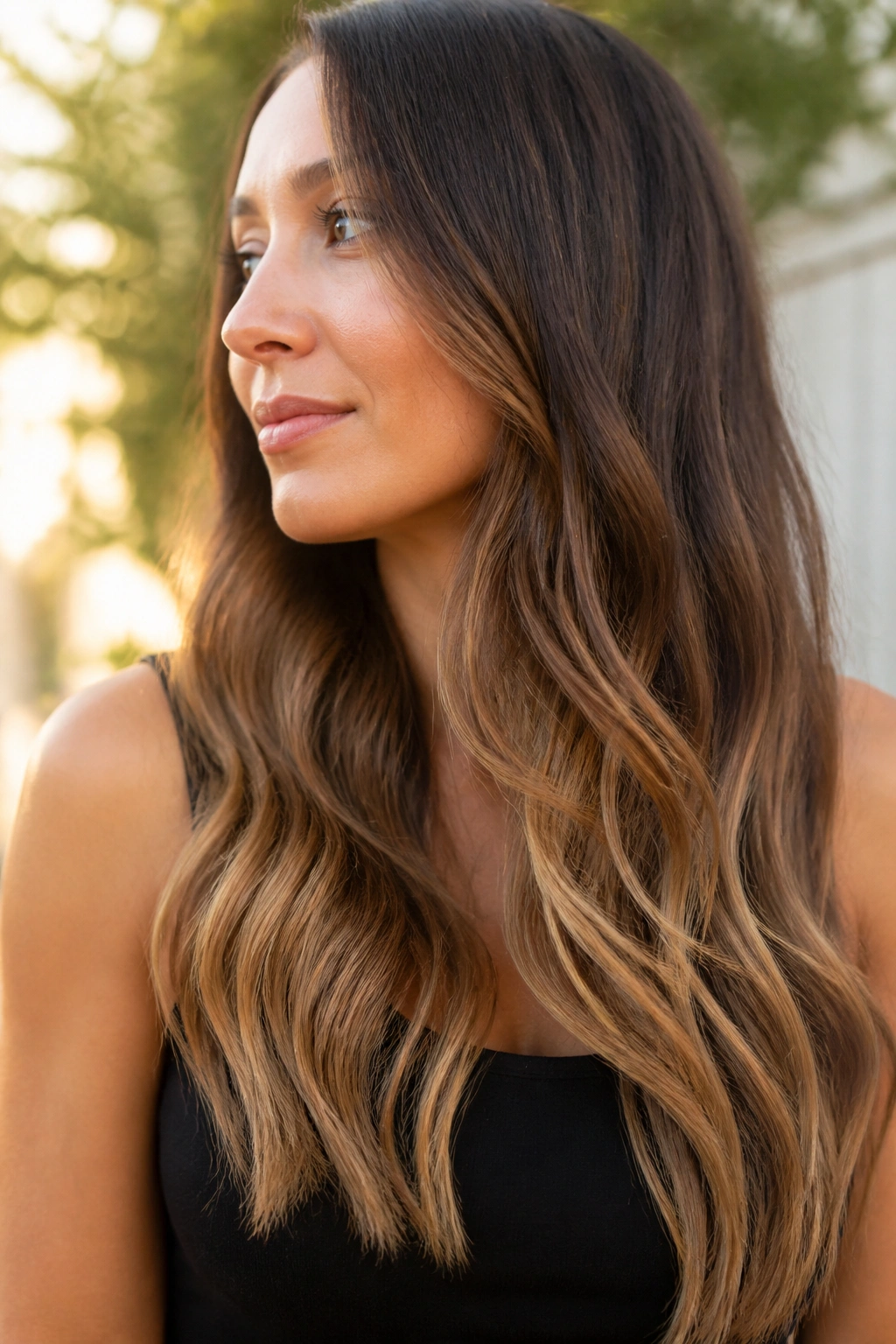
A lot of brunettes want blonde, but what they really want is a lighter edge and a softer feel through the bottom half. Honey balayage does that without making the roots feel heavy or painted on. It’s one of those styles that looks like you spent more time outside than you actually did.
The paint sits mostly on the surface of the mid-lengths and ends, so the top stays darker and the lower half gets that warm glow. On long brown hair, this creates a slow fade that reads natural from the first appointment.
Why it works on wavy hair
Waves break up the blonde into little flashes, and that makes the warm honey tone look richer. Straight hair shows every line, so the hand-painting has to be cleaner there. Wavy hair? A little easier on everyone.
- Ask for hand-painted pieces that start around the ear or below
- Keep the lightest blonde on the surface, not inside every section
- Choose honey or light gold if your skin likes warm tones
- Trim the ends first if they’re dry; balayage always shows damage more than people expect
The best part is the grow-out. It’s forgiving, which is half the battle.
5. Chunky Money Piece Highlights
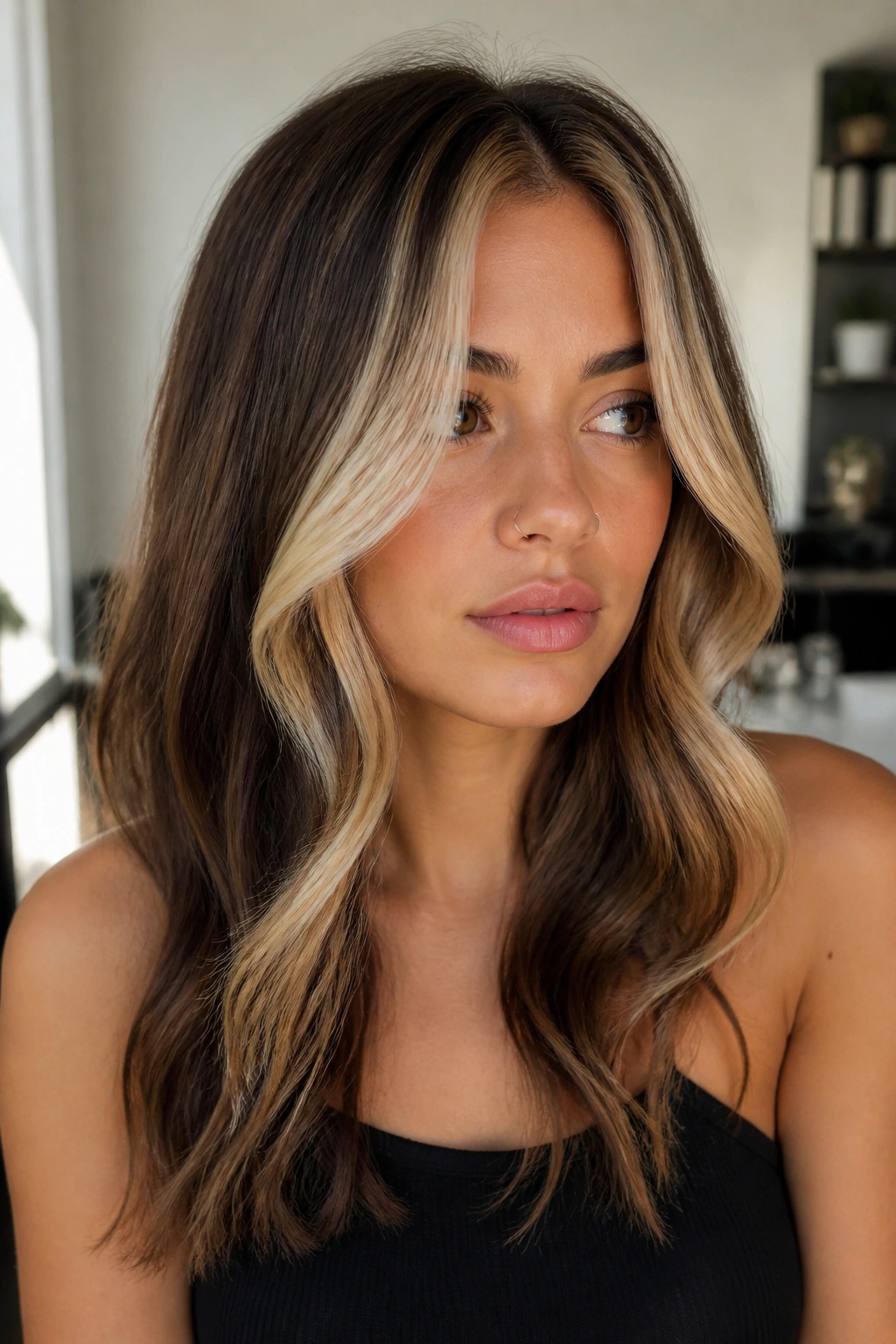
Chunky money pieces are not subtle, and that’s the point. A bright blonde frame around the face can wake up brown hair fast, especially when the rest of the color stays deeper and softer. It gives you that “I did something” feeling without changing the whole head.
I like this look on hair with a middle part and a little bend through the front. The blonde pieces sit right where the part opens, so they become part of the cut instead of looking like an afterthought. On dark brown hair, the contrast can be bold. On lighter brown hair, it looks a little more surfer-girl, a little less sharp.
The key is not to make the money piece too wide. Big enough to show. Small enough to move. That sounds simple, but it’s where a lot of people go wrong.
A good colorist will usually blend the money piece into softer blonde threads behind it so the front doesn’t look pasted on. That tiny bit of depth behind the bright section keeps the whole thing from feeling harsh.
If you like ponytails and clips, this one earns its keep.
6. Ash-Blonde Foils for Cooler Brunettes
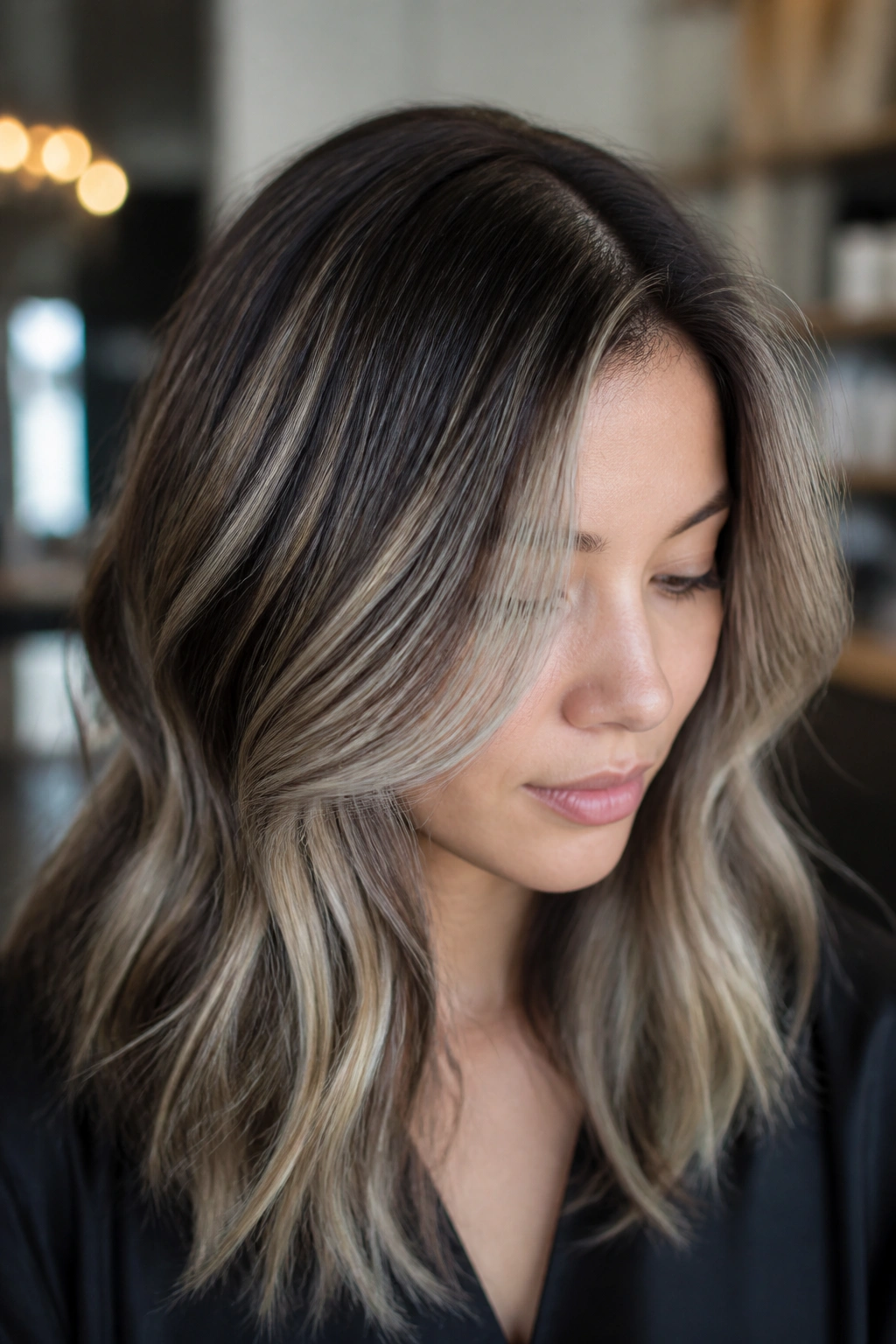
Ash blonde on brown hair is a mood. Cooler, smokier, and a little more tailored than honey or caramel. If your natural brown has a cool lean — or you just hate gold in your hair — this is the lane to stay in.
The result depends on how much warmth your base pushes through during lifting. Brown hair almost always reveals orange or yellow underneath, which means the toner matters as much as the highlights themselves. That’s why ash blonde can look crisp on one person and muddy on another if the toner is rushed.
What makes it different
Unlike honey blonde, ash tones sit back visually. They don’t jump out at you first. Instead, they flatten some of the warmth and make the highlights look cleaner against espresso or medium brown hair.
This is a good pick if your wardrobe leans black, gray, white, denim, or jewel tones. The hair will echo that cleaner palette. It’s also useful if you’re tired of highlights turning brassy three weeks after the appointment.
A note worth keeping close: ash blonde usually needs a careful lift and a toner that is checked more than once. Rinse it too early, and the blonde can skew beige; leave it too long, and it can go dull. Not the look. Not at all.
7. Golden Wheat Highlights on Wavy Brown Hair
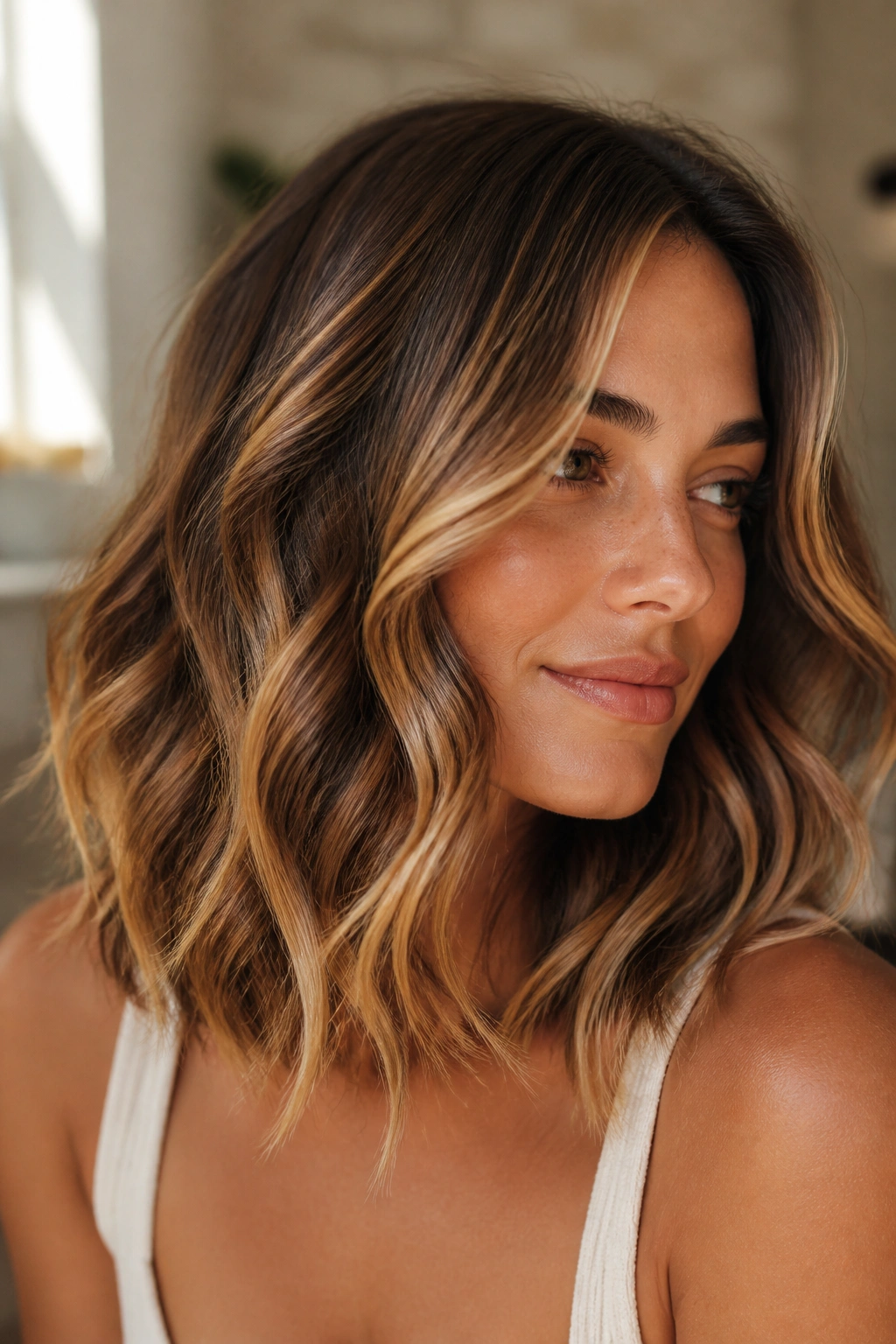
Golden wheat is warmer than beige and softer than bright yellow blonde. On brown hair, it often looks like the kind of color that shows up after a long stretch in the sun, even when you never went anywhere near a beach.
Why it flatters movement
Waves and soft curls make this color come alive because the lighter pieces catch on the bends. If your hair is layered, the wheat tones can sit on the top layer and peek through the lower sections, which gives the style a lived-in feel rather than a flat stripe effect.
The placement should stay airy. Think thin-to-medium slices through the surface and ends, with a little more brightness at the crown and around the cheekbones. That keeps the overall look from sinking into the base.
- Best on medium brown and warm chestnut bases
- Looks strongest on layered cuts
- Needs a warm toner so it doesn’t go too pale
- Holds its shape best when the hair has texture spray or a loose bend
I like this one because it doesn’t try too hard. It feels easy, and that’s harder to get than it looks.
8. Mushroom Blonde Dimension
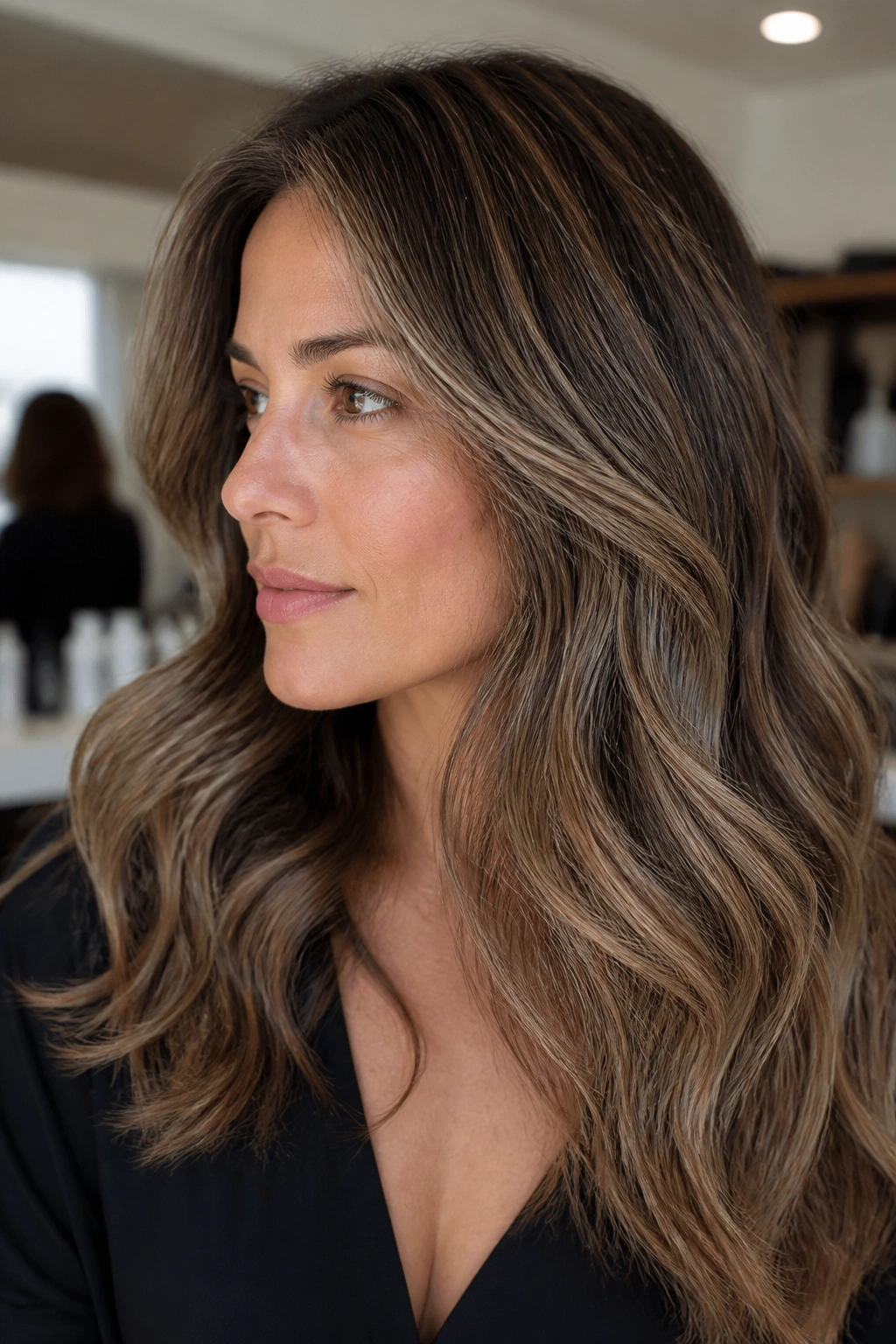
Mushroom blonde sits in that cool-beige zone that can look almost smoky on brown hair. It is not icy. It is not gold. It’s the shade you choose when you want the blonde to feel expensive and a little muted.
The trick here is contrast control. You want enough lightness to make the brown feel layered, but not so much that every piece screams. Mushroom blonde works because it blends taupe, beige, and a touch of ash, which softens the transition from brown to blonde in a way pure gold can’t.
This style suits medium brown hair especially well. On very dark brown hair, it can still work, but the lift has to be clean or the color can read flat instead of dimensional. That’s where a good toner earns its money.
It’s also one of the smarter styles if you want a grown-out look. The muted tone doesn’t punish you as quickly when roots appear. That’s the whole appeal, really. Less fuss, more texture.
9. Champagne Highlights Around the Part
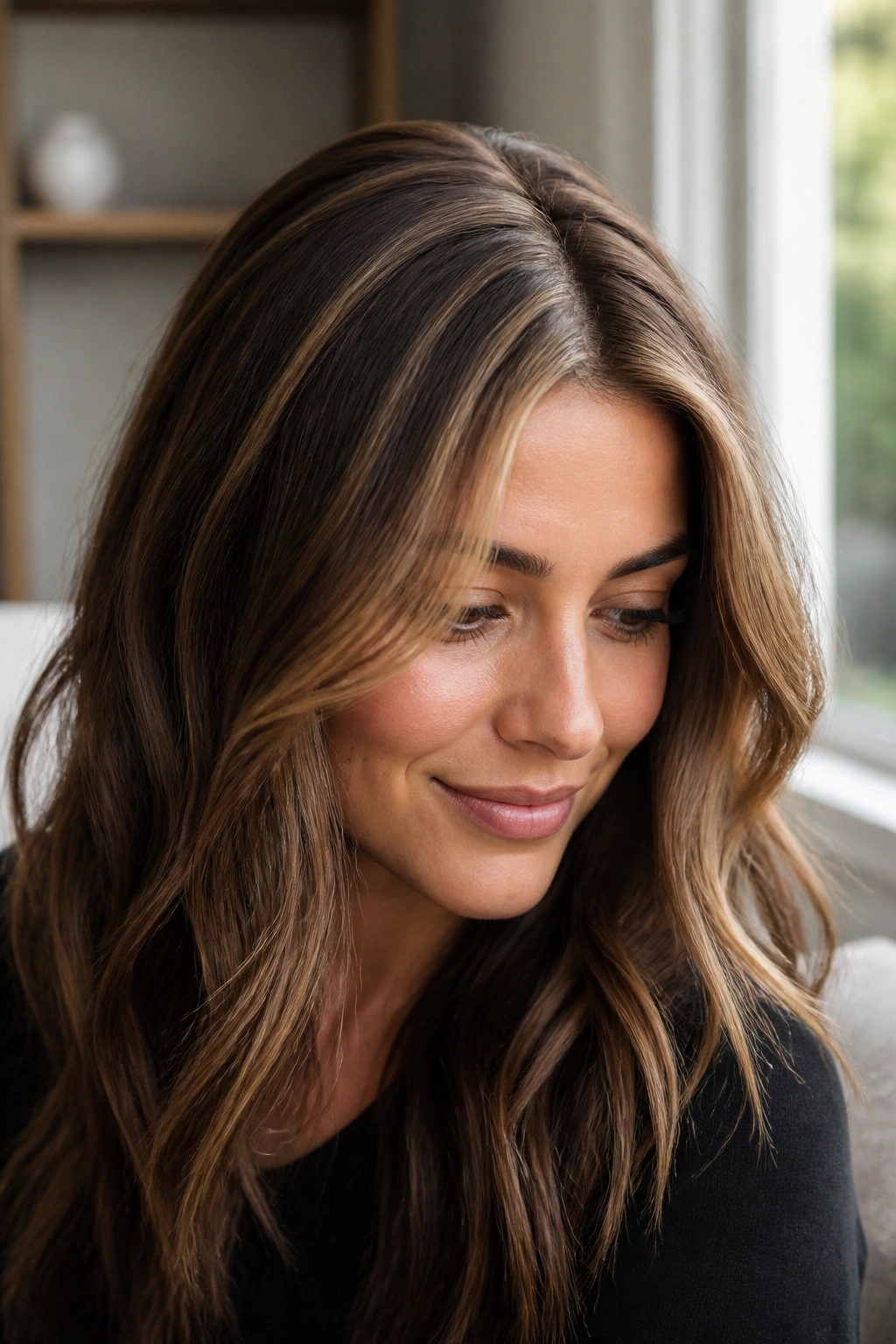
Champagne blonde is lighter than beige and softer than platinum, which gives brown hair a polished shine without making it look cold. Put it around the part and the top layer, and the whole style starts to reflect light in a cleaner way.
Why do people love this placement? Because the top is where your hair gets the most visual traffic. That’s where the eyes go first. A few champagne ribbons there can change the whole read of the cut, especially if the rest of the hair stays in the brown family.
How to get the right finish
Ask for fine to medium highlights concentrated through the part, crown, and front quadrant. If the blonde is too wide, the champagne effect turns into a stripe. If it’s too thin, you lose the brightness that makes the tone worth doing.
Champagne works especially well on brown hair that already has a little natural warmth. It softens it without erasing it. That balance is the reason it looks so smooth in motion.
Short, blunt cuts can use this too. You do not need long hair for dimension. You just need the right placement.
10. Toffee-to-Blonde Melt
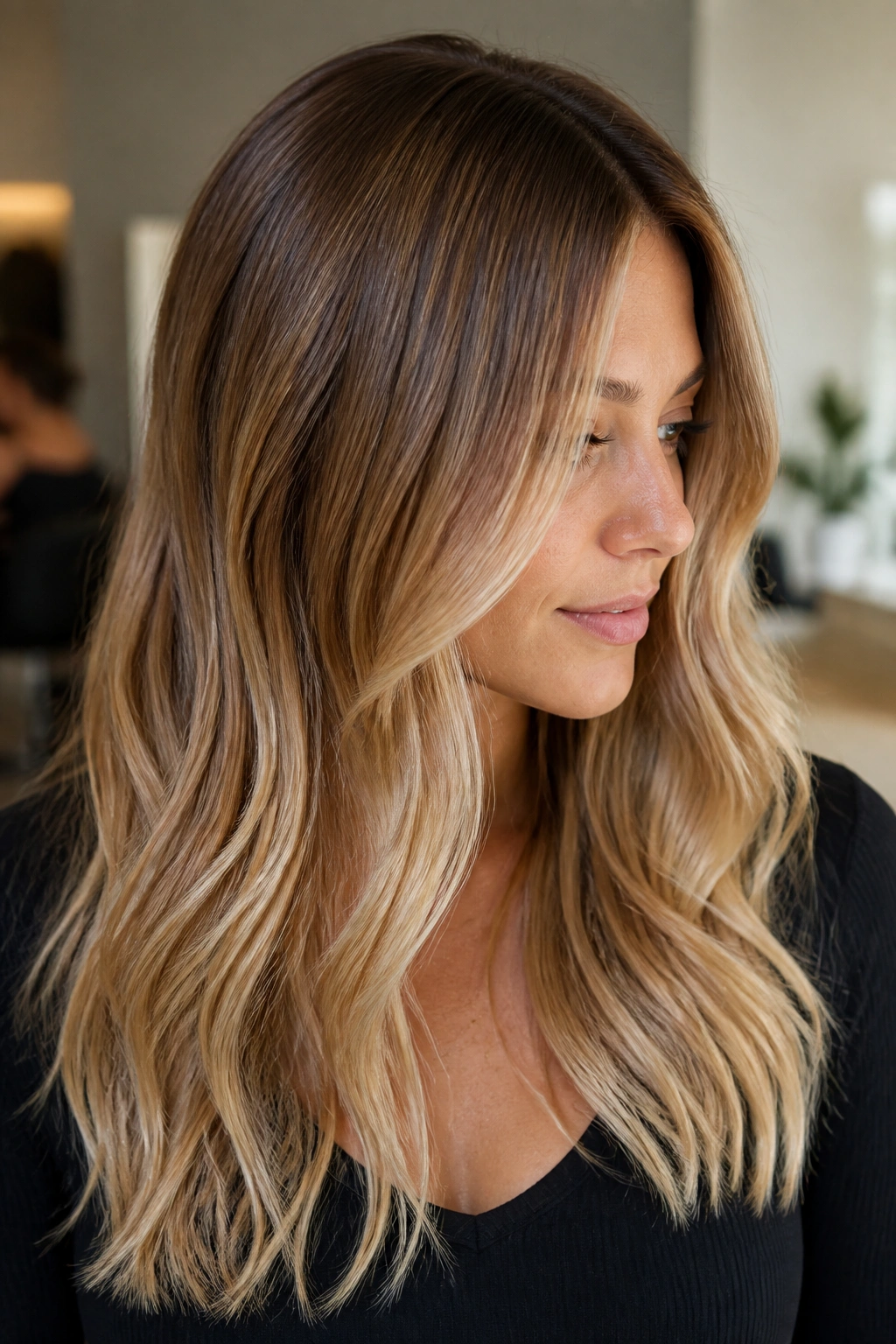
A toffee-to-blonde melt gives brown hair a slow, gradual lift from root to end, and I’m a fan of that because it keeps the style from looking chopped into separate zones. The roots stay toffee-rich, then the color moves into lighter beige or soft gold through the lower half.
This is where balayage really earns its place. The hand-painted transition means the eye travels downward without hitting a hard line. On medium-long hair, that melt can make the ends feel much lighter without forcing you into full bright blonde everywhere.
If your hair is thick, this style has a nice way of breaking up heaviness. If your hair is fine, it can make the ends look fuller, which sounds strange until you see it. Blonde around the bottom edge gives the cut some visual weight.
The one thing I would not skip is a slightly deeper root zone. Too much lightness right at the scalp can make the melt disappear. And once that happens, the whole style loses its point.
11. Peekaboo Blonde Panels Underneath
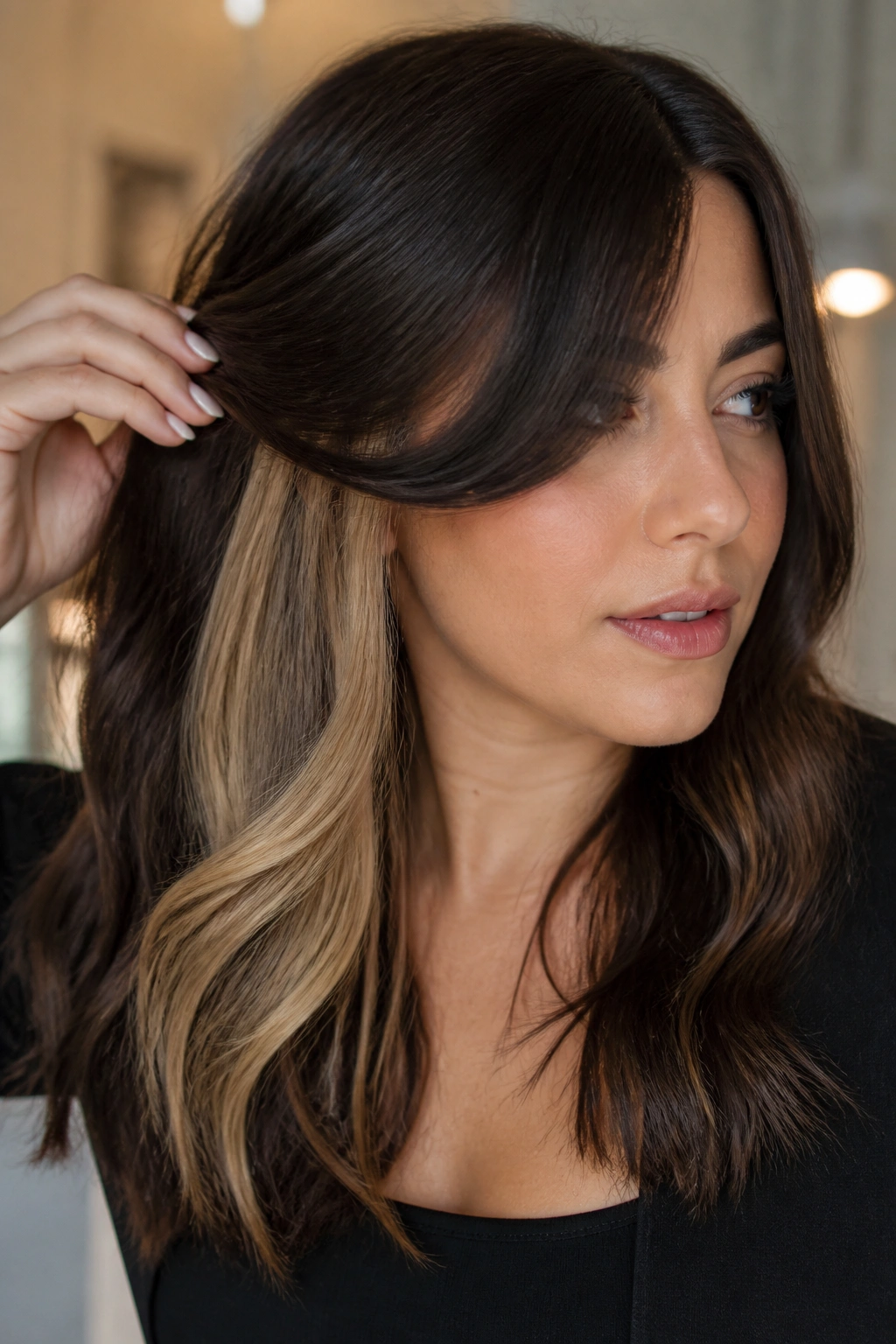
Peekaboo blonde is for people who want a secret. Not a tiny one. A hair secret. The outer layer stays brown, while hidden panels underneath carry the blonde. When the hair moves, the lighter pieces show themselves in flashes.
It’s a smart move if you want something that feels fun but won’t dominate your look from every angle. The blonde can peek through braids, waves, half-up styles, and ponytails. That makes it one of the more playful options on this list.
The strongest version uses medium-width panels placed underneath the top layer so the blonde appears in motion rather than as a stripe from the front. If the hair is very dark brown, a honey or beige blonde tends to read better than pale ice. The contrast is already there; you do not need the tone to shout.
This style also gives you some freedom with maintenance. Since the root area is hidden, you can often wear it longer before it feels grown out. Hidden color. Public payoff.
12. Platinum-Edged Highlights on Dark Brown Hair
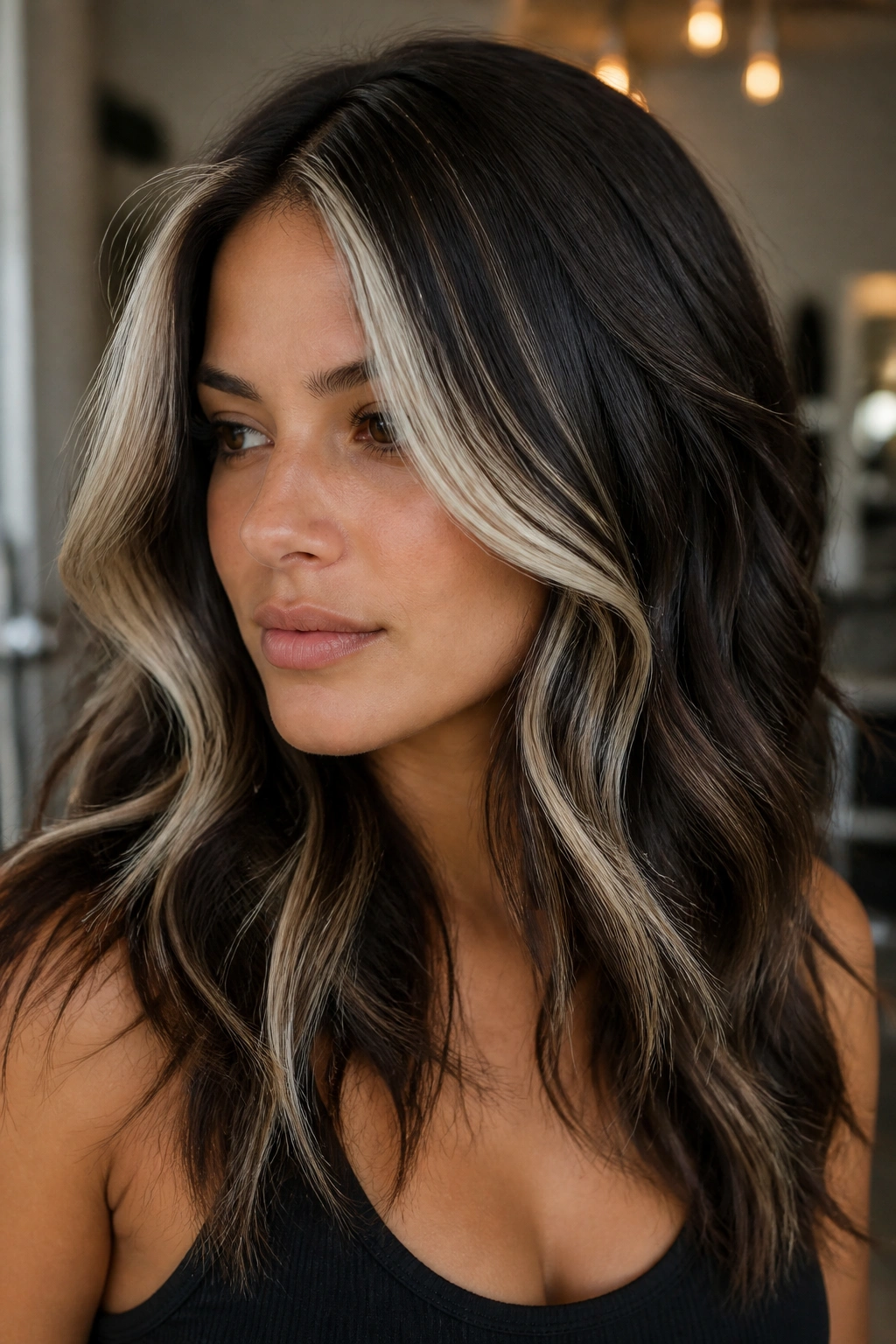
Platinum on dark brown hair is a bold move, and I respect that. It creates the sharpest contrast on this list, which means the placement has to be clean and the upkeep has to be realistic. No shortcuts. None.
The best version is not a full head of white-blonde. That can be harsh and expensive to keep up. What works better is a series of platinum-edged highlights around the face, crown, and top layer, with enough brown left underneath to keep the hair grounded. That contrast makes the blonde look intentional instead of accidental.
What to expect
Dark brown hair usually has to be lifted carefully to avoid a brassy yellow stage hanging around too long. That means patience, toning, and sometimes more than one visit if the hair is fragile. If the hair is already dry, I would not rush this look.
- Best for healthy hair that can take a stronger lightening session
- Needs regular toner refreshes to keep the platinum clean
- Looks strongest on straight or softly waved cuts
- Pairs well with blunt edges or sleek styling
It’s dramatic. That’s the truth. If you want subtle, move on.
13. Sandy Beige Balayage on Long Layers
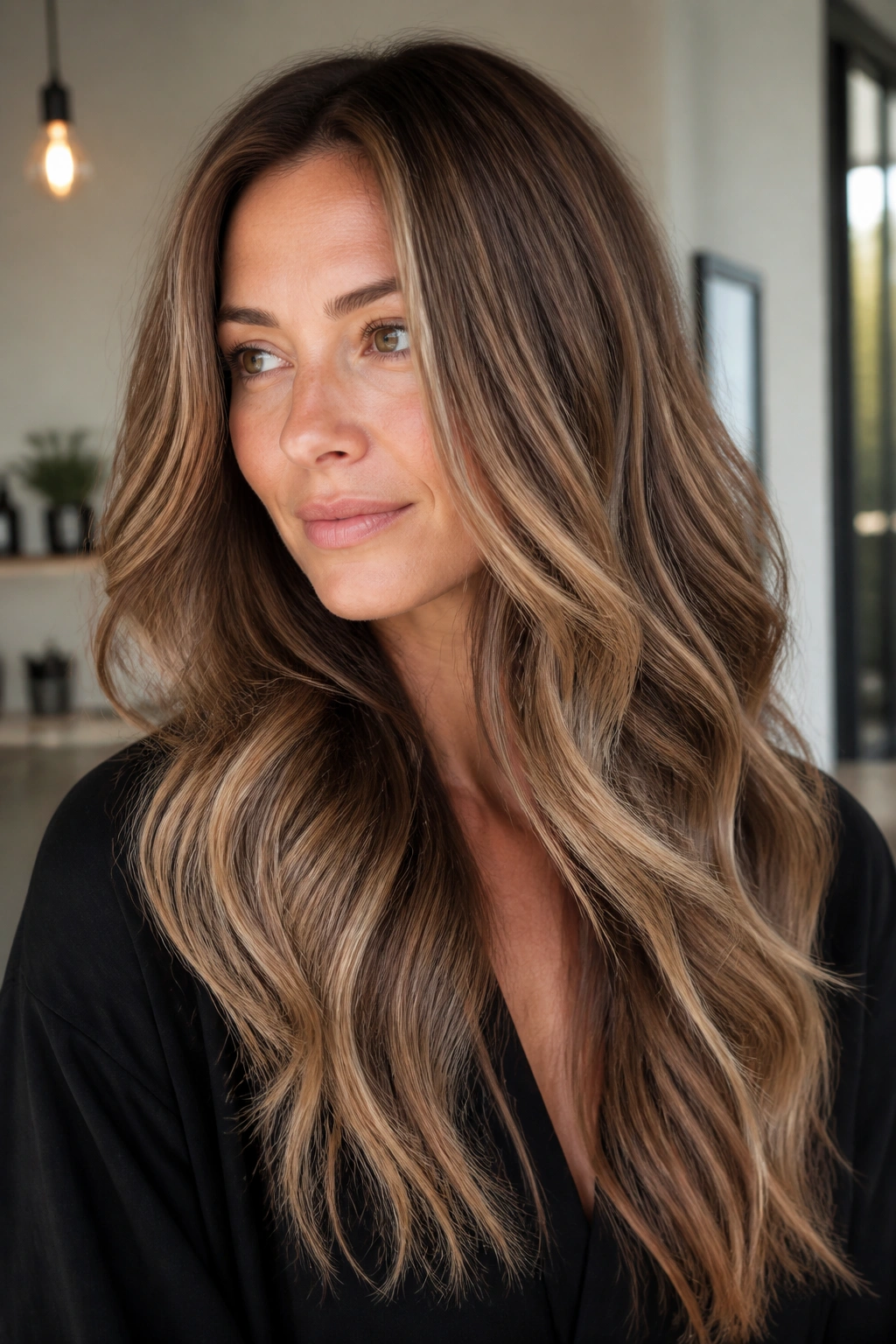
Long layers are made for balayage because the movement gives the color room to breathe. Sandy beige highlights threaded through those layers can make brown hair look lighter without flattening the shape of the cut.
The beige tone matters here. Too warm, and the layers start to look orange at the ends. Too cool, and the color can disappear into a dusty haze. Sandy beige sits in the middle, which is why it works so well on hair that already has plenty of movement.
How to ask for the placement
Tell your stylist you want long, ribbon-like pieces that start lower on the head and follow the layers. You’re not asking for a bright stripe near the scalp. You’re asking for a gradual lift that shows up when the hair swings.
This works especially well if your hair is thick. The lighter ribbons break up the density and make the cut feel airier. On finer hair, it can still work, but the slices need to stay delicate so the blonde doesn’t overwhelm the base.
The style grows out in a forgiving way. That’s the part most people like after the first few weeks.
14. Bronze-to-Blonde Contrast Pieces
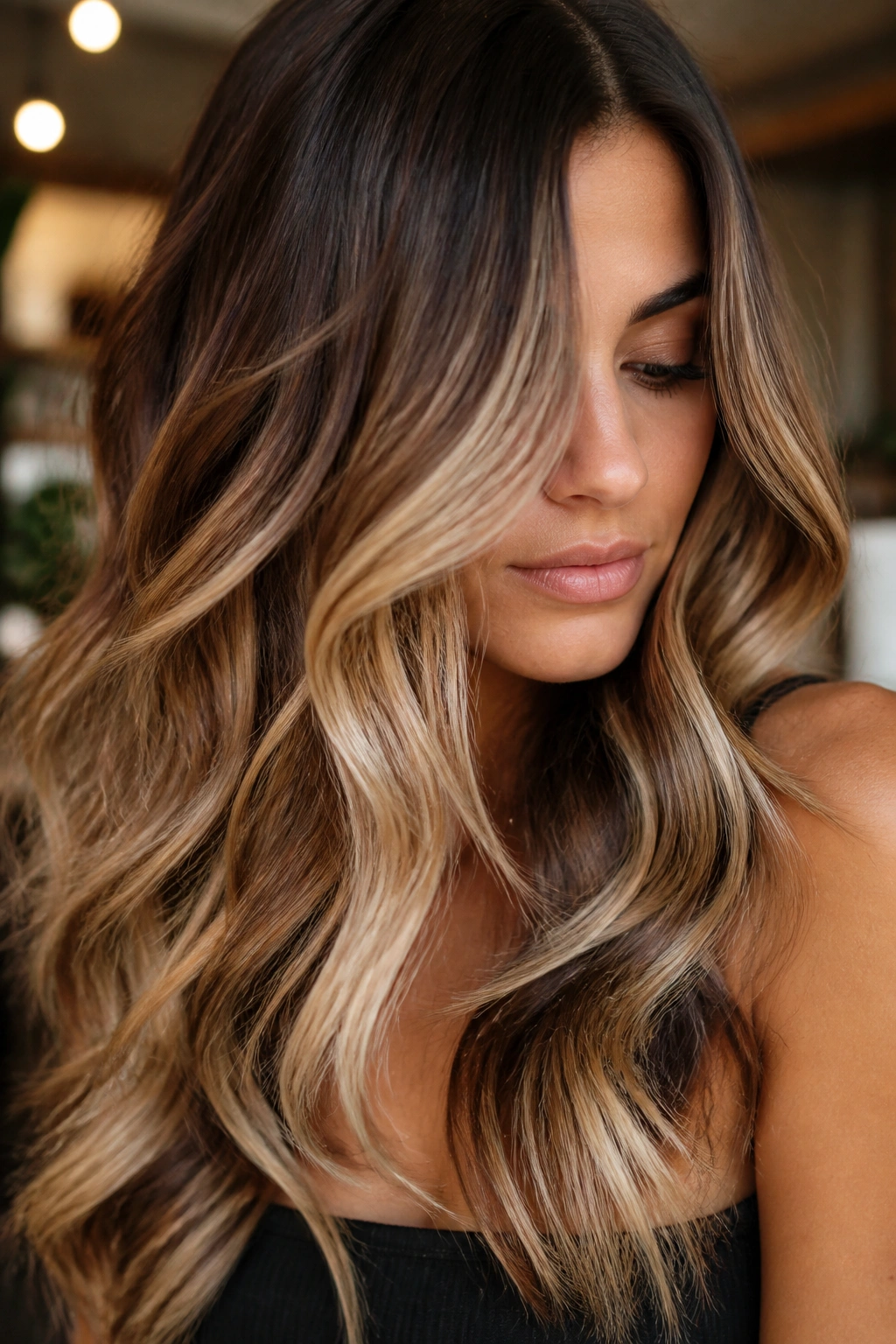
A lot of people think blonde highlights and brown hair need to stay soft all the time. They do not. Bronze-to-blonde contrast is proof. The warmth of bronze keeps the brown rich, while the blonde pieces still give you that lighter, lifted feel.
This style is good when you want depth as much as brightness. Instead of chasing a one-note blonde, you let the brown, bronze, and blonde sit together. That makes the hair look fuller, especially under indoor light where flat blonding can fall a little limp.
The blonde pieces can live through the mid-lengths and ends, while the bronze tones support them from underneath. On wavy or curly hair, the layers of color separate just enough to show off the shape. On straight hair, the effect is a little sleeker and more polished.
A single-tone blonde can look thin on brown hair. This one rarely does. That’s the appeal.
15. Buttercream Highlights on Shoulder-Length Cuts
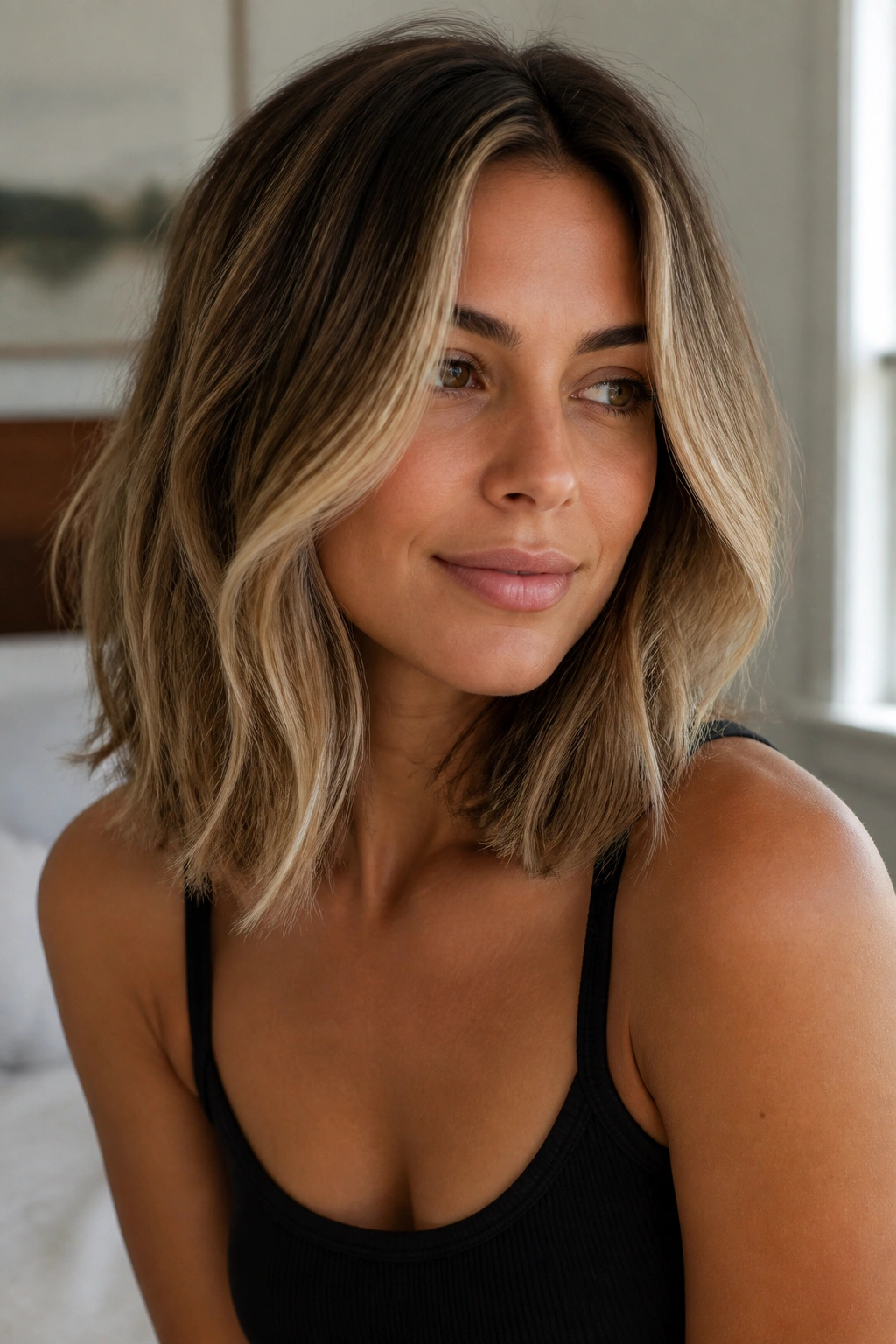
Shoulder-length hair loves buttercream blonde because the cut already has enough structure to hold a soft, creamy tone. You don’t need a giant color story here. You need gentle brightness that makes the shape look fresh.
Buttercream sits between gold and beige, which keeps brown hair from looking too warm or too washed out. It has enough softness to feel gentle around the face, but enough lightness to show up in photos and mirror light. That balance is hard to fake.
Why this cut length works so well
A shoulder-length style has enough surface area for the highlights to move, but not so much length that the color disappears into the bottom. That means the placement can stay concentrated through the top third and mid-lengths without feeling sparse.
I like a mix of thin foils near the part and wider ribbons through the outer layers. The combination keeps the style from reading too uniform. A blunt shoulder cut especially benefits from this because the creamier blonde breaks up the heaviness at the ends.
If your hair is damaged, this is one of the kinder choices. It does not require the brightest lift to look good.
16. Sunlit Micro-Foils for Short Hair
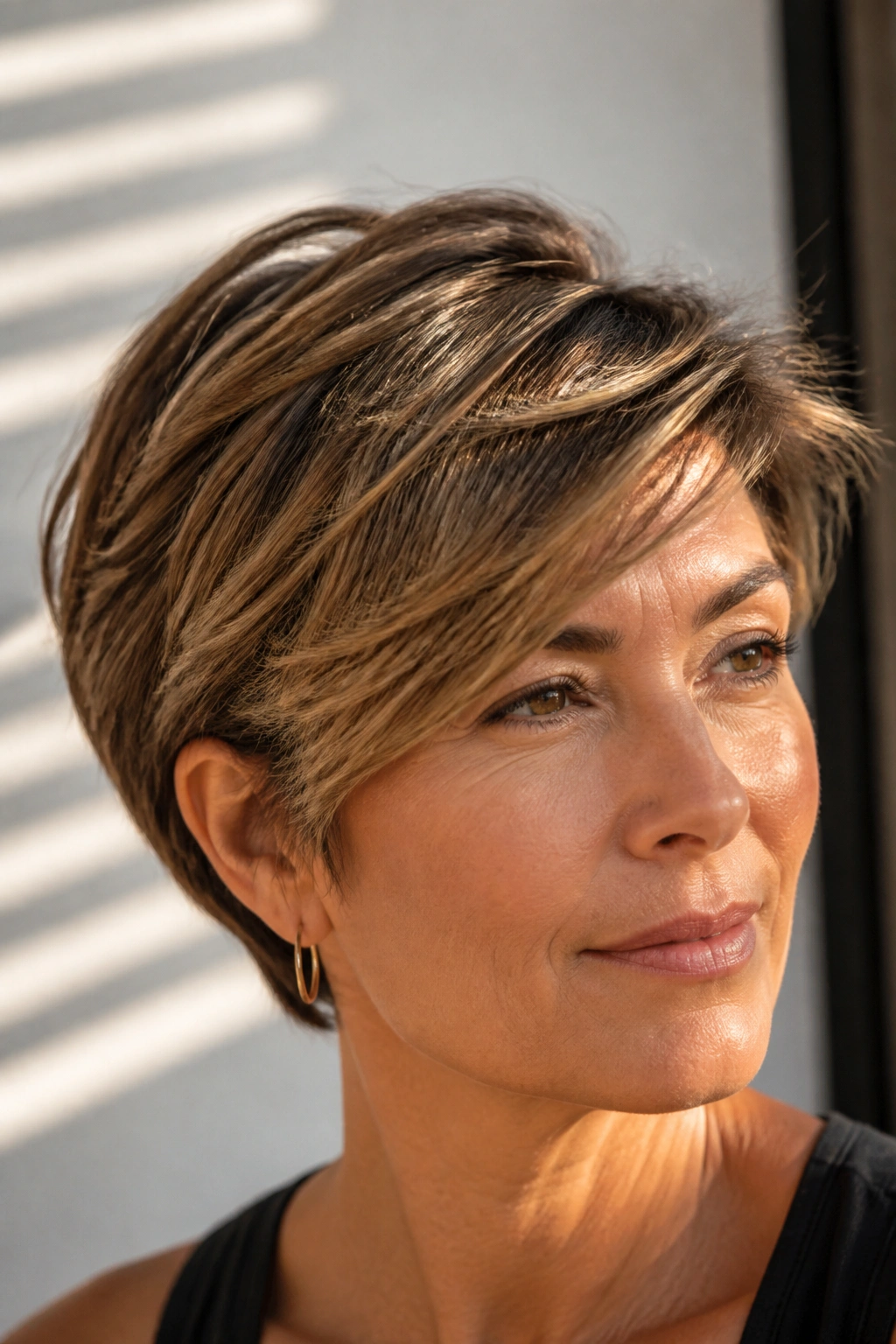
Short brown hair can take blonde highlights better than people think. In fact, the shorter the cut, the more important fine placement becomes. Tiny micro-foils through a bob, pixie, or cropped shag can make the whole haircut look more textured without making it loud.
The issue with short hair is spacing. Big highlights can land too close together and make the cut look striped. Micro-foils fix that by keeping the blonde threadlike and close to the surface. You get brightness, but the shape of the haircut still leads.
What to ask for
- Very thin foils around the temple and crown
- A few lighter pieces near the fringe or part
- A blonde that stays soft and not over-processed
- More spacing in the back so the cut doesn’t look crowded
This one is especially good if you wear your hair tucked behind the ear a lot. The lighter pieces show just enough to make the cut feel styled, even when you haven’t done much to it.
Short hair does not need more color. It needs smarter color.
17. Cream Soda Highlights with a Root Shadow
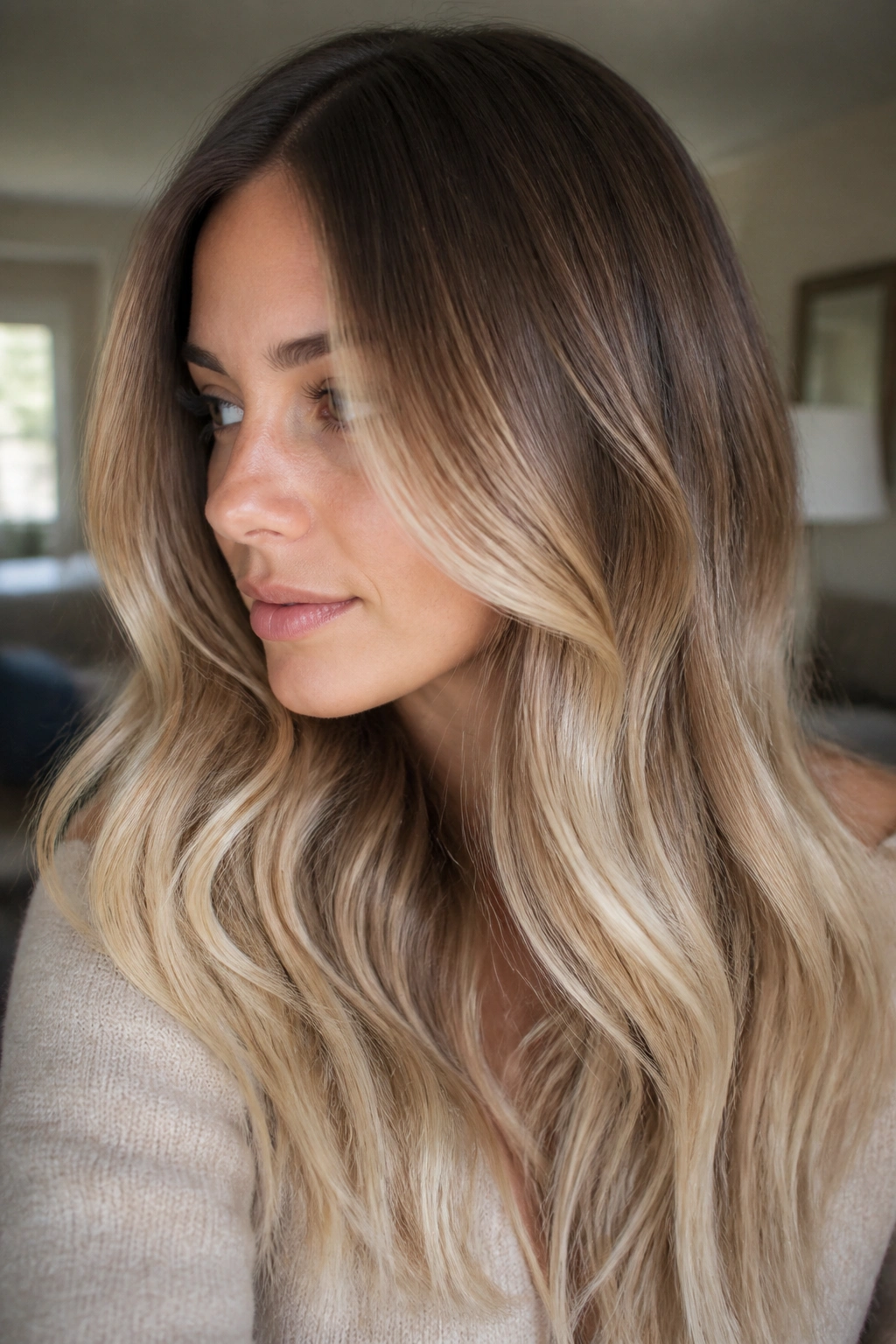
Cream soda blonde is one of my favorite middle-ground shades on brown hair because it feels creamy without going chalky. Add a soft root shadow, and the whole thing gets calmer, richer, and easier to live with.
The root shadow matters. Without it, cream soda blonde can feel a little disconnected from a darker base. With it, the blonde melts out of the brown in a way that looks deliberate. That’s the big difference between a nice highlight job and one that grows out like a mess.
This style works on almost any brown base, though it looks especially good on medium brown and light brown hair. The blonde should sit mostly through the ends and outer layers, with the root shadow fading gradually over about half an inch to an inch depending on your haircut.
A tiny bit of depth at the scalp also helps the cream tone stay creamy. Too much lift at the root can make the finish look flat. That’s the part people miss.
18. Soft Pearl Blonde Pieces for the Cleanest Finish
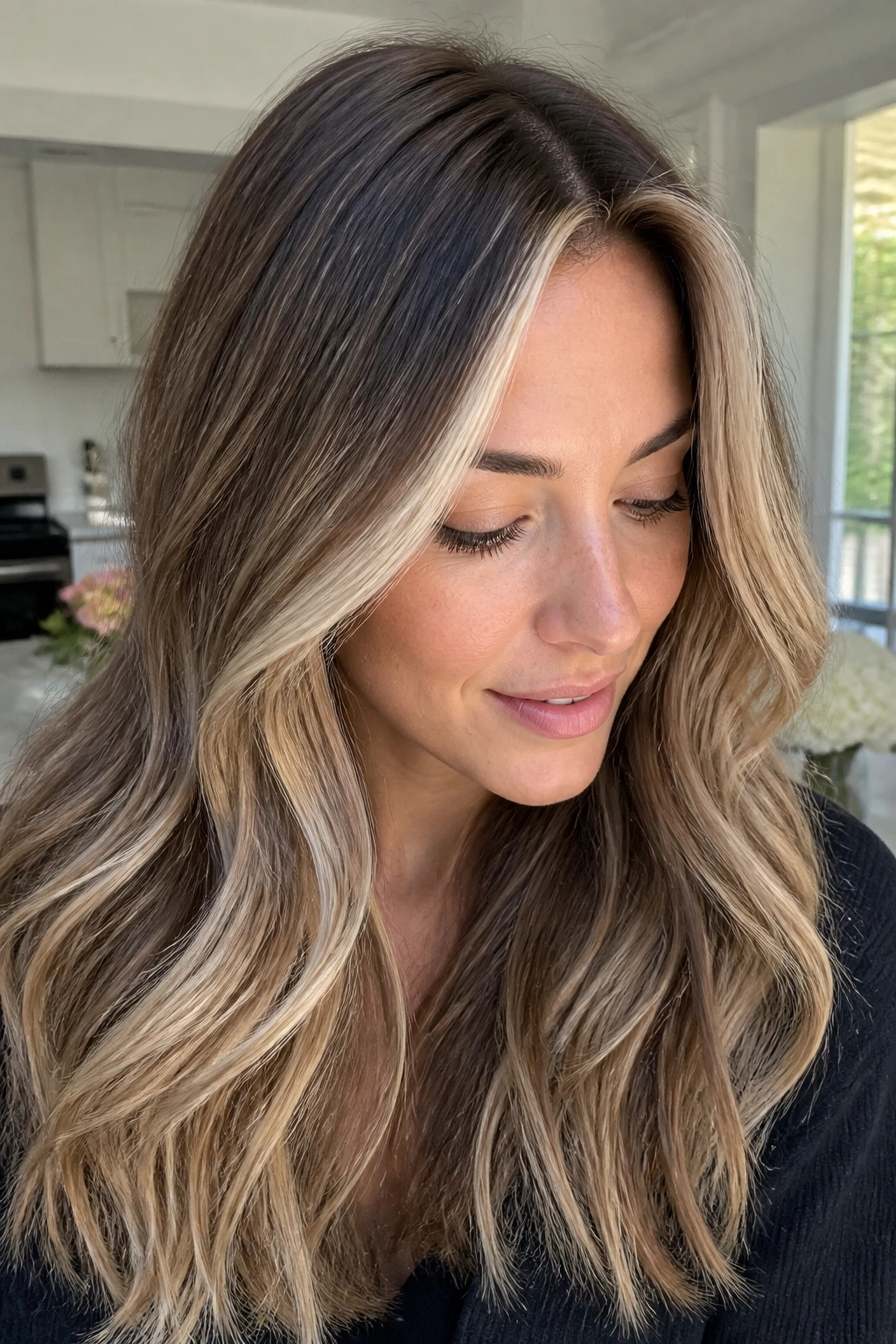
Pearl blonde is a smart choice when you want blonde highlights for brown hair that feel light but not icy, bright but not yellow, polished but not stiff. It sits somewhere between beige and pale neutral blonde, which gives brown hair a cleaner finish than warmer tones sometimes do.
This is the style I’d point to if you want the lightest-looking result without crossing into high-contrast platinum. The pieces are thin enough to move, but bright enough to show. On brown hair with a rich undertone, pearl blonde can make the whole head look more refined, especially if the highlights are kept around the top, front, and the outer edge of the layers.
A soft pearl finish also works when you want the color to look tidy for a long stretch. The root can stay a shade deeper, the toner can stay neutral, and the hair still reads lifted. That’s a useful thing to have when you do not want to babysit your highlights every couple of weeks.
If you’re torn between warm and cool, pearl is the compromise that doesn’t feel like a compromise. It sits right in the middle and leaves room for the cut to matter, which is how good brown-to-blonde color should behave anyway.
