



Blonde pink highlights for brown hair can look soft, edgy, expensive, playful, or a little bit dreamy, and the difference usually comes down to placement more than the pink itself. Put the same rose tone on a dark chestnut base and a warm caramel base, and you’ll get two completely different moods. One reads smoky and rich. The other feels brighter and more open.
That’s why pink in brown hair works best when the blonde is chosen first, not last. Pink sits cleanest over pale yellow blonde, leans warmer over gold, and turns muddier if the lift stops too early and the hair stays orange. Tiny details like that matter. A lot.
The other thing people miss is contrast. Brown hair gives you a built-in anchor, so you do not need to flood the whole head with color to make the pink visible. A few hand-painted ribbons near the face, a hidden panel under the top layer, or a soft melt through the ends can do more than a full head of bright pieces ever could. That restraint is what keeps the look wearable instead of costume-like.
1. Champagne Blonde with Pink Money Pieces
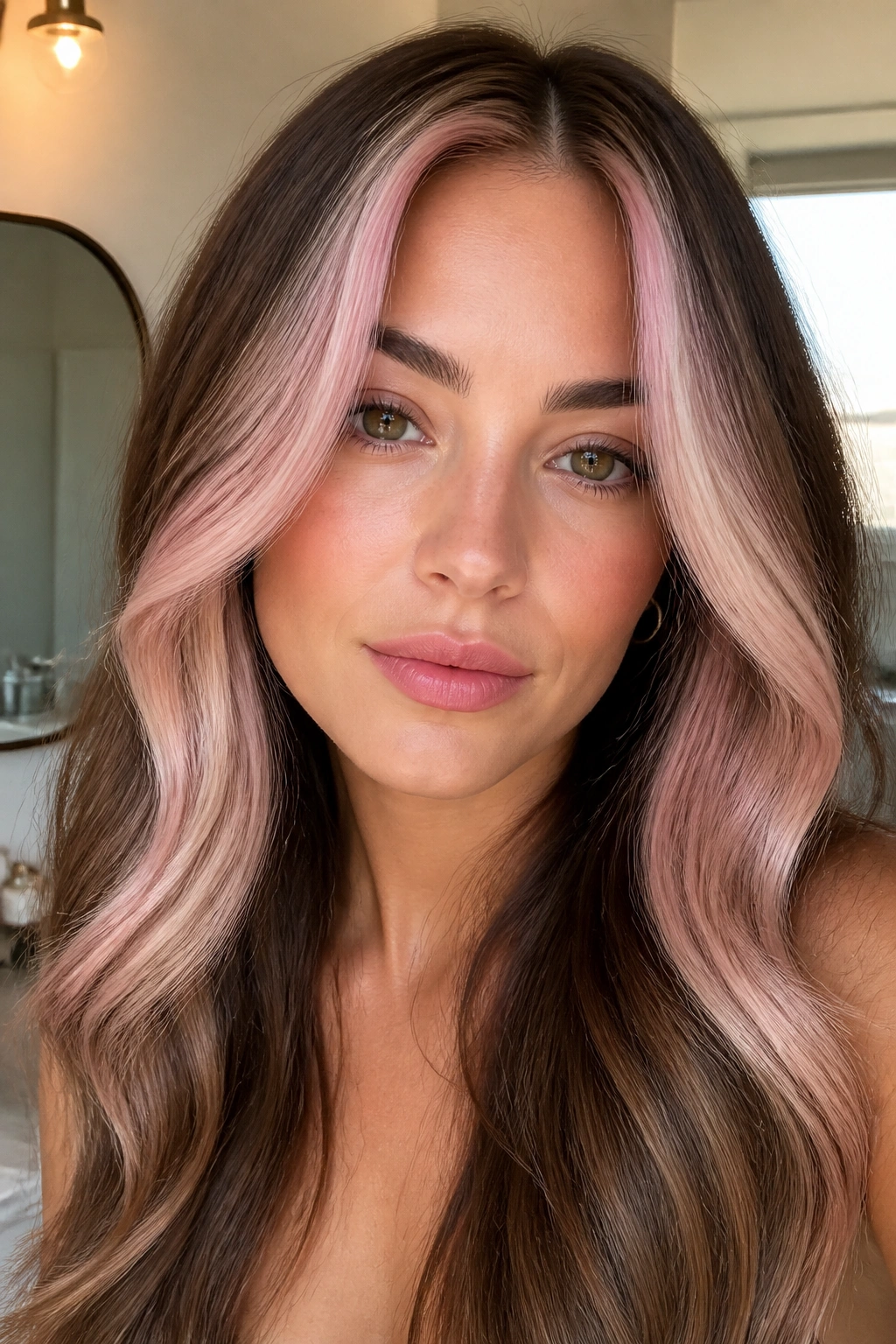
A champagne blonde money piece is one of the easiest ways to test pink on brown hair without committing the whole head to it. The front sections get lifted to a pale, creamy blonde, then toned with a whisper of blush so the face frame looks bright but not sugary. Around a medium brown or light brown base, that little strip can make the whole haircut feel lighter.
Why It Works at the Front
The money piece sits where the eye goes first. That means even a narrow section around the temples can carry a lot of visual weight, especially if the rest of the hair stays rich and glossy. On long hair, I like this look because it keeps the depth through the lengths and saves the drama for the front.
A 1/2-inch to 1-inch ribbon on each side is enough for most people. Any wider and you start losing the clean contrast that makes the style pop. Any finer and the pink may disappear once you curl the hair.
- Best on medium brown, chestnut, or soft mocha bases
- Ask for a pale champagne lift before the pink toner goes on
- Style with a center part for symmetry, or tuck one side for a softer finish
- Keep the root shadow just a touch deeper so the grow-out stays tidy
Best tip: keep the pink under the blonde, not overpowered by it. The nicest money pieces look bright first and pink second.
2. Rose Gold Balayage on Chestnut Brown
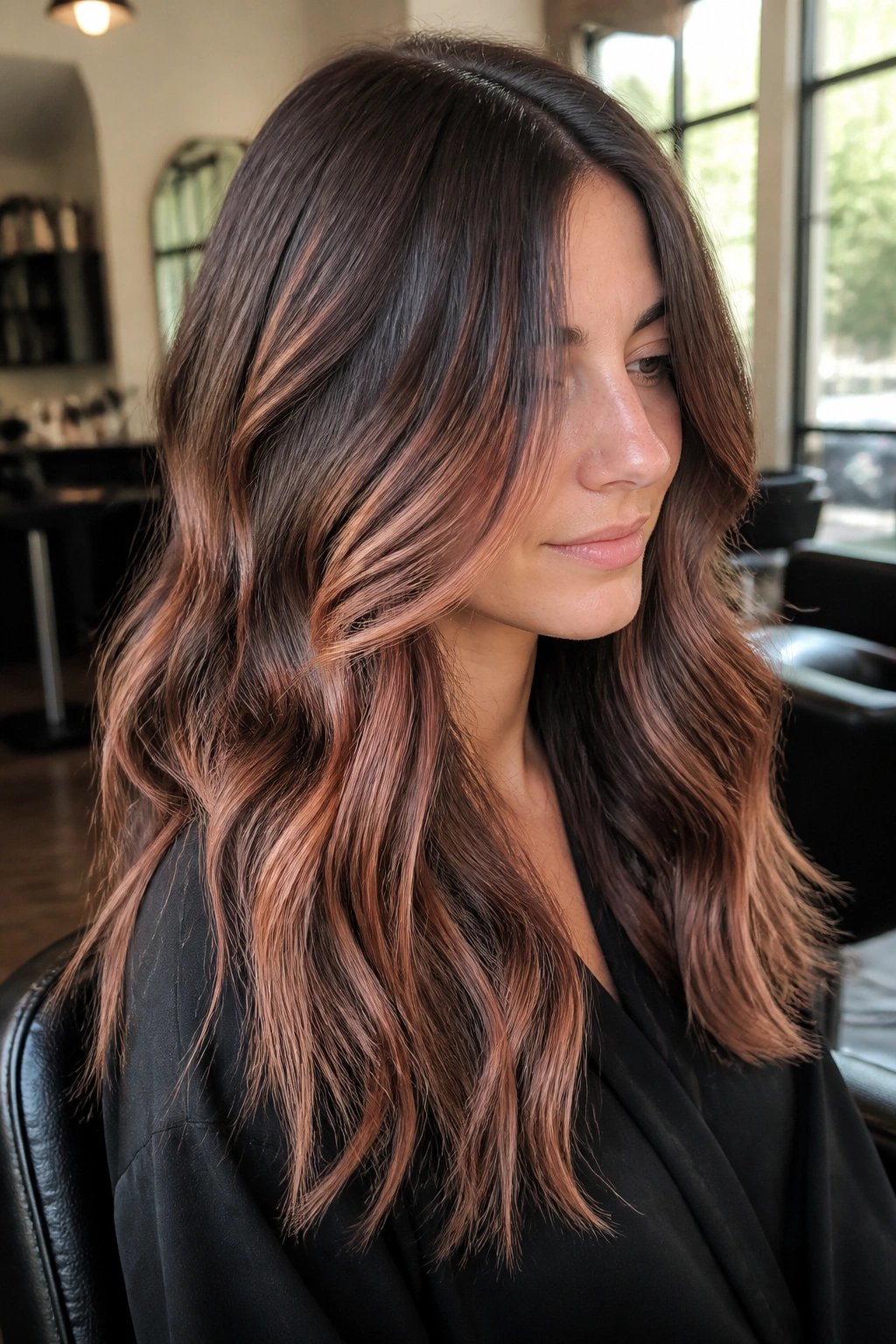
Rose gold balayage is the safe choice for anyone who wants pink hair to look polished instead of loud. The color sits somewhere between strawberry blonde and muted blush, which makes it a very easy match for chestnut brown hair. The brown base does half the styling for you.
Balayage also gives the color a softer edge. Instead of hard lines, the lighter pieces feather through the mid-lengths and ends, so the pink has room to move. Loose waves show the blend best, but straight hair has a nice satin look too. I prefer this on hair that already has some natural warmth because the pink and gold tones settle in without fighting the base.
Ask your colorist for hand-painted ribbons that start below the root area and get brighter toward the ends. That keeps the scalp area rich and helps the pink feel embedded, not pasted on. If your brown leans red, the rose-gold family usually feels more natural than icy pink. If your brown leans cool, ask for a neutral beige toner so the blonde does not turn brassy underneath.
3. Strawberry Blonde Babylights
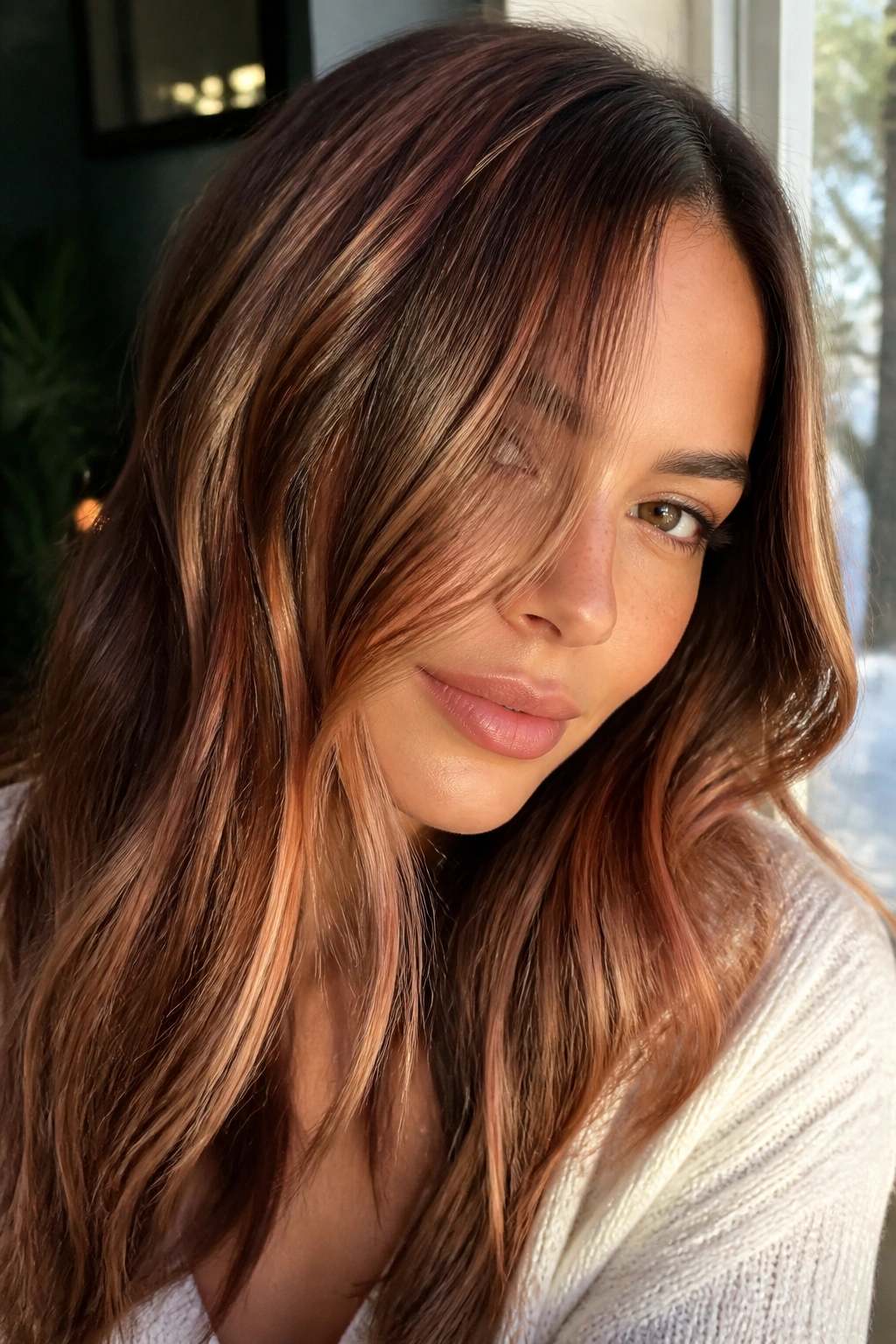
What if you want pink so soft that people notice the shine before they notice the color? Strawberry blonde babylights are that kind of look. They use ultra-fine sections, so the pink barely lands in one place long enough to shout.
The Tiny-Section Advantage
Babylights are narrow, usually closer to 1/16 inch to 1/8 inch, which matters here because the effect depends on softness. Brown hair with fine pink-blonde strands can look like natural sunlight picked up a little blush from the skin. It is subtle, but not boring.
The trick is to keep the pink in the pale blonde family, not the bubblegum family. If the lift is bright enough, the color reads as strawberry cream rather than cotton candy. That small shift makes the whole style easier to wear with everyday clothes, especially if you live in denim, black, or neutral basics.
How to Wear It
- Curl the hair with a 1-inch iron if you want the pink to show in movement
- Blow-dry smooth if you want the color to look softer and more expensive
- Keep the front pieces a shade lighter than the nape for a gentle glow
- Ask for a gloss every few weeks if the pink starts fading too warm
This is the kind of color that rewards restraint. Too much pink and the whole charm disappears.
4. Peach Blush Face Frame
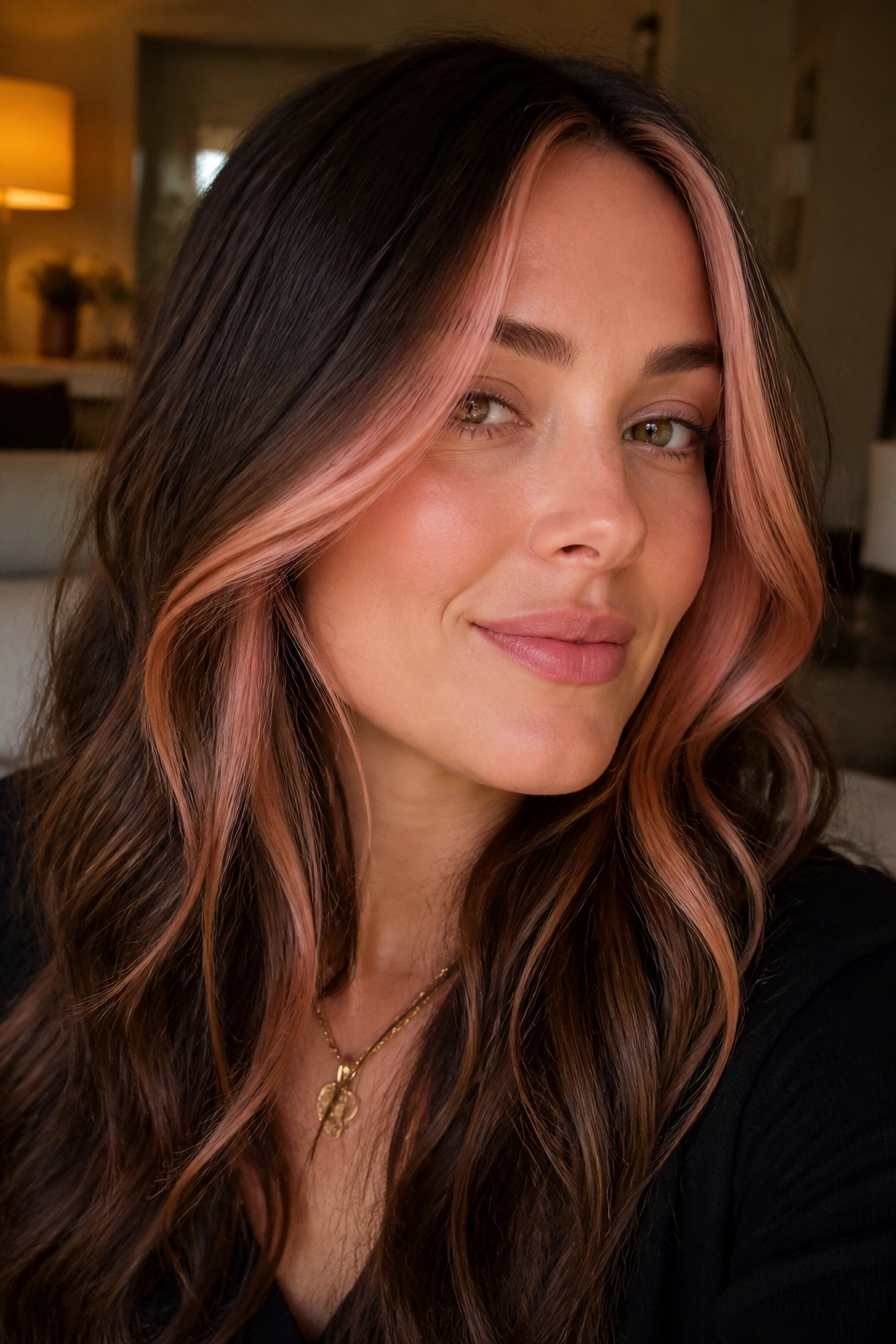
A peach blush face frame feels fresh in the most wearable way. It is warmer than cool pink, so it sits nicely against brown hair that already has caramel, cinnamon, or auburn notes. The blonde lift is still there, but the peach tone keeps the result sunny instead of icy.
Think of this as the choice for someone who puts hair up a lot. A ponytail, claw clip, or half-up twist shows the front pieces first, and that is where the color does its best work. The rest of the hair can stay darker, which helps the blush frame look intentional rather than random.
The cut matters too. Layers around the cheekbones or a long curtain fringe give the color a place to land. Without that movement, the face frame can feel a little flat, especially on thick brown hair. With movement, it wakes up fast.
- Works well on warm brown, honey brown, or dark caramel bases
- Ask for peach-rose toner over pale blonde, not over orange lift
- Best with loose waves, a round-brush blowout, or soft bends at the ends
- Skip it if you want a cool, muted pink; this one leans warm
The payoff is simple: it makes the face look brighter without stealing the show from the rest of the hair.
5. Dusty Pink Underlayer
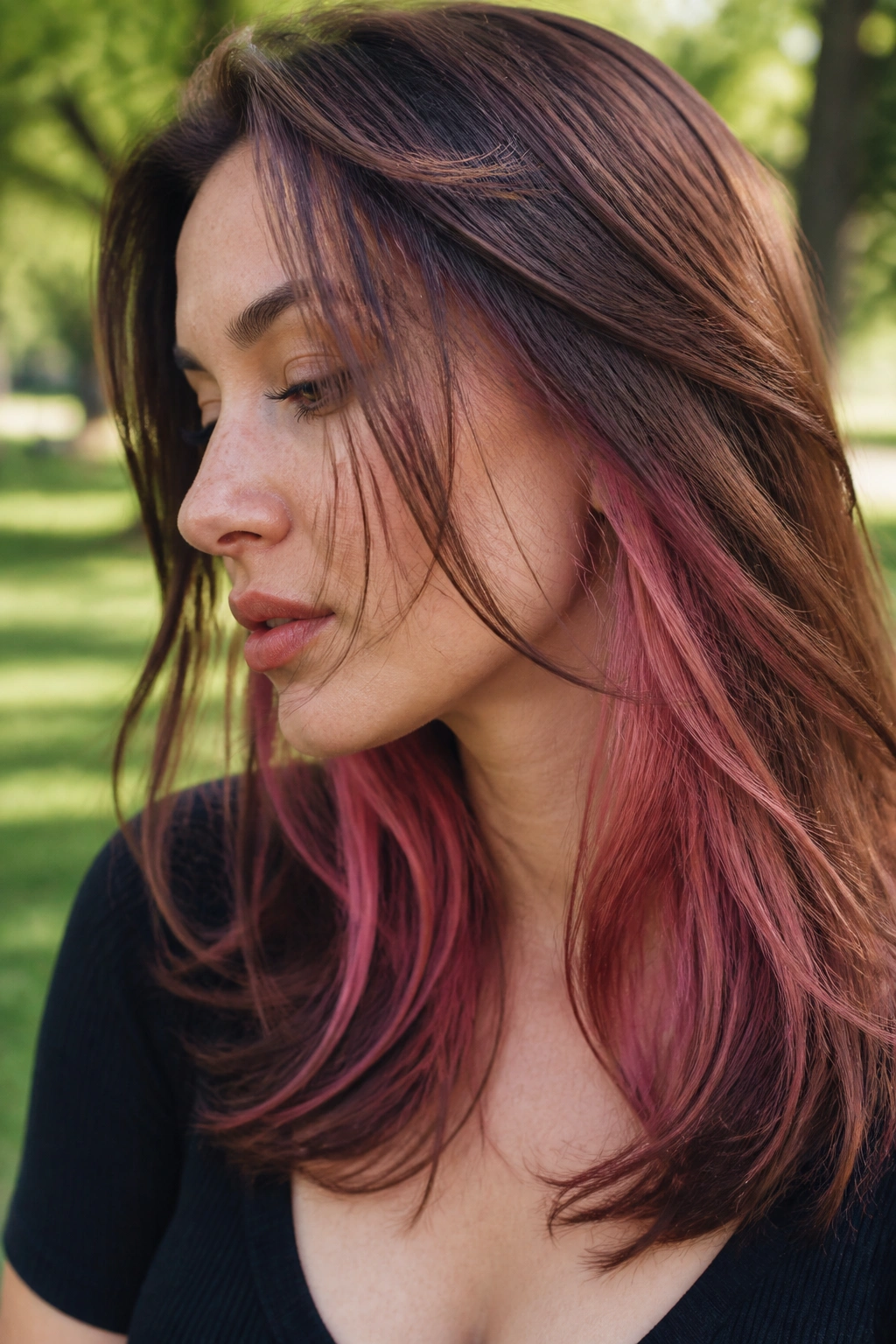
Dusty pink underlayers are for people who like a little surprise. From the top, the hair still looks brown and calm. Then the head tilts, or the wind moves the layers, and the pink slips out underneath like a private joke.
That hidden placement changes the whole mood. Because the color sits below the top layer, it is protected from some sun exposure and a bit of daily wear, which helps the tone stay muted longer. The pink also works better when it is dusty rather than bright. A smoky rose or muted mauve reads richer under brown hair than a neon pink ever could.
I like this best on medium to long layered cuts. The movement creates little windows where the color peeks through, and that is the whole point. On one-length hair, the effect can be too tucked away unless you wear it in braids or half-up styles.
There is a practical bonus here, too. Underlayers make pink feel safer if you work in a setting that prefers a natural look. The color can stay hidden when you need it to and show up when you want it to. That flexibility is worth a lot.
6. Soft Coral Ribbon Highlights
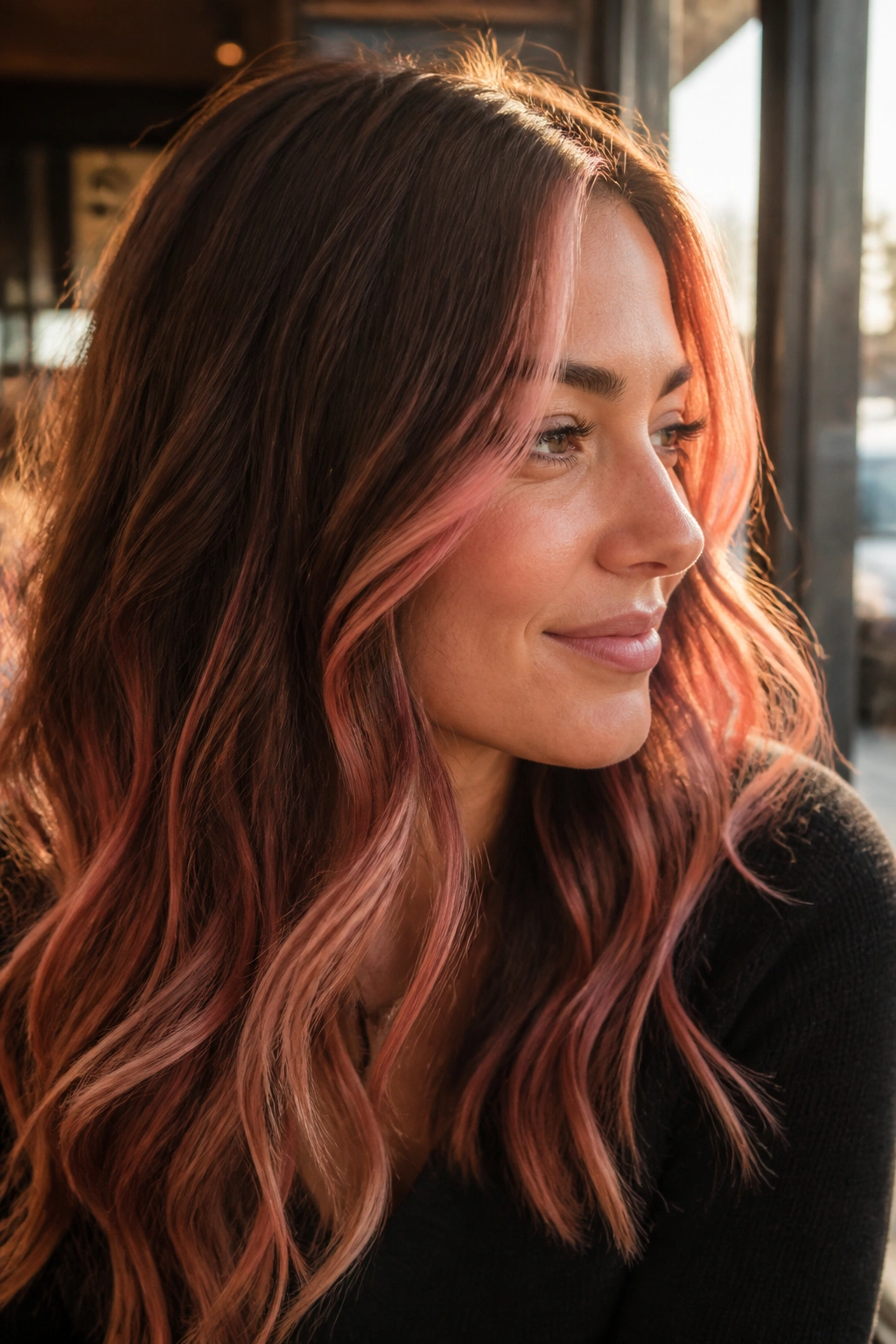
Soft coral is the friendly cousin of pink. It has a warm edge, so it can flatter brown hair that leans golden, coppery, or chestnut without looking too sweet. If classic pink sometimes feels too cool on you, coral is the easier road.
Unlike pale blush, coral needs a touch more warmth in the blonde base. The lift should land in a creamy gold zone, not a stark white blonde, or the color can turn harsh against the brown. That warm blonde backdrop keeps the ribbons smooth and glossy.
This style works especially well when the highlights are a little wider than babylights but not as bold as chunky streaks. Think ribbon placement through the mid-lengths and ends, then a couple of brighter pieces near the face. The contrast looks lived-in, not striped.
It also fades in a forgiving way. Coral tends to soften into peach, which is still flattering. That is a nicer fade than muddy pink, and it means you can stretch appointments a bit more if you are not chasing a perfect tone every month.
7. Smoky Rose Melt
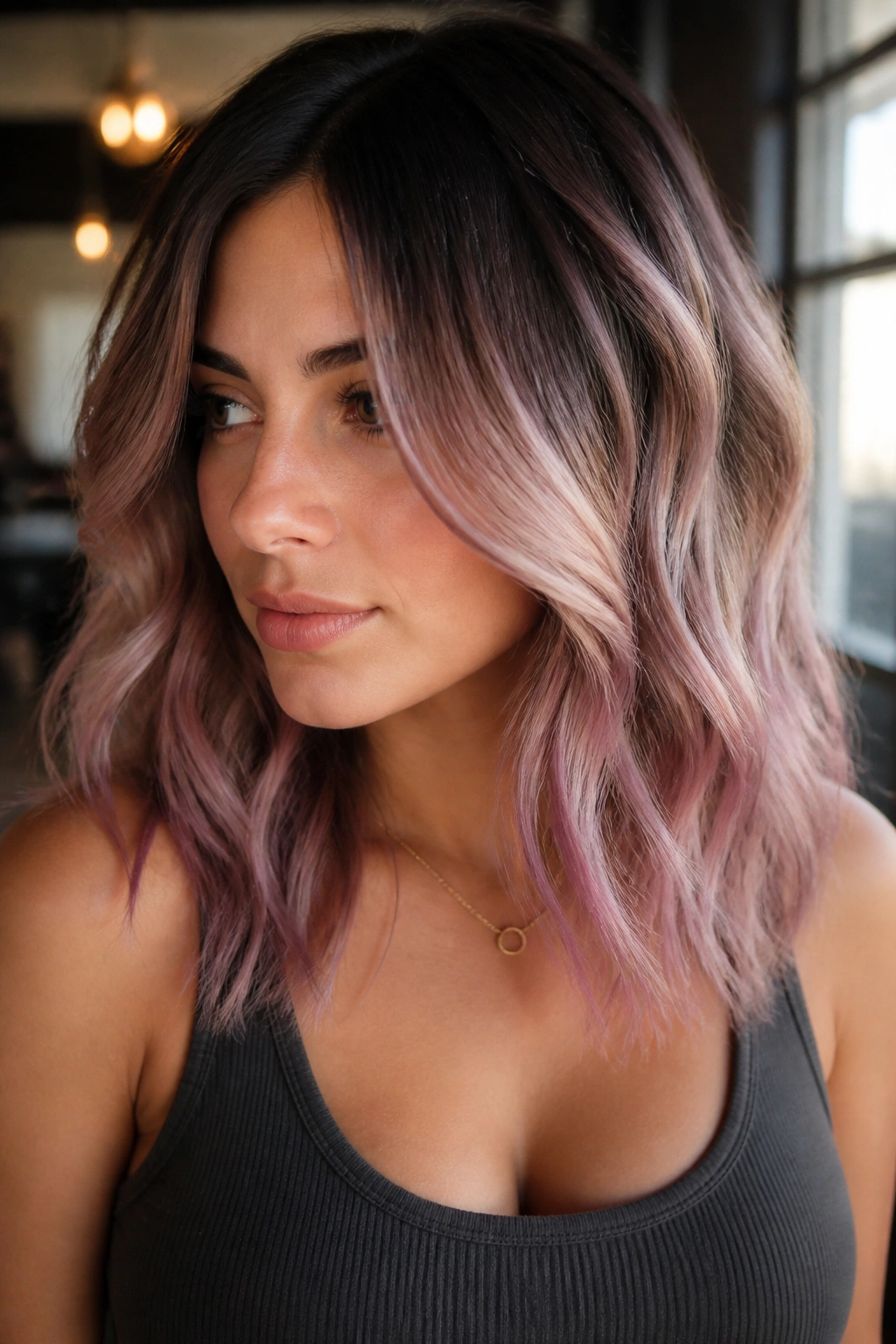
Smoky rose is the version I reach for when someone wants pink that feels calm and slightly moody. The brown root stays visible, the mid-lengths move into beige blonde, and the ends fade into a rose tone with a little gray in it. The whole thing feels polished without being stiff.
What Makes the Melt Work
The root shadow matters here. A deeper root keeps the grow-out soft and gives the pink somewhere to live without turning flat. On brown hair, that shadow also helps the blonde pieces look more expensive and less stripy, which is a small mercy when the color starts to fade.
This is a strong pick for shoulder-length hair and longer cuts because the gradient has room to breathe. On very short hair, the melt can look compressed, and the pink section may not show enough of its tone shift. If your hair is wavy, even better. Waves let the smoky rose move between the curls and show a few different shades at once.
The best version of this look is never too bright. If the pink is screaming, you lose the whole point. You want soft edges, a little haze, and a color that looks like it belongs there.
8. Pastel Pink Peekaboo Panels
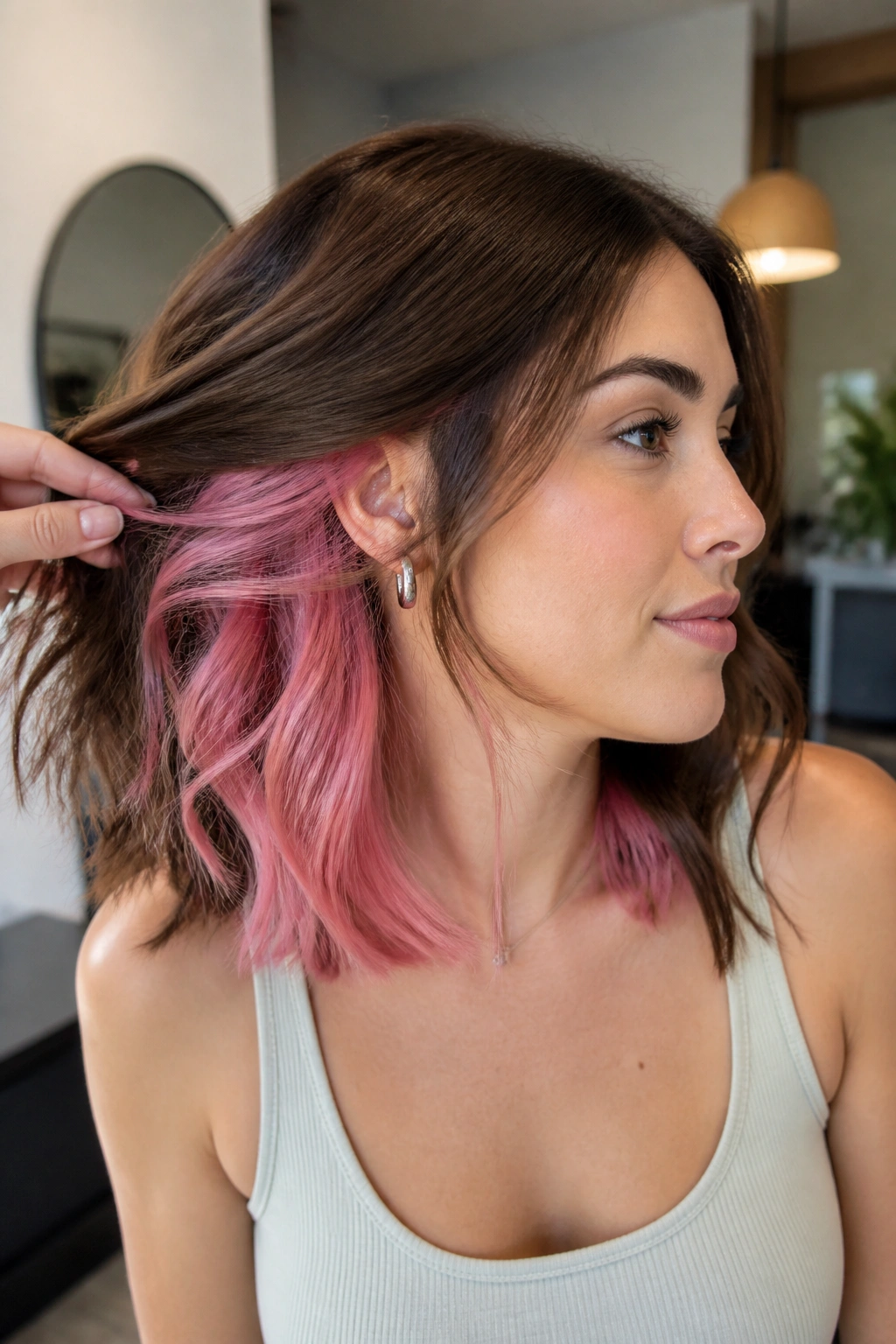
This is the one for people who like pink but also need to hide it under a blazer, a bun, or a braid at a moment’s notice. Pastel pink peekaboo panels sit under the top layer, usually around the nape or the lower sides, so the color only shows when the hair moves.
How to Place It
A single panel on each side can be enough on medium hair. On thicker hair, the color often works better if the panels are a bit wider so they do not vanish under the top layer. The blonde needs to be pale enough to take the pastel cleanly, or the pink ends up looking dusty in a bad way.
How to Style It
- Wear it in a loose braid to show the pink woven through the length
- Try a high ponytail if you want the hidden panels to flash near the ends
- Leave it down and curl just the bottom half for occasional glimpses
- Keep the top layers brown and glossy so the contrast stays sharp
The nicest thing about this look is that it gives you two hair moods in one cut. Quiet from the front. A little mischievous from behind.
9. Beige Blonde with Pink Veil
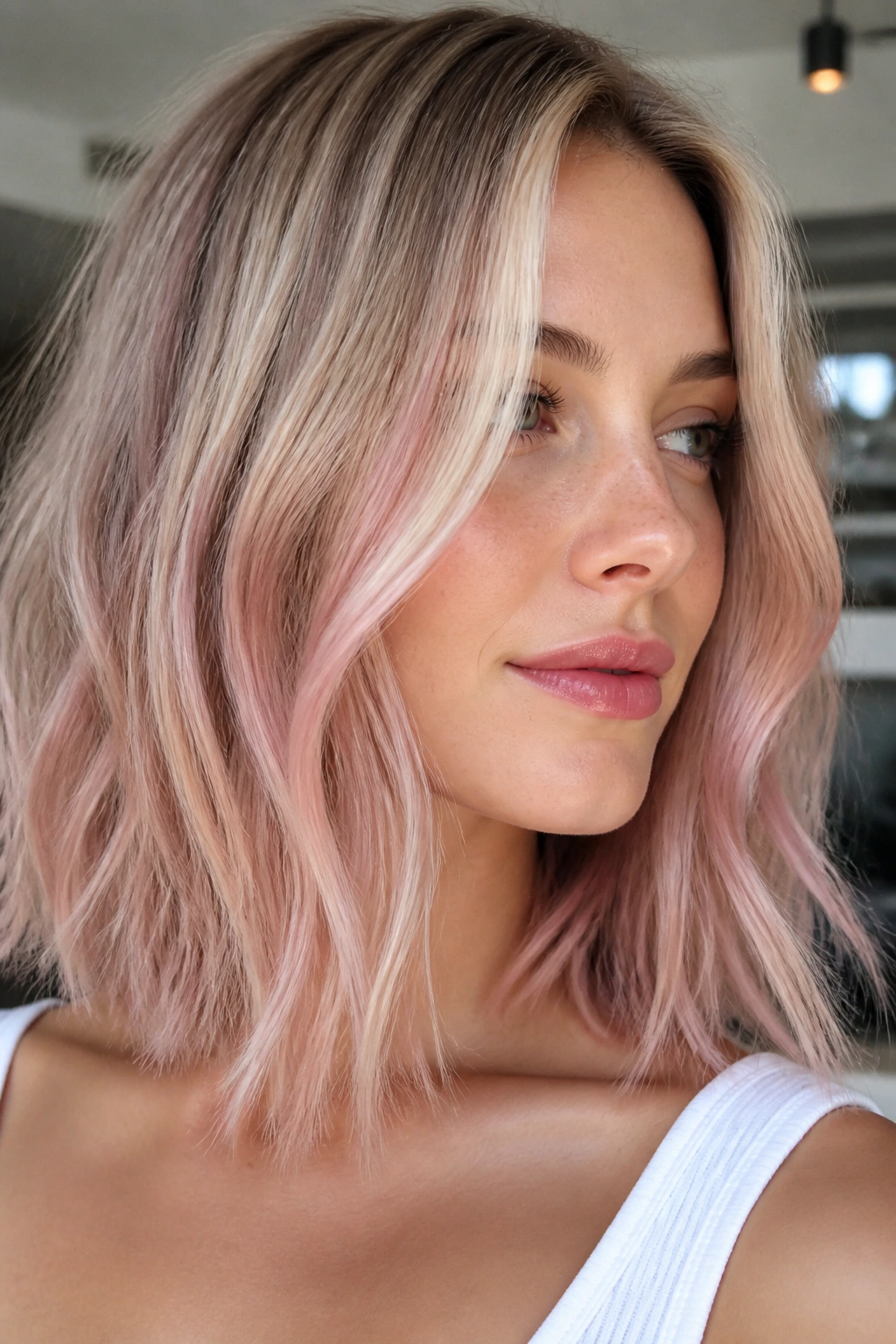
Sometimes the smartest pink is the one you barely notice at first. Beige blonde with a pink veil falls into that camp. The blonde is soft and muted, then the pink sits over it like a thin wash of color, not a hard stripe.
This works especially well on brown hair that already has a neutral or cool undertone. Beige keeps the highlight from turning yellow, and the pink adds warmth back in without going fully rose gold. That balance is what makes the style feel modern. It is light, but not chalky. Pink, but not sweet.
I like this on bobs, lobs, and thick straight hair because the smoother surface lets the veil read as one clean tone. With too much texture, the pink can break apart and look patchy. On sleek hair, though, it looks deliberate and very tidy.
Ask for soft, diffused pieces through the outer layers rather than a heavy block of color. The effect should feel like a filtered glow. If you can point to one strand and call it the pink strand, the veil is probably too obvious.
10. Apricot Blonde Slices
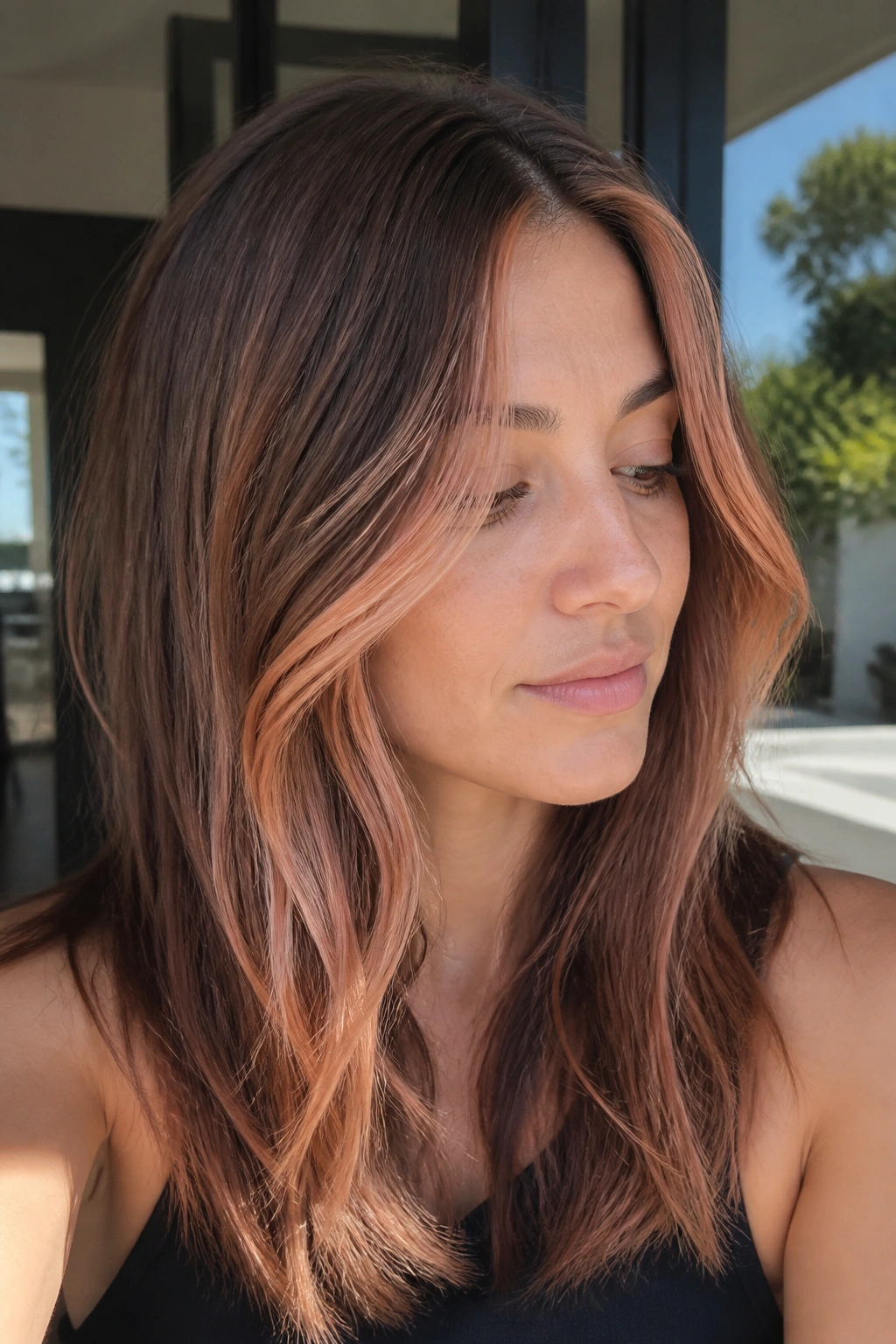
Apricot blonde slices lean warmer and brighter than classic pink, which is exactly why they deserve a spot here. They bring a little sun into brown hair without tipping into copper. The shade feels friendly, soft, and easy to style.
Unlike babylights, slices are more visible. They are thicker, more deliberate, and a better choice if your hair is straight or cut in blunt lines. The color has room to show itself. On layered hair, the slices scatter through the shape and create a nice broken-up look instead of a solid block.
This is a strong option for golden brown or medium chestnut bases. If your brown hair already has warmth, apricot can look like a natural extension of it. If your base is very cool, the shade may need a warmer blonde underneath so it does not go flat.
Best suited to people who want color that reads in photos and in daylight, this one needs clean placement. A few slices near the crown, a few through the mid-lengths, and one or two near the face is often enough. Too many and the whole head starts to look busy.
11. Golden Blonde with Pink Ends
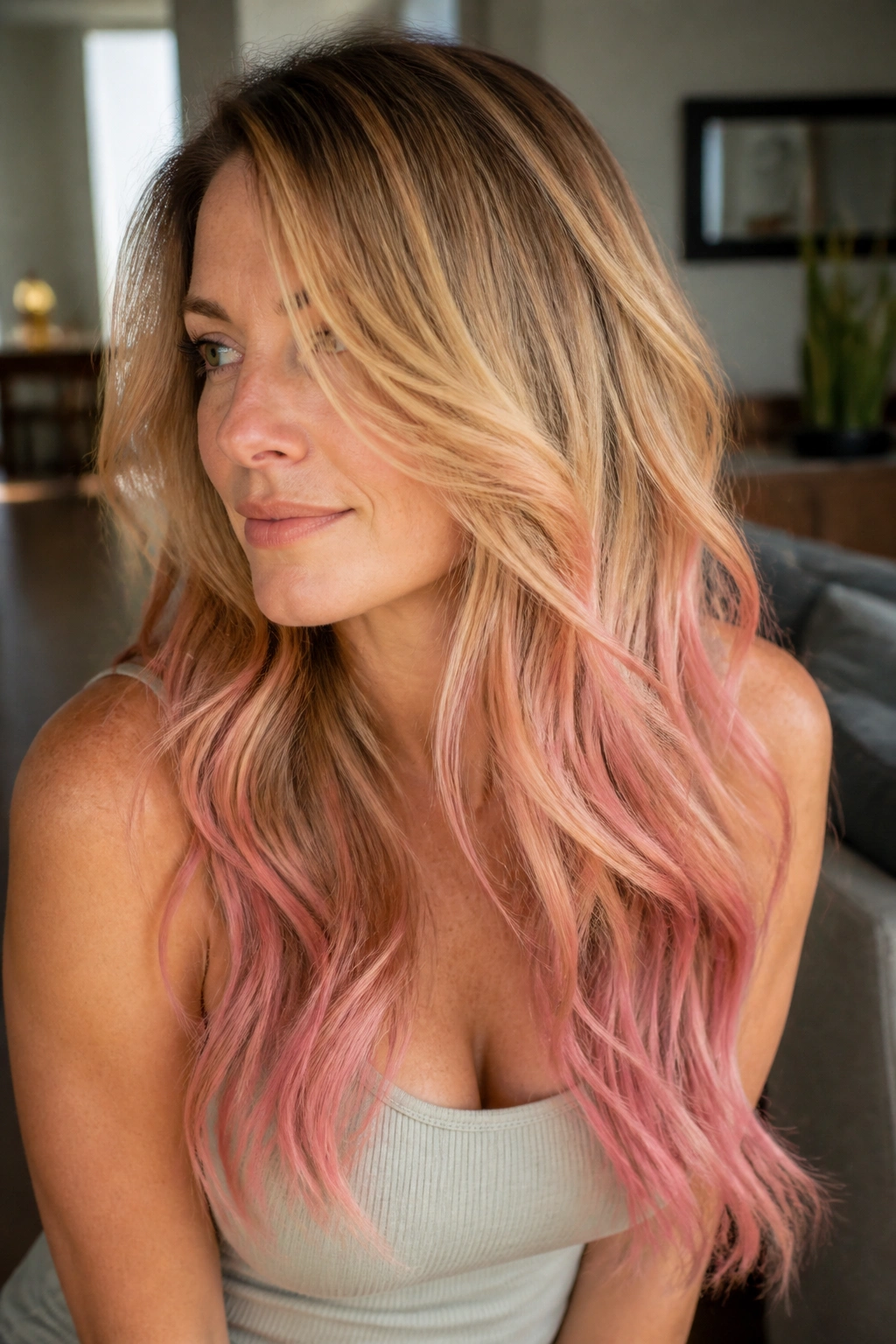
Golden blonde with pink ends has a fun little payoff built into it. The brown stays grounded near the root, the blonde brightens the middle, and the last few inches tip into pink. It feels playful, but the structure is neat.
The reason this look works so well is that the eye naturally follows the color downward. Brown roots keep the style wearable. The golden midsection softens the jump. Then the pink ends show up like a finishing detail rather than the whole story. On long layers, that movement looks especially good when the hair swings.
What to Ask For
- A lighter lift from the cheekbone area down
- A golden blonde toner through the mid-lengths
- Pink deposited only on the bottom 2 to 4 inches
- A soft blend at the transition so there is no harsh line
This one is a good fit if you do not want root retouches to become a constant chore. Since the pink lives at the ends, the grow-out is easier to ignore. That does not mean the color is low maintenance, but it does mean the structure of the cut helps you out.
12. Mushroom Brown with Rosy Ribbons
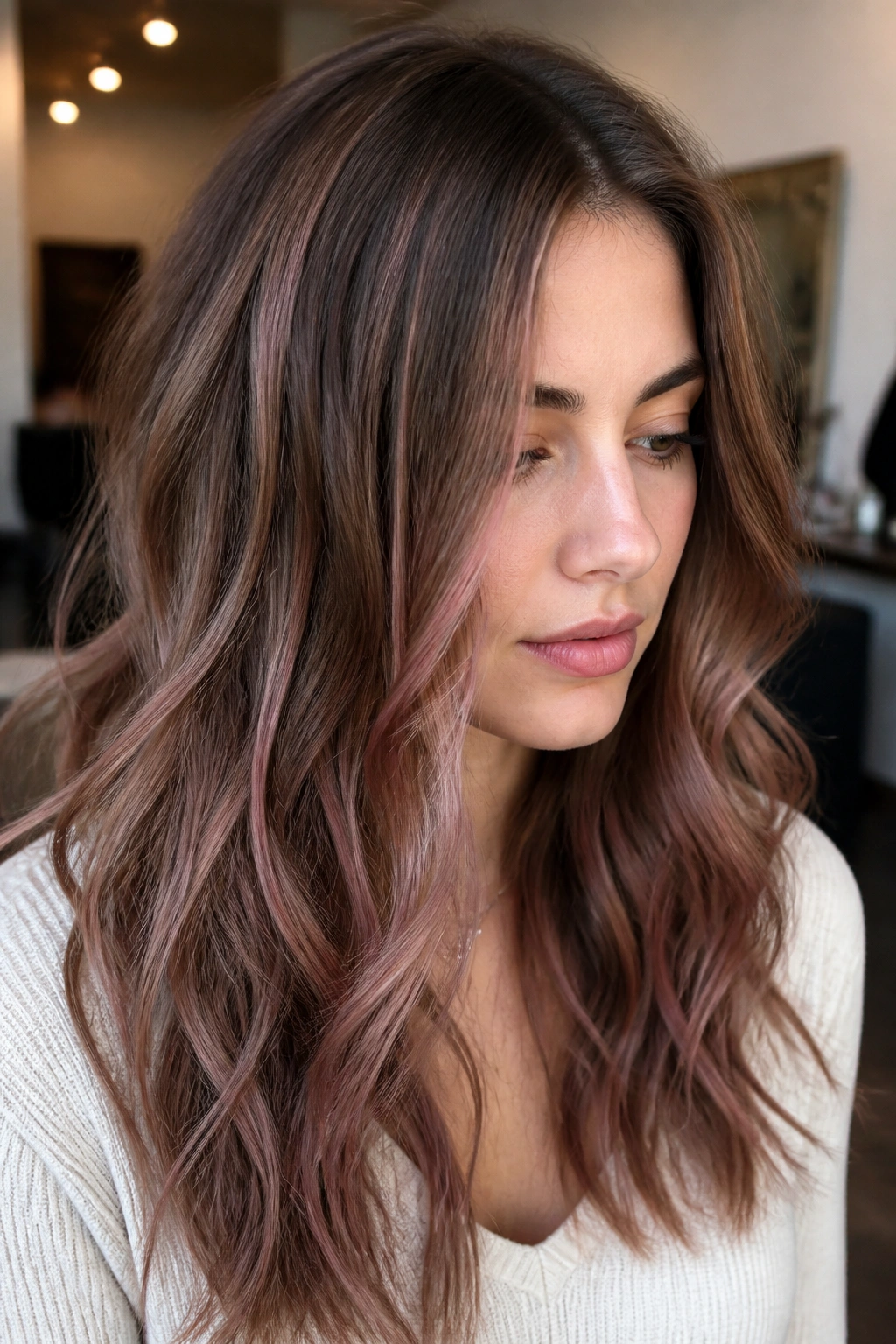
Cool brunettes can wear pink too, and mushroom brown proves it. The taupe-brown base keeps the whole look grounded, while rosy ribbons add a little light without turning the hair warm in the usual way. It is a cleaner, cooler version of pink on brown hair.
What Makes It Different
A mushroom base changes the temperature of everything sitting on top of it. That means the blonde lift should be neutral to cool, not golden, or the overall shade can wobble between warm and ash in a messy way. Rosy pink over that cooler blonde looks more like soft berry cream than candy.
This is one of the best choices for someone with naturally ash brown hair who hates orange tones. The color stays in the same family as the base, so it feels blended from the start. It also works well on medium-length cuts because the ribbons can thread through the hair without dominating it.
Ask your stylist to keep the rosy pieces sparse near the root and richer through the lengths. That gives the color movement without making the scalp area busy. The result is subtle, yes, but not boring.
13. Caramel Brown with Pink Crown Lights
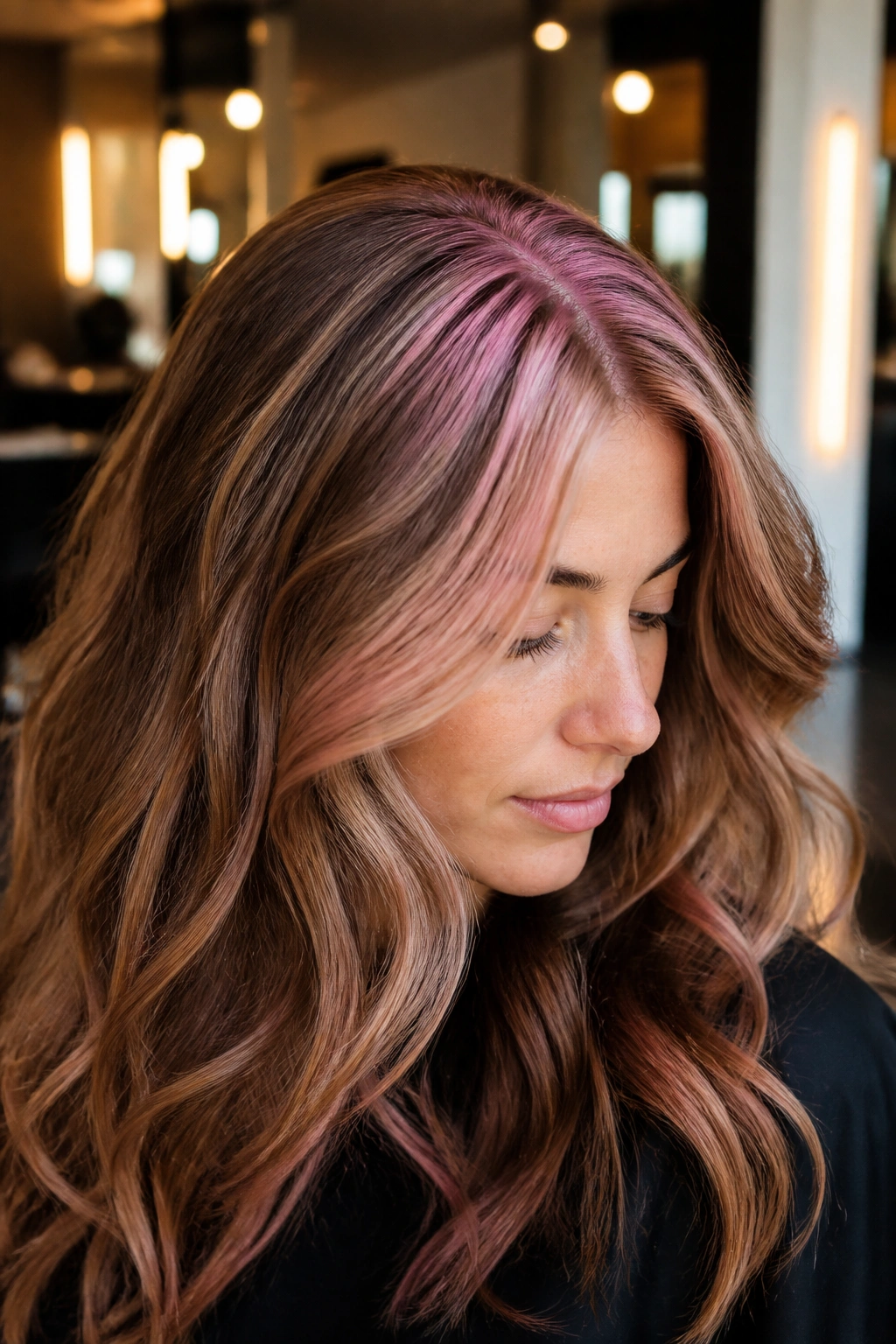
Caramel brown with pink crown lights is one of those styles that quietly does a lot. The lightest pieces sit on the top layers and around the part, which means the color catches attention right where the hair gets the most sun and the most visibility.
That top-heavy placement works well if the rest of your hair is thick or dark, because it breaks up the weight without forcing you into full-head lightening. A few fine crown lights can make the part line look softer and the whole cut feel airier. On long, flat hair, that matters more than people think.
I prefer a slightly brighter blonde here, then a soft pink gloss over the top. If the blonde is too dark, the pink gets swallowed. If it is too pale and icy, the contrast can feel cold against caramel brown. Somewhere in the middle is the sweet spot.
This look also plays well with blowouts. Lifted roots, loose bends, and a smooth top layer let the pink reflect light without looking streaky. It is a nice choice for people who wear their hair down more than up.
14. Chunky Blonde Pink Streaks
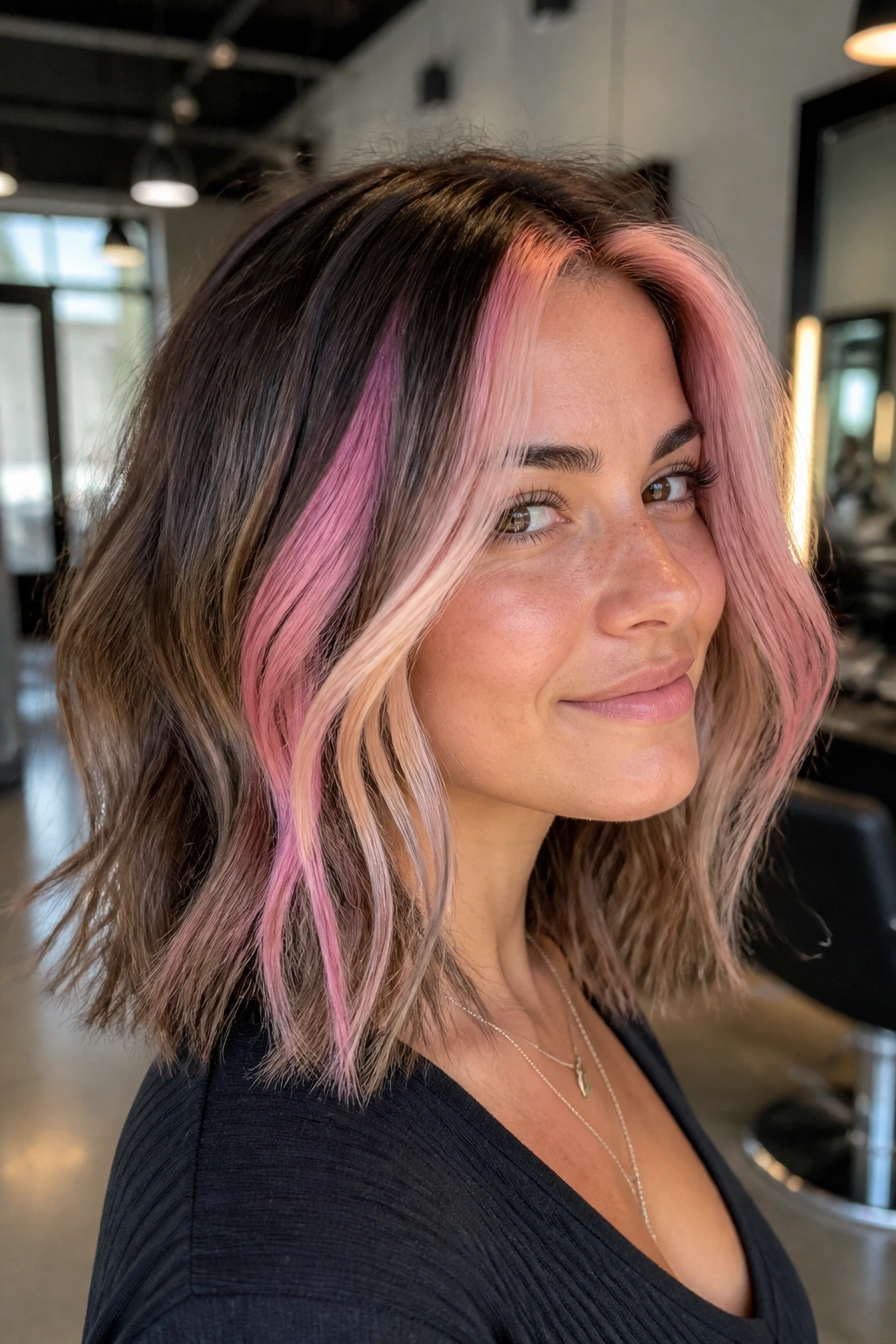
Chunky blonde pink streaks are not subtle, and that is the point. They borrow a little from the bold streaks people used to wear in the front and around the crown, but the blonde and pink are softened enough to feel current rather than costume-heavy.
The haircut matters here. Blunt ends, lob cuts, and shoulder-length shapes carry chunky color better than very long, heavily layered hair. Why? Because the streaks need edges to sit against. If the cut is too feathered, the boldness gets lost.
This is the style for someone who wants a clear color statement. You can soften it with a wave, or sharpen it with a flat iron for a more graphic look. Either way, the blonde should be bright enough to frame the pink. A dull blonde makes chunky streaks look unfinished, and nobody wants that.
Not every brown hair client wants this level of contrast, and that is fine. But if you do, this look has real energy. It reads as confident, not hesitant, and sometimes that is the exact mood you want.
15. Cinnamon Brown with Blush Babylights
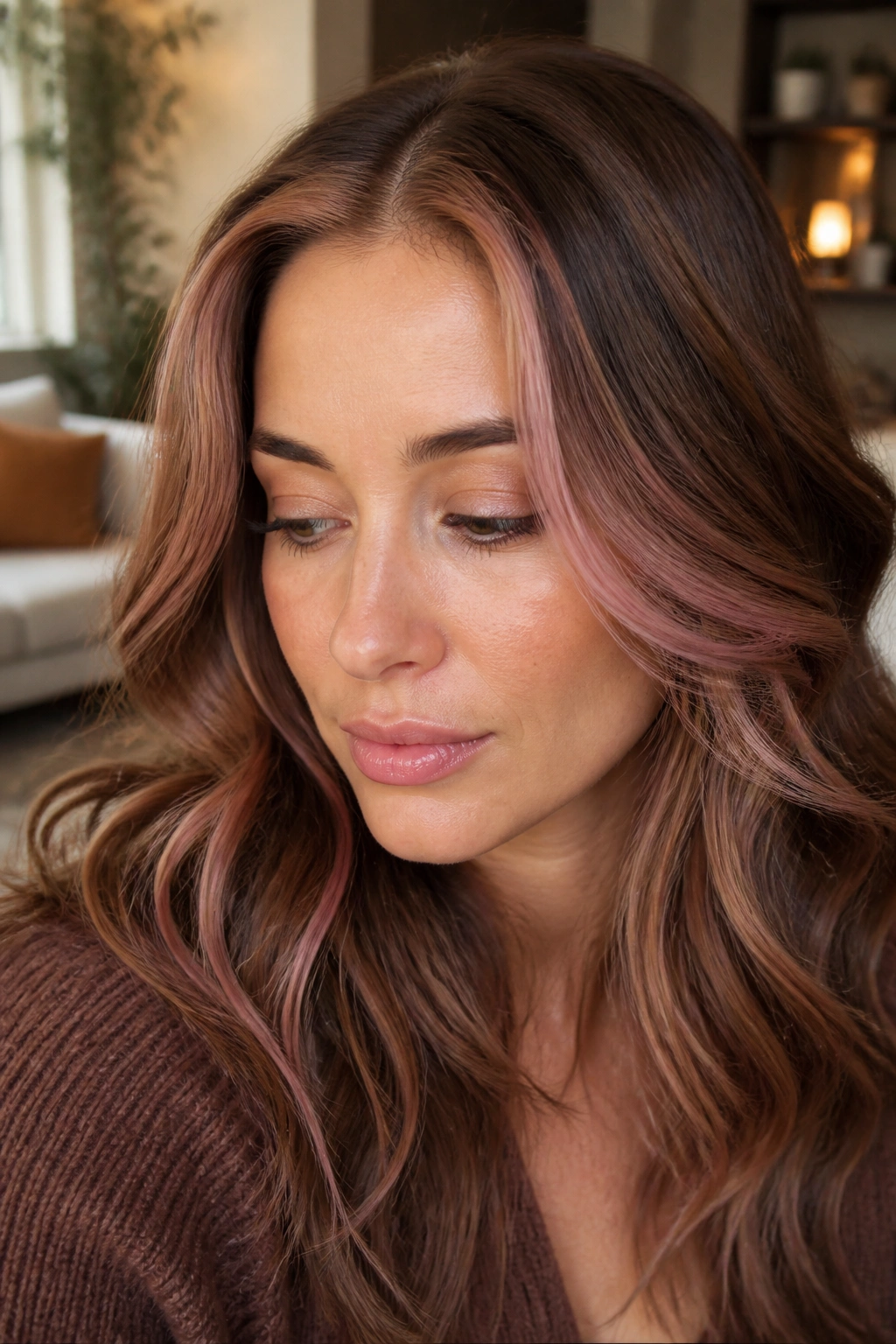
Why does this work so well on cinnamon brown hair? Because the base already carries a warm, soft spice tone, and blush pink slips right into that family without looking pasted on. The result is gentle, glowy, and easy to wear every day.
Babylights keep the effect light. They are fine enough that the pink feels like a shimmer instead of a stripe, which is useful on textured hair where heavy highlights can look choppy. Around the part and front hairline, those tiny pieces brighten the face fast.
Best Texture Matches
- Wavy hair, because the fine highlights bend with the curl
- Soft curls, because the color catches at different points in the pattern
- Straight hair with movement at the ends
- Medium-density hair, where the babylights can still be seen without crowding the cut
A pale blonde lift before the blush toner is the key. Skip that step and the pink can get muddy against the cinnamon base. When the lift is clean, the whole style looks warmer, softer, and more polished than a stronger pink would.
16. Icy Beige with Pink Smoke
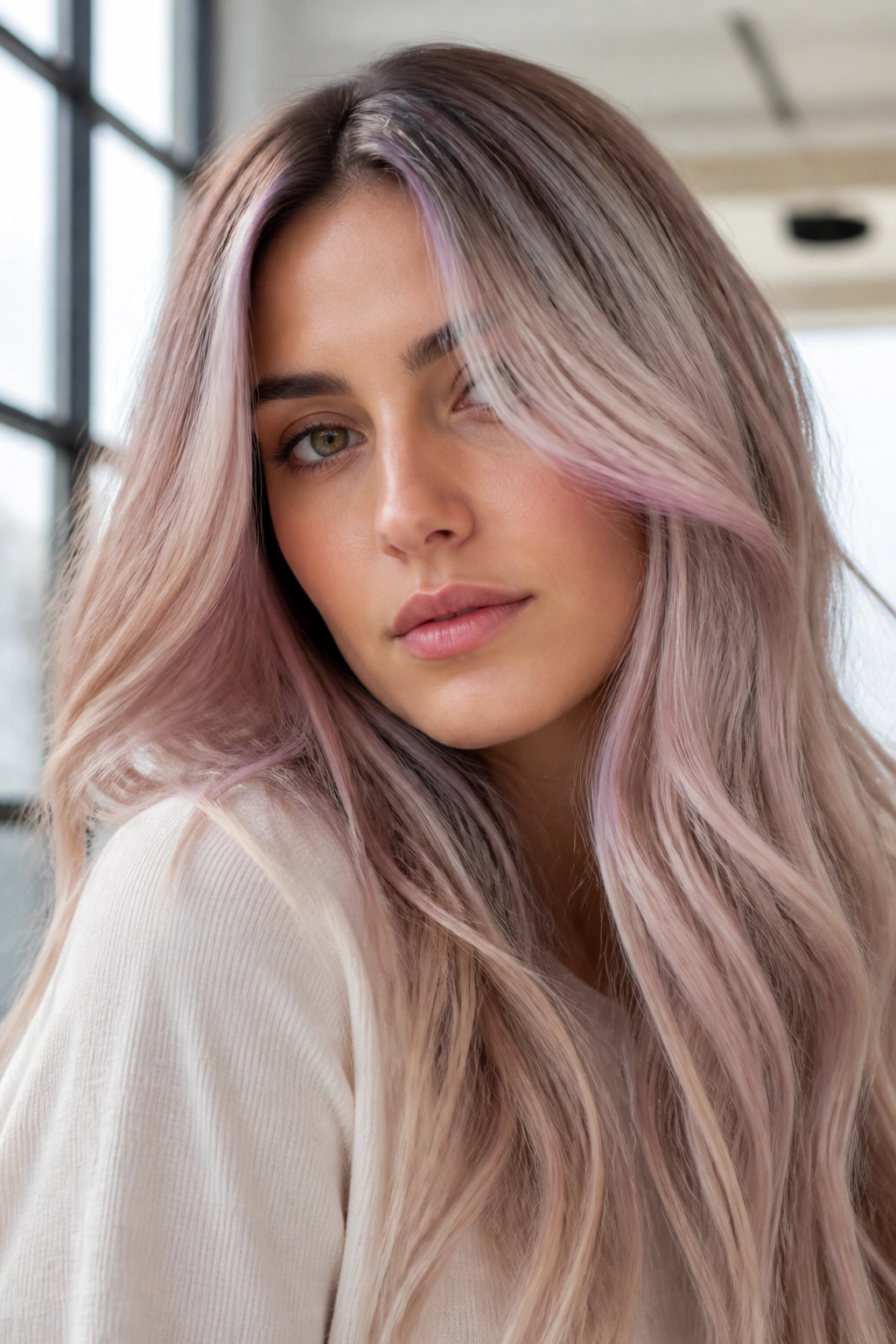
Think of this one as a latte base with a faint pink haze drifting over the top. Icy beige with pink smoke is cooler than coral, softer than vivid pink, and a little more fashion-forward than the muted rose looks. It gives brown hair a bright, clean finish.
The contrast is strongest on medium brown or light brown hair. Darker brown can wear it too, but the blonde usually needs a stronger lift so the beige does not disappear under the base color. Once the lift is there, the pink smoke can sit on top and keep the result from looking stark.
I like this shade family on straight hair and polished waves because the blend shows clearly. The color has a satin feel when the light hits it right. It is one of those looks that rewards a precise cut, especially if the ends are kept neat.
This is not the easiest pink to maintain, though. Cool beige tones can drift warm if they are washed too often or exposed to harsh shampoo, so the color works best when the care is gentle. That is the tradeoff.
17. Mocha Brown with Rose Veil
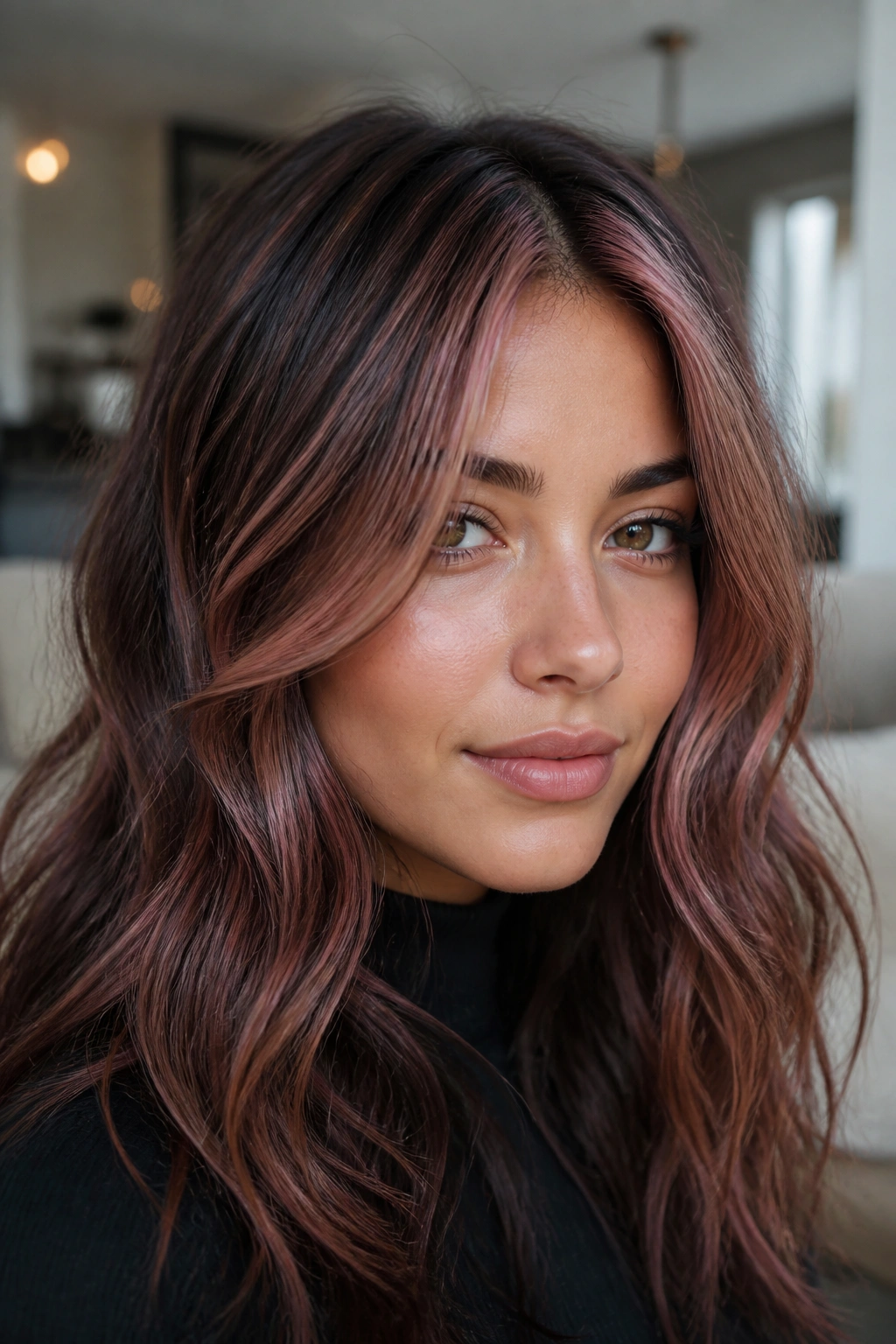
A rose veil is what I suggest when someone wants pink but will not give up the depth of their brown hair. The color sits on top of a mocha base in fine, soft pieces, so the brown still leads and the pink just turns the volume up a little.
That veil effect depends on thin placement. The highlights should be close enough together to make the color feel misty, but not so close that the hair loses its brown identity. If the pieces are too wide, you stop reading veil and start reading streaks. That is a different look entirely.
This style is especially nice on longer layers because the pink can live through the movement of the cut. As the hair shifts, the color flashes in and out, which keeps it from feeling static. It also grows out gracefully because the brown base is still doing so much of the visual work.
If you want the color to stay glossy, use a color-safe shampoo and keep the water lukewarm. Hot water pulls pink out faster than people expect. A hydrating mask once a week helps too, especially if the hair was lifted more than one shade level.
18. Soft Blonde Pink Melt on Brown Hair
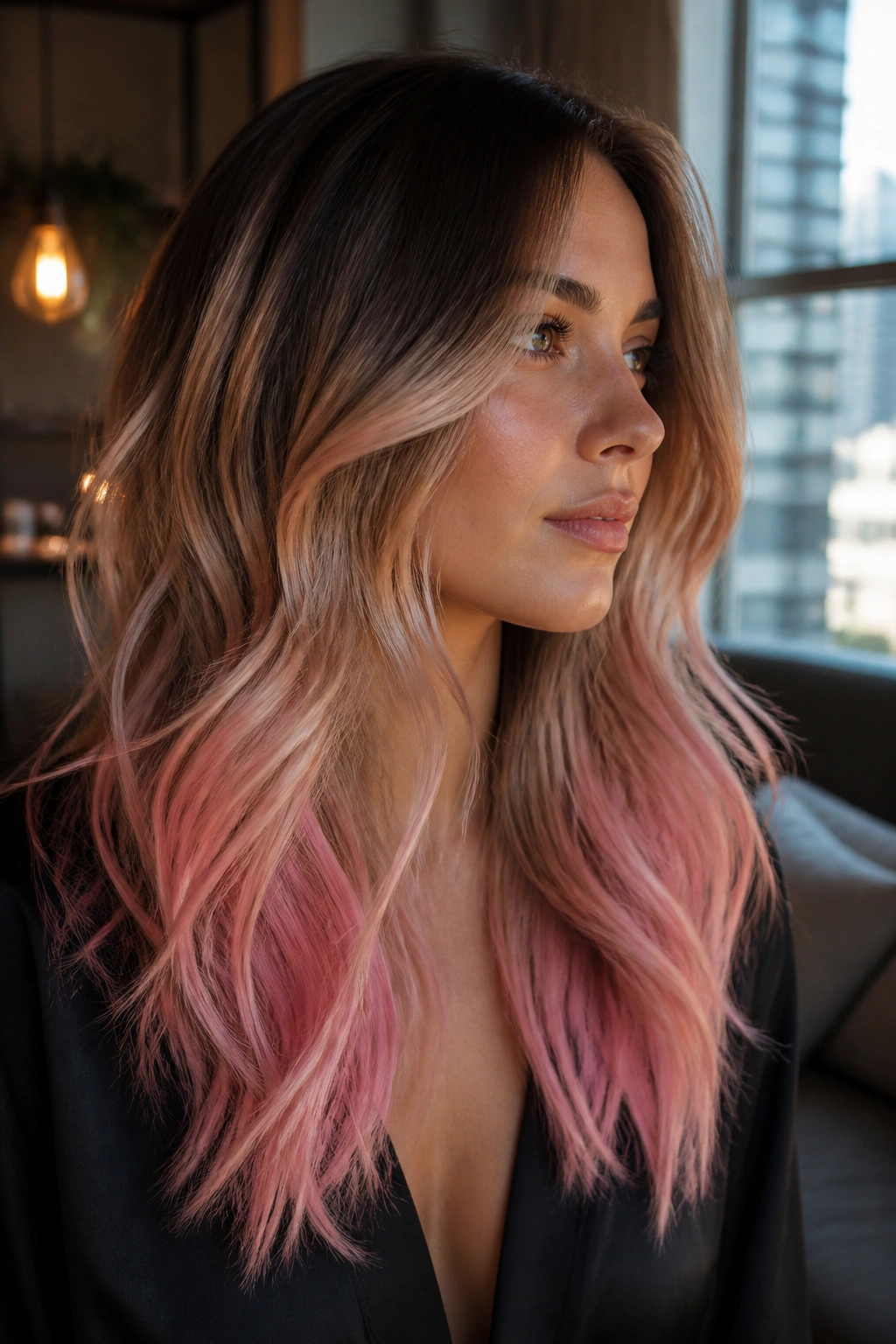
A soft blonde pink melt is the most blended of the bunch, and maybe the easiest one to live with. Brown at the root, blonde through the middle, pink at the ends — but all of it moves together instead of looking stacked in obvious blocks. The color change feels smooth from top to bottom.
This is a good choice if you want your brown hair to stay visible. The melt protects that depth while still giving you a clear pink finish. It also works across a lot of lengths, though I think it looks especially nice on long bobs and layered cuts where the ends can swing a little.
Ask for two things when you bring this idea to a stylist: a soft transition between each tone, and a blonde that is pale enough to let the pink read cleanly. If the blonde sits too orange, the melt loses that airy feel. If the pink is too vivid, the whole point of the blend disappears.
Bring reference photos from more than one angle. Front views matter, sure, but the side and back do too, because a melt is all about how the color moves when the hair shifts. That small bit of prep saves a lot of disappointment later.
Final Thoughts
Brown hair gives pink highlights a better job to do. It keeps the color grounded, which is why the best looks here do not need to shout. A single face frame can brighten the whole cut. A few hidden panels can feel more interesting than a full head of visible pink.
The smartest choice is the one that fits your hair’s depth and your tolerance for upkeep. Soft rose gold, beige pink, and dusty underlayers are easier to live with. Chunky streaks, icy beige melts, and brighter coral pieces ask for a little more attention, but they also give more contrast.
If you are unsure where to start, begin near the front or underneath the top layer. That gives you room to test the color without losing the brown that makes the whole thing work in the first place.
