



Brown hair can look flat fast when every strand sits in the same depth. A few well-placed brunette blonde highlights change that without making the color feel stripped or sugary. The trick is contrast, yes, but it’s the right contrast: soft enough to keep the brunette base rich, bright enough to wake up the midlengths and ends.
What makes this mix so useful is that brown hair already gives you a good canvas. You can lean warm with caramel and honey, go cooler with beige and ash, or split the difference with bronde tones that sit somewhere in the middle. A skilled colorist can also decide where the light should land — around the face, through the crown, just on the ends, or scattered in fine babylights that barely announce themselves until the light hits.
And that’s where people often get it wrong. They ask for “blonde pieces” and end up with streaks that fight the base color. Better looks keep the brunette depth intact, then thread in blonde in a way that matches your haircut, your undertone, and how much maintenance you’re willing to live with.
These 28 brunette blonde highlights for brown hair cover the full range, from whisper-soft ribbons to bolder, higher-contrast work that makes brown hair look expensive without trying too hard.
1. Soft Caramel Ribbons
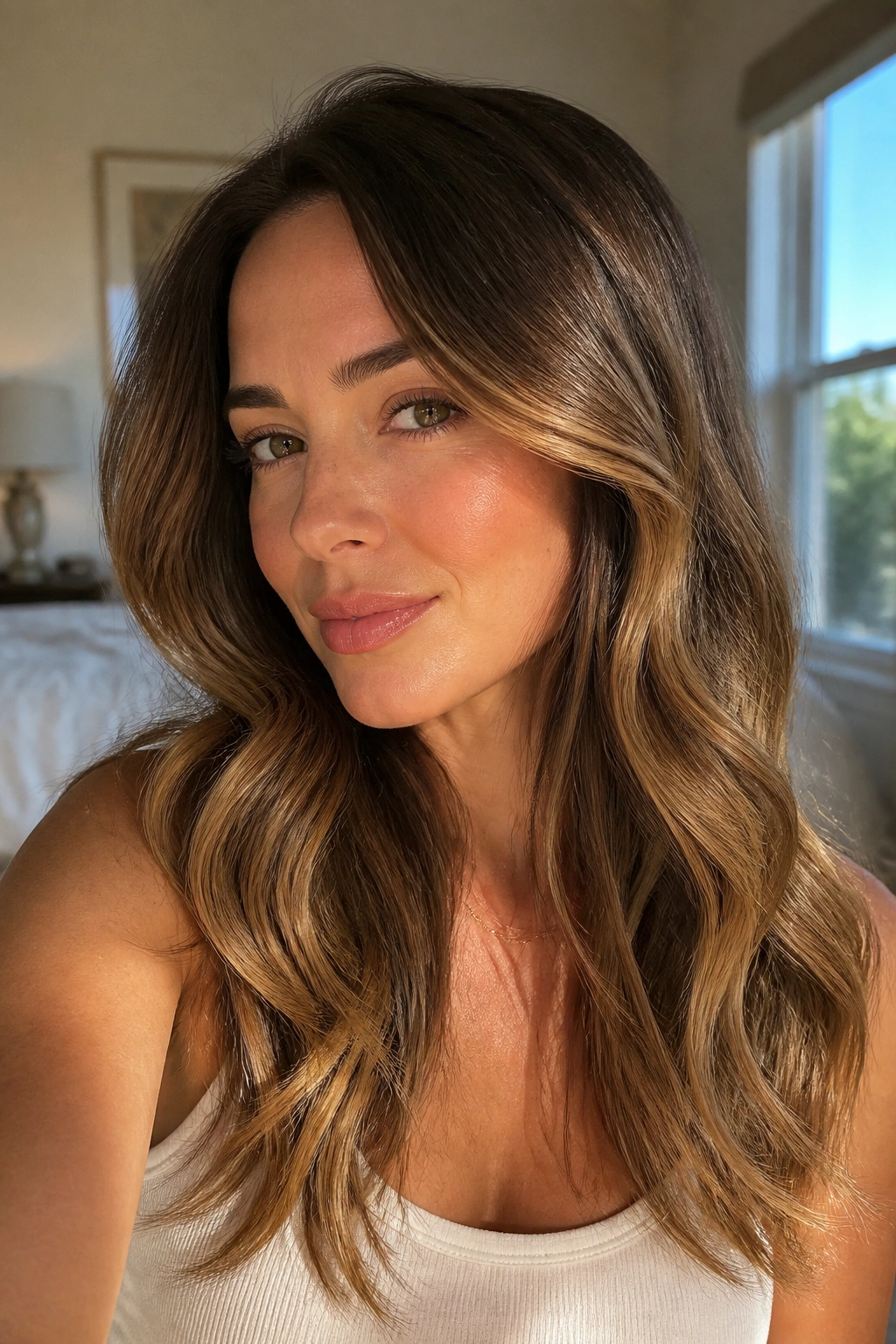
Soft caramel ribbons are the safe place to start if you want brown hair to feel warmer, lighter, and less one-note. They sit in that sweet middle zone where the blonde never turns icy, and the brunette never looks heavy. The result is movement. Not noise.
Why It Works
Caramel sits close enough to brown that the grow-out is gentle, which is one reason this look stays popular with people who don’t want a hard line every six weeks. It also flatters a lot of base shades, from medium brown to deep chestnut, because the warmth echoes what’s already there.
- Ask for fine to medium balayage pieces through the midlengths and ends.
- Keep the base at level 4 to 5 brown so the caramel actually shows.
- A warm beige gloss helps the blonde pieces stay soft, not brassy.
- Best on wavy or layered hair, where the ribbons can bend and separate.
Pro tip: If your hair is already warm, ask for caramel with a tiny bit of beige mixed in. It keeps the color from drifting orange.
2. Face-Framing Money Pieces
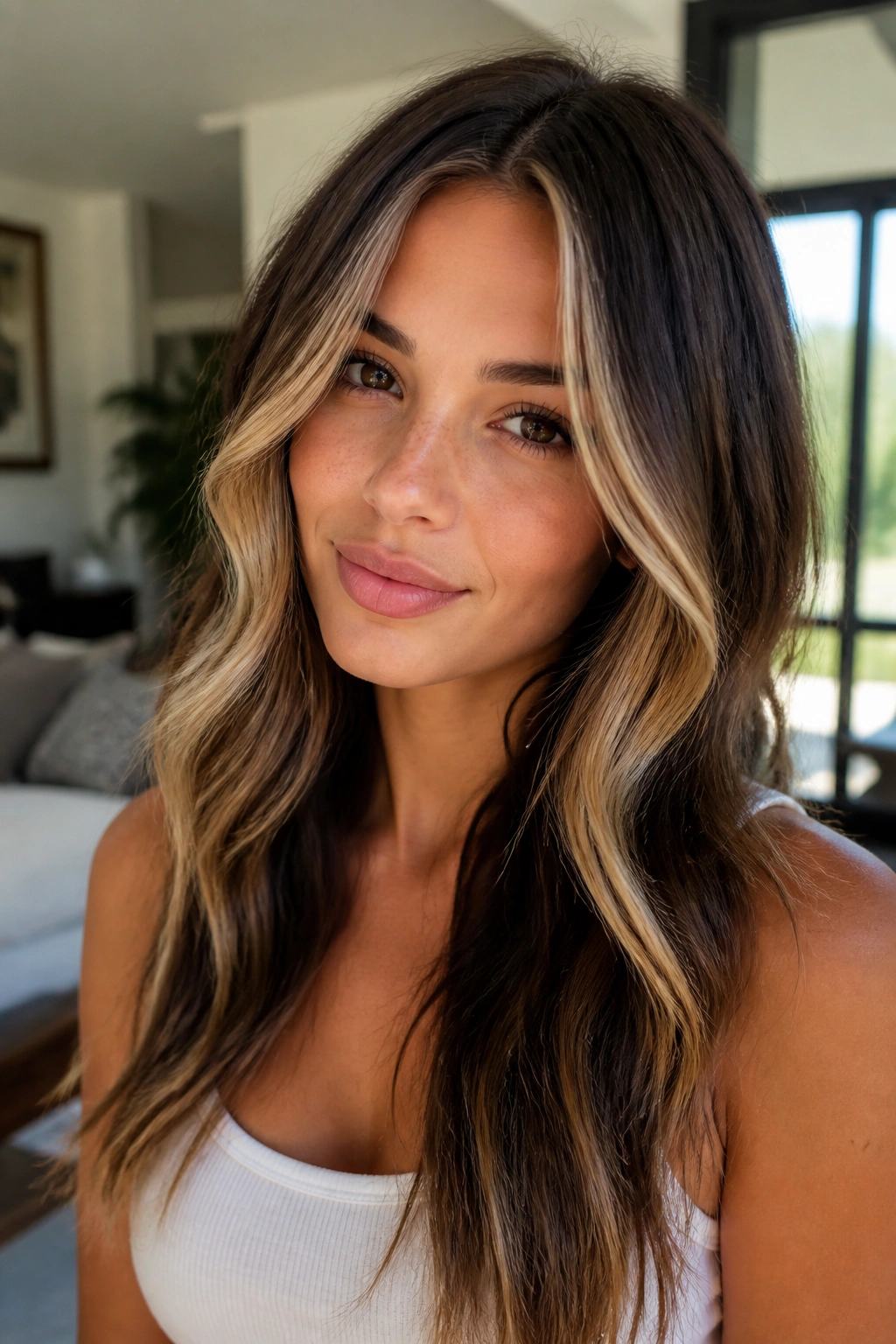
A bright face frame can change a whole haircut. Really. If the rest of your brown hair stays grounded, two lighter pieces near the cheekbones can make your eyes look sharper and your skin look less flat, even when the rest of the color is calm.
The key is placement, not brightness alone. A money piece that starts too far back looks random. One that begins right at the hairline and blends into the front layers feels deliberate, especially on long bobs, curtain bangs, or collarbone cuts.
I like this look for people who want something noticeable but not high-commitment. You can keep the interior of the hair darker, which means less damage and less upkeep, while the front stays fresh.
How to Ask for It
- Request two brighter blonde panels around the face.
- Keep them 1 to 2 shades lighter than your highlights elsewhere.
- Ask for a soft root melt so the grow-out doesn’t look harsh.
- Choose beige blonde, honey blonde, or light caramel depending on warmth.
3. Mushroom Brown With Beige Blonde
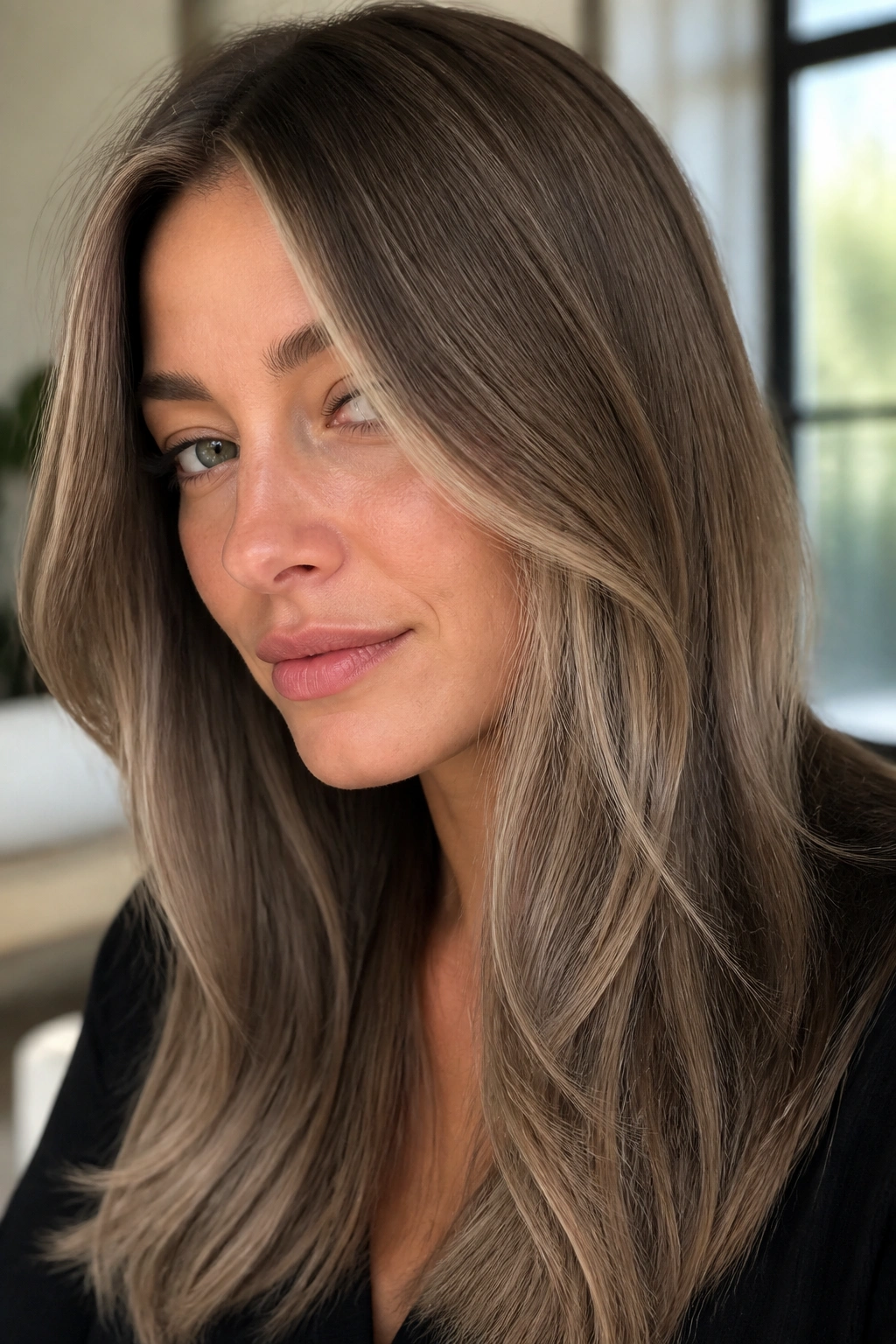
Can brown hair go cooler without turning dull? Yes, if the blonde is beige instead of yellow and the brunette base leans smoky. That’s the whole point of mushroom brown with beige blonde pieces: it keeps the color earthy, not flat.
This look works especially well on people who dislike golden tones. The beige highlights sit quietly in the hair, almost like dusted light, while the base stays a cool taupe-brown. It’s one of those colors that looks expensive in daylight and even better in soft indoor light.
What Makes It Different
The coolness keeps the blonde from shouting. That matters when your skin has pink, neutral, or olive undertones, because overly warm highlights can start fighting your face instead of helping it.
It also grows out nicely. The difference between base and highlight is there, but it’s not stark, so you can stretch appointments a little longer.
Best For
- Straight or softly bent hair
- Cool-toned brown bases
- Anyone who hates brass
- Medium maintenance with a glossy finish
4. Honey Balayage on Dark Brown Hair
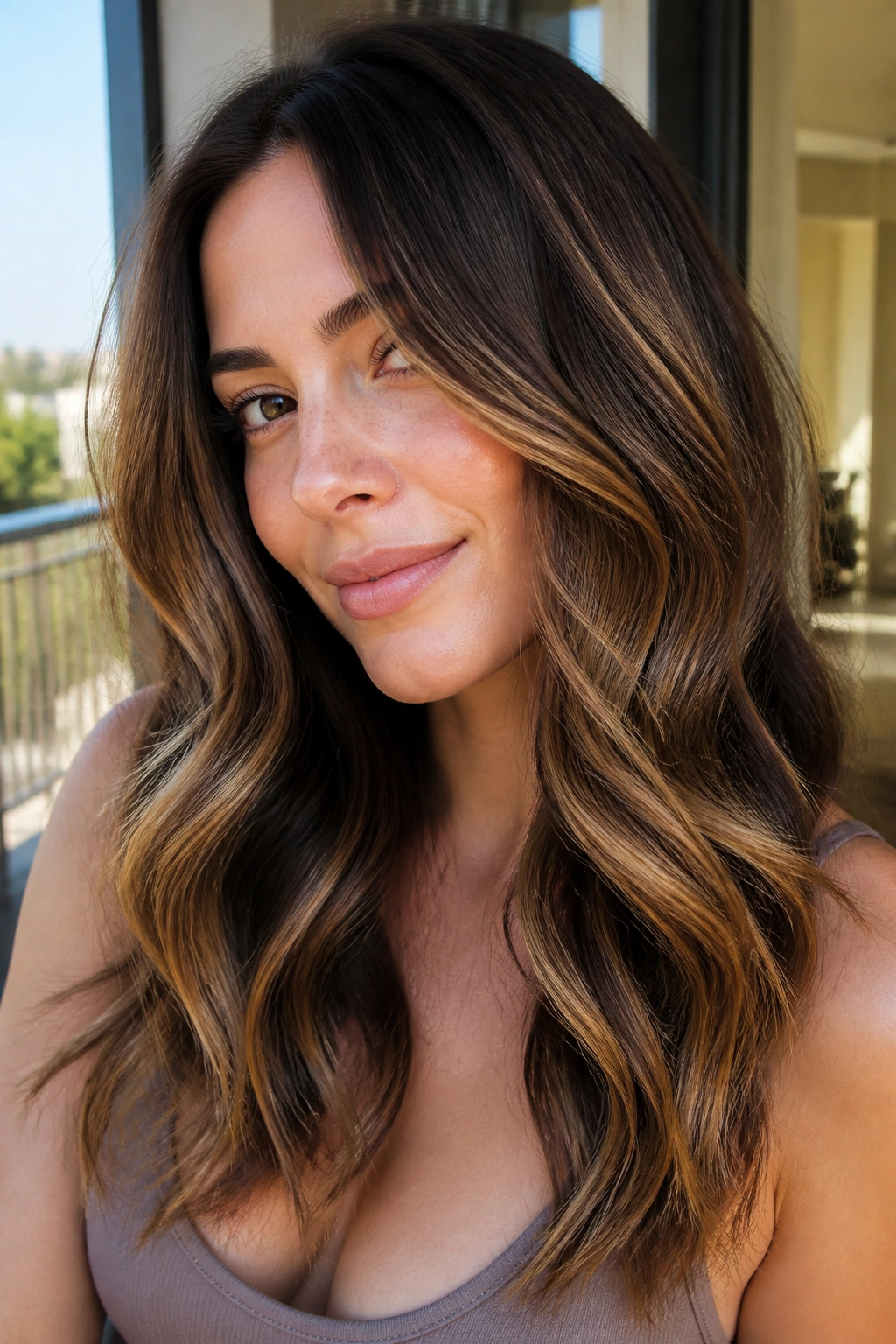
Honey balayage on dark brown hair has a way of looking sun-touched without pretending you spent a month on a beach. The warmth is deeper than yellow blonde and lighter than caramel, so it glows instead of flashing.
I’ve always thought this is one of the easiest ways to brighten dark brown hair without losing the richness that makes brunette shades interesting. The blonde pieces are painted where the sun would naturally land — around the crown, through the outer layers, and at the ends where the hair moves most.
You do need enough lift for the honey to show. On very dark brown hair, the colorist may have to lift the pieces more carefully so the result doesn’t land muddy. That’s the part people miss when they bring in a photo of honey blonde on a base that’s two shades lighter than theirs.
Best move: pair it with loose waves. The bends make the honey pieces separate and catch light in a way that straight hair sometimes hides.
5. Ash Blonde Babylights
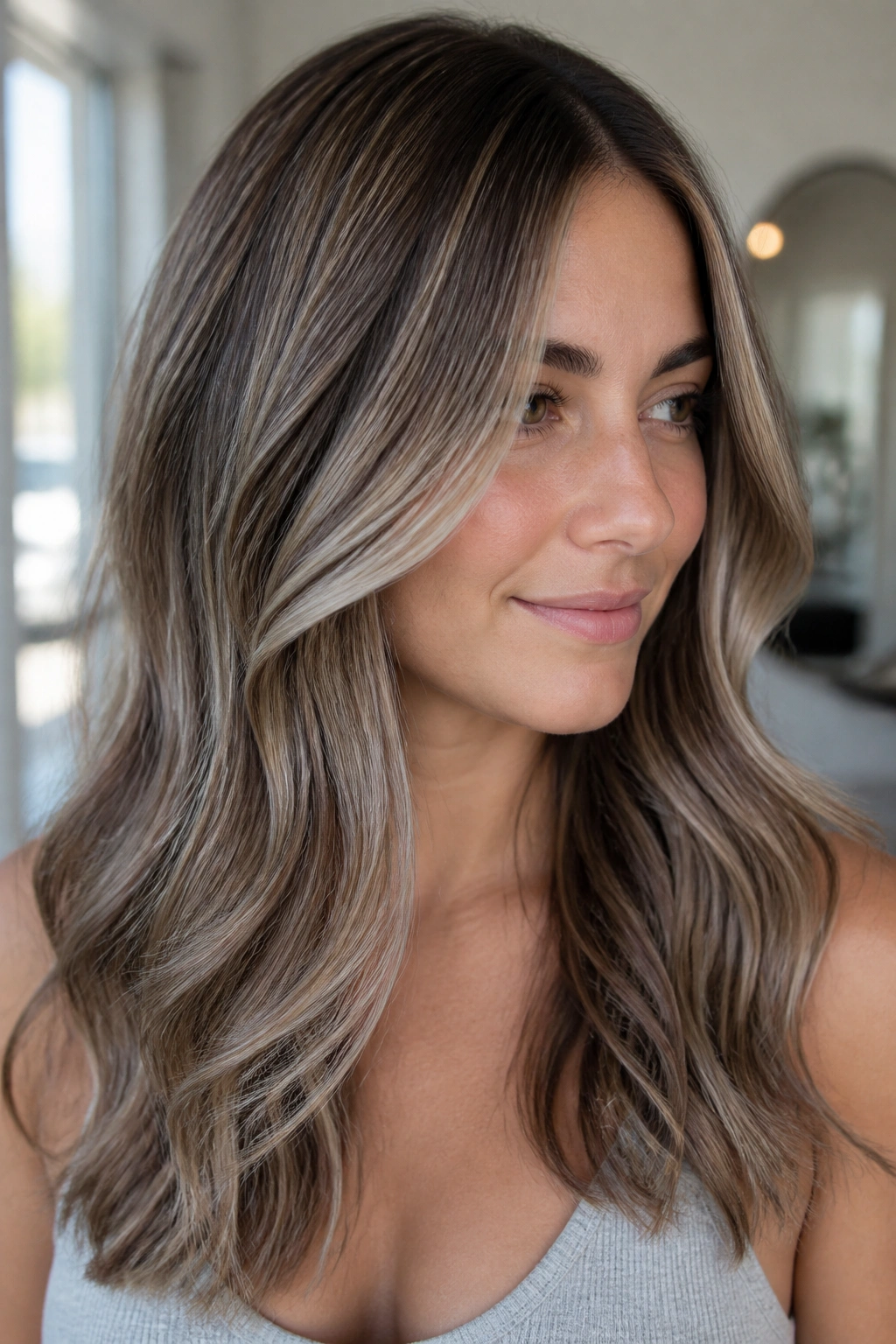
Ash blonde babylights are for brown hair that wants dimension without warmth. No chunky streaks. No obvious stripes. Just ultra-fine, cool blonde threads woven through the hair so subtly that they only become obvious when the light shifts.
What They Do Well
Babylights mimic the kind of delicate lightening kids often have in their hair, which is why they feel softer than regular highlights. On brown hair, the ash tone keeps the effect polished instead of beachy. If your natural base is medium brown, this can make the hair look denser and more multi-tonal rather than just lighter.
They’re also one of the better choices for finer hair, because the tiny slices don’t break up the surface too much. You keep the visual fullness of the brunette base while getting a little brightness all over.
A Few Practical Notes
- Works best with level 5 to 6 brown hair
- Ask for micro-fine foils
- Toner will usually be needed to keep the ash clean
- Maintenance is lighter than high-contrast blonde, but toner appointments still matter
6. Toffee Lowlights With Blonde Ends
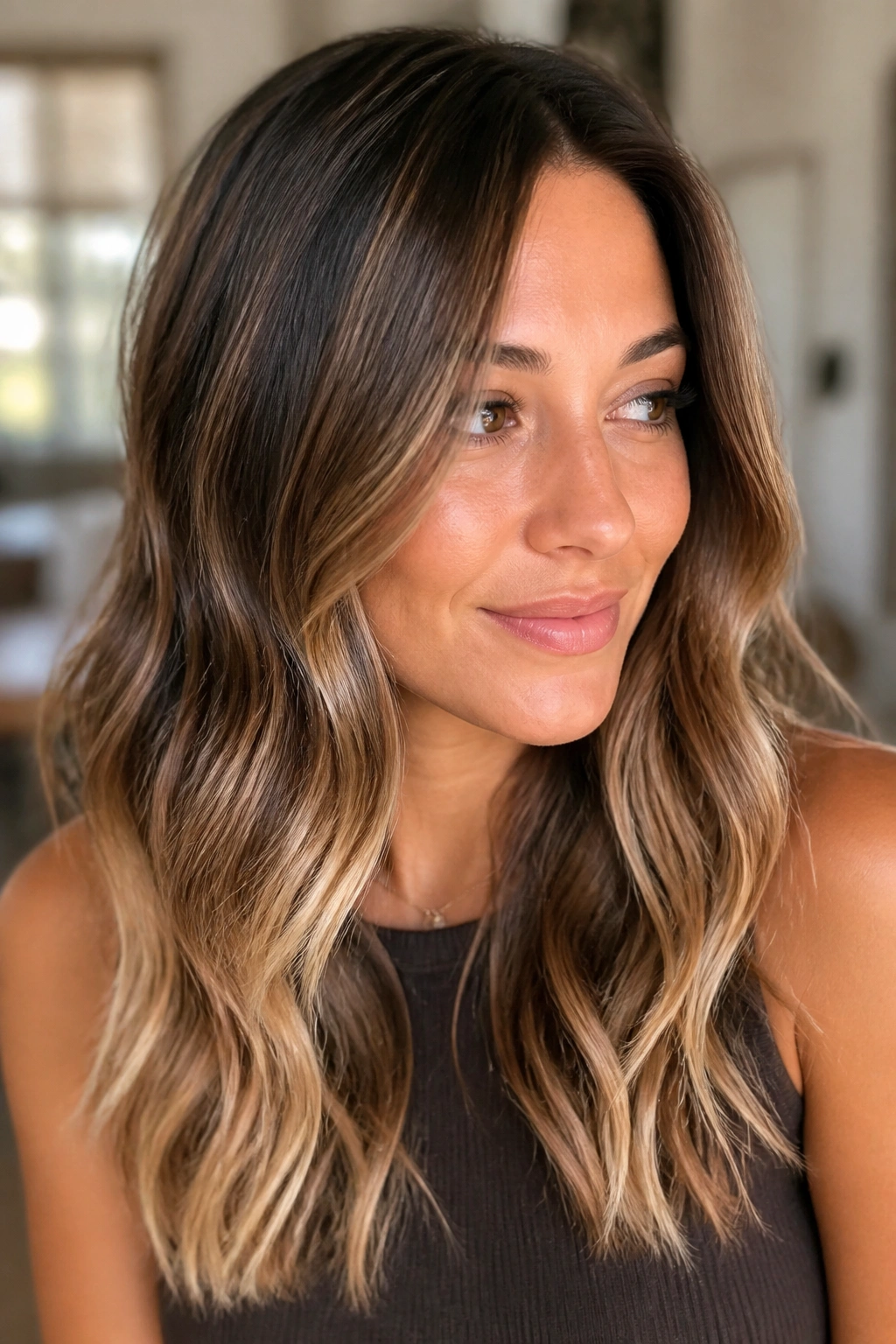
Toffee lowlights do something interesting: they make the blonde ends look brighter by comparison. That sounds backward until you see it in a mirror. The darker toffee threads tucked into brown hair create depth, and once the eye sees that depth, the blonde at the perimeter suddenly pops.
This is a good choice if your brown hair has gone too light or too flat from previous coloring. Instead of chasing more blonde, the colorist adds a few darker pieces back in. The whole head starts looking richer again.
It’s also easier to live with than a full blonde transformation. You get brightness at the ends, but the root area stays rooted and believable. That makes the color feel grown-up, not loud.
Where It Works Best
- Shoulder-length cuts
- Long layers
- Hair that has lost dimension from repeated lightening
The one catch: if your hair is already very dark and you add toffee too close to the ends, the contrast can look muddy. Placement matters more than people think.
7. Chunky 90s Contrast Highlights
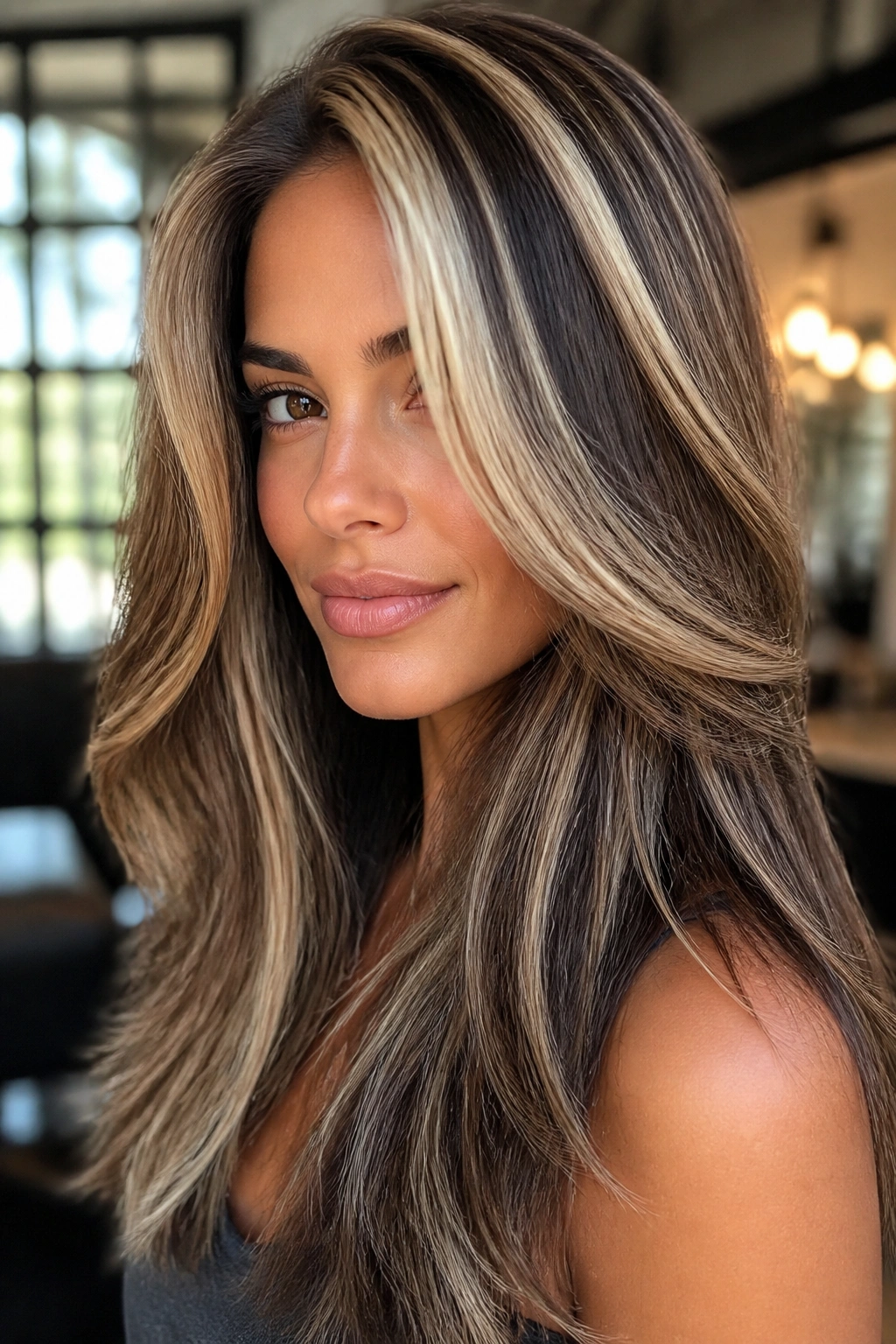
Chunky highlights are back because, frankly, they’re fun. On brown hair, wide blonde pieces bring attitude fast. They make a statement before anyone notices the cut.
This look is not subtle, and that’s the point. The blonde sections are broader, usually brighter, and placed so the contrast reads clearly from a distance. On a glossy brown base, the effect feels graphic and a little nostalgic. On layered hair, it can look sharper than expected.
If you want this style to feel current instead of costume-like, keep the blonde tone soft. Think beige blonde, neutral blonde, or a warm champagne rather than a screaming yellow stripe. That keeps the overall color from sliding into parody.
Best for: blunt bobs, shoulder-length cuts, and anyone who wants the hair to look deliberate, not blended into the background.
8. Cinnamon Brown With Champagne Streaks
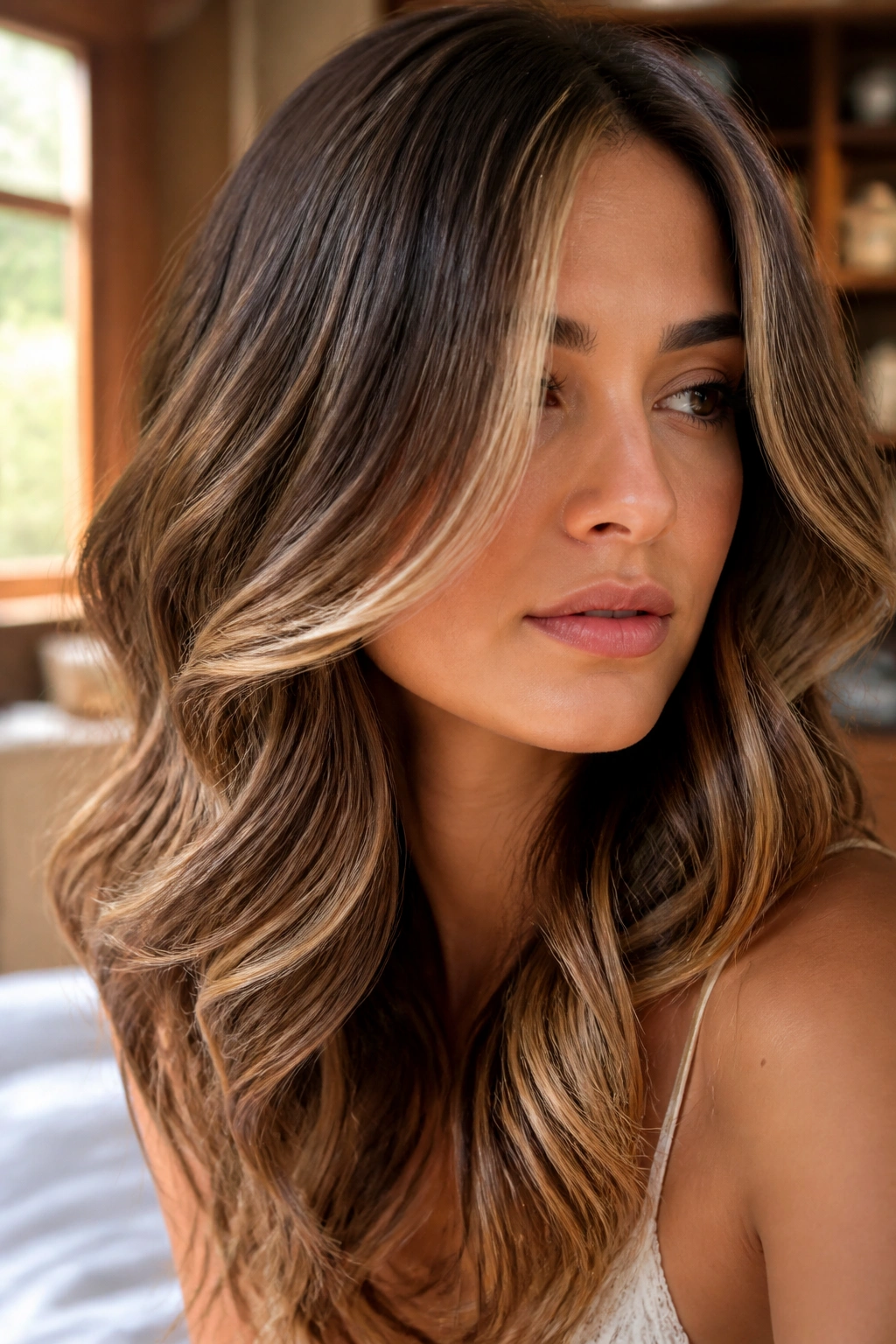
A cinnamon brown base with champagne streaks has more sparkle than warmth-heavy caramel, but it still feels grounded. The cinnamon gives you that red-brown glow, and the champagne pieces add lift without turning the whole thing golden.
The contrast here is the charm. Champagne is lighter and a touch cooler than honey, so it creates a little shimmer against the cinnamon base. On wavy hair, that shimmer gets broken up in a way that looks expensive. On straight hair, it reads cleaner and more polished.
This is a smart option if your brown hair already pulls red or copper in the sun. Champagne helps balance that warmth instead of exaggerating it.
How to Wear It
- Keep champagne near the outer layers and around the face
- Add a soft gloss to keep the cinnamon rich
- Skip overly pale blonde; it can fight the base
- Works well on warm or neutral skin tones
9. Chestnut and Sand Balayage
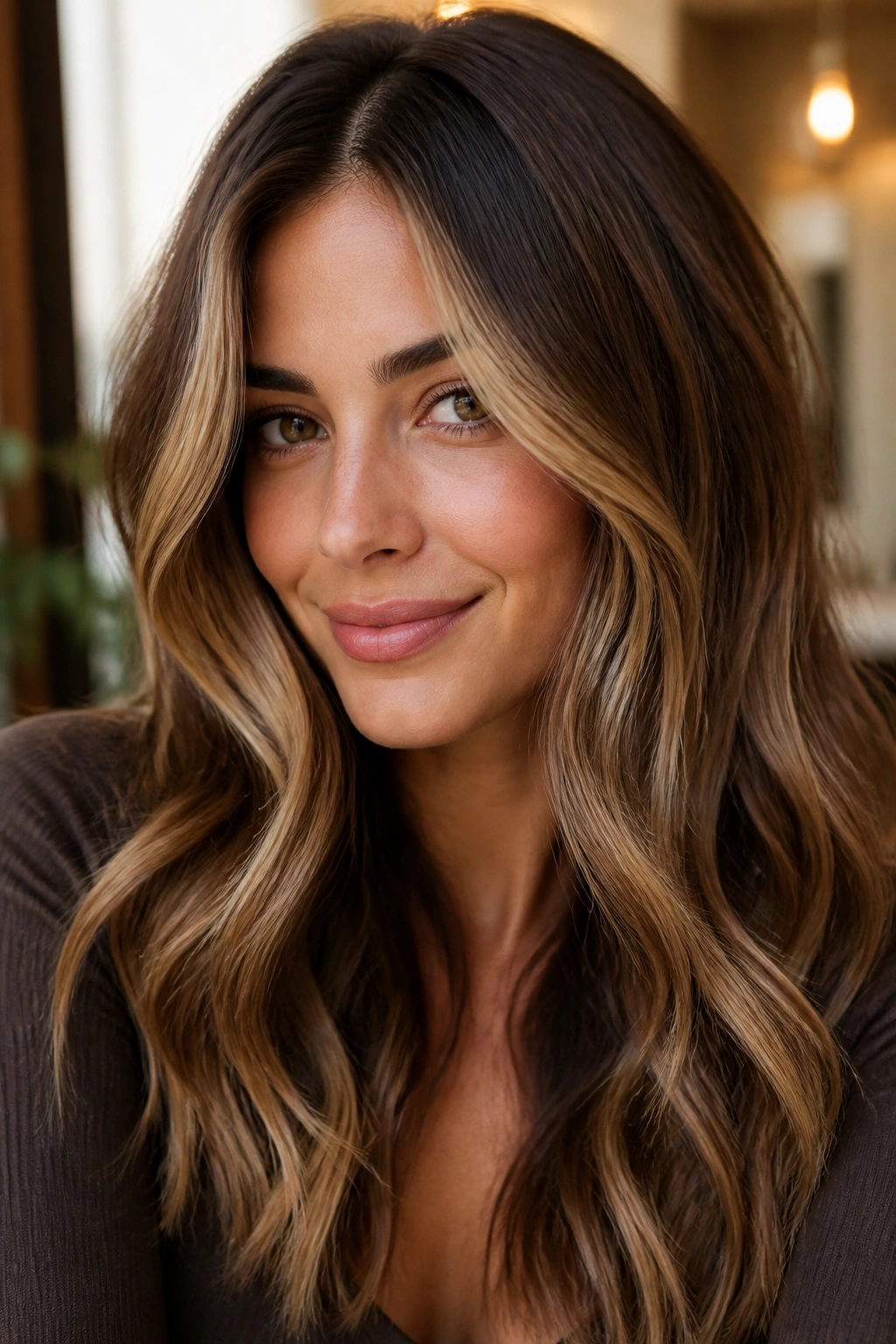
Chestnut and sand is one of those combinations that feels calm in the best way. The chestnut keeps the brunette side warm and deep, while the sand blonde pieces lighten the look without stealing the show.
What I like here is the softness. Sand blonde does not have the gold of honey or the cool edge of ash. It sits in the middle, which makes it easy to wear on brown hair that has a mix of warm and cool undertones. That middle ground is why the color tends to age well as it grows out.
The balayage placement should stay loose. You want pieces that frame the face, then trail into the ends and underlayers, not a block of blonde sitting on top of the head.
How to Ask for It
- Chestnut base with sand blonde hand-painting
- Lighter pieces concentrated through the midlengths and ends
- A soft shadow root for easier grow-out
- Best on medium brown hair that needs more motion
10. Blonde Contour Highlights
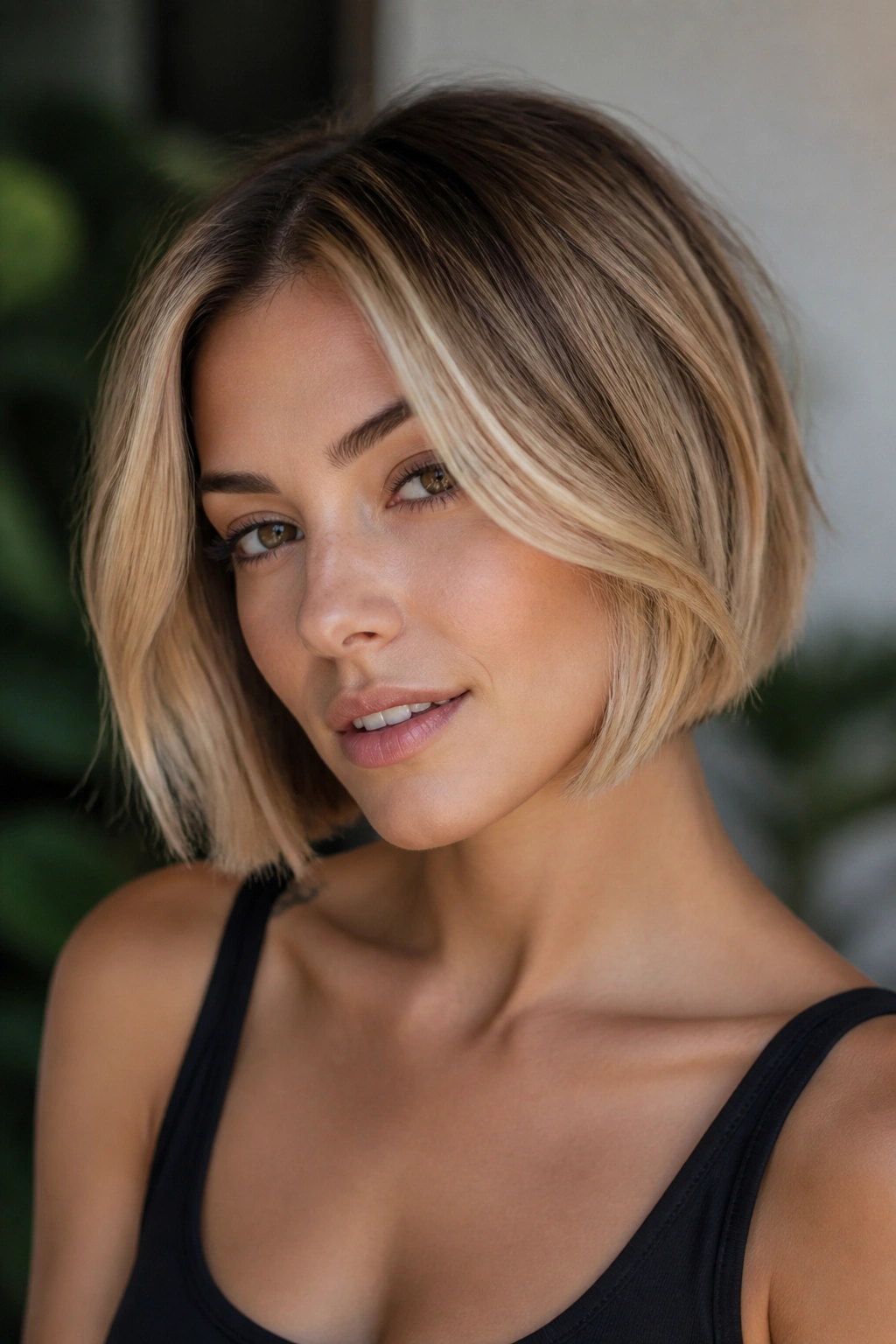
Contour highlights are like makeup for hair. The brighter pieces go exactly where you want light to hit — around the cheekbones, temples, and front layers — so the haircut gains shape even before you style it.
For brown hair, this works especially well when the rest of the color stays fairly dark. The contrast draws the eye forward and makes layered cuts look cleaner. On a round face, it can slim the outline a bit. On a long face, it can add width near the sides if placed lower and softer.
A lot of people ask for face-framing lightness but forget the underneath pieces. That’s a mistake. If you keep the whole rest of the head one flat brown, the front can look pasted on. A few supporting ribbons behind the front sections make the light feel part of the haircut.
Short, blunt, and very wearable.
11. Bronde Glaze With Smoky Roots
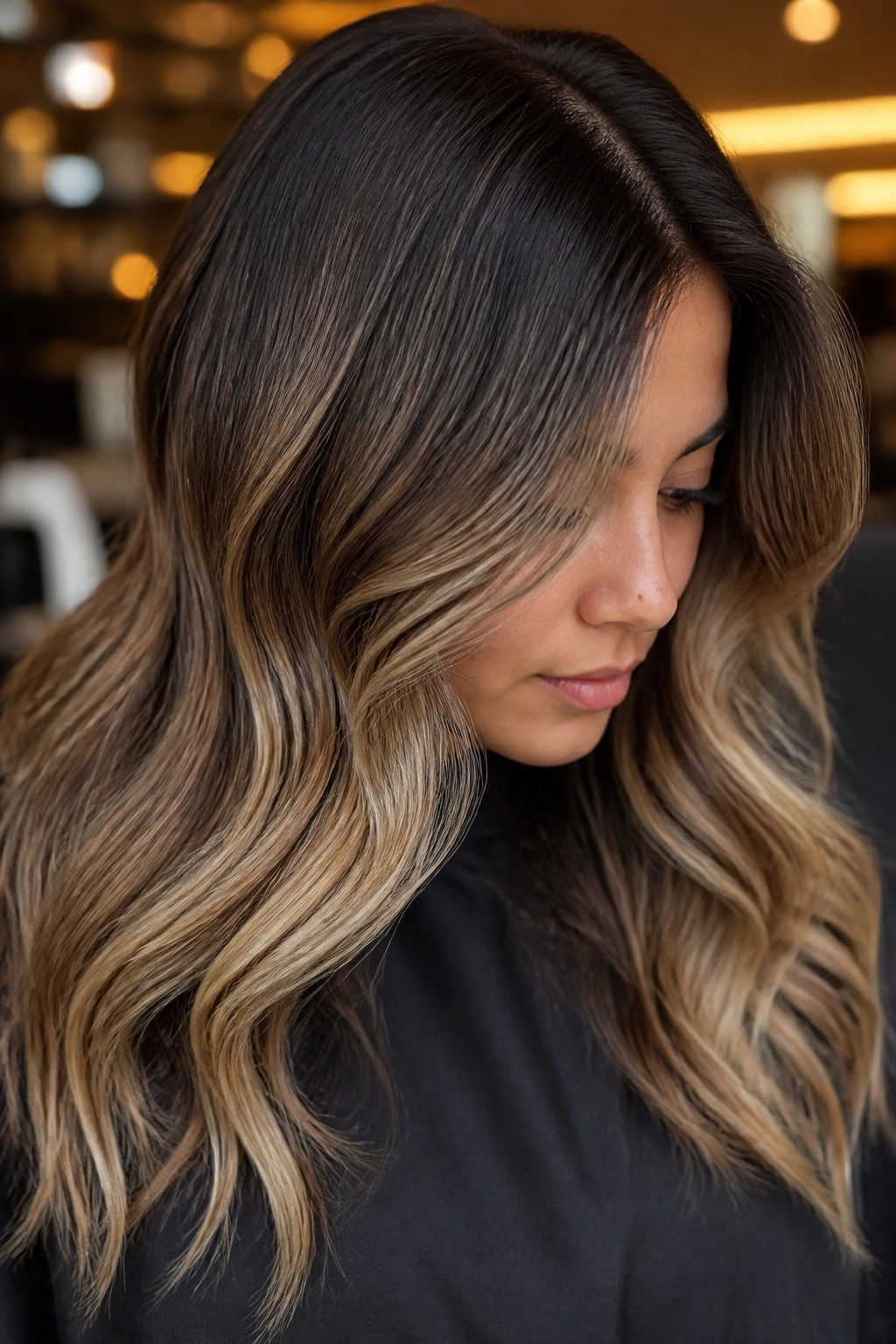
Bronde is one of those words that gets tossed around too much, but the look itself earns the hype. On brown hair, a bronde glaze keeps the base near brunette while letting the lightened pieces sit in that beige-blonde space that isn’t too pale and isn’t too dark.
The smoky root is the part that makes it easy to live with. Instead of lifting every strand right from the scalp, the color keeps some depth at the root and melts out into lighter mids and ends. That shadow buys you time between salon visits, and it also makes the overall color look more expensive.
Why It Feels Right
The finish is softer than full blonde, but brighter than plain brown. That middle space is useful if you’re not sure which side of the color line you want to live on.
It’s also a forgiving choice after summer lightening or previous highlights. A good gloss can pull everything into one tone without killing the dimension.
Best Pairing
A loose blowout. The smoothed bends show off the gradient from root to end.
12. Sandy Beige Babylights
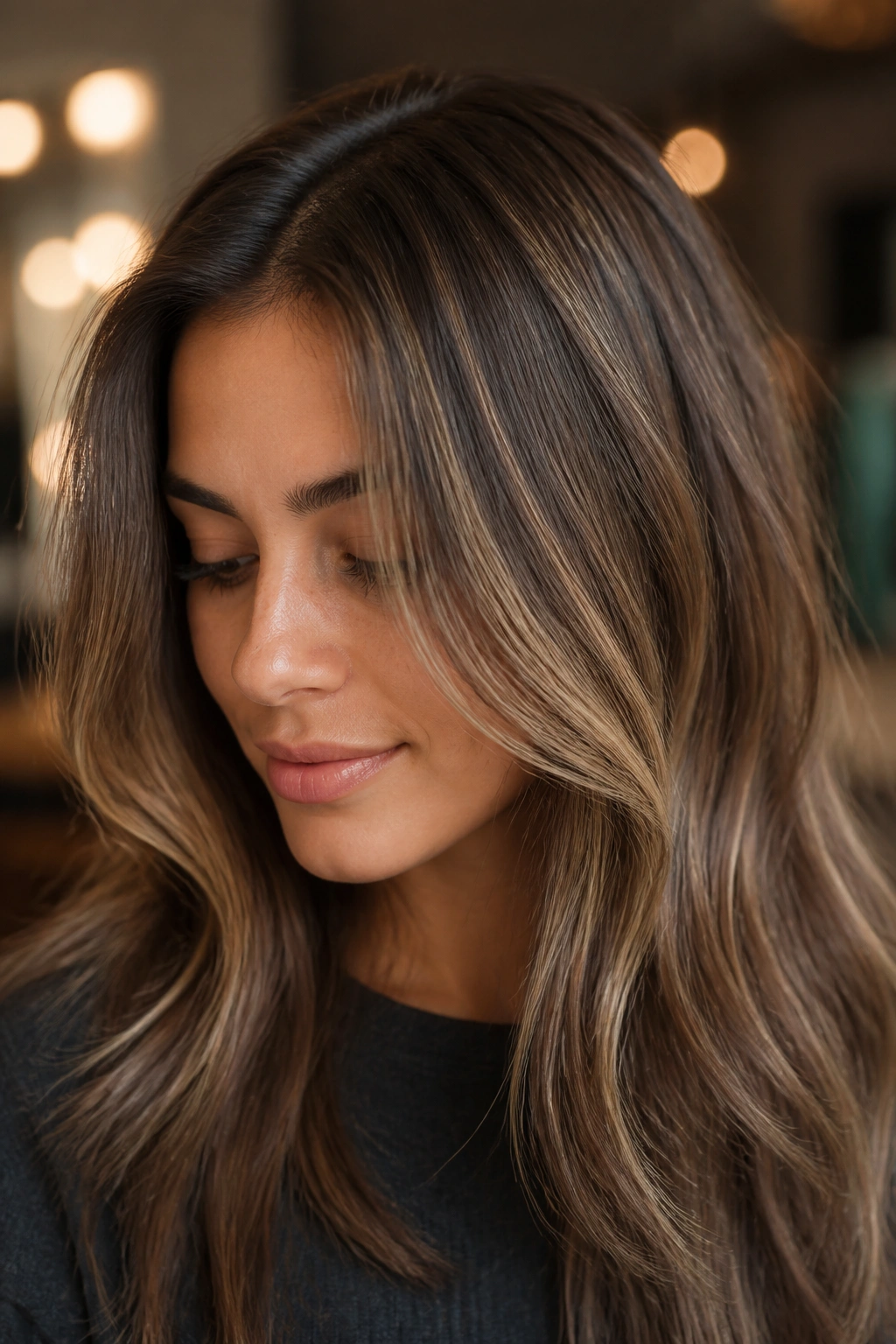
Sandy beige babylights are tiny, fine, and sneaky in the best way. They don’t shout blonde; they whisper it. On brown hair, that whisper makes the color look fuller and softer at the same time.
Unlike chunkier pieces, babylights are about density of light, not size. You get so many thin strands lightened to a sandy beige that the brunette base still dominates, but the whole head gains a delicate, airy feel. It’s one of the better choices if you want dimension without obvious stripes.
This works especially well on medium brown hair that can handle a few levels of lift without getting orange. The sandy beige tone keeps the finish from going too gold, which is where a lot of soft highlight jobs go wrong.
Best for: finer hair, straight styles, low-contrast looks, and people who want the color to grow out quietly.
13. Golden Maple Highlights
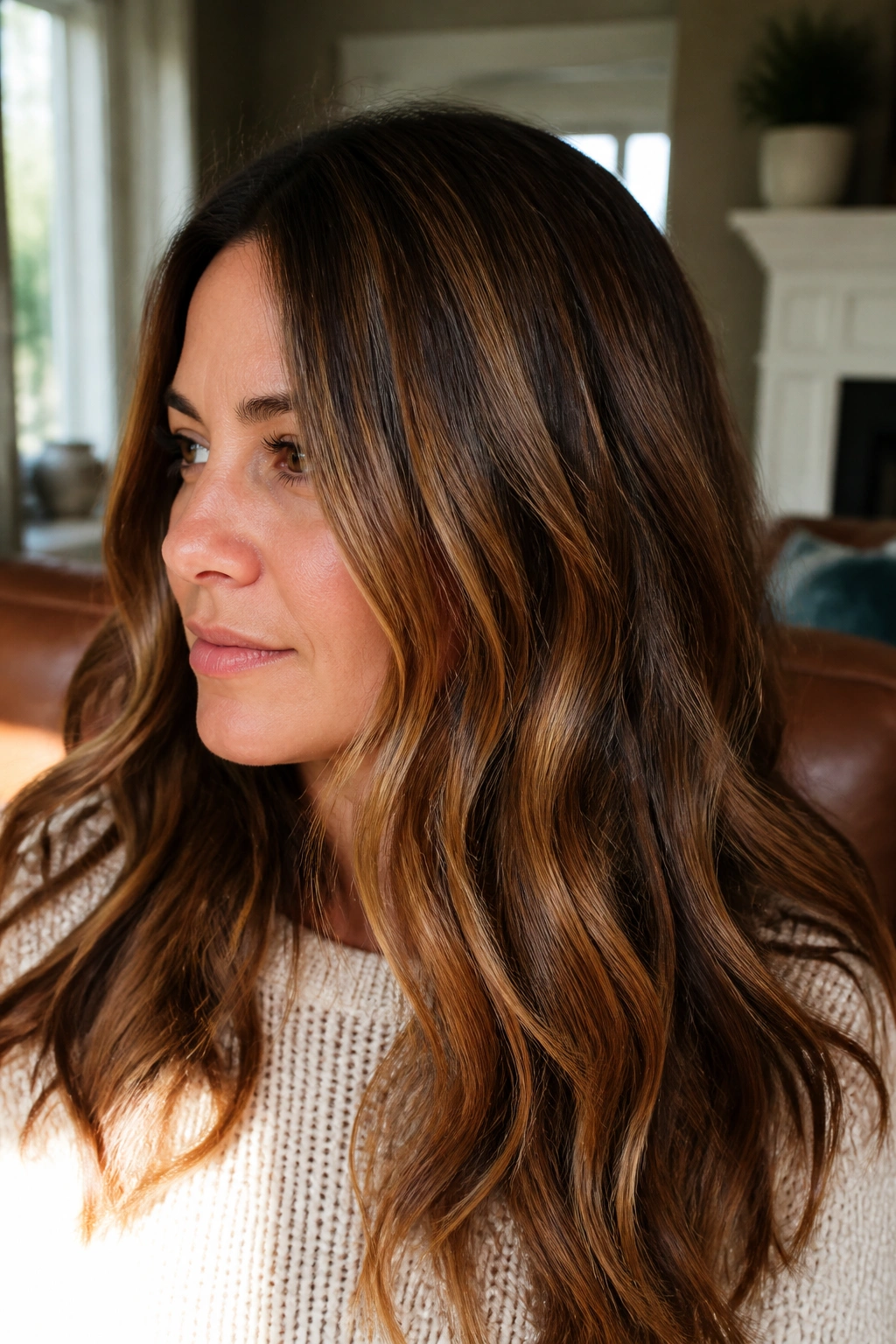
Golden maple highlights bring warmth back to brown hair that has started to look a little tired. The tone sits between amber, honey, and light caramel, so it feels richer than pale blonde but brighter than a plain brown gloss.
Why It Works
Golden maple flatters hair that already leans warm. It echoes the natural tones in chestnut, walnut, and medium brown bases, so the highlights feel like a better version of your own color instead of a separate color sitting on top.
A little brightness around the front is usually enough. If you spread this shade too evenly, it can flatten the overall look. The charm comes from contrast — darker brown underlayers, lighter maple pieces on the surface, and a hint of shine that moves when the hair moves.
Practical Details
- Best on wavy hair or soft curls
- Ask for painted highlights rather than chunky foils
- A warm gloss every few weeks keeps the gold from going brassy
- Looks especially good with layered cuts
14. Cool Mocha With Icy Beige Pieces
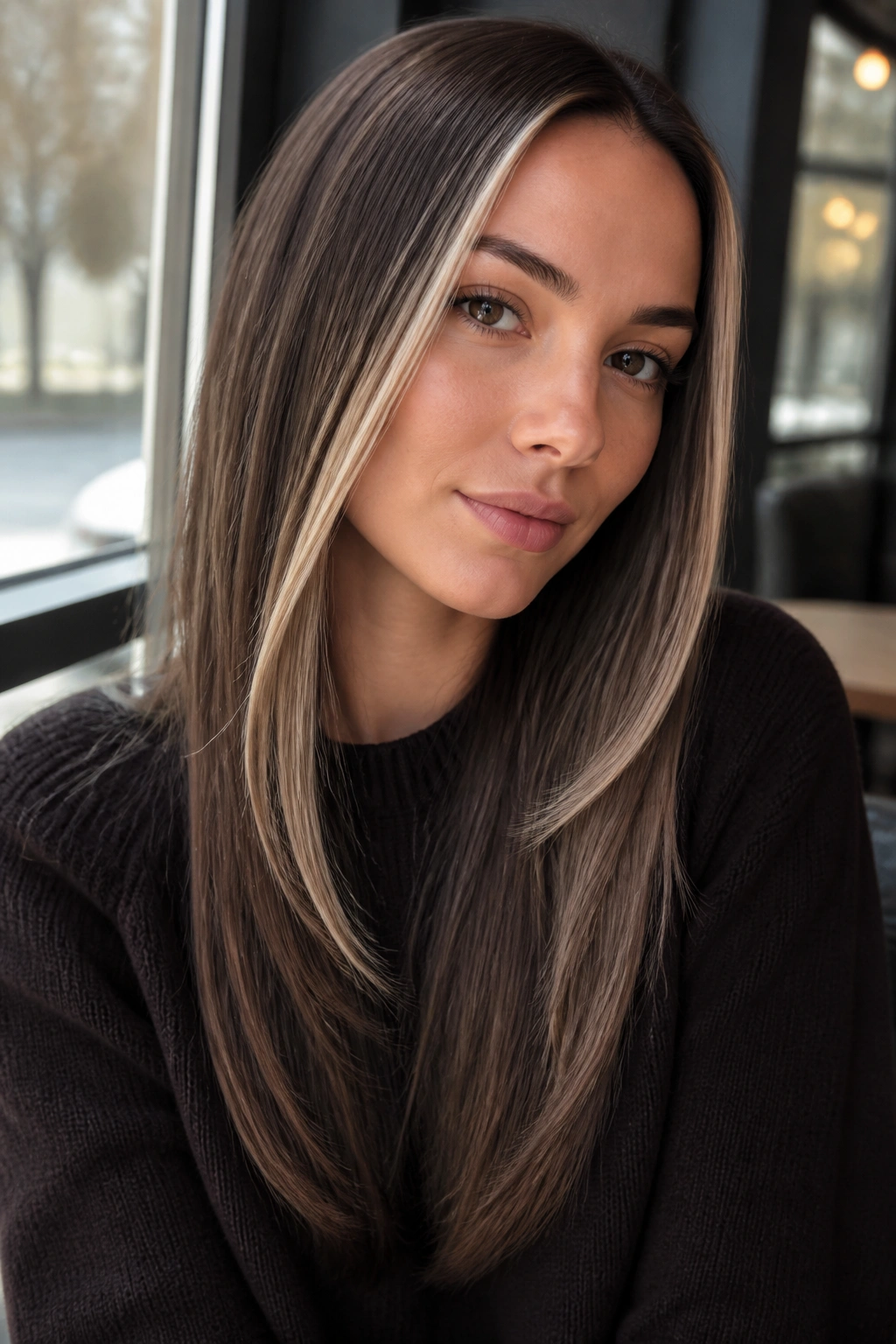
Cool mocha with icy beige pieces is for people who want brown hair to feel sleek and a little sharper. The mocha base keeps the color grounded, while the icy beige pieces add contrast without tipping into yellow.
This is a strong choice if your wardrobe runs cool, your skin has pink or olive undertones, or you simply don’t like warm blonde. The beige pieces are light, but they don’t shout. They sit on top of the mocha like pale silk.
The catch is maintenance. Cooler blonde shades can look dull if the toner fades, so this style asks for more attention than honey or caramel. It’s worth it if you like a clean, polished finish and don’t mind a toning shampoo.
If your hair is already over-lightened, though, go easy. Too much cool blonde on a weak base can look washed out fast.
15. Ribbon Highlights Through Long Layers
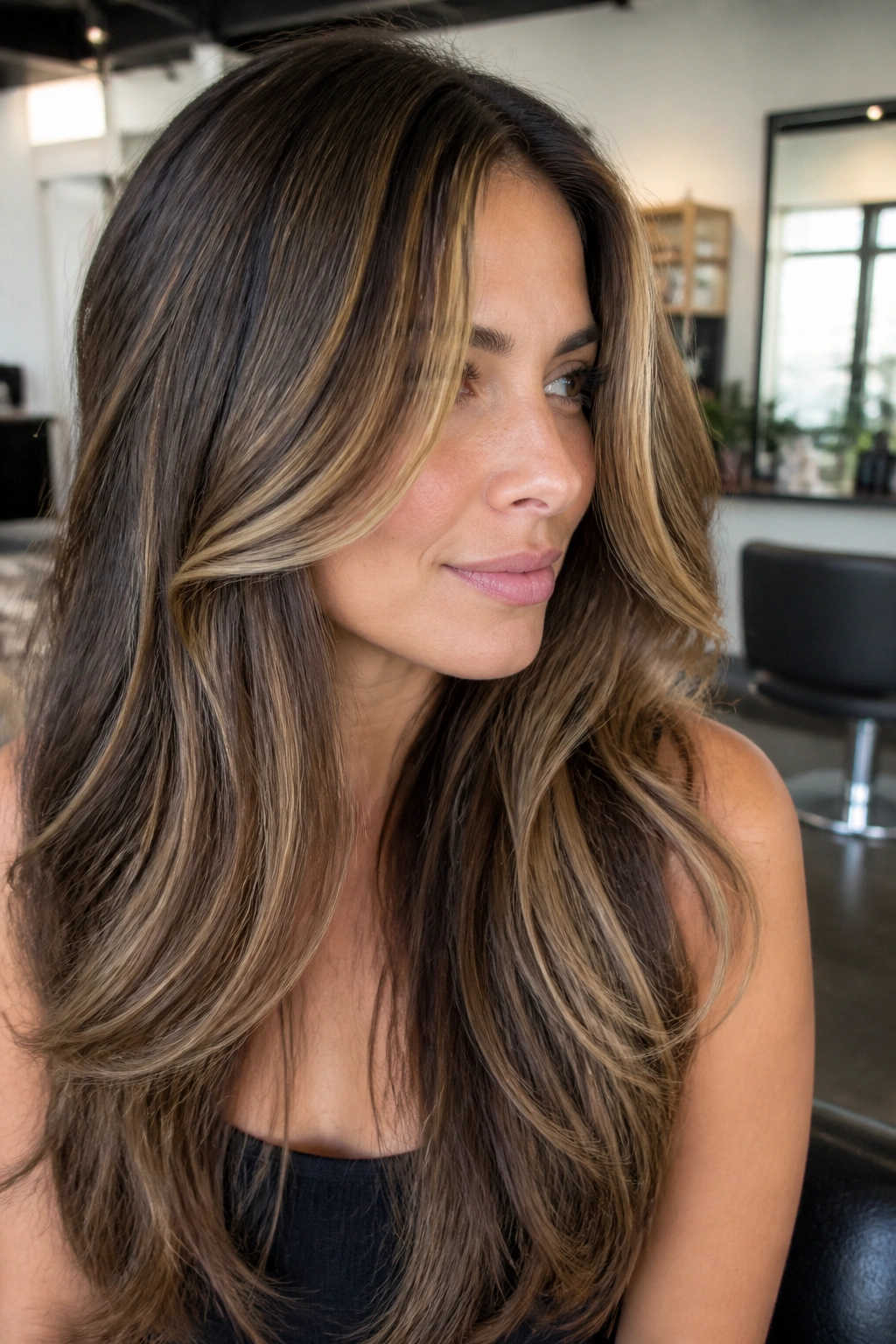
Long layers and ribbon highlights were made for each other. The layers give the hair movement, and the ribbons follow that movement instead of fighting it. On brown hair, this makes the color look like it’s shifting every time you turn your head.
Why They’re So Good
Ribbon highlights are wider than babylights but softer than chunky streaks. That middle ground is useful on longer hair because the eye has room to read the color change. You can use honey, beige, or light caramel depending on how warm you want the result to feel.
A stylist usually places these pieces to follow the cut: around the face, through the outer layers, and in a few strategic spots beneath the top layer. The blonde is visible, but it doesn’t sit as a stripe on the surface.
Ask For
- Long, painted ribbons
- Lightness concentrated from mid-length to ends
- A soft root melt
- Tone choices: beige blonde, honey blonde, or light caramel
16. Curly Brown Hair With Scattered Blonde Pops
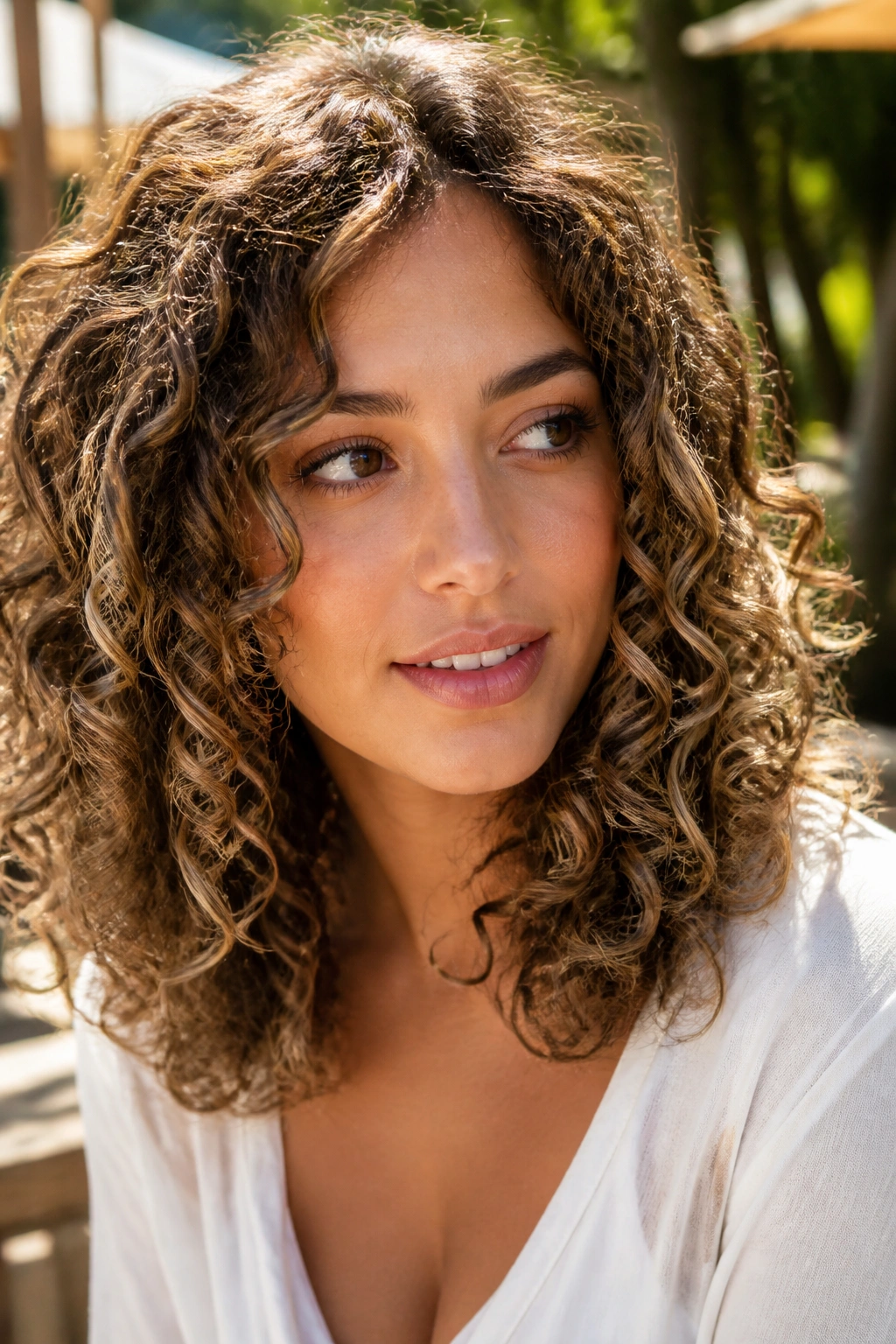
Curly hair handles color differently from straight hair, and that’s a good thing. Scattered blonde pops on brown curls make each coil stand out on its own instead of turning the whole head into one solid block.
The placement has to respect the curl pattern. If the blonde is painted only on the very top layer, it can disappear when the curls shrink. Better to work pieces through the surface and a bit underneath so the dimension shows from more than one angle.
I like this look because it keeps the curl shape intact. You do not need a lot of blonde to make curls look lively. A few well-chosen pieces around the face, crown, and ends can do more than a full head of lighter color.
Best on: medium to tight curls, shoulder-length cuts, and brown hair that needs depth, not a total overhaul.
17. Crown-Brightening Highlights for a Bob
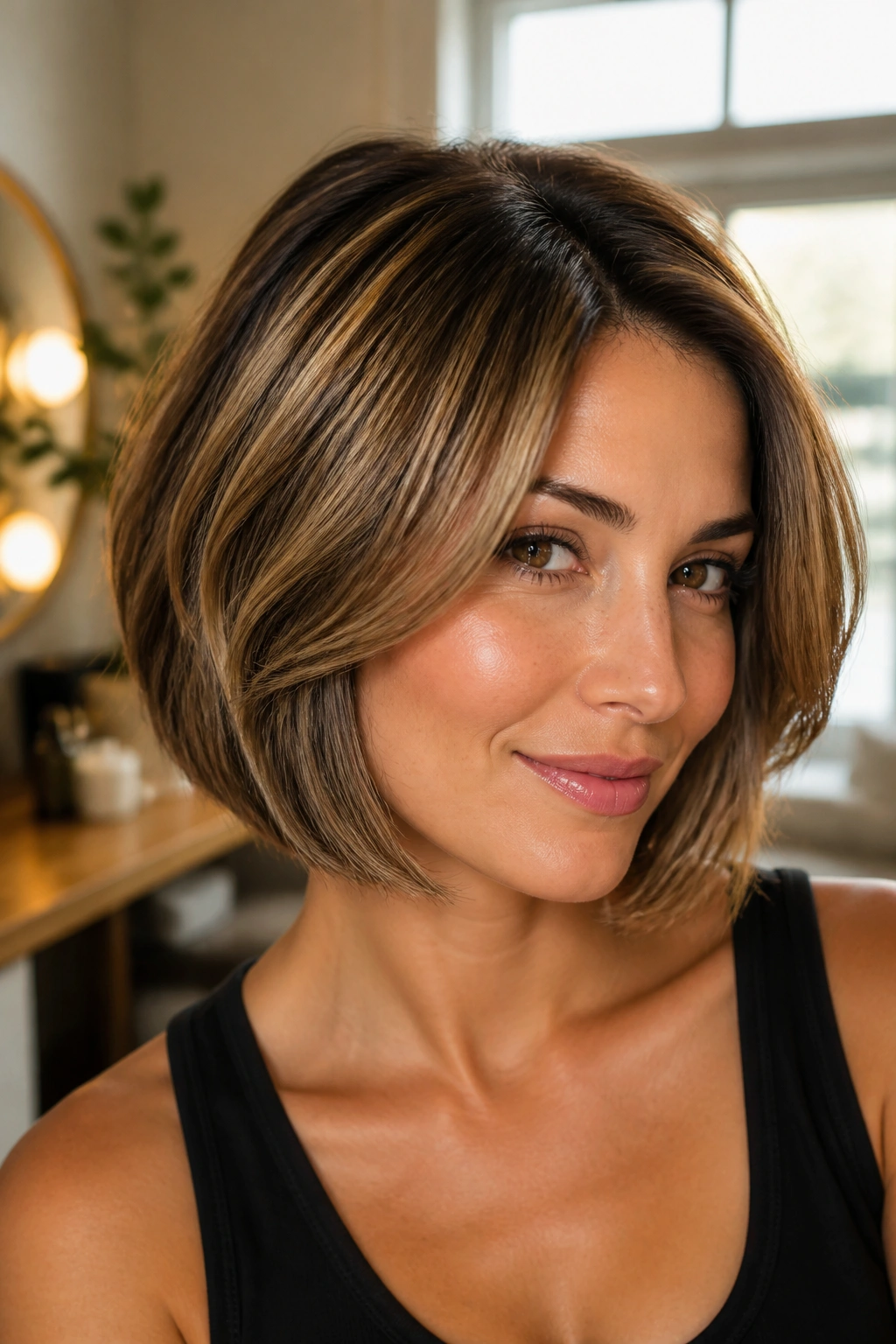
A bob can lose shape fast if the color is too flat. Crown-brightening highlights fix that by placing lighter pieces near the top where the light naturally lands, which gives the haircut lift without making the ends look thin.
On brown hair, this trick is especially useful because the bob already has a clear outline. Add a little blonde at the crown and the cut suddenly feels sharper and more alive. The color also helps if your hair tends to lie close to the head, since the lighter pieces give it a little visual height.
What Makes It Different
Unlike full balayage, this look is not about lightness everywhere. It’s about making the haircut read better. A few beige or caramel highlights near the part line and crown can be enough.
Good Pairings
- Chin-length bob
- Italian bob
- Soft A-line shape
- Blow-dried or tucked-behind-the-ear styling
18. Warm Walnut With Honey Lowlights
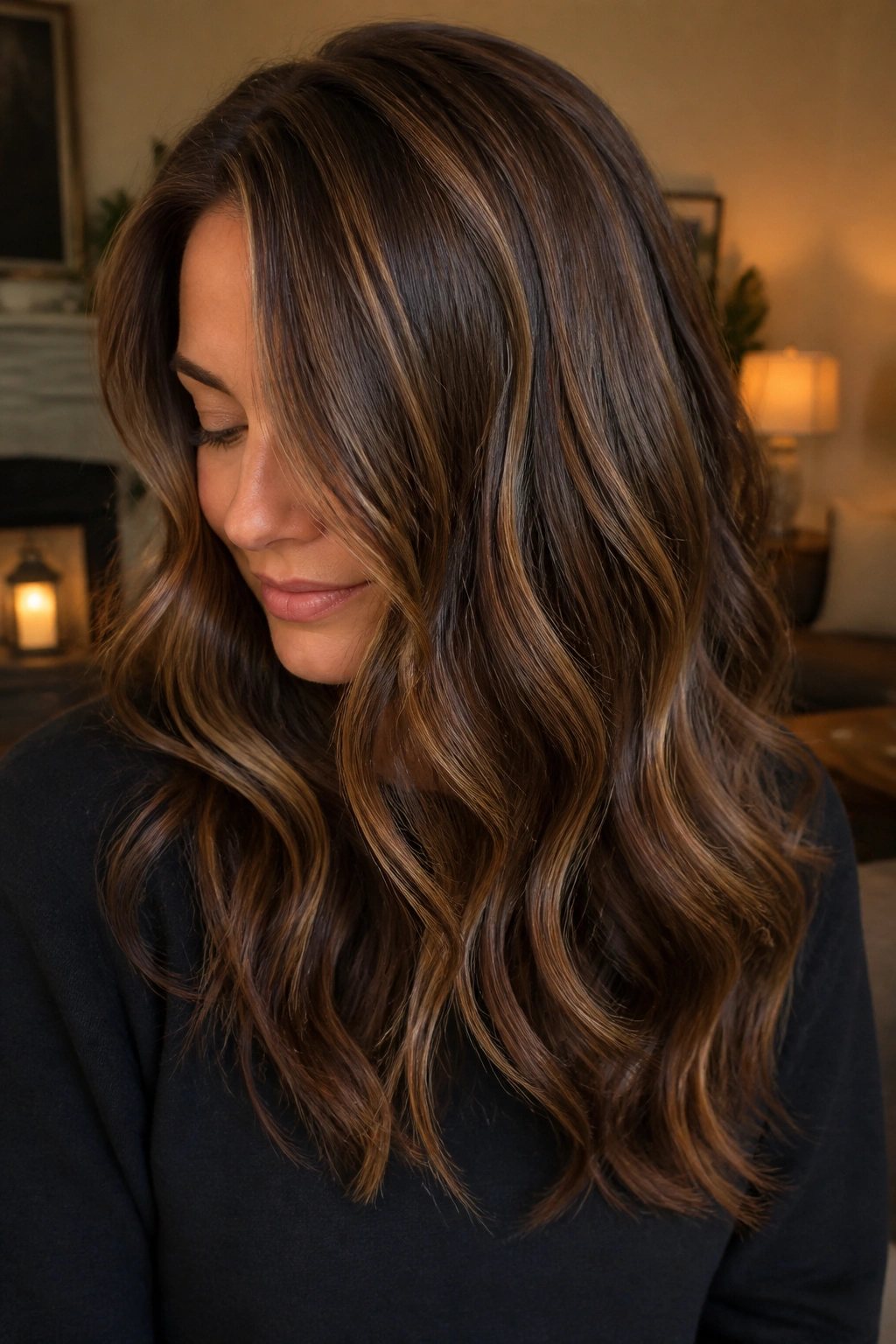
Warm walnut hair with honey lowlights is a little counterintuitive, and that’s why it works. The darker walnut base keeps the brunette side deep and glossy, while the honey lowlights prevent the color from going too flat or too red.
Usually, people think of lowlights as adding dark pieces. Here, the honey shade is woven in as a softer, slightly lighter interruption inside the brown. That breaks up the solid walnut tone and gives the hair a more layered look, especially on dense hair that can swallow color.
This is a good option if your brown hair has too much red and you want the color to feel calmer. The honey pieces can soften that without making the overall look blonde-heavy.
Tip: Keep the honey pieces narrow and avoid placing them too close together. Too much light in one area kills the depth that makes walnut brown look good.
19. Dimensional Foilayage
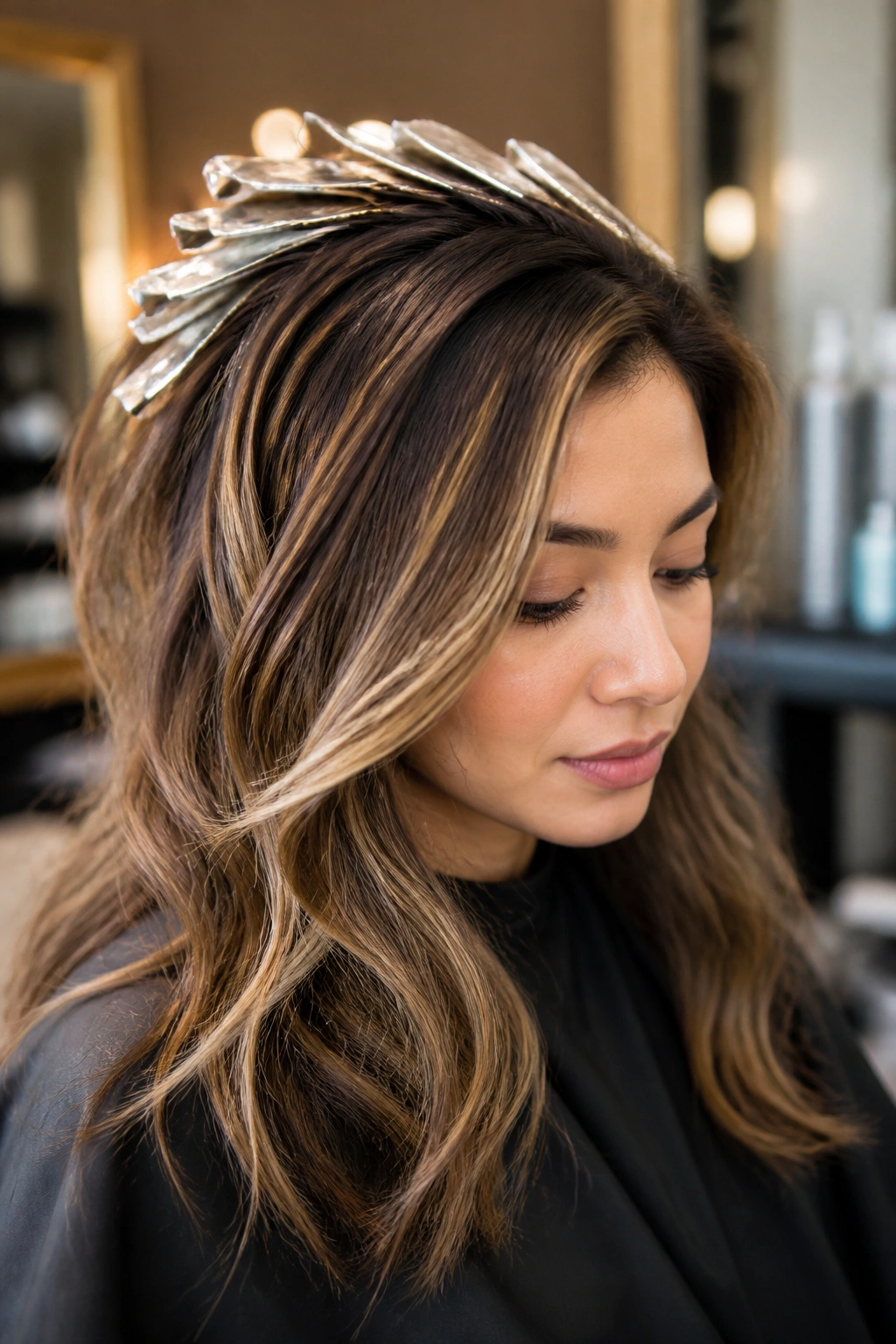
Foilayage gives you the softness of balayage with a little more lift where it counts. On brown hair, that means lighter blonde pieces that can reach a brighter, cleaner finish while still blending into the base.
It’s a smart move when you want more contrast than painted highlights alone can give. The foils help the hair lift higher, which is useful if your brown base is stubborn or very dark. The balayage part keeps the result from looking striped.
The Sweet Spot
This technique shines on medium to long hair because there’s enough length for the gradient to show. The top stays deeper, the mids brighten, and the ends get the strongest lift.
Ask For
- Foil-assisted painting
- Blonde at level 7 to 9, depending on starting color
- A root shadow to blur the grow-out
- Neutral or beige toner for a softer finish
20. Sun-Kissed Chestnut Waves
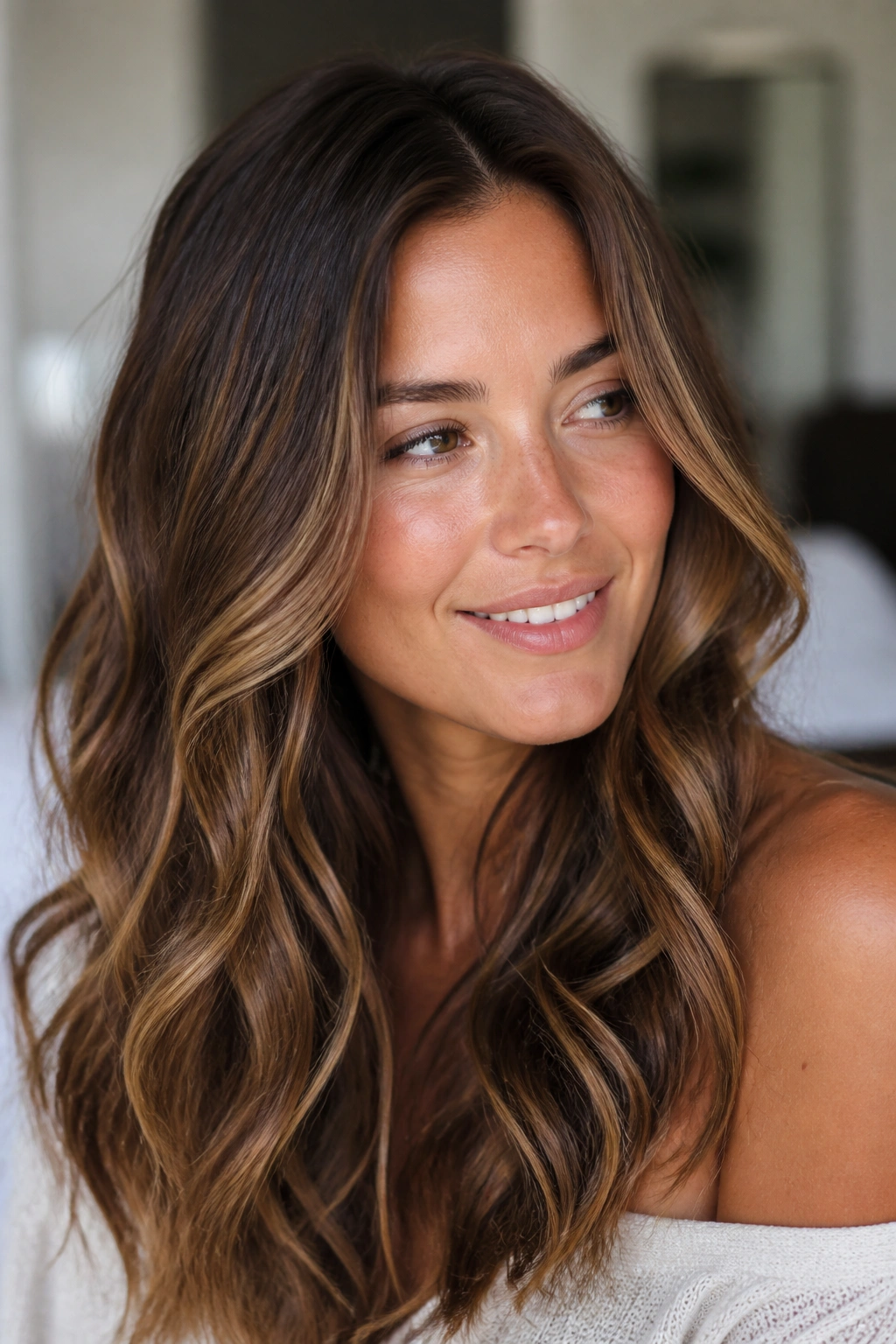
Sun-kissed chestnut waves are one of the easiest brunette blonde highlights looks to wear because they don’t ask for drama. The chestnut base brings the warmth, and the blonde touches look like they happened naturally over time.
The best version is subtle. The lighter pieces should sit where the waves bend: midlengths, ends, and a few face-framing strips. That way the hair looks like it has been lightened by movement and light, not a calendar appointment.
This style suits brown hair that already has some natural warmth. If your base is very cool, chestnut can look muddy unless the blonde is toned carefully. If your base is warm, though, this is a lovely, easy color to live with.
It’s one of those looks that doesn’t need much styling to make sense. Air-dried waves, a little cream, done.
21. Platinum-Touched Ends
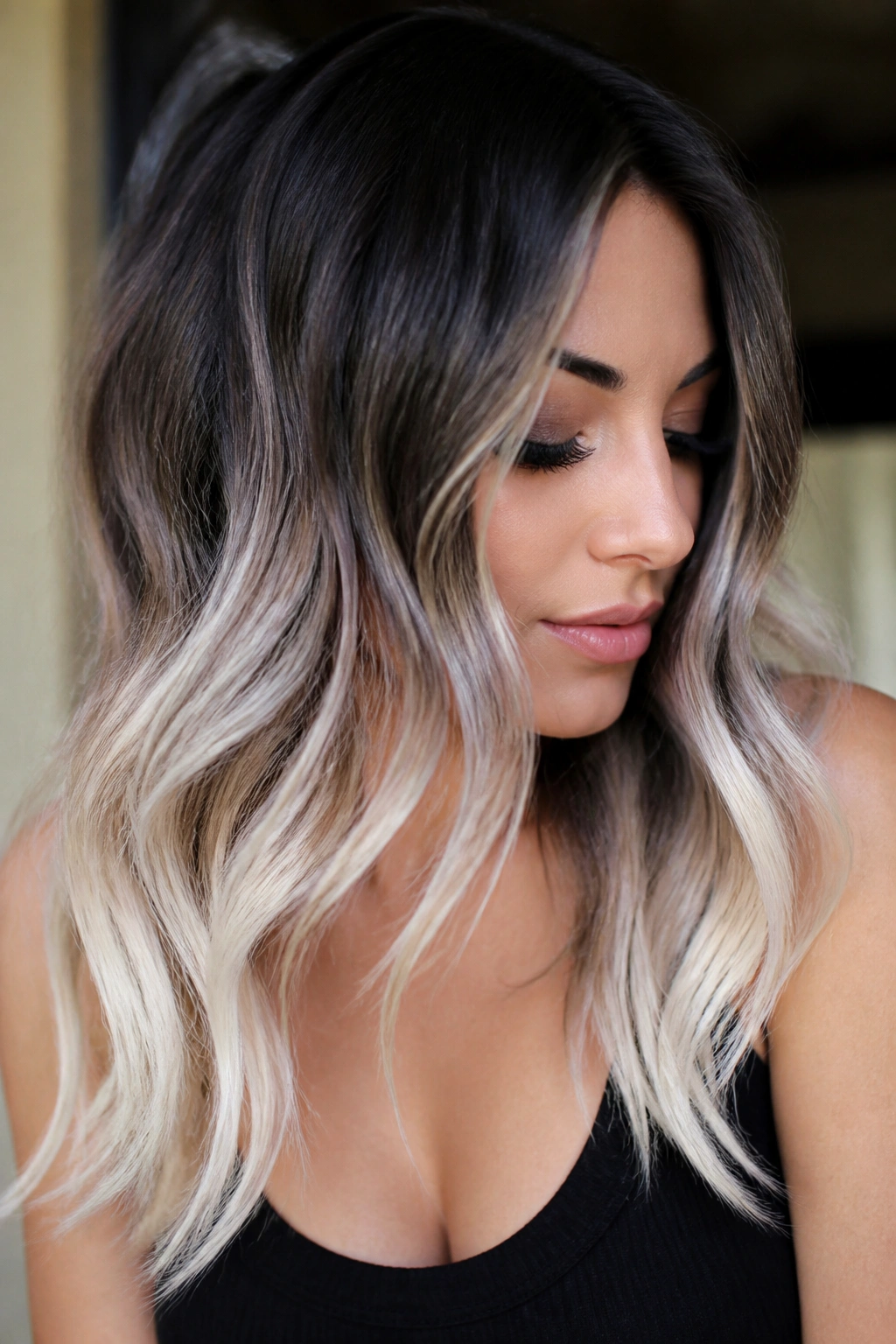
Platinum-touched ends are not for the faint of heart. The contrast is sharper, the maintenance is heavier, and the payoff is big. On brown hair, those pale ends create a clear fade from brunette roots to a near-white finish that can look striking when the hair is healthy.
This works best on hair that can handle the lightening process. Platinum needs a strong base, regular toning, and a stylist who knows how to lift without chewing up the ends. If the hair is dry or already over-processed, skip it. The look depends on clean, even lightness.
When it works, though, it really works. The dark-to-light shift gives brown hair a sense of edge, especially on blunt cuts or long layers with movement.
Best For
- Confident maintenance routines
- Healthy medium brown hair
- People who like contrast over softness
22. Espresso Base With Latte Highlights
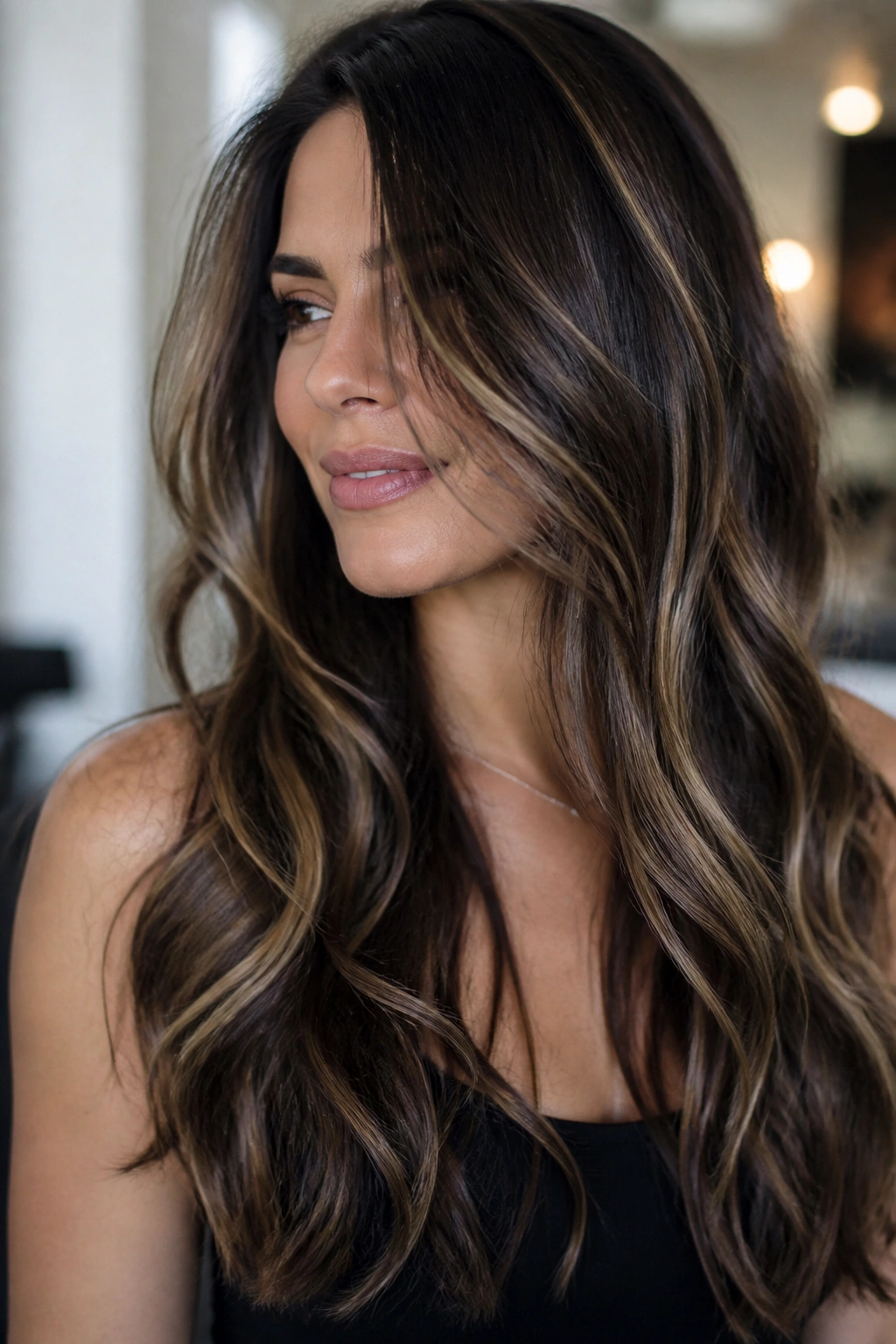
Espresso brown with latte highlights is a coffee-shop color story that actually makes sense. The base stays dark, rich, and glossy, while the latte pieces add a creamy, beige lift that does not look too warm or too pale.
I like this on hair that needs dimension but can’t afford to lose depth. The espresso shade keeps the overall feel serious, while the latte ribbons give enough brightness to keep the hair from sinking into one dark block. On long hair, the effect is especially good because the color can travel from top to bottom instead of sitting in one area.
This is not the place for strong gold or icy platinum. Latte lives in the middle. That’s the charm.
Best on: straight to softly waved hair, medium density, and brown bases that need a cleaner, more polished finish.
23. Soft Ombré From Brunette to Blonde
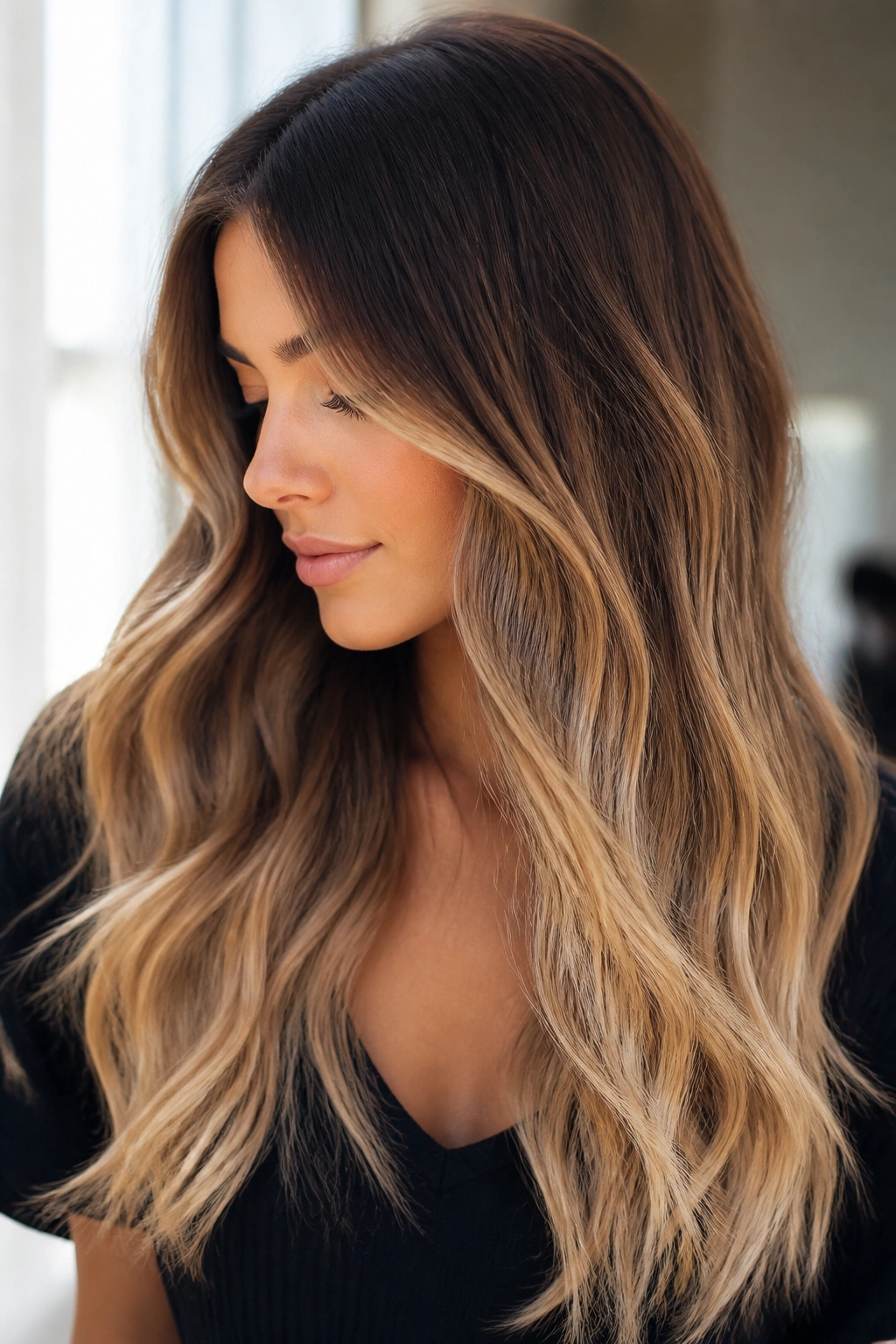
A soft ombré is still one of the easiest ways to wear brunette blonde highlights for brown hair without babysitting the roots every few weeks. The color starts deep at the crown and gradually shifts lighter toward the ends, with no hard line in the middle.
What makes it useful is the slow change. The eye doesn’t stop at one stripe or one foil. Instead, it moves from brown to lighter brown to blonde, which feels natural on longer lengths. If your hair is curly or wavy, that fade looks even smoother.
The blonde at the ends can be honey, beige, or sand. Pick the tone based on how warm you want the final result to feel. Cooler blondes make the fade look sleeker; warmer ones make it softer.
The only thing to watch is over-lightening the bottom half until it looks thin. Keep some depth in the last few inches.
24. Peekaboo Blonde Panels
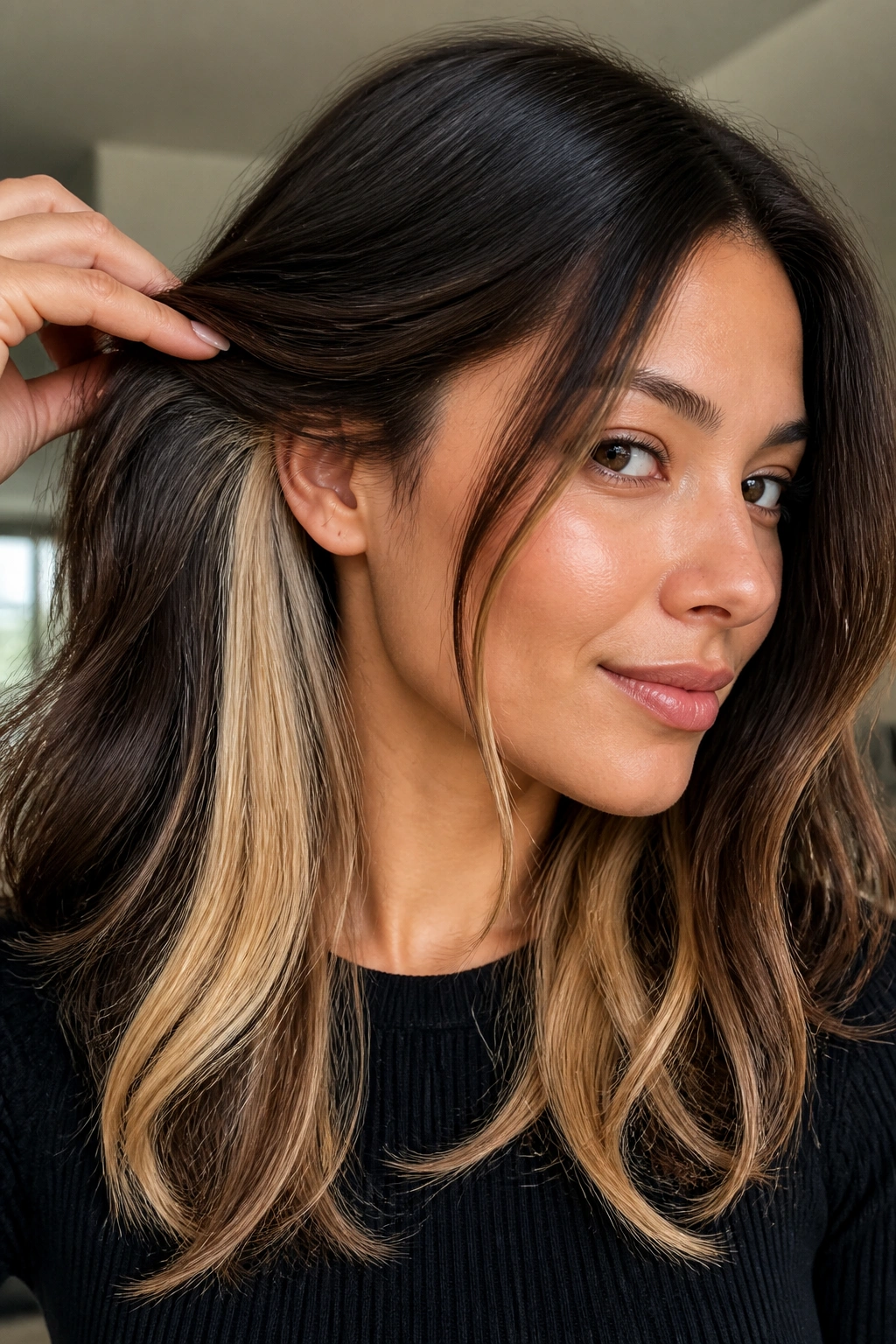
Peekaboo panels are the hidden-sweet spot option. From the front, brown hair still looks grounded. Move the hair, though, and the blonde underneath flashes through like a surprise.
That makes this look fun without being loud all the time. It’s a smart choice if you work in a conservative setting, want a little edge, or just enjoy color that changes depending on how you style it. Brown hair hides the lighter panels until you want them to show.
Placement is everything. Put the panels too high and they stop being peekaboo. Put them too low and they never show. The best version sits under the top layer, especially near the sides and around the back where movement reveals them.
Best Way To Wear It
Try half-up styles, loose curls, or a clipped-back front. The blonde appears in little bursts, which is the fun of the whole thing.
25. Rooted Blonde With Lived-In Grow-Out
Rooted blonde is what happens when you let the brunette base do some of the work. The root stays deeper, and the blonde starts a little lower, so the grow-out looks intentional instead of overdue.
This is one of the most practical brown hair highlight looks if you don’t want to sit in a salon chair constantly. The darker root blends into lighter mids and ends, which hides new growth well. It also keeps the scalp area from looking harsh, especially if your natural color is medium brown or darker.
The tone of the blonde matters here. Beige, sandy, and soft gold all work. The root should not be too dark or too thick, or the hair can look heavy at the top.
What To Tell Your Colorist
- Leave 1 to 2 inches of root depth
- Blend into neutral blonde or soft beige
- Keep the lightness concentrated through the lower half
- Finish with a gloss for a smooth transition
26. Bronzed Brunette With Apricot-Blonde Sheen
Apricot-blonde sheen on brown hair has a warmer, softer feel than standard gold highlights. The bronzed brunette base gives depth, and the apricot pieces add a peachy glow that can make the hair look almost lit from within.
This is a lovely choice if you want warmth without sliding into orange. Apricot works because it sits between blonde and copper. It brings life to medium brown hair, especially when the skin tone can handle a little warmth around the face.
The key is restraint. A few apricot ribbons in the right places are enough. Too much and the color starts reading orange. Used lightly, it gives the hair a fresh, sun-baked look that feels easy to wear.
I’d choose this for layered cuts and soft waves. The movement helps the apricot blend instead of sitting on top.
27. Subtle Babylights for Fine Brown Hair
Fine brown hair can look thicker when the color is done in tiny babylights instead of broad highlights. That’s because the color change happens in lots of small strands, which creates the illusion of depth without breaking up the surface too much.
For this hair type, less really is more. A few wider blonde pieces can make the hair look sparse, but babylights spread the brightness out so evenly that the eye reads fullness instead of gaps. A beige or soft caramel tone usually works best because it keeps the look gentle.
How to Wear It
- Ask for very fine foils
- Keep the blonde close to the natural brown level
- Use a light gloss instead of a stark toner
- Style with a soft bend to show the dimension
If your hair is fragile, this is a nicer route than aggressive lifting. The color stays light and airy without chewing up the ends.
28. High-Contrast Blonde Streaks for Bold Brunettes
High-contrast streaks are for the person who wants brown hair to make a scene. Not a messy one — an intentional one. Thick blonde ribbons against a dark brunette base create a sharp graphic effect that can look brilliant on the right cut and utterly wrong on the wrong one.
The style works best when the blonde is placed with purpose: around the face, through the outer layers, and in a few bold panels where the haircut already has structure. If the streaks are random, the whole thing falls apart. If they’re mapped to the cut, the result feels sleek and a little dramatic.
Keep the blonde tone clean. Beige, champagne, or even a pale neutral blonde can work, depending on how much contrast you want. Very yellow streaks tend to cheapen the look.
This one suits straight hair, blunt bobs, strong layers, and anyone who likes their color to say something before they do. It’s loud in a controlled way. And that’s the appeal.
