



Cherry highlights on brown hair can look rich and glossy, or they can slide straight into stripe territory if the placement is off by half an inch. That tiny difference matters more than most people think.
Brown hair is a generous canvas. It can hold cherry wine, mulberry, cranberry, and those deeper red-copper mixes that look almost black indoors and red only when light hits them. The trick is knowing whether your base sits at a level 4, 5, or 6, because the same cherry formula reads very differently on espresso brown than it does on soft chestnut.
I’ve always liked cherry tones on brunettes for one simple reason: they move. A few red ribbons around the face, a hidden panel under the crown, or a soft melt through the ends changes the whole haircut, even when the color is subtle. Under office lighting it can look polished and dark; outside, it flashes warm and vivid. That shift is half the appeal.
The twenty looks below move from quiet to bold, from low-commitment to high-contrast, and from fine woven pieces to chunky, fashion-forward streaks. If your brown hair tends to pull orange, the cooler options will help. If you want the red to show only when you move, the hidden placements are where to start. The first one is the softest place to begin.
1. Thin Cherry Ribbon Highlights
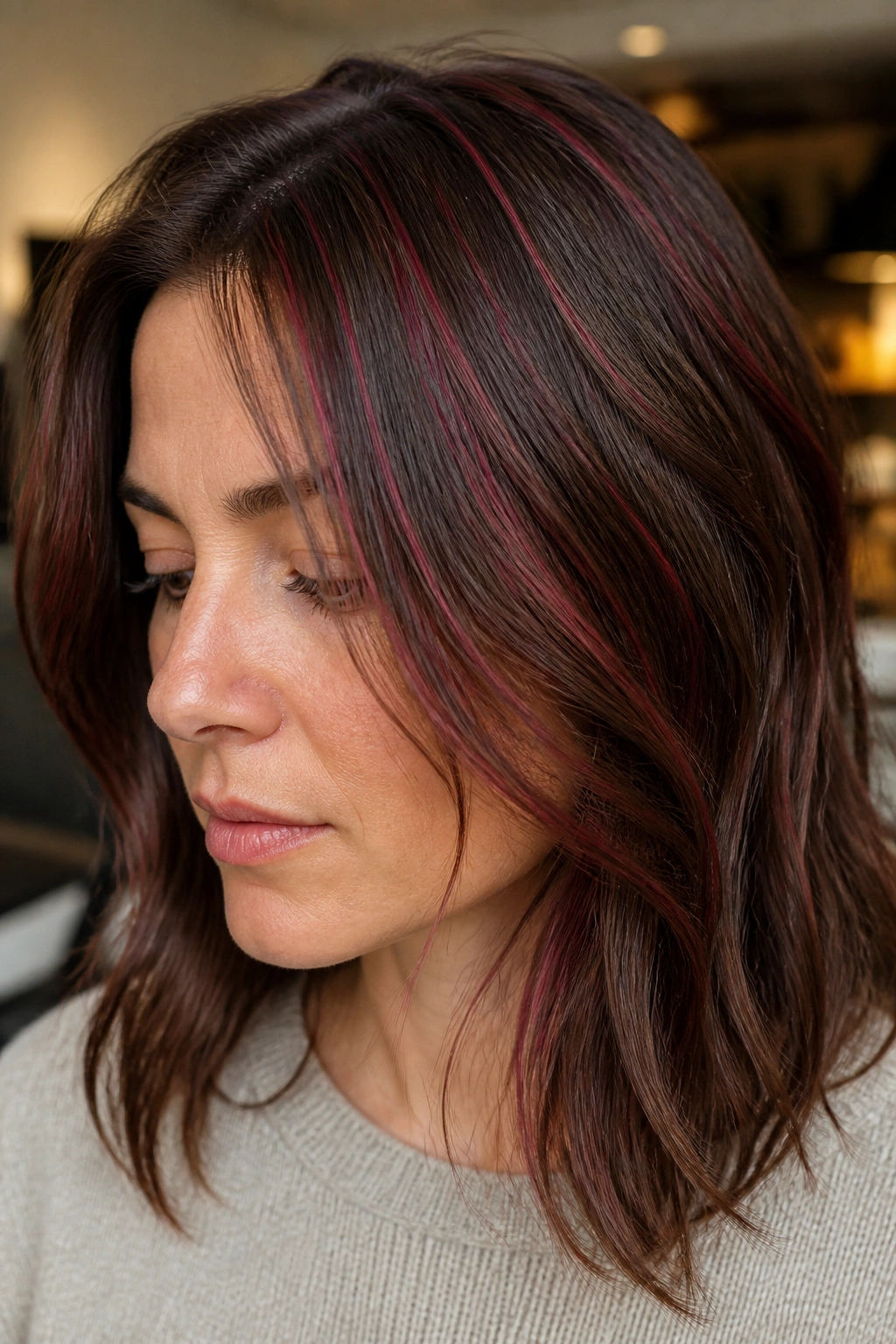
Thin cherry ribbons are the easiest way to test red on brown hair without making the whole head feel busy. The color stays visible, but the brown base still does most of the talking. That matters. A few narrow red pieces can make dark brunette hair look shinier because the contrast is controlled, not harsh.
Why the ribbon effect feels softer
Ask for microfoils or very fine hand-painted slices instead of chunky panels. I like this style on medium brown hair that sits around level 5 or 6, because the red has enough lift to show but doesn’t need to be loud to matter. On straight hair, the ribbons create clean lines; on waves, they break up into little flashes that move nicely.
- Best on level 5 to level 6 brown
- Works with 1/8-inch to 3/16-inch sections
- Great if you want red that shows in motion, not all at once
- Easier to maintain than a full red transformation
My favorite tip: keep the ribbons slightly closer to the face and crown, then let the lower layers stay darker. That gives the color shape instead of scattering it everywhere.
2. Cherry Balayage on Chestnut Brown
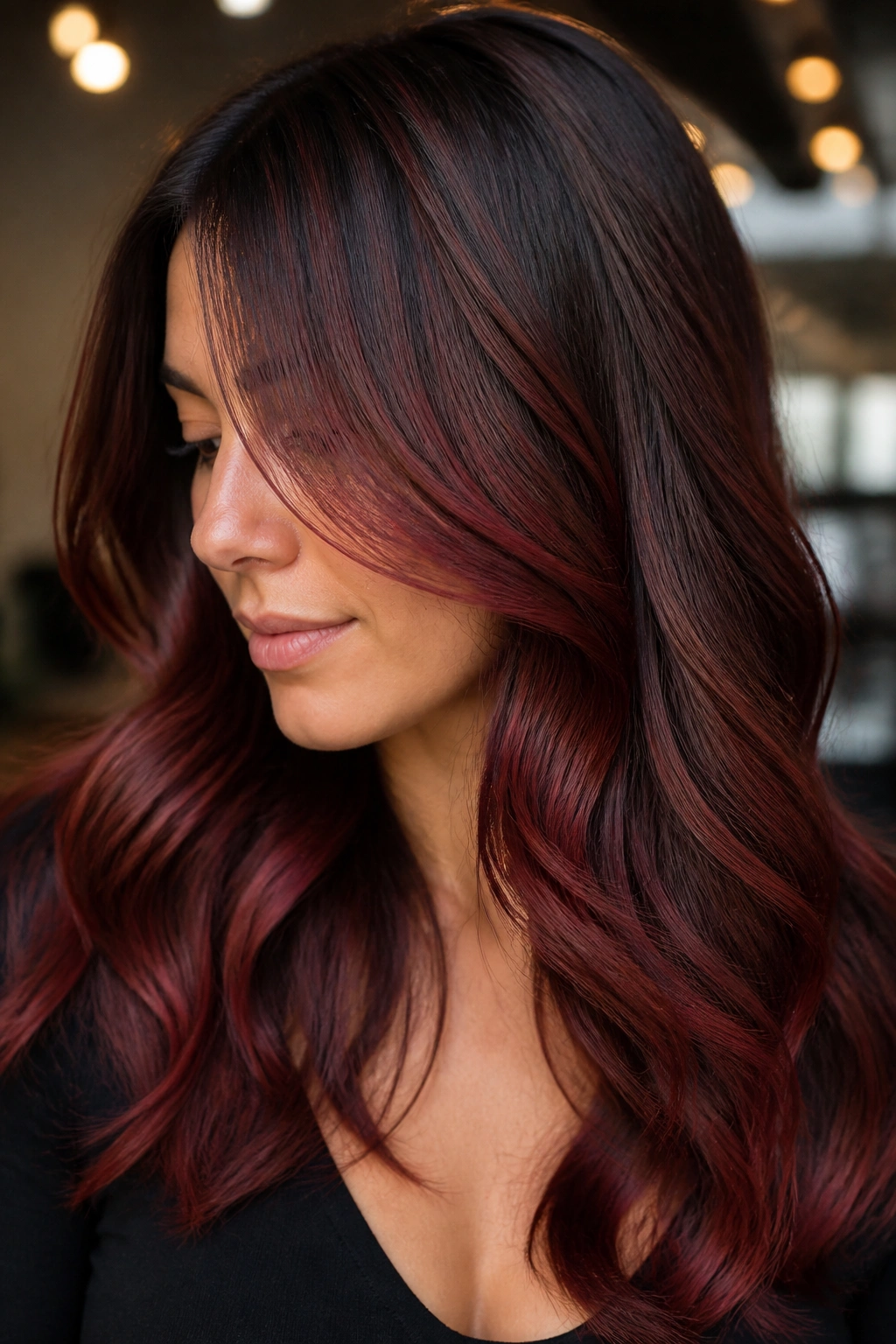
Cherry balayage is the safest strong red for brown hair. It’s painted on by hand, which means the color can start softer near the roots and get richer through the mid-lengths and ends. Chestnut brown is a sweet spot for it because the base already has warmth, so the cherry reads glossy instead of screaming bright.
That’s the whole point.
On long layers, balayage lets the red fall where the hair naturally bends. The color catches on the outer curves of waves, then disappears a little in the shadow underneath. It feels expensive in the old-fashioned sense — well placed, not overworked. If you want red that grows out with less fuss, this is the one I’d put near the top of the list.
3. Face-Framing Cherry Money Pieces
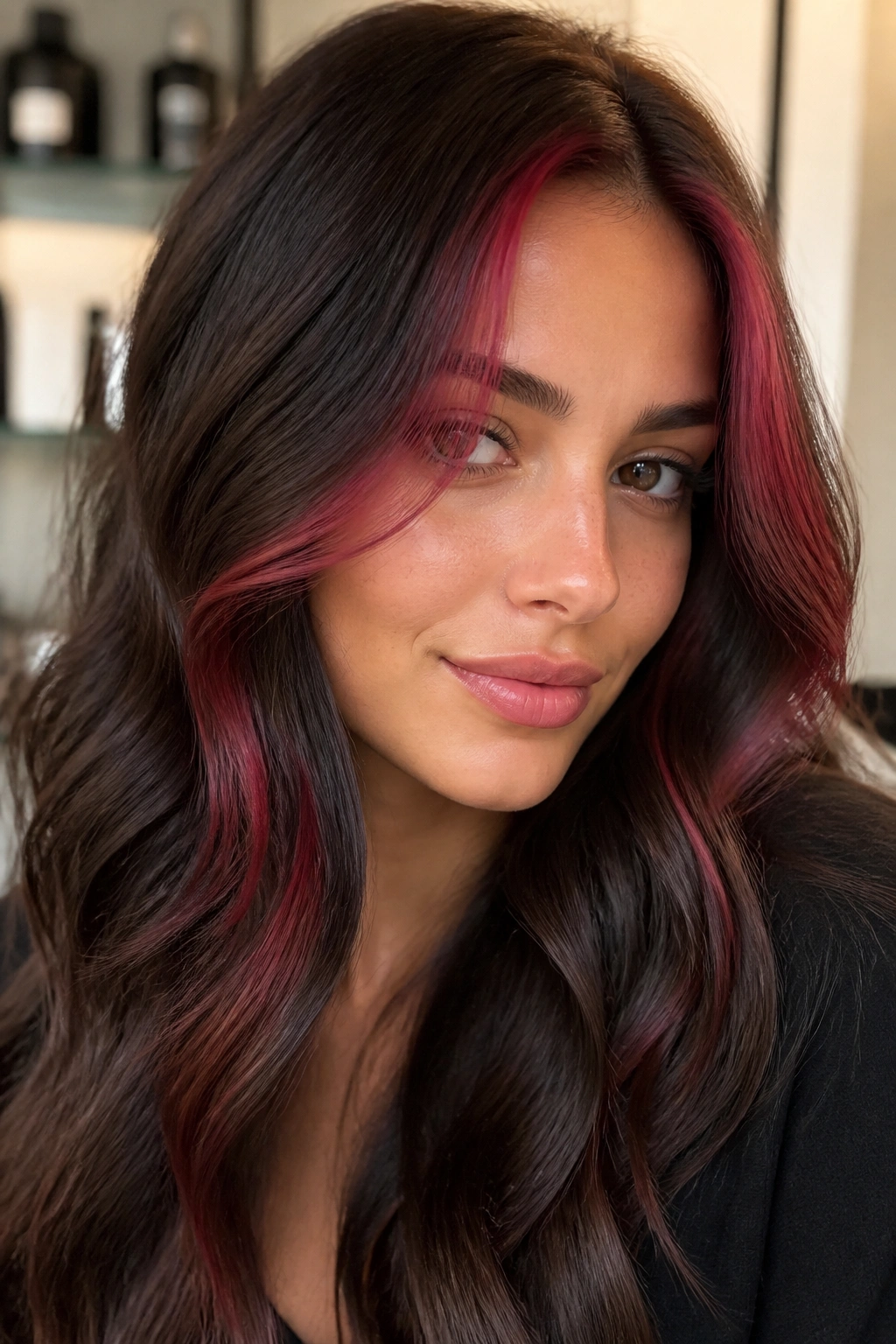
Why do face-framing cherry pieces look so bright, even when the rest of the hair stays brown? Because the front sections sit where the eye lands first. They also move away from the face as you tuck hair behind your ears, which gives the color a second life. It’s a small placement trick, but it changes everything.
How to ask for it
Tell your colorist you want two to four brighter pieces at the hairline, not a full red halo. On brown hair, a cherry money piece looks best when it’s a shade lighter than the rest of the red work. That contrast gives the face a little lift, especially if you wear your hair parted in the middle or slightly off-center.
If your hair is dark brown, ask for the front pieces to be softened with a gloss so they don’t turn neon. If your hair is medium brown, you can push the red brighter. Either way, this style grows out gracefully because the roots stay dark and the drama stays near the face.
4. Cherry Peekaboo Panels
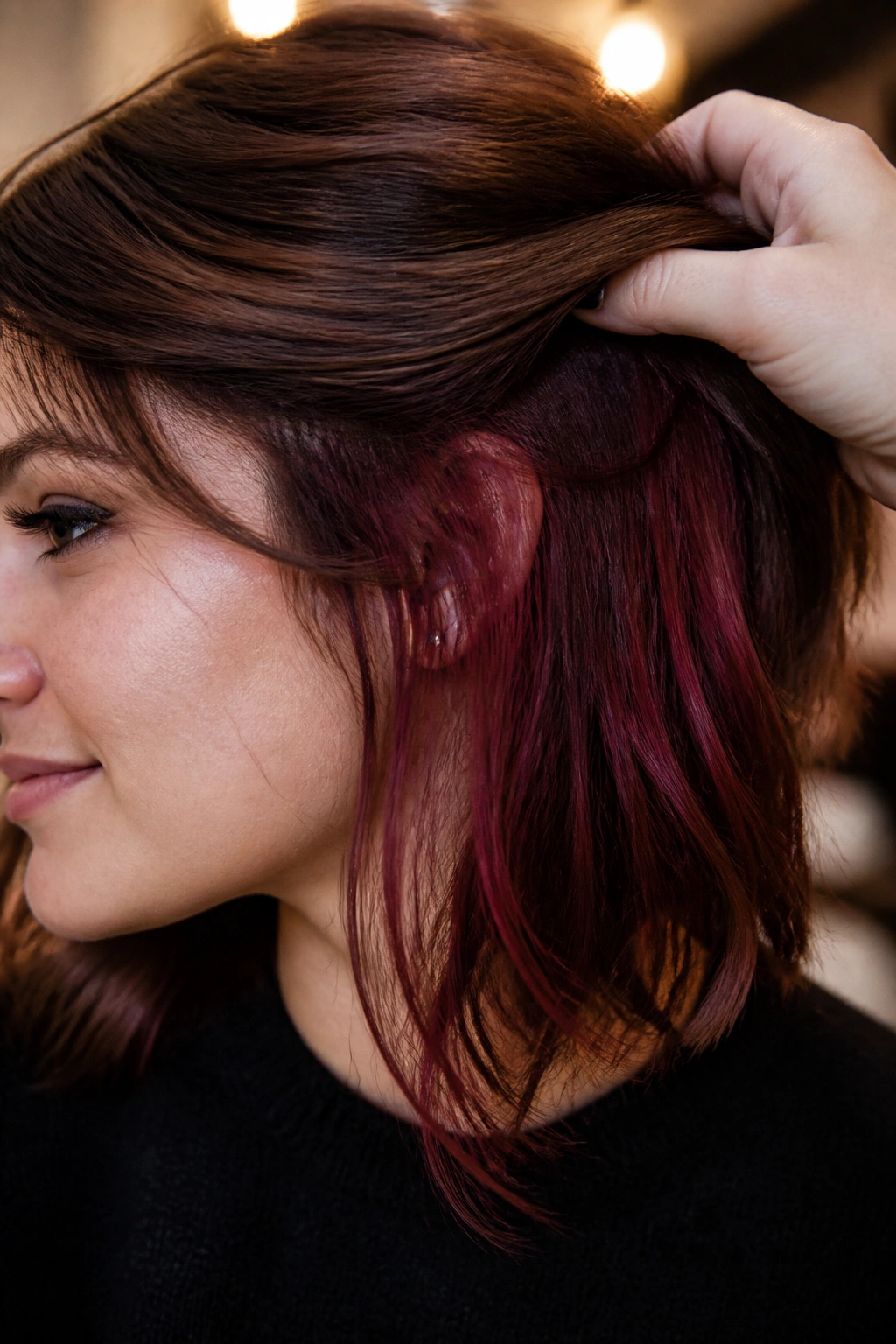
A friend with shoulder-length brown hair once kept her color hidden under the top layer, and the effect was better than I expected. The hair looked polished when worn down, then flashed red when she pinned it up or tossed it over one shoulder. That’s the charm of peekaboo cherry panels — they feel private until they don’t.
Place them beneath the top canopy, usually through the underlayers around the ears and nape. The red shows through when the hair moves, but it doesn’t dominate the haircut. This is a good choice if you work somewhere conservative or if you want color that behaves differently depending on how you style it.
- Best for half-up styles and ponytails
- Easier to hide during grow-out
- Good on medium-length bobs and lobs
- Looks strongest on smooth blowouts or loose curls
The little surprise is the point. If you like color that feels slightly tucked away, this is one of the smartest ways to wear cherry on brown hair.
5. Cherry Cola Highlights for Dark Brown Hair
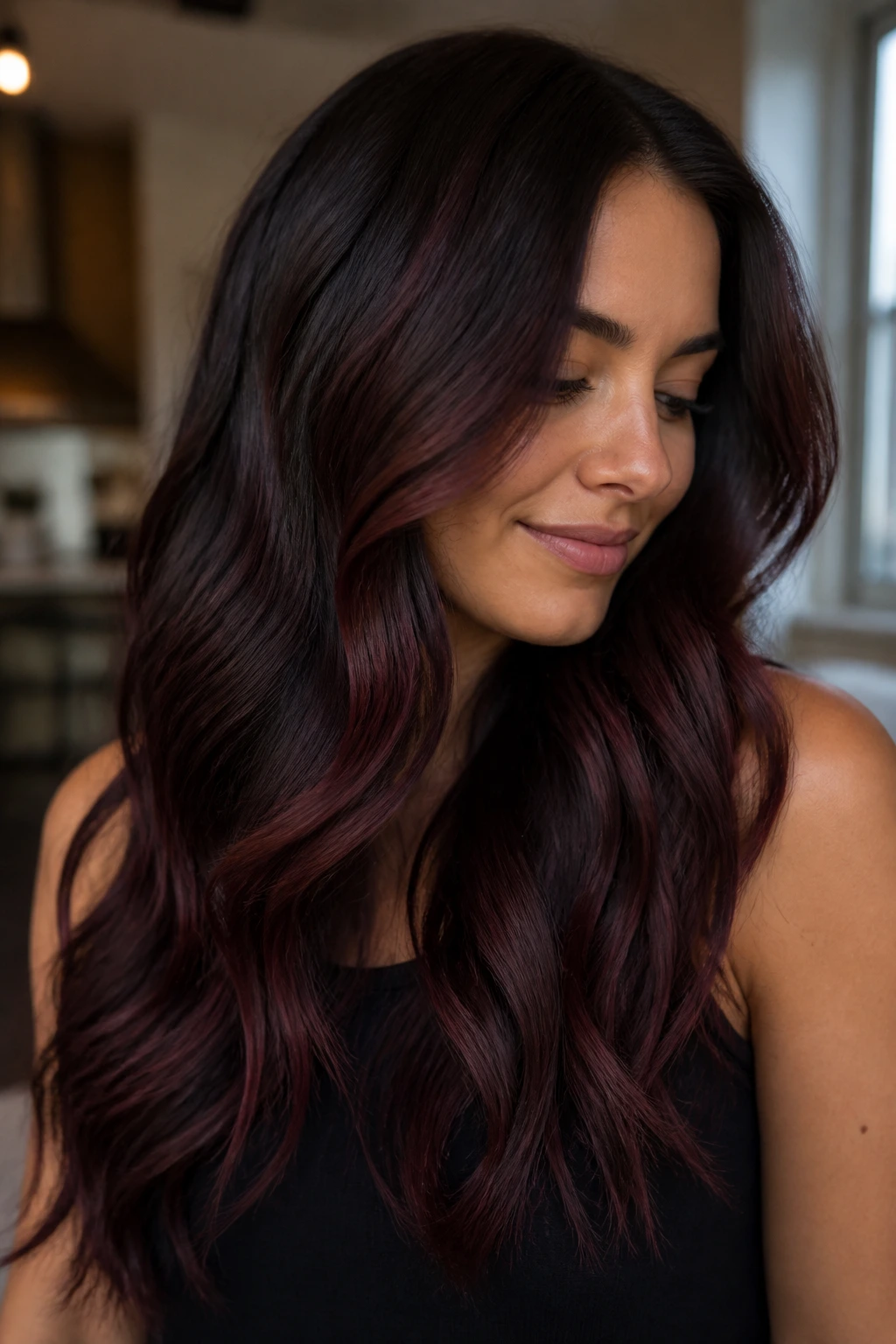
Cherry cola highlights lean deep, moody, and a little smoky. On dark brown hair, they don’t read as bright red first; they read as shine. Then the light shifts and the red comes forward. That makes this look feel wearable, even on hair that’s close to espresso.
I prefer this version when the client wants dimension more than contrast. The cherry is there, but it sits inside the brown rather than sitting on top of it. Indoors, the color can look like a deep burgundy-brown blend. Outside, the red comes out in a softer flash that feels rich rather than metallic. If you’ve ever liked red hair but hated how obvious it can look, this is probably the better lane.
6. Copper-Cherry Blend Highlights
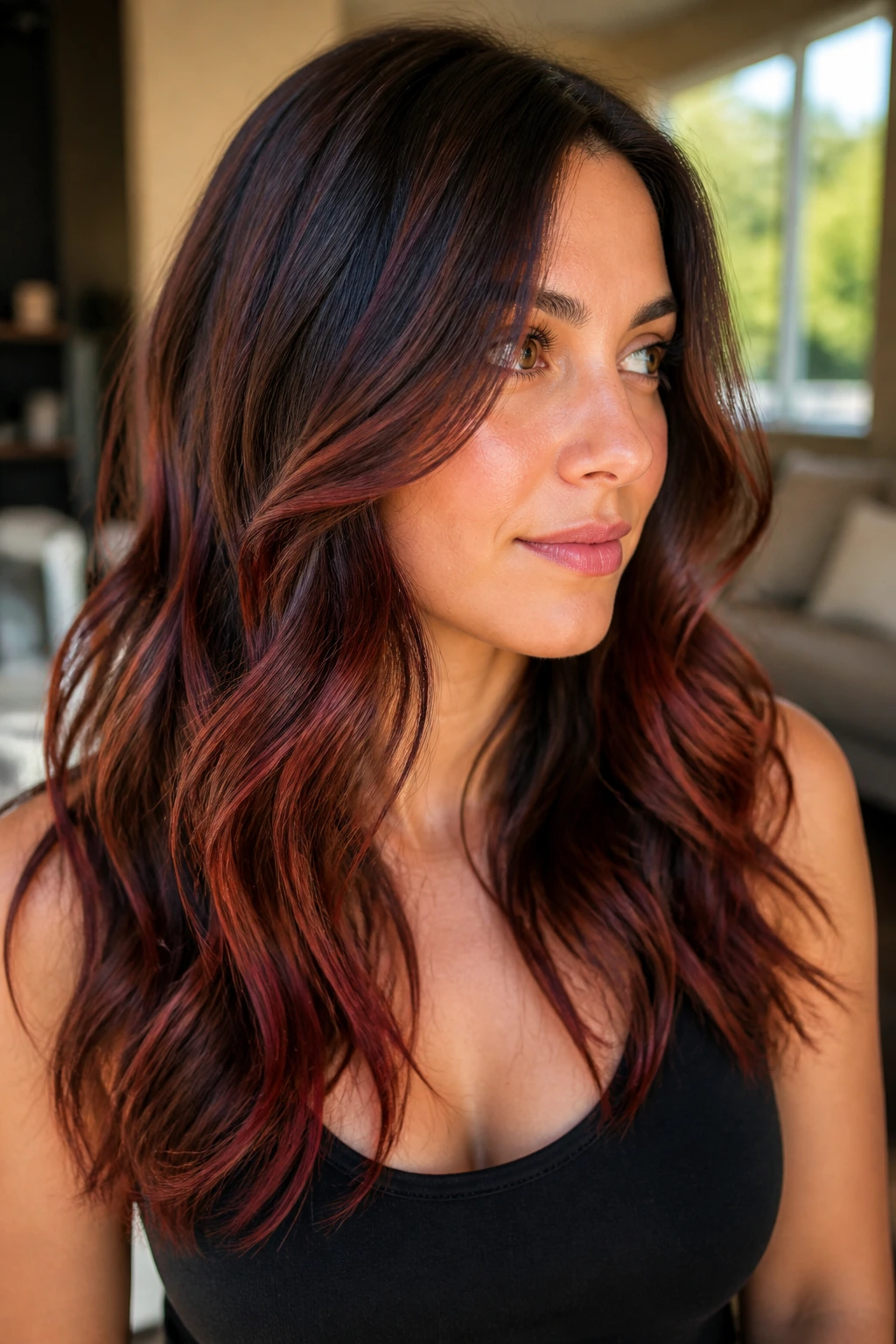
Unlike pure copper highlights, a copper-cherry blend has more depth and less orange heat. That’s a big difference on brunette hair. Copper can sometimes pull the eye toward brass; cherry keeps the finish darker and richer, so the whole thing feels more intentional.
This works best on warm brown bases with golden undertones. The red and copper sit together, which makes the result look alive instead of flat. If you like warm jewelry tones — rose gold, amber, garnet — this color family will make sense on you. It’s also a smart choice if your brown hair tends to pick up red pigment quickly. The copper gives brightness, and the cherry keeps it from drifting too far into pumpkin territory.
For me, this is a good middle ground. Not shy. Not too fiery either.
7. Wine-Red Foil Highlights
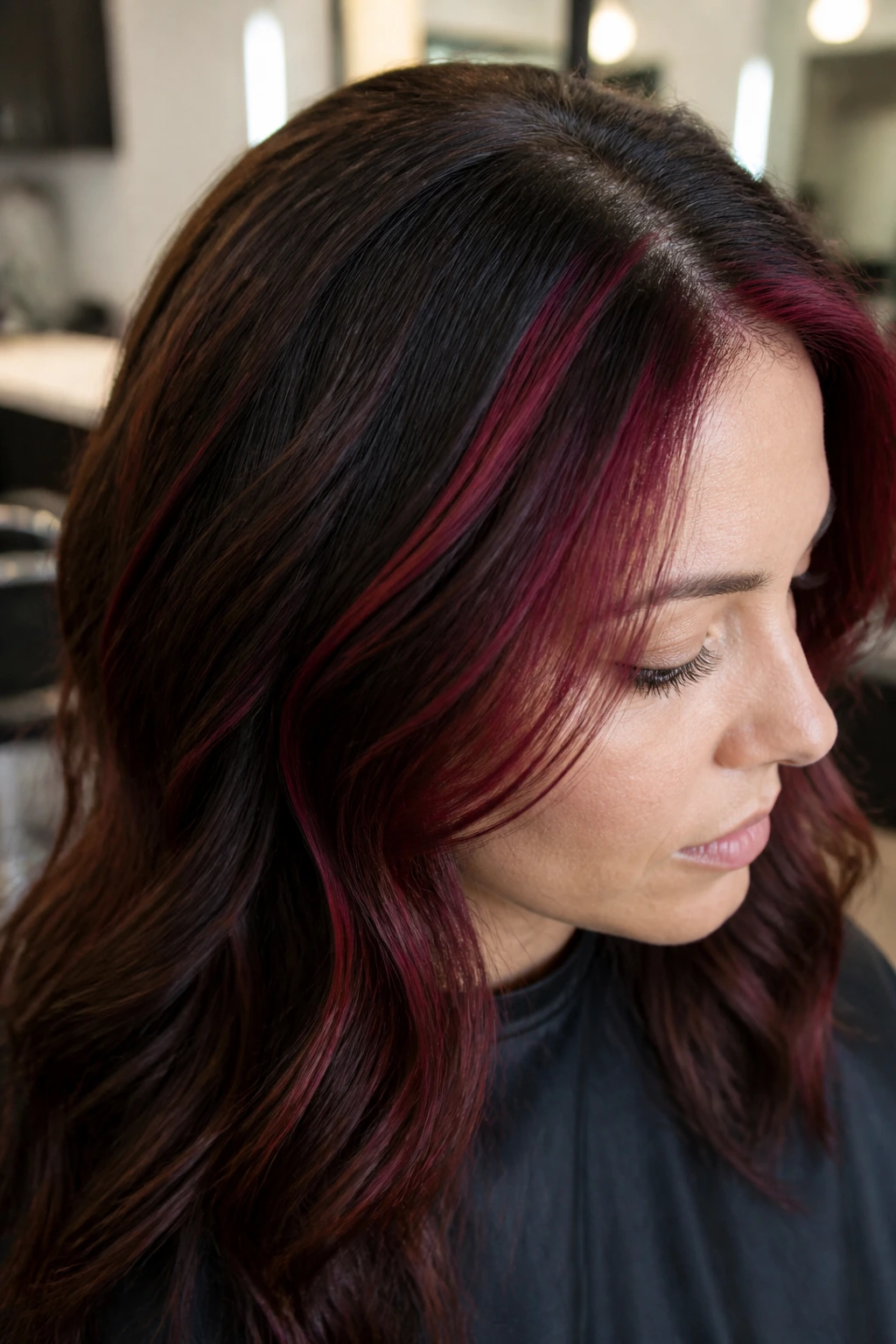
Foils give cherry color more structure, and sometimes that’s exactly what brown hair needs. Hand-painted pieces are softer, sure, but foils deliver cleaner lines and more control over where the red lands. Wine-red foils work especially well when you want a cooler, deeper red that looks deliberate from root to tip.
What to ask for at the salon
Ask for thin foil placements around the crown, temples, and upper sides. A few foils near the part can brighten the whole haircut without overloading the ends. I’d keep the sections narrow — about 1/4 inch — so the red stays crisp instead of blocky.
- Best for smooth blowouts and straight styles
- Stronger than balayage, but still wearable
- Good if you want cooler red, not copper
- Needs glossing to keep the wine tone from turning dull
A foil pattern gives the hair a cleaner grid of color, which can be useful on thick brunette hair. It’s a sharper look. Some people want that.
8. Cherry Lowlights in Light Brown Hair
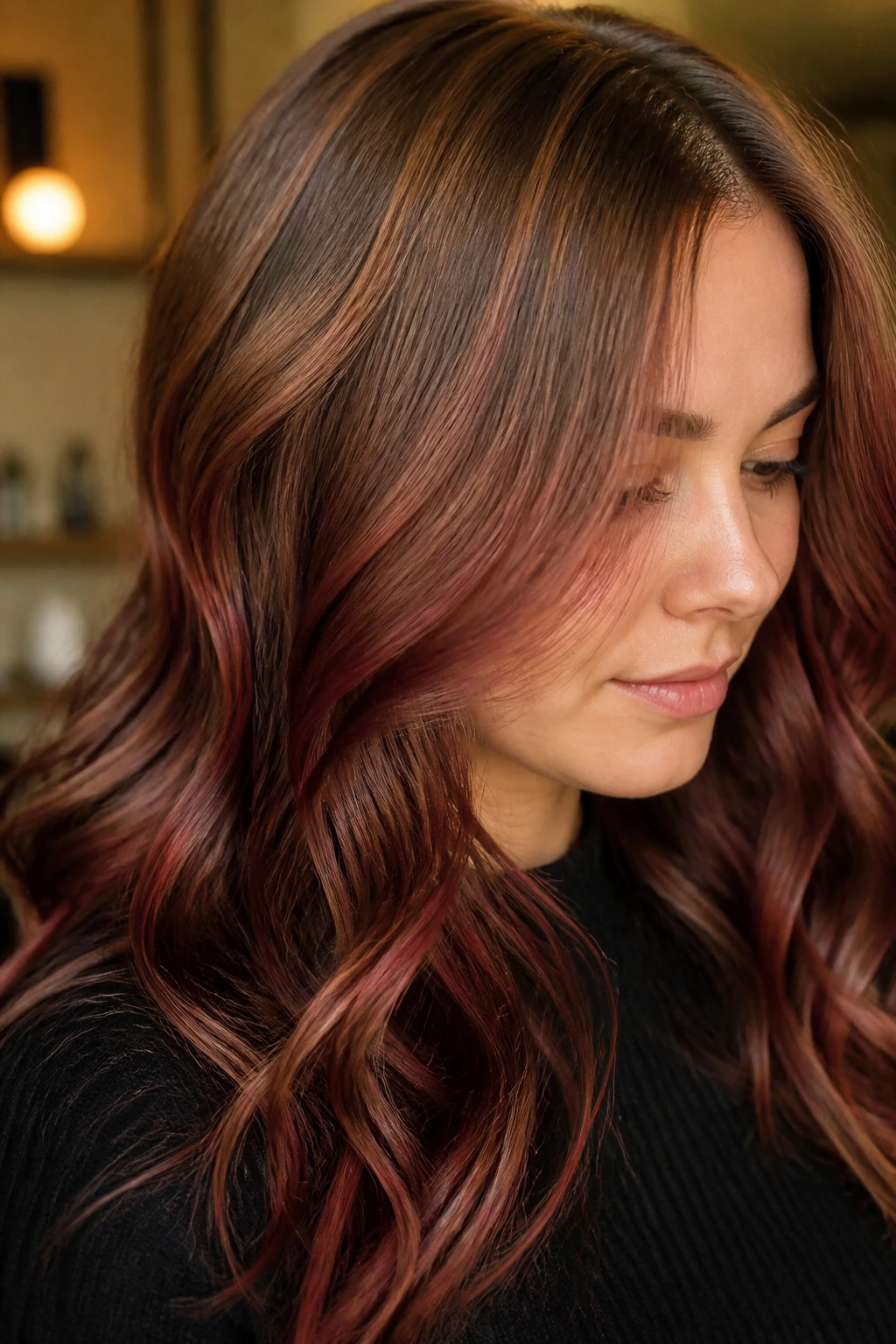
Cherry lowlights do the opposite of a classic highlight, and that’s why they’re useful. Instead of brightening the hair, they slip deeper red pieces into light brown or caramel bases so the whole head gains depth. If your brown hair already has lighter pieces, lowlights can keep it from looking washed out.
This is a depth move, not a brightness move. The color sits under the lighter strands and makes them look warmer by comparison. I especially like this on hair that has gone a little too golden from sun or old highlights. A darker cherry lowlight re-centers everything and makes the finish look fuller.
The effect can be subtle, but subtle is not boring here. It gives the hair shape. That’s the part people miss when they only chase brightness.
9. Soft Cherry Babylights
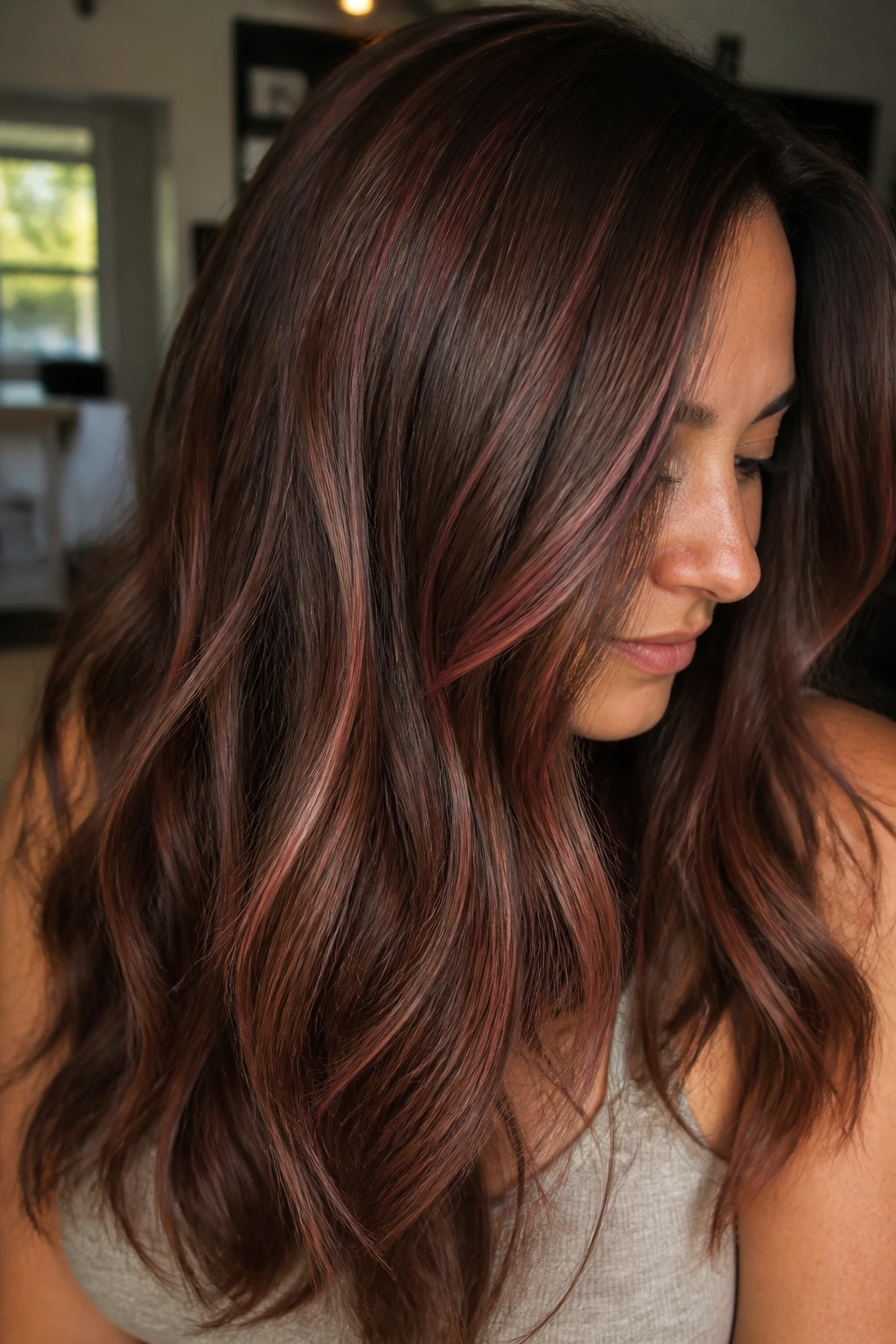
Why do babylights look so polished on brown hair? Because the sections are tiny enough to mimic the way hair naturally changes tone in the sun. When you use that idea with cherry, the color feels gentle, almost like the red is woven into the brown rather than placed on top of it.
How to wear it
Ask for very fine slices through the top and mid-lengths, with extra attention near the part and around the temples. On medium brown hair, babylights are the best way to add red without committing to a big visible panel. On darker brown, they can still show, but the red will read more like a soft wine sheen than a true cherry burst.
A lot of people choose this when they want red but still need the hair to look natural at a quick glance. It’s also nice if your haircut has layers, because the tiny pieces keep the shape from collapsing into one dark block.
10. Melted Cherry Ombre Ends
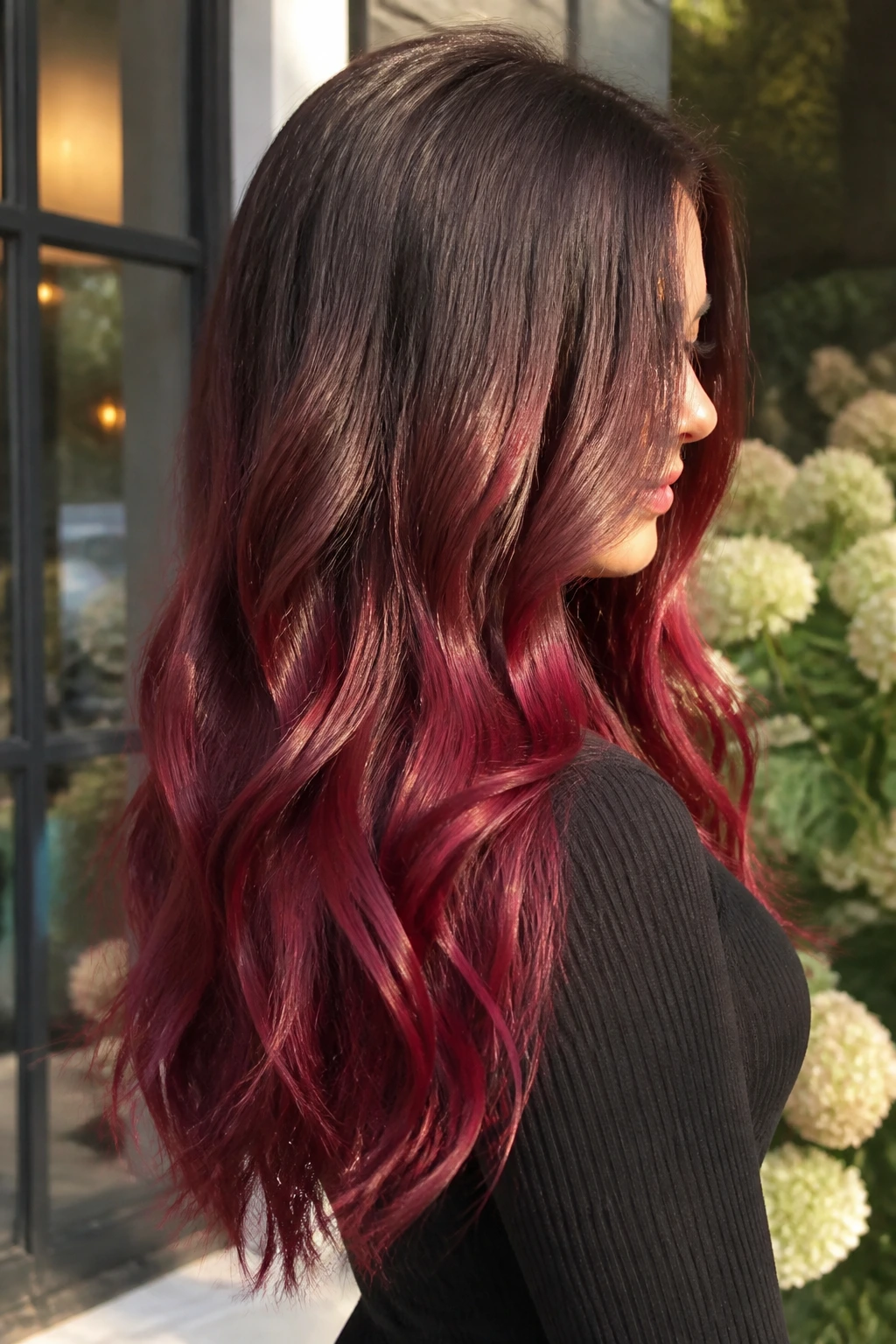
Cherry ombre works when the root area stays brown and the red builds gradually toward the ends. That slow shift is what keeps it from looking like two separate colors fighting each other. Brown at the top, cherry in the middle, deeper cherry at the bottom. Simple. Clean. Easy to read.
It’s a good choice for long hair because the length gives the fade room to breathe. On curls, the ombre can look even richer since the color pools in the bends and catches on the tips. On straight hair, the finish is more obvious and graphic, which can be fun if you like a sharper look.
The one thing to watch is the transition line. If it sits too high, the hair can look streaky. If it’s blended well, the ends feel like they belong to the same family as the roots, not a separate idea.
11. Chunky Cherry Streaks
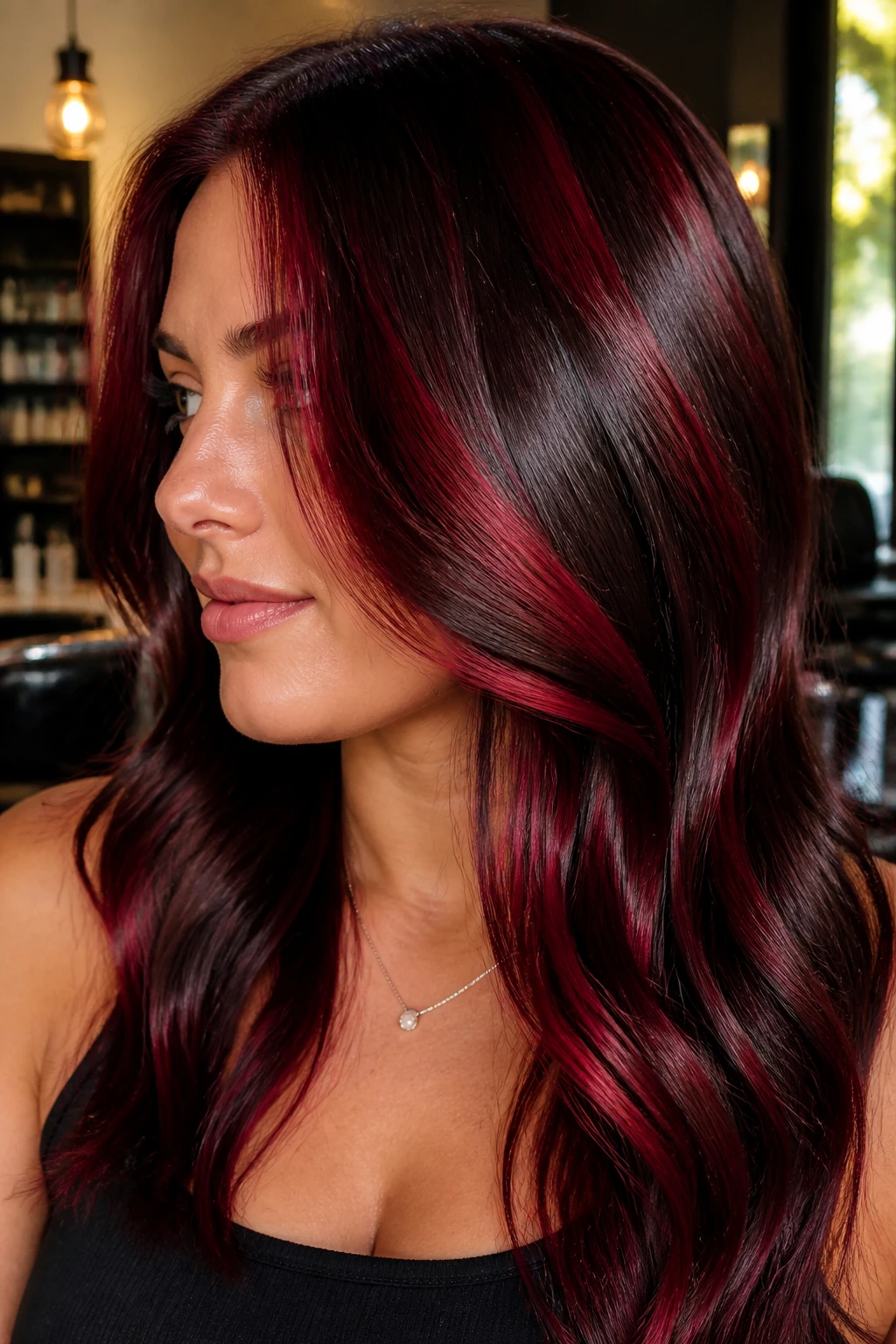
Chunky cherry streaks are for people who don’t want to whisper. They give brown hair a bolder, more graphic feel, and they work best when the colorist places them with intention instead of scattering them randomly. Random chunky red can look dated fast. Deliberate chunky red can look cool for years.
The trick is contrast. Keep the brown base visibly dark, and let the cherry sit in broad bands through the surface layers. This style looks especially sharp on blunt cuts, one-length lobs, and straightened hair where every streak has a clear edge. Add a high-shine finish and the red will look lacquered rather than flat.
If your style leans minimalist, skip this. If you like a little drama, this one earns it.
12. Mulberry Veil Highlights
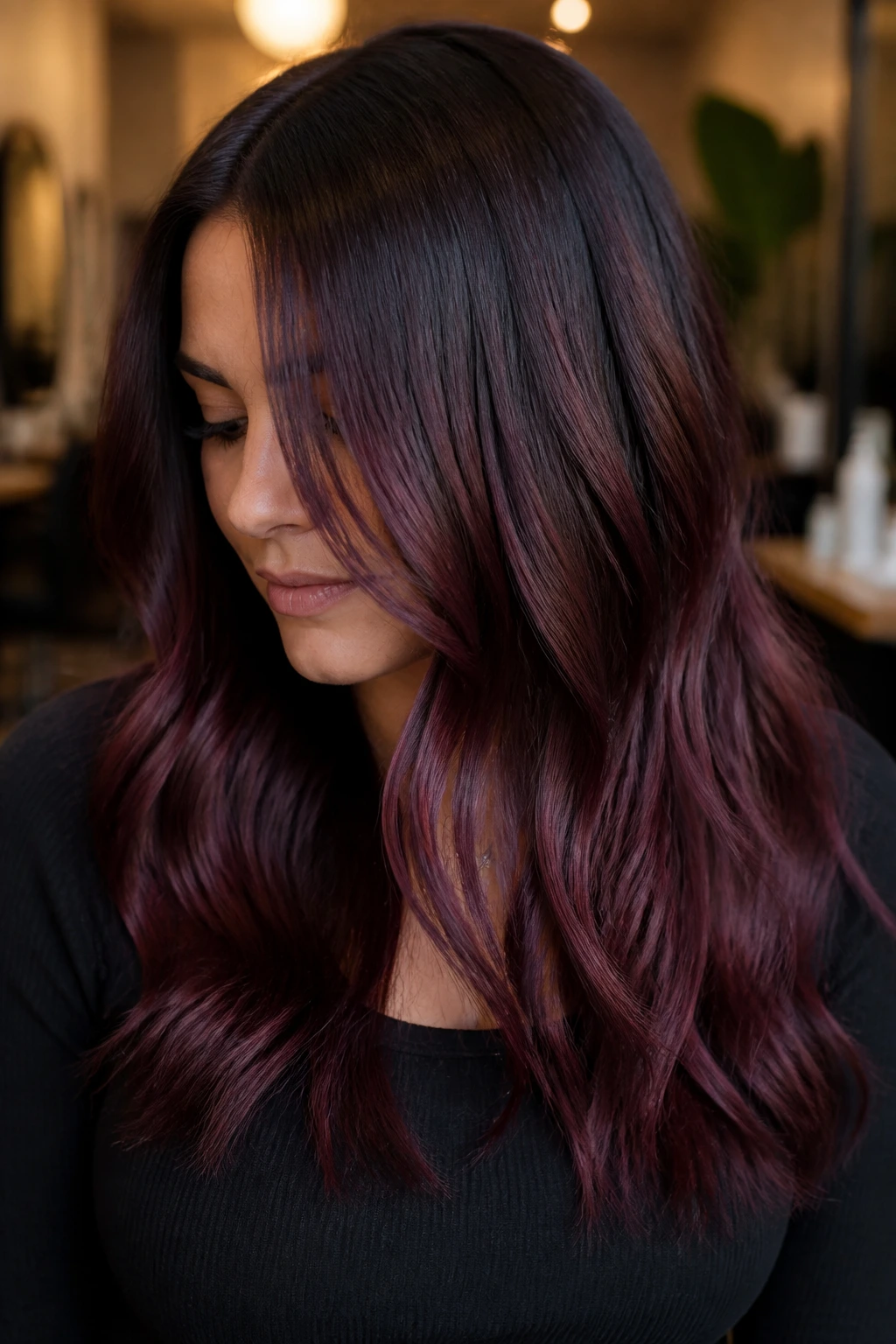
Mulberry veil highlights are the quiet cousin in the cherry family. The red stays deep, smoky, and slightly purple, which makes it a good fit for brunettes who don’t want obvious warmth. On brown hair, this tone can look almost satin-like in low light and then shift into a cool red-violet when the light changes.
Unlike brighter cherry, mulberry veil color works best when it’s layered in translucent pieces. Think of it as a wash of color through the mid-lengths and ends, not a chunky line. It can make medium brown hair look thicker because the tone changes give the illusion of density. That’s especially useful on fine hair, which can lose shape fast if the color is too flat.
I’d choose this version over brighter cherry when the client wants depth first and color second. It’s moody, but it still reads red.
13. Cherry Highlights on Waves and Curls
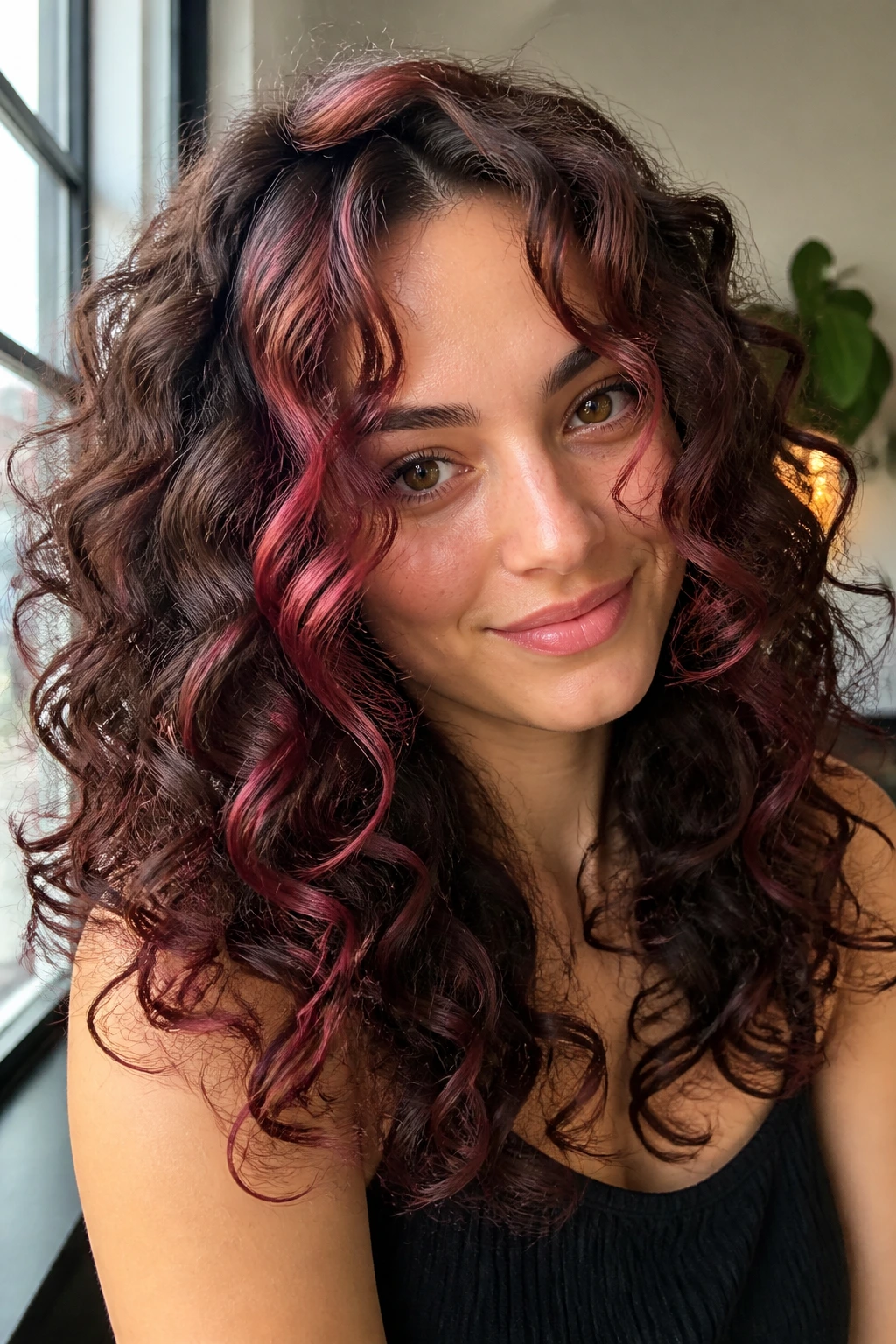
Curly and wavy brown hair changes how cherry highlights behave. The color is never seen all at once. It appears on one curve, disappears in the shadow of the next bend, and then shows up again a few inches later. That movement is what makes the style look alive.
Placement matters more on textured hair
Ask for pieces that follow the curl pattern, not just straight vertical foils. If the color gets painted only in the flat state, the curl can hide it. A good colorist will place cherry around the outer shell of the curls, where light hits first, and through a few deeper spots so the shape doesn’t look top-heavy.
- Best on spiral curls, loose curls, and beach waves
- Works well with slightly brighter front pieces
- Keep the lower layers darker for depth
- Use a curl cream that does not dull the shine
On textured hair, cherry doesn’t need to be loud to be seen. It just needs to be placed where the curl will actually show it.
14. Cool Plum-Cherry Highlights
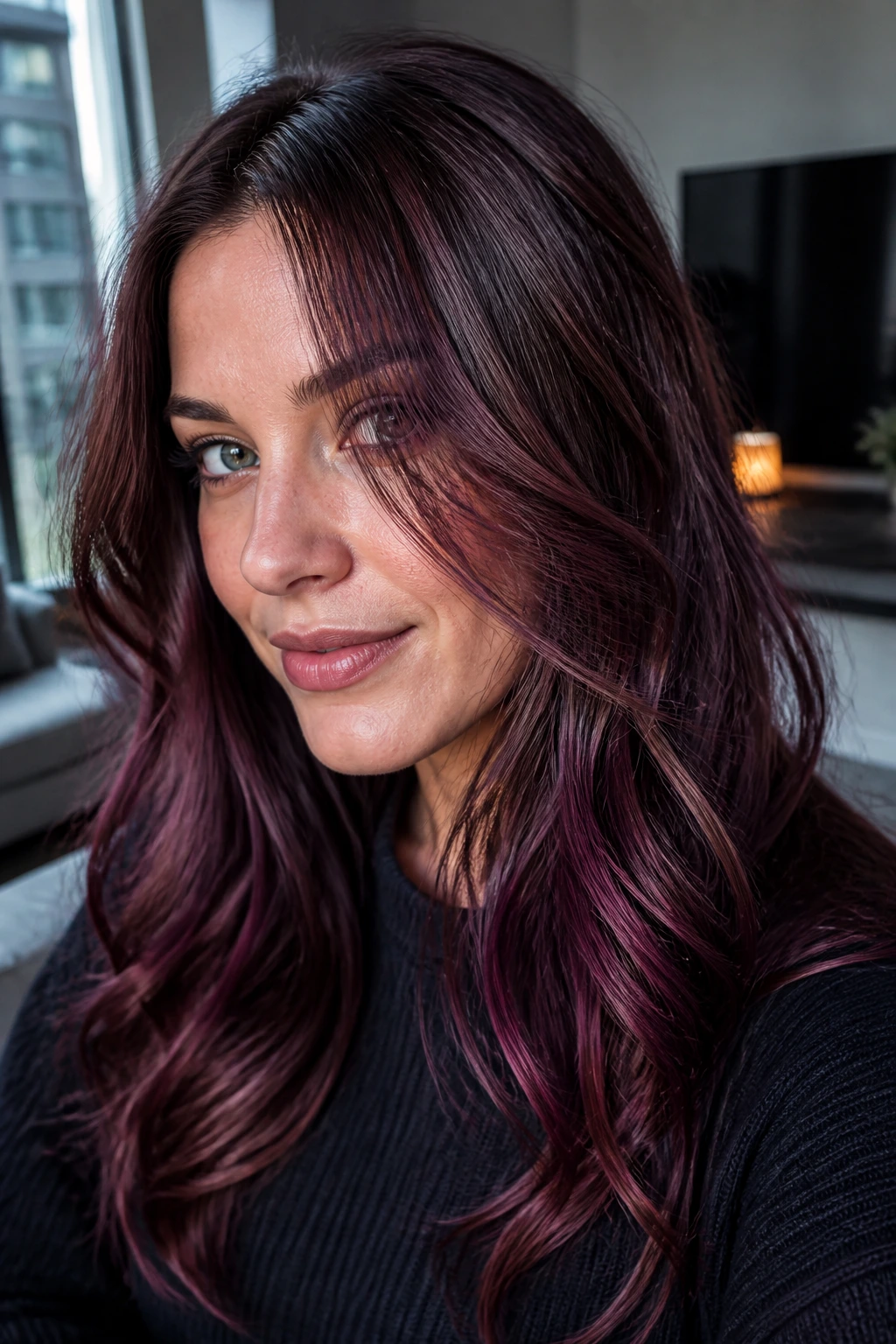
Cool plum-cherry highlights are the smartest choice for ash brown hair. Ash brown already carries a cooler cast, and warm cherry can fight that. Plum-cherry keeps the red side in check with a little violet, so the whole look stays balanced instead of turning rusty.
This is one of those colors that looks expensive because it doesn’t look easy. The red is there, but it sits under a cooler filter. On straight hair, the finish can look almost smoky. On waves, the plum catches in the bends and makes the brown base look deeper. If your skin tone runs cool, this version usually flatters more than a warm cherry-copper mix.
It’s a good reminder that red does not have to mean warm. Sometimes the cooler version is the better one.
15. Cinnamon-Cherry Dimension
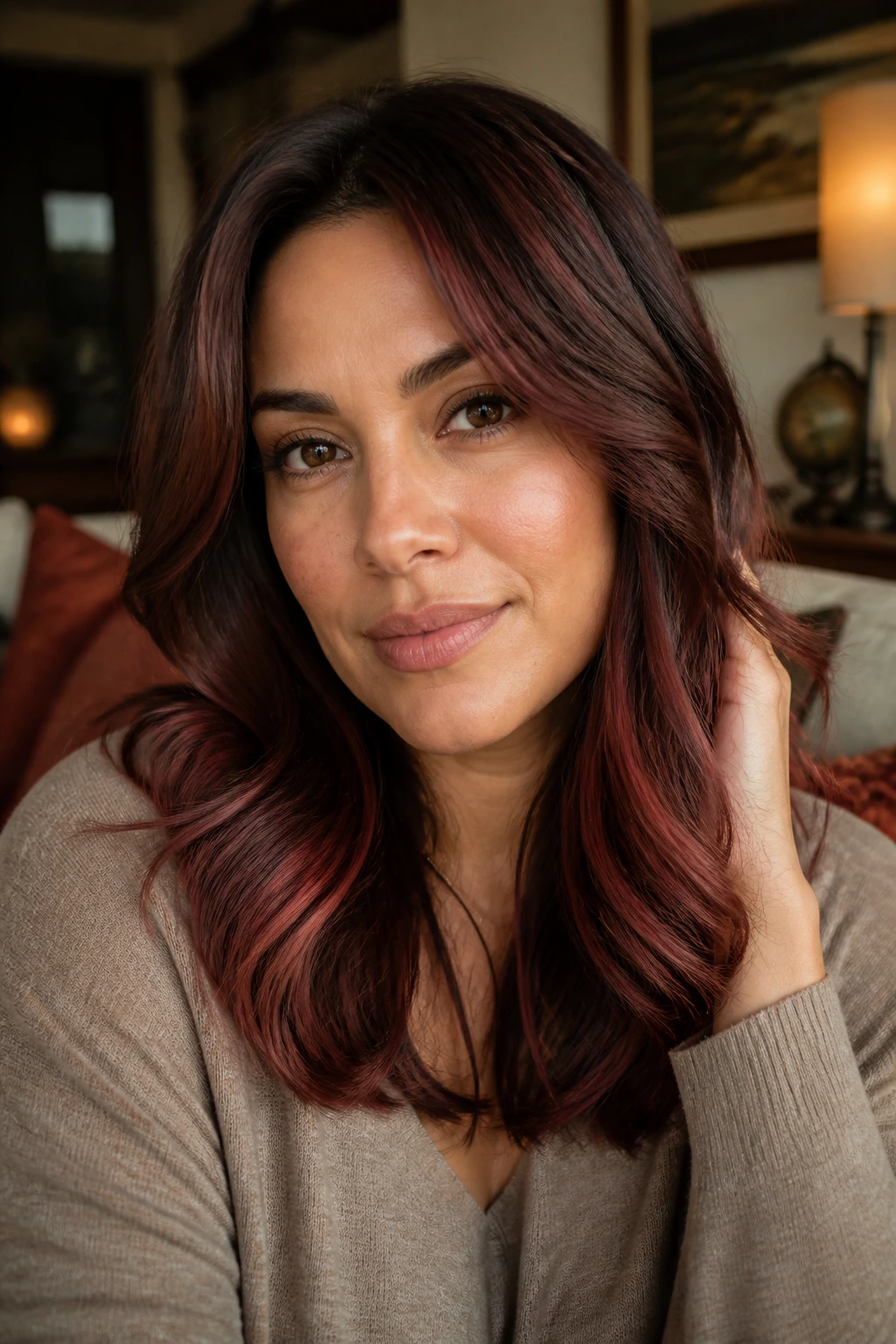
Why does cinnamon-cherry work so well on brunette hair? Because brown already has some warmth in it, and cinnamon leans into that without turning the result muddy. The cherry keeps the color from reading too orange, while the cinnamon softens the red enough to wear easily.
On medium brown hair, this mix can look like a layered spice blend rather than a single flat red. That’s the beauty of it. The hair gets movement just from the color shifts. I like it most on layered cuts, where the shorter pieces around the face can hold the warmer red and the ends can stay deeper.
How to wear it
Ask for soft transitions between the red and brown, not hard lines. A gloss at the end can help the tones sit together better, especially if the brown base is already a little golden. This is one of those styles that looks simple from a distance and much more interesting up close.
16. Red Velvet Highlights on Long Layers
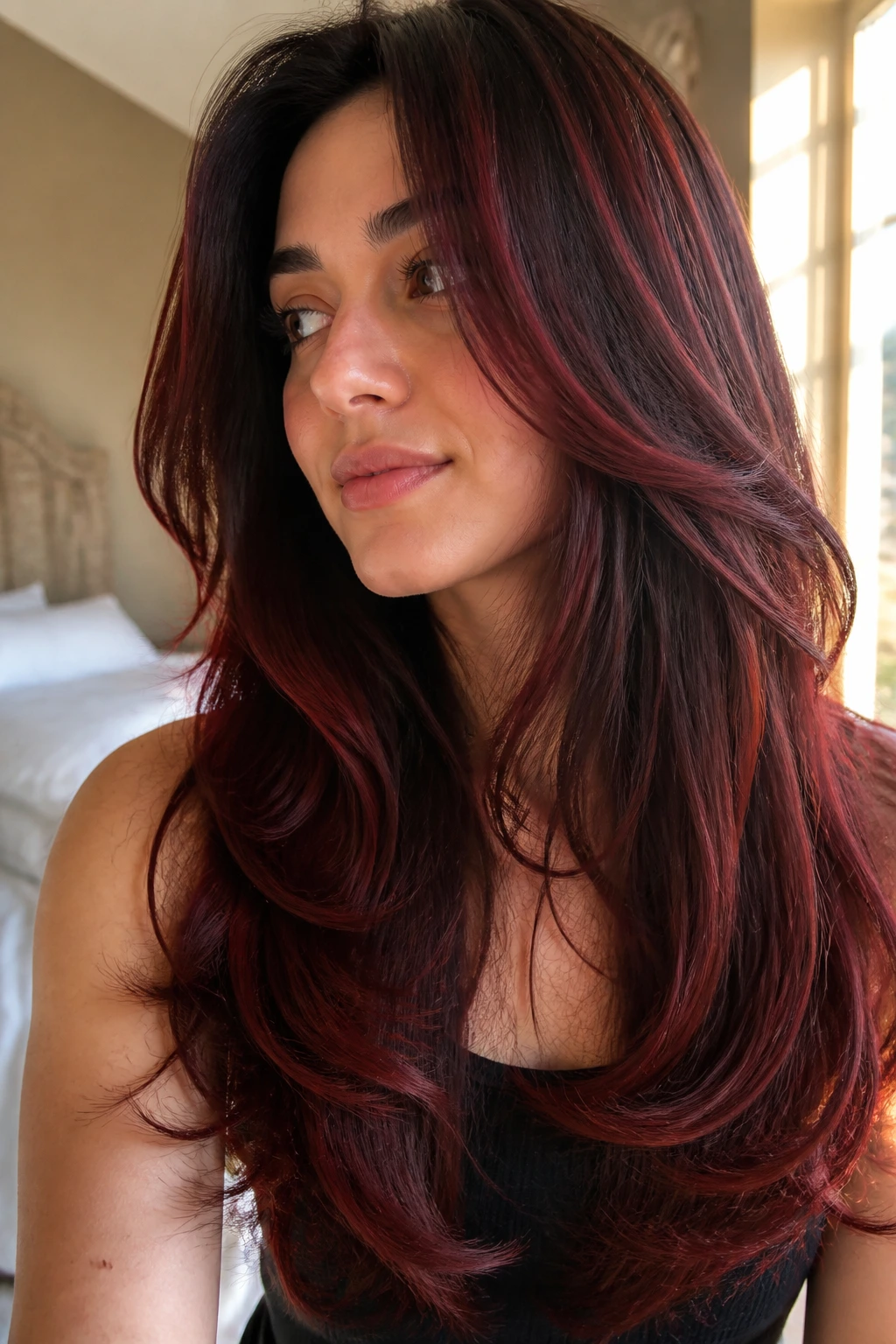
Long layers and red velvet highlights go together because both rely on movement. The color is rich, plush, and a little darker than a classic cherry, which keeps it from looking loud on longer hair. If the hair falls straight and heavy, the red can disappear. Add layers, and suddenly the color has somewhere to live.
I like this look when the highlights begin around the mid-lengths and get denser toward the ends. That keeps the root area brown and avoids a helmet effect. The finish should feel soft, not rigid. Think deep red fabric rather than neon dye. On thick brunette hair, this color can make the haircut look lighter and more fluid without losing depth.
It’s a good option if you want something romantic, but not sugary. There’s enough edge here to keep it interesting.
17. Cherry Panels in a Lob
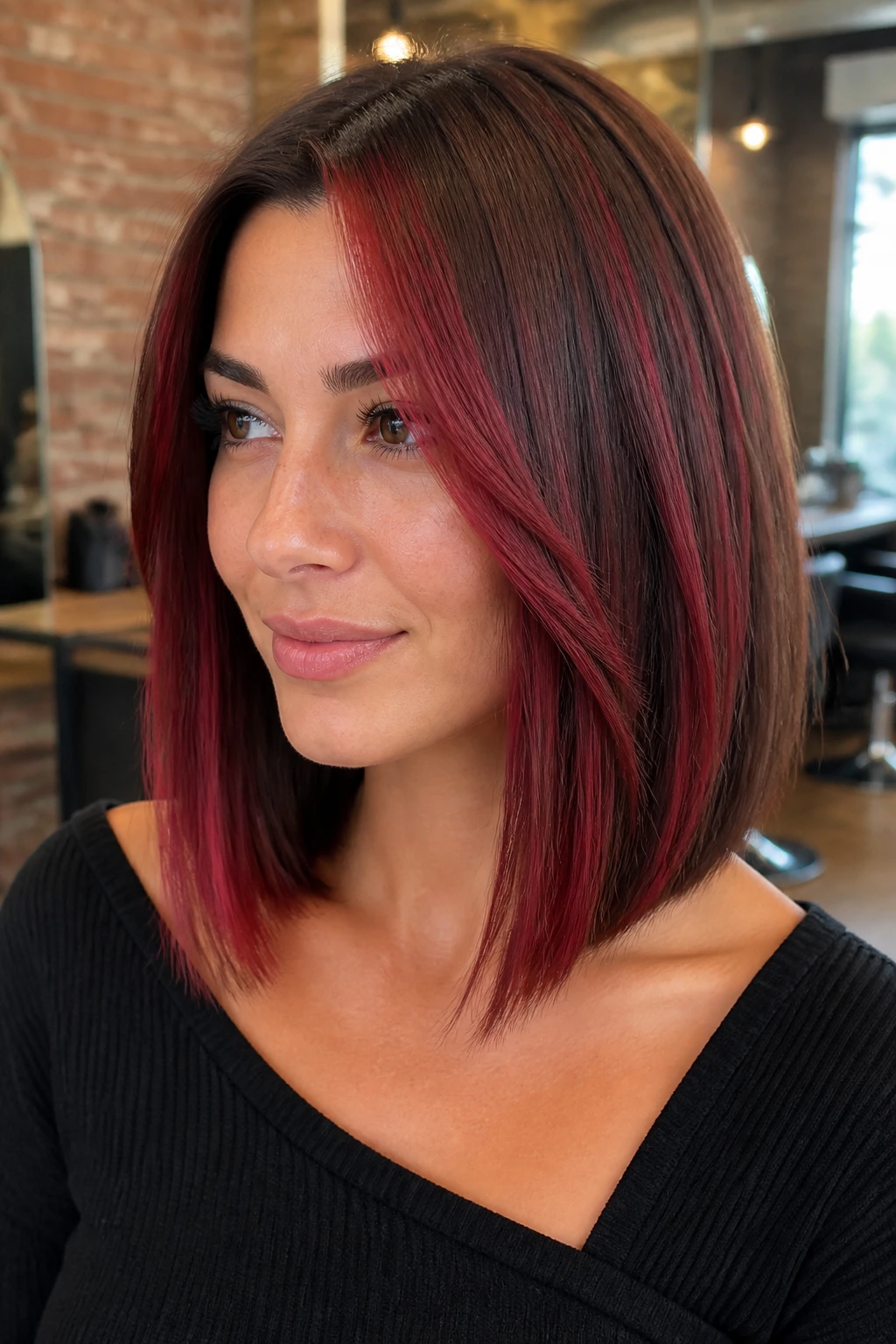
A lob gives cherry panels a clean frame. The blunt edge makes the color lines easier to read, which is helpful when you want the red to feel modern instead of messy. On a collarbone-length cut, wide panels through the front and mid-lengths can add shape fast.
The key is placement. If the cherry sits too low, the cut can look heavy. If it sits too high, the color may dominate the face. I like panels that start just below the top layer and continue to the ends, so the lob keeps its shape while the red gives it some movement. Straightened, the style looks sleek. Soft bends make it feel looser.
This is a good one for anyone who likes a haircut that does a lot of the work.
18. Hidden Cherry Underlights
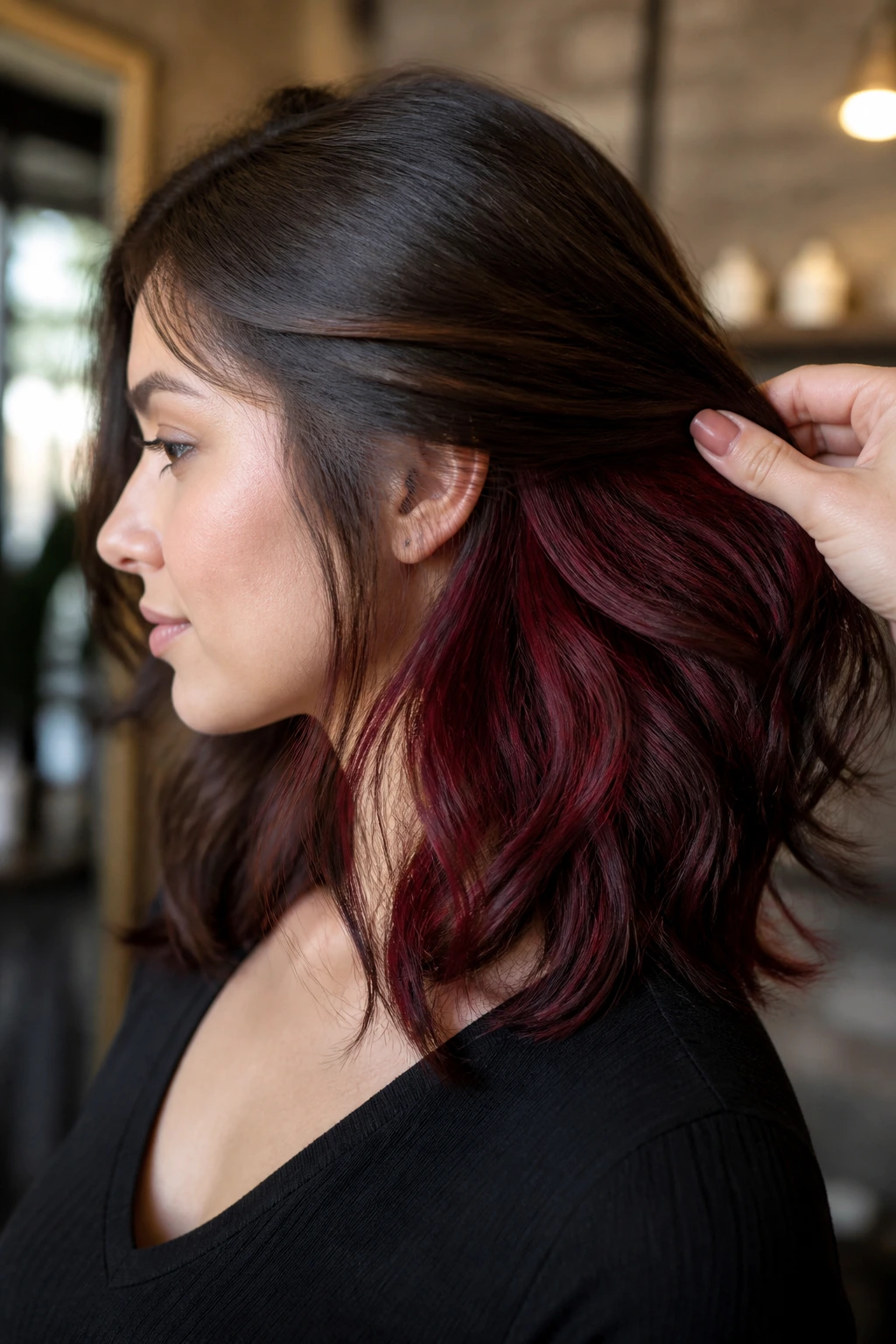
Hidden underlights are the low-key version of peekaboo color. The difference is that underlights usually sit deeper, closer to the nape and inner layers, so they show mostly when the hair is lifted or tucked back. That makes them a good fit for people who want cherry hair color but can’t wear it front and center every day.
This placement works nicely on brown hair that already has shape. When the top layer stays darker, the hidden red adds surprise and depth without changing the whole surface. It’s especially good for layered medium-length cuts, where the inner sections can peek through naturally. If you put your hair up a lot, the red gets more chances to show off. If you wear it down, it stays private.
Not every color needs to introduce itself right away. Some are better at second glance.
19. Root-Melt Cherry Highlights
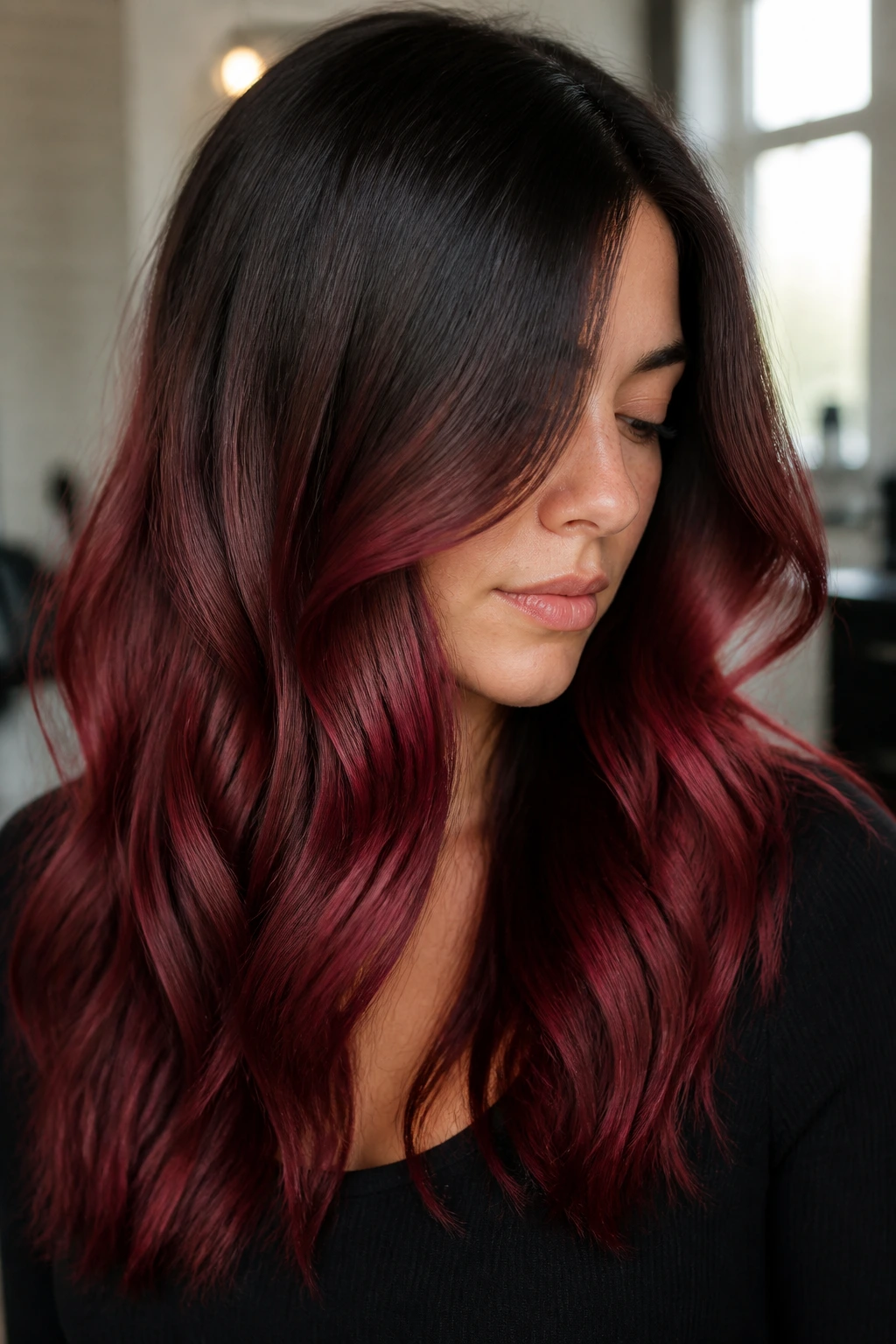
Root-melt cherry highlights solve one of the oldest red-hair problems: grow-out. By keeping the roots a shade or two deeper and melting the cherry through the mid-lengths, the color stays softer at the scalp and easier to wear between salon visits. It also helps brown hair avoid that hard line that can make red look patchy after a few washes.
Why the melt matters
A root melt lets the brown stay brown where it matters most, then gives the cherry room to build below. On darker brunettes, this is often the most forgiving red placement because the regrowth doesn’t feel abrupt. You can stretch the look longer, and the color still reads polished when the roots start to come in.
- Best for medium to dark brown bases
- Helps soften obvious regrowth
- Good with glossy, straight, or softly waved styling
- Ask for a 1- to 2-level difference between root and mid-length
If you hate obvious lines, this is the one to keep in your pocket.
20. Cherry Highlights on a Brown Pixie Cut
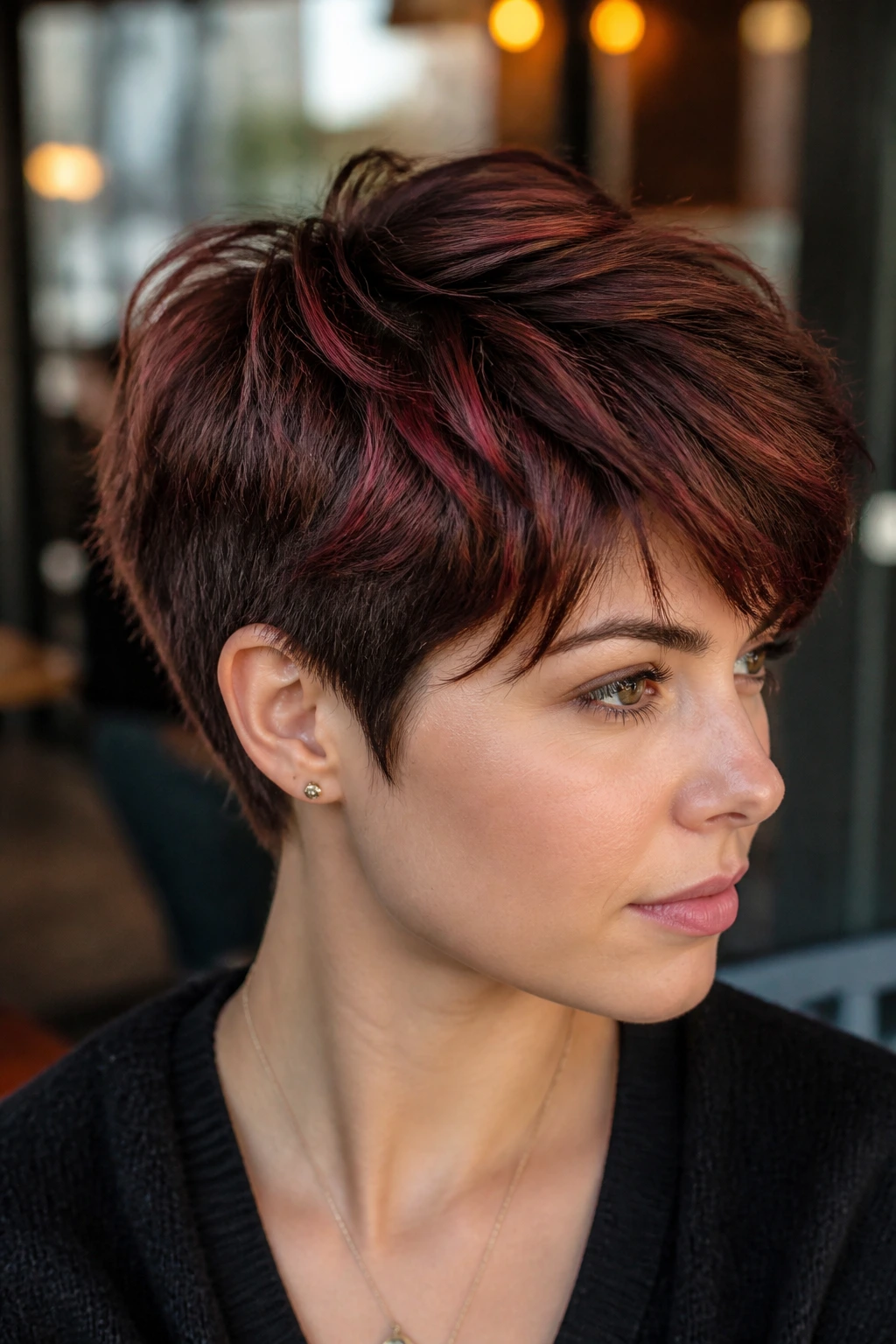
Short hair changes everything. On a brown pixie, cherry highlights can’t hide in long layers or fade through big lengths, so placement has to be tighter and smarter. The best versions sit on the crown, fringe, and top pieces, where texture and lift make the red show in little flashes.
Piecey styling is the whole game here. A dab of matte cream or light pomade can separate the strands so the cherry appears in slices instead of one flat block. On a pixie, too much color can overwhelm the cut, so I’d keep the red concentrated in the areas that already get movement. That keeps the shape crisp and the color readable.
This version is sharp, easy to style, and a little fearless. Short hair rarely needs much help. Cherry just gives it a pulse.
Final Thoughts
Cherry highlights work on brown hair because the two tones actually help each other. Brown gives the red depth. Red gives the brown movement. The result can be soft, smoky, bright, or high-contrast, depending on where the color sits.
If you want the safest starting point, go for fine ribbons, babylights, or a cherry balayage. If you want the color to make a statement, the money pieces, chunky streaks, and pixie placements bring more punch. The placement matters more than the hype around the shade.
And that’s the part people usually miss. A good cherry formula is nice, sure, but a good placement plan is what makes brown hair with cherry highlights look intentional instead of accidental.
