



Brown hair doesn’t need blonde streaks to feel alive. Grey can do the job with less noise and more depth, which is why grey highlights for brown hair keep showing up on clients who want something cooler, softer, and a little more grown-up than the usual caramel ribbons.
The trick is in the shade. Pure silver can look stark against a warm chestnut base, while a smoky pewter or soft graphite blend can melt into the hair and still catch the eye when you move. That contrast is the whole appeal: brunette depth on one side, misty brightness on the other. It feels polished without trying too hard.
Grey also has range. It can read icy, mushroomy, slate-toned, or almost charcoal depending on how light the strands are, how fine the placement is, and whether the colourist leaves a root shadow in place. A few face-framing pieces can freshen a bob. A heavier balayage can change the whole mood of long waves.
The catch? Placement matters more than the shade name on the bowl. A cool grey placed in chunky strips can look harsh fast, especially on medium brown hair with red undertones. Keep the contrast smart, not loud, and the result has a lot more life to it.
1. Smoky Silver Balayage on Chestnut Brown Hair
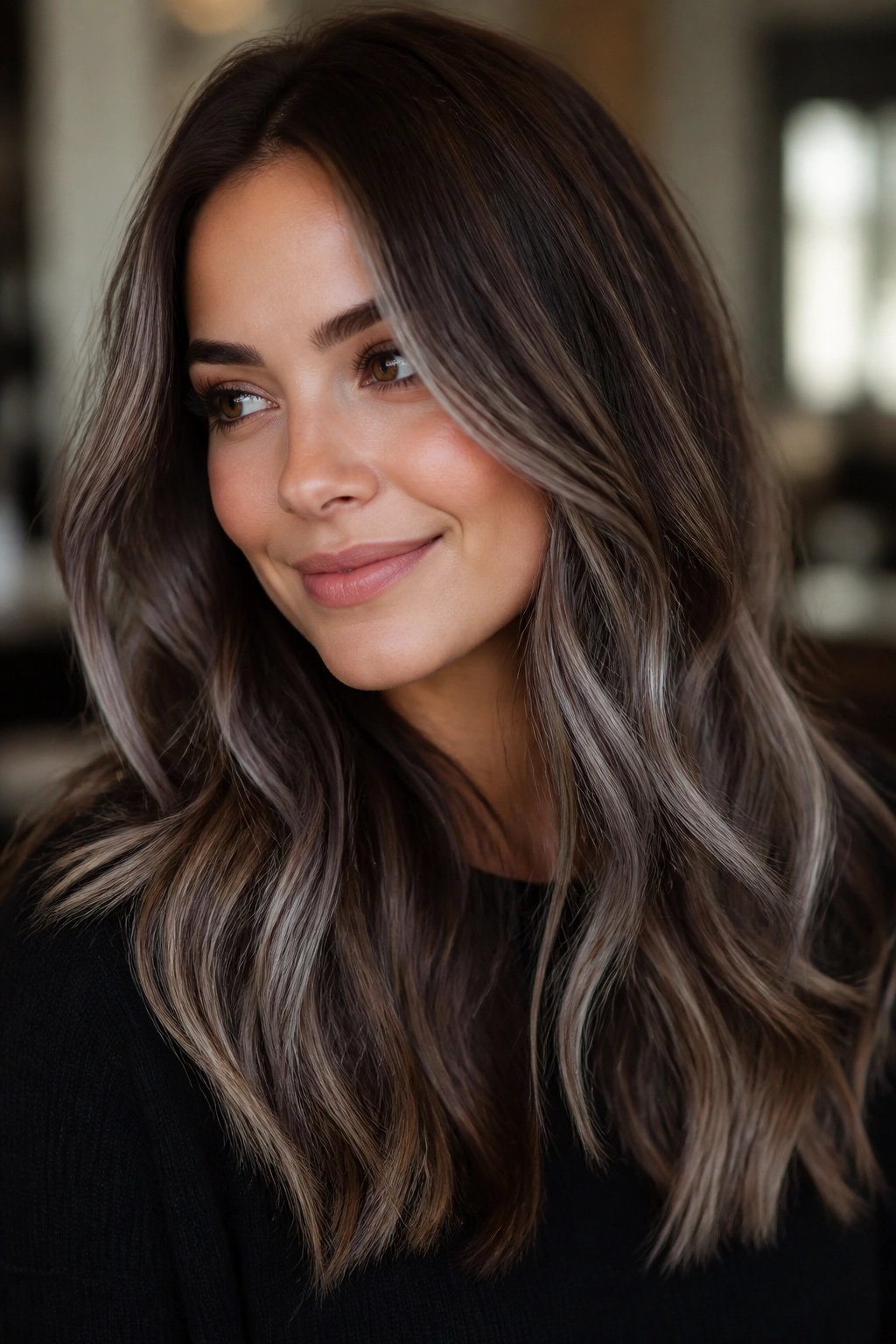
Smoky silver balayage is one of those looks that makes chestnut brown hair feel lighter without erasing the depth underneath. The balayage hand-painting gives the grey a soft entrance, so the finish looks swept in rather than stamped on. That softness matters. It keeps the hair from reading stripy.
Why it works
The best smoky silver balayage usually starts a few inches away from the scalp and gets brighter through the mids and ends. That spacing lets the brown base do its job while the silver catches movement in the places people actually notice first. Waves help, but even straight hair gets a clean ribbon effect.
Ask for cool grey dimension with a soft root shadow if you want it to grow out without a hard line. A chestnut base with a warm red cast may need a beige or ash toner underneath so the silver doesn’t go muddy.
- Best on medium chestnut or light brown bases
- Looks strongest on layered cuts
- Needs gloss refreshes more than full re-colouring
- Works well with loose curls or a blowout bend
Pro tip: keep the lightest pieces away from the part line if you want the colour to stay soft.
2. Ash Babylights for Soft, Fine Dimension
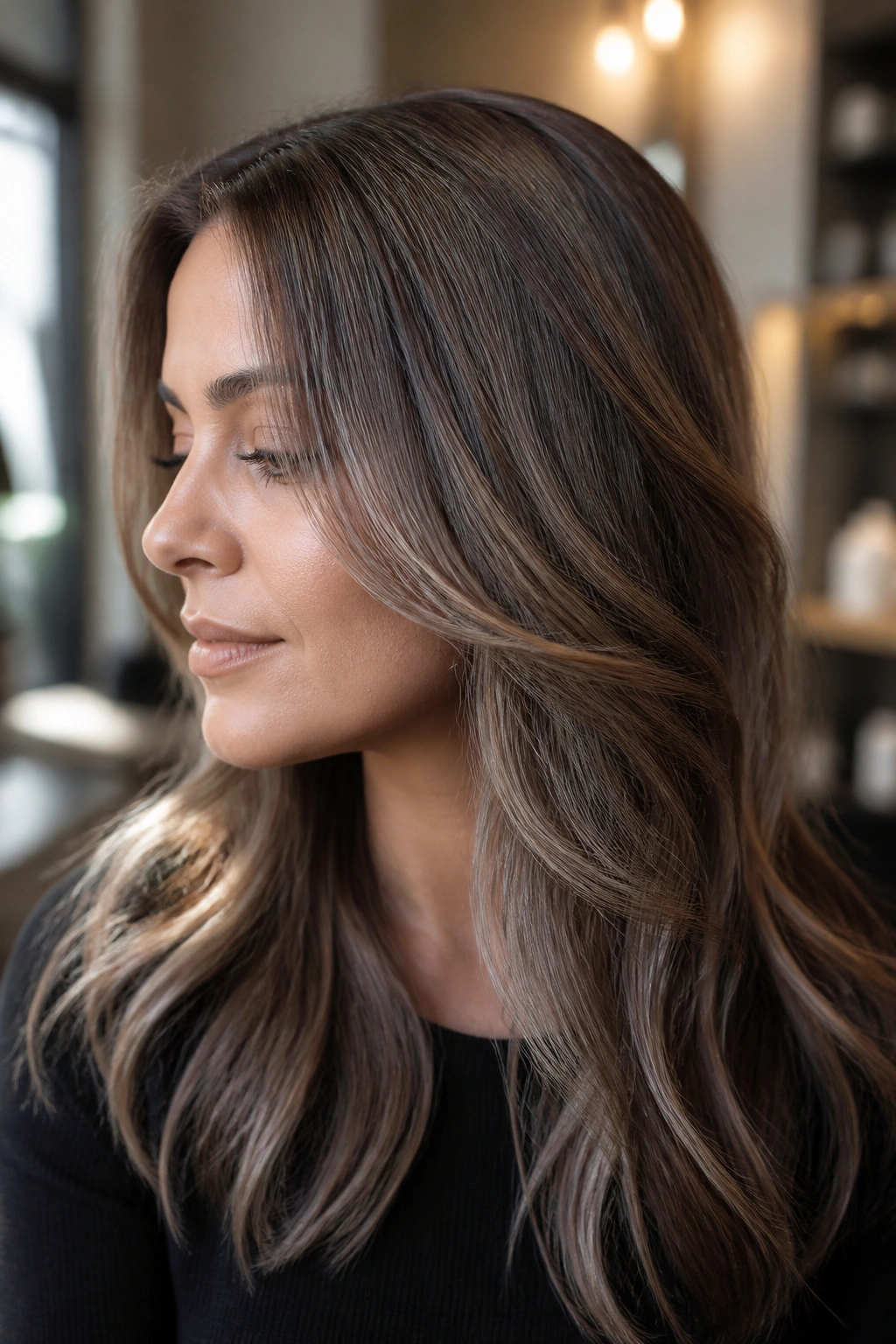
Can grey hair colour look gentle? Absolutely. Ash babylights are the quietest way to bring grey into brown hair, and they’re ideal if you hate the look of obvious streaks. The strands are so fine that the colour reads like a cool shimmer rather than a stripe.
Babylights sit close to the natural pattern of hair sun-lightening, except the tone is cooler and a bit moodier. On medium brown hair, the effect can be almost mist-like. On darker brunettes, the result is more like a soft silver haze that shows up when the light hits from the side.
What makes them different
Fine placement gives this look its edge. You are not chasing contrast; you are chasing texture. That means the haircut matters too. A blunt bob can make the cool strands feel crisp, while long layers turn the whole thing softer.
If you want low drama, this is the one. It still needs toning, though, because ash tones fade fast and turn beige or yellow if the hair is porous. A blue-violet shampoo once a week is enough for most people.
3. Graphite Face-Framing Highlights That Light Up a Bob
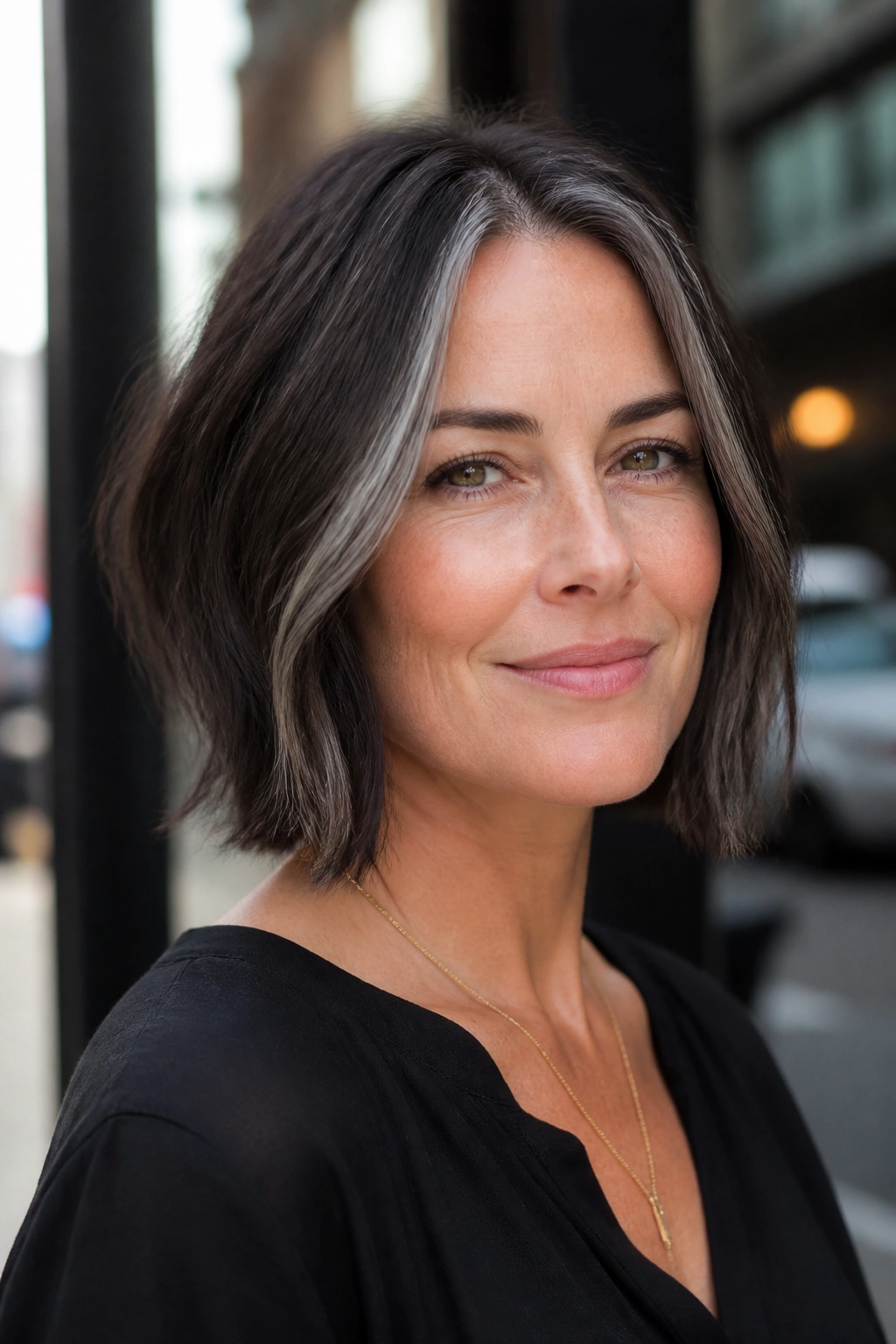
A face frame changes everything on shorter brown hair. Graphite pieces around the hairline can sharpen a bob, especially if the base colour is deep chocolate or espresso. The result is edgy without tipping into full high-contrast fashion colour.
This look works because the eye goes straight to the front. The grey sits in the most visible place, so even a narrow section of foils makes a clear impact. Keep the pieces chunky enough to show from the front, but not so wide that they overwhelm the cut.
What to ask for
- A cool graphite or steel-grey face frame
- Fine weaves near the temples
- Soft blending through the part line
- A gloss that keeps the finish shiny, not flat
Straight hair makes the shape look clean. Wavy hair gives it more movement. Either way, the trick is balance. Too much grey at the front and the whole cut can feel top-heavy; too little and it disappears once you tuck your hair behind your ears.
4. Mushroom Brown with Grey Ribbons
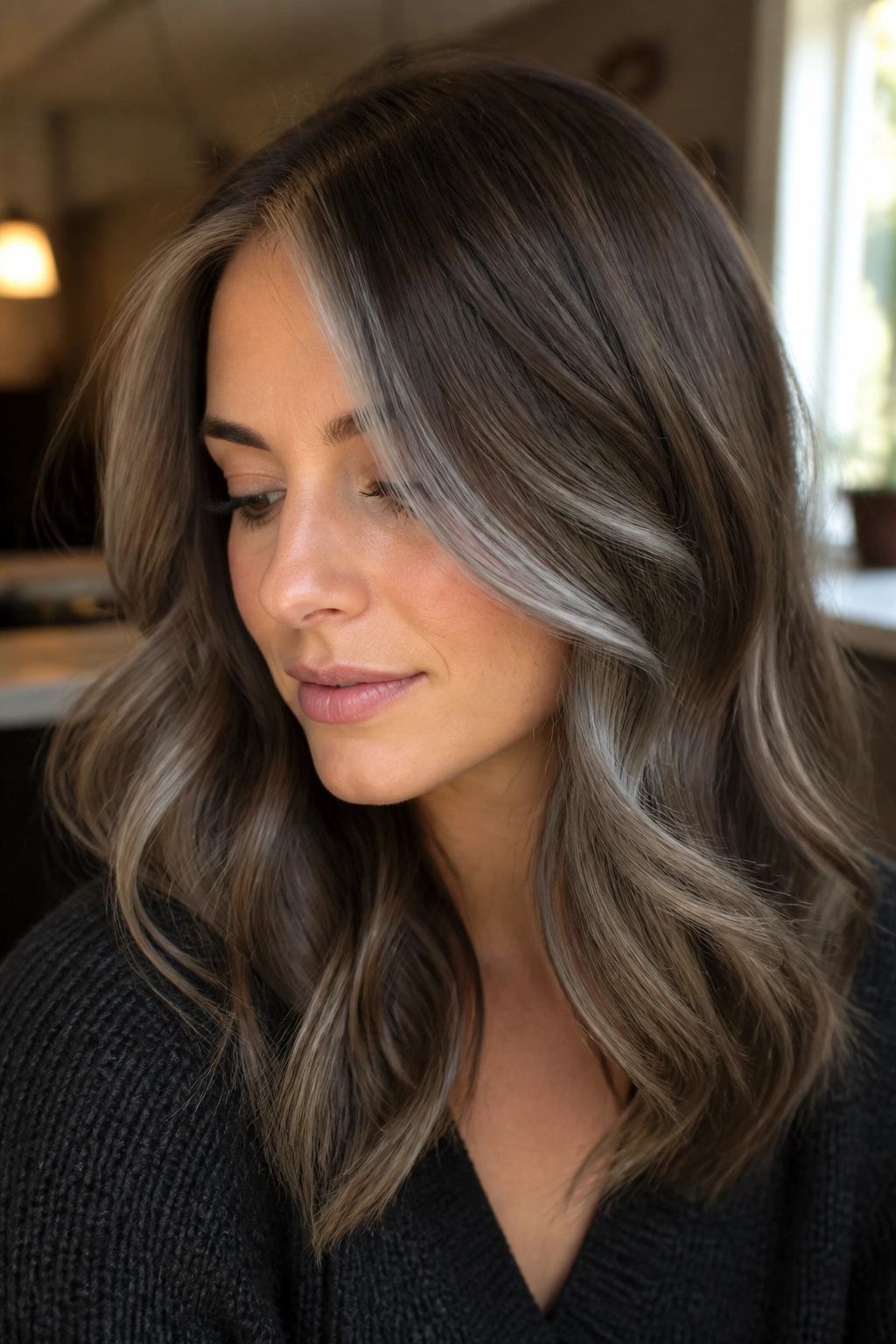
Mushroom brown is already halfway to grey, which makes it one of the easiest bases to work with if you want a muted result. Add a few grey ribbons through the mid-lengths, and the hair starts to look dimensional instead of simply lighter. It is one of the few colour combinations that feels expensive without needing much contrast.
The good part is the blending. Mushroom brown usually carries a beige-ash balance, so the grey ribbons sit inside the colour rather than floating on top of it. That’s why this look works so well on shoulder-length cuts and long lobs. The movement is subtle, but it’s there.
A lot of brunettes go too pale too fast and end up fighting brassiness. This shade keeps that problem in check because the cool tones stay close to the natural level. It also grows out gracefully, which is handy if you do not want to be in the salon every few weeks.
Pair it with soft layers and loose bends. The grey pieces will break up the brown in a way that looks calm, not busy.
5. Steel Grey Money Piece for a Bold Front Accent
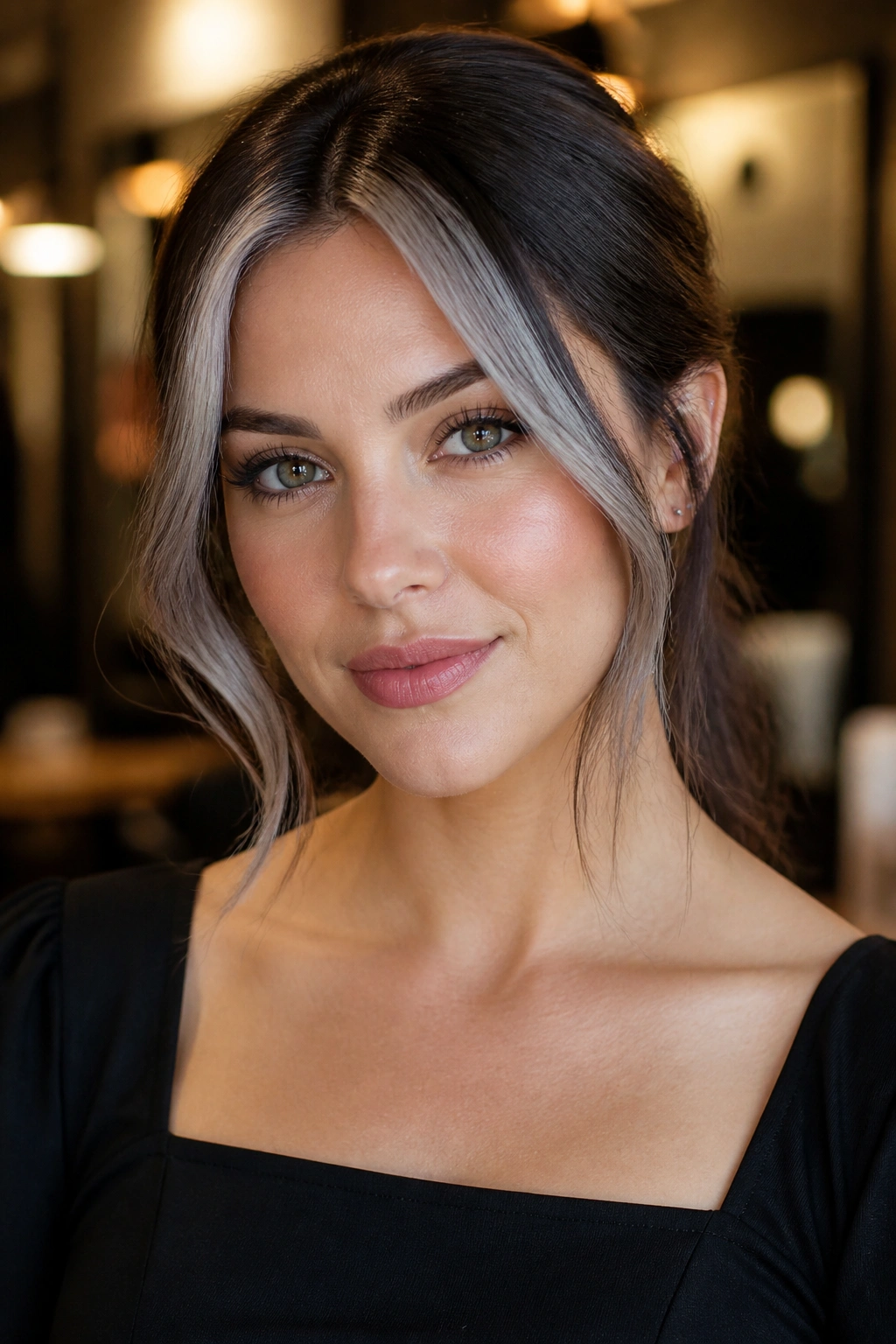
A steel grey money piece is for someone who wants the front to do the talking. It’s the louder cousin of face-framing highlights, with enough cool contrast to read from across the room, especially on dark brown hair. The rest of the hair can stay richer and deeper, which keeps the style grounded.
The surprise is how wearable it can be. Steel grey sounds hard-edged, but when it’s blended into a rooted brunette, the overall look feels intentional rather than harsh. The key is keeping the front pieces slim through the roots and brighter only where the hair falls naturally.
The science behind the look
Cool grey reflects light differently from blonde. It flashes silver in some angles and reads almost slate in others, which gives it a bit more movement than flat platinum. That variation is exactly what keeps a bold money piece from looking one-note.
If your hair is long, ask for the grey to taper into softer pieces around the cheekbones. On shorter cuts, let it sit a touch wider so it doesn’t vanish when the hair is tucked behind the ears.
6. Silver Ombré Ends on Dark Chocolate Hair
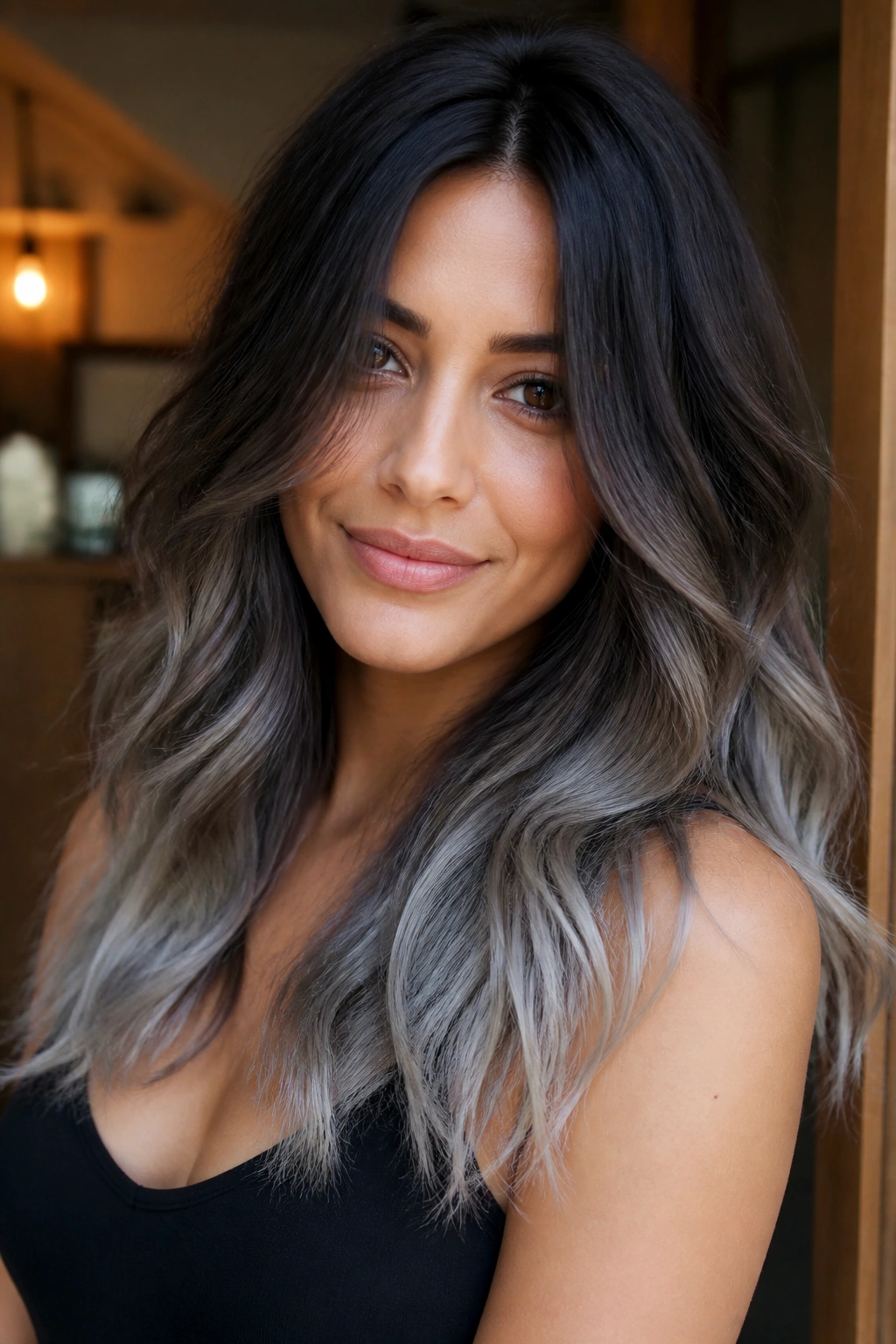
Why stop at the front when the ends can carry the drama? Silver ombré gives dark chocolate brown hair a gradual shift from rich depth to bright metallic ends, and the effect is cleaner than many people expect. The transition matters more than the brightness.
This style is especially useful if you want grey highlights for brown hair but don’t want the upkeep of precise foils near the scalp. The roots stay dark, which means fewer obvious regrowth lines. The ends can be toned cooler or warmer depending on how icy you want the finish.
How to wear it
Soft waves show the fade best, especially if the lightest pieces land around the collarbone and below. If you wear your hair straight, the ombré reads more graphic and a little sharper.
- Keep the silver mostly on the bottom third of the hair
- Ask for a smooth blend, not a blunt dip-dye line
- Use heat protectant, because lightened ends dry out fast
- Trim every 8 to 10 weeks so the ends stay clean
The downside is obvious enough: dry ends show first. A good mask once a week helps more than a fancy styling cream ever will.
7. Pewter Peekaboo Highlights Under Dark Layers
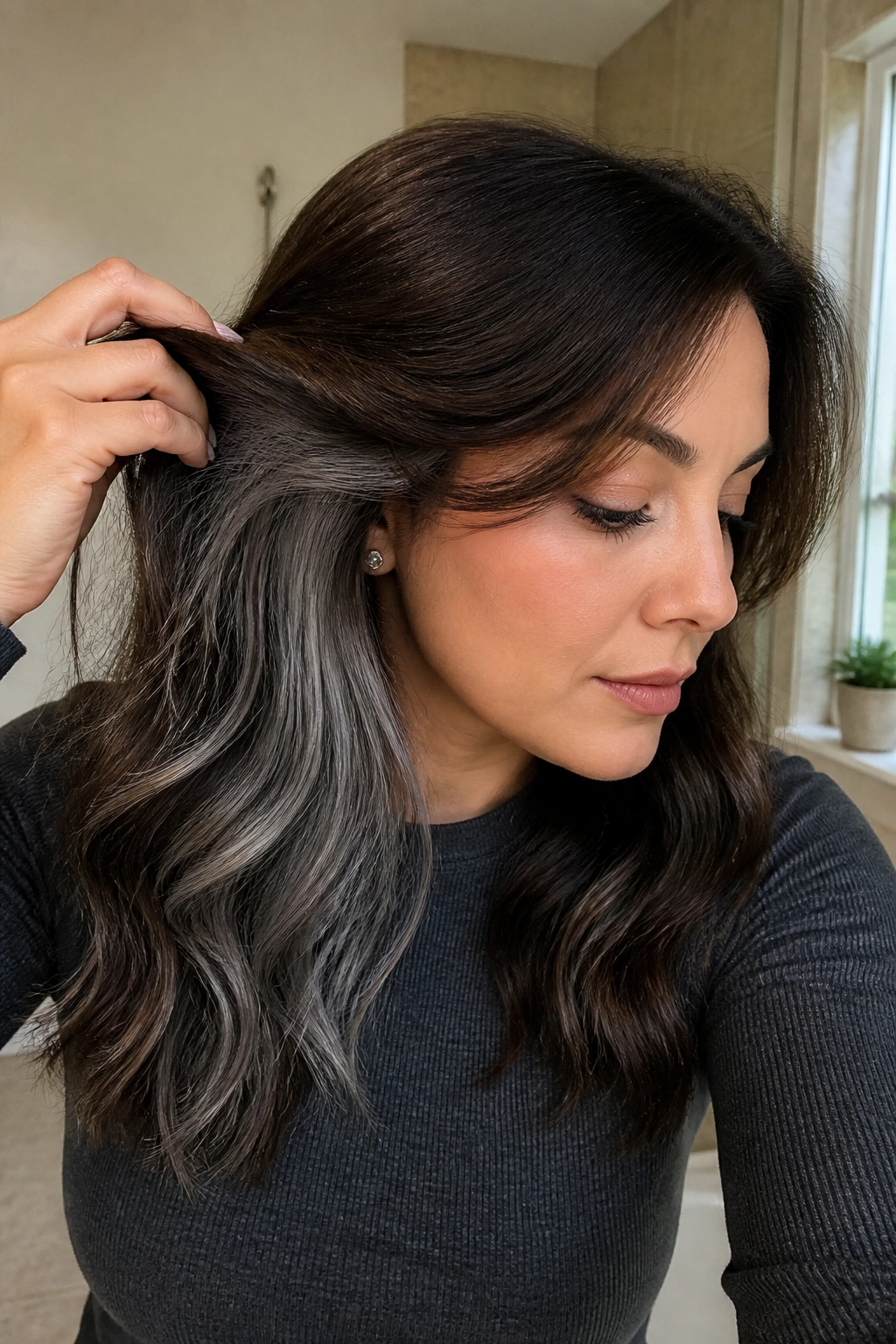
Peekaboo highlights are the introvert’s answer to grey hair colour. The pewter sits under the top layer, so you get flashes of cool tone when the hair moves, but the overall look stays wearable at work, at dinner, or under bad bathroom lighting.
The beauty of this style is the surprise. You catch the grey only when the hair shifts, which makes it feel a bit more personal. On dark brown hair, pewter works better than bright silver because it blends with the depth underneath instead of fighting it.
What to watch for
If the sections are too thick, peekaboo colour can look heavy when the hair is lifted into a ponytail. Keep the panels narrow and place them below the visible top layer. That way the contrast stays controlled.
This is one of my favourite options for people who want to test grey without committing to a full head of cooler pieces. It’s also kinder to the hair, since the lightening can stay concentrated in fewer zones.
8. Smoky Ribbon Highlights Through Long Wavy Hair
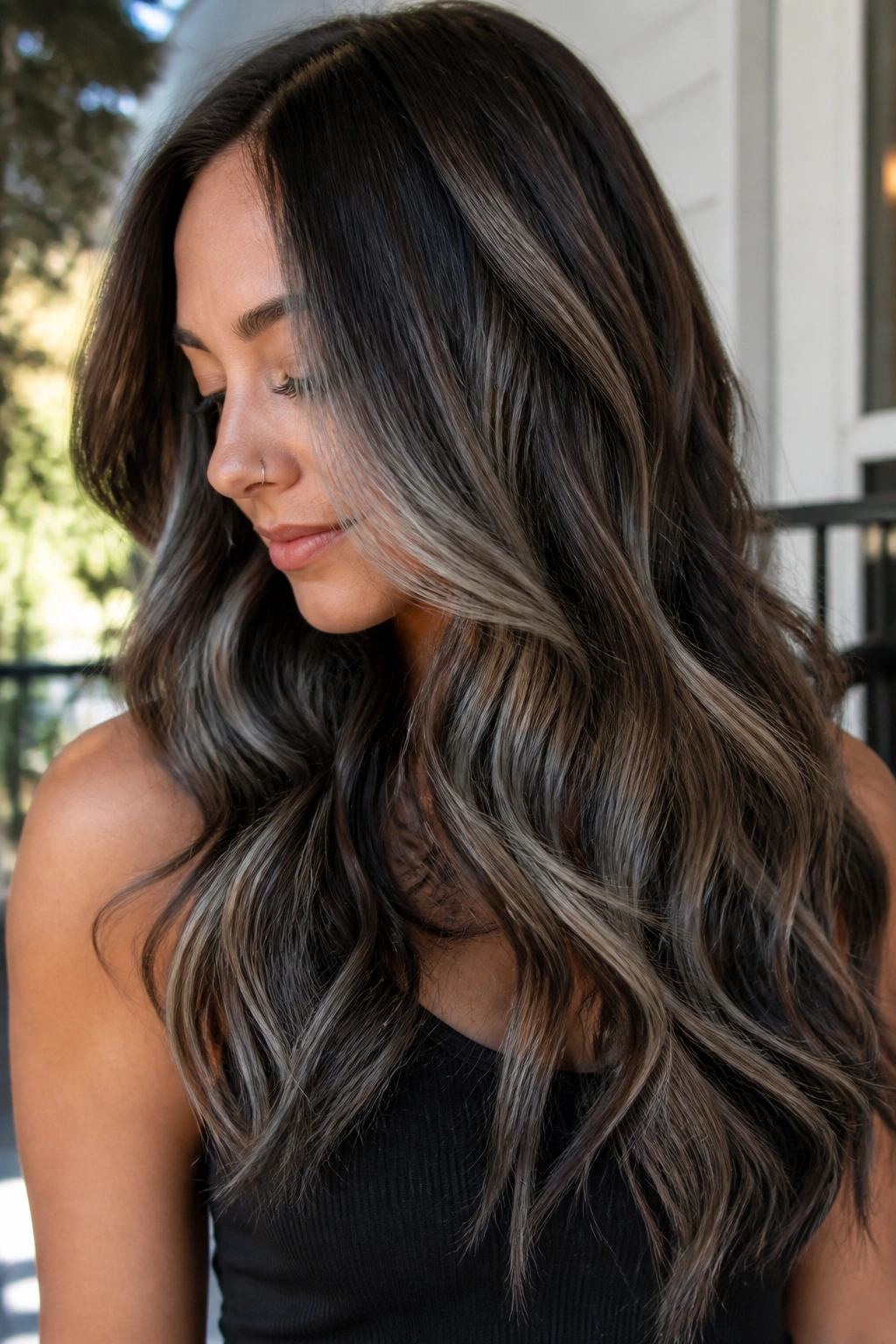
Long wavy hair gives grey room to breathe. Smoky ribbon highlights work because they thread through the length in loose, visible strips, so the colour looks like it lives inside the hair instead of sitting on top of it. The effect is softer than chunky streaks and more visible than babylights.
What makes it different
The ribbon shape depends on placement. A colourist usually paints the lightest grey pieces where waves naturally catch the light: around the mid-lengths, outer layers, and ends. That creates movement even before you style it. A flat iron can make the ribbons look sharper, but waves are where this style really pays off.
If your brown base leans warm, ask for smoky beige-grey rather than pure silver. Pure silver can go a little cold against amber undertones. The right middle tone fixes that.
Long hair can handle more contrast than short hair, which is why this style feels full and dimensional rather than busy. It’s a good pick if you want something noticeable but not loud.
9. Frosted Grey Balayage on Warm Brown Hair
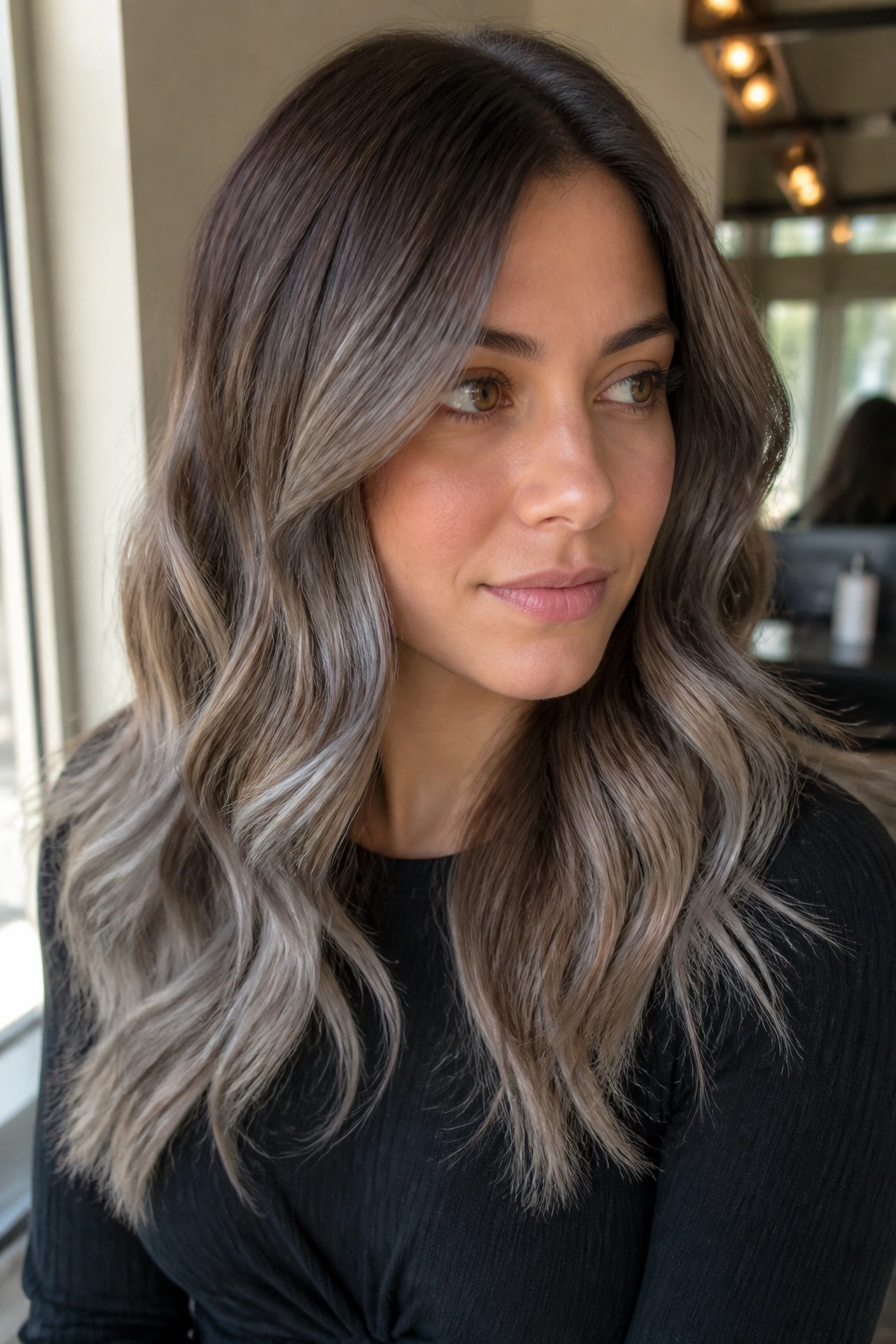
Warm brown hair can be tricky with grey. Go too icy and the colour sits on top like chalk. Go too beige and the whole point disappears. Frosted grey balayage lands in the middle, using a cool veil that tempers the warmth without flattening the base.
That balance is the reason this look works. It softens the red or golden undertones in brown hair and gives the cut a cooler finish without turning it steel-blue. On shoulder-length hair, the transition from brown to frosted grey can look especially smooth.
A lot of stylists use a root melt here, which leaves the top section slightly deeper and brings the grey in from the mids down. That move saves you from harsh regrowth lines and keeps the style from looking over-lightened at the scalp.
Best for people who want dimension first and drama second. It’s one of the most forgiving grey-highlight looks on brunette hair, especially if you like wearing your hair in waves.
10. Silver Contour Highlights Around Curly Brown Hair
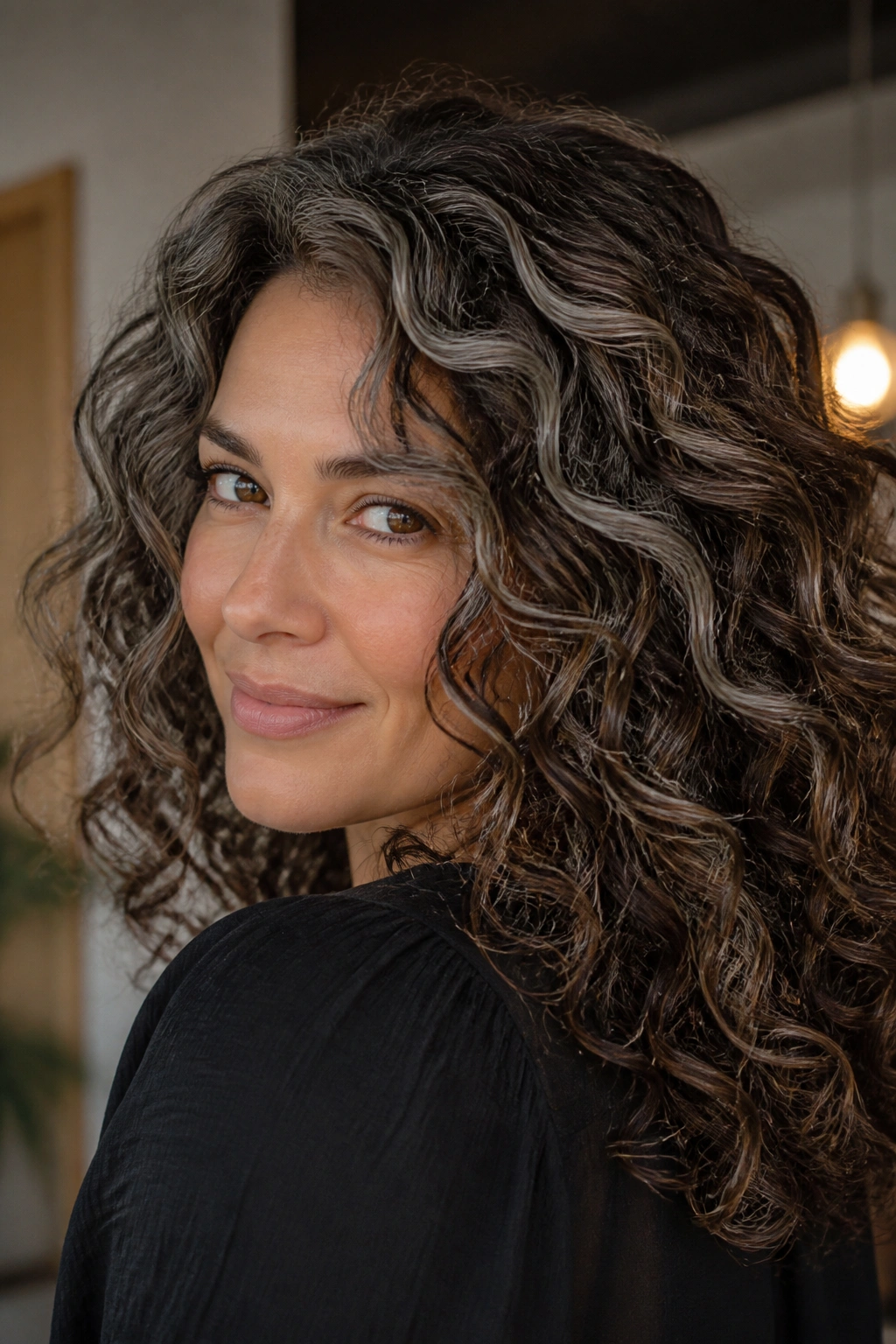
Curly brown hair changes the game. The curl pattern naturally breaks up colour, so silver contour highlights can look far more blended on curls than on straight hair. The trick is to follow the shape of the curl, not fight it.
How to get the most from it
A contour placement usually means brighter pieces around the face, crown, and outer curve of the curls, where the pattern lifts and twists most. That gives the hair shape without making the whole head look uniformly light. On dense curls, a few silver streaks can open the style up fast.
- Ask for curl-by-curl placement, not blanket foiling
- Keep the lightest pieces on the outer ring of the curls
- Use a hydrating mask weekly to keep the shape springy
- Avoid heavy oils before styling, which can mute the cool tone
Curly textures often need more moisture after lightening, and that part is not optional. Dry curls lose definition, and grey turns dull faster on rough cuticles. Keep the finish soft, not stiff.
11. Charcoal Highlight Panels on Espresso Hair
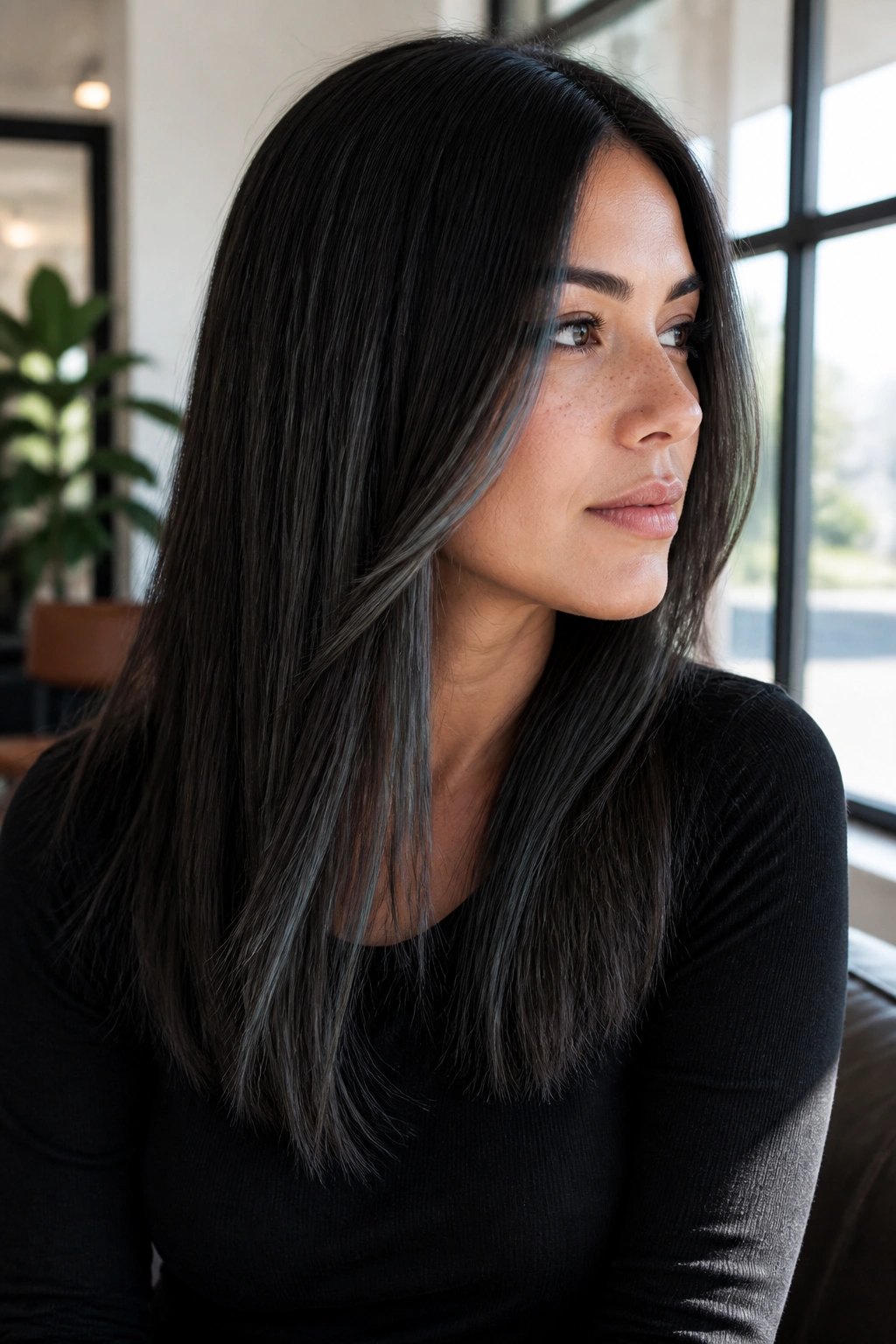
Charcoal panels are a mood. They sit darker than silver but lighter than black, which makes them a smart pick for espresso hair that needs dimension without a dramatic jump in colour level. The result feels graphic and modern, but not gimmicky.
Unlike fine babylights, charcoal panels show their shape. That makes them useful for straight haircuts, sleek bobs, and blunt lobs where you want the colour itself to become part of the silhouette. If you wear your hair pin-straight, the lines look sharp. If you curl it, the effect softens a bit.
A few well-placed panels near the sides can break up a heavy brown base in a way that feels deliberate. Too many, though, and the contrast starts to fight the haircut. Keep the placement disciplined.
The nice thing about charcoal is that it doesn’t demand the same maintenance as icy silver. It fades more gently, which is useful if you don’t want your hair to look washed out between salon visits.
12. Grey Babylights on a Medium-Length Lob
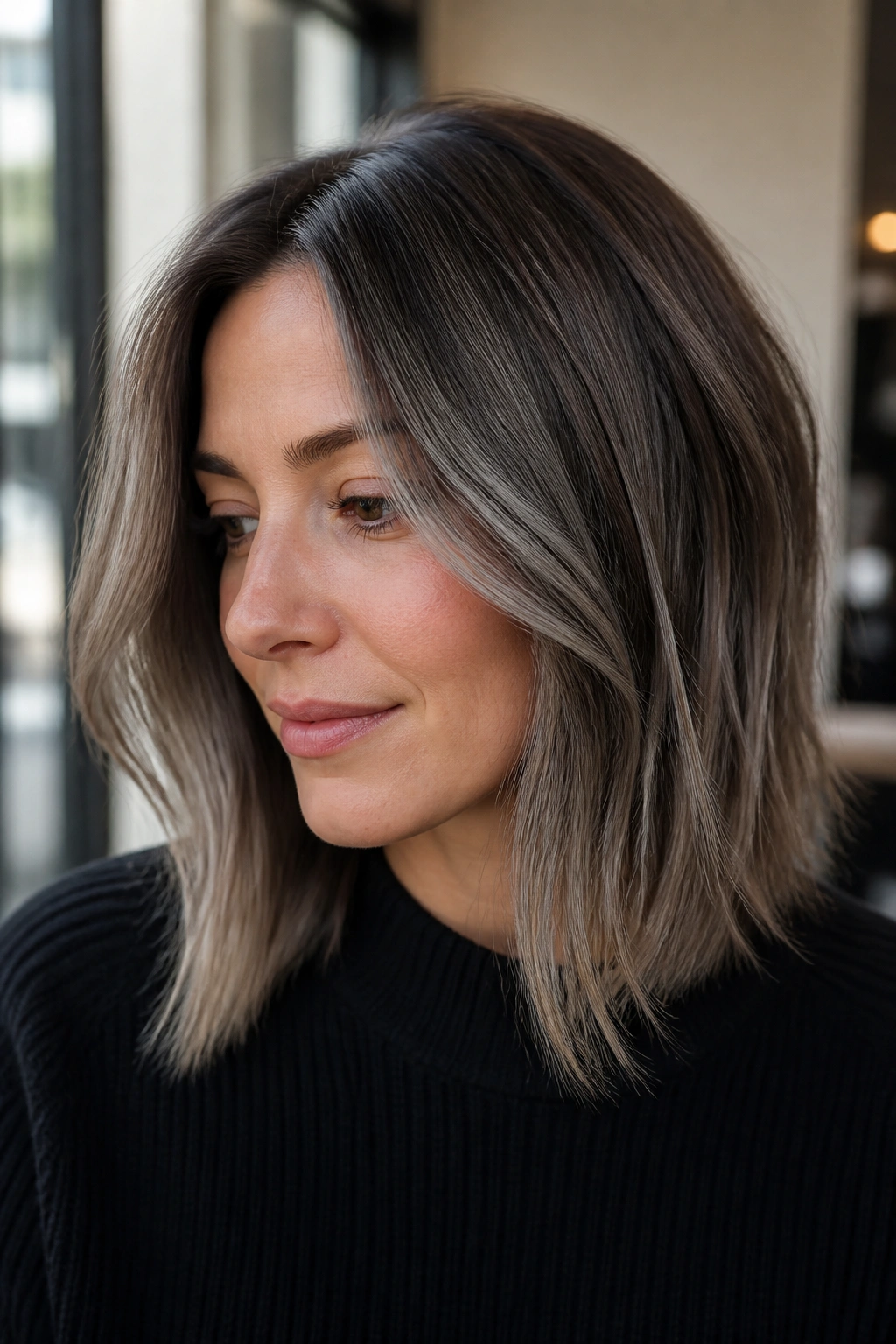
A lob can handle delicate detail beautifully. Grey babylights are tiny enough to keep the cut clean, but visible enough to stop medium brown hair from looking flat under indoor light. The effect is understated in the best way.
What makes this look sing is spacing. Fine strands scattered through the outer layers give the hair a soft, airy finish. You still see the brunette base, which is important on a lob because the cut already has a clear shape. The colour should support it, not compete with it.
What to ask your colourist for
Ask for micro-weaves in cool ash-grey tones, especially through the top and around the face. If the hair is fine, keep the sections even finer. If the hair is thick, the colour can handle a bit more density without looking heavy.
This style grows out well because the highlights are small and frequent. It’s one of those choices that looks expensive even when it’s deliberately quiet. Not flashy. Just clean.
13. Ash-Dusted Ends on a Wavy Brunette Lob
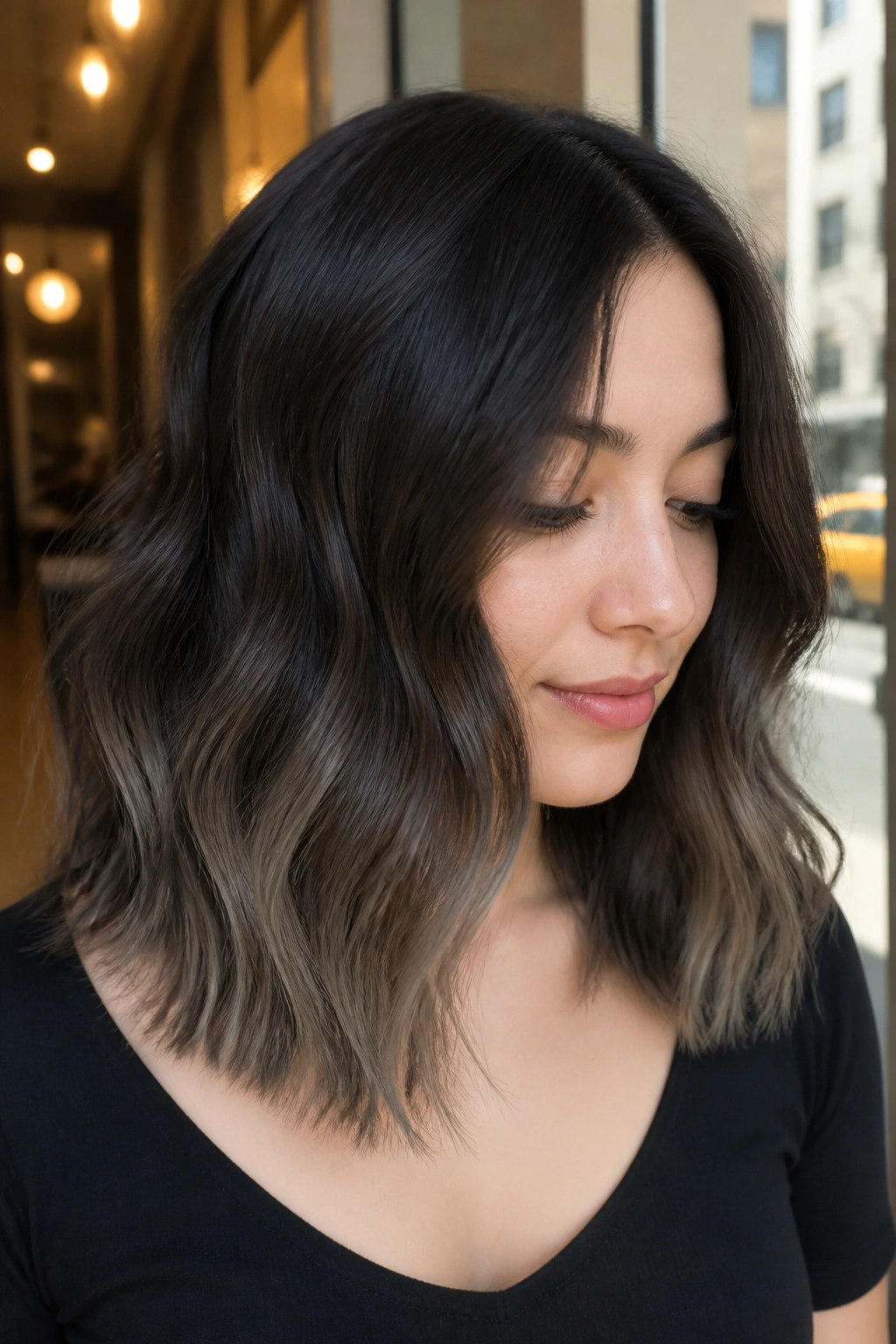
Ash-dusted ends are for the person who wants a softer version of ombré. The grey lives mostly below the cheekbones, so the top half of the lob stays brunette and grounded while the bottom half picks up a powdery cool finish. It’s easier to wear than a full silver fade.
The wave pattern helps a lot here. Each bend shows a little different tone, which keeps the ends from looking flat. On brown hair, ash tones are especially useful when the base has a warm cast that needs cooling down near the perimeter.
If the ends are already lightened from past colour, this style is easier to achieve because the grey toner can sit directly over pre-lightened hair. If the hair is darker, your colourist may need to lift the bottom third first, then tone it into that soft slate finish.
One thing people miss: ash-dusted ends need regular trims. The colour shows split ends fast. Keep the shape clean and the whole style looks more expensive.
14. Greige Highlights That Blur Brown and Grey Together
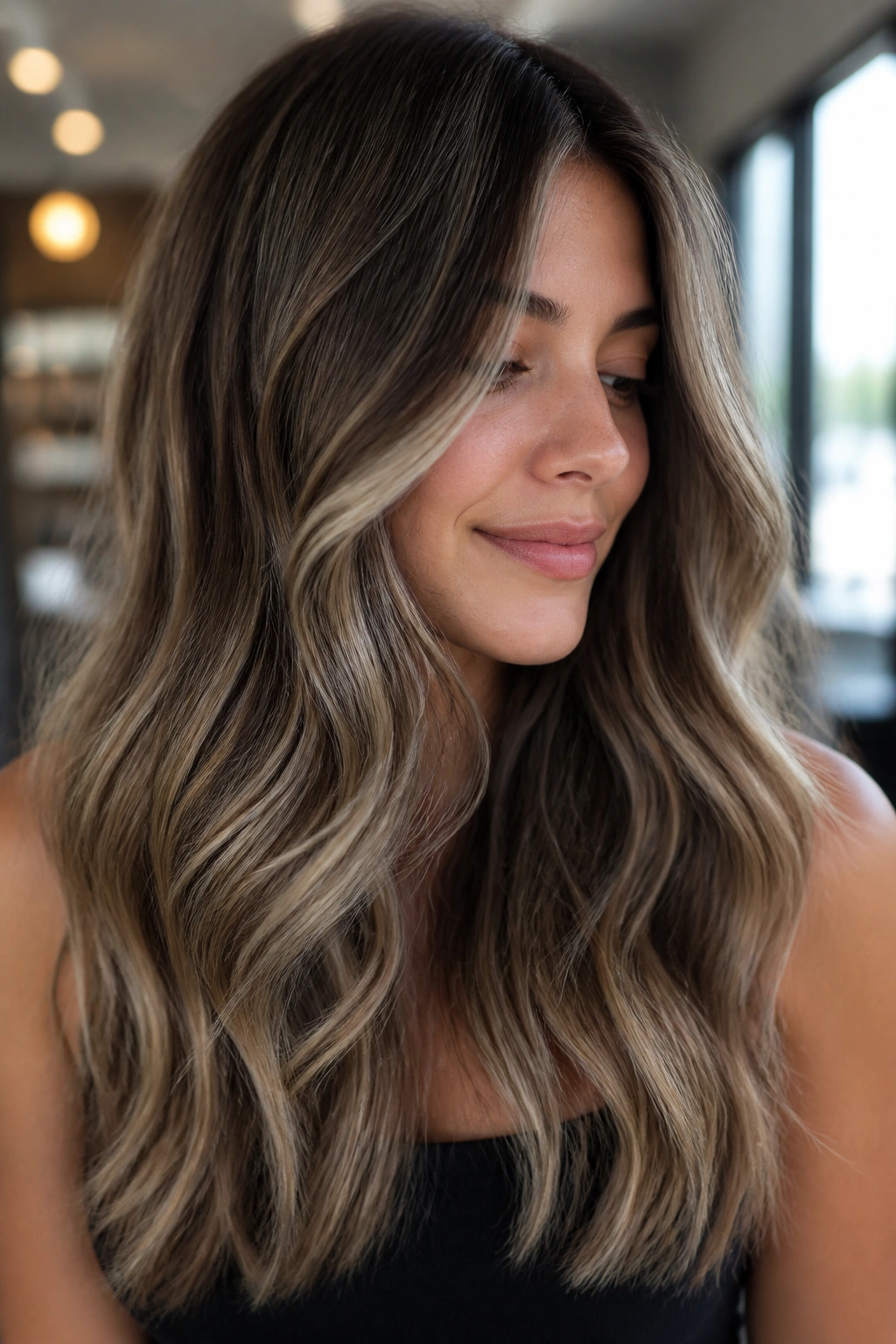
Greige is the middle ground that gets overlooked too often. It blends grey and beige, which means it can sit on brown hair without looking icy or muddy. That makes it a strong choice if you want the look of grey highlights for brown hair but don’t want a stark salon result.
The finish is softer than silver and less warm than caramel. That middle lane is the whole point. Greige works especially well on people who wear neutral makeup, simple jewellery, and textured fabrics — it doesn’t fight anything.
Why it flatters brown bases
Brown hair often contains hidden warmth, even when it looks cool in the bottle. Greige balances that warmth rather than trying to erase it. That keeps the result from turning greenish or flat.
For a nice finish, ask for dimensional greige ribbons with a soft gloss. The gloss matters. Greige without shine can go dull fast, and dull grey is not the same thing as cool grey.
15. Chunky Grey Highlights for a Retro Contrast Look
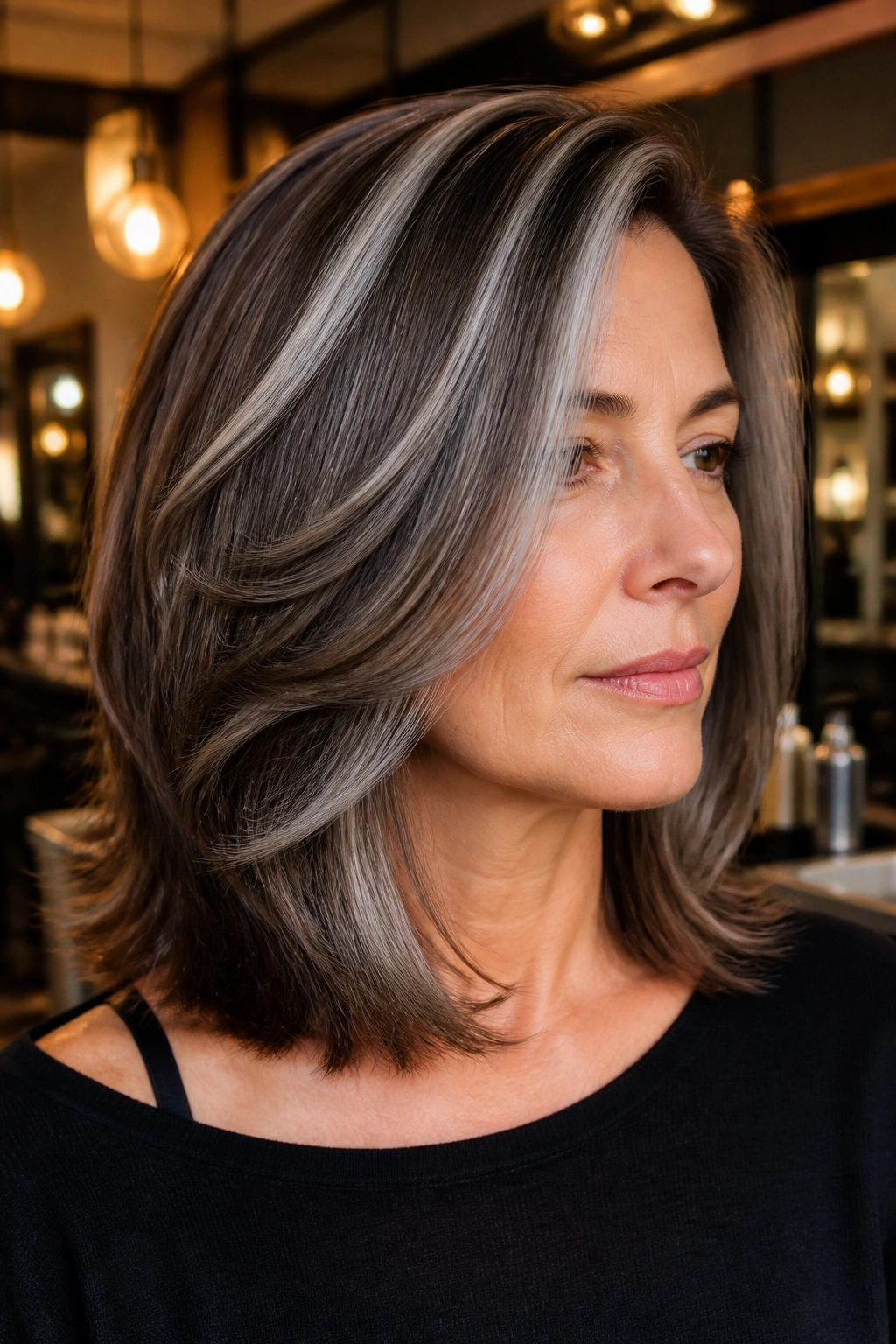
Chunky grey highlights are not subtle, and that is exactly the point. On brown hair, they create a retro, almost graphic effect that can be brilliant on layered cuts, blunt fringes, and shoulder-length shags. If you want movement and attitude, this is where the fun lives.
Contrary to the belief that chunky colour always looks dated, the shape can feel fresh when the tone is done right. Use smoky silver or graphite rather than pure white, and the contrast becomes more wearable. The brown base keeps it anchored.
A section like this needs confidence in placement. Too many chunky strips scattered everywhere and the style starts to look busy. Two or three deliberate placements per side can be enough. Keep the rest of the hair deeper so the grey can actually be seen.
This one is less about blending and more about statement. If you like your colour to show up in photos and in motion, chunky grey may be the right move.
16. Silver Lowlights Mixed Into Light Brown Hair
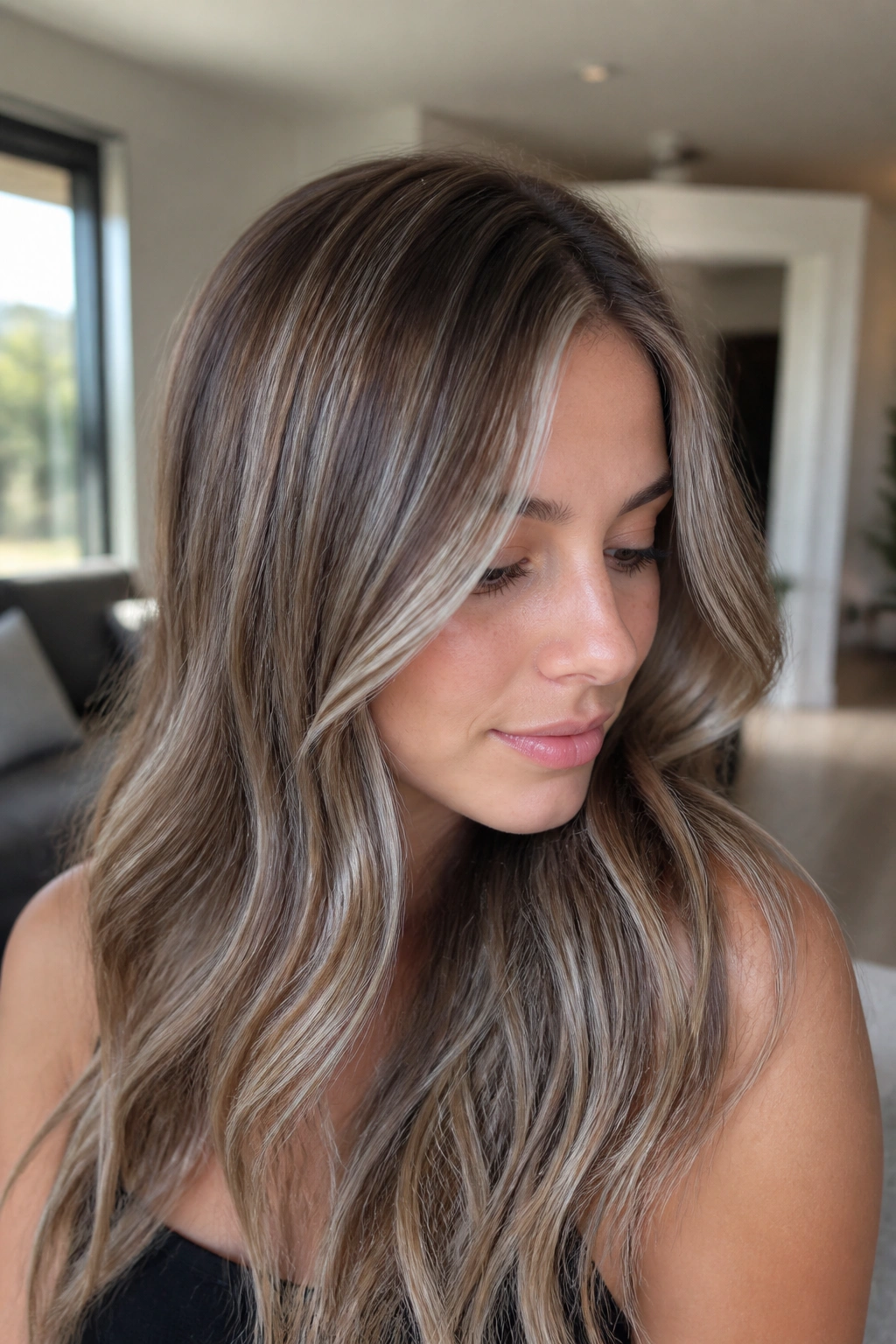
Most people think of grey as highlight-only territory, but lowlights matter here too. Silver lowlights mixed into light brown hair can cool the overall tone and add shadow, which keeps the lighter sections from drifting into washed-out beige. The result feels dimensional rather than over-lightened.
The mechanism
Lowlights sit in the opposite direction from highlights. They add depth back into hair that has too many light pieces or a naturally pale brown base. When the lowlights are grey, they create a smoke effect that makes the lighter strands look even brighter by comparison.
- Best for light brown or dark blonde-brown hair
- Great after a summer of too much lightening
- Helps broken-up curls look fuller
- Makes fine hair appear thicker at the root
This is one of the quieter grey options, but it’s smart. If your hair is already light, piling on more brightness can strip away shape. A few silver lowlights bring the structure back.
17. Soft Slate Highlights on Medium Brown Waves
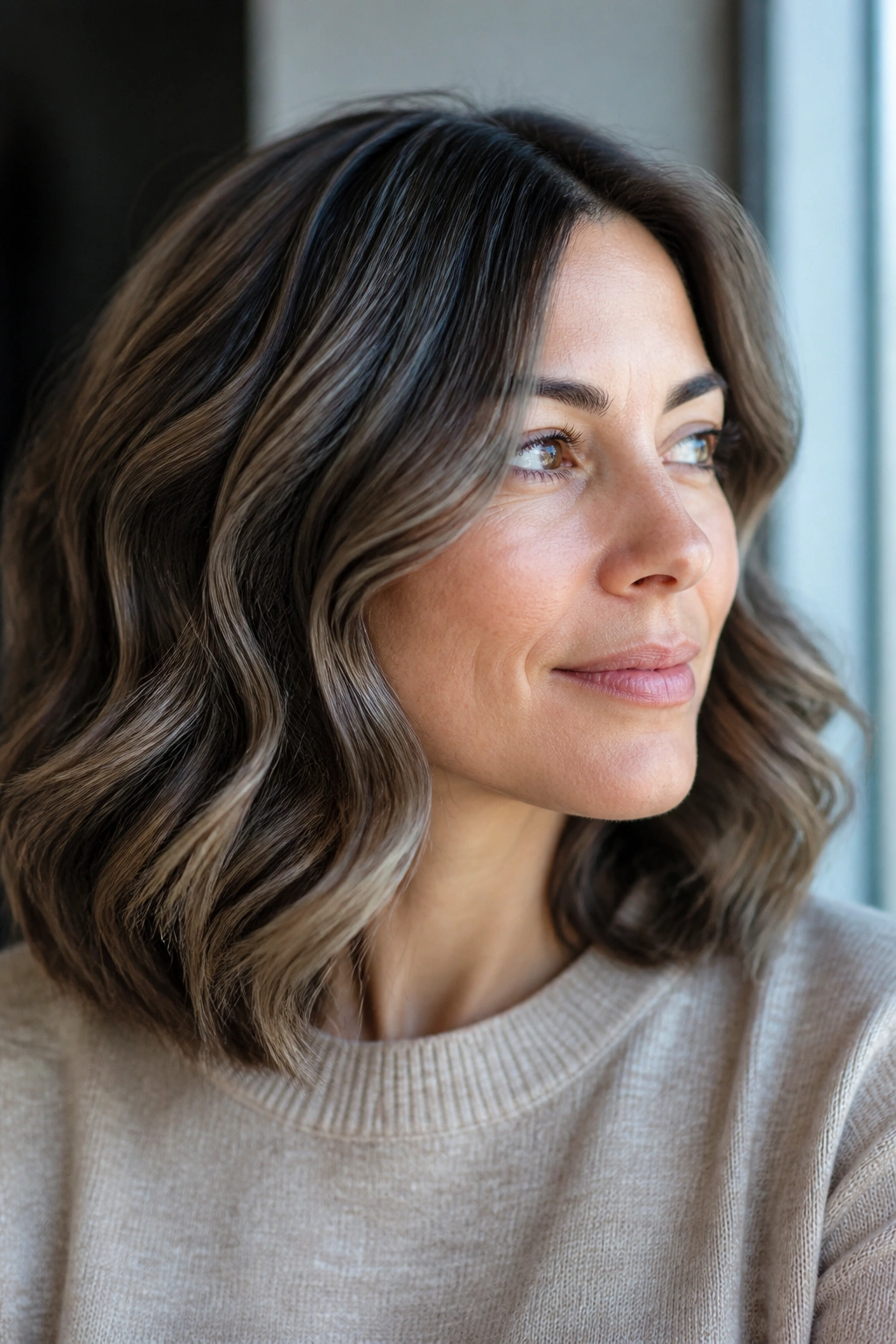
Soft slate is one of my favourite grey shades for medium brown waves because it never looks flat. Slate carries a little depth and a little coolness, which means the colour can sit between the brown base and brighter silver pieces without looking disconnected.
The wave pattern does most of the work. Slate pieces bend with the hair, so the colour shows up as shadow and shine instead of hard lines. On shoulder-length layers, this creates a very lived-in finish. Not messy. Just soft.
If you want this look to stay convincing, avoid over-toning the strands. Hair that gets pushed too far into ash can lose the blue-grey richness that makes slate so good in the first place. A clear gloss between salon visits helps keep the sheen.
This is a nice option if you want your grey highlights to feel low-key but still deliberate. People notice it, then look twice.
18. Grey Face-Frame Pieces on a Long Curly Cut
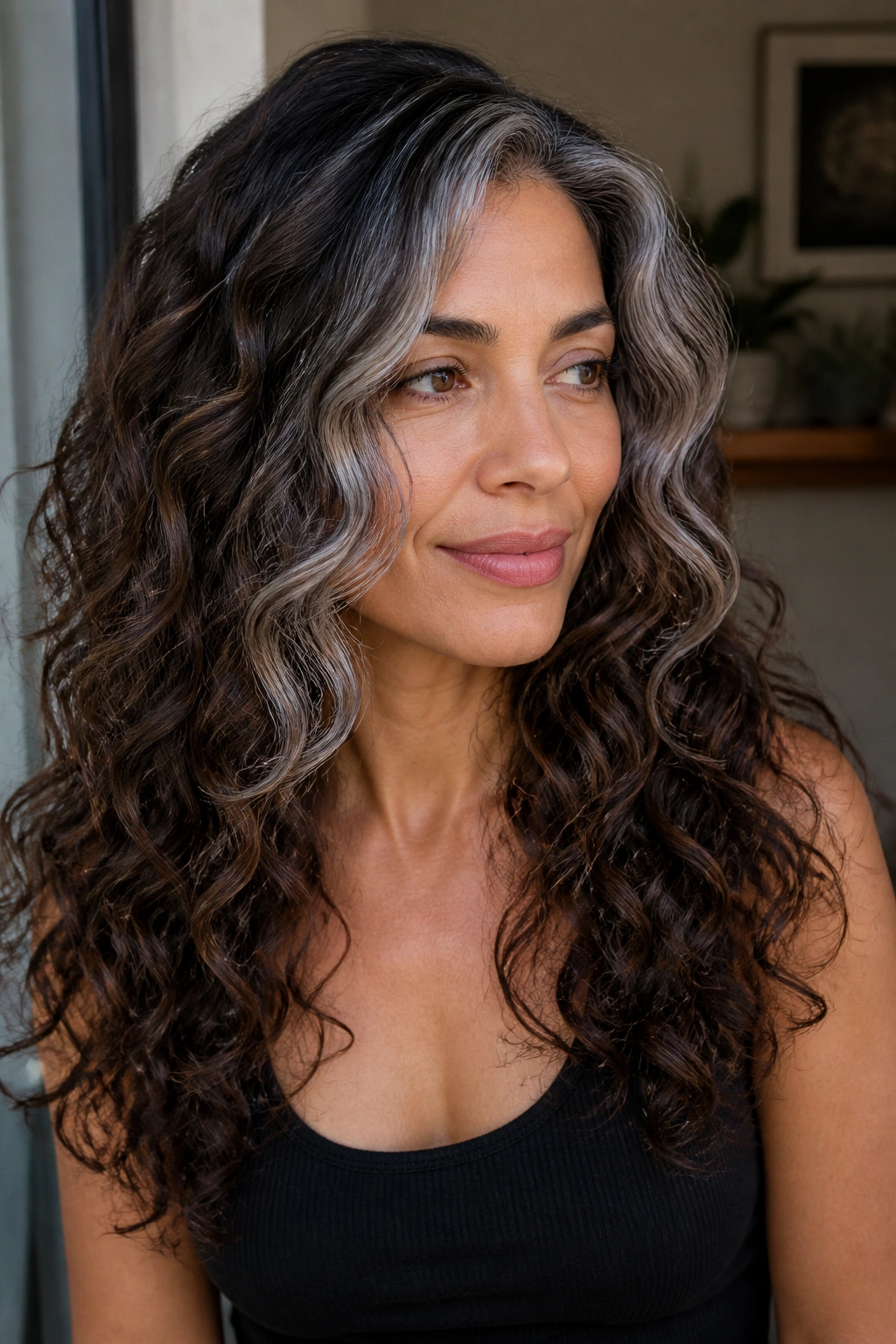
A curly face frame is a different animal from a straight one. The curls bunch and expand, so the grey pieces have to be placed with the pattern in mind. Done well, the front sections light up the face without breaking the curl shape.
The best versions use a few brighter grey coils around the cheekbones and temples, then fade into softer ash pieces through the sides. That lets the colour sit where the hair naturally opens up. It also stops the front from looking overworked.
What to ask for
Ask for curl-aware highlights with a grey toner that keeps the pieces cool but not flat. If the curl pattern is tight, too much contrast can make the front look patchy. Finer placement avoids that problem.
A curly cut gains a lot from this kind of framing. The colour adds shape, and shape matters more on curls than most people think. If the front is lively, the whole style feels awake.
19. Metallic Grey Highlights on Dark Brunette Hair
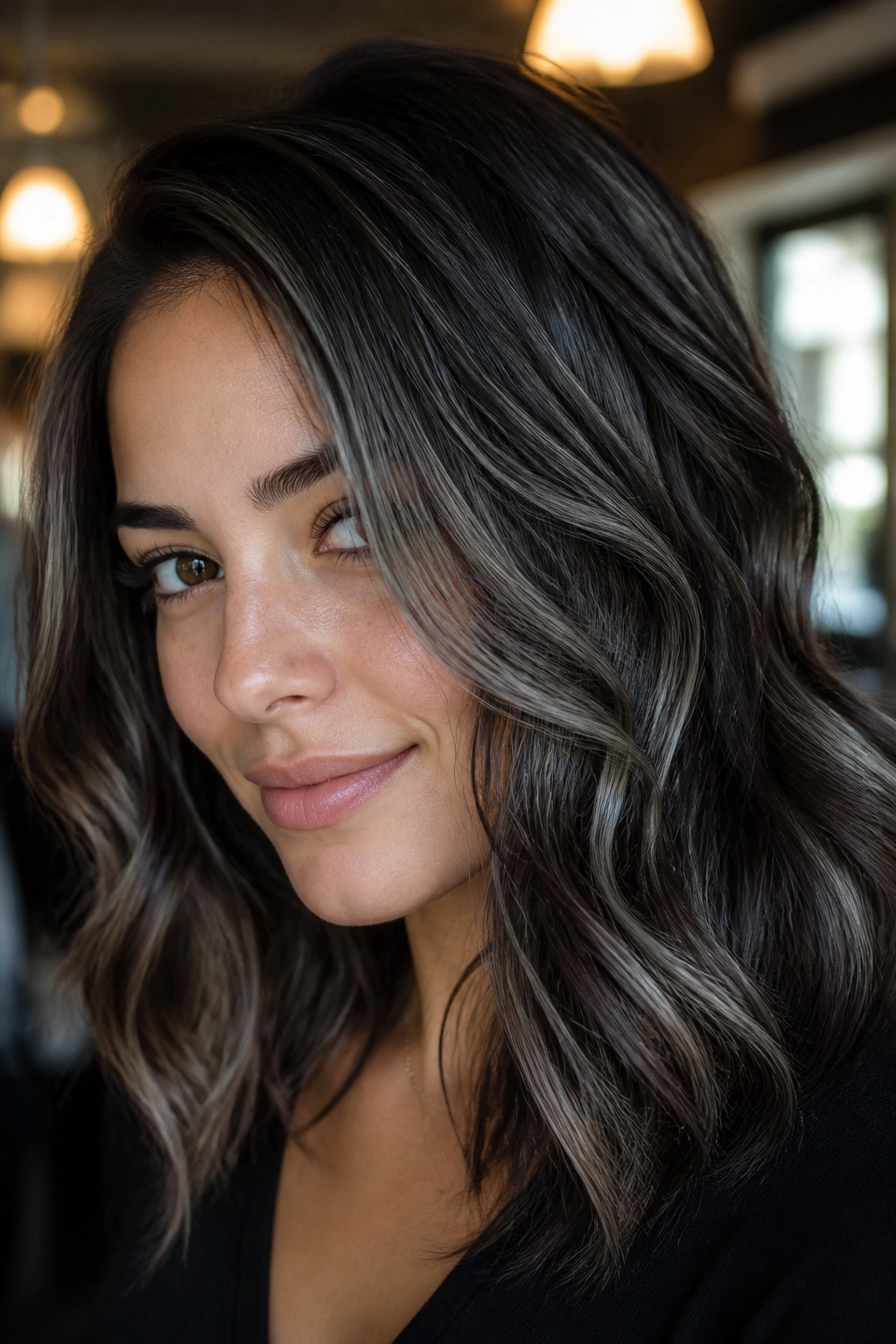
Metallic grey is the boldest version of the trend, and dark brunette hair gives it the richest backdrop. The dark base makes the grey read sharper, almost like brushed steel, which is why this style suits people who like a bit of edge.
The look works because the metallic tone is reflective. It doesn’t sit dead on the hair; it catches light and changes as the head moves. That movement is what keeps it from feeling costume-like. On straight hair, the effect is sleek. On waves, it looks more textured.
Quick placement notes
- Keep the lightest pieces concentrated through the outer layers
- Leave enough dark brunette underneath for contrast
- Add a gloss every few weeks to keep the shine
- Trim dry ends early, because metallic shades show roughness fast
If you want a grey look that feels bold but still polished, this is one of the strongest options. It has presence. It also needs maintenance, so I would not choose it casually.
20. Smoky Halo Highlights Around the Crown and Hairline
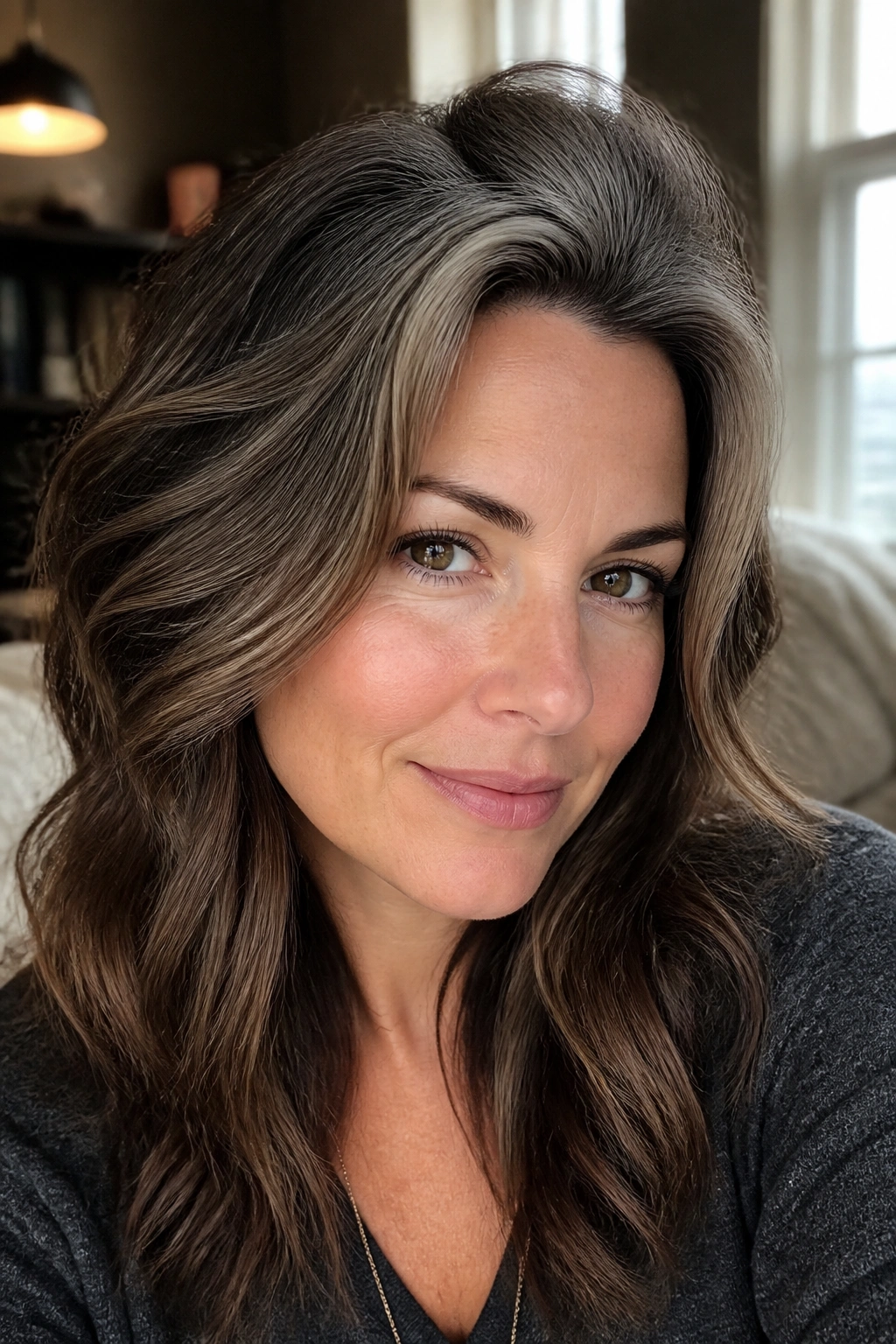
Smoky halo highlights are a softer finish for someone who wants grey around the top of the head rather than all over. The colour usually sits near the crown, around the hairline, and lightly through the top layer, which creates a misty frame without flooding the whole head with silver.
This is a smart choice for brown hair that already has good depth through the lengths. You keep the richness, but the top gets lifted just enough to stop the colour from feeling heavy. The crown placement also helps hair look fuller at the root, which is useful if the top is fine or a little flat.
If you wear your hair up often, this style shows off well because the halo catches light in a bun, clip, or loose knot. If you wear it down, it still reads quietly. That flexibility is the real appeal.
And if you’re deciding between full grey highlights and something softer, start here. It gives you the cool tone, the movement, and the lift around the face without asking the rest of the hair to do too much.
