



Round faces and copper brown highlights are a smarter pairing than most people think. The trick is not to flood the whole head with brightness. It’s to place warm copper in the right spots so the eye moves vertically, not side to side.
That matters because a round face already has soft width through the cheeks. Add thick light pieces at the widest point and the shape can look even fuller. Put the brightness a little higher, a little lower, or a little more broken up, and the whole face starts to feel longer and more sculpted. That’s the part most people miss. Placement beats intensity.
Copper brown is a nice lane to work in because it gives you warmth without tipping into flat red or orange. On brown hair, it can read as cinnamon, mahogany, auburn, amber, or toasted caramel depending on the base and the lightness level. The best versions have depth at the root, movement through the mid-lengths, and enough contrast to show texture without turning the hair into a striped mess.
1. Face-Framing Copper Money Piece for Round Faces
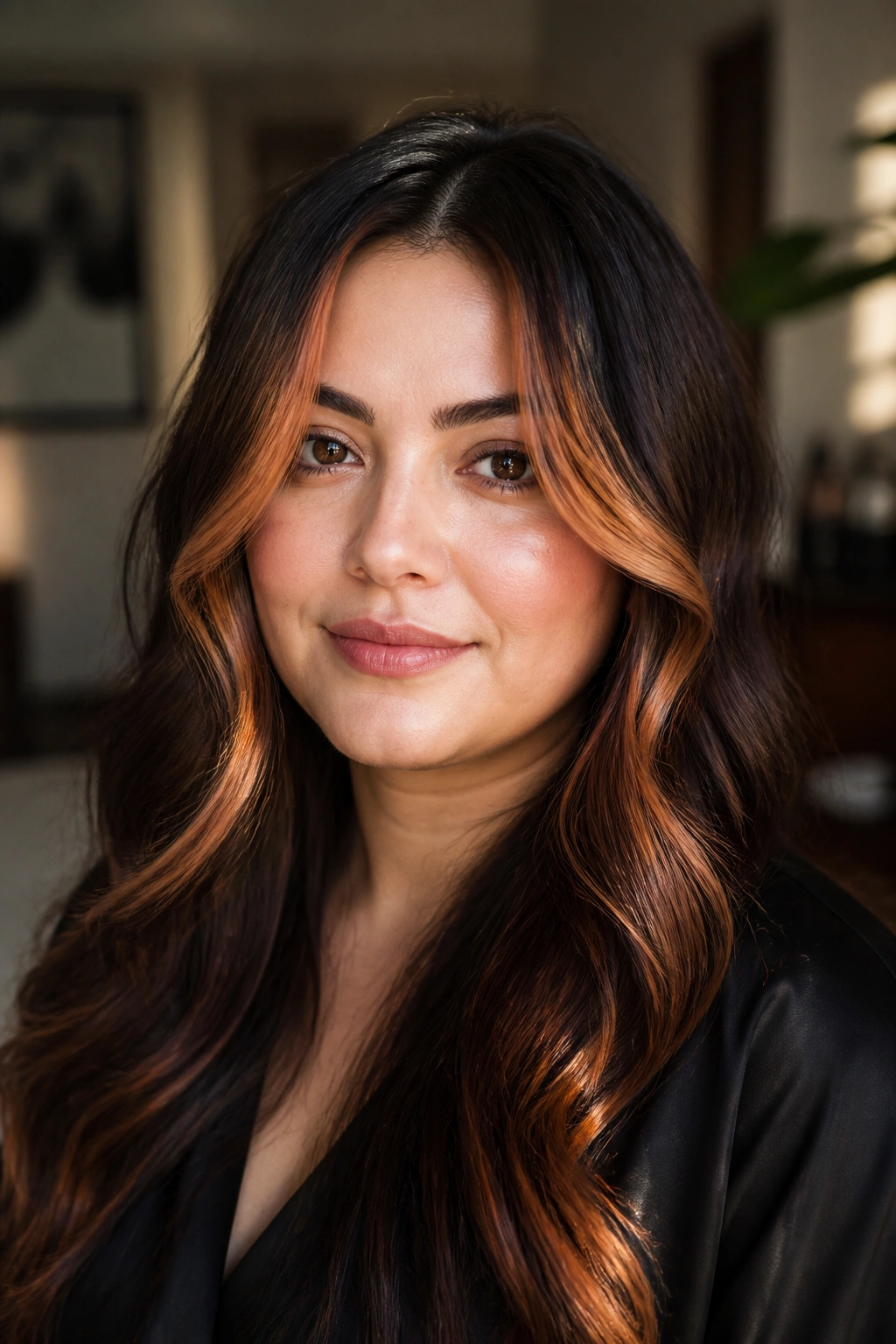
A bright money piece is the fastest way to change how copper brown highlights read on a round face. Keep the brightest ribbons right at the front, then curve them from the cheekbone area down toward the jaw. That gives the face a cleaner vertical line and stops the color from sitting too low and too wide.
Why This Placement Works
The front pieces should be the lightest part of the look. Everything else can stay softer and warmer. The goal is contrast near the face, not heavy lightness everywhere. When the rest of the hair stays a level or two deeper, the front pieces do the lifting without making the whole head feel puffed out.
Ask for two to four foils on each side, placed just inside the hairline and feathered through the first inch or so of hair. A good stylist will keep the brightest copper a touch below the part line so it doesn’t look like a hard stripe.
- Brightest at the cheekbone, softer below the jaw.
- Copper tone should lean toasted, not neon.
- Works best with a side part or soft middle part.
- Keep the base slightly shadowed for depth.
Best move: curl the front sections away from the face so the highlight bends instead of sitting flat.
2. Cinnamon Balayage with a Soft Root Shadow
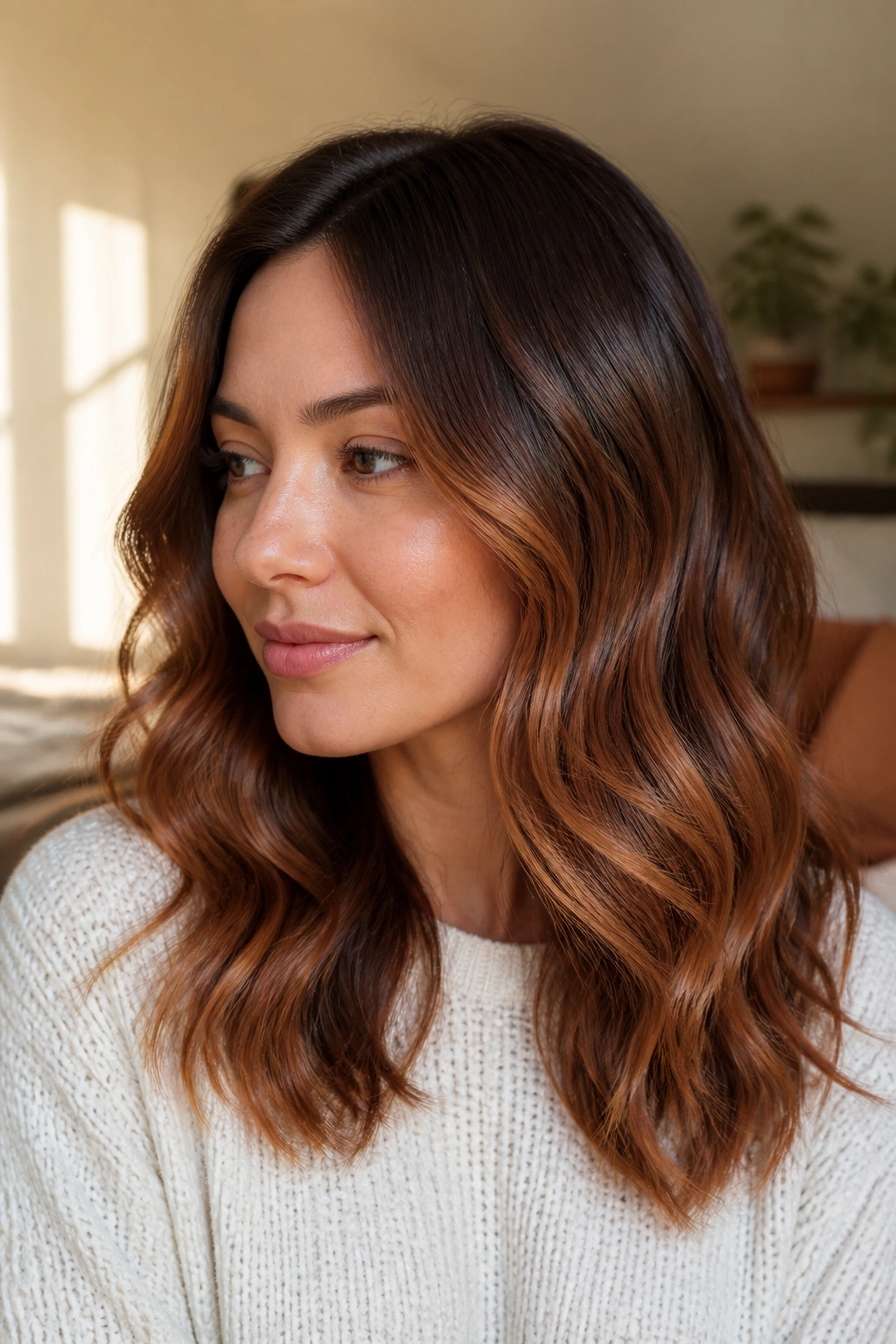
This one feels quieter, and that’s why I like it. Cinnamon balayage with a root shadow gives round faces a little lift without shouting for attention. The highlights start lower, around the upper mid-lengths, so the brightness lands below the widest part of the cheeks.
The root shadow matters. It keeps the crown close to the natural base and creates a cleaner stretch from top to bottom. That vertical stretch is the whole point. A round face usually looks best when the color leads the eye downward in soft, broken lines rather than in one big bright block.
This is a nice choice if you want copper brown highlights that grow out gently. You can wear it on straight hair, but it looks even better with a loose wave or bend. The texture breaks the color into little pieces, which is kinder to the face shape than a thick ribbon running straight across.
If you like low-maintenance color, this is one of the safest bets. It holds its shape well between gloss appointments.
3. Fine Copper Babylights Through the Crown
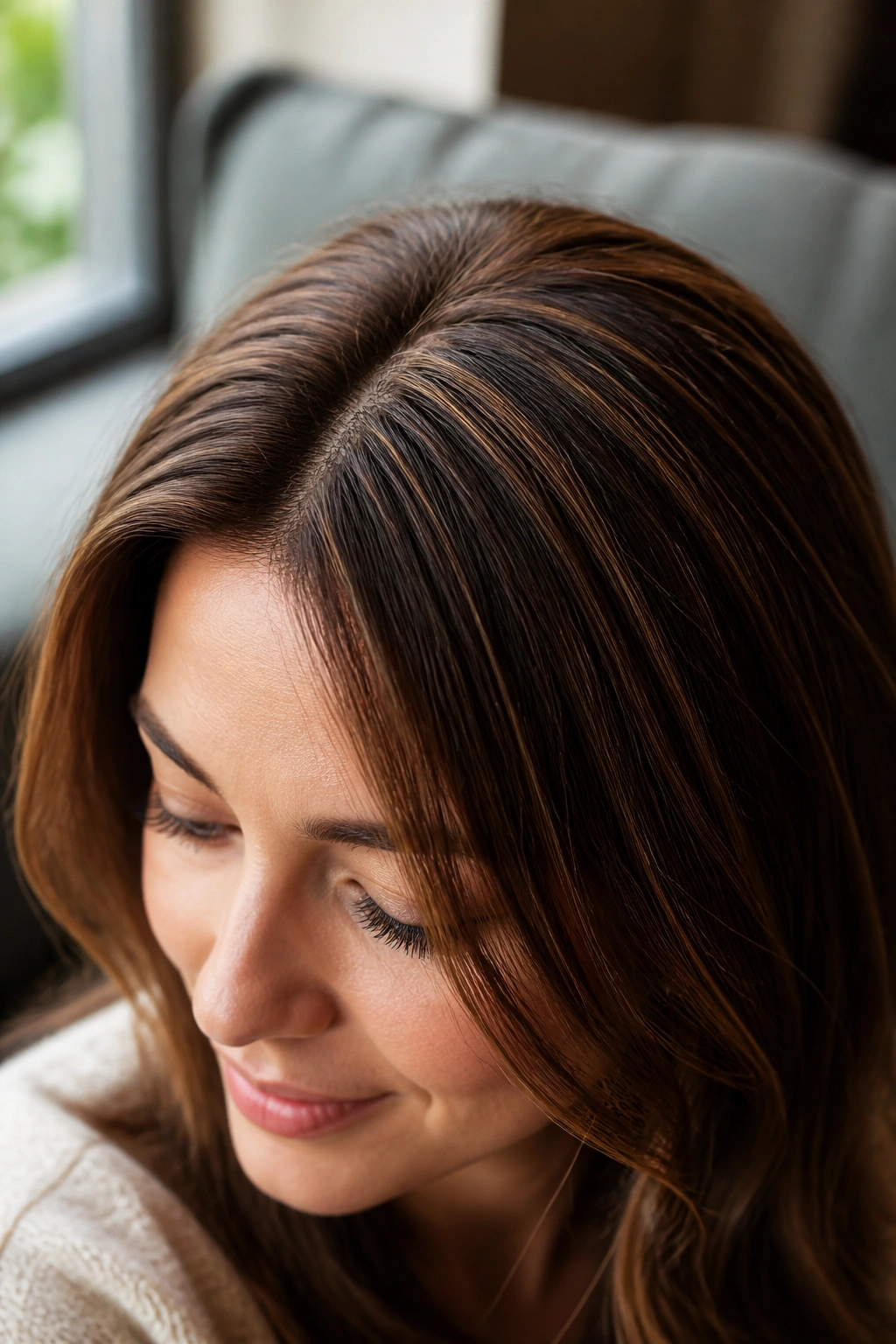
Could copper highlights be subtle? Absolutely. Fine babylights through the crown are one of the easiest ways to add warmth to brown hair without changing the whole mood of the cut. On a round face, the crown area matters because height there helps the shape look longer.
The trick is tiny sections. Think threadlike foils, not chunky stripes. The copper should sit just a little lighter than the base, enough to catch light when you move but not so light that it turns into a bright halo. This is a quiet color story, and it works because it creates lift where the eye first lands.
How to Wear It
Babylights like this are especially good if your hair is fine or thin. Heavy highlights can look jumpy on fine strands, but tiny weaves blend in and make the hair look fuller. If your hair is dense, the small pieces still work; you’ll just need more of them through the top layers so they don’t disappear.
A soft middle part can look lovely here, but a slightly off-center part often gives a round face a better shape. The little shine at the crown and part line draws the eye up.
4. Auburn Ribbons Through Long Layers
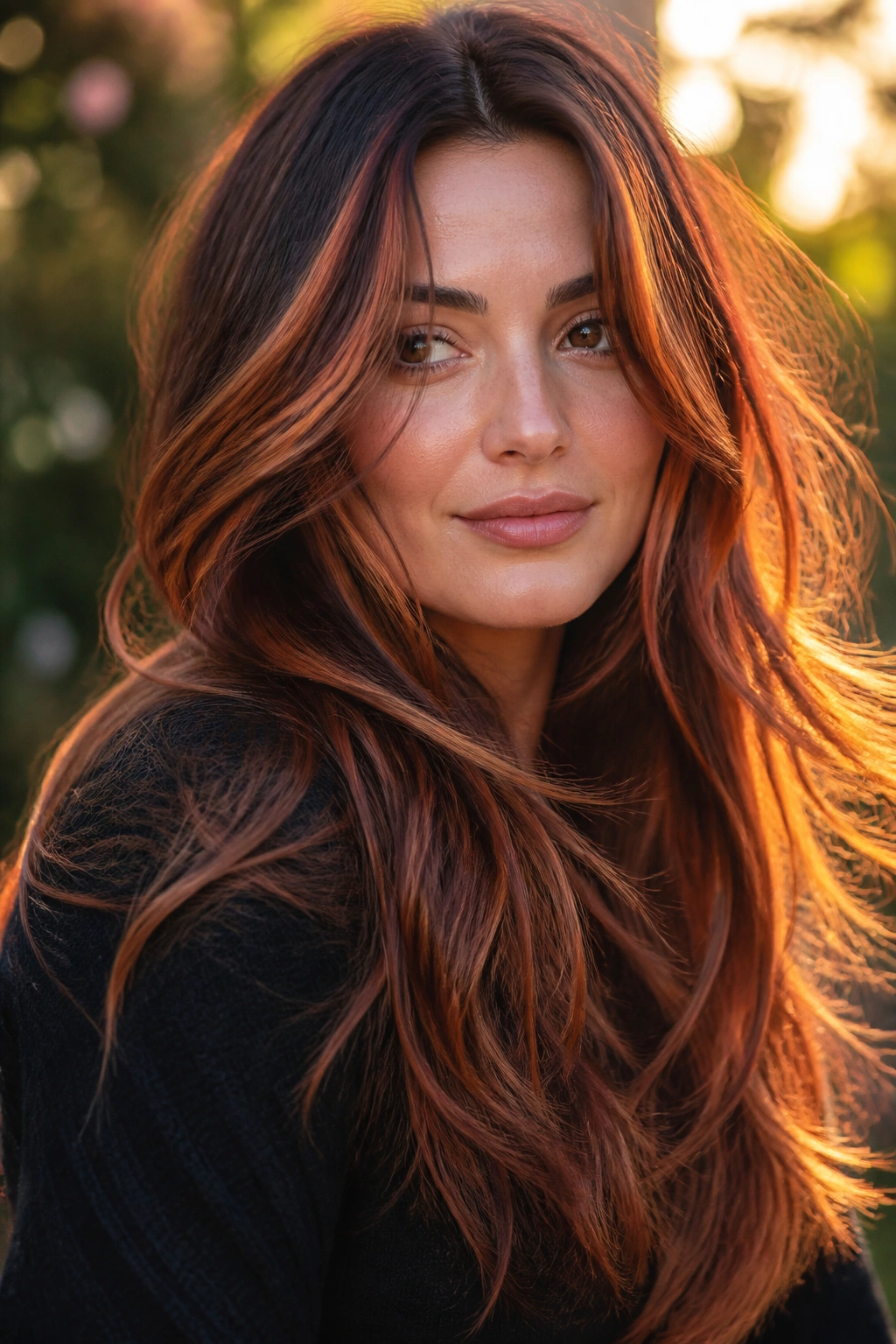
I’ve always liked auburn ribbons on long layers because they move. They don’t sit there like blocks of color. They swing, flash, and soften when the hair bends, which is exactly what a round face needs when the cut has some length to it.
Ask for the copper to be painted in long vertical ribbons from about the cheekbone down to the ends. Keep the root deeper. Keep the widths uneven. That unevenness is what keeps the style from looking too polished or too wide. The hair should feel airy, not solid.
A few thicker ribbons near the front can frame the face, but most of the copper should live in the interior and lower half of the hair. That placement makes the face appear a touch narrower because the brightness trails downward instead of spreading across the sides.
Long layers help a lot here. They break up the bulk that can make a round face look fuller than it is. If your hair is straight, add a bend with a large-barrel iron. If it’s wavy already, even better.
5. Copper Brown Lob with Bright Ends

A lob and copper brown highlights have a nice, clean relationship. The cut gives you structure; the color gives you softness. On a round face, I’d keep the brightest copper toward the ends and the front edge, not across the middle of the cheek area. That lower placement makes the cut feel sharper.
The ends can be painted a little brighter than the rest, almost like the hair is warming up toward the bottom. It gives the lob a subtle ombré feel without turning into a dramatic fade. That bottom-heavy lightness helps the face look longer because it pulls attention below the jawline.
This is a good option if you wear your hair tucked behind one ear. The copper at the ends peeks through and adds movement without needing a lot of styling. A soft wave keeps the effect loose; a blunt blowout makes it more graphic.
If your hair is thick, ask for a few internal lowlights too. The darker threads stop the color from ballooning outward.
6. Deep Brunette Base with Copper Lowlights
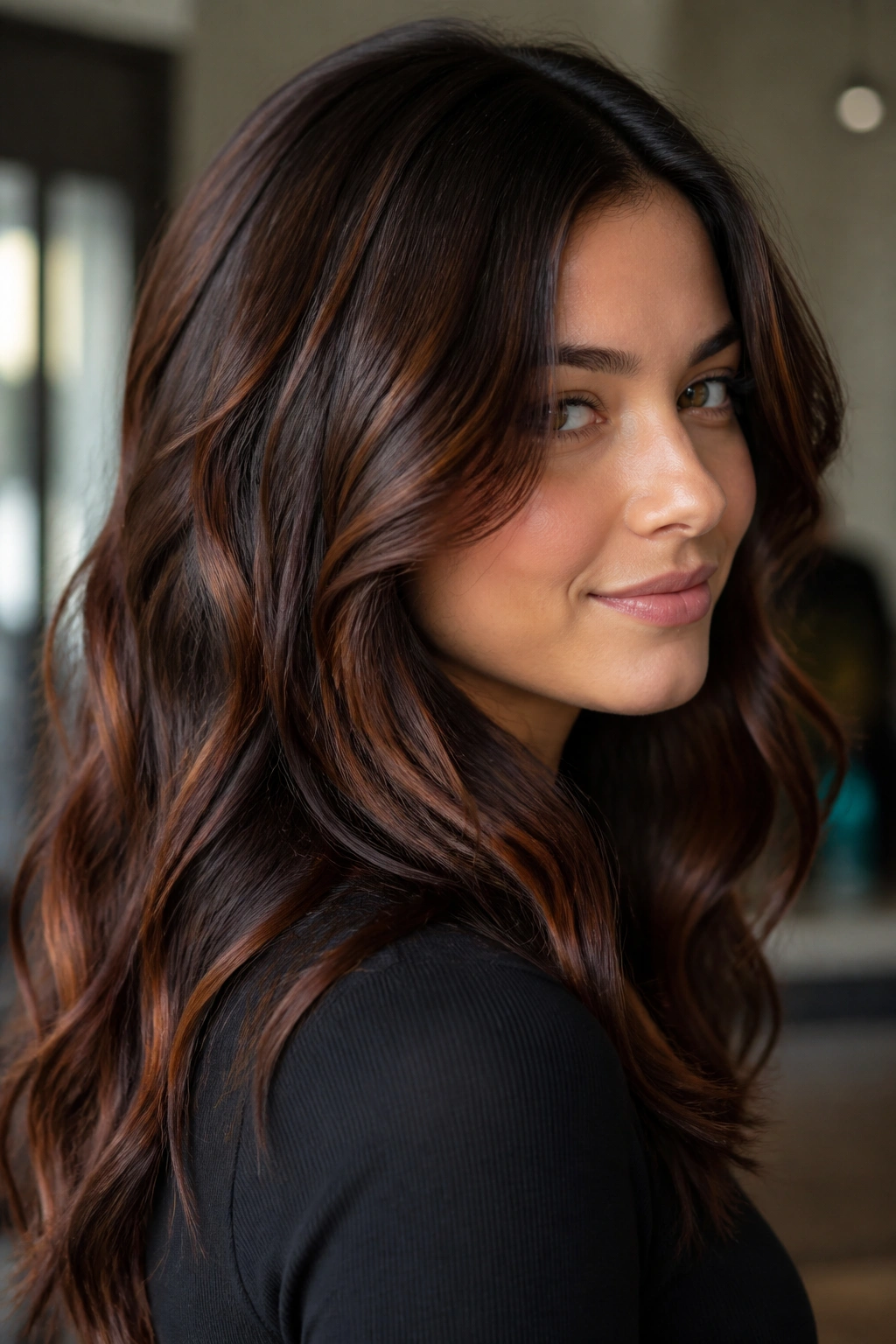
Copper lowlights are underrated. Most people chase brightness, but a round face often benefits just as much from depth. A deep brunette base with copper lowlights gives the hair shape from the inside out, almost like contouring with color.
Instead of lifting the whole head, the colorist places warmer copper threads beneath the top layer and through the interior panels. That means the surface still looks brown and rich, while the hidden warmth flashes through when the hair moves. The result is dimension without a wide band of lightness around the cheeks.
This works especially well on thick hair, where too much brightness can make the sides look bulky. Lowlights cut through that density and create slimmer-looking sections. It also makes the copper highlights you do add look richer, because they’re surrounded by darker strands.
A gloss in the same copper family keeps the tones connected. Without it, the lowlights can read muddy. With it, they look deliberate.
7. Chunky Copper Panels for a Bold Frame
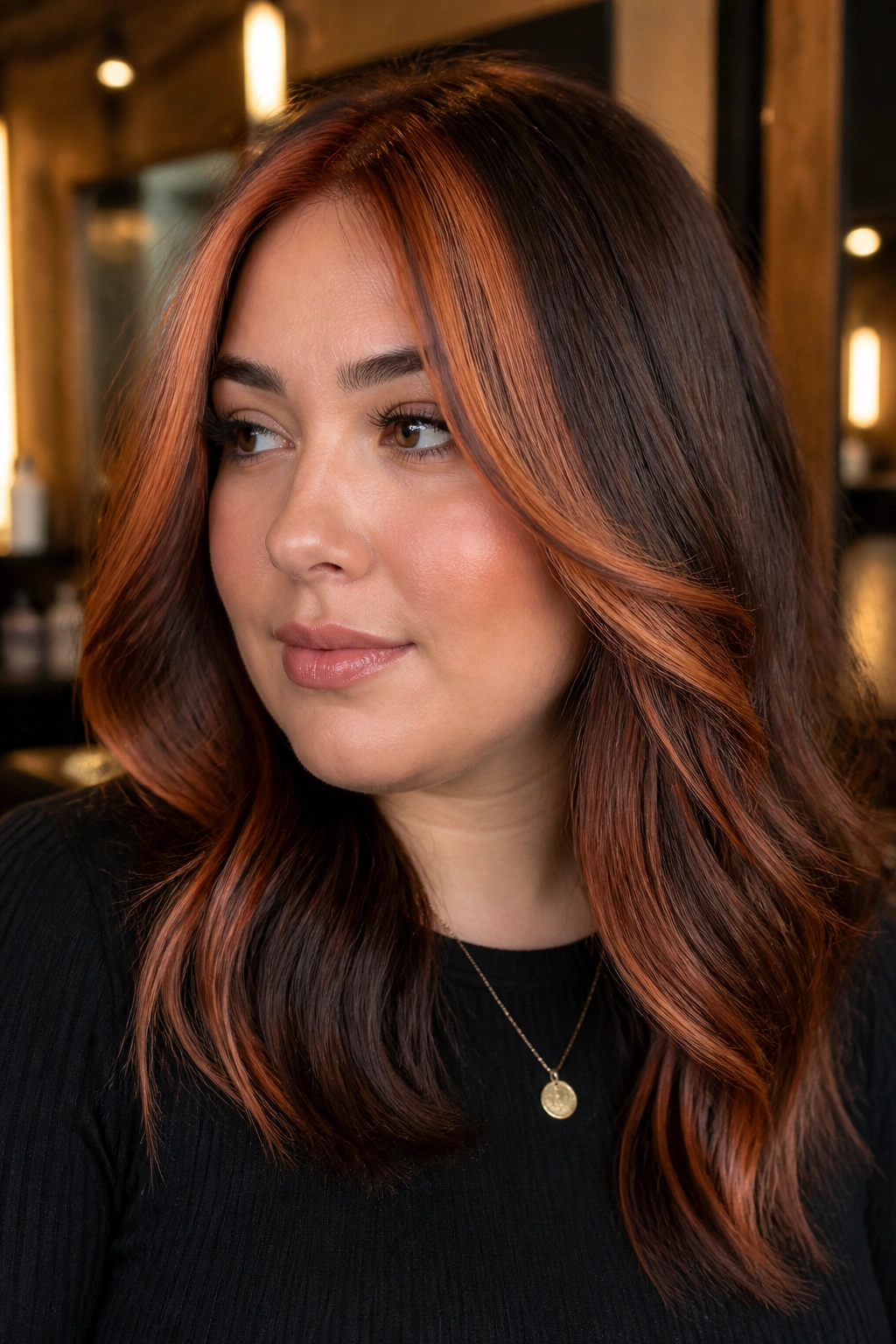
Chunky copper panels are not subtle, and that’s the point. If you want a look with some attitude, this is the one that gives a round face a sharper outline. The brighter sections act like strong lines beside the cheeks, so the face feels more lifted and less circular.
What Makes It Different
Instead of tiny weaves, you get broader panels placed near the front and through the outer layers. The copper can be vivid, but it should still have brown woven through it so the look doesn’t go flat. The contrast should feel bold, not cartoonish.
Keep the widest panels above the cheekbone and taper them out before they reach the lower jaw. That prevents the width from sitting exactly where you least want it. I’d skip this style if your hair is already very fine and fragile, because chunky lightening asks a lot from the strands.
- Best on medium to thick hair.
- Looks strongest with a side part.
- Needs a cut with movement, not one-length heaviness.
- Works well when the ends are textured.
If you like a modern salon look, this has presence. If you want whisper-soft color, keep moving.
8. Caramel-Copper Microlights for Fine Hair
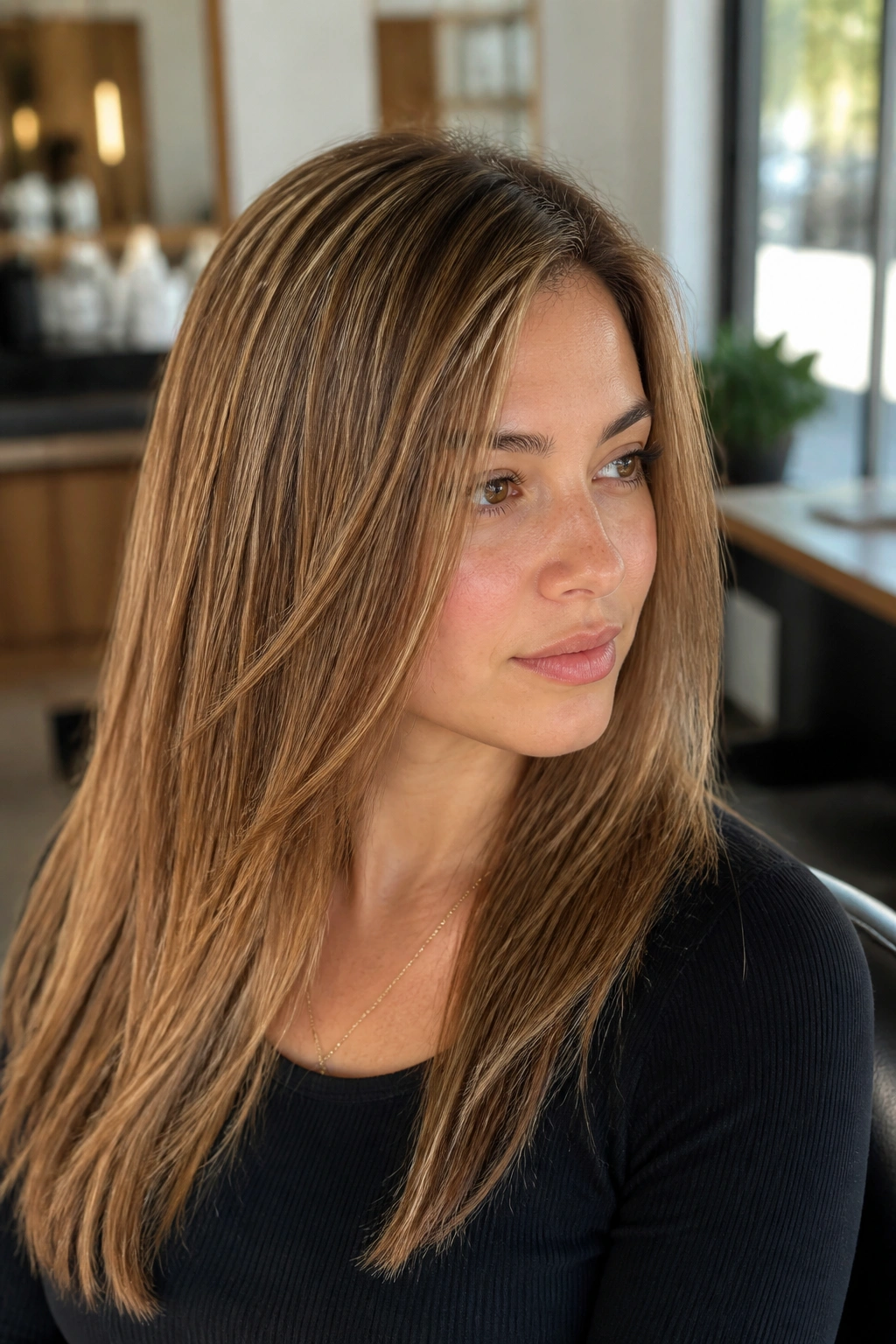
Fine hair can get swallowed by big highlights. Microlights fix that. Caramel-copper microlights thread warm color through the hair in tiny sections so the result looks fuller, softer, and more expensive-looking than chunky foils usually do.
The advantage for round faces is simple: the hair stays light in motion, not heavy in shape. Tiny pieces create a broken pattern that draws the eye upward and downward at the same time, which helps the face feel a little longer. The color also tends to blend better near the temples, where strong lines can sometimes widen the face.
This is the kind of color I’d recommend if you’re nervous about commitment. The grow-out is easy, and the contrast stays controlled. Ask for a caramel base with copper threads lifted only a shade or two above your natural brown. That keeps the effect soft and wearable.
A loose blowout is the best styling partner here. Microlights can disappear in a tight ponytail, but they come alive when the hair bends.
9. Hidden Copper Peekaboo Underlayers
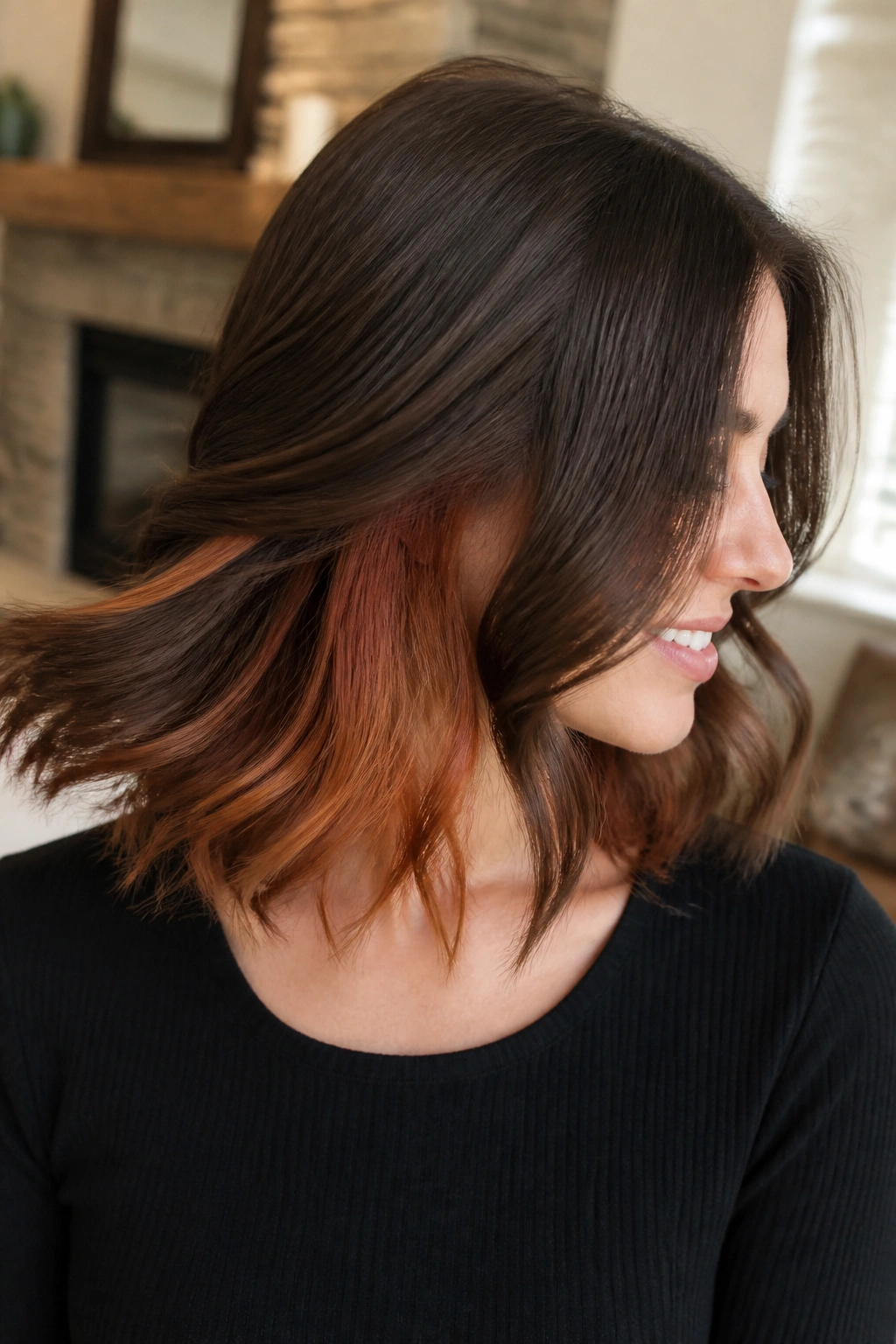
A peekaboo placement gives you copper without putting it front and center all the time. The top layer stays brown, while the copper lives underneath and flashes through when the hair flips or moves. On a round face, that hidden brightness is useful because it adds interest without adding width around the cheeks.
The best spot is the underlayer around the nape and the lower sides. Keep the top curtain around the face deeper, then let the copper appear only when the hair separates. That creates depth, which makes the whole cut look more layered and less puffy.
This style is especially nice if you wear your hair in half-up looks or loose waves. The copper peeks out in motion, and the effect feels playful rather than loud. It also keeps maintenance lower because the visible regrowth is less obvious.
If you want more impact, ask for a copper gloss over the underlayer too. That makes the hidden pieces glow instead of reading brassy.
10. Smoky Mahogany Copper for Curly Hair
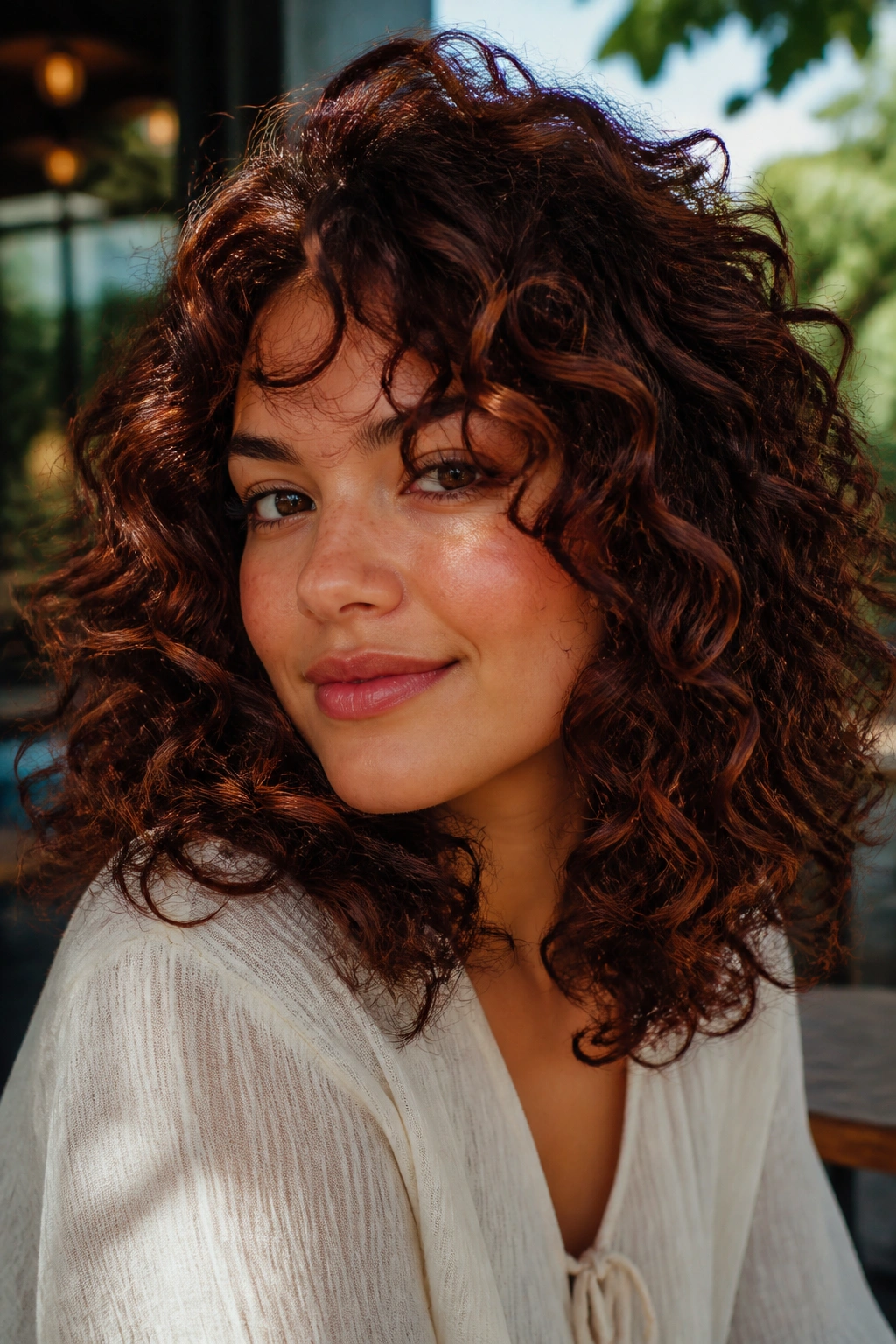
Curly hair and copper brown highlights can be a gorgeous match when the tone is a little smoky. Mahogany copper gives curls warmth, but it keeps the red side muted enough to feel rich instead of bright. For a round face, that matters because the curl pattern already adds width and shape.
The highlight placement should follow the curl group, not fight it. Paint the copper where the curls naturally loop around the face, then leave some darker pieces inside the pattern. That contrast is what gives curls contour and stops them from forming one wide shape.
I like this on shoulder-length curls and longer because the movement can stack softly instead of ballooning at the sides. A diffuser helps, but air-drying with a curl cream also works if you want a looser finish.
Curl Placement Notes
- Brightest pieces around the front curls, not all the way to the ears.
- Keep some lowlights in the interior for depth.
- Mahogany-copper shades flatter darker brown bases.
- Use a gloss to keep the tone from turning flat.
A curly head of hair can hold a lot of color. Using less light in the wrong spots is often the smarter move.
11. Side-Part Copper Sweep That Breaks the Width
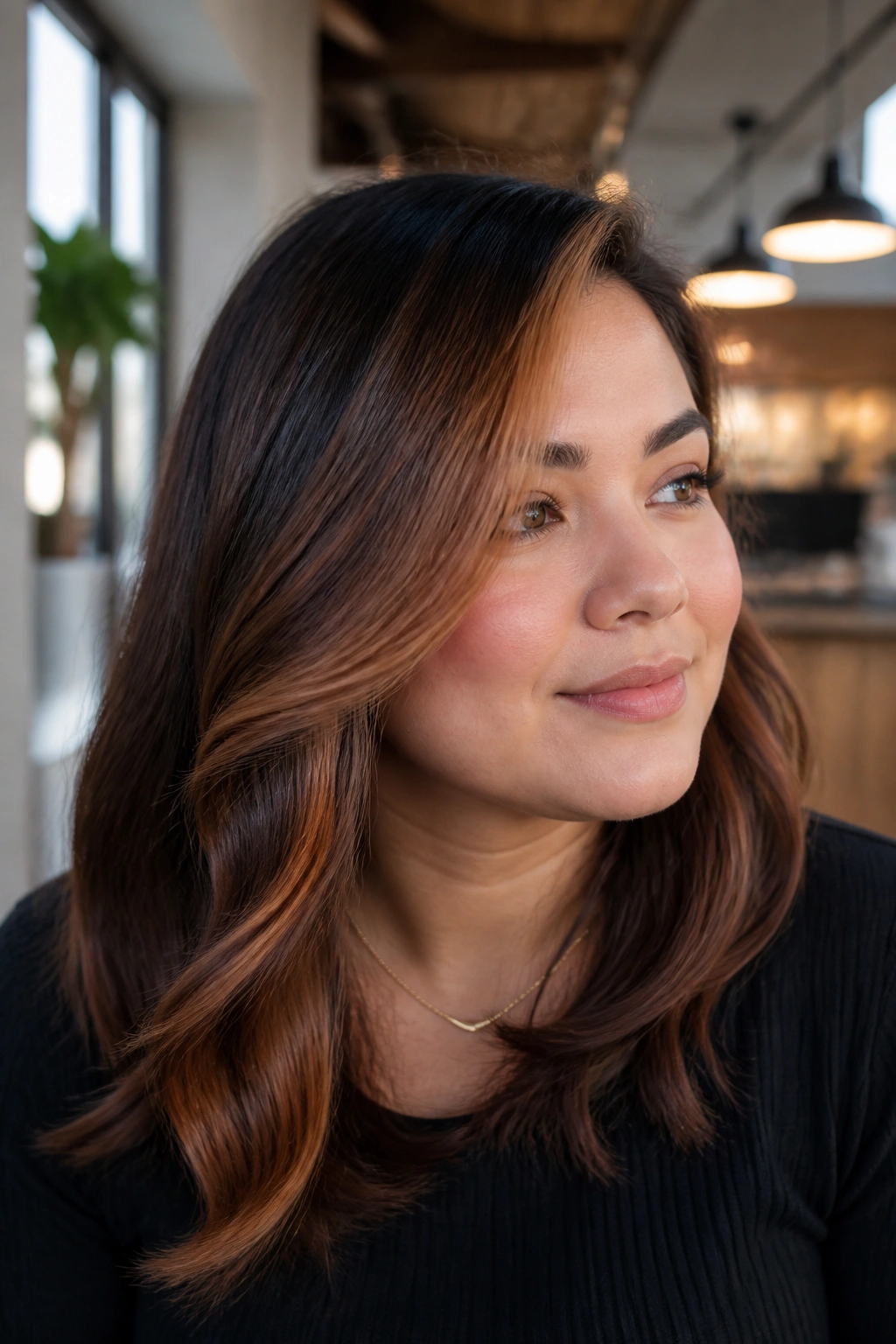
A side part can change the whole read of copper brown highlights on a round face. Shift the part, sweep the brighter pieces over one side, and the shape instantly feels less symmetrical. That asymmetry is useful. It pulls the eye diagonally instead of straight across.
The brightest strands should sit on the heavier side of the part and travel down past the cheekbone. Keep the other side softer, with less contrast near the face. That imbalance creates a longer line through the head, which is exactly what you want when you’re trying to avoid extra width.
This style works with straight, wavy, or curled hair, but it looks best when the front has some bend. If the hair is pin-straight and stiff, the sweep can look too fixed. A round brush blow-dry or large roller set gives the copper a softer fall.
It’s a simple move, but a good one. A part change often does more than another round of foils.
12. Toffee and Copper Blend on Wavy Hair
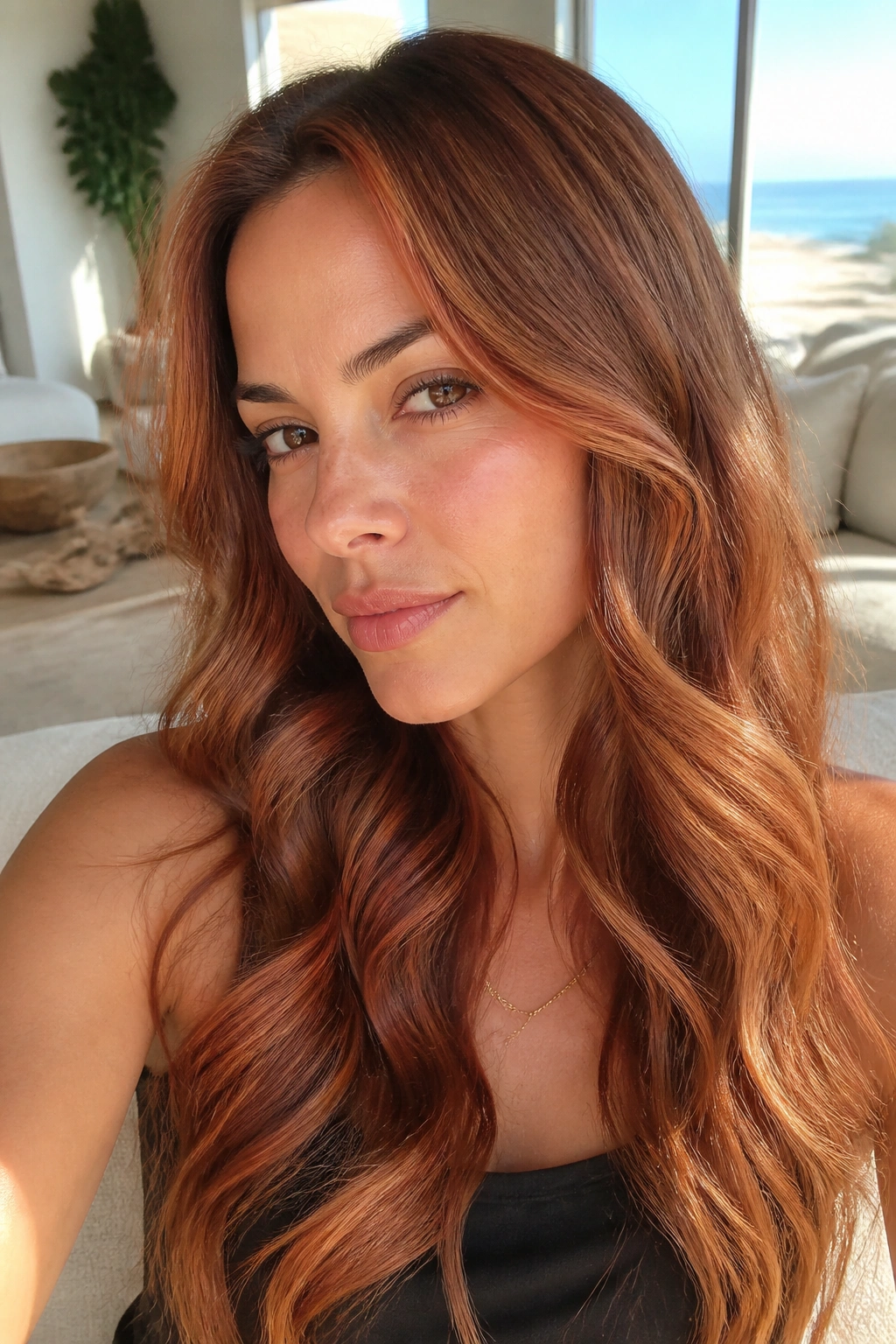
Toffee and copper together make brown hair look expensive in the easiest possible way. The toffee softens the red warmth, and the copper keeps it from fading into beige. On a round face, that blend is useful because it avoids harsh blocks of brightness and gives the hair a more fluid shape.
Wavy hair is the sweet spot. The color lands on each bend a little differently, so the face gets a frame that feels broken up and gentle. Broken-up color is kinder to rounder features than one uninterrupted strip of light. It keeps the eye moving.
Ask for toffee pieces around the outer layers and copper accents in the interior waves. That mix creates depth without making the front too wide. If your base is medium brown, the toffee can sit closer to honey-copper. If your base is darker, lean the palette richer and more chestnut.
A texturizing spray can help the color show. The wave pattern matters as much as the dye.
13. Copper Feathering at the Hairline
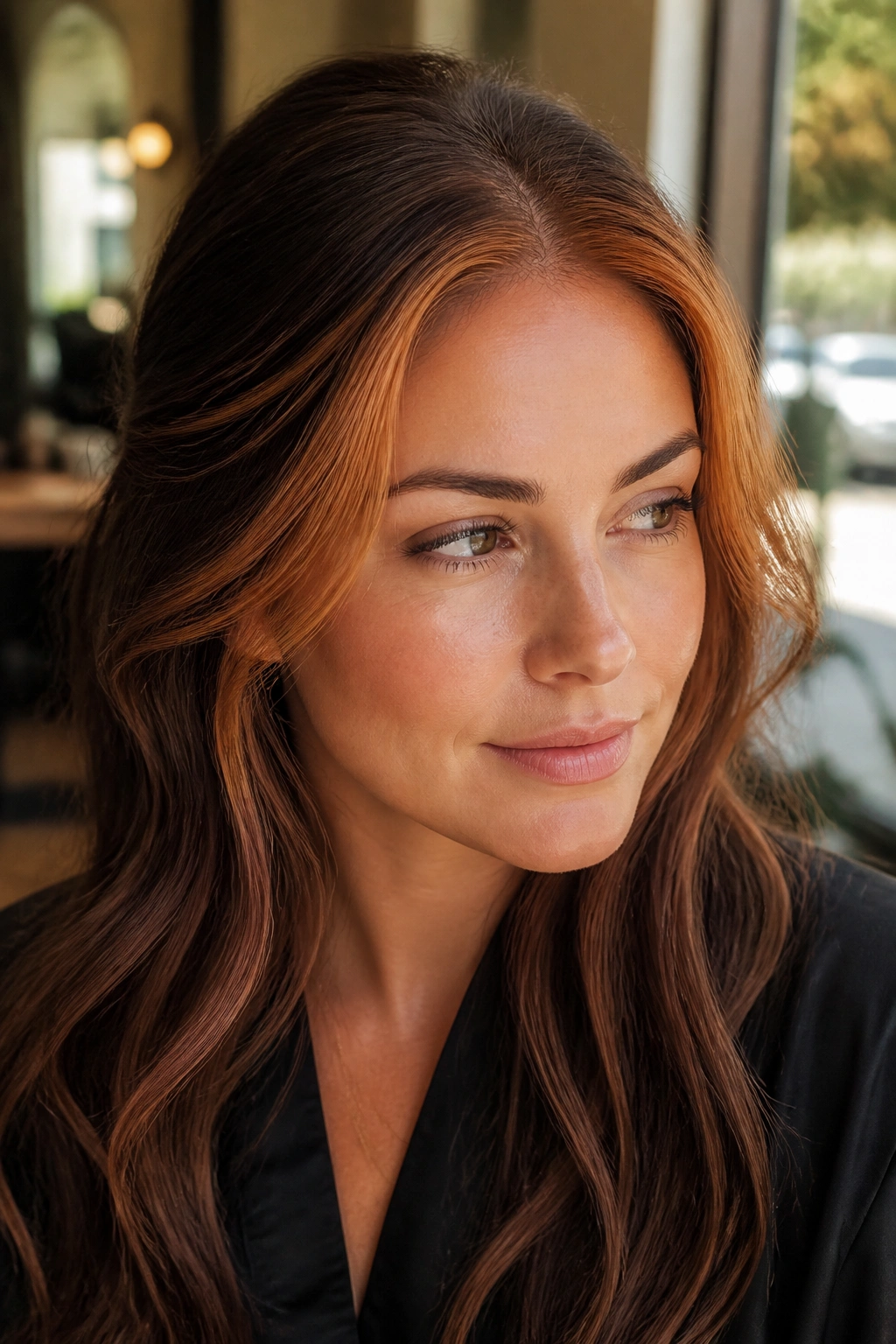
Copper feathering is all about the softest possible touch. Instead of bold streaks, the colorist paints fine, feathered pieces at the hairline, temple, and sideburn area. On a round face, that gives you lift without creating hard edges right at the cheeks.
Why It Feels So Light
The pieces are meant to look airy. They should blur into the base instead of sitting on top of it. That blur matters because hard lines around the face can make a round shape look wider than it is. Feathering keeps the lightness close to the skin but not so blunt that it stops the eye.
This style is a good fit for people who want copper brown highlights but do not want a dramatic color shift. It’s also smart for layered cuts, where the hairline pieces can slide into the rest of the shape. A soft bend in the front layer makes the effect even better.
- Best placed at the temples and along the first inch of fringe.
- Works on both side-swept and curtain bangs.
- Ask for thin slices, not broad foils.
- A copper gloss keeps the effect warm, not orange.
It’s subtle. That’s the charm.
14. Rooty Copper Balayage for Easy Grow-Out
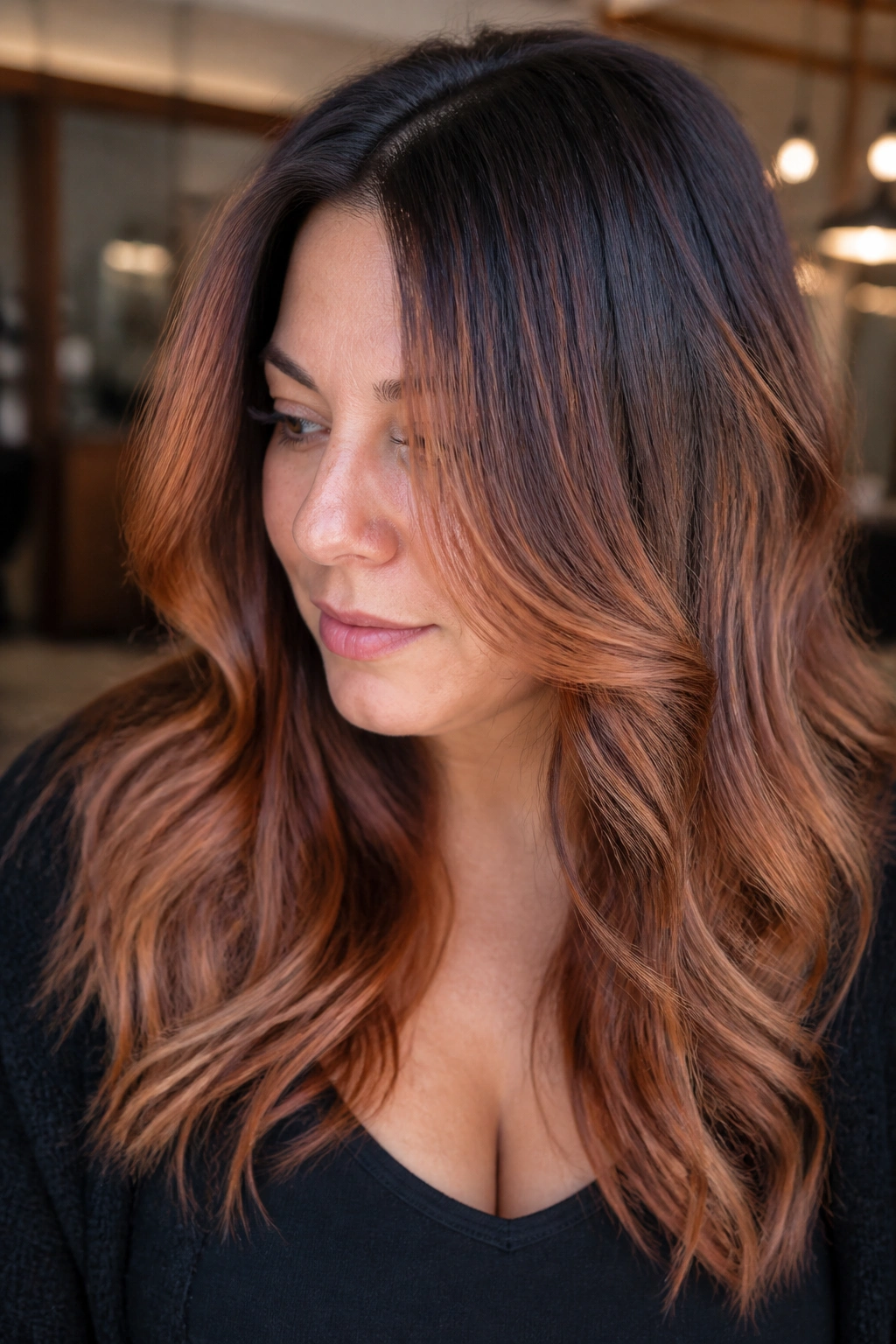
Rooty balayage is practical, and I mean that in the best way. The darker root gives the style a grounded base, while the copper builds through the mid-lengths and ends. For a round face, this works because the brightest areas sit lower, where they stretch the shape instead of widening it.
I’d keep the root at least one level deeper than the rest of the color. That soft shadow helps the highlights look lived-in from day one. The transition should feel gradual, not smudged into one muddy band. Good balayage has a clean hand to it, even when it looks relaxed.
This is one of the better choices if you hate obvious regrowth. It grows out in a way that still looks styled, not abandoned. If you wear your hair in a center part, the dark root can also make the part look cleaner and more balanced.
A copper-toned glaze every so often keeps the mids from drifting too gold. That small maintenance step matters more than people think.
15. Copper Ombré Starting Below the Cheekbone
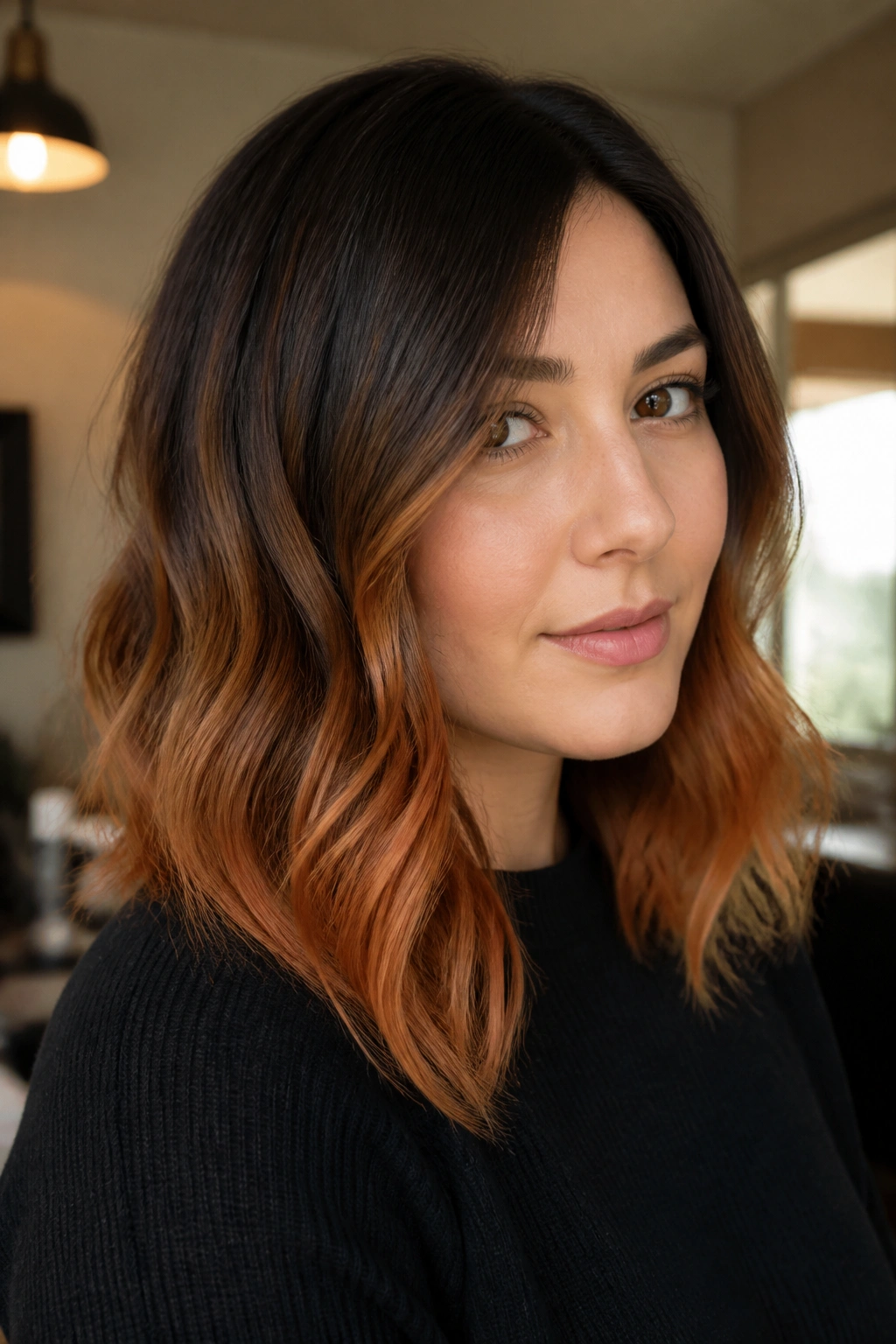
Starting the lightness below the cheekbone is a smart move for round faces. It lets the upper part of the hair stay darker, which keeps the face from feeling wider, then opens the copper as the hair moves downward. That bottom-heavy brightness has a lengthening effect.
Ombré can go wrong when the fade starts too high and turns into a giant light panel. Avoid that. Keep the transition slow, and keep the copper richer near the mid-lengths before it brightens a touch near the ends. The color should feel like it’s traveling downward, not exploding outward.
This style suits longer bobs, mid-back lengths, and layered cuts. On a blunt cut, the fade can look a little stiff. On a softer shape, it melts. If your hair holds curls well, a loose curl pattern will make the ombré read even more dimensional.
The maintenance is easier than a full highlight service, which is one reason people keep coming back to it.
16. Warm Copper Gloss Over Chocolate Brown
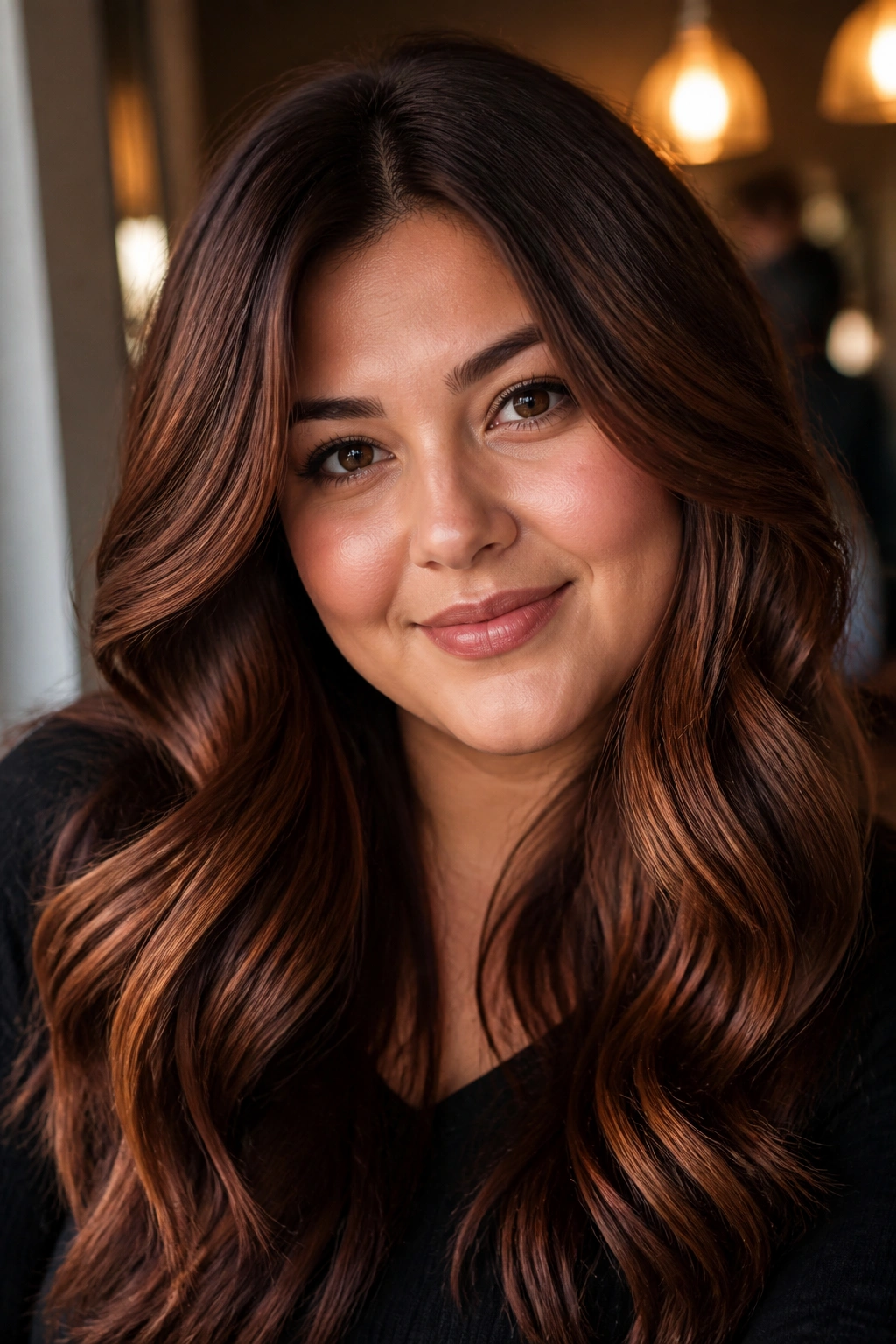
A copper gloss can do a lot when the hair is already chocolate brown. You don’t need a heavy highlight session to get warmth. A glossy copper glaze over a brunette base adds sheen, a little warmth, and enough tonal change to wake the whole cut up.
This is one of the gentlest options for hair that’s been lightened before and feels a bit tired. Instead of lifting the hair again, the gloss shifts the tone and gives the surface a reflective finish. That shine matters on a round face because glossy hair looks polished without adding bulk.
I like this when someone wants their color to look rich from a few feet away and nuanced up close. It’s also useful if the hair tends to frizz, since the reflective finish can make the texture look smoother. Keep the gloss in the copper-brown family, not a bright orange direction.
If you want more shape, pair the glaze with long layers or soft face-framing pieces. The color alone is pretty; the cut gives it structure.
17. Shag Cut with Broken-Up Copper Ribbons
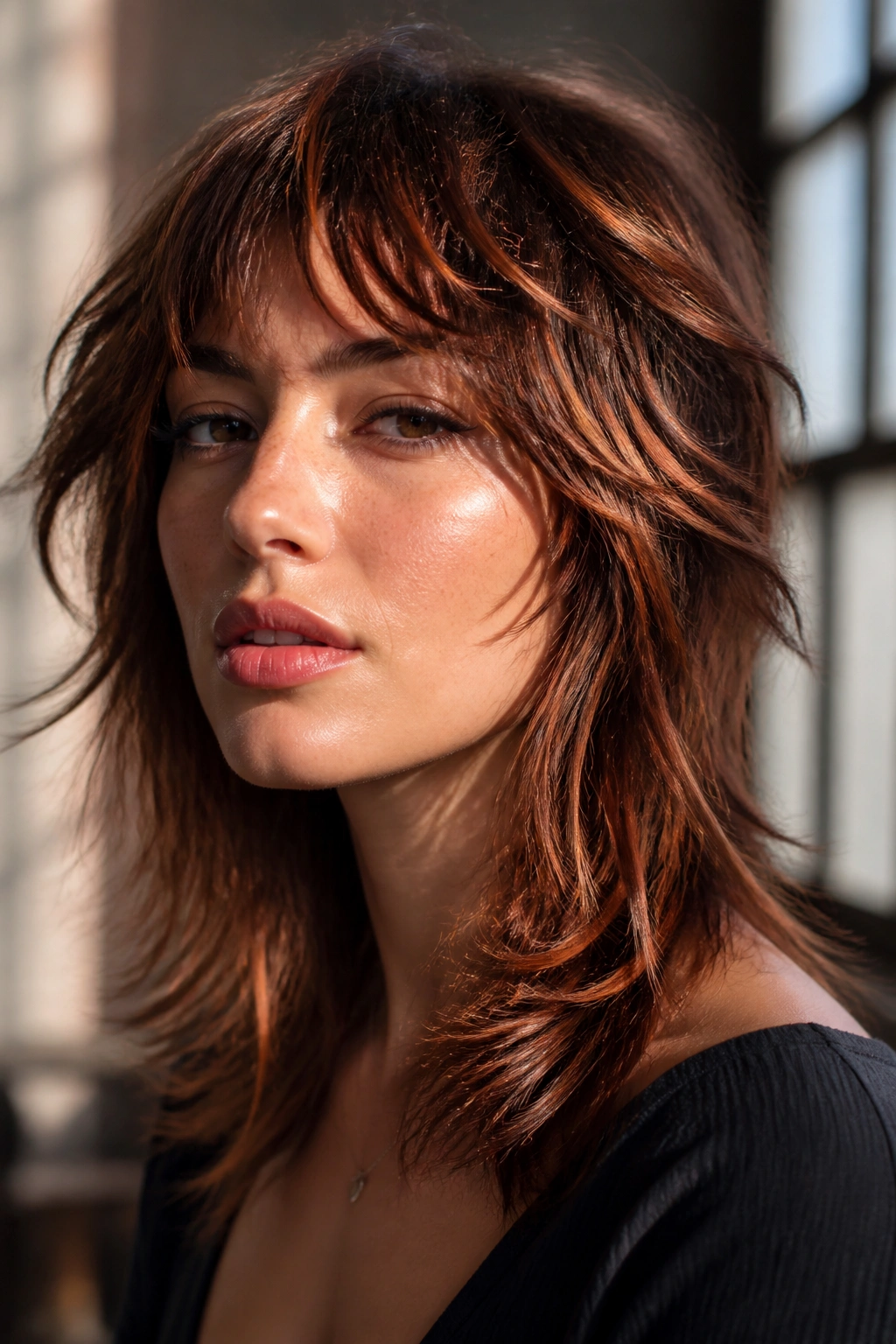
A shag and copper brown highlights are a natural pair. The cut already has movement, so the color doesn’t need to do all the work. Broken-up copper ribbons through the layers make the texture look sharper and help a round face feel less circular.
The key is restraint at the sides. Put more brightness through the top layers, fringe, and outer bends, then keep the lower side sections deeper. That keeps the width from collecting at cheek level, where a round face is usually widest. A shag is already playful; the color should support the shape, not crowd it.
What to Ask For
- Soft copper ribbons, not all-over lightness.
- More placement near the fringe and crown.
- Deeper lowlights through the interior.
- Ends left a bit darker for contrast.
This is one of those cuts where a messy finish is part of the charm. Air-dried waves, a bit of spray, and a rough-dry with fingers all work. The copper catches the uneven texture and looks intentional without being fussy.
18. Temple Highlights That Build a Soft Halo
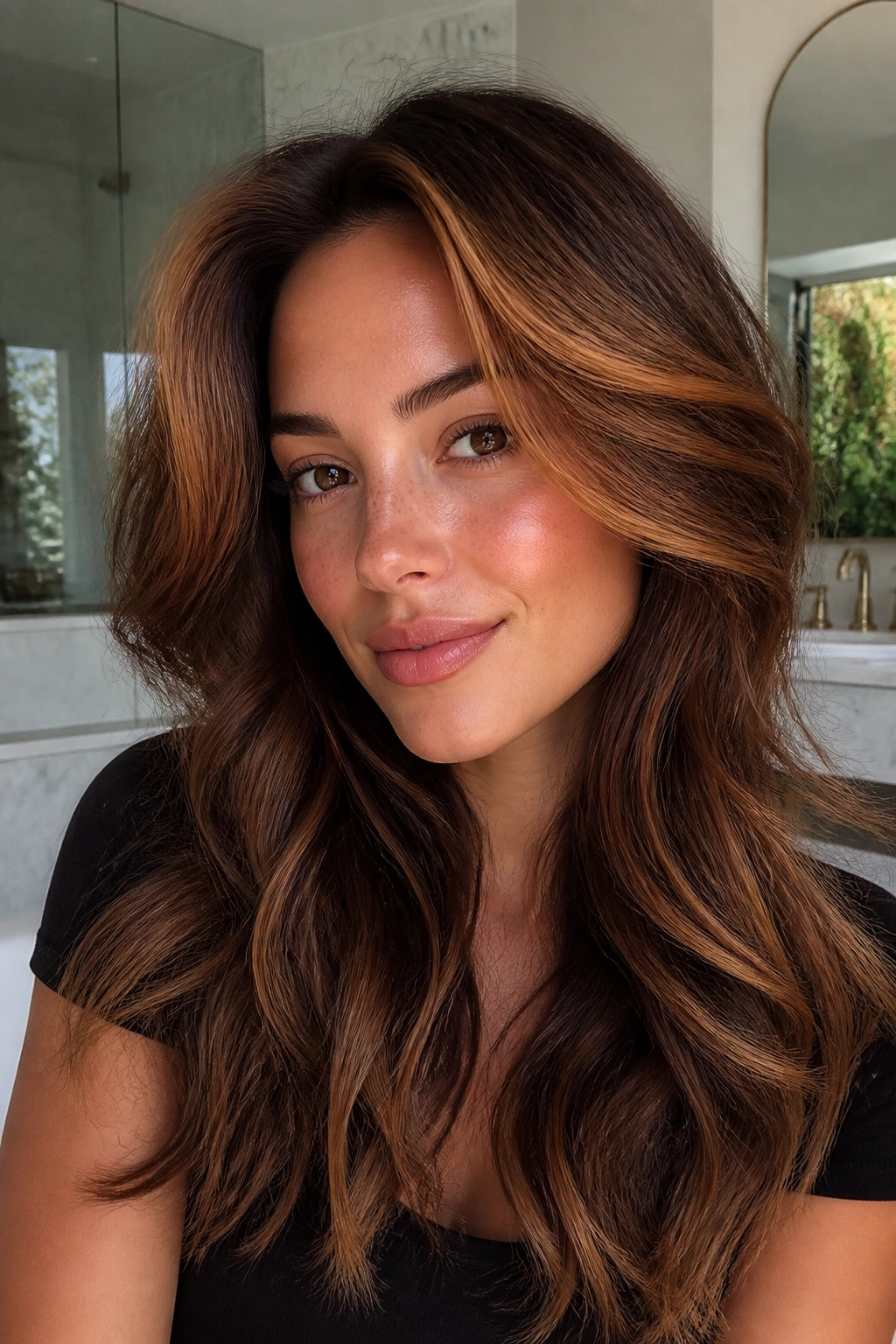
Temple highlights are a small detail with a big effect. Bright copper placed around the temples and upper side sections can lift the eye without flooding the whole face frame. On a round face, that’s useful because the brightness sits a little higher and a little farther back than a full money piece.
The halo effect should stay soft. You want a gentle ring of warmth around the upper face, not a hard stripe from temple to chin. Placed correctly, this kind of highlight adds height near the crown and keeps the widest point of the face from being the color’s focal point.
It works especially well if you wear glasses, glasses lines can sometimes cut across a face in a way that makes frontal highlights feel busy. Temple placement keeps things cleaner. If you don’t wear glasses, the same logic still holds; the eye stays up top, where the shape benefits most.
A few foils can do it. You do not need a full-service lightening session to get the effect.
19. Soft Strawberry Copper on Dark Brown Hair
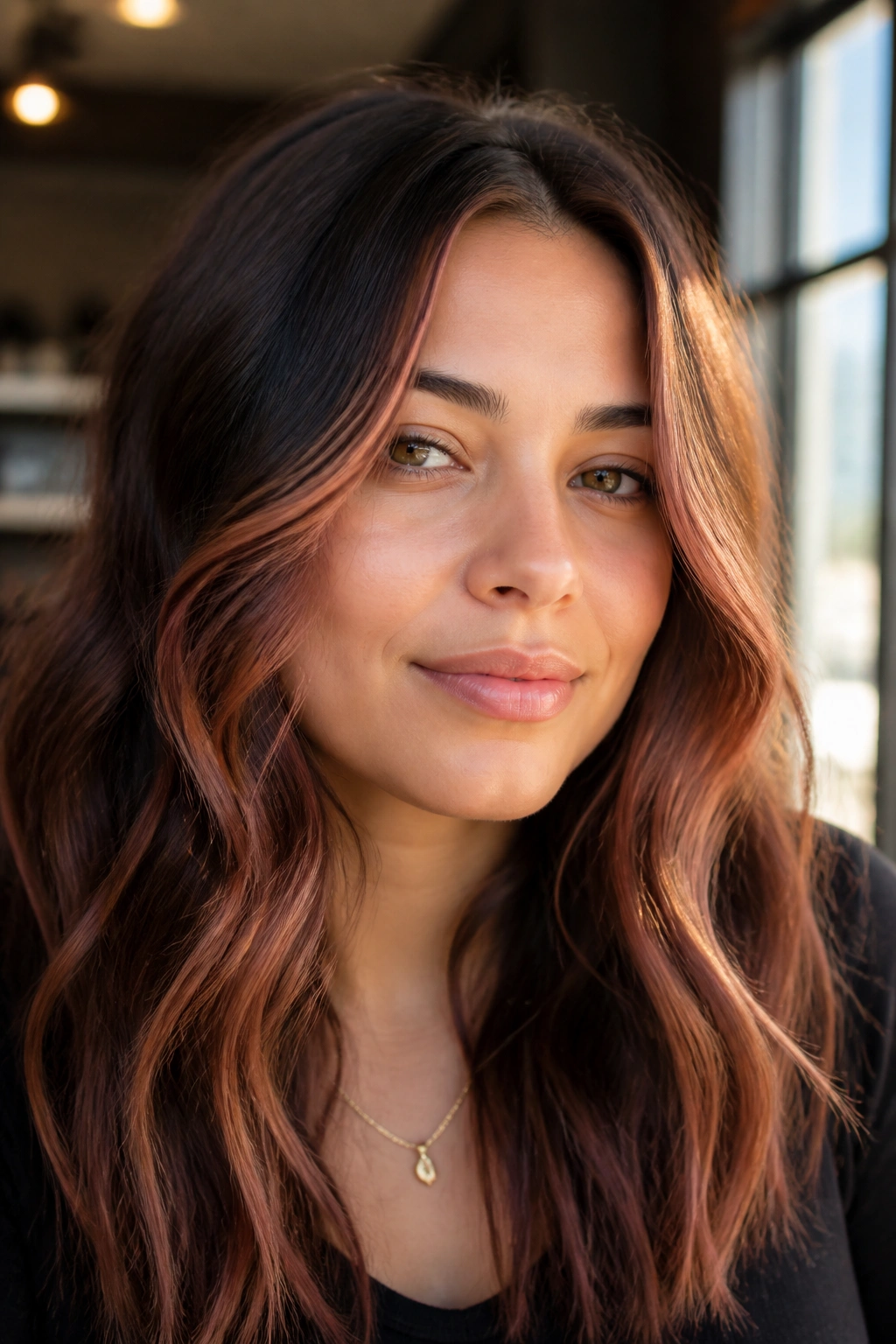
Strawberry copper on a dark brown base has a softer, almost wine-stained look that suits round faces well. It gives warmth, but the tone stays cushioned and less harsh than brighter copper. That softness helps if you want dimension without strong stripes near the cheeks.
The best placement is usually a mix of babylights and thin balayage pieces through the front and mid-lengths. Keep the lightest pieces delicate around the face, then let the color deepen as it moves back. The contrast should feel like a whisper, not a marker line. Dark brown hair can take that kind of warmth beautifully.
This is also a good choice if your skin has warm or neutral undertones, because the strawberry edge keeps the look lively. On cooler skin, a slightly brownier copper reads smoother. Either way, the round face benefits from the gentle vertical flow.
If you like soft makeup, this hair color tends to play well with it. The whole look stays easy.
20. Sunlit Copper Tips on a Textured Bob
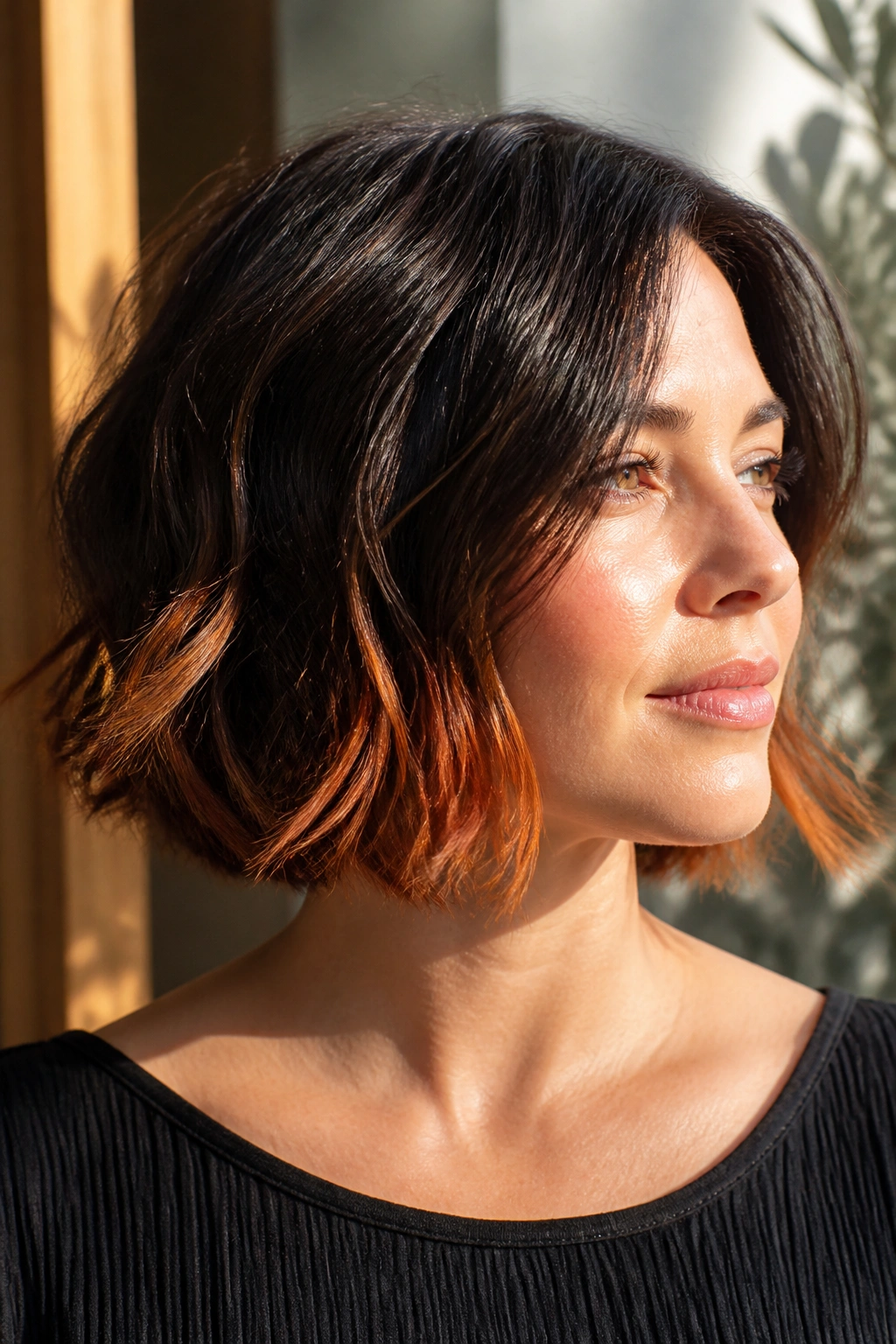
Copper tips are a smart way to give a short cut some shape. On a textured bob, the ends are what move, so brightening them makes the whole cut feel lighter. For a round face, that lower concentration of color helps draw the eye down rather than across.
The tips should not all be one flat shade. Keep them slightly varied, with a few richer brown sections mixed in. That stop-and-start pattern keeps the bob from turning into a solid bright block, which can widen the look. A little piecey separation is better here than uniformity.
This is a good style if you like easy styling. A bob with a bit of wave and some copper at the ends can look finished in five minutes. If your hair is naturally straight, a bend at the ends is enough. If it’s textured, scrunching in a cream will bring out the color.
A gloss helps the tips stay warm instead of dull. Short hair shows tone fast, so upkeep matters.
21. Lived-In Copper Dimension on Medium Hair
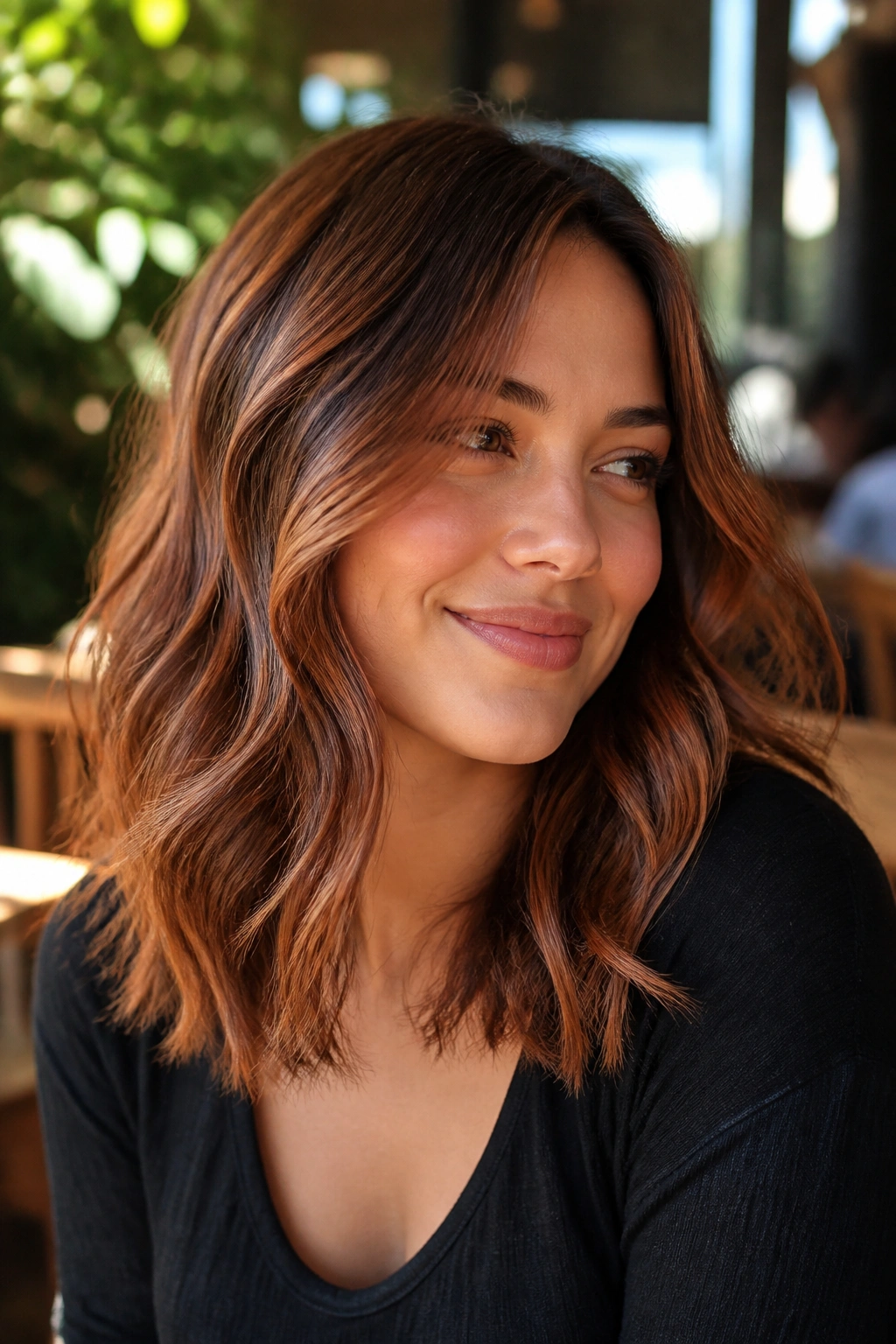
Medium-length hair gives copper brown highlights room to breathe. There’s enough length for the color to stretch, but not so much that the pieces get lost. Lived-in dimension works especially well for round faces because the highlights can be layered through the interior and lower half of the cut.
I’d keep the front pieces lighter than the rest, but only by a little. Then scatter copper ribbons through the sides and ends so the color feels worn-in, not freshly striped. The best version looks as if the sun found a few strands and ignored the rest. That unevenness is flattering.
This style is one of the easiest to maintain if you don’t want frequent salon visits. The grow-out pattern is forgiving, and the mix of highlights and lowlights gives the hair some bounce even when the roots come in. A loose wave helps, but straight hair can carry it too.
If you want the face to appear a bit longer, keep the brightest points below the cheekbone and away from the widest part of the cheeks.
22. Face-Framing Copper on Curly Layers
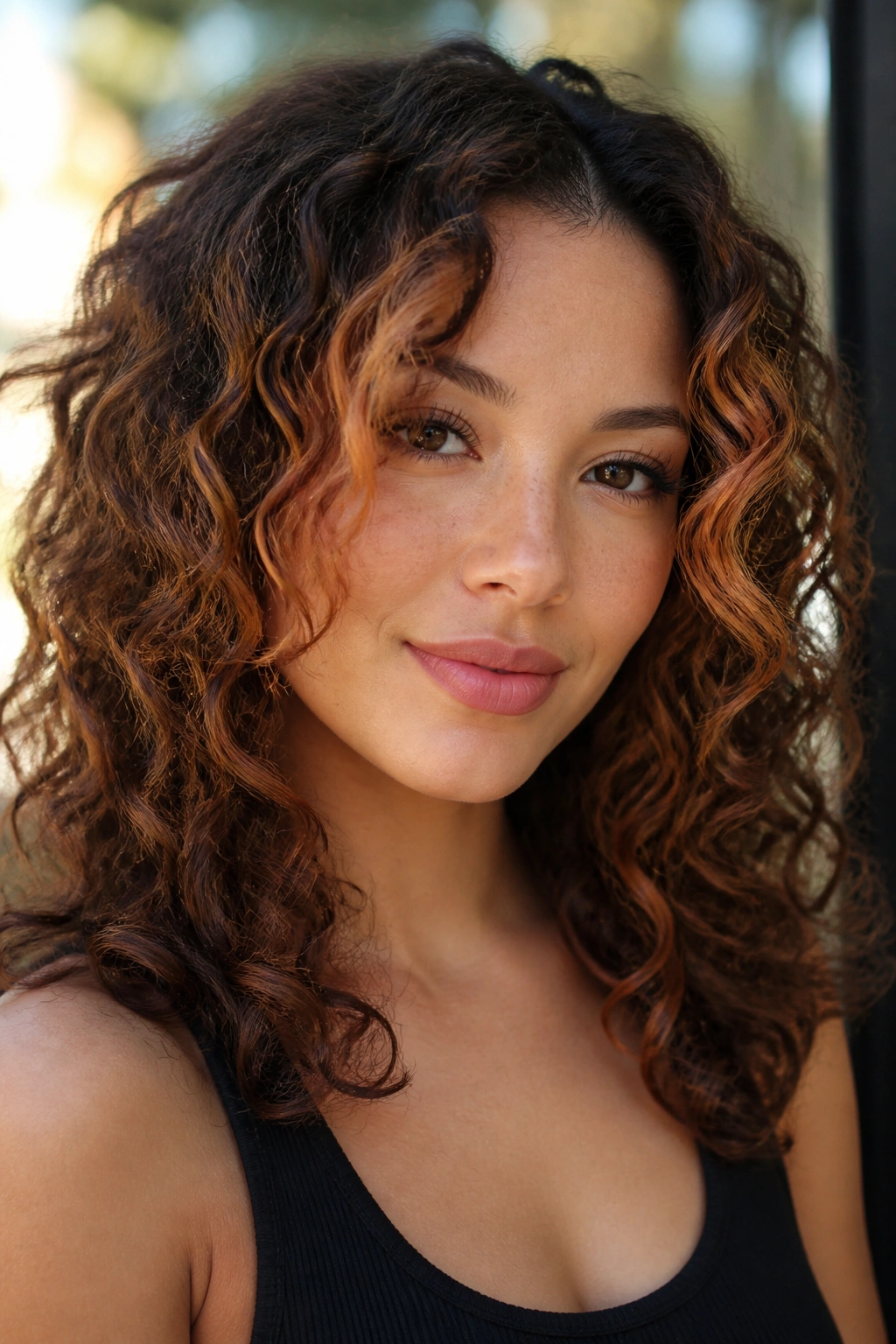
Curly layers can handle a lot of visual detail, but the copper has to be placed with care. The best face-framing pieces follow the curl pattern and sit around the outer front curls, where they can soften the curve of the face without widening it.
The Placement Rule I’d Use
Don’t put all the lightness at ear level. That’s where the face can start to look broader. Keep the brightest copper higher, around the temple and upper cheek area, then let the curl carry it downward. Curly hair already has volume, so the color should shape the curls, not fight them.
A mix of babylights and a few slightly larger pieces usually works better than one heavy highlight placement. That mix lets the curls separate naturally and keeps the front from looking stripey. A glaze afterward helps the copper stay rich through repeated washing.
- Paint on the outer curl clumps.
- Leave some interior darkness.
- Use a gloss that matches the root depth.
- Diffuse gently to protect the curl pattern.
This is one of my favorite places for copper because the color moves every time the curls bounce.
23. Dark Espresso Base with Thin Copper Threads
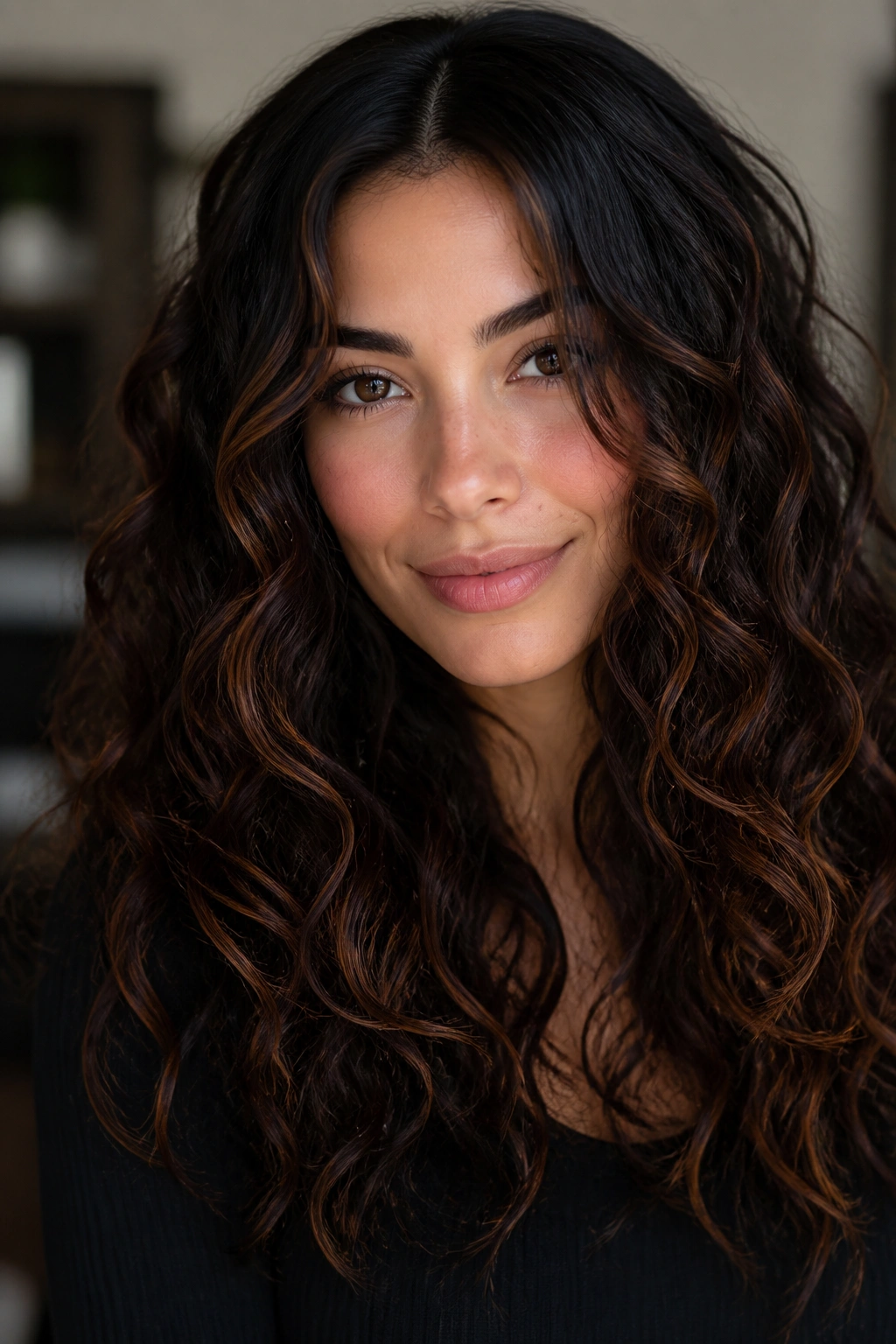
Thin copper threads on an espresso base are quiet, but they do a lot of work. The deep base gives the hair weight and shine, while the copper threads create movement in a very controlled way. On a round face, that control matters because wide streaks can make the sides feel fuller than they are.
The threads should be narrow enough that they almost disappear from a distance. Up close, though, you get that little flash of warmth in the bends and layers. That flash is enough to break up the shape without adding obvious width. It’s especially nice if you wear your hair in a smooth blowout or soft waves.
This is a good match for people who want to try copper without committing to a loud look. The maintenance stays lighter, and the color can be refreshed with a toner or gloss instead of a full redo. If your hair is naturally very dark, the copper will read richer than brighter, which is often the better call.
A center part can work here, but a slight side part gives the threads more movement.
24. Bold Copper Halo with Dark Interior
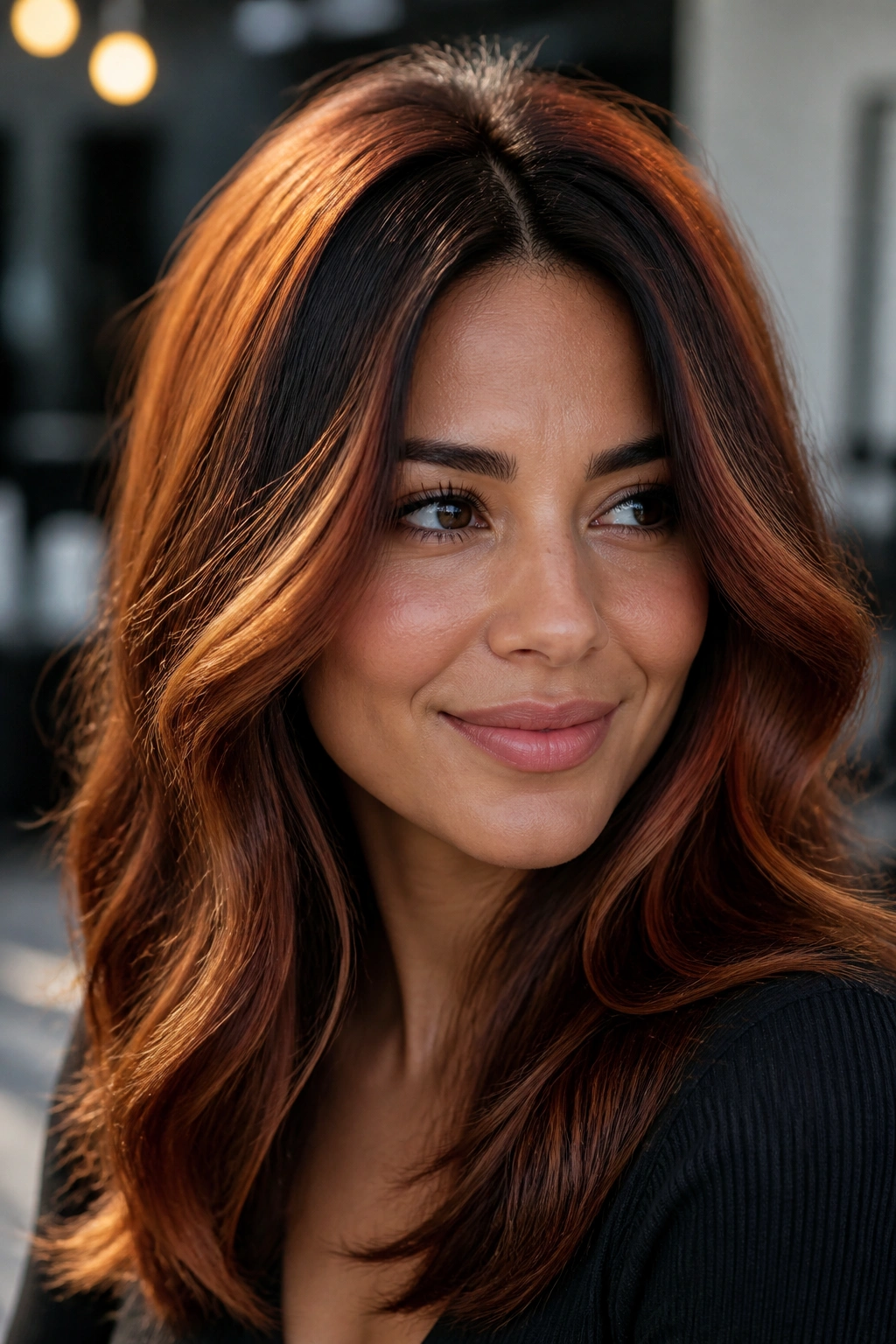
A bold copper halo sounds dramatic because it is. The brightest copper wraps around the outer top layers and crown, while the interior stays dark and grounded. For a round face, that contrast can be useful because it adds height above the head and keeps the center of the face from feeling too broad.
The important thing is where the halo stops. It should live above the cheekbone and around the upper perimeter, not all the way down the sides. That keeps the brightness in a lifting zone rather than a widening one. The dark interior gives the hair a stronger frame, which makes the copper pop even more.
This style works best when you want the color to be visible from across the room. It needs confidence. It also needs a cut with layers or movement, because a flat, one-length shape can make the halo look too rigid.
If you like bouncy blowouts, this is a good one. If you air-dry and go, keep the halo softer so it doesn’t lose its shape.
25. Rooty Copper Brown Dimension That Grows Out Gracefully
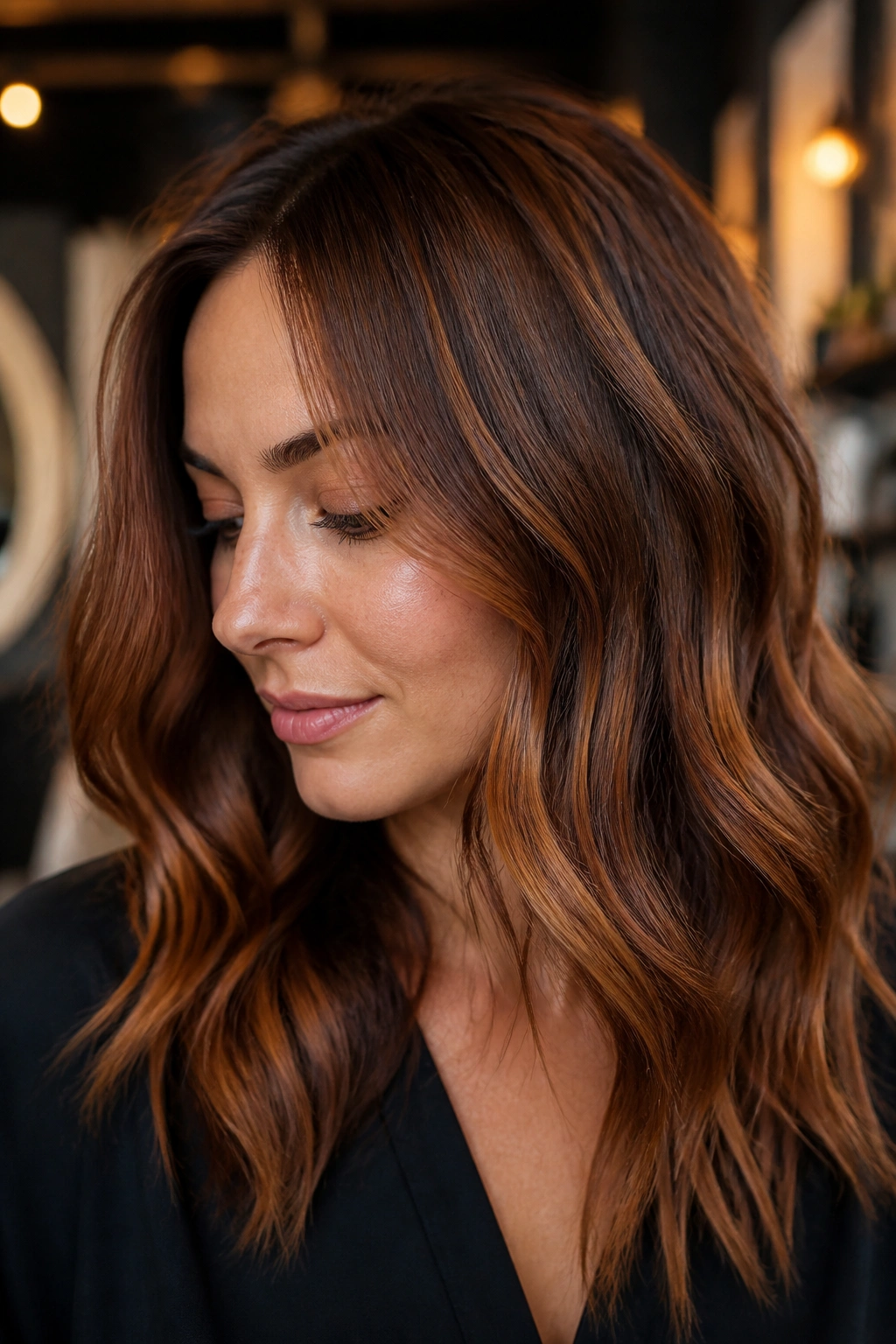
If I had to pick one copper brown look that plays nicely with round faces and real-life maintenance, this would be near the top. Rooty dimension keeps the crown deep, lets the copper bloom through the mid-lengths, and saves the brightest pieces for the front and lower movement points. It grows out without that hard line that can make a color feel dated fast.
The best version usually mixes three things: a shadow root, a few copper babylights, and some lowlights tucked inside. That combination gives the hair depth first, brightness second. For a round face, that order matters. You want the shape built by layers of tone, not by one loud stripe around the head.
Ask your stylist to keep the lightest sections away from the exact widest part of the cheeks and to let the color taper downward. A side part or soft off-center part can make the whole thing look even more lifted. The result feels polished, but not stiff. And honestly, that’s usually the sweet spot with copper on brown hair.
A good grow-out is not boring. It just means the color still looks right when you’re overdue for an appointment.
