



Grey highlights for round faces can look soft, sharp, or a little smoky, but the placement has to do the heavy lifting. A round face already carries width through the cheeks, so the worst thing you can do is park a bright stripe right across that area and call it a day.
Placement matters more than shade.
The smarter move is to guide the eye. Cooler greys, from ash to silver to pewter, work best when they start a little lower, lean into vertical movement, and leave the roots or interior a touch deeper so the shape feels longer. That’s the part a lot of people miss. Grey isn’t only about tone; it’s about where the light lands and how the haircut helps carry it.
I also like grey tones that have some depth — smoky, graphite, mushroom, pearl, steel — because flat grey can read dull fast, especially on blunt cuts. The 25 looks below range from soft and wearable to bold and graphic, and each one gives a round face a different kind of lift.
1. Smoky Money Piece with Soft Shadow Roots
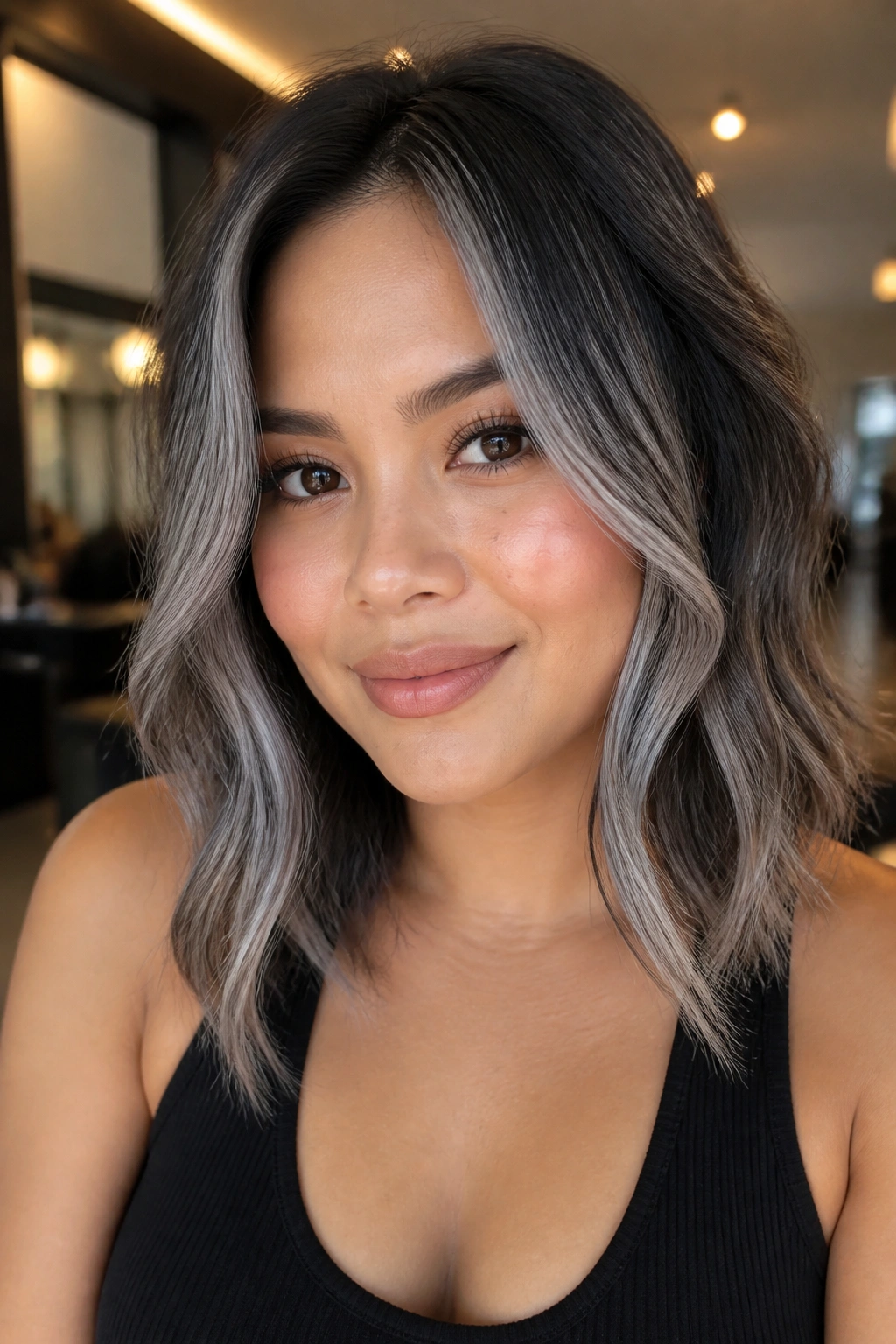
A smoky money piece is one of the easiest grey highlight choices for a round face, because it pulls attention upward without widening the cheeks. The bright strands sit at the front, but the shadow root keeps the top from looking pasted on. That contrast is doing more work than people realize.
The trick is to keep the lightest grey pieces narrow and a little longer than you might expect. If they stop right at cheek level, the face can look broader. Let them fall past the cheekbone and graze the jaw or even the collarbone. That vertical line is the whole point.
What to Ask For
- Two slim grey face-framing pieces on each side.
- A root shadow that stays 1 to 2 shades deeper than the mids.
- A soft bevel through the ends so the front doesn’t feel blunt.
Best tip: keep the brightest part below the widest point of the cheek. That tiny shift makes the face read longer, not wider.
2. Ash Balayage Through Collarbone Layers
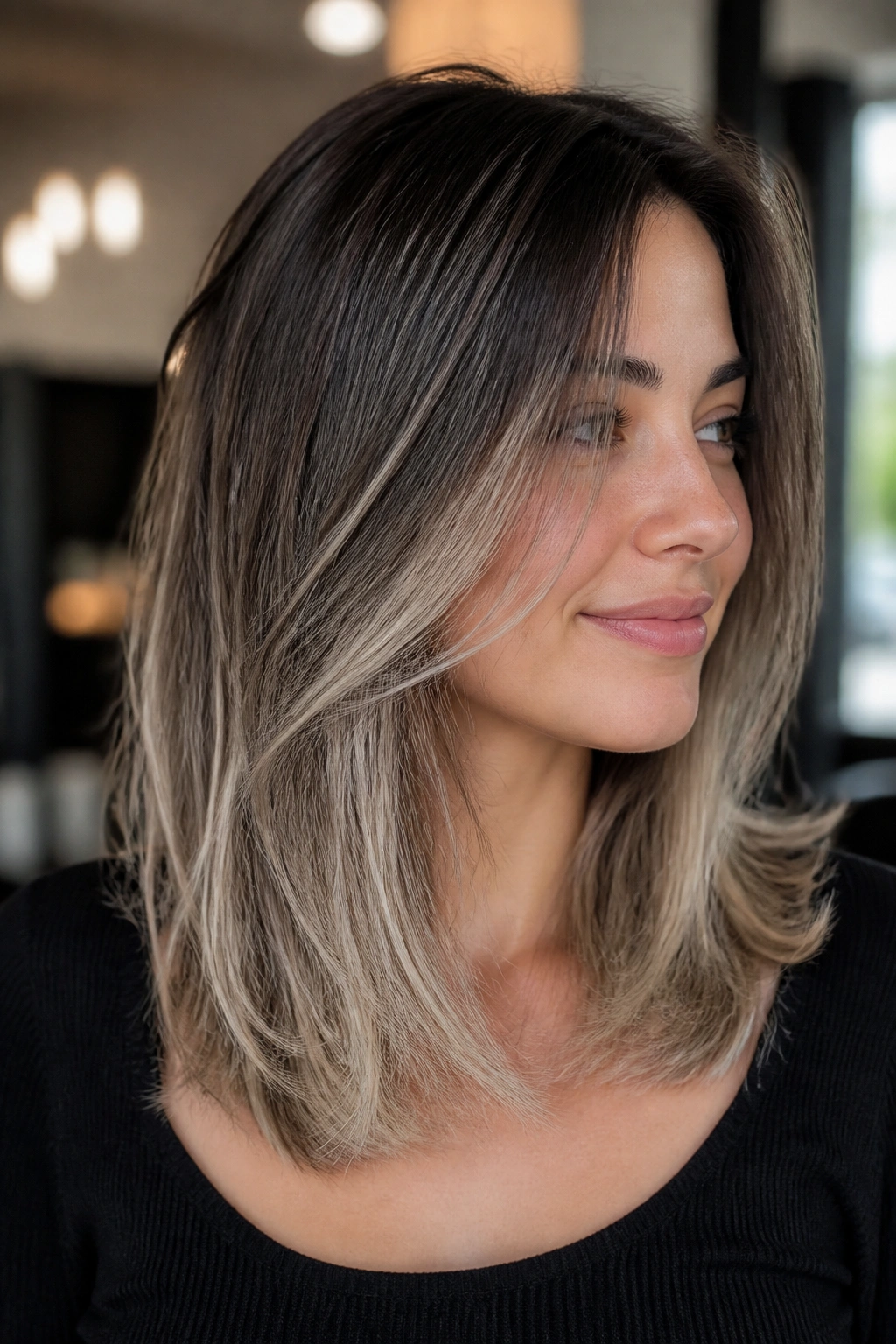
Can grey balayage make a round face look longer? Yes, if the lightness follows the fall of the haircut instead of sitting in one horizontal band. Collarbone layers are perfect for that because the hair already moves downward in a clean line.
Ash balayage works best when the grey pieces start around the mid-lengths and get a little brighter toward the ends. You want the eye to travel down the hair, not stop at the cheek. A soft ash gloss on top keeps the whole thing cool and polished, especially if your base is light brown or dark blonde.
How to Ask for It
- Keep the first 2 to 3 inches near the root soft.
- Paint the grey through the longest layers, not across the full width of the head.
- Leave the ends a touch lighter than the mid-lengths for that stretched look.
If your face is round and your hair is shoulder length, this is one of the safest bets. It feels airy, not chunky.
3. Silver Ribbon Highlights on Long Waves
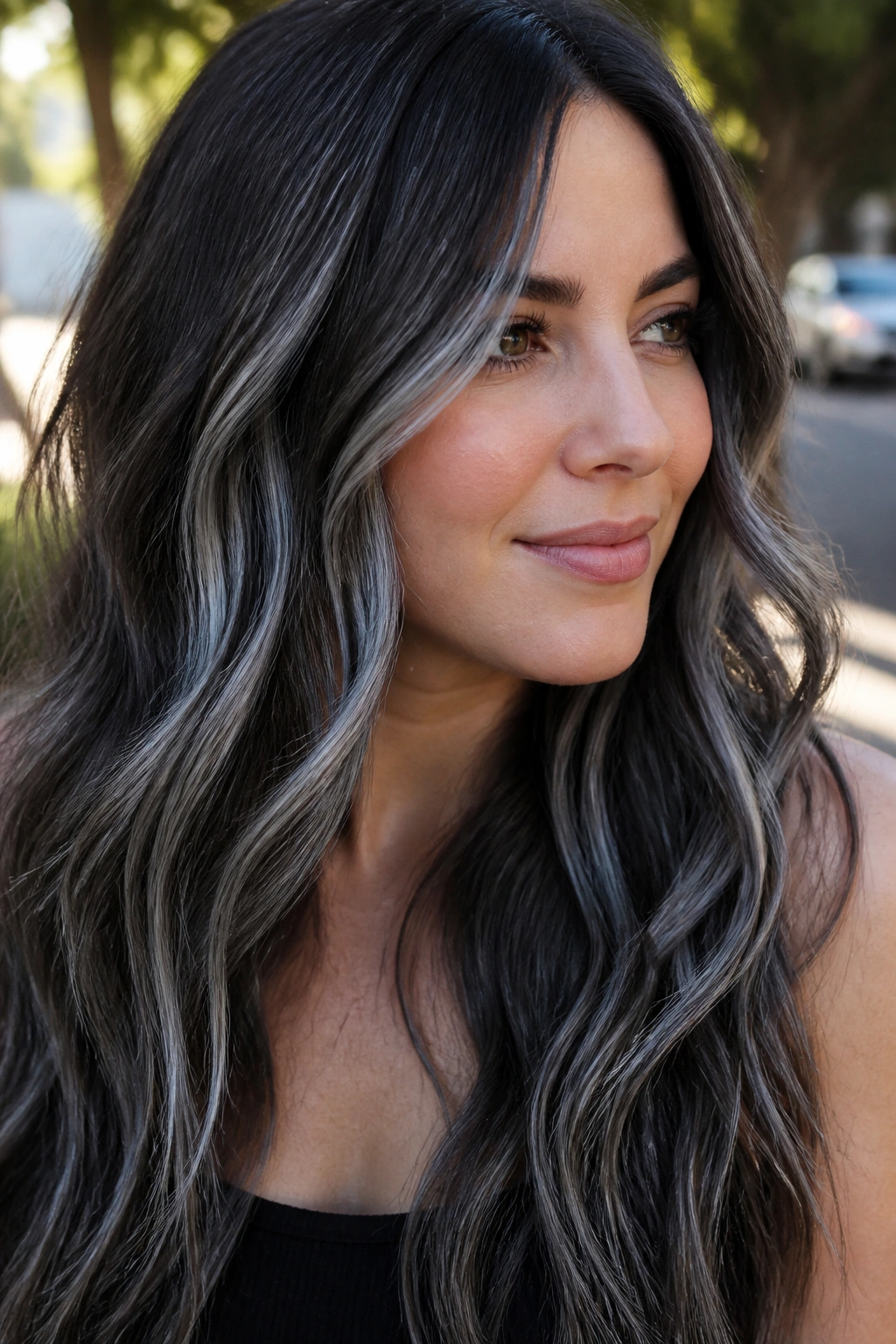
Long waves and silver ribbons go together because the movement breaks up the color into slim vertical flashes. That matters. A round face needs a bit of elongation, and waves already create that soft up-and-down line without making things severe.
I like this look when the ribbons are spaced out rather than packed together. Too many light strands near the cheeks can puff out the sides. A few carefully placed silver ribbons, especially below the cheekbone, keep the eye moving. The result is brighter hair that still feels controlled.
Why It Works
- Waves bend the silver into slender, moving lines.
- The eye follows the length of the hair.
- The face keeps its softness, but the width feels quieter.
Quick note: ask for the silver to be strongest through the lower half of the wave pattern. That keeps the top from turning into one bright block.
4. Charcoal Lowlights with Grey Tips
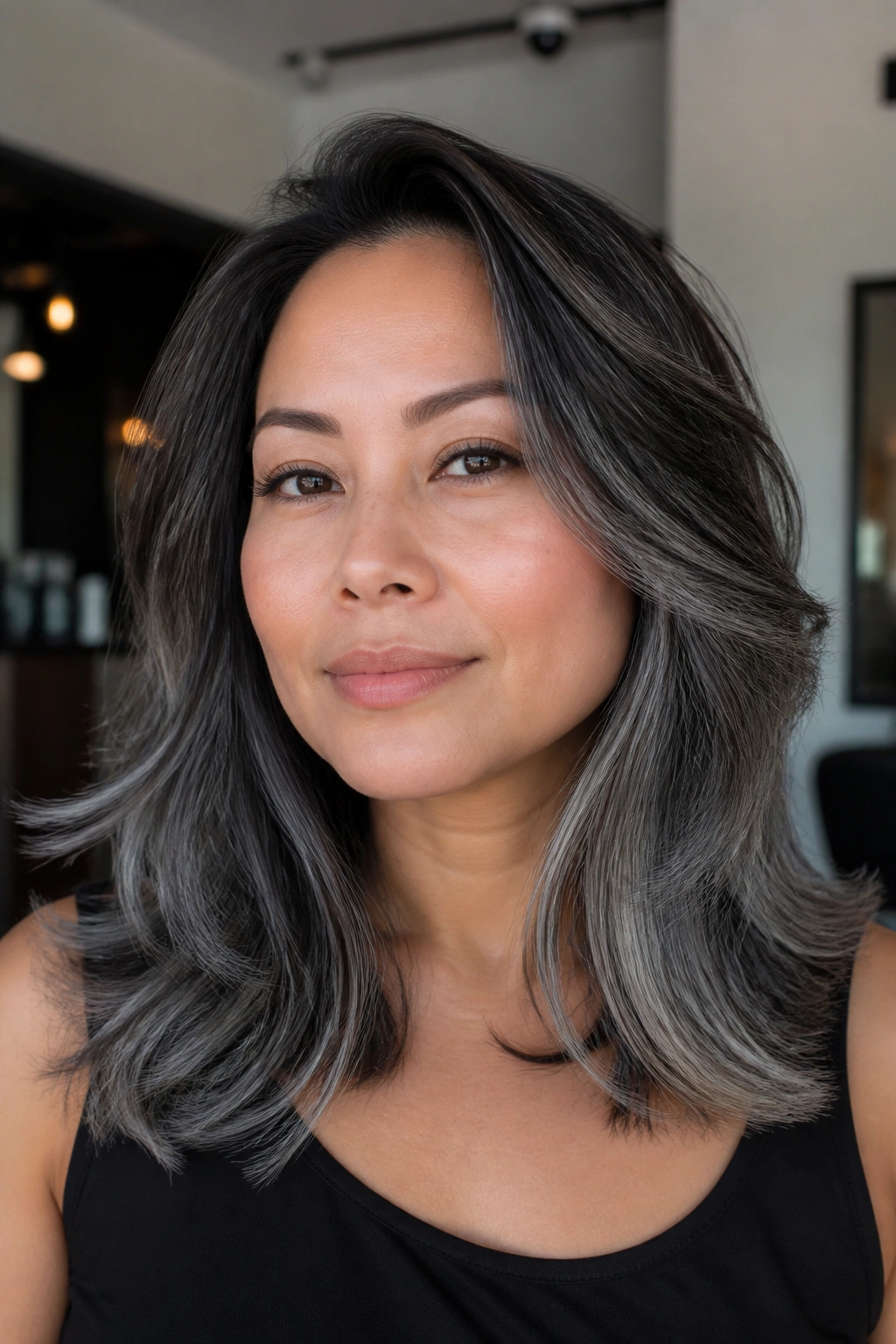
Grey does not have to mean bright everywhere. Charcoal lowlights with grey tips are a smart move when you want depth first and shine second. On a round face, that deeper base can slim the sides while the lighter ends add motion.
This look works especially well on thicker hair, where too much uniform lightness can feel bulky. The darker lowlights cut through the width, and the grey tips give the cut a little lift. It’s a good option if you want something cooler and moodier than silver balayage.
For the best shape, keep the tips feathered rather than blunt. A blunt, pale edge can feel heavy on round features. A softer finish, especially on layered mid-lengths, gives the whole style a leaner line.
Best for: people who like contrast and do not want the hair to read flat from root to tip.
5. Pearl Grey Babylights on Dark Brown Hair
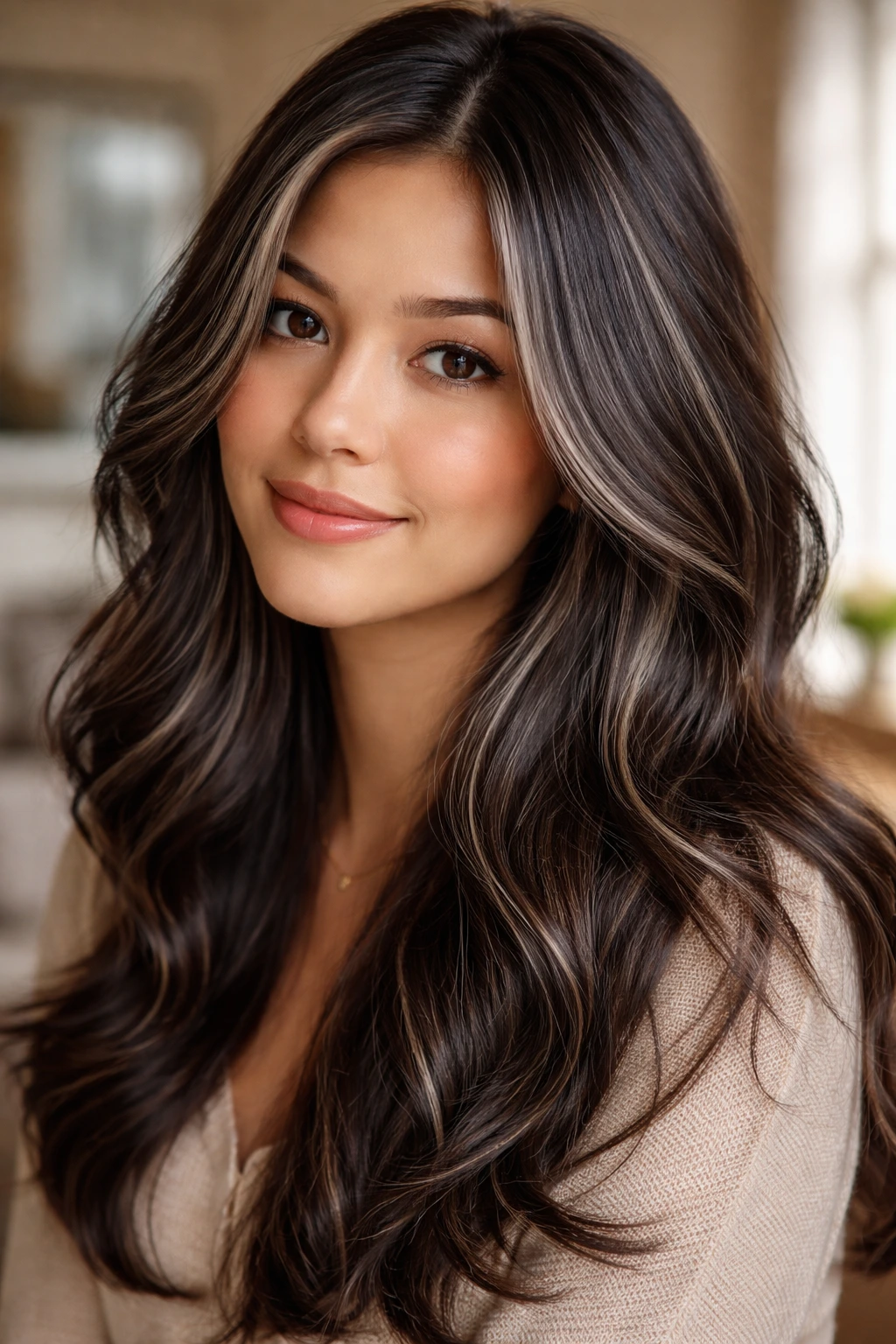
Tiny matters here. Pearl grey babylights are best when you want the color to whisper instead of shout, and that softness is a gift on a round face. The hair picks up movement without piling brightness onto the cheeks.
Dark brown hair gives pearl grey a prettier edge than most people expect. The grey does not need to look icy to work. In fact, a slightly pearly tone can feel more natural and far less harsh, especially when the highlights are micro-fine and scattered through the interior of the hair.
A good colorist will keep the babylights thin enough that they blur together from a few feet away. Up close, you see detail. From a distance, you get soft shimmer. That’s the sweet spot.
One caution: if the strands get too chunky, the face can start to look rounder, not slimmer. Subtle is the whole game here.
6. Mushroom Brown Base with Cool Grey Veils
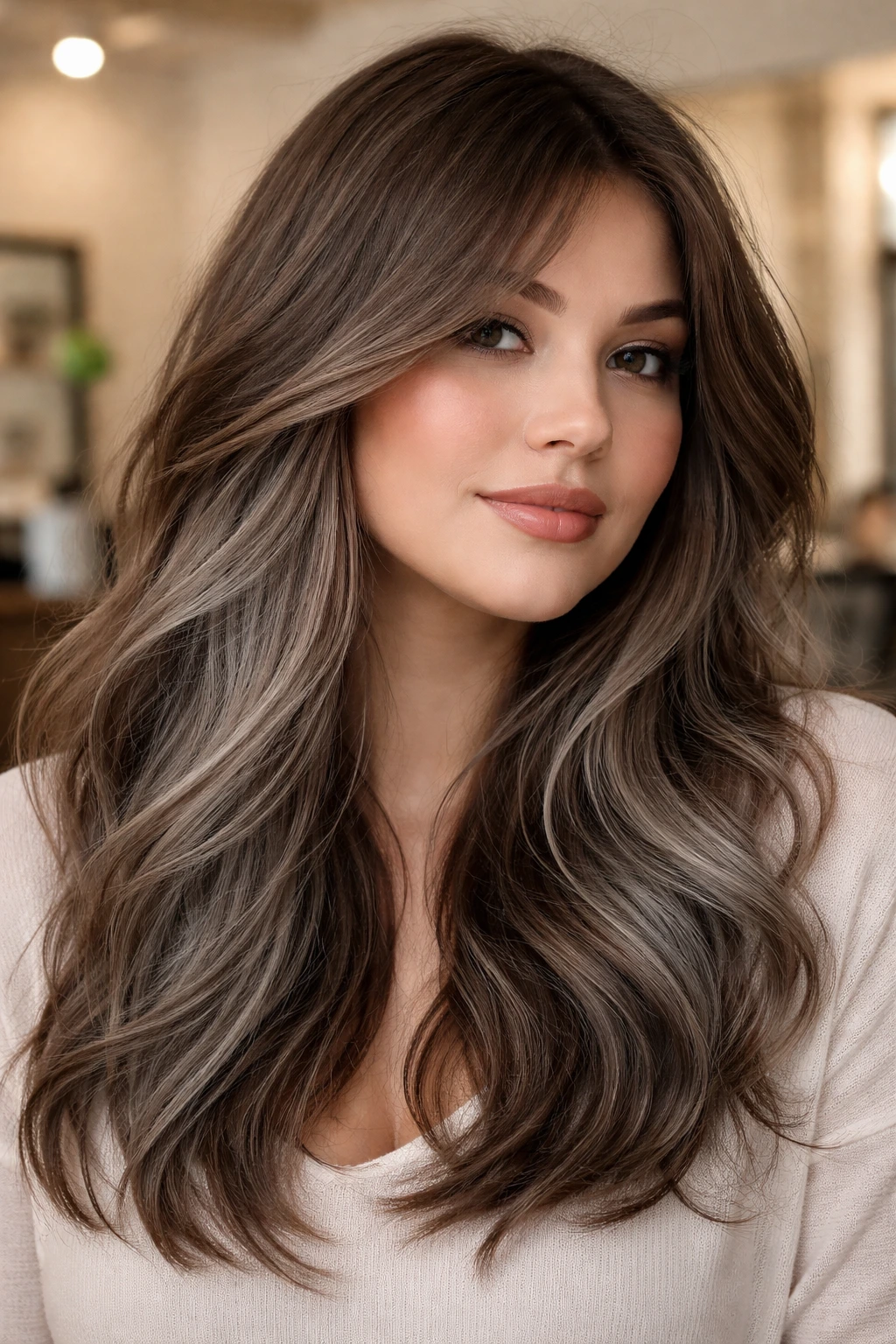
Unlike chunky silver streaks, grey veils live under a muted brown base and show themselves only when the hair moves. That makes this look calmer, softer, and much easier to wear if you do not want obvious contrast at every turn.
Mushroom brown has a built-in coolness that helps the grey read clean instead of muddy. On a round face, that quiet blend keeps the width from screaming for attention. It also grows out well because the root and mid-lengths are already close in tone, so the line of demarcation stays low-key.
Who It Suits Best
- People with medium or thick hair.
- Anyone who wants low-maintenance grow-out.
- Round faces that need depth at the sides, not extra brightness.
Ask for the grey to appear in thin veils through the lower layers, not as a band across the top. That’s the difference between soft dimension and a haircut that feels boxy.
7. Frosted Curtain Bang Highlights
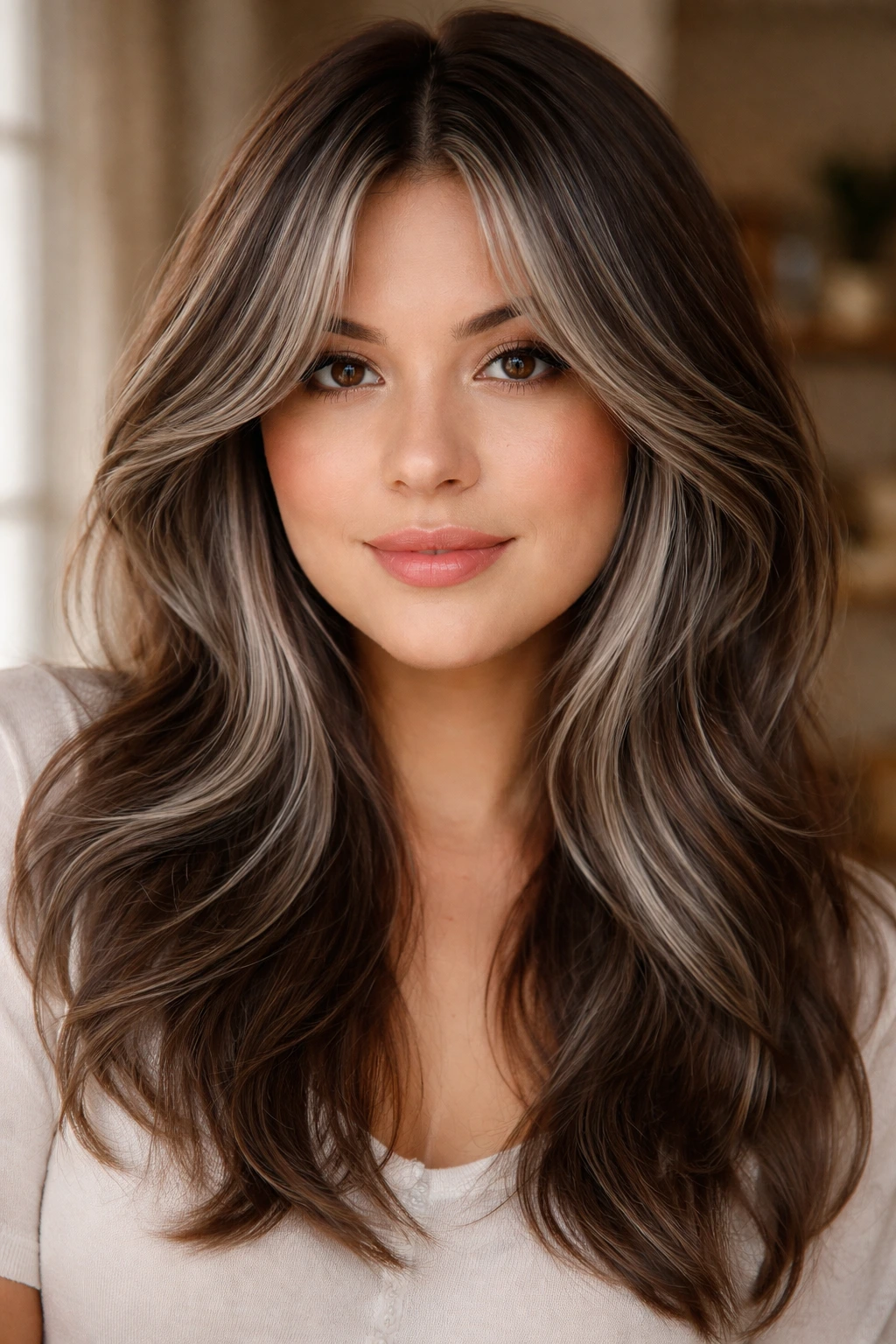
Curtain bangs can do a lot for a round face, and grey highlights make them look deliberate instead of fluffy. The reason is simple: curtain bangs open the face in the middle and draw the eye downward along the sides of the cheeks.
The highlight placement matters more than the tone. Keep the lightest frost just below the bend of the fringe, not right at the root line near the forehead. If the bangs are too bright at the top, they can spread the face outward. A soft grey fade through the longer pieces is cleaner.
Where the Light Should Start
- About ½ inch below the part line.
- At the soft bend of the bang, not the shortest point.
- Slightly stronger on the pieces that fall past the cheekbone.
Good rule: if the bangs sit too high and too bright, they widen the face. If they fall into the cheek and jaw area, they help shape it.
8. Graphite Peekaboo Panels Under the Top Layer
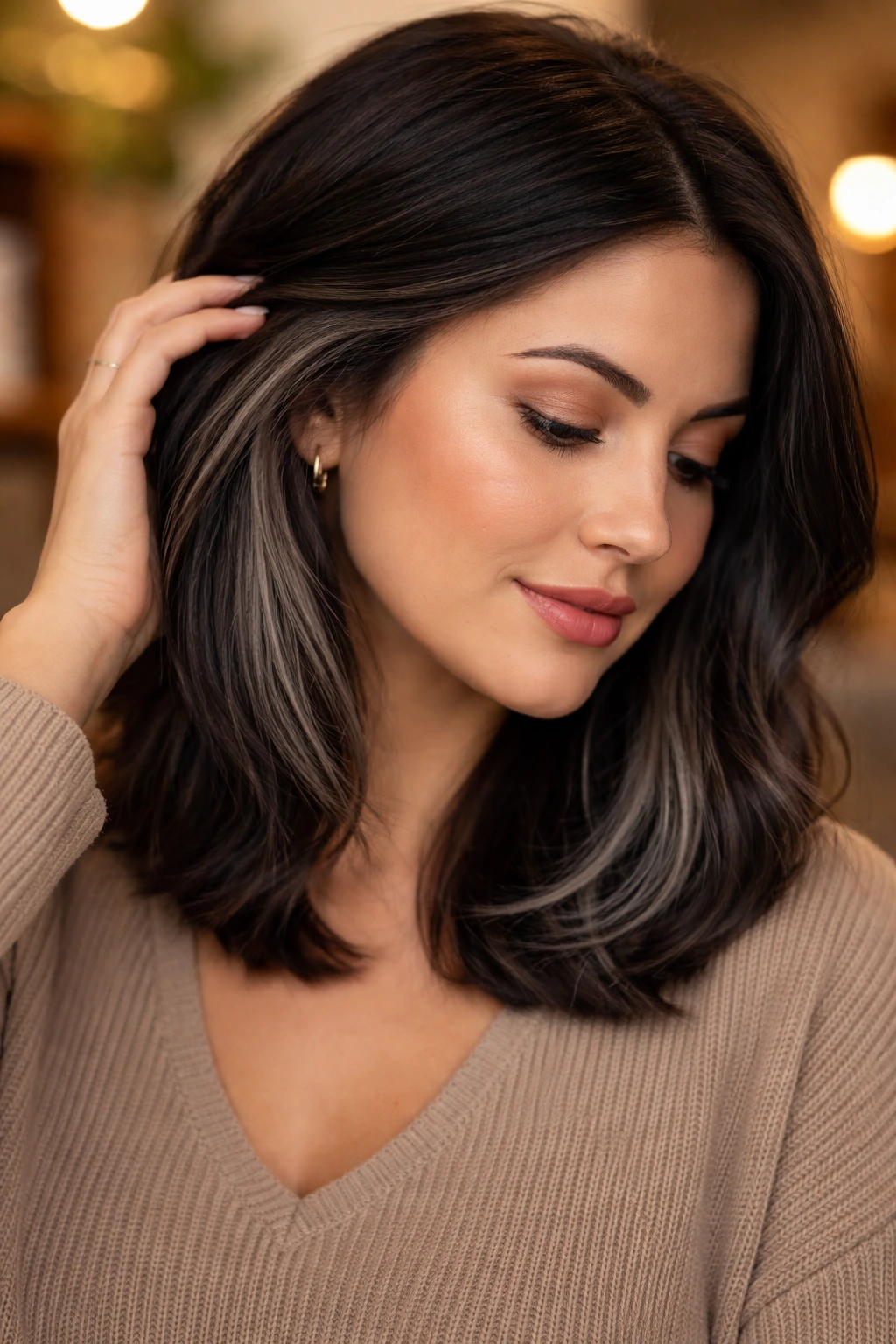
Graphite peekaboo panels are for someone who likes a little drama without wearing the whole thing on top. The darker grey sits under the surface, so the color only flashes when the hair swings, lifts, or gets tucked behind the ear. That hidden movement keeps the look interesting.
Round faces usually benefit from color that appears lower in the shape, not wide across the temples. Peekaboo panels do that nicely. They create depth in the interior and let the top layer stay smooth and darker, which keeps the silhouette lean.
A shoulder-length cut or a lob is ideal here. You want enough hair to hide the panels when you don’t want them seen, and enough movement to show them when you do. Straight hair can look sleek with this. Wavy hair looks a little more sneaky, in the best way.
Tip: ask for the panels to begin below the ear, not right at the temple. That small difference keeps the face from feeling too wide.
9. Grey Ombré on a Collarbone Lob
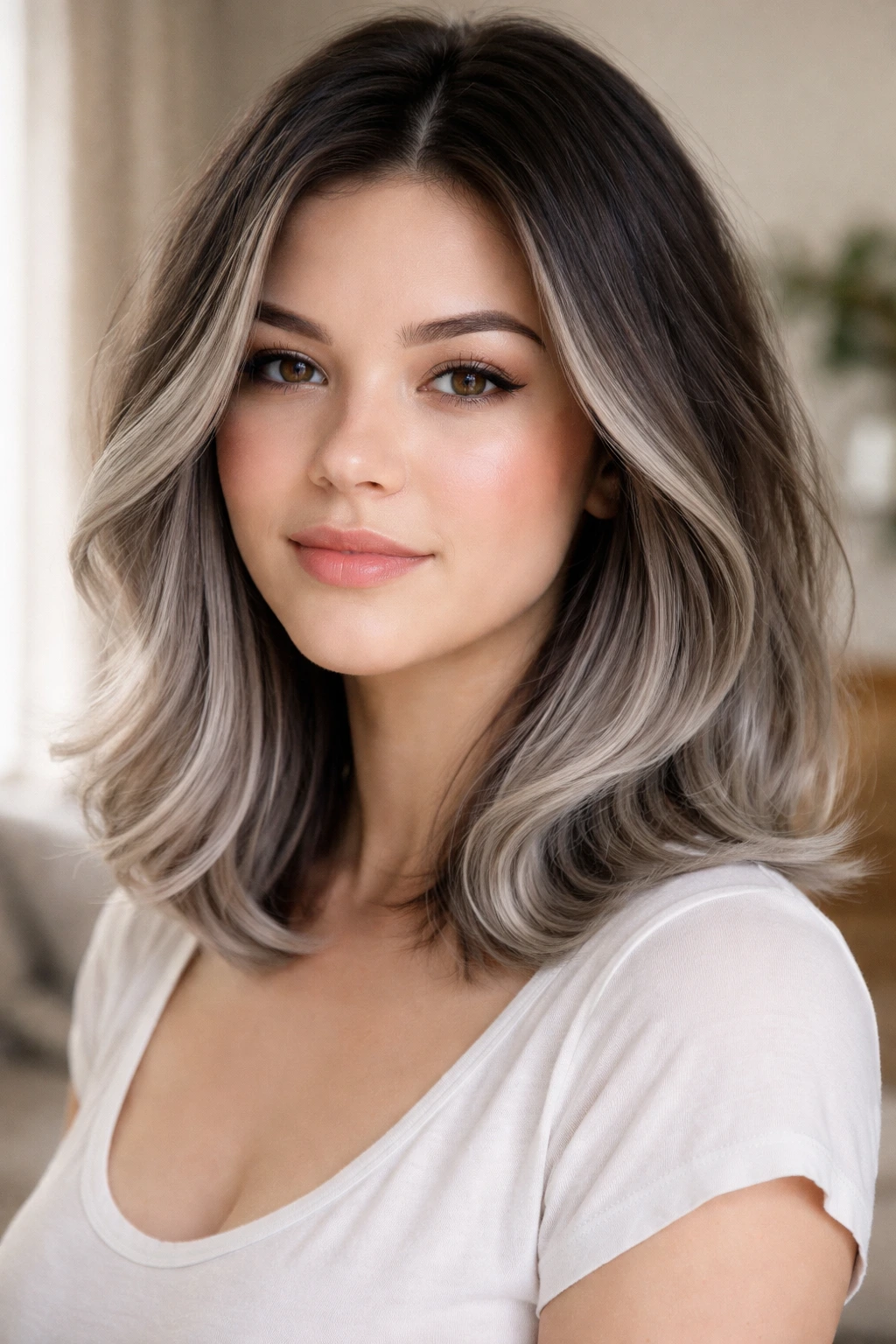
A collarbone lob gives grey ombré room to breathe. That length is long enough to draw a vertical line and short enough to keep the style tidy, which is a good mix for round faces. The darker root area keeps the top controlled, and the grey through the ends adds movement.
The best version of this look does not slam the grey all at once. It should melt gradually, with the lighter tone building slowly from mid-length to tip. When the transition is smooth, the eye follows the hair downward. When it is abrupt, the face can feel broader because the color stops all at once.
I especially like this on hair that flips slightly under at the ends. That curve softens the jaw and keeps the lob from looking too blunt. A clean center part can work, but a slightly off-center part often gives the whole thing more shape.
Short hair can wear grey beautifully. It just needs a little discipline.
10. Silver Streaks at the Crown for Lift
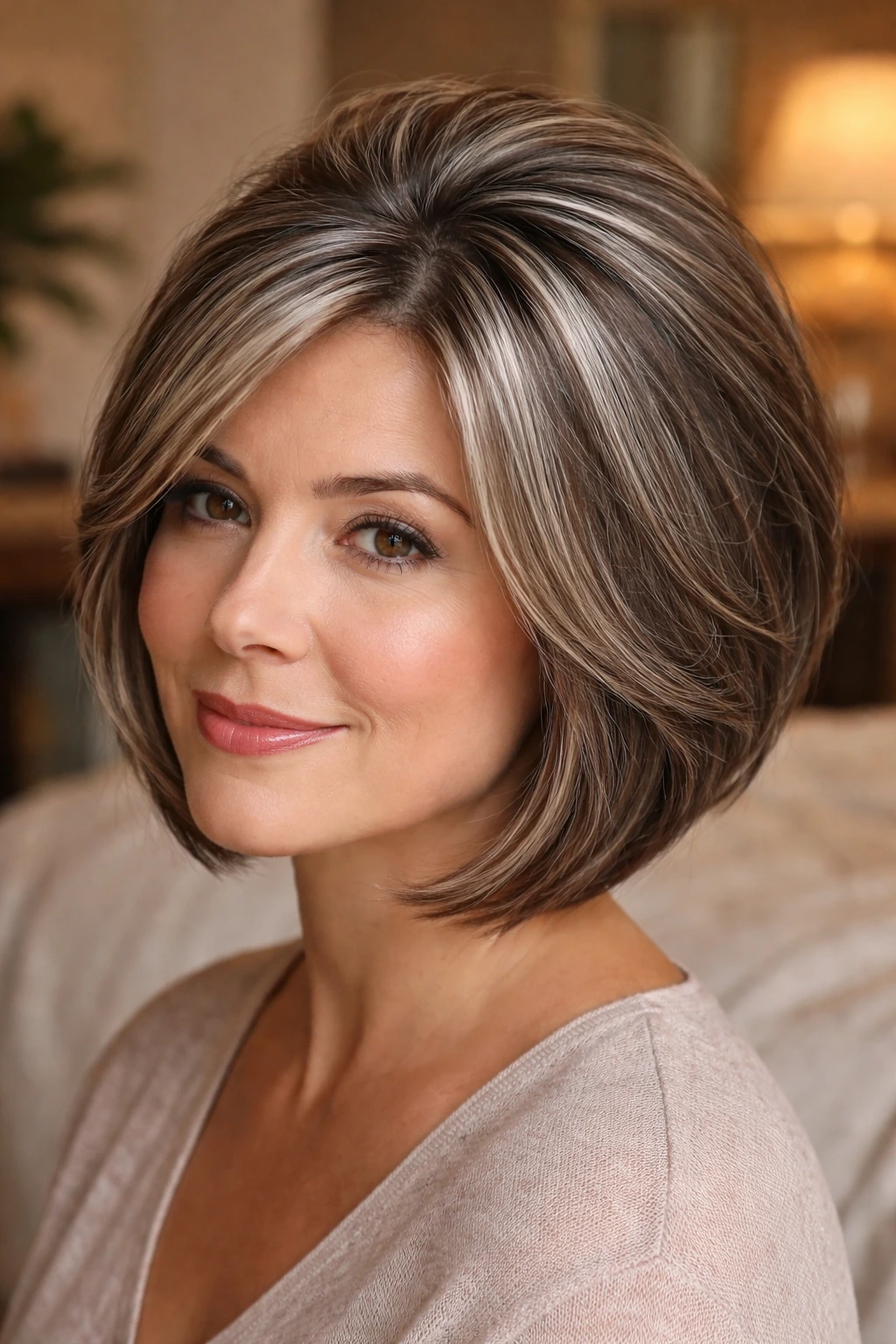
Why put silver near the crown on a round face? Because the eye likes to follow light upward. If the top of the head has a little brightness and the sides stay deeper, the whole face reads taller.
This look needs restraint. You do not want one heavy silver strip sitting like a cap on top of the head. You want narrow streaks, spaced a little apart, so they catch the light when the hair moves. On fine or flat hair, that lift can be more useful than a bright face frame.
Ask for a Soft Spread, Not a Stripe
- Keep the streaks narrow.
- Place them around the crown, not across the full top.
- Leave the sides a shade deeper to preserve shape.
A round face can handle brightness at the crown better than brightness across the cheeks. That’s the whole trick. Use the top to stretch the shape.
11. Smoky Balayage on a Curly Shag
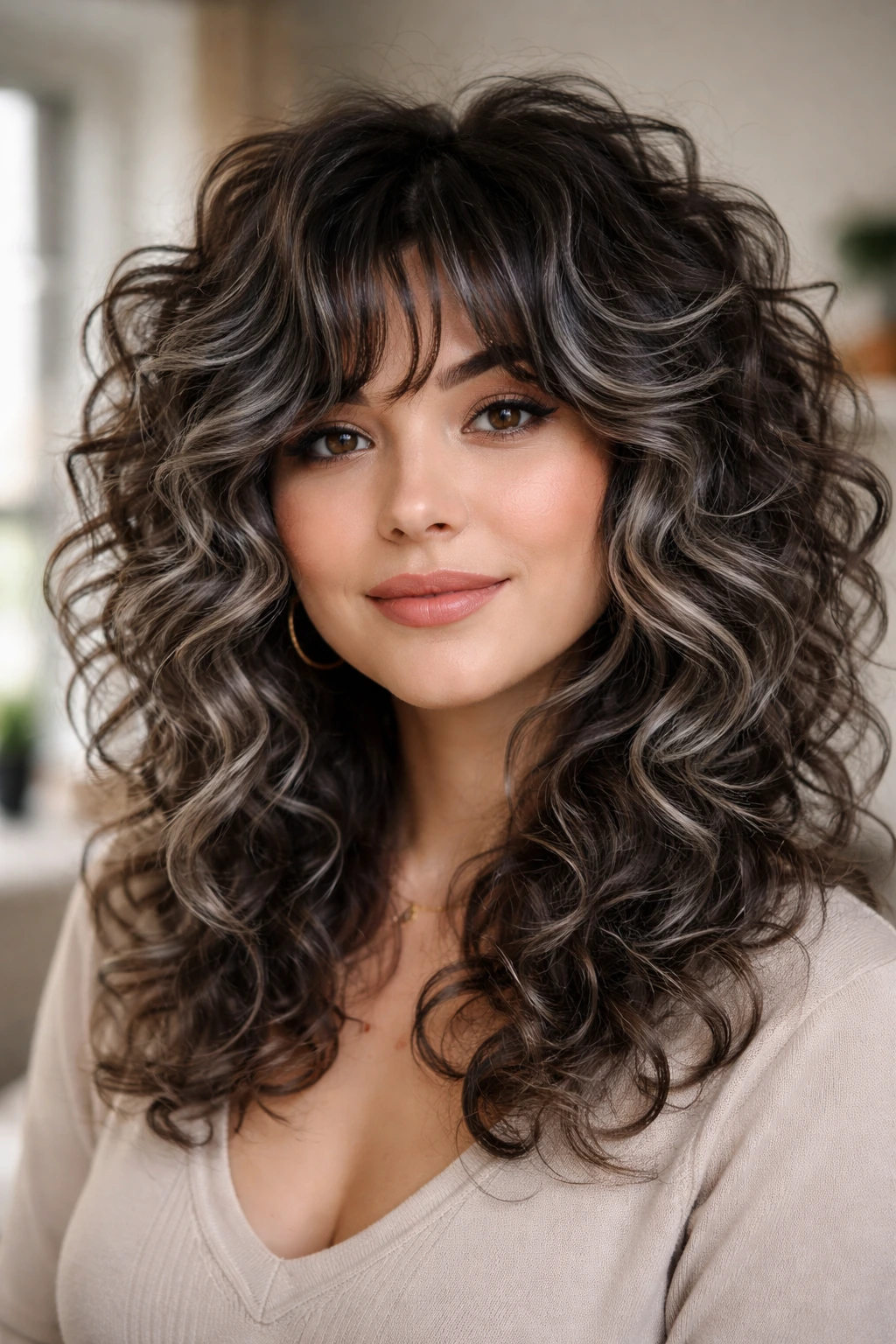
Smoky balayage and a curly shag play well together because curls already build vertical movement. The layers break the silhouette, and the grey adds a smoky edge that keeps the shape from puffing outward.
The main thing is placement. Curly hair does not need the same highlight map as straight hair. You want the light pieces to follow the curl groups, not fight them. If the grey is painted into every curl too evenly, the hair can lose depth and start to look puffy around the sides.
What Makes It Work
- Brighten the outer curve of the curl, not the inner bend.
- Keep the root area dark enough to anchor the shape.
- Let the shag layers do some of the lengthening.
A curl cream or light mousse helps show off the dimension. Dry it with a diffuser if you want the grey to read as soft smoke instead of a flat wash of silver. That difference is bigger than people expect.
12. Icy Grey Highlights on Black Hair
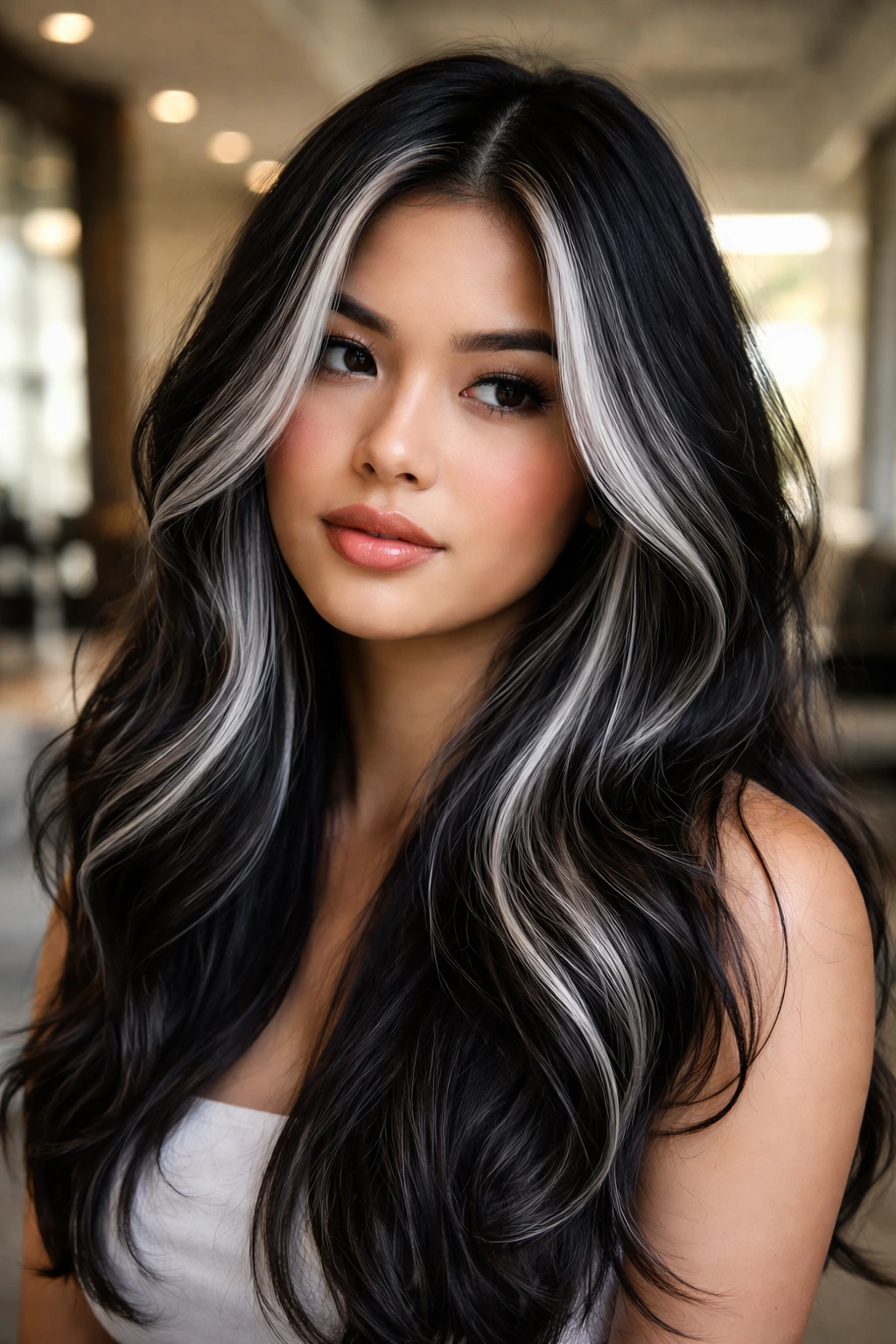
Icy grey on black hair is high contrast, no question. The effect is sharp and graphic, and it can look incredible on a round face if the brightness is kept narrow and strategic.
The black base works like a frame. It narrows the sides, and the icy pieces cut long lines through the hair. That gives the face a cleaner outline. The catch is upkeep. High contrast shows fade faster than softer blends, so this look needs more toner and more care between visits.
This is the one to choose if you like strong edges and you do not mind hair that makes a statement the moment you walk in. It is not subtle. It does, however, give a round face more definition than a wide band of medium grey.
Ask for the icy pieces to stay fine near the cheek and stronger through the lengths. That keeps the front from feeling too broad.
13. Soft Pewter Highlights Around the Cheekbone
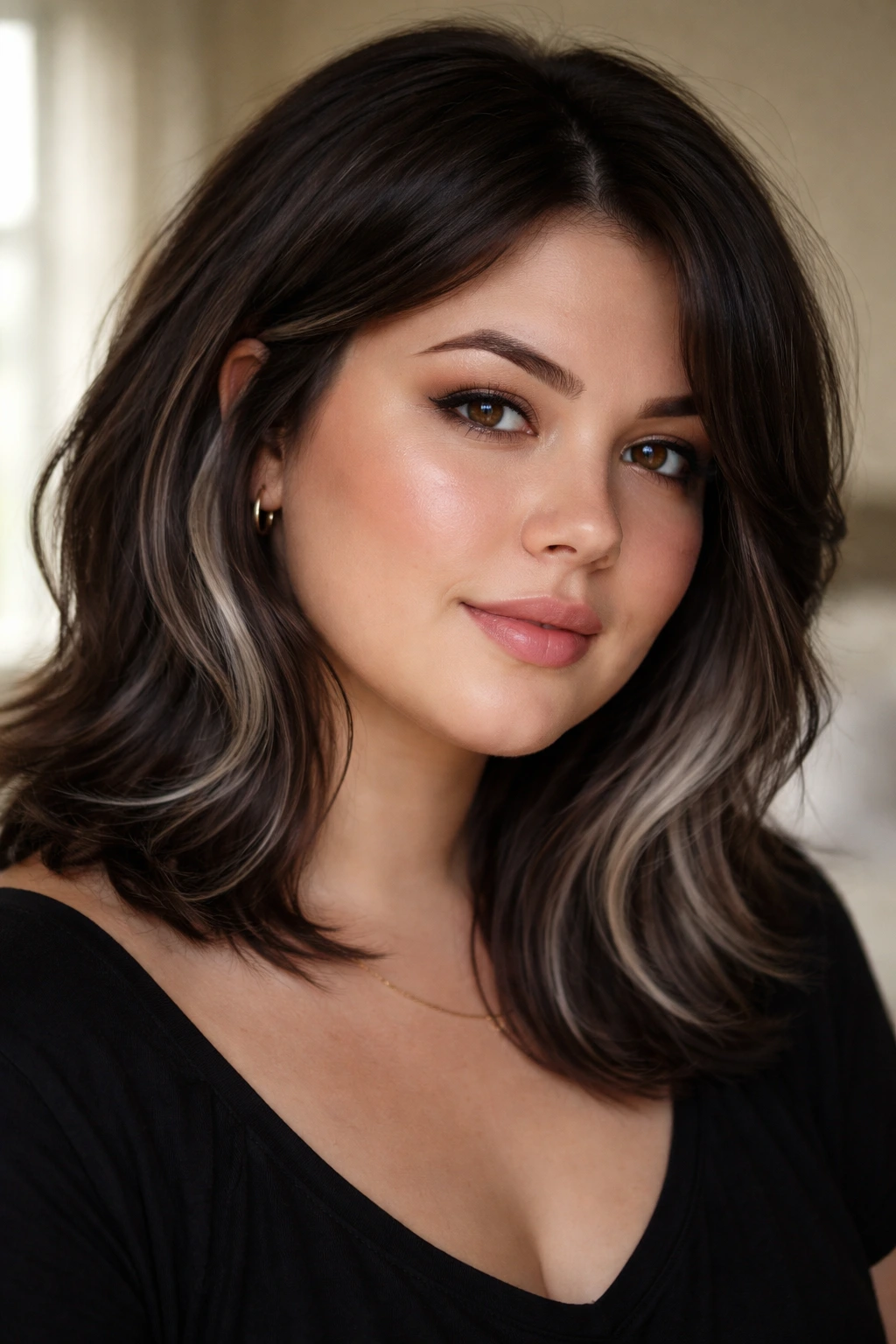
Pewter is a useful grey because it sits between silver and smoke. It has enough coolness to feel modern, but it is soft enough to blend into brown or dark blonde hair without turning harsh. On a round face, that softness matters.
The placement should curve around the cheekbone, then taper as it moves down. You want the light to frame the face, not sit right on the widest part. A line that starts high and falls lower helps the face feel less circular. Think of it as a soft edge, not a bright rim.
The Shape Trick
- Start the pewter a little above the cheekbone.
- Keep the brightest part just below it.
- Fade the color toward the jaw instead of stopping it there.
This look is especially good if you wear your hair tucked behind one ear. The grey catches the light in motion and gives the cut a more sculpted feel without going hard or severe.
14. Steel Grey Ends on a Straight Cut
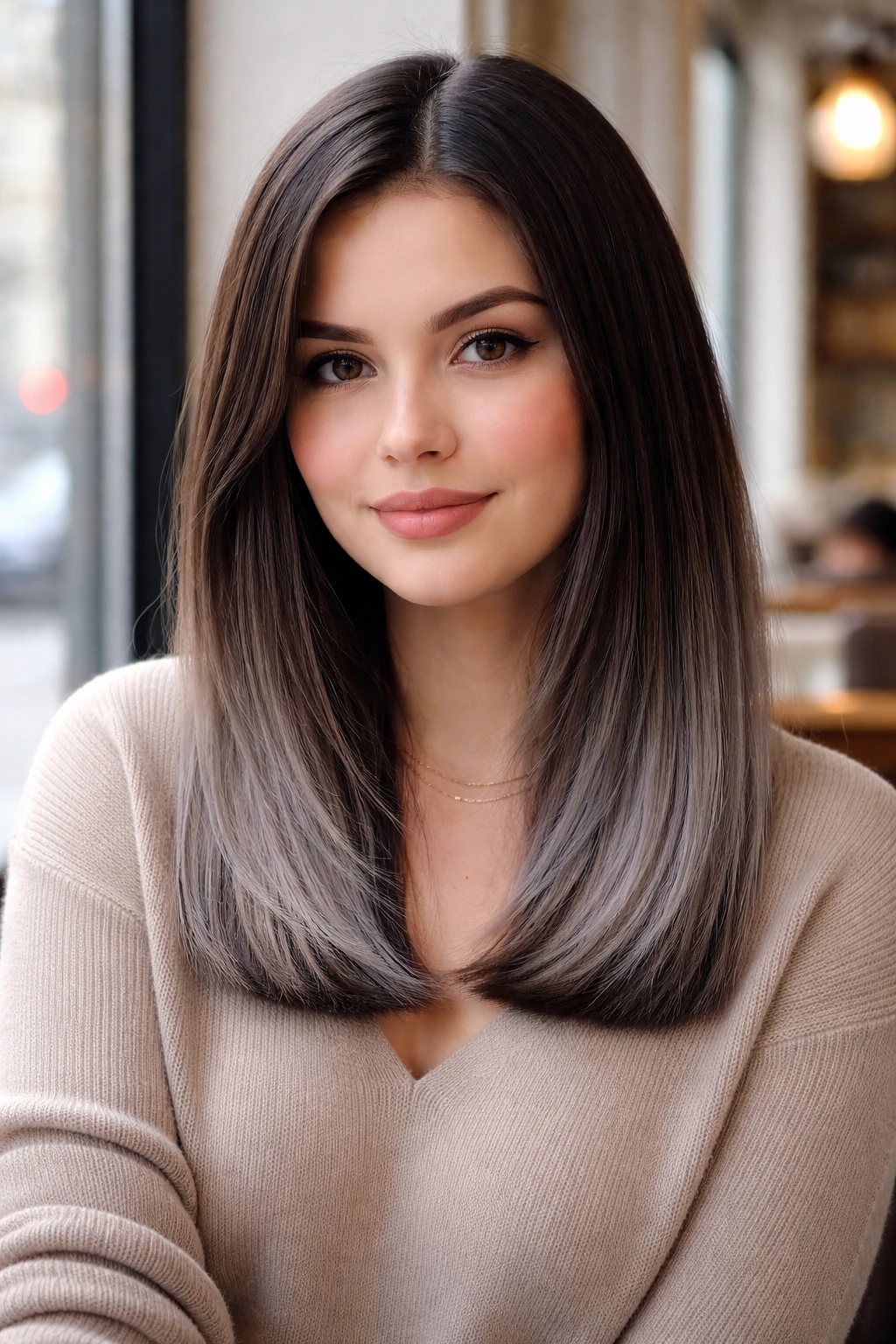
Straight cuts can be tricky on round faces because the line is so clean. Steel grey ends help by adding interest at the bottom, where the eye wants to travel. That stretches the face instead of crowding it.
The best version keeps the roots and mid-lengths deeper, with the steel grey concentrated in the last few inches. If the ends begin too high, the color can widen the silhouette. If they start below the chin, the whole style reads longer and leaner.
A blunt finish can still work here, but I prefer a slight bend at the bottom. It stops the hair from looking too rigid. A one-inch curve under or out at the ends is enough. Tiny detail. Big difference.
Best pairing: a collarbone cut with a side part and smooth blowout. The line stays sleek, but the steel at the ends keeps it from feeling flat.
15. Dimensional Grey Ribbons in a Wavy Bob
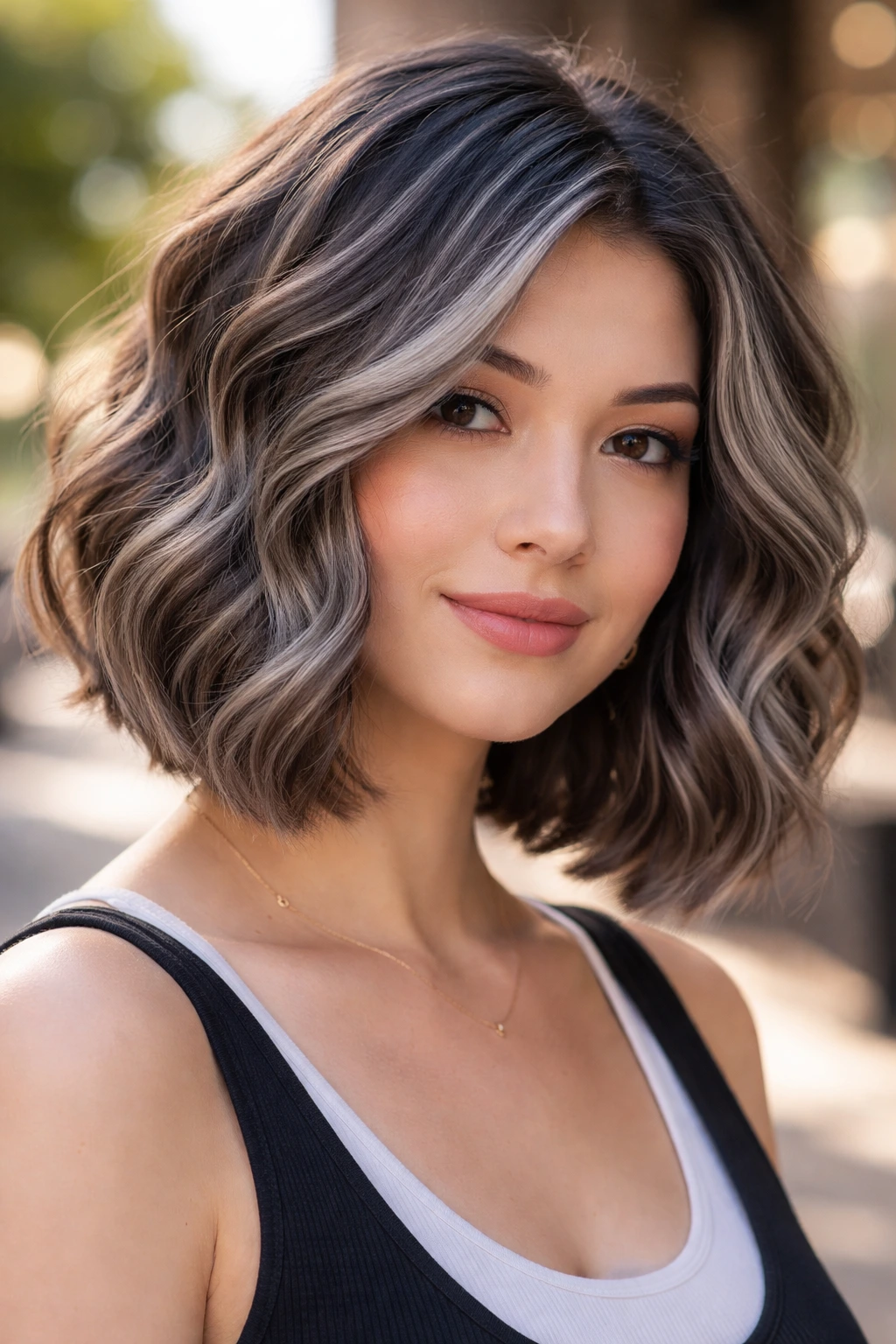
A wavy bob loves dimension, and grey ribbons give it exactly that. The shorter length keeps the shape neat, while the waves stop the grey from reading as one block. On a round face, that broken-up movement is gold.
I like this look when there are at least three tones in play: a deep ash base, a mid-grey ribbon, and a pale silver thread through the surface. That mix keeps the bob from puffing out at the sides. It also gives the hair enough lift so the face feels a little longer.
Why the Dimension Matters
- Multiple tones stop the bob from looking helmet-like.
- The waves create vertical movement.
- The grey can be placed lower to avoid width at cheek level.
If your bob ends right at the jaw, make sure the brightest ribbons sit below that line. Otherwise the face can feel boxed in. A small drop in placement makes the whole cut more flattering.
16. Silver Smoke Highlights with a Side Part
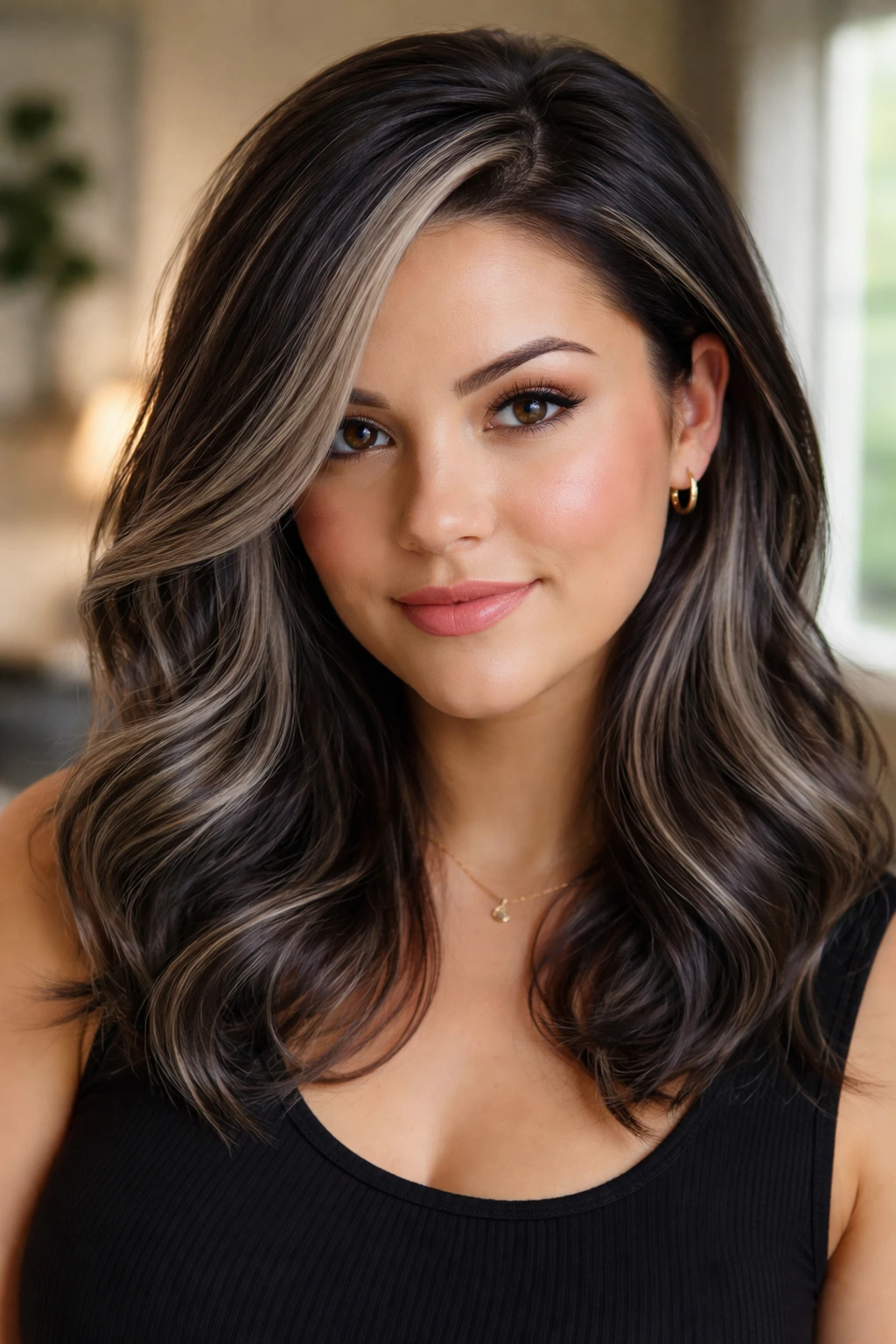
What if your part did half the face-shape work? A side part can break up the symmetry of a round face and give the hair a softer diagonal line. Add silver smoke highlights, and the effect becomes even more obvious.
The key is to keep the part slightly off center, not deep and dramatic unless your hair naturally wants to fall that way. Silver smoke should trace the sweep of the part and run through the longer side, while the shorter side stays a touch deeper. That contrast helps the face feel less circular.
A quick styling note: blow-dry the hair in the opposite direction first, then reset the part. It gives the roots a little lift without making the top balloon. On medium-length hair, that lift matters.
A side part plus smoky grey is one of those combinations that looks polished without trying hard. Which is rare, frankly.
17. Ashy Foilayage with a Root Melt
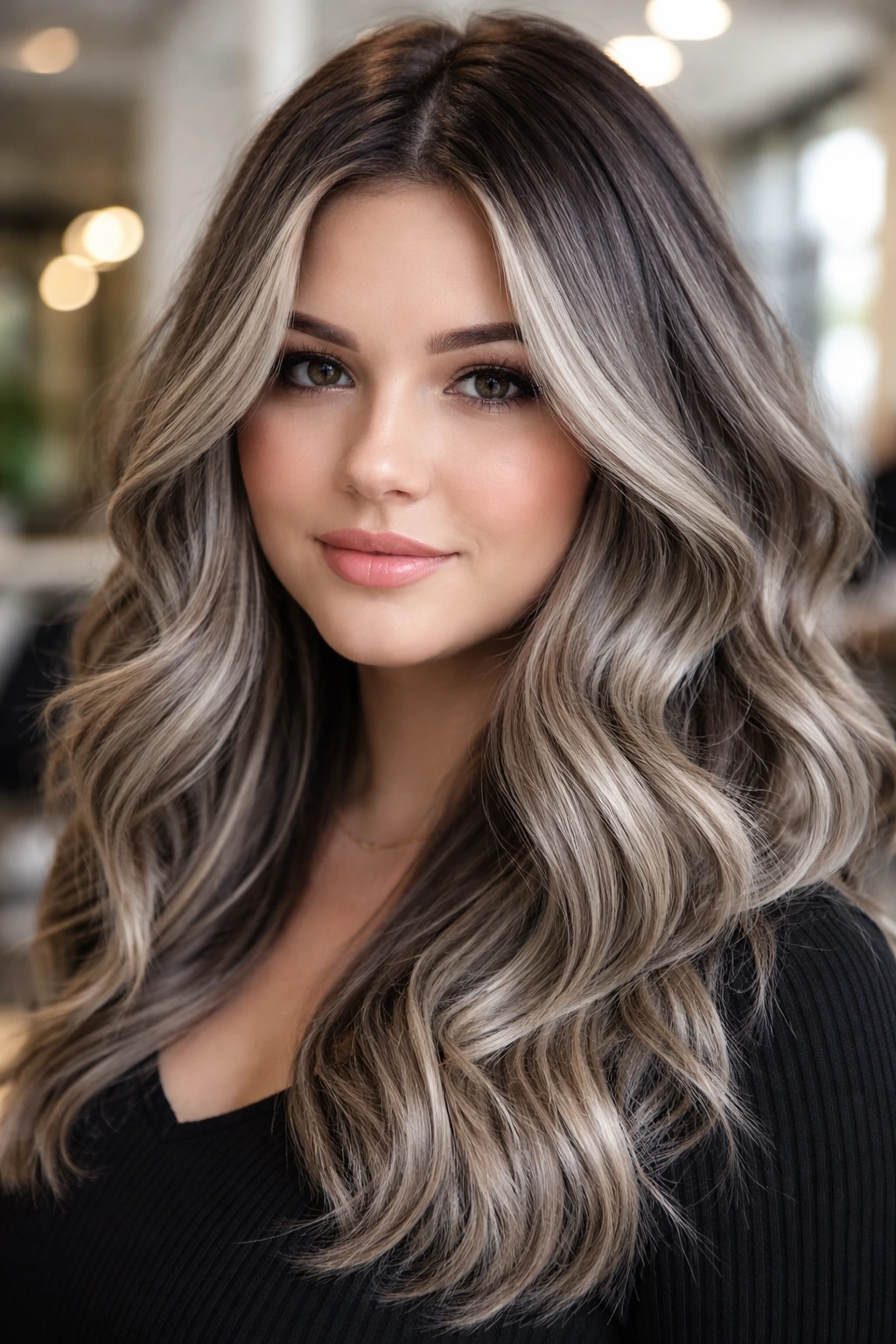
Ashy foilayage with a root melt is one of the easiest ways to keep grey highlights looking grown-in on purpose. Foilayage gives you brighter, hand-painted lightness, while the root melt softens the transition so the color does not start and stop in a hard line.
That matters on round faces because a visible horizontal line can cut the head in half. A root melt keeps everything moving downward. The ash tones are doing another bit of work, too: they cool the hair enough to make the face look cleaner around the cheeks.
Best Fit
- Medium to long hair.
- People who want a softer grow-out.
- Anyone who prefers depth near the scalp.
Ask for the root to stay 2 shades deeper than the lightest grey. That keeps the top grounded. If the lift starts too high, the face can feel wider and the maintenance gets louder than it needs to be.
18. Platinum Grey Dipped Ends on Layers
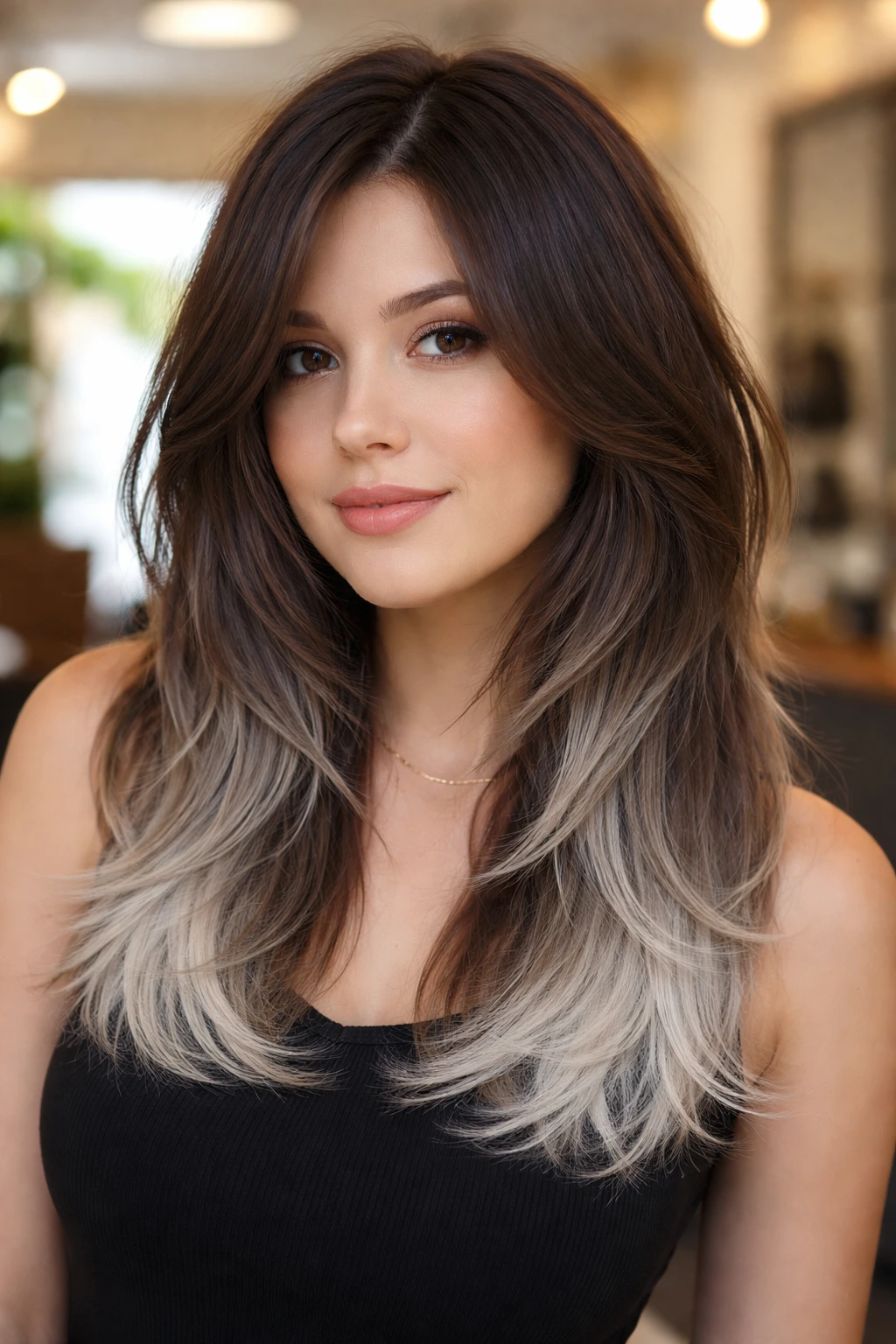
Platinum grey dipped ends are for someone who wants a little bite at the bottom of the haircut. On layered hair, the pale ends move around and keep the face from feeling heavy through the jawline.
The layering needs to start below the chin if you want this to flatter a round face. That keeps the brightness from spreading out at cheek height. When the layers fall lower, the eyes follow the length of the hair, not the width of the face.
Placement Notes
- Keep the brightest grey only on the last 2 to 4 inches.
- Leave the upper layers deeper.
- Use soft styling waves so the ends separate instead of forming one block.
This look does need toner care. Platinum grey can fade warm fast if you wash it too often with harsh shampoo. A gentle cleanser and a cool rinse help preserve the tone.
19. Soft Grey Highlights on a Copper Base
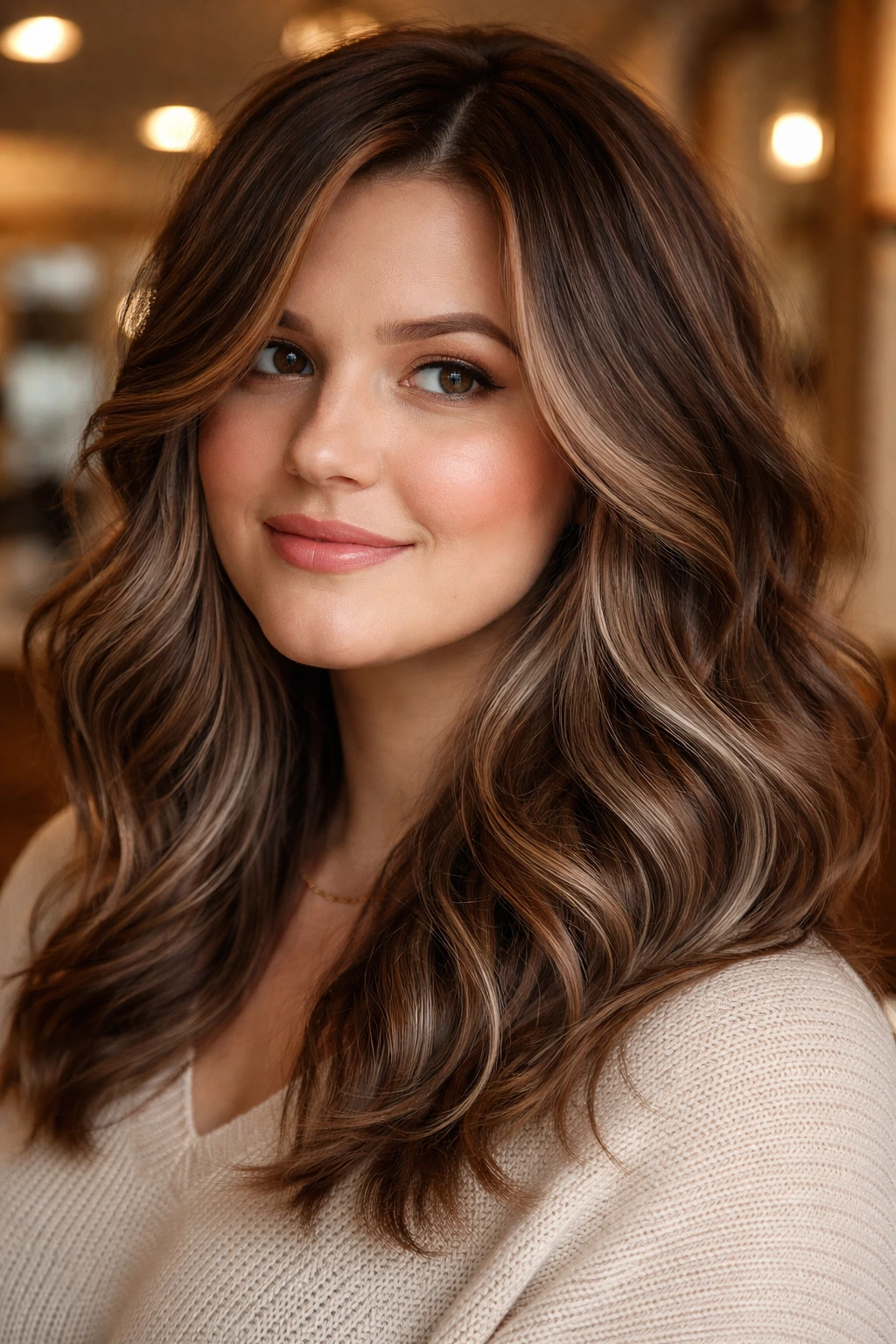
Warm hair can wear grey beautifully, and a copper base proves it. The trick is to keep the grey more smoky than icy so it does not fight the warmth. That contrast gives the hair a rich, expensive feel without turning brassy.
On a round face, copper with soft grey can work because the warm base holds the eye in place while the grey pieces create narrow, cool streaks that stretch the shape. The best version is not heavy-handed. Thin ribbons or soft veils are enough. Too much grey on a bright copper base can feel patchy.
I like this choice for people who want color with some personality. It is not safe, and that’s the point. Still, the grey should sit lower and lighter through the ends so it does not widen the sides of the face.
Ask for a neutral gloss if the copper starts leaning orange. That keeps the whole look balanced.
20. Frosted Face-Frame on a Chin-Length Bob
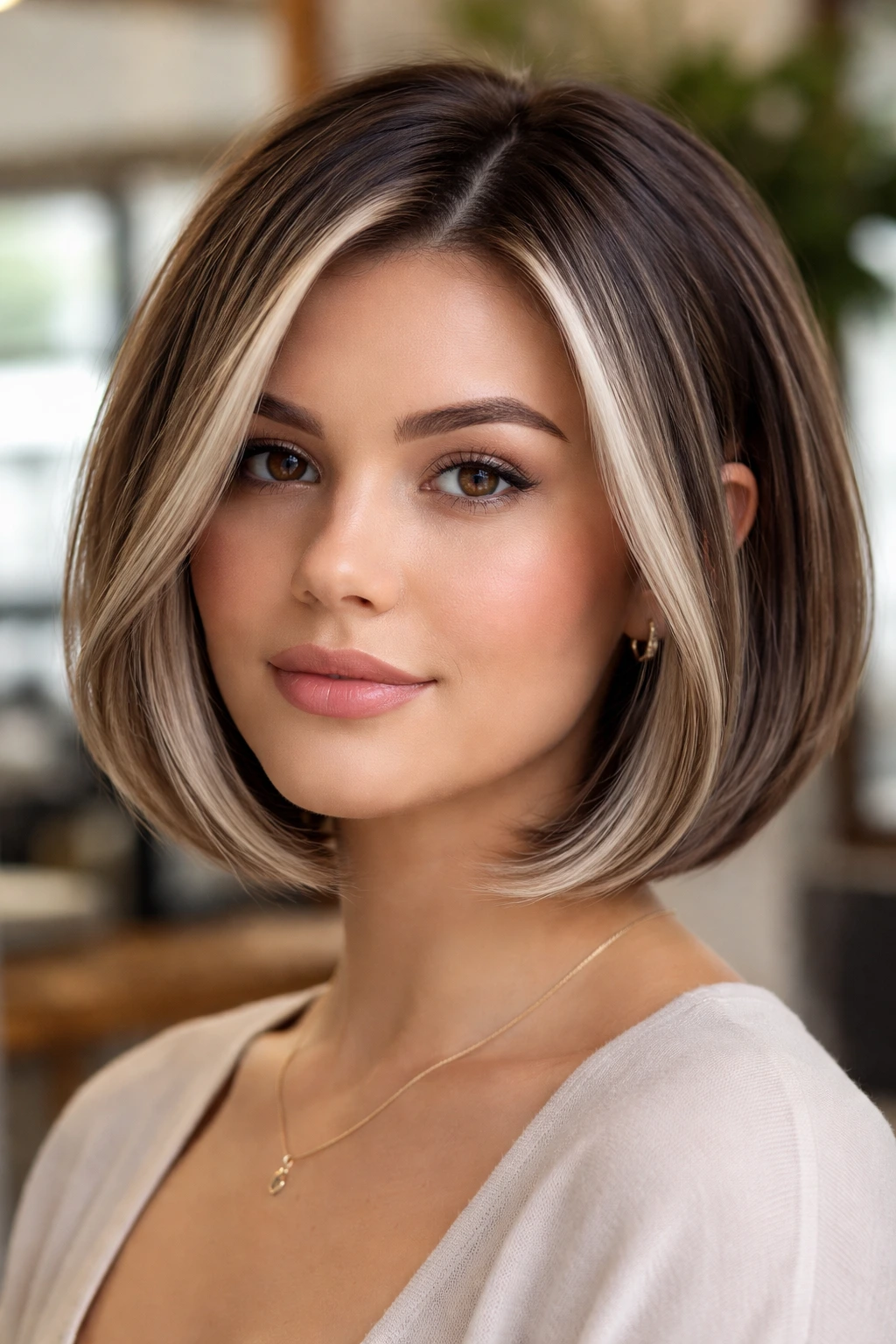
A chin-length bob can make a round face look fuller if the lines are too blunt. Frosted face-framing pieces help fix that by bringing light down the front and pulling the eye vertically.
The important part is where the frosting begins. It should start near the cheekbone and taper as it drops toward the jaw. If the brightest grey sits exactly at chin level, the bob can end up emphasizing width instead of length. A little offset solves that.
Short hair needs discipline.
The inside of the bob should stay a shade deeper so the outer frost has room to breathe. That contrast gives the style shape without making it busy. If you tuck one side behind the ear, the frosted front becomes even more flattering because the eye follows the open side and not the full width of the face.
21. Charcoal-to-Silver Gradient on Long Curls
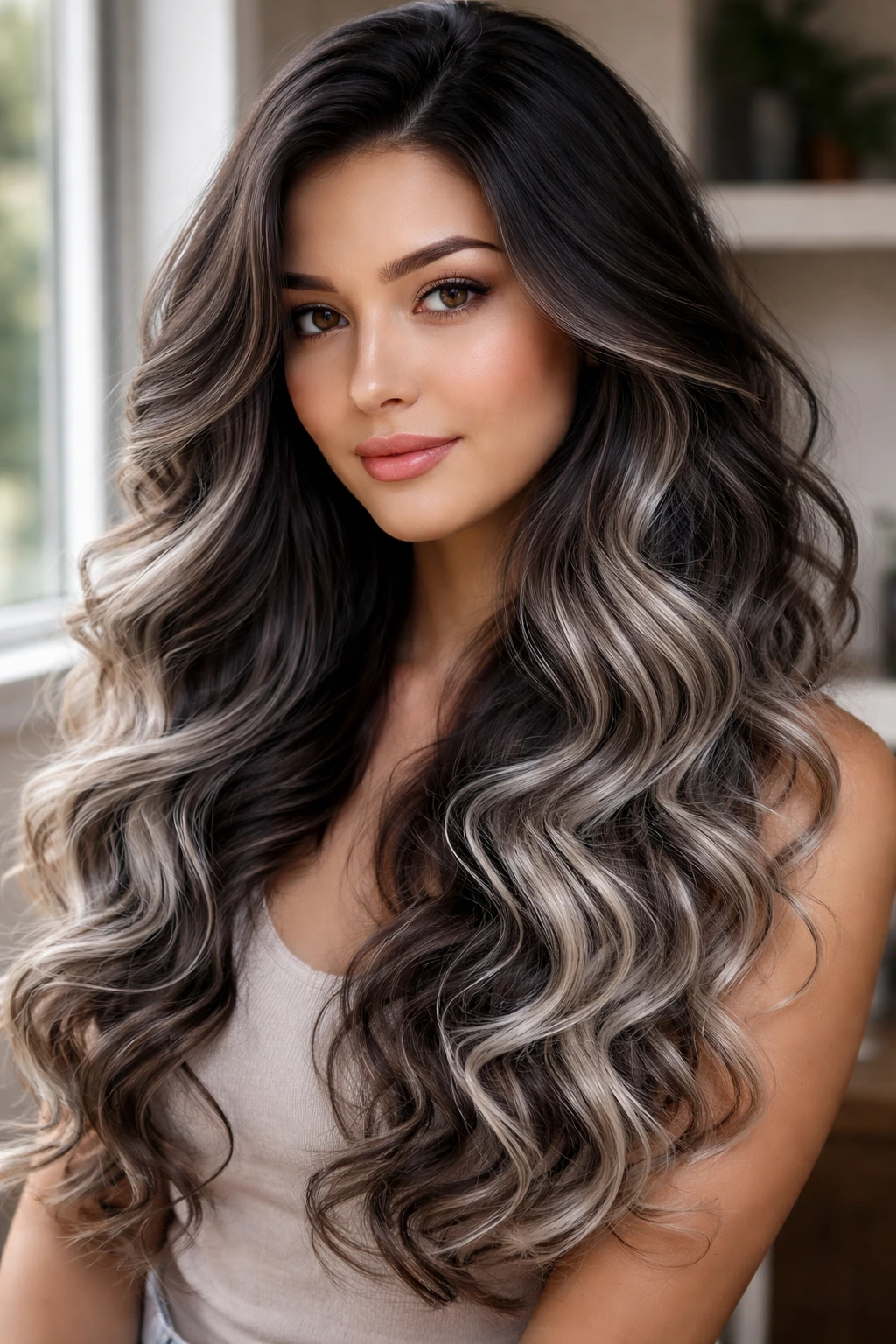
How do you keep grey from puffing out long curls? Give it a gradient. Charcoal at the top, silver through the middle, and a lighter finish on the ends lets the curl pattern do what it already wants to do: stack vertically and bounce.
The gradient is especially useful on round faces because curls can expand sideways fast if the color is too uniform. Darker roots hold the head shape in place. The silver wakes up the curls without flooding the sides with one bright band.
How to Keep Curls from Going Flat
- Paint the brightest silver on the outer curl surface.
- Leave the underside a little darker.
- Diffuse on low heat so the curl clumps stay intact.
This is one of those looks that can feel soft in the chair and lively once the curls dry. The movement is the point. Without it, the grey can look heavier than planned.
22. Misty Grey Highlights with Shadow Roots
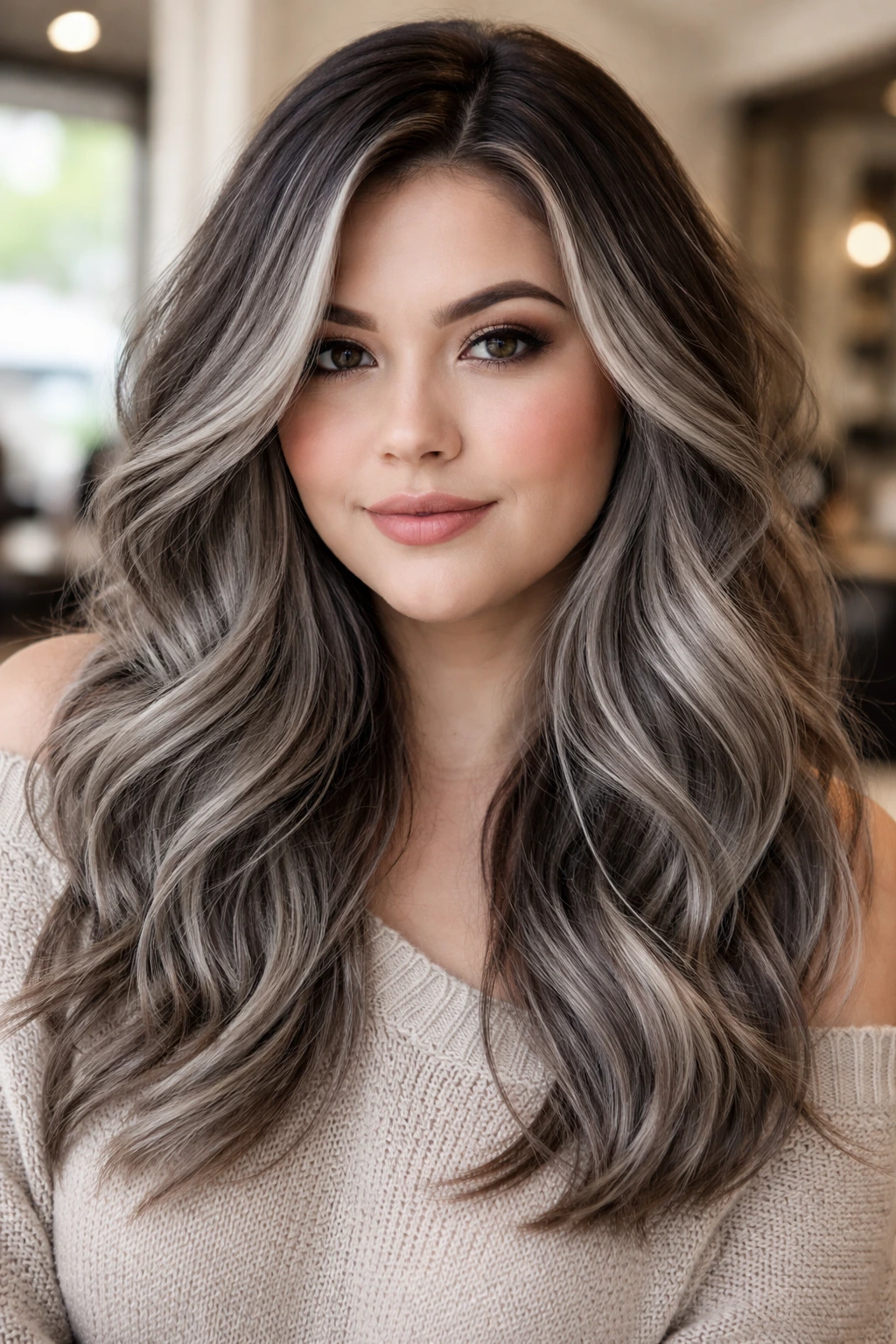
Misty grey with shadow roots is the quiet cousin of full platinum. The root stays soft and deep, the mid-lengths carry the grey, and the whole look grows out with less fuss. That alone makes it a strong choice for round faces, because the top stays controlled.
The shadow root should not be too dark. You still want the transition to feel airy. Usually, a root that is 1 to 2 shades deeper than the mids is enough. Any darker and the contrast can look blocky. Any lighter and the shape can lose definition.
This is a good call if you like your highlights to look blended even when they start to grow. The face gets the benefit of vertical lift, but the maintenance stays calmer. No harsh lines. No surprise stripe at the part.
If you wear your hair loose and parted slightly off center, the misty grey can look almost cloud-like. Soft, but not vague.
23. Cool Grey Slice Highlights for Fine Hair
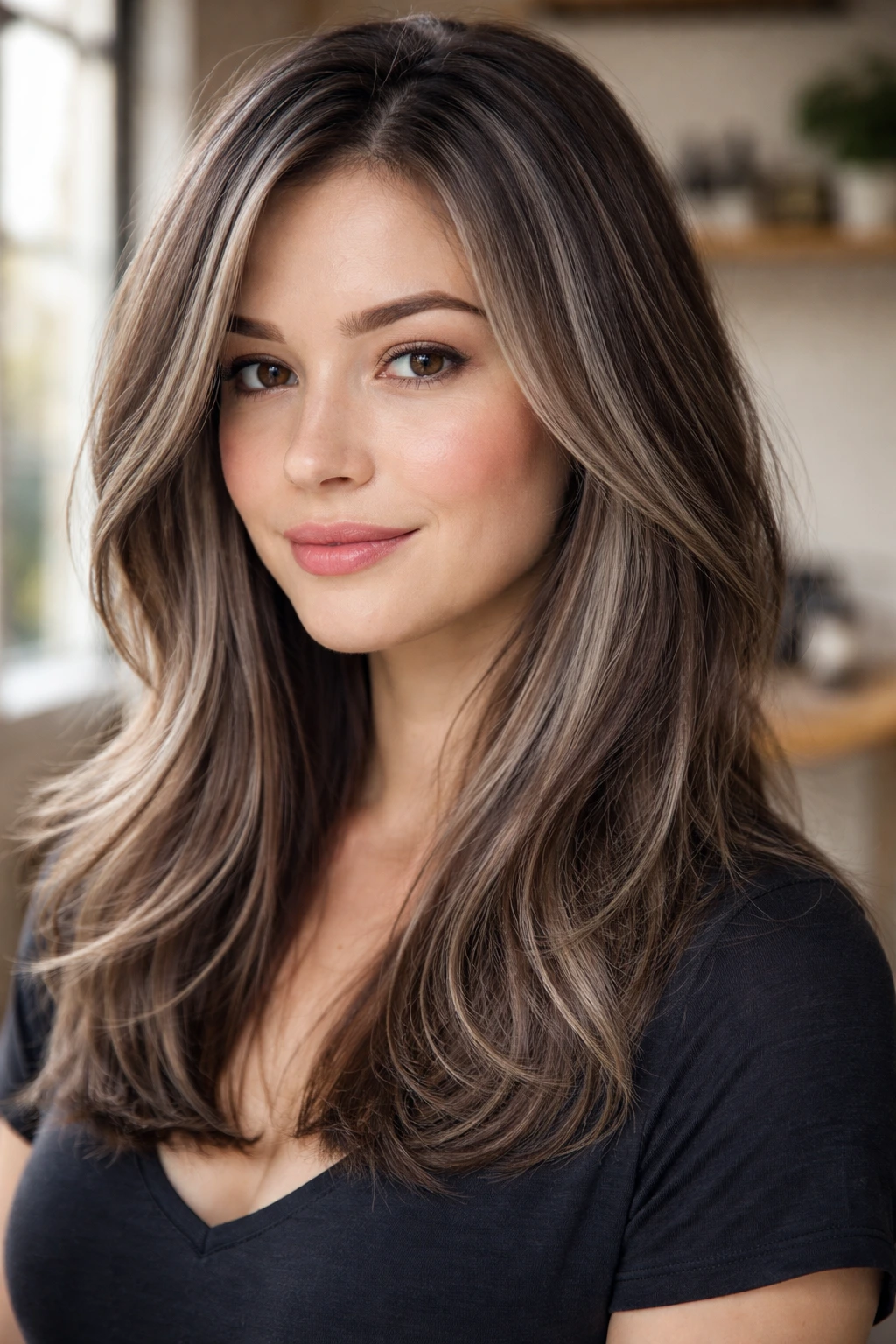
Fine hair can disappear under too many tiny highlights, which is why slice highlights are useful here. Broader slices of cool grey create visible structure, and that structure helps a round face look a little longer because the hair has a clearer line.
The key is not to overdo the number of slices. Four to six well-placed slices can do more than dozens of micro pieces. Keep them thin enough to move, but wide enough to read as deliberate. If the slices are too dense, the hair can look stripped.
What to Ask For
- Place the slices around the mid-lengths and lower half.
- Keep each section under ½ inch if your hair is very fine.
- Leave some darker space between slices so the hair still has depth.
This is one of my favorite choices for people who want their hair to look fuller, not just lighter. Structure matters more than volume here.
24. Champagne-Silver Highlights with Micro-Lowlights
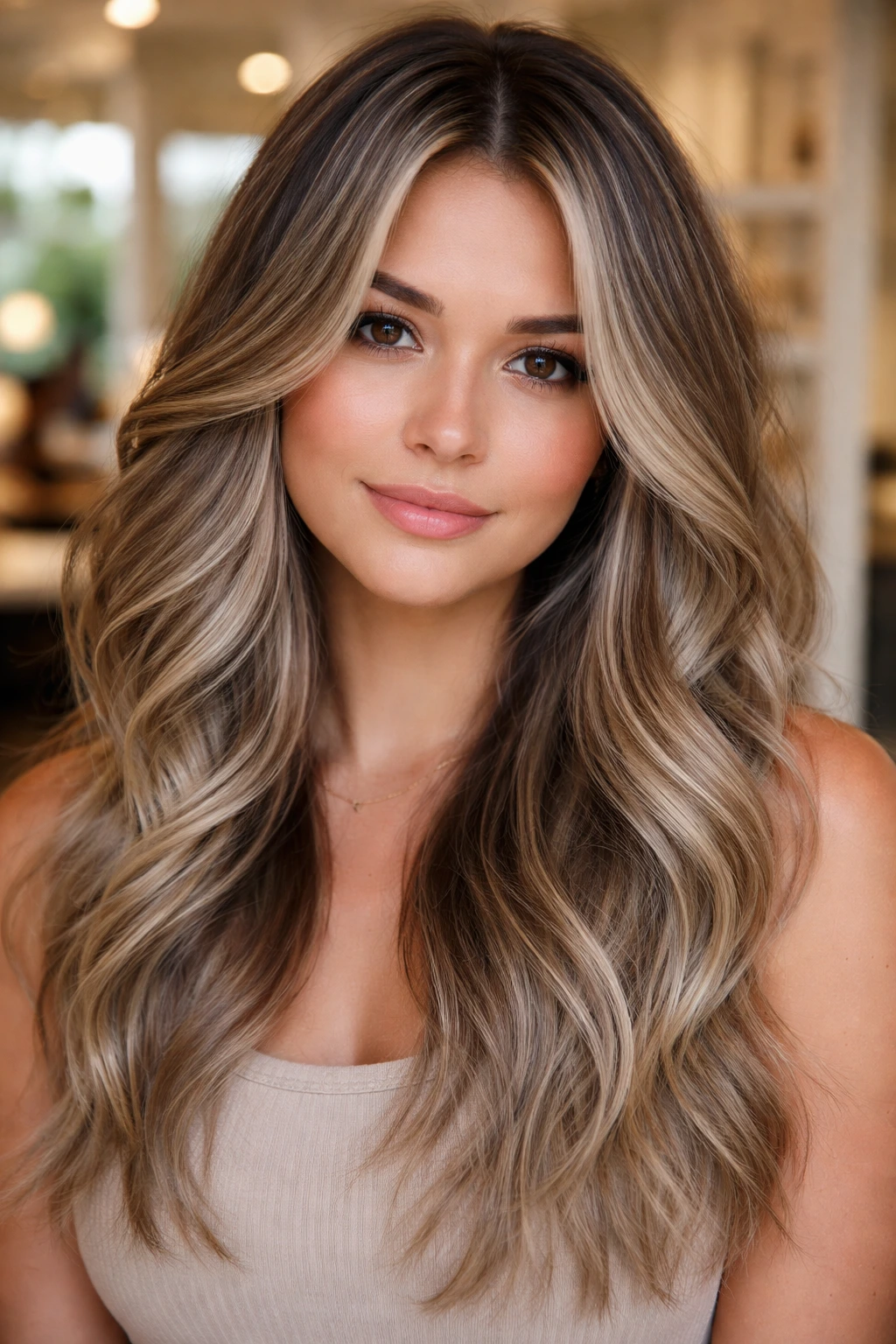
Champagne-silver is softer than stark silver, and the micro-lowlights keep it from flattening out. That pairing is useful on a round face because the light and dark pieces move together instead of sitting in one big bright sheet.
The champagne note adds a touch of warmth, which keeps the grey from feeling cold or chalky. The lowlights stop the color from turning airy to the point of emptiness. That balance is what keeps the hair looking full around the sides while still giving the face a narrow, lifted shape.
I like this especially on medium blonde or light brown hair. The blend feels expensive without trying too hard. Keep the brightest champagne-silver through the lower lengths and let the micro-lowlights hover near the roots and interior. That way the face gets brightness, but not all of it at cheek level.
This is a quiet look. Quiet does not mean boring.
25. Smoke-and-Steel Balayage for a Softly Layered Cut
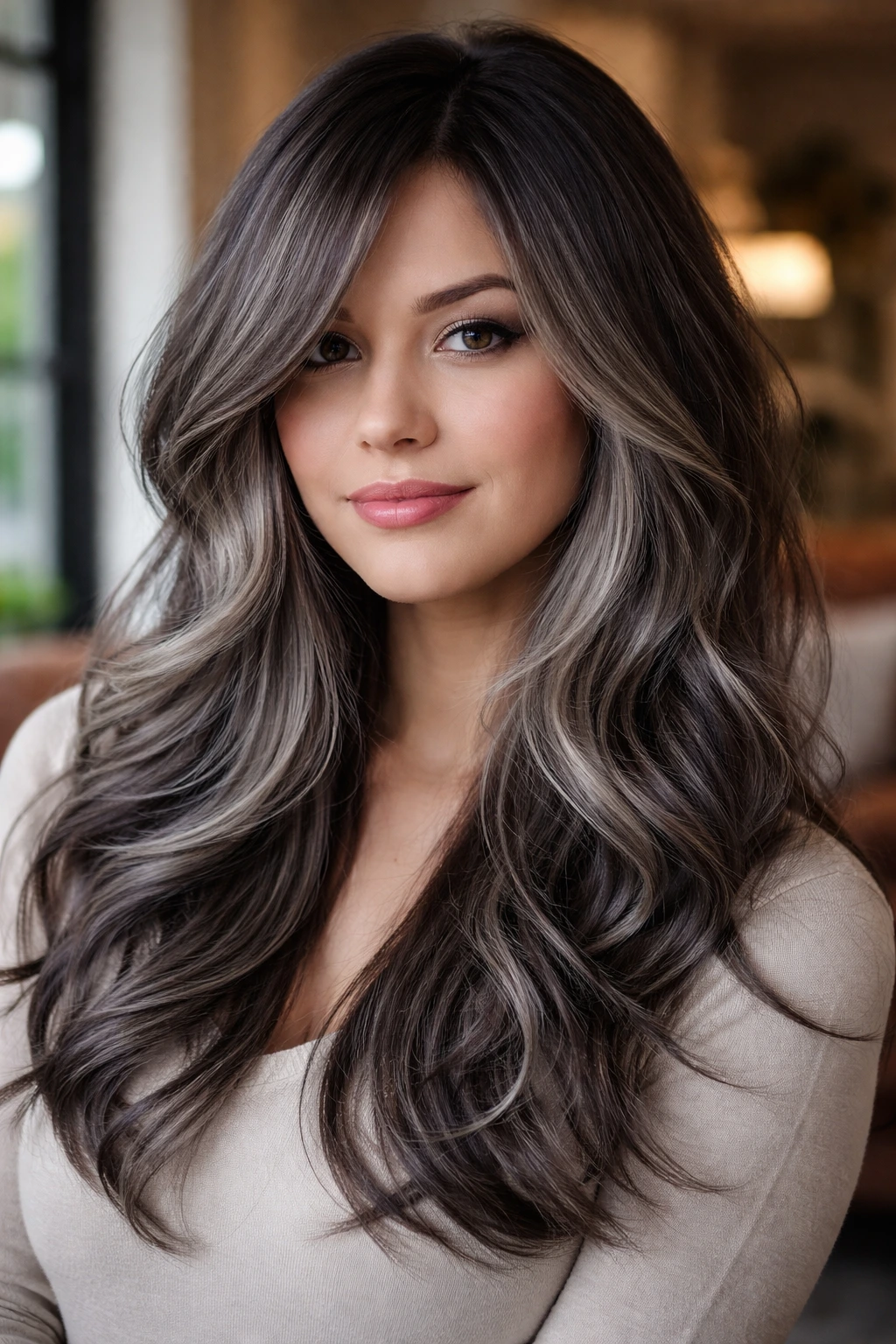
Smoke-and-steel balayage is the one I’d pick for someone who wants drama without the hair turning striped. The softer layers give the grey room to move, and the smoke-to-steel shift keeps the ends from looking heavy. On a round face, that lightness at the bottom helps the whole shape feel longer.
The trick is to leave a decent amount of base showing — not half the head, but enough that the grey has contrast. If everything is light, the style loses depth and can widen the silhouette. If the layers are too choppy, the color can scatter in a messy way. Soft layers work better. They let the balayage fall like ribbons instead of chunks.
This look suits people who want a cleaner, more polished edge than silver streaks alone give. It’s bold, but not loud. And that’s a nice place to land.
Final Thoughts
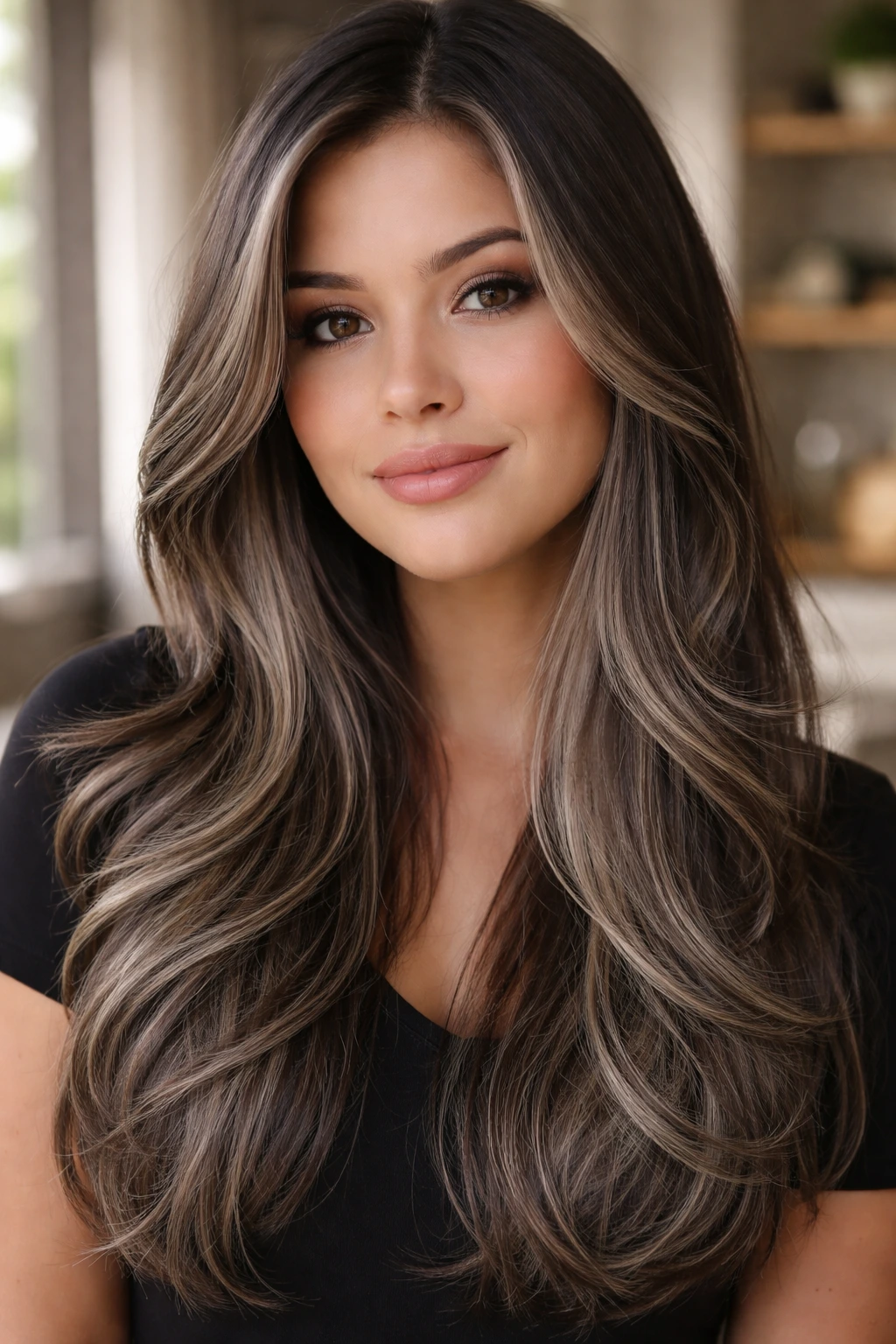
Grey highlights can flatter a round face in a dozen different ways, but the same rule keeps showing up: place the light where it lengthens, not where it widens. That usually means lower through the lengths, softer near the roots, and a little more depth through the sides.
The haircut matters just as much as the color. Long layers, collarbone lengths, side parts, and soft face-framing pieces all give grey more room to work. Sharp horizontal lines and wide bright bands do the opposite. They’re not forbidden. They just need more care.
If you are choosing between two ideas, pick the one that moves the eye downward. That’s the one that will still look good when the salon blowout is gone and the hair is doing its normal, everyday thing.
