



Pastel highlights for brown hair work best when the colorist respects the base instead of trying to erase it. A chestnut brunette can wear peach, rose gold, or lilac in a way that looks soft and rich, while a deeper espresso base usually needs a lighter lift before mint or sky blue will show.
The bad versions usually fail for boring reasons. The highlights are too thick, the toner is too icy, or the pastel is placed where the hair falls flat and loses movement. Brown hair loves dimension. Strip that away, and even a pretty shade can look tired.
Soft does not mean boring.
That is why placement matters as much as color. A whisper-thin babylight near the part line reads one way, and the same shade tucked under a curl or at the ends reads another. Sometimes a lot better. The looks below lean on that difference and give you room to choose between barely-there color and a louder frame around the face.
1. Peach Sorbet Balayage
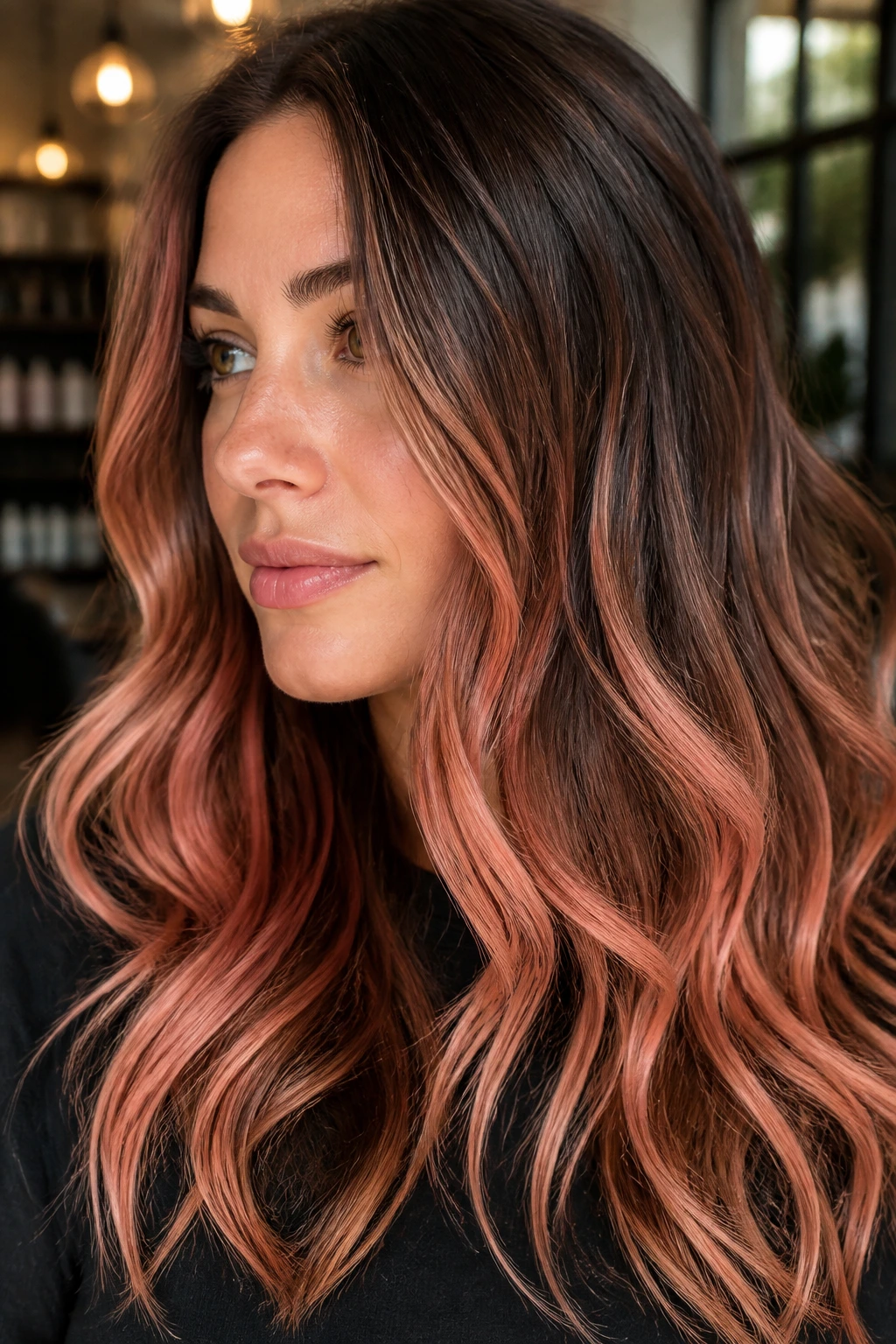
Peach sorbet is one of the easiest pastel moves for brown hair because it borrows warmth from the base instead of fighting it. On chestnut, caramel, or milk-chocolate hair, those peachy ribbons feel sun-washed and flattering right away.
Ask for hand-painted pieces through the mid-lengths and ends, with the root left dark so the color can breathe. If the hair is lifted to a soft gold first, the peach stays fresh; if it’s painted onto hair that’s still too yellow, it can lean orange fast. That’s the part most people miss.
This look works especially well when the waves are loose. The bends break up the color and keep the pastel from turning into one flat apron of pink. It’s sweet, yes, but it still has some edge.
2. Dusty Rose Money Piece
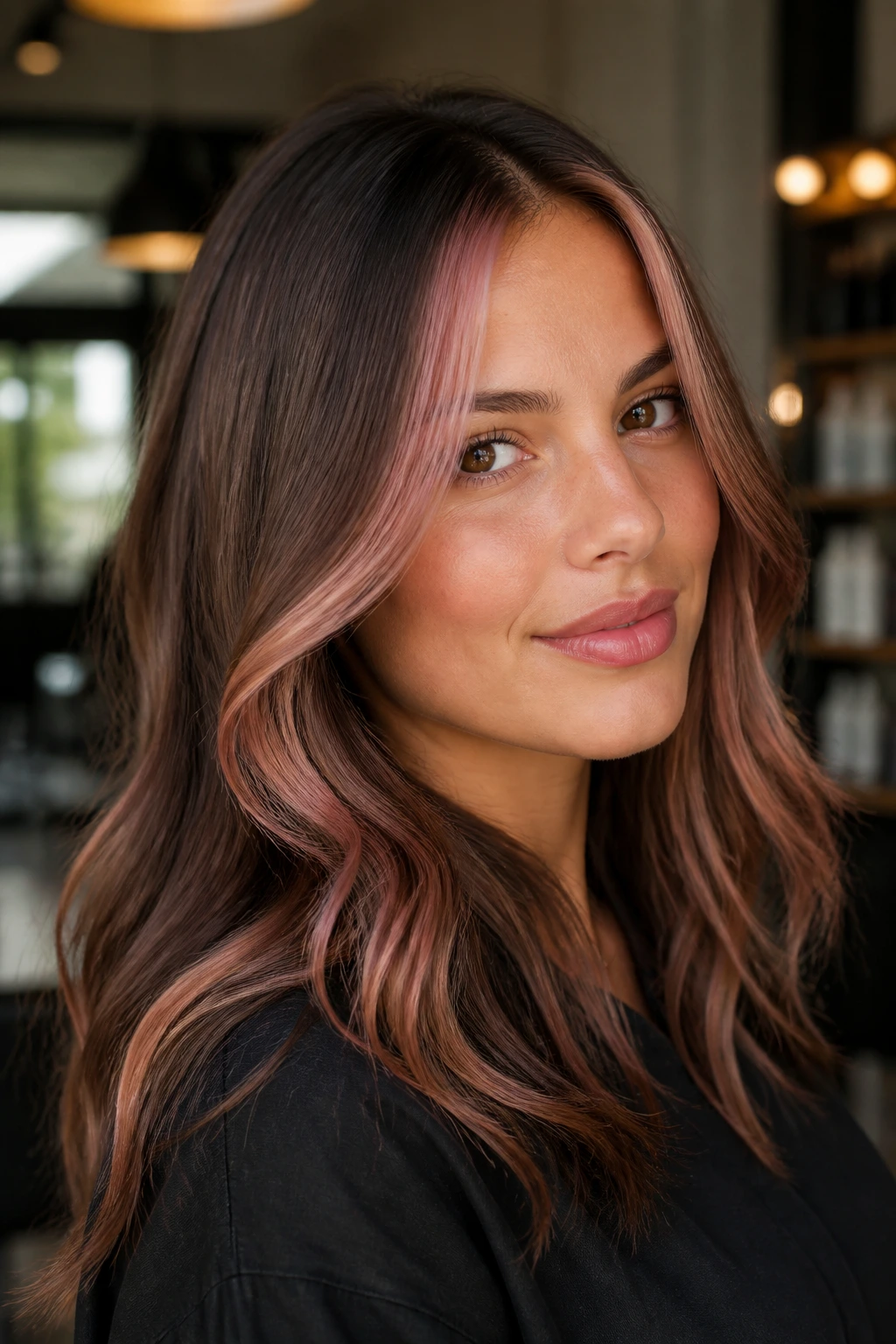
Want a pastel that shows up the second you tuck your hair behind your ear? A dusty rose money piece does that job neatly, and it doesn’t ask you to color the whole head pink.
Why the Face Frame Carries the Look
The front sections sit right where people look first, so even a soft rose shade reads clearly. On brown hair, dusty rose looks calmer than bubblegum and less precious than pure pink. It has a tiny bit of gray in it, which keeps it from turning childish.
What to Ask For
- Keep the money piece about 1 to 1½ inches wide on each side of the part.
- Leave the roots deeper so the pink doesn’t feel pasted on.
- Tone the lightened pieces to a pale strawberry base before the rose goes on.
- Style it with a center part if you want symmetry, or push it off to one side for a softer bend.
A little goes a long way here. That’s the charm.
3. Lavender Babylights
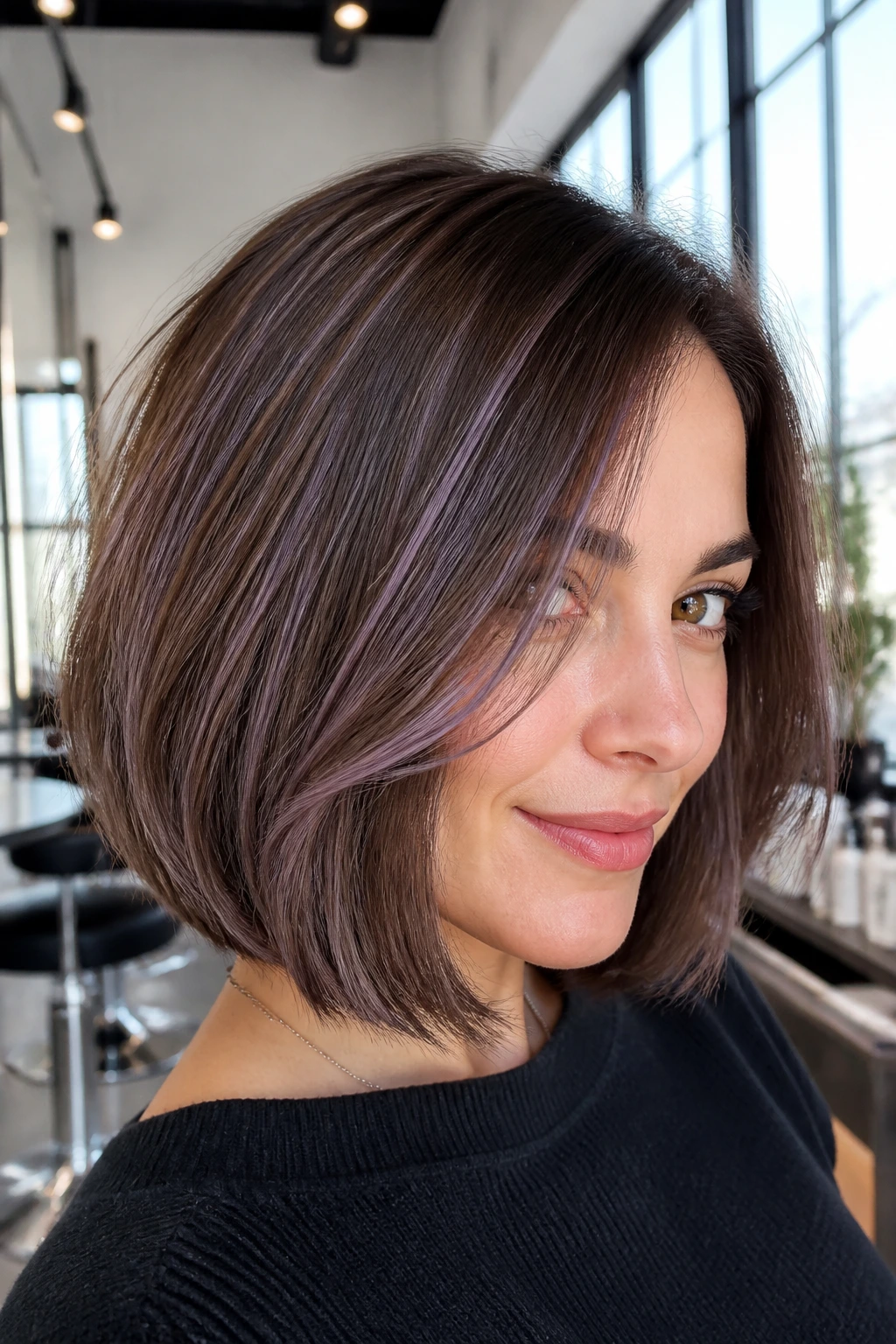
A brown bob with lavender babylights can look almost like a filter, but in real life. The color is tiny, barely there at first glance, then it catches when the light moves.
The trick is section size. Babylights are ultra-fine, so the lavender should thread through the hair in delicate lines, not obvious stripes. On medium brown hair, that keeps the finish airy. On darker brunette bases, the lifted pieces need to be pale enough that the violet can sit on top instead of vanishing into the brown.
Lavender also behaves well around texture. Straight hair shows off the precision. Wavy hair softens the result. Either way, the color feels cool and polished, not sugary.
4. Mint Peekaboo Panels
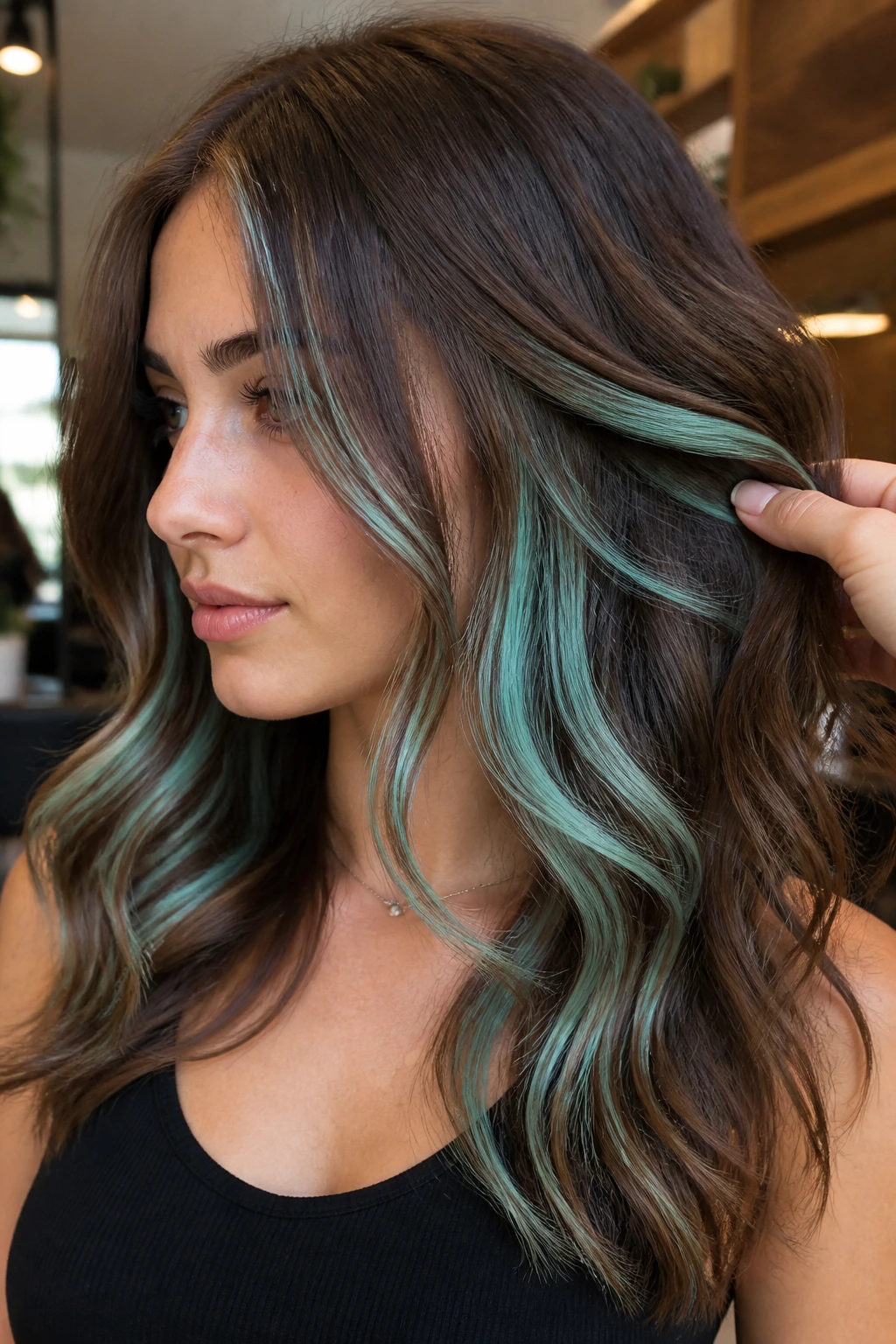
Not every pastel has to sit on top. Mint peekaboo panels hide under the outer layer and flash only when the hair swings, which is half the fun.
Where the Mint Should Hide
- Under the crown in two narrow panels.
- Around the nape for a surprise effect in ponytails.
- Beneath long layers so the color shows through only in motion.
- In chunky curved sections if the hair is thick and you want more visibility.
The best mint tones on brown hair are pale and slightly blue, not neon. That matters. If the mint is too grassy, it fights the brunette base and stops looking soft. With the right lift and a cool toner, though, the effect feels playful in a grown-up way.
It’s one of the few pastel choices that still looks interesting when you tie your hair up.
5. Periwinkle Ribbon Highlights
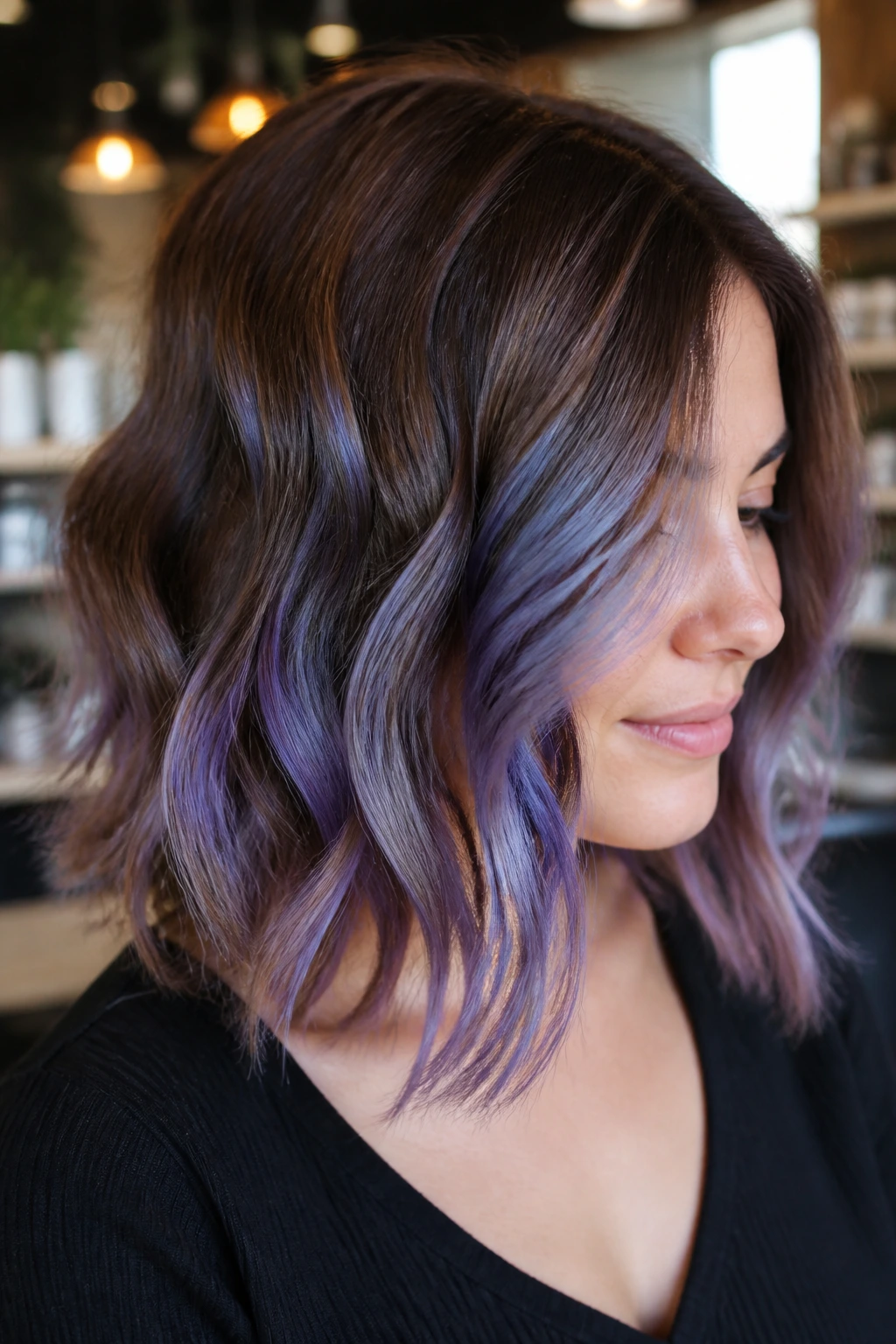
Periwinkle has this odd little magic: it looks blue from one angle and lavender from another. On brown hair, that shift is what keeps it from feeling flat.
Think of it as ribboning rather than striping. The color should flow through the surface in curved pieces, especially around longer layers. If the highlights are too linear, periwinkle gets a bit stiff. A soft hand-painted placement avoids that and lets the shade move with the cut.
Why Ribboning Helps
The color sits better when each section varies slightly in width. One ribbon might be ¼ inch wide, another closer to ½ inch, and that tiny difference stops the pattern from looking stamped on. Brown hair needs that irregularity. It makes the pastel feel woven in instead of dropped on top.
This one looks especially good on shoulder-length cuts that flip at the ends. The movement shows the blue-violet shift in a way that straight, heavy hair sometimes hides.
6. Cotton Candy Face-Framing Streaks
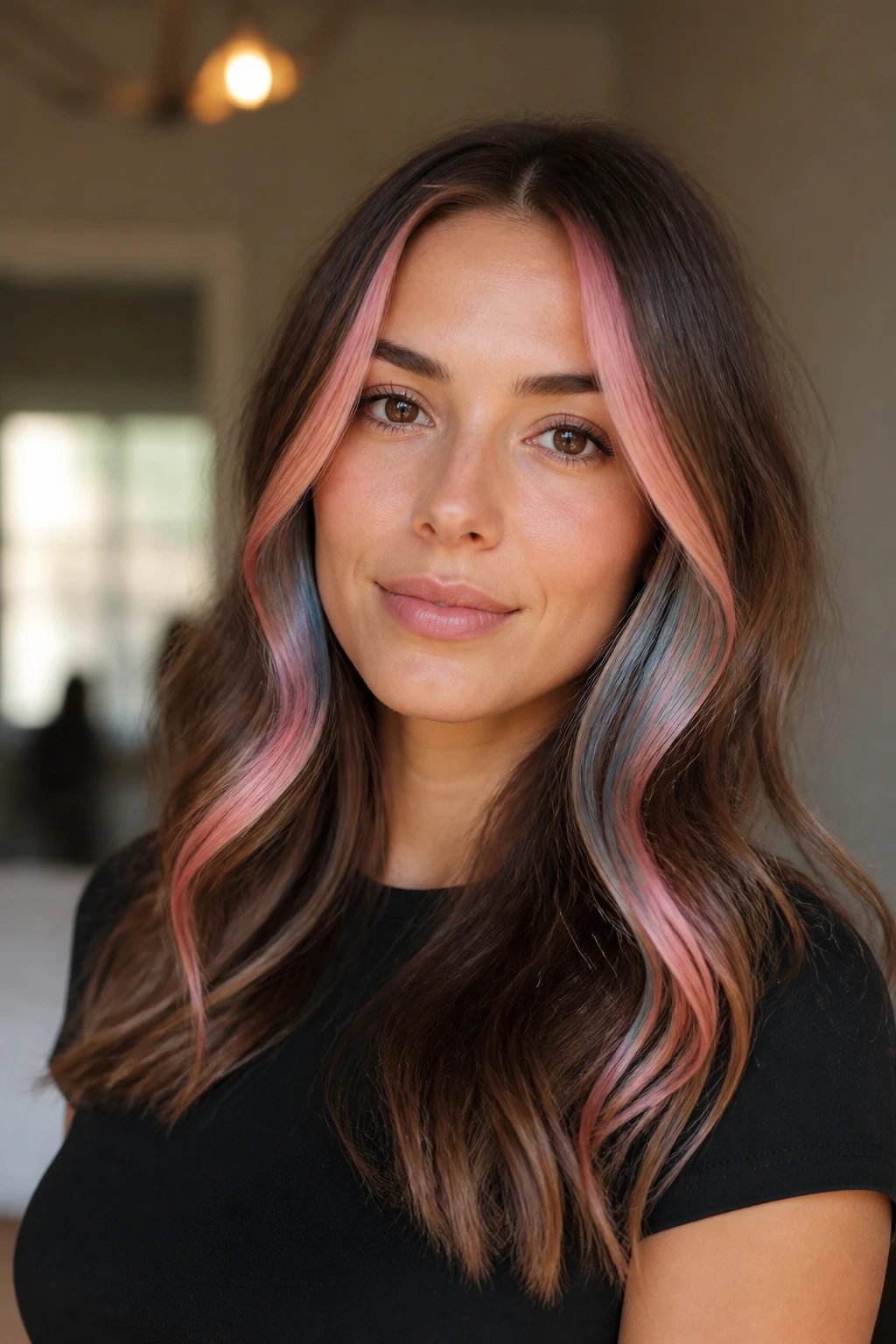
Cotton candy sounds loud, but on brown hair it can be surprisingly soft if you keep the placement narrow and the base deep. The front pieces do most of the work here.
A warm brunette base with blush-pink and pale blue streaks around the face gives that sweet, almost airy look people save from inspiration boards. The key is restraint. If every front section is saturated, the color stops feeling pastel and starts feeling loud. Two or three thin streaks per side are usually enough.
It helps when the hair has a bend near the cheekbone. Curtain bangs make this look even better, because the pastel sits right along the curve of the face instead of hanging straight down. That little bit of motion makes the whole thing feel lighter.
7. Apricot Foils Through Mid-Lengths
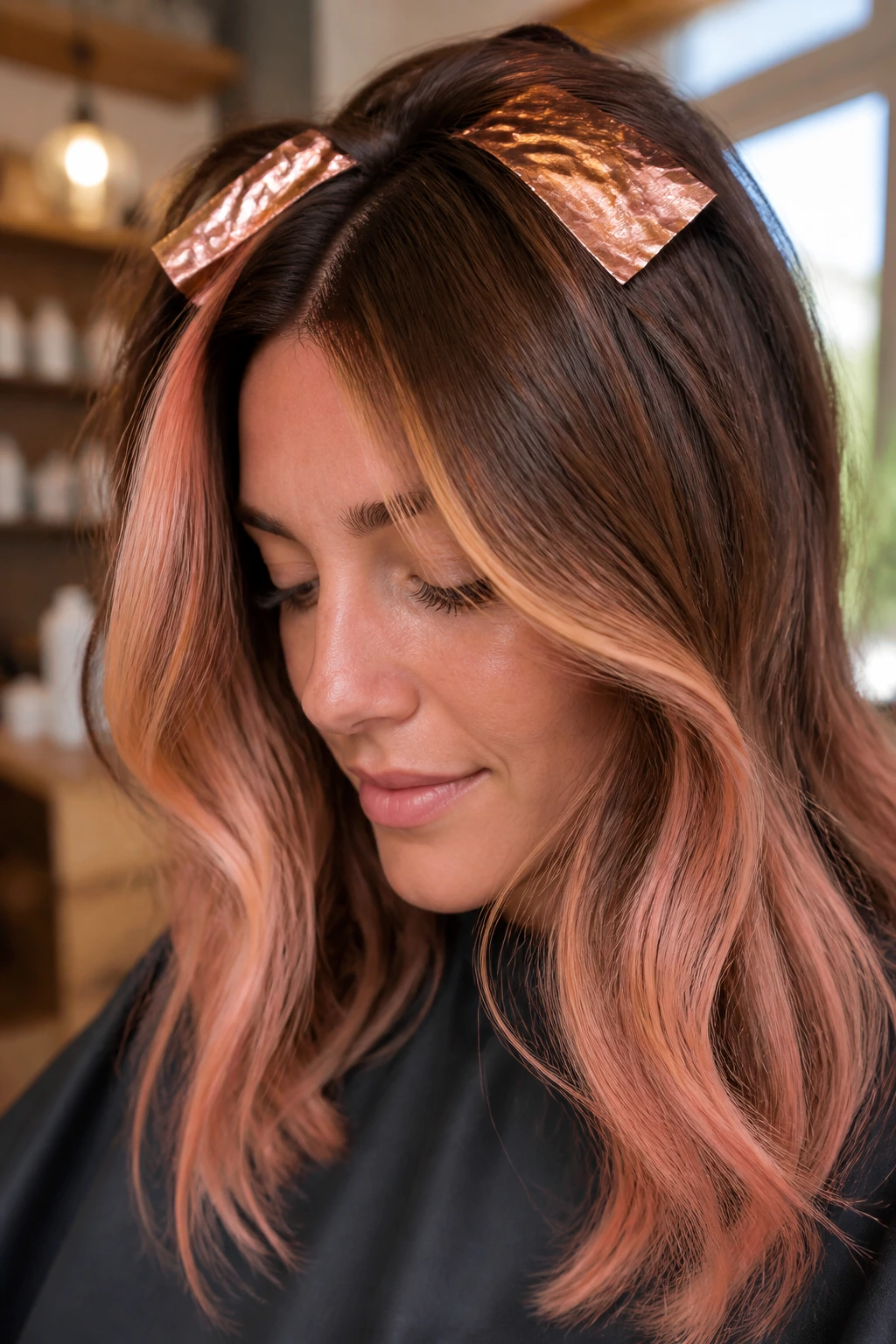
Two or three apricot foils around the crown can change the whole head. That’s the nice thing about warm pastel on brown hair: you do not need much of it.
How to Ask for It
- Place the foils through the mid-lengths first, not right at the root.
- Keep the pieces fine near the part and slightly wider near the back.
- Aim for a soft apricot tone, not bright orange.
- Blend the ends with a peachy glaze so the color fades gently.
Apricot works especially well on golden brunette or warm chestnut hair. It keeps the overall finish cozy, almost like the hair has a low, warm glow. On cooler brown bases, it can look a little more playful and less sunlit.
The nicest part is grow-out. Because the root stays deeper and the pastel lives in the middle, the color softens rather than shouting when it starts to fade.
8. Lilac Melted Ends
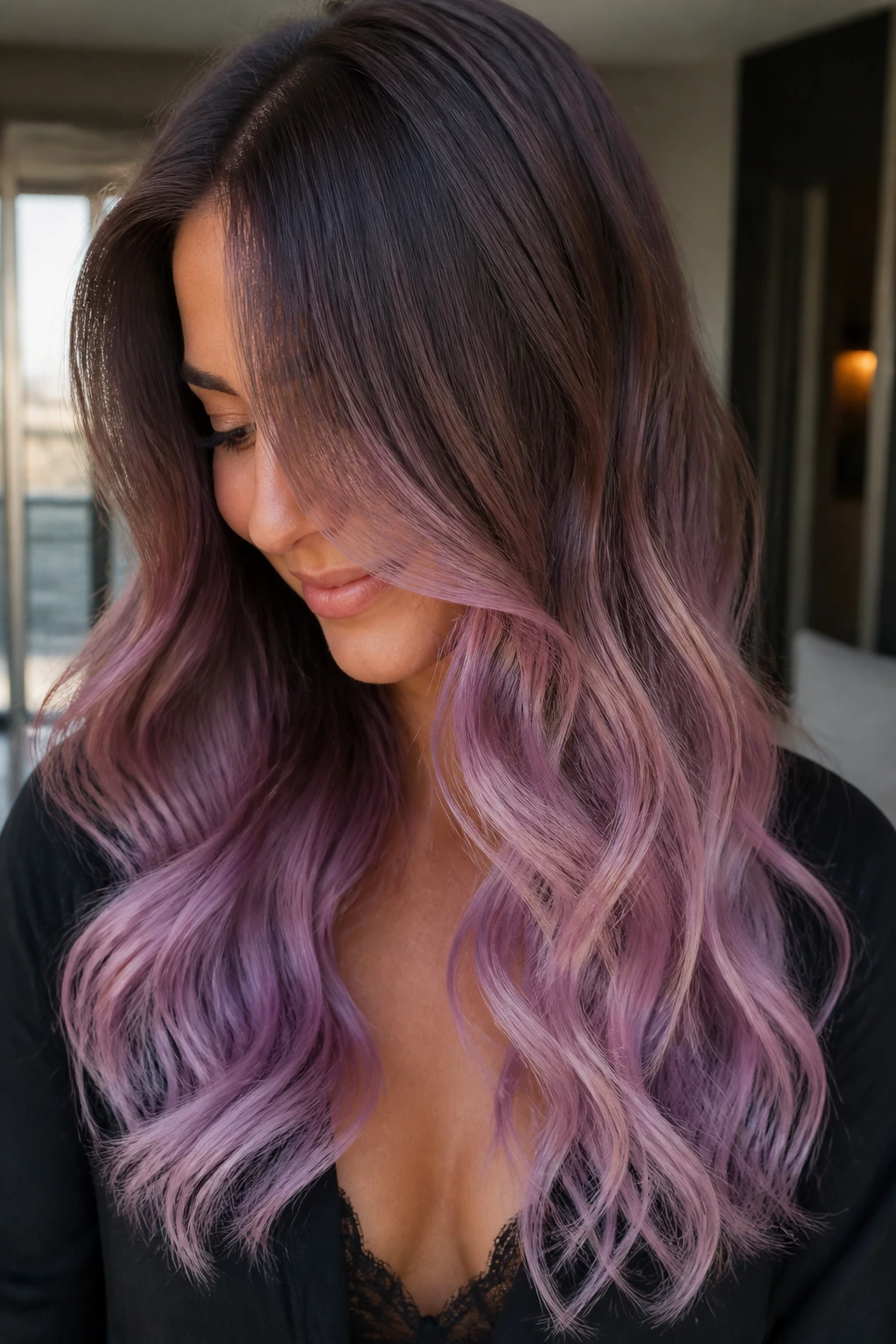
Lilac ends are the easiest way to wear pastel color without living in the salon chair. The melt does most of the work for you.
A good lilac melt starts with brown roots, moves into lighter mauve through the mid-lengths, then finishes on a pale lilac at the tips. That gradual shift matters. If the color jumps too fast from brunette to purple, it can look blocky. A melt keeps the whole thing smooth, almost cloudlike.
This is a smart choice for long hair because the ends have room to show the shade. Curls make it even better. Each bend picks up a different part of the gradient, so the color never sits in one place for too long. And if the ends fade first—which they usually do—the brown root shadow still makes sense.
9. Seafoam Micro-Highlights
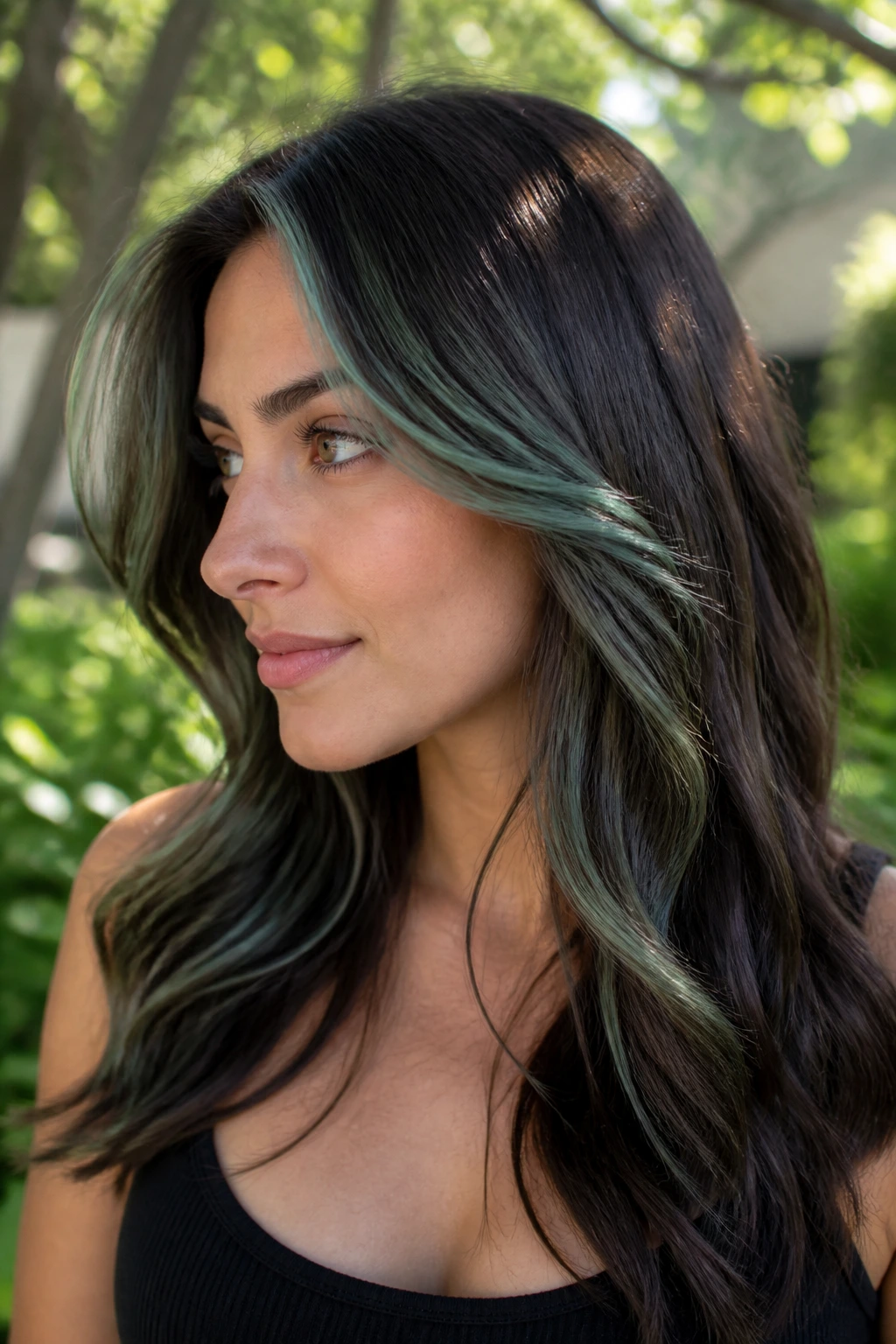
Can green pastels look soft on brown hair? Yes, if you keep the shade in the seafoam zone and the pieces small enough to feel delicate.
Seafoam micro-highlights work best on darker brunettes when the lightened strands are very pale and the green is mixed with a little blue. That cools the result down and stops it from reading as neon. Tiny placement helps too. Think narrow slices, scattered through the top layer and around the temples, not broad streaks.
What Makes It Different
- The color is cooler than mint.
- The highlights should be thin enough to mimic natural movement.
- It looks best when the brown underneath is glossy and deep.
- Air-dried waves tend to show the shade better than pin-straight hair.
This is not the loudest pastel on the list. That’s the point. It’s for someone who wants the odd flash of color, not a full commitment to the theme.
10. Rose Quartz Chunky Foils
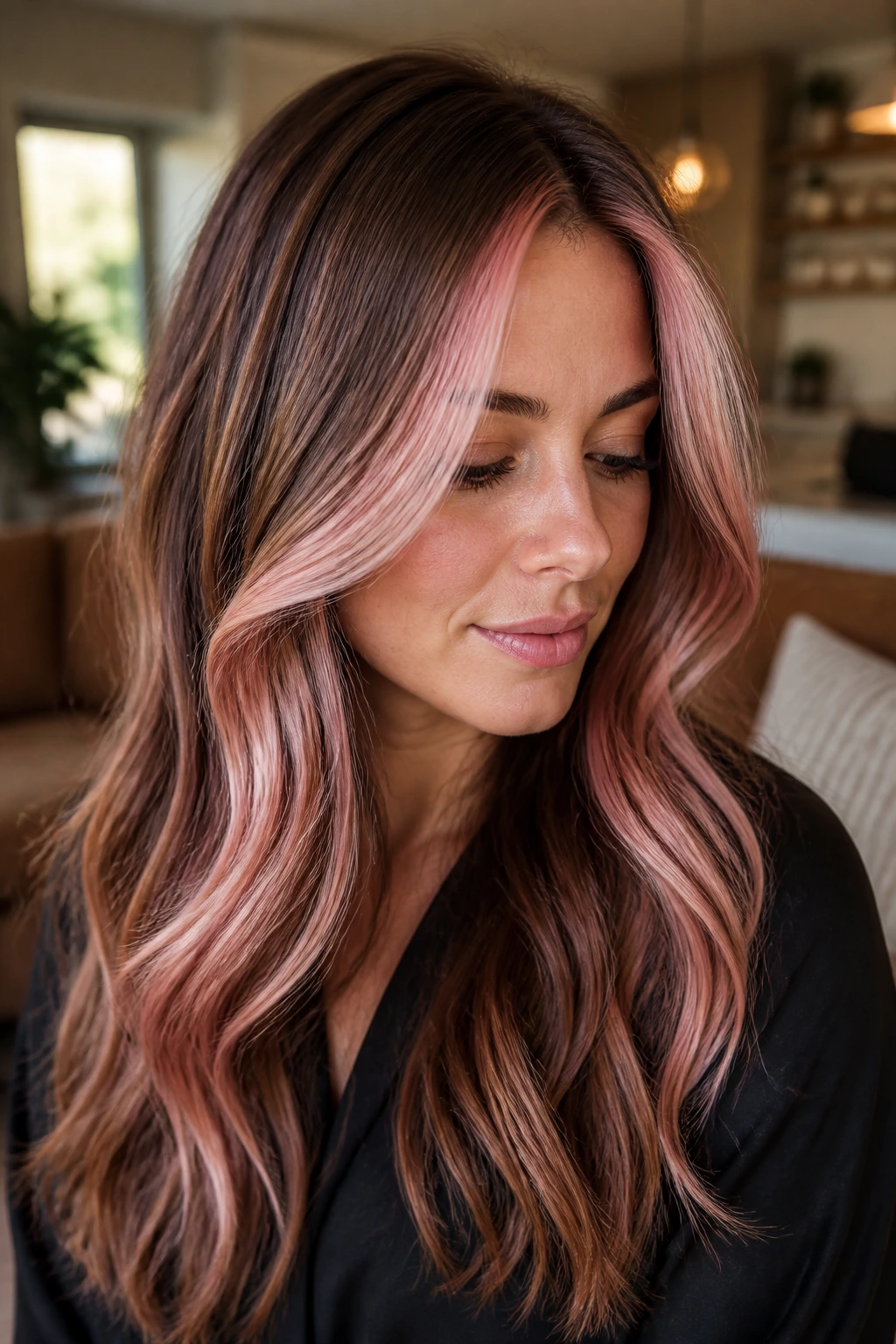
Rose quartz gets stronger when the foil placement is a little chunkier. Fine lines can make it look timid; broader ribbons give the pink-beige tone somewhere to live.
On brown hair, rose quartz reads as soft blush with a hint of warmth. It’s flattering on neutral brunettes, and it can also rescue a base that feels a bit muddy by adding brightness right where the light hits. The style feels more deliberate than babylights, which is useful if you want the color to be visible from across the room.
Chunky foils need balance. Too many, and you lose the brunette. Too few, and the color seems random. Three to five well-placed ribbons around the face and upper sides usually do more than a packed full head ever could.
11. Buttercream Beige Highlight Veil
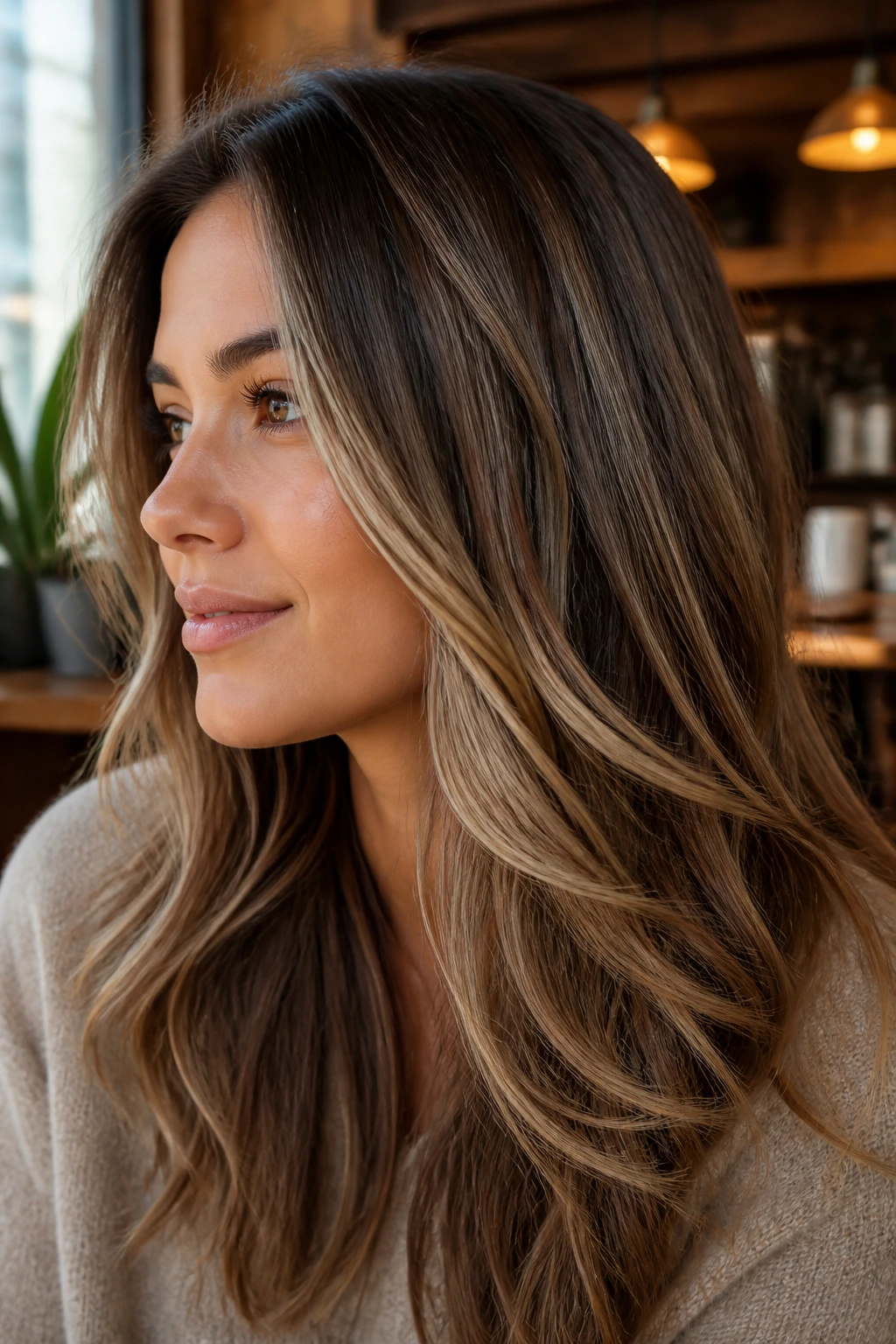
Pastel does not have to mean pink, blue, or mint. Sometimes the prettiest choice is a buttercream beige veil that barely announces itself.
This look works because it smooths the brunette base instead of breaking it up. The lightened pieces are toned to a creamy beige with a whisper of pastel softness, which gives brown hair a polished, slightly luminous finish. It is especially nice on layered cuts, where the pieces fall over each other and catch different amounts of light.
A veil like this is for people who want movement more than color shock. It reads expensive in a very low-key way. That sounds vague, but you know it when you see it: the hair looks fuller, softer, and a bit lighter around the edges, yet still unmistakably brown.
12. Powder Blue Underlayers
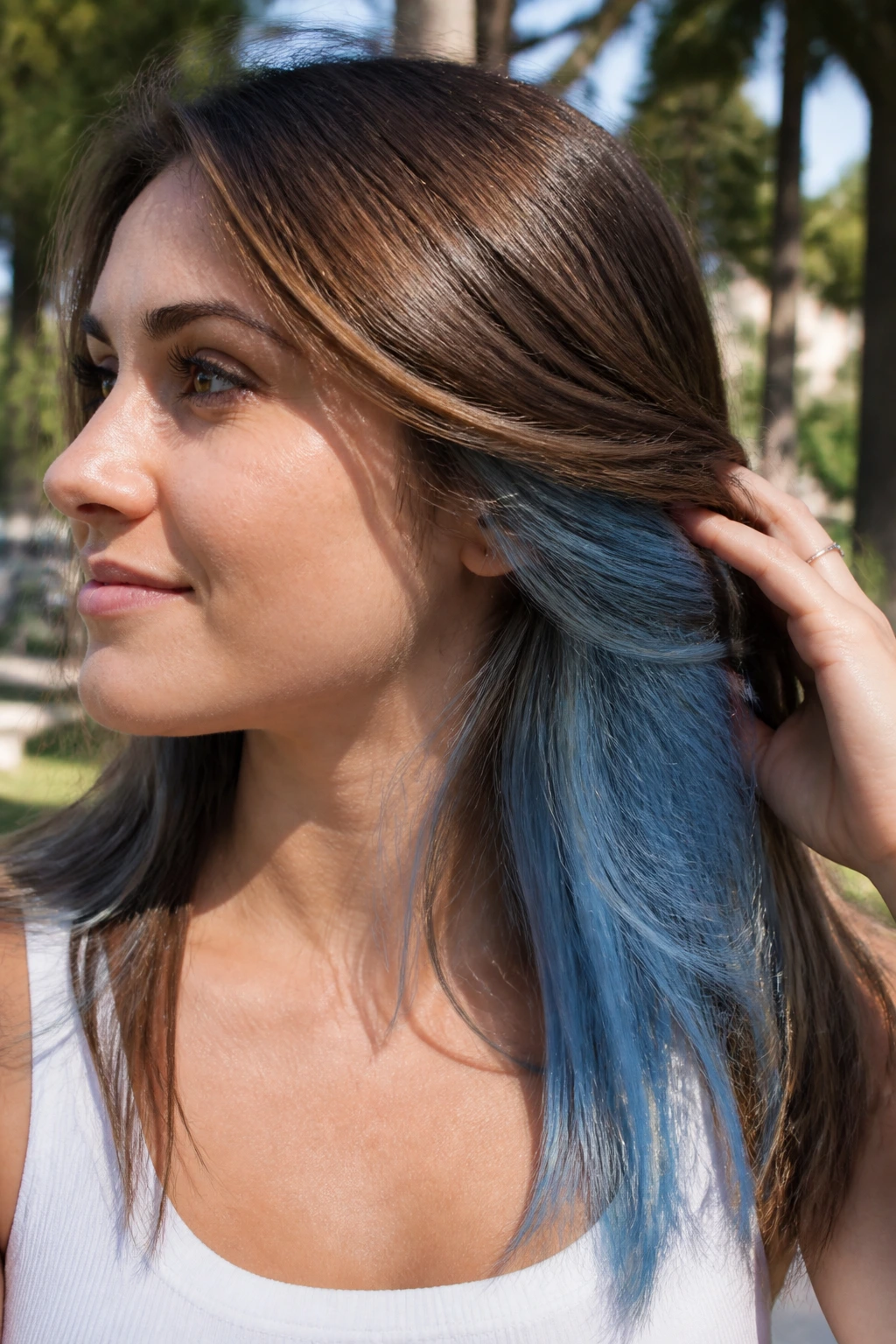
The first time powder blue peeks out from under a brunette bob, it reads like cool smoke. Hidden color does that. It waits until the hair moves.
Why Hidden Placement Matters
Underlayers are smart when you want pastel without a full surface commitment. The top section stays brown, so the look still feels grounded, while the blue flashes underneath when you curl the hair, flip it, or pin it back. On a blunt cut, the contrast is clean. On long layers, it feels more playful and less graphic.
The Best Way to Wear It
- Keep the blue on the lower half of the head.
- Use a pale powder tone, not a bright cobalt diluted down.
- Let the top veil remain deeper brown for contrast.
- Wear it half-up when you want the underlayer to show on purpose.
This one has range. It can be subtle at work and a little louder at dinner, which is honestly a nice trade.
13. Coral Sorbet Ribbon Lights
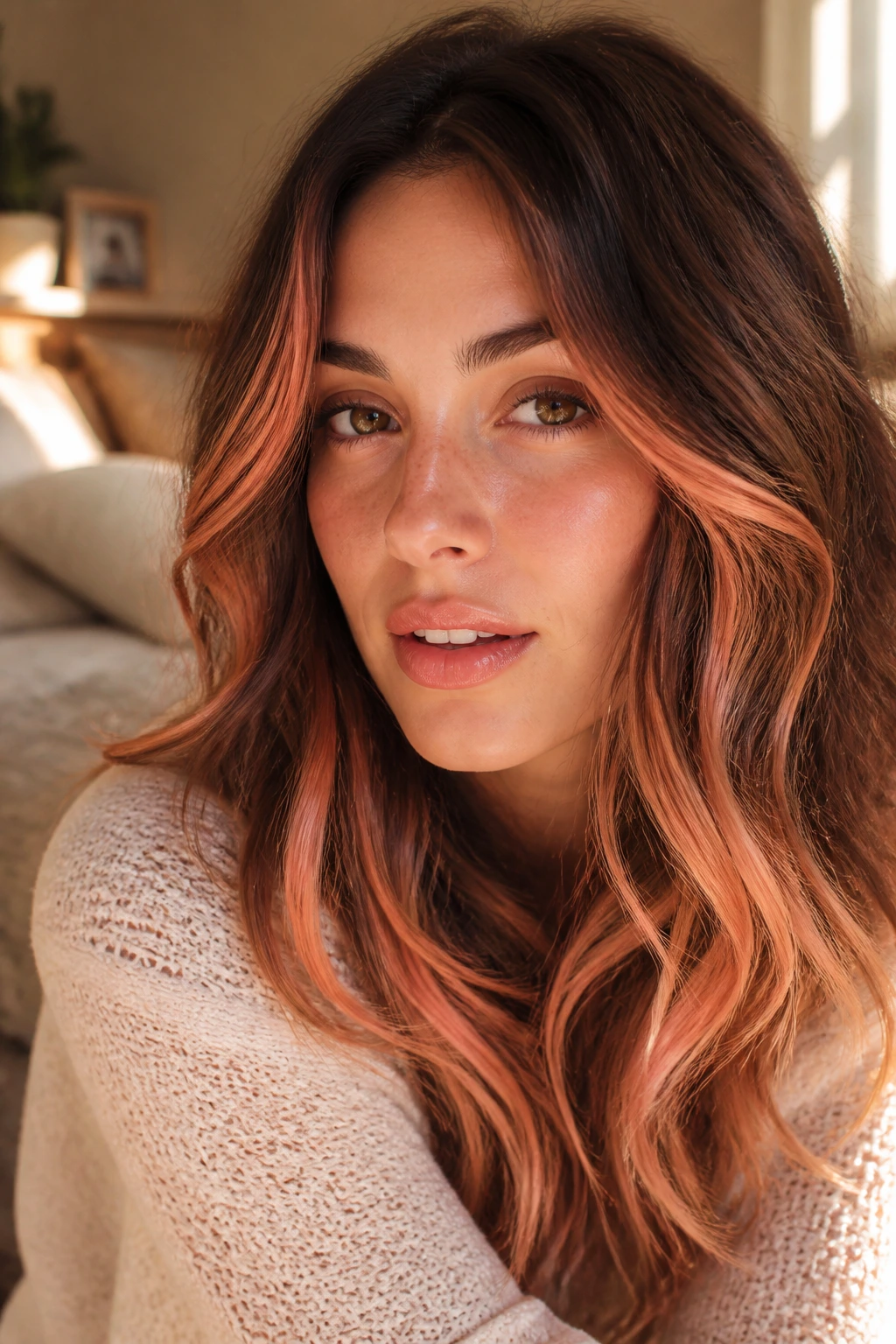
Coral sorbet sits in that sweet spot between peach and pink, and brown hair loves it. The warmth in the shade keeps the whole look friendly instead of frosty.
Ribbon lights make coral feel softer than a block of color. The ribbons should be narrow, curved, and placed where the hair naturally bends. Around the cheekbones, through the outer layers, and near the ends all work well. On warm brunettes, coral looks sunlit. On cooler brunettes, it gives the base a little lift and warmth.
What I like most is how forgiving coral can be. If the highlights fade a bit, they usually fade into a softer peachy stain rather than turning harsh. That makes it a solid choice for anyone who wants pastel energy but doesn’t want to babysit the color.
14. Orchid Halo Highlights
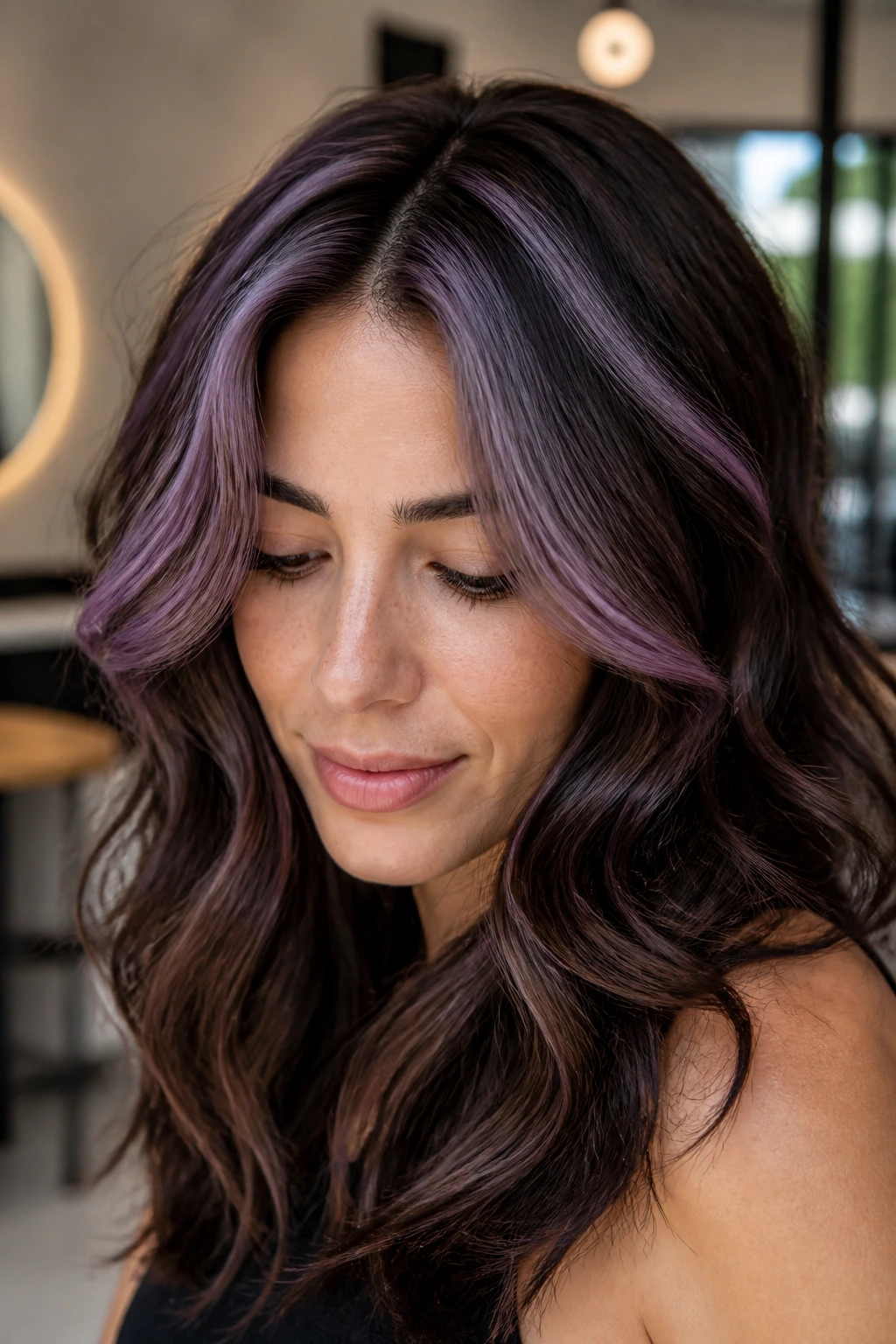
Four to six orchid pieces around the crown can do more than a full head of soft color. Halo placement is sneaky like that.
The idea is simple: keep the deepest brown underneath, then concentrate the pastel orchid around the top layers and part line. When hair falls over itself, the color looks fuller than it is. When the wind hits it or you turn your head, the violet-pink shade comes out enough to matter. It is a neat trick for medium-length hair because the crown is doing the talking.
Placement That Flatters the Shape
- Put the brightest pieces closest to the part.
- Keep the back softer so the crown doesn’t look busy.
- Use curved sections, not straight chunks.
- Finish with loose waves to break up the color.
Orchid is a good choice if you want purple, but not the moody kind. It stays light and airy.
15. Pistachio Babylights
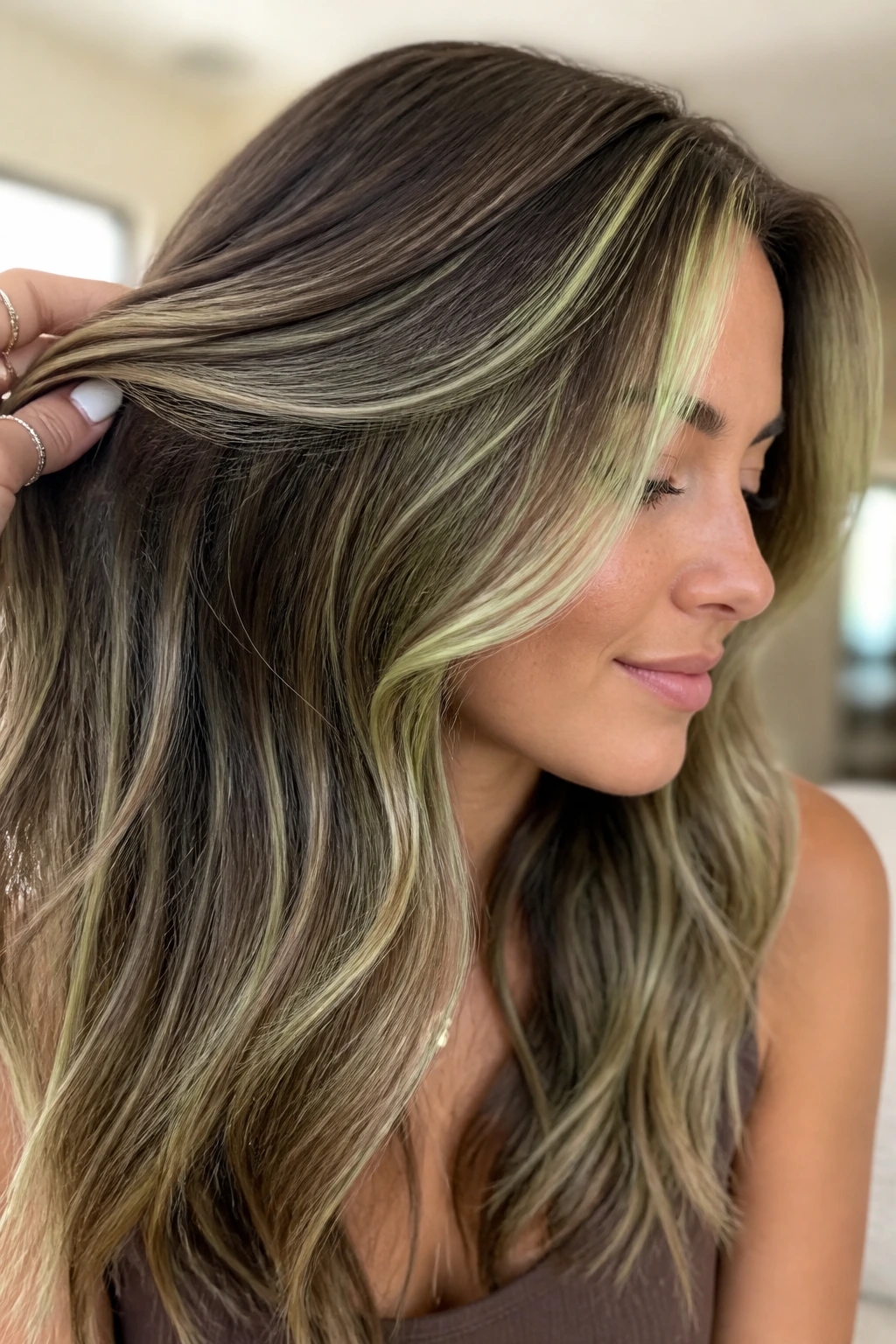
Pistachio is tricky, which is exactly why it looks so good when it’s done right. On brown hair, a muted pistachio babylight can feel fresh, odd in a good way, and very deliberate.
What Makes It Work
The green needs to lean creamy and pale, almost yellow-green with a soft edge. If it turns olive, the effect changes fast. The base brown should stay glossy and warm enough to support the tone, but not so red that the green goes muddy. That’s the balancing act.
How to Keep It Clean
- Ask for ultra-fine babylights, not broad slices.
- Lift the pieces enough to remove the orange from the hair.
- Keep the pistachio tone diluted with a beige or pearl base.
- Use a center part if you want the pattern to look tidy.
This is a niche shade, sure. But niche can be good. It’s the kind of pastel that gets compliments from people who notice hair color first.
16. Shell Pink Feathered Tips
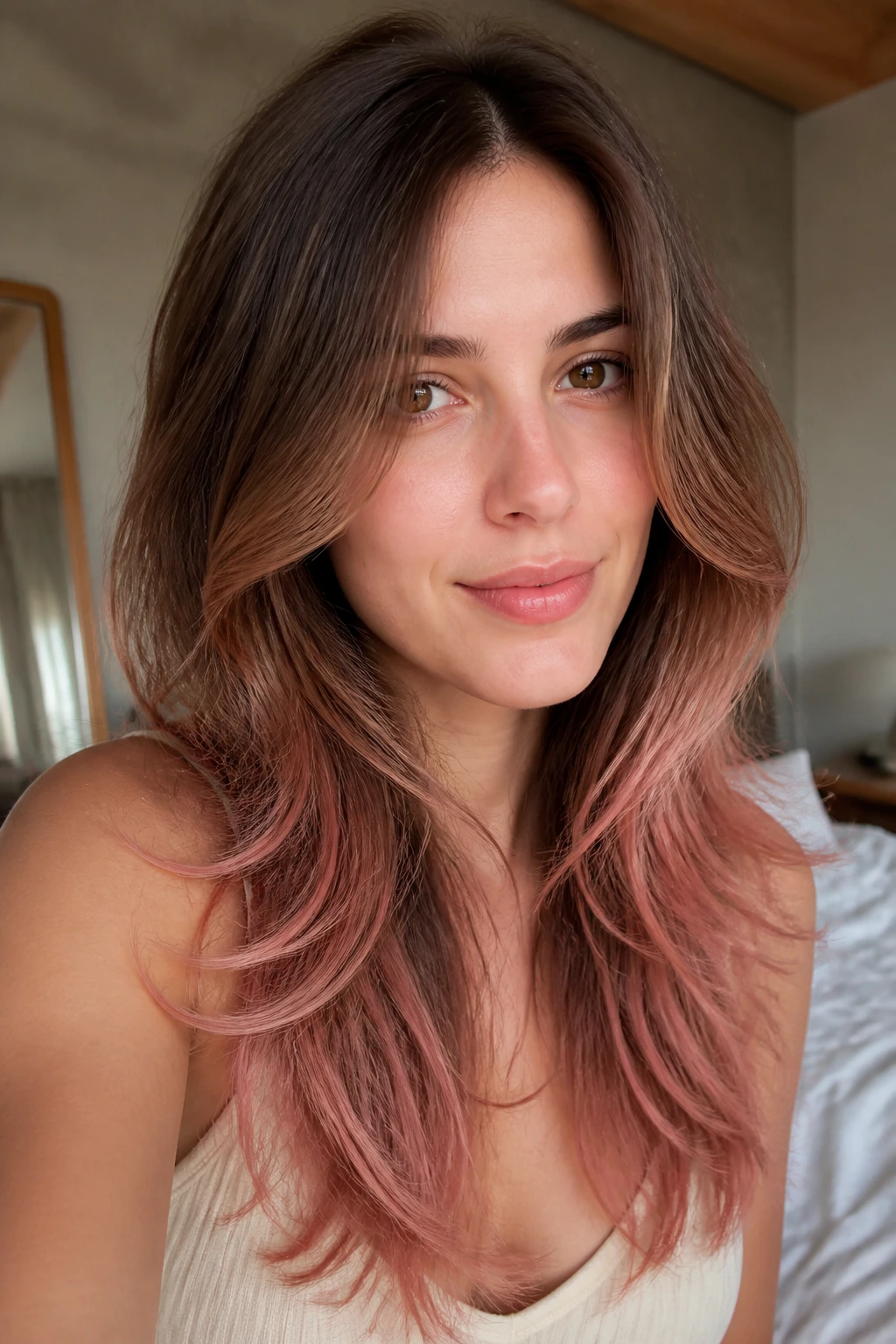
What if you want pink, but only on the last few inches? Shell pink feathered tips solve that neatly.
This look relies on softness at the ends, where the color can feel like a finish instead of a statement. On long brown hair, shell pink at the bottom creates a gentle fade from brunette to blush. Feathering helps because the pastel doesn’t stop in one blunt line. It dissolves into the cut, almost like the ends were dusted with color.
It works especially well on layered hair. The shorter pieces pick up the pink in a lighter way, while the longest sections hold the shade a little more fully. That variation is what keeps the style from looking heavy. If the ends are trimmed with a textured cut, even better. The color slides through the layers instead of sitting on top of them.
17. Sky Blue Face Frame
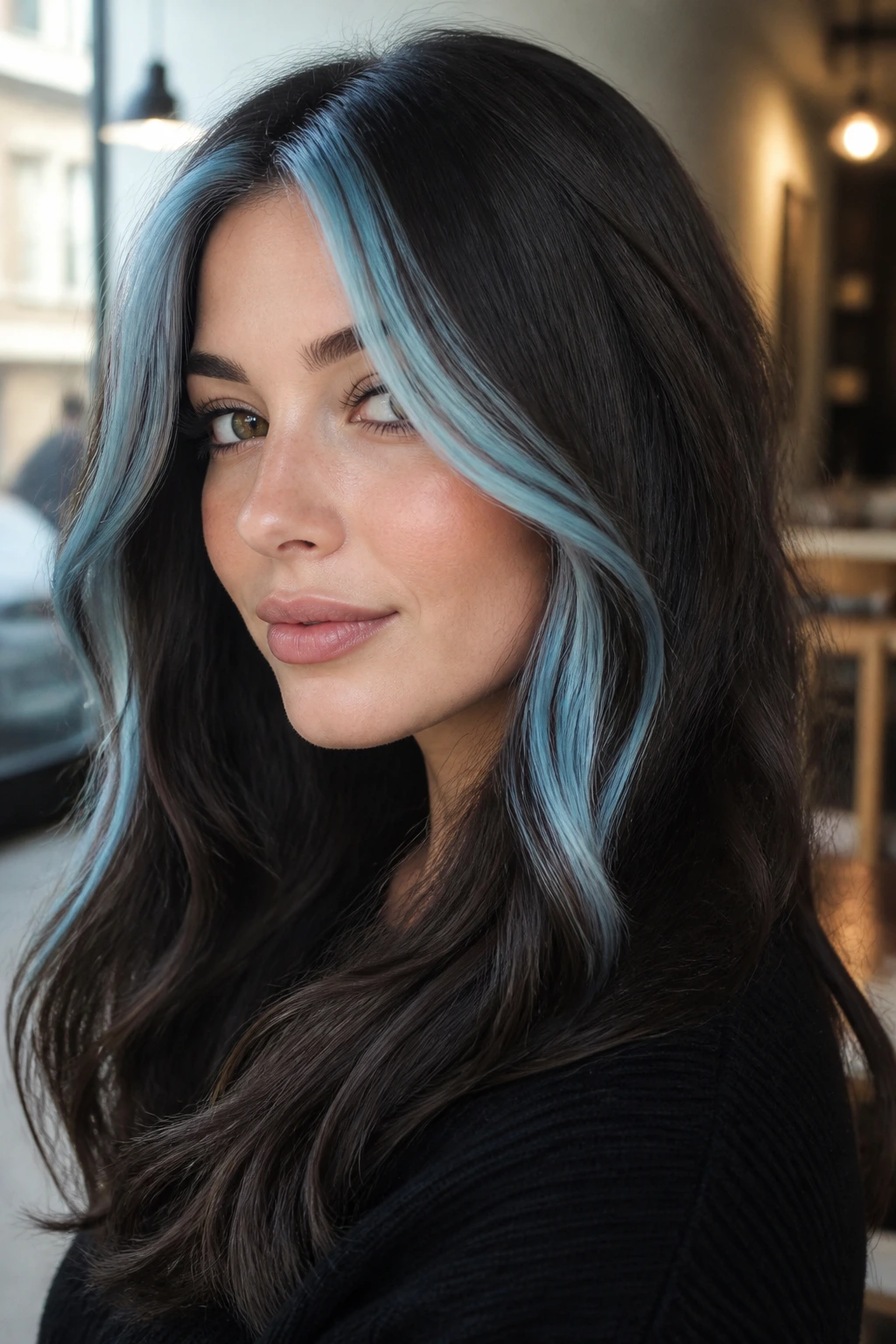
A sky-blue face frame against dark mocha hair gets attention fast. There’s no pretending otherwise.
The reason it works is contrast. Blue sits cleanly against brown, especially when the front pieces are placed around the eyes and cheekbones. It gives the face shape without needing a full-head commitment. If the cut has curtain bangs or long front layers, the blue follows the line of the haircut and feels even more intentional.
Sky blue wants a pale base underneath. If the lift is uneven, the color can read patchy, and that’s not the mood here. A smooth pre-lightening job matters more than the tone itself. Done well, the result is crisp and almost graphic, but still wearable because the rest of the hair stays rich and dark.
18. Mauve Money Piece and Part Line
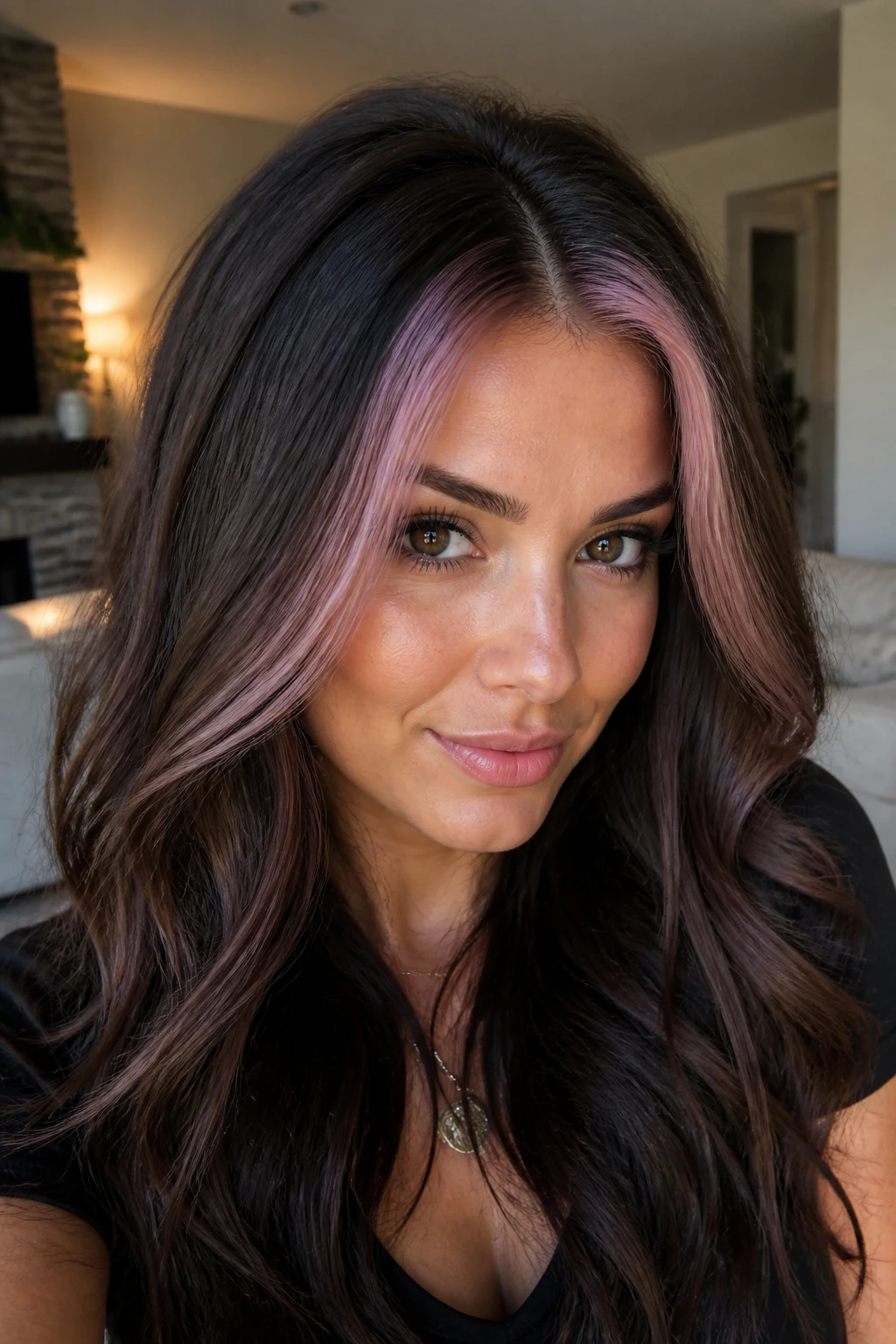
The part line is where a lot of pastel color goes to die. It’s either too hidden or too heavy. Mauve solves that by staying soft but still visible.
A mauve money piece that extends into the part line gives brown hair a subtle frame without needing broad sections. The shade sits between pink, purple, and taupe, which makes it easier to wear than a pure violet. It also looks good as the hair moves because the color is concentrated where the eye naturally lands.
A Few Details That Help
- Keep the part-line pieces very fine.
- Let the front streaks be a touch brighter than the rest.
- Use loose bends so the mauve breaks up visually.
- Skip overly warm makeup if you want the shade to stay cool.
This is a polished look. Not flashy, not boring.
19. Ice Mint Color Melt
Ice mint should feel cold to the eye, not loud. That’s the difference between a chic pastel melt and a hair-color dare.
A good color melt starts with brown roots, passes through beige or pale blonde mid-lengths, and ends in a frosty mint at the tips. The transition is everything. If the root line is too sharp, the eye catches the seam instead of the color. A melt lets each shade hand off to the next one, which makes the finish look smoother and more expensive.
This is a strong choice for medium brown hair that has enough lightness to support the mint. It also works well on long layered cuts because the movement keeps the pale green alive. If you wear your hair mostly straight, ask for extra feathering near the ends so the color does not sit in one block.
20. Blush Balayage
Softest option in the bunch. That is probably why blush balayage keeps showing up on brown hair and never feels tired.
Why Blush Wins on Brunettes
Blush is gentle enough to sit on warm or neutral brown bases without stealing the show. It adds a rosy wash through the mid-lengths and ends, which gives brunette hair a little lift around the face and a little softness at the perimeter. If the hair is cut in long layers, the blush shows as movement rather than stripes.
What to Keep in Mind
- Ask for hand-painted pieces instead of foiled blocks.
- Keep the blush pale, closer to rose water than candy pink.
- Let the roots stay natural for a softer grow-out.
- Style with a round brush if you want the color to curve under the face.
This one is easy to live with. It feels feminine, but not fussy.
21. Opal Pastel Overlay
One translucent toner can blur pink, lilac, and peach into a single opal finish. That’s the charm of an overlay.
The look starts with already-lightened highlights, then gets a sheer pastel glaze over the top. On brown hair, the brunette base peeks through the lifted strands, so the color seems to shift as the light changes. You do not get one hard shade. You get a little shimmer of several. That’s why opal works so well on layered cuts and waves; the movement keeps the finish alive.
It’s also a smart way to soften old highlights that have gone brassy or too bright. A pastel overlay can cool them down and give the hair a smoother, more unified feel. If you want something delicate rather than loud, this is a strong choice.
22. Vanilla Cream with Lilac Threads
This is the one for people who want pastel but still need their hair to look expensive in daylight. Vanilla cream gives the softness; lilac threads give the surprise.
The base of the look is creamy and pale, almost like a warm blonde veil over the brown. Then the stylist drops in a few ultra-fine lilac threads, usually around the front and through the top layers. Those threads should not dominate. They should peek through. The contrast is what makes the whole thing interesting.
The Balance That Matters
- Keep the vanilla creamy, not white.
- Place the lilac in narrow slices.
- Leave enough brown underneath so the mix feels grounded.
- Use a smooth blowout if you want the cream tone to show first.
It’s a good compromise for someone who can’t decide between blonde and pastel. Nice problem to have.
23. Watercolor Pastel Panels
Why choose one pastel when you can blur three? Watercolor panels make that question feel practical instead of chaotic.
The technique uses larger painted sections, then blends blush, lilac, peach, or soft blue so the edges melt together. Brown hair gives the whole thing a frame, which is helpful. Without the darker base, all those colors can start fighting each other. With it, they read as one coordinated move. The trick is to keep the transitions blurry. Sharp seams kill the watercolor feel.
How the Colors Should Meet
The panels should touch in soft, uneven borders. A pink panel can fade into lilac, and the lilac can soften into a muted peach near the ends. That gradual shift keeps the finish from turning patchy. It also works better on longer hair, where the artist has enough space to build the blend.
This is a fun one if you like artful color and do not mind a little visual drama.
24. Rooted Rose Gold Streaks
A shadow root keeps rose gold from fading into a flat pink wash. That’s why rooted streaks are so practical.
The rose gold pieces can sit through the sides, crown, and ends, but the dark root shadow keeps the whole head anchored. On brown hair, that means the pastel looks dimensional even as it softens over time. The warm metallic quality of rose gold is flattering on most brunette bases, and the root gives it enough contrast to stay visible.
It’s also one of the easiest pastel ideas to grow out. The dark root creates a built-in buffer, so you do not get that abrupt line that some lighter pastels leave behind. If you wear your hair wavy, the rose gold shows in flashes. Straight, it looks sleeker and more polished. Both versions work.
25. Smoky Lavender Ribbons
Bright lavender is not the only version worth wearing. Smoky lavender has a moodier edge that suits brown hair better than people expect.
The smoke in the tone comes from gray or taupe mixed into the violet, which keeps the color soft and dusty. That helps on espresso or deep mocha bases, where a bright pastel can look disconnected. Smoky lavender ribbons sit in the hair more gently, and because the shade is muted, the brunette underneath still feels like part of the look.
Quick Notes
- Use wider ribbons if you want the color to show in movement.
- Keep the root area deep so the lavender does not start too high.
- Ask for a cool glaze to keep the tone from turning warm.
- Works well on layered cuts, especially with a bend at the ends.
This is one of my favorites for people who like pastel color but hate anything sugary.
26. Sunset Peach Ends
The ends look like the last bit of light on a warm wall. That is the feeling sunset peach gives when it is done right.
The tone is peach with a hint of coral, and it belongs at the bottom of the hair where it can fade naturally into the brown above. On long brunette hair, that placement lets the color gather at the tips and look almost painted on by accident. It’s a soft effect, but not timid. The warmth makes the hair feel lively.
It helps to keep the peach slightly deeper near the mid-lengths and lighter toward the ends. That little shift gives the look more shape. If the hair is curly or waved, the color shows in little flashes as the pieces separate. Straight hair makes the gradient cleaner, which is useful if you want something neater.
27. Frosted Pastel Fringe
Tiny placement. Big payoff. A frosted pastel fringe can change the whole haircut without touching much else.
Where the Fringe Should Start
- Begin the pastel right at the fringe’s mid-lengths, not at the root.
- Keep the tone pale lavender, pink, or blue-gray.
- Blend the sides into the face frame so the color does not stop abruptly.
- Use a soft blow-dry or a round brush to make the fringe sit lightly.
This works best when the bangs are airy, not heavy and blunt. The pastel sits in the lighter, feathery edges and gives the haircut a cool finish. On brown hair, a frosted fringe can feel almost editorial, but it still stays wearable because the rest of the head remains dark. It is a smart choice if you like to switch things up without committing to a full panel of color.
28. Soft Rainbow Pastel Mix
Three shades are enough when they stay soft. That’s the secret behind a pastel rainbow on brown hair that looks playful instead of messy.
The best versions use a small palette: blush, lilac, and mint; or peach, lavender, and powder blue. The colors should be separated just enough to read individually, but close enough in saturation that they feel like one family. Brown hair keeps the whole thing grounded, which matters. Without the brunette base, the pastels can start competing for attention. Here, they get a frame.
A Good Mix Needs Rules
- Keep each shade pastel, not bright.
- Place the colors in repeating zones rather than random spots.
- Let at least half the hair stay brown.
- Use waves or curls to break the colors up after styling.
This look is for someone who likes a little whimsy and does not mind people asking about their hair. Fair warning: it is not subtle. But if you want a pastel moment that still feels balanced, this one lands well.
A good pastel on brown hair should still let the brunette be the star. Keep the base rich, keep the highlights placed where the hair moves, and the color reads soft instead of sugary. That’s the difference between a look that feels worn-in and one that feels like a costume.
