



Fine hair can look sleek for exactly five minutes. Then it starts slipping, separating, and giving up the ghost at the roots. The right textured cropped cuts for fine hair change that fast, because they build shape where the hair actually needs it instead of chasing volume all over the head.
What a lot of people get wrong is asking for more and more layers. That sounds smart until the ends start looking see-through and the whole cut loses its body. A better crop keeps a stronger outline, then adds movement in the crown, fringe, or cheek area—places that create the illusion of fuller hair without making it feel wispy.
I’ve always had a soft spot for cropped cuts that know when to stop. Some are soft and round, some are sharp and choppy, and some live in that messy middle where the hair looks like it fell into place on purpose. The trick is matching the shape to the way your hair grows, not fighting it.
1. Textured French Bob for Fine Hair
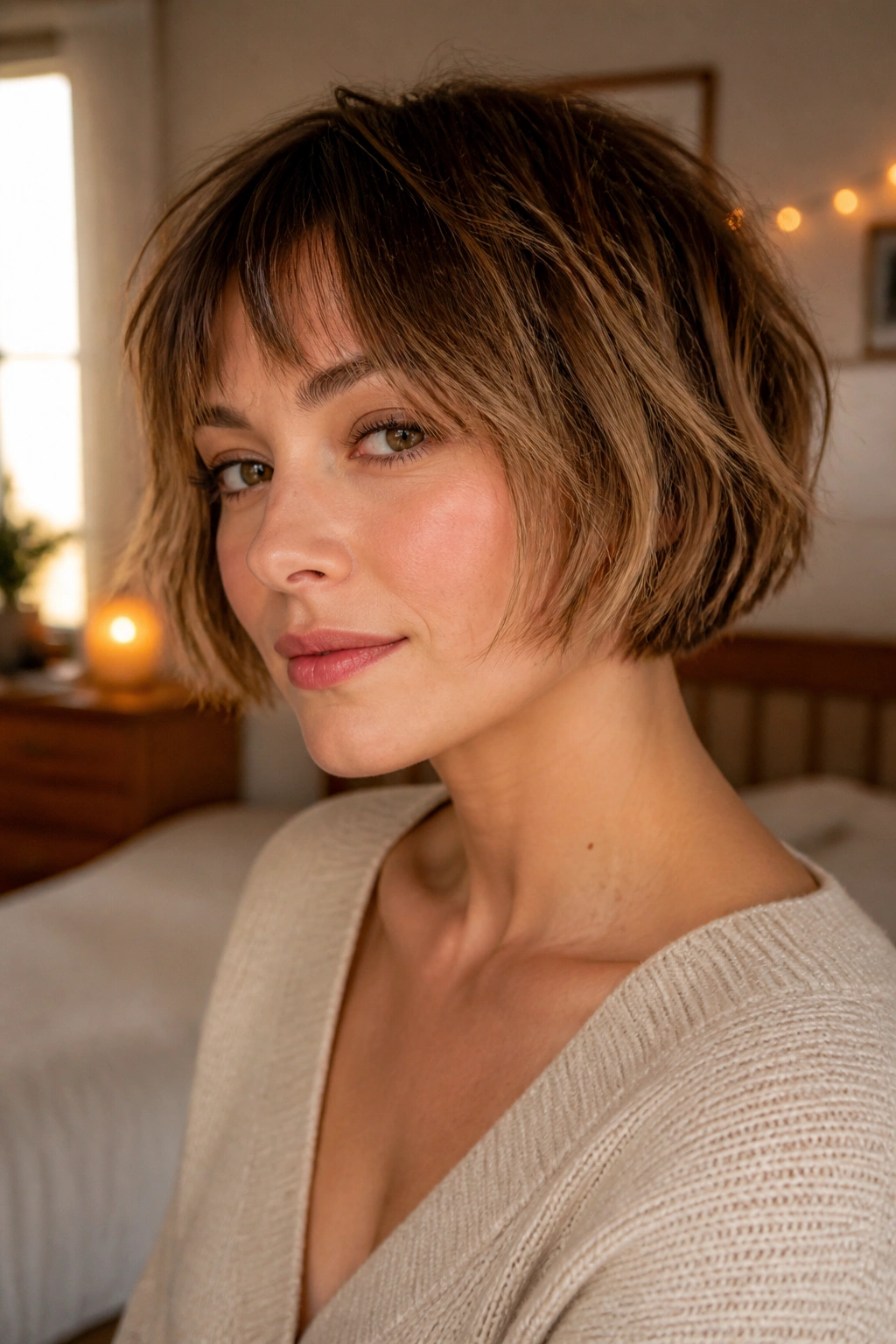
A chin-length French bob can do more for fine hair than a lot of shorter cuts. The reason is simple: it keeps enough weight at the hem to stop the ends from fluttering apart, but the broken fringe and soft texture keep it from looking stiff.
Why It Flatters Fine Hair
The blunt edge gives the hair a line to sit on. That matters. Fine strands need a little structure, or they start looking like they’re trying to escape the haircut.
Ask your stylist for a chin-to-jaw length bob with point-cut ends, not heavy thinning. The fringe should be broken and airy, ideally grazing the brows or splitting naturally off-center.
- Keep the perimeter clean and slightly blunt.
- Ask for a soft, piecey fringe rather than a solid curtain.
- Style with a walnut-size mousse at the roots.
- Use a flat iron only at the ends if you want a slight bend.
Best move: leave the hemline fuller than you think you need. Once a French bob gets too feathered out, it loses the little bit of backbone that makes it work.
2. Piecey Pixie with a Micro Fringe
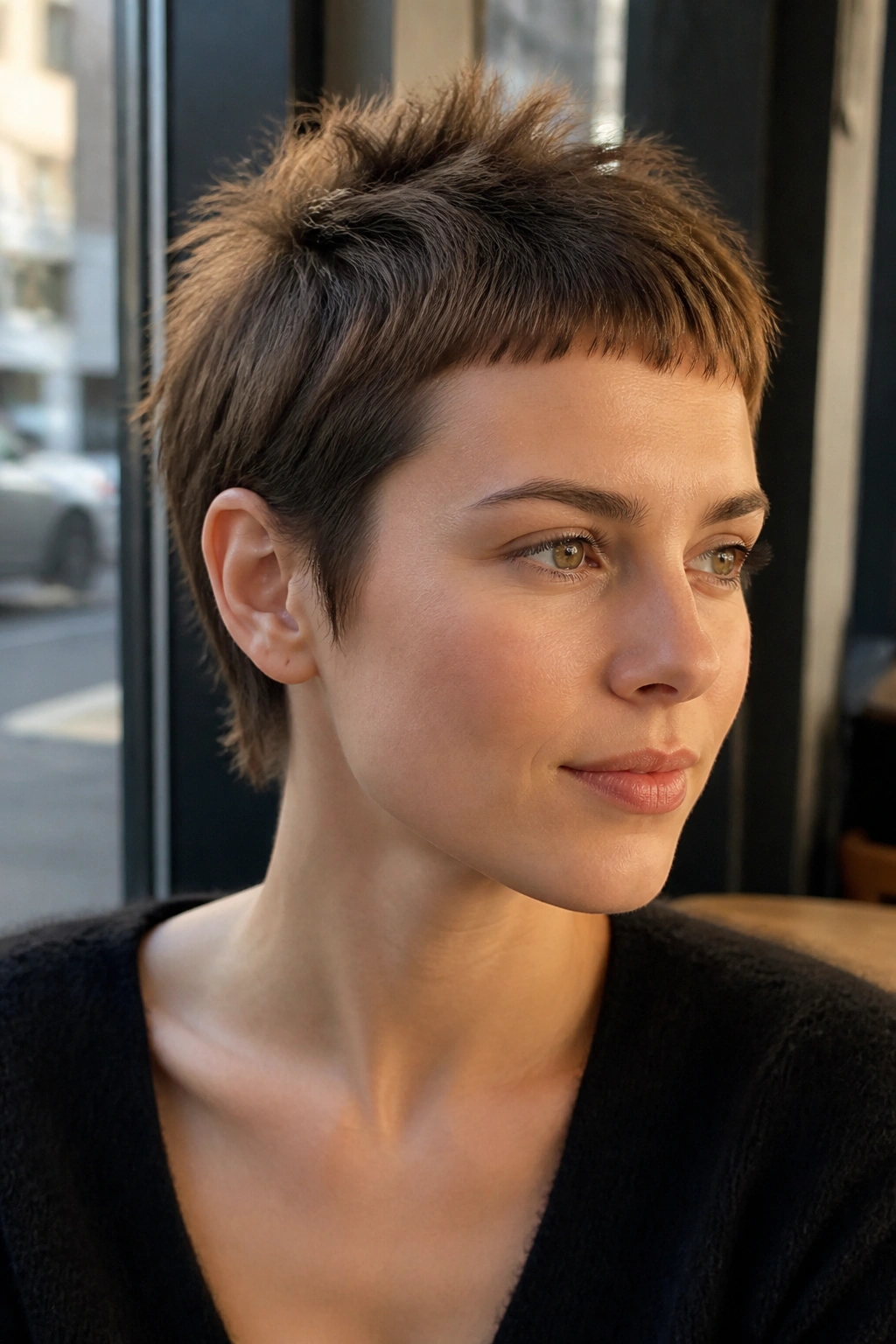
A micro fringe is tiny, but it changes the whole face. On fine hair, it works best when the top has a little uneven texture and the sides stay close to the head.
The cut lives or dies on balance. If the fringe is too dense, it can swallow the face. If it’s too wispy, it looks accidental. The sweet spot is a short, broken line that sits just above the brows, with enough softness that it moves when you turn your head.
I like this cut for people who want short hair without losing shape. A pea-size dab of matte paste is usually enough; rub it between your palms first, then pinch it into the top layers and fringe. Keep the sides neat and the crown lightly lifted.
It suits oval and petite faces especially well. If your forehead is strong, ask for a slightly longer fringe so the cut doesn’t feel too severe.
3. Soft Bixie with a Tucked Nape
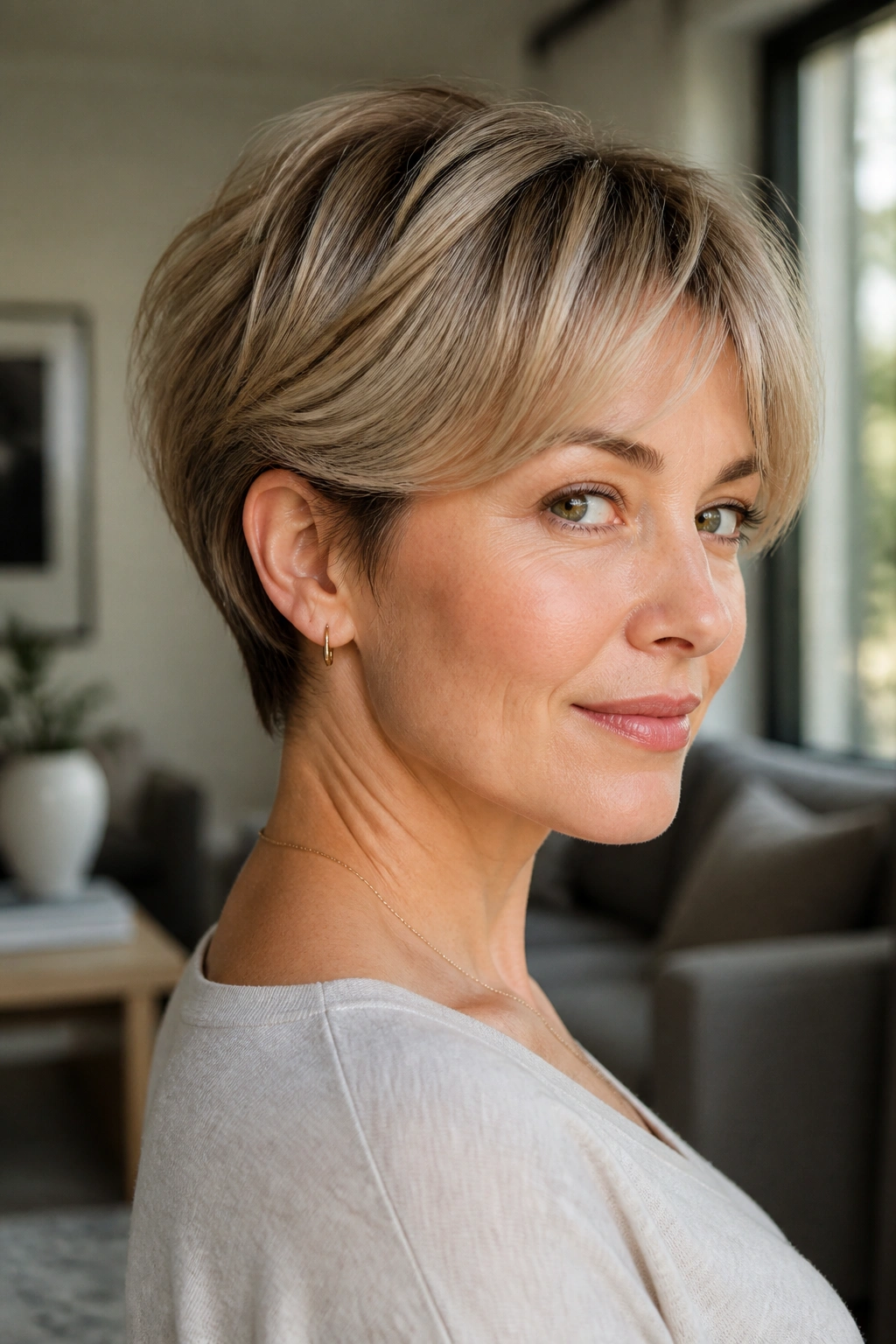
Why does a bixie keep working when a strict pixie starts to feel too small? Because it leaves you just enough length around the ears and jaw to keep the shape from collapsing.
A bixie sits in that sweet spot between a bob and a pixie. On fine hair, that in-between length is useful. You get the airy movement of a short crop, but the ends still have enough room to look full instead of shredded. Keep the nape hugged in close and let the crown stay soft, not spiky.
How to Wear It
A small round brush helps if you want polish. A little styling cream works if you want the cut to feel more relaxed.
- Ask for a tapered nape and soft side lengths that brush the jaw.
- Keep the top slightly longer than the sides.
- Blow-dry the crown first, lifting at the roots.
- Finish with a light cream, not a heavy wax.
If you’re growing out a pixie, this is a sensible landing place. It doesn’t scream “in-between.” It just looks finished.
4. Tapered Crop with Crown Lift for Fine Hair
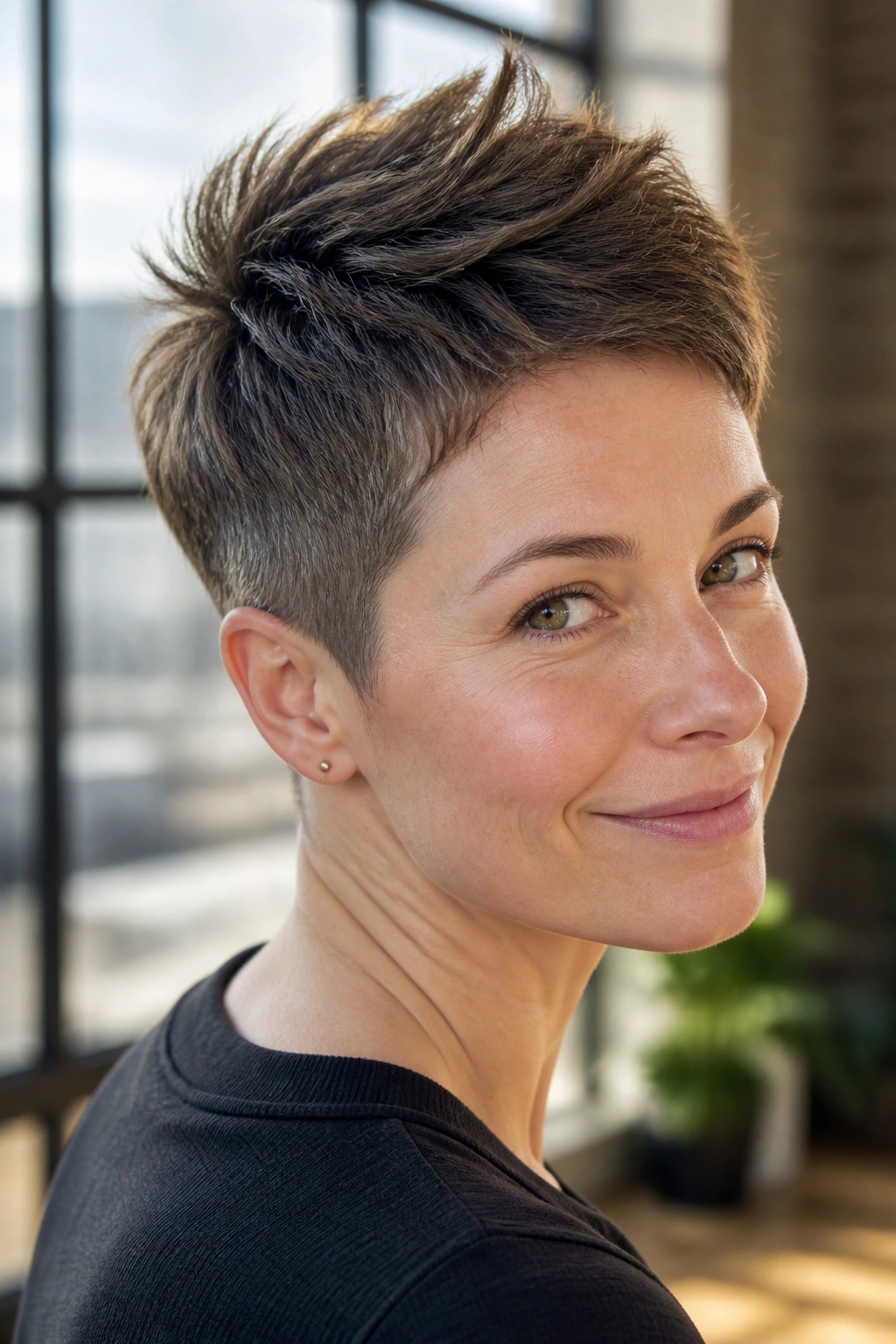
If your crown goes flat the second you leave the house, this is the cut to pay attention to. A tapered crop puts the shortness where you want control and leaves the top with enough length to build height.
The shape is especially kind to fine hair because the sides and nape stay close, which makes the top look denser by contrast. That contrast matters more than people think. A little lift at the crown can change the whole silhouette, even when the hair itself is soft and delicate.
I’d ask for short, clean sides, a tapered nape, and crown layers cut to follow the shape of the head. Not shredded. Just controlled. Blow-dry the roots with a vent brush and a shot of root spray, then push the top slightly back or to the side while it cools.
This cut is excellent for stubborn cowlicks. It works with them instead of against them, which saves a lot of annoyance.
5. Jaw-Length Shattered Bob
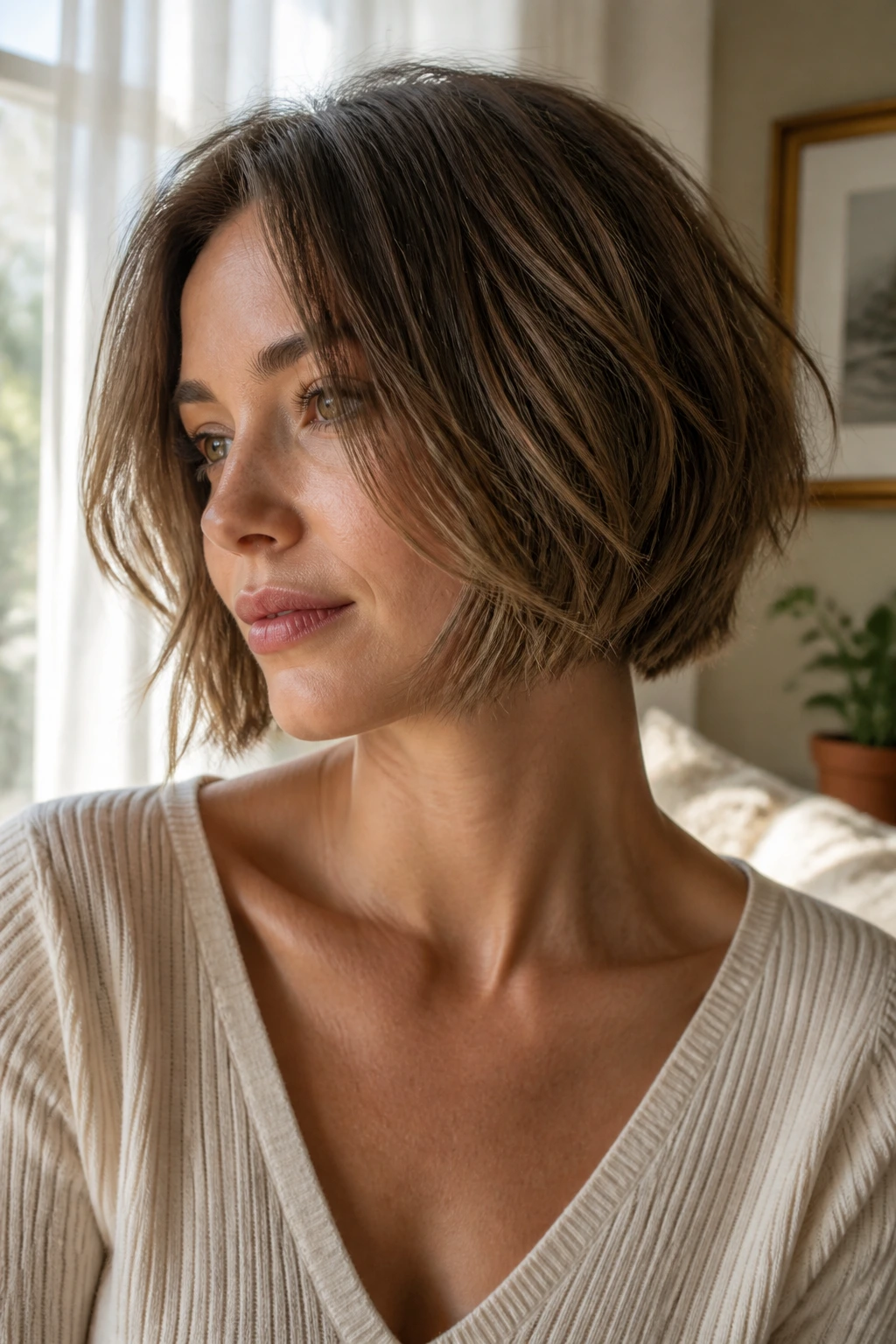
A shattered bob is what I reach for when someone wants movement but still wants a clean edge. The outline stays near the jaw, which helps fine hair keep its shape, while the interior texture stops it from hanging like a curtain.
It’s a useful cut for straight hair that tends to go limp at the ends. The “shatter” is not about chopping the whole thing up. It’s about softening just enough of the inner line so the bob doesn’t feel blocky. The outside still needs to look deliberate. That’s the part a lot of people miss.
I like this style with a slight side part and a gentle bend through the mids. A flat iron works, but only if you make one or two soft turns, not a full barrel curl. Spray a little dry texture at the roots, then shake it through with your fingers.
The best version looks sharp at the jaw and a little undone everywhere else. That contrast gives fine hair some grit.
6. Feathered Crop with Side-Swept Bangs
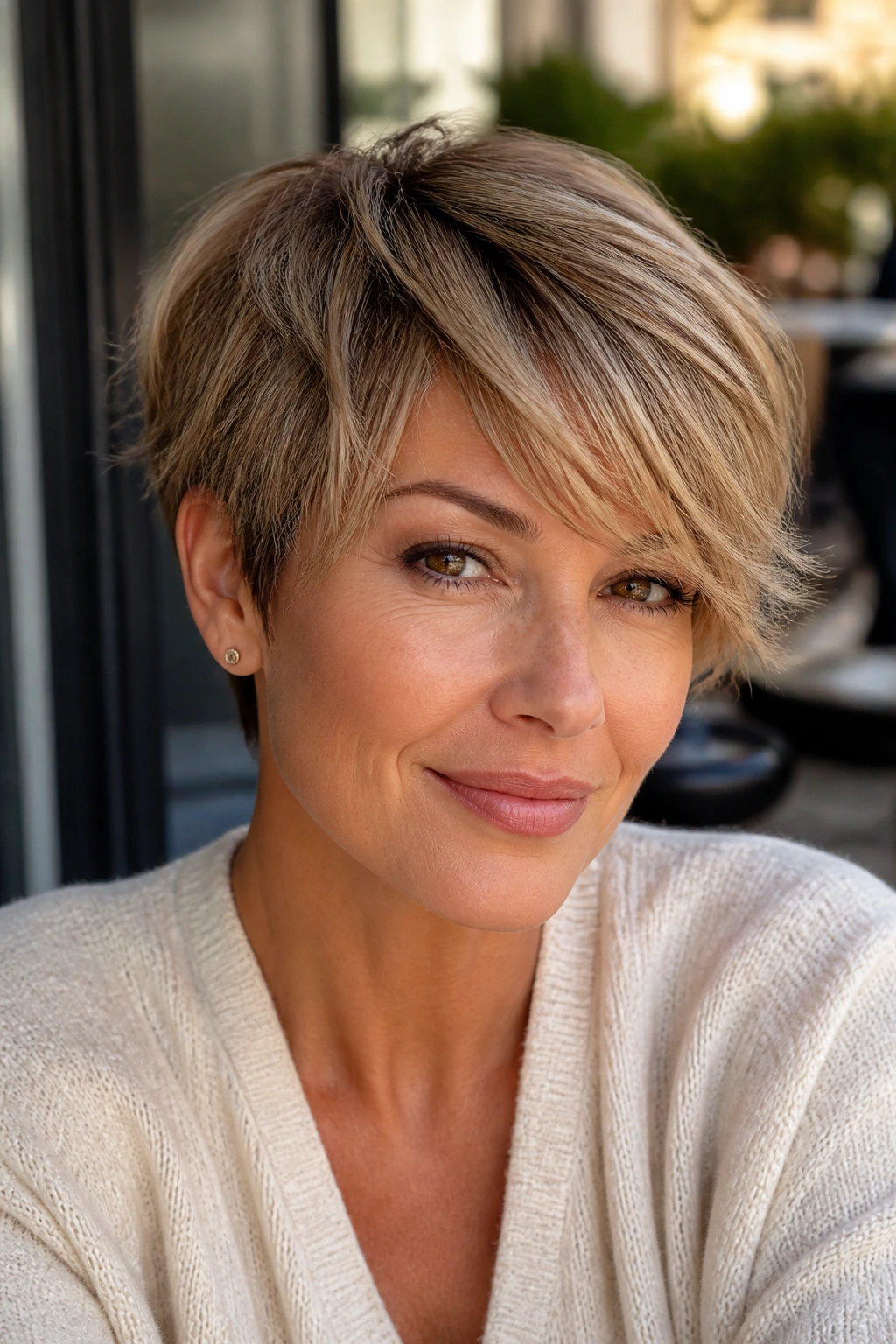
Unlike a heavy fringe that sits across the forehead and steals all the attention, side-swept feathering leaves lightness around the face. On fine hair, that matters because you want softness without losing the line of the cut.
This crop works by keeping the shape narrow at the sides and airy through the front. The bangs sweep across the forehead, then taper toward the cheekbone, which opens the face instead of boxing it in. It’s a smart choice if your hairline is a little sparse or if you don’t want to commit to a full fringe.
A small round brush and a quick blow-dry are usually enough. Direct the fringe away from the face, then let it cool in that direction before touching it. That cool-down step is the part people skip, and it’s the part that makes the shape stay.
If your jaw is strong or your face is more angular, this cut softens everything without turning floppy.
7. Undercut Pixie with Longer Top
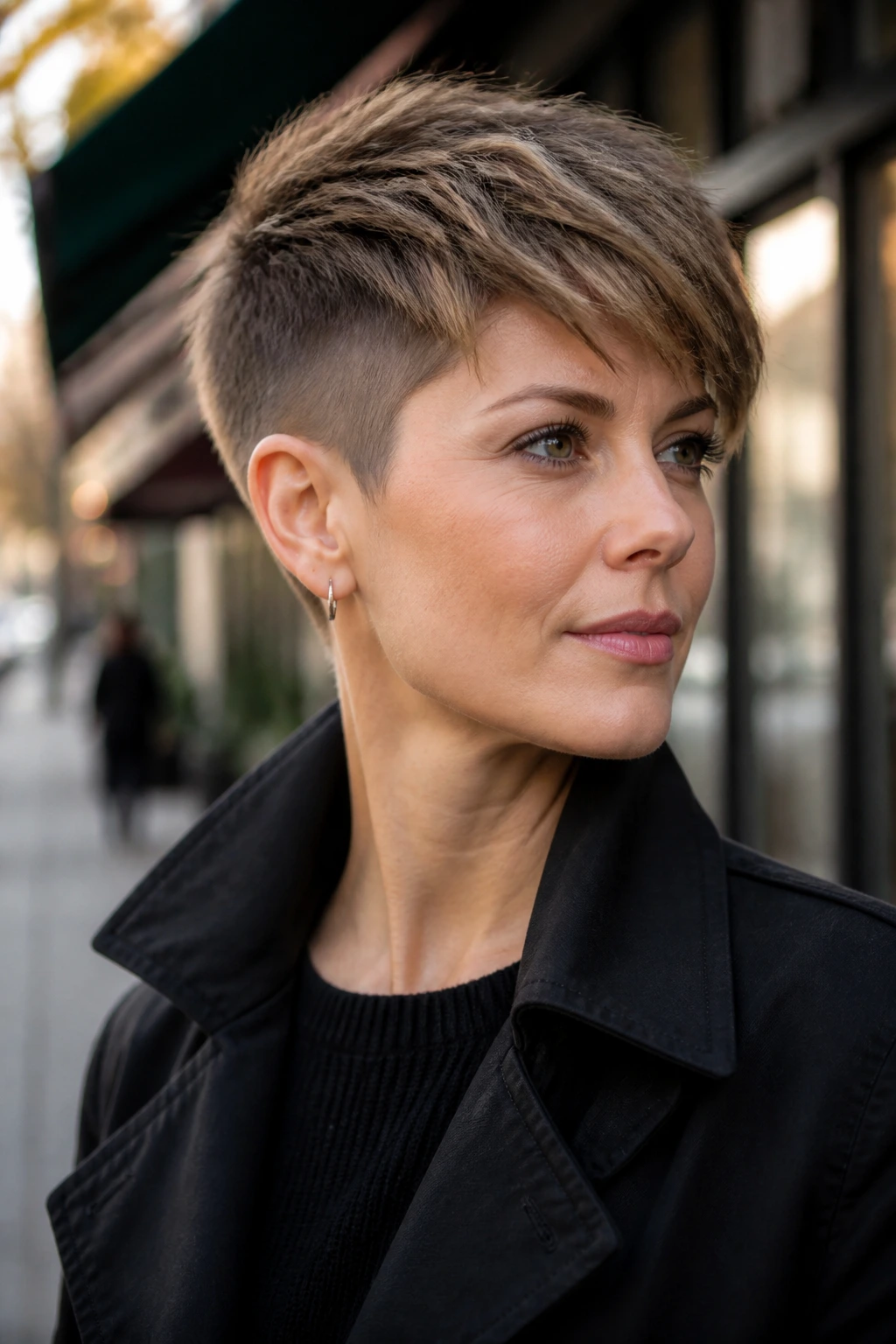
An undercut pixie sounds dramatic, but on fine hair it can be a relief. The sides and nape stay cut close, which removes dead weight, while the top keeps enough length to show texture and create lift.
Why It Helps
If your hair feels thick at the roots but weak at the ends, this cut can clean up the whole head shape. The undercut takes bulk out of the places that don’t need it, and the longer top gives you room to style.
That said, this is not the cut I’d hand to someone with a very sparse hairline. It needs a little density up top to work.
What to Ask For
- Keep the undercut shallow, not shaved high.
- Leave 2 to 4 inches on top for movement.
- Ask for soft, choppy ends through the crown.
- Style with a pea-size paste or clay.
The beauty of this cut is in the contrast. Short underneath. Lift on top. Clean around the ears. Easy to wear, but not bland.
8. Curly Cropped Shag
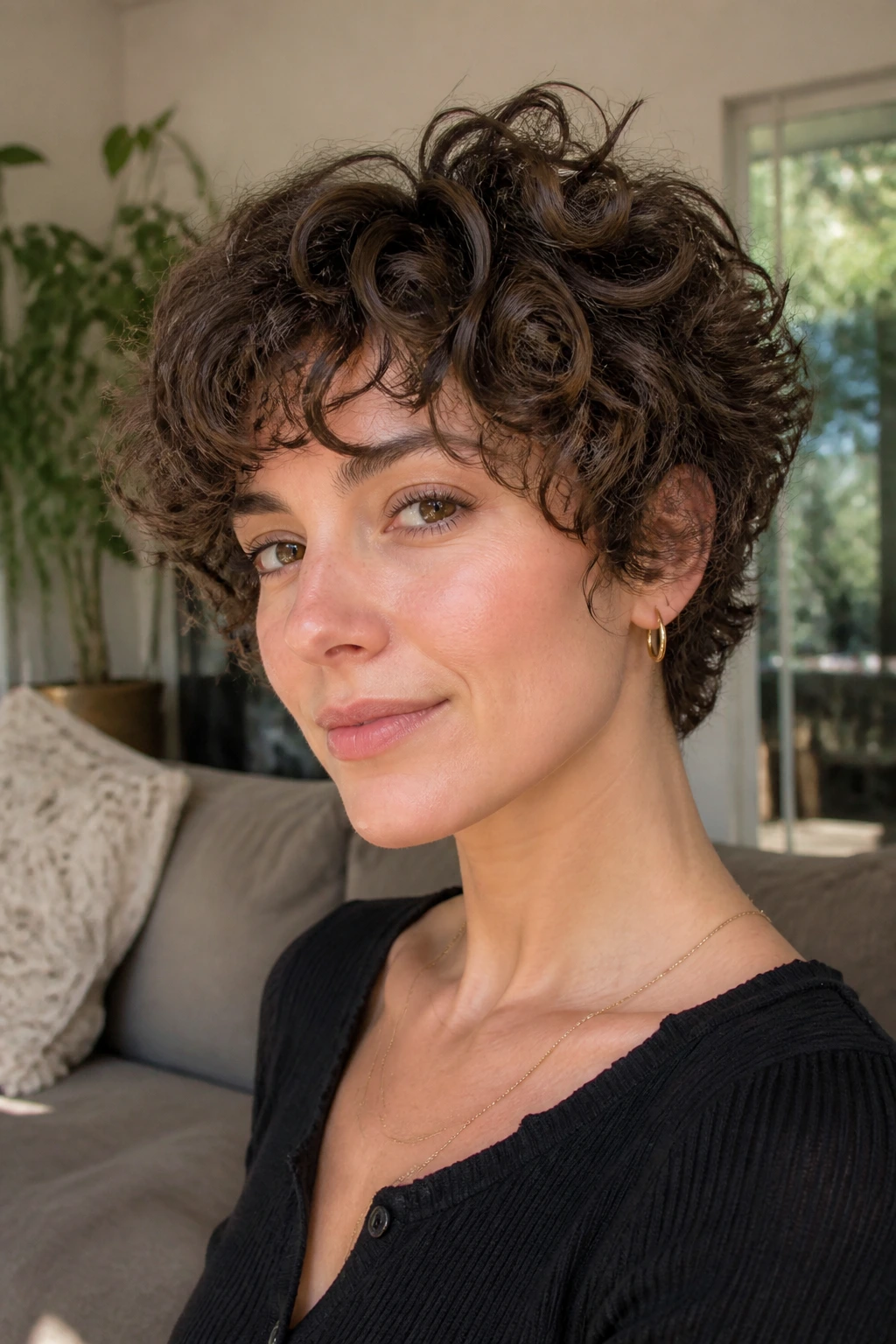
Fine curls do not need to be hacked apart. They need room to clump. A cropped shag gives the curls movement while keeping enough length in the right places so they don’t break into frizz.
This cut is best when the layers stay a little longer than people expect. Too many short layers can make fine curls spring out and vanish. Better to keep the crown textured and let the face-framing pieces do the work. That way the curl pattern still reads as full.
Work in a light gel on soaking-wet hair, then scrunch upward and diffuse on low heat. Don’t rough up the curls too early. Let them set first. That tiny bit of patience makes a difference.
I especially like this shape for wavy-to-curly hair that sits flat at the roots but puffs at the ends. It gives you a real shape, not a triangle.
9. Textured Bowl Cut for Fine Hair
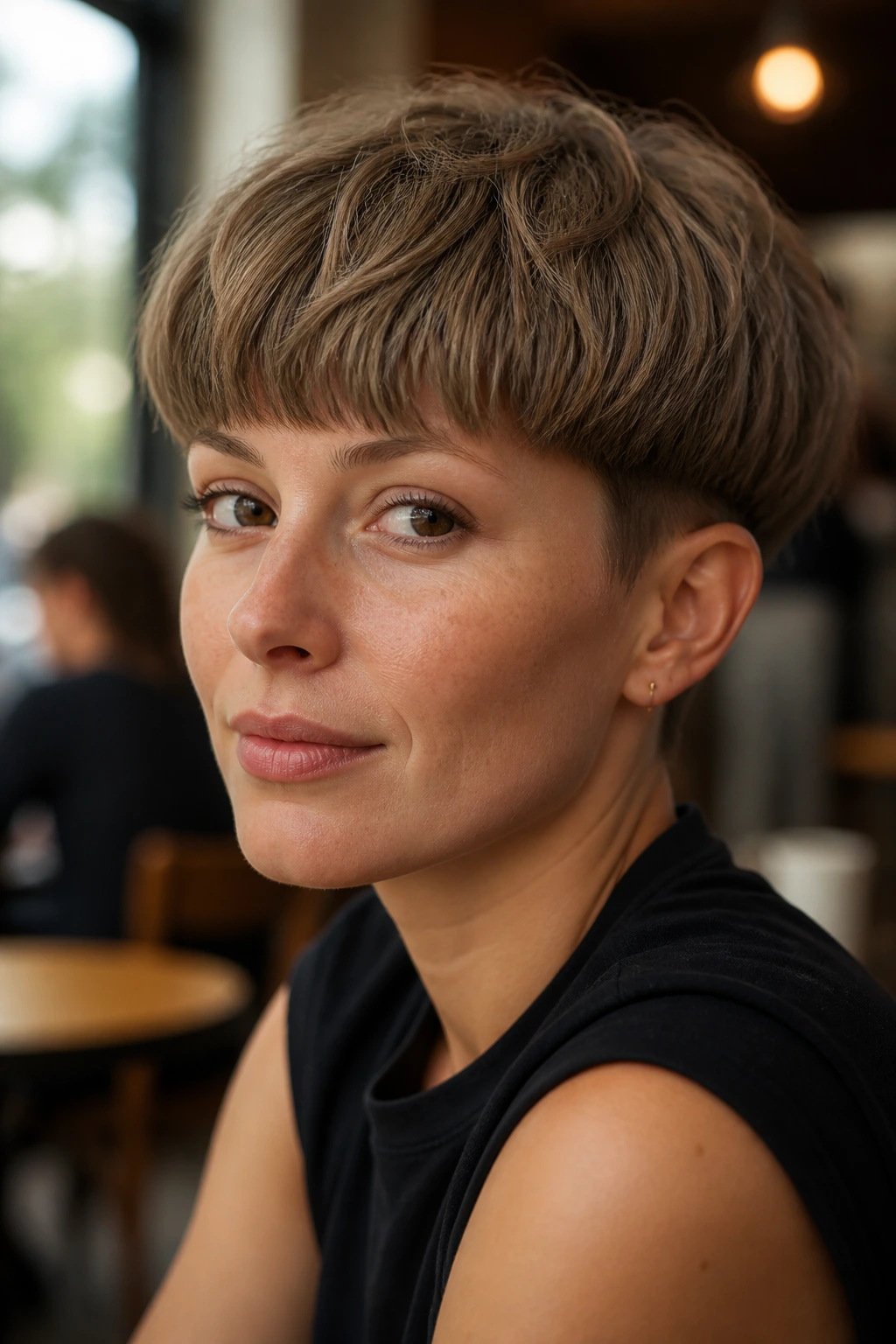
Can a bowl cut work on fine hair? Absolutely, if the edges are softened and the shape is handled with a little restraint.
A good bowl cut is not the helmet people imagine from old photos. The modern version keeps a rounded line, but the corners are softened around the ears and the top has subtle internal shaping. On fine hair, that rounded shell can actually create the look of thickness because the silhouette stays intact from root to hem.
How to Keep It Modern
- Ask for a rounded outline with soft corners, not a hard circle.
- Keep the fringe light if you want the face to stay open.
- Use a smoothing cream at the ends and a touch of paste near the crown.
- Avoid over-thinning the interior layers.
This cut is sharp in the right way. It looks intentional, and that’s the whole point.
If your hair is straight and fine, it can feel oddly easy to wear. You spend less time making it “do” something, which is half the appeal.
10. Mixie Cut with Choppy Layers
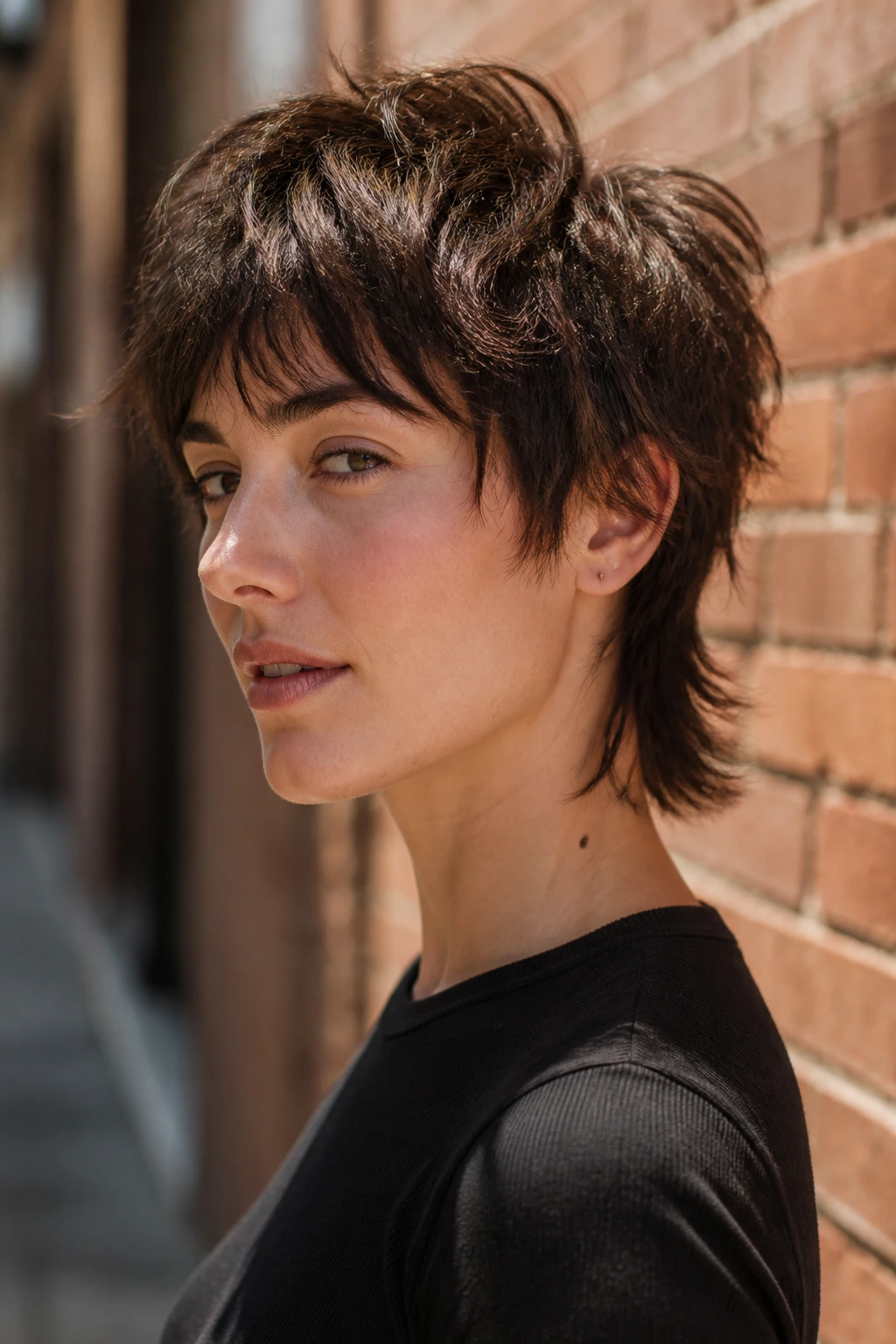
Imagine a pixie that grew out in the best possible way. That’s the mixie: short, choppy, a little shaggy, and more relaxed than a classic pixie.
It’s one of my favorite textured cropped cuts for fine hair because it doesn’t ask the hair to do too much. The crown stays piecey, the nape hangs a little longer, and the face gets those soft broken bits that make the cut feel lived-in instead of severe.
The key is not to overstyle it. A tiny amount of texturizing cream worked through damp hair is enough for most days. If you want more grit, use a dry spray at the roots once it’s dry and finger-scrunch the top.
This is a good choice if you like short hair but don’t want it to look polished every single morning. It has a little edge. Not too much. Enough.
11. Ear-Grazing Crop with Curtain Fringe
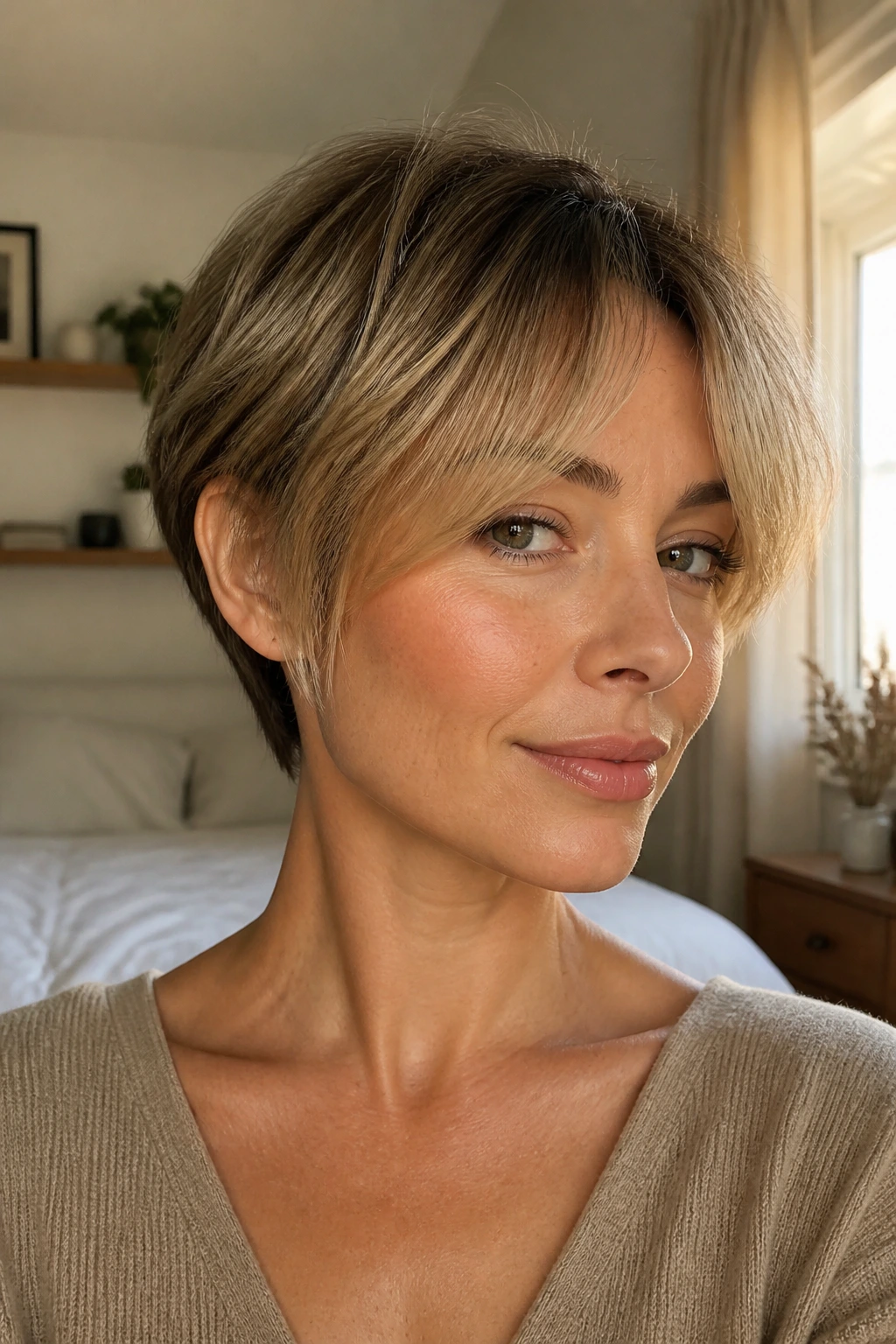
A crop that grazes the ears does something clever: it keeps the cut short enough to feel fresh, but long enough to tuck, flip, or reshape with your fingers.
The curtain fringe changes the whole mood. Instead of a hard front line, you get a soft split that opens from the center and falls toward the cheekbones. Fine hair likes that because the fringe frames the face without needing a lot of density.
I’d keep the side lengths soft and the top lightly layered, then ask for the fringe to start a little back from the hairline so it doesn’t sit like a shelf. A round brush helps here, but only for a minute or two. You’re aiming for bend, not a blowout that looks overworked.
This is the sort of cut that looks expensive even when it’s slightly messy. That’s a nice trick.
12. Razor-Cut Crop with a Deep Side Part
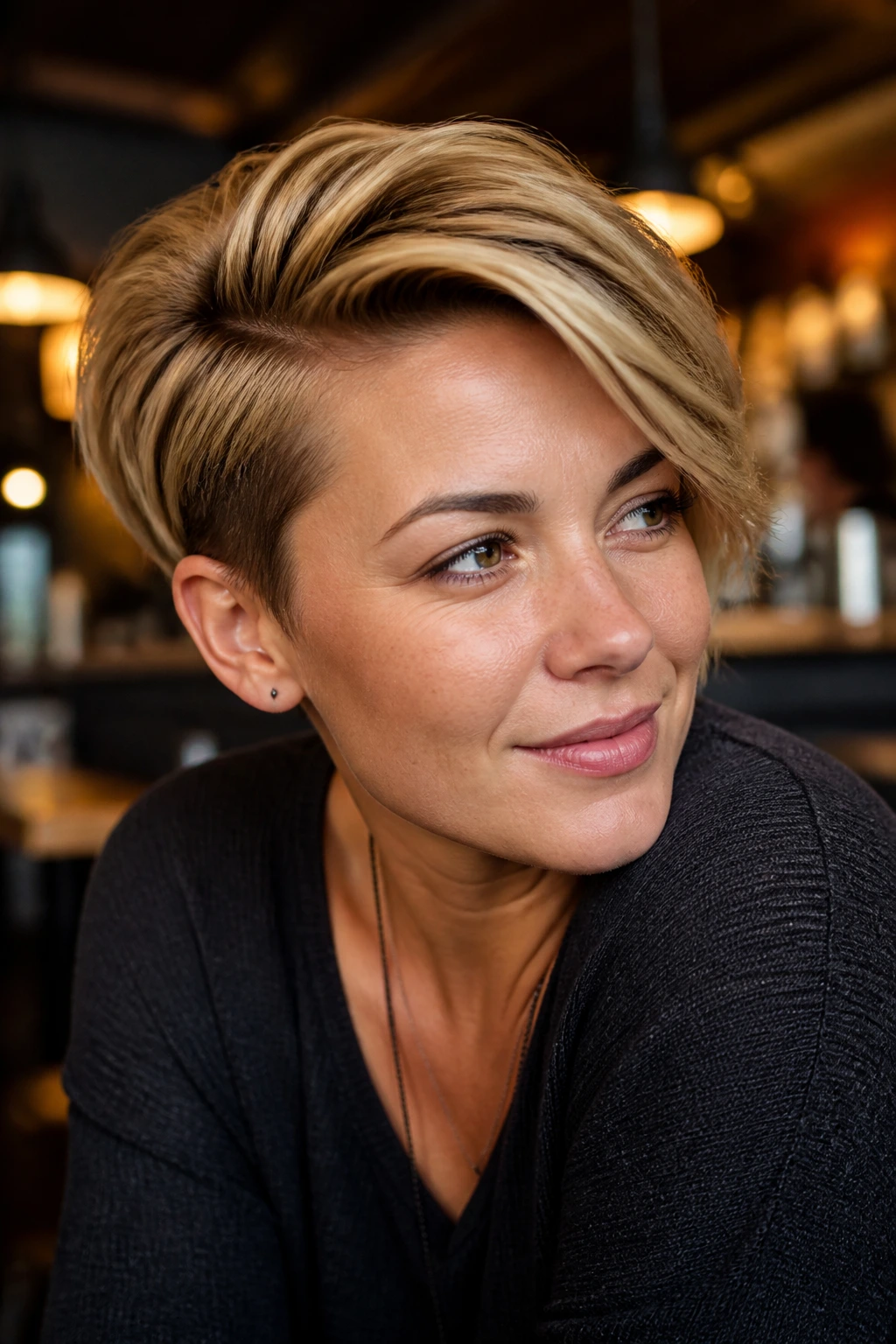
A razor cut is not the same thing as a thin cut. Used carefully, it can make fine hair look airy and movement-heavy without stripping away the shape.
The deep side part matters because it gives instant height at the front. Pair that with a razored perimeter and you get a crop that feels loose but not lifeless. Straight fine hair often takes to this shape well, especially when the ends need a bit of softness.
I’d be cautious if your hair already frizzes easily. A razor can rough up the edge more than scissors do, which is useful in moderation and annoying in excess. The best version keeps the part deep, the top swingy, and the ends lightly shattered—not shredded.
If you want a quick morning routine, this one is friendly. Flip the part, warm a dab of styling cream in your hands, and scrunch the top once or twice.
13. Asymmetrical Crop with One Longer Side
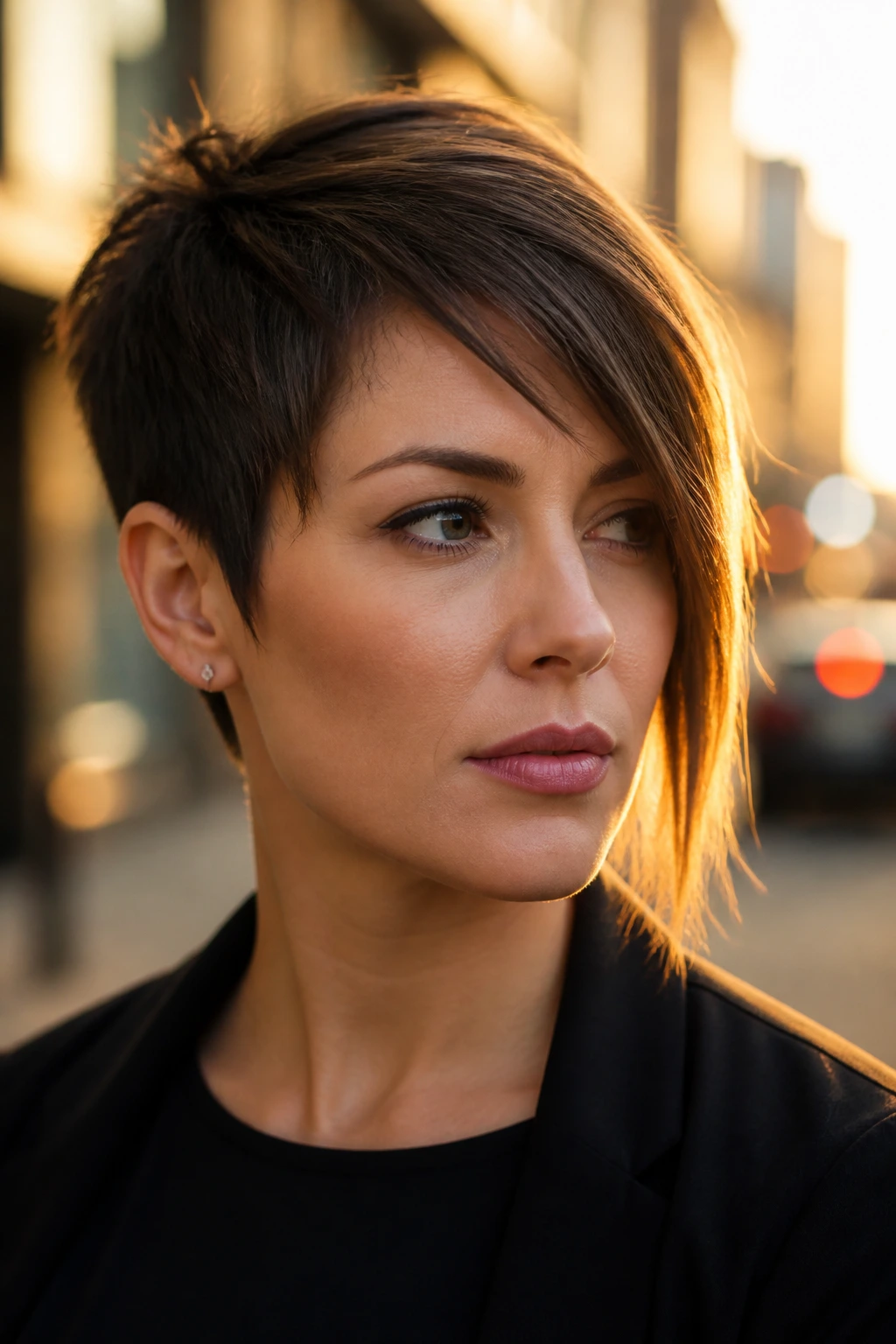
An asymmetrical crop gives fine hair movement without making it look overworked. One side sits a little longer, the other side stays tighter, and the diagonal line does a lot of visual lifting on its own.
Why It Works
The eye follows the longer side first. That single line can make the hair look fuller because it creates direction. It also pulls attention toward the cheekbone or jaw, which is useful if you want to soften a square face or break up a very round one.
What to Ask For
- Keep the difference subtle, about 1 to 2 inches.
- Ask for a clean nape so the shape does not spread out.
- Leave enough length on the longer side to tuck behind the ear.
- Style the shorter side sleek and the longer side with a bend.
This cut has attitude, but it doesn’t need a lot of product. A light cream and a fine-tooth comb are enough on most days.
14. Airy Mushroom Cut
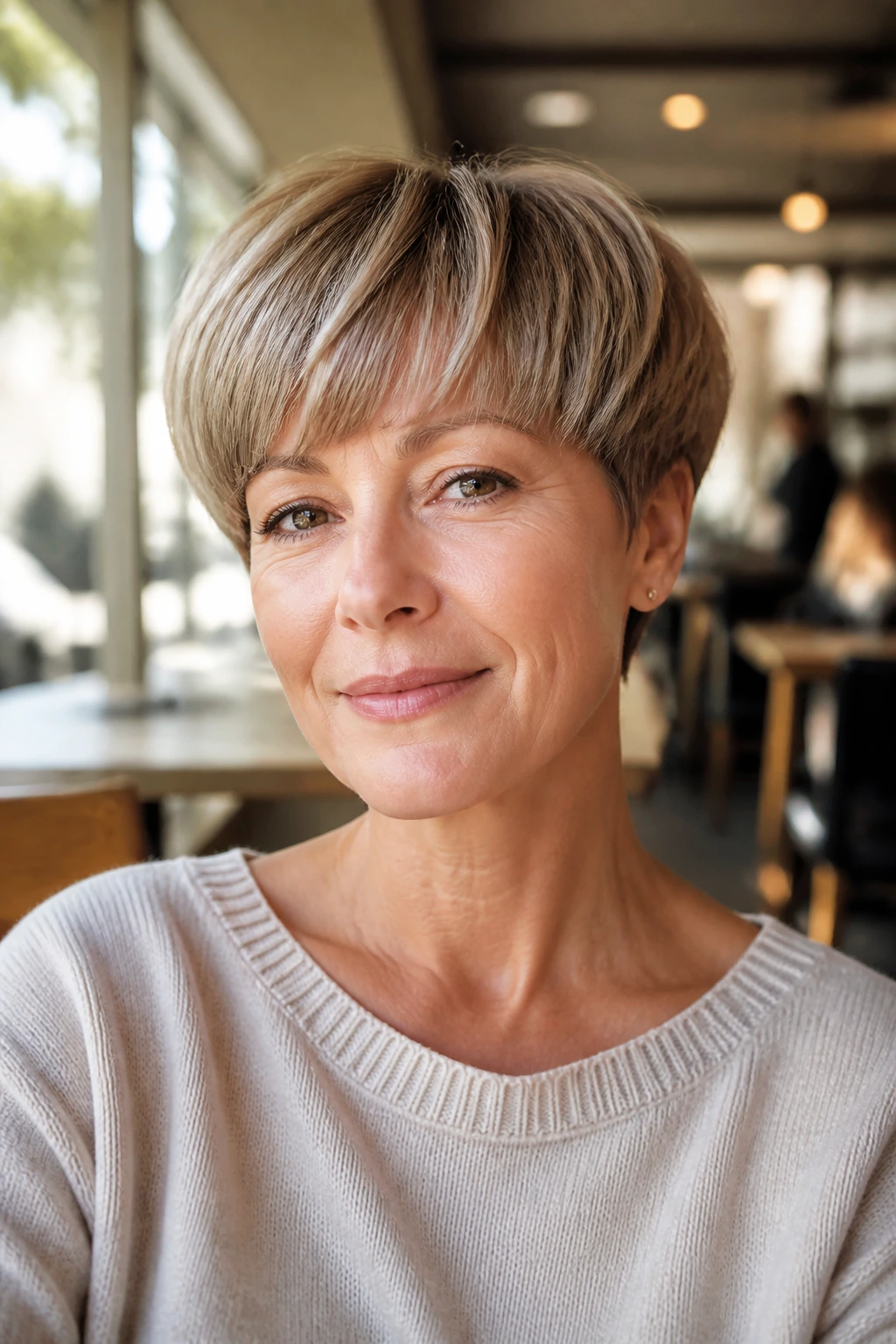
A mushroom cut can look crisp, soft, or a little arty depending on how it’s handled. For fine hair, the airy version is the one worth knowing.
The shape keeps that rounded shell around the head, but the top is lighter and the nape is tapered so it doesn’t feel heavy. It’s a nice choice if you want something with a clear silhouette and you don’t mind a cut that gets noticed. Fine hair benefits from that clean outline because it gives the impression of density from every angle.
I’d keep the interior layers minimal and the edge soft around the ears. Too much slicing makes the shape lose its charm. A little smoothing balm at the ends and a quick pass with the blow-dryer is usually enough.
This one suits straight hair best. It likes a smooth surface and a tidy finish.
15. Cropped Wolf Cut
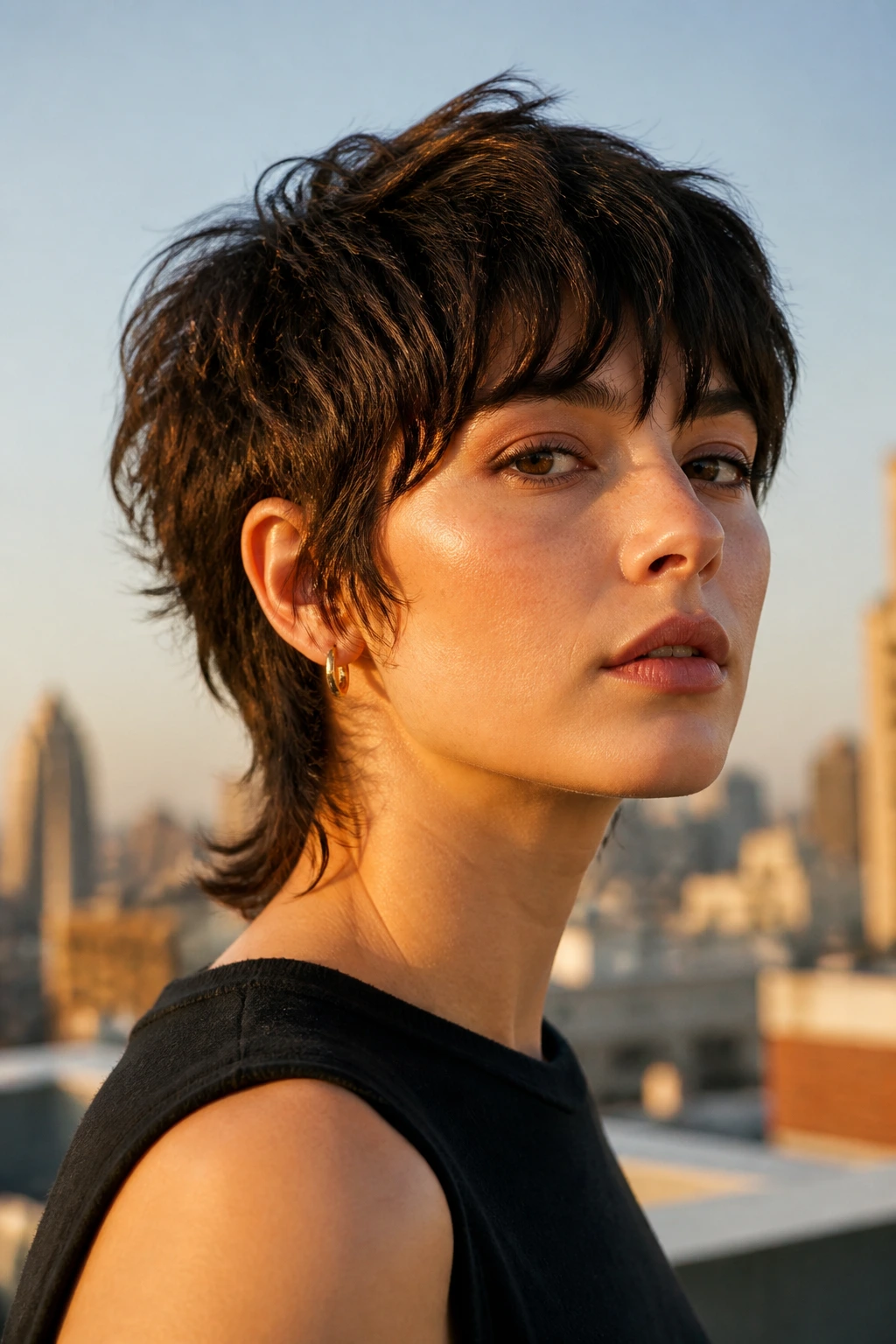
Can a wolf cut work on fine hair? Yes, but only if the layers are kept under control. Too many pieces and the whole thing vanishes.
A cropped wolf cut brings the shaggy crown and the wispy nape, but on fine hair the top needs to stay long enough to hold shape. The goal is movement, not chaos. Shorter face-framing pieces give the cut its edge, while the back keeps a little tail so it doesn’t end up too round.
Use mousse on damp hair, then scrunch and diffuse until it’s about 80 percent dry. Let the rest air-dry. If you touch it too much before it sets, the layers separate in the wrong way.
This is a good cut if you like a bit of grit. It has personality. It also forgives a bad hair day more than a polished bob does.
16. Tucked-Behind-Ear Pixie Bob
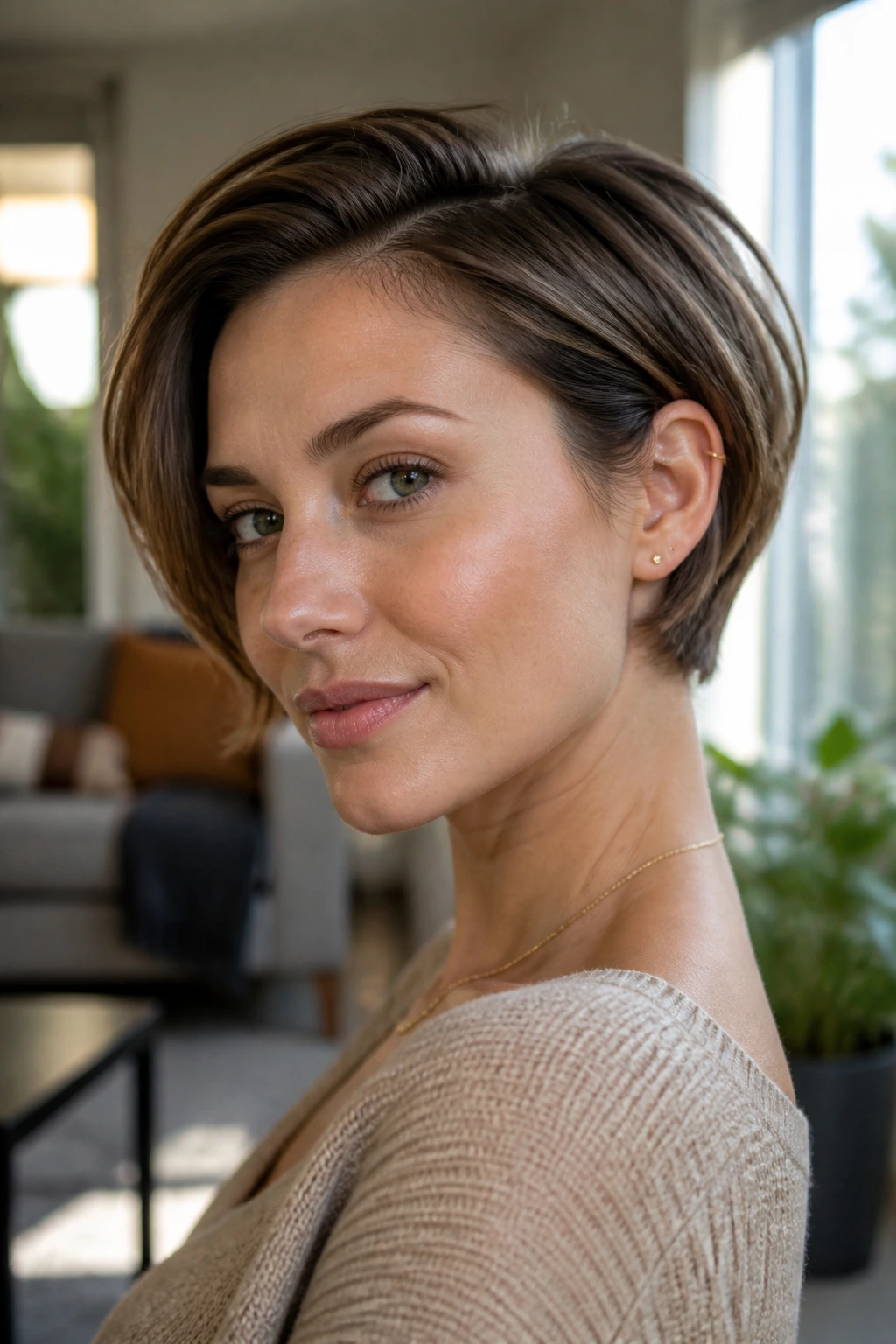
A pixie bob with enough length to tuck behind the ears is a sleeper hit for fine hair. It gives you the control of a short cut, but the little bit of extra length keeps the shape from feeling severe.
The tuck changes everything. It opens up the cheekbones, shows the jaw, and creates a clean side line that makes the hair look more deliberate. I like this especially when the nape is tapered and the top has a touch of lift.
A Simple Styling Plan
- Use a lightweight cream on damp hair.
- Blow-dry the top forward first, then sweep it back.
- Tuck one side behind the ear and leave the other looser.
- Finish with a small mist of flexible spray.
If you want a crop that works at the office and still feels easy on a weekend, this one is hard to beat. It does not ask for much.
17. Grown-Out Crop with Wispy Nape
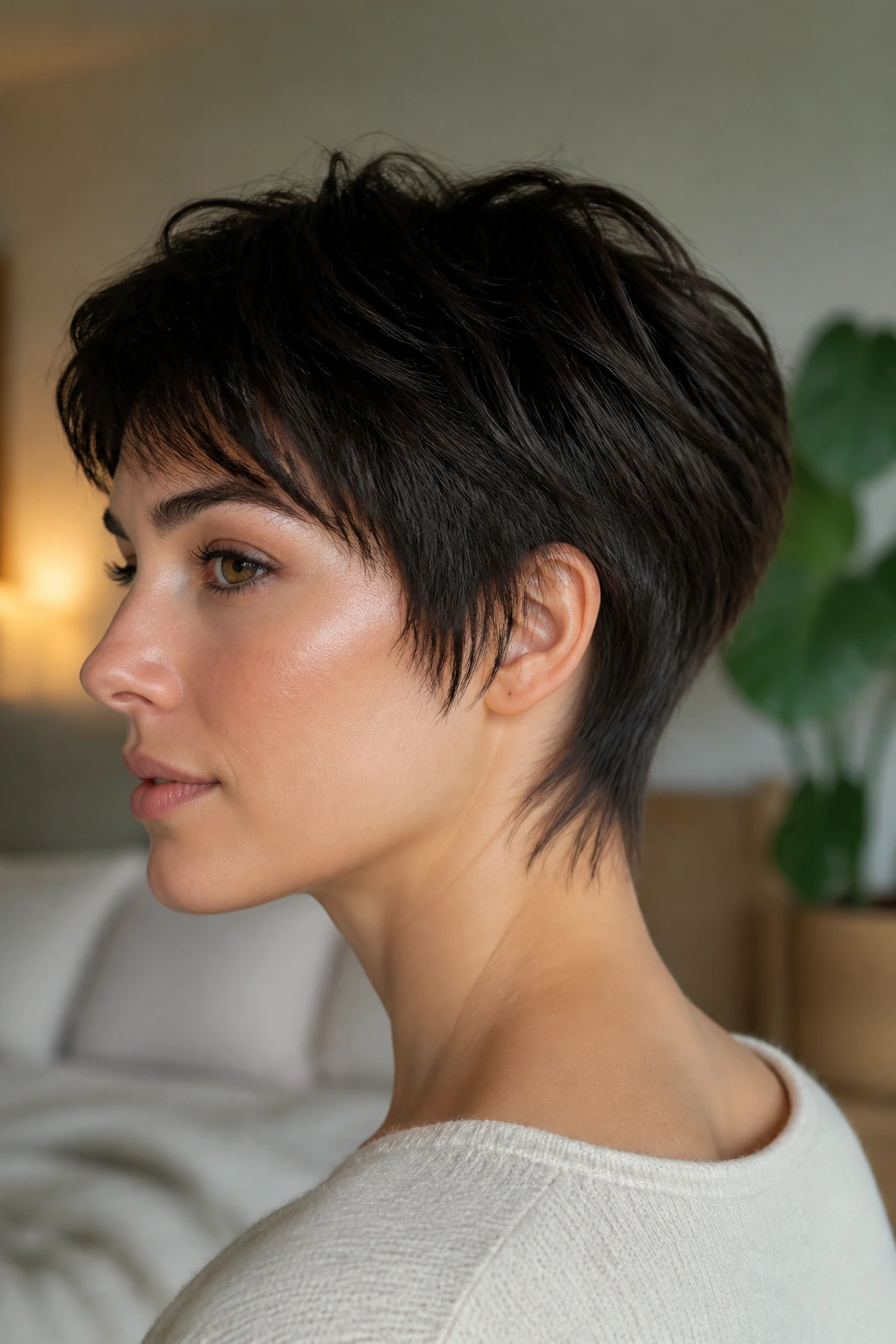
Some cuts are built to look good when they’re fresh. This one is built to look good when it’s grown a little.
A grown-out crop with a wispy nape keeps the edges soft so the shape doesn’t turn blunt or boxy after a few weeks. That makes it a smart choice if you hate the “just-cut” look and prefer something a bit looser. Fine hair can actually benefit from this slower grow-out because aggressive trimming often removes too much of the little density it has.
The top should stay slightly longer than the sides, and the nape should taper gently instead of ending in a hard line. That gives the cut movement even when it’s not freshly shaped. A bit of dry shampoo at the roots can help the front lift without making the ends stiff.
It’s one of those cuts that feels low-maintenance in a real way, not in a fake marketing way.
18. Chop-Heavy Micro Bob
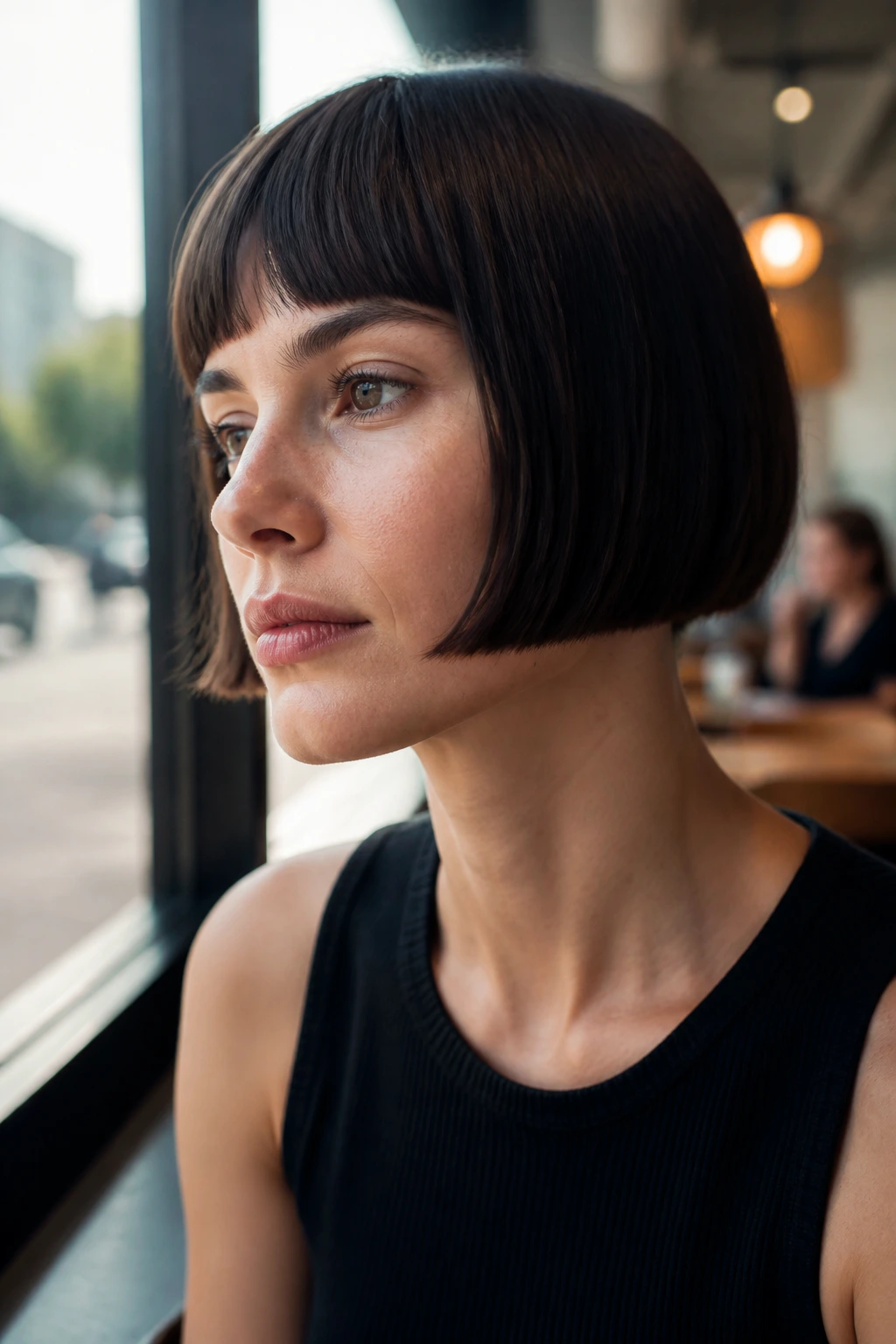
A chop-heavy micro bob is the opposite of feather-light hair. It leans into a strong outline, and that’s exactly why it works.
Compared with a soft feathered crop, this one keeps more of the weight at the edge. Fine hair often looks thicker that way. The hemline sits around the upper neck or lower cheekbone, and the texture stays mostly inside the shape, not all over the place.
I like this cut for straight hair that needs a sharper identity. You can wear it sleek and tucked, or rough it up with a small wave iron and a drop of texture spray. Either way, the shape stays visible.
If your hair tends to split apart when it’s too layered, this is a nice reset. The strong line tells the eye where to look.
19. Soft Crop with Face-Framing Tendrils
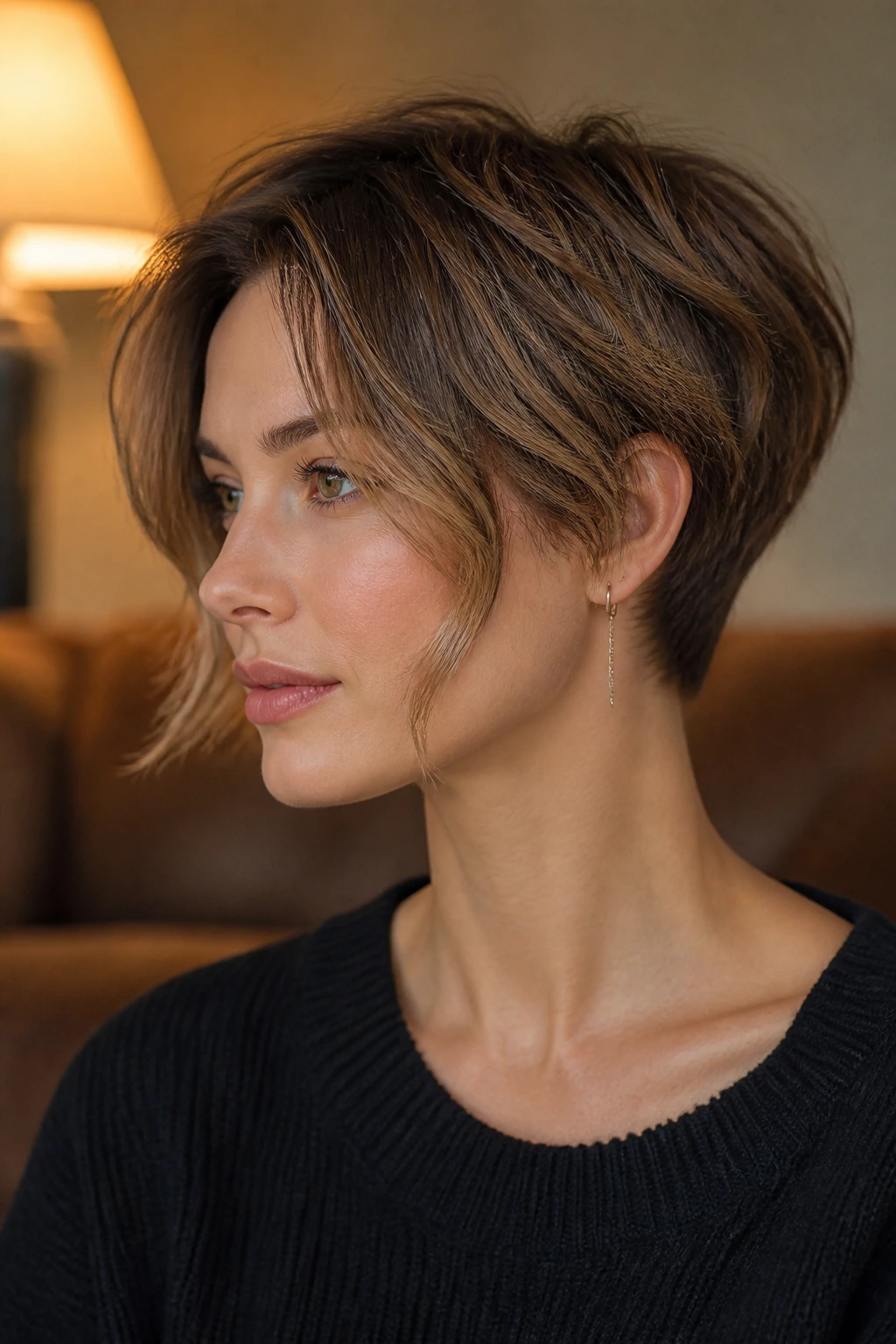
A soft crop with face-framing tendrils does a lovely thing for fine hair: it keeps the back compact while letting the front drift into something gentler.
Why It Flatters the Face
The tendrils act like little softeners around the cheeks and jaw. They don’t need to be long. Even a 2-inch difference around the front can make the whole cut feel less abrupt.
What to Ask For
- Keep the back tidy and slightly tapered.
- Leave the front pieces long enough to skim the cheekbones.
- Ask for soft, not blunt, ends around the face.
- Use a light cream or lotion, not a heavy oil.
This cut is especially useful if you like short hair but want some softness near the face. It can make the whole cut feel a little more romantic without getting fussy.
20. Razored Crop with a Side Sweep
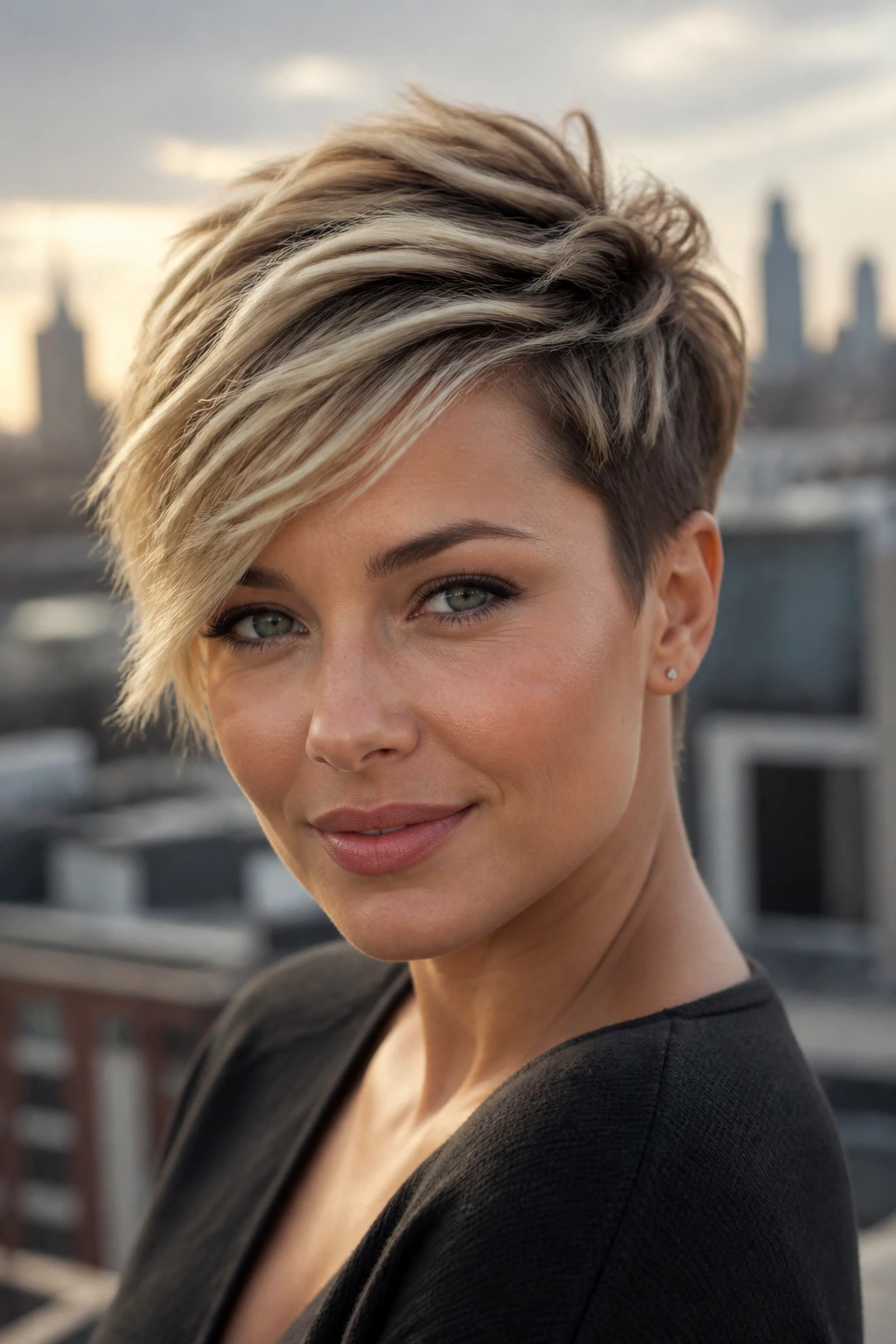
A razored crop with a side sweep gives you movement fast. The side sweep helps the hair lift at the front, and the razored ends keep the shape from feeling boxed in.
I prefer this cut when the hair is straight and flat but still has enough strength to hold a bend. The sweep should start from a deep part and skim across the forehead, then fall into a textured top that doesn’t sit too close to the scalp.
The difference between this and a plain side-part crop is in the finish. A razored crop feels lighter around the edges, so the sweep looks airy rather than heavy. That is what keeps fine hair from looking stamped flat against the head.
A round brush, a blast of heat at the roots, and a cool shot at the end will do most of the work. Keep the sweep loose. Too much control kills the effect.
21. Tousled Crop with Bottleneck Fringe
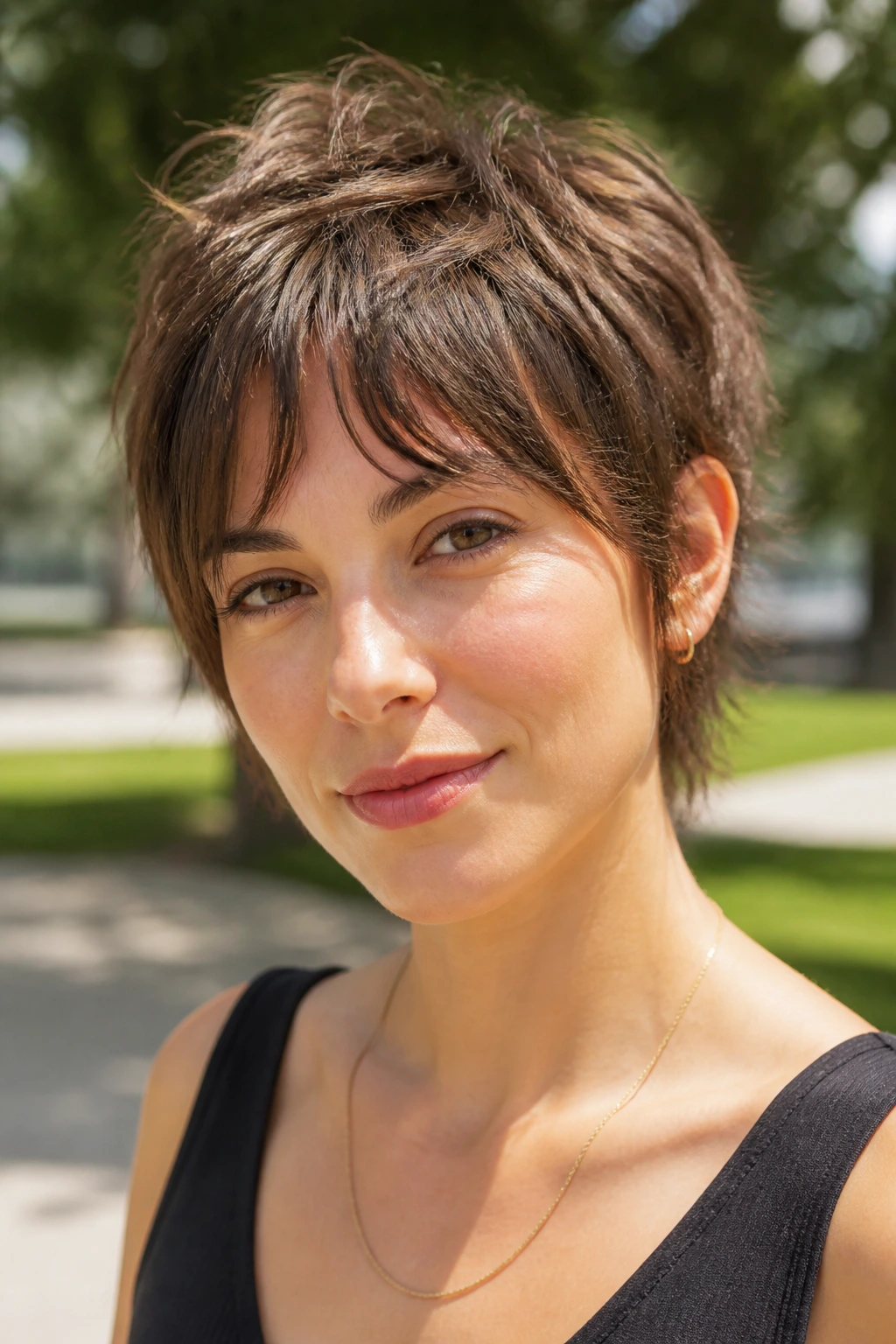
What makes a bottleneck fringe so useful on fine hair? It starts narrow in the center, then opens wider toward the temples, which keeps the forehead covered without building a thick wall across the face.
The tousled crop beneath it should stay short enough to feel easy, but not so short that the fringe takes over. I like this shape because it balances softness and edge. The fringe gives structure, the top gets a little piecey texture, and the overall cut ends up looking relaxed rather than precious.
How to Get the Most From It
- Ask for the fringe to be shortest at the center and longer at the sides.
- Keep the crown lightly layered, not over-thinned.
- Use a salt mist or lightweight mousse for bend.
- Scrunch and let a few pieces fall where they want.
This is one of those cuts that looks better when you stop fussing with it halfway through the morning.
22. Boxy Crop with Soft Corners
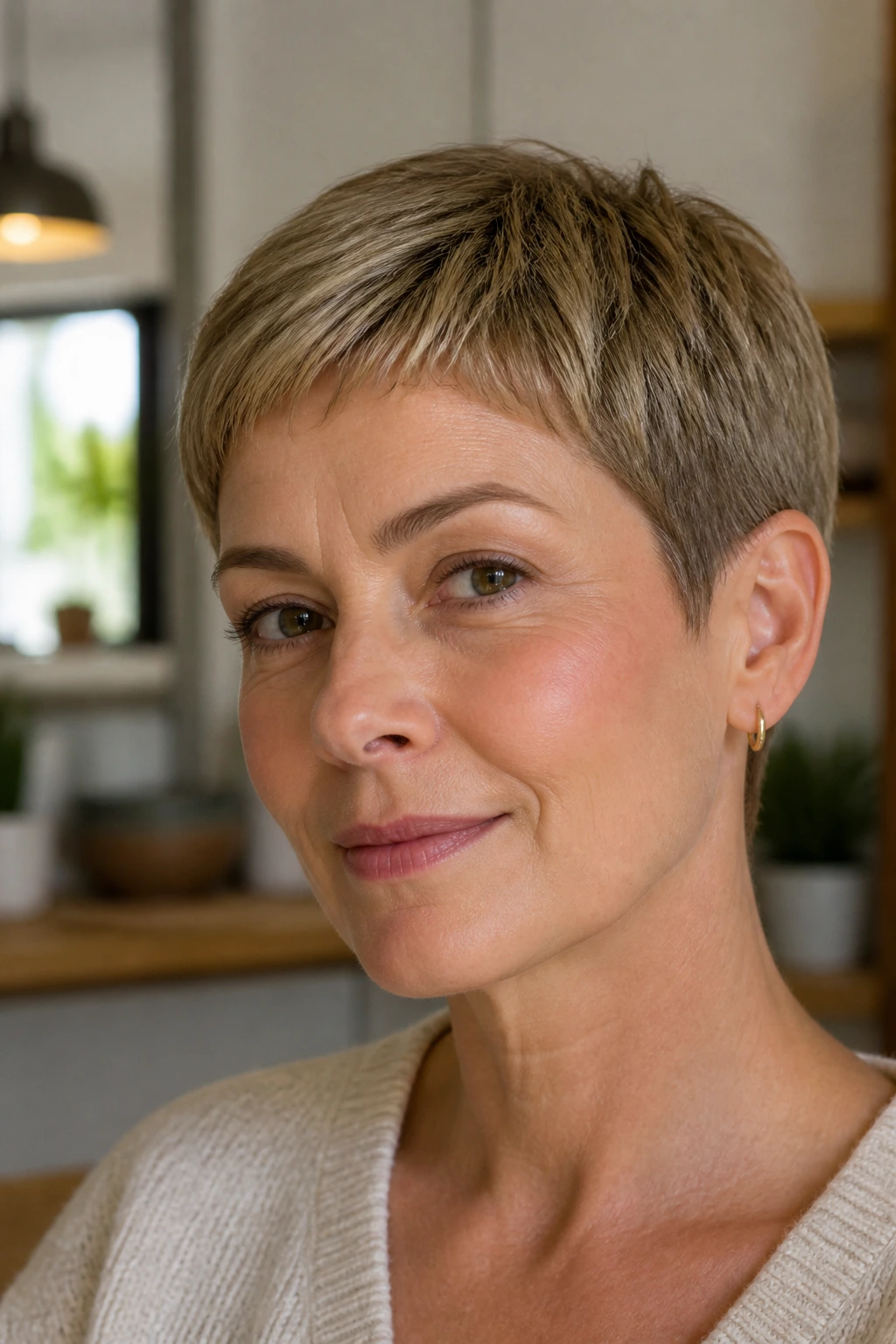
A boxy crop sounds severe, and that’s exactly why it works when you soften the corners. Fine hair often looks fuller when it has a firm outline to rest in, especially near the jaw and nape.
The trick is to keep the side shape clean while rounding the edges just enough so it doesn’t feel harsh. Think crisp, not rigid. A small amount of texture at the top helps the cut avoid that too-perfect blockiness, but the perimeter should stay visible.
This is a good match for people who like minimalist hair and don’t want a lot of layers flying around. It can be worn sleek, slightly messy, or tucked away with a tiny ear sweep. The shape does most of the talking.
If you want hair that looks denser without looking fussy, this is one of the quietest ways to get there.
Final Thoughts
Fine hair usually looks best when the cut has a plan. That plan can be sharp, soft, bowl-shaped, pixie-short, or a little shaggy, but it should always leave the hair with a strong outline and texture in the right spots.
The biggest mistake is still the same one: too much random thinning. Better to keep the shape deliberate, then use fringe, crown lift, or a clean hem to make the hair look fuller from the first glance.
Bring your stylist two things: a photo of the shape you want, and one honest sentence about what your hair does when it dries. Flat at the crown. Puffy at the ends. Cowlick on the right. That one sentence often matters more than the photo.
