



Bowl cuts for men get a bad reputation for one simple reason: most people picture the worst possible version. The blunt fringe. The puffy sides. The haircut that looks like it was done in a hurry with a cereal bowl and a grudge.
That picture is lazy.
A good bowl cut is about shape, not embarrassment. The best versions use clean lines, controlled weight, and a fringe that sits exactly where it should. Get those three things right and the cut can look sharp, youthful, severe, soft, or oddly elegant depending on how it’s finished. Miss them, and you end up with a mushroom.
I’ve always liked haircuts that look simple but punish sloppy work. This is one of them. A bowl cut tells on your barber fast, because the outline is so visible, and it tells on your hair type too. Straight hair gives you one result. Waves give you another. Curls change the whole silhouette.
So the real question is not whether a bowl cut works. It’s which version works on your head, your face, and your daily routine. The ten cuts below cover the versions I’d actually send a man toward, from the clean classic to the softer, more modern shapes that behave better in real life.
1. The Classic Bowl Cut
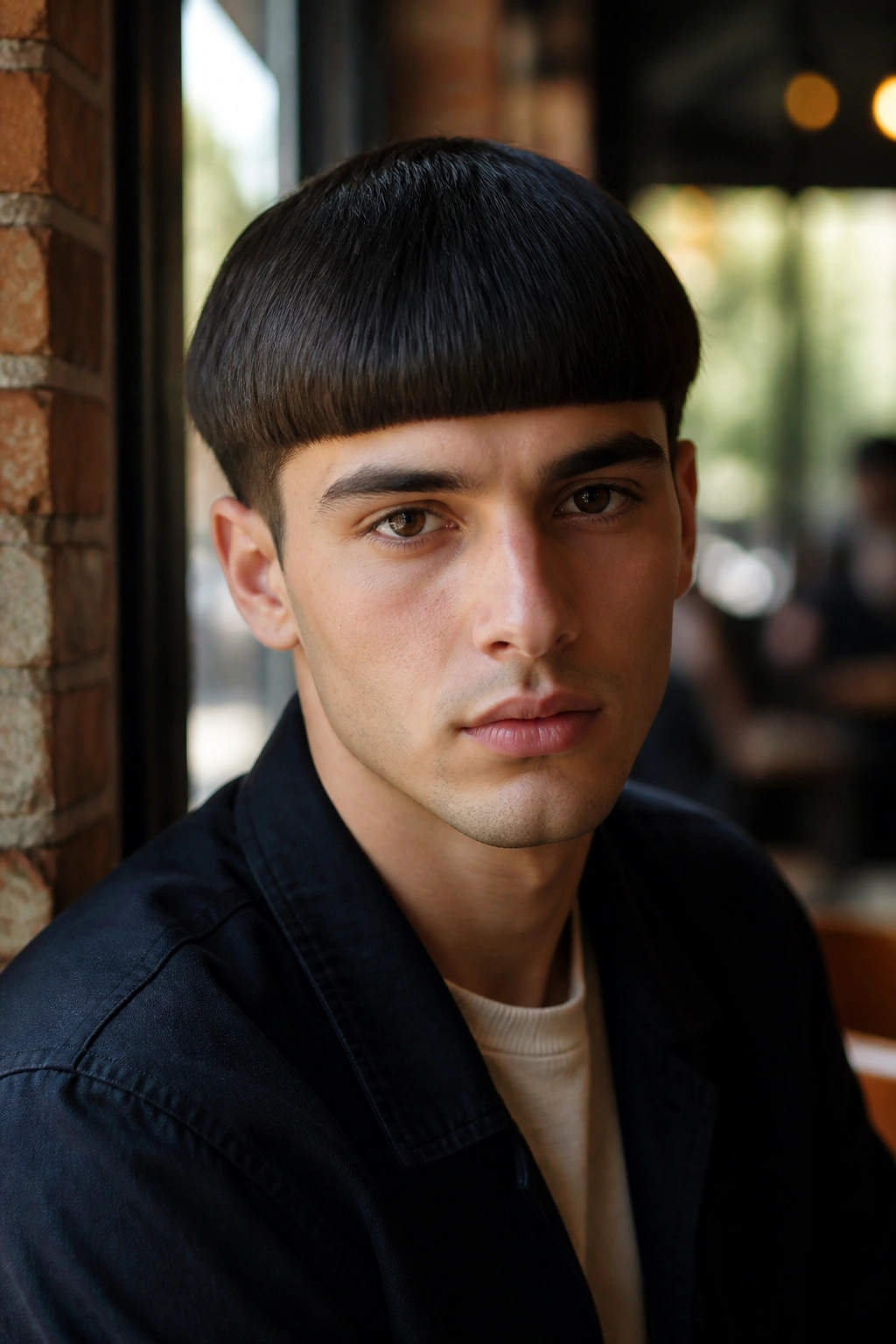
The classic bowl cut is blunt for a reason. The whole haircut depends on one clear line, and that line has to sit in the right place or the style falls apart. Too low, and it starts looking childish. Too high, and the shape loses its point and just looks unfinished.
This version works best on straight, dense hair that can hold a clean edge. The sides should follow the curve of the head instead of puffing out, and the fringe should sit just above the brows or skim them lightly. If the cut lands right, it has a crisp, almost graphic look. If it lands wrong, it looks like a mop with ambitions.
How to Wear It
- Keep the top around 3 to 4 inches so the hair can fall forward without collapsing.
- Ask for a clean neckline and neat ears, but skip the harsh fade if you want the real bowl shape.
- Use a small amount of matte cream or light pomade; shiny product makes it feel dated fast.
- Comb the fringe straight down, then let it settle before you touch it again.
My advice: this cut lives or dies on symmetry, so a tiny crooked line at the front will bother you every morning.
I like the classic version on guys who want something plain but intentional. It’s not subtle. It’s disciplined.
2. The Textured Bowl Cut
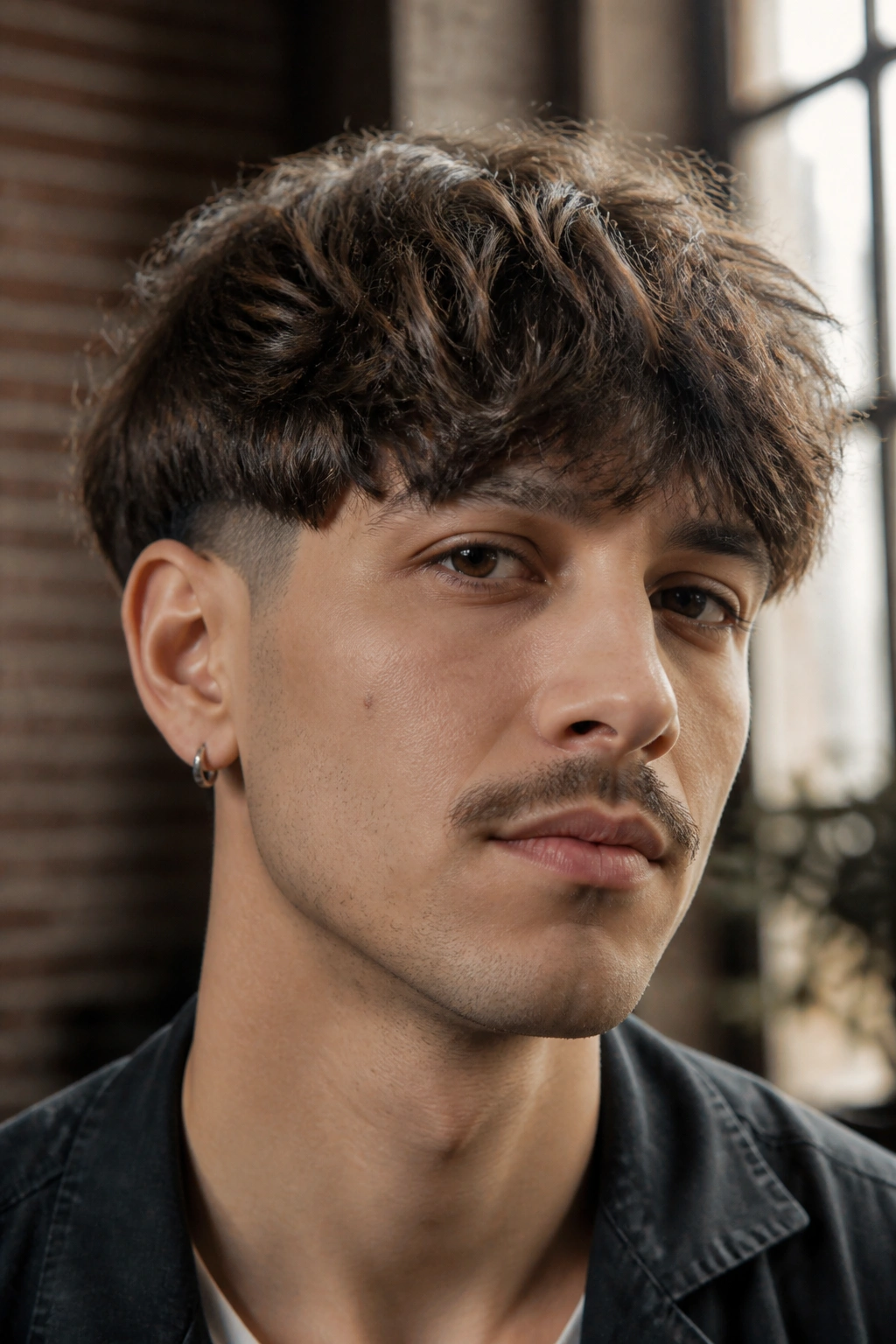
What if you like the shape but hate the helmet effect? That’s where texture saves the day. A textured bowl cut keeps the rounded outline, but the ends are broken up with point-cutting, razor work, or a little choppy scissor work so the hair doesn’t sit like one solid shell.
The difference is easy to see. A blunt bowl cut is one clean band of hair. A textured bowl cut has movement in the fringe and a softer edge around the sides. It still reads as a bowl cut, but it feels looser, less sealed shut. On thick straight hair, that texture keeps the cut from swallowing your face.
Why Texture Changes the Shape
The eye notices hard lines first. Break the line a little and the haircut immediately feels lighter. That matters a lot if your hair grows dense around the crown or sticks out at the temples, because those two spots can make a bowl cut turn bulky in a hurry.
Texture also gives you room to mess it up a little and still look fine. That sounds odd, but it’s true. A perfectly blunt bowl cut needs precision every day. A textured version forgives a cowlick, a bad sleep crease, or a morning when you only had five minutes.
How to Style It
- Work a pea-sized amount of matte paste through damp hair.
- Push the fringe forward, then pinch a few ends so they separate.
- Blow-dry on low heat if your hair tends to fall flat.
- Skip heavy gel. It turns the texture into clumps.
A good textured bowl cut is one of the smartest choices on this list. It gives you the shape without making the haircut feel frozen.
3. The Tapered Bowl Cut
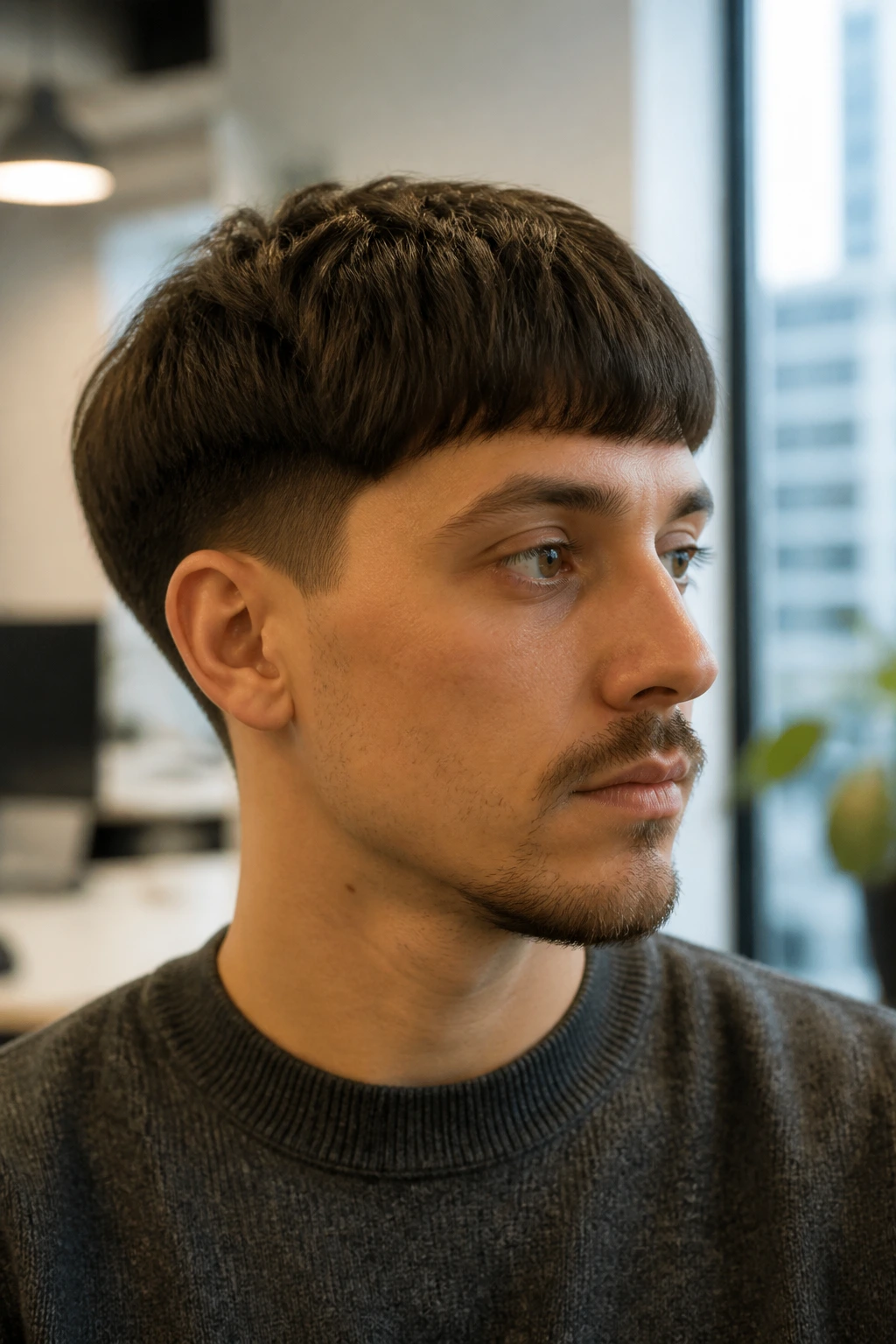
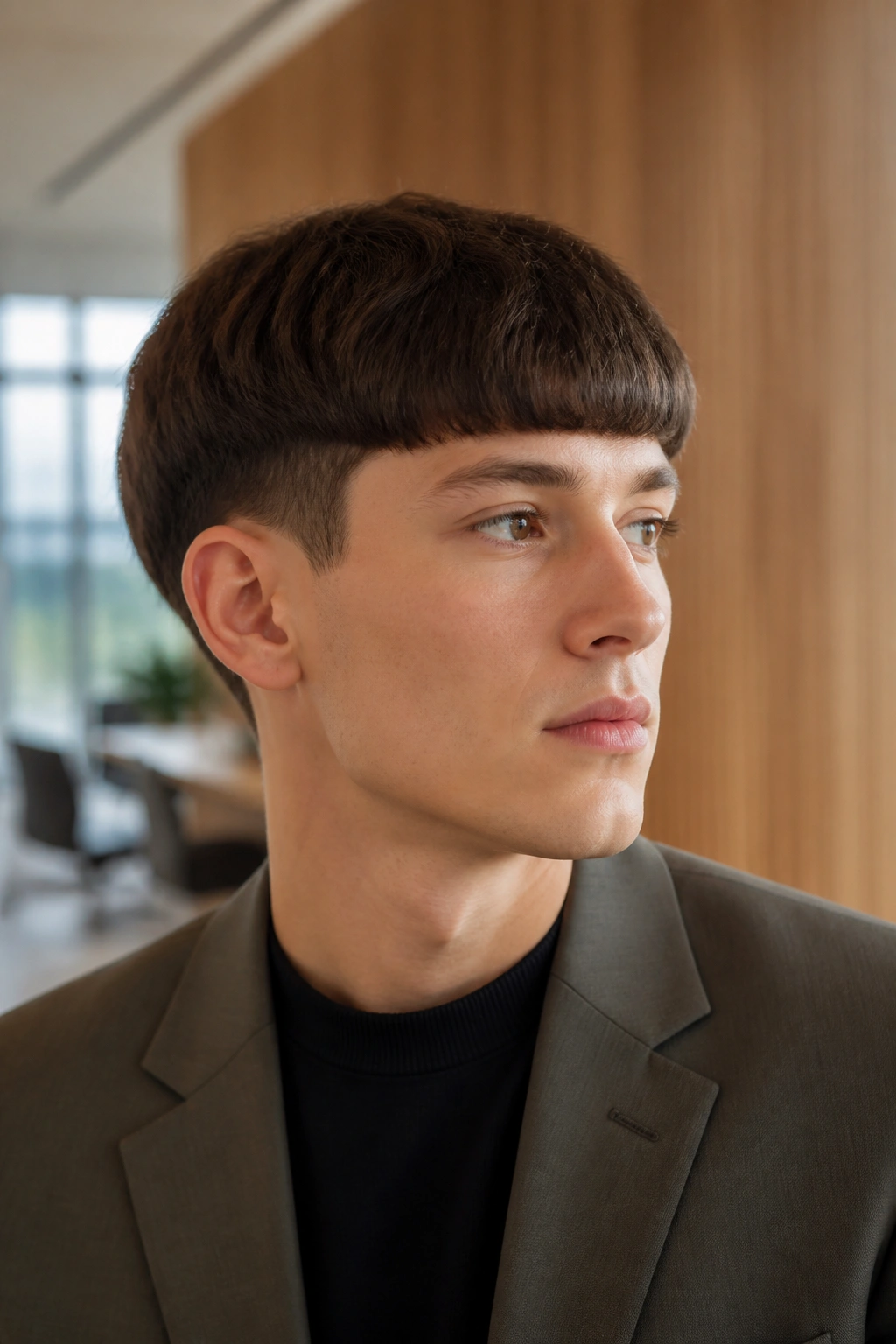
If you want a bowl cut that feels cleaner in everyday life, the tapered version is the one I’d point to first. The top still has the rounded fringe and forward fall, but the sides and nape are blended down gradually instead of cut off in a hard block. That little taper changes the whole mood.
On paper, this sounds minor. In the chair, it is not minor at all. A taper makes the haircut look more deliberate and less like a dare. It also grows out better, which matters if you hate seeing your haircut go from neat to awkward in ten days.
This is the version I’d suggest for men who want a shape-forward haircut but still need it to work with office clothes, glasses, or a calmer personal style. It also plays well with straight hair that sits a little too heavy on the sides, because the taper removes some of that visual weight.
What to Tell Your Barber
- Keep the top long enough to brush forward, usually around 3 inches or more.
- Ask for a low taper around the ears and neckline, not a skin fade.
- Keep the front line soft if your face is long.
- Leave enough bulk on top so the bowl shape still reads clearly.
My honest take: this is one of the easiest bowl cuts to live with. It looks tidy without feeling stiff, and it rarely shocks people in the mirror.
4. The Undercut Bowl Cut
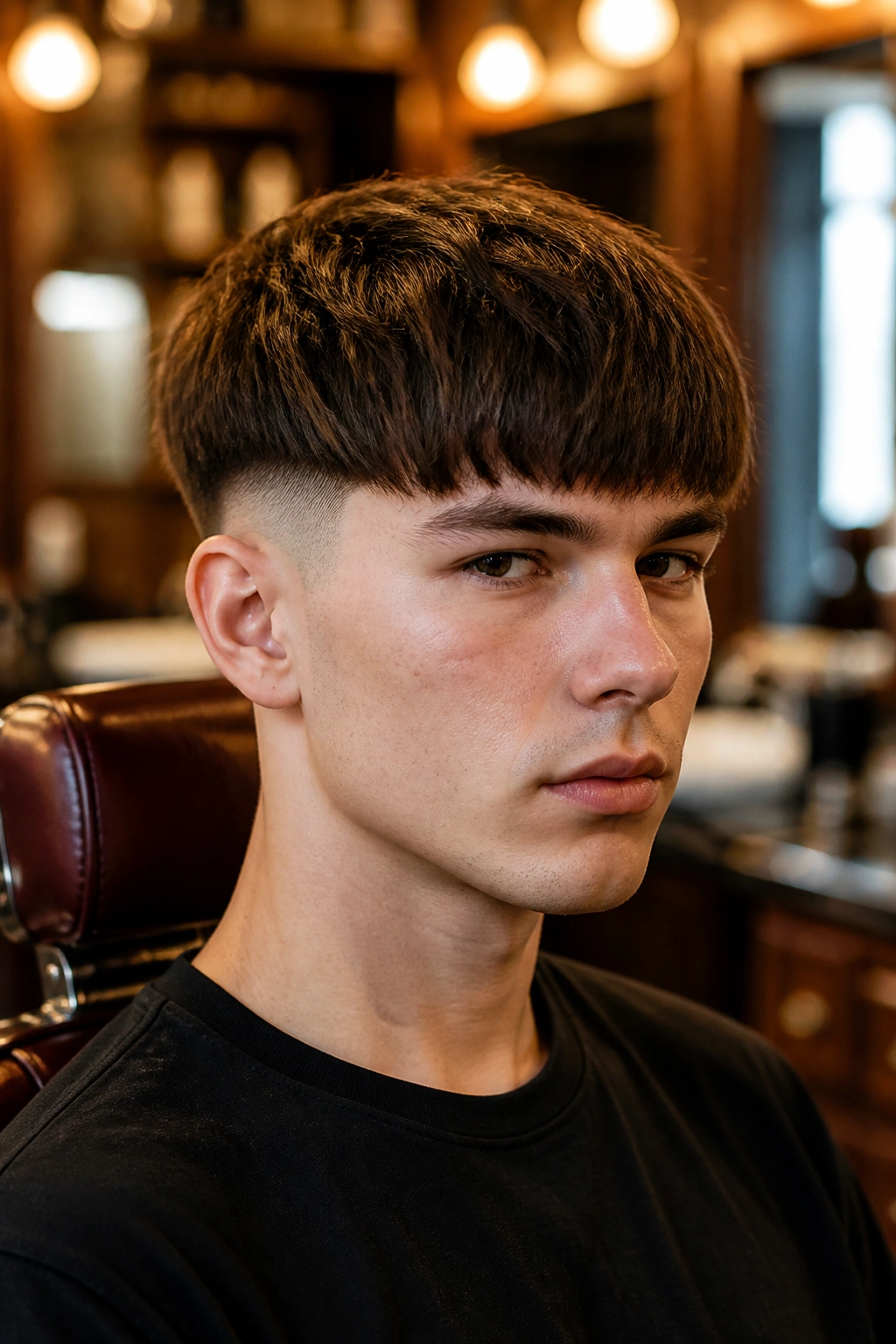
This is not the soft version.
An undercut bowl cut throws contrast into the mix, and that’s the whole point. The top stays long and rounded, while the sides are clipped short or disconnected completely. You get a strong shape sitting on top of a much tighter base, which makes the fringe line look sharper than it does in a tapered cut.
It’s a confident look. Maybe a little cocky, depending on how high the disconnect is. But it works because it removes the “puffy side” problem that ruins so many bowl cuts. The short sides pull the eye upward, and the top becomes the only thing that matters.
What Makes It Different
The cut reads cleaner when the contrast is honest. A half-hearted undercut looks strange, because the top says “fashion” and the sides say “I gave up halfway.” You want the difference to be obvious.
The best version usually has 4 to 6 inches on top, with the sides taken down to a clipper length that feels deliberate rather than skin-close. If you go too extreme, the cut can start to feel harsh and the grow-out gets messy fast.
What to Watch For
- Stronger contrast means more upkeep.
- The shape grows out in stages, and the middle stage is not charming.
- If your hair is very fine, the disconnect can expose too much scalp.
- If your head shape is flat in back, ask your barber to leave enough weight so the top doesn’t collapse.
I like this cut on men who want the bowl silhouette but don’t want any softness around the edges. It’s sharper, meaner, and easier to read from across a room.
5. The Curly Bowl Cut
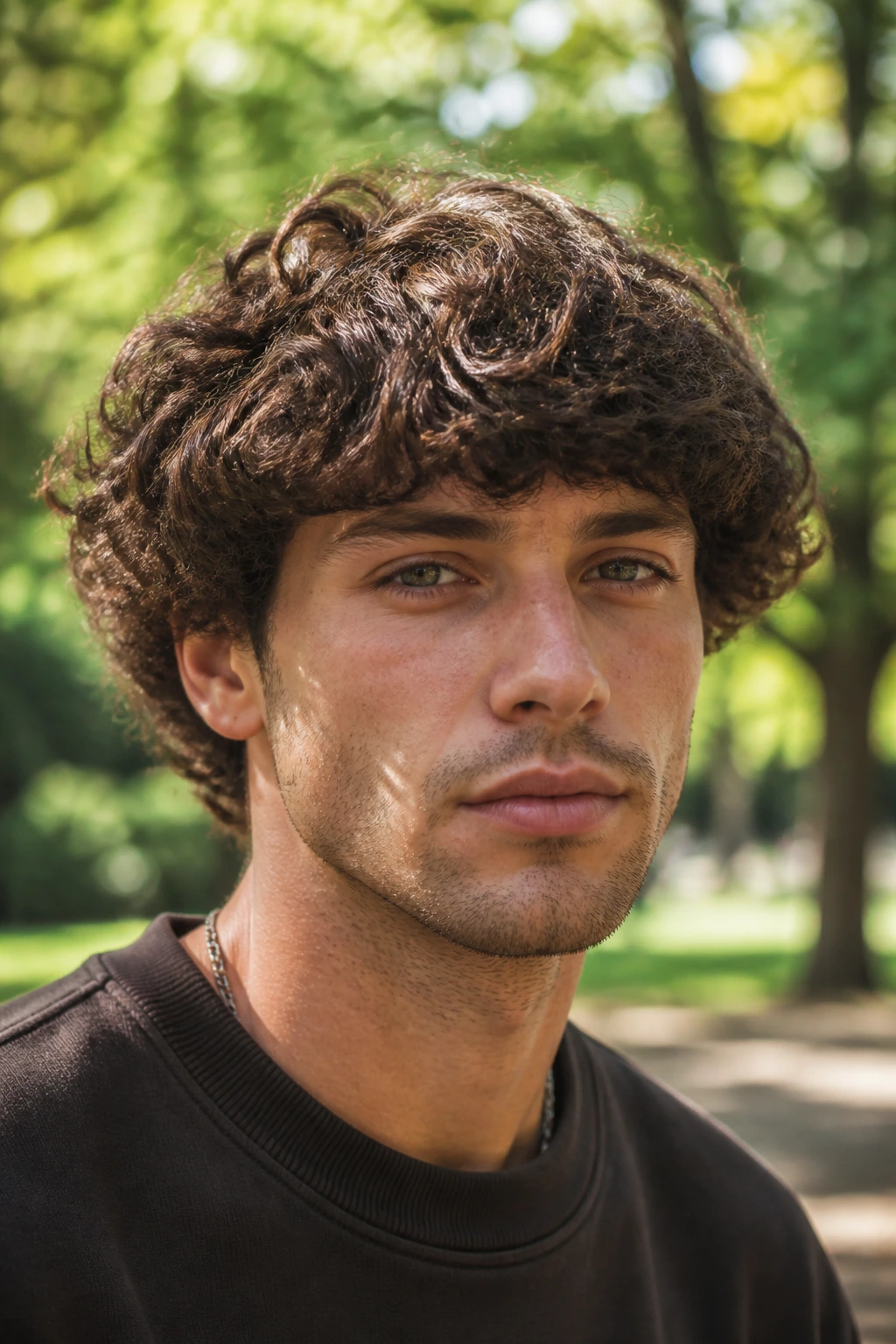
Curly hair changes the whole story. A bowl cut on curls is not about forcing the hair into a perfect circle. It’s about giving the curl enough room to sit forward while keeping the outline controlled. If you cut curls too short, they spring up and you lose the shape. If you leave them too long, the fringe can hang like a curtain and get heavy at the eyes.
The trick is restraint. Curls need room to bounce. They also need weight in the right places, because too much thinning can make the top frizzy and thin at the same time, which is a miserable combination.
Curls need room.
The best curly bowl cut has a soft edge, not a hard one. I usually like seeing it cut dry or nearly dry, because that lets the barber see where the curls actually land instead of guessing from stretched-out wet hair. Dry cutting matters more here than people think.
What Usually Works
- Leave the fringe long enough to sit just above the brows when it springs up.
- Ask for minimal thinning, especially through the crown.
- Use a curl cream or light leave-in, not a crunchy gel.
- Diffuse on low heat if you want more shape without frizz.
There’s a sweet spot with this cut. Too much precision and it fights the curl. Too little and the haircut turns vague. Hit the middle and it looks natural in a way straight hair can’t fake.
6. The Fade Bowl Cut
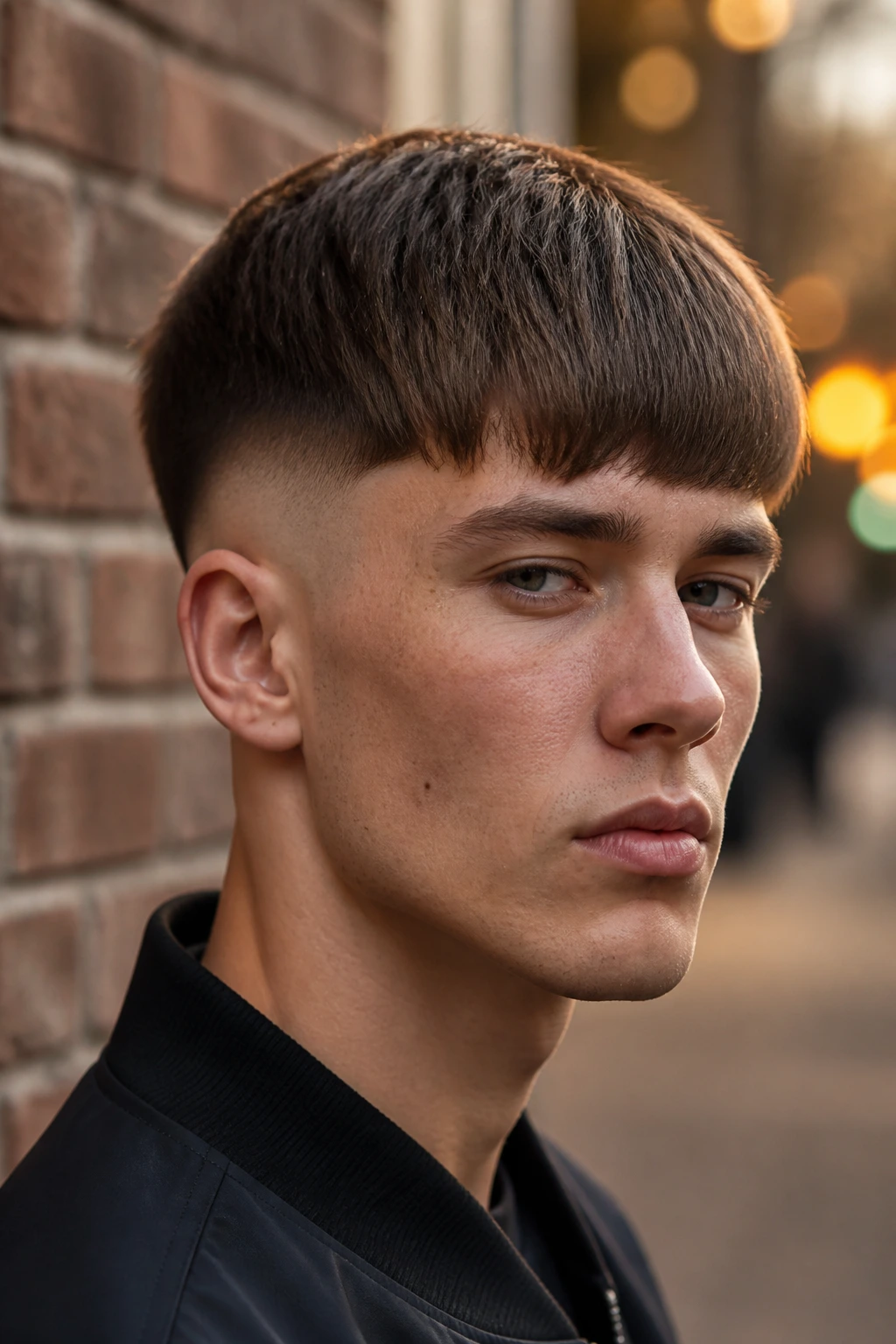
A fade gives the bowl shape air. That’s the cleanest way I can put it. The top can still be blunt or textured, but the sides move from short to shorter, which keeps the haircut from building up too much bulk near the ears.
This is a stronger, more urban-looking version of the bowl cut, and it has a bigger range than people expect. A low fade keeps things calmer. A mid fade makes the shape feel more obvious. A skin fade turns the whole cut into a statement.
Which Fade Height Works
- Low fade: best if you want the bowl shape to stay soft and wearable.
- Mid fade: good when you want the haircut to feel sharper and more fashion-forward.
- Skin fade: loudest option, and it needs frequent cleanups.
The nice thing about a fade is that it fixes one of the biggest complaints about bowl cuts: the sides can get too heavy. A fade cuts that problem down fast. The downside is upkeep. If you like a neat fade, you’ll want barber visits more often, because the clean look shows growth faster than a taper does.
A fade bowl cut also works best when the top still has some edge. If the fringe is too wispy and the sides are too faded, the haircut loses shape and turns into a strange hybrid. Keep the front defined. Let the fade support it, not steal the show.
7. The Soft Rounded Bowl Cut
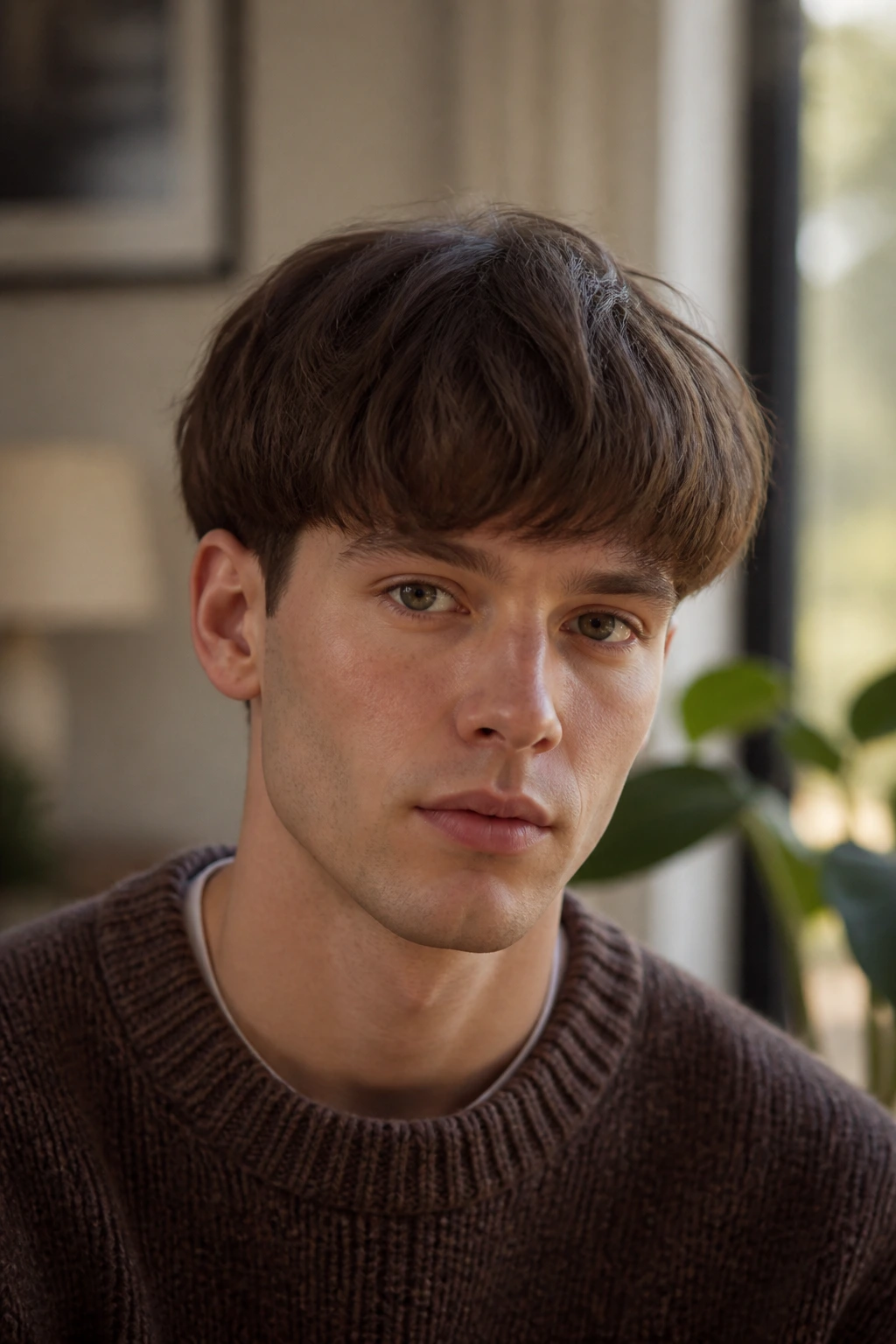
Want the shape without the hard line? That’s what the soft rounded bowl cut gives you. The silhouette is still there, but the edge is gentler, the fringe sits a little looser, and the whole haircut feels less severe. Think rounder, puffier, and friendlier than the classic version.
This is a smart choice if your hair is fine or medium in thickness and you don’t want a blunt edge shouting for attention. A softer bowl can actually make fine hair look fuller, because the rounded outline creates the impression of more body without relying on a strong, obvious line.
How It Differs From the Blunt Classic
The blunt classic says, “look at the line.” The soft rounded version says, “look at the shape.” That changes how people read your face too. If your jaw is sharp, the softness can balance it out. If your face is round, you may want more height at the crown so the shape doesn’t get too circular.
Ask For This
- A rounded perimeter instead of a hard chop.
- A light taper at the ears so the sides don’t flare.
- A fringe that can sit forward but doesn’t need to lie like cardboard.
- A small amount of texture through the top if your hair is dense.
I think this version gets overlooked because it isn’t dramatic. That’s a mistake. It’s one of the easiest bowl cuts to wear without feeling like the haircut is wearing you.
8. The Wavy Bowl Cut
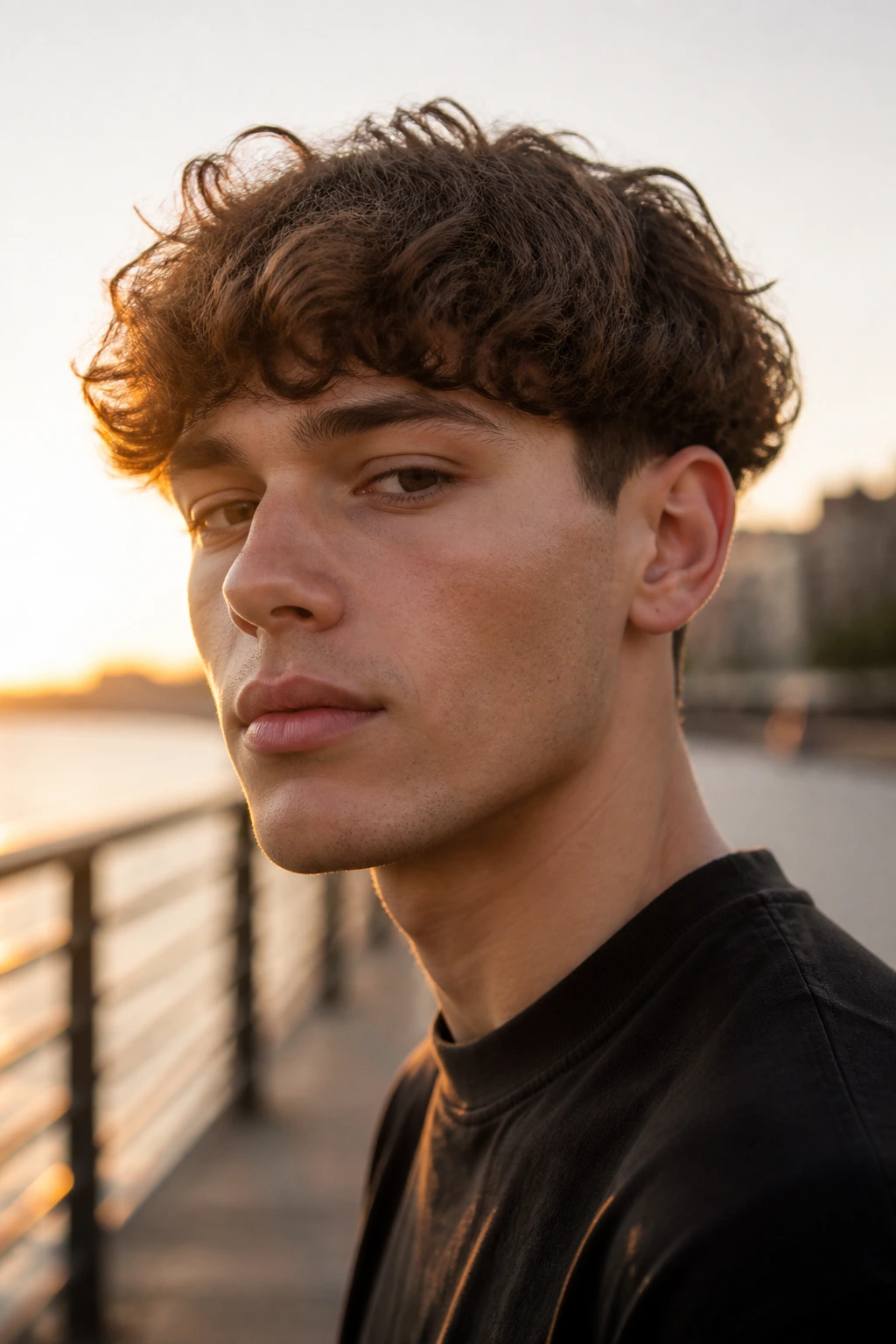
Picture wavy hair pushed forward and cut into a bowl shape that never sits perfectly flat. That’s the whole charm here. The wave breaks the line in places, which keeps the cut from feeling too strict, and the movement gives the fringe a lived-in look that straight hair has to work harder to fake.
A lot of men fight their wave pattern for no good reason. With a bowl cut, that fight gets worse. If you try to flatten every bend, the hair puffs up. If you let the wave show a little, the cut starts to make sense.
That bit of movement saves the cut.
The best wavy bowl cut usually keeps the top long enough to let the wave bend naturally, then trims the sides so they don’t overwhelm the face. You don’t want a heavy block. You want a controlled curve.
What Works With Waves
- Towel-dry until the hair is damp, not dripping.
- Work in a salt spray or light cream depending on how dry your hair feels.
- Use your fingers to push the fringe forward instead of a brush.
- Blow-dry with a diffuser if your waves collapse when air-dried.
I like this version because it feels less forced than the classic bowl cut. It still has shape, but the hair brings some of its own character into the cut, and that makes it easier to live with on a normal day.
9. The Layered Bowl Cut
Layers are what keep thick hair from turning into a helmet. A layered bowl cut still keeps the rounded outline, but the inside of the haircut gets carved out so the top has movement and the sides don’t sit like one heavy block. If you have dense straight hair, this is the version that makes the most sense.
Without layers, thick hair can get bulky fast. The fringe hangs heavy, the crown gets too full, and the sides stick out when they dry. With the right internal layering, the haircut keeps its bowl shape but loses the weight that makes it hard to wear.
Where the Layers Should Go
- Through the crown, so the top doesn’t pile up.
- Around the parietal ridge, where the head starts to widen.
- Lightly through the fringe, so it moves instead of sitting stiff.
- Not so much near the bottom that the outline disappears.
The phrase “layered bowl cut” sounds technical, but the idea is simple: keep the outside shape, trim the inside. That’s what gives the haircut lift without making it look shaggy. A barber who understands scissors over comb and internal shaping will usually do better here than someone who only reaches for clippers.
This cut also ages well over a few weeks. The layers make the grow-out softer, so you don’t get that thick, boxy stage as fast. If you hate heavy hair, this is one of the smartest bowl cut choices on the list.
10. The Long-Fringe Bowl Cut
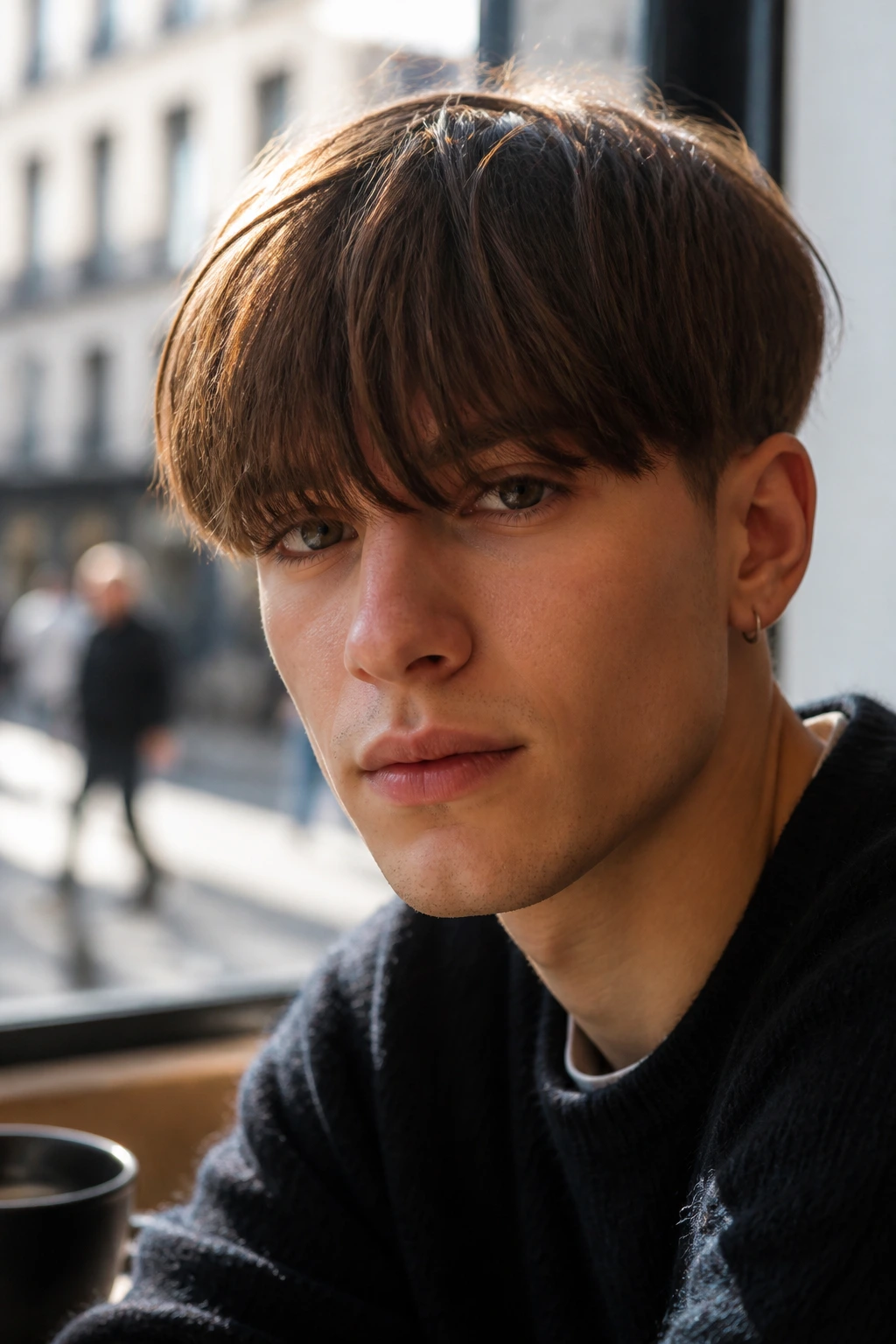
If you want the most flexible bowl cut, this is the one to ask for. The fringe stays longer, the top keeps enough length to push forward or slightly aside, and the sides are kept neat without being stripped bare. It has a softer, more styled look than the strict classic, and it gives you room to change the mood of the cut day to day.
I like this version for guys who want shape but also want options. A longer fringe can look neat when brushed down, loose when finger-styled, and a little more relaxed when you let it break up naturally. That flexibility matters more than people admit, because a haircut that only works one way gets old fast.
This one also works well if you wear glasses or have a stronger brow line. The fringe can sit just above the frames or brush them lightly, which makes the whole cut feel balanced instead of crowded. If your face is long, keep a little more length on the sides so the cut doesn’t stretch upward too much.
A few things help here:
- Keep the fringe long enough to move, not so long that it blocks your eyes.
- Ask for clean edges with soft texture through the top.
- Use a light cream or matte paste depending on whether you want shine or a dry finish.
- Trim it before it gets shaggy, because long fringe gets heavy fast.
The long-fringe bowl cut is the one I’d tell a hesitant guy to try first. It gives you the shape, but it doesn’t trap you in one look, and that’s a better deal than it sounds.
If you’re choosing between these styles, start with your hair type before you start with photos. Straight hair usually handles the classic, tapered, or layered versions best. Wavy and curly hair do better when the cut leaves some room for movement. Thick hair almost always benefits from texture or layers. The haircut is only half the story. The rest is how much weight you let it keep.
