



Fine hair has a habit of doing exactly the wrong thing at the wrong time. It looks full for ten minutes after a blow-dry, then the roots soften, the ends separate, and the whole shape starts sinking like wet paper.
That’s why cropped cuts can be such a relief. Not the fluffy, over-layered kind that eats up density. The good ones keep a hard edge where the eye needs it, add lift where the hair tends to collapse, and leave enough movement that the cut doesn’t look stiff or helmet-like.
One detail gets missed all the time: fine hair is about the diameter of each strand, not how much hair you have overall. A person can have a lot of fine hair and still feel frustrated by limpness, while someone with fewer strands may have a completely different problem. So the best cropped cuts for fine hair are not the same as the cuts that work for thick hair. They rely on line, shape, and smart removal of weight — not random layers.
The cuts below lean on those ideas in different ways. Some create the look of density with a blunt perimeter. Others use a soft fringe, a tucked nape, or a bit of crown stacking to give the hair a longer, cleaner profile. And yes, a bad cropped cut can make fine hair look thinner than it is. A good one can make the same head of hair look sharper, fuller, and easier to live with before you’ve even picked up a styling tool.
1. Blunt Micro Bob
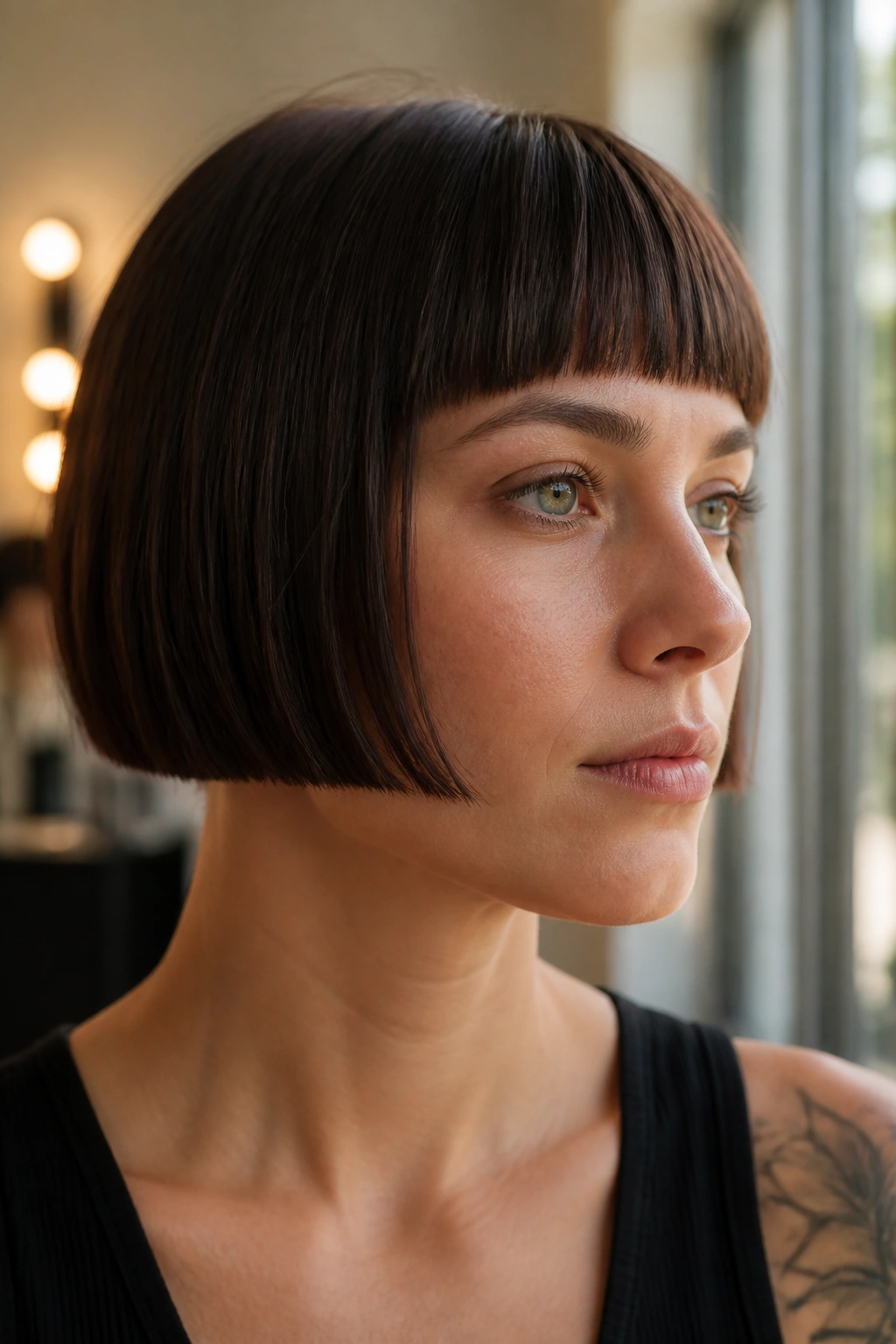
The blunt micro bob is one of the cleanest answers to fine hair that collapses at the ends. It usually sits between the cheekbone and the jawline, with a straight perimeter that makes the hair look denser than it really is. That crisp edge matters. Fine hair often looks wispy when it’s thinned too much, and this cut does the opposite.
Why It Works
A blunt line gives the eye something solid to read. Instead of breaking the hem into soft bits, the cut makes the whole shape feel intentional and compact.
That’s the trick. Not more hair — more presence.
Ask for a dry cut or a careful blow-dry check at the salon if your hair springs up a lot when it dries. Fine hair can shrink in length more than people expect, and a micro bob that looks perfect wet can land a little shorter once it’s fully dry. Keep the ends thick, and skip aggressive texturizing shears unless your stylist is very sure they’re needed.
- Best length: just below the cheekbone or right at the jaw
- Best parting: center or slight off-center
- Best styling tool: a flat brush with a quick bend under the ends
- Best finish: lightweight shine cream, not heavy oil
Bold tip: if your hair is very fine and straight, a micro bob looks richer when the ends are cut blunt and left alone. Too much feathering makes it look sparse.
2. French Bob with Soft Curtain Bangs
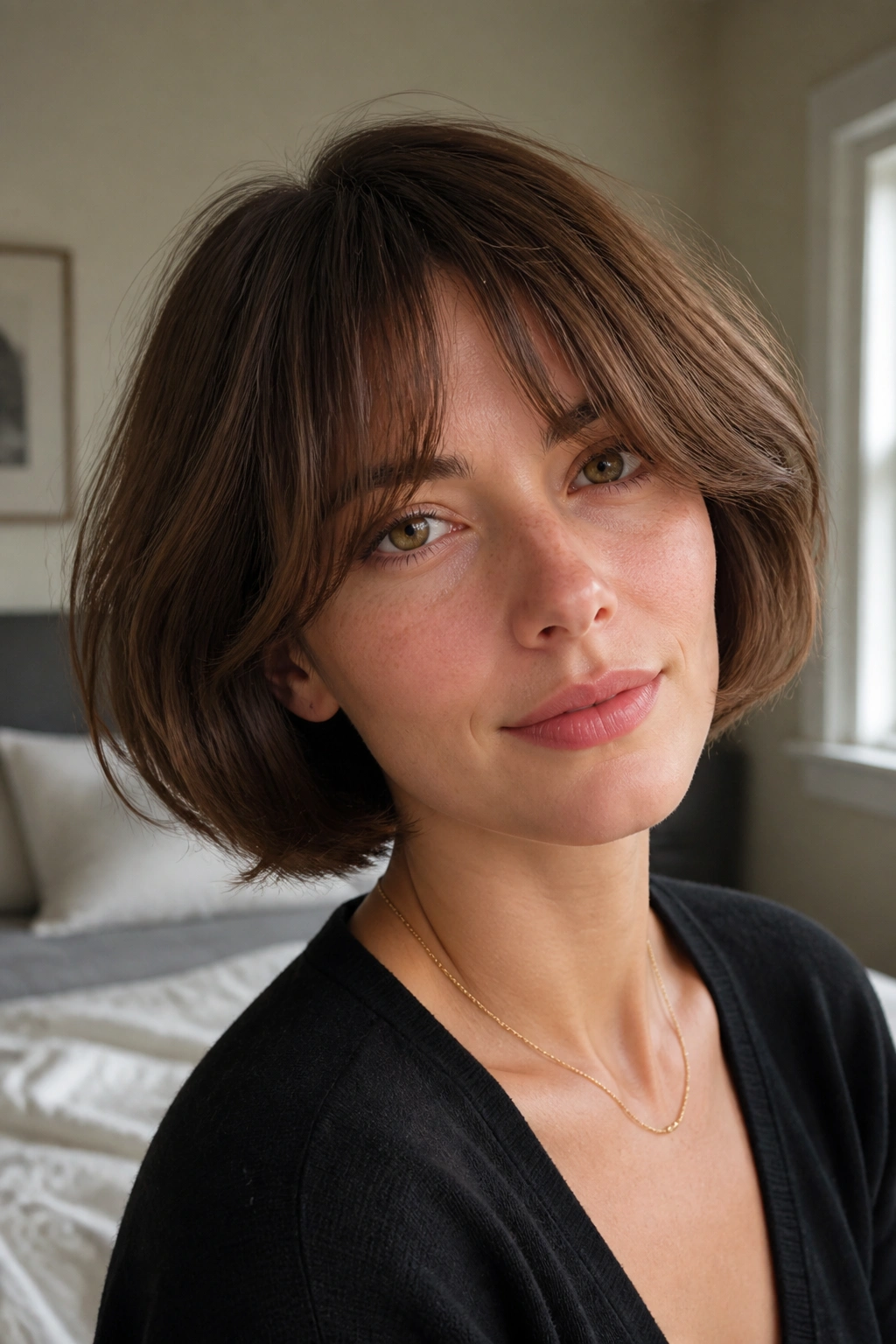
A French bob with curtain bangs has a way of making fine hair look expensive without trying too hard. The cut usually stays short, around the mouth to jawline, but the soft fringe brings movement to the front so the style doesn’t read flat. That little bit of bend at the cheekbones can make the whole haircut feel fuller.
What I like about this one is the balance. The bob itself gives structure, while the fringe keeps it from feeling severe. Fine hair often loses its shape near the face first, so putting some controlled softness there helps the haircut stay alive even on a lazy air-dry day.
The bangs should not be too thin. That’s where people go wrong. A wispy fringe can look pretty in photos and disappointing in daily life, because it separates into see-through pieces the second the hair gets a little oily or humid. Ask for a fringe that opens in the middle and keeps enough density to frame the eyes.
This cut works especially well if your hair lies flat at the crown but has a little natural bend through the front. It also suits anyone who wants short hair without the hard edges of a true one-length bob. The result is gentler, a touch undone, and easier to style than it looks.
3. Bixie Cut
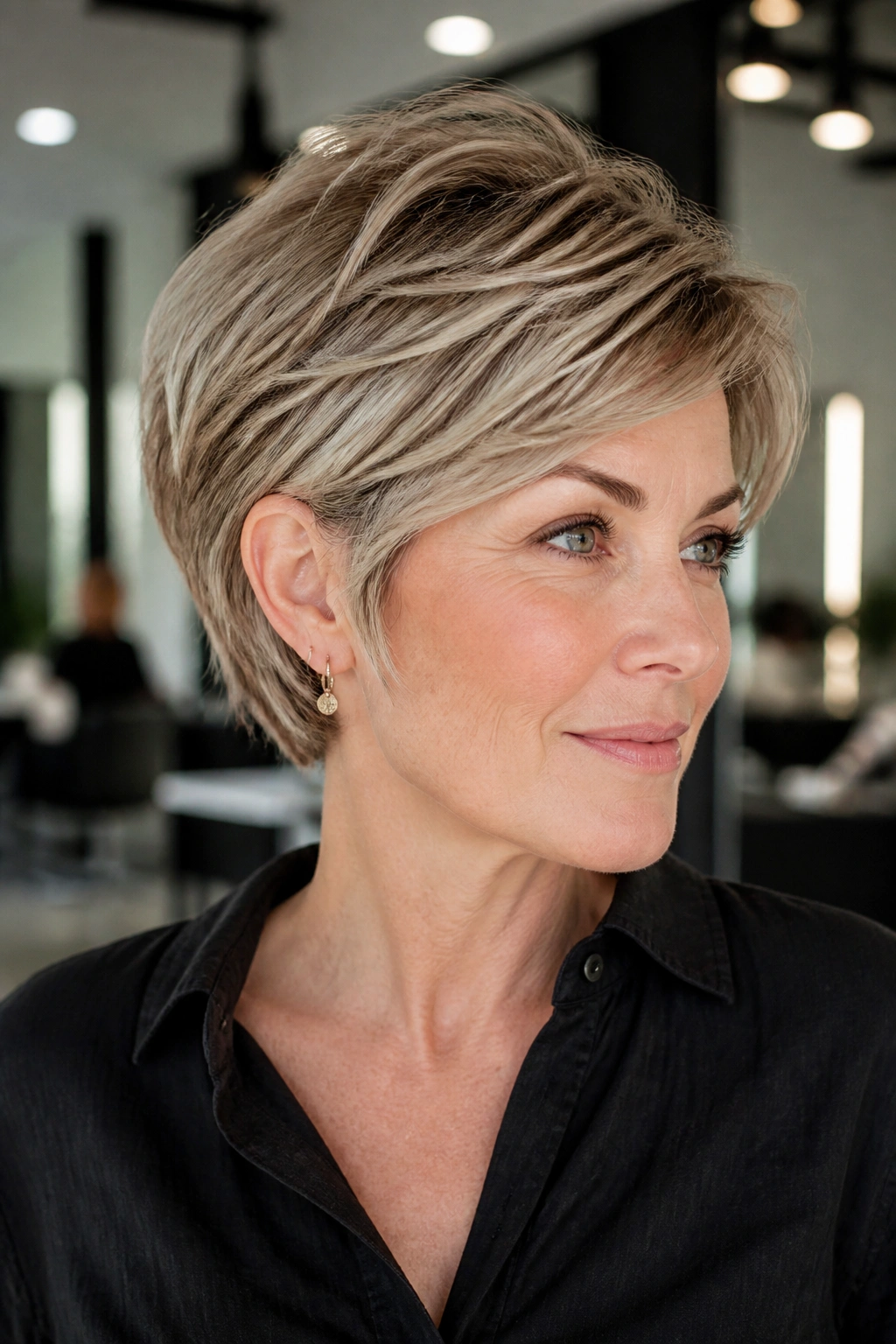
Why does the bixie keep showing up on lists for fine hair? Because it sits in that useful middle ground between a pixie and a bob, which means you get the lift of short hair without losing every bit of softness around the face.
The shape is short enough to create body at the crown, but long enough to avoid the sharp, exposed feel some pixies have. On fine hair, that matters. A pure pixie can sometimes expose the scalp more than you want, while a bob can flatten if the hair is too soft. The bixie takes a bit from both and usually lands in a friendlier place.
How to Ask for It
Tell your stylist you want shorter sides, a light nape, and enough length on top to tuck behind the ear. That last part is useful. It gives you styling room, which fine hair often needs.
A good bixie should not be over-thinned. The crown can be shaped, sure, but the ends need to stay soft and a little chunky so the haircut doesn’t vanish when the hair settles. If your hair is straight, a small round brush at the roots is enough. If it bends naturally, even better — the texture helps the cut look fuller.
This is a smart choice if you want something airy and modern-looking without committing to a very short crop. It also grows out with less drama than a super-short pixie, which is a practical bonus nobody talks about enough.
4. Tapered Pixie with Short Sides
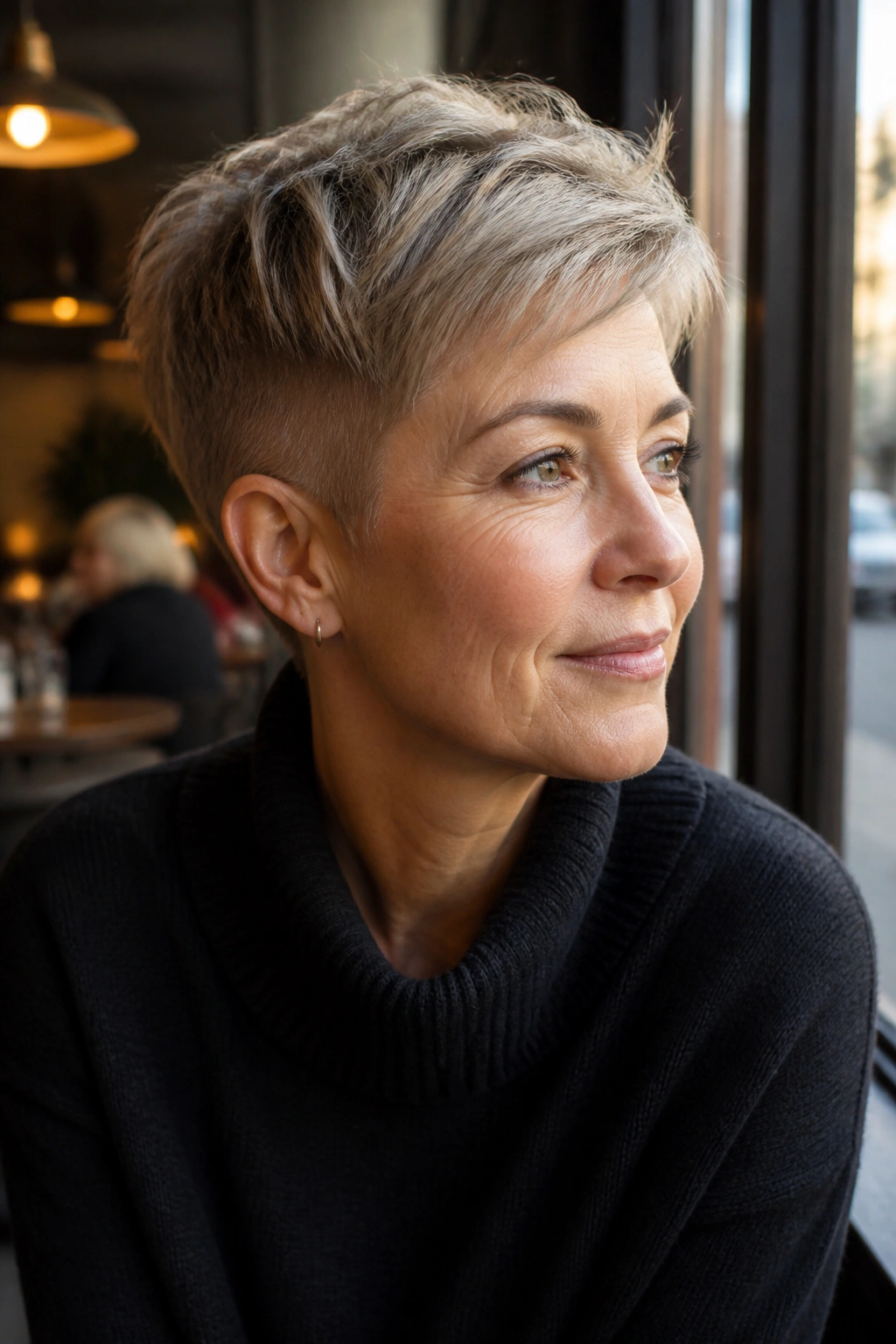
A woman sits in the chair asking for “something easy,” and what she usually means is this: she wants her hair to stop falling flat by lunch. The tapered pixie answers that problem cleanly. It stays close on the sides and nape, then leaves enough length on top to push upward and forward.
The taper is the whole point. It removes bulk where fine hair doesn’t need it, then keeps fullness where the eye notices shape. Done well, it gives the head a neat outline and makes the top look denser than it is.
What Makes It Different
- Short, neat sides that don’t puff out
- A slightly longer crown for lift
- A snug nape that keeps the shape clean
- Lightweight styling that takes less time than a bob
This cut can go wrong if the top gets sliced too thin. Then the shape turns fuzzy, and fine hair loses the body it was trying to save. Keep the top pieces deliberate. Short, yes. See-through, no.
A tapered pixie suits anyone who wants low-maintenance mornings and doesn’t mind showing the face a bit more. It’s also one of the best cropped cuts for active people, because it holds up under hats, wind, and a day of moving around. Straight hair can look sleek with a touch of paste. Wavy hair gets a little lift from the natural bend. Either way, it feels tidy without being severe.
5. Jaw-Length Box Bob
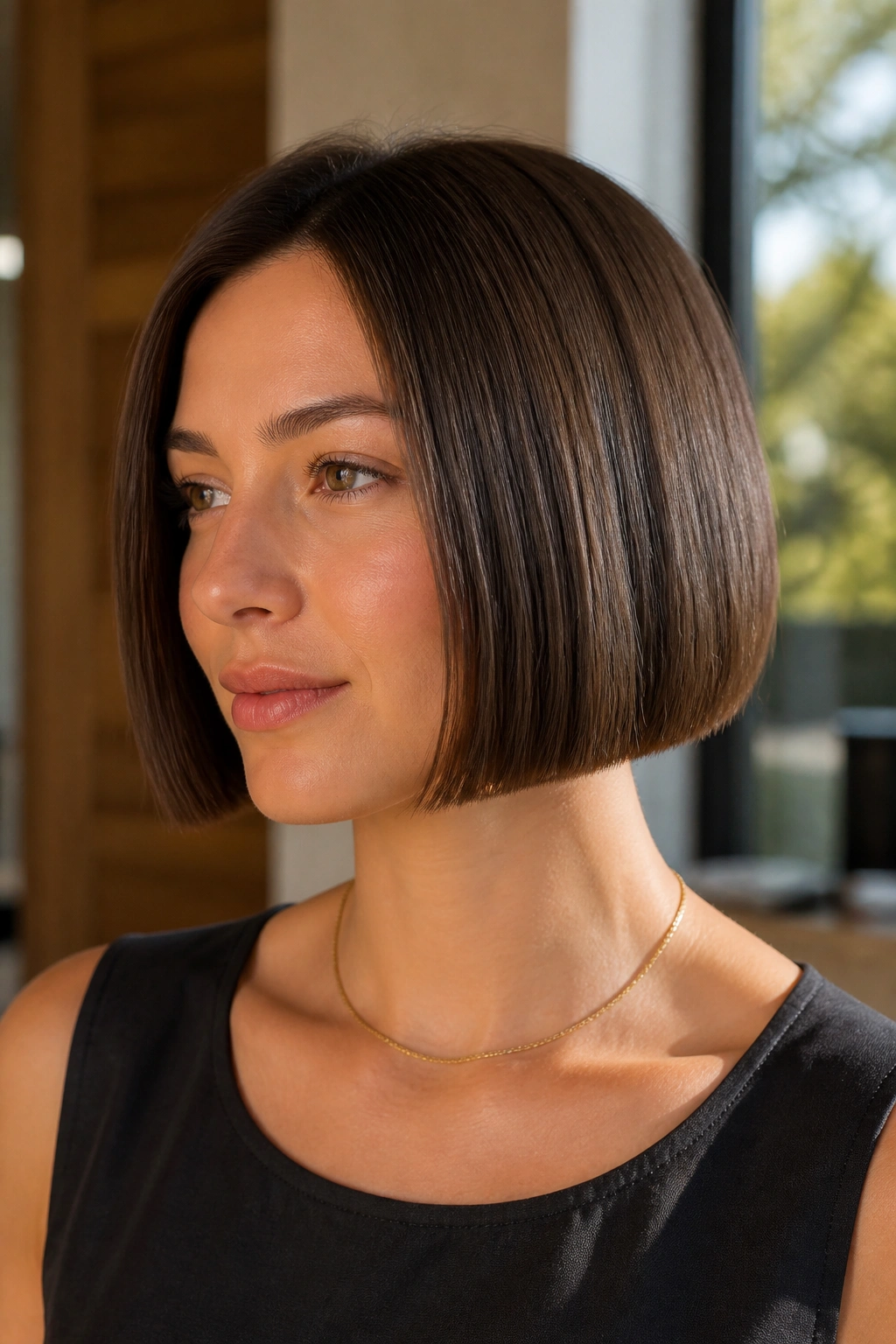
The jaw-length box bob is blunt in the best possible way. It sits right around the jaw, keeps the corners square, and gives fine hair a heavy-looking outline that can be startlingly flattering. If your ends tend to fray into nothing, this shape brings them back into focus.
I’m fond of this cut because it does not ask fine hair to be something it isn’t. It doesn’t rely on soft shaggy layers or a lot of broken texture. Instead, it leans on a strong perimeter and a controlled finish. That makes the hair look thicker from the front, the side, and even in a low ponytail if you need one.
The box shape works best when the weight line is left intact. That means the stylist should avoid over-dusting the ends or carving away too much through the interior. Fine hair loves to lose density during a cut that’s trying too hard to “add movement.” Sometimes the smarter move is to keep the line firm and use styling to create bend.
A small round brush, a flat iron turned just a few degrees under, or even a quick tuck behind the ears can all make this cut feel polished. It’s a strong choice if you like clean haircuts and want your hair to look like it has more substance than the strand count suggests. A little sharpness helps here. A lot, actually.
6. Curved Crop with Side Part
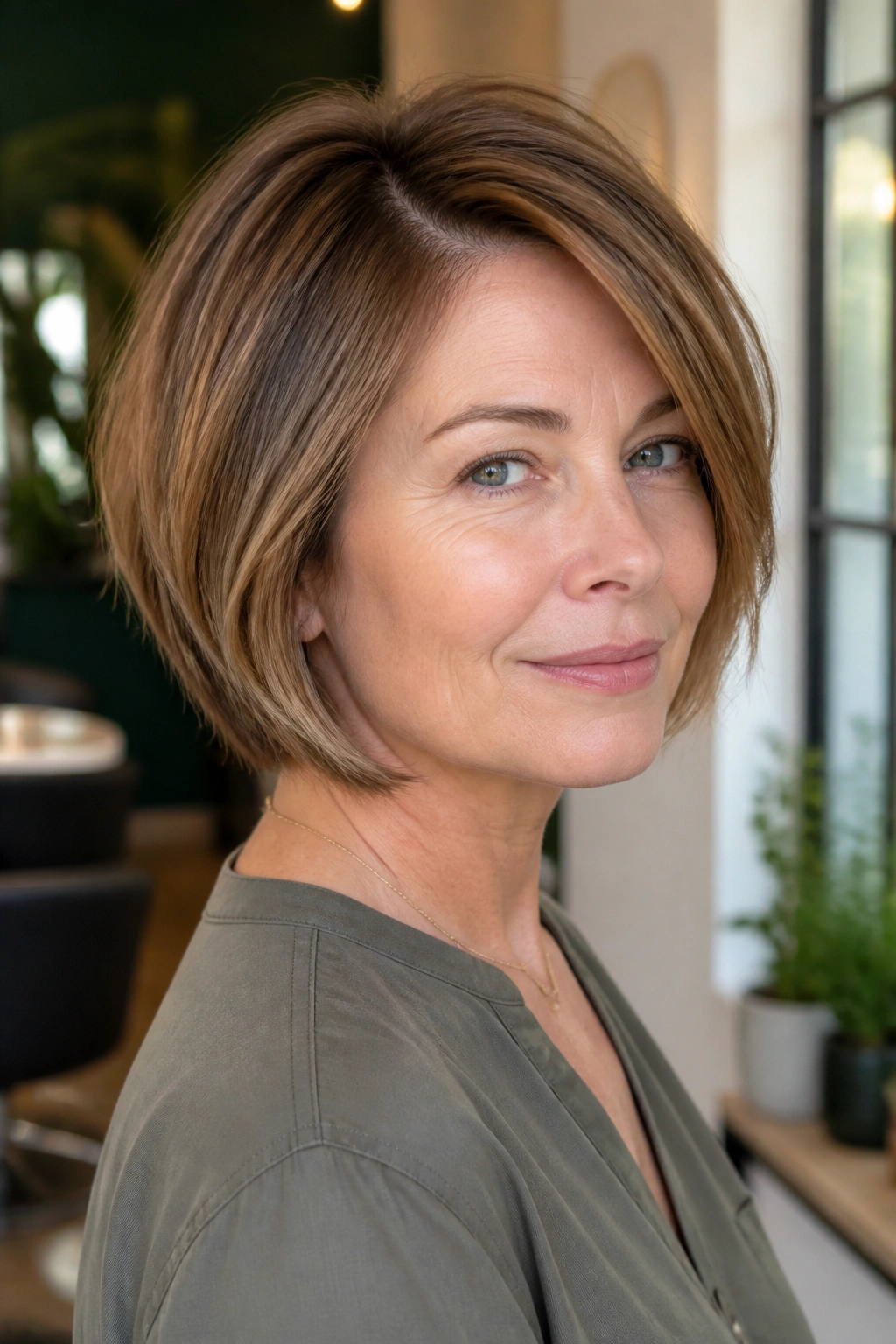
The curved crop is the friendlier cousin of the blunt bob. Instead of straight edges all the way around, it bends gently toward the jaw and often starts with a deep side part. That curve is useful on fine hair because it keeps the style from looking too flat or too boxy.
Unlike a strict one-length bob, this cut lets the hair fall with a bit of shape near the face. The side part gives instant lift at the crown, which is often the area that gives fine hair away first. You get a little height without teasing, and that’s a win in my book.
What Makes It Different from a Blunt Bob
The blunt bob reads stronger and heavier. The curved crop reads softer and a bit more fluid.
If your face is rounder or you like some movement around the cheekbones, this cut is an easy pick. It can also work well for people who hate the flat, straight-across feeling of a bob but still want something short and tidy. The curve keeps the ends from looking chopped off. The side part keeps the top from lying dead against the scalp.
Style it with a root spray and a small brush, lifting only the front and crown. You do not need much else. A little bend through the front pieces is enough. If the hair is especially fine, a matte texturizing powder at the roots can help, but use a light hand. Too much product weighs the whole thing down fast.
7. Feathered Crop with Piecey Ends
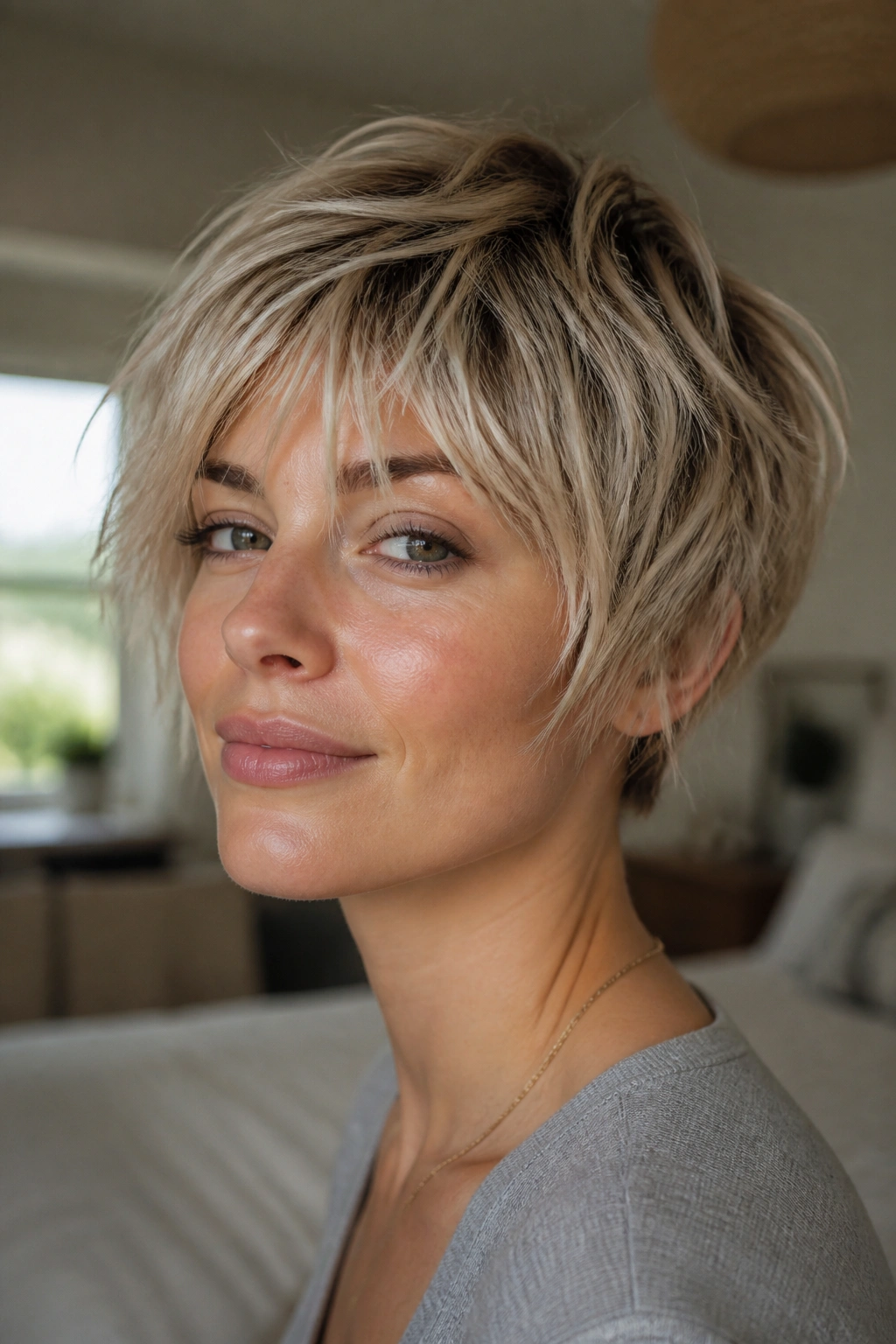
A feathered crop is one of those cuts that can look airy in the best sense or flimsy in the worst. The difference is in the texture control. On fine hair, the goal is to keep the ends separated enough to move, but not so shredded that they disappear.
Where the Softness Goes
The softness belongs near the top and around the face. That’s where feathering can add lift and shape without destroying density at the hem. The nape and perimeter should stay cleaner so the haircut still has a backbone.
How to Wear It
- Blow-dry the roots forward, then lift them back
- Use a pea-sized amount of styling cream
- Pinch a few front pieces to separate them
- Leave the ends slightly rounded, not stick-straight
The phrase “piecey ends” gets thrown around a lot, and plenty of people overdo it. If the pieces are too skinny, the haircut starts to look tired by midday. Fine hair needs movement, yes, but it also needs mass. That mass can be visual rather than literal, which is why the balance matters so much.
This cut suits someone who likes a lived-in look and doesn’t mind touching up the front pieces with fingers during the day. It’s less polished than a box bob, more relaxed than a pixie, and easier to wear than people expect. The best version feels soft at the edges but still anchored at the base.
8. Undercut Pixie
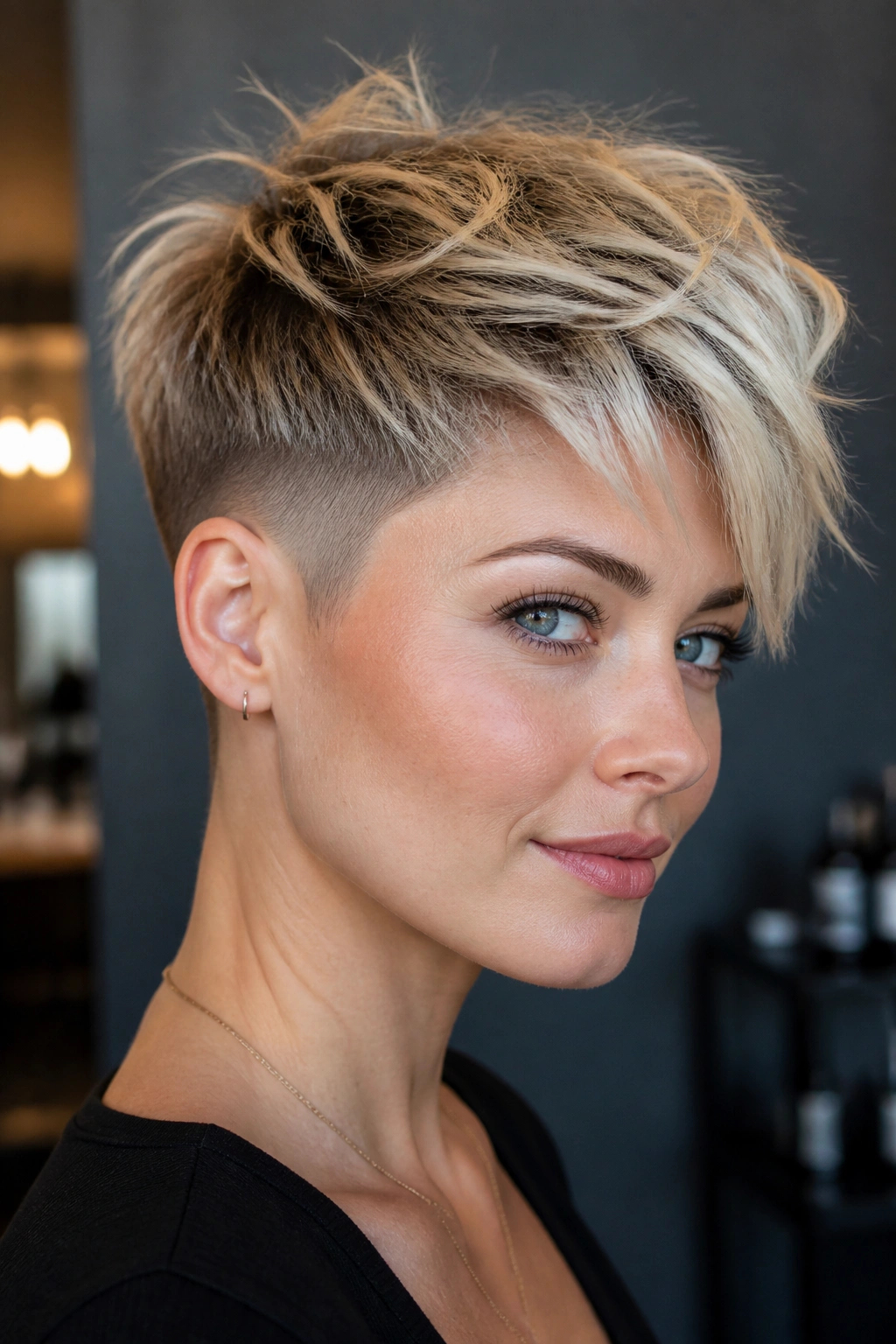
The undercut pixie is for the person who wants the top to look fuller by taking weight away underneath. It sounds aggressive, and in a way it is. But on fine hair, that can be the smartest move when the sides and nape puff out while the crown stays limp.
Here’s the basic logic: remove bulk where the hair is lying too close to the head, then leave enough length on top to create shape. That contrast makes the top seem taller and more substantial. It also gives the haircut a crisp outline, which fine hair often benefits from more than soft layering.
A good undercut pixie should still feel wearable. The shaved or closely clipped section does not need to be extreme. Sometimes just a narrow underlayer at the nape or around the ears is enough to make the top sit properly. I prefer that approach for most people, because it grows out in a calmer way and leaves more styling options.
Tell your stylist whether you want the undercut visible or hidden. That matters. Some people want the surprise of a short hidden section. Others want the edges to show. Both can work, but they are not the same haircut. If you wear glasses or earrings, think about how the cut frames them — that tiny detail can make the style feel finished instead of random.
9. Rounded Mushroom Crop
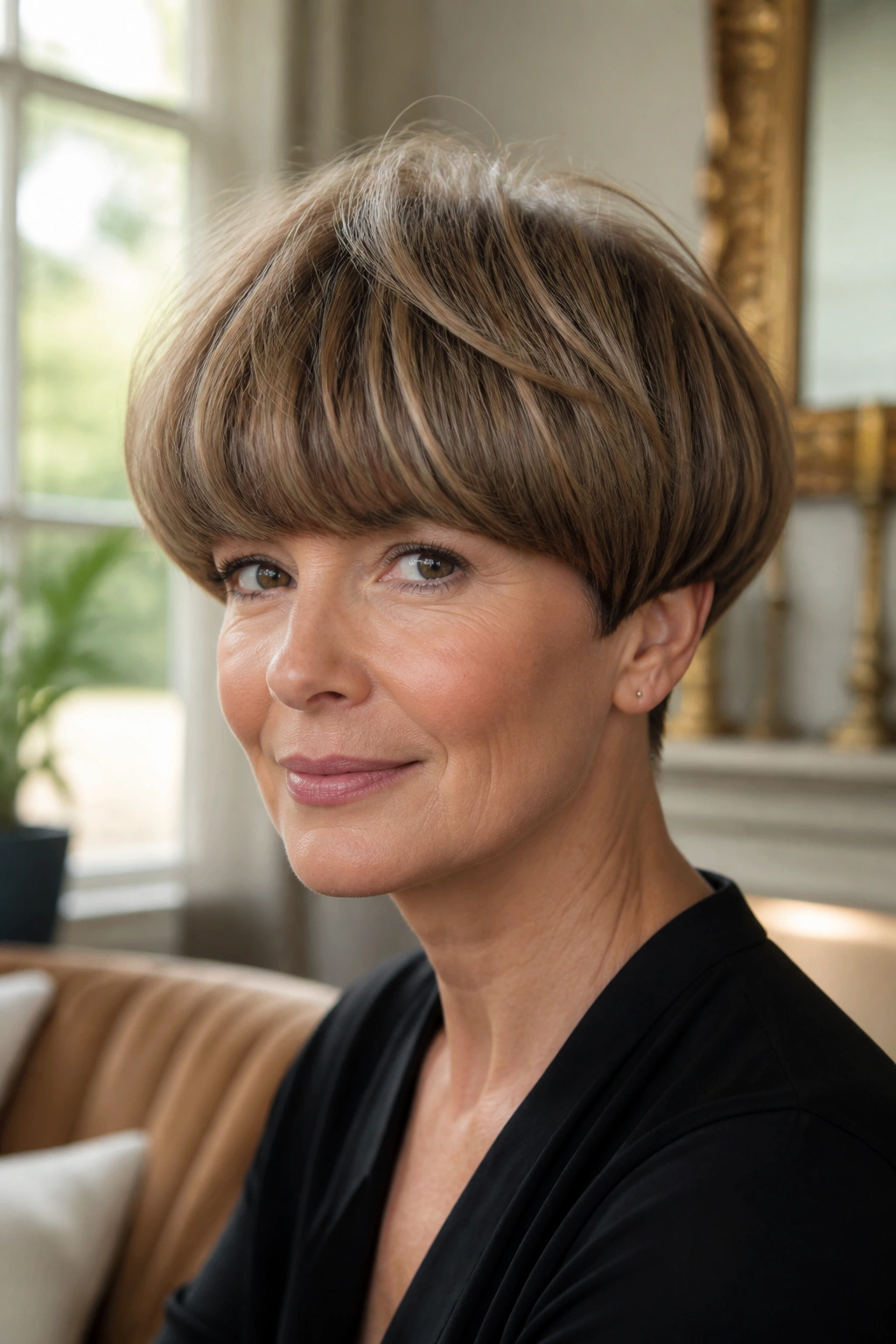
The rounded mushroom crop has a retro feel, but the modern version is much softer than the old-school bowl cuts people still remember from childhood photos. On fine hair, the rounded shape can be a gift because it creates a full-looking outline around the head without needing a lot of length.
A rounded crop works best when the crown has a little internal lift and the perimeter stays full. That combination makes the hair look plush, almost cushioned. It is a good cut for anyone whose hair falls flat at the top and sticks close to the scalp at the temples.
I’ve noticed this shape is especially good when the hair has a tiny bit of natural bend. Straight fine hair can still wear it, but it often needs a round brush or a blow-dry brush to keep the curve in place. The silhouette is the star here. If the curve collapses, the whole cut loses its charm.
- Keep the fringe soft, not blunt and thick
- Ask for a rounded shape through the crown
- Leave enough length at the sides to tuck behind the ear
- Use a light mousse before drying for hold
This is not the easiest haircut for someone who wants a completely fuss-free air dry. It needs a little attention. Still, when the shape is right, it gives fine hair a compact, full look that feels modern without being fussy.
10. Choppy Wedge Bob
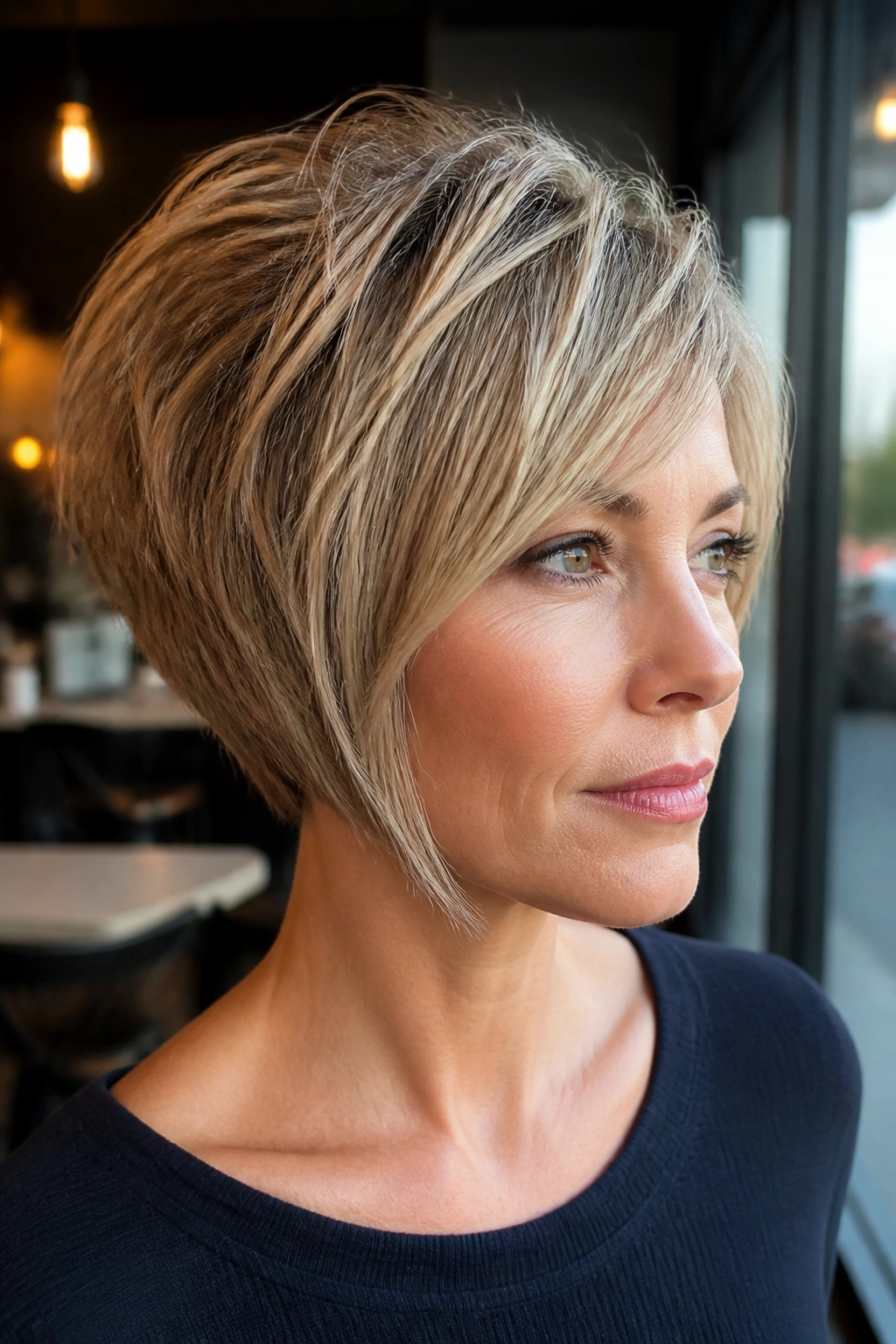
A choppy wedge bob gives you lift in the back and movement through the sides, which makes it a useful option for fine hair that droops at the nape. Unlike a straight bob, the wedge shape stacks a little volume into the rear section, then lets the front taper forward. That shape can make the head look more balanced from profile.
What separates this from a standard layered bob is the direction of the weight. The cut angles upward at the back, so the hair has a built-in push instead of hanging in one flat plane. Fine hair often does better when the shape is doing some of the work for it.
Best For
- Flat crowns that need a little lift
- Straight or lightly wavy fine hair
- Anyone who likes structure but not a hard bob line
- People who want volume without teasing
The choppiness should be controlled. I’m not a fan of a wedge that’s been over-razored into fluff. That usually makes fine hair look see-through at the ends and too busy near the crown. You want a clean wedge, then a few deliberate breaks in the perimeter so the hair moves when you turn your head.
A side part sharpens the angle and gives the style more body. A center part softens it. Either way, this is one of those cropped cuts that quietly solves shape problems instead of chasing texture for its own sake.
11. Ear-Grazing Crop with Micro Fringe
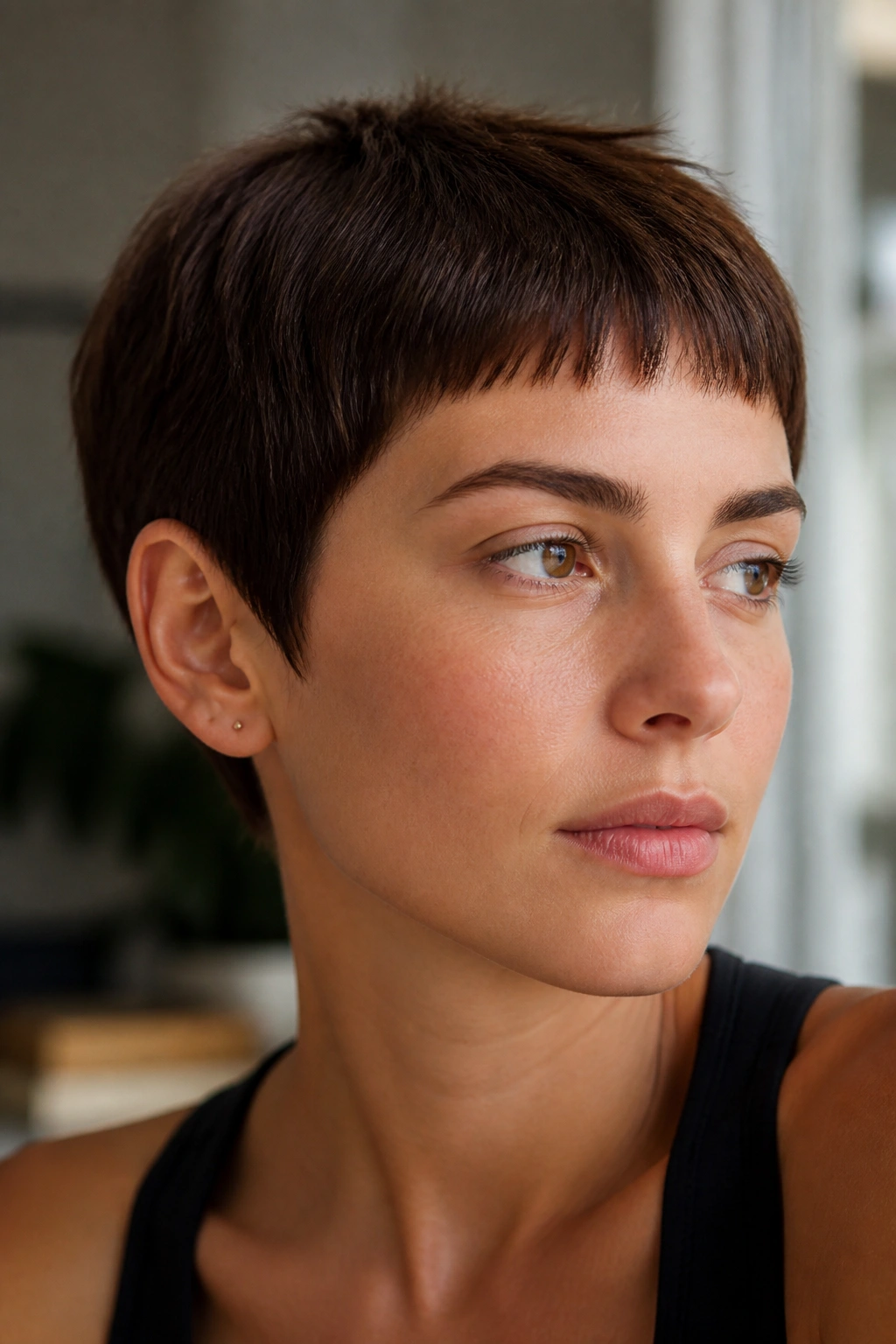
Do you want short hair, but not the obvious kind? The ear-grazing crop with a micro fringe sits in that sharp little zone between playful and severe, and it can look excellent on fine hair when the lines are kept clean.
The length usually skims the ears and stays cropped around the neck. The fringe is short, often just above the brows, which gives the face a strong frame. On fine hair, that front detail matters because the top can otherwise look too light. A micro fringe brings a visual anchor right where people look first.
This cut is not for everyone. It shows the forehead, it shows the ears, and it asks you to commit to the shape. But if you like a crisp silhouette and you’re tired of hair that hides in the wrong places, it has real appeal. Fine hair benefits from that kind of decisiveness.
How to Wear It
A tiny amount of paste through the fringe keeps it from separating into strings. A quick blow-dry from side to side helps the front sit flat but not lifeless. If the hair is very soft, a root mist at the crown can stop the style from collapsing by noon.
The best version of this crop feels sharp at the edges and soft in the movement. That contrast is what keeps it from looking too severe. And yes, it grows out quickly, so it needs regular trims. That is the trade-off. Some cuts ask for less. This one asks for upkeep, and it’s worth knowing before you sit in the chair.
12. Long Pixie with Sweeping Fringe
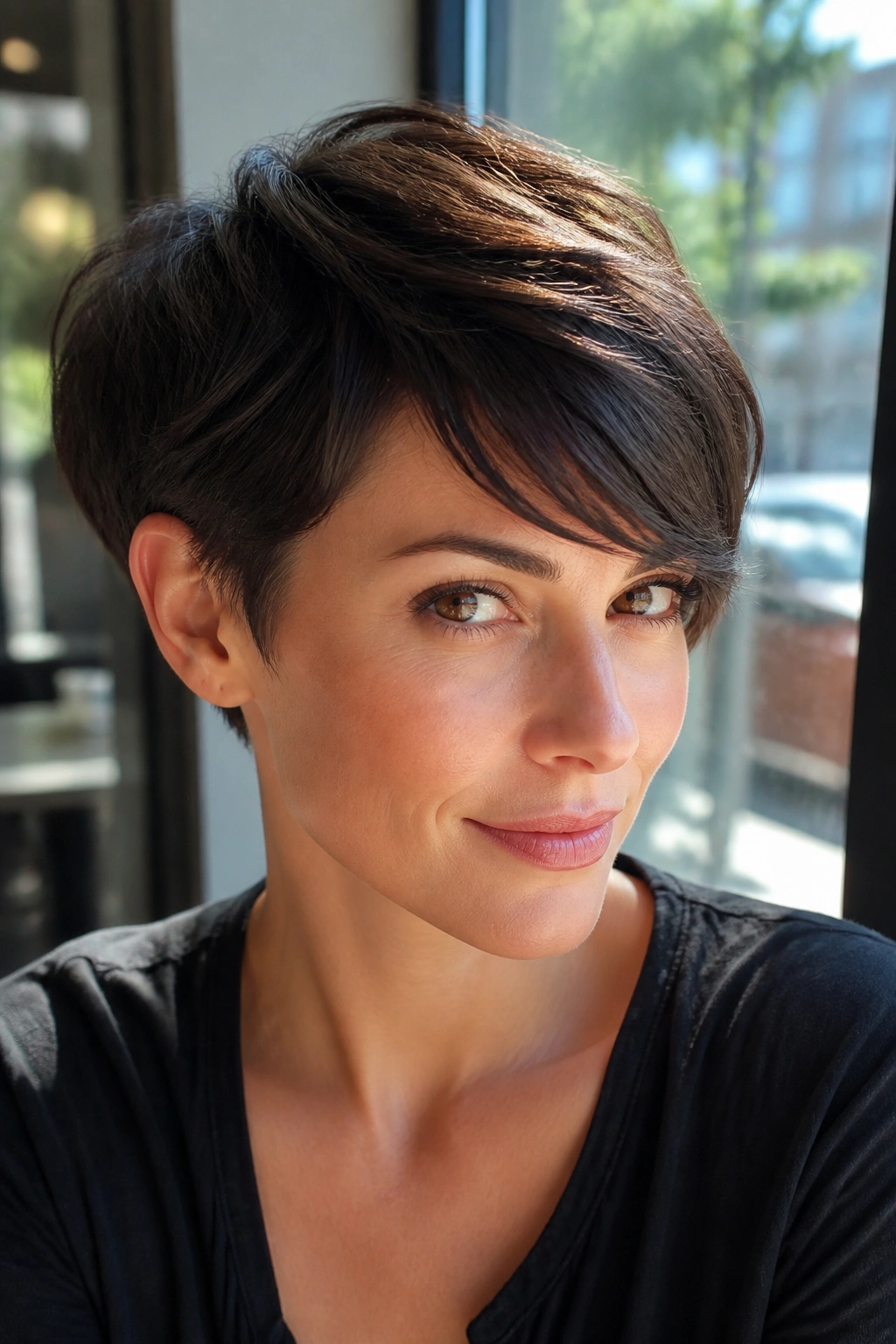
The long pixie with a sweeping fringe is probably the most forgiving cut on this list. It keeps the sides short enough to feel cropped, but it leaves the top and fringe long enough to shape in different ways. For fine hair, that flexibility is gold.
The sweeping fringe helps because it creates a visible line across the face. Fine hair can look sparse when it’s pushed straight back, but a soft diagonal fringe adds movement and a little thickness right in front. It also gives you options. You can wear it smooth, tucked, or lightly tousled depending on how much time you want to spend.
This cut works best when the top stays longer than the sides by a noticeable amount. Not a dramatic undercut, necessarily — just enough difference to build shape. If the lengths are too close together, the style loses its point and starts to look like a very short bob with no structure.
A round brush at the roots, a small dab of cream through the fringe, and a quick twist with your fingers are usually enough. No heavy wax. No thick paste. Fine hair hates being buried under product, and this cut especially needs the top to stay airy.
If you want a cropped cut that can move between polished and casual without much fuss, this is the one I’d reach for first. It has enough length to feel safe, enough shortness to feel fresh, and enough shape to make fine hair look like it has more going on than it really does.
