



A great short cropped cut can do more for a round face than a lot of longer hair ever will. The trick isn’t hiding your cheeks. It’s creating shape where the face is softest — lift at the crown, movement around the jaw, and a front section that doesn’t stop at the widest point of the face.
People get nervous about short hair on round faces because they picture a neat little circle sitting on top of another circle. That’s the wrong mental image. A good crop breaks the shape up. It steals width from the sides, adds interest up top, and lets your eyes travel vertically instead of stopping at the cheeks.
Texture matters. So does where the weight sits. A slightly longer fringe, a tapered nape, an off-center part, a piece that falls just below the brow — those tiny choices change the whole read of the cut. If your hair is fine, you want lift; if it’s thick, you want the bulk taken out in the right spots, not hacked off at random.
Some of these cuts are soft and easy. Some are sharp and a little bratty in the best way. A few sit between a pixie and a bob, which is often the sweet spot for people who want short hair without feeling exposed. Pick the shape that fits your texture, then decide how much edge you want.
1. Side-Swept Pixie With Crown Lift for Round Faces
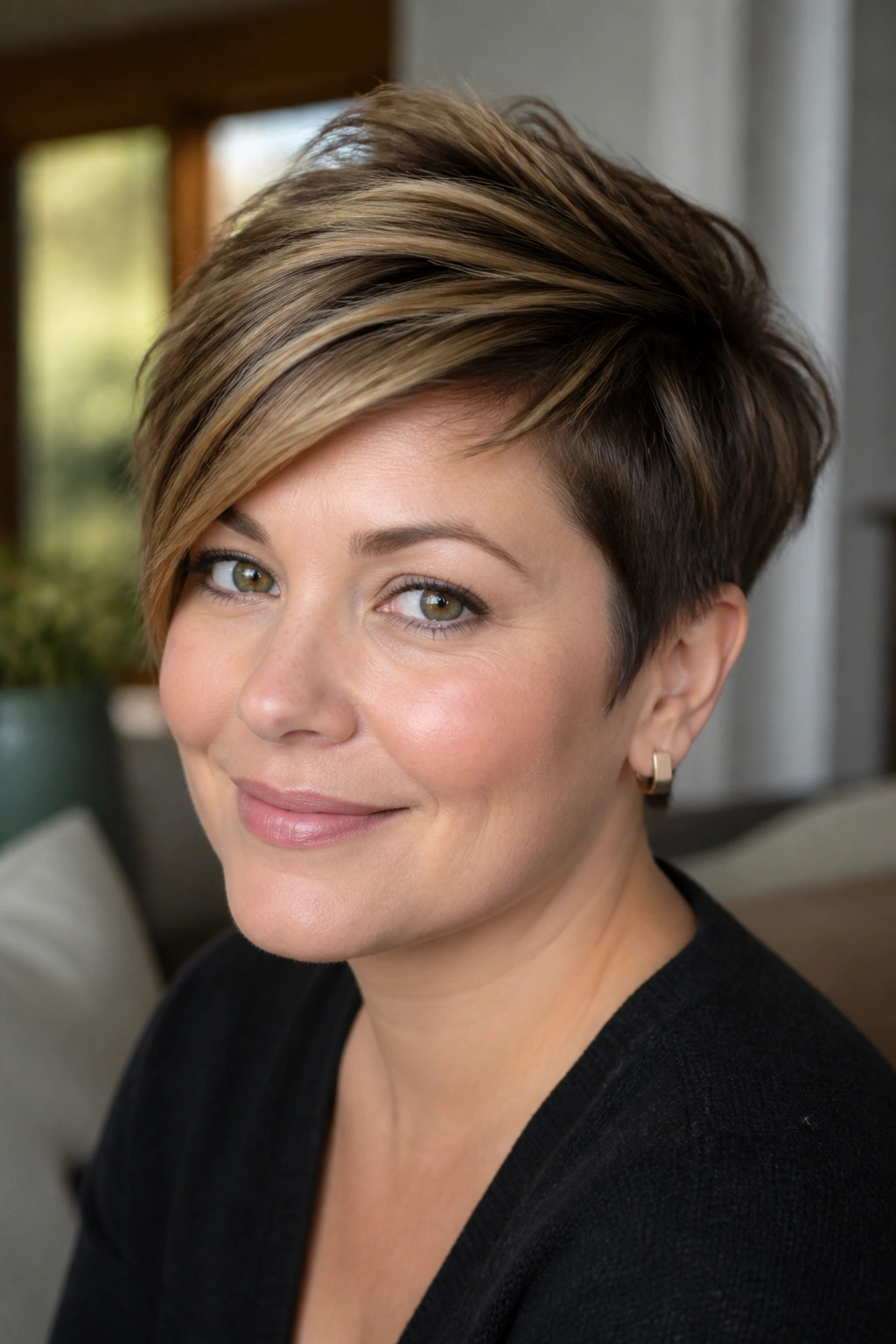
If I had to pick one short cut that flatters a round face with the least drama, it’s this one. The side-swept pixie keeps the eye moving diagonally, and that diagonal does a lot of heavy lifting.
The shape should be short at the sides and back, with enough length on top — usually around 2½ to 4 inches — to sweep across the forehead and build a little height at the crown. That crown lift is the quiet hero here. It gives the face a longer read without making the cut feel spiky or fussy.
Why It Works
Round faces usually need contrast more than they need coverage. A side-swept fringe gives that contrast right away, because the front no longer mirrors the curve of the face. Instead of a round frame, you get an angled one.
Ask for the temple area to stay a touch longer than the sides. That softens the transition into the cheek and keeps the cut from ending all at the same point. Blunt, even lengths are what make a pixie feel boxy.
- Best on straight, wavy, or lightly curly hair
- Great for fine hair that needs a lift at the roots
- Works well with a deep side part or a soft off-center part
- Ask for point-cutting on top so the fringe moves instead of sitting flat
Dry the fringe first, then the crown. If the front is already going where you want it, the rest of the shape falls into place faster. That one little habit saves a lot of morning arguing with your hair.
2. Tapered Crop With Choppy Texture
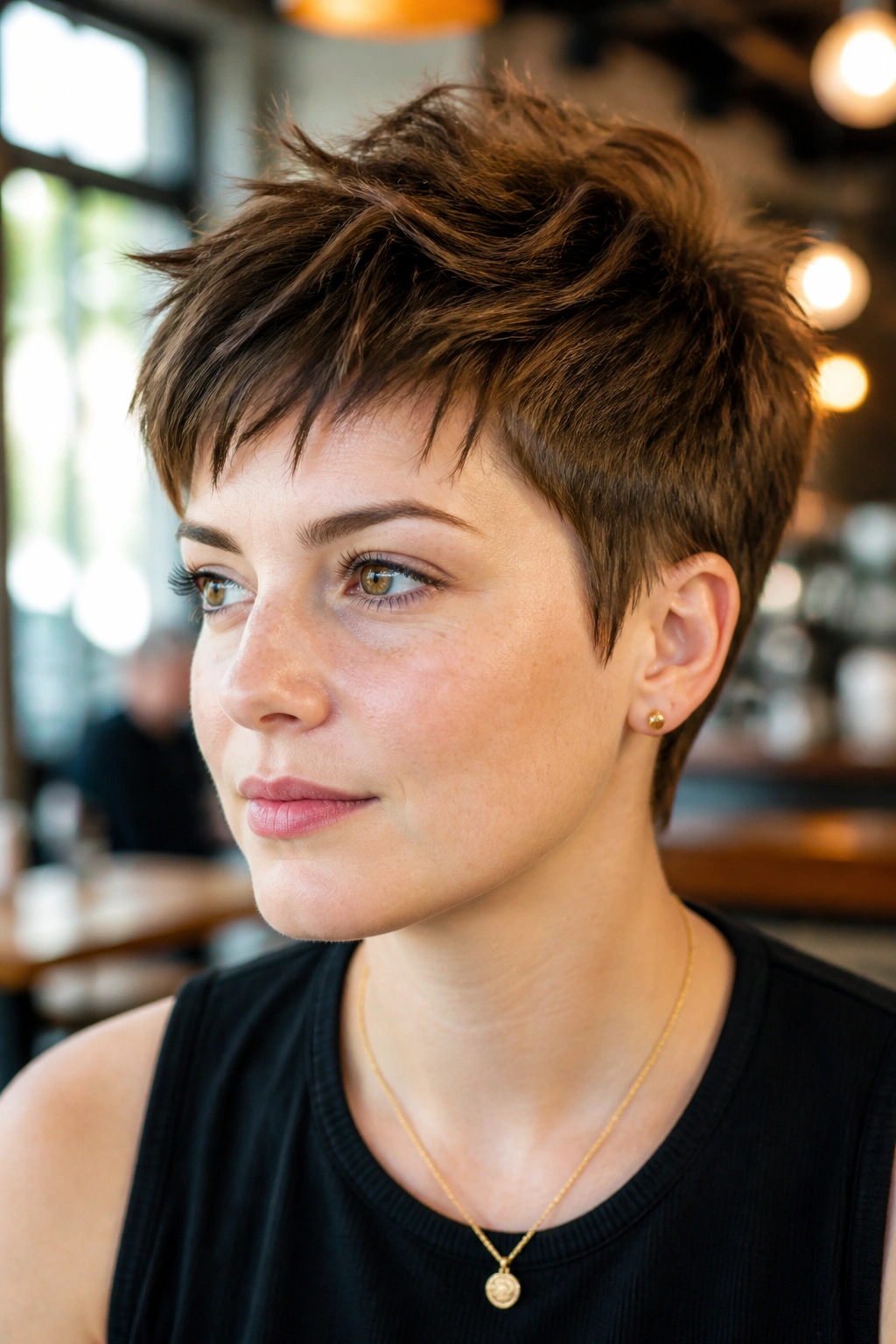
Why does this look so clean on round faces? Because the sides narrow before the hair reaches the widest part of the face, and that changes the whole outline.
A tapered crop keeps the back and sides snug while the top stays broken up and piecey. The top doesn’t need much length — often 1½ to 3 inches is enough — but it does need movement. If the top is too polished, the shape turns flat. If the sides puff out, the whole cut starts to feel wider than it should.
How to Style It
Work a pea-sized amount of matte paste or clay through dry hair, not wet hair. Wet hair hides the real shape, and this cut depends on shape.
Push the front slightly forward and lift the roots with your fingertips. Then break up the top with a little pinch-and-release motion so the texture stays soft instead of helmet-like.
- Blow-dry the hair in the opposite direction of your part for 20 to 30 seconds first
- Keep the nape tidy so the back doesn’t swell
- Use a matte finish if you want the texture to show
This is a low-fuss cut, but not a no-fuss one. The choppiness is the whole point. Lose that, and you’re left with a shape that feels more generic than intentional.
3. Chin-Length Bixie With Soft Ends
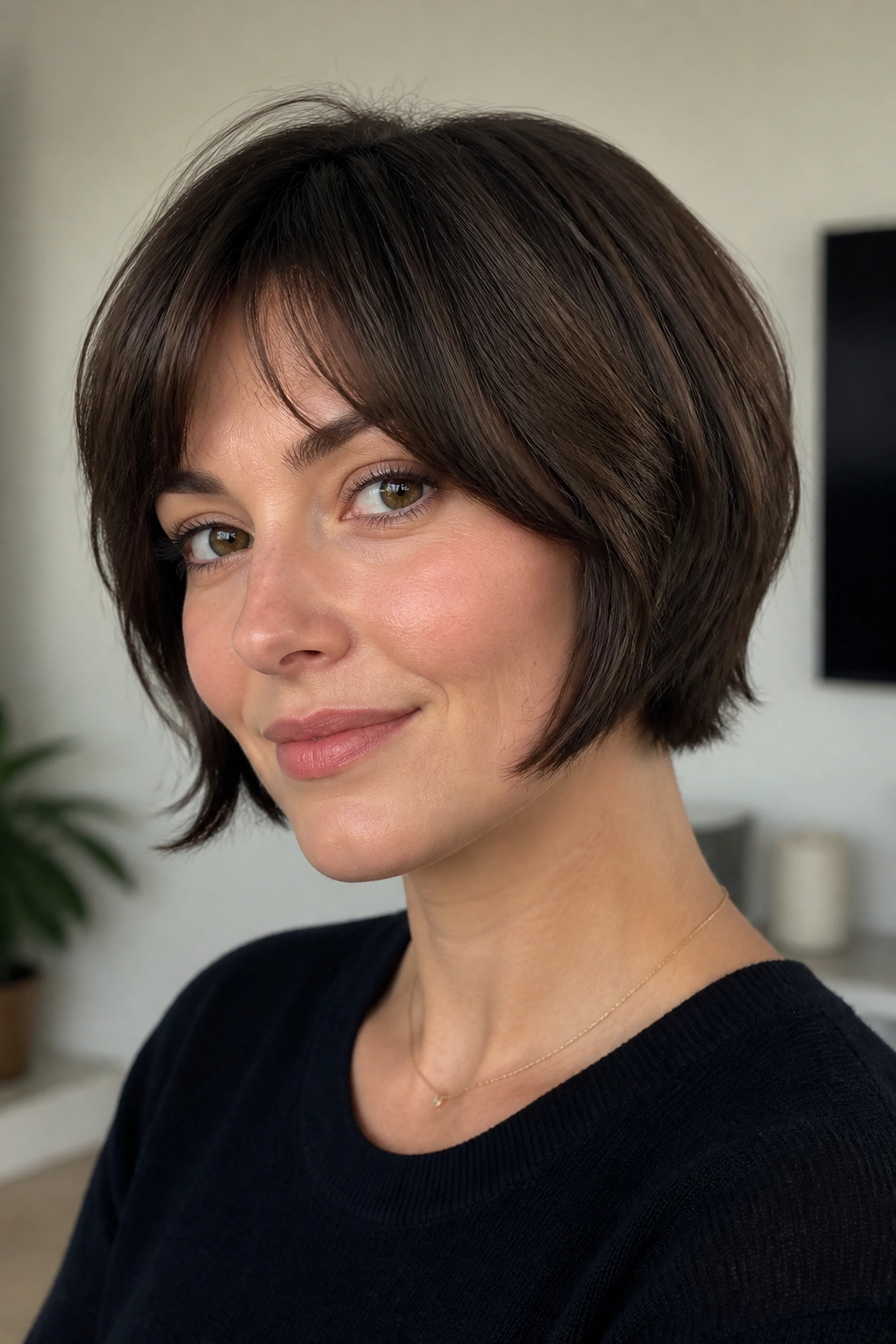
If you’ve ever left a salon with a bob that sat like a shelf, you already know why the bixie matters. It sits between a pixie and a bob, which gives you short hair without that hard, boxy line.
The best version for a round face keeps the longest pieces around the chin or just below it, with a slightly shorter back and soft ends. Nothing should look chopped off straight across. A gentle bevel at the edge keeps the cut moving, and that movement is what keeps the face from looking wider.
Ask for internal layers if your hair is thick. That takes bulk out from underneath, which matters more than people think. Heavy hair at the jaw can make even a nice shape feel square by lunchtime.
A side part helps here, but a very deep side part can push too much hair onto one cheek. I like a soft offset part that lets one side tuck behind the ear while the other side drops forward a little. It’s subtle. That’s enough.
This cut feels grown-up without turning severe. It’s a good line to walk, especially if you like structure but don’t want anything too sharp around the face.
4. French Crop With A Long Fringe
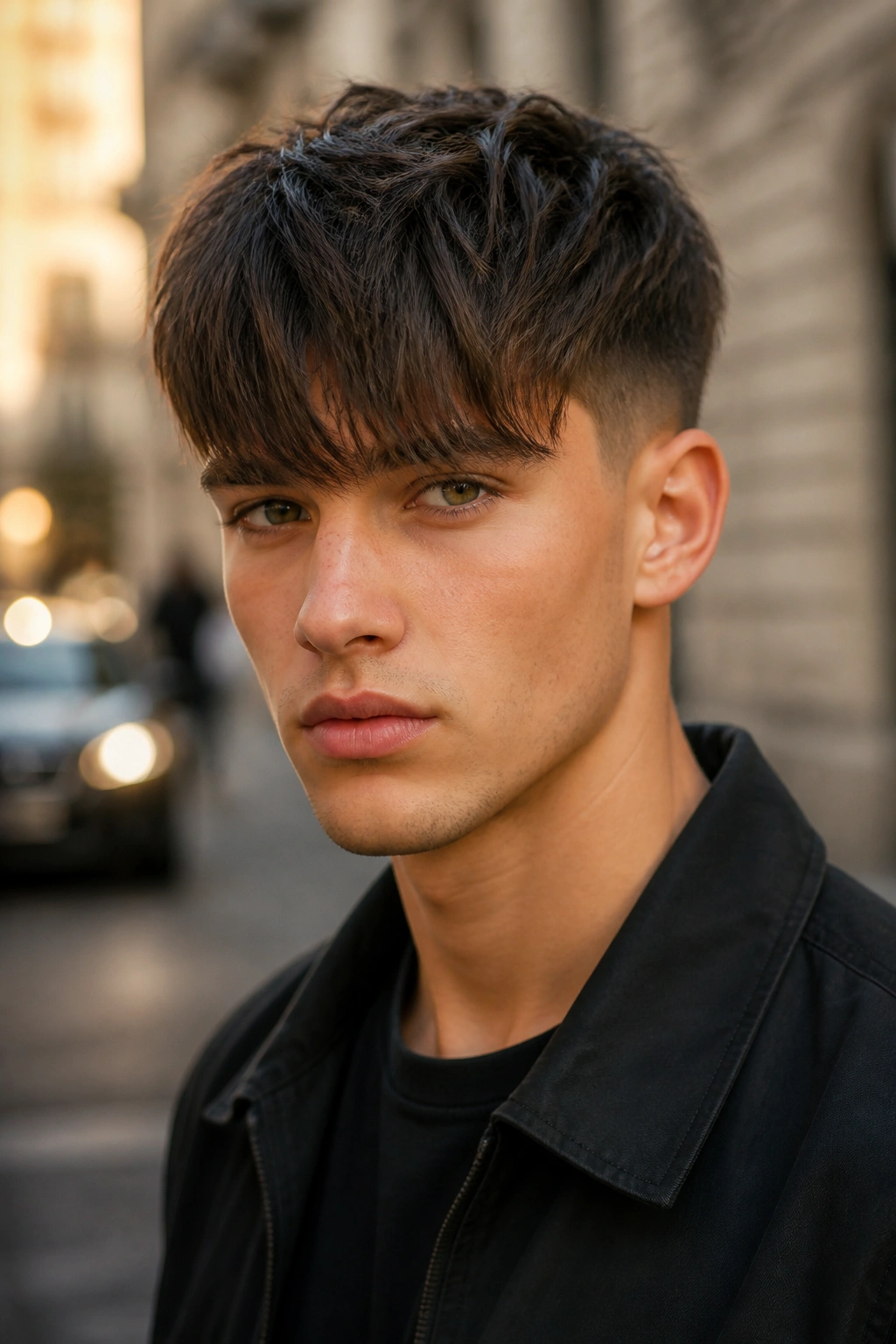
The French crop gets misunderstood all the time. People picture a heavy little cap of hair with no softness. That version can be rough on a round face. The better version is lighter, more broken up, and less tidy in the front.
The fringe should stay a little longer than the top line of the brows, then get softened at the corners so it doesn’t sit as one straight wall. The sides need to stay close to the head, otherwise the style starts to widen at the temples and that’s the last thing a round face needs.
The charm of this cut is how little effort it asks for once the shape is right. A bit of cream through damp hair, a quick rough-dry with your fingers, and a little push of the fringe to one side is often enough. If your hair is straight, a light bend at the front keeps it from looking severe. If it’s wavy, even better. The texture already gives the fringe some life.
I like this cut on people who want something tidy but not precious. It works especially well with strong brows and a visible forehead line, because the crop gives you a clean frame without swallowing the face.
And no, it does not need to be cute in the classic sense. It can be crisp, cool, and a little blunt around the edges. That’s exactly why it works.
5. Asymmetrical Pixie Bob for Round Faces
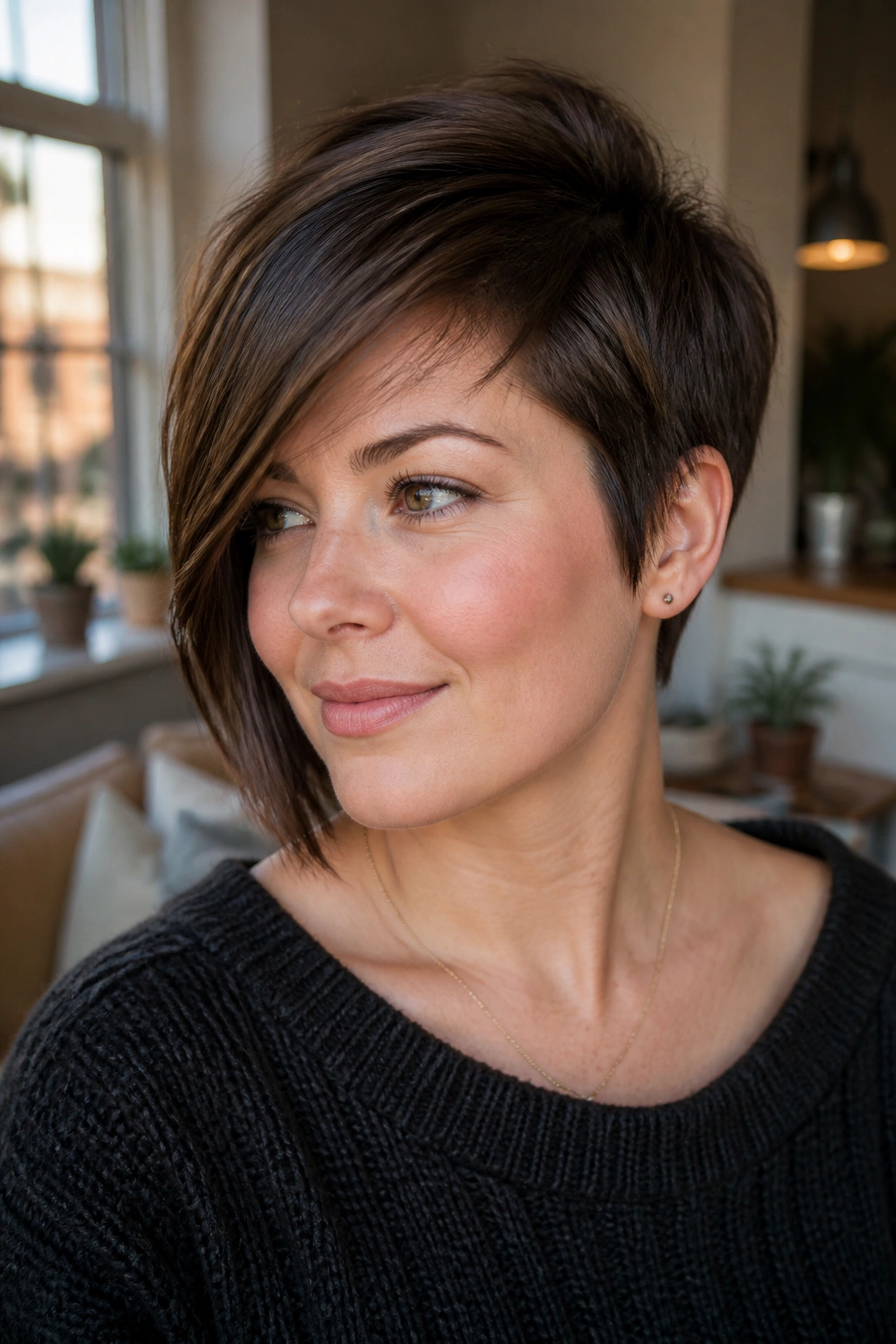
Unlike a straight bob that ends at the same point on both sides, this cut gives you one side that hangs a little longer — often by 1 to 2 inches — and that tiny imbalance is the whole trick.
The longer side can skim the jaw or land just below it, while the shorter side opens up the cheek and ear. That diagonal line keeps the face from reading as one continuous curve. The back stays short enough to keep the neckline neat, but not so short that it feels disconnected from the front.
This is a good choice if you want one foot in pixie territory and the other in bob territory. You get movement and a little drama without going all the way to a severe crop. It also suits people who like to tuck hair behind one ear and let the other side fall forward. That asymmetry gives the face a longer look in a way that feels natural, not forced.
If your hair is thick, ask for the interior to be thinned a bit so the longer side doesn’t puff out. If it’s fine, keep the ends soft so the front doesn’t look stringy. The cut needs enough weight to swing, but not so much that it sits there like a brick.
I’d recommend this to anyone who wants short hair with a point of view. It has shape. It has direction. And it doesn’t collapse into sameness after a long day.
6. Undercut Pixie With Height On Top
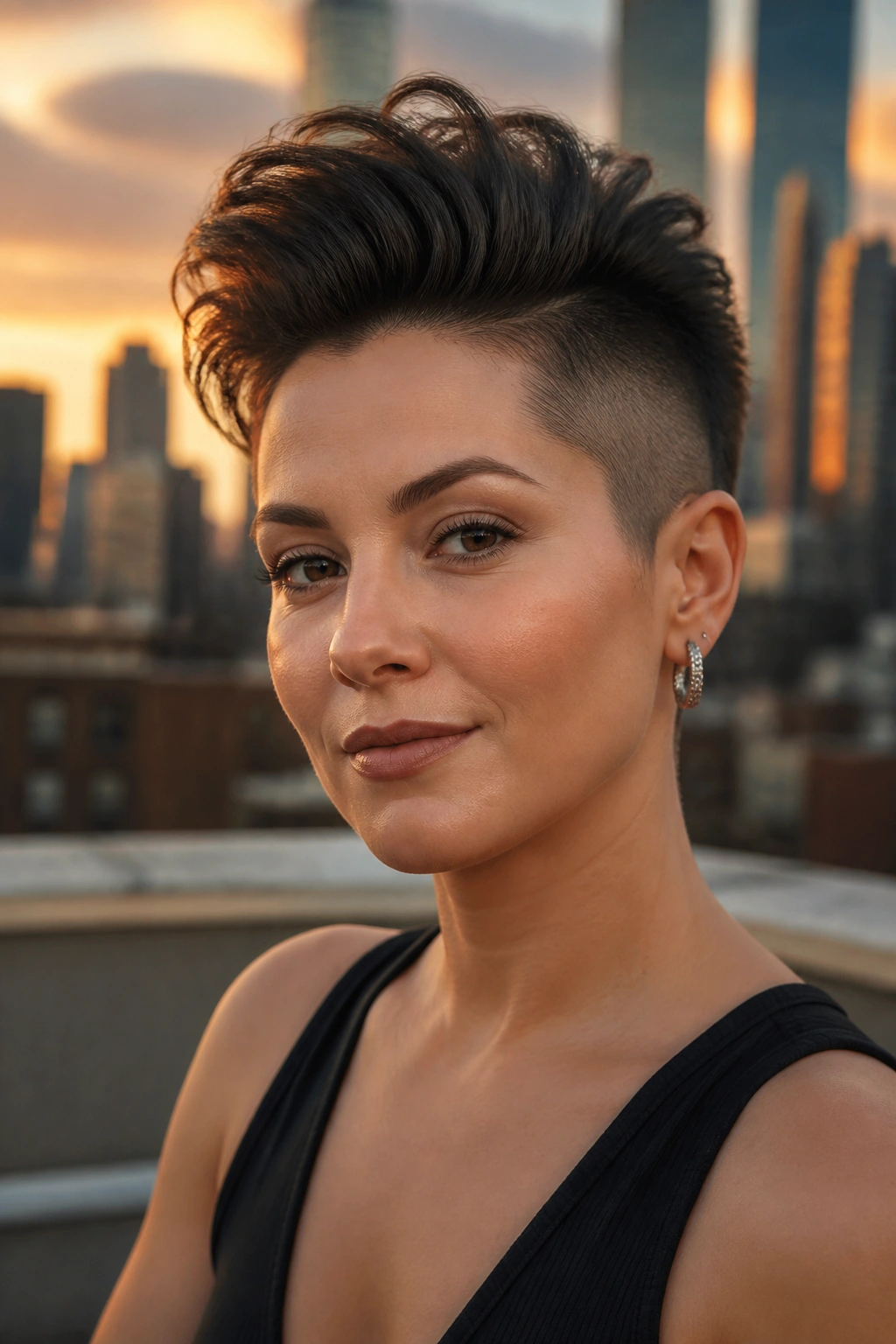
This is the sharpest option in the group, and that’s exactly why it works on a round face. It removes width where you don’t want it and puts attention where you do.
The undercut can sit at the nape, around the ears, or in both places. Above that, the top needs enough length — usually 3 to 5 inches — to lift, sweep, or flip over to one side. That extra height changes the silhouette in a way that a flat crop never can. It draws the eye upward, which is the whole game.
The cut gets especially good when the hair is thick. Thick hair can turn short cuts into a little mushroom if the sides and back keep too much bulk. An undercut clears that away and lets the top sit lighter. The shape ends up looking deliberate instead of puffy.
I would not wear this cut flat. If you want it to read well, use a root spray or a light mousse at the roots, then rough-dry the top and direct it upward with your fingers. A small round brush can clean up the crown if you want polish. A bit of paste can rough it up if you want edge.
This is one of those cuts that looks simple until you realize how much precision it needs underneath. A good undercut pixie is all about clean lines that let the top breathe.
7. Soft Bowl Crop With Airy Edges
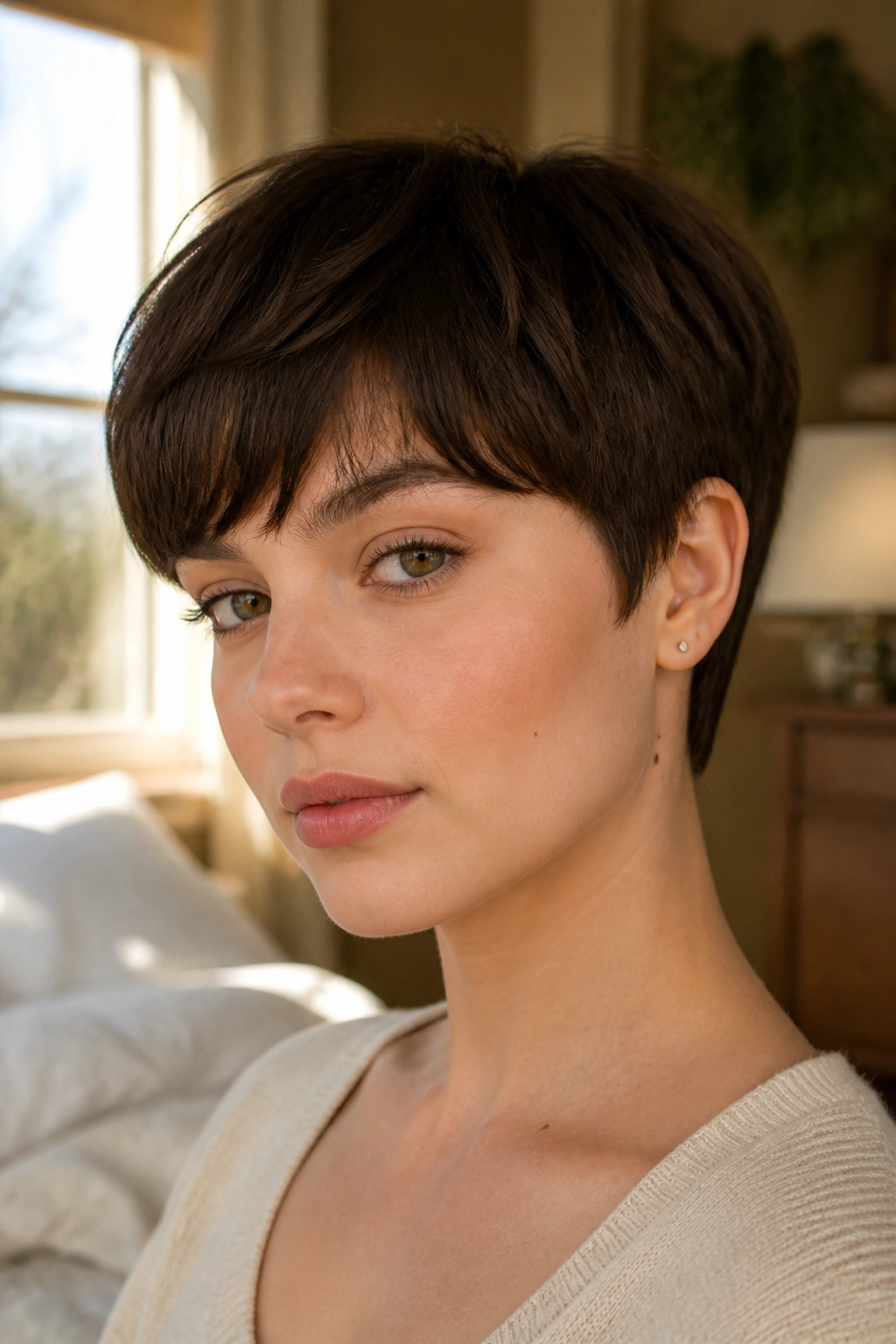
A bowl cut only looks severe when the line is too hard. Once the perimeter gets softened, the whole thing changes.
On a round face, the point is to keep the shape oval rather than circular. That means the fringe can’t be a solid wall, and the sides can’t flare out at the cheek. You want a curved outline, yes, but not one that mirrors the face exactly. The best versions have a bit of graduation at the temples and a nape that tapers in so the shape doesn’t balloon.
What Makes It Softer
The difference usually lives in the details, not the big shape.
- Ask for internal layers so the top isn’t one solid cap
- Keep the fringe piecey around the brows
- Let the corners soften around the temples
- Taper the nape so the back stays neat
If your hair is straight, a little bend at the ends helps this cut feel less strict. If it’s wavy, don’t fight the texture too hard. A bowl crop with a little movement can look far more expensive than the stiff version people still picture from bad childhood photos.
This is a stylist’s cut. A good one can make it elegant. A rushed one can make it look like a helmet. There isn’t much middle ground, which is why I’d only ask for this shape from someone who understands how to keep the edges airy.
8. Curly Crop With Shape At The Temples
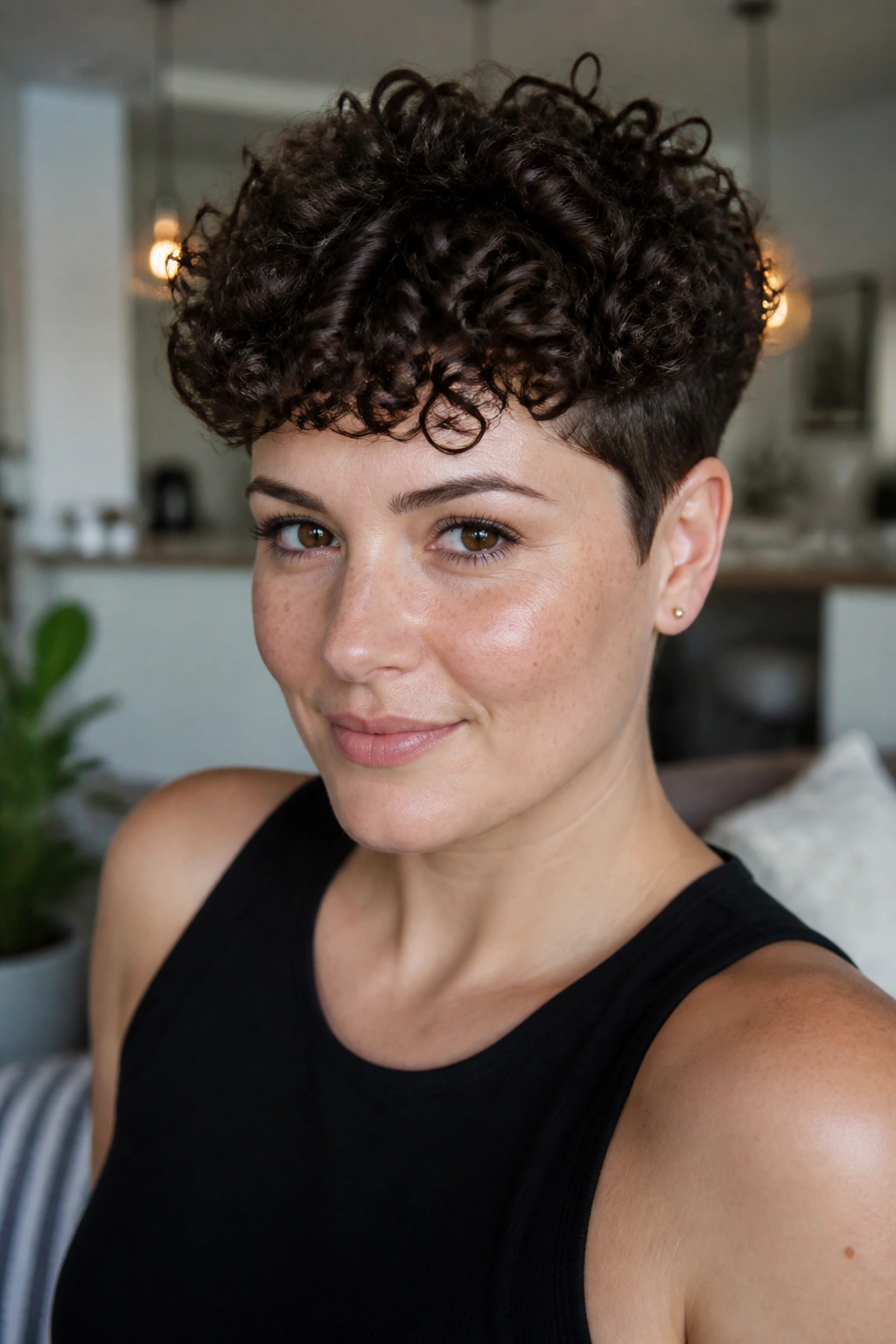
Curly hair gets told to stay long far too often. That advice is lazy. A short curly crop can be fantastic on a round face when the shape is carved in the right places.
The main thing to watch is width at the temples and cheeks. Curly hair naturally wants to bloom outward, so the cut should remove bulk at the sides and keep a little more length on top — often 3 to 6 inches depending on curl tightness — so the curls stack upward instead of spreading sideways. If the curl pattern is loose, the top can be more layered. If it’s tighter, the shape should be cleaner so the outline doesn’t get fuzzy.
A dry cut or curl-by-curl shaping is worth asking for here. Wet curly hair can lie to you. It shrinks, swells, and does strange little tricks that hide the real shape until it’s too late. A stylist who cuts curls in their natural state can see where the weight lives and where it needs to come out.
- Keep the nape tidy so the silhouette stays lifted
- Use a diffuser on low heat
- Stop drying when the hair is about 80 percent dry
- Add a light gel if you want the outline to hold
This cut can be playful or neat, depending on how you wear it. That’s the good part. Curly hair doesn’t need to be tamed into sameness.
9. Ear-Length Blunt Crop With A Side Part
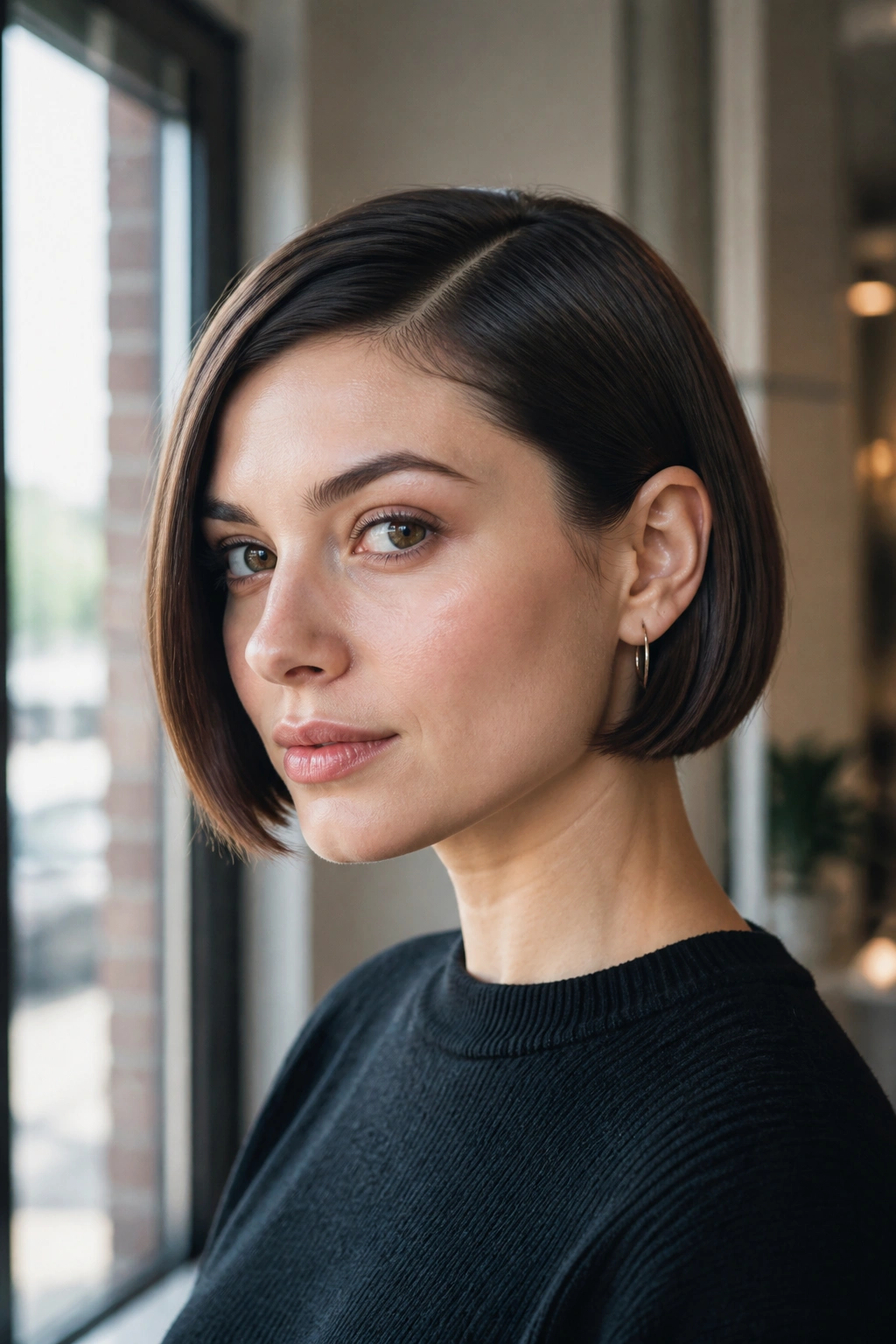
Blunt does not automatically mean bad. On a round face, it can be one of the smartest short cuts if the line sits in the right place.
An ear-length blunt crop works best when it lands above the cheekbone or just below the jaw. If it hits right through the fullest part of the face, it can widen the shape. If it lands in the right spot, though, it gives you a crisp frame that feels intentional and clean.
The side part matters more here than people expect. It breaks the symmetry and keeps the blunt edge from reading too square. I like this cut on straight hair or hair with only a little wave, because the line stays visible and the shape holds. On fluffier textures, the cut can start to spread unless a stylist removes a little weight underneath.
A small tuck behind one ear helps too. That little move changes the balance and keeps the face from getting boxed in. Use a light serum only on the ends if you want the edge to stay clean. Too much product will make the hair collapse.
This is the cut for people who like a neat line, a good cheekbone, and a style that doesn’t apologize for itself. It’s crisp. It’s direct. And yes, it can absolutely work on a round face.
10. Slicked-Back Crop With Short Sides
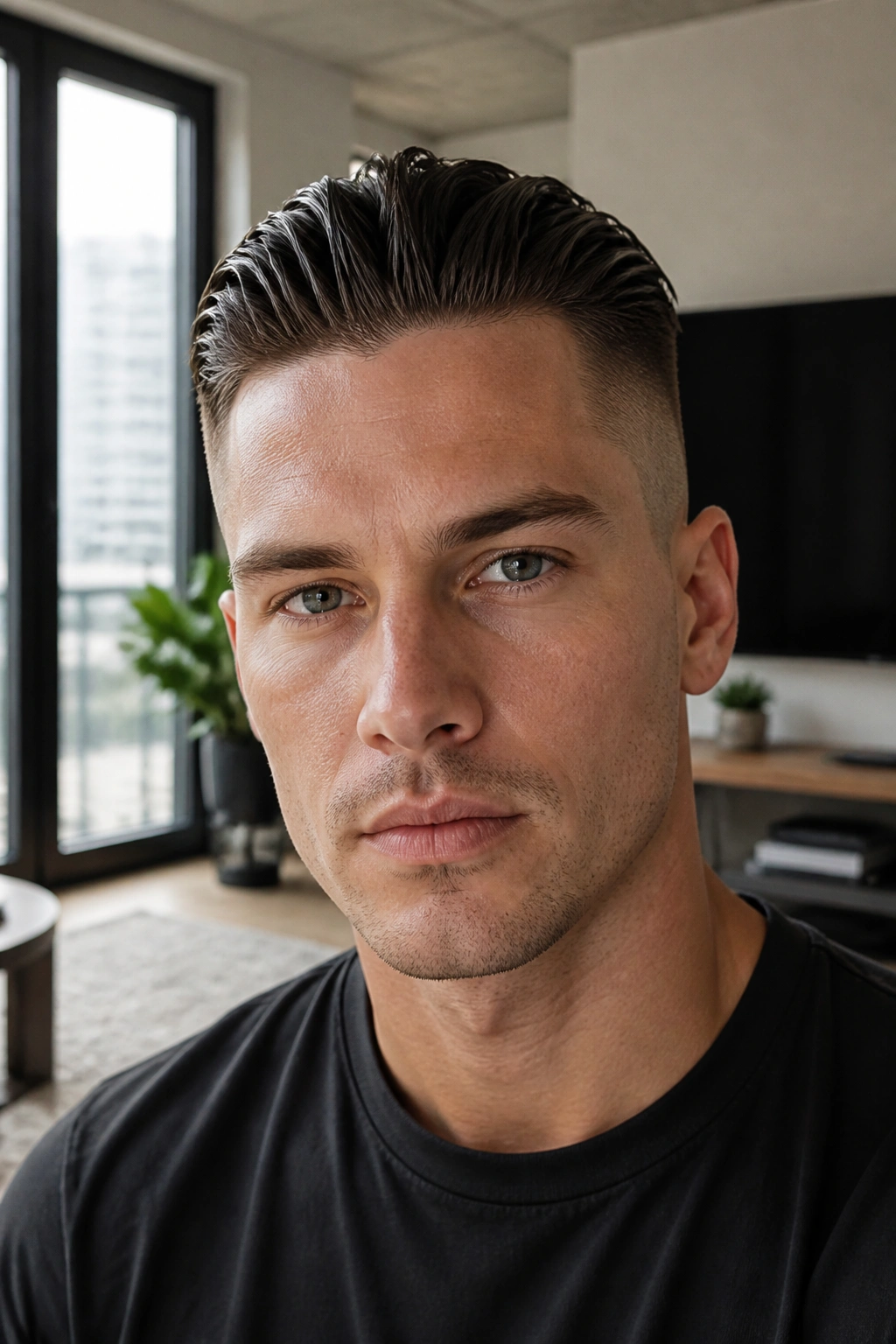
Unlike softer face-framing crops, this one shows the whole face on purpose. That’s the appeal.
The short sides strip away width, and the slicked-back top adds vertical lift, which is exactly what a round face can use. The top doesn’t need to be long — 2½ to 4 inches is plenty if the hair has some bend — but it does need enough length to comb back without sticking straight up or falling flat.
This style works best when the hairline is neat and the top has some density. If your hair is very fine, a lightweight gel or mousse can give it more grip. If it’s thick, a comb through damp hair will keep the finish cleaner. I’d skip heavy pomades unless you want a glossy look that feels a little retro.
There’s a nice blunt honesty to this cut. It exposes the forehead, the brows, the cheekbones — all of it. That can be good if you like a strong face-framing effect and don’t want hair hanging over everything. It also pairs well with sharp earrings, a defined brow, or a wardrobe that leans simple and tailored.
The part can be dead center or slightly off to one side, but I prefer a soft diagonal. Straight-back can feel too severe if the face is already soft. A small angle keeps it from feeling like a helmet slicked in place.
11. Grown-Out Bixie With Feathered Layers
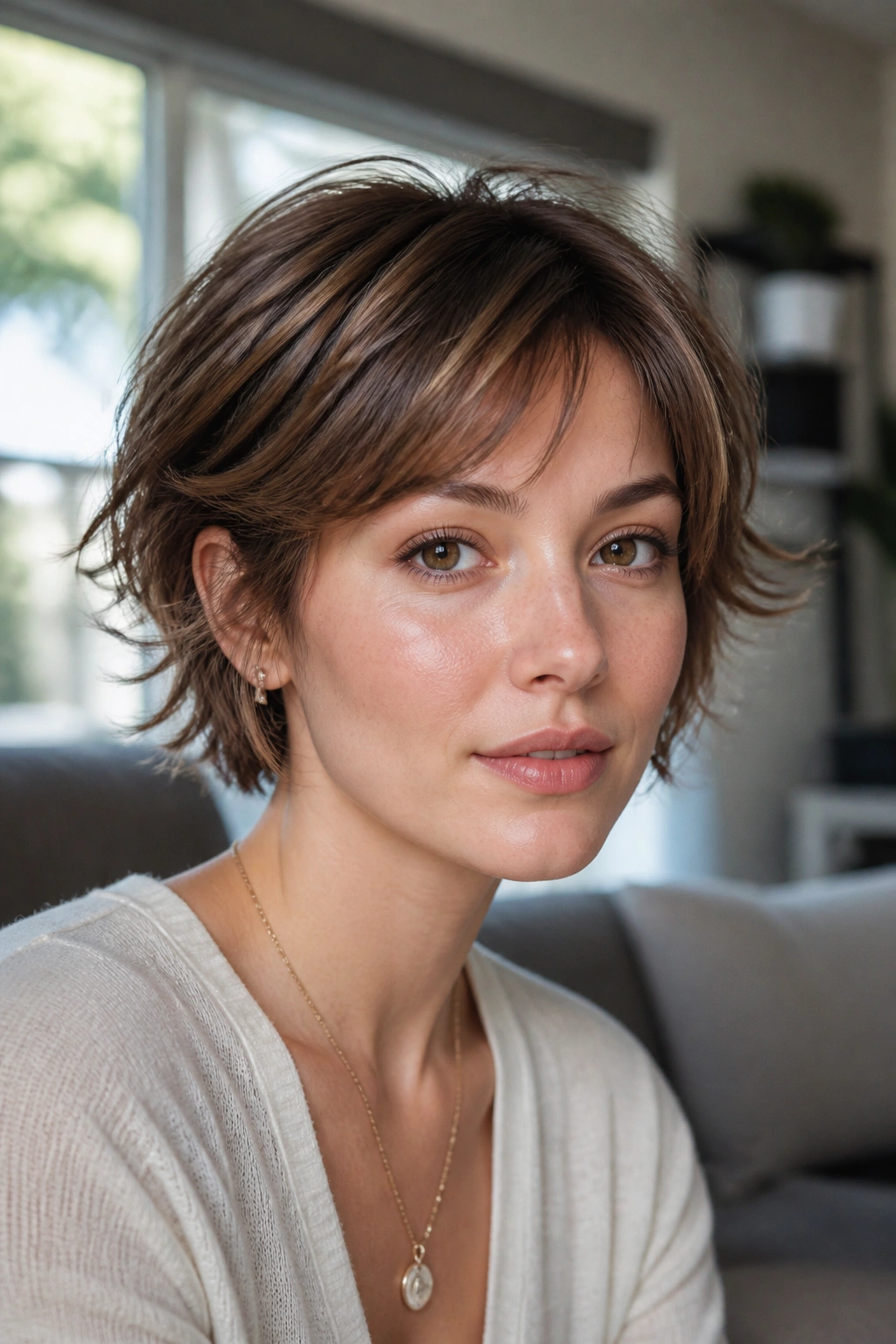
What if you want short hair but hate the awkward stage when it starts growing out? This is the answer a lot of people overlook.
A grown-out bixie keeps enough length around the ears and jaw to feel covered, but the feathered layers stop the shape from turning heavy at the sides. It’s short enough to stay fresh and long enough to move like a bob when you want it to. That makes it one of the easiest cropped cuts to live with.
How to Wear the Grow-Out Stage
This is the part most people skip, and it matters.
- Ask for soft layers that skim the cheekbone instead of sitting in a hard shelf
- Keep the nape a little shorter so the back still has shape
- Blow-dry the front away from the face with a medium round brush
- Use a tiny amount of cream on the ends so they stay feathered, not frizzy
The beauty of this cut is that it doesn’t punish you if you go a little longer between salon visits. It still reads as a shape. That’s rare with short hair, which usually loses its structure fast.
I like this one for anyone who wants a softer transition from a pixie into something longer. It feels easier, less precious, and more forgiving than the super-short cuts above it. Some mornings it will look polished. Some mornings it will look casually undone. That’s not a flaw. That’s the point.
12. Micro-Fringe Crop for Round Faces
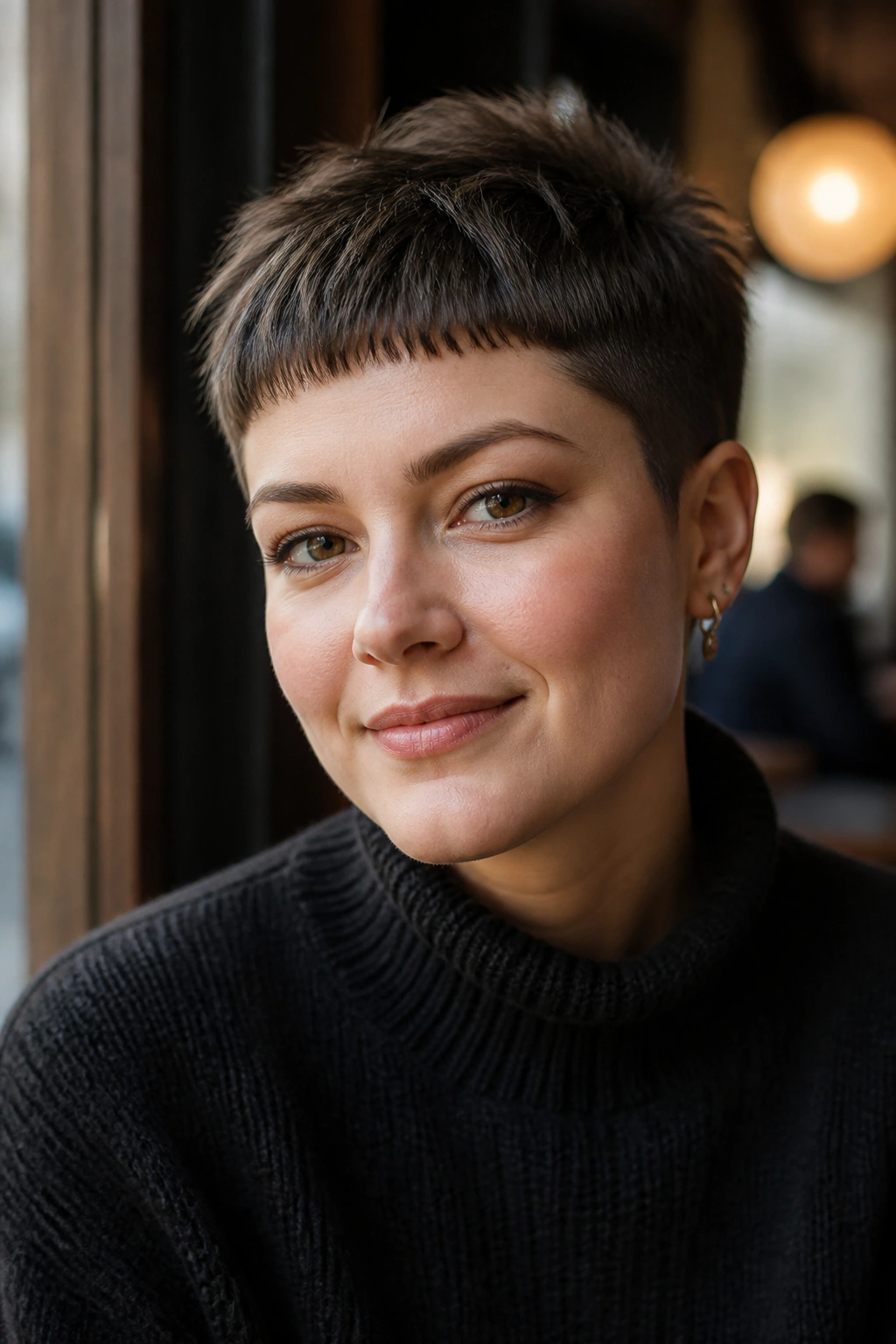
This is the most opinionated cut on the list, and I mean that in a good way. Micro fringe is not for the shy, but it can be excellent on a round face when the rest of the shape stays narrow.
The short fringe creates a little vertical gap at the forehead, which shifts attention upward to the eyes and brows. That can make the face feel longer. The catch is that the sides need to stay tight and the top needs some lift. If the fringe is heavy and the sides are fluffy, the whole thing reads wider, and that’s exactly what you don’t want.
What to Ask Your Stylist
- Keep the fringe airy, not square
- Taper the temples and nape closely
- Leave enough top length to build a little height
- Add small internal layers so the crop doesn’t turn blocky
I like this cut on people who wear glasses or have strong brows, because the fringe acts like a graphic detail instead of a curtain. It has personality. A lot of personality, actually.
If your forehead is short, keep the fringe wispy. A hard micro fringe can make the face feel compressed if it’s cut too bluntly or too thick. That’s the part people get wrong in photos and then regret in real life.
The best version feels sharp, playful, and a little eccentric. It’s a small cut with a big opinion.
Final Thoughts
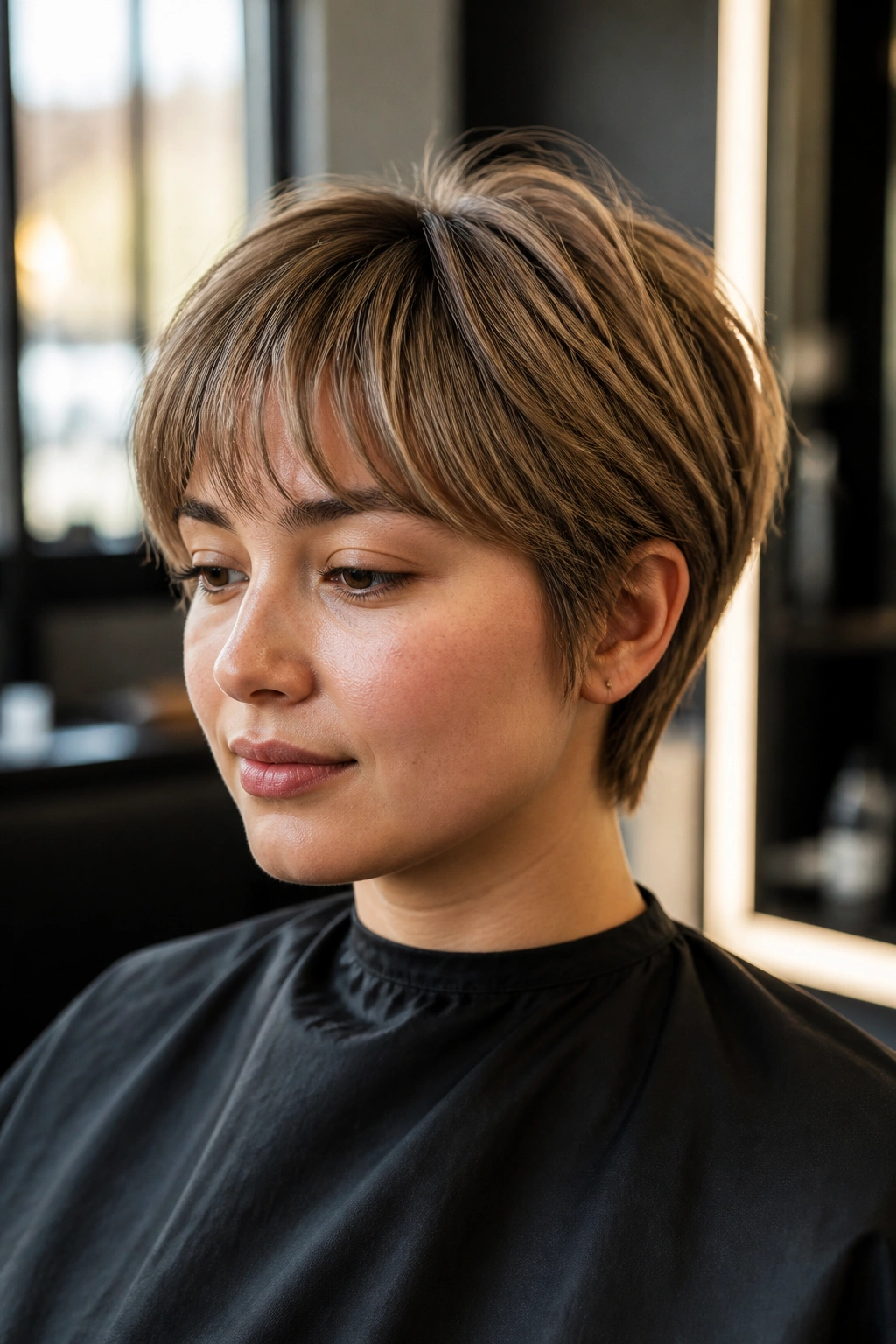
The best short cropped cut for a round face is the one that decides where width should live. Usually, that’s not at the cheeks.
If you remember one thing, make it this: ask about crown height, side width, and the fringe line. Length matters, sure, but shape wins. A skilled stylist can take the same two inches and make them look soft, sharp, or somewhere in between.
That’s the part worth taking into the chair. Not a vague request for “something shorter.” A real shape, with a real reason behind it.
