



A buzz cut can look ruthless or polished, and the difference is often just one guard number.
Buzz cuts for bold looks work because they strip away distractions. There’s nowhere for bad layering to hide, nowhere for a wobbly neckline to disappear, and nowhere for sloppy edges to pretend they were intentional. On a longer haircut, a mistake can blur into the rest of the shape. On a buzz, it sits there in plain daylight.
That is also why a few millimeters matter more than people expect. A #1 guard, a #2, and a skin fade do not live in the same visual universe. A clean buzz can read severe and minimalist, while the same cut with a line-up, beard, or color shift can feel loud, graphic, and almost architectural.
A good barber knows this instinctively. They talk in guard numbers, fade points, and weight removal because those details change everything. Bring a photo if you can, but bring words too: shorter on the sides, softer at the temple, blunt at the hairline, or keep the top just long enough to show texture. The styles below move from bare and stripped-back to the versions that make people look twice.
1. The Induction Buzz Cut
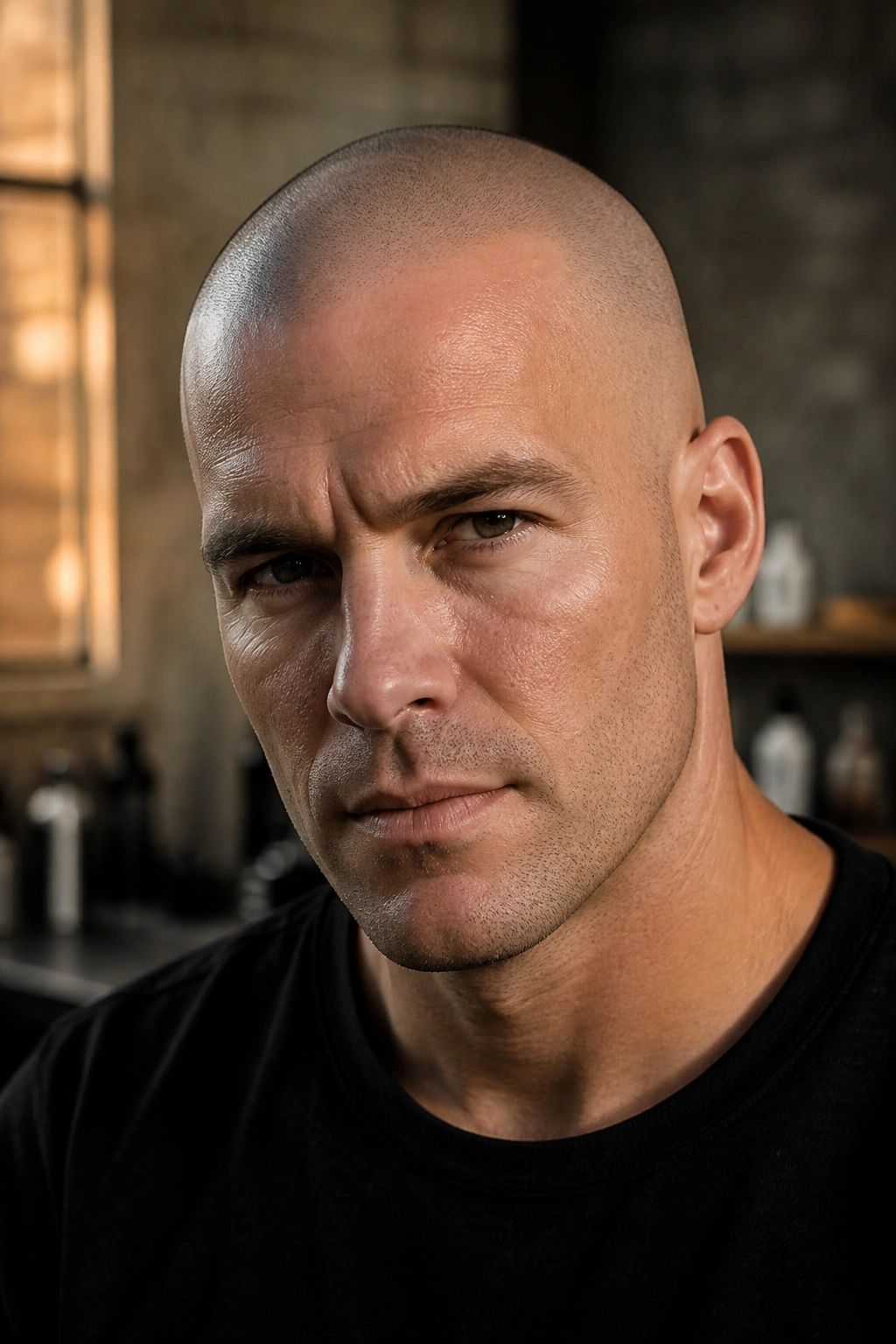
The induction buzz cut is the shortest version most people will ever wear, and that is the whole point. It sits so close to the scalp that your head shape becomes part of the style, not something the hair hides.
Why It Hits So Hard
This cut works because it removes almost every soft edge. You get bone structure, eyebrow shape, and beard lines doing the work. If your features are strong, the induction cut can look almost severe in a good way — clean, blunt, and confident without trying too hard.
It also has a certain honesty to it. No fluff. No camouflage. If you like a haircut that says, “I’m done negotiating,” this is the one.
Quick notes:
- Usually cut with no guard or a #0.5 guard, depending on the clipper and the barber’s setup.
- Needs frequent upkeep, often every 1 to 2 weeks, because even tiny regrowth changes the look fast.
- Works best when the scalp is in decent shape, because there is nowhere to hide dry patches or irritation.
Best for: sharp features, strong brows, and anyone who wants the most stripped-down buzz possible.
One warning: if your scalp gets sunburned easily, this cut makes sunscreen non-negotiable.
2. The High and Tight Buzz Cut
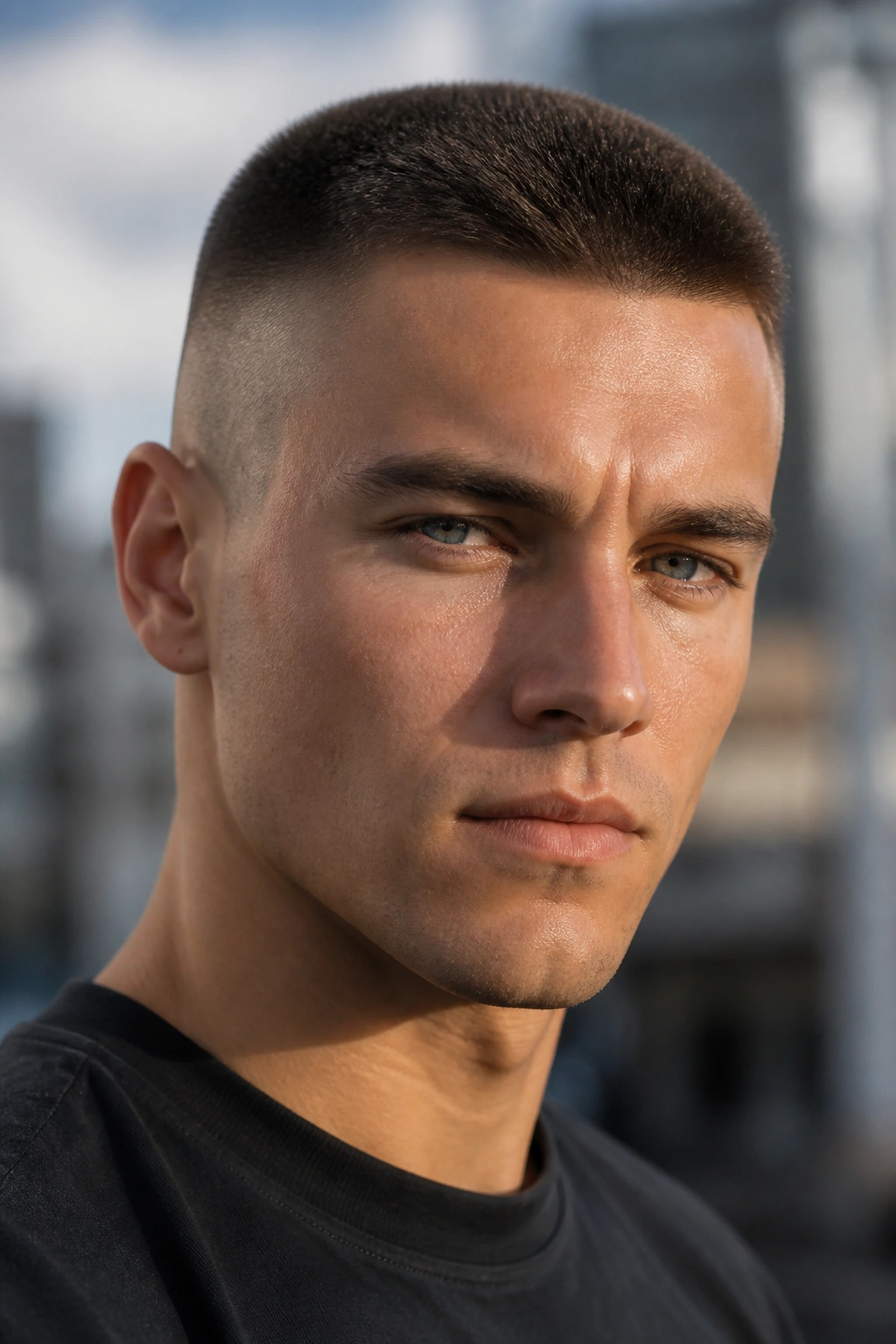
A high and tight keeps the hard-edged mood of a military cut, but it gives you a little more shape than an induction buzz. The sides are taken very short, then the top stays a touch longer so the haircut has a clear outline instead of looking like a pure shave.
That little difference matters. The top creates a cap of hair that catches the eye first, while the high fade on the sides makes the face look cleaner and more lifted. If you want a buzz cut that feels disciplined instead of bare, this is a smart pick.
It also flatters people who want their cheekbones and jaw to do some talking. The high fade draws the eye upward, and that can make the whole face look a little tighter. Nothing fancy. Just good structure.
Ask for a high fade or skin fade on the sides and a short top, usually around a #2 or #3, depending on how much contrast you want. Keep the transition sharp, not fuzzy. That crisp line between top and side is the whole personality of the cut.
3. The Burr Cut

The burr cut is the sweet spot for people who want very short hair without going all the way to scalp-level. It looks low-maintenance, but it has more softness than an induction cut, which makes it easier to wear if you’re new to the buzz-cut life.
Picture someone who wants to look tidy on a Monday morning without touching a styling product. That’s the burr cut. It’s short enough to feel bold, long enough to avoid that exposed, nearly shaved feel that some people dislike.
What Makes It Different
The burr cut usually sits around a #1 or #1.5 guard, though the exact look changes a little from barber to barber. It can make thick hair look neat fast, and it handles straight, wavy, or coarse hair without much drama.
Easy Details to Remember
- Best when the crown is even, because uneven growth patterns show up more clearly at this length.
- Grows out gracefully for a short cut, so you do not need emergency trims every week.
- Feels less harsh than an induction buzz, especially on people with visible scalp texture.
This is the cut I’d hand to someone who wants boldness without the full shock value. Clean, practical, and still a little tough around the edges.
4. The Butch Cut
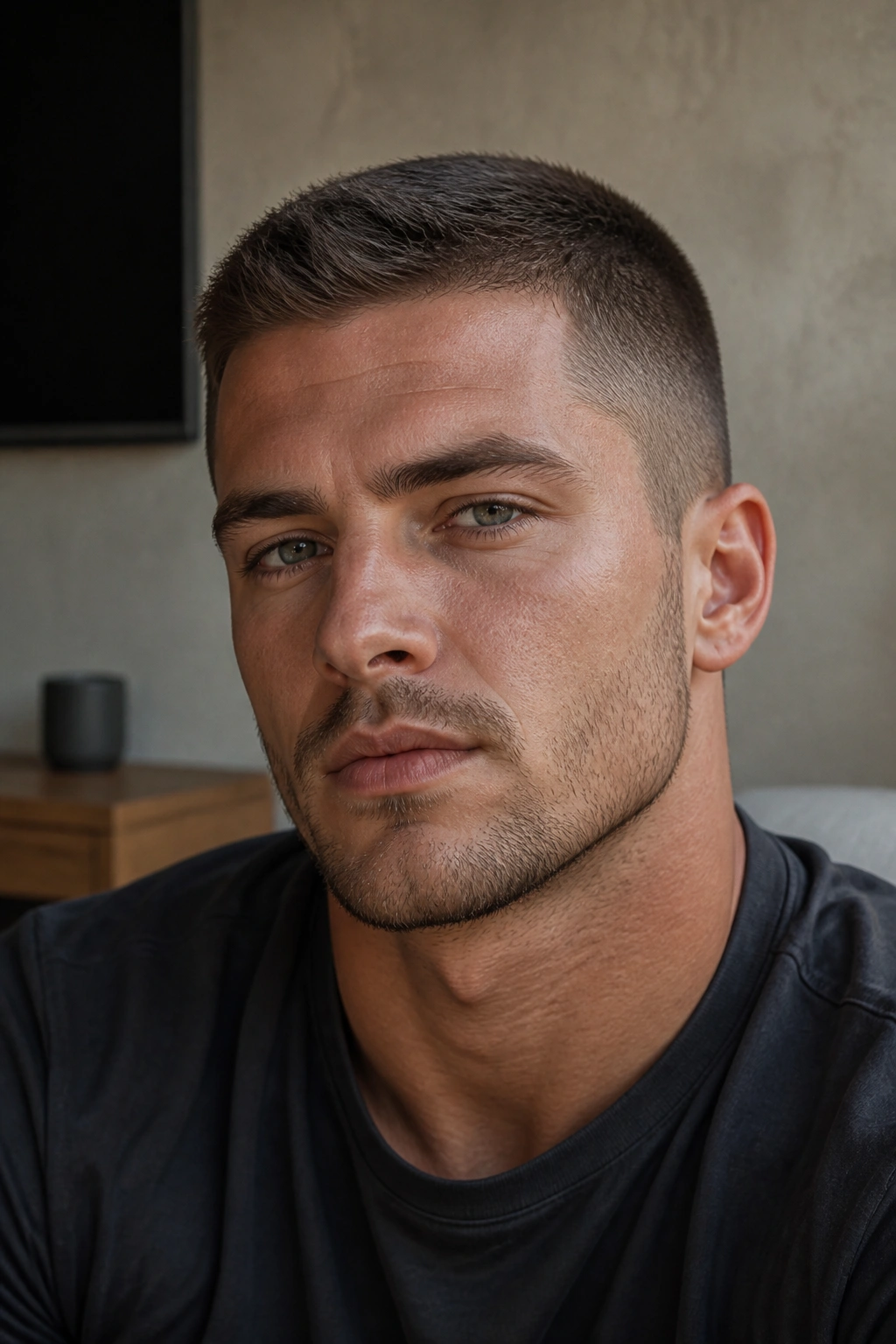
The butch cut sits in that strange and useful middle ground where a haircut still feels like a haircut. It’s short, but not bare. Controlled, but not severe. On the right person, that balance is better than any dramatic fade.
The reason it works is simple: a little more length on top gives the hair some texture, which keeps the head from looking overly flattened. That extra bit of coverage can soften a prominent crown, minimize scalp show-through, and make a wider forehead feel more balanced. You’re still in buzz-cut territory, just with a touch more shape.
It also tends to age well as it grows out. A butch cut does not fall apart the way some sharper fades do. The lines soften a little, and the cut still looks intentional after a couple of weeks, which is handy if you hate constant barber visits.
I like this one for people who want a quietly bold look. It does not shout the way a skin fade does. Instead, it looks sturdy, clean, and low-fuss. If the induction buzz is the bare minimum, the butch cut is the version you wear when you want to keep a little dignity in the hair.
5. The Crew Cut Buzz
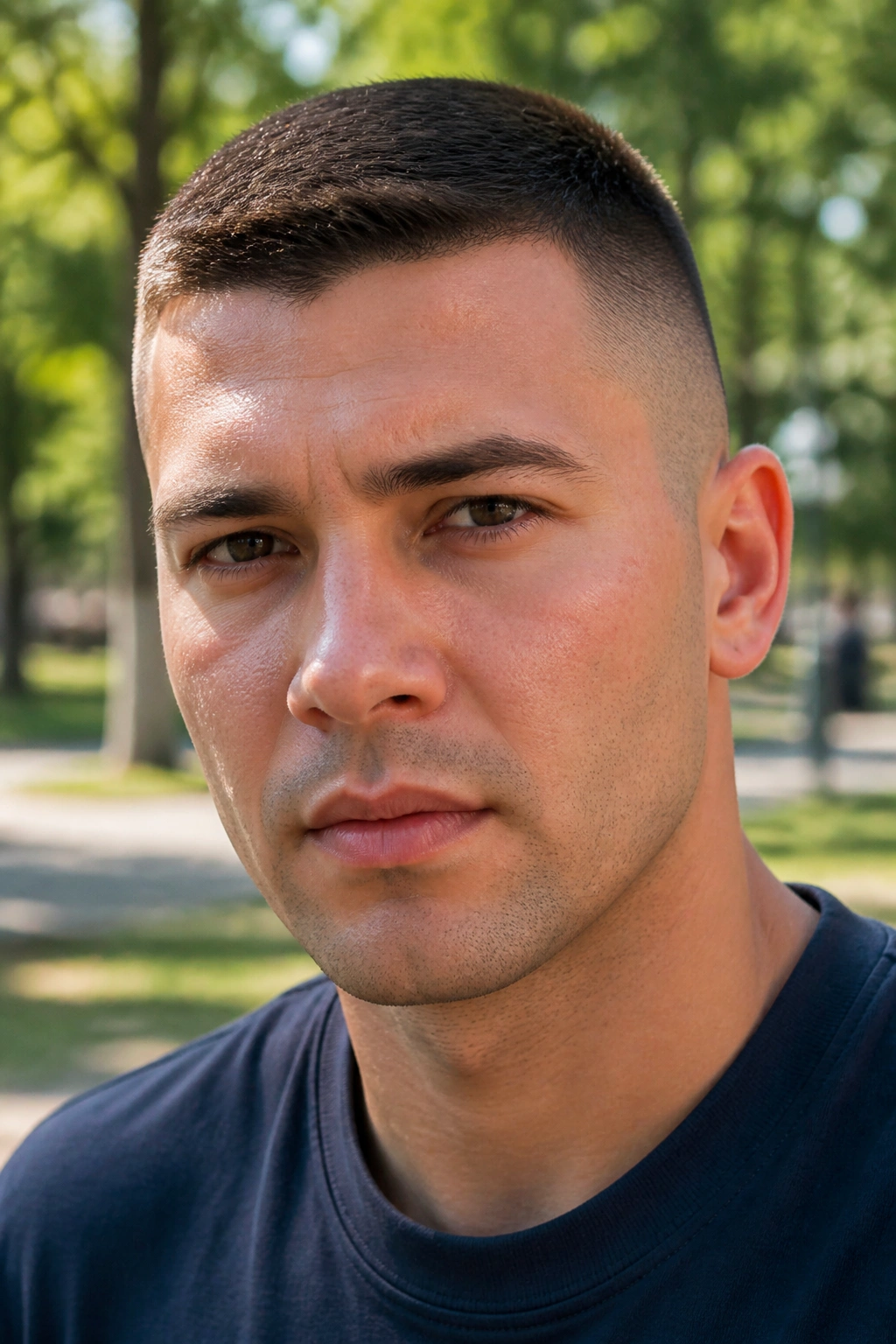
Can a buzz cut still have movement at the front? Absolutely. The crew cut buzz is proof. It keeps the sides tight and the top shorter than a classic crew cut, but there’s enough extra length at the front to give the haircut some direction.
That front length changes everything. It lets the style lean forward a little, which helps if your forehead feels larger than you want or if your hairline isn’t perfectly even. The haircut reads purposeful, not accidental.
How to Ask for It
Tell your barber you want a short crew-style buzz with the front slightly longer than the crown. A common setup is a #3 or #4 on top, then shorter sides that taper down cleanly. If you want a more polished shape, keep the transition neat rather than choppy.
Why It Works
- Gives a little lift at the front without needing styling cream.
- Keeps the buzz cut look, but with more shape and structure.
- Works well for people who want to soften a rounder face or a flatter crown.
- Feels less severe than a uniform buzz cut.
This is one of those cuts that looks better than it sounds on paper. It has enough order to feel sharp, but not so much length that you lose the whole point of going short.
6. The Skin Fade Buzz Cut
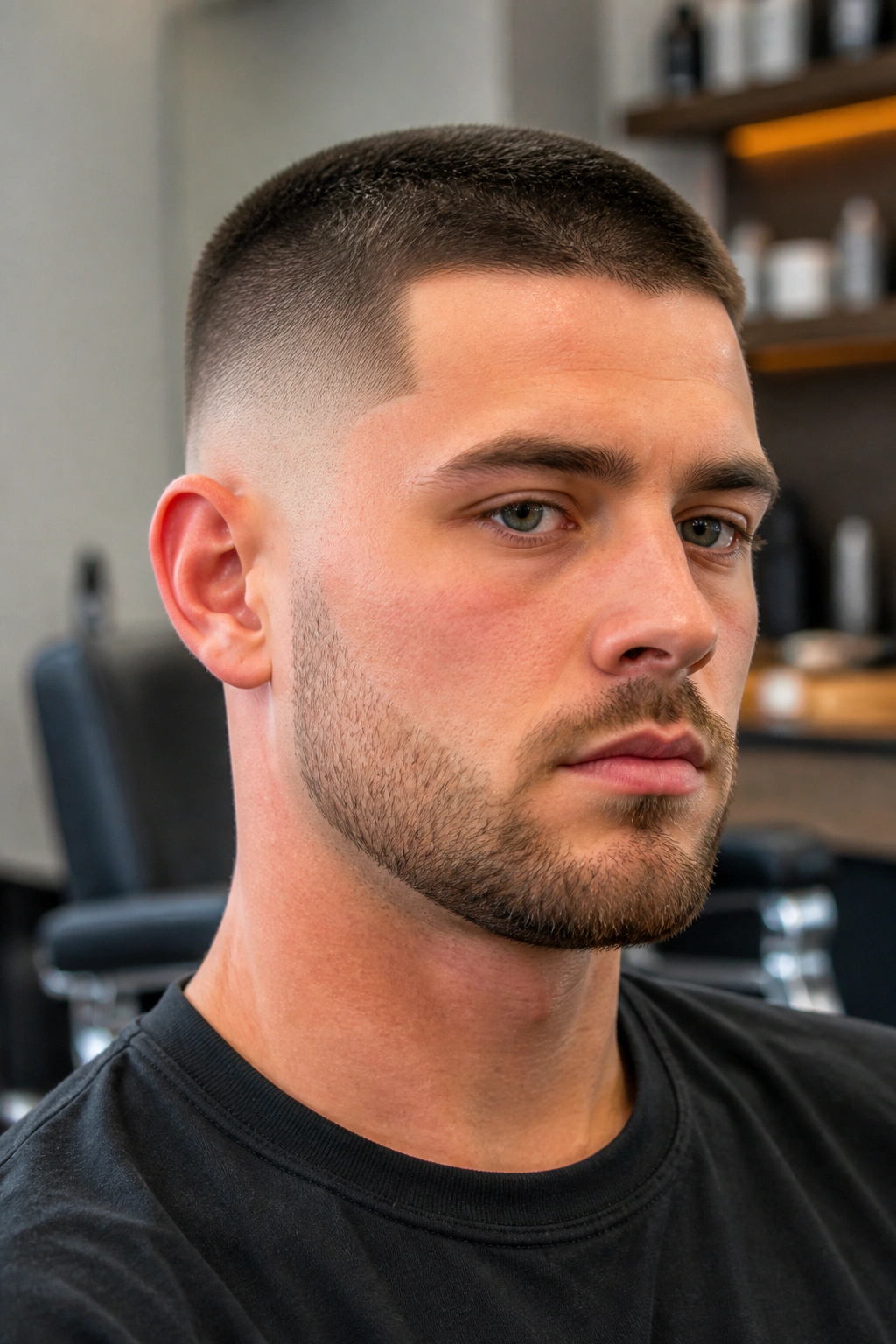
A plain buzz cut is one thing. A skin fade buzz cut is another animal entirely. The fade takes the bluntness of the buzz and gives it a sharp frame, so the haircut looks planned instead of merely short.
The contrast is what makes it pop. Bare skin around the ears and nape makes the top seem fuller, even when the length is modest. That contrast also throws more attention to the shape of the head, which is useful if you want a cleaner outline and a sharper profile.
This cut tends to look especially strong on people who like crisp lines and regular barber visits. It needs upkeep, because the fade loses its clean edge faster than the top does. That is the price of the look.
A good skin fade buzz is usually paired with a #1, #2, or #3 on top, depending on how visible you want the hair to be. Ask for the fade to begin low if you want something subtle, or mid if you want the sides to disappear more dramatically. Either way, the fade should blend smoothly. A choppy fade ruins the whole effect.
7. The Shadow Fade Buzz Cut
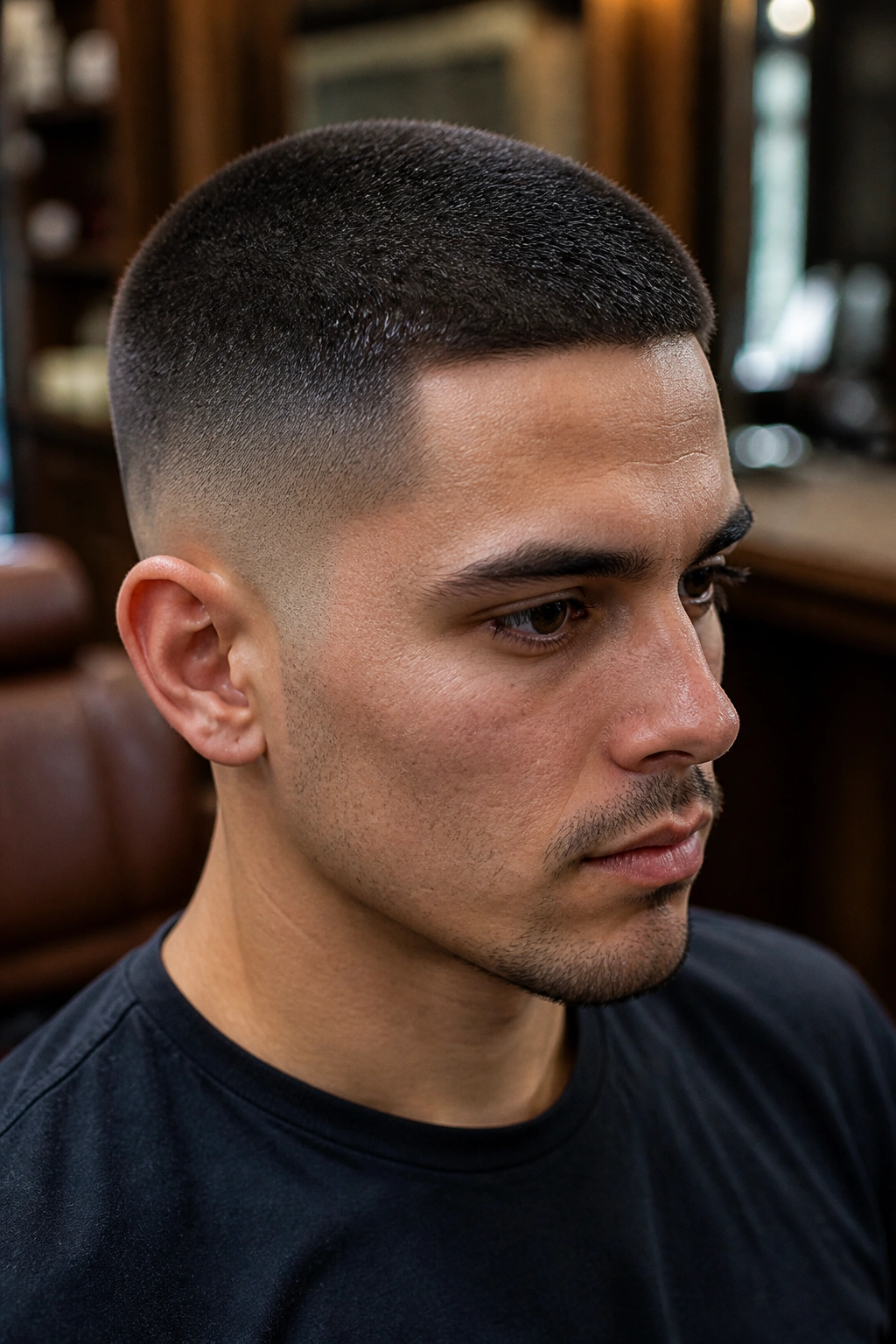
A shadow fade buzz cut is what I recommend to people who want the neatness of a fade without the hard contrast of bare skin. The fade stays darker at the bottom, so you see a soft gradient instead of a sudden drop to skin.
That softness matters more than people think. On darker hair, especially, a shadow fade can look rich and full without feeling heavy. It gives the haircut shape, but not the harsh edge that a skin fade brings to the table.
What Makes It Different
The shadow fade usually keeps the shortest area around a #0.5 or #1 guard, so there is still some color at the base. That keeps the scalp from looking too exposed and makes the cut easier to wear if you prefer a gentler finish.
Why People Choose It
- Grows out more gracefully than a skin fade.
- Often feels less stark on the temples and around the ears.
- Works well if your scalp tends to get dry, irritated, or sun-sensitive.
- Keeps the buzz cut feeling polished without shouting for attention.
Some cuts are about impact. This one is about control. It’s quieter, which is exactly why it works.
8. The Burst Fade Buzz Cut
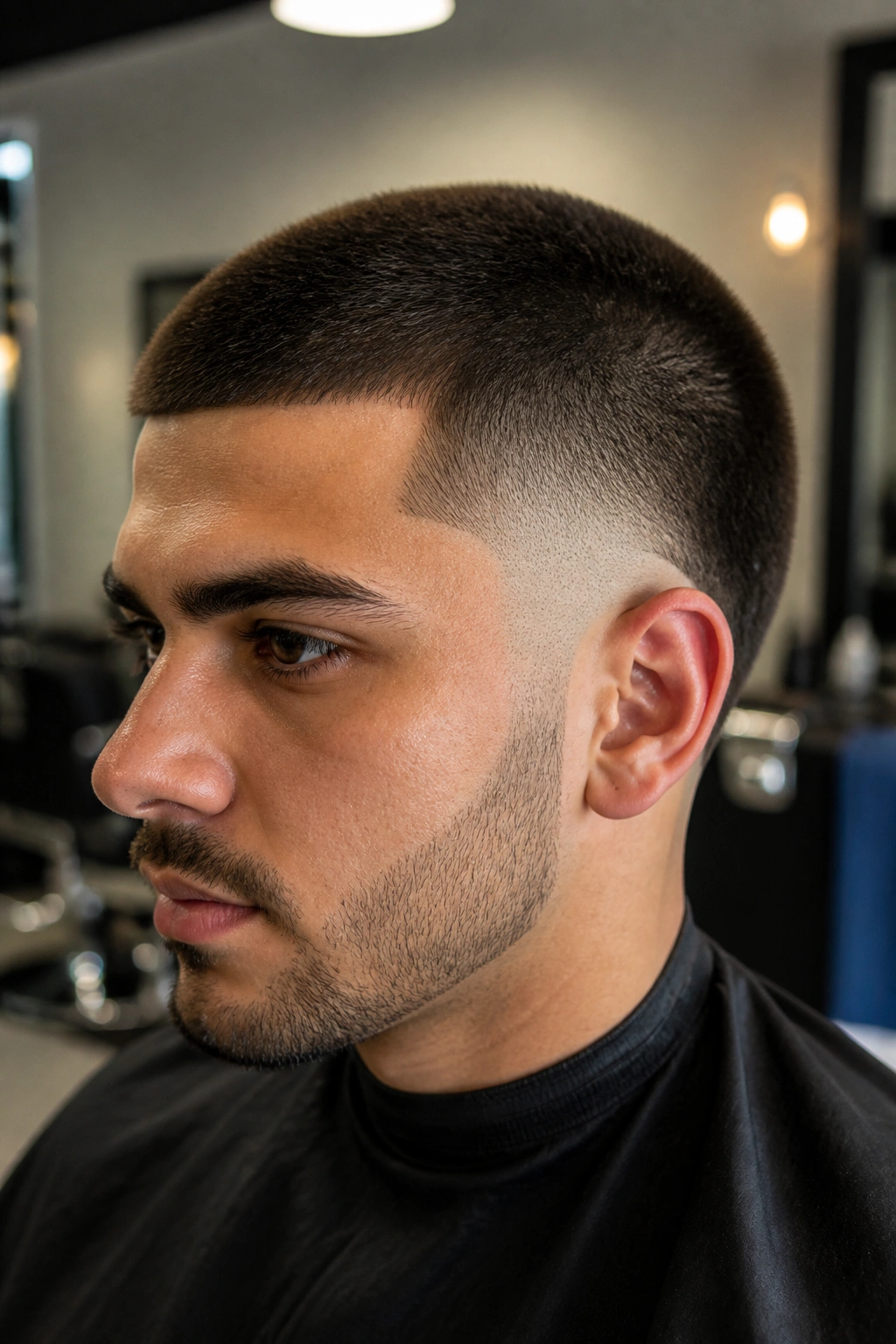
The burst fade buzz cut curves around the ear like a small halo, then drops back into the rest of the haircut. That shape gives the style a little movement, even though the hair itself is short.
It’s a good choice if you want something that feels more designed than a standard buzz. The burst fade creates energy near the side of the head, which makes the whole cut feel more active and a little more modern without needing length on top.
The cut also works well with head shape. Because the fade radiates from the ear instead of running straight back, it can soften a square profile or make a flat side area look more deliberate. It is a subtle trick, but it matters.
What to ask for:
- A short buzz on top, usually around a #2 or #3.
- A burst fade around the ear that curves cleanly.
- A tight neckline so the shape stays sharp from behind.
This one is especially good if you wear earrings, have strong sideburns, or like the look of a short cut that still has a bit of curve. Straight-line cuts are fine. Curved ones have more life.
9. The Drop Fade Buzz Cut
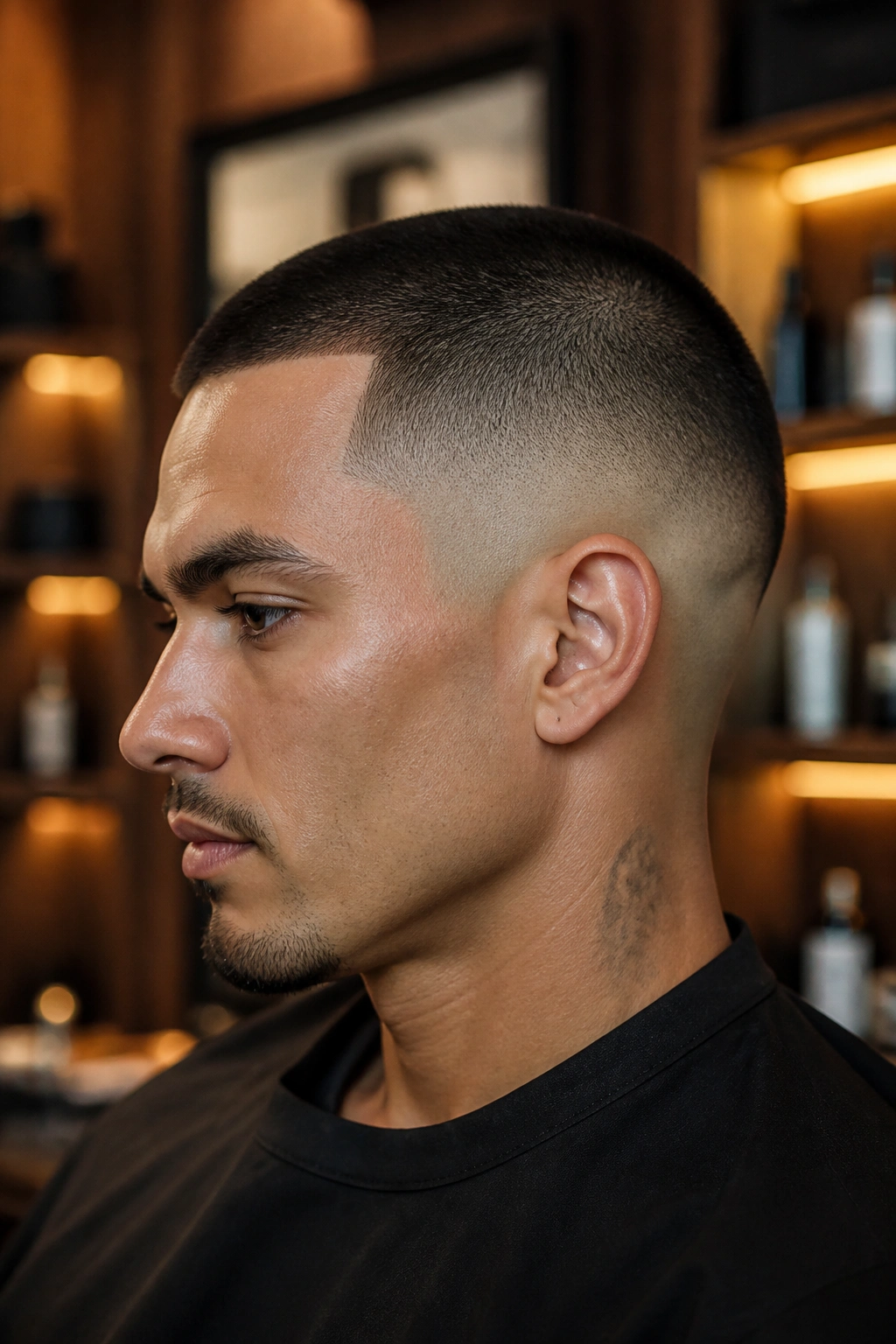
The drop fade buzz cut is the easiest way to make a buzz look custom. The fade drops lower behind the ear and curves toward the nape, which changes the whole side profile in a way a straight fade never quite does.
That curve is the trick. It follows the head instead of fighting it. The result is a shape that feels smoother and more tailored, especially if your head has a strong crown or a pronounced back curve that a flat fade would exaggerate.
Simple on paper. Tricky in the chair.
A barber has to blend the transition carefully so the drop doesn’t look lopsided. If the fade falls too high or too low, the shape starts looking accidental. Ask for a low or mid drop fade with a short top and keep the weight controlled around the occipital bone at the back of the head. That’s the point where many fades go wrong.
This cut is good when you want the buzz to feel a little more sculpted. It’s not as loud as a patterned cut, but it has a clear point of view.
10. The Buzz Cut With a Line-Up
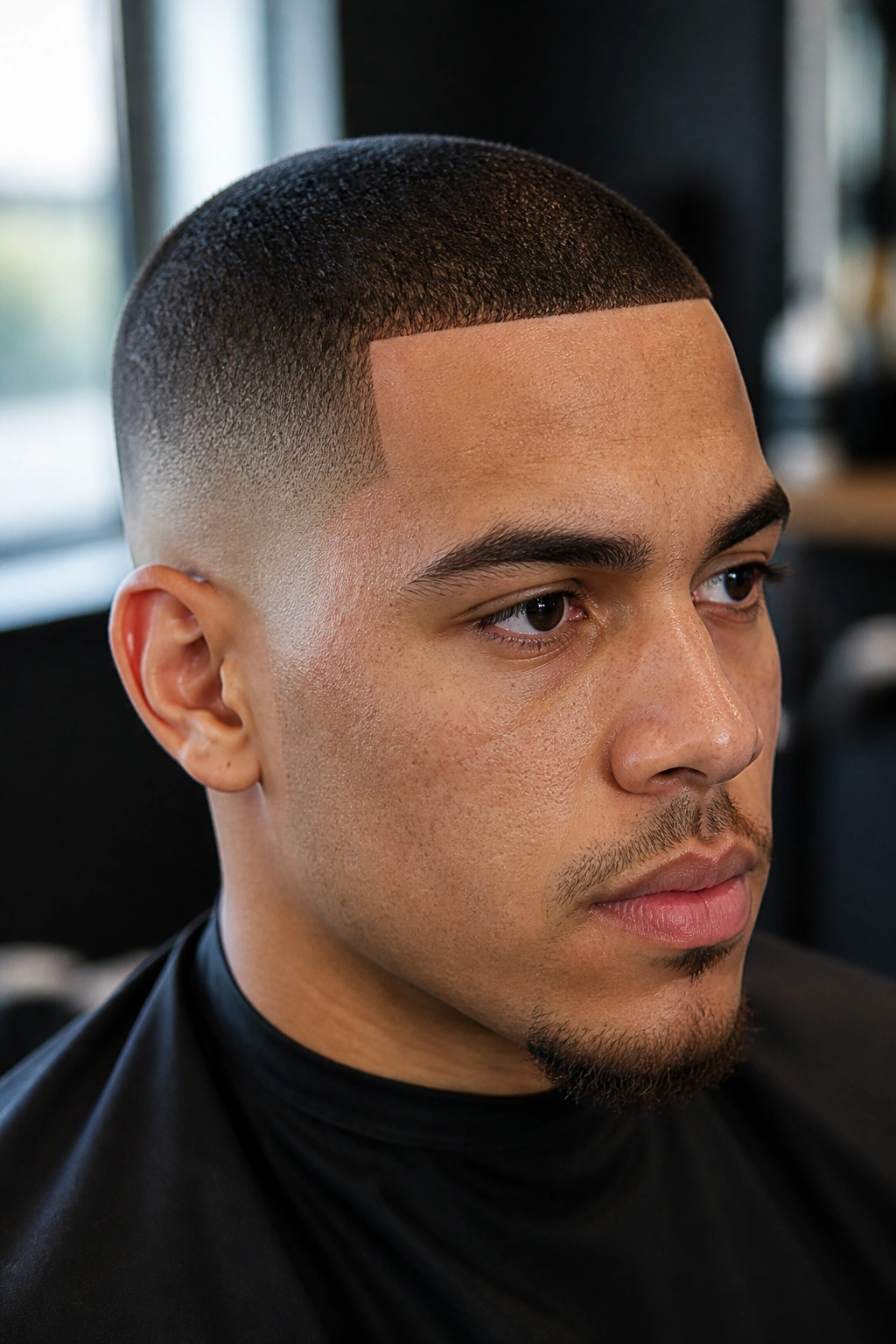
Why do some buzz cuts look crisp and others just look short? Usually, it comes down to the edges. A buzz cut with a line-up sharpens the forehead, temples, and sideburn area so the haircut has a clean frame instead of a soft blur.
The line-up can make a huge difference if your hairline is naturally neat. It defines the shape and gives the face a more finished look, almost like the haircut has been outlined with a pencil. That can be powerful. It can also be a little unforgiving.
What to Watch For
A hard line-up is not always flattering if your temples are receding or your hairline is uneven. In that case, a barber can square the front too aggressively and the cut starts drawing attention to what you were hoping to soften. A gentler edge is often better than a perfectly straight one.
How to Ask for the Right Version
- Ask for a clean line-up, not an over-tight box.
- Keep the temples soft if your hairline is uneven.
- Pair it with a #1 to #3 buzz so the edges have enough contrast to show.
- Make sure the neckline stays tidy, because a sharp front and a messy back looks unfinished.
This cut is all about precision. If the edges are good, the whole style feels expensive, even when the haircut itself is simple.
11. The Buzz Cut With a Beard

A buzz cut with a beard works because it splits the job in two. The hair on top goes short and direct, while the beard carries weight at the jaw. That contrast can be powerful, especially if you want your face to look more structured.
The beard also gives you a place to put texture when the head hair is almost gone. A short buzz on top can feel almost stark on its own, but paired with a neat beard, it looks complete. The two lengths balance each other out, and the result is usually stronger than either one alone.
This combo needs good line work. A fuzzy neckline or an overgrown cheek line makes the whole thing look untidy fast. Keep the beard shape deliberate, and the buzz cut suddenly feels more grown-up and more intentional.
A useful length pairing is a #1 or #2 buzz with a short boxed beard or heavy stubble. If the beard gets much longer than the hair, the face can feel bottom-heavy. If the beard is too short, the contrast disappears. The sweet spot is usually somewhere in the middle, where the jawline gains definition but the beard does not swallow the haircut.
12. The Bleached Buzz Cut
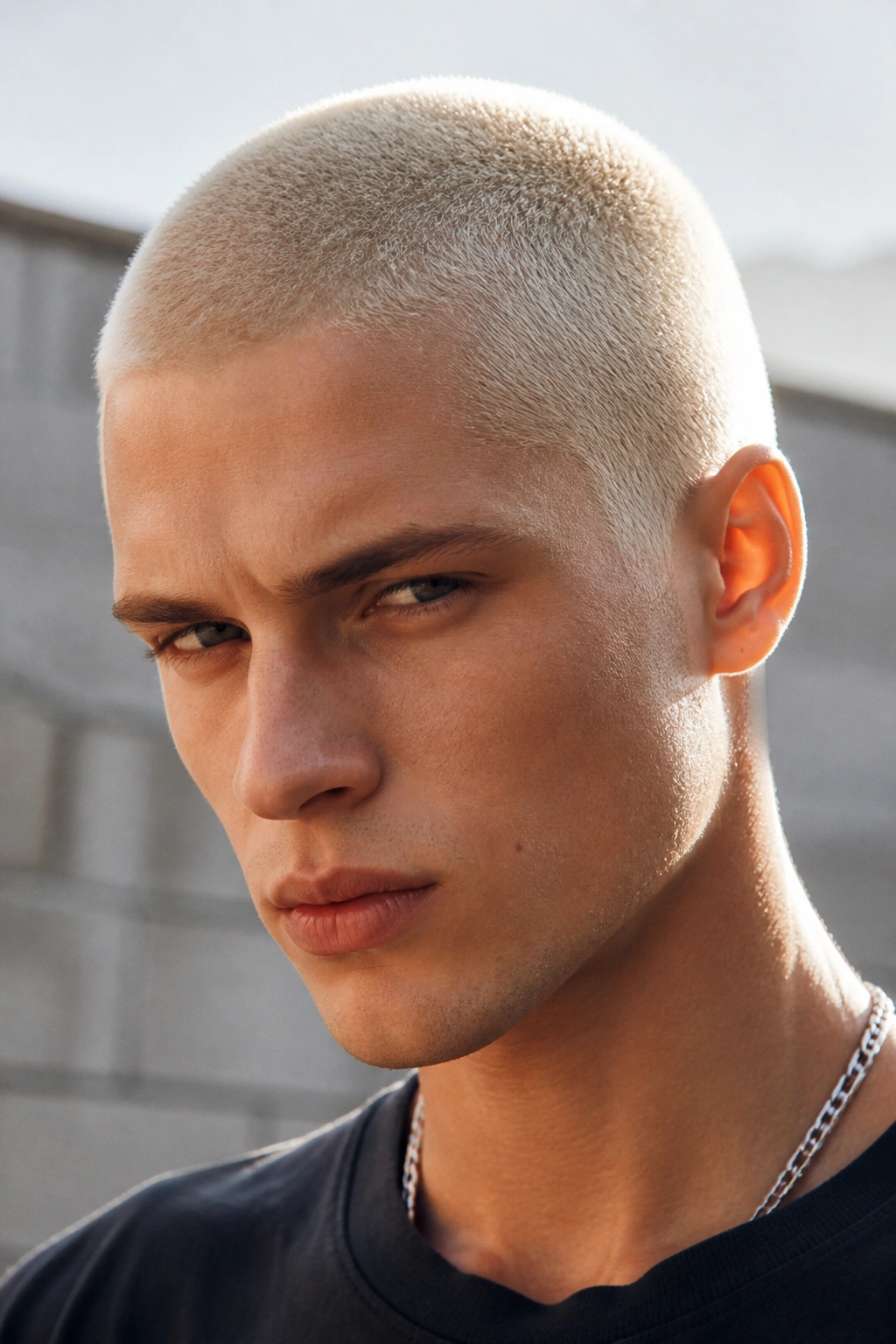
Bleaching a buzz cut is dramatic because the haircut gives the color nowhere to hide. Every strand sits in full view, so the tone reads immediately — platinum, creamy blond, silver-white, or a softer beige blond if the lightener is lifted with care.
That bluntness is exactly why it works. On longer hair, bleach can get lost in layers. On a buzz, it becomes the whole point. The shorter the cut, the cleaner the color block feels, and the more graphic the result looks from a distance.
Bleached buzz cuts do have a downside. They put the scalp on display, and lightened hair can make dryness or flaking more noticeable. A gentle shampoo, a light conditioner, and a scalp-friendly routine matter here more than people like to admit. If your scalp is already irritated, this is not the week to push it harder.
The best version is usually a buzz that is short enough to look sharp but long enough to hold tone evenly. Too short, and the color can look patchy if the lift is uneven. Too long, and the style loses that sleek, almost metallic look. A good colorist will often work in stages if the natural hair is dark, because forcing the lift in one pass tends to fry the texture. That is not a cute trade.
13. The Dyed Buzz Cut
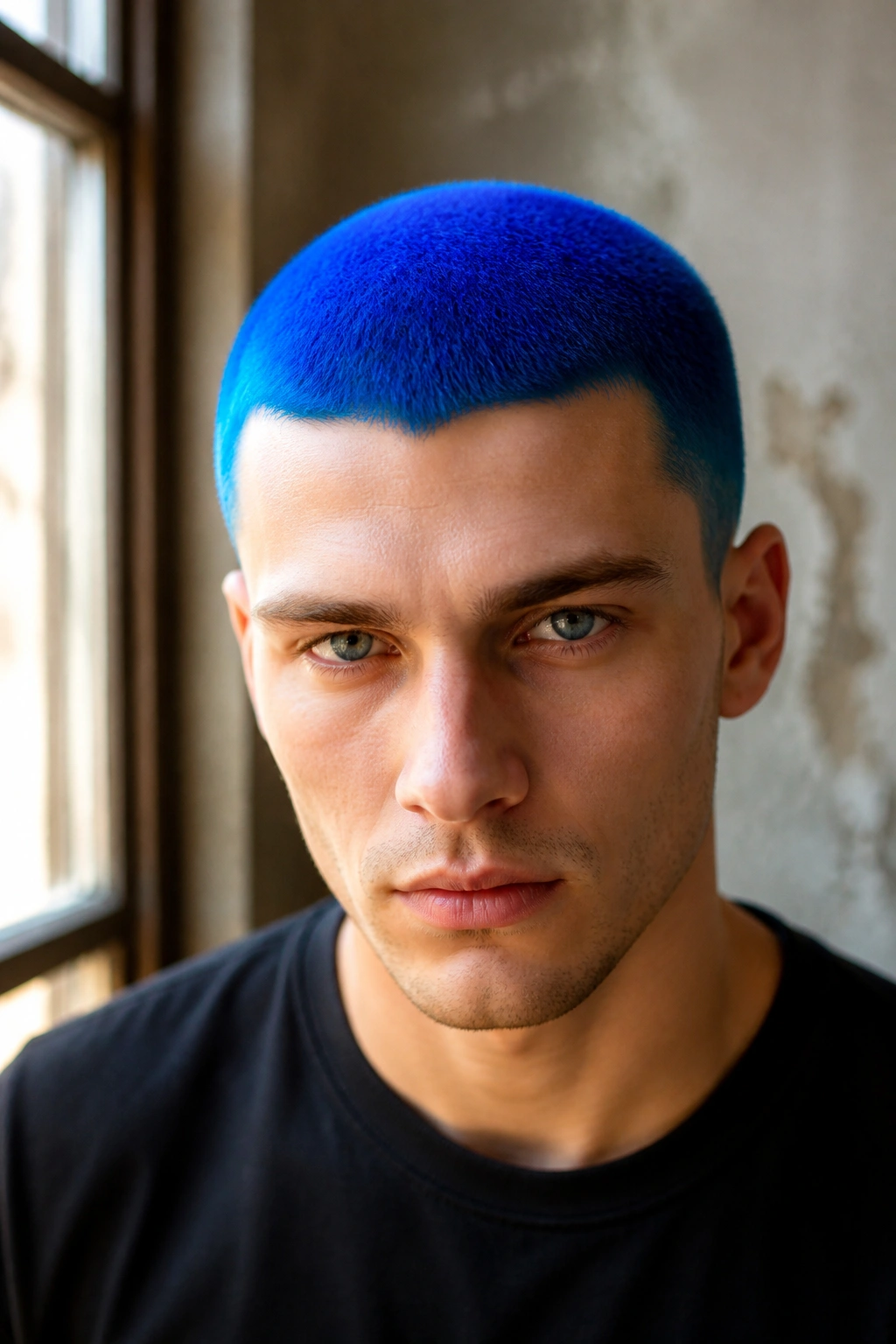
Color on a buzz cut is loud in a good way. There’s no weight, no layering, and almost no visual clutter, so one strong shade does all the talking. That is why dyed buzz cuts can look edgy without needing a dramatic shape.
You can go saturated and obvious — electric blue, red, copper, violet, forest green. Or you can choose a darker gloss or muted pastel if you want something less shouty. Short hair makes color decisions feel bolder because the shade sits right on the surface.
What Works Best
- High-saturation colors look strongest on short hair.
- Dark roots show fast, so plan for upkeep if you like a clean finish.
- Semi-permanent color is easier to test if you’re unsure about the commitment.
- Color-safe shampoo helps, but it does not stop fade completely.
The cut itself matters too. A clean buzz gives the color a neat canvas. If the fade is sloppy, the eye goes to the mistakes instead of the shade. That’s why a dyed buzz usually needs a tighter barbering job than a plain one.
I like this look on people who want a short haircut with a little swagger. The hair is still short. The attitude is not.
14. The Patterned Buzz Cut
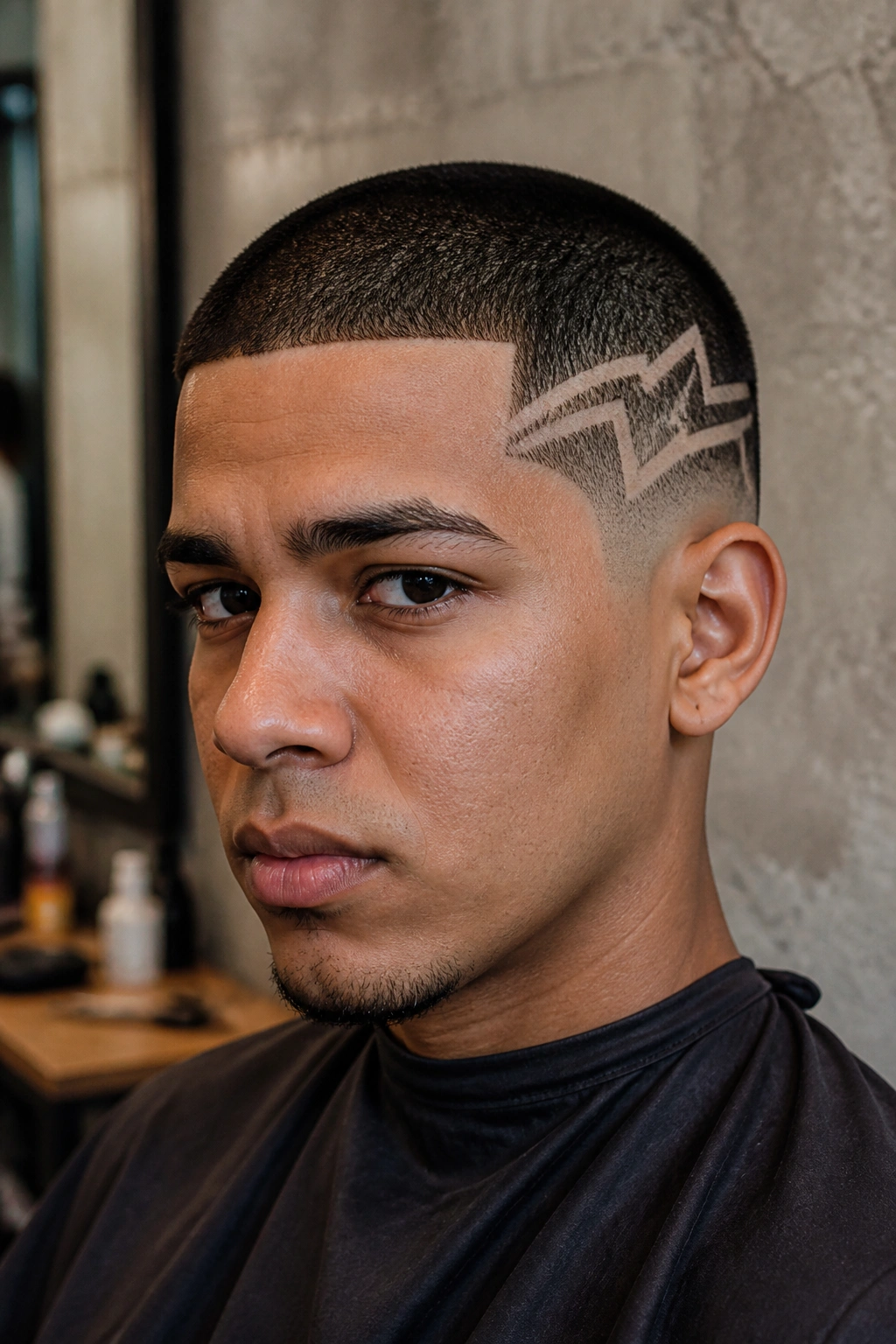
Some people want the cut to say the thing. Others want the design to do it. A patterned buzz cut is for the second group, and it is one of the most obvious ways to turn a short haircut into a statement.
The pattern can be geometric lines, sharp slashes, temple art, or a small design tucked into a fade. The cleaner the base haircut, the better the pattern shows up. That means the barber has to keep the surrounding area tight, because stray growth will blur the design faster than you’d think.
A good pattern is not just decoration. It changes the balance of the whole head. A line at the temple can shift attention upward. A curved design near the fade can make the haircut feel more fluid. A small repeated shape near the nape can look clean and personal without taking over the entire cut.
Best approach:
- Keep the design near the temple, side, or nape if you want it to grow out more gracefully.
- Ask for simple, crisp lines if it’s your first time.
- Plan for touch-ups every 1 to 2 weeks if you want the pattern to stay sharp.
- Pair it with a clean fade or close buzz so the design has contrast.
This is the loudest version on the list, and I mean that in the nicest way. If a classic buzz is a clean statement, a patterned buzz is the one that comes in wearing boots.
A buzz cut does not have to be plain to be strong. It can be almost shaved, tightly faded, lined up, colored, or carved with a design, and each version sends a different message. That’s the part people miss when they lump all short hair together.
The best choice is the one that fits how much edge you want to wear every day. Some looks need frequent barber visits and a steady hand with sunscreen. Others grow out quietly and still keep their shape. Pick the one that matches your routine, not just the photo you saved on your phone.
