



A bowl cut can look severe, playful, or sharp enough to turn a plain outfit into something deliberate. The difference comes down to where the line sits, how the weight is handled, and whether the fringe is left blunt or softened with texture.
People still think of the bowl cut as a shortcut from childhood. That version exists, sure, and it is not the one most people want. The stronger versions are built with cleaner sectioning, smarter tapering at the nape, and a lot more attention to how the sides meet the ears.
The best bowl cuts for bold looks usually do one of two things: they create a hard frame around the face, or they make that frame look slightly unexpected. Straight hair can give you a crisp graphic edge. Wavy or curly hair brings movement, which keeps the shape from feeling frozen in place.
A haircut like this lives or dies on small details — the weight line, the top length, the way the corners are softened, and whether your barber leaves enough room for the hair to move after it dries. Get those right and the cut looks intentional. Get them wrong and it just looks like the wrong bowl in the wrong chair.
1. The Blunt Micro Bowl Cut
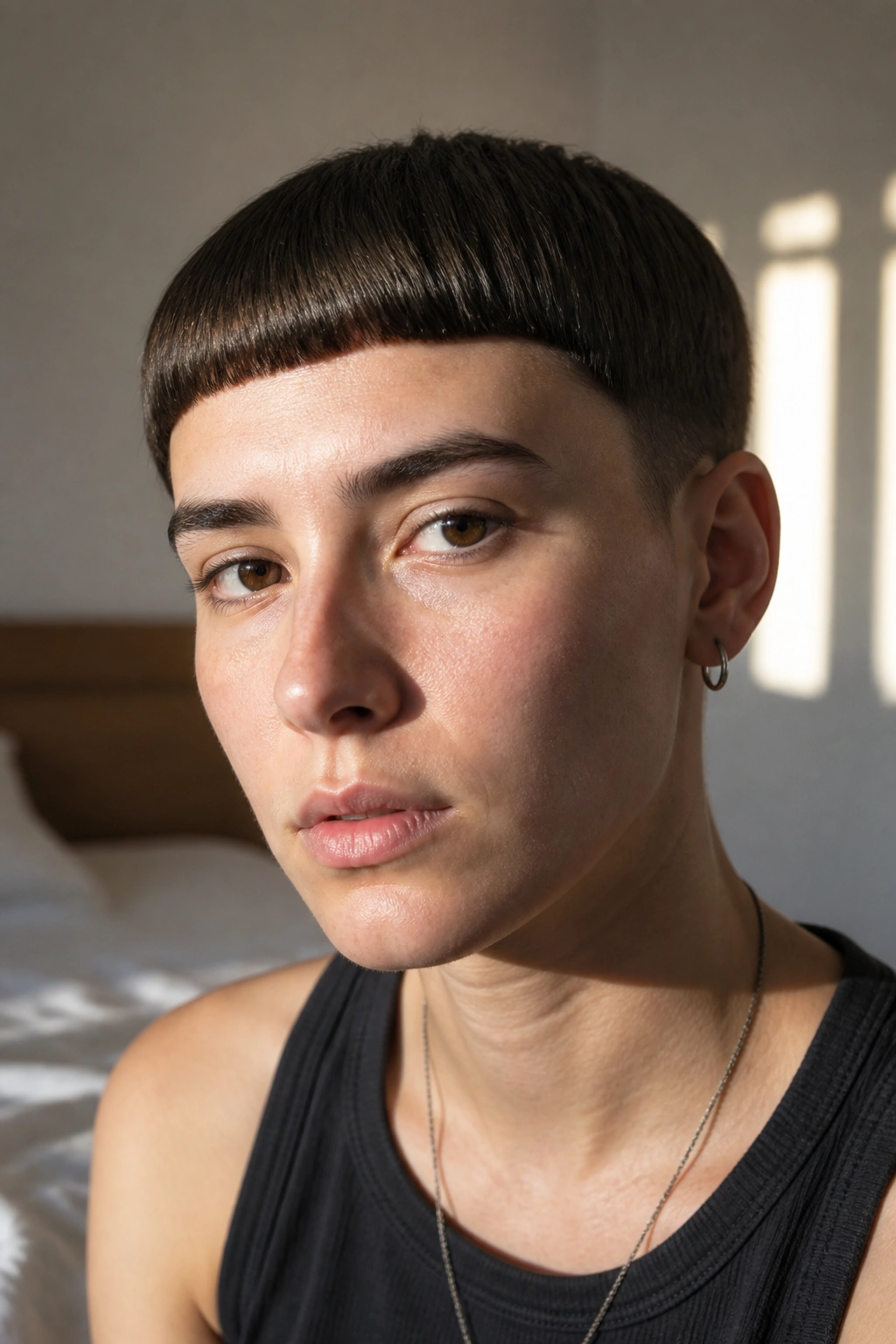
Sharp, short, and unapologetic, the blunt micro bowl cut is the version that makes the face look architectural. It sits high, keeps the fringe short, and draws a hard line just above the brow. If you like haircuts that do not apologize, this is the one to start with.
Why the Clean Line Works
The trick here is contrast. The top is kept compact, the sides stay snug, and the perimeter is cut with a steady hand so the edge reads like a line, not a suggestion. On straight hair, that edge can look almost graphic. On dense hair, it gives the shape a little more weight, which is useful if you want the cut to stand up on its own.
This version works best when the rest of the look is pared back. Strong brows, earrings, a sharp collar, a black tee — all of that helps. The cut already does the talking.
What to Ask For at the Chair
- A blunt fringe that sits just above the brows or skims them lightly.
- A top length of about 1 to 2 inches, depending on density.
- Sides kept close without a heavy fade.
- A soft taper at the neckline so the back does not puff out.
- Minimal layering inside the shape.
Pro tip: if your hair grows forward hard at the crown, ask for a touch more length there. That tiny bit keeps the fringe from collapsing after the first wash.
This cut is a favorite when you want something severe in a good way. It is neat, but not boring.
2. The Soft Textured Bowl Cut

A heavy fringe can go boxy fast. Texture fixes that.
This version keeps the bowl outline, but the interior is chipped and feathered just enough to stop the shape from feeling frozen. The edge around the head still matters, yet the top has movement, which makes the cut easier to live with on thick or slightly wavy hair. It is one of those styles that looks calm from a distance and much more interesting up close.
The best way to think about it is this: shape first, texture second. You still want the perimeter to read as a bowl, not a shag. But inside that outline, point cutting and light slide cutting take away the helmet effect. The haircut breathes a little.
Styling is straightforward. Work in a pea-sized amount of matte paste or cream, then blow-dry forward with your fingers or a flat brush. You are aiming for separation, not fluff. If the hair starts to stand away from the head in little tufts, you have gone too far. Back off.
I like this version on thicker hair because it keeps the bold shape without making the head look heavy. Fine hair can wear it too, though the texture has to be light. Too much thinning and the whole thing turns wispy. That is the line you have to watch.
3. The Curly Bowl Cut
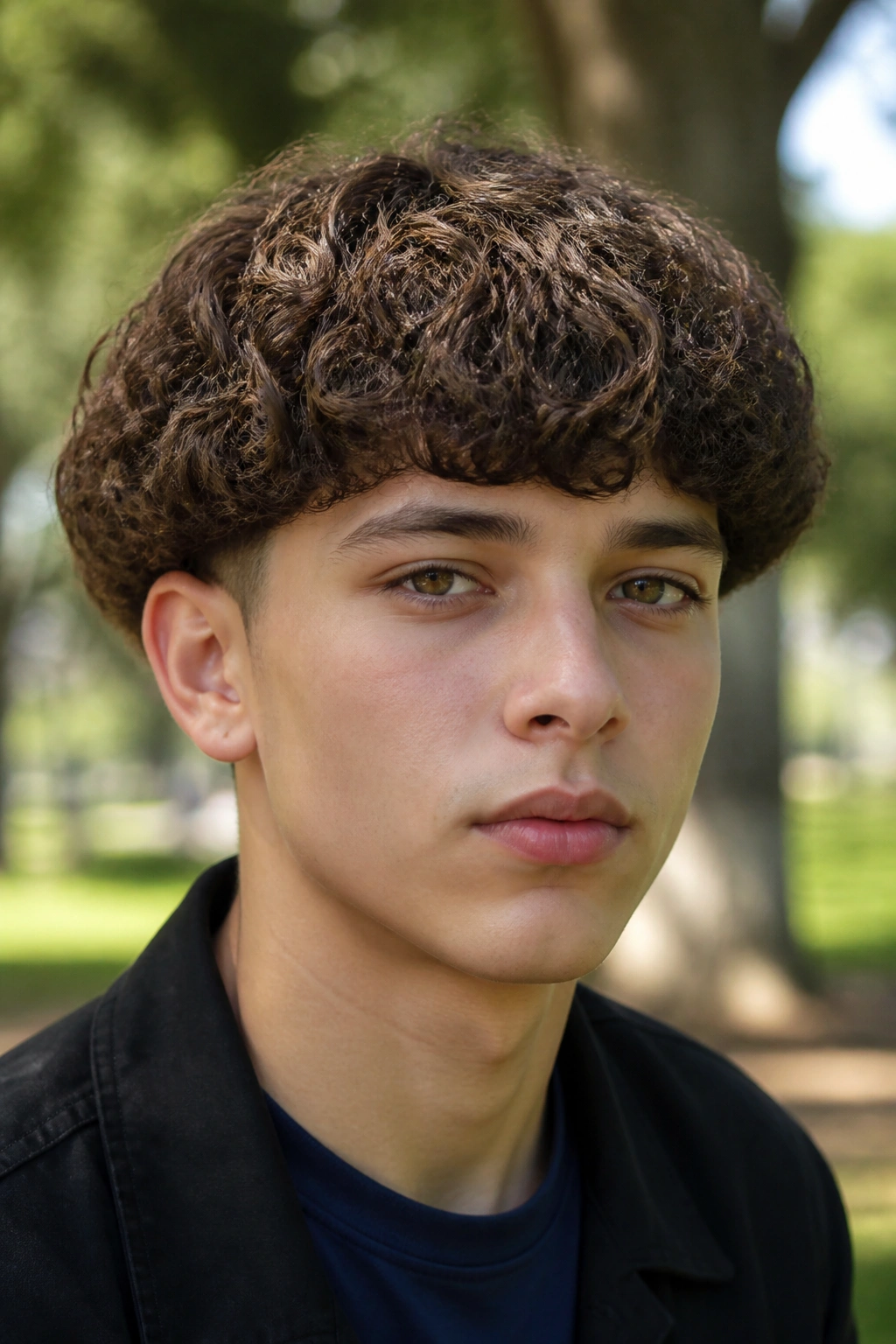
Can curls wear a bowl cut without turning into a puffball? They can, and when it works, it looks fantastic in a very specific way: round, lively, and full of movement without losing the shape.
The secret is to stop treating curly hair like straight hair with a twist. Curls shrink. They bend. They make their own rules. So the bowl line has to be placed with that in mind, usually a touch lower and a bit softer than it would be on poker-straight hair. If you cut the fringe too short, it jumps upward and the whole silhouette gets too severe.
How the Curl Pattern Changes the Shape
Curly bowl cuts rely on controlled fullness. The perimeter should still be readable, but the ends need enough length to show the curl pattern instead of crushing it. A barber or stylist who understands dry shrinkage will usually leave more length at the corners and around the temples, then refine it after the hair settles.
How to Style It Without Flattening the Curl
- Use a curl cream or light gel on damp hair.
- Diffuse on low heat, low speed.
- Let the top dry forward before breaking the cast.
- Keep the fringe a little longer than you think you need.
- Refresh with water and a small amount of product, not a full rewash.
This is one of the few bowl cuts that can look playful and tough at the same time. It also photographs in a way straight hair sometimes does not. The curl gives the line some life.
4. The Undercut Bowl Cut
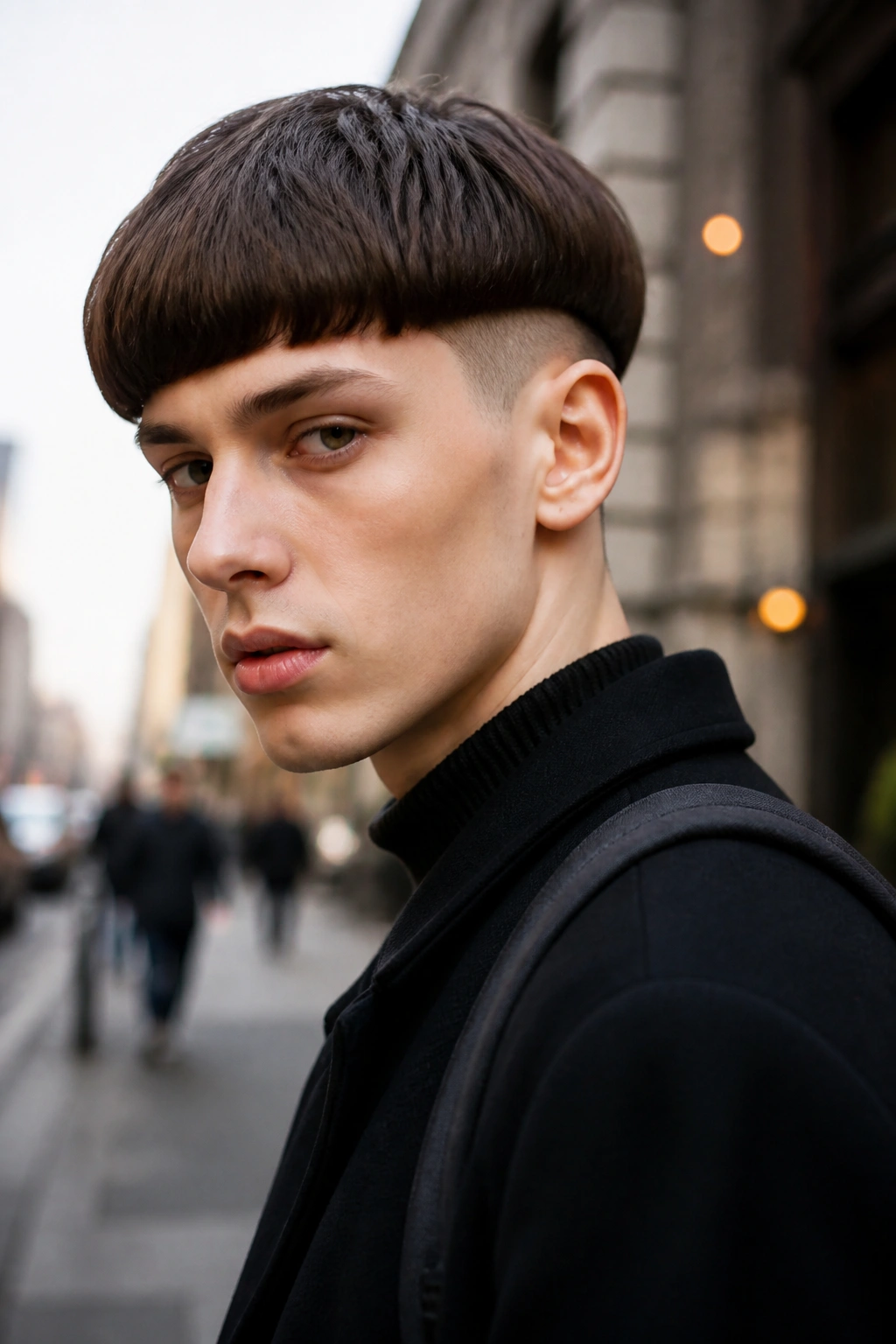
You want the bowl silhouette, but you do not want the bulk. That is where the undercut version comes in.
This is the style I reach for when someone likes the shape in theory but hates a heavy head of hair around the ears. The top keeps its rounded outline, while the sides and back underneath are taken much shorter — sometimes shaved, sometimes clipped tight, sometimes left at a low guard and cleaned up. The result is bold, but lighter on the head.
A little disconnect goes a long way here. If the undercut is too extreme, the bowl can start to float in a way that feels harsh. If it is too soft, you lose the point of the cut. The middle ground is usually best: a clear shape, a clear break, and enough blend at the corners that the cut still moves.
- Ask for a disconnected perimeter if you want the line to read clearly.
- Ask for a #1 or #2 clipper length underneath if your hair is thick.
- Keep the top around 2 to 4 inches, depending on how dramatic you want it.
- Make sure the neckline is cleaned up every 3 to 4 weeks if you want it to stay sharp.
This version is especially useful for thick hair. It removes weight where most bowl cuts get clumsy, and that alone makes a huge difference.
5. The Shaggy Bowl Cut

This one has movement.
The shaggy bowl cut takes the basic round outline and loosens it up with longer layers, choppier ends, and a fringe that falls a little irregularly instead of landing in one perfect line. It still reads as a bowl cut, but it has a softer, lived-in feel that works well on wavy hair and dense straight hair that tends to puff.
I like this version because it does not fight the hair. A lot of cuts try to bully the natural texture into shape. This one lets the shape and the texture meet halfway. You get the frame around the face, but the ends are broken enough to keep things from looking too stiff. It is not the neatest bowl cut, and that is exactly the appeal.
A rough dry works better than a polished blowout here. Use a little sea salt spray or a light cream, then dry the hair with your hands instead of trying to comb every strand into place. If the fringe ends up a little uneven, that is part of the charm. If it becomes stringy, you probably removed too much weight inside the cut.
This cut is also forgiving on grow-out. That matters. A super blunt bowl can lose its edge quickly once the fringe starts to move into the eyes. The shaggy version ages better and often looks cooler on day ten than on day one.
6. The Fade Bowl Cut
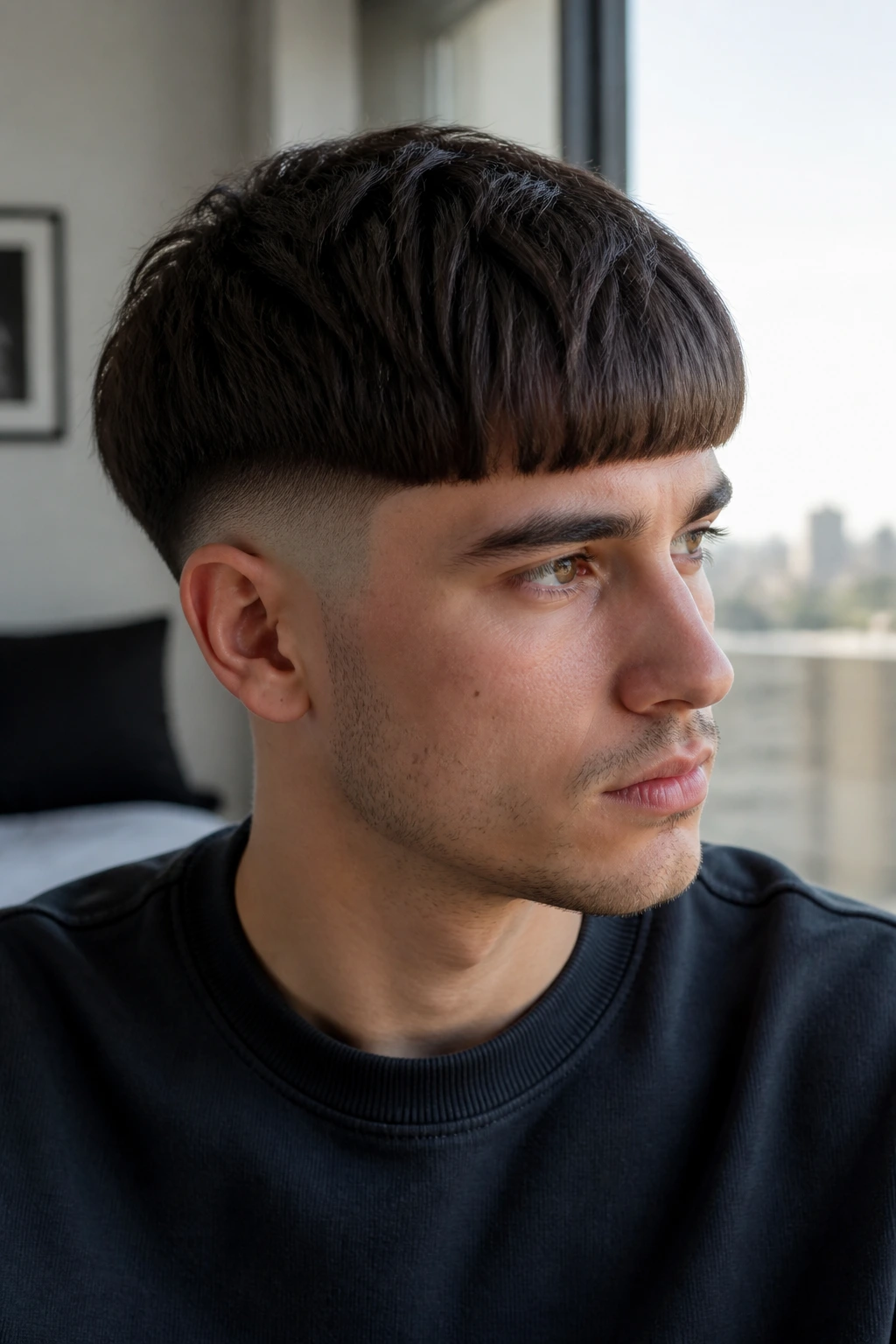
Unlike the blunt version, the fade bowl cut earns its edge by stripping weight from the sides.
That simple change shifts the whole mood. Instead of a full rounded cap sitting evenly around the head, the hair transitions into a fade at the temples and nape, which makes the top look stronger and the outline look cleaner. It is a neat trick if you want the bowl shape to feel sporty, sharper, or a little more modern.
Low Fade or Mid Fade?
A low fade keeps the cut wearable and gives you a softer transition behind the ears. A mid fade pushes the contrast harder, which makes the bowl line stand out more. I usually prefer the low version if the hair is naturally thick, because it avoids a harsh shelf. The mid version has more bite, but it can overwhelm a narrow face if the top is also kept too short.
Where This Cut Really Works
- Straight hair that lies flat around the temples.
- Thick hair that builds too much bulk at the sides.
- Oval and square faces that can handle a strong outline.
- People who want the cut to stay neat between trims.
The fade bowl cut is one of the easiest ways to make the shape feel deliberate instead of retro. The fade keeps the edges tidy. The bowl does the rest.
7. The Mushroom Bowl Cut
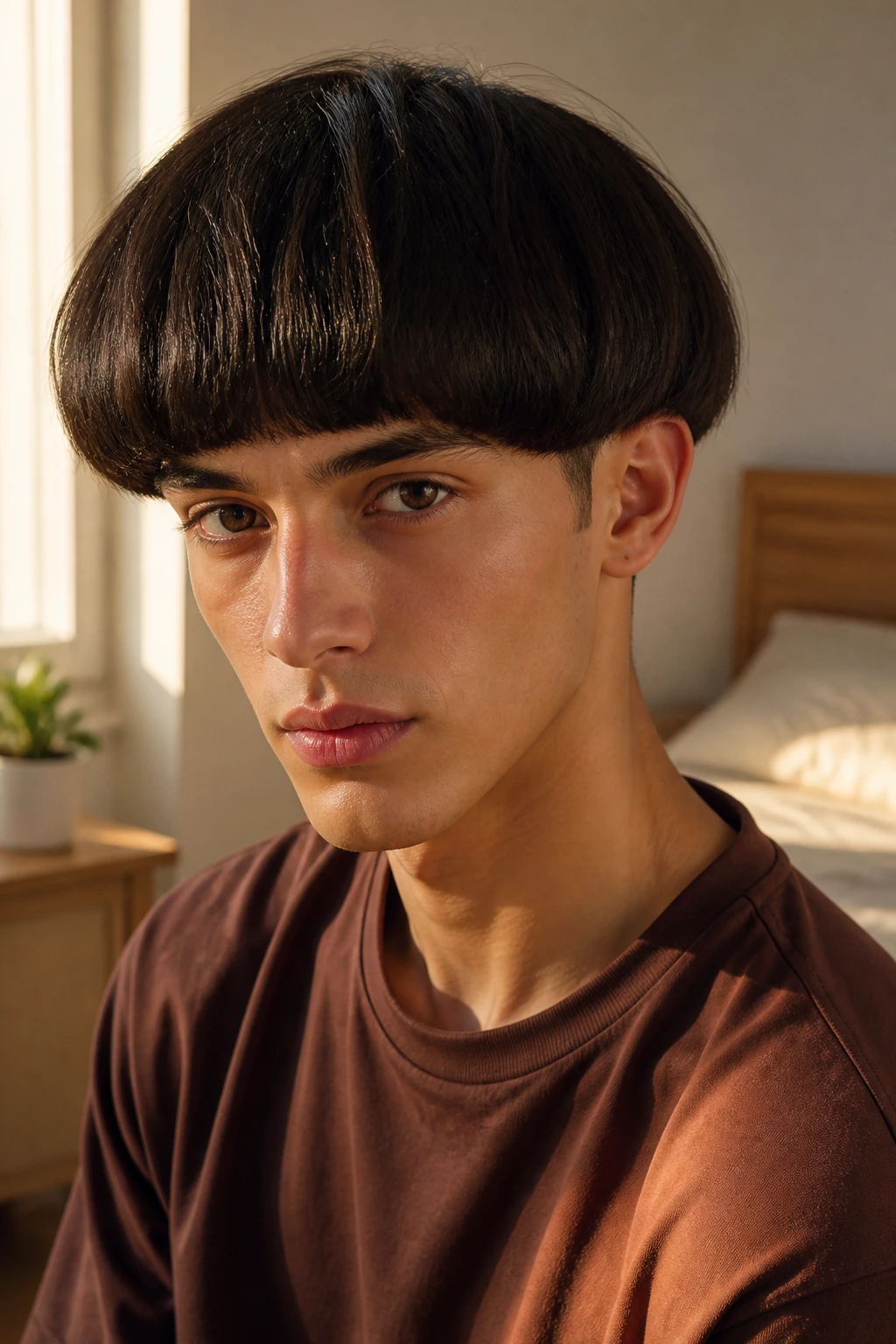
Mushroom does not have to mean dated.
When the shape is handled well, the mushroom bowl cut looks rounded, dense, and very intentional. The crown carries a little more fullness, the perimeter sits lower, and the fringe usually lands with a heavier line. That can sound severe on paper. In practice, it can be one of the strongest-looking cropped cuts if the lines are clean and the weight is balanced.
The big mistake here is over-texturizing the top. People get nervous about the round shape and start thinning the interior too much. Then the haircut loses its body and turns flimsy. Leave enough mass in place so the silhouette has something to hold onto. The bowl line needs a little substance.
This cut works especially well with straight, thick hair that naturally wants to fall in one direction. The shape becomes part of the style rather than a fight against it. If the hair is wavy, the mushroom effect gets softer, which can be nice too, but the line around the head should still be kept crisp.
If you want the look to feel more fashion-forward, keep the fringe just above the lashes and the sides close to the ears. Lower than that, and it can start to swallow the face. That is the line to watch.
8. The Geometric Precision Bowl Cut
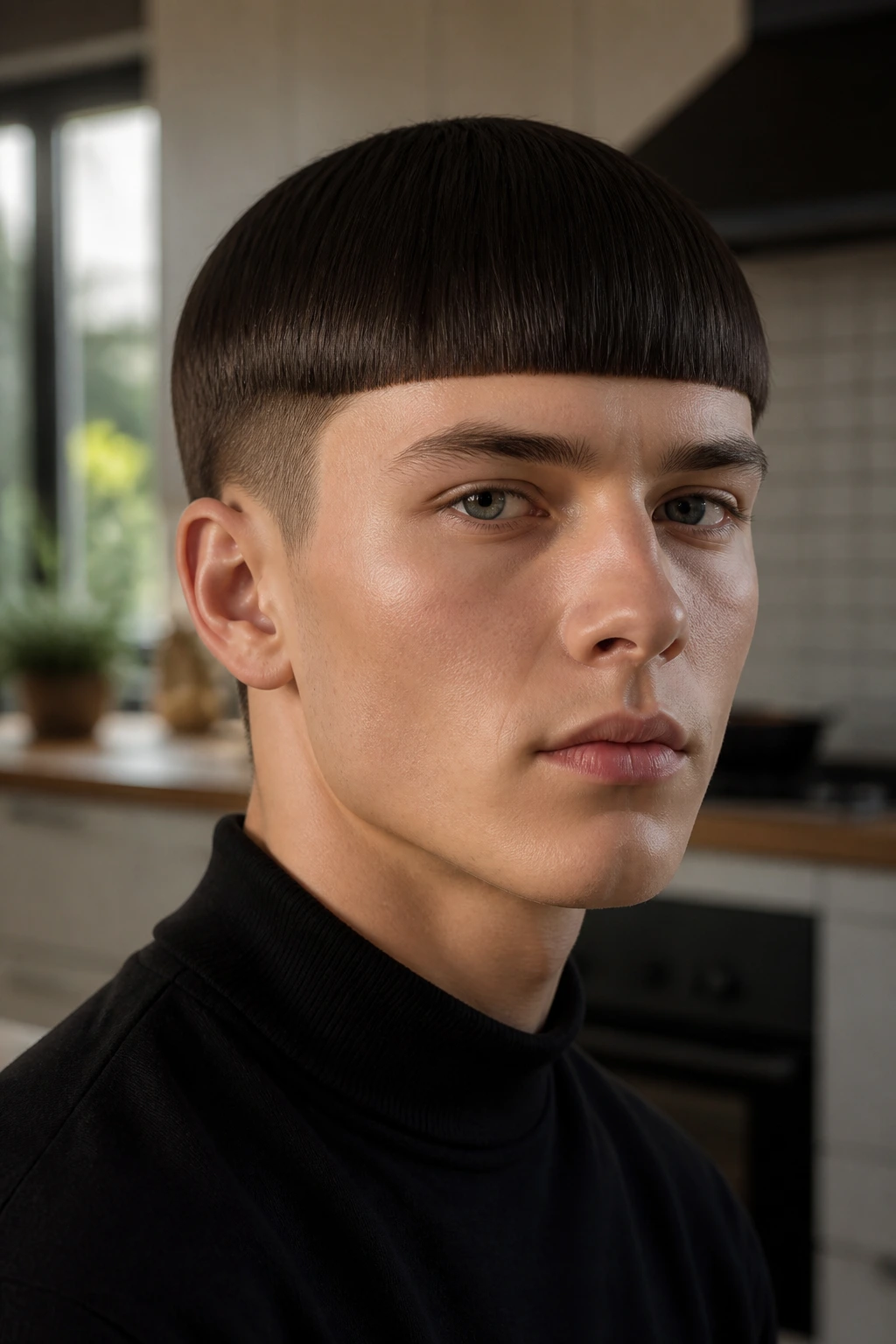
What happens when the bowl cut is treated like graphic design? You get the geometric precision version.
This cut is all about hard edges, controlled corners, and a fringe that lands almost ruler-straight. It is one of the boldest bowl cuts because it refuses to soften itself. The shape has to be measured carefully: the line at the temples, the curve over the crown, the way the corners angle near the jaw. Nothing about it can look accidental.
Why the Straight Lines Matter
A precision bowl cut works best on hair that falls cleanly when dry. If the hair bends every which way, the outline gets messy fast. A skilled stylist will usually section the head carefully, build the shape with clippers or scissors-over-comb, and keep checking the symmetry from front and side angles. That attention shows.
How to Style the Finish
Use a flat brush and a blow-dryer nozzle to push the fringe into place, then finish with a tiny amount of shine cream if you want the line to look polished. Matte products can work too, but the cut really benefits from a surface that looks smooth. A frizzy finish cuts against the whole point.
This one suits strong brows, angular cheekbones, and anyone who likes a haircut that looks almost engineered. It is not soft. That is the charm.
9. The Long-Fringe Bowl Cut
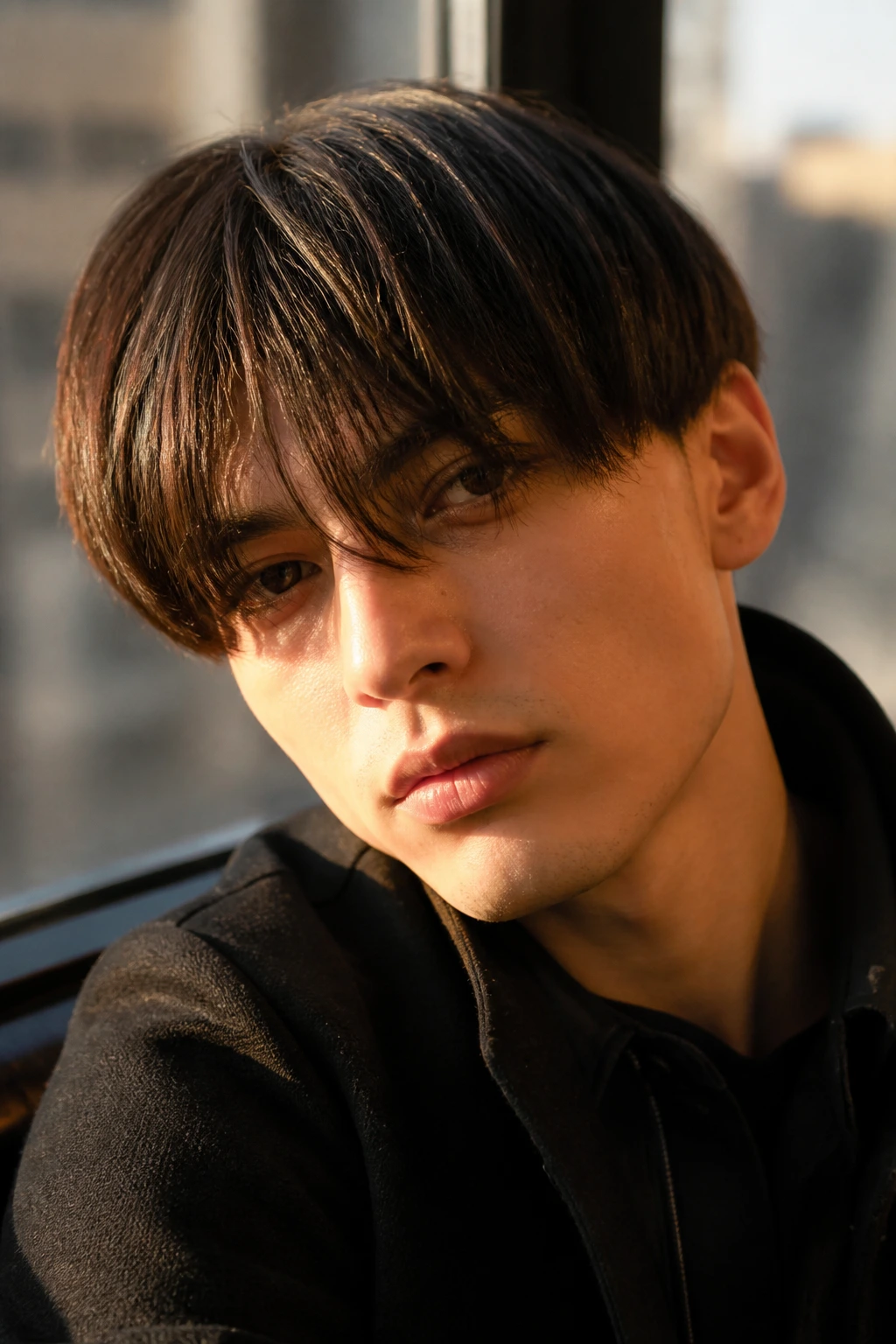
If you like hair that skims the eyes and moves when you turn your head, this is the one.
The long-fringe bowl cut keeps the round outline, but it lets the front fall lower and looser. That changes the mood completely. Instead of feeling severe, the cut starts to look moody, a little romantic, and less literal than the short-fringe versions. It can be a smart choice if you want the bowl shape without the hard visual stop across the forehead.
The fringe length matters more here than people expect. Too short, and you lose the softness. Too long, and it turns into a curtain cut with a strange perimeter. The sweet spot is usually somewhere between the brow and the lash line, depending on face shape and how much movement the hair has. Fine hair may need less length to keep the front from falling flat. Thicker hair can hold a bit more.
How to Keep It from Looking Heavy
- Ask for light internal layering at the front.
- Keep the corners slightly longer than the center.
- Blow-dry the fringe side to side, not straight down every time.
- Trim the front every 4 to 6 weeks if you want the shape to stay open.
This version suits longer faces and anyone who wants more coverage across the forehead without losing the bowl structure. It has presence, but it does not shout.
10. The Color-Block Bowl Cut
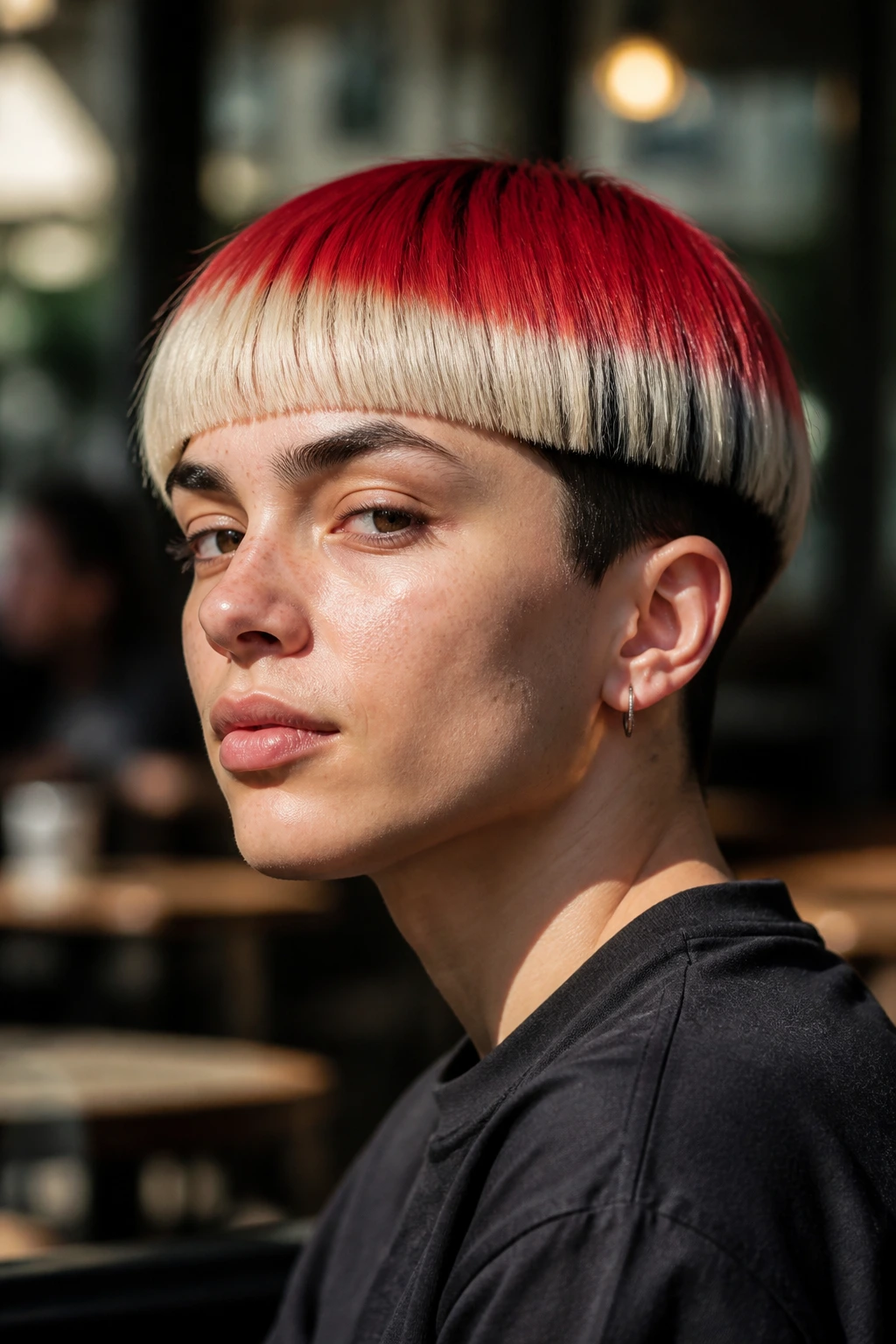
Color-blocking and bowl cuts make sense together because the shape already gives you a frame.
That frame is the whole point. A bowl cut creates a clear outline around the head, so when you split the color into strong sections — dark underneath, lighter fringe, a bleached panel at the crown, or a vivid band through the top — the haircut starts to read almost like a helmet with a graphic finish. Done well, it looks sharp. Done lazily, it looks like someone forgot to blend.
The best color-block bowl cuts use contrast with discipline. If the cut is heavily rounded, the color should sharpen it, not fight it. A cool-toned blonde on top with a darker underlayer can give the hair depth. A black fringe against a bleached crown creates a more dramatic line. Bright color works too, but only if the cut itself is tidy. A messy shape plus loud color is too much noise at once.
This style does ask for upkeep. Roots show fast on a short, clean cut, and faded color can make the outline look dull. Use color-safe shampoo, keep heat low, and protect the fringe if you blow-dry every day. Short hair does not mean low maintenance. A lot of people learn that the hard way.
For anyone who likes a haircut that carries its own personality, this one is hard to beat.
11. The Tapered Nape Bowl Cut
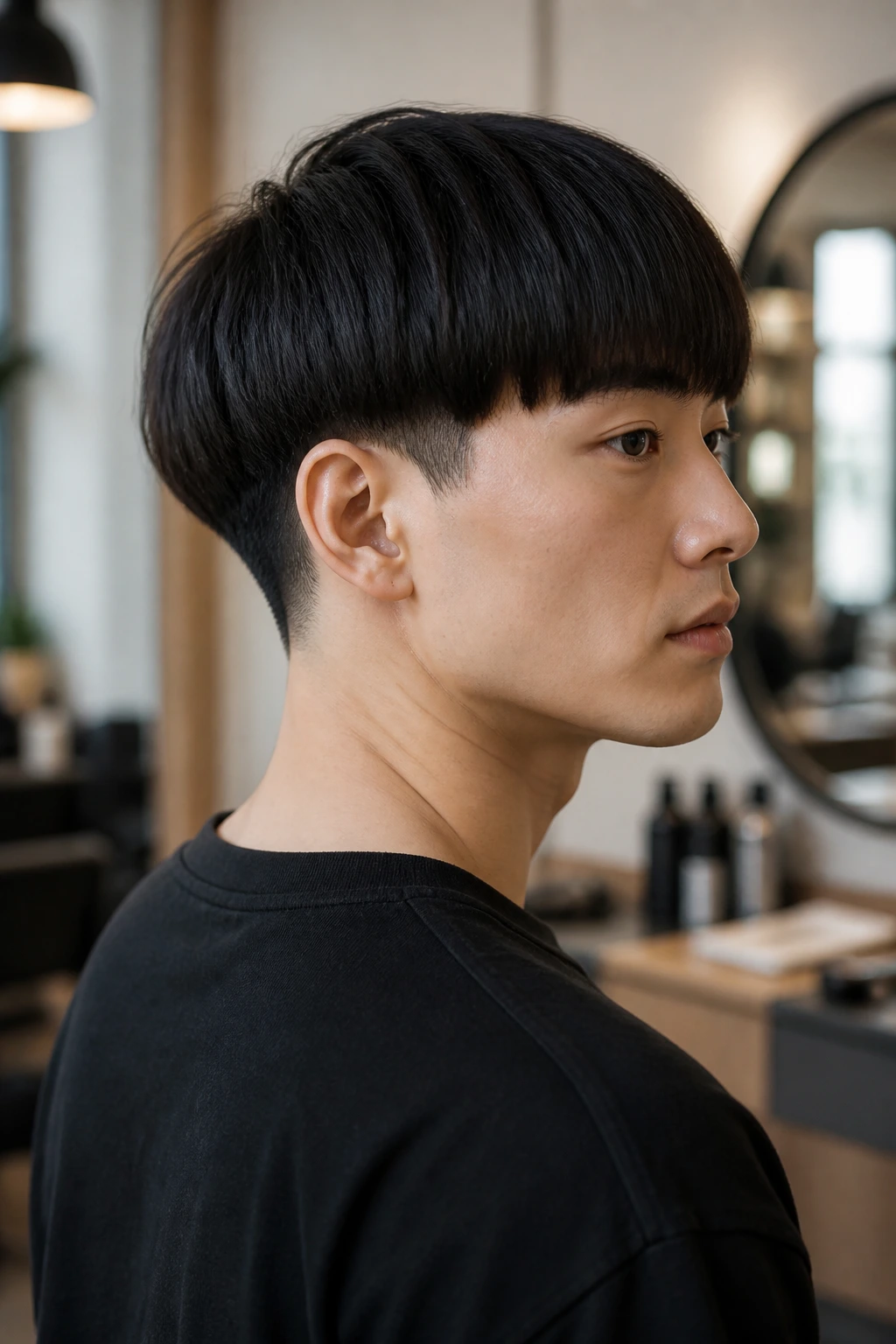
A tapered nape changes the whole mood of a bowl cut.
From the front, the shape still gives you that rounded, bold line. From the back, though, the neckline gets lighter and cleaner, which keeps the haircut from sitting like a block. It is a small adjustment, but on a short cut it makes a huge difference. The back starts to look finished instead of heavy.
This version is a good choice if you want a bowl cut that can move between sharp and practical. It works especially well with shirts, jackets, and collars that sit close to the neck, because the taper stops the hair from bunching up. If your hairline at the nape grows in unevenly, a taper also helps disguise that without making the cut look overworked.
What the Taper Changes
- The neckline grows out more neatly.
- The back of the cut feels lighter.
- Side views look cleaner around the ear.
- The silhouette stays bold without becoming boxy.
A lot of people go too high with the taper and lose the shape. Keep it low and controlled. The goal is not to turn the bowl into a fade. The goal is to give the back some breathing room.
If you want a short cut that still feels deliberate from every angle, this is the one I would point you toward.
12. The Asymmetric Bowl Cut
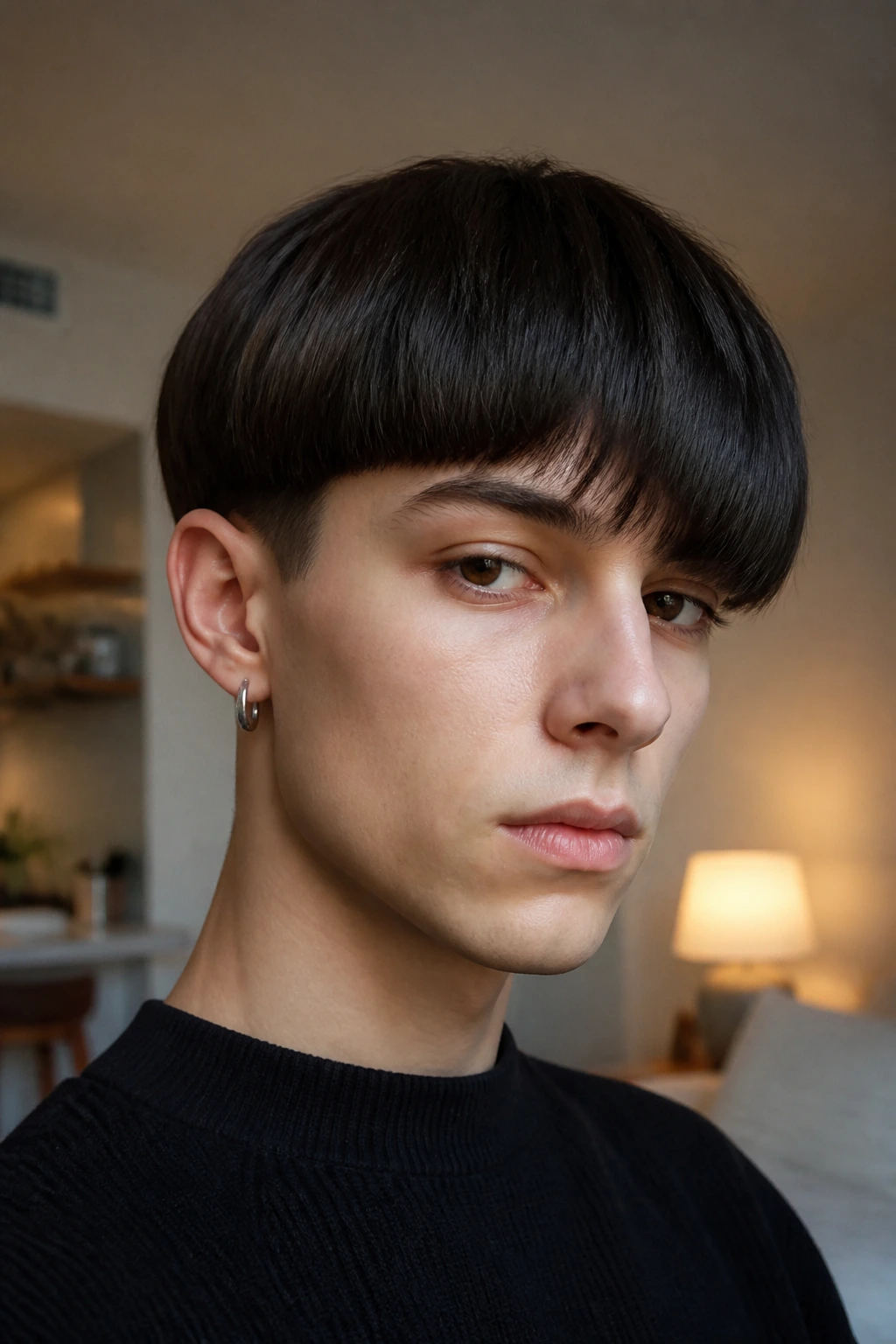
A little imbalance changes everything.
The asymmetric bowl cut keeps the rounded base idea, but one side is longer, the fringe falls on a diagonal, or the weight line shifts off center just enough to make the haircut feel less literal. That small break in symmetry gives the style a lot more character. It is still a bowl cut, but it refuses to behave like a textbook version.
This is the style for people who like structure with a wrinkle in it. The line can lean left, the fringe can sweep across one eye, or the side sections can be cut to different lengths so the silhouette reads more like a curve than a circle. I like this version because it keeps the drama of the bowl cut while dodging the school-photo vibe that scares so many people off.
The key is restraint. If the asymmetry is too subtle, no one notices. If it is too extreme, the cut loses the shape that makes it a bowl cut in the first place. The sweet spot sits in the middle: clear outline, visible shift, controlled finish. Straight hair shows this cleanly. Wavy hair softens it in a way that can look even better, as long as the fringe does not split into random pieces.
If you want one bowl cut that feels the least predictable and the most wearable in a fashion-forward way, this is probably the strongest pick. It has edge without needing a gimmick, and that is a rare thing in short hair.
