



Brown hair is often unfairly categorized as “neutral,” but anyone who has spent time working with it knows that it is anything but simple. A rich brunette base acts like a dark canvas, absorbing light rather than reflecting it. This is exactly where copper highlights come into play. When you introduce copper tones to brown strands, you are not just changing the color; you are fundamentally altering how light interacts with the hair. You move from a flat, matte appearance to something that feels alive, warm, and dimensional.
The secret to a great copper-on-brown look is understanding the underlying pigment. Brown hair, when lifted, naturally exposes warmth. Instead of fighting that warmth with cool-toned ash or violet toners—a common mistake—you lean into it. Copper is the natural cousin of brown’s hidden undertones, which makes the result look intentional, organic, and incredibly low-maintenance compared to vivid fashion colors like blue or purple.
Achieving this look requires a balance of placement and saturation. You are looking for reflection, not a stripe of solid paint. The best results occur when you weave the copper through the mid-lengths and ends, allowing the dark base to provide the necessary depth. If you have been hesitant to commit to a full color change, starting with these highlighted techniques offers a way to test the waters of the “copper era” without losing the identity of your natural dark hair.
1. Deep Auburn Copper
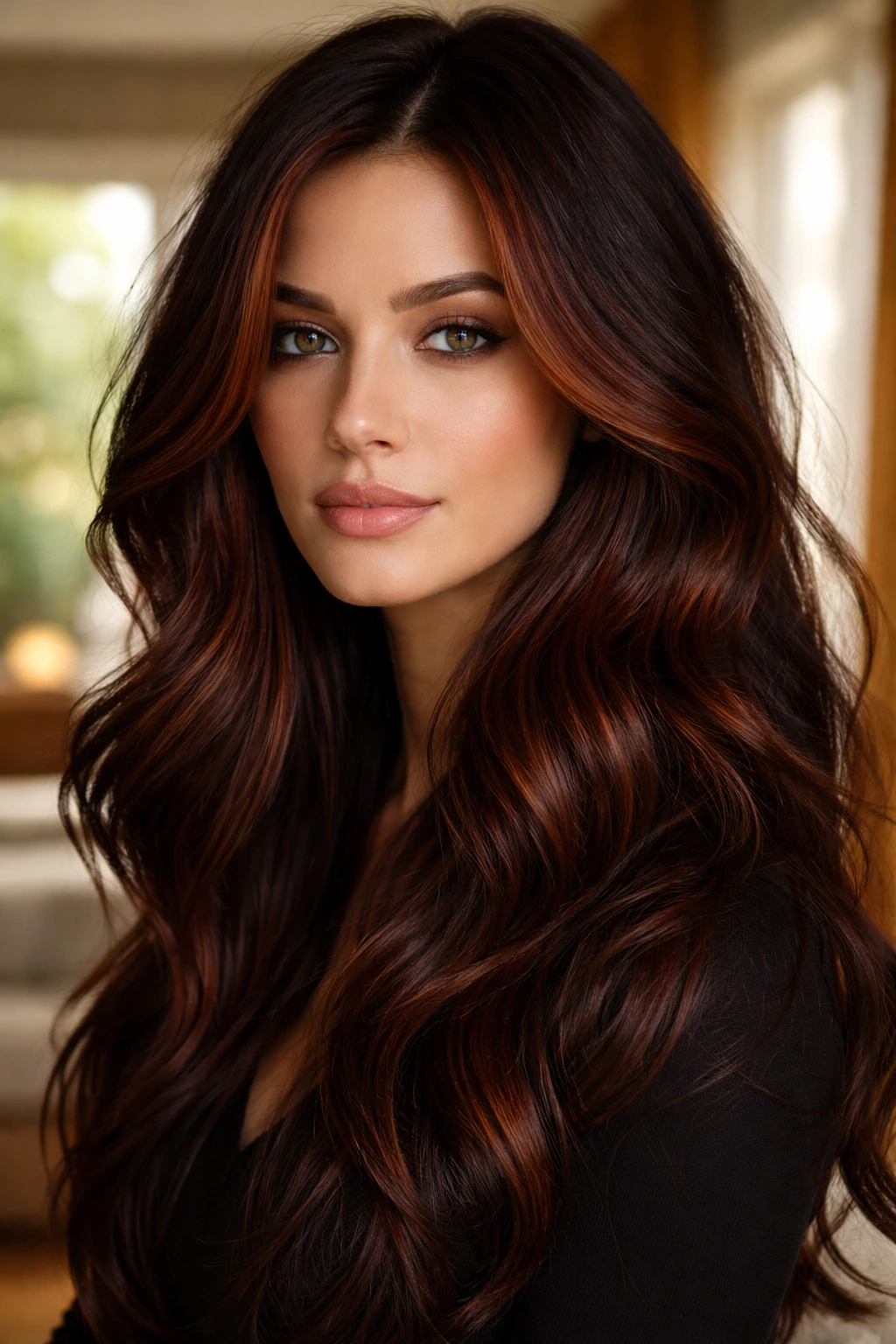
This is the entry point for someone who prefers a darker, moodier aesthetic. Unlike lighter, punchier coppers, deep auburn sits closer to the brown spectrum, making the transition seamless. It is essentially a level 5 or 6 red-copper that blends directly into your dark brown base.
Why This Works for Dark Hair
The contrast is minimal, which means you avoid the “zebra stripe” effect that often plagues heavy highlighting jobs. Because the tone is deep, you do not need to lift your hair to a pale, platinum blonde first. You can lift it to a copper-orange stage and deposit a semi-permanent shade over it. This preserves the integrity of your hair fiber significantly better than aggressive lightening does.
Pro tip: Ask for a demi-permanent glaze. It will provide the shine of a permanent color without the harsh chemical shift that can lead to rapid fading.
2. Strawberry Copper Balayage
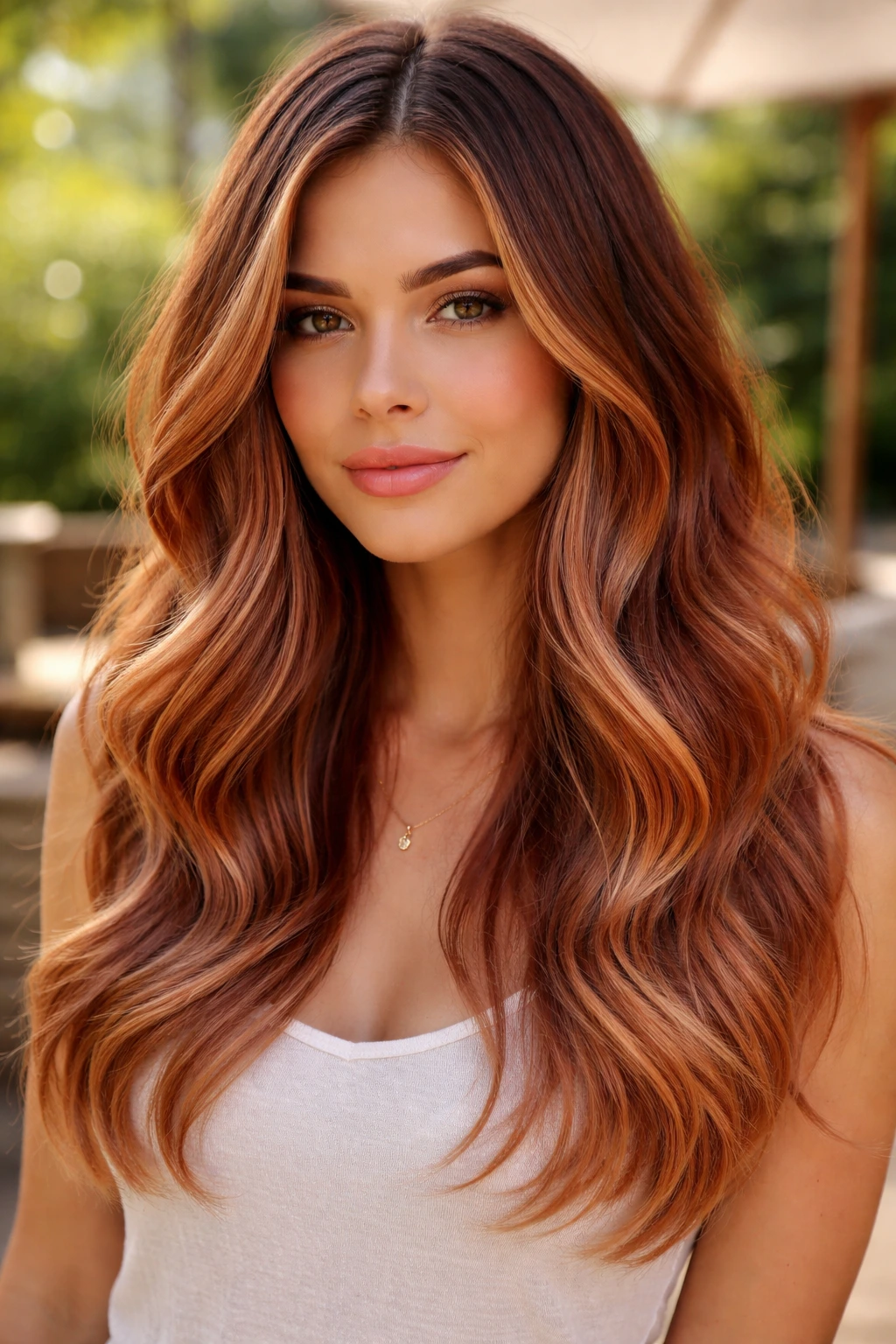
Strawberry copper is softer, leaning into the peach and apricot territory. This look is fantastic if you want to lighten your hair visually without using bleach on every single strand. The technique here is all about painting.
By hand-painting the copper toward the ends, you create a gradient that feels like a natural summer fade. It works exceptionally well on wavy or textured hair, where the different tones can catch the light as the hair moves. If your brown is a cool, ashy tone, adding strawberry copper creates a beautiful juxtaposition between the cool roots and warm, glowing tips.
3. Cinnamon Spice Highlights
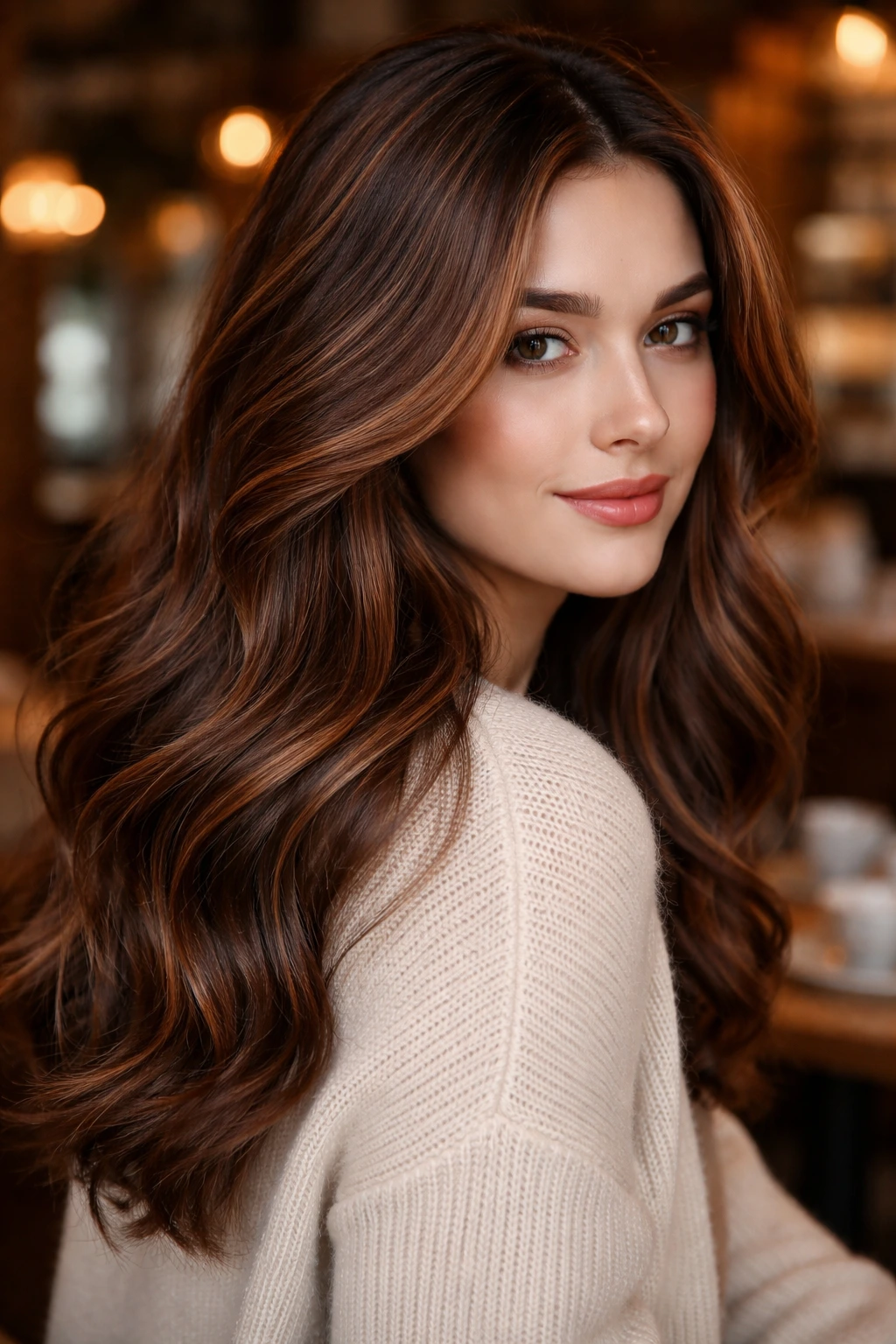
Think of this as the “cozy” version of red hair. Cinnamon spice blends standard copper with a touch of darker, earthy red. It is less about the metallic orange glow and more about a warm, baked-in richness.
These highlights are usually done using a fine-weave foiling technique. By weaving in very thin sections of copper, you create a “salt and pepper” effect but in warm, autumnal tones rather than grey. This is ideal for fine hair where large chunks of color might look too blocky or artificial. The density of the highlights gives the illusion of thicker, fuller hair because the varying colors create depth perception.
4. Copper Ombré Transition
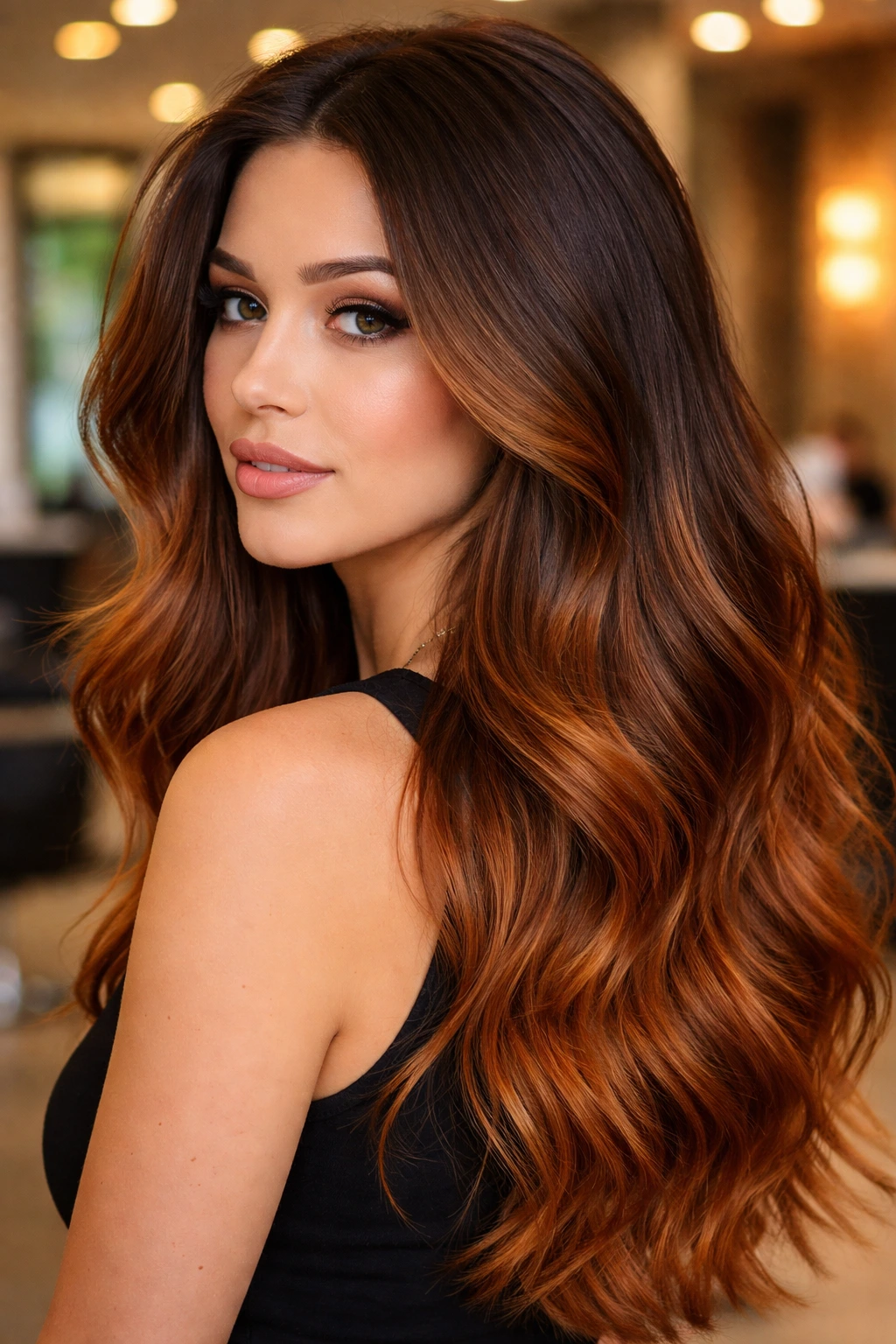
An ombré is a classic for a reason, but the copper version feels modern when the transition starts lower down the hair shaft. You want the roots to remain your natural, healthy brown, with the copper starting around the jawline or collarbone.
The key to a successful copper ombré is the melt. You should never have a hard line where the brown stops and the copper begins. Your stylist should perform a color melt at the sink, pulling some of your root color down into the copper to soften the junction. This prevents the hair from looking like it has been dipped in a bucket of dye.
5. Subtle Copper Babylights
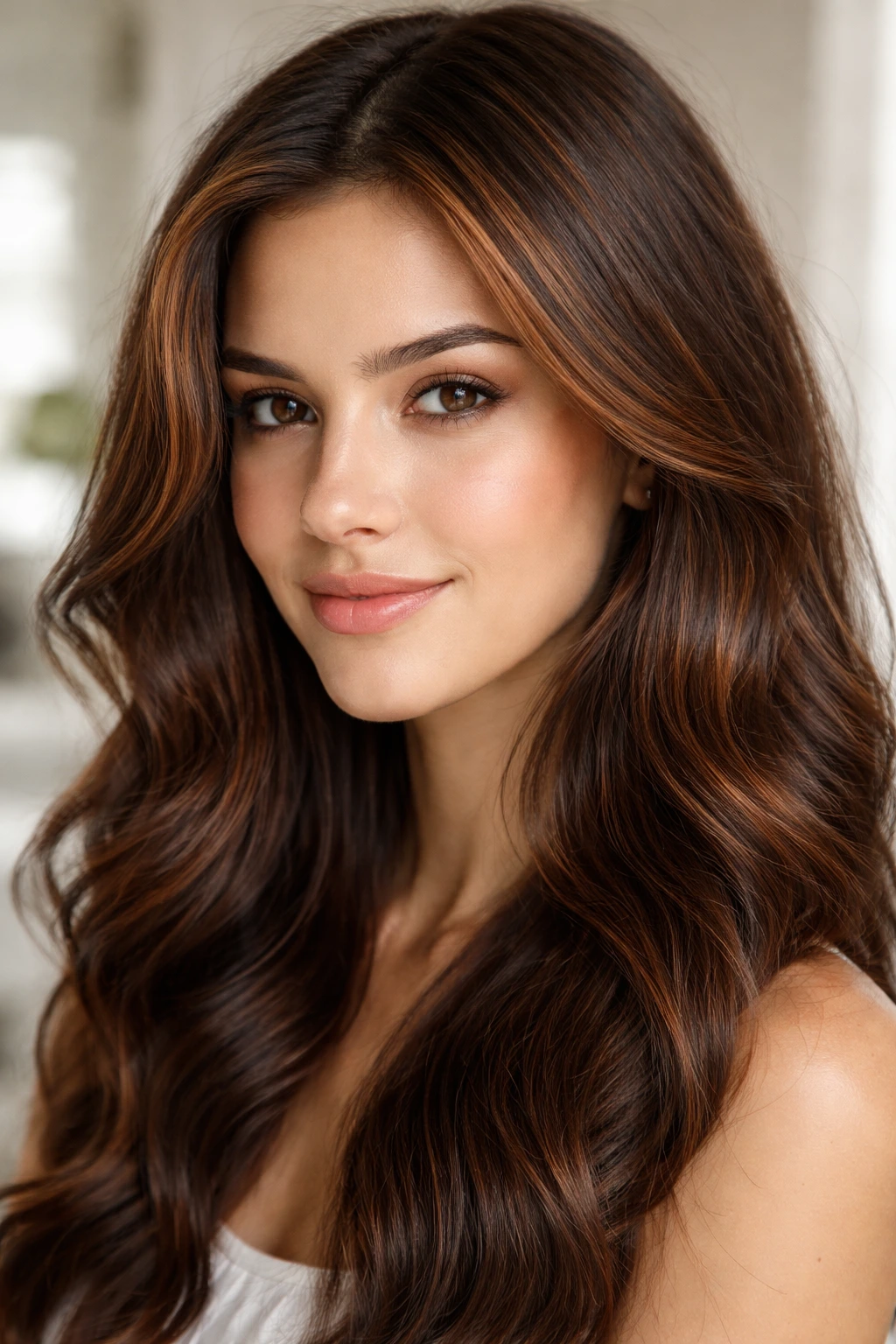
If you are a perfectionist who hates the idea of obvious regrowth lines, babylights are your best friend. These are micro-fine strands of color concentrated around the hairline and the part line.
They mimic the way hair lightens naturally in the sun. Because they are so thin, they do not require heavy bleaching. You can often achieve this look with a high-lift color rather than a lightener, which keeps the hair feeling smooth and soft. It is a whisper of copper rather than a shout, perfect for corporate settings or those who prefer a “no-makeup” look for their hair.
6. Bright Ginger Face-Framing
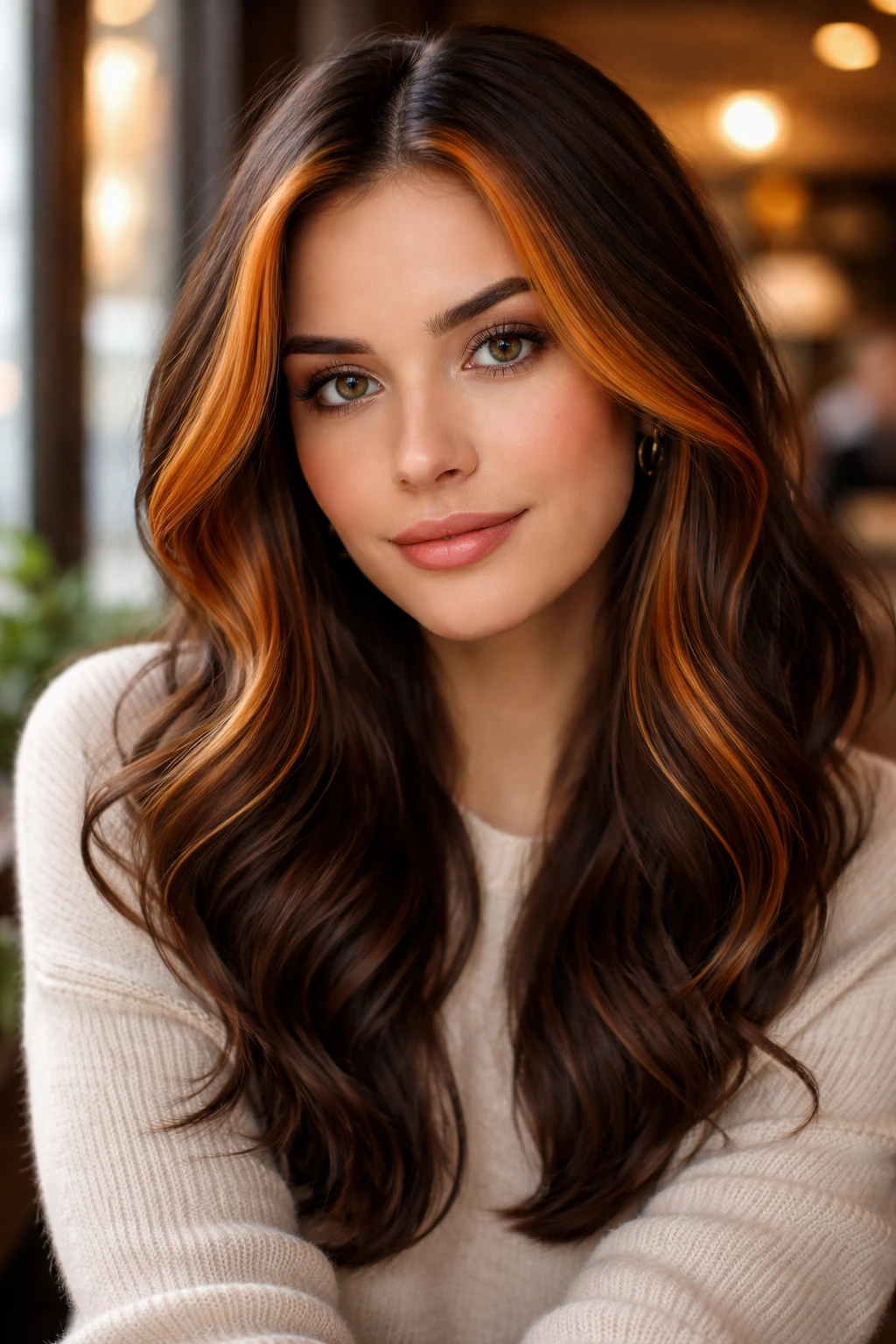
Sometimes, you do not need to color your entire head to get a fresh look. Focusing all the intensity on the two strands closest to your face creates an immediate brightening effect.
This style, often called a “money piece,” works wonders for warming up your complexion. If you have a cool or neutral skin tone, a bright, fiery ginger right next to your skin can make your eyes pop and your skin look more radiant. Keep the rest of your hair a uniform, dark brown, and let those two front pieces take the spotlight. It is bold, fun, and easy to change if you decide you want to go back to brunette.
7. Rich Cherry-Copper
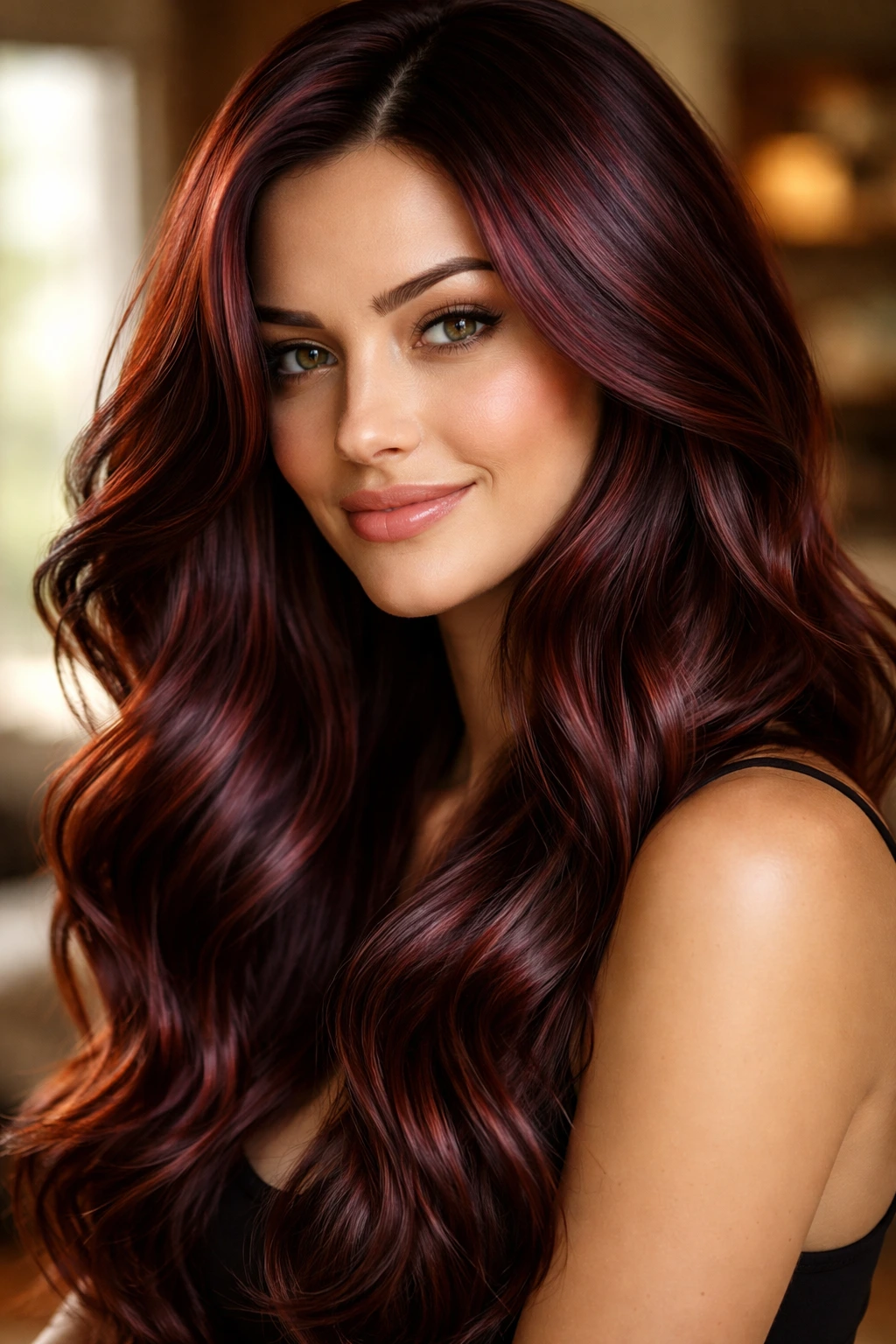
Cherry-copper introduces a slight violet base, which makes the color look incredibly expensive and vibrant. This isn’t the natural orange-copper; it is a synthetic, high-gloss shade that looks like polished mahogany.
The Maintenance Reality
This shade requires the most upkeep of any on this list. Red molecules are the largest in size, which means they are the first to wash out of the hair cuticle. You will need a color-depositing shampoo in a red or copper tone to use once a week. Without it, the “cherry” will wash out, leaving behind a dull, faded orange. If you are willing to do the maintenance, the payoff is a rich, multidimensional color that turns heads.
8. Copper Peek-a-Boo Sections
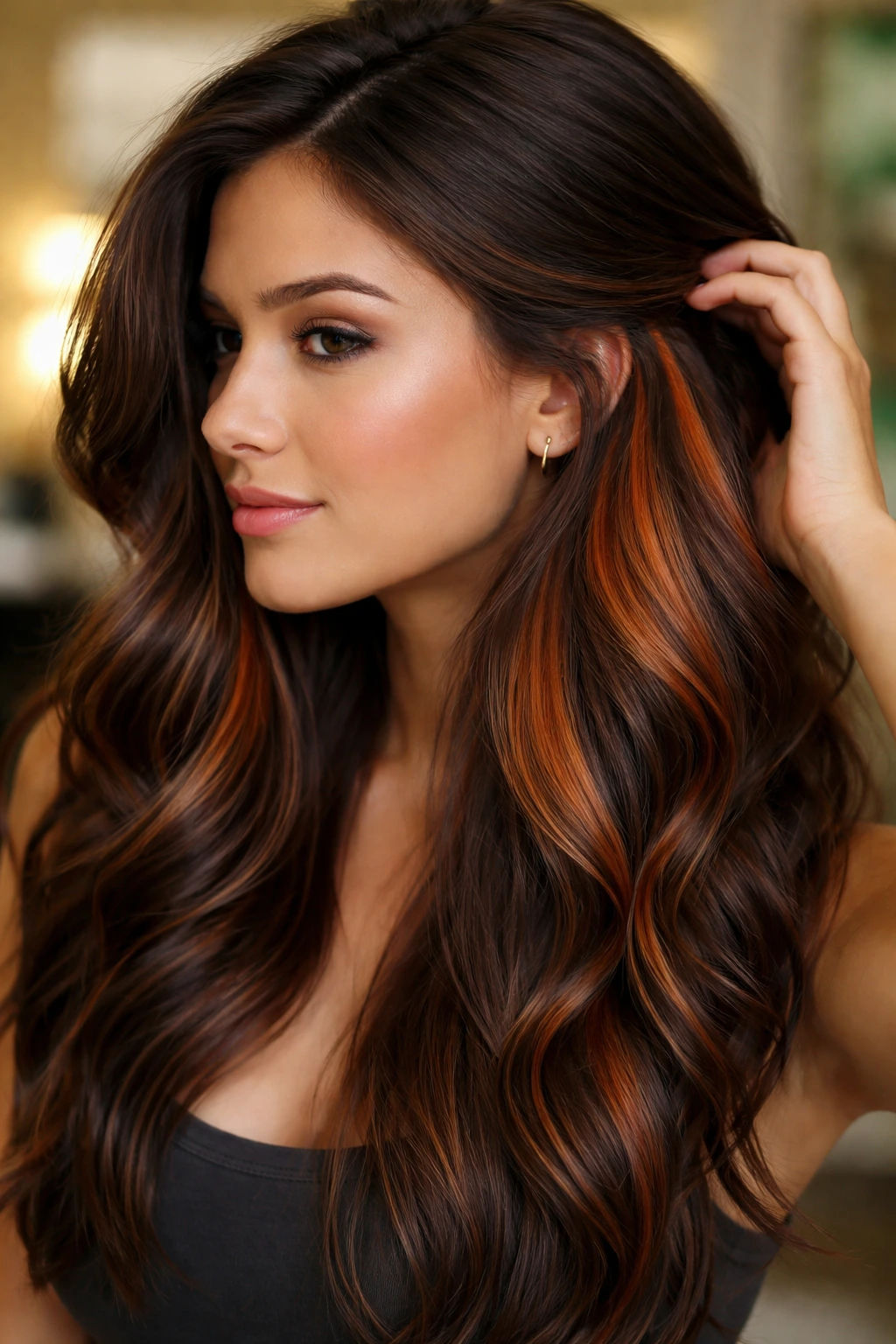
Peek-a-boos are exactly what they sound like—hidden panels of color underneath the top layer of hair. This is the ultimate “surprise” style. You keep the top of your hair a rich, natural brown, and when you put it in a ponytail or tuck it behind your ears, the hidden copper is revealed.
This technique is excellent for those with very thick, heavy hair. It breaks up the monotony of a single, dark color without you having to commit to a full head of highlights. Plus, because the copper is tucked underneath, your roots will be invisible, giving you months of wear before you need to return to the salon.
9. Burnt Orange Ribbons
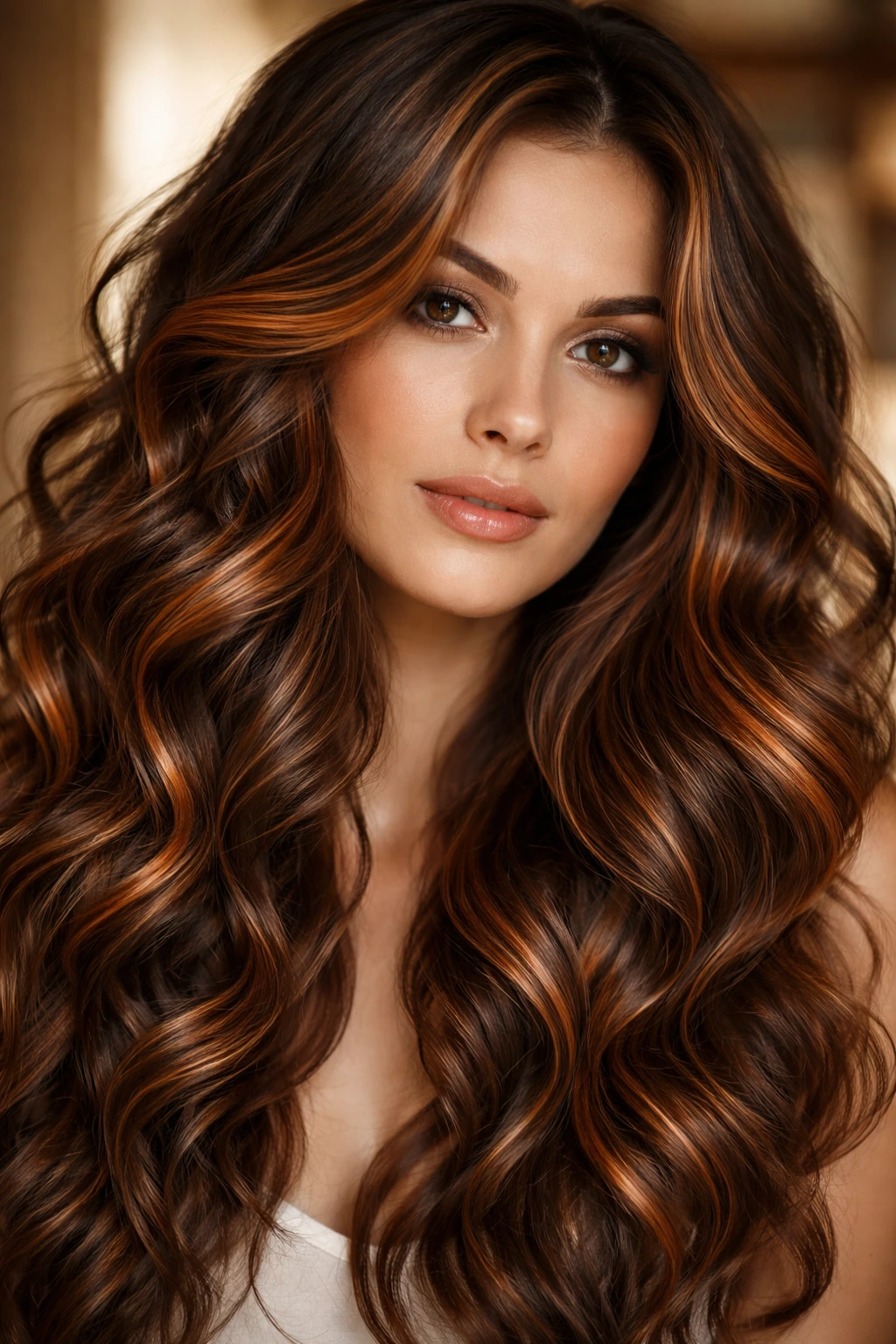
Ribboning is a technique where the stylist takes slightly wider sections of hair—not as thin as babylights, but not as thick as chunky 90s highlights—and paints them with a deep, burnt orange copper.
The result is a look that feels very 1970s in the best way possible. It adds texture and movement. If you wear your hair wavy or curled, these ribbons will spiral through the curls, creating a stunning visual effect where the hair seems to glow. Use a texturizing spray to emphasize the ribbons and separate the strands.
10. Copper and Caramel Mix
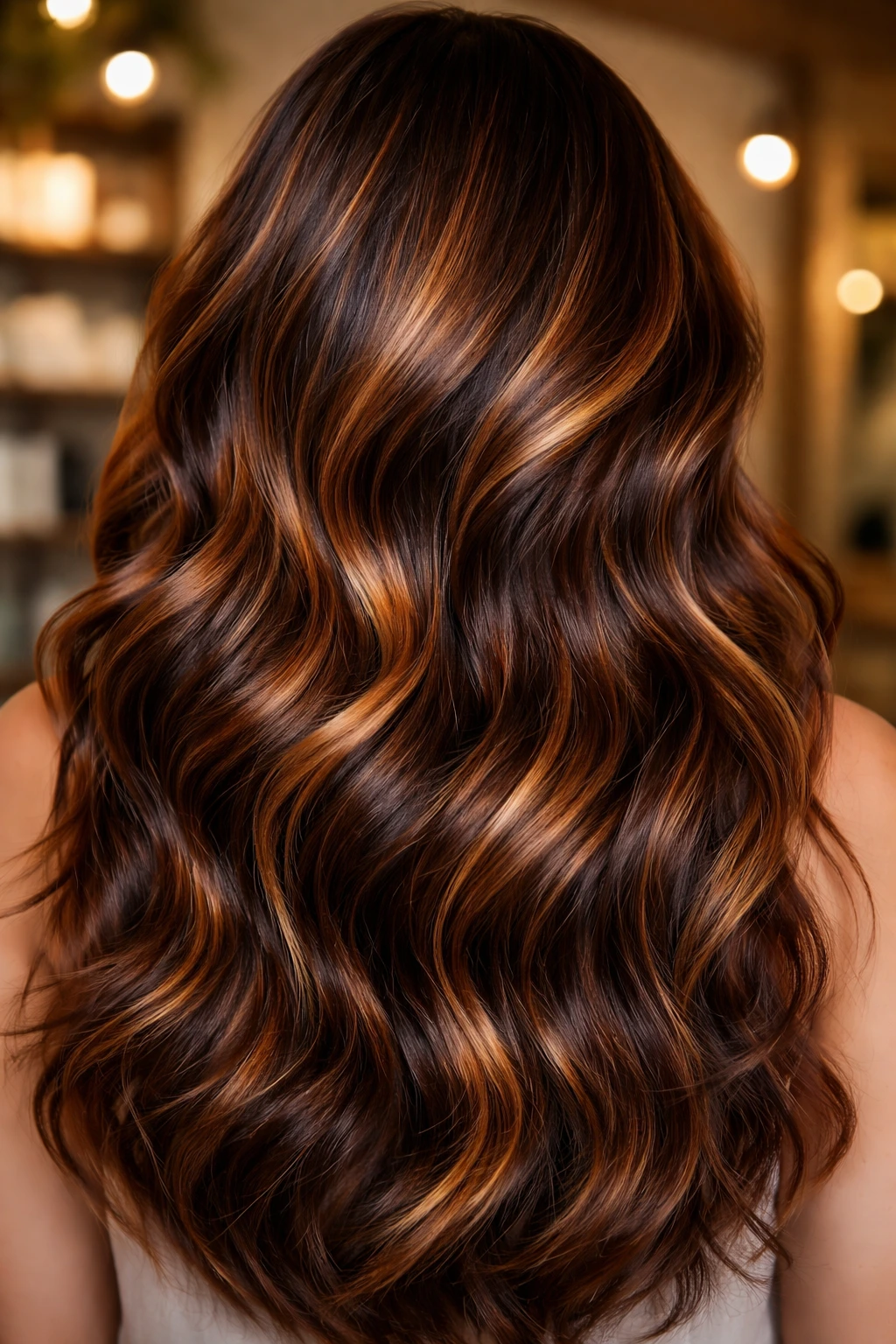
This is a masterclass in blending. Caramel is typically a golden-blonde or light-brown tone, while copper leans red-orange. When you mix them together on a dark brown base, you get a “sunset” effect.
The caramel keeps the look grounded and natural, while the copper provides that pop of fun. This combination is particularly flattering if you have tanned or olive skin, as the blend of gold and red enhances the natural warmth in your complexion. Ask for a “multi-tonal” highlight approach, where your stylist uses two different formulas on alternating foils.
11. Muted Copper Highlights
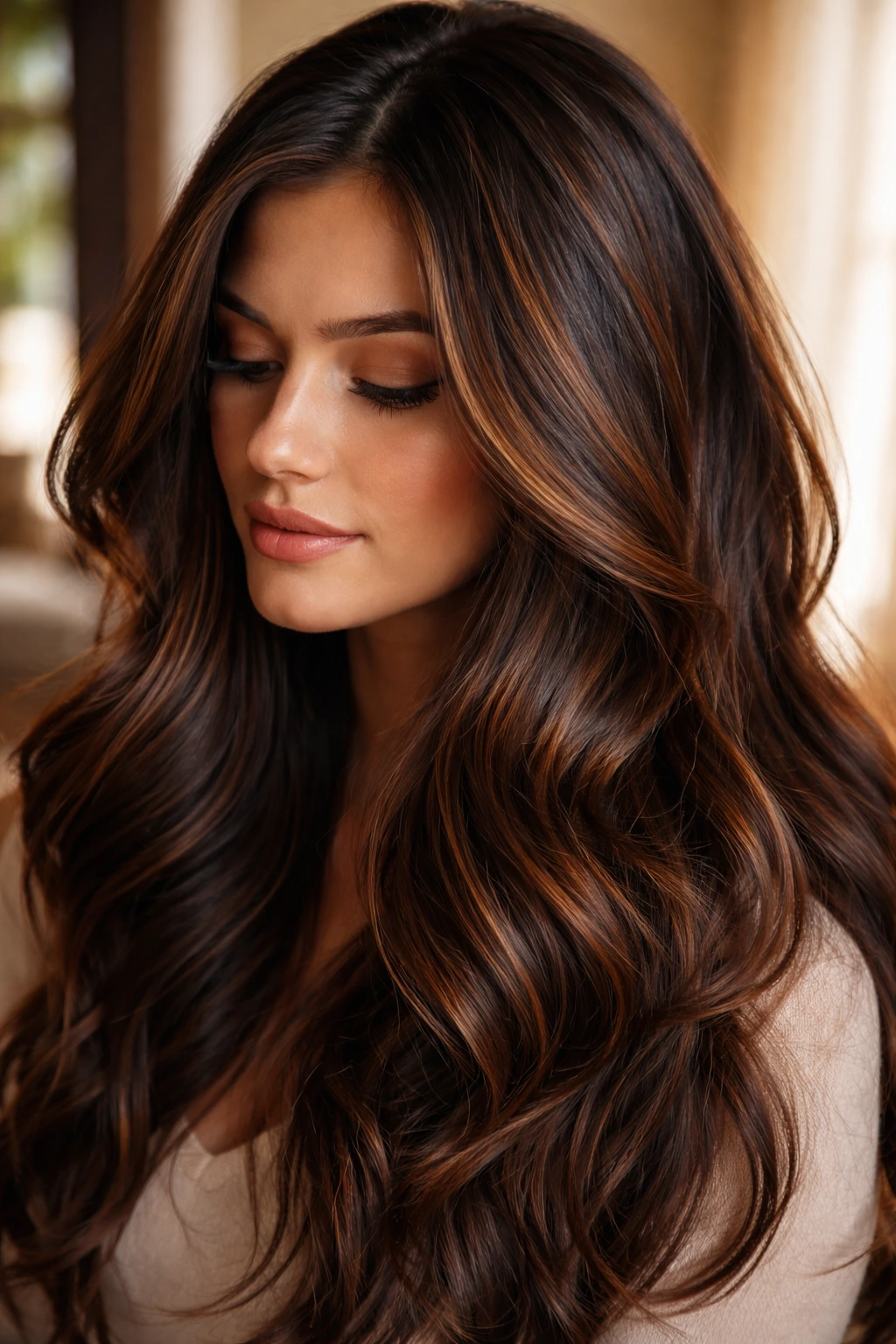
Not everyone wants to look like a traffic cone. If you prefer a more refined, understated aesthetic, ask for muted copper. This involves mixing a bit of neutral brown into your copper formula, “watering down” the intensity of the pigment.
It is a sophisticated, lived-in look. It pairs perfectly with chocolate brown or espresso-colored hair. It essentially looks like your hair has been kissed by the sun but in a very subtle, metallic way. It does not look like “colored hair”; it looks like natural, healthy, shimmering brown hair.
12. Metallic Copper Streaks
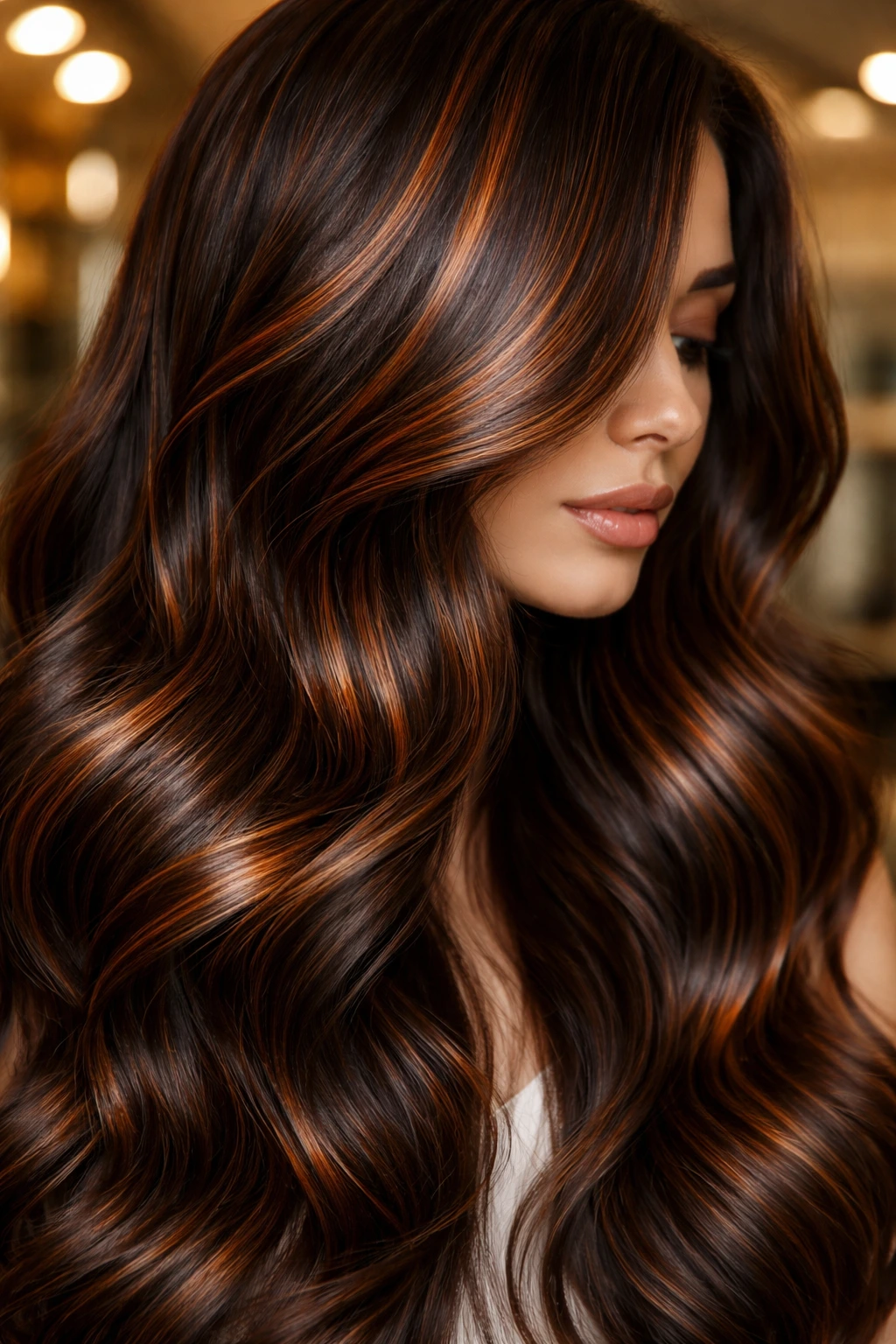
For this look, you want a high-gloss finish. The copper should look like liquid metal. This requires a specific treatment at the end of your appointment—usually a clear gloss or a bond-building sealant.
The streaks should be placed with purpose. Have your stylist focus them around the mid-lengths, where light naturally catches the hair. Because metallic shades can sometimes look flat, adding a clear gloss is non-negotiable. It creates that reflective quality that mimics polished copper wire. Keep the roots dark and smudge the color at the base to ensure the streaking looks intentional and high-end.
13. Mahogany-Copper Blend
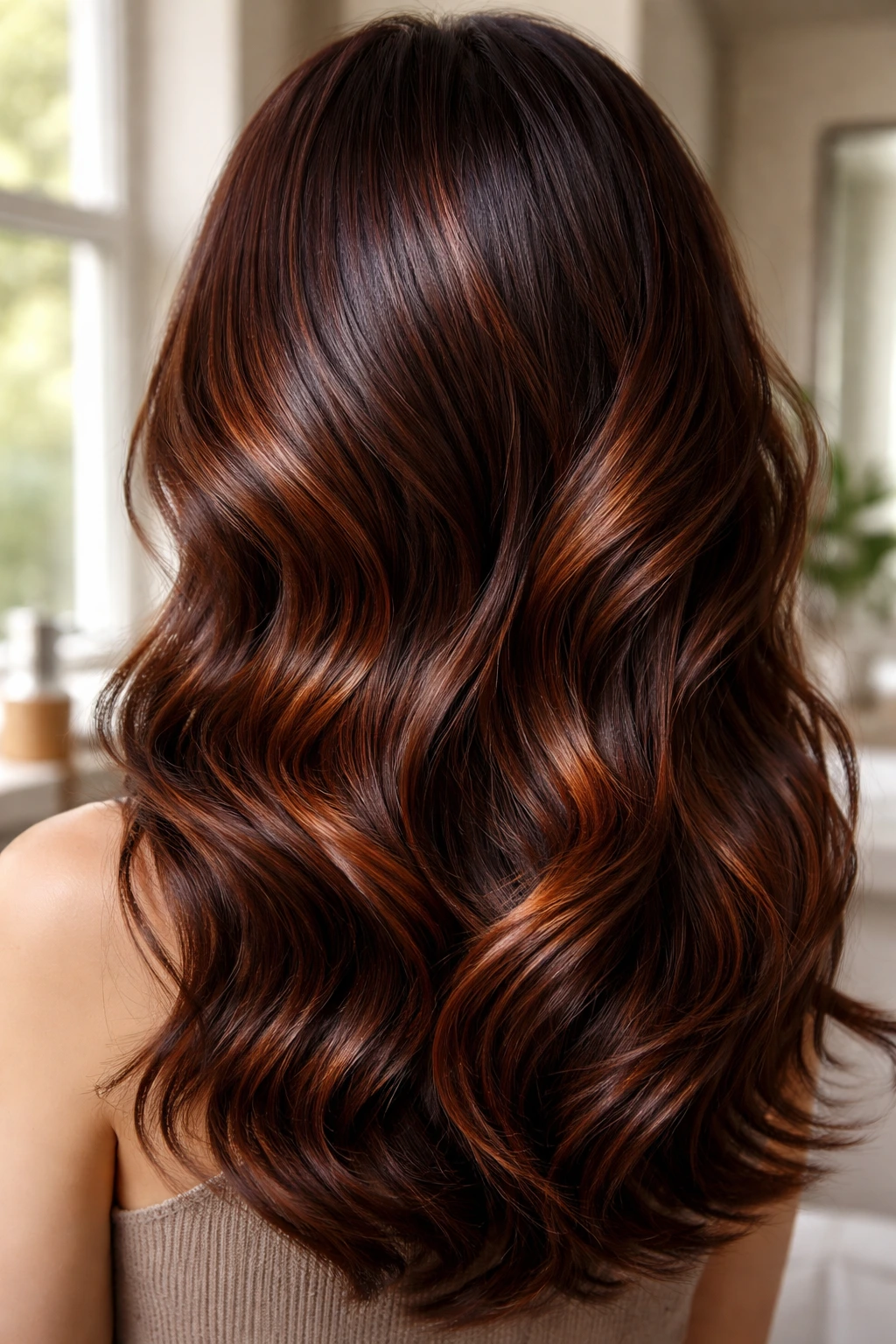
Mahogany is a cool-toned red-brown. When you blend it with copper, you create a complex shade that changes in different lighting. In direct sunlight, it will look bright and fiery. In dim, indoor light, it will look like a deep, expensive wine color.
This blend is very forgiving on hair that has been previously colored. If you have old dark dye on your ends, a mahogany-copper blend can cover it better than a bright orange copper would. It’s a great way to transition away from permanent black or dark brown box dye.
14. Copper Money Piece
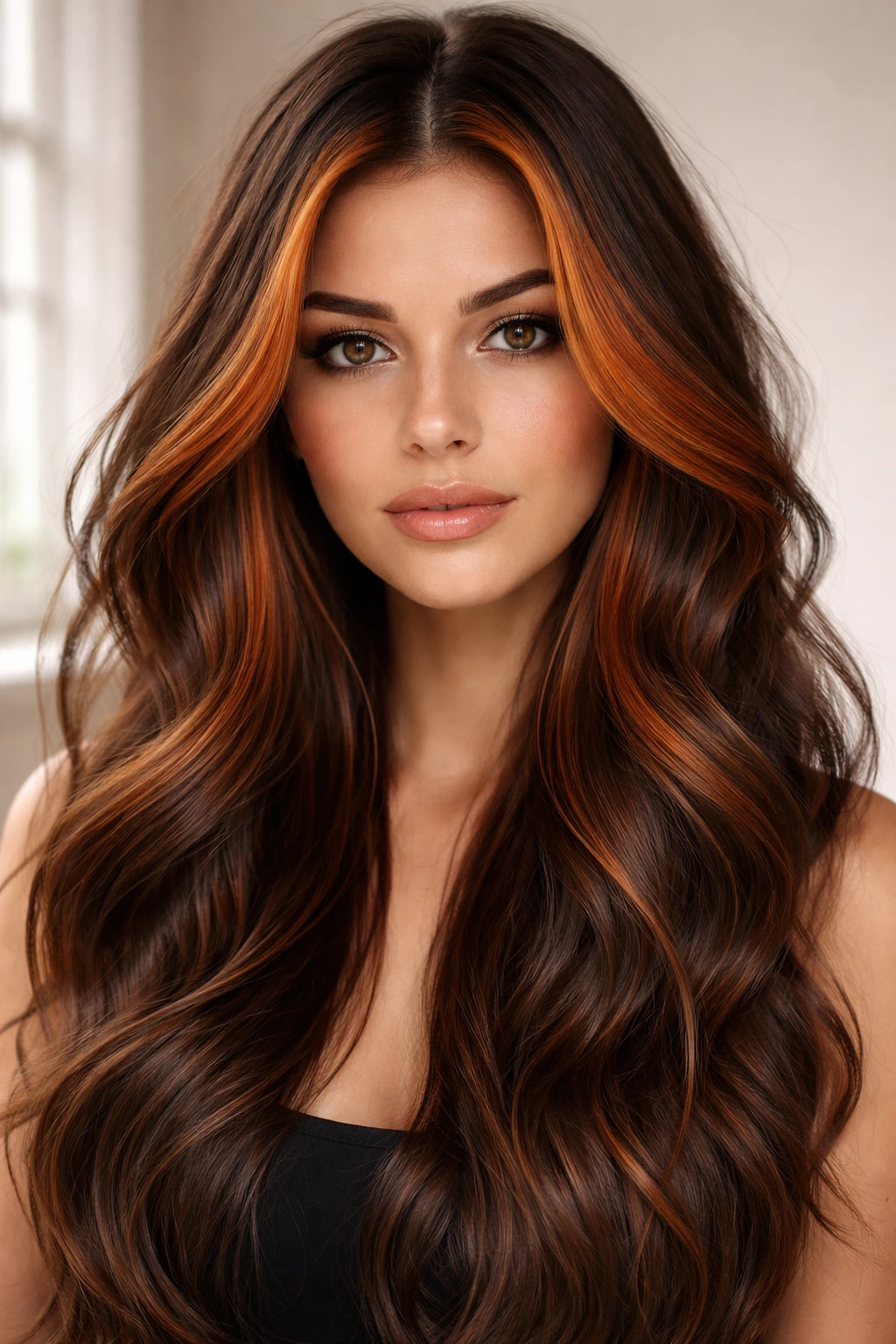
The “money piece” technique has evolved, but the copper version is particularly striking. Instead of doing the traditional blonde face-framing highlight, swap it for a vibrant, punchy copper.
Because the face-framing pieces are so distinct, keep the rest of the hair a slightly cooler brown. The contrast between the cool dark hair and the warm, bright copper at the front is very high-fashion. It draws all the attention to your eyes and cheeks. This is a commitment, as you will need to touch up your roots more frequently than with all-over highlights, but it is high-impact with relatively low effort.
15. Rusty Red Highlights
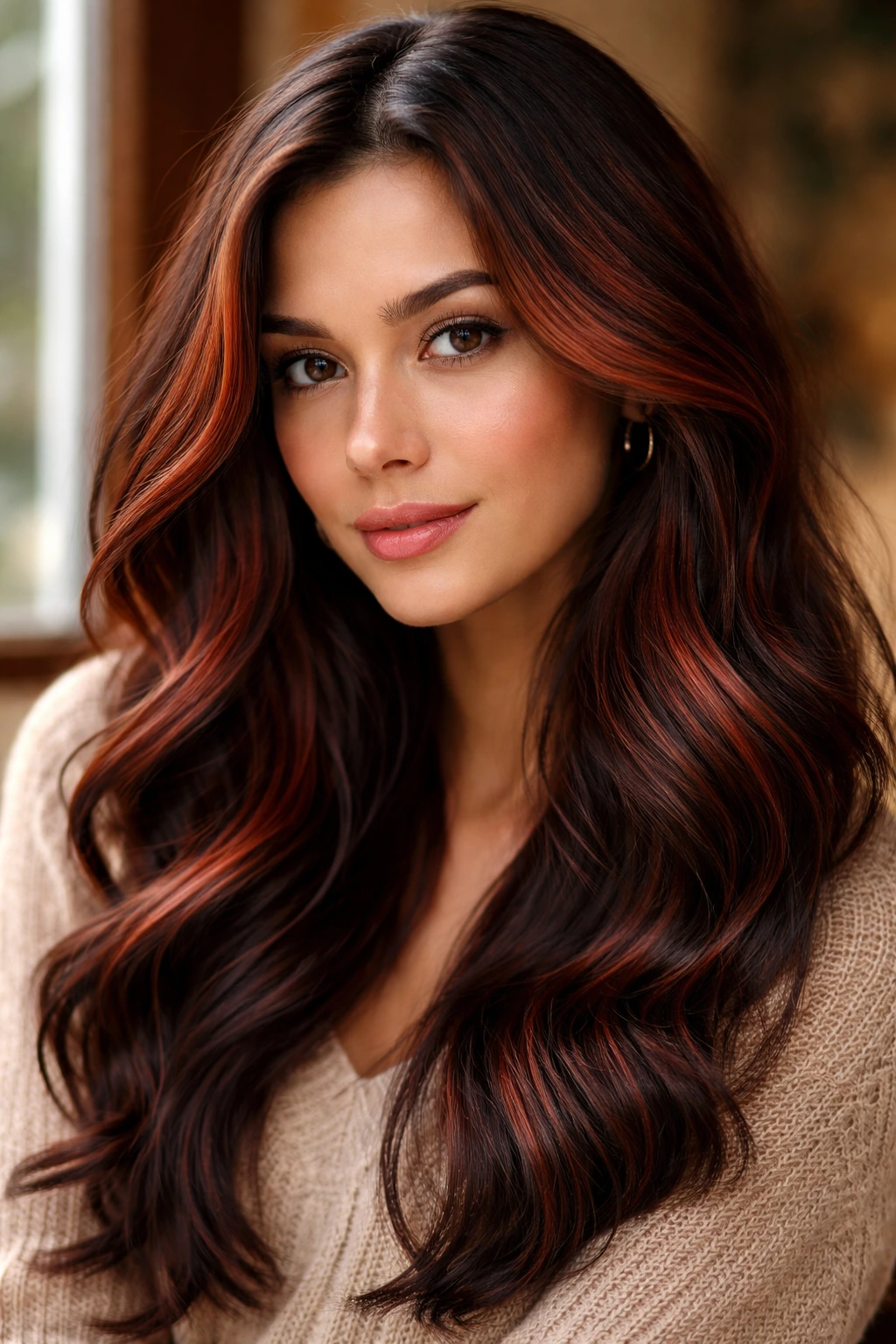
Rusty red is earthy, grounded, and incredibly chic. It is not bright, it is not “neon,” and it is not synthetic. Think of the color of an autumn leaf that has fallen on the ground—that deep, muted, terracotta-copper.
This is arguably the easiest copper highlight to maintain on dark brown hair because it doesn’t require a very high level of lift. If you have dark hair, you only need to lift to a level 6 or 7 to see this color effectively. It looks natural, elegant, and timeless. It is the perfect choice if you want a change but are worried about hair damage.
16. Copper Halo Highlights
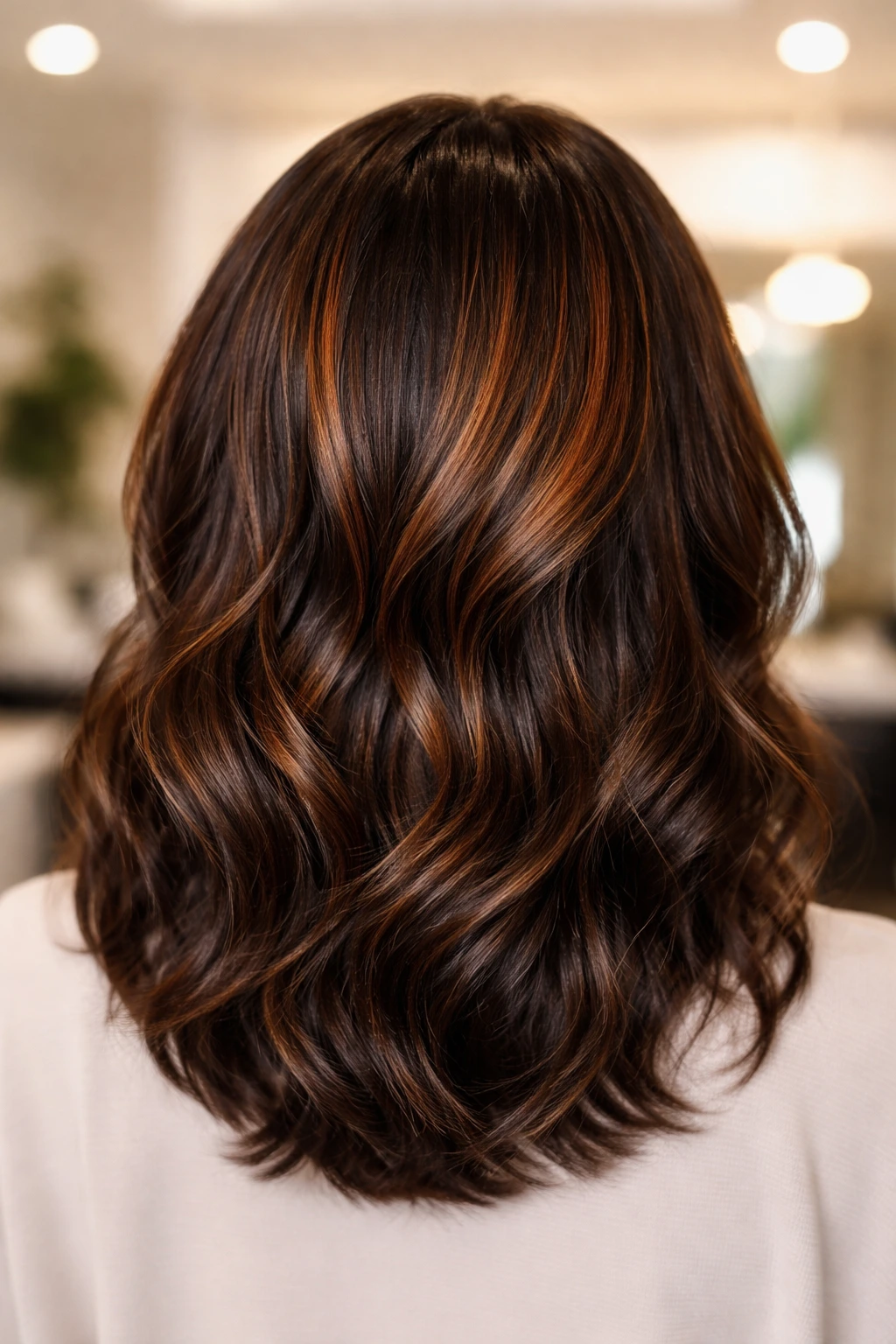
A halo placement involves focusing the highlights on the top section of the head—from the crown down to the ears—while leaving the bottom section entirely dark.
This is a great technique for people who wear their hair up often or who have very fine hair that needs a volume boost on top. The “halo” of copper creates an illusion of depth and light, making the hair look thicker. When you pull your hair back into a half-up style, you get that perfect peek of copper without having to worry about coloring the under-layers.
17. Soft Apricot Accents
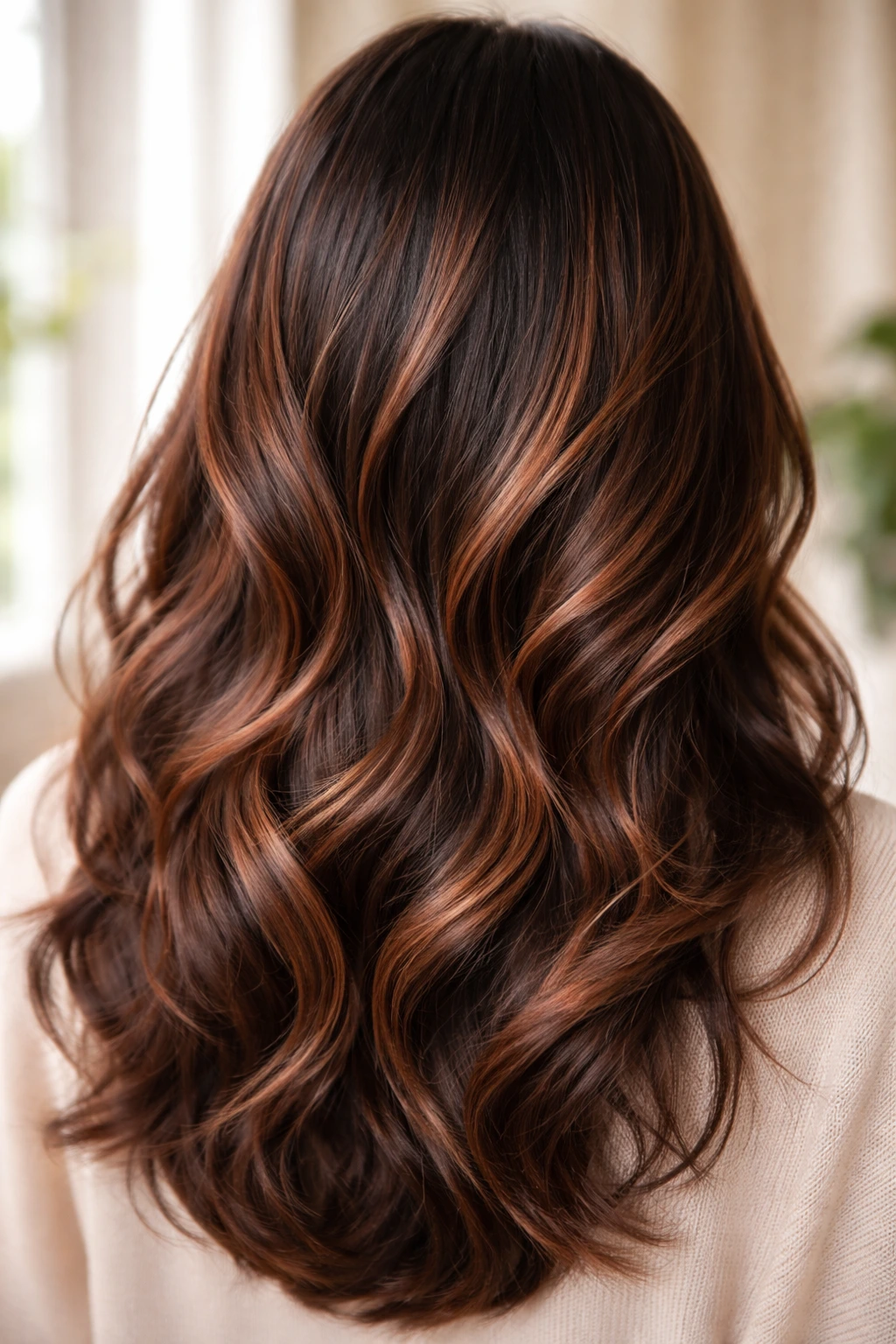
Apricot is a very light, pastel-leaning copper. On dark brown hair, this is a bold move. It requires significant lightening to achieve the transparency needed for an apricot tone, but the result is ethereal and angelic.
This is not a “natural” look, but it is incredibly stylish. It is essentially a rose-gold that leans orange rather than pink. Because it is so light, you must ensure your stylist uses a bond builder (like Olaplex) during the lightening process. Apricot will fade the fastest, so keep a pastel copper color conditioner in your shower.
18. Dark Chocolate with Copper
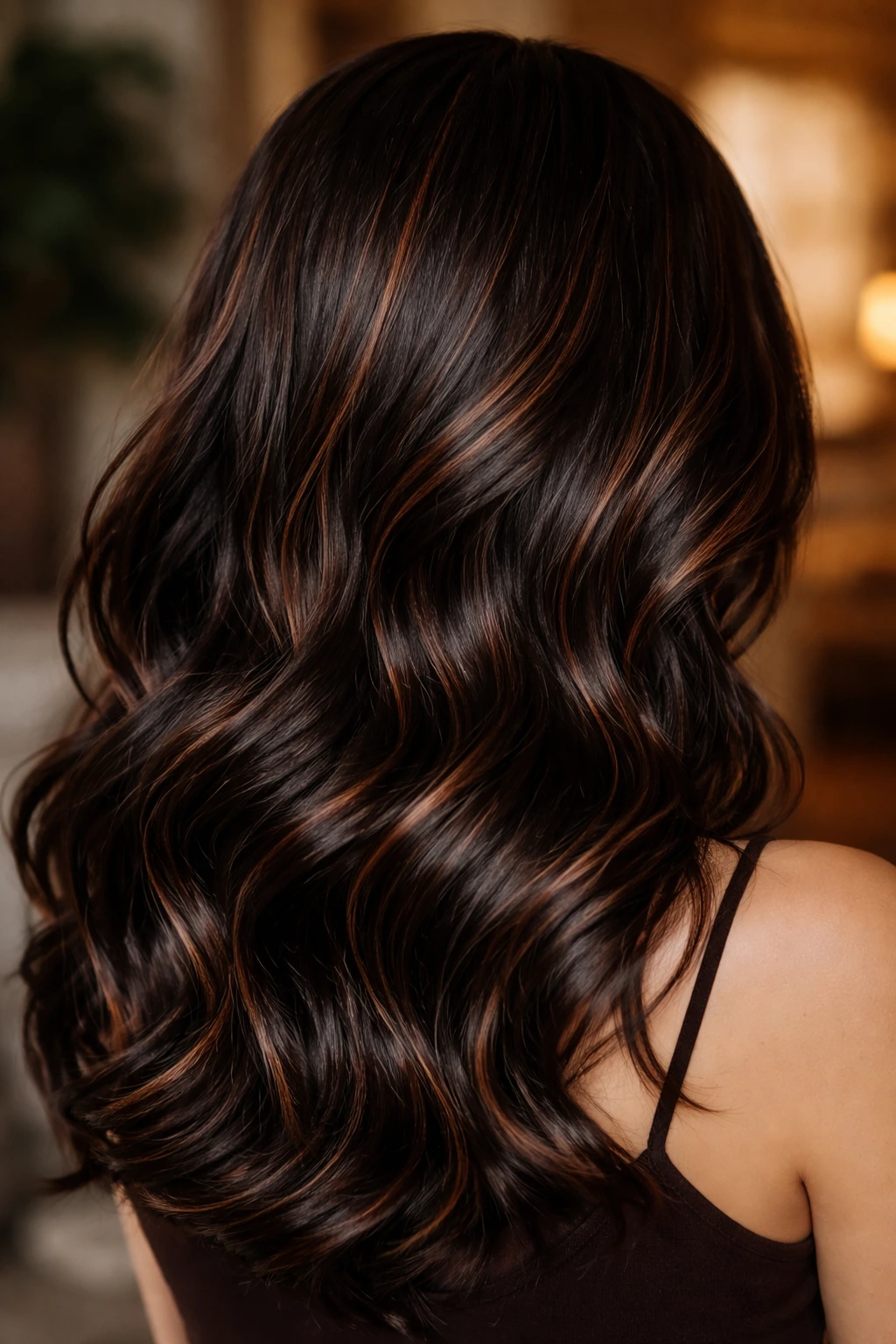
This is for the person who loves their dark hair and doesn’t want to lose the drama of it. Take your dark chocolate brown base and add sparse, thin, copper highlights throughout.
The key here is “sparse.” You don’t want a full head of highlights. You want just enough to break up the dark base so it catches the light. It is a very luxurious, subtle look. Think of it like a dark chocolate bar with a hint of sea salt—the salt (the copper) just makes the chocolate (the brown) taste (or look) better.
19. Copper Micro-Highlights
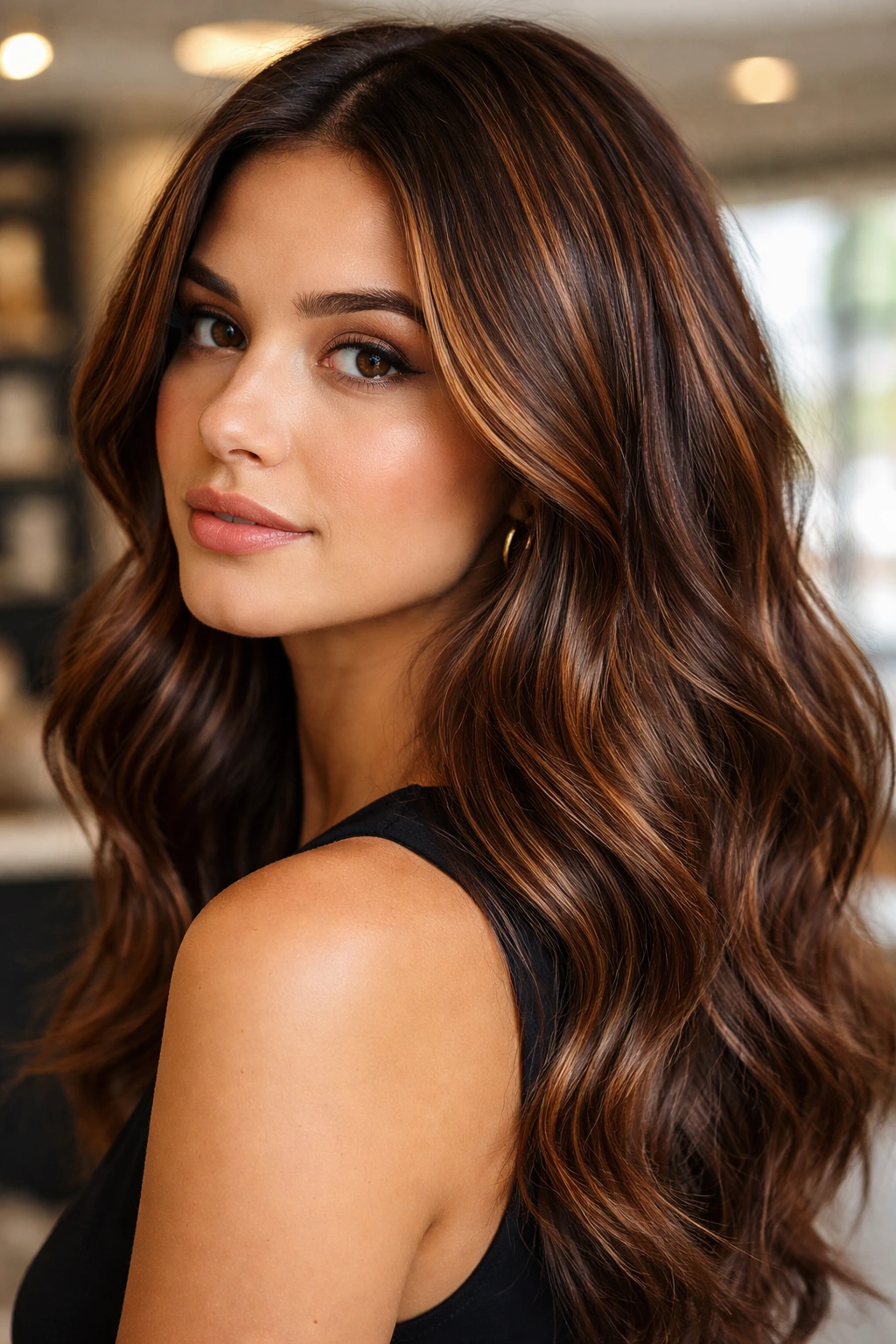
Micro-highlights are the modern, more refined version of the “frosted tips” of the past. These are extremely fine, woven pieces of hair that are lightened and toned to a copper hue.
When you do thousands of these tiny highlights, the hair looks like it has been colored all over, but with the dimension of natural hair. It eliminates that blocky, “I got highlights in 2005” look. It’s a labor-intensive process, so be prepared to spend a few hours in the chair, but the grow-out is virtually seamless because there are no harsh lines.
20. Painted Copper Lowlights
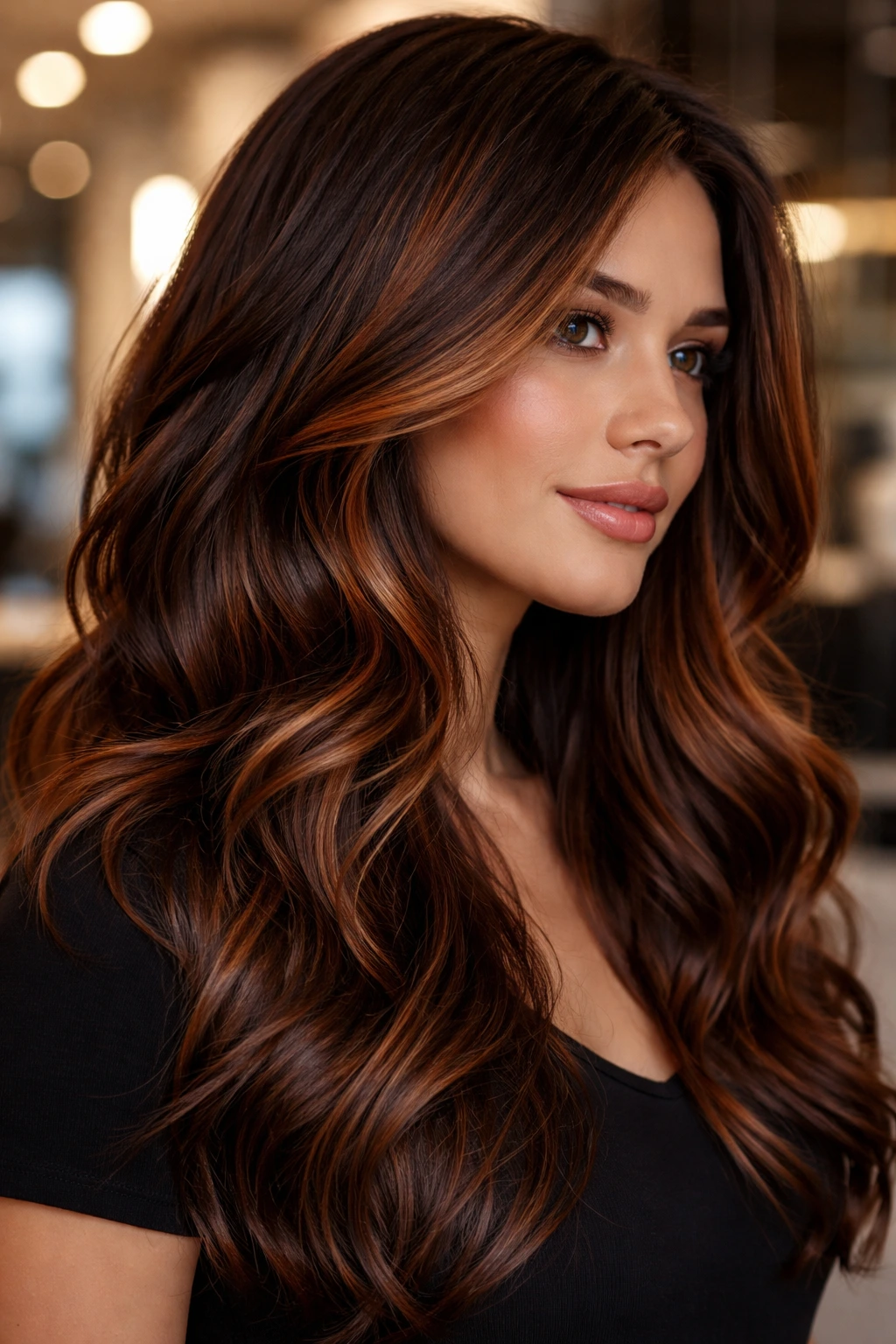
Sometimes the problem isn’t that your hair is too dark; it’s that it’s too flat. If you have been highlighting your hair blonde for years and feel like you have lost all your depth, you don’t need more highlights—you need lowlights.
Ask your colorist to “paint” copper lowlights into your hair. They will take sections of your hair and weave in a deep copper, which will sit behind your lighter pieces. This creates a three-dimensional effect. It puts the “brown” back into your hair while keeping the “copper” pop.
21. Copper Foliage-Style Streaks
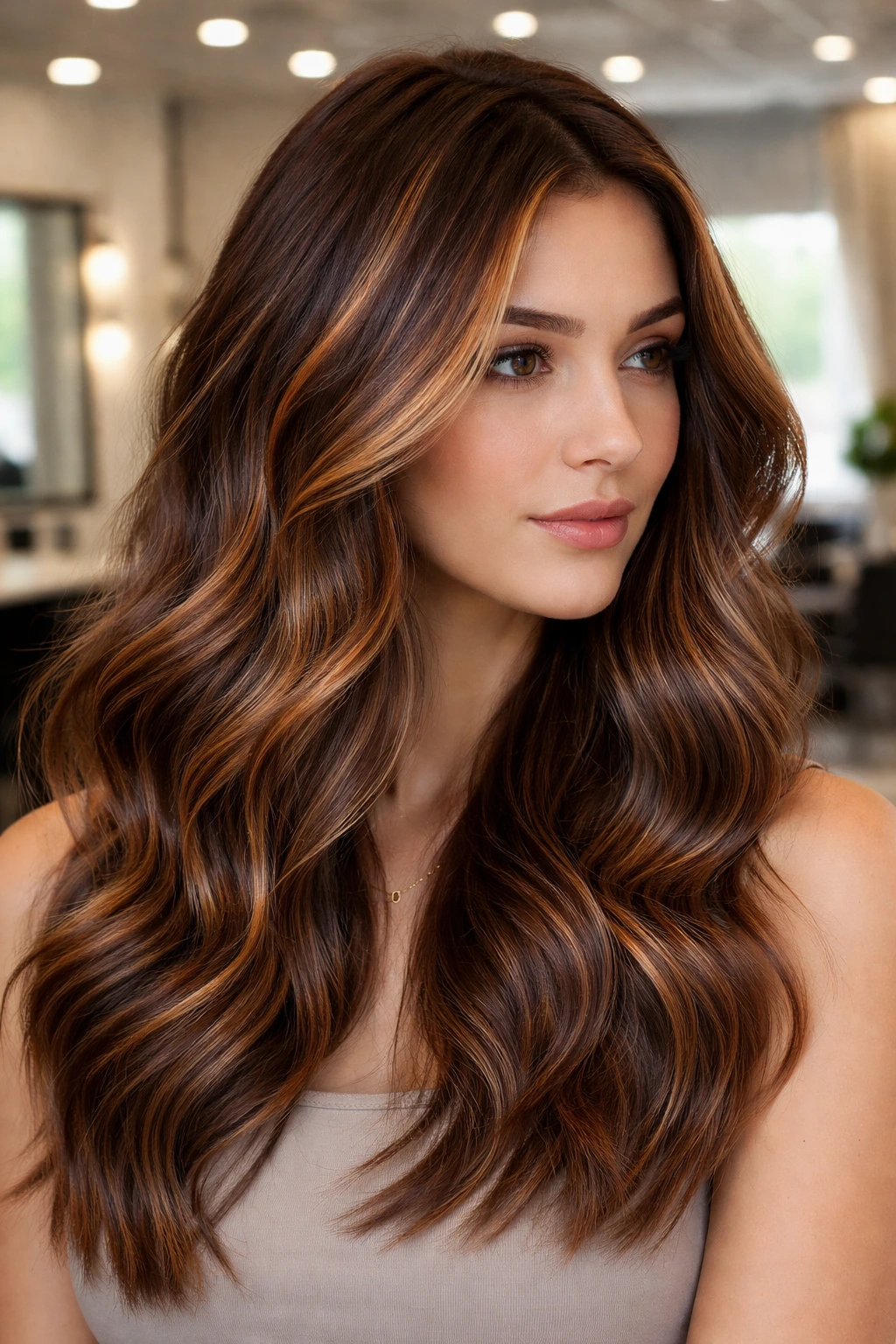
Foliage is a blend of balayage and foiling. You paint the hair (balayage) and then wrap the painted sections in foil. This gives you the precision of foiling with the natural, seamless placement of balayage.
This is the standard for a high-quality copper look. It ensures the copper is bright and noticeable, but the gradient is soft. Because the copper is inside the foil, the lightener works more efficiently, allowing you to get a clearer, cleaner copper tone without needing to leave the chemicals on for an excessive amount of time.
22. Vivid Copper Block Color
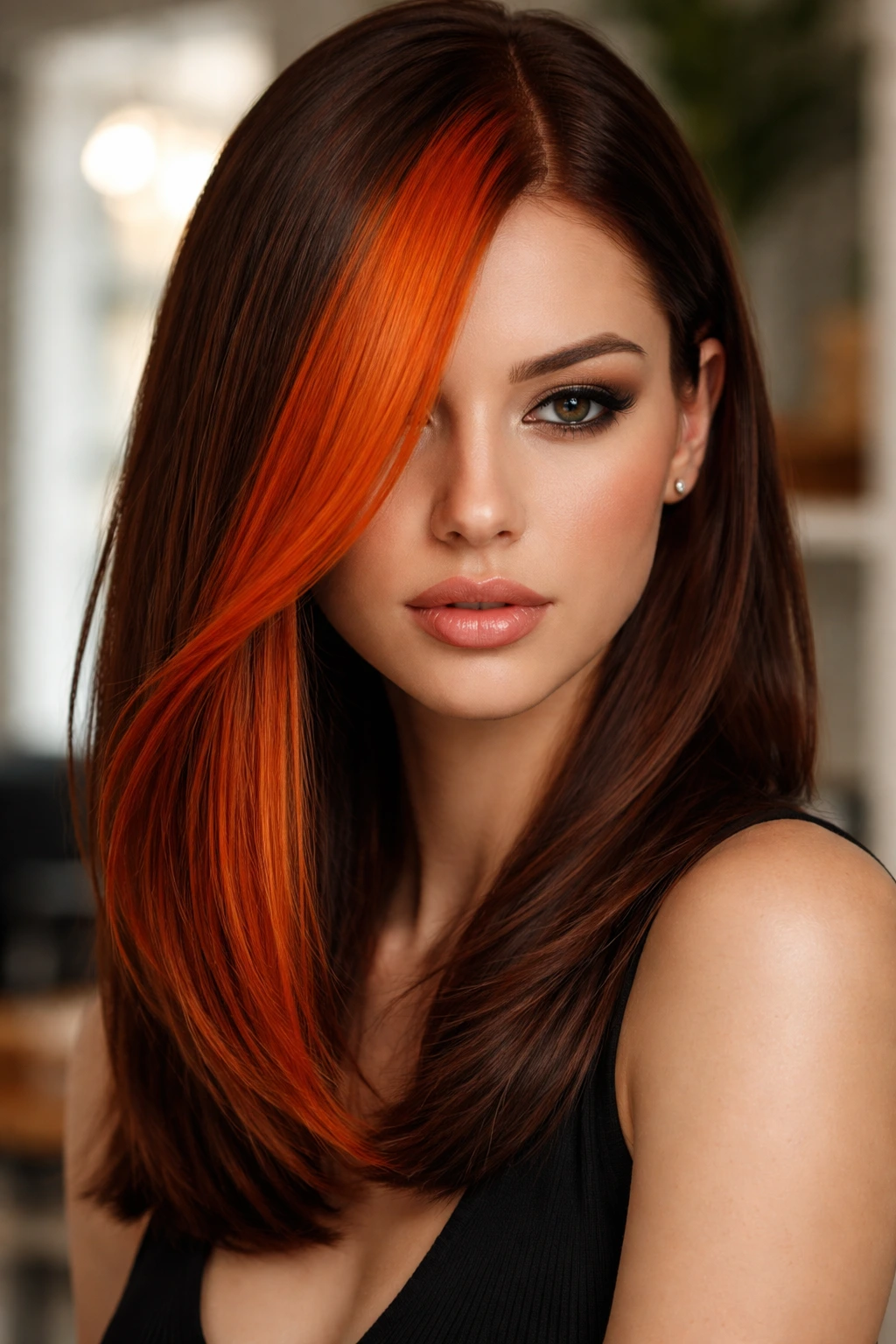
If you want to make a statement, stop worrying about highlights and go for a block. A block color means you are coloring a large, dedicated section of your hair—perhaps the entire front panel or the bottom half—a solid, vibrant copper.
This is high-fashion and edgy. It is not for the faint of heart, and it certainly doesn’t look “natural,” but that’s the point. It is a design choice. The sharp contrast between your natural brown and a vivid, solid block of copper is striking. Be aware that this style requires regular root touch-ups, as the demarcation line will be very sharp when your hair grows out.
23. Copper and Ash Brown Contrast
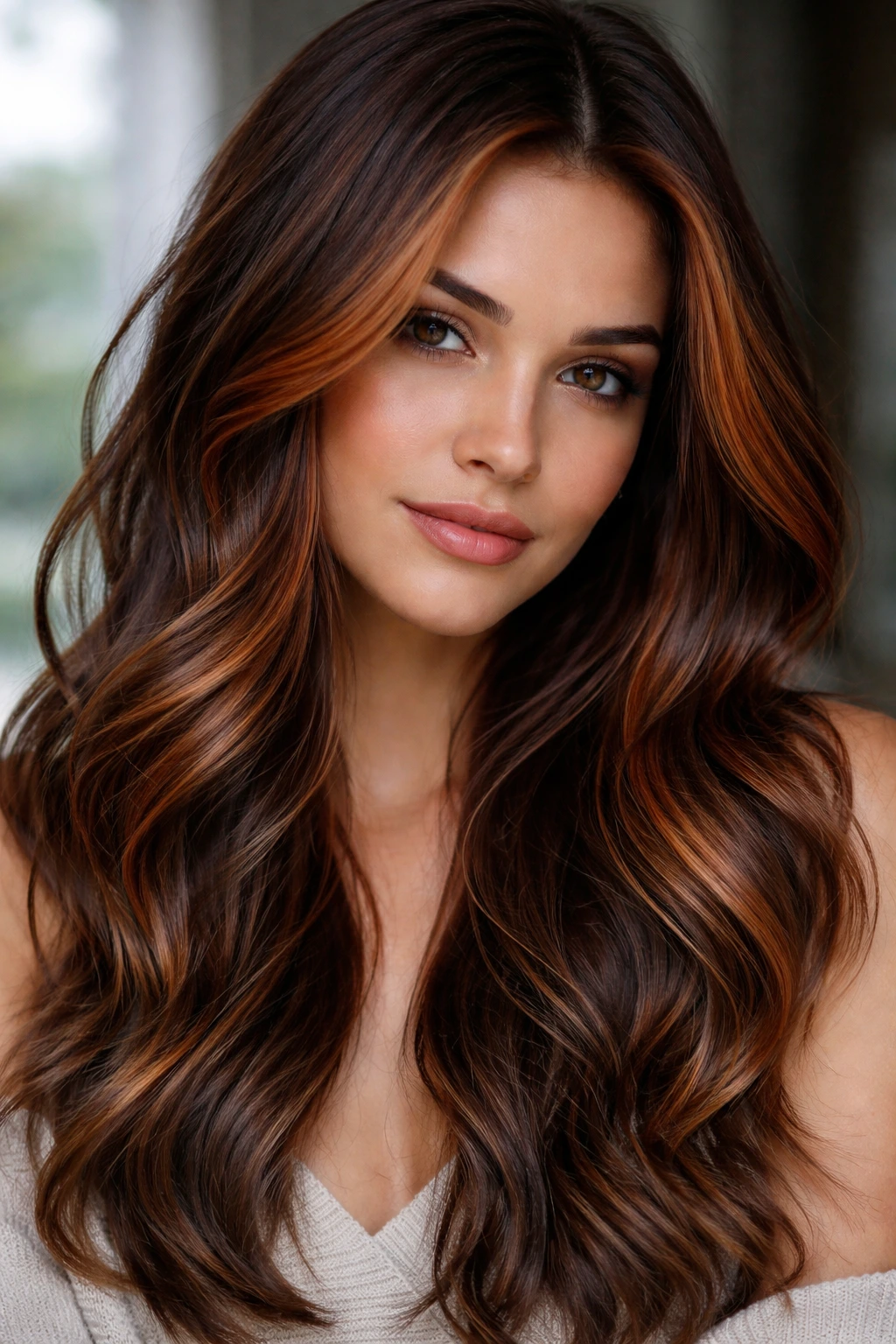
This is a deliberate clash of temperatures. Ash brown is cool-toned, while copper is warm-toned. Most color theory advice tells you to avoid mixing these, but in hair design, the contrast can be stunning.
The cool, ashy base makes the copper look even brighter by comparison. It provides a crisp, clean background for the warm highlights. This is a great choice if you have a cooler skin tone but still want to rock a copper look. It keeps the overall vibe “cool” even though the highlights are “warm.”
24. Tonal Copper Ribboning
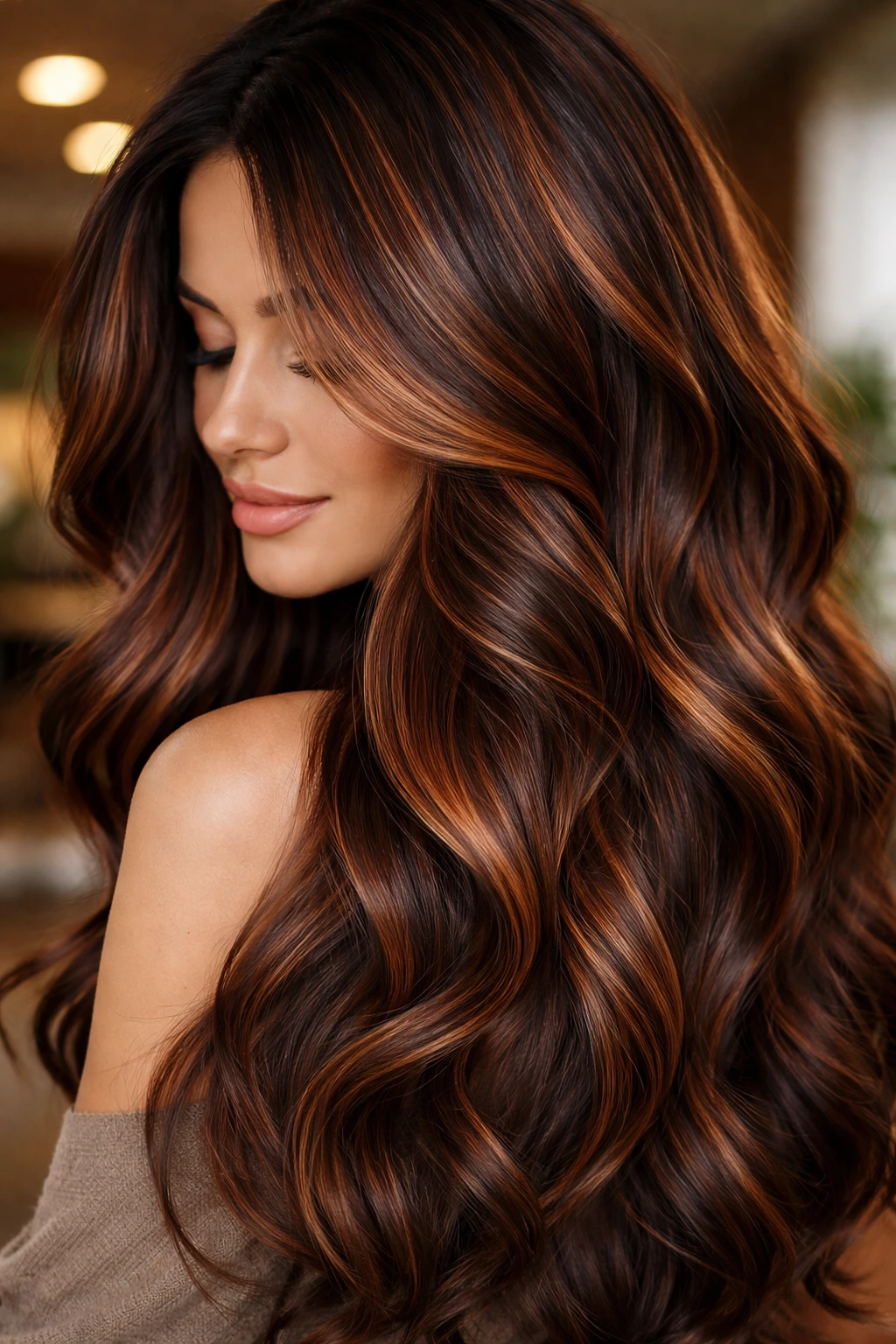
Tonal ribboning is when you use two different shades of copper in the same highlight. Perhaps a light, strawberry-copper for the brightness, and a deeper, auburn-copper for the roots or the shadow.
This gives the hair incredible complexity. It doesn’t look like you just used one bottle of dye; it looks like a professional blend of custom colors. It adds a sense of luxury to the hair. The ribbons of color should be large enough to be seen, but small enough to blend into the base.
25. Copper Glaze Ends
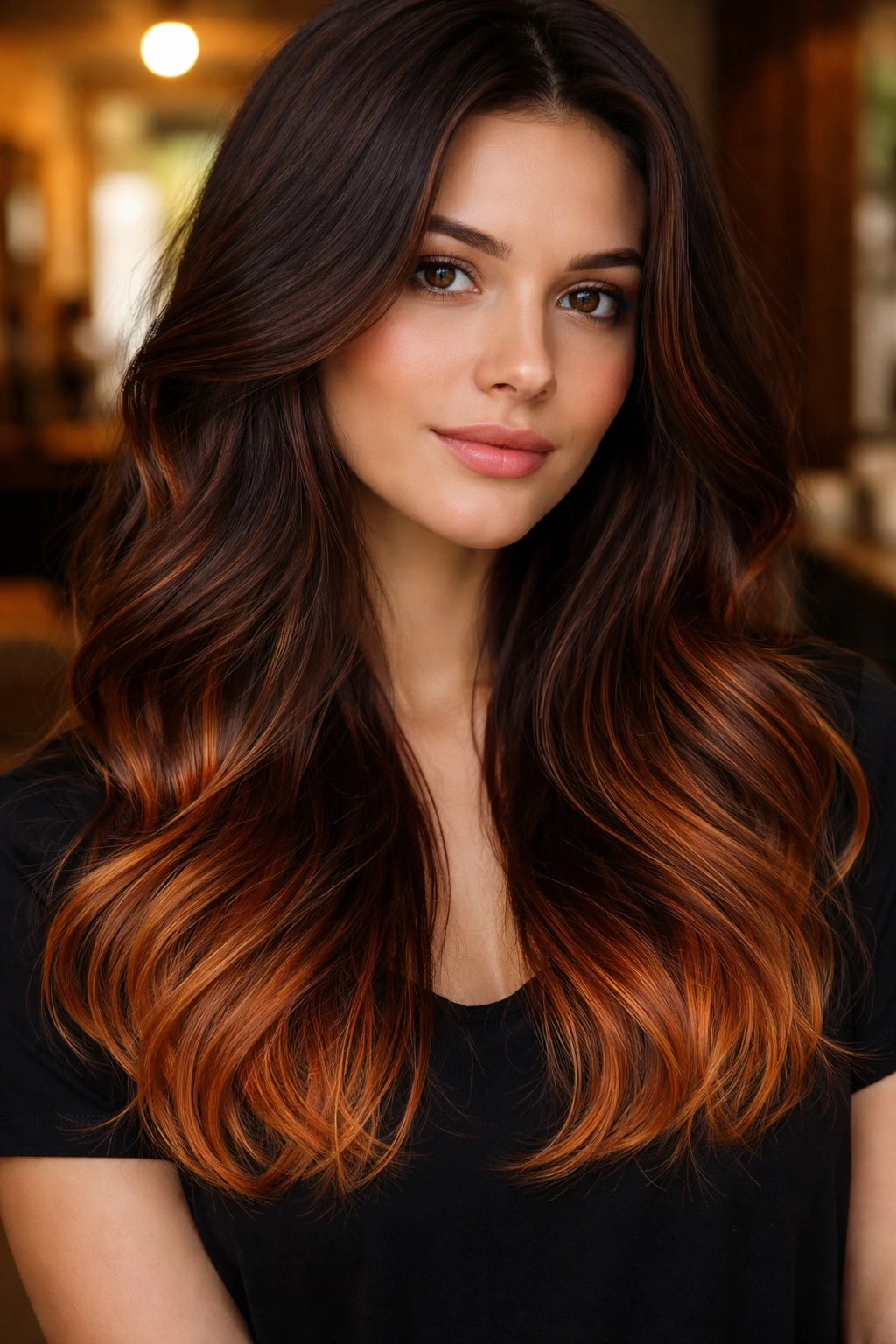
If you are scared of commitment, start here. A glaze is a semi-permanent color that sits on the outside of the hair shaft rather than penetrating deep into the cuticle. It is temporary, fading gradually over 6 to 8 weeks.
Ask your stylist for a copper glaze on your ends. It will give you a “dip-dyed” look that is soft and subtle. Because it’s a glaze, you can try it, decide if you like the copper tone against your skin, and if you don’t, it will wash out completely without leaving a weird, brassy residue. It is the lowest-risk way to embrace the copper trend.
Taking Care of Your New Copper Hue
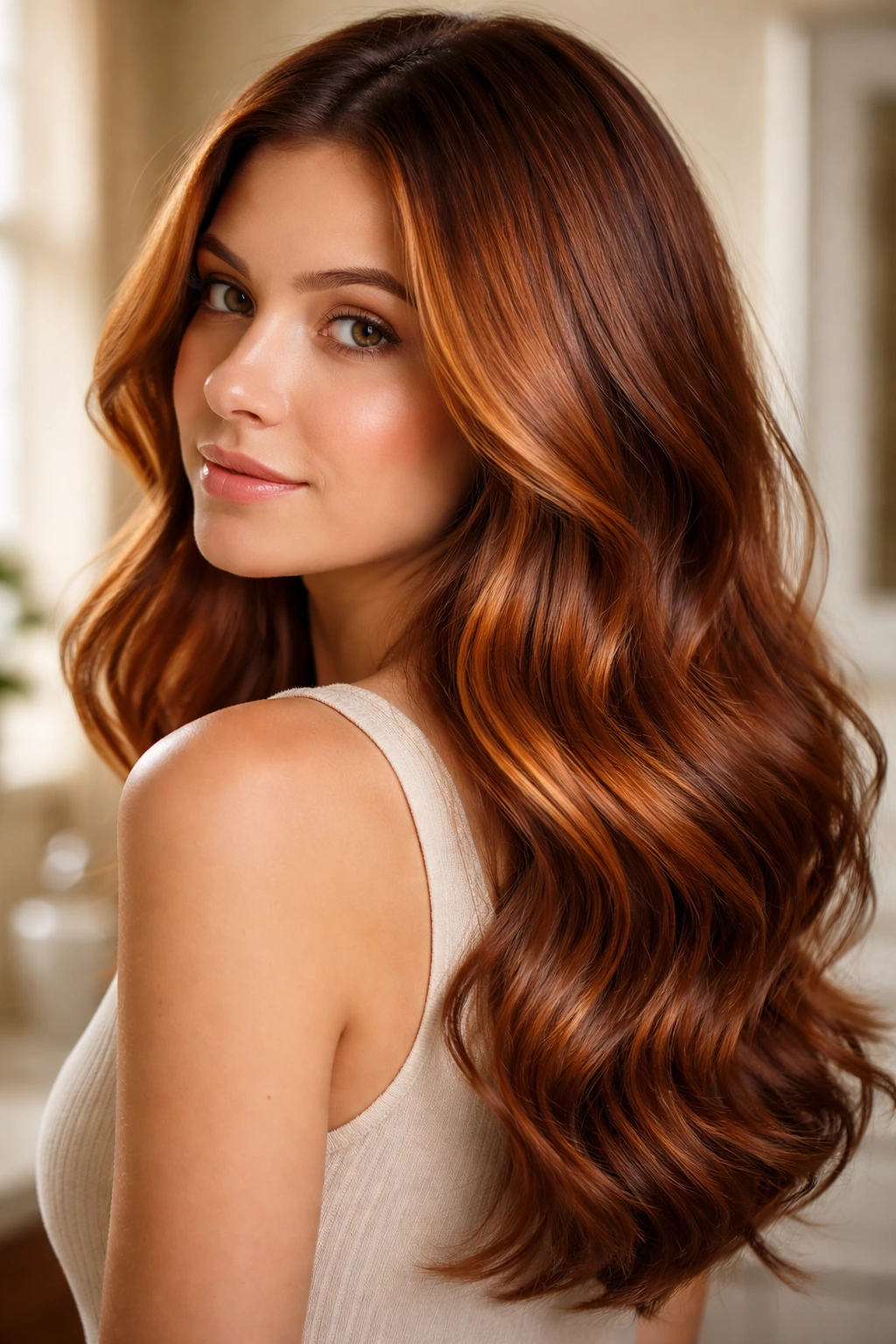
Once you have left the salon, the work has only just begun. Copper, regardless of the technique, is a high-maintenance color family. It behaves differently than blonde or brown. Blonde highlights are about keeping brassiness out, while copper highlights are about keeping the right kind of warmth in.
The most common mistake is washing your hair too often with hot water. Heat opens the hair cuticle, allowing your color molecules to escape down the drain. Always rinse with lukewarm or cool water. It might be uncomfortable, but it is the single most effective way to extend the life of your color.
Secondly, invest in a sulfate-free shampoo. Sulfates are surfactants that strip the hair of natural oils and, by extension, your artificial color. Look for products labeled “color-safe” or “for red/copper hair.” These often contain mild pigment deposits that replace the color you lose every time you wash.
Lastly, be mindful of your heat styling. Copper highlights that have been lightened using bleach are more porous than your natural brown hair. This means they will soak up heat faster and burn more easily. If you use a flat iron or curling wand, turn the temperature down. A setting of 300°F to 325°F is usually sufficient for most hair types. Anything higher is just cooking your hair cuticle, making it dry, brittle, and prone to losing that beautiful copper glow you spent so much time (and money) achieving. Keep your hair moisturized with leave-in conditioners or hair oils, and your copper will stay vibrant, shiny, and rich for weeks to come.
