



Curly hair and highlights are a strange little pair. Put the light in the wrong place, and the curl pattern starts looking patchy, dry, or striped. Put it in the right place, and the same hair suddenly looks fuller, softer, and a lot more expensive without changing the texture at all.
That’s the part people miss. Highlights for curly hair are not just about color; they’re about how light moves across spirals, coils, and waves after the hair dries and shrinks. A ribbon that looks bold on wet hair can vanish into a curl clump later, while a tiny babylight can flash brighter than expected once the hair springs back.
Color placement matters more than people think. So does tone. So does the density of the curls, the width of the foil slice, the amount of root left in place, and whether the stylist leaves a little depth underneath so the whole head does not blur into one pale mass. Good curly color has rhythm. Bad curly color looks like somebody drew lines on top of the hair and hoped for the best.
1. Highlights for Curly Hair That Frame the Face
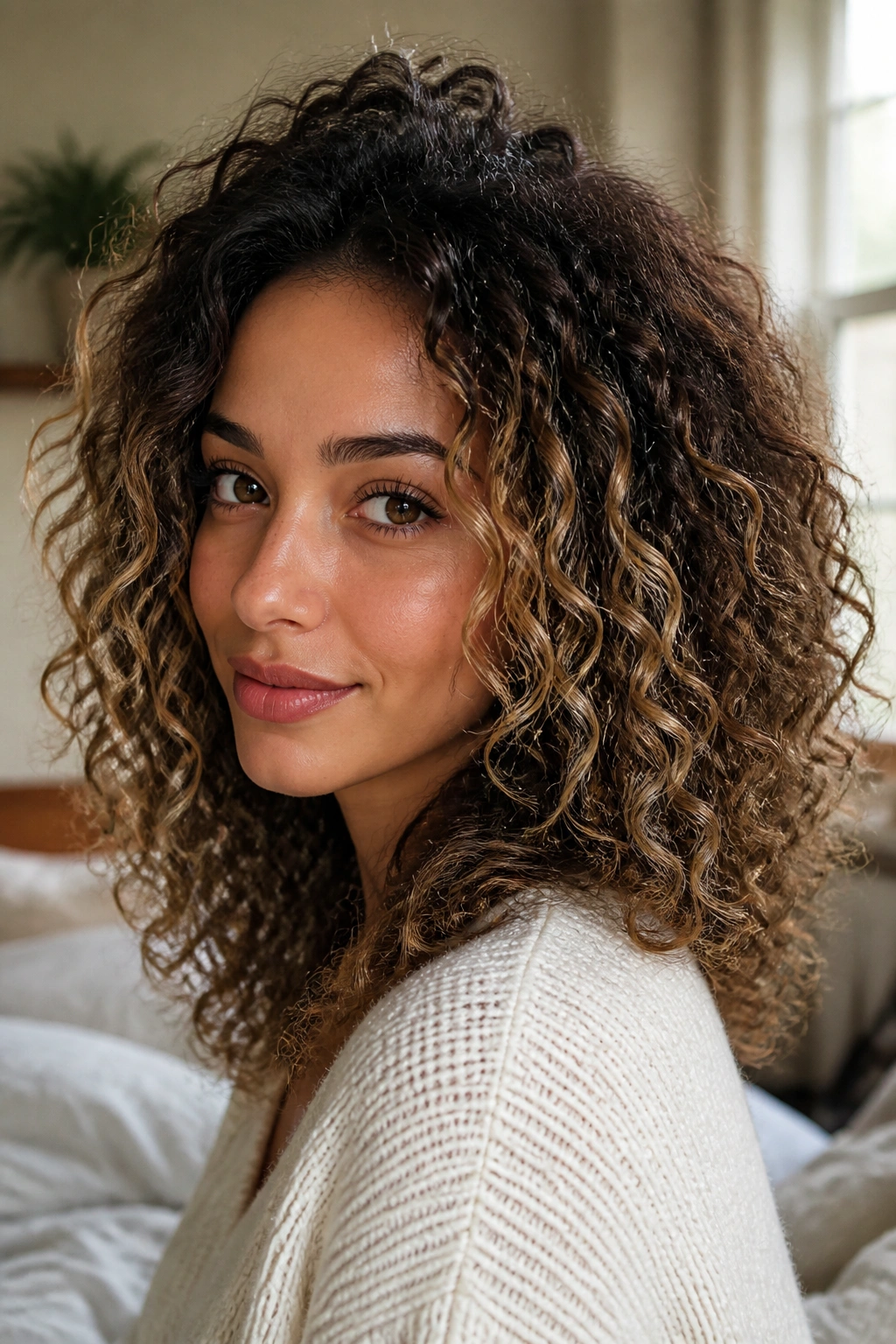
A thin halo of light around the face can change the whole cut. It wakes up the eyes, brightens the skin, and keeps the rest of the curl pattern from getting flattened by too much blonde in the wrong spot.
Why It Works on Curls
Curly hair tends to pull attention inward. The face-framing pieces give your curls a place to start. They also show movement fast, which is useful if your hair is dense and the interior color disappears into the shape.
I like this look best when the light begins just past the cheekbone and runs through the front two or three curl groups, not the whole front section. Too much light near the hairline can make curls look stringy. A cleaner version uses two shades lighter than the base, then nudges brighter only right around the face.
- Best on 2B to 3C curls
- Works well with side parts or a soft middle part
- Ask for soft slices, not a hard money-piece block
- Keep a little root shadow so grow-out does not shout
Pro tip: bring the brightest pieces one curl group farther back than you think. On curly hair, those front curls bounce forward after drying.
2. Caramel Balayage Through Dark Curls
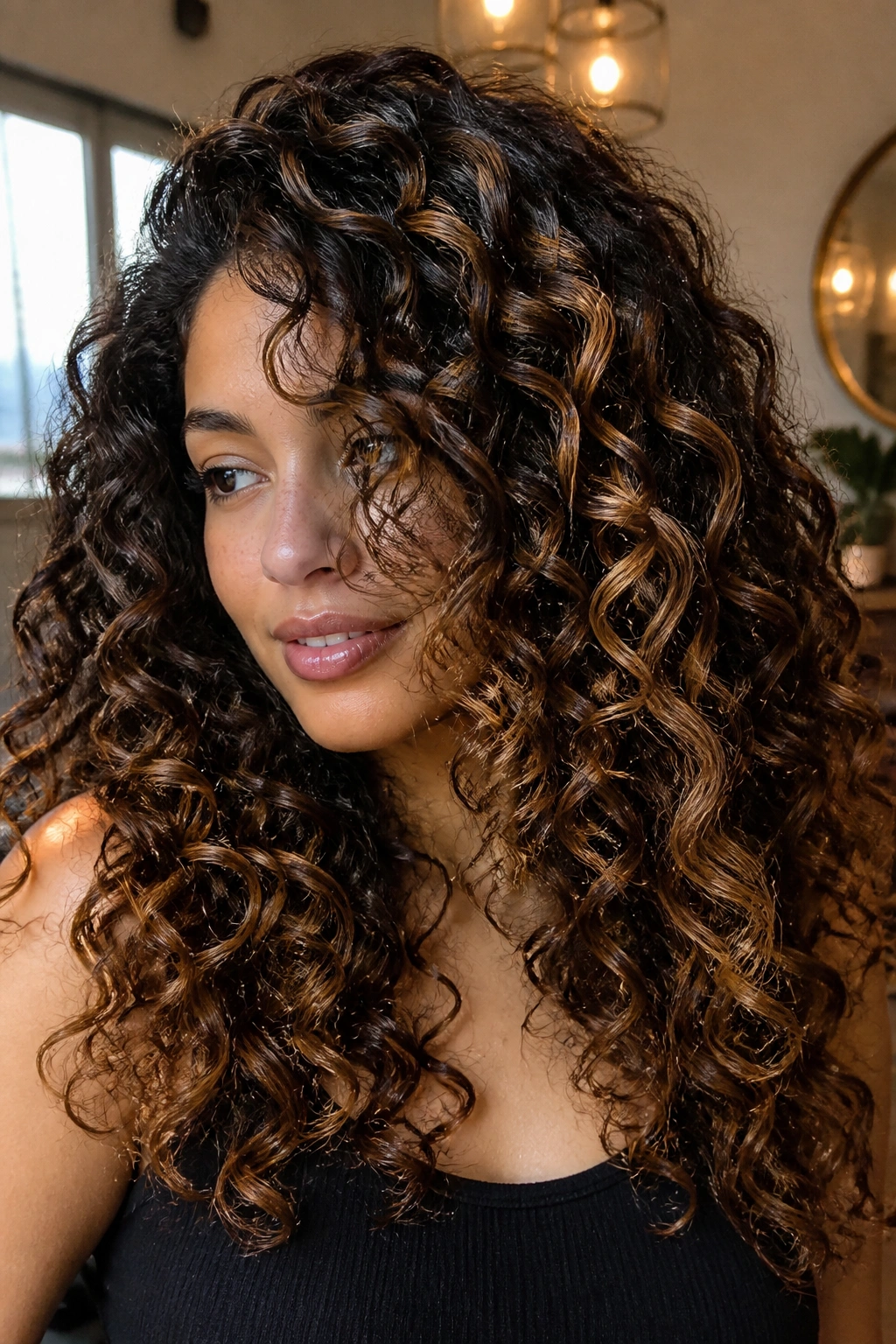
Caramel is the safest place to start if you want contrast without wrecking the shape of your curls. It gives deep brunettes a warmer, more dimensional look, and it usually grows out with less drama than pale blonde.
The trick is restraint. Caramel balayage works because it sits inside the curl, not on top of every strand. A colorist who paints the mid-lengths and ends while leaving the root area dark gets that soft, smoky look people love on thicker curls. The color should look woven in, not striped in.
A warm beige-caramel tone is my pick for most dark curly bases. Pure gold can get brassy fast, and a too-cool caramel can turn muddy against a deep brown base. Tell your stylist you want the light to read at a distance but still look natural up close. That usually means pieces that are only 1 to 2 levels lighter than the base, with a glossy finish over the top.
One more thing: darker curls often need a bit more hydration after lightening. Not because the style is “damaged” by definition, but because porous hair shows dryness sooner. Caramel is forgiving. It still likes a mask.
3. Cinnamon Babylights That Blur Into Ringlets
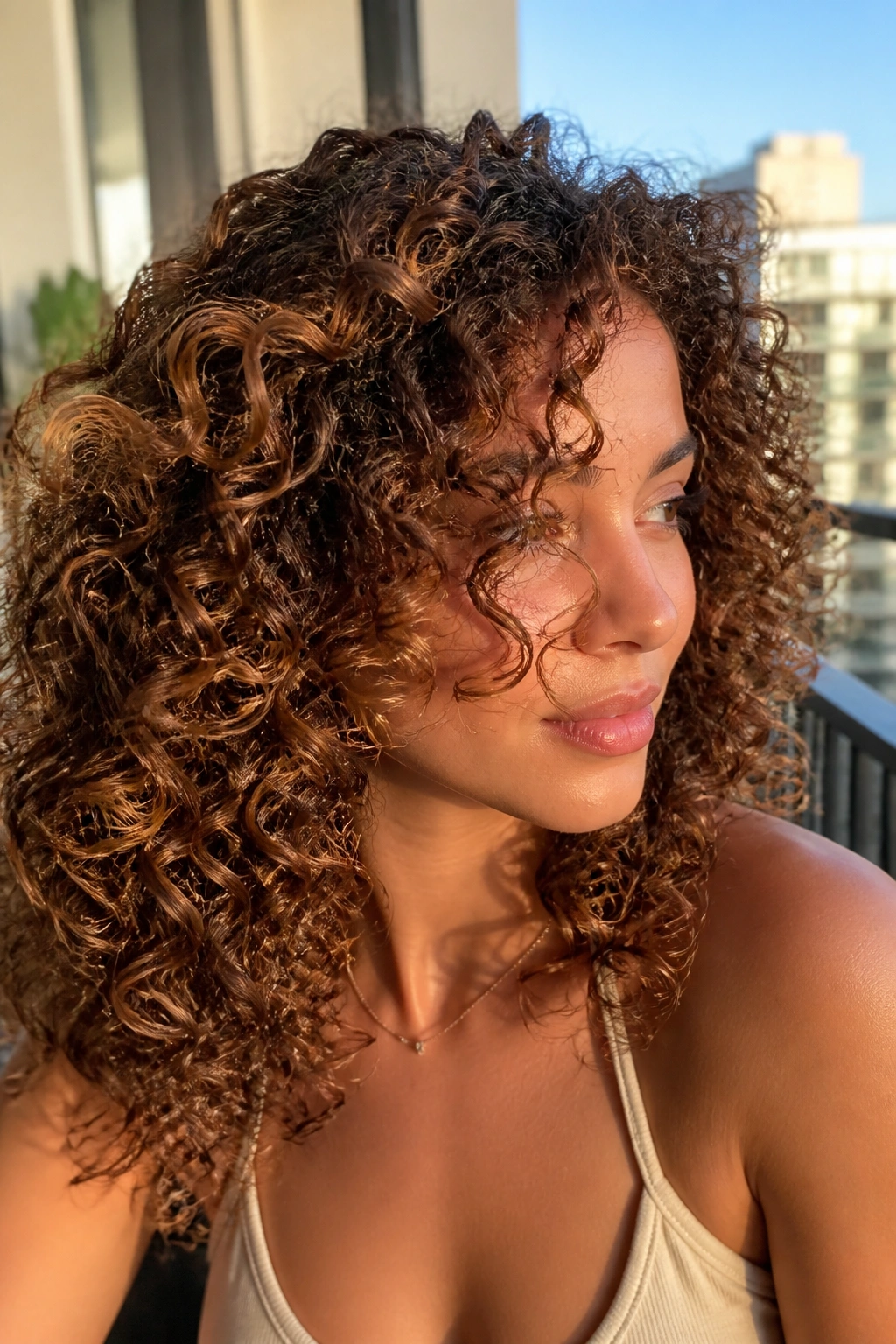
Why do babylights look so good on curls? Because they act like tiny glints of sun instead of obvious stripes. On ringlets, those little ribbons merge into the spiral shape and read as softness rather than streaks.
What Makes Them Different
Babylights are thin. Really thin. Think almost threadlike foils, especially around the crown and the top layer. On curly hair, that slimness matters because each curl group already has texture and shadow. If the highlights are too wide, the color starts fighting the curl instead of following it.
Cinnamon tones sit in that sweet middle zone between red and brown. They give warmth without shouting. On medium to deep brunettes, cinnamon babylights can make curls look richer and more alive than pale blonde ever could. The warmth also helps the texture look shiny, which is half the battle with curly color.
How to Wear It
- Ask for micro-fine foils or hand-painted baby pieces
- Keep the roots closer to your base color
- Add the brightest bits around the crown and the front
- Tone toward copper-brown, not orange
A soft cinnamon glaze on top can make the whole style look expensive. Not loud. Just awake.
4. Honey Blonde Ribbons on Medium Brown Curls
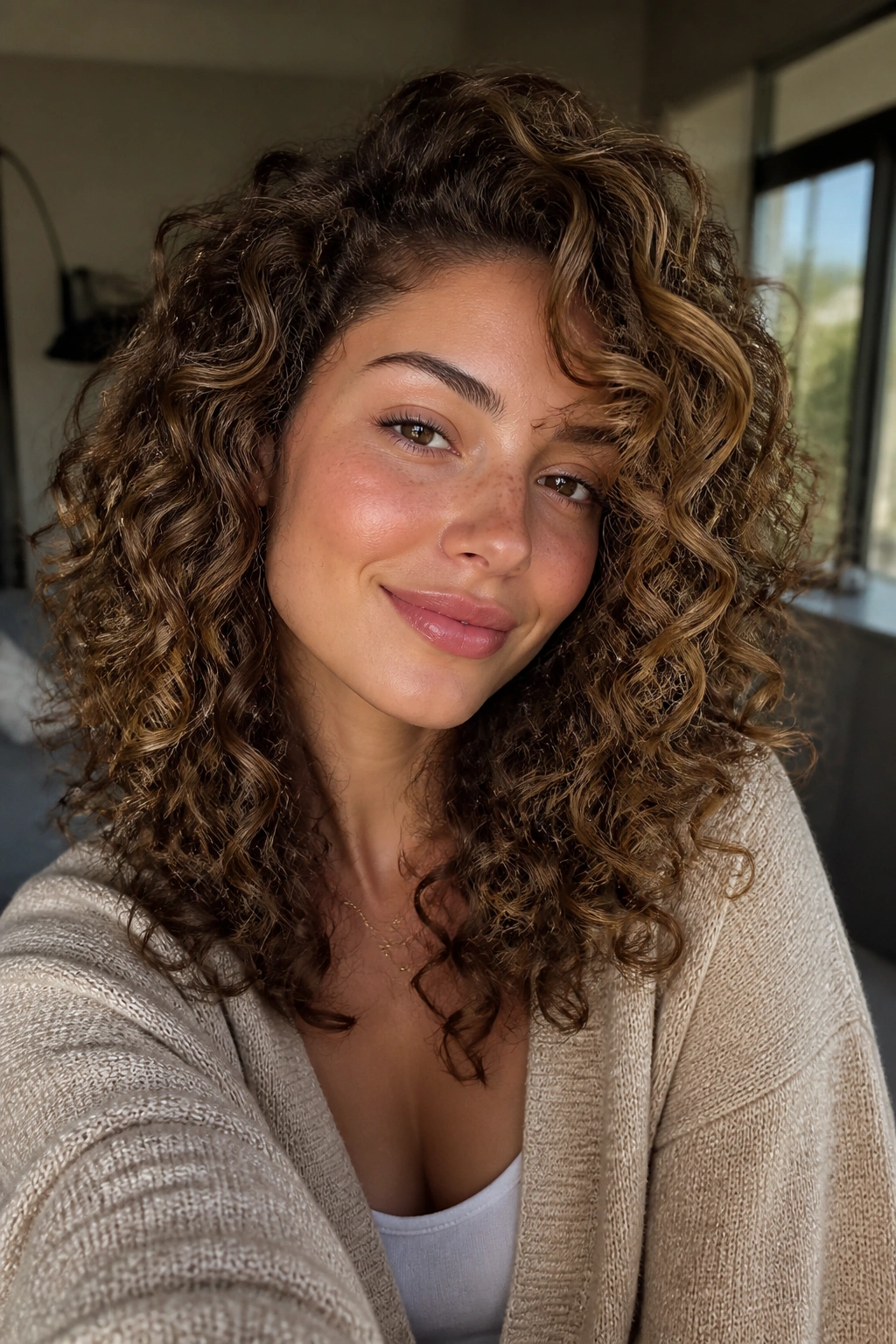
Imagine medium-brown curls with a few honey ribbons catching the light as the hair moves. That is the sweet spot here. Not chunky blonde. Not a full blonding job. Just warm, shiny pieces that show off the curl pattern.
Honey blonde works because it feels sunlit, not bleached. On curls, that matters. The shape already gives you volume; the highlight should give you motion. I’d keep the widest ribbons on the outer canopy and around the face, then taper them off as they move toward the nape. A uniform honey color from root to tip can look flat, while a few deeper pieces underneath keep the shape grounded.
This is also one of the easier looks to wear if you do not want a harsh grow-out line. Honey tones fade into caramel and soft gold in a way that still looks intentional. Ask for ribbons that are roughly 1/8 to 1/4 inch wide, depending on how thick your curls are. Fine curls usually need narrower ribbons. Dense curls can handle more width.
The result should look like the sun touched the top layer and left the rest alone. That’s the good version. The bad version looks like three separate colors fighting for space.
5. Copper Highlights That Warm Up Tight Coils
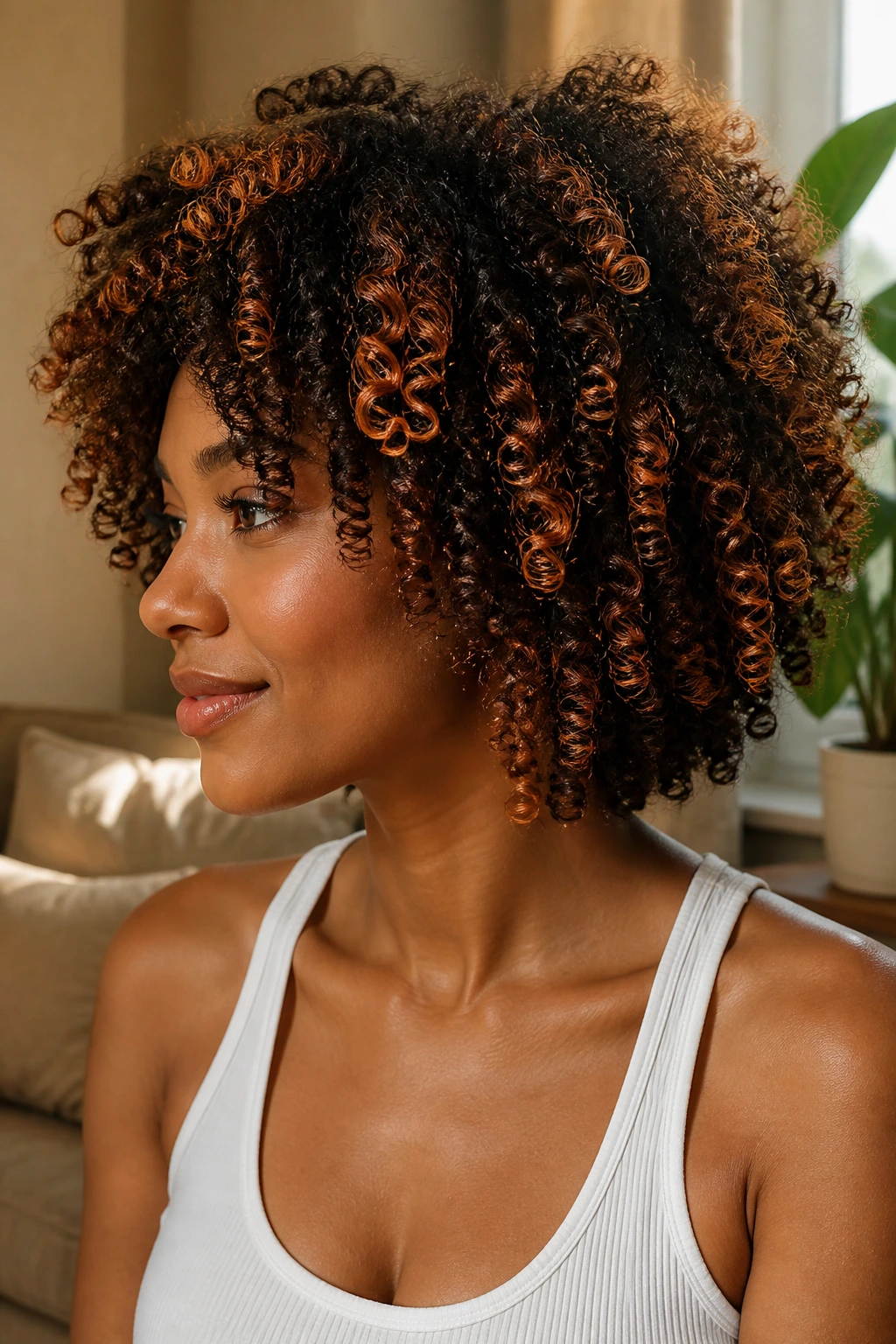
Copper is the color I reach for when curls look tired. It puts life back into deep brown and black hair fast, and on coily textures it can make each bend of the curl show up more clearly.
The reason copper works so well is simple: warm light bounces off coils better than flat ash tones do. On tight curls, the color is less about seeing every strand and more about seeing the pattern. Copper does that job with almost no fuss. It gives the hair a glow that reads rich rather than brassy when the tone is handled well.
A lot of people worry that copper will look too bright. It can, if the base is lifted too far or the toner is pushed too orange. What you want instead is a brown-copper or cinnamon-copper finish, especially around the face and top layer. That keeps the color wearable and keeps the curls from looking dry.
One sentence says it all: copper makes dark curls look alive. That is why it’s worth the maintenance.
6. Bronde Balayage for Low-Contrast Curly Hair
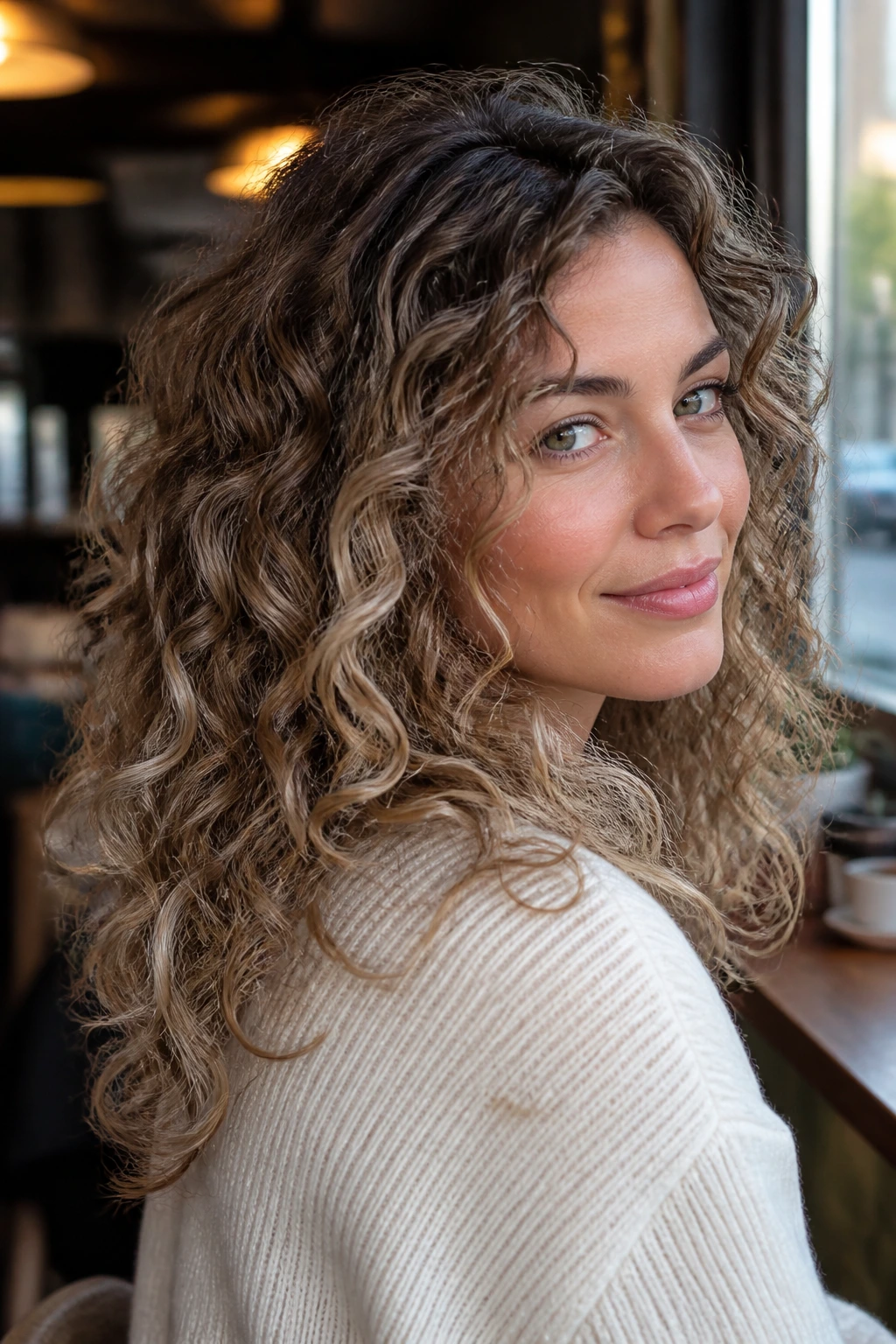
Bronde is the middle ground people keep circling back to for a reason. It keeps depth in the hair, but it still gives you enough light to see the curl pattern from across the room.
Unlike full blonde, bronde does not strip away the natural shadows that make curls look thick. It blends brown and blonde into a soft mix, usually with a darker root and lighter mid-lengths. On curly hair, that matters because the shadow between curls is part of the shape. Remove every bit of it, and the hair can start to look puffy instead of dimensional.
Best For
- People who want lighter hair without a harsh line
- Medium brunettes who do not want a big color leap
- 2C to 3B textures that need movement, not brightness overload
- Anyone who wants the grow-out to stay calm
The smart version uses a root smudge about 1 to 2 inches long, then drops in beige-blonde or caramel pieces through the ends. That keeps the top from reading too light and lets the curls do the rest. Bronde is not flashy. It is quietly effective. I trust it on curly hair more than a lot of trendier shades.
7. Chunky Highlight Ribbons for Big, Bouncy Curls
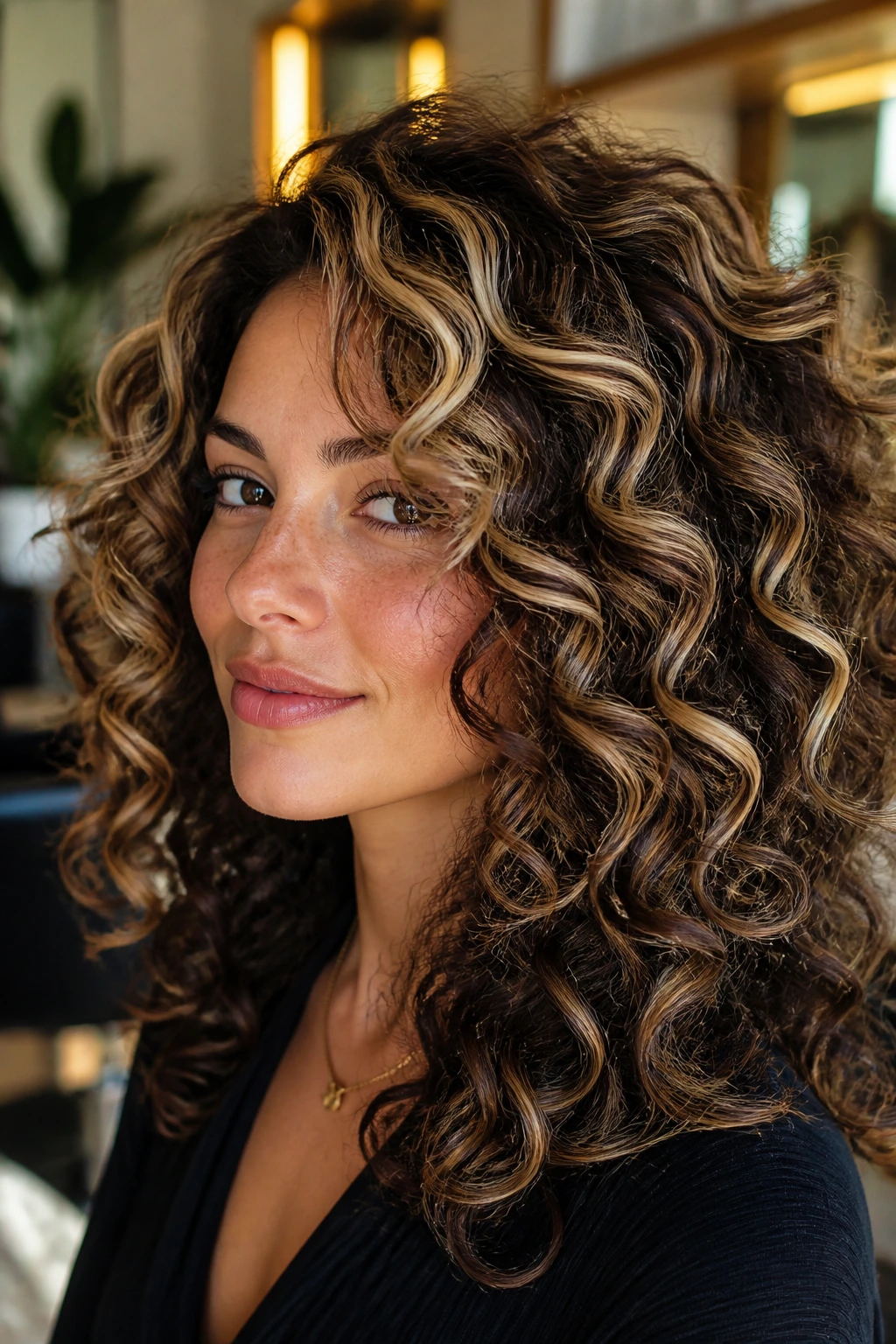
Chunky highlight ribbons are not dead on curly hair. They just need to be placed with some restraint. On big curls, wide ribbons can look bold and expensive instead of harsh, because the curl itself breaks up the color.
The mistake people make is filling the whole head with equally wide pieces. That turns into zebra territory fast. What works better is spacing. Leave darker sections between the lighter ribbons. Let the highlight live on the outer curves of the curl, where the movement will catch it. Density matters more than width here.
A good colorist will usually use chunky ribbons around the crown, the front, and a few strategic spots in the mid-lengths. The underlayer stays deeper. That contrast gives the curls somewhere to land visually, and it stops the whole style from flattening into one loud color block.
What to Watch For
- Too many foils near the part line
- Light pieces that run too close together
- A toner that makes the blonde look chalky
- Ends that get overprocessed because the same section was lifted twice
Used well, chunky ribbons can look cool and modern on curly hair. Used badly, they look like someone got impatient.
8. Beige Blonde Highlights for Curly Hair
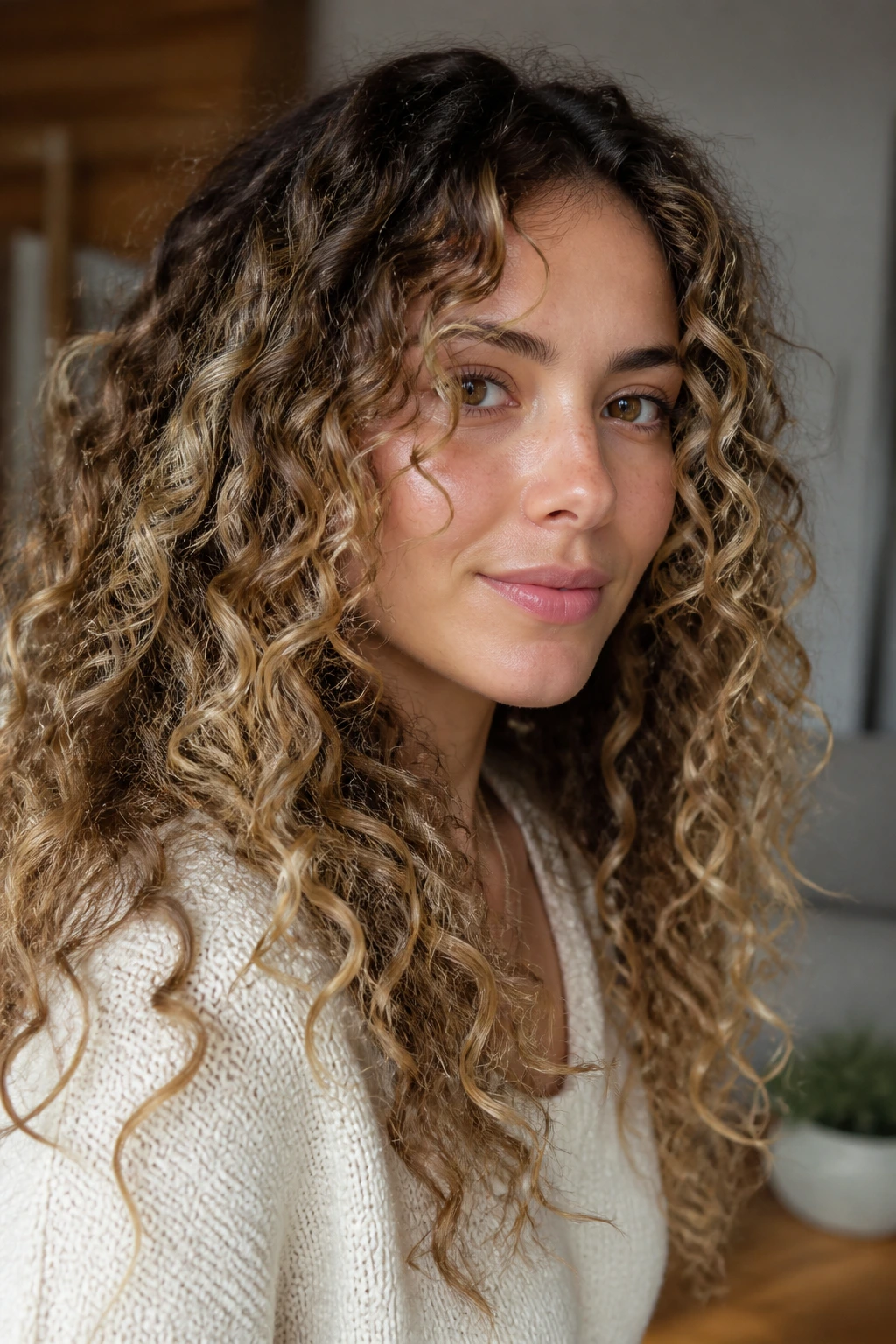
Beige is the shade people skip, and that is a mistake. It sits between gold and ash, which makes it one of the most wearable highlight tones for curls that want light without looking pale or icy.
Beige blonde is especially useful on 2C, 3A, and 3B curls. Those textures often need softness more than dramatic contrast. A beige tone keeps the curl pattern readable, and it avoids the hard, highlighter-bright look that can make curls seem frizzy. Beige also tends to age better as it fades, which is handy if you do not want every wash to reveal a harsh tone shift.
Ask for highlights that are lifted only to a soft yellow stage, then toned to beige rather than white. That small detail matters. If the hair gets lifted too far, the beige can go flat. If it stays too dark, the highlights disappear into the base and do nothing for the shape.
Why Beige Beats Ice on Curls
Ice-blonde on curly hair can be gorgeous, but it is a high-maintenance move. Beige gives you most of the brightness with less stress on the eye and less pressure on the hair. It feels easier. It looks easier. That is exactly the point.
9. Peekaboo Highlights Hidden Under the Top Layer
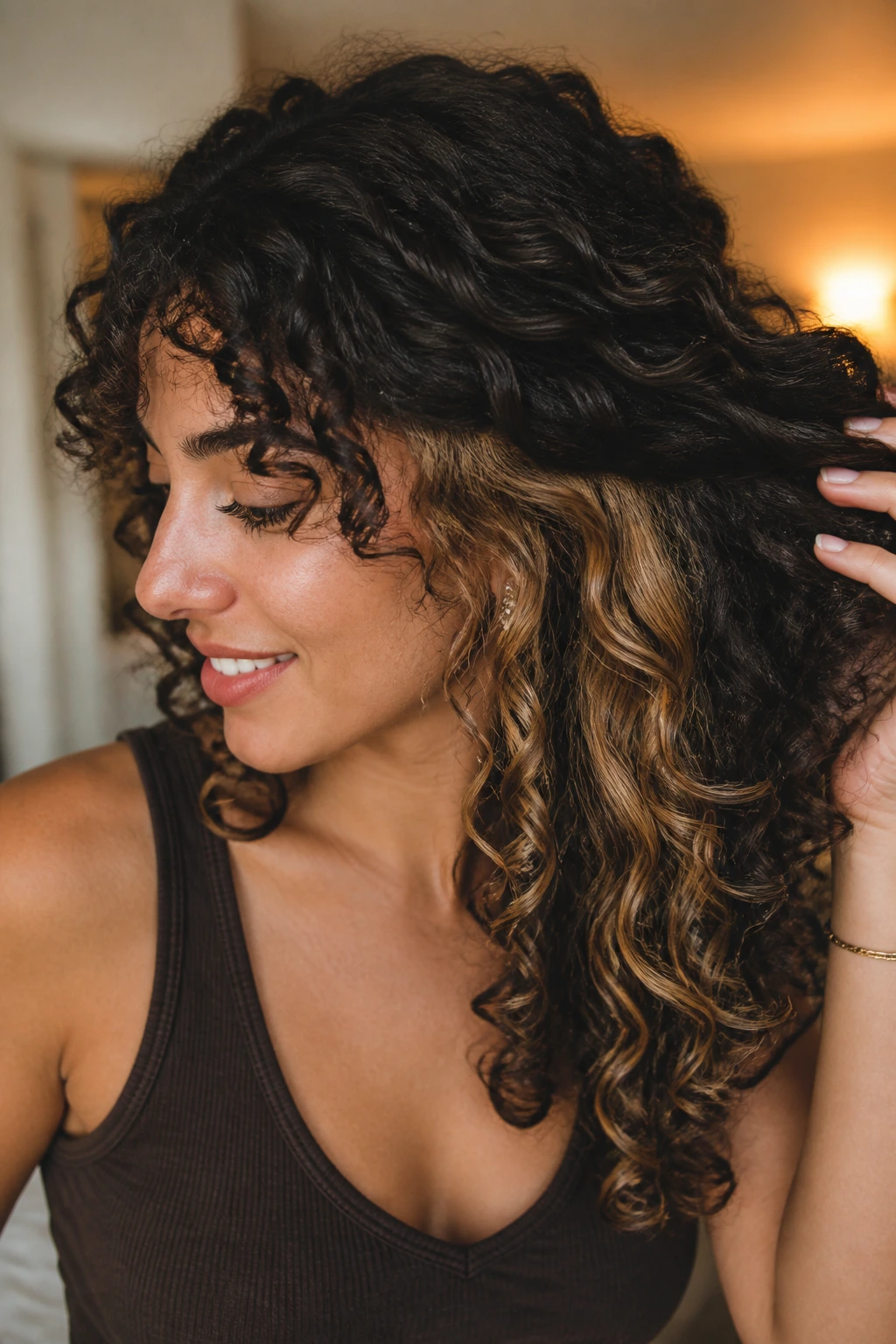
Peekaboo highlights are for the person who wants color that shows up when the hair moves, not when it sits still. Hidden under the top layer, they flash through the curls as you turn your head, which is a nice little surprise.
The placement matters. Color the underside, the lower back sections, or the panels that peek out when the curls separate. Keep the top layer darker so the reveal feels intentional. On curly hair, that darkness above the lighter panels makes the color look deeper and more textured. The contrast is the whole trick.
This style is also a smart pick if you work somewhere conservative or just do not want bright color staring at you every day in the mirror. You get the fun part without putting it on display every second. And if your curls are dense, peekaboo highlights can stop the hair from feeling heavy.
A small note: these highlights look best when the curl pattern is defined. Flat, brushed-out hair hides them. Curls make them interesting.
10. Golden Ends on Long Layered Curls
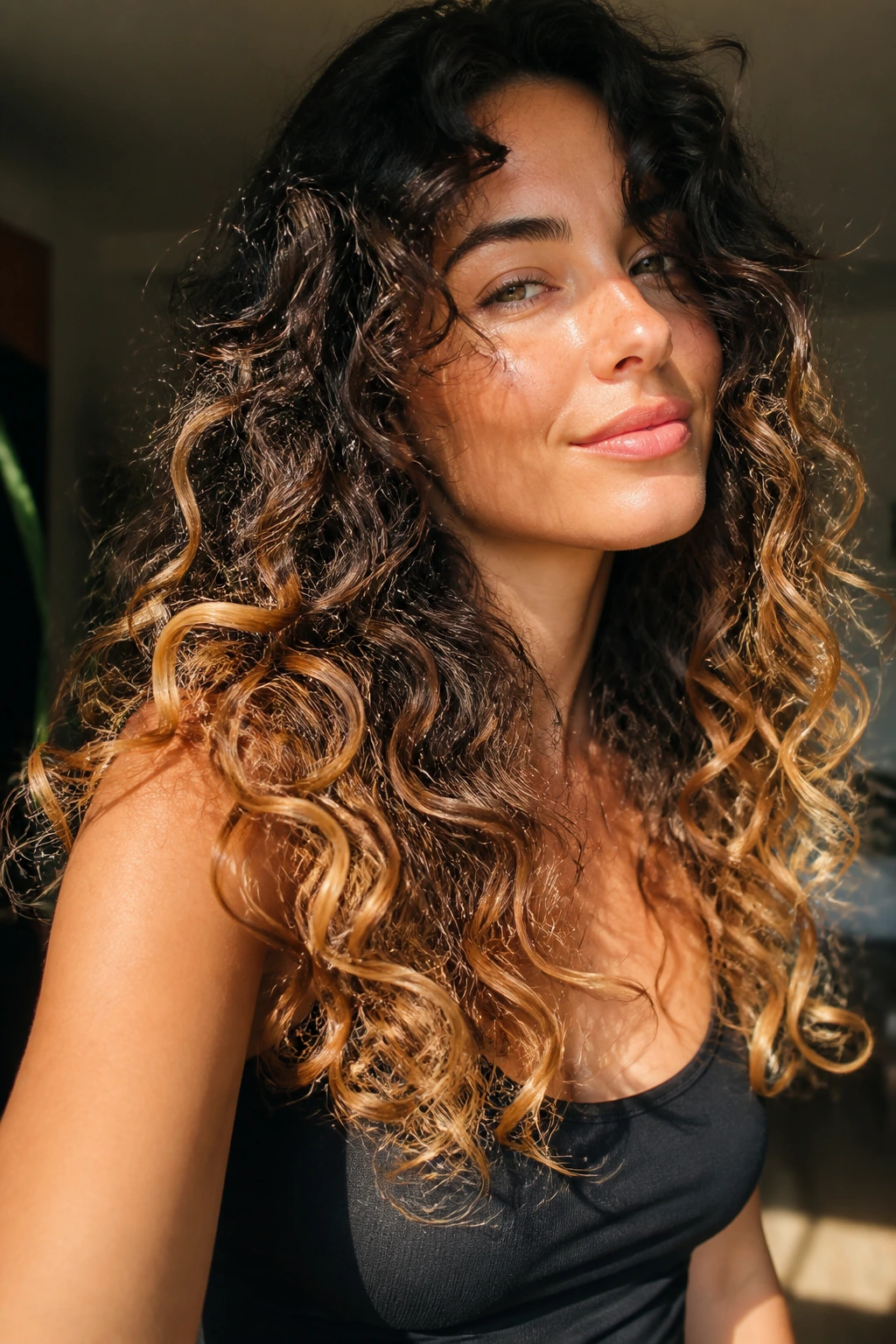
Long curls can carry lighter ends better than short, uniform cuts. The length gives the color room to fade softly, and the layers keep the bottom from looking like one heavy curtain.
Golden ends work because they follow the natural direction of movement. Instead of brightening the whole head, the color sits where sunlight would hit first: the lower edges, the outer bends, and the longest pieces around the shoulders. That keeps the roots grounded and lets the color feel lived-in rather than overdone. A soft gold on the ends can make thick curls look lighter without cutting off the depth at the top.
The key is not to overpaint the ends to the point of fragility. If your hair is porous, the bottom inches can grab light too fast and go crispy in texture. A good colorist will lift those ends gently and then tone them to a soft gold or honey, not a pale blonde that steals all the moisture from the room.
Long curly hair also loves gloss. A clear or lightly tinted gloss between toning appointments helps the ends stay shiny, which is half the look here.
11. Ash Brown Lowlights That Cool Down Overlightened Hair
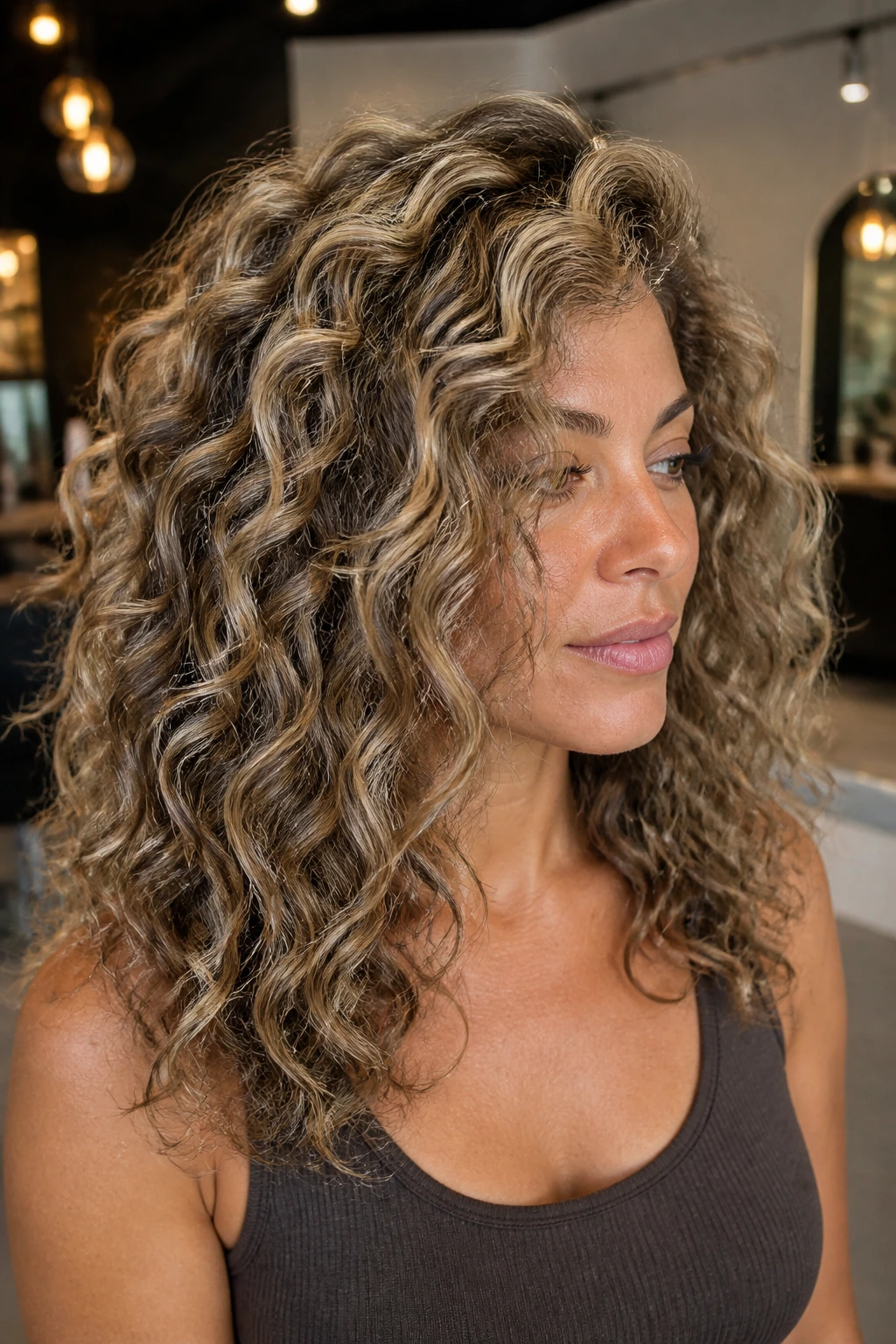
Sometimes the smartest “highlight” move is adding depth back in. If curly hair has been lightened one time too many, ash brown lowlights can save the shape before it starts looking fuzzy and washed out.
This is the section people forget to ask about. Light pieces need something to sit against. Without that darker backdrop, curls can lose definition and start reading as a soft blur. Lowlights bring the shadow back, and shadow is what lets curly color look rich instead of thin.
Ash brown is useful when the base is cool or neutral. On warmer skin or red-prone hair, you may want a neutral brown instead, because too much ash can look flat. But on curls that have gone too golden, a cool lowlight can clean up the whole head fast. Ask for demi-permanent color a shade or two darker than the base, placed in fine sections through the interior and around the crown.
Good Signs You Need Lowlights
- The blonde is brighter than the curl pattern
- The hair looks fluffy in daylight
- Your highlights stopped showing depth
- Every photo looks washed out near the roots
This is the kind of fix that doesn’t get enough praise.
12. Platinum Face Framing on High-Contrast Curls
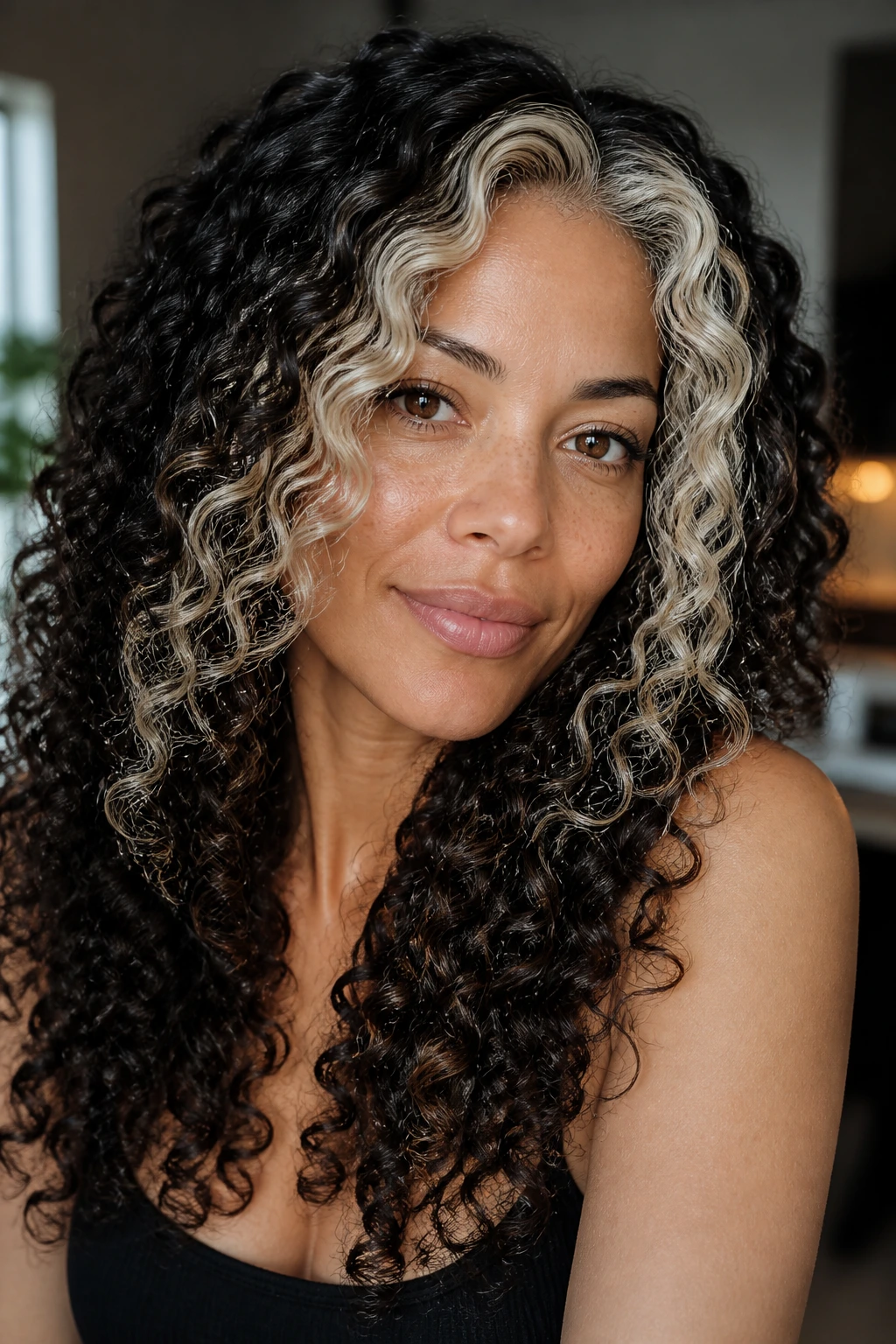
Platinum around the face can be stunning on curls, but it has to be handled with a light hand. Too much of it, and the hair starts screaming before the curls get a chance to speak.
The best version keeps the platinum in a narrow frame around the front hairline, maybe one or two slim panels on each side, with the rest of the head staying deeper. That way the brightness lands where people look first, but the curls still keep their body. Platinum works on curly hair when it is used like punctuation, not a full paragraph.
I like this especially on deep brunettes and black curls that can hold contrast without looking muddy. The face-framing pieces should be lifted evenly and toned to a clean pearl or cool platinum finish. If they drift too yellow, they clash with the rest of the hair and look unfinished.
Why Restraint Matters
- Platinum shows damage faster than warmer tones
- Curl definition can disappear if every section is too light
- A narrow placement keeps regrowth easier to live with
- Strong contrast around the face gives the style enough drama on its own
Platinum is a commitment. Done well, it looks sharp and clean. Done badly, it looks thirsty.
13. Rose Gold Highlights on Soft Ringlets
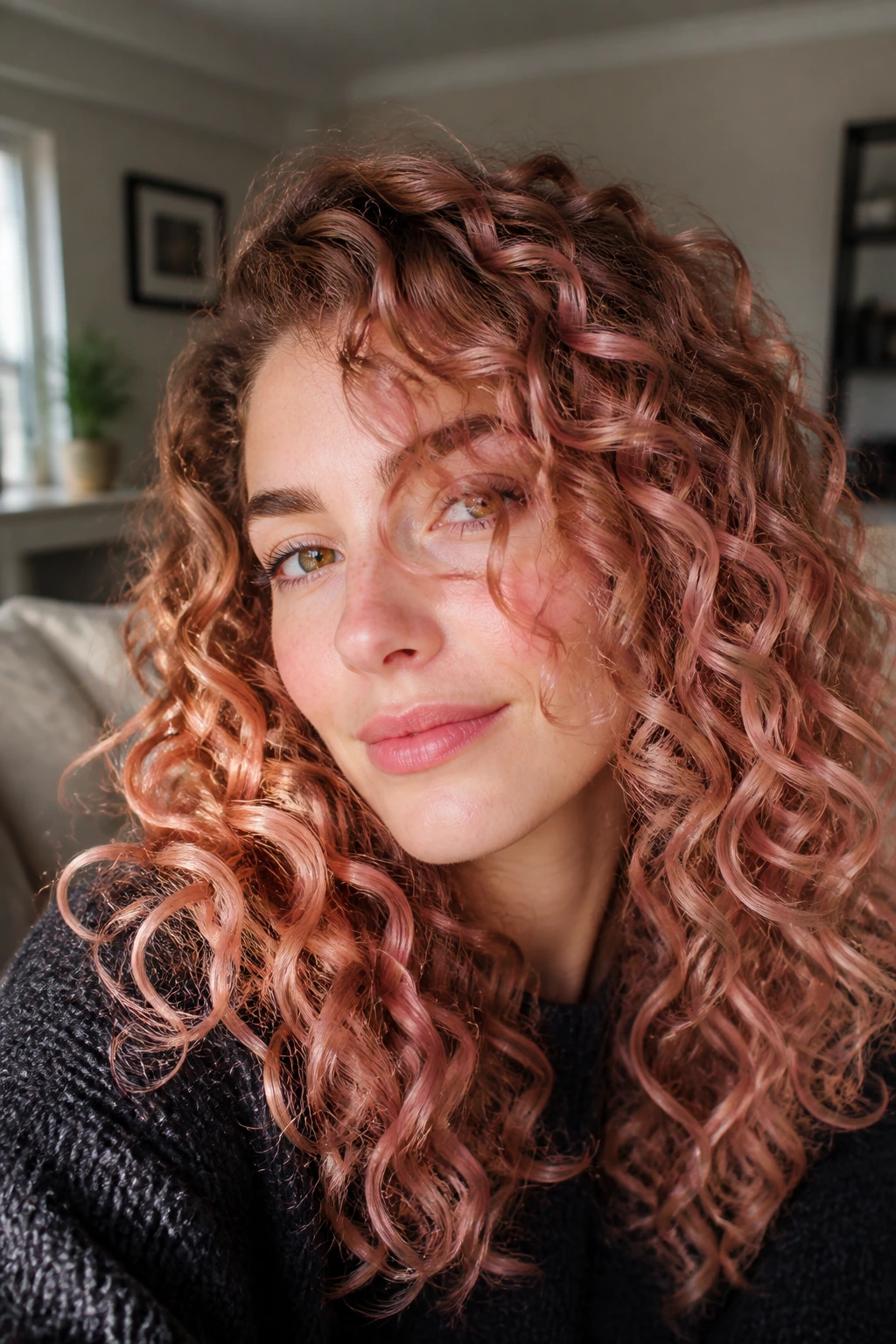
Can rose gold work on curls without looking costume-like? Yes, if the base is warm enough and the color stays soft. The trick is not pink in the loud sense. It is a warm blush with blonde and copper mixed in.
Soft ringlets take rose gold well because the shape already does part of the work. Each curl catches a little different shade, so the color reads as movement rather than one flat pink tone. That means the finish can look playful without tipping into novelty. The best rose gold on curly hair usually sits on medium brunettes, strawberry bases, or hair that already carries some warmth.
Bring this color in through the face frame and top layer first. If you spread it everywhere, the tone can lose its shape and start looking flat. A little depth underneath keeps the rose from getting too sweet. If you want it to last longer, choose a peach-rose glaze rather than a strong pink formula, because the softer version fades more gracefully.
How to Ask for It
- Warm rose, not bright pink
- Beige or copper undertones
- Soft placement around the top and front
- A gloss finish that keeps shine high
It’s one of the few playful colors that still feels wearable on curls.
14. Strawberry Blonde Streaks for Warm Base Colors
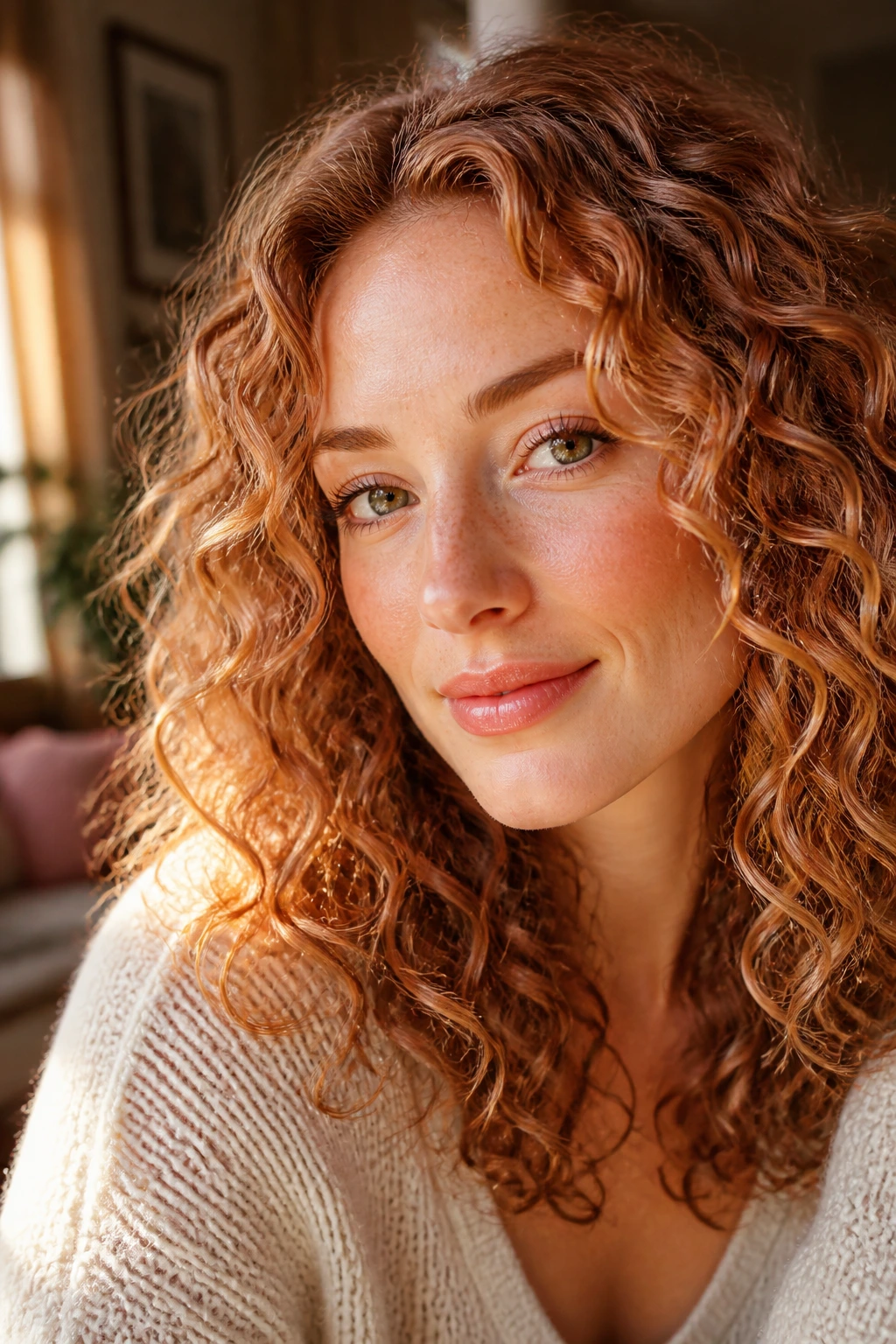
Strawberry blonde streaks are a good answer when your hair already leans warm and you want something lighter without going full gold. The red-gold mix gives curls a soft glow and keeps them from looking washed out.
This tone is especially kind to hair that has natural copper, auburn, or warm brown notes. Instead of fighting the base, it works with it. That’s why strawberry blonde often looks more believable on curly hair than a very pale blonde. The color slips into the curl pattern instead of sitting on top like a wiggy stripe.
I prefer this as a series of small to medium streaks rather than huge panels. Let the pieces start a little below the root, then brighten as they move toward the ends. The result should look sunny, not red-heavy. If the color runs too orange, it can overpower the curl and make the whole head feel hotter than it needs to.
A soft copper gloss can keep this shade alive between appointments. Curly hair likes it when the color stays shiny.
15. Silver and Pearl Highlights for Gray Blending
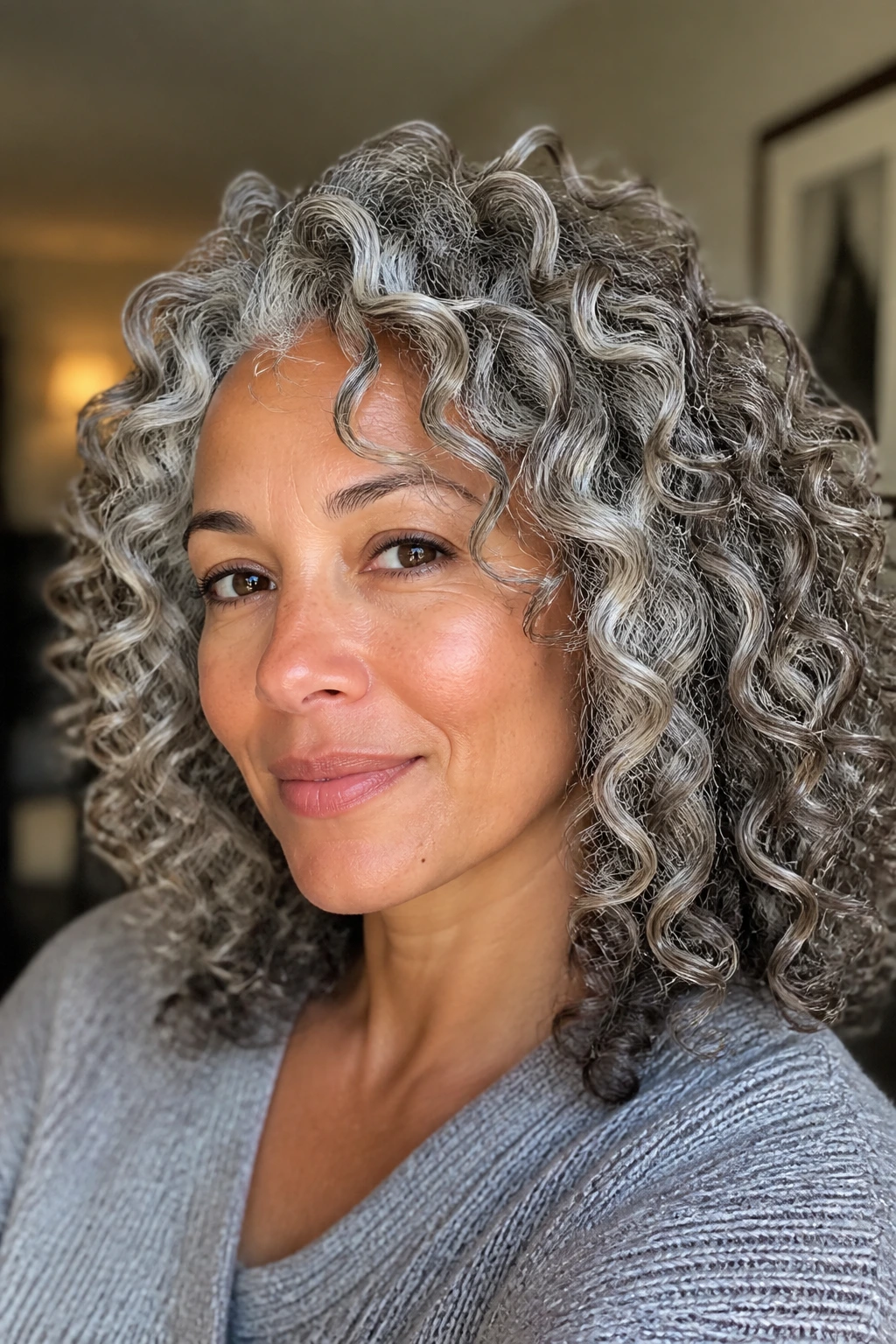
Gray blending on curls is its own category, and it deserves more respect than it gets. Silver and pearl highlights can make salt-and-pepper curls look deliberate instead of halfway grown out.
The reason this works is contrast control. Rather than trying to cover every gray strand, the color weaves lighter silver or pearl pieces through the hair so the gray starts to look like part of the design. On curly hair, that can be gorgeous because the texture already breaks the color into pockets of light and shadow. Pearl often looks softer than icy silver, which is useful if the hair has a warm base or the skin tone needs a gentler finish.
The best approach usually involves keeping some dark lowlights in the mix. Too much silver with no depth can make curls look flat and a little stiff. A mix of cool ribbons, natural gray, and darker pieces tends to read cleaner. Ask for a soft-toned toner, not a stark white one, unless you want the high-contrast effect on purpose.
- Great for salt-and-pepper curl patterns
- Useful when gray sits mostly near the temples or crown
- Easier to maintain than full coverage color
- Looks best when the curl shape is defined, not brushed out
It’s practical. It’s elegant without trying too hard.
16. Sun-Kissed Crown Slices That Lift Heavy Curls
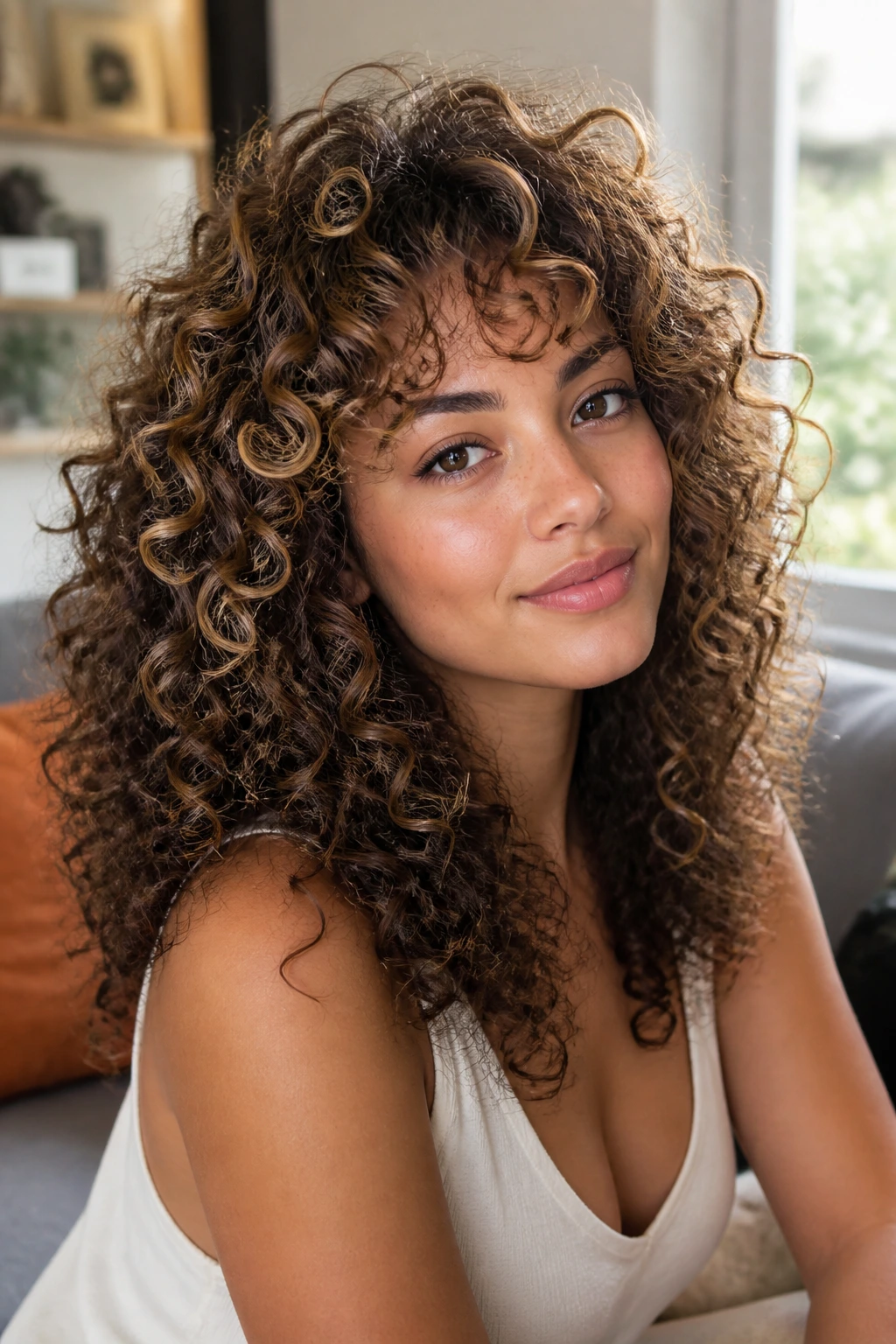
A few well-placed slices at the crown can change the whole head. Thick curly hair often needs brightness up top so it does not sit like one solid block of color.
Crown slices work by catching the top layer where light naturally hits first. The pieces are usually wider than babylights but narrower than chunky ribbons, which gives you a middle path that feels airy. The point is to break up weight, not bleach everything. Leave the underneath and the lower back darker so the crown has room to breathe.
This is one of my favorite moves for dense curls because the top can look bulky even when the haircut is good. A little light through the crown makes the shape feel lifted. It also gives the eye a path downward, which makes the curl pattern easier to read. If the hair is long, crown slices can help the style avoid that heavy “helmet” feel.
The color should be visible when the hair moves, not obvious from across the room. If it screams, it’s too much.
17. Highlights for Curly Pixies and Bobs
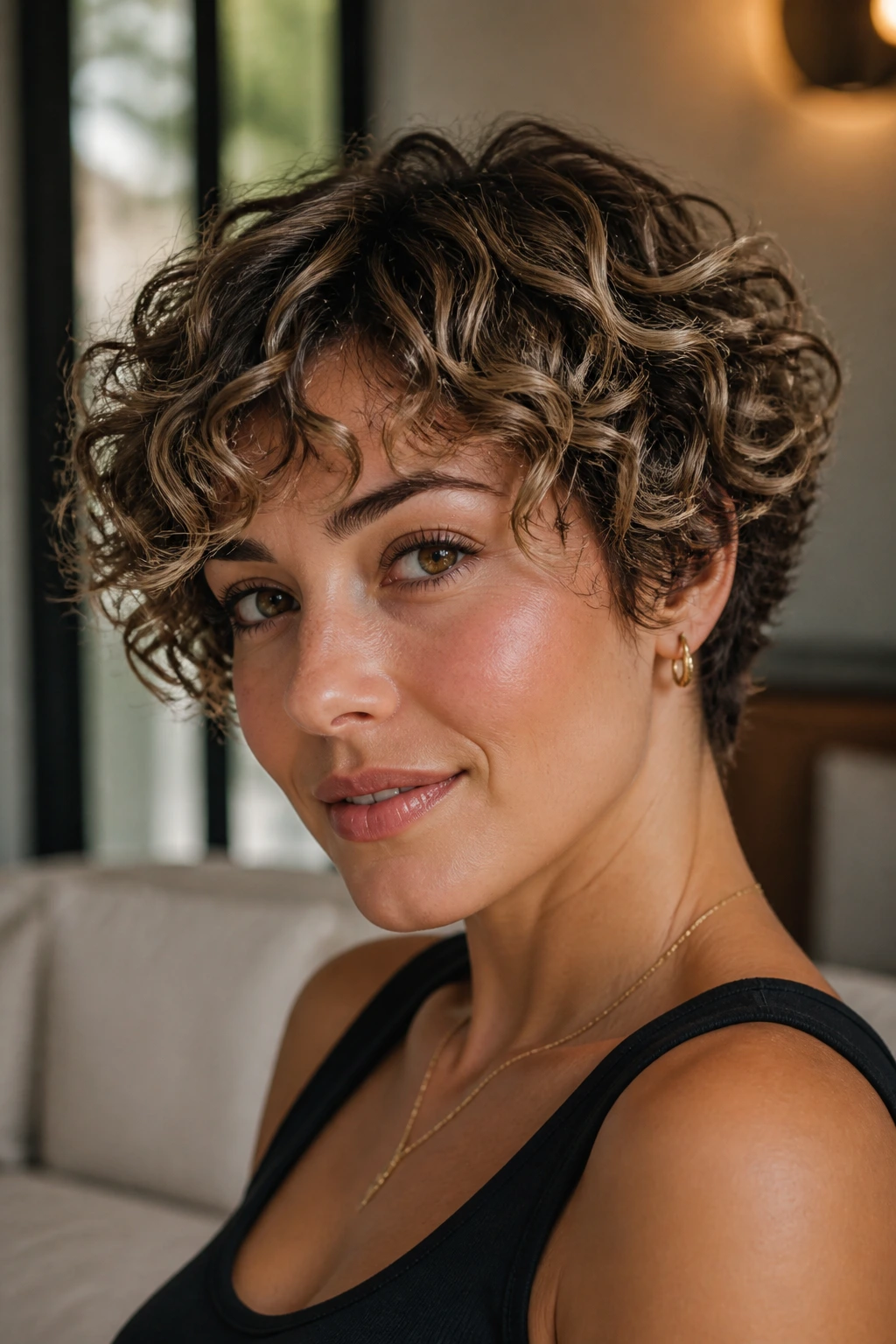
Short curly cuts need a different hand. A pixie or bob cannot hide sloppy placement, and it does not have enough length to blur out a bad highlight job later.
The sweet spot is usually near the fringe, the temples, and the top crown curls. Those are the spots that move the most and show shape fastest. If you put bright color everywhere on a short curly cut, the result can look striped in a hurry. Micro-placement matters more here than big color blocks. Tiny slices, fine foils, and a careful root shadow keep the style clean.
I like soft blonde, copper, or warm beige on short curls because those tones show the cut without making it look choppy. One or two brighter curls near the face are usually enough. The rest can stay deeper. That contrast helps the cut feel alive instead of fuzzy.
What Short Curls Need
- Light around the fringe and temple area
- A darker root so the cut does not look puffy
- Fine placement, not chunky panels
- Toner that stays soft as it fades
Short curls are unforgiving, yes. They are also the easiest place to show off good color when it is done right.
18. Tortoiseshell Highlights for Curly Hair
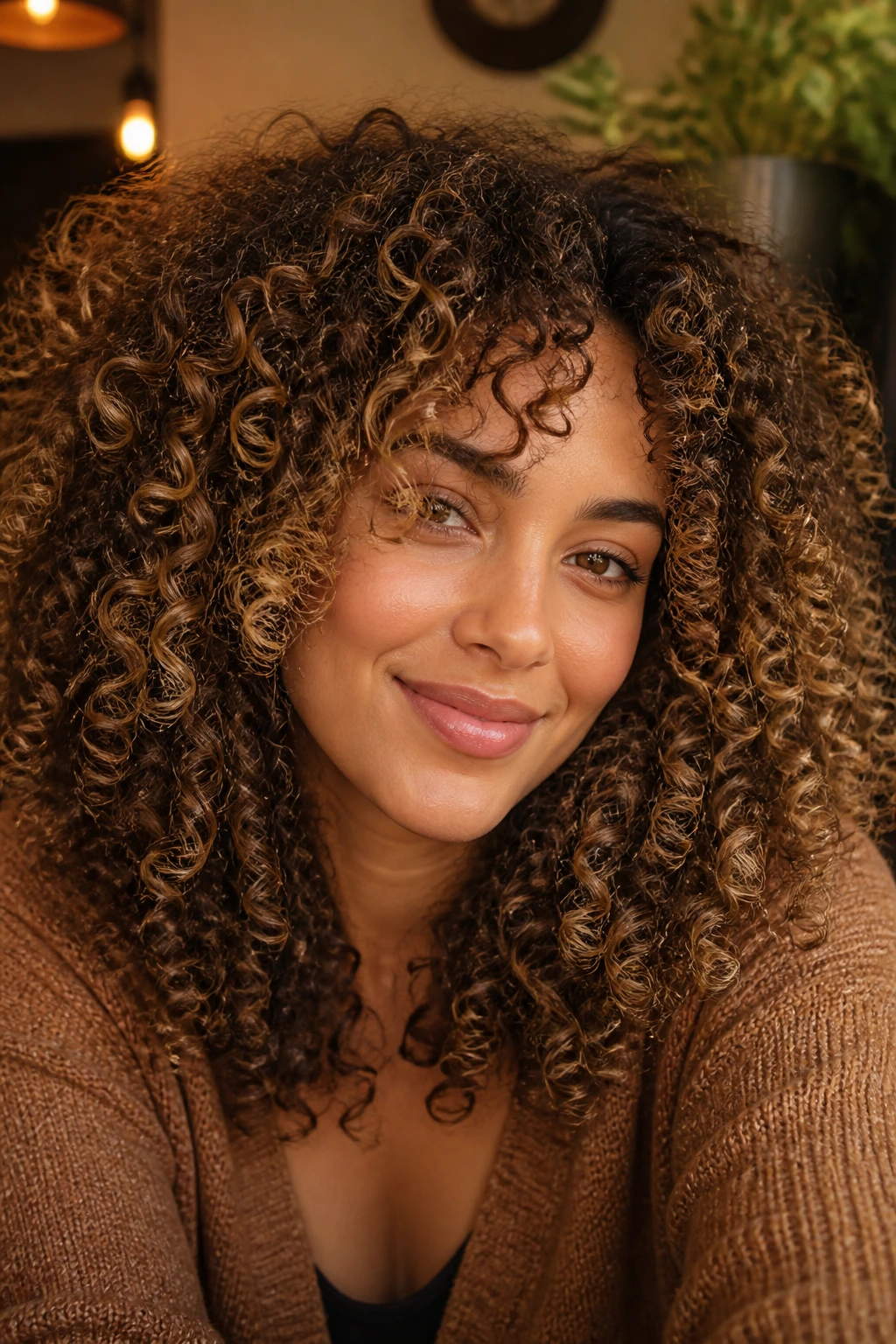
Tortoiseshell is the color story I trust when someone wants depth, warmth, and a grow-out that does not look like a mistake two weeks later. It mixes caramel, mocha, honey, and a few darker strands so the curls never lose their shape.
This look works because it behaves like real hair. Real hair is not one flat tone. Real curls catch different shades as they twist, and tortoiseshell leans into that. The combination of light and dark is what keeps the style from looking hollow. You get brightness where the curls need it, and you keep enough shadow to make the texture look thick.
The best version usually starts with a rooted base, then adds soft light pieces through the mid-lengths and ends, plus a few lowlights back in through the interior. That mix keeps the color from drifting into one flat caramel sheet. It also gives you more room to stretch appointments, which matters if you hate living in a salon chair.
If you’re choosing only one curly-hair color approach, this is the one I’d steer people toward most often. Not because it is safe in a boring way. Because it’s smart. And smart color on curls tends to look better on day one and day fifty.
