



The contrast between a deep, earthy brown base and cool-toned silver highlights is one of the most striking color combinations in modern hairstyling. It is not a subtle choice. It demands attention, requires technical precision, and relies heavily on the art of neutralization. When you introduce icy, platinum, or metallic silver tones to a warm brunette palette, you are fighting against natural undertones. That battle is exactly what creates the dimension, the movement, and the high-fashion edge that makes this color combination so popular.
Achieving this look is rarely about a single appointment. It is a process of lifting the hair to the correct porosity and level—usually a pale yellow, stage 10 blonde—before depositing the silver or ash-toned toner. If you jump this step, you end up with yellow, not silver. The maintenance is equally demanding, as cool tones are notorious for fading quickly, turning dull, or slipping back into brassiness. This is a look for those willing to commit to purple shampoos, toning masks, and regular upkeep. But when it works, the payoff is a multidimensional, shimmering finish that looks like liquid metal woven through your hair.
1. Icy Platinum Ribbons
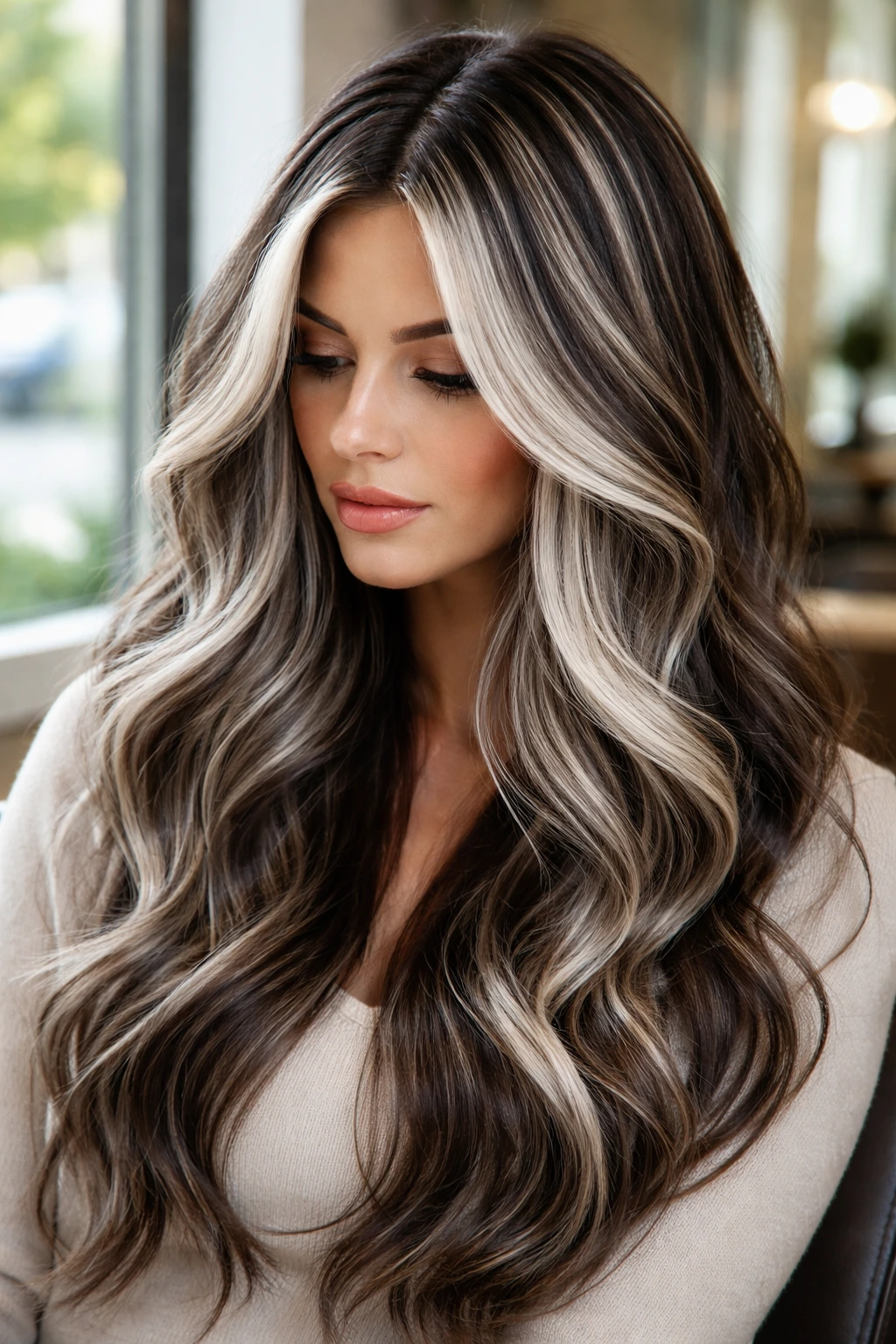
This look relies on a fine-weave technique that deposits intense, high-lift platinum silver strands through a dark base. You want the ribbons to look intentional and placed, rather than scattered. By weaving thin sections of hair, your stylist can ensure the contrast between the dark root and the bright silver ends remains crisp and sharp.
The Technique
The secret here is the weave. A dense, baby-fine weave creates the “ribbon” effect, ensuring the highlights blend seamlessly without looking like stripes. You need to saturate the hair fully with lightener to get that pale, inner-lining-of-a-banana color. Anything darker than a level 10, and your silver toner will simply grab onto the gold, resulting in a muted, muddy beige instead of a crisp, icy silver.
Why It Works
It mimics the way light naturally hits the hair. Instead of an all-over bleach job, which can look flat and lifeless, the ribbon method keeps the depth of your brown base while maximizing the brightness of the silver. It is high-contrast, bold, and surprisingly low-maintenance because the roots can grow out without creating a harsh line.
2. Smoky Silver Balayage
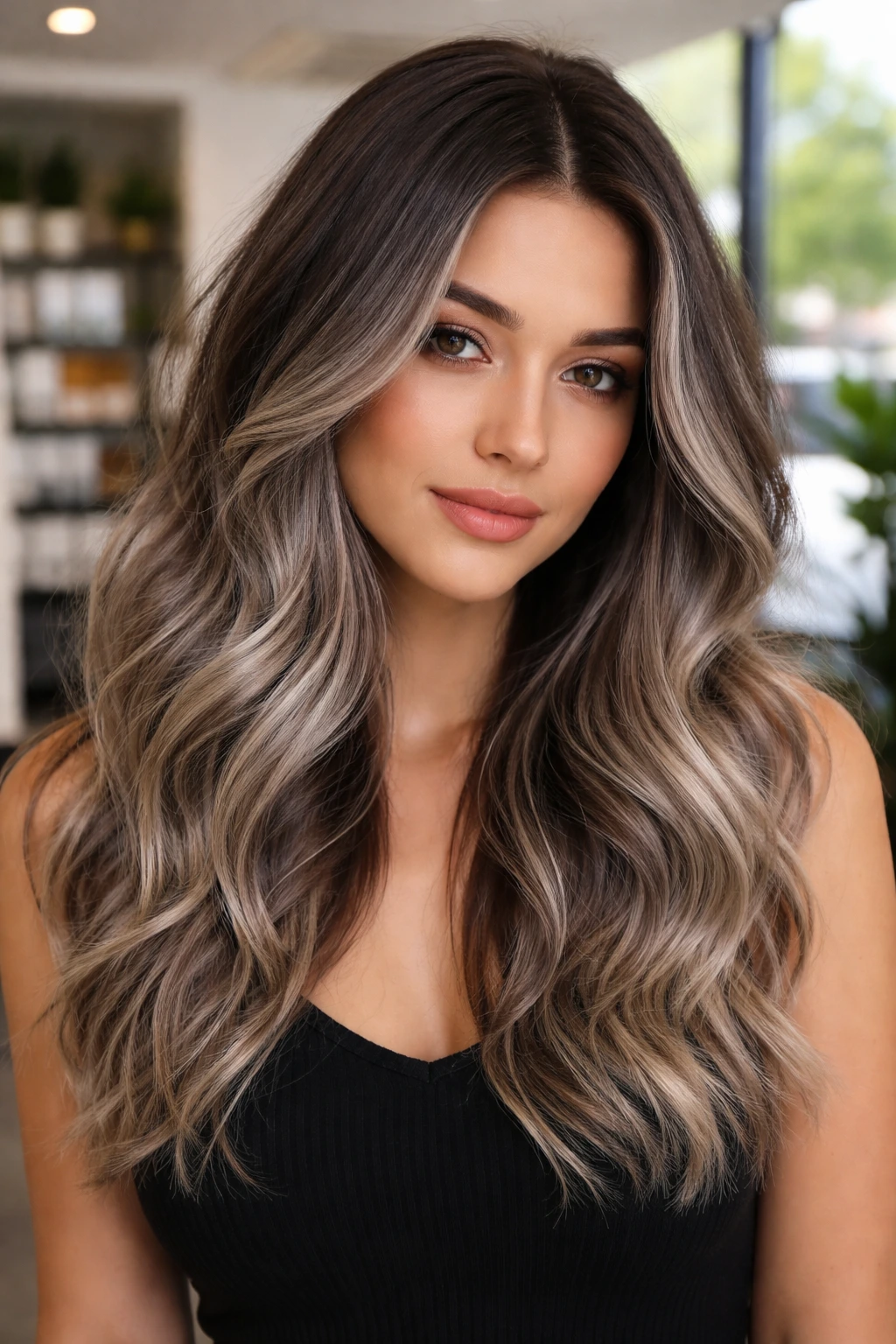
Balayage is the hand-painted art of hair color, and when applied with smoky silver, it softens the transition between dark and light. Unlike foil highlights that create distinct lines, this technique uses a sweeping motion to blur the application. It creates a lived-in, effortless aesthetic that feels more like a natural progression of color than a high-maintenance dye job.
- Placement: Paint the silver only on the mid-lengths and ends to avoid harsh regrowth.
- Tone: Ask for a “smoky” or “charcoal” silver, which carries a bit more depth than bright platinum.
- Maintenance: A color-depositing conditioner used once a week will keep that smoky hue from fading into a dull grey.
Pro tip: Because balayage is hand-painted, the level of lift is usually less intense at the very top of the gradient. This makes it a safer option for those who are nervous about potential damage to their roots.
3. Metallic Ash Babylights
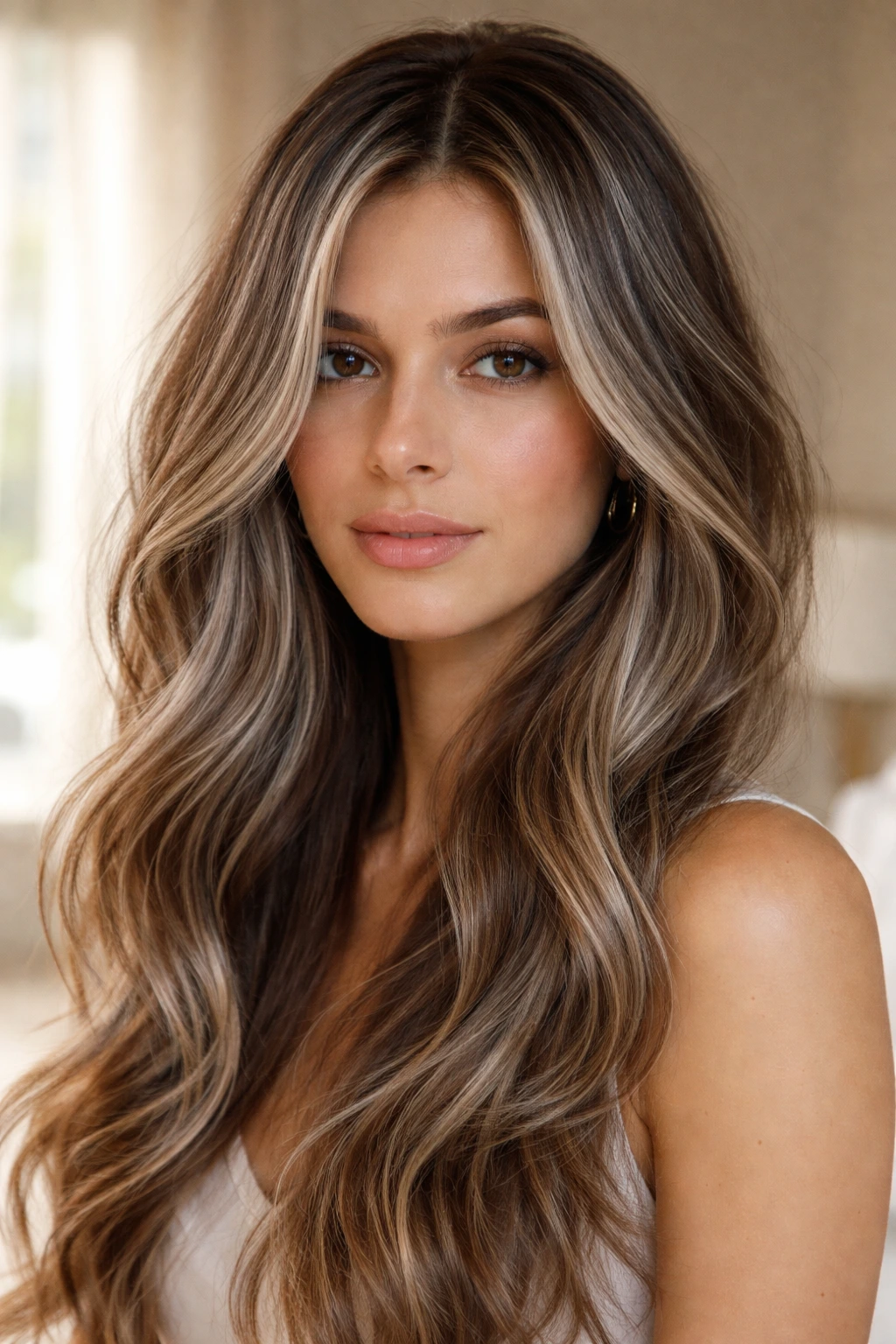
Babylights are the evolution of the highlight—micro-fine strands of hair lightened to create a sun-kissed effect, but rendered in metallic ash. If you have fine hair, this is your best friend. It builds dimension without the risk of over-processing thicker sections of hair, which can lead to breakage.
The visual result is a shimmering, metallic veil over your natural brown. It catches the light in a way that feels ethereal rather than dramatic. This is arguably the most “natural” version of silver highlights for brown hair because it doesn’t fight the natural texture of the hair; it enhances it by adding a multi-tonal layer of depth. Expect a longer appointment time, though, as micro-foiling every section takes patience and precision.
4. Silver-Tipped Ombré
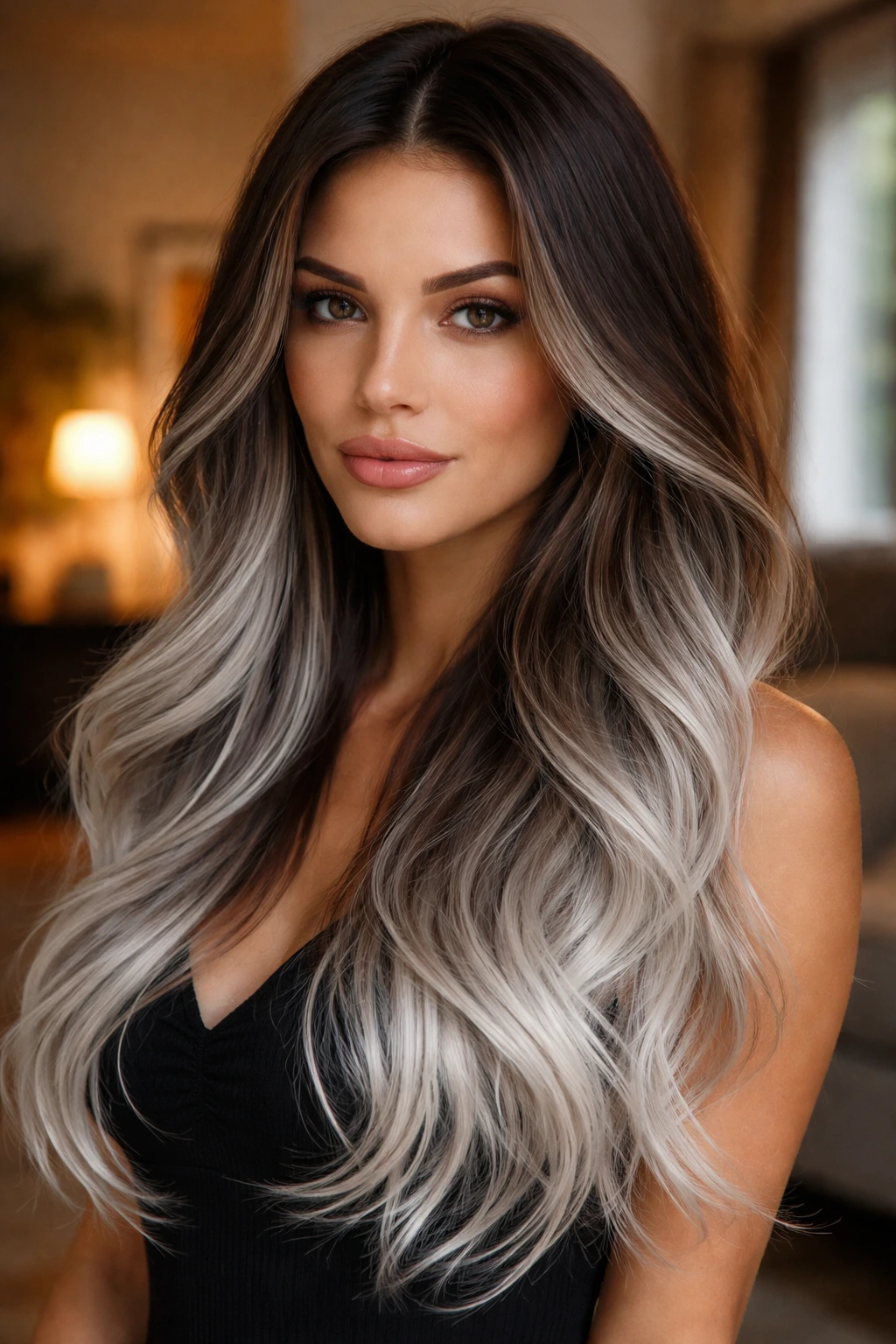
Sometimes, you do not want highlights running all the way to the root. The silver-tipped ombré is a classic choice for those who want the drama of silver without the commitment of bleaching their regrowth every six weeks. By keeping the top two-thirds of your hair your natural brown, you maintain health and integrity while playing with a bold, high-fashion color on the ends.
Managing the Transition
The most critical aspect of an ombré is the melt. You want a seamless blend between the brown and the silver. If the transition happens too abruptly, it looks like you grew out a botched bleach job. A skilled colorist will use a transitional shade—often a cool-toned cocoa or mocha—to bridge the gap between the warm brown roots and the icy silver tips.
Care and Handling
The ends of your hair are the oldest and most porous. Silver toner can grab aggressively on damaged ends, turning them a vibrant purple or blue if you are not careful. Use a protein-rich repair treatment in the days leading up to your coloring appointment to fill those porous gaps and ensure an even, neutral deposit of the silver pigment.
5. Cool-Toned Face-Framing Pieces
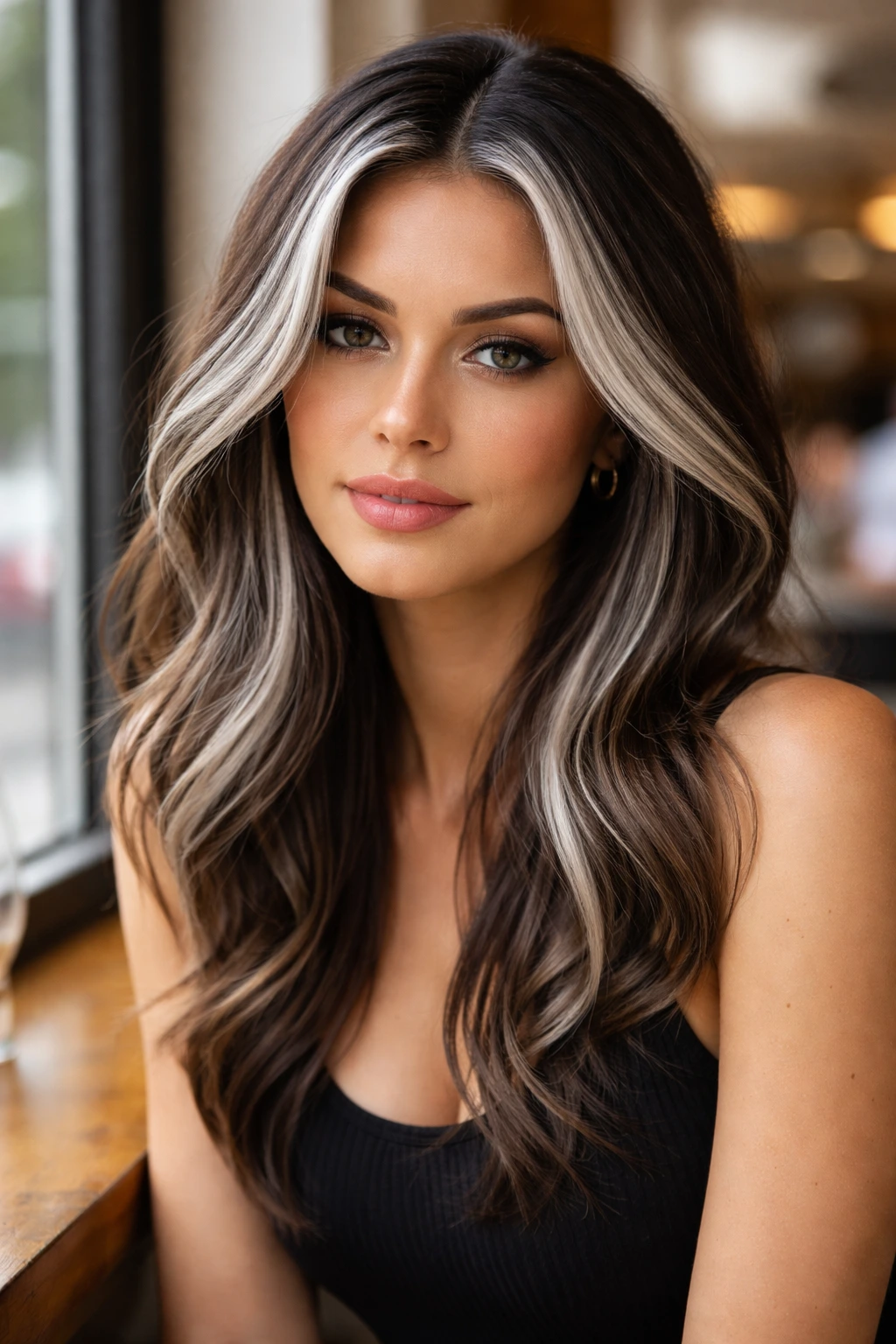
Also known as the “money piece,” this technique isolates the front strands of hair to create a bright, silver frame for your face. It is a bold aesthetic that draws all the attention to your features. On a dark brown base, this high-contrast look is incredibly striking and has been a staple in modern coloring trends for years.
The Mechanics of the Frame
You are essentially lightening the front sections to an extreme level. Because these pieces are right next to your skin, they can dramatically change how your complexion looks. Cool, silver tones can make skin appear brighter, though they can also wash out certain warm skin tones. If your skin is very warm, ask your stylist to lean towards a metallic champagne or “greige” rather than a true, icy blue-silver.
Daily Styling
This section of hair is subjected to the most heat and handling. When you style your hair, always apply a heat protectant to these front pieces first. Because they are the most lightened, they are the most prone to dryness and frizz, which can make the silver look dull rather than luminous.
6. Cool Blonde Ribbon Lights
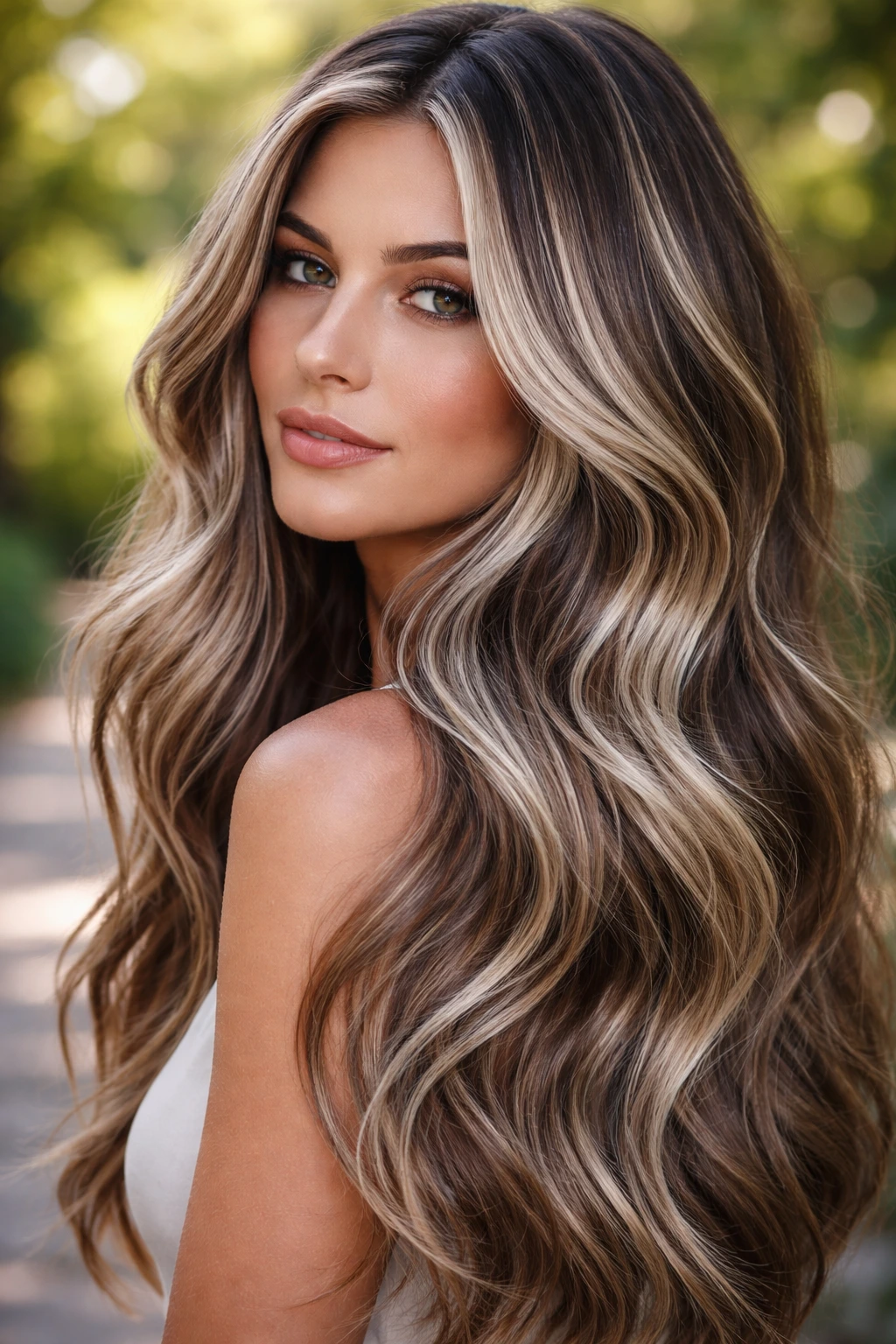
Think of this as a more wearable, slightly warmer cousin to the platinum silver look. By opting for a cool blonde ribbon light, you are mixing lighter, silvery tones with a softer, ash-blonde base. This is the perfect entry point if you want to experiment with silver but are afraid that a full-on grey look will look too “aged” on your complexion.
The blend is key. You are not looking for stark white streaks; you are looking for soft, interwoven strands of cool, metallic blonde. This creates a luxurious, expensive feel. It is versatile, easy to style, and grows out with significantly more grace than a stark white-on-black look.
7. Silver Frost on Dark Mocha
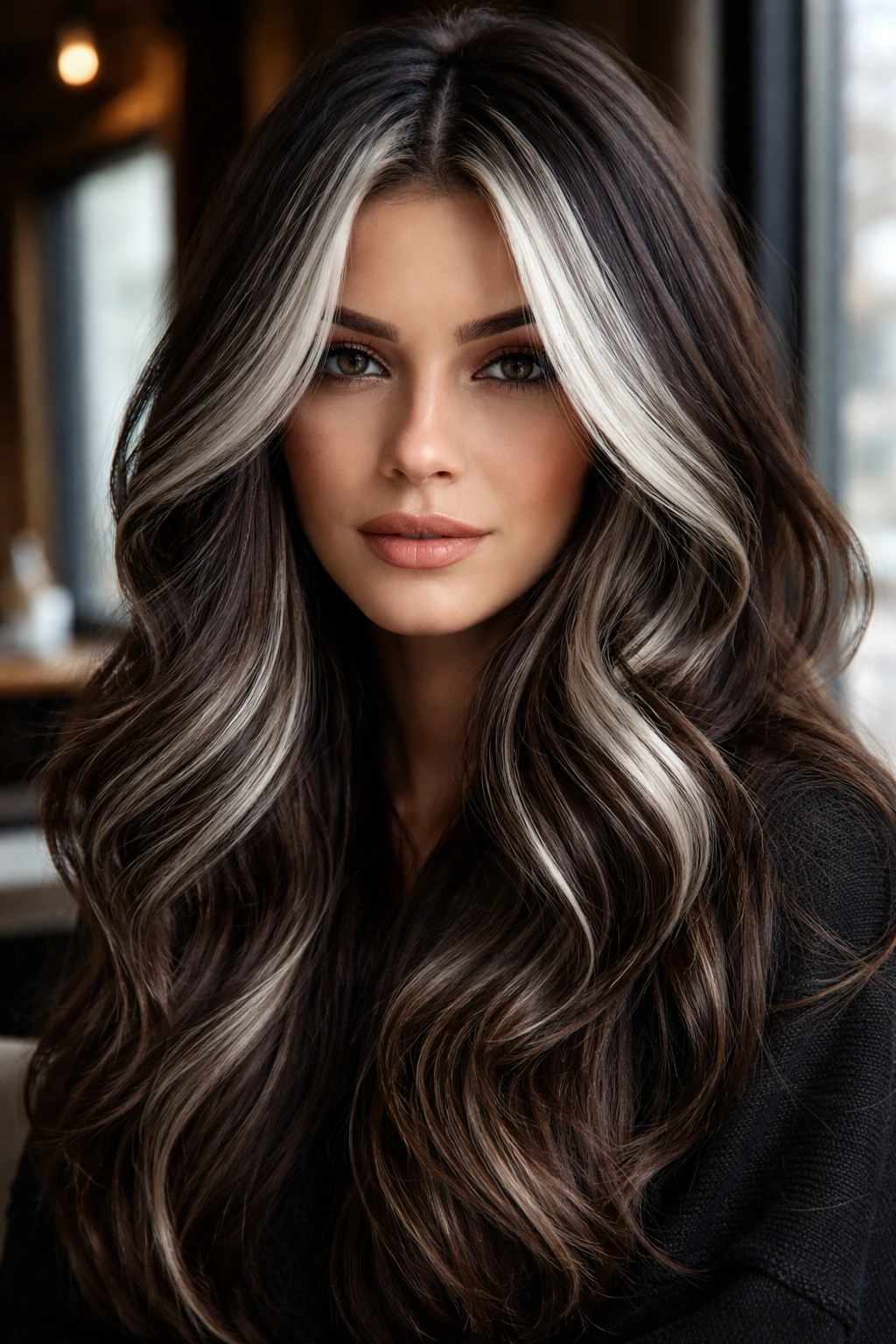
This is a high-contrast style that mimics the look of a winter frost over a dark forest. It is bold, dramatic, and requires significant lifting power to get the silver to show up against a dark mocha base. The frost effect is achieved by doing heavier highlights on the top layer of the hair, leaving the underneath sections dark.
This “peek-a-boo” effect creates massive dimension. When you move, the dark brown and the silver frost mix and mingle, creating a constant shift in color perception. It is a high-maintenance look, but for those with thick, dark hair, it provides a level of depth that single-process color simply cannot achieve.
8. Frosted Tips with Brown Base
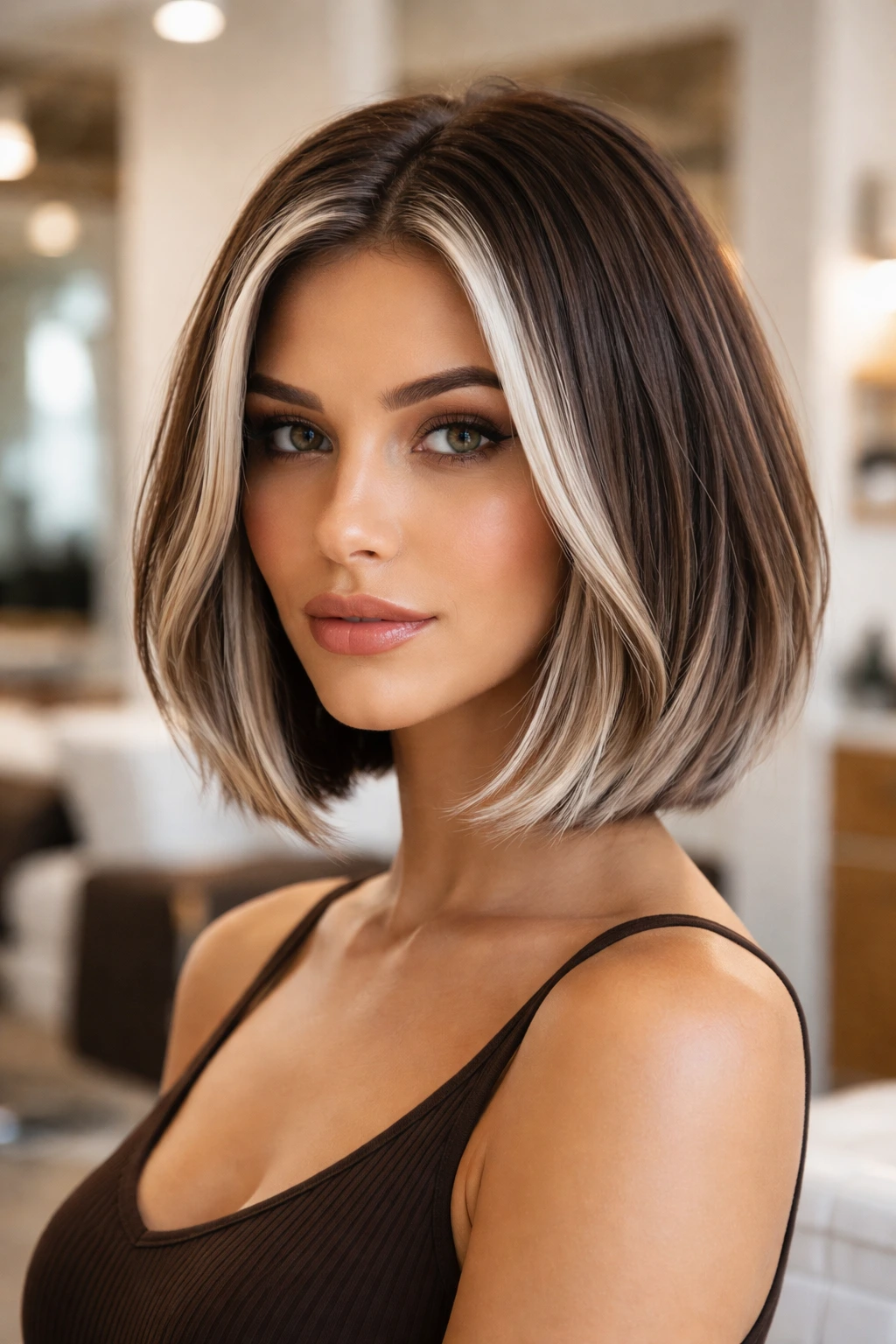
While the term “frosted tips” might conjure memories of the late 90s, the modern version is far more refined and targeted. Instead of the spiky, jagged look, think of this as a very deliberate lightening of the ends, combined with a subtle “dusting” of silver throughout the rest of the hair.
It creates a sun-kissed, winter-y vibe that feels fresh. The key difference here is the lack of “chunkiness.” Everything is blended with a finer brush. It is particularly effective on shorter hair—like a lob or a blunt bob—where you want to add texture and movement without the hassle of full-head maintenance.
9. Dimensional Ash Blend
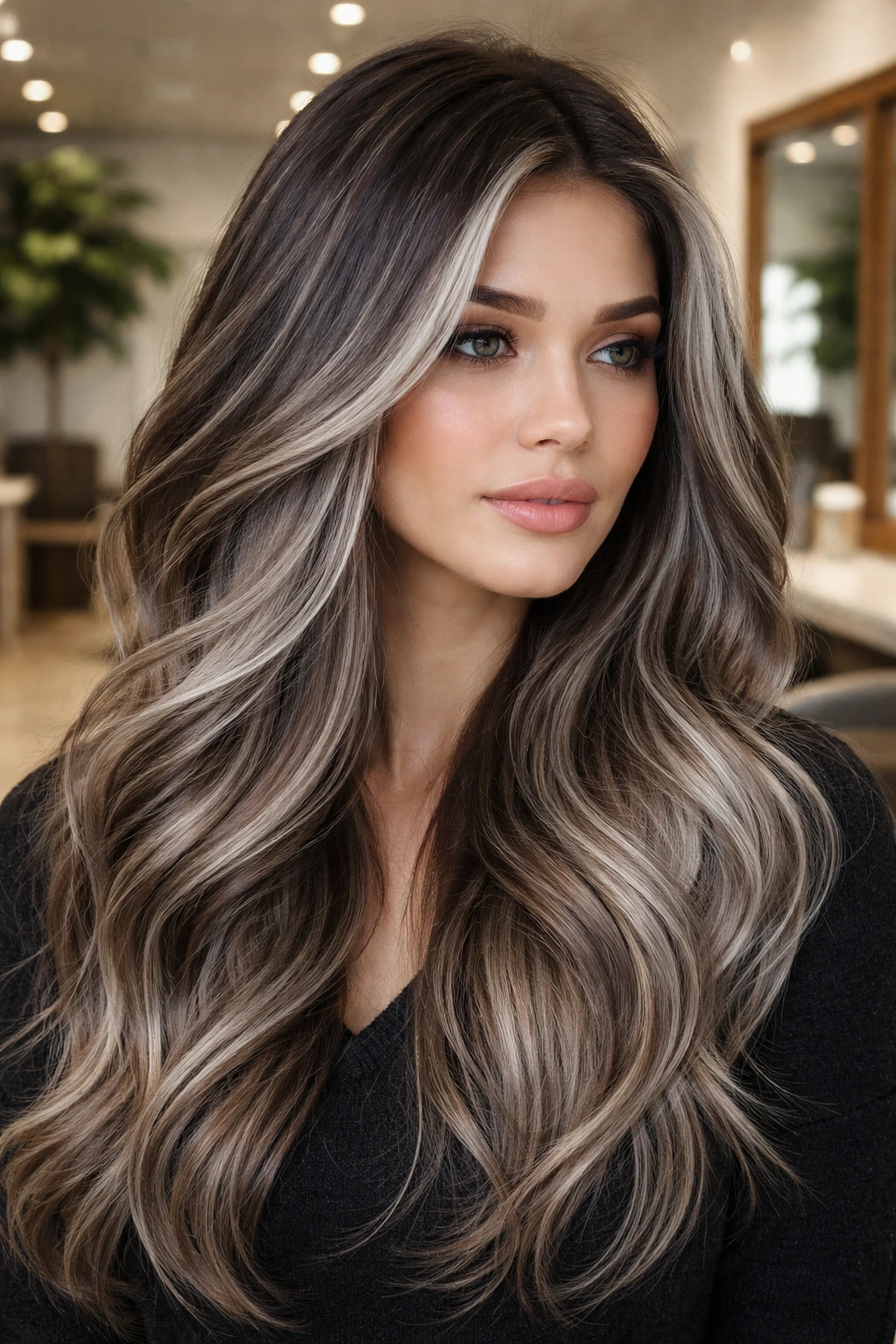
Some people prefer to avoid the “stripey” look entirely. A dimensional ash blend is all about blurring. You are using three or four different shades of cool ash and silver to create a tapestry of color. There is no one singular “highlight” here; it is a full-head transformation that creates a uniform, albeit multi-tonal, ash-grey effect.
This requires a master colorist. They will use a technique called “teasing” or “backcombing” before applying the lightener to the hair. By pushing the hair back, they ensure that the bleach doesn’t reach the root in a straight line, creating a soft, diffused glow that looks like it grew out of your scalp that way.
10. Sterling Silver Chunky Highlights
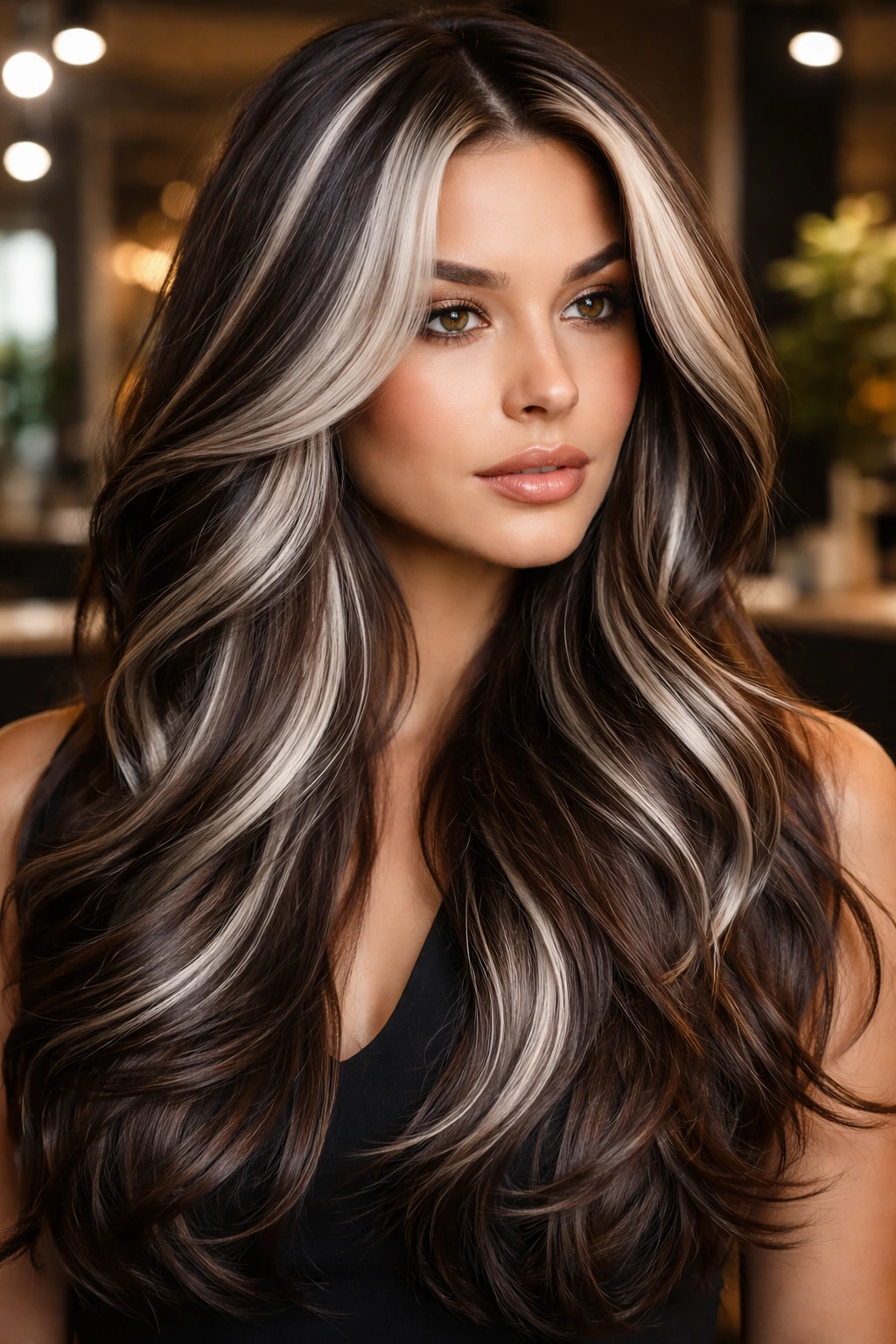
If you want to make a statement, this is the way to do it. Think broad, bold ribbons of bright, metallic sterling silver against a deep, dark brown base. This is not about subtlety. This is high-impact, editorial hair that demands the right haircut—usually something with long layers or a sharp, blunt cut—to show off the color blocking.
How to Style It
Because the sections are chunky, you need to be very careful with heat styling. A high-shine finishing spray is non-negotiable here. Without that extra layer of gloss, those wide sections of lightened hair can look like dry, dull streaks rather than liquid metal.
The Commitment
Be aware that chunky highlights are the most difficult to blend out later. If you decide you want to go back to all-over brown, you may need to undergo a multi-step color correction process to fill in those large, pale strands.
11. Moonlight Babylights
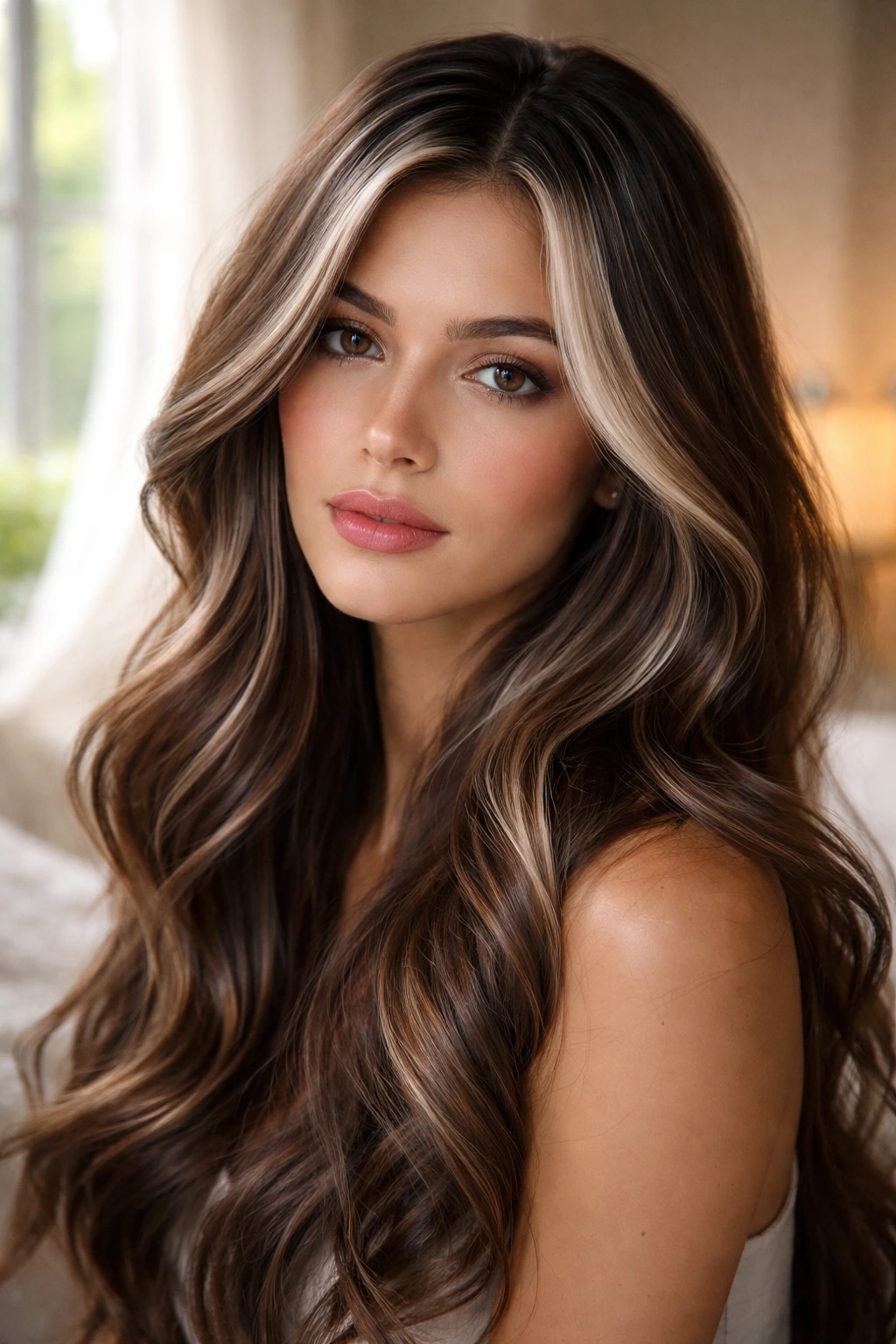
Imagine the color of moonlight reflecting on dark water—that is the inspiration for this look. It’s a very soft, delicate application of silver babylights concentrated mostly around the crown and the face. It isn’t a full-head highlight; it’s a “glow” treatment.
It is arguably the healthiest way to incorporate silver into dark hair. You are only touching a small percentage of your total hair, which leaves the rest of your brunette mane untouched and shiny. It is the perfect low-effort way to introduce silver tones without a major change in your hair care routine.
12. Silver-Blonde Money Piece
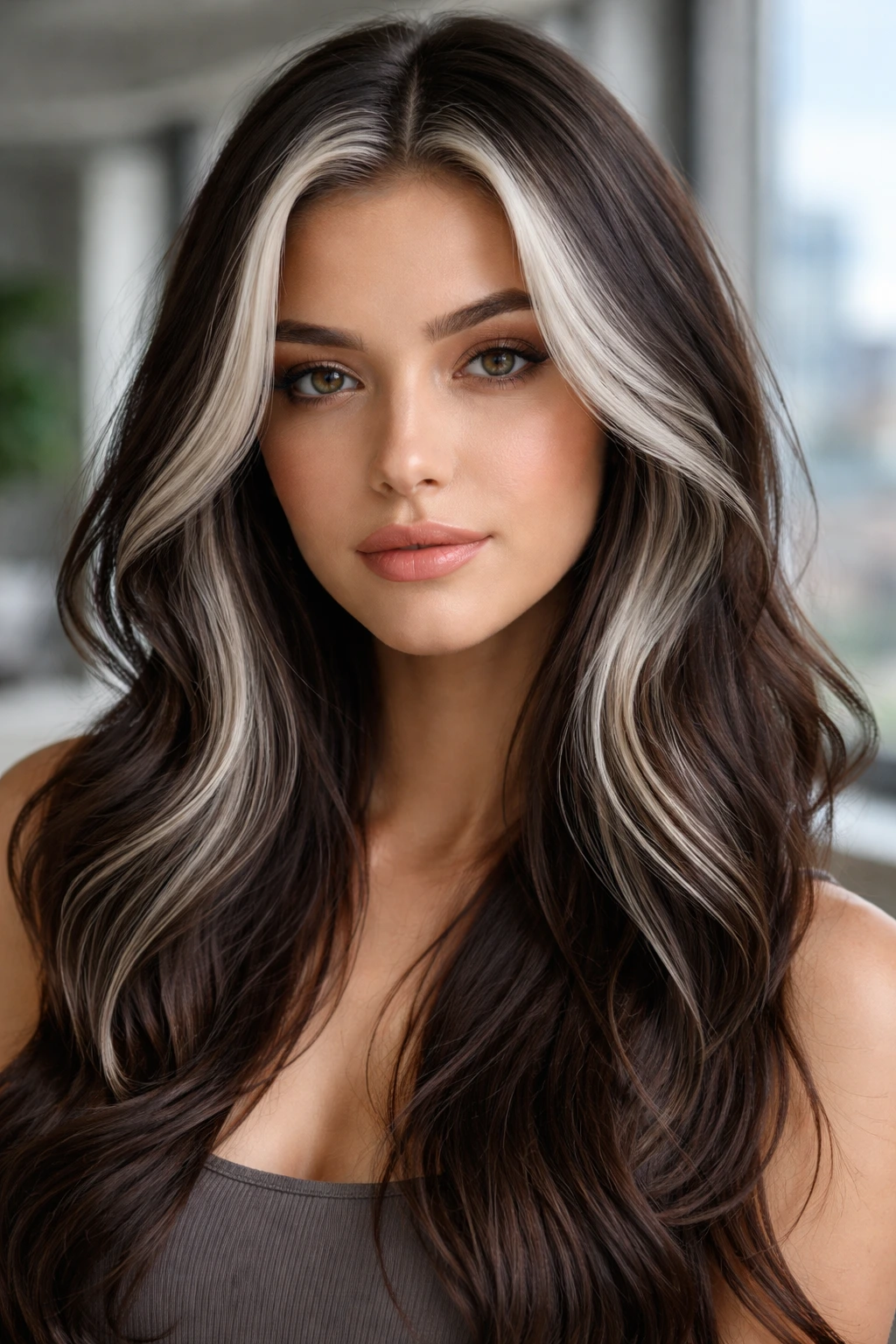
This is a variation of the face-frame, but here, we are pushing the tone much closer to a true metallic silver. The rest of the hair can stay a natural, cool-toned dark brown, with only the front two sections receiving the extreme-lift treatment.
It is a great way to see if you like the “silver” look on your skin tone without committing to the maintenance of the entire head. If you love it, you can slowly add more silver highlights throughout the rest of your hair over your next few appointments. If you hate it, it’s a relatively easy section to tone down or grow out.
13. Cool Espresso Melt
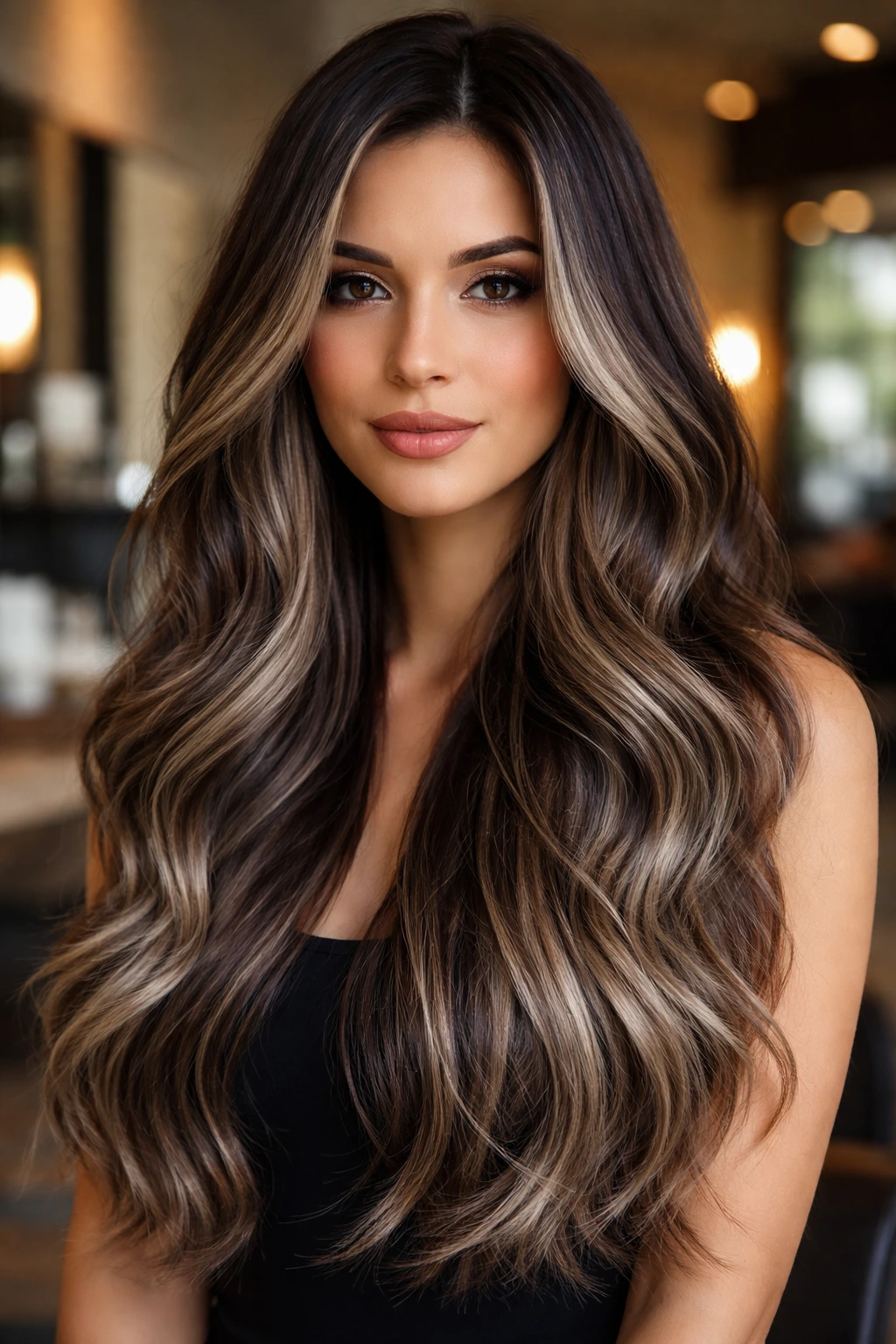
This style is about blending. Your base is a deep, cool espresso brown. Your highlights are a blend of ash brown and silver. The transition between the dark espresso at the roots and the silver at the ends is a long, gradual melt.
This style is fantastic for those who want a dramatic look that is surprisingly easy to grow out. Since there is no harsh line of demarcation, you can go months between touch-ups. The “melt” just grows out naturally, turning into a more lived-in, dark-blonde-to-silver transition.
14. Grey-Toned Highlights
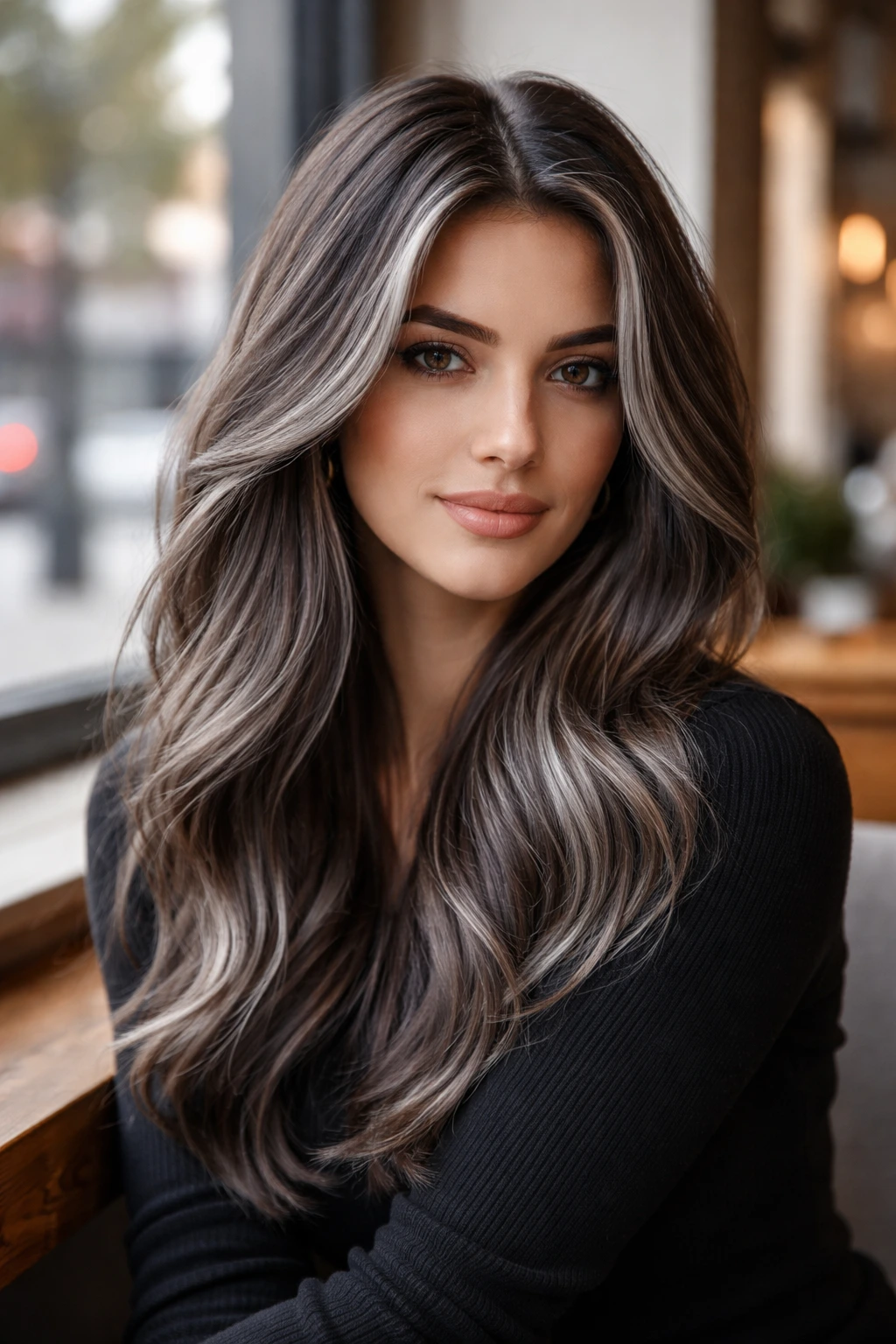
Sometimes you don’t want the shine of metallic silver; you want the matte sophistication of grey. Grey-toned highlights are less about “sparkle” and more about “coolness.” They create a sophisticated, chic look that works beautifully on professional styles.
The Aesthetic
Grey tones lean closer to neutral or slightly slate. They are incredibly popular because they bridge the gap between “I’m coloring my hair” and “I’m embracing my natural transition.” Even if you aren’t going grey naturally, these highlights can give you that edgy, purposeful look.
The Challenge
Grey is one of the hardest colors to keep. It tends to wash out into a pale, warm beige very quickly. You absolutely must have a high-quality purple or blue toning shampoo in your shower to keep these tones from turning muddy.
15. Slate and Champagne Mix
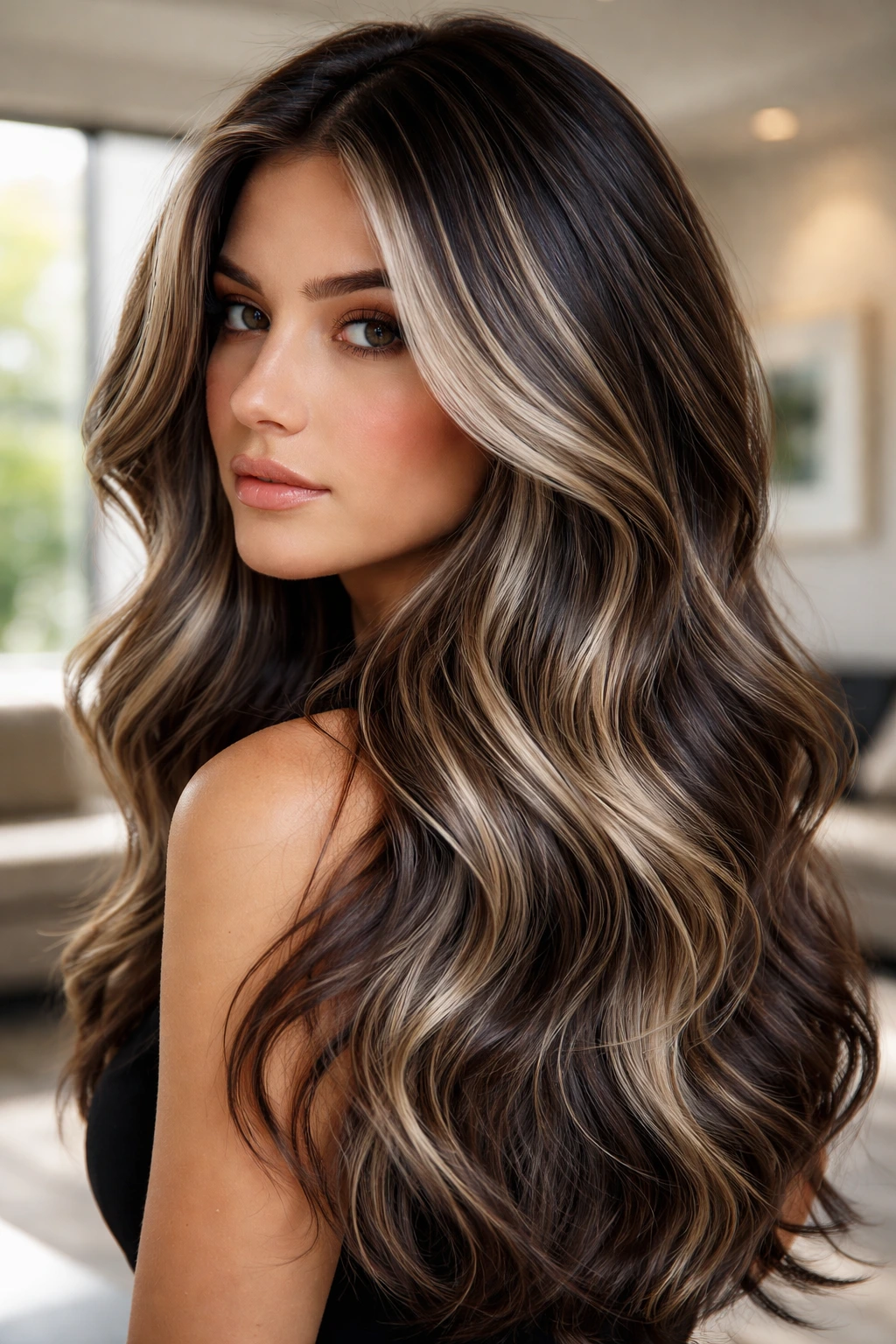
This is a beautiful combination of two different cool-toned spectrums. Slate represents the dark, steel-grey side of the palette, while champagne represents the light, metallic-blonde side. By mixing these two, you create a depth that looks incredibly natural, almost like a multifaceted diamond.
It is a complex color profile that changes depending on the lighting. In bright sunlight, the champagne pops. In low, ambient light, the slate dominates. It is a color for someone who wants something that feels “alive” and dynamic.
16. Silver-Tinted Lowlights
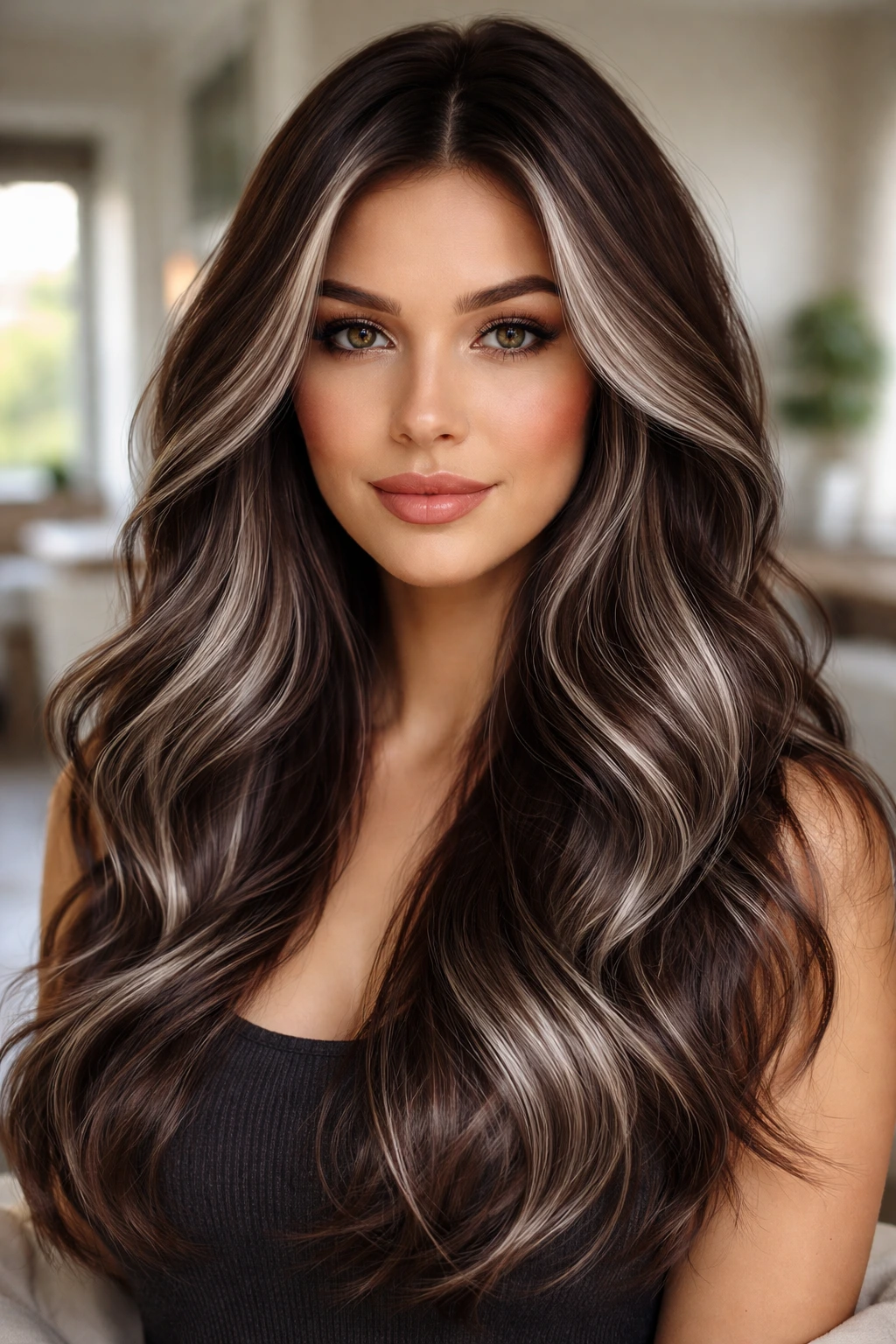
Who says highlights have to be the only thing? Sometimes, the best way to make silver pop is to deepen the surrounding brown with silver-tinted lowlights. This creates a “shadow” effect that makes the lighter pieces appear much brighter and whiter than they actually are.
It’s an optical illusion. By darkening the base and adding cool, steel-toned lowlights, you increase the contrast significantly. This is a brilliant technique if your hair is naturally a light-to-medium brown and you want to look darker and more “wintery” without having to bleach your entire head.
17. Icy White Teasylights
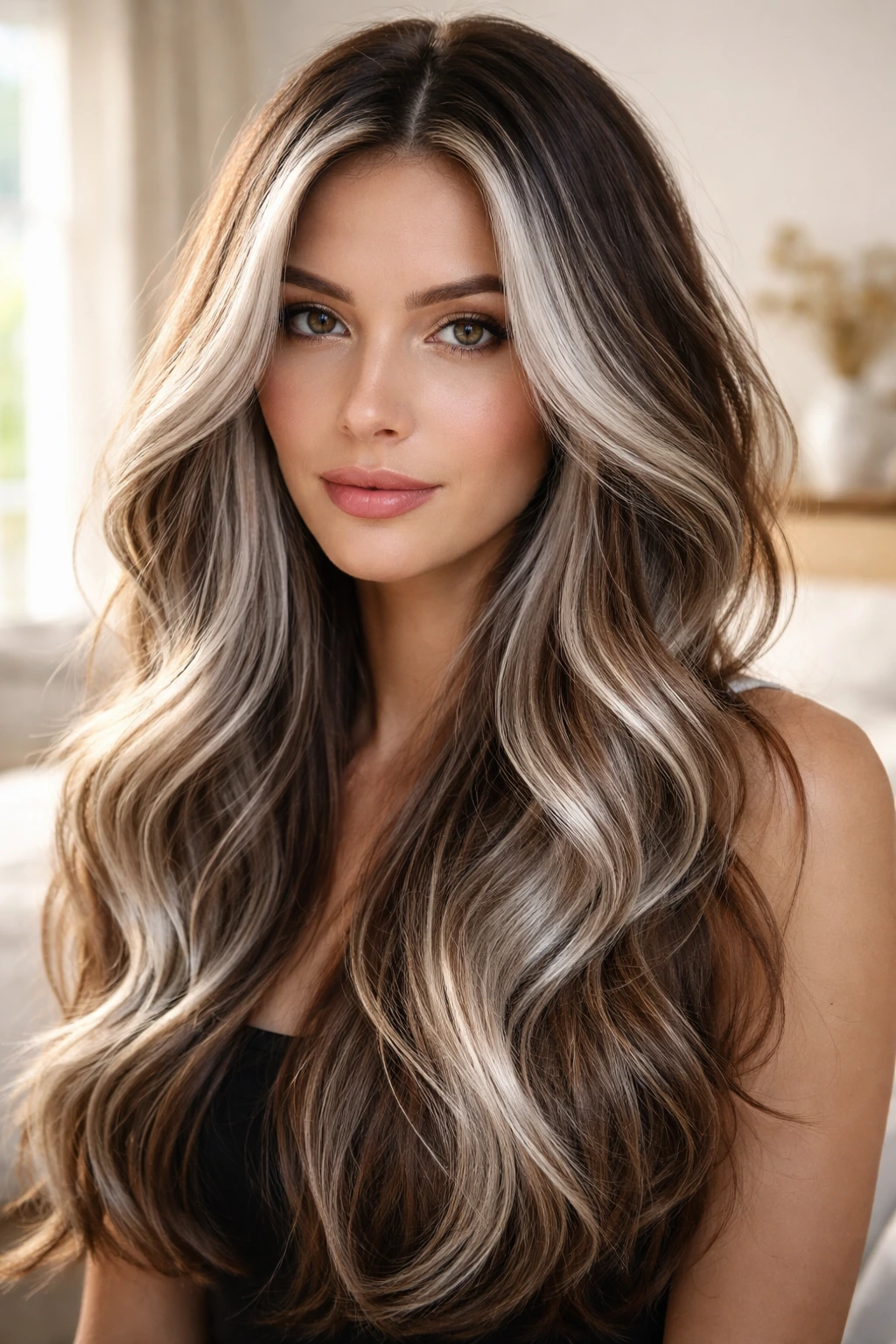
The “teasylight” technique involves backcombing (teasing) sections of hair before applying lightener. This creates a soft, diffused look that is the holy grail of modern hair color. When you use icy white toner on teasylights, you get a seamless, bright, silvery finish that looks like it started from the root but has no harsh line.
This is a time-intensive process, but the results are unparalleled. Because the hair is teased, the lightener doesn’t penetrate all the way to the scalp in every single strand, which creates a softer, more dimensional look that avoids the “skunk stripe” effect of traditional foil highlights.
18. Subtle Silver Streaks
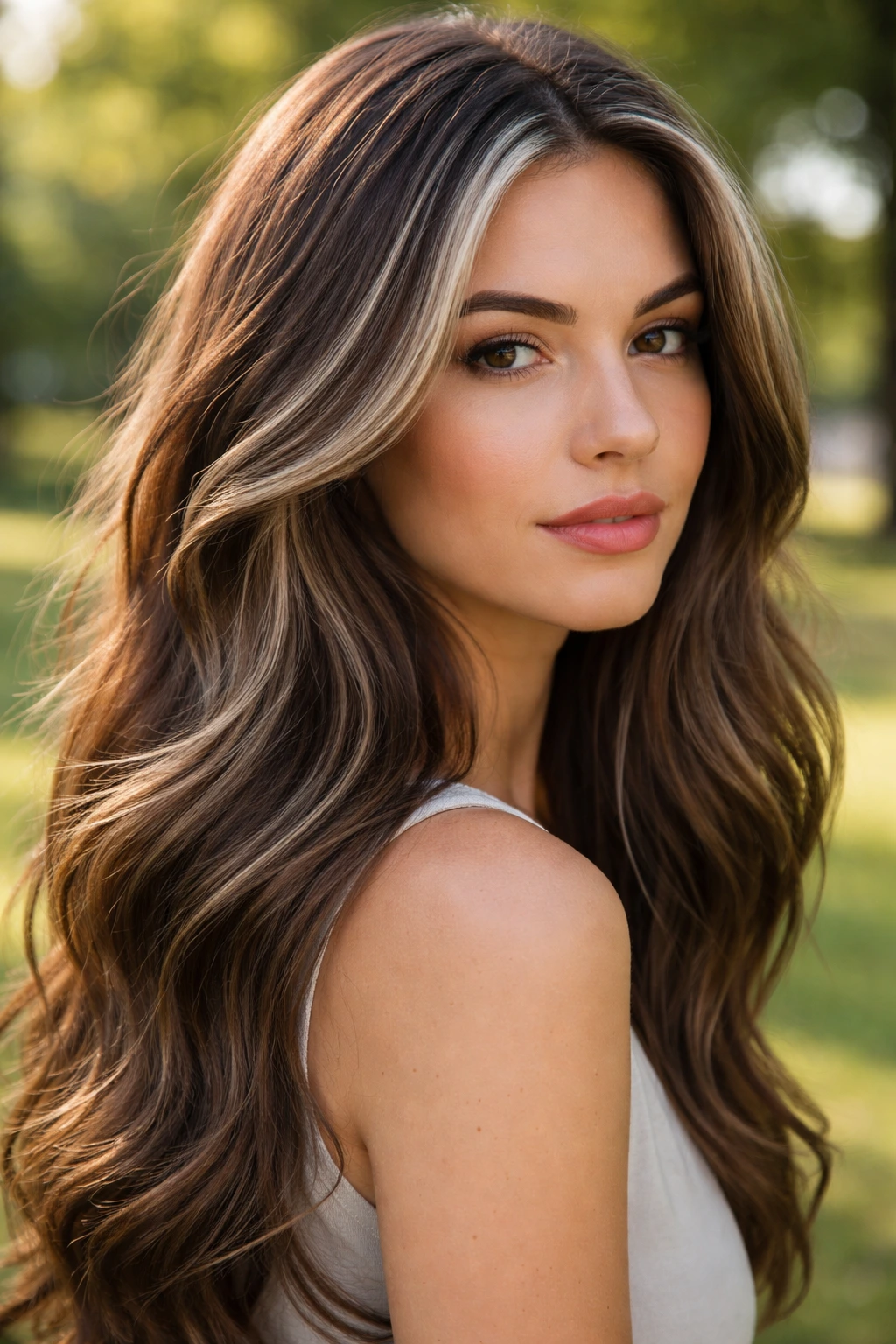
This is a more understated approach. Instead of highlighting the whole head, you place a few deliberate, thin streaks of silver here and there—perhaps a few around the face and a few scattered through the back.
It’s almost like a “hidden” highlight. It catches the eye when you move, when the wind blows, or when your hair is styled in an updo. It is the perfect choice for the professional who wants to experiment with color without going fully bold.
19. Cool-Toned Root Smudge
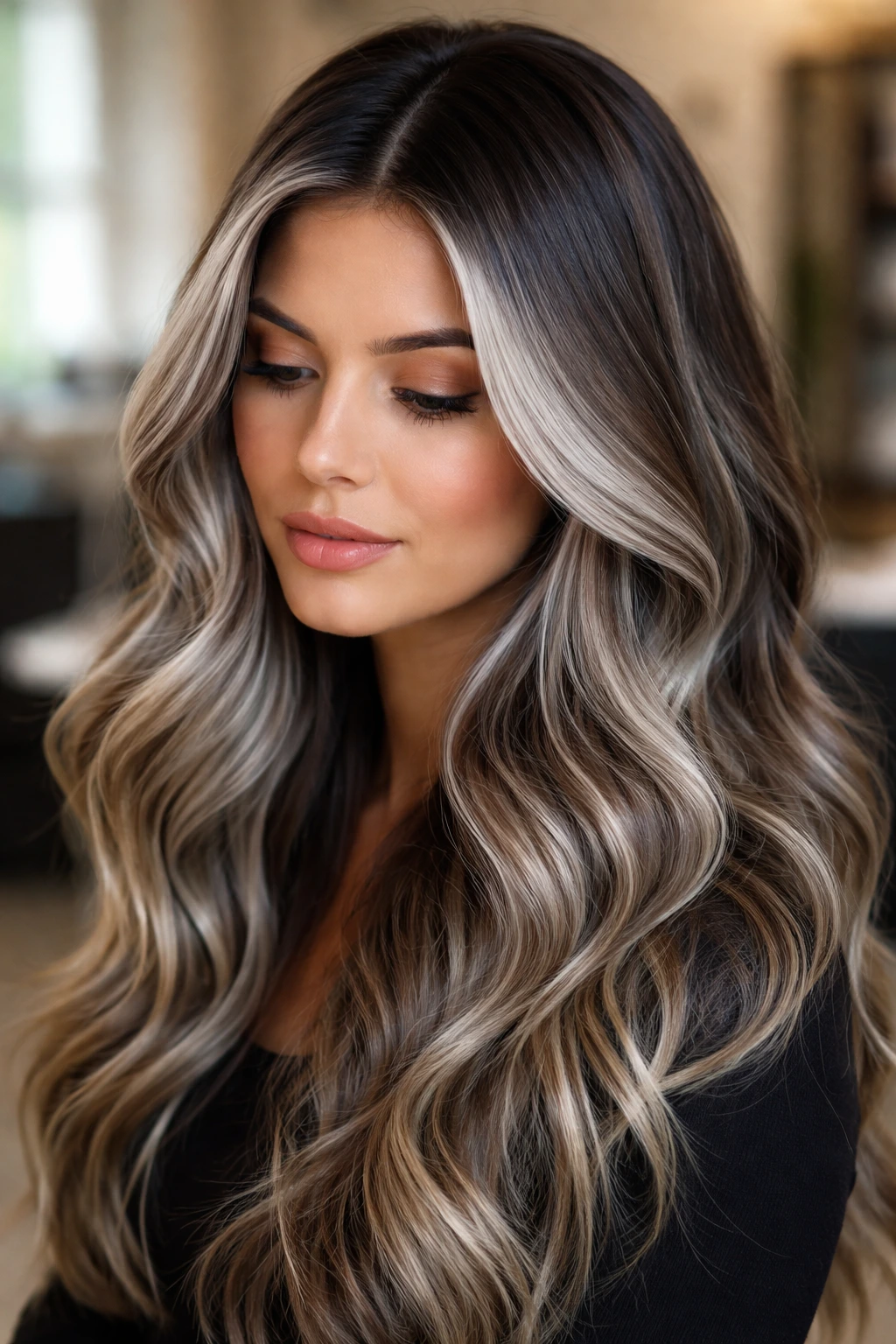
A root smudge is a technique where, after the highlights are finished, the stylist applies a darker, cool-toned color to the roots and blends it down an inch or two into the highlights. This melts the highlights into the base.
When you pair this with silver highlights, it creates a gorgeous, lived-in look. It prevents the roots from looking “raw” or “orange” as they grow out and gives the silver a grounded, earthy anchor. It is highly recommended if your natural hair is very dark and you are lifting it to a very light silver.
20. Pearlescent Blonde Highlights
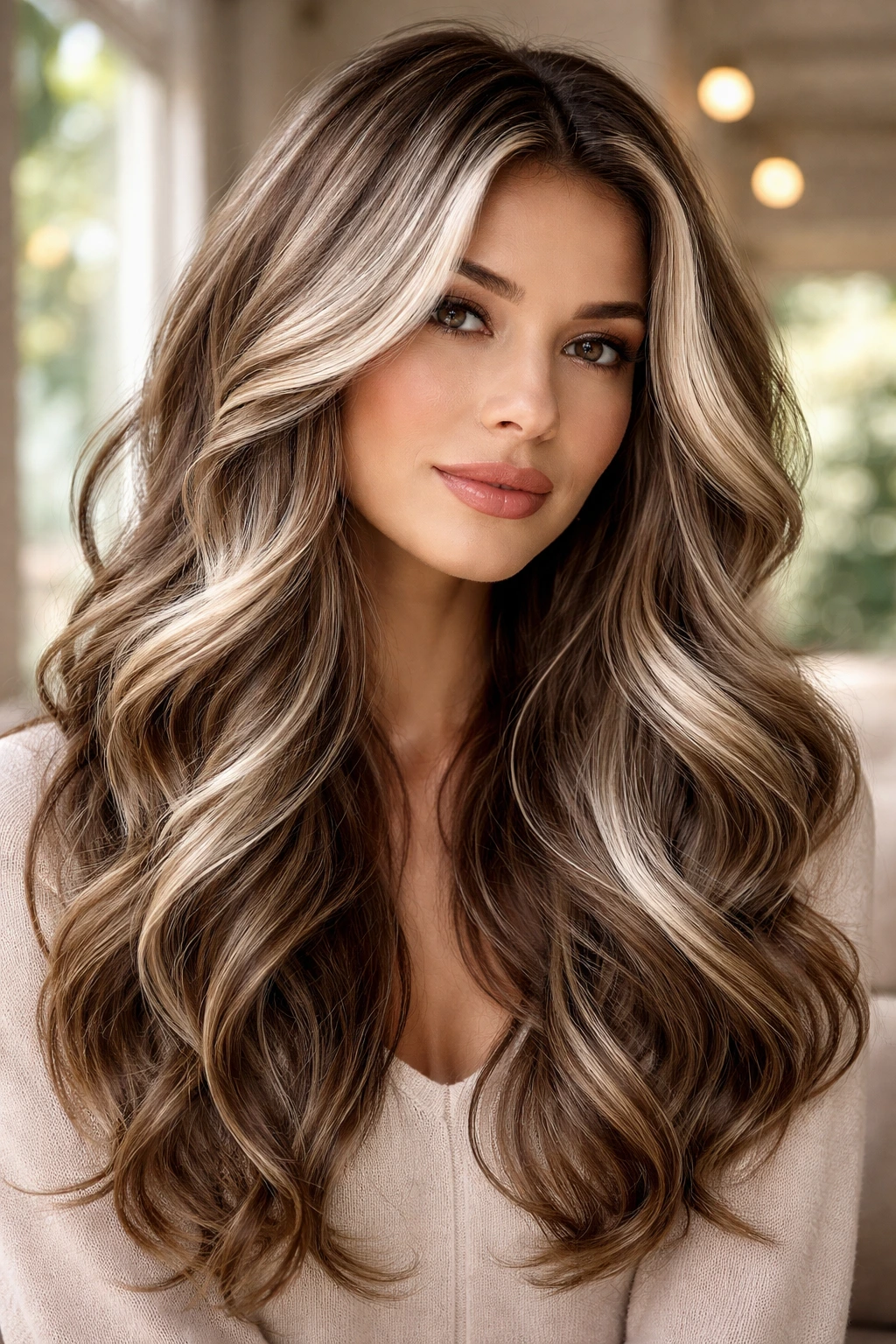
Pearlescent isn’t quite silver and isn’t quite gold. It sits in the middle—an iridescent, shimmering shade that reflects light in a way that feels almost opalescent. It is a lighter, softer take on the silver trend, leaning slightly more towards a cool, metallic blonde.
This is a great option for someone with medium-brown hair who wants to brighten up significantly. It looks especially stunning on wavy or curly hair, where the different angles of the curl catch the light and showcase the pearlescent tones.
21. Gunmetal Silver Accents
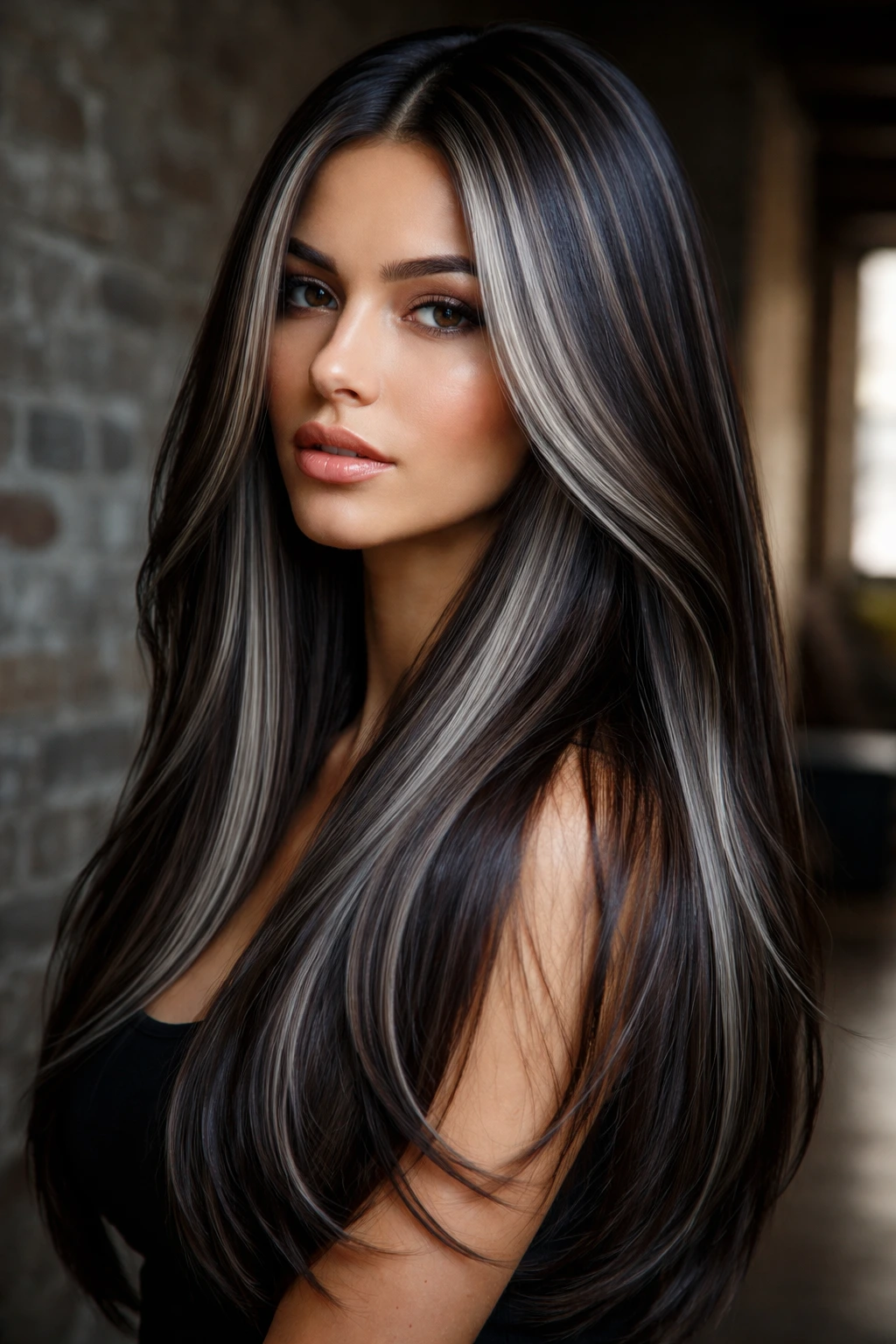
If your aesthetic is more “edgy” than “glam,” gunmetal is the way to go. This is a dark, moody, steel-grey silver. It’s not bright or icy; it’s rich, heavy, and very cool-toned.
You can wear this as a full head of highlights or just as accents against a very dark brown base. It is stunningly chic and requires less “lift” than a platinum silver, which means your hair stays healthier and stronger. It’s an underrated choice that looks incredibly sophisticated.
22. Sun-Kissed Silver Fusion
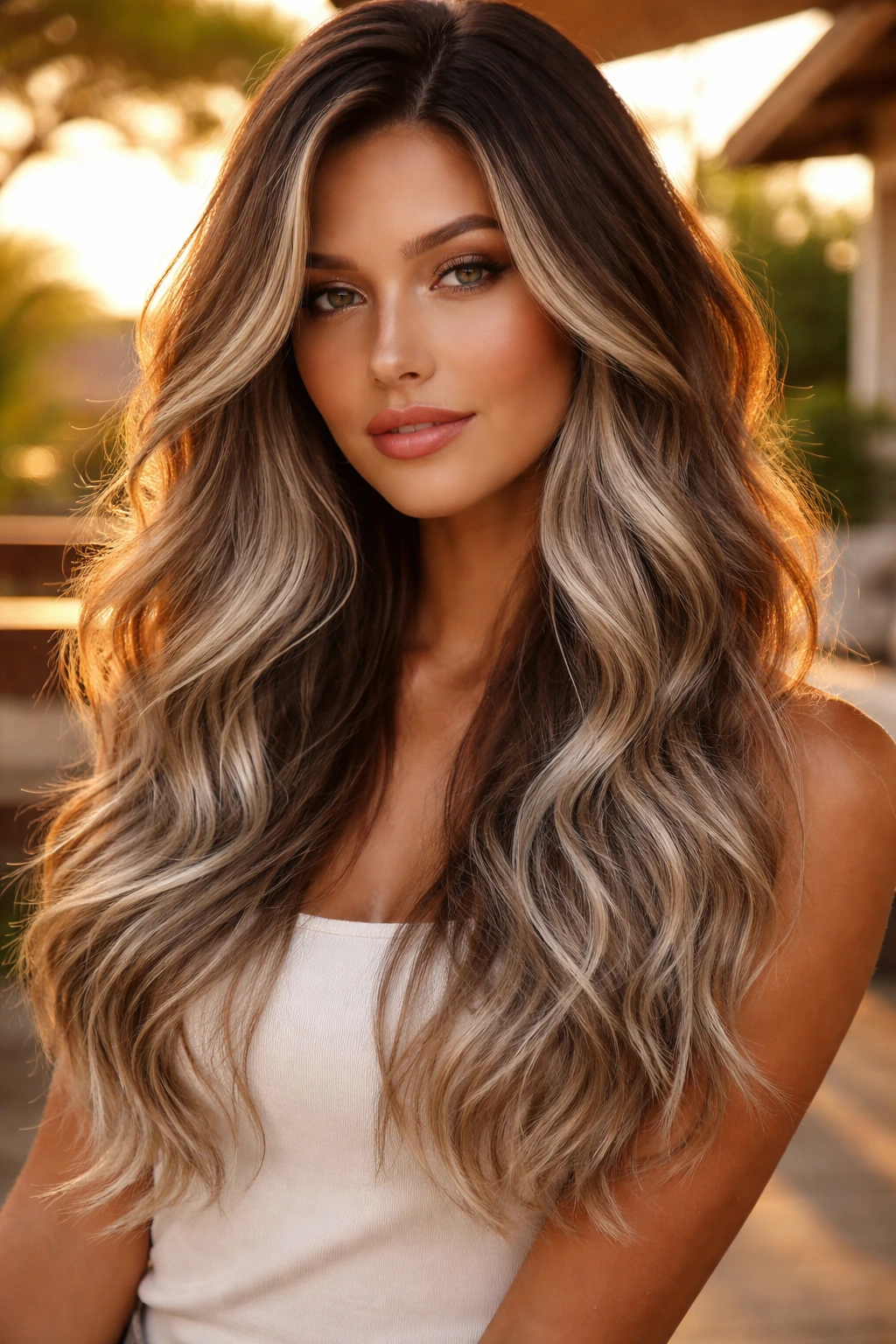
This sounds like a contradiction—how can you be sun-kissed and silver at the same time? The trick is to melt silver ends into a warm, caramel-brown base with some neutral-tone blending.
This is about creating a “vacation” look that isn’t just about beachy gold. It’s a modern, high-fashion twist on the classic summer balayage. It is perfect if you have naturally warm brown hair and aren’t ready to go fully cool-toned. It brings the two worlds together.
23. Frosted Brown Shag
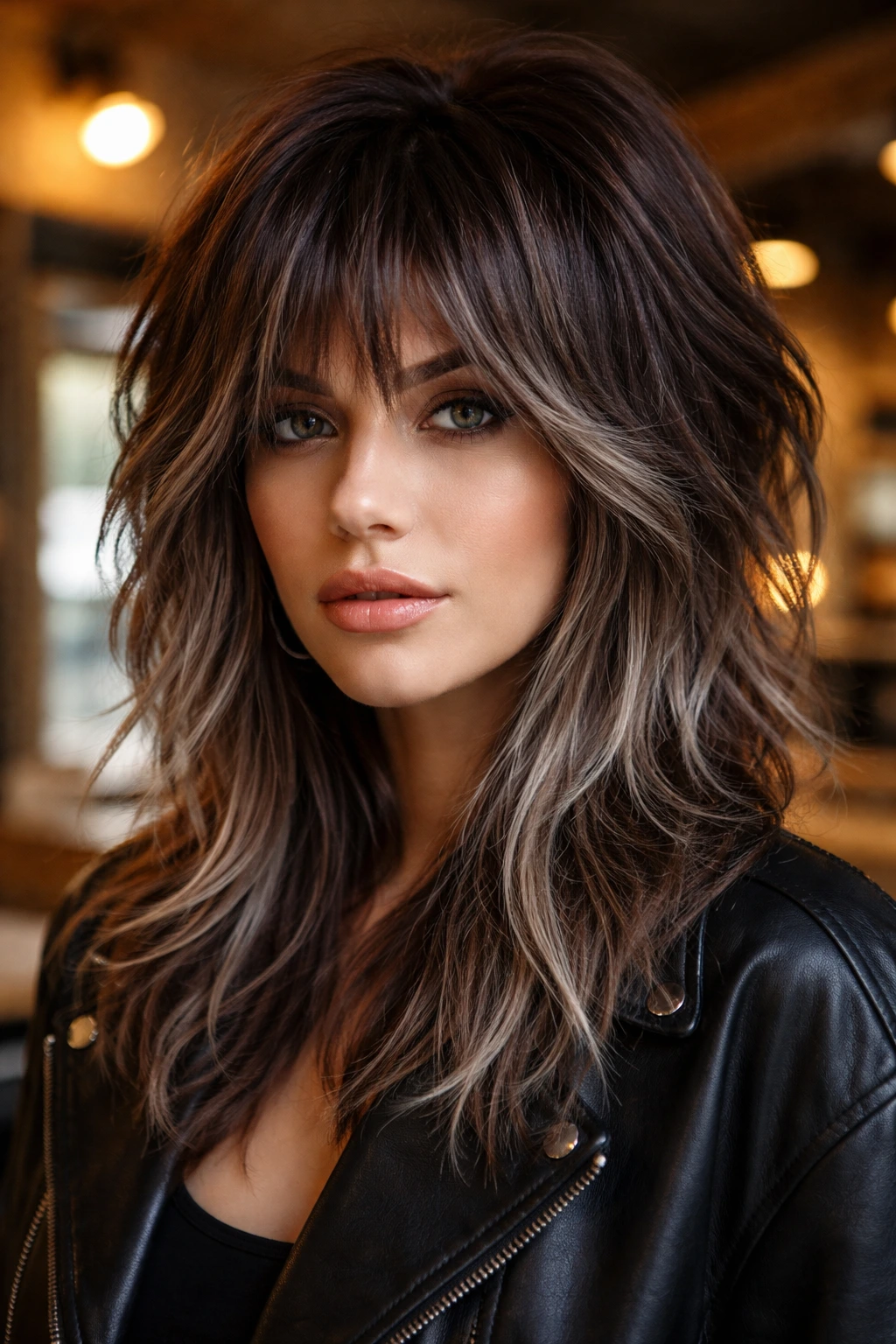
If you have a trendy shag haircut with lots of layers, you need color that emphasizes those layers. Frosted silver highlights are perfect for this. Because a shag is so texturized, placing silver highlights on the tips and the fringe creates an incredible amount of movement and depth.
It turns the haircut into a piece of art. The silver emphasizes the “piecey” nature of the cut, making it look modern, messy, and intentional. This is a very cool, rock-and-roll look that embraces the edgier side of silver.
24. Glacial Blonde Babylights
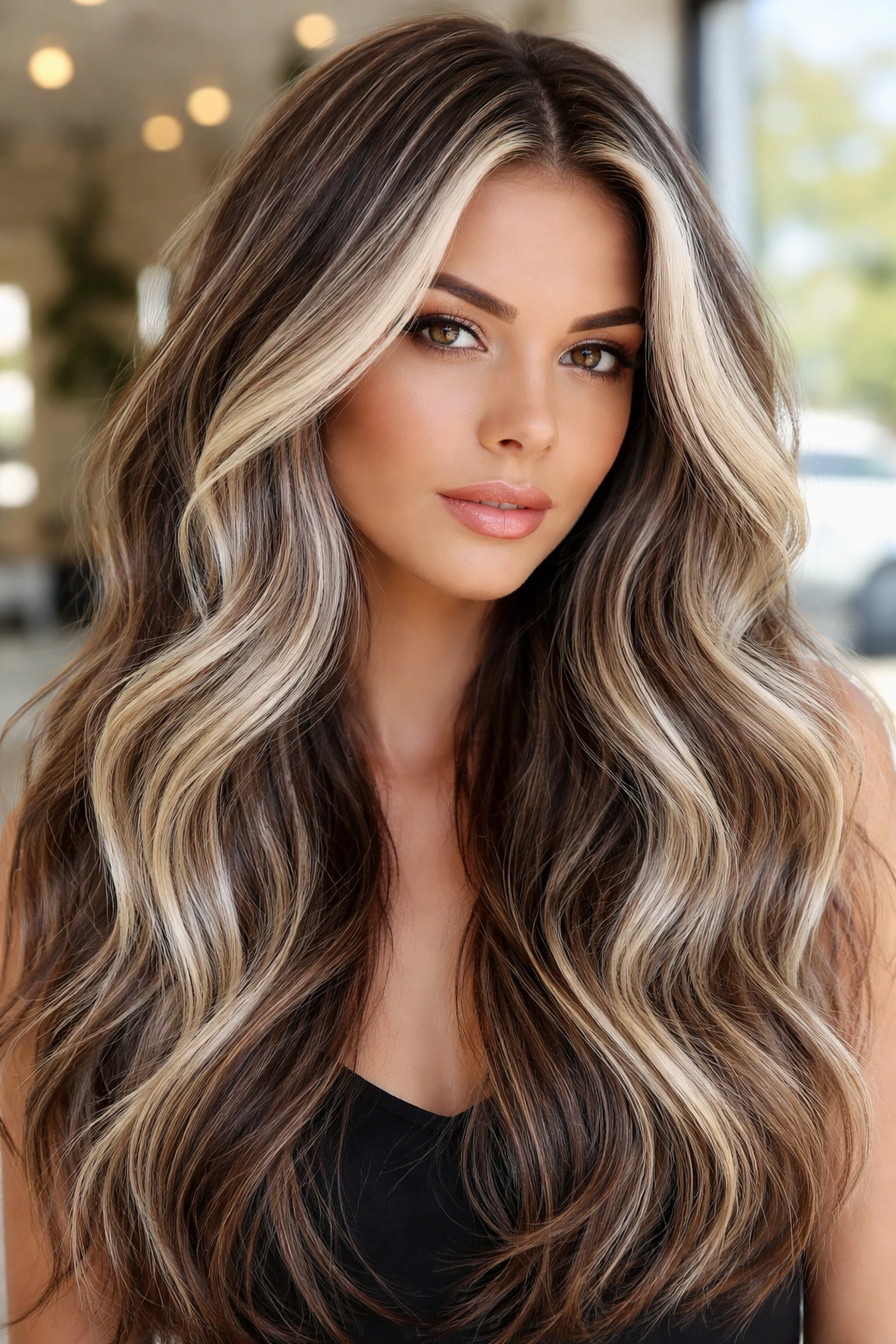
Glacial is a step beyond platinum. It is a stark, clean, almost-white silver. It is not for the faint of heart. When applied as babylights on a deep brown base, it creates a blinding, high-contrast effect that is impossible to ignore.
This is a high-maintenance look. You will need to be in the salon every 4-6 weeks for a root touch-up and a toning refresh, or the difference between your dark roots and the glacial ends will become too stark. Only commit to this if you are ready for the upkeep.
25. Soft Silver Dimension
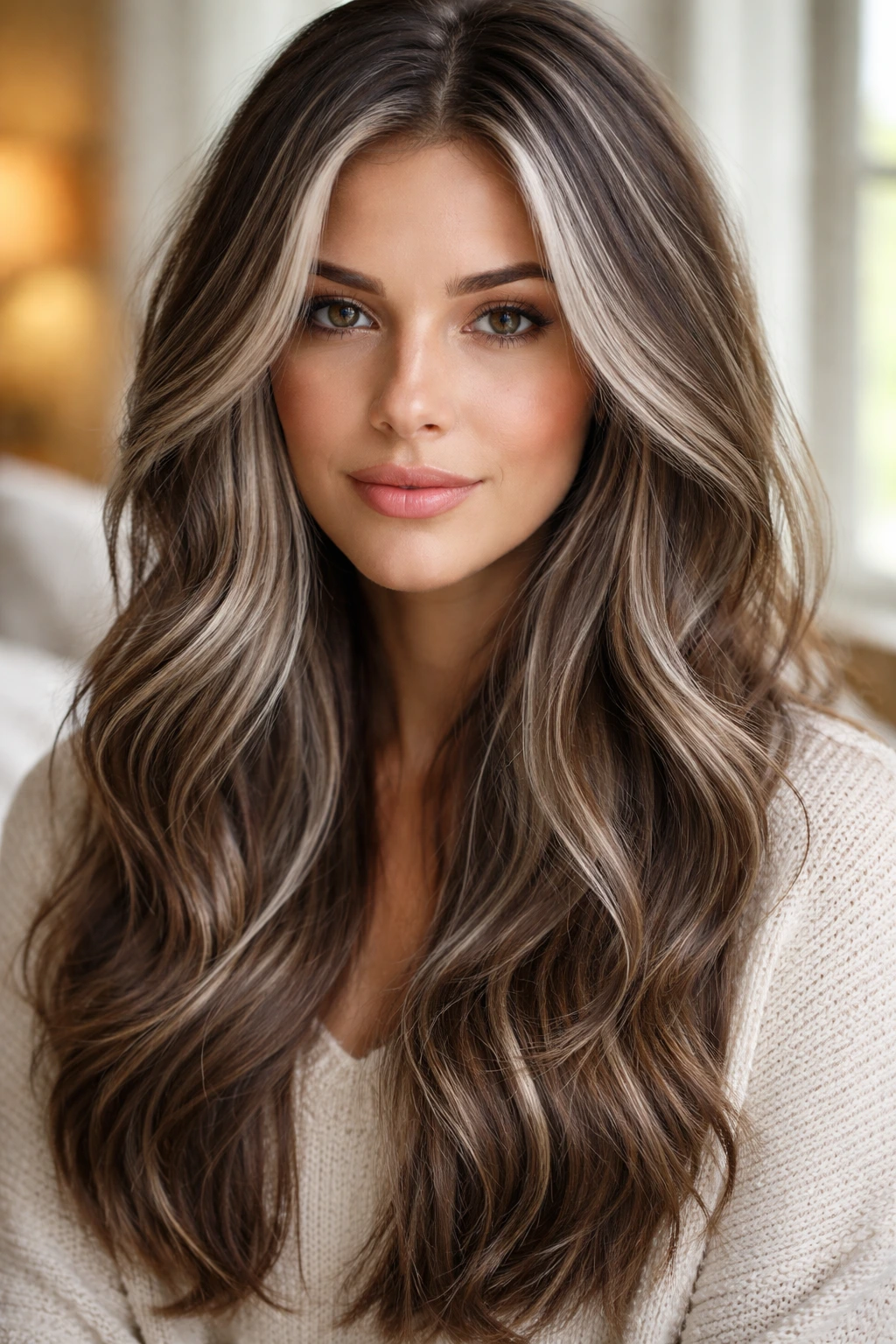
This approach is about subtlety and blending. It’s not about making individual strands “pop”; it’s about shifting the overall tone of your brown hair to something cooler and more metallic.
You do this by weaving a massive amount of very fine, thin highlights throughout the hair, all in a soft silver tone. From a distance, your hair just looks “brighter.” Up close, you see the intricate, shimmering detail of the silver woven through the brown.
26. High-Contrast Silver Panels
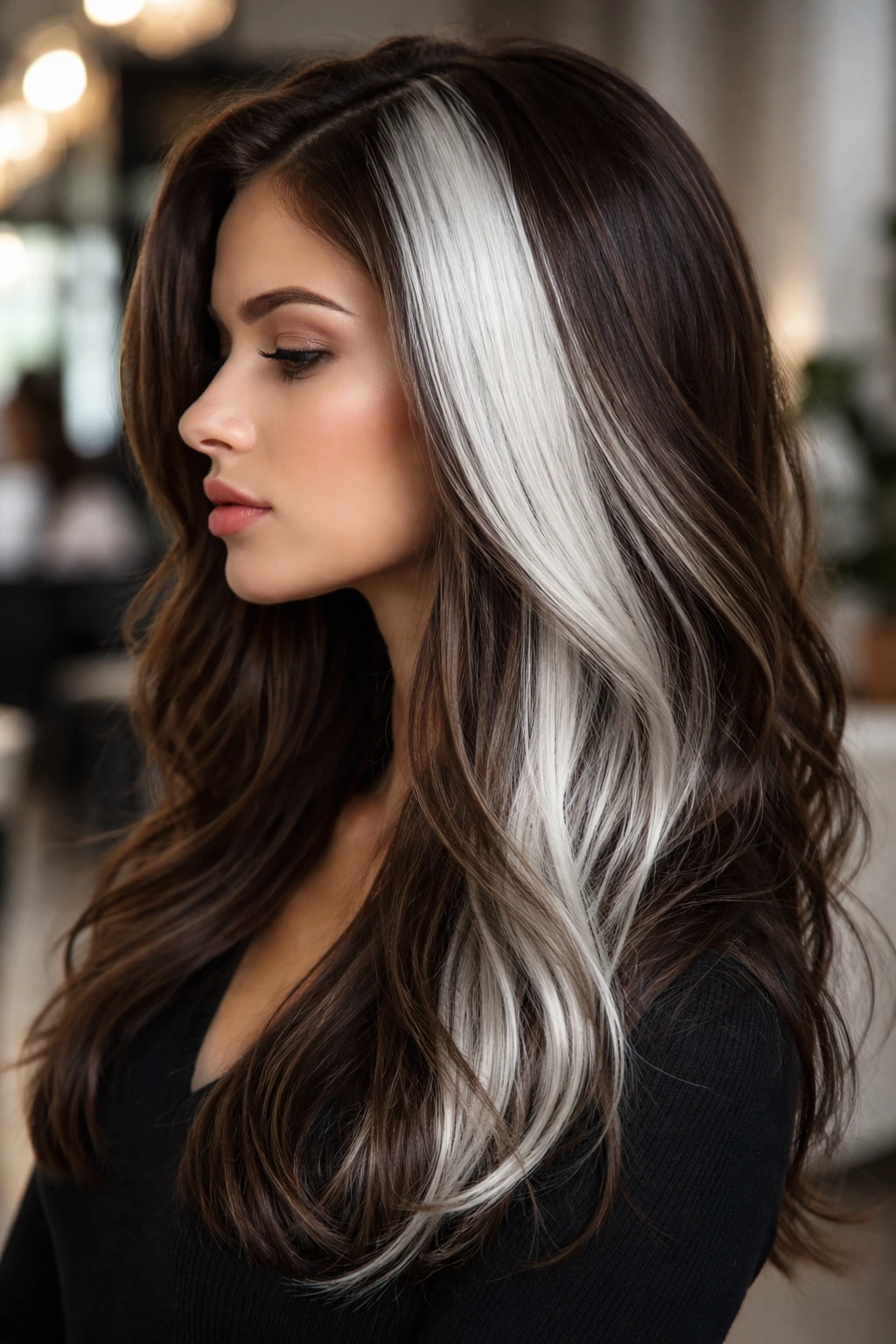
Paneling is a technique where you isolate large sections of hair to color, rather than weaving small strands. By creating a panel of silver on one side of the head, or perhaps an under-layer of silver, you create a dramatic, block-color effect.
This is a favorite of the bold and the brave. It’s graphic, it’s sharp, and it’s undeniably trendy. If you like changing your look—like wearing your hair in a deep part one day and a center part the next—this color placement will show you a different face of your hair every time.
27. Ashy Blonde Ribbon Effect
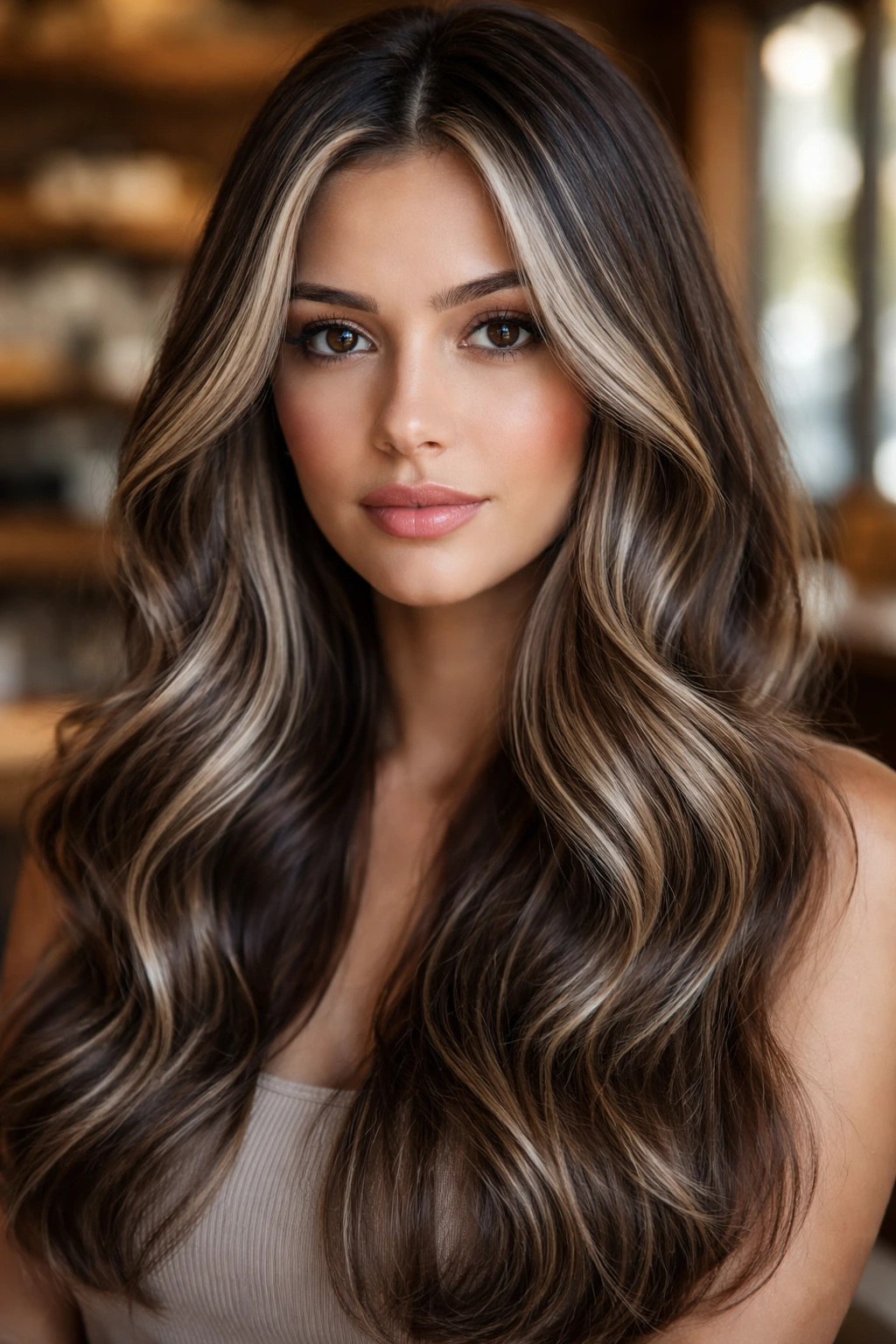
If you are hovering between “blonde” and “silver,” this is your destination. Ashy blonde ribbons have enough brown/gold undertones to feel “hair-colored,” but enough silver ash to feel cool and modern.
This is the most “wearable” of all the silver highlight styles. It requires less bleaching than a full platinum silver, which means your hair texture will likely remain smoother and less prone to breakage. It’s an elegant, everyday look.
28. Silver-Infused Waves
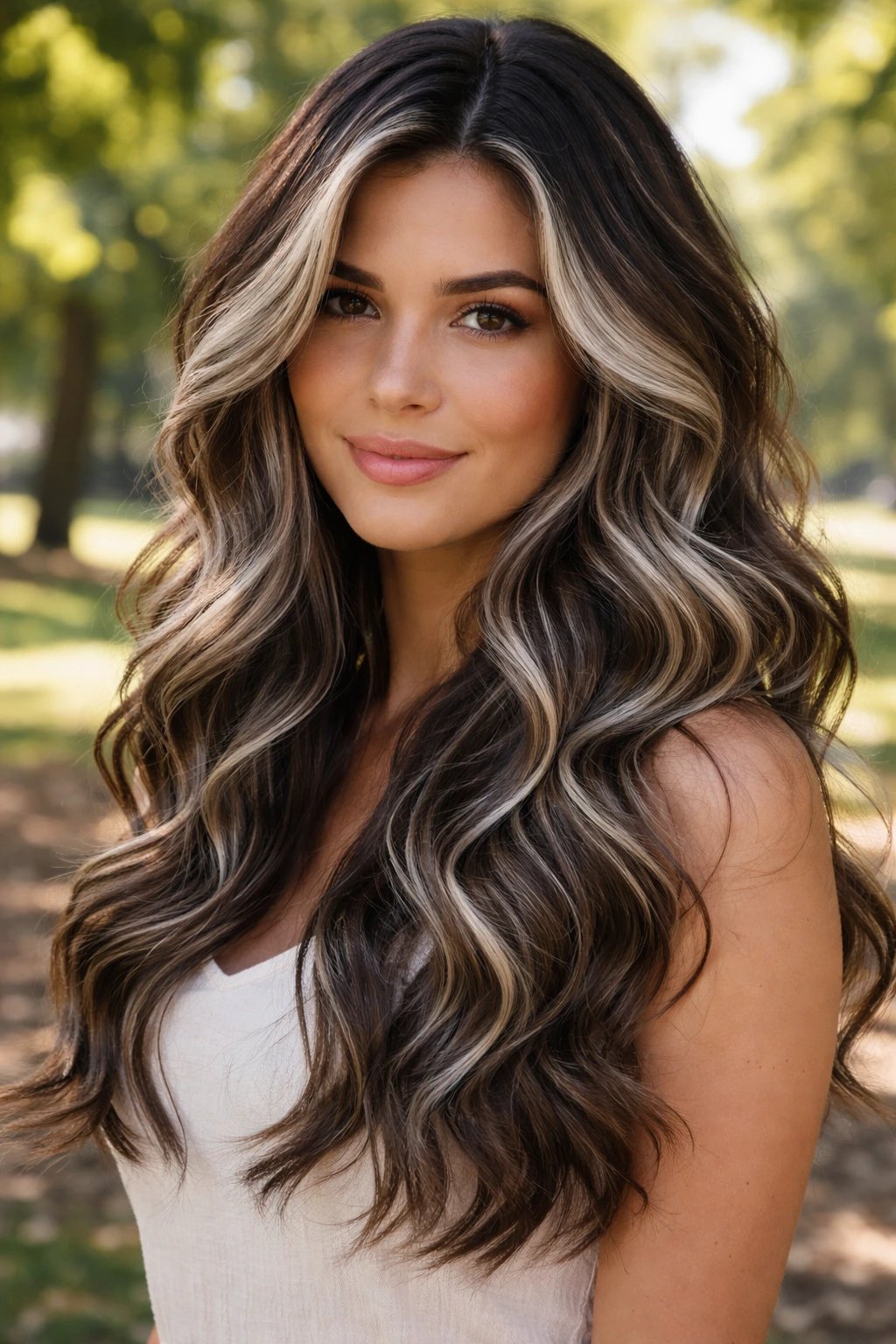
If you have naturally wavy hair, you have a distinct advantage. Silver highlights can get “lost” on pin-straight hair, but on wavy hair, they become the focal point.
Ask your stylist to place the silver highlights specifically where the wave bends outward. This emphasizes the dimension of your curls or waves. It makes the hair look bouncy, full, and vibrant. It is a masterful way to work with your natural texture rather than against it.
29. Subtle Cool-Toned Gloss
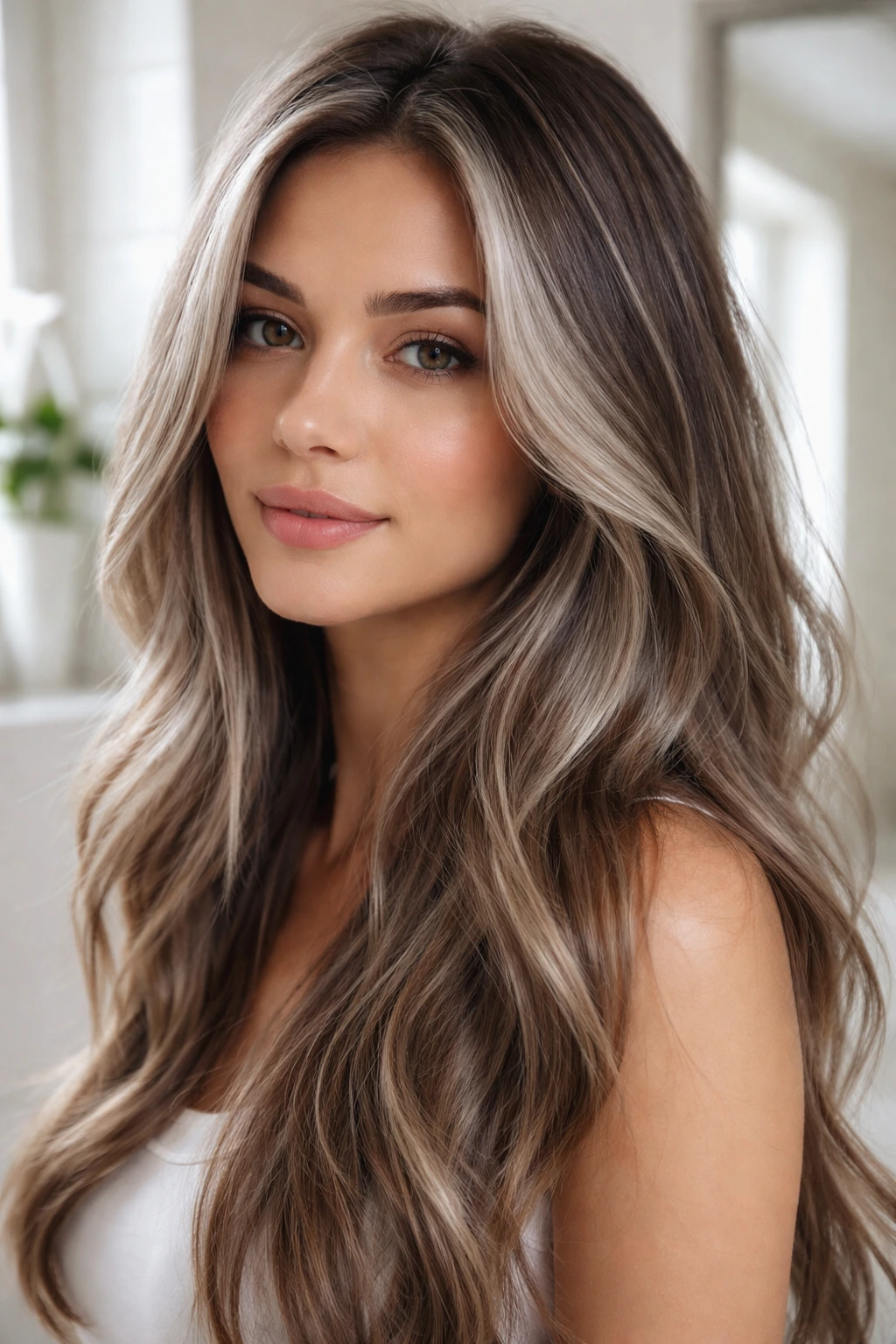
Sometimes, you don’t even need highlights. A cool-toned silver gloss applied over existing light-brown highlights can give you a silver effect without the damage of bleach.
This is a temporary solution. It washes out after a few weeks, which makes it perfect for a test run. If you love the way the silver tones look against your dark brown, you can move forward with permanent highlights. If you don’t, you haven’t permanently altered your hair.
30. Platinum-Silver Face Frame
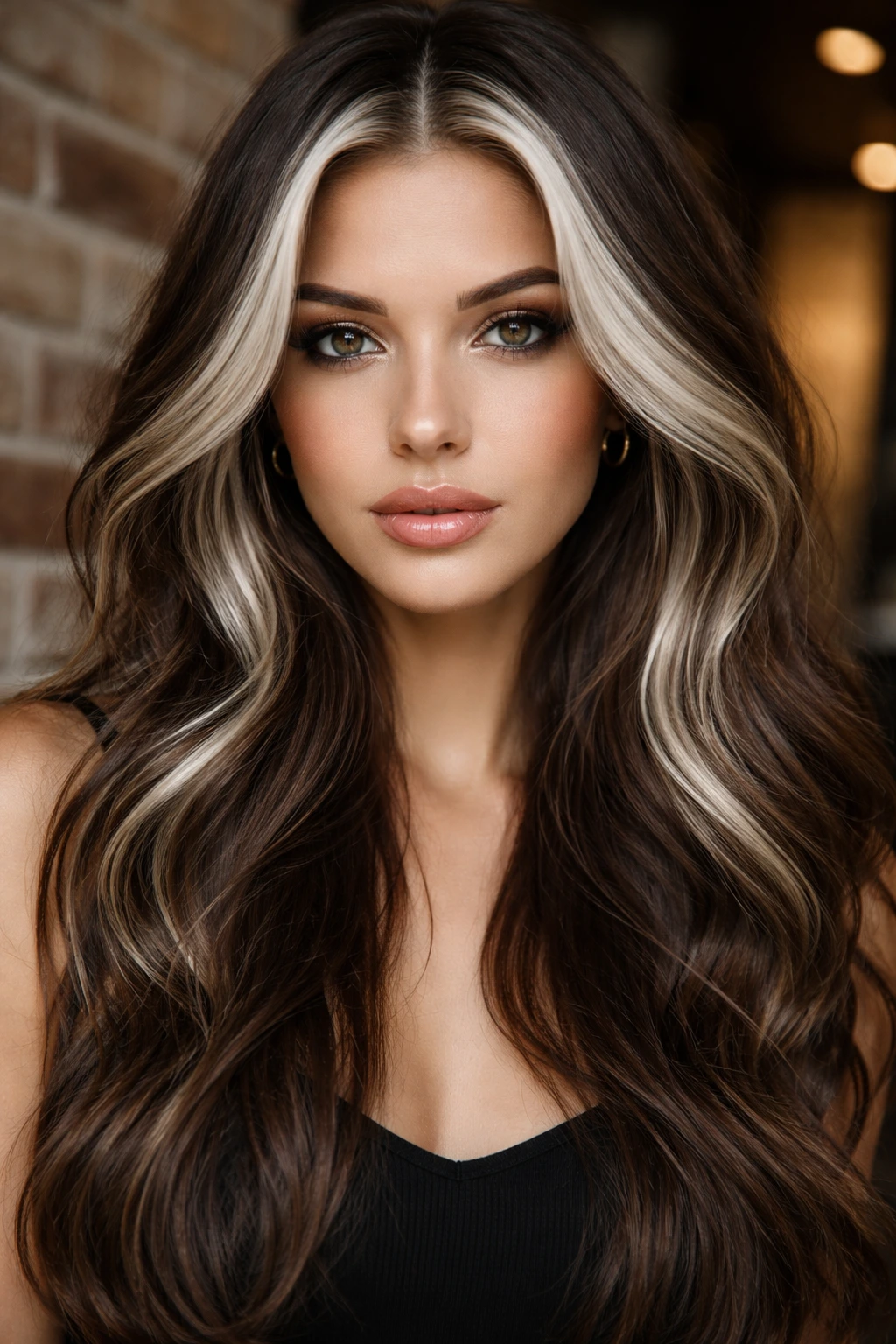
We end on the boldest of the bold. A full-on, platinum-silver face frame. This isn’t just a “money piece”; this is the front 2-3 inches of your entire hair section, from root to tip, bleached to a stark, blinding silver.
It requires the most confidence and the most care. You are highlighting the area of your hair that gets the most abuse from styling tools. But when done right, it is the ultimate “cool girl” look. It’s the perfect way to finish our list because it captures the essence of this trend: unapologetic, high-contrast, and undeniably striking.
Final Thoughts
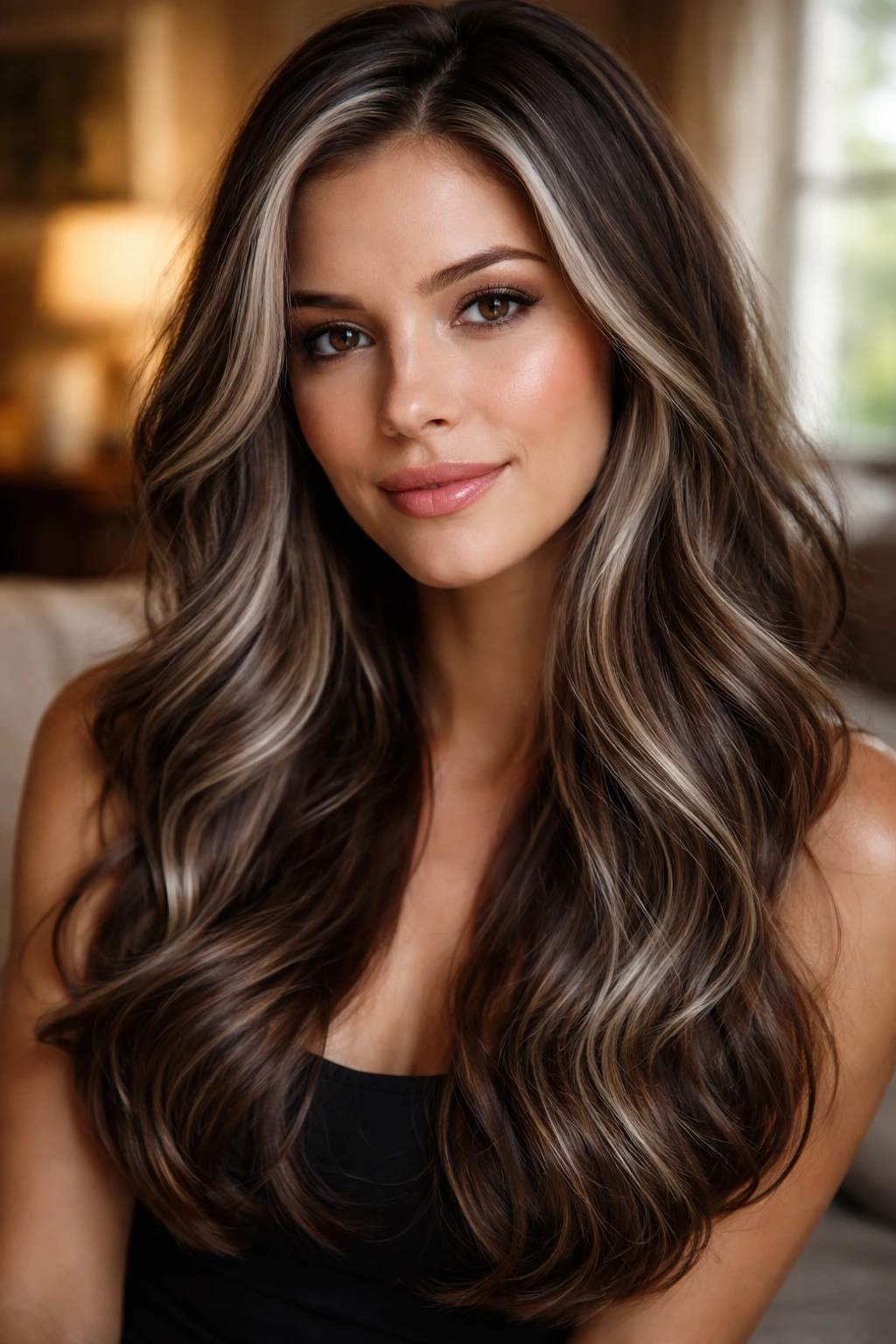
When you choose to weave silver into brown hair, you are choosing a high-maintenance relationship. This look requires more than just a good colorist—it requires an investment in your home hair care routine. You must prioritize moisture, as the bleaching process required to reach the silver level is inherently drying. Look for bond-building treatments to keep your hair strong, and be religious about your toning shampoo.
The beauty of these highlights isn’t just in the color itself, but in the dimension it creates. By pairing the warmth of your natural brown with the icy, metallic bite of silver, you are creating a palette that is far more interesting than a single-process dye job. It is a look that requires confidence, but the reward is a style that is uniquely yours, constantly shifting in the light, and always, undeniably chic.
