



Brown hair is the perfect canvas for color experimentation because it provides a rich, warm foundation that makes cool-toned shades like blue really pop. Many people assume they have to bleach their hair to a platinum blonde to get these vibrant colors to show up, but that is not always the case. If you have deep chocolate or mahogany locks, you can achieve a sophisticated, moody look without destroying your hair structure.
The magic happens when you understand the color wheel. Brown, being a neutral-to-warm shade, creates a stunning contrast against the cool spectrum of blue. You do not need to go for a neon turquoise unless you want to; there is an entire range of dusty, deep, and metallic blues that blend beautifully with natural brunette tones. It is all about the technique—whether you are looking for a subtle, professional glow or an edgy, high-contrast style.
1. Midnight Blue Face-Framing
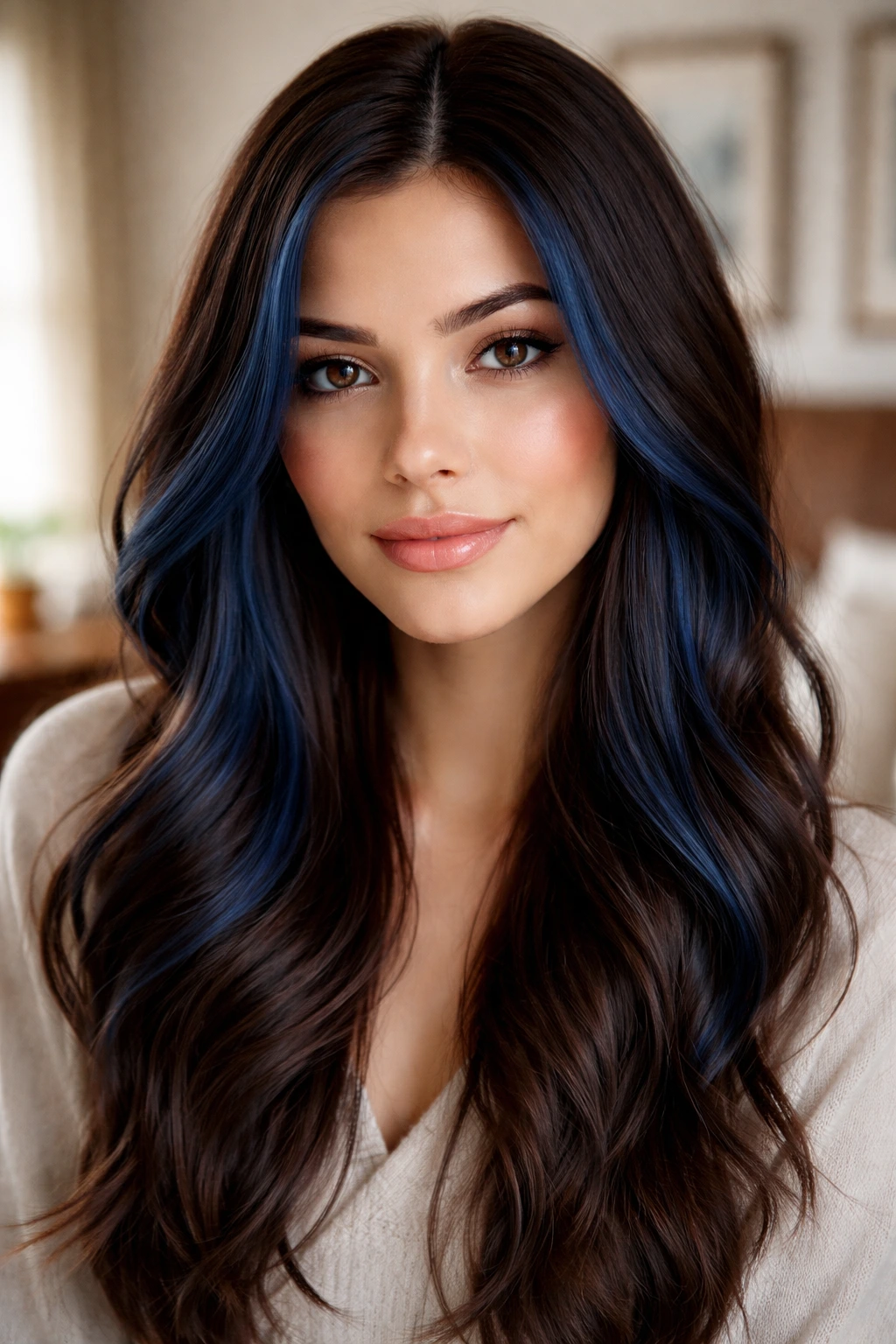
This look involves painting a dark, inky blue shade only on the front two sections of your hair, closest to the face. It is an ideal way to dip your toe into vivid colors without committing to a full-head transformation. Because the shade is midnight blue, it stays close to the darkness of natural brown hair, creating a seamless transition rather than a jarring shock of color.
Why This Style Works
The contrast here is subtle, making it suitable for professional environments while still offering that pop of personality. You only need to lift your front strands to a level seven or eight, which is much kinder on your hair than trying to reach a stark white blonde.
Technical Tip
Ask your stylist for a “money piece” technique, but specifically request that they keep the blue deep and saturated. If you go too light with the blue, it can fade into an awkward neon green on brown hair, so stick to the darkest navy pigments you can find.
2. Electric Blue Peek-a-Boo
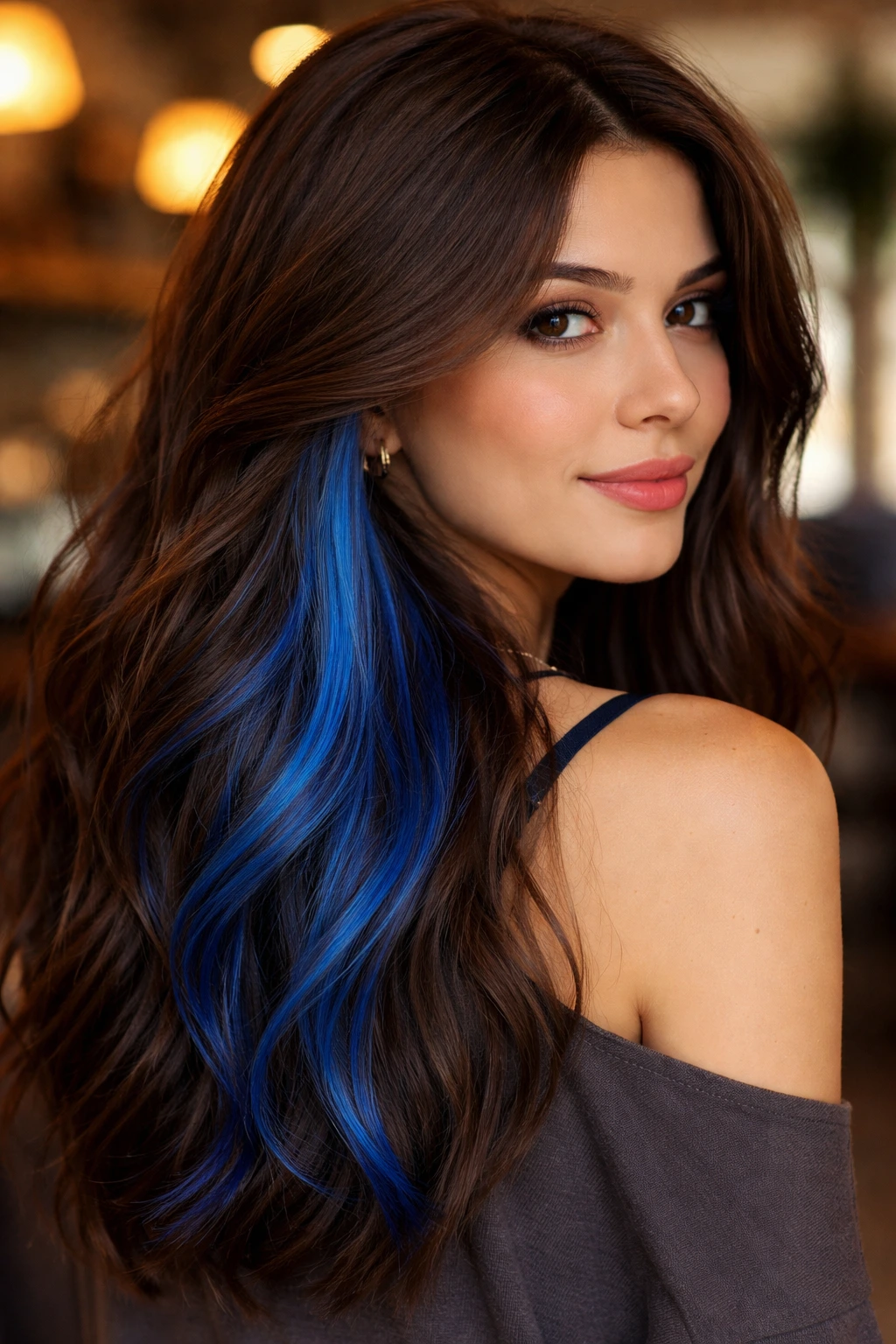
Peek-a-boo highlights are hidden underneath the top layer of your hair. When you wear your hair down, it looks like standard brunette, but a quick braid or half-up style reveals a secret, vibrant electric blue section. This creates a sense of playfulness and mystery that is hard to achieve with surface-level color.
It requires strategic sectioning. You are essentially creating a “layer” of color starting at the nape of the neck and extending up toward the mid-lengths. Because these sections are protected by the natural brown hair on top, they are less prone to environmental damage and fading from sun exposure. This is a solid choice for someone who wants a bold look that does not require constant upkeep at the salon.
3. Cobalt Balayage
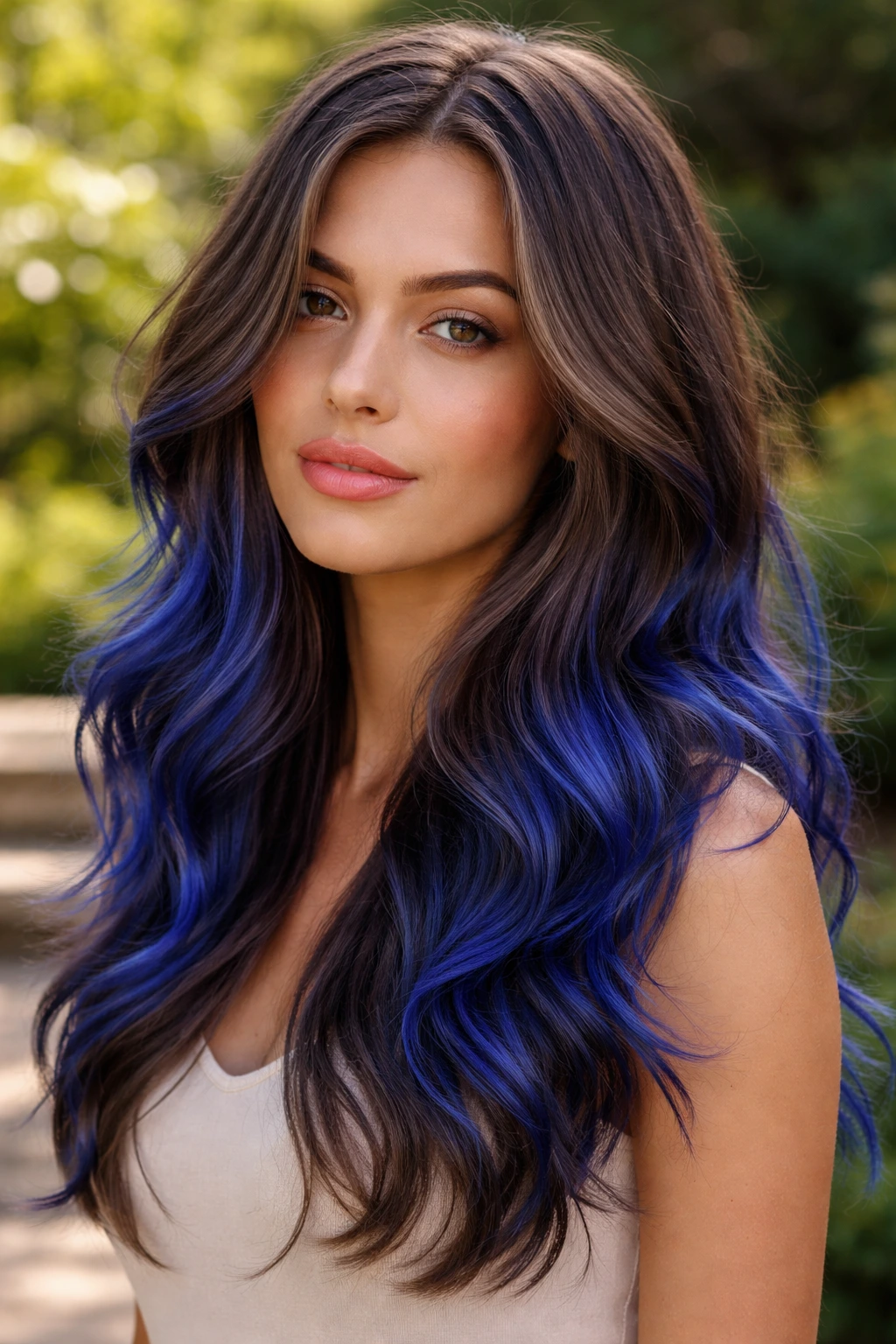
Balayage is the art of hand-painting color to create a natural, sun-kissed effect, and applying this technique with cobalt blue is a sophisticated way to add dimension. Instead of uniform foils, the color is painted in sweeping motions, focusing on the mid-lengths and ends. This mimics the way natural light hits your hair.
When the brown base is cool-toned, like an ash brown, the cobalt blue integrates almost perfectly. You get these flashes of vibrant blue as your hair moves, rather than a solid block of color. It creates a multi-dimensional look that makes hair appear thicker and more voluminous than it actually is.
4. Navy Blue Babylights
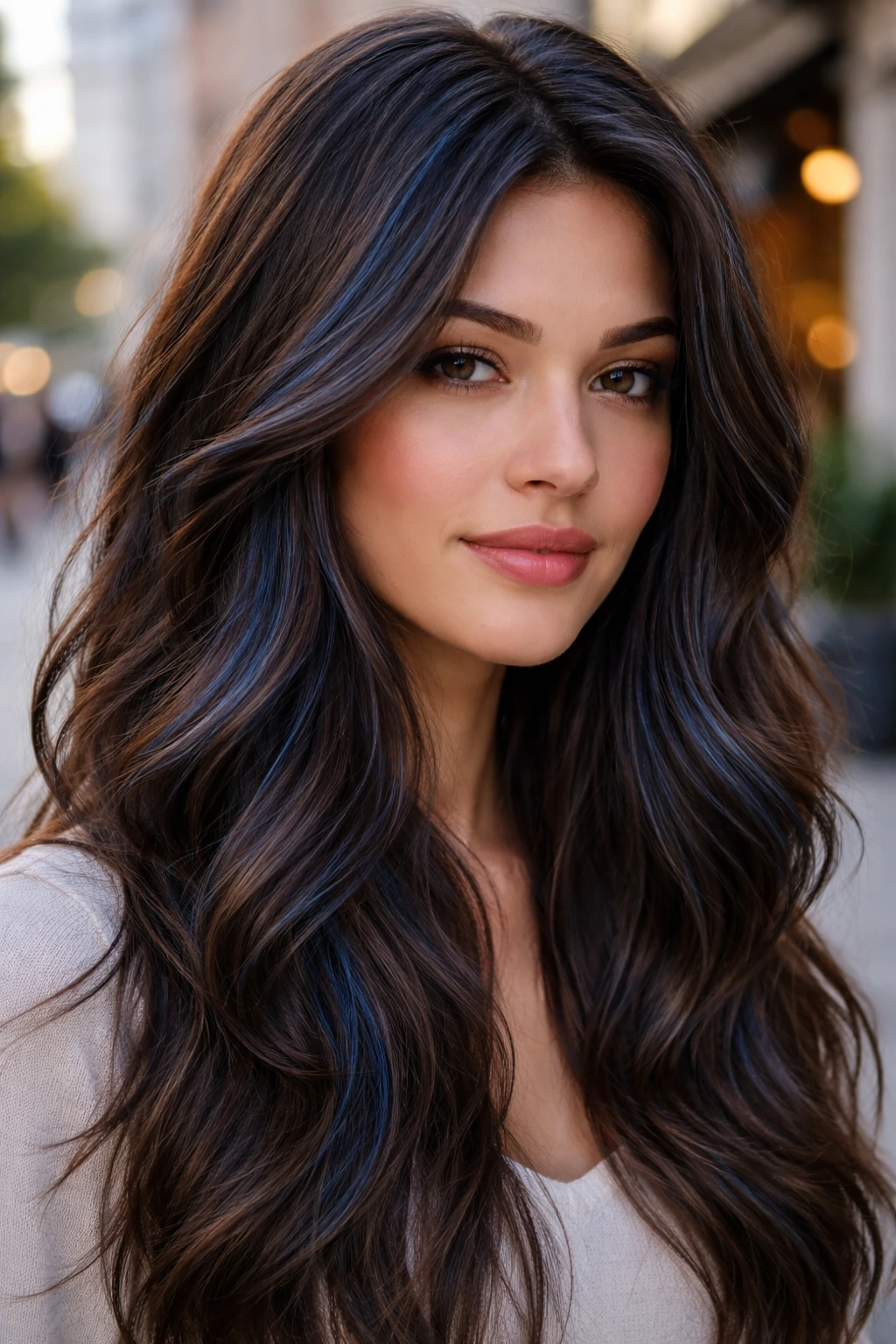
Babylights are ultra-fine, delicate highlights that mimic the look of hair that has been lightened naturally by the sun. When you swap the traditional blonde for a deep navy blue, you get a shimmering, multidimensional finish. It is the most low-maintenance option on this list because the roots are barely touched.
These tiny ribbons of color are woven throughout the hair in very small sections. You are not painting large chunks; you are placing pin-prick amounts of blue that blend in with the brown strands. As your hair grows out, the regrowth is barely noticeable. This is the definition of “effortless cool.”
5. Teal-Infused Deep Brown
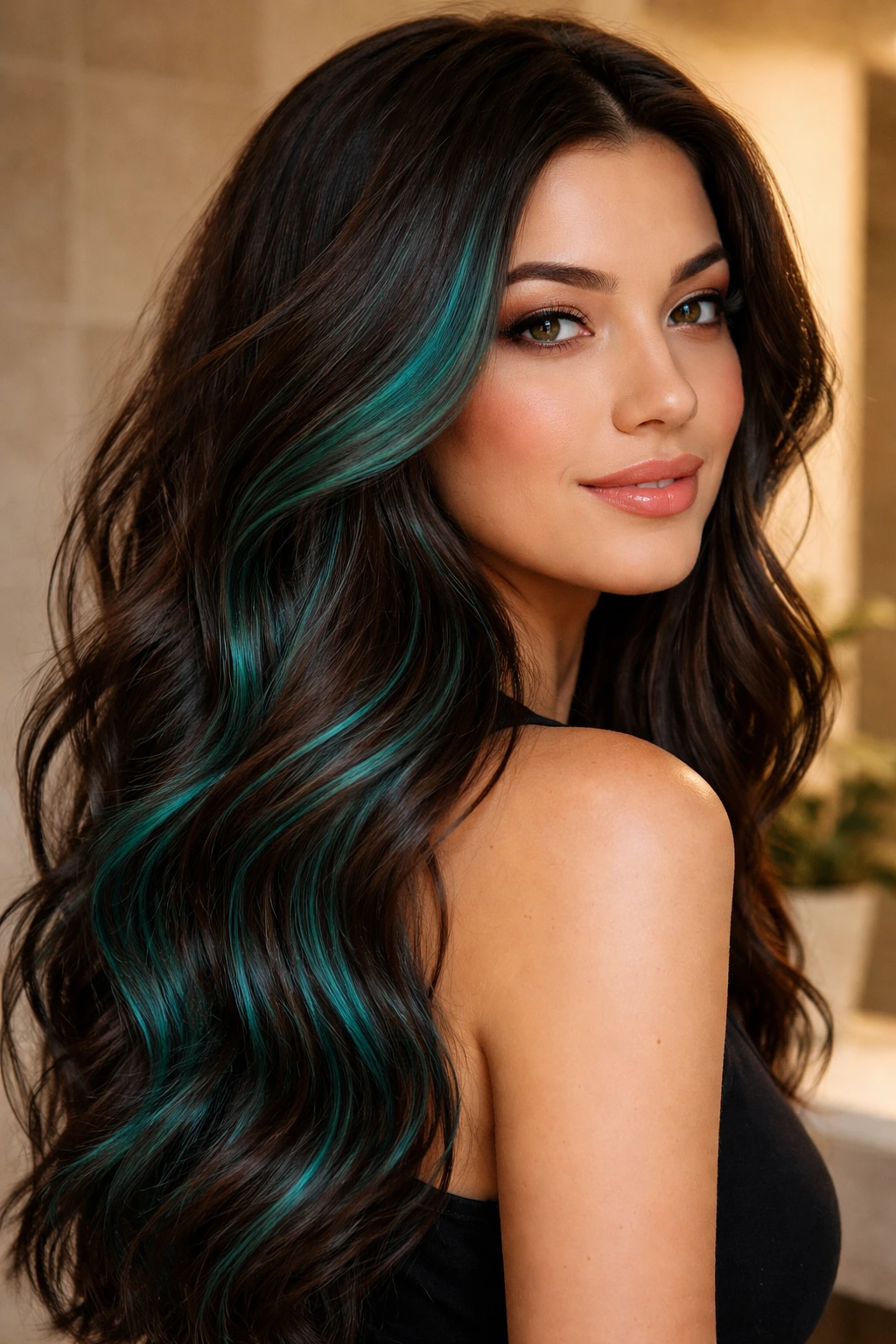
If you are hesitant to go full-on blue, teal acts as a fantastic bridge. It carries enough green to feel familiar for someone with warm-toned brown hair, but enough blue to make it feel like a fashion color. This look is often achieved by blending a dark teal gloss over existing highlights.
How to Maintain the Color
Teal tends to fade into a sea-foam green, which can be pretty but is not what everyone wants. Use a color-depositing shampoo every other wash to keep the vibrancy. Avoid hot water at all costs when rinsing, as heat opens the cuticle and lets the color molecules wash right out.
6. Denim Blue Ombré Ends
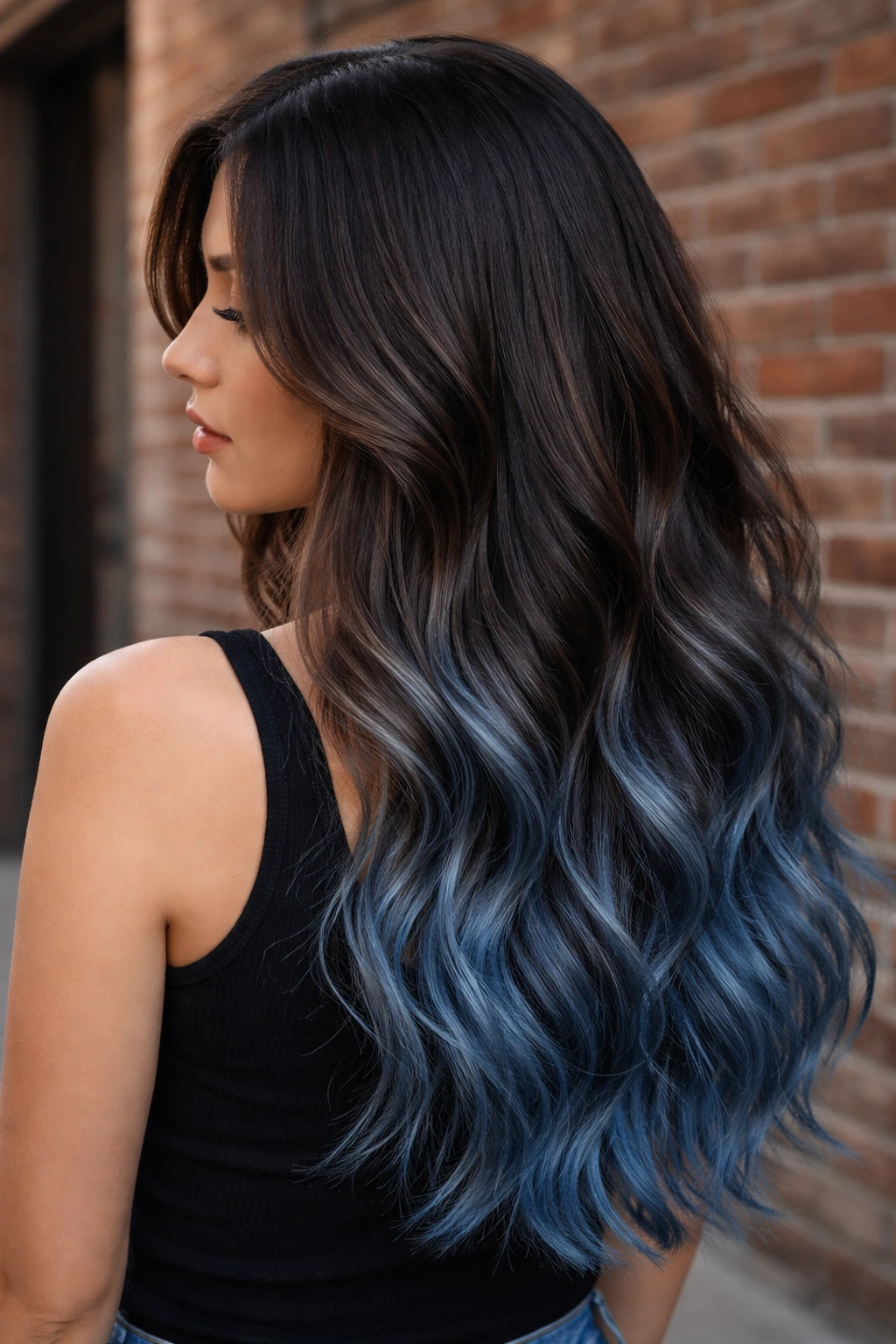
Ombré is the classic technique where the hair color transitions from dark to light as it moves toward the tips. Applying a denim blue—which is a muted, slightly greyish blue—to the ends of brown hair creates a moody, grunge-inspired aesthetic. It does not look like a crayon-box color; it looks like a deliberate fashion choice.
This style allows you to grow out your hair without worrying about the roots at all. You are focusing all the bleaching and coloring on the bottom three or four inches of your hair. It is also an easier fix if you decide you are tired of the color, as you can simply trim off the colored ends.
7. Royal Blue Money Piece
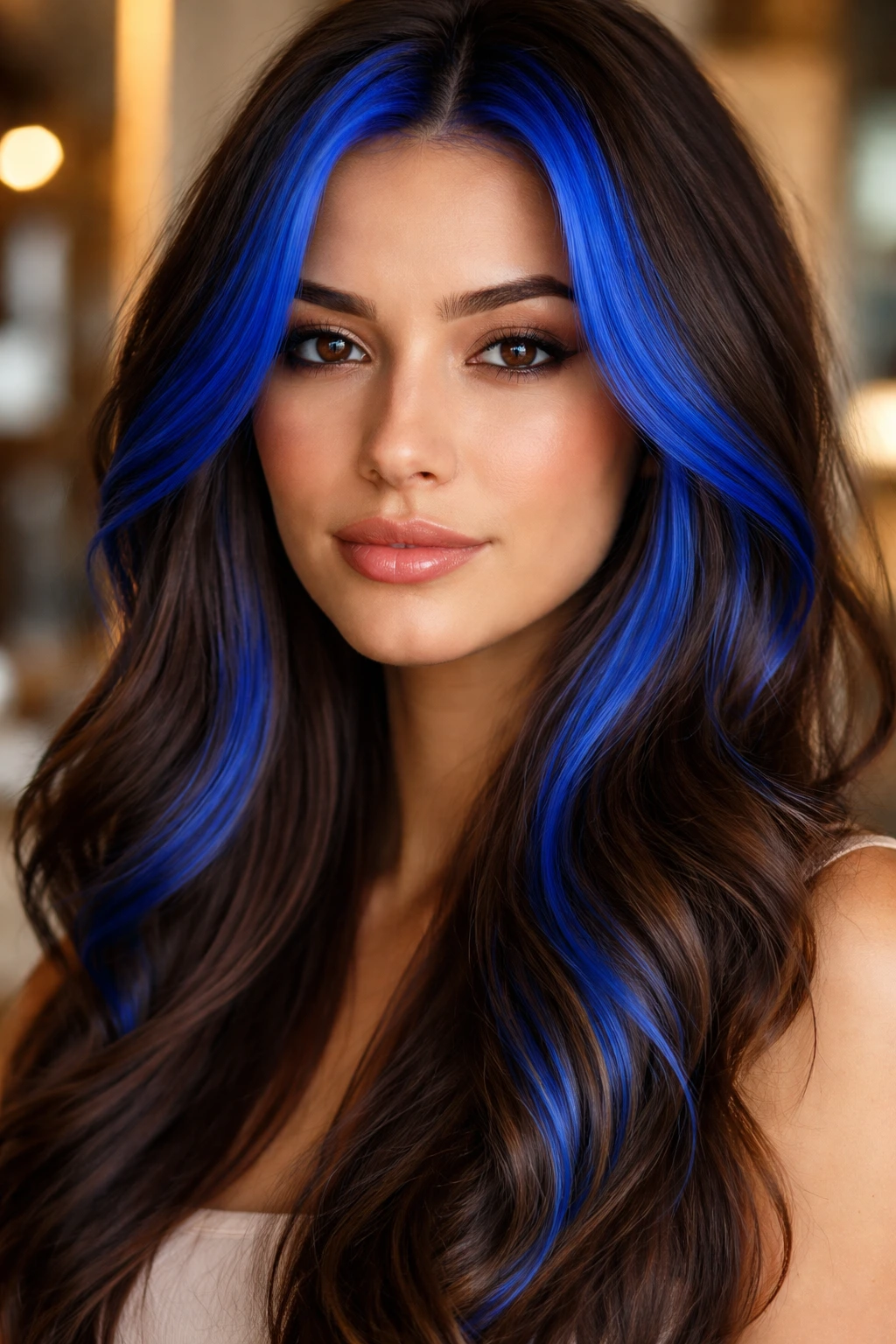
A money piece is that thick section of hair framing your face that is colored differently from the rest. Using a vibrant royal blue here creates an immediate focal point. This is a high-contrast style that demands attention and requires a bit more maintenance, as the roots in that front section will show growth faster than the rest of your hair.
The Maintenance Reality
Because this section is right at the front, it is exposed to the most friction, heat styling, and washing. You will need to treat these strands gently. Use a leave-in conditioner every single morning to prevent the bleached sections from becoming brittle or snapping off near the hairline.
8. Sapphire Underlights
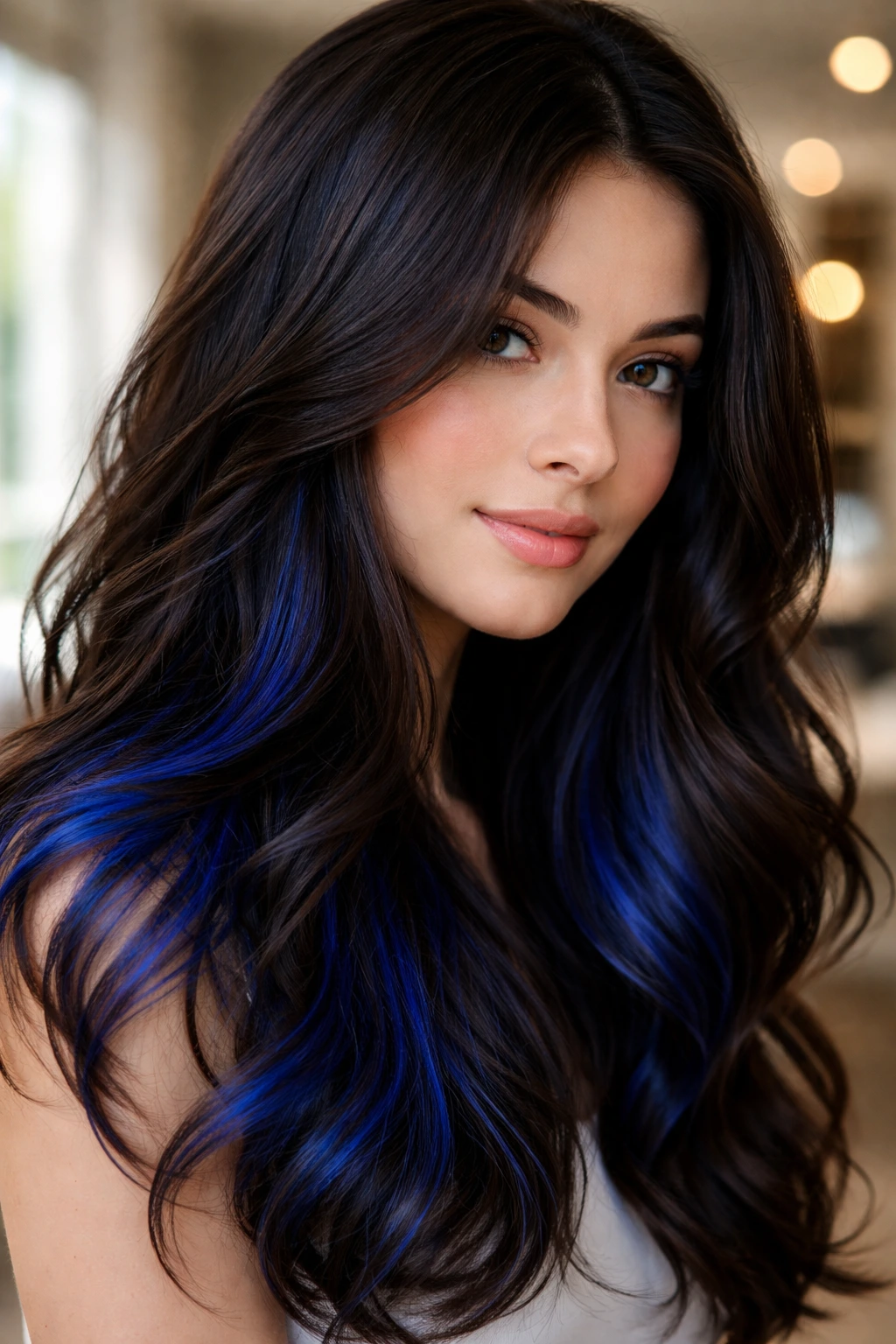
Underlights, sometimes called “hidden highlights,” are placed in the lower section of the hair. Sapphire is a rich, jewel-toned blue that looks incredible when peeking through a dark brown base. It adds a luxurious, expensive-looking detail to your hair that only shows up when you want it to.
Think of this as an accessory. You can hide the blue with a low bun for a meeting, or pull the top half of your hair back with a clip to show off the intense saturation. It is a creative way to express yourself without fully altering your overall appearance.
9. Slate Blue Lowlights
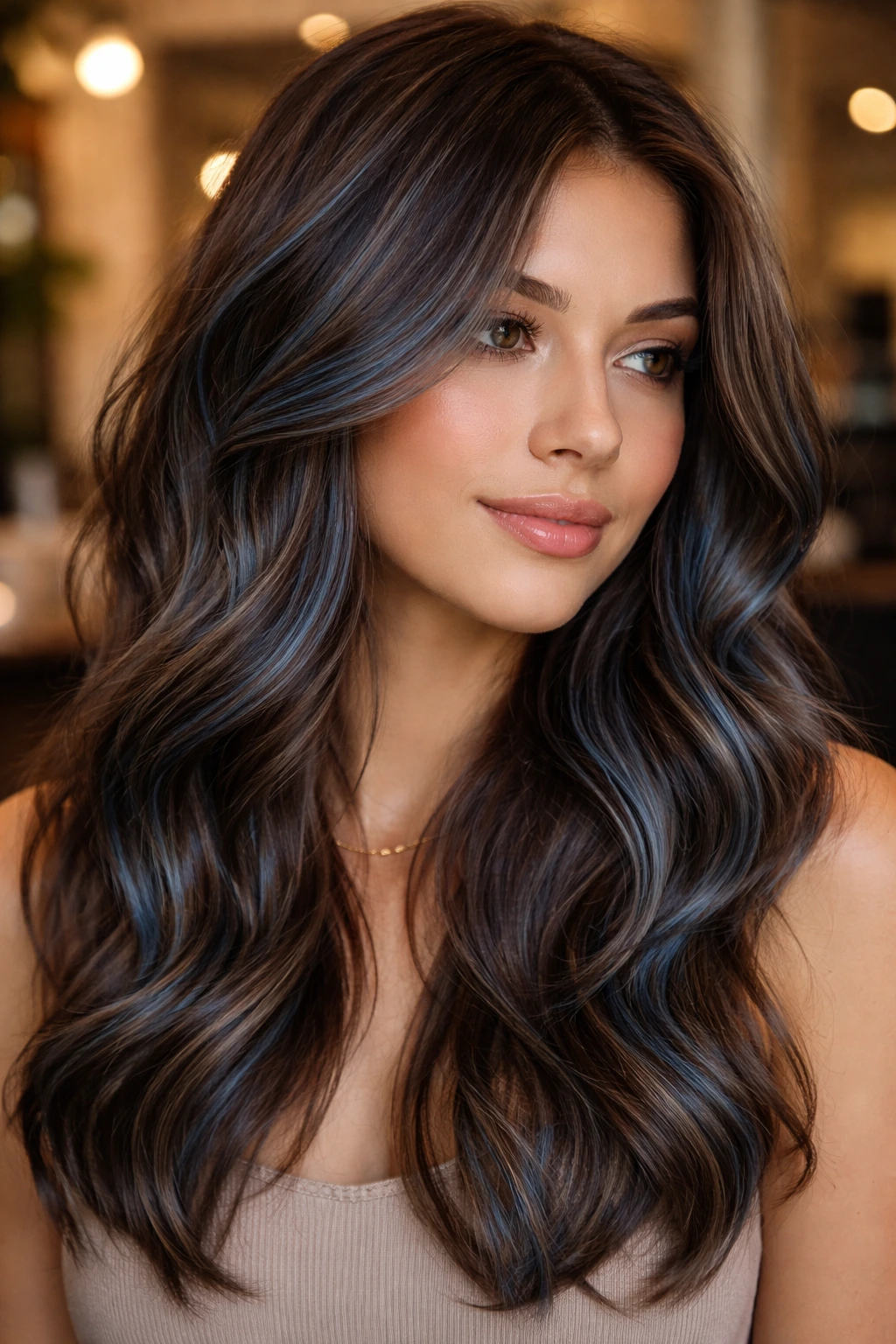
Sometimes, you do not want to add bright color to your hair; you want to add depth. Slate blue is a very dark, grey-tinted blue that works exceptionally well as a lowlight in medium brown hair. It breaks up the monotony of a flat color without screaming for attention.
This is technically an inversion of the typical highlight. Instead of lightening strands, you are depositing a cool, dark tone into specific sections. It adds a metallic, edgy quality to your hair that catches the light beautifully in photos. It’s an understated choice for someone who loves the idea of blue but hates high-maintenance color.
10. Cyan Streak Accent
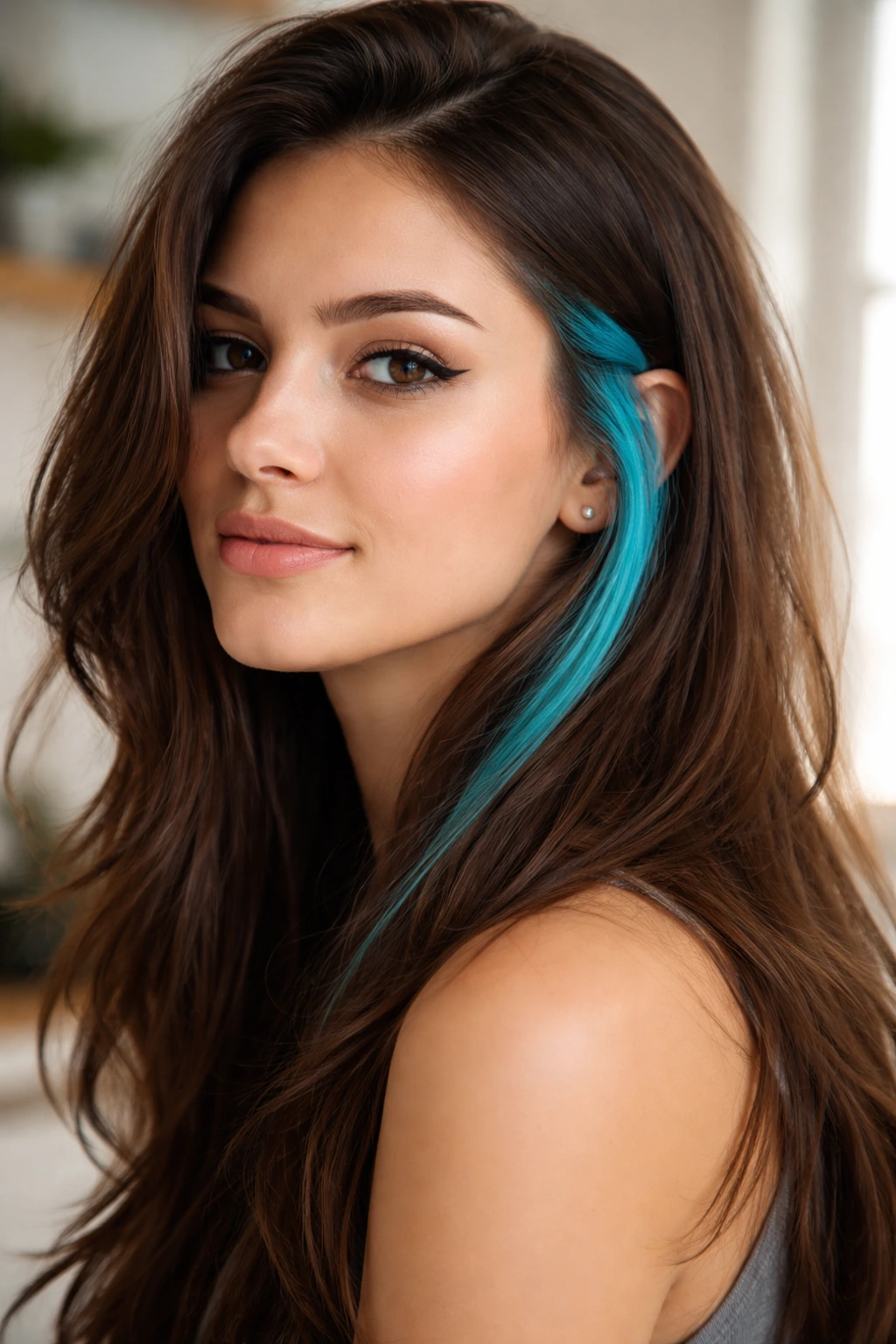
A single, bold streak of cyan can be a major statement piece. Unlike balayage or babylights, this is a deliberate placement of one distinct, thick line of color, usually placed just behind the ear or near the temple. It is a nod to the punk rock influence of the nineties, modernized with a cleaner, more precise application.
Why It Works
By limiting the color to one specific streak, you eliminate the risk of the color looking “muddy” against your brown hair. You only have to worry about maintaining one small section. It is quick to touch up, and if you get bored, it is just one strand you have to re-dye or trim.
11. Pastel Blue Tips
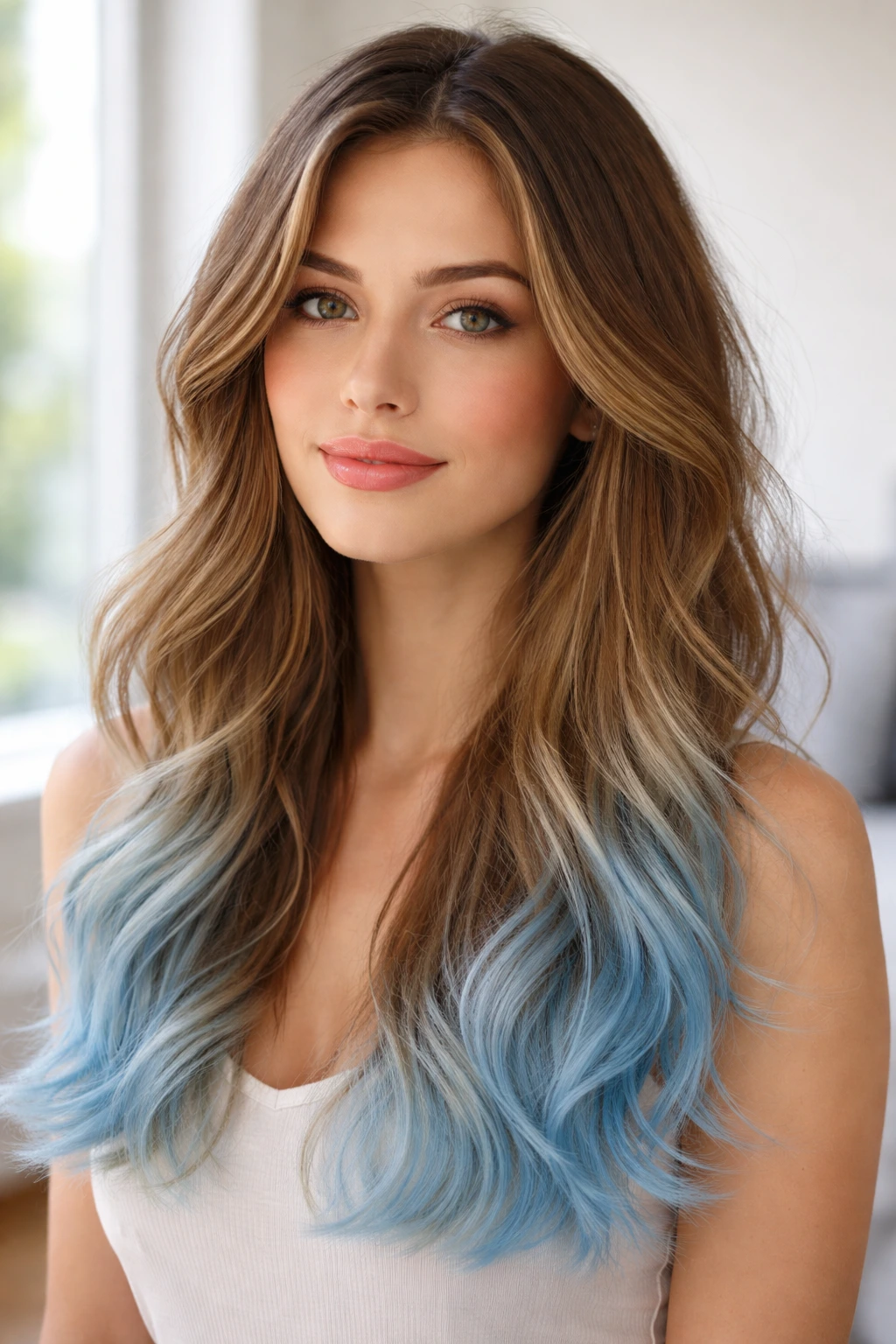
If your hair is naturally lighter brown or has been pre-lightened, pastel blue can look like a dream. It is ethereal, soft, and very distinct. The key to this look is getting the brown hair out of the way; you need a very clean canvas for pastel blue, or it will turn a muddy grey or murky green.
This style is not for the faint of heart. It requires the most hair maintenance because you have to lighten your hair significantly to get it light enough for pastel tones to show up. If you already have blonde highlights, you are halfway there. If your hair is virgin, dark brown, you might want to reconsider the potential damage before jumping to this light of a shade.
12. Indigo Ribbon Highlights
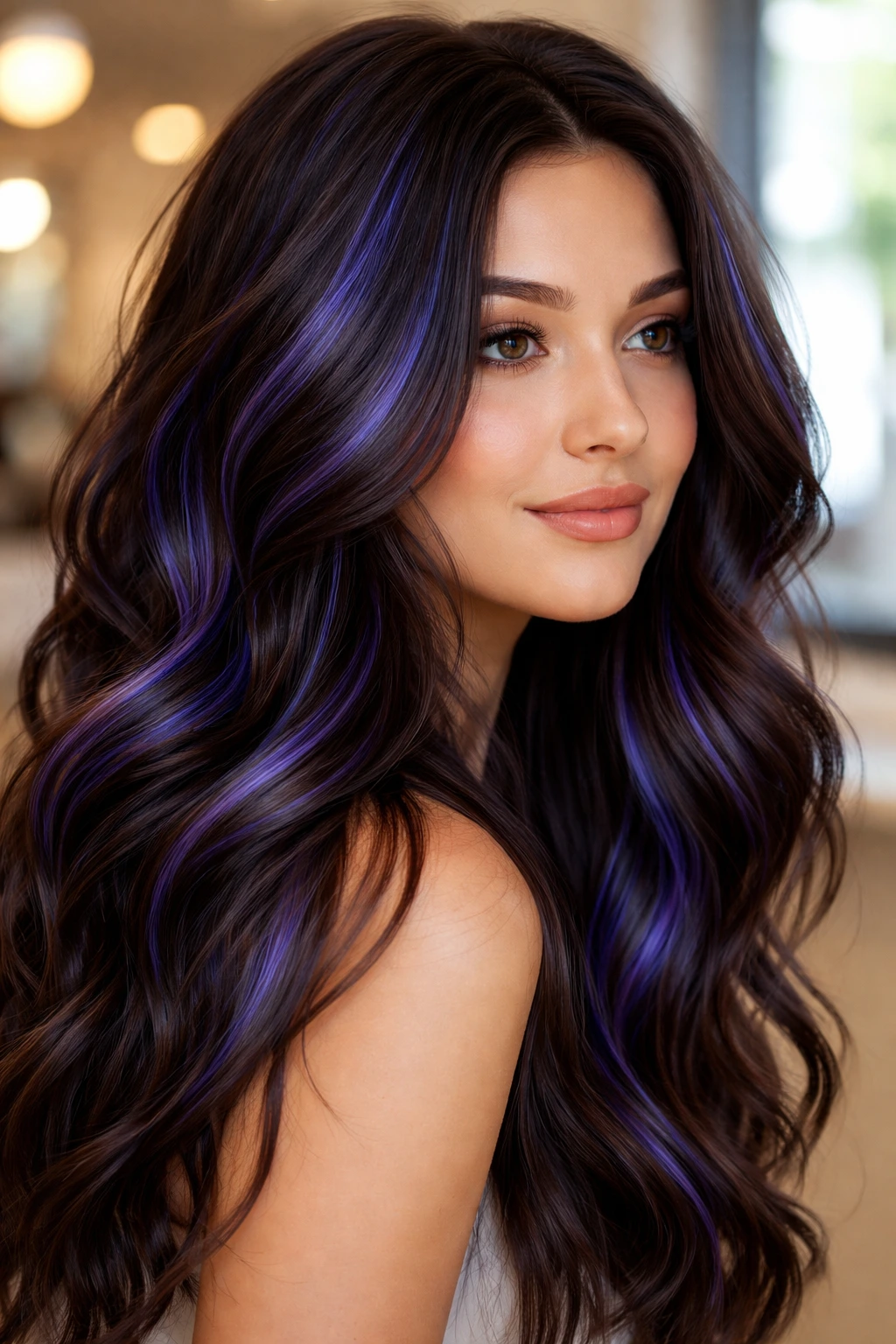
Indigo is a deep, purplish-blue that feels very natural when paired with dark brown or black-brown hair. It looks almost like a dark secret until the light hits it, at which point it glows with a vibrant, violet-blue sheen. These ribbon-style highlights are woven in, meaning they are slightly wider than babylights but thinner than chunky nineties highlights.
The violet undertone in indigo makes it much more forgiving on brown hair. It avoids the dreaded green fade that happens with bright blues. If you have warm brown hair, this will actually neutralize some of that warmth, giving you a cooler, more polished overall hair color.
13. Dusty Blue Muted Tones
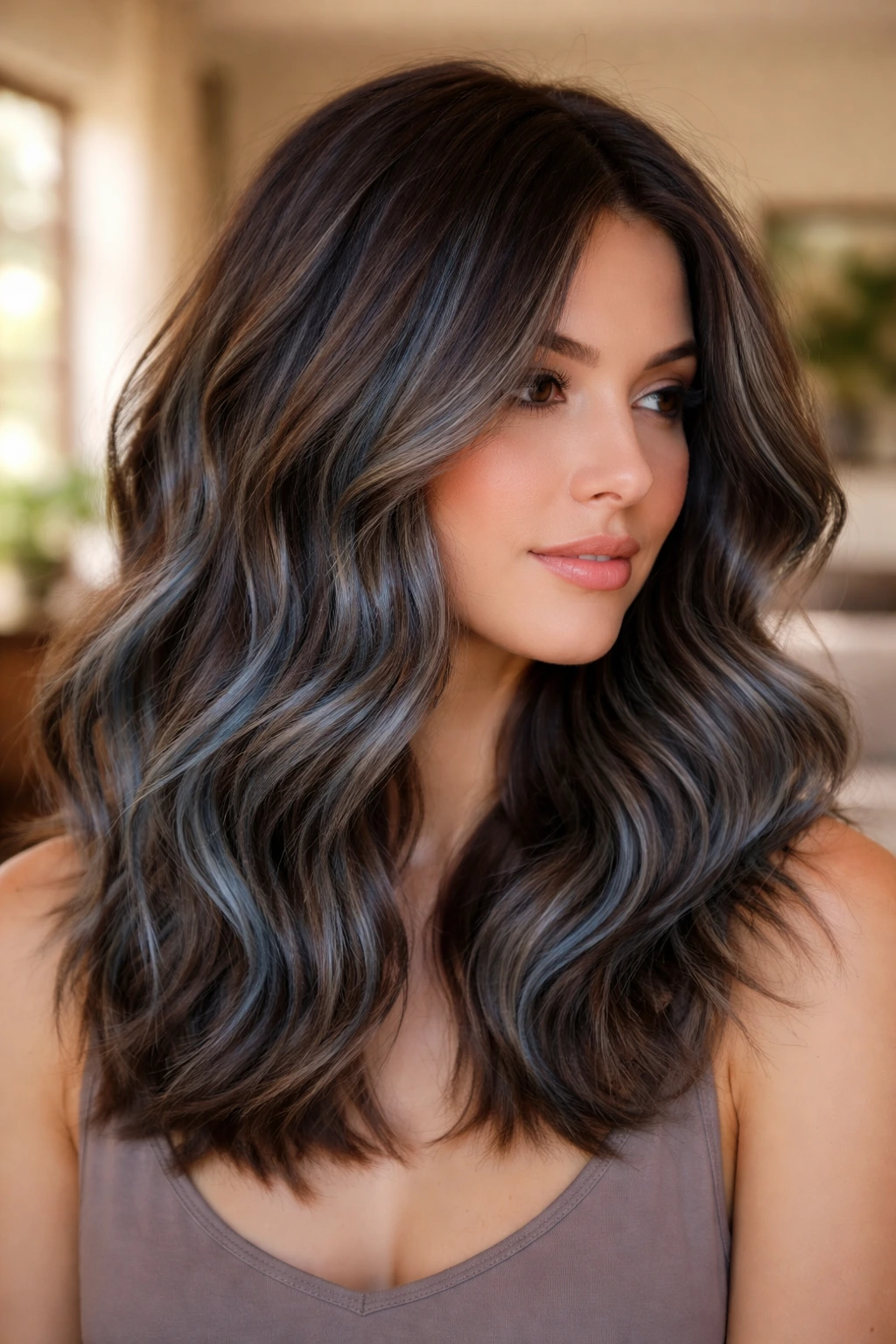
Dusty blue is the “neutral” of the blue hair world. It has a high concentration of grey, which makes it look lived-in and soft. When placed against a rich, mocha-brown base, it looks sophisticated and intentional. This is a great transition color if you are nervous about committing to a primary blue.
Styling for the Best Effect
Because this color is muted, it looks best with texture. Think loose waves or a messy, undone ponytail. If your hair is poker-straight, the color might look a bit flat. Use a sea salt spray or a texturizing powder to fluff up the strands and let the dusty blue tones catch the light.
14. Electric Blue Curly Dimension
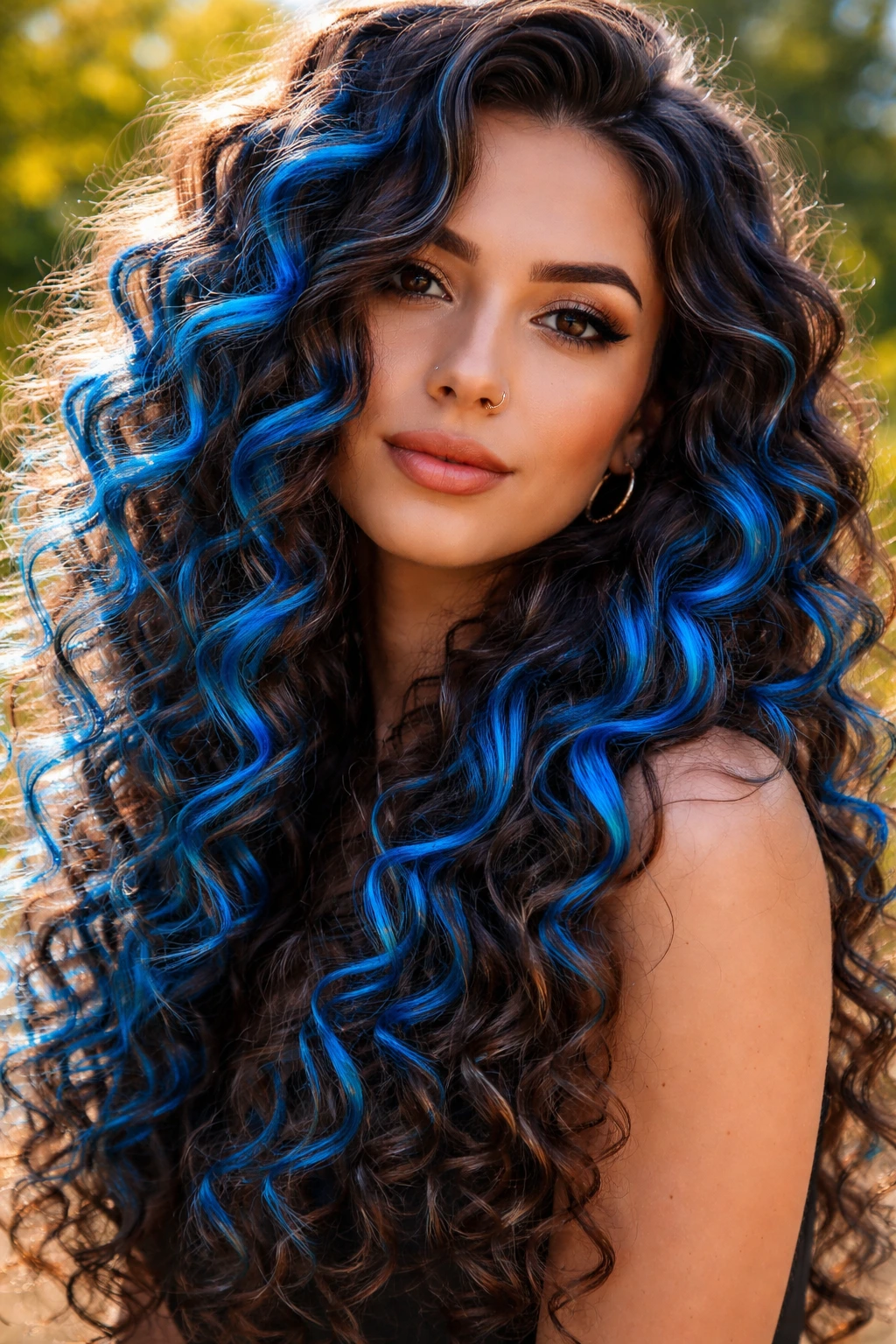
If you have naturally curly or textured hair, applying electric blue is a fantastic way to define your ringlets. Because curls catch light differently than straight hair, the blue will appear to shimmer and change intensity as you move. It is a high-energy look that celebrates your natural hair texture.
When coloring curly hair, the “paint” approach is usually best. A stylist will take individual curls and paint the color on, ensuring that the blue is visible throughout the curl pattern. This creates a 3D effect where the blue seems to wrap around the hair strand.
15. Turquoise Melt
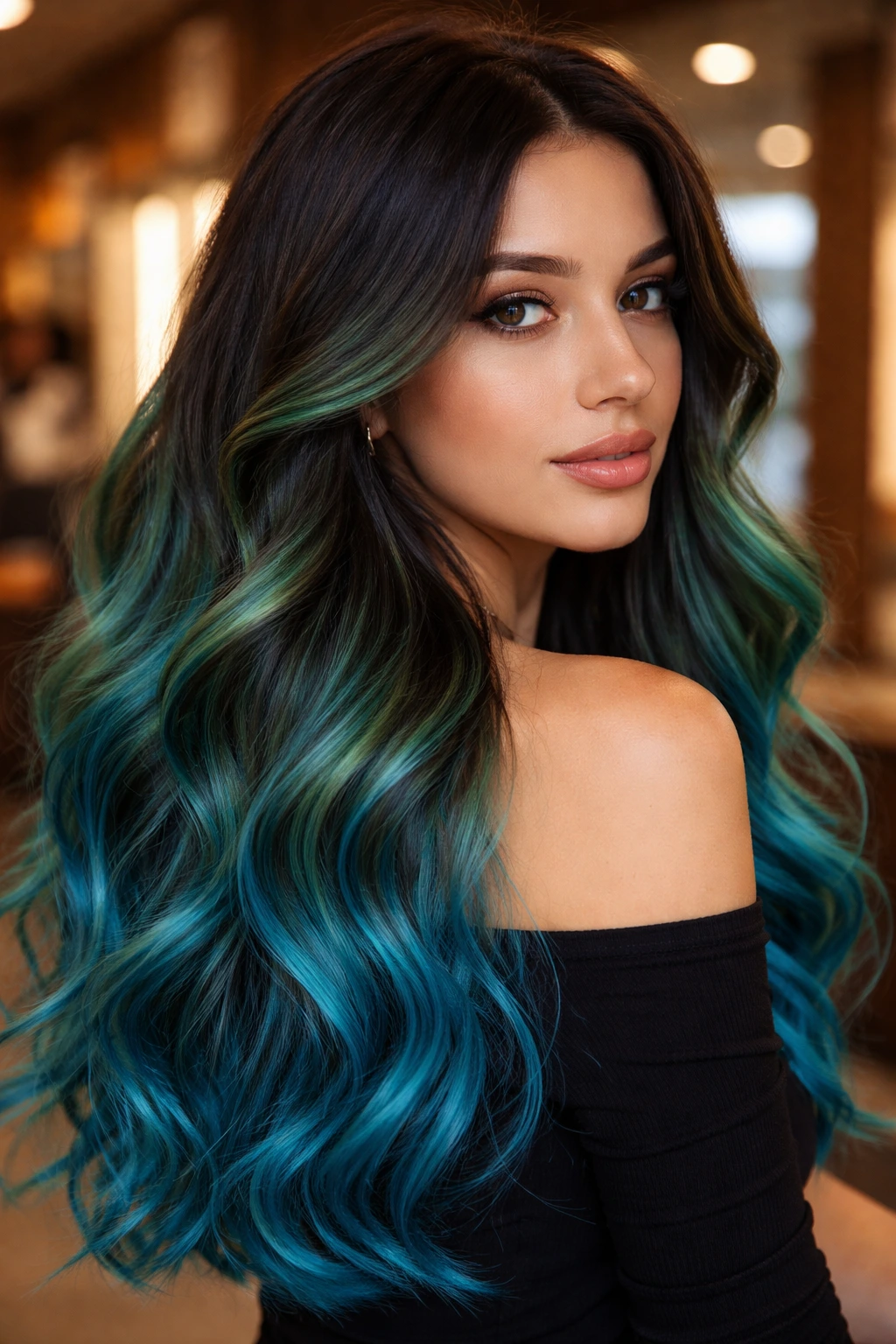
A color melt is a technique where two or more colors are blended so seamlessly that you cannot tell where one ends and the other begins. With a turquoise melt, you might have your dark brown roots transition into a forest green, which then melts into a vibrant turquoise on the ends. It is a gradient effect that feels very artistic.
This is a high-effort style. You are looking at a four-to-six-week maintenance cycle. However, the visual result is unparalleled. It turns your hair into a living piece of art. If you are willing to spend the time and money in the chair, this is arguably the most impactful look on this list.
16. Dark Brown with Steel Blue Streaks
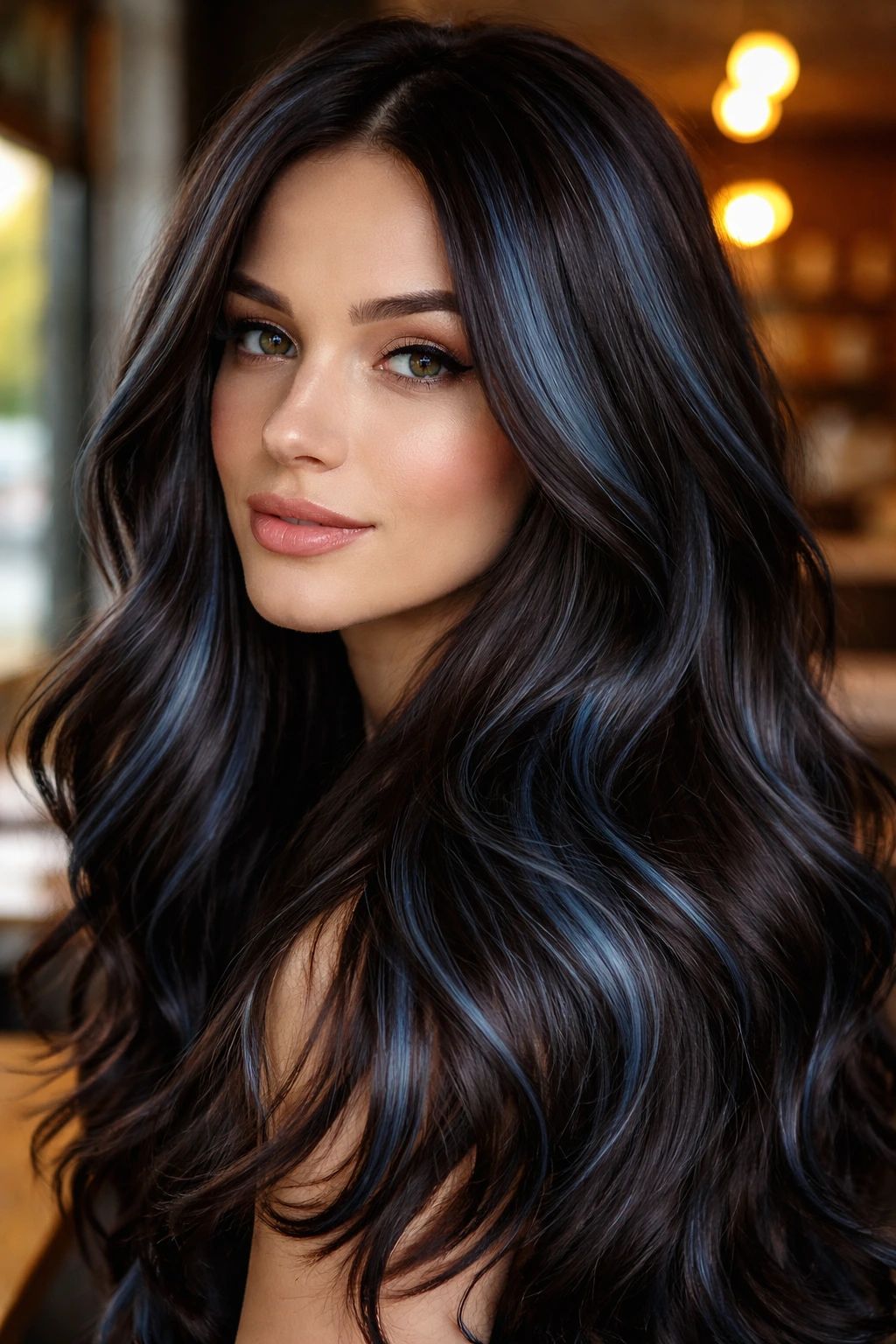
Steel blue is a cool, metallic, sharp shade of blue. When you place it against a very dark, almost black-brown base, the contrast is severe and elegant. This is not a “fun” color; it is a “fashion” color. It gives off a futuristic, icy vibe that is incredibly chic.
Professional Maintenance Advice
Metallic dyes can be tricky because they often contain grey-based pigments. If your brown hair isn’t bleached to a very pale yellow, the steel blue might fade quickly or turn a murky, dull tone. Use a blue-pigmented conditioner to keep the metallic shine alive, and avoid using heavy, oil-based products that can dull the metallic finish.
17. Electric Blue Shattered Ends
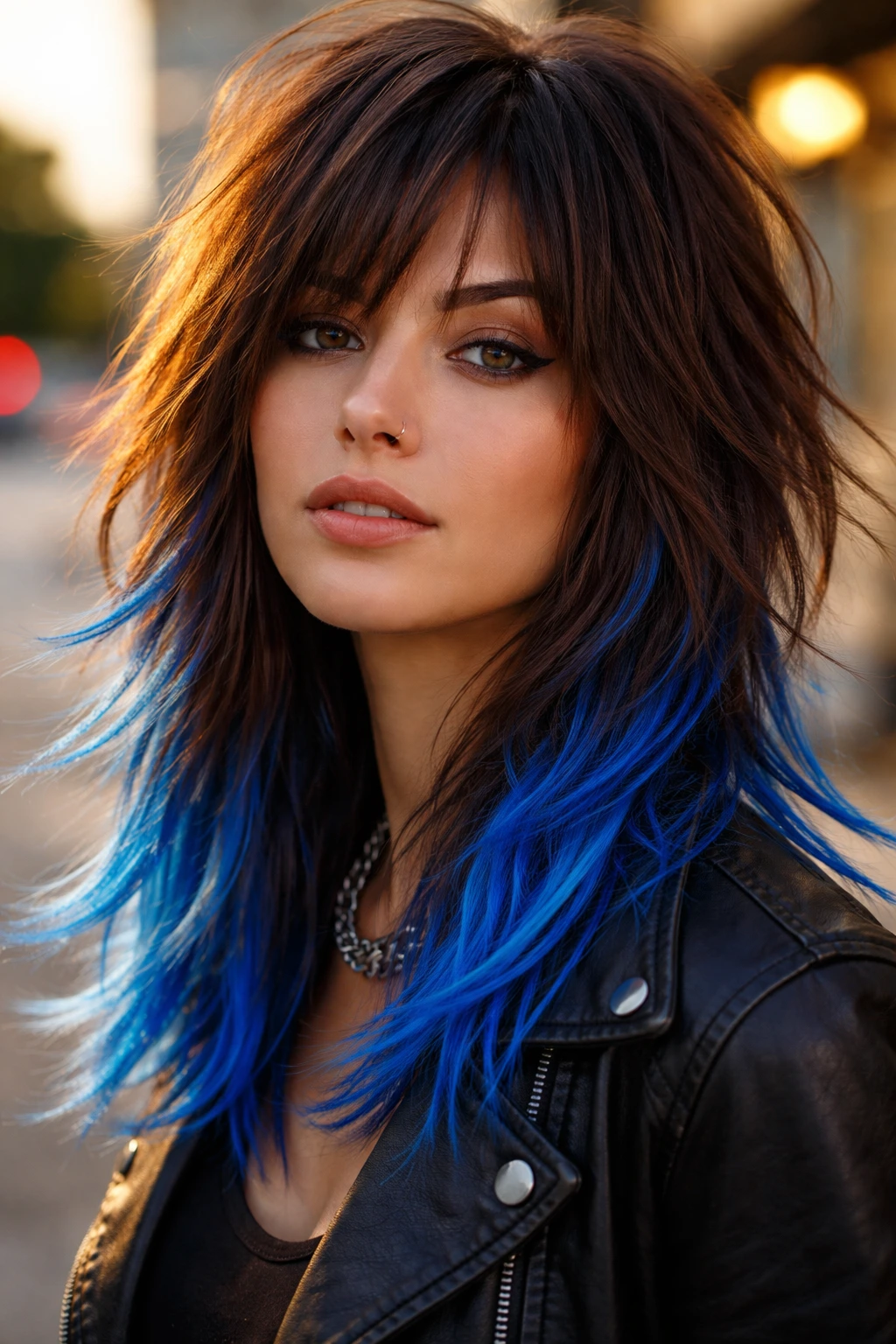
The “shattered” look, often seen in layered haircuts, involves highlighting only the ends of the layers. When you cut your hair into a shag or a heavily layered style, your ends become the focus. Applying electric blue to these jagged, textured ends creates a fragmented, edgy look that feels very rock-and-roll.
This style emphasizes the haircut itself. If you have a boring, one-length cut, this won’t have the same impact. It thrives on movement and layering. Ask your stylist for a “razor cut” or “shag cut” to truly lean into the shattered, rebellious aesthetic.
18. Midnight Blue Subtle Glaze
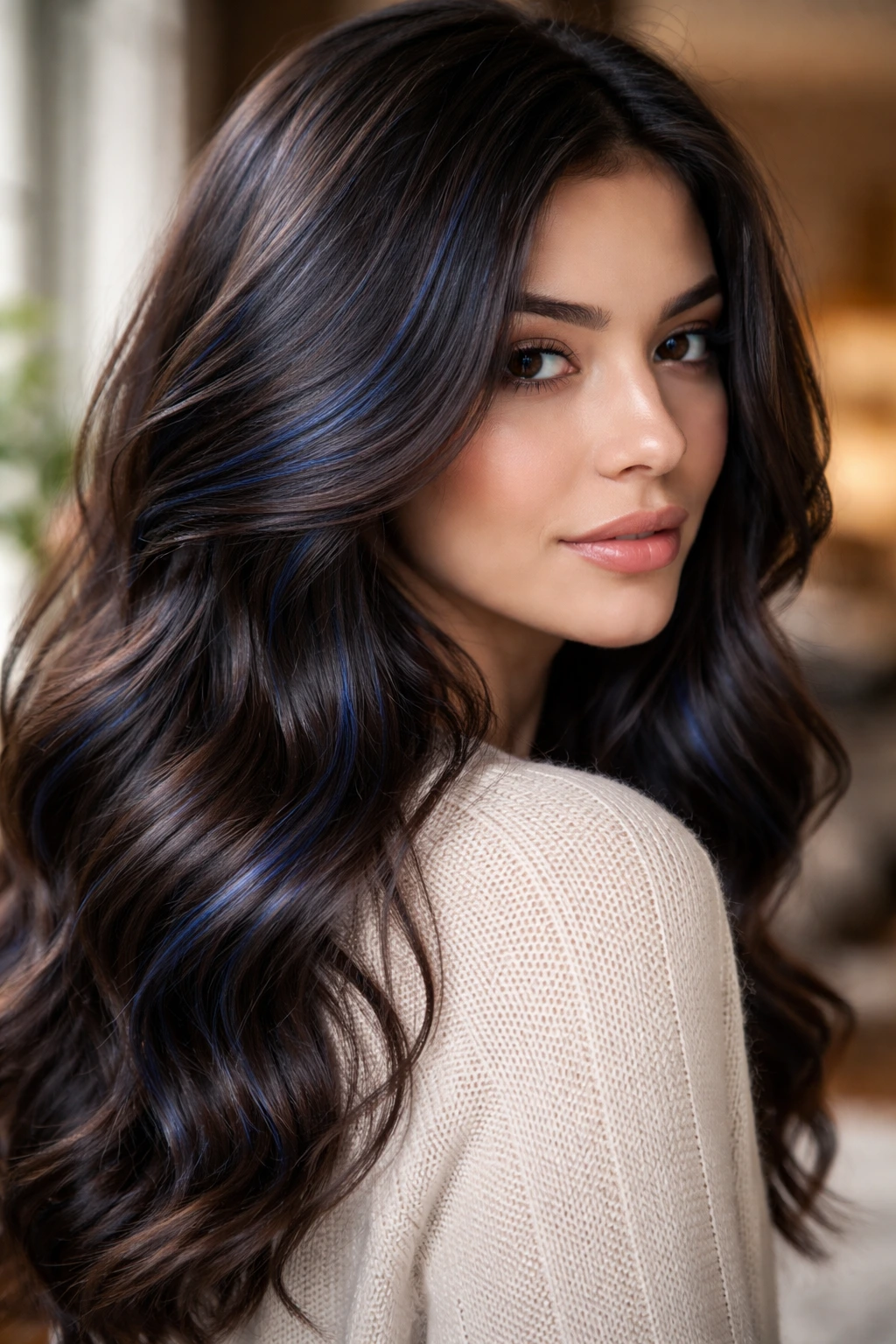
A glaze is a semi-permanent color treatment that sits on the outside of the hair shaft rather than penetrating it. Applying a midnight blue glaze over brown hair is the least damaging way to try blue. It adds a translucent, ink-like shine to your hair that is visible under direct sunlight but looks like regular brown hair indoors.
This will not last forever; it is designed to fade out in about 10 to 15 washes. It is the perfect low-risk experiment. If you love it, you can keep coming back for re-glazing. If you decide it is not for you, it washes away without leaving behind any weird, patchy bleached sections.
19. Deep Sea Blue Highlights
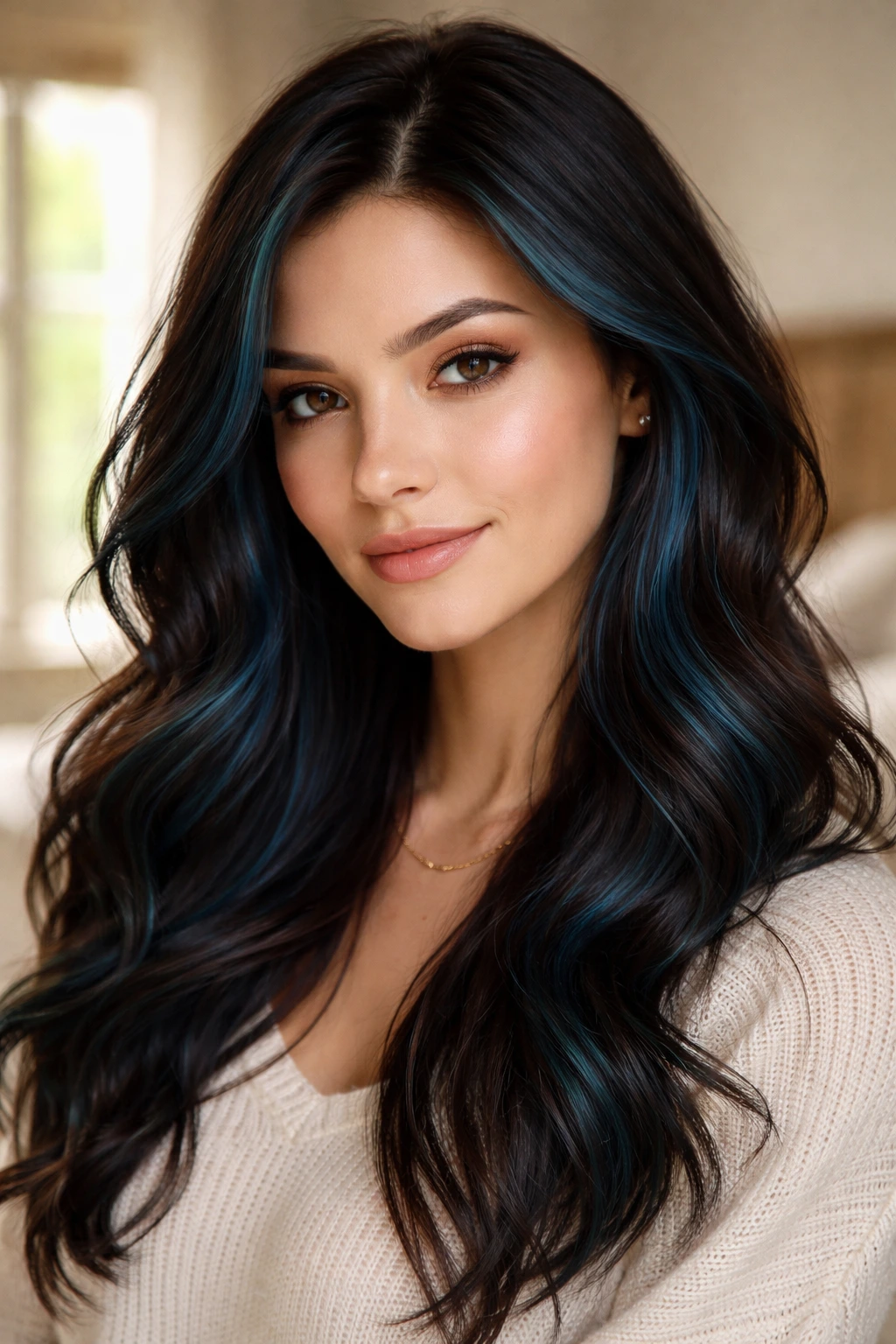
Deep sea blue is a mix of navy and emerald green. It is a darker, more complex shade of blue that harmonizes perfectly with the warm undertones found in many shades of brown hair. It does not require you to bleach your hair to a platinum level; a level 7 or 8 lift is usually sufficient.
Because this color is darker, it fades more gracefully. It doesn’t turn into a neon mess; it just becomes a slightly lighter version of the deep sea blue. This is a practical, long-lasting choice for someone who wants color but doesn’t want to spend every weekend re-toning their hair.
20. Periwinkle Wisps
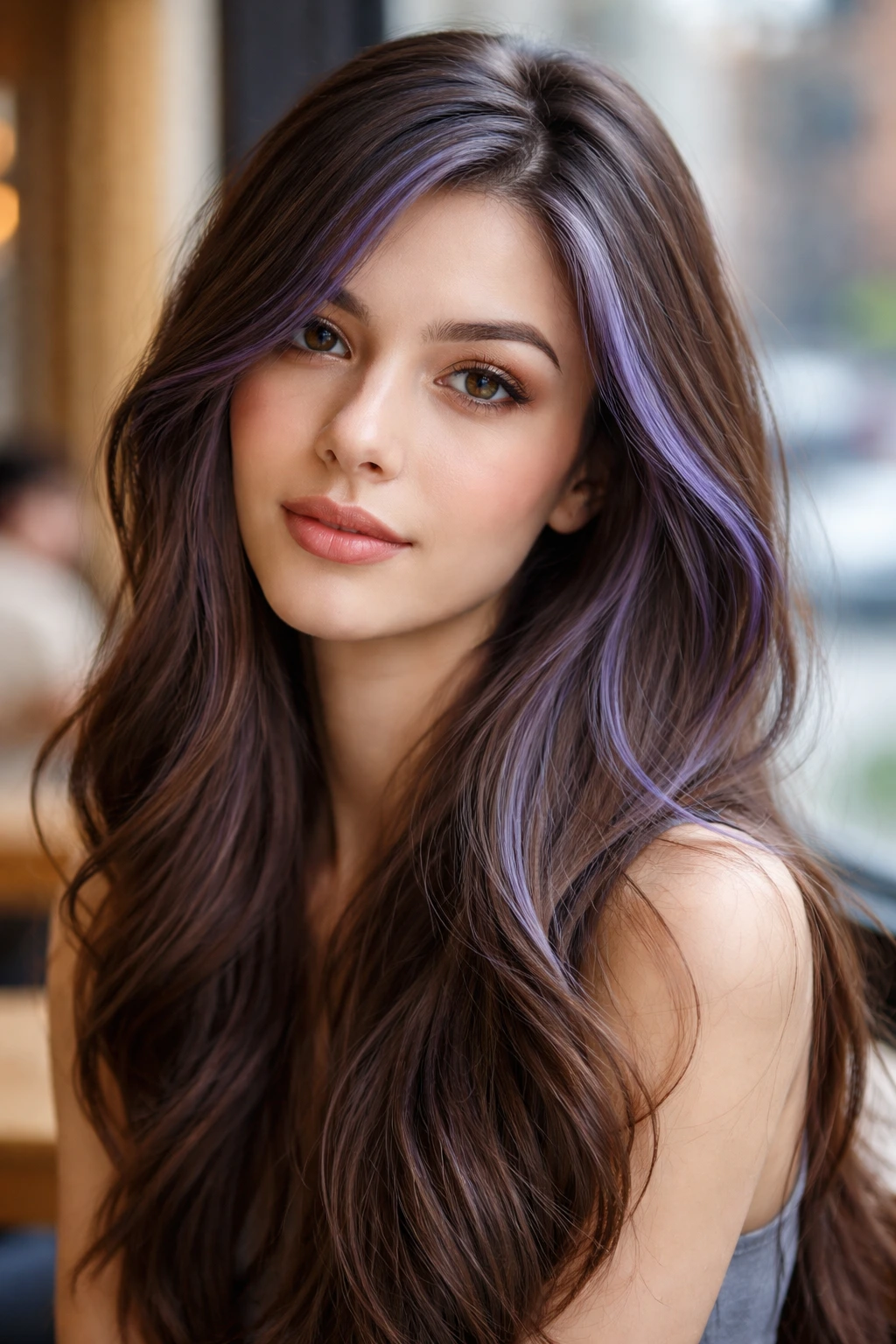
Periwinkle is a hybrid of blue and purple, leaning closer to the cooler side. These wisps are incredibly fine, almost like baby hairs that have been colored. They create a soft, romantic look that feels almost accidental—in the best way possible.
This color is delicate. It doesn’t scream for attention. It’s the kind of color you notice only when you get close to the person. It pairs exceptionally well with cool-toned brown hair (think mushroom brown or ash brown). If you have very warm, golden brown hair, periwinkle might clash, so stick to warmer blue-purples instead.
21. Azure Chunky Highlights
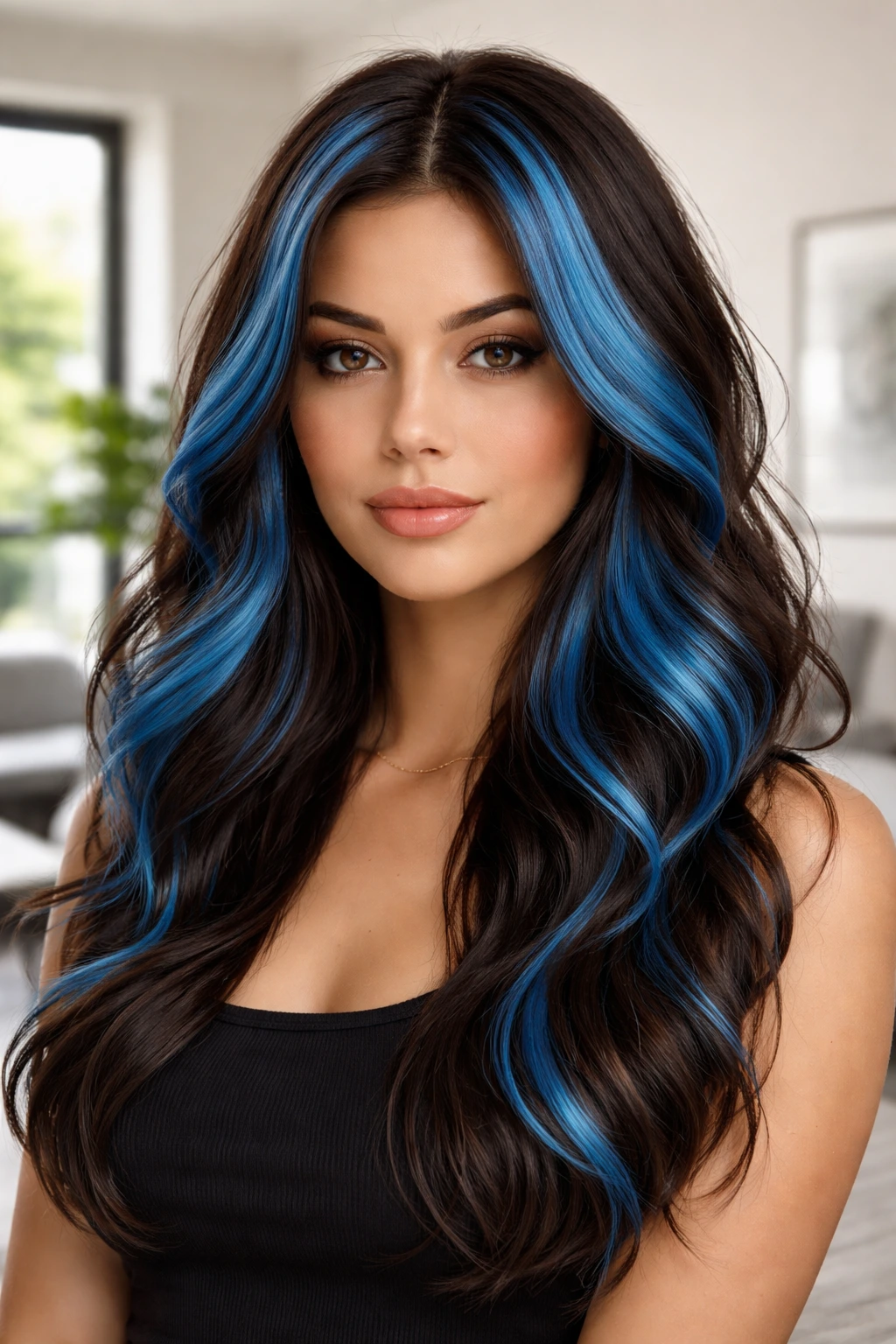
If you are nostalgic for the bold, thick highlights of the early 2000s, this is for you. Azure blue is a bright, clear blue that stands out beautifully against dark brunette hair. Instead of fine, woven babylights, these are larger sections of hair that are fully saturated with color.
Why It Works
It is a confident, retro-inspired look. When you use thick sections, the blue is undeniable. It’s not “hiding.” It works best if you keep the rest of your hair simple. Let the highlights be the main accessory, and keep your styling (like a straight blow-dry) sleek to prevent the look from becoming chaotic.
22. Metallic Blue Highlights
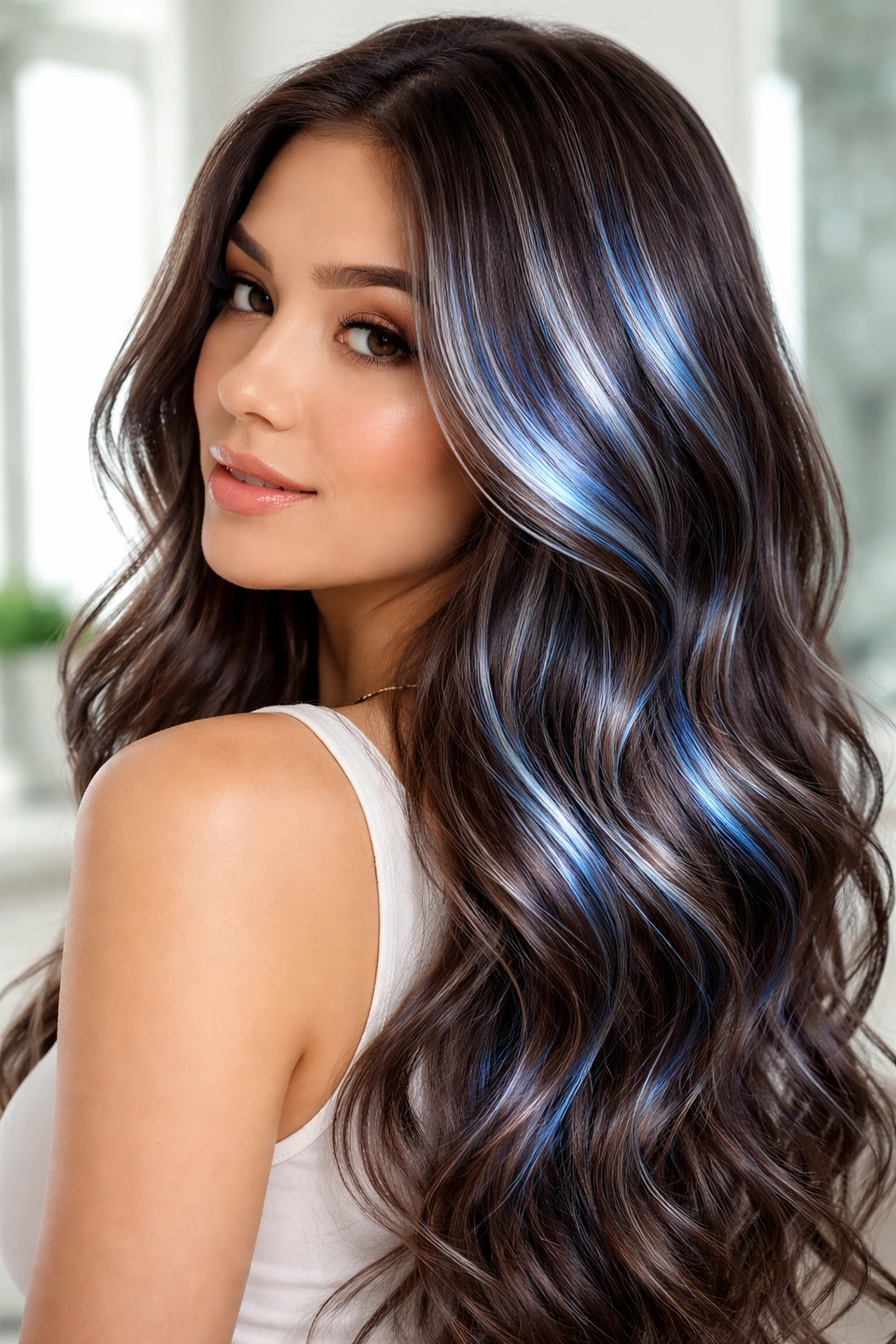
Metallic blue takes the standard blue pigment and mixes it with silver or grey tones to create a high-shine finish. This is fantastic for adding a “cool” factor to warm brown hair. It reflects light differently than standard matte dyes, giving your hair a polished, mirror-like quality.
You will need to maintain this with specific glossing treatments. Metallic pigments tend to lose their shine faster than flat pigments. A clear gloss treatment every three weeks will keep that mirror-like quality alive. It is a bit more maintenance, but the result is a sophisticated, high-end appearance.
23. Denim Blue Shadow Root
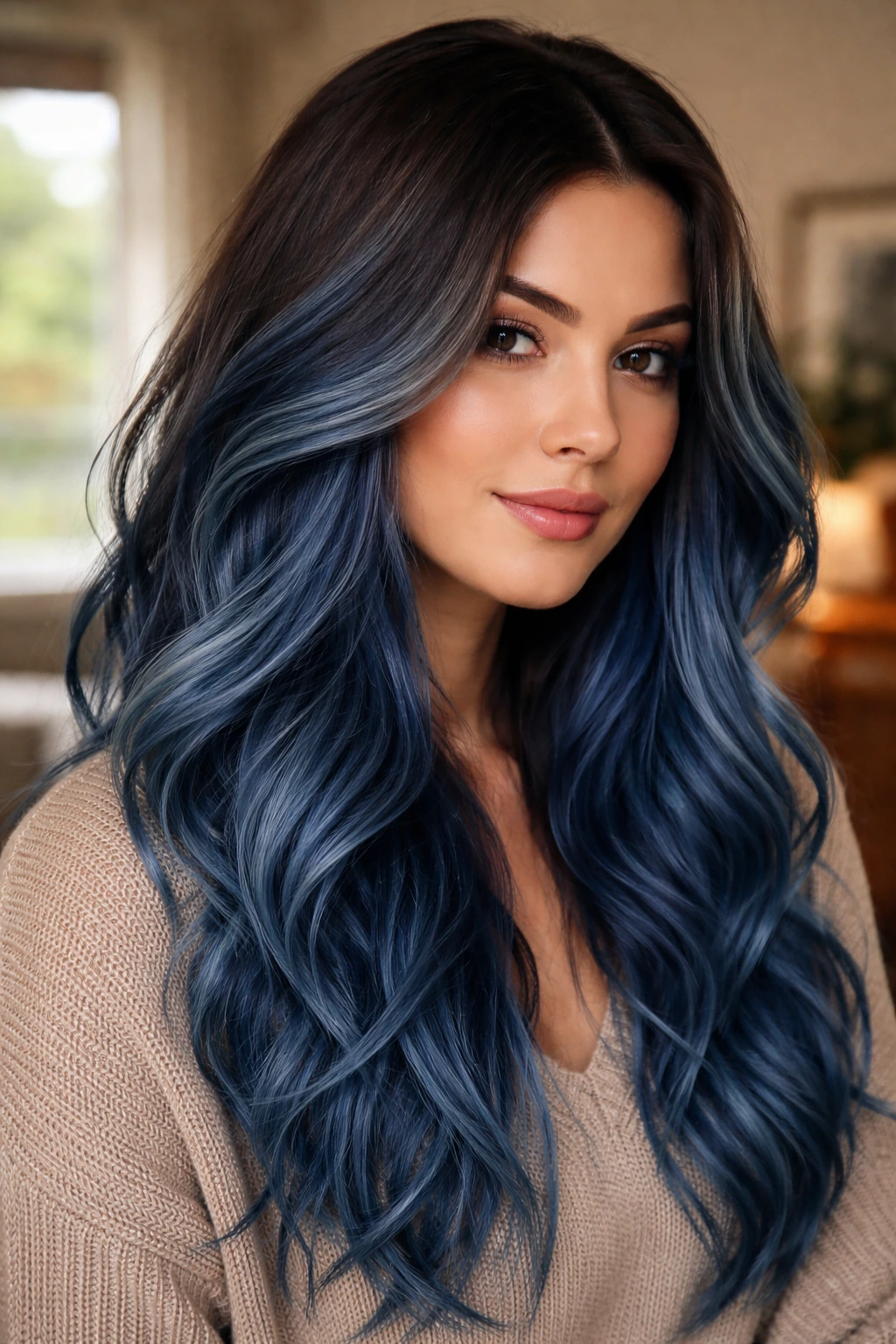
A shadow root involves keeping your natural brown hair at the roots and blending it into a lighter shade throughout the rest of the hair. With a denim blue shadow root, you aren’t coloring the roots blue—you are letting the blue transition from the brown. It creates a seamless, modern grow-out that is very popular.
This is the king of low-maintenance color. Because you are embracing your natural root, you can go months without needing a salon visit. The blue just grows out naturally. It is the best way to handle the “roots situation” while still getting to enjoy vivid color.
24. Pastel Blue Face Frame
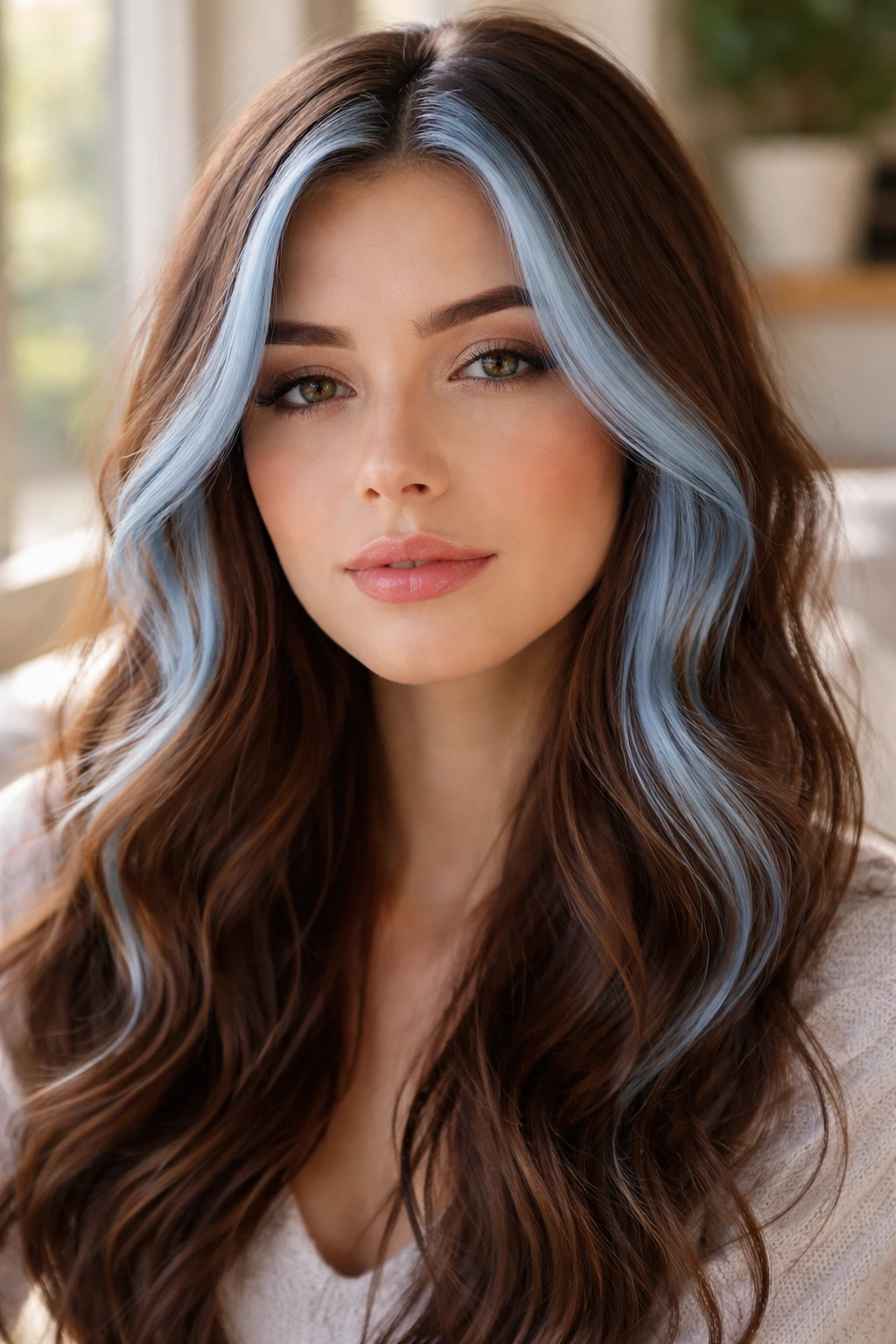
We discussed pastel blue tips earlier, but a pastel blue face frame is a different animal. This focuses the damage and the high-maintenance color entirely on the very front strands. It is a “high fashion” look that is much easier to manage than full-head pastel.
Because it is only a few strands, you can easily use a temporary color-depositing mask to keep the pastel bright. If it fades? It takes two minutes to re-apply in the shower. It is the most manageable way to sport a light, airy, pastel shade without the stress of an entire head of bleached hair.
25. Ocean Blue Waves
This is less about a specific dye placement and more about a styling technique. Ocean blue involves blending multiple shades of blue—turquoise, navy, and teal—into long, wavy hair. The movement of the waves mimics the ocean, creating a fluid, dynamic look.
How to Style
You need volume. Flat hair will make this look like a solid block of color. Use a large-barrel curling iron to create loose, beachy waves that start from the mid-lengths. This will expose the different shades of blue, allowing them to swirl together and create that beautiful “ocean” effect.
26. Neon Blue Splat
A “splat” or “color block” is when you color a large, concentrated section of hair without any blending or fading. A neon blue splat on brown hair is a high-contrast, artistic statement. It is meant to look bold, graphic, and intentional.
This requires a very clean bleach job on that specific section. If there is any leftover yellow or brown pigment in that splat, the neon blue will turn green. Be prepared for a significant bleaching session before the color is applied. It is not for the faint of heart, but the visual impact is unmatched.
27. Frosty Blue Accents
Frosty blue is almost white, with just a hint of blue tint. It is a very cool, icy shade that is perfect for placing on the very tips of your hair or on small, fine baby hairs around the hairline. It creates a “winter frost” effect that looks particularly striking against deep, dark brunette hair.
This is a subtle, almost ethereal way to wear blue. It isn’t a bold fashion color; it’s an accent. It catches the light in a way that makes your hair look like it has been dusted with sugar or ice. It is a delicate, whimsical choice.
28. Sapphire Blue Babylights
We touched on babylights earlier, but sapphire babylights are distinct because of the color intensity. Sapphire is a deep, saturated blue that stands out clearly even when woven in tiny, delicate amounts. It is the perfect marriage of a subtle technique (babylights) and an intense pigment (sapphire).
This is a “blink and you might miss it” kind of color. From a distance, your hair looks like a rich, multi-tonal brunette. Up close, you see flashes of brilliant blue. It is a sophisticated, “if you know, you know” look that feels incredibly luxurious and well-thought-out.
Final Thoughts
Choosing blue highlights for brown hair comes down to two things: your willingness to maintain the color and your desired contrast level. If you are a low-maintenance person, stick to the darker, moodier shades like navy, midnight, and deep sea blue. These colors fade gracefully and don’t require your hair to be stripped to a near-white level of blonde.
If you are looking for that high-contrast, pop-art look, you must be prepared for the work. Vibrant blues require healthy hair, consistent toning, and a regular schedule of color-depositing products. Always remember that brown hair has its own undertones—usually warm—and those warm tones will fight against the cool blue. Using a purple or blue-tinted shampoo can help bridge that gap, but the foundation of a good dye job is always the lift. Do not rush the bleaching process, and your hair will thank you by staying healthy enough to hold onto that beautiful blue hue for weeks to come.
