



Burgundy highlights on brown hair do a strange and useful thing: they look quiet in the mirror and rich in motion. In low light they can read like deep wine, plum, or black cherry; step outside, and the red tone wakes up fast. That shift is the whole appeal. It gives you depth without forcing your hair into full-on copper or bright red territory.
On a dark chocolate base, burgundy usually needs foils or a gentle lift to show properly. On chestnut or medium brown hair, the same shade can look softer, almost stained into the hair instead of sitting on top of it. That’s why one burgundy formula never looks the same twice. Placement matters. So does the undertone in your brown hair.
My favorite burgundy looks are the ones that move. The color should change when the hair bends, not sit there like a flat stripe. If the sections are too wide, the look turns chunky fast; if they’re too thin, the red disappears into brown except in sunlight. There’s a sweet spot, and it depends on your base color, haircut, and how much contrast you actually want.
1. Fine Merlot Ribbons on Dark Brown Hair
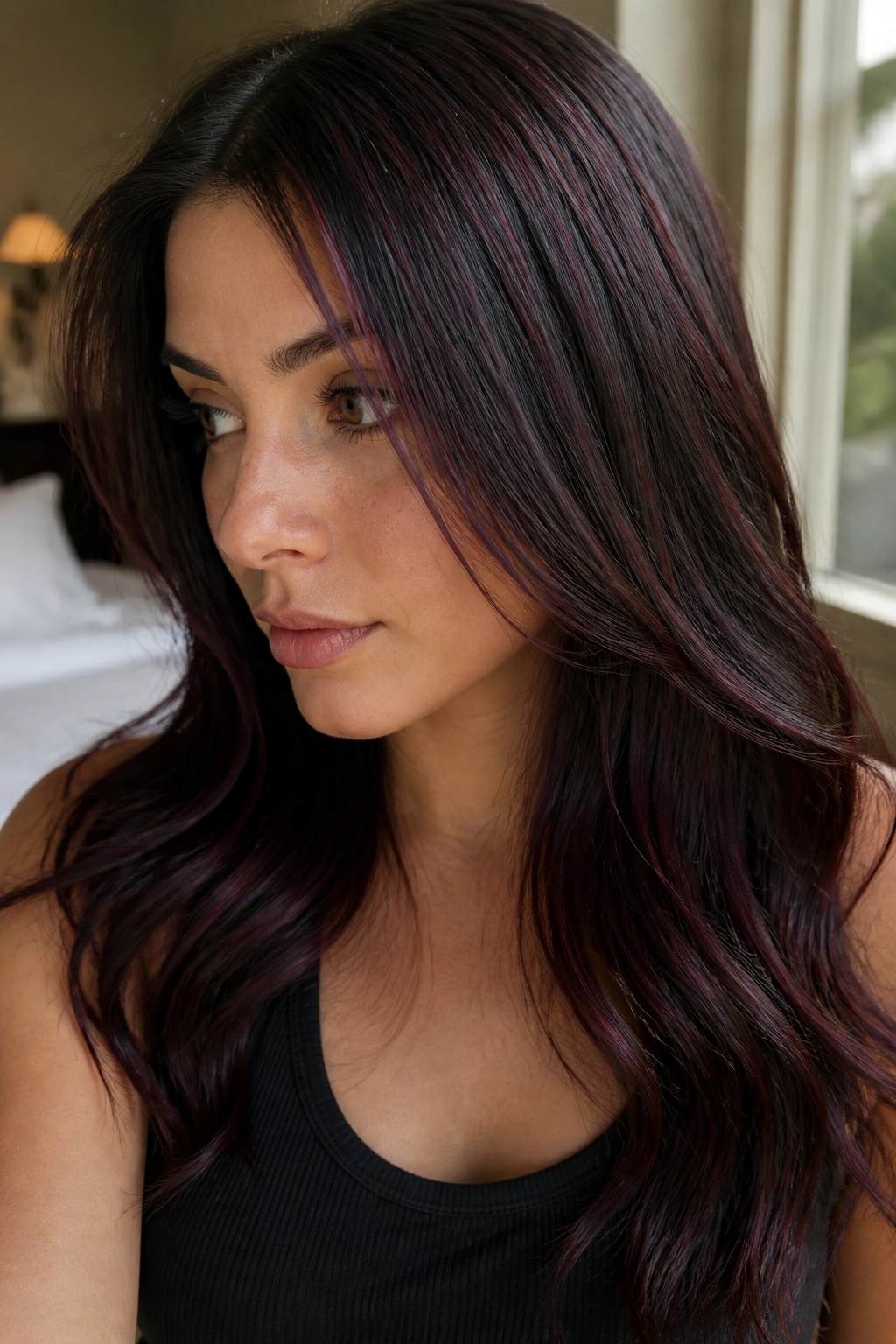
Thin ribbons are where burgundy starts looking polished instead of loud. On dark brown hair, a few narrow merlot pieces can give the hair a wine-dark shimmer that only shows when the light hits from the side. That makes this style a smart choice if you want dimension but not a full color reset.
Ask for slices that are no wider than an eighth of an inch, especially around the part line and temples. That tiny size keeps the highlights from reading as streaks. It also helps the burgundy blend into the brown base, which is what gives the color that soft, expensive-looking depth.
I like this on straight styles and loose waves most of all. The movement gives the ribbons enough room to show off. Keep the tone close to merlot or deep wine rather than bright cherry, and the whole thing stays smooth instead of shouty.
2. Cherry-Wine Balayage on Chocolate Brown Waves
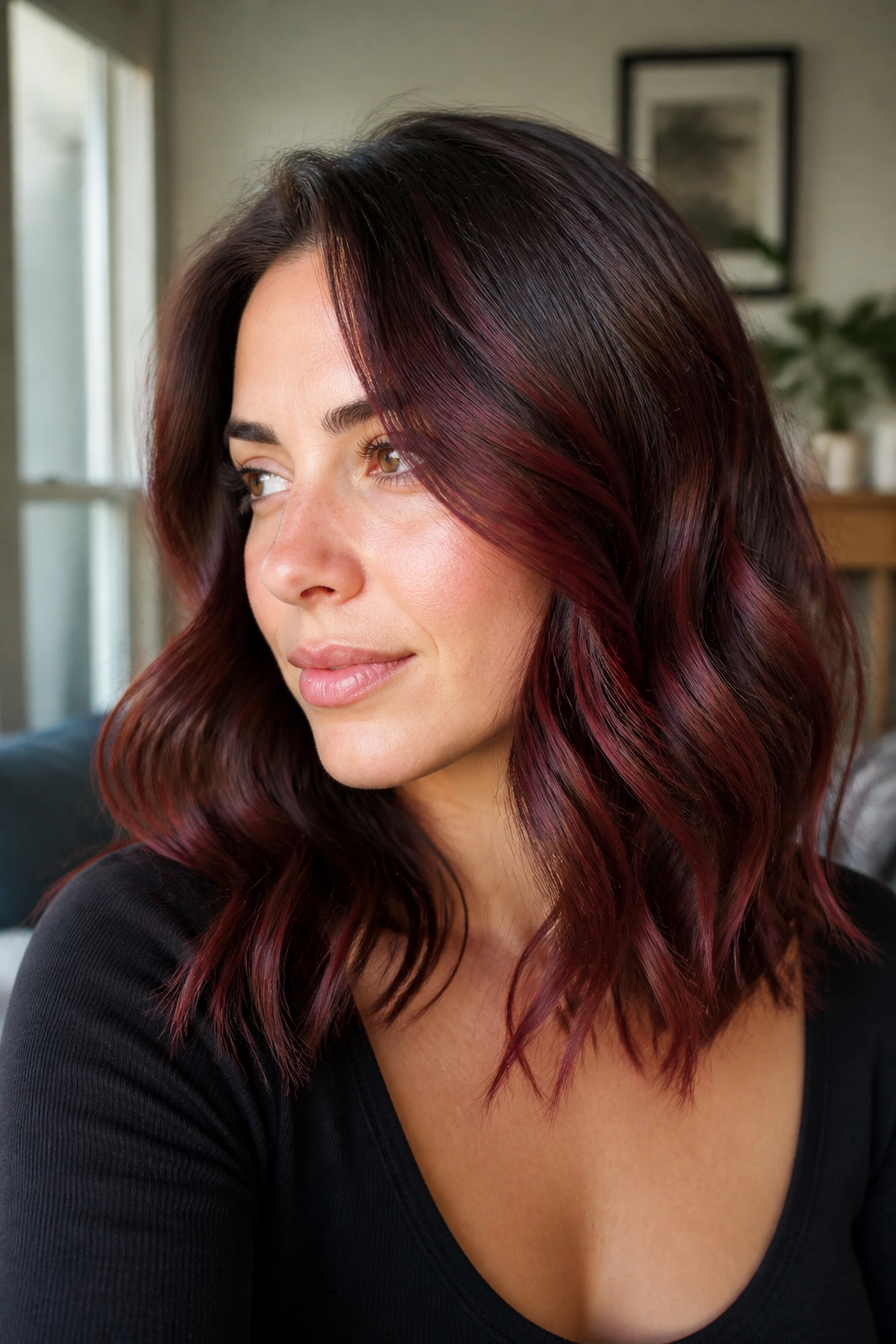
Why does balayage make burgundy look softer? Because the painted edges taper out instead of stopping hard. On chocolate brown hair, that taper matters. It keeps the burgundy from looking like it was dropped on the surface in one clean line.
Balayage also works with waves in a way foils sometimes don’t. When the hair bends, the lighter ends and deeper mids catch the light at different angles, so the red looks layered instead of flat. If your hair sits around shoulder length or longer, this style gives you a lot of visual payoff without needing bright highlights all over the head.
Keep the painted sections mid-length to ends, about one to two inches wide in the widest spots. Hard lines kill this look. Soft, feathered placement is the whole point.
3. Deep Plum Face-Framing Pieces
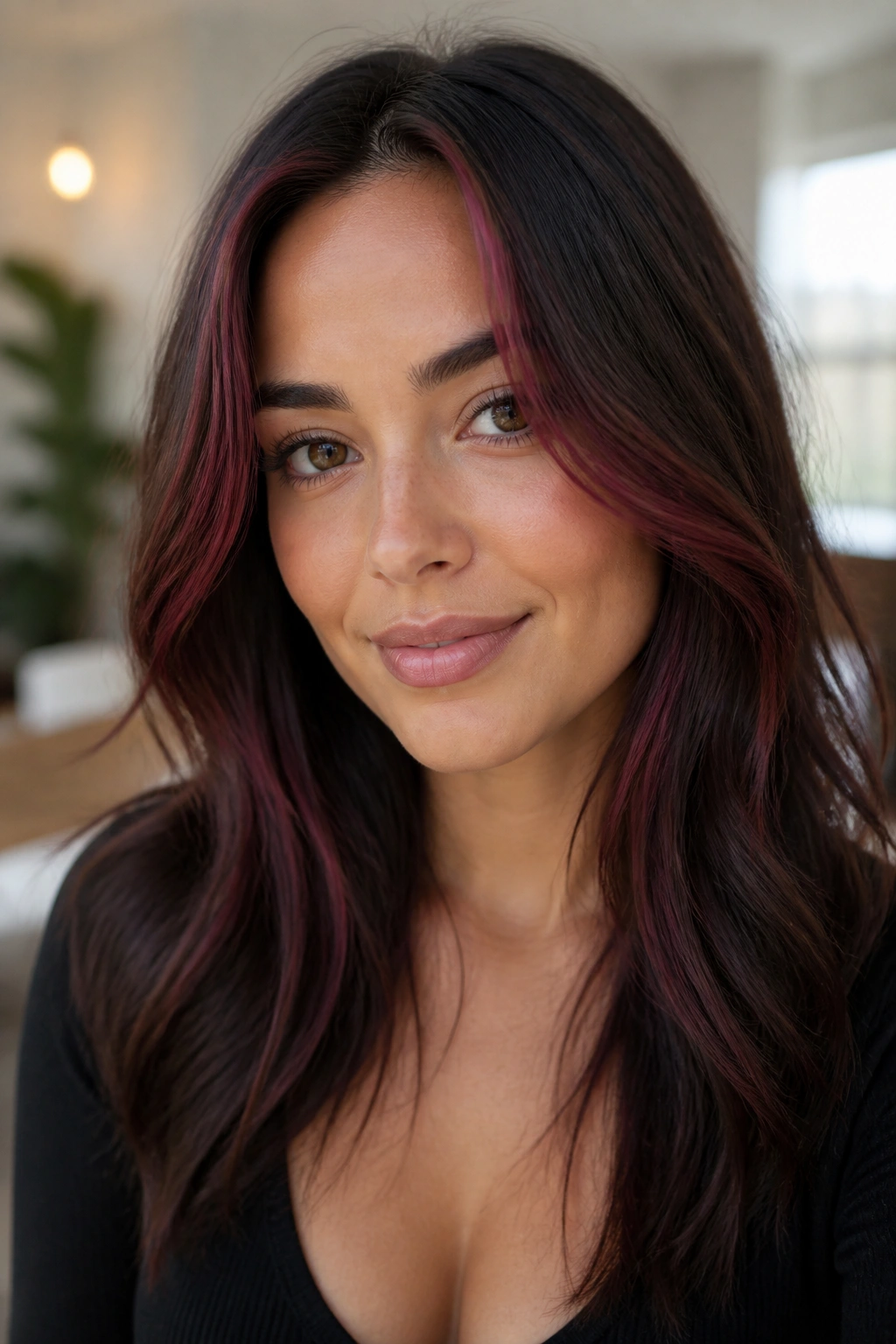
Face-framing burgundy is the quickest way to make brown hair look more intentional. A few plum-toned pieces around the front can sharpen a cut, brighten the face, and make even a simple blowout look a little more considered.
What to Ask For
- Keep the front pieces narrow at the root and slightly wider at the cheekbone.
- Ask for a plum-burgundy shade instead of a red burgundy if your skin leans cool.
- Leave the color a touch deeper near the root so it doesn’t look like a stripe.
Why It Works
The front of the hair gets the most light, so those pieces show first. That’s useful if you want people to notice the color without turning the whole head into a red project. It’s also one of the easiest burgundy looks to maintain, because the rest of the hair can stay closer to your natural brown.
If you usually wear your hair down, this is a strong pick. If you wear it tucked behind the ears, even better.
4. Burgundy Peekaboo Underlayers
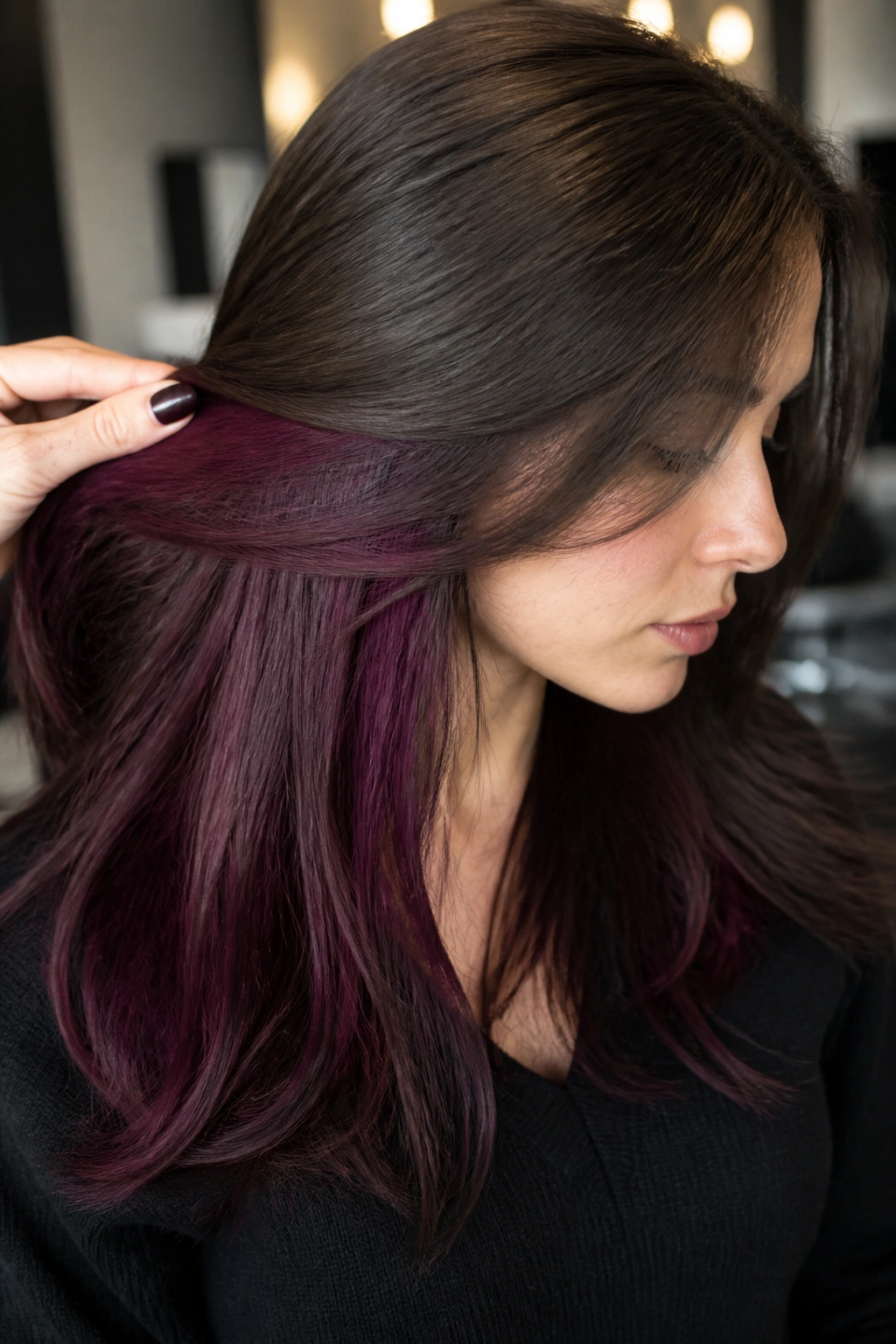
There’s something fun about a color that only shows when the hair moves. Peekaboo burgundy lives underneath the top layer, so it flashes through when you tuck your hair back, twist it up, or catch it in a ponytail. Very practical. Also a little sneaky.
This placement works especially well if you need to keep things conservative at work or school but still want some personality. The top layer can stay brown and calm while the underlayer carries the wine tone. A few hidden panels near the nape are enough for most people. You do not need to paint the whole underside unless you want that much color showing.
The effect is strongest on hair that’s layered or medium length. Long, one-length hair hides the color more. Short hair exposes it faster.
5. Mulled-Wine Money Piece
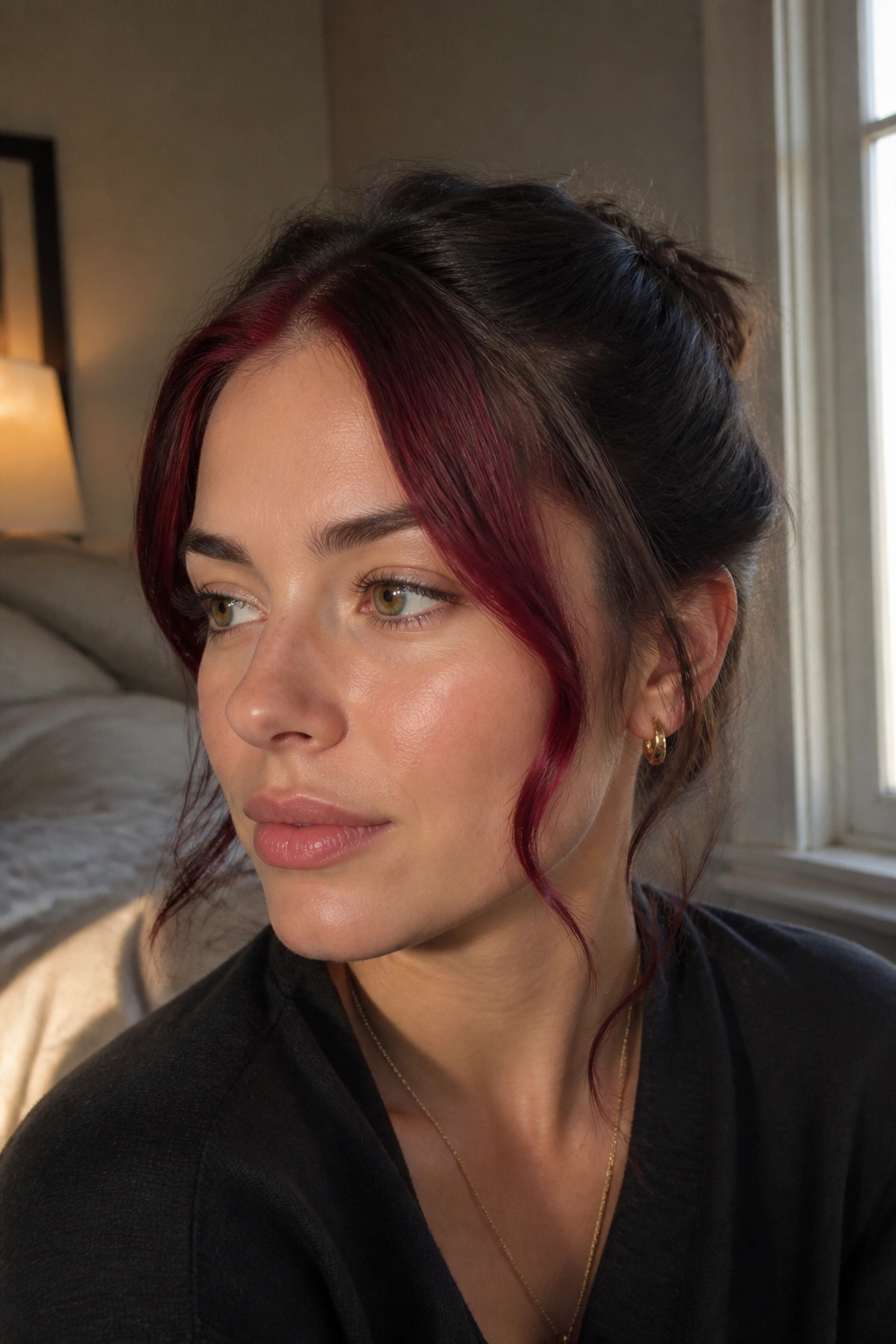
A money piece is not subtle, and that’s exactly why it works. Around a brown base, a mulled-wine front piece creates a clean hit of contrast right where the eye lands first. If you want burgundy highlights for brown hair that show up immediately, this is the blunt-force option.
Keep the frame narrow enough to sit close to the hairline, or it starts to look striped. A width between half an inch and three-quarters of an inch is plenty for most faces. Wider than that, and the whole thing can feel heavy.
This style loves ponytails, half-up styles, and braids because the front still does the talking. It also grows out more gracefully than you’d expect. The root can soften into the brown base without ruining the look, which is useful if you hate touch-ups.
6. Cranberry Babylights on Medium Brown Hair
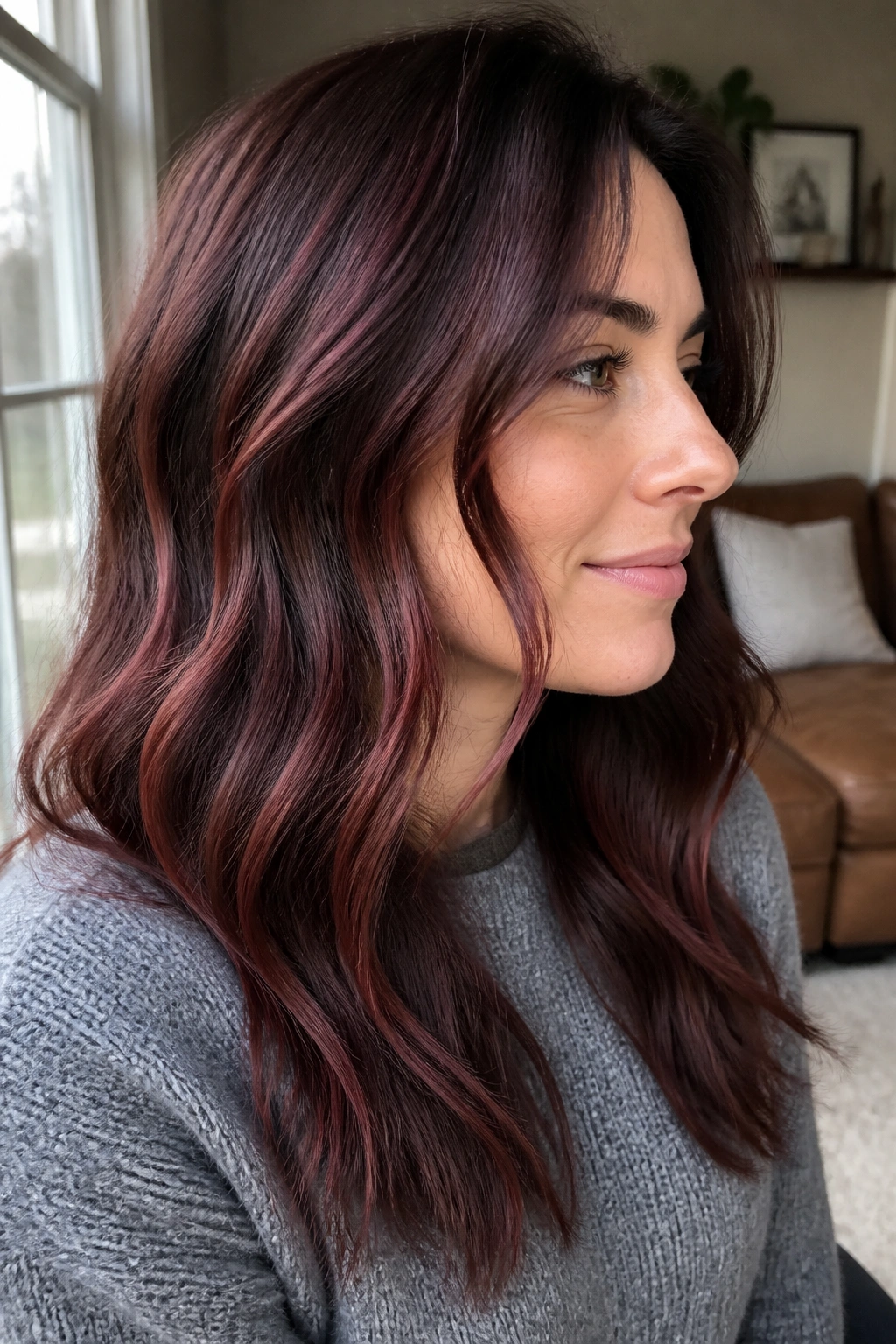
Cranberry babylights are the opposite of chunky color. They whisper. That’s the charm. On medium brown hair, tiny cranberry threads can make the surface look richer and more reflective, almost like the hair picked up a red sheen from the light.
Babylights need to be narrow enough that you can barely separate them at a glance. Think fine weaving through the crown, part line, and upper sides. The goal is not visible streaks. It’s a subtle red haze that only becomes obvious when the hair moves.
Best when you want:
- Low contrast
- A soft finish on straight or lightly waved hair
- A burgundy shade that doesn’t dominate the base
- Easy grow-out without harsh regrowth lines
If you like dimension but hate obvious highlights, this is one of the cleanest ways to do it.
7. Cabernet Ombré from Mid-Lengths to Ends
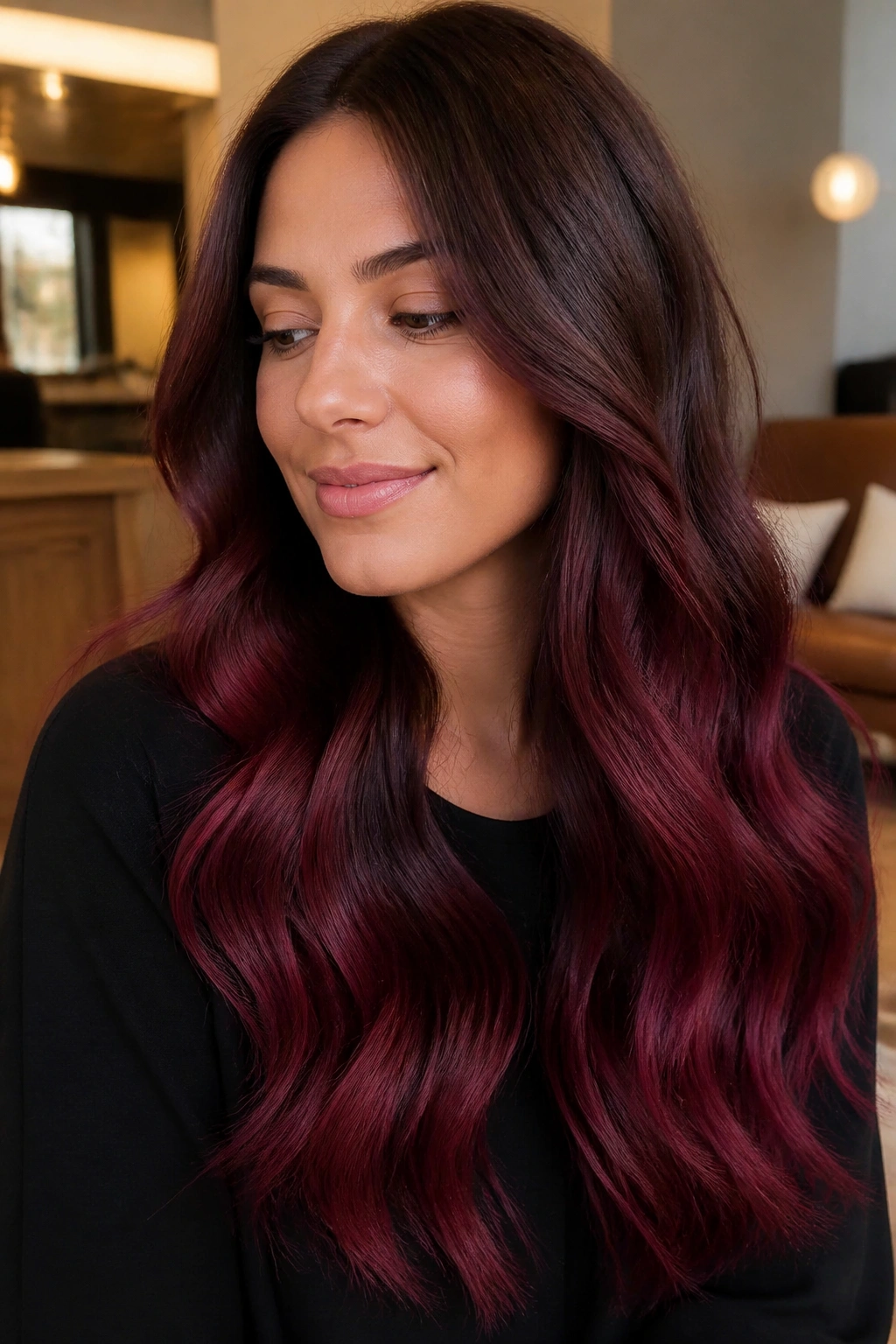
Ombré is the lazy genius of burgundy color. The roots stay brown, the color deepens through the mid-lengths, and the ends take on that cabernet richness that gives the whole style some weight. It’s one of the easiest burgundy looks to live with because the grow-out is built in.
How It Wears
The top stays close to your natural brown, so the look doesn’t scream for attention at the scalp. Then the eye falls downward, where the burgundy gets denser and richer. On longer hair, that fade feels smooth and deliberate instead of patchy.
This works especially well if you wear your hair in loose curls or waves, because the lighter ends keep showing. Ask for the burgundy to start below the ear line or around the chin area if you want the color to feel softer. If your hair is already light brown, the transition can be even gentler. If it’s dark, a small lift first helps the red show.
8. Mahogany-Burgundy Blends for Warm Brown Bases
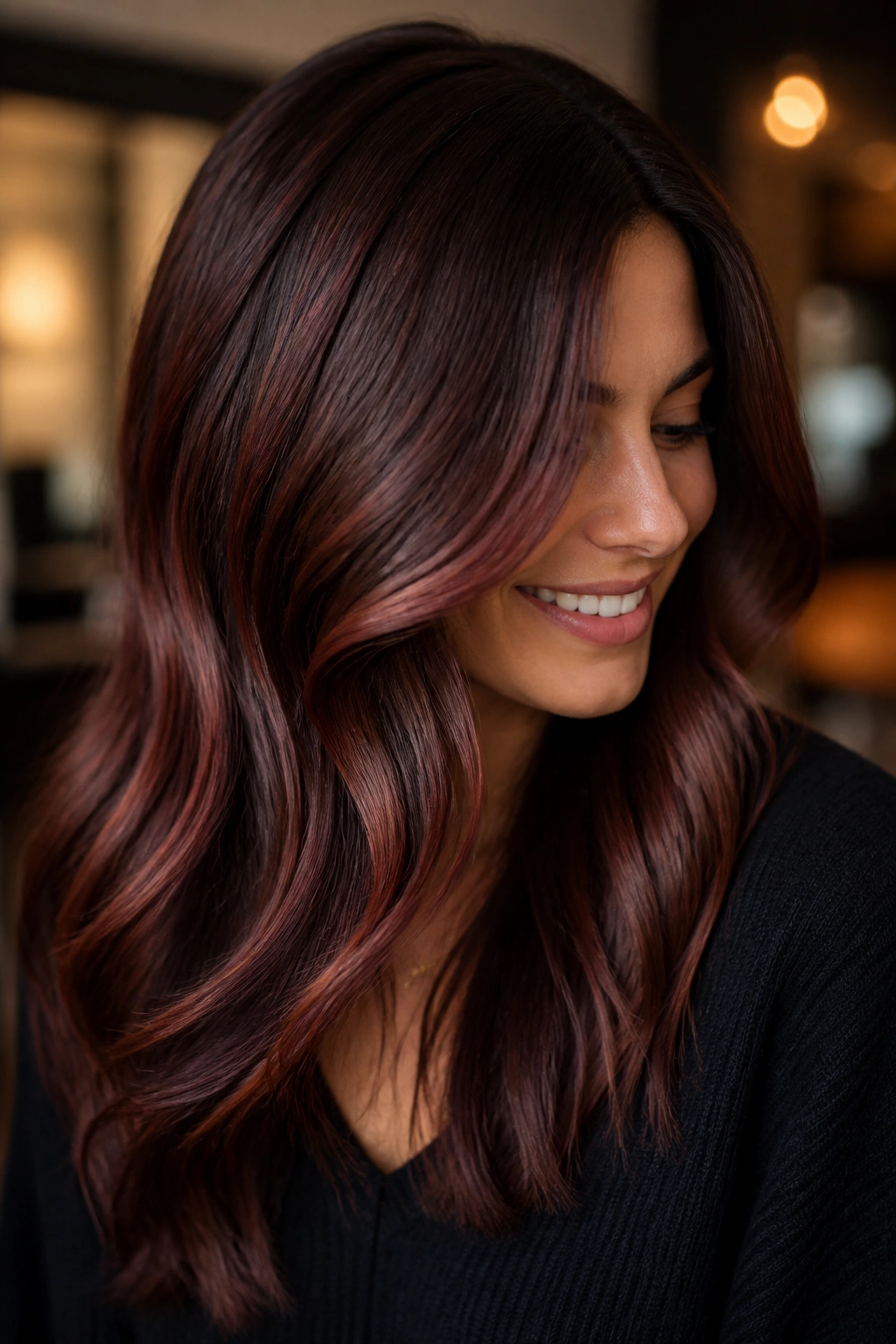
Warm brown hair and mahogany-burgundy get along fast. There’s less fighting between the tones, so the result feels blended instead of pasted on. The color sits somewhere between red wine and toasted wood, which sounds dramatic but usually reads as rich rather than flashy.
I prefer this shade family on chestnut, caramel brown, and golden brown bases. The warmth in the hair keeps the burgundy from turning purple or too cool. It also gives the highlights a softer edge, especially when they’re painted in loose ribbons instead of tight foils.
This is a good choice if you want the red to be noticeable without losing the brown. It behaves well on layered cuts because the different lengths catch the mahogany at different points. The hair ends up looking like it has more depth, not more noise.
9. Violet-Burgundy Highlights on Cool Brown Hair
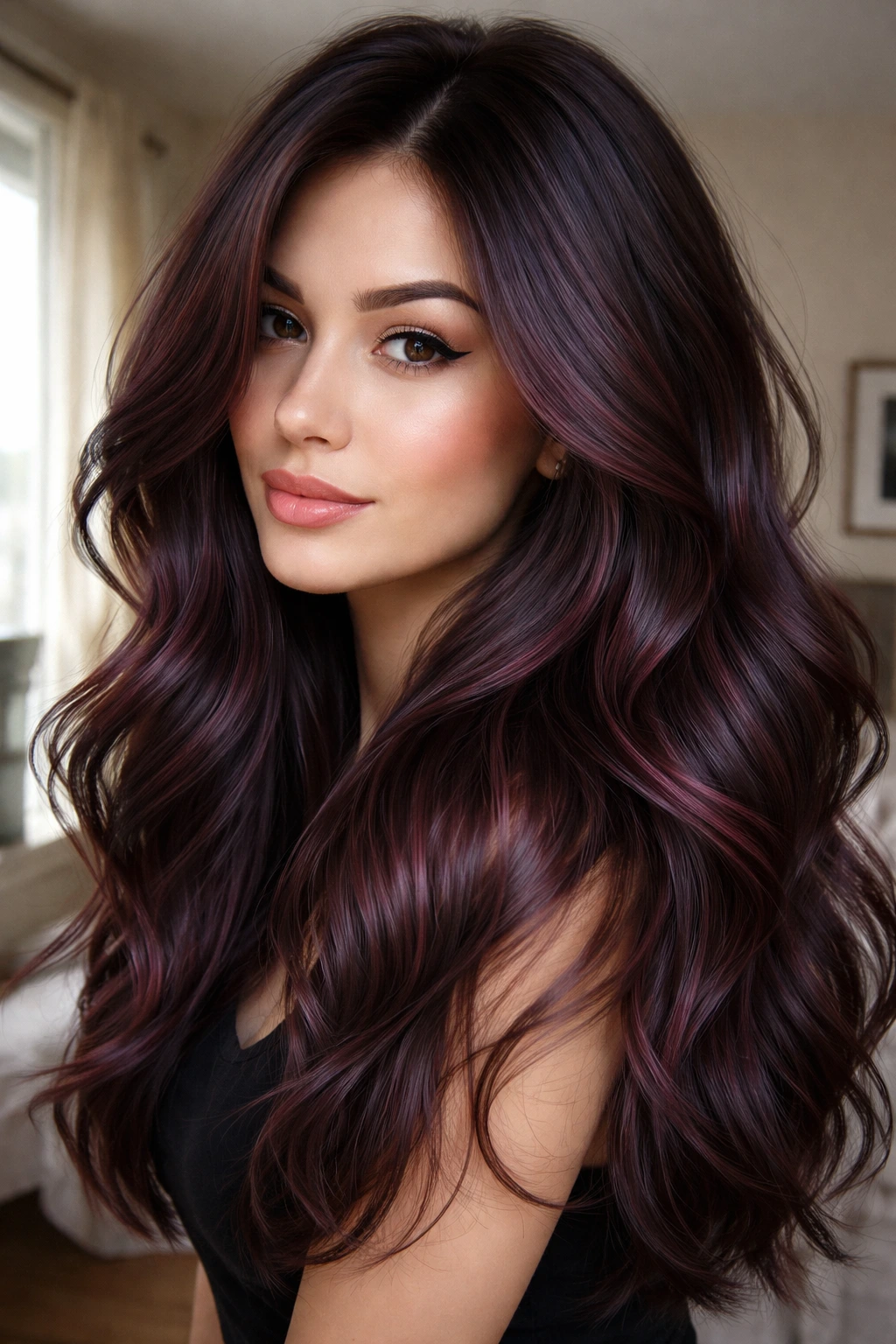
Can burgundy work on cool brown hair without looking muddy? Yes, if the shade leans plum or violet instead of copper. Cool brown bases often need a cooler red family so the color doesn’t fight the ash tones already in the hair.
That’s where violet-burgundy helps. It keeps the red deep and dark, with just enough purple in it to sit cleanly over a cool brunette base. If your hair is ash brown, mushroom brown, or a soft espresso with cool undertones, this version tends to look more natural than a warmer red.
Avoid bright orange-red tones here. They usually look disconnected. A violet-leaning burgundy keeps the whole color story tied together, which matters more than people think. Bad red placement is obvious. Good placement just looks like dimension.
10. Auburn-Burgundy Ribbon Highlights for Curly Hair
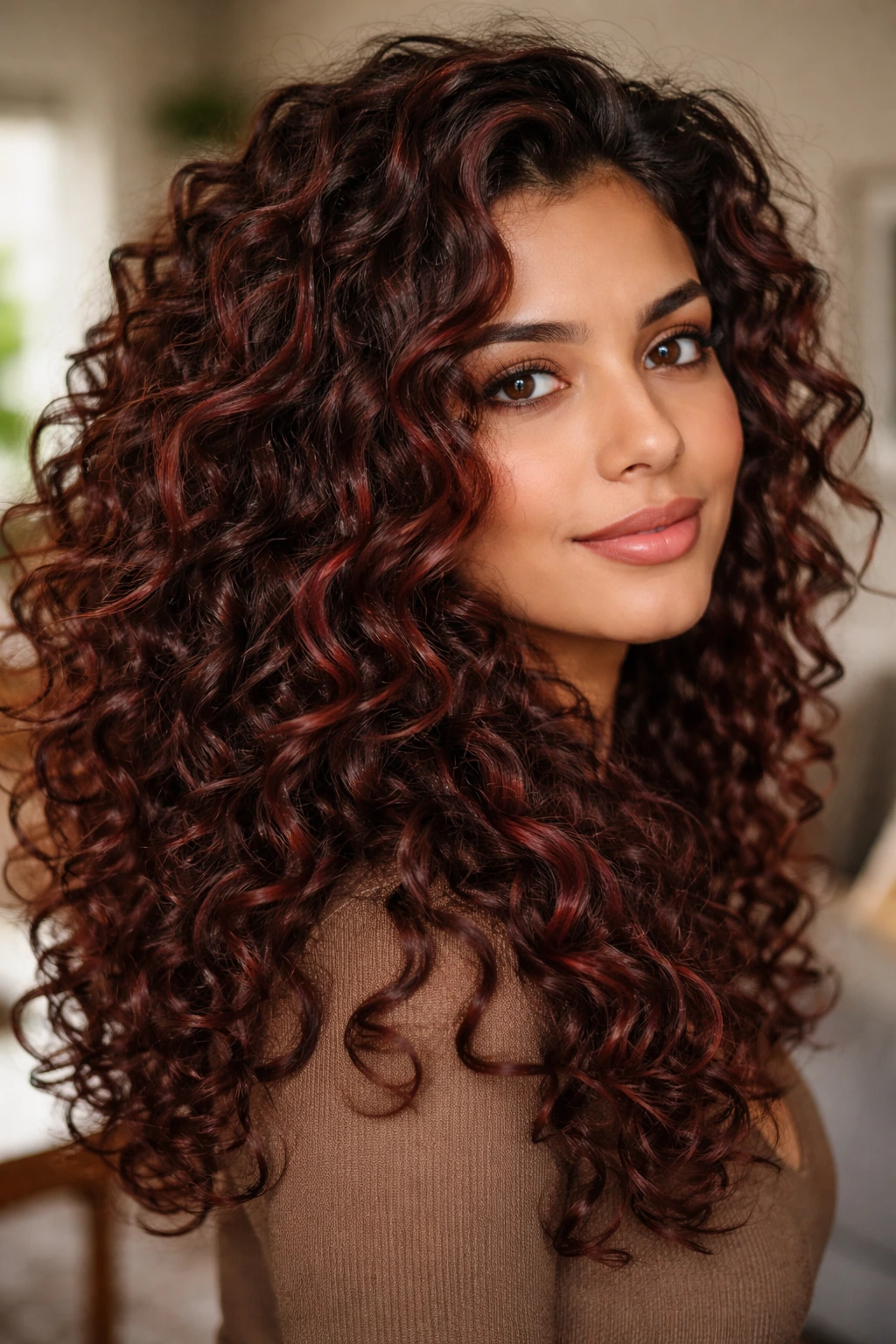
Curly hair needs a different hand. Narrow, delicate pieces can vanish inside tight curls, so burgundy ribbon highlights usually work better when they follow the curl pattern in broader, curved sections. That gives the color room to show when each ringlet opens up.
Auburn-burgundy is a nice middle ground here because it holds warmth without going too bright. On curls, that warmth picks up movement quickly. You’ll see flashes of red between bends, especially if the cut has layers. One-length curls can hide the color more than you’d expect.
Use a diffuser if you want the color to show its shape. Air-dried curls can collapse the burgundy into the base if the hair is dense. And if your hair is very dark, a few face-framing pieces in the front help the red read sooner.
11. Wine-Gloss Highlights on a Sleek Bob
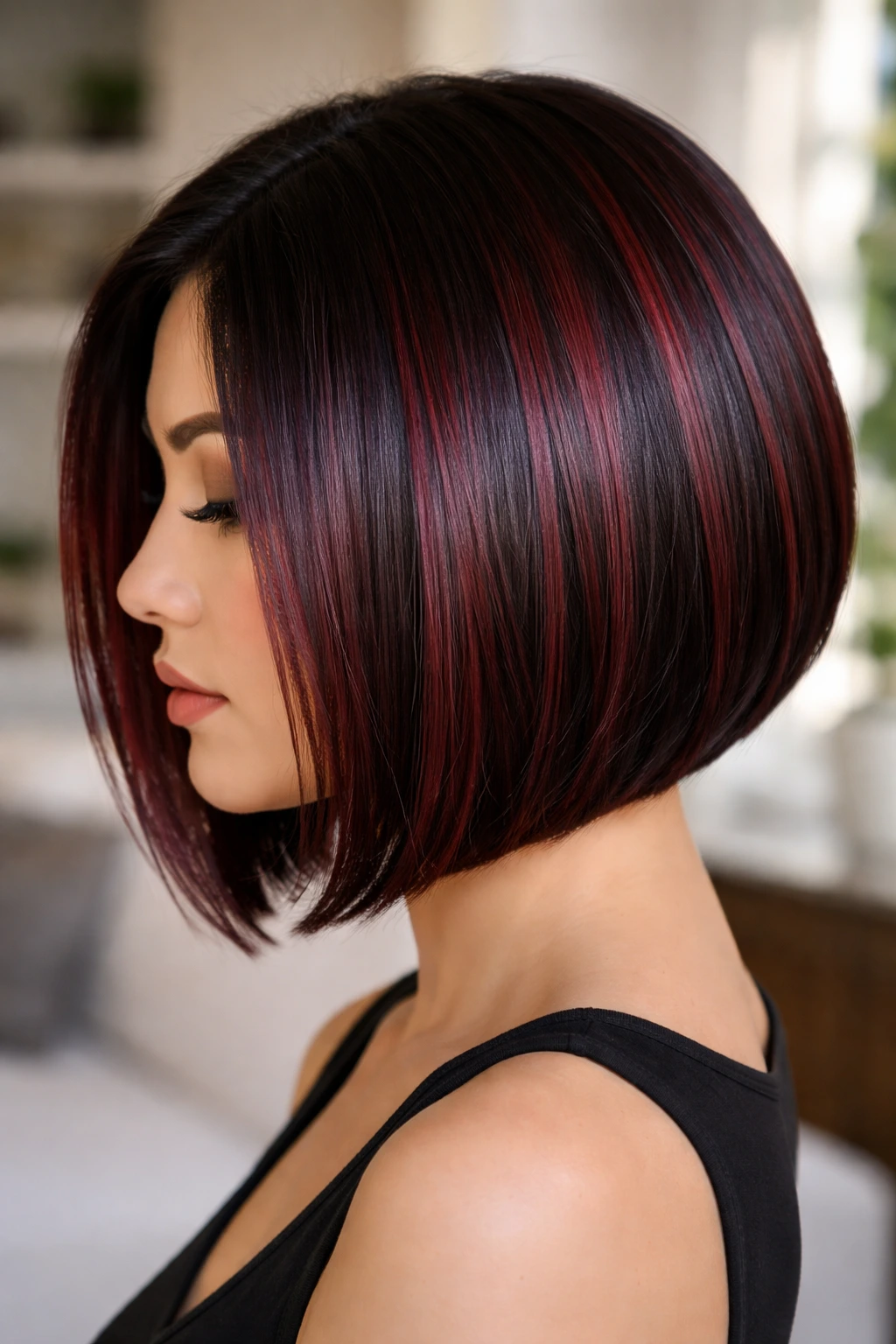
A blunt bob likes precision. Heavy hand-painting can make it look messy fast, which is why wine-gloss highlights are so good here. The color sits on the surface layers and mirrors the clean lines of the cut.
Keep the burgundy deep, glossy, and close to the base tone. If the bob is already brown, a gloss or gentle highlight treatment can add that wine finish without making the hair look striped. The shine matters as much as the color. On a smooth bob, every bend in the hairline shows.
This is one of those styles that looks best when the hair is freshly blown out or flat-ironed with heat protection. The gloss effect is wasted if the cut is frizzy. Sharp line, deep red, clean finish. That’s the whole story.
12. Burgundy Chunk Lights for a Retro Look
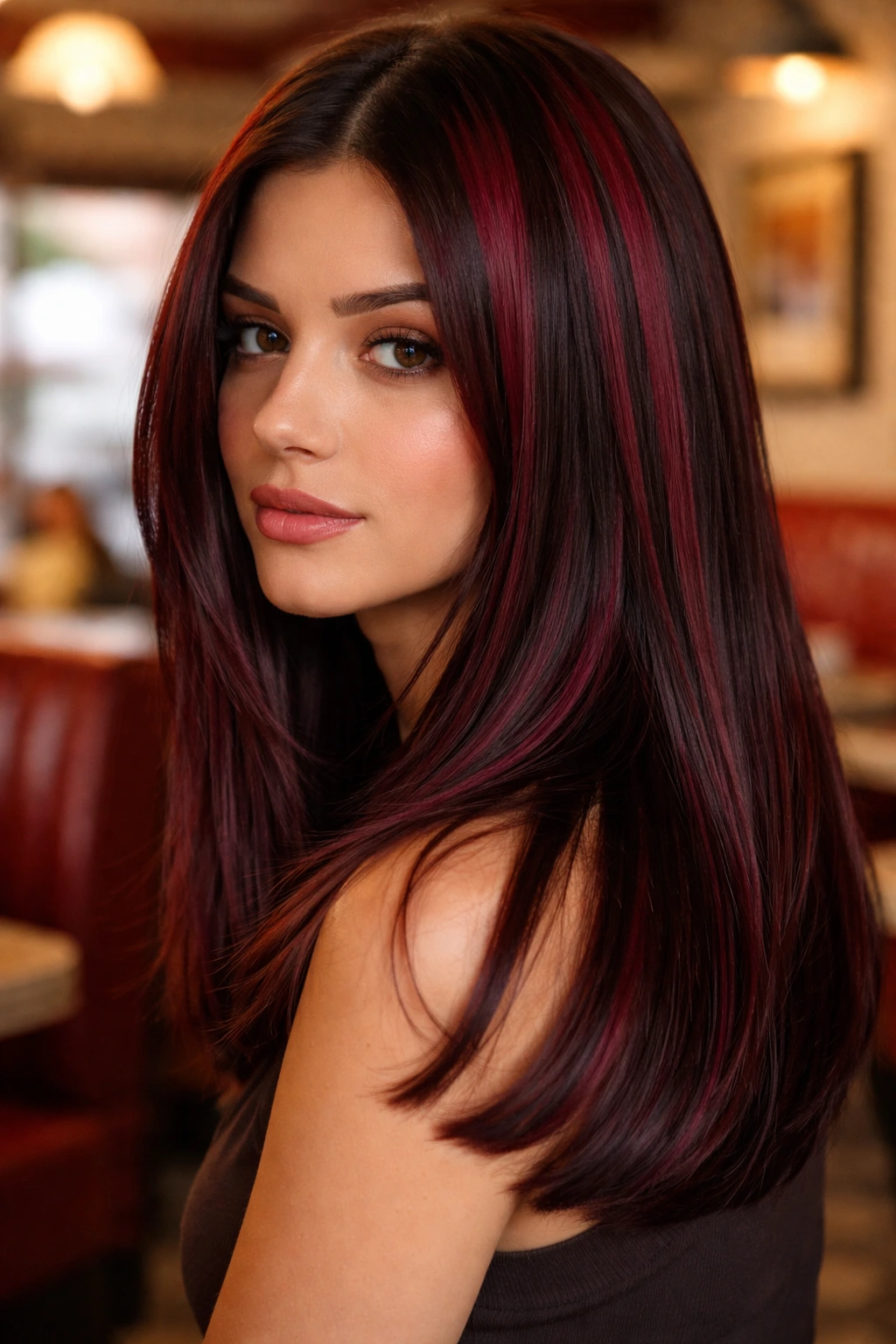
Chunk lights are not trying to be subtle. They’re trying to be seen, and honestly, that can be fun. On brown hair, thick burgundy panels bring back a little old-school attitude, especially if the cut is blunt or shoulder length.
The sections need room to breathe. Think quarter-inch to half-inch panels, not tiny woven slices. When the pieces are too fine, chunk lights lose the point. You want contrast, clean edges, and enough separation that the burgundy reads like a design choice.
This look works best on straight styles, flipped ends, and layered bobs. It’s less forgiving on very soft, airy cuts. If you’re drawn to high contrast and don’t mind a louder result, this is one of the most direct ways to wear burgundy on brown hair.
13. Black Cherry Lowlights Paired with Burgundy Streaks
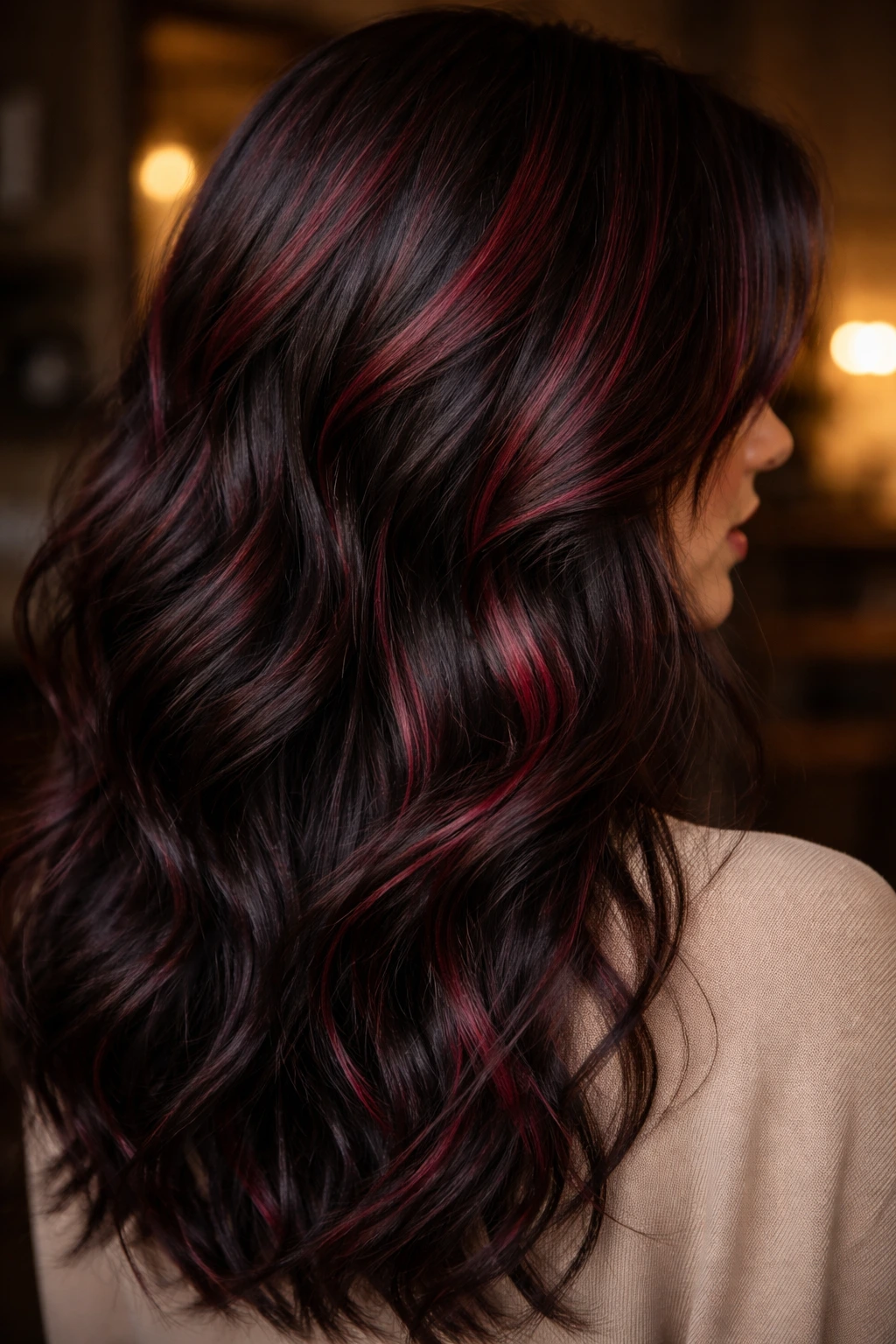
If brown hair feels flat, one red shade usually isn’t enough. Pairing black cherry lowlights with burgundy streaks gives the hair a deeper base and a brighter surface at the same time. That contrast is what makes the color feel layered instead of one-note.
Why Two Reds Beat One
The lowlights create shadow. The burgundy highlights sit on top of that shadow and look brighter because of it. Without the darker pieces underneath, the red can flatten out fast, especially on medium brown hair. With them, the whole head has more depth from root to end.
This combination works well if your hair is thick, coarse, or naturally dense. It also makes waves look fuller. The deeper cherry tones underneath disappear a little when the hair is down, then show again when the hair shifts. That back-and-forth movement keeps the color interesting.
14. Peekaboo Burgundy Under the Crown
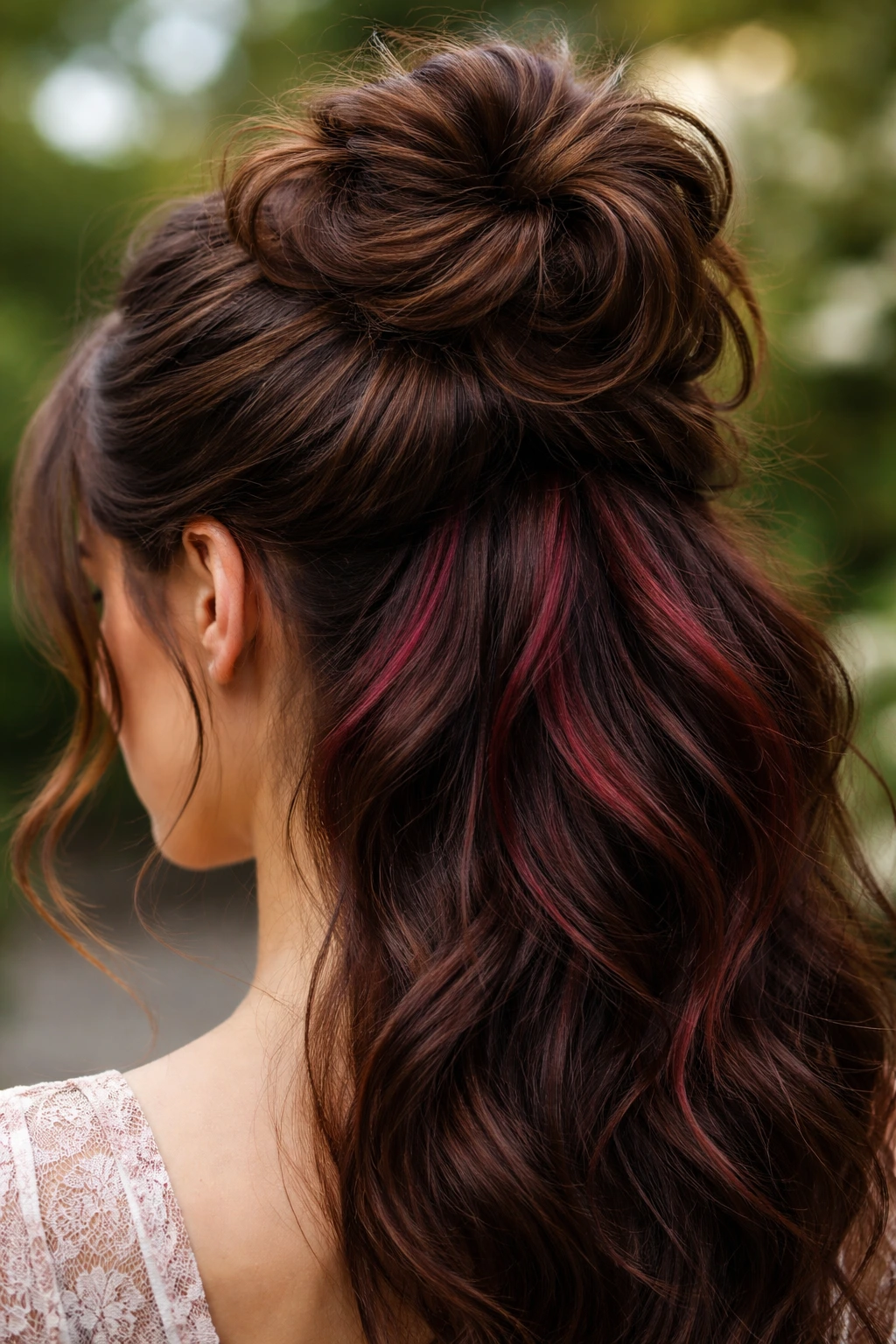
A crown-level peekaboo color is a nice twist on the hidden-underlayer idea. Instead of keeping the burgundy all the way underneath, you tuck it just below the crown so it flashes through the top when the hair moves. Braids, buns, and half-up styles show it off fast.
This placement works especially well if you wear your hair up most days. The color isn’t wasted sitting under the bottom layer where no one sees it. It pops at the exact moments hair usually looks plain — when you toss it up, pinch it back, or let a few pieces fall around the face.
I like this one because it feels a little more deliberate than a basic peekaboo. There’s a surprise in it. And if you only want a small amount of burgundy, that surprise is enough.
15. Soft Merlot Contour Highlights Around the Hairline
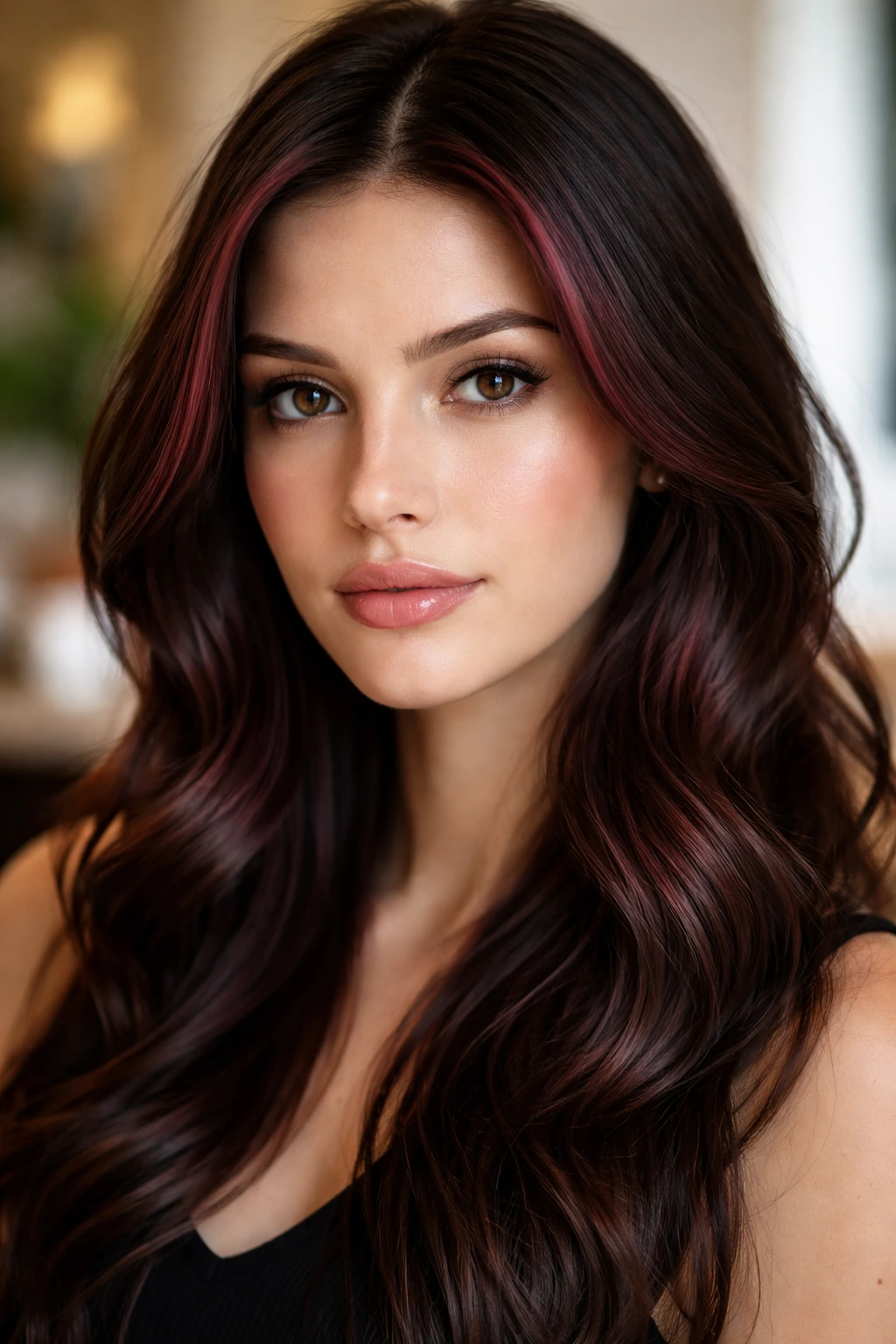
Want a softer cousin of the money piece? This is it. Contour highlights around the hairline use merlot pieces that sit close to the face but don’t shout. They work more like framing than statement color.
Ask for two to four fine pieces near the temples and jawline, with a gentle gradient rather than a hard block. The burgundy should be just a touch brighter than the rest of the hair, not a full contrast jump. That keeps the look calm and flattering. It also helps if your brown base is deep and you want just a little movement at the front.
This style is good for first-time color wearers. It gives you a visible red tone without making the rest of your hair feel committed to the same level of drama.
16. Cool Plum Money Pieces on Espresso Hair
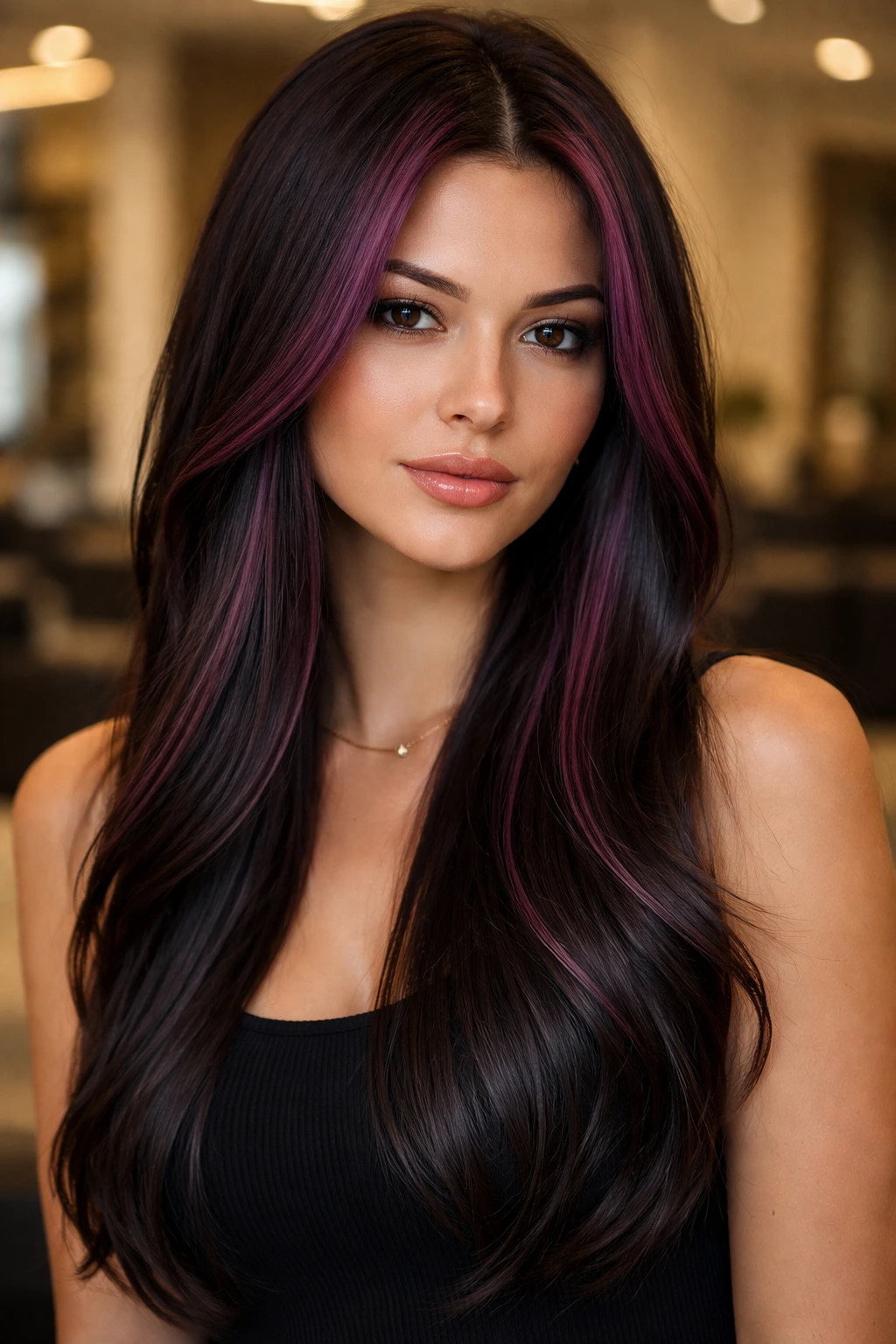
Espresso brown can swallow color if the burgundy is too warm. That’s why cool plum money pieces work so well on very dark brown hair. The plum tone gives the front strands enough contrast to show, but it still keeps the look deep and moody.
A tiny lift can help here if your hair is nearly black. Without it, the plum may only show in direct light. That’s not a bad thing if you want the color to stay low-key, but it can disappoint if you expect bright red. A good colorist will usually balance lift and deposit so the plum has room to read.
This style looks sharp around straight hair, glossy blowouts, and centered parts. It is also one of the easiest burgundy looks to tuck behind the ears and forget about until the light catches it.
17. Shiny Burgundy Foils for Thick Brown Hair
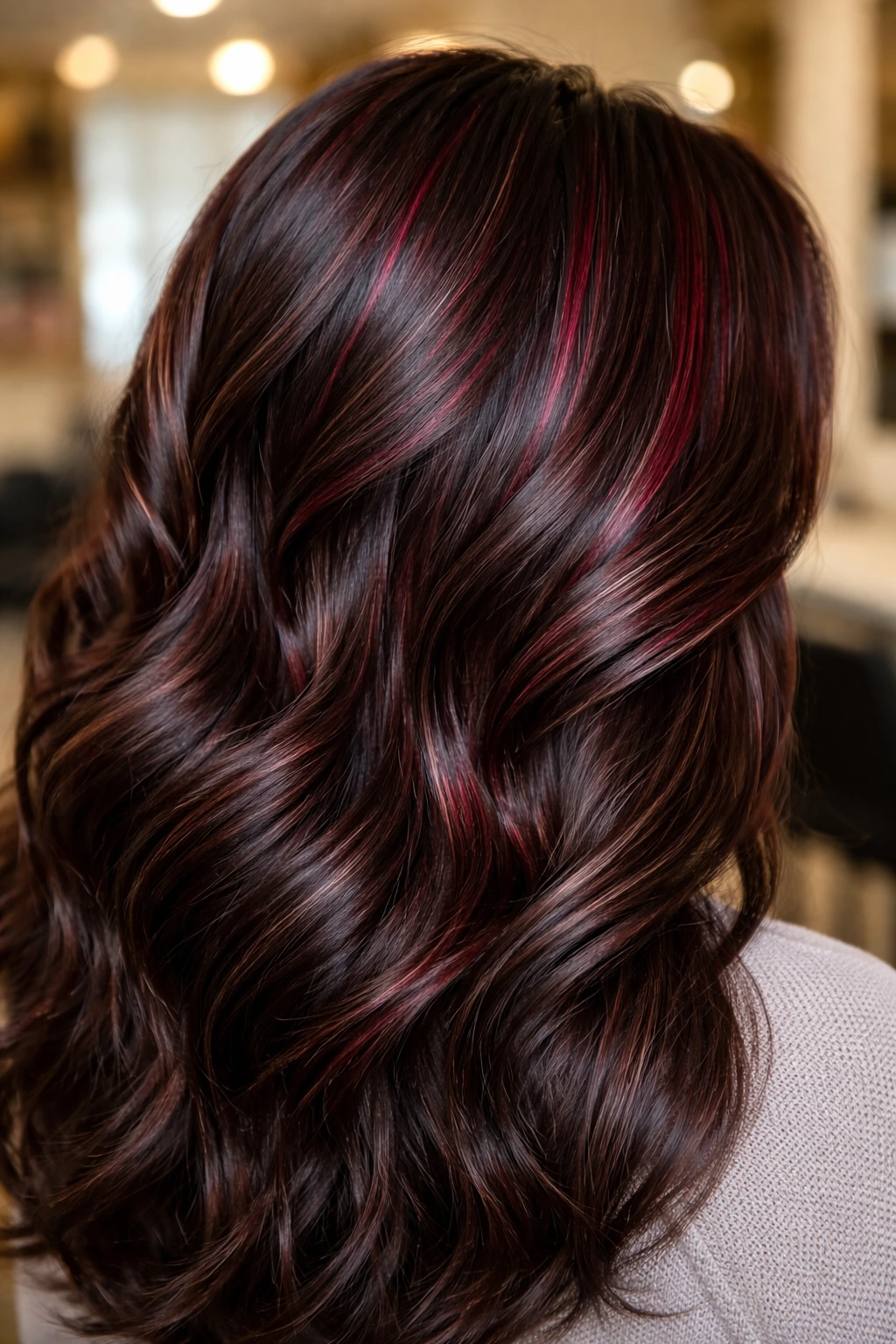
Thick hair can eat color. A hand-painted burgundy piece that looks rich on fine hair can disappear in dense brown hair if the sections are too wide or too soft. Foils fix that by concentrating the color and giving it enough saturation to show through the bulk.
The Most Useful Details
- Keep the sections narrow through the crown so the burgundy doesn’t get buried.
- Use more foils near the top and sides where the eye lands first.
- Alternate burgundy with untouched brown sections so the color has room to breathe.
- Ask for a glossy finish if you want the red to reflect light instead of looking matte.
Thick hair often needs stronger placement, not more color everywhere. That’s the part people miss. A few well-placed foils do more than flooding the whole head with red.
18. Raspberry-Burgundy Tips on Long Layers
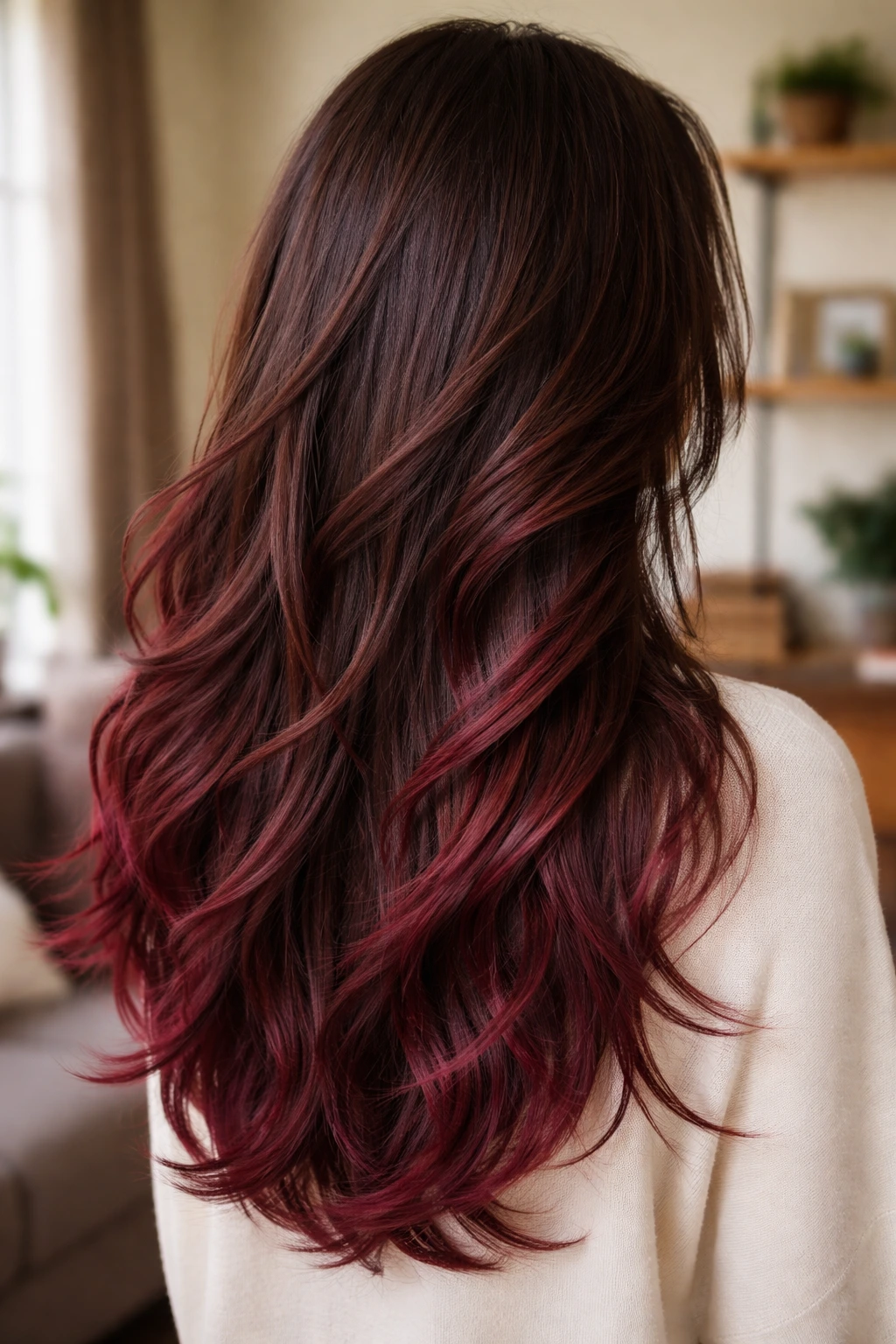
Long layers and burgundy tips are a good match because the movement is built in. As the layers swing, the red at the ends comes and goes. That makes the color feel lively instead of static.
Raspberry-burgundy works especially well when the roots stay brown and the tone intensifies toward the bottom few inches. It keeps the top looking natural while giving the ends a richer finish. Braids are nice with this style too, because the colored tips gather together and show up more than they would loose.
If you want the color to feel softer, keep the raspberry tone muted and deep. If you want more edge, let the ends lean a little brighter. Either way, this style gets along with longer hair better than with short cuts, where the transition can feel abrupt.
19. Smoky Burgundy Balayage for Ash Brown Hair
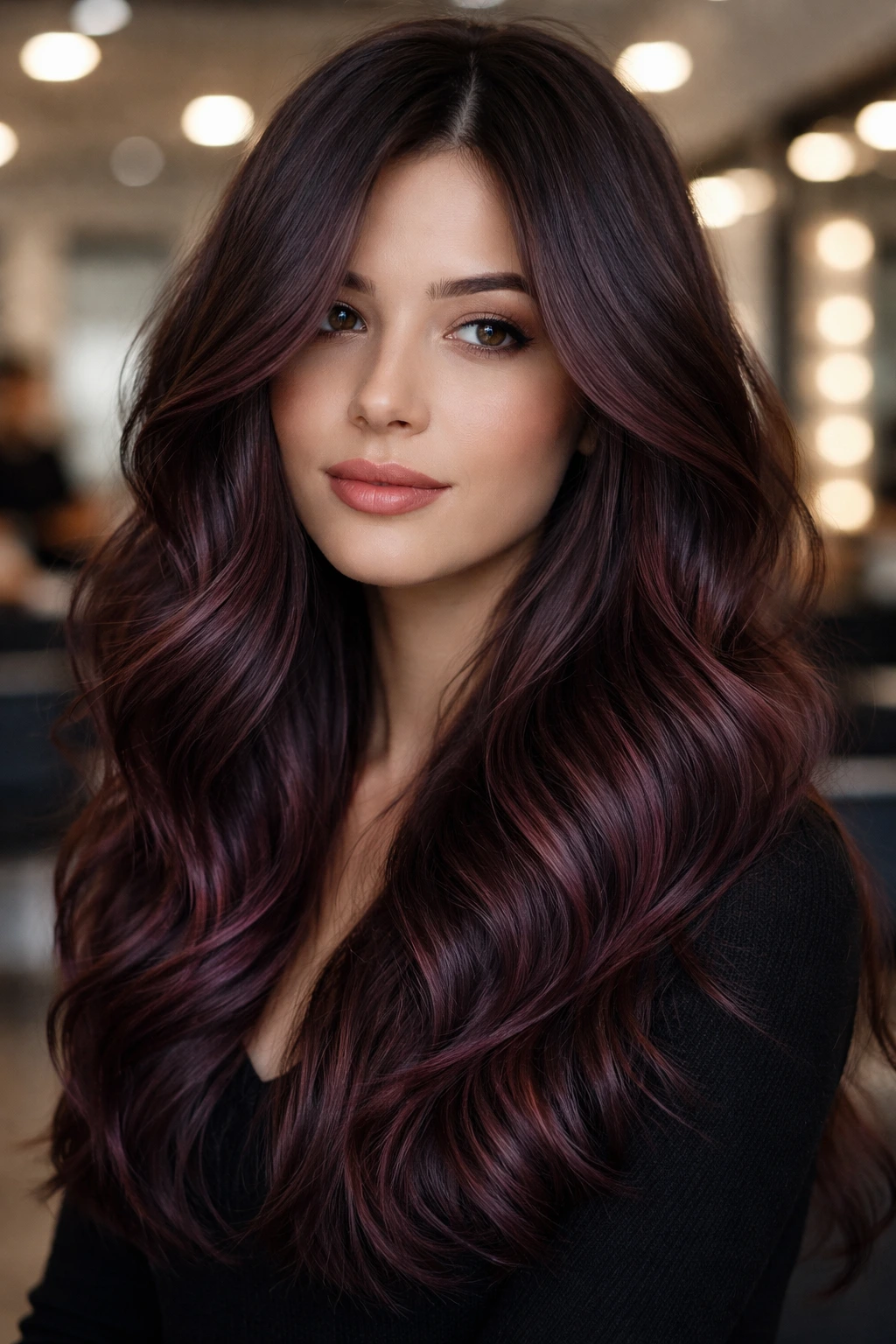
Ash brown hair needs a cooler burgundy. Warm reds can turn awkward fast on that base, while smoky burgundy keeps the whole thing in the same family. The result is less cherry and more dark wine with a gray-brown edge.
What Makes It Different
Smoky burgundy has less obvious red-orange warmth. That means it sits cleanly on ash brown without fighting the undertone already there. If your hair is a cool medium brown, this is one of the safest ways to add burgundy without making the color look brassy.
The balayage technique softens it even more. Painted placement through the mid-lengths and ends gives the color room to blur. I like this when the haircut has movement already — a shag, loose layers, or soft waves. It keeps the cooler red from looking flat.
20. Glossy Burgundy Highlights on a Sleek Lob
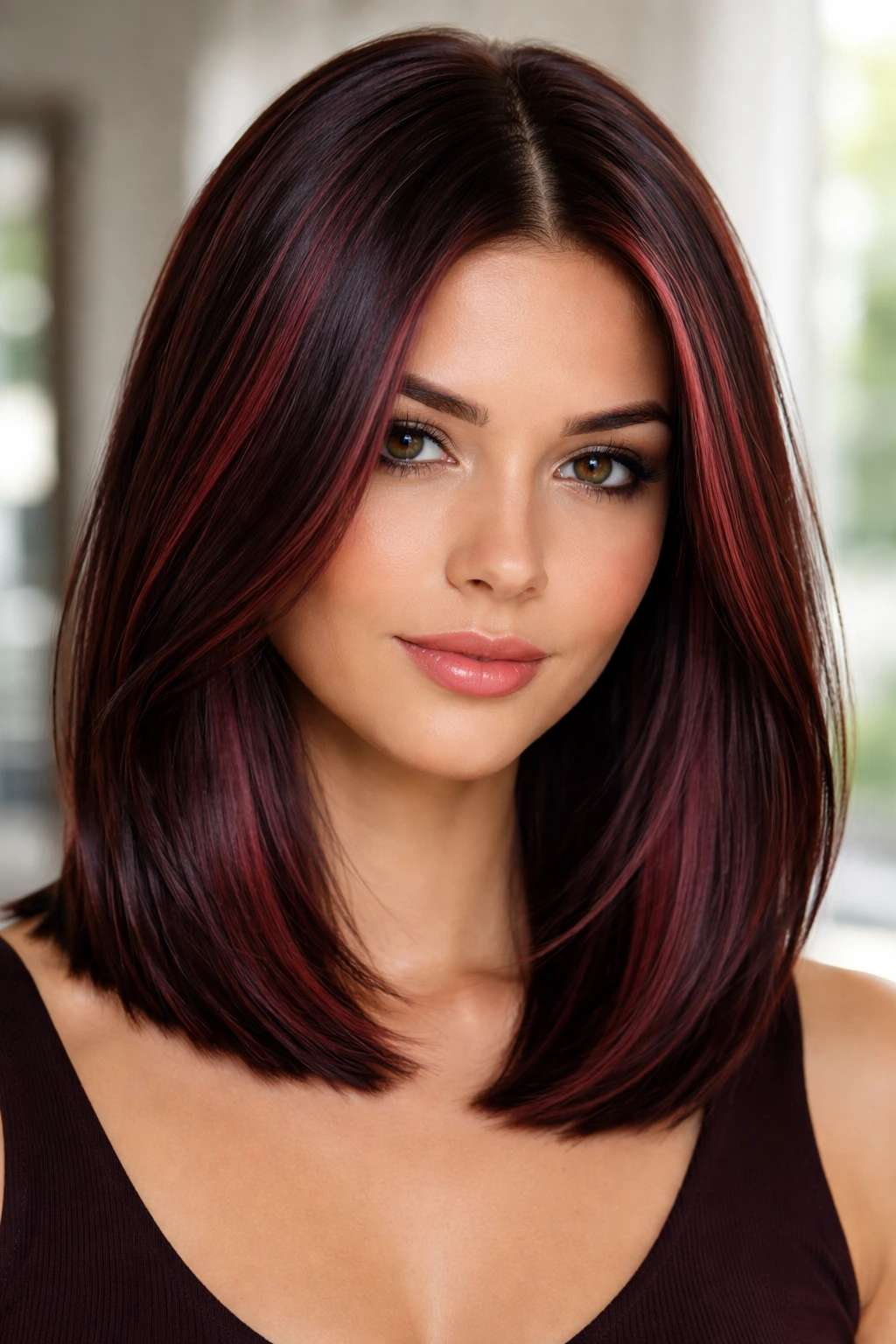
A lob and burgundy are a neat match. The cut has enough length for color to move, but not so much that the red gets lost at the ends. On a sleek finish, burgundy highlights look almost lacquered. Tight. Clean. Intentional.
The key is surface placement. You want the burgundy on the upper layers where light can hit it directly, not buried underneath the whole haircut. A gloss-heavy finish works better than a dry, matte one here, because the shine makes the red deepen and shift as the head turns.
This is a good pick if you like polished hair. It also works for people who wear center parts a lot, since the color sits in a clean frame around the face and crown.
21. Burgundy and Mocha Blend for Low-Contrast Color
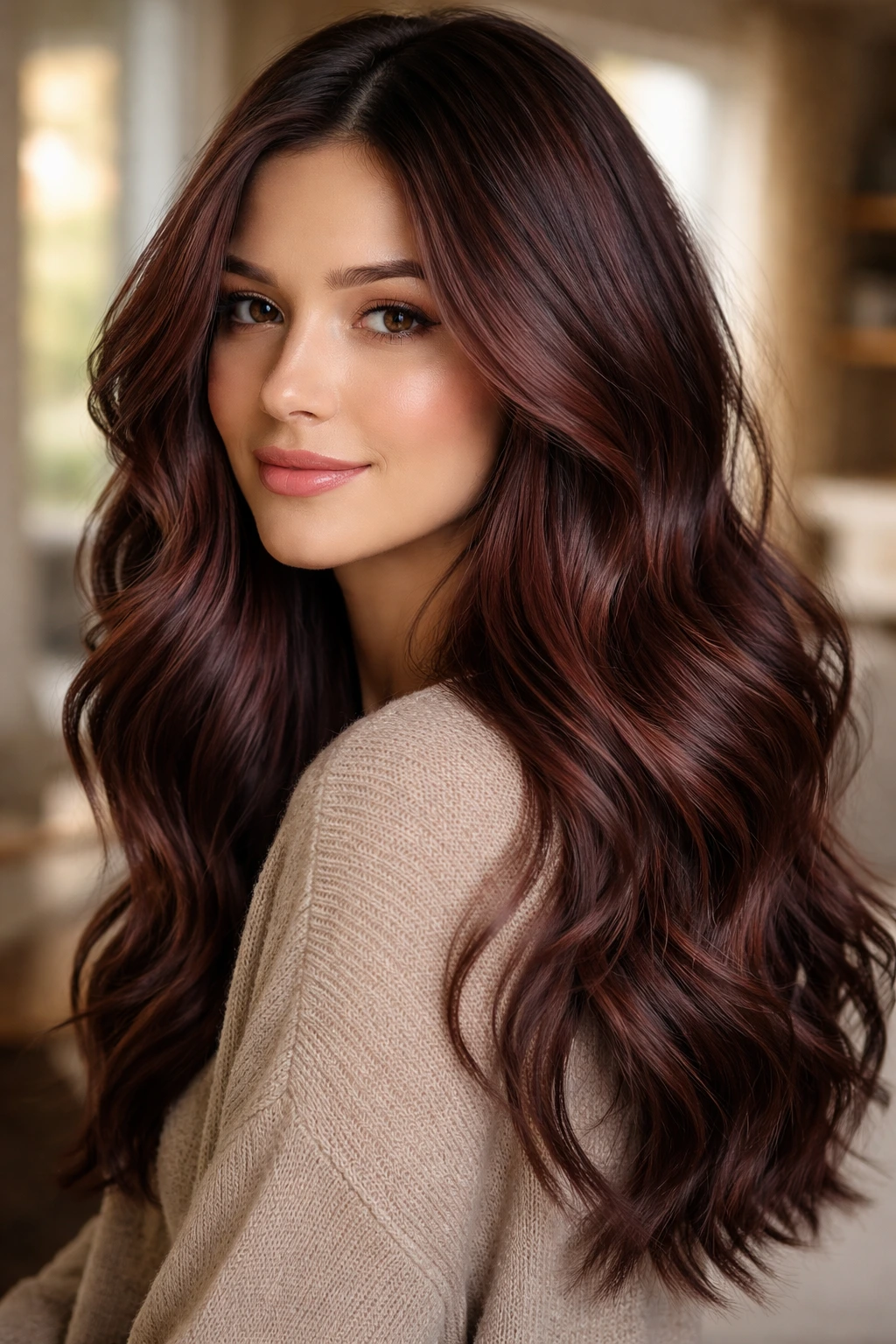
Does burgundy have to announce itself? No. A mocha-and-burgundy blend keeps the color close to the brown family, so the result feels dimensional instead of dramatic. That’s the point.
The trick is contrast control. If the mocha lowlights and burgundy highlights sit within a few shades of each other, the whole head looks softer and more expensive in the plain, practical sense of the word — less patchy, less obvious, more blended. You can wear this style in waves, curls, or straight hair and get a different read every time.
This is a strong option if you like red tones but don’t want them to dominate your haircut. It’s also kind to grow-out. The roots don’t fight the color line, which saves you from that obvious stripe near the scalp.
22. Burgundy Sprinkle Highlights for Fine Hair
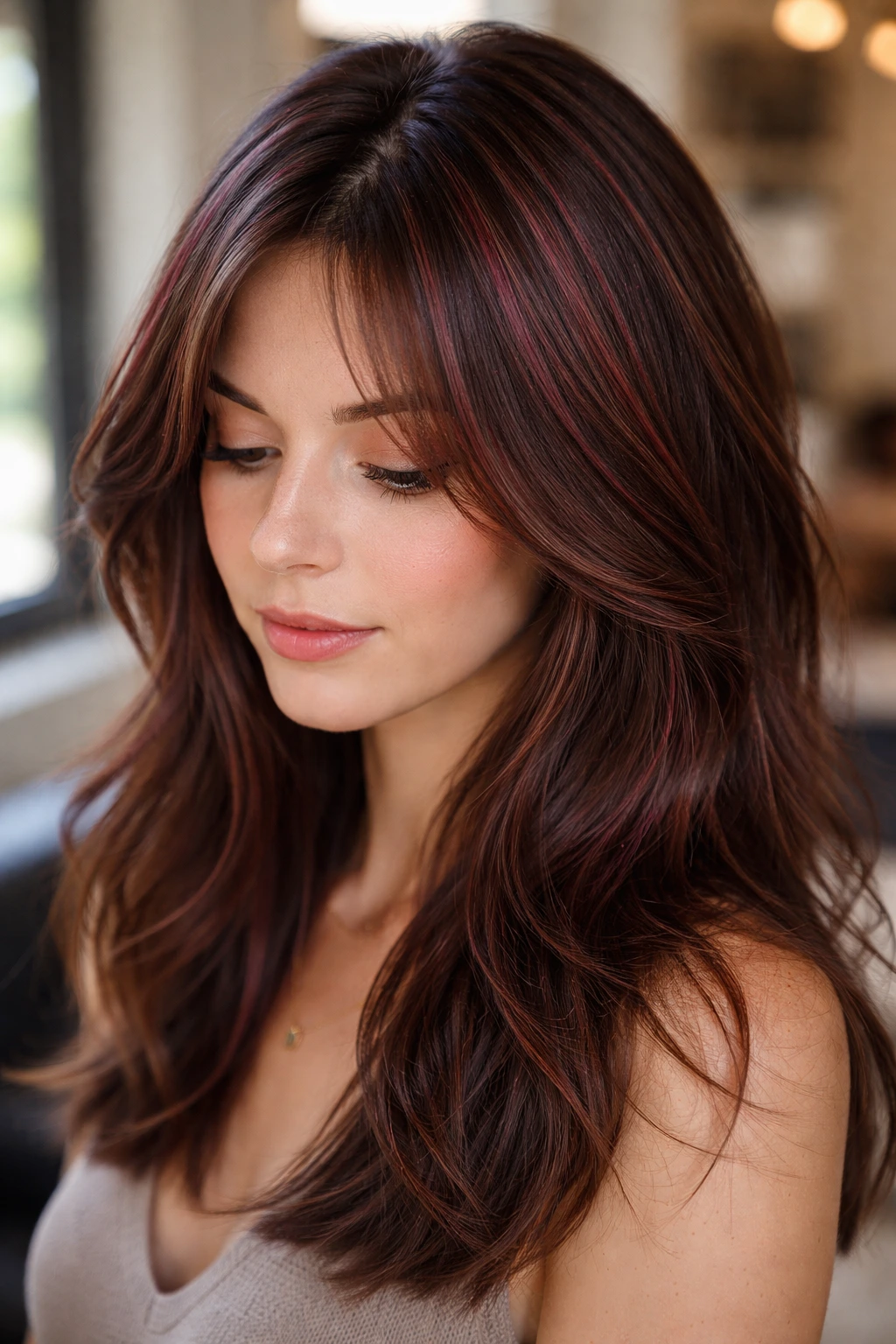
Fine hair needs a lighter touch. Too many chunky pieces can make the hair look see-through in the wrong spots, especially around the part. Burgundy sprinkle highlights solve that by scattering tiny flashes of color across the upper layer instead of loading up whole sections.
Keep the Texture in Mind
- Ask for micro-fine pieces around the part and front hairline.
- Keep the burgundy close to the base shade so the contrast stays soft.
- Avoid heavy saturation on the ends if your hair is very fine, because the weight of color can make them look thinner.
This kind of placement gives fine hair movement without making the head look busy. A few scattered red pieces can make the surface look fuller because the eye keeps moving from one point to another. That’s the trick. Not more color. Smarter color.
23. Red-Velvet Panel Highlights on Wavy Hair
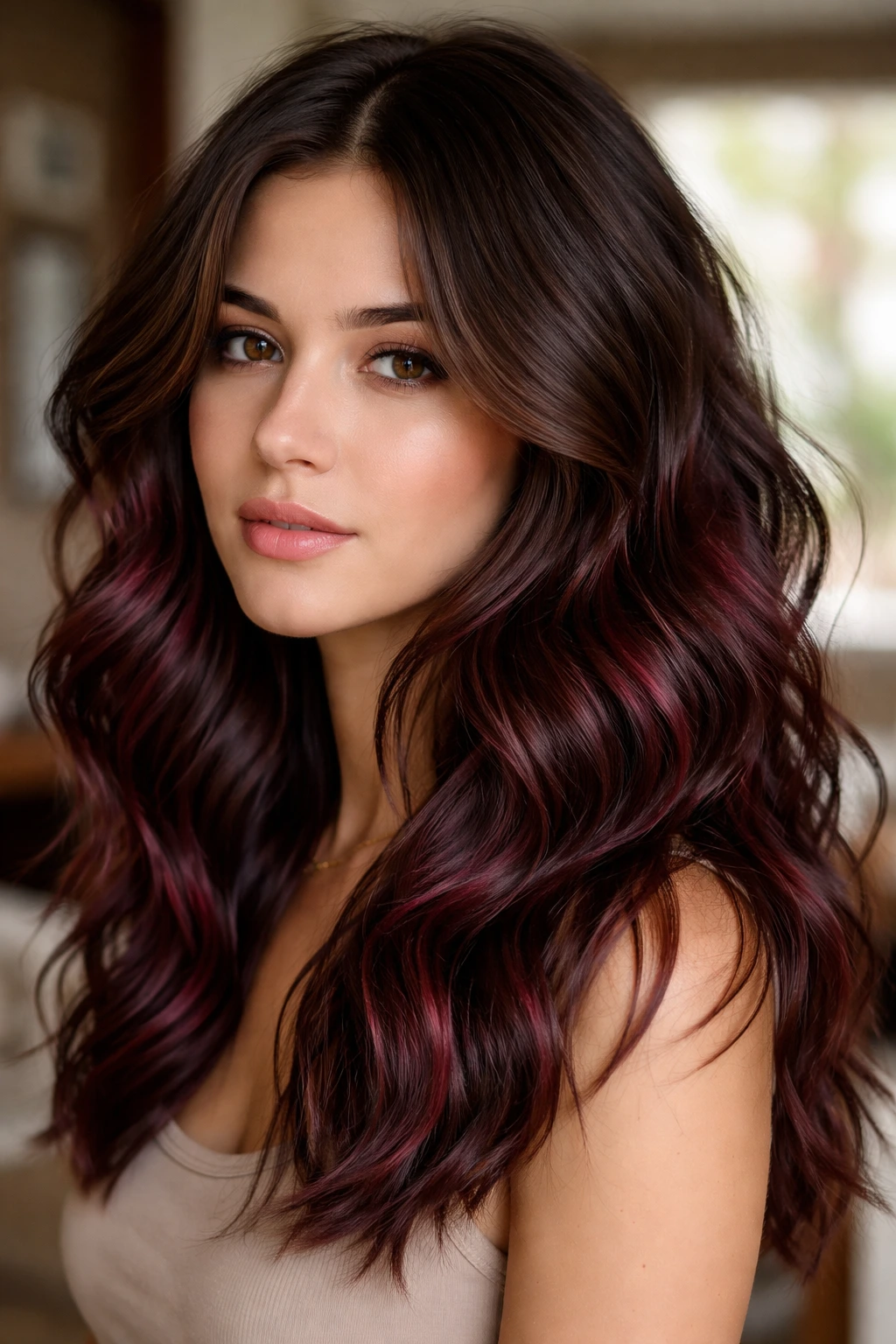
Wavy hair loves panels. The bends break up the color in a way that makes burgundy look deeper than it does on straight strands. Red-velvet panels give you that effect with a more noticeable shape than babylights or ribbons.
The panels can sit under the top layer or through the mid-lengths, depending on how bold you want the look. Wider pieces show up more when the hair is curled or air-dried into waves. Narrower ones disappear faster. If you want the red to peek through at random, keep the panels slightly offset instead of perfectly even.
This is a nice style for shoulder-length cuts and shags. The movement helps. So does a little texture spray, which keeps the panels from lying flat against the rest of the hair.
24. Dimensional Burgundy with Caramel Brown Base
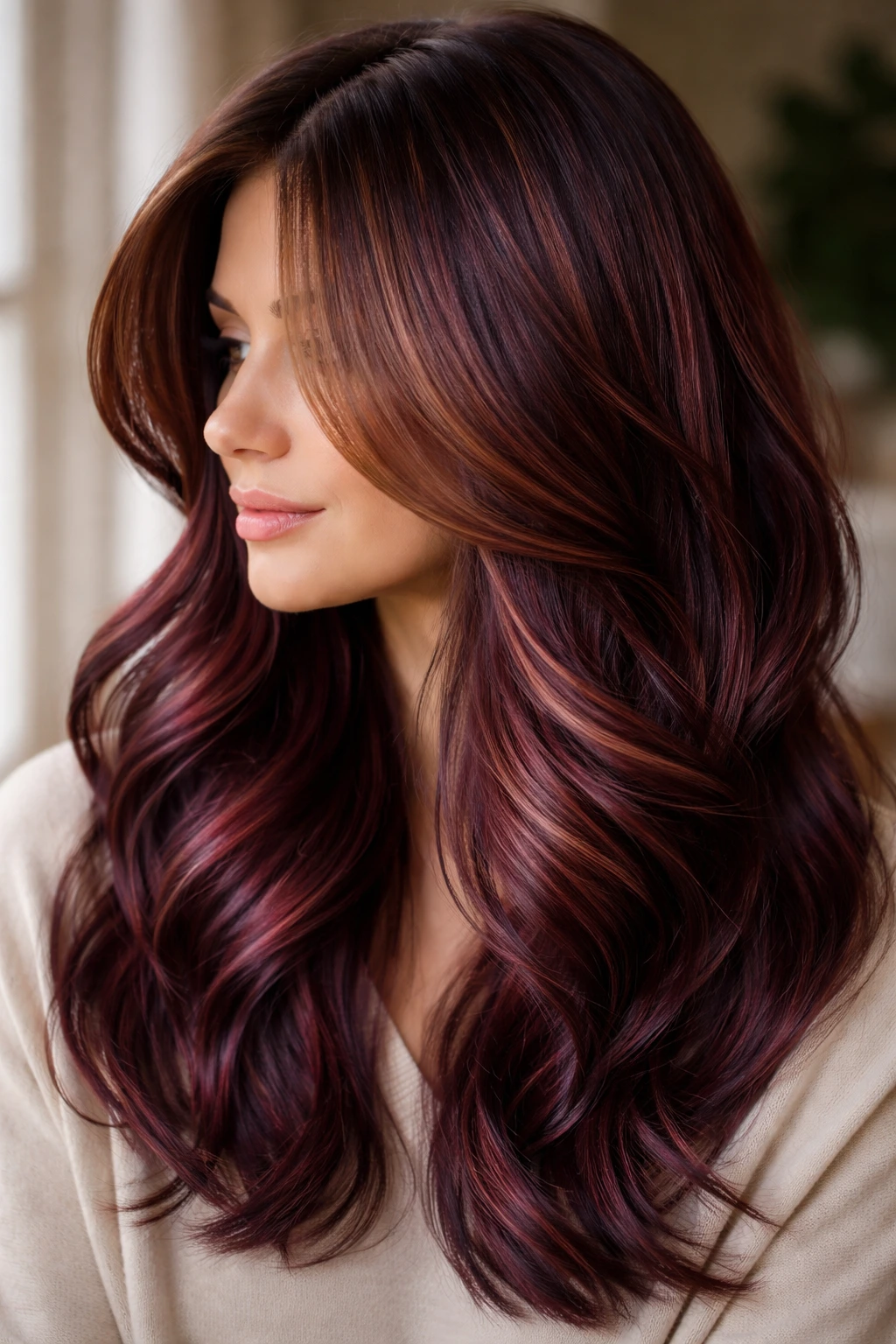
Caramel brown and burgundy can make a beautiful pair, but only if the placement stays controlled. Too much red near too much gold, and the whole thing starts to look noisy. Kept in check, though, the caramel lifts the face while the burgundy adds depth through the mid-lengths and ends.
Best Placements
- Keep caramel closer to the front and around the surface layers.
- Place burgundy deeper in the mid-lengths for contrast.
- Let a few burgundy pieces fall near the ends so the color doesn’t fade too quickly.
This combination works best on layered hair, especially if you want dimension that shows from multiple angles. The caramel brings light. The burgundy keeps the style from getting too sweet. That balance matters more than the exact shade names people use in the chair.
25. Deep Wine Highlights for Low-Maintenance Wear
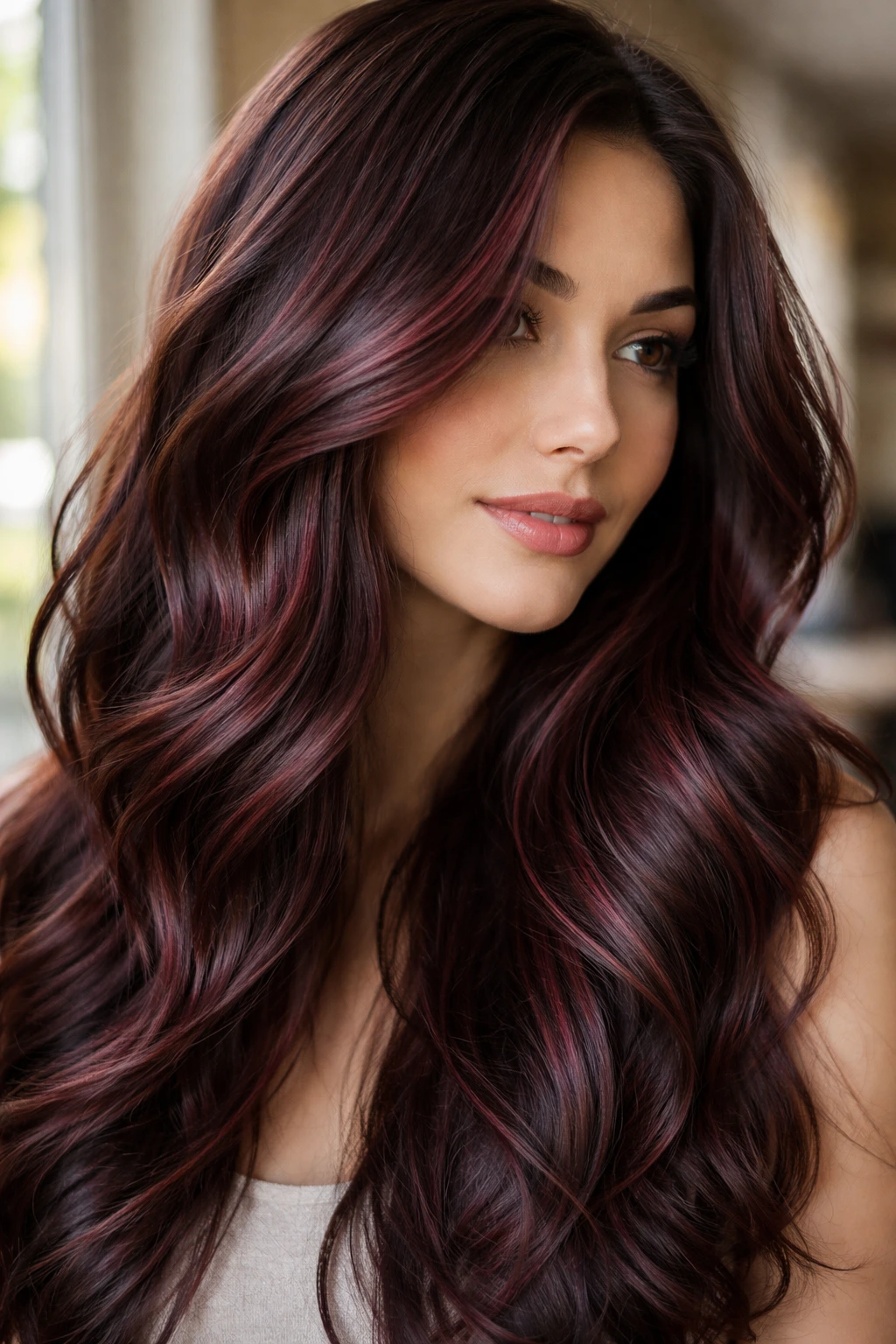
If you hate touch-ups, start here. Deep wine highlights sit close to the brown base and grow out with less drama than brighter reds. The color is dark enough to stay wearable and rich, but still gives the hair a clear shift in tone.
I like this option for anyone who wants burgundy without a loud root line. Ask for the highlight placement to stay a bit lower on the shaft, with a soft shadow at the base. That keeps regrowth from shouting at you two weeks later. It also helps if the hair is naturally brown rather than previously lightened, because the result feels softer from day one.
This is probably the easiest burgundy look to keep living with. Not the flashiest. The easiest. Those are not the same thing, and in hair color, that difference matters more than people admit.
Final Thoughts
Burgundy highlights work on brown hair because they can do so many jobs at once. They can whisper, they can frame, they can flash, and they can stay hidden until the hair moves. That flexibility is the real reason people come back to them.
The smartest choice is not the loudest one. It’s the one that fits your base color, your haircut, and how much upkeep you’re willing to live with. Thin ribbons, peekaboo layers, cool plum money pieces, or a deep wine ombré all make different promises.
Bring a few photos that match your brown base in daylight, not filtered selfies. That tiny detail saves a lot of guesswork, and guesswork is where bad burgundy usually starts.
