



Brown hair is a blank canvas that often gets a bad reputation for being one-dimensional. You might feel like your natural color is playing it safe, but the addition of auburn tones introduces a depth that feels both sophisticated and energetic. Auburn isn’t just one shade; it’s a spectrum that ranges from muted, earthy rusts to vibrant, fiery coppers. When you pull these warm pigments into a brown base, the light catches your hair differently, creating a rich texture that wasn’t there before.
The secret to pulling this off isn’t just picking a box of dye or showing a photo to your colorist; it is about understanding your existing undertones. If your brown hair leans cool, like an espresso, a bright copper highlight might clash unless it’s carefully blended. Conversely, if your brown has natural warmth, like a chestnut, you can get away with richer, deeper red tones. Getting the balance right transforms the hair from looking dull to looking intentional.
Beyond the aesthetics, there is a practical side to this color shift. Red pigments are notoriously larger than other color molecules, meaning they tend to slip out of the hair shaft more quickly when you wash it. Choosing to go auburn—whether through subtle babylights or bold chunky highlights—is a commitment to a specific maintenance routine. Once you accept that reality, though, the payoff is a look that feels alive, vibrant, and surprisingly natural in the right light.
1. Classic Copper Balayage
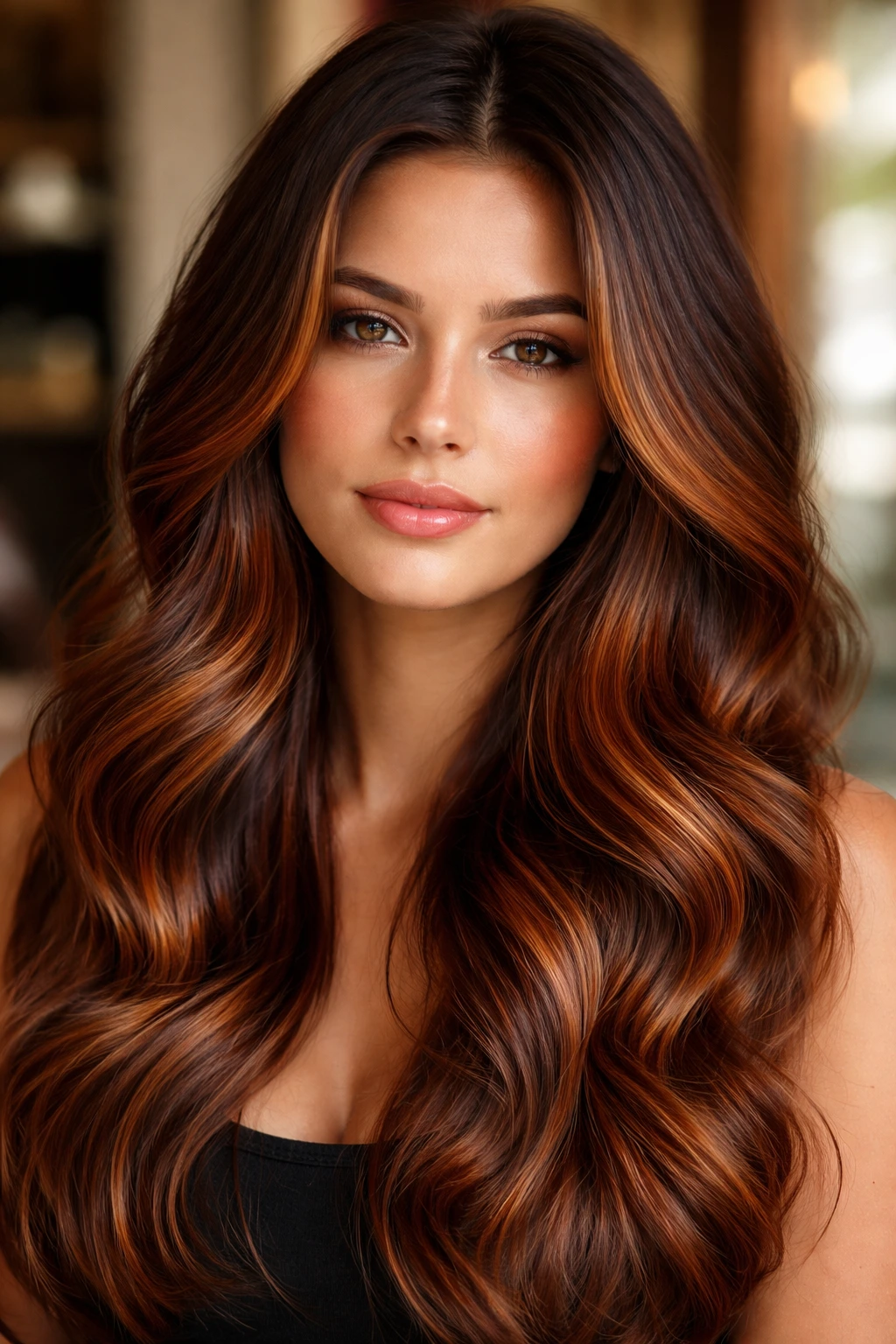
Balayage is the gold standard for a reason. It is hand-painted, meaning the placement is customized to follow the natural fall of your hair. When you introduce copper tones into a dark or medium brown base using this technique, the result is a soft, lived-in look. You avoid the harsh line of demarcation that comes with traditional foils.
Why This Technique Excels
The paint-on method allows the colorist to focus the brighter, more vibrant copper strands toward the ends, keeping the roots closer to your natural brown. This mimics how the sun would naturally lighten your hair over time. It creates a seamless transition that looks just as good three months after your appointment as it does on the day you leave the salon.
- Best For: Those who want low-maintenance color.
- Pairing: Looks exceptional on wavy hair textures where the blended colors can really show off the movement.
- Pro Tip: Ask your stylist to keep the copper focused on the mid-lengths to ends to preserve the integrity of your natural roots.
2. Deep Mahogany Ribbons
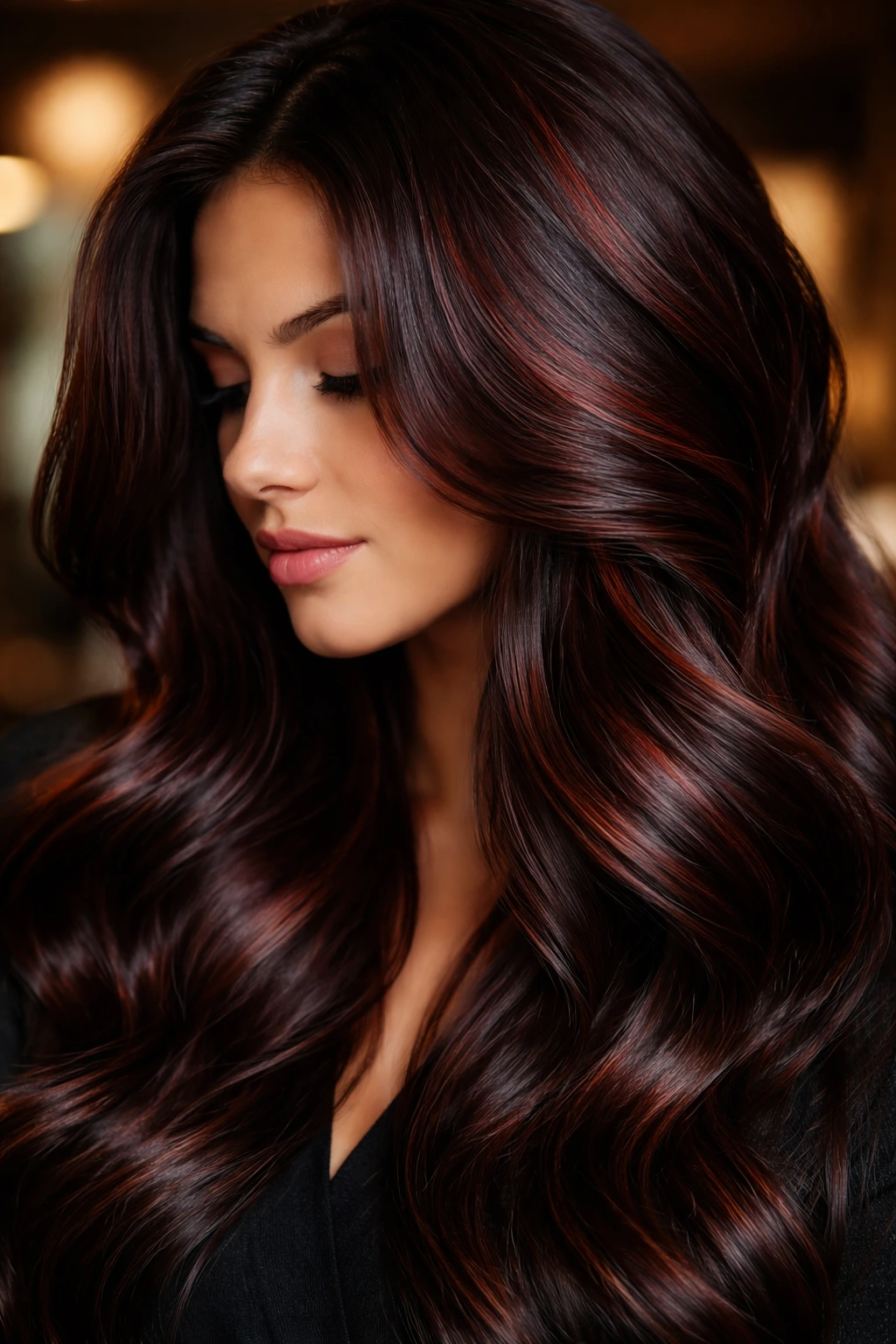
If you prefer a darker, moodier aesthetic, mahogany is the way to go. These highlights are not meant to be bright or brassy; they are deep, cool-toned reds that lean into purple or plum territory. When woven through a dark chocolate brown base, they add a velvety quality that makes hair look incredibly shiny and thick.
Achieving the Ribbons
Unlike balayage, this look is often achieved using foils or a weaving technique to create distinct “ribbons” of color. You want these sections to be thick enough to catch the light but blended enough to feel organic. This isn’t about creating stripes; it is about adding layers of dimension that make your hair look expensive and healthy.
Considerations for dark hair: Mahogany acts as a beautiful lowlight as much as a highlight. It doesn’t require as much bleaching as a bright copper, so the health of your hair remains easier to maintain.
3. Spicy Ginger Babylights
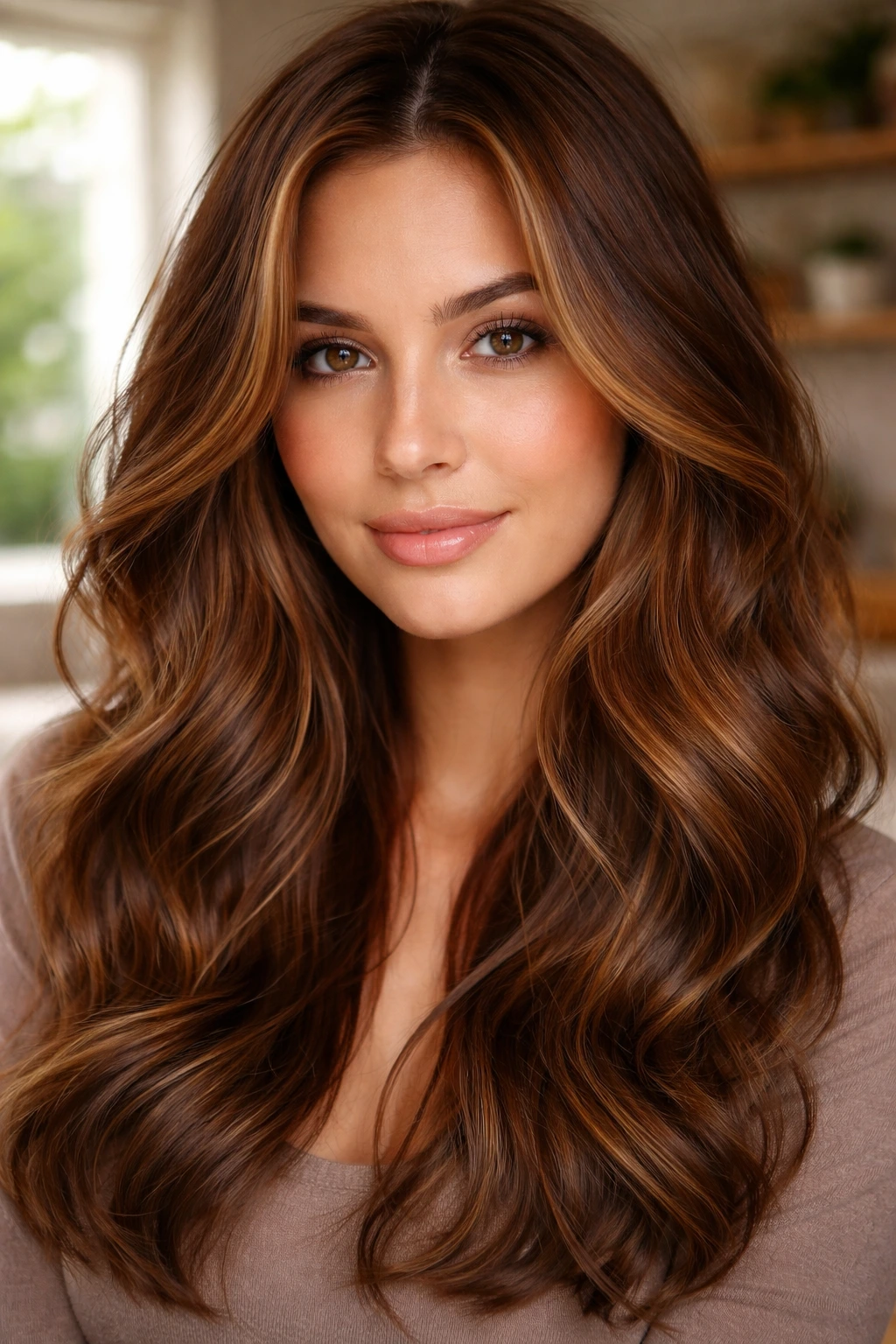
Babylights are the antithesis of the chunky highlights from the early 2000s. These are incredibly fine, delicate strands of color woven throughout your hair. When you use a spicy ginger or light auburn shade, the effect is subtle—almost as if your hair has been naturally kissed by the sun.
How to Style It
Because the highlights are so fine, they blend perfectly with your natural brown. This is an ideal choice if you are a first-time color-experimenter who isn’t ready for a bold change. When you pull your hair into a ponytail or a bun, these delicate ginger strands create a halo effect that frames your face and softens your features.
- Maintenance: Low. Because the roots are barely touched, there is no harsh grow-out line.
- Best For: Fine hair types that can’t handle heavy processing.
4. Cherry Cola Ombre
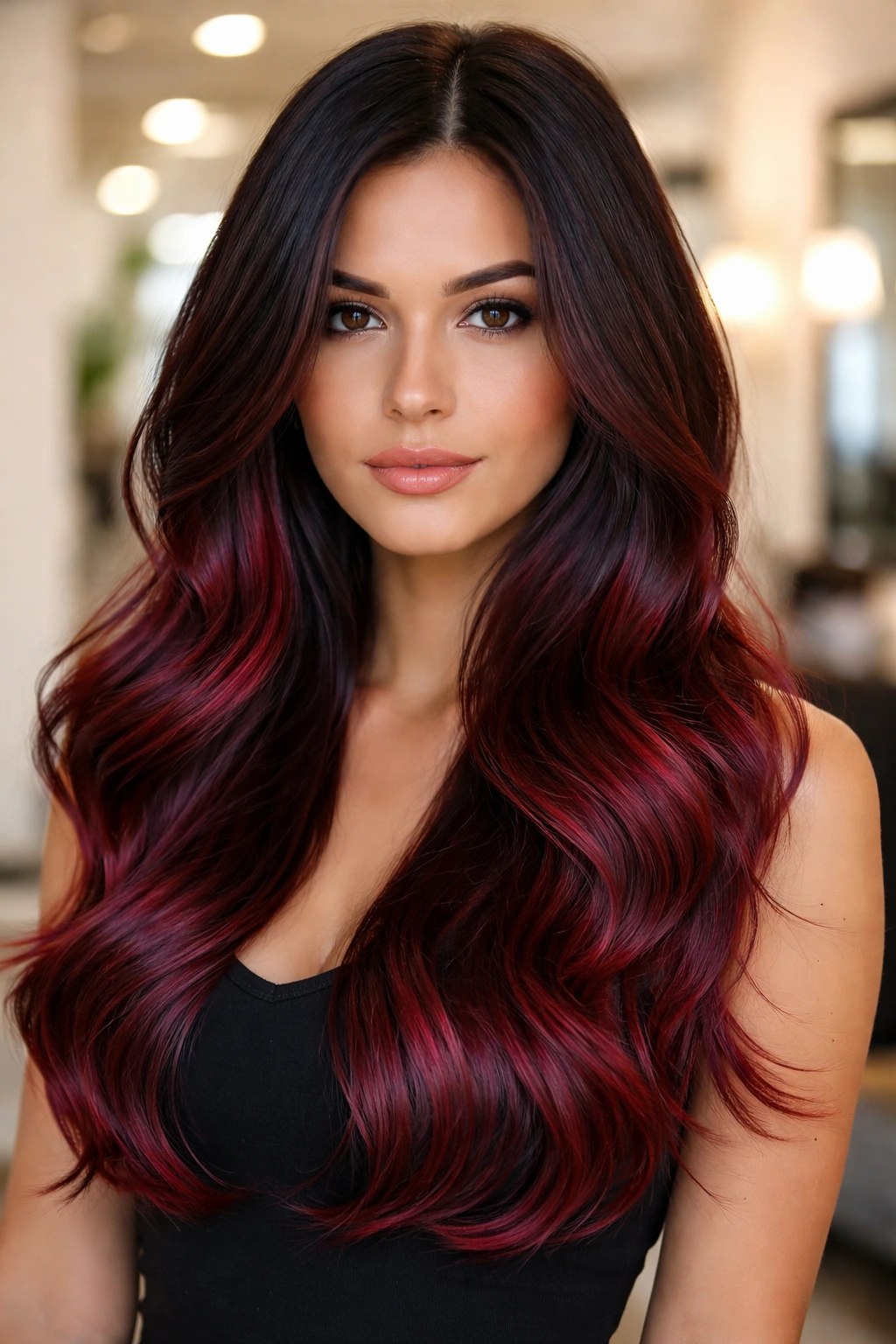
The cherry cola trend bridges the gap between deep brown and a vivid, blue-based red. This look is dramatic. The transition from a deep, near-black or dark espresso root to a rich cherry-tinted end creates a striking, high-contrast style that feels very modern.
Why It Works
Blue-based reds—which is what gives that “cola” vibe—often feel cooler than orange-based coppers. This makes them a safer bet for people with cool-toned skin, as they won’t clash with pink or olive undertones in your complexion. The ombré placement ensures the dramatic color stays far away from your skin, so you don’t have to worry about the red washing you out.
Styling note: This look thrives on high-gloss finishes. Use a clear gloss treatment every few weeks to keep that “cherry” tint looking vibrant and reflective.
5. Subtle Rust Lowlights
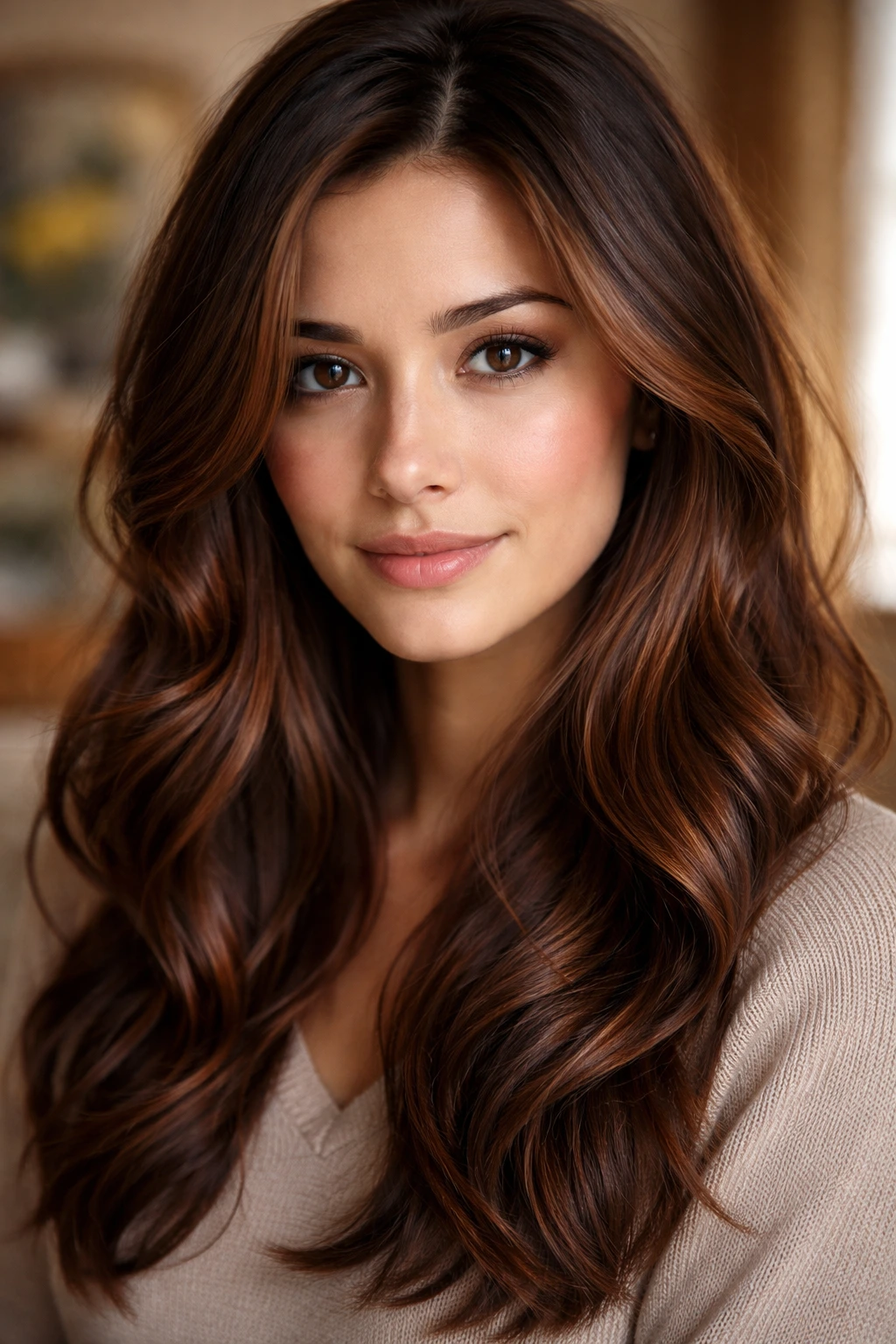
Sometimes the best way to add an auburn hue is to go darker, not lighter. Instead of adding highlights to brighten the hair, you add “lowlights” in a rustic, earthy auburn shade. This adds depth to light-to-medium brown hair without the risk of lightening damage.
The Mechanism of Depth
By pulling a deeper, russet-brown tone into the hair, you create a shadowed effect. It makes the remaining brown hair look brighter by contrast, even though you haven’t technically lightened it. It is a clever optical illusion. This technique gives the hair a dense, multi-tonal appearance that feels very sophisticated.
- Who it suits: Anyone concerned about hair damage or those who love an autumnal, grounded aesthetic.
6. Strawberry Auburn Money Piece
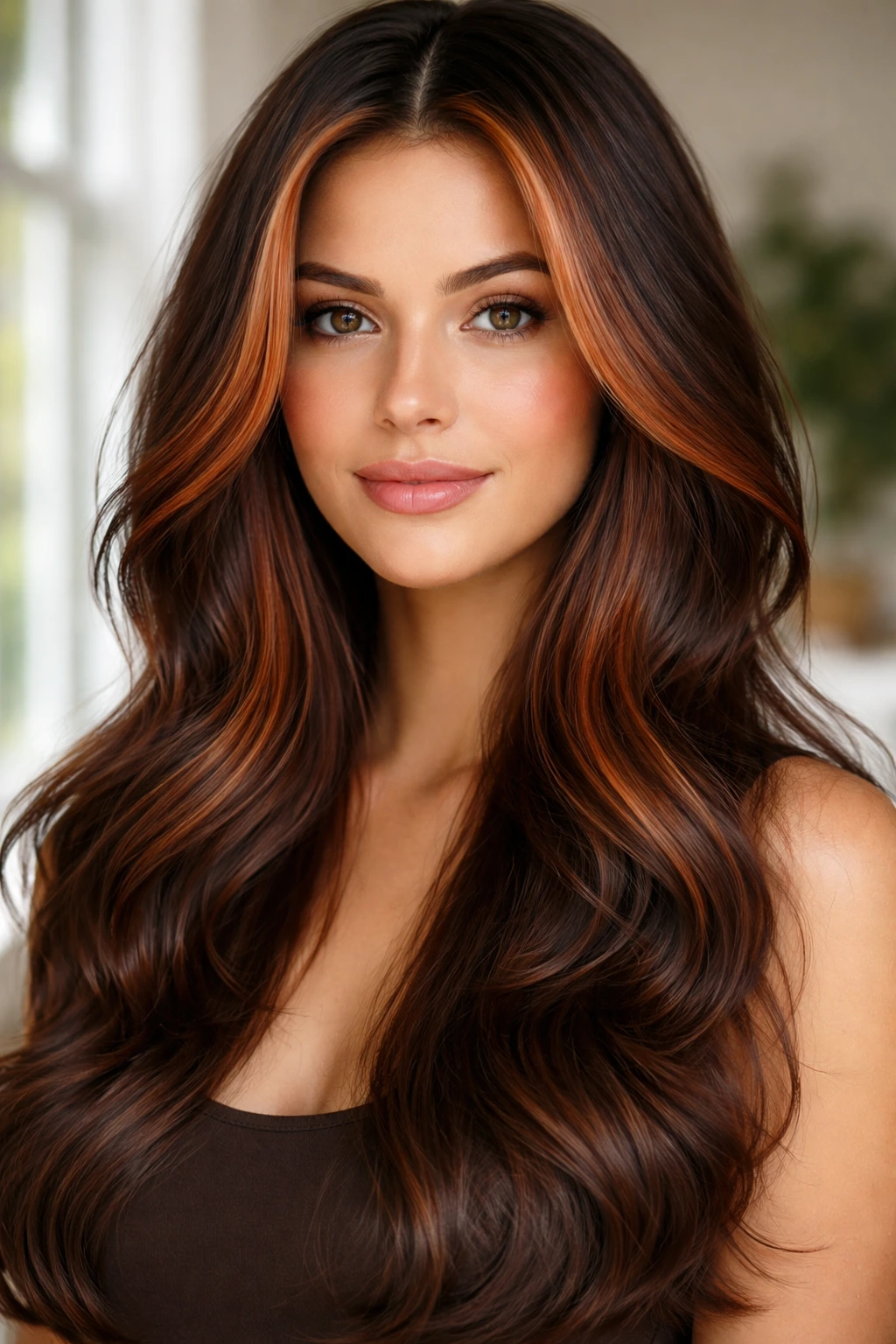
The “money piece” is a classic technique where the two front-most strands of hair are lightened or colored differently to frame the face. When you combine this with a strawberry-auburn shade, you get an instant brightening effect right where it matters most.
Why Face-Framing Matters
Your face is the first thing people notice. By placing a warm, spicy auburn tone right along your hairline, you effectively bring a ring light to your face at all times. The strawberry tone—a mix of red and blonde—provides a softness that feels ethereal.
Maintenance: This is a high-maintenance spot. Because it is right at the front, you will see the roots grow out faster. Expect to touch up these specific pieces every six to eight weeks.
7. Pumpkin Spice Highlights
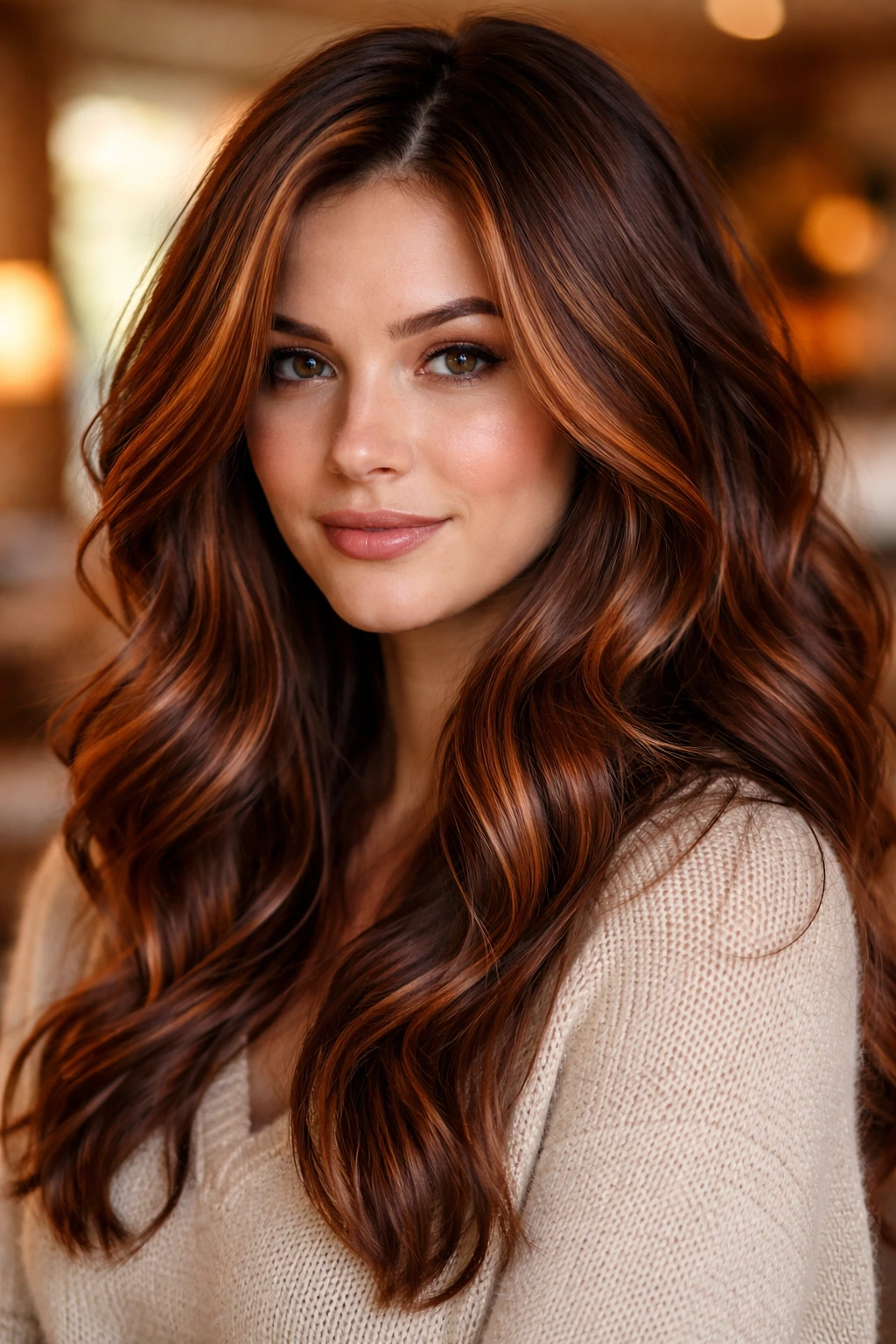
Think of the color of roasted pumpkin—deep, warm, and inviting. These highlights aren’t neon orange, but they aren’t muted brown either. They sit perfectly in that golden-auburn middle ground. They look best on medium-brown hair that already has a bit of natural warmth.
Creating the Blend
This look often uses a multi-tonal approach, mixing a few different shades of copper and bronze into the highlights. This variety is what makes the color look “real.” If you just use one shade of red, it can look like a wig. By mixing, you get that dynamic, shifting color that looks different in sunlight versus indoor light.
- Styling: This color palette screams autumn, but it wears perfectly year-round for those who want a cozy, comfortable hair aesthetic.
8. Burgundy-Tinged Babylights
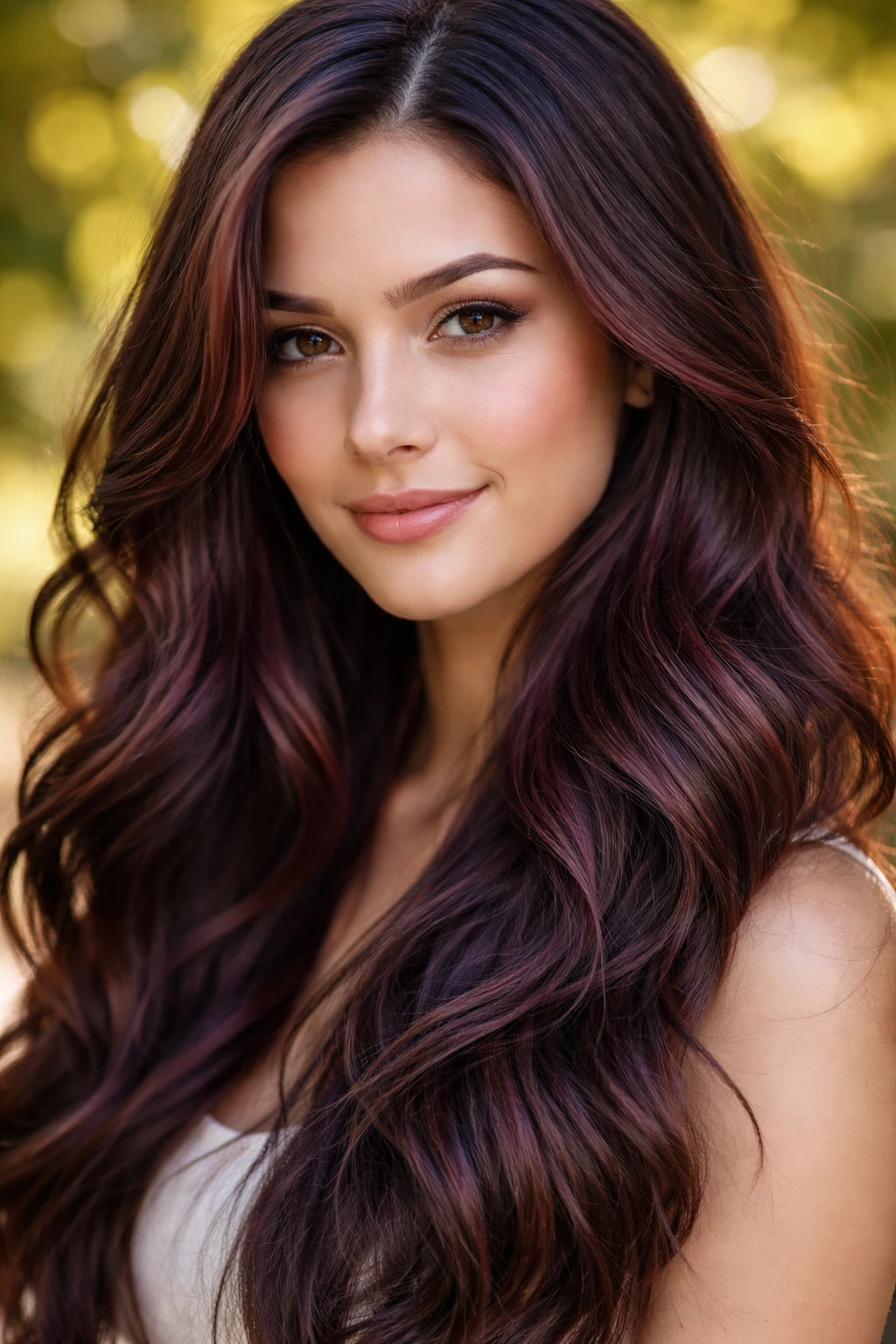
Burgundy is the sophisticated cousin of bright red. It’s a darker, more purple-leaning red that feels incredibly rich on dark brown hair. Weaving these as babylights rather than chunky sections allows the burgundy to peek through the brown base, creating a shimmering, dimensional effect that is subtle until you step into direct sunlight.
The Visual Effect
Indoors, your hair will look like a healthy, glossy dark brown. Outdoors, the light catches the burgundy highlights, and they ignite. This is a “day-to-night” style that is perfect for professional environments where you might want to avoid bright, unnatural-looking red tones but still crave some personal flair.
Pro Tip: Ask for a “color melt” at the roots to ensure the transition from your natural brown to the burgundy is completely seamless.
9. Bronzed Auburn Face-Framing
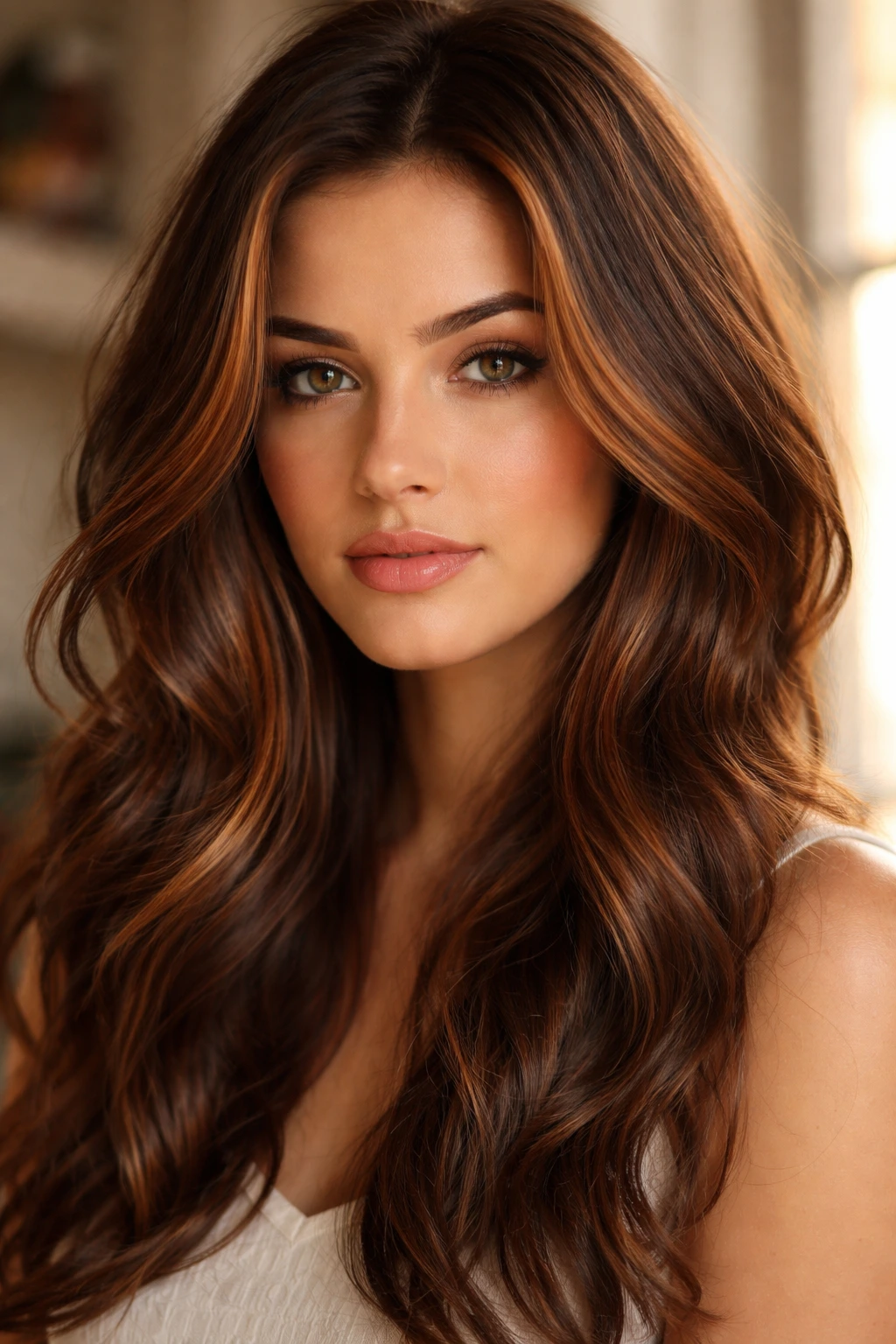
This style sits somewhere between a copper and a bronze metallic. It’s less red and more brown-gold, making it one of the most natural-looking ways to incorporate auburn into brown hair. It’s designed to look like the sun has bleached your face-framing strands into a warm, metallic hue.
Why This Works
Bronze-auburn is universally flattering. It doesn’t have the polarizing intensity of a bright red, but it avoids the dullness of a flat brown. It acts as a highlighter for your face, emphasizing your eye color and warming up your skin tone. It’s a low-risk, high-reward choice.
- Maintenance: Easy. Because the color is close to your natural brown spectrum, the grow-out is soft and gradual.
10. Terracotta Chunky Highlights
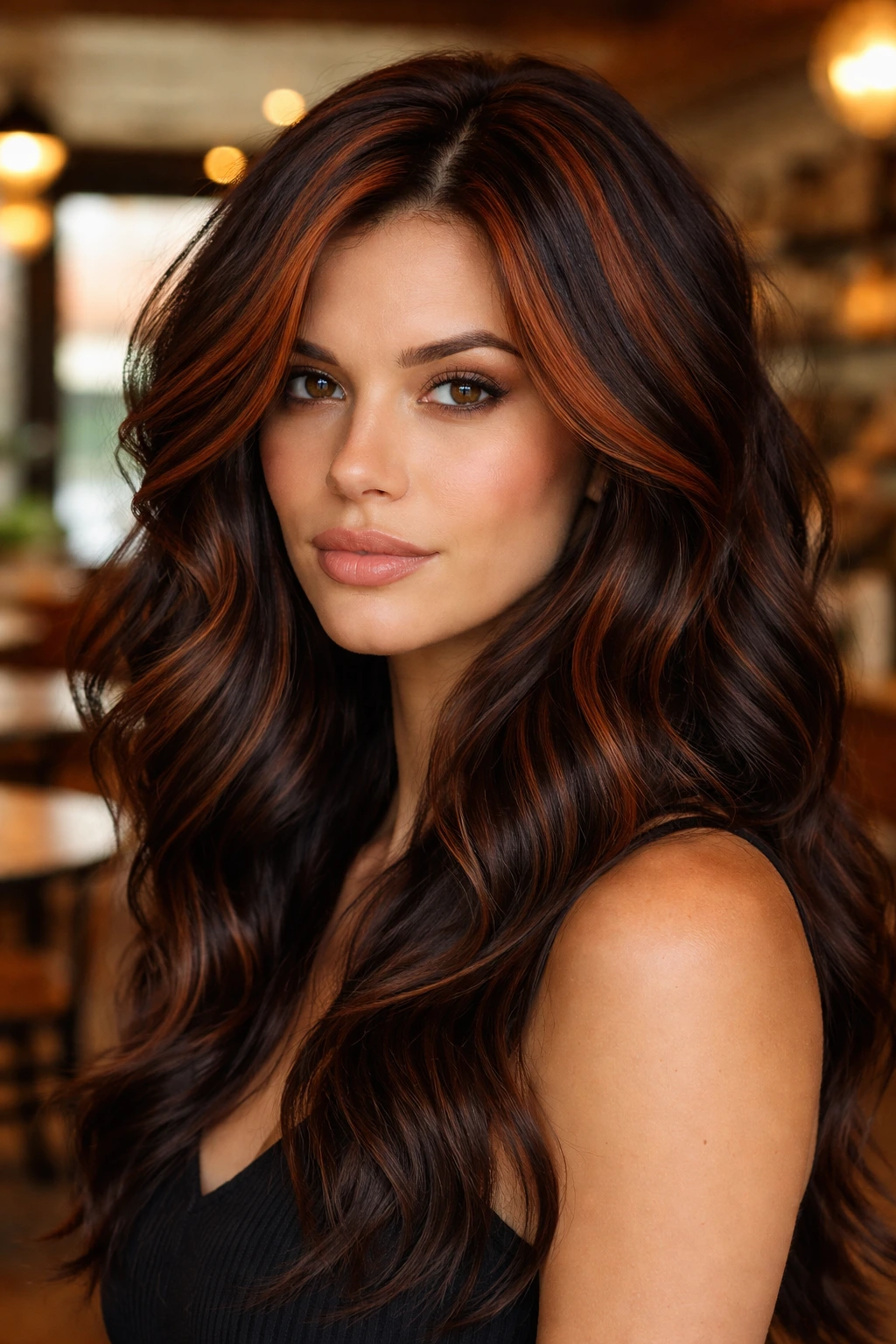
If you are leaning into a retro 90s aesthetic, chunky highlights are back, but with a refined twist. Instead of the high-contrast platinum stripes of the past, we are seeing “terracotta” chunks—warm, earth-toned red pieces interspersed with your natural brown base.
Achieving the Contrast
The key here is placement. You don’t want these chunks to be uniform. You want them to appear scattered, perhaps a bit more concentrated around the crown and the temples. The terracotta color is essential—it’s muted enough to blend but bright enough to make a statement.
Confidence Check: This is a bold look. If you like to be noticed, this is your style. It feels intentional, artistic, and definitely not “safe.”
11. Soft Burnt Orange Highlights
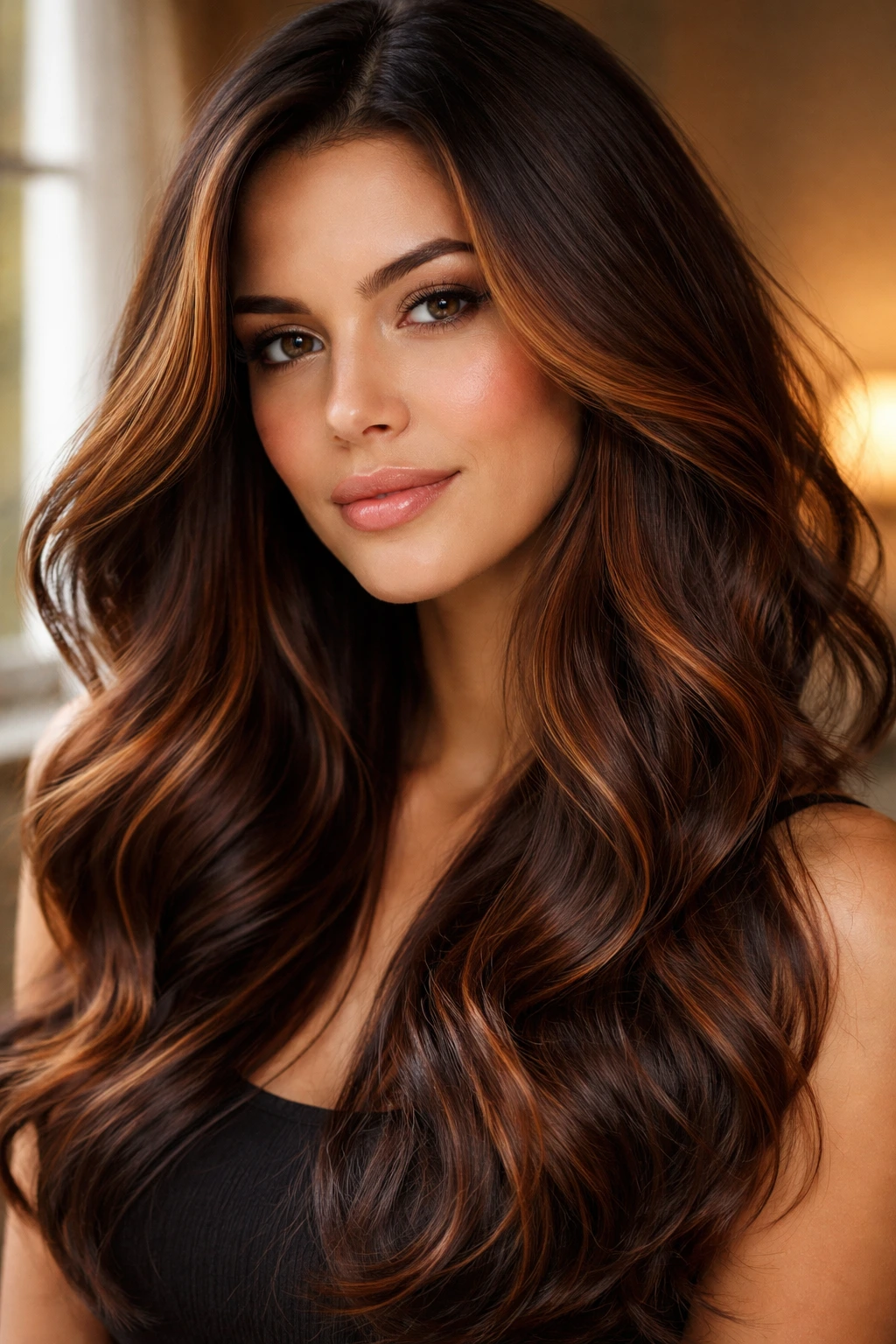
Burnt orange might sound intimidating, but when it’s muted down and blended into dark hair, it’s stunning. Think of the color of autumn leaves—a mix of orange, red, and brown. These highlights are meant to be a warm, glowing accent.
Managing the Intensity
To keep this from looking like a crayon, make sure your colorist uses a “gloss” or “toner” over the highlights. This tones down the raw orange pigment, turning it into a softer, more sophisticated “burnt” shade. It blends perfectly with a medium-to-dark brown base.
- Pairing: This look is incredible with warm skin tones and hazel or green eyes.
12. Deep Maroon Highlights
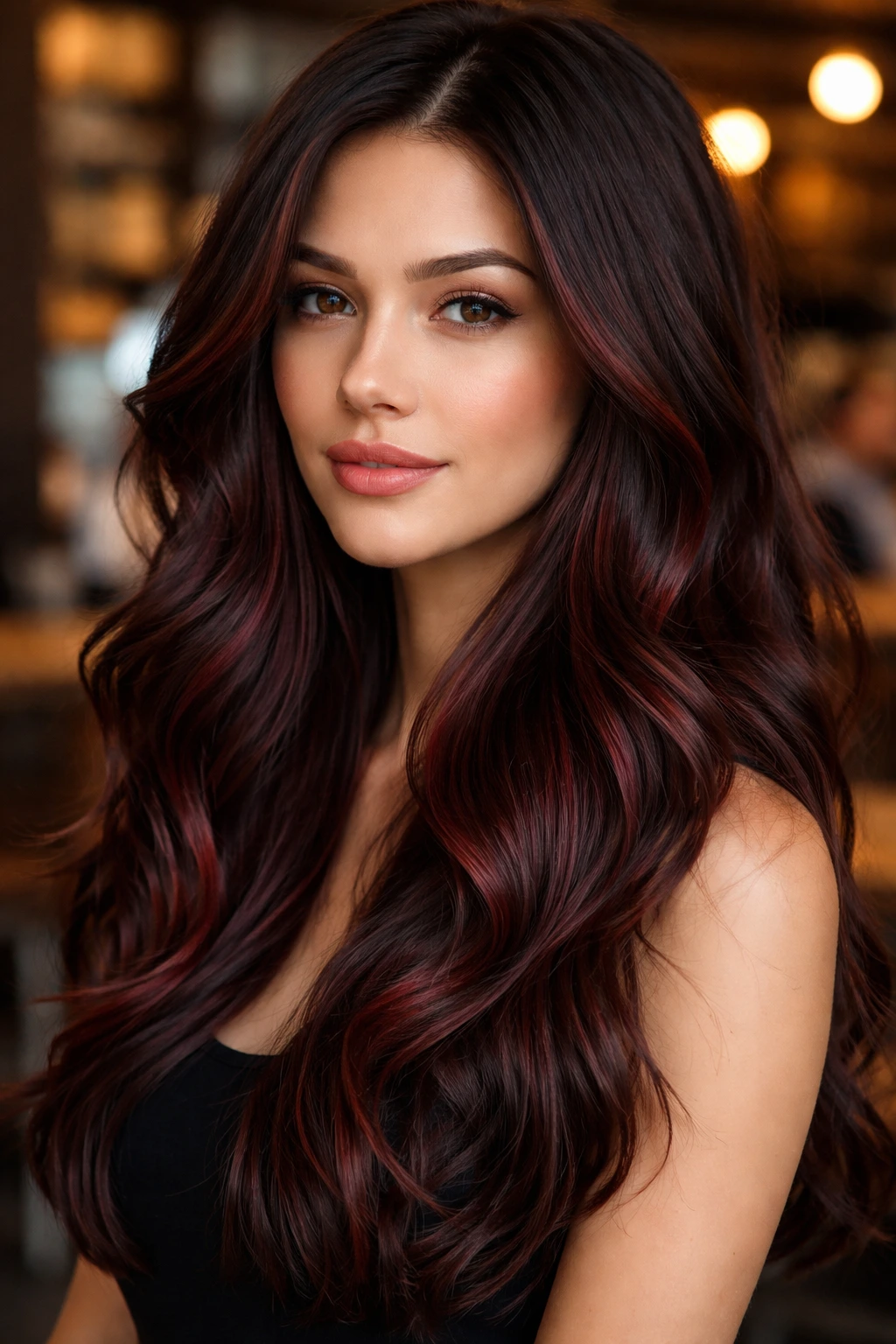
Maroon is distinct from cherry red. It’s more subdued, deeper, and more grounded in brown. These highlights are perfect for someone with a very dark, espresso-brown base who doesn’t want the harshness of a bright highlight.
The Placement
Focus these highlights through the mid-lengths. Because they are deep, you don’t need to lift your hair to a very light level to achieve the color. This means less bleach, less damage, and a higher chance of the color holding onto the hair shaft for a longer time.
Maintenance note: Red pigments like maroon are the first to fade. Invest in a color-depositing conditioner that matches your maroon tone to keep it fresh between salon visits.
13. Sunset-Inspired Balayage
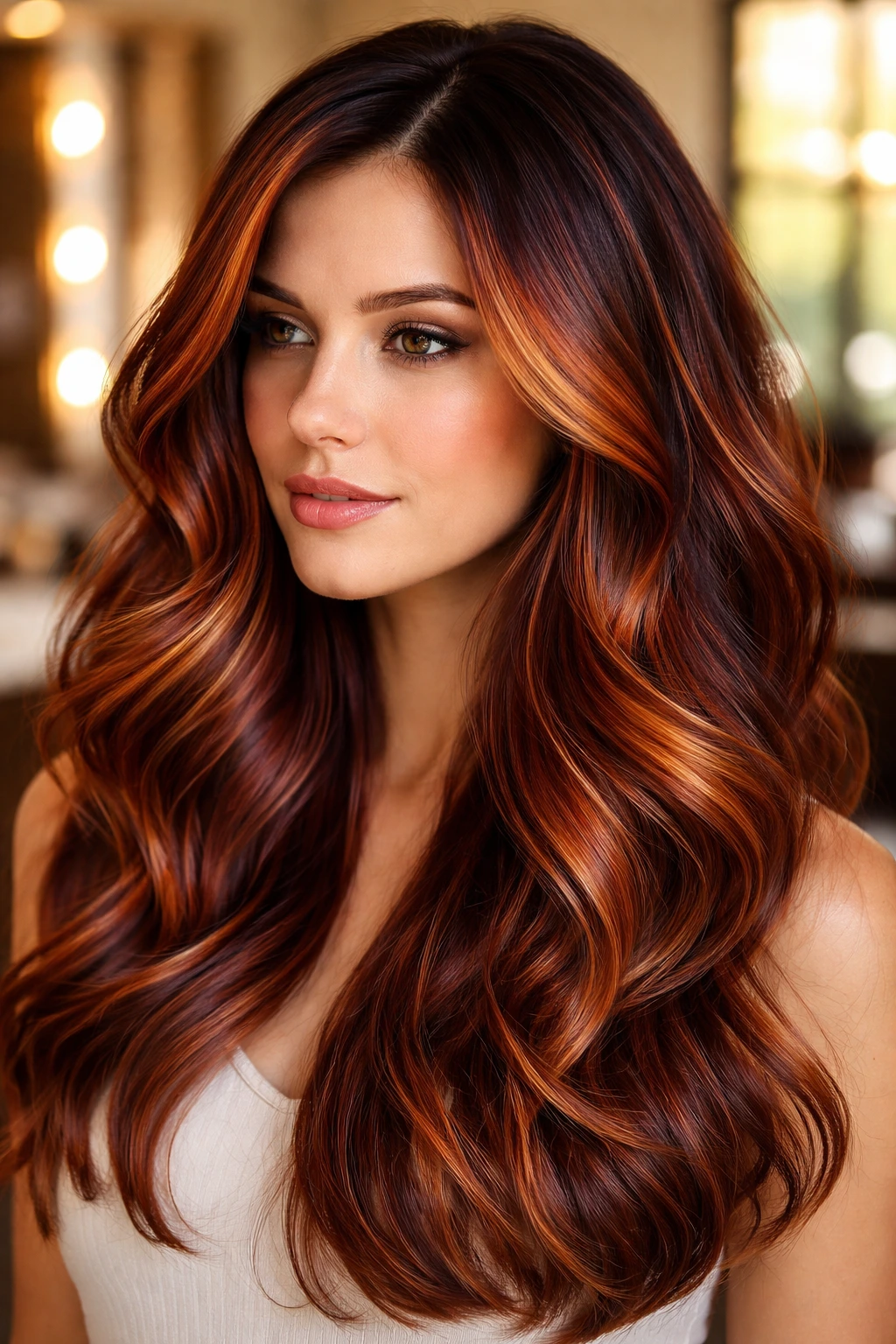
Imagine the colors of the horizon: a blend of deep crimson, burnt orange, and golden amber. That is the sunset balayage. It is a complex color job that requires a talented hand, as it mixes multiple shades of auburn and copper throughout the hair.
The Complexity
This isn’t a one-process job. It requires painting different strands with different formulations. The resulting effect is a cascade of warm tones that flow into one another. It is incredibly visually interesting and changes constantly as you move or as the light shifts.
- Investment: This is higher maintenance and higher cost. It requires multiple steps and careful toning to ensure the colors don’t bleed into each other and turn muddy.
14. Golden-Auburn Highlights
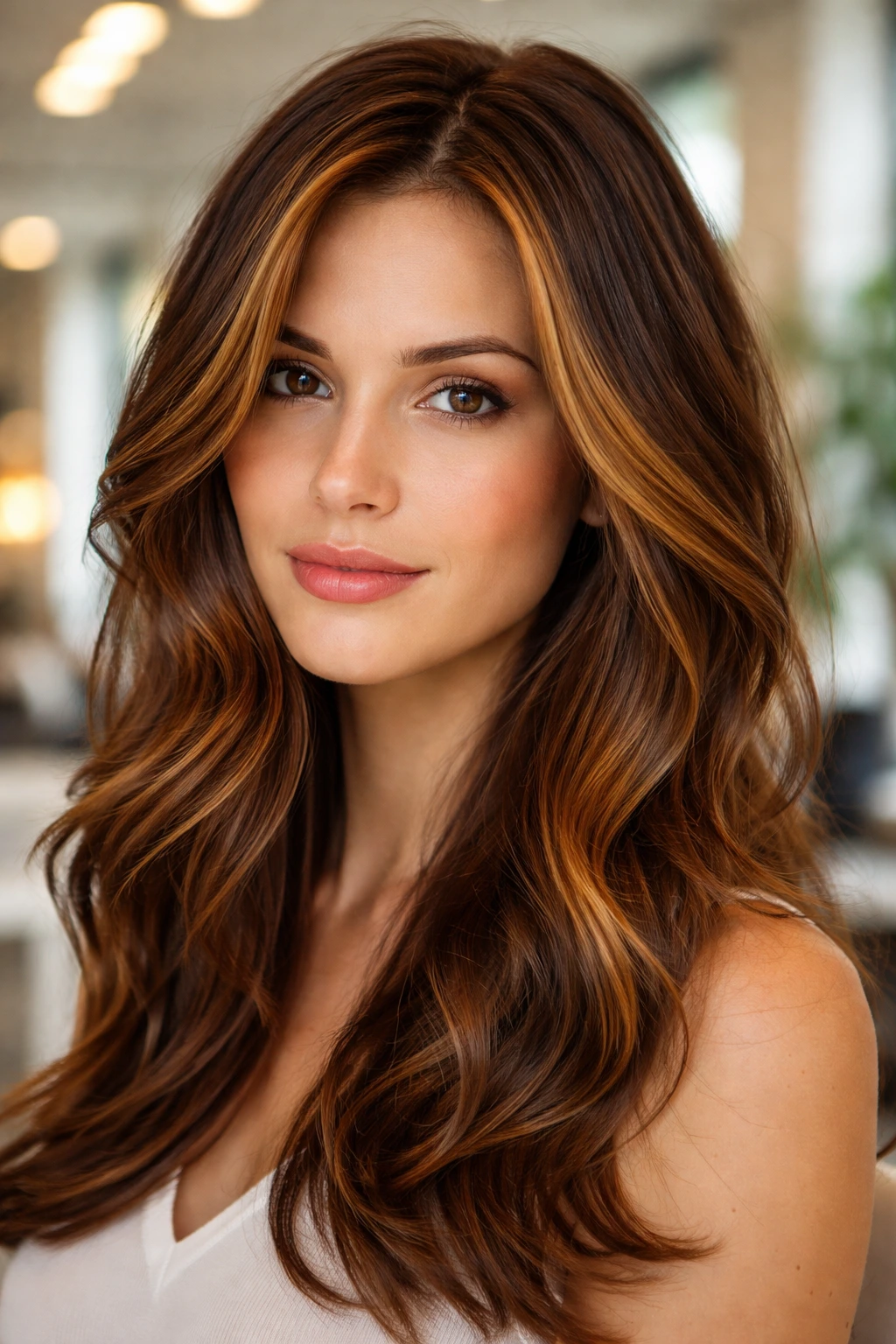
Sometimes you want the red, but you also want the brightness. Golden-auburn is the perfect hybrid. It is a light copper that leans heavily into gold. It is perfect for brightening up medium brown hair that feels a bit tired.
The Effect
This provides a “lit-from-within” glow. It catches the light better than any other auburn shade. It feels fresh and youthful. Because it has that golden base, it blends much more naturally with brown hair than a cool, blue-based red would.
Who it suits: If you have cool-toned brown hair but want to introduce warmth, this is an excellent bridge color.
15. Dark Chocolate with Auburn Undertones
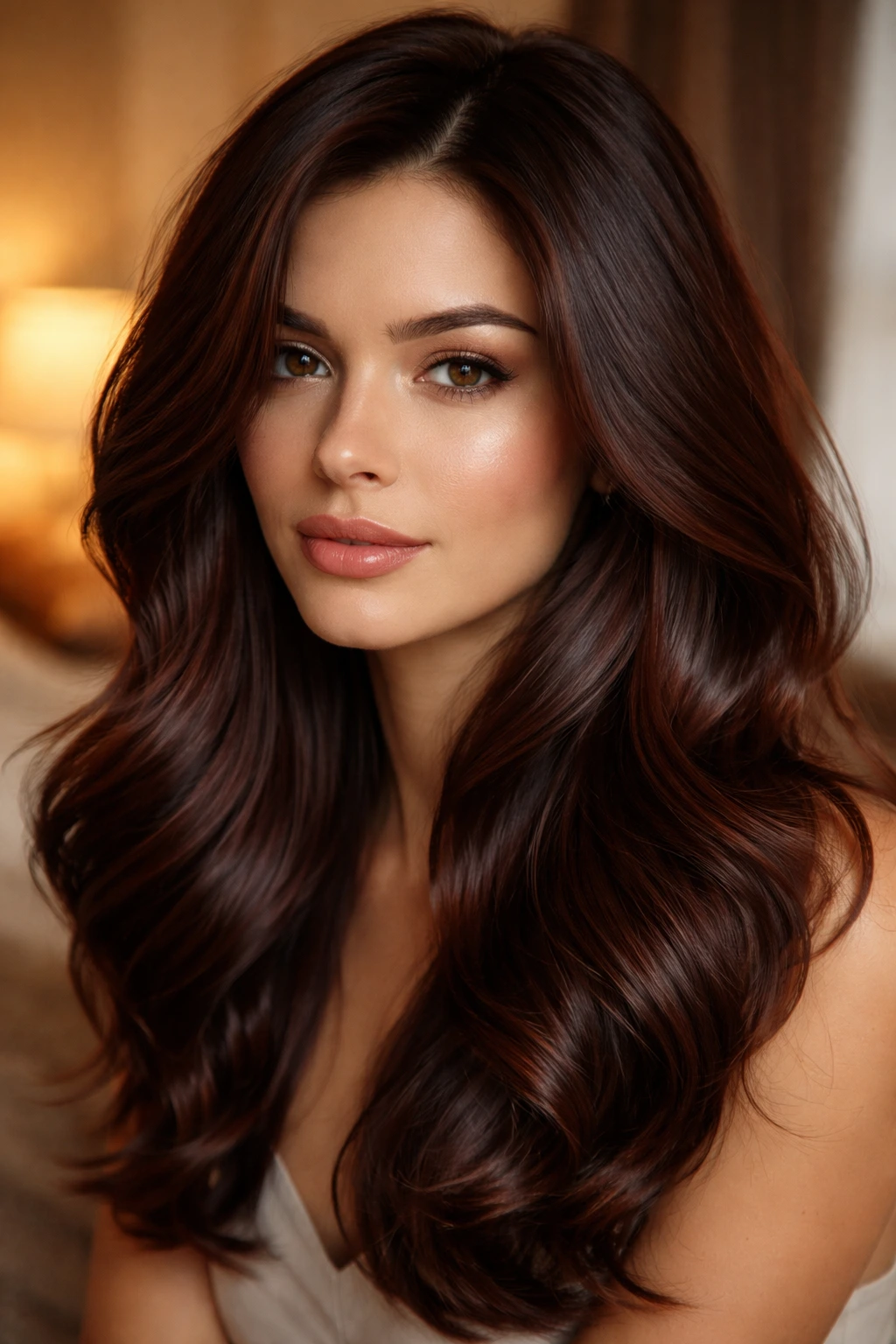
If you are not ready to commit to visible highlights, consider a “low-commitment” approach: auburn undertones. This involves glazing the hair with a rich, mahogany-auburn gloss. It won’t create individual light strands, but it will shift your overall brown hair to have a distinct red tint in the light.
The Subtle Approach
This is perfect for hair health. You aren’t lifting the hair with bleach; you are just depositing color over your existing base. It creates a seamless, monochromatic look that is incredibly glossy. It makes the hair look thick, healthy, and expensive.
- Longevity: This will fade naturally over 4-6 weeks as you wash your hair, making it a great way to “test drive” auburn tones without the commitment of foils.
16. Muted Wine Highlights
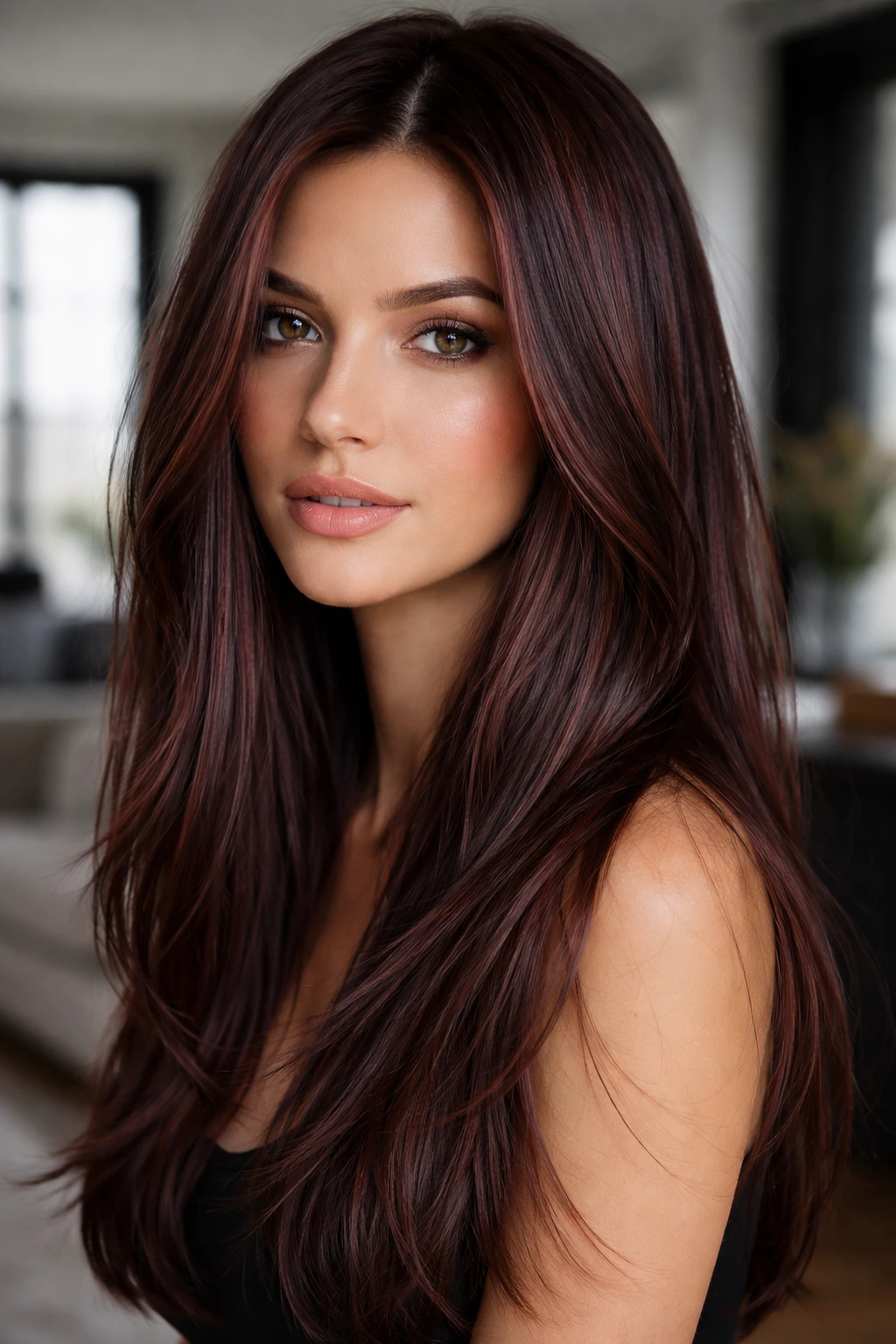
Wine is a classic, but “muted” wine is the modern update. This takes the intensity of a burgundy or red wine color and pulls it back. It’s a dusted-down version—think dusty rose meets deep merlot. It’s beautiful on medium brown hair.
Why It’s Unique
It provides that cool-toned red vibe without the harshness of a true primary red. It feels sophisticated, moody, and a bit romantic. It pairs beautifully with cool skin tones and creates a very cohesive, chic appearance.
Styling: This looks best on sleek, straight styles where you can really see the variation between the deep brown base and the muted wine highlights.
17. Copper-Gold Ribbons
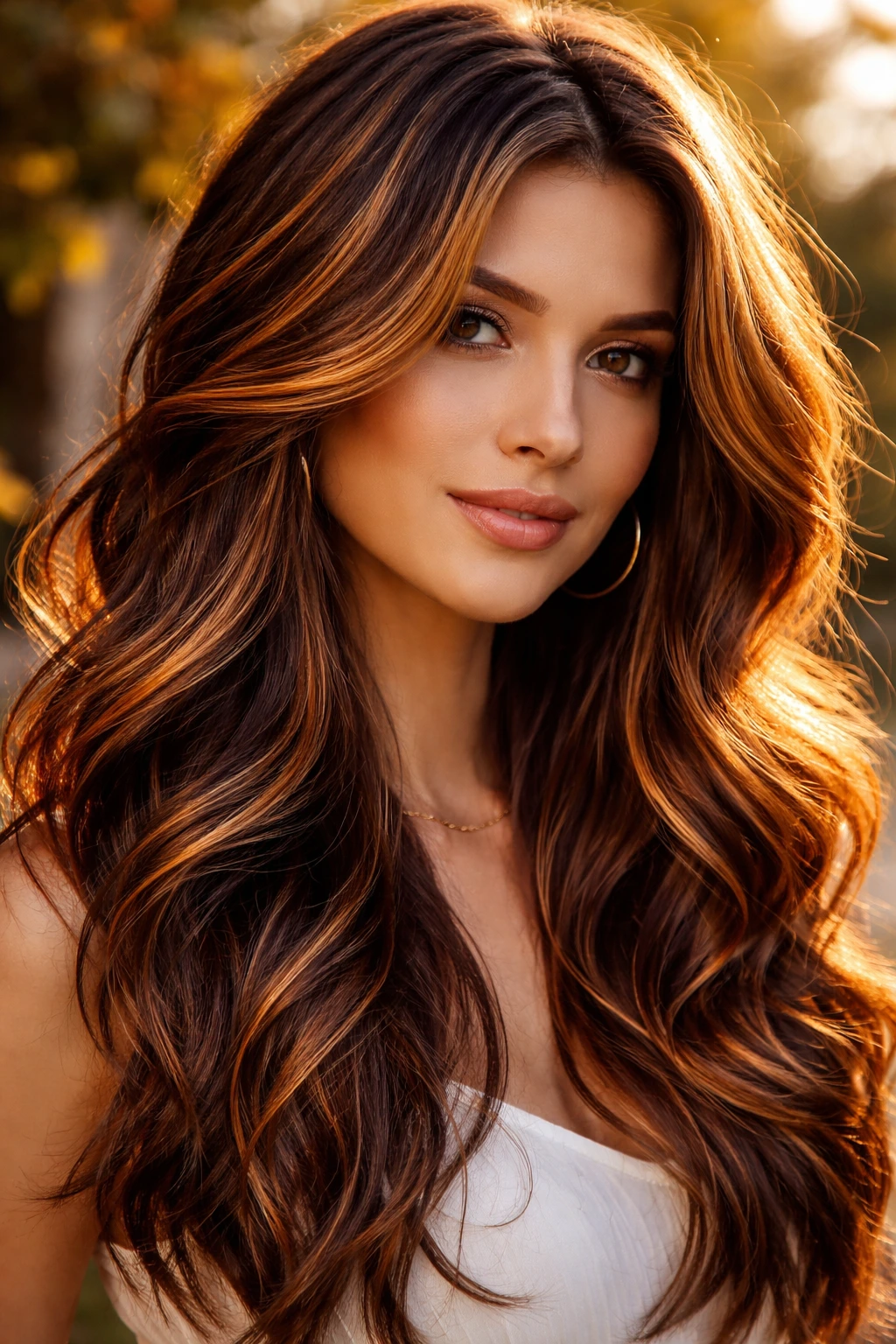
This is a high-contrast style for those who want their highlights to be clearly visible. It mixes two different tones: a vibrant copper and a light, honeyed gold. The result is a multi-dimensional, sparkling look that makes the brown base look like a supporting player.
The Technique
Using foils is essential here to get that bright, clean lift. You need to pull the hair to a lighter level to get that copper-gold to pop. It’s a bolder look, but because of the warm tones, it still feels grounded and earthy rather than synthetic.
- Warning: Because you are lifting to a lighter level to get that gold to show, this does involve more hair processing. Ensure you use bond-building treatments during the coloring process.
18. Auburn Halo Highlights
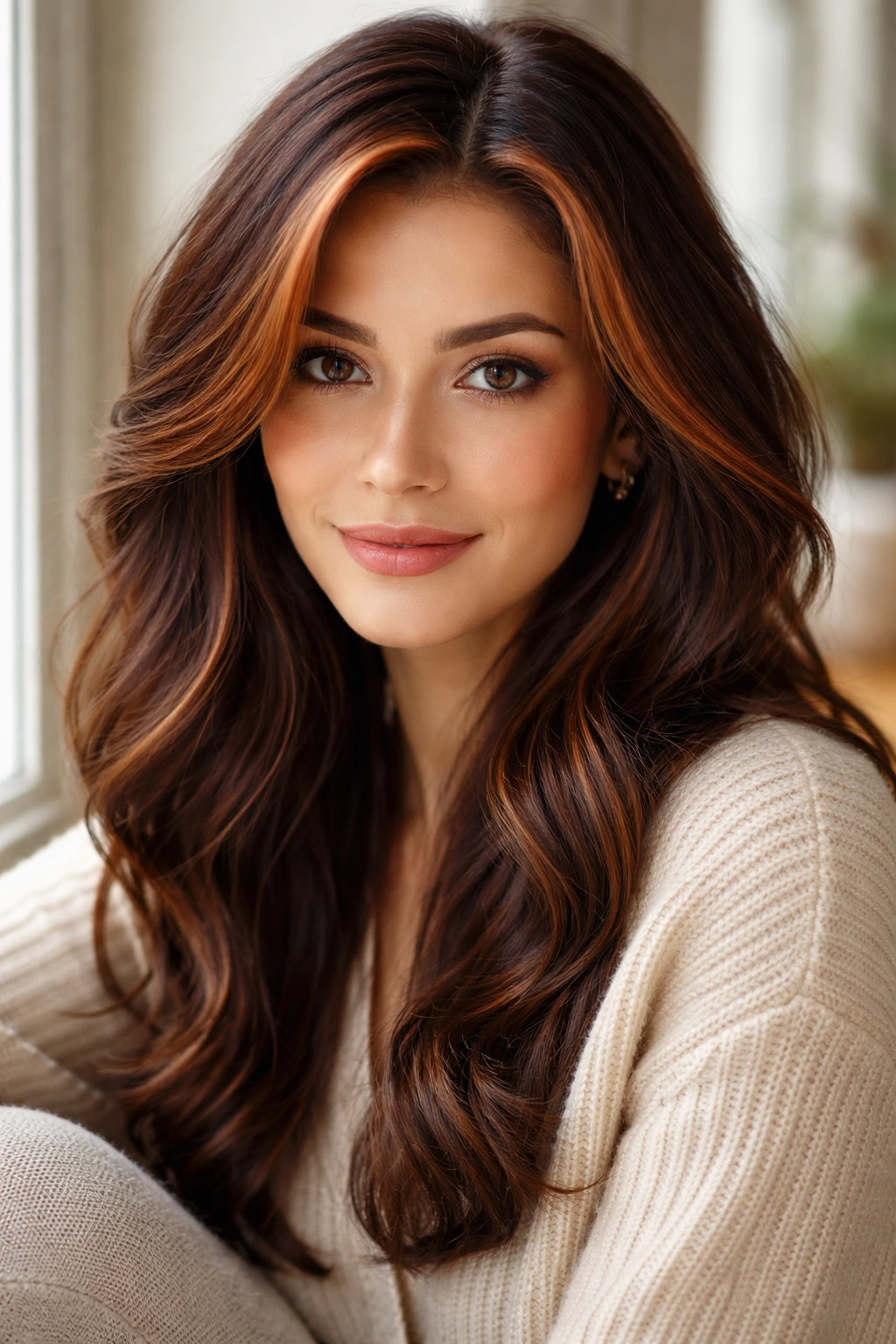
The “halo” technique places the lightest, brightest colors around the top and the crown of the head, creating a radiant circle of color. When you use auburn tones here, it creates a warm glow that seems to emanate from the top of your head.
The Placement
This is a very deliberate coloring style. The highlights are not scattered throughout; they are concentrated where the sun would naturally hit. It is incredibly flattering for the face, as it provides a soft, warm light reflection around your features.
Tip: Ask your stylist to keep the halo pieces slightly softer at the roots so the grow-out is easier to manage.
19. Electric Copper Accent Pieces
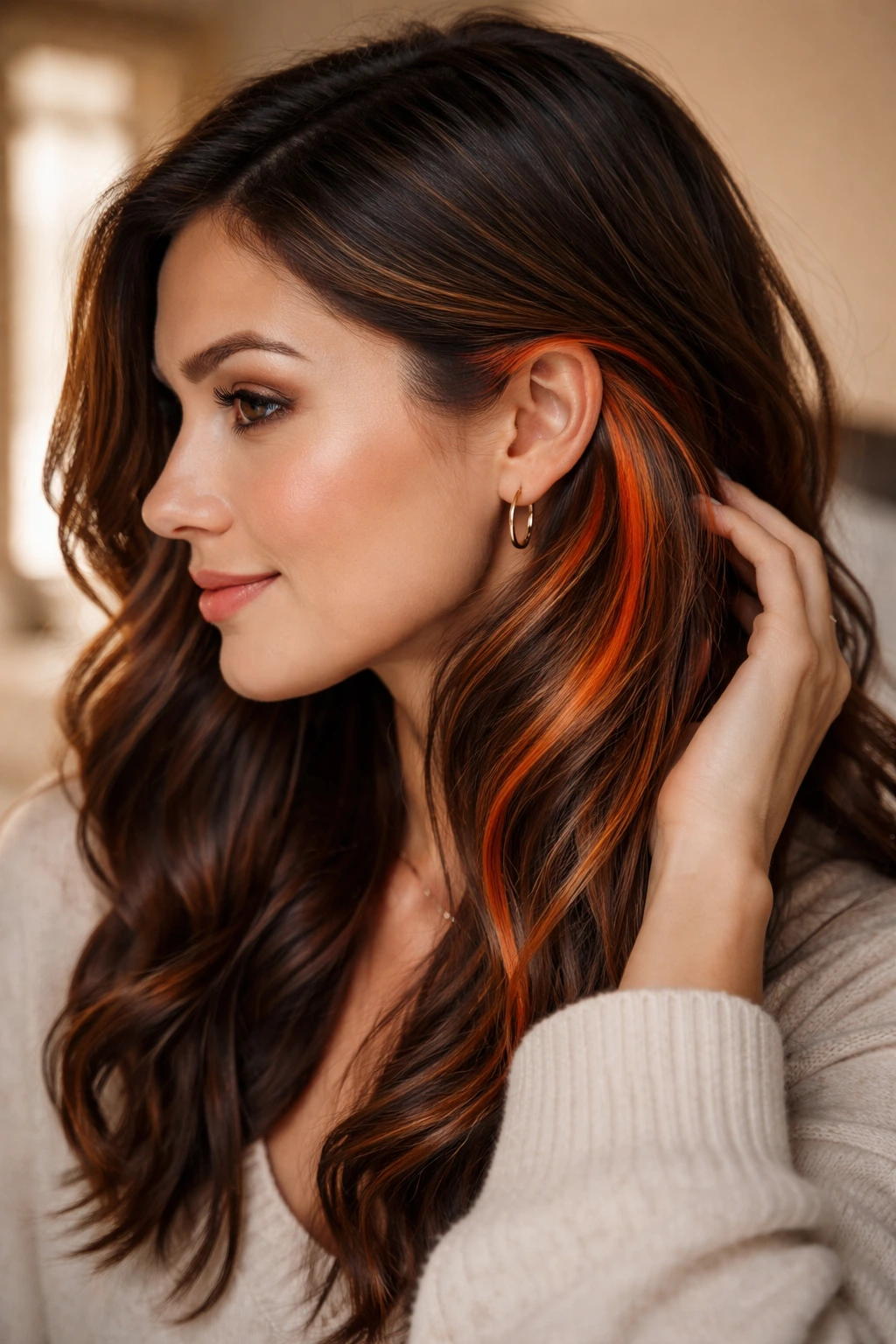
If you love the idea of auburn but aren’t sure about an all-over look, try accent pieces. These are distinct, saturated, bright copper streaks placed in specific areas—perhaps just behind the ears or along the nape of the neck.
The Element of Surprise
These are playful. You see them when you move your hair or pull it up, but they can be hidden when your hair is down. This allows you to indulge in a vibrant, high-impact color without the commitment of doing your whole head.
- Flexibility: If you get bored, these pieces are small enough to easily dye over or grow out without affecting your overall hair health.
20. Subtle Spice-Infused Tips
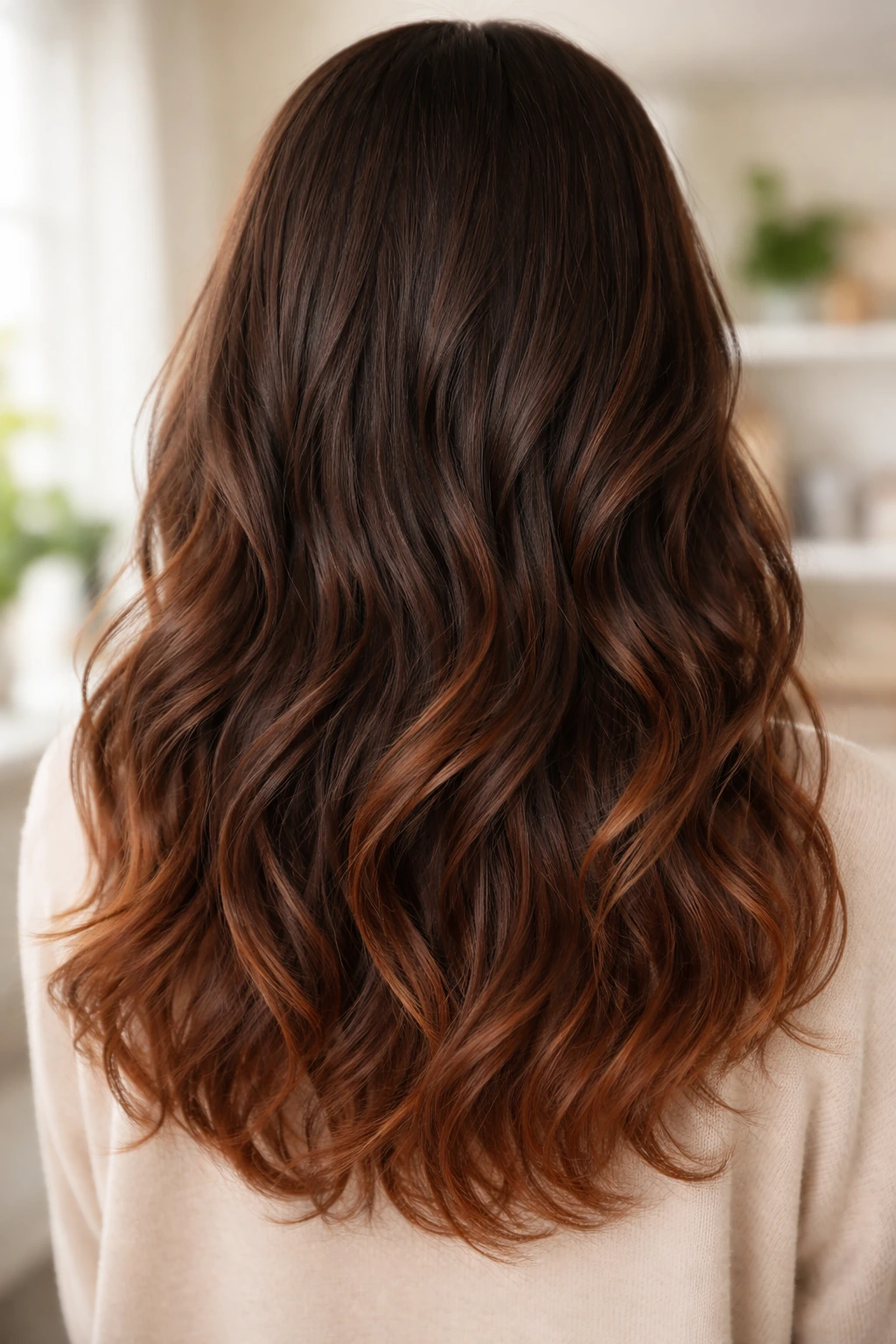
The “dip-dye” or “ombré” concept has evolved into “spice-infused tips.” This involves focusing the auburn color only on the last two or three inches of your hair. It’s a modern, intentional take on the “faded ends” look.
The Application
The transition should be long and gradual. You want a gradient, not a harsh block of color at the bottom. This is a very safe way to experiment with red. If you don’t like it, you can simply trim the ends off—there is no need for a massive color correction process.
Pro tip: This works particularly well if you have layered hair, as the layers will carry the color and create a beautiful, textured effect.
21. Cool-Toned Auburn Highlights
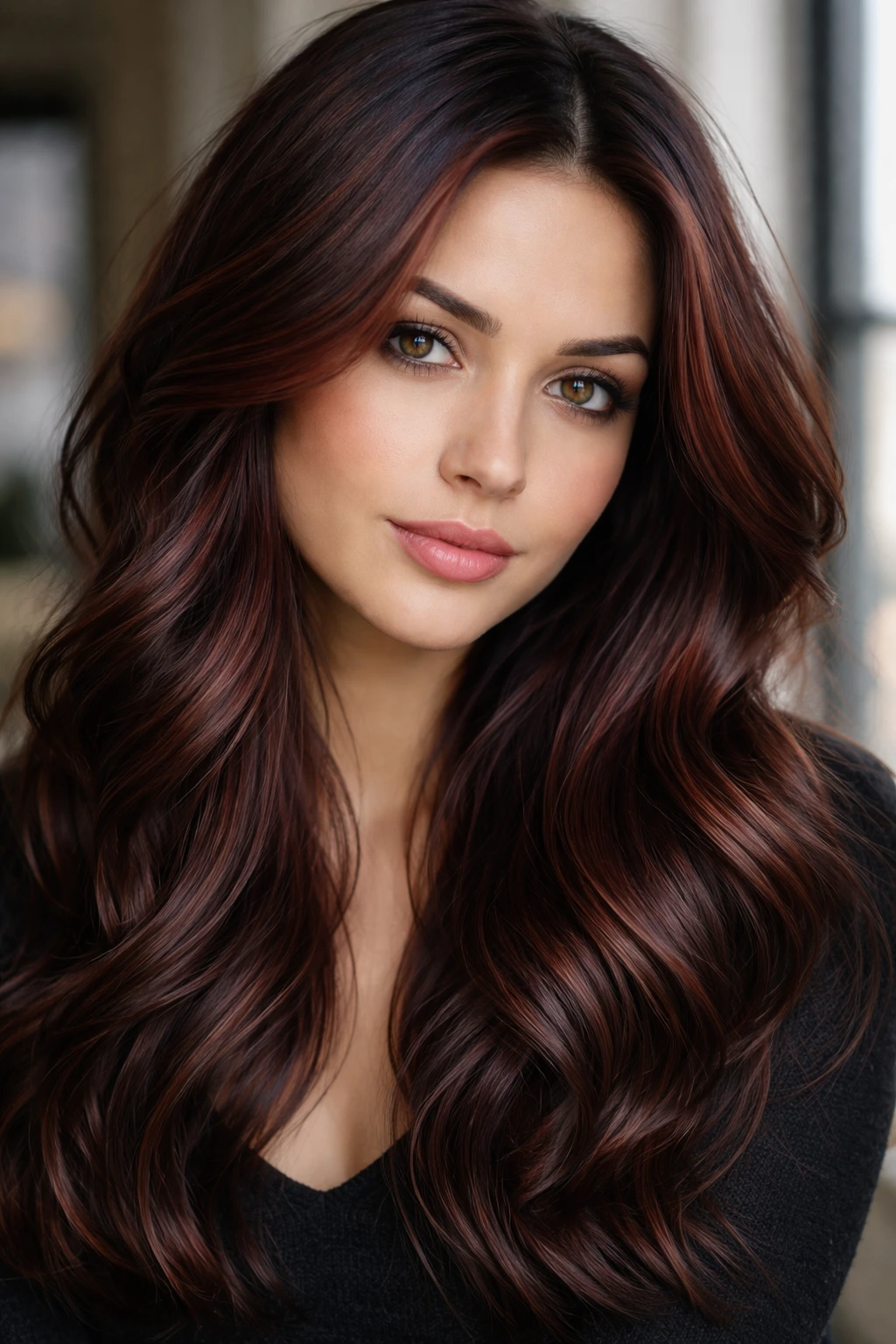
Wait, can auburn be cool-toned? Absolutely. Most auburn is orange/red, but you can request a “cool auburn” which leans into mahogany, plum, or violet bases. These highlights are perfect for those who want the red vibe but feel that bright copper washes them out.
Finding the Balance
The beauty of this is that it avoids the “brassy” problem that many red-haired people fear. Because the base is cool, the highlights don’t pull orange over time. They tend to stay true to their original shade for longer.
- Best For: Individuals with cool or olive skin tones who want to play with red but need to keep it balanced.
22. Bright Fire-Engine Auburn Strands
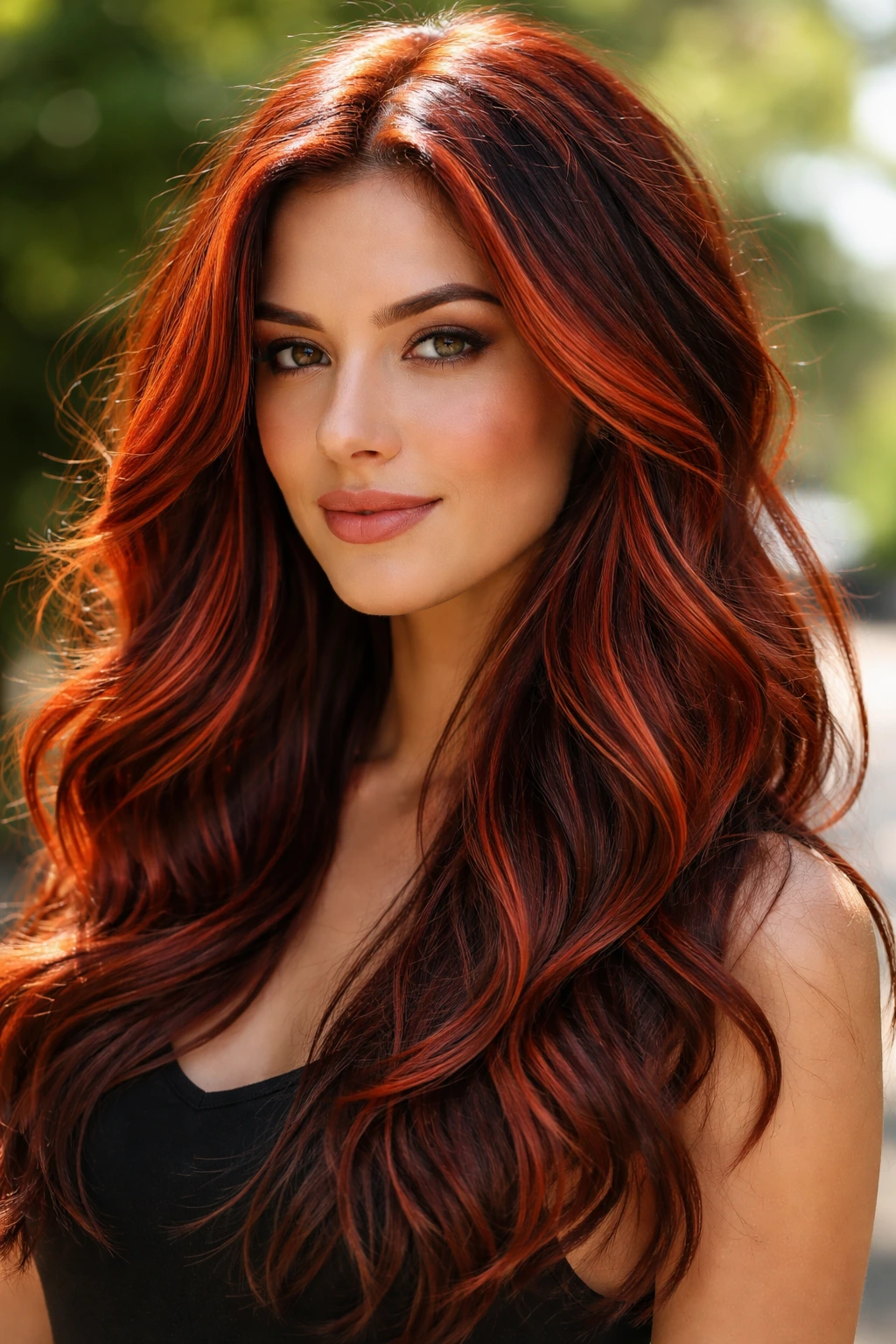
For the boldest among us, there is the fire-engine auburn. This isn’t a natural, “is-she-born-with-it” color. This is a deliberate, high-impact fashion statement. These are distinct, bright, saturated red-orange strands.
The Commitment
This color requires the most maintenance. You have to be realistic: vibrant red fades. You will likely need a color-refreshing gloss every few weeks. You also need to be prepared for the staining that comes with such high-pigment dyes.
Style Tip: Keep the rest of your look simple. This hair color is the accessory; you don’t need much else to make a statement.
23. Auburn and Mocha Highlights
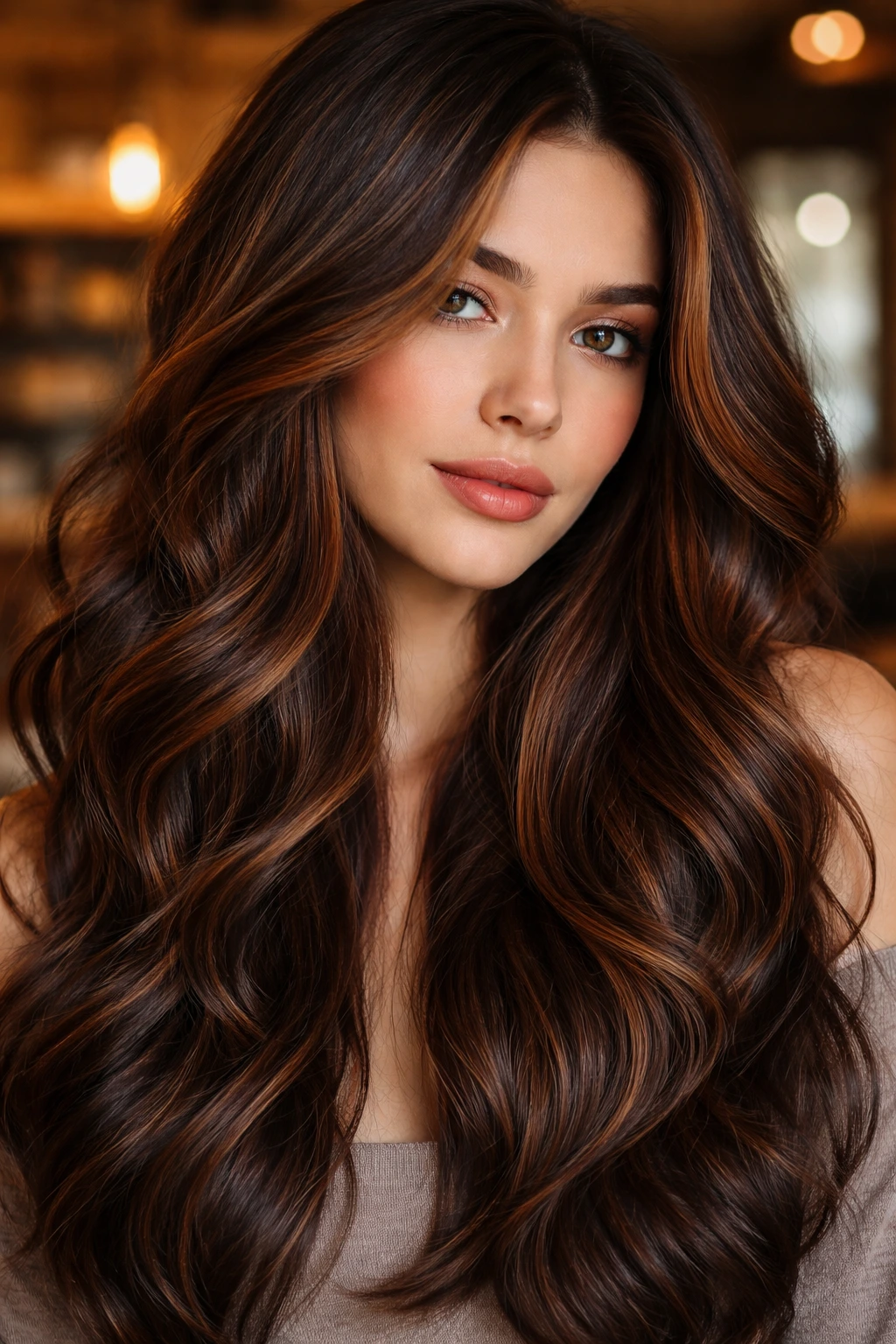
Mocha is a specific shade of brown—think dark, creamy, and cool. When you mix this with auburn, you get a “chocolate covered cherry” effect. It is a stunning, sophisticated contrast that feels both professional and trendy.
The Visual Appeal
The cool mocha tones anchor the warm auburn highlights, preventing them from looking too bright. It’s a balancing act. The two colors work together to create depth and texture that looks incredible on thick, wavy hair.
- Who it suits: This is a fantastic transitional color for someone wanting to go darker but still wants a hint of red.
24. Russet Brown Highlights
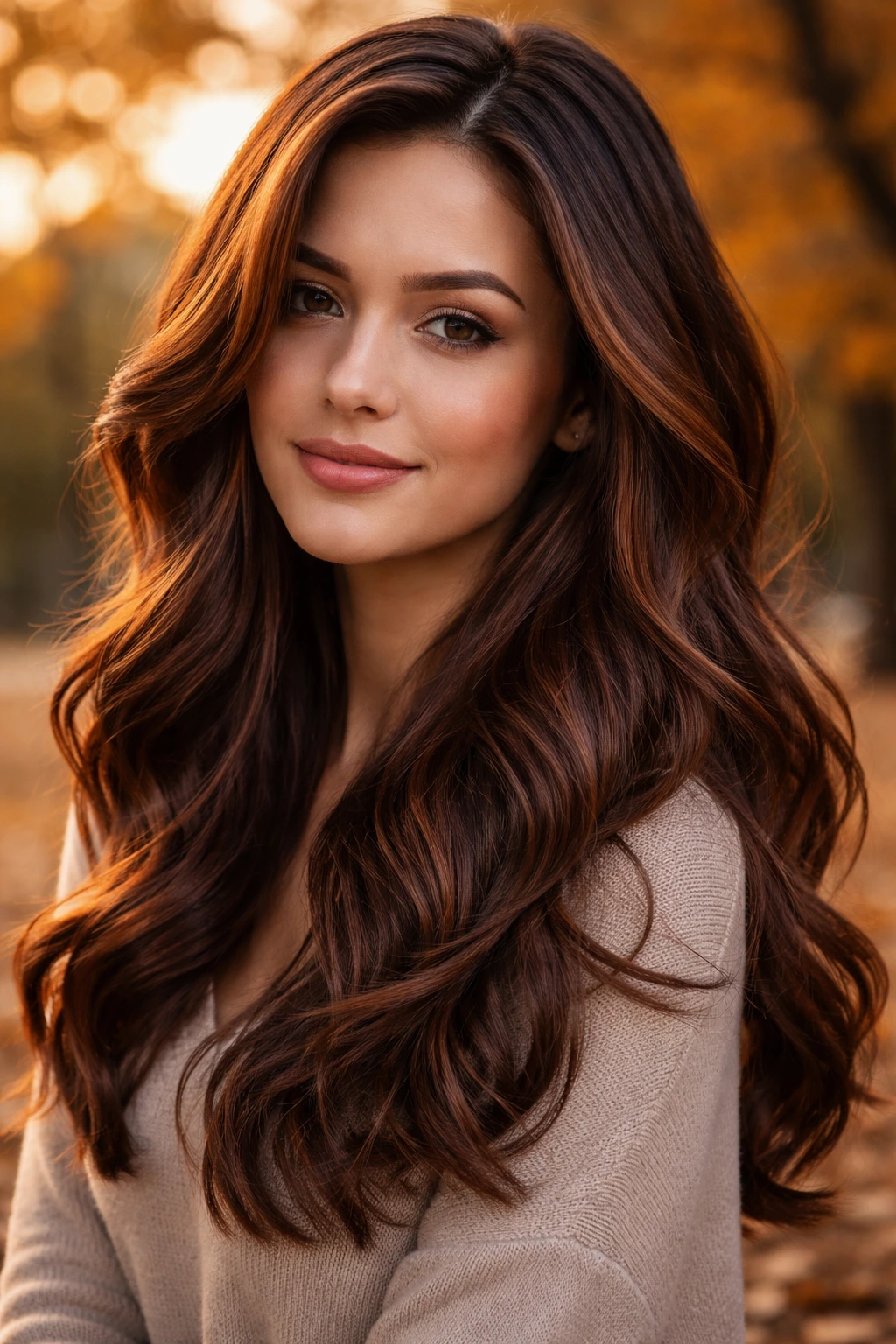
Russet is that perfect mix of red and brown. It’s an earthy, organic shade. These highlights are barely lighter than your natural brown base, but they add a totally different tone. It’s a texture-enhancing move rather than a color-changing one.
Why It Works
It makes the hair look fuller. The tonal difference adds a 3D quality to the hair. If you have “flat” hair, adding russet highlights is one of the best ways to trick the eye into seeing more volume and thickness.
Observation: This is an understated look. It doesn’t scream for attention, but it looks incredibly elegant and well-cared-for.
25. Rose-Auburn Highlights
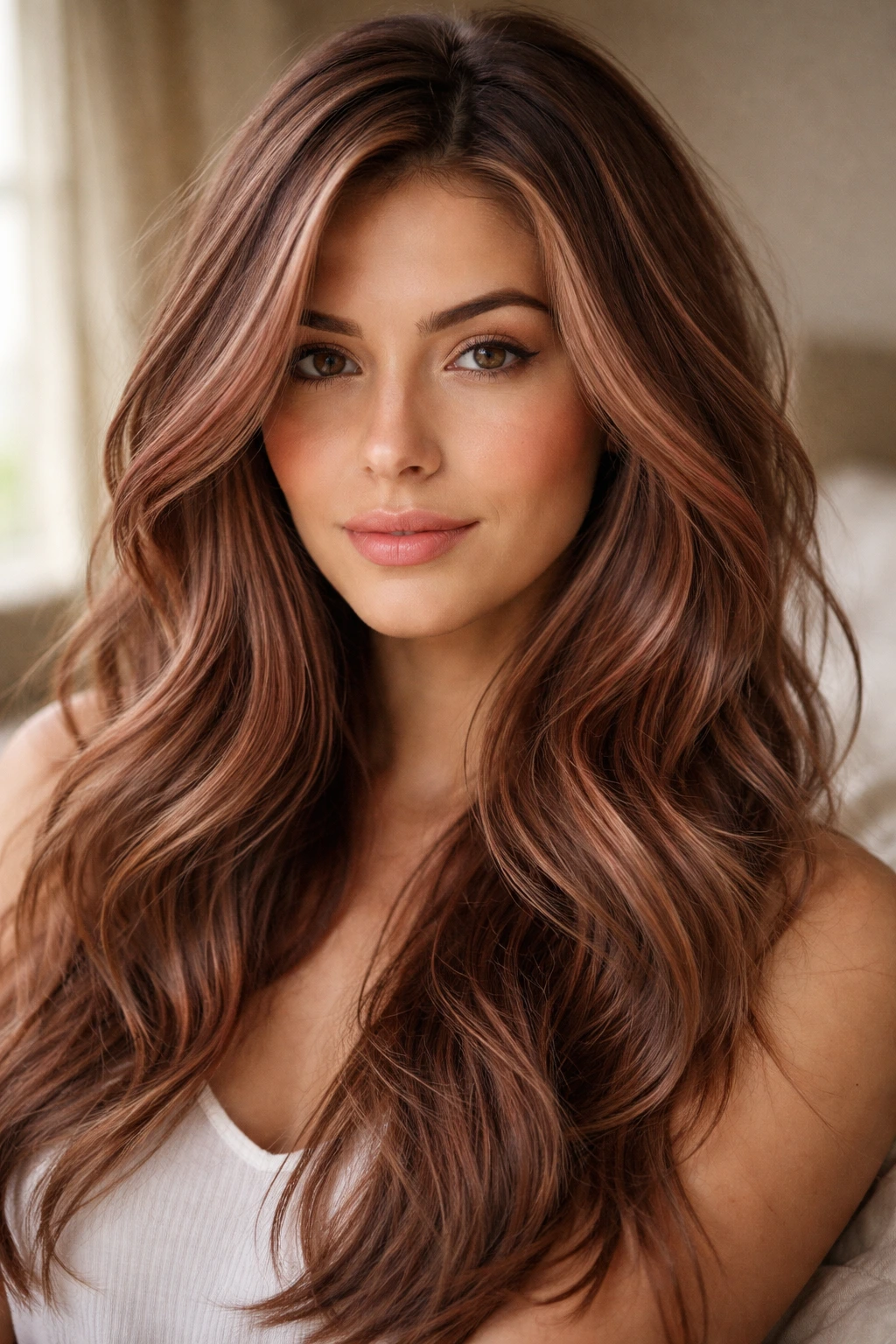
Rose gold was the trend, but rose-auburn is the evolution. This brings a dusty, pinkish-red tone into your brown hair. It’s softer and more “fashion-forward” than traditional copper. It has a vintage, romantic quality.
The Hue
The key here is the “dusty” element. You don’t want a bright, neon pink. You want a muted, earthy rose. This blends beautifully with brown hair, providing a unique, ethereal glow that is very different from the usual copper or ginger tones.
- Recommendation: This works best on hair that has been lifted to a lighter brown or blonde, so the rose pigments can show through clearly.
26. Bold Auburn Chunky Highlights
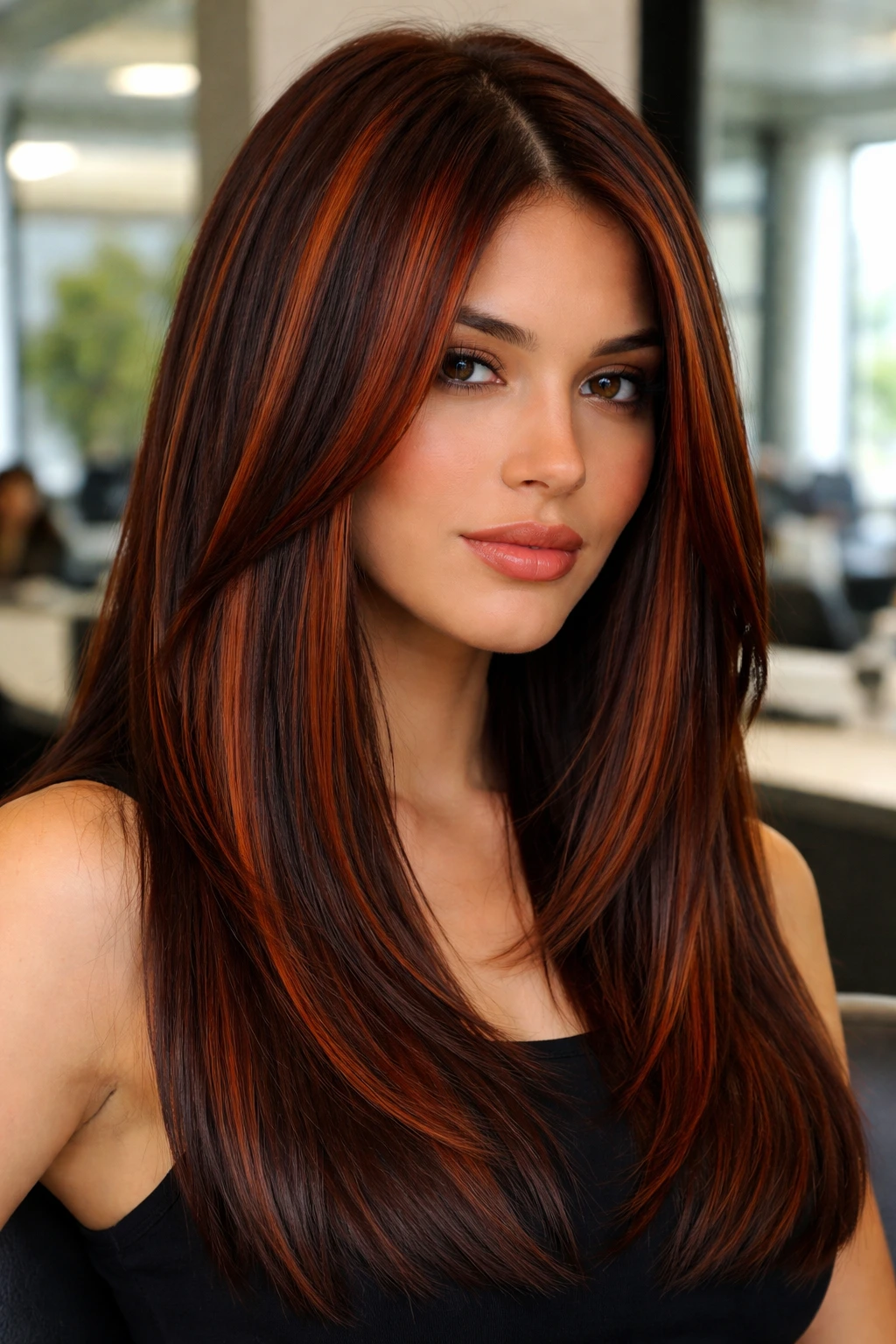
Let’s revisit the chunky highlight, but make it intentional. Instead of thin streaks, these are substantial, defined sections of deep auburn placed throughout the hair. It’s a high-contrast look that demands to be noticed.
The Execution
The key is to avoid thin, wimpy stripes. You want the highlights to be thick enough that they read as blocks of color. This is not about blending; it is about contrast. It works beautifully on straight hair where the lines of color can remain sharp and defined.
Pairing: Pair this with a sharp, blunt cut. The precision of the haircut matches the precision of the bold color placement.
27. Natural Auburn Sun-Kissed Streaks
These aren’t highlights; they are “surfer” streaks. They look like the result of spending an entire summer on a beach. They are slightly irregular, a bit brighter at the ends, and perfectly imperfect.
The Technique
The goal is to avoid the look of “salon” hair. Use a technique that involves “teasing” the hair before applying the color, which softens the root line so much that it’s impossible to tell where the color begins. It is the definition of “effortless.”
- Style: Beachy waves, textured bobs, or long, layered cuts. This style thrives on movement and natural texture.
28. Dark Red-Brown Highlights
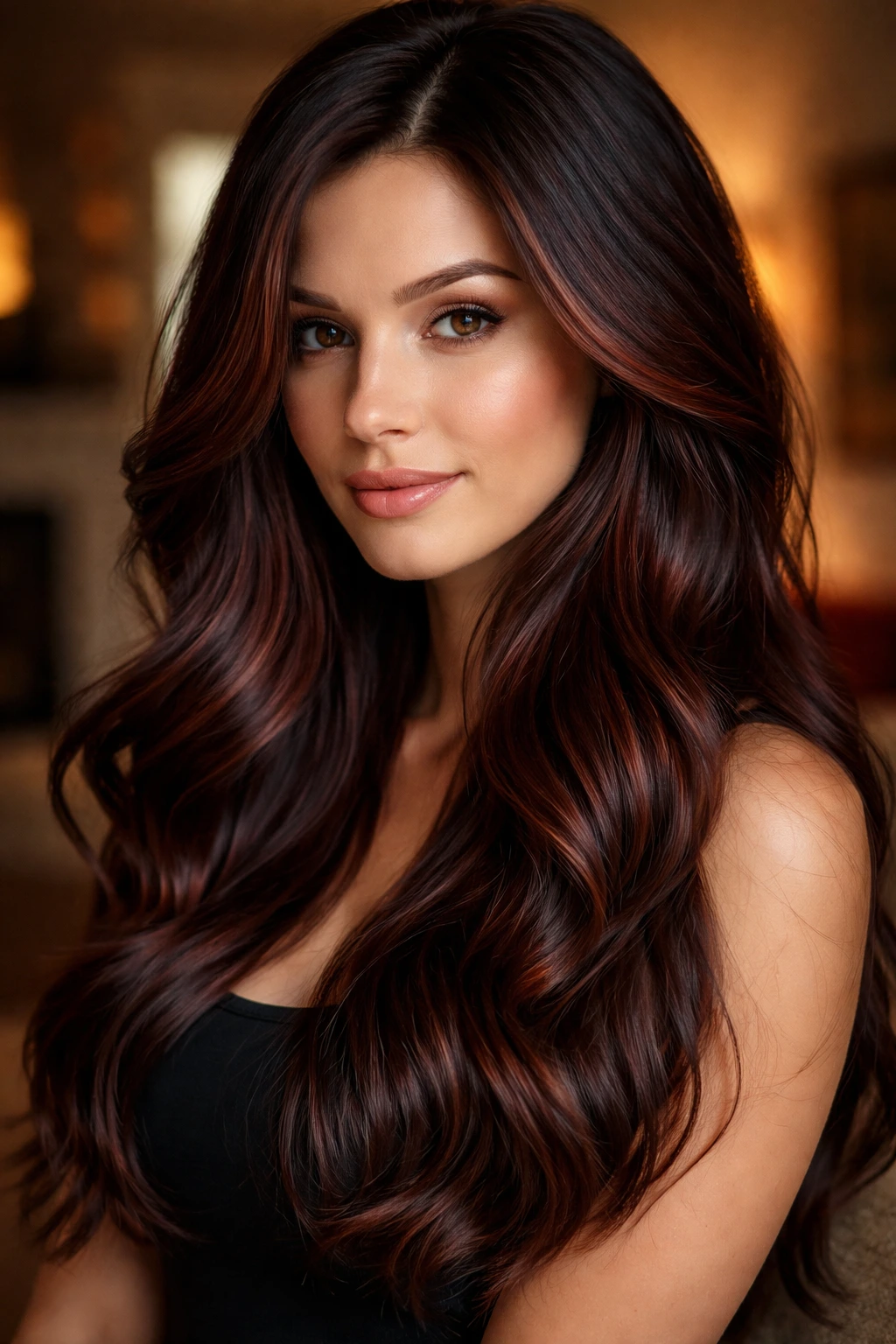
This is for the person who loves their dark hair and doesn’t want to go light, but just wants a change of tone. Dark red-brown highlights are subtle, rich, and incredibly glossy. They are just a few shades away from your natural base color.
The Subtle Impact
They don’t brighten the hair, but they do “warm” it. They turn an ash-brown or neutral-brown into a rich, decadent mahogany-brown. It is the color equivalent of adding a warm blanket to a room—it just makes everything feel cozier and more inviting.
Pro Tip: This is the easiest color to maintain. Because the tone is so close to your natural color, you can go 3-4 months between touch-ups.
29. Toasted Copper Highlights
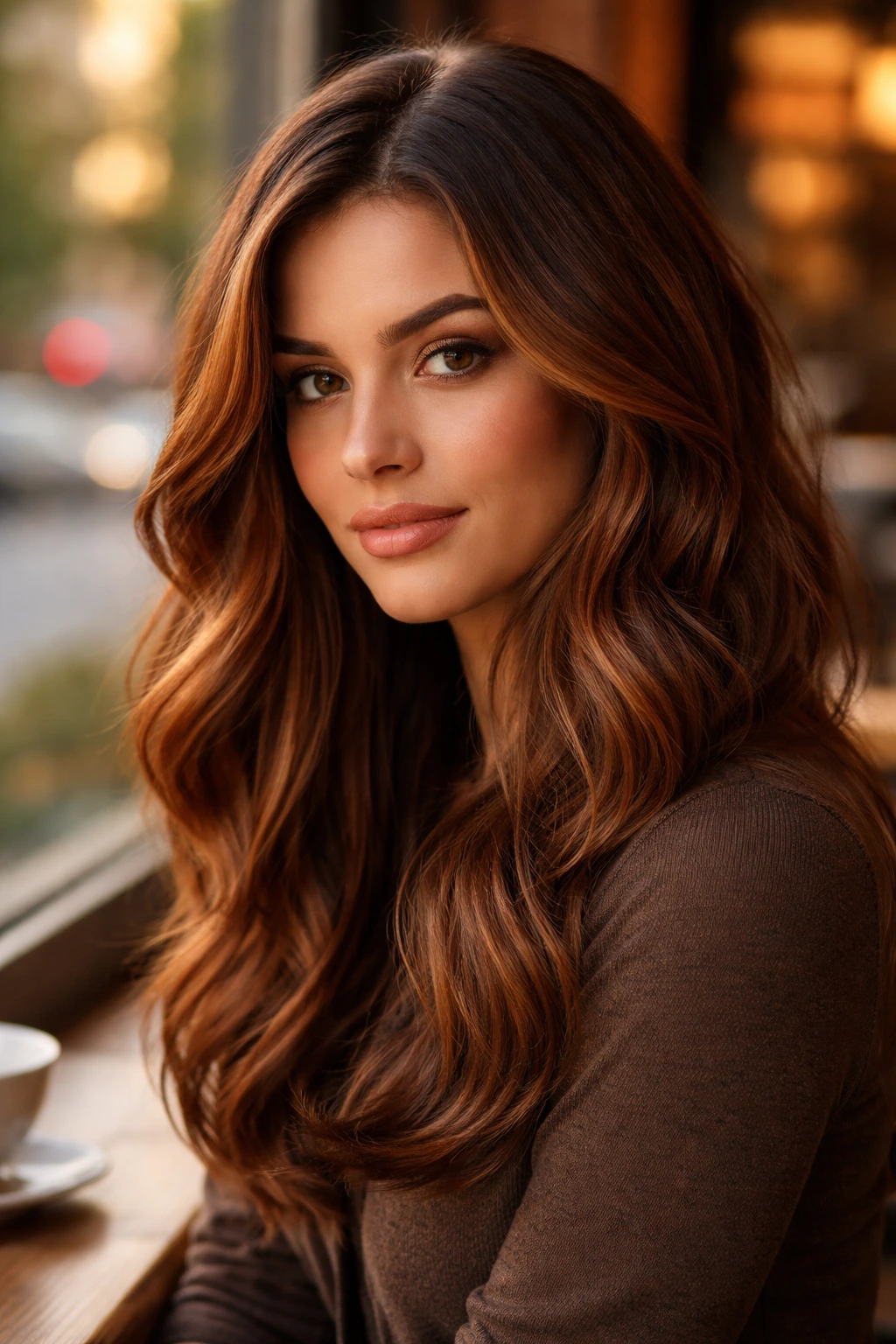
“Toasted” copper implies a deeper, more caramelized version of copper. It’s not bright, it’s not loud—it’s warm, sweet, and rich. These highlights are perfect for medium-brown hair that needs a little bit of life.
The Flavor
It’s a very popular choice for a reason—it’s universally flattering. It adds just enough warmth to make the skin look glowy and healthy, without the commitment of a “red” hairstyle. It feels like a very natural extension of brown hair.
- Maintenance: Easy. It grows out softly and doesn’t require aggressive bleaching.
30. Vivid Cinnamon Highlights
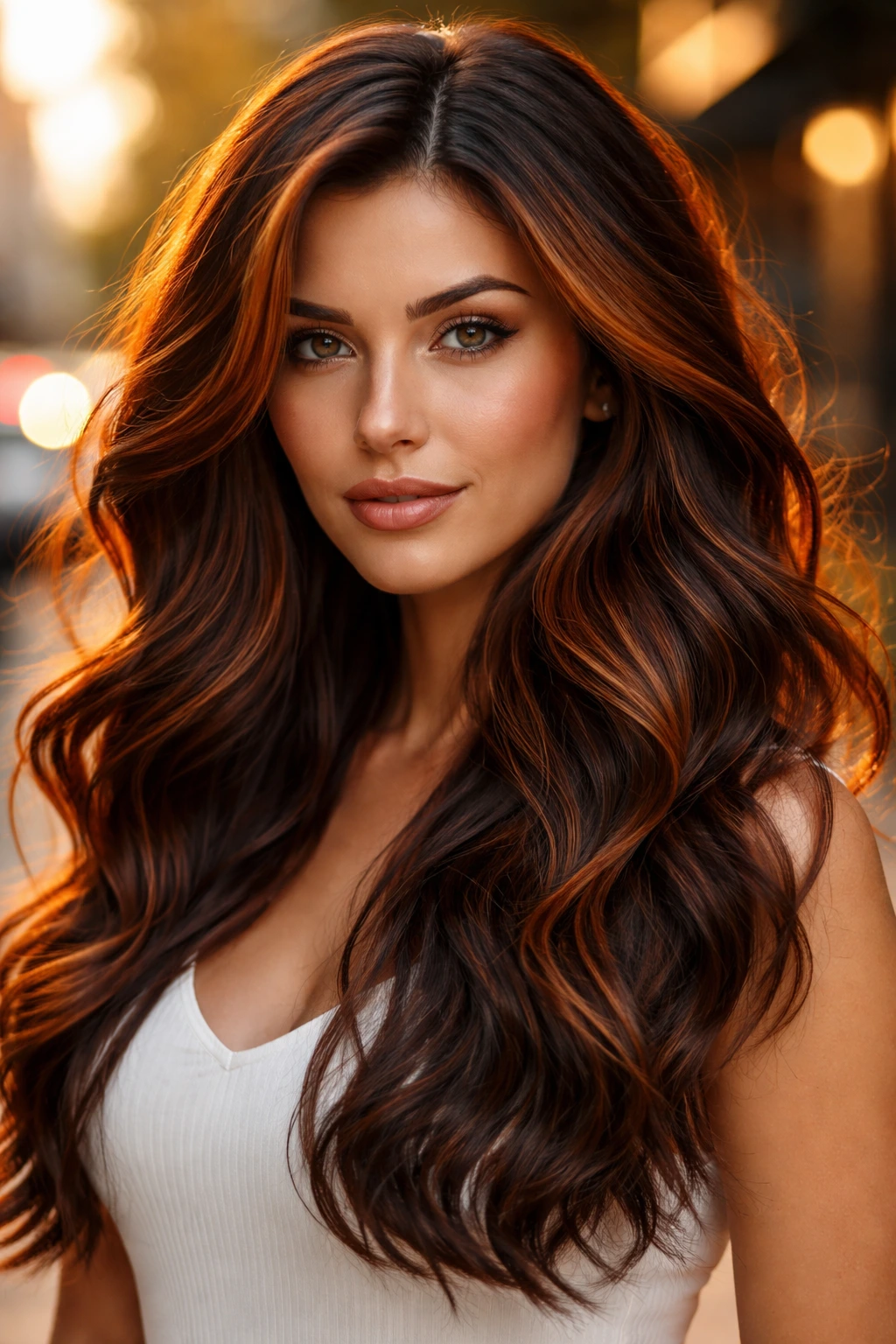
Cinnamon is a spicy, vibrant, warm shade. These highlights are meant to be seen. They are lighter than copper, more orange than red, and incredibly energetic. They are perfect for dark hair that needs a significant contrast.
The Vibrancy
These are fun. They feel youthful and bold. If you are tired of the “serious” look of dark brown hair, cinnamon highlights are the perfect antidote. They bring a level of brightness and movement that completely changes your overall appearance.
Final Advice: No matter which of these 30 styles you choose, the health of your hair is paramount. Auburn tones, because they often require lifting the hair’s natural pigment, can dry out the hair. Use a deep conditioning mask once a week, avoid excessive heat styling, and always use a color-safe shampoo. Treat the color like a precious item, and it will treat you to a vibrant, multi-dimensional look that you’ll love wearing.
Final Thoughts
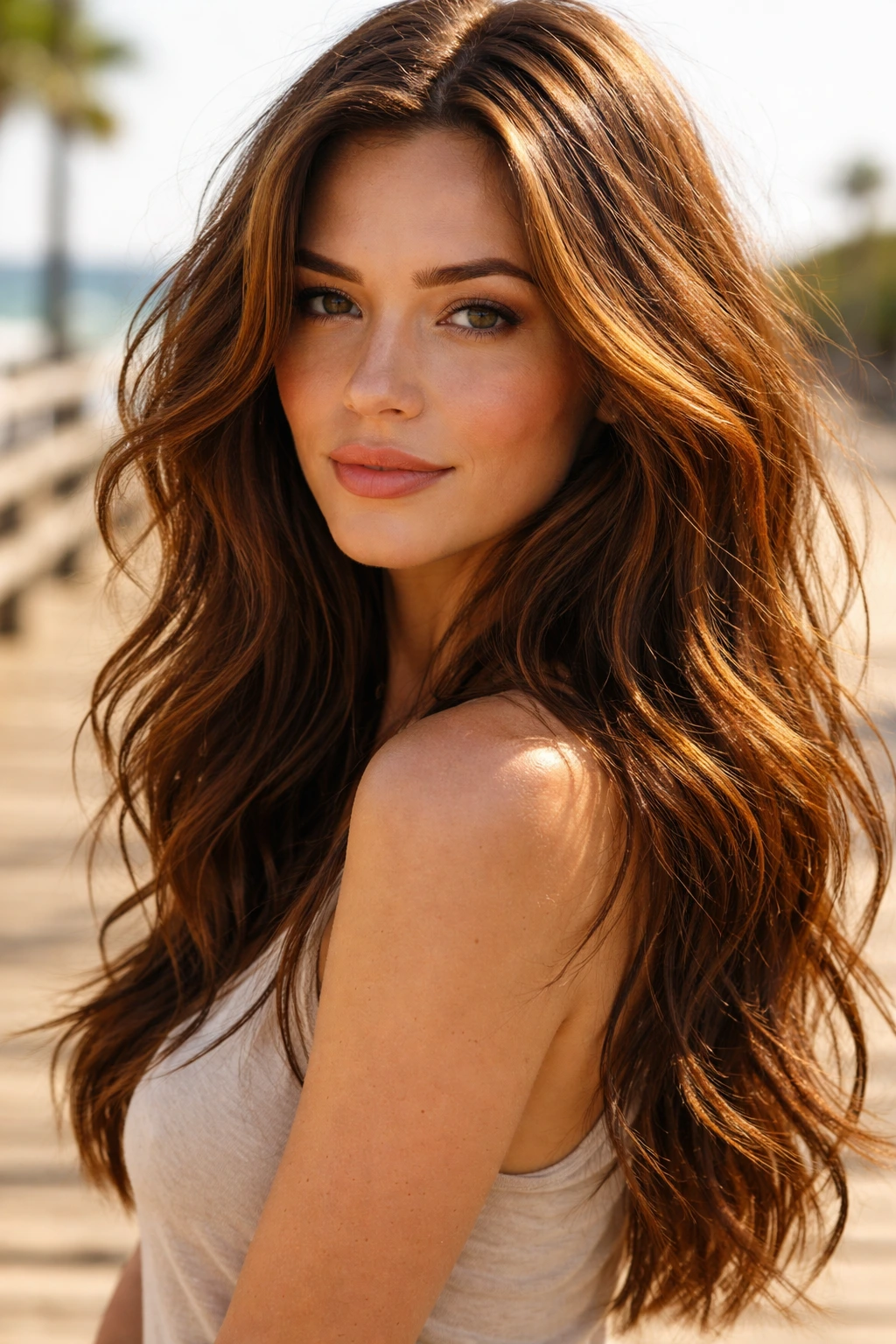
Stepping into the world of auburn highlights for brown hair is less about a total identity shift and more about adding a layer of depth. Brown hair has a tendency to soak up light, making it look dense and sometimes flat. By weaving in these warm, red-based tones—whether they are deep mahoganies or bright, fiery coppers—you are effectively forcing your hair to interact with light in a new way. You are creating movement where there was previously stillness.
The commitment level varies wildly across these 30 options. Some, like the subtle babylights or deep undertones, are low-stakes and easy to grow out. Others, like the bold chunky highlights or vivid fashion colors, require a dedication to maintenance that you should be honest with yourself about before walking into the salon. There is no right or wrong path here, only the path that fits your lifestyle.
Ultimately, hair color is meant to be played with. If you try a subtle balayage and find yourself wanting more, you can always go bolder next time. If you go bold and find it’s too much upkeep, you can tone it down. The best hair looks aren’t the ones that follow a strict set of rules, but the ones that make you feel like the most vibrant version of yourself every time you catch your reflection. Don’t be afraid to experiment with these warmer tones; brown hair was always meant to be more than just brown.
