



Chestnut highlights for brown hair can do something a flat brunette color rarely manages on its own: they wake up the whole head without dragging it into blonde territory. Chestnut sits in that sweet middle ground where you get warmth, shine, and movement, but still keep the depth that makes brown hair look expensive in the first place.
The trick is that chestnut is not one single shade. It can lean reddish, smoky, golden, or almost cocoa-dark, and that difference changes everything. A few soft ribbons on a medium brown base read calm and dimensional. A heavier money piece on dark brown hair reads brighter and bolder. Get the tone wrong, though, and chestnut can go coppery, striped, or muddy fast. Hair color is picky like that.
I’ve always thought chestnut works best when it looks borrowed from nature rather than painted on top. Think polished walnut shell, wet bark, roasted coffee, a little amber in the light. The good versions do not shout. They just make brown hair look richer, more alive, and far less one-note.
1. Soft Chestnut Balayage on Medium Brown Hair
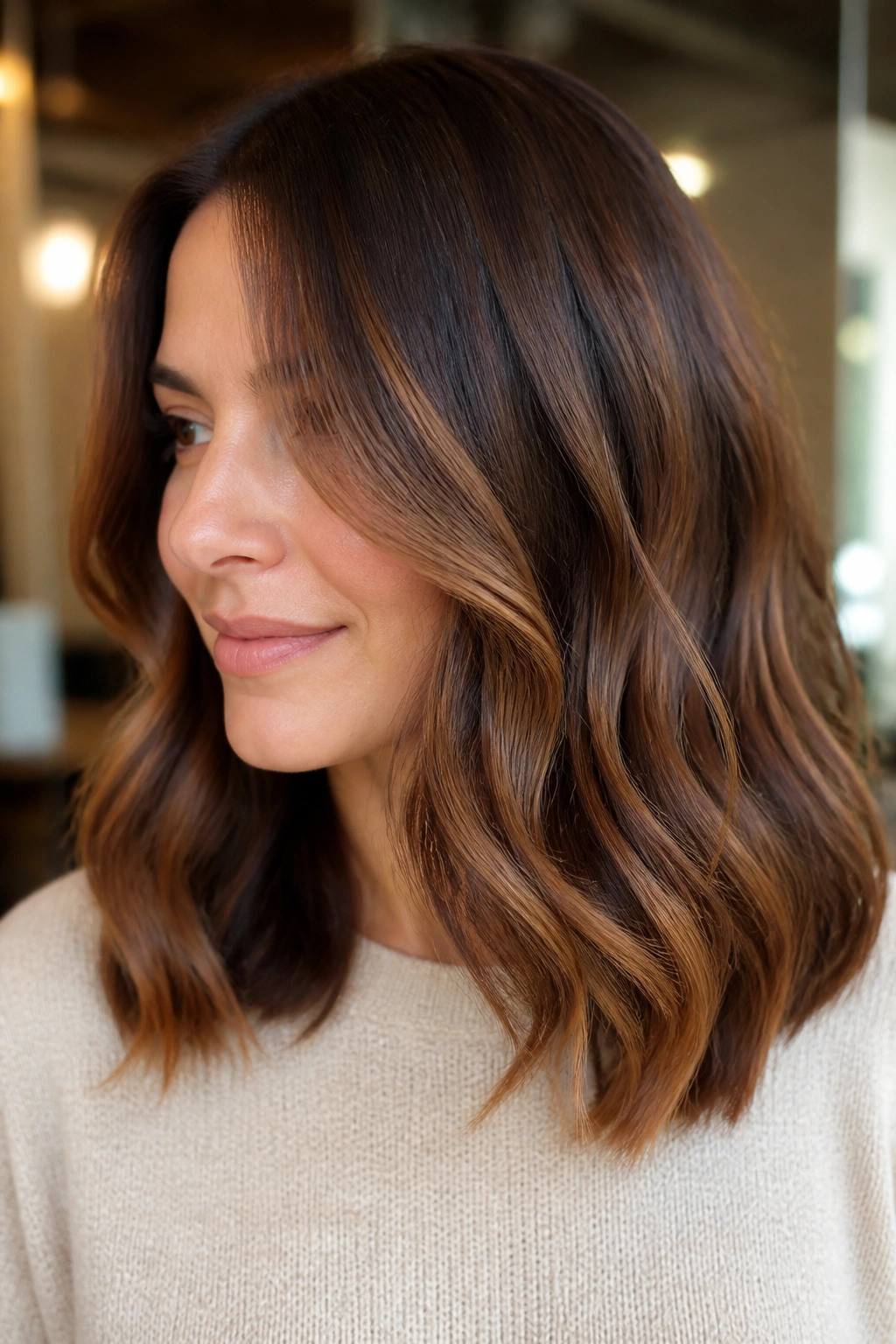
Soft balayage is the least fussy way to bring chestnut into brown hair. The colorist paints lighter pieces through the mid-lengths and ends, so the roots stay deeper and the grow-out stays calm. On medium brown hair, that keeps the whole look grounded instead of streaky.
Why It Works on Medium Brown Hair
The placement matters more than the exact shade. Chestnut balayage works because it breaks up the flat center band that makes brunette hair look heavy, especially on shoulder-length cuts and loose waves.
Ask for thin, hand-painted ribbons that sit one to two levels lighter than your base. That gives you movement without a big jump in contrast.
- Best on layered lobs, long bobs, and wavy cuts
- Keeps the root area darker for easier grow-out
- Looks richer if the toner leans beige or warm brown
- Needs a gloss refresh when the mid-lengths start to feel dull
Pro tip: ask for a few slightly brighter pieces around the face so the balayage does not disappear when your hair is pulled back.
2. Chestnut Money Piece Around the Face
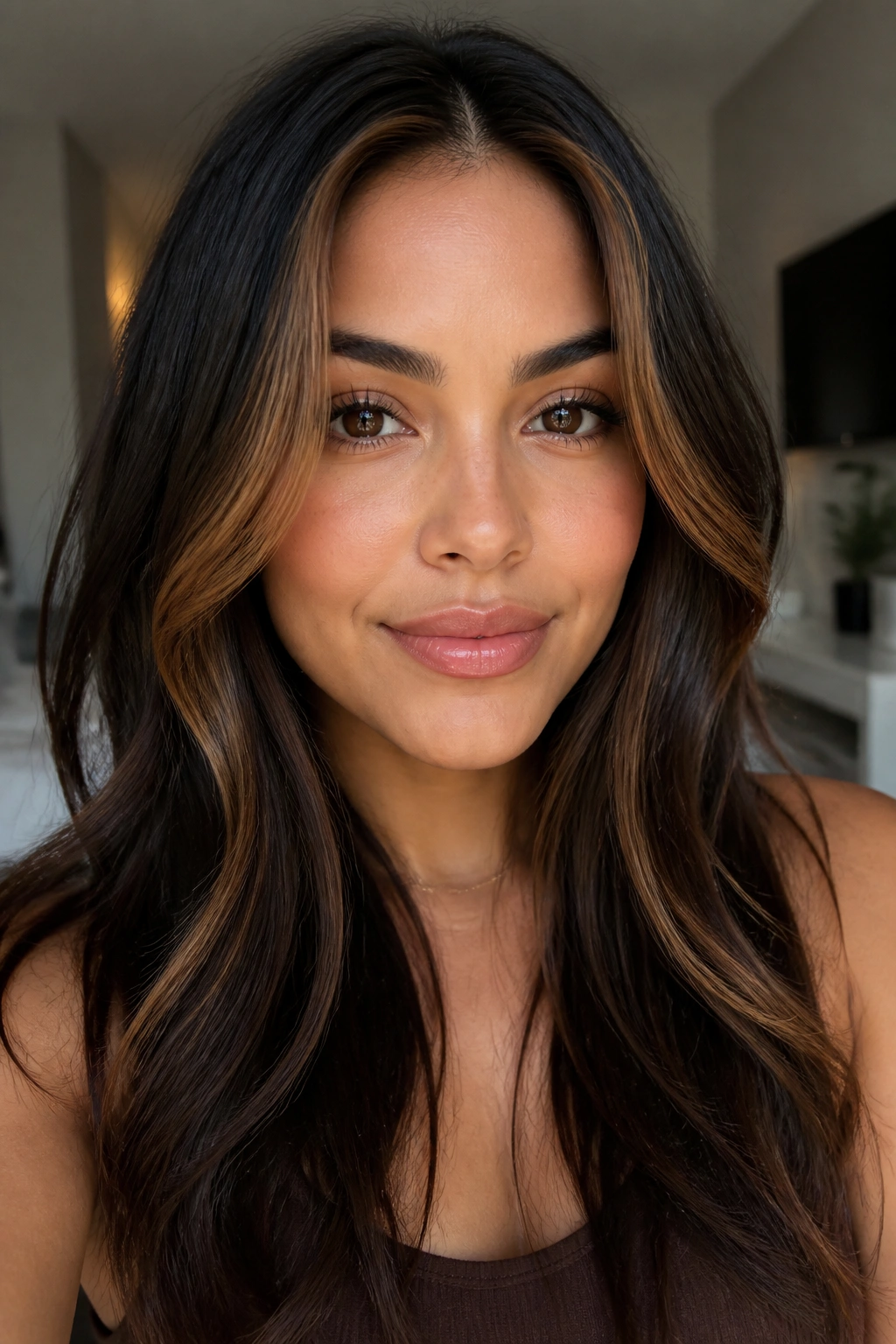
Chestnut money pieces can change the whole cut in one move. A warm ribbon around the hairline pulls light toward the face, which is useful if the rest of your brown hair is staying fairly deep. It is a small placement, but it reads fast.
Keep the width controlled. Too wide, and it starts to look like a block of color instead of a face frame. About half an inch to one inch per side is enough for most brunettes, though thicker hair can handle a little more.
The nicest versions soften right into the front layers. You want the color to brighten the cheekbone area, then disappear as it moves back toward the temple. That keeps the front fresh while the rest of the hair still looks natural. If you wear a middle part, this placement gets even better. The line is right there, doing the work for you.
3. Fine Chestnut Babylights for a Soft Glow
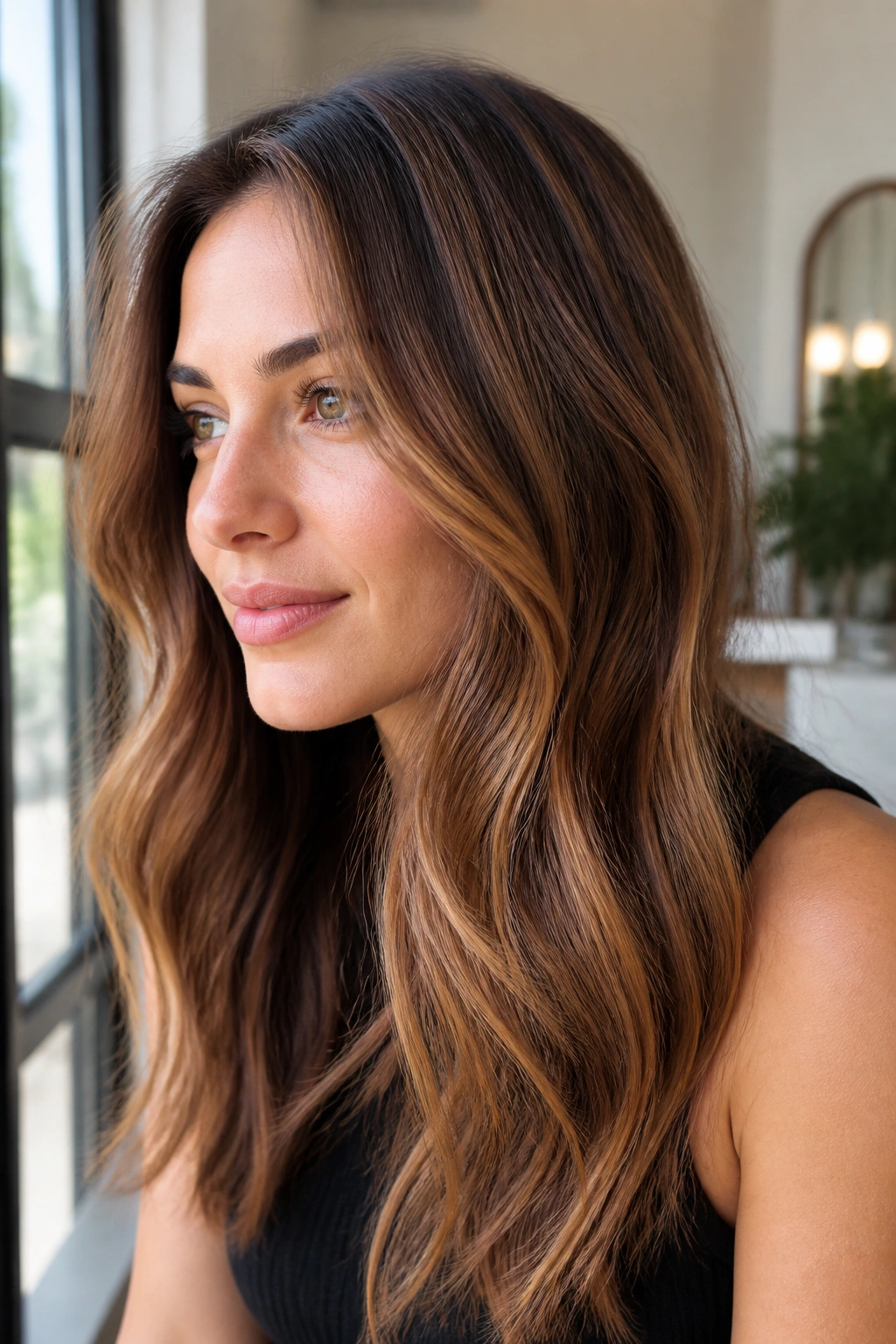
Want the color to look like your brown hair caught a little more light, not like it was fully redone? Babylights are the answer. These are tiny woven highlights, so fine that they blur into the base from a normal distance.
How to Ask for Them
Tell your colorist you want micro-fine sections and a very soft weave. That usually means more foils, but less color inside each foil, which is why the final result looks airy instead of striped.
Babylights are good when you like shine more than contrast. They also flatter straight hair well, because the light catches those tiny pieces as the strands move.
- Great for people who hate obvious regrowth
- Best on fine to medium hair that can look flat
- Works with warm, neutral, or slightly smoky chestnut tones
- Gives the most payoff in daylight and under indoor lights
A good babylight job should look like your own color got a bit more depth and gloss. Nothing chunky. Nothing loud.
4. Ribbon Highlights Through the Mids and Ends
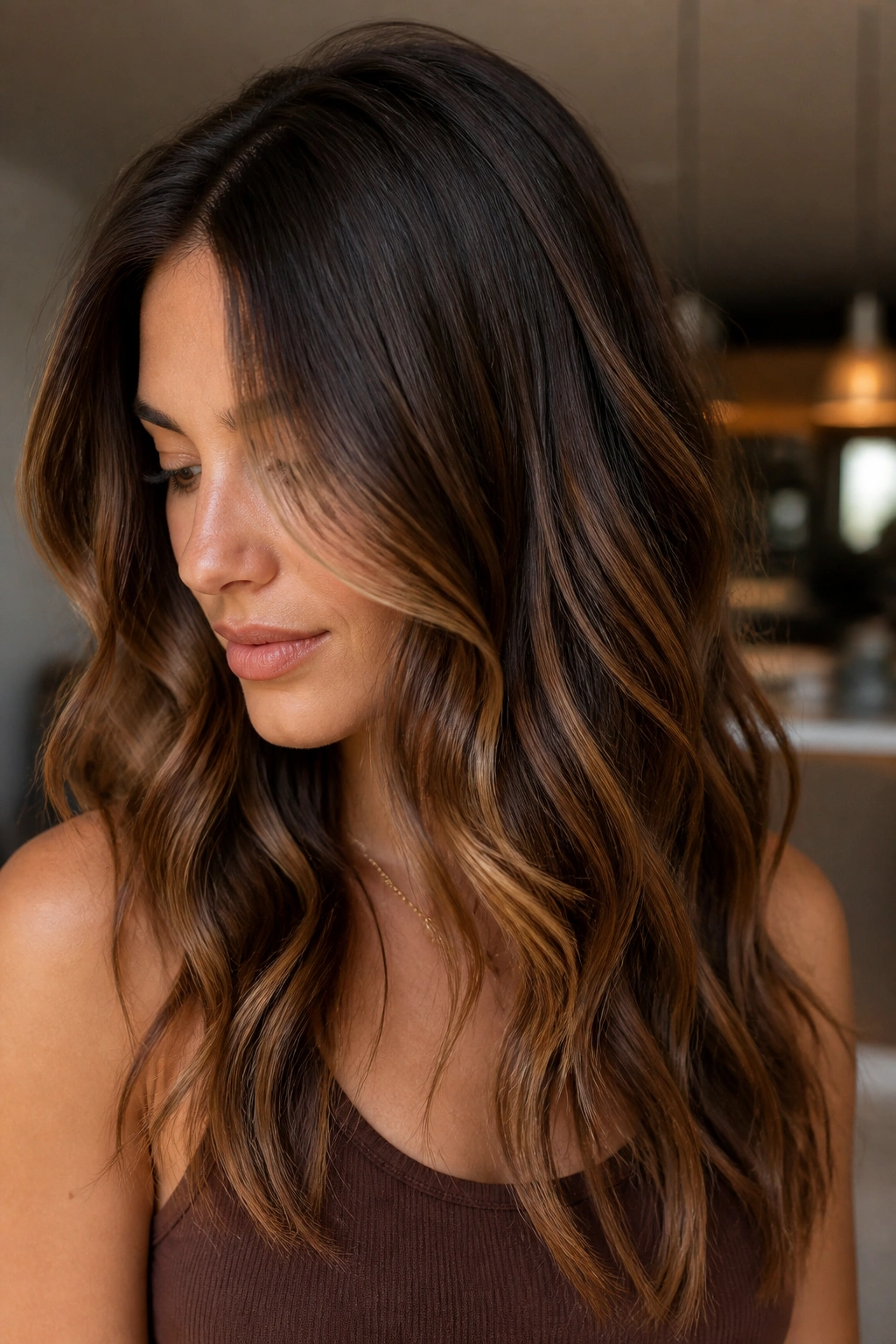
Ribbon highlights are for brown hair that already has some movement and needs the color to show it off. The pieces are thicker than babylights, but still soft enough to blend. On long waves, they sit like thin strips of silk across the hair.
The placement should follow the way the hair bends. If the waves are loose, the chestnut ribbons can be wider and a little more spaced out. If the hair is tighter or more layered, the ribbons need to be narrower so they do not swallow the shape of the cut.
This look gives the mids and ends a sense of motion that single-process brown hair rarely has. It is one of my favorite options for anyone who wants dimension without a blonde result. You notice it when the hair swings. You notice it again when the curls settle.
- Best on layered cuts
- Use 1/4-inch to 1/2-inch sections for visible movement
- Keep the pieces staggered, not lined up
- Ask for soft ends so the highlight does not look chopped off
5. Chestnut Ombré Fade
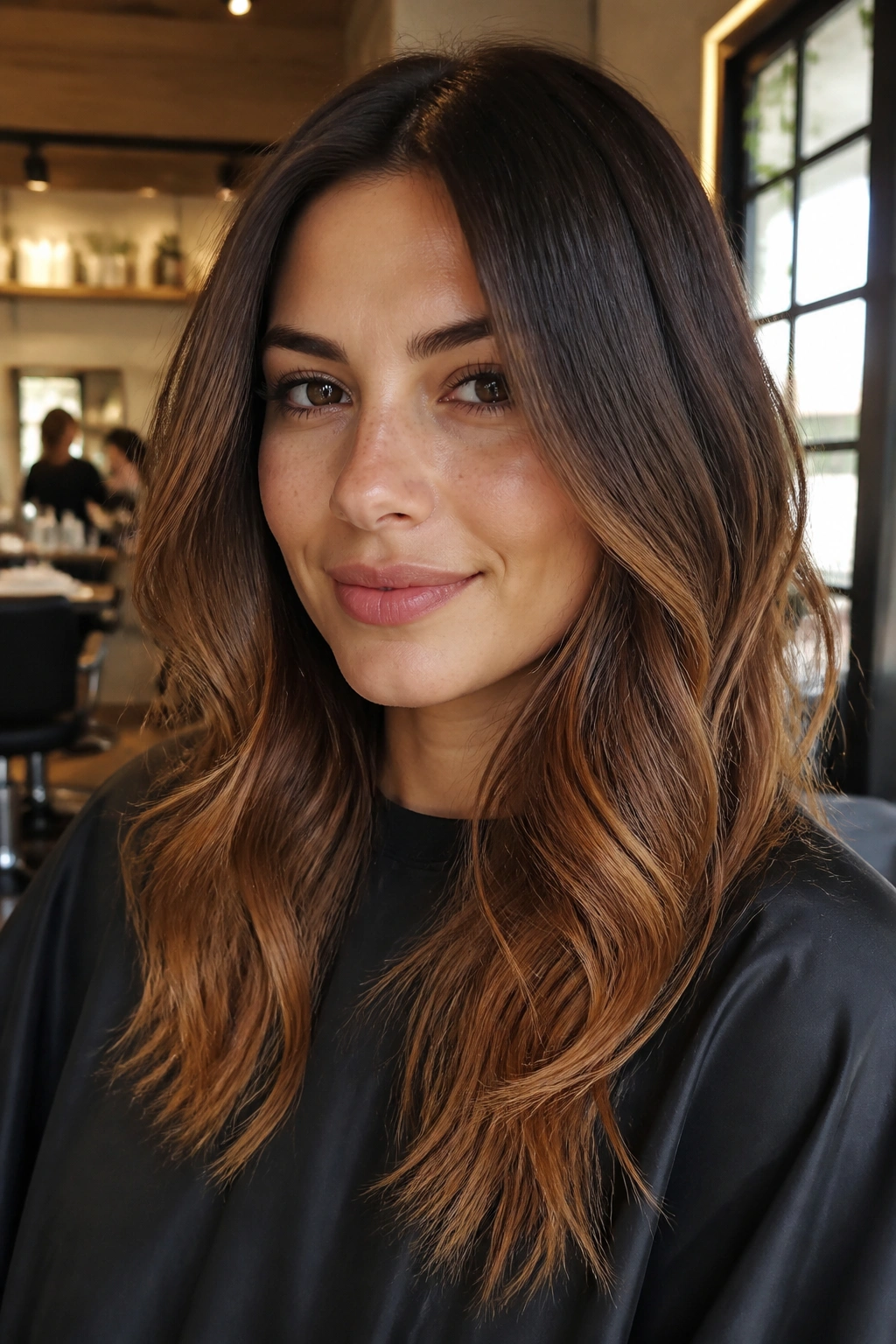
Chestnut ombré works because the eye reads the fade as natural movement. The roots stay deeper, the middle length warms up, and the ends drift into a chestnut-brown glow that looks softer than a hard highlight line.
This is one of the easiest styles to live with if you do not want to keep touching up your roots. The trick is to keep the top third of the hair in a shade close to the base and let the chestnut show more clearly from the cheekbone down. If the end pieces are too light, the whole look turns into a blonde ombré. If they are too dark, the fade disappears.
On hair with porous ends, the tone can grab fast, so a gloss or toner at the end matters a lot. The ends should look polished, not thirsty. A good chestnut ombré has that smooth, slightly shadowed finish that makes long brown hair feel fuller.
6. Chunky Chestnut Streaks for a Bold Brunette Look
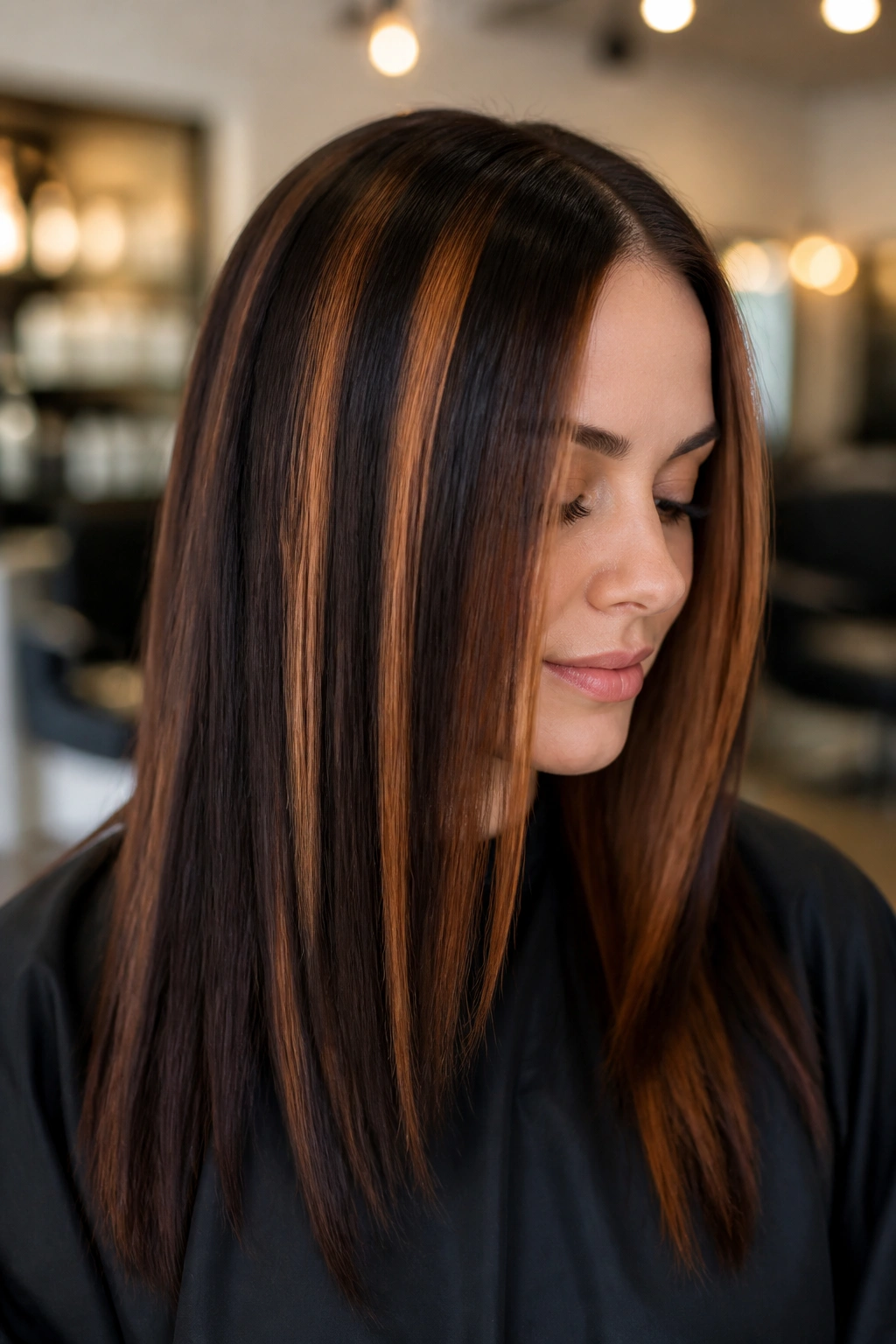
Chunky streaks are not subtle, and that is the point. If babylights are the whisper, chunky chestnut panels are the clear sentence. They work best when you want the brown base to stay visible but you still want the highlight pattern to show from across the room.
Straight hair and blunt cuts handle this style well because the lines have room to read. Curly hair can handle it too, but the color needs to be placed with more thought or it starts to blur into a busy mess. I like this look most when the streaks are uneven in width and tucked a little deeper through the crown.
The base should stay rich, maybe espresso or chocolate brown, so the chestnut has something to sit against. Without that contrast, chunky pieces can look flat instead of deliberate. If you want something a little retro, a little bold, and not precious at all, this is the one.
7. Glossed Chestnut Color Melt
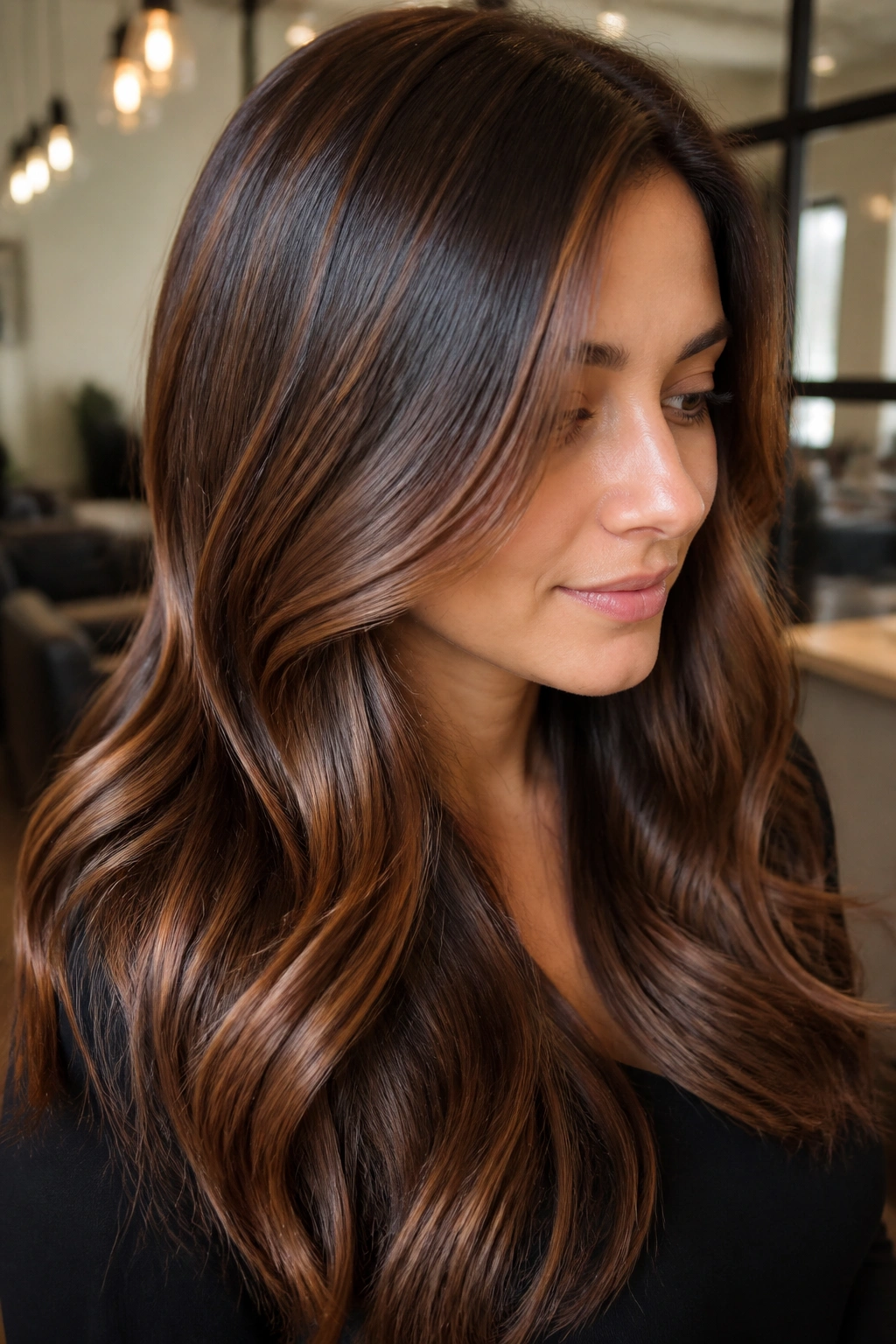
A gloss is what keeps chestnut from drying into a flat brown. It adds shine, nudges the tone, and softens the line between the highlights and the base. On brown hair, that matters more than people think.
What the Gloss Actually Does
A chestnut gloss can make warm pieces read richer, or cool down a highlight that has gone too orange. It can also pull the whole color together after a lightening service, which is why stylists lean on it so often.
Use it when the highlights are there, but the finish feels a little rough. That often happens after the hair has been lifted and toned, then washed a few times. A gloss gives you that smoother, more finished surface.
- Clear gloss: adds shine without shifting tone much
- Beige gloss: softens brightness and keeps chestnut neutral
- Warm brown gloss: deepens the copper side of chestnut
- Cool gloss: reins in too much red or orange
Best move: ask for the gloss on the mid-lengths and ends only if your roots already look good.
8. Peekaboo Chestnut Panels Under Dark Brown Hair
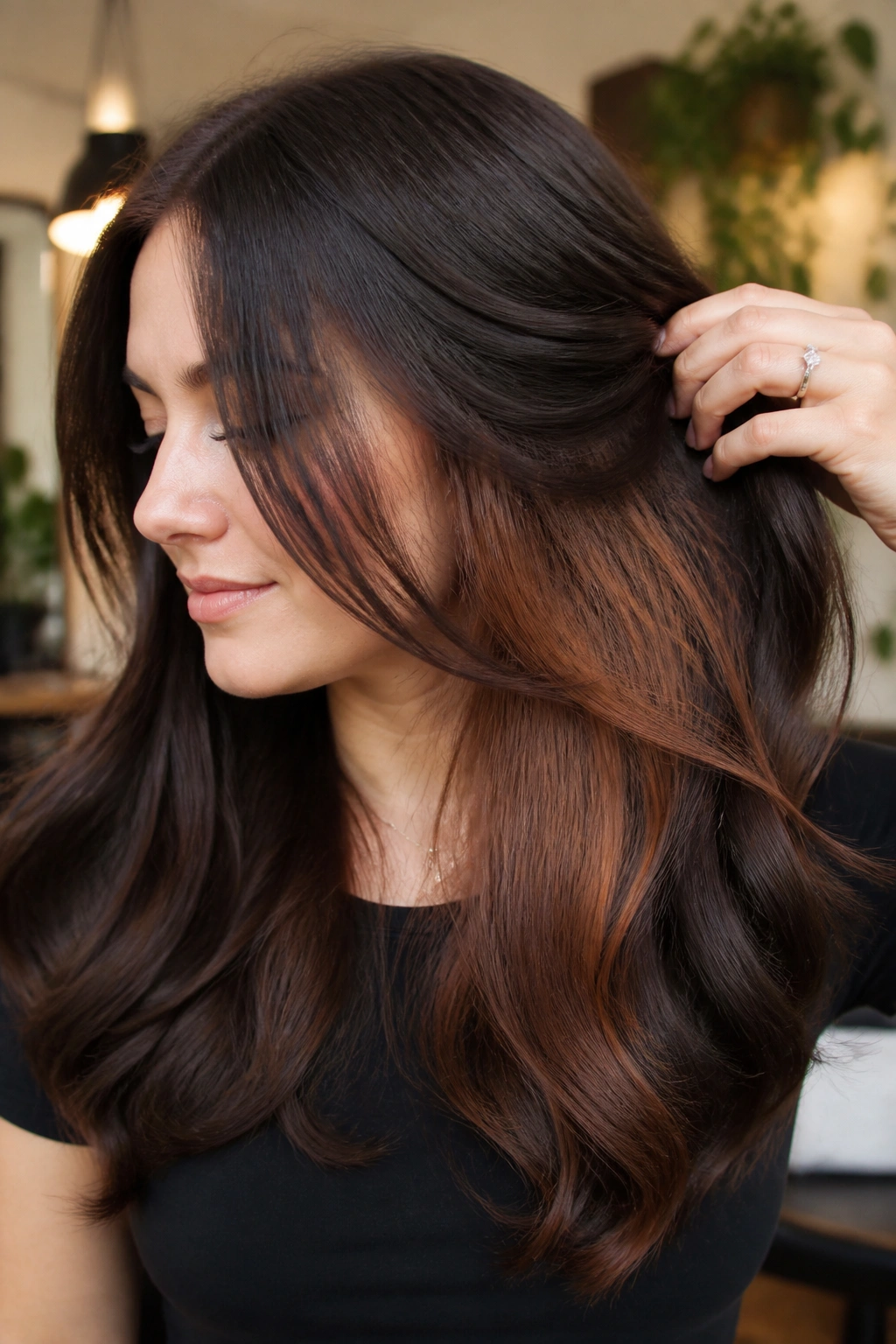
Peekaboo chestnut panels are for people who want color with a hiding place. The lighter pieces sit under the top layer, so they show when hair moves, flips, or goes into a bun. On dark brown hair, that little flash of chestnut can be more interesting than a full head of visible highlights.
I like this approach for office-friendly color or for anyone who gets bored easily. You keep most of the surface dark and calm, then let the chestnut show up in motion. It is a nice trick on layered cuts, especially when the top layer is a little shorter and can reveal what is underneath.
The placement usually works best around the nape, under the crown, and through the lower sides. That keeps the effect hidden until the hair shifts. When it does, the color feels intentional rather than random. A good peekaboo panel should feel like a secret, not a stripe.
9. Chestnut Lowlights for Rich Depth
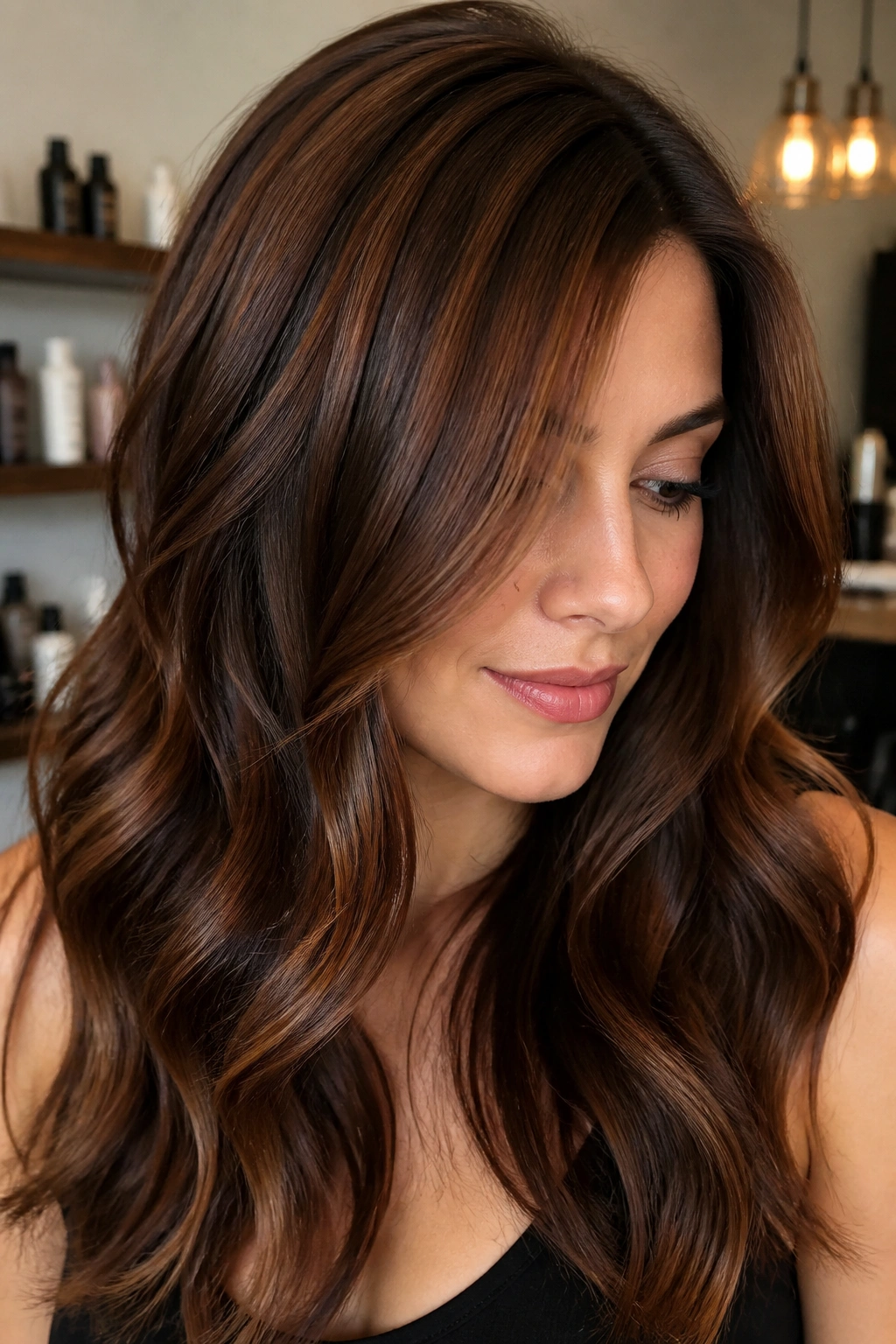
Lowlights sound backward until you see what they do to tired brown hair. Instead of lifting pieces, the colorist adds deeper chestnut strands to create shadow and stop the base from looking washed out. The result is more depth, more texture, and less one-dimensional brown.
This is a smart move when your hair already has a few lighter pieces but needs structure back. Chestnut lowlights can make a faded brunette look expensive again without changing the overall level much. They also help hair that has been overlightened in the past feel fuller on the ends.
Best Placement for Lowlights
The best lowlights are rarely random. They should be tucked where the eye needs contrast, not spread everywhere.
- Under the crown for depth
- Around the nape to stop ends from looking thin
- Through the midsection to break up a flat panel of color
- Near the face only if you want a stronger frame
A few deeper strands can fix more than people expect. It is a quiet kind of color service, and that is exactly why it works.
10. Curly Chestnut Contour Highlights
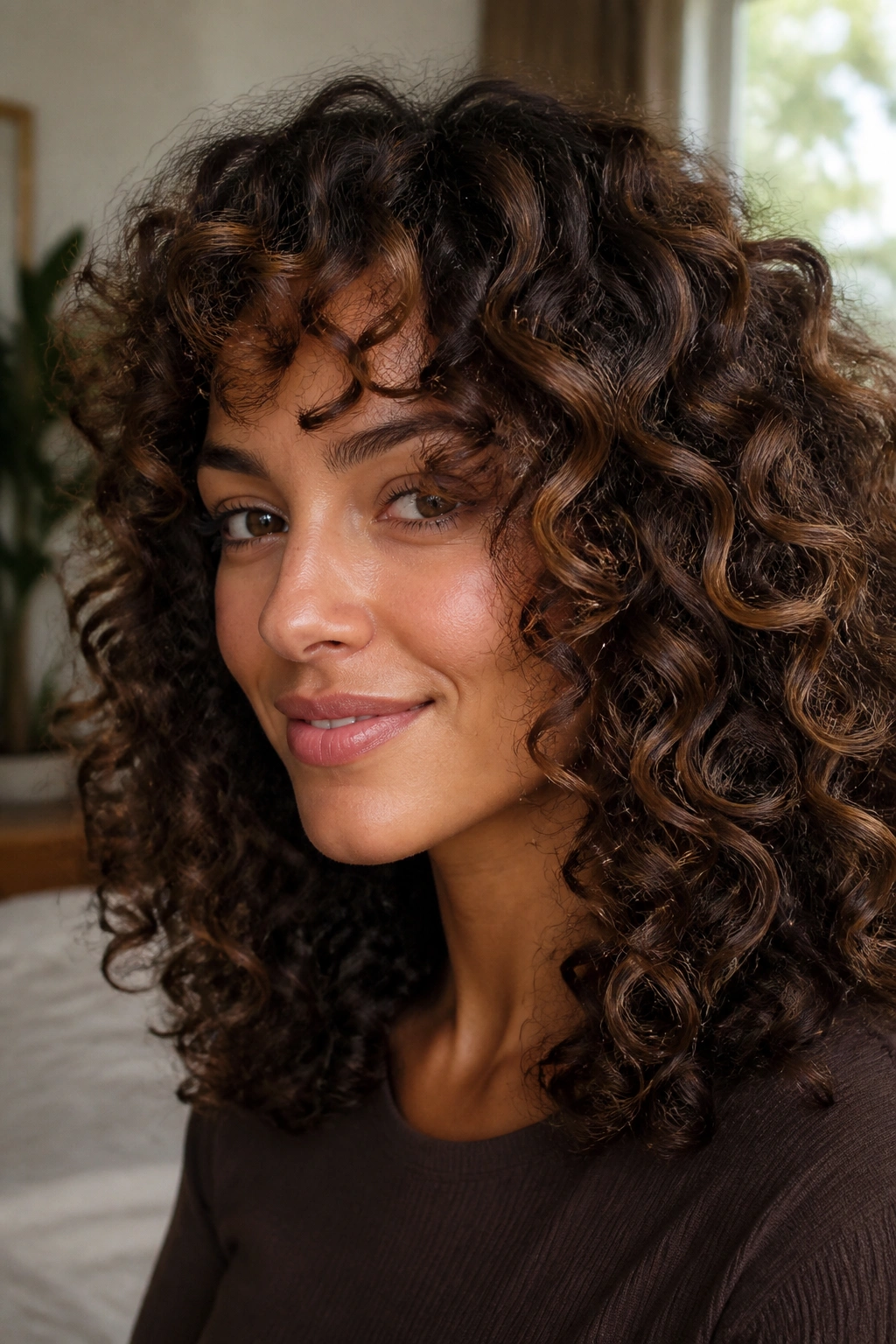
Curly hair needs a different map. If you place chestnut highlights on curls the same way you would on straight hair, the color can disappear into the bend of the curl or bunch into strange stripes. Contour highlights follow the curl pattern instead.
The goal is to put chestnut where the curl turns outward and catches light. That usually means the top layer, the outer edges, and some pieces around the face. The inside of the curl cluster stays deeper, which gives the hair real shape. On a good curl highlight job, each ringlet looks more defined because the tone shifts as it moves.
I like this on medium to dark brown curls that need brightness without losing density. Ask for hand-painted placement, not a uniform foil pattern. Curls deserve irregularity. Too much uniformity makes them look stiff, and curls are never stiff in a flattering way.
11. Chestnut Highlights on Dark Brown Hair
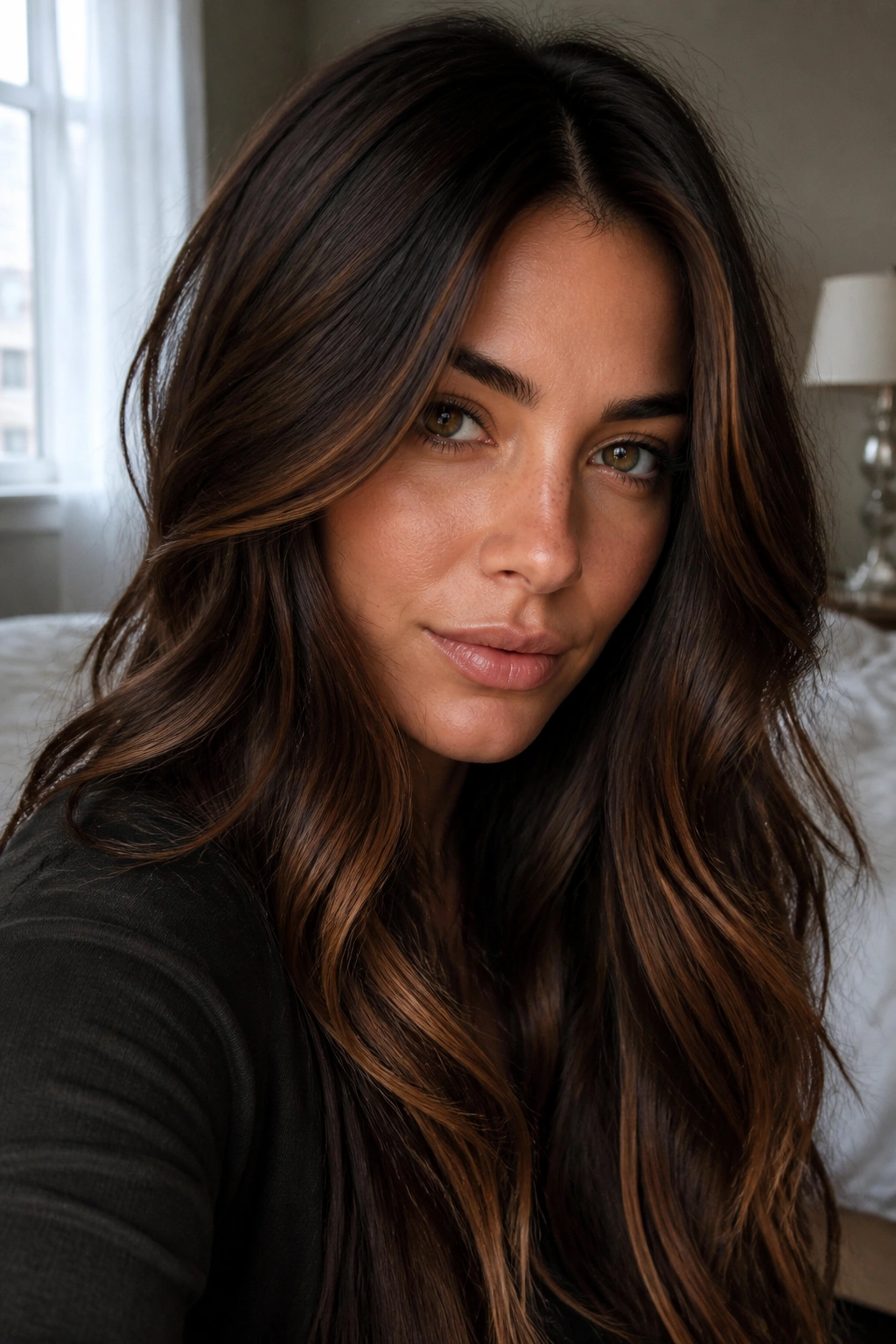
Dark brown hair needs a heavier hand. If the base is too deep, faint chestnut pieces can vanish unless they are lifted enough to actually show the tone. That does not mean going blonde. It means making sure the chestnut has some light behind it.
How Dark Is Dark Enough?
On level 4 or dark level 5 hair, chestnut may need a soft pre-lightening pass before toner brings in the color. That is especially true if you want the warmer side of chestnut to show instead of just a dim brown reflection.
The nicest look is often a mix of narrower front pieces and a few broader ribbons through the back. Too many light pieces at the crown and the whole head starts to look busy. Too few, and nothing reads from a distance.
- Ask for chestnut that sits one to two levels above the base
- Keep most of the depth at the roots
- Add the brightest pieces near the front and top layers
- Use a toner that keeps the red from going flat
Dark brunettes can wear chestnut well. They just need enough contrast to let the color speak.
12. Cool Mushroom-Chestnut Highlights
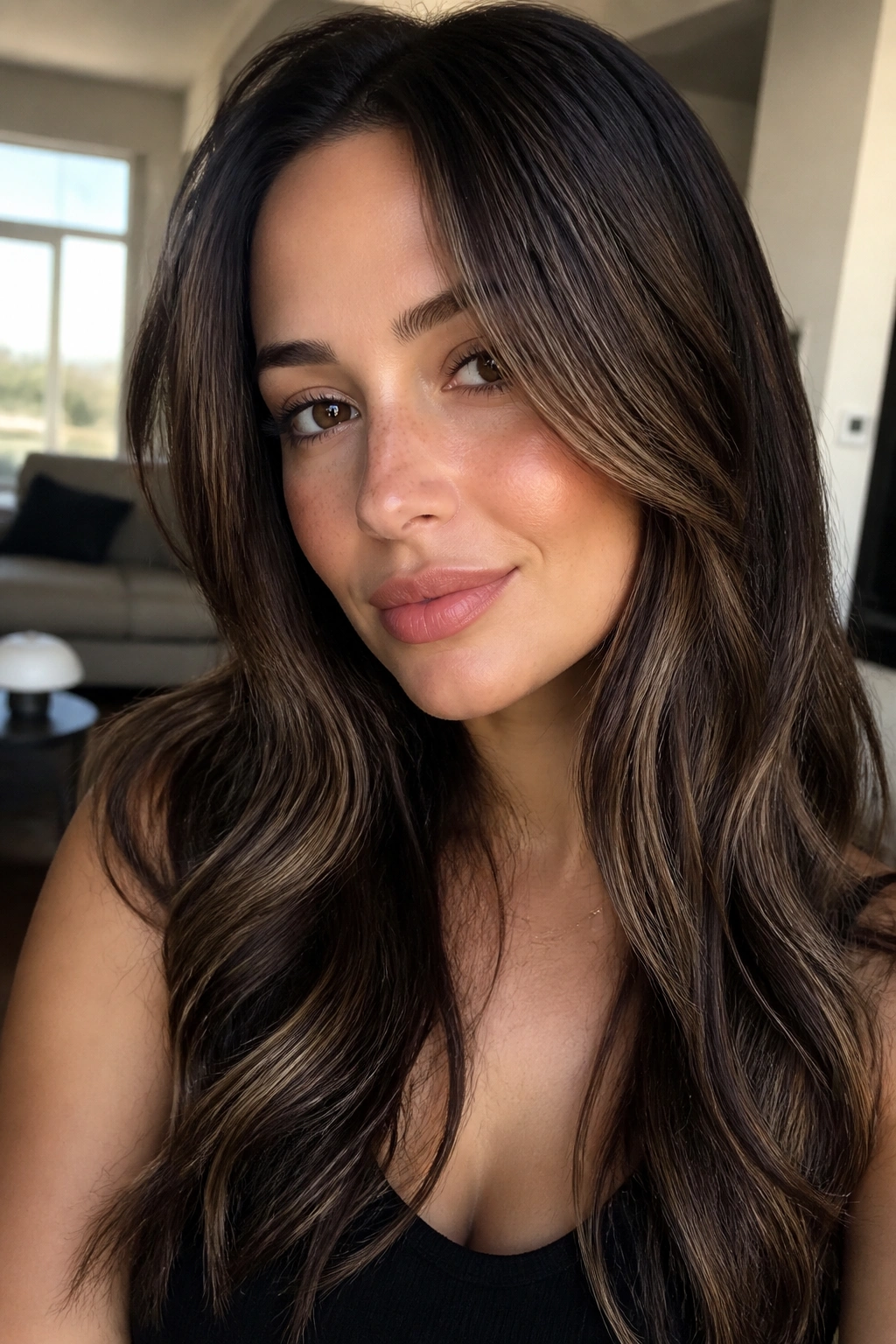
Cool chestnut sits somewhere between mushroom brown and smoky auburn. It is softer, moodier, and a little less obvious than the warmer chestnut looks. On brown hair, that can be a relief if copper tends to turn too bright on you.
This version works best when the toner stays beige, ash-brown, or slightly smoky. The color should look clean, not muddy. That is a narrow line, and I think this is where a good colorist earns their money. A cool chestnut highlight should still feel rich. It should not look gray or dull.
People who wear more neutral makeup or who like their hair color to stay understated often prefer this route. It also pairs well with medium brown bases that have no strong red in them already. If you have ever looked at a chestnut formula and thought, too warm, this is the safer lane.
13. Auburn-Chestnut Accents for Extra Warmth
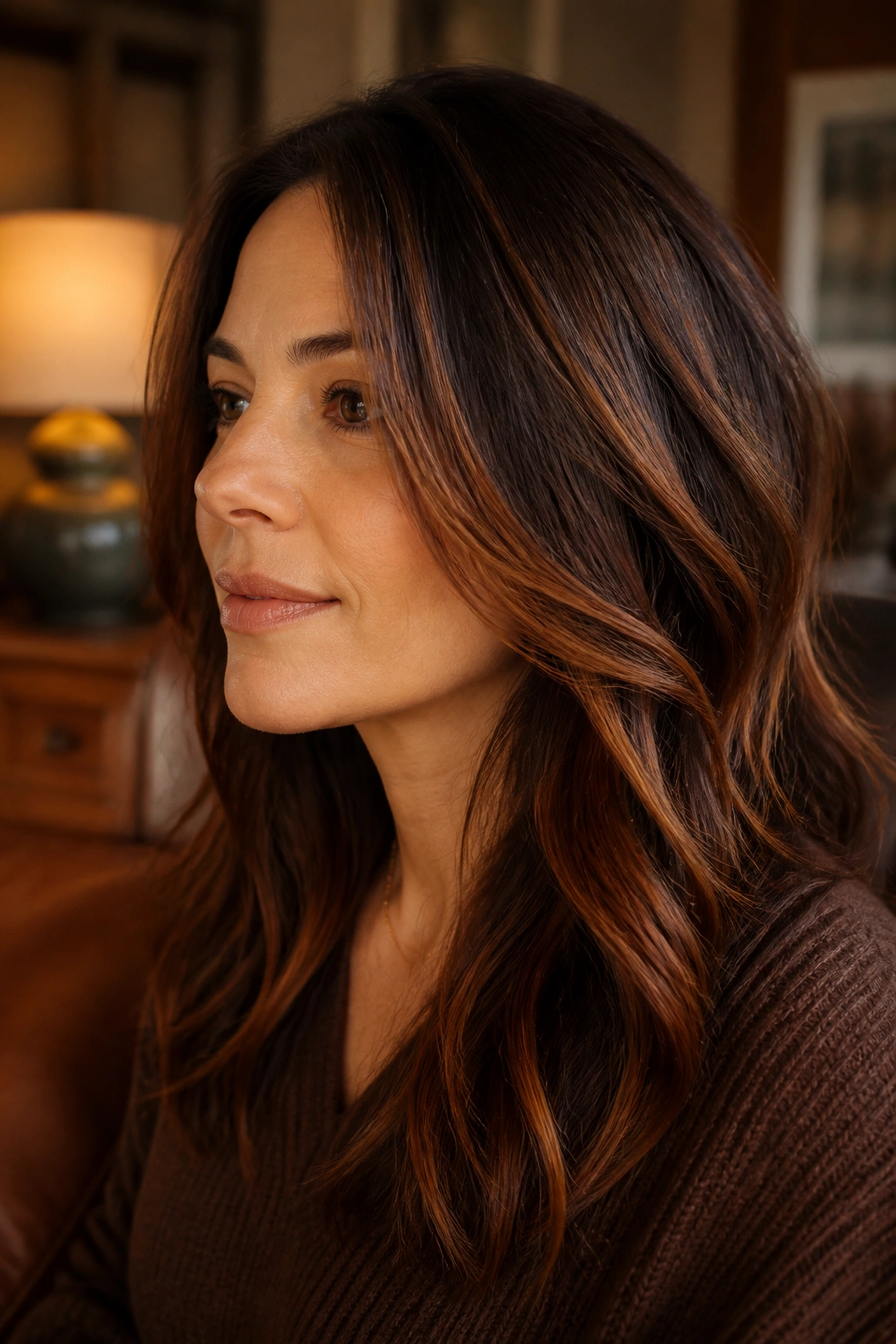
If you like a red-brown finish, this is the warmest stop on the list. Auburn-chestnut accents lean richer and more coppery than the standard chestnut look, which makes them glow against medium and dark brown hair.
When to Go Warmer
Warm chestnut is a good call when your skin has golden or peach undertones, or when your wardrobe already lives in rust, camel, cream, and deep green. The color just feels at home there.
The trick is not to let the red overtake the brown. A little auburn at the edges is enough. If every highlight turns red, you lose the chestnut effect and end up somewhere else entirely.
A warm gloss can keep the red looking polished, but it should still leave some brown in the strand. That little bit of restraint is what keeps the color from tipping into copper overload.
- Great on medium brown and dark blonde bases
- Strong on layered hair and soft waves
- Needs toner or gloss upkeep to stay rich
- Looks best when the base stays a touch deeper than the highlights
14. Long Layers With Chestnut Ribboning
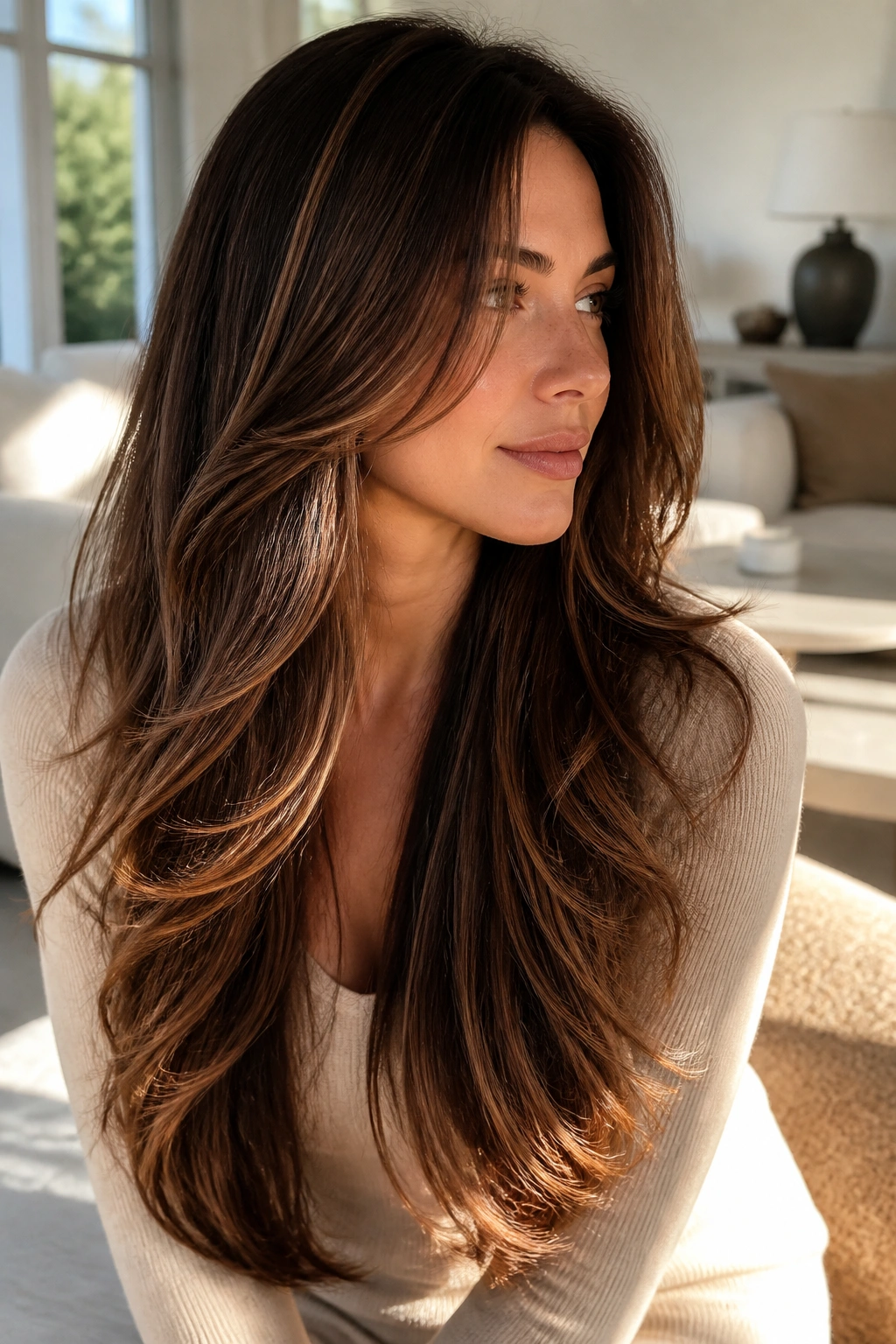
Long layers and ribbon highlights are old-school in the best way. The cut gives the color room to move, and the color gives the cut shape. On long brown hair, chestnut ribboning can keep the lengths from looking like one heavy curtain.
The placement should follow the layers, not fight them. That means lighter pieces through the lower thirds, a few around the face, and some subtle threadlike lines higher up so the color does not stop dead. If the ribbons are too close together, the hair loses air. If they are too sparse, the effect disappears in the length.
I like this especially on hair that air-dries in loose bends. Each layer catches light a little differently, so chestnut tones show up in streaks as the hair moves. It is one of those looks that makes people ask why the haircut looks better, when the real answer is that the color is doing half the work.
15. Chestnut Highlights on a Bob
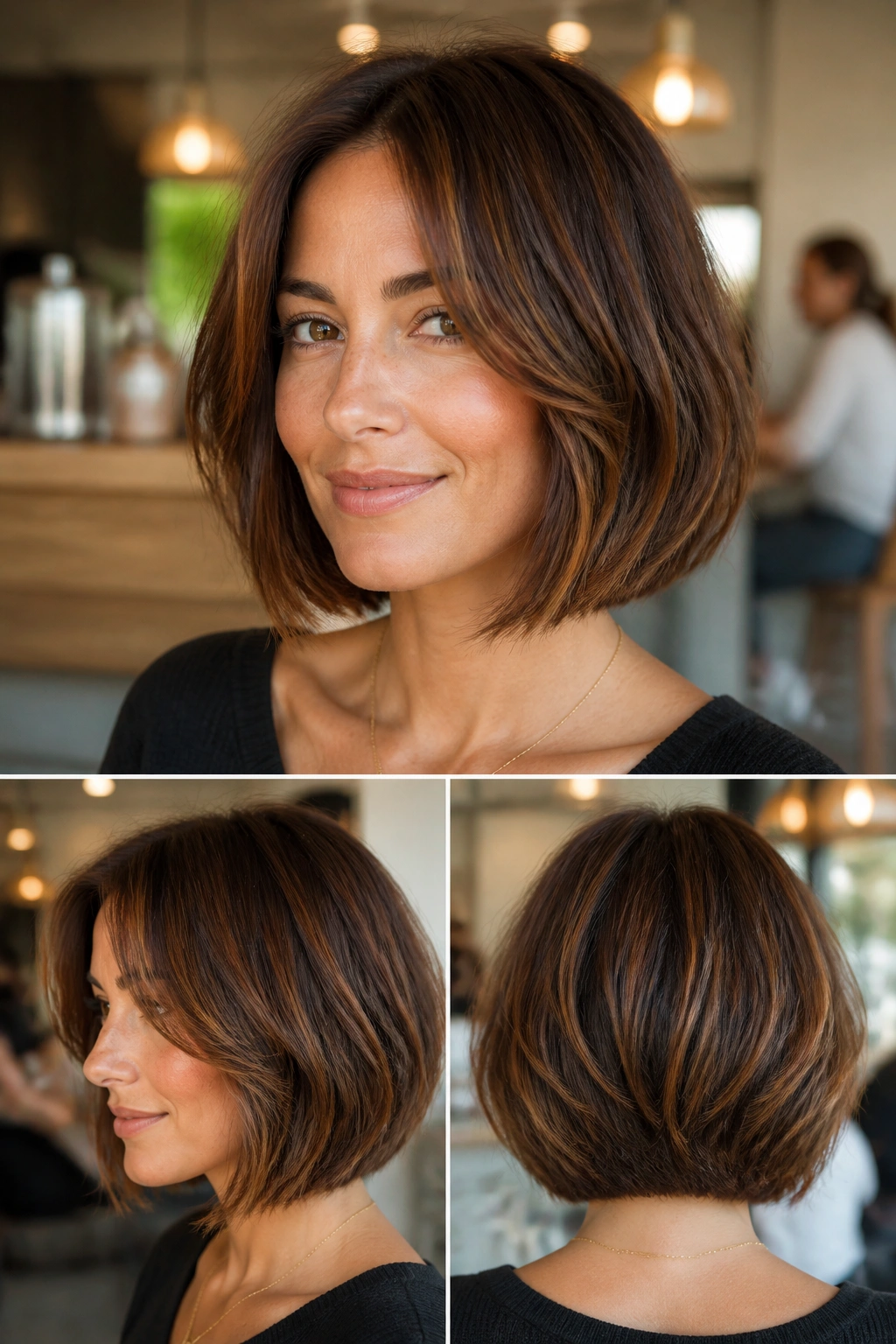
Short hair can swallow fine highlights. A bob needs chestnut placement that actually shows up from the front, the side, and the back, or the color may disappear into the shape of the cut.
A chin-length or jaw-length bob looks good with slightly thicker chestnut pieces placed around the perimeter and a few lighter bits through the top layer. That gives the cut movement without making it look busy. If the bob is blunt, the color can add softness. If the bob is textured, the chestnut can make the texture easier to see.
What to Ask For
Ask for color that sits where the eye lands first: around the cheekbone line, the ends, and the part. That keeps the bob from reading as one solid block.
- Use softer pieces near the crown
- Keep the ends a little lighter than the roots
- Add a few face-framing strands for lift
- Avoid overcrowding the nape with too much light
A good chestnut bob looks crisp, not overworked.
16. Underlights in Chestnut Brown Hair
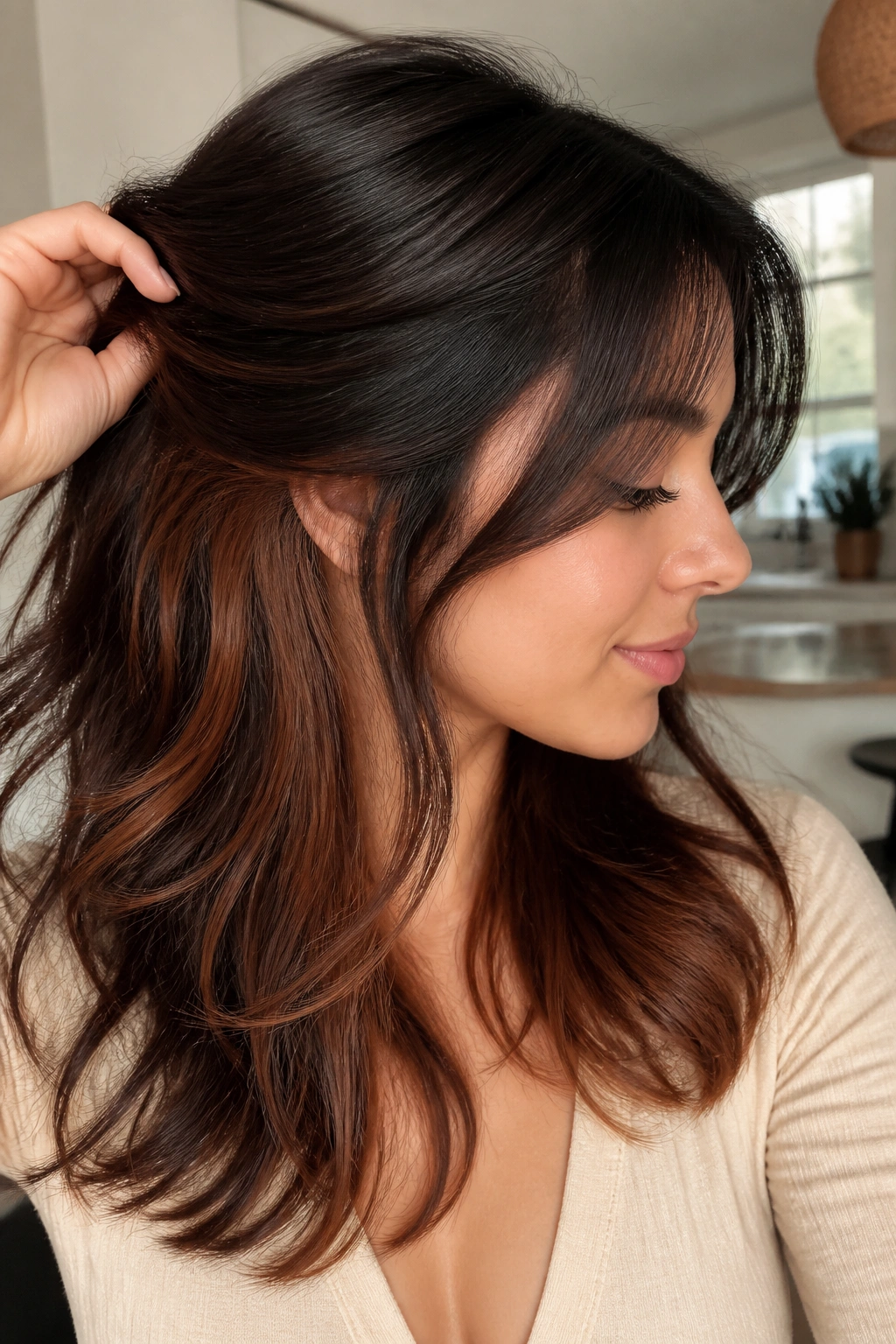
Underlights are the sneaky cousin of peekaboo panels. The color sits underneath the top layer, so the chestnut only flashes when hair is lifted, tucked, braided, or pinned back. On chestnut brown hair, that hidden detail can be more fun than a full visible highlight set.
This works especially well for people who wear buns, ponytails, or half-up styles often. The surface stays dark and neat, then the underside gives you that little burst of warmth when the hair shifts. It is also a smart option if you want to test chestnut before going bigger.
The underlayer can be softer and richer than the surface, since it does not need to do all the talking at once. A few warm ribbons under the crown, plus a deeper brunette top layer, can make the hair look thicker and more dimensional. Quiet at first glance. Better up close.
17. A Face-Framing Weave Instead of a Sharp Money Piece
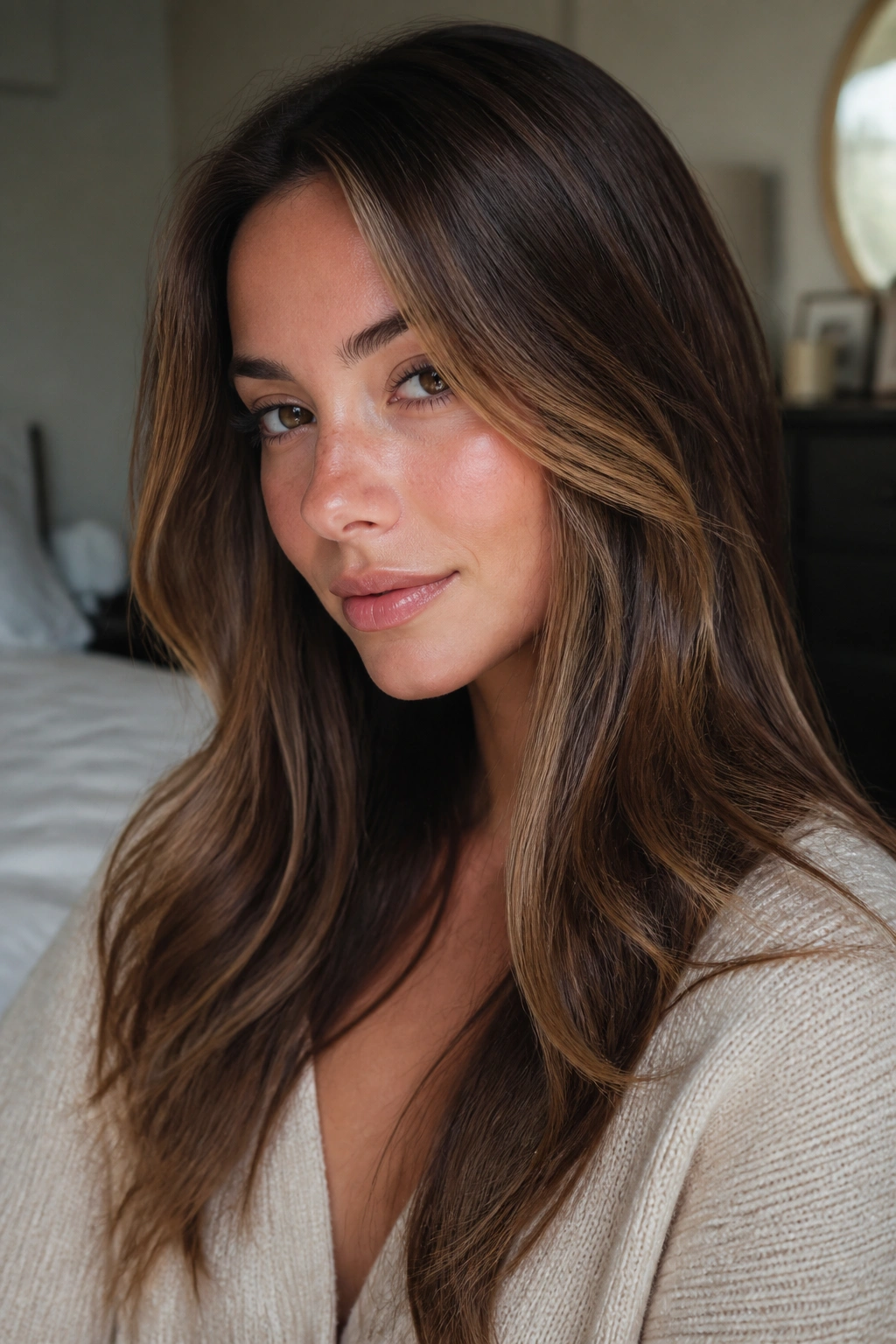
A face-framing weave is softer than a money piece. Instead of one obvious bright strip at the front, the color is threaded in a finer pattern around the face so it melts into the surrounding brown hair. That gives you brightness without a hard line.
This is a good choice if you want the front to open up but you do not like stripey color near the part. The weave can start near the temples and soften as it moves backward, which makes the face look lighter without stealing attention from the haircut. I prefer this on side parts and softer layers, where the highlight can blend into movement.
It is also a nice answer for people whose hairline tends to show grow-out quickly. Because the pieces are finer, the regrowth is less obvious. The look lasts longer in a visual sense, even when the actual hair grows at the usual speed.
18. Root Shadow With Chestnut Sun-Kissed Ends
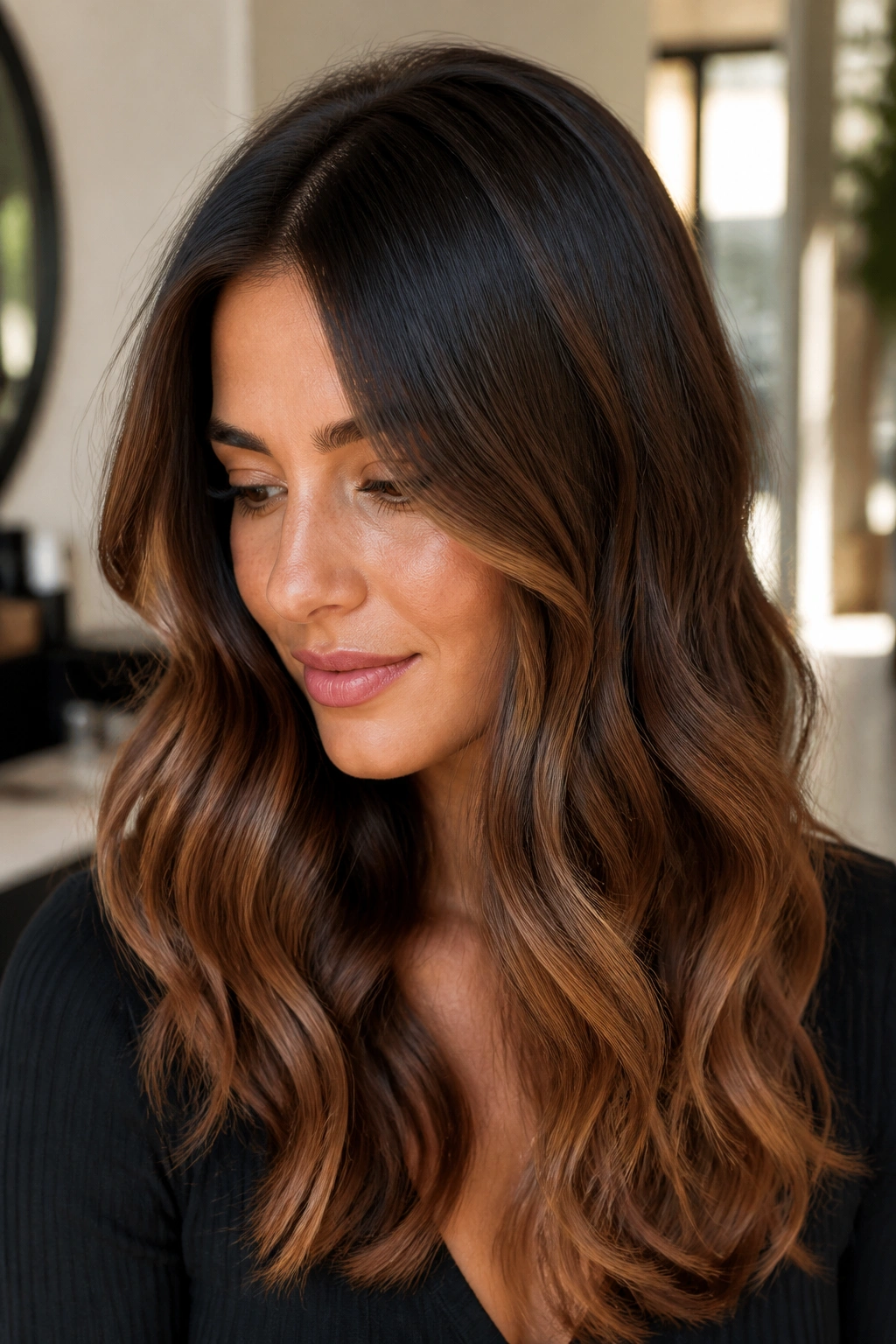
A root shadow makes chestnut highlights grow out with less drama. The top stays deeper for a couple of shades, and the lighter chestnut shows more clearly through the mids and ends. It is a practical way to keep dimension without needing the roots touched up every time you turn around.
This style works well when you want the color to look lived-in from day one. The root shadow gives the hair a little lift at the scalp, while the chestnut ends keep it from looking heavy. If the shadow is too dark, though, the transition can feel abrupt. If it is too light, the whole point is lost. Somewhere in the middle is the sweet spot.
I usually think of this as the brunette version of an easy grow-out. Not lazy. Easy. There’s a difference. The color still needs thoughtful placement and toner, but the final result is forgiving, which is a nice thing to have when life is not.
19. Neutral Chestnut for Ash Brown Hair
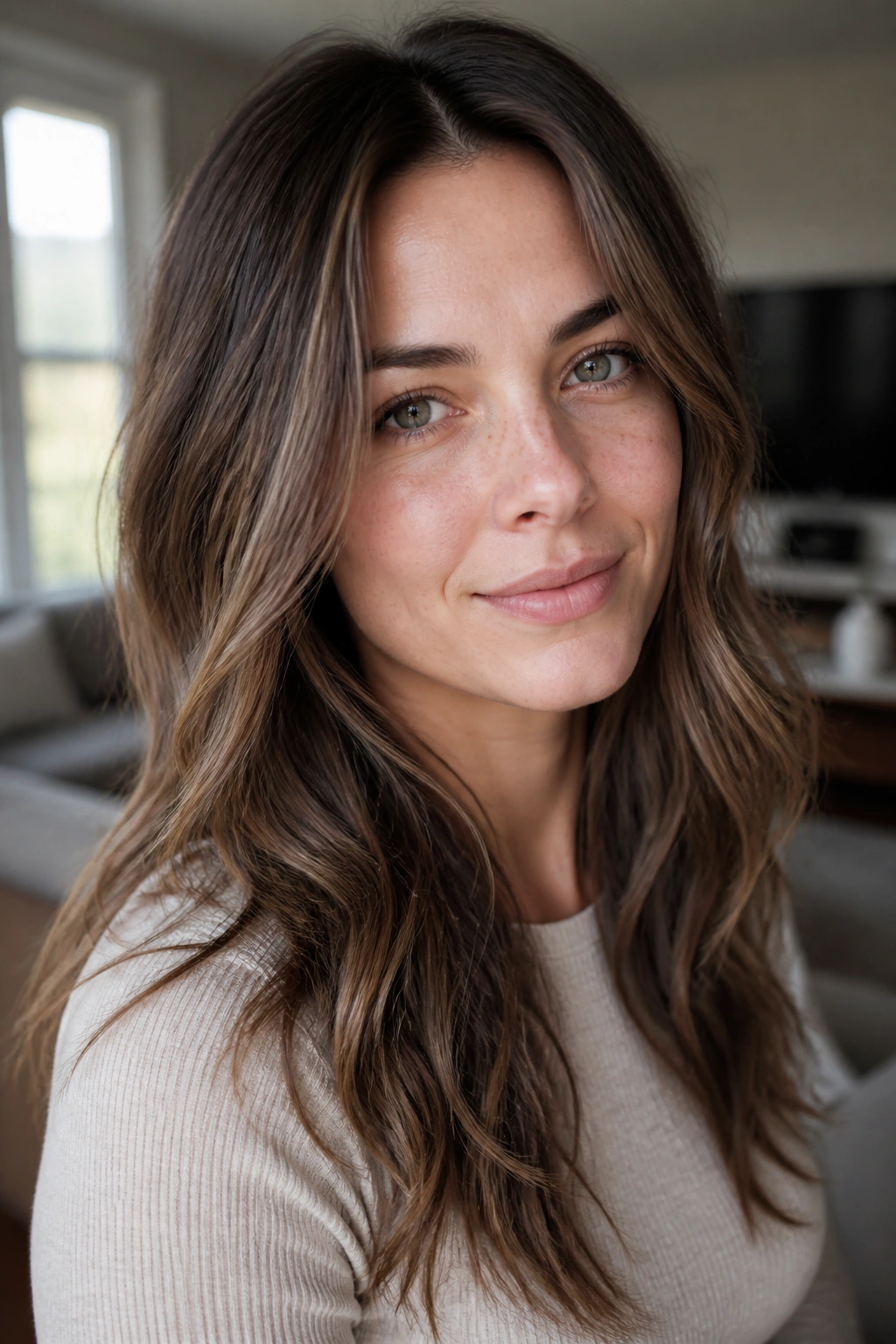
Ash brown hair can go muddy fast if the warm pieces are too red or the cool pieces are too gray. Neutral chestnut sits in the middle and keeps the color clean. That makes it a smart match for people whose base already has a muted, smoky look.
How to Keep It from Turning Orange
Ask for a beige chestnut or a neutral-brown gloss instead of a copper-heavy formula. That helps the highlight stay readable without warming up too much.
The placement should also stay soft. You do not need broad strips for this one. Fine weaves through the mids, a few brighter pieces near the front, and a light gloss over the top layer usually do the job.
- Best on cool or neutral brown bases
- Avoid bright copper toner if orange is your problem
- Use finer placement than you would for warm chestnut
- Refresh with a soft gloss when the tone starts to drift
This version is calm. That is the appeal.
20. Warm Chestnut With Caramel Ribbons
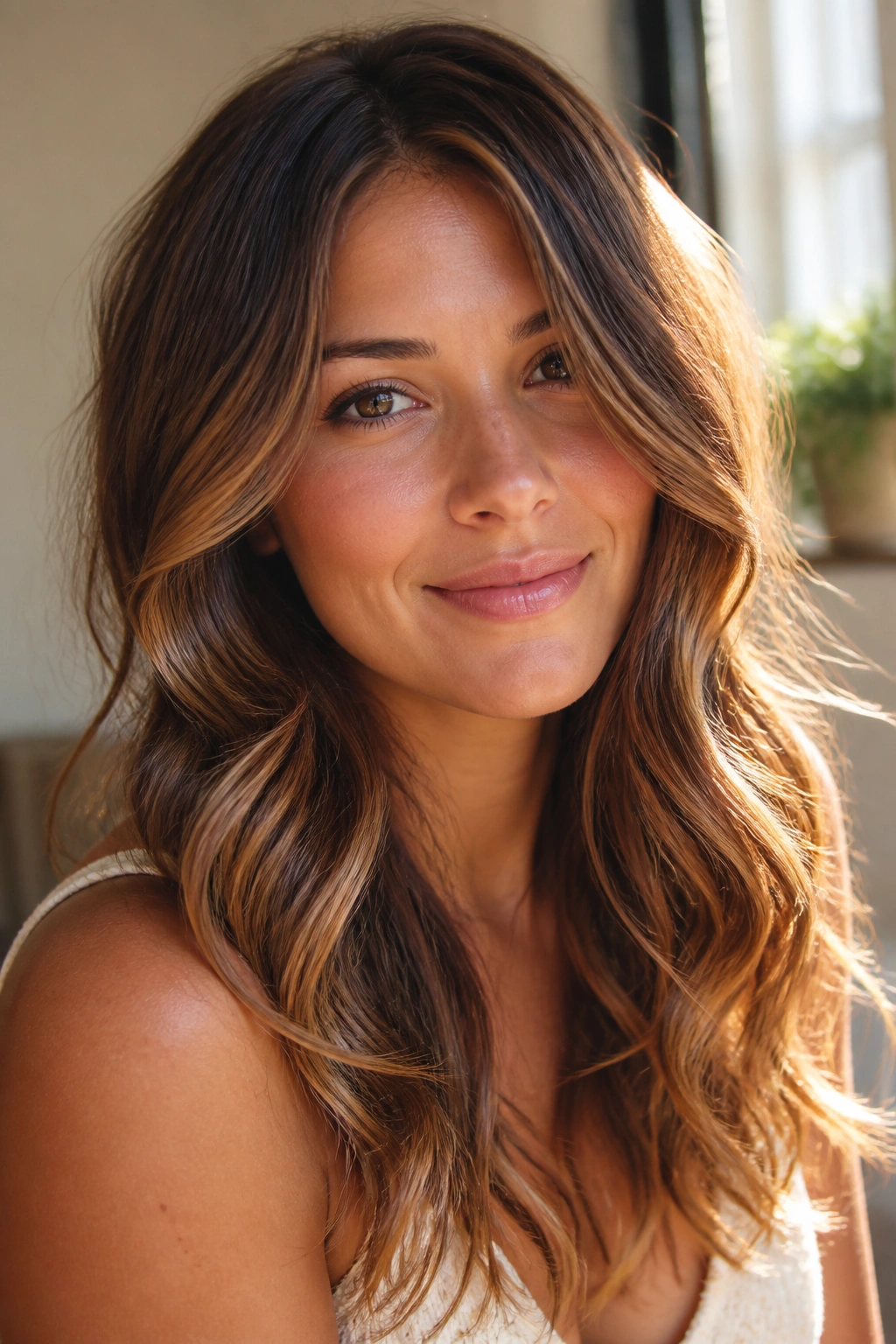
Caramel changes chestnut from muted to sunlit. The two tones are close enough to blend, but different enough to give brown hair a more lifted finish. On warm brunette bases, that combination can be especially flattering because it still feels deep.
The key is not to let the caramel take over. Chestnut should remain the base of the highlight story, with caramel only acting like the brighter thread inside it. Too much caramel and the look starts drifting blonde. Too little and you miss the warmth. It sounds fussy, and honestly, it is a little fussy.
I like this on layered cuts, blowouts, and long wavy hair where the light pieces have room to bend. If the hair is straight and very smooth, the caramel can look more obvious, so the placement needs to be lighter and more scattered. Warm chestnut plus caramel is a good choice when you want your brown hair to read richer in daylight and softer indoors.
21. A Bigger Money Piece With Interior Pops
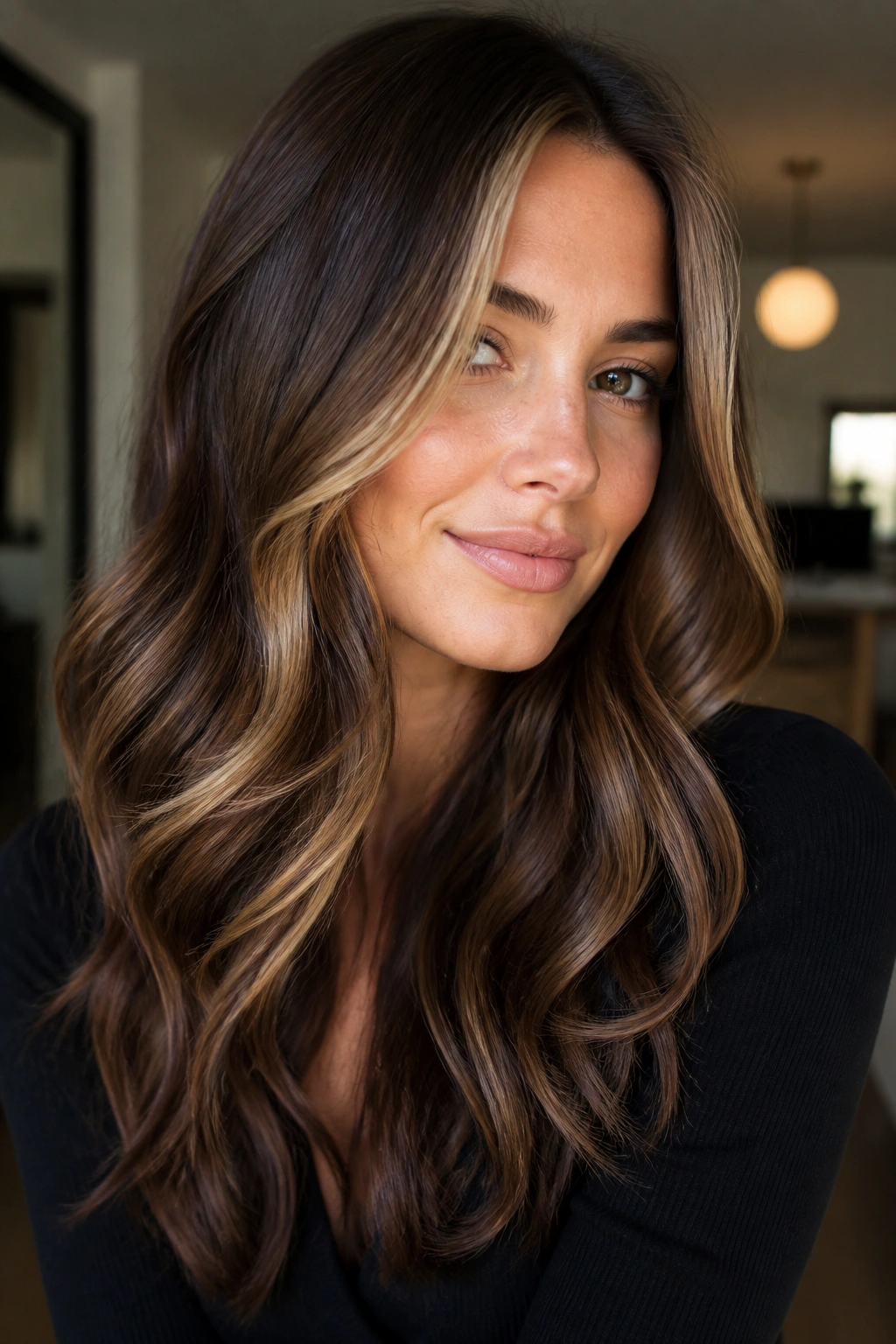
A heavier money piece is not the same as a thin face frame. This version gives you a stronger front section, then adds smaller chestnut pops through the interior layers so the color does not stop at the hairline. It is a better choice if you style your hair in waves or wear it half up, because the inside color shows when the layers separate.
Why the Inside Matters
If all the brightness sits only in front, the rest of the hair can look flat. Interior pops fix that by carrying the chestnut through the midsection and top layers in a less obvious way.
The effect is lively, but not chaotic. The front gives you the hit of brightness, and the interior pieces keep the style from looking like a face-frame only.
- Strongest on medium to dark brown bases
- Needs some contrast in the inner layers
- Works well with loose curls and blowouts
- Better with a soft root blend than a hard line
This one has more attitude than a standard face frame. It also photographs from the side, which is where a lot of hair color plans fall apart.
22. Lived-In Chestnut Ribbons With a Soft Gloss Finish
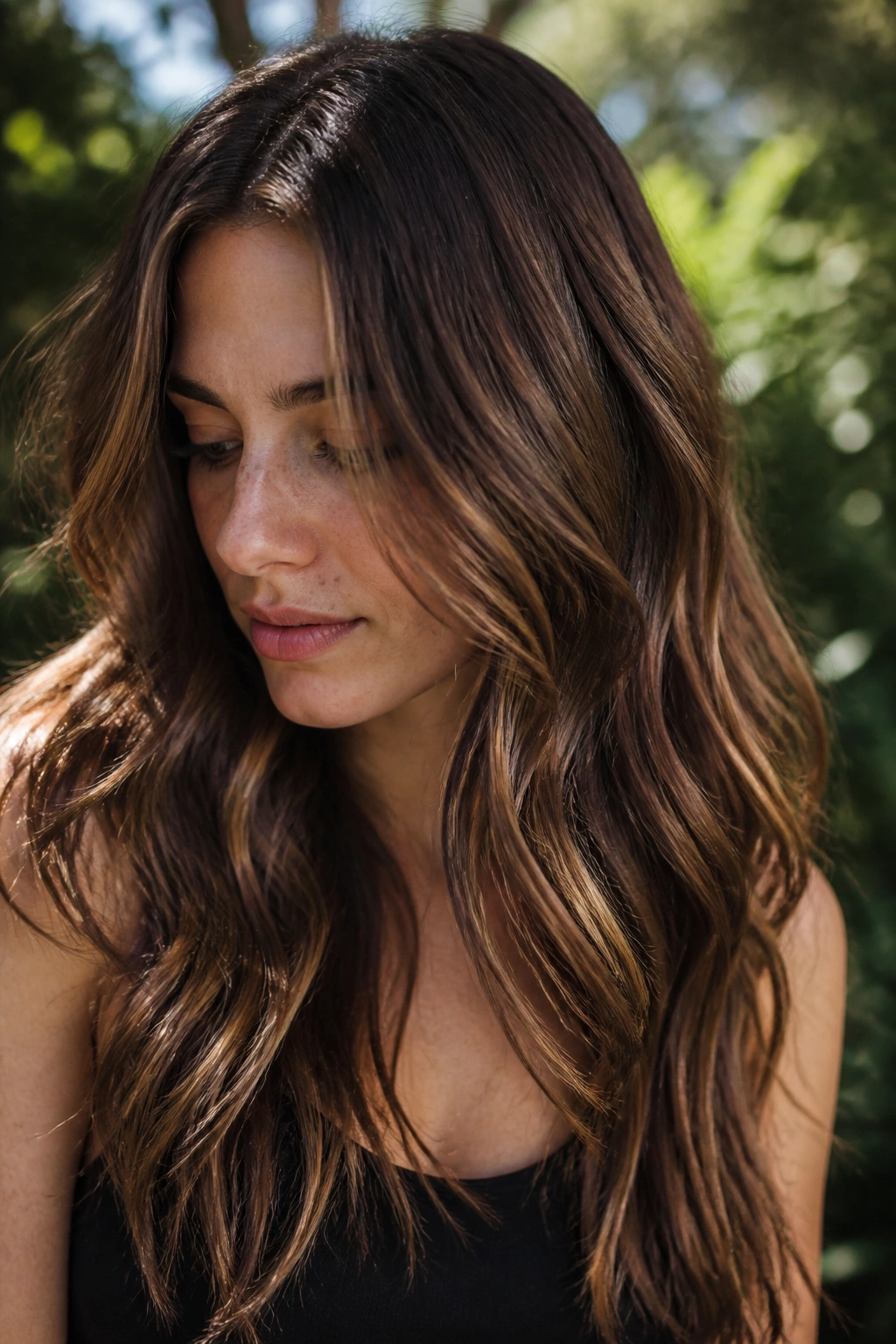
Lived-in ribbons are what I’d point a friend toward if she wanted chestnut highlights that look good right away and still make sense three months later. The pieces are scattered, soft at the root, and bright enough to show movement without making the hair feel overworked.
The gloss finish matters here. It keeps the chestnut looking smooth instead of dry, and it helps the brown base and lighter ribbons read like one color story instead of a pile of separate parts. The whole look should feel calm, touchable, and easy to wear. No hard line. No chunky surprise at the crown.
If you want one chestnut look that can handle office days, weekends, and messy hair pulled into a clip, this is the one I’d keep near the top of the list. It is quietly strong, which is probably why it lasts.
