



Blonde lowlights for brunette hair look simple in a salon photo and maddeningly different once the foils come off. One wrong blonde — too yellow, too chunky, too high-contrast — and brown hair stops looking dimensional and starts looking striped.
The phrase itself gets used a little loosely. Most people want soft blonde ribbons woven through brunette hair, with enough deeper brown left behind to keep the color grounded and flattering. Thin placement, a careful toner, and a little root shadow matter more than the label on the service menu.
Base level changes everything. A level 3 espresso brunette can’t wear the same blonde tone as a level 6 chestnut base, and warm skin usually looks better with beige, honey, or cream than with icy silver-blonde. That’s why the smartest color sits in the middle ground, where it catches light but still looks like hair.
Chunky streaks are the fastest way to ruin it.
The 22 looks below move from quiet beige to brighter champagne, from low-maintenance bronde to bolder face-framing panels. Some are soft enough to grow out for months. Some ask for more upkeep, and that’s fine when the payoff is worth it.
1. Soft Beige Ribbon Lowlights
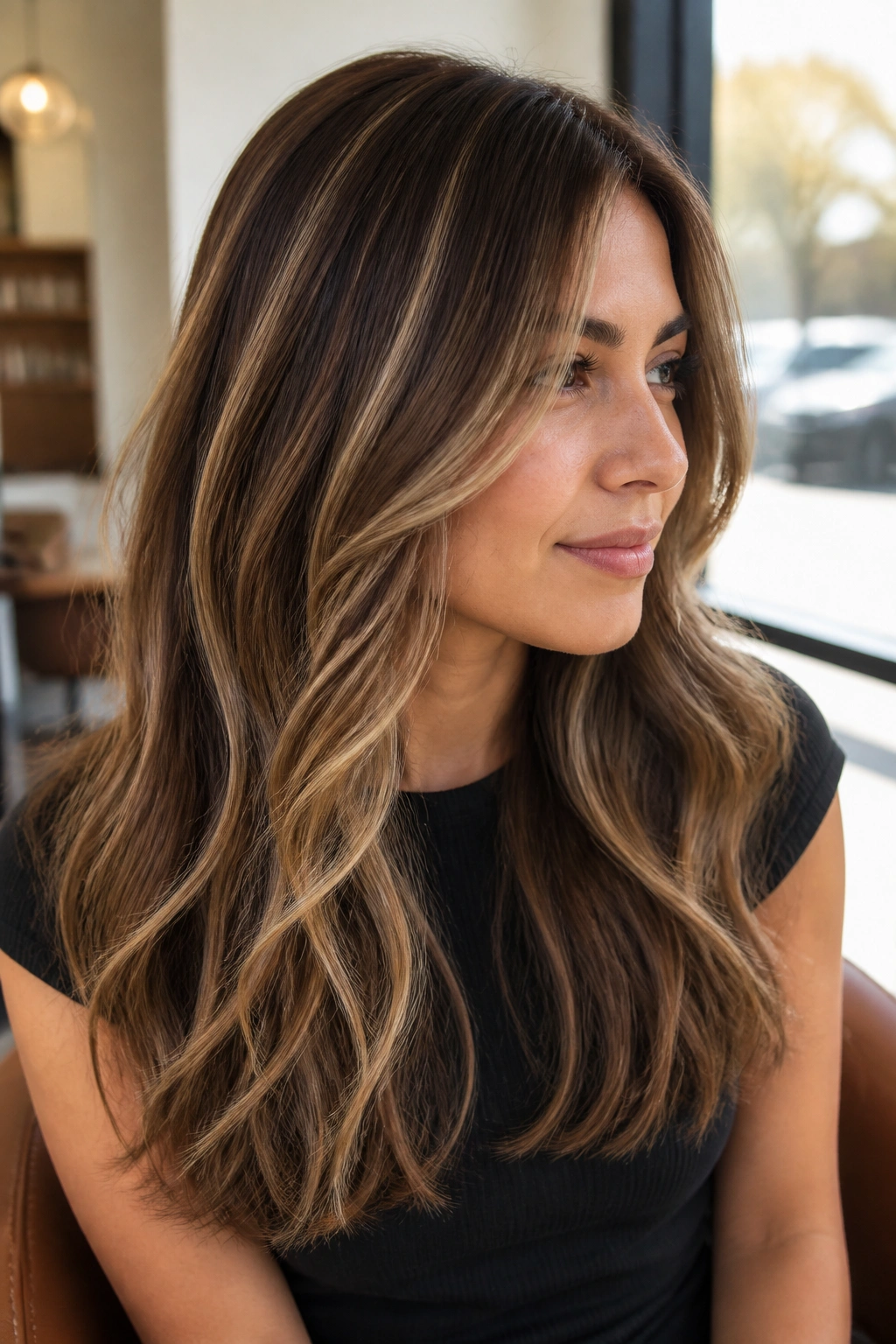
Soft beige ribbons are the safest place to start if you want blonde lowlights for brunette hair without a harsh jump in contrast. On a chestnut or chocolate base, these thin pieces read like cream in sunlight, not blonde-on-brown stripes. That softness matters. It keeps the color looking expensive instead of loud.
Why Beige Works So Well
Beige sits between gold and ash, which is why it flatters so many brunettes. It has enough warmth to avoid that gray, dead look, but it does not turn brassy the way a pure gold tone can.
- Ask for very fine foils, about 1/8 inch wide, placed through the crown and around the part.
- Lift to level 7 or 8 before toning.
- Choose a neutral beige gloss, not a coppery or orange toner.
- Keep the underside darker so the color has depth when you wear your hair up.
My favorite trick: if the first foil looks stripey in the bowl, it is too thick.
2. Honey Beige Glow
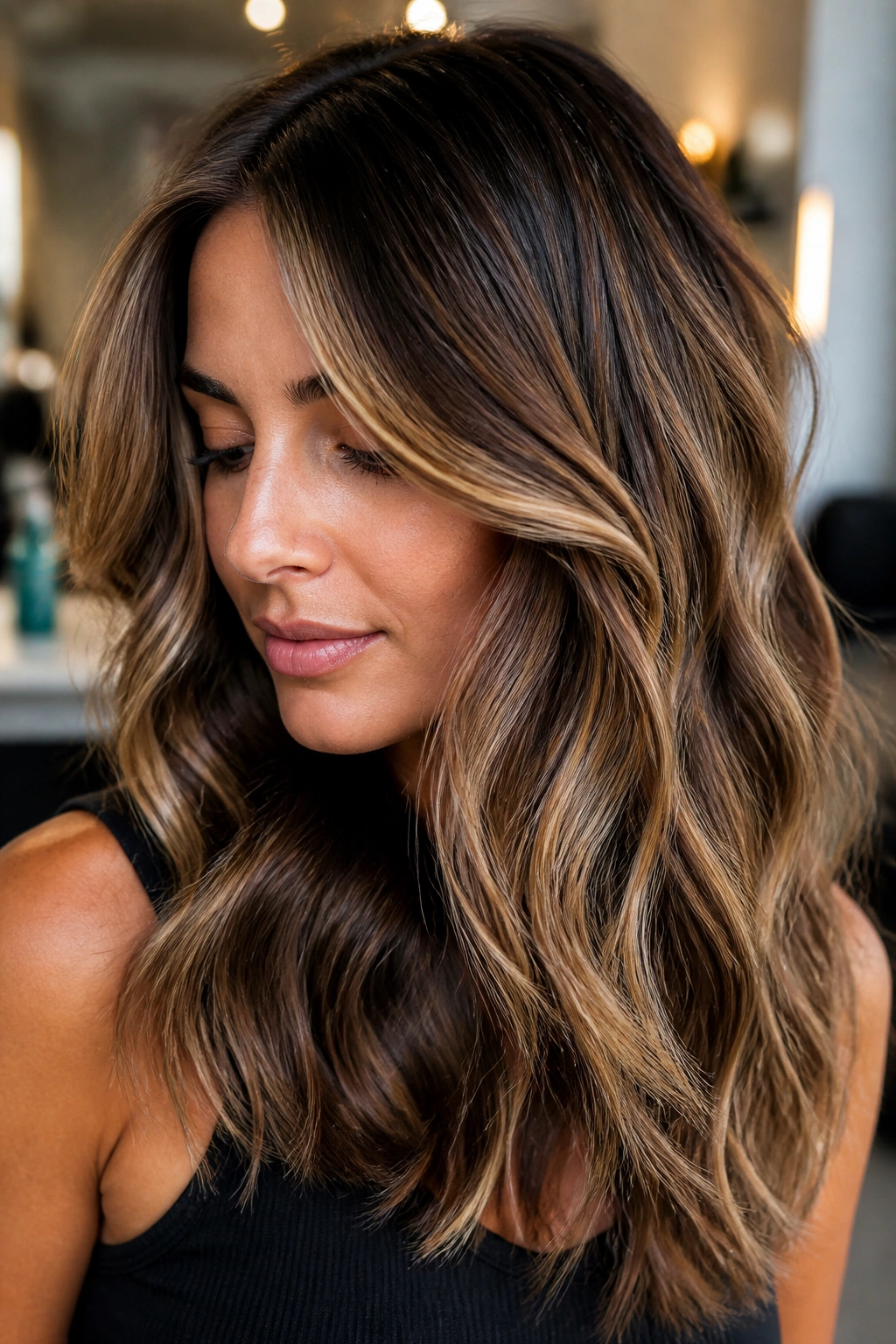
Can honey blonde work on brunette hair without turning orange? Yes, if the lift is controlled and the toner stays soft. Honey beige is warmer than beige ribbons, but it still needs restraint. The goal is glow, not brass.
The best version sits about 1 to 2 levels lighter than the brunette base, then gets finished with a creamy toner that takes the edge off the gold. On medium brown hair, that gives you a sunlit finish that looks especially good in loose waves. Straight hair can wear it too, but the color reads softer when there’s a bend in it.
How to Ask for It
Tell your colorist you want fine babylights with a honey-beige glaze and a little depth at the root. Keep the bright pieces around the part line, temples, and top layers. If you want to keep maintenance manageable, ask for soft placement through the mid-lengths instead of taking the blonde all the way to the scalp.
3. Mushroom Blonde Threads
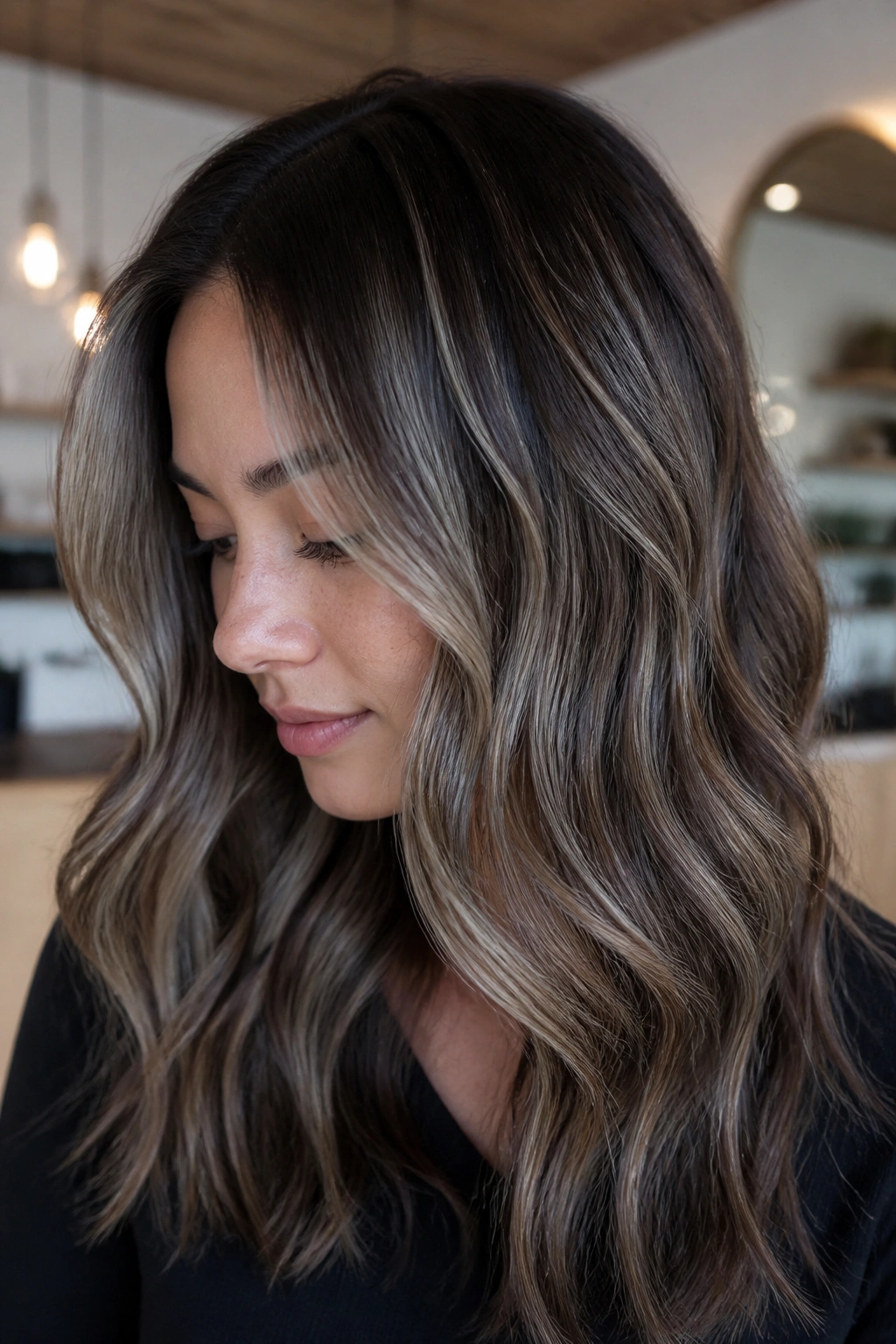
Mushroom blonde is the sneaky winner for brunettes who hate warmth. It leans smoky, taupe, and beige at once, which makes it look expensive on darker hair without shouting for attention. I like it because it behaves well in daylight and does not flash orange the second you walk outside.
The trick is control. Mushroom tones only look good when the lift is clean enough to take on a cool beige gloss. If the hair is lifted unevenly, the result can go muddy fast. On a healthy brunette base, though, the effect is gorgeous: muted blonde ribbons with a cool edge that works especially well on wavy cuts and blunt lobs.
It is a smart choice if your wardrobe leans black, cream, gray, olive, or denim. The color sits in that same quiet lane.
4. Champagne Ribbons Around the Face
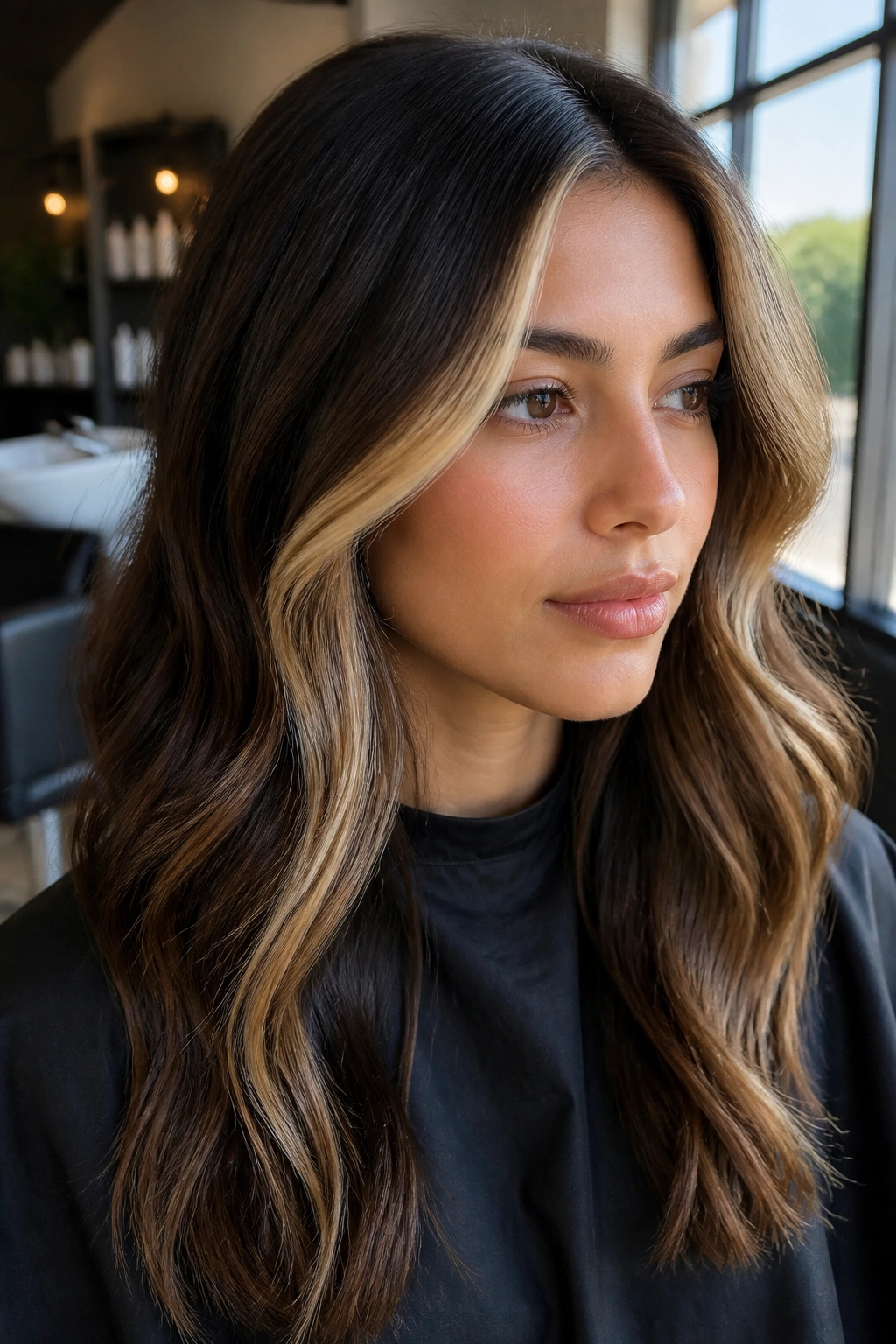
If you pull your hair back a lot, this is the look that gives you brightness without needing blonde everywhere. Champagne ribbons near the hairline and temples catch the eye first, which means you get impact even when the rest of the hair stays brunette. It is a very clean way to lighten things up.
The placement matters more than the tone. A few thin foils right at the front, plus a soft veil through the top layers, is enough. Too many pieces at the front and the whole look turns front-heavy. Too few and you miss the point.
- Keep the front panels about 1/2 inch away from the hairline for a softer edge.
- Ask for champagne, not pale yellow.
- Style with a round brush or loose bend so the front pieces move.
- Refresh every 6 to 8 weeks if you wear your hair down most days.
5. Ash-Inflected Blonde Panels
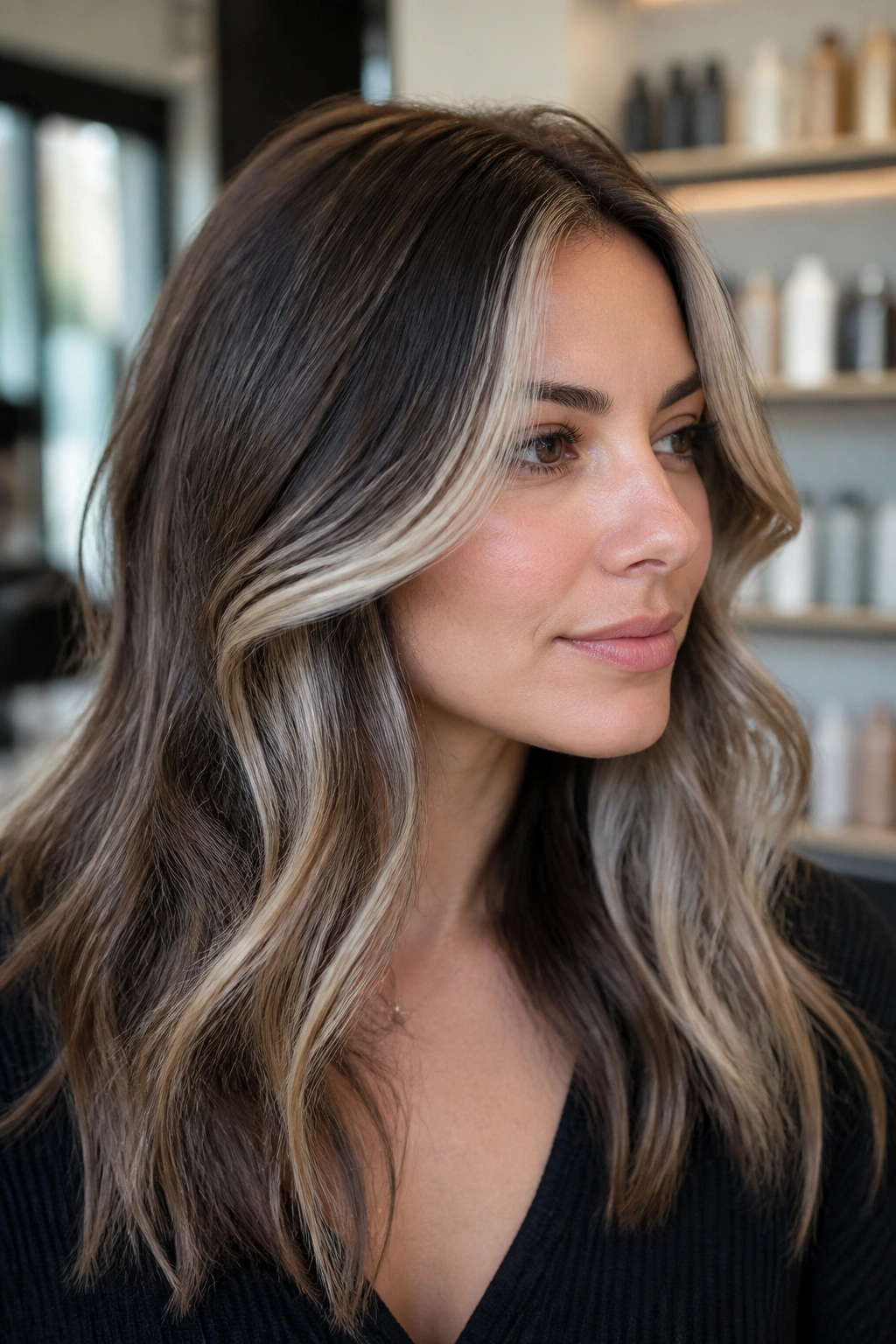
Ash-blonde pieces on brunette hair can look sharp in the best way. They add a cooler streak of light that keeps brown hair from feeling flat, especially if your base pulls red or orange under bright light. This is the look I point to when someone wants dimension, not sweetness.
It does need a careful hand. Ash tones can go greenish or dull if the hair is not lifted enough, and porous ends will grab the toner differently than the mid-lengths. That is why this shade works best when the colorist builds it in thin panels instead of flooding the whole head.
On cool or neutral skin, the finish can be very flattering. On warm skin, it usually needs a touch of beige mixed in so it does not fight your undertone. A blue or violet shampoo can help keep warmth away, but use it lightly. Once a week is enough for most heads.
6. Soft Rooted Bronde
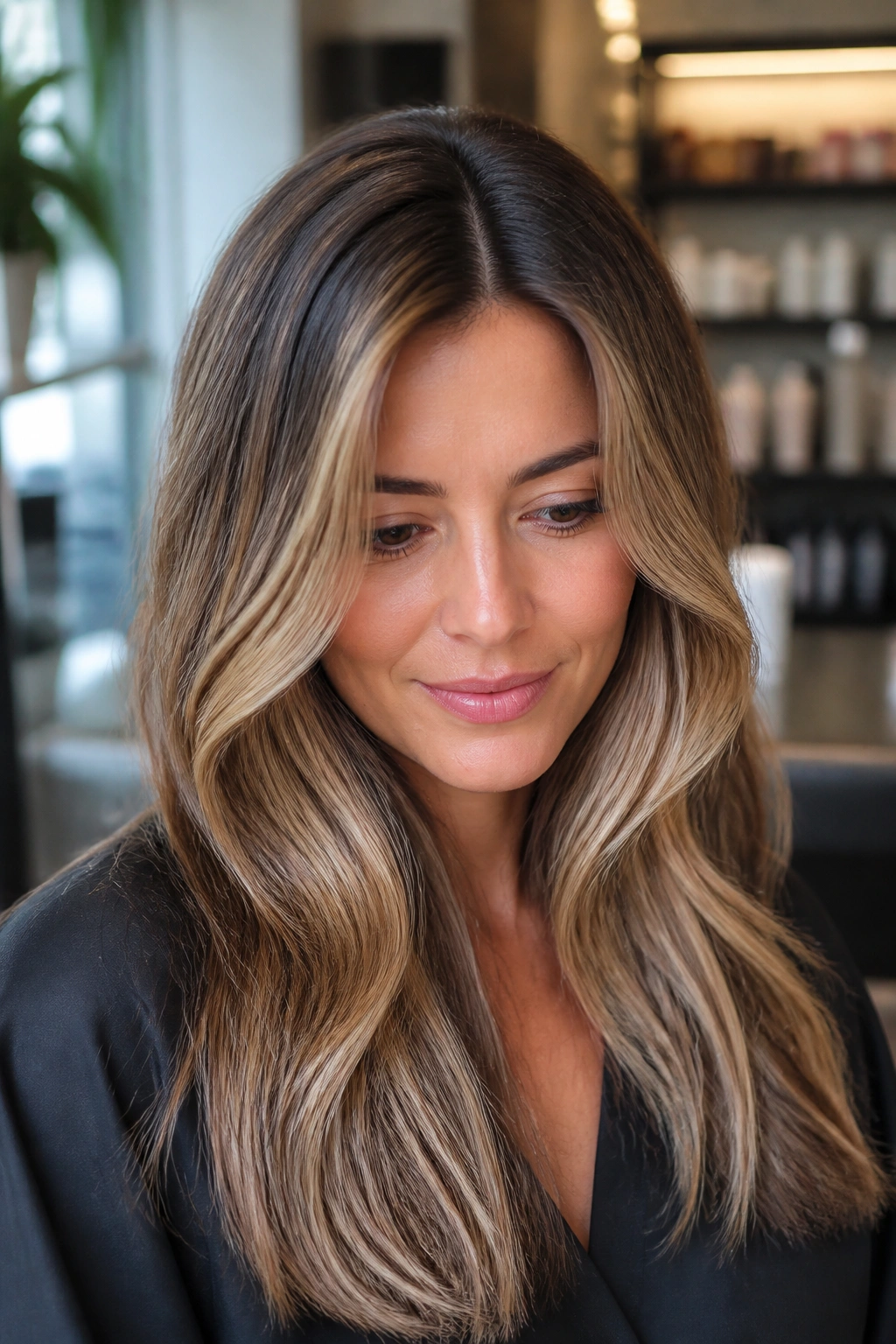
Bronding is not a dirty word. It is the easiest way to keep brunette hair bright without losing the brown that makes it feel grounded. A soft rooted bronde look keeps the base visible, then adds blonde ribbons through the mid-lengths and ends so the grow-out line stays gentle.
Compared with an all-over blonde, this version feels calmer and more lived-in. The root shadow is the reason. Ask for a root that stays 1 to 2 levels deeper than the lightest pieces, then melt the transition so there is no hard line where the color starts and stops.
This is the style I would hand to anyone with a busy calendar or a long hair routine they do not want to fight every six weeks. It looks good in messy buns, blowouts, and loose waves. And yes, it buys you time between appointments.
7. Buttery Mid-Length Strokes
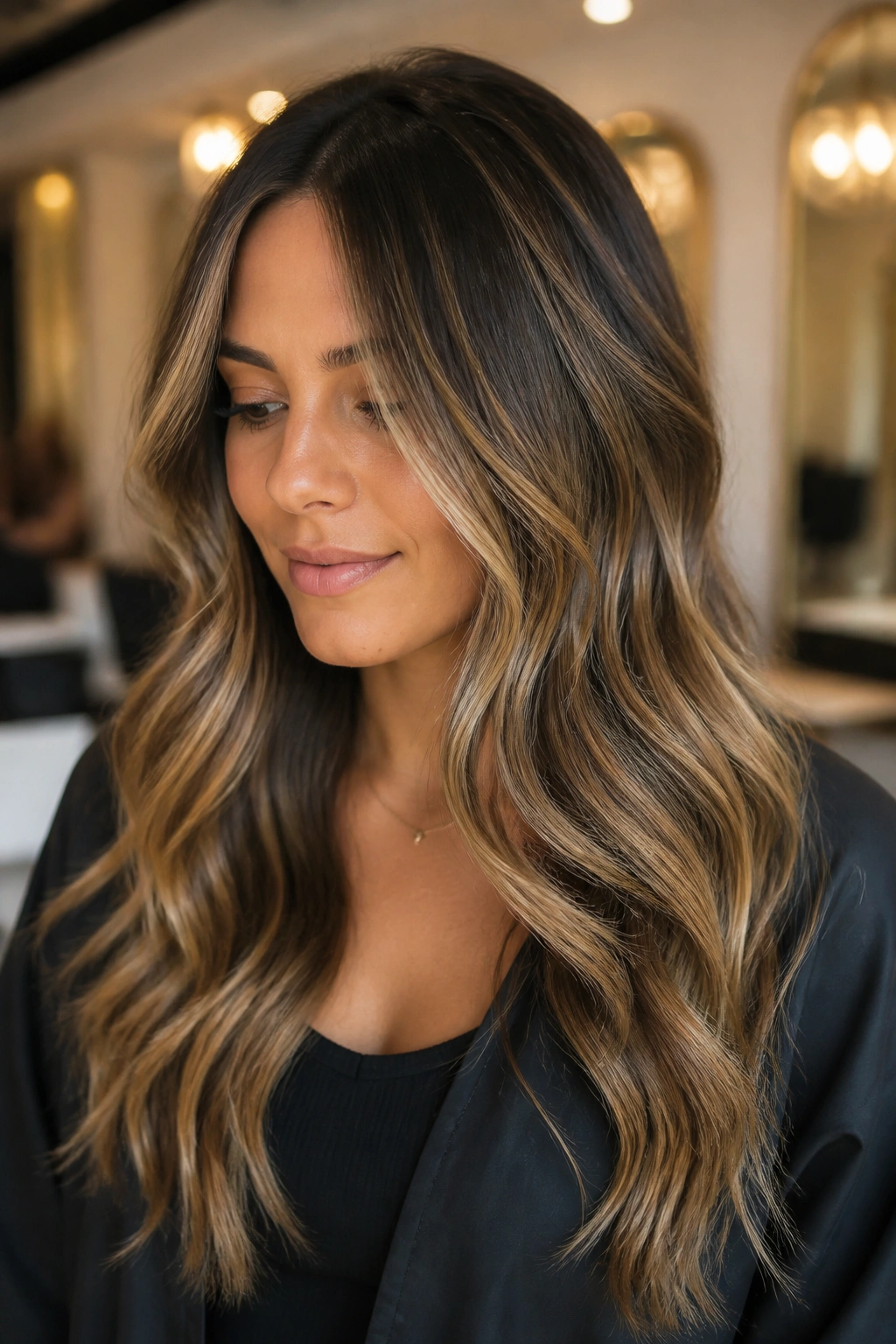
Buttery blonde strokes through the mid-lengths can make brunette hair look thicker because they break up the dark surface without erasing it. The warmth reads soft, not harsh, when the blonde stays creamy instead of yellow. That distinction matters more than people think.
What Keeps It from Turning Yellow
Butter tones need a balanced toner and a base that can handle lift cleanly. If the foils are too wide, the color starts looking obvious. If they are too pale, the warmth disappears and the whole head loses that soft glow.
- Best on medium brown or warm brunette bases.
- Ask for mid-length placement, not heavy root work.
- Keep the lightest pieces around level 8.
- Use a sulfate-free shampoo if your hair fades fast.
A loose wave shows this color best. Straight hair can wear it, but the dimension really wakes up when the light can move across the bends.
8. Sandy Beige Balayage
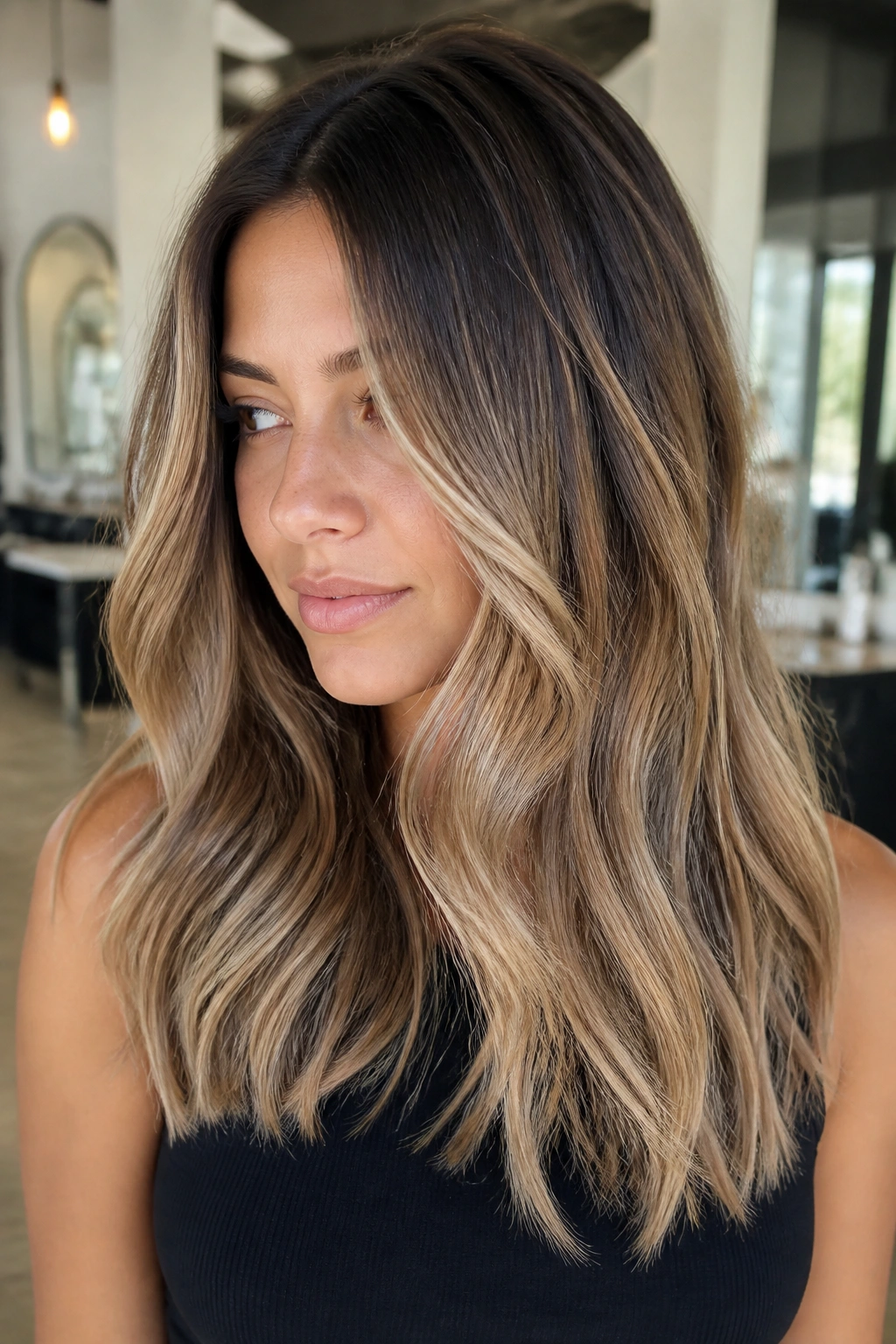
Want something lighter that still feels quiet? Sandy beige balayage does that job nicely. It sits between beige and muted gold, which keeps brunette hair from going flat while still avoiding the bright, icy look that can feel too sharp on darker bases.
The placement is the whole story here. Balayage should be brushed through the mid-lengths and ends in a way that leaves the root area darker and the top layers soft. That contrast helps the color look natural, especially if your hair already has some texture. On straight hair, it reads cleaner. On wavy hair, it looks softer.
How to Ask for It
Say you want hand-painted sandy blonde pieces with a soft root and brighter ends. If you wear your hair in a center part, ask for a little more lightness near the face. If you live in ponytails, keep the front pieces fine so they do not look like blocks when pulled back.
9. Cool Pearl Blonde Ends
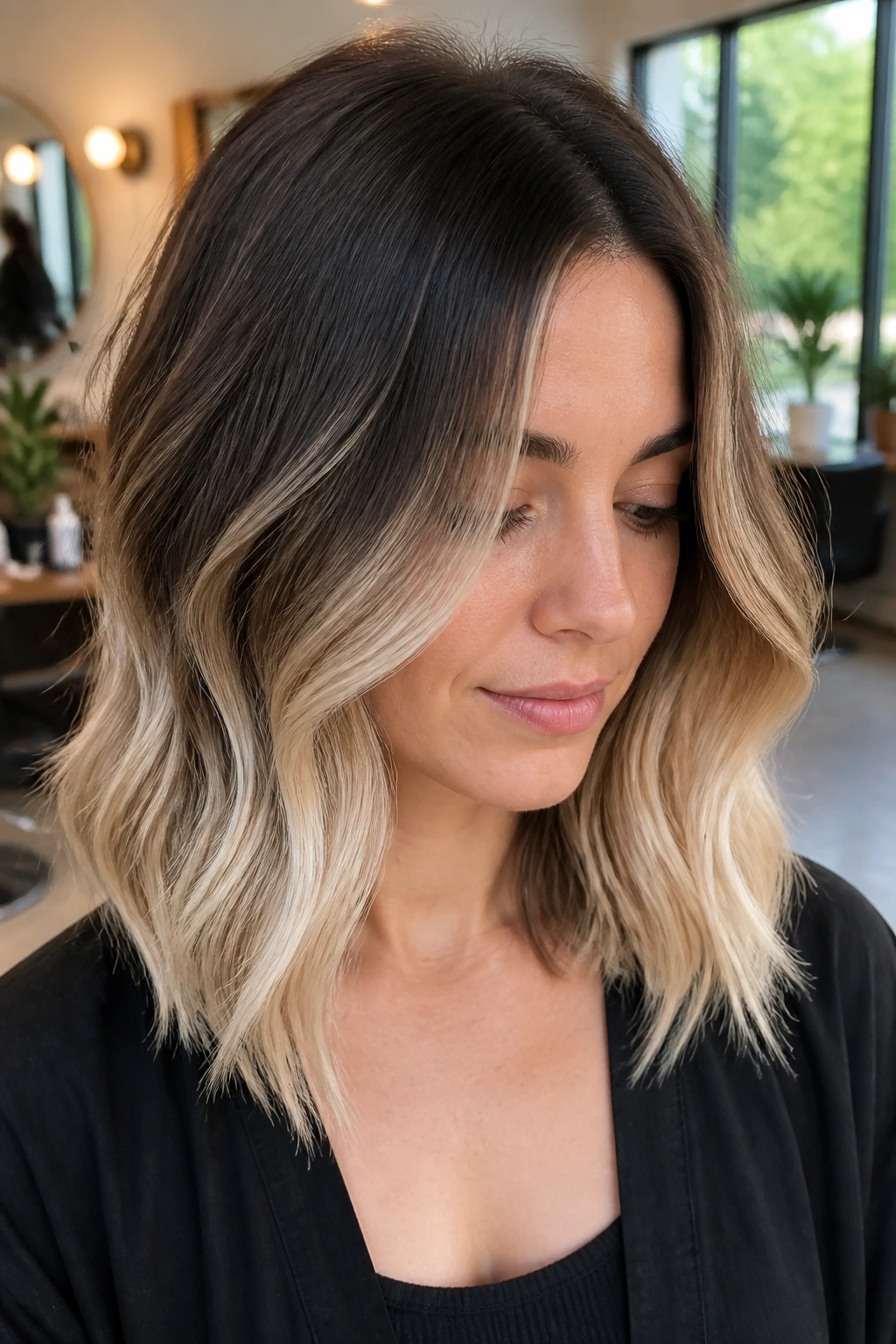
Pearl blonde ends are for someone who likes contrast but does not want their hairline to do all the talking. The brunette root stays deep, the ends go cool and luminous, and the middle section acts like a bridge between them. That layered fade looks especially good on thick hair.
I like this on long bobs and collarbone cuts. The lighter ends make the shape feel crisp without forcing the whole head to go blonde. It also works if your hair holds curls well, because the pearl tone flashes in the bends instead of sitting as one flat color band.
A few details matter. Keep the ends healthy before you attempt this; split ends make pale blonde look dry fast. And if your hair leans orange when lightened, ask for a beige-pearl toner instead of a pure silver one. The softer tone usually ages better.
10. Creamy Money Piece
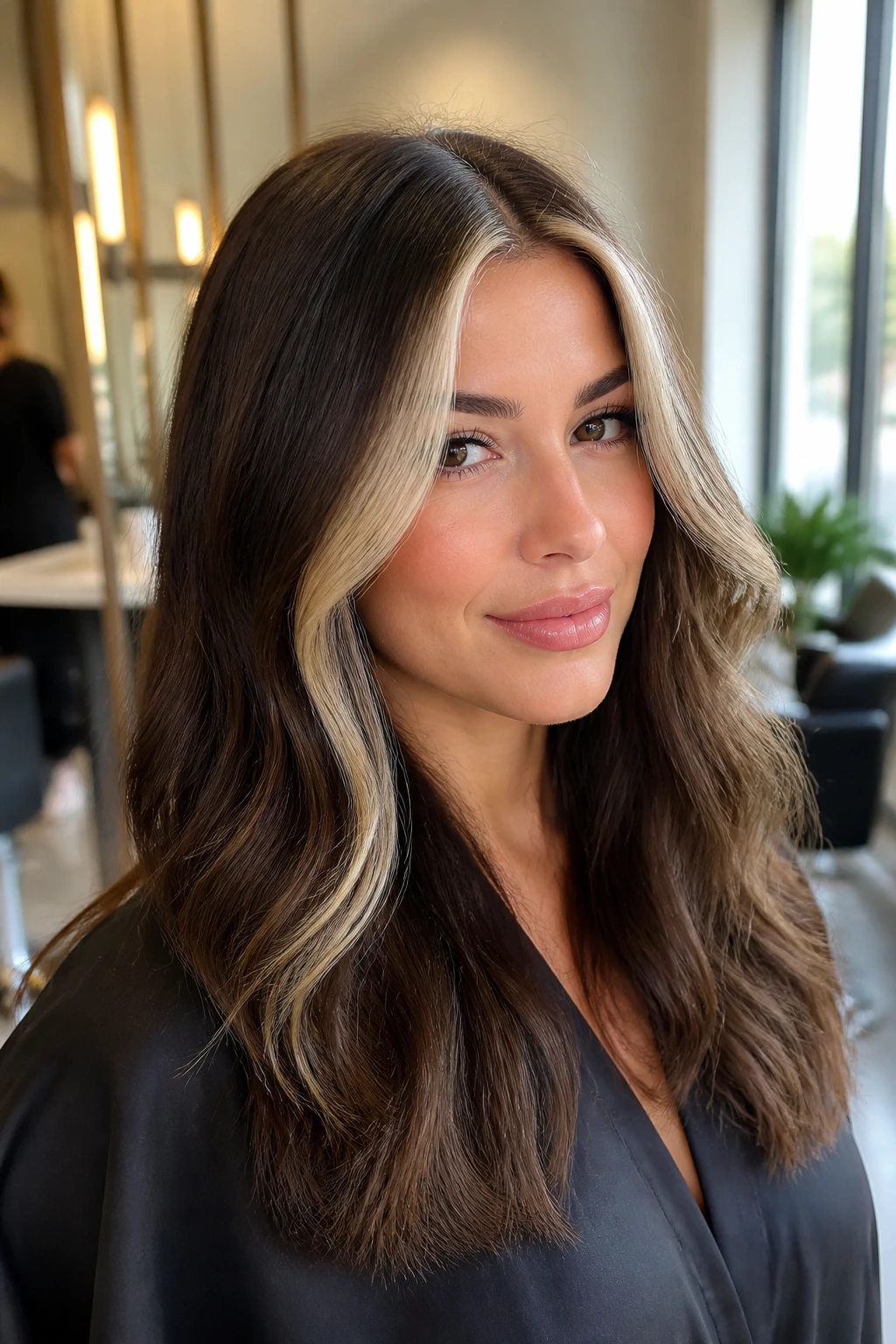
A money piece does not have to scream. In fact, the prettiest version on brunette hair is usually a creamy one: bright enough to frame the face, soft enough that you do not feel trapped by constant upkeep. The difference comes down to width and tone.
Ask for front panels that are about 1 to 1.5 inches wide, with a creamy blonde that sits a couple of levels lighter than the rest of the hair. That keeps the front bright while the body of the color stays rich. It looks especially strong on center parts because the light lands right where the eye goes first.
This style is a good match for anyone who likes polished blowouts, high ponytails, or simple straight styles. The frame does the work. The rest can stay calm. Just know the front will show regrowth faster than the back, so it rewards regular touch-ups.
11. Oatmeal Blonde Underlayers
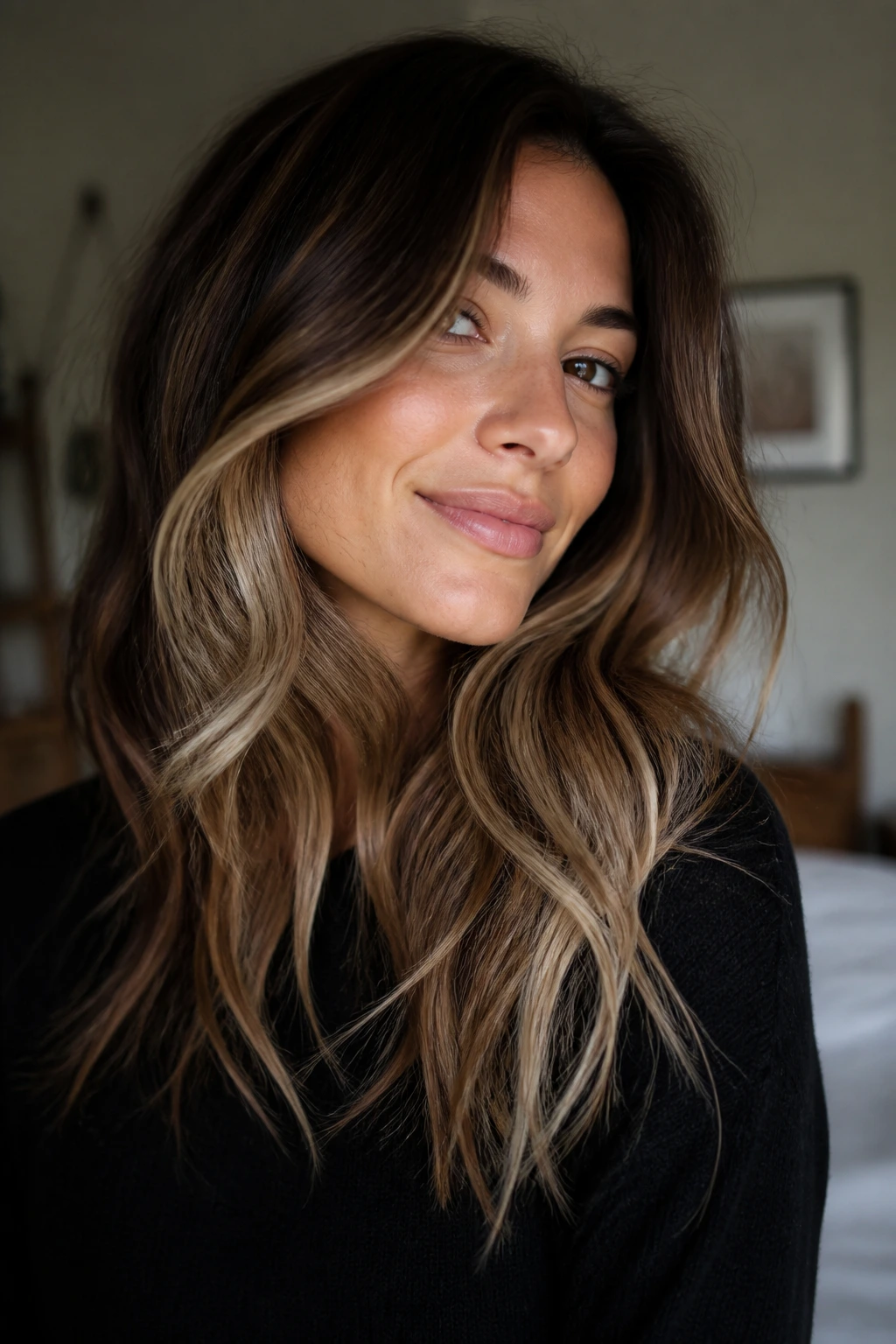
Oatmeal blonde underlayers are one of my favorite quiet tricks for brunette hair. From the top, the hair still reads brown. When it moves, lifts, or gets tucked behind the ear, the lighter pieces peek through and create a soft flash of contrast. That hidden effect is half the charm.
Compared with surface highlights, underlayers feel more private. They are also kinder to fine hair, because the top section stays deeper and gives the illusion of fullness. On thick hair, they keep the bottom from looking heavy. On short cuts, they add movement without making the shape look busy.
Why Hidden Brightness Matters
If you like color that shows up in motion rather than in a mirror selfie, this is a smart pick. Ask your colorist for lighter ribbons underneath the top canopy and a gloss that keeps the blonde in the oatmeal-beige family. It is subtle, but it is not boring.
12. Golden Ribbon Contrast
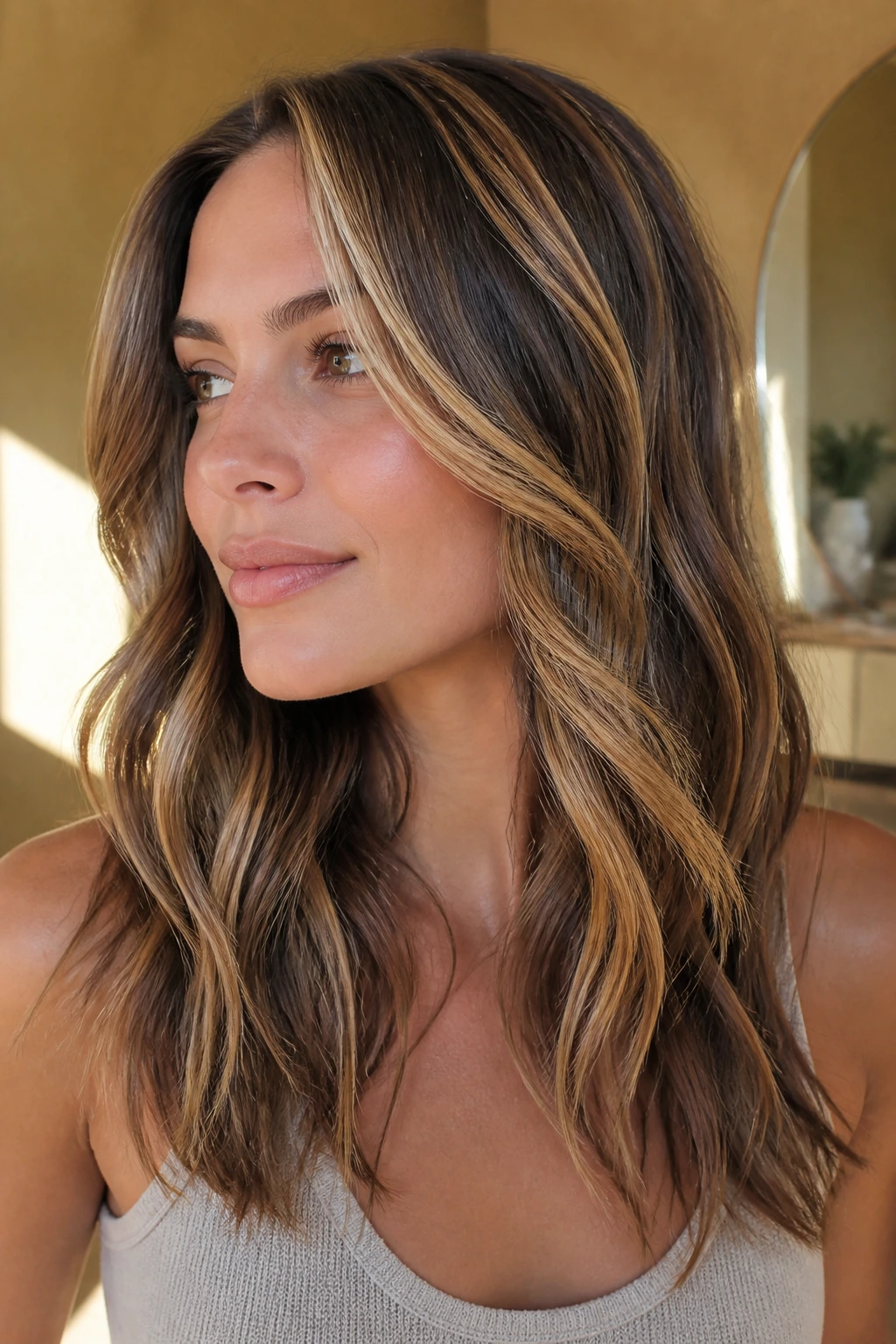
Golden ribbon contrast is for brunettes who want warmth they can actually see. Not soft warmth. Real warmth. The kind that turns brown hair into something sunlit and a little richer at the same time. On olive or golden skin, this can look especially natural.
The key is spacing. Keep the ribbons thin enough that the brunette base still shows through in between. That empty space is what keeps the color from looking thick or painted on. The gold should sit in ribbons, not in slabs.
- Ask for fine foils through the crown and around the face.
- Keep the blonde around level 8 with a golden-beige toner.
- Leave some dark root at the part for softness.
- Style with medium waves so the pieces do not sit flat.
Best move: if your hair is already warm, do not go too gold at once. Build it in layers.
13. Smoky Beige Contour Pieces
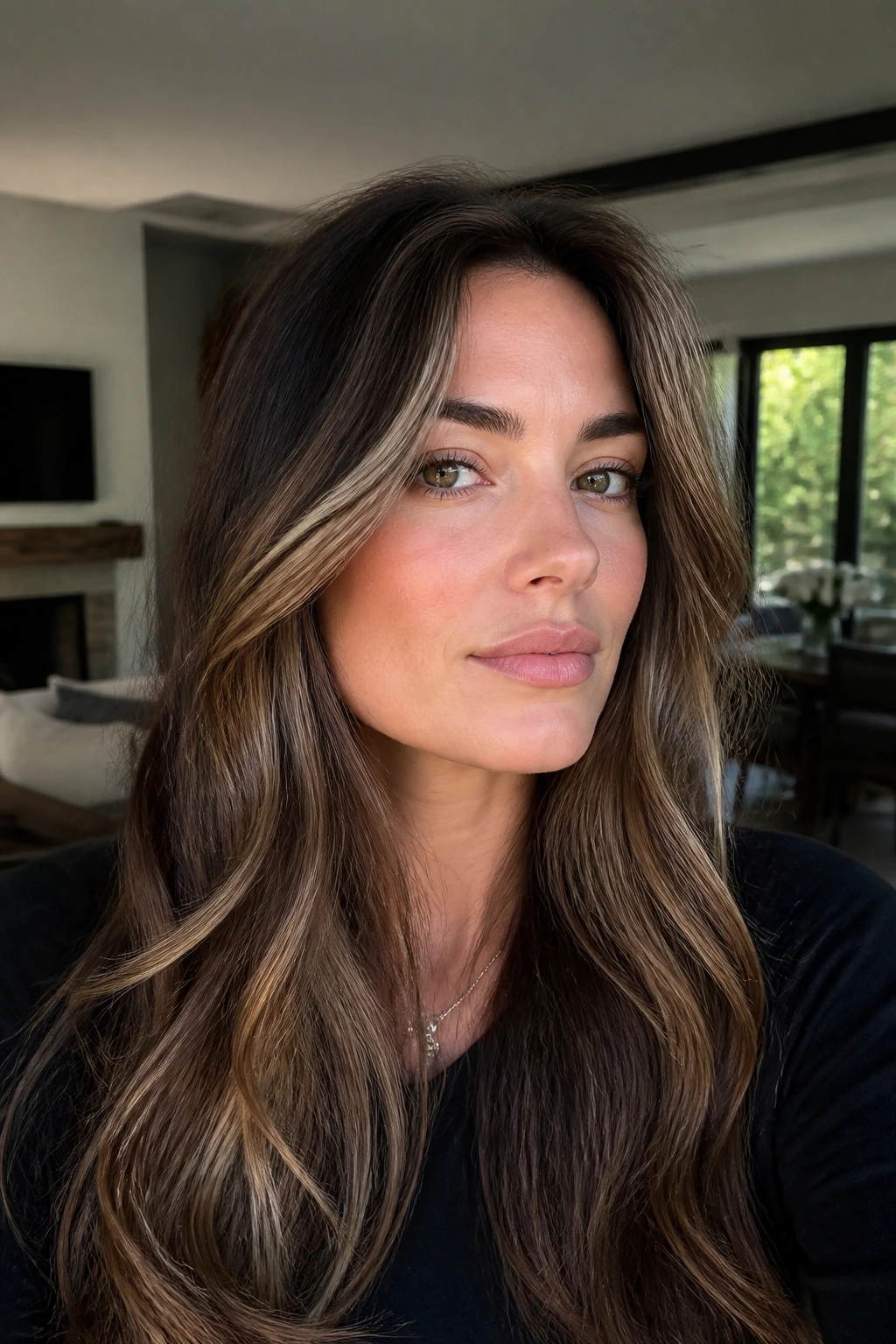
Can hair color contour the face the way makeup does? Absolutely, and smoky beige pieces are one of the cleanest ways to do it. The lighter ribbons sit around the temples, cheekbone area, and outer front layers, which draws the eye where you want it without making the whole head blonde.
That smoky-beige tone keeps the look modern. It is cooler than honey, softer than ash, and a little more muted than champagne. On brunettes, that balance is useful because it lifts the face without adding a yellow cast. The result feels polished rather than flashy.
How to Ask for It
Tell your colorist you want face-contouring blonde pieces with a soft beige toner and a brunette base left underneath. Keep the brightest pieces near the front and the lighter layers just below them. If your haircut has strong layers, this placement gives those layers extra movement.
14. Vanilla Blonde Face Frames
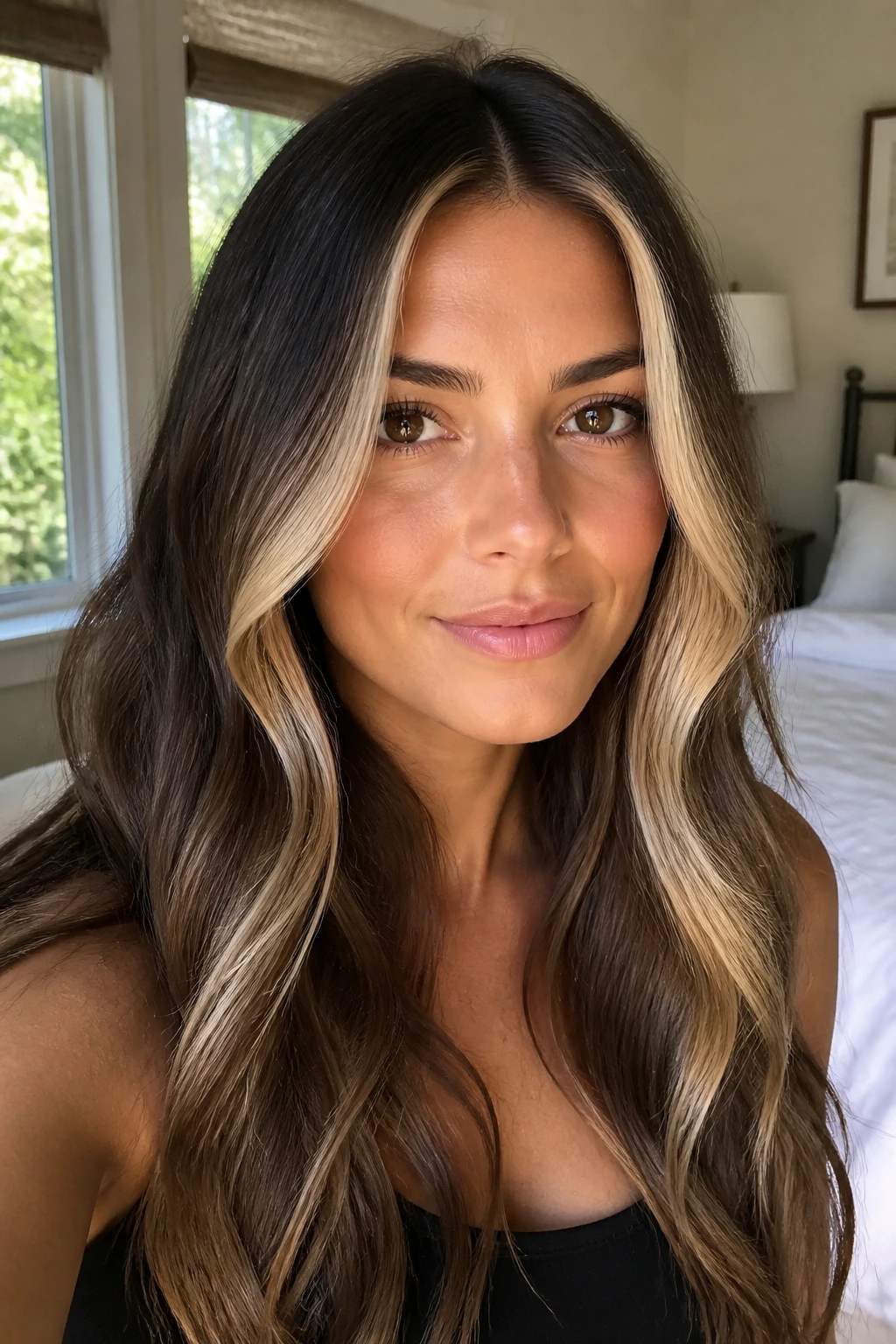
Vanilla blonde face frames have a creamier, rounder feel than champagne or pearl. They are soft enough to live beside brunette hair without stealing the whole show, but they are light enough to brighten a face in seconds. It is the kind of color that works well with smooth blowouts and tucked-behind-the-ear styling.
The front sections are the star here. They should be bright, but not white. Think vanilla custard rather than icy frosting. That little bit of warmth keeps the blonde from looking flat against brown hair and makes regrowth less brutal.
- Best when the front pieces are 1 inch to 1.5 inches wide.
- Ask for cream-toned blonde, not yellow.
- Pair with a soft root shadow for easier grow-out.
- Refresh the front first if you only have time for a partial touch-up.
A clean center part makes this pop fast.
15. Soft Mocha-to-Blonde Melt
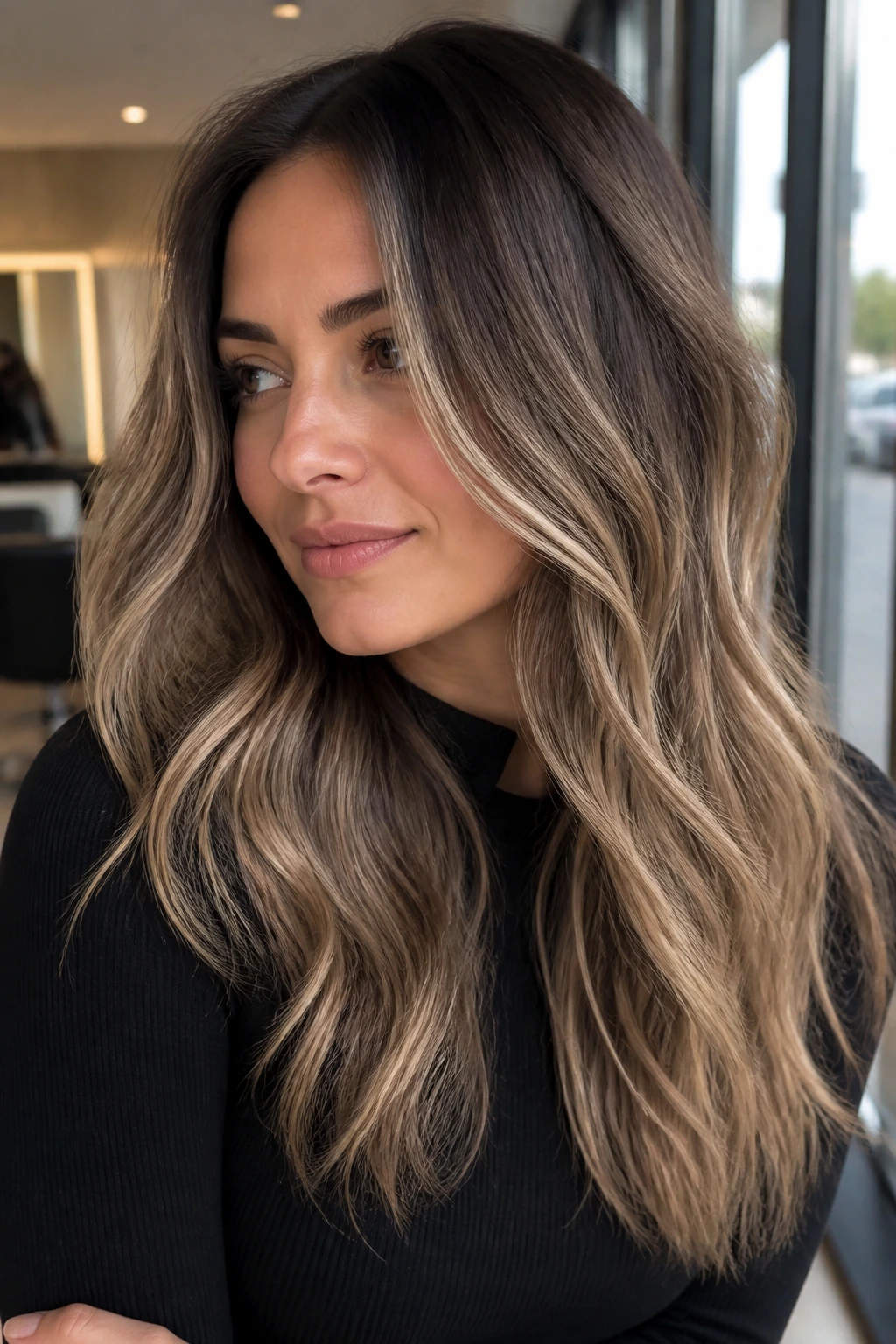
A soft mocha-to-blonde melt is the color for someone who hates a hard line. The brunette base stays deep at the root, then melts into beige-blonde through the mid-lengths and ends. When it is done well, you can’t tell where one shade stops and the next starts. That is the whole point.
This look is gentler than a classic highlight set because the transition is blurred with a root smudge or color melt. It works especially well on longer hair, where the fade has room to breathe. On shoulder-length cuts, it can still look lovely, but the color change needs to be controlled so the ends do not look too pale.
I like this on people who wear waves, not stiff curls. The movement helps the melt show off. It also handles grow-out better than stark foil work, which is worth saying out loud because not everyone wants to live at the salon.
16. Sunlit Mid-Length Slices
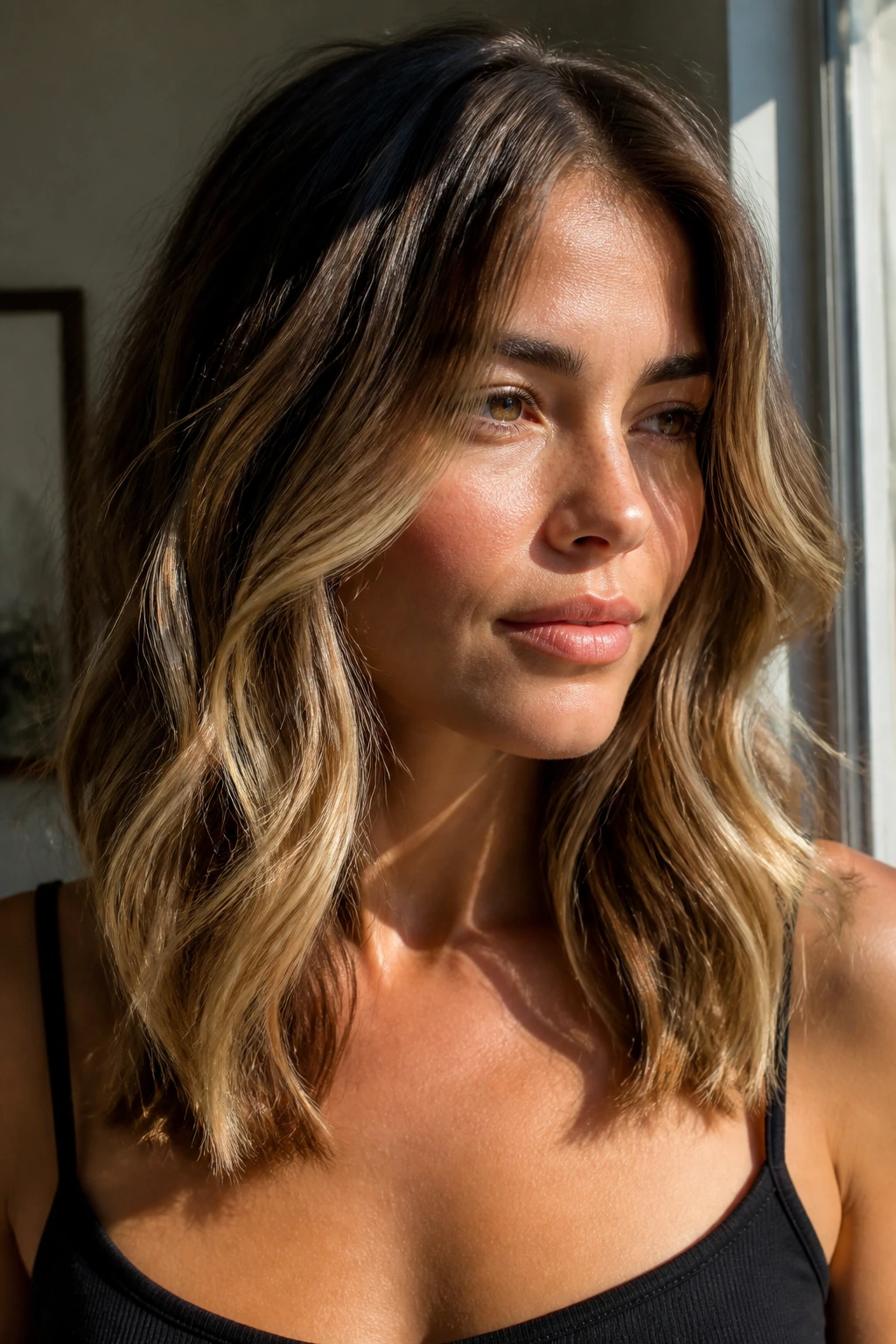
Sunlit mid-length slices are a good answer when the ends already feel light and the roots feel fine, but the middle section needs help. The blonde lands mostly in the center of the hair shaft, which creates that “I spent time outside” look without bleaching the whole head.
Compared with all-over highlights, this style is less busy. It lets brunette hair stay dark at the top and bottom, which makes the lighter middle section feel intentional. Layered cuts love this placement because the color follows the movement of the haircut instead of fighting it.
If your hair is straight and fine, keep the slices narrow. If it is thick and wavy, they can be a bit wider. Either way, the point is the same: light where the eye moves, depth where the shape needs weight.
17. Dusty Sand Peekaboo Lows
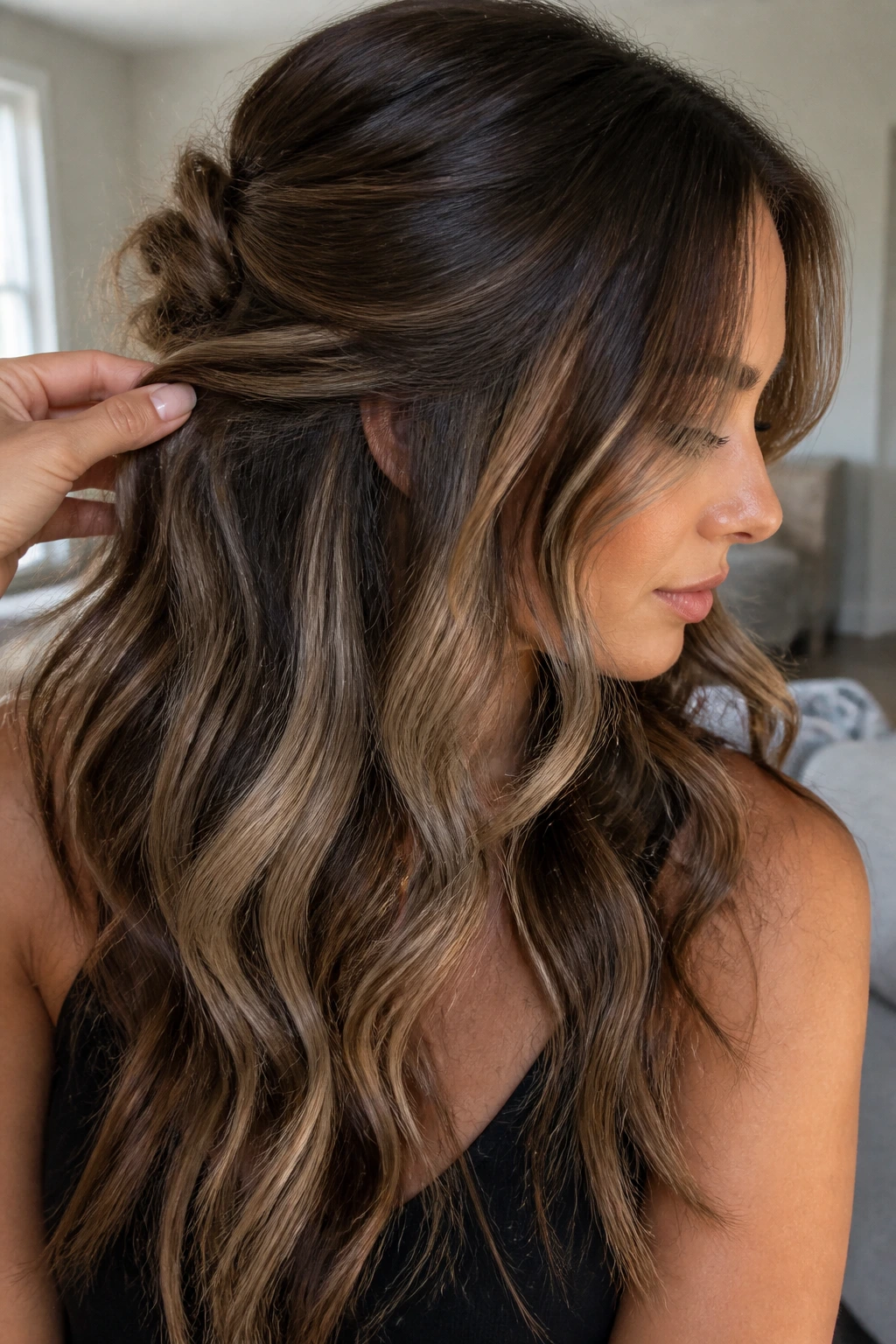
Open a ponytail and you get the surprise. That is the charm of dusty sand peekaboo pieces on brunette hair. They sit under the top layer, so the look stays understated until the hair shifts, lifts, or gets pinned back. Then the lighter tone flashes through and wakes the whole cut up.
What Makes It Different
Peekaboo placement is quieter than traditional highlights. It is also easier to hide if you work in a place that likes a conservative look. You still get dimension, but it does not announce itself from across the room.
- Best for medium and thick hair that can hold hidden panels.
- Ask for dusty sand blonde, not bright gold.
- Keep the top layer deep enough to cover the underneath color.
- Great with half-up styles and claw clips.
The finish is subtle, but that is the appeal. It feels like a private detail.
18. Cream Soda Blonde Layers
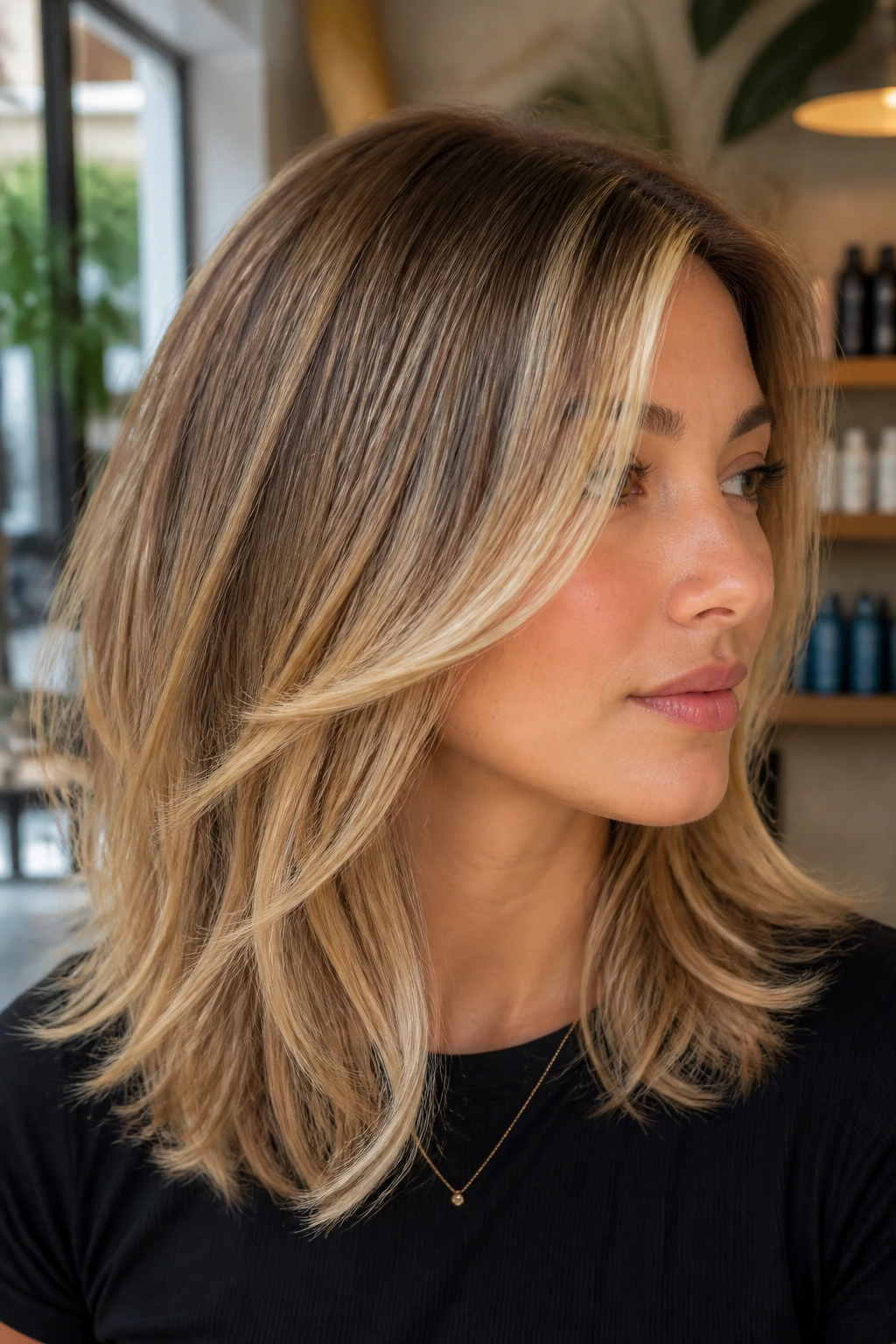
Cream soda blonde layers have a little more play in them than plain beige. The tone is creamy, warm, and lightly golden, almost like the color of the drink after the bubbles have settled. On brunette hair, that gives you brightness without the hard edge that some blondes bring.
This works best when the layers are visible. Haircuts with movement — shaggy ends, long layers, face-framing cuts — give the color room to separate and show off. If the haircut is one blunt block, the tone can look too heavy in spots. The color likes air.
- Ask for layered foils or balayage ribbons.
- Keep the blonde around level 8.
- Finish with a soft beige-gold gloss.
- Use a heat protectant if you blow-dry often; warm tones show dryness fast.
My take: this is one of the easiest warm blondes to wear on medium brunette hair.
19. Pearlized Brunette Dimension
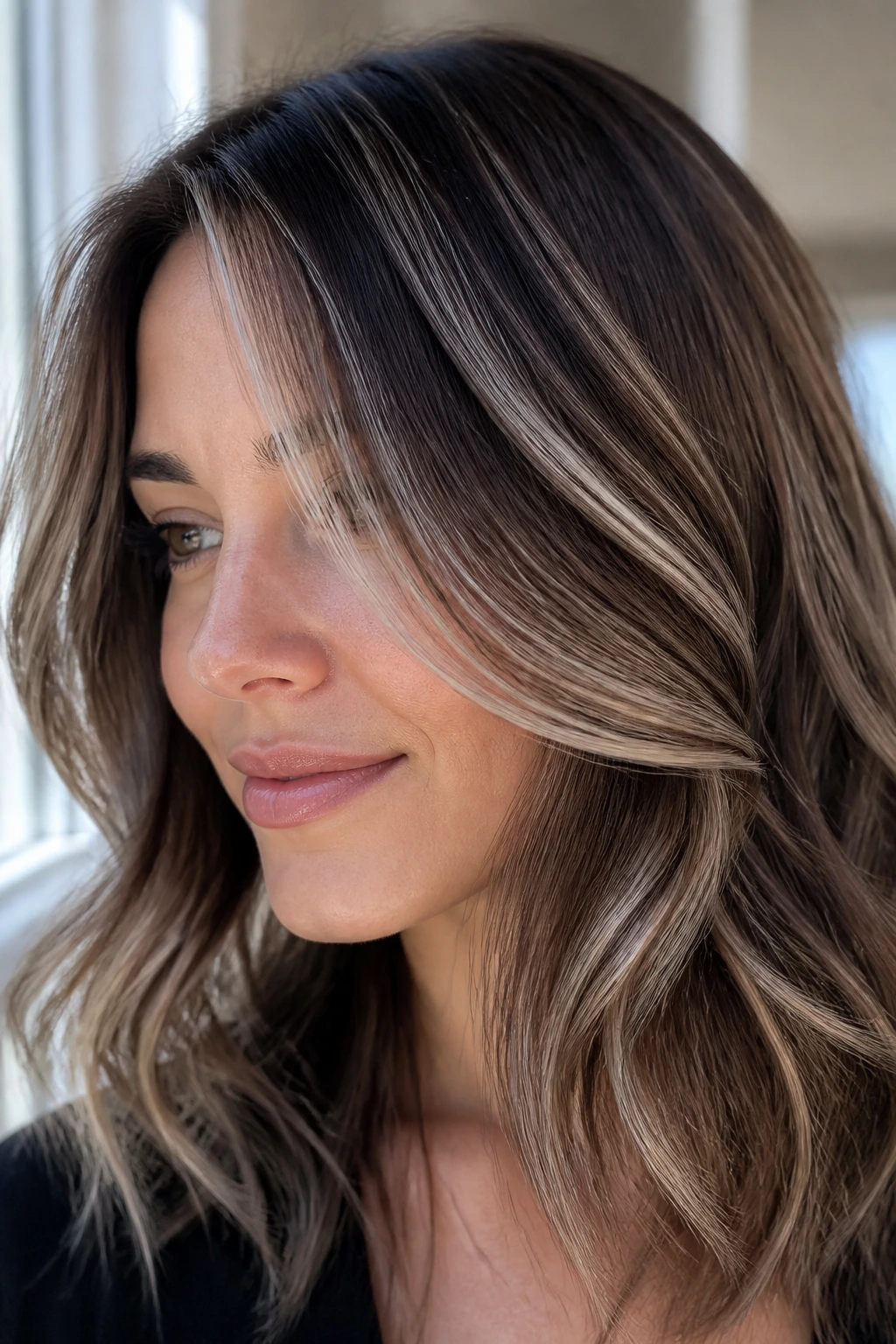
Pearlized dimension is for brunettes who want the hair to look glossy first and blonde second. The tone is cool, pale, and polished, but it stays soft enough that the brown base still carries the look. It can be striking in a good way, especially under natural light.
The secret is not to overdo the light pieces. A few pearl-toned ribbons through the crown and outer layers can do more work than a full head of brighter highlights. The contrast stays tidy, and the shine becomes the main event. On sleek styles, it looks almost reflective.
This is a nice fit for cooler skin, but I’ve seen it work on warm skin too when the toner is balanced with a little beige. If your hair pulls yellow fast, pearl needs maintenance. If you like a glossy finish and don’t mind gloss appointments, it can be a very polished choice.
20. Wheat Blonde Ribboning for Curls
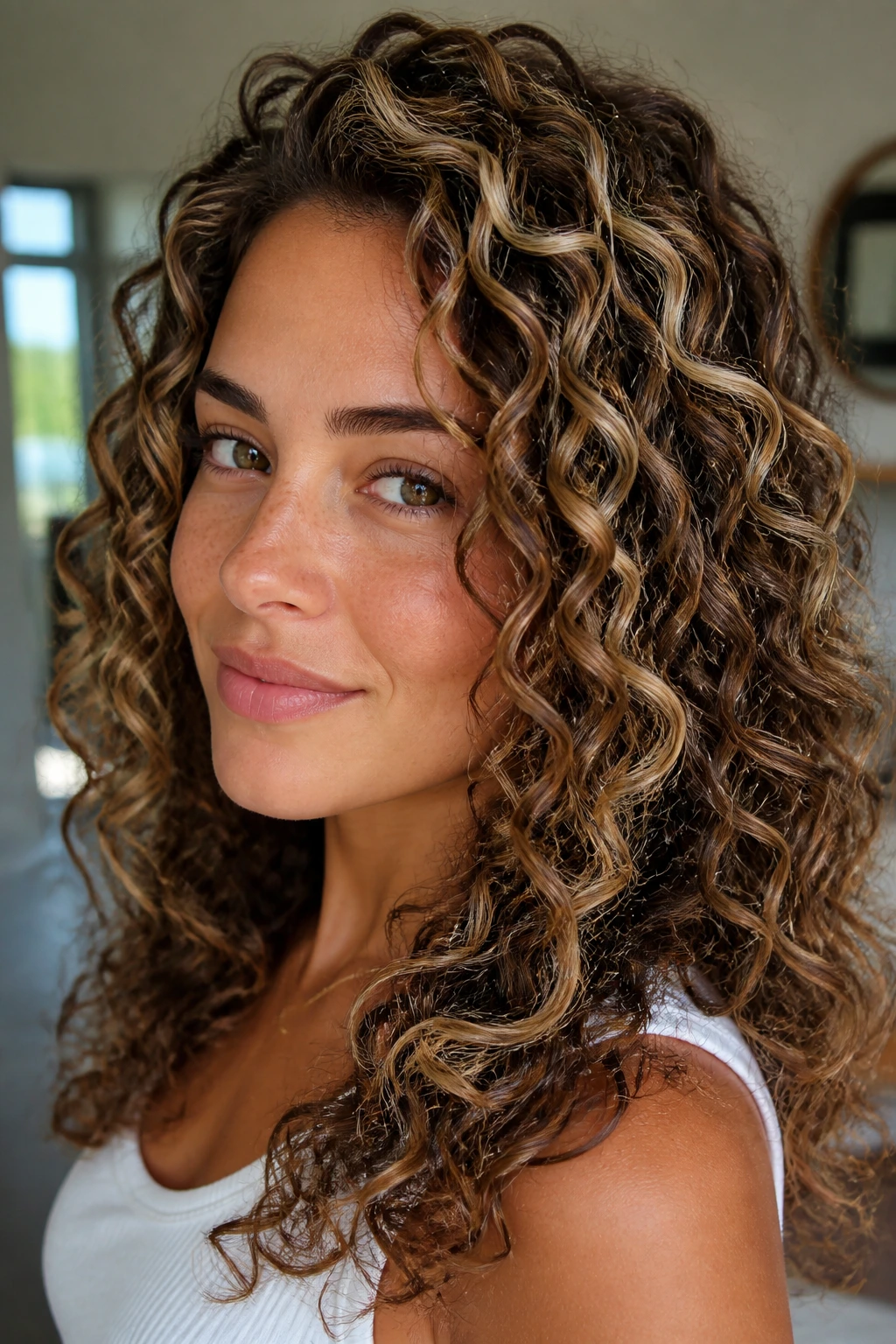
Does curly hair need a different blonde placement? Yes, it does. Curls bunch color differently than straight hair, so wheat blonde ribboning has to follow the curl pattern instead of fighting it. Thin, well-placed ribbons can make curls look fuller and more defined without turning the head frizzy or patchy.
The color works best when the blonde lands on the surface of the curl clumps, not on every single strand. That keeps the shape intact and helps the dimension show when the curls move. On tighter curls, wider but fewer ribbons usually work better than lots of tiny foils. Tiny foils can look busy fast.
How to Keep Curls from Puffing Up
Ask for curl-by-curl placement and a soft wheat-beige tone, not a bright, chalky blonde. Keep the pieces away from the very ends if your hair is fragile there. A good curl cut and a moisturizing styler matter here too, because dry curls make blonde look harsher than it is.
21. High-Contrast Blonde Veils
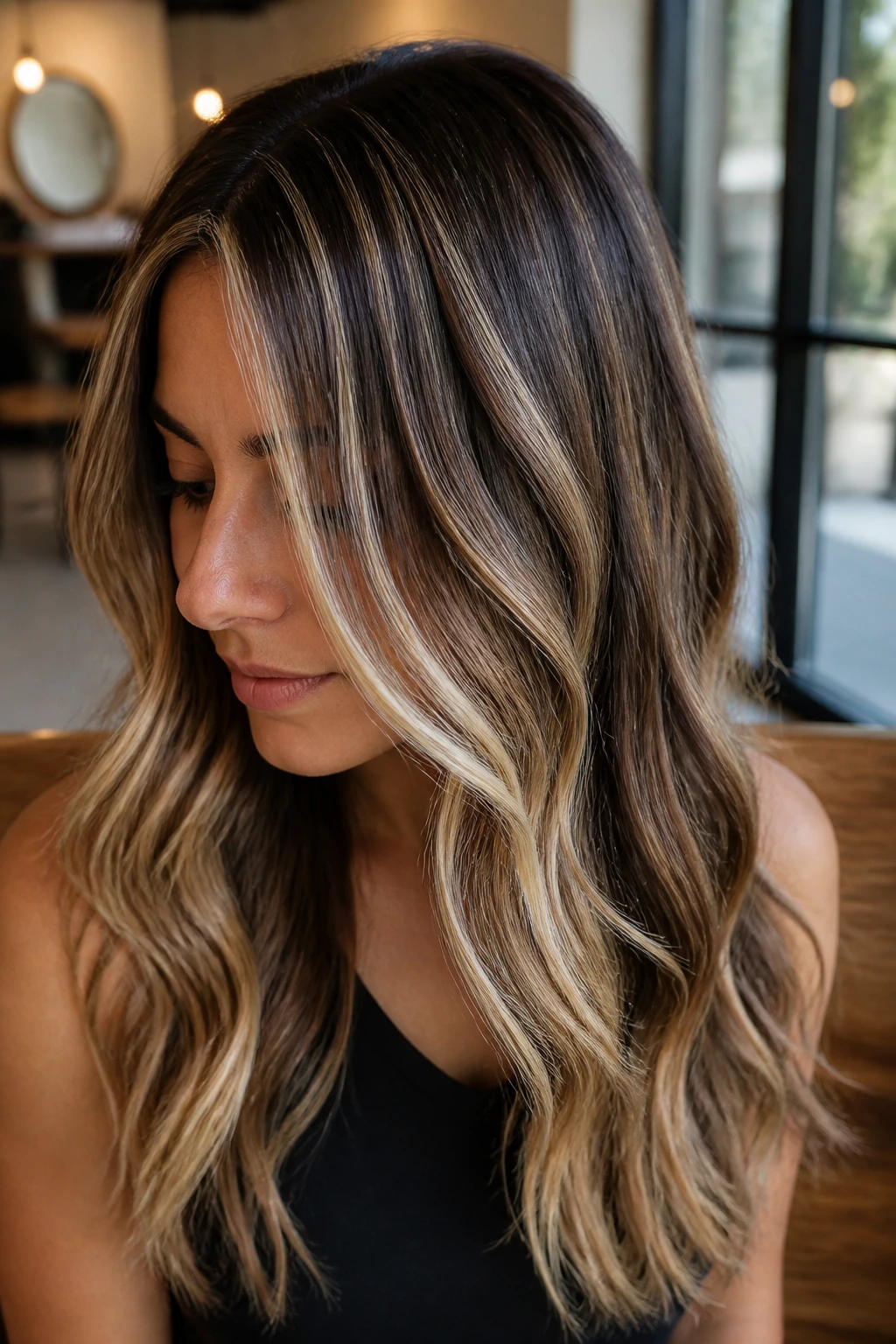
Sometimes subtle is not the point. High-contrast blonde veils give brunette hair a bolder, more dramatic stripe of light while still leaving plenty of brown in place. The veils are thin enough to feel modern, but the contrast is high enough that you notice them right away.
This style works well when you want movement in loose waves or a blowout with shape. The lighter sections can sit under the top layer and around the face, then peek through in a way that looks more expensive than chunky old-school highlights. The key is keeping the veil narrow and the placement deliberate.
- Best on medium to dark brunettes who want visible dimension.
- Ask for thin but bright foils with a soft root.
- Keep the blonde in the champagne to beige range.
- Plan for more frequent refreshes if you wear your hair parted the same way every day.
It is the loudest look in this list, and that is the point.
22. Soft Toasted Vanilla Blend
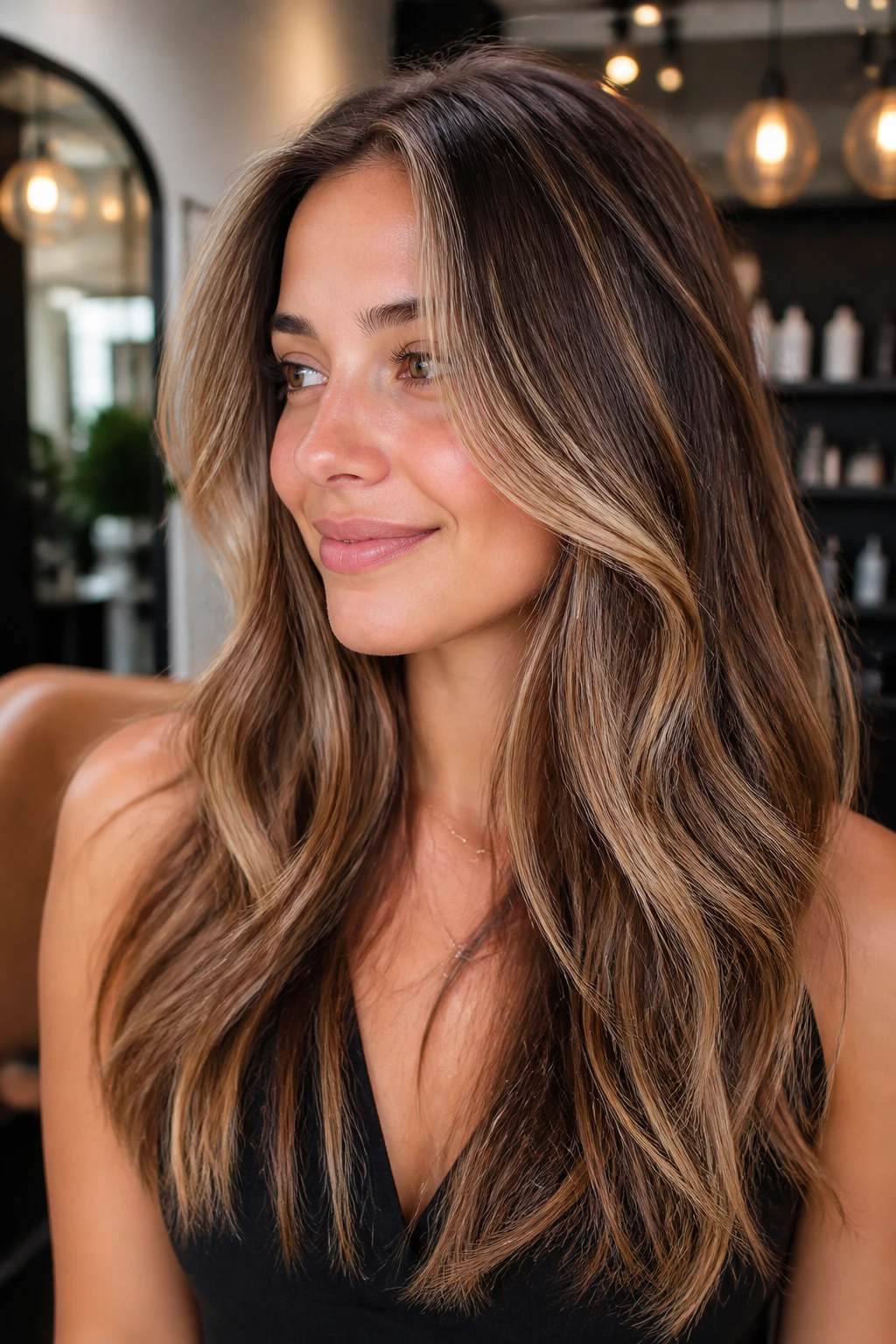
The softest color on this list may also be the smartest. A toasted vanilla blend gives brunette hair pale warmth without flattening the base, and it grows out with less drama than a heavy blonde job. There is a reason quiet color often reads richer in person than louder color does.
The toasted part matters. Pure vanilla can look flat if it is too pale, but a little warmth keeps it alive. On brunettes, that means the color should lean cream, beige, and faint gold rather than white or yellow. The blend works especially well on long layers, where the light can fall in soft pieces instead of one solid band.
If you are torn between warm and cool, this is a safe middle. It is not boring. It is not loud. It just looks polished in a way that does not scream for attention, which is harder to pull off than people think.
Final Thoughts
The prettiest blonde work on brunette hair usually comes from restraint, not from going lighter everywhere. Fine placement, the right toner, and a root that is left alone in the right places do more for the finish than a heavy-handed lift ever will.
If you are sitting in a chair with a colorist, bring two photos that share the same base depth but different tones. That makes the consult easier, because you are talking about beige versus honey versus ash instead of chasing a vague “blonde” that means ten different things to ten different people.
And if you remember only one thing, make it this: brown hair needs depth to look expensive. The blonde should flirt with the light, not erase the brunette underneath.
