



Red highlights for brown hair can look rich and glossy, or they can look patchy and loud, and the difference usually comes down to tone, placement, and how much contrast you want near your face. Brown hair gives red a strong base to sit on, which is why even a few fine ribbons can read polished instead of dramatic. The color has somewhere to land.
Warm brunettes tend to love cinnamon, copper, auburn, and ginger. Cooler brown hair usually handles burgundy, merlot, and cherry cola better because those tones keep the overall finish deep rather than orange. If the base is very dark, the red has to work harder to show up, so thinner sections, smarter placement, and a good gloss matter more than people expect.
The biggest mistake I see is treating every red shade like the same thing. It isn’t. A red money piece around the face behaves nothing like peekaboo panels under the crown, and a glossy merlot balayage has a totally different feel from chunky scarlet pieces on a blunt bob. One is soft movement. Another is a statement. Both can work.
The trick is picking the version that matches your haircut, your upkeep tolerance, and the way your hair actually moves. Once you start looking at red that way, the options open up fast.
1. Cinnamon Ribbon Highlights for Brown Hair
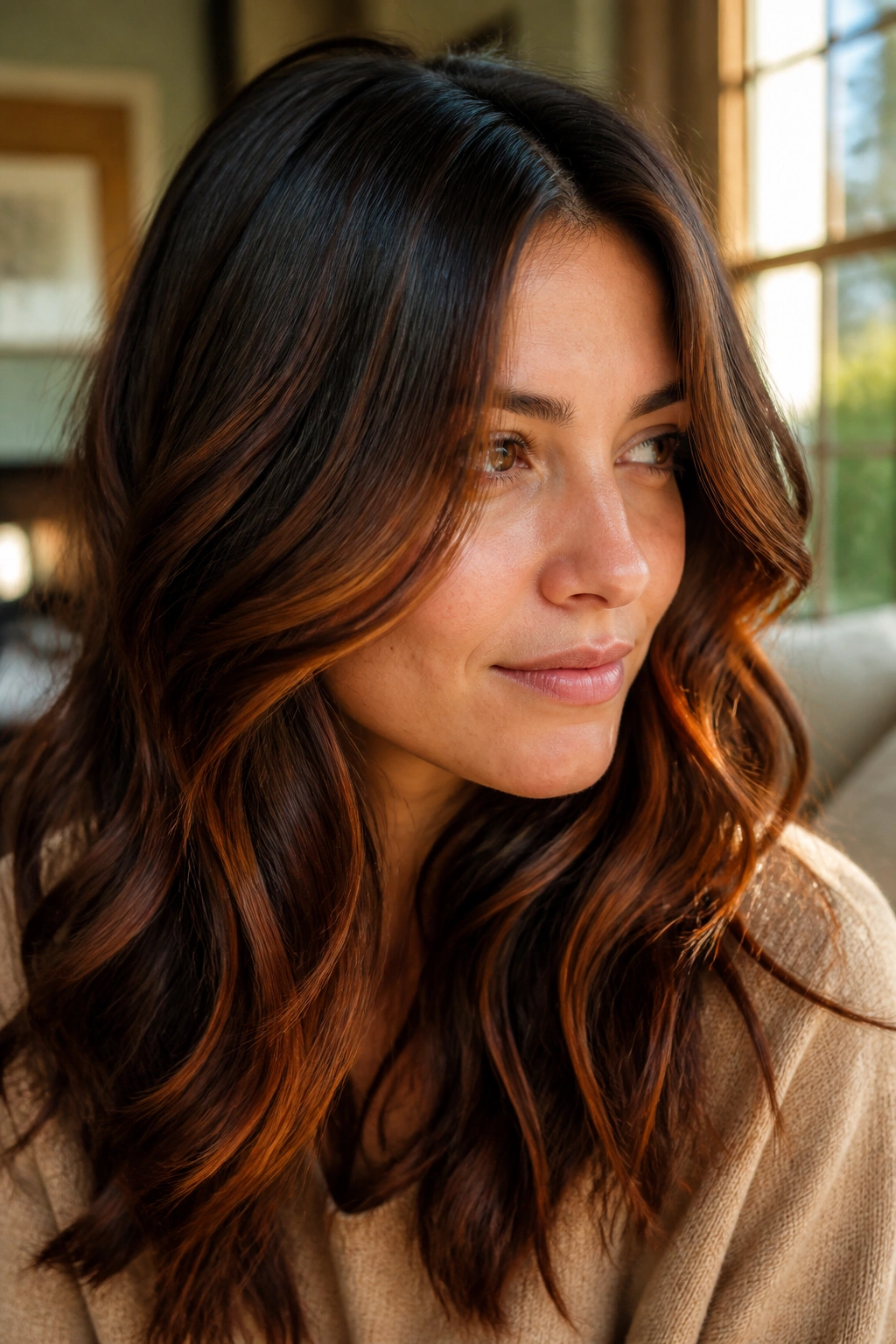
Cinnamon ribbon highlights are the easiest red look to wear if you want warmth without making your hair look dyed. They sit in that sweet spot between copper and auburn, so the color reads as a richer brunette first and a red second. That matters. A lot.
Why It Flatters Chestnut and Medium Brown Hair
Chestnut, mocha, and medium brown bases take cinnamon especially well because the warm undertone is already there. The highlights don’t have to fight the base. They just wake it up.
Thin woven ribbons through the mid-lengths and ends keep the finish soft. If the pieces are too wide, the look starts to turn stripey. If they’re too close to the roots, the red can feel heavier than intended.
- Best base: chestnut, cocoa brown, warm medium brown
- Best placement: mid-lengths, ends, and a few face-framing slices
- Best styling: loose waves or a round-brush blowout
- Best upkeep: a color-depositing gloss when the warmth starts to dull
Best tip: ask for thin foils with a cinnamon glaze if you want the color to melt into brown hair instead of sitting on top of it.
That soft melt is the whole point here. You get movement. You get shine. You do not get a loud stripe that screams for attention every time you tuck your hair behind your ear.
2. Copper Face-Framing Highlights
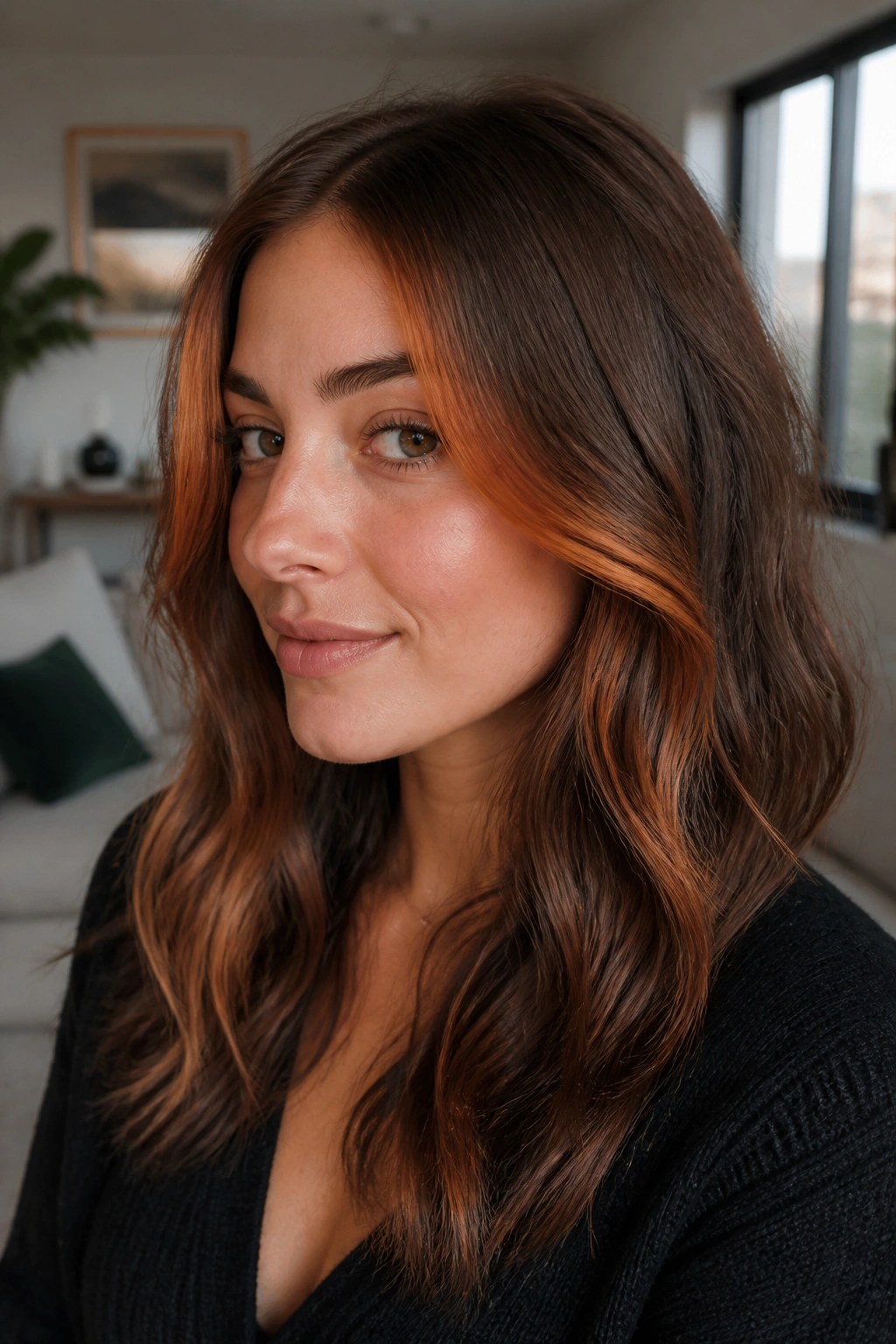
If you want the color people notice first, copper at the face does the job. It brightens the cut instantly, and it changes how the rest of the brown hair reads, even if only a few front pieces are colored. The effect is sharper than cinnamon and less moody than burgundy.
The money-piece version works best when the front sections are lifted a shade or two lighter than the rest of the hair. That gives the face-framing pieces enough punch to show under daylight and indoor bulbs. On medium brown hair, copper looks lively. On dark brown hair, it needs a bit more lift or it can disappear into the base.
A good copper frame should sit at the cheekbone and temple area, not just the very front of the part. That placement keeps the color visible when your hair moves. It also saves the look from feeling like two painted strips stuck onto the head.
And yes, it grows out faster than a softer ribbon highlight. That’s the tradeoff. Worth it if you like a little energy near your face. Annoying if you hate salon visits.
3. Cherry Cola Balayage
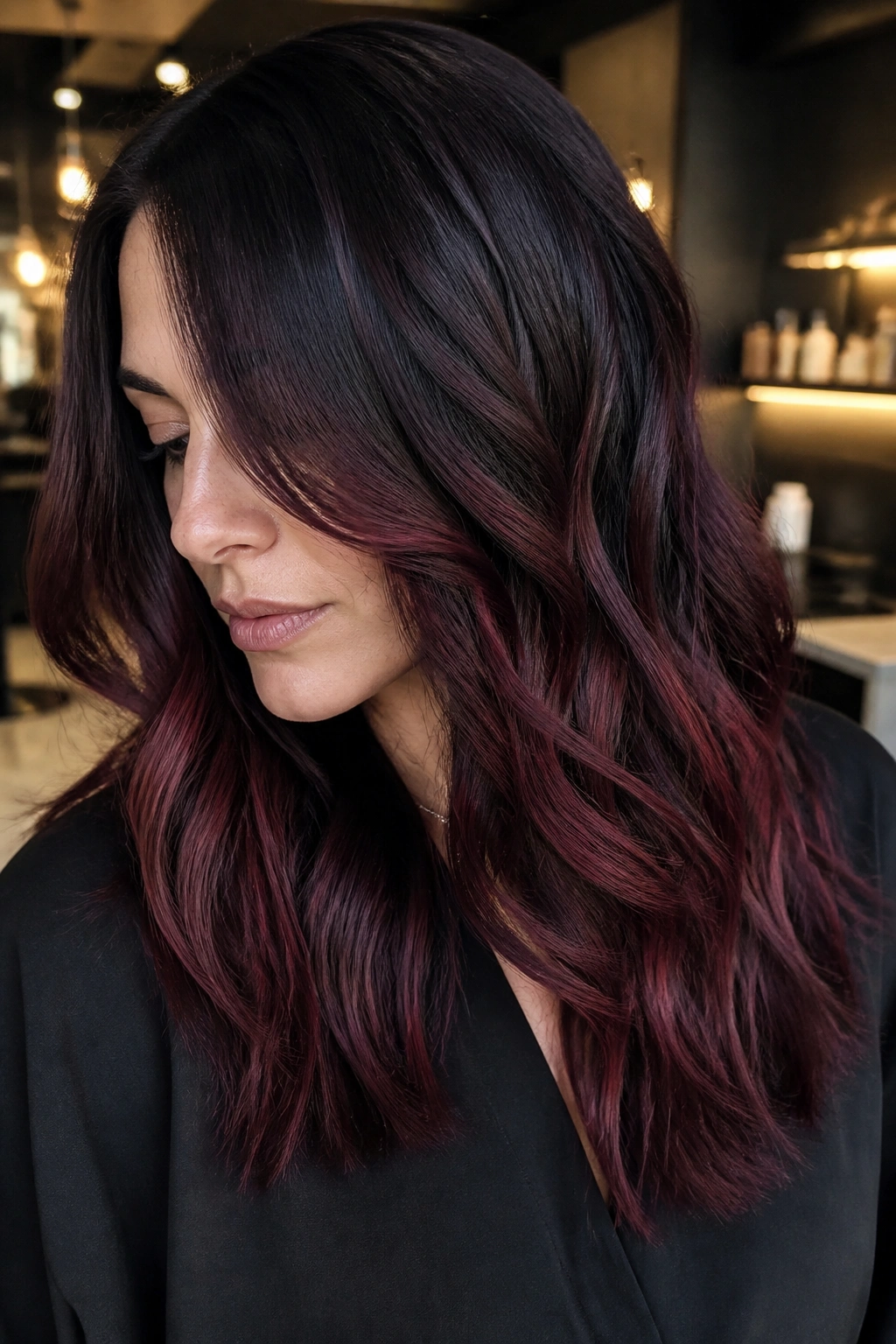
Why does cherry cola look so good on dark brown hair?
Because it works with the depth instead of trying to erase it. Cherry cola balayage mixes a deep red-violet tone with brown, so the result is glossy and dark, almost like polished mahogany with a berry edge. In low light, it stays brunette. In sunlight, the red wakes up.
How to Wear It
Cherry cola looks strongest on espresso or dark chocolate bases. The hair keeps its richness, which makes the red feel expensive rather than bright or cartoonish. That is a big part of the appeal.
Balayage keeps the red softer by painting the color through the mid-lengths and ends instead of packing it near the roots. Ask for pieces that stay deeper at the top and get richer toward the bottom. The finish should feel layered, not flat.
- Best for: dark brown and black-brown hair
- Best technique: hand-painted balayage with a gloss finish
- Best styling: waves, bends, or a polished blowout
- Best mood: deep, shiny, low-key drama
If your hair is very dark, a little pre-lightening may be needed for the cherry tones to show. Without that, the color can read brown with a hint of red, which is fine if that’s what you want, but disappointing if you’re chasing visible dimension.
4. Auburn Babylights
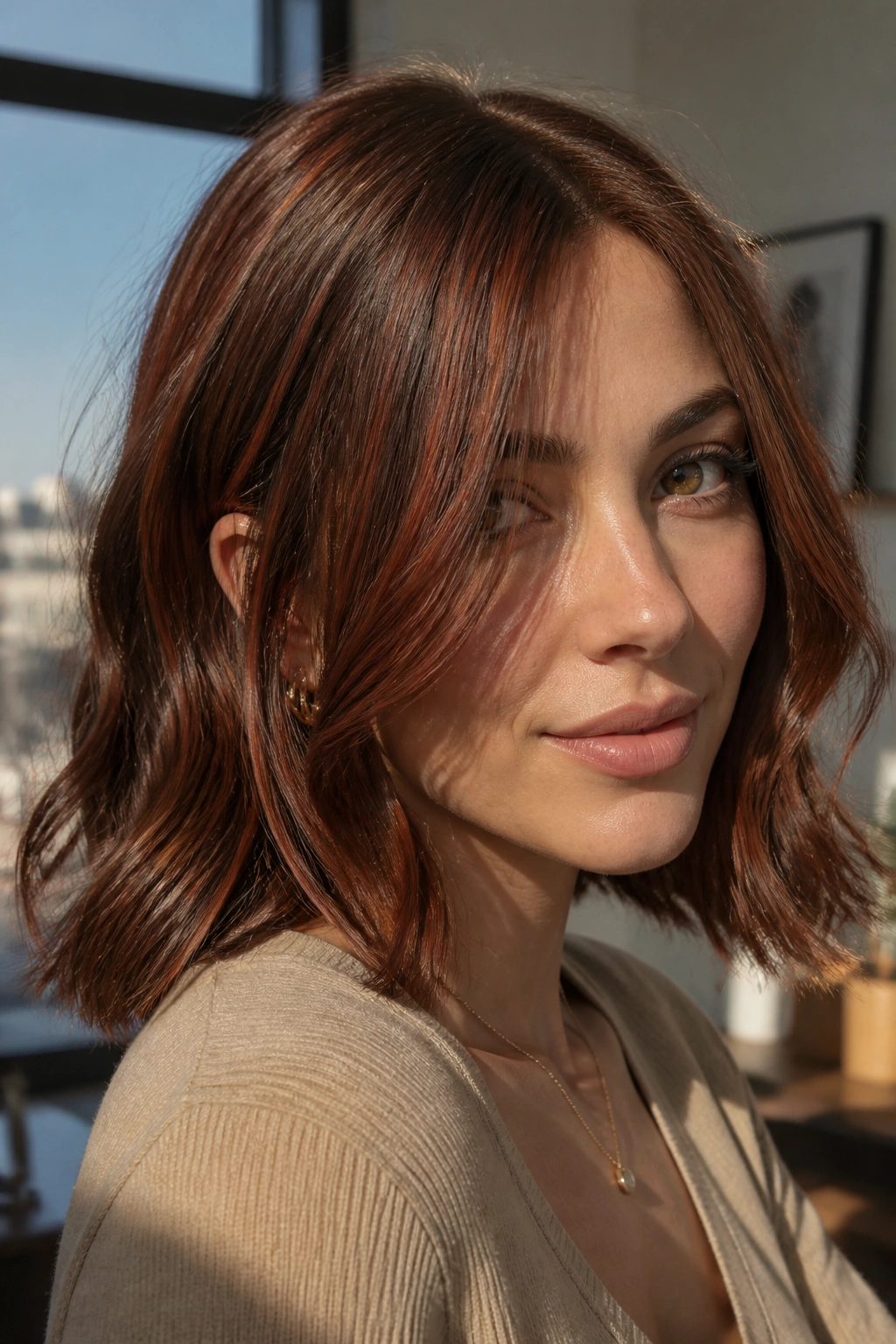
A bob or shoulder-length cut can go flat fast. Auburn babylights fix that without looking like obvious streaks.
Babylights use tiny sections — the kind a hand can barely hold — so the red lands in a soft, scattered way. On brown hair, that makes the color feel natural even when the shade itself is warm and noticeable. The eye reads movement before it reads pigment.
Placement That Looks Soft, Not Stripy
The smartest place for auburn babylights is the top layer, around the crown, and through the pieces that fall around the face. Those tiny threads catch movement and keep the haircut from looking heavy. If you put them too low and too wide, the effect gets muddy.
- Section size: very fine, almost whisper-thin
- Best on: fine to medium hair, layered cuts, lobs
- Color family: warm auburn, not bright copper
- Maintenance: grows out cleanly because the pieces are so small
My take: this is one of the best options if you want red highlights for brown hair but don’t want anyone to clock the exact moment you colored it.
Babylights are also good for people who wear their hair straight a lot. You still see the red, but it stays refined. That matters when you want dimension without the “I went to the salon and changed my entire personality” effect.
5. Mahogany Peekaboo Highlights
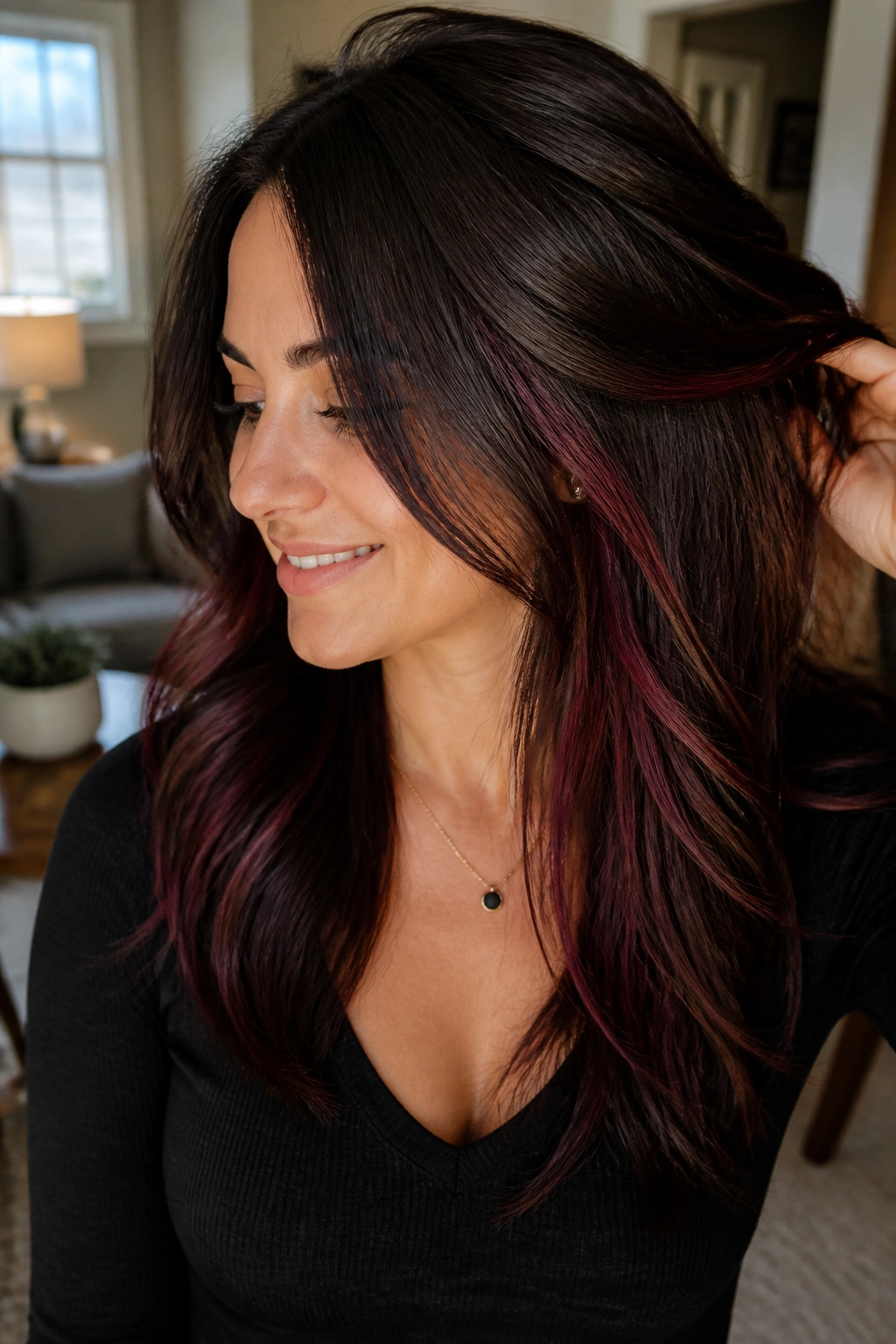
Mahogany peekaboo highlights are for people who want depth and surprise, not obvious color. The red sits under the top layer, so the hair looks like a regular brunette until it moves. Then the red flashes through. Subtle, but not boring.
I like this placement for long bobs, thick hair, and layered cuts with enough movement to show what’s hidden underneath. A few hidden panels at the nape or lower interior can change the whole haircut without touching the surface too much. That makes the style easier to wear in offices, conservative schools, or any place where bright color feels like a commitment.
The color itself should stay deep. Mahogany works best when it leans brown-red rather than purple-red. Too much violet and the shade can look cool and flat against warm brown hair. Too much orange and it loses the whole point.
A small thing, but it matters: hidden color needs clean parting. If the top layer is too heavy, the red disappears. If it’s too thin, the surprise goes away. The balance is the trick.
6. Ruby Money Piece
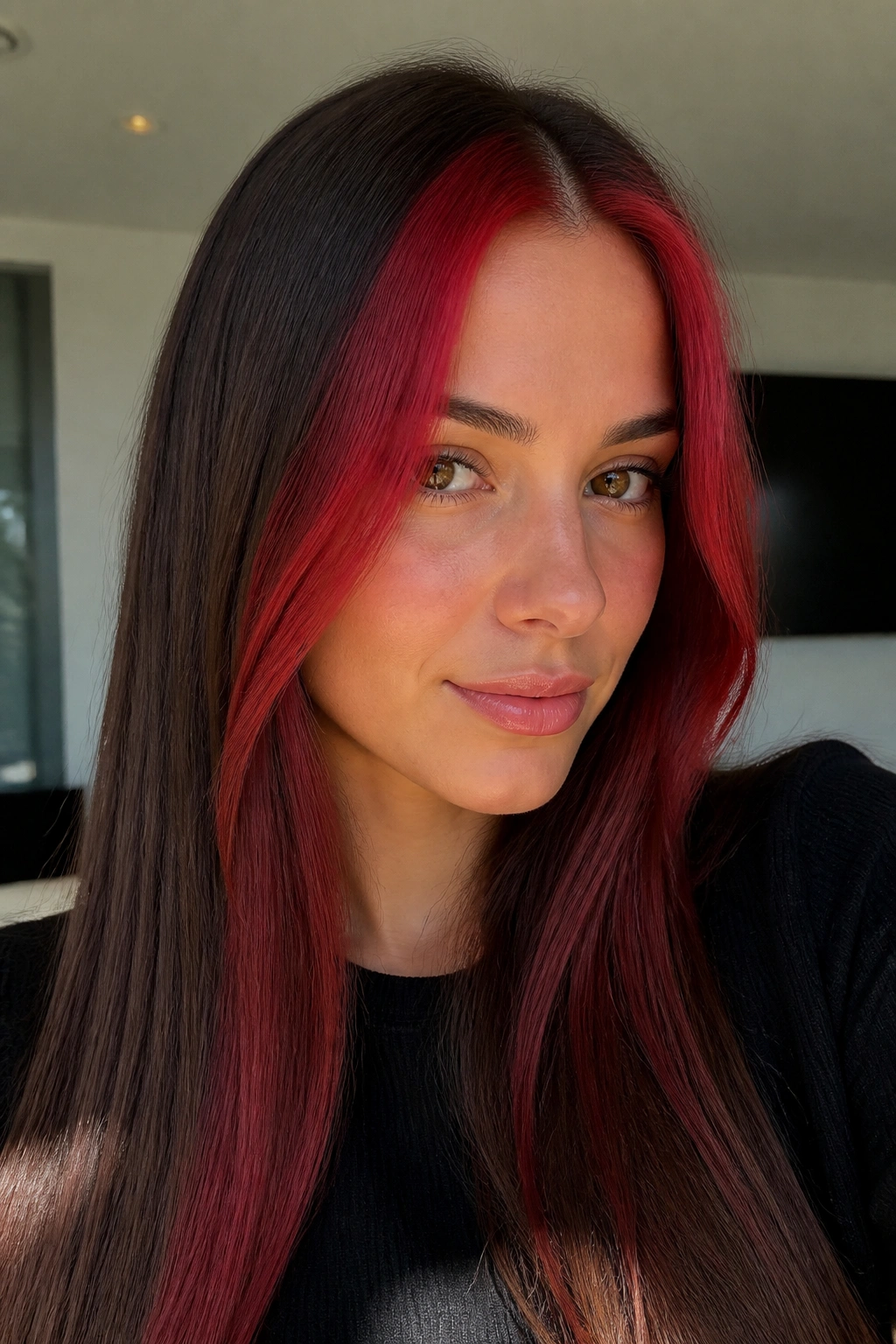
Ruby face-framing pieces are sharper than copper and cooler than cinnamon. They sit right at the front of the hairline and pull attention straight to the face, which is why they work so well when you want a bold look without coloring the whole head.
Unlike softer framing pieces, ruby wants a cleaner finish. Straight styles and smooth waves show it best because the color line feels intentional. On very textured hair, ruby can still look good, but it tends to read more casual unless the sectioning is neat.
The best ruby money piece is usually one to two shades lighter than the rest of the brown base. That gives enough contrast to show the red without making the front pieces look disconnected. If the base is dark brown, the ruby should be rich and deep, not neon. Bright ruby on espresso hair can turn harsh fast.
This look is also a good choice if you wear a center part. The red frames both sides and makes the whole cut feel more alive. Side parts work too, but the brightness shows less evenly.
7. Ginger Foil Highlights
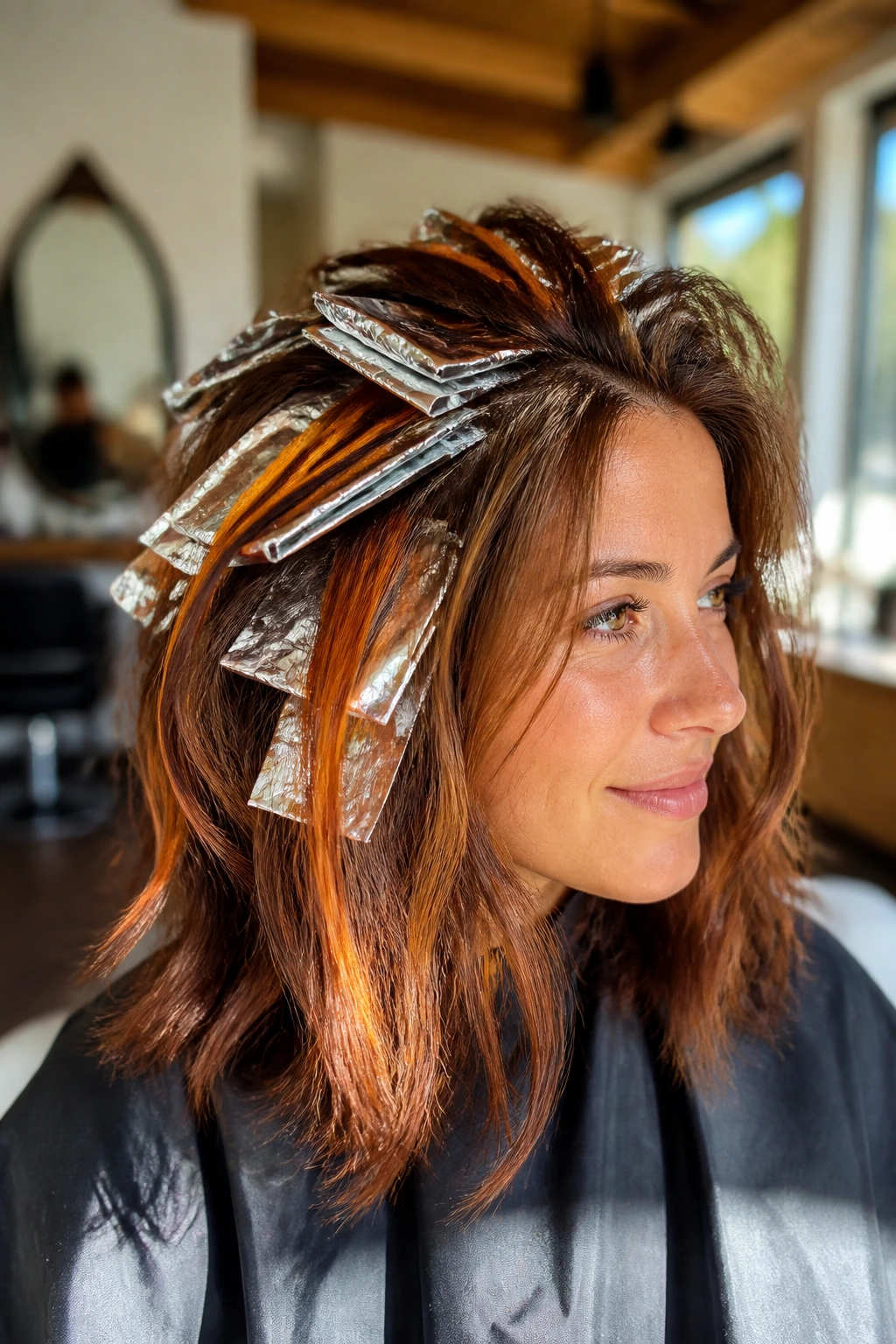
Ginger foil highlights bring the brightest orange-red energy in this whole group. They are not shy. They work because foils give you control over lift, which matters when the goal is a red that actually shows up on brown hair instead of fading into it.
Why Foils Beat Paint Here
Foils are useful when you need more lift than balayage can give. Ginger needs brightness to look like ginger. If the pieces stay too dark, the color turns muddy and loses that punchy, copper-orange feel.
This style works well on medium brown bases, especially layered cuts where the brighter pieces can break up the shape. Around the crown, a few thinner foils keep the color from looking chunky. Through the sides, slightly wider pieces create movement without making the head look striped.
- Best on: medium brown and light brown hair
- Best cut: layers, curtain bangs, shoulder-length shags
- Best tone: warm ginger with a golden edge
- Best finish: glossy, not matte
A little blunt honesty: ginger is a high-maintenance shade. It fades toward brass if you beat it up with heat and harsh shampoo. Still, when it’s done well, it has a lively, sunlit feel that softer reds don’t quite match.
8. Burgundy Balayage for Brown Hair
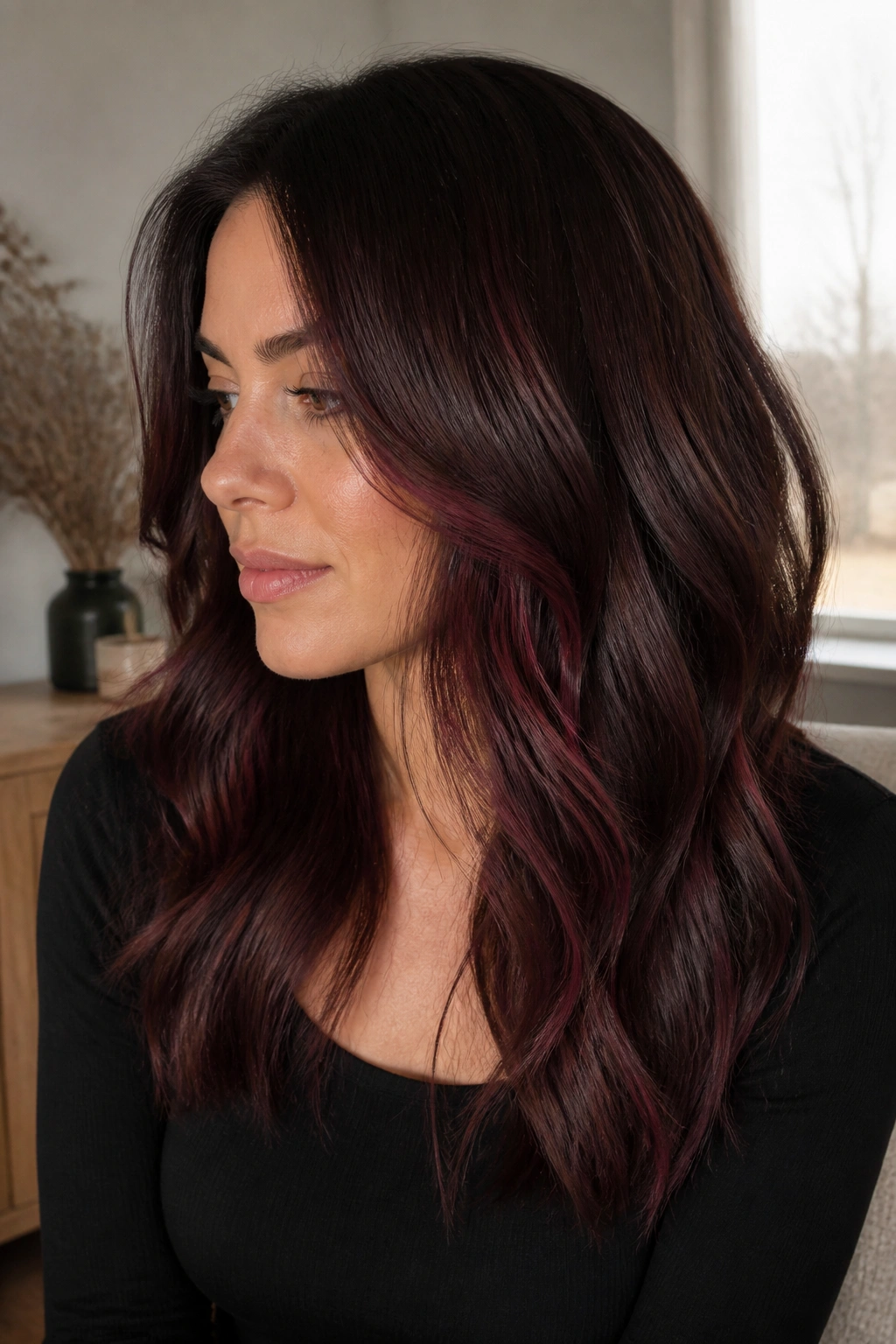
Burgundy on brown hair can look polished instead of heavy, and that’s the reason people keep coming back to it. The shade sits in the red-violet family, so it deepens brunette hair without turning it coppery or bright. The result is rich, moody, and a little bit glossy.
Balayage keeps burgundy from looking blocky. Hand-painted pieces through the mid-lengths and ends let the red emerge in motion, which is what makes the color feel expensive rather than flat. On thick hair, larger sections work. On fine hair, smaller painted ribbons look better because they don’t overwhelm the base.
If the brown is very dark, burgundy reads best when the ends are lifted just enough for the tone to show. Otherwise it can sink into the background. That’s not always a bad thing, though. Some people want that shadowy finish.
What I like most about burgundy balayage is that it ages well between appointments. The red softens, the brown stays deep, and the whole look just gets a little quieter instead of obviously faded.
9. Rosewood Highlights
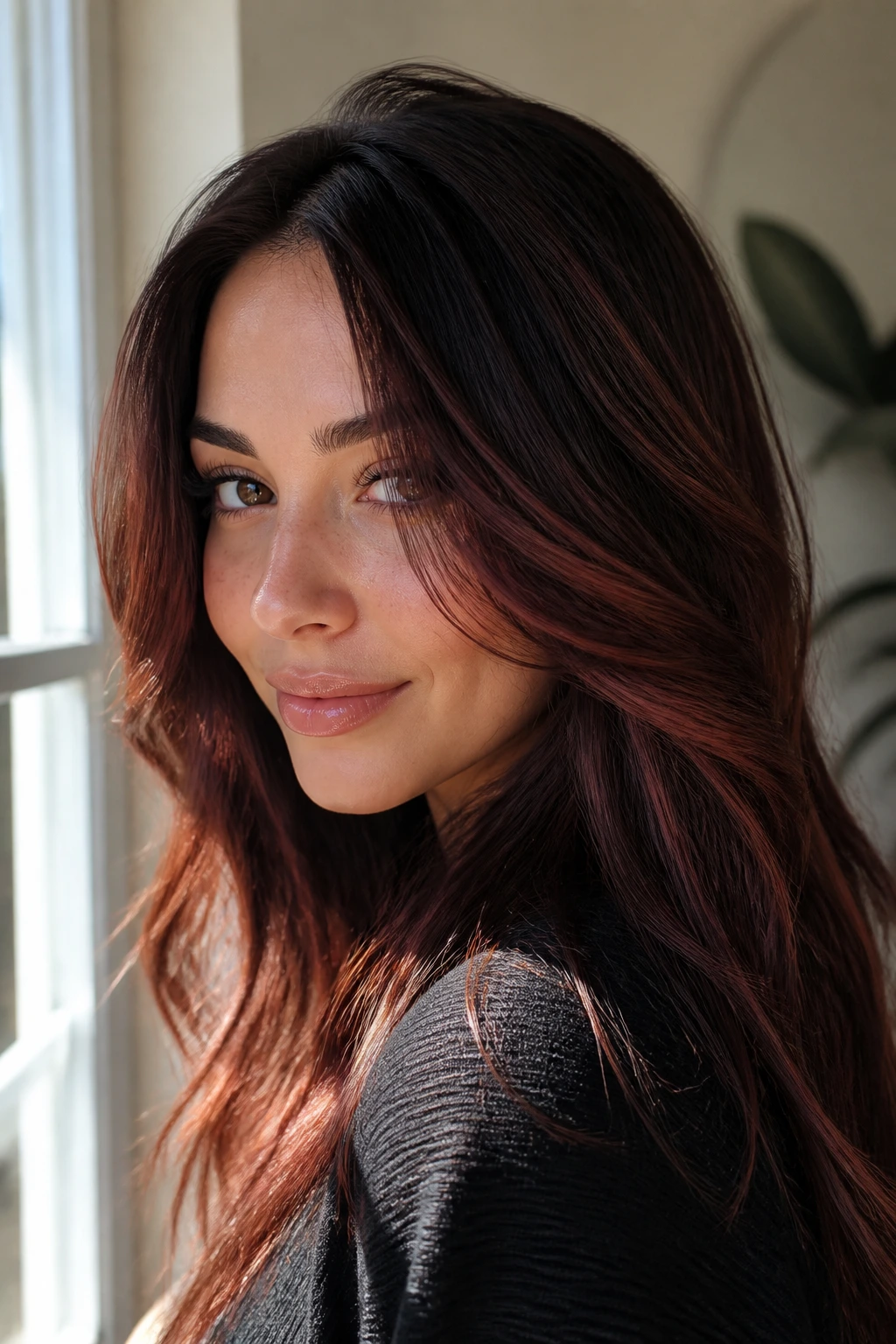
Want red, but not the fiery kind? Rosewood is the answer.
Rosewood highlights sit in a dusty red-brown zone that feels softer than copper and less dramatic than cherry. The tone has a muted edge, which makes it easy to wear on brown hair without creating a hard color line. It’s one of those shades that looks especially good when the hair is clean and glossy, because the shine keeps the softness from turning flat.
Where the Softness Comes From
Rosewood works because it borrows from brown as much as it borrows from red. That keeps the color family consistent. On a warm brunette base, it blends almost too easily, which is exactly why it looks good.
This shade suits shoulder-length cuts, loose bends, and medium layers. It doesn’t need a lot of contrast to do its job. A few well-placed ribbons around the midshaft and face are enough.
A demi-permanent gloss is a smart choice for rosewood. It leaves a veil of color rather than a hard stain, and that keeps the finish airy. If you want something that reads refined more than vivid, this is one of the best red highlights for brown hair.
10. Crimson Peekaboo Layers
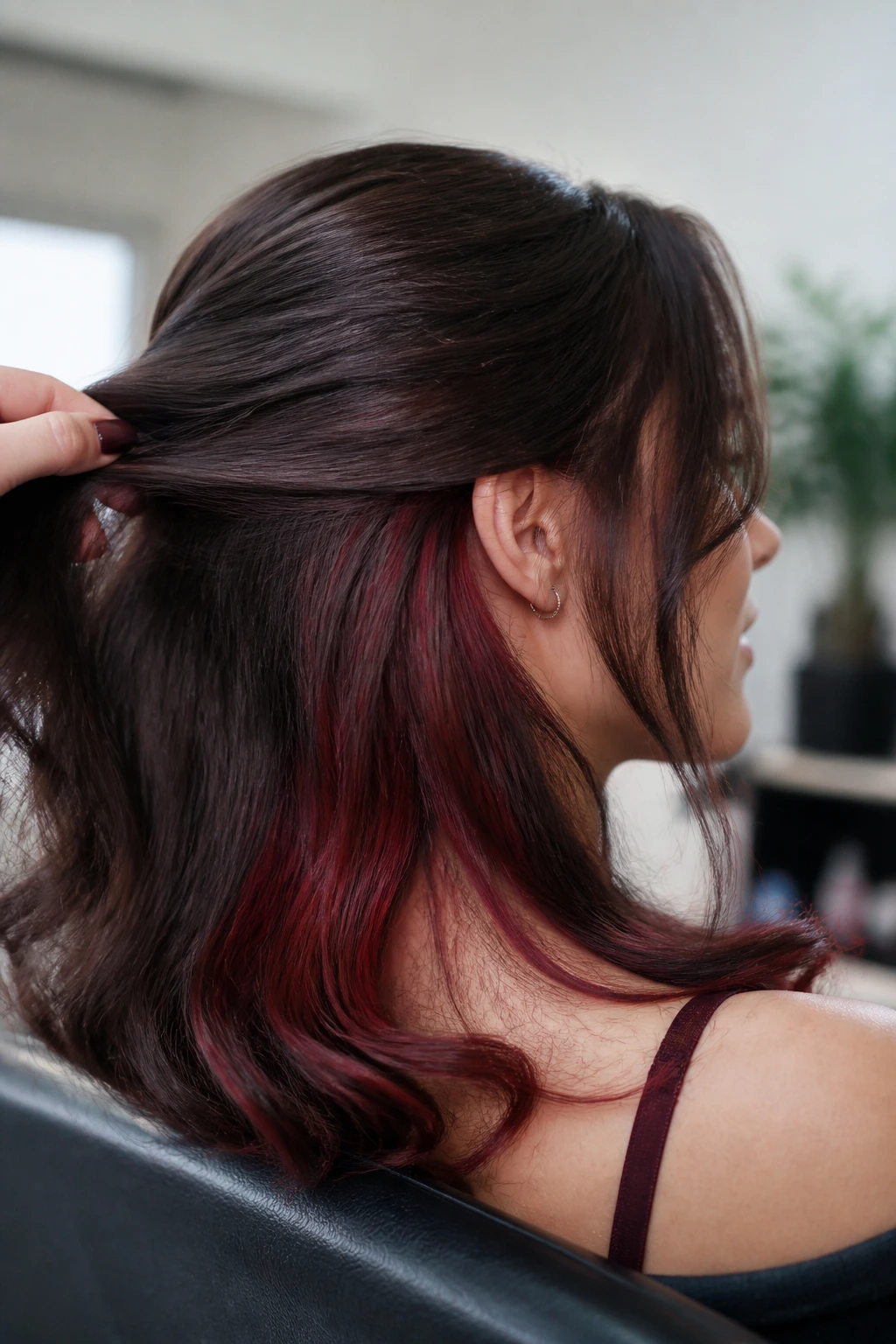
Put crimson under the top layer and the whole mood changes.
That is the magic of peekaboo placement. The color stays hidden when the hair hangs straight, then flashes through when you tuck one side back or twist it into a half-up style. Crimson makes that trick more dramatic than mahogany because the shade is brighter and less muted.
The Part Nobody Sees
Peekaboo red works best when the colored sections sit below the parietal ridge and near the nape. That way, the top layer can cover the color when you want it quiet. It’s a smart choice for thicker hair because there’s enough density to hide the red properly.
- Best for: buns, braids, half-up styles, and hair that gets tucked behind the ears
- Best sectioning: inner layers, not the outer canopy
- Best tone: true crimson, not orange-red
- Best strength: vivid enough to show, deep enough to hide
A tiny detail makes a big difference here. If the red is placed too high, the peekaboo effect is lost. Too low, and nobody ever sees it unless the hair is tied up. That balance matters more than the shade itself.
11. Bronze-Red Dimension
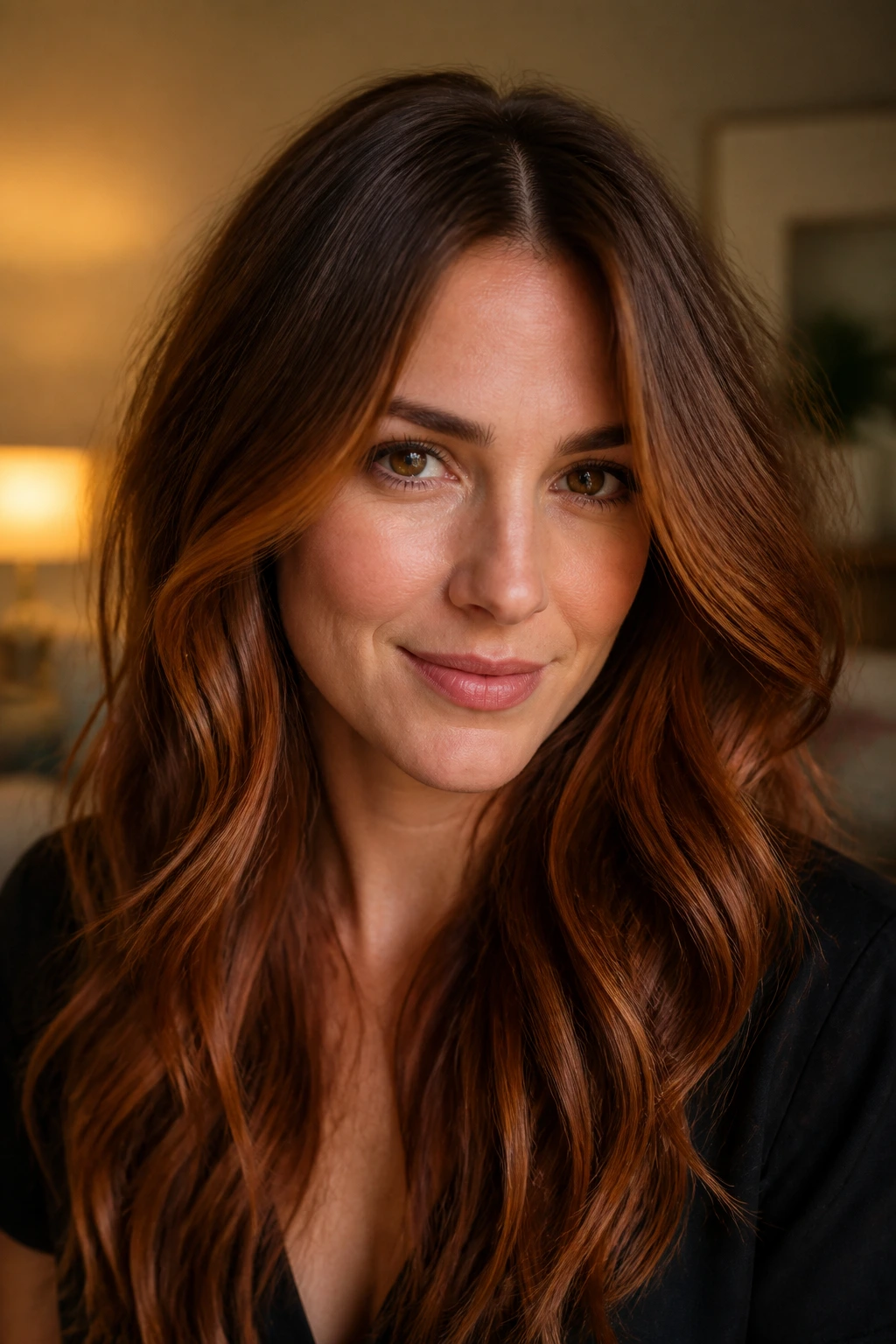
Bronze-red dimension is what happens when you want warmth, shine, and depth all at once. It’s less about a single bright streak and more about layering tones so the brown hair never looks flat. Bronze keeps the red grounded. Red keeps the bronze from getting sleepy.
This look is especially good on caramel brown and golden brown hair because those bases already carry warmth. Adding bronze-red pieces through the mid-lengths gives the hair a lived-in, soft-glow effect that works in almost any light. It doesn’t shout. It hums.
I also like bronze-red for people who hate the way straight red can look harsh indoors. Bronze changes that. The color still reads warm, but it has enough brown in it to stay believable. That makes it easier to wear every day, even when the hair is pinned back or thrown into a clip.
One thing to watch: if the brown base is too ash-toned, bronze-red can look disconnected. In that case, a warm gloss on the brunette first helps the red sit more naturally. That little step saves the whole look.
12. Spicy Red Ombré
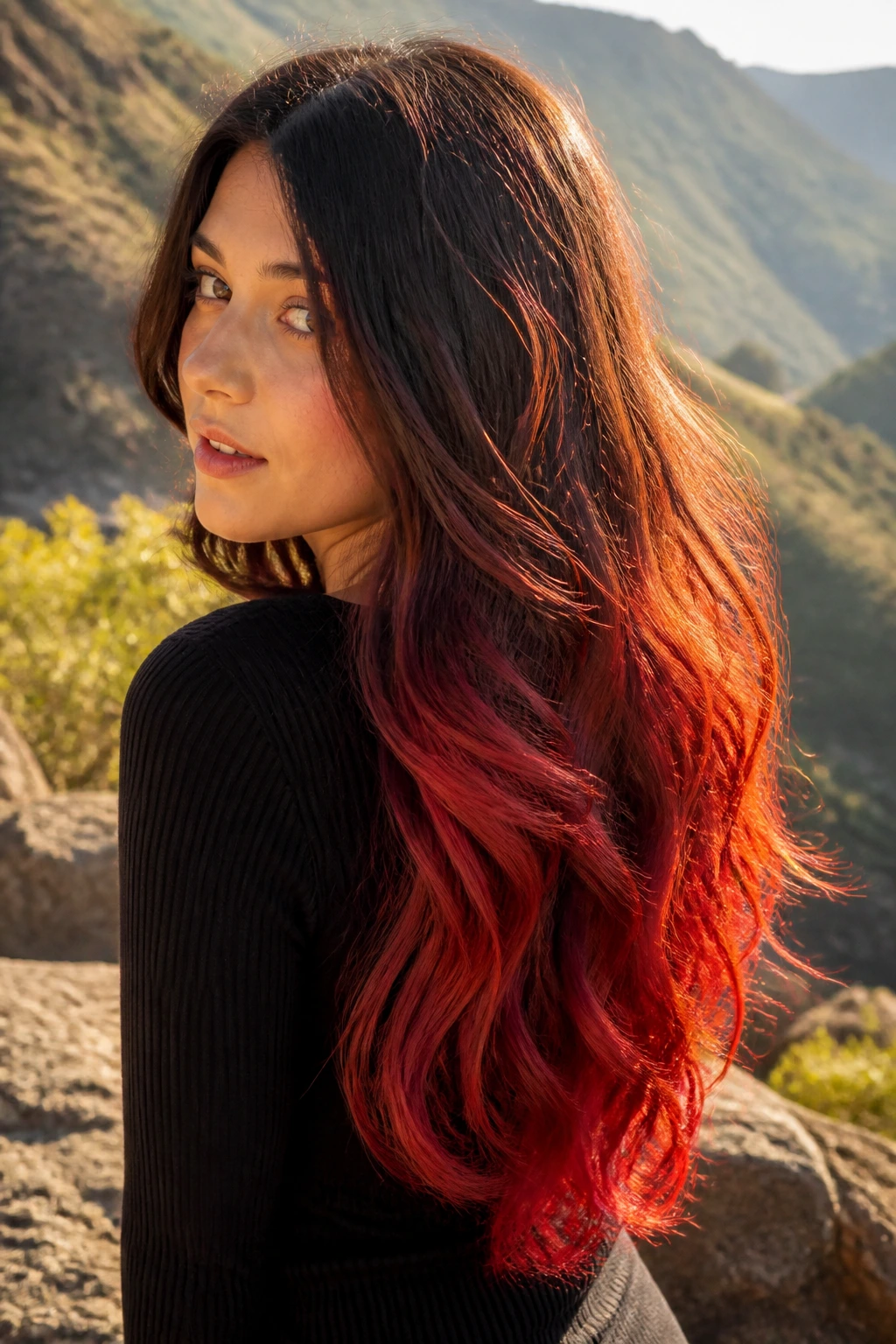
Unlike traditional highlights, ombré gives you a clear shift from brown roots to red ends. That makes it a strong choice if you want something easier to grow out, or if you’re not in the mood to sit through a lot of touch-ups. The effect is bolder at the bottom and calmer at the top.
The best spicy red ombré usually starts its transition a few inches below the crown and gets stronger through the last third of the hair. On long hair, that gradient looks smooth. On shoulder-length cuts, it can feel abrupt unless the blend is handled carefully. The lower half should feel like it belongs to the upper half, not like it was added later.
This is one of the few red looks that works well when the ends are styled with a slight bend or wave. Straight hair can make the fade obvious in a harsh way. A bend softens that line and helps the red look intentional.
If you like lower upkeep and don’t mind some drama at the ends, this is a strong pick. If you want color close to the roots, skip it.
13. Scarlet Tips on Long Layers
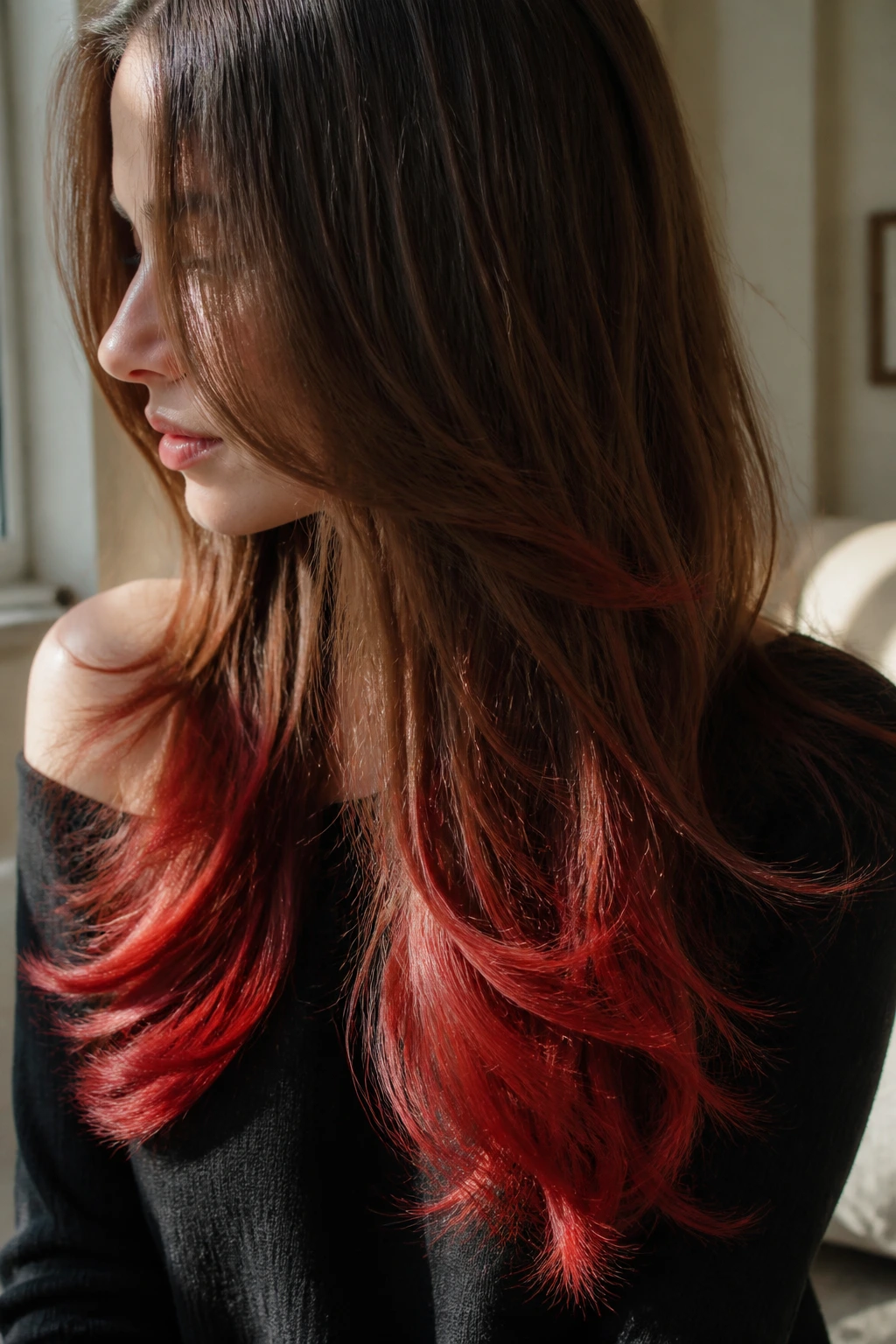
Scarlet tips are for people who want red to feel sharp, not washed in. The color stays near the ends, so the top of the hair remains brown and grounded while the bottom gets the hit of brightness. On long layers, the result looks lively every time the hair swings.
Best Cut Pairings
Long layers or a soft U-shape give scarlet tips room to show. Blunt cuts can handle it too, but they make the color line feel firmer. With layers, the red breaks up more naturally and the whole thing looks less staged.
- Best on: long brown hair with movement
- Best placement: the last 2 to 4 inches
- Best style: curls, waves, braids, and ponytails
- Best upkeep: regular trims so the colored ends stay neat
Scarlet tips are also one of the easiest ways to test whether you like red on yourself before going bigger. You get a strong visual hit without coloring the whole head. That makes the commitment smaller, which matters if you’re not fully ready to live with red roots and all the maintenance that comes with them.
The only real downside is dryness. Colored ends need careful conditioning, or the bright pieces start to look rough fast. Keep that in mind before asking for a vivid scarlet finish.
14. Red Balayage on Curly Brown Hair
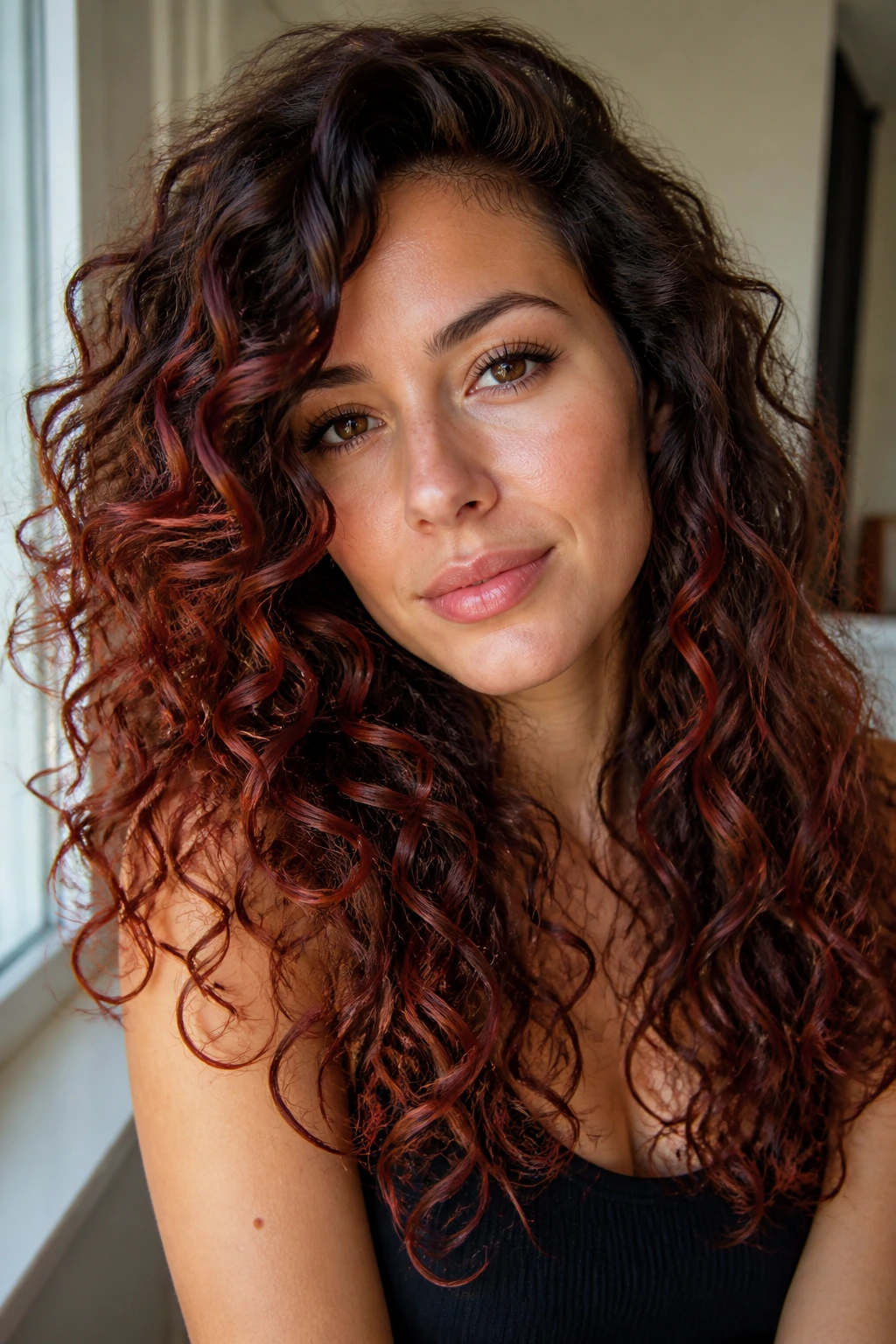
Curls are a strong canvas for red balayage because the shape breaks up the color for you. A curl pattern creates natural shadow and light, so red can look dimensional even when the placement is simple. Straight hair has to work harder to get that same effect.
The best red balayage on curly brown hair follows the curl clumps, not a flat grid. That means painted sections should land where the curl bends and opens, especially around the outer curve of the hair. When the curls spring, the red shows in little flashes instead of one heavy line. That is the good part.
Hydration matters here. Dry curls can make red look dusty, especially if the color sits on porous ends. A rich leave-in, a curl cream that doesn’t leave a waxy film, and a diffuser on low heat help the red stay glossy. The hair does not need to be crunchy to hold shape.
If you wear your curls in a wash-and-go most of the time, this is one of the most flattering red options on the list. The movement does half the work for you.
15. Deep Merlot Panels for Brown Hair
Why do merlot panels feel richer than burgundy streaks?
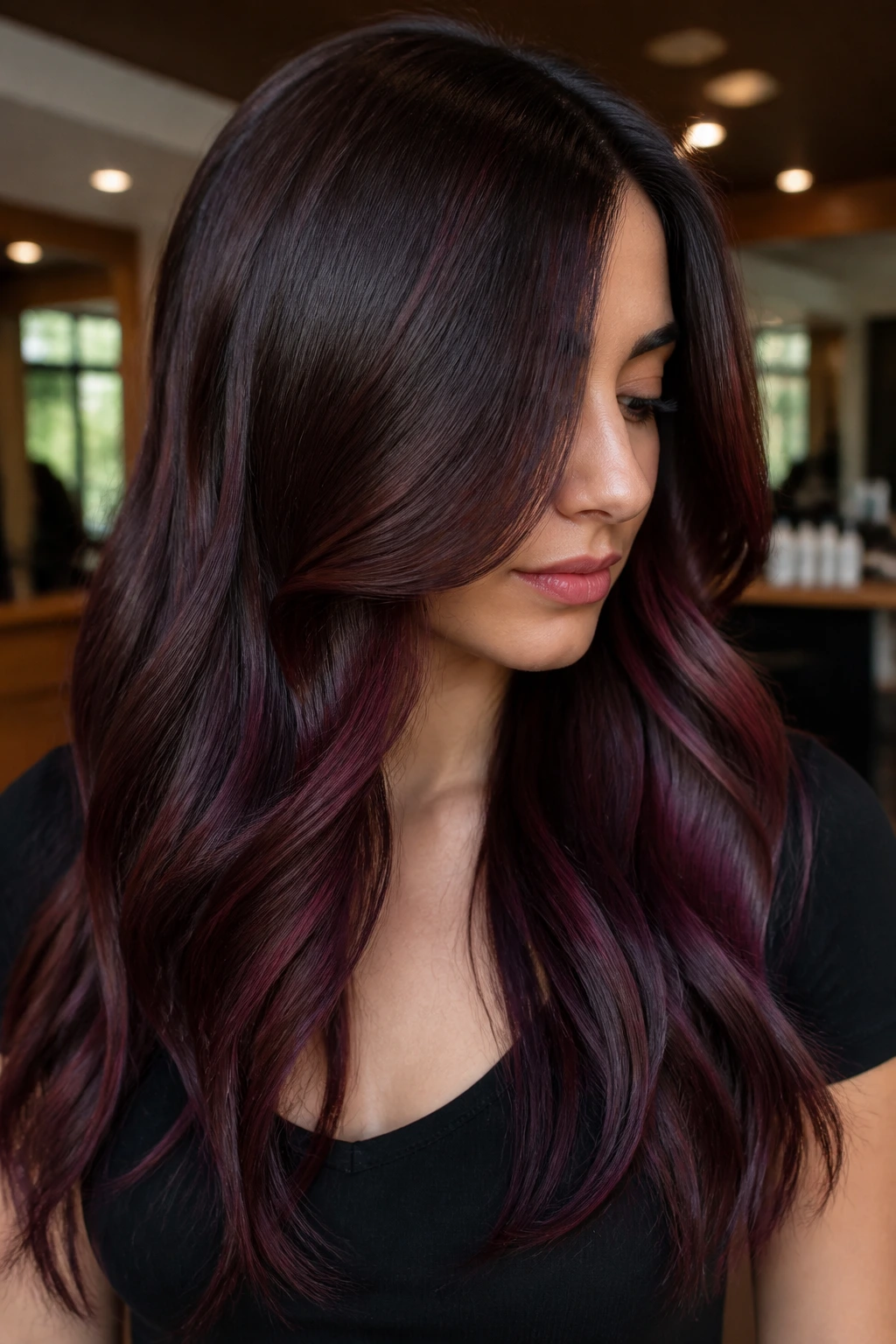
Because the sectioning is deeper and the tone is darker. Merlot panels usually sit in larger vertical pieces through the back or under the top layer, which gives the hair a denser, wine-dark look. Burgundy can feel brighter and lighter; merlot feels heavier in a good way.
How to Use It
Merlot works best when the brown base stays visible around it. You want contrast, not a full color takeover. On thick brown hair, a few deeper panels through the interior create real depth. On finer hair, slimmer panels keep the hair from looking too dark.
- Best placement: back panels, interior layers, and a few side pieces
- Best base: dark brown and neutral brunette
- Best tone: deep wine red with a brown edge
- Best finish: glossy, not flat
A small money-saving note: merlot grows out quietly. Since the shade is so close to brown, the root line softens instead of shouting for attention. That makes it a practical choice if you want red but don’t want to babysit it every few weeks.
16. Copper Lowlights with Red Highlights
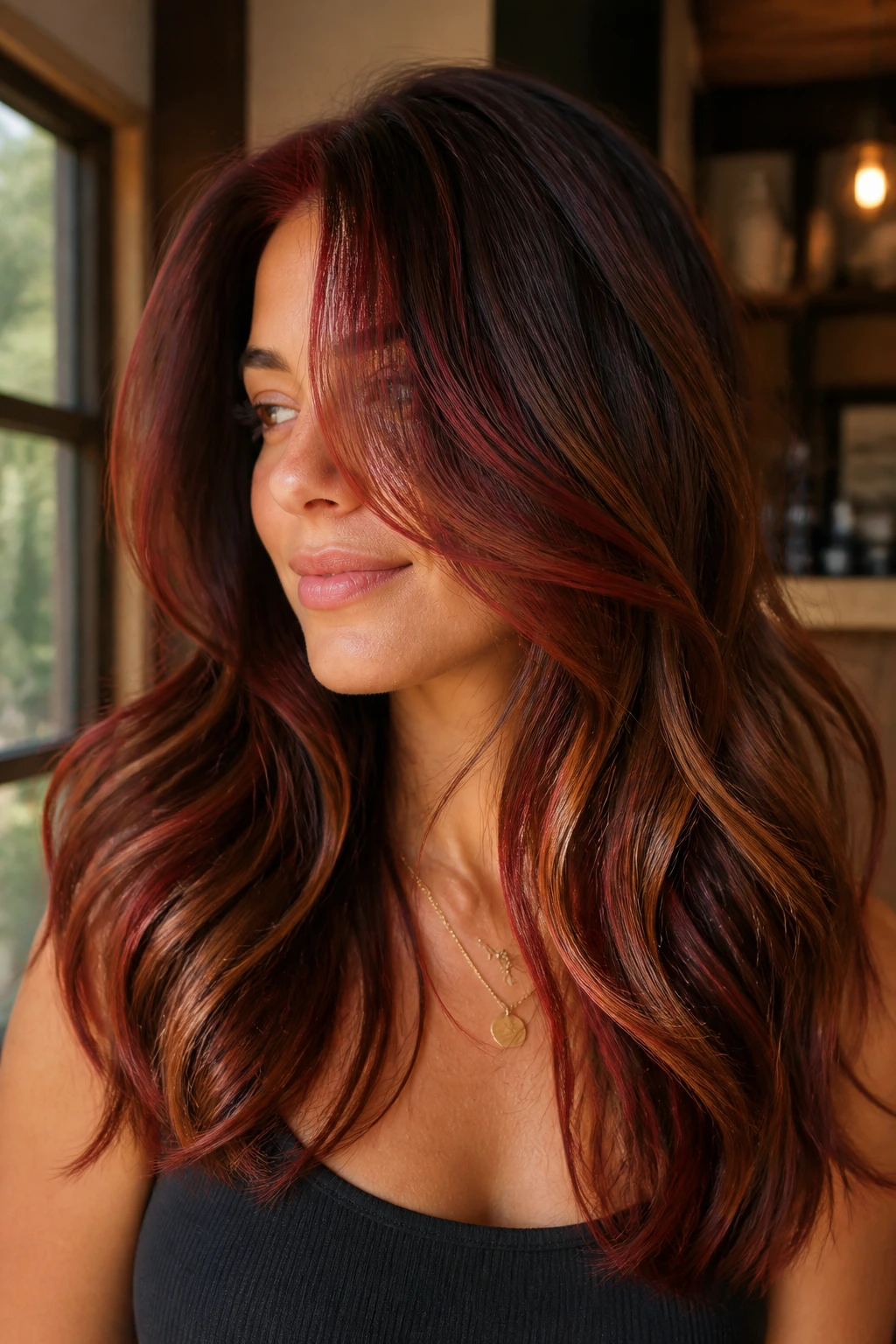
Sometimes brown hair needs depth before it needs brightness. That’s where copper lowlights and red highlights together can work better than highlights alone.
The lowlights darken certain sections just enough to give the red something to sit against. Without them, red on brown can look thin in places, especially if the base has faded or gone flat. With them, the hair gets contrast from both directions: darker threads under the surface and warmer pieces on top.
This is a smart move for faded brunette hair that feels washed out. A few deeper lowlights near the mid-lengths make the red pop without lifting the whole head. It’s also good for layered cuts because the shadows and highlights separate naturally as the hair moves.
How to Balance Depth and Brightness
- Use lowlights one to two shades deeper than the base
- Keep red highlights lighter around the crown and ends
- Avoid placing both tones in thick chunks right next to each other
- Ask for a glossy finish so the contrast stays soft
Without that darker thread, red can look like it’s floating. With it, the whole color story feels finished.
17. Firelight Chunky Highlights
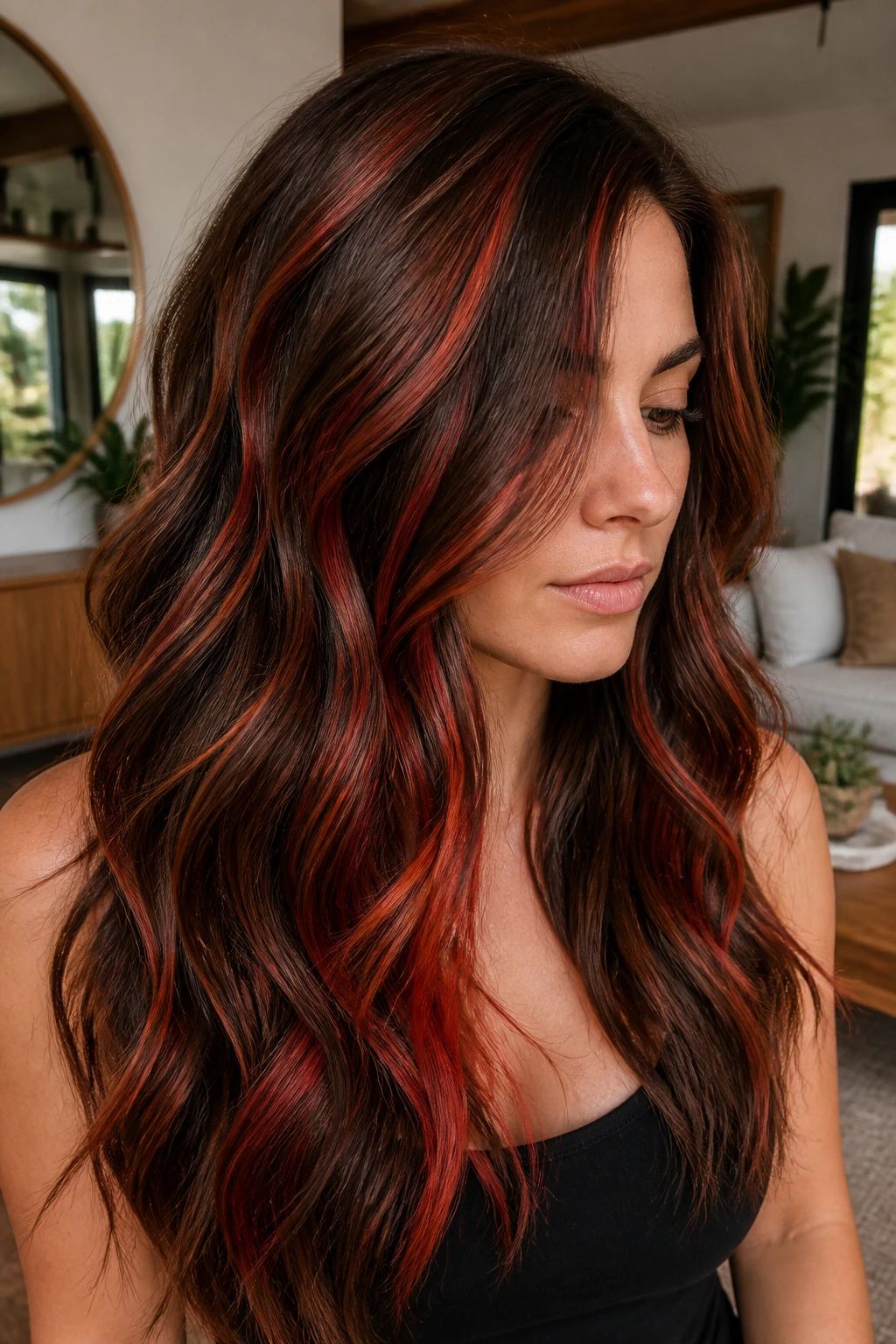
Chunky highlights get a bad reputation because people remember the wrong version of them. Thick, flat stripes on straight hair can look dated fast. Done well, though, firelight highlights are bold, energetic, and surprisingly flattering on the right brown base.
This version uses wider ribbons of red — not so wide that they take over, but wide enough to make a clear visual hit. It works best on dense hair, blunt bobs, shags, and cuts with real movement. The contrast is part of the appeal. You want to see the red on purpose.
The modern way to wear chunky red pieces is to leave enough dark space between them. That empty space matters. It keeps the style from turning into one solid block of color and lets the brown remain the anchor. If the pieces are too packed together, the look loses shape.
I’d skip this if you want subtlety. I would not skip it if you like your hair to have attitude. It looks especially good when the color is slightly different from piece to piece — some copper, some cherry, some a touch deeper. That keeps the finish from reading too flat.
18. Red-Gold Ribbon Ends for Brown Hair
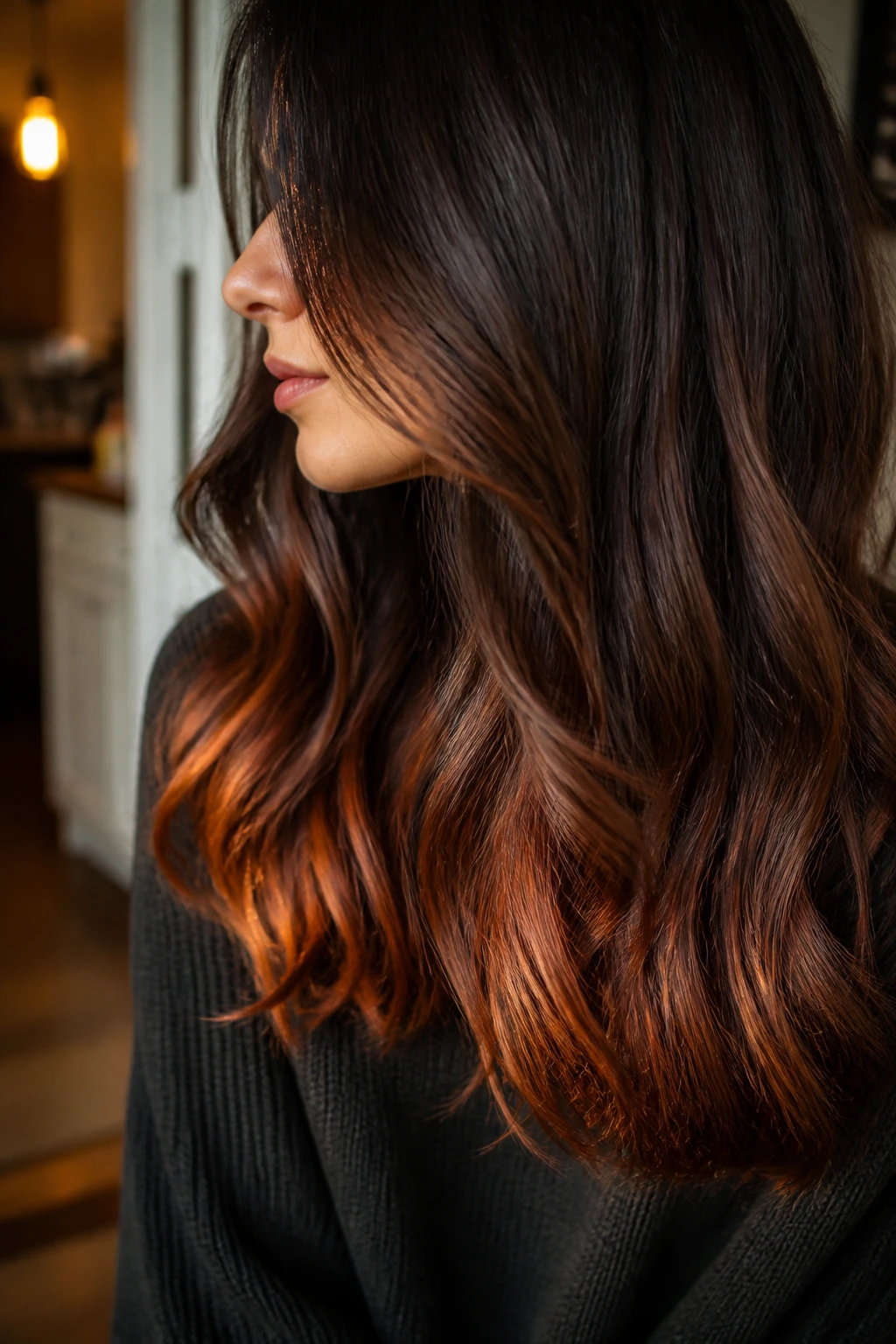
Red-gold ribbon ends are softer than full red ends, and that is exactly why they work. The top stays brown and grounded, while the last 2 to 4 inches carry the warm color. It gives the hair a sunset feel without asking the whole head to go red.
The Last 2 Inches Matter More Than You Think
This style depends on translucency. The red-gold tone should look like a glaze over the ends, not a heavy block. On brown hair, that keeps the transition gentle and the finish shiny.
- Best for: grown-out layers, long hair, and people easing into red
- Best placement: the ends only, with soft ribboning upward
- Best tone: copper-red with a gold edge
- Best finish: glossed, conditioned, and trimmed regularly
This is also one of the easiest red looks to live with if you like to wear your hair up. The ends still show in a braid or ponytail, but the color never feels all-consuming. That balance is hard to beat.
If you want the color to look especially clean, ask for pre-lightened tips and then a red-gold gloss over them. That gives the warmth a brighter base to sit on, and it keeps the ends from reading brown in dim light.
Final Thoughts
The best red highlights for brown hair are the ones that match your haircut and your patience. Soft cinnamon ribbons, deep burgundy balayage, and hidden peekaboo panels all solve different problems, and none of them is better in every situation.
If you wear your hair straight most days, cleaner placement usually looks best. If your hair bends, waves, or curls, the color can be a little bolder because the texture breaks it up for you. That’s the part people miss when they bring in a photo and ask for the shade only.
Bring two references to the salon if you can: one for the tone, one for the placement. That tiny bit of clarity saves a lot of regret at the sink.
