



Brown hair can take burgundy in surprisingly different directions. A few wine-toned threads near the face make a level 5 chestnut look glossy; denser ribbons through an espresso base can turn moody and almost black-cherry.
The mistake is treating burgundy like a single color. On brunettes, placement does more work than most people realize. A thin babylight reads soft and polished. A chunky streak reads bold. Same pigment, different story.
If you want burgundy red highlights for brown hair that look intentional instead of muddy, the base shade matters, and so does the light you live in. Burgundy can lean plum under cool bulbs, more cherry near a window, and a touch coppery if the formula is warmed up. That is why swatches matter so much.
The ideas below move from subtle to loud, from hidden panels to face-framing flashes, so you can pick the version that matches your haircut, your maintenance tolerance, and your taste for drama.
1. Cherry Burgundy Face-Framing Pieces
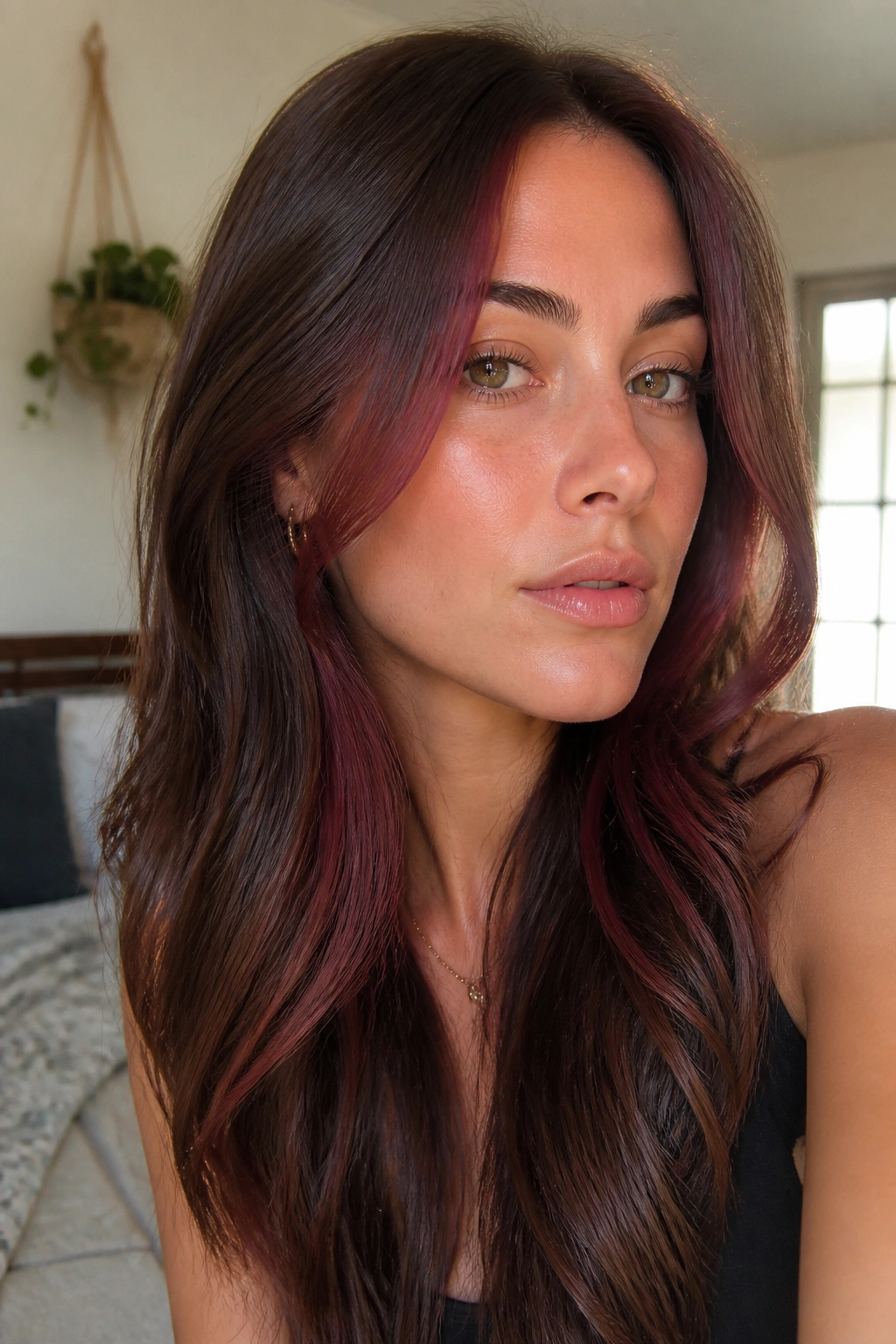
Face-framing pieces are where I’d start if you want burgundy to make an impact without taking over your whole head. They sit right where the eye goes first, which means even two slim panels can change the whole mood of brown hair.
Ask for pieces that start around the cheekbone and stay a shade or two brighter than the rest of the color. On medium brown hair, that usually means deep cherry burgundy with a soft red edge. On darker brown hair, the same placement can look richer if the lightening is kept gentle and the tone stays cool.
The trick is not to make the front too wide. Wide panels can look striped fast. Slim, blended pieces move better, especially when the hair is curled away from the face or tucked behind one ear.
2. Cabernet Balayage Through Chestnut Brown
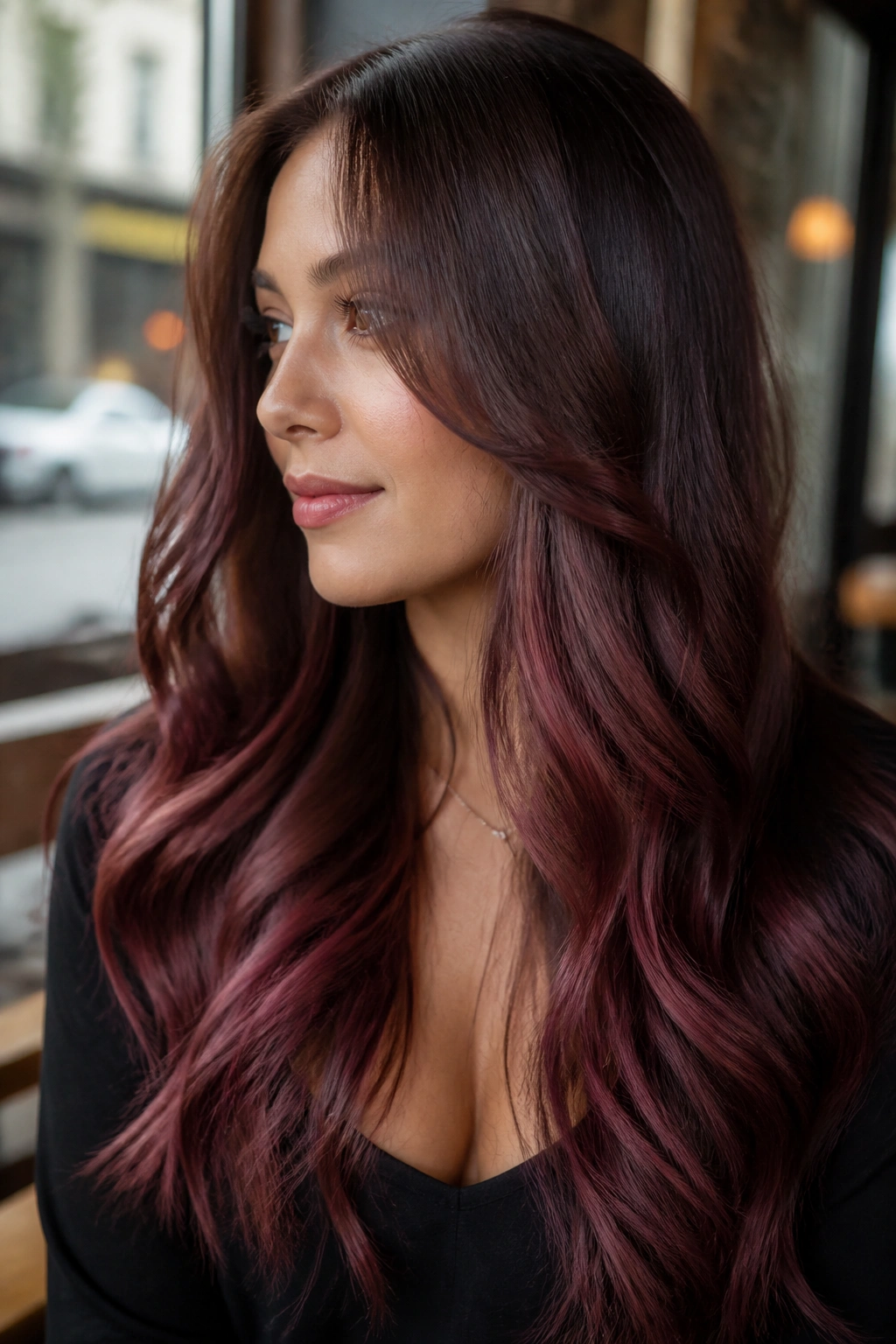
Cabernet balayage has a smoother, more painted feel than sharp highlights, and that suits chestnut brown hair beautifully. The color sits in long ribbons through the mid-lengths and ends, so the result feels dimensional instead of busy.
This one works best when the roots stay deep and the burgundy starts lower down. That keeps the grow-out soft and lets the red show as movement, not as a block of color. If your brown hair already has some warmth, the cabernet tone can pull everything together and make the whole style look more expensive than dramatic.
Why It Looks So Good
- The hand-painted placement avoids hard lines.
- The red shows most when the hair bends or layers move.
- It suits wavy cuts, blunt lobs, and longer layers.
- It grows out more gracefully than all-over color.
A good cabernet balayage should look like the color is woven into the hair, not sitting on top of it. That’s the part people often miss.
3. Deep Plum Money Piece
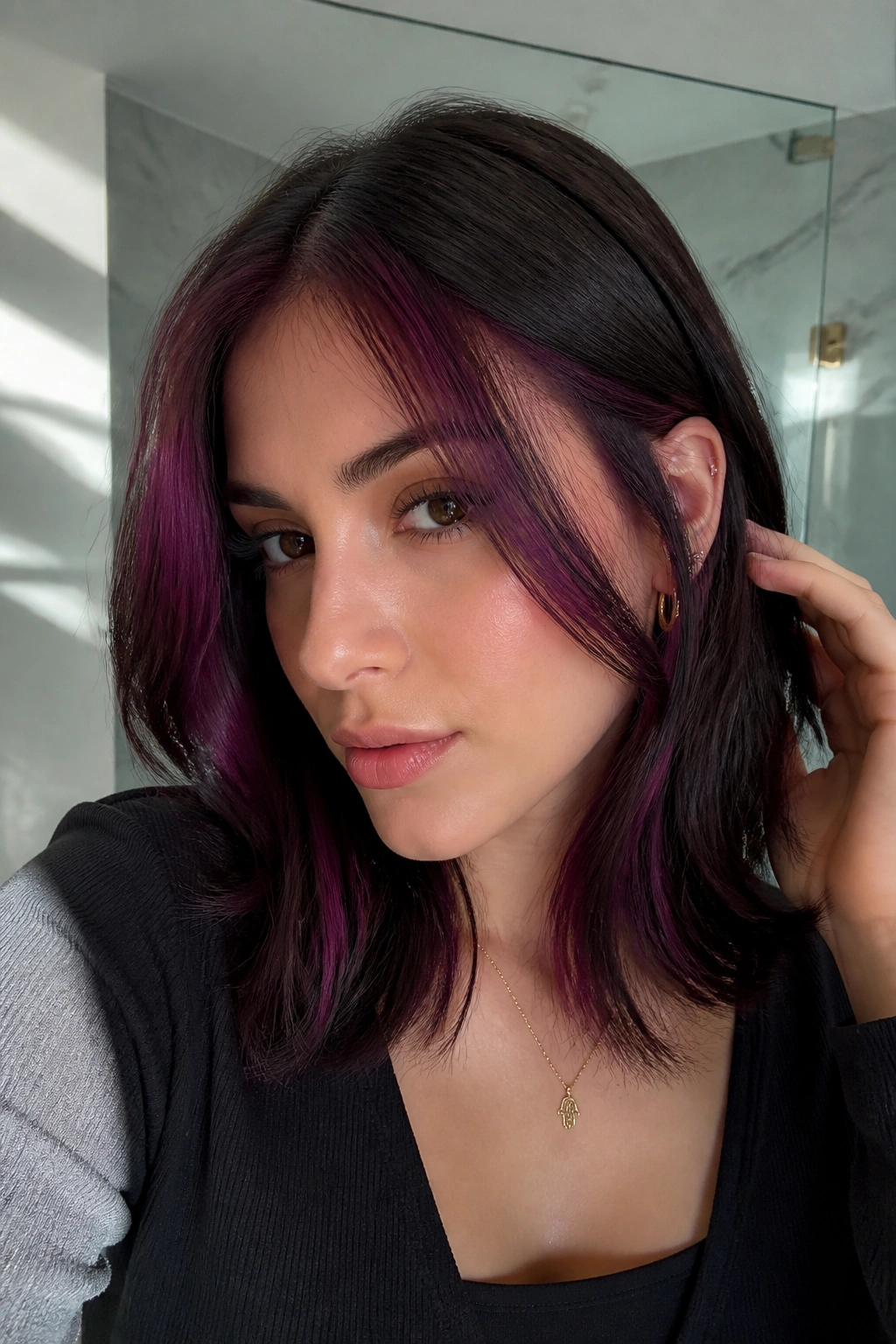
Want the front of your hair to do the heavy lifting? A deep plum money piece is the fastest way to get there. It’s bolder than a soft face frame and cooler than a classic cherry red, which gives brown hair a sharper, more editorial feel.
The best version usually starts at the hairline and widens only a little as it reaches the front layers. I like this on shoulder-length cuts because the shape keeps the money piece visible even when the hair is tucked or pinned back. If you go too wide, it can swallow the rest of the color story.
A plum money piece also plays well with dark roots. You get contrast without needing every strand to be lightened, and that matters if you want something striking but not high-maintenance. It’s a little dramatic. Good. That’s the point.
4. Merlot Ribbons in Long Layers
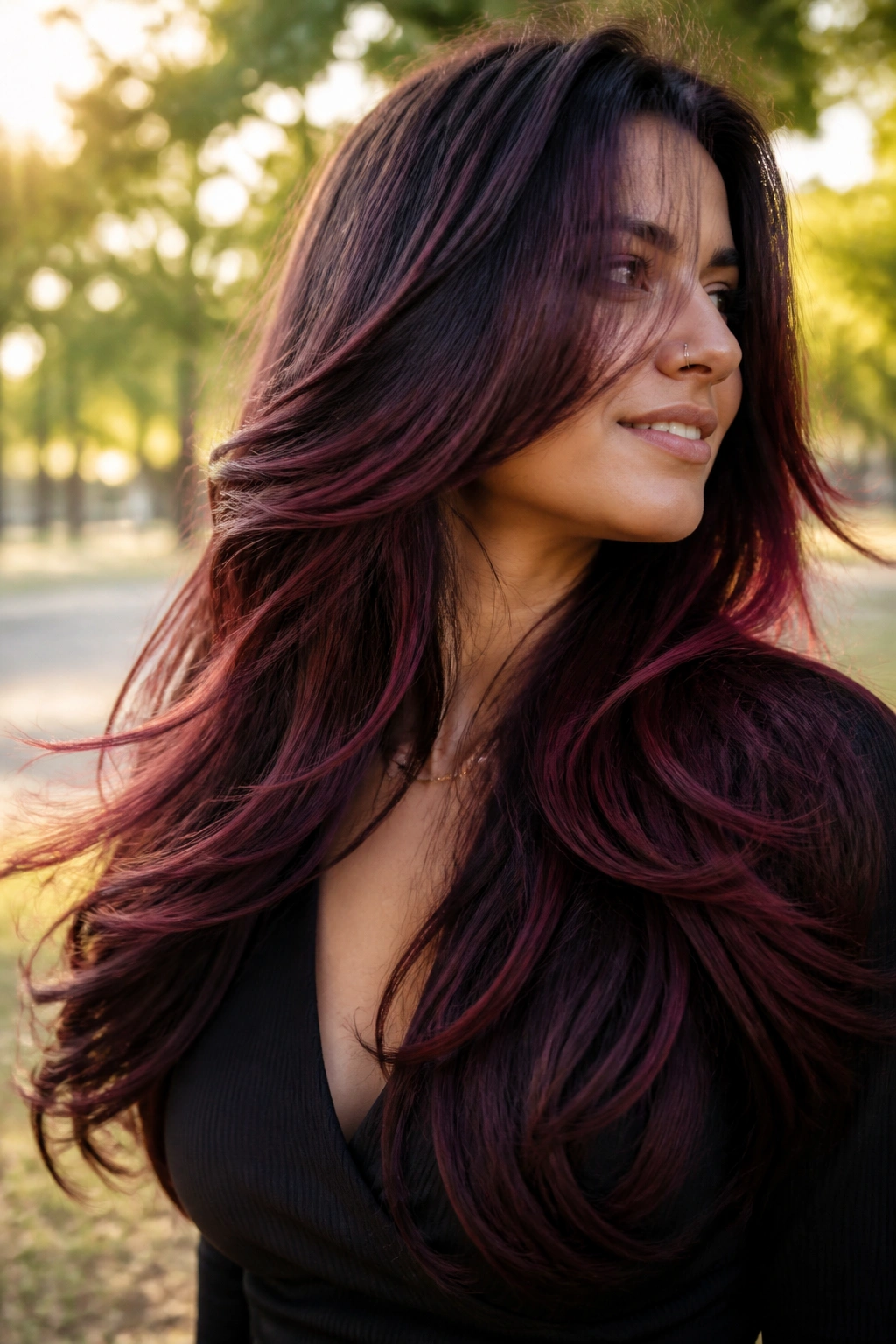
Long layers give merlot highlights room to move. Without that movement, burgundy can flatten out and look darker than you planned. With layers, the red breaks up into ribbons that show when the hair swings, curls, or gets a quick blowout.
The placement should follow the haircut. That sounds obvious, but people ignore it all the time. If the layers are face-framing and graduated, the color should be too — lighter around the front, softer through the back, with a few brighter pieces where the ends flip outward.
Merlot sits in a nice middle place between red and plum. It has enough warmth to feel alive, but not so much that it turns orange. On medium brown hair, that balance can be gorgeous. On very dark brown hair, the highlights need enough lift to keep the red visible.
5. Soft Burgundy Babylights on Light Brown Hair
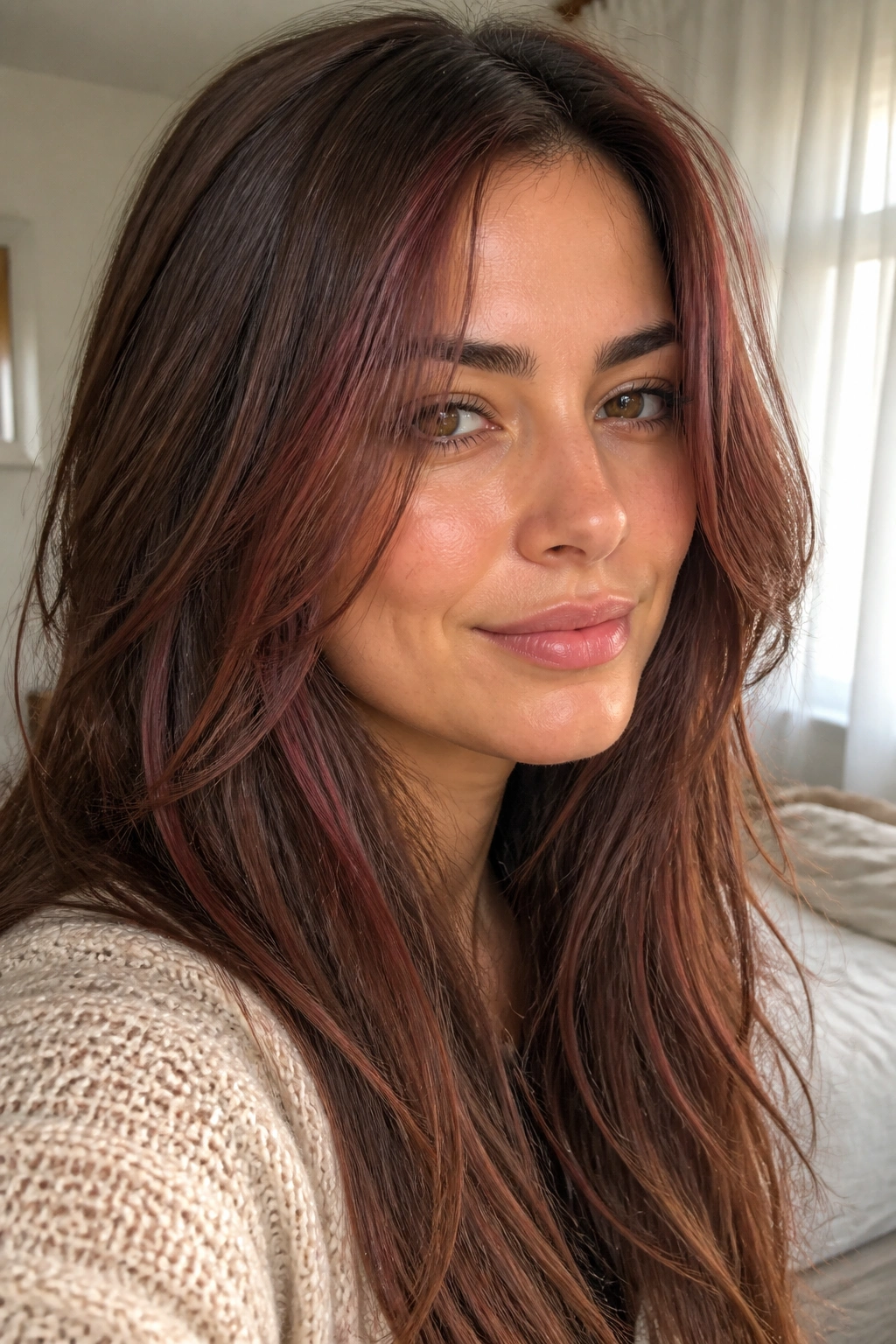
Babylights are the sneaky option. They’re tiny, thin, and far more flattering than chunky color when you want brown hair to keep its natural feel.
What Makes Them Different
Because the sections are so fine, the burgundy reads like a shimmer instead of a stripe. That means light brown hair can take on a red cast without losing all the dimension underneath.
- Use ultra-thin weaves, not wide slices.
- Keep the tone in the burgundy-red-violet family for a softer finish.
- Ask for a root-to-tip blend that stays airy.
- Choose this when you want the color to show in daylight, not shout from across the room.
Babylights are a smart pick if your hair is fine or naturally straight. Heavy highlights can make those textures look choppy. Tiny strands keep the movement clean.
6. Burgundy Ombré Ends
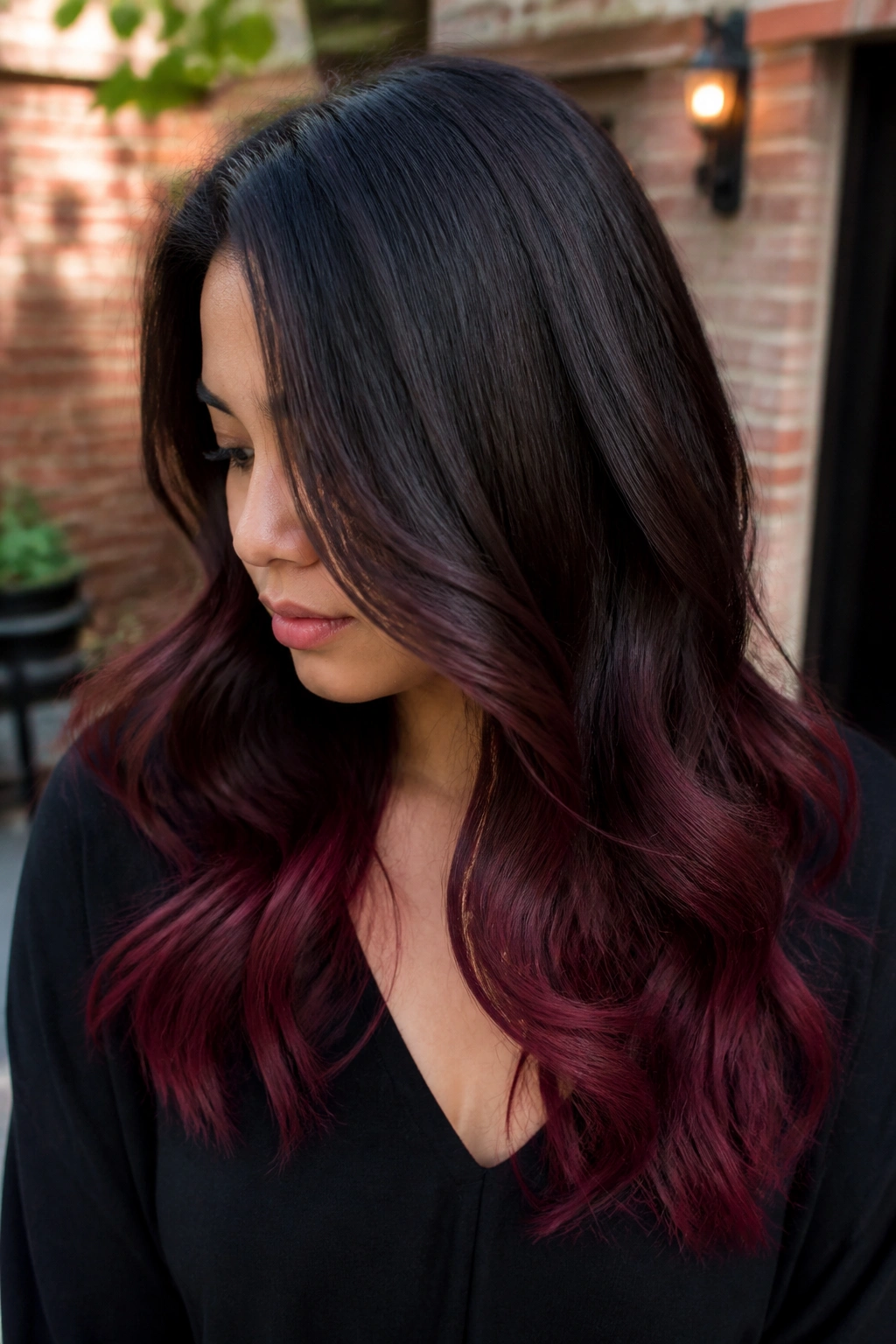
Ombré is for the person who wants the burgundy to arrive with a little attitude. Dark brown roots fade into red ends, and that shift can look sleek, especially on straight hair or big soft waves.
This style needs a clear transition zone. If the burgundy starts too high, it stops being ombré and starts looking like a rushed dye job. Keep the darker section dominant near the roots and let the red begin lower, usually from mid-shaft to the ends.
One reason I like burgundy ombré is that it puts the most color where hair tends to dry out and fade first. The ends can handle it. They’re already the part that gets trimmed or refreshed most often, so the maintenance makes sense.
7. Wine-Red Peekaboo Panels
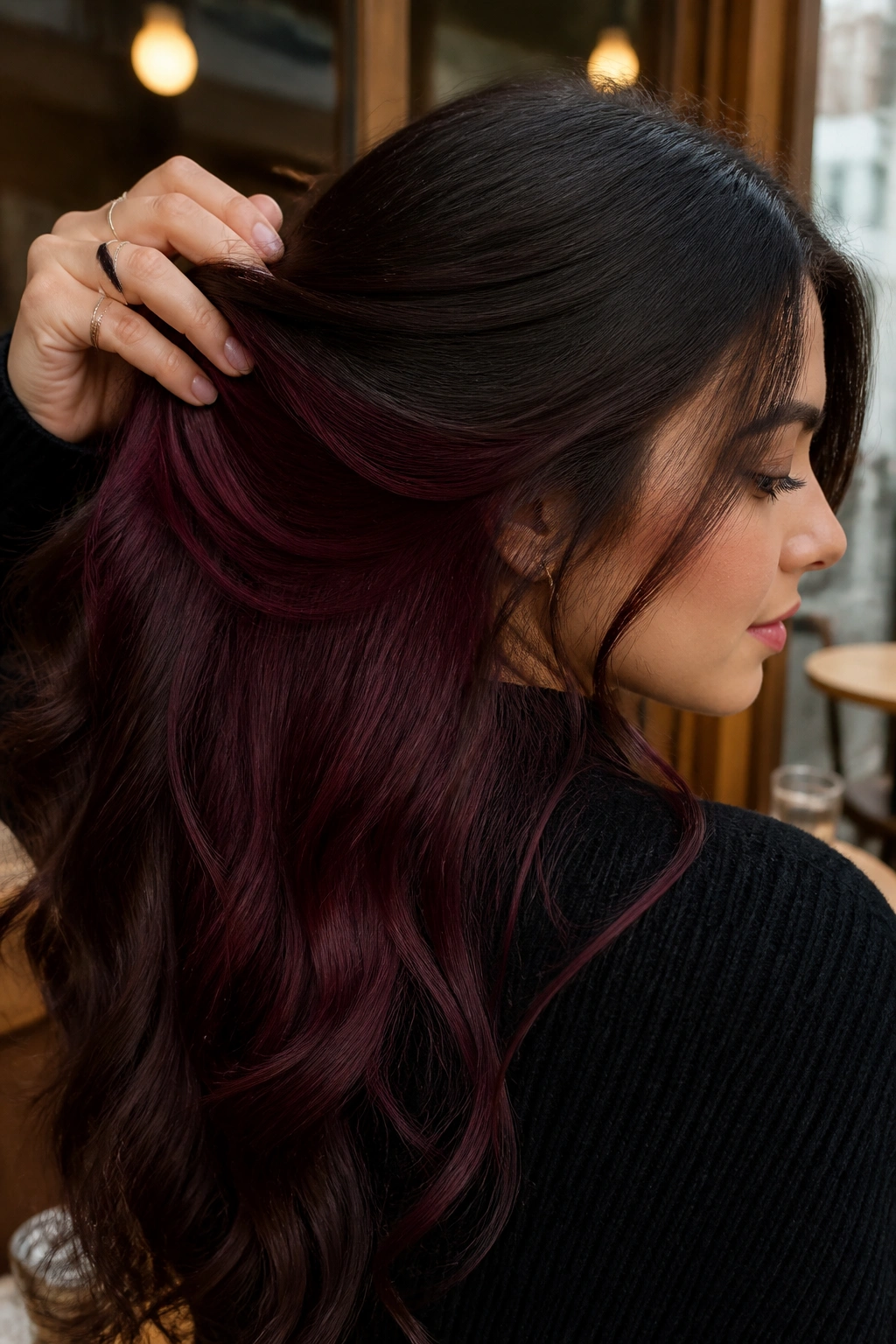
Peekaboo panels are the quiet troublemaker in the group. They hide under the top layer and flash burgundy only when the hair shifts, flips, or gets pinned up.
That makes them a good fit for people who need brown hair to stay work-friendly but still want some fun in it. You can keep the visible surface almost untouched and tuck the color beneath the crown or around the nape. When the hair moves, the wine color appears in a little flash, which is far more interesting than a flat all-over tone.
Where to Place Them
- Under the top canopy for hidden contrast.
- Near the nape for updos and braids.
- Behind the ears if you like color that appears and disappears.
- Under short layers if you want a surprise effect.
Peekaboo panels are also easier to grow out because they’re not the first thing everyone sees. Nice side benefit.
8. Red-Violet Lowlights for Richer Dimension
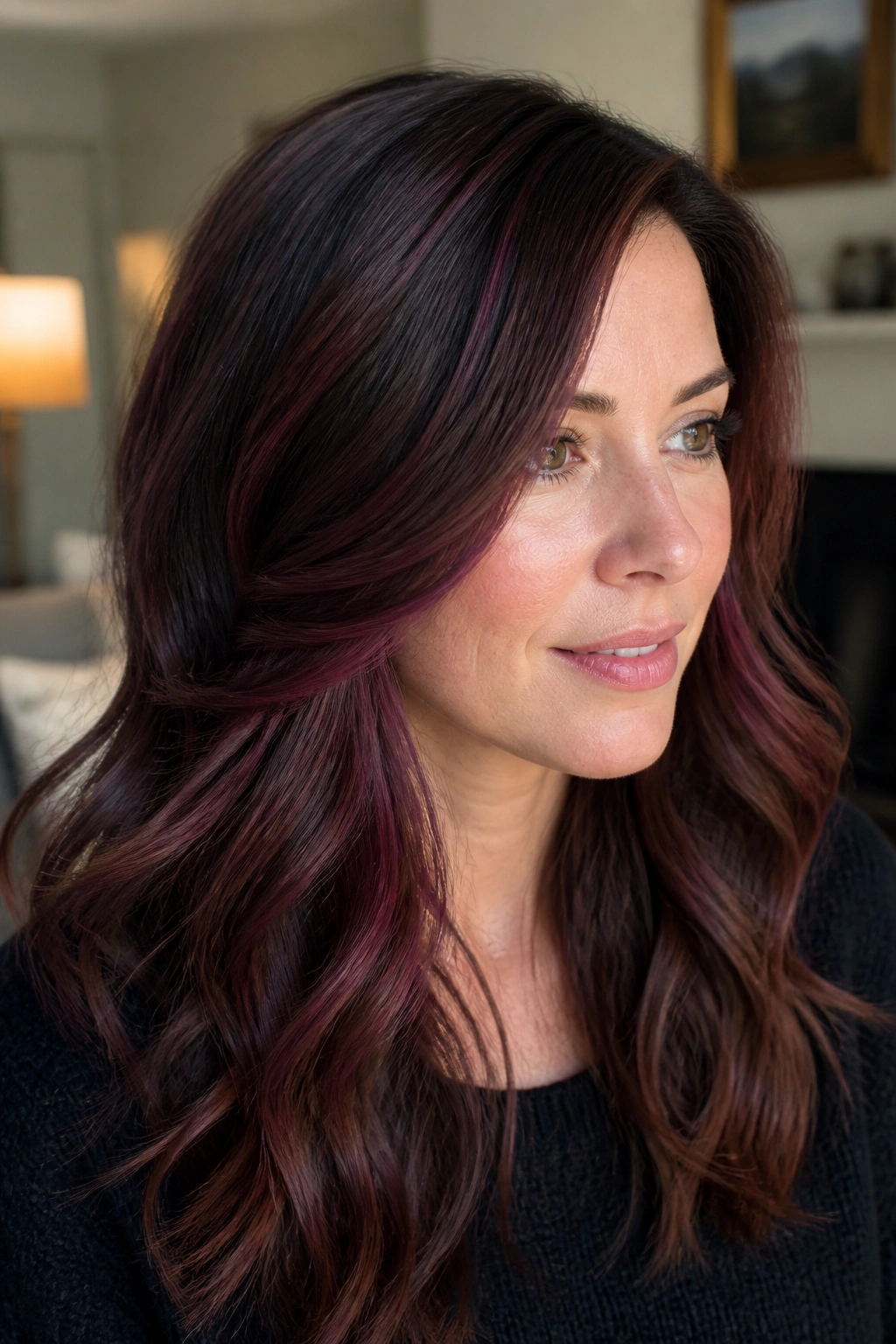
Why do lowlights matter so much on brown hair? Because not every burgundy look has to come from bright pieces. Sometimes the smartest move is to deepen the base with red-violet lowlights so the whole head looks richer.
The Point of the Shadow
Lowlights add depth where highlights can start to look too bright. On medium brown hair, a red-violet lowlight can make existing color feel more plush, almost like velvet. On lighter brown hair, it keeps the overall look from getting washed out.
That’s why I like lowlights for anyone who already has highlights but wants a more autumnal finish. You don’t need to repaint the whole head. A few deeper strands through the interior can make the lighter burgundy pieces look more intentional.
How to Use It
- Add lowlights around the crown for depth.
- Place them between brighter ribbons, not beside them in big blocks.
- Choose a red-violet tone if you want the brown to stay cool.
- Use them when your hair looks flat in indoor light.
It’s a smarter color move than most people think. Also, much less fussy.
9. Smoky Burgundy Highlights on Dark Curls
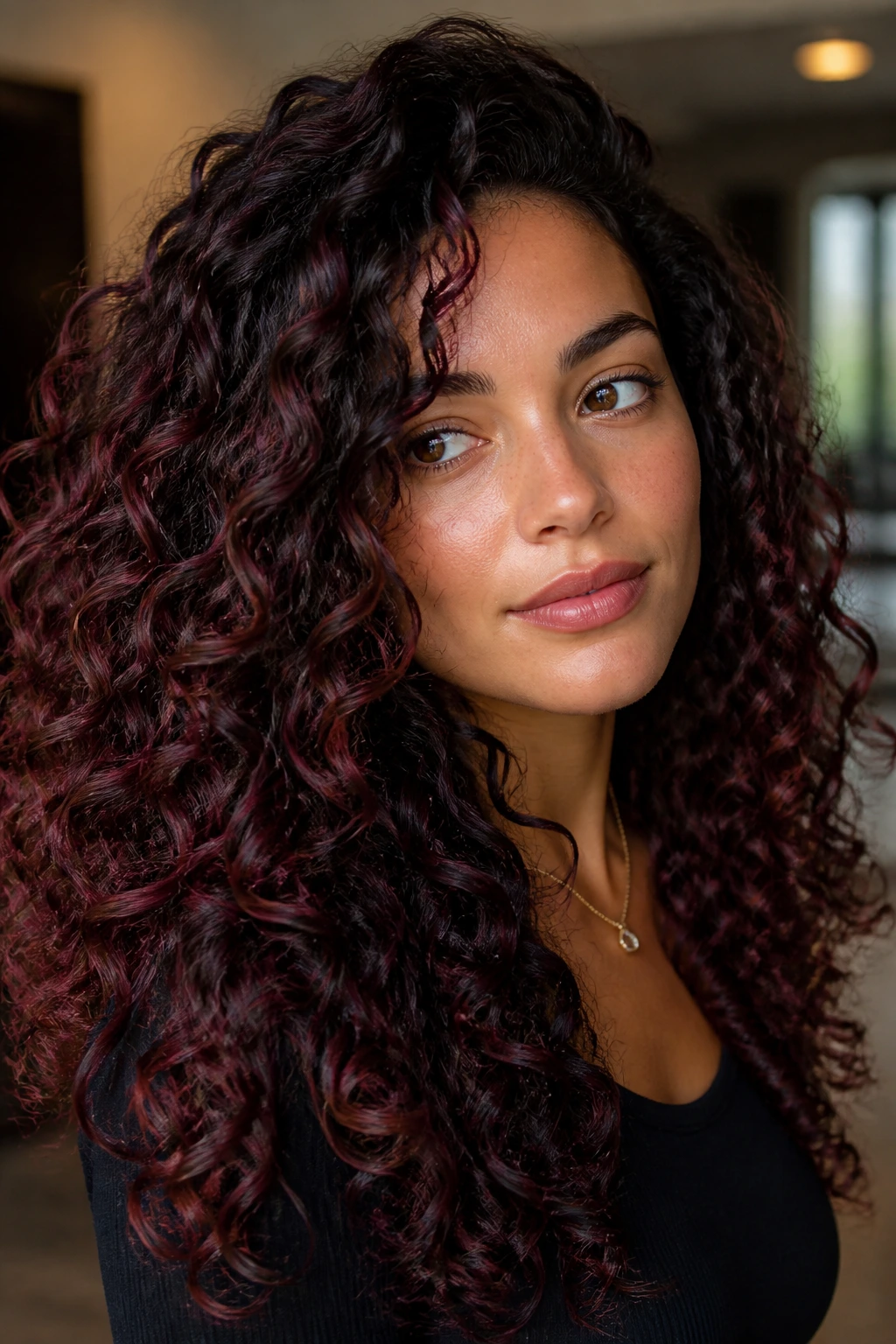
Dark curls need a different hand. If the burgundy is too bright, it can fight the curl pattern and look patchy. Smoky burgundy, with its slightly muted edge, sits better in coily and curly brown hair because it catches light without looking neon.
The placement should follow the bends of the curl. Place the color where the spirals open up, not in random stripes. That helps each curl read as a shape instead of a clump. And if the curl pattern is tight, tiny painted pieces often look better than bold foils.
A smoky tone also helps the color blend into the natural depth of dark brown hair. You get red movement when the light hits, but the roots stay grounded. That balance keeps the curls looking full, not bleached-out or dry.
10. Burgundy Foilayage with a Soft Grow-Out
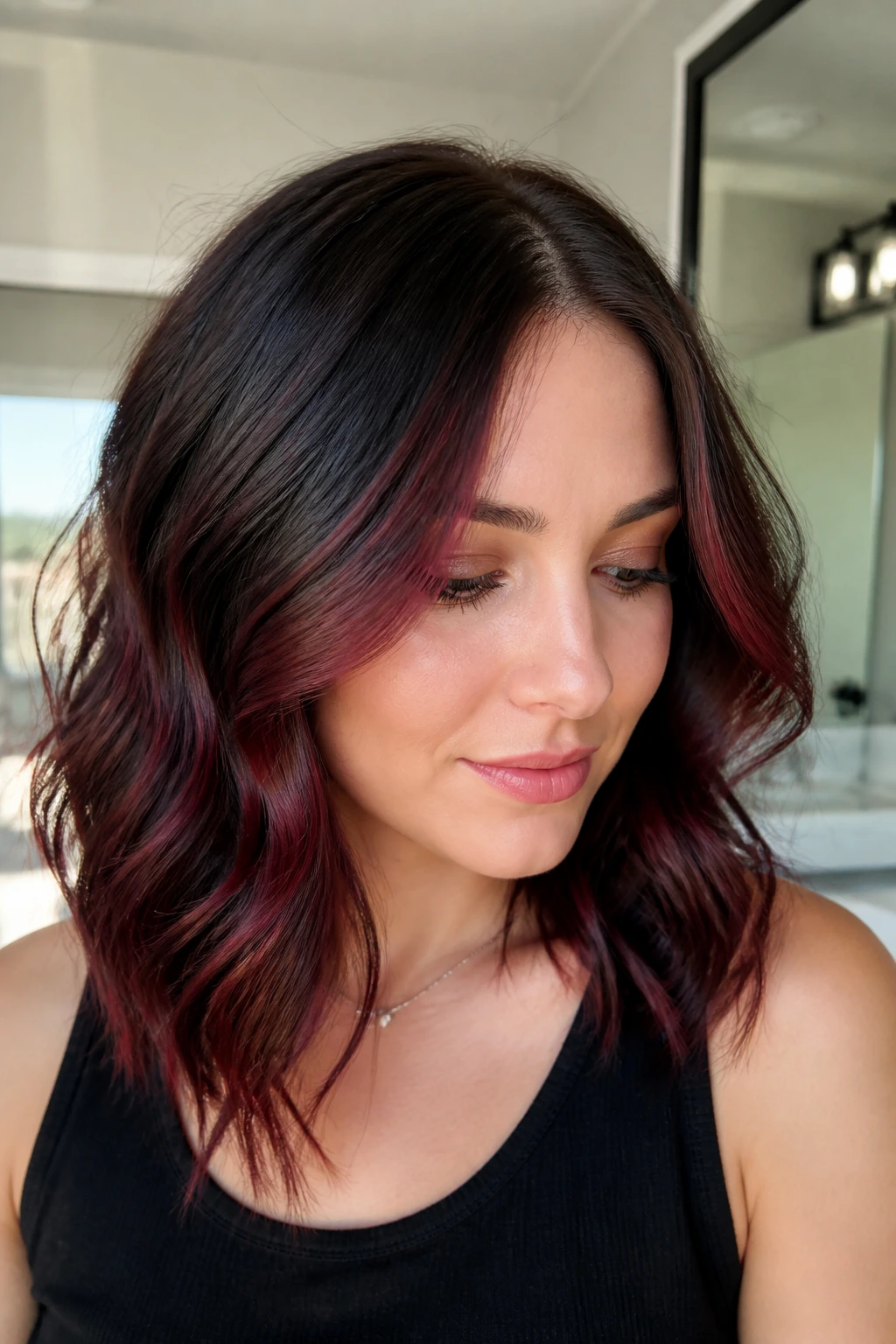
Foilayage is a smart middle road between balayage and traditional foils. You paint the hair, then wrap selected sections in foil so the burgundy lifts enough to stay visible on brown hair.
Compared with open-air painting, foilayage gives you stronger color payoff and a cleaner red tone. That matters if your base is dark chocolate or espresso and you don’t want the burgundy to disappear into the background. It’s also a better choice when you want the lighter pieces concentrated in specific zones rather than diffused everywhere.
What to Ask For
- Foils through the mid-lengths and around the face.
- A few finer pieces near the part for brightness.
- A deep root shadow so the grow-out stays soft.
- Burgundy tones with enough depth to avoid a pink cast.
I’d choose foilayage when you want dimension that holds up for a while. It’s not the quietest option, but it wears nicely.
11. Rosewood Ribbons on Sandy Brown Hair
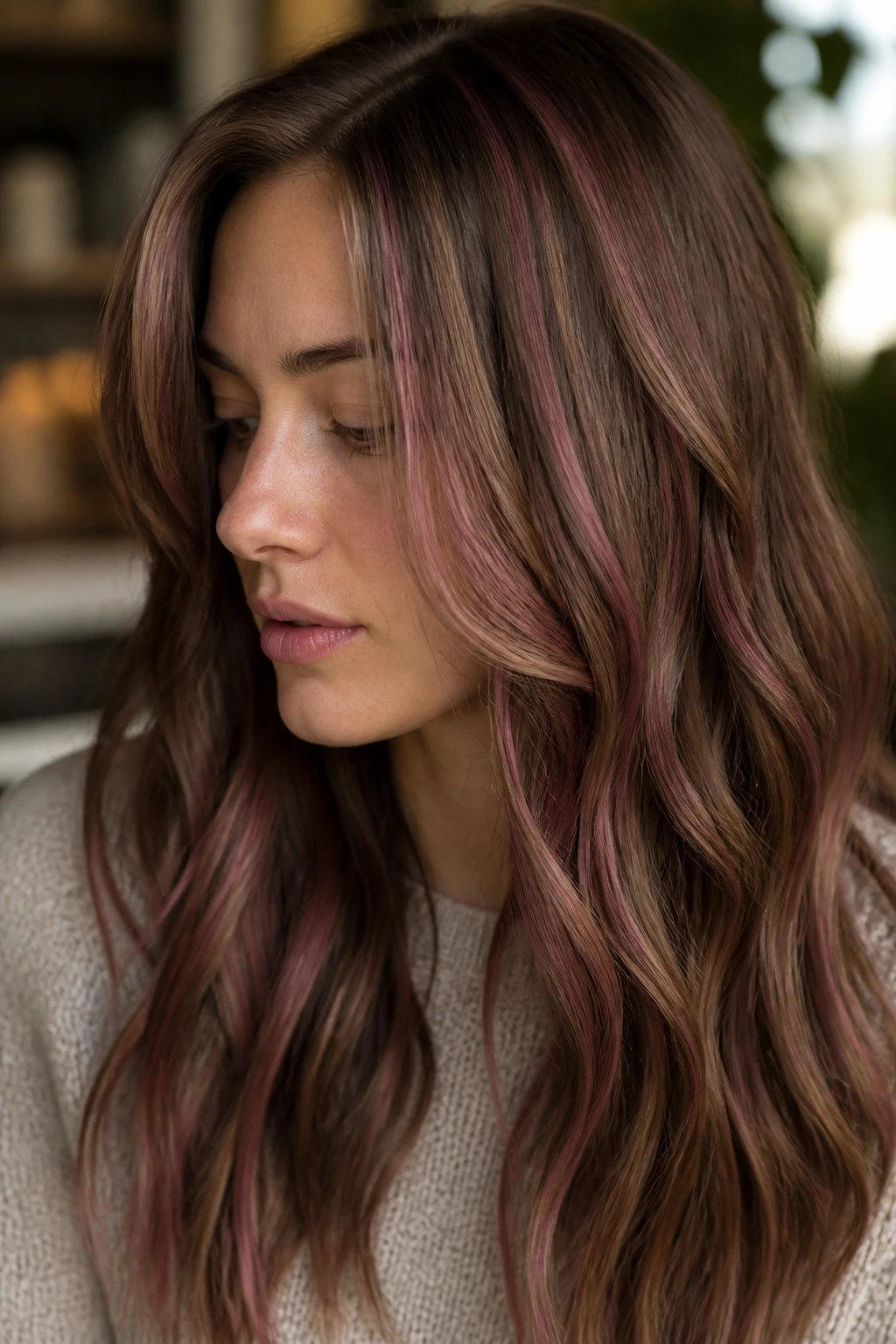
Rosewood is the softer cousin in the burgundy family. It has that muted red-brown feel that works especially well on sandy brown hair, where a brighter red might look too sharp.
This is one of those colors that looks expensive because it doesn’t try too hard. The ribbons can be thin or medium, but the tone should stay dusty and balanced, not cherry-sweet. On warmer brown hair, rosewood warms the whole head without tipping into orange. On cooler brown hair, it keeps the red from turning flat.
I like rosewood when the haircut has texture but not a ton of contrast. Shaggy lobs, soft waves, and airy layers all fit it well. The color reads as depth first and red second, which is exactly what makes it so wearable.
12. Mahogany-Burgundy Blend for Warm Brunettes
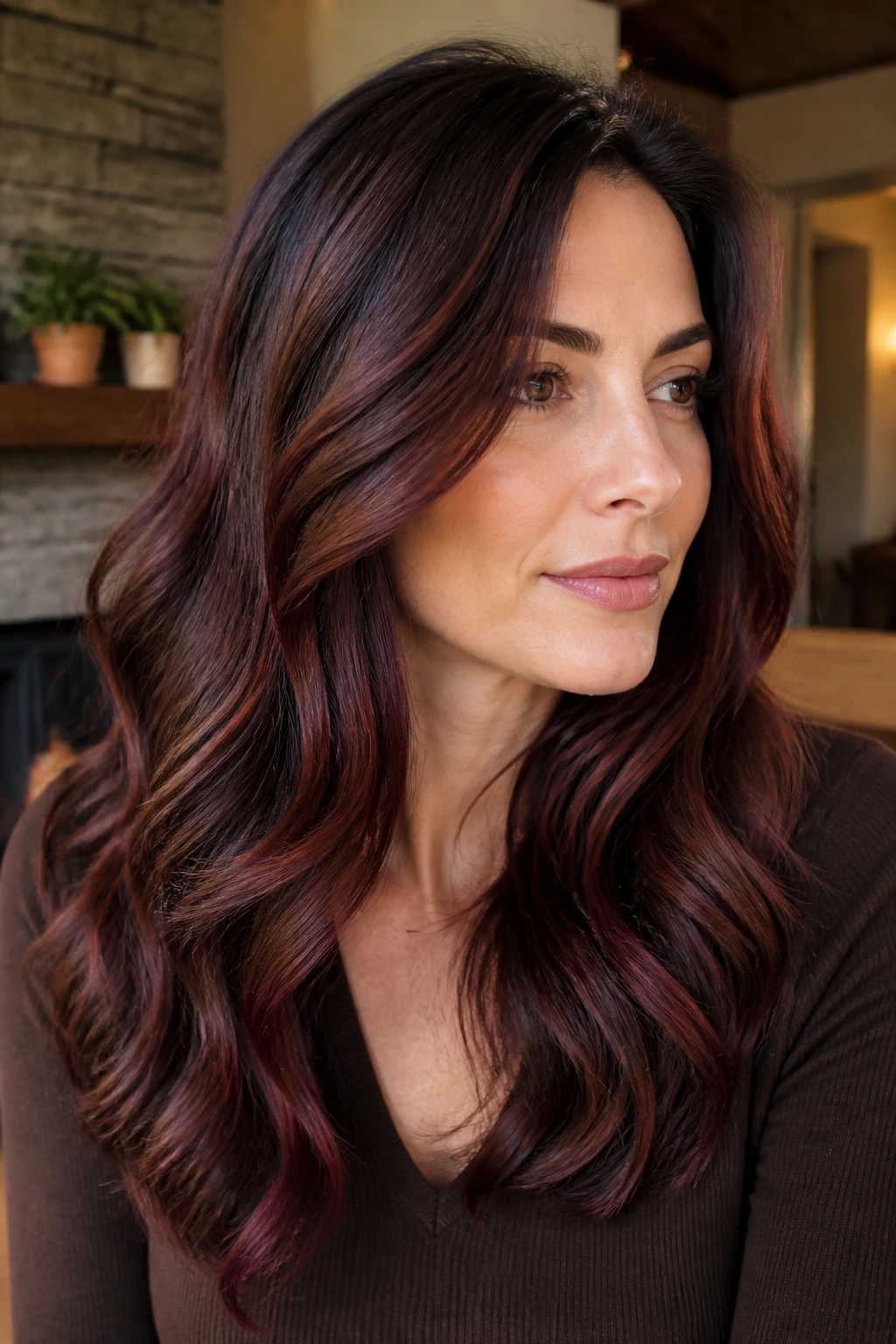
Mahogany-burgundy blends are for brunettes who like warmth but don’t want copper running the whole show. The mahogany softens the red, while the burgundy keeps it deep and grown-up.
Does it work on warm brown hair? Yes, especially if the base has caramel or chestnut notes already living in it. The formula can lean richer at the root area and brighter through the lengths, which keeps the finished look from going flat. You want the hair to look stained, not painted.
This is one of the easiest looks to wear if you’re nervous about red. It doesn’t scream. It glows. And if your skin tone tends to look good next to earthy shades, this blend usually sits nicely without much fuss.
13. Underlights That Flash Burgundy When Hair Moves
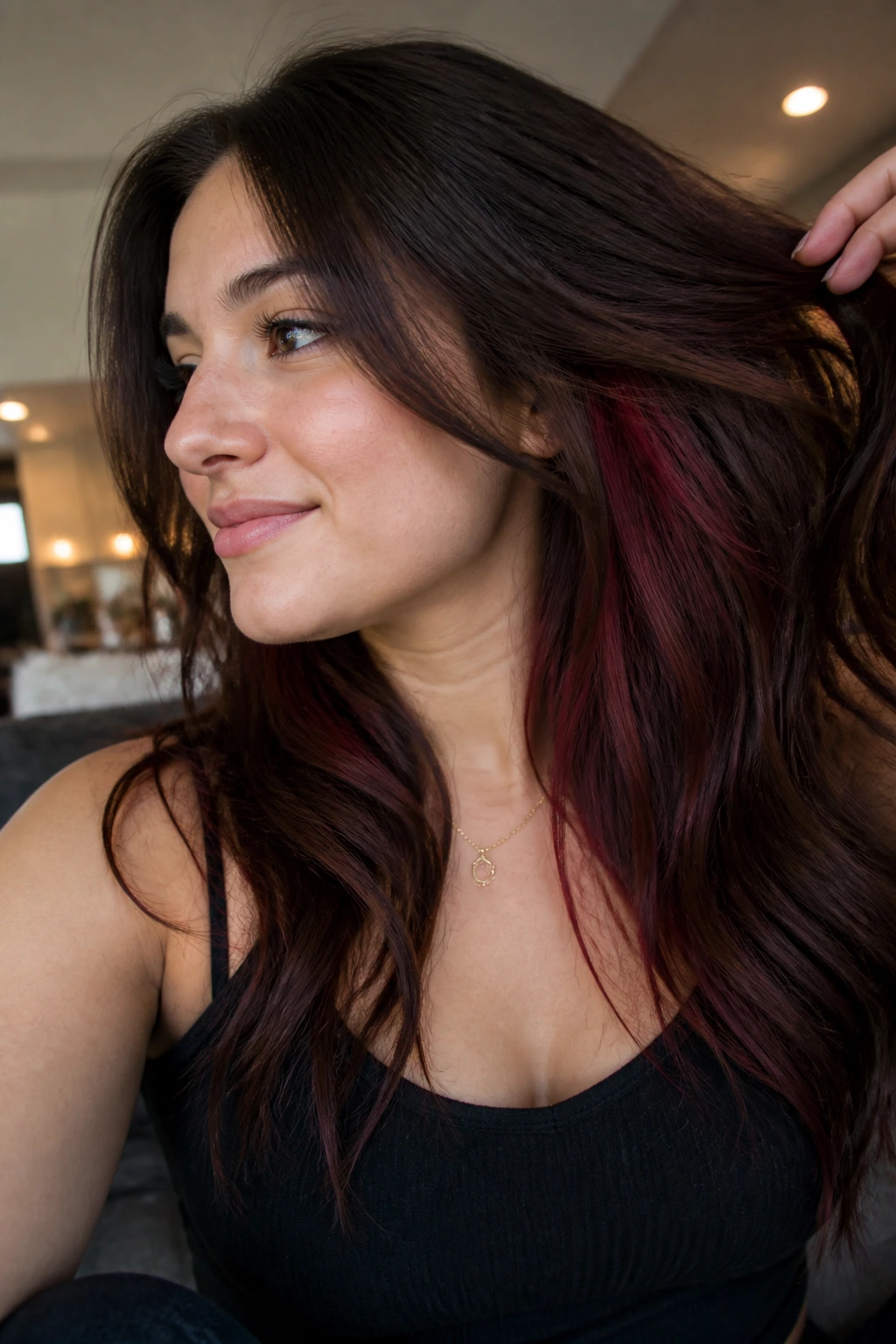
Underlights are one of my favorite tricks because they make brown hair feel layered from the inside out. The burgundy sits underneath the top section, so the color only appears when the hair lifts, swings, or gets styled off the face.
A blunt cut shows this especially well. So does shoulder-length hair that gets tucked behind one ear. The hidden color creates a little surprise each time the hair moves, which is a far more interesting effect than a full head of visible red.
Best Places to Put the Color
- Beneath the crown for hidden depth.
- Around the nape for updos.
- Under the front layers if you like flashes at the cheek.
- Through the interior of thick hair to break up heaviness.
Underlights are a practical choice if you want burgundy but don’t want constant root drama on top. They’re private, which sounds boring until you realize how useful that is.
14. Cherry Cola Highlights on Chocolate Brown Hair
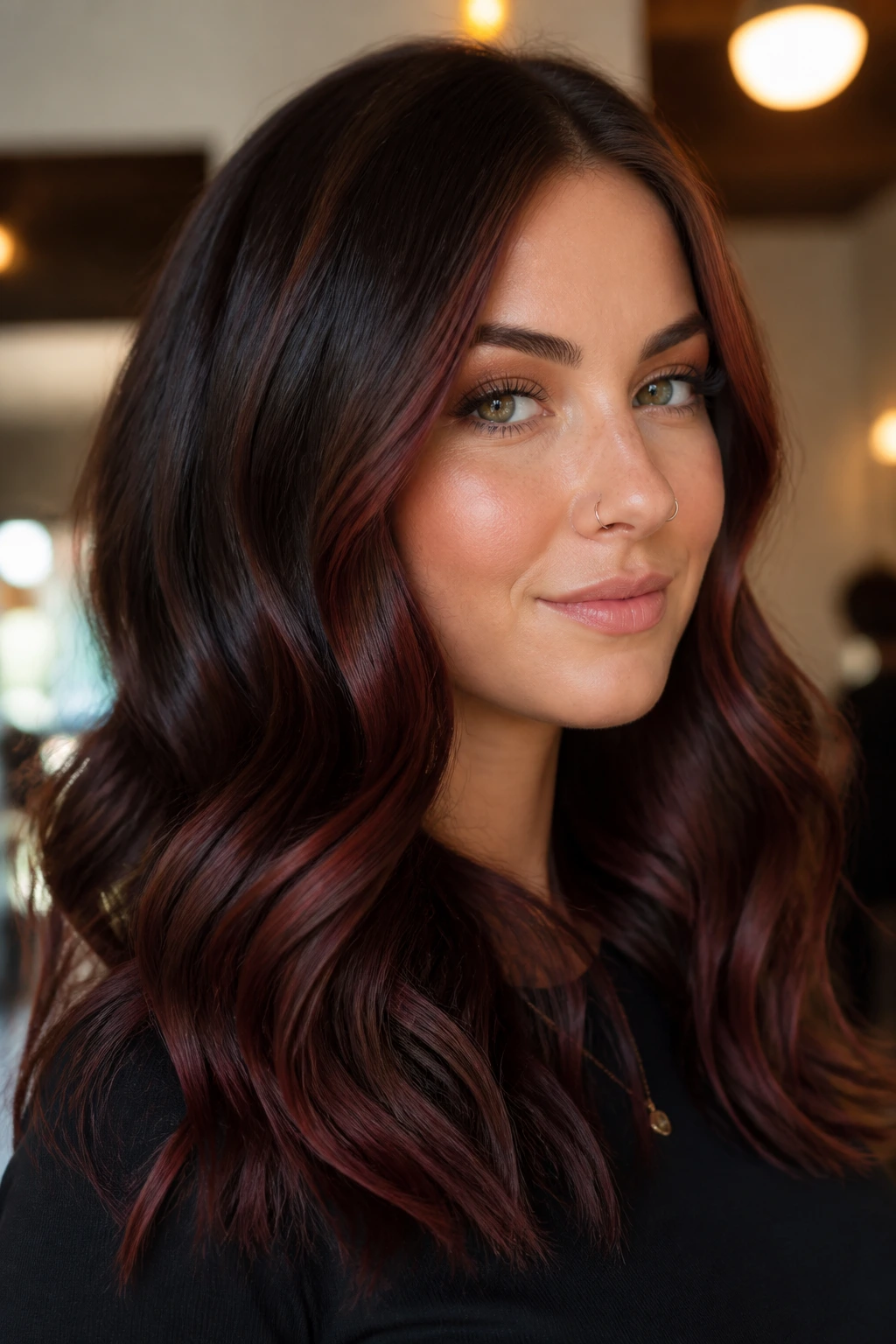
Cherry cola is what happens when burgundy gets a little glossy and a little dark. On chocolate brown hair, it can look rich instead of bright, which is the whole appeal.
The color should not sit too red. That’s the trap. If it gets too cherry, you lose the cola depth and the whole thing starts drifting toward auburn. Keep the burgundy undercurrent strong, and let the red show as a sheen rather than a solid block of color.
I’d use this on medium-to-dark brown hair that already has some shine. The smoother the hair, the better the tone looks. Thick hair can wear it too, but the placement needs to stay deliberate so the color doesn’t bunch up around the ends and look heavy.
15. Auburn-Burgundy Melt for a Warm Finish
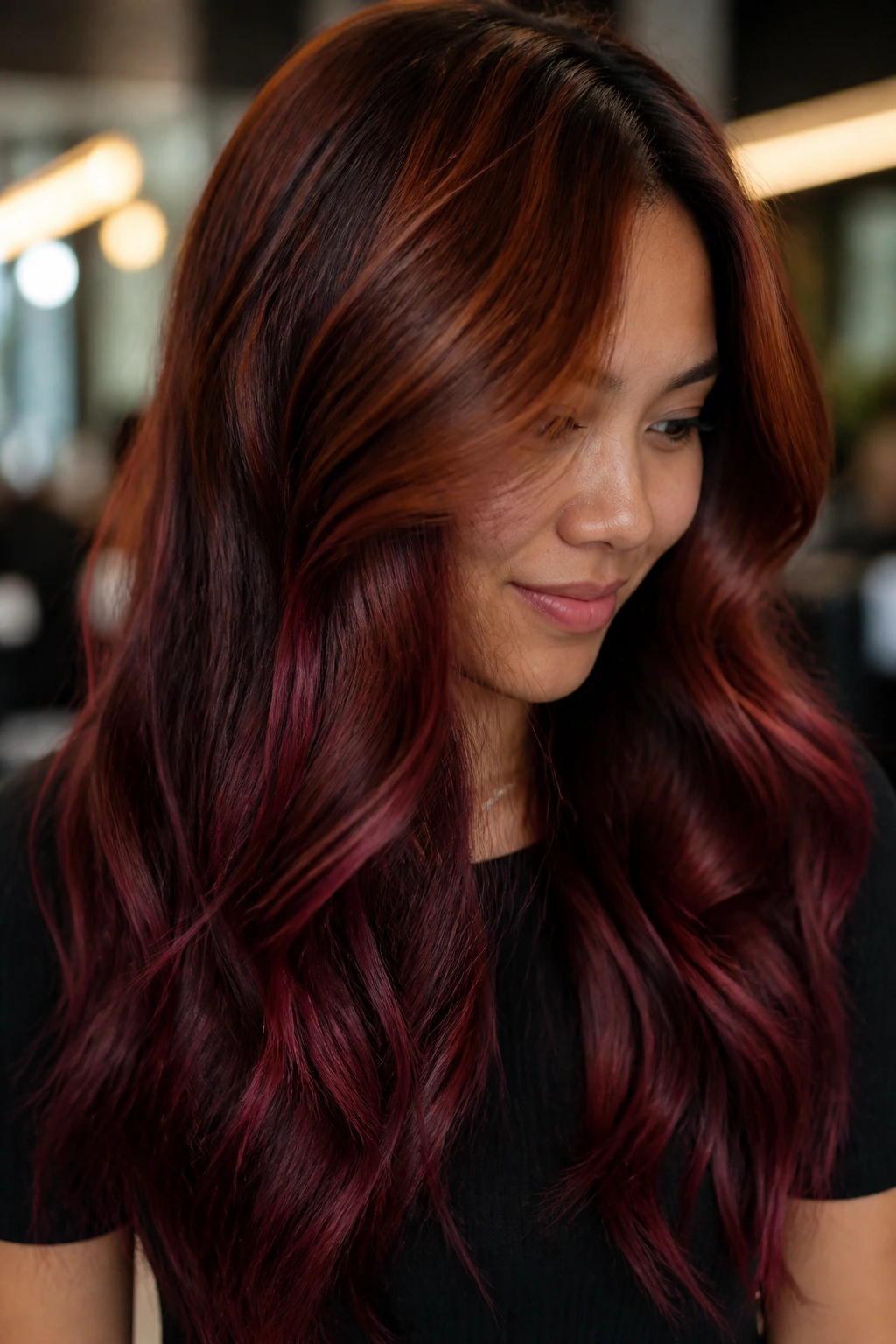
If you hate cool reds, the auburn-burgundy melt is the friendlier route. It leans warm at the top, then deepens into burgundy as it moves through the mid-lengths and ends.
That gradual shift keeps the red from feeling too severe. It also helps brown hair with natural warmth make an easier transition into a red family. The melt can be subtle or stronger, depending on how much contrast you want between the root and the ends.
This is a good choice for layered cuts because the color catches on every bend. Straight hair can wear it too, but the gradient really wakes up when the layers move. If you’ve ever wanted red but worried it would look too flat or too harsh, this is the safer lane.
16. Glossed Burgundy Over Existing Balayage
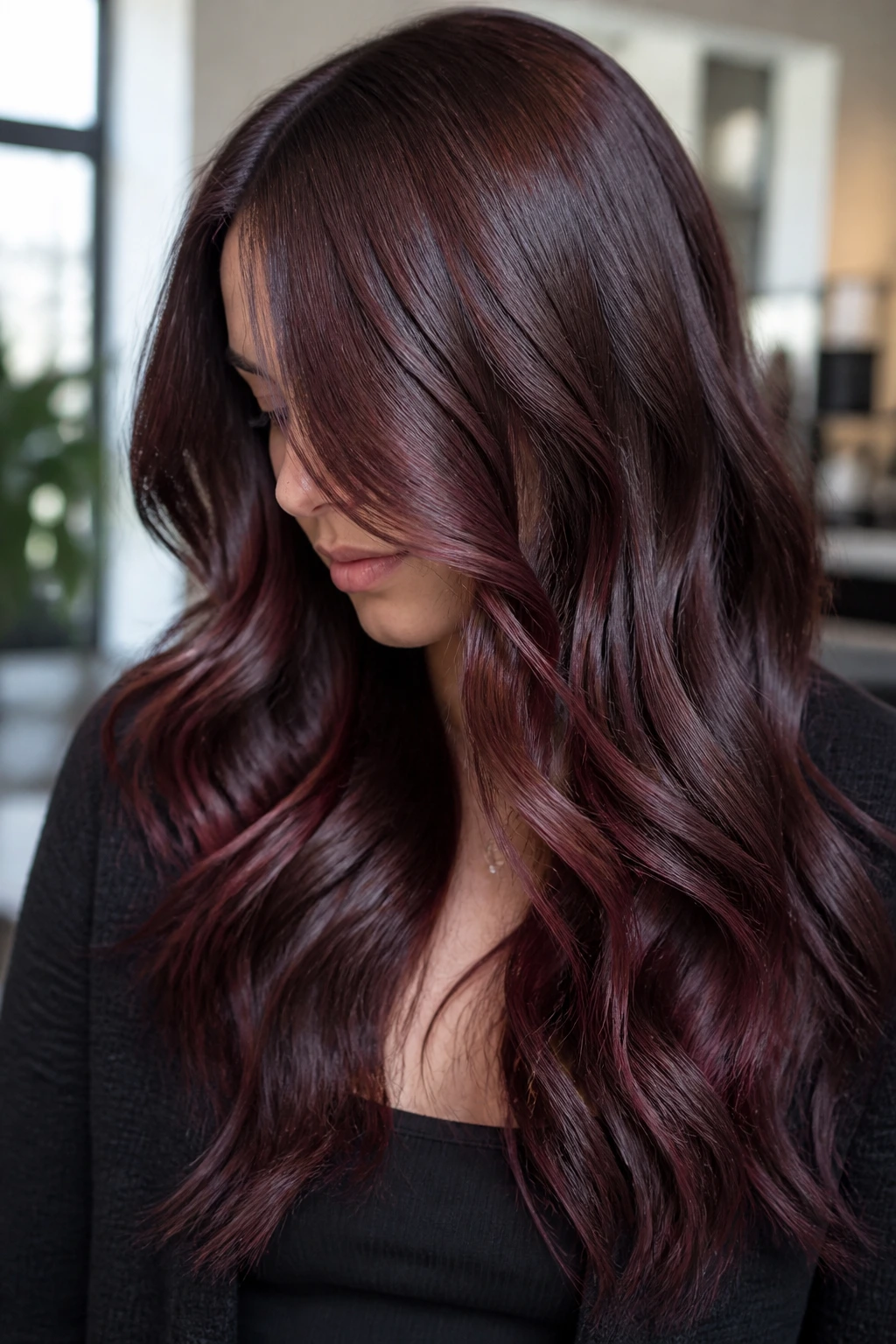
Sometimes the best burgundy look isn’t a fresh highlight job at all. It’s a gloss layered over balayage that already exists.
A burgundy gloss softens the lighter pieces, pulls stray warmth back into line, and gives brown hair that stained, glassy finish people chase in salon chairs. It also works when your highlights have faded to a coppery or brassy stage and you want them to feel intentional again.
What a Gloss Changes
A gloss does not carve new highlights into the hair. It tones what’s already there. That means the base stays visible, but the lighter pieces pick up a deeper wine shade and the whole head looks more connected.
- Use it to refresh faded balayage.
- Ask for a cooler burgundy if the hair skews orange.
- Keep the processing time short if the highlights are porous.
- Repeat it when the red starts looking dull, not when it’s fully gone.
It’s a low-drama fix, and sometimes that’s the smartest one.
17. Curly Shag with Burgundy Ribbons
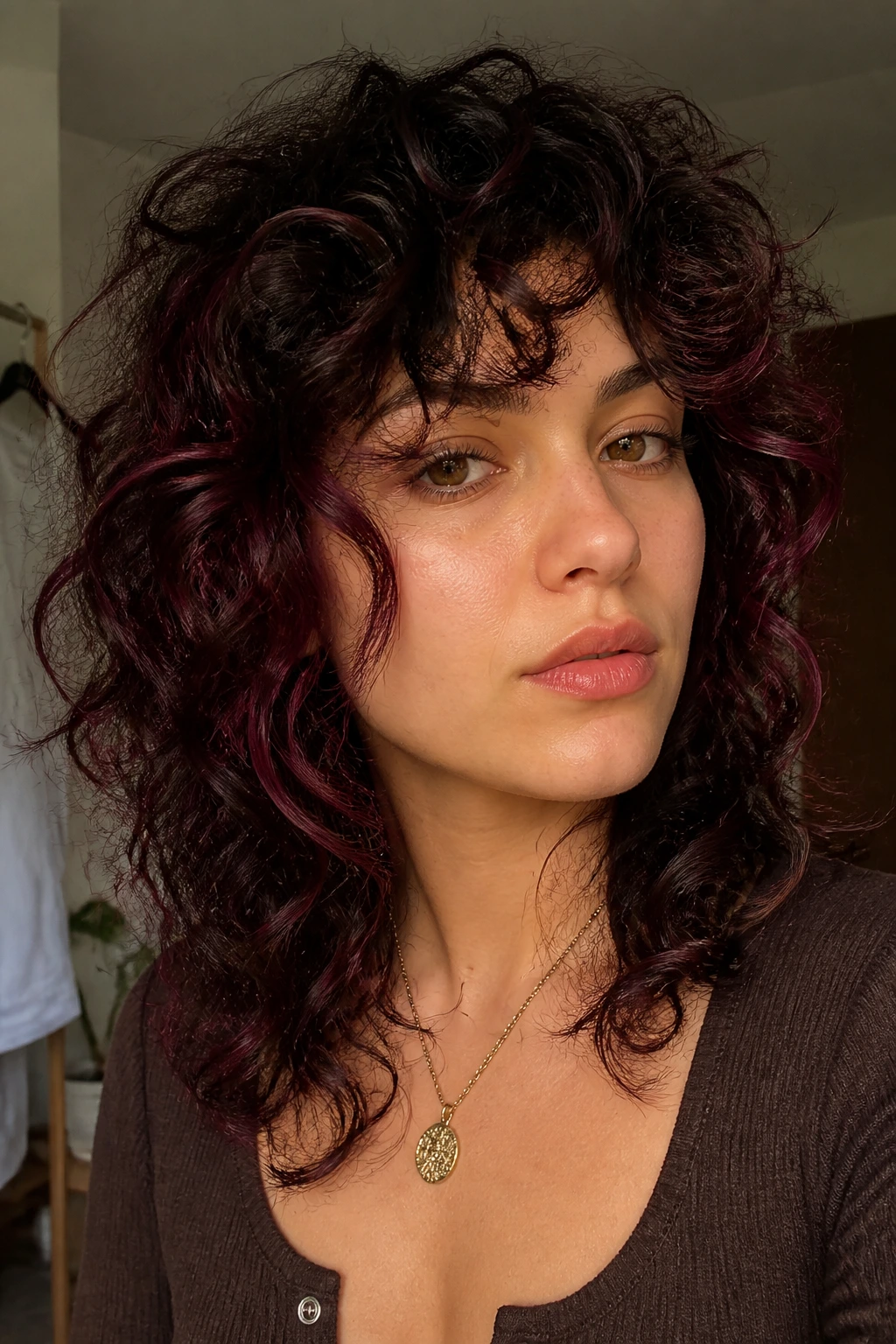
Curly hair and a shag cut are a good match for burgundy ribbons because the layers already create movement. The highlights follow the curl pattern instead of fighting it, which is why this style can look full without feeling busy.
Unlike straight styles, curly hair does not need the color to sit in neat lines. It needs enough contrast to catch the bends. Burgundy ribbons placed through the top layers and around the sides can make each curl look more defined, especially when the hair dries naturally.
I’d keep the brightest pieces where the curls open up around the face and crown. The lower layers can stay darker. That gives the cut a little lift without turning the whole head into a red block.
18. Straight Blunt Cut with Micro-Babylights
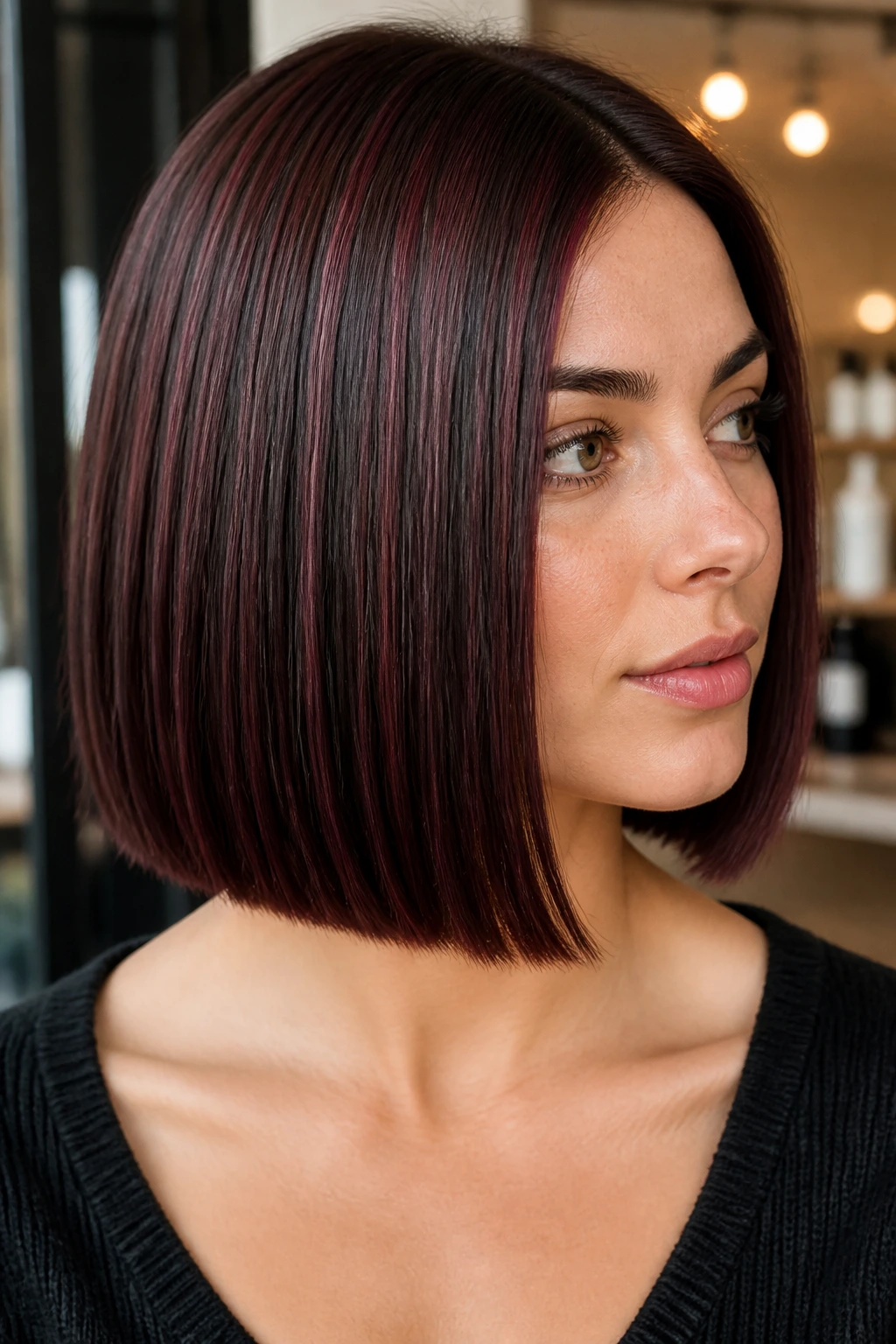
Straight hair is ruthless. It shows every line, every section, every uneven foil placement. That’s why micro-babylights are the right move for a blunt cut brown bob or lob.
The sections need to be so fine that the red feels woven through the hair instead of sitting on top of it. When the ends are sharp and the line is clean, even tiny burgundy strands can make the haircut look more polished. Too much color, and the blunt edge starts looking heavy.
I like this approach when the goal is shine rather than drama. The hair should move like one sheet, just with a hidden red pulse inside it. It’s understated in the best way, though I’d still call it a little bit of a flex.
19. Copper-Burgundy Hybrid for Warm Brown Bases
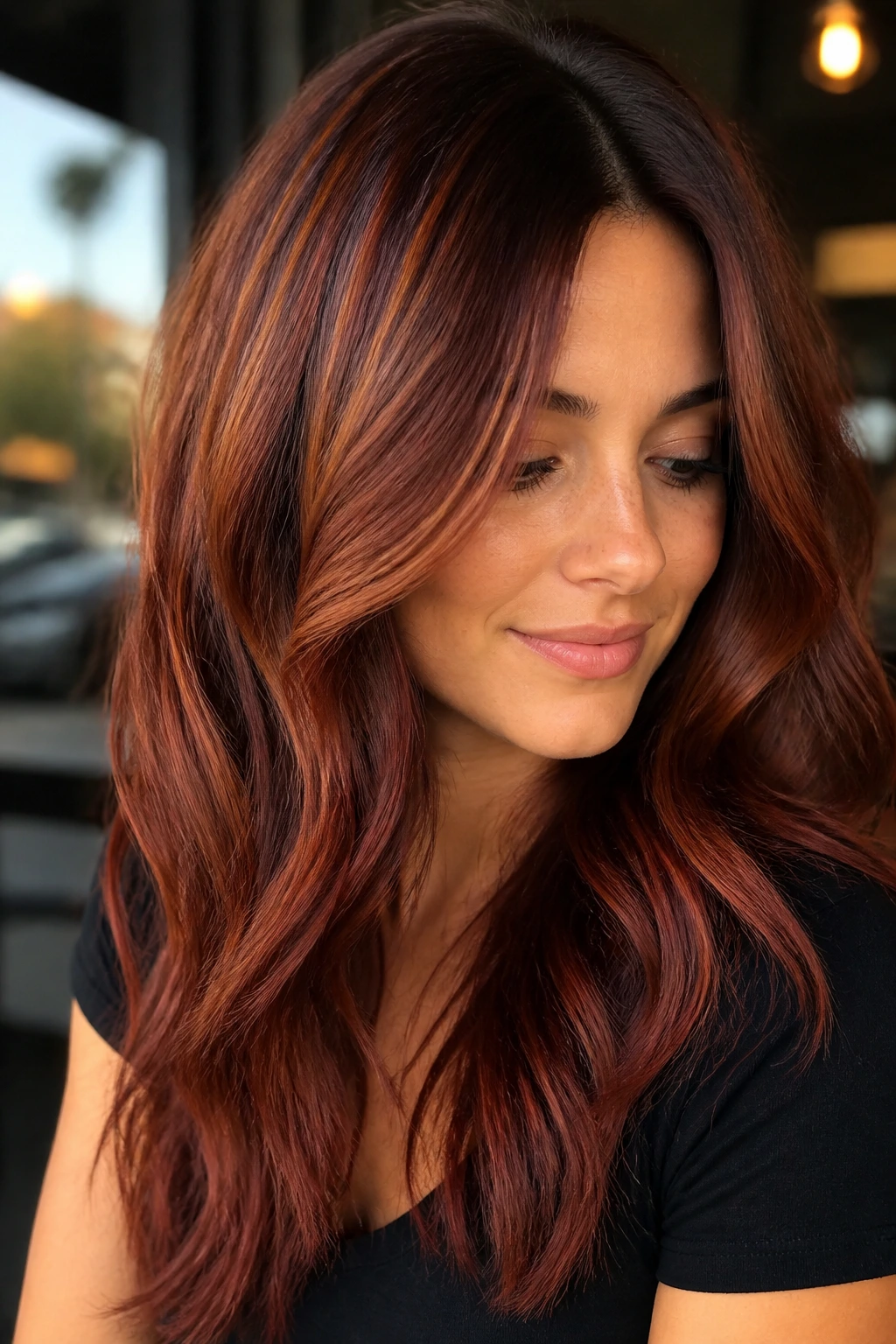
Can burgundy and copper share space? Absolutely, and the result can be gorgeous on warm brown hair when the blend is handled carefully.
This hybrid works because copper adds life while burgundy keeps the warmth from going brassy. On a golden brown or cinnamon base, the mix can look almost lit from inside, especially in layered cuts. The color should never feel half-finished; the red and copper need to look blended at the toner level, not patched together strand by strand.
When to Choose It
- Your natural hair already has warmth.
- You want red that feels brighter than plum.
- You wear waves or curls that show color changes.
- You like a softer transition than pure burgundy gives.
This is a friendly red for people who worry that cool burgundy will feel too dark. It’s lively, but not candy red. There’s a big difference.
20. Velvet Burgundy Tips on a Lob
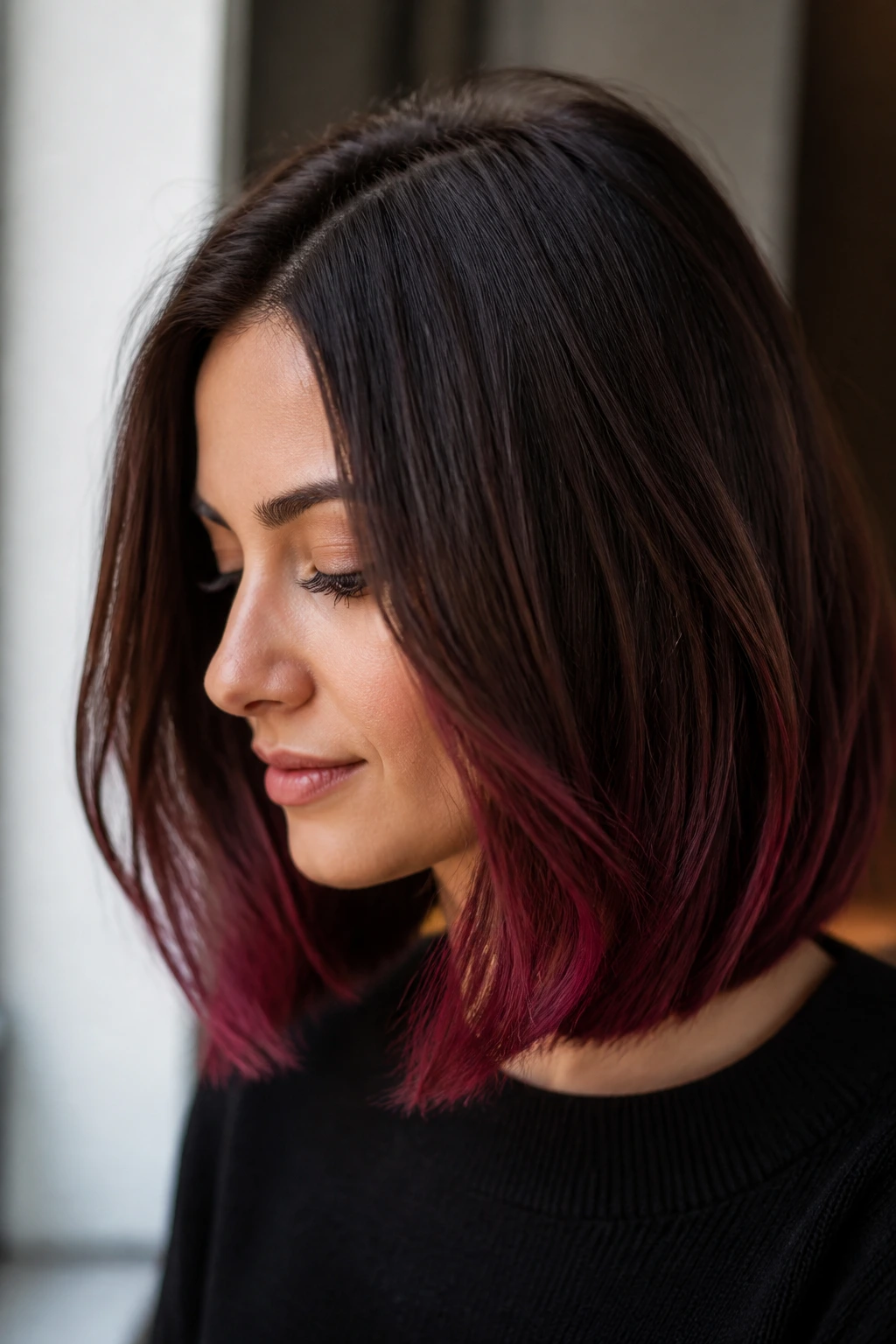
A lob with velvet burgundy tips has a neat, sharp finish that feels a bit modern and a bit moody. The ends take the color, the roots stay brown, and the middle does the blending.
This style works because the eye naturally follows the line of the haircut. If the bob or lob lands right at the collarbone, the burgundy at the tips gets seen every time the hair swings forward. You do not need a lot of color to make the effect work. In fact, too much can make the shape heavy.
A subtle root shadow keeps the style grown-up. The red on the tips should look plush, not neon. Think wine velvet, not bright lipstick.
21. Chunky 90s Burgundy Streaks
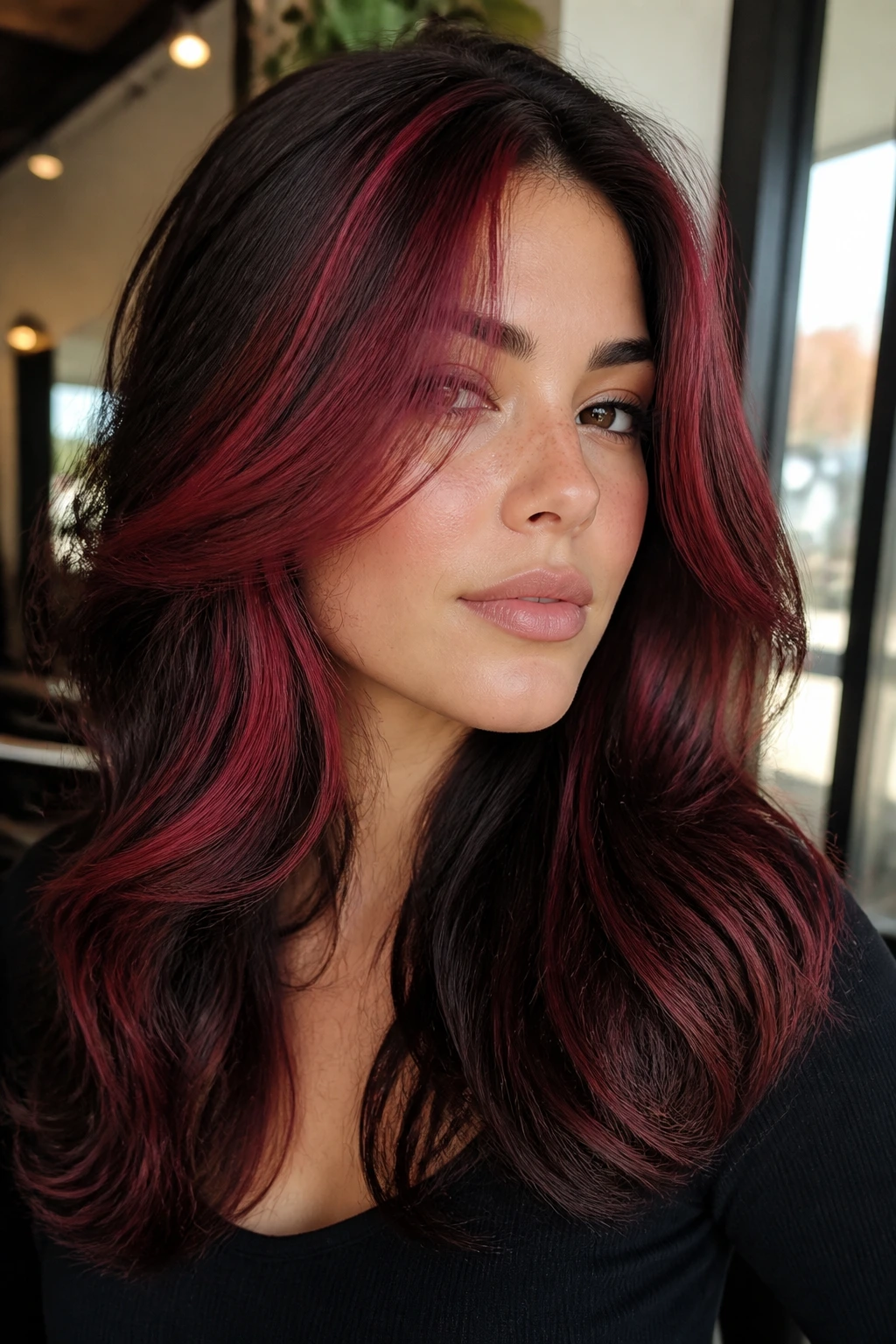
Chunky streaks are back for a reason: they have attitude. On brown hair, big burgundy panels can look bold in a way that smaller highlights never will.
This is not the choice for someone who wants a whisper of color. It’s for someone who wants the contrast to show when the hair is down, braided, pinned, or blown out. Thick streaks work best when they’re placed with intention — around the face, under a part line, or through a few chosen sections rather than scattered everywhere.
What Makes Them Work
- The contrast has to be clean.
- The base brown should stay visible between streaks.
- The red tone should be deep enough to avoid looking patchy.
- The haircut should have enough shape to hold the color.
Chunky burgundy can be a little nostalgic, and that’s part of the fun. If you like a strong hair moment, this is the one.
22. Smoked Cranberry Highlights on Espresso Hair
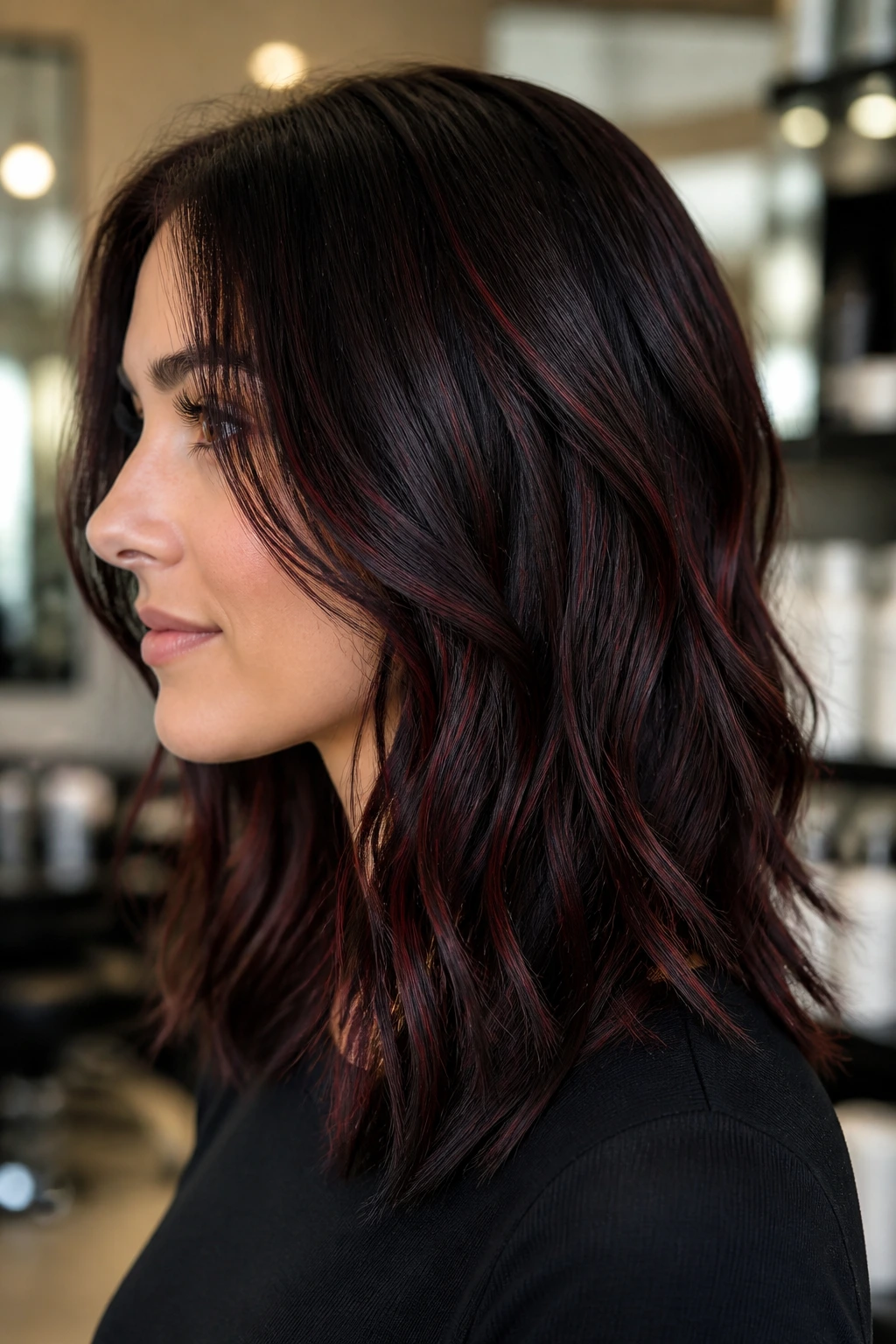
Smoked cranberry sits deep in the red family, which is exactly why it works on espresso brown hair. It gives you the feeling of color without needing the red to shout.
On very dark brown hair, the highlights should be thin enough that they catch the light instead of sitting on the surface like stripes. A few pieces through the front and a handful in the interior can be enough. The color shines most when the hair is smooth or lightly waved, because the reflections have a chance to move.
This is a smart option if you love dark hair but want it to feel less flat. It keeps the brown rich, adds a cherry edge, and still reads as elegant when the light changes.
23. Burgundy Halo Around the Face and Crown
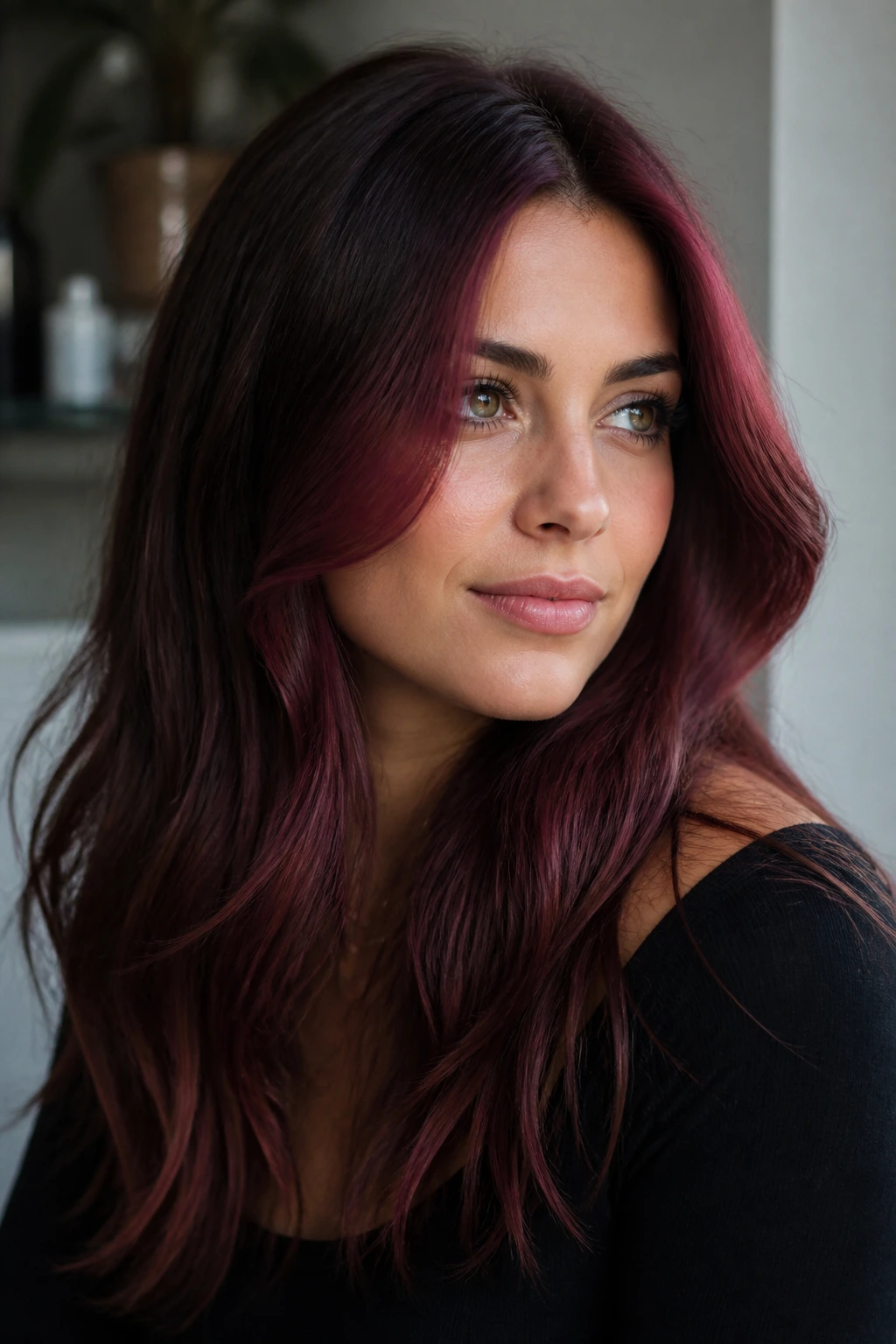
A halo placement gives burgundy a little drama without committing the whole head to red. The color wraps around the face and crown, which means it shows from almost every angle.
Compared with a simple money piece, a halo is broader and softer. It can brighten the top of brown hair in a way that feels airy, not harsh. That makes it good for people with longer layers or soft curls that need lift around the root area.
The crown section is where the magic happens. When those pieces move, they open up the color and make the red visible from above, not just from the front. If you like wearing your hair half up, this is one of the better placements to choose.
24. Hidden Burgundy Layers in Braids and Updos
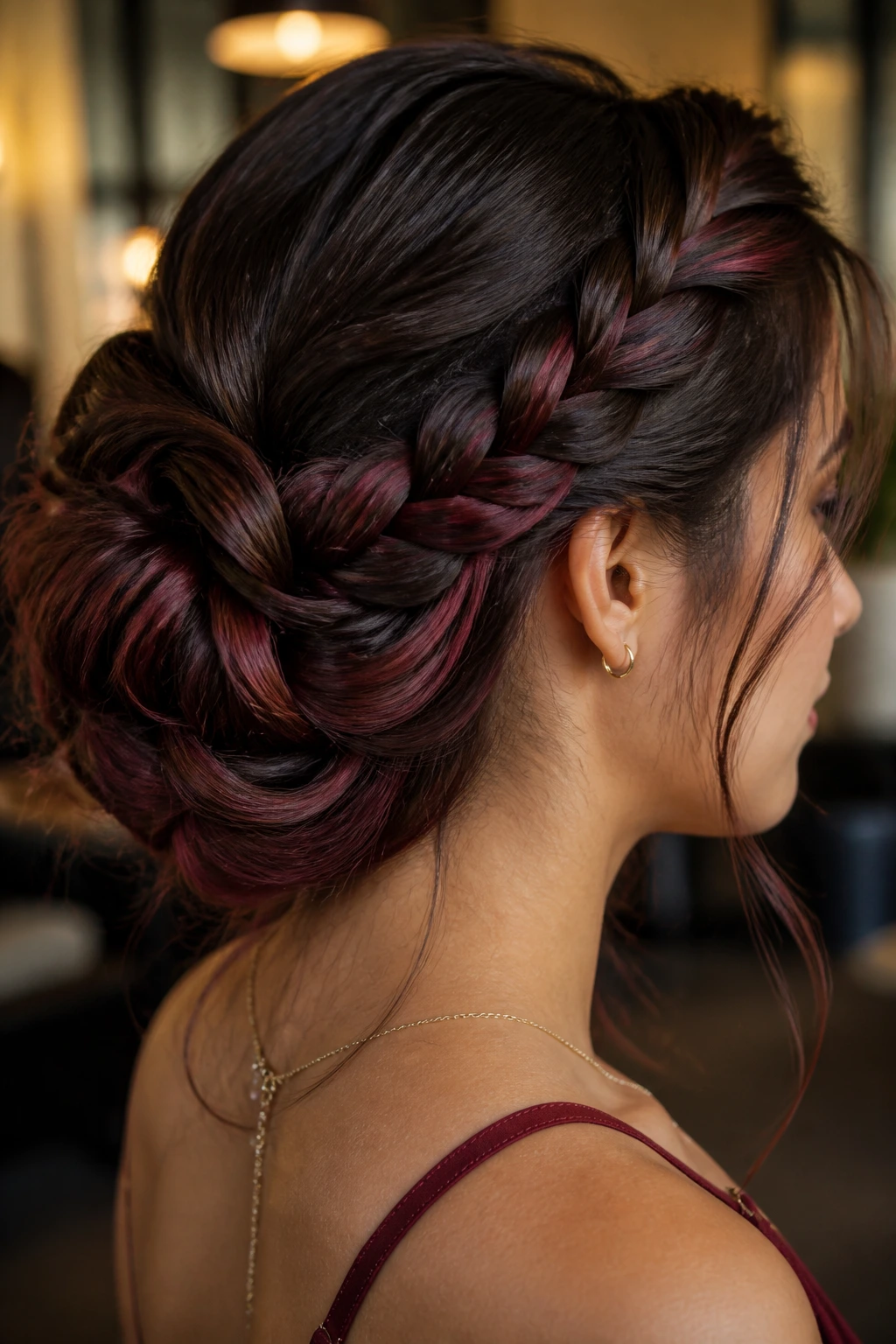
Hidden layers of burgundy are made for braid lovers and anyone who wears buns a lot. The color stays tucked underneath the outer shell of brown hair, then shows when you weave, twist, or pin the hair up.
That gives the style a practical edge. At work, the hair can look mostly brunette. At dinner, a braid or messy bun reveals the red inside. It’s a very good move if you like the idea of color but not the commitment of seeing it every minute of every day.
Best Ways to Show It Off
- Dutch braids reveal color fast.
- Twists and chignons expose the interior panels.
- Crown braids show the color near the temples.
- Half-up styles give just enough peek of contrast.
This is one of those styles that looks better in motion than in a static photo. Which is saying something, because it already looks good in photos too.
25. Garnet Micro-Weaves for a Seamless Finish
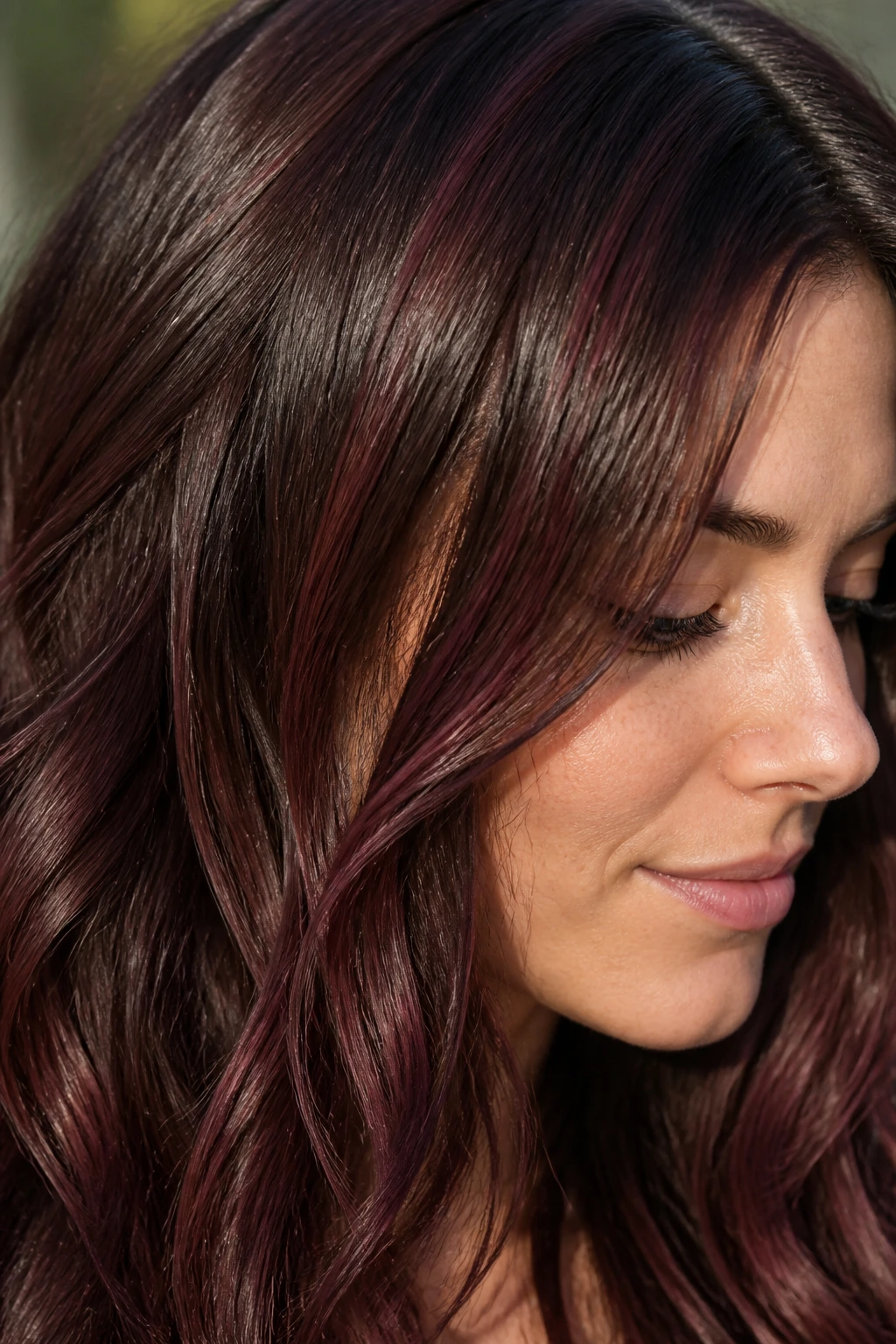
Micro-weaves are the quietest way to wear burgundy on brown hair, and that can be a relief if you want dimension rather than drama. The color is sliced into very fine sections, so it blends into the brunette base instead of sitting on top of it.
The result is softer than classic highlights and more controlled than babylights if the weaves are placed tightly enough. A good garnet tone works especially well here because it stays deep and rich even in small doses. That matters. Tiny red pieces can look cheap if the tone is too bright or too warm.
I’d choose this look for long hair, fine hair, or anyone who wants the color to feel like part of the shade rather than a separate event. It’s subtle, but not boring. There’s a difference.
Final Thoughts
Burgundy on brown hair works best when the placement matches the haircut. That’s the part people skip, and then they wonder why the red feels loud in one spot and invisible in another.
If you want the safest starting point, face-framing pieces, babylights, or a soft balayage are the easiest to live with. If you want the hair to announce itself, chunky streaks, underlights, or a halo placement will do the job without much hesitation.
The smartest move is still the same one: choose the kind of burgundy that looks good in the light you actually spend time in. Bathroom bulbs, office lights, daylight — they all change the story a little. And burgundy, more than most shades, is a color that rewards a careful eye.
