



Ash blonde highlights for brown hair can look expensive and soft, or they can land a little flat and dusty. The difference usually has less to do with the blonde itself and more to do with placement, lift, and toner. On a medium chestnut base, a smoky beige ribbon can look airy; on a dark espresso base, the same toner can disappear into the brown or turn murky if it’s pushed too far.
That is why the prettiest versions usually keep some depth at the root. Brown hair needs contrast. Too much blonde everywhere and the whole thing loses shape. Too little lightness and the ash tone barely shows at all.
Cool tones are also a little tricky on brown hair because brown naturally throws back red and orange once it’s lightened. That’s where the ash part earns its keep. Done well, it quiets brass and gives you that cool, smoky finish. Done poorly, it can look stripey, gray, or just plain tired.
The good looks stay soft at the root and clean at the ends. Start there, because that is where ash blonde really gets interesting.
1. Fine Ash Blonde Babylights for Brown Hair
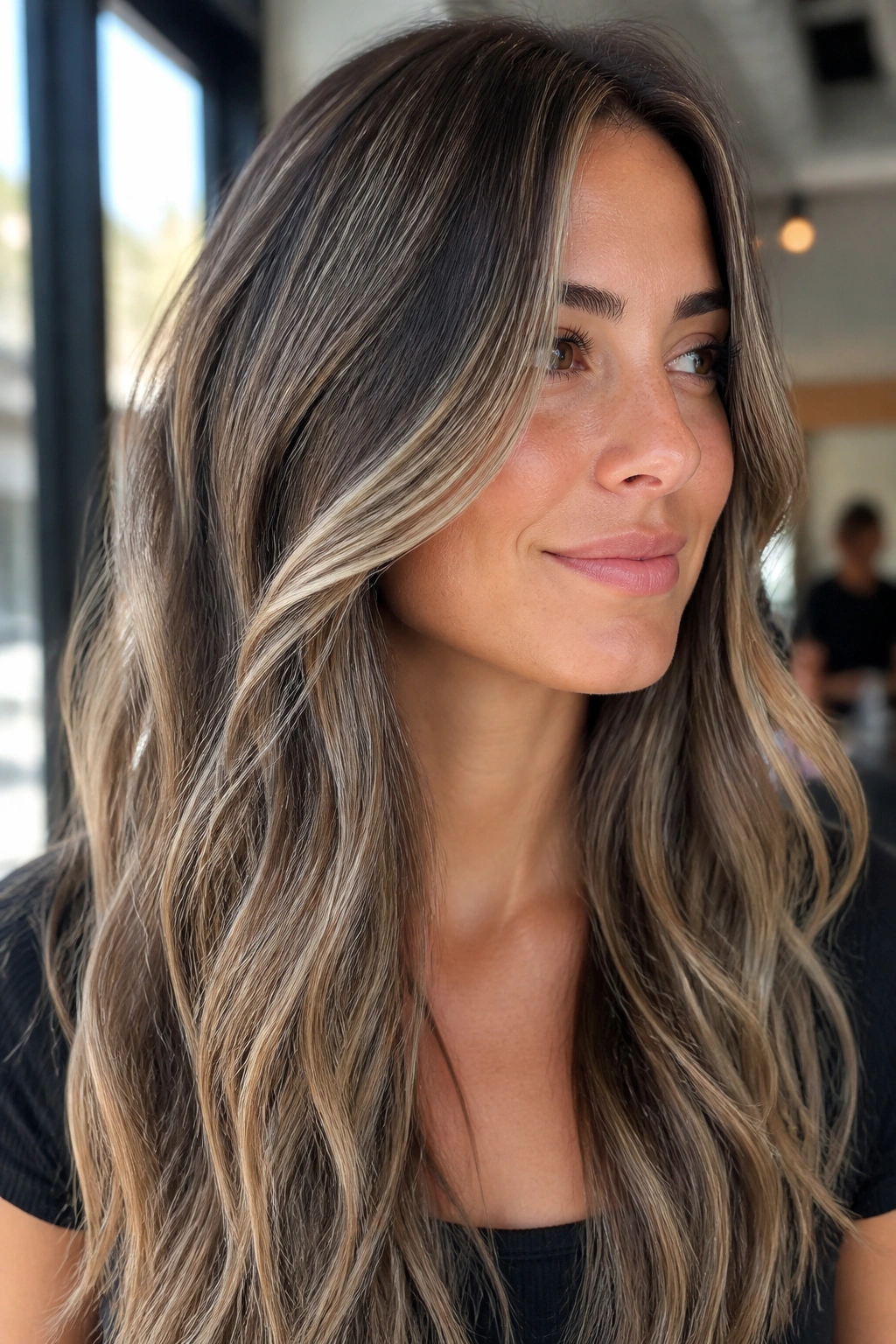
Tiny babylights are the gentlest way to bring ash blonde into brown hair, and that is exactly why they work. Instead of obvious streaks, the color sits in hair-thin weaves, so the brown base still shows through. From a few feet away, the whole head looks softer and cooler. Up close, you see that the lightness was placed with a steady hand.
Why these feel softer
Babylights usually live one or two levels lighter than the base, then get toned to a beige-ash finish. On dark brown hair, that means lifting enough to get past the orange stage, then stopping before the hair starts looking hollow. The result should feel smoky, not gray.
- Ask for sections no wider than 1/16 to 1/8 inch.
- Keep the brightest pieces around the part and hairline.
- Aim for a level 7 or 8 lift if your base is dark brown.
- Refresh the toner every 6 to 8 weeks to keep the ash tone clean.
Tip: If your hair is very dark, ask for fewer babylights first. Dense cool highlights can go flat fast, and once the whole head is lightened, there is less room to correct the tone.
2. Mushroom Brown Balayage with Ash Ends
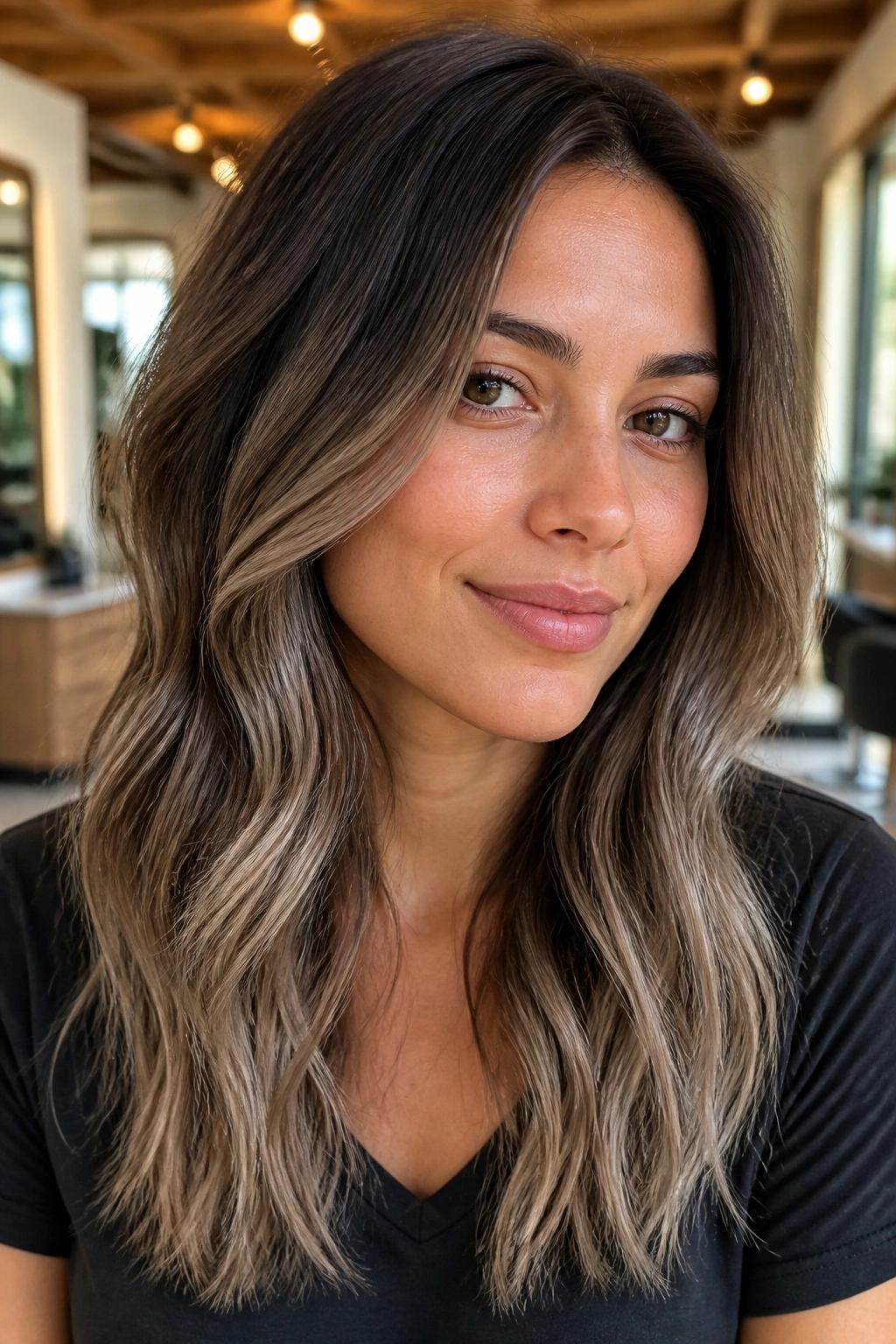
Mushroom brown balayage is the easiest ash look to live with.
It sits in that sweet spot between brown and blonde, so the grow-out is forgiving and the color keeps its shape for longer. The painted pieces stay mostly in the mid-lengths, then drift into ash ends that look lived-in instead of striped. If you hate obvious regrowth, this is the one I’d point you toward first.
The brown base still does most of the work here. A colorist usually leaves the roots deeper, sweeps lighter pieces through the surface, and softens the ends with a cool glaze. On wavy hair, the movement makes the color look woven in. On straight hair, it reads a little sharper, which can be nice if you like cleaner lines.
I like this look on shoulder-length cuts and longer layers because the tonal shift has room to breathe. Too short, and the ash can feel compressed. Too blunt, and the ends can look too heavy. Keep the tone soft, not silver. That is the whole trick.
3. Ash Blonde Money Piece Around the Face
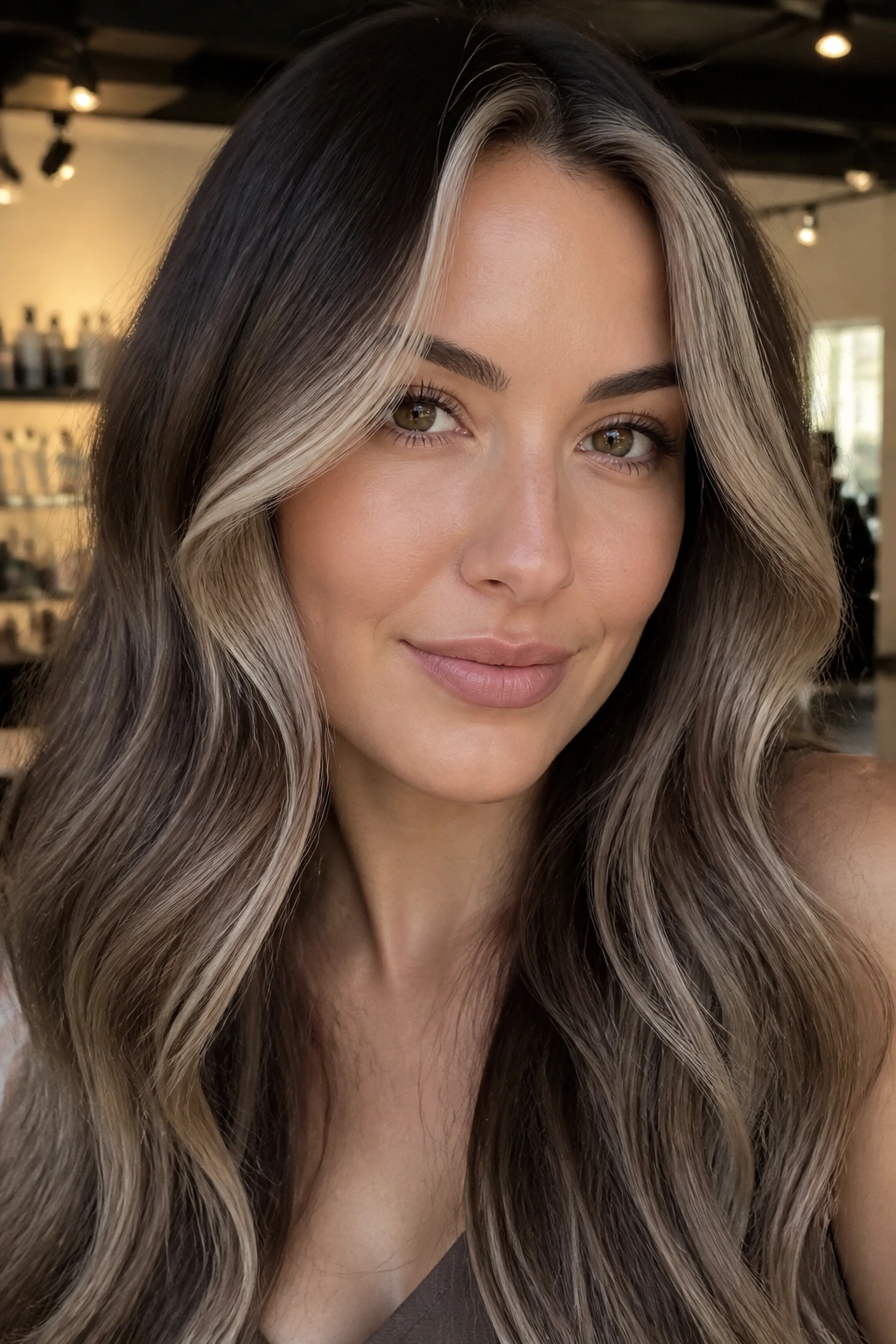
Why does one bright panel near the face change everything?
Because your eyes go straight there first. A well-placed money piece can make brown hair look lighter overall without flooding the whole head with blonde. It also gives the face a cleaner edge, especially if the rest of the color stays rooted and calm.
The best versions are not thick neon streaks. They are usually two front foils on each side, sometimes three if the hairline is broad or the part shifts around a lot. The lightness should start a half inch off the scalp, then soften as it drops toward the cheekbone. If the front is too bright at the root, it can feel harsh. If it’s too dark, the whole effect gets lost.
How to wear it
- Keep the face frame a touch lighter than the rest of the head.
- Ask for a soft root shadow so the line at the part does not look harsh.
- Let the blonde skim the temples, not only the center part.
- Use a side or off-center part if you want more contrast on one side.
Best for: people who want a visible change without committing to a full head of highlights.
4. Cool Beige Ash Ribbons Through Medium Brown Hair
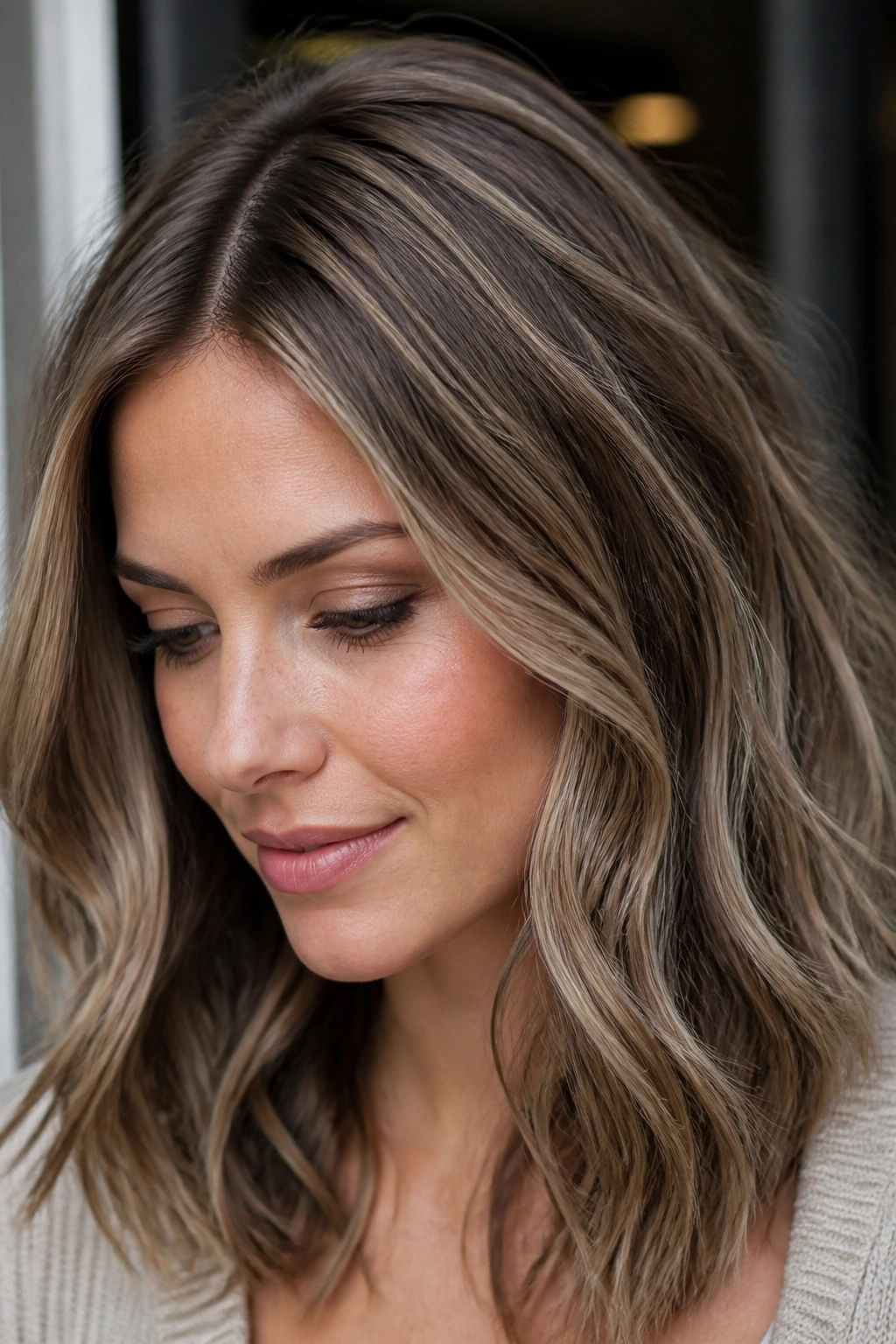
If your brown hair looks a little flat under indoor lights, ribbons fix that faster than a heavy blonde overhaul.
The idea is simple: place medium-width strands of ash-beige through the top and sides so the color moves in long, soft lines. Those ribbons catch light when the hair swings, but they do not shout. They also help medium brown hair keep some warmth in the base while the lighter pieces stay cool on top.
A lot of people ask for ash and end up with pieces that are too icy. That is not the goal here. You want a cool beige, the kind that sits between taupe and blonde, not a steel-gray finish. That middle ground is what keeps the hair from looking hollow.
- Use ribbons about 1/4 to 1/2 inch wide.
- Place them around the crown, sides, and a few pieces through the back.
- Keep the ends lighter than the mid-lengths for movement.
- This works best on layered cuts or blowouts with a bend at the ends.
The whole look lives or dies on placement. Good ribbons look expensive because they break the brown up just enough.
5. Smoky Ash Blonde Balayage for Brown Hair
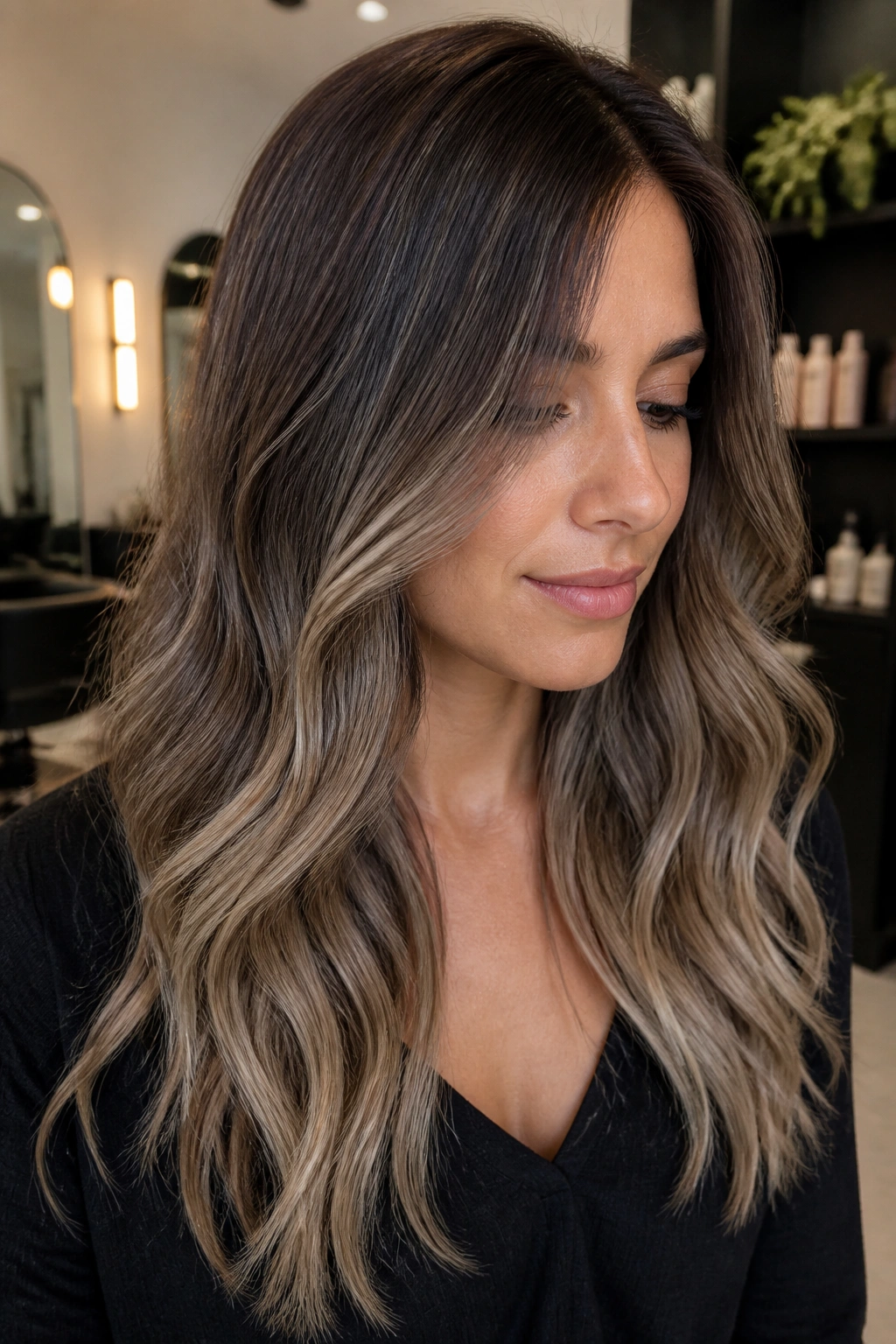
Smoky ash balayage is the grown-up version of blonde on brown hair. It does not try to be bright at every point, and that restraint is what gives it its appeal.
The color is painted in a way that keeps the root deep and the mids diffused. Ends usually hold the most lightness, but even there the tone stays cool and muted. On long layers, the darker root and lighter ends make the cut look fuller than it is. On one-length hair, the same technique can feel a bit heavier unless the colorist breaks up the surface with a few extra ribbons.
I like this look because it grows out with manners. You can wear it straight, curled, air-dried, or in a rough wave, and it still makes sense. The ash tone takes the edge off natural red undertones, while the balayage placement keeps the finish from feeling hard or blocky.
If your hair tends to pull orange after lightening, ask for a smoky gloss, not a silver one. That small choice matters more than most people realize.
6. Silver-Toned Ash Highlights for Espresso Brown Hair
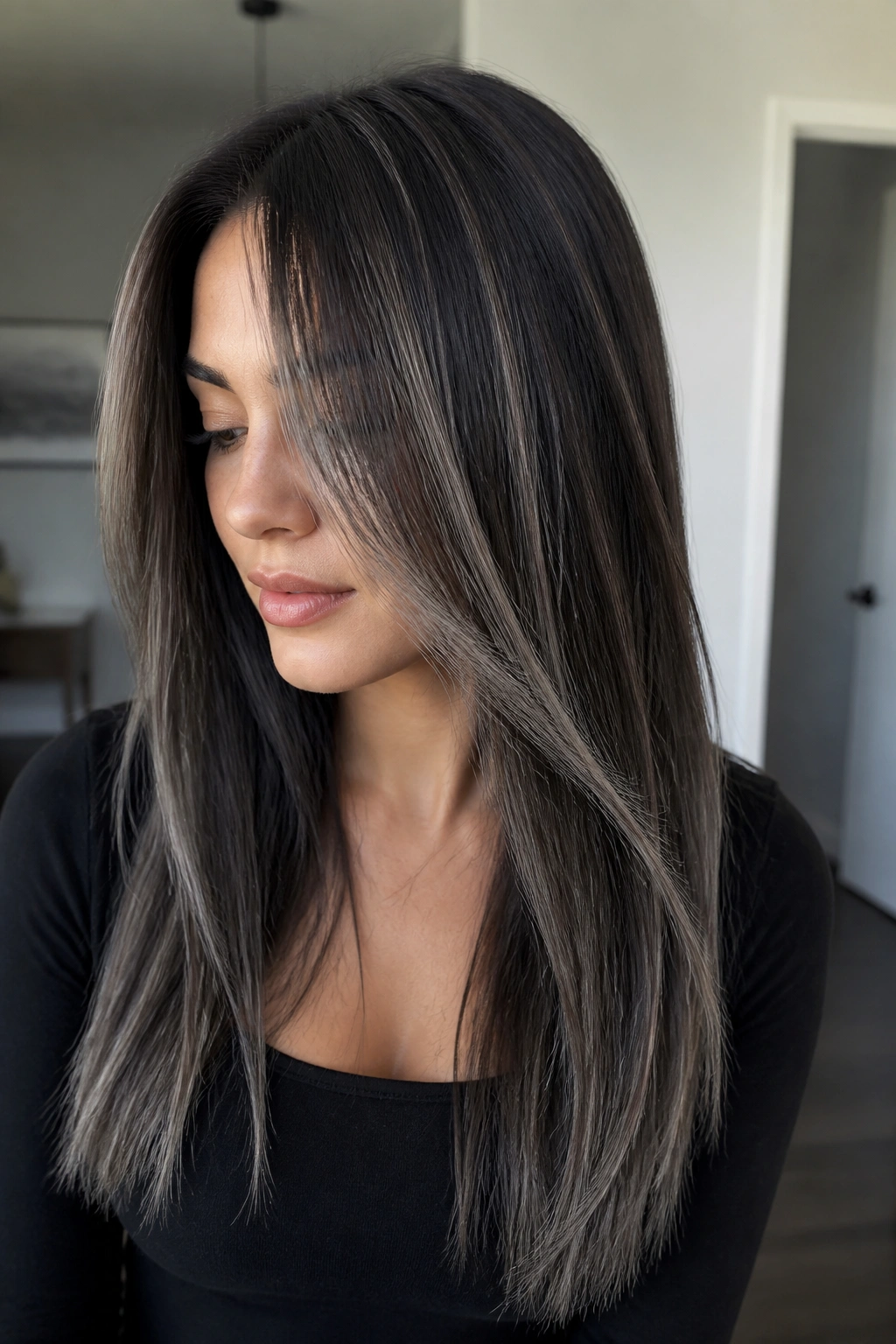
Silver-toned ash is not the same thing as beige ash.
It’s cooler, brighter, and more obvious against espresso brown hair. That contrast is the point. The dark base gives the silver pieces somewhere to stand, which keeps the look from vanishing into the brown. If you want something crisp and cool, this is the version that delivers it.
I would not call this the easiest ash option, though. On dry or porous hair, very cool toner can turn dull fast. The hair needs a clean lift first, then a careful glaze so the light pieces stay clear instead of cloudy. If the base is near-black, the highlights should be placed sparingly. Too many silver pieces at that depth can look hard.
Best case? Keep the roots deep and let the silver sit mostly through the surface and ends. That gives you brightness without losing the richness of espresso brown. It also works well if your style is sleek, because straight finishes show off the cooler reflect.
If you like polish more than softness, this is the one.
7. Soft Ash Face-Framing Highlights on a Lob
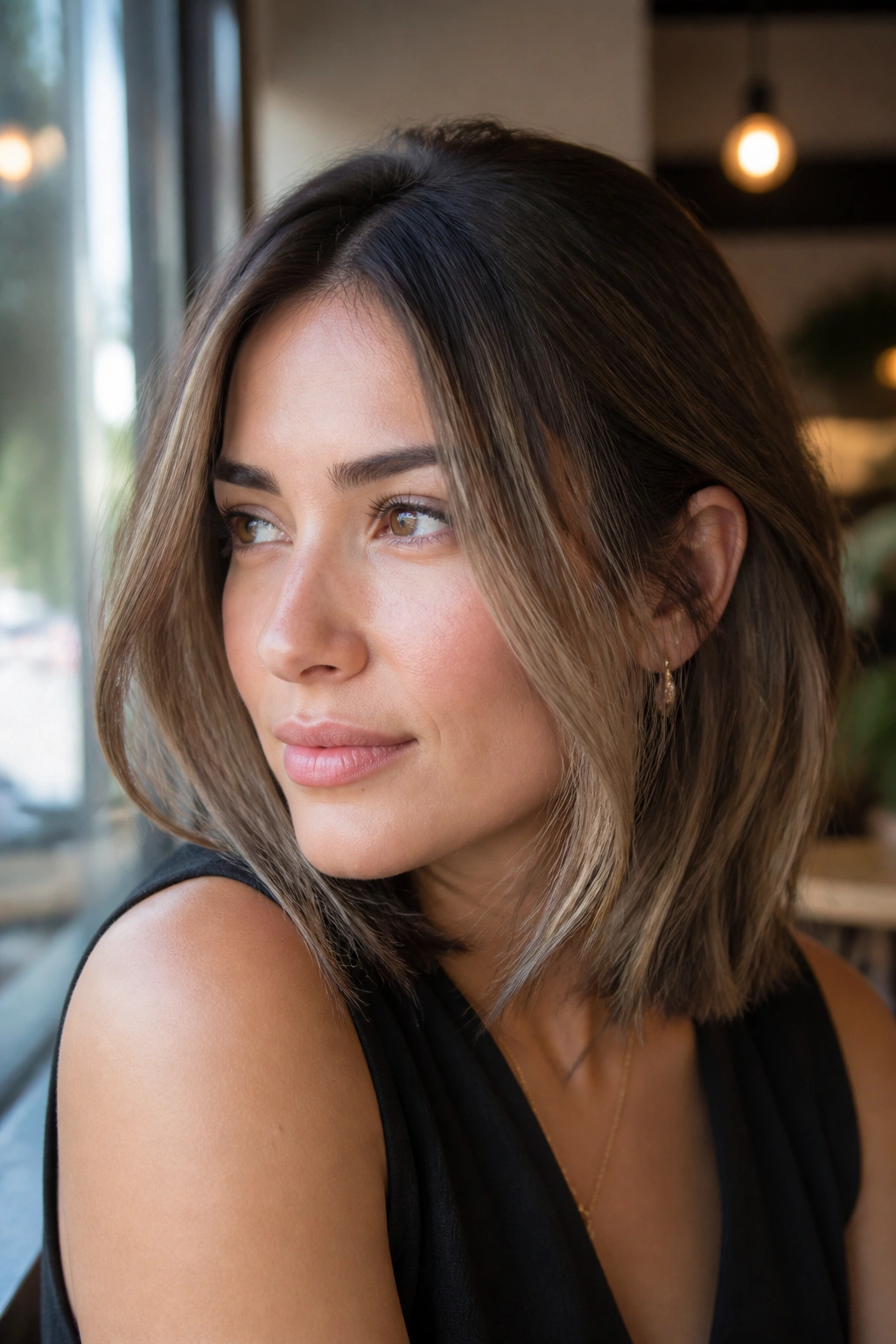
A lob can carry a lot of brightness, but only if the front stays soft.
The cut already has shape, so the highlights only need to echo that shape around the face and collarbone. I like this look when the front pieces are lighter and the rest of the head stays a little deeper. It keeps the lob from reading heavy at the ends, which is a common problem on brown hair that’s all one tone.
Where to place the money pieces
- Put the brightest pieces just in front of the cheekbone.
- Leave the underside of the lob deeper for contrast.
- Ask for ash that leans beige, not blue.
- Keep the ends feathered so the lightness does not stop in a blunt line.
A lob loves movement. Even a slight bend from a round brush makes the ash pieces show. If you wear your hair tucked behind one ear, this placement looks even better because the front highlights frame the jaw instead of sitting there passively.
This is a good entry point if you want ash blonde highlights for brown hair without committing to a full head of lightened pieces.
8. Rooted Ash Blonde Foils for Straight Brown Hair
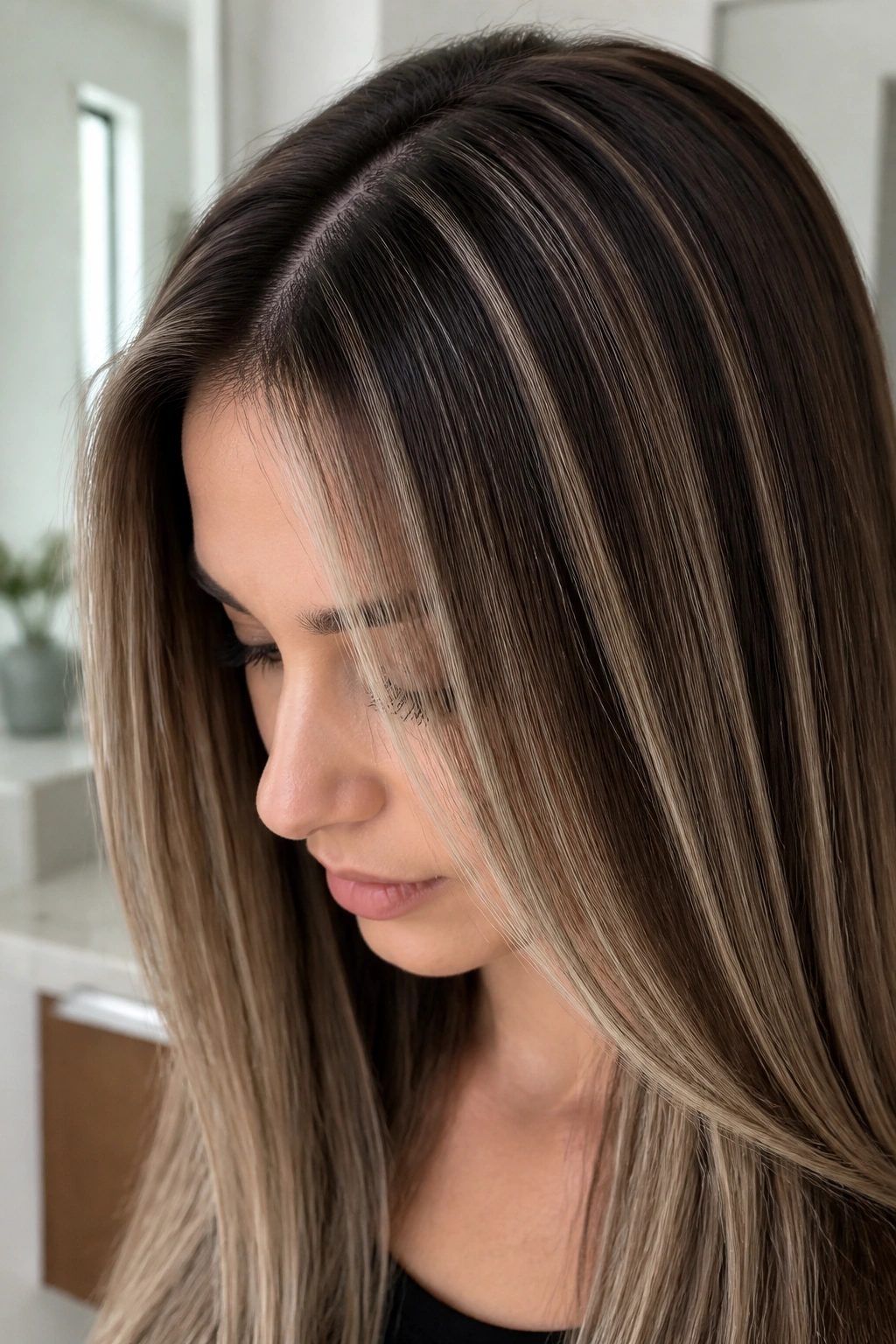
Straight hair shows every line. That is the reason rooted foils work so well here.
The root shadow gives the hair a built-in soft edge, and the foils keep the highlights from looking like hard stripes. On pin-straight hair, ash blonde can look a little blunt if the pieces are too wide or too close together. A deeper root and narrower foil placement solve that problem fast.
Ask for micro-foils around the part, hairline, and top layer, then let the color melt down a little past the root. The aim is not to make the hair look freshly colored every day. The aim is to make the grow-out look planned from the start. Straight hair tends to expose every inch, so the blend has to be precise.
I also like this look for people who wear their hair sleek or tucked behind the ears. The highlights catch light in a cleaner way than balayage does, and the ash tone stays crisp longer because there is less frizz to blur it.
It is not the softest ash idea on the list. It is one of the neatest.
9. Ash Blonde Peekaboo Highlights Under Brown Layers
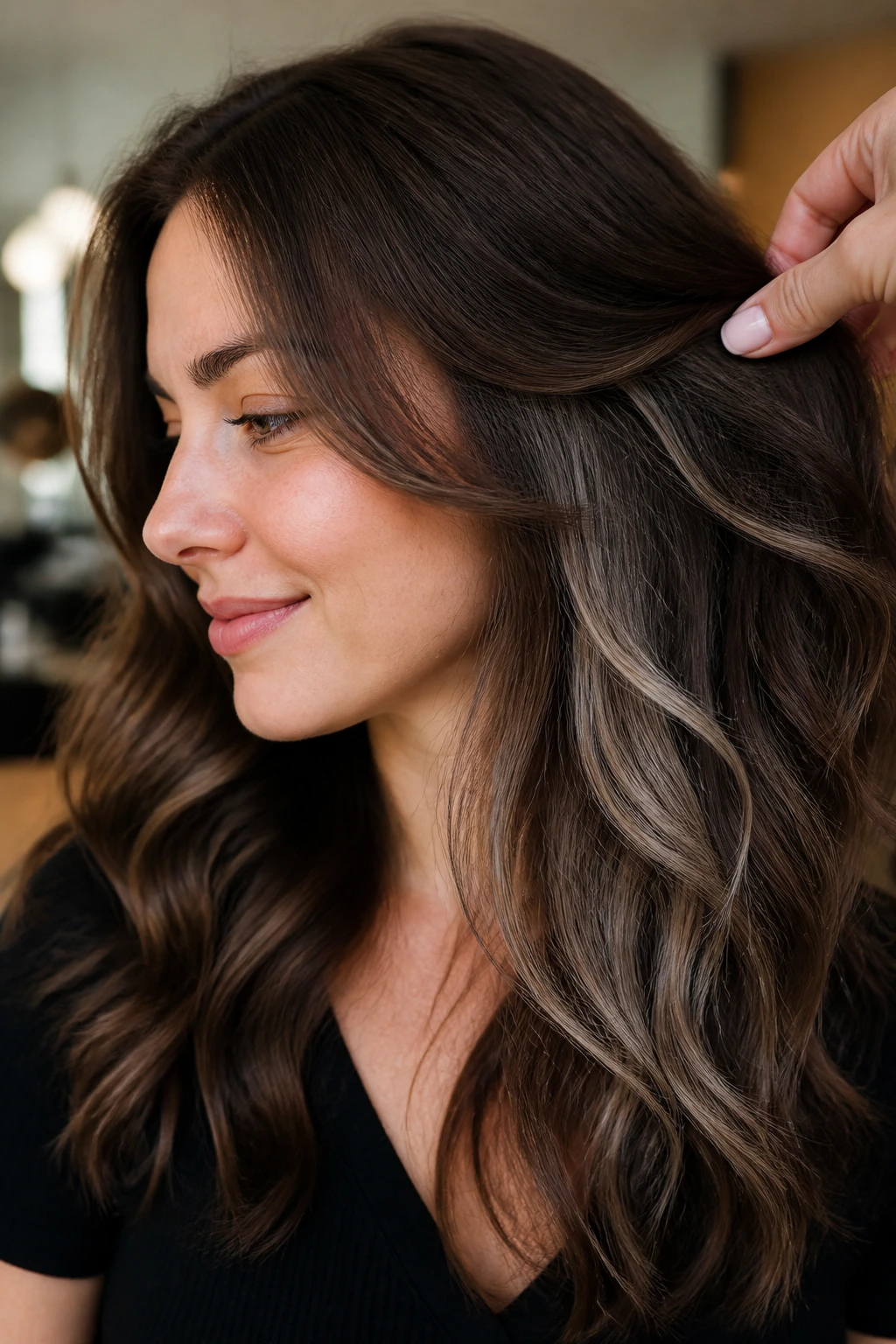
Want ash blonde without seeing it all the time?
Peekaboo highlights are the sneaky answer. The light pieces sit under the top layer, so they stay hidden until the hair moves, gets curled, or goes up in a clip. Brown hair keeps its richness on the outside, while the ash blonde flashes underneath. It is playful, but not loud.
How to use it
- Place the lightest panels under the crown and near the nape.
- Keep the top layer brown or only lightly threaded with ash.
- Wear it in a half-up style to show the color without exposing everything.
- Ask for a cool beige toner so the hidden pieces do not look yellow when they peek through.
This is one of my favorite options for people who like changing their hair without making the whole head lighter. It also buys you time if your hair is fragile. Since the surface stays darker, you can keep the brightest work in a few controlled sections instead of everywhere.
The bonus is simple: when you twist your hair or put it in a ponytail, the ash pieces show up in the most flattering spots.
10. Cool Ash Blonde Foilage for Wavy Brown Hair
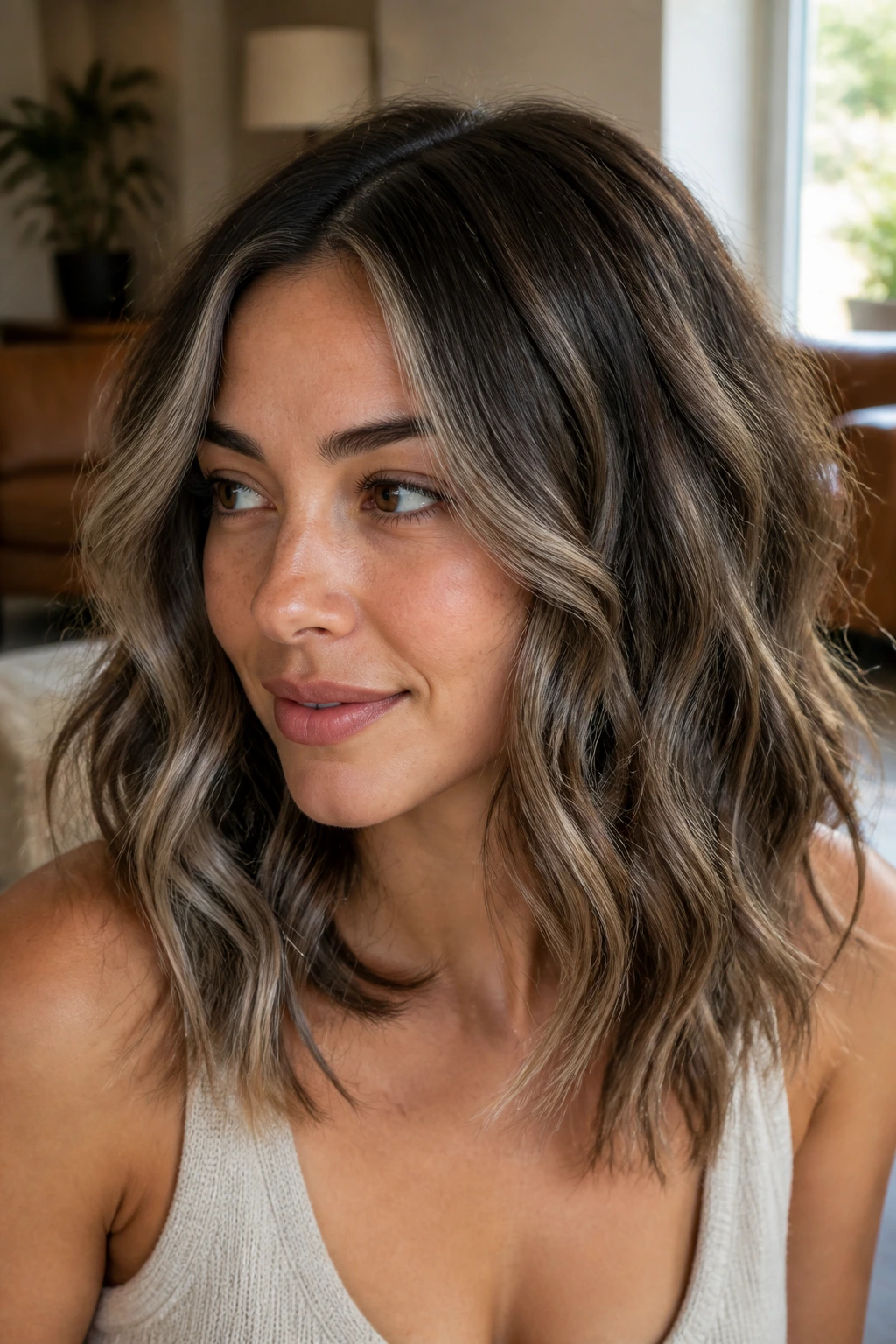
Waves already bend the light, so foilage does not have to work as hard.
That mix of foil and balayage places cooler ash pieces where the wave pattern naturally lifts and falls, which makes the color look lived in instead of pasted on. On brown hair, the lighter sections often land on the top of each wave and around the face, while the lower parts stay deeper. The result is movement first, color second. That is a good thing.
I like foilage for people with medium-density wavy hair because it can handle contrast without getting patchy. Pure balayage sometimes leaves waves a little too brown in the back, while pure foils can look overly tidy. Foilage sits between the two and feels easier on the eye.
- Paint the surface of each wave with a soft hand.
- Trap a few pieces in foil so the lift stays even.
- Keep the toner cool but not flat.
- Use a diffuser or loose bend with a curling iron to bring the ribbons into view.
This one looks especially good when the hair is a little messy. Clean waves are fine. Slightly undone waves are better.
11. Dimensional Ash Blonde with Lowlights
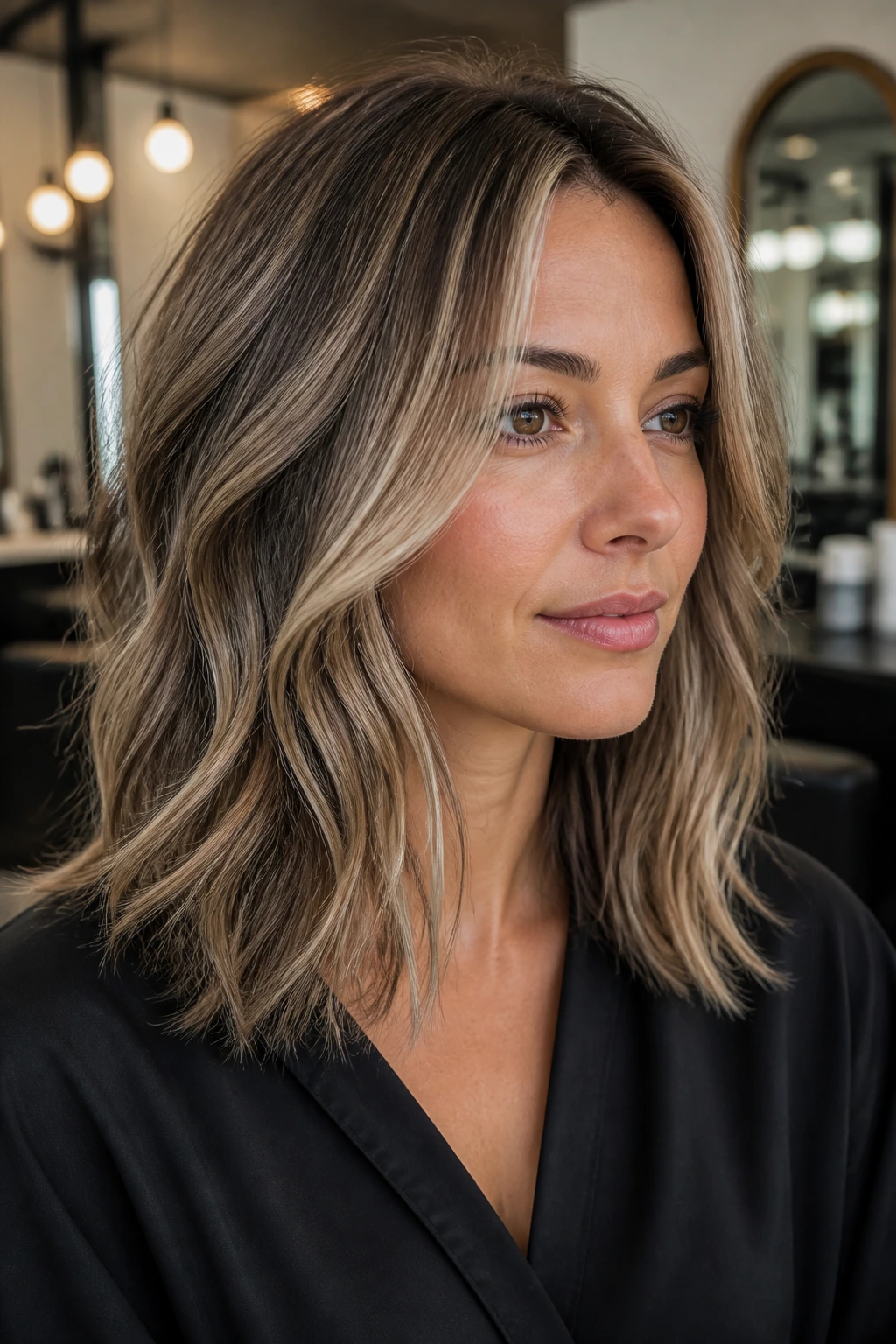
Ash blonde gets much more interesting when brown lowlights stay in the mix.
Without them, the color can start to look washed out, especially on fine hair or lighter brown bases. A few deeper pieces between the highlights keep the ash from drifting into a dull, paper-like shade. Think of lowlights as the structure that holds the blonde in place. They are not the star, but you miss them when they are gone.
The best lowlights are usually one or two levels deeper than the natural base, not jet black and not warm red-brown. That little bit of depth makes the ash pieces feel clearer. It also helps the overall color hold through grow-out because there is still brown in the story.
This is a smart choice if your hair looks thin when it is all one tone. The contrast gives the illusion of more hair without changing the cut. I like it on shoulder-length layers, but it works on long hair too if the lowlights are placed in broad, clean sections rather than tiny random bits.
If you want ash without the washed-out look, add the lowlights.
12. Mushroom Ash Blend on Thick Brown Hair
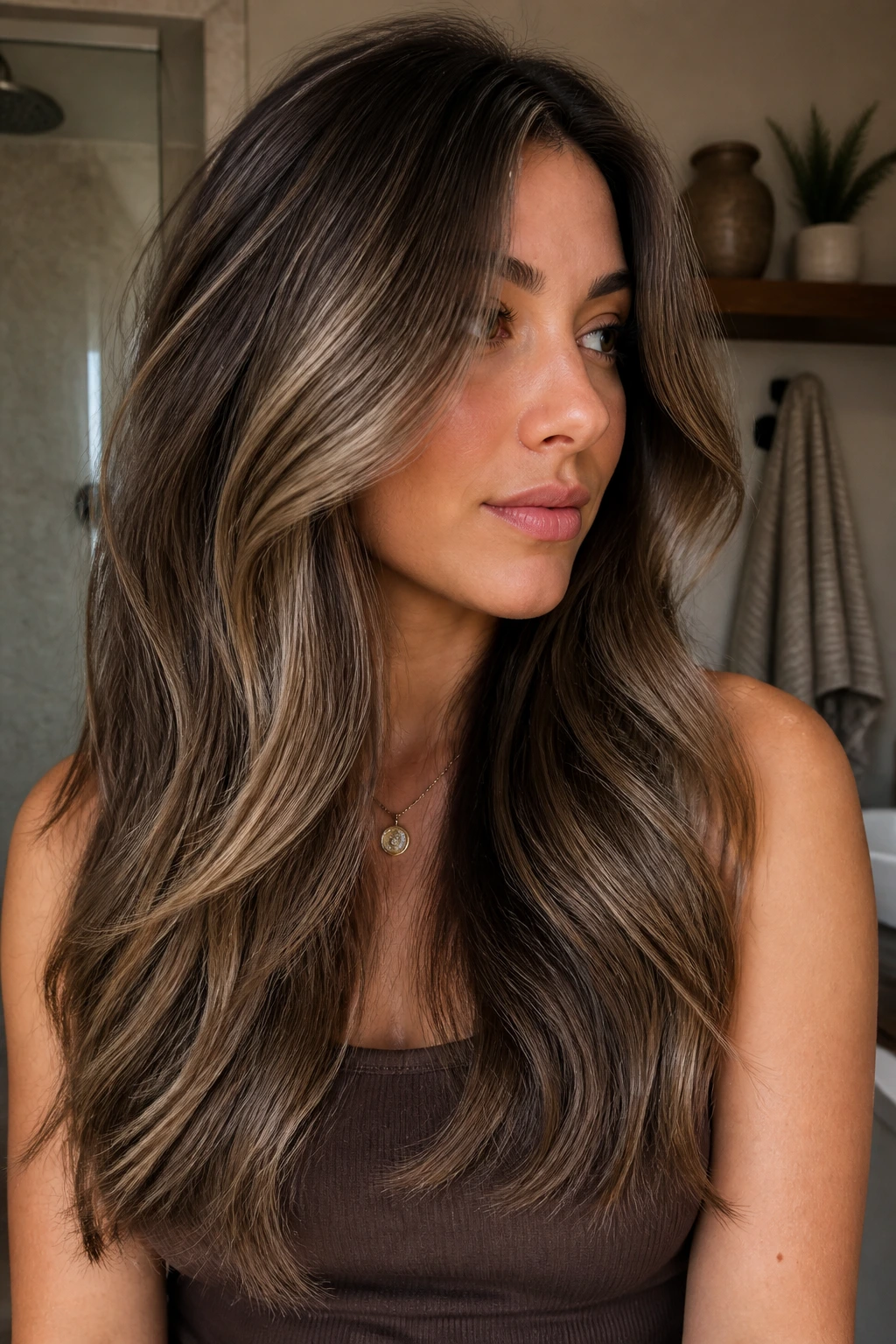
Thick hair needs a different approach. Tiny highlights can disappear into all that density, and that is where a mushroom ash blend does better.
The colorist usually uses wider sections, a deeper root melt, and enough lightness to break through the bulk of the hair. The goal is not to scatter a hundred tiny pieces everywhere. The goal is to carve out space so the ash tone can actually show. On thick brown hair, that often means using fewer but stronger placements.
What makes it work on dense hair
- Use broader panels through the top half.
- Keep the root soft so the color does not look blocky.
- Paint some lighter pieces underneath the heavier top layer.
- Leave a few deeper brown sections untouched so the finish does not puff out.
This style looks especially good when the hair is worn with a little bend or texture. Thick hair can swallow cool tones when it is straight and heavy, so movement helps. A round brush, a loose wave, or a soft blowout usually shows the blend better than a perfectly flat finish.
If your hair tends to eat color alive, this is the one that gives ash blonde enough room to breathe.
13. Ribboned Ash Highlights for Curly Brown Hair
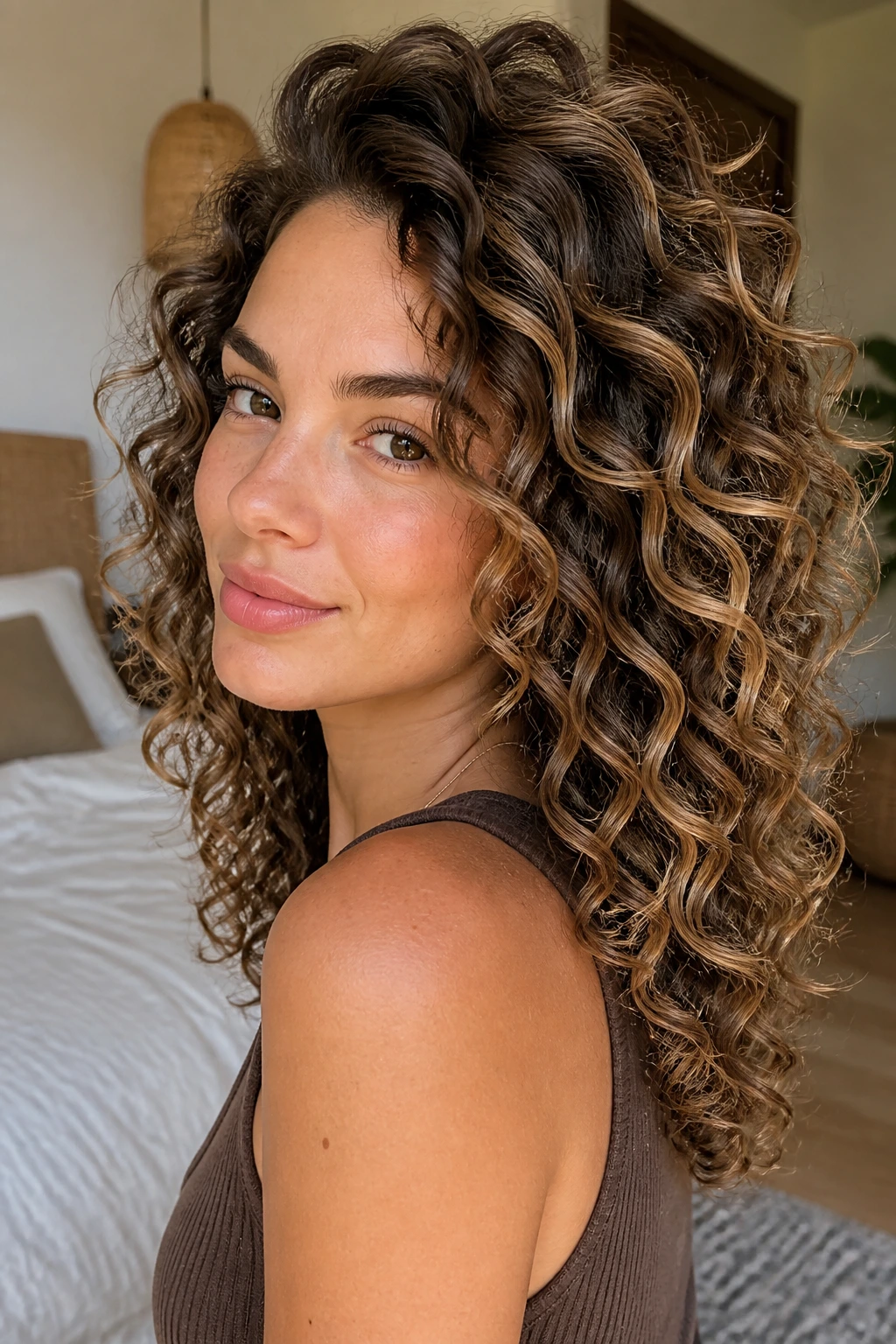
Can curly brown hair wear ash blonde without looking stripy?
Yes, if the color follows the curl pattern instead of fighting it. Curly hair does not need the same foil map as straight hair. The bends and coils create their own light and shade, so the highlights should behave more like ribbons than stripes. The ash pieces should sit where the curls open up, not where they collapse into one heavy line.
How to use it
- Paint lighter ribbons around the outer curve of each curl group.
- Leave some interior depth so the shape stays round.
- Avoid stacking too many light pieces in one section.
- Diffuse gently so the curls do not puff apart and lose the blend.
This look works especially well on medium to tight curls because the ash tone can look nearly silver in the right light, then soften again when the curls fall back into shadow. It is a lovely effect. But it does need care. Curly hair is often drier on the ends, so the lightening should stay controlled and the toner should not be pushed too cool.
If your curls are healthy and springy, ribboned ash highlights can look sharp in the best way.
14. Soft Platinum-Ash Ends with Brown Roots
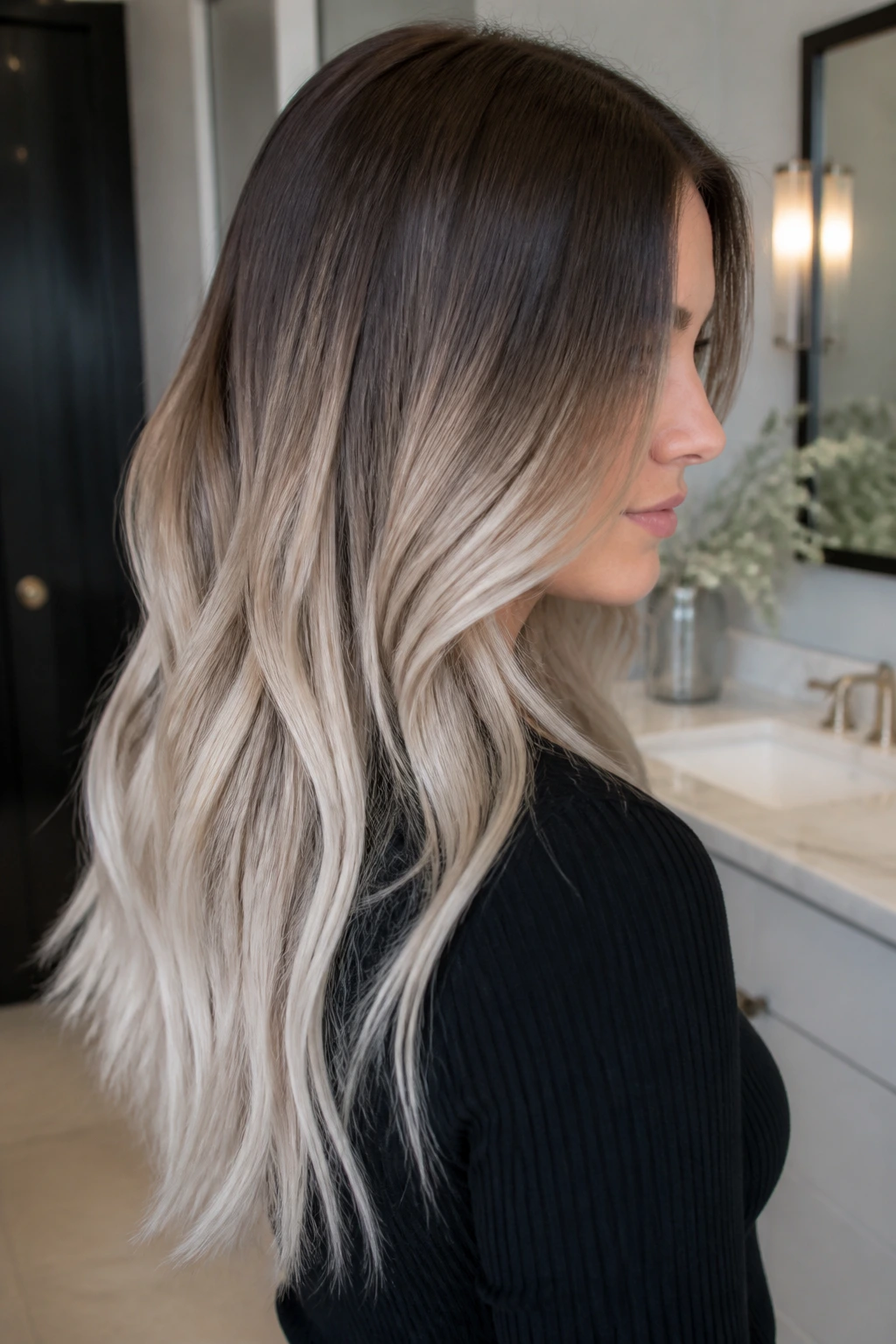
This is the boldest look in the set.
The roots stay brown, sometimes with just a little shadow stretch, while the ends move toward a platinum-ash finish. It gives the hair a clear top-to-bottom shift, and that shift can be striking on long brown hair. The contrast feels deliberate, not accidental, which is why the style works best when the haircut has some shape.
The catch is maintenance and damage. Platinum ash needs a strong lift, usually all the way to a pale yellow stage before toner can take over. That means the ends need to be healthy enough to handle it. If the hair is already brittle or over-processed, I would not force this look. A softer ash finish will age better.
This style suits people who like their hair to look styled even when it’s loose. It also works on blunt cuts, though I prefer it on long layers because the ends have more movement. The brown root keeps it wearable. The pale ash ends keep it interesting.
It is not subtle. That is the point.
15. Ash Blonde Contour Highlights for Side Parts
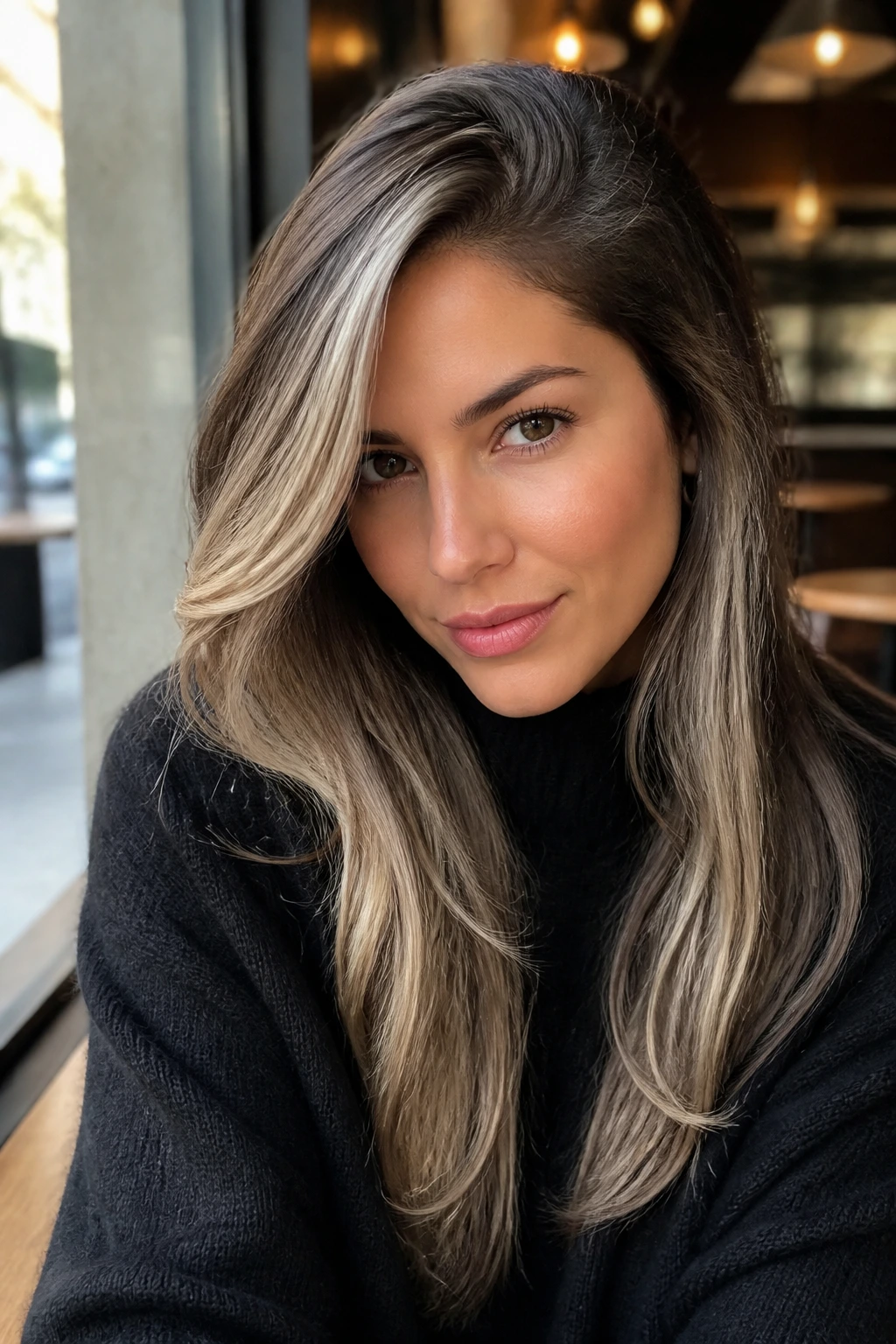
A side part changes the whole face frame, so the color should follow it.
Contour highlights use ash blonde to brighten the side where the hair naturally falls forward, then leave the other side a little deeper. That asymmetry helps the style look shaped instead of evenly lit. Brown hair can feel heavy around the face if everything is the same shade, and contour placement fixes that without needing a huge color change.
I like this technique on layered cuts, long bobs, and medium-length hair that always gets tucked to one side. The brighter front pieces lift the cheek area, while the deeper side gives the cut some weight. If the highlights are placed correctly, the face looks framed rather than surrounded.
There is also a nice practical bonus: when the part shifts, the highlights still make sense. You do not get a hard line where the old part used to live. That matters more than most people expect, because many people move their part a little throughout the day and never think about how the color follows it.
If your face shape changes a lot with a side part, this is a smart place to put the ash blonde.
16. Muted Ash Foils for Short Bob Cuts
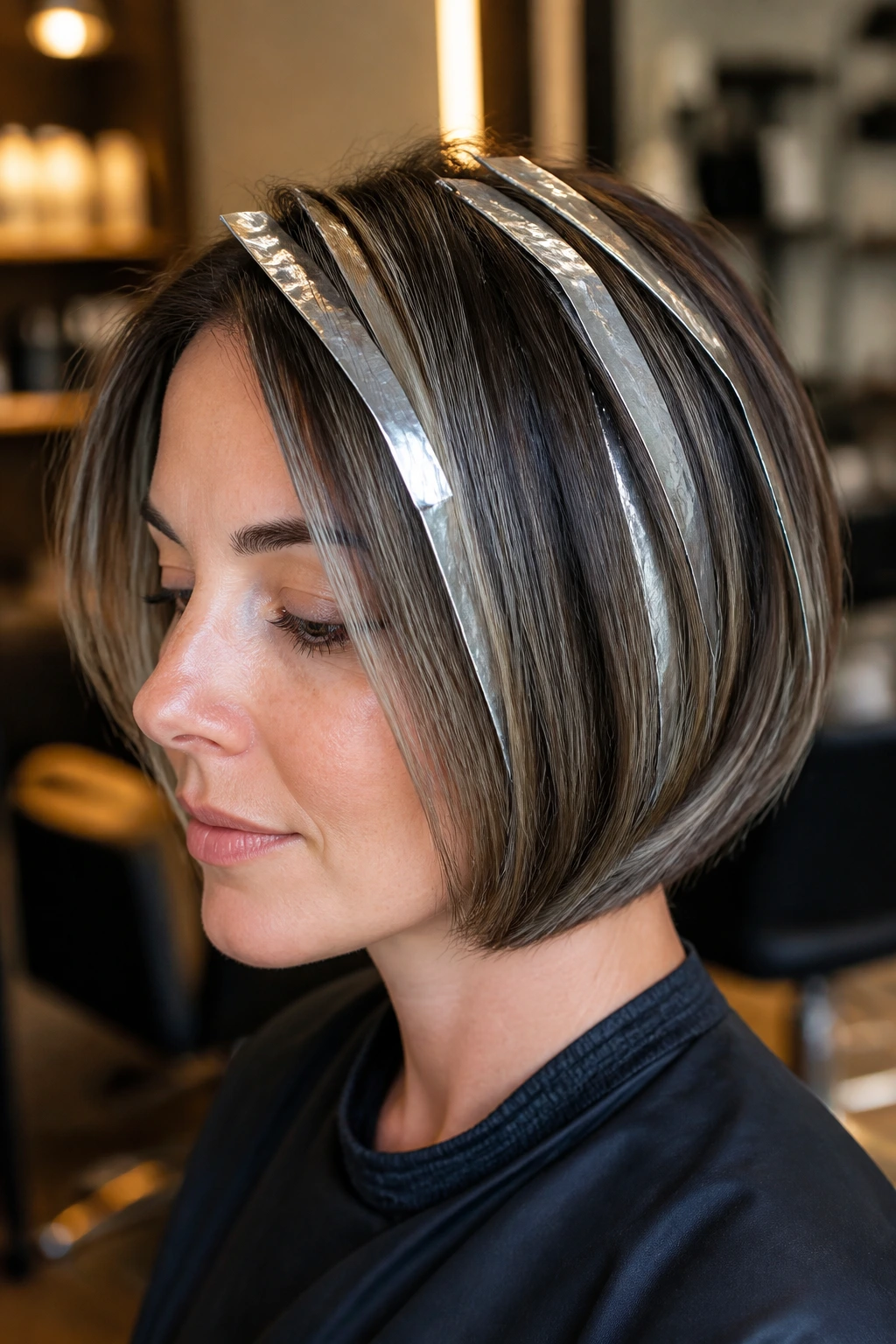
Short bobs do not have much room to hide bad color.
That is why muted ash foils are a safer choice than big blonde panels. The hair is short enough that every piece sits close to the face, so the tone has to stay soft and controlled. Thin foils around the crown, temples, and top layers give the bob lift without turning it into a stripey helmet. Nobody wants that.
Best placement for a bob
- Keep the brightest pieces on the top third of the cut.
- Leave the underlayer brown for shape.
- Make the foils thin enough that the cut still looks sharp.
- Use a cool beige toner, not a heavy silver one.
A bob also benefits from a little shine, so this is a good cut for a gloss or glaze between color appointments. Straight bobs show the ash pieces in a crisp way. Slightly curved bobs soften them. Either works, but the placement has to stay neat because short hair exposes everything.
This is one of those looks that seems simple until the cut is too flat. Then it suddenly matters a lot.
17. Ash Blonde Streaks for Layered Shags
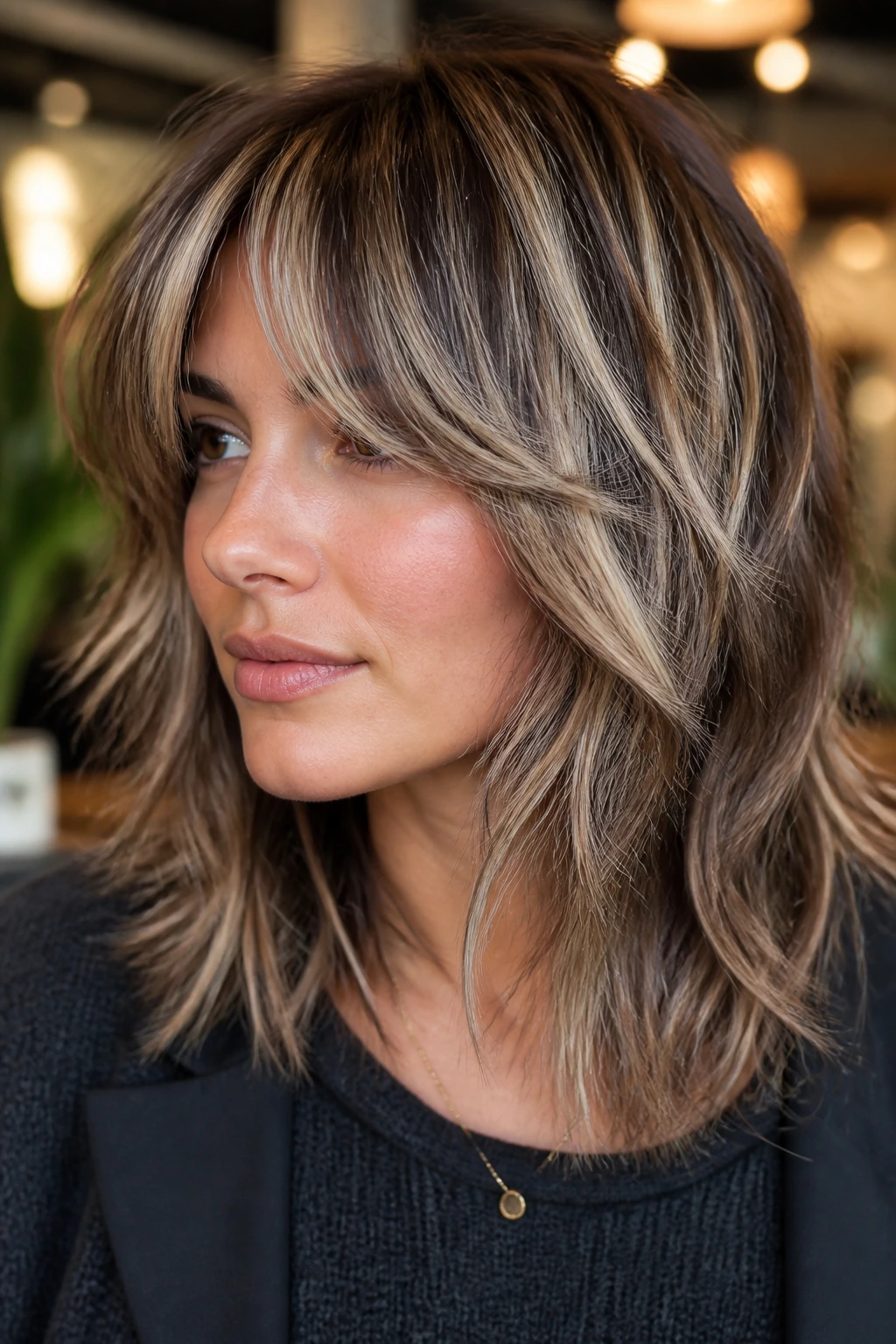
Shags can handle chunkier ash streaks better than most cuts.
That’s because all those layers and feathered ends break up the color into pieces. What would look harsh on a blunt cut starts to look intentional here. The ash blonde can sit in the curtain bangs, through the crown, and in the mid-length layers without overwhelming the brown base. The motion of the cut does half the work.
I like this version when someone wants the color to feel a little more edgy. Not messy. Edgy. There’s a difference. The streaks should be visible, but not so wide that they turn into bands. A shag already has a lot going on, so the color should support the shape instead of fighting it.
A texture spray or rough-dry finish helps a lot. The pieces separate, the ash shows through, and the darker brown underneath keeps the whole thing from going pale. If the hair is very fine, keep the streaks narrower. If it’s thick and layered, the color can carry more contrast.
This is one of the few ash looks that can lean a little bold and still feel easy to wear.
18. Lived-In Ash Blonde Highlights for Brown Hair
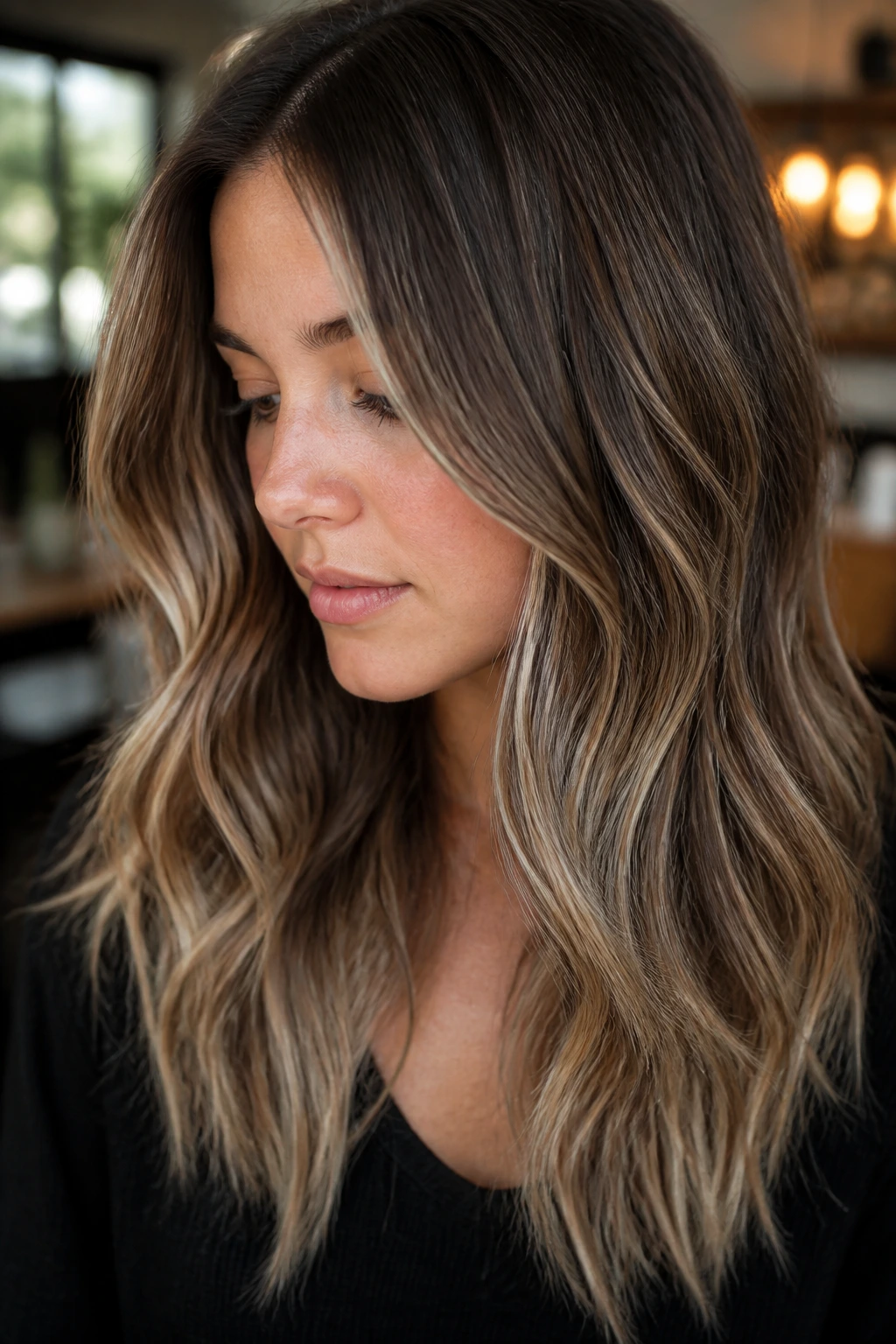
Lived-in ash is the version I’d pick for someone who wants the cool tone but does not want to babysit the color.
The root stays soft, usually stretched down one or two inches, then the mids and ends hold the brighter ash. That blur is what keeps the look from shouting. Brown hair still looks like brown hair at the scalp, which makes the grow-out less annoying and the color far more forgiving between appointments.
I also like this option because it plays well with different skin tones and haircuts. On long layers, the lighter ends move. On medium hair, the root stretch keeps the shape grounded. On a shoulder-length cut, the effect looks polished without feeling overdone. The ash tone is there, but it is not trying to be the whole story.
If you are bringing this to a colorist, ask for a cool beige glaze rather than an ultra-silver toner unless your hair is already very light. That tiny distinction matters. Beige ash usually keeps brown hair looking richer. Silver ash can drift too cool if the base is dark or the hair is porous.
This is the one that wears the easiest and grows out the cleanest.
Final Thoughts
Ash blonde on brown hair works best when there is still some brown left to see. Strip out too much depth and the color can go flat. Leave a little root, a few deeper pieces, or a soft shadow stretch, and the whole thing looks more controlled.
The other thing worth keeping in mind is that tone and placement are not the same decision. A pretty photo can hide a lot of bad placement. A good placement can survive a slightly imperfect tone. If you are showing a colorist inspiration, bring one image for the placement and another for the shade. That tiny extra step saves a lot of back-and-forth.
The prettiest versions of ash blonde highlights for brown hair are the ones that feel chosen, not sprayed on. That’s the real difference.
