



Lowlights for brunette hair solve a problem that gets old fast: color can go flat, even when the cut is good and the hair is healthy. A brunette can look rich on day one and a little one-note two weeks later, especially if the ends are lighter than the roots or the overall tone has been pushed warm by sun, styling tools, or hard water. Good lowlights fix that by adding shadow, depth, and movement without turning the hair into a patchwork.
The trick is choosing the right shade, because “darker” is not the same thing as “better.” A caramel ribbon can warm up a medium brown base in a way that feels soft and expensive. A smoky ash brown can cool down brass and make the hair look cleaner. Chestnut, mocha, espresso, taupe, walnut — each one plays a different role, and the wrong one can leave the hair muddy, striped, or just plain heavy.
Placement matters just as much as color. Lowlights placed only on the surface can look busy. Lowlights tucked through the underlayers, around the crown, and in a few face-framing sections can give brunette hair that dimensional, lived-in look people usually try to fake with styling. The best versions do not scream for attention. They make the haircut look better, which is a much harder trick than it sounds.
1. Caramel Lowlights for a Warm Medium Brunette
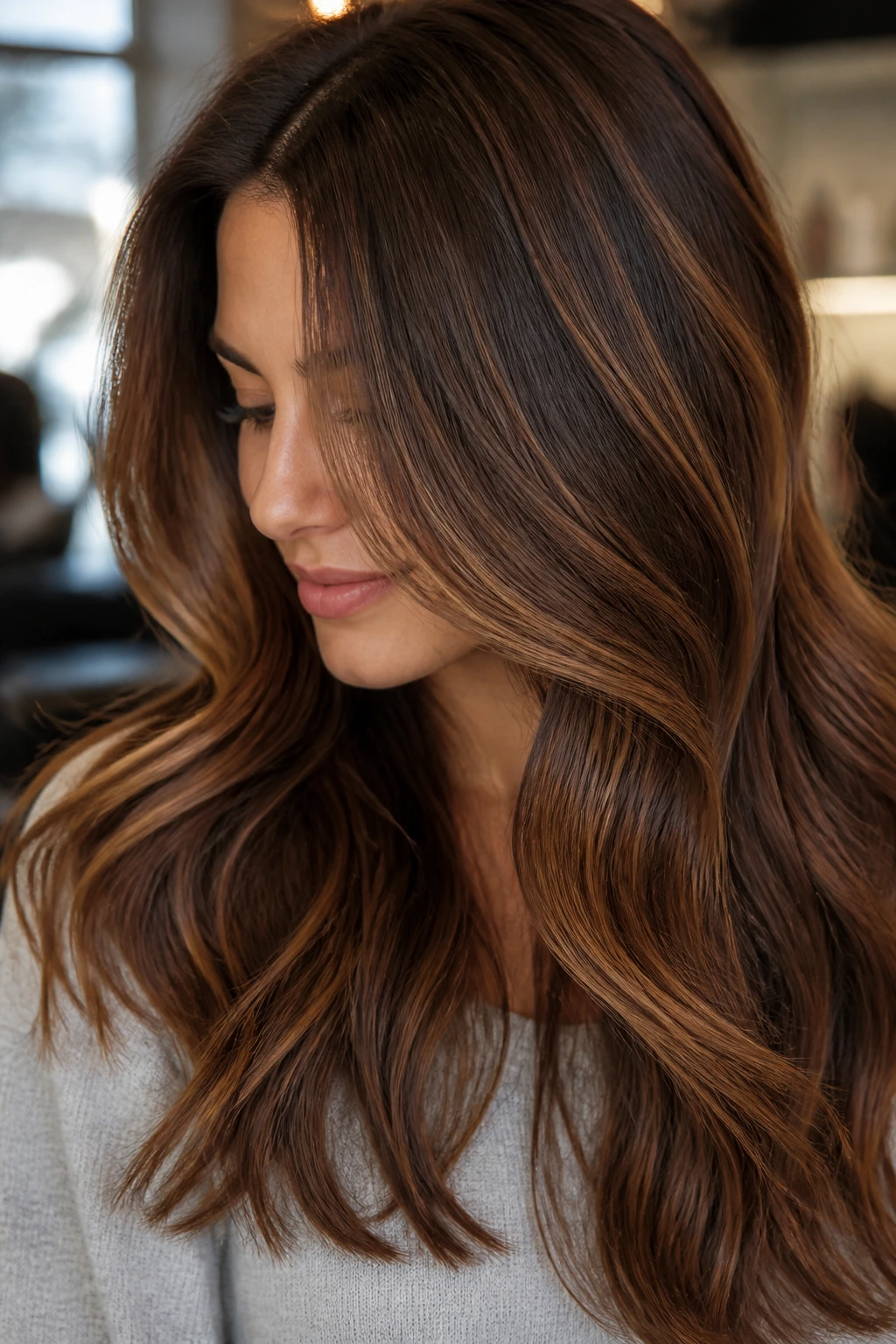
Caramel is the easiest lowlight shade to like, and that is not an insult. It’s a solid choice because it adds warmth and softness without making brunette hair look too dark or heavy.
Why it works
Caramel lowlights sit in that sweet spot between brown and gold. On a level 5 or level 6 brunette, they create gentle contrast that shows up in movement, not in stripes. If your hair tends to look flat in indoor light, caramel gives it a little lift without asking for a big color commitment.
A good caramel lowlight should read warm, not orange. That distinction matters. Orange looks brassy. Caramel looks like depth with a touch of sunlight left in it.
- Best on medium brunettes with warm or neutral undertones
- Ask for one shade deeper than your base if you want subtle depth
- Works well through the mid-lengths and a few face-framing pieces
- Usually looks best as a demi-permanent glaze or low-ammonia color
Pro tip: If your skin gets flushed easily, keep the caramel slightly beige rather than golden. It keeps the color from looking too sweet.
2. Mocha Lowlights That Add Depth Without Warmth
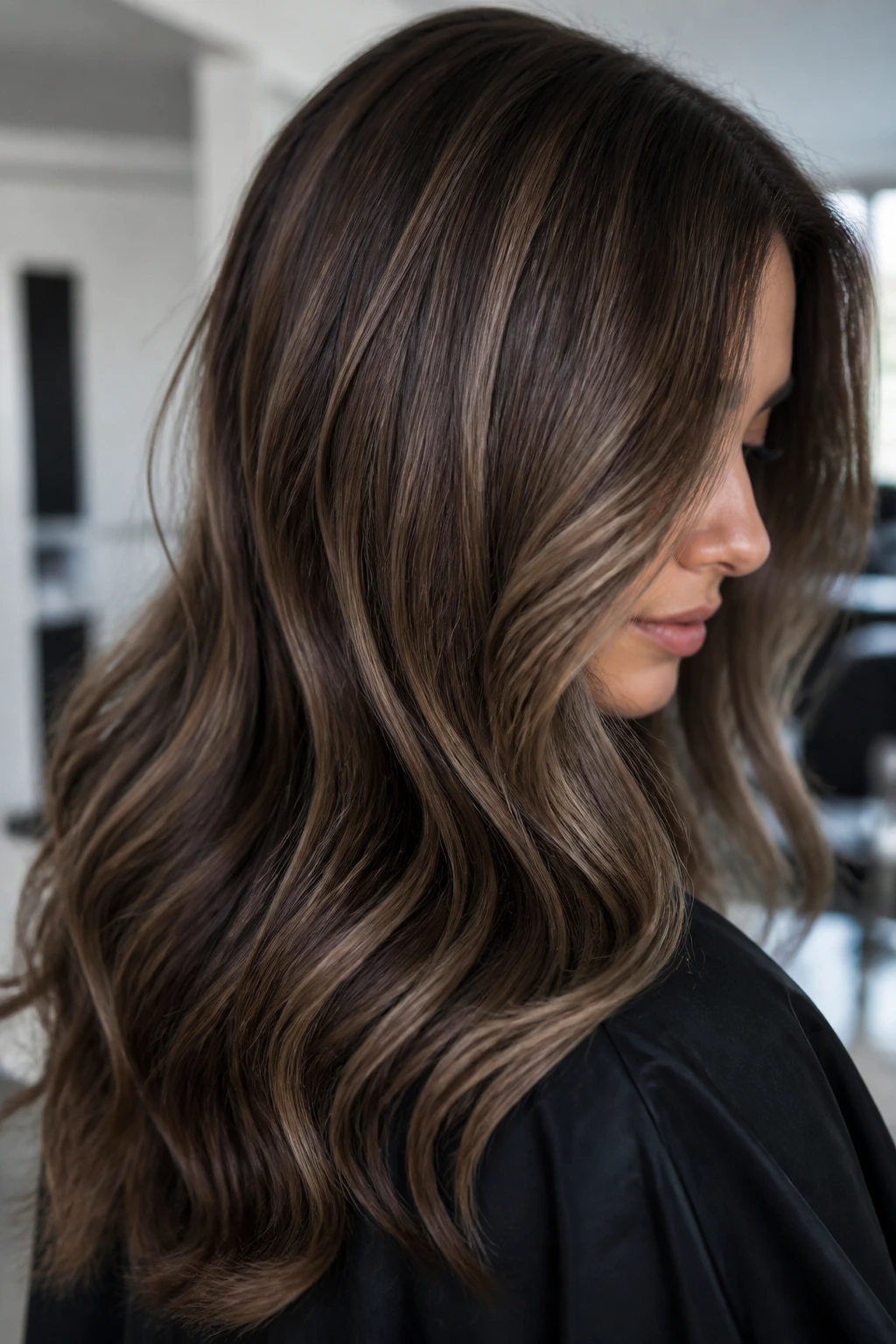
Mocha is for brunettes who want dimension but do not want their hair to swing warm. It’s deeper, cooler, and cleaner than caramel, and that changes the whole mood.
A mocha lowlight can make medium brown hair look denser and a bit more polished, especially if the base color has faded unevenly. It’s also one of the easiest shades to blend into naturally cool brunettes because it doesn’t fight the base. It just sits there and makes the whole head look more expensive.
The main thing to watch is placement. Too much mocha near the face can drag the skin down a little if the tone is very cool. I like it better on the crown, underlayers, and scattered through the back where it gives the hair movement when it swings.
If you wear your hair in waves, mocha lowlights catch the bends nicely. Straight hair can use them too, but the effect is quieter. Still useful. Just quieter.
3. Ash Brown Lowlights for Cooling Down Brass
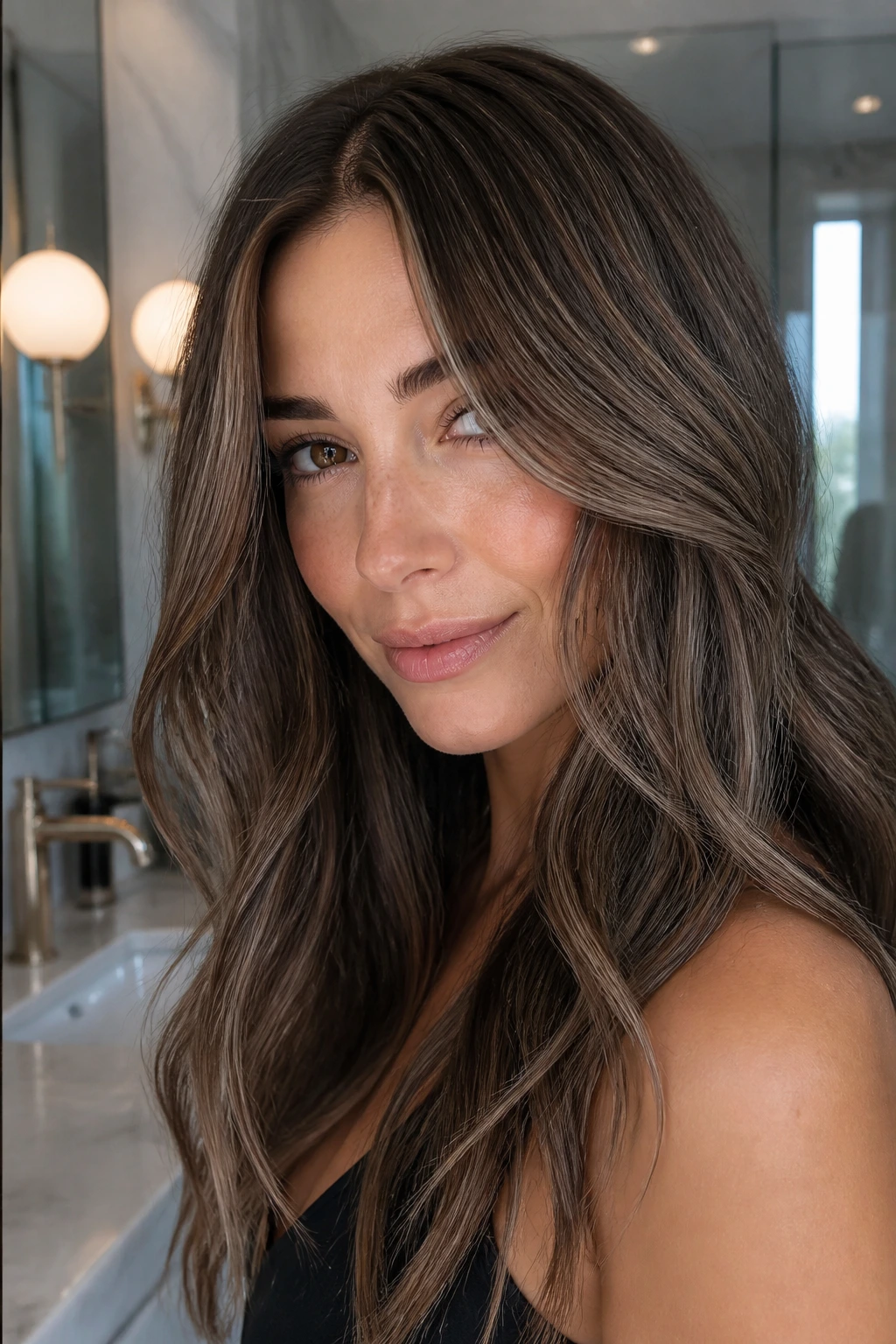
Why do ash brown lowlights work so well on brunettes who feel “too warm” after a few weeks? Because ash does one job and does it well: it cuts yellow and orange tone without turning the hair black.
Ash brown is especially useful if your brunette hair pulls coppery at the ends. The colorists I trust usually place it in thin slices under the top layer, not in chunky ribbons. That keeps the tone from looking smoky in a harsh way. You want cool depth, not flat gray-brown.
How to use it
Ask for a level 5 ash brown if your base is medium brown, or a level 4 ash brown if your hair is deeper and already warm.
- Best when brassiness is the main complaint
- Works well around the nape and inner layers
- Keep the front pieces softer so the face does not look washed out
- Pair with a cool brunette gloss if the hair needs extra tone correction
Ash brown lowlights are not flashy. Good. They’re supposed to look like your hair is simply behaving better.
4. Chestnut Lowlights for a Rich, Natural Finish
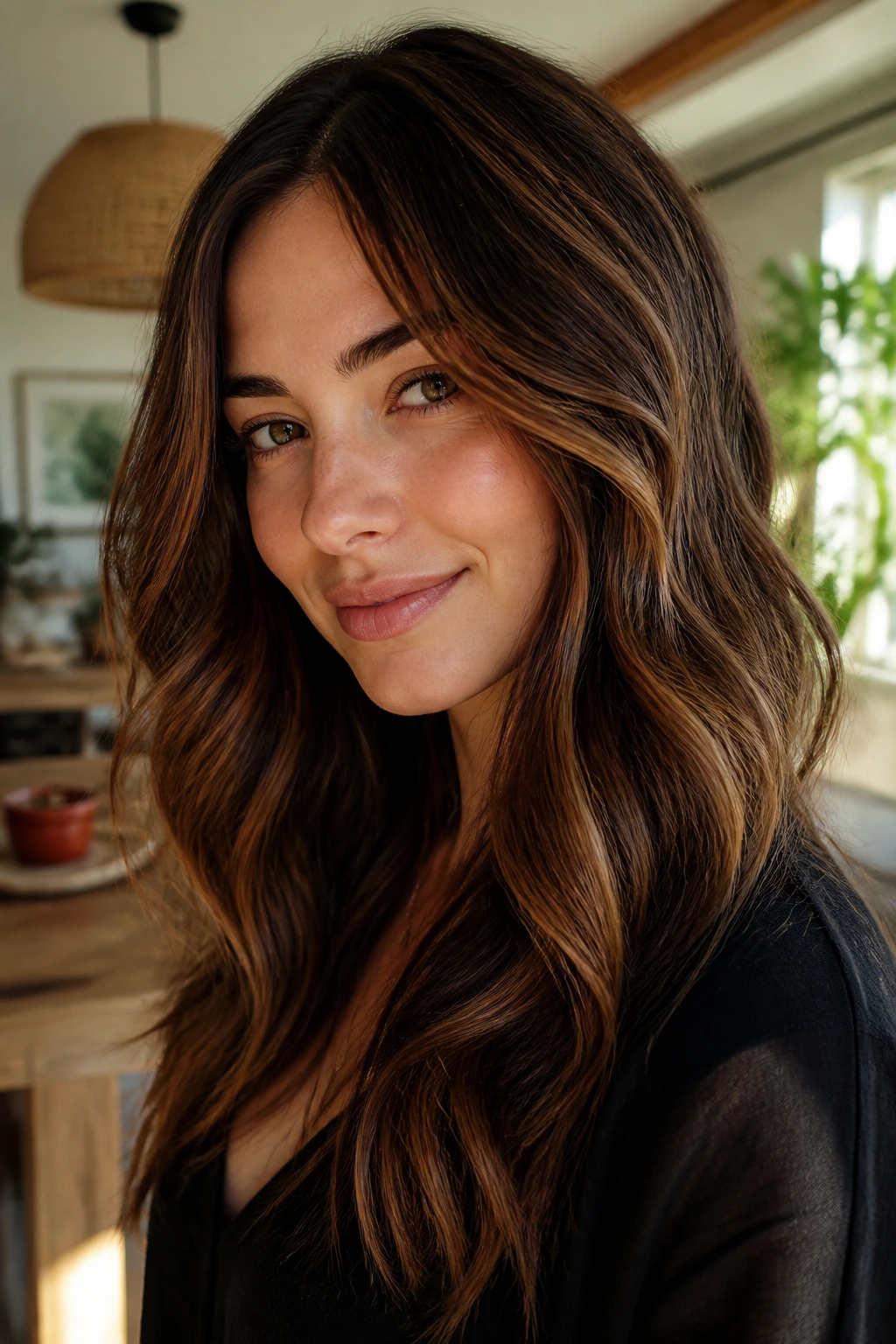
If you have ever seen brunette hair and thought, “that looks like good hair,” chestnut was probably doing some of the work. It has a red-brown undertone that feels natural, but not boring.
Chestnut is the fix for brunettes who want warmth without going full caramel. It adds that slight reddish cast that shows up in sunlight and soft indoor light, and it’s especially useful on hair that has lost richness after repeated washing. The color gives the strands a denser look, which matters more than people think.
What to ask for
- A medium chestnut lowlight on level 5 or 6 brunettes
- Softer placement around the hairline
- Slightly deeper pieces underneath for movement
- A gloss finish if the hair is porous and tends to grab too much red
The one drawback? Chestnut can go too auburn if the formula is too warm. That’s why I like it best when the stylist keeps it brown first, red second. That order matters.
5. Espresso Lowlights for Dark Brunettes Who Want Contrast
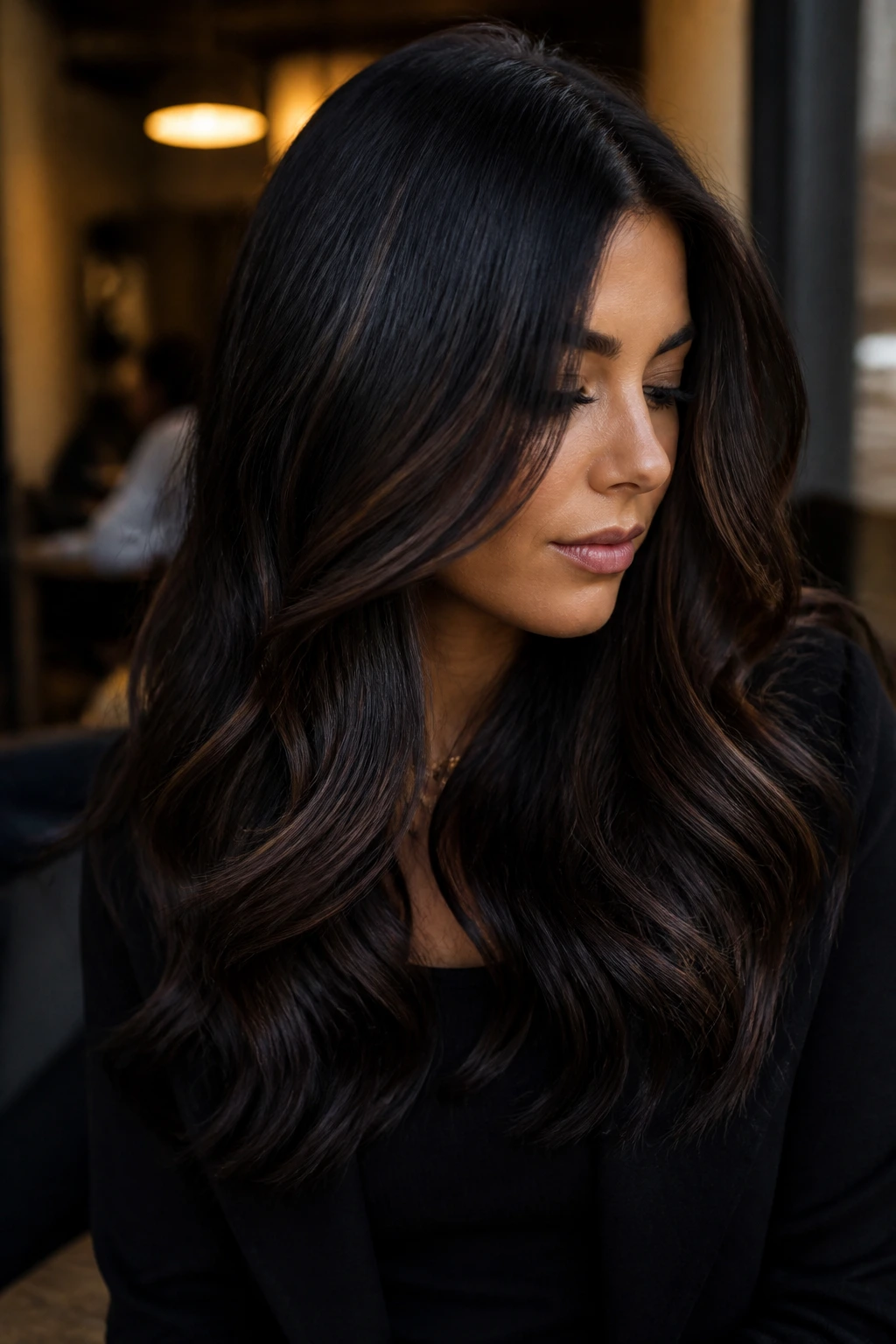
Espresso lowlights are not subtle in the usual sense. They’re subtle in the way a well-cut coat is subtle: you notice the effect, not the detail.
On dark brunette hair, espresso creates the kind of contrast that makes waves and curls pop. It’s especially useful when the base is a level 4 or darker and the hair needs more shape. One or two tones deeper can change the whole read of the hair, especially around the crown and ends where light tends to hit first.
This shade works because it keeps everything in the brown family. No red. No gold. No weird muddy middle ground. Just clean depth.
I like espresso lowlights best when they’re placed in thicker sections under the top layer and then softened with a few finer pieces around the face. Too many espresso ribbons at the surface can make the hair look carved up. Hidden depth is the better move. Always.
6. Mushroom Brown Lowlights for a Cool, Soft Dimension
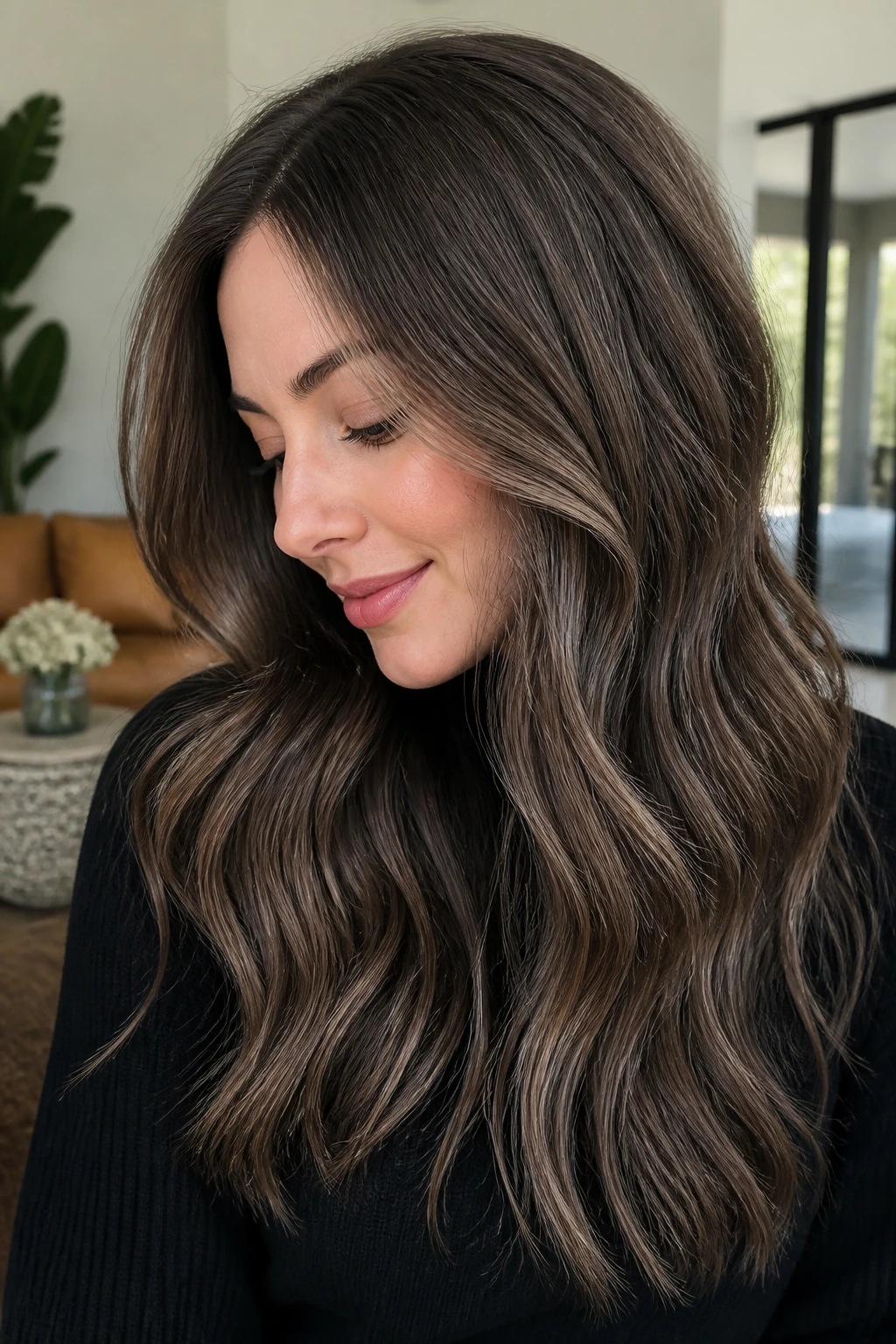
Unlike caramel, mushroom brown stays cool and muted. That’s the whole point. It gives brunette hair a soft gray-brown cast that looks modern without feeling harsh or icy.
This shade is a good fit for neutral to cool brunettes who hate red tones. It also works on previously highlighted hair that needs tone correction, because mushroom brown can calm down leftover warmth without making the ends look dead. That balance is hard to get right, which is why this shade should be placed carefully and toned often.
Best for
- Ash-brown bases that need depth
- Straight or softly wavy hair
- People who want dimension without visible warmth
- Hair that tends to turn orange when colored darker
If you’re asking for mushroom brown lowlights, bring a photo with real indoor lighting, not just a bright salon picture. Mushroom tones can shift fast depending on light, and a picture under yellow bulbs can trick everyone in the chair.
7. Bronze Lowlights That Wake Up Flat Brown Hair
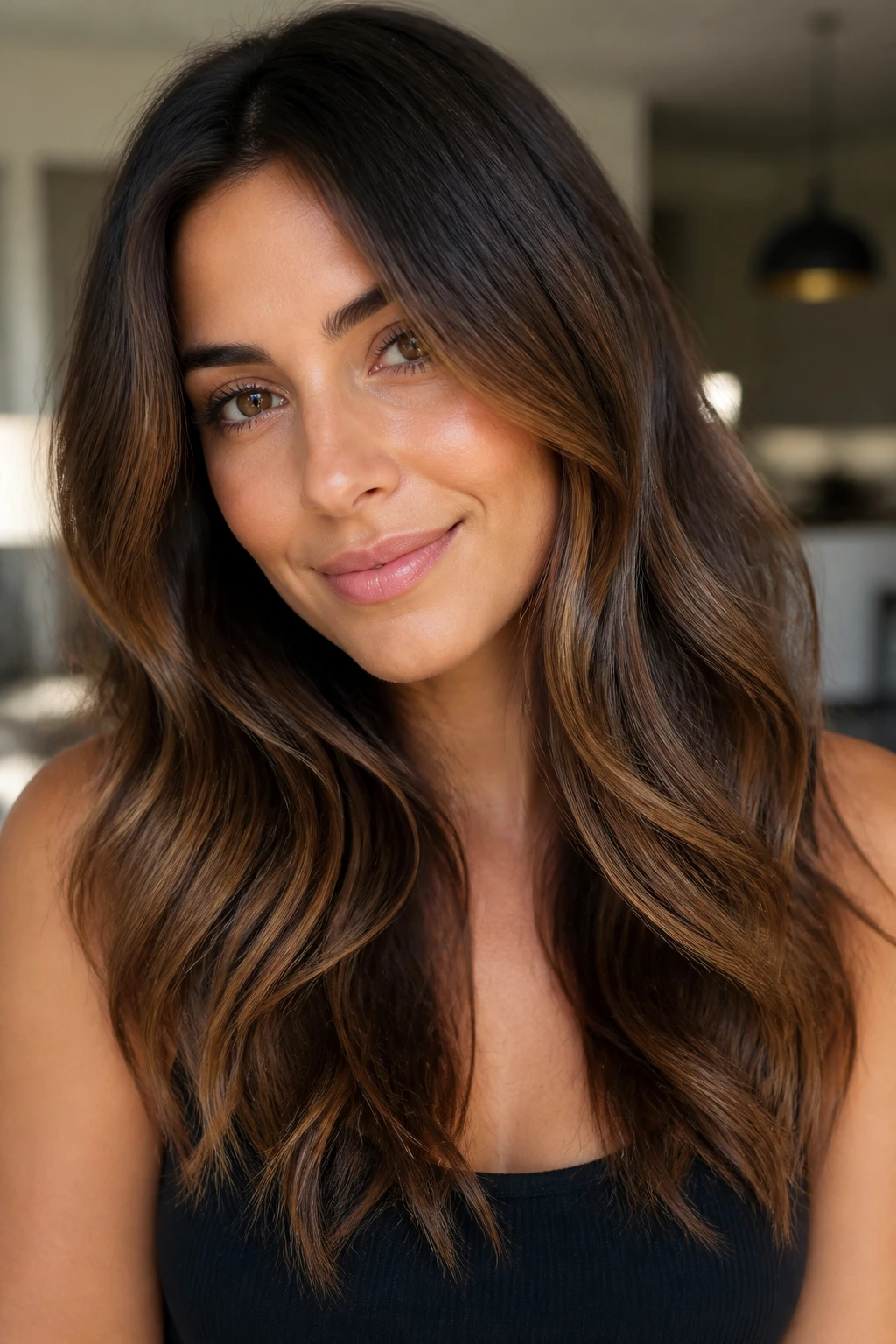
Bronze is warmer than mushroom, but it’s not as sweet as caramel. That middle space is why it works so well on brunette hair that needs energy.
Bronze lowlights are especially good if your base is medium brown and a little dull. They add a metallic warmth that catches movement, but in a grown-up way. Not shiny. Not brassy. Just enough glow to keep the hair from feeling heavy.
A bronze lowlight usually looks best when it’s mixed through mid-lengths and ends rather than packed near the roots. Roots already carry enough depth. The ends are where bronze gives the hair some life.
Quick details
- Works well on neutral brunettes with gold undertones
- Best placed in soft slices, not chunky blocks
- Can be paired with loose waves for a richer finish
- Needs tone maintenance if the hair is porous
Tip: Bronze lowlights are easier to wear when the makeup leans warm too. A peach blush or a nude lip keeps the whole look from feeling disconnected.
8. Cinnamon Lowlights for Warmth With a Little Bite
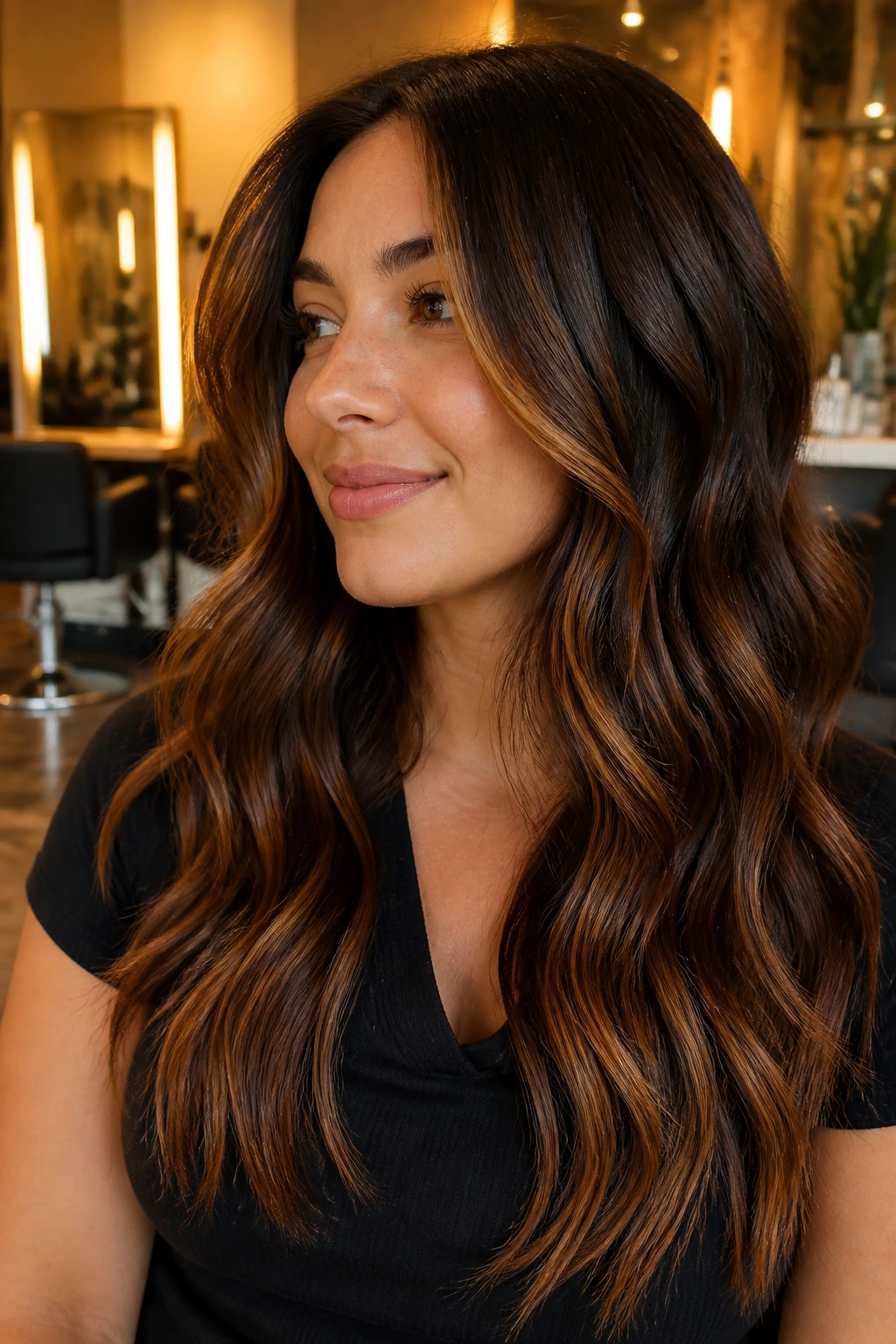
Cinnamon is for brunettes who want warmth that feels a touch spicier than caramel. It has brown, red, and copper notes all working together, which is why it can add so much life to dull hair.
On shoulder-length brunettes, cinnamon lowlights can make layers look more obvious without resorting to highlights. They’re especially flattering when the haircut has texture. A blunt cut can handle them too, but the effect is stronger on hair with movement.
The catch is that cinnamon can turn strong fast. If the formula is too red, it starts to dominate. I prefer it as a woven lowlight through the interior of the hair, with just a few face-framing pieces if the client wants a warmer edge.
It’s a good shade for someone who likes copper but doesn’t want the full commitment. That’s the real appeal. It gives you heat, but in a controlled way.
9. Auburn Lowlights That Bring Out Green or Hazel Eyes
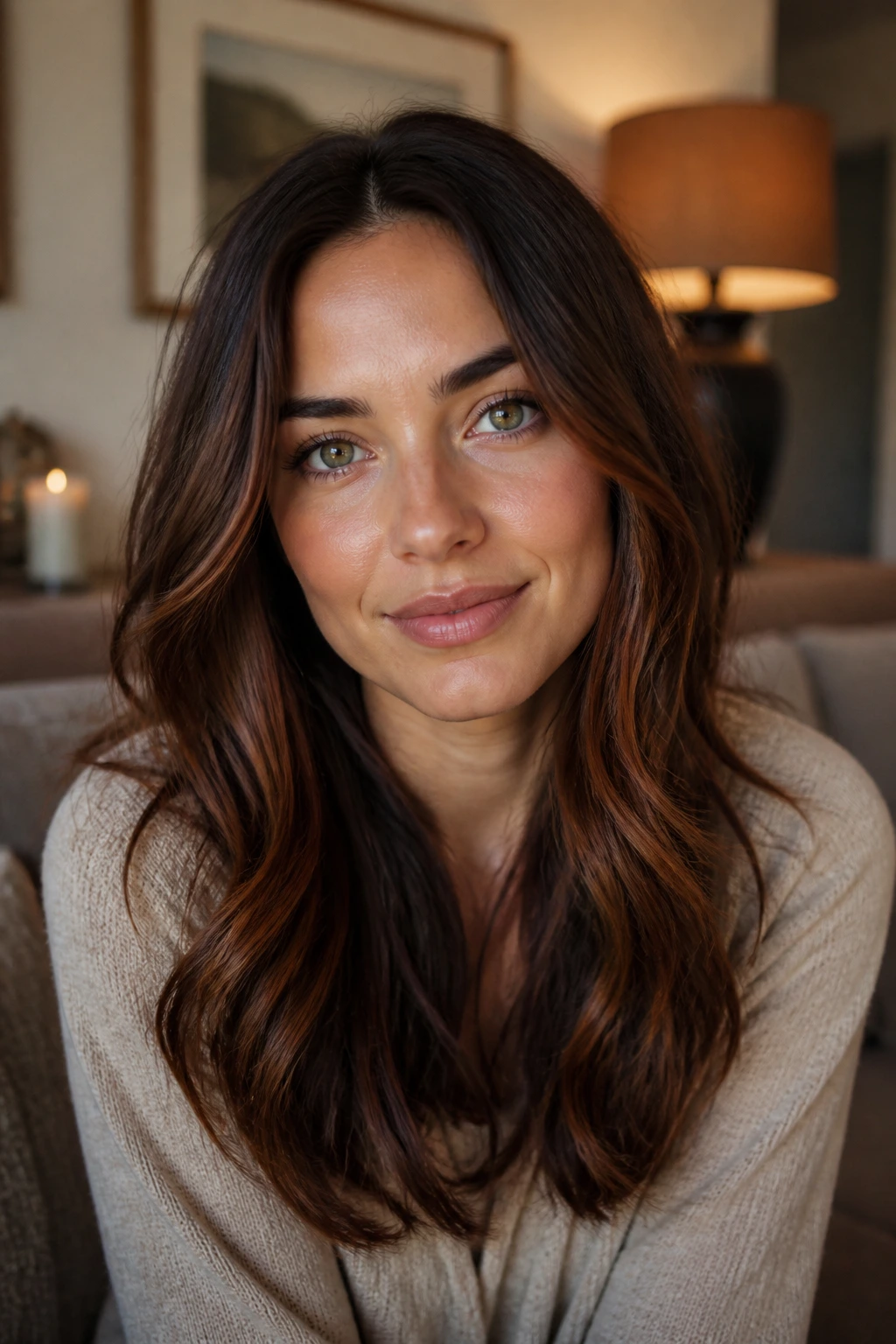
Auburn lowlights are one of those choices that can look quiet in the bowl and gorgeous on the head. They lean red-brown, which gives brunette hair a softer, richer edge.
If you have green or hazel eyes, auburn can do a lot of work. It pulls warmth into the complexion and makes the eye color stand out without needing obvious streaks. The trick is moderation. A few auburn ribbons through the mid-lengths can do more than a full head of red-brown.
What to watch for
- Best on natural brunettes with warm skin
- Can look too red on very cool complexions
- Works especially well in layered cuts
- Fades toward brown-red, which is usually easier to live with than bright red
Auburn is one of the few lowlight choices that can look richer as it softens. That’s not true for every shade, and people ignore that all the time. Let it fade a little, and it often looks better.
10. Copper Lowlights for Bold, Movement-Focused Dimension
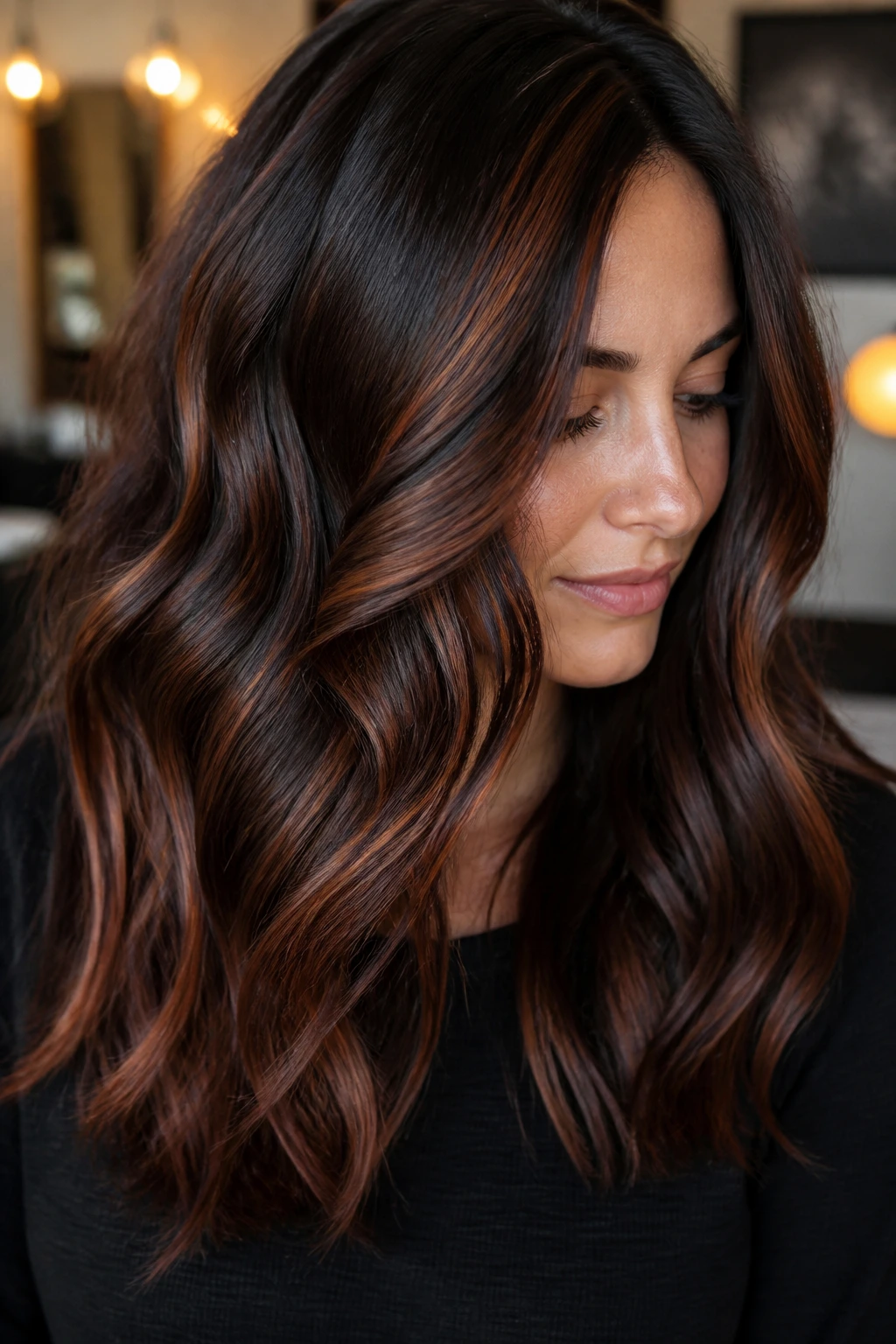
Copper lowlights are not shy. They’re still lowlights, so the goal is depth, but copper brings a brighter edge than cinnamon or auburn.
This works best on brunettes who want their hair to move. Literally. Copper catches bends and curls fast, so a blowout or loose wave makes the shade come alive. On straight hair, copper can still work, but it becomes more of a warm undertone than a showy effect.
If you’re nervous about looking too red, keep the copper tucked through the lower layers. You’ll still get the warmth when the hair moves, and the top layer can stay brown enough to keep the whole thing grounded.
Copper lowlights are also one of the better choices for anyone whose brunette hair looks tired in winter light. They bring back a little heat. Not too much. Enough.
11. Honey Lowlights for Soft Brightness Inside Darker Brown Hair
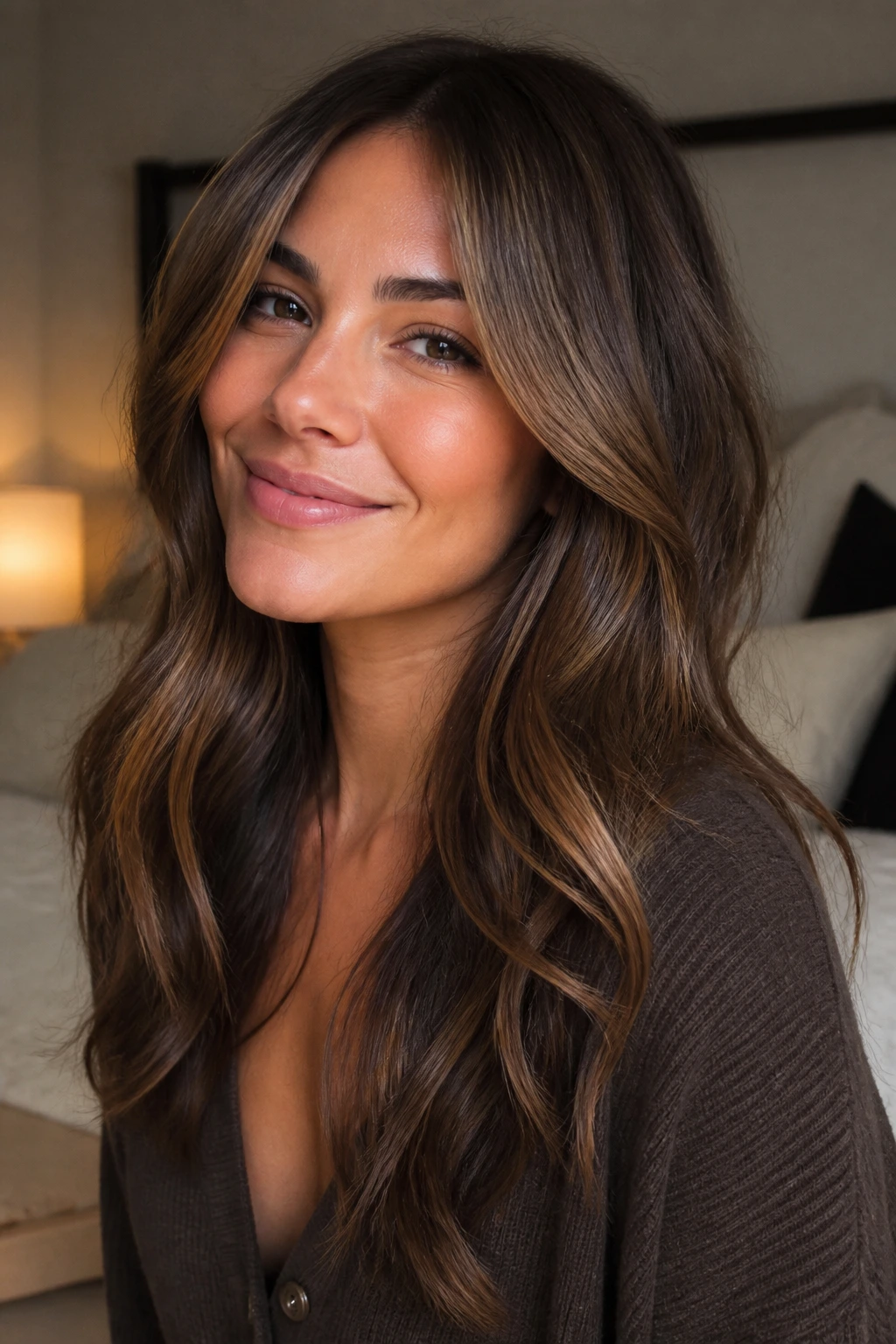
Honey lowlights sound backward at first because honey is usually treated like a highlight shade. But on brunette hair, a deeper honey-brown can work as a lowlight that adds softness rather than lift.
This is the shade I like when someone wants dimension but hates anything smoky or red. Honey gives warmth, sure, but it stays creamy instead of orange. On medium brunettes, it can make the ends look fuller. On dark brunettes, it can keep the hair from looking like one solid block.
The placement should be light-handed. A few honey pieces through the surface around the face can keep the look from going muddy, while the underlayers get a slightly deeper version for contrast. It’s a nice choice if you style your hair in ponytails or half-up looks, because the movement reveals more of the tone.
And yes, honey can turn brassy if the formula is off. So the shade needs restraint. More sweet than syrupy.
12. Taupe Lowlights for Brunettes Who Want a Smoky Neutral Finish
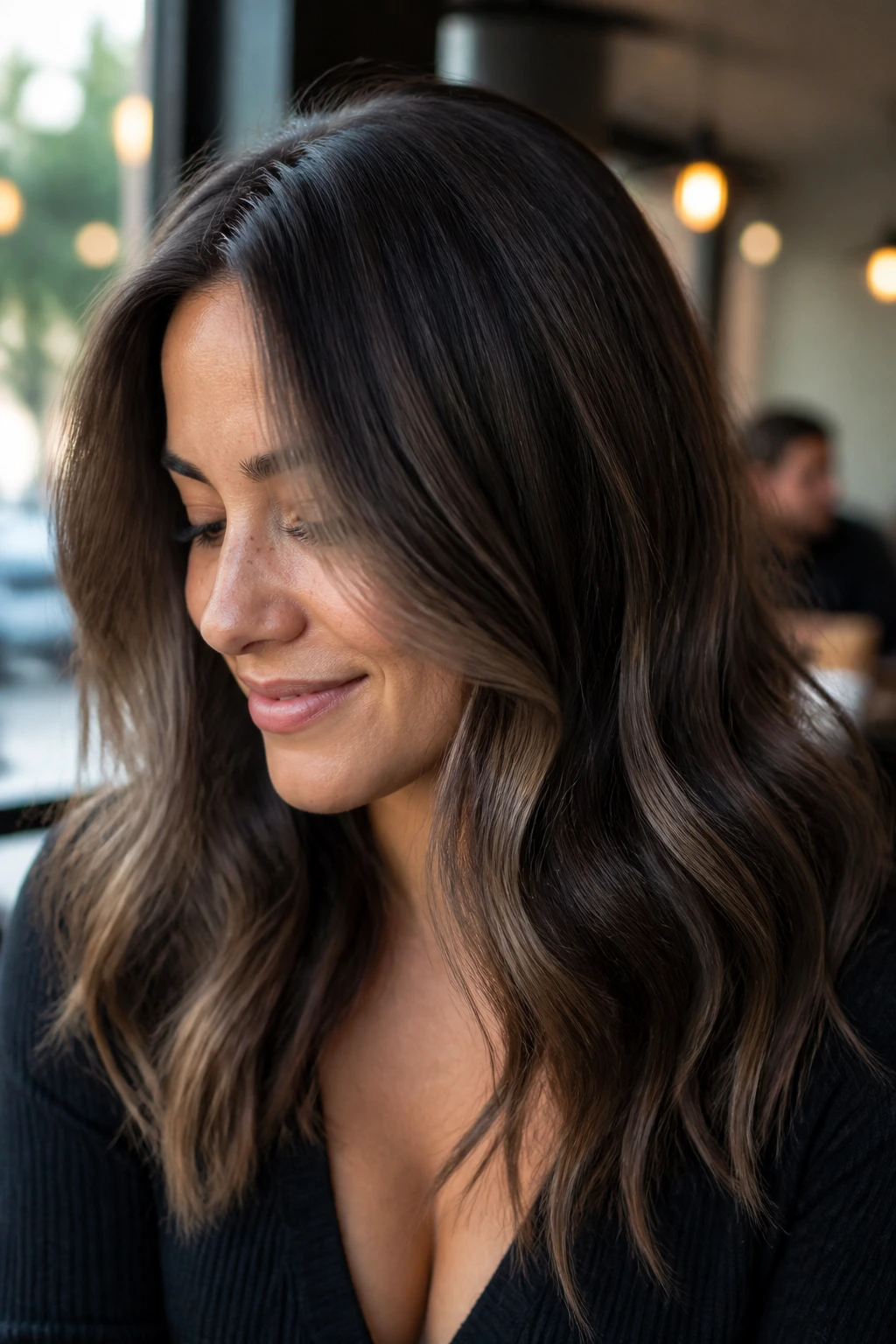
Taupe is one of the best lowlight shades for brunettes who are tired of warm tones but do not want full ash. It sits in the middle, which makes it useful and, honestly, underrated.
Unlike cooler ash browns, taupe carries a soft beige-gray feel that blends into neutral brunettes without shouting. It’s a smart option when the hair already has dimension and just needs a cleaner edge. Think of it as the colorist’s answer to “make it less orange, but don’t make it flat.”
How it differs from ash
Ash is cooler and more blue-based. Taupe is softer, with a beige note that keeps it wearable on more skin tones.
- Good for medium and dark brunettes
- Best on hair that pulls warm at the ends
- Works well in finer slices through the crown
- Needs a gloss to stay soft instead of dull
Taupe lowlights are the kind of choice that looks expensive in a quiet way. Not flashy. Not loud. Just controlled.
13. Walnut Lowlights for a Deep, Earthy Brunette Look
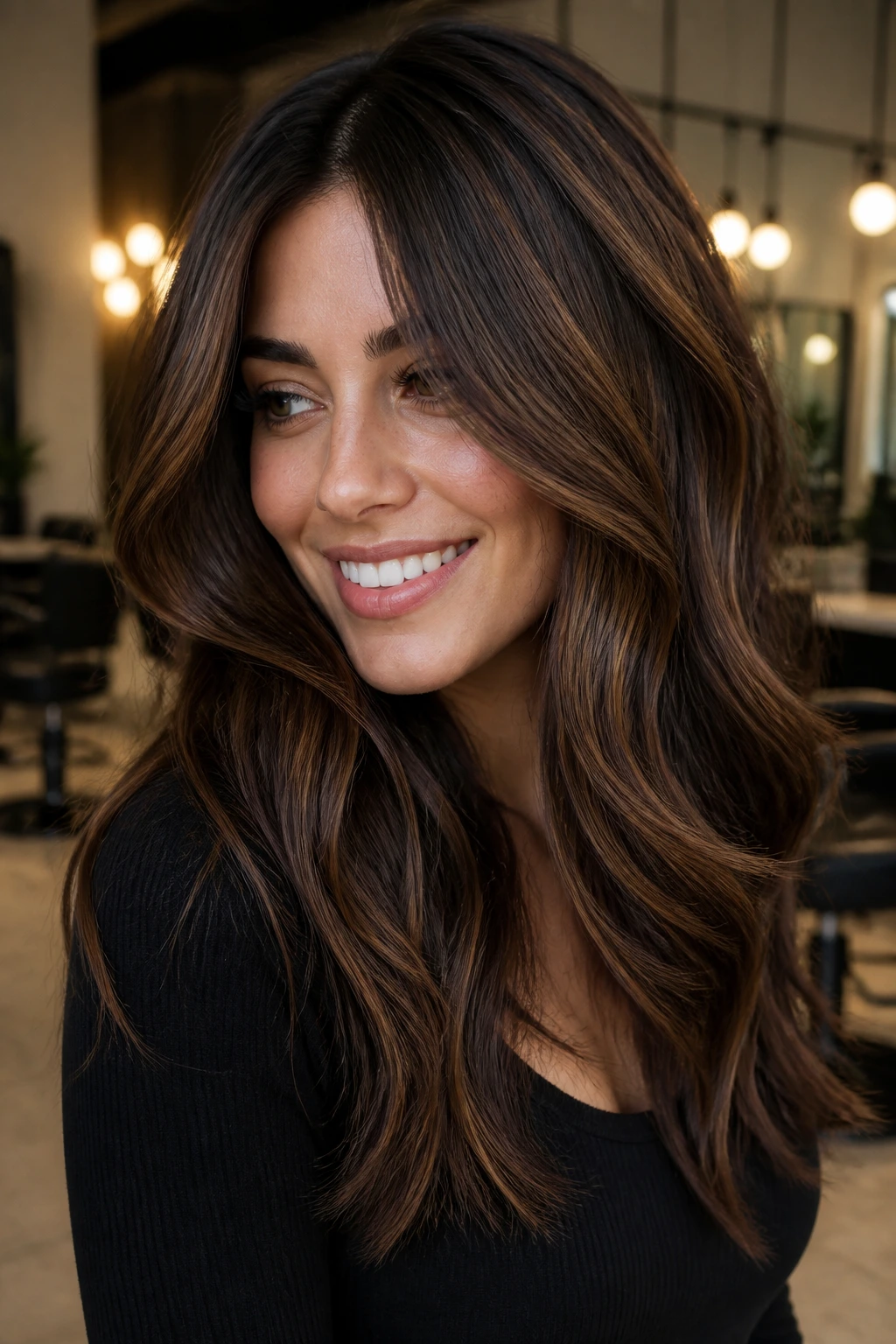
Walnut lowlights have a grounded, earthy feel that’s hard to fake. They sit between mocha and chestnut, with enough warmth to keep the color alive and enough depth to make the hair look thick.
I like walnut on brunettes whose hair has gone a little faded after too many warm glosses. It restores structure. That’s the simplest way to put it. The color makes the top layer look polished, while the lower layers get a darker, richer tone that shows when the hair moves.
Why walnut works so well
Because it doesn’t fight natural brunette hair. It behaves.
- Best for naturally dark brown bases
- Good on thick hair that needs shadow
- Looks especially nice with layered cuts
- Can be softened with a neutral gloss if it reads too warm
Walnut also plays nicely with low-maintenance color routines. It grows out without screaming for attention, which matters if you don’t live at the salon.
14. Toffee Lowlights for a Creamier Brunette Palette
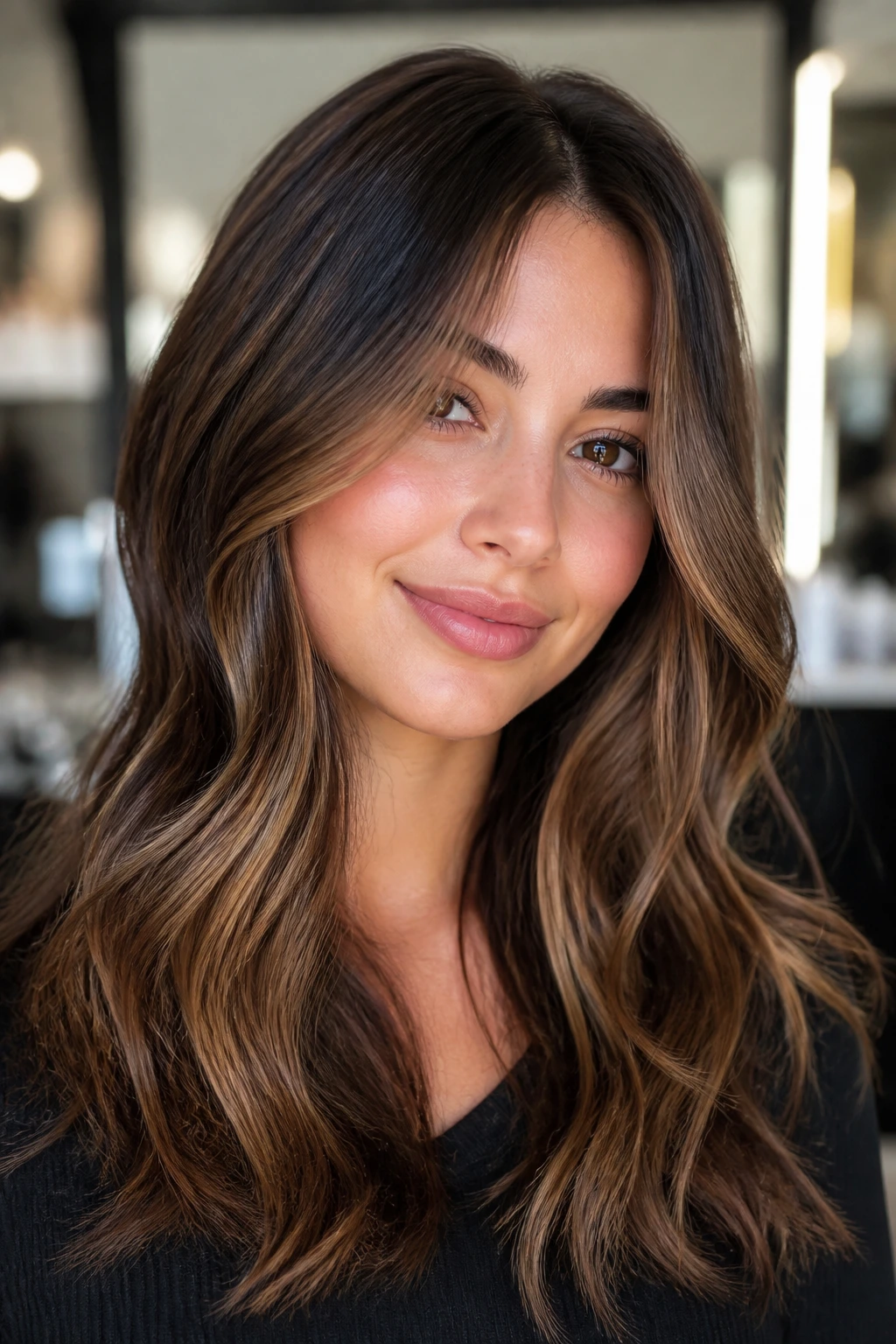
Toffee lowlights are warmer and softer than bronze, which makes them useful for brunettes who want richness without strong red or gold tone. The shade reads creamy, almost dessert-like, but the effect on hair is more polished than sweet.
On a medium brunette base, toffee adds enough warmth to prevent the hair from looking dull, yet it stays brown enough to blend. On darker brunettes, it can be used as a very controlled accent through the front and the ends. That keeps the hair from sinking into one color.
If you’re seeing a lot of flatness in photos, toffee is one of the better fixes. It gives the hair a little warmth where the camera likes to kill it.
The downside is simple: too much toffee can make brunette hair read lighter than you wanted. So keep the formula just under your base level and ask for soft, brushed placement.
15. Smoky Cocoa Lowlights for a Dimensional, Dark Finish
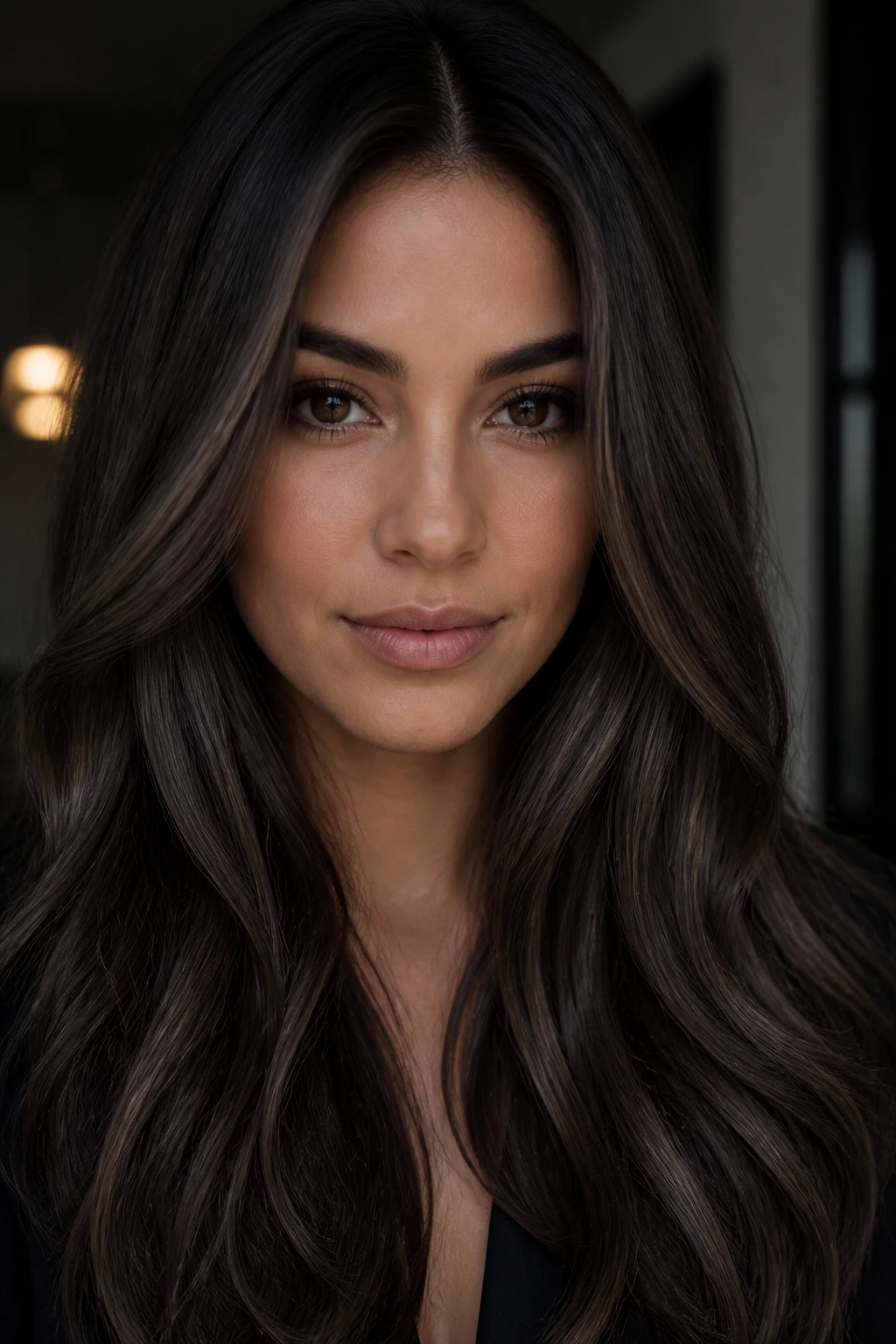
Why do smoky cocoa lowlights look so good on brunette hair with a lot of shine? Because the tone is deep, cool-leaning, and slightly muted, which helps the gloss itself do more of the talking.
This is a strong choice for dark brunettes who don’t want warmth. It adds depth without creating a red or gold cast, and it works especially well on thicker hair where the strands need definition. If the haircut has long layers, smoky cocoa lowlights make those layers read more clearly.
How to use it
- Ask for a soft level 3 to 4 cocoa tone
- Keep the surface pieces sparse
- Concentrate the darker sections underneath and around the crown
- Finish with a shine gloss if the hair looks dry
Smoky cocoa can look almost black in low light, and that’s fine. In motion, it reveals the brown underneath. That’s the point.
16. Cool Beige Lowlights for Brunettes Who Hate Harsh Contrast
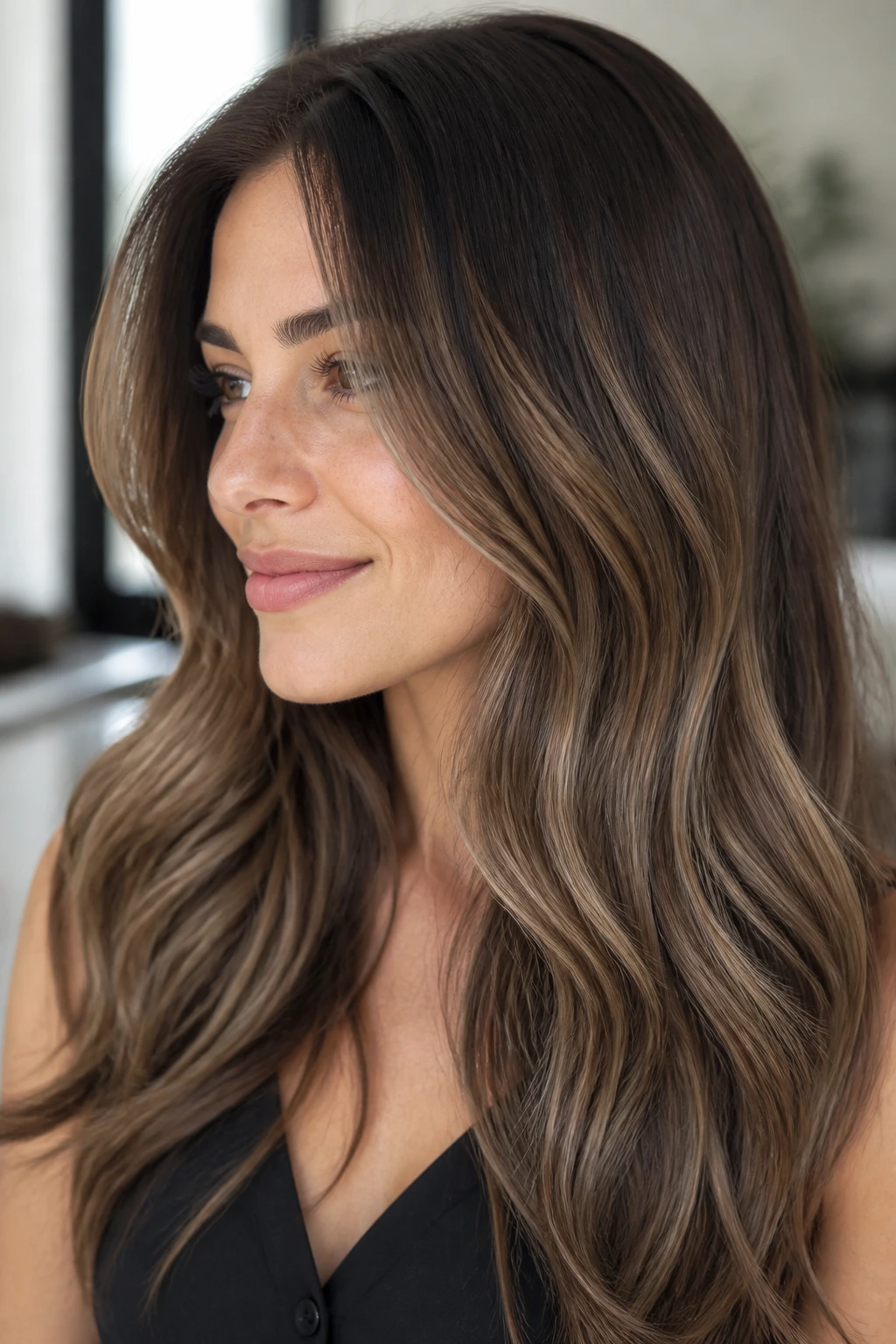
Cool beige lowlights are one of the gentlest ways to build dimension in brunette hair. They’re lighter than ash, softer than taupe, and less intense than mushroom brown.
This shade works best when the goal is blending, not drama. It’s a smart move on brunette hair that already has a few highlights and needs a softer, more muted finish. Cool beige lowlights can blur the line between dark and light sections so the hair looks more natural overall.
A lot of people think beige is only for highlights. Not true. On brunette hair, a deeper beige-brown can add a creamy shadow that keeps the color from feeling harsh.
If you want this to look right, ask for a placement that follows the haircut. That means the color should sit where the hair bends, not where a random foil happened to land. Good placement is half the battle.
17. Mahogany Lowlights for a Deeper, Red-Brown Glow
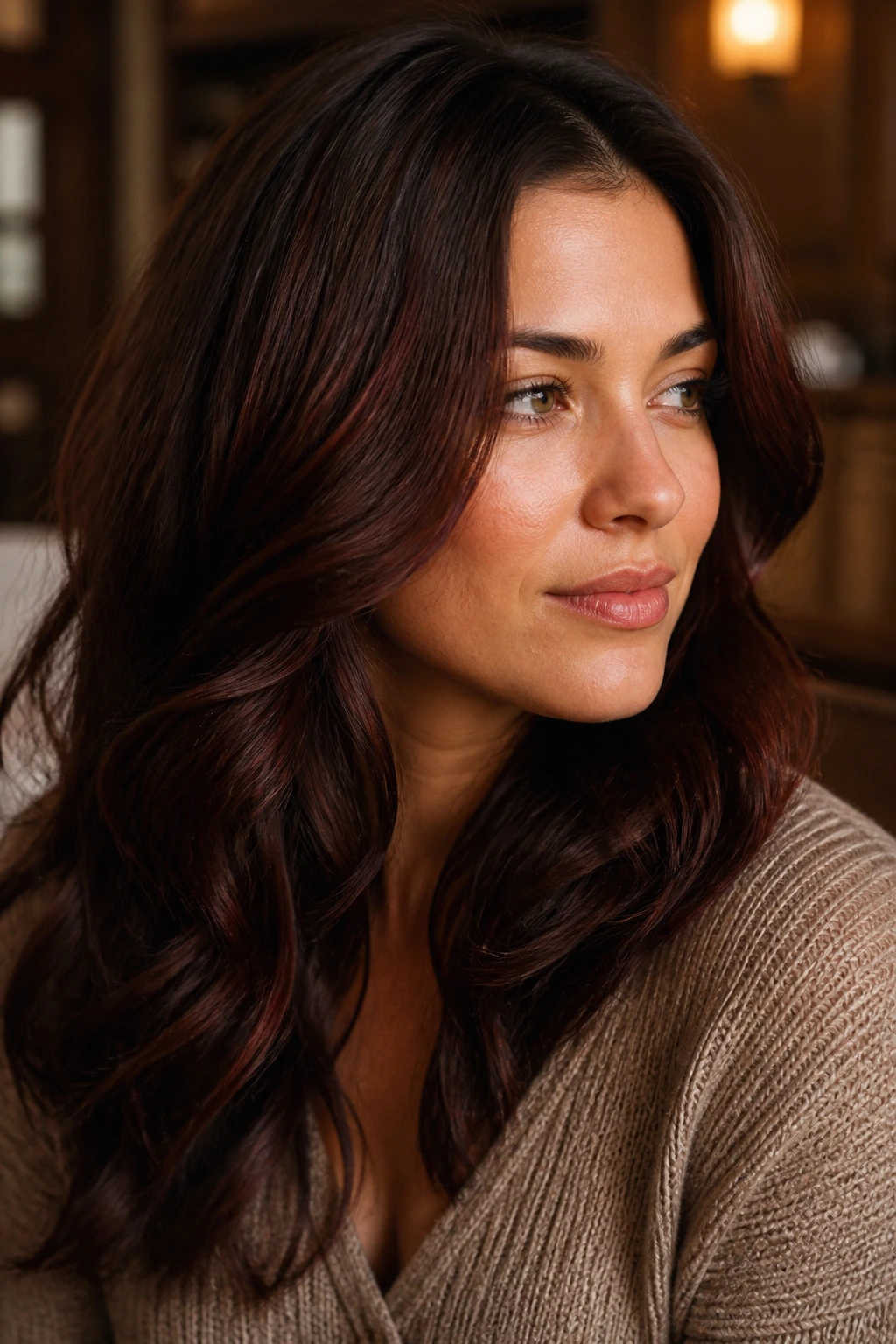
Mahogany is richer and darker than auburn, which makes it a strong lowlight choice for brunettes who want red tones without going bright. It has depth, a little mystery, and enough warmth to show up under indoor lighting.
This shade is especially pretty on medium-to-dark brunettes with warm or olive skin. It can make the hair look fuller and more luxurious, if I can borrow that word without turning into a brochure. The key is to keep the red-brown deep, not cherry. Mahogany should feel like wood, not candy.
What makes it different
- Darker and cooler than cinnamon
- Redder than walnut
- Less orange than copper
- Better for rich, moody brunette color stories
Mahogany lowlights are one of the few options that can look both romantic and grounded. That combination is harder to get than people think.
18. Soft Sable Lowlights for Subtle Shadow and Shine
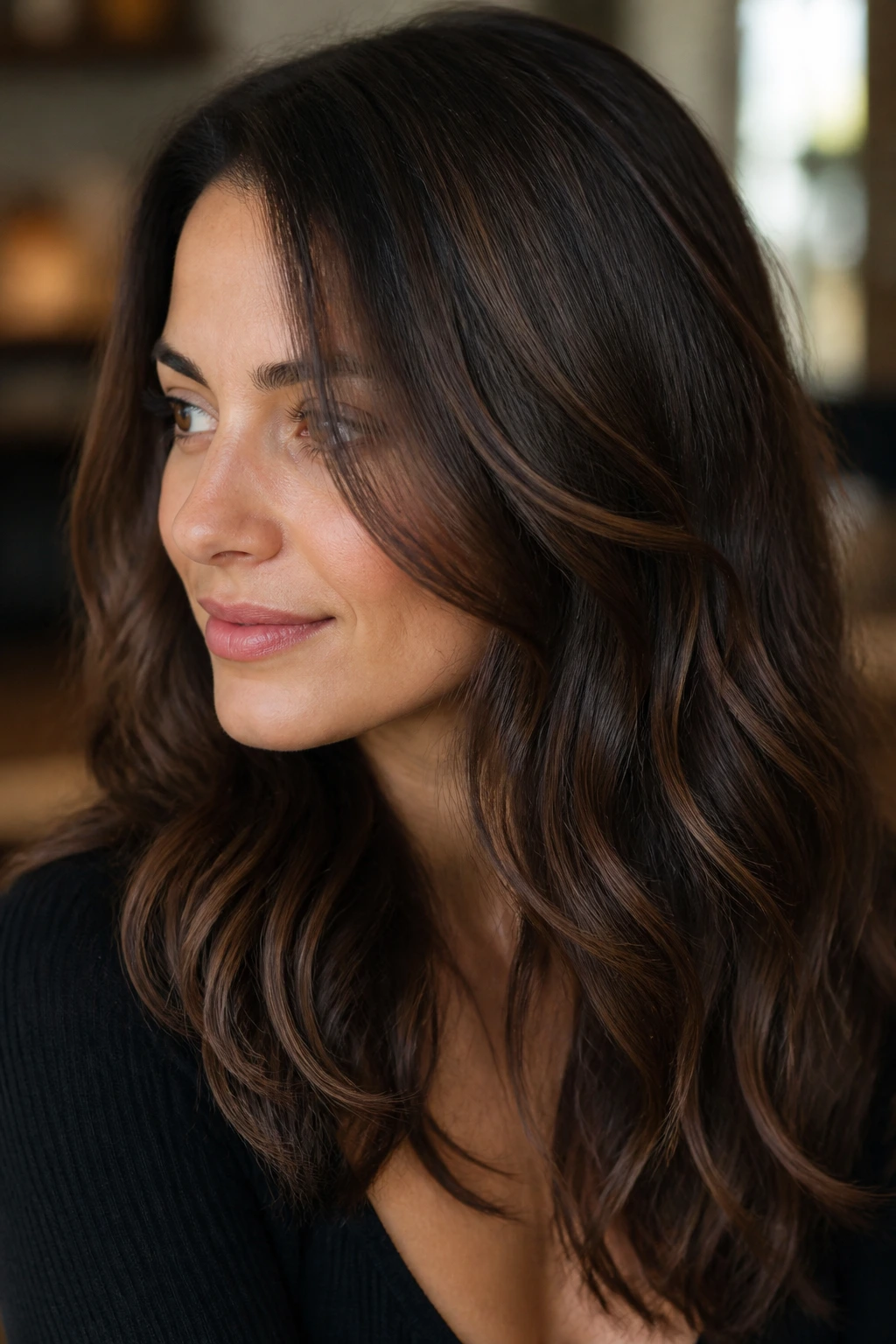
Soft sable is for the person who wants people to notice the hair looks better, not different. It’s a deep brown, slightly cool lowlight that blends into brunette hair with almost no fuss.
Unlike espresso, sable doesn’t hit as hard. It’s softer at the edges, which makes it a good match for finer hair that can look too heavy with darker color. It can also help add the illusion of thickness because the shade creates shadow without looking harsh.
A client with long, straight brunette hair usually wears this beautifully. The movement is small, so the color has to do more work, and sable does. It gives the hair that clean, finished feel that people often chase with a lot more color than they need.
If you want a low-maintenance brunette refresh, this is one of the smartest choices on the list.
19. Deep Truffle Lowlights for Extra Depth in Dark Brunettes
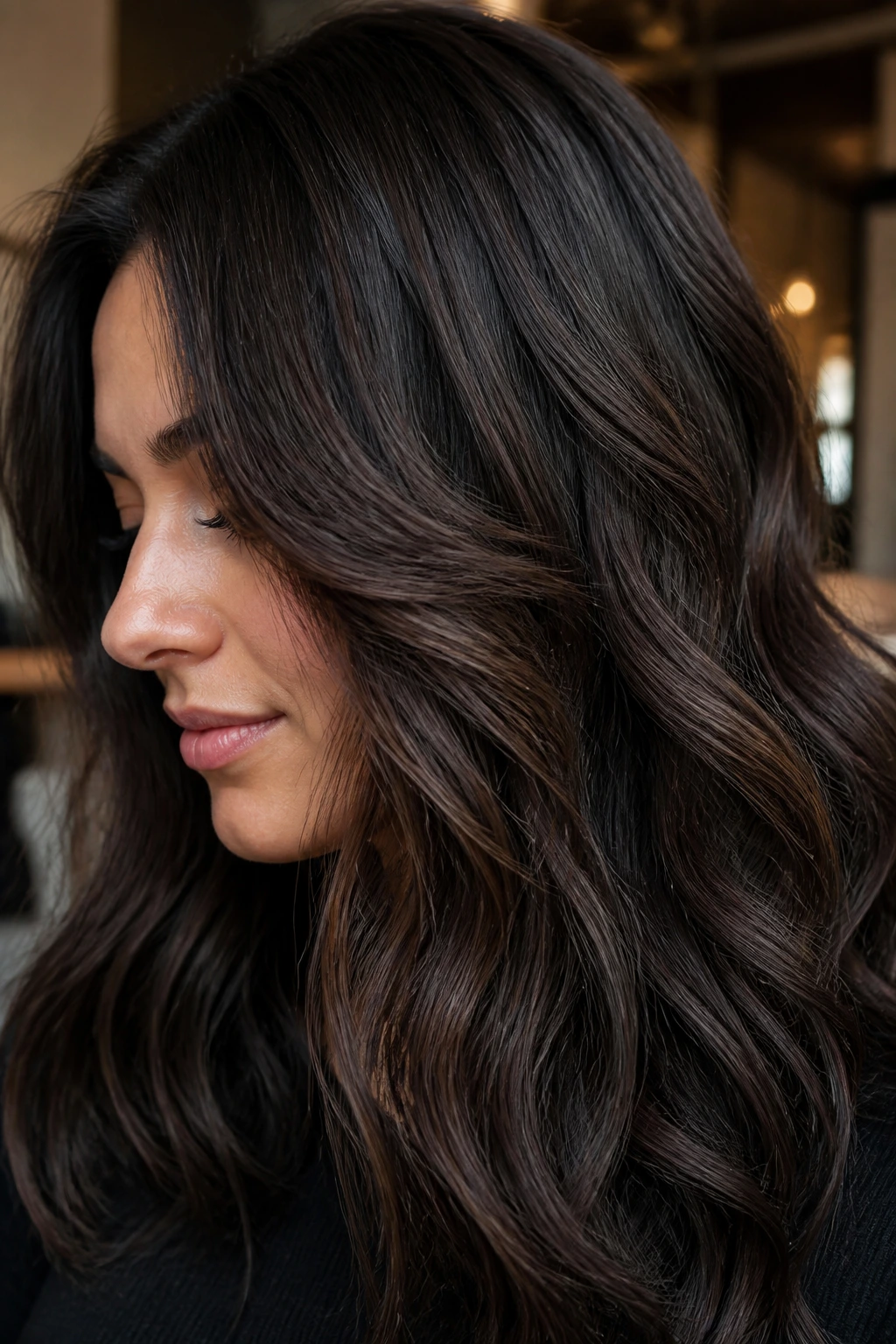
Deep truffle is a shade I reach for when brunette hair needs structure more than warmth. It’s darker than mocha, softer than black, and rich enough to make the surface of the hair look smoother.
This lowlight is especially good on very dark brunettes who want dimension without visible streaks. It can carve out shape in thick hair and make curls look more defined. If the color job has started to blur, truffle brings the edges back.
Quick placement notes
- Best underneath the crown and through the interior
- Works well with curly or coily brunette textures
- Use a demi-permanent formula to keep the depth soft
- Avoid putting too much truffle around the front if the skin tone is very fair
Deep truffle is not playful. It’s refined in a low-key way. And on the right brunette, that looks better than anything more obvious.
20. Mulled Plum Lowlights for a Moody Brunette Twist
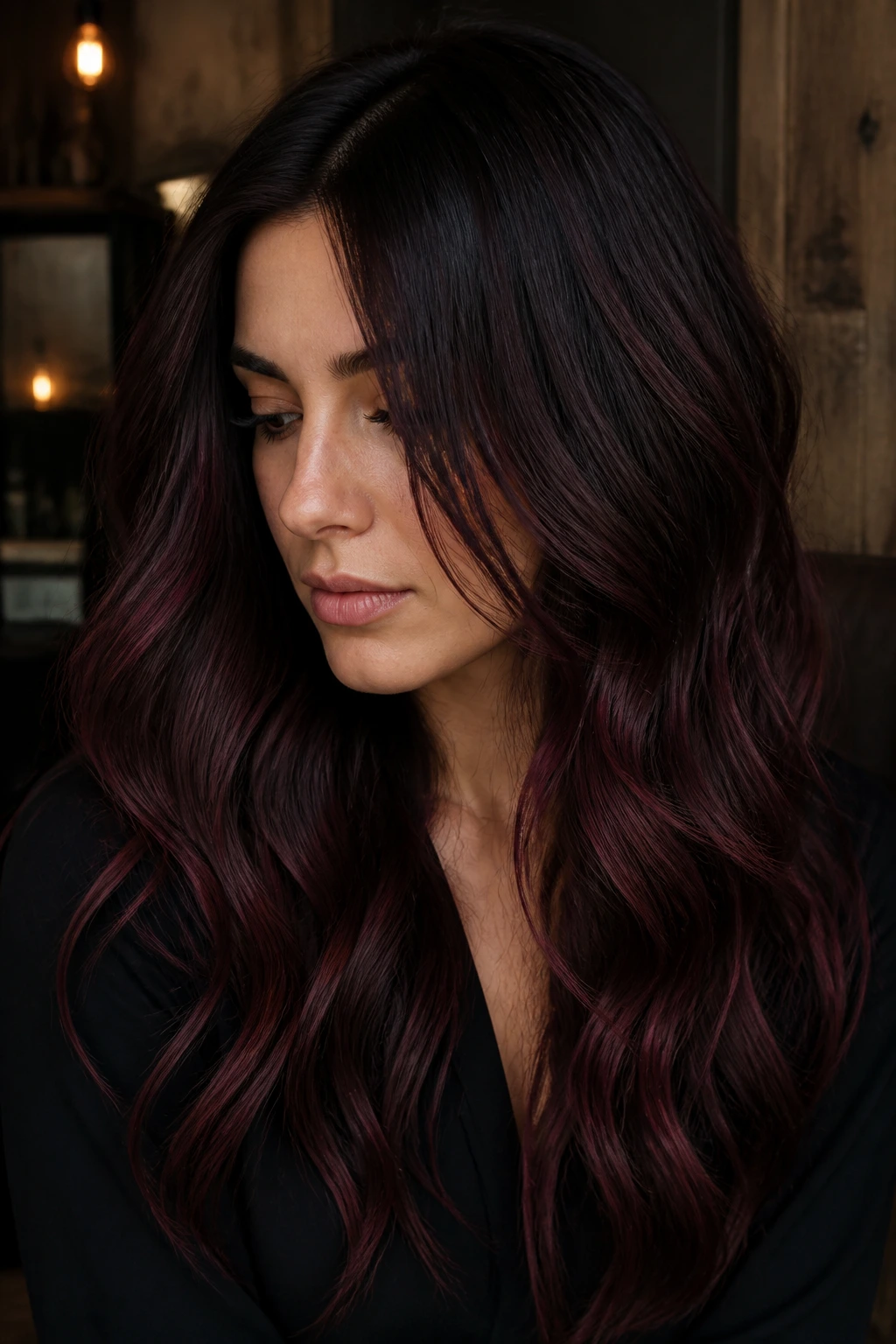
Mulled plum lowlights are the most fashion-forward option here, and they work because they don’t try to be brown. They sit just off the brown spectrum, with a plum-red undertone that shows up as depth first and color second.
On dark brunettes, plum can look almost invisible until the light hits it, which is half the fun. On medium brunettes, it reads a little more clearly and gives the hair a cooler, richer edge. If you want something that feels a touch unexpected but still wearable, this is the shade.
The best versions are muted. Think berry wine, not violet hair dye. A strong purple lowlight can turn novelty fast, and that’s a different look altogether.
Mulled plum also plays nicely with layered cuts, because each bend in the hair reveals a little more of the tone. It’s a good reminder that brunette color does not have to stay predictable to look polished. Sometimes the best lowlight is the one that makes people look twice, then realize it still feels like brunette hair.
