



Brown hair can swallow pink in the worst way, or hold it like a jewel. That’s the part people don’t always expect. The same shade that looks candy-bright on blonde can turn soft, smoky, or almost rosewater on chestnut, mocha, or espresso hair.
Pink highlights for brown hair live or die on undertone and placement. A cool pink on a deep brunette base can read mauve. A warm pink can slide toward coral. A few chunky pieces near the face will shout; a veil of babylights across darker lengths can look like a shimmer you notice only when the light moves.
If your hair is dark brown and untouched, pink usually needs pre-lightening to show up honestly. Otherwise it can disappear or, worse, go muddy. On medium brown, the shade has more room to breathe. On light brown, pink gets louder fast. That’s the whole game, really.
The fun part is that there isn’t one right pink. There are twenty good ones, and they do very different jobs. Some soften strong features. Some give a blunt cut more edge. Some hide in the underlayers and only show when your hair swings. A few are low-drama. A few absolutely are not.
1. Soft Rose Face-Framing Pieces
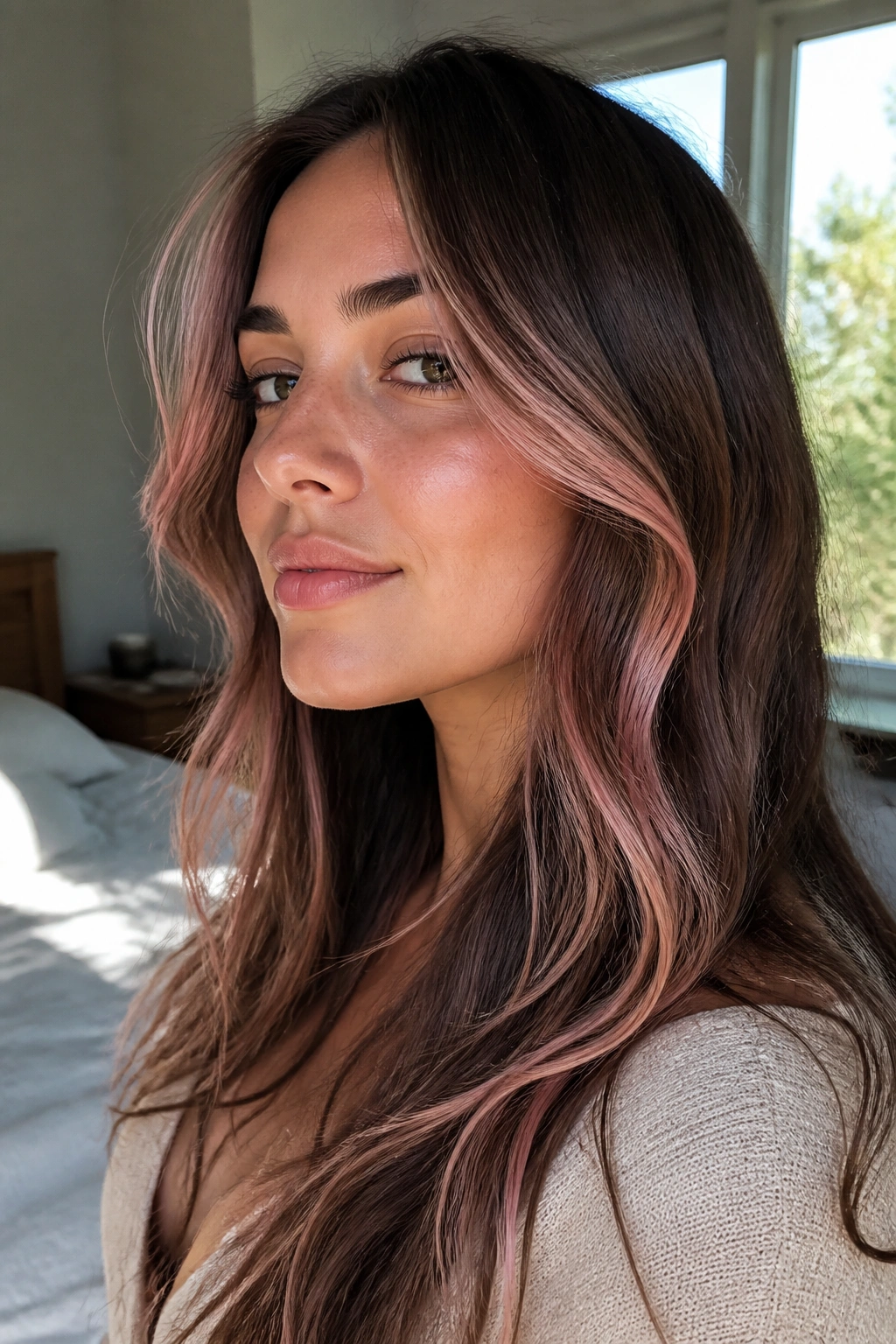
Soft rose face-framing pieces are the easiest way to test pink without handing your whole head over to it. The color sits where people look first — around the eyes, cheeks, and jaw — so even a small section changes the whole haircut.
Why This Placement Works
The front pieces lift brown hair because they break up the darkness right next to the face. On a medium brown base, soft rose reads like a blush filter. On a darker base, it can look more like a muted strawberry ribbon, which is honestly nicer than the candy-pink fantasy many people picture.
You do not need a lot of it. A section about 1 inch wide on each side is enough for most shoulder-length cuts. Keep the rest of the hair brown and the pink suddenly looks intentional instead of loud.
- Best on: lob cuts, long layers, curtain bangs
- Tone to ask for: rose, blush, or muted pink with a beige base
- Maintenance: refresh the front every 4 to 6 weeks
- Styling note: loose waves show the color better than pin-straight hair
Tip: ask for the pink to start slightly below the root so the grow-out line stays soft.
2. Rose Gold Balayage on Chestnut Brown Hair
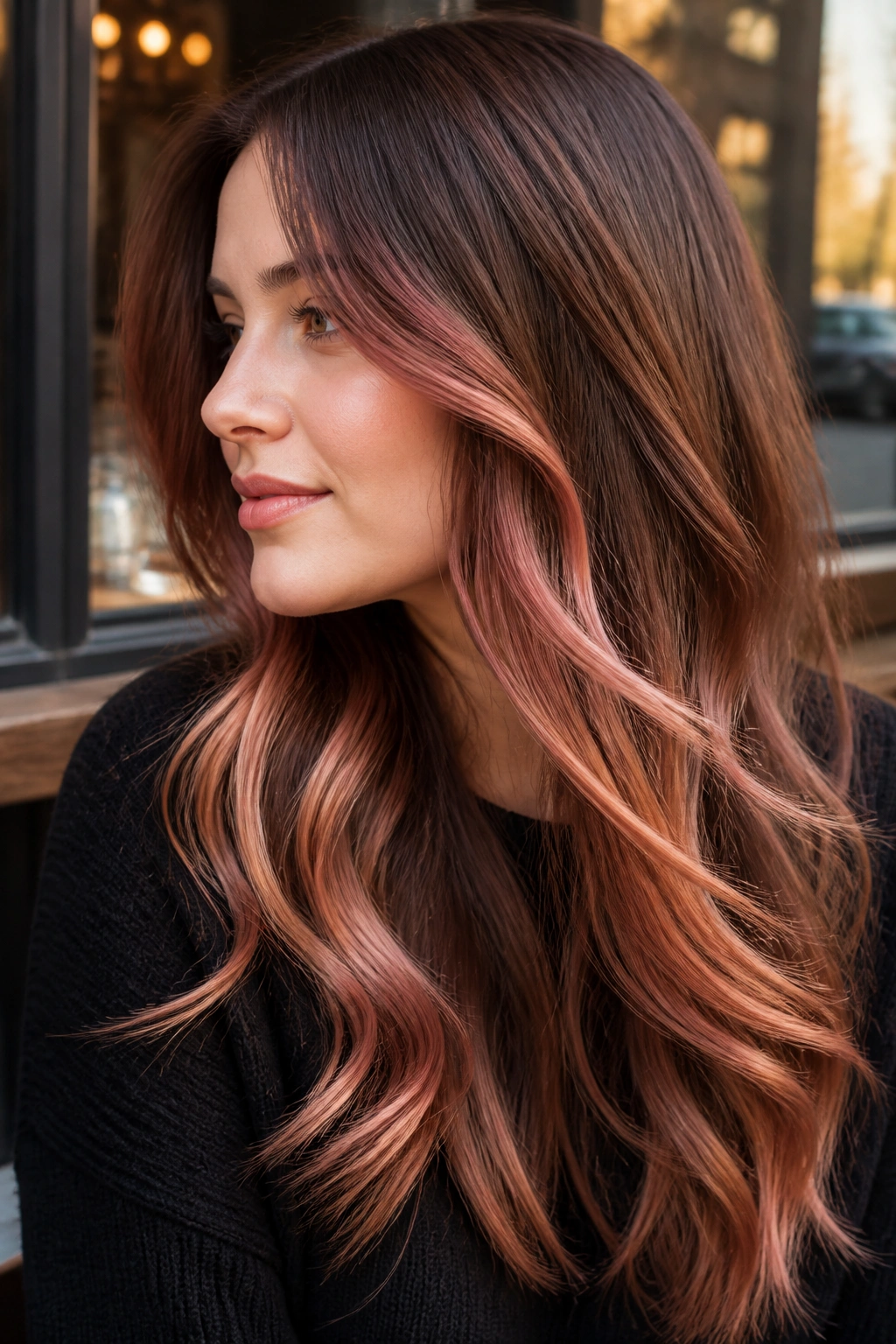
Rose gold balayage is the shade most likely to behave like a natural highlight. It borrows warmth from the brown base, so it doesn’t fight the hair the way a cooler pink sometimes can.
Chestnut brown is especially kind to this look. The copper in the base keeps the pink from going flat, and the hand-painted placement means the color can drift through the midlengths instead of sitting in obvious stripes. That makes the whole thing feel expensive without being flashy.
What I like about this version is the grow-out. A balayage pattern gives you a little breathing room, which matters if you do not want to sit in a salon chair every few weeks. Ask for a neutral beige-pink gloss over lightened pieces, not a bright magenta overlay, or the warmth can tip too orange.
It looks strongest when the pink is strongest around the face and softer through the back. That tiny change keeps the hair from reading one-note.
3. Cherry Blossom Money Piece
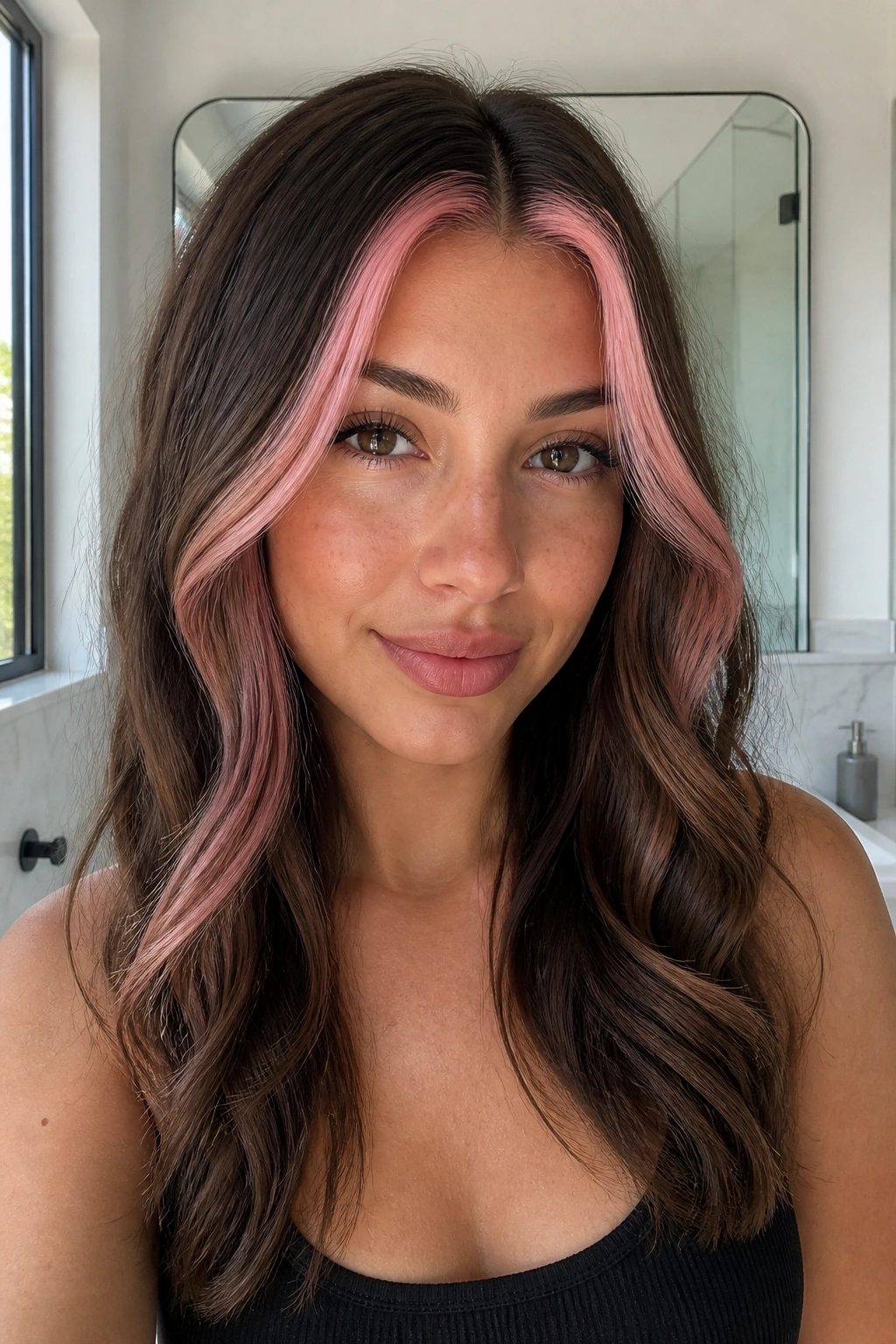
Why does a cherry blossom money piece work so well on brown hair? Because the rest of the head can stay quiet while the front does all the talking.
The “money piece” is that brighter section around the hairline, and on brunettes it’s a smart place to spend your color budget. A cherry blossom tone sits between pastel pink and warm rose, so it gives you brightness without looking like bubblegum. On a center part, the effect is crisp. On curtain bangs, it gets softer and a little more romantic.
How to Wear It
- Keep the front panel about 1 to 1.5 inches wide on each side.
- Lift it to a pale yellow before toning if your brown base is deep.
- Pair it with blunt ends or a shaggy cut for contrast.
- Let the rest of the hair stay neutral brown so the front piece has room.
This one needs a little upkeep because the front section is the first part to fade and the first part to show regrowth. Still, if you want a pink that reads instantly and photographs well in everyday life, this is one of the cleanest ways to do it.
4. Dusty Mauve Peekaboo Layers
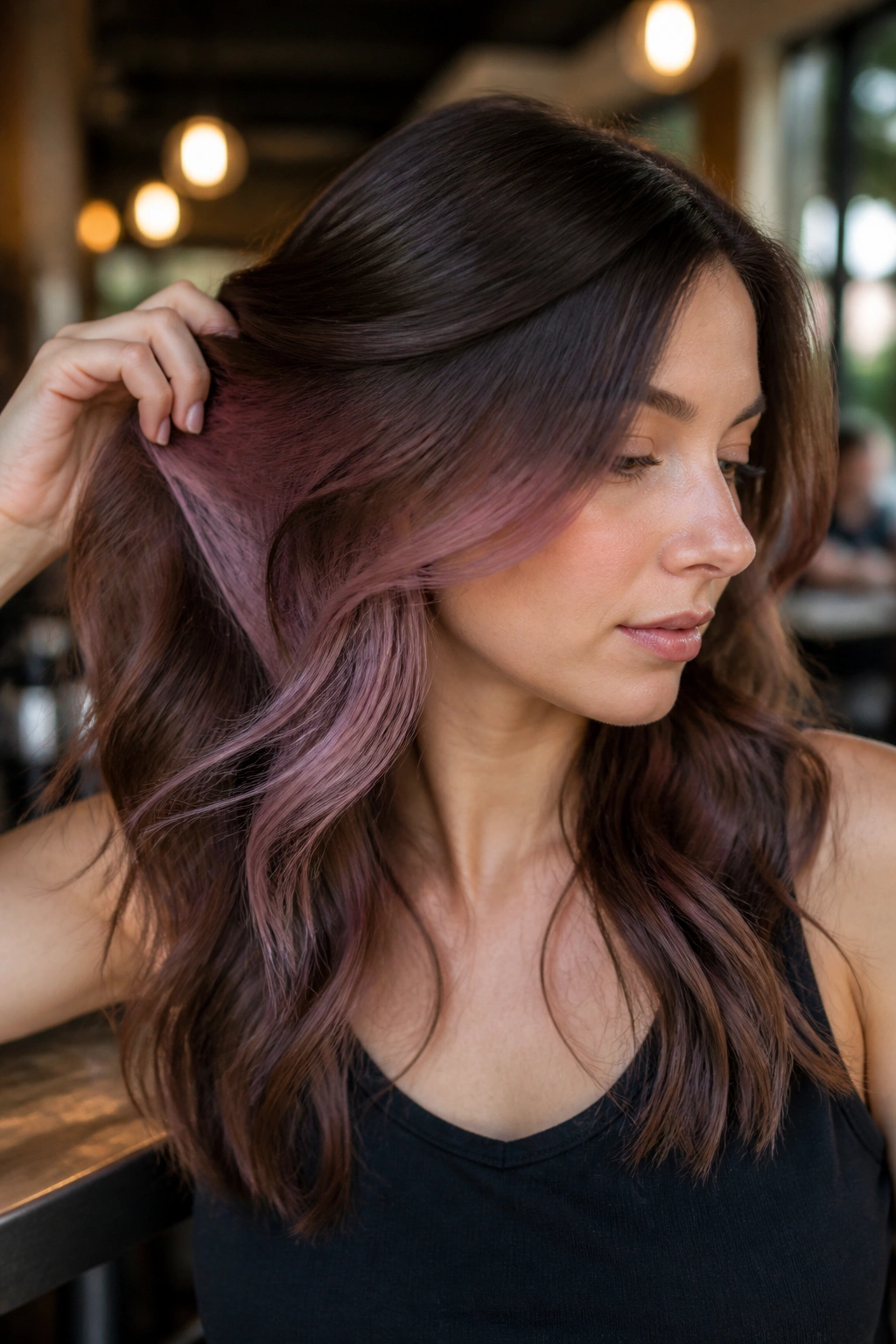
Picture a shoulder-length cut with the top layers left brown and the hidden pieces underneath tinted dusty mauve. You move. The color flashes. You clip your hair up, and suddenly the whole thing changes. That’s the appeal.
Peekaboo color works because it gives you two moods in one haircut. Dusty mauve is a good choice for this placement since it stays muted enough to hide when you want it to, but has enough pink in it to show when the layers separate. On brown hair, it can read more smoky than sweet, which is the point.
This is especially nice for people who work in places where bright color feels like a big leap. You get the fun part without making it the main event. It also plays well with thicker hair, because the top layers create a curtain over the color underneath.
- Good fit for: medium to thick hair
- Best reveal: half-up styles, messy buns, big curls
- Color note: dusty mauve is friendlier than neon on darker brown bases
- Downside: the hidden color needs a little more styling to show
The neat part is that peekaboo layers make brown hair look deeper. The contrast adds weight and movement at the same time.
5. Strawberry-Gloss Ends
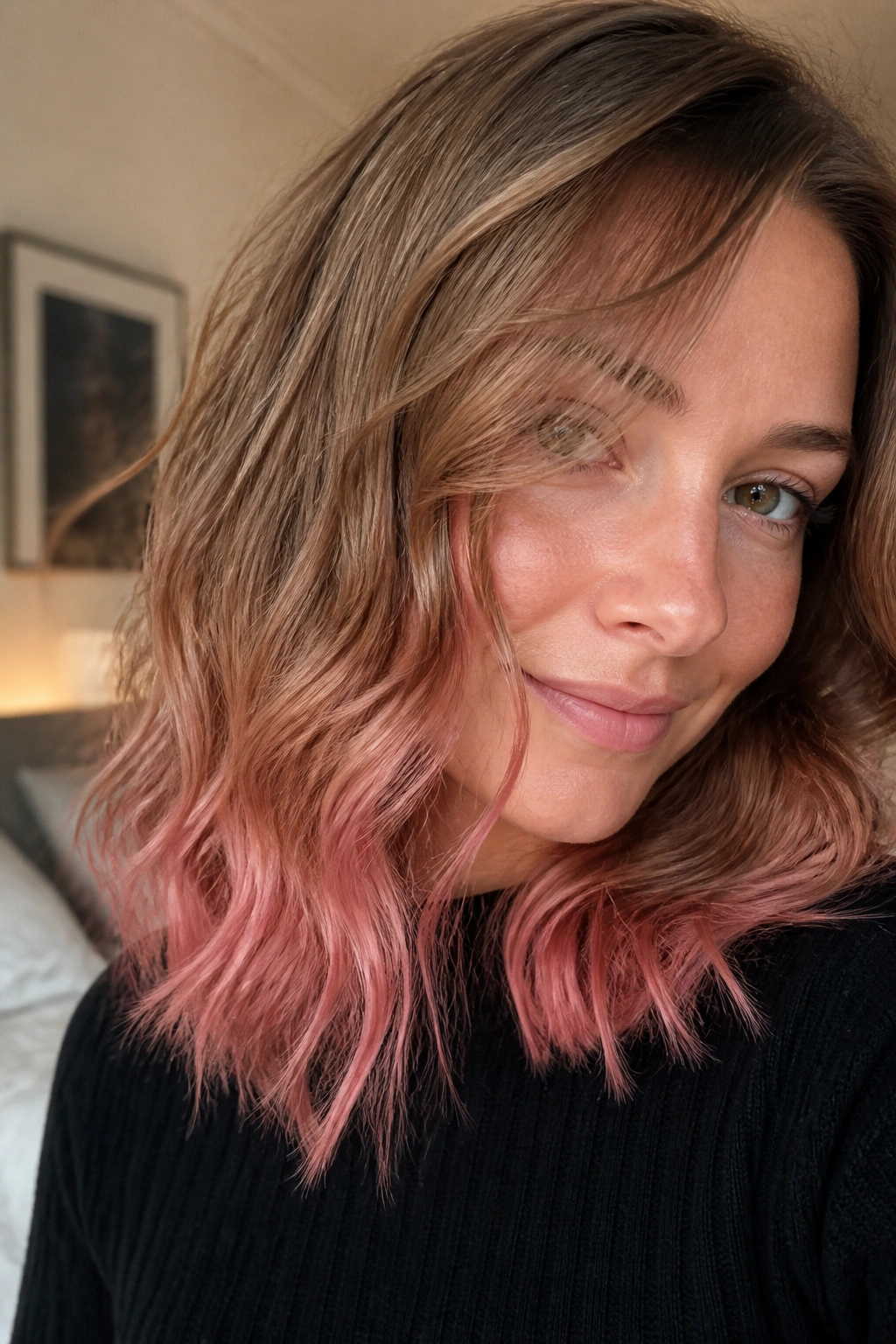
Strawberry-gloss ends look like the hair dipped into soft fruit color and then got pulled back out before it went too far. It’s a gentle choice, but not boring. That matters.
On light brown hair, strawberry pink can sit at the very ends and read almost sun-faded. On deeper brown hair, it needs the ends lightened first or the pink will barely register. Either way, the color sits lower than a regular highlight, which gives the haircut a softer finish. It’s a nice move for people who want pink but do not want the root area doing any work.
The best version of this look has a little movement. Waves let the ends curl around each other, so you get those glimpses of pink rather than one hard line. Straight hair can work too, but it shows the edge of the color more sharply.
I’d keep this one a touch warmer than cherry pink. If it goes too cool, the ends can look dusty in a way that feels accidental. A strawberry tone has more life.
6. Hot Pink Ribbon Highlights
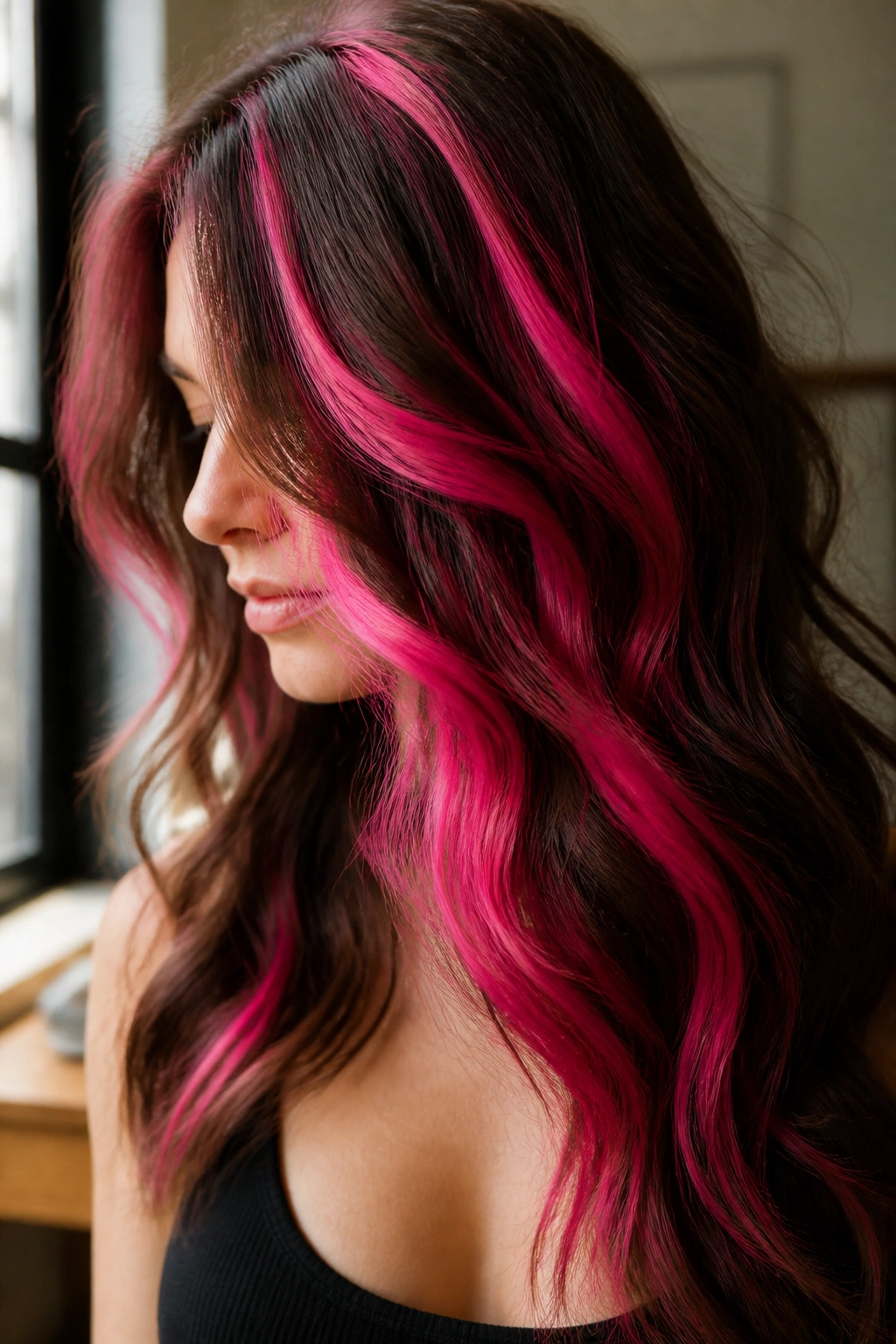
Unlike thin pastel pieces, hot pink ribbon highlights are meant to be seen from across the room. They slice through brown hair with a sharper line, and that contrast gives the style its energy.
This is the look for someone who wants color to look deliberate, not subtle. The ribbons are thicker than babylights and less blended than balayage, so the pink stays visible even when the hair is tied back. On layered cuts, the color moves around and makes the whole shape feel more alive. On straight hair, it reads cleaner and a little edgier.
The best version uses just a few ribbons, not a head full of them. Three to five bold sections can do enough work. If you add too many, the brown starts to disappear, and the whole point of pink highlights for brown hair is the contrast.
Hot pink does demand honesty. It fades faster than dusty shades, and it will tell on dry ends. But if you want pink with some attitude, this is the one that actually delivers.
7. Pastel Pink Babylights on Dark Brown Hair
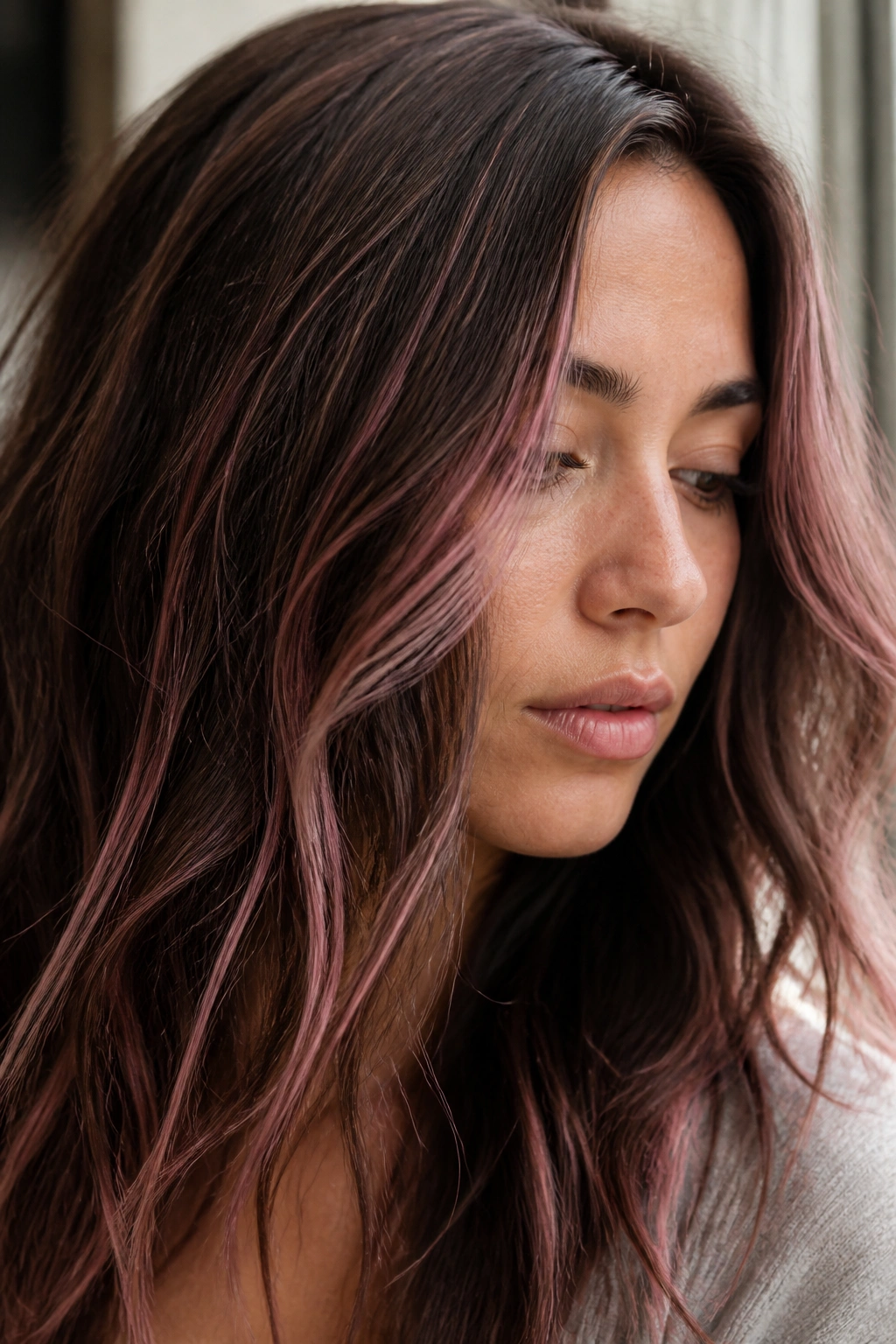
Pastel pink babylights are tiny, and that tiny size is what saves them on dark brown hair. Big pink streaks can look harsh against espresso or black-brown bases. Fine ones shimmer instead.
What Makes the Softness Possible
The lightening has to be delicate. If the pieces are too wide, the contrast jumps out too hard. If they’re fine — think scattered micro-foils, not chunky panels — the pink becomes part of the overall shine. You see movement first, color second.
This look is fussy in the salon and worth it if you like subtle detail. It takes patience because the darker the base, the more careful the lift needs to be. Dark brown hair can go from pretty to patchy fast if the lightened sections are uneven.
What to Ask For
- Fine foils through the top half and around the part
- A soft pastel pink toner, not a heavy magenta stain
- Small gaps between the lightened strands so the brown stays visible
- A gloss refresh instead of a full recolor when the tone fades
Best tip: if your brown hair pulls red, ask for a cooler pastel pink so the final shade does not tip warm and muddy.
8. Raspberry Underlayer Panels
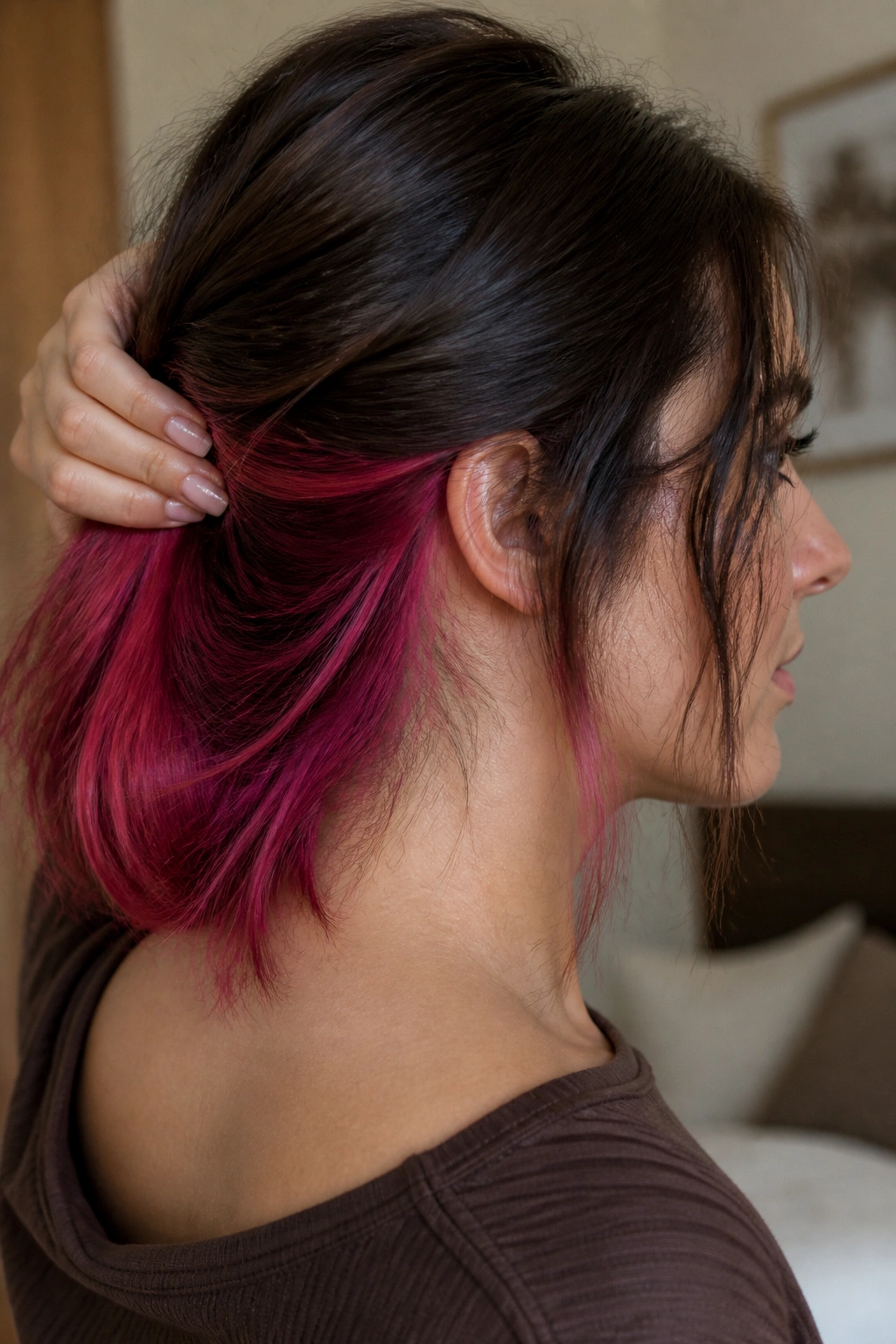
Raspberry underlayer panels are for people who want pink to feel hidden until it moves. They sit beneath the top section of brown hair, so the color shows in flashes instead of broadcasting itself all day.
Raspberry is a smart choice here because it has enough depth to hold its own under darker hair. A pale pink would disappear. A blue-based magenta would feel too harsh. Raspberry lands in the middle and gives the underlayer a rich, polished look. It also works well on shoulder-length cuts, where the lower sections swing with every turn of the head.
The placement matters more than the amount. Keep the panels low enough that the top brown layer still does its job, but high enough that they peek through when the hair is tucked behind the ears or pulled into a half-up style. That little reveal is the whole point.
This is one of those styles that looks even better when the hair has texture. Braids, loose buns, and ponytails all pull the color into view in different ways. It feels playful without turning into costume hair.
9. Copper-Pink Melt
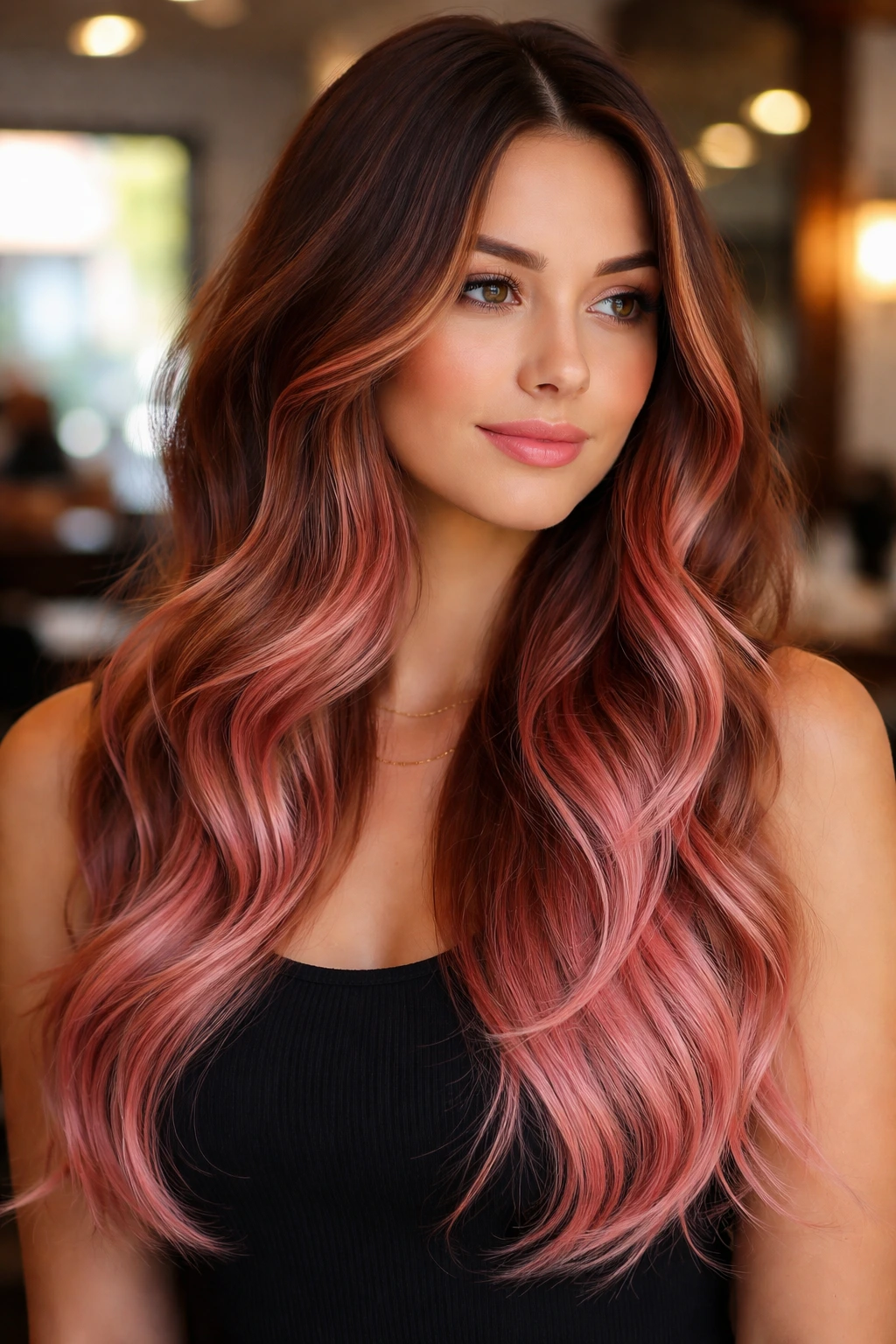
Why does a copper-pink melt look so natural on brown hair? Because the color walks the line between warm brunette and pink instead of jumping straight across it.
A melt works by softening the transition from the base to the lighter ends. On brown hair, that means the roots stay deep, the midlengths turn warmer, and the pink lives at the lighter end of the gradient. The copper tone ties everything together so the shift doesn’t look striped. That’s the part people usually miss. A pink melt only works if the in-between shade earns its keep.
How to Ask for It
- Keep the root area close to your natural brown.
- Let the midlengths move into copper or rose-copper.
- Finish the ends with a pink glaze or semi-permanent tint.
- Bring a photo that shows a soft fade, not a hard ombré line.
This style is especially nice on wavy hair because the bend in the hair breaks up the gradient. Straight hair can still wear it, but the color line needs to be feathered well or the melt turns into a block. A good one feels warm, smooth, and a little sunlit.
10. Blush-Tipped Waves
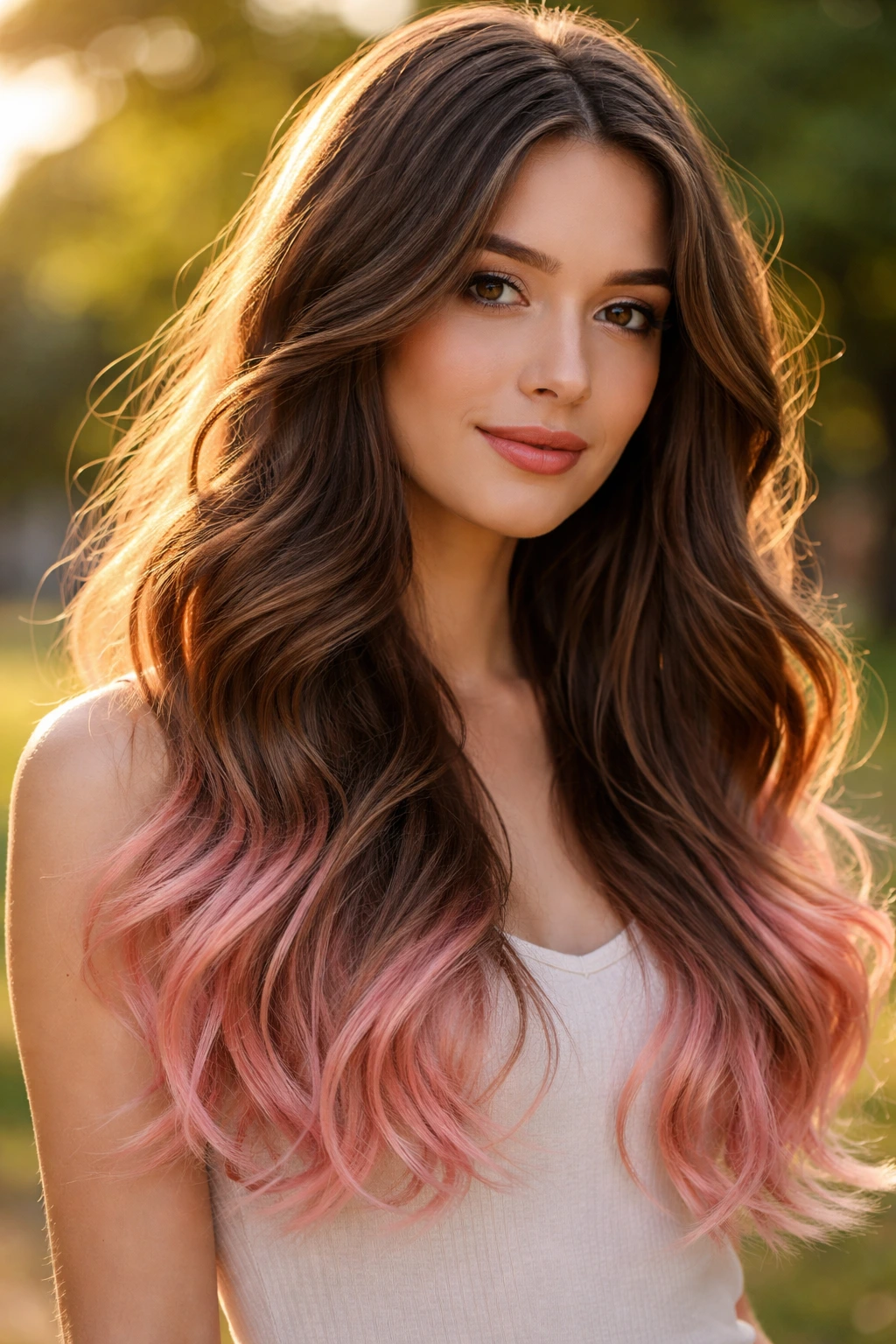
Blush-tipped waves have an easygoing feel that brown hair wears well. The pink lives at the very ends, where the bends in the hair catch light and show the color in little bursts.
This is one of those looks that depends on haircut shape. On a blunt cut, blush tips can feel more graphic. On layered waves, they look softer because the ends move at different heights. The pink never sits in one flat plane, which keeps it from reading too neat or too done.
I’d call this a good middle road for someone who wants color but not a heavy commitment. The pink is concentrated on the parts of the hair that usually take the most damage anyway, so the grow-out feels forgiving. The flip side is that porous ends grab pigment fast, so the shade can fade unevenly if the hair is dry.
A light hand with the toner helps. Keep the blush tone sheer, almost watery, and the result looks like the hair picked up a tint rather than wearing a mask.
11. Orchid Pink Streaks
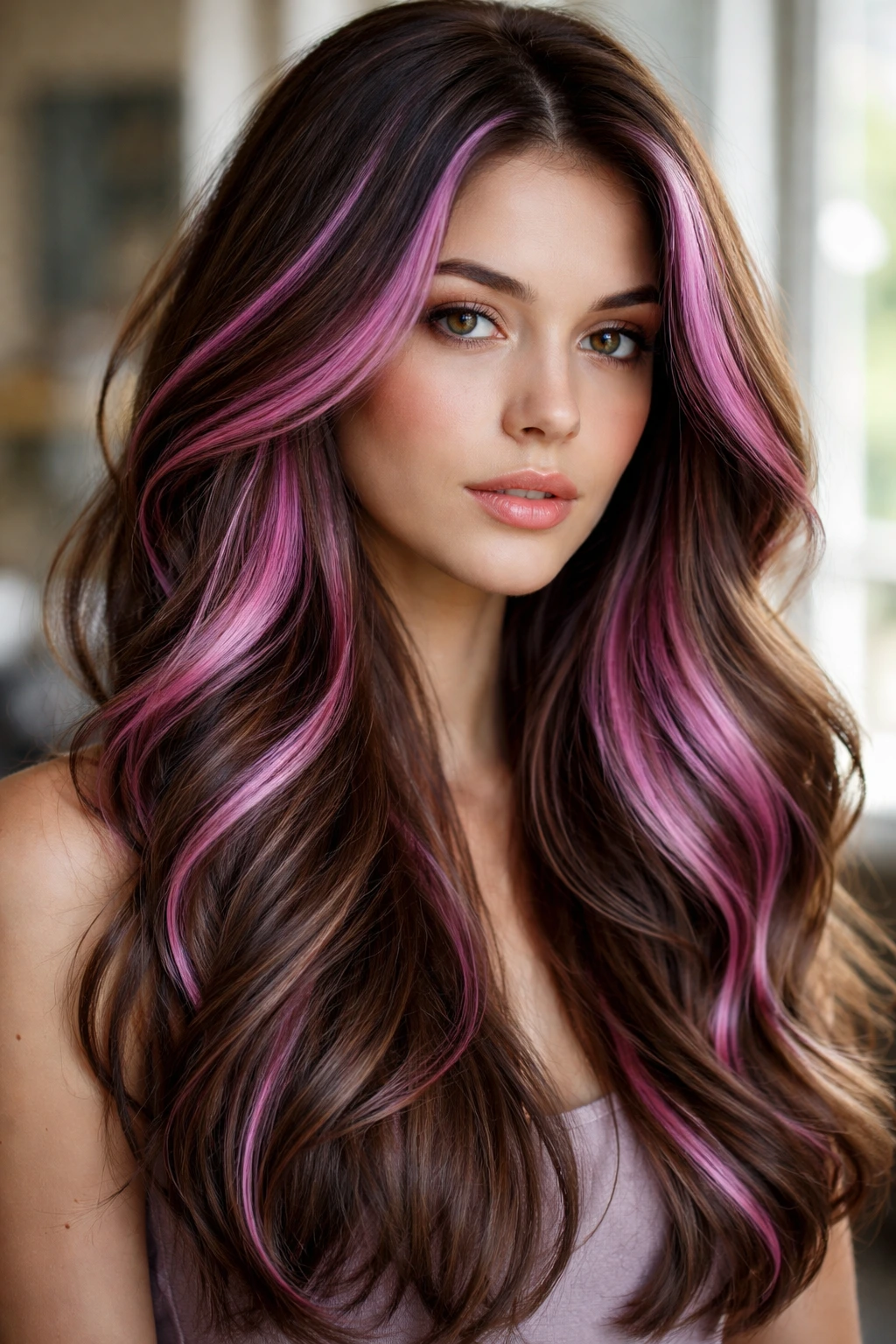
Orchid pink is the shade I reach for when someone wants pink with a little edge. It has a violet note in it, and that note changes the whole mood of the hair.
On cool brown bases — ash brown, mushroom brown, espresso with no red — orchid pink can look polished and a little moody. On warmer brown hair, it can shift toward plum-pink, which is not bad at all if you want depth. The shade behaves differently under indoor light and daylight too. Indoors, it leans mauve. Outdoors, the pink shows more plainly.
That movement is what makes it interesting. Orchid streaks are not sugary. They look more like fashion color, the kind that holds shape even when the hair is simple. A straight blowout makes them crisp. Loose waves make them blend a bit more.
If you’re tired of warm pinks turning coral on your hair, orchid is worth a look. It holds its cool tone better than many pink shades, and that can save you from the dreaded orange drift.
12. Rose Quartz Foils Around the Crown
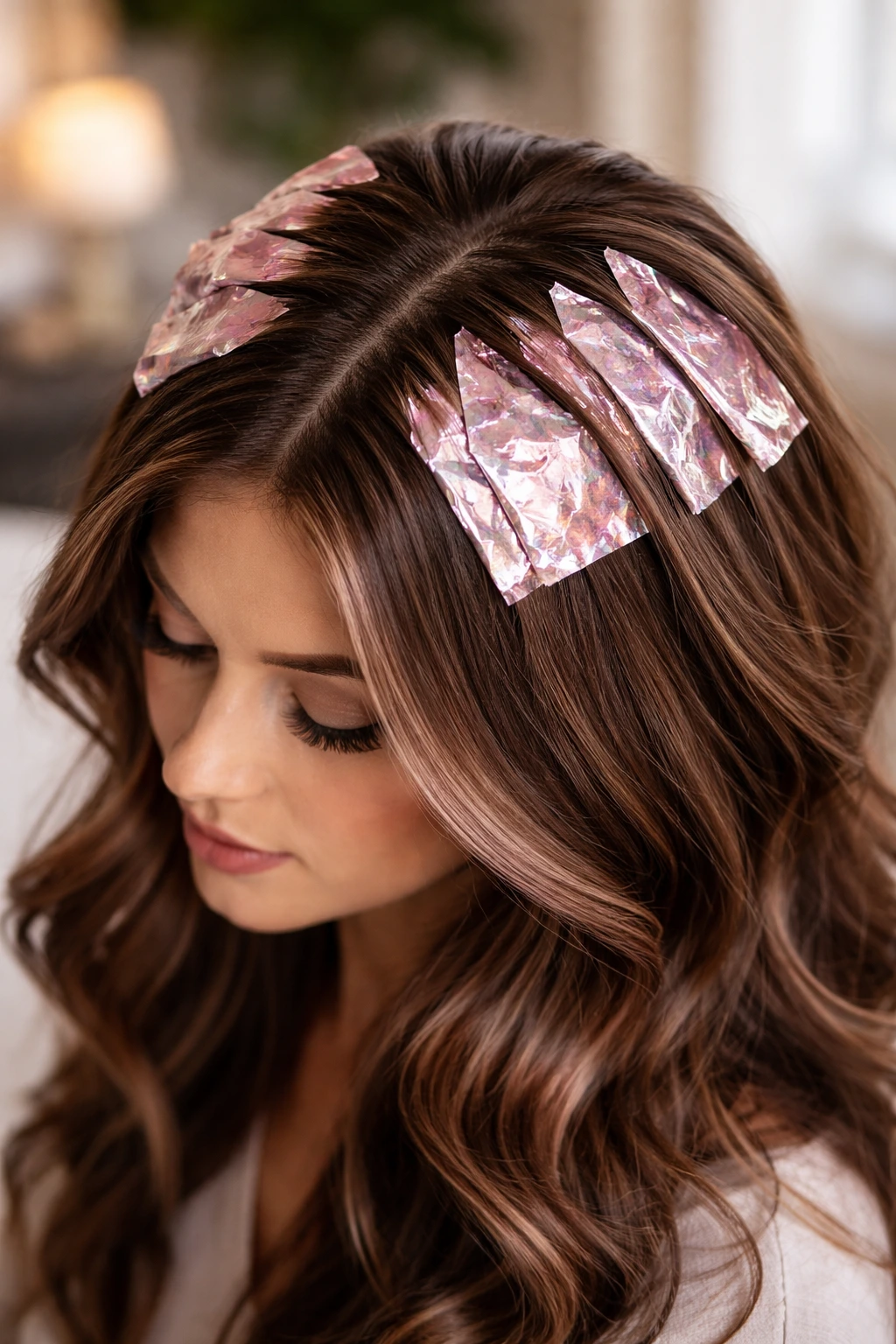
Rose quartz foils around the crown do a sneaky bit of work. They change where the eye goes.
Unlike all-over pink, crown foils brighten the top section of brown hair right where the part sits and where the light hits first. That gives the roots more lift and makes the whole style look fuller. It’s especially useful if your hair lies flat near the scalp or if your part tends to show a lot of base color. A few foils there can break up the darkness without turning the entire head pink.
This works well with blowouts, round-brush styling, and soft bends at the ends. The crown pieces catch movement every time the hair shifts, which gives the color more life. If you wear your hair in a side part, the effect gets even better because the foils peek out unevenly.
Ask for 6 to 12 foils around the part and crown, not a solid block of color. The scattered placement keeps the rose quartz shade airy. Too much saturation in that area can make the top look heavy, and nobody wants that.
13. Magenta Chunk Lights
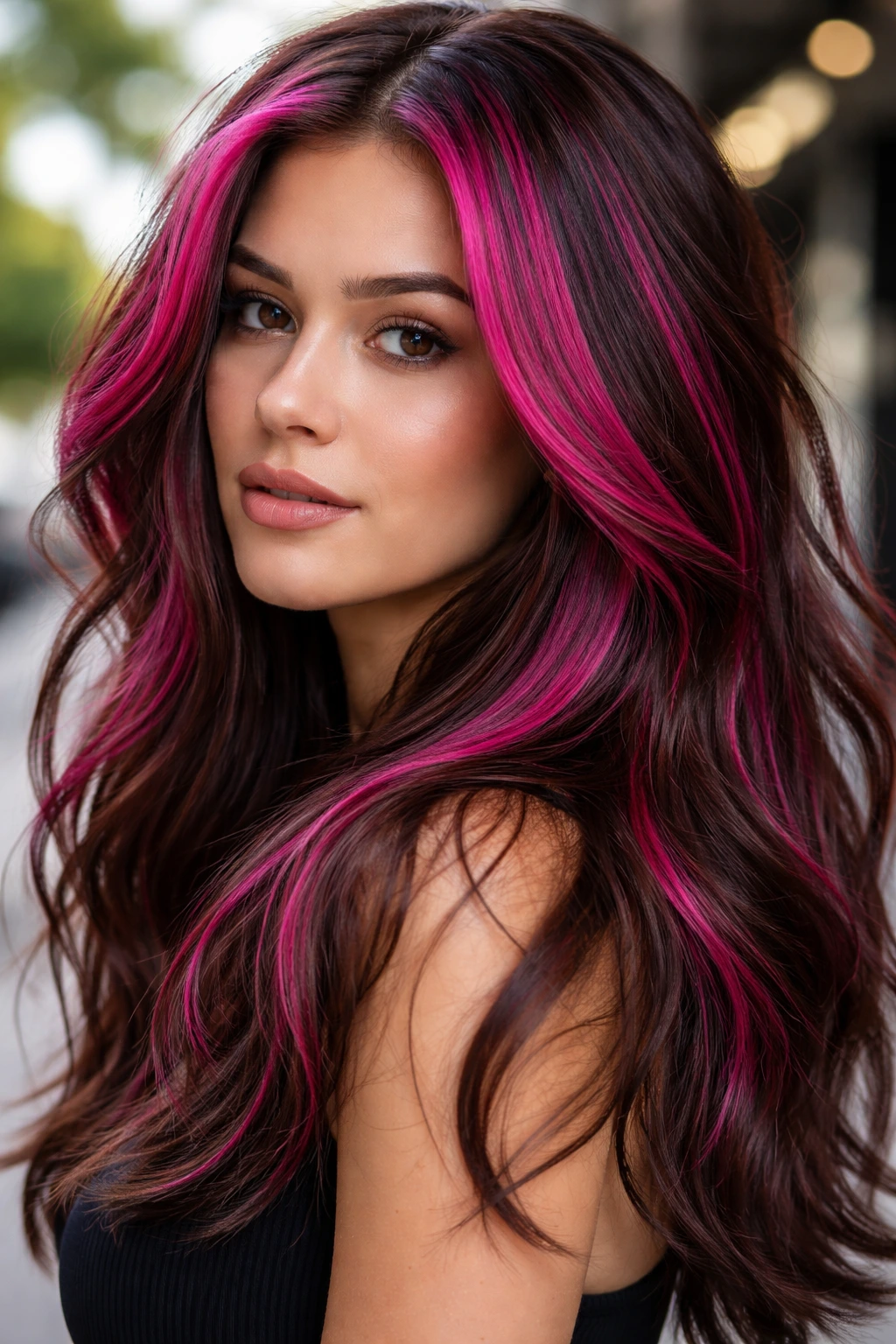
Magenta chunk lights are not shy, and that is exactly why they work. On brown hair, thick pink panels create a graphic look that smaller highlights cannot match.
This style feels strongest on blunt cuts, shaggy lobs, and naturally curly hair. The larger sections give the pink room to show, which matters when the base is dark. If the highlights are too fine, magenta loses some of its punch and starts looking like a background stain. Chunk lights keep the color honest.
What to Pair Them With
- A clean center part for a sharper finish
- A blunt bob or collarbone cut
- A few thick pieces near the face and through the crown
- Loose waves if you want the panels to break up a little
The color itself should be saturated. Think raspberry pushed darker, or pink with a berry edge. That deeper note keeps it from looking childish on brown hair. It also makes the style hold up better as it fades, because it usually softens into rose instead of disappearing into nothing.
If you’ve ever wanted pink hair that still feels tough, this is the move. It has teeth.
14. Cotton Candy Tips with Brown Roots
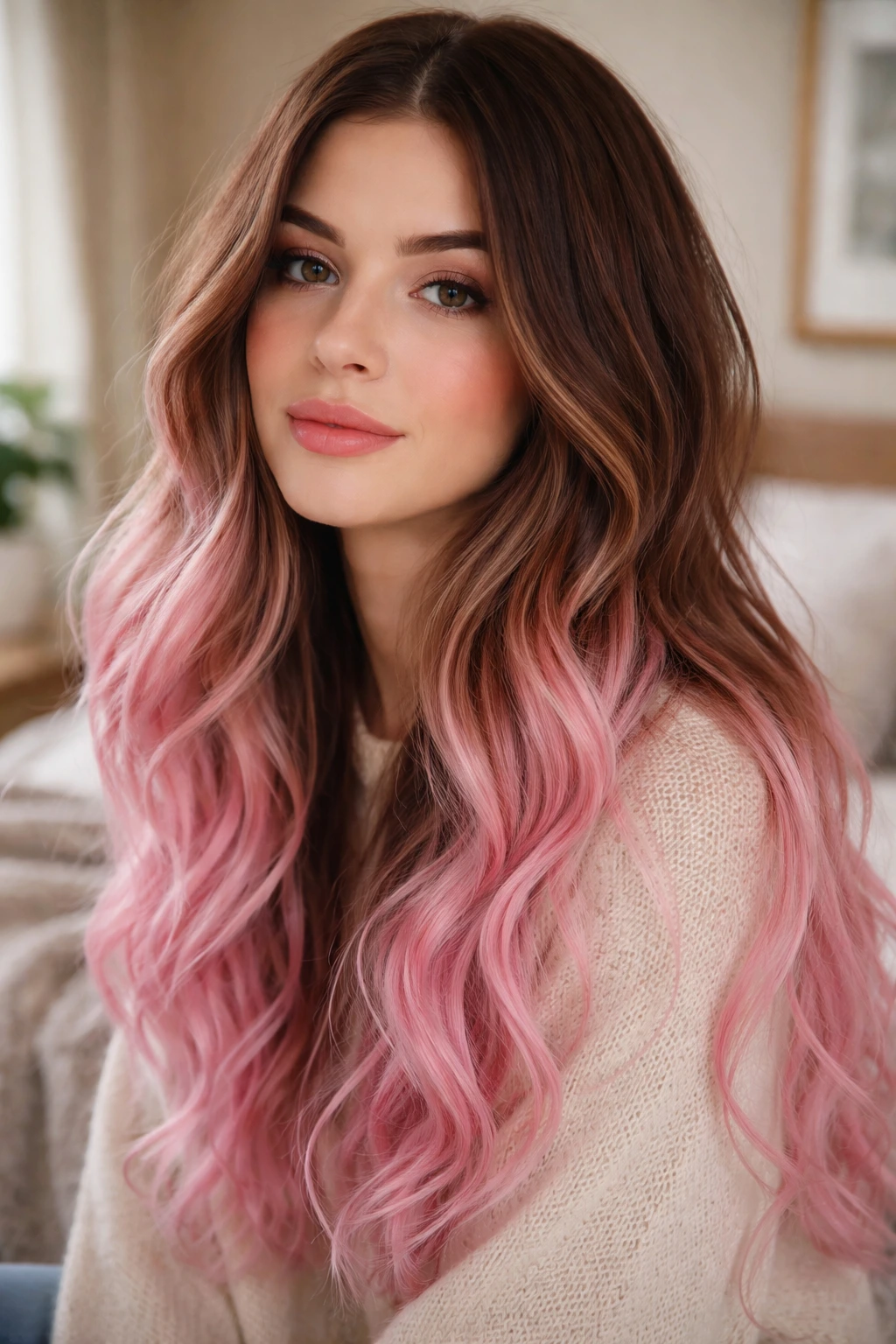
Cotton candy tips are one of the easier pink looks to live with because the brown roots stay untouched. That alone makes life simpler.
The trick is keeping the fade line soft. You want the pink to start gradually, not in one harsh stripe across the hair shaft. On long hair, the lower 2 to 3 inches can take the pastel shade and leave the rest of the length brown. On curls, the color spreads out even more because the tips twist and separate on their own. That gives you a little extra softness without trying.
This look does need lightened ends if your brown hair is dark. Pastel pink will not sit on deep brown in any honest way. It needs a pale canvas. But once the ends are light enough, the effect is light, playful, and easy to tuck into braids or buns.
Cotton candy tips are a good answer for someone who wants pink but does not want to commit to a full head of color. The roots stay grounded. The ends get the fun job.
15. Fuchsia Underlights
Fuchsia underlights make brown hair feel louder when you move and calmer when you don’t. That contrast is the whole draw.
The color sits beneath the top layer, usually from the midlengths down toward the nape. When the hair is worn down, the brown hides most of it. When you tuck the hair behind the ears or pull it into a twist, the pink bursts out. Fuchsia is stronger than raspberry, so it gives a more electric reveal. It’s not subtle, but it is strategic.
How to Wear It
- Works well on thick hair that can cover the underlayer
- Looks sharp in half-up styles and high ponytails
- Needs pre-lightening if your brown base is deep
- Stays more visible than pastel pink as it fades
This is a good style if you like a hidden color story. You can keep the top polished and office-friendly, then let the lower layer do its thing after hours, during workouts, or when the wind hits. That little surprise is what makes underlights so fun.
And yes, they do tend to photograph in motion better than at rest. That’s not a flaw. It’s the point.
16. Peachy Pink Champagne Ribbons
Peachy pink champagne ribbons sit in that sweet middle ground between warm pink and soft coral. On brown hair, they bring warmth first and color second, which is why they feel so easy to wear.
The ribbons should be fine enough to move, but not so thin that they vanish into the base. On caramel or golden brown hair, they can look almost lit from within because the peach undertone matches the warmth already in the hair. On cooler brown hair, they need a little more peach so they do not turn flat. That tiny adjustment makes a big difference.
I like this look on layered cuts with some face-framing pieces. The lighter ribbons around the front break up heavy brown hair and keep it from feeling one-dimensional. In bright light, the pink side shows more. In softer light, the peach side wins. That shifting read is what makes it feel easy instead of overworked.
If you want pink without a sugary finish, this is a sharp choice. It’s softer than magenta, warmer than orchid, and easier to wear than a pure pastel.
17. Smoked Rose Highlights
Smoked rose is for the person who wants pink to feel muted, not sweet. It has a dusty, slightly moody edge that sits beautifully on brown hair.
On espresso or cocoa bases, smoked rose reads like a filtered version of pink rather than a bright color sitting on top. That makes it especially good if you like your hair color to feel lived-in. The highlights can be placed through the midlengths and ends, then softened with a gloss so they lose any hard line. The result is quiet, but not bland.
This one is a favorite for people who wear textured cuts, because the small waves and bends keep the smoky pink moving. A straight style shows the tone more plainly, which is fine if you want a cleaner finish. If your brown hair has red undertones already, smoked rose can help keep the pink from going too warm.
It’s also forgiving as it fades. Instead of dropping straight into a washed-out pastel, it often slides toward beige-rose or mauve. That is a much nicer landing place.
18. Neon Pink Face Frame
Neon pink face framing is the loudest version of this trend, and it only works if you let it be loud. There is no point pretending otherwise.
Compared with a cherry blossom money piece, neon pink is more graphic and more obvious. The front sections are saturated enough to hold their own against dark brown hair, which makes the haircut look sharper right away. It suits short cuts, blunt bobs, high ponytails, and any style that pulls the front pieces forward. On longer hair, it creates a strong focal point and can pull the whole look into something bolder.
The key is restraint everywhere else. Keep the rest of the hair neutral brown or softly highlighted. If too many areas compete, the face frame loses its job. One or two strong front sections are enough. That’s the part most people miss. More color is not always better.
This is the pick for someone who wants a real contrast and does not mind the upkeep. Neon shades fade fast and need a tonal refresh to stay crisp. Still, when they’re fresh, they have a kind of energy brown hair rarely gets from softer pinks.
19. Rosewater Layers on Light Brown Hair
Rosewater layers are almost shy on light brown hair, and that’s why they work so well. The color sits just above the base, like a thin wash instead of a bold stripe.
Why It Feels So Soft
Light brown hair already carries some openness, so rosewater doesn’t have to fight for visibility. A translucent pink gloss through the layers can make the hair look fuller and a little brighter without changing the whole identity of the cut. If the color is too saturated, you lose that delicate effect. The best version feels airy.
This is a smart choice for anyone who wants a pink result that can pass as a natural-ish tint from a distance. The color shows more in the mids and ends, especially on layered cuts where the strands separate. You can also wear it with a side part or a center part without changing the tone too much.
What Helps the Look Work
- A light brown or bronde base
- Fine layers that move when you walk
- A soft glaze rather than a heavy stain
- Air-dried waves or a loose blowout
The shade fades into blush-beige territory, which is a nice place for it to land. If you like a gentle finish, this one has a lot going for it.
20. Pink Sand Micro-Weaves
Pink sand micro-weaves are the most low-key version of pink highlights for brown hair. They look less like streaks and more like a soft shimmer woven through the surface.
Micro-weaves use very fine sections, so the pink blends into the brown instead of sitting apart from it. That makes them ideal if you want a barely-there result that still changes the haircut. On medium brown hair, the color can read like muted rose dust. On darker brown, it becomes a subtle tint that you mostly notice in sunlight or under a bright bathroom mirror.
This style is best when the haircut already has movement. Layers, waves, and a little texture help the pink catch in different places. A blunt, heavy cut can hide some of the effect, which is not wrong — just different. The main advantage here is control. You can make the color whisper instead of speak.
Ask for the pink to be diffused through the top half and around the part, not packed into one area. That spread is what gives the micro-weave look its softness. It’s an understated choice, but not a boring one.
Final Thoughts
Pink on brown hair works when the shade respects the base. That sounds obvious, but it’s where a lot of bad color jobs go off the rails. The brunette underneath is doing half the job, so the pink has to fit the warmth, depth, and texture of the hair you already have.
If you want the easiest path, start with the placement that matches your life. Face-framing pieces are simpler to live with than a full head of pink. Underlayers and peekaboo panels buy you privacy. Chunk lights and neon front pieces ask for more confidence, but they also give more payoff. None of those choices are wrong. They just behave differently.
Bring photos, yes, but bring a real one of your own hair in daylight too. The same pink can look soft at a salon sink and completely different in a kitchen window. That little bit of honesty saves a lot of regret, and it makes the shade feel like it belongs there.
