



Platinum blonde on brown hair has a reputation problem. People picture a harsh stripe, a fried texture, or that too-bright contrast that looks more costume than color. When it works, though, it looks sharp, glossy, and expensive in the simple sense of the word: the hair reads as deliberate, not accidental.
The trick is that platinum blonde highlights for brown hair are never only about blonde. They’re about placement, width, lift, toner, and how much of your natural brunette you leave in the picture. A good colorist thinks in layers. Base first. Then brightness. Then the finish on top.
That matters because brown hair can go in a dozen directions once lightened. Dark chocolate hair needs different spacing than chestnut. Warm brown pulls gold fast. Cooler brown can go beige or smoky with less effort. And if you’ve ever seen highlights that looked stripy in the salon chair but muddy two weeks later, you already know the problem isn’t the blonde itself. It’s the way it was built.
Some versions are soft enough to grow out for months. Some are meant to shout a little. Some work best when the rest of the hair stays deep and glossy, and some need lowlights to keep the whole thing from flattening out. The right pick depends on how much contrast you want, how often you’re willing to sit in a chair, and how much drama your hair can carry without losing its shape.
1. Platinum Face-Framing Highlights for Brown Hair
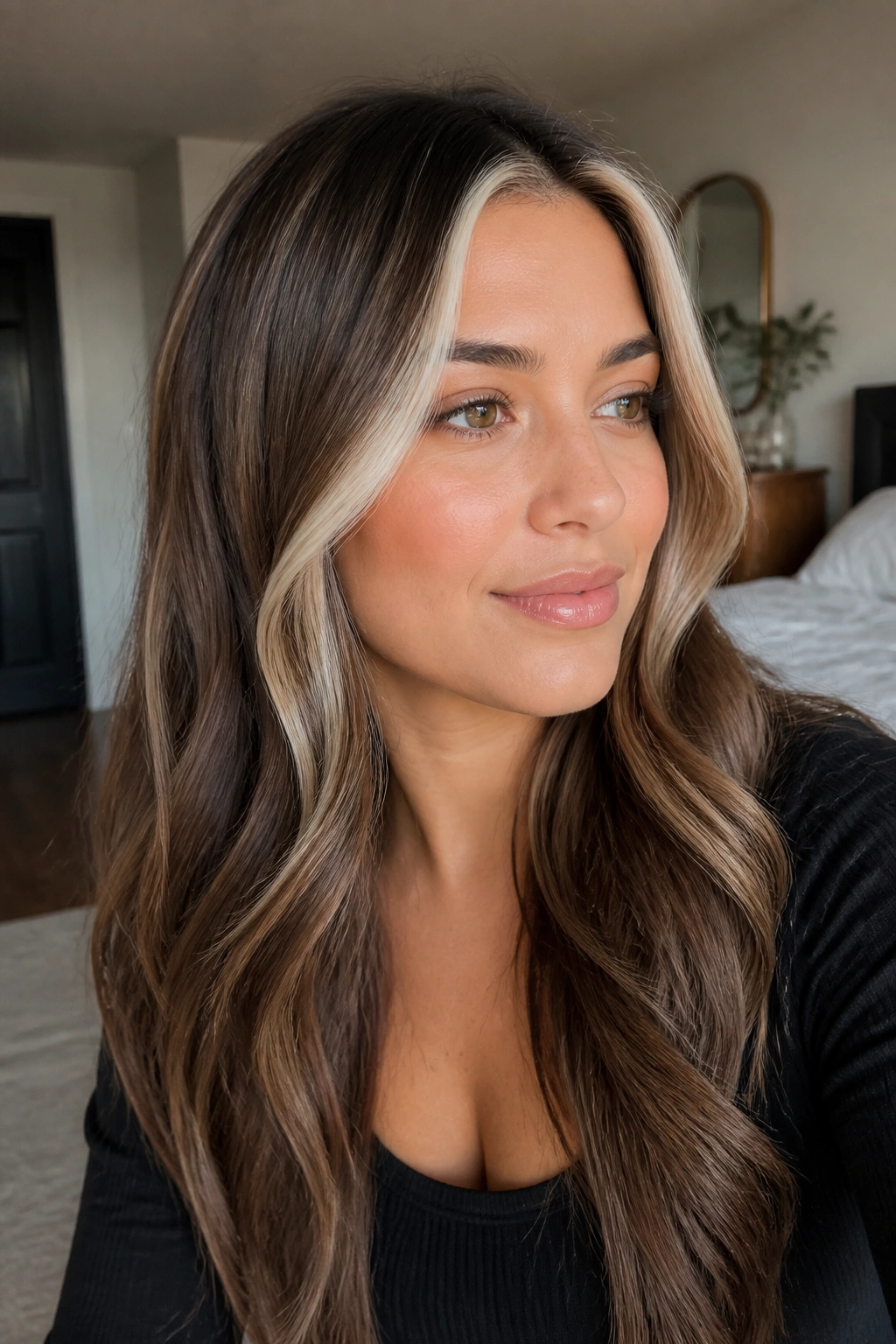
A bright face frame is usually the safest place to start. It gives you that platinum pop near the eyes and cheekbones without bleaching your whole head into submission, which is nice if you like the idea of blonde but do not want your hair appointment to turn into a science project.
Why this works so well
The front pieces catch light first, so even a small amount of platinum reads clearly. On medium brown hair, two to four foils on each side can change the whole mood of a cut. On darker brown, a colorist may need finer sections and a cooler toner so the blonde doesn’t look brassy against the base.
What to ask for
- Two to four bright foils on each side of the face, placed just inside the hairline.
- A soft root shadow that starts right at the scalp or a half-inch down.
- A toner in the pearl, beige, or icy violet family, depending on how cool you want the finish.
- A few lighter pieces through the crown fringe so the front does not stop abruptly.
Tip: Ask for the brightest pieces to sit where you actually part your hair. That little detail keeps the highlight from disappearing when your hair moves.
2. Fine Babylights That Barely Look Highlighted
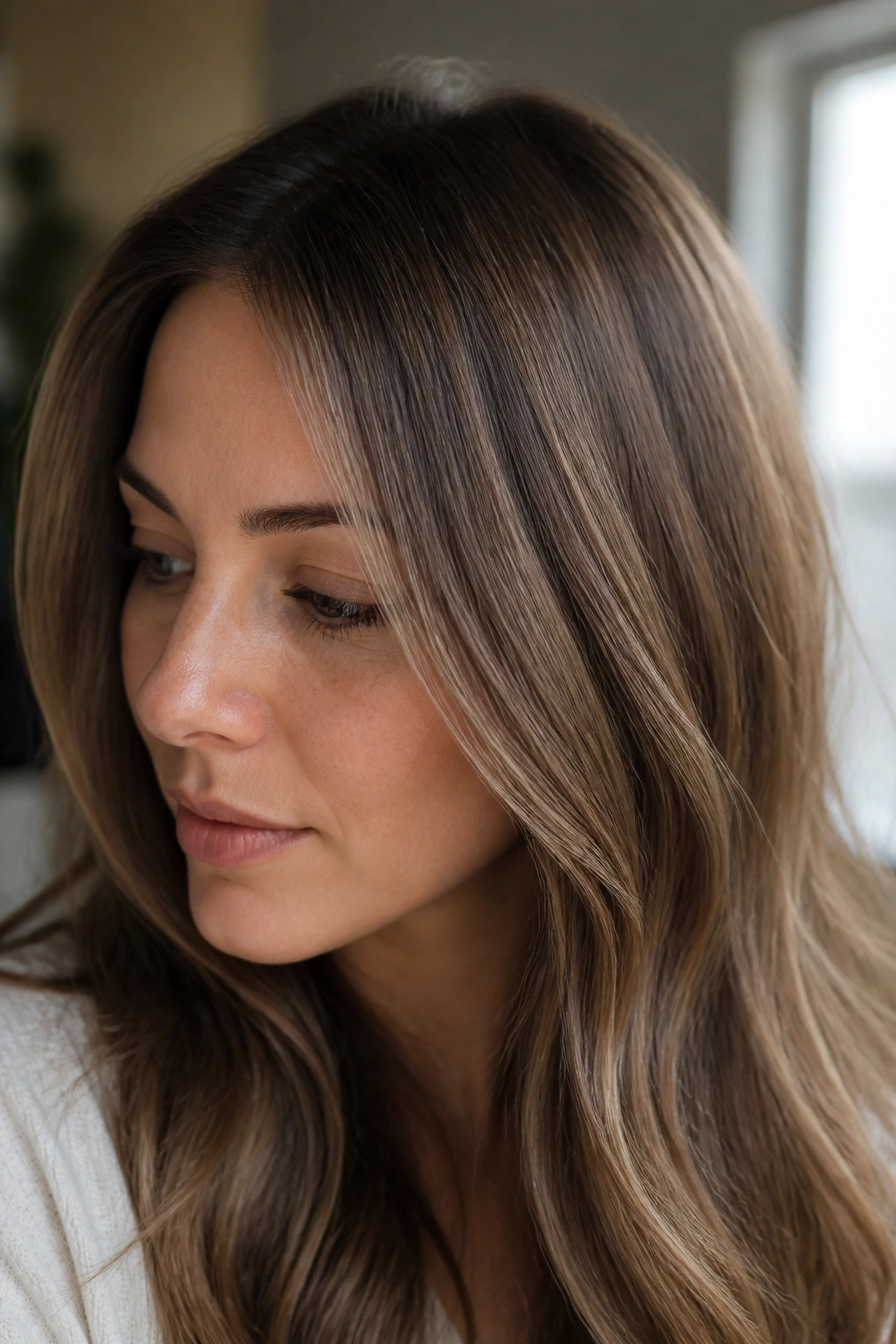
Babylights are for the person who wants people to say, “Your hair looks good,” not, “Did you get highlights?” They’re ultra-fine, usually woven in tiny sections, and they blur into brown hair in a way that feels expensive without being loud about it.
The best part is how soft they look in natural light. A few pale strands around the face, a little shimmer on the top layer, and the whole brunette base wakes up. It’s a quieter look than big foils, but it can be much prettier because the contrast is never screaming at you.
Babylights do take patience. On dark brown hair, going to platinum in tiny sections often means more time in the chair and a gentler lift plan. That’s the tradeoff. You get less line, less stripe, and a lot more movement.
If you style your hair in waves, the effect gets even better. The bend in the hair breaks up the light pieces, so they flash in and out instead of sitting there like a block of color. That’s the whole point. Shimmer, not spotlights.
3. Root-Smudged Platinum Foils
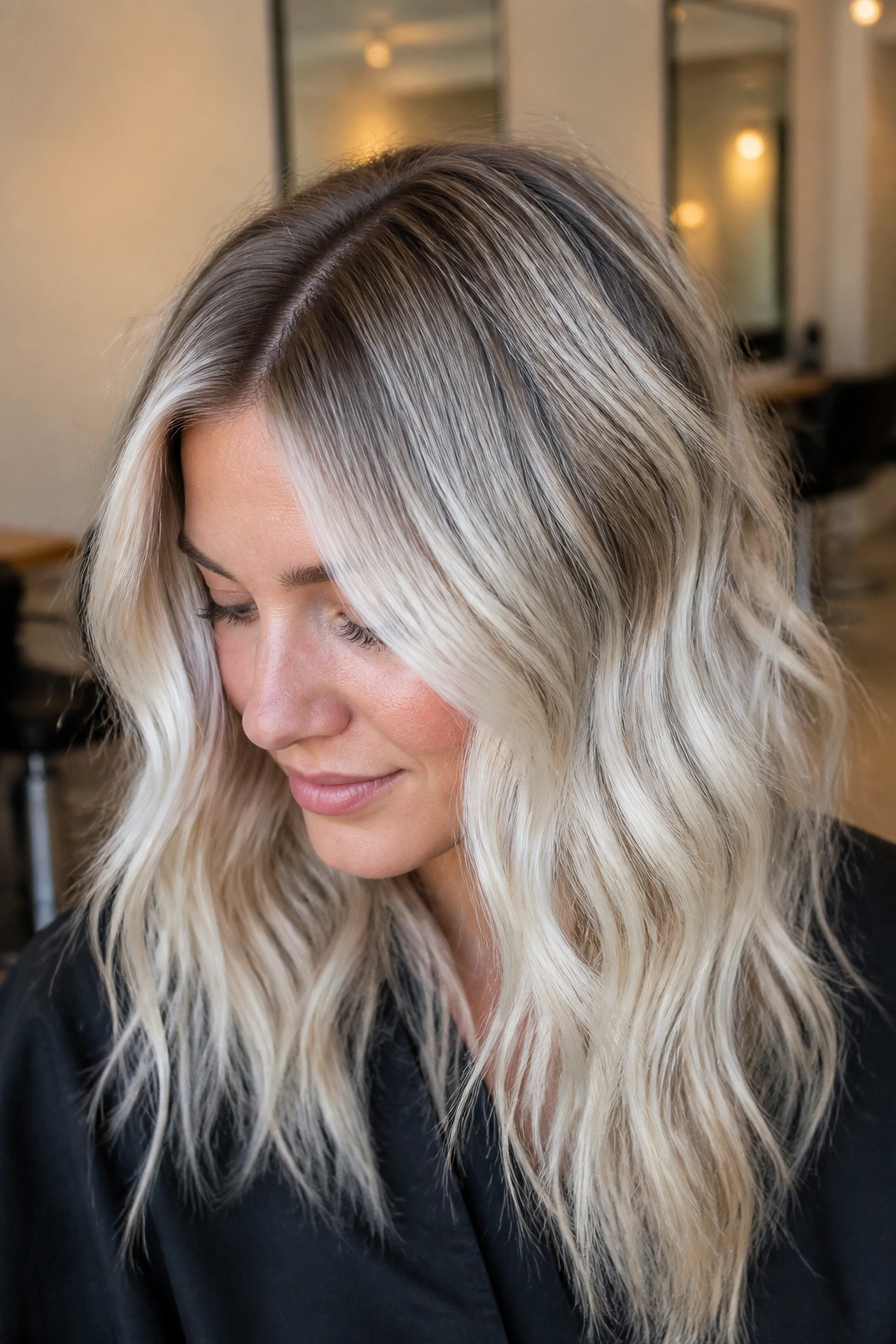
This is the version I’d call practical glamour. The highlights are bright, but the roots aren’t left looking naked. A root smudge blends the first inch or so at the scalp, which makes the grow-out line less aggressive and gives brown hair a softer transition into platinum.
It’s a smart choice if you hate the look of freshly done hair that feels too blunt at the root. Some blonding jobs are all edge and no melt. Those tend to age fast. A smudged root fixes that by giving the eye a place to rest before the blonde starts.
The technique also helps if your natural brown is a little warm. A neutral or cool shadow at the root stops the platinum from floating on top like an unrelated color. The whole head feels more connected. More believable.
Watch for this: if the smudge is pulled too far down, the blonde gets dulled and loses its snap. You want a soft blur, not a muddy blanket.
4. Chunky 90s-Style Platinum Ribbons
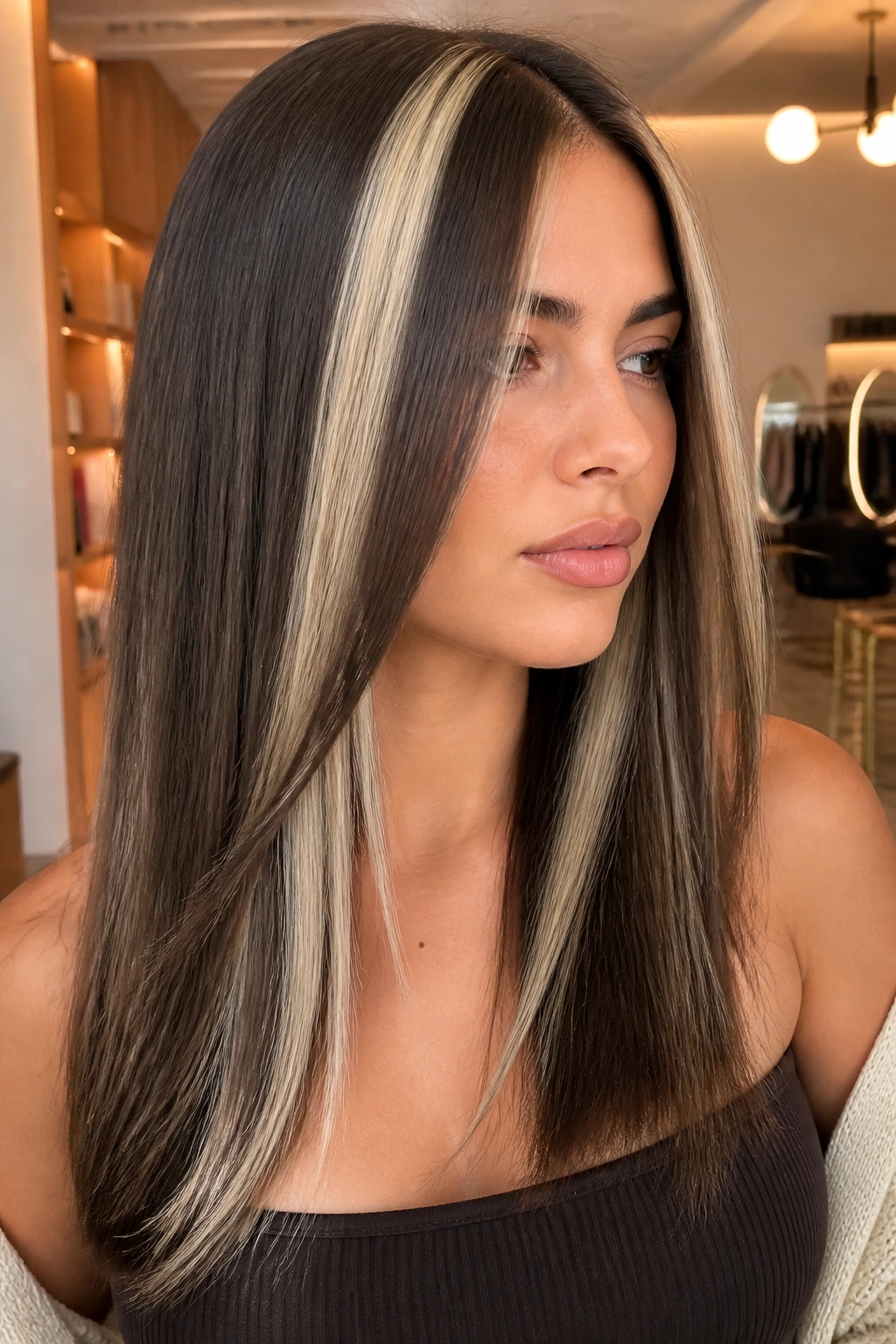
Some people want subtle. Others want the hair to make the statement before they do. Chunky platinum ribbons on brown hair lean hard into contrast, and when they’re placed well, they can be fantastic on thick hair and blunt cuts.
The trick is spacing. If the ribbons are too close together, the hair starts looking like one solid blond panel. Too far apart, and the effect turns choppy in a bad way. The sweet spot is intentional width: enough blonde to be seen, enough brown left behind to keep shape.
This style tends to look strongest with a straight blowout or loose bends. On very fine hair, chunky ribbons can overpower the cut. On thick hair, they bring out the body and make the whole head look fuller. Strange as it sounds, the boldness can be flattering because it gives the hair more visual weight.
Best for:
- Thick or medium-thick brown hair
- Blunt bobs, lobs, and layered cuts
- People who like a visible highlight pattern
- Straight or softly waved styling
One caveat: if your hair is already fragile from old color, skip this one. Chunky platinum asks for more lift in larger sections, and that can be rough.
5. Beige-to-Platinum Highlights with Lowlights
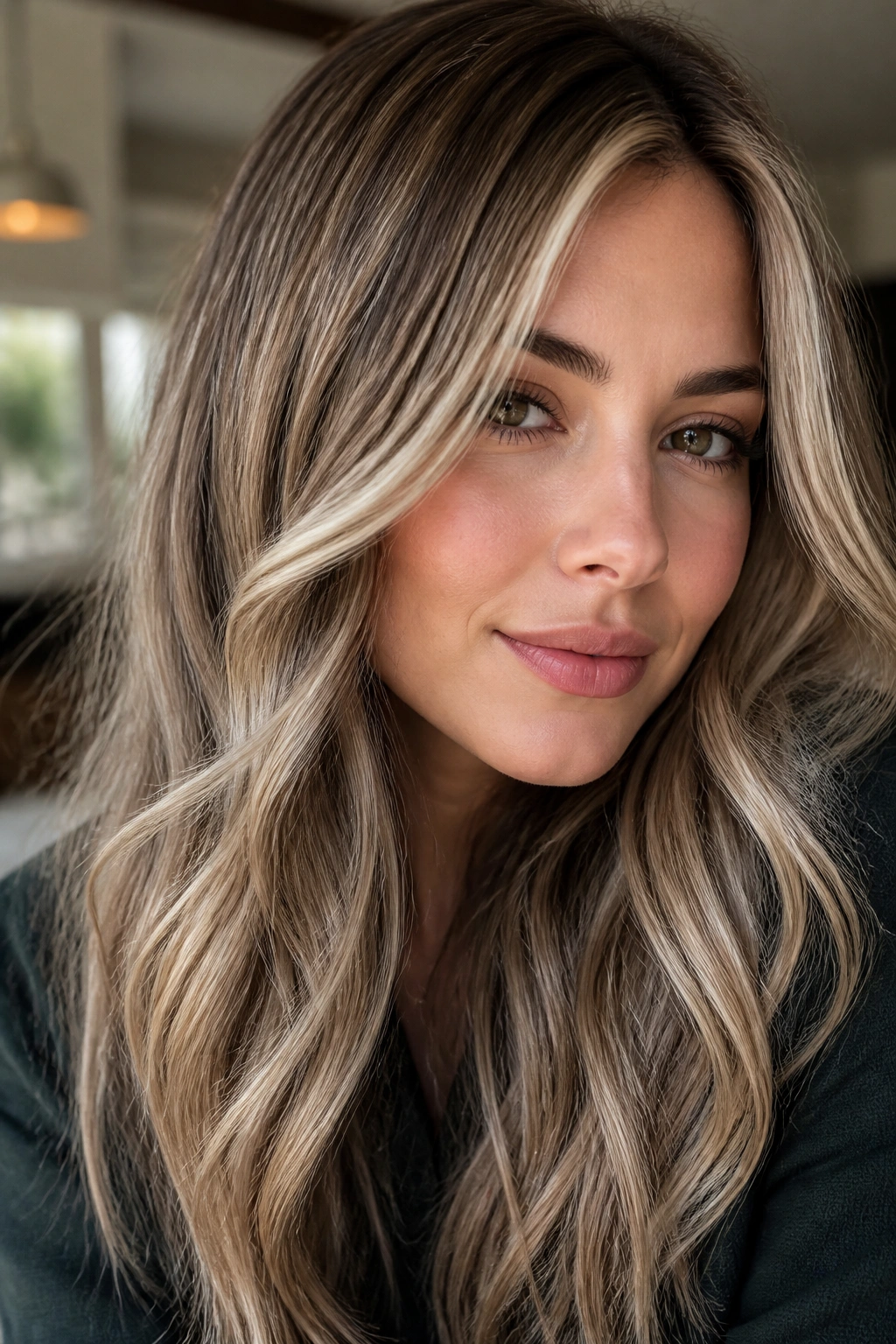
This is the route for brunettes who want dimension, not just brightness. The platinum sits inside a softer field of beige and lowlighted brown, which keeps the hair from looking flat after the lightening process. On its own, platinum can sometimes look a little floating. Add lowlights, and it suddenly has a home.
The lowlights matter more than people think. A level 7 or 8 brunette shade in between the pale pieces gives your eye something darker to read, so the platinum feels brighter. Without that contrast, even pretty blonde pieces can disappear into the rest of the hair.
I like this option for brown hair that already has some warmth. It lets the blonde go cooler without making the entire head icy. The result is less “single-process blonde” and more layered brunette with expensive contrast.
If you want to keep the color from turning one-note, ask your colorist to alternate a few fine platinum foils with a few lowlight ribbons underneath. That tiny bit of darkness does more than people expect.
6. Platinum Balayage Ends
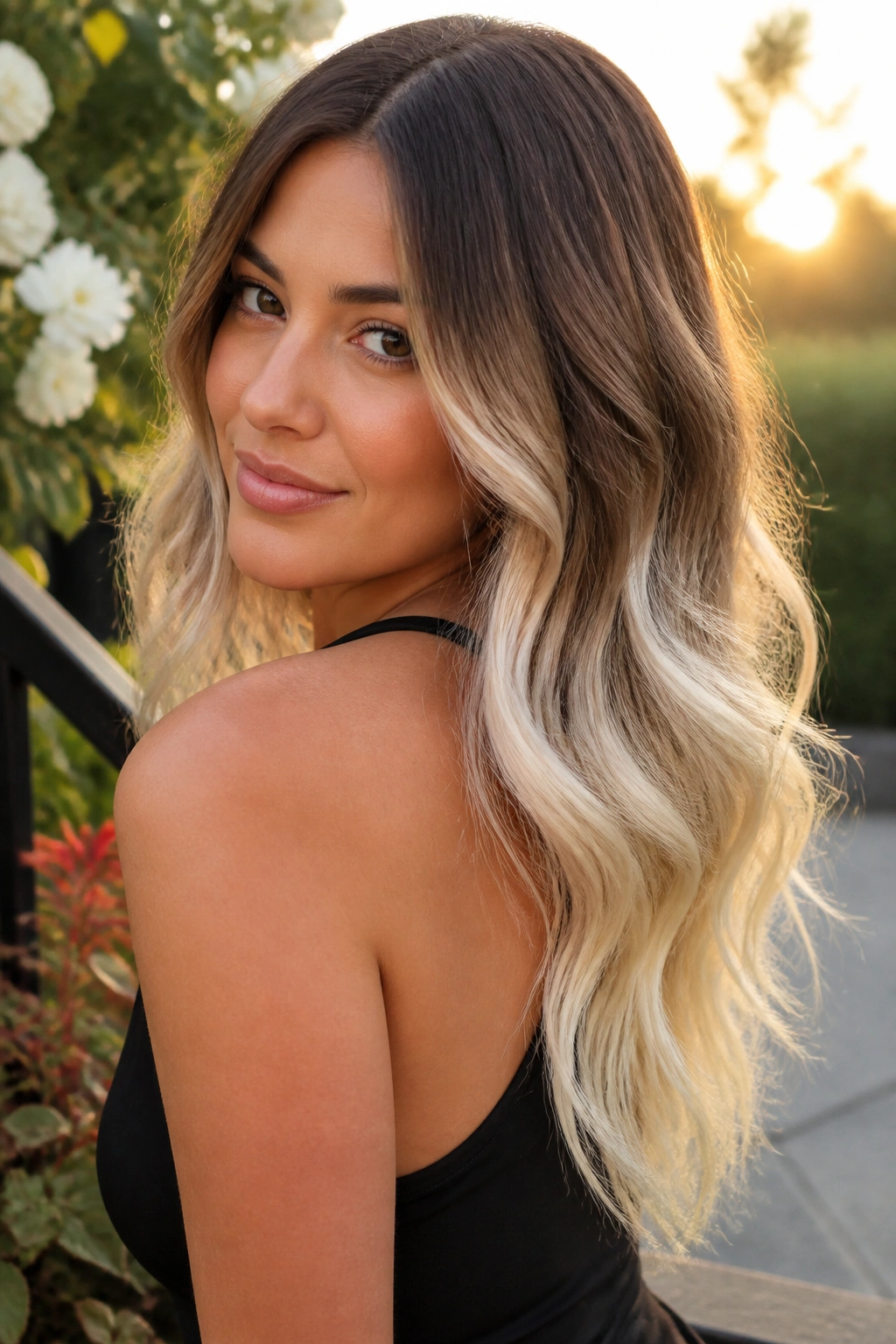
Balayage ends give you the feeling of brightness without flooding the whole head with foil lines. The lighter color concentrates through the mid-lengths and especially the ends, which works well if your brown hair is long enough to show the gradient.
This style is good when you wear your hair in waves, because the bend shows off the fade from brown to platinum. On straight hair, balayage can still work, but the transition needs to be very deliberate or the ends can look faded instead of bright.
It’s also useful if your roots are a darker brown and you want less upkeep. The grow-out is softer because the lighter pieces begin lower down. No hard line. No obvious regrowth band staring back at you in a mirror.
The one thing I’d say bluntly: balayage is not magic. If you want an icy blonde close to the scalp, this is not the easiest route. It’s a softer effect. Beautiful, yes. Loud, no.
7. Curtain Bang Highlights That Open Up the Face
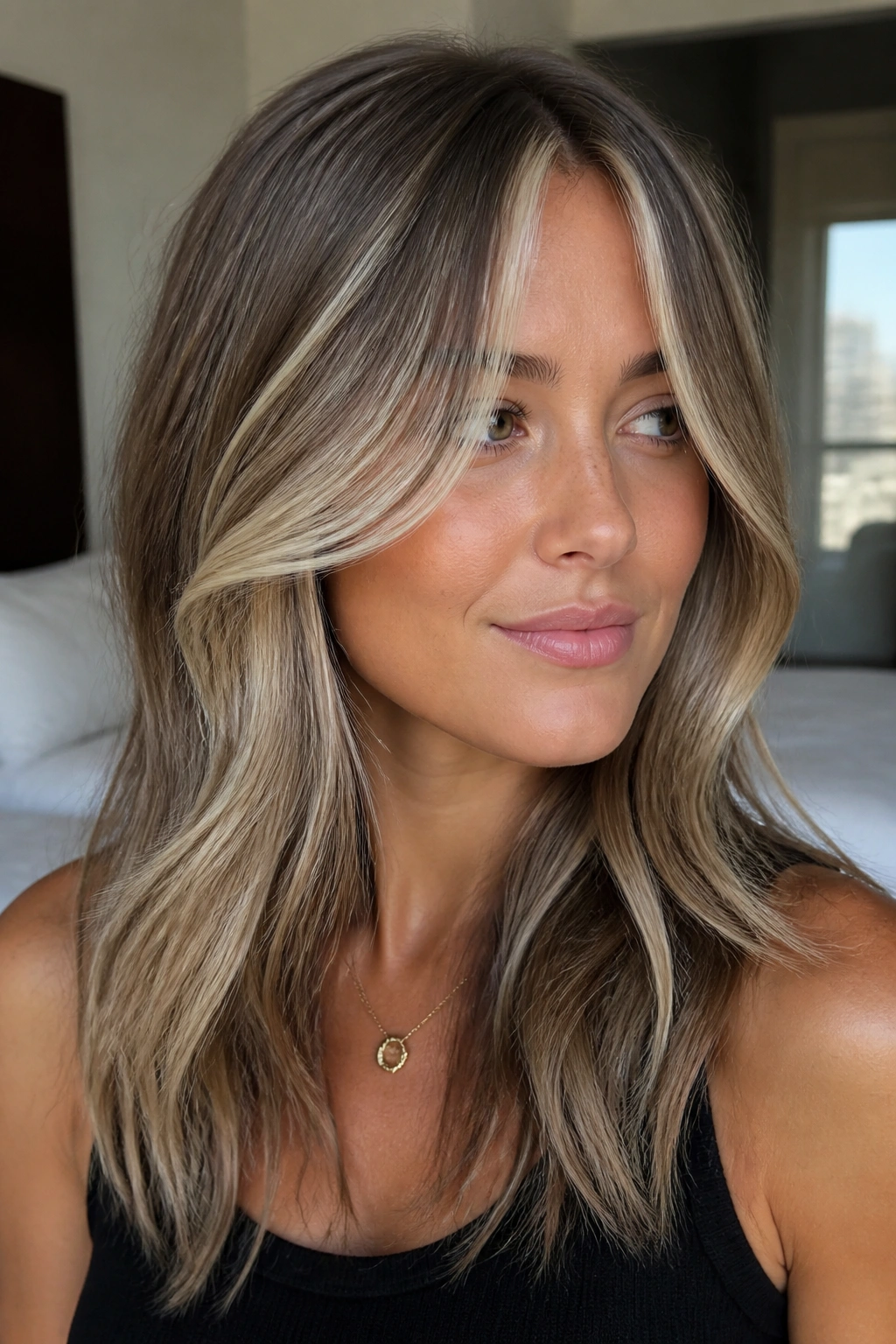
Curtain bangs and platinum highlights are a good pairing because the bang area gives the color a built-in stage. Those front pieces swing, separate, and frame the face, so even a modest amount of brightness changes the whole haircut.
The point here is not to make the bangs solid blonde. That usually looks too heavy. Better to weave in a couple of thin highlights through the curtain pieces and a few bright foils at the temples. The bangs move, and the platinum moves with them.
Why it stands out
When you have a brown base and a lighter bang area, the face reads instantly brighter. The eyes show up more. The cheekbones look sharper. It is a small placement change with a big payoff.
What to tell your colorist
- Keep the bang section lighter than the rest of the top.
- Use fine foils or babylights, not blocky slices.
- Blend the bangs into the side panels so the color does not stop at one hard line.
If your bangs are shorter and blunt, be careful. Too much platinum there can make them look thin. Softly layered curtain bangs handle the contrast better.
8. Hidden Peekaboo Platinum Under Brown Hair
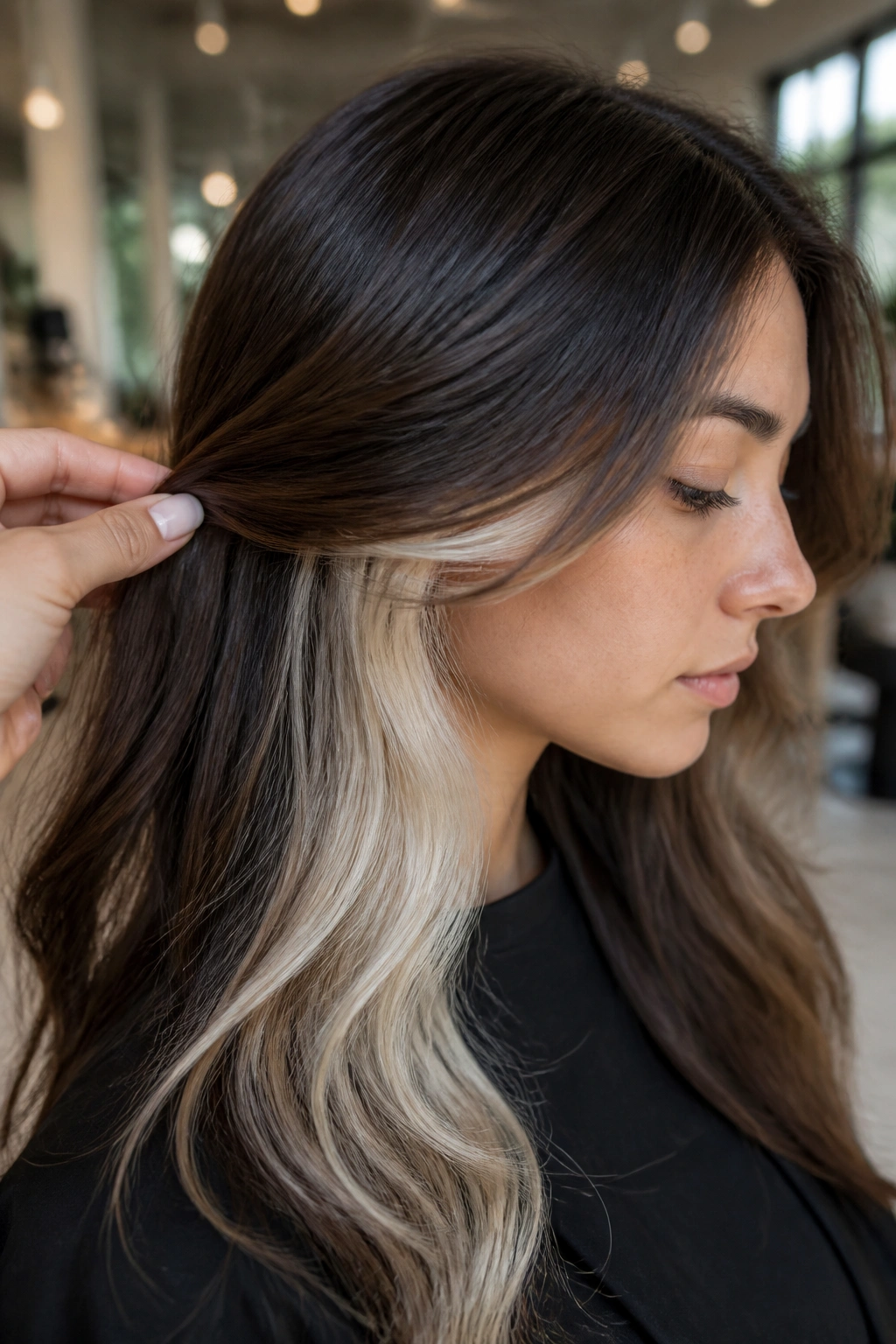
Peekaboo highlights are the sneaky option. Most of the platinum sits underneath the top layer, so you only catch it when hair swings, lifts, or gets pinned back. It’s a smart choice if you work somewhere conservative or just like a bit of surprise in your hair.
This style is especially good on lobs, bobs, and layered cuts. Shorter lengths reveal the hidden blonde faster, while longer hair hides it a little more. If you wear half-up styles, clips, braids, or ponytails, the platinum suddenly becomes part of the look instead of staying tucked away.
What makes this version useful
- It lets you test platinum without putting it everywhere.
- It keeps the top layer brown, which makes grow-out easier to manage.
- It gives texture to layered cuts that can otherwise feel flat.
Peekaboo color also works well if you want to keep the surface of the hair looking rich and glossy. That brown top layer can stay healthy-looking while the underneath gets the lightening drama. Nice balance. No fuss on top, surprise underneath.
9. Platinum Blonde Highlights on Chocolate Brown Hair
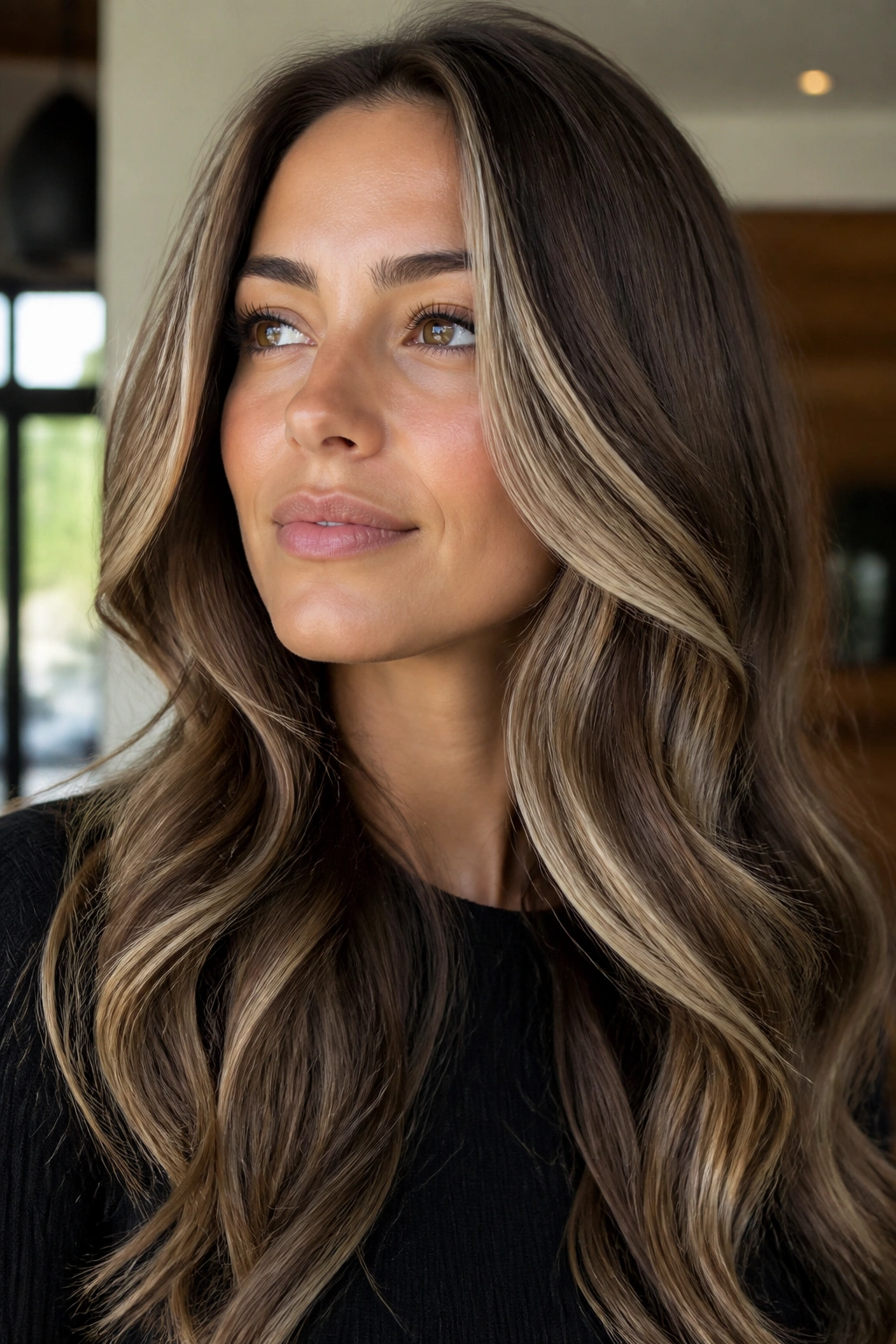
Chocolate brown hair is one of the best bases for platinum because the contrast is clean. Deep brown makes pale blonde look even brighter, and the whole effect can be sleek, polished, and a little sharp in the best way.
But the placement has to be disciplined. Too many wide highlights and the hair starts looking striped. Too few and the platinum disappears into the darkness. The sweet spot is a mix of medium and fine sections, with the brightest pieces near the face and a few stronger ribbons through the crown.
This look works well on smooth blowouts and soft waves. The shine matters. Brown hair with platinum highlights can look flat if the cuticle is rough, so a gloss or shine spray helps a lot.
One thing I’d avoid is over-toning. Chocolate brown needs some warmth to keep it looking rich. If every blonde piece goes too silver, the contrast can feel cold in a way that doesn’t flatter the base. Aim for icy, not chalky.
10. Silver-Platinum Ribbon Highlights
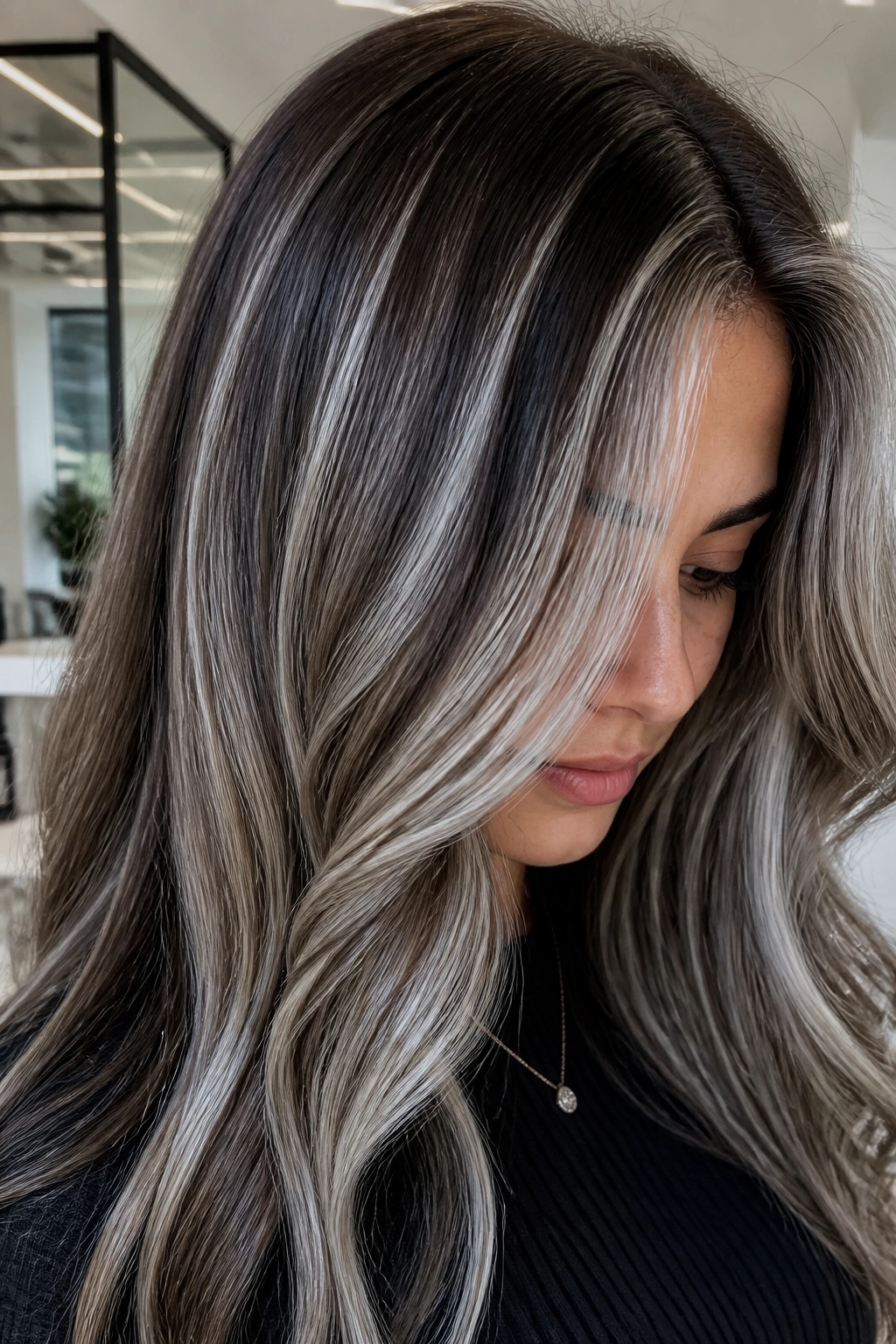
Silver-platinum ribbons are for people who want the blonde to feel frosty. Not warm. Not beige. Frosty. The look is cooler than standard platinum, and it can be striking against brown hair when the toner is managed carefully.
The difference is subtle on paper and obvious on the head. Platinum usually reads pale blonde with a cool finish. Silver-platinum pushes a little farther into metallic territory, especially on the brightest pieces around the face and part line. If your natural brown base has a cooler cast, this combination can look smooth instead of harsh.
The downside is upkeep. Silver tones fade faster, and hard water or heavy styling products can make the finish drift dull or muddy. A color-safe purple shampoo once in a while helps, but not too much. Overdoing it can leave the hair looking flat.
This is one of those styles that looks best when it’s clean and shiny. Dry ends make the cool tone look tired. Healthy ends make it look deliberate.
11. Soft Root Shadow with Platinum Ends
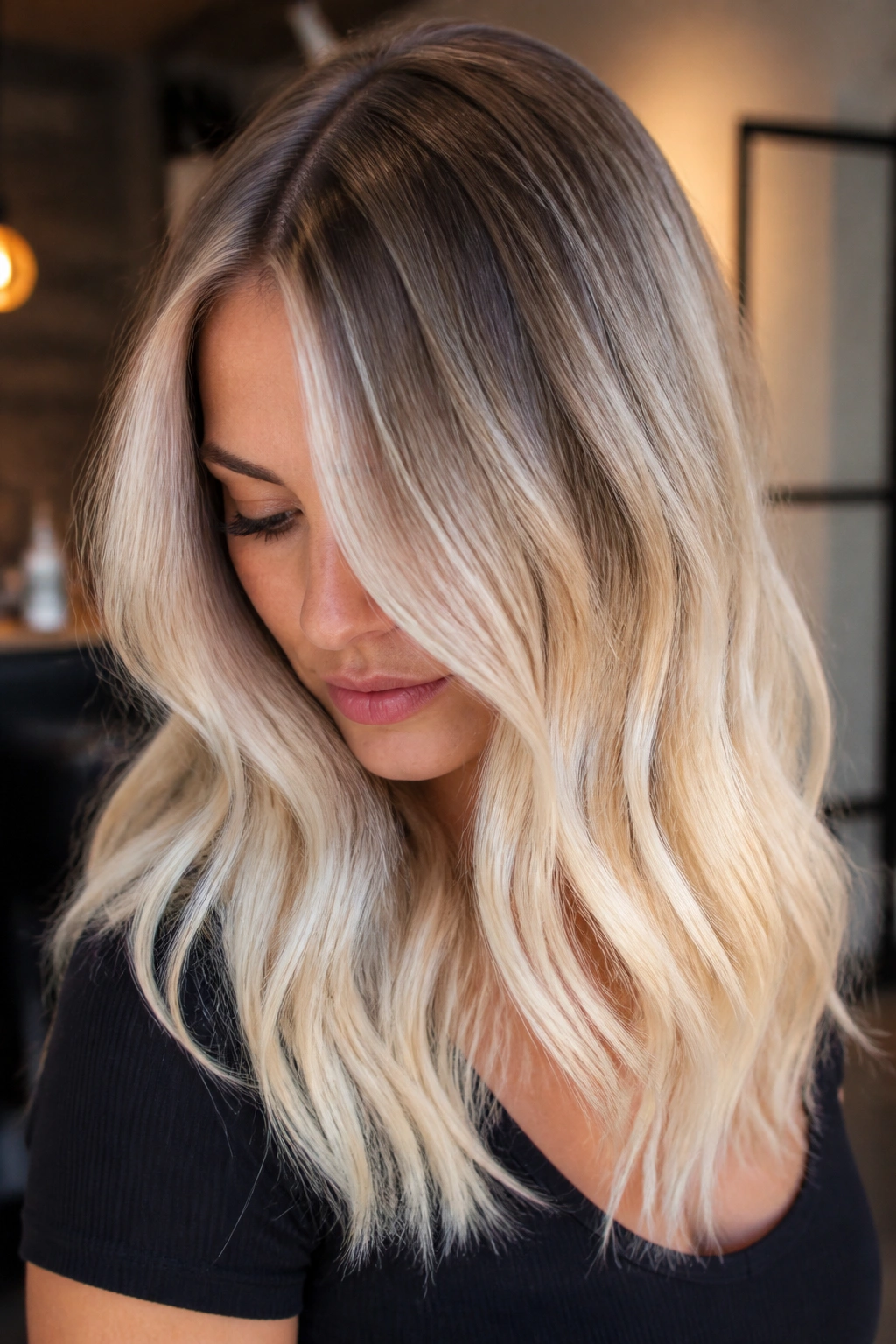
If you want platinum but not the weekly salon treadmill, this is a strong choice. A soft root shadow keeps the top of the hair darker, then the platinum pieces brighten underneath or through the mid-lengths. It gives the color a grown-in look without making it messy.
The beauty of root shadowing is that it makes the grow-out feel planned. You can go several weeks longer between touch-ups because the regrowth blends into the style instead of fighting it. On brown hair, that matters a lot. Dark roots against pale blonde can look harsh fast if there’s no buffer.
The shadow should be narrow, though. About an inch to an inch and a half is enough for many heads. Push it too far, and the blonde looks buried. Pull it too high, and the lift is wasted.
This is a good salon request if you have a job, a workout schedule, or any life at all. Reality helps here.
12. High-Contrast Stripe Highlights
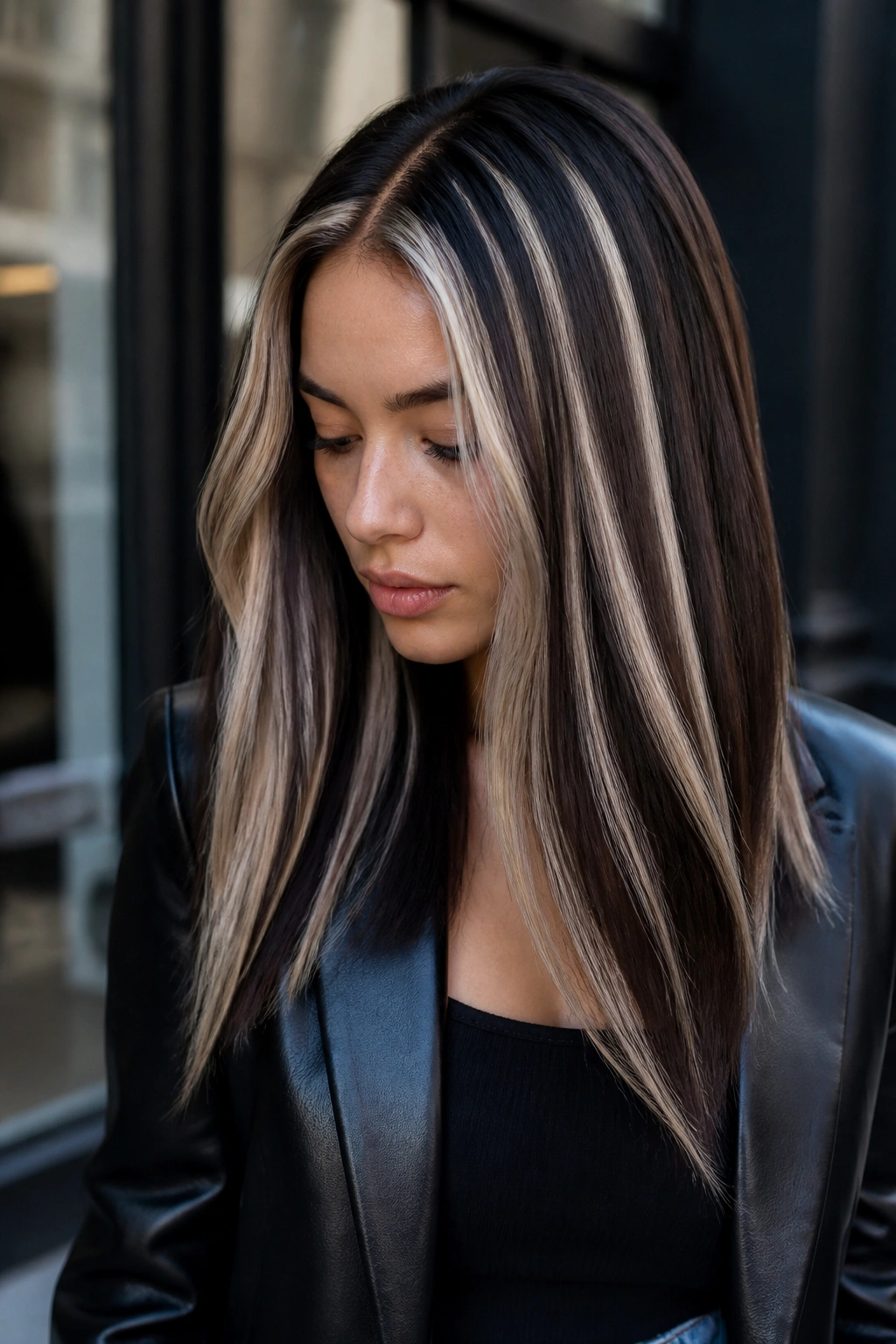
Not every blonde highlight needs to whisper. Some should say the word out loud. High-contrast stripes are bolder, more deliberate, and they work especially well on blunt bobs, heavy lobs, and straight hair that can hold a visible pattern.
The visual effect is crisp. Brown hair stays dark and glossy while the platinum pieces cut through it in obvious bands. That contrast gives fine hair a thicker look because the eye reads the lines as texture. On denser hair, the stripes can make the cut feel more structured.
When this style is worth it
- You wear your hair straight or with a soft bend.
- You like visible placement.
- Your cut has strong lines or blunt ends.
- You want the highlight pattern to be part of the style, not hidden inside it.
The catch is that bad placement is easy to spot. A stripe that’s too wide, too close to another stripe, or too symmetrical can look dated fast. The good version feels graphic. The bad version feels like a mistake. That’s a narrow line, so a careful colorist matters here.
13. Teasylights for Seamless Platinum
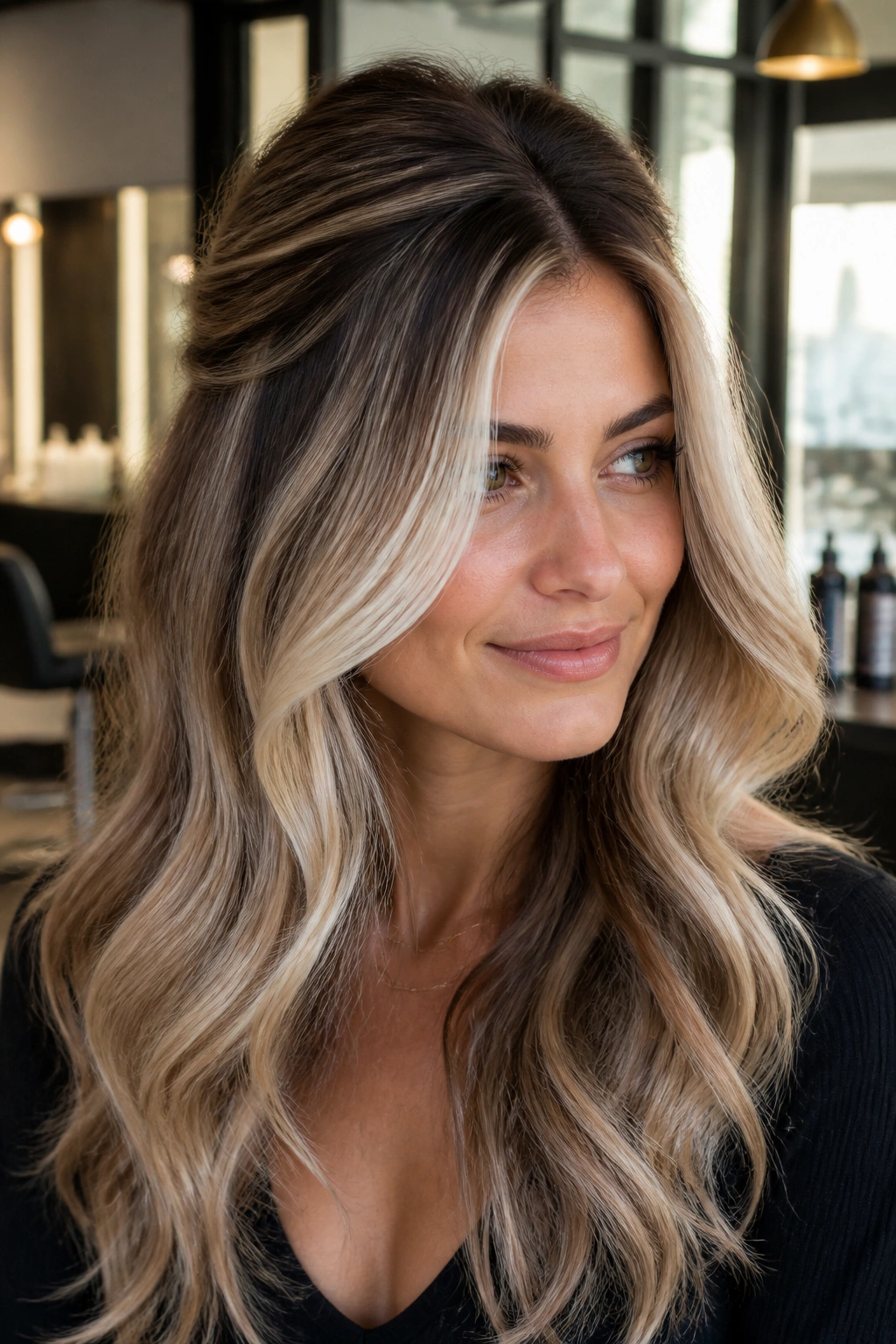
Teasylights are one of the best ways to soften the shift from brown to platinum. The hair is lightly teased before foiling, which blurs the line where the bleach starts and keeps the highlight from looking like a hard block.
That little tease changes everything. Instead of a solid stripe at the root, you get a faded edge. On brown hair, especially if it has layers or movement, that softer start looks more natural and less salon-bright in a bad way.
What to ask for
- Fine teasylights through the top and face frame.
- Slightly brighter pieces around the part.
- A beige or pearly toner, not a flat silver wash.
- A gloss refresh when the blonde starts to feel dull.
One caution: teasylighting can be a little rough on fragile hair if the teasing is heavy. You want enough lift to blur the line, not enough tangling to make the comb work like a small battle. On healthy hair, though, the finish is lovely.
14. Platinum Highlights for Warm Brunette Hair
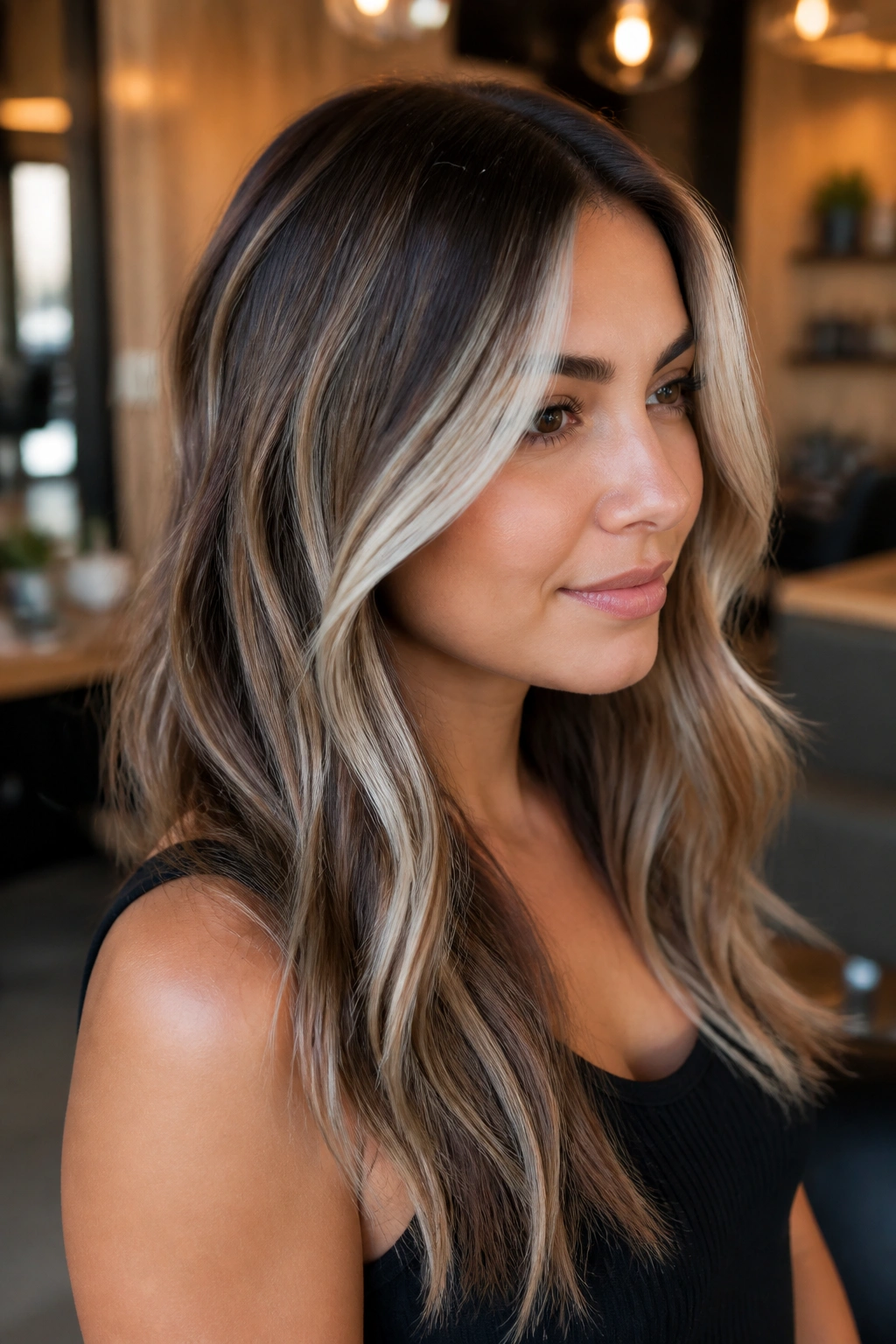
Warm brunette hair can be tricky because the base already carries gold or caramel notes. If you throw platinum on top without a plan, the result can feel disconnected. The better move is to let the cool pieces sit beside the warmth, not fight it.
This is where a good toner earns its keep. A platinum highlight on warm brown hair usually needs a cool but not icy finish, especially if the base leans chestnut or auburn. Too much ash, and the whole head can look dull. Too little, and the blonde starts turning yellow faster than you want.
A nice way to wear this look is with brighter pieces around the face and a few neutral lowlights underneath. That keeps the warmth in the base, which makes the platinum stand out more cleanly. You get contrast without losing the richness of the brown.
I’d call this one quietly tricky. It can look gorgeous. It can also look patchy if the warm base isn’t respected.
15. Platinum Money Piece with Crown Brightening
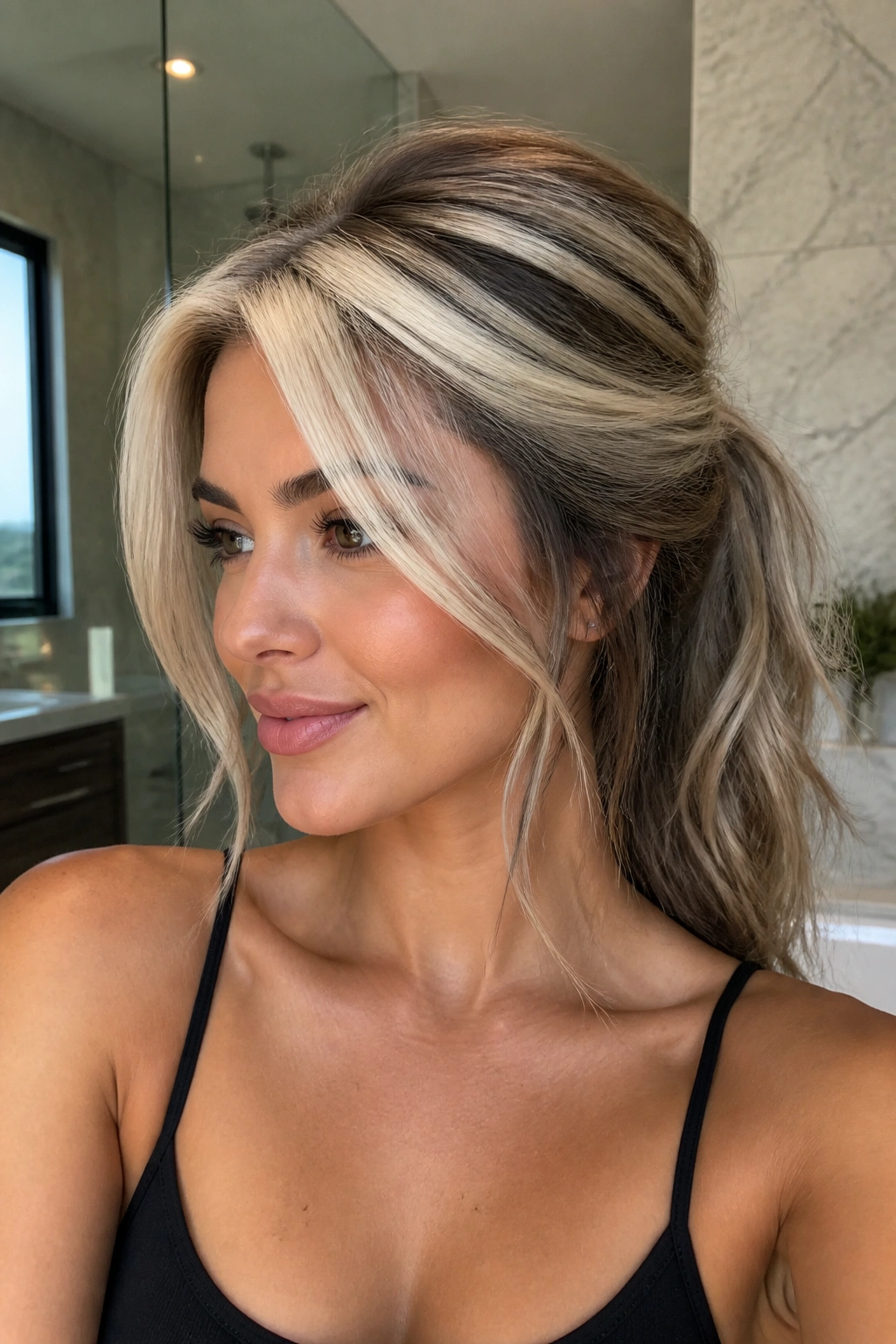
A money piece is the bright front section, but crown brightening pushes the idea a little farther. You lighten the front and a few pieces at the top, so the color doesn’t stop right at the hairline. That creates a lifted look through the entire top half of the head.
It’s a smart choice if you wear your hair in ponytails, clips, or messy buns. The crown pieces show even when the length is pulled back, which makes the color feel more useful. Not just pretty on one side. Useful.
Why it beats a front-only placement
- It spreads brightness across the top of the head.
- It keeps the hair from looking flat when tied back.
- It gives brown hair more movement in photos and daylight.
- It costs less than a full head of platinum foils.
If your hair is very dark brown, this still works, but the lift needs to be careful. The front can take more brightness than the crown because the hairline usually processes faster. A good stylist will watch that difference closely, and they should. The front goes first. The scalp heat is no joke.
16. Mushroom Brown with Platinum Ribbons
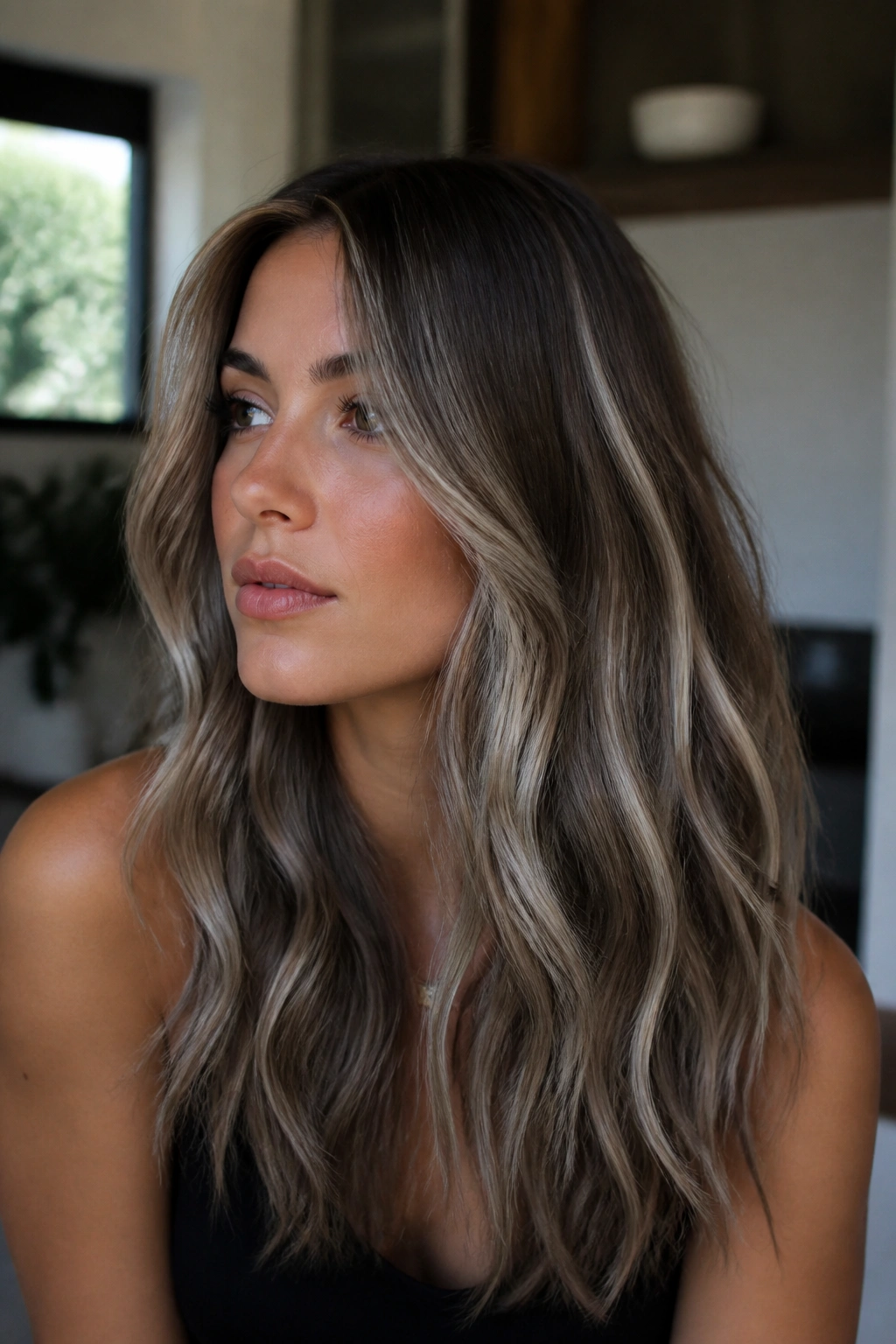
This one is for the person who likes their blonde cool, smoky, and a little moody. Mushroom brown gives you a taupe-heavy base, and the platinum ribbons sit inside it like brighter threads instead of bright interruptions.
The effect is less beachy and more tailored. That’s the right word here. The hair still has contrast, but the tones stay close enough to feel deliberate. If your brown hair already has ash in it, this can be one of the easiest ways to wear platinum without the blonde looking detached from the rest.
The lowlights are part of the story here. You need them. Without a darker or neutral base between the light pieces, mushroom brown loses its depth and starts feeling flat. The whole style depends on that push and pull between pale ribbons and muted brunette.
This is also one of the better choices if you like cooler makeup, silver jewelry, or darker brow looks. The hair doesn’t steal the whole scene. It just sits there looking expensive and a little moody.
17. Platinum Highlights for Curly Brown Hair
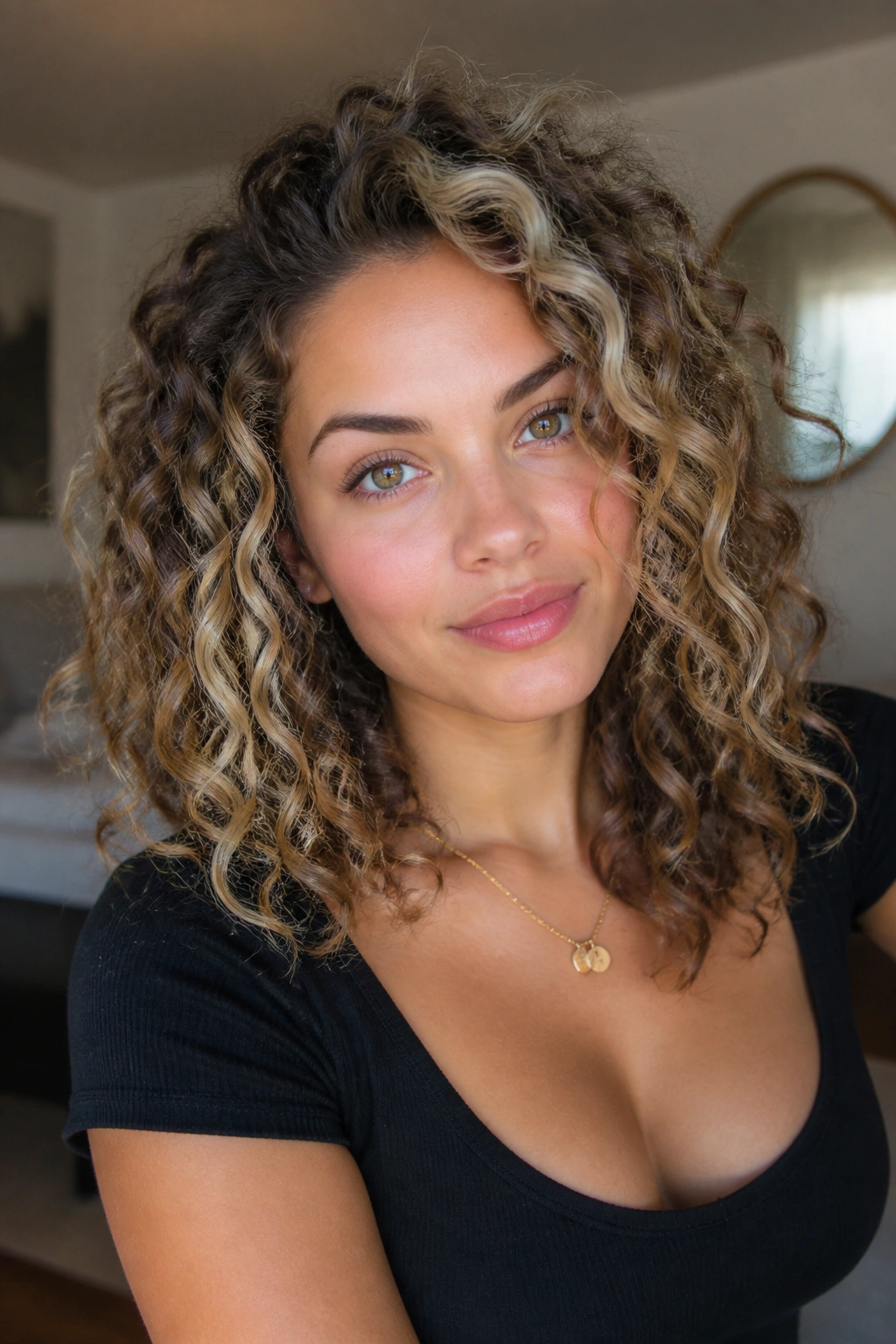
Curly hair changes the game. A highlight that looks perfect on straight brown hair can disappear inside curls, or worse, turn patchy if the placement ignores the curl pattern. Platinum on curls needs to follow the way the hair bends.
The brightest pieces should usually sit where the curls naturally spring forward: around the face, the top layer, and the spots that catch light when the hair moves. If you flood the whole head with blonde, the curl definition can get lost. That’s a bad trade.
What helps curly hair most
- Use painted or foil placement that follows the curl family, not just straight sections.
- Keep some brown depth underneath so the curls keep their shape.
- Ask for a bond-building lightener if your hair is already dry or color-treated.
- Finish with a moisturizing mask and a diffuser instead of rough towel drying.
Curly brown hair can wear platinum in a gorgeous, dimensional way. The texture keeps the blonde from looking flat. But the lift has to respect the pattern. Otherwise the curls end up looking fuzzy where they should look defined.
18. Short-Hair Slice Highlights
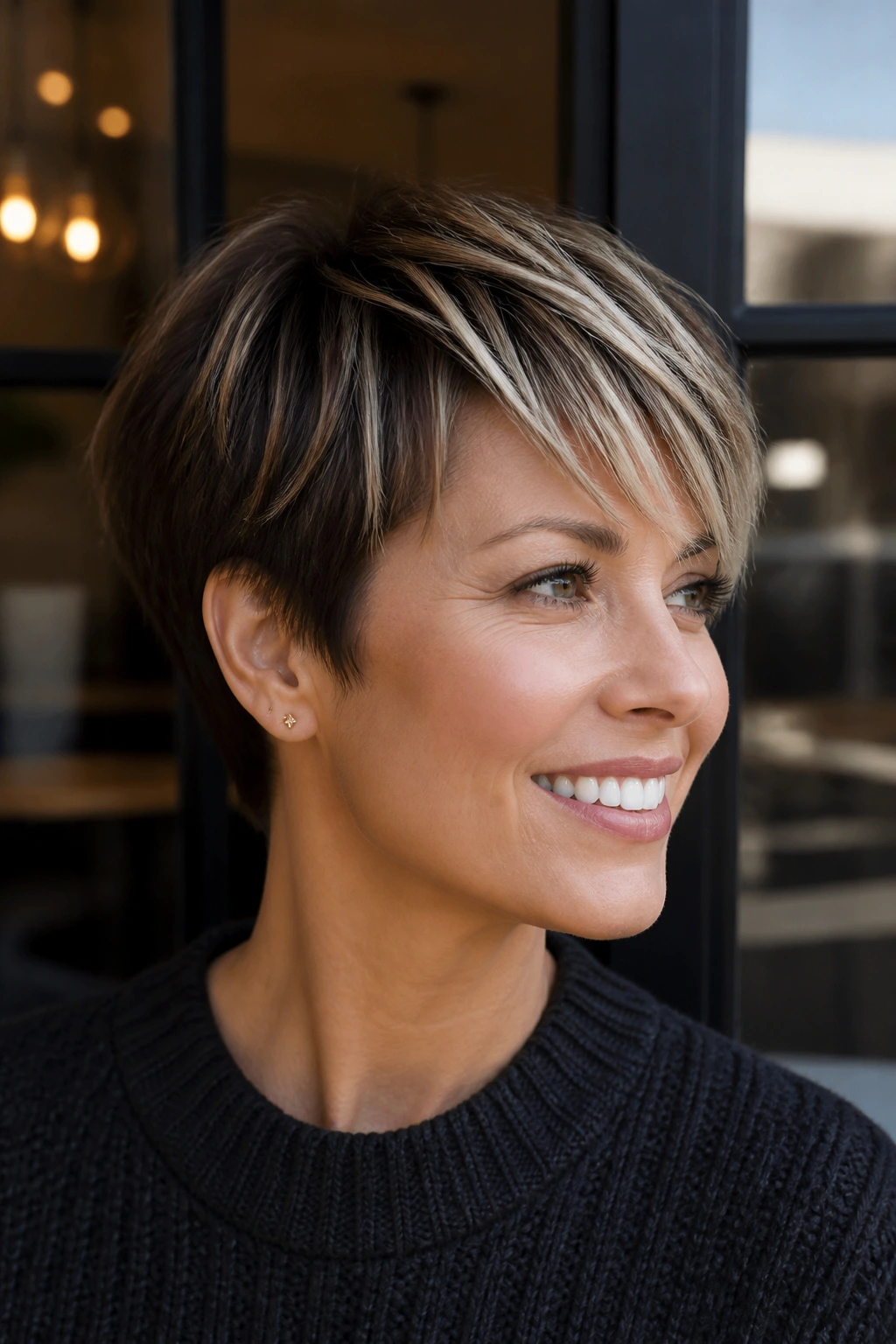
Pixies, bixies, and short bobs can take platinum beautifully, but the placement has to be tighter. Short hair shows every decision. There is nowhere to hide a bad foil line, and there is not enough length to blur a messy section later.
Slice highlights work well here because they create crisp lines through a small surface area. A few pale pieces at the fringe, a light streak through the crown, maybe one or two brighter ribbons near the temple — that’s often enough. Short hair doesn’t need a lot to change character.
The style reads especially well when the cut has texture. Choppy layers and platinum slices give each other a boost. The blonde catches the edges; the cut keeps the blonde from looking flat.
I’d avoid making the slices too broad. On short brown hair, broad platinum pieces can take over fast. Fine slices give you movement. Broad ones can turn the whole thing into a block.
19. Ashy Platinum Around the Part
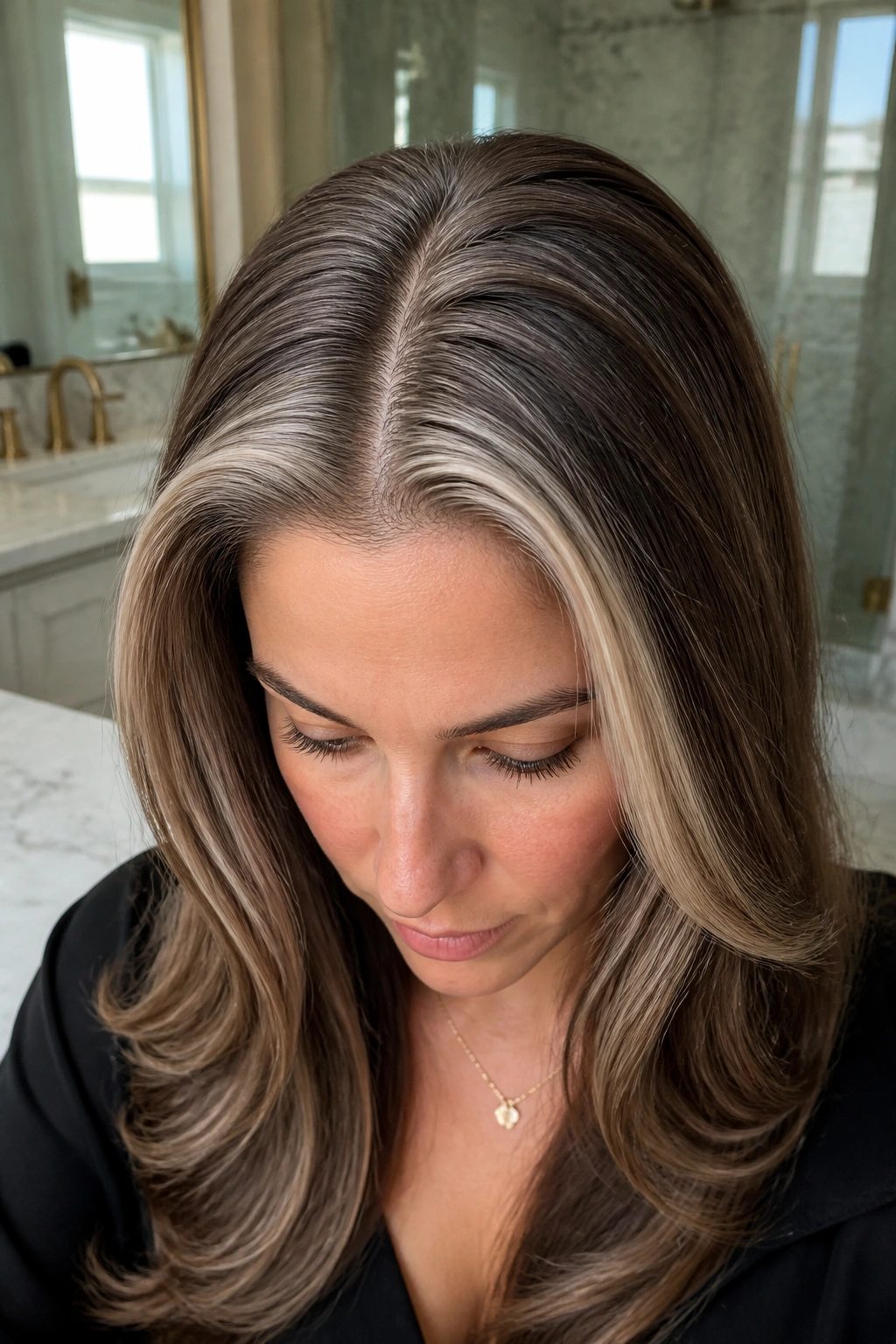
If your hair lives in one part all day, brighten that zone. It sounds almost too simple, but it works. A few ash-platinum pieces along the part line and just behind it can make brown hair look lighter without a full-head commitment.
This placement matters because the part is the first place people see, and also the place where hair naturally lays flat. Brightening that narrow area creates lift right where the eye lands. On middle-part styles, it gives a sleek, modern effect. On deep side parts, it can make one side feel more dramatic than the other, which can be fun.
Small details that matter
- Use fine foils close to the part, not wide panels.
- Keep the toner cool but soft, so the part line doesn’t go gray.
- Change your part occasionally if you want the grow-out to blend better.
- Add a little shine cream to the top layer so the light pieces stay crisp.
This is a good one if you like control. You know exactly where the brightness lives. No guesswork.
20. Soft Grow-Out Platinum That Ages Well
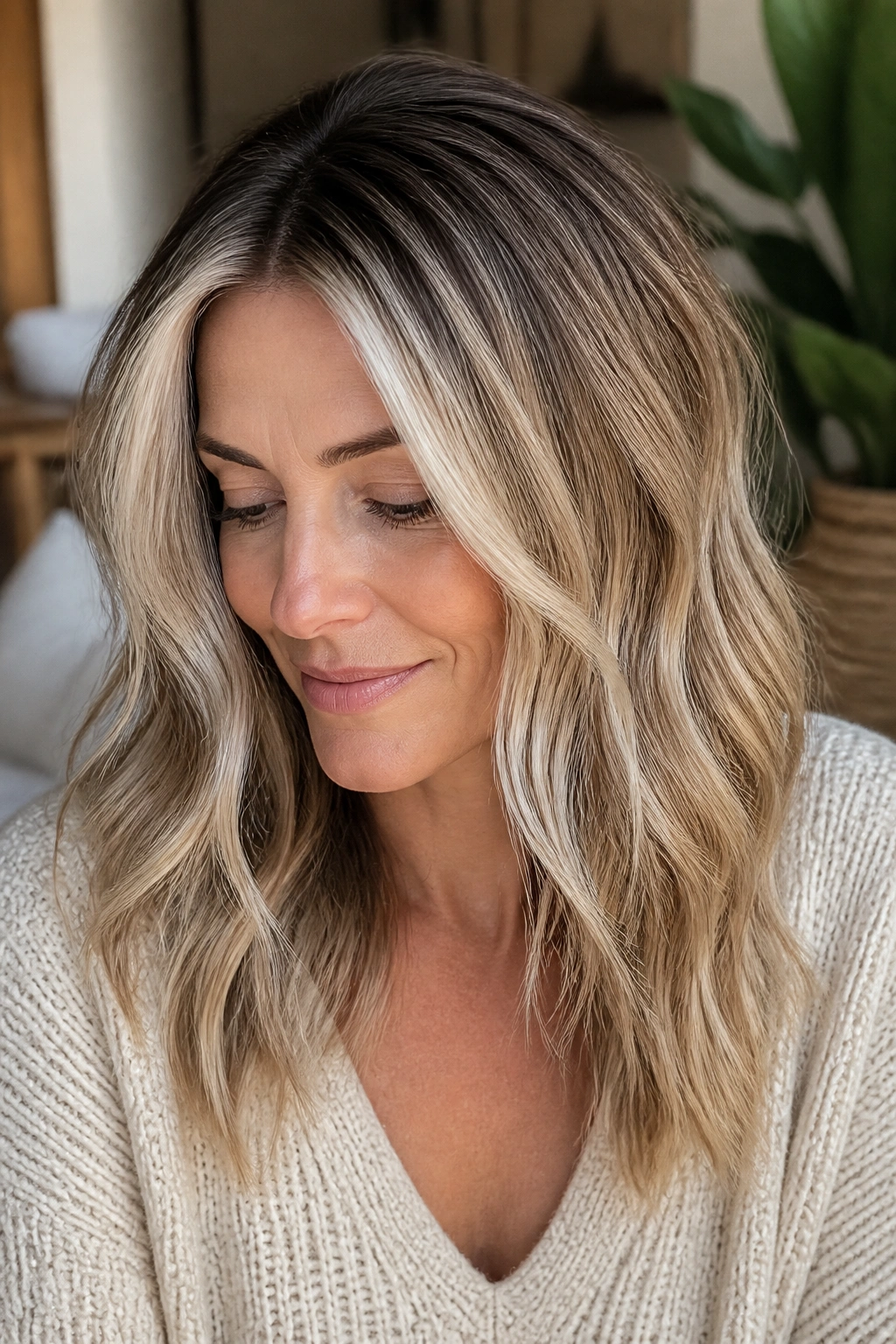
This is the version I’d recommend to anyone who wants platinum highlights for brown hair but doesn’t want to chase the salon chair every few weeks. It combines fine foils, a soft root blur, and strategic brightness around the face and crown so the color keeps looking intentional as it grows.
The real trick is restraint. You do not need every section to hit the lightest possible blonde. Some pieces can stay beige. Some can sit a little deeper. That mix is what makes the grow-out forgiving. Brown roots slide into the look instead of fighting it.
It also gives the hair a better day-to-day life. Your ponytail looks good. Your waves still show dimension. Even the awkward in-between stage has a shape to it, which is more than I can say for many high-contrast blonding jobs.
If you want the easiest platinum to live with, this is the one to keep in mind. Bright where it counts. Soft where it needs to be. And much less dramatic when the roots start showing through.
