



Red blonde highlights for brown hair can change the whole mood of a haircut without wiping out the brunette base that makes the color feel grounded. Brown hair loves warmth, but it can also swallow color if the placement is lazy or the shade is too muddy. When the red and blonde pieces are chosen well, the result looks richer, shinier, and a little more alive the second you move your head.
The trick is that not every brown base wants the same thing. A light brown lob can handle strawberry and rose-gold ribbons with hardly any push, while deep chocolate hair usually needs a stronger copper or auburn note to show up at all. Hair also lifts in stages, and it tends to pass through orange before it reaches a true blonde range, so a good color plan usually works with that warmth instead of fighting it.
Placement matters just as much as shade. Some looks need only a few babylights around the crown. Others need a blunt money piece at the face, or a soft balayage that keeps the roots darker and lets the ends carry the lighter tone. The best versions look like they belong to the haircut, not pasted on top of it.
1. Copper Ribbon Highlights on Medium Brown Hair
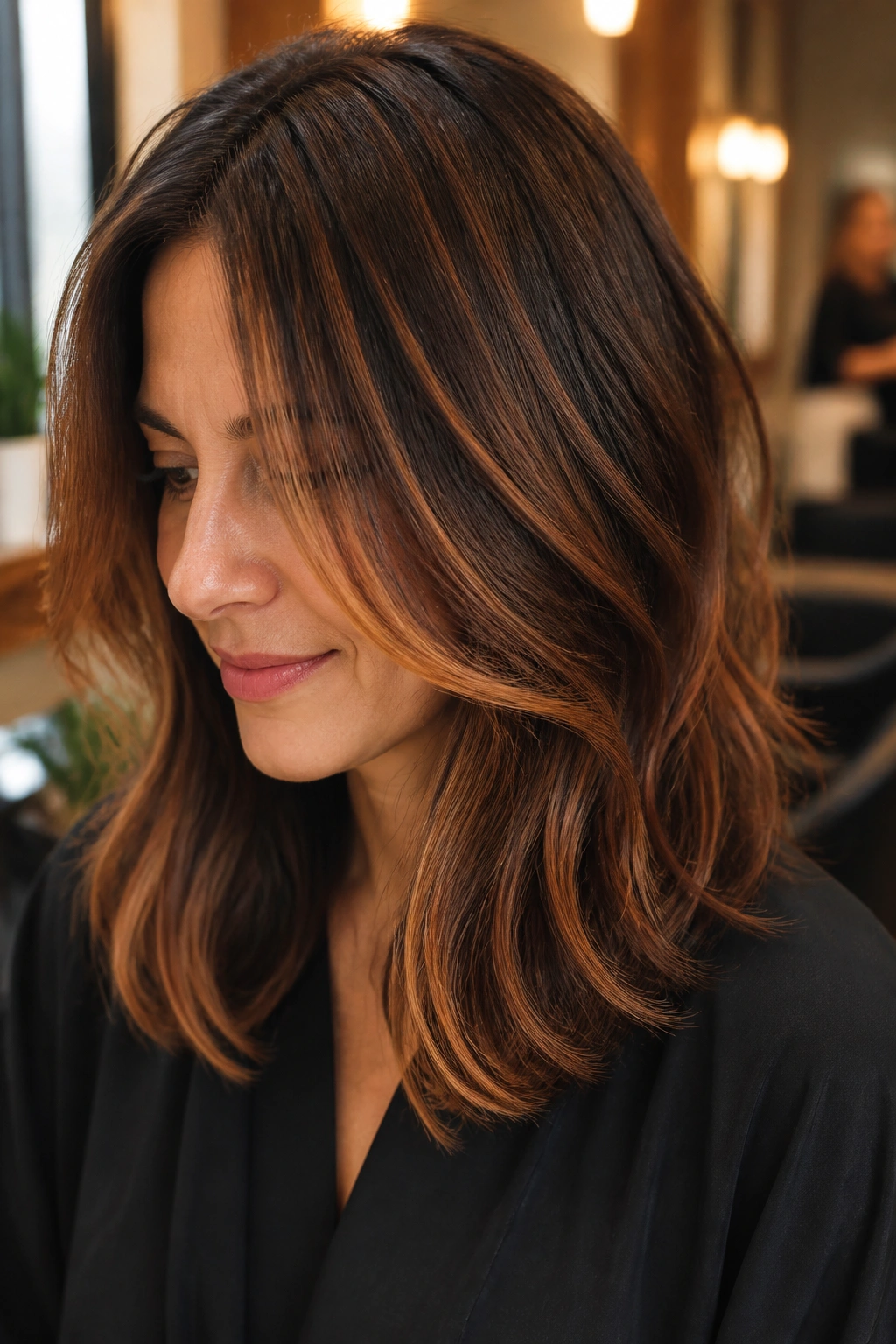
Copper ribbon highlights are the style I reach for when someone wants warmth that shows up without turning the hair into a block of red. On medium brown hair, those copper strands move like thin bands of light, especially when they’re painted through the mid-lengths and left a touch heavier near the ends.
Why It Flatters Medium Brown Hair
Copper sits in a sweet spot for brunettes. It has enough red to feel lively, but it still reads as a hair color rather than a bright fashion streak. That matters on a medium brown base, because the contrast stays soft instead of shouting from across the room.
The best version uses thin, ribbon-like panels, not tiny specks. A colorist will usually keep some root shadow, then weave copper through the outer layers so the hair shifts when it swings. That movement is the whole point. No movement, no magic.
- Best on layered cuts with a little texture
- Works well with loose waves or a round-brush blowout
- Ask for a copper shade that leans golden-red, not orange
- Plan for a gloss refresh every 6 to 8 weeks if you want the shine to stay crisp
Pro tip: If your brown hair already pulls warm, ask for copper that is one shade deeper than the photo you bring in. Too light and it can start to look pumpkin-y fast.
2. Strawberry Blonde Balayage for Soft Warmth
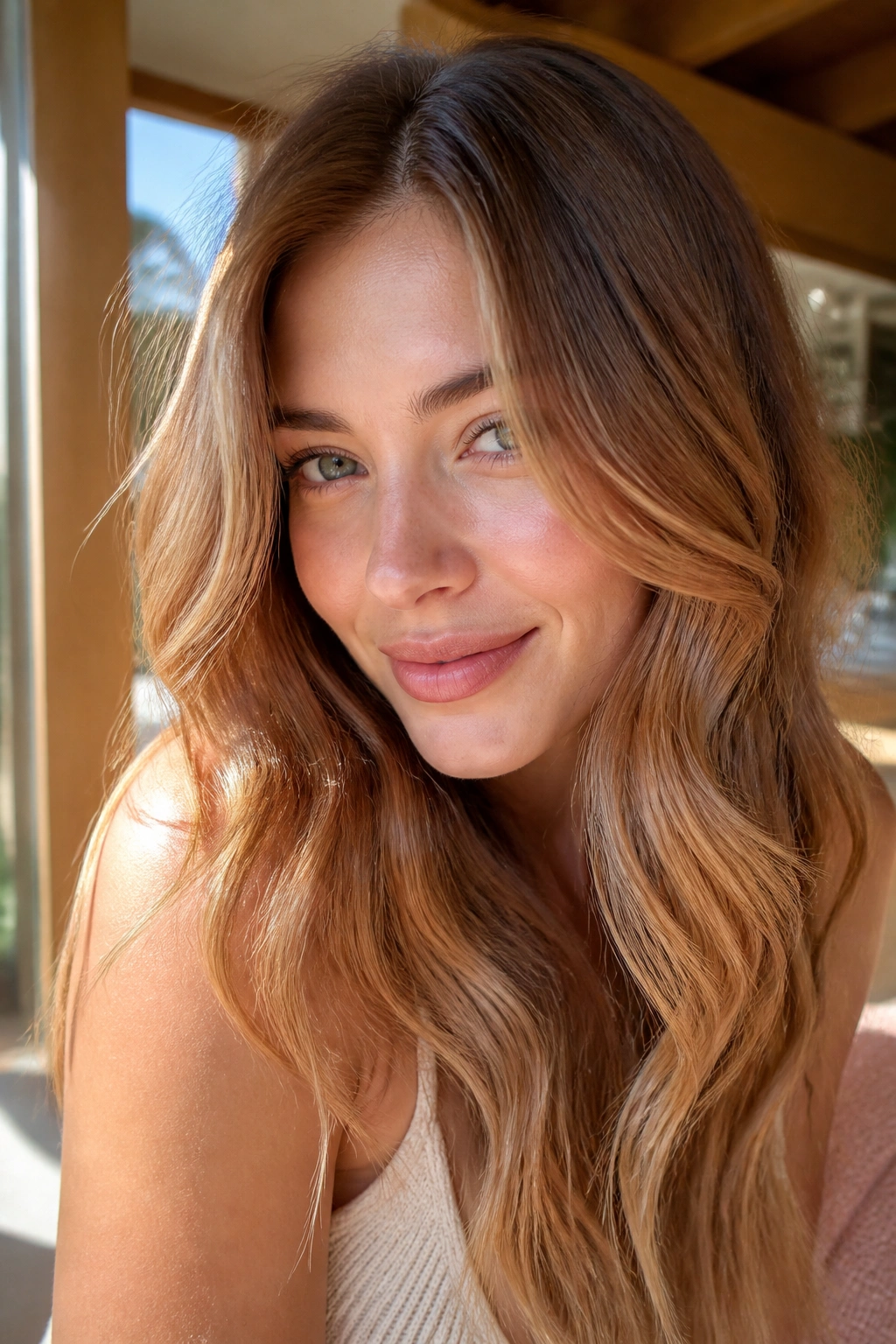
Strawberry blonde balayage is the gentle cousin in this whole family. It gives brown hair that blushy, sunlit lift without forcing the color into a heavy copper lane. If you like warmth but hate anything that feels loud, this is the one that usually makes sense first.
The reason it works is simple: strawberry blonde carries peach, gold, and a little red in the same strand. On brown hair, that mix softens the base rather than fighting it, so the color looks woven in instead of painted over. Long waves show it best, but a shoulder-length cut can wear it well too.
I like this choice for people who want a change that does not look like a dramatic overhaul. It grows out cleanly, and the root stays brown enough to keep the whole thing grounded. If your hair is very dark, though, don’t expect pale strawberry in one visit. That’s not how pigment behaves in real life, and a good stylist won’t pretend otherwise.
A soft glaze over the lightened pieces keeps the tone from drying out into a dull beige. That little finish step matters more than people think.
3. Cherry Cola Face-Framing Highlights
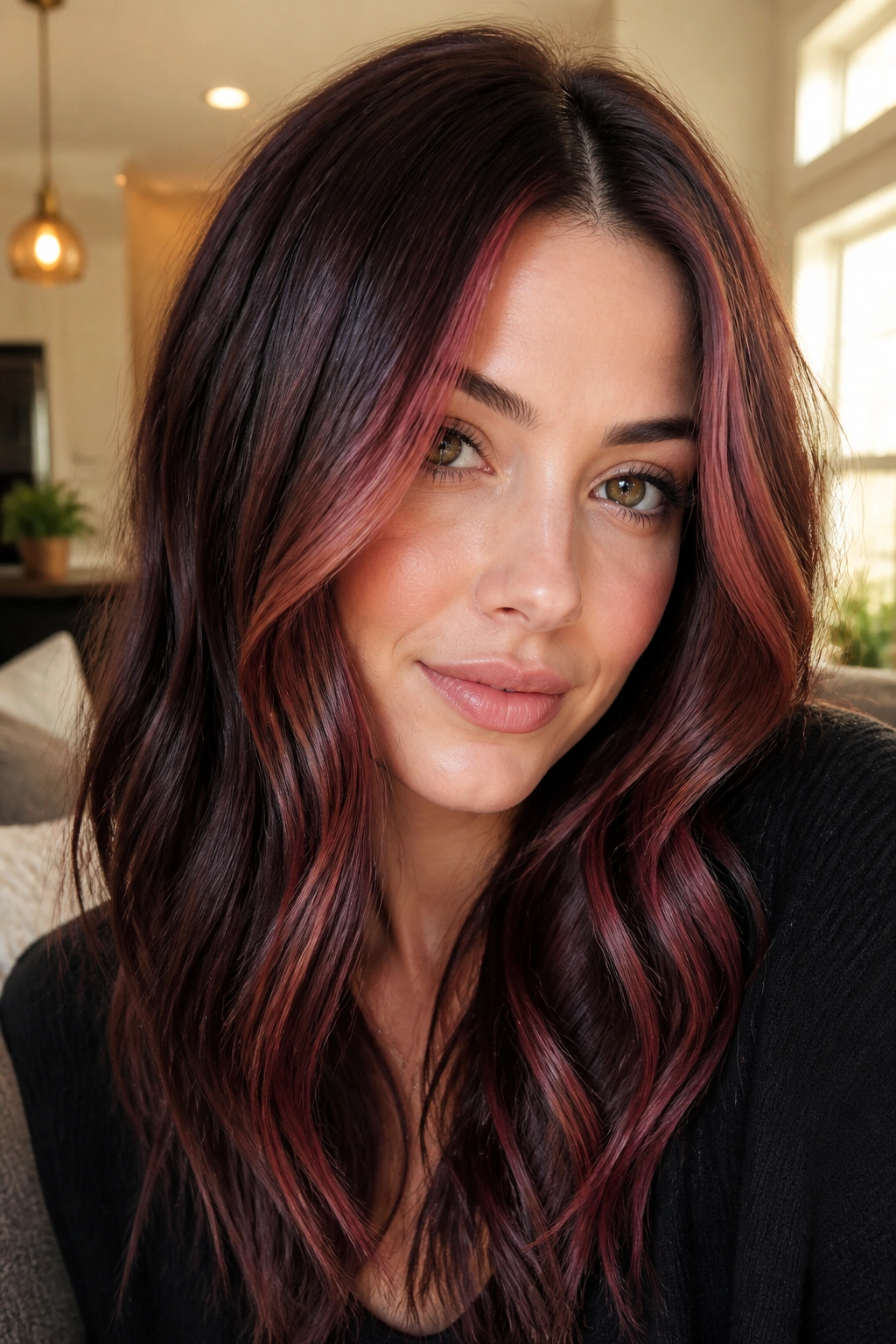
Want the fastest way to wake up brunette hair? Put the brightness around the face. Cherry cola face-framing highlights do exactly that, and they look especially good when the rest of the hair stays deeper and more saturated.
How It Changes the Whole Look
The contrast is what makes this style feel fresh. The hairline gets the strongest red-blonde lift, usually in a cherry-red or warm strawberry lane, while the back of the head keeps a richer brown base. That means the color reads immediately when the hair is down, tied back, or tucked behind one ear.
This style is smart if you wear curtain bangs, a long bob, or any cut that already opens around the face. Two to four foils on each side can make a huge difference. More isn’t always better here. Too many light pieces at the front and the whole shape starts to lose its edge.
How to Wear It
- Best with layered cuts that move around the cheekbones
- Pairs well with a middle part or soft off-center part
- Needs a toner that keeps the red from drifting too orange
- Works nicely when the back stays half a shade deeper for contrast
What to watch for: If your hair is very dark brown, ask for a deeper cherry and a softer blonde at the ends. The face-framing pieces should brighten the face, not turn into neon strips.
4. Rose Gold Highlights on Chocolate Brown Hair
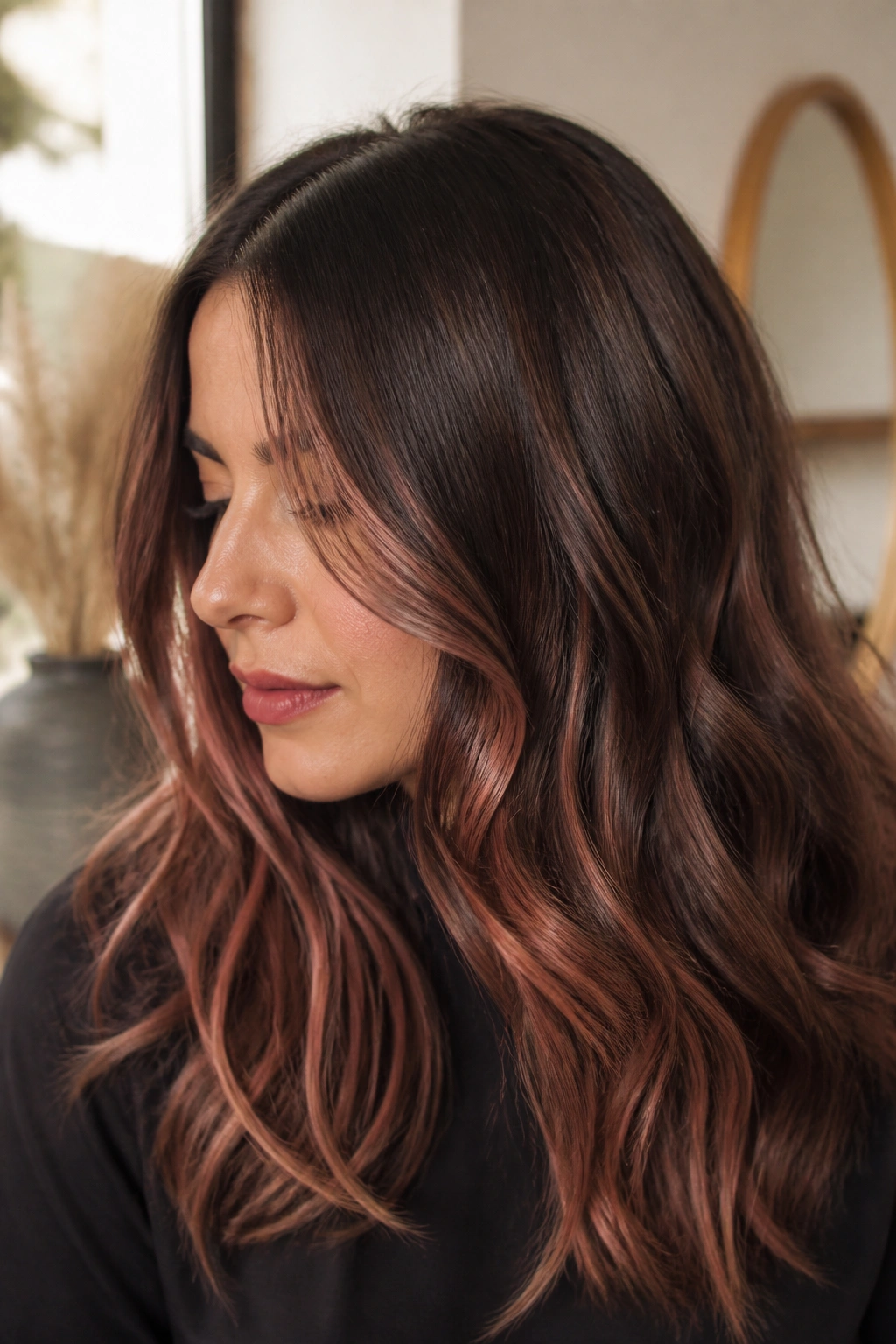
Chocolate brown hair has a deep, glossy base that can swallow weak color, so rose gold is a smart way to get warmth without forcing the whole look into copper territory. The pink-gold tone gives the hair a softer edge, almost like warm metal catching light after sunset.
Picture this: a blunt shoulder-length cut, dark at the root, with rose-gold pieces sitting just under the top layer. The hair moves, and suddenly the color shows. Then it settles back into brunette. That back-and-forth is what makes rose gold feel expensive in person, even when the placement is simple.
This shade works best when the light pieces are lifted enough to hold the pink-beige tone, but not so pale that the rose disappears. It also plays nicely with soft waves because the bend in the hair keeps the color from looking flat. Straight hair can wear it too, though the placement has to be cleaner.
A good rose-gold gloss is worth the appointment. Without it, the color can fade into something beige and a little tired.
5. Auburn Babylights for a Subtle Shift
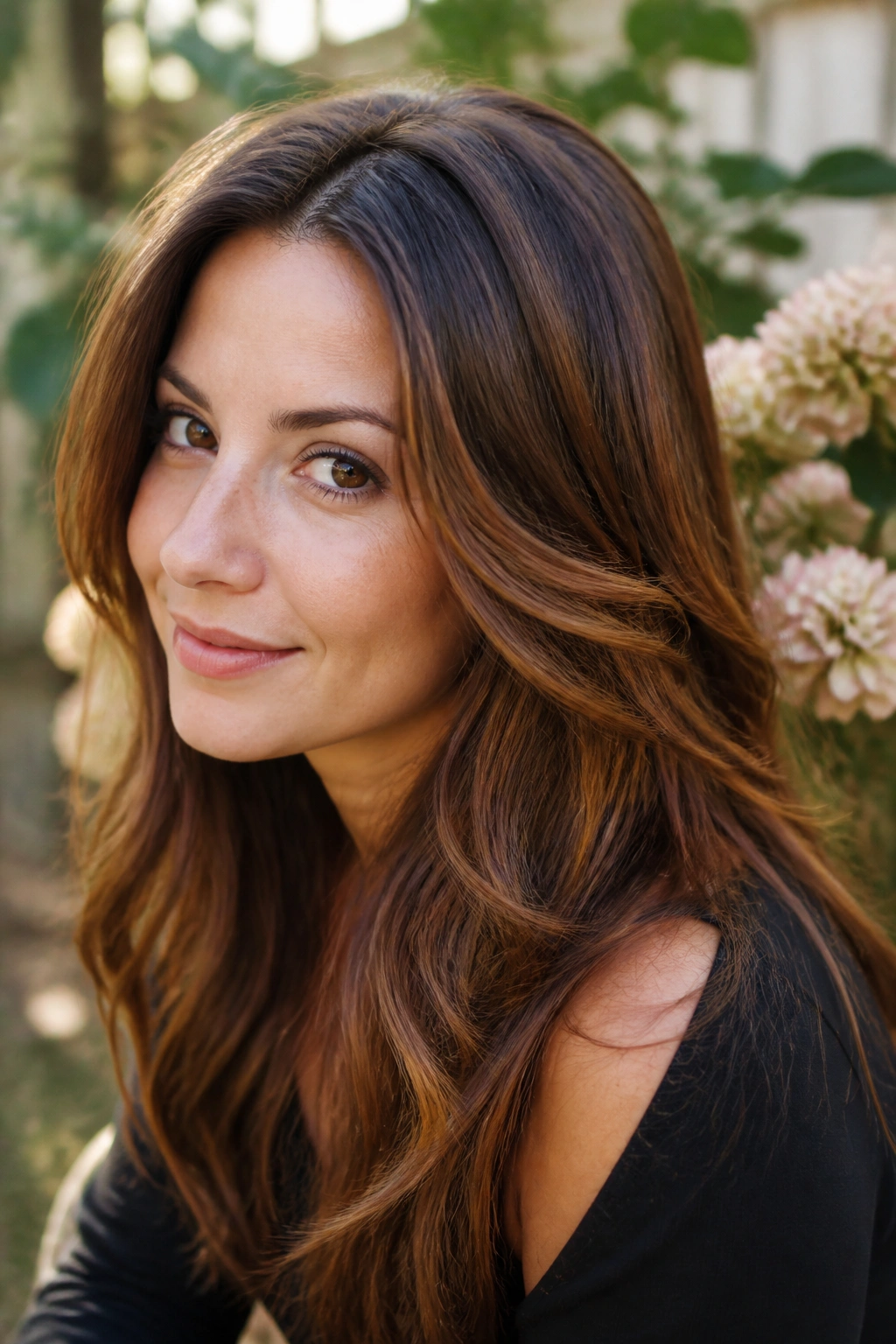
Auburn babylights are for the person who wants people to say, “Your hair looks nice,” not “Did you do something dramatic?” The color change is quiet, but the effect is real. Thin strands of auburn threaded through brown hair make the whole head feel warmer and a bit fuller.
Babylights are ultra-fine highlights, usually woven much more delicately than a standard foil. On brown hair, that means the red tone doesn’t sit in obvious stripes. It flickers. That’s the right word for it. You notice it in sunlight, under office lighting, and especially when the hair is freshly blown out.
This is one of my favorite options for people who need low-drama color. The grow-out is soft, and the maintenance stays manageable because the highlights are tiny. If your hair is thin, auburn babylights can also give the illusion of extra density, since the color variation makes each section read as fuller.
The only real mistake is lifting too high. Keep the auburn in a warm brown-red zone, and let the contrast stay gentle.
6. Ginger Money Piece with Dimensional Ends
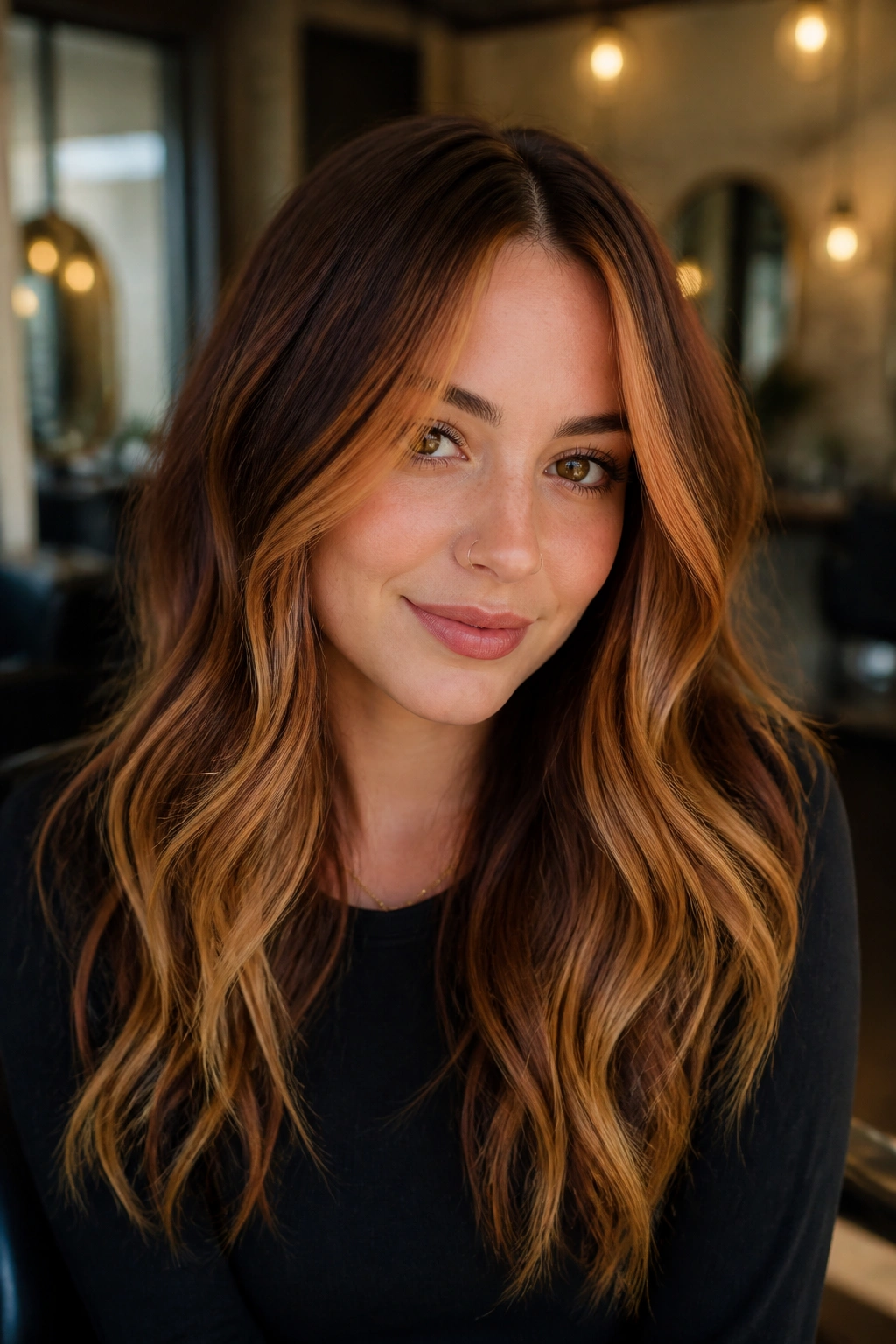
Unlike a full-head highlight job, a ginger money piece does a lot of work right where people look first: the front. That’s why it feels bold even when the rest of the brown hair stays fairly calm. The front panels pick up the ginger warmth, and the ends carry a softer blonde-brown mix so the whole cut still has movement.
What Makes It Different
The money piece is the brightest part, but it should not be the only interesting part. If the face-framing panels are vivid and the rest of the hair is dead flat, the style looks disconnected. The smarter version keeps a little lightness through the ends, usually with hand-painted pieces that echo the front without copying it.
That kind of placement works especially well on layered lobs, long shags, and blunt cuts that need a little visual break. On a ponytail, the front pieces do the heavy lifting. On waves, the ginger and blonde alternate in a way that feels casual rather than overworked.
Best Ask for the Salon Chair
- Two to four bright foils around the hairline
- Ginger at the root area, blonde-softened ends
- A gloss that keeps the ginger from turning rusty
- Soft tapering so the front doesn’t look like a hard stripe
My take: This is one of the easiest ways to get visible change without committing to a full color overhaul.
7. Caramel-Copper Ombre for Long Layers
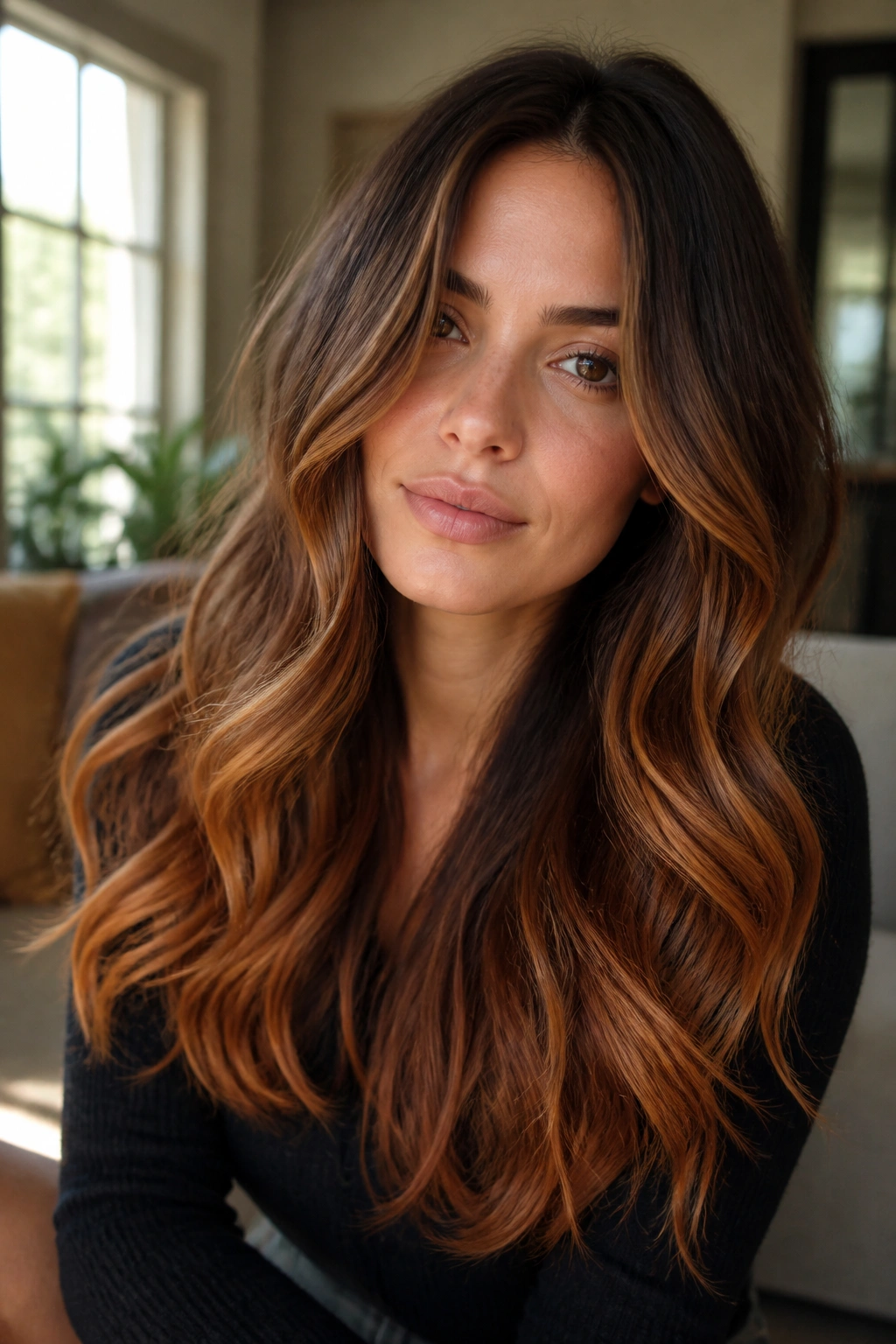
Long layered brown hair can look heavy if every inch is the same depth. A caramel-copper ombre solves that by keeping the roots grounded and letting the color open up toward the bottom. The fade is the story here, not the individual strands.
The effect starts with caramel through the mid-lengths, then shifts into copper at the ends. That combo works because caramel softens the transition and copper adds heat where the eye lands last. On long hair, the whole thing feels like a slow burn instead of a jump cut.
This style is especially good if you like curling your hair. The bend shows the color change in a clean way, and the layers stop the ends from looking like one solid block. If your ends are dry, though, be careful with the palest blonde. Dry hair grabs lightener fast and can go dull faster than you expect.
- Best for hair that falls below the shoulders
- Works well with a 1.25-inch curling iron
- Keep trims on a 8- to 10-week rhythm
- Ask for a fade, not a hard line
The smartest ombre looks planned from the start. That part matters.
8. Mahogany and Apricot Panels for Thick Hair
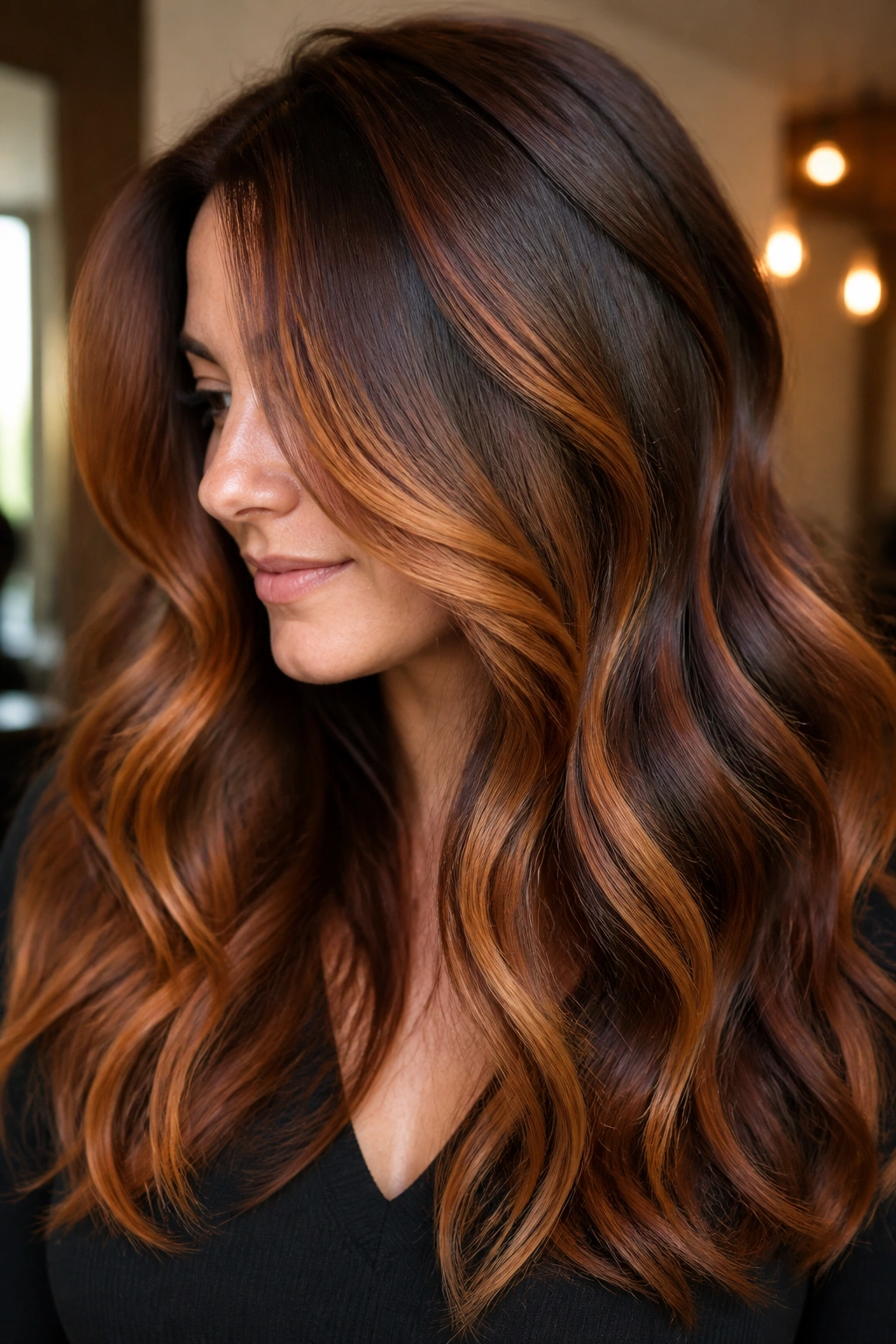
Thick brown hair can carry stronger color placement than fine hair, and mahogany with apricot panels is a good place to use that advantage. The mahogany gives depth underneath, while the apricot pieces on the surface bring in that red-blonde glow.
This combination works because the darker red-brown acts like a base shadow. It keeps the hair from looking overlight. The apricot sits on top in broader panels, usually around the sides and through the outer layers, where the movement of thick hair can actually show the pattern. Thin, scattered highlights tend to disappear in dense hair. Bigger sections make more sense.
There’s also something very satisfying about the way this color behaves in different light. Indoors, the mahogany reads rich and velvety. Outside, the apricot wakes up and flashes gold. Braids look deeper. A blowout looks warmer. It’s not a shy color choice, and that’s part of the fun.
If you have dense hair, don’t skimp on saturation. Thick strands need enough pigment to show through the body of the hair, or the effect gets lost.
9. Red Velvet Lowlights with Honey Blonde Threads
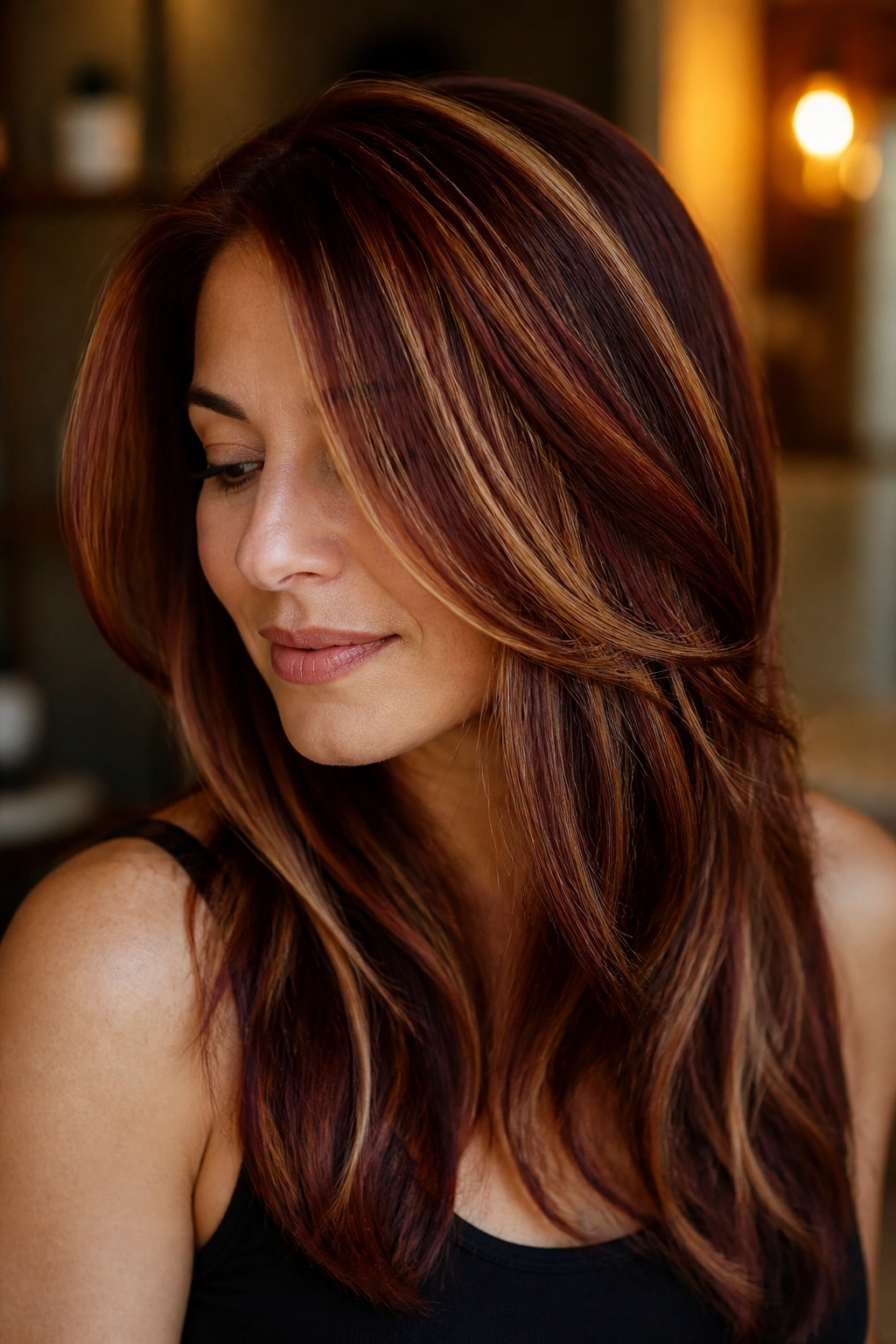
Why does brown hair sometimes need darker color before it needs lighter color? Because highlights without lowlights can float, especially on hair that’s already been lightened before. Red velvet lowlights pull the base back down, and the honey blonde threads sit on top with just enough shine to keep things from feeling heavy.
Why the Mix Works
The red velvet shade deepens the brunette side of the palette. It adds a wine-toned softness that keeps the color rich. Then the honey blonde threads break it up and stop the whole head from looking too dark. That contrast is what creates fullness, and it’s a better move than piling on more blonde when the hair already lacks depth.
This look is smart for fine or medium hair, because the lowlights create the illusion of thicker strands. It also helps if your old highlights have gone too pale and the hair looks patchy. A few deeper pieces can clean up the whole story.
How to Ask for It
- Ask for lowlights one shade deeper than your base
- Keep the blonde threads narrow and irregular
- Place the brightest strands near the top layer and face frame
- Finish with a gloss that leans warm, not ashy
The result is not flashy. It is fuller, richer, and easier to wear for more than one week straight.
10. Peachy Bronze Highlight Melt for Straight Hair
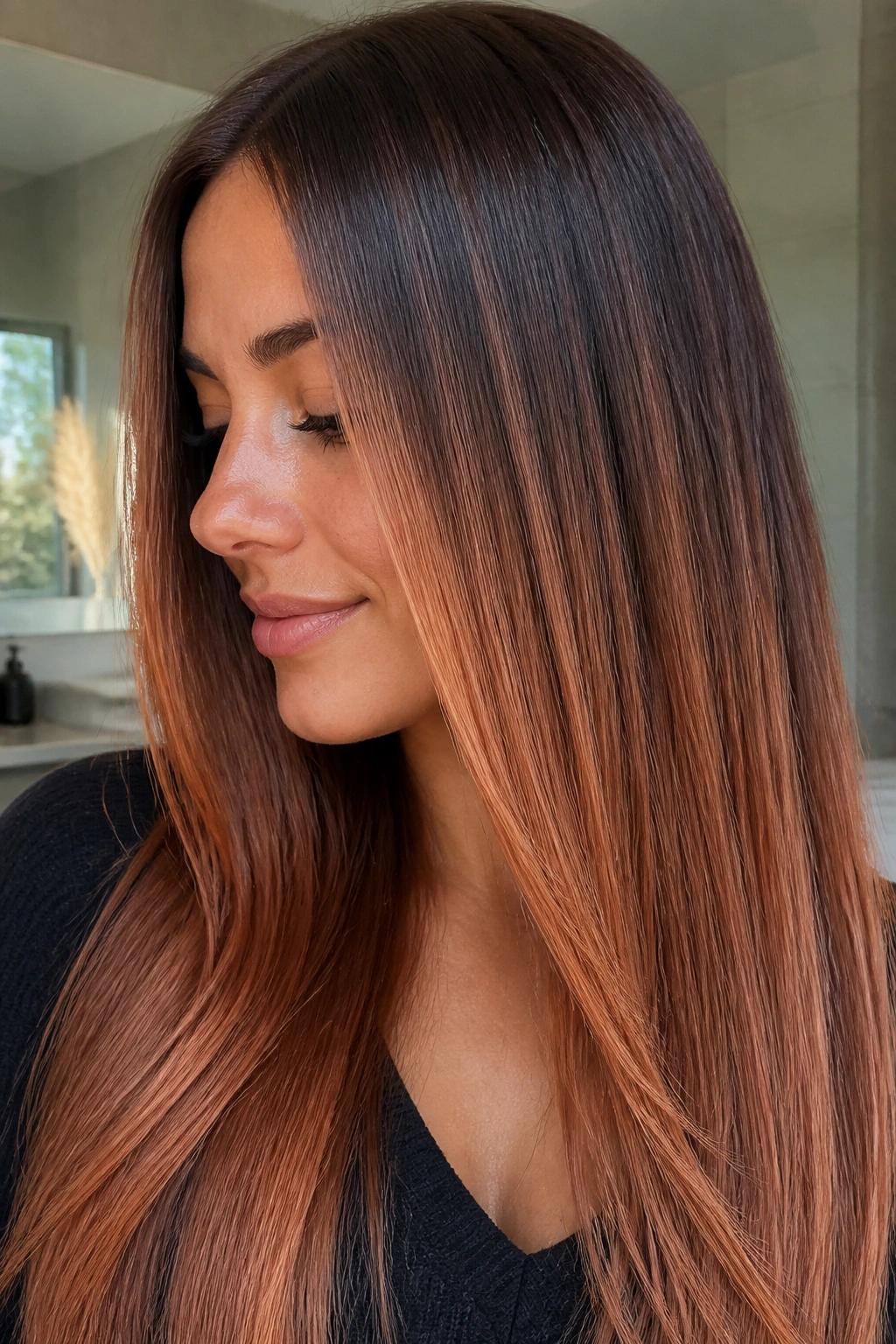
Straight brown hair can go flat fast, and a peachy bronze melt fixes that without needing waves, curls, or a lot of styling gymnastics. Because straight hair shows every line of color, the melt has to be soft from root to end. Hard lines will give the game away immediately.
This look starts with a brown root that stays close to the natural shade, then slides into peach-bronze brightness through the mid-shaft. The peach keeps it from going too orange, while the bronze makes the lighter pieces feel grounded. It’s a nice middle path if you want something warmer than blonde but less red than copper.
The practical part matters here. Straight hair reflects light in a very direct way, so the color needs a smooth blend and a shiny finish. A lightweight serum after blow-drying helps a lot. So does a gloss every few weeks, because peach tones fade faster than people expect.
- Best on blunt cuts and glassy blowouts
- Works with a flat iron bend for slight movement
- Ask for a soft melt, not a stripe
- Use heat protection every time
This is one of those colors that looks simple when done well and messy when rushed.
11. Auburn-to-Blonde Ribbon Lights for Lob Cuts
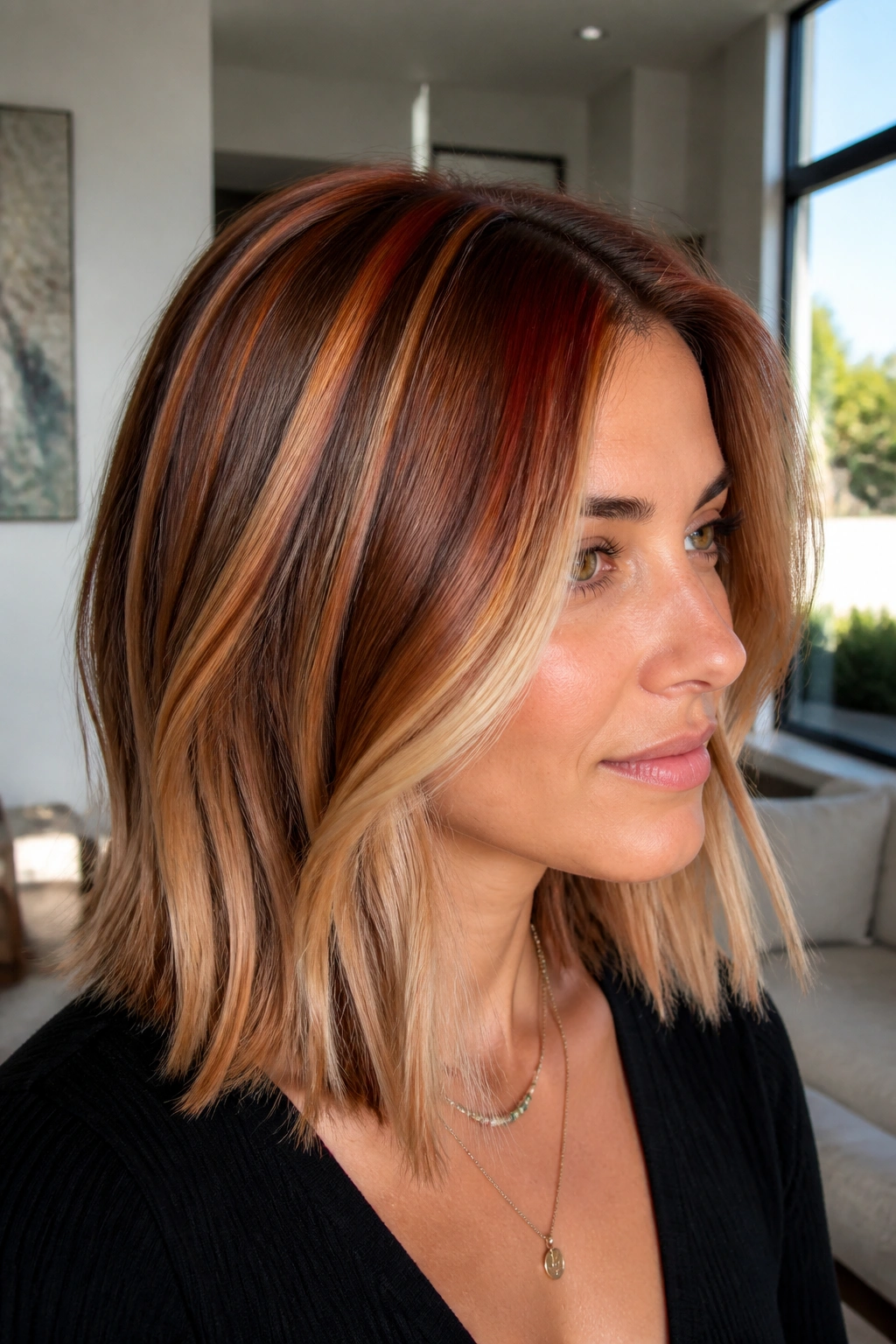
A lob gives you just enough length for color to move, but not so much that the highlights disappear into a long curtain of hair. Auburn-to-blonde ribbon lights are a strong match because the shorter length makes the color pattern easy to see from root to ends.
Unlike ombre, this is about visible ribbons. The auburn sits deeper near the top and through some interior pieces, while blonde threads show up more near the outer layer and toward the bottom. The cut itself does a lot of the work. Swing the head, and the ribbons show. Tuck the hair behind the ear, and the contrast pops again.
This style suits people who like a bit of structure in their color. It’s not soft and blurry. It has a visible pattern. If you air-dry your hair and never touch a round brush, the ribbons can look less polished, so a quick bend with a brush or iron helps. You don’t need a full styling session, though.
A lob with ribbon lights feels modern without looking fussy. That’s a useful combination.
12. Sunkissed Copper Balayage on Warm Brunettes
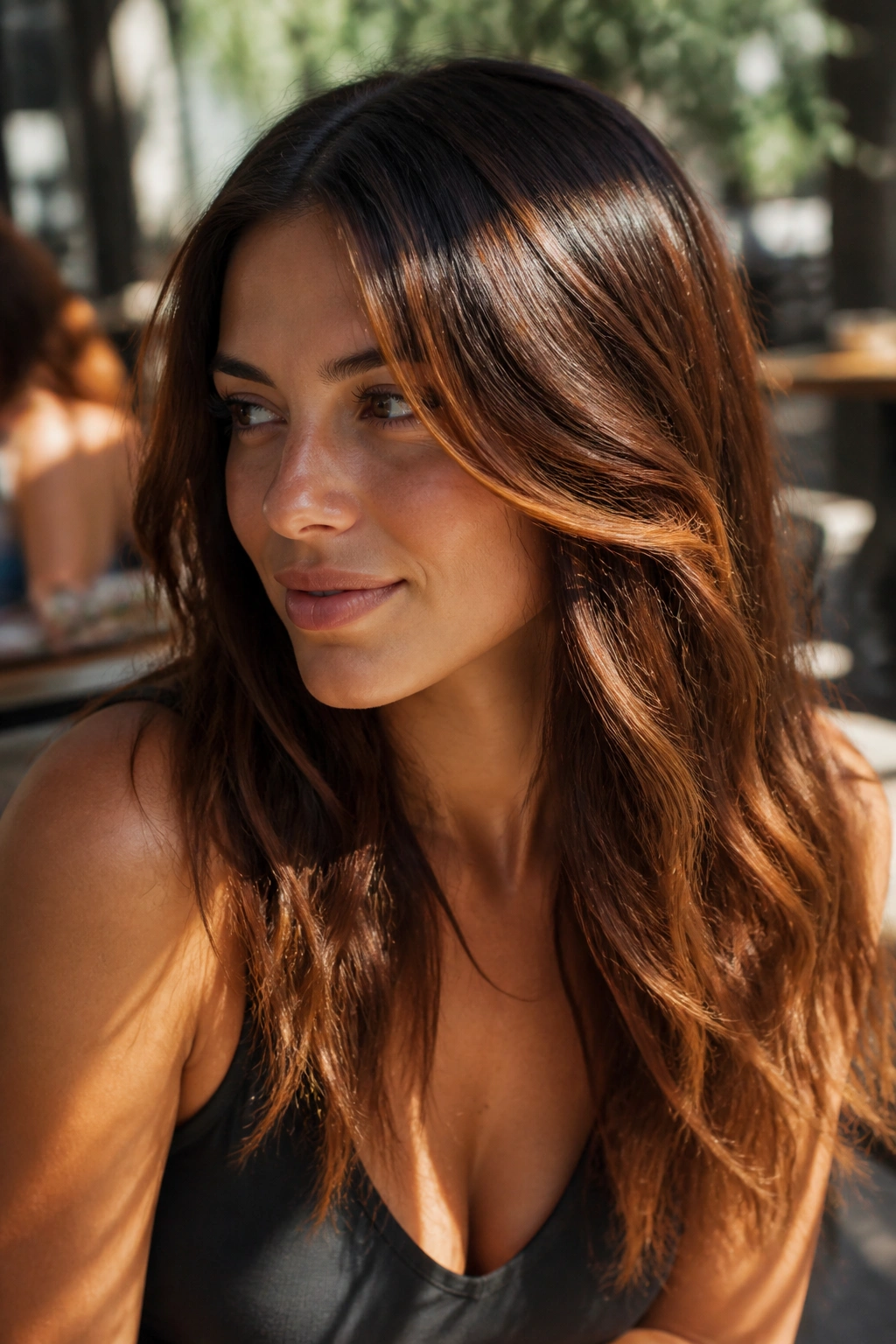
Sunkissed copper balayage is the brunette answer to wanting warmth that still feels light. It works best on brown hair that already leans golden or chestnut, because the copper can ride on top of that warmth instead of fighting it.
A good balayage here doesn’t dump copper everywhere. It places the brighter pieces where the sun would hit: around the crown, on the outer layers, and through the ends that move the most. That gives the color a worn-in feel. Too much copper on the underside, and the hair starts to look heavier than it should.
I like this option for people who don’t want a dramatic red shift. It has enough warmth to change the tone of the hair, but it still reads like brunette hair with a kick to it. Keep the highlight tone one notch softer than you think you need, because copper can intensify once the hair dries and the gloss settles.
- Best on warm brown bases
- Looks strong in curls and beach waves
- Needs a tone-friendly shampoo, not a stripping one
- A gloss between color sessions keeps the copper from turning flat
If the hair already glows warm in sunlight, this style makes that quality obvious.
13. Cranberry Tips for Wavy Brown Hair
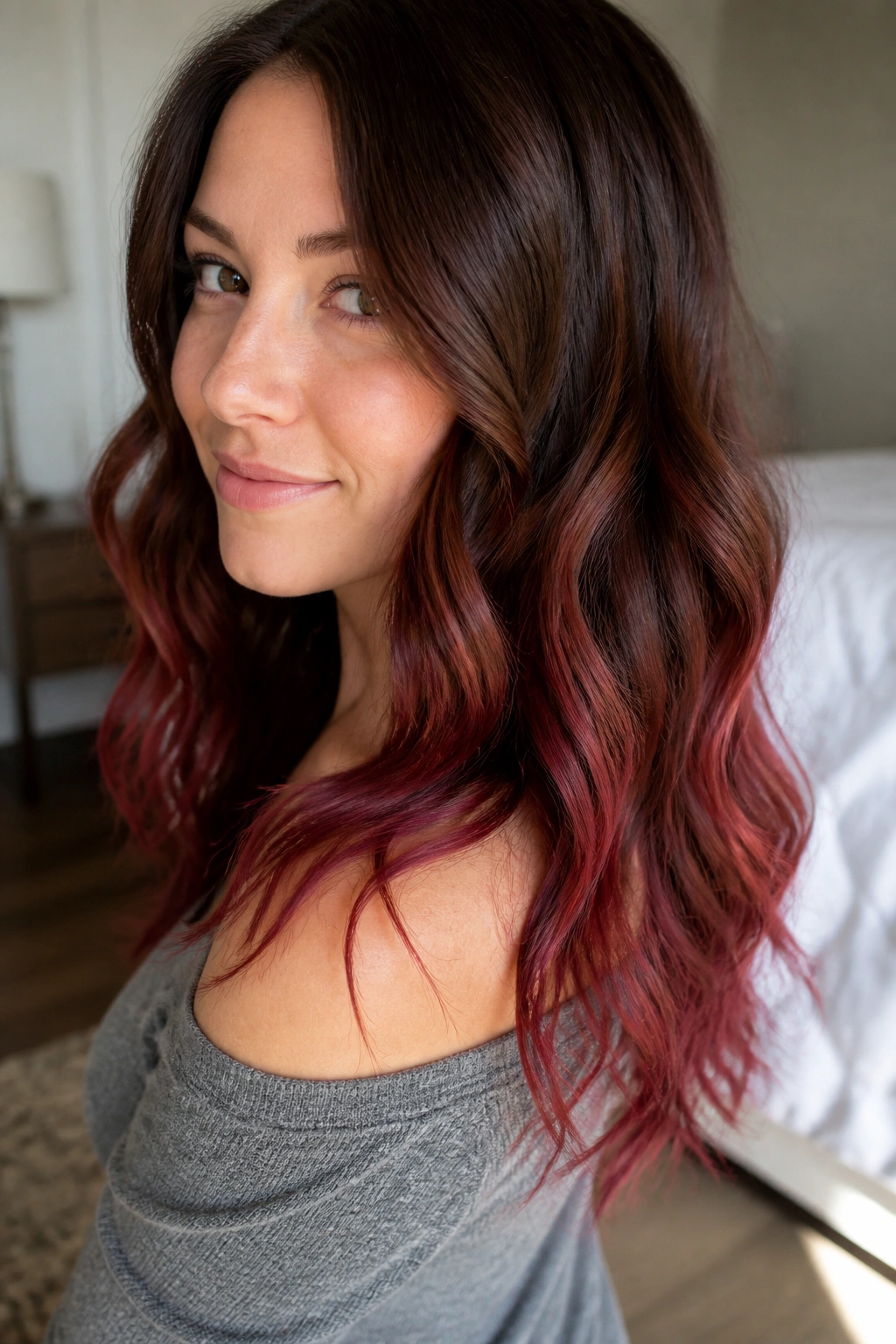
Wavy brown hair is made for color at the ends. The movement does half the work, so cranberry tips can look playful without taking over the whole head. The red-blonde mix sits low, near the bottom, and gives the waves a little flare as they separate and twist.
The cranberry shade keeps the ends rich, while a lighter blonde-red touch near the very tips stops the color from looking too dark. That contrast is useful on waves because the curl pattern already creates light and dark pockets. Add color to that texture, and the hair starts doing the styling for you.
This is a smart move if you want a more casual color story. It also grows out well, because the roots stay brown and the brighter pieces live where the eye expects movement anyway. If your ends are porous or have seen a lot of heat, ask for a gentler deposit rather than a harsh lift. Porous ends grab pigment fast, and that can turn cranberry into something heavier than you planned.
The vibe is easy, slightly edgy, and far less precious than a full highlight job.
14. Warm Rose Highlights for Curls and Coils
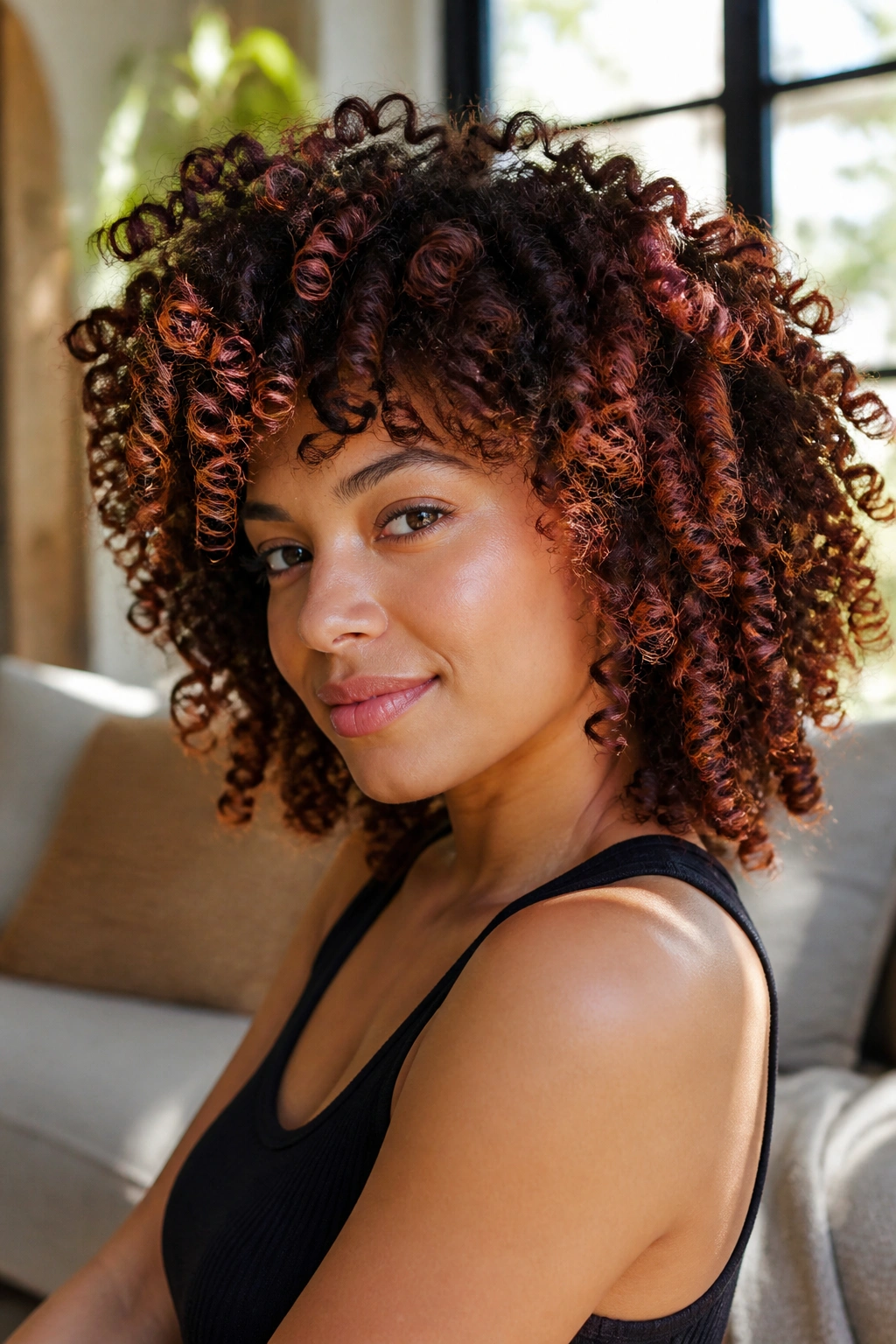
Warm rose highlights can be lovely on curls and coils because the curl pattern keeps the color from turning flat. Each bend catches the rose tone a little differently, so the hair looks textured even before styling products go in.
Best Curl Pairings
Tighter curls usually do best with highlights placed in thicker, well-spaced ribbons rather than a cloud of fine foils. You want the color to sit where the curl shape can show it. Around the crown, the temple area, and the outer ring of the hair are all good spots. Too much brightness deep inside the curl mass gets hidden and wastes time.
Warm rose is a nice choice because it sits between red and blonde without leaning too icy. On brown curls, that softness matters. A harsh blonde can look dry fast. A rose tone feels more forgiving and pairs well with moisture-rich styling products.
What to Keep in Mind
- Ask for color painted where the curl opens
- Keep the ends healthy with regular trims
- Use a cream-based leave-in after washing
- Refresh the tone with a gloss before it goes dull
Curls are honest about dryness. If the hair is thirsty, rose tones will show it. Hydration matters here.
15. Chestnut and Copper Slice Highlights
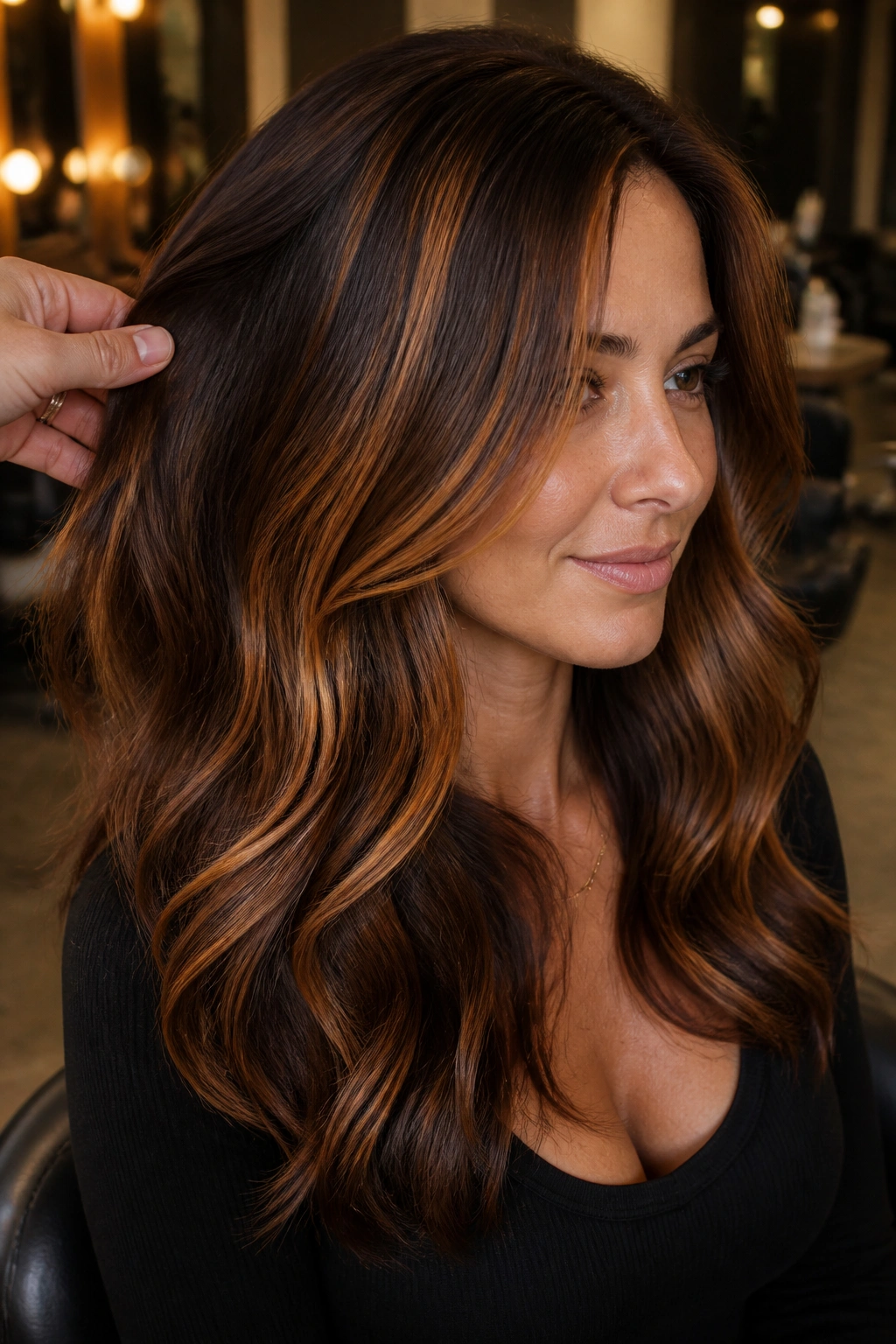
Chestnut and copper slice highlights are for people who like clear contrast but don’t want streaks that look chopped in. Slice highlights use broader sections of hair, so the color reads as deliberate chunks of warmth rather than tiny threads.
On brown hair, chestnut is the bridge color. It keeps the base rich. Copper then sits beside it in a way that feels dimensional rather than loud. This is a good pick for dense hair, because the wider slices can actually show through the body of the cut. Fine hair can wear this too, but the sections need to stay controlled or the contrast becomes too obvious.
What I like here is the way the color holds up in motion. When the hair is tucked, you catch one shade. When it falls forward, another shade appears. That shifting effect gives the hair a lived-in look that’s hard to fake with a single all-over tone.
If you want this style to work, keep the copper warm and the chestnut deep. Too much blonde here and the balance gets lost fast.
16. Strawberry-Brunette Contour Lights
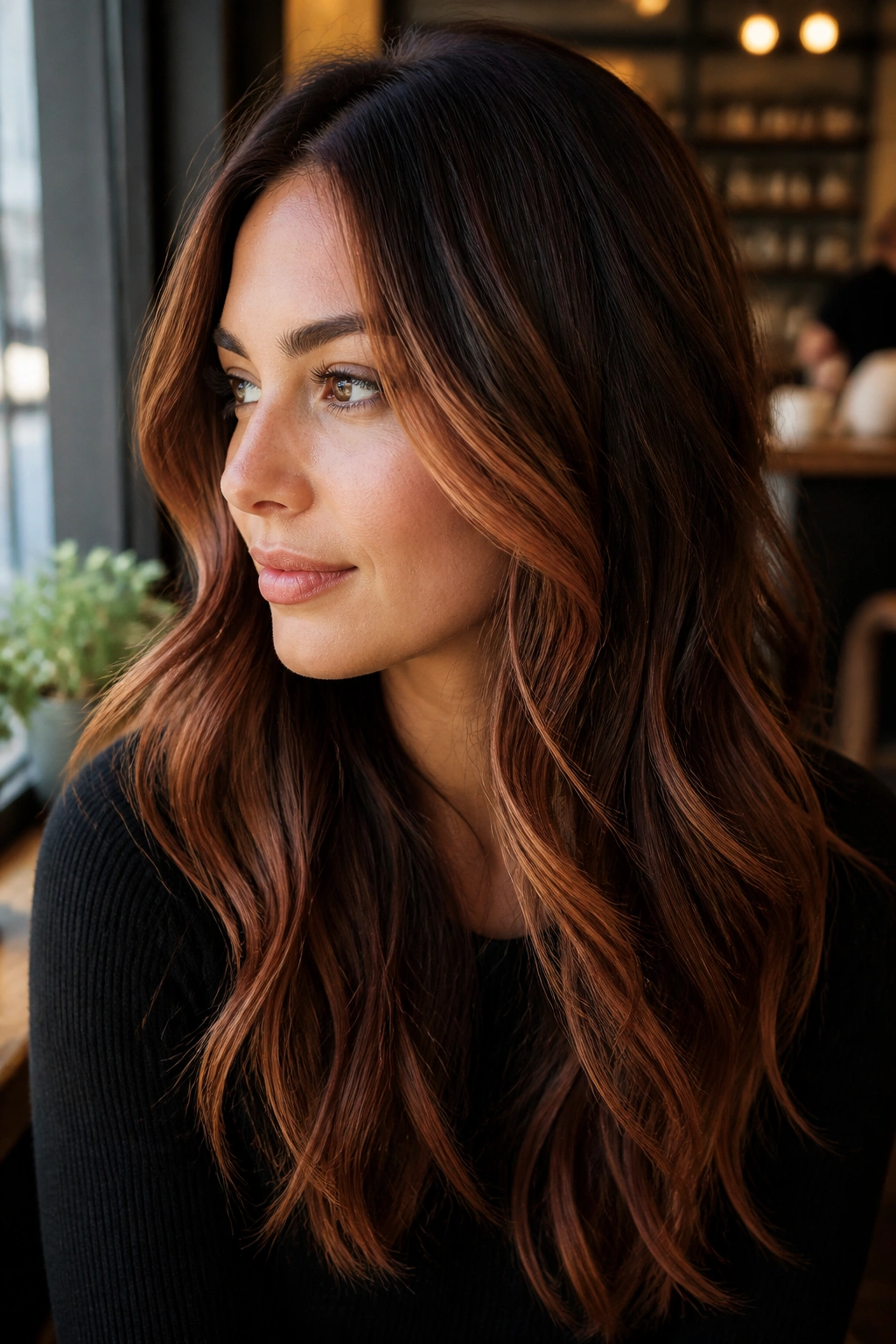
Want color that shapes the face without committing to a full-head lightening session? Strawberry-brunette contour lights do that job well. The idea is simple: place the brightest red-blonde pieces where the face naturally catches light, then let the rest of the brunette base do the framing.
The placement usually sits near the temples, the cheekbone area, and the first few front sections around the part. That gives the face a soft border of color and can make a layered cut look more finished. It also works with bangs, especially curtain bangs that already split open around the center.
Why It Feels So Useful
The color does not need to cover every section to make a difference. A few well-placed pieces can shift the whole haircut. That is the appeal. You get shape, warmth, and brightness in one pass, without turning the back of the head into a maintenance problem.
A contour-light approach also suits people who wear their hair up often. The front still looks polished in a clip or bun, which is half the battle. If the underside stays darker, the style has enough contrast to last between salon visits.
This is the kind of highlight plan that feels small on paper and bigger in real life.
17. Toffee Copper Money Piece for Dark Brown Hair
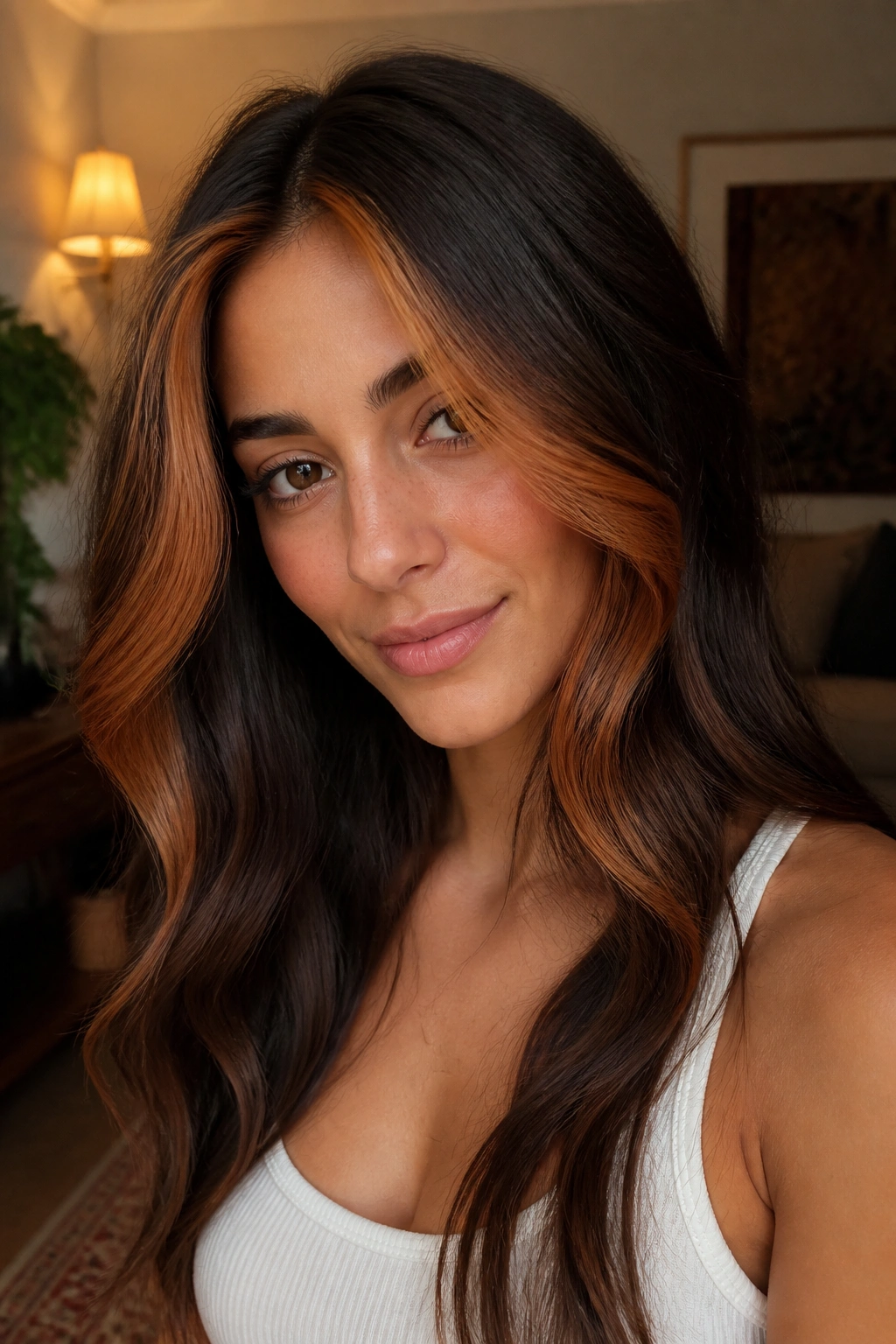
Dark brown hair needs a little extra persuasion before lighter tones show up cleanly, and a toffee copper money piece is a smart way to handle that. The front gets the most visible lightness, while the rest of the hair stays deeper so the contrast has somewhere to land.
The toffee part matters. It keeps the money piece from looking too bright against a dark base. Then the copper comes in at the ends or through the inner bend of the front sections, which gives the color a warmer finish. If you go too blonde up front, the whole thing can look disconnected. Too much copper, and the front may disappear in indoor light. This version stays in the middle.
I like this style for ponytails, half-up styles, and loose waves. The face-framing pieces stay visible even when the hair is pulled back, which makes the color feel worth the effort. Dark brunettes often need a stronger front placement than light brunettes, and this delivers that without asking the whole head to lighten aggressively.
It’s a useful color choice, and it photographs well in real life because the contrast is honest.
18. Soft Red Babylights for Deep Brunettes
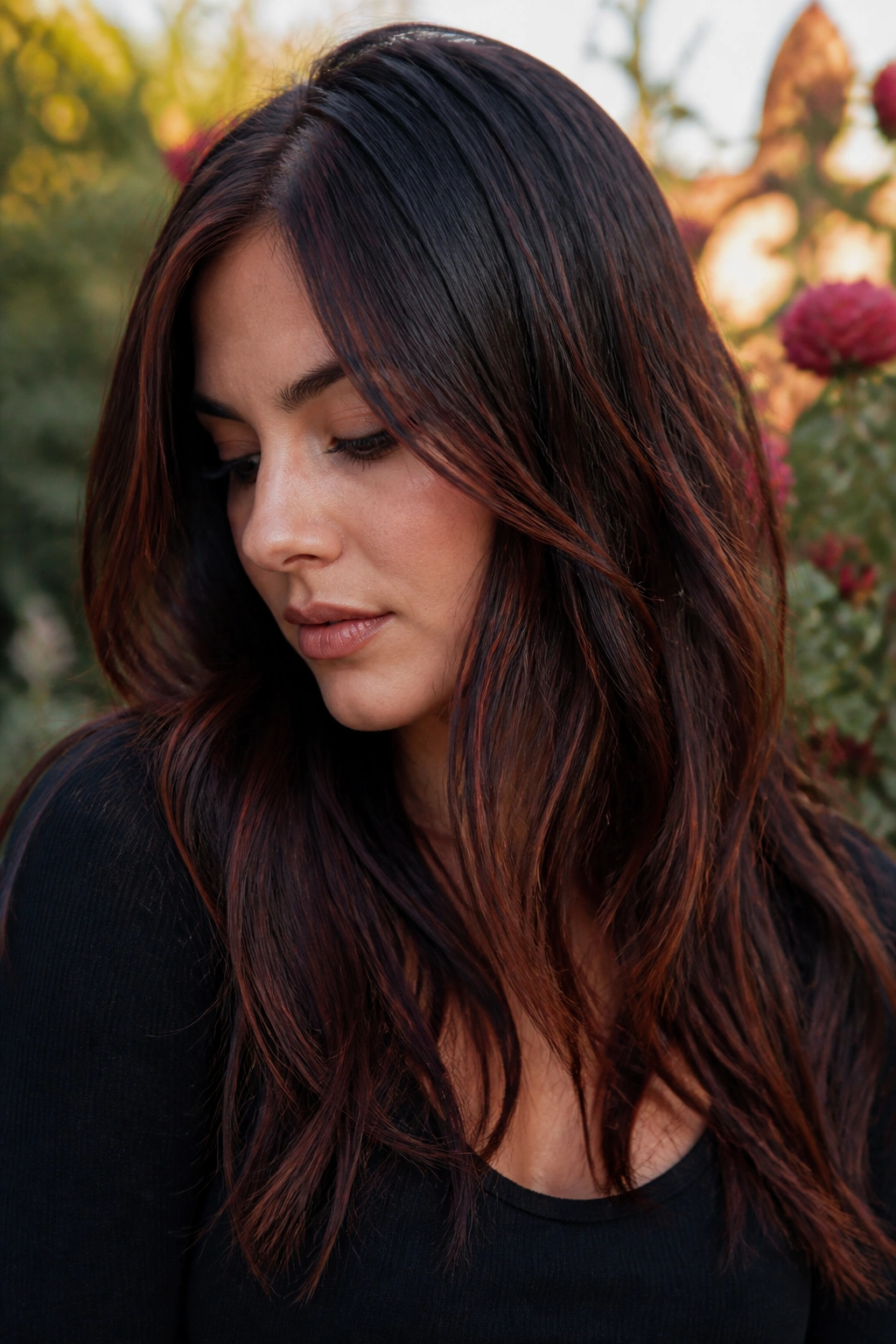
Soft red babylights are the opposite of chunky highlight jobs. They’re tiny, almost whisper-thin, and they give deep brunette hair a quiet warmth that shows up when the light catches the hair just right. If you like subtle changes, this is a strong lane.
Unlike broader red streaks, babylights blend into the base. That makes the color feel part of the hair rather than sitting on top of it. The effect is especially good when the brunette base is very dark, because a few soft red threads can stop the hair from looking one-note without asking for major lift.
This is also one of the easiest styles to live with if you hate frequent upkeep. The grow-out stays gentle. The hairline doesn’t scream for a refresh. And because the pieces are so fine, the overall look remains polished even when the tone softens a bit between salon visits.
Who It Fits Best
- People who want warmth, not brightness
- Anyone with a deep brunette base
- Haircuts that move a lot, even without heat styling
- Clients who want subtle dimension more than dramatic contrast
If you have been thinking about red but feel nervous about commitment, babylights are the calm entry point.
19. Flame-Kissed Balayage with Blonde Ends
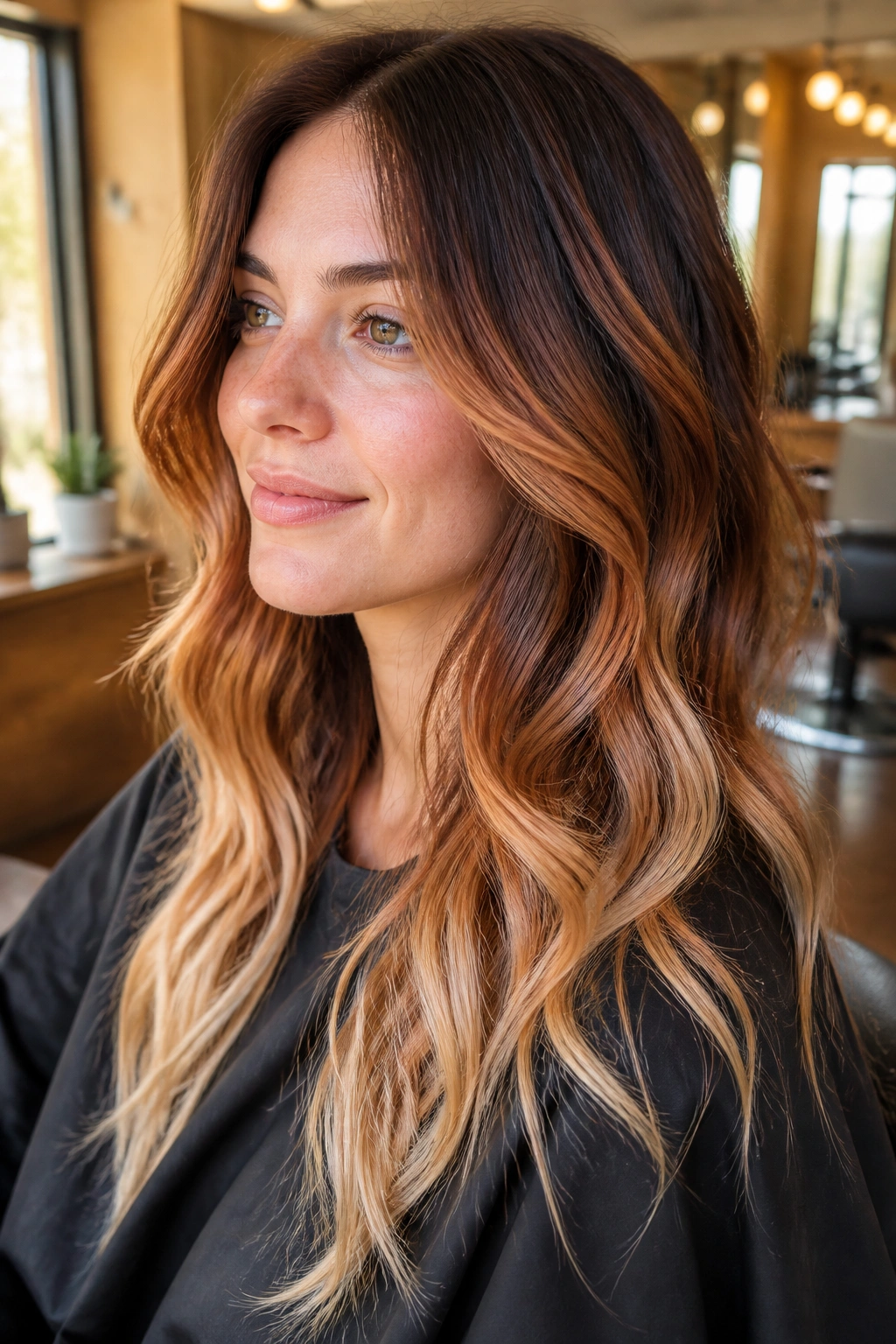
Flame-kissed balayage is the boldest look in this group, and it works because the root stays dark enough to hold the whole thing together. The color moves from brown to copper to blonde, with each shade taking its turn at the ends. Done well, it feels warm and energetic. Done badly, it looks like three separate dye jobs arguing with each other.
Why It Works
The dark root gives the eye a place to rest. From there, the copper through the mid-lengths keeps the transition soft. The blonde ends bring in the brightness. That layering is what makes the whole thing believable on brown hair. If the blonde starts too high, the contrast gets rough fast.
This style needs healthy hair. Not perfect hair. Healthy enough. If the ends are already dry or brittle, the blonde will show it first. A good colorist will usually keep the brightest pieces to the healthiest sections and leave the more fragile ends a shade deeper.
Useful Details
- Best on long layers or a cut with movement
- Looks strongest in curls and loose bends
- Needs regular toning to keep the blonde from going brassy
- Should be paired with a heat protectant every time you style it
This is not a quiet look. That’s the point.
20. Cinnamon Blush Highlights for an Easy Grow-Out
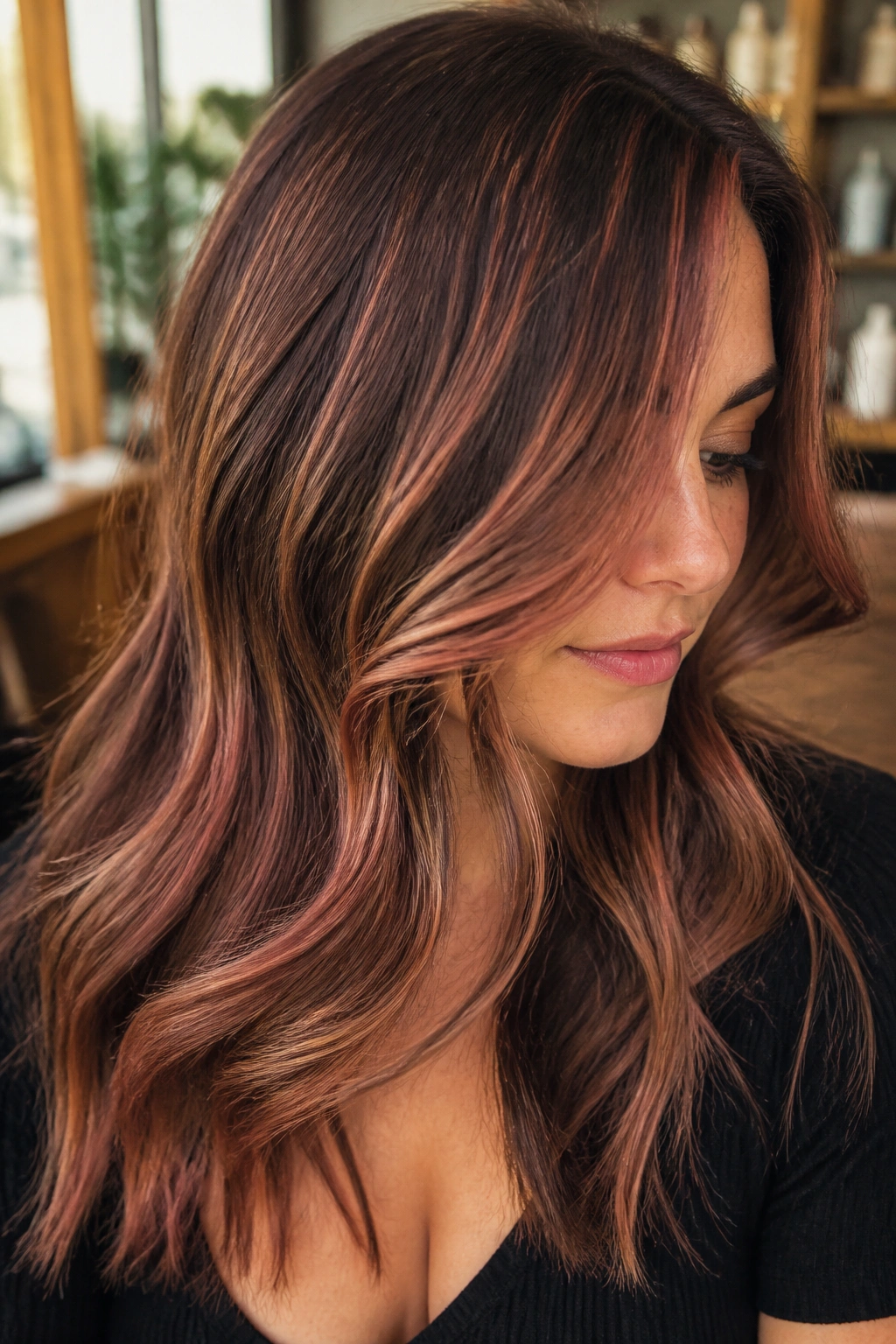
Cinnamon blush highlights are the style I keep coming back to for people who want warmth, movement, and a grow-out that does not fall apart after a few weeks. The cinnamon gives the brown base a cozy red note, while the blush keeps the lighter pieces soft instead of harsh.
The real advantage is balance. The roots stay brown enough that regrowth does not look obvious right away, and the lighter pieces are softened with enough red to avoid that chalky blonde fade some highlights get. On medium or dark brunette hair, that makes a big difference. The color still reads fresh long after the salon visit, which is the part people actually live with.
This is also the easiest version to wear if you are not trying to become a maintenance person. You can blow it out straight, rough-dry it, wear it in waves, clip it up, and the color still makes sense. That flexibility is underrated. Not every good-looking highlight needs to be dramatic.
If you want one red-blonde brunette look that stays useful as it grows, this is the one I’d start with first.
