



Caramel highlights for brown hair work best when the shade feels woven into the base, not pasted on top of it. The sweet spot is warm, soft, and dimensional — somewhere between toasted sugar and amber — and that range is wider than most people think.
Placement matters more than people think. A few ribbons near the face can change the whole read of a brown base, while too many evenly spaced streaks can flatten the color and make it look stripy.
The hair itself changes the result too. Espresso brown, chestnut, mocha, and cocoa all take caramel in slightly different ways, and a shade that looks rich on medium brown can go orange on very dark hair if the lift is rushed. That is why the gloss after lightening matters so much. It’s not an extra. It’s the part that makes the color settle.
There’s also a reason caramel keeps showing up on brunettes. It softens dark hair without wiping out depth, and it gives movement even when the cut is simple. Some looks below are quiet and wearable. Others are bolder, with thicker pieces or brighter contrast. The trick is knowing which version fits your base, your haircut, and how much maintenance you actually want.
1. Soft Caramel Balayage
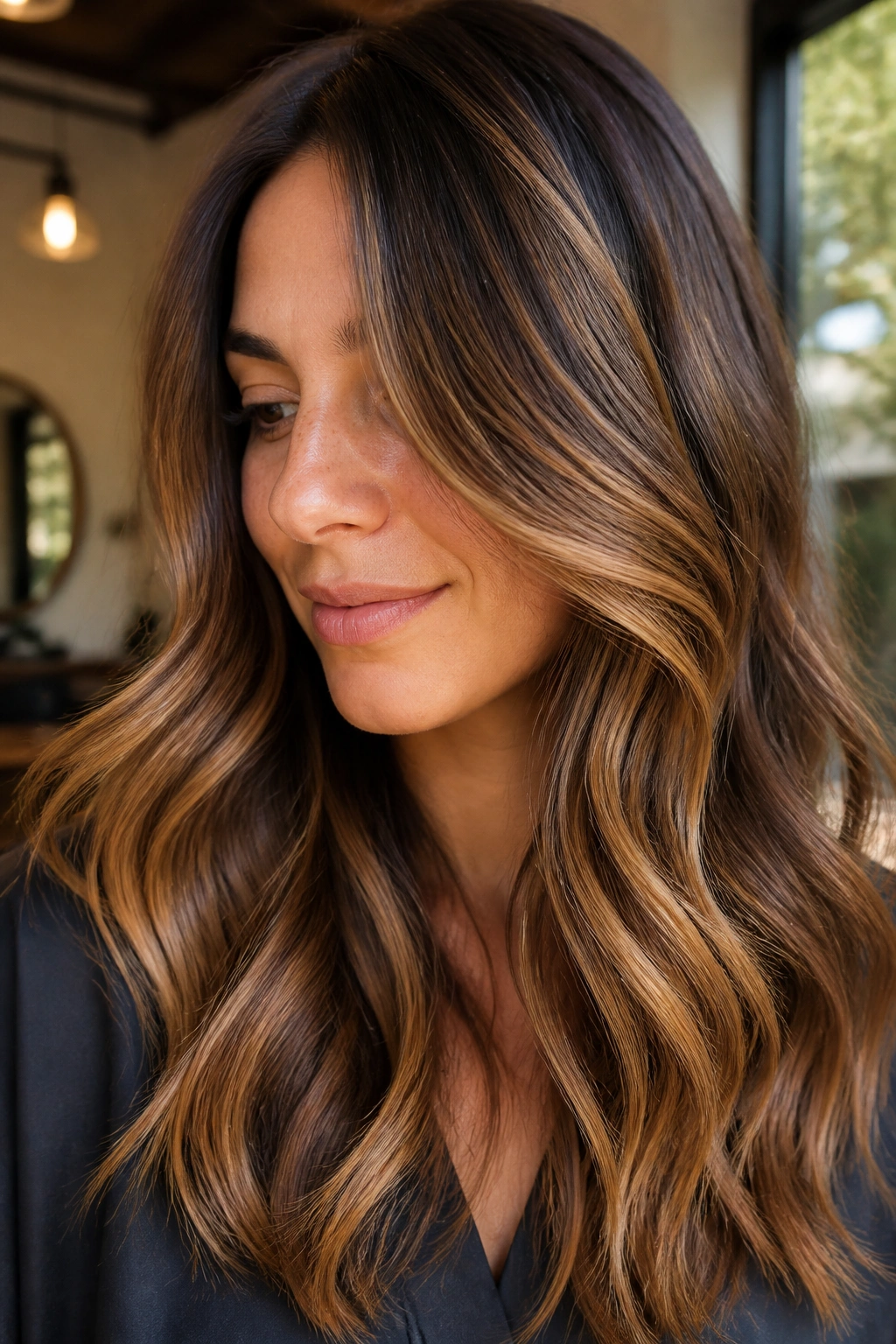
Soft caramel balayage is the look I’d send most brunettes toward first. It gives brown hair warmth and light without drawing hard lines through the hair, so the result feels lived-in rather than stripey. The lightest pieces usually sit through the mid-lengths and ends, with the root left deeper for a softer grow-out.
Why It Flows So Well
This style works because the highlights follow the natural fall of the hair instead of fighting it. On medium brown bases, the caramel reads as sun-soft and subtle; on deeper brown, it adds enough contrast to show movement without going bright.
- Ask for hand-painted ribbons, not a full foil pack.
- Keep the lightest pieces about 2 to 4 inches away from the root.
- Choose a beige-caramel tone if you want softness over gold.
- On very dark brown hair, a gloss helps the tone settle after lifting.
Best for: medium brown, mocha brown, and long layered cuts.
A small tip makes a big difference here: leave some darker pieces between the light ribbons. That space is what keeps the color from turning into one flat warm sheet.
2. Face-Framing Caramel Money Piece
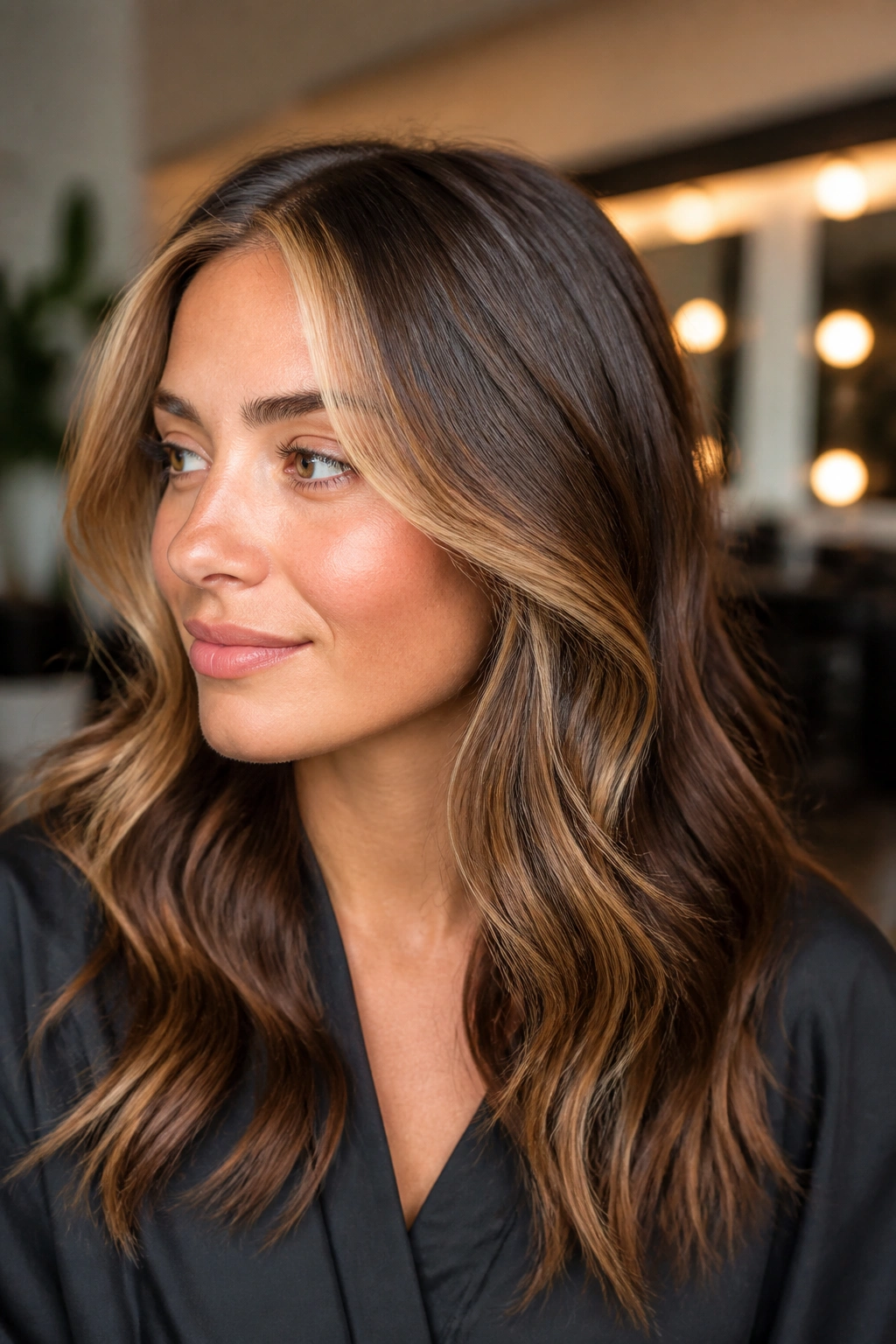
A face-framing money piece gives you the biggest visual change with the least color. That’s the appeal. It brightens the front hairline, brings the eyes forward, and gives brown hair a little lift even when the rest of the color stays close to the base.
The key is restraint. If the front section is too thick, the look starts to feel dated fast. I like this best when the money piece is fine at the part, then feathers out near the temples and cheekbones. The effect should look deliberate, not painted on like a stripe.
Wear your hair up often? This one earns its keep. A ponytail, claw clip, or loose bun all show off the front pieces in a way that feels polished without trying hard. If your haircut has curtain bangs or long face layers, even better.
Ask for: a brighter caramel around the hairline, with the rest of the highlights kept softer and deeper. The contrast is the whole point.
3. Toffee Ribbons Through Espresso Brown
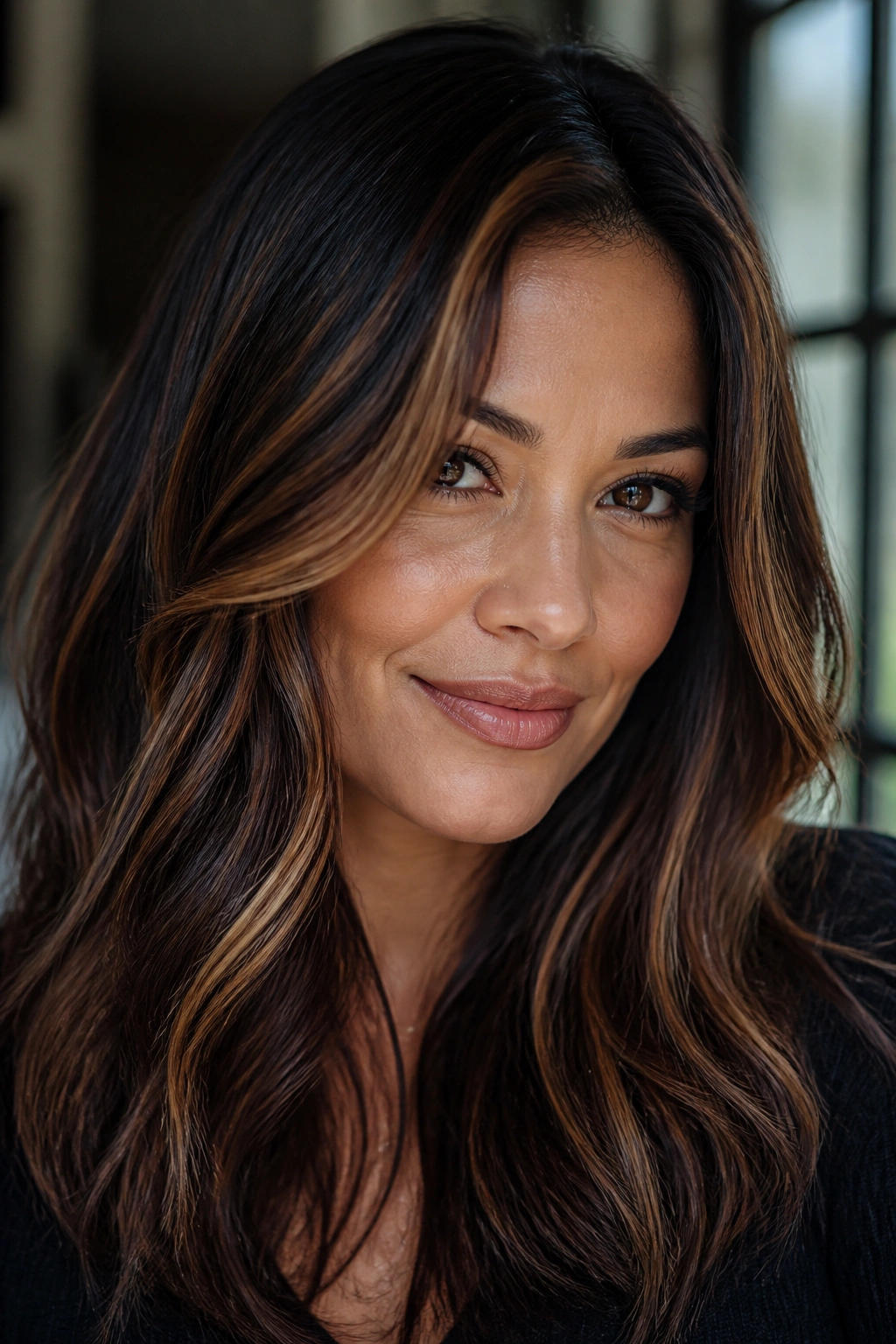
Why do narrow ribbons look richer than a few thick streaks? Because they move with the hair. Thin caramel ribbons through espresso brown create depth without shouting for attention, and they work especially well when the base is very dark and you want the color to feel expensive instead of harsh.
This look relies on spacing. The ribbons should not sit in neat rows. That’s the mistake that turns brunette color into a helmet. A good colorist will stagger the pieces, leaving some areas darker so the caramel appears and disappears as the hair moves.
How to Ask for It
- Request fine foils or micro-weaves through the mid-lengths.
- Keep the tone in the toffee range, not pale gold.
- Let a few pieces hit the outer layer for brightness.
- Use a glaze that keeps the warmth soft, not brassy.
The result is especially nice on straight or softly waved hair. The contrast stays visible even when the hair is tucked behind the ear, and that small detail makes the whole color feel richer.
4. Chunky Caramel Highlights with a ’90s Edge
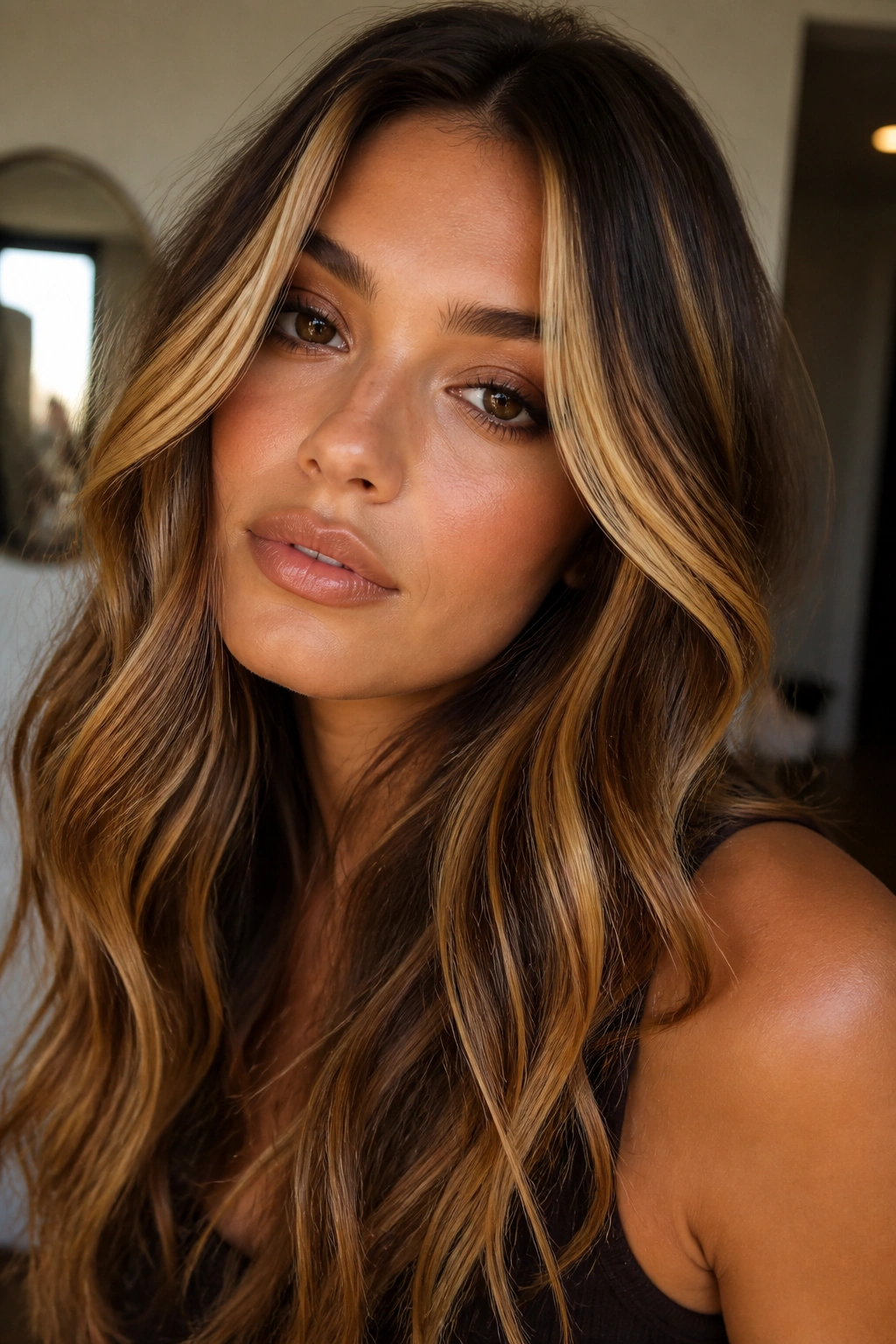
Chunky caramel highlights get a bad reputation because people remember the wrong version of them. Done well, they look bold, graphic, and a little nostalgic in a good way. On brown hair, the trick is using a warm caramel tone so the thicker pieces read stylish instead of harsh.
This works best when the haircut has shape. A blunt lob, a long bob with slight bend, or layered shoulder-length hair can hold chunky placement without looking heavy. Straight hair shows the blocks more clearly. That can be the point. Curly hair softens the edges and changes the mood entirely.
You do need confidence for this one. It is not trying to disappear.
What Makes It Work
- Keep the thick pieces spaced apart, not packed together.
- Ask for caramel that is warm but not yellow.
- Let some chunks sit near the front, where they frame the face.
- Pair the color with a gloss so the finish looks smooth.
If you like color that people notice right away, this is one of the stronger caramel highlights for brown hair. It has personality. No apology needed.
5. Baby-Fine Caramel Babylights
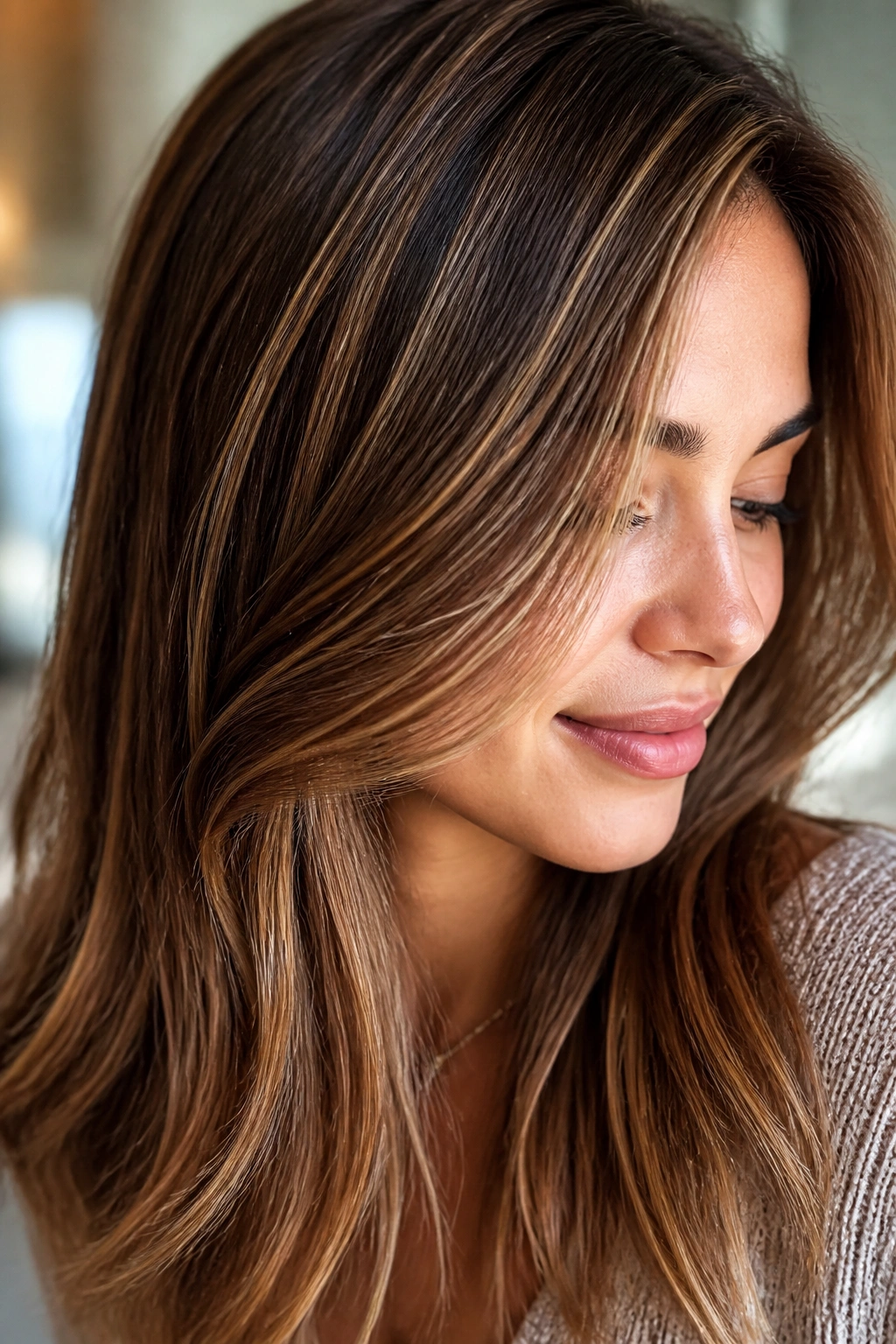
Baby-fine caramel babylights are the opposite of chunky streaks, and that’s why they work so well on brown hair that needs a quiet lift. The pieces are tiny, almost threadlike, which lets the caramel shimmer through the base instead of sitting on top of it. The whole head looks brighter, but the change is soft enough that people often cannot point to exactly what shifted.
I reach for this look when a client wants dimension without obvious highlight lines. It is especially good on fine hair, where larger sections can feel too blocky. The color should stay close to the natural brown, only a shade or two lighter in the lightest places.
The upkeep is nice too. Because the pieces are so narrow, grow-out is less obvious. You still need toner or gloss work eventually, though. Skipping that step is how baby-lights drift into dull orange.
A quiet finish like this is easy to wear. It does not fight the haircut. It just makes the hair look richer, softer, and a little more awake.
6. Caramel Ombré on Brown Hair
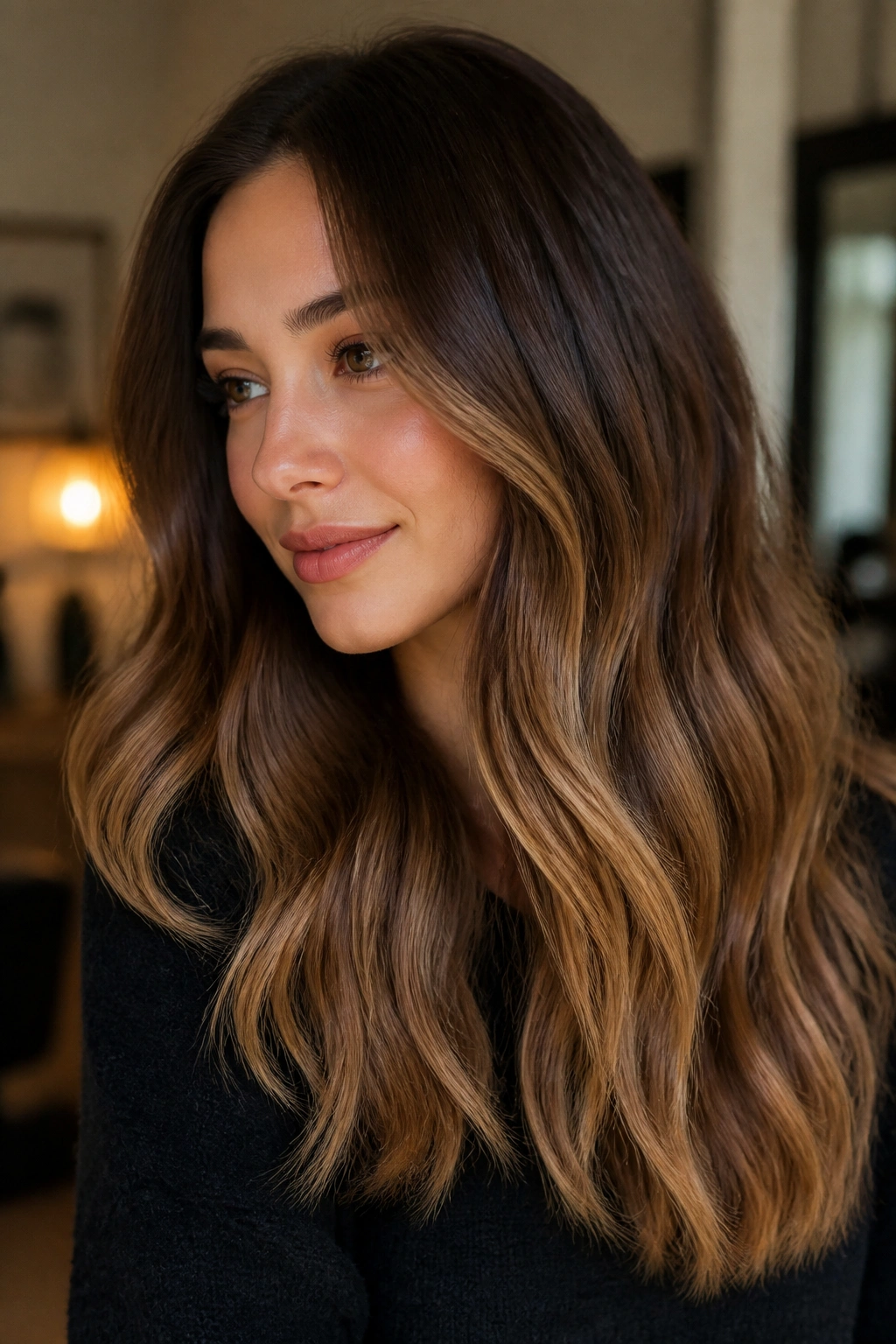
Caramel ombré keeps the root deep and lets the warmth build toward the ends. That makes it a smart choice if you like brown hair with contrast but do not want to spend your life chasing root touch-ups. The shift is lower and more gradual than traditional highlight placement, so the look reads soft even when the ends are noticeably lighter.
What I like about ombré is the honesty of it. You can see where the color changes, but the transition should feel smooth rather than chopped. On long hair, especially, the caramel through the lower half brings out movement that a single solid brown shade can flatten.
This style does have one catch. Very dry ends can make the lightest sections look rough, and caramel shows damage fast. A trim before coloring helps more than people expect. So does a gloss afterward.
If you want a look that grows out without much drama, this is one of the easiest caramel highlights for brown hair to live with.
7. Mushroom Brown with a Caramel Veil
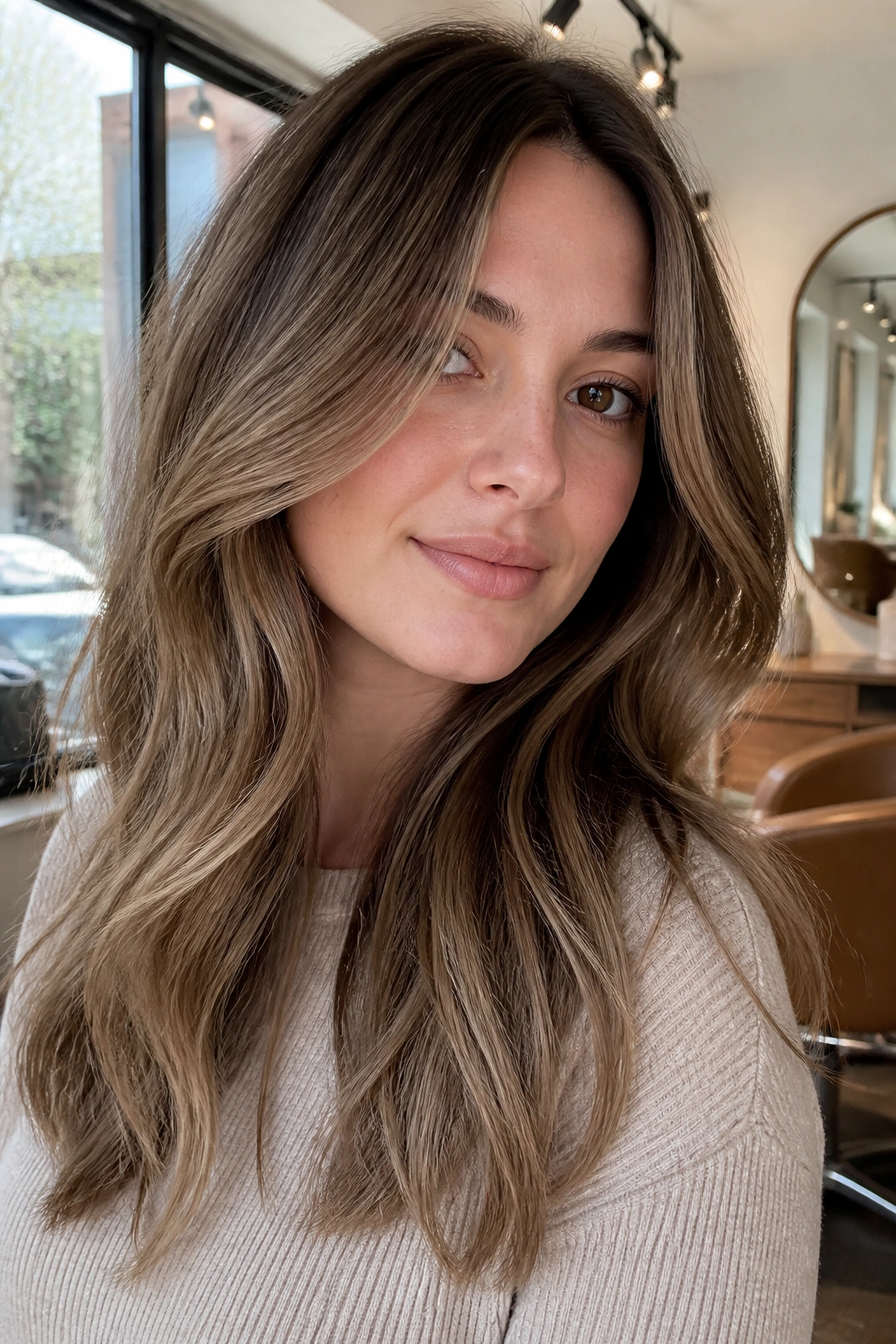
Can caramel work on a cooler brunette base? Yes — if you keep the warmth quiet. A mushroom brown base with a caramel veil gives you that soft smoky undertone with just enough warmth to keep the hair from feeling flat or muddy. It’s a neat balance, and it suits people who like brown hair that looks expensive without looking gold.
Who It Suits Best
- Neutral or cool undertones.
- Medium brown to dark brown bases.
- People who dislike orange or copper.
- Hair that already has some natural ash in it.
The caramel should stay beige or toasted, not honey yellow. That matters more than the placement. If the warm tone is too strong, the whole look loses its cool, earthy feel. If it’s too ashy, though, the caramel disappears.
This is a good choice when you want dimension but not drama. The brown still leads. The caramel just softens the edges and keeps the color from looking one-note.
8. Curly Caramel Highlights That Follow the Coil Pattern
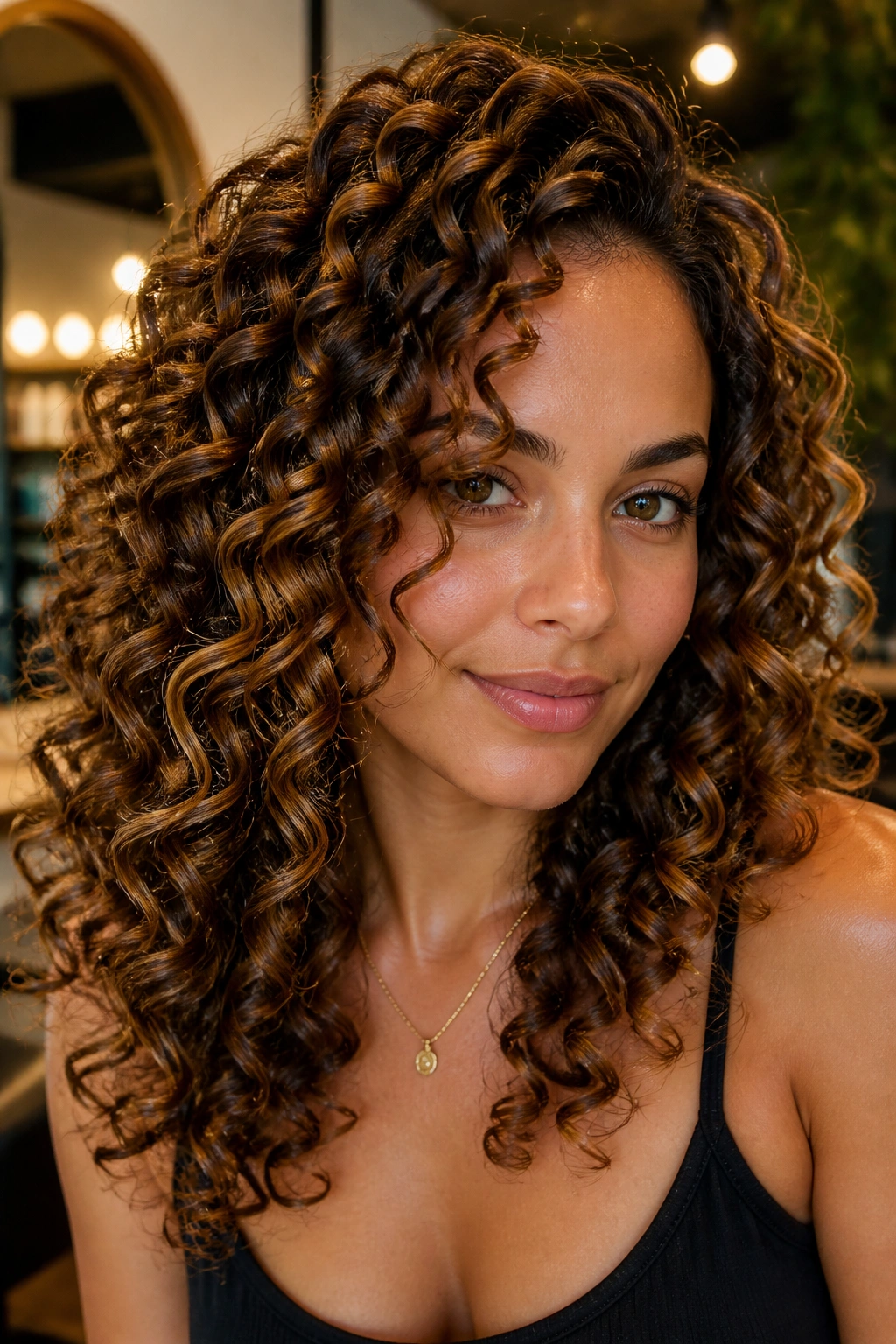
Curly hair needs a different highlighting map. If the caramel is placed like it would be on straight hair, you get stripes. Nobody wants that. The better move is to paint the light pieces where the curls naturally bunch and bend, so the highlight appears in little flashes as the coils move.
That changes the whole read of the color. Instead of one solid ribbon, the caramel becomes part of the curl pattern. It makes the texture pop without taking away depth from the base. On looser curls and strong waves, I like a mix of thin and medium pieces. On tighter curls, tiny placement matters more than width.
This is one of those looks that really rewards an experienced colorist. Curl shrinkage changes where the light lands. A good placement on wet hair can still look wrong once the curls spring up, which is why curl-by-curl thinking helps so much.
Ask for: highlights placed on the outer curve of curls, not across the whole section. That one detail keeps the color from turning stripey.
9. Copper-Caramel Melt for Warm Brunettes
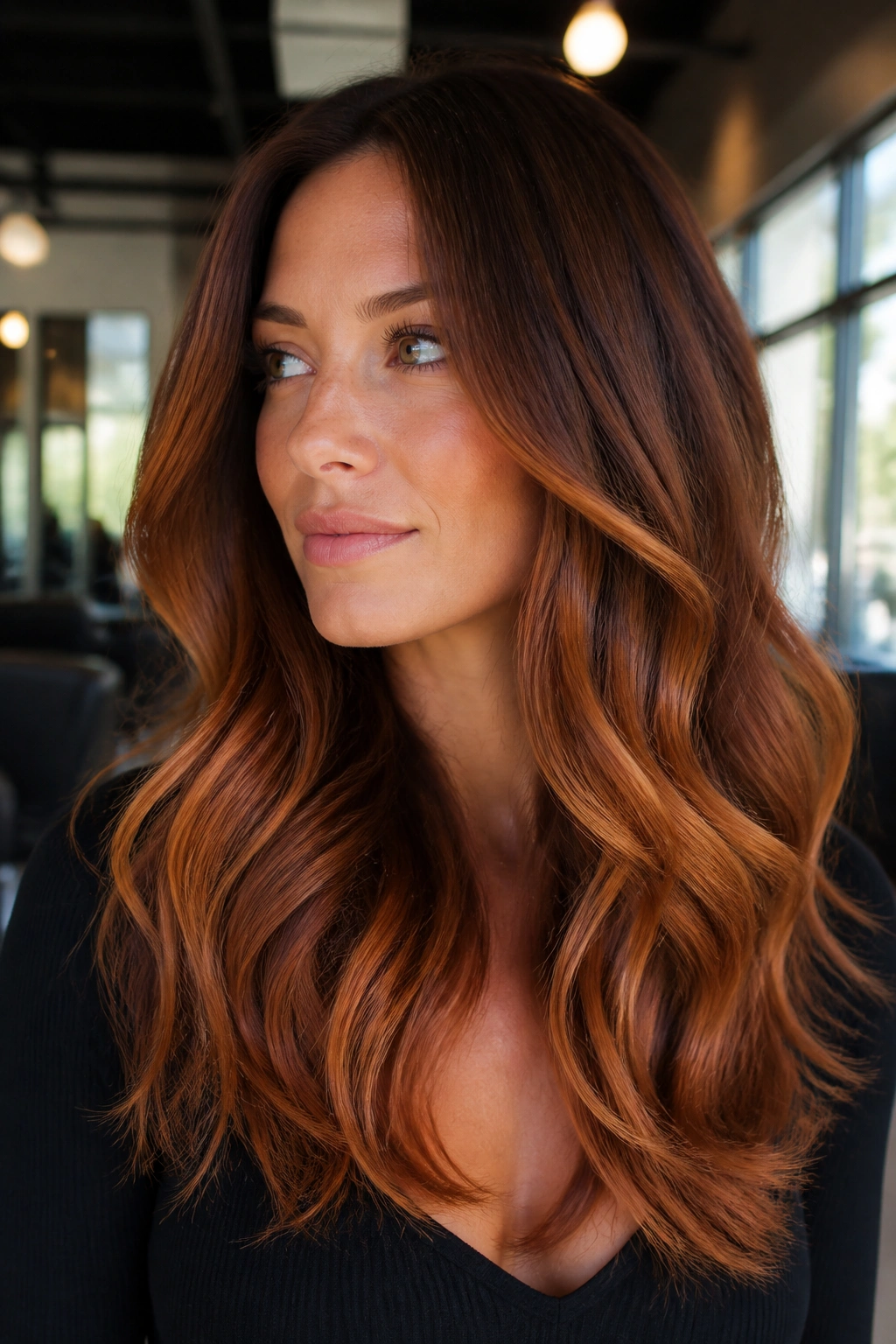
If your brown hair already leans warm, copper-caramel can look rich and glossy instead of fiery. The color sits between cinnamon and honey, so it has enough heat to glow but still belongs in the caramel family. I like it on chestnut bases, warm medium brown, and dark brown hair with natural red undertones.
The melt part matters. You do not want hard separation between the darker brown and the brighter caramel pieces. A smooth transition is what keeps the color from feeling too loud. The lightest zones should appear through the mid-lengths and ends, with a soft fade near the crown.
There is one common mistake here: pushing the copper too far. A bright copper overlay can swallow the brown base and make the whole head look red. A balanced caramel-copper mix stays wearable and still gives the hair that warm glow people keep asking for.
Best when you want warmth with personality. Not neon. Not flat. Something in between.
10. Ash Brown and Caramel Mix for Cooler Skin Tones
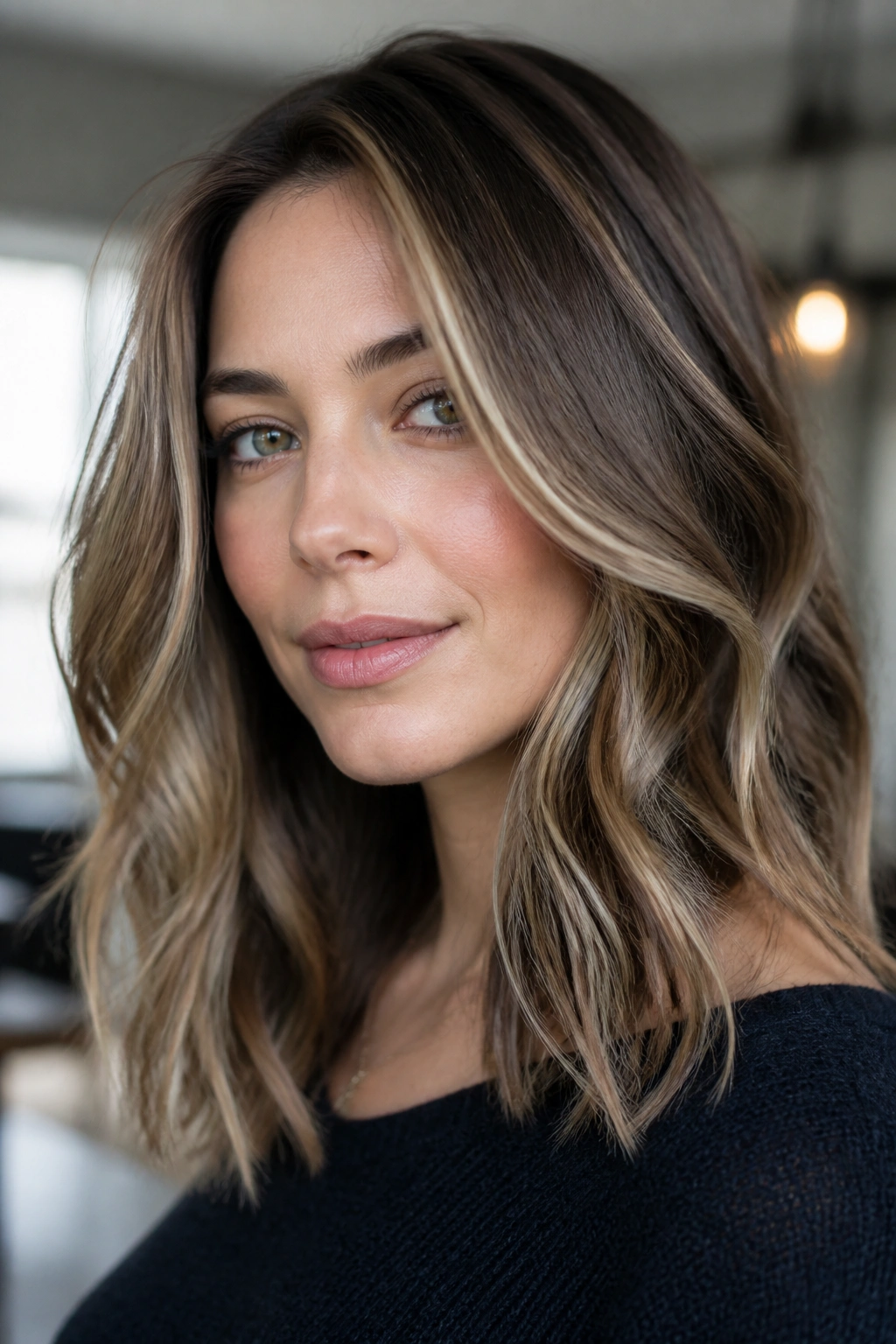
Caramel does not have to be golden to count as caramel. On cooler brown bases, an ash brown mix with beige-caramel ribbons can look cleaner and calmer than a warm honey tone. This is the version that keeps the brown feeling modern without tipping into orange.
The trick is contrast control. Too much gold and the hair starts to fight cooler skin. Too much ash and the caramel disappears. The middle ground is a beige caramel with a soft smoke underneath it. That blend looks especially good when the highlights are woven through the mid-lengths rather than packed around the face.
What to Tell Your Colorist
- Use beige-caramel, not yellow-gold.
- Keep the base one level deeper at the root.
- Add a few ash lowlights if the hair needs more depth.
- Finish with a neutral gloss to steady the tone.
This is the kind of brunette color that looks calm and expensive without screaming for attention. It’s subtle, but not dull.
11. Caramel Highlights on Dark Chocolate Brown Hair
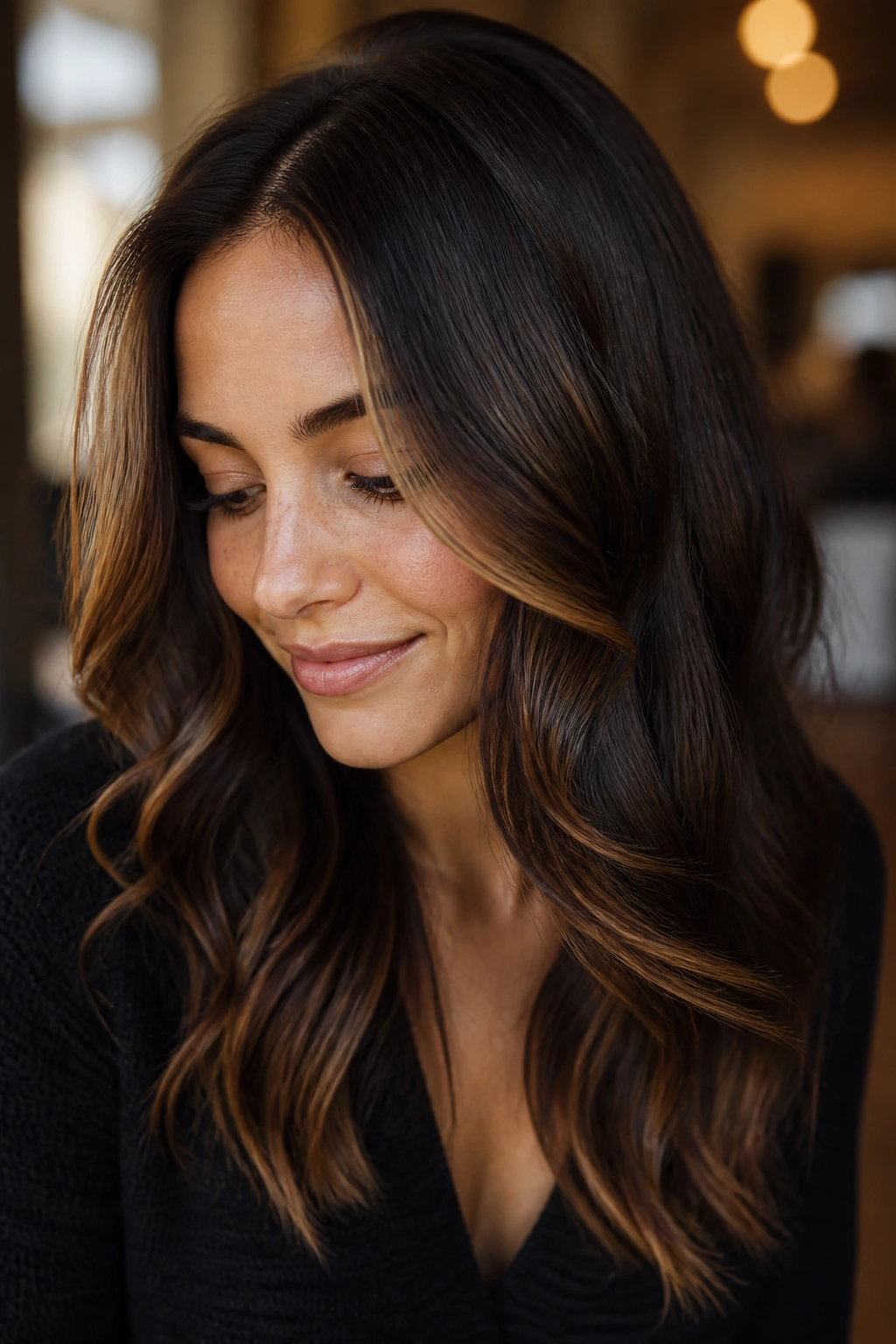
Dark chocolate brown hair takes caramel well, but patience matters. The contrast is stronger here, which is half the appeal. A few bright pieces can wake up the whole head, while a heavier hand can make the hair look streaked instead of dimensional.
I prefer strategic placement on very dark brunettes. A brighter money piece, a few ribbons around the part, and some lighter movement through the ends usually give more payoff than scattering light pieces everywhere. The eye reads contrast faster than quantity. That’s why a smaller number of well-placed caramel highlights often beats a full head of lighter foil work.
The other thing dark hair needs is tone control. If the lift stops too early, the caramel can go muddy. If it lifts too far, it can look coppery in a way that feels off. The gloss after lightening is not optional here.
Dark chocolate and caramel is a classic pairing for a reason. The base stays deep. The lighter pieces do the talking.
12. Ribbon Highlights on a Layered Lob
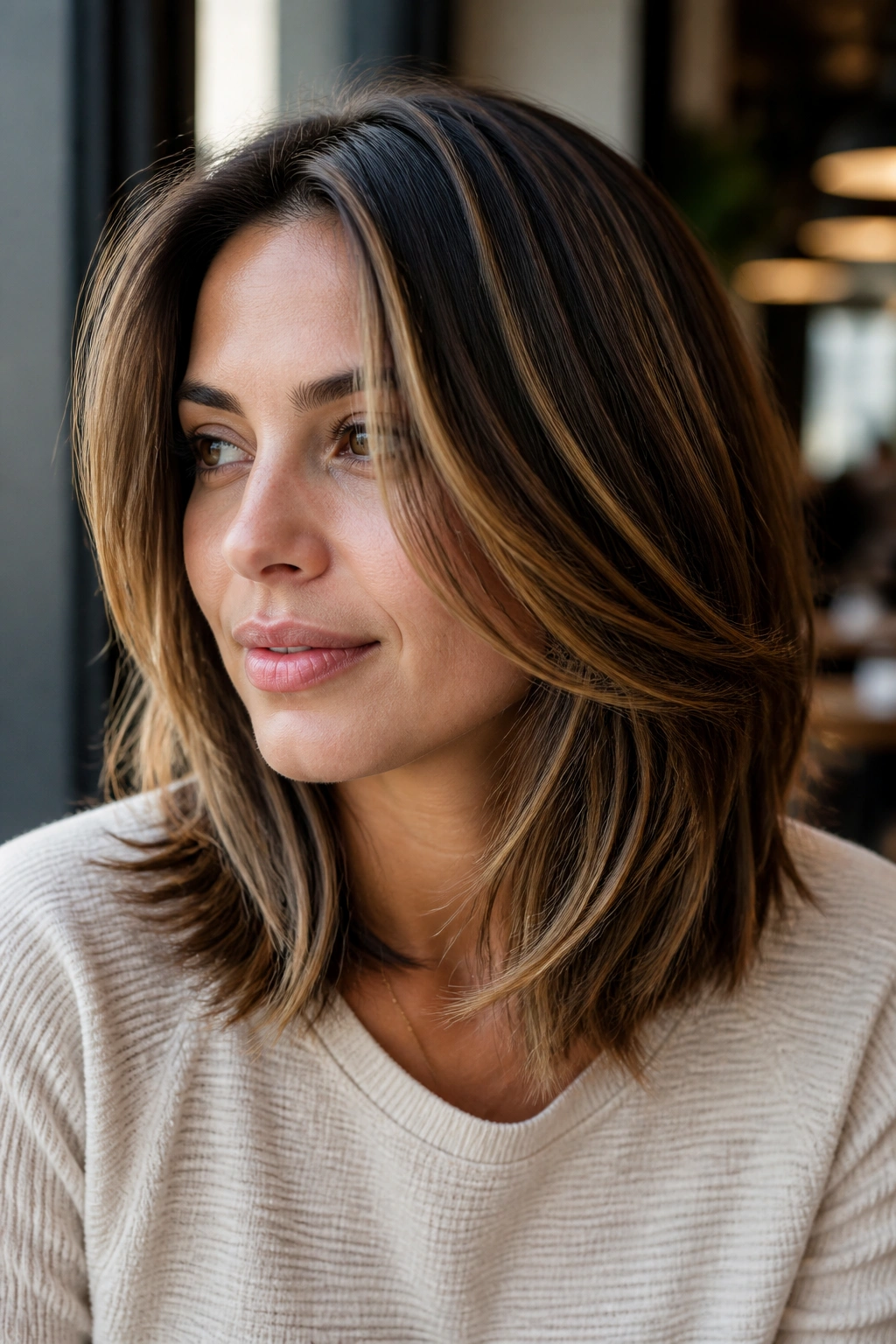
A layered lob is almost made for ribbon highlights. The cut already has movement, so long caramel ribbons can follow the shape of the layers instead of sitting like rigid lines. That gives the style a lighter, more active feel, especially when the ends flip or tuck under a bit.
Unlike chunky highlights, ribbons keep the eye moving. They are long enough to show off placement, but thin enough to stay soft. On brown hair, that matters. The caramel should seem to float through the cut, not interrupt it.
This style looks best when the ribbons are uneven in width. Some can be slimmer, some a touch wider. That irregularity makes the color feel more natural and less stamped in. A perfectly even highlight pattern can make a lob look stiff, which defeats the point of the cut.
If you wear a shoulder-length cut and want a color that adds shape, this is a strong pick. The haircut and the color do half the work for each other.
13. Sunlit Ends with Caramel Slices
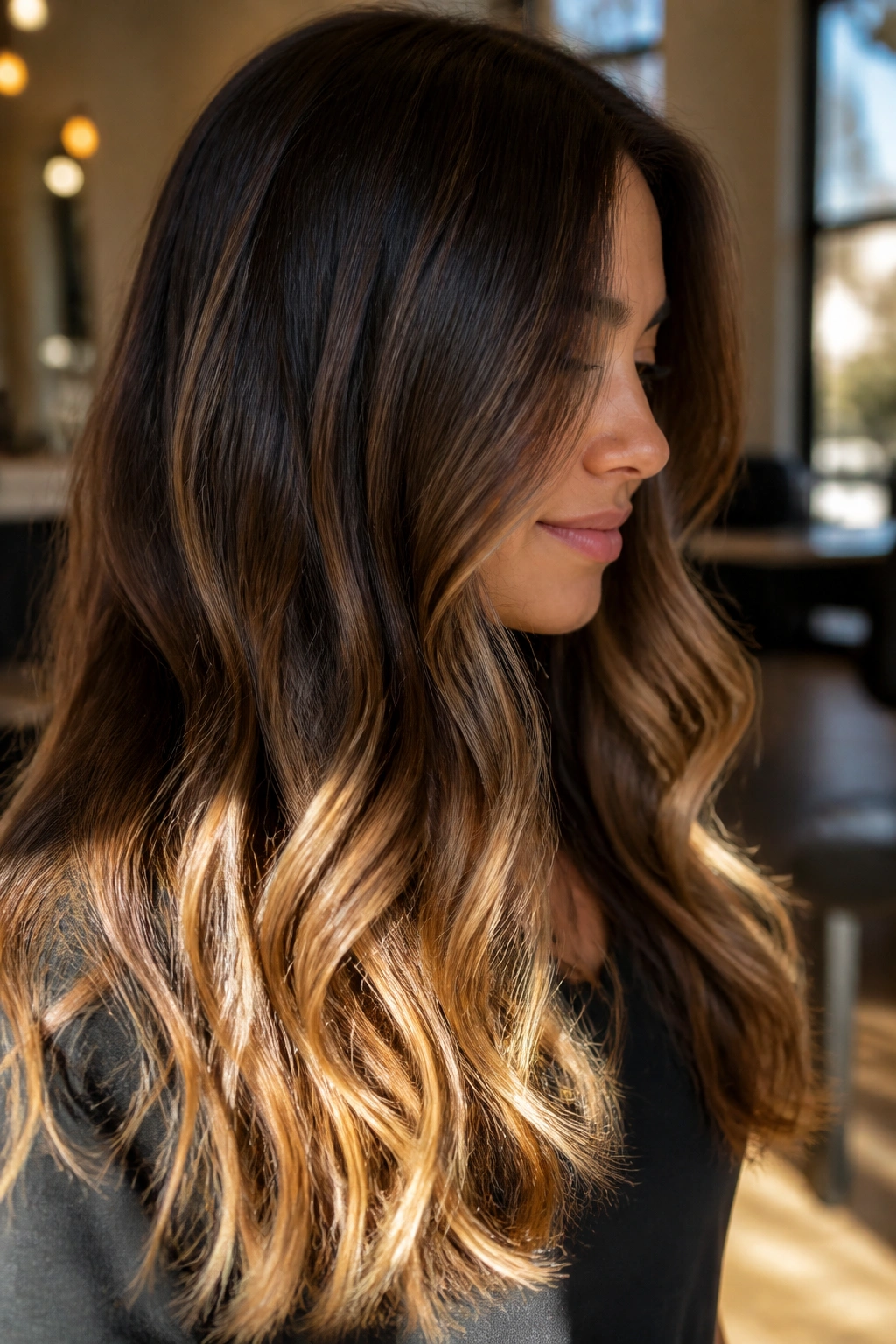
If your hair feels heavy at the bottom, sunlit ends can fix that without touching the root too much. The idea is simple: keep the brown deeper near the scalp and through most of the length, then place caramel slices through the lower third so the ends look lighter and more alive.
This is a smart move for long brown hair that has lost movement. Ends that are one shade too dark can make length look blunt and thick in the wrong way. Caramel slices loosen that up. They also show nicely in braids, waves, and simple loose styles.
When It Makes Sense
- Long hair that feels weighed down.
- Wavy cuts that need more shape at the ends.
- Brown hair that has been colored darker over time.
- Clients who want a lighter look without a full change.
The danger is overdoing the bottom section. Too much lightness at the ends can look dip-dyed in a harsh way. Keep the transition soft, and the color feels modern instead of obvious.
14. Caramel Contour Highlights Around the Face
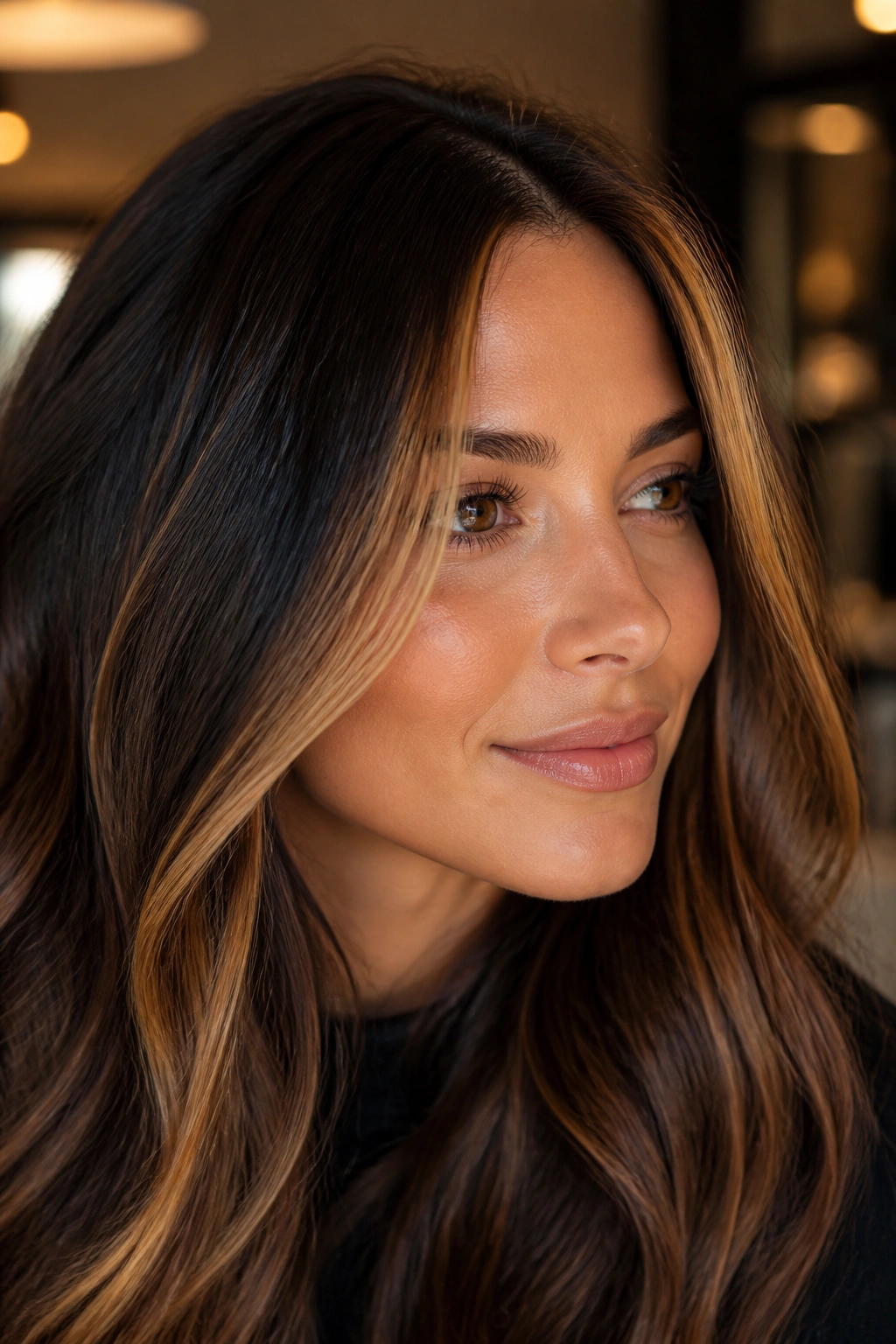
Caramel contour highlights do for hair what face contouring does for makeup. They place light in the spots that open the face and make the cut look more intentional. Around the hairline, through the cheekbone area, and just off the front of the part, the caramel creates a frame that pulls attention upward.
This is one of my favorite tricks for brunettes with long layers or curtain bangs. The front pieces can be a touch brighter than the rest, which gives the haircut more shape even on days when the styling is plain. It is a small placement change, but it changes how the whole style reads.
Where the Lightest Pieces Go
- Just inside the part line.
- Through the first two front sections near the temples.
- At the top of the cheekbone area, if the cut allows it.
- A little softer around the ears so the frame does not stop too hard.
The goal is lift, not a spotlight. If the front is too wide or too pale, the look loses its polish fast. Keep the caramel warm and the edges soft.
15. Hidden Underlayer Caramel Highlights
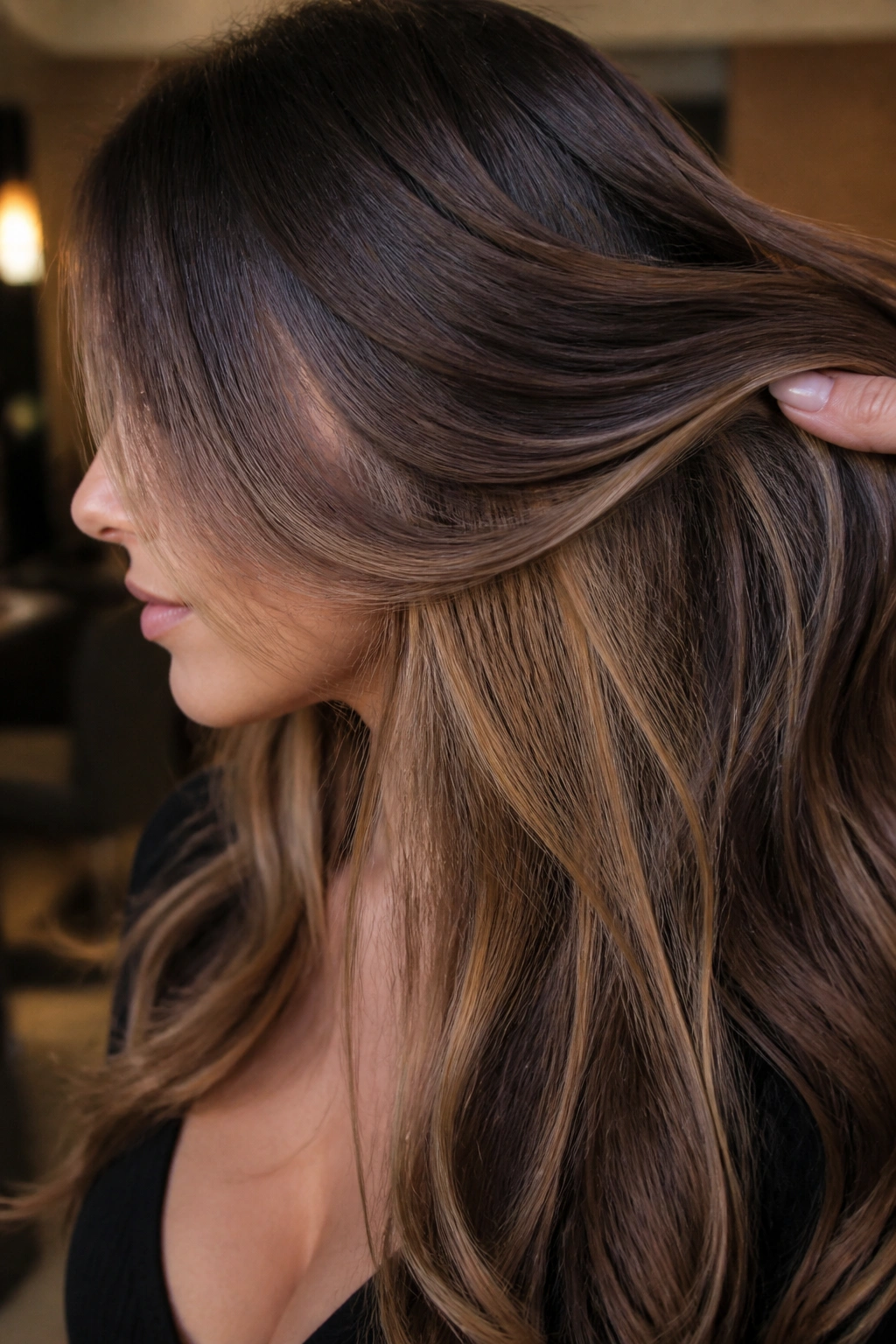
Want color that shows off only when the hair moves? Hidden underlayer highlights are made for that. The top section stays mostly brown, while caramel panels sit underneath and peek through when you curl the hair, tuck it back, or pull it into a half-up style.
It’s a sneaky look in the best way. The color feels private at first, then more visible the longer you wear it. That makes it especially fun for people who work in more conservative settings but still want some personality in their hair.
The best part is that the underlayer can be brighter than you think. Since it sits below the top layer, it does not always read as loudly as surface highlights. That gives you room to play with more visible caramel without turning the whole head high-contrast.
This is also a nice option if you want to test lighter brown hair color before committing to a full head. The reveal is part of the charm.
16. Cinnamon-Caramel Dimension for Wavy Hair
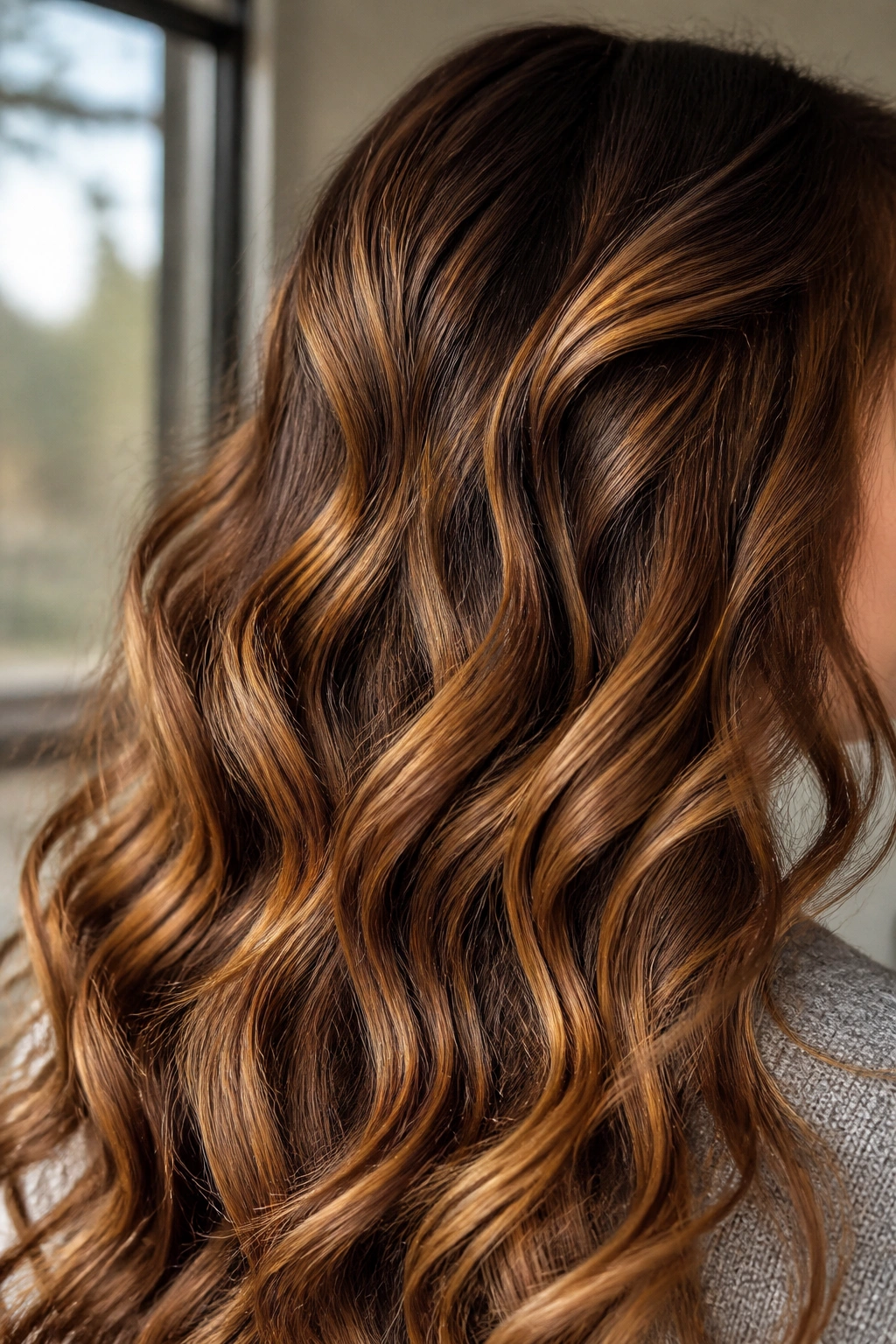
Wavy hair can swallow color if the placement is too timid. Cinnamon-caramel dimension solves that by putting warmth and contrast right where the wave bends. The color ends up looking woven into the pattern, which is exactly what you want when the hair moves from straight to bent to textured all in one section.
I like a slightly spicier caramel on waves than I do on straight hair. A tone that sits between caramel and cinnamon gives the bends more definition. The waves show off the lighter parts when they lift, then tuck the deeper pieces back in between. It’s a nice rhythm.
What Makes It Different
- Highlights should follow the wave, not cut across it.
- A mix of thin and medium pieces looks more natural than a single width.
- Cinnamon warmth helps the waves read as fuller.
- A soft bend from a round brush or diffuser brings the color to life.
This is one of those styles that looks better with movement than in a flat photo. That’s not a flaw. It’s the point. The shape and the color belong together.
17. Caramel Highlights with Lowlights
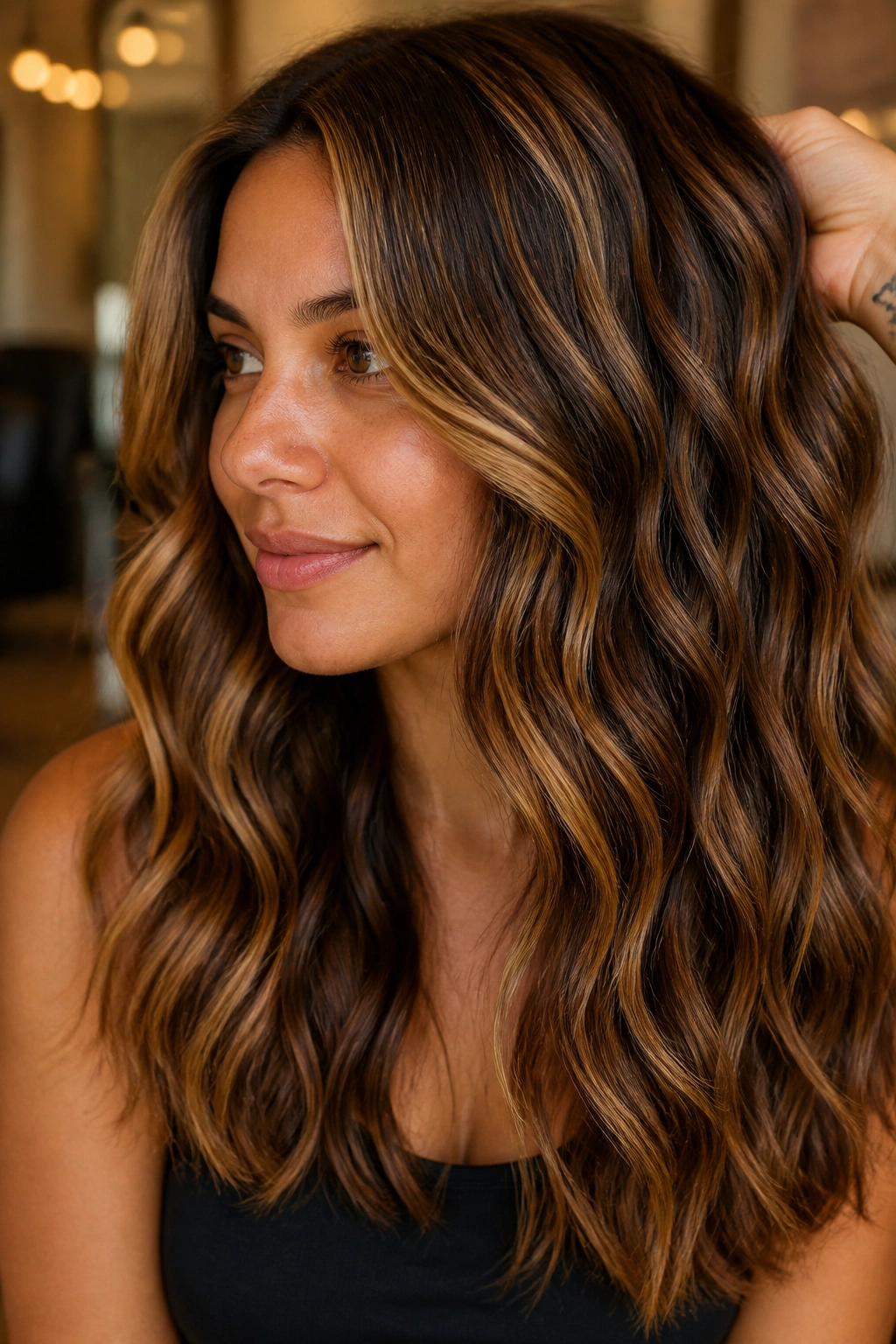
Caramel without lowlights can go flat fast. That’s why this combination works so well on brown hair. The brighter pieces bring the warmth, and the darker lowlights keep the whole thing grounded so the color has depth instead of just brightness.
The best version uses lowlights that sit one to two shades deeper than the base. Not black. Not muddy. Just enough extra shadow to give the caramel a place to live. When the darker strands are woven through the lighter ones, the hair looks fuller and more textured, especially under indoor light.
This approach also helps the highlights last visually longer. Once the lighter pieces soften a bit, the lowlights keep the dimension from disappearing. That matters more than people realize. Flat color ages faster than layered color.
If your brown hair tends to look one-note after a few weeks, this is the smarter route. The lowlights do the quiet work. The caramel gets the credit.
18. Glossy Foilyage for a Bright Caramel Finish
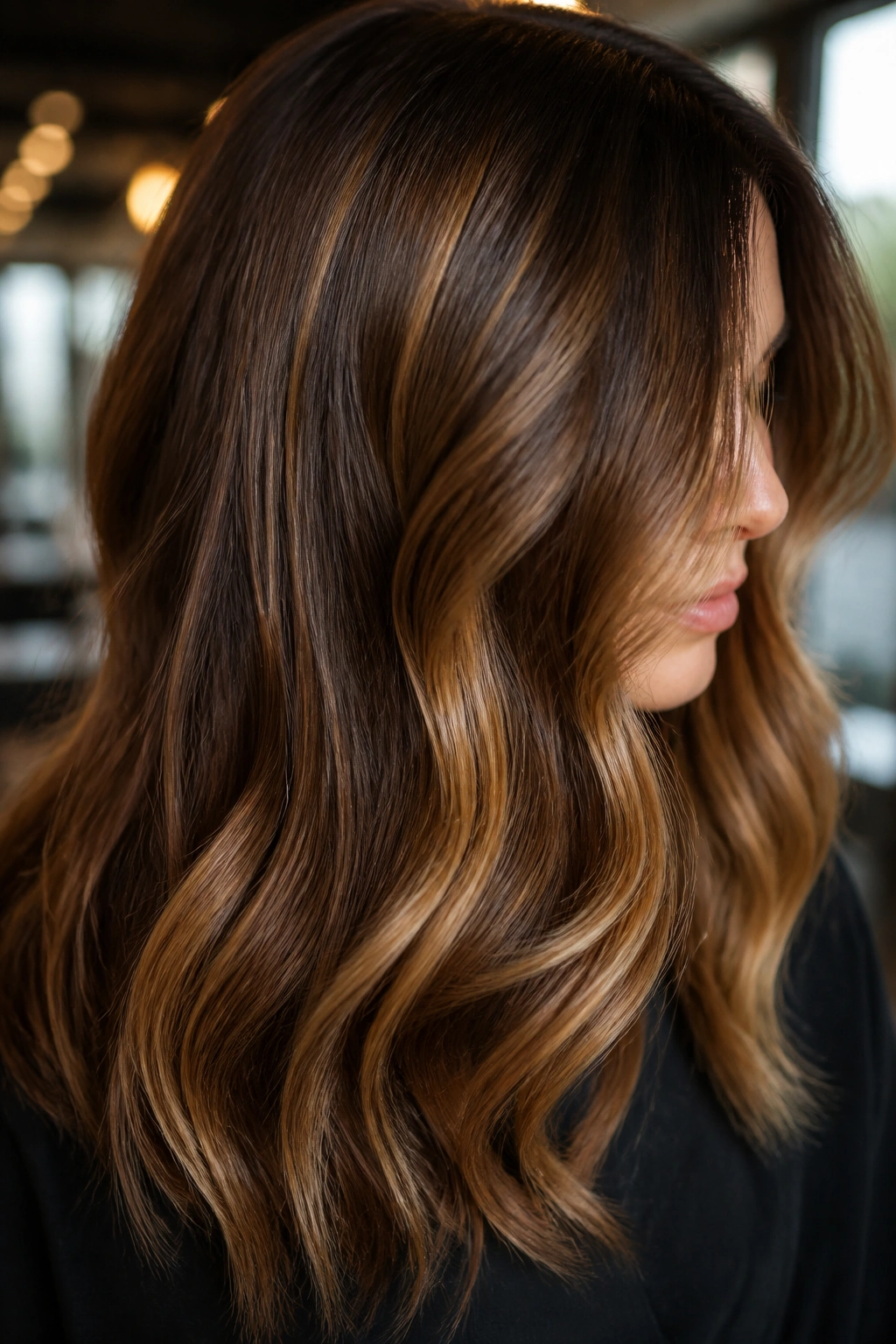
Foilyage sits between traditional foils and balayage, and that middle ground is useful. The foil gives the caramel more lift and brightness, while the hand-painted placement keeps the edges from looking blunt. On brown hair, that means you can get a lighter caramel without losing softness at the seam.
This is the version I reach for when a brunette wants visible brightness but still wants the highlight to grow out gently. Because the foil holds heat, the lightening tends to be stronger than open-air painting. That makes it a smart choice for darker bases that need extra push to reach a clean caramel tone.
The finish usually looks best with a gloss that reins in warmth after lifting. Without that step, bright caramel can start to lean brassy, especially near the ends where hair is more porous.
Foilyage is a good middle path. Brighter than balayage. Softer than a chunky foil job. That balance is why so many caramel brunettes end up liking it.
19. Soft Bronze-Caramel for Medium Brown Hair
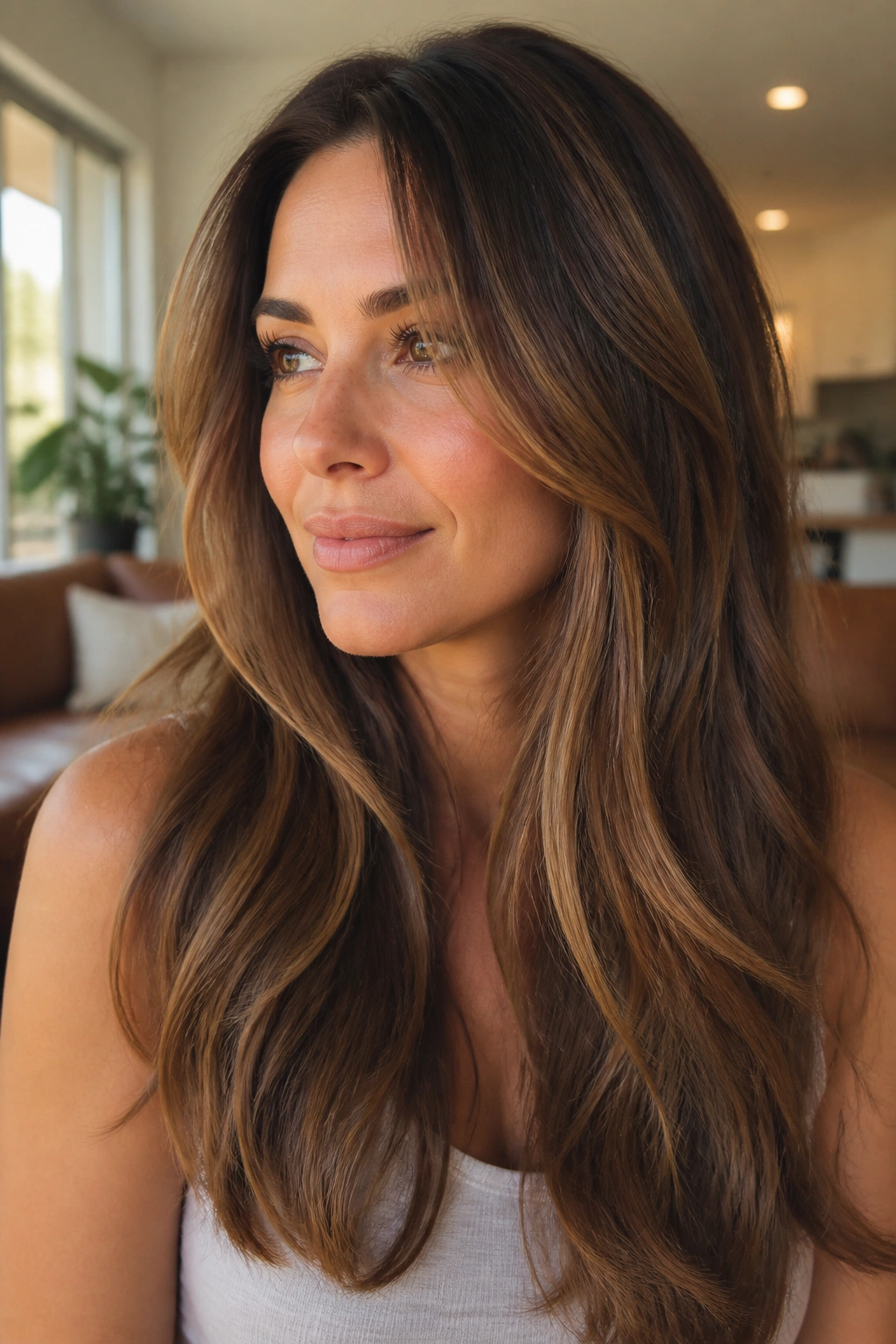
Bronze-caramel is one of those tones that people often overlook because it sounds less flashy than honey or gold. I think that’s exactly why it works. On medium brown hair, the bronze note gives the caramel a deeper, more grounded look, so the color stays warm without drifting into yellow.
The shade sits in a nice space between chocolate and toffee. That makes it flattering on hair that already has some natural warmth but needs more shine and movement. The bronze piece also helps if the base color has a little red in it, because it ties everything together instead of fighting the undertone.
Why Bronze Helps
- It softens bright caramel.
- It keeps medium brown hair from going too gold.
- It looks smooth on layered cuts.
- It pairs well with warm skin and neutral skin alike.
This is one of my favorite choices for someone who wants a brunette refresh but does not want the color to scream for attention. It feels polished in a quiet way. That kind of hair color holds up well in real life.
20. Rooted Caramel Highlights
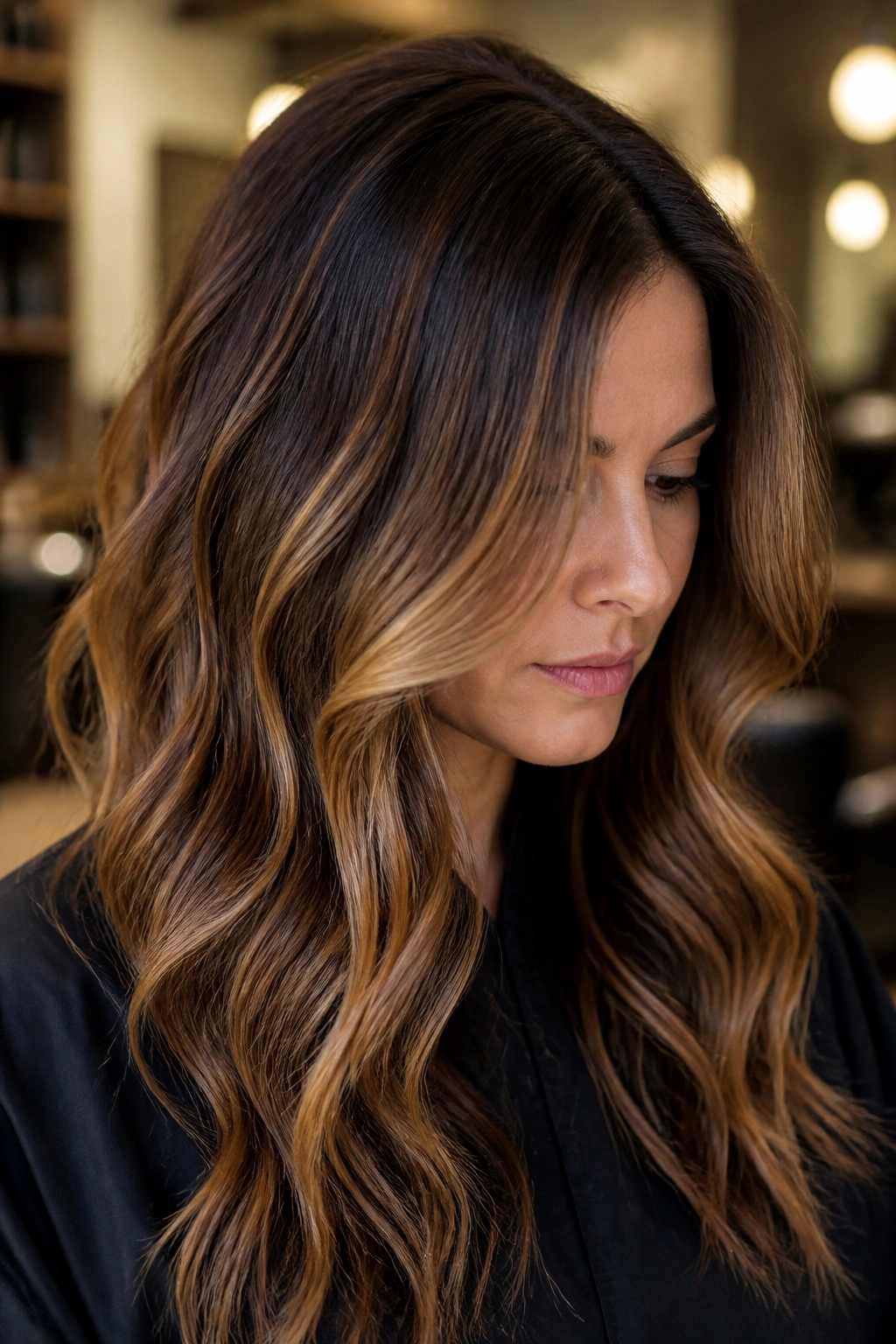
Rooted caramel highlights are a practical person’s friend. The root stays deeper, sometimes intentionally shadowed, while the caramel builds a few inches down the length. That gives the color a softer grow-out and saves you from a harsh line near the scalp.
The deeper root also keeps the highlights from looking too airy. A grounded root makes the caramel feel richer, especially on medium and dark brown bases. If the whole head goes too light too fast, the color can lose shape. The root shadow prevents that.
The Ask at the Salon
- Keep the root 1.5 to 2 inches deeper.
- Blend the transition rather than stop it abruptly.
- Choose caramel, not pale blonde.
- Add a gloss that matches the root tone so the fade looks smooth.
This style is a strong pick if you color your hair less often and still want the look of dimension. It has more staying power than a full bright highlight job, and frankly, it usually looks easier.
21. Caramel Peekaboo Panels
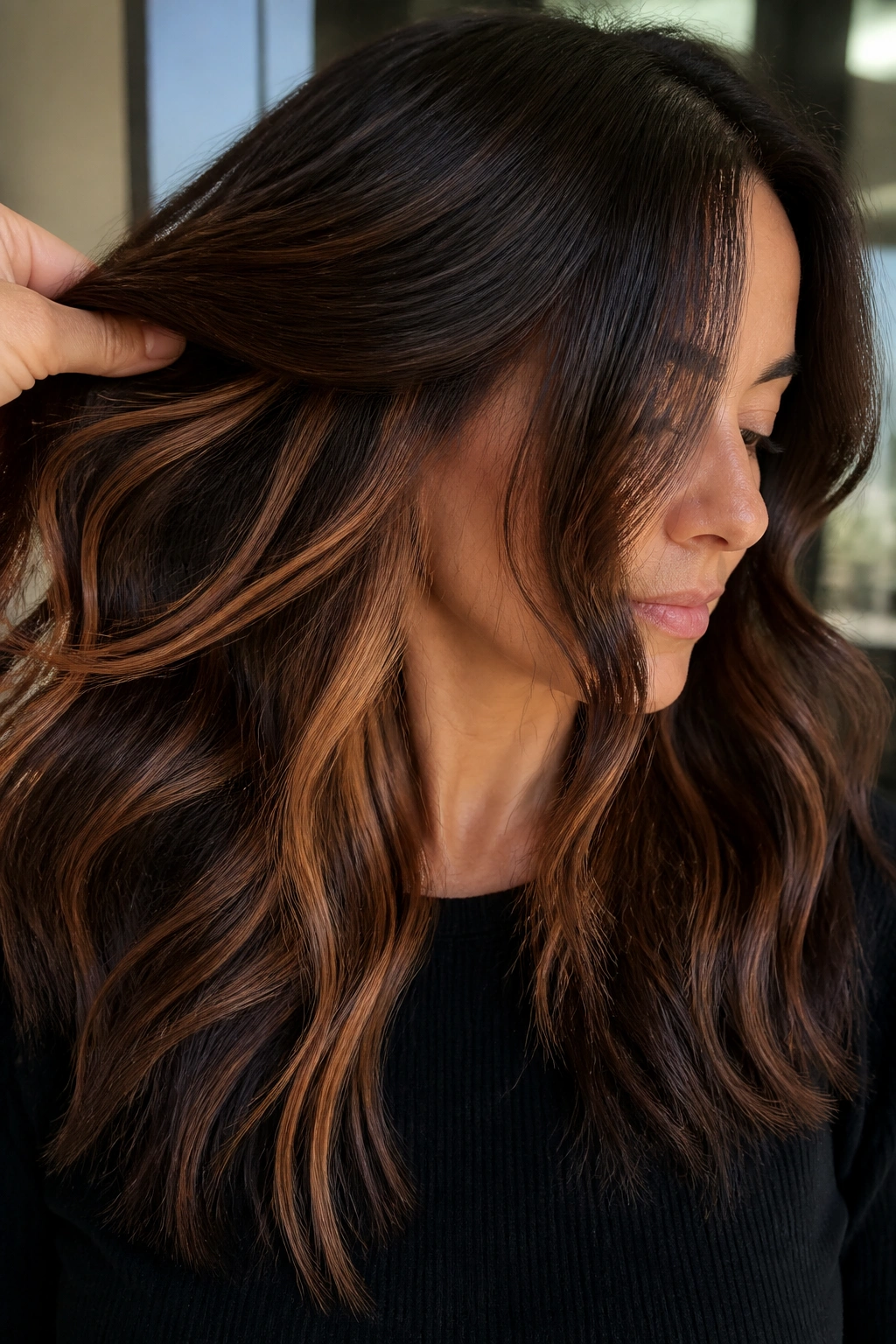
Peekaboo panels are for anyone who wants a hidden bit of color under the surface. The caramel sits beneath the top layer, so it is not the first thing you see. Then the hair shifts, and there it is. That reveal makes the color feel playful without being loud.
This style works especially well with medium-length hair and longer cuts that can move. A braid, twist, or half-up style will show the caramel panels in a different way than loose hair. That flexibility is the reason people keep coming back to peekaboo color.
You can keep the panels narrow for a subtle effect or wider if you want more contrast. The top layer should remain brown enough to frame the hidden caramel instead of swallowing it. If the top is too dense, the peekaboo effect gets lost.
Good hidden color has a little surprise in it. That’s the fun part. You choose when to show it.
22. Caramel Highlights on Long Straight Brown Hair
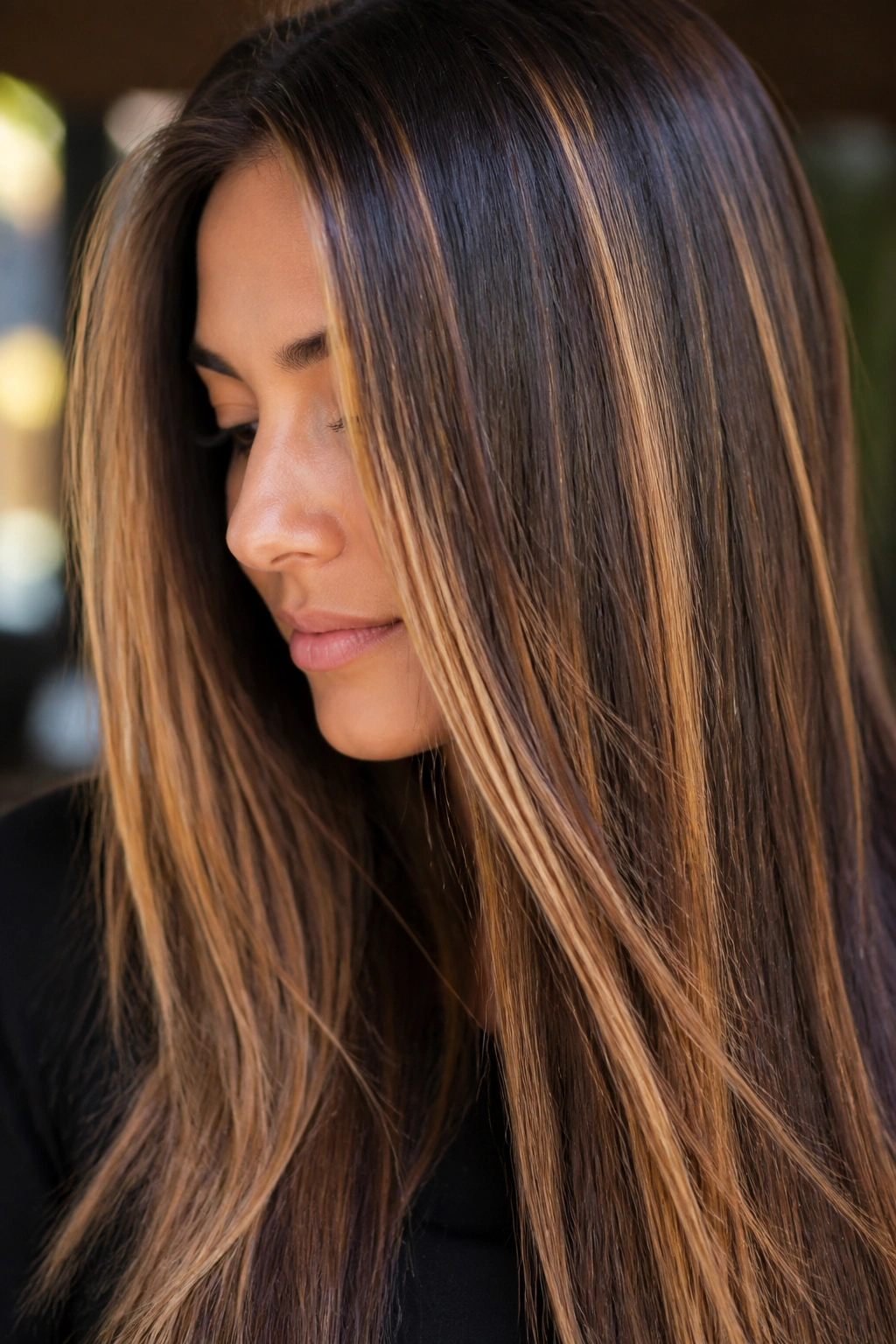
Long straight brown hair can be tricky with highlights because every line shows. If the caramel pieces are too even, the result can look flat or striped. That is why spacing matters so much here. The placement needs a little irregularity so the hair does not read like a ruler.
The best straight-hair caramel usually has a mix of ribbon widths, with some pieces starting higher and some lower. That breaks up the visual lines and makes the color move. The ends often need a little extra brightness too, because long straight hair can look heavy at the bottom if all the light sits near the top.
What to Watch For
- Avoid perfectly even spacing.
- Keep the pieces soft around the crown.
- Let a few brighter ribbons show near the front.
- Use a gloss to keep the caramel smooth and shiny.
Straight brown hair can wear caramel beautifully, but it needs thoughtful placement. Messy spacing is good here. It makes the color feel more natural and less staged.
23. Chestnut Base with Melted Caramel Ends
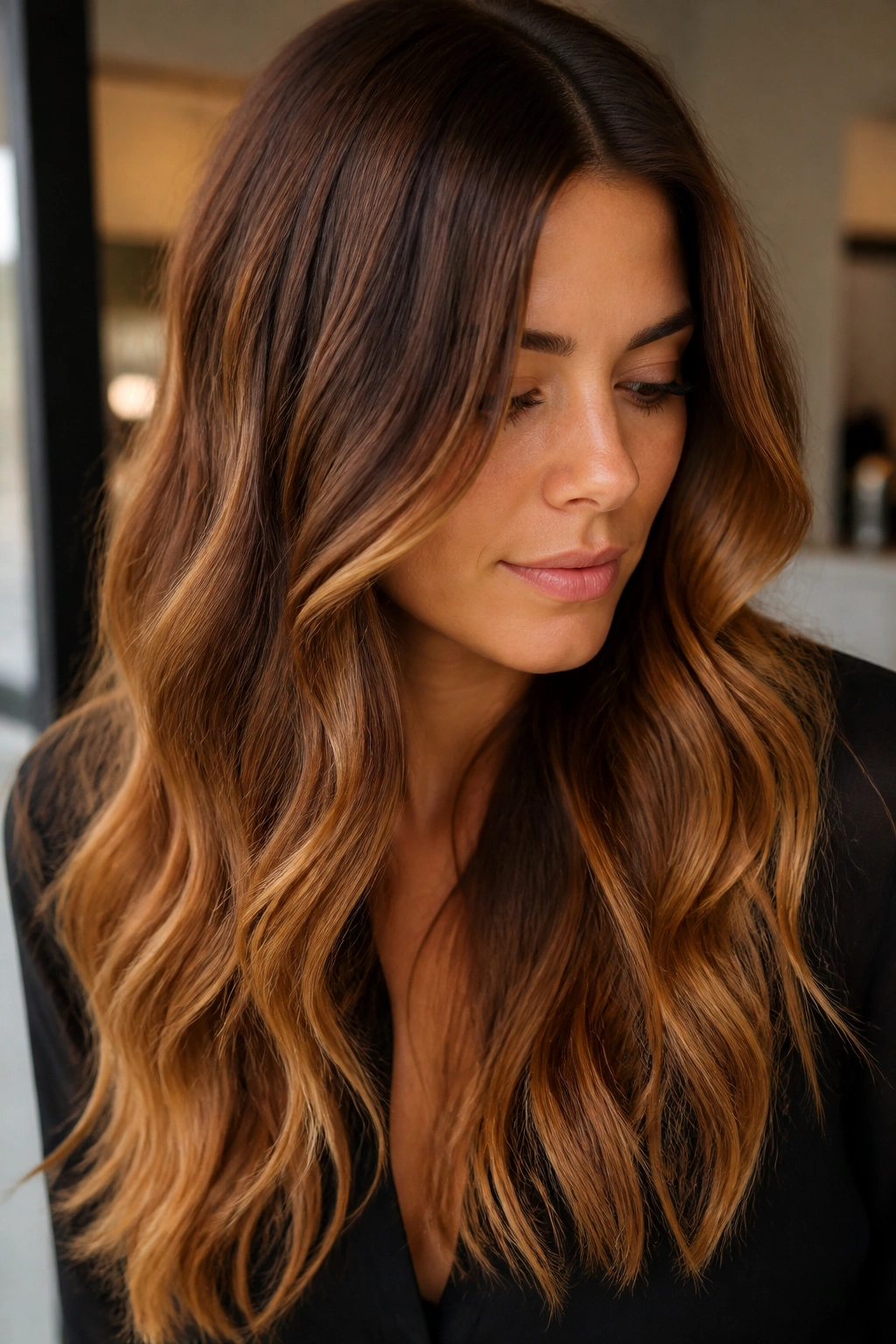
A chestnut base with melted caramel ends gives you one of the easiest color stories to live with. The top stays deep and rich, while the ends slowly lighten into a warm caramel. There is no sharp line, no obvious stop point, and that softness is what makes it appealing on longer hair.
I like this for people who want warmth but still want depth near the face. Chestnut at the root keeps the color grounded, which matters if your brows and skin tone like richer brunettes. Then the caramel takes over down the length, so the hair does not feel heavy.
The melt should happen gradually. A few inches of transition are better than a sudden jump from brown to light brown. If the fade is too fast, the hair starts to look dip-dyed instead of blended.
This is a nice choice if your ends need a visual lift. The lighter finish gives length some movement back. That alone can change how the whole cut feels.
24. Bright Caramel Streaks for High Contrast Brown Hair
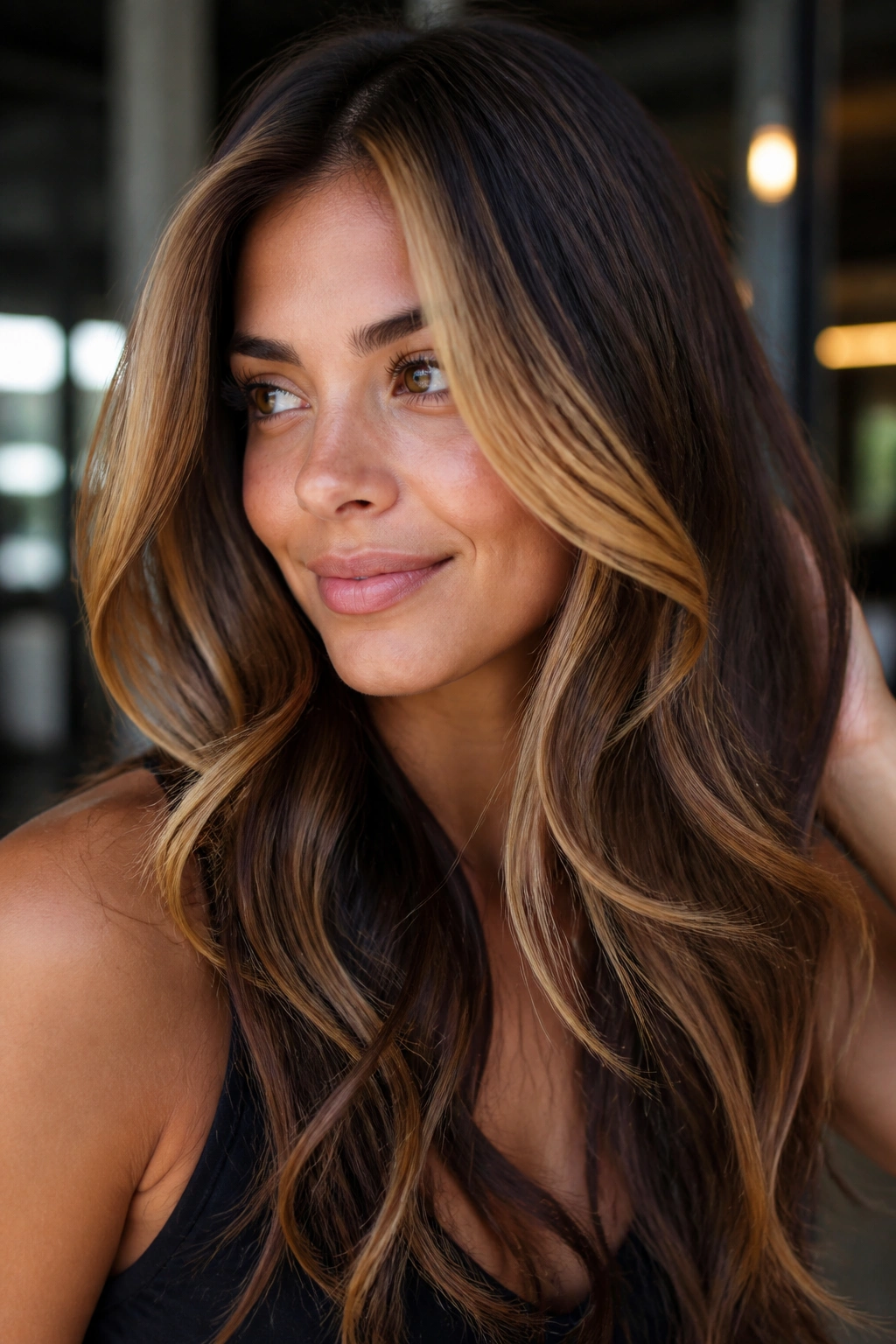
Bright caramel streaks are not subtle, and they do not try to be. They are meant to stand out against a brown base, which makes them a strong choice for someone who wants visible color rather than whisper-soft dimension. The key is keeping the streaks intentional so they look bold instead of busy.
This look works best when the rest of the brown is still strong. If the base gets too light too, the contrast disappears and the whole thing loses its edge. I like bright streaks around the front and through the outer layer, with the inner sections left darker to hold the shape.
It is a good move for straight hair, blunt cuts, and layered lengths that can show off contrast from root to end. It also looks especially sharp when the hair is worn sleek. Waves soften the effect a little, which can be nice if you want to take the edge off.
If your style leans more graphic than soft, this is your lane. It has presence. Not everyone wants that. Some people absolutely do.
25. Soft Caramel Balayage with a Salon Gloss
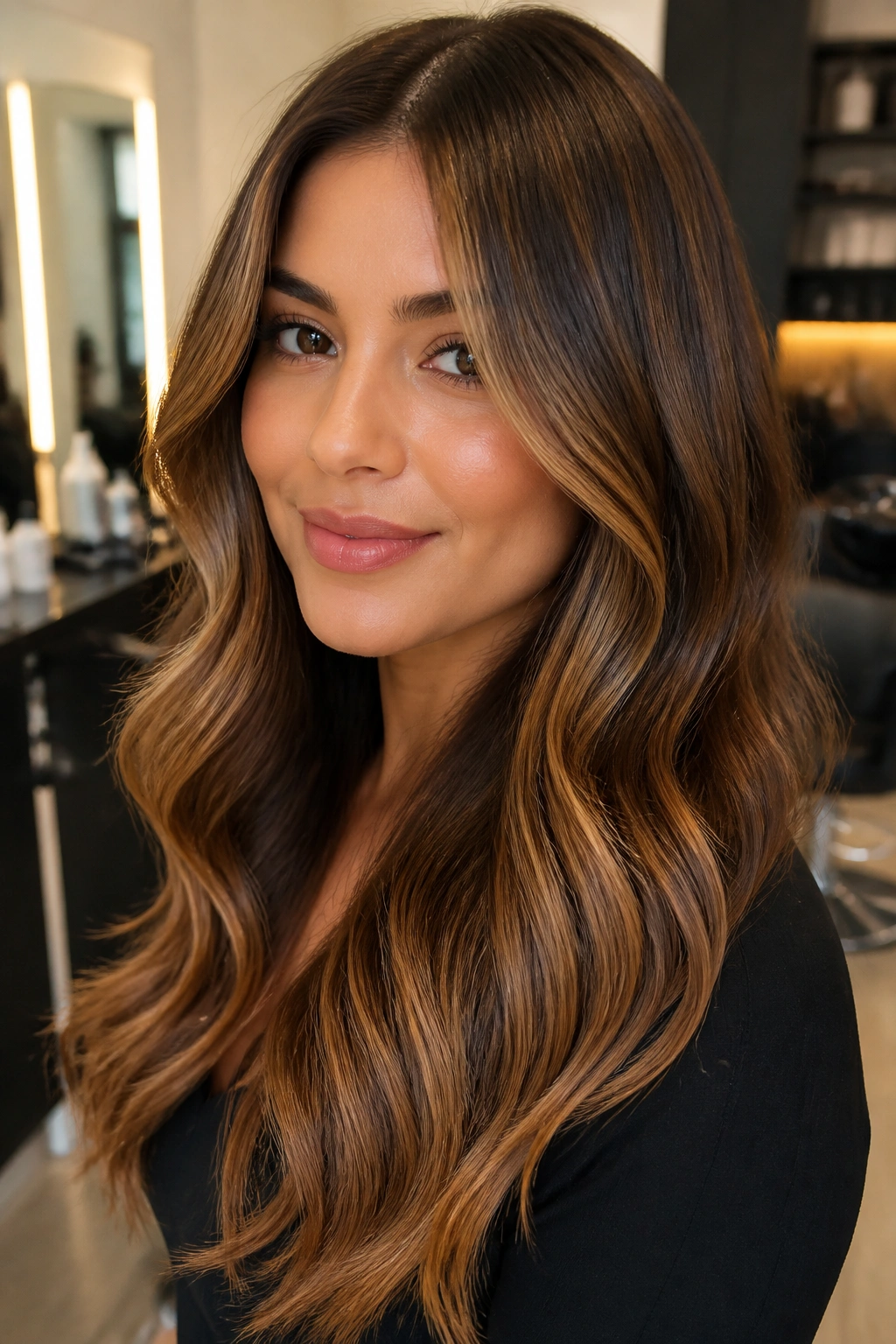
If I had to pick one caramel look for brown hair that makes a lot of people happy, this would be it. Soft balayage gives you the movement, and a salon gloss keeps the caramel from going too warm, too flat, or too yellow. The finish feels relaxed, but it still looks finished.
That gloss is doing more than people give it credit for. It smooths the tone, softens any rough lift, and helps the lighter pieces sit more naturally against the brown base. On medium and dark brunettes, that step often decides whether the color looks nice or looks truly pulled together.
This version also stays wearable longer than a lot of brighter highlight jobs. The root remains part of the design, so the grow-out is easier on the eye. That matters if you do not want to visit the salon every time a half-inch appears at the scalp.
For a first caramel appointment, this is the one I’d trust most. Soft, warm, blended, and not fussy. That combination is hard to beat when you want brown hair to feel lighter without losing what makes it brown in the first place.
