



Silver highlights on brown hair can look expensive—or like the toner got away from you and nobody caught it in time. The difference is usually not the silver itself. It’s where it sits, how bright it is, and how much brown you leave around it.
That’s why silver highlights for brown hair need a little more thought than people expect. A cool ribbon on espresso hair reads sharp and polished. The same tone on warm chestnut can go soft and smoky. Push the lift too far, though, and you’re no longer wearing silver—you’re fighting dryness, brass, and a stripey grow-out line that keeps showing up in selfies.
The good versions have range. Some are whisper-thin babylights that only show when the light hits. Some are bold money pieces that frame the face and do all the talking. Some live under the top layer and peek through when hair moves, which is the kind of trick I’ve always liked because it feels intentional without being fussy.
If you’re trying to choose the right version for your brown base, start with placement, then tone, then upkeep. That order matters more than the picture in your head.
1. Icy Silver Money Piece on Dark Brown Hair
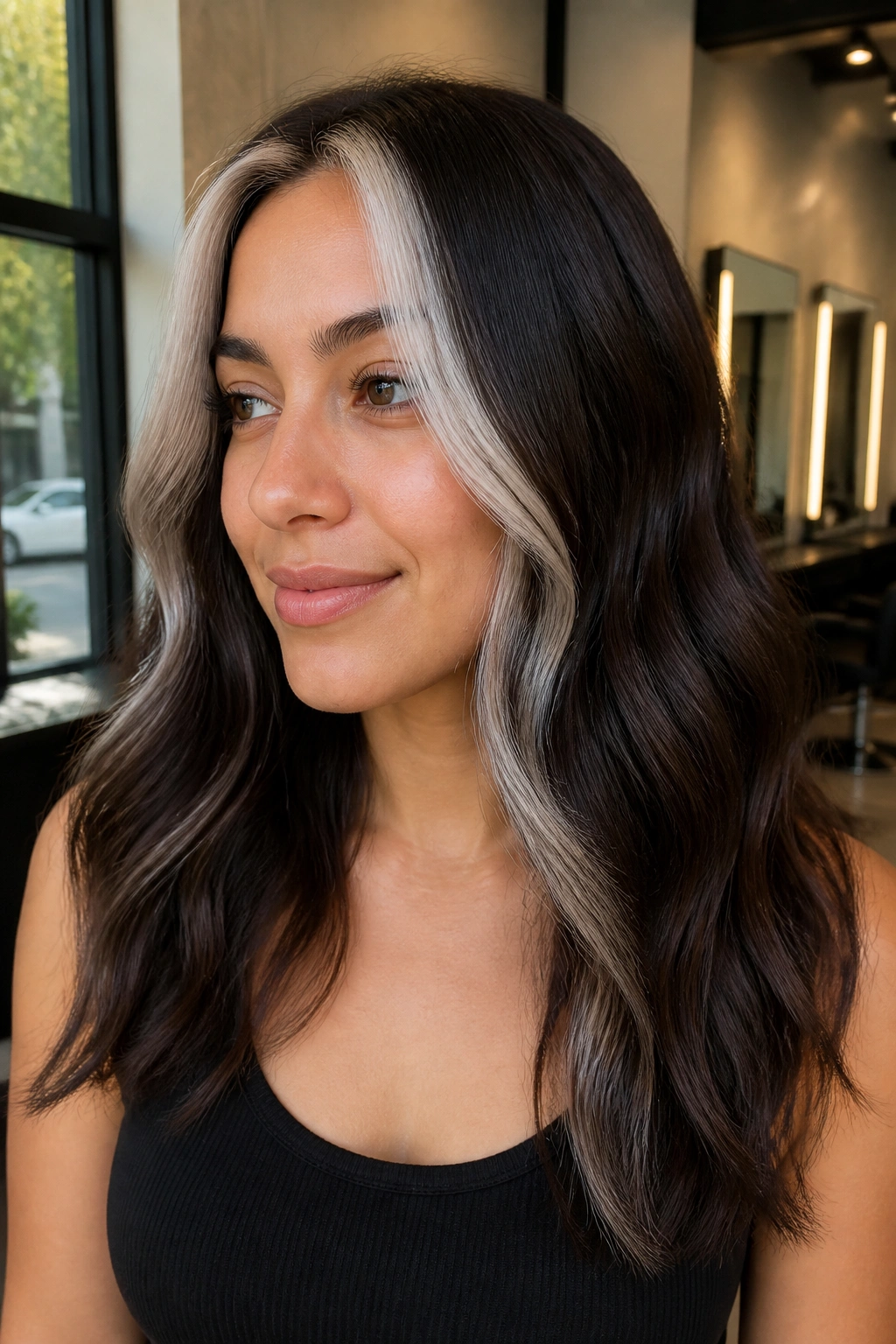
A bright silver money piece is the fastest way to make brown hair look deliberate. Put the lightest strands around the face, keep the rest of the brown base deeper, and the whole style wakes up immediately.
The trick is contrast. On dark brown hair, those front pieces usually need the most lift in the entire head, sometimes lifted to a pale yellow before toner can do its work. If the front is still too yellow, the silver turns beige or dull gray. Not flattering. A clean icy result depends on patience, and that part is boring but necessary.
What to ask for
- Two to four foils or painted ribbons on each side of the face so the front reads bright without taking over the whole head.
- A soft root shadow about 1/2 inch to 1 inch deep if you want the grow-out to look smooth.
- An icy or pearl toner, not a flat gray that makes the skin look tired.
- A trim around the front layers if your ends are already dry, because bright silver loves to show every rough edge.
Best for: women who wear their hair up often, people with strong cheekbones they want to emphasize, and anyone who wants a clear silver hit without committing to an all-over lightening job.
2. Smoky Silver Balayage on Brown Hair
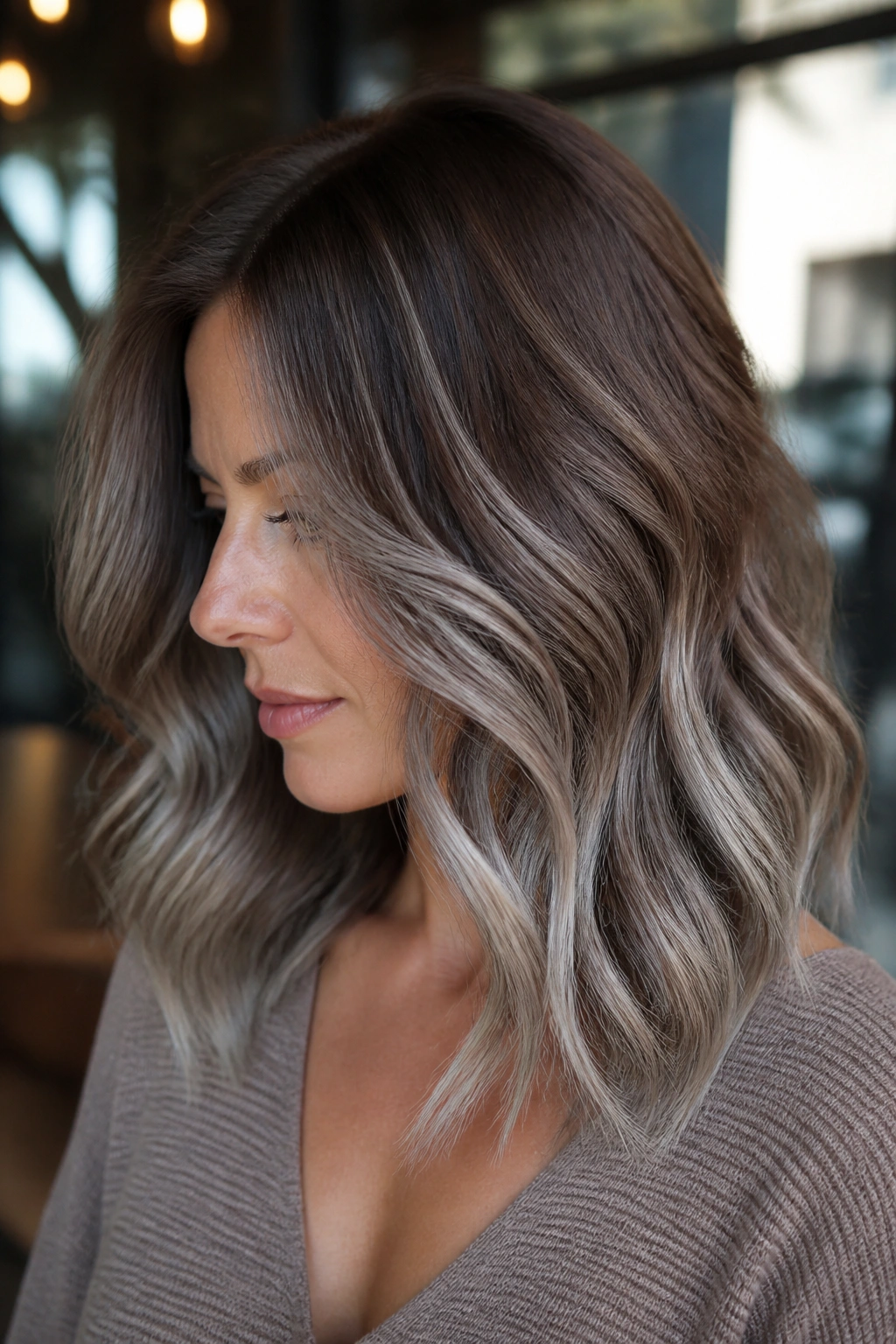
Want something softer than stripes? Smoky silver balayage is the move. The silver sits in hand-painted strokes through the mid-lengths and ends, so the result feels misty instead of sharp.
Why it stays wearable
Balayage gives the colorist room to keep some brown showing between the lighter pieces. That gap matters. It stops the look from turning flat, and it also gives the silver somewhere to land visually. On shoulder-length or long brown hair, the blend can look expensive in a quiet way—cool, dimensional, and not trying too hard.
The toner is doing a lot of heavy lifting here. You do not want bright metallic silver in every strand. You want smoky silver, pearl, or soft ash, depending on how warm your base is. If your hair pulls orange when lightened, the toner choice is where the whole look succeeds or fails.
How to get the most from it
Ask for a feathered paint pattern
The silver should start softly, then get denser through the ends. That keeps the grow-out line from shouting at you later.
Keep the root darker
A slightly deeper root makes the silver feel richer. It also means fewer obvious lines six weeks down the road.
Style it with bends, not curls
Loose waves show the color shift better than tight curls. Straight hair can work too, but a smooth bend gives the silver more movement.
If you wash daily, this is one of the easier silver looks to live with. It fades in a prettier way than a high-contrast stripe.
3. Silver Babylights on Chestnut Brown Hair
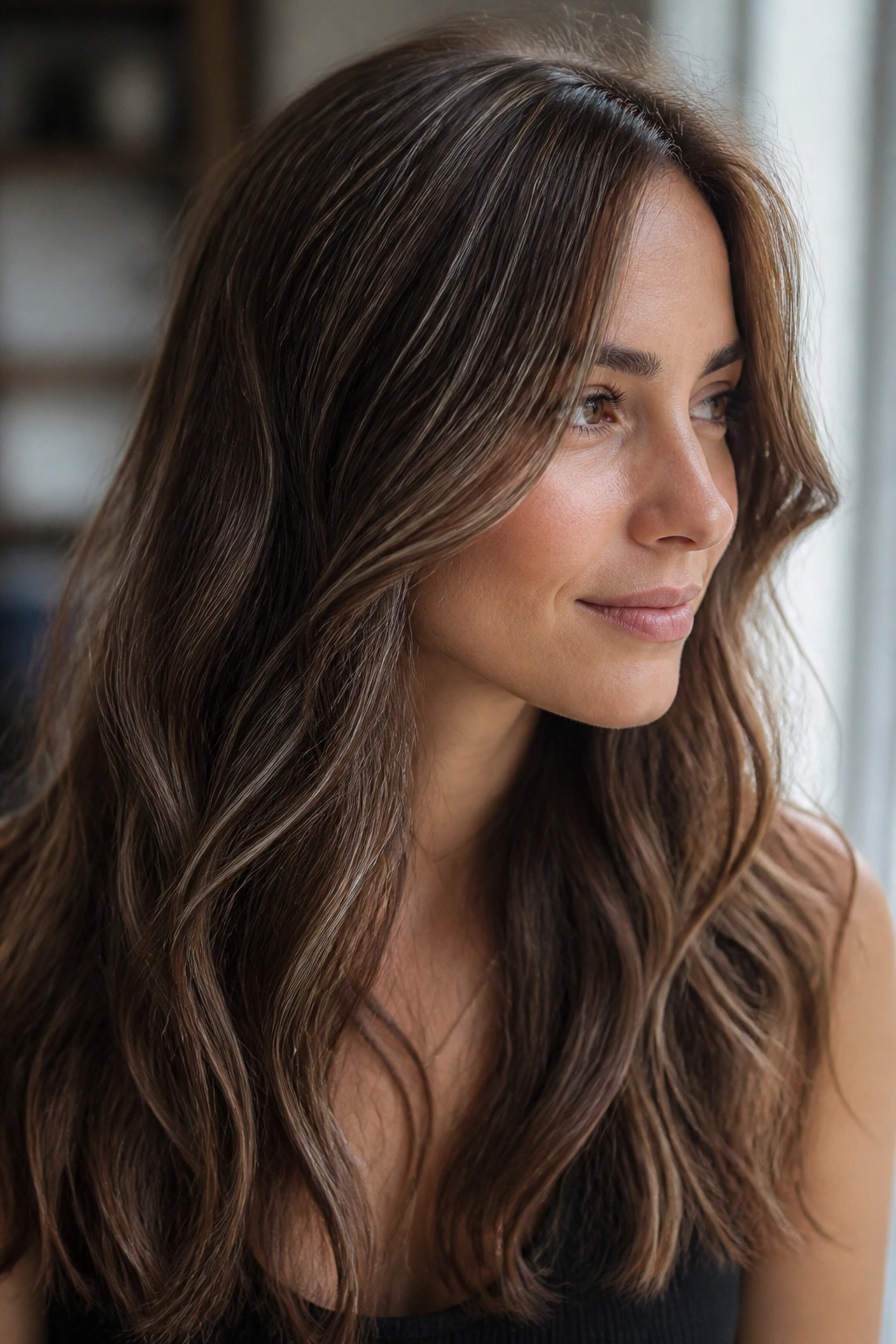
If your goal is “people notice my hair looks better, but they can’t quite say why,” silver babylights are the sweet spot. They’re tiny, closely placed strands that add sparkle instead of obvious streaks.
The magic is in the size. Babylights are so fine that the brown base still does most of the talking, which makes them perfect for chestnut hair. Chestnut already has warmth and depth; the silver slips in like thread through fabric. You get shine, not drama.
That’s also why this look works for first-timers. You don’t have to commit to a massive shift. You can keep the brown rich and only lift selected micro-slices to a pale enough level for silver toning. It’s slower at the salon, sure. Tiny foils take forever. But the result looks far more expensive than the amount of hair you actually changed.
- Best on medium-density hair where the silver can scatter through without looking busy.
- Great for fine hair because the tiny pieces create the illusion of more texture.
- Easier to maintain than chunky silver panels, since the grow-out blends in faster.
- Worth asking for a gloss refresh every 6 to 8 weeks if you want the silver to stay crisp.
The best babylights do not scream. They shimmer.
4. Ash-Silver Ribbons for Warm Brown Hair
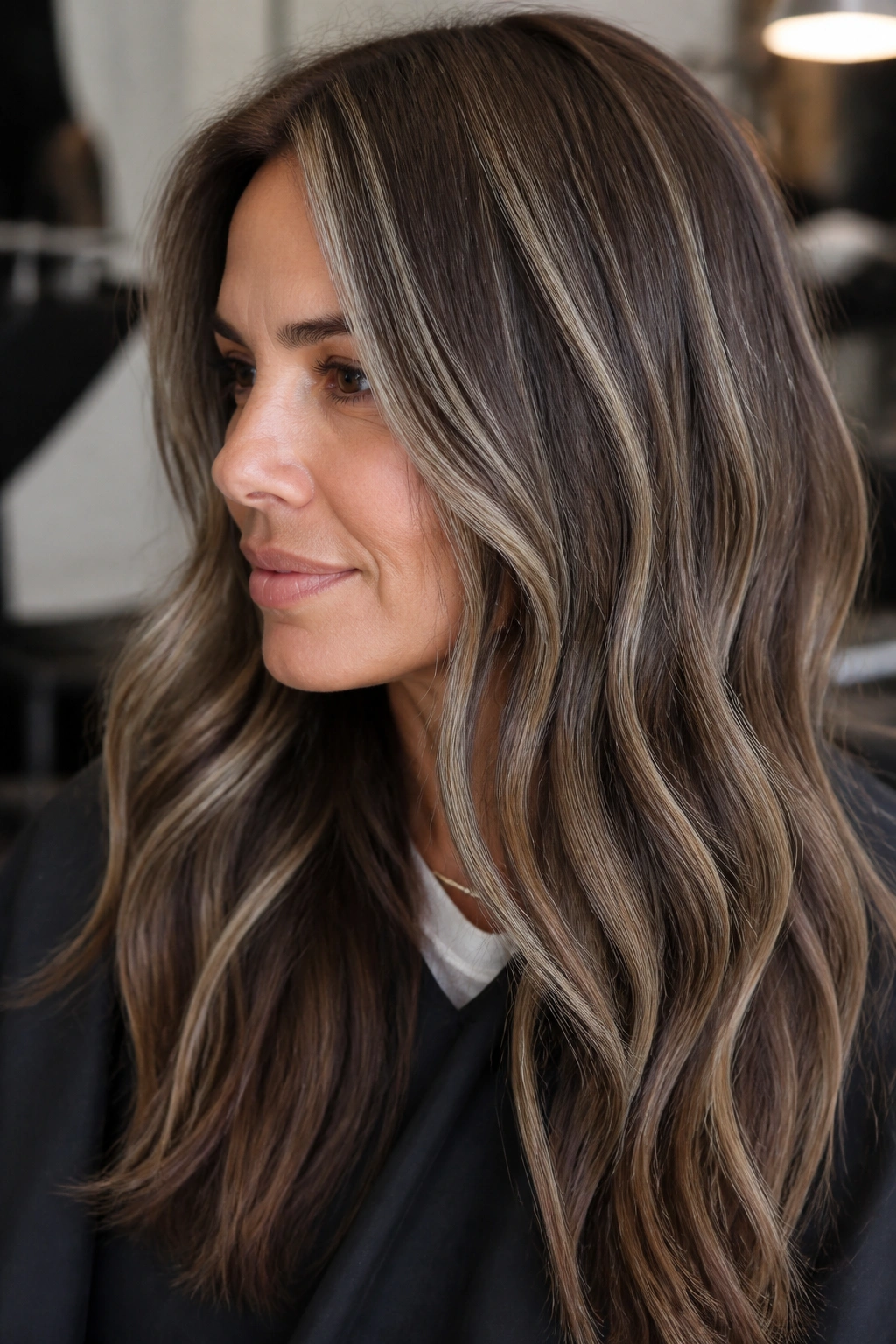
Warm brown hair can handle silver. It just needs the right kind of silver.
The mistake I see most often is people chasing a stark, blue-white tone on a base that still has copper, caramel, or gold running through it. That usually turns muddy. Ash-silver ribbons work better because they cool the warmth without fighting it head-on. The result feels balanced, not chalky.
Think of these ribbons as thin cool streaks woven between deeper brown sections. They’re not trying to erase the warmth in your hair. They’re there to tame it. On medium brown bases, that can be a gorgeous middle ground: a little edge, a little softness, and no harsh line at the root.
If you’re sitting in a salon chair, ask the colorist to keep the silver pieces narrow and to space them out unevenly. Uniform placement can make warm brown hair look over-highlighted. A messy rhythm is better. Real hair doesn’t grow in perfectly even stripes, and the silver should not pretend it does.
This is a good choice if you want silver highlights for brown hair but still love the richness of caramel tones. You get both, and the contrast feels intentional rather than forced.
5. Silver Face-Framing Layers with a Bronde Base
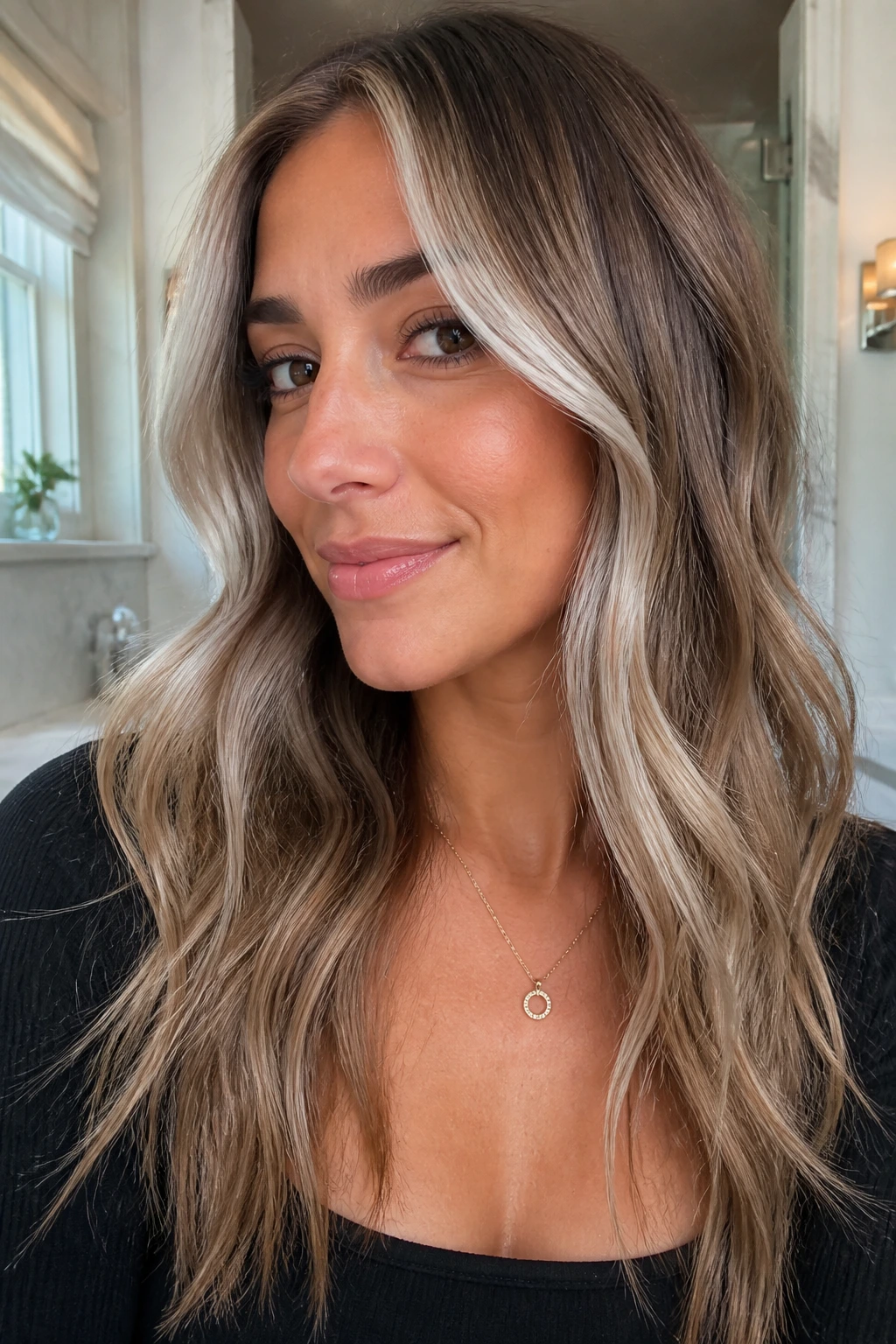
This is the version I recommend when someone wants silver but panics at the thought of losing depth. The base stays bronde—brown plus blonde, with a little warmth—and the silver gets placed on the outer layers that move around the face.
It’s a very haircut-friendly look. Layers matter here. When the cut has movement, the silver catches in different places as you turn your head, and the color looks alive instead of parked in one flat band. On straight hair, it reads sleek. On waves, it has a bit more swing.
A lot of people think of face-framing color as a trend, but the real reason it works is practical: you can brighten the look without saturating the whole head with bleach. That matters if your ends are fragile or if you do not want a full maintenance schedule hanging over you.
The styling part is simple. Blow-dry the front pieces away from the face, then add a loose bend at the cheekbone with a flat iron or large barrel iron. Don’t curl them into ribbons. You want the silver to skim, not curl into a loop and disappear.
One sharp piece around the face can do more than a whole head of lighter strands.
6. Chunky Silver Highlights for Retro Contrast
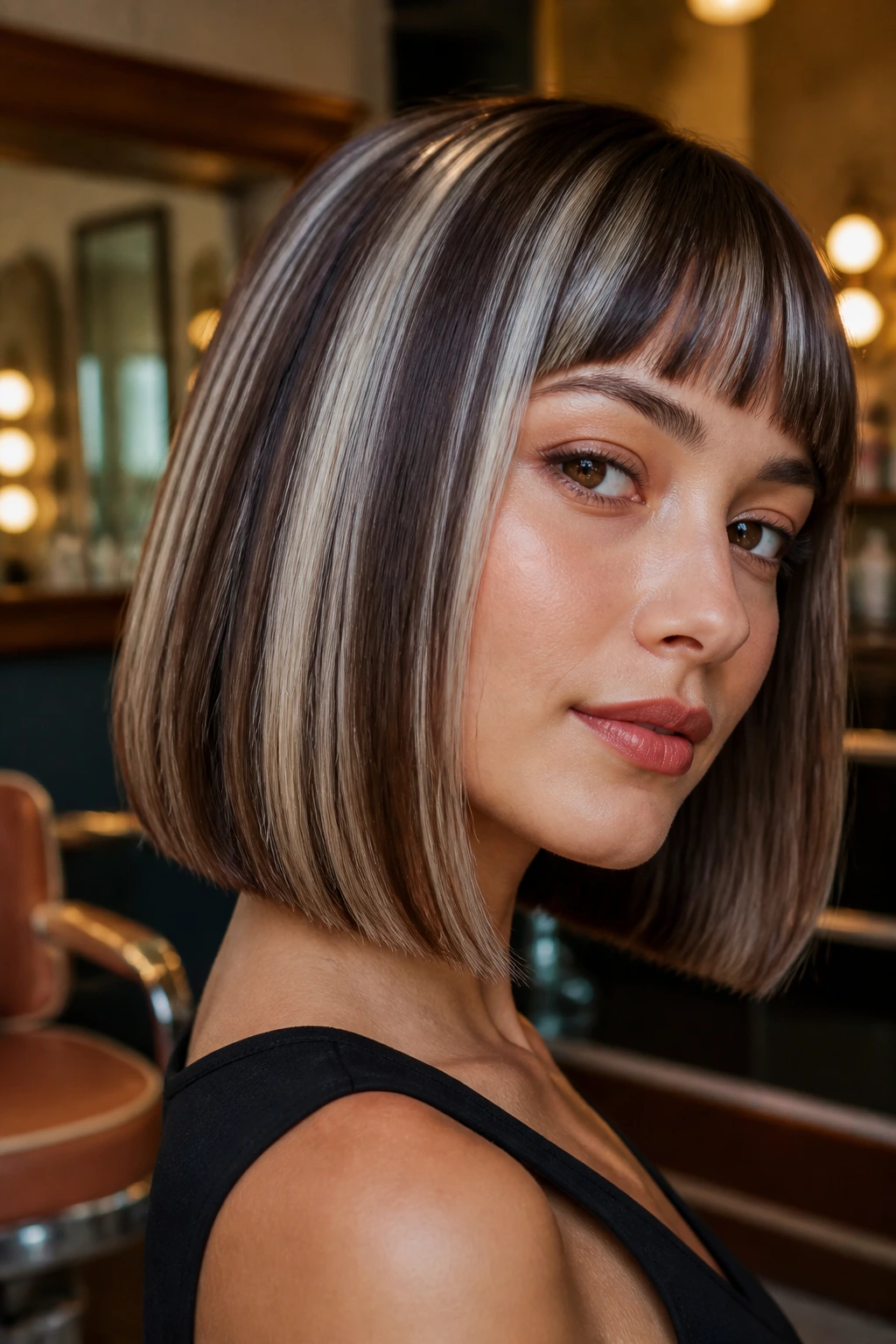
Not every silver highlight should whisper. Some of them should walk in and make a point.
Chunky silver highlights are for brown hair that can handle contrast without looking patchy. Think bold panels, clean placement, and enough spacing to keep the look from collapsing into one gray blob. On blunt cuts, bobs, and sharp layers, this style has real personality. It’s a little retro, a little fashion-forward, and much more wearable than people assume when the word “chunky” comes up.
The key is control. Chunky does not mean careless. The silver pieces still need smooth lift and a toned finish, or the whole thing lands in yellow-gray territory. That’s where people get nervous, and honestly, they’re right to. Bigger highlights show mistakes faster than babylights do.
What makes this version work
- Deep brown sections between the silver keep the contrast clean.
- A cooler toner prevents the pieces from reading brassy.
- A blunt haircut helps the placement look intentional.
- Regular glossing matters more here because the contrast is stronger.
This look suits people who like visible color and don’t mind a little upkeep. If you want subtle, skip it. If you want the silver to announce itself from across the room, this one delivers.
7. Silver Peekaboo Panels Under Brown Hair
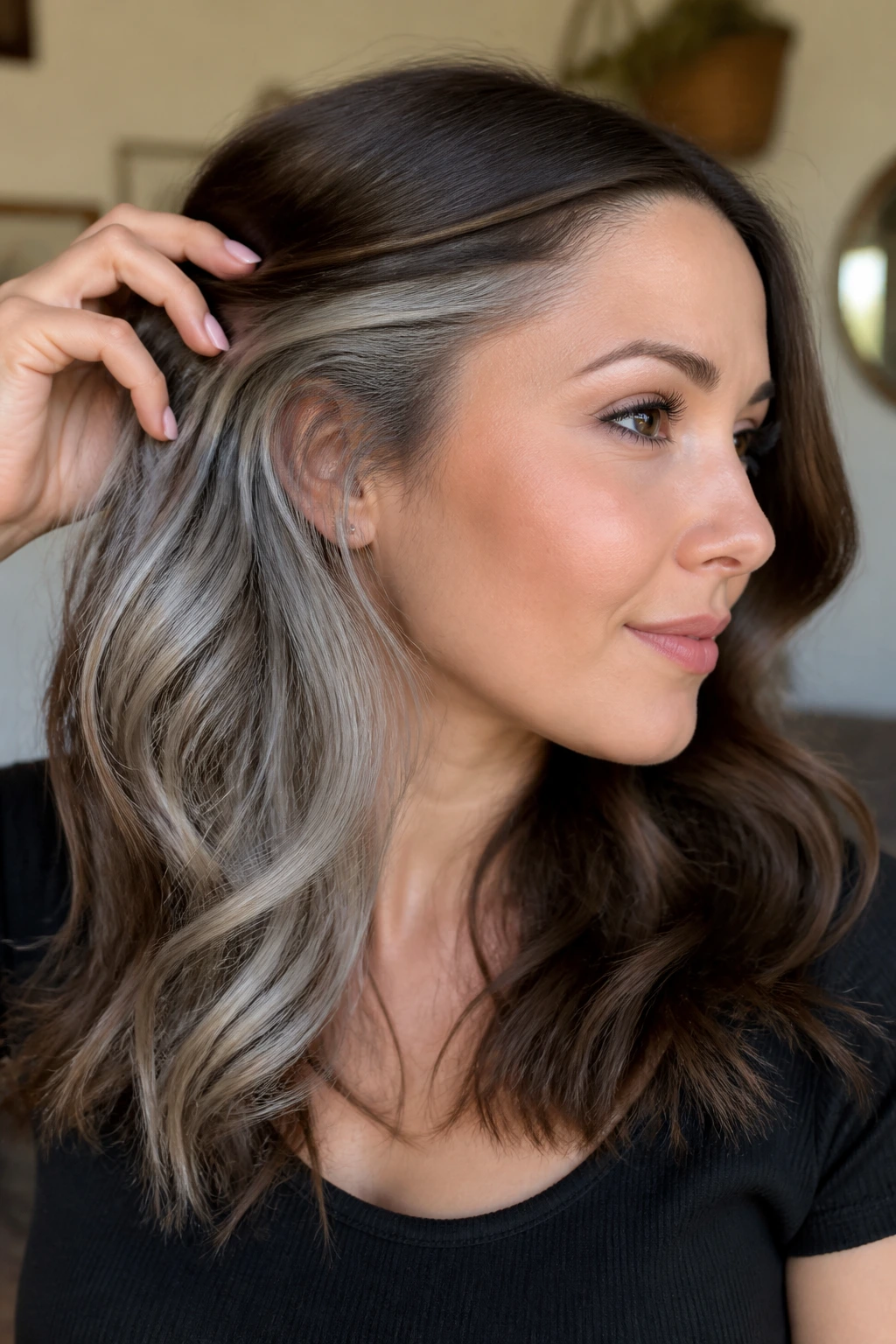
Peekaboo silver is the look for people who want their color to have a secret life. The silver sits under the top layer, so it hides when hair is down and shows when you tuck it behind an ear, tie it up, or catch a bit of movement.
That hidden placement makes it one of the easier ways to wear silver highlights for brown hair if your job or lifestyle leans conservative. Nobody has to see it unless you want them to. Then it flashes out under a wave or a half-up twist, which is half the fun.
The best part? You can go brighter underneath than you might with an all-over look. Since the silver isn’t exposed all the time, some of the maintenance stress eases up. It still needs toner refreshes, and yes, heat protection matters, but the grow-out is less glaring than a front-heavy placement.
Where this look earns points
- Half-up hairstyles show off the hidden silver without making it your whole identity.
- Lob and shoulder-length cuts give enough layering for the contrast to peek through.
- Braids make the silver pop in little flashes, which is a nice bonus.
- Straight styles keep it covert and sleek.
This is a good compromise for anyone who wants a bit of edge without broadcasting it at every moment.
8. Mushroom Brown with Silver Veining
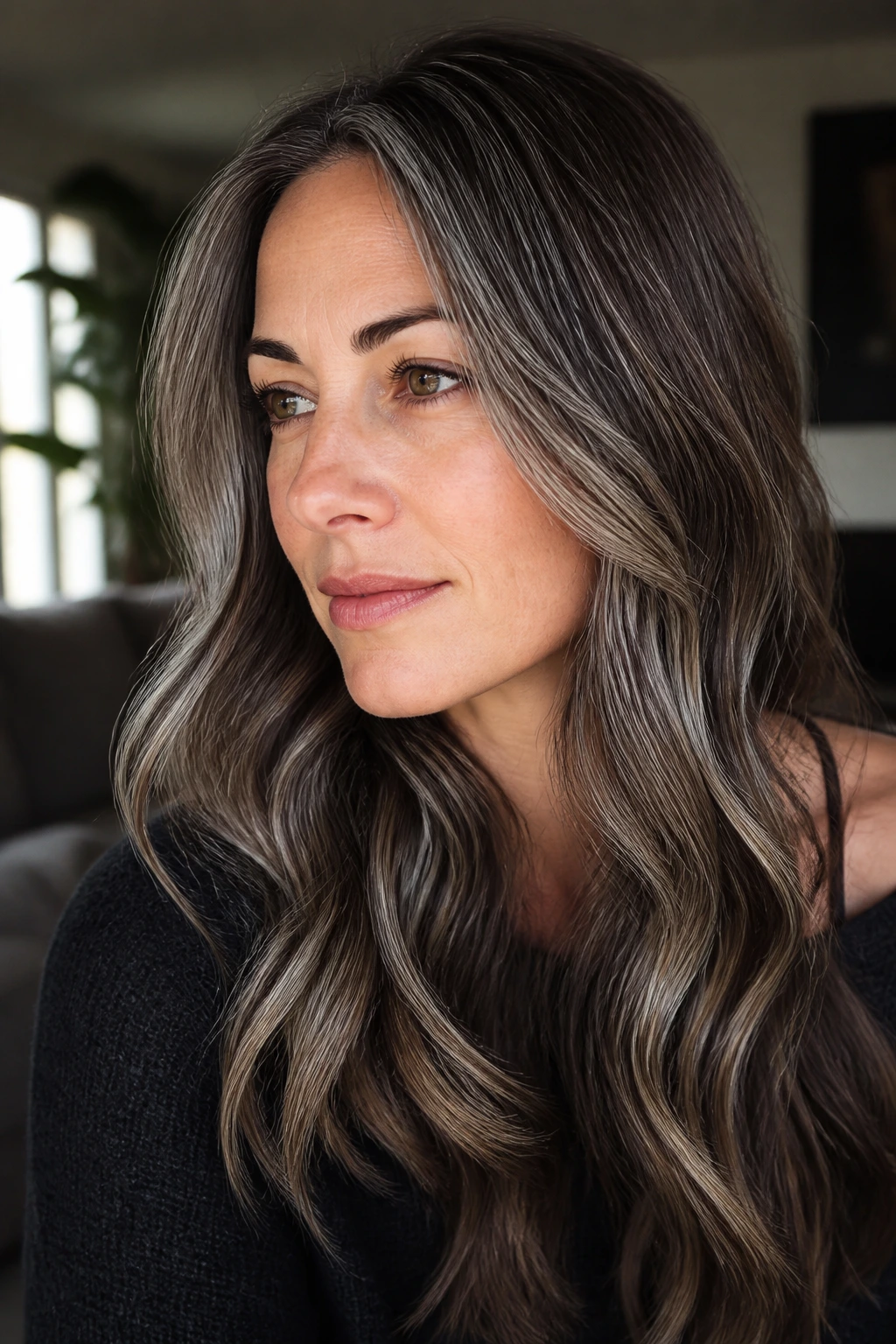
Mushroom brown with silver veining is one of those looks that sounds muted and ends up being the most interesting thing in the room.
The base is cool brown with a taupe or mushroom cast, so the silver doesn’t have to fight warm pigment to be seen. That’s the whole point. The silver strands are thin, veiny, and irregular, almost like streaks of frost in stone. Nothing about it looks loud. Everything about it looks deliberate.
I like this style on medium-length hair because the movement matters. You want the light pieces to break up the deeper brown as the hair falls, not sit in obvious blocks. A good colorist will keep the silver cool but not icy enough to flatten the complexion. That balance is tricky. Too much gray and the face can look washed out. Too little and the effect disappears.
This is one of the best choices if you prefer muted color stories. It works with black clothing, silver jewelry, and makeup that leans soft brown, rose, or plum. It does not need a lot of styling to look polished. A quick blowout is enough.
Quiet hair color can still be the most memorable kind.
9. Silver Ombré Ends on Long Brown Hair
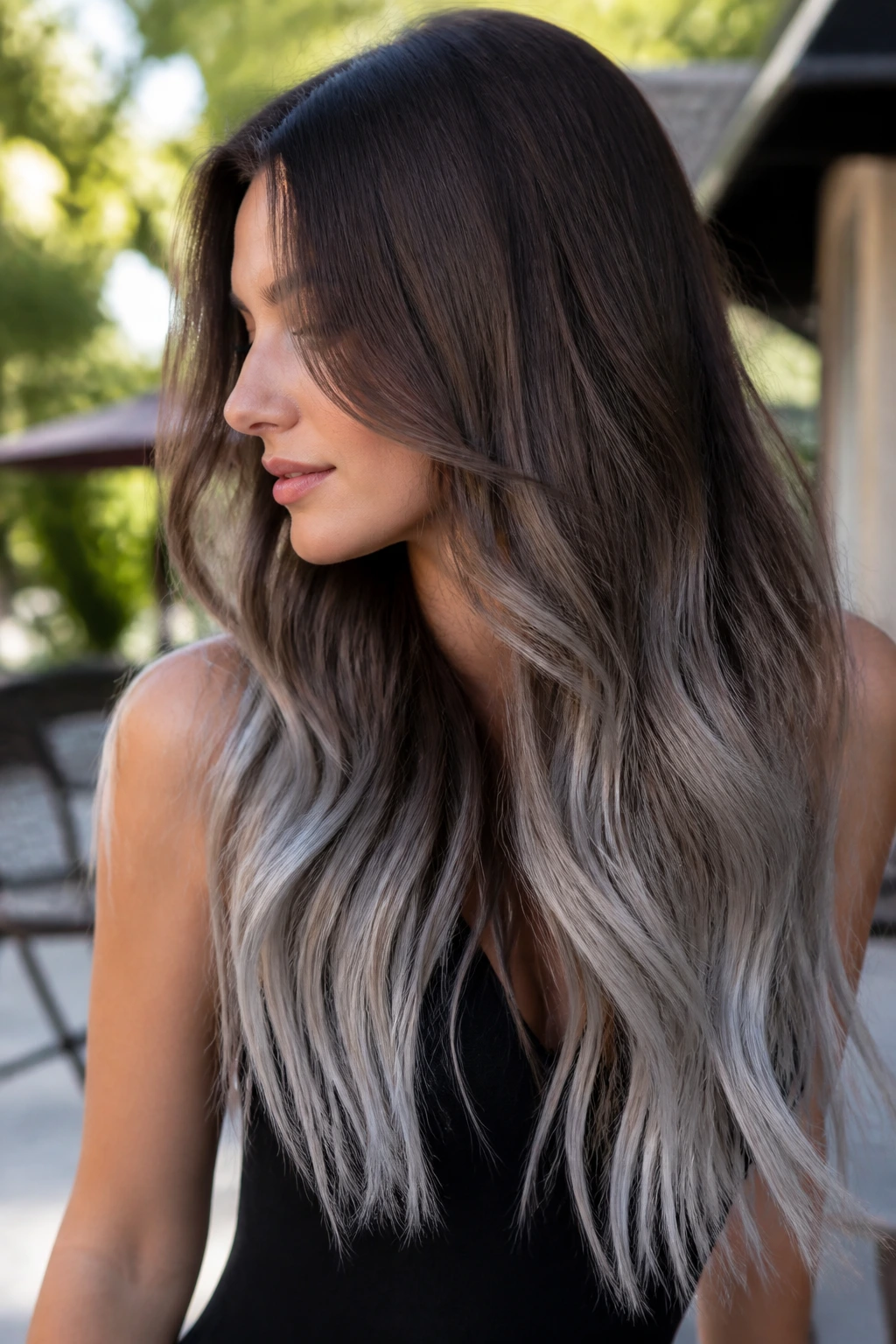
Long brown hair gives silver ombré room to breathe. Short hair can do it, but length is where the gradient really shows off.
The color starts deep near the roots and stays brown through most of the mid-lengths, then shifts into silver as it reaches the lower third or quarter of the hair. That lower placement is kinder to the top of the head, where new growth shows first and heat styling tends to be heaviest. It also means the silver ends act almost like a built-in accessory.
This style is especially good if you like wearing your hair in loose curls or waves. The gradient becomes visible with movement, and the ends look frosted without needing every strand to be lightened. If your hair is super fine, though, keep the transition soft. A hard line between brown and silver can make the hair look chopped in half, which is not the effect anyone wants.
A small trim helps here. Silver ends show dryness faster than brown ends do, and long lightened pieces can start to fray if you leave them alone for too long.
The look is dramatic, but the maintenance is more reasonable than an all-over silver transformation.
10. Silver Highlights With Brown Lowlights for Extra Depth
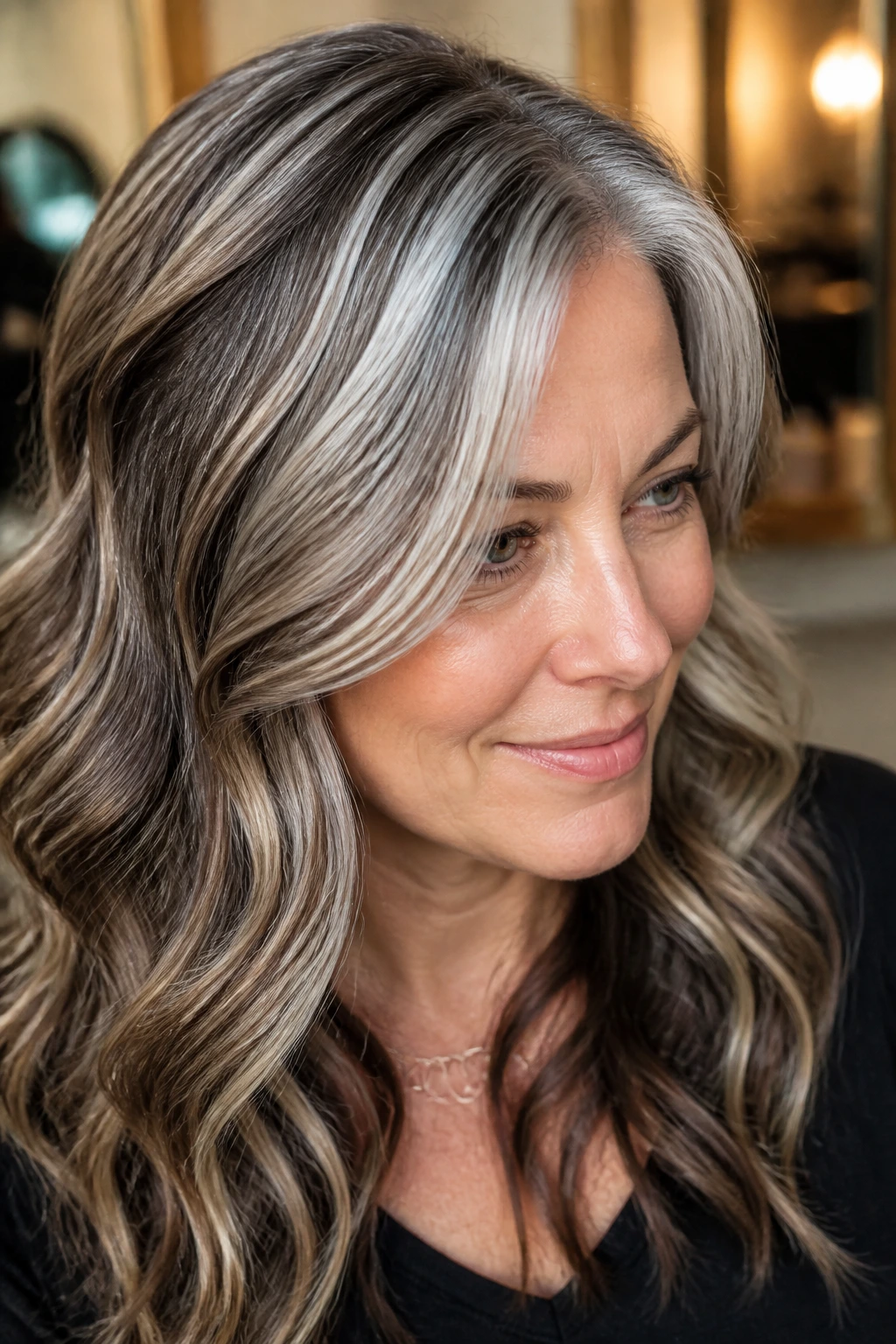
A lot of people chase silver and then wonder why their hair looks flat. Usually, the answer is not more brightness. It’s shadow.
Brown lowlights give silver highlights a place to settle. They add depth around the lighter pieces, especially if your hair is naturally thick or has a lot of volume. Without that darker thread running through, silver can spread out too evenly and lose the shape that makes it interesting in the first place.
This is the version I’d choose for someone whose hair is already very lightened in a few zones and needs control, not more bleach. The lowlights can be chestnut, espresso, or a cool mocha tone, depending on how dark the brown base should stay. The silver then becomes part of a pattern rather than the whole story.
A stylist with a good eye will usually place the darker strands under the crown, through the interior, and around the nape so the top layers still have brightness. That hidden depth matters on updos and ponytails too. You catch glimpses of silver, then brown, then silver again.
It’s a more grown-up look. Less sugar rush. More structure.
11. Silver Streaks in Curly Brown Hair
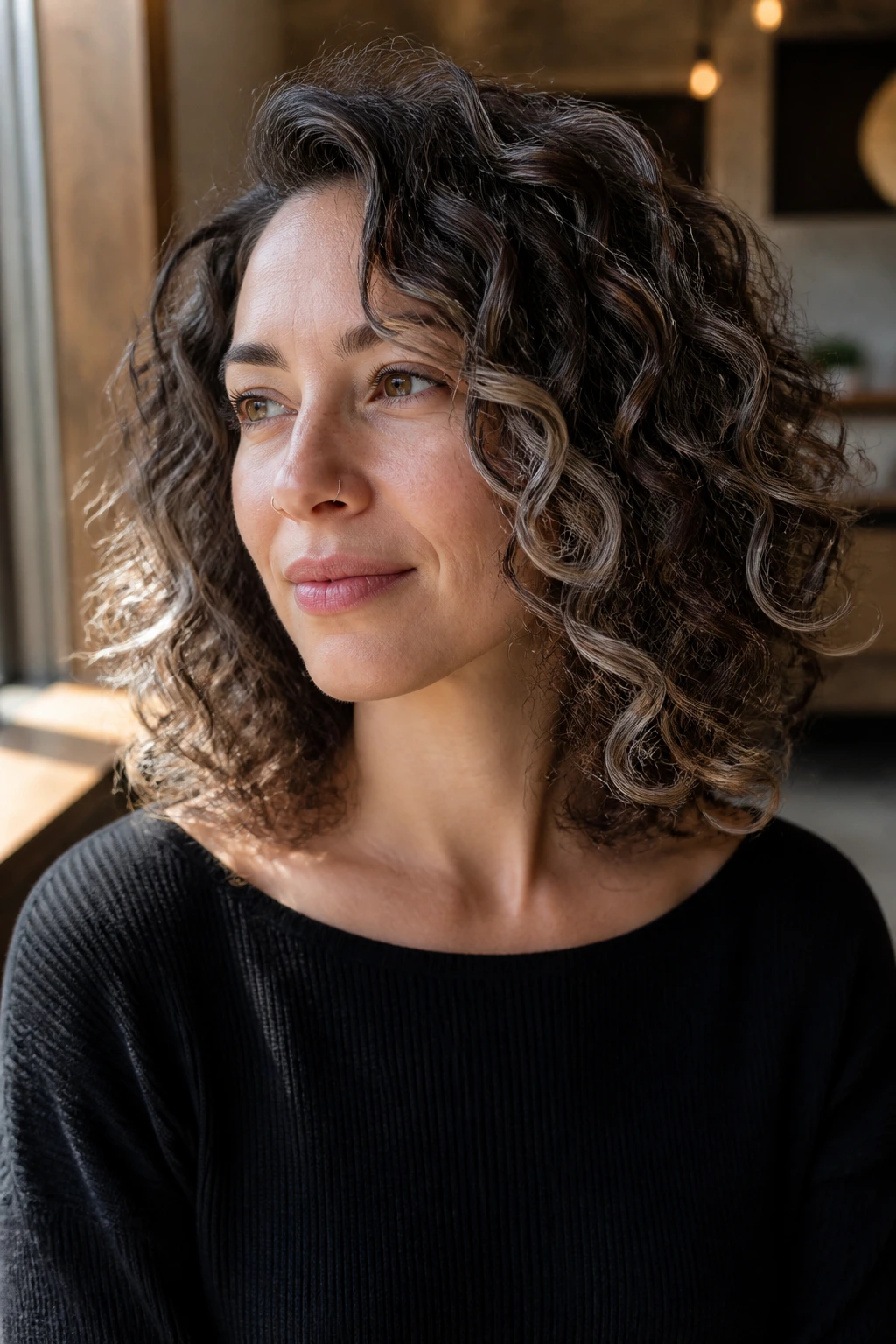
Curly brown hair changes the rules a bit, and that’s where people get tripped up.
A silver streak that looks perfect on straight hair can vanish once the curl pattern shrinks it up. So the placement has to follow the curl family, not just the visible surface. A good colorist will paint or foil the outer curve of the curls so the silver shows where the hair naturally bends and separates. That gives the color movement instead of hiding it inside the curl.
Curly hair also needs gentler lightening, which means slower processing and more attention to the condition of the hair before and after. I’d rather see a slightly softer silver on healthy curls than a bright one on hair that feels rough. Once curls get dry, the highlight pattern can look fuzzy instead of crisp. That’s not a small thing. Texture changes the whole effect.
How to wear it well
- Ask for dimension, not total coverage so the curl pattern still reads clearly.
- Use a cream or gel styler that defines the curls without smearing the silver into one flat mass.
- Diffuse on low heat if you want to keep the light pieces looking polished.
- Trim split ends early because silver shows damage faster than darker brown does.
Curly hair and silver can be gorgeous together. They just need each other to stay visible.
12. Silver Balayage on a Chocolate Brown Lob
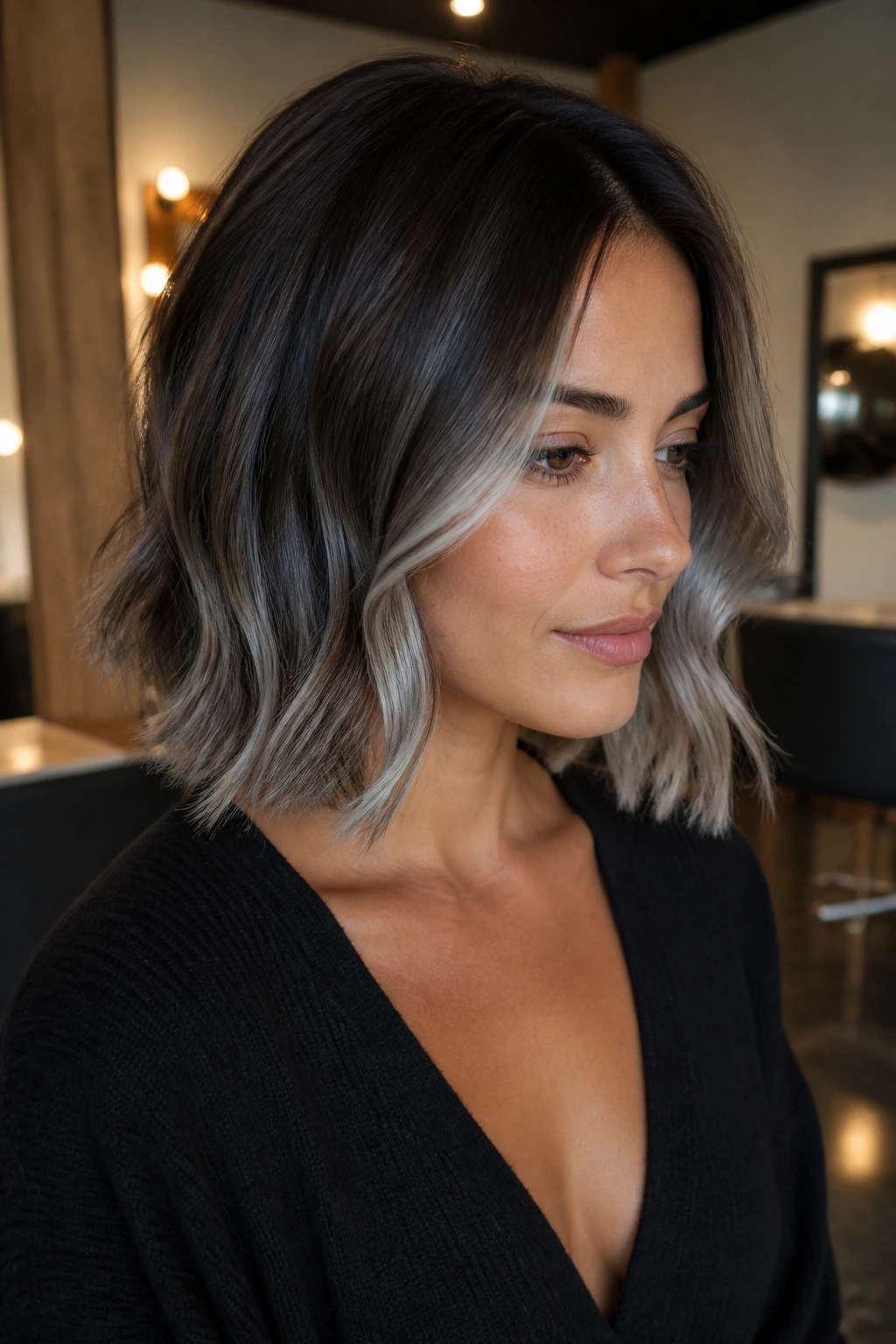
A lob is one of the easiest cuts for silver balayage because the shape does half the styling work. The ends sit right where the eye wants to land, so the silver gets noticed fast.
Chocolate brown gives you a rich base to work from. The silver balayage pieces can start around the cheekbone or collarbone and then get stronger toward the ends. That keeps the color from looking heavy near the scalp, which matters on a shorter cut. A lob can get bulky fast if the highlight placement is too dense at the top.
I like this look with a slight bend rather than a tight curl. A flat iron wave or a quick round-brush blowout lets the silver move through the line of the cut. If the hair is worn pin-straight, the balayage can still work, but the dimension reads more subtly. Nothing wrong with that. It’s just a different mood.
The chocolate base also makes the silver look cleaner than it would on a warmer brown. There’s less copper in the way, so the cooler pieces stay crisp longer. That’s a practical advantage, not just a visual one.
Sharp haircut. Soft color. Easy win.
13. Platinum-Silver Tips on Coily Brown Hair
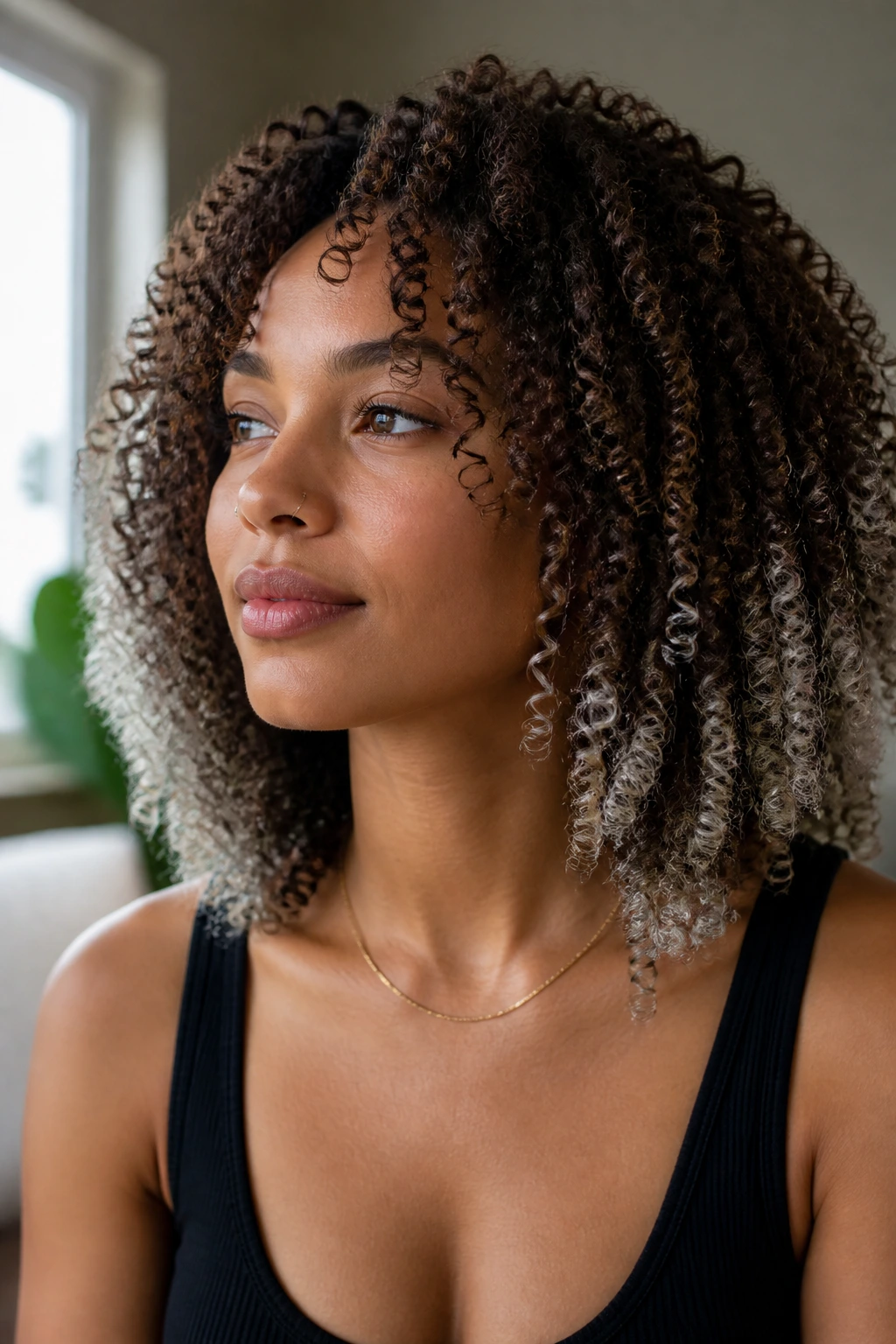
Coily hair and silver tips make a striking pair, but they need respect. Lightening the full coil pattern from root to end is a lot to ask of the hair, so the better approach is often to keep the silver focused on the ends or on select spirals that can handle the process.
The visual payoff is strong because coily hair has so much texture. A bright silver tip can flash against a deep brown base in a way that straight hair never quite matches. The pattern has built-in dimension, so even a small amount of silver reads clearly.
The downside is obvious: fragile ends show up fast. If the tips are already dry, the silver will only make that dryness more visible. That’s why bond support, deep conditioning, and careful detangling matter more here than on many other highlight patterns. You can have the look, but you cannot be sloppy with the care.
Best practices for this style
- Keep the lightened area smaller if the hair has a history of breakage.
- Use a rich leave-in and seal the ends with a light oil or cream.
- Avoid frequent high heat on the silver tips.
- Refresh with a glaze instead of re-lightening every time the tone fades.
This look is bold, but it works best when the hair stays soft enough to bounce.
14. Silver Root Melt for Easy Grow-Out
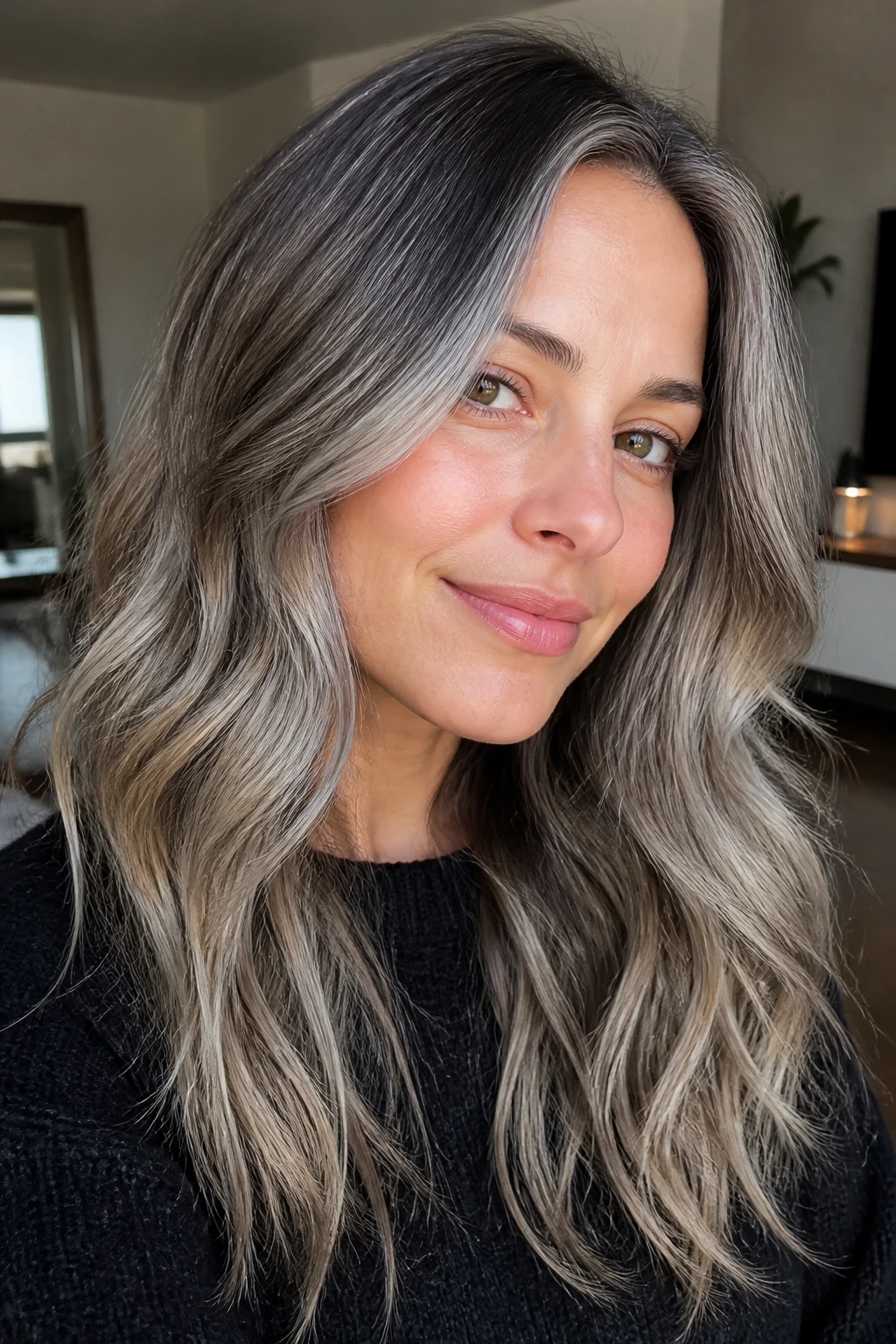
A root melt is one of the smartest ways to wear silver on brown hair if you hate obvious upkeep. The idea is simple: keep the root deeper and melt it gradually into silver through the mid-lengths and ends.
That soft transition changes everything. Instead of a hard line at the scalp when new growth comes in, the hair already has a shaded root that belongs there. The silver looks more expensive too, because the depth at the top gives the lighter pieces room to shine. If you’ve ever looked at a very bright silver highlight and thought it felt a bit harsh, this is the fix.
It works especially well on medium and long hair, where there’s enough length for the fade to read clearly. Short hair can do it, but the blend has less room to breathe. A good colorist will usually choose a root shade one to two levels deeper than the natural brown base, then soften it downward with a comb or brush before the silver begins.
This is the style for people who want to stretch salon visits a little farther without sacrificing shape. It still needs toning, and it still fades, but the grow-out is kinder.
And yes, kinder is the word here.
15. Frosted Silver Ends With a Caramel Brown Base
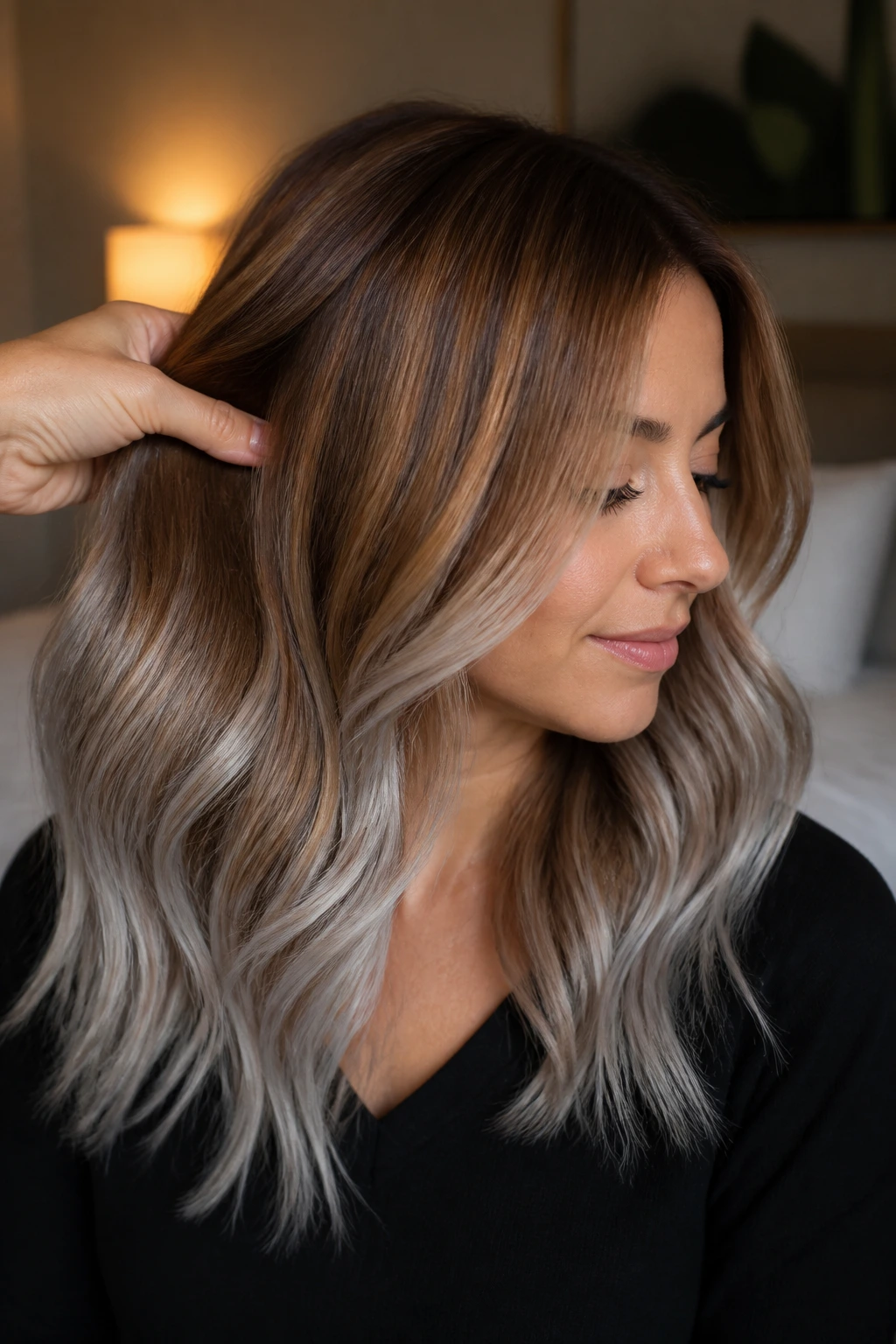
Frosted silver ends feel a little old-school in the best possible way, especially on brown hair with caramel warmth near the top. The finish is lighter and airier than a strict ombré, with the silver sitting almost like frost along the edges rather than melting all the way through.
The caramel base gives the style a softer start. You get that warm brown richness near the scalp, then the tone cools as it moves down the hair. The contrast is nice on layered cuts because the lighter ends can separate and show up with movement. On a shag, it looks playful. On long layers, it looks almost windswept.
The main thing to watch is the transition. If the caramel and silver clash too hard, the ends can look disconnected from the rest of the head. A glaze between the two helps. So does careful blending at the mid-lengths. The goal isn’t a perfect fade. It’s a believable one.
This is a good look if you like a bit of warmth near the face but want the ends to feel cooler and lighter. It’s not subtle, exactly. It just has a softer edge than a full silver blast.
16. Silver Halo Babylights Around the Crown
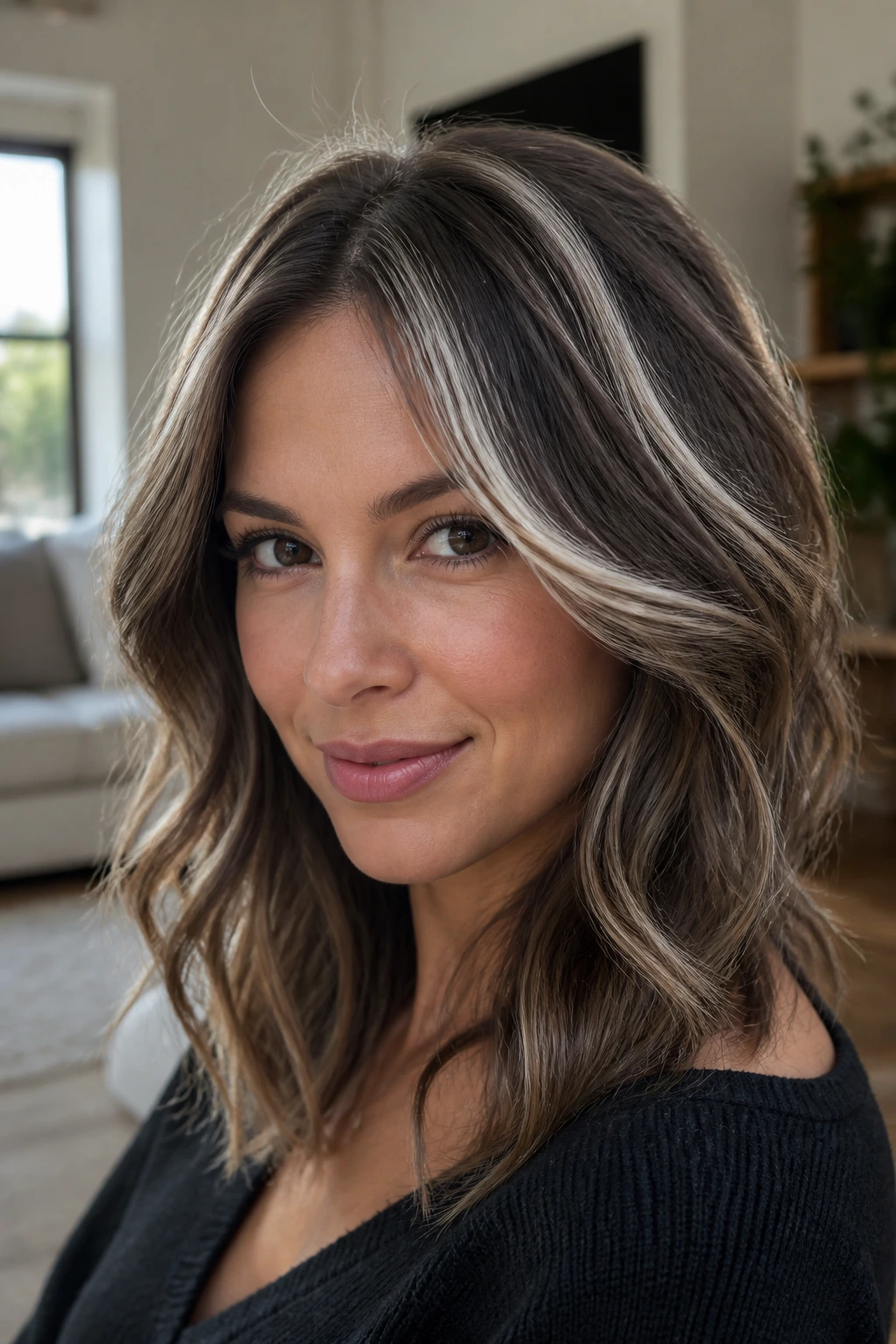
A halo of silver babylights around the crown is for people who want movement from every angle. Instead of concentrating the silver only at the face, this placement circles the top layer so the color shows when the hair lifts, flips, or catches air.
The effect is especially pretty on layered cuts and waves. The silver doesn’t sit there like a stripe. It pops in and out between brown strands as the hair shifts. That makes it feel alive, which sounds dramatic until you see it. Then it makes sense.
This style also solves a common problem with silver highlights for brown hair: too much focus on the front and nothing else. A halo placement spreads the brightness in a way that feels fuller. It can make fine hair look denser and give thick hair a bit of lightness up top.
Why it works
- It shows in ponytails and half-up styles, not only when hair is down.
- It softens the top of the head without forcing you into a full blonde situation.
- It pairs well with layers, especially around the crown and cheekbones.
- It needs good parting placement so the silver does not bunch up on one side.
This is one of those placements that looks simple and takes real skill. The hidden part is the parting. Always the parting.
17. High-Contrast Silver Panels on Cool Brown Hair
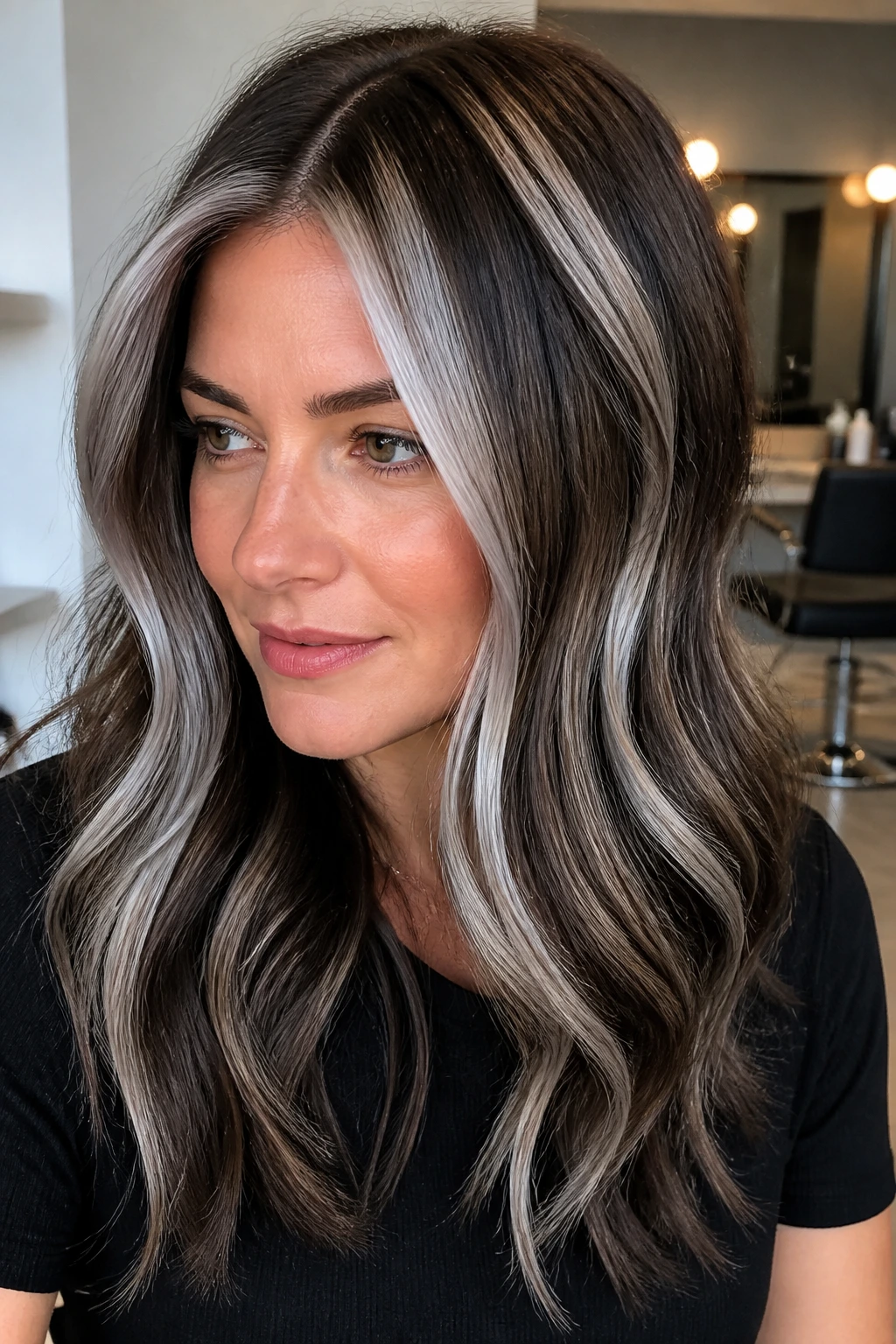
Some brown hair wants contrast. Not a whisper. A statement.
High-contrast silver panels work best when the base already leans cool—think ash brown, cocoa brown, or a deep neutral brunette that doesn’t fight silver with too much warmth. In that setting, bigger silver sections can look graphic and clean instead of streaky. The style has a sharp line to it, which makes it feel modern even when the color choice itself is very soft.
This is not the look for someone who wants to blend into the wallpaper. It reads strongest on blunt cuts, heavy fringes, and sleek finishes. If you wear a lot of black, slate, or denim, the silver panels can tie the whole look together in a way that feels almost architectural. I know that sounds like a fancy word, but the point is plain: the color has shape.
The maintenance is a little stricter here. Bigger light pieces show fading faster, and the contrast gets muddy if the silver drifts too warm. A cool gloss helps a lot. So does avoiding too much heat styling without protection, because fried silver turns yellow faster than people expect.
Sharp style. Sharp upkeep.
18. Soft Pearl-Silver Glaze Over Espresso Brown Hair
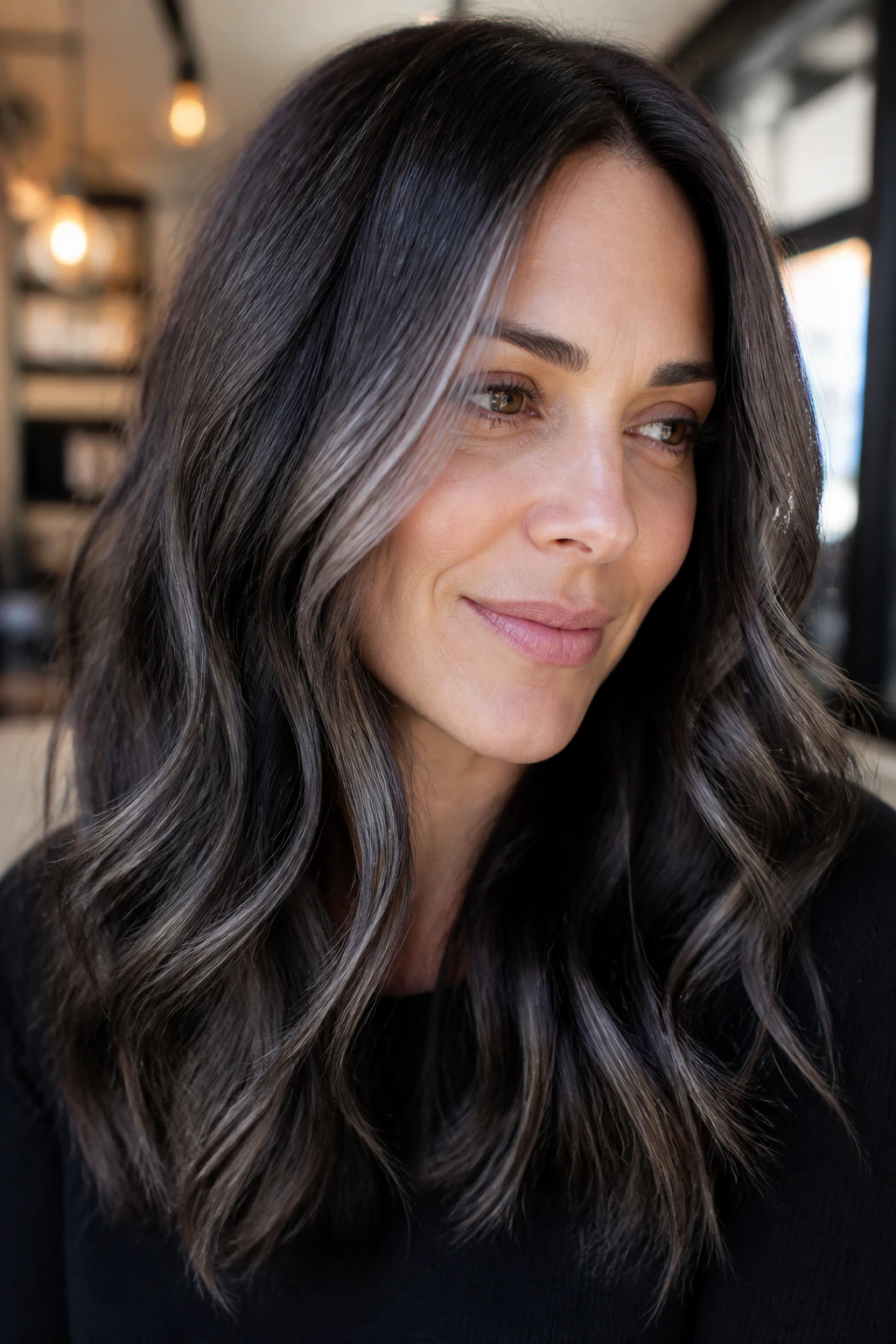
If you want silver without the full commitment of bright highlights, this is the gentlest place to land. A pearl-silver glaze over espresso brown hair gives the surface a cool sheen and lets the deepest brown stay in charge.
This works best on hair that has already been lightened in a few sections or on naturally lighter brown hair that can hold a cool glaze. You are not trying to turn the whole head silver. You’re tinting the brighter pieces so they sit in that pearly zone between silver and smoky beige. The result is softer than chrome and cleaner than gray.
There’s also a practical benefit here: the grow-out is less aggressive. A glaze fades gradually, which means the hair can move through the dull phase without looking rough. If you’re cautious about silver, this is the style I’d start with. It gives you the mood of silver highlights for brown hair without pushing the whole look into high drama.
Keep the base glossy, keep the ends trimmed, and use a color-safe shampoo that doesn’t strip the tone too fast. That’s the boring answer, and it’s the right one.
Soft silver tends to win. It’s easier to wear, easier to pair with clothes, and easier to live with when you’re three weeks past salon day and still want your hair to look put together.
