



Brown hair can go flat fast when the color sits all in one note. A few smart blonde ribbons, a little near-black depth, and suddenly the whole head has movement that shows up in daylight, under office lights, and in that annoying bathroom mirror that never seems flattering. The trick with black blonde highlights for brown hair is not piling on more color. It’s choosing where the light lands and where the darkness stays put.
That’s why some of the prettiest brunette highlight jobs look almost too simple at first glance. They usually are not. A colorist may keep the blonde a few levels lighter than the base, then tuck in darker lowlights or a shadow root so the contrast reads clean instead of stripey. It sounds tiny. It matters a lot.
Brown hair is forgiving, but it is not magic. If the base is level 4 or darker, pale pieces need careful placement, and if the base already has warmth, the blonde tone has to be chosen with some nerve. Beige, honey, ash, champagne, and platinum all behave differently once they hit brunette hair. That’s where the fun starts.
1. Face-Framing Blonde Money Pieces
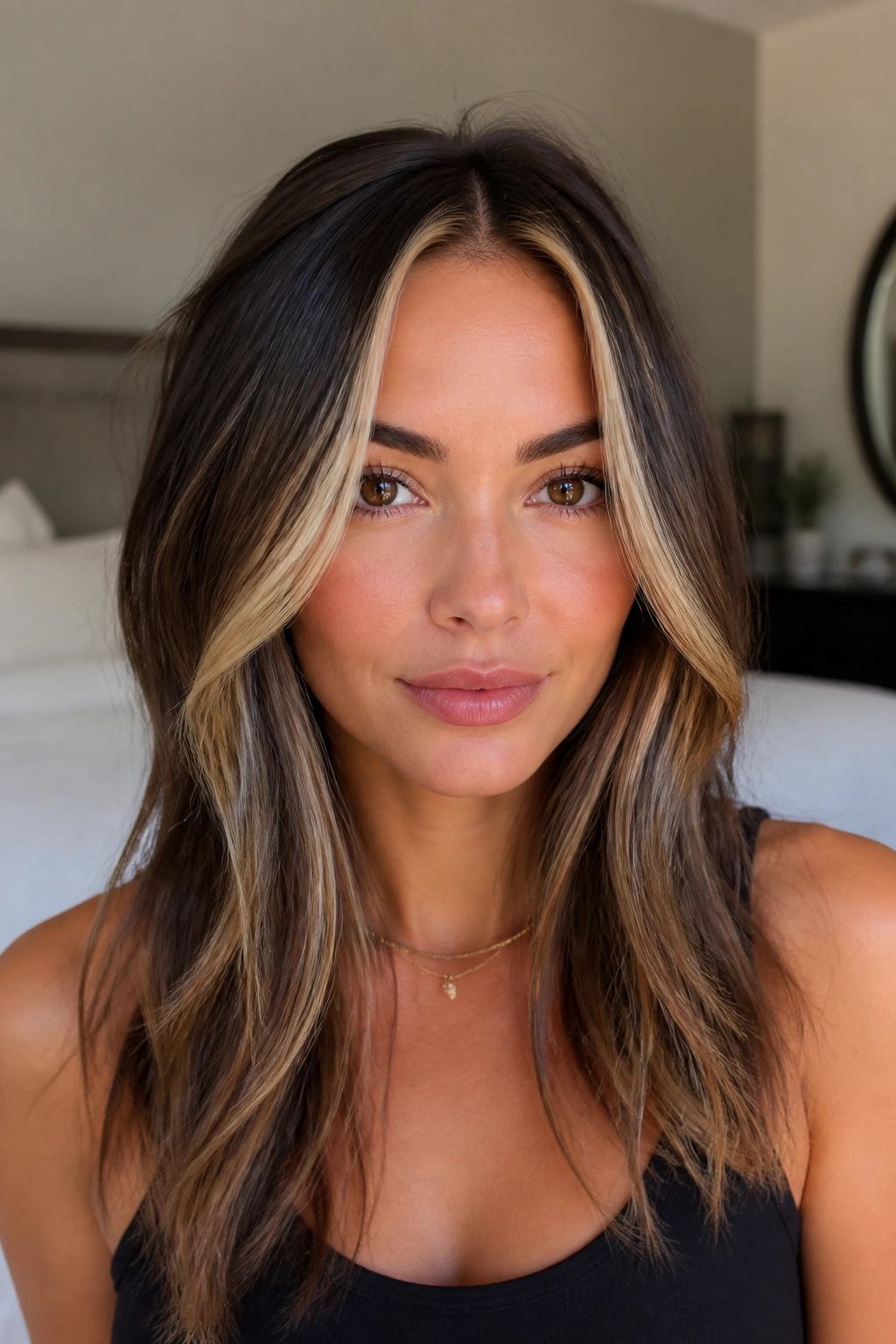
Face-framing money pieces are the fastest way to make brown hair look brighter without changing the whole head. You get that hit of light right where people look first, and the contrast against a brown base does half the work for you. The effect can be soft or loud, depending on how wide the pieces are.
Why They Work
The brightness sits around the cheekbones, jawline, and part, so the eye reads shape before it reads color. That’s why this style can make a simple blowout look more finished than it has any right to. If your hair is medium brown, ask for blonde pieces that stay close to the front hairline and melt a little into the crown.
Keep the blonde in the 2- to 4-inch range at the front, not a thick slab. Smaller sections look cleaner and grow out better. Bigger ones give a stronger contrast, which can be fun if you like a bolder look.
- Best on shoulder-length cuts and longer layers
- Works well with center parts and soft waves
- Touch-up window: about 6 to 8 weeks
- Ask for a soft root tap so the line doesn’t look harsh
Pro tip: If your hair is warm brown, keep the money piece beige or honey, not icy. The blend looks far more natural.
2. Chunky 90s Blonde Panels
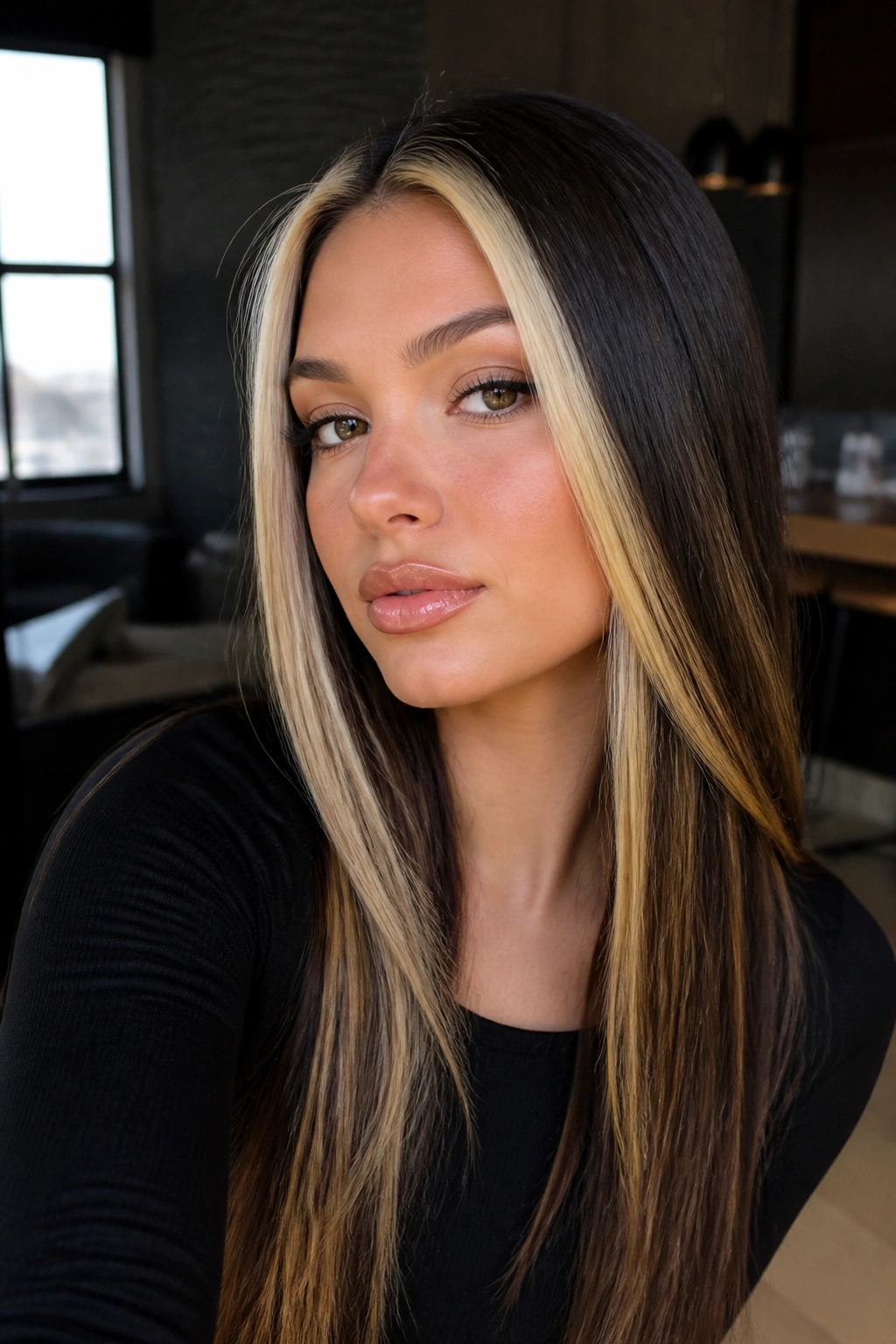
Chunky blonde panels are back for one reason: they make brown hair look expensive in a very loud, very deliberate way. No one mistakes them for subtle. That’s the point. The contrast between dark brown and a solid blonde strip gives the whole style a graphic edge that photographs sharply and works especially well on straight hair or blunt cuts.
The key is placement. Thick panels near the face and crown create a strong shape, while the rest of the hair stays darker so the blonde has room to breathe. If every section is bright, the effect turns busy fast. One or two bold ribbons is plenty.
A good colorist will usually keep the blonde in the beige-to-golden range unless you want a high-contrast platinum moment. Jet-black lowlights can sit between the panels too, but only in controlled strips; otherwise the hair starts looking zebra-striped. Been there. It’s not cute.
Go bigger if you want a fashion look. Go narrower if you want the same idea with less drama. Straight styling shows the lines best, but a loose bend makes the panels feel softer and a little less throwback.
3. Soft Babylights with a Dark Root Smudge
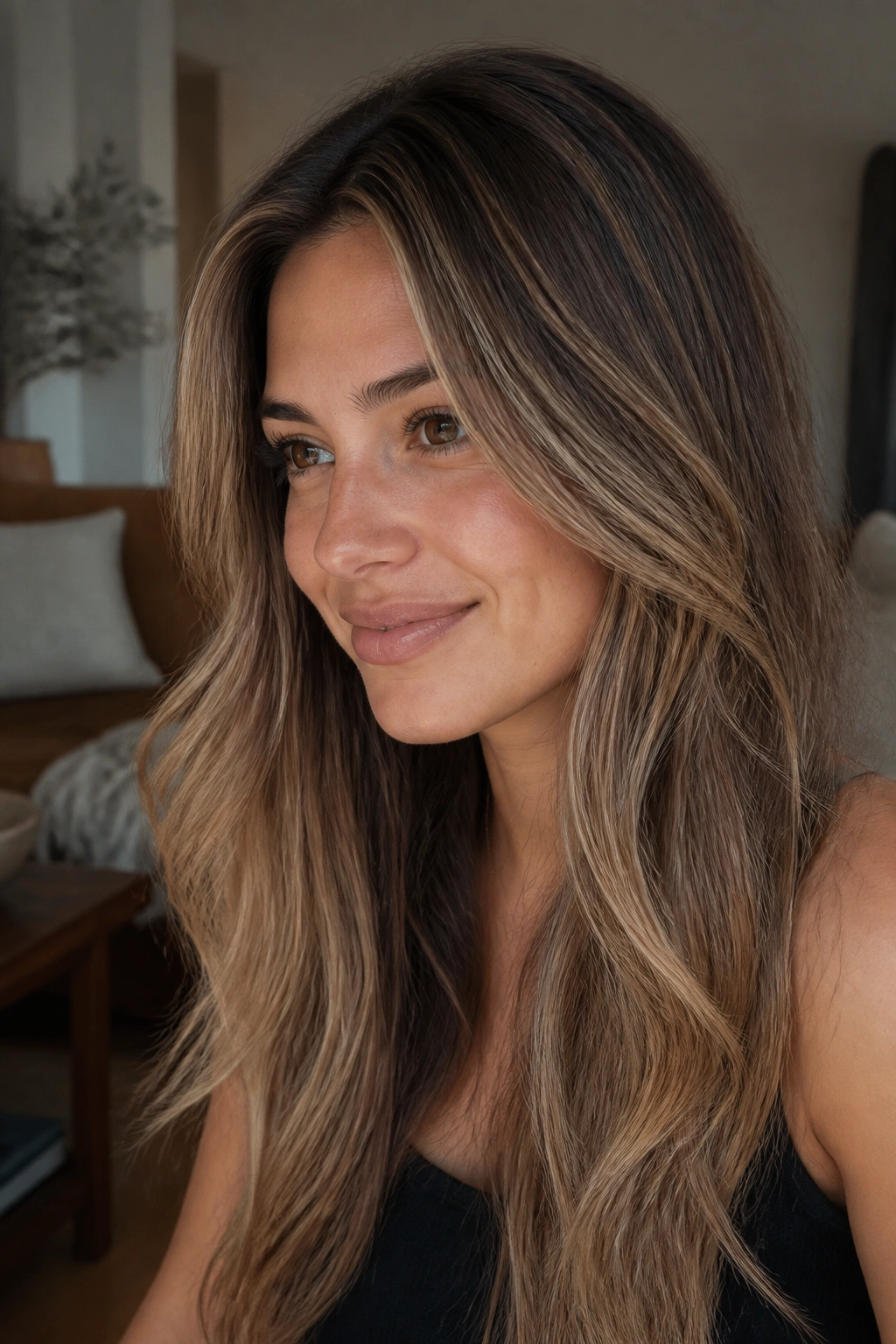
Want blonde that doesn’t shout from across the room? Babylights are the answer. They’re tiny, fine, and scattered close together, so brown hair gets a soft shimmer instead of obvious streaks. Add a dark root smudge, and the grow-out looks relaxed instead of neglected.
Babylights work because they mimic the way hair lightens naturally at the ends and around the face. On brunette hair, that detail matters. A few ultra-fine foils around the part and hairline can make the whole color read brighter, even if the blonde itself is only a couple levels lighter than the base.
How to Ask for It
Tell your colorist you want fine, woven highlights with a soft shadow at the root. If they reach for chunky foils, redirect them. This style lives and dies on delicacy.
- Ideal if you want low drama and less obvious regrowth
- Best on medium brown to light brown hair
- Toner choice: beige, pearl, or soft ash
- Great if you usually wear your hair down and tucked behind the ears
This is the one I’d pick for someone who wants blonde pieces without the “I was at the salon for five hours” look. It’s quiet, but not boring.
4. Peekaboo Blonde Underlayers
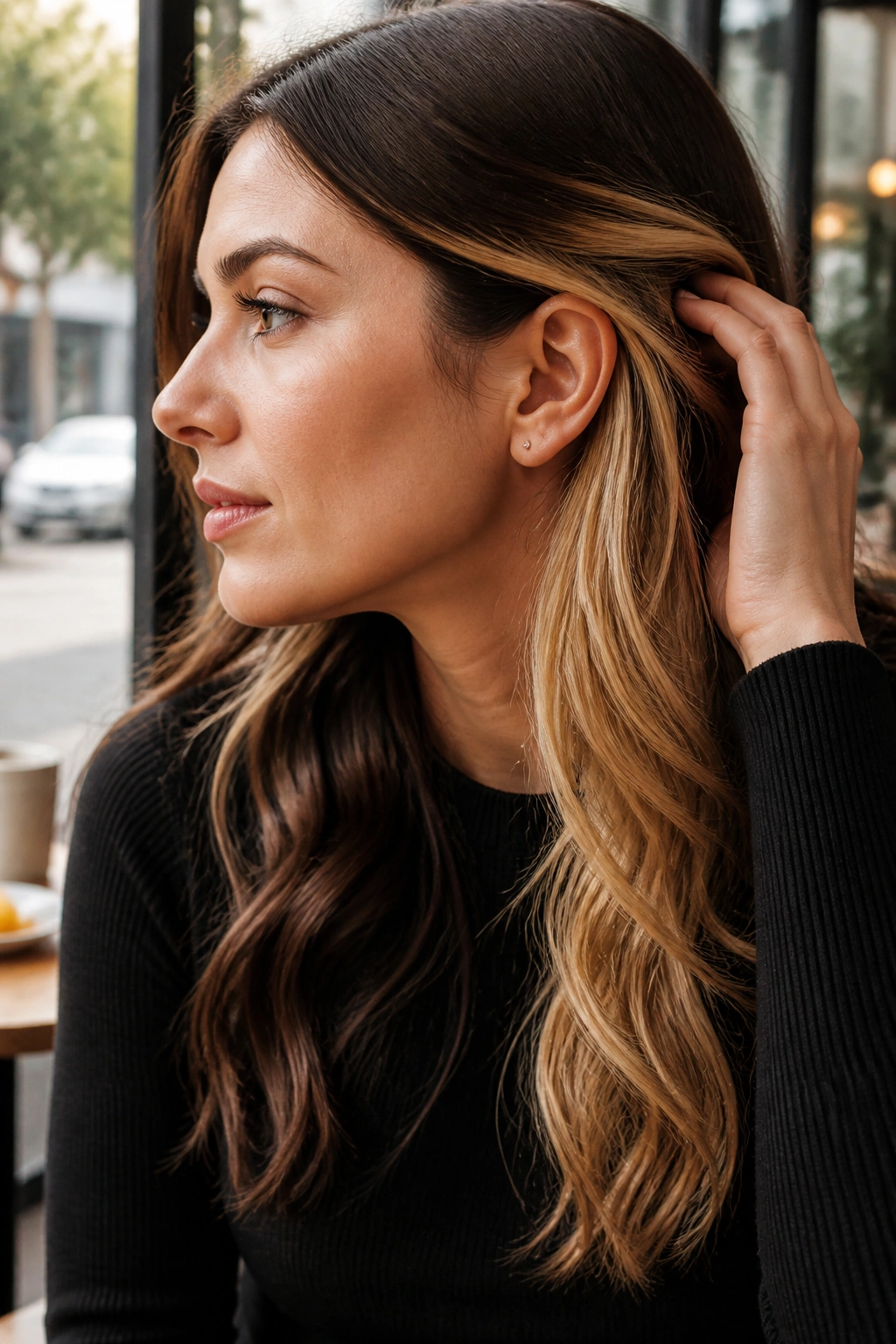
Peekaboo highlights are for people who like a little surprise in their hair. From the top, the brown stays in charge. From the underneath layers, bright blonde flashes out when you tuck your hair behind your ear, pull it into a half-up style, or catch the light in motion. It’s a fun trick, and it keeps the overall look easier to grow out.
A Hidden-Color Look That Still Feels Clean
The best part is that you can go bolder underneath than you would on the surface. If your brown hair is dark and you worry about blonde pieces feeling too loud, hiding them below solves the problem. The contrast still exists. It just shows up in smaller moments.
This style plays especially well on layered cuts, lobs, and shoulder-length hair with movement. A straight blunt cut can hide the dimension a little too well, while waves let the blonde peek through in flashes. That’s what makes it feel alive.
- Put the brightest pieces under the top layer
- Keep the surface color close to your base
- Choose beige, honey, or champagne tones for the blonde
- Ask for a blended perimeter so the top section doesn’t look separate
The hidden nature of this look makes it forgiving. And forgiving hair color is underrated.
5. Ash Blonde Ribbons on Chocolate Brown
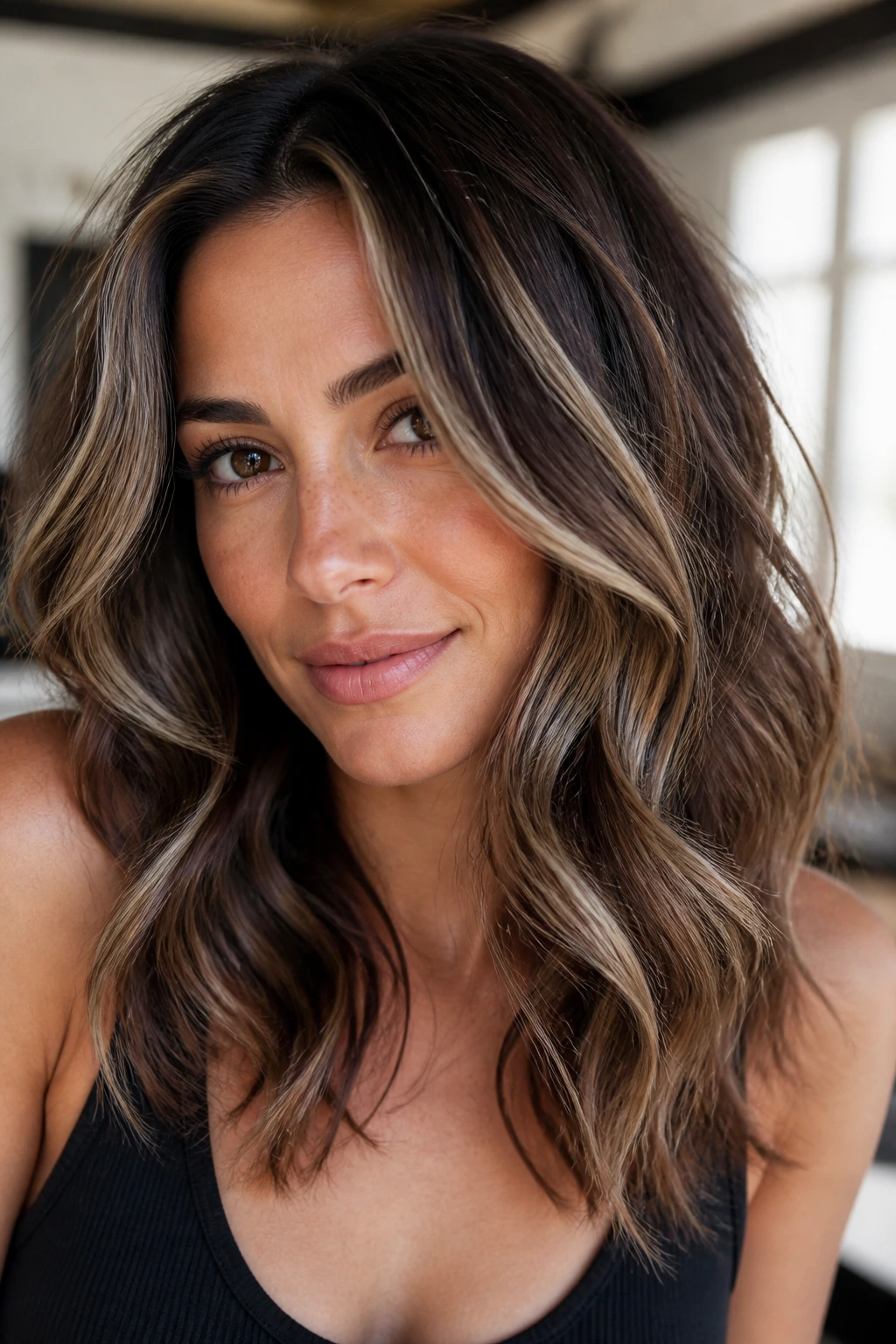
Ash blonde ribbons on chocolate brown hair are cool, sleek, and a little sharper than honey tones. The contrast lands in a cleaner place because the blonde doesn’t lean gold or brassy. Instead, it carries that smoky edge that makes brown hair look polished without feeling heavy.
The trick here is tone. Chocolate brown already has depth, so an ash ribbon can sit on top without fighting the base. If the blonde is lifted to a pale yellow first, it needs to be toned down properly or the warmth will show through and ruin the whole point. A cool beige toner usually gives the cleanest finish.
This style looks especially good on medium-length hair with loose bends. Straight hair can make the ribbons read as narrow strips, which is fine if you want a more modern feel. Wavy hair gives them softness and lets the ashy shade move in and out of the light.
Do not skip maintenance on this one. Ash tones fade fast when you use harsh shampoo every day. A purple or blue-toned cleanser once a week is usually enough to keep the blonde from turning yellow. Go lighter on the product than you think; overtoning can make the hair look flat and dull.
6. Black Lowlights with Honey Blonde
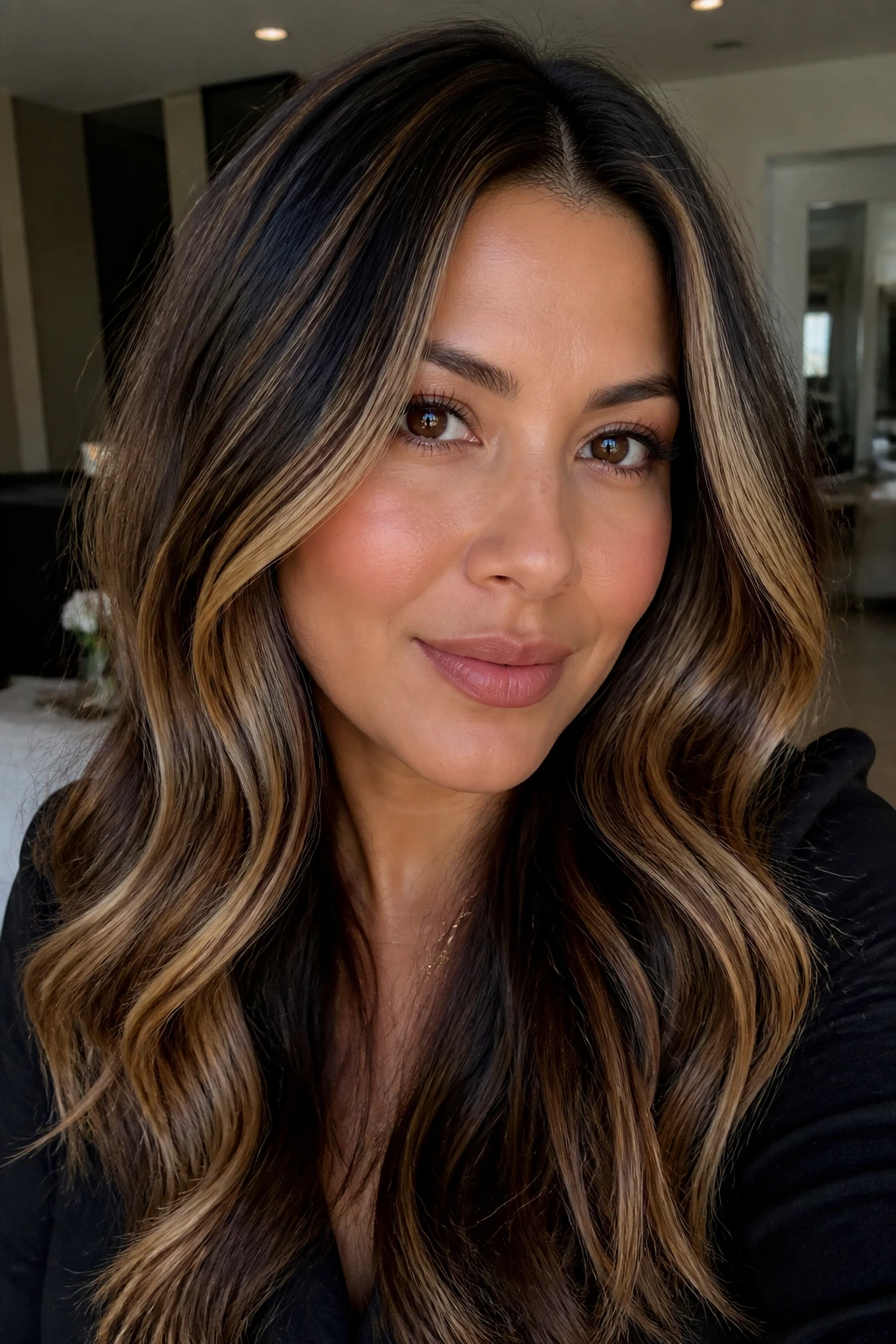
This is the contrast look for people who like dimension but hate flat color. Unlike a head full of blonde, black lowlights keep the brown base from disappearing, and the honey blonde pieces get something dark to bounce off. The result feels richer, not lighter for the sake of it.
What makes it different is the depth. A lot of highlight jobs forget the shadow part and end up looking one-note after a few washes. Here, the darker strands matter as much as the bright ones. On medium brown hair, a few near-black lowlights through the midlengths and nape can make honey blonde stripes look glossy instead of scattered.
If you wear your hair in waves, this is a strong choice. The movement lets the dark and light sections twist around each other, and the color never sits still. On straight hair, the contrast reads more obviously, which can be gorgeous if you like a cleaner, sharper effect.
Best For
- Medium to dark brown hair
- Thick hair that needs visual depth
- People who want blonde without losing body
- Anyone okay with a slightly stronger salon grow-out plan
I’d keep the blonde warm here. Honey, not white. Otherwise the black can feel too hard.
7. Ribbon Highlights in Loose Waves
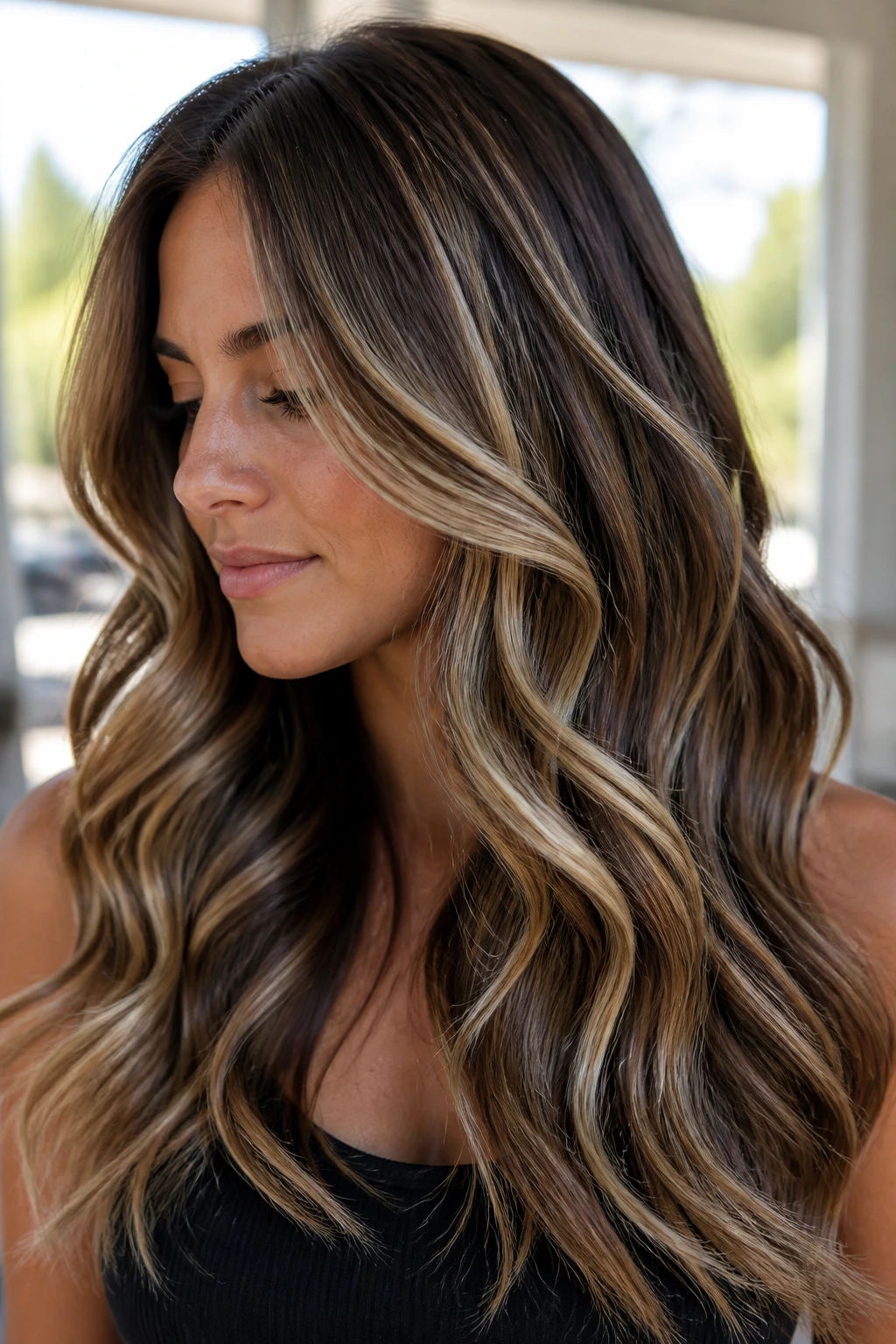
Ribbon highlights are exactly what they sound like: long, fluid strips of blonde that move through brown hair like soft bands of light. They look best when the placement follows the wave pattern instead of fighting it. That little detail changes everything.
Why the Shape Matters
A ribbon highlight works because it’s not chopped into tiny, disconnected pieces. The eye sees a smooth line, then another, then a break of brown, and the whole head gets rhythm. On brown hair, that rhythm matters more than extra brightness. You want motion, not confetti.
Loose waves are the natural partner here. The wave bends the ribbons, and the bend makes the blonde look thicker and shinier than it would on a flat ironed sheet of hair. If you mostly air-dry, this is a smart place to spend your color budget.
- Ask for long, diagonal foils rather than tiny squares
- Keep the blonde a few inches away from the root for softer grow-out
- Use a 1.25-inch curling iron or big Velcro rollers to shape the bend
- Finish with a light gloss spray, not a heavy oil
One small warning: if your hair is already very fine, too many ribbons can make the ends look see-through. Fewer, better-placed pieces are the smarter move.
8. Blonde Streaks on a Curly Bob
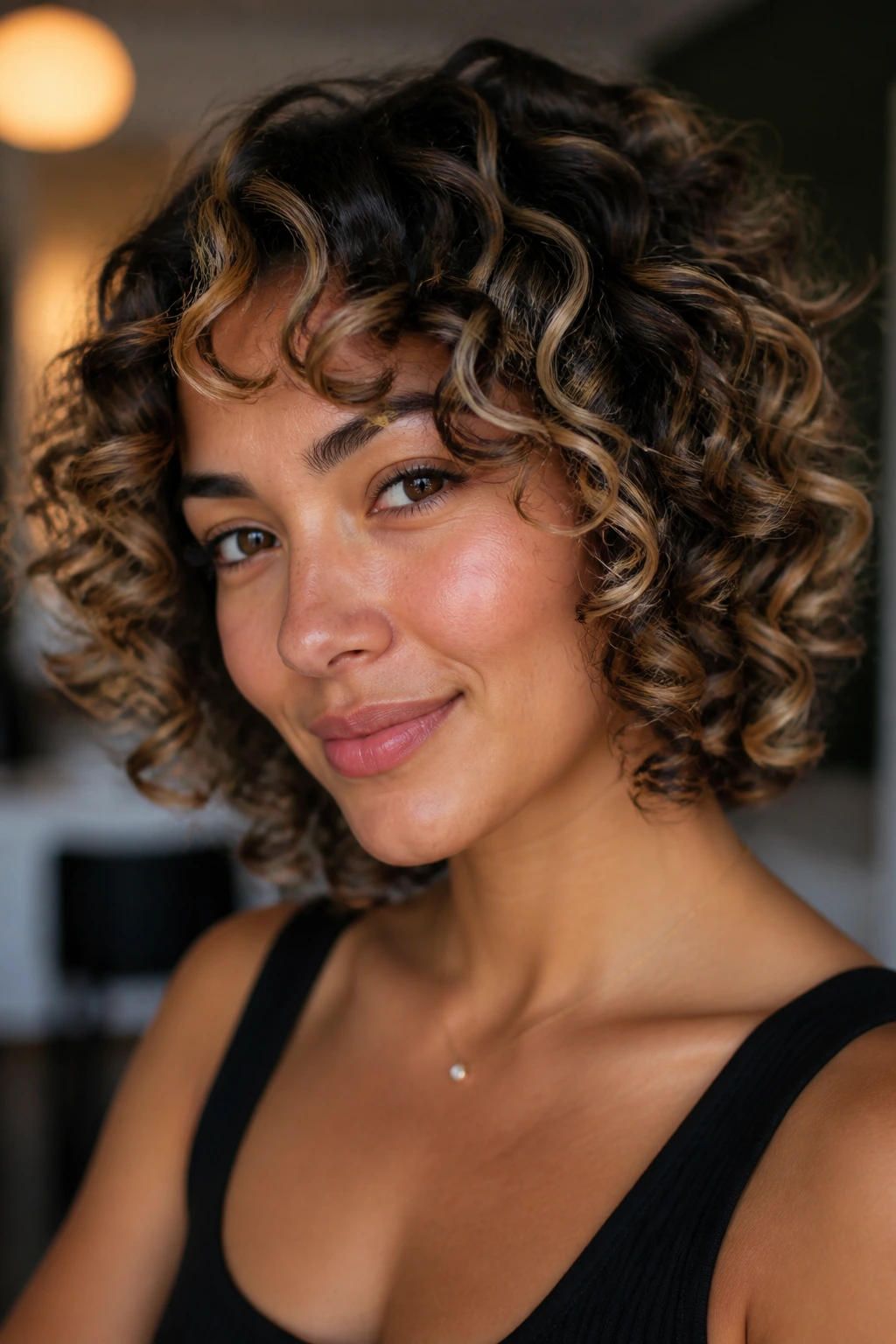
Curly bobs and blonde streaks have a nice, lively relationship. Curls break up color on their own, so you can go brighter without the style looking harsh. Brown hair gets a lift, the curls get more definition, and the whole cut looks less like one block of color.
The trick is not placing the blonde everywhere. A few streaks through the front, crown, and top layer usually do the work. Curly hair expands as it dries, so the highlighted sections spread out and show more shape than they did in the foils. That means a little goes a long way.
This style suits people who want a bob that feels playful instead of helmet-like. A blunt curly bob can look heavy if it’s all the same shade, but streaks create air between the curls. If your brown base is deep, keep the blonde in the caramel-to-beige zone first and see how you like the contrast before going lighter.
Less is more here.
A curl cream with a soft hold helps the blonde pieces stay separated enough to show the pattern. If everything clumps together, the dimension gets buried.
9. Bronde Melt with a Near-Black Shadow Root
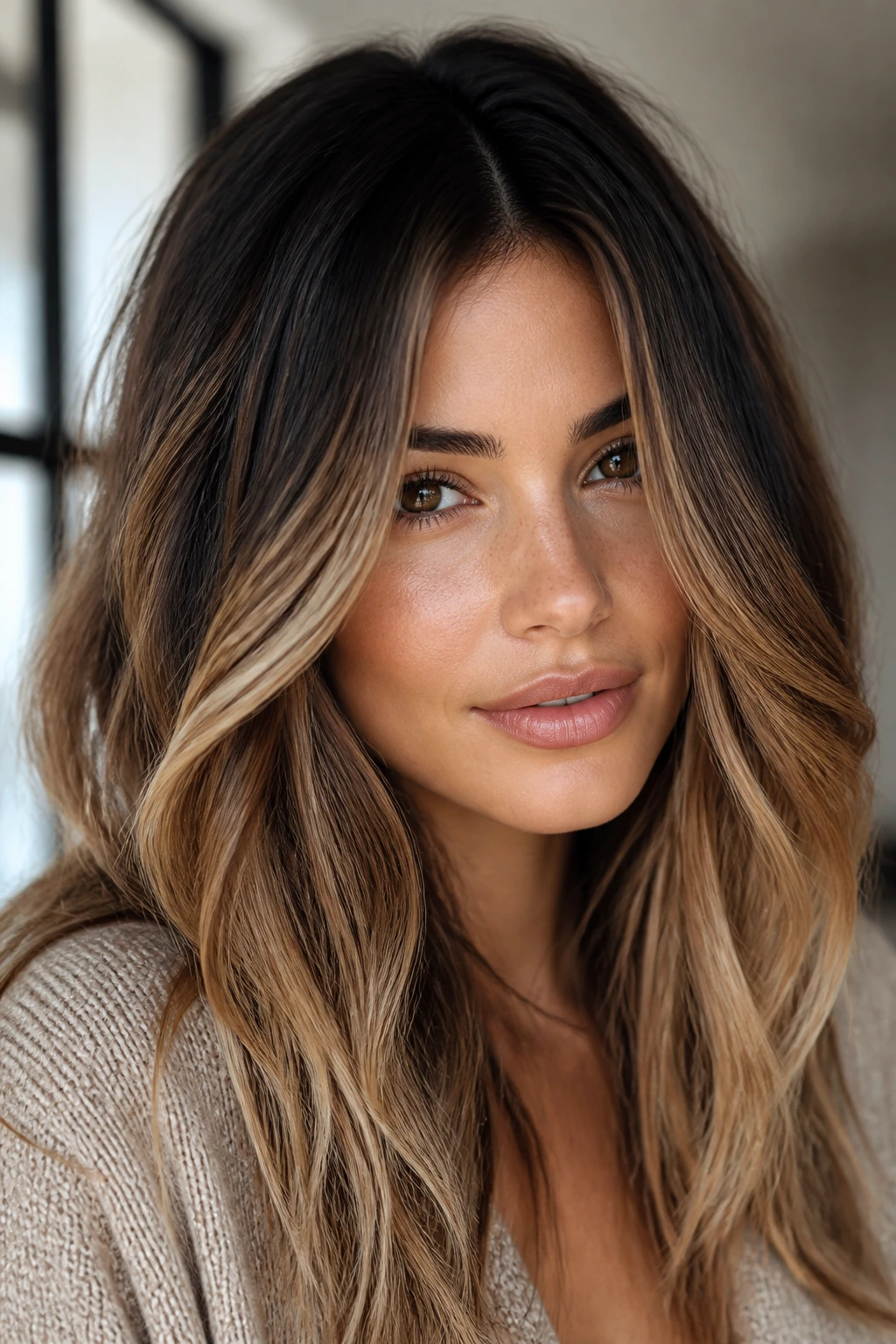
A bronde melt is the easiest way to make brown hair look blended instead of striped. The color starts darker near the root, then moves through brown, then lands in a soft blonde at the ends. Add a near-black shadow root, and the transition looks even smoother.
What Makes It Work
The secret is that no single section has to do all the heavy lifting. The root stays deep, the middle holds the brown tone, and the ends carry the blonde. That gives your eyes a place to rest between the bright parts, which is why this look feels calmer than high-contrast highlights.
It’s a good choice if your hair already has some warmth or if you’ve had highlights before and want a softer grow-out. The shadow root buys you time. It also makes the blonde look more intentional, because the root darkness frames it instead of letting it float alone.
How to Use It
- Ask for a root shadow that’s one to two levels darker than your natural brown
- Blend into a beige or caramel midlength
- Keep the ends lighter, but not white
- Style with a round brush or big bend so the gradient shows
This is one of those styles that looks better the second week after a salon visit. The color settles, the line gets softer, and the whole thing reads richer.
10. Partial Crown Highlights for Low Maintenance
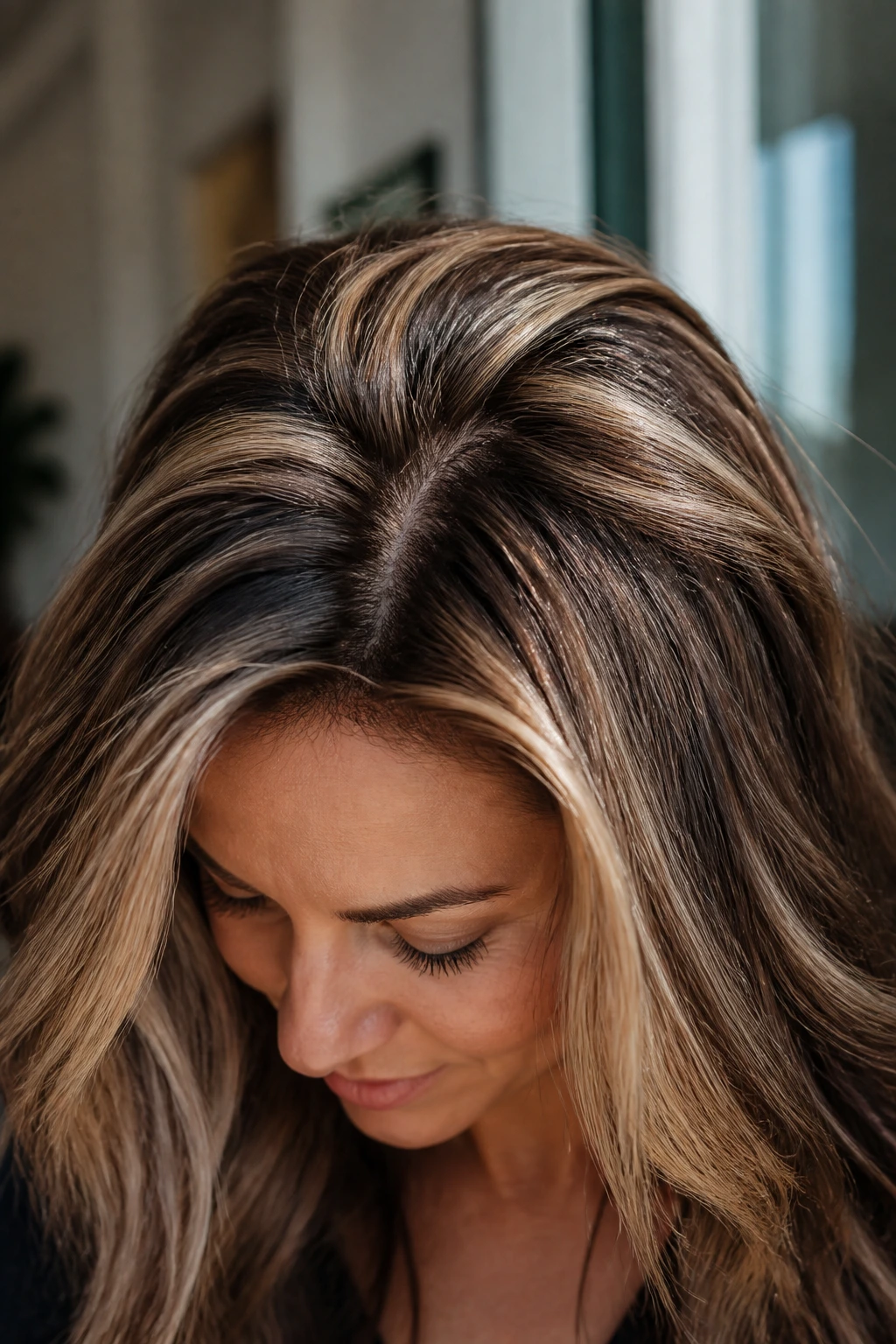
Partial crown highlights are for the person who wants brightness without signing up for a full head of foil work. Only the top section and crown get lightened, so the blonde sits where it’s most visible and the underneath stays brown. It’s practical. Also, it looks better than most people expect.
The reason it works is simple: the crown catches the most light. A few well-placed babylights or fine foils up there can make the whole color feel fresher, especially on medium brown hair. You also avoid over-lightening the ends, which can get dry fast if they’ve already been colored before.
This style is a nice fit for busy routines, fine hair, or anyone who wears their hair up half the time. When the crown lifts, the style reads bright. When the hair is down, it still feels grounded.
- Touch-up schedule: about 8 to 10 weeks
- Best with a side part or soft off-center part
- Ask for a few pieces around the temples, not just the top
- Works well with glosses in beige or pearl tones
If you want a small change that still shows up, this is a smart place to start.
11. Platinum Ribbons on Deep Brown
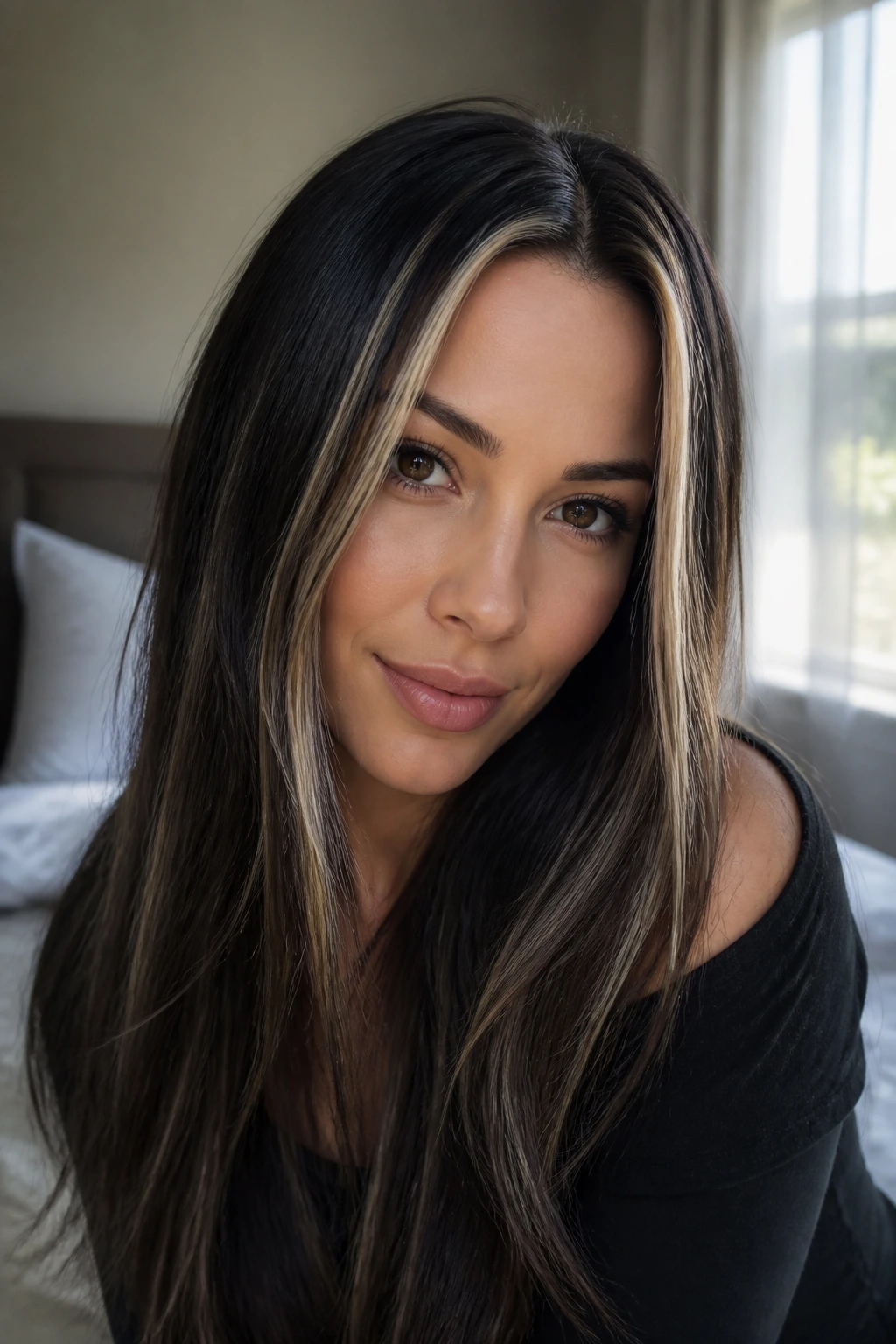
Platinum ribbons on deep brown hair are not shy. They make a statement because the contrast is so clean and so stark that you notice it immediately. On the right cut, that contrast looks sleek and expensive; on the wrong cut, it can look busy fast.
The biggest thing to respect here is hair health. Deep brown hair often needs more lift to reach true platinum, and that can mean multiple sessions or a more careful placement plan. If your hair is already dry or porous, don’t chase icy brightness through the whole head. A few platinum ribbons in the top layer and around the front are usually plenty.
This style suits straight hair, glassy blowouts, and layered cuts that can show off the lines. It also works on waves if the blonde sections stay narrow. Wider platinum bands can read chunky in a way that feels more costume than chic.
A cool toner is non-negotiable here. Without it, platinum on brown hair usually shifts yellow fast. Purple shampoo helps, but it’s not a fix-all. Think maintenance, not magic.
12. Champagne Babylights Around the Part
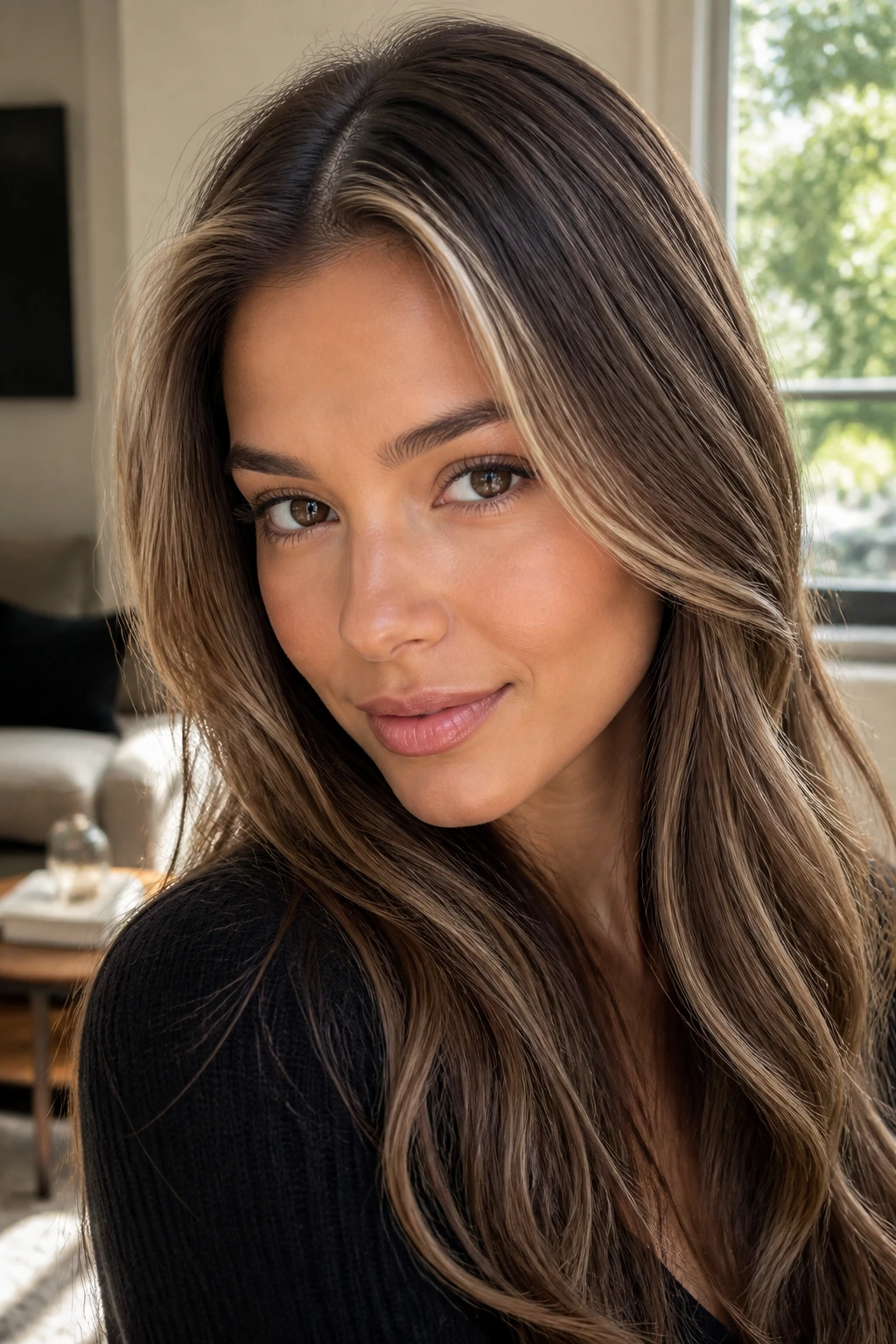
Champagne babylights sit in that nice middle place between warm and cool. They’re lighter than beige brown, but they don’t swing all the way into icy blonde. Around the part, that softness matters because it brightens the scalp area without creating a harsh stripe.
Unlike platinum or very pale ash, champagne reads gentle on brown hair. The color has enough warmth to blend with brunette bases, but enough lightness to still show up. That makes it one of the easiest ways to add glow without changing the personality of the hair.
This is a good pick if you like a polished finish. The pieces are fine, close together, and subtle enough that people usually register the overall brightness before they notice the individual strands. That’s often the best kind of highlight job.
Best When You Want Soft Contrast
Champagne tones work well on medium brown, chestnut, and warm brunette hair. Ask for a few extra pieces at the part line and temple area, then let the rest stay whisper-soft. The look stays airy instead of stripey.
I’d keep styling simple here: a smooth blowout, a soft bend, or a tucked-behind-the-ear look. The color does the talking already.
13. High-Contrast Split-Inspired Panels
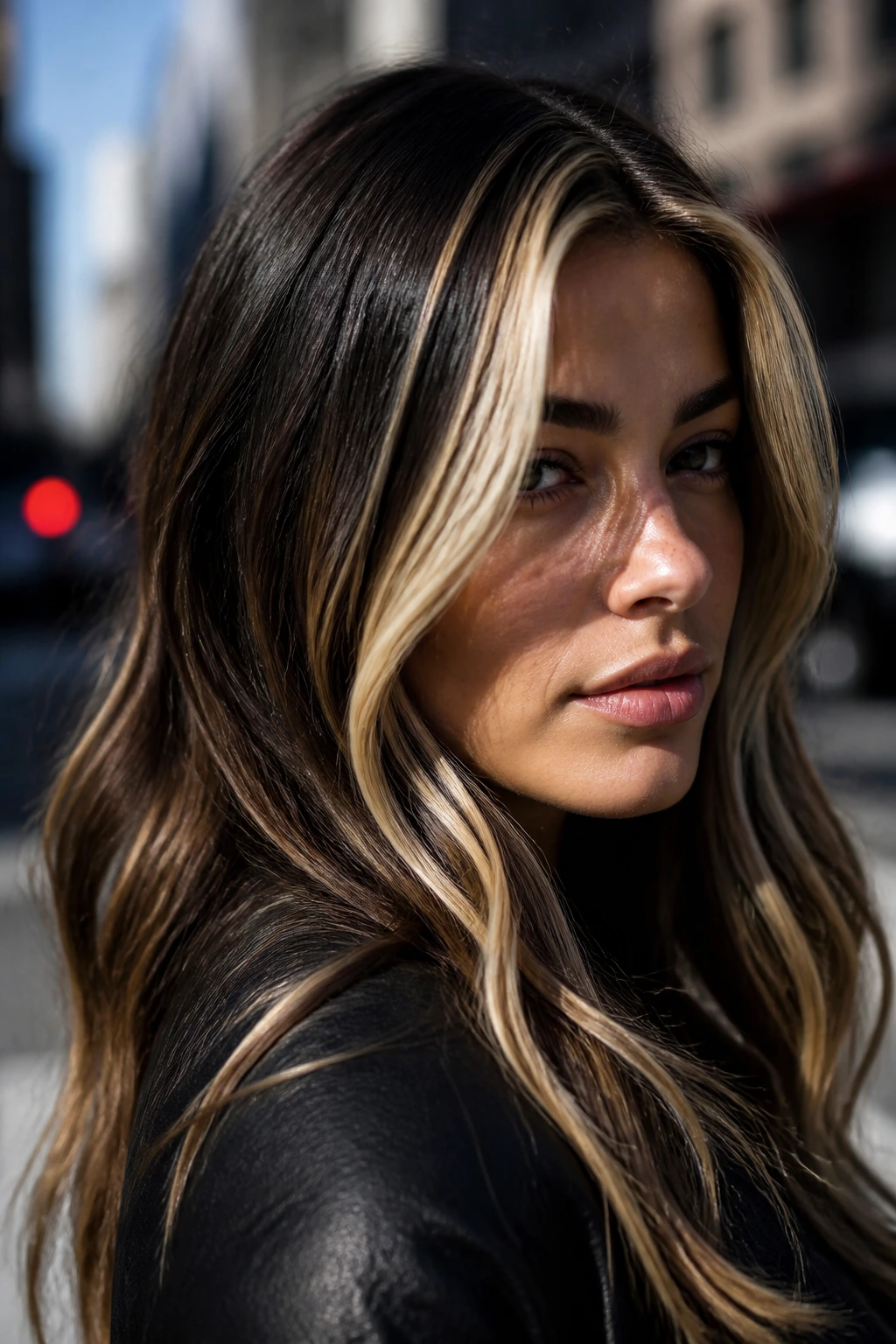
High-contrast panels are for someone who wants a little edge without fully committing to a split-dye look. Instead of dividing the head in half, the blonde lands in bold vertical panels through the front or side, with the brown base staying dominant everywhere else. It’s graphic, but still wearable.
Why It Feels Different
Compared with scattered highlights, panels give you a sharper shape. The blonde sits in a clearly defined place, so the eye catches it right away. On brown hair, that contrast can look very fashion-forward, especially if the cut is blunt or the layers are minimal.
This style is not for anyone who wants invisible growth. It’s for people who like seeing the color statement every time they catch a mirror. A side part can make it feel more dramatic, while a center part keeps the panels symmetrical and clean.
- Ask for one to two strong panels rather than many thin slices
- Keep the rest of the head softly woven so it doesn’t turn busy
- Beige blonde or cool blonde both work, depending on how hard you want the contrast
- Best on straight, wavy, or silk-pressed hair
My honest take: this works best when the cut has attitude too. A plain, limp layer job and bold panels can fight each other a bit.
14. Sunlit Ends with Espresso Underpainting
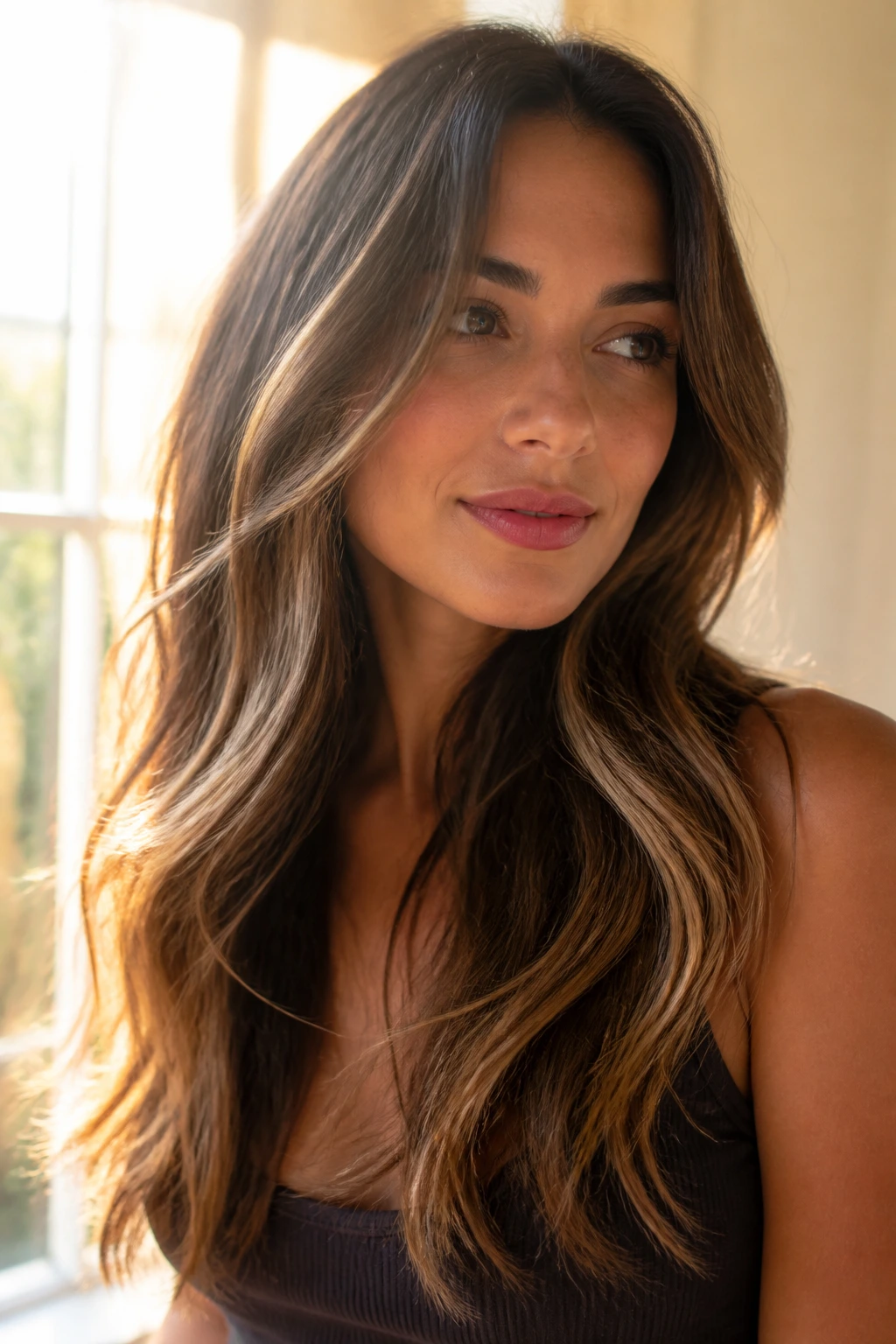
Sunlit ends with espresso underpainting are one of the easiest ways to make long brown hair look fuller. The darker hidden layers give the hair weight, while the lighter ends make it look like the sun has been sitting on it for months. Not fake-sunlight. Better than that.
The underpainting matters because it stops the ends from floating away visually. Brown hair can sometimes look thin at the bottom once you lighten it too much. Keeping espresso tones underneath fixes that. The blonde ends then feel like the top note, not the whole song.
This is a strong choice for longer hair, especially if you wear waves or big curls. The darker hidden layers create shadows between the bends, and the blonde catches on the ridges. The result has more depth than a simple balayage.
It also grows out neatly. That’s a nice side effect, but not the only reason to try it.
If you want the hair to feel rich rather than light, this placement does the job. It’s one of the few styles that can look softer as it grows.
15. Beige Blonde Foilayage on Wavy Layers
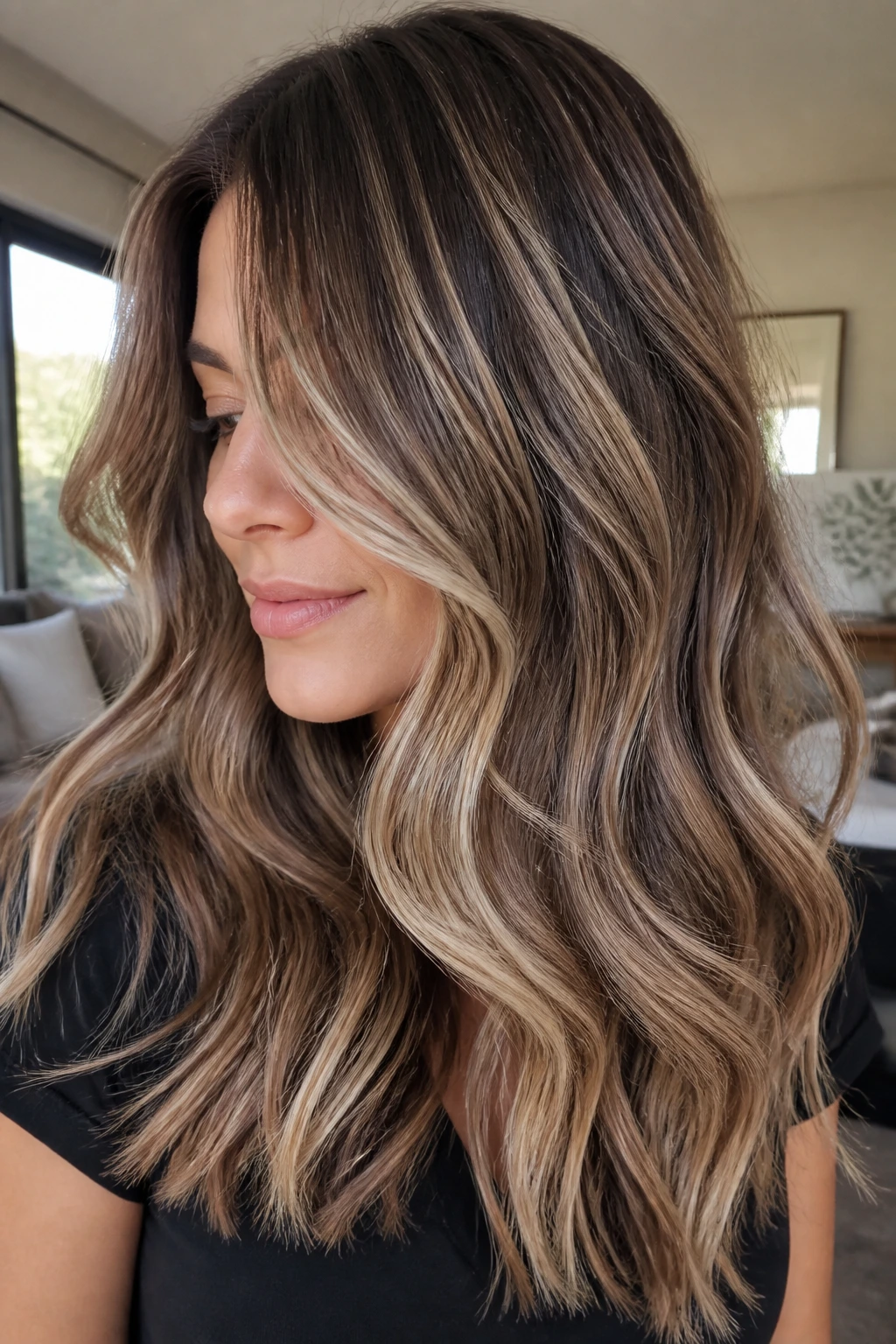
Beige blonde foilayage is the style I reach for when someone wants brightness but hates obvious lines. Foilayage gives the lightening power of foils with the softer spread of balayage, so brown hair ends up with airy highlights that don’t look boxed in. The beige tone keeps everything calm.
How to Ask for It
Say you want hand-painted movement with some foiled brightness through the midlengths and ends. That tells the colorist you want lift, but not chunky contrast. If your hair has layers, ask them to follow the cut so the highlights land where the waves naturally bend.
Wavy layers make this style come alive because the blonde breaks across the surface in little flashes. Straight hair can still wear it, but the look will read more relaxed and less textured. That is fine if you like a smoother finish.
- Best on layered lobs, long layers, and grown-out cuts
- Beige toner keeps the blonde from going too warm
- Touch up gloss every 6 to 8 weeks
- Pair with a loose wave, not a tight curl
This is one of the safer options if you are nervous about commitment. It looks polished without turning the whole head into a highlight map.
16. Bold Front Money Piece with Soft Backlight
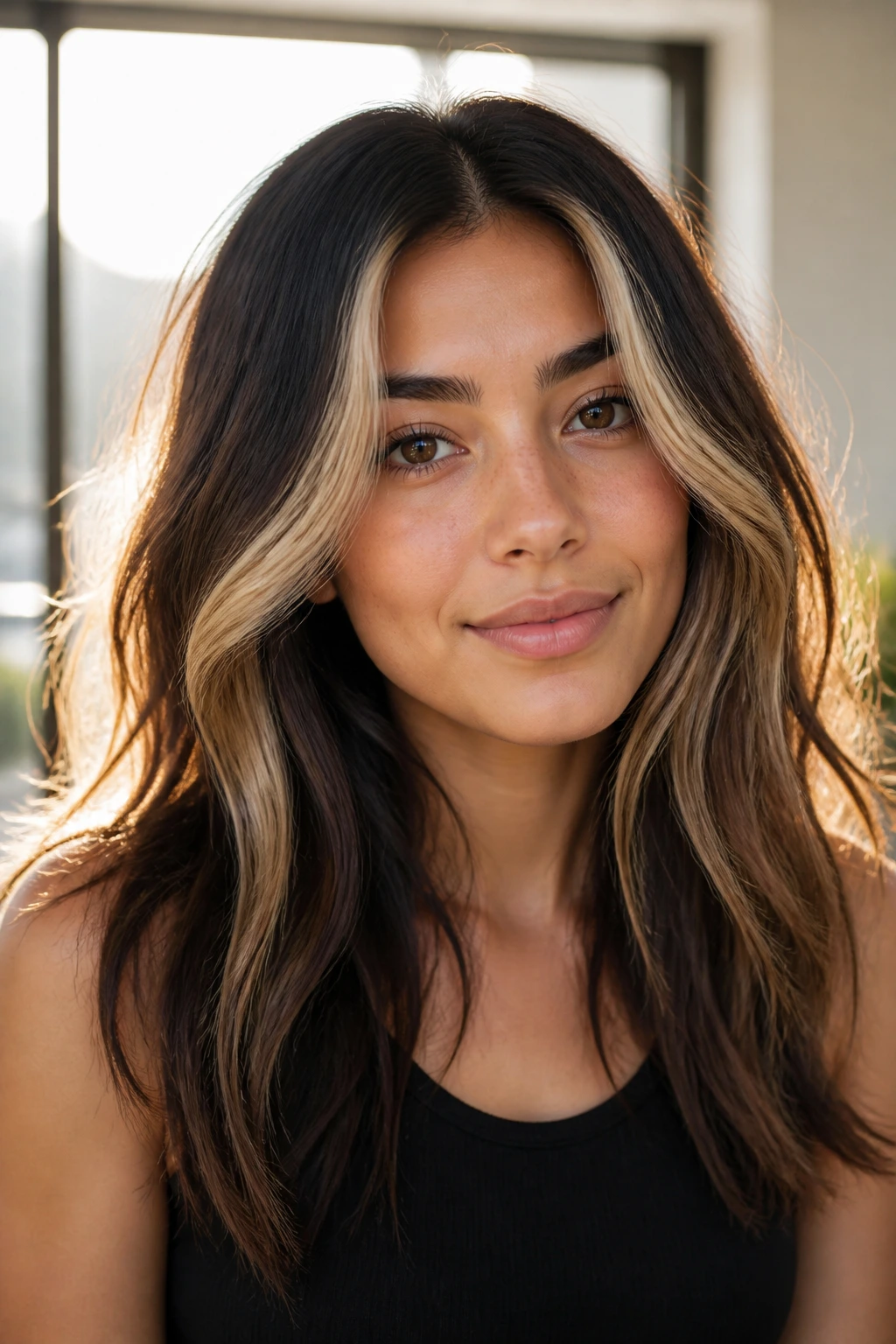
A bold front money piece does one thing very well: it wakes up brown hair instantly. The blonde lands right at the hairline, while the back of the head stays softer and darker. That contrast gives the face more brightness without forcing a full-color overhaul.
The backlight part matters. A few lighter pieces hidden just behind the top layer stop the front from looking pasted on. Without that support, the money piece can feel like a separate accessory instead of part of the haircut. With it, the whole look starts to move together.
This style is smart if you love ponytails, clips, and half-up styles. The front pieces stay visible even when the rest of the hair is pulled back, which means the color keeps doing some work on low-effort days. Nice when you want impact without daily styling.
Try a cooler blonde if your skin tone leans pink or neutral. Go golden if your brown hair has warm undertones and you like an easier blend. Either way, keep the roots blurred so the front doesn’t scream salon line.
One strong front piece is often enough. More can be too much.
17. Mushroom Brown with Thin Blonde Threads
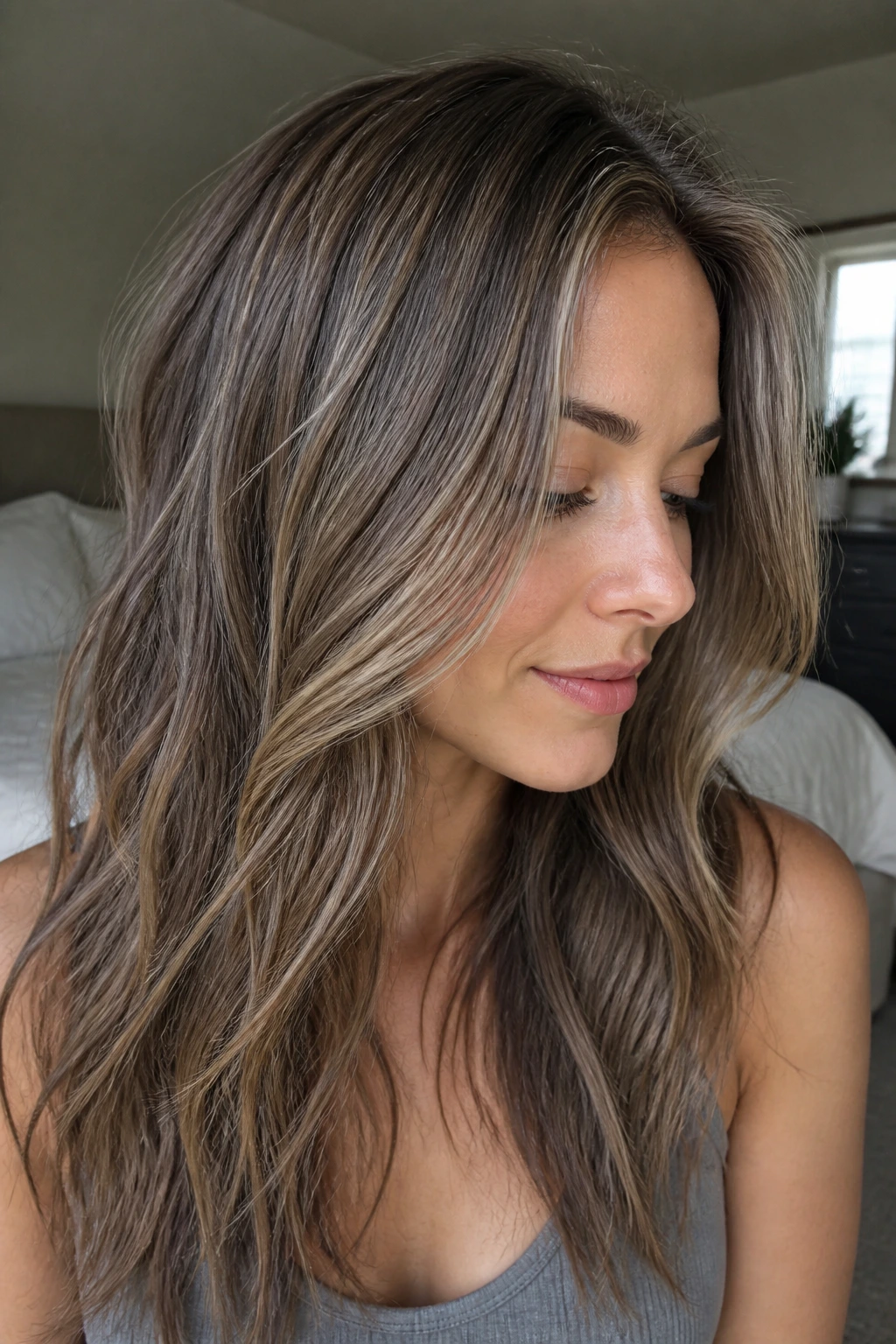
Mushroom brown with thin blonde threads is a quieter, cooler take on dimension. The base stays smoky and earthy, and the blonde threads run through it like fine lines instead of big streaks. Brown hair gets movement, but the overall feel stays soft.
This is one of those looks that only really makes sense up close, and I mean that in a good way. From a distance, it reads polished and cool. Up close, you see the little beige and ash pieces woven through the brown. That detail gives it a more tailored look than a louder highlight job.
The style works especially well if your wardrobe leans black, cream, gray, denim, or olive. The cool tone doesn’t fight those colors. It sits with them. If your natural brown hair already has a lot of red in it, a mushroom gloss can calm that warmth down without making the hair look flat.
What to Watch For
- Avoid yellow blonde here; it breaks the muted effect
- Keep strands fine and irregular, not evenly spaced
- Use a gloss every 4 to 6 weeks to hold the cool tone
- Best on medium to long cuts with texture
This is the look for people who like dimension but don’t want anyone counting foils.
18. Thick Hair Dimension with Alternating Foils
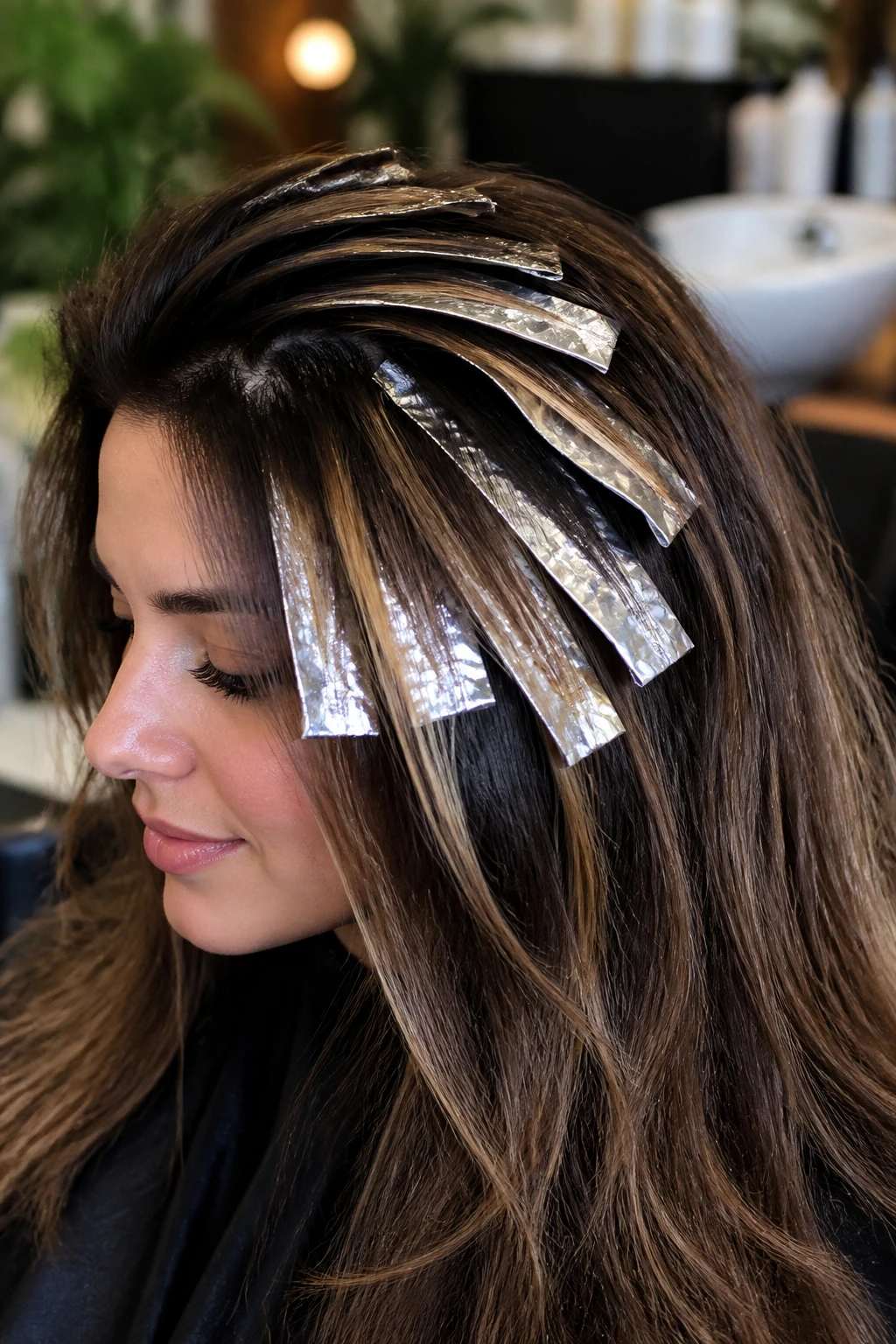
Thick hair needs a different strategy. If you place the highlights too evenly, the whole head can blur into one bright mass. Alternating foils fix that by leaving space between the light pieces and using darker sections to break up the bulk. The result looks lighter and fuller at the same time.
Unlike fine babylights, this approach can handle more visible contrast. Brown hair with thickness has enough density to support larger blonde sections and darker lowlights without looking patchy. The key is distribution. A colorist should vary where the foils start and stop so the shape feels natural.
This is especially useful on long layers or dense shoulder-length hair. The highlights can sit underneath the top layer and still peek through when the hair moves. That movement matters, because thick hair can look heavy if everything is the same shade.
Ask for a mix of light, medium, and dark sections rather than one blonde tone repeated all over. That three-part balance gives the hair more contour. And yes, you will spend less time wondering why your hair looks flat in photos.
If your hair is a lot of hair, this is the smarter way to color it.
19. Glossy Cinnamon Brown with Cool Blonde Veils
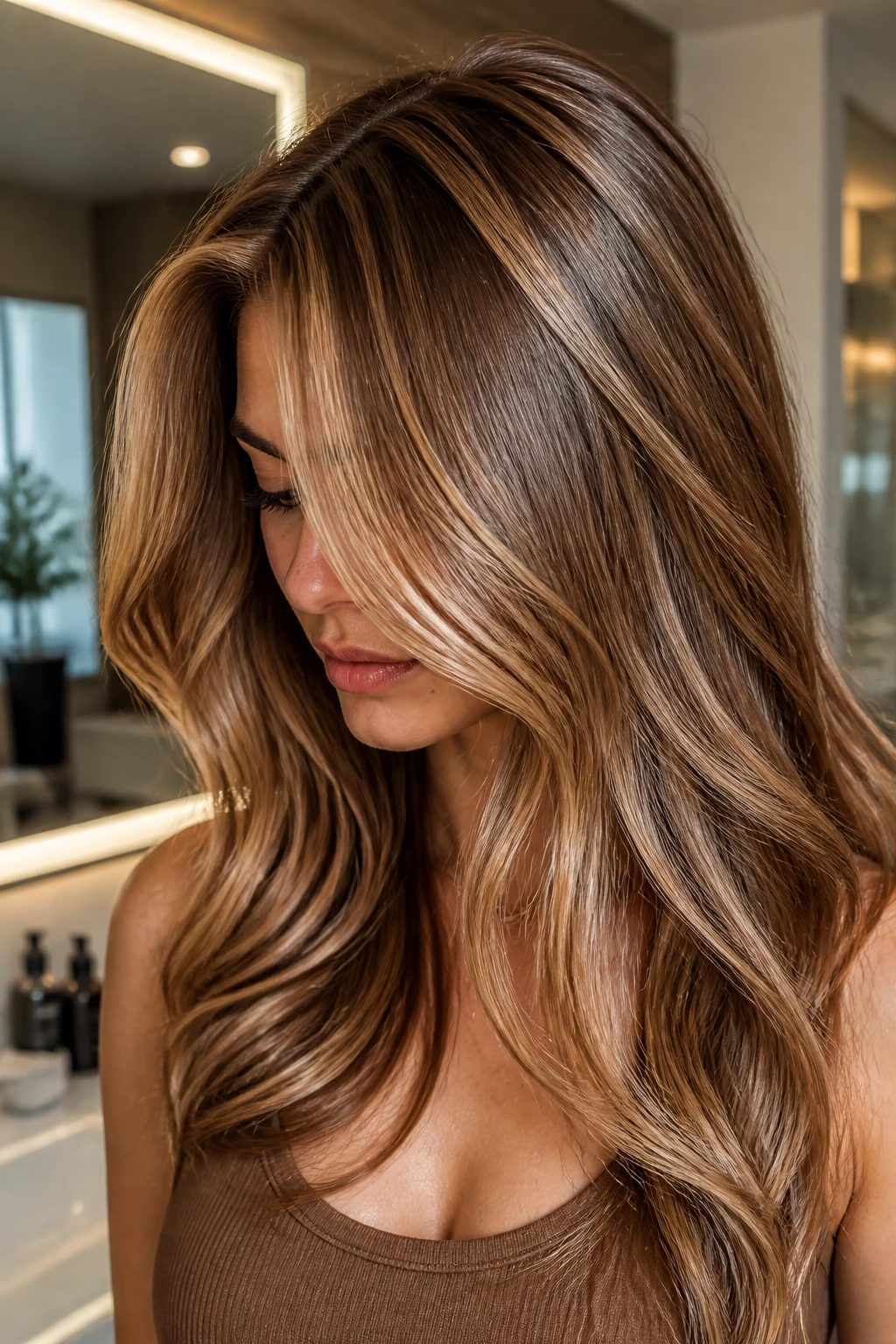
Glossy cinnamon brown with cool blonde veils is a nice contradiction. The base brings warmth and shine, while the blonde veils cut through with a cooler note so the color doesn’t become all copper and no shape. Brown hair tends to love this mix because the warm and cool tones keep each other honest.
The veils should stay thin. Not wispy in a weak way — thin in a deliberate, soft way. The idea is to let them skim over the surface of the hair instead of taking over. On a fresh blowout, the blonde shows up as a soft shimmer. On waves, it breaks into moving pieces that look clean and glossy.
This is a good fit if your brown hair already has some red or cinnamon warmth in it and you want to keep that personality. The cool blonde pieces stop it from going too orange. That little balance is why the style feels grown-up without feeling severe.
Quick Placement Notes
- Keep the blonde around the top layer and face frame
- Use a cool beige toner, not a stark silver one
- Blow-dry with a round brush to keep the shine obvious
- Refresh the gloss before the warmth gets too brassy
This one is prettier in motion than in a still photo. That counts for a lot.
20. Soft Contour Highlights with Black Lowlights
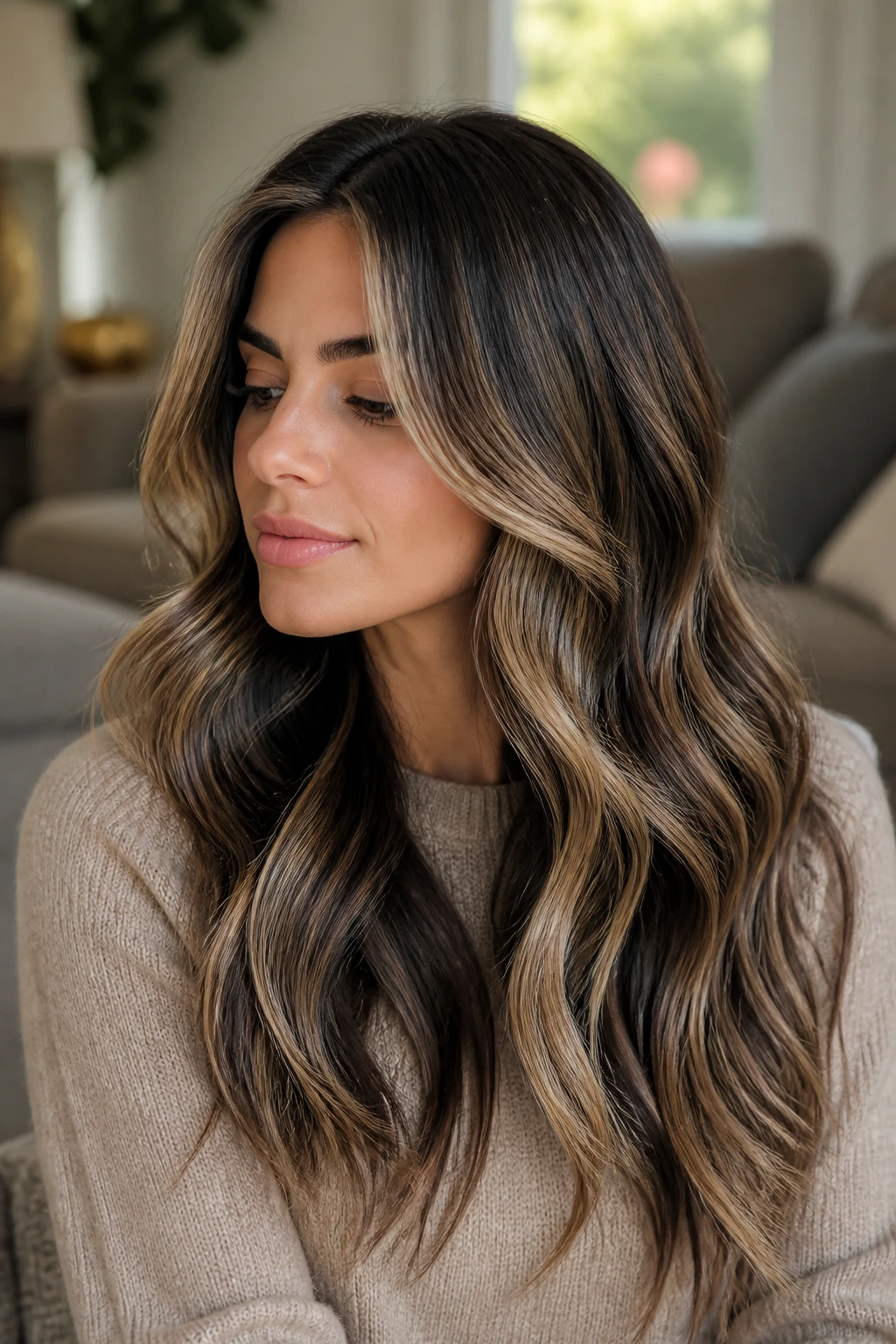
If you only pick one look from this whole list, make it this one. Soft contour highlights use blonde to trace the places your hair already wants to move — around the face, through the top layer, and along the outer curve of the cut — while black lowlights keep the brown base anchored underneath. It’s the most balanced version of black-and-blonde contrast on brown hair, and it tends to age better than the louder options.
The contour idea matters because it follows the haircut. A lob gets a different placement than long layers. A shag wants broken-up pieces. A blunt cut needs cleaner framing. Once that shape is right, the blonde looks less like decoration and more like part of the haircut itself.
Black lowlights are useful here because they create depth right next to the blonde without stealing the show. That contrast gives brown hair a thicker, more dimensional look, which is especially nice if the hair is fine or medium density. Too much blonde alone can make the ends look thin. The dark pieces fix that.
I also like this choice for anyone who wants a style that still makes sense three months later. The root grow-out stays softer, the lowlights keep the base grounded, and the blonde can be refreshed with gloss or a few extra foils instead of a full redo. That is the kind of color plan that holds up in real life.
If you want brown hair that looks lighter, deeper, and more expensive all at once, this is the one worth showing your colorist.
