



Grey highlights on brown hair can look soft, smoky, and expensive—or flat and muddy if the tone misses by even a little. That gap is why these looks matter so much. Grey isn’t one shade; it can read silver, slate, pewter, ash, gunmetal, or a faint mist, and each version behaves differently on brunette hair.
The base color changes everything. A deep espresso brown usually needs sharper contrast and cleaner placement, while a medium brown can hold fine grey babylights without losing shape. If the lift is too warm, the grey turns dusty. If the placement is too heavy, the whole head can start looking stripey in a way nobody asked for.
That’s the fun of this color family, though. Grey highlights for brown hair can be delicate enough for someone who wants a whisper of cool tone, or bold enough for someone who wants streaks that show up from across a room. The trick is matching the shade, the width of the pieces, and the amount of maintenance you’re willing to do without grumbling every few weeks.
1. Soft Silver Babylights
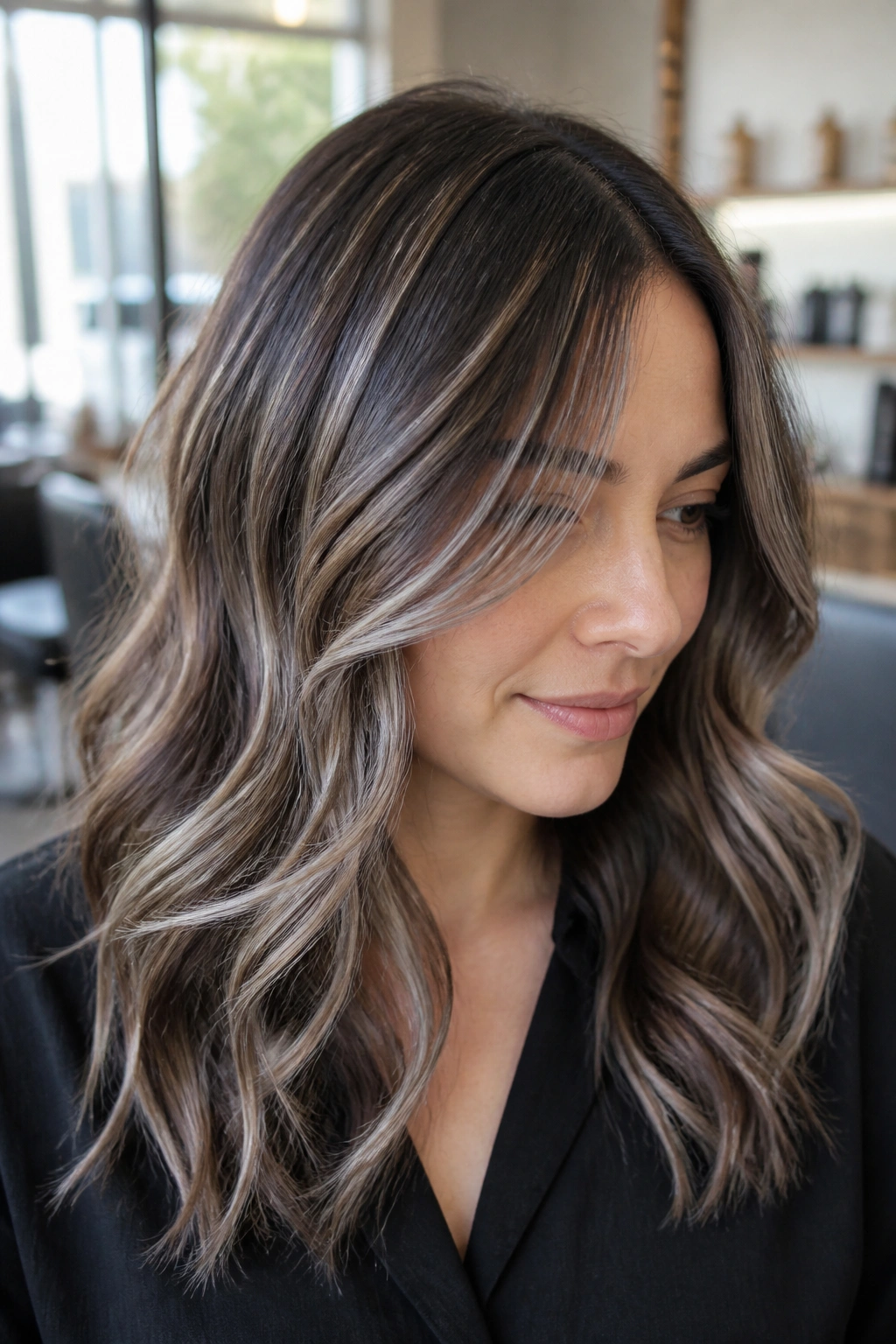
Soft silver babylights are the gentlest way to test grey on brown hair, and I reach for them when someone wants movement more than drama. The strands are so fine that the eye reads the whole head as cooler, not streaked. That matters on brunette bases, where thick grey lines can turn harsh fast.
Why They Blend So Well
Babylights mimic the look of hair that has been naturally lightened in a few delicate threads, then toned to a pale silver. On brown hair, that means you still keep the depth underneath, which is half the charm.
- Best on medium brown and light brown bases
- Works well with straight hair, soft waves, and layered cuts
- Needs a cool toner every 4 to 6 weeks if you want the silver to stay clean
- Looks most natural when the pieces sit around the face and crown
My advice: ask for more pieces than width. Tiny strands add up.
2. Smoky Face-Framing Pieces
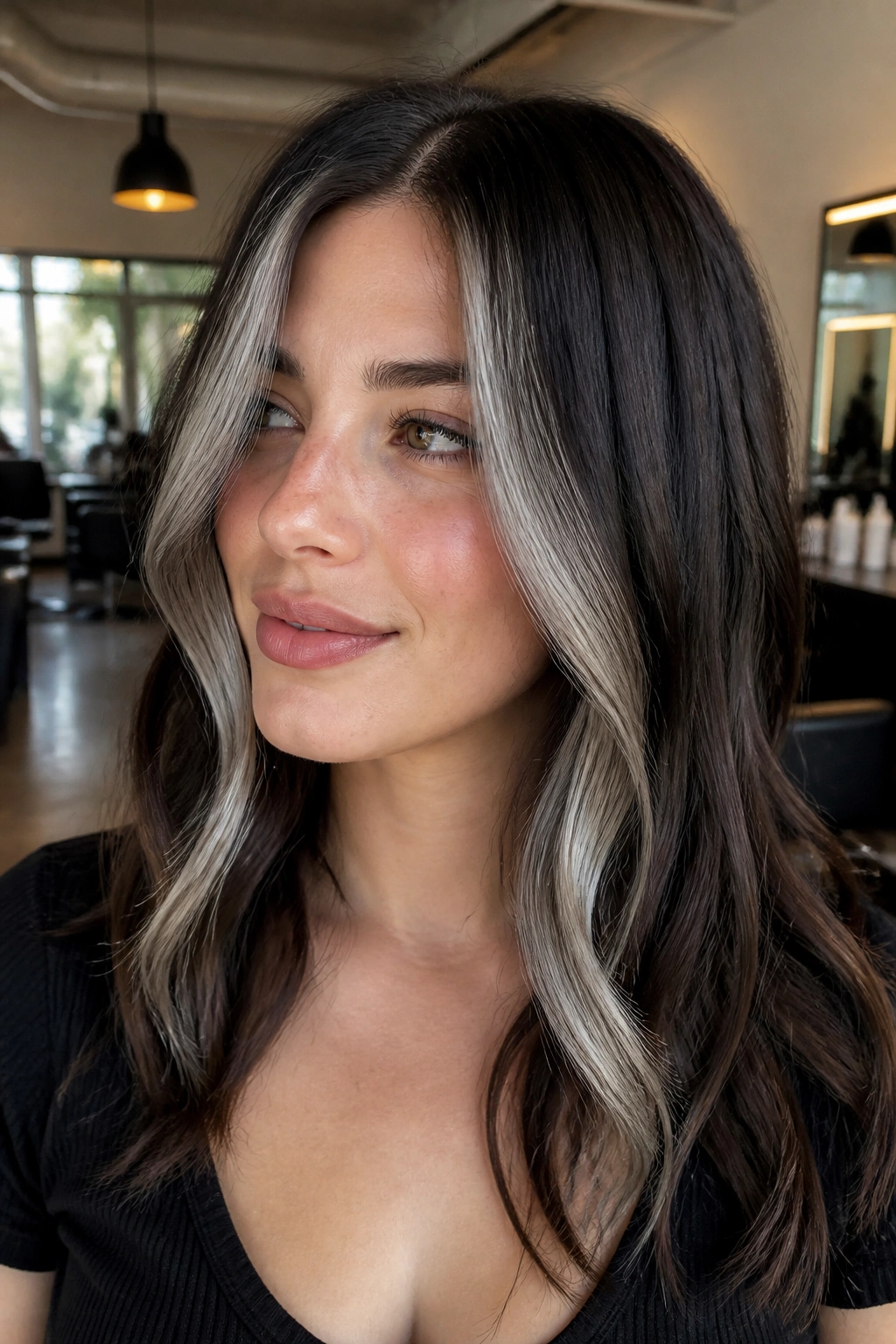
A few smoky pieces around the face can change the whole haircut. That’s the real appeal here. You don’t need an all-over grey transformation to get impact; two front sections, placed well, can brighten the skin and sharpen the outline of the hair.
The best version sits between ash and silver, not flat charcoal. Too dark, and the pieces disappear into brown hair. Too light, and they start looking disconnected from the rest of the color. A colorist usually lifts the front sections a little higher than the interior lengths, then tones them cool so the result feels deliberate instead of random.
A shoulder-grazing cut makes this look especially easy to wear. On longer hair, the pieces can fall into soft curves and create a sort of frame without screaming for attention. On shorter cuts, they can be sharper. Cleaner. More graphic.
3. Ash Grey Balayage on Brown Hair
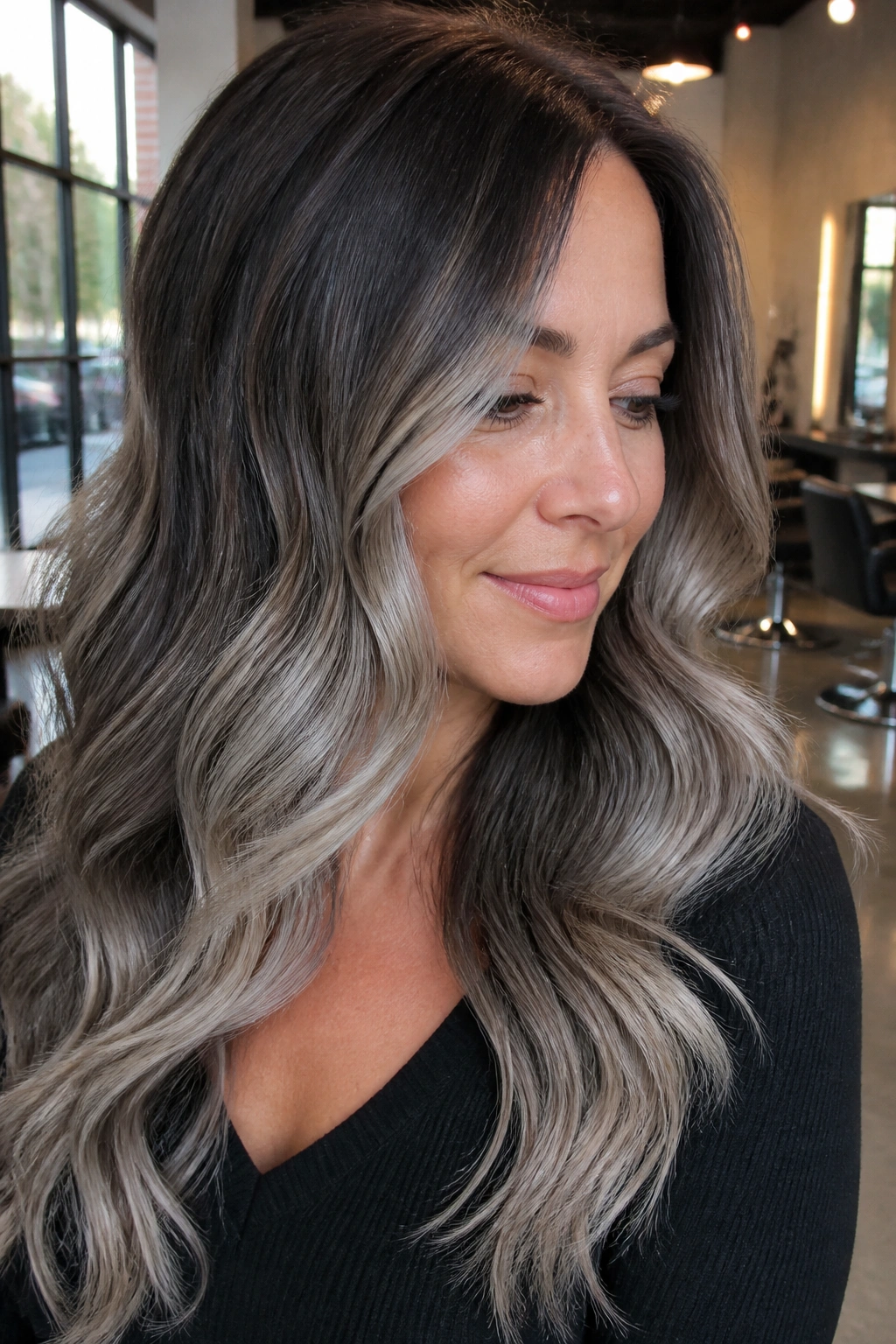
Want grey that grows out softly? Ash grey balayage is the workhorse here. The hand-painted placement keeps the highlights from looking like stripes, and the ash tone keeps the whole thing from sliding into yellow or beige.
Why It Works
Balayage gives the colorist control over where the grey lands: lighter at the ends, softer through the mid-lengths, and usually a little denser around the face. That shape matters because brown hair can take on a heavy look if the cool tones are packed too tightly near the roots.
A warm brunette can wear this look, but the base usually needs enough lift to support a muted grey finish. If the hair is already dark, the result often reads as smoky brown with silver edges rather than true silver.
How I’d Wear It
- Best on wavy or layered hair
- Easier to grow out than foil-heavy highlights
- Looks polished with a matte styling cream or light wave spray
- Pair with a neutral gloss if the grey starts to lean green
4. Chunky Charcoal Ribbons
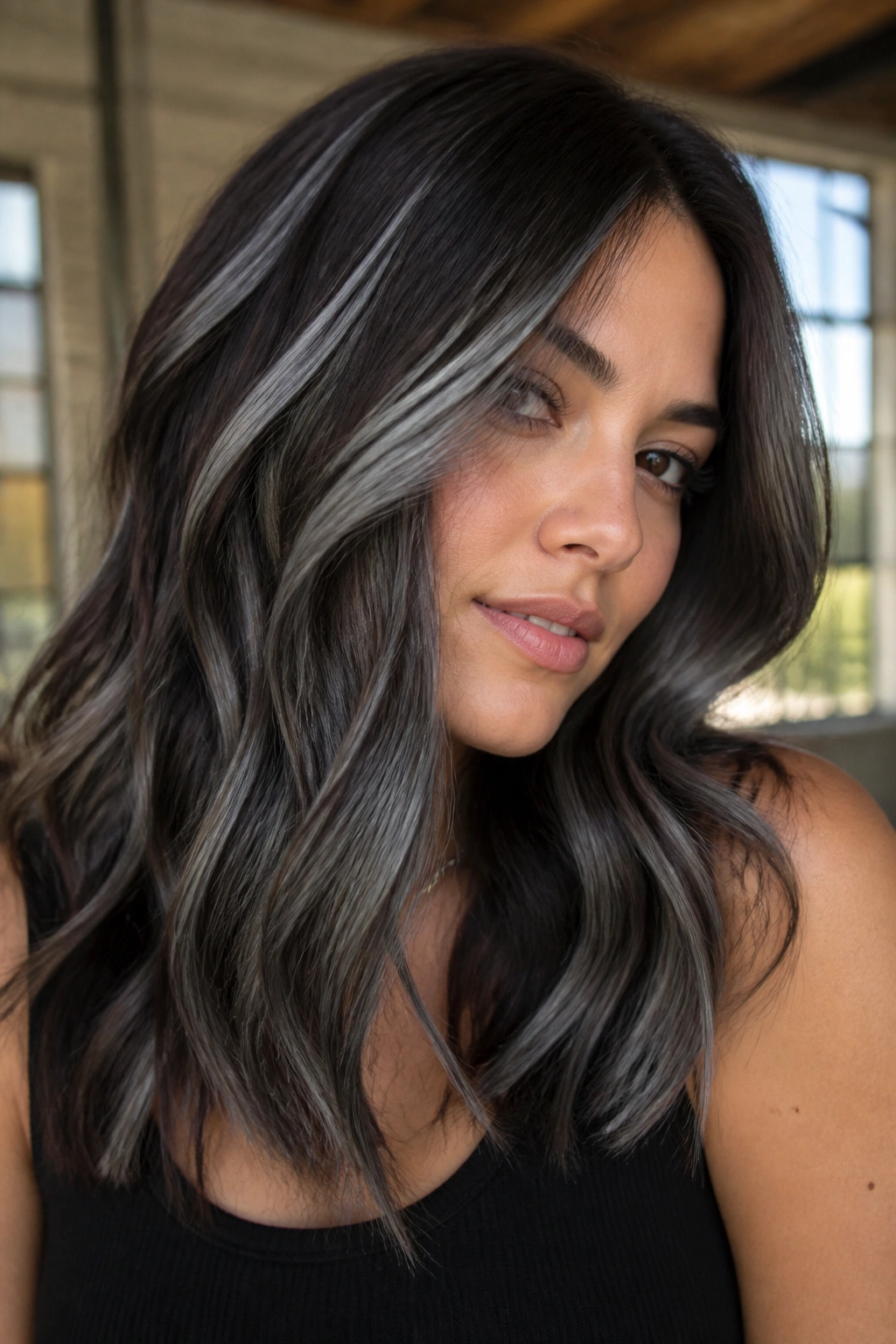
Picture a brown base with a few bold charcoal ribbons running through it. Not zebra stripes. Something cleaner than that. The contrast is the point, and on the right haircut it can look sharp instead of loud.
This style suits people who like visible color and don’t want to pretend otherwise. The grey is deeper, more dramatic, and often placed in wider sections so it shows when the hair moves. That makes it a strong choice for long layers, blunt lobs, and textured shags.
The key is keeping the charcoal cool enough that it doesn’t go brown again under warm light. A colorist will often tone those strands with an ash or graphite finish, then place them where they break up the brunette base without swallowing it.
- Best on medium-to-dark brown hair
- Strongest on straight or lightly waved styles
- Needs a smoothing product so the chunky contrast looks sleek, not patchy
- Works well if you like a bolder, fashion-forward finish
5. Mushroom Brown With Grey Threads
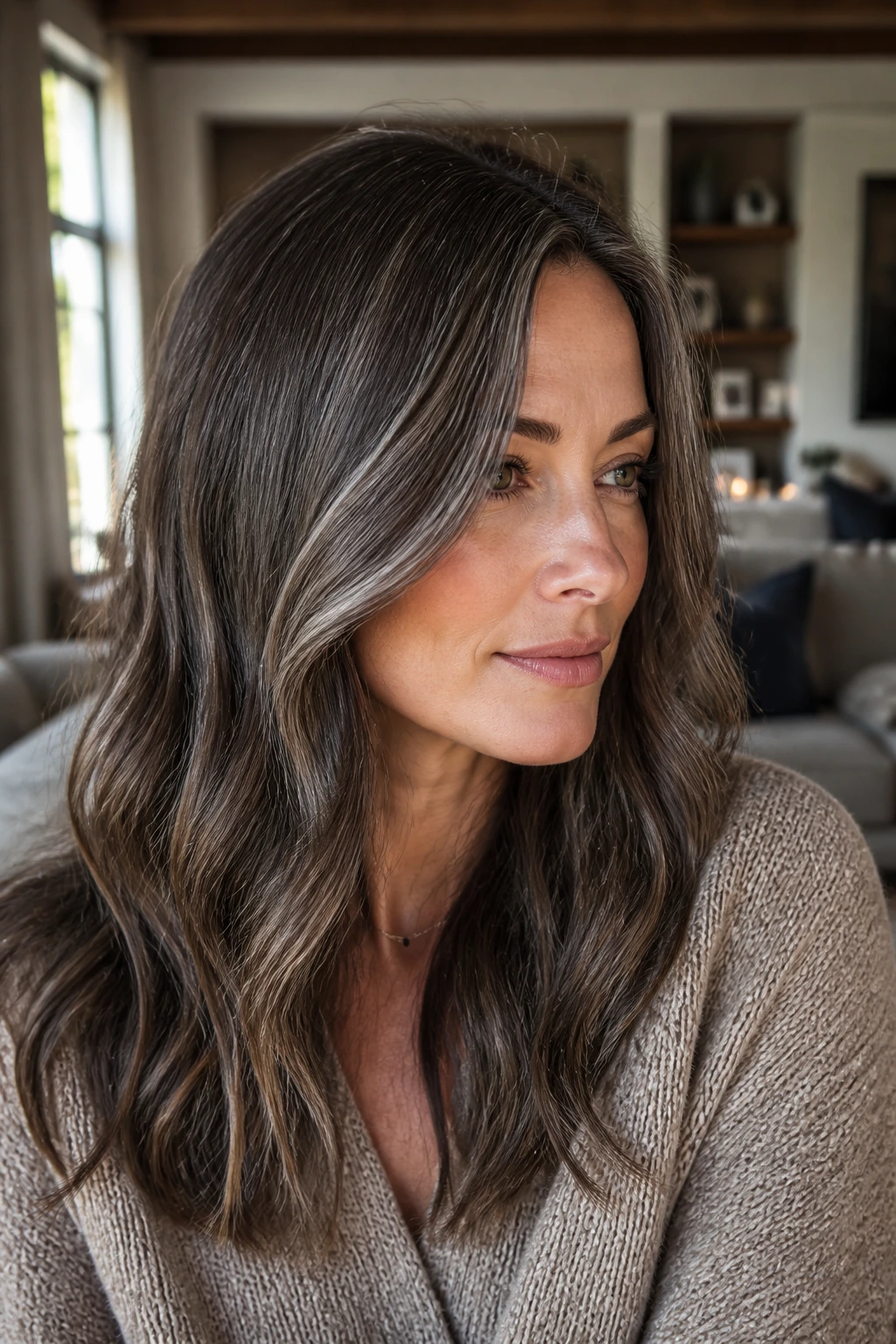
Mushroom brown already lives in that cool, earthy space where grey highlights feel at home. Add a few thin silver threads and the whole color gets richer, not lighter. That’s why I like this look on clients who want something subtle but not boring.
The trick is restraint. You are not chasing a full grey head here. You’re threading pale ash and silver through a neutral brown base so the hair picks up a soft, cool cast when it moves. The result looks especially good on dense hair, where tiny cool strands can break up heaviness without stealing the show.
It also grows out gracefully. The brown stays dominant, which means you don’t end up fighting obvious regrowth lines. And because mushroom brown sits close to natural brunette depth, the grey threads can be refreshed with a gloss rather than a full color correction every time.
If your hair tends to pick up warmth, this is one of the smarter grey highlight choices. It has enough depth to stay flattering.
6. Silver Ombré Ends
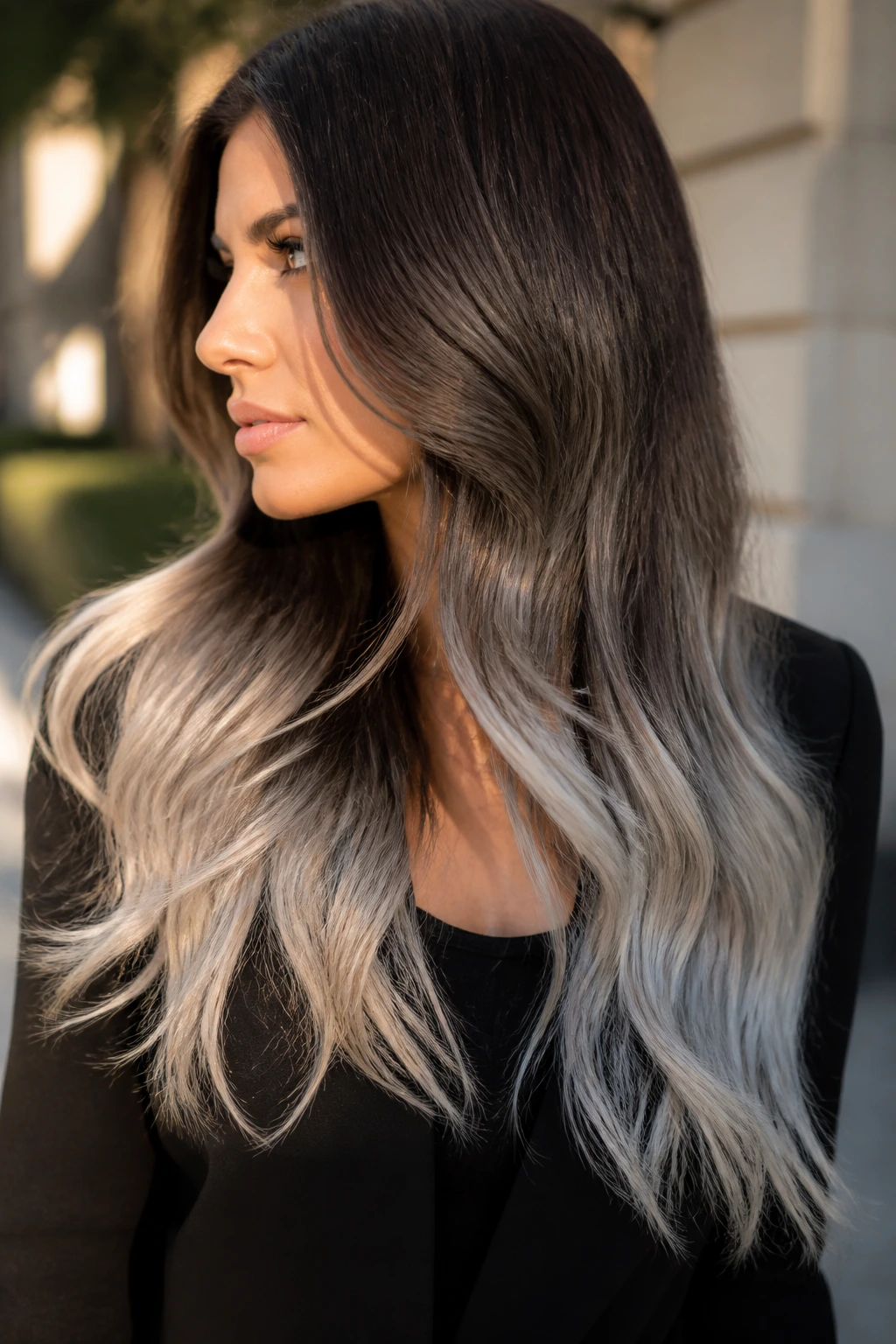
Silver ombré ends give you the cleanest transition from brown to grey. The color stays darker near the roots, softens through the mids, and lands in a cool silver at the ends. No surprise banding. No abrupt stops.
Why It’s Different From Full Highlights
Unlike all-over grey highlights, ombré keeps most of the maintenance at the lower half of the hair. That means you can keep your natural brown root and still get a dramatic finish where the hair swings and moves. It’s a strong look on long hair because the fade has room to breathe.
The ends do need enough lift to hold silver, which is where some people get stuck. If the brown is very dark, the hair may need more than one lightening session to reach a clean canvas. Rushing that part usually leaves the ends orange, and orange plus grey is a bad deal.
Who It Suits Best
- Long straight hair
- Soft waves with a middle part
- Anyone who wants visible grey without constant root touch-ups
Tip: keep the ends trimmed. Silver on dry, split ends looks tired fast.
7. Peekaboo Grey Panels
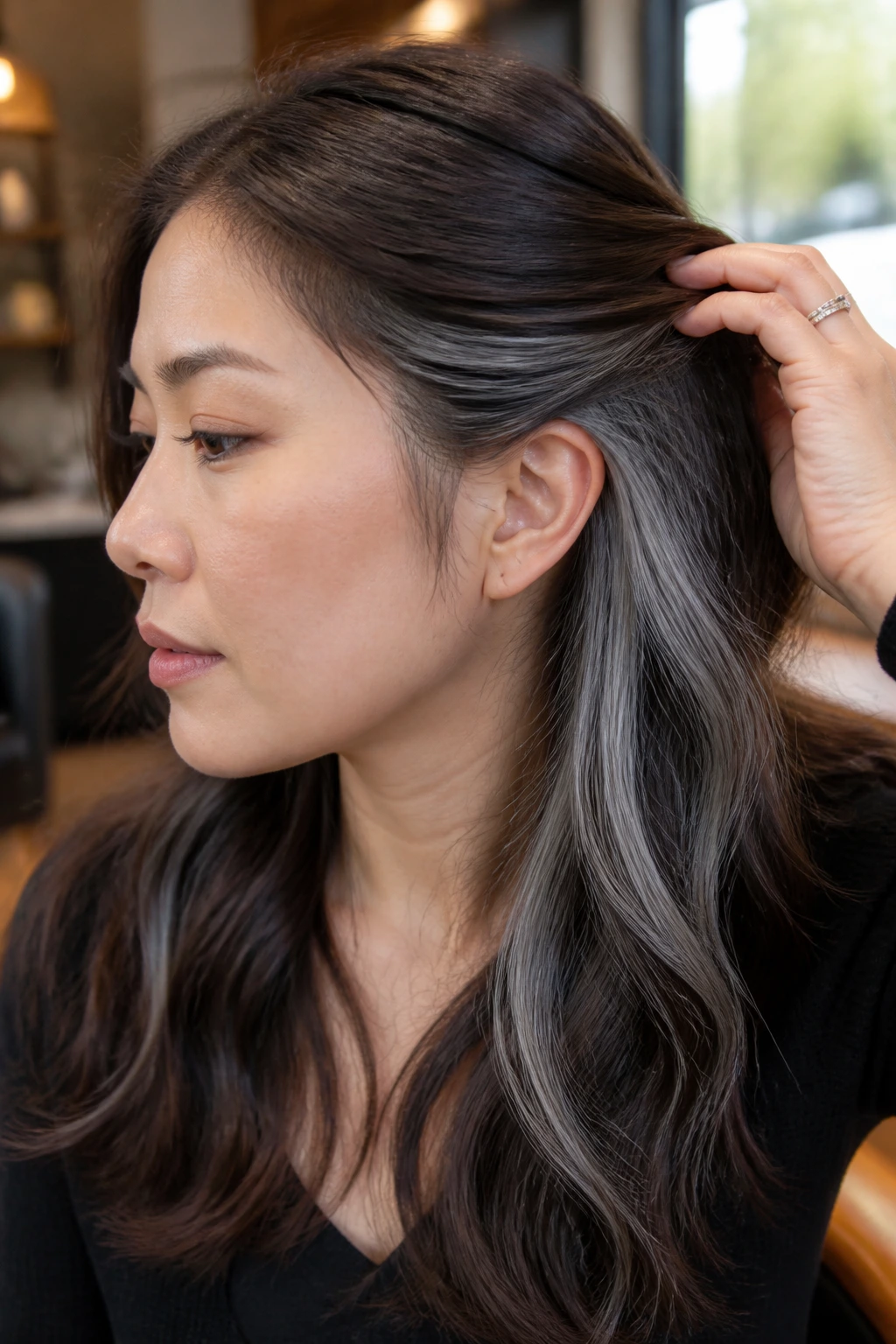
Peekaboo grey panels are for the person who wants surprise color, not constant color. The grey sits underneath the top layer of brown hair, so it shows when you tuck the hair behind the ear, tie it up, or move it a certain way.
What Makes It Different
The visual effect is sneaky in the best way. From the front, the hair can look like a standard brunette cut. Then the underlayer flashes slate, silver, or ash when the hair shifts. That makes the style useful if you need your color to stay a little quieter in work settings.
On thick hair, peekaboo panels can be wider and still stay hidden. On fine hair, smaller panels work better because too much contrast can look like a chunk missing instead of a deliberate design.
How to Wear It
- Ask for the panels to sit just below the top crown layer
- Keep the tone cool rather than icy white
- Works especially well with ponytails, buns, and half-up styles
- Refresh with a gloss, not heavy re-lightening, if the contrast stays in place
8. Frosted Money Piece
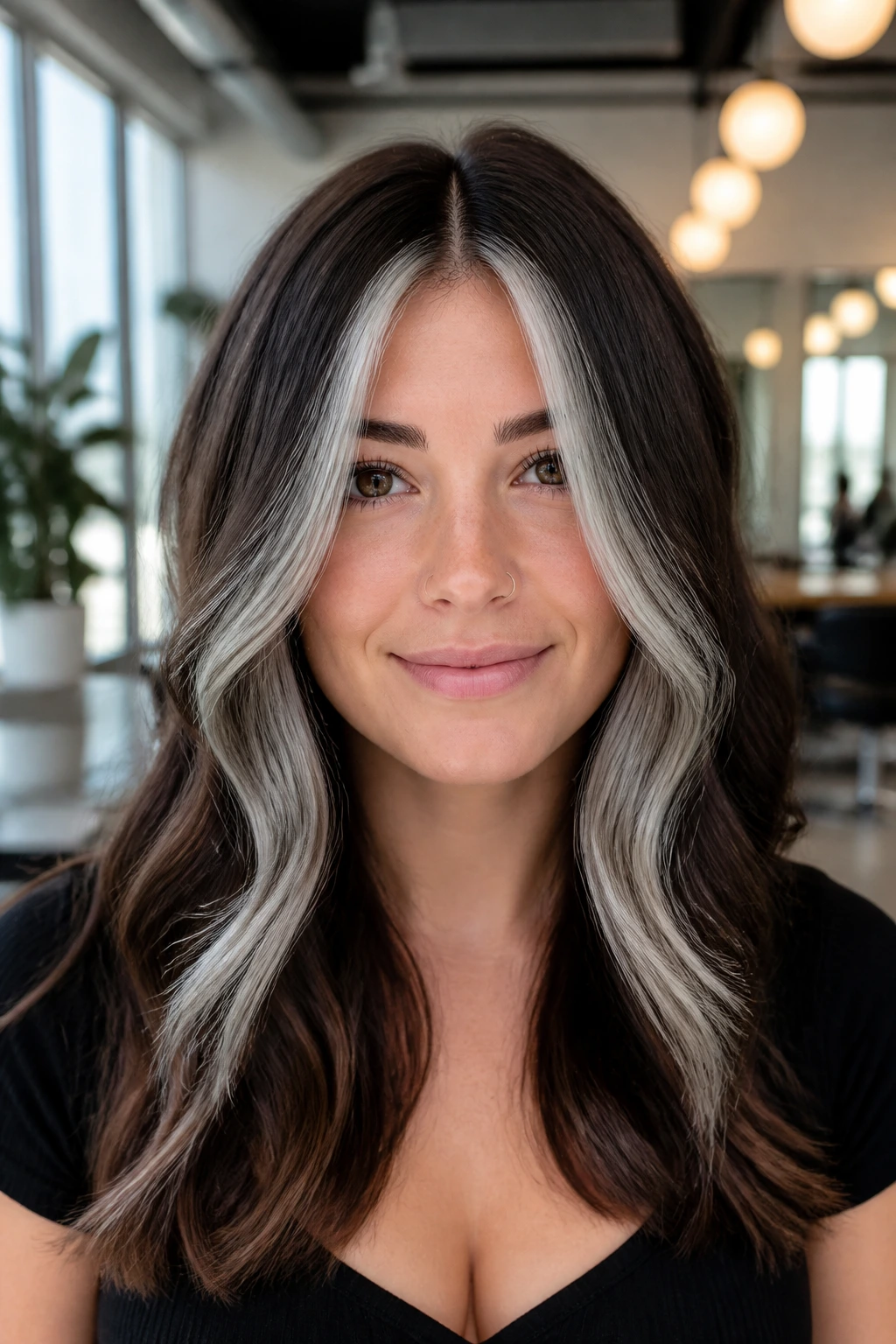
If you want brightness fast, the frosted money piece is the move. Two face-framing sections, lifted to a pale grey-silver, can wake up brown hair in a way that feels sharper than a full head of highlights.
The reason this works is simple: the front sections catch the eye first. When they’re frosted and cool, they create a clean edge against the brunette base. On layered hair, that edge gets even more visible because the front pieces fall forward and separate from the rest.
This is a good pick if you like trendy details but do not want to commit to a heavy color service. It also plays nicely with makeup. A frosted money piece can make bronzer, liner, and a strong brow stand out without much extra effort.
Wear it with center-parted hair if you want symmetry. Wear it off-center if you want the face frame to feel a little softer.
9. Gunmetal Highlights
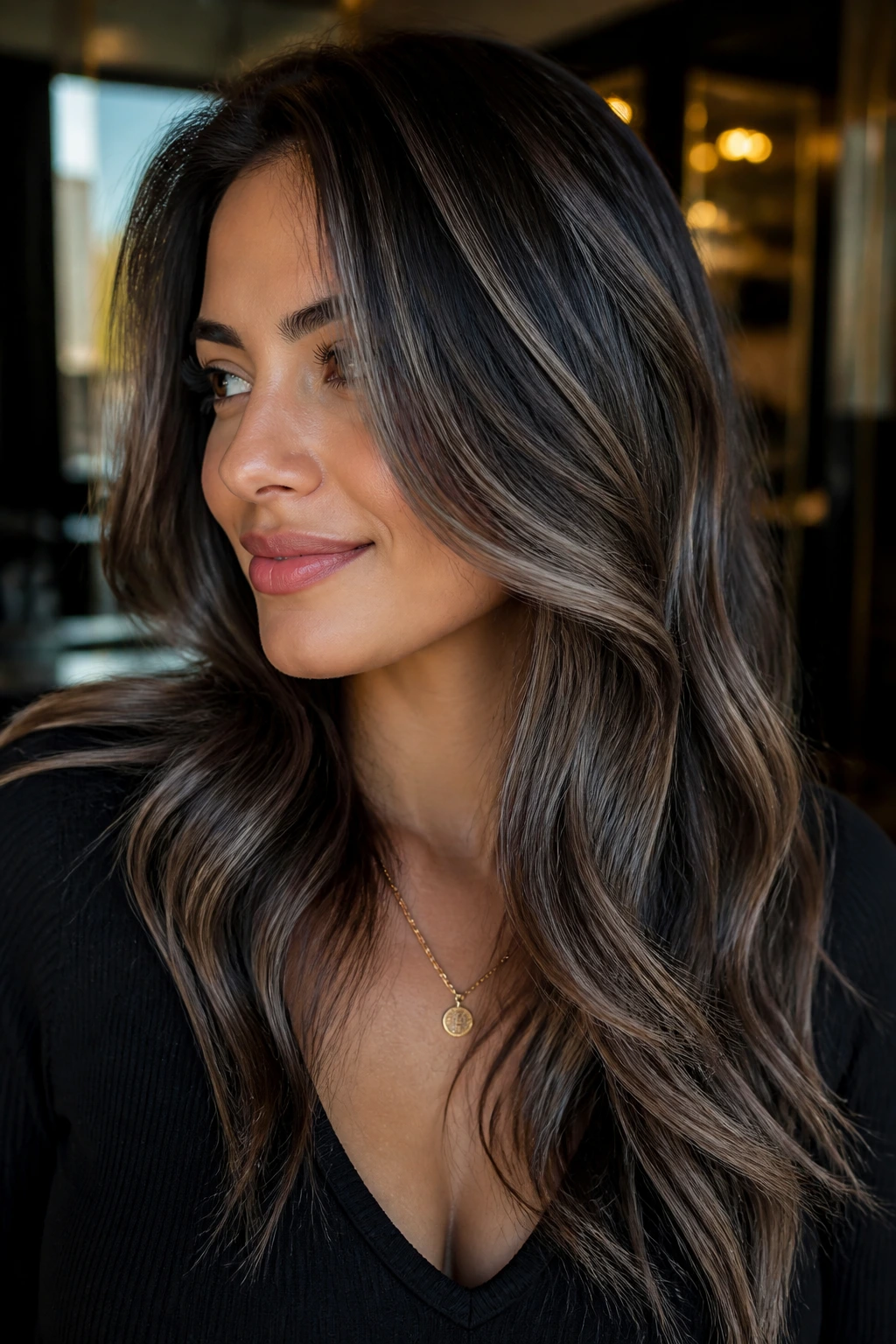
Can grey look rich instead of pale? Absolutely. Gunmetal highlights prove it. This shade sits darker than silver and cooler than brown, so it reads as sleek rather than frosty.
The Science Behind the Look
Gunmetal works because it keeps enough depth to live inside brunette hair instead of floating on top of it. That makes it a strong choice for dark brown bases that would swallow a lighter silver. The result is a metallic sheen that shows most clearly in movement and under strong light.
A blunt bob or smooth blowout gives this color room to shine. Curls work too, but the tone gets softer and less obvious with texture, so if you want the gunmetal to read clearly, keep the styling polished.
Best Use Case
- Dark brown hair that needs contrast without going pale
- People who want a cool, urban look
- Shorter cuts or straightened lengths
A gloss with blue-violet undertones helps keep the metal finish crisp.
10. Graphite Shimmer
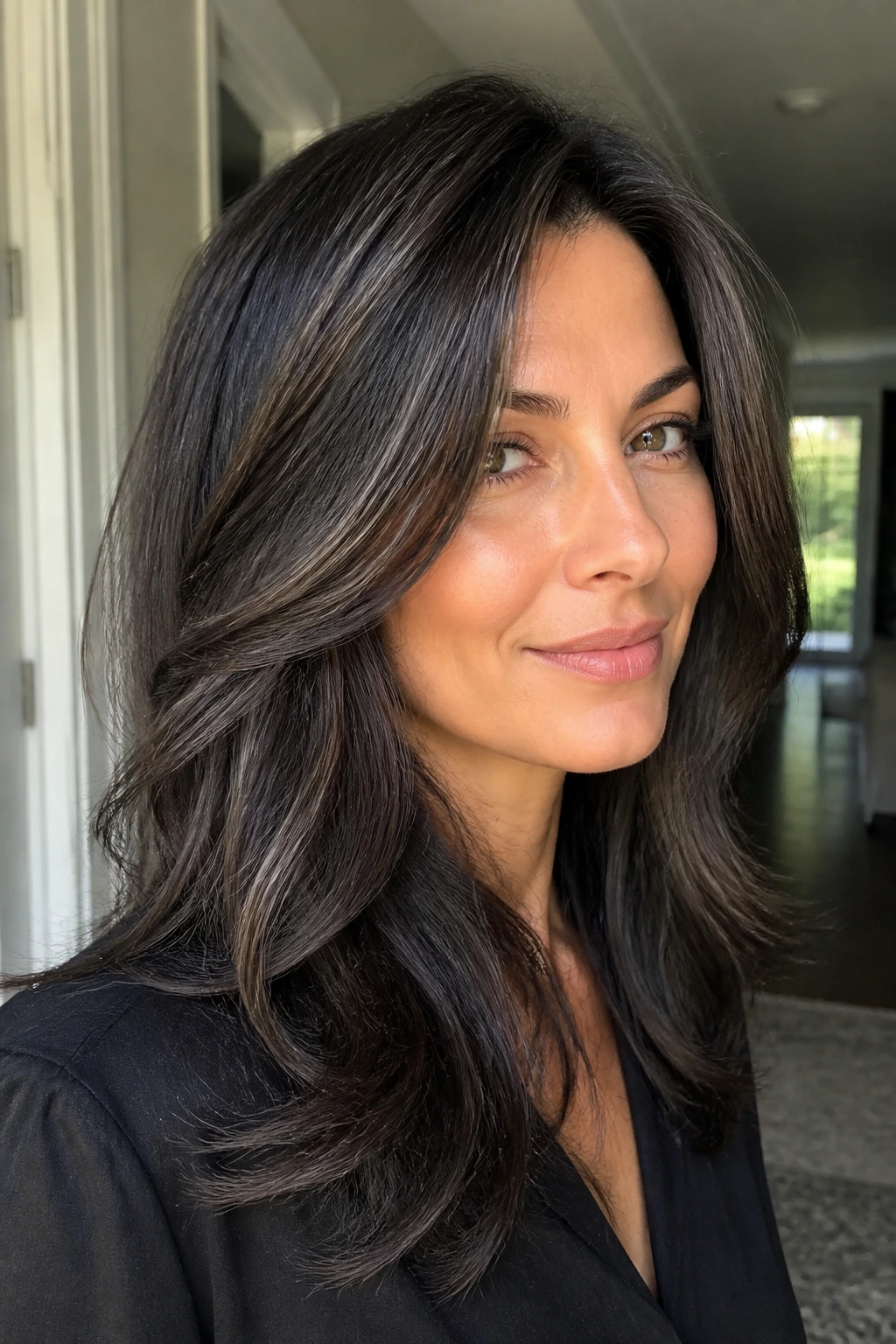
I’ve seen graphite shimmer look expensive on the least fussy haircuts. A simple layered brunette with a few dark grey lights can suddenly look deliberate, almost tailored, and the color does the work without much styling.
The shimmer comes from mixing narrow graphite strands with your natural brown. The pieces are close enough in value that the eye catches them in motion, not as a loud stripe. That makes the look easy to wear on busy mornings when you’re not doing much more than a quick blow-dry.
It also helps if the haircut has movement. A one-length cut can make graphite seem flat. A cut with soft ends or loose layering lets the grey sections break the surface in a nicer way.
- Good for medium and dark brown bases
- Needs shine products more than heavy texture sprays
- Looks strongest in straight or softly waved styles
- A cool-toning shampoo every 2 to 3 washes helps the finish stay clean
11. Salt-and-Pepper Blend
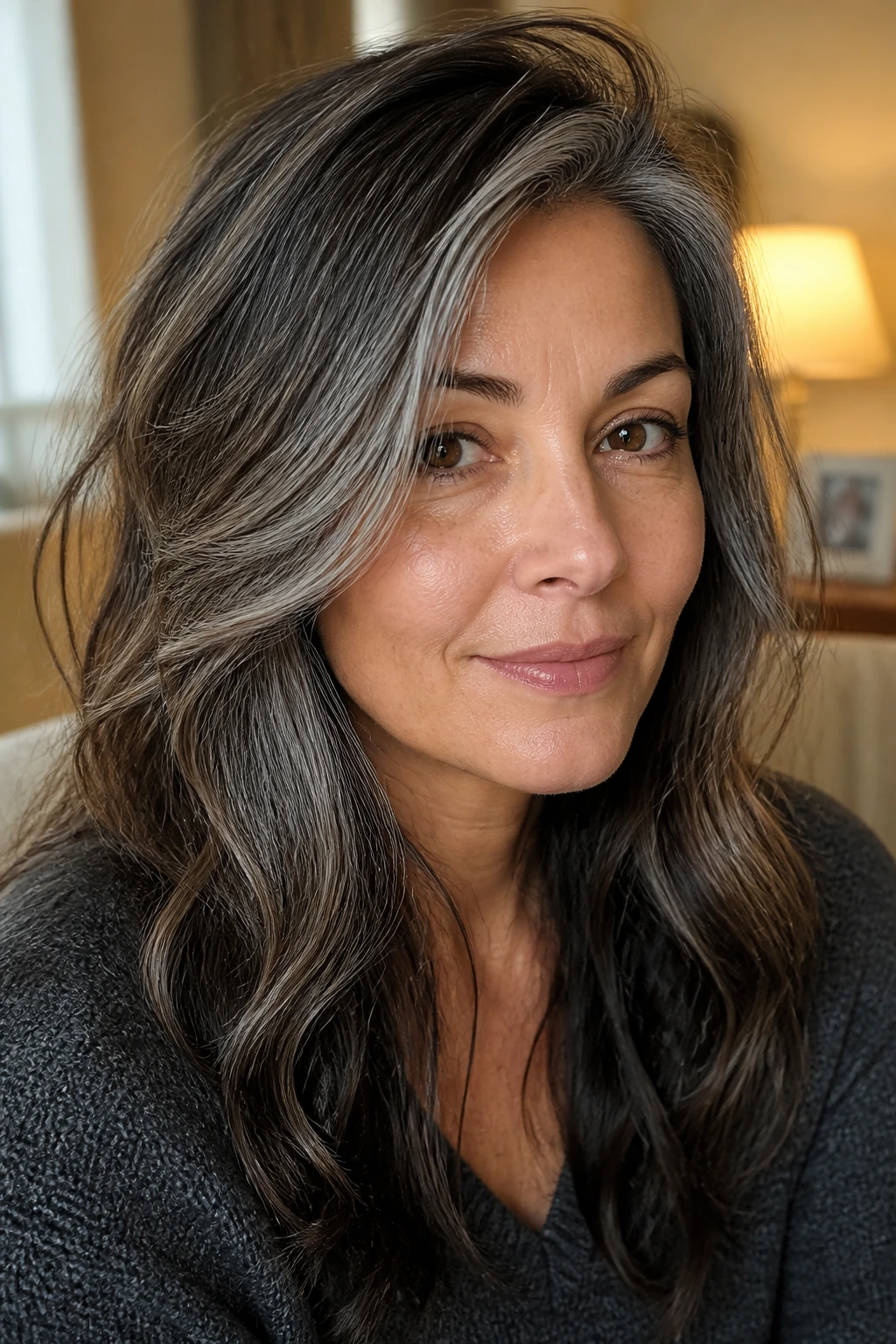
Salt-and-pepper blend is the closest thing to a natural grey story on brown hair, and that’s why it has staying power. Instead of forcing a dramatic silver result, it mixes brown, ash, and grey so the whole head feels lived-in and intentional.
The best versions keep some brown visible near the root and through the underside. That prevents the hair from looking overprocessed, which is a real risk when grey is placed too evenly. The beauty here is the unevenness. A few cooler strands near warmer brown pieces give the color depth that a single-tone silver cannot fake.
This style suits people who want softness and do not want to visit the salon every month. It’s also kind to hair that’s already been colored before, because the lighter pieces don’t need to be pushed to a screaming pale level.
One small thing: salt-and-pepper can look muddy if the toner is too beige. Keep it cool.
12. Platinum-Silver Weave
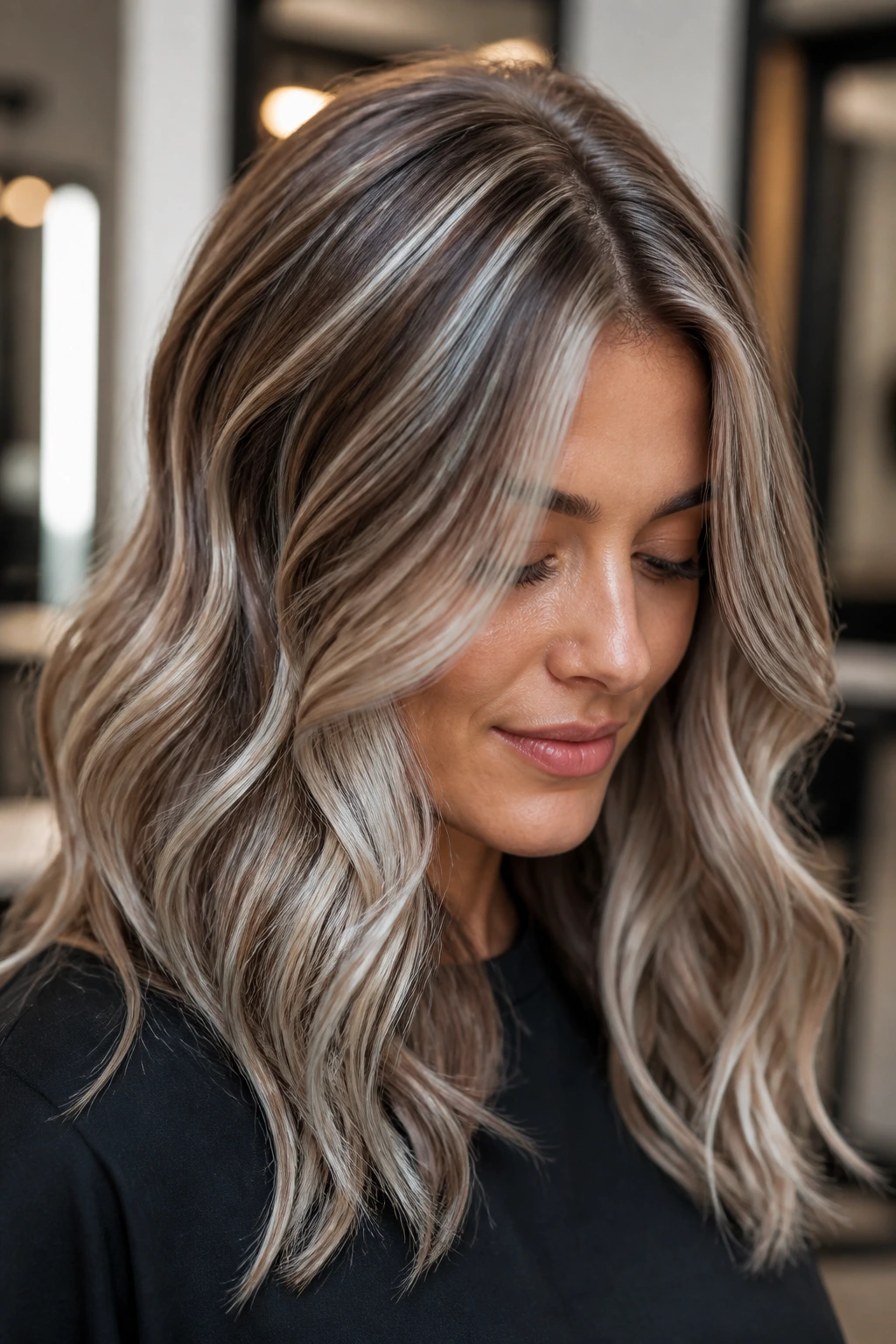
Platinum-silver weave is not for the timid, and that’s part of the appeal. The lighter strands are woven through the brown base in a fine, even pattern, so the color looks bright from a distance and textured up close.
Unlike chunky highlights, the weave uses tight placement to build a shimmering effect. Think of it as a high-density version of grey highlighting. On light brown hair, it can look clean and reflective. On darker brown, it reads more as contrast, which gives the style a sharper edge.
This is the kind of look that needs a careful colorist. If the light and dark sections are not balanced, the weave can become busy fast. But when it lands well, it has a polished, striped-silk feeling that works especially well on layered cuts and long bobs.
Best suited to:
- Medium brown bases
- Smooth blowouts
- Hair that can handle regular toning
- Someone who wants visible cool contrast
13. Steel Grey Ribbons
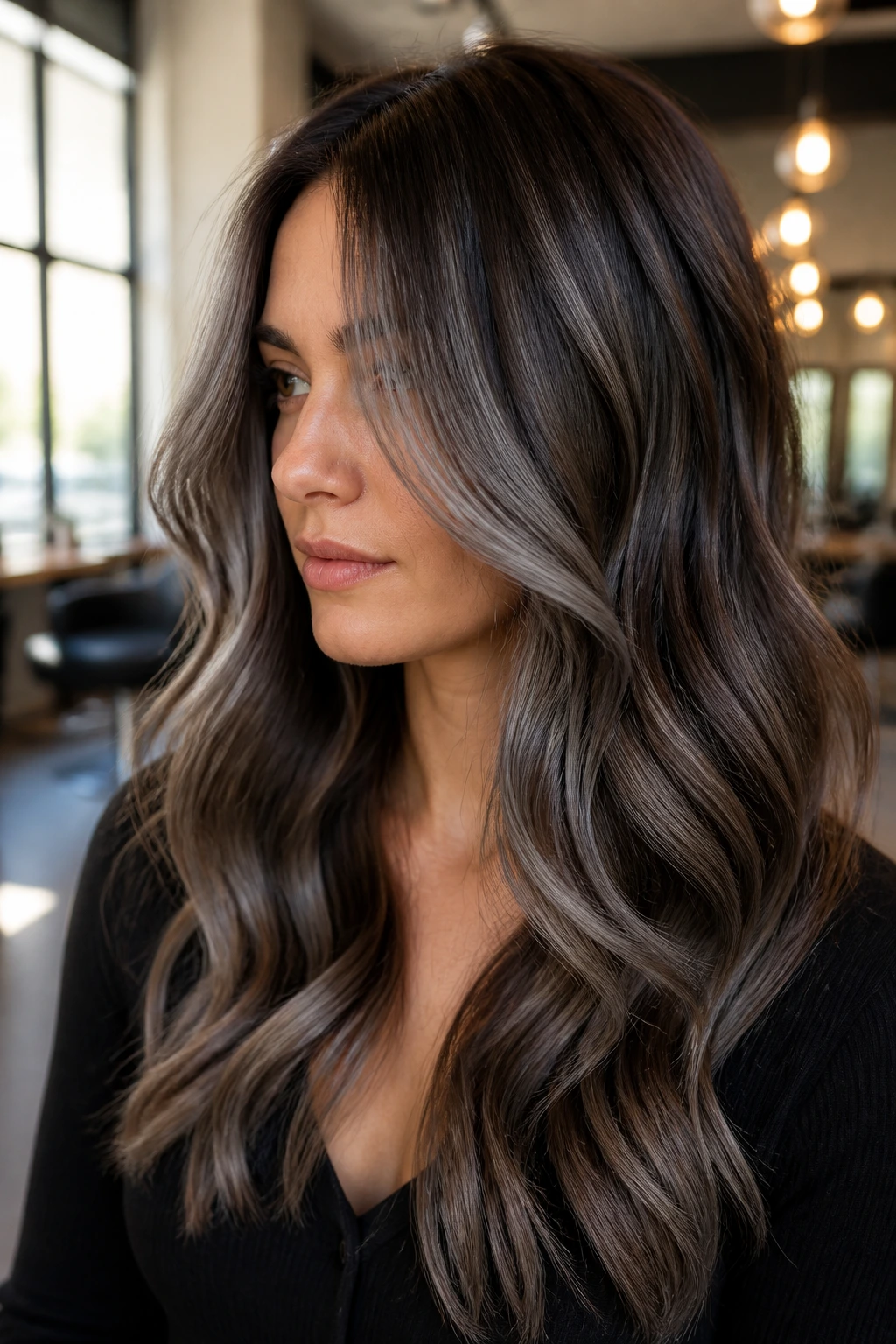
Steel grey ribbons sit right between softness and edge. The ribbons are visible, but not chunky, and the tone is cooler than graphite without becoming icy. That balance makes the style easy to wear on a brown base that needs movement.
Why It Works
The ribbon shape gives the eye something to follow. Instead of scattering grey everywhere, you place it in curved sections that echo the haircut. The result feels more expensive than random streaking because the color supports the cut.
On long layers, the ribbons can drop through the hair and catch movement. On medium-length hair, they create a cleaner graphic line. Either way, they work best when the tone stays muted and metallic, not pastel.
How to Use It
- Ask for ribbon placement through the mids and ends
- Keep the root area deeper for contrast
- Pair with loose waves to show the color bands
- Use a cool gloss if the steel tone starts drifting warm
This is one of my favorite grey highlight choices for brunettes who want definition without chaos.
14. Urban Smoke Streaks
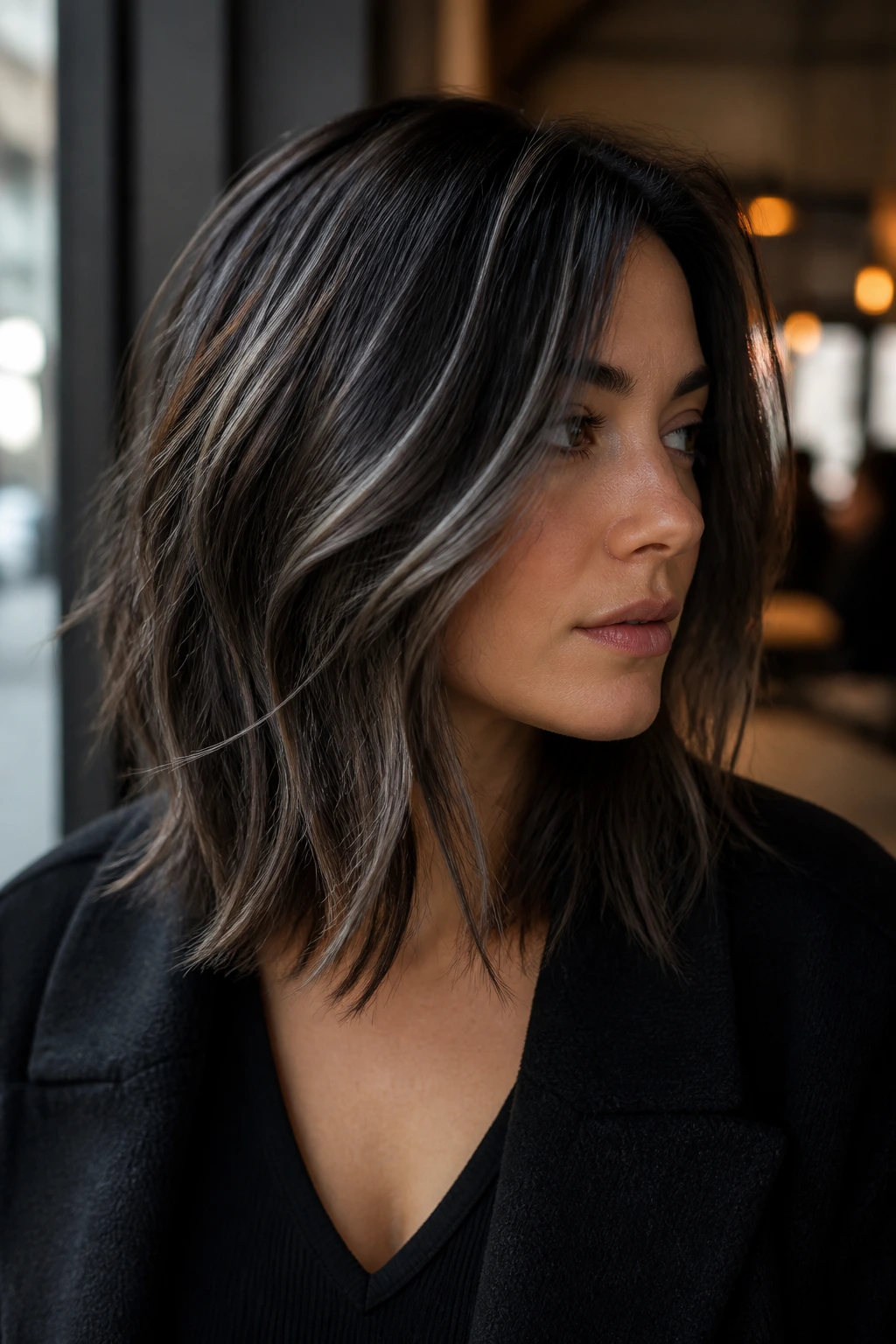
Urban smoke streaks are what happen when grey stops trying to be delicate. The strands are darker, moodier, and a little gritty in the best sense. On brown hair, they create a city-light effect—dark base, smoky movement, and cool flashes where the light hits.
The look depends on contrast. You want the grey to be visible enough to change the haircut, but not so pale that it looks detached from the brunette underneath. That makes it especially good for shoulder-length cuts, angled bobs, and textured shags where the streaks can move through the layers.
A matte finish suits this style better than a glossy one. It keeps the smoke effect intact. Too much shine and the color starts reading as silver instead of dark smoke.
This is the style I’d recommend to someone who likes a little attitude in their hair. It has edge. It knows it.
15. Grey Ombré Bob
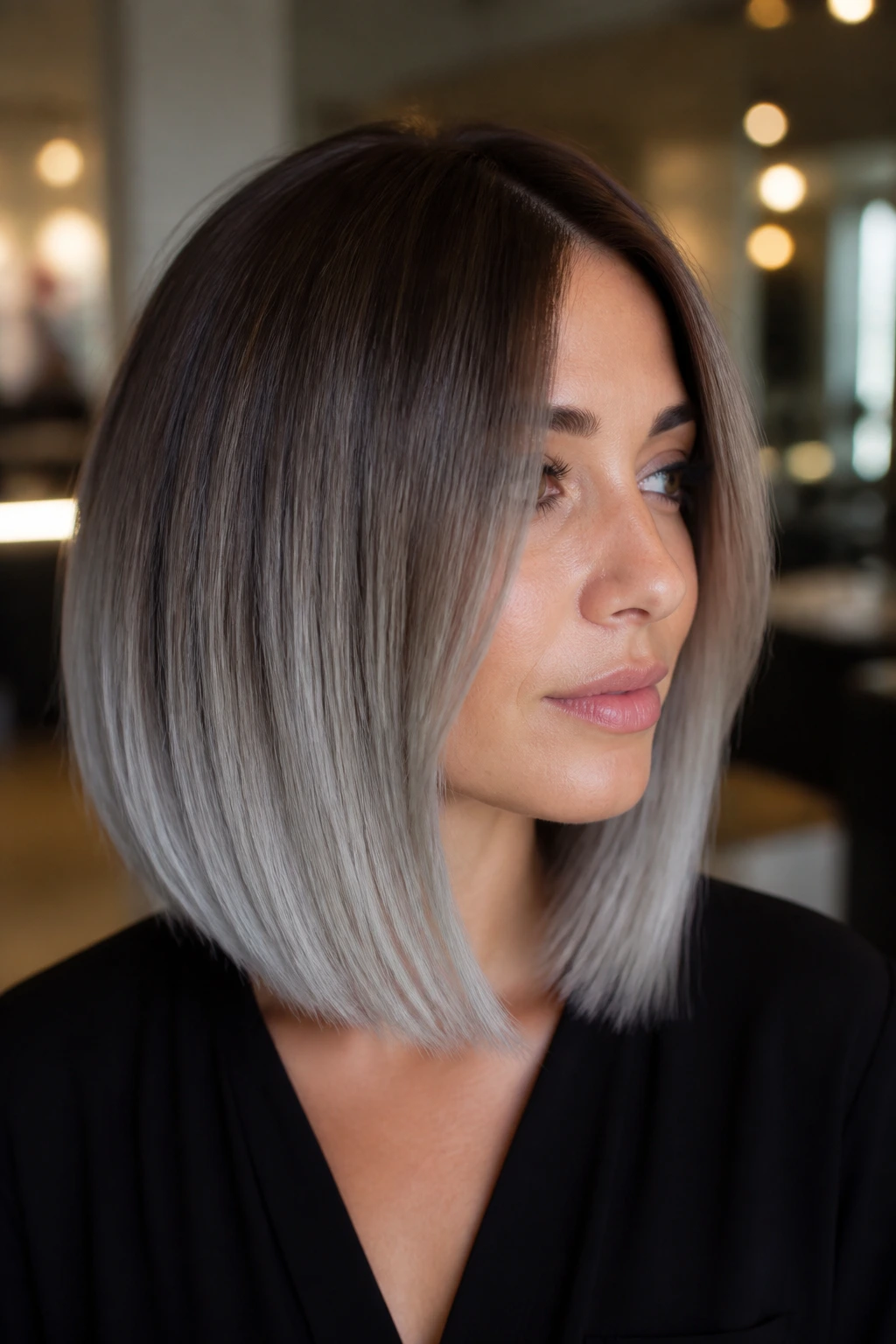
Why does a grey ombré bob work so well? Because the haircut itself does half the styling. A bob gives the color a hard edge, and the fade from brown to grey adds softness right where the blunt line could otherwise feel severe.
How to Get the Most From It
The root stays brown, the mid-lengths shift cooler, and the ends move into silver or slate. That vertical fade looks especially good when the bob is a little longer in front, since the color can trail into the shape of the cut.
A bob also makes maintenance easier. You trim the ends often anyway, which helps the grey finish stay clean instead of frayed. If your hair is naturally straight, the fade reads more precisely. If it’s wavy, the color looks a little more relaxed and dimensional.
What to Watch For
- Over-lightened ends can look thin
- Very dark roots need a thoughtful transition
- A gloss every few weeks helps the silver stay smooth
- Works best when the cut is crisp
This is one of those styles that looks cleaner in person than it does in a flat photo.
16. Cool Taupe-Grey Accents
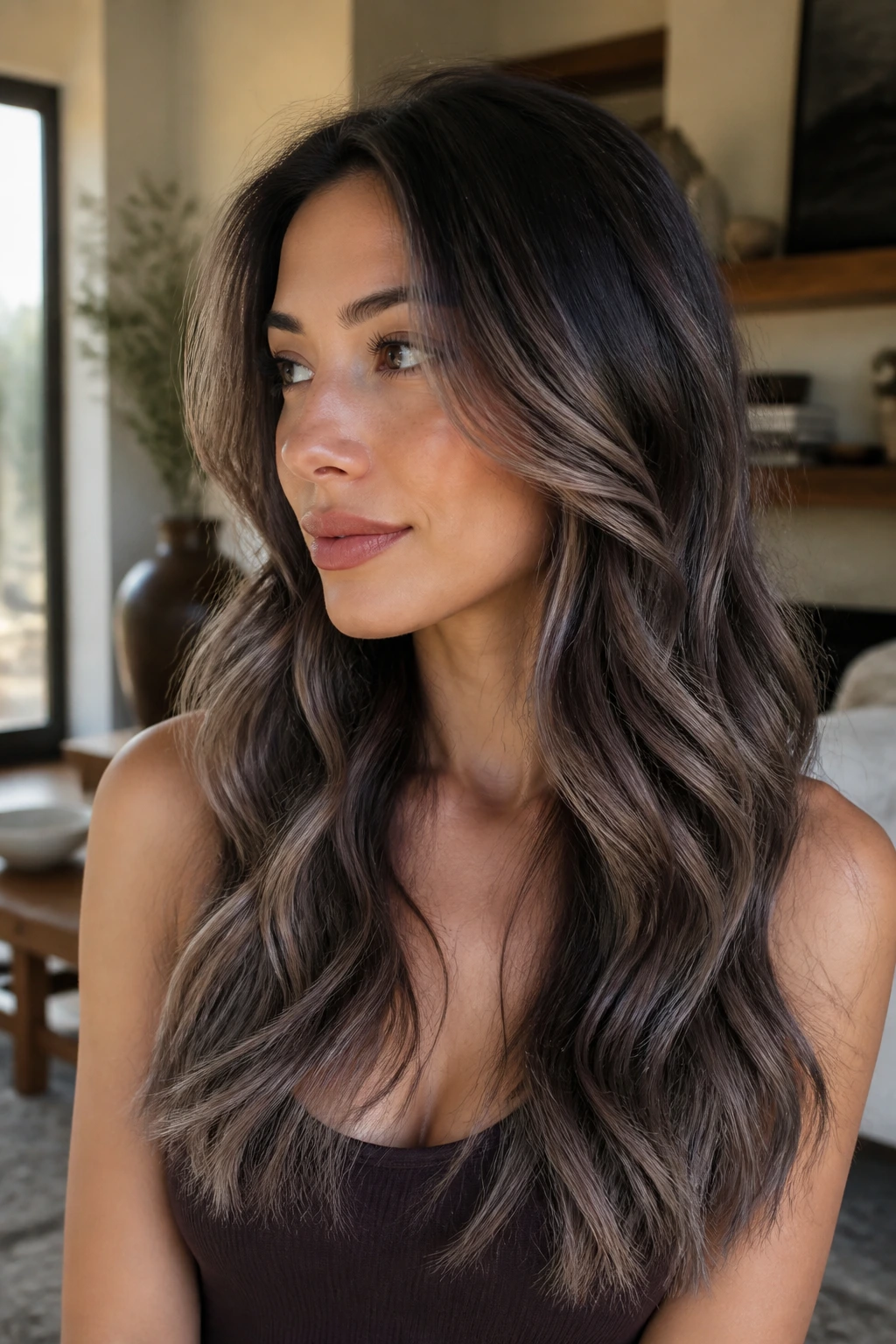
A cool taupe-grey accent is the quieter cousin in this whole family. The grey is softened with beige-ash undertones, so it doesn’t shout silver. On brown hair, that can be a relief.
The look is especially good if your skin leans warm or neutral and harsh silver makes you look tired. Taupe-grey keeps the hair cool but not icy, which helps the face stay balanced. It’s also useful for people who like subtle dimension more than visible streaks.
The placement usually matters more than the shade here. A few under-layers, some ends, and soft pieces through the crown can keep the effect moving without creating hard lines. It works well on soft waves because the shape of the wave gives the color a little lift.
Not every grey highlight needs to be dramatic. This one proves the point. It is low-key, a bit smoky, and far easier to live with than a full metallic conversion.
17. Metallic Silver Foil Highlights
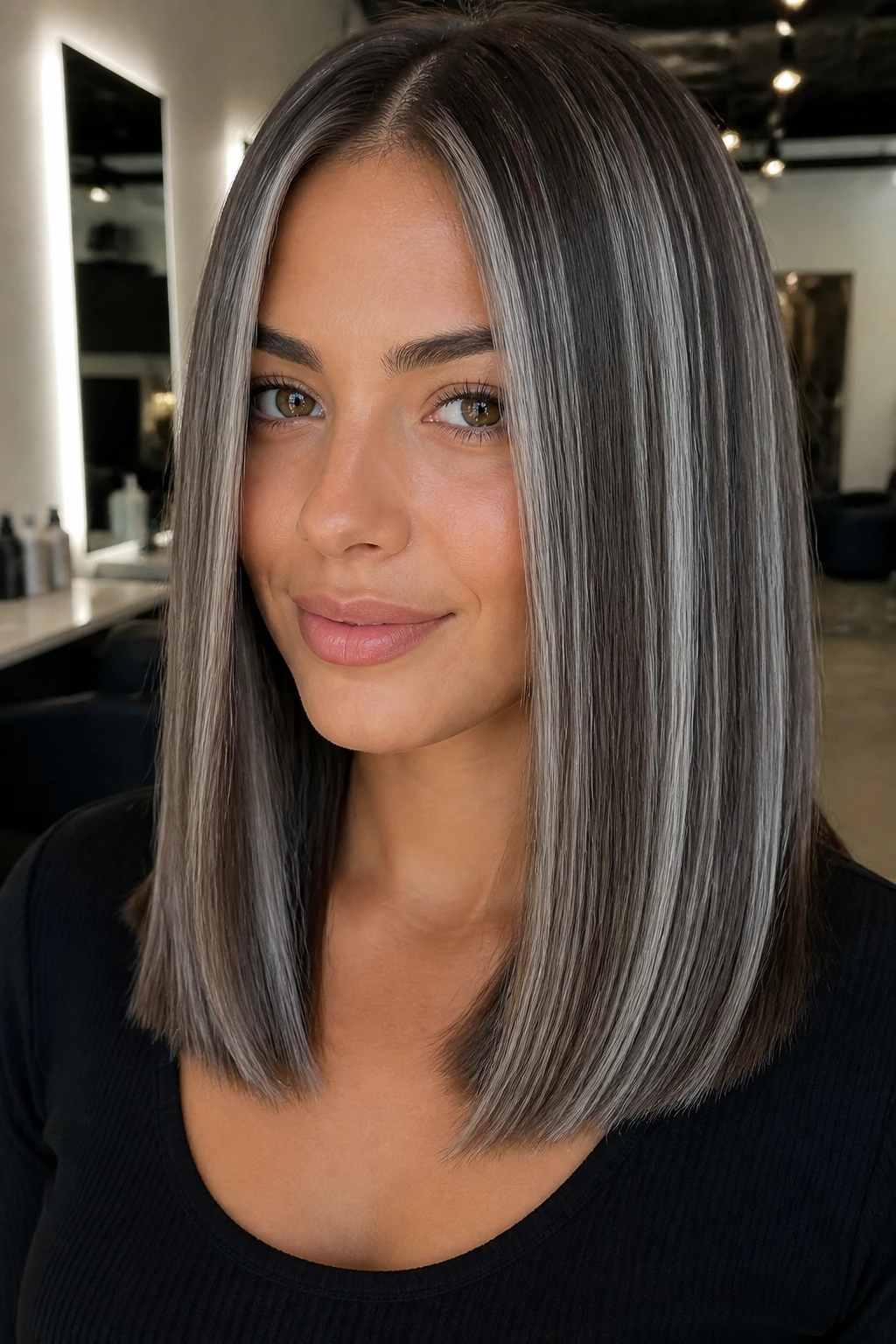
Metallic silver foil highlights are the high-contrast, high-precision version of grey on brown hair. Foils let the colorist isolate neat sections, which usually means cleaner lift and a brighter silver result than freehand painting alone.
The metallic finish comes from the toner more than the bleach. The lifting gets the hair pale enough to support silver, but the toner is what makes the strands read like polished metal instead of pale yellow. On brown hair, that finish looks strongest when the highlights are evenly spaced and not too wide.
This style asks for confidence. It is not shy. But it also gives structure to the haircut, especially if you have straight or blunt lengths that can handle crisp placement.
I’d recommend this to someone who wants a more salon-forward result and does not mind keeping up with toner. Silver foil highlights can look razor-sharp for a while, but they need maintenance to stay that way.
18. Smoke-Dipped Layers
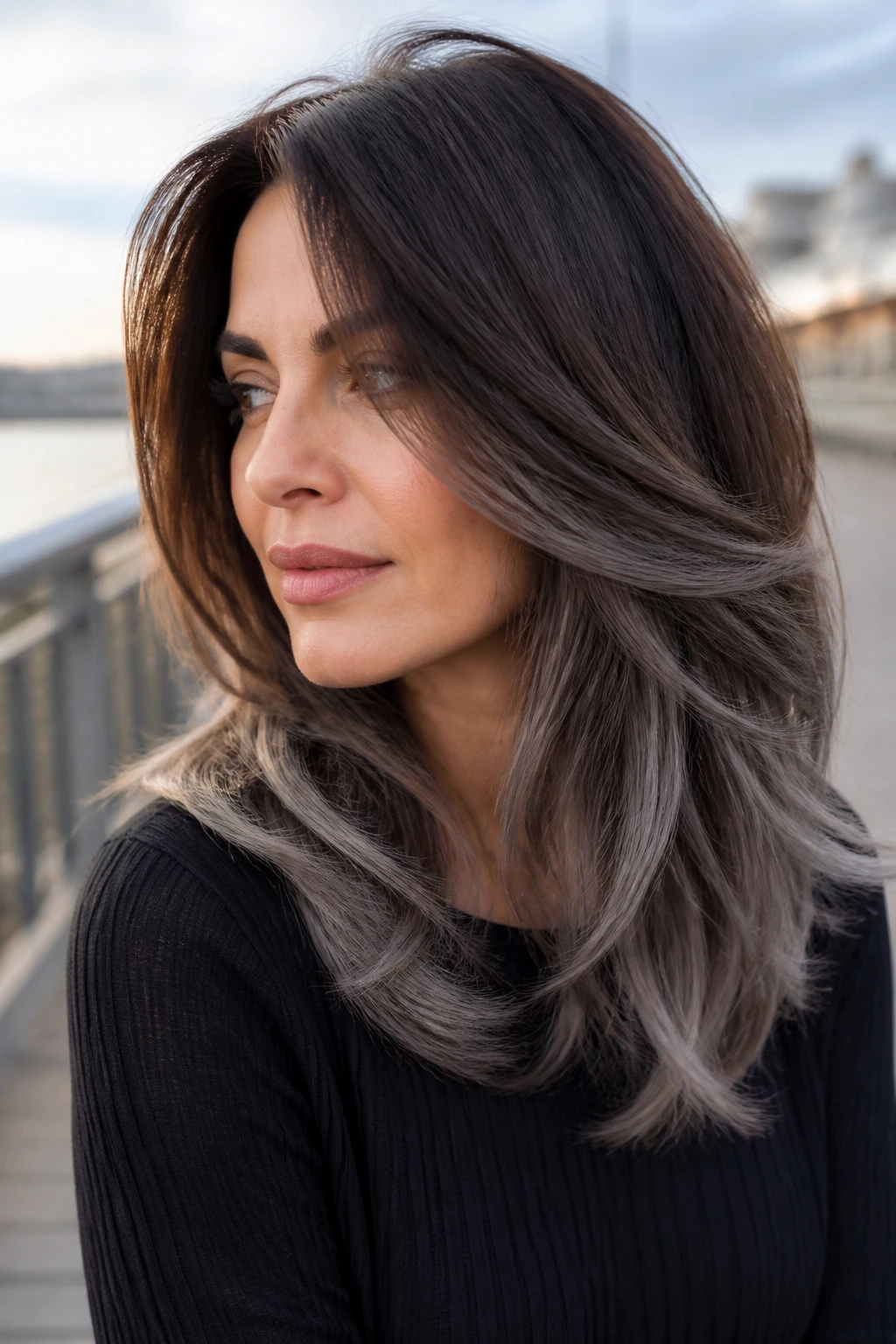
Smoke-dipped layers are a smarter version of dip-dye. Instead of making the ends jump to grey all at once, the color melts into the lower lengths, which keeps the haircut from looking chopped in half.
Unlike Chunky Ombre, This Feels Softer
The gradient gives the layers a smoky edge without turning the whole style into an obvious color block. That matters on brown hair, where too much contrast can look stiff. By letting the grey settle more gradually, the cut keeps its shape and the color feels attached to it.
This look is especially good for layered medium-length hair. Each piece catches a slightly different amount of grey, so the layers separate more clearly when you move. That can be helpful if your hair tends to lie flat.
Best Fit
- Medium to dark brown bases
- Layered cuts with movement
- People who want grey without heavy root upkeep
A sea-salt spray can make the layers separate enough to show the smoke effect.
19. Greige Blend
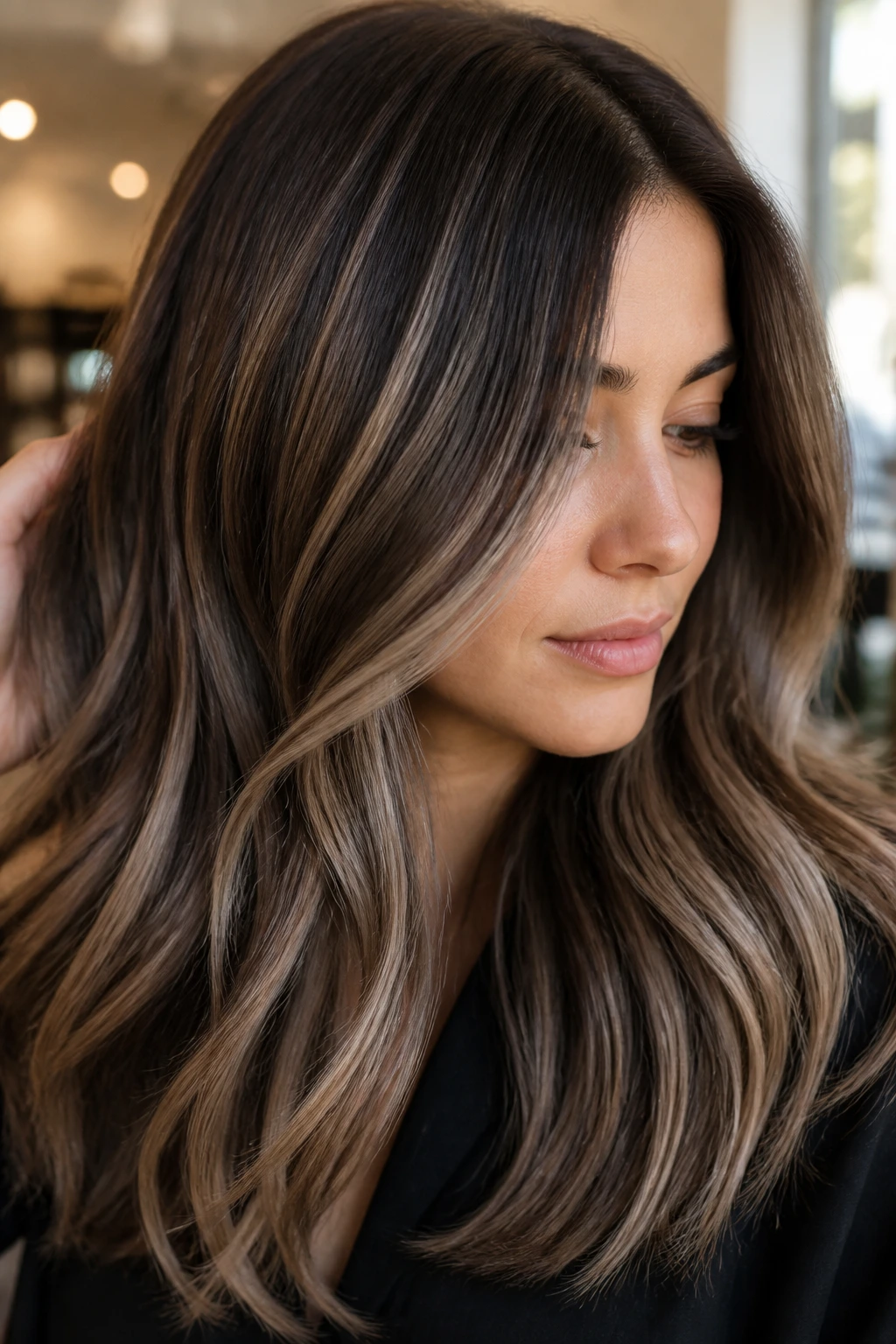
Greige blend is the bridge between beige and grey, and it works because it avoids the coldness that turns some grey highlights stiff. On brown hair, the tone softens the contrast enough to feel wearable, even on someone who usually avoids icy color.
What Makes It Different
Greige does not read as silver first. It reads as polished, dusty, and cool in a calm way. That means it can sit closer to the root and through the mid-lengths without dominating the brunette base. You still get dimension, but the overall look stays relaxed.
A lot of people with medium brown hair do well with this because it does not ask the hair to reach a screaming pale level. The shade sits in that useful middle zone where the highlight feels modern but not severe.
Who Should Try It
- Neutral or warm brunettes who want a softer grey effect
- Anyone nervous about high-contrast silver
- Hair that needs dimension more than drama
It is one of the easiest grey highlight shades to live with for a long stretch.
20. Ash Smoke Lowlights and Highlights
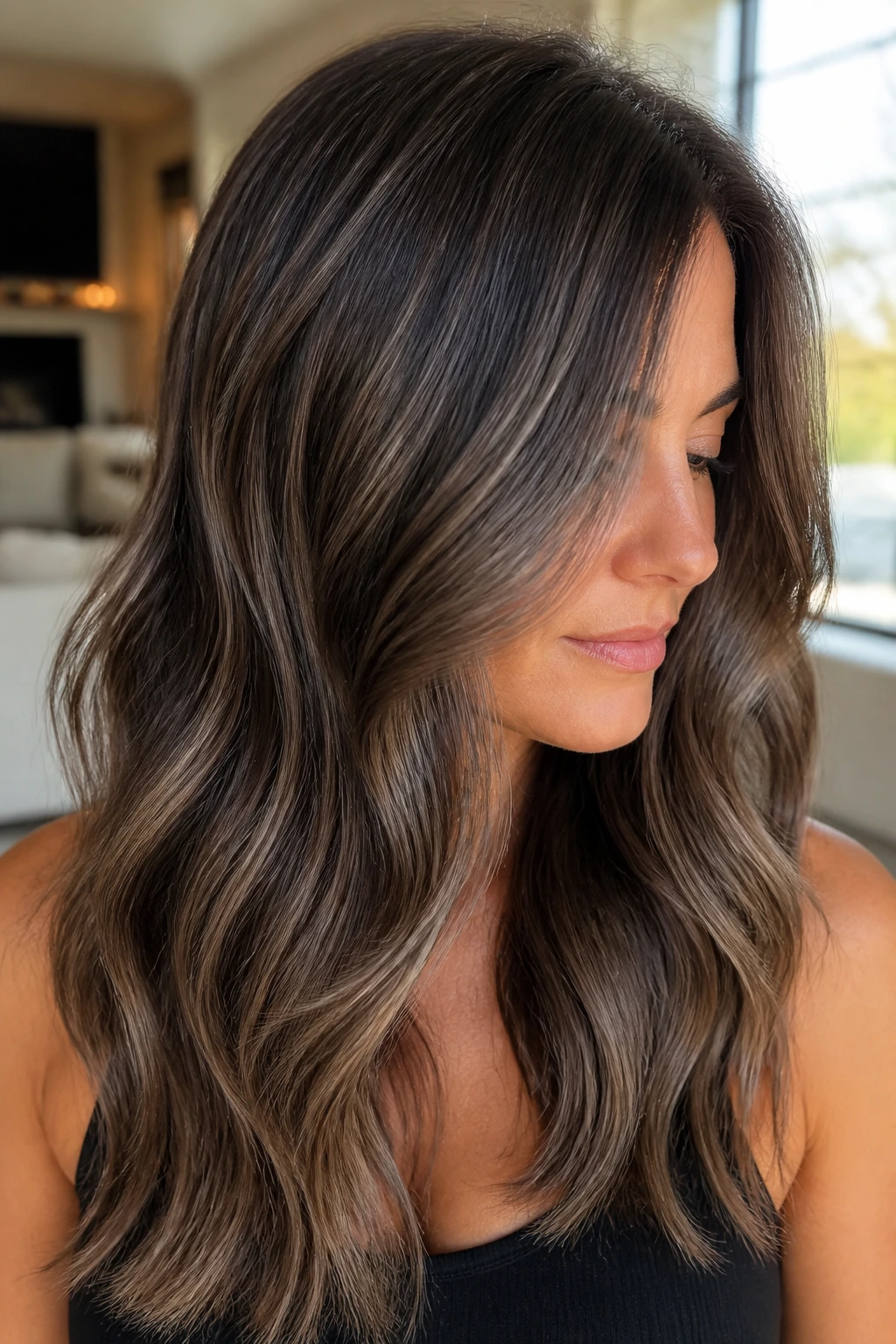
When grey is paired with ash lowlights, brunette hair gets depth instead of just lightness. That’s the main reason this combination works so well. The lowlights keep the base from going flat, while the grey pieces lift specific areas and add movement.
The result is especially good if your brown hair has already been lightened once or twice. Fresh grey highlights can get lost without darker pieces around them, and ash lowlights solve that problem by framing the lighter strands. It’s a color trick, but a practical one.
I like this on layered hair because the darker and lighter bands separate in motion. On curlier textures, the mix can look even richer, since each curl catches a different slice of color.
The downside? It takes a careful hand. Too many dark pieces and the hair looks heavy. Too much grey and the balance disappears. The best versions sit right in between.
21. Cool Cocoa Micro-Lights
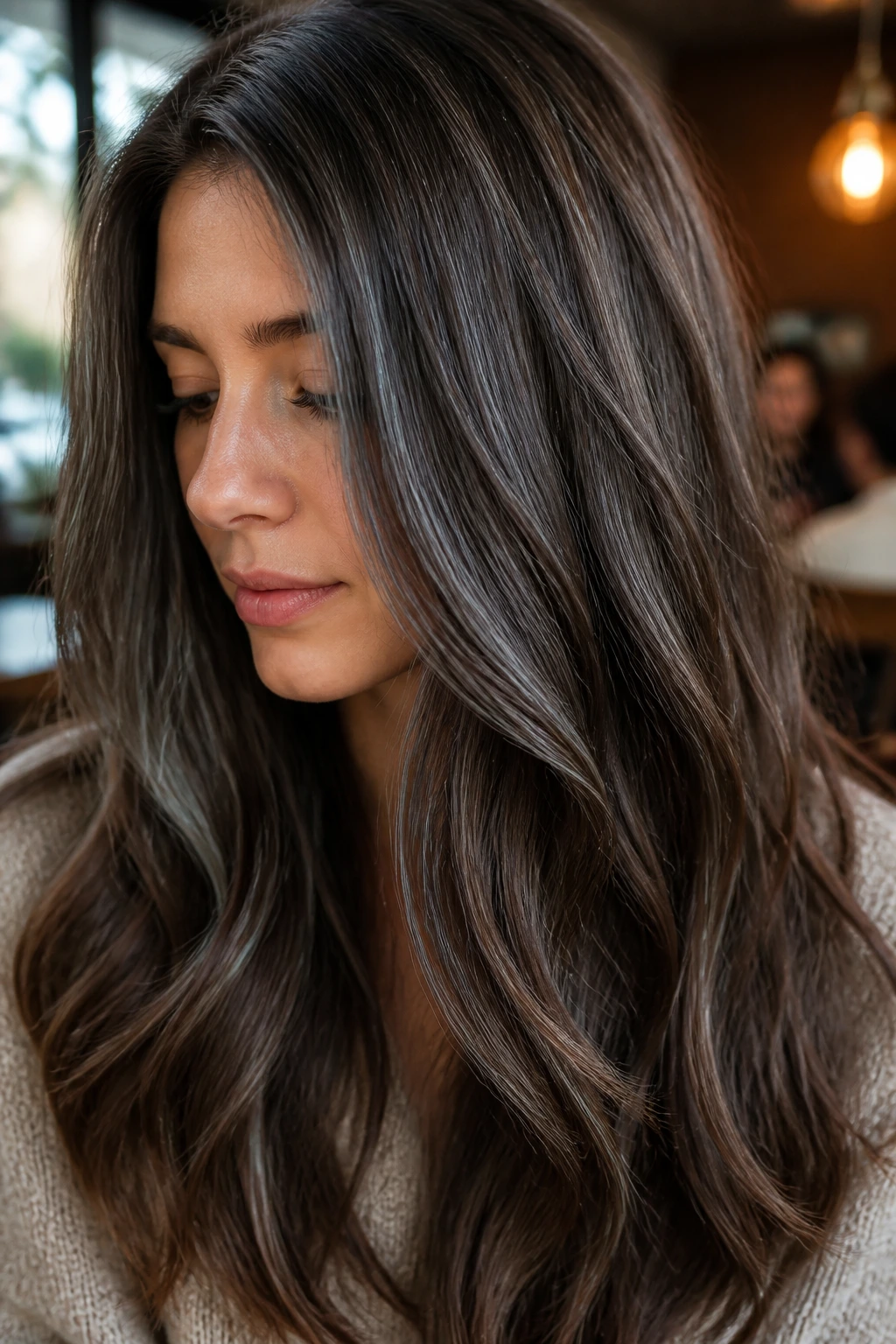
Would tiny grey pieces make brown hair look richer? Yes. Cool cocoa micro-lights prove it. The idea is to place ultra-fine grey threads through a cocoa base so the color shifts when you look at it from different angles.
How to Wear It
Micro-lights are almost always about restraint. They give the hair a bit of movement without announcing themselves. On long brown hair, that can be more flattering than wider streaks because it keeps the surface smooth and the depth intact.
They also suit people who wear their hair down most of the time. The subtle contrast shows best when the strands separate. If you wear buns, braids, or ponytails often, the result becomes even more interesting because the tiny pieces stack into soft streaks.
Good Matches
- Fine to medium hair
- Soft layers
- Someone who wants low-drama coolness
This is one of the most wearable grey highlight choices for brunettes who want a quiet shift, not a big color statement.
22. Dimensional Grey Balayage on Curls
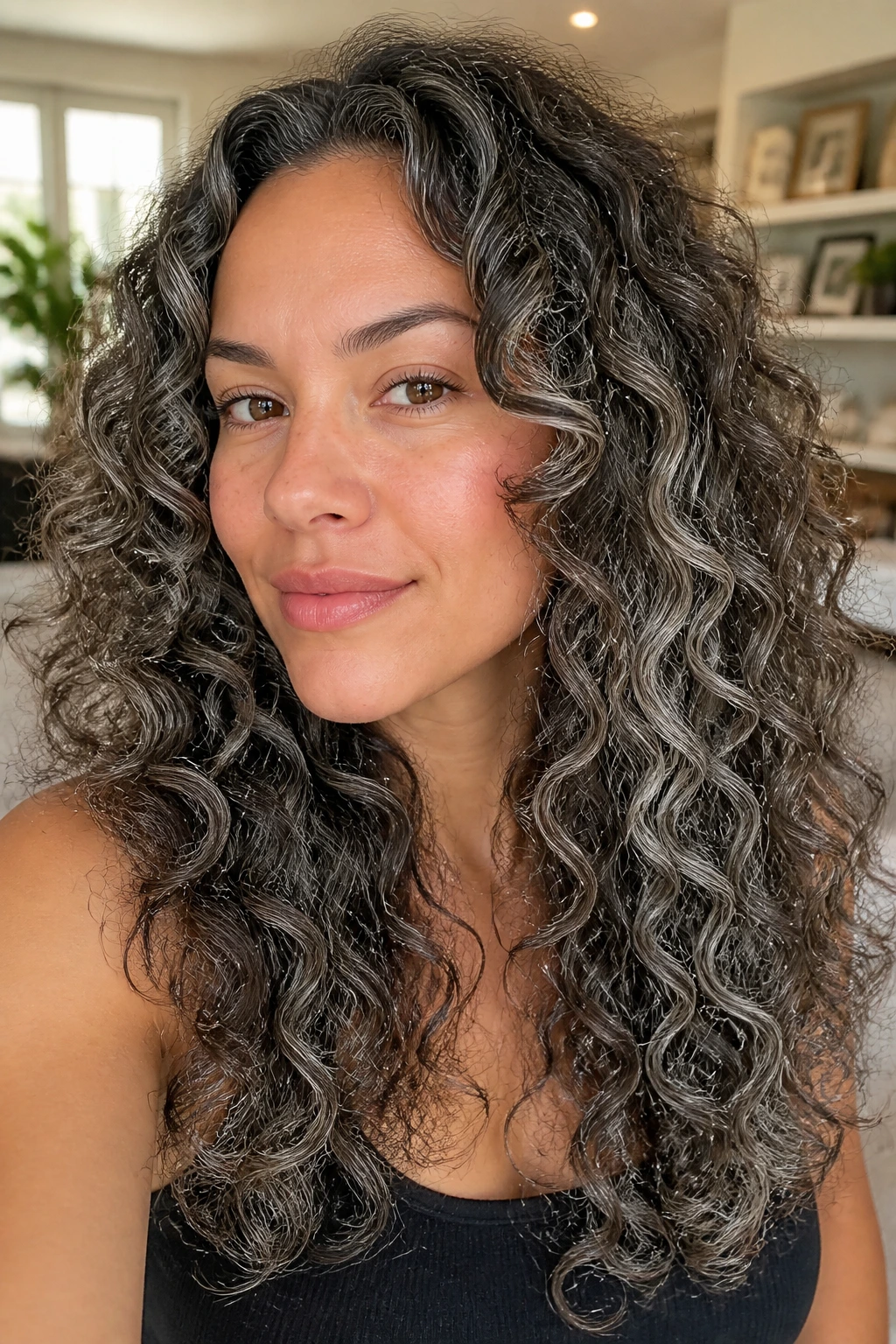
Curls can carry grey highlights in a way straight hair sometimes can’t, because every bend gives the color another surface to sit on. Dimensional grey balayage on curls uses that shape to build depth instead of just brightness.
The placement usually starts a little below the root and gets denser through the outer curls. That keeps the curl pattern from looking patchy. Grey on curls needs a clear rhythm; random placement can turn into visual clutter fast.
On brown curly hair, ash and silver pieces can look almost iridescent when they sit on the outer ring of a curl. The inner ring stays darker, which makes the whole shape read as fuller. That’s a big deal for curly clients, who usually want definition without losing volume.
A curl cream with light hold helps. Heavy products can muddy the grey, and nobody wants that.
23. Reverse Balayage With Grey
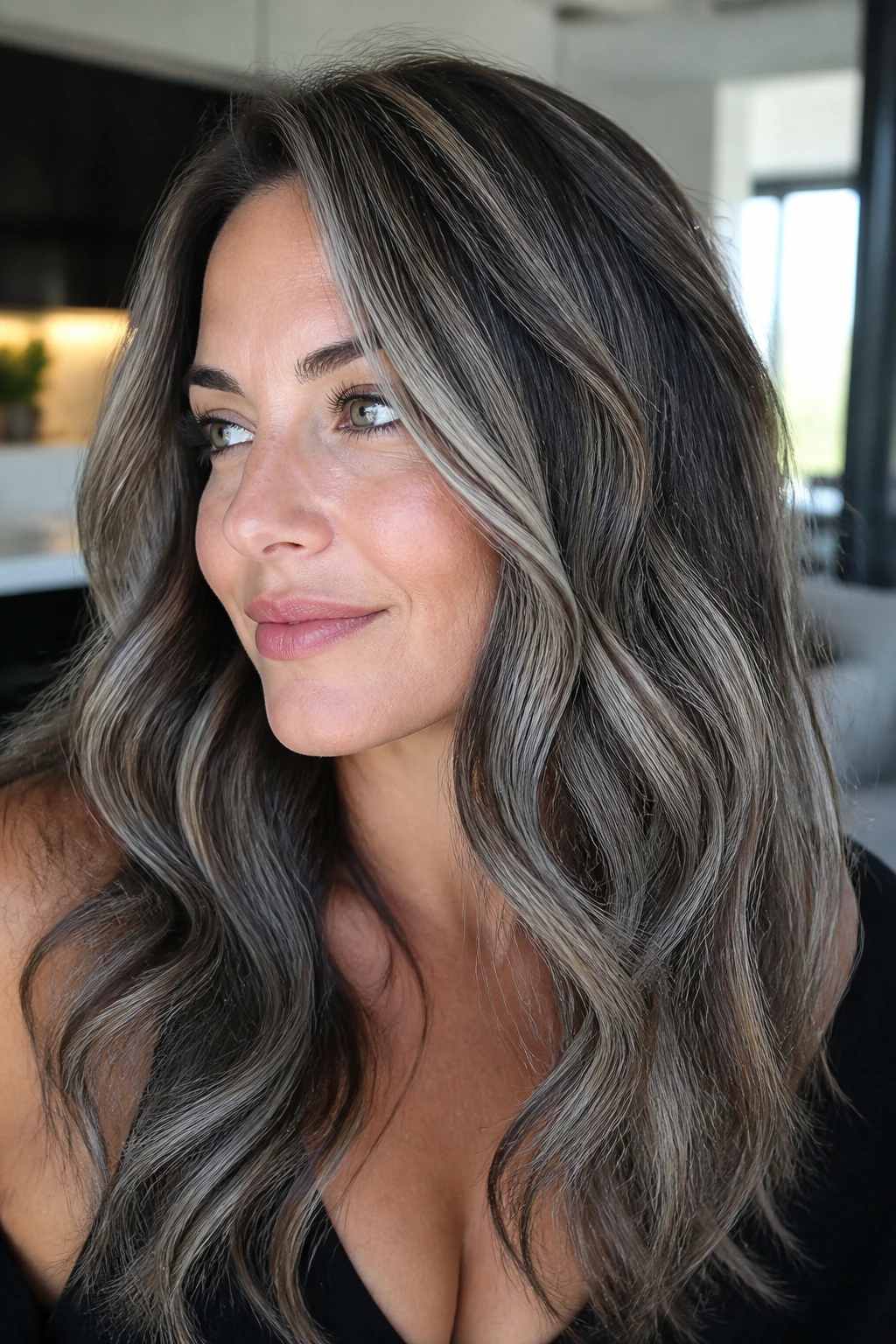
Reverse balayage with grey sounds backward, and in a way it is. Instead of brightening the whole head, the colorist places darker and cooler grey pieces around existing light sections to pull the color back into balance.
What Makes It Different
This approach works best when brown hair already has too much warmth or too many pale highlights. Rather than start over, the grey is used to soften the contrast and make the overall tone feel cooler. On some heads, that ends up looking more natural than another round of lightening.
It is also useful for people who like depth. Reverse balayage keeps the roots and interior rich while sending the eye toward selected grey ribbons. The hair gains shape, and the color looks less overprocessed.
Who It’s Best For
- Brunettes correcting overly warm highlights
- People who want dimension, not brightness
- Wavy hair that needs a cooler frame
If your current color feels too blond and not enough brown, this fix is worth a look.
24. Grey Underlights
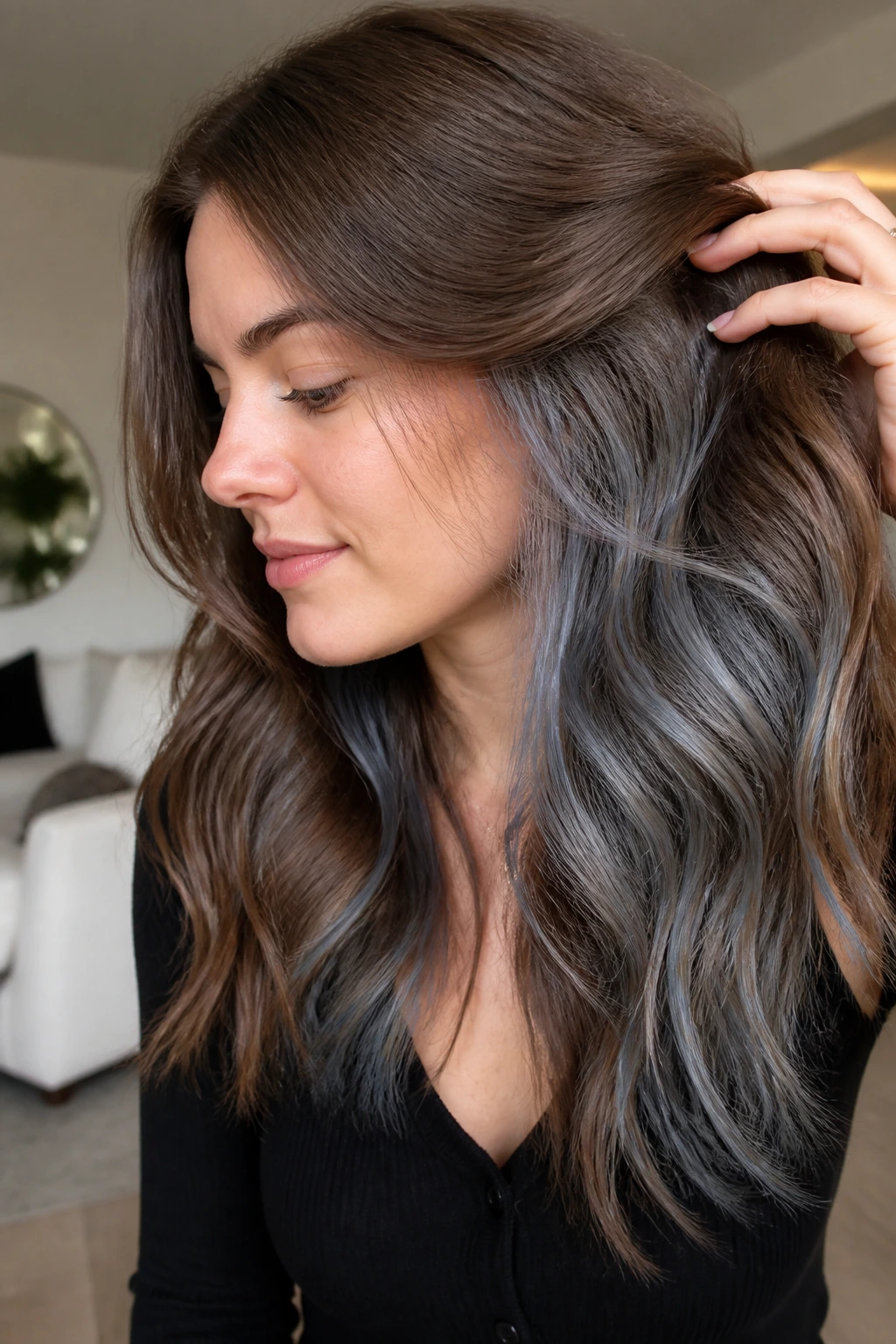
Grey underlights are the secret-weapon version of grey highlighting. The lighter pieces sit beneath the top layer of brown hair, so the color only peeks through at movement points—around the neck, under layers, and at the sides.
That hidden placement makes the style flexible. You can keep it quiet when you want, then let it show when the hair is tucked or swept back. It’s also friendly to brunettes who work in stricter settings or simply want a color surprise without a full-time commitment.
The underlayer should be cool and clean, not smoky to the point of disappearing. If it’s too dark, the effect is wasted. If it’s too pale, it stops being underlighted and starts taking over the whole cut.
This one looks particularly good on long hair with internal layers. There’s enough movement for the grey to flash, but not so much that the secret disappears.
25. Icy Silver Peekaboo
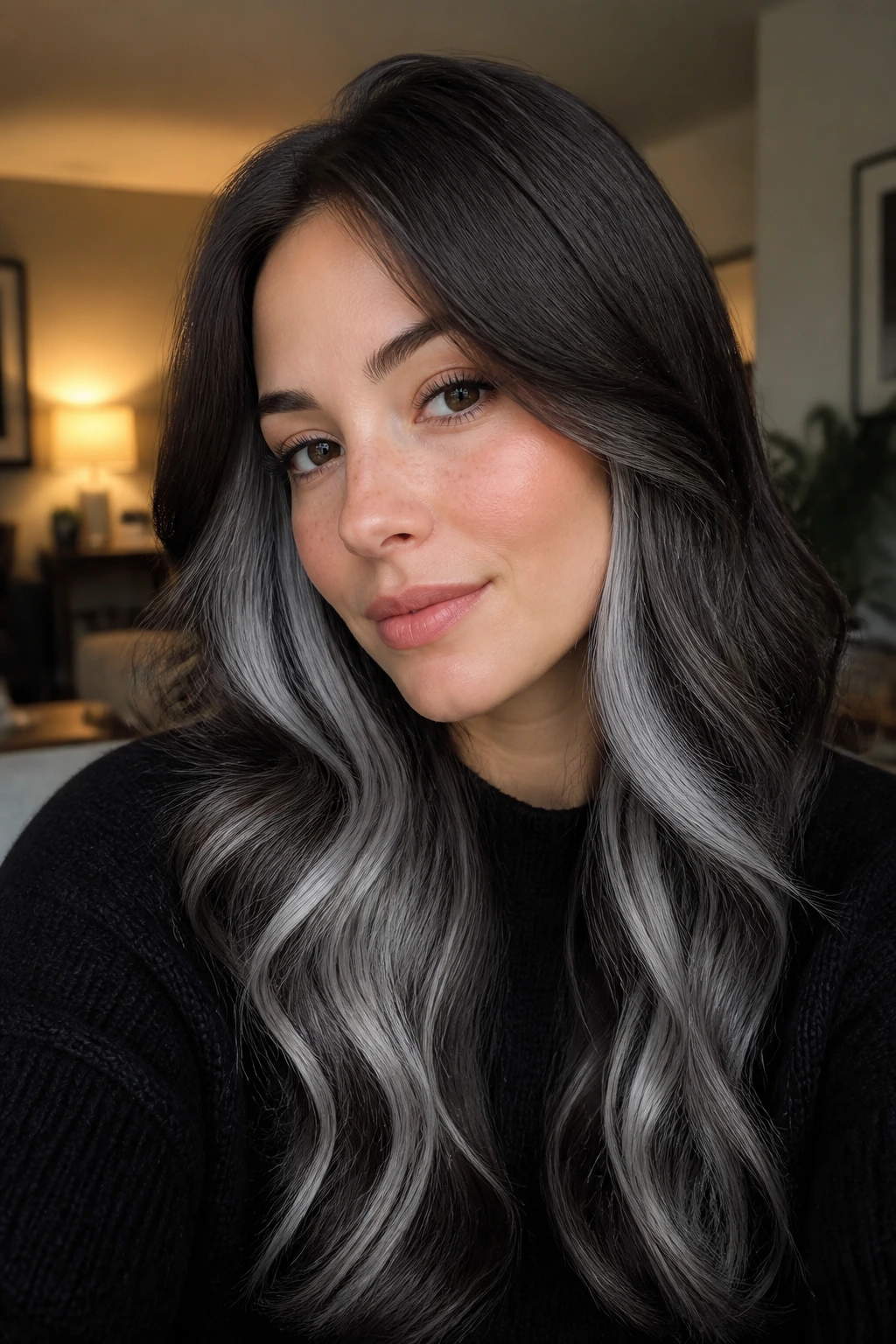
Icy silver peekaboo is for the person who wants a flash, not a whisper. The color sits under the surface like the peekaboo panels above, but the tone is brighter and colder, which makes it hit harder when it shows.
The icy finish is gorgeous against brown hair because the contrast is so clean. It can look almost frosted glass when it peeks out from under darker layers. That said, the look needs careful toning. If the silver starts drifting yellow, the whole idea falls apart quickly.
I like this on hair that gets tied up a lot. Braids, top knots, half-up styles—all of them let the hidden silver show in little pieces. You get movement, surprise, and a bit of edge without having to commit every strand to the same tone.
A clear shine spray helps, but keep it light. Too much product dulls the icy effect.
26. Moody Slate Streaks
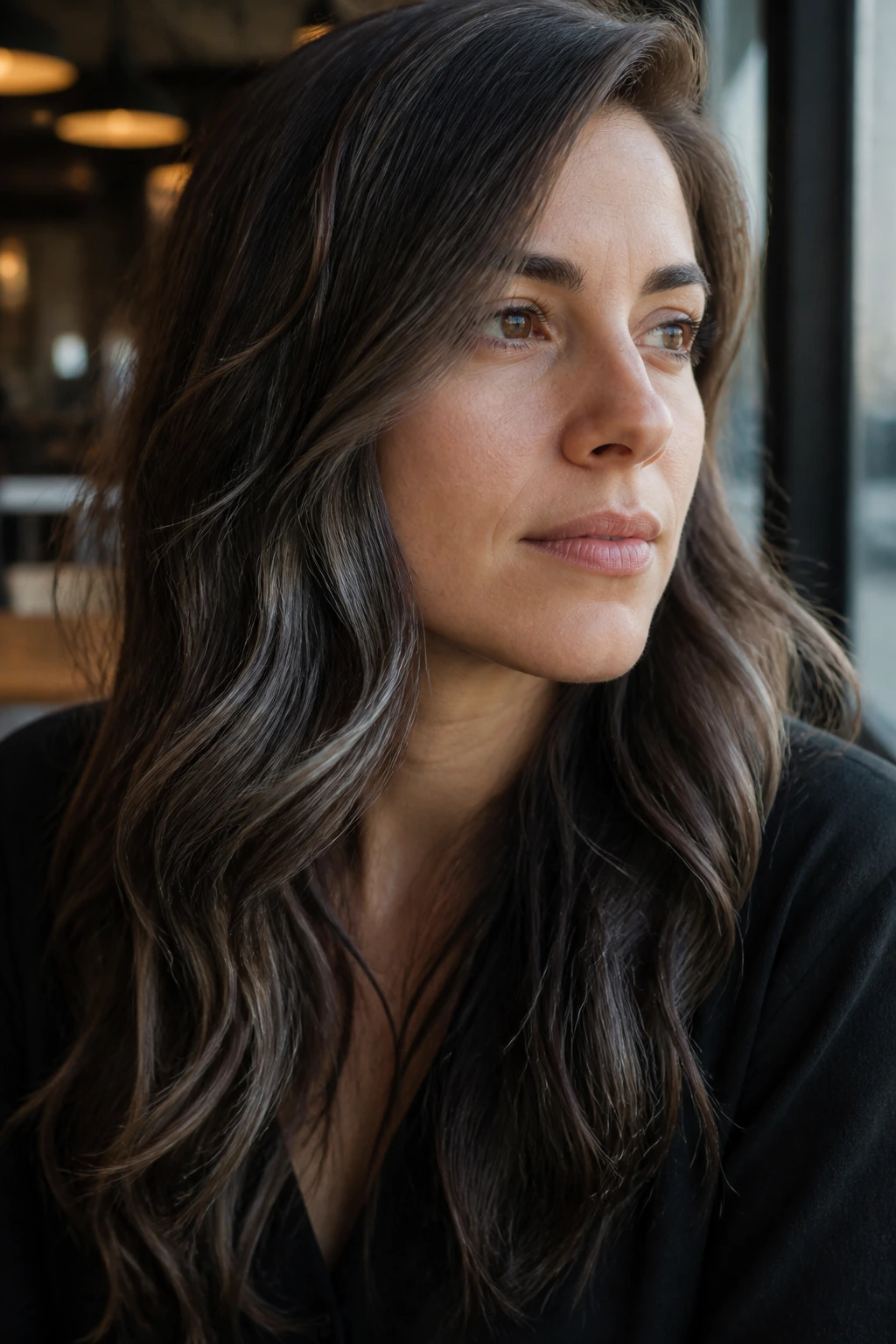
Moody slate streaks are the darker, cooler answer to silver highlights. They feel grounded. A little brooding, even. On brown hair, the slate tone adds shape without pushing the look into bright territory.
Why It Reads So Well
Slate sits in that middle band between grey and blue-black. That makes it useful on brunette bases because the color doesn’t fight the brown—it sits beside it. The contrast shows up most in bends, waves, and layered ends where the streaks can break apart.
This is a strong choice if you want grey-inspired hair but dislike anything that looks pale or icy. It works on medium brown and dark brown hair especially well, since the lower contrast keeps the result wearable.
Practical Note
- Best on longer layers or textured bobs
- Tone with a cool gloss to avoid warmth
- Keep the streaks narrow if you want a softer finish
Slate is one of those shades that gets better when the haircut has movement.
27. Brushed-Metal Ends
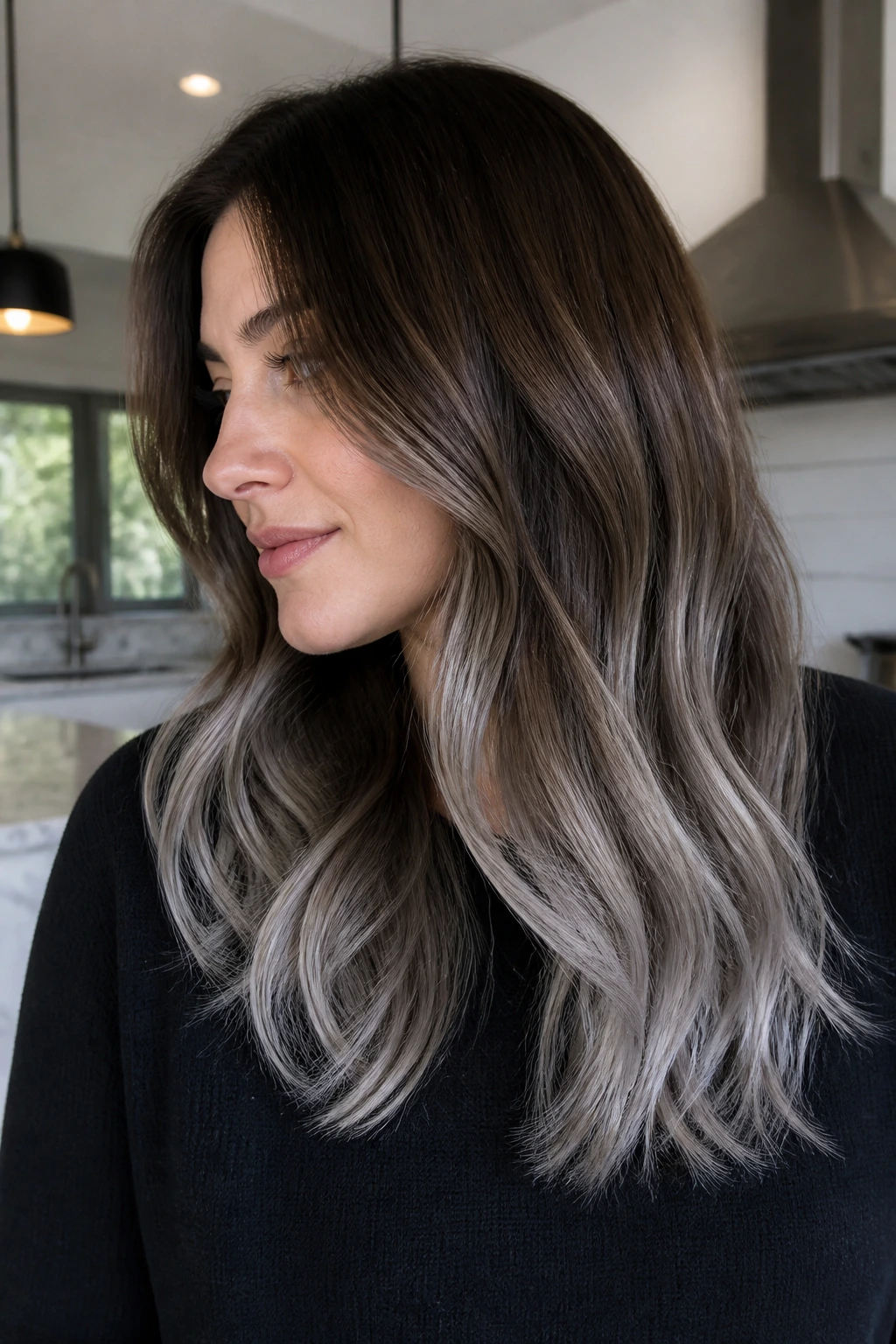
Brushed-metal ends give the hair a worn-in, polished edge. The roots stay brunette, the mids soften, and the ends pick up a cool metallic grey that looks less glossy than silver and less dark than gunmetal.
How to Get the Look
The trick is a gradual lightening pattern. You do not want the ends to jump to silver all at once. They should fade through muted grey and then land in a brushed-metal finish that feels slightly textured, almost like satin.
This style suits people who like their color to look lived-in. It’s less precious than a full silver head and easier to grow out. On medium-length hair, the metallic ends can give enough contrast to define the haircut without needing much styling.
Best Styling Match
- Loose waves
- A soft bend with a flat iron
- Air-dried texture if the ends are healthy
Keep the ends trimmed and conditioned. Metallic tones look best when the hair still has a smooth edge.
28. Soft Gray Ribbons for Waves
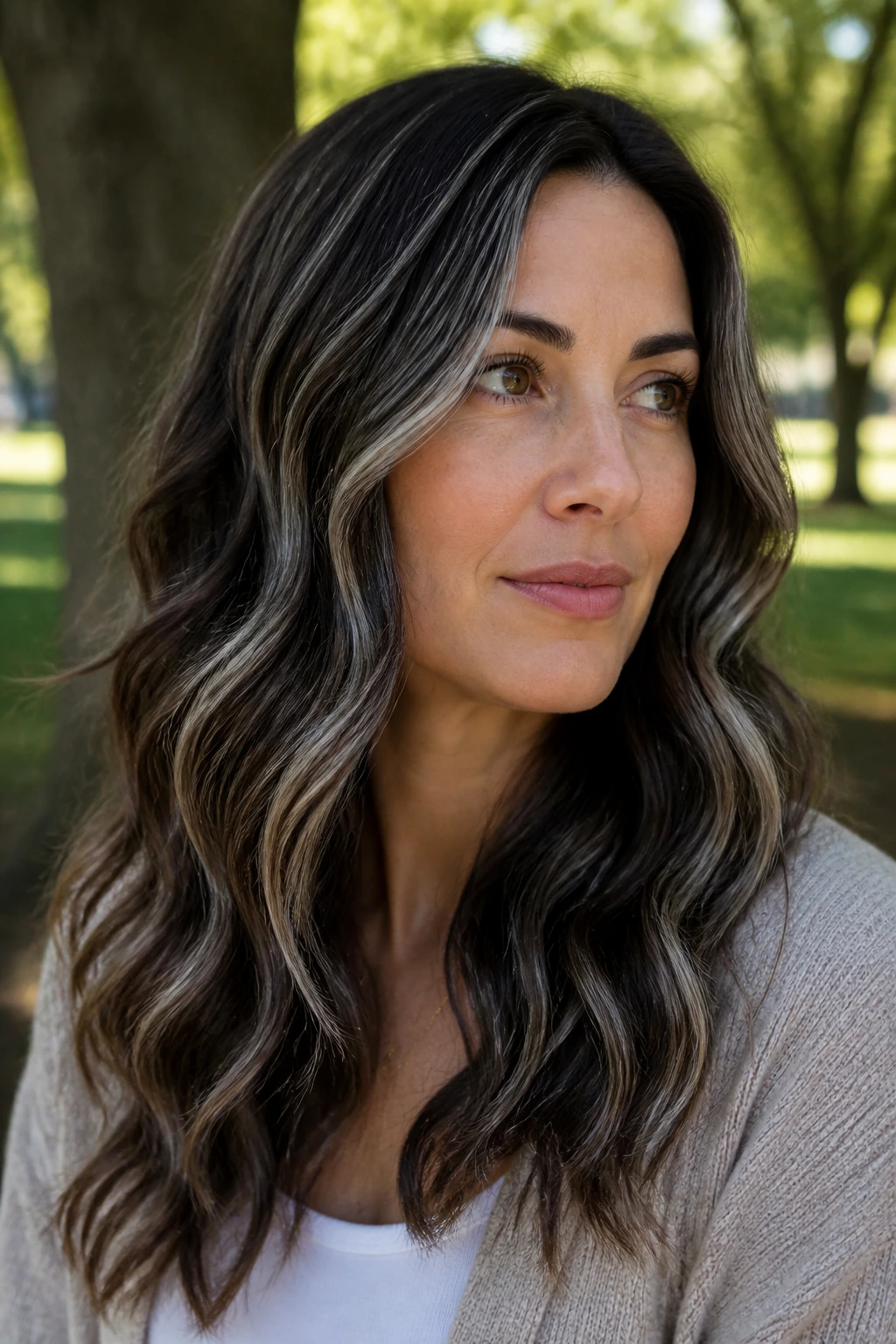
Soft gray ribbons are made for wavy hair, and the shape of the wave does most of the talking. The grey flows through the bends instead of sitting in hard lines, which keeps the brunette base looking dimensional.
A wavy pattern helps the color appear thicker. The grey ribbons move in and out of view, so the eye reads depth rather than a strict highlight map. That’s one reason this look feels less formal than foil highlights and more relaxed than stark silver pieces.
The ribbon width should stay moderate. Too thin, and the color disappears inside the wave. Too wide, and the softness is gone. A medium width gives the best balance, especially on shoulder-length cuts.
Use a styling cream that keeps the wave defined but not crunchy. The color looks better when the hair bends naturally. Forced curls can make the ribbons look busy.
29. Pearl-Grey Glossed Highlights
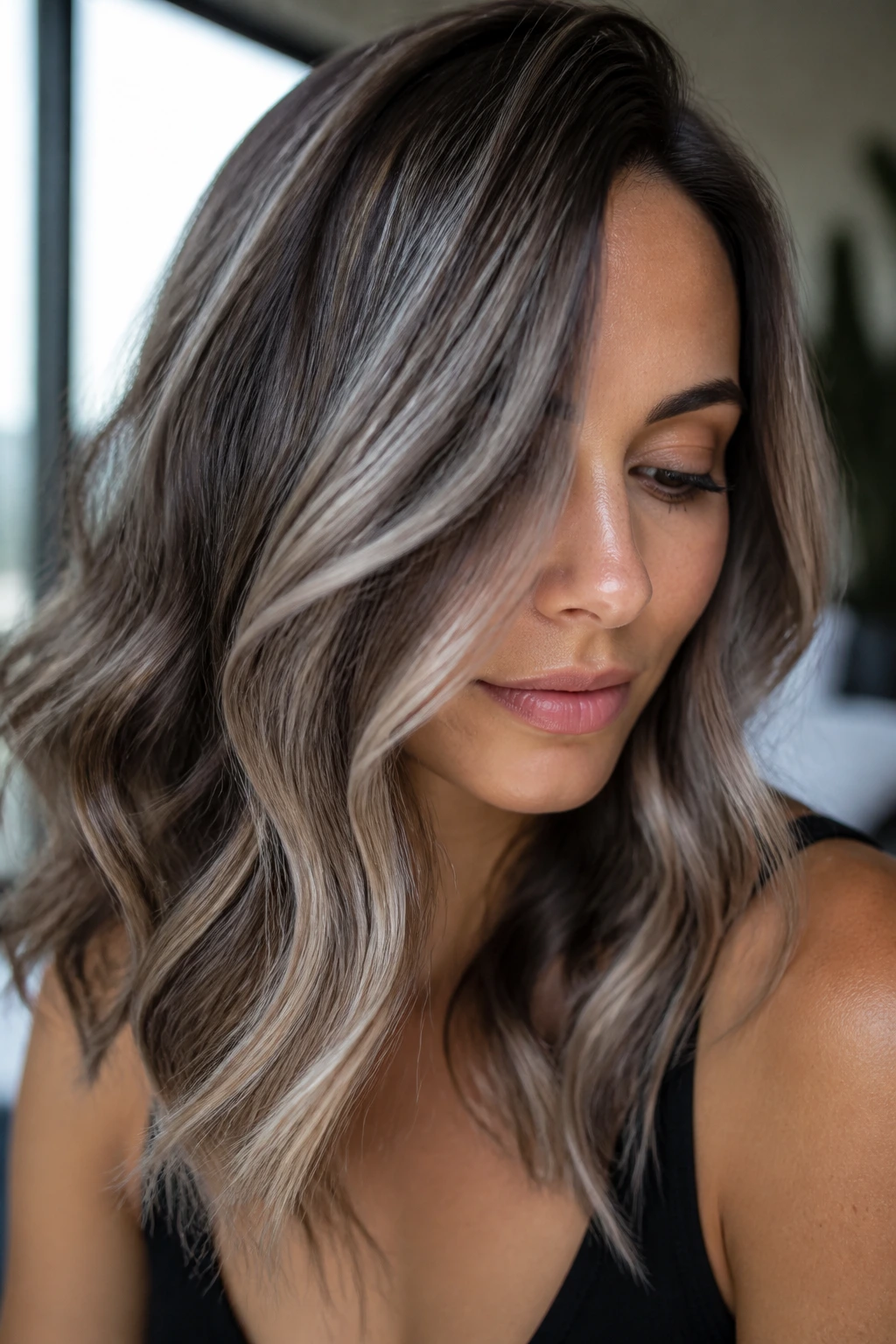
Pearl-grey glossed highlights are what happen when grey goes soft, luminous, and a little pearly instead of metallic. The highlights are usually pre-lightened, then finished with a glossy toner that mutes the hard edge and gives brown hair a smoother transition.
What Makes Them Stand Out
Pearl-grey has a gentler sheen than silver. It reflects light in a softer way, which can be kinder on brunette bases that have a lot of warmth or natural depth. The finish reads polished without looking icy.
This is a smart option if your hair is already highlighted and needs a refresh that doesn’t scream “new color.” A gloss can pull everything together fast, and it often makes the brunette base look deeper at the same time.
How to Keep It Pretty
- Use a sulfate-free cleanser
- Avoid over-washing, since gloss fades faster with constant shampooing
- Ask for a toner that leans pearl, not beige
The color doesn’t need to shout. That’s the whole point.
30. Monochrome Smoky Brunette Finish
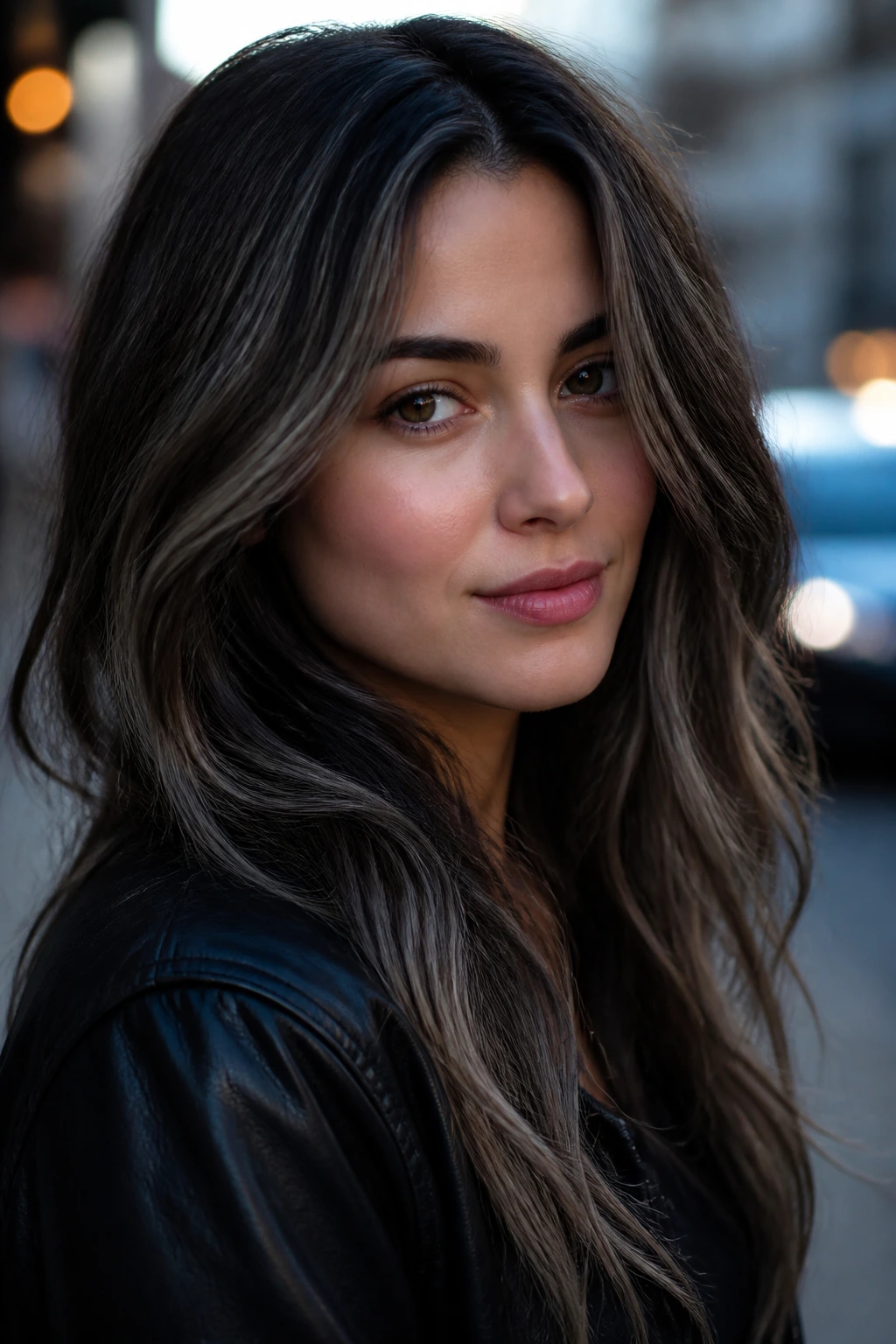
Monochrome smoky brunette is the most understated version in the bunch, and I mean that as a compliment. Instead of obvious silver pieces, the hair shifts through charcoal, ash, and cool brown so the whole head feels cohesive.
Why It’s Such a Solid Finish
This look is built for people who want grey influence without visible streaks. The color lives in the same family as the brown base, which means it can be worn in almost any setting without looking too styled. That makes it a favorite for longer, denser hair that needs softness more than contrast.
The finish works best when the tones are layered carefully: dark brown at the root, smoky ash through the mids, and grey-brown lightness toward the ends. Nothing too loud. Nothing cartoonish. Just a clean shift in tone.
Best For
- Natural brunettes who want subtle coolness
- Haircuts with a lot of weight
- People who like low-maintenance color that still looks intentional
If you want grey highlights for brown hair without obvious streaks, this is the closest thing to a quiet answer.
Final Thoughts
Grey on brown hair works when the tone feels chosen, not accidental. The best looks are the ones that respect the base color and use grey to sharpen it, soften it, or bend it in a new direction.
Thin babylights, smoky ribbons, peekaboo panels, and full metallic ends all solve different problems. Some add brightness. Some add grit. Some barely whisper at all.
Pick the version that matches your haircut and your patience level. That’s where the good results live.
