



A round face doesn’t need to be “fixed” by color; it needs line work. That is where red brown highlights for round faces earn their place, because the right placement can make the face read a little longer, a little slimmer, and a lot more intentional without looking harsh.
The trick is not the color alone. It’s where the color lands. Brightness sitting too high on the widest part of the cheeks can make the face feel broader, while ribbons that start a bit lower, travel vertically, or sit under a deeper root shadow tend to pull the eye in a better direction. Small move. Big difference.
Red-brown shades are a smart lane to stay in because they bring warmth without the flat, muddy look that some darker tones create. Auburn, cinnamon, chestnut, copper-brown, mahogany, rosewood — each one catches light a little differently, and that matters when the goal is shape, not just shine. A good colorist will think about your part, your layers, and whether your hair is straight, wavy, or curly before a brush ever touches it.
The fun part is how many ways you can wear this family of color. Some versions are soft and almost shy. Others are bold enough to read from across a room. The right choice depends on how much contrast you want, how often you want to touch it up, and whether you want the highlights to whisper around your face or do the heavy lifting for you.
1. Soft Red Brown Highlights for Round Faces That Start Below the Brow
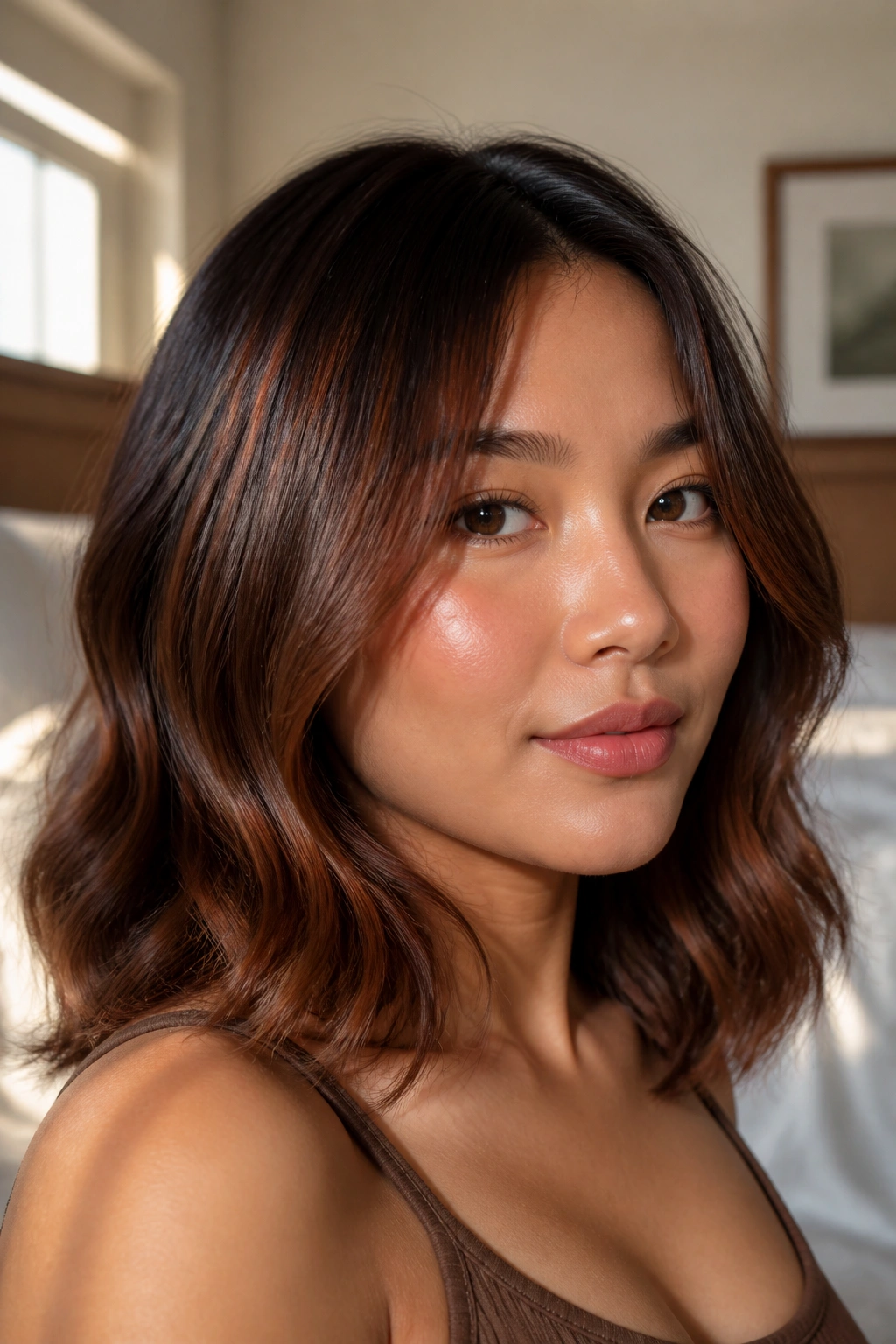
These are the kind of highlights that do their job quietly. Starting the lightness below the brow line keeps the eye moving downward instead of spreading brightness across the widest part of the face.
Why This Placement Works
Round faces usually benefit from a little vertical pull, and this placement gives you that without screaming for attention. The color begins soft near the cheek area, then falls through the lengths like a ribbon, which makes the hair feel longer and the face feel more sculpted.
A lot of people ask for face-framing pieces and then stop there. That can work, but only if the color is thin and placed with restraint. Thick light panels near the temples can puff the face out. Thin red-brown pieces, though, sit closer to the cheekbones and taper into the ends. Much better.
- Best on shoulder-length cuts and longer layers
- Works well with a center part or a slight off-center part
- Ask for a soft root shadow so the highlight doesn’t start too abruptly
- Keep the tone in the chestnut-to-auburn range for a softer finish
My favorite detail: ask your colorist to keep the brightest point just under the cheekbone, not directly on it. That little drop changes everything.
2. Cinnamon Balayage Through the Mid-Lengths
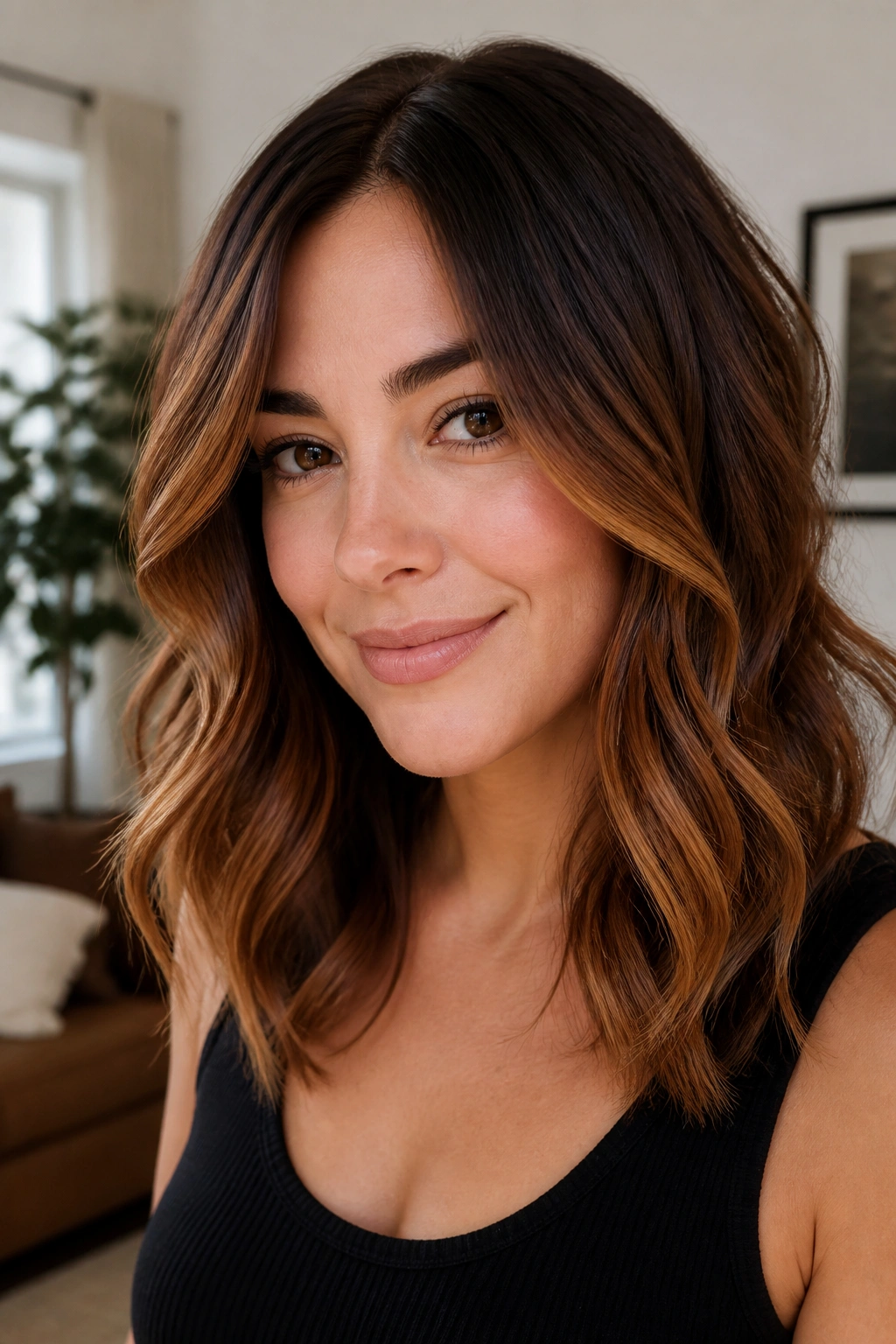
Mid-length color is underrated. Most people chase face framing, then ignore the space that actually carries the haircut.
Cinnamon balayage placed through the middle of the hair gives round faces a cleaner shape because the brightness lives between the cheeks and the collarbone, not right at the widest point. The result feels softer than chunky streaks and less obvious than a full blonde frame, which is a relief if you want dimension without a lot of upkeep.
The best versions keep the root darker and let the cinnamon tone wake up around the ears and below. On wavy hair, those ribbons show up when the bend hits them. On straight hair, they read as sleek bands of color that stretch the silhouette downward.
If your hair is medium brown, this is one of the easiest red brown highlights looks to wear. If your base is deep brown, ask for a warmer cinnamon glaze over the lightened pieces so they don’t look flat or orange.
3. Auburn Ribbons Just Around the Jawline
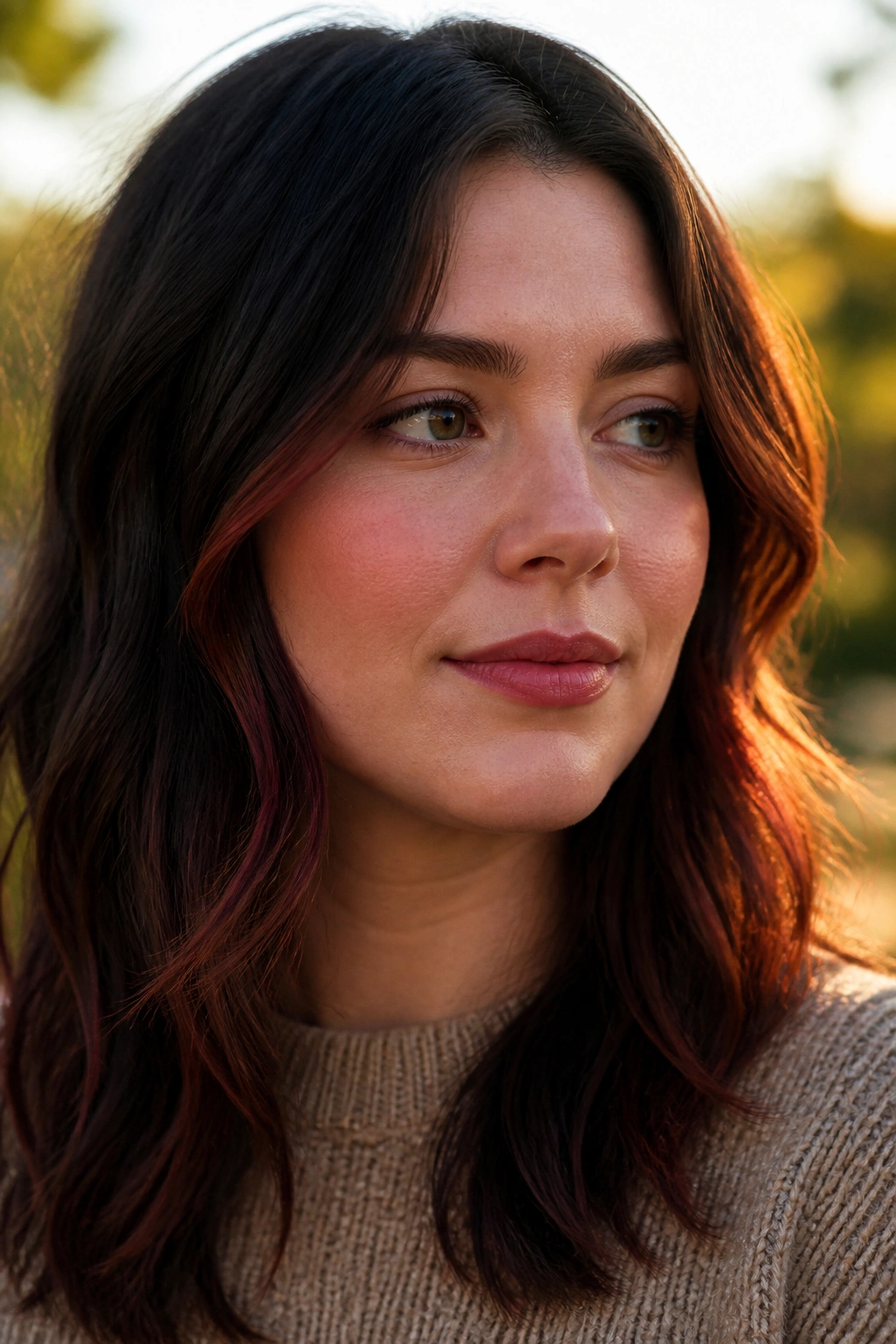
Why put color near the jaw? Because the jawline is where a round face can use a little visual structure. Auburn ribbons placed just below and beside the jaw draw the eye down, which helps the face feel less circular.
This is the kind of placement that looks polished even when the styling is casual. Air-dried waves, a loose blowout, a blunt lob, all of it works. The color gives the haircut a bit of edge without turning the ends into a block of brightness.
How to Wear It
Keep the ribbons narrow and let them sit on the outer layer rather than buried inside the hair. You want the shape to show. A few thin pieces on each side are enough; too many, and the whole effect gets busy.
The tone matters too. A true auburn with a brown base is easier to wear than a bright copper if you want this to stay flattering instead of loud. It should feel like a warm frame, not a neon marker around the jaw.
4. Cherry Cola Peekaboo Highlights Underneath
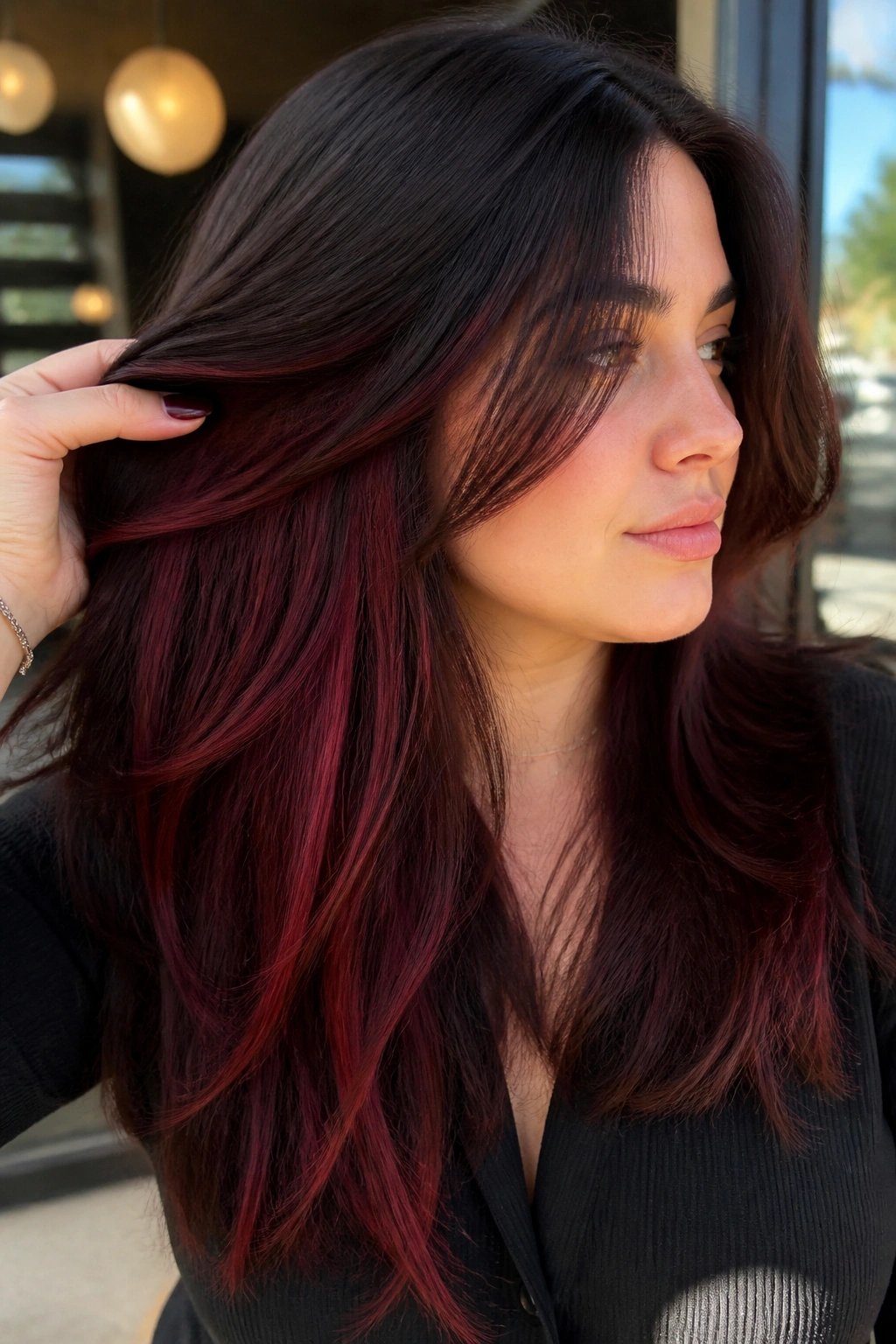
A round face can carry drama. It just needs the drama in the right place. Peekaboo red-brown highlights under the top layers are a smart way to do that because they keep the color hidden until the hair moves.
This works especially well if you wear ponytails, half-up styles, or tucked-back waves. The underside flashes color without adding width at the cheeks. That makes the look playful, but not bulky.
The red-brown family gives peekaboo pieces a richer feel than violet or blonde. Cherry cola is one of my favorites here because it has depth. In the shade, it looks brown. In sunlight, you get that dark red lift that keeps the hair from feeling one-note.
- Best for medium to thick hair
- Nice if you want lower maintenance
- Strong choice for layered cuts
- Looks sharper when the top layer stays darker
The whole point is surprise. You get the color payoff when the hair shifts, and the face stays visually slim when the hair is still.
5. Chestnut Babylights Over a Dark Brown Base
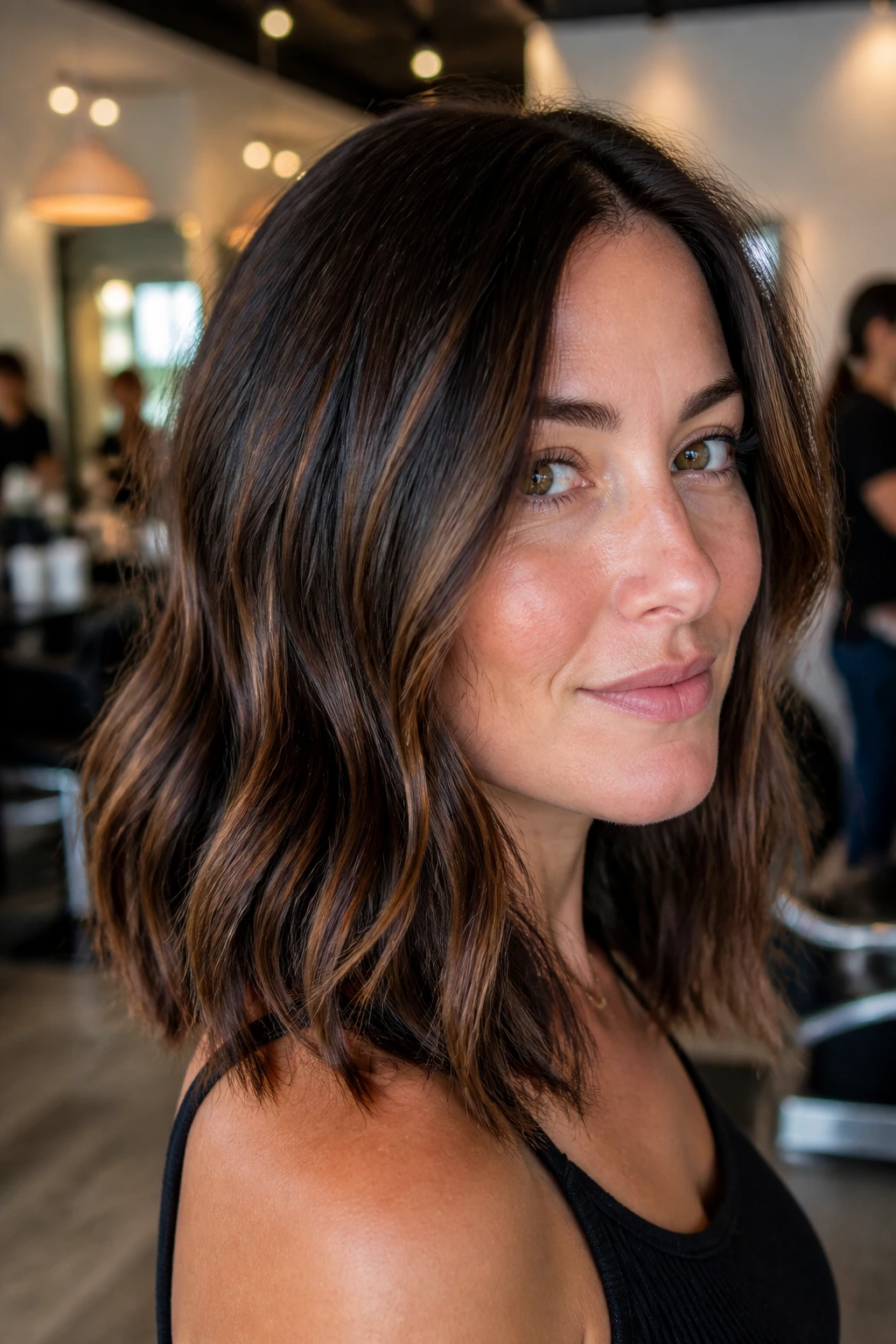
Chestnut babylights are the quietest version of this whole idea, and that’s a good thing. Thin, delicate strands keep the surface from going flat while preserving the dark frame that helps a round face look more defined.
This is the look I’d point someone to if they are nervous about color or work in a setting where bold streaks feel too loud. The strands are fine enough to mimic natural sun-kiss rather than obvious dye work. Because they’re so small, they blend into the haircut and move with it instead of sitting on top of it.
On a dark brown base, chestnut babylights warm up the face without widening it. They also soften the edge of blunt cuts. A shoulder-length style with a clean finish can look almost too hard around a round face; these tiny highlights break that line in a better way.
And yes, they grow out gracefully. That matters. Nobody wants a color that looks good for two weeks and then starts shouting at the mirror.
6. Copper-Red Face-Framing Layers
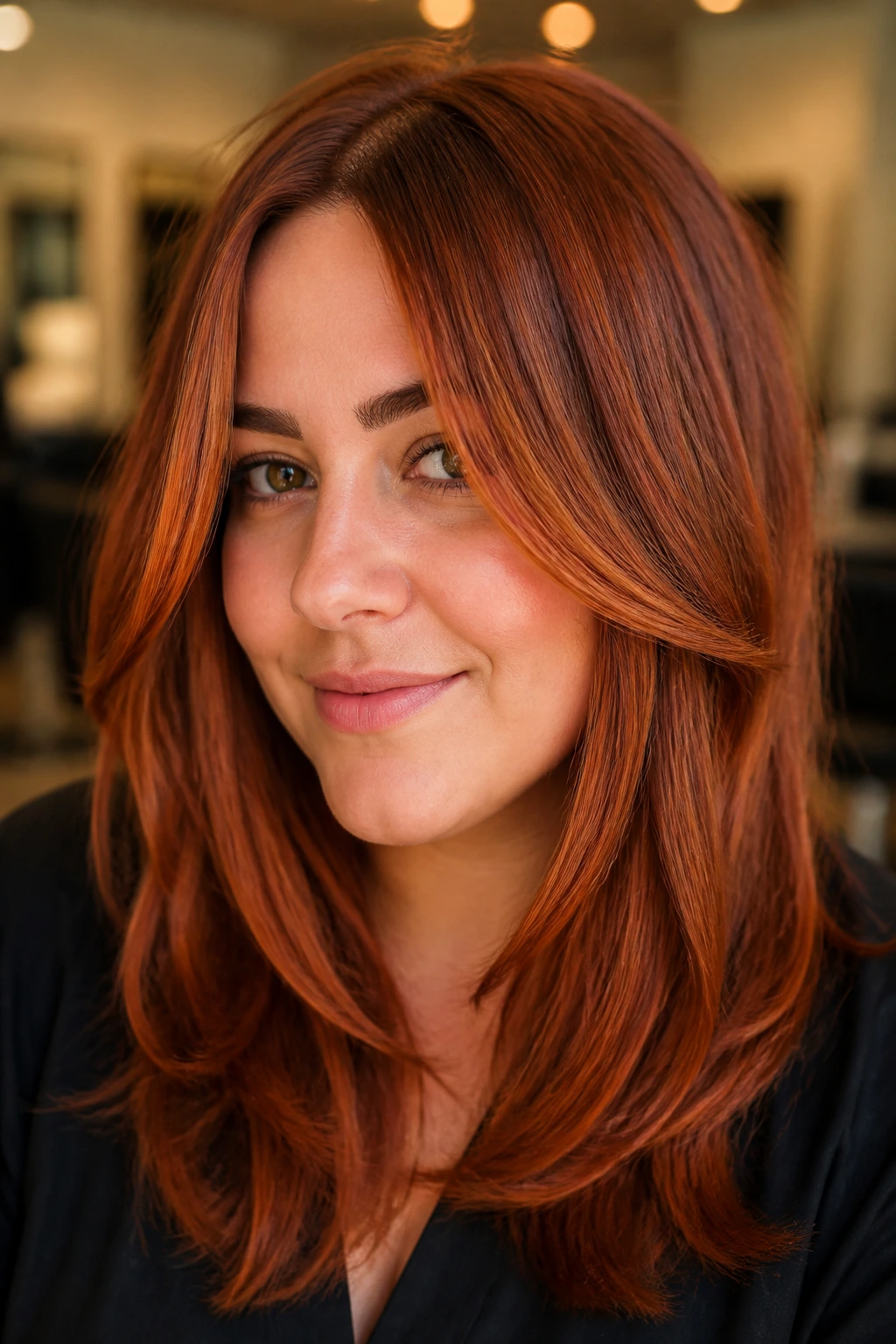
Copper-red face-framing layers are for people who want the frame to be obvious. Not loud, but obvious. The brightness sits on the front sections, while the layers behind it give the face room to breathe.
Unlike chunky streaks from the nineties — and I mean the thick, stripey kind — this version uses thinner, layered pieces so the color follows the shape of the haircut. That is the difference between “my hair has highlights” and “my hair is helping my face.”
A round face tends to look best when the front pieces are longer than the cheekbone and softly angled toward the collarbone. Copper-red makes that shape easier to read because the warm tone catches light quickly. Even a small amount can do a lot.
Best Pairing
- Lob cuts
- Soft shags
- Curtain bangs
- Side parts or slightly off-center parts
If your skin has warm or neutral undertones, this one tends to look especially natural. If your undertone is cooler, keep the copper deeper and less orange.
7. Mahogany Lowlights with Thin Red Highlights
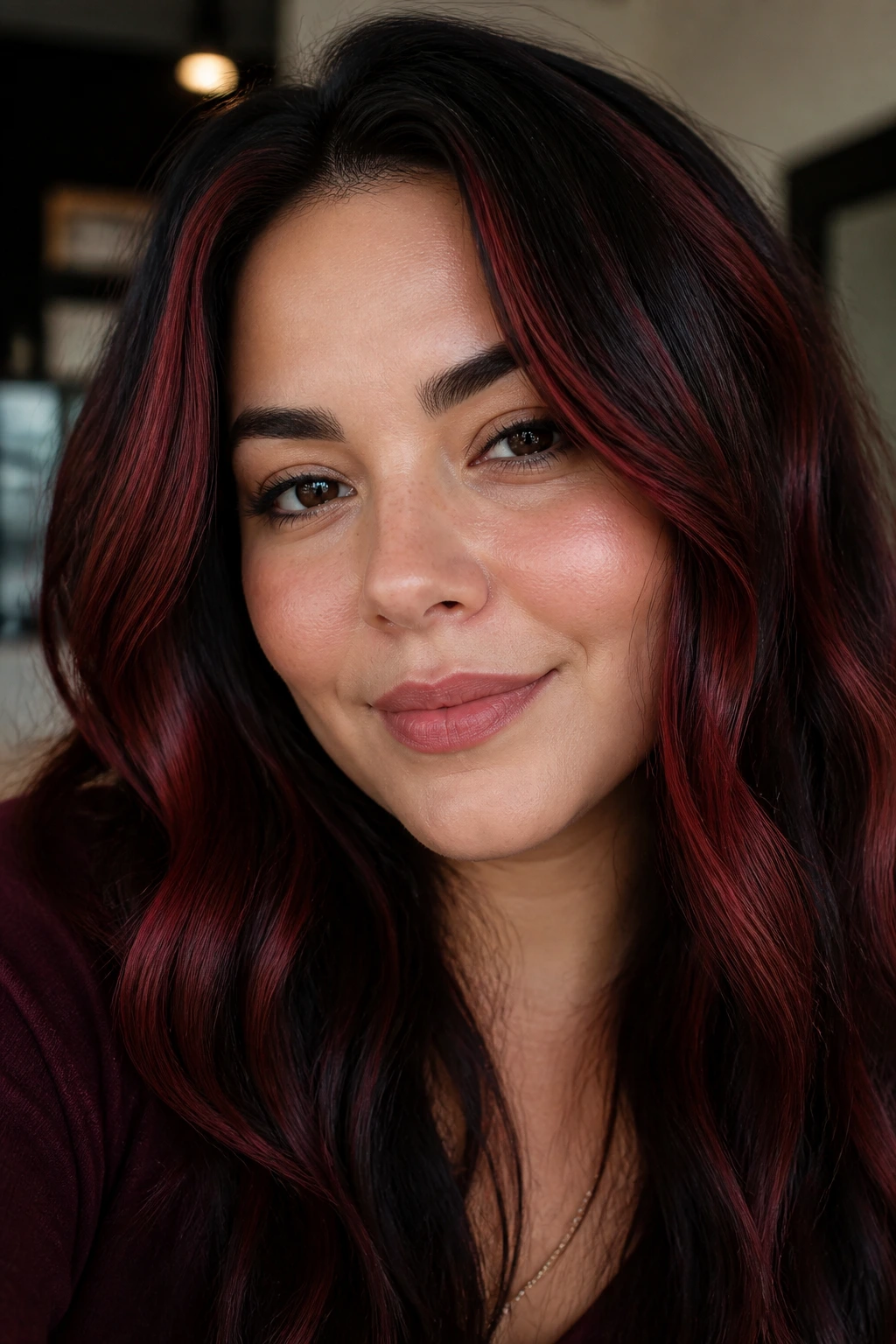
This is the quiet-builder option. Mahogany lowlights add depth first, then thin red highlights sit on top like small flashes of light. The combo is useful when the hair needs shape more than brightness.
Round faces can look wider when every strand is the same level of lightness. Lowlights fix that. They pull some areas back visually, which creates the kind of shadow and depth that make the face read more oval. Then the red highlights give the hair life so it doesn’t sink into darkness.
What Makes It Different
Instead of making the whole head lighter, this style carves in contrast. The darker mahogany sections near the sides are what do the slimming work. The thin red pieces show only where movement hits them.
It’s a strong choice for layered cuts and wavy textures, but it can work on straight hair too. Straight hair shows the color blocks more cleanly; waves scatter them. Either way, the effect is richer than a standard all-over highlight job.
8. Red Brown Highlights for Round Faces With a Shadow Root
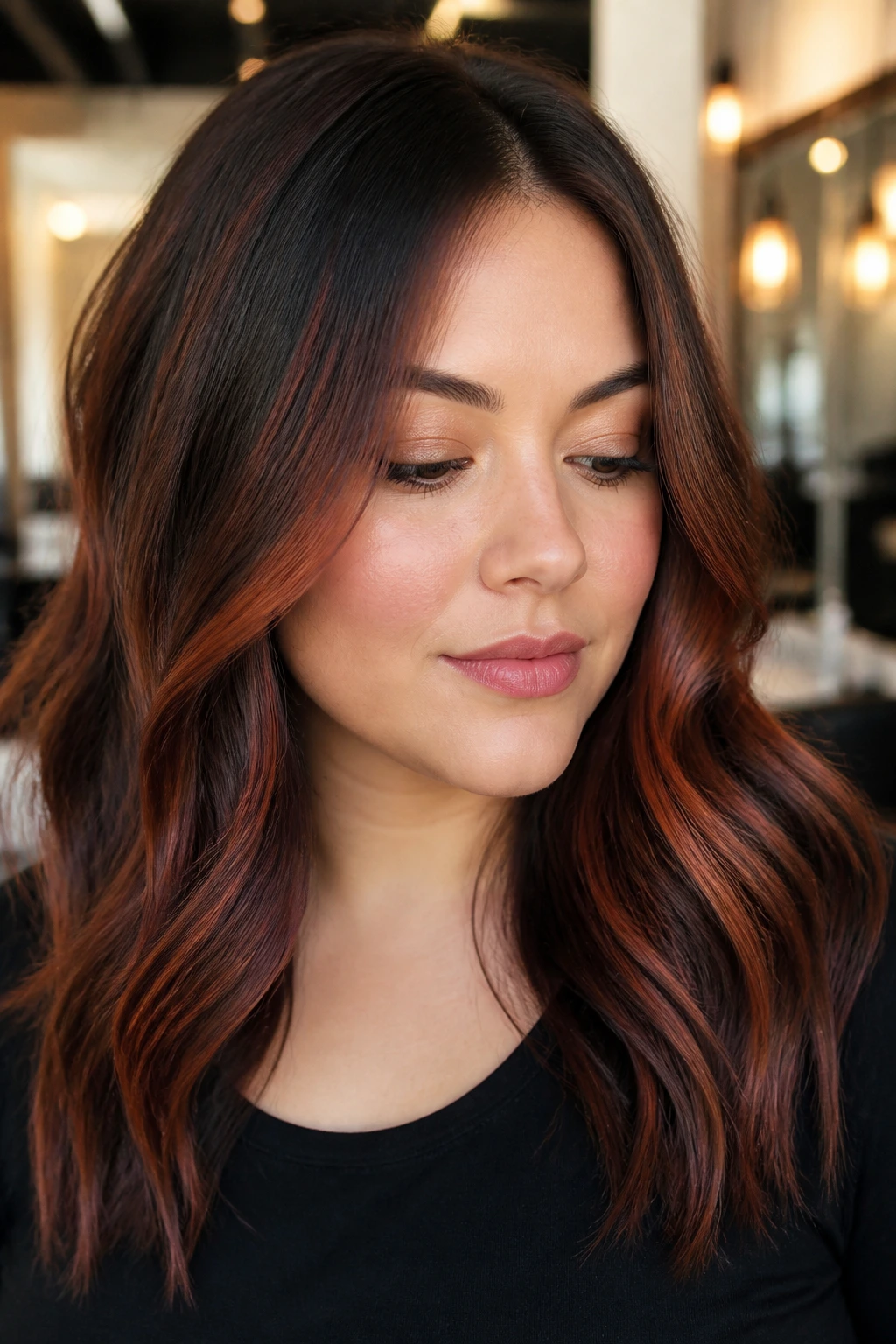
A shadow root is one of the easiest ways to keep a brighter color from puffing up a round face. Leaving the root deeper keeps the eye from stopping at the cheeks, which is exactly what you want to avoid.
This style has a little more edge than chestnut babylights, but it still feels controlled. The red-brown pieces can be placed through the front and crown, then softened with a root shade that is one or two levels deeper. That contrast gives the face a narrow top and a lighter lower half, which is a useful trick on round shapes.
How to Ask for It
Tell your colorist you want the brightest pieces to begin below the root, not right at the scalp. The root should look soft, not striped. The transition matters more than the exact shade.
If you wear your hair straight, the shadow root gives the look a sleek line. If you wear it wavy, the blend reads softer and more lived-in. Either way, the root keeps the style from fanning out too much at the sides.
9. Caramelized Red Brown Balayage With a Deep Side Part
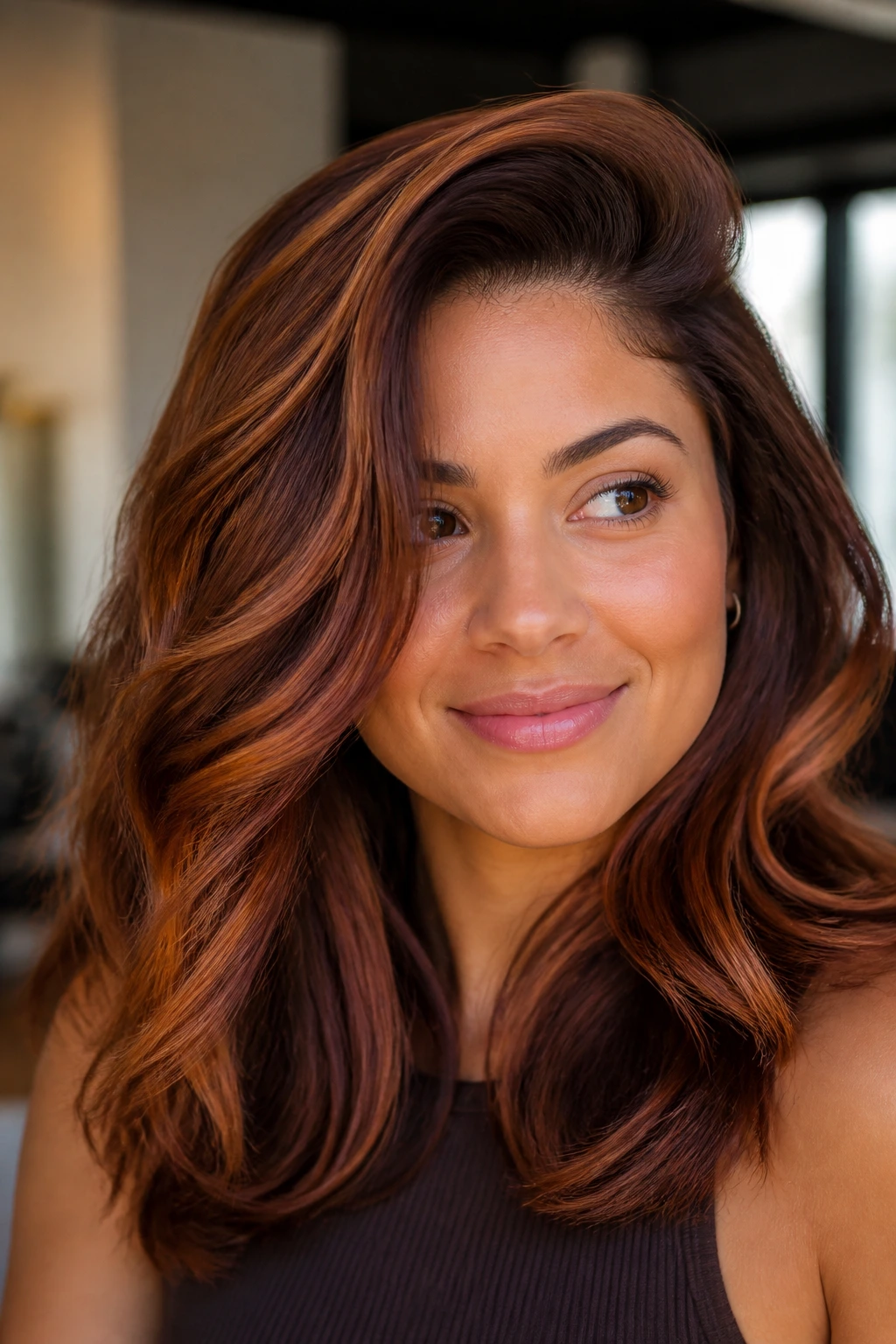
A deep side part changes the whole conversation. It shifts volume, opens one side of the face, and makes the other side feel longer. Add caramelized red-brown balayage, and you get a face shape that looks more lifted without needing heavy contouring.
This style is good for people who are tired of center parts but still want something soft. The balayage should sweep from the side part outward, with the brightest pieces landing below the cheekbone and through the lower half of the lengths. That keeps the top from looking too full.
The caramel tone helps here because it catches light without going pale. A round face often benefits from contrast, but not harsh contrast. Caramelized red-brown sits in that middle zone. Warm. Rich. Easy to wear.
If you’ve got a medium-length cut, this one can make the whole style feel longer in one appointment. That’s not magic. It’s just where the light lands.
10. Wine-Toned Ribbons for Cool Contrast
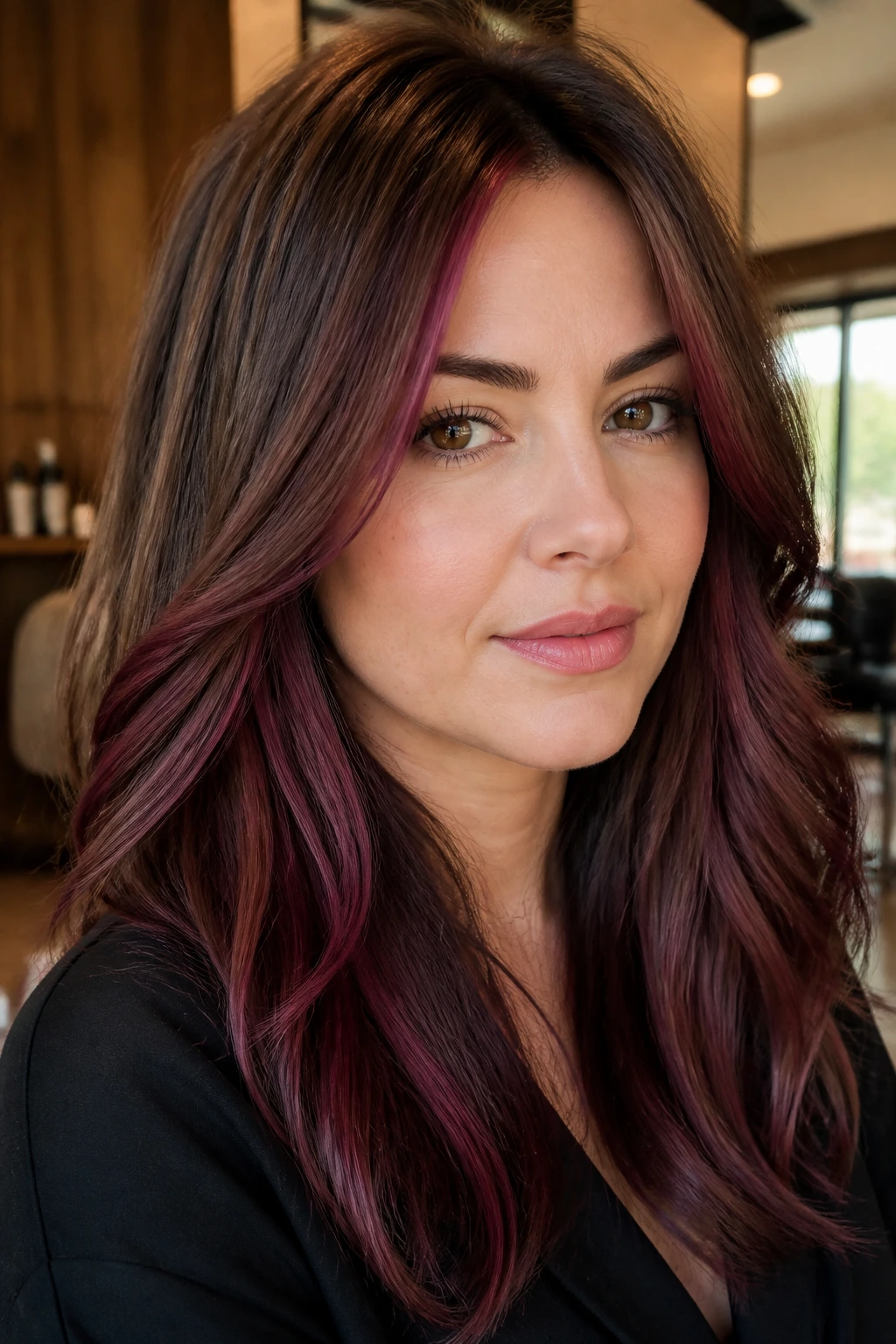
Wine tones are a smart turn when you want red-brown highlights with a deeper, moodier finish. A wine-red ribbon against brown hair gives contrast without turning the face into one broad bright zone.
This works especially well if your skin leans cool, rosy, or olive. The deeper red keeps the complexion from looking washed out, and the brown base keeps it grounded. Round faces often need structure more than flash, and wine tones are good at structure.
The placement can stay simple. Keep the ribbons near the front layers and let them move through the ends. If the color is too wide or too high, the face can look rounder. Narrow lines are better. Thin ones, even better.
A lot of people overlook deep red because they think it will feel too heavy. It doesn’t have to. When it’s woven into brown hair with enough space between the pieces, it reads as polished and dimensional.
11. Toffee Auburn Strokes on Wavy Hair
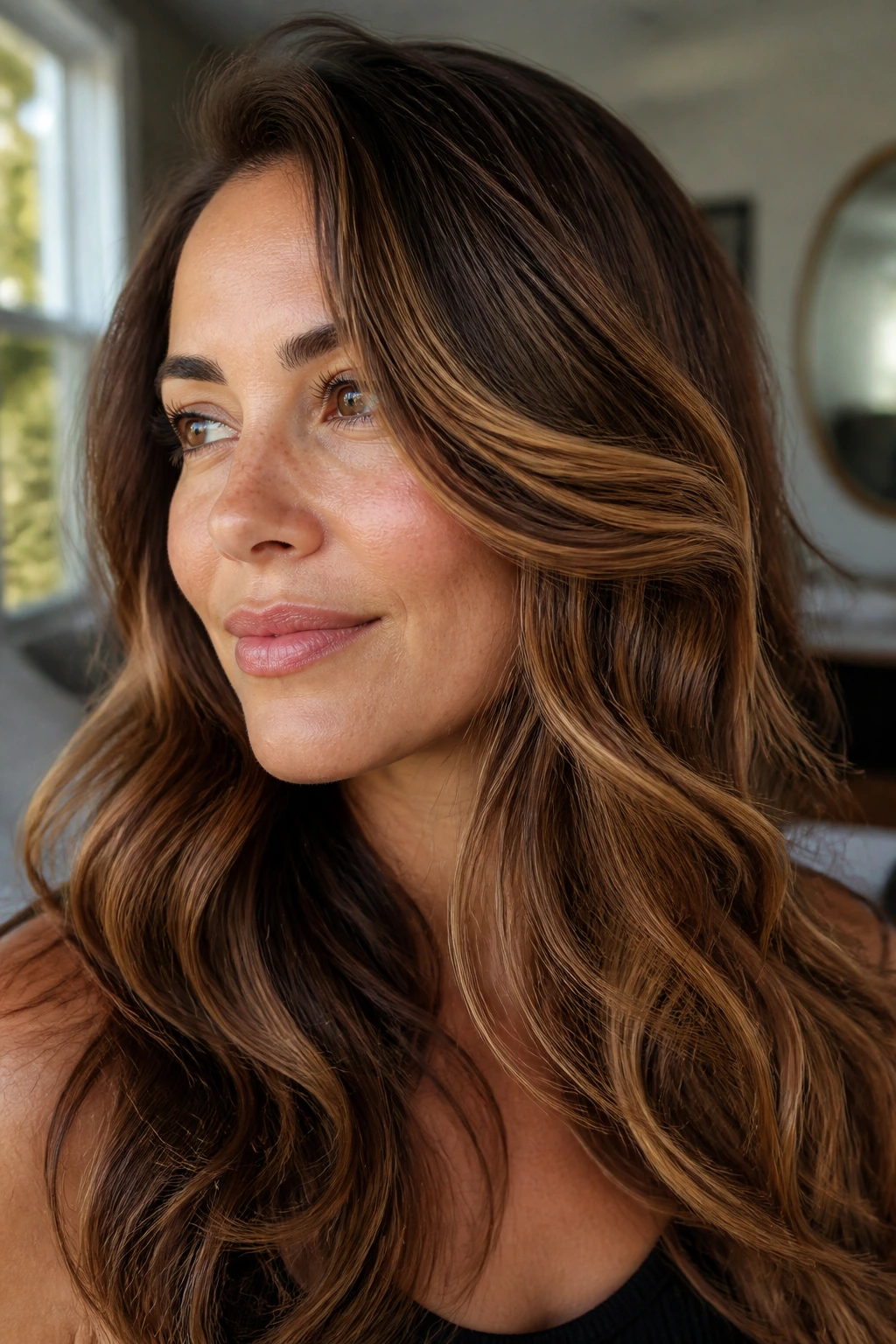
Wavy hair does half the work for you here. Toffee auburn strokes catch on the bend of the wave, which keeps the color from sitting flat against the face.
What I like about this choice is the softness. Toffee brings warmth, auburn brings a little depth, and the waves scatter both shades so the face doesn’t get boxed in. On a round face, that scattered movement is worth a lot. It makes the cheeks feel less like the widest point and more like part of a longer shape.
This style looks best when the highlights are painted through the outer layer and lightly through the ends. If everything is concentrated at the top, the face can read wider. Spread the color out and let the waves show it off. That is the whole game.
You can keep the part flexible here. A middle part makes the look gentler. A side part adds more lift. Either way, the auburn-toffee mix feels warm without drifting into copper overload.
12. Smoky Chestnut Money Pieces for Straight Hair
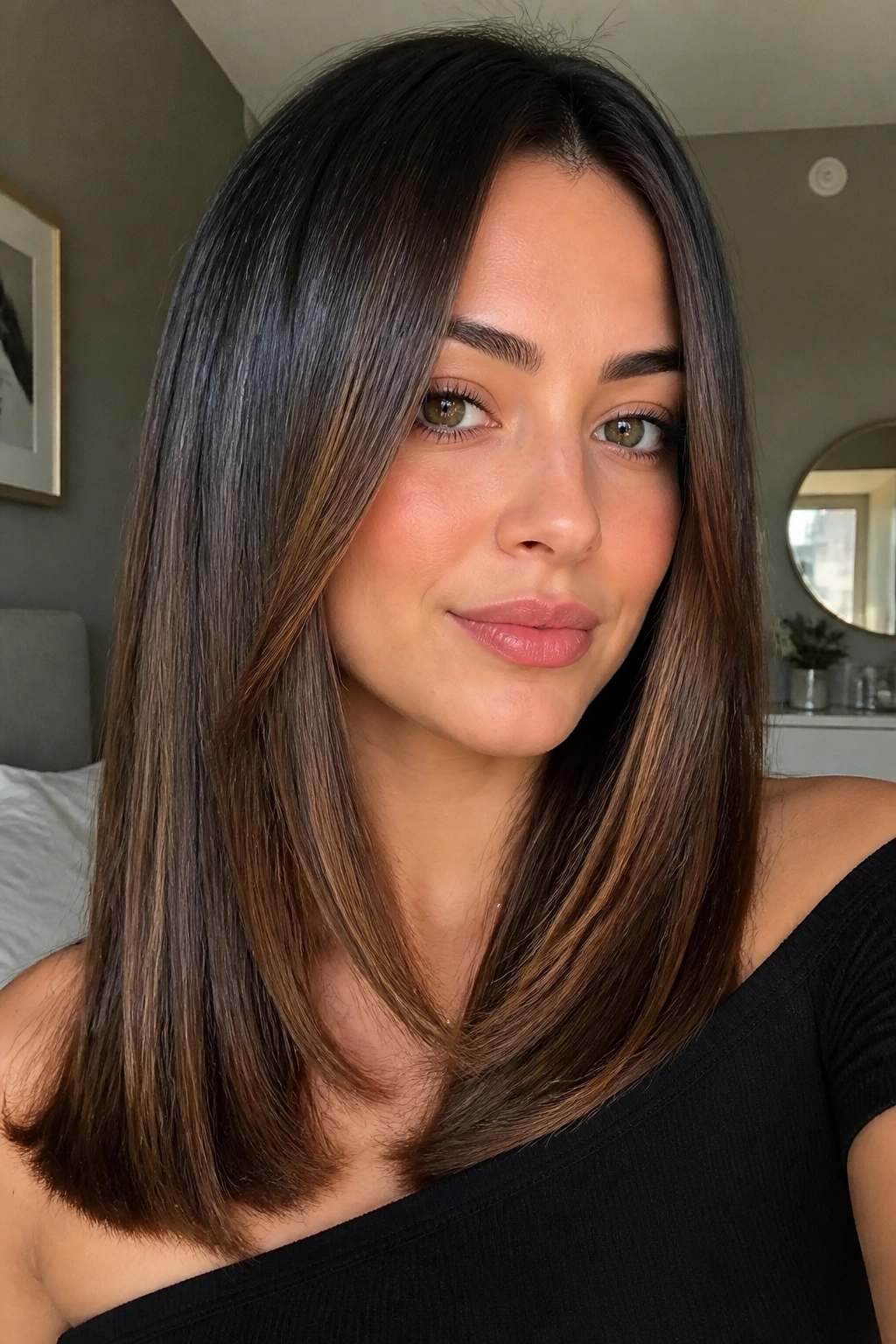
Straight hair is honest. It shows every line. That is why smoky chestnut money pieces work so well on it — the color has enough depth to shape the face without looking stripy.
This style is a little more refined than bright face framing. The chestnut stays muted, almost smoky, which means the pieces can sit closer to the face without making the cheeks look broader. On a round face, that restraint matters. You get the lift of front color, but not the flash of high-contrast streaks.
The money pieces should be fine and tapered. Let them start around the nose-to-cheek area, then trail toward the collarbone. If they start too high, they can shorten the face. If they’re too thick, they can read blunt. Neither is your friend.
Straight hair also makes the gloss finish visible. So keep the chestnut tone shiny, not dusty. A good blow-dry can make this color look more expensive than it is.
13. Rustic Copper Highlights on Curly Hair
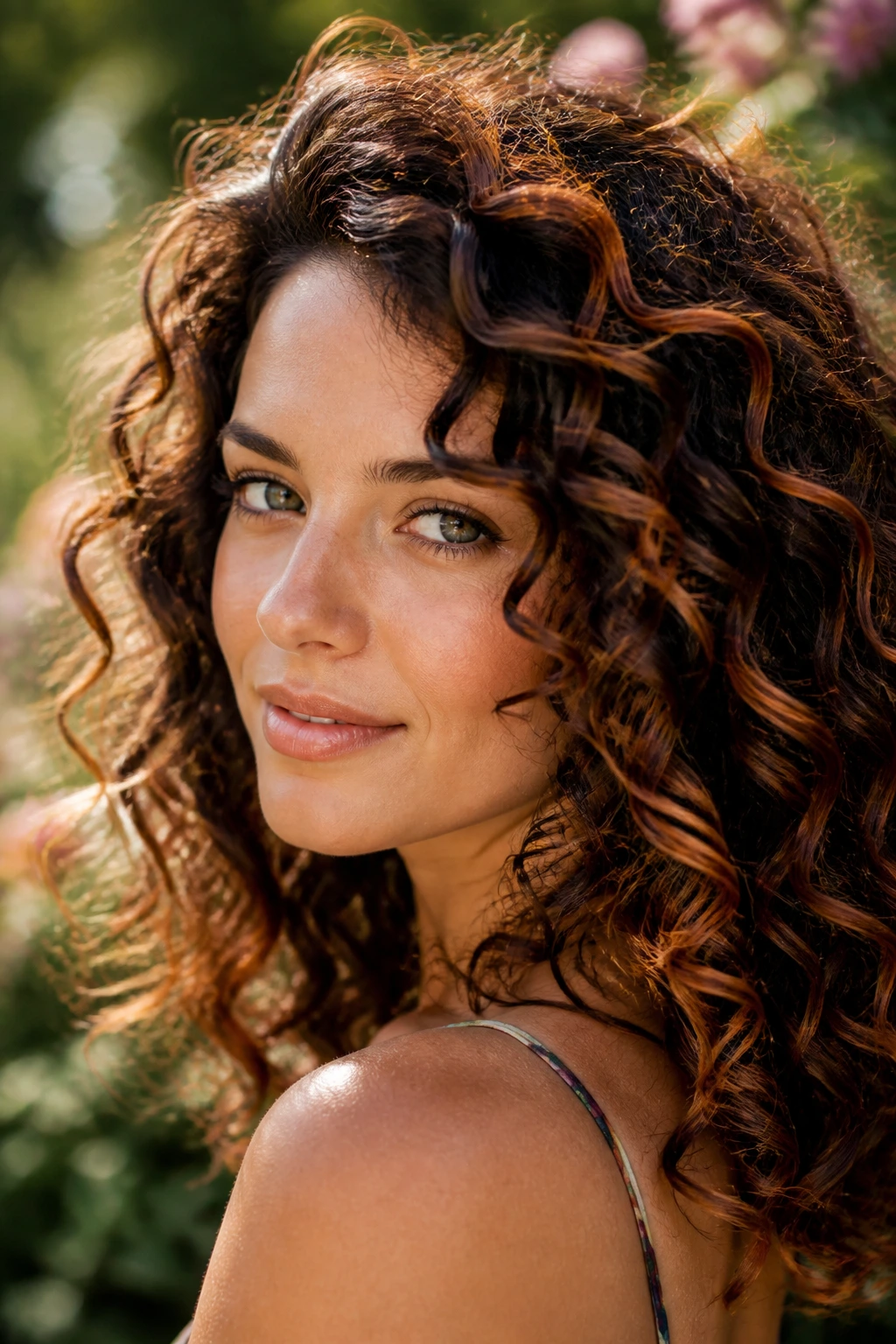
Curly hair loves copper because the coil shape catches light in pockets. Rustic copper highlights give round faces lift without flattening the curl pattern, which is the part a lot of color jobs miss.
Instead of painting broad strips, a good curl-friendly placement follows the curl family. That means some pieces sit on the outer ring, some tuck inside, and a few hit the crown. The result is not one big halo of brightness. It’s a controlled scatter of warmth that keeps the face from feeling boxed in.
A Few Things to Keep in Mind
- Keep the highlights thin enough to follow the curl pattern
- Avoid placing the brightest pieces only at the cheeks
- Let some darker curls stay near the temples
- Use a gloss so the copper stays rich, not brassy
Curly hair has movement built in. That is the advantage. When the color is placed well, it keeps shifting as the curls dry and spring up. And that movement naturally helps a round face look less circular.
14. Espresso Base with Red Brown Midshaft Bands
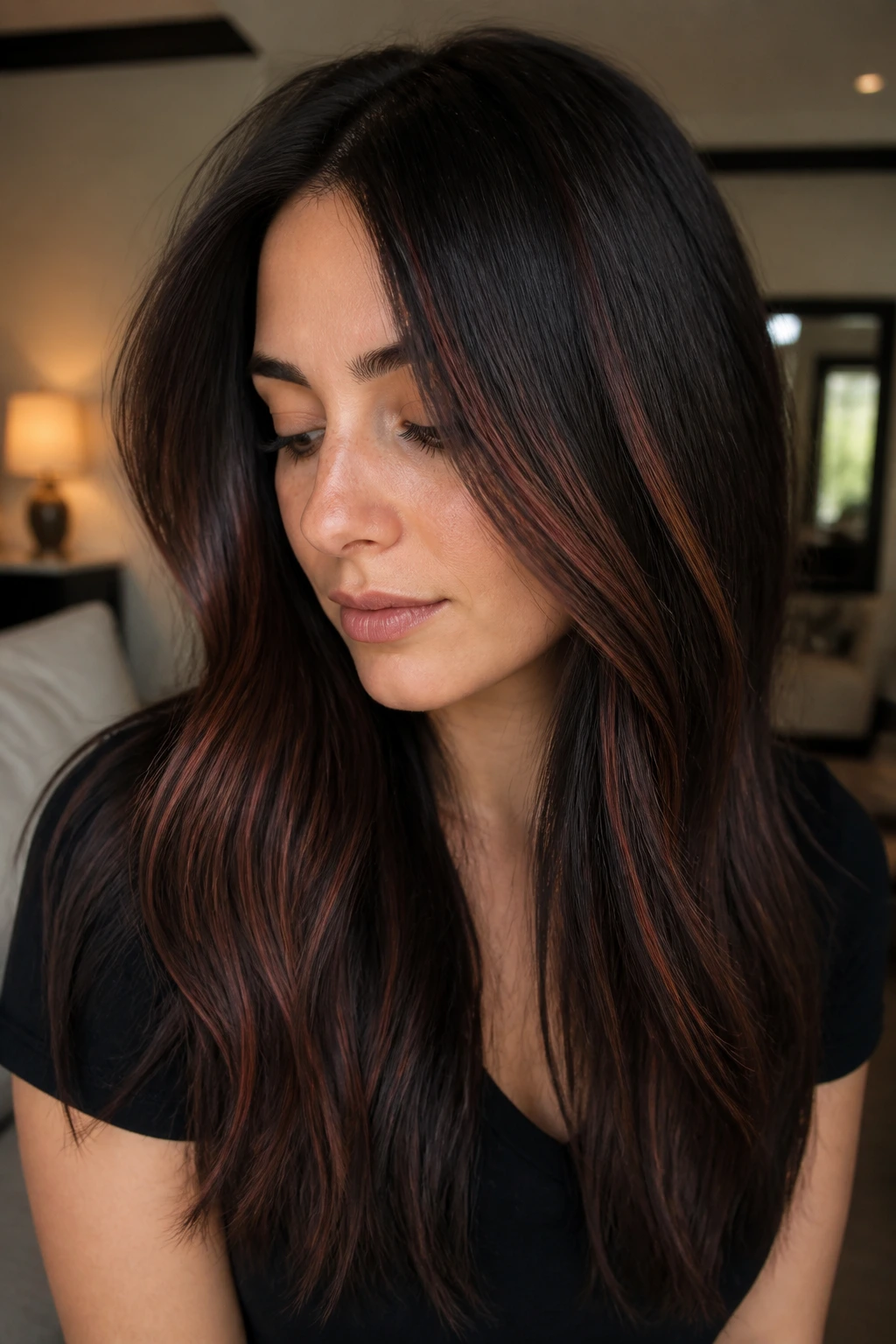
Midshaft bands are a smart choice when you want visible dimension without turning the face into a bright frame. The darker espresso base keeps everything grounded, and the red-brown bands show up through the middle where the eye usually travels.
This style is underrated because it doesn’t depend on a dramatic front piece. Instead, it builds shape through the whole head. The bands break up the width around the cheeks and make the lengths look longer. That can be a huge help on round faces, especially if your cut is one length and needs a little motion.
The key is keeping the bands slim. Too wide, and the look gets blocky. Too scattered, and it turns into noise. Thin, deliberate lines through the midsection are enough.
It’s also a useful option for darker hair that doesn’t lift easily. You can keep the espresso depth and still get the warmth of red-brown color where it counts.
15. Rosewood Highlights on a Layered Lob
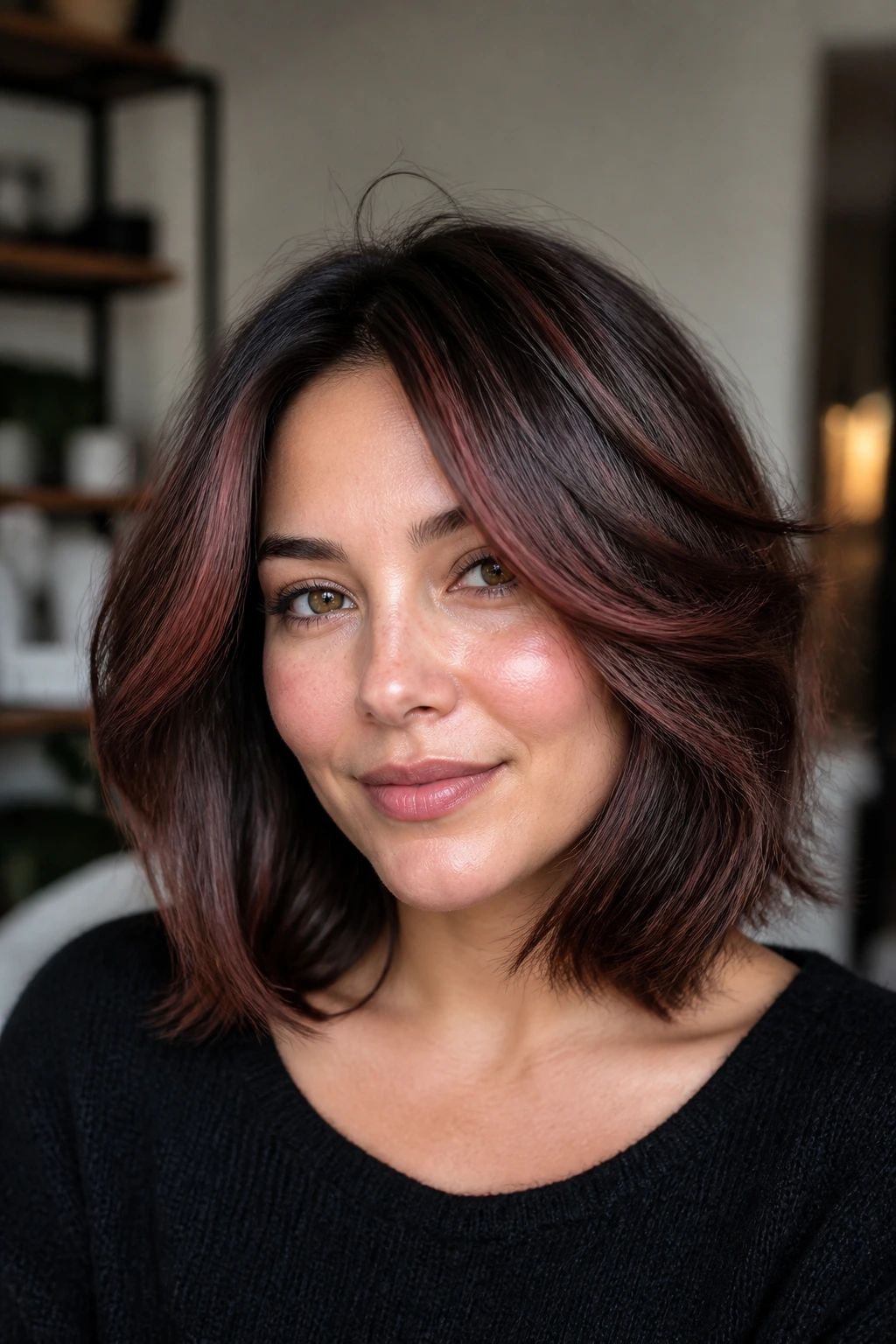
A layered lob is already doing some face-shaping work, so rosewood highlights just need to support it. That makes this one of the easiest red-brown looks to wear on a round face.
The rosewood tone sits between red and brown with a faint cool edge, which keeps it from looking too orange. On layered hair, the color travels with the movement of the cut, and that movement is what softens the roundness. The front layers get a little extra brightness, while the back stays slightly deeper.
You do not need a lot of contrast here. That is the point. A lob with too many bright pieces can feel busy around the face. Rosewood keeps the look quiet but not dull, which is a hard balance to hit.
It’s a nice choice if you like hair that looks good both sleek and tousled. The layers do the shaping. The color just gives them something to show off.
16. Warm Burgundy Hidden Panels
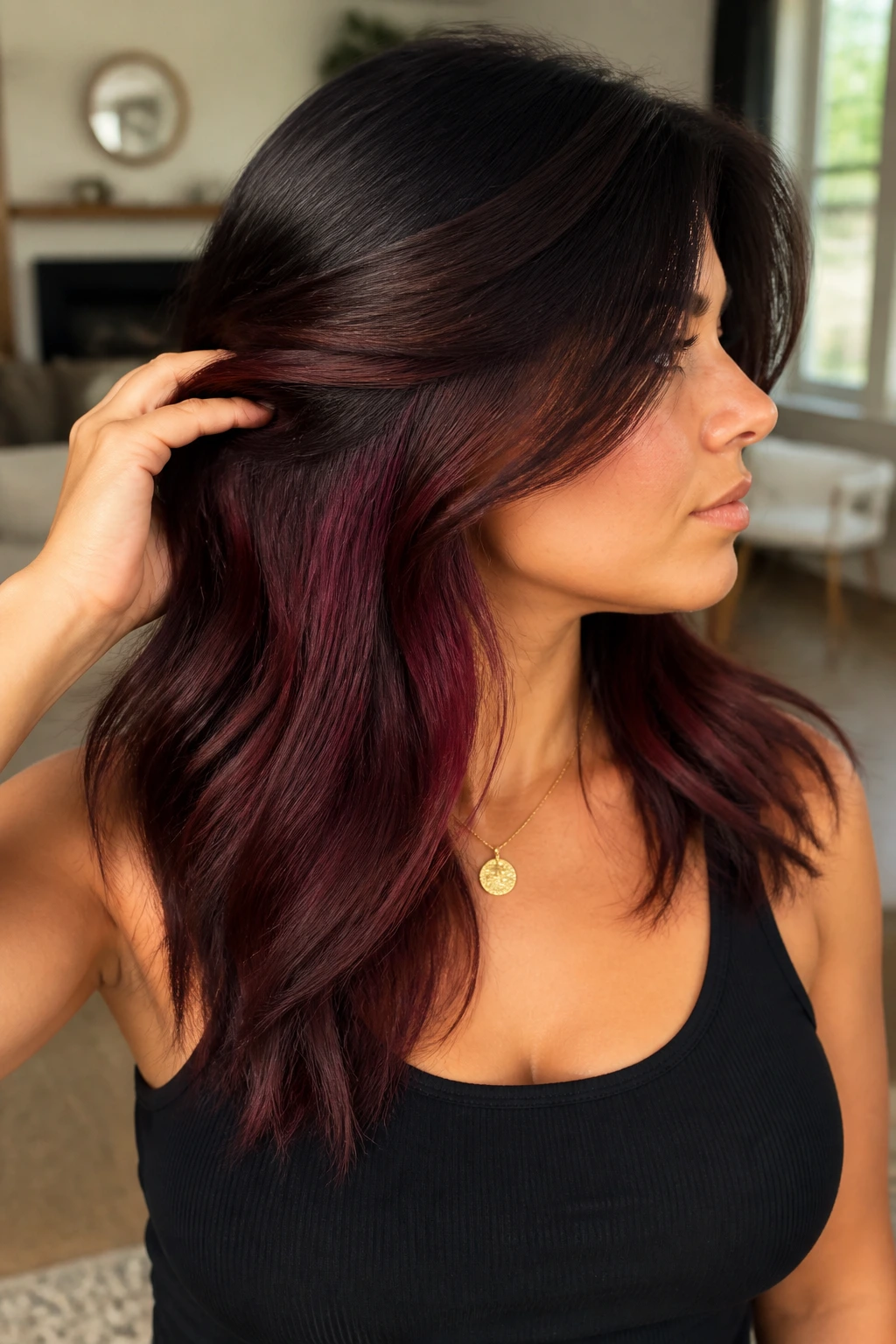
Hidden panels are for people who want color with a little attitude but don’t want the front of the hair to shout. Warm burgundy panels tucked underneath can make a round face look longer because the eye keeps discovering the color as the hair moves.
This is not the loudest choice on the list. It’s one of the cleverest. Since the burgundy sits under the top layer, the silhouette stays darker and slimmer around the cheeks. Then the color flashes at the ends, near the neck, or when the hair is tucked behind the ear.
If you wear your hair up often, this one pays off. Braids, knots, clips — all of them reveal the hidden shade. The face stays framed by the darker outer layer, which is a nice visual trick.
Burgundy can go too purple if the base is wrong, so keep it warm and brown-leaning. That keeps the result in the red-brown family instead of pushing it into plum territory.
17. Micro Red Brown Highlights for Round Faces Through the Crown
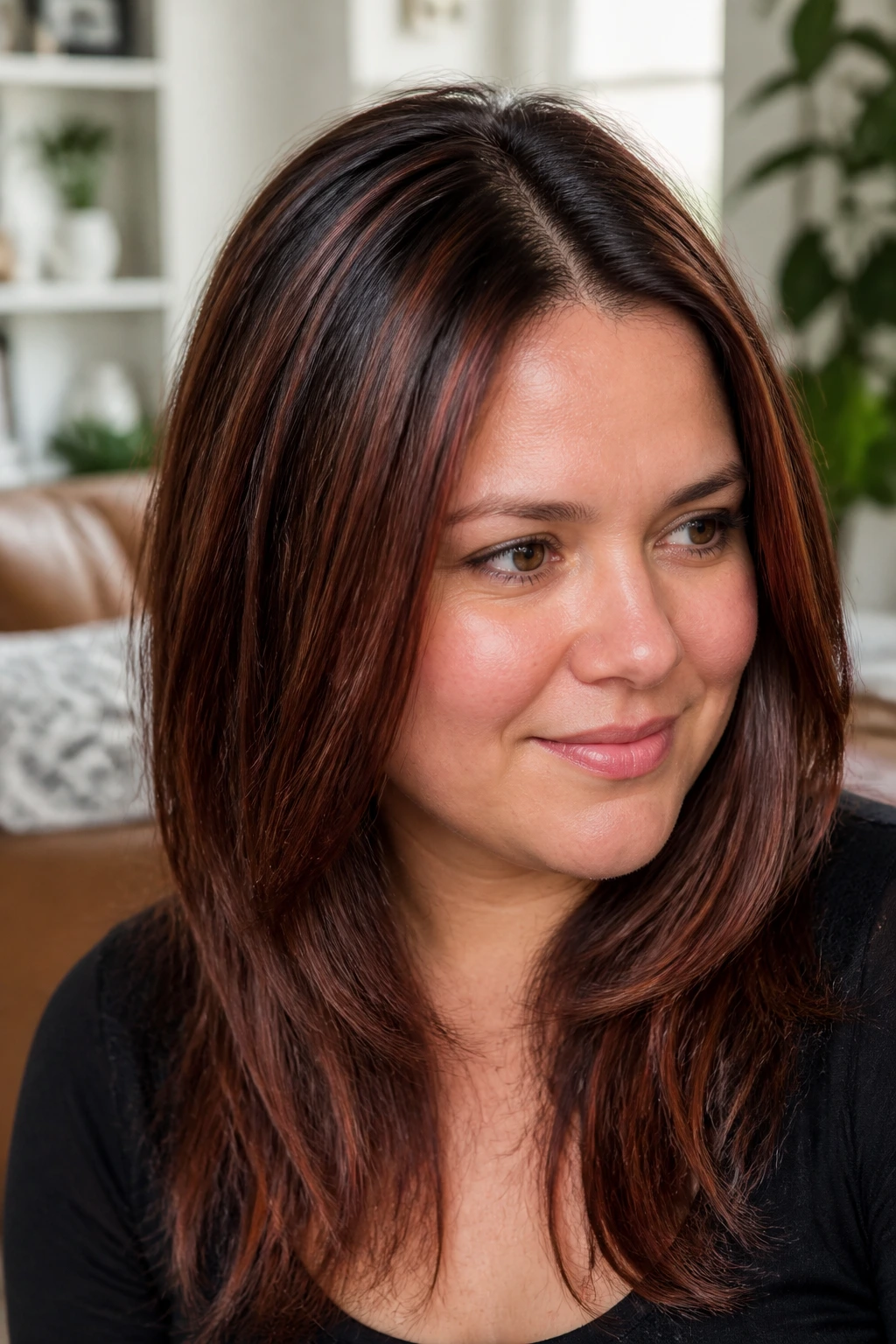
Tiny pieces through the crown can do more for a round face than a loud front streak. Micro red brown highlights for round faces create lift at the top, which lengthens the overall shape before the eye reaches the cheeks.
This is one of my favorite quiet moves because it works on almost any texture. The pieces are so fine that they blend into the hair, but they still create a flicker of light where the head needs height. That upward motion matters. Round faces usually look best when there is some visual activity above the widest point, not just around it.
How to Use Them
Ask for a fine weave, not chunky slices. The goal is scattered warmth through the crown and upper layers. If the pieces are too bold, they can expand the top of the face in an awkward way.
This is also a good choice if you already have layers. The highlights catch the lifted ends and make the haircut feel more airy. No heavy contrast. No hard lines. Just tiny shifts that change the outline.
18. Spiced Maple Ribbons With a Soft Fringe
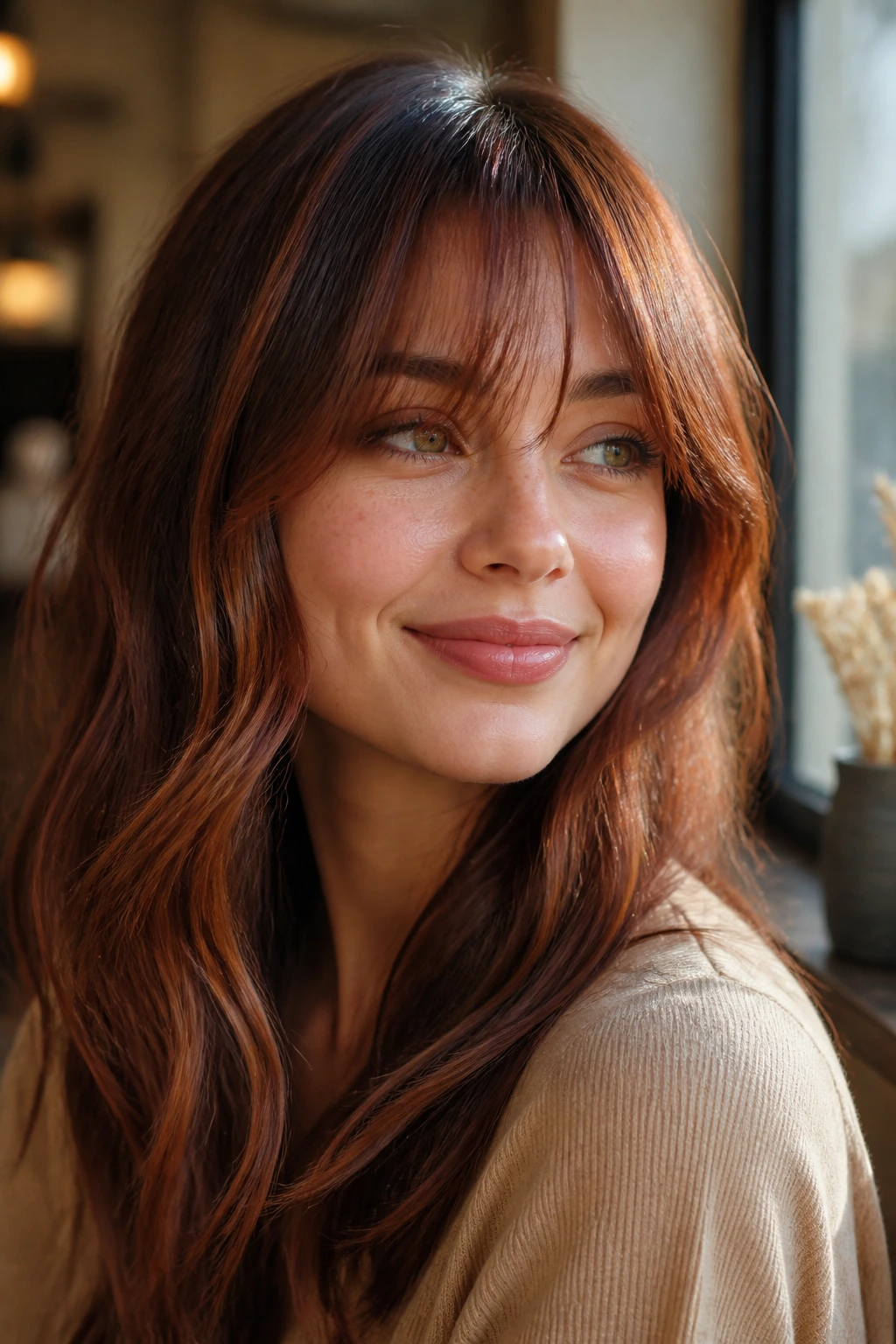
A soft fringe can be a round face’s best friend when the color supports it. Spiced maple ribbons give the fringe a warm frame without turning it into a blunt curtain across the forehead.
The trick is to keep the fringe airy. Think wispy, side-swept, or split just enough in the middle to show forehead length. Then place the maple ribbons through the front sections and down the sides. That gives the face structure without closing it in.
This look is especially nice if you want softness near the eyes. A harsh fringe plus a heavy highlight line can shorten the face fast. Spiced maple avoids that by staying warm, thin, and a little broken up.
If your hair is fine, this can add body. If it is thick, it keeps the front from feeling like a helmet. Either way, the soft fringe and the ribbon placement work together instead of competing.
19. Cherry Brown Halo Highlights
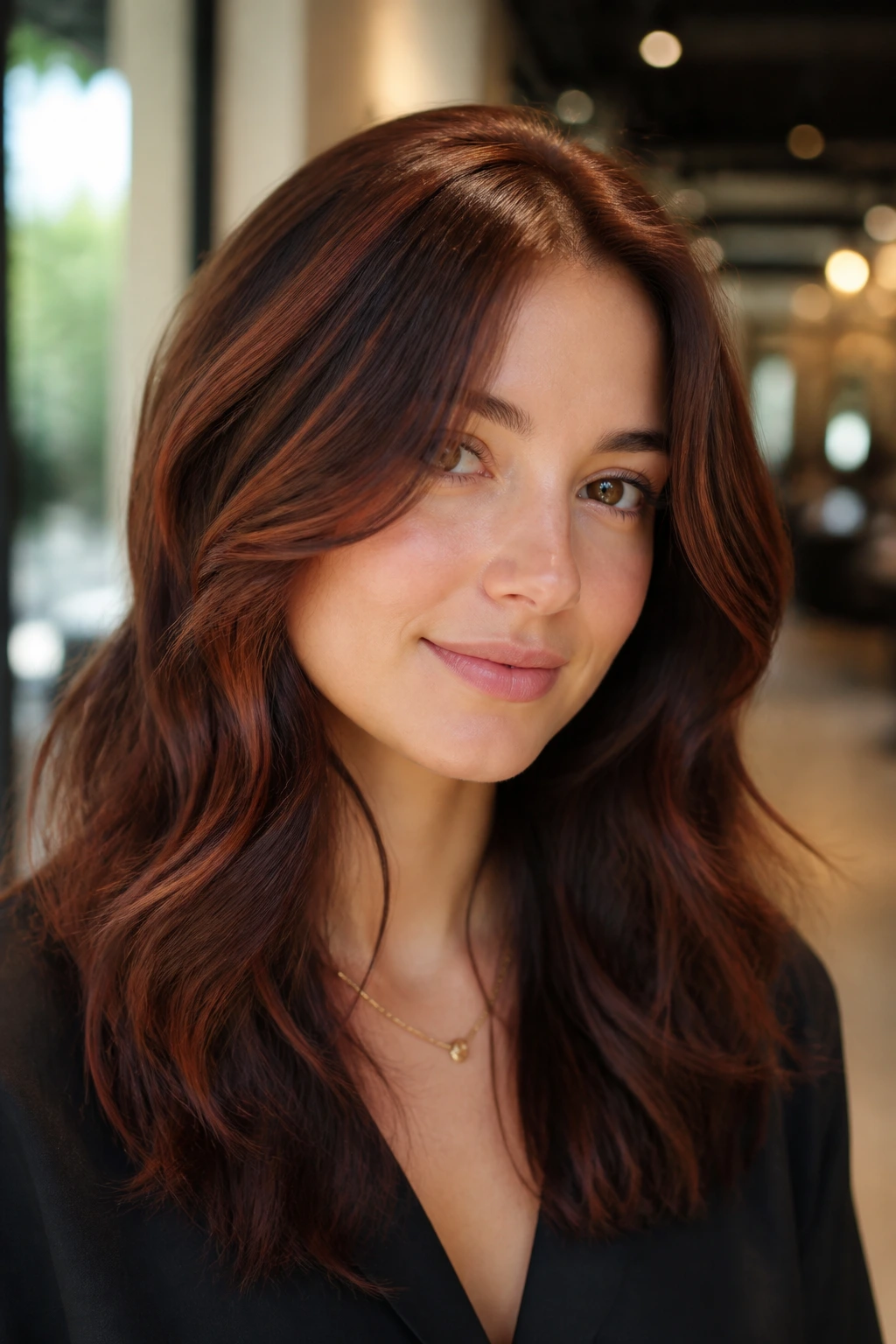
A halo placement can be tricky on a round face, but when it is done with restraint, it looks expensive. Cherry brown halo highlights sit around the crown and upper outer layers, not all the way around the face, which keeps the shape lifted instead of widened.
The halo effect is nice because it creates a soft ring of warmth that catches light when you turn your head. The color should be concentrated higher up and feathered outward, not wrapped like a band. That keeps the attention above the cheek line where a round face can use it.
- Best if you want visible dimension from every angle
- Works well on layered cuts
- Keep the cherry tone deep, not bright red
- Pair it with a slightly darker base for contrast
This is one of those styles that looks better in motion than in a still photo. The whole point is that little shift of warmth near the top and sides. It gives the face lift without making the front look too broad.
20. Burnt Sienna Face Frames on Long Hair
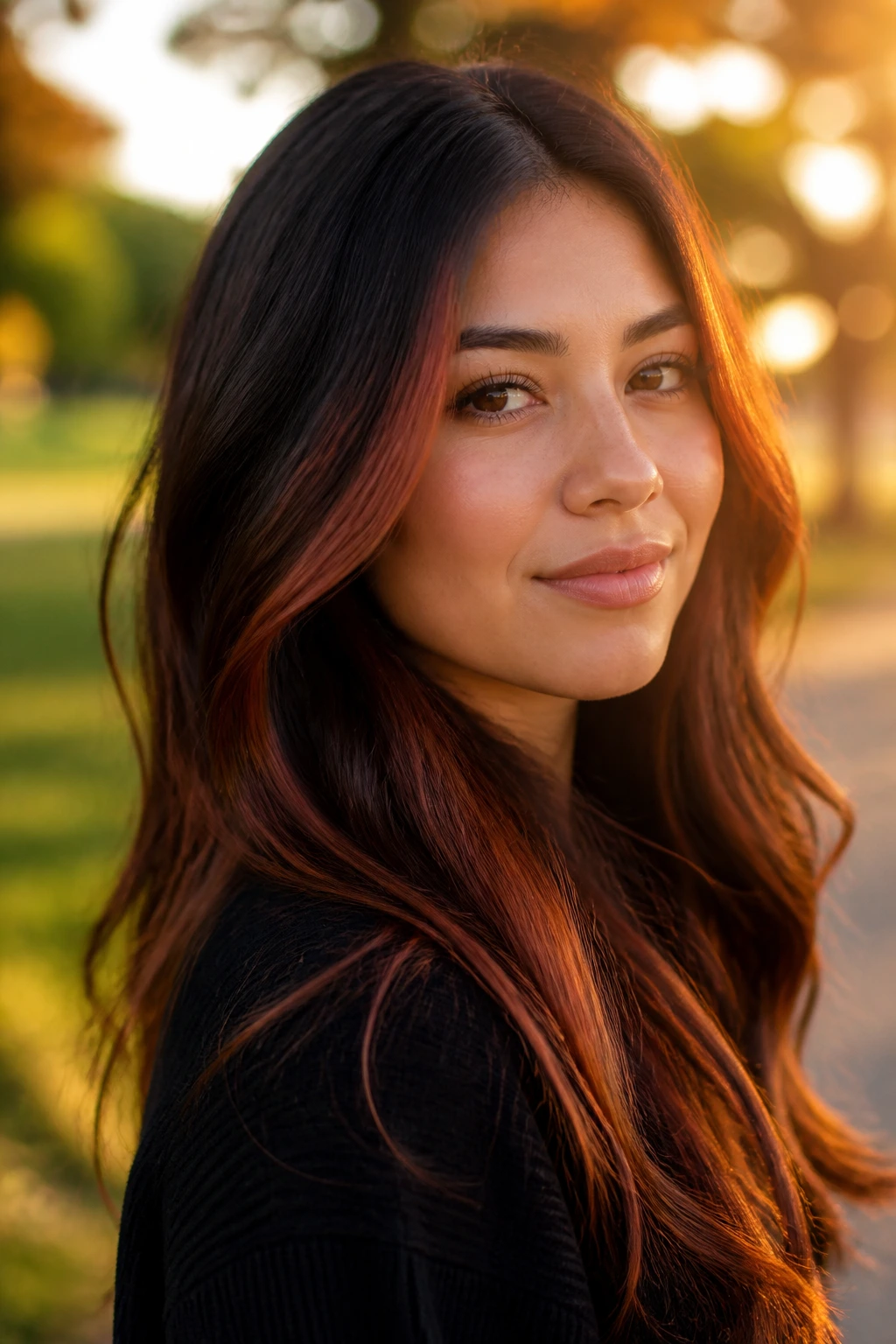
Long hair gives you room to stretch the color vertically, and burnt sienna face frames use that space well. The warm red-brown tone starts near the front and continues down the lengths, which helps a round face read longer from top to bottom.
This style works because the color isn’t trapped around the cheeks. The brightest bits travel past the jaw and into the ends, so the eye keeps moving. A shorter frame can stop too soon and widen the face. A longer one solves that neatly.
The burnt sienna shade is lovely on darker bases because it has enough red warmth to show but stays earthy enough to feel grounded. It’s a nice middle road if copper feels too bright and chestnut feels too safe.
You can wear this with straight hair, waves, or loose curls. On long hair, the movement through the ends matters as much as the front. Let the frame taper. Don’t cut it off square.
21. Hazelnut and Red Brown Slices on a Bob
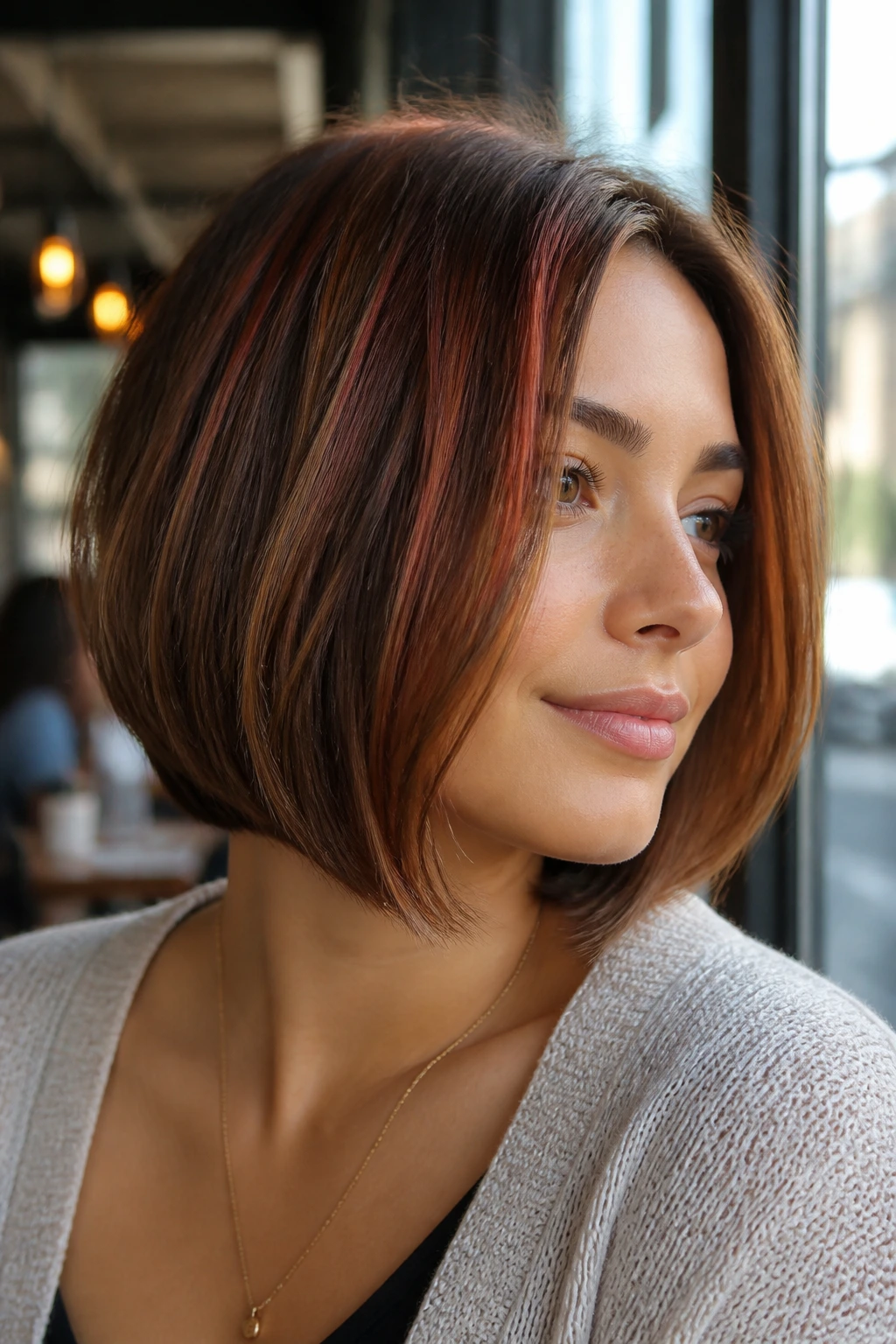
A bob needs structure, so the highlight technique should respect that. Hazelnut and red brown slices give a bob crisp definition without making the sides look puffy.
Slice highlights are broader than babylights, which is useful here because a bob can swallow tiny pieces if they’re too fine. The hazelnut pieces add soft brightness, while the red-brown slices keep the look warm and dimensional. Together, they stop the haircut from looking like one solid block.
This is a strong choice for a blunt bob or a slightly angled one. If the cut sits right at the jaw, the slices should avoid the widest point and lean more toward the front edge or the ends. That helps the shape read cleaner.
A bob with this kind of color looks especially good when the ends are tucked under a little. The color follows the curve and adds movement where the face needs it.
22. Maple Glaze Balayage for Thick Hair
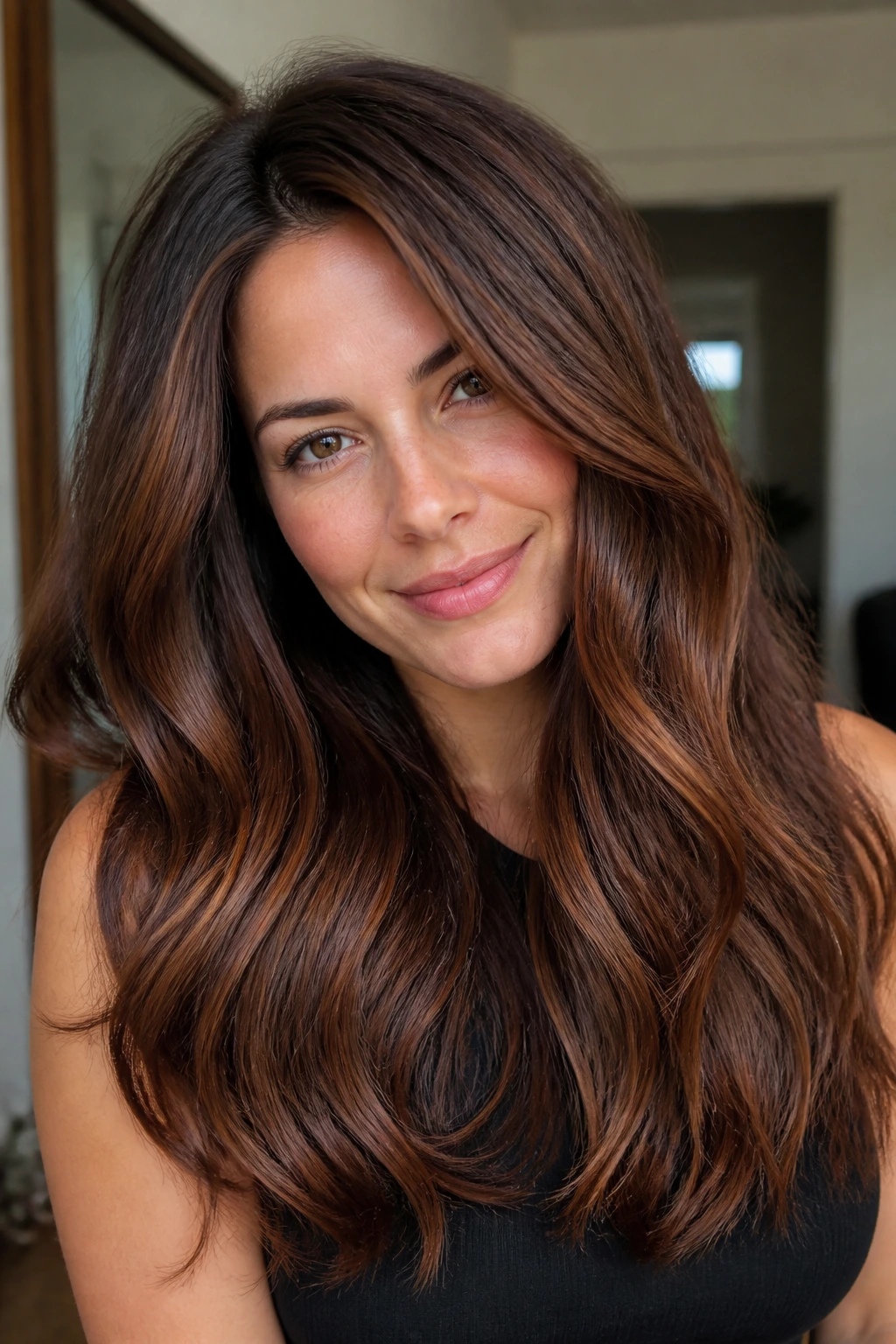
Thick hair can handle more color, but it can also swallow weak color placements. Maple glaze balayage works because it coats the surface with warm red-brown glow while still leaving depth underneath.
This is a practical choice if your hair is dense and round faces tend to get lost in it. The balayage should be painted in sweeping sections so the color sits where the hair moves and bends. Thick hair needs spacing. If the highlights are too close together, the whole head can look heavy.
The maple tone helps keep the finish soft. It doesn’t need to be very light to show. That matters because thick hair often looks best with dimension rather than maximum brightness.
A slightly off-center part helps here too. It shifts the bulk and gives the highlight pattern room to breathe. The end result is smoother, lighter-looking hair without sacrificing fullness.
23. Auburn Streaks That Follow the Part
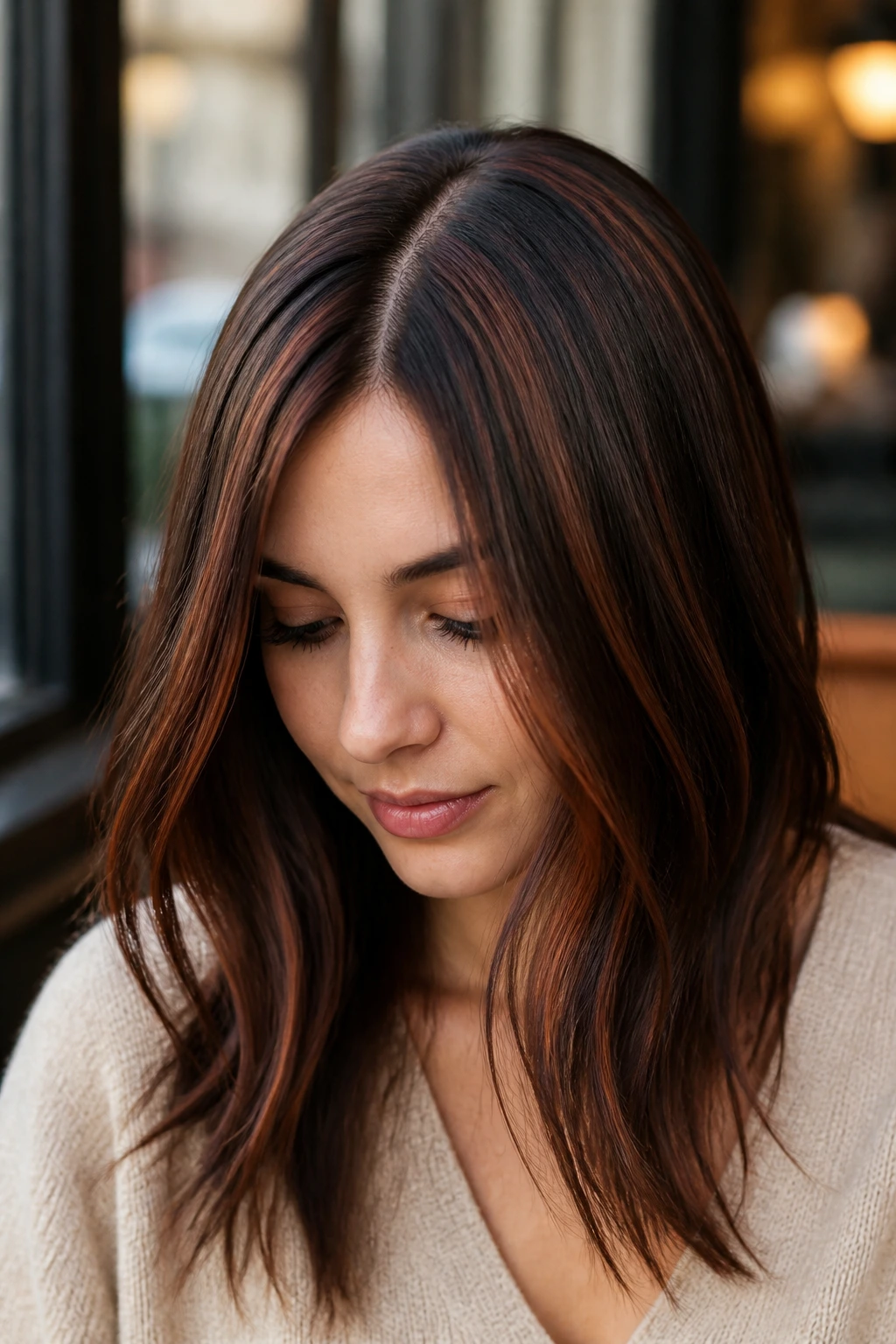
Following the part is one of the easiest ways to make highlights work harder. Auburn streaks placed along the part line create a straight vertical path that makes a round face look longer.
This is a clean, simple look. The color doesn’t need to fan out across the sides. It needs to travel. A few well-placed auburn streaks starting near the part and continuing through the front layers can do more than a dozen scattered pieces elsewhere.
The part itself matters. A center part gives symmetry, while a side part adds lift. Both can work. What you want to avoid is a broad bright patch right over the temples. That’s the area that can make the face feel widest.
If you style your hair often in sleek looks, this placement is especially useful. The streaks stay visible even when the hair is smooth, and the shape stays narrow where it should.
24. Mahogany-Bronze Ribbon Lights on Natural Black Hair
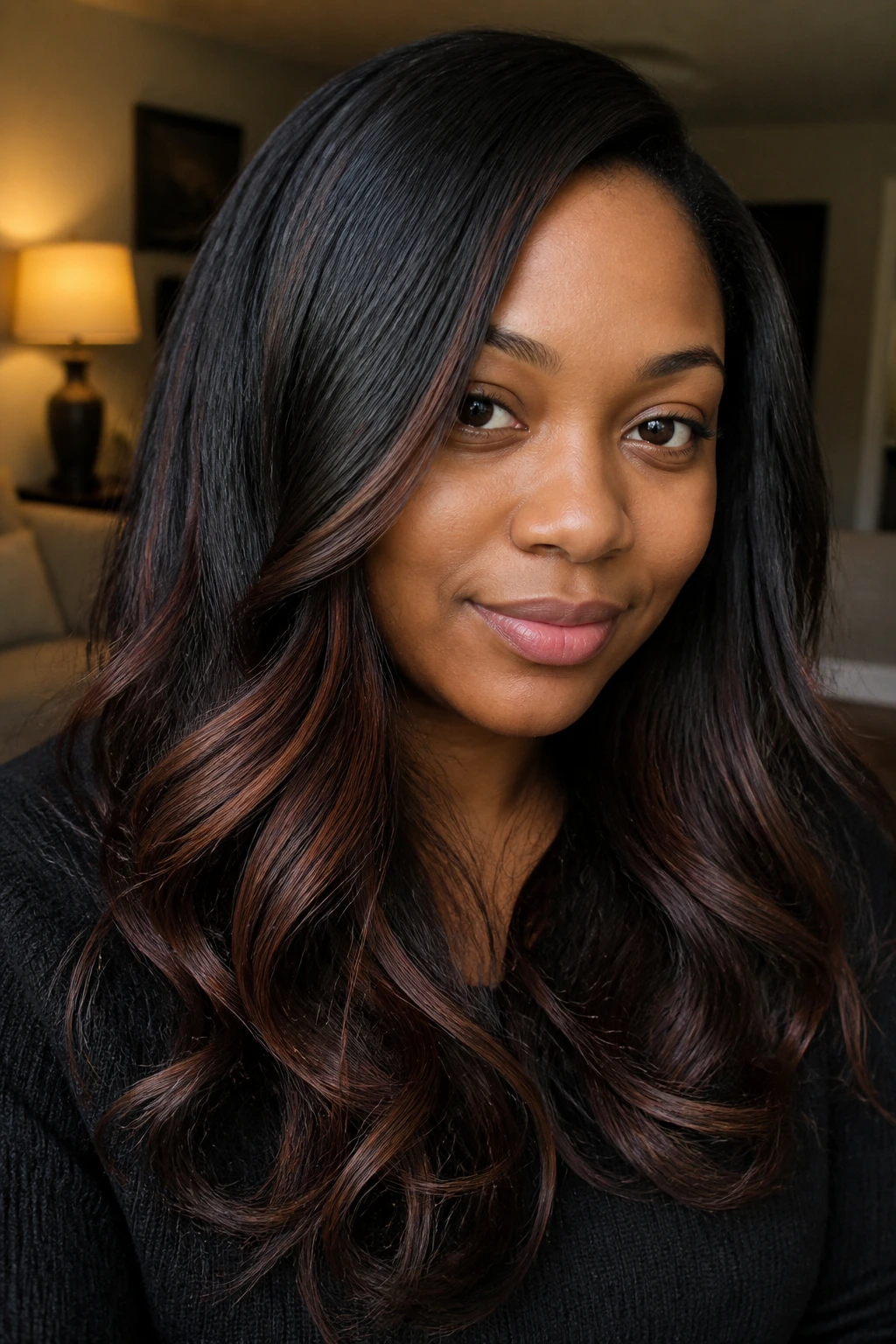
Natural black hair takes red-brown color in a way that can look rich rather than flashy. Mahogany-bronze ribbon lights give depth first, then shine, which is a smart combination for round faces.
The darker base keeps the face outline slim. The mahogany-bronze pieces show where the hair bends, especially around the front and lower lengths. That keeps the color from sitting too high or too wide. On black hair, a warm ribbon can feel much softer than a high-lift light brown stripe.
What to Ask For
Ask for ribbons, not blocks. Ask for warmth, not orange. And ask for placement that starts lower on the head than you might think. That last part matters a lot.
This look suits hair that’s worn blown out, curled, or stretched straight. Each version shows the color a little differently, but the dark base stays in control. That’s the whole point. The highlight should add shape, not steal it.
25. Soft Cinnamon Ribbon Highlights at the Ends
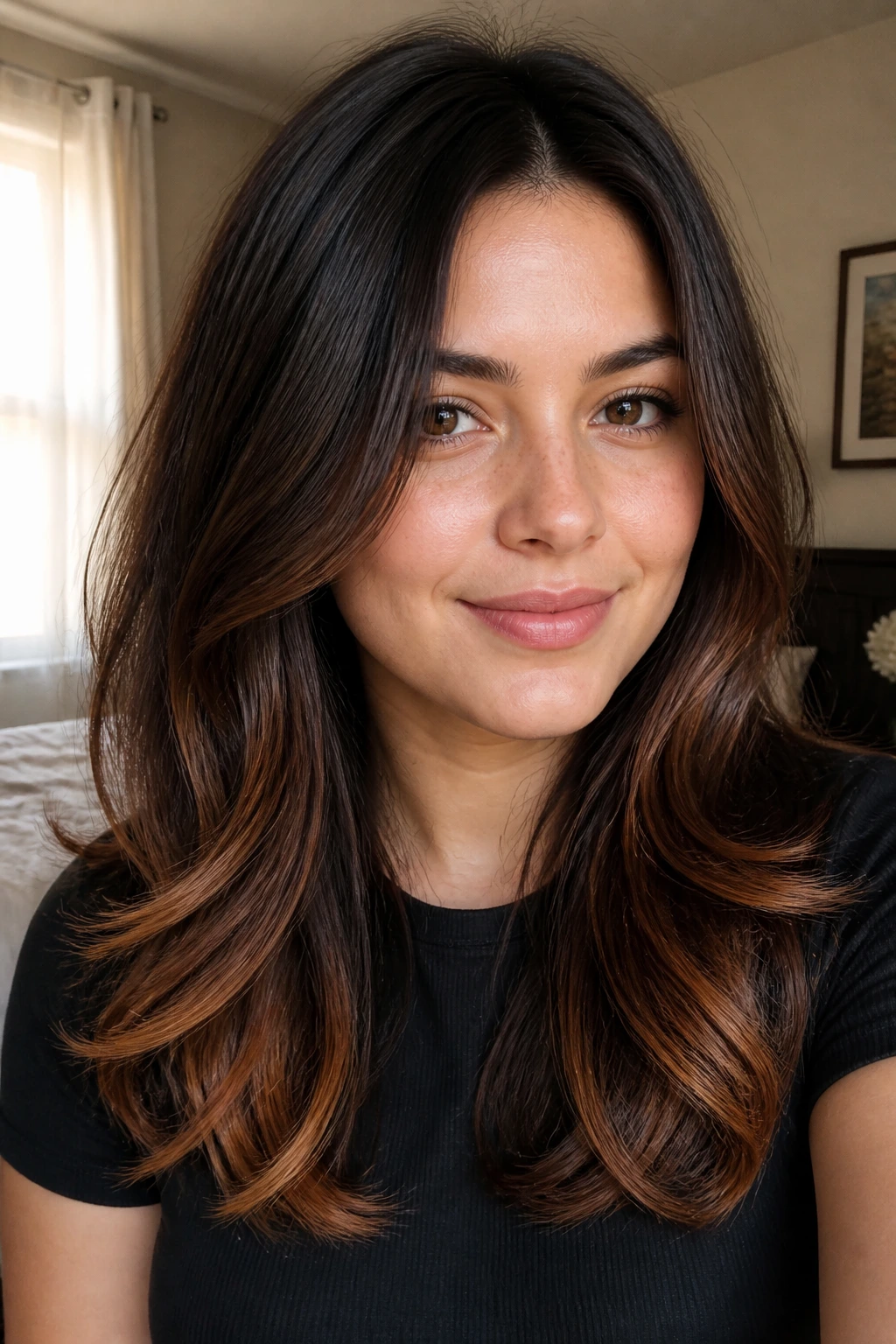
Ending on the ends may sound simple, but it’s one of the cleanest ways to help a round face. Soft cinnamon ribbon highlights at the ends create a downward pull, which keeps the eye moving past the cheeks and into the length of the hair.
This is a smart choice if you like low drama and good grow-out. The roots stay deeper, the middle lengths stay calm, and the cinnamon warmth wakes up near the bottom. The face reads longer because the brightest color lives where the hair already stretches out.
It also works beautifully on layered cuts, where the ends move more than the top. That movement helps the color show without crowding the face. If you want a quiet finish that still looks intentional, this is the one I’d keep on the short list.
A small gloss over the cinnamon can make it look richer, not brighter. That matters. A flat warm end looks tired. A glossy one looks finished.
Round faces don’t need a complicated color map. They need smart placement, a warm tone that suits the base, and enough contrast to create shape without adding width. That’s the real trick behind these red-brown looks.
The best choice is the one that fits your hair texture and how much upkeep you’re willing to live with. Some of these styles are whisper-soft. Others carry more edge. All of them can work when the color starts in the right place and follows the haircut instead of fighting it.
