



Brown hair takes highlights better than most people think—if the shade, placement, and lift are chosen with some care, the grow-out can look softer than a single-process color ever will.
That’s the part people miss. Brown hair isn’t one flat thing. It can lean red, gold, ash, olive, or deep neutral, and each version handles light pieces differently. A caramel ribbon on chestnut hair reads warm and glossy; the same caramel on a cooler brown base can look louder, almost brassy, if it isn’t toned down.
The smartest brunettes usually don’t chase one heavy blonde result. They ask for dimension. A few carefully placed highlights, a soft face frame, or a veil of babylights can change the whole shape of a cut without making the hair look overworked. And yes, placement matters as much as color. Sometimes a strand that starts at the cheekbone does more than ten foils packed into the crown.
1. Caramel Ribbon Highlights
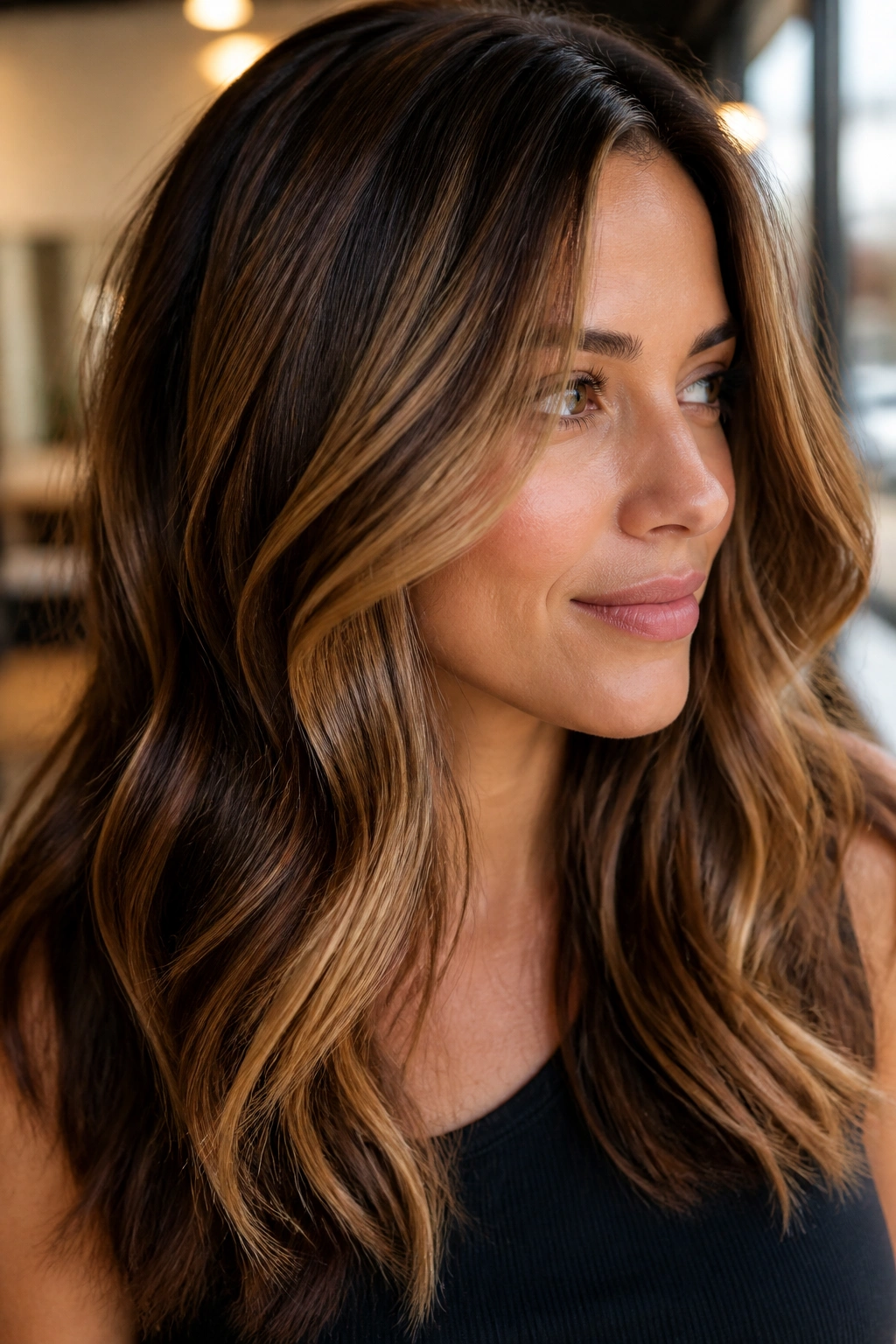
Caramel ribbon highlights are the safe place to start if you want brown hair highlights that look warm, polished, and easy to live with. The color sits right between brunette and blonde, so it adds brightness without making the hair look stripy or harsh.
Why Caramel Works So Well
Caramel has enough gold in it to lift a brown base, but not so much that it turns icy or chalky. On medium brown hair, it usually lands as a soft, creamy contrast. On darker brown hair, it gives the kind of shine that makes the whole head look healthier.
- Best on medium brown, chestnut brown, and soft espresso bases.
- Ask for ribbons that are 1 to 2 shades lighter than your natural color.
- Place them through the mid-lengths and around the face for the cleanest effect.
- Keep the root shadow soft so the grow-out doesn’t look obvious.
Pro tip: if your hair tends to pull orange, ask for a caramel-beige tone rather than a yellow gold.
2. Honey Balayage
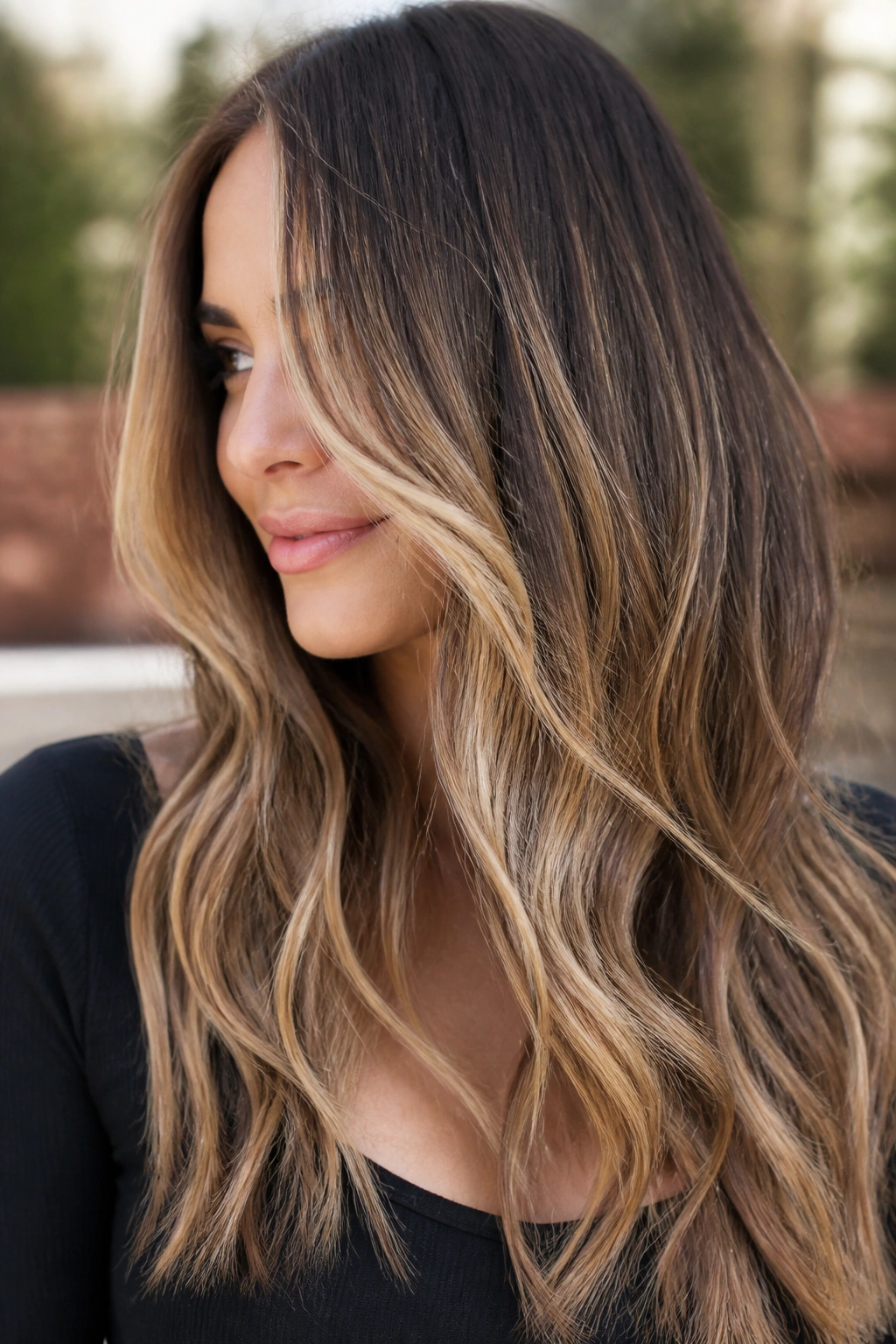
Honey balayage is warmer and rounder than caramel, and that’s exactly why it works. It gives brown hair a sunlit feel without making the ends look bleached out or dry.
The hand-painted placement is the real trick. Instead of foil lines or a blunt stripe, the lighter pieces melt through the surface of the hair and stay softer at the root. That means the grow-out is gentler, and the color looks less salon-made, which I mean in the best way.
For a rich brunette base, honey balayage usually looks best when the honey leans beige-gold rather than yellow. If the shade gets too golden, the whole thing can tip toward brass. If it stays too pale, the warmth disappears. The sweet spot is a shade that looks like warm tea with milk in it.
This is a good choice if you want your hair to move and shine in daylight, not just under indoor bulbs.
3. Chestnut Face-Framing Pieces
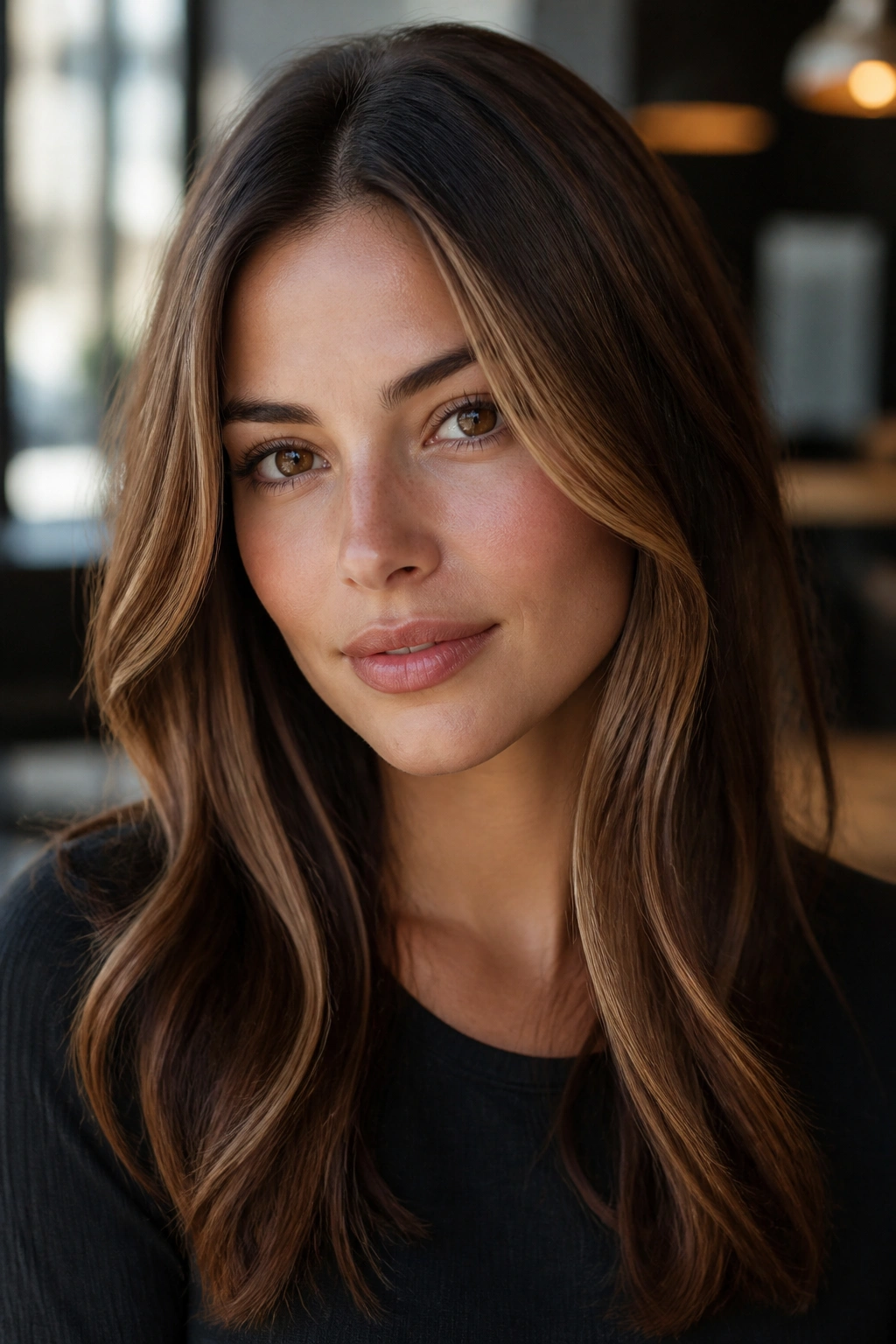
Why do a few lighter strands near the face change everything? Because they catch the eye before the rest of the hair even registers. Chestnut face-framing pieces are subtle, but they can make brown hair look fresher in about ten seconds.
How to Ask for It
Tell your colorist you want two front sections lightened just enough to brighten the cheekbones, not a full head of contrast. I’d keep the pieces about 1 to 1.5 inches wide, with the brightest part sitting from the cheekbone down through the collarbone. That length flatters most cuts because it moves with the hair instead of sitting like a block of color.
Chestnut is a smart choice if you like brunette depth and don’t want the front pieces to shout. It stays in the brown family, so the result feels polished rather than loud. On wavy or curly hair, these pieces show up even more because the bend in the hair gives them movement.
If you wear your hair in a clip or low ponytail a lot, this is a sneaky good option. You still get brightness where it matters.
4. Ash Brown Babylights
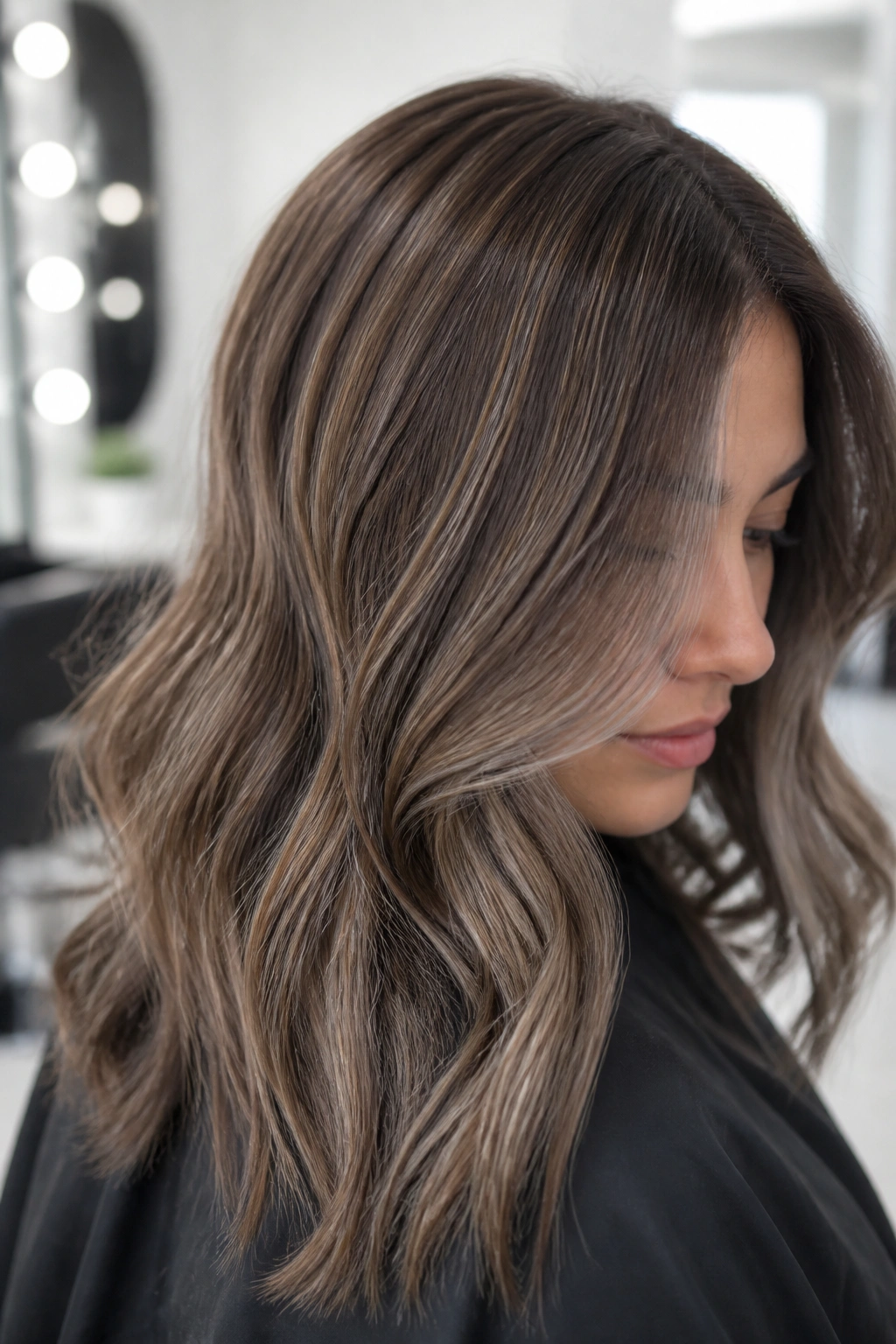
If warmth makes you nervous, ash brown babylights are the cleanest answer. They’re tiny, fine highlights that sit close to your base color, then pull it cooler with an ash or smoky beige tone.
The main benefit is control. Babylights are so thin that they blend into the brunette base instead of sitting on top of it. That makes the finish look expensive without looking loud. The downside is that ash tones can go flat fast if they’re put over hair that already reads dull or mousy, so the toner has to be chosen carefully.
What to Watch For
- Best on cool or neutral brown bases.
- Great if your hair gets brassy fast.
- Needs a toner that stays soft, not gray.
- Works especially well on straight hair or loose waves.
A good ash babylight should look like a cooler thread woven through the hair, not a silver stripe. If the colorist lifts too high, the effect loses its softness fast.
5. Toffee Ombré
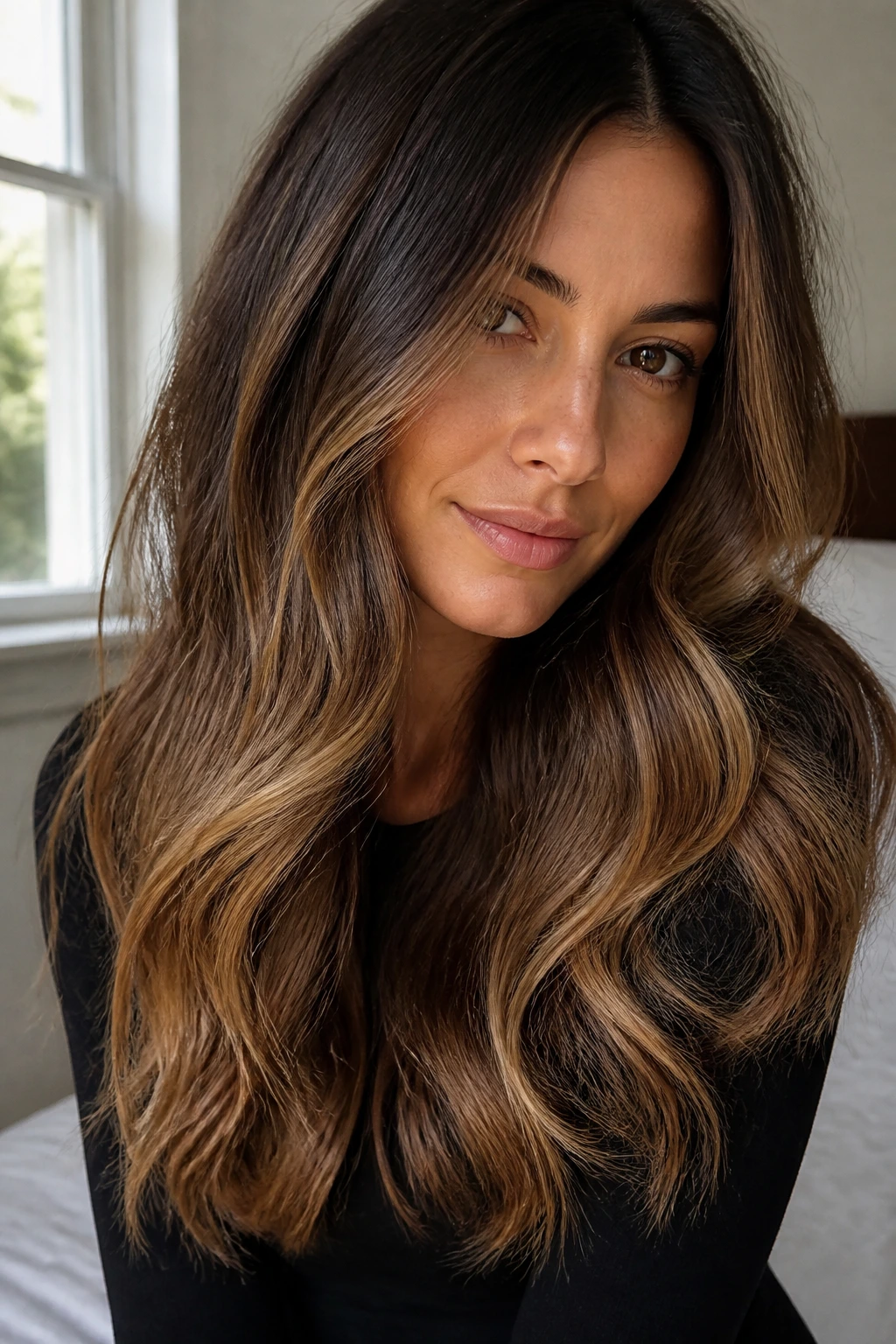
Toffee ombré is for the person who wants a visible change but hates the idea of frequent root touch-ups. The darker root melts into a warm toffee end, and that fade is what makes the whole look feel relaxed instead of formal.
I like ombré on longer layers because the color shift has room to breathe. On a blunt lob, it can look heavier unless the transition is blended well. The best version starts with a rich brunette root and opens slowly into a buttery toffee at the ends, not a sudden block of light color halfway down the hair.
It also forgives a lot. If your ends are a little drier than you’d like, the toffee shade can hide some of that unevenness better than a pale blonde would. Still, you want the ends trimmed regularly, because light ends show damage faster than dark ones.
This one is especially good if you like your color to look intentional but not fussy. It grows out nicely. That matters.
6. Golden Bronde
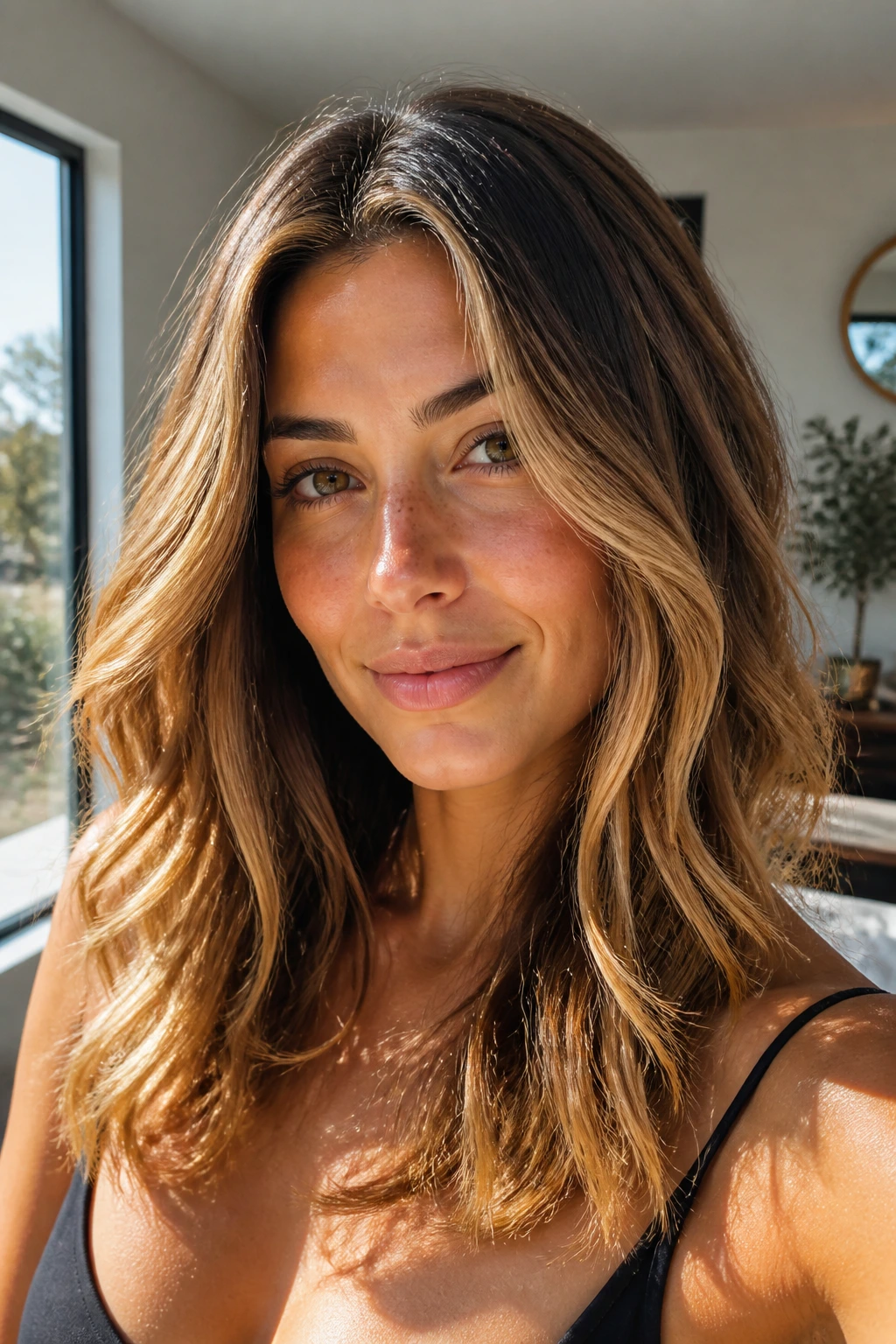
Bronde sits right between brown and blonde, and golden bronde is the warmer, sunnier version of that idea. It gives brown hair enough lift to look lighter, but keeps enough depth that the color still feels like brunette.
That middle ground is why bronde has staying power. It doesn’t ask your hair to become something else. It just softens the edges. On medium brown hair, golden bronde can look like your natural color spent a few weeks in bright light. On darker brown hair, it works best when the highlights are concentrated through the mids and ends instead of pushed too close to the scalp.
What I like most is the way it wears with texture. Wavy hair shows the variation nicely, and layered cuts make the light pieces move. If your hair is pin-straight, ask for a few more interior ribbons so the color doesn’t disappear when the hair falls flat.
If you want a brunette look that reads lighter without feeling blonde-heavy, this is the move.
7. Cinnamon Highlights
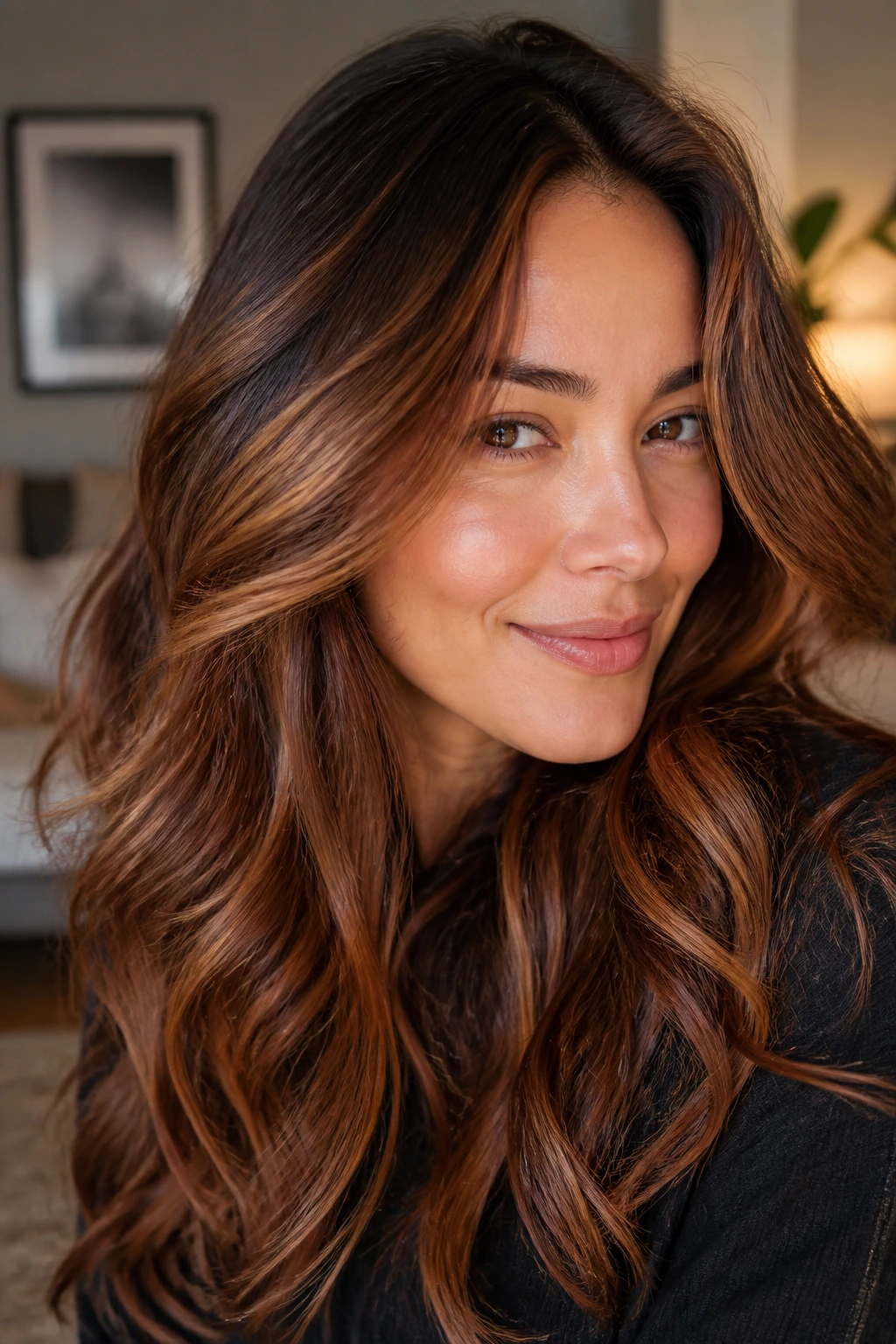
Cinnamon highlights are warmer and spicier than caramel, and that little shift matters. They add red-gold depth to brown hair, which can wake up a flat base in a way plain gold never does.
Why Cinnamon Changes the Mood
Cinnamon sits in that in-between zone where it looks rich indoors and a little brighter outdoors. It’s especially nice on brown hair that already has some auburn or copper in it naturally, because the color feels like an extension of the base instead of a correction.
- Works well on medium brown and dark chestnut hair.
- Pairs nicely with loose waves and layered cuts.
- Needs a gloss if the red starts looking too strong.
- Best kept a shade or two softer at the root.
Small warning: cinnamon can go bright fast on porous hair, so don’t over-lighten the strands before toning them. That’s where the color gets shouty.
8. Copper-Toned Highlights
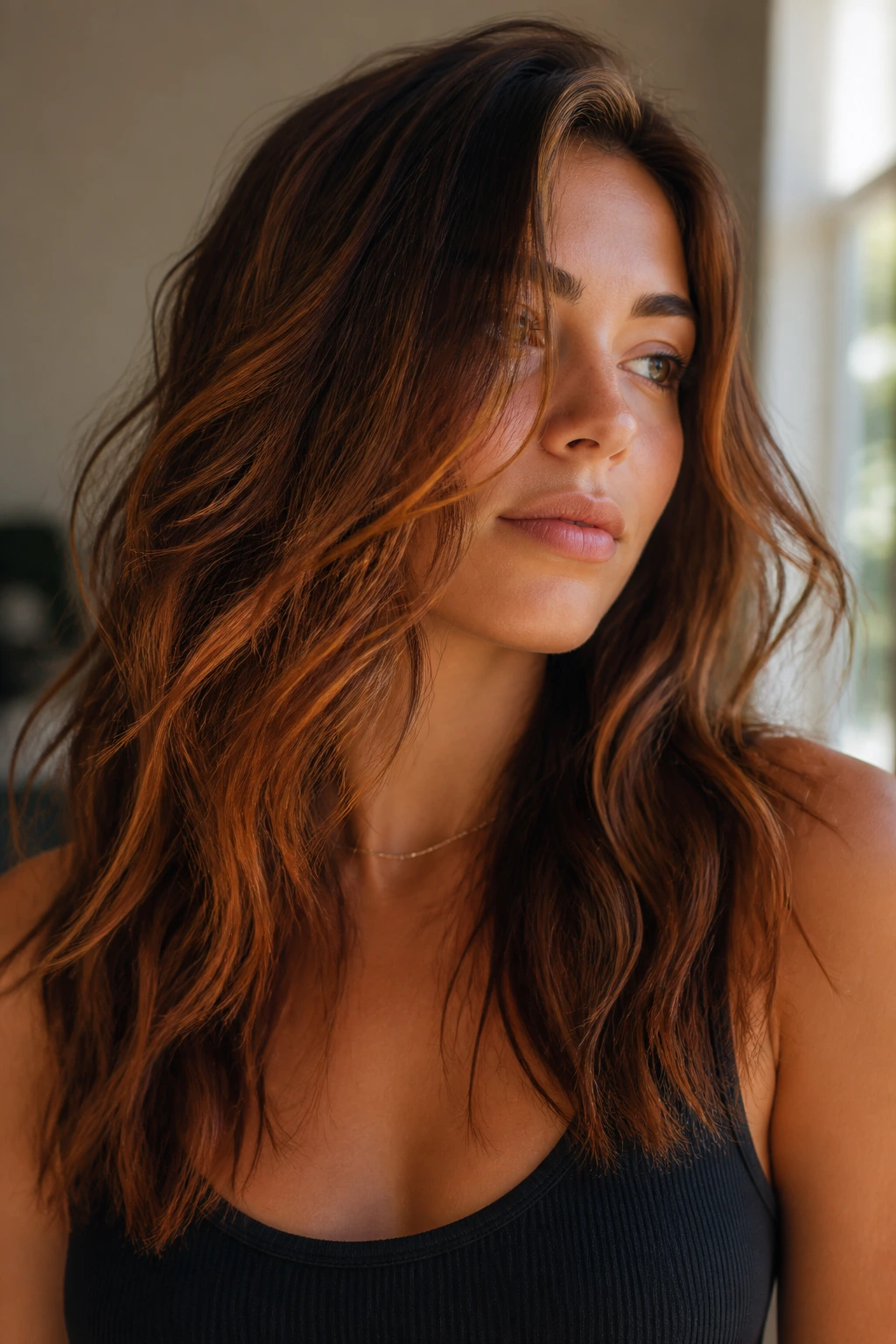
Copper-toned highlights are for brunettes who want their hair to show some attitude. Not neon. Not orange. Copper, when it’s done right, looks like a warm ember moving through brown hair.
A little copper goes a long way. On a chocolate base, it can show up as a soft red reflection under daylight and then deepen again indoors. That changing effect is what makes it interesting. It doesn’t sit still, which is half the fun.
For the cleanest result, copper highlights should be woven through the mid-lengths and ends, not dumped all over the crown. Too much copper near the root can make the color feel heavy, especially if your base is already warm. A beige gloss afterward can keep the red from turning too loud.
This is also one of the better options for layered cuts, because the color catches on movement. If you wear your hair curled, the warmth shows up in the bends. Straight hair will show the shine instead.
9. Mushroom Brown Ribbons
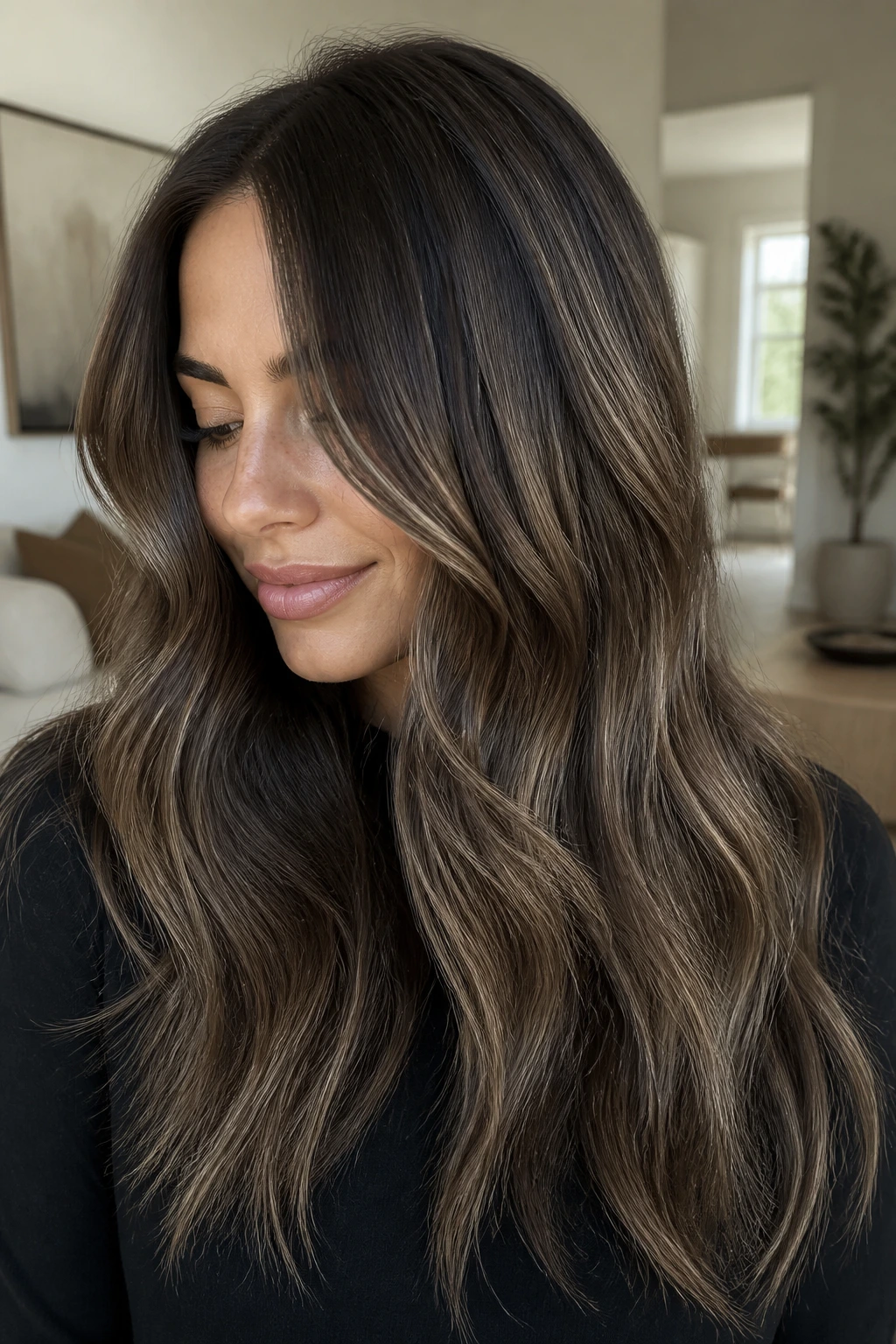
Can brown hair stay cool and still look rich? Absolutely. Mushroom brown ribbons do exactly that. They use smoky beige, taupe, and muted ash tones to add dimension without the warmth that caramel or honey brings.
The appeal is subtlety. These ribbons don’t flash out at you. They blend into the brunette base and only show their cooler side when the hair moves. On very dark hair, that can be a relief, because cooler brown highlights avoid the orange problem entirely.
How to Ask for Mushroom Brown
Tell your stylist you want soft, neutral ribbons with a beige-ash toner and minimal gold. If the word “blonde” gets used too loosely, the result can drift warmer than you wanted. Keep the lift gentle and the tonal finish muted.
This shade looks especially good if your skin leans neutral or cool, but it can still work on warmer faces when the contrast is kept low. The main thing is keeping the pieces soft. Mushroom brown should feel like depth with light, not gray hair pretending to be brunette.
10. Mocha Money Piece
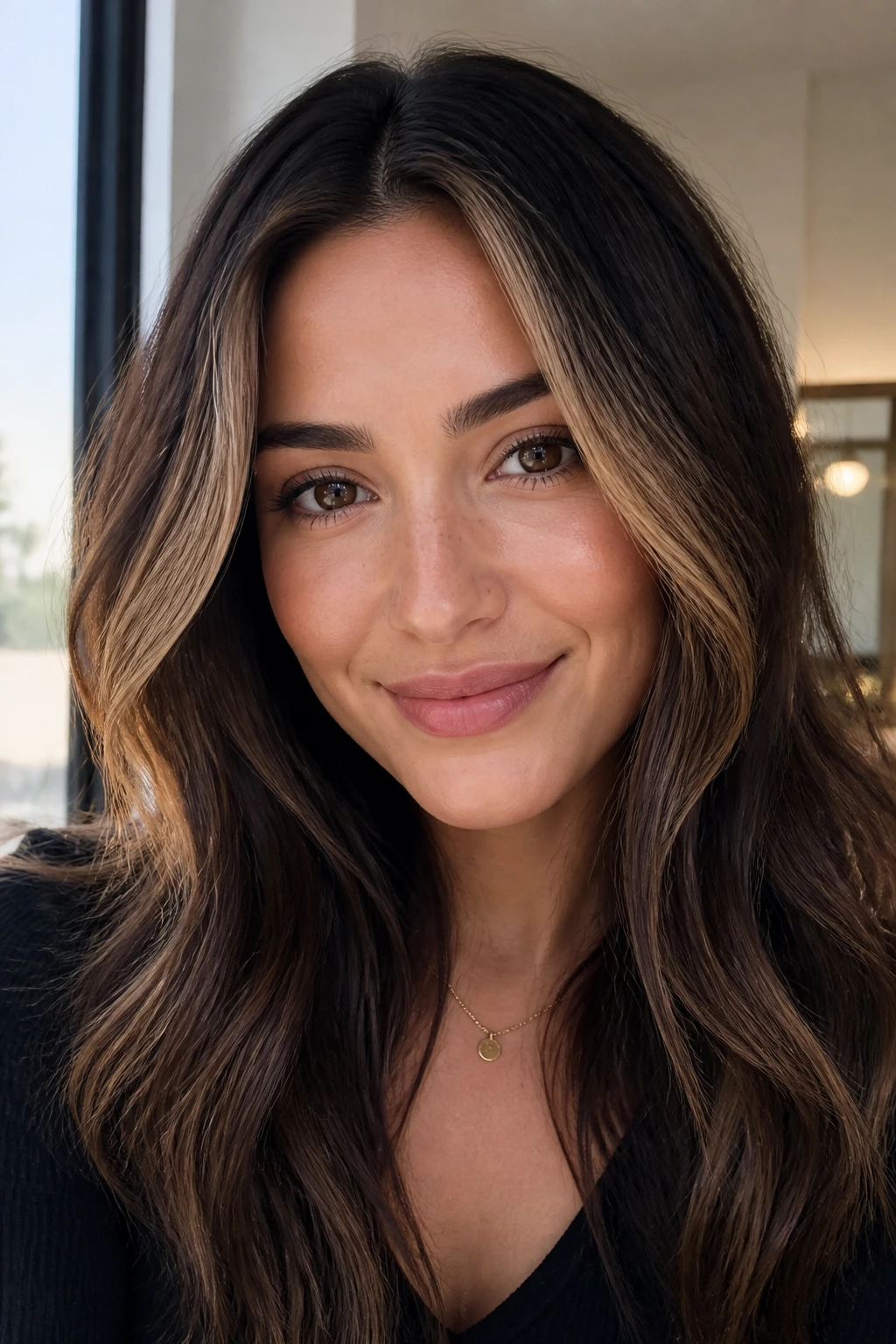
A mocha money piece is the fastest way to make brown hair look brighter without changing the whole head. The lighter front panels frame the face, and because mocha stays in the brunette family, the result is noticeable without being harsh.
This is a smart choice if you wear your hair up a lot. A ponytail, bun, or half-up style suddenly has more shape because the front pieces break up the dark base. It also works well on shorter cuts where a full balayage might look too busy.
- Keep the money piece about 1 to 2 inches wide on each side.
- Start the lightening around the eyebrow or cheekbone area.
- Use a mocha-beige tone rather than a yellow blonde.
- Blend the top section into the root so there’s no hard line.
The best part is how little you need. One bright frame can change the whole haircut.
11. Champagne Beige Highlights
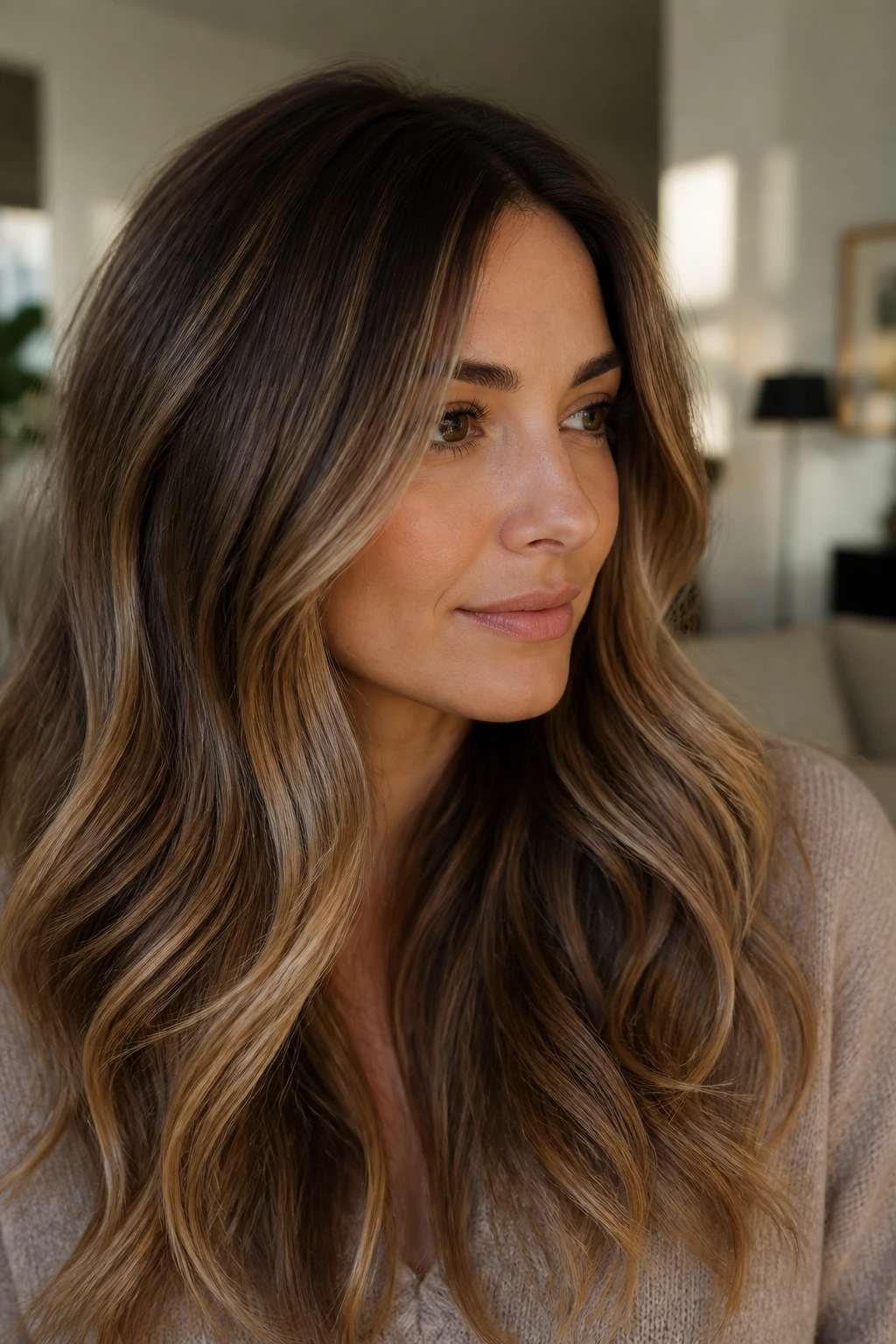
Champagne beige highlights are a smart pick if you want brown hair to look brighter but not warmer. The shade lives between gold and cool beige, so it gives you lift without tipping into brass or orange.
It’s a clean, polished look, and I say “clean” on purpose. Champagne beige has a smooth finish that makes brown hair look lighter in a restrained way. That restraint is the point. On chestnut or medium brown hair, the tone can brighten the surface of the hair while leaving the deeper layers alone, which keeps the color from going flat.
This shade works especially well if your wardrobe leans neutral, black, cream, gray, or denim. It doesn’t fight those colors. It sits beside them. If your hair tends to pull yellow after lightening, a violet-leaning shampoo every few washes can help, but don’t overdo it or the tone gets dull.
Champagne beige is the sort of highlight people notice only after they’ve looked twice. That’s a compliment.
12. Auburn Glaze Highlights
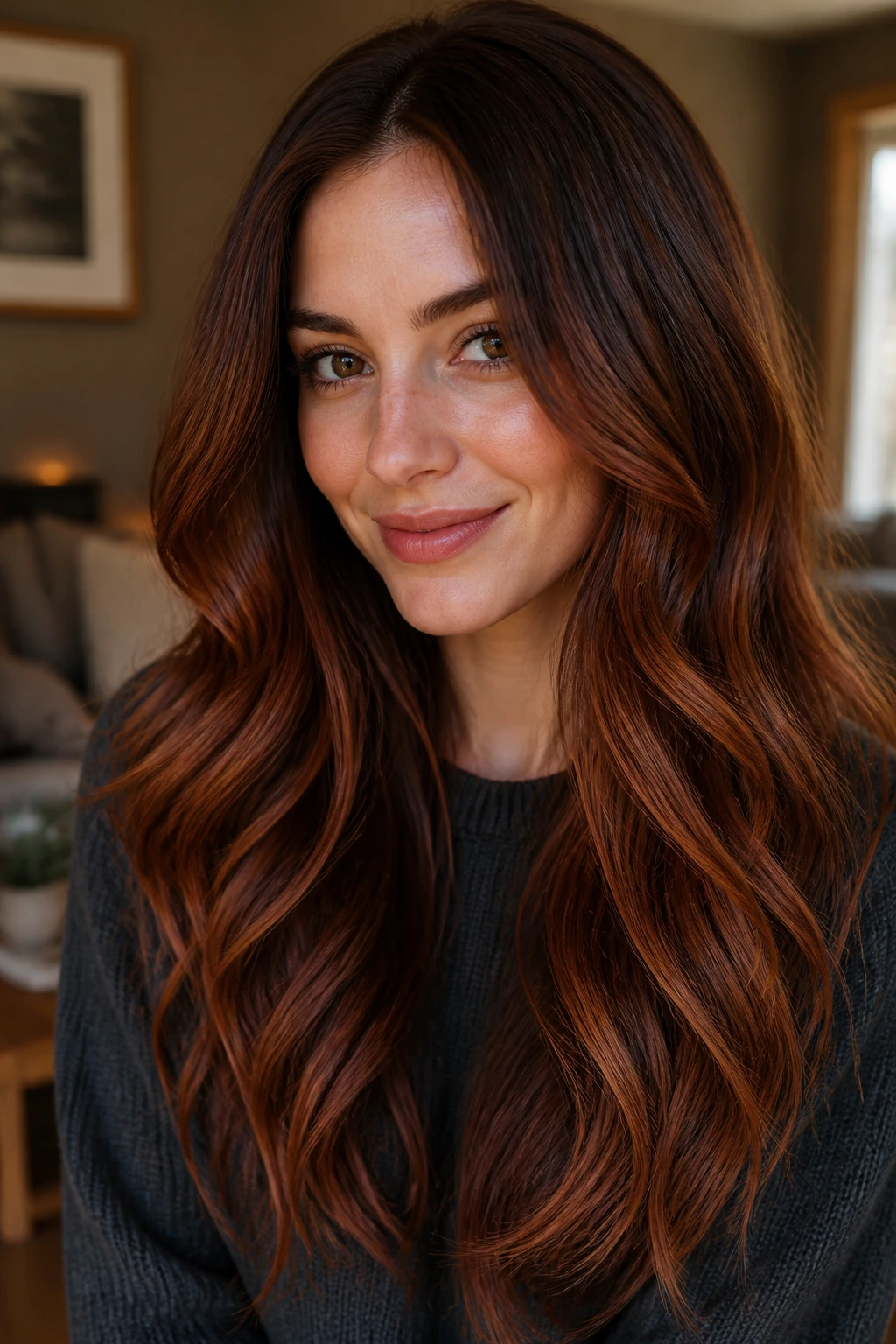
Auburn glaze highlights are a richer, redder cousin to caramel. They don’t scream copper, and they don’t lean as orange. They read like brown hair with depth and a little fire tucked inside it.
Unlike copper, auburn stays darker and rounder. That matters if you want warmth but still want the hair to feel grounded. On brown eyes, auburn can be especially flattering because it echoes the depth in the iris instead of competing with it.
The best version is usually painted through the mid-lengths and ends, then softened with a glaze rather than a heavy lift. That keeps the color dimensional and stops it from turning too bright. If your base has natural red undertones, auburn is an easy fit. If your hair is very ash, the shift will be more dramatic, so the transition needs to be smooth.
I’d choose auburn when I want the hair to feel richer, not lighter. That’s the real distinction.
13. Sun-Kissed Balayage
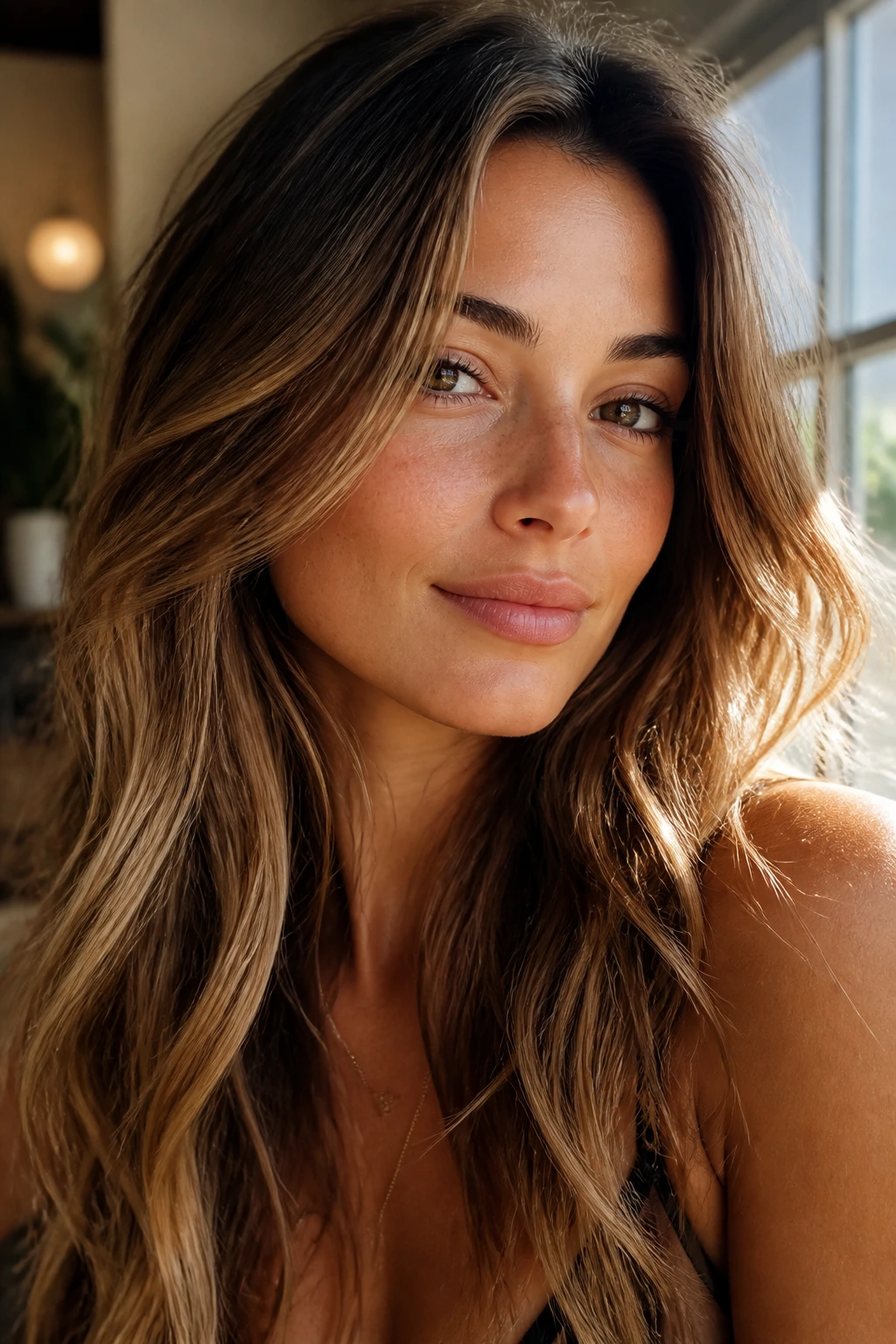
Sun-kissed balayage is one of those phrases people use loosely, but the good version has a very specific look. The lightest pieces sit where the sun would naturally hit: around the hairline, over the top layer, and through the ends that move the most.
What Makes It Look Natural
The trick is restraint. You do not need bright blonde to make brown hair look sun-touched. In fact, too much light at the crown can flatten the whole thing. Keep the base a little deeper, and let the lighter pieces peek through when the hair shifts.
- Use 2 to 3 tones, not 5.
- Keep the crown soft and the ends lighter.
- Ask for feathered placement, not a hard foil pattern.
- Refresh with a gloss when the ends start looking dry.
Sun-kissed balayage works best when the colorist thinks about movement, not just brightness. If you wear your hair loose most of the time, that movement becomes part of the look.
14. Bronze Micro-Highlights
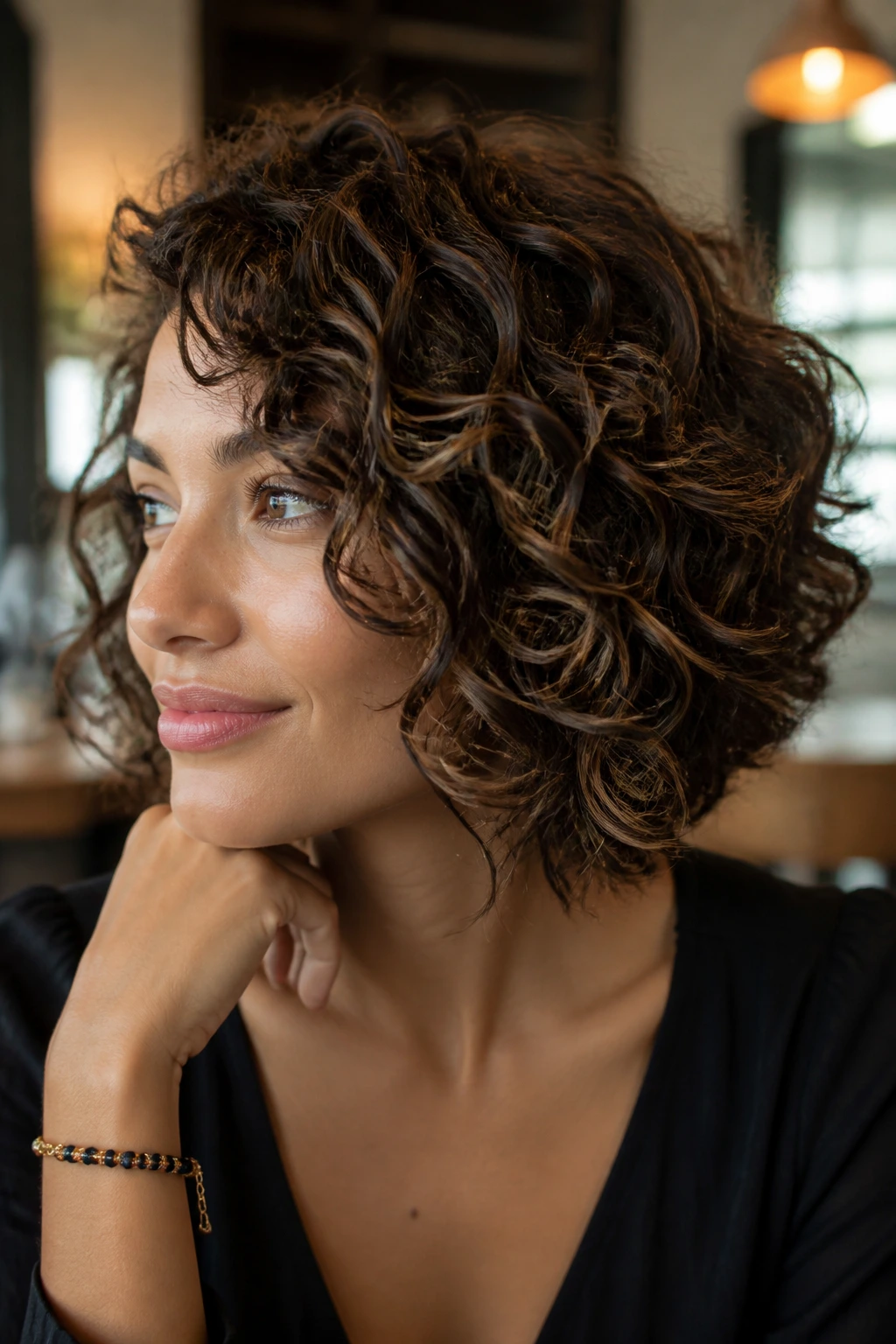
Bronze micro-highlights are tiny, almost whisper-thin lighter strands that add shimmer instead of contrast. They’re a good choice when you want brown hair to look more expensive, for lack of a better word, without making the color visibly lighter from across the room.
Because the strands are so fine, bronze micro-highlights work well on curly hair, short cuts, and layered bobs. They don’t fight the shape of the haircut. They follow it. The bronze tone adds warmth, but the small size of the sections keeps everything soft.
What surprises people is how much movement they create. A solid brunette color can look heavy in low light. Bronze micro-highlights break that weight up and let the hair move visually, even when the actual haircut is simple.
If you’re nervous about highlights because you’ve seen chunky streaks before, this is a safer lane. Tiny sections. Soft bronze. That’s the whole point.
15. Vanilla Cream Streaks
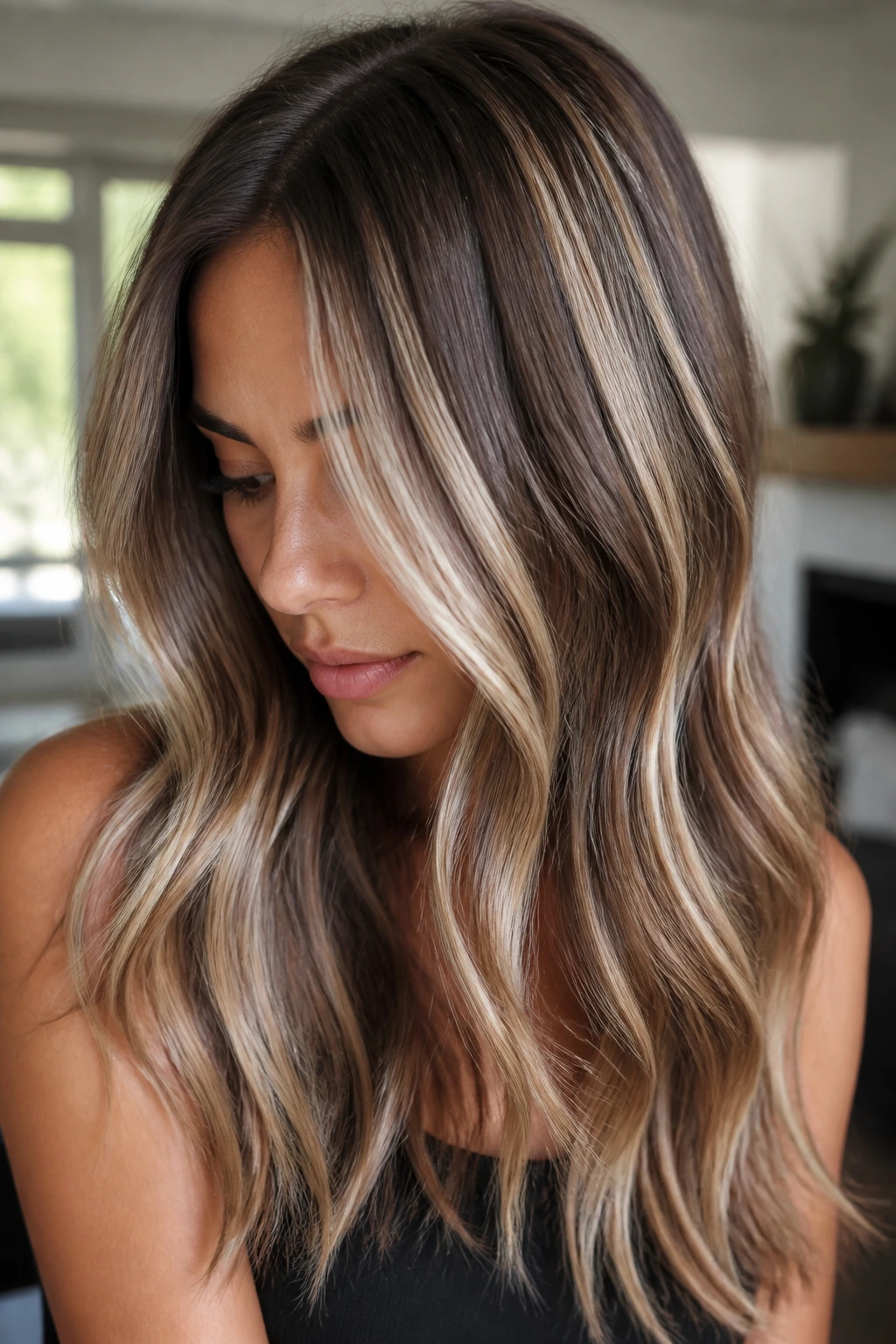
Why do some bright highlights look soft instead of stripey? Because the shade is pale but the placement is careful. Vanilla cream streaks can lighten brown hair a lot, but they only work when the sections are thin and well blended.
The color itself is lighter than honey or caramel, so the hair needs enough lift to support it. On medium brown hair, that can be gorgeous. On very dark brown hair, it can look too abrupt if the lift is pushed in one session. A smoother result usually comes from building the lightness gradually and toning it to a creamy beige instead of a flat yellow blonde.
How to Keep Them Wearable
Tell your stylist you want soft, scattered streaks rather than a thick money piece everywhere. That gives the hair brightness without making it look like one block of color. Vanilla cream also looks better when the roots stay a touch deeper, so the contrast has a place to rest.
It’s a bolder choice, yes. But when it’s blended well, it still feels easy to wear.
16. Peekaboo Toffee Panels
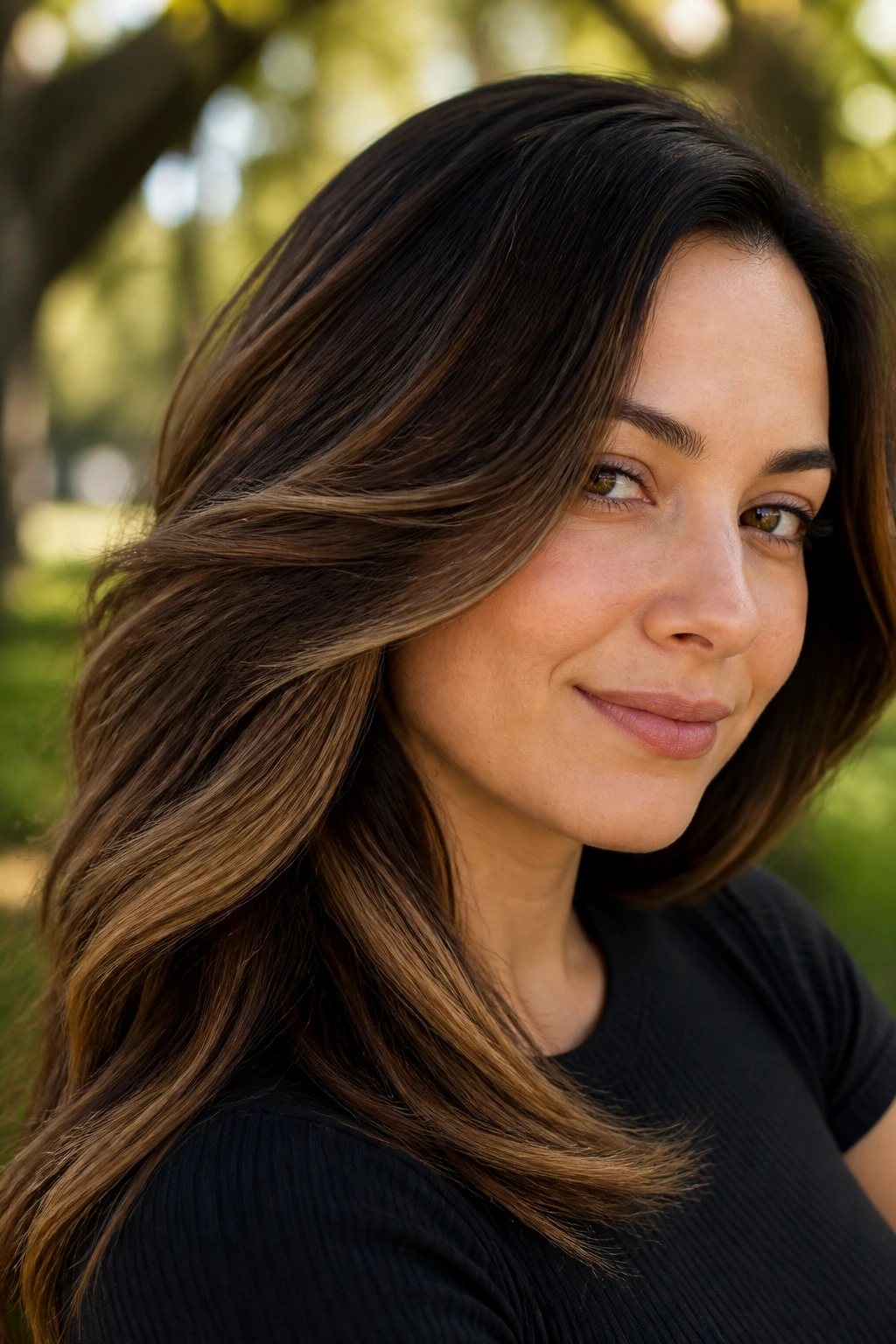
Peekaboo toffee panels are the color version of a good surprise. You see them when the hair moves, when it’s curled, or when you tuck one side behind your ear. Most of the time they stay tucked under the top layer, which keeps the look interesting without turning the whole head bright.
That makes this a useful option for people who want dimension at work or in more conservative settings. The top layer can stay darker, while the underlayer gives you that toffee warmth when the hair shifts. It also works nicely on lob cuts and shoulder-length styles, because the panels show up in a clean band when the hair swings.
Placement Notes
- Put the panels under the crown and through the lower back sections.
- Keep them a warm toffee or soft caramel, not a pale blonde.
- Curly and wavy hair show them best.
- A half-up style will reveal them without trying.
This is a clever choice. Not flashy. Just smart.
17. Amber Glaze Highlights
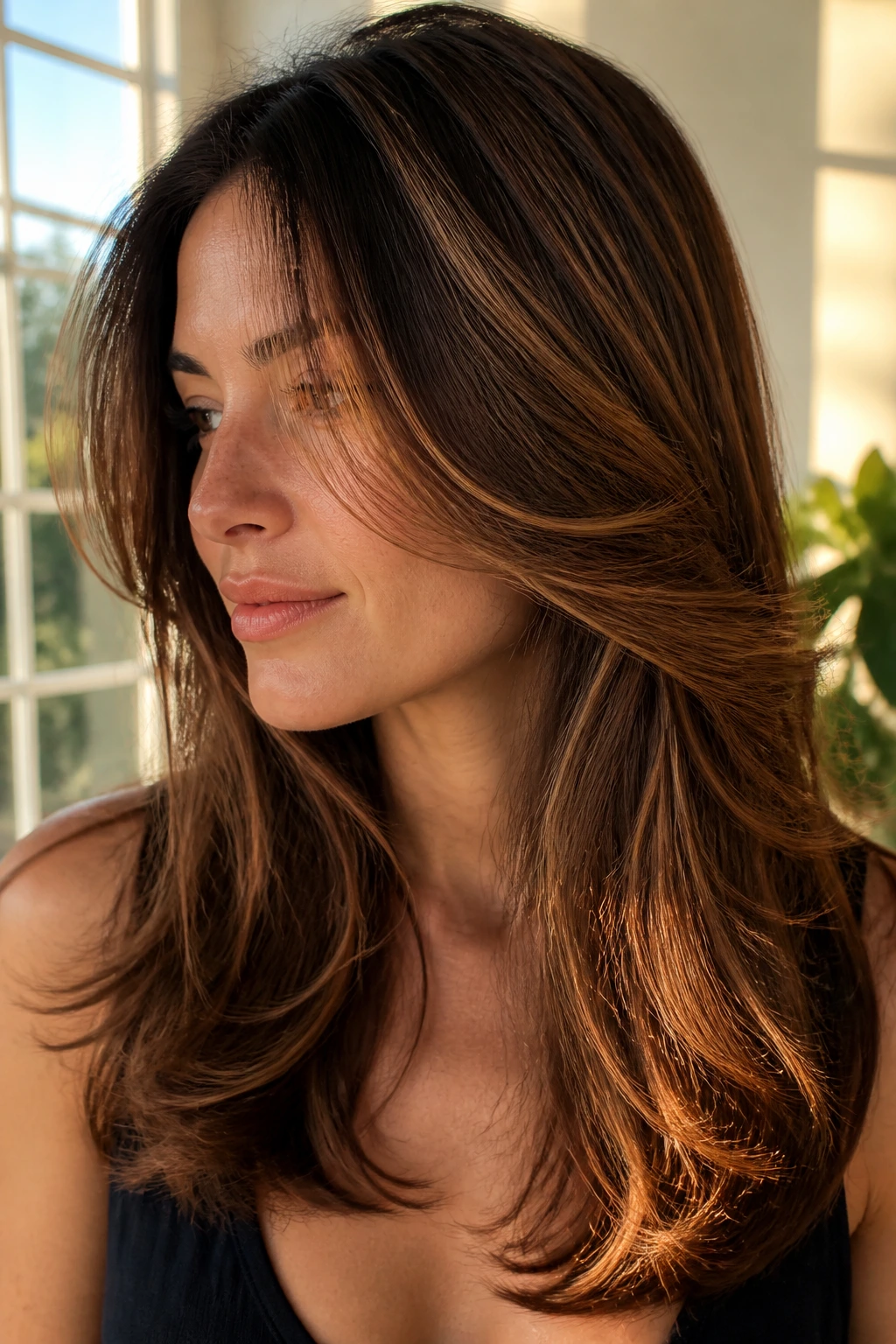
Amber glaze highlights have more depth than honey and more glow than auburn. The color sits in a warm golden-red space that makes brown hair look richer from root to tip.
On chestnut or medium brown bases, amber can feel almost syrupy in the best sense. It gives the hair a warm sheen that shows up most clearly in daylight, especially on layered cuts where the ends move a lot. If the hair is porous, though, amber can grab darker or redder than planned, so a strand test helps more than people think.
The glaze part matters too. Amber doesn’t have to be a full highlight job. Sometimes a semi-permanent gloss over softly lifted pieces gives a smoother finish than foiling the color too high. That keeps the result dimensional and reduces the chance of a hard line as the color fades.
If caramel feels too soft and copper feels too sharp, amber sits in the middle. That’s where it gets interesting.
18. Beige Blonde Ribbons
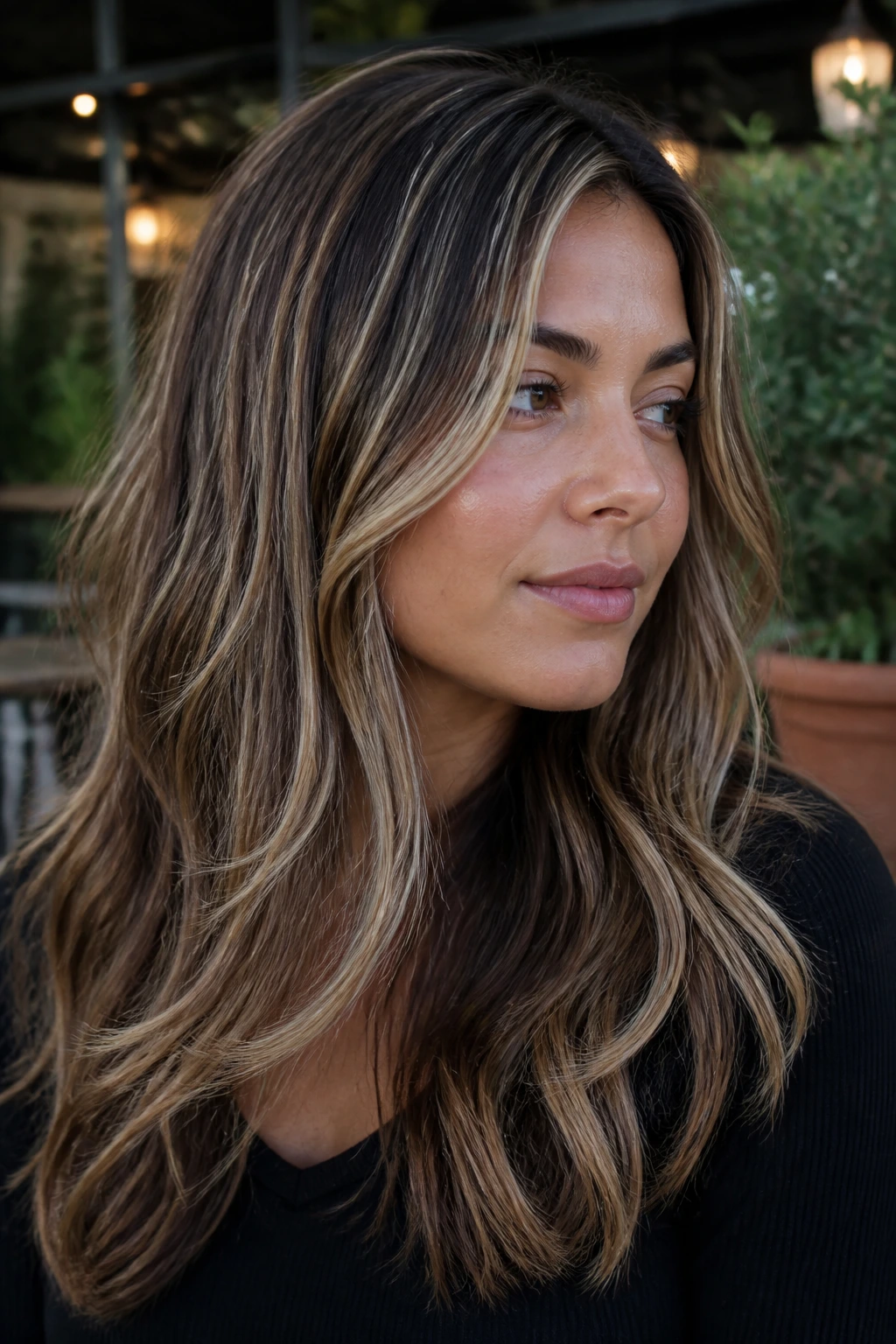
Beige blonde ribbons are a cooler, lighter take on brunette highlights, and they’re best when you want the hair to move farther from brown without going full platinum. The beige tone takes the edge off the blonde so it doesn’t look harsh against a brunette base.
Unlike champagne beige, which stays softer and more blended, beige blonde has a bit more brightness. It’s a stronger contrast, but it still looks wearable when the pieces are thin and evenly spaced. On warm brown hair, the beige tone helps keep the lighter strands from turning yellow. On cooler brown hair, it can create a very crisp finish.
Who It Suits Best
This shade is a good fit if you like cleaner contrast, especially around the front and through the top layers. It also works if your haircut has movement; a blunt one-length style can make beige blonde look blocky unless the sections are feathered well.
If your ends are already dry, be careful. Lighter beige tones show texture fast, and not in a forgiving way.
19. Maple Lights
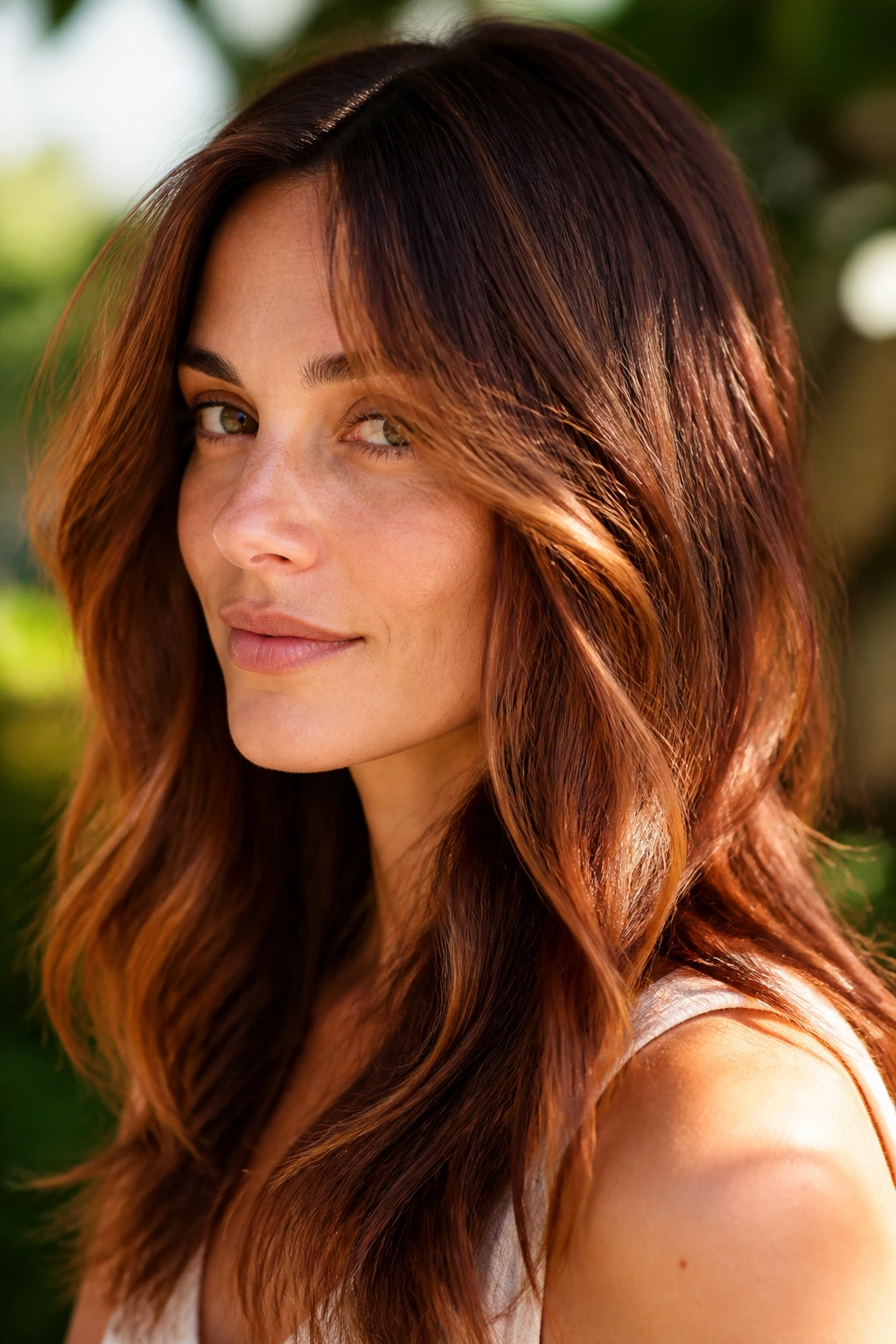
Maple lights are warmer and deeper than caramel, with a faint red-gold base that gives brown hair a richer look. Think of them as the bridge between honey and auburn. They bring warmth, but they do it in a quieter way than copper.
What Maple Adds That Caramel Doesn’t
Maple has more depth. Caramel can brighten the hair quickly, but maple keeps the brunette feeling intact. That makes it a smart choice for medium to dark brown hair that needs dimension without a big contrast jump.
- Best on layered cuts with movement.
- Works well when woven through the mids and ends.
- Looks especially rich on wavy hair.
- Benefits from a gloss every few weeks to keep the red-gold tone soft.
If your natural color has a touch of warmth already, maple lights can look like your hair after a very good blowout and a week of sunlight. Not flashy. Just richer.
20. Sable Low-Contrast Highlights
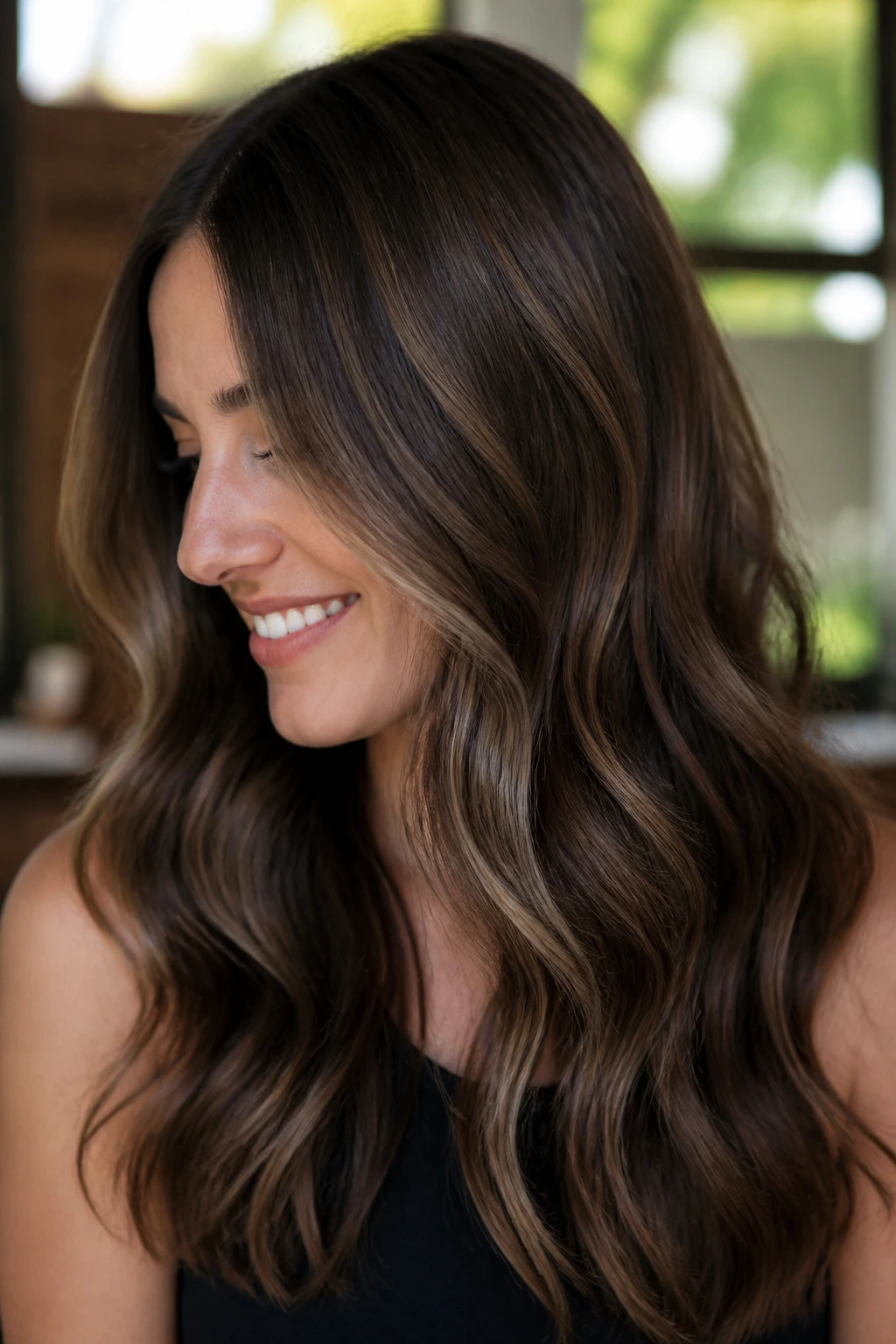
Low-contrast highlights are underrated. Sable tones prove the point. Instead of chasing a lighter blonde look, these pieces stay close to the base and add shape, shadow, and a little movement through the hair.
That can be a relief if you like brown hair to stay brown. Sable highlights don’t fight the base color. They sharpen it. On straight hair, they stop the color from looking one-note. On curls, they create a soft banding effect that makes the shape easier to read.
This is also one of the most office-friendly ways to add light. The changes show when the hair moves, not from across the room. If you’ve ever had highlights that looked too stripey by week three, low-contrast sable pieces are the fix. They age better because the line between light and dark stays small.
Sometimes the quietest option is the one that lasts longest.
21. Hazelnut Contour Highlights
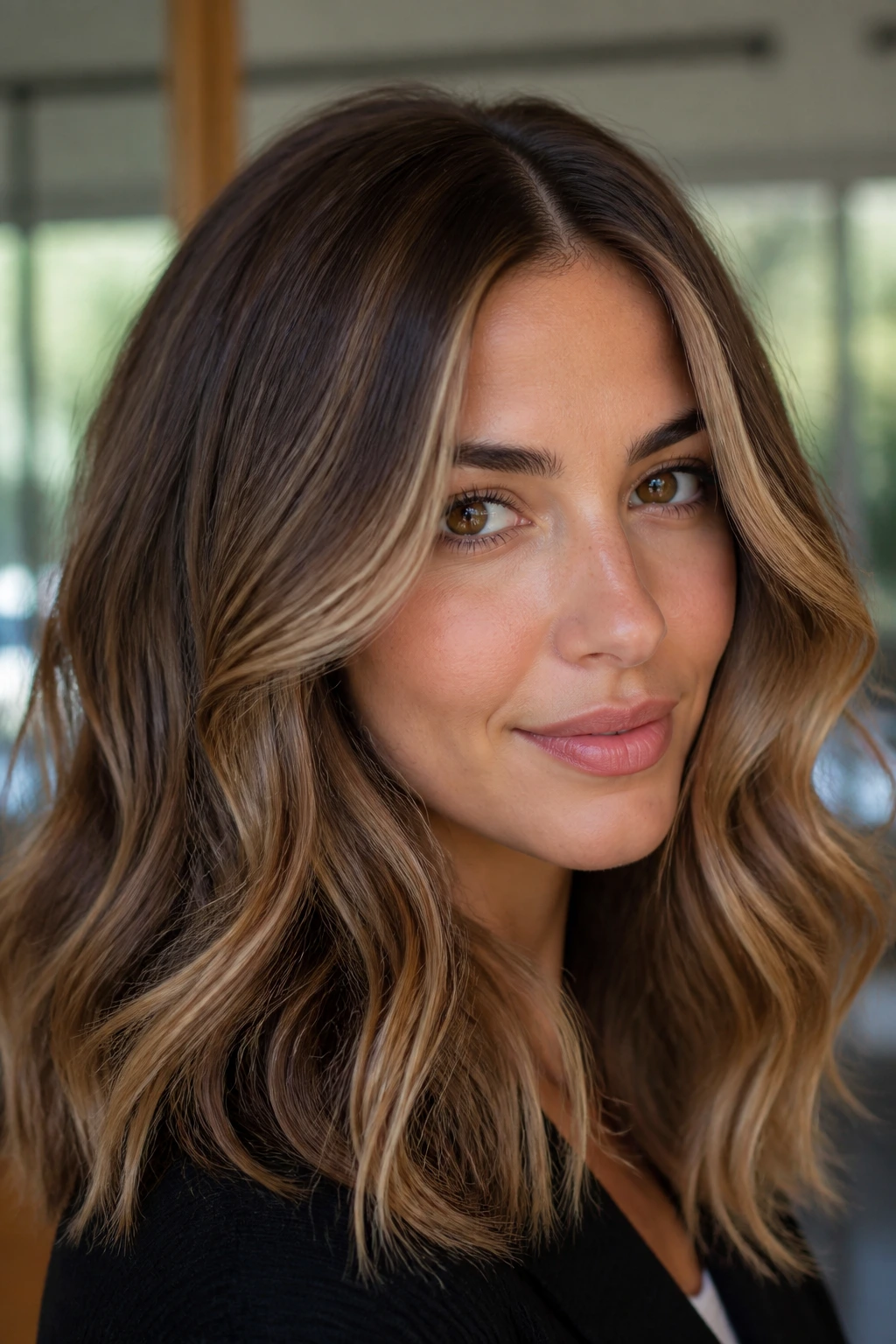
Can highlights change the shape of your face a little? They can, if they’re placed with intent. Hazelnut contour highlights are about guiding the eye around the face, not just brightening the whole head.
The lighter pieces usually sit along the part line, around the temples, and a little lower beside the cheeks. That soft frame can make brown hair look lighter where it counts while keeping the back and crown deeper. If your haircut has layers around the face, the color will show even more because the pieces move separately.
How to Ask for It
Tell your stylist you want brighter pieces around the perimeter and softer depth at the crown. Hazelnut works well because it stays in the brown family, so the contour effect feels natural instead of theatrical. A shade that’s only one or two levels lighter than the base is often enough.
This is a solid choice if you want to bring attention to your eyes and cheekbones without changing the whole vibe of the haircut.
22. Soft Espresso-and-Caramel Mix
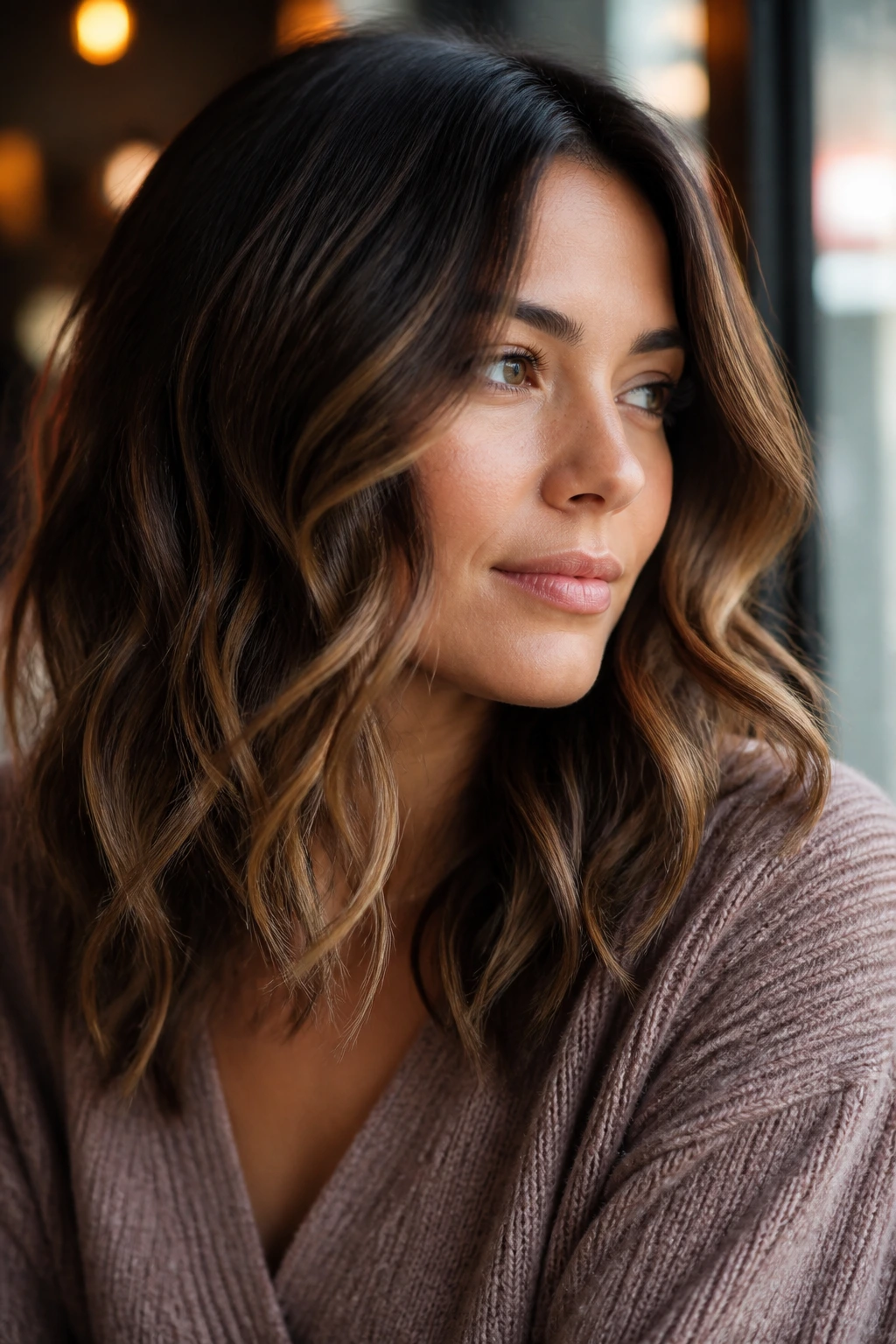
If you can’t decide between staying dark and adding warmth, this mix is the answer. Soft espresso roots with caramel ribbons through the mids give brown hair dimension without making any one color do all the work.
That contrast is what keeps the style alive. Espresso holds the depth, caramel gives the lift, and the two together make the hair look thicker than a single flat color usually does. It’s especially good on longer hair, where the darker root and lighter ribbon can travel through the lengths without looking crowded.
- Keep the caramel soft, not yellow.
- Leave enough espresso at the root to anchor the color.
- Add the lighter pieces through the front and lower layers first.
- Refresh with a gloss before the caramel gets dull.
This is the one I’d choose for someone who wants brown hair to look expensive without turning blonde. It has shape. It has warmth. And it doesn’t try too hard, which is usually the right move.
