



A black base with blonde highlights can make a round face look longer, sharper, and lighter at the same time — if the light pieces land in the right places. That sounds simple. It isn’t. Put the brightness too high on the cheeks and you widen the face; keep the crown too flat and the whole style loses lift. That is why black blonde highlights for round faces are really about placement, tone, and the way the hair moves when you turn your head.
Some looks use fine babylights. Some use thick face-framing ribbons. A few lean on lowlights to keep the black from disappearing into a flat sheet of color. The smartest versions leave depth near the temples and push brightness downward, where the eye reads length instead of width.
I like this category because it gives you room to choose your mood. Champagne blonde feels soft, ash blonde feels cool, honey reads warmer, and platinum is the loud one. The cut matters too; a bob, a lob, curls, or a pixie all change where the light should sit. The styles below do that job in very different ways.
1. Champagne Money Piece Above the Brows
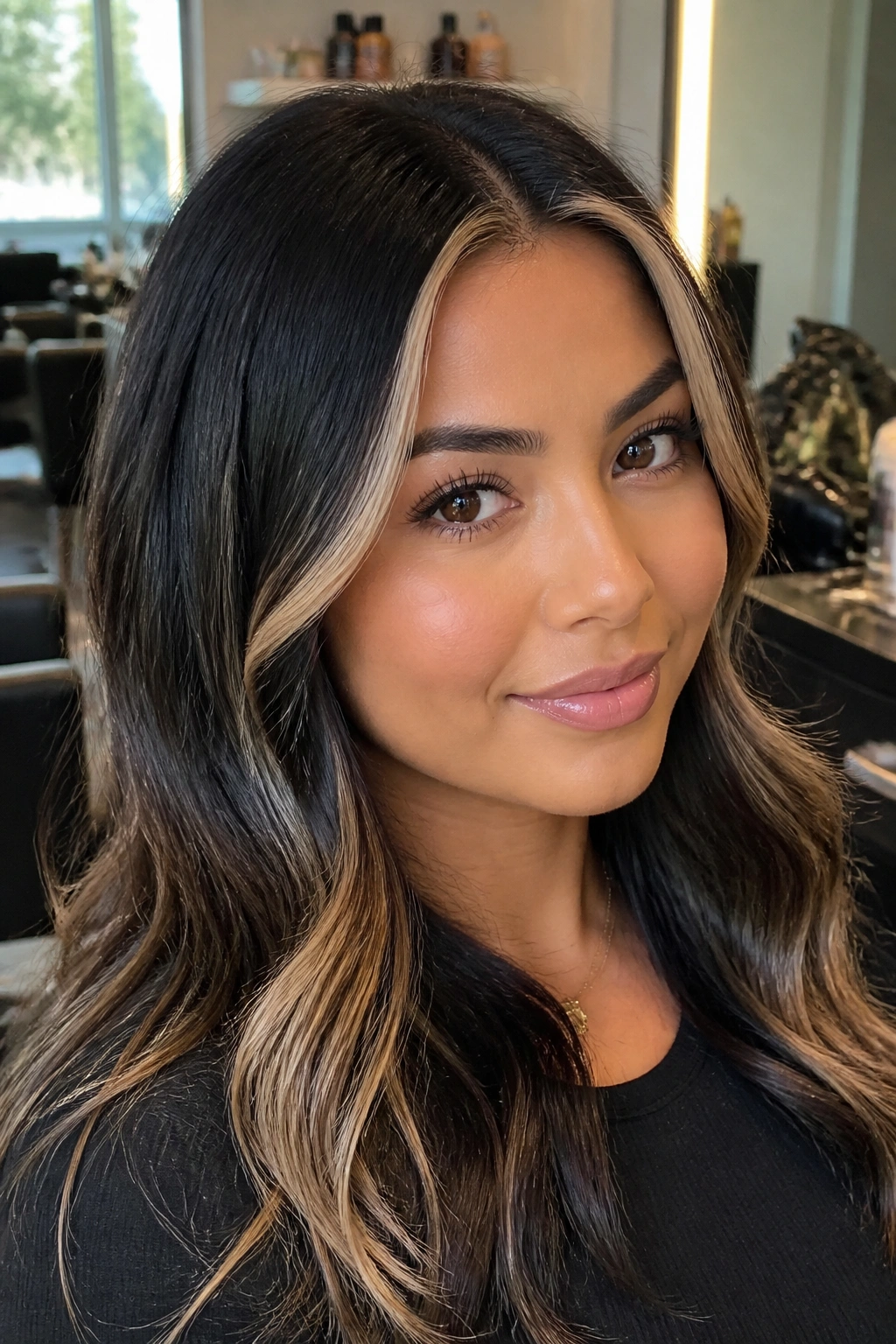
A champagne money piece is one of the cleanest ways to pull attention upward without making the face look wider. On a round face, I like it best when the brightest strands begin just above the brow tail and stop before the cheek’s fullest point. That keeps the eye moving vertically.
Why It Flatters Round Faces
The trick is contrast. A deep black base under a softer blonde frame creates a visible line down the center of the face, and that line does more than people think. It makes the forehead feel a little taller and the jaw a little longer.
- Keep each front section narrow, about 1 to 1.5 inches wide.
- Ask for a champagne or beige toner if you want warmth without brass.
- Pair it with loose bends, not tight curls, so the blonde reads as a line instead of a blob.
My favorite version starts bright near the cheekbone and fades into softer beige at the ends. That little fade is what keeps the look clean instead of stripy.
2. Beige Balayage That Starts Below the Cheekbones
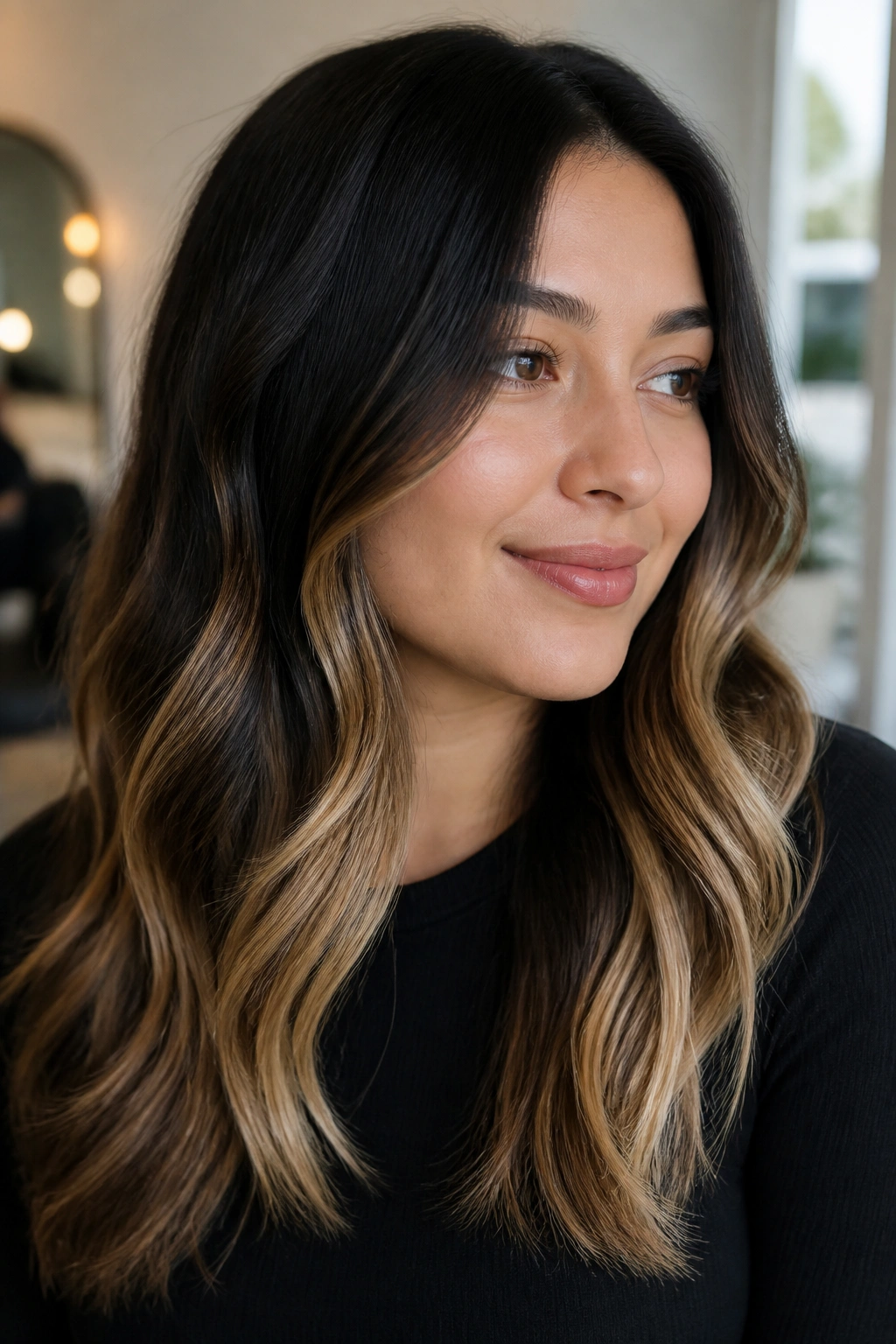
This is the safest choice when someone wants brightness but hates the idea of obvious streaks. Beige balayage on black hair keeps the root depth intact and lets the lighter pieces show up where the hair falls naturally, not where the face is widest.
The placement matters more than the shade. Start the lightening below the cheekbones, then blend it through the mid-lengths so the face still has a dark frame near the temples. That dark frame is doing real work. It narrows the upper face a touch and gives the whole style a calmer shape.
I’d reach for this on shoulder-length hair, especially if the cut has a little movement at the ends. Straight, one-length hair can make balayage feel spread out and flat. A few soft bends fix that. A center part helps, too, because it splits the light evenly and keeps the blonde from bunching on one side.
If you want blonde without drama, this is the one I’d pick first.
3. Chunky Front Panels with a Deep Center Part
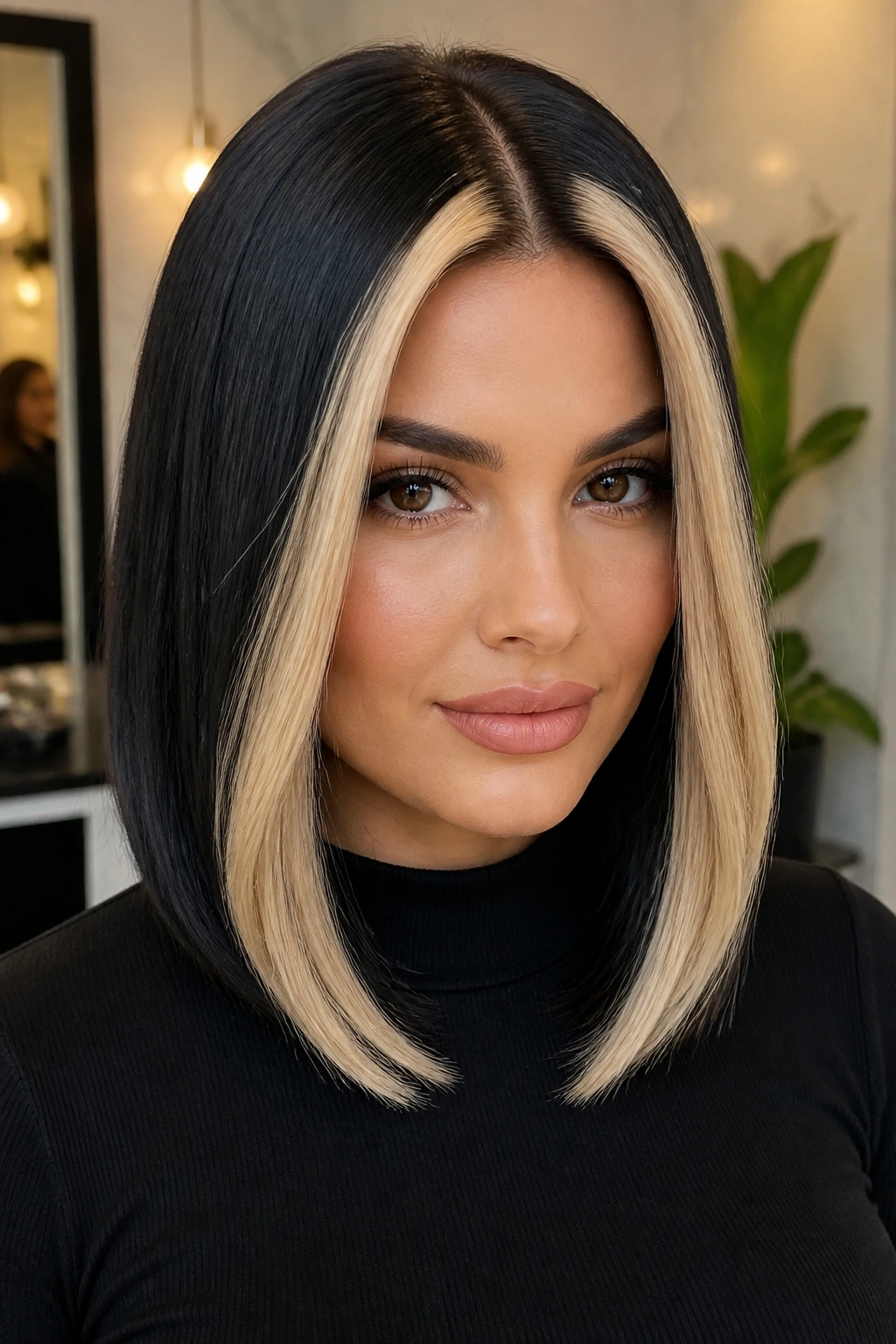
Picture a blunt black lob with two wide blonde panels dropping from the front. If the part is deep and the panels start near the temples, the whole cut suddenly looks longer. That’s the effect people chase when they say they want contouring, even if they don’t use that word.
The danger is thickness. Too many wide pieces around the face make the cheeks look fuller, not slimmer. So the panels need to be bold but controlled, with the brightest part sitting low enough to skim the jawline rather than sit squarely on the cheek.
What to Ask For
- A deep center part with the lightest pieces placed just outside it.
- Blonde panels that start at the temple or upper cheek, not right at the hairline.
- A little shadow at the roots so the blonde doesn’t look cut out and pasted on.
This style has attitude. It reads sharp on straight hair and smoky on waves, and it gives a round face some edge without forcing the cut to do all the work.
4. Curved Ribbon Highlights Along the Jawline
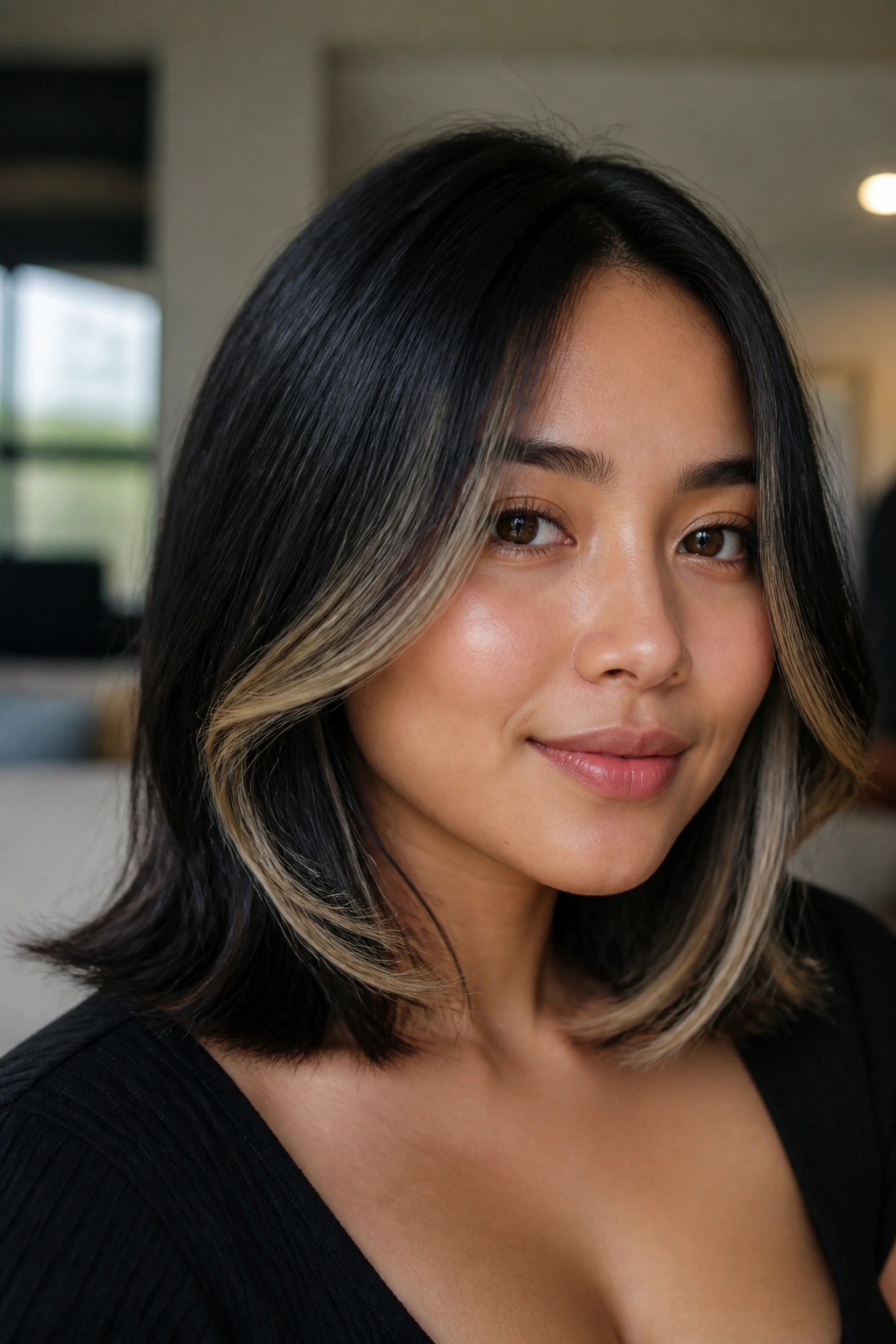
Curved ribbons are one of those salon ideas that sounds small until you see it done well. Instead of dropping blonde in straight vertical stripes, the colorist follows the curve of the hair as it wraps around the face. That curve changes everything. It softens the widest parts of a round face while still giving the hair movement.
I especially like this on medium-length black hair that bends under at the ends. The lighter pieces sit just outside the jaw, so the eye reads a longer outline instead of a fuller circle. It’s subtle, but you feel the difference in the mirror. The face looks a bit more drawn out, a bit less boxed in.
This also works nicely if you hate a heavy front section. The ribbons can start around the mouth or chin and sweep downward through the front layers. Keep them thin. Thick curved pieces lose the point and can end up looking like chunky stripes.
A good curved ribbon placement should look like the hair grew that way.
5. Honey Babylights Around the Hairline
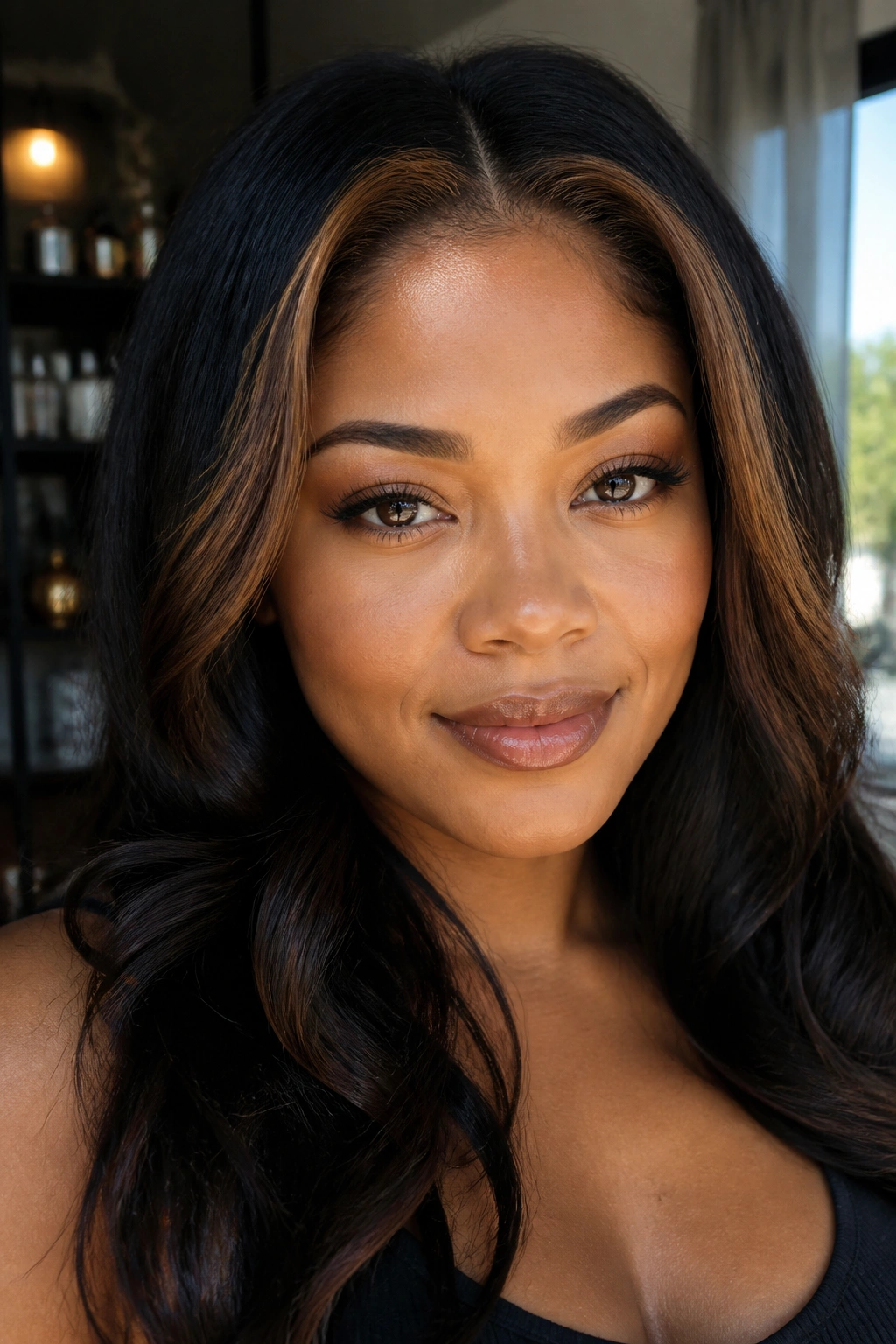
Why do tiny babylights work so well on round faces? Because they whisper instead of shout. A soft honey tone around the hairline gives black hair warmth and movement without laying a bright band across the cheeks.
The smaller the highlight, the easier it is to keep the face from looking wider. That’s the whole appeal here. Babylights are usually painted in fine, delicate slices, so they blend into the black base and create a soft glow instead of a hard frame. If you wear your hair tucked behind one ear, the result looks even better, because the lighter strands peek out and break up the shape.
How to Ask for It
- Use very fine sections, almost threadlike.
- Keep the brightest pieces near the temples, part line, and hairline.
- Choose a golden honey toner if you want warmth; choose a beige toner if you want a softer finish.
I like this style for people who want a gentle change and not a makeover that announces itself from across the room. It’s calm. It’s easy to wear. And on a round face, that kind of restraint is underrated.
6. Ash Blonde Peekaboo Pieces Under a Dark Top Layer
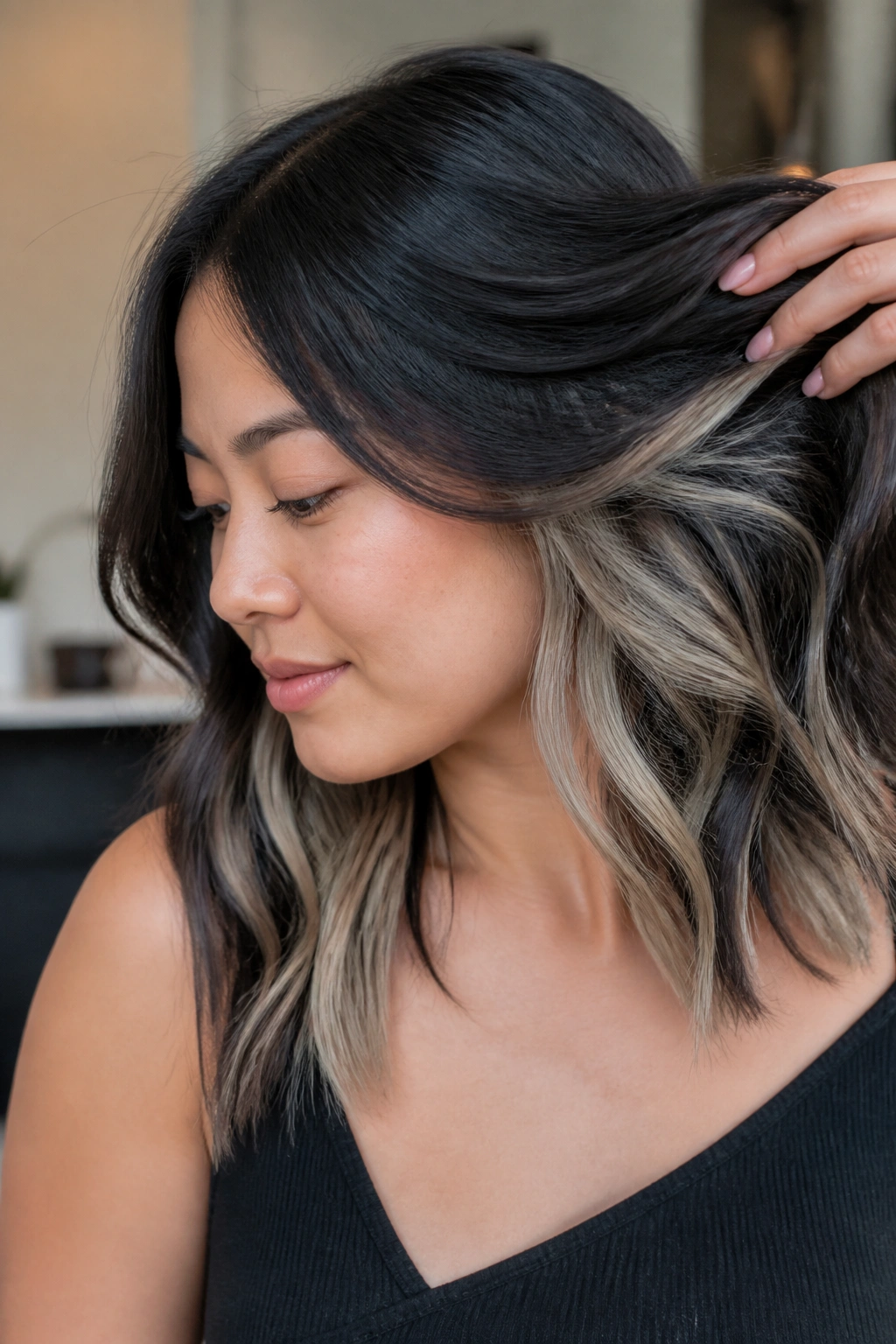
Unlike surface highlights, peekaboo color stays hidden until the hair moves. That makes it a smart choice if you want blonde contrast without giving the sides of the face too much brightness.
Here’s why it flatters a round face: the top layer stays dark, which keeps the outer shape slimmer, while the ash blonde underneath adds motion and depth. You get the surprise of lightness without the full-width effect that some surface highlights create. When the hair swings, the blonde flashes through the black and gives the style life.
This look is especially good if you wear your hair in waves or layers. The movement lets the underlayer show in short, broken glimpses, and those glimpses are flattering because they don’t sit in one fixed spot on the cheeks. Ash tones also help the contrast feel cooler and a little sharper.
If you want a style that looks polished when you’re still and interesting when you move, this is a strong pick.
7. Tapered Face-Framing Highlights on Long Waves
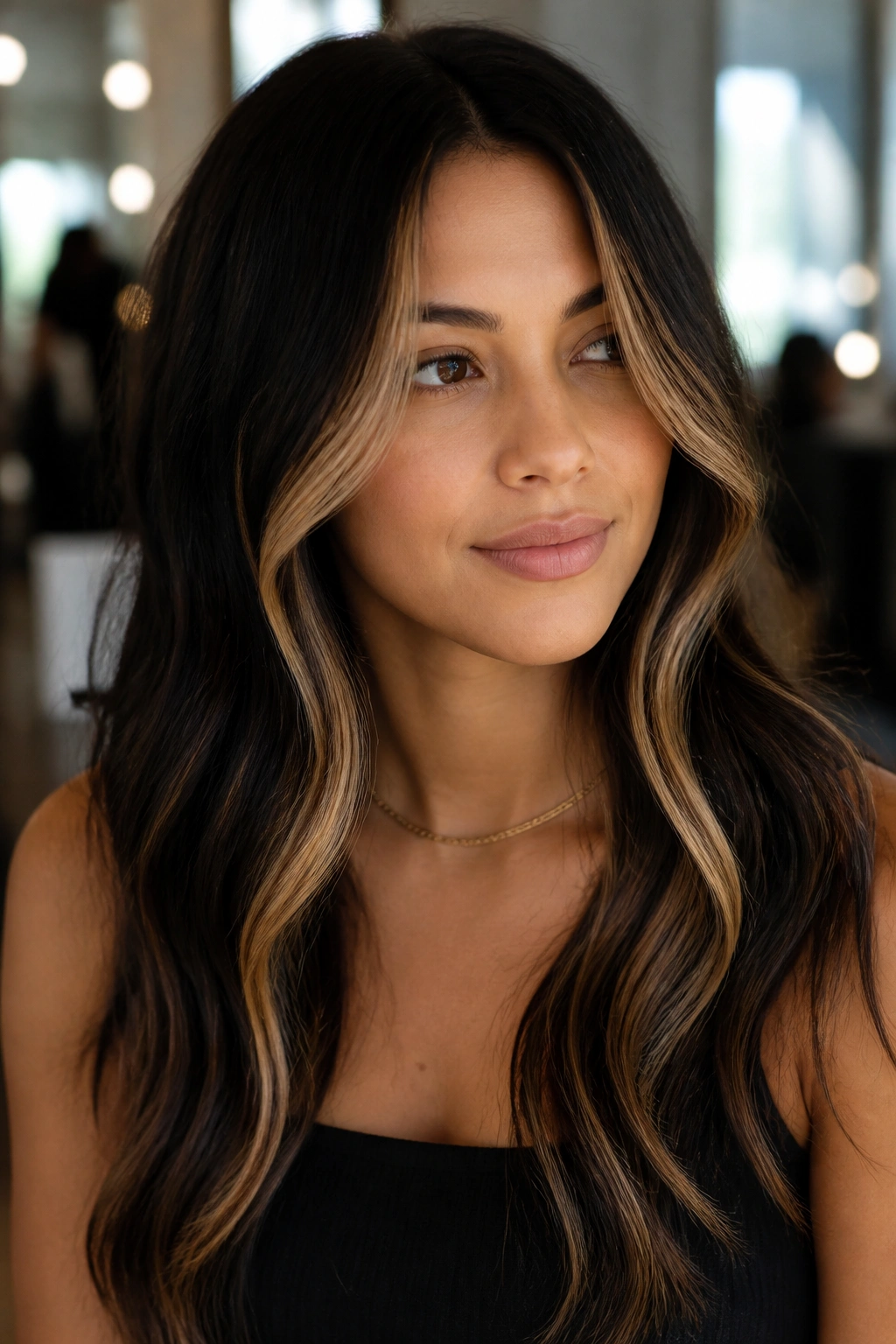
Long waves change the whole story. On a round face, the best face-framing highlights usually start lower than people expect — around the lip line or a touch below — and taper down toward the collarbone. That long drop pulls the eye down the length of the hair instead of letting it stop at the cheeks.
I’ve always liked this look on black hair because the contrast feels richer when the blonde is stretched through movement. Short, stubby front pieces can make the face feel boxed in. Tapered pieces do the opposite. They create a soft vertical line that works with the waves, not against them.
The finish matters, too. Loose bends make the blonde look ribboned and airy. Tight curls can bunch the color together and make it look heavier than it should. If the hair is thick, ask for lighter pieces that are feathered at the ends so the blonde doesn’t sit like blocks.
This is one of those styles that looks expensive without trying too hard. And yes, that’s the point.
8. Golden Blonde Ends on a Layered Lob
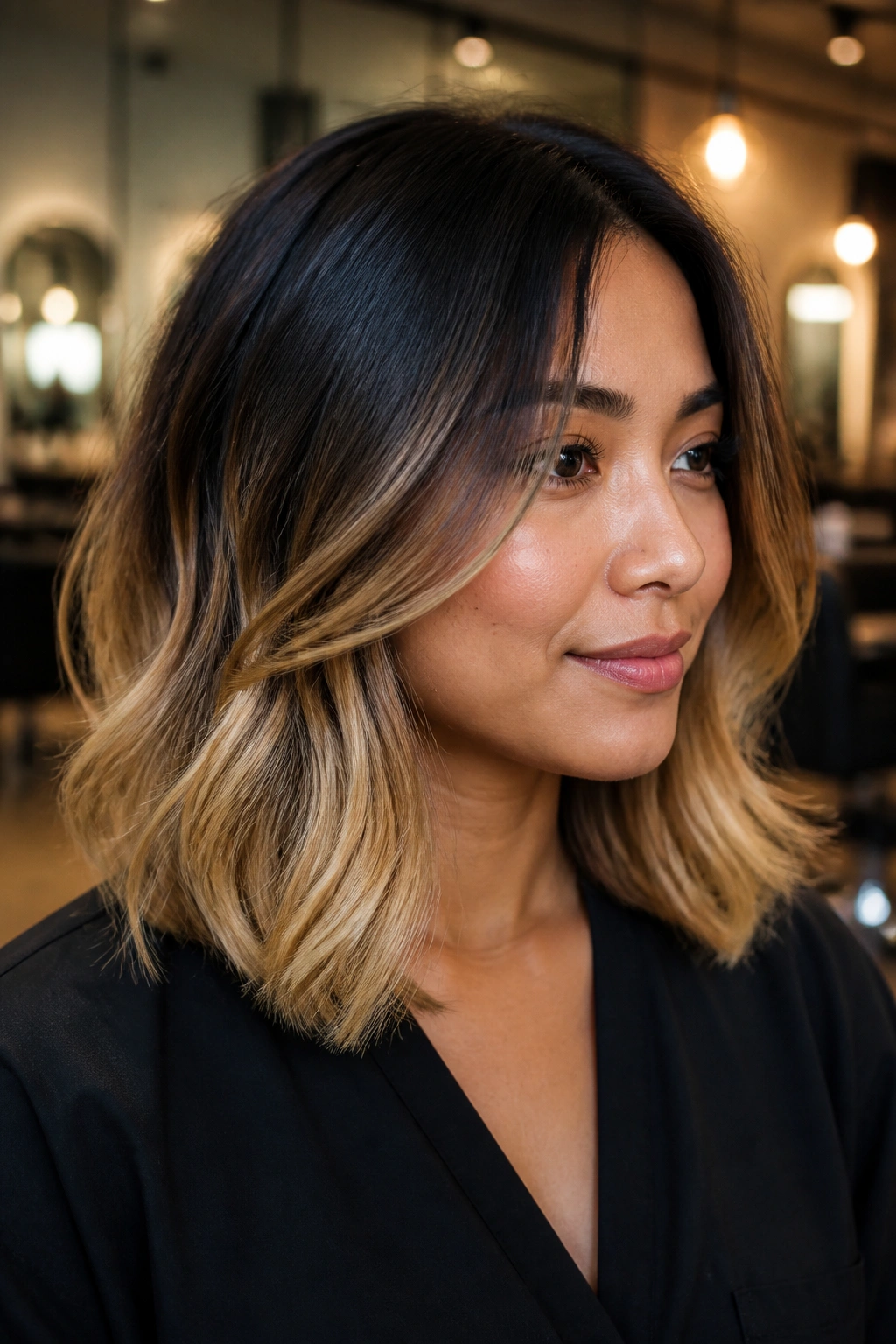
A layered lob gives you a lot of room to play with light at the ends. That matters on a round face, because the bottom half of the haircut can be used to stretch the shape visually. When the ends are golden blonde and the roots stay black, the eye drops lower. That’s the whole advantage.
Why the Ends Matter
The ends are where movement lives. If you brighten only the lower sections, the hair feels airy without putting too much attention on the cheeks or temples. A layered lob is already doing some of the hard work by removing bulk, so the blonde just needs to follow the cut.
- Ask for golden blonde through the last 3 to 5 inches of the hair.
- Keep the upper half darker so the shape stays narrow near the face.
- Add soft layers, not choppy ones, if you want the color to melt instead of jump.
This style looks best when the blonde is warm, not brassy. There’s a difference. Warm means golden and glossy; brassy means yellow in the wrong way. A good toner keeps that line clean.
9. Platinum Money Piece with a Soft Root Shadow
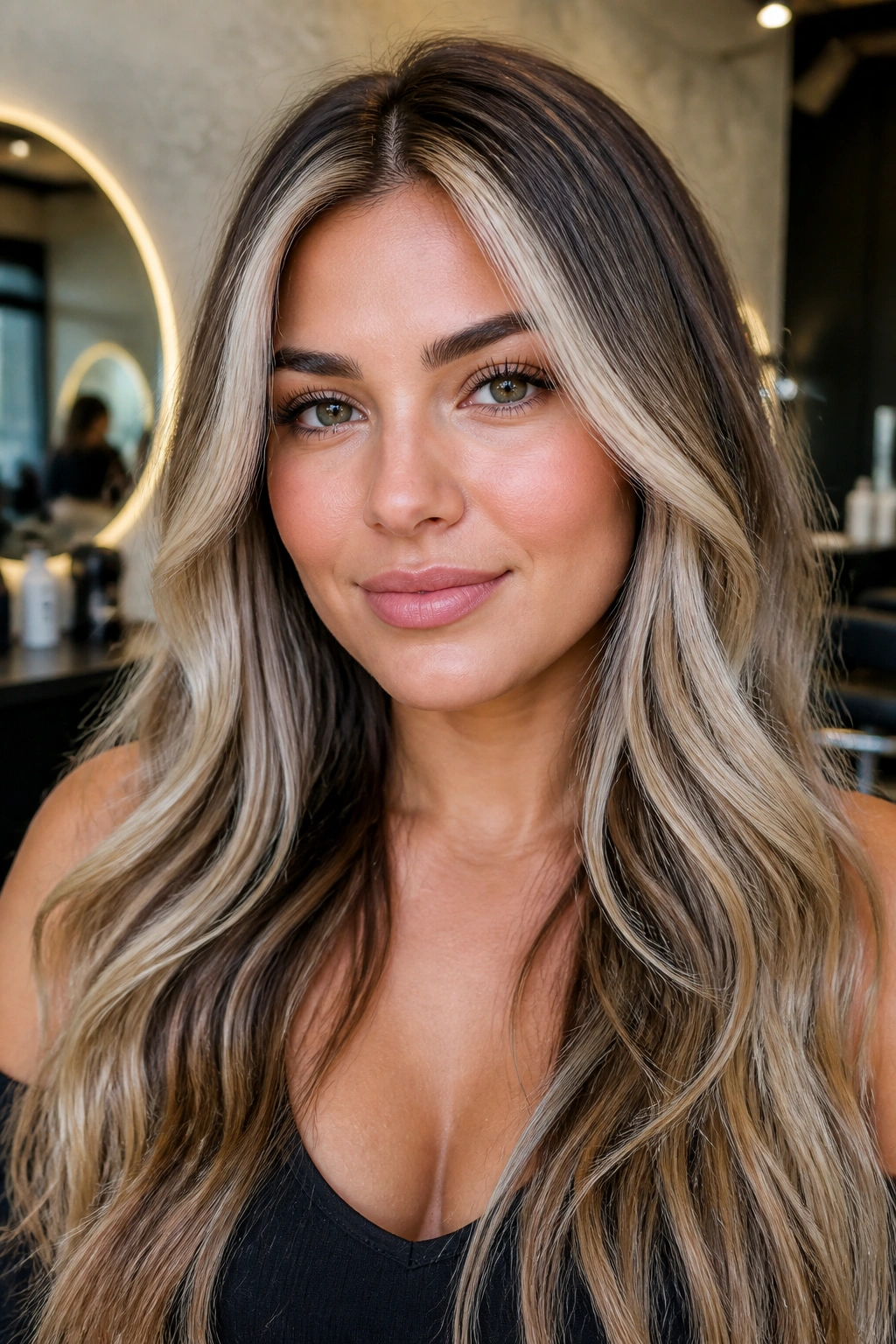
Platinum on black hair is dramatic, no question. A bright money piece against a dark base can sharpen the face fast, and the root shadow is what keeps it from looking harsh. That little dark blur at the scalp helps the blonde grow out with less of a line, which is useful if you do not want a color that screams for touch-ups.
For a round face, platinum works best when the blonde is narrow and placed with intent. It should frame, not flood. Keep the brightest part slightly below the brow and let it taper as it reaches the cheekbone. That gives the face a taller center line and avoids the wide, glowing halo effect that can happen when too much blonde sits beside the cheeks.
I’d be blunt about one thing: this is not a low-effort look if your hair is naturally dark. Platinum usually needs careful lifting and toning, and the hair has to be healthy enough to handle it. But when it’s done well, it has real punch.
If you like a sharp contrast and don’t mind the upkeep, this one delivers.
10. Micro-Highlights for a Soft Lift
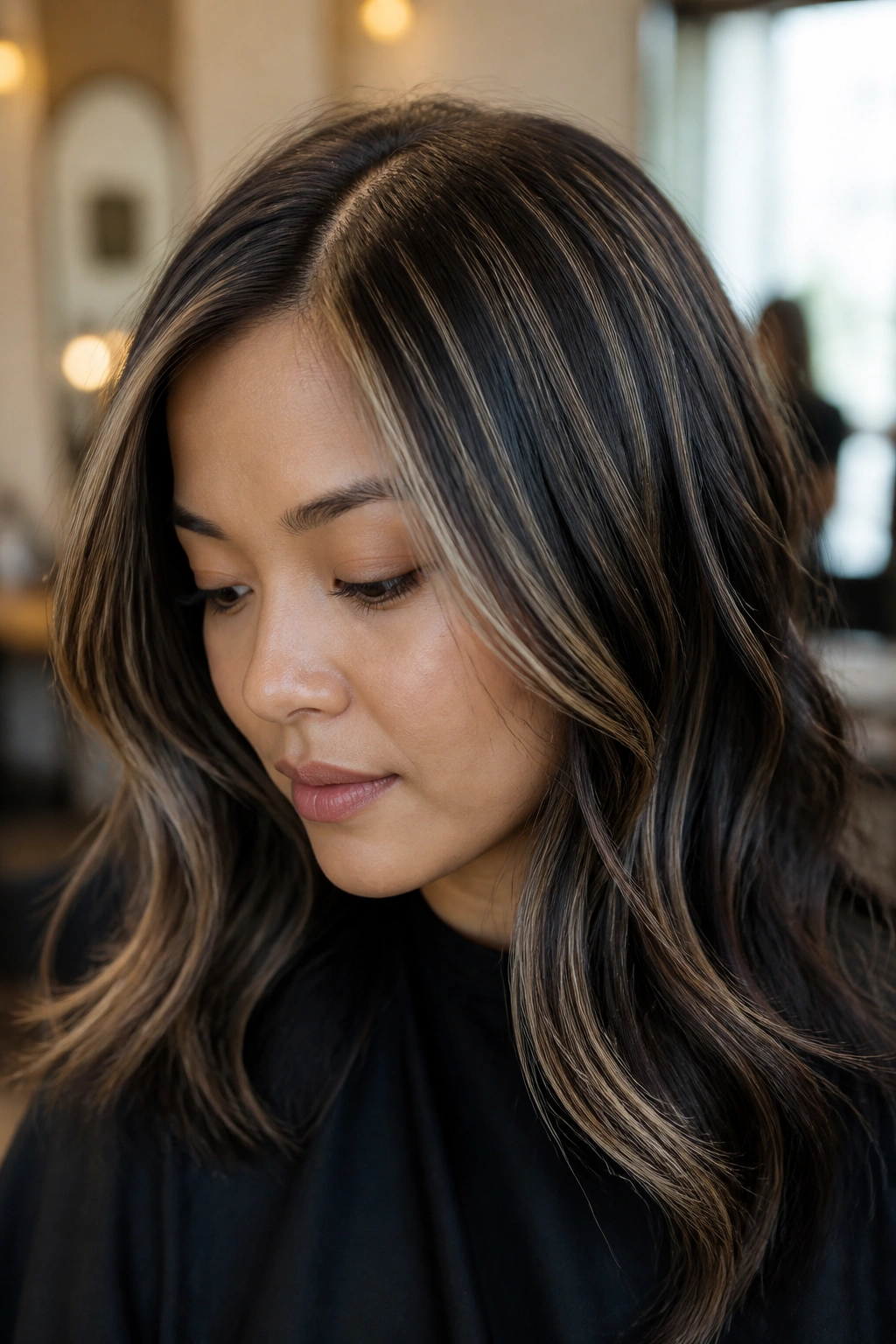
Can tiny highlights actually change the shape of a face? Yes. They can, and they do it quietly. Micro-highlights spread light across the hair in fine threads, which breaks up a solid black mass without putting thick blonde pieces where they might widen the cheeks.
Where the Micro-Lighting Belongs
The best placement is usually around the crown, part line, and outer face frame. That combination gives lift at the top and keeps the sides from looking heavy. On a round face, that lift matters more than people think, because it adds height where the eye wants to travel.
- Keep the slices paper-thin rather than chunky.
- Mix in cool beige or ash blonde if you want a soft finish.
- Leave some dark strands between the light ones so the black still reads strong.
Micro-highlights are not flashy. That’s the point. They’re for someone who wants a change that shows up as movement, not a full transformation. If your hair is dense and dark, this can be one of the most flattering ways to add dimension without making the face look broader.
11. Caramel-Blonde Slices Through Curls
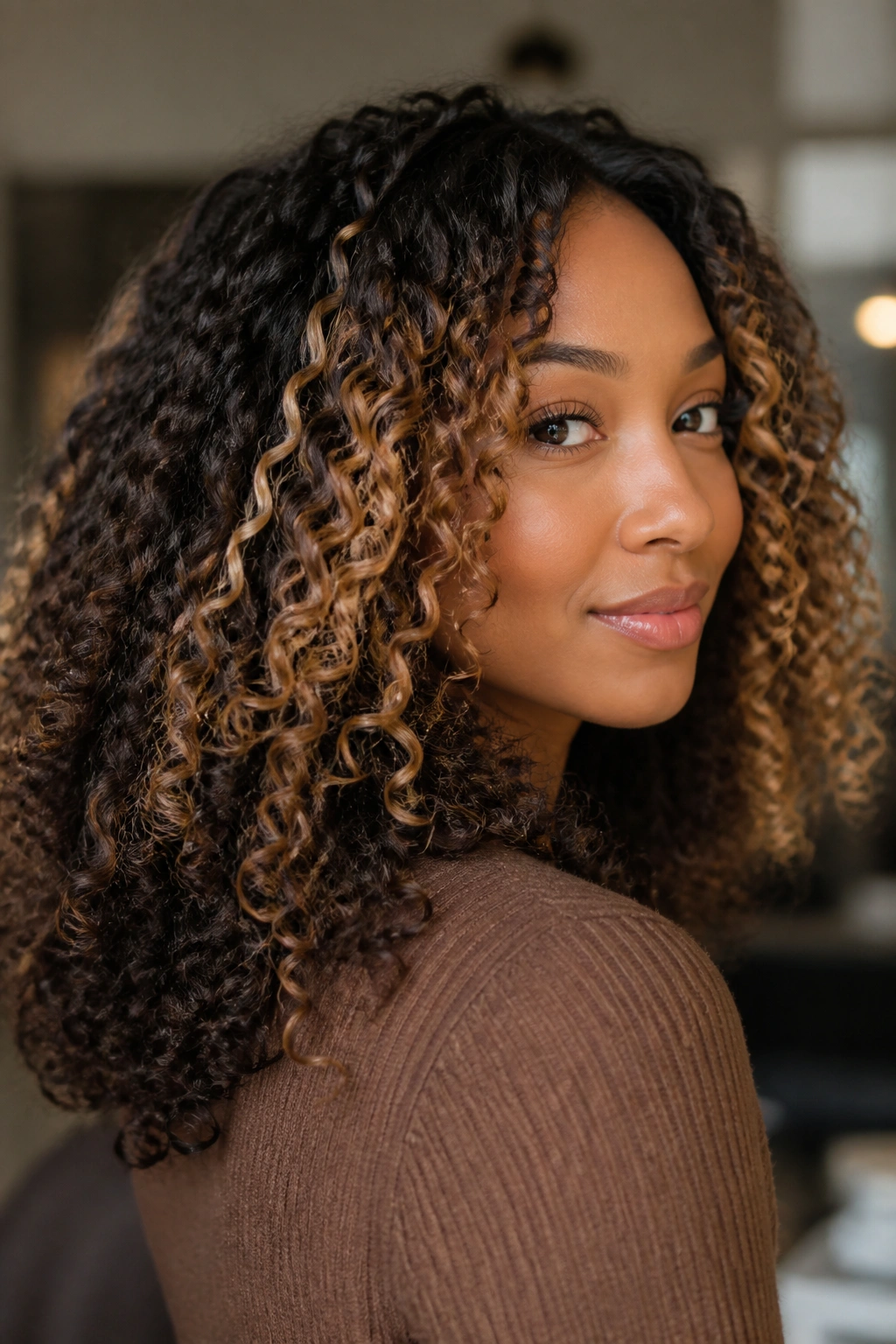
Curls change the rules a little. They add their own width, their own shadow, and their own bounce, so the blonde has to work with all of that instead of fighting it. Caramel-blonde slices can do the job beautifully on black curly hair because the warm tone catches the curve of each curl without looking harsh.
The best part is the movement. A curl opens, closes, and shifts as you turn your head, so the blonde appears in little flashes rather than one fixed stripe. On a round face, that motion helps a lot. It keeps the color from sitting right on the widest point of the face for too long.
I’d place the slices on the outer ring of the curls and lower through the lengths. Too much light near the temples can make a round face read fuller. A few lighter pieces around the cheekbone are fine, but the real payoff is lower, where the hair can lengthen the outline.
Warm caramel is a good match if you want the black base to stay rich and deep instead of going icy. It feels easy, not severe.
12. Side-Swept Blonde Streaks That Break Up Width
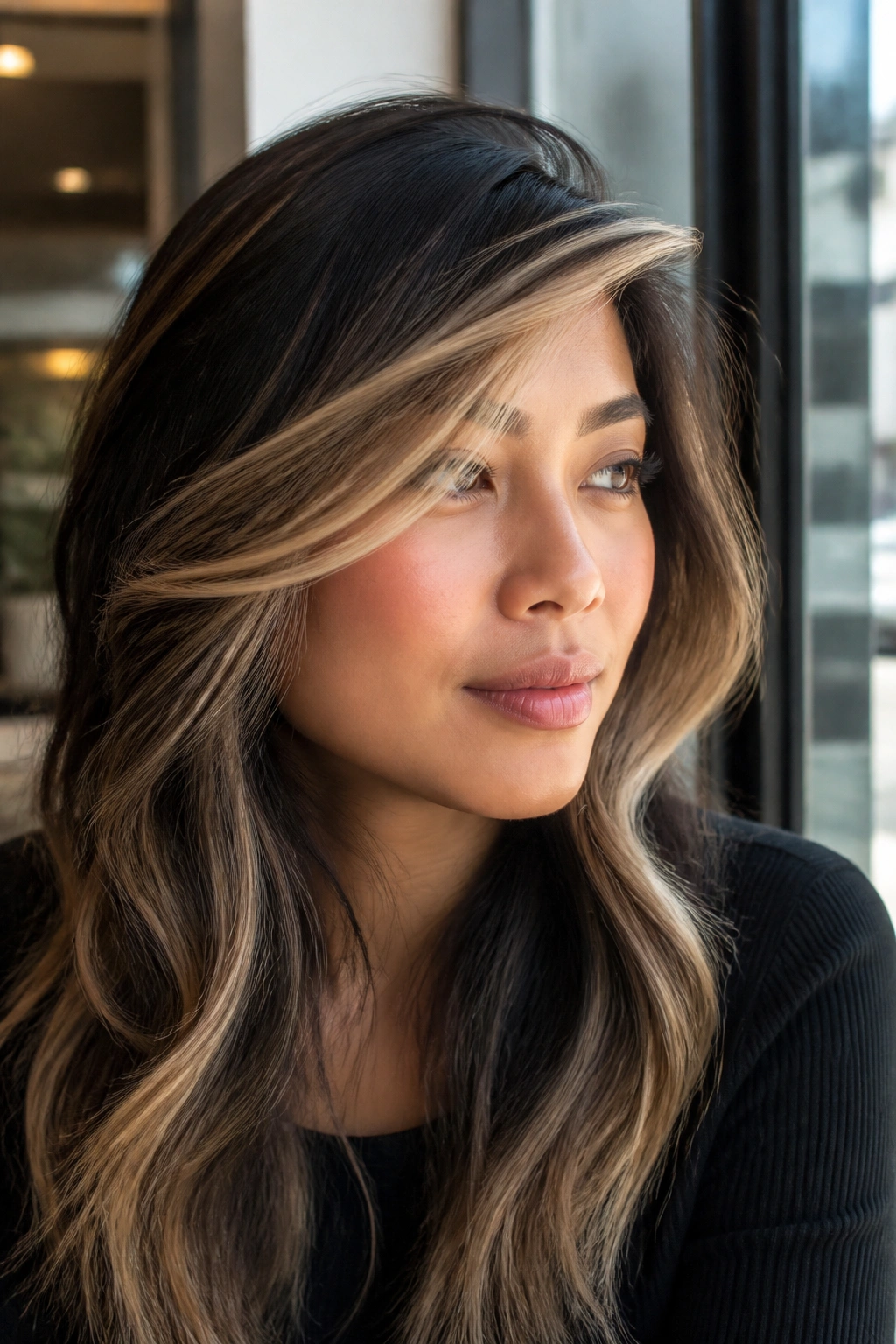
A side part can do more for a round face than people give it credit for. When the blonde streaks sweep from one side of the head across the forehead and down through the opposite length, they interrupt the wide, even curve of the face. That diagonal line matters.
This style works especially well if your hair is straight or slightly bent at the ends. The streaks should be long enough to travel across the face visually, not chopped into short pieces that stop at the cheeks. I like this look when the blonde is kept a touch muted — beige, sandy, or soft gold — because the shape itself is doing most of the work.
A deep side part also adds height at the crown. That extra lift gives the face a little more vertical stretch, which is exactly what a round face benefits from. I’ll say it plainly: this is one of the easiest ways to fake length without changing the haircut.
If you want a style that feels less centered and more angular, start here.
13. Beige Balayage on Shoulder-Length Layers
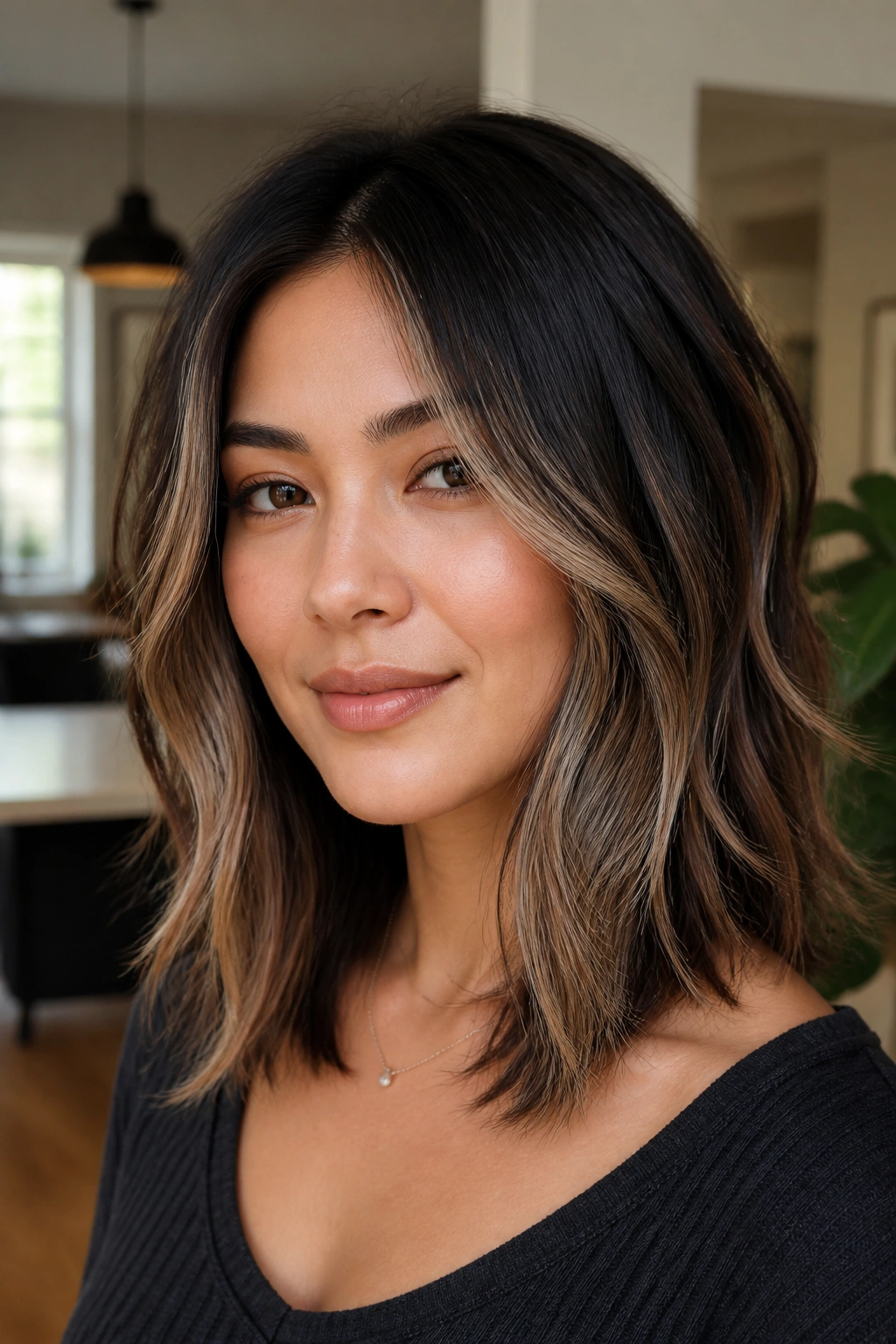
Shoulder-length layers and beige balayage get along better than most people expect. The layers create movement, and the balayage can follow that movement instead of sitting in one flat line. On black hair, the beige tone softens the contrast just enough to look expensive without looking pale.
This is a good choice when you want the face to stay framed in darkness but the lengths to feel lighter and airier. The first light pieces should usually start below the cheekbone and continue through the outer layers, where the hair naturally flips. That keeps the widest part of the face from carrying too much brightness.
I also like this on people who wear their hair half-up. The blonde pieces tucked into the lower layers peek out when the top section is pulled back, which gives the style a lived-in feel. Not messy. Just easy.
Shoulder-length layers can look heavy if they’re all one color. Beige balayage fixes that fast, and it does it without turning the style into a high-contrast statement.
14. Blonde Contouring at the Temples and Chin
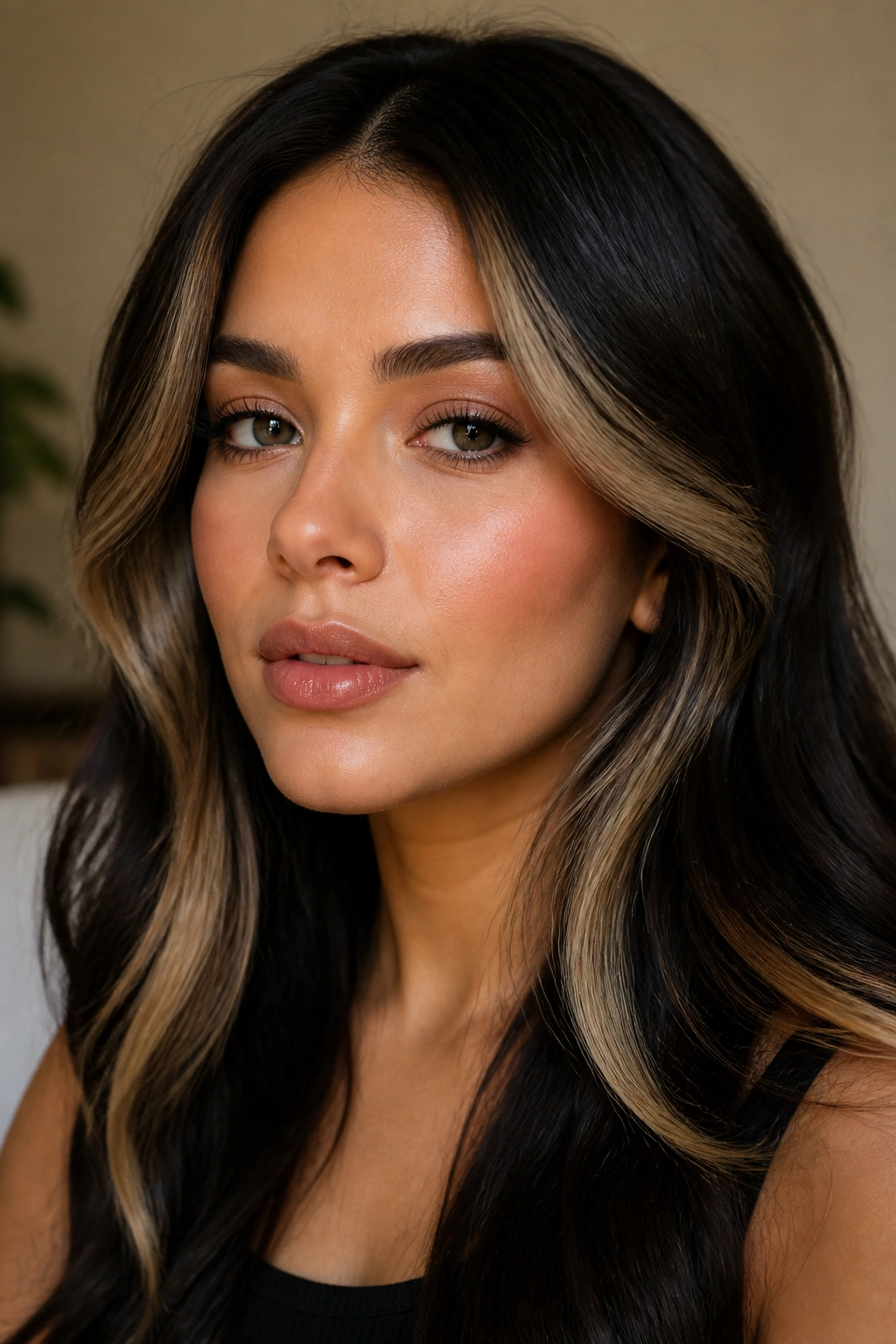
Color contouring is one of the smartest things you can ask for if your face is round. The idea is simple: brighten where you want the eye to go, keep depth where you want the shape to stay narrow. On black hair, that means blonde near the temples can open the top half of the face, while lighter pieces near the chin can stretch the lower outline.
Where to Brighten
- Temples: use fine blonde pieces to create height and a slimmer upper frame.
- Below the cheekbone: place a few lighter strands to guide the eye downward.
- Chin area: keep the light soft and tapered so it doesn’t stop abruptly.
Where to Leave Dark
- The widest part of the cheeks.
- The area directly beside the ear.
- Any blunt line at the jaw that already adds width.
This is one of those looks that benefits from a colorist who understands shape, not just shade. The blonde should look placed, not scattered. And the black should stay present. If you lose the depth, the whole face can look rounder, not less.
15. Smoky Blonde Ombre from Mid-Lengths Down
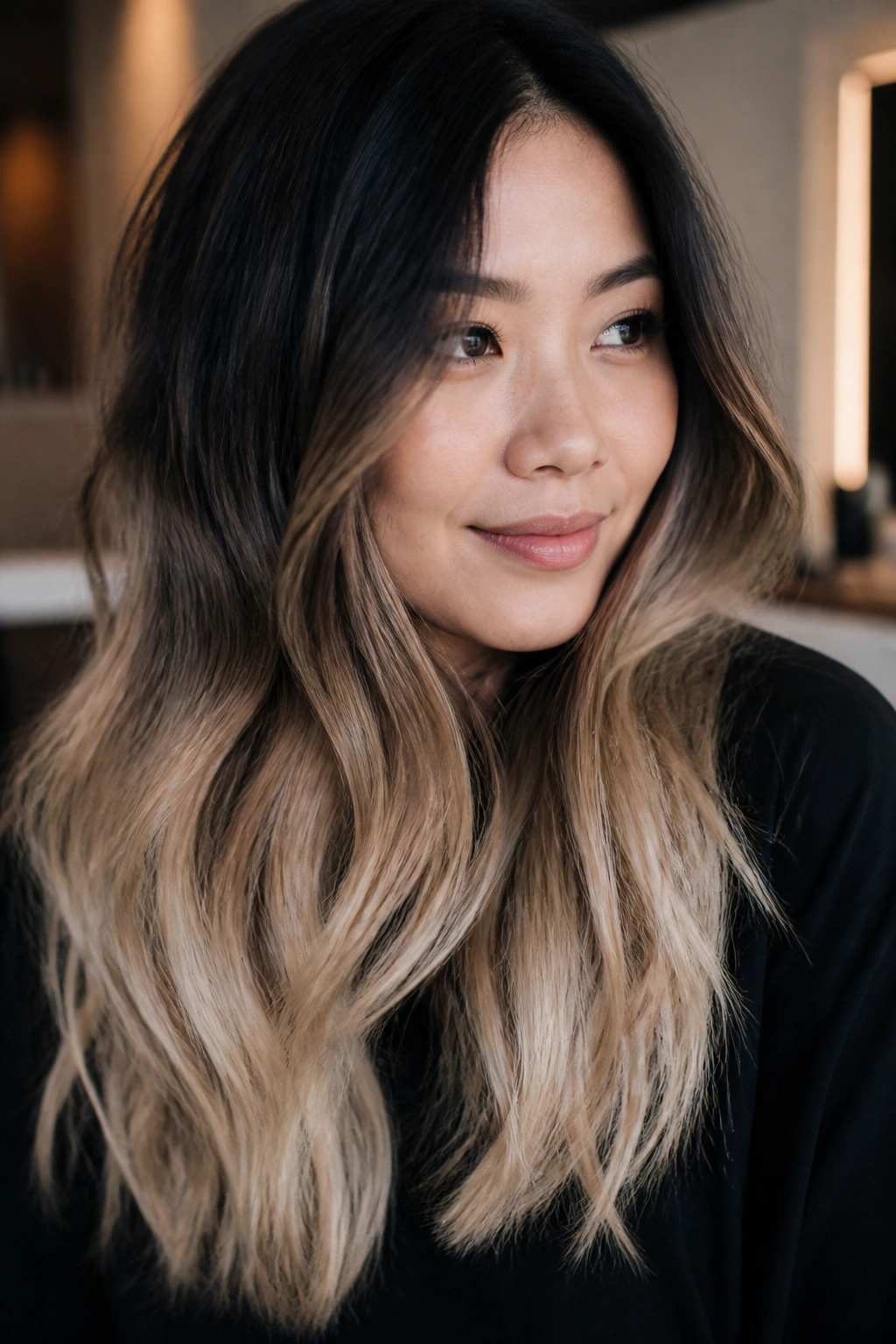
Smoky blonde ombre is a good middle ground when you want brightness but do not want a hard line around the face. The roots stay black, the mids shift into smoky beige, and the ends lighten enough to create movement. That gradient pulls the eye down and away from the widest part of the face.
This works especially well if your hair is long enough to show the fade. Short hair can cut the ombre off too quickly. But on medium to long lengths, the effect is clean and modern-looking without trying too hard. The smoky tone also helps if you prefer cooler blonde rather than gold.
The part I like most is the grow-out. Because the roots stay dark on purpose, you don’t get that awkward line a few weeks later. The style keeps its shape longer, which matters if you want something that looks deliberate even when it’s been a while since the salon.
If your face feels soft and you want the hair to add length, ombre is a solid bet.
16. Highlight Placement for a Round-Face Pixie
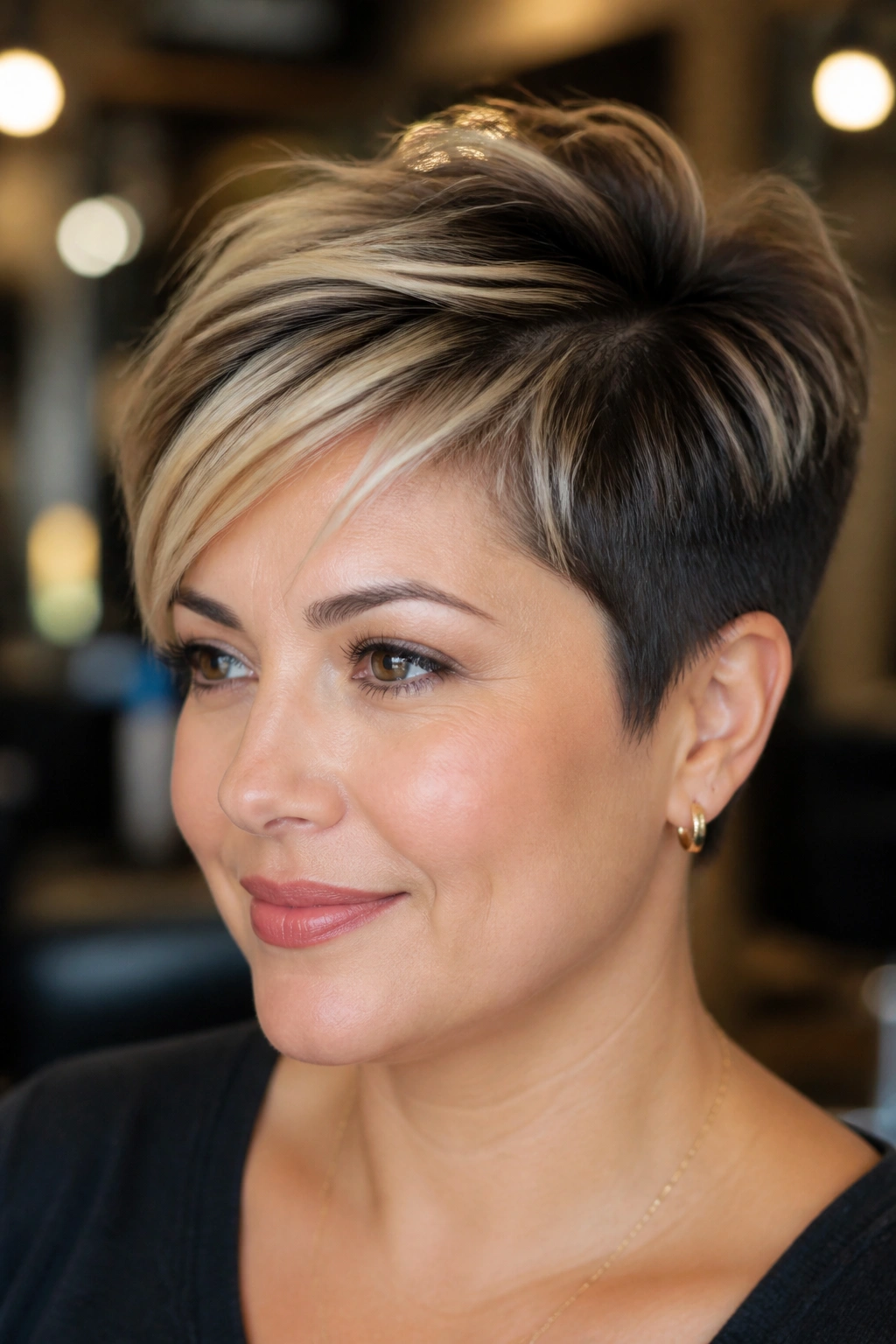
Short hair needs a different plan. On a pixie, blonde should not be spread evenly around the sides, or the cut can balloon out at the cheeks. The smarter move is to keep the sides dark and use the blonde on top, at the fringe, and in a few broken pieces near the front.
The result is more height, less width. That’s the whole game with a round face and a short cut. A lifted top gives the illusion of length, and a light fringe can draw the eye upward without making the face feel boxed in. If the pixie has longer pieces through the crown, even better. Those pieces can hold the blonde and create a little sweep.
A tiny amount of warmth can help here, too. On very dark hair, a soft beige or honey highlight often looks gentler than a stark platinum stripe. Still, if you like contrast, keep it tight and directional.
Short hair can look flat fast. This placement keeps it alive.
17. Toasted Blonde Ribbons on a Black Bob
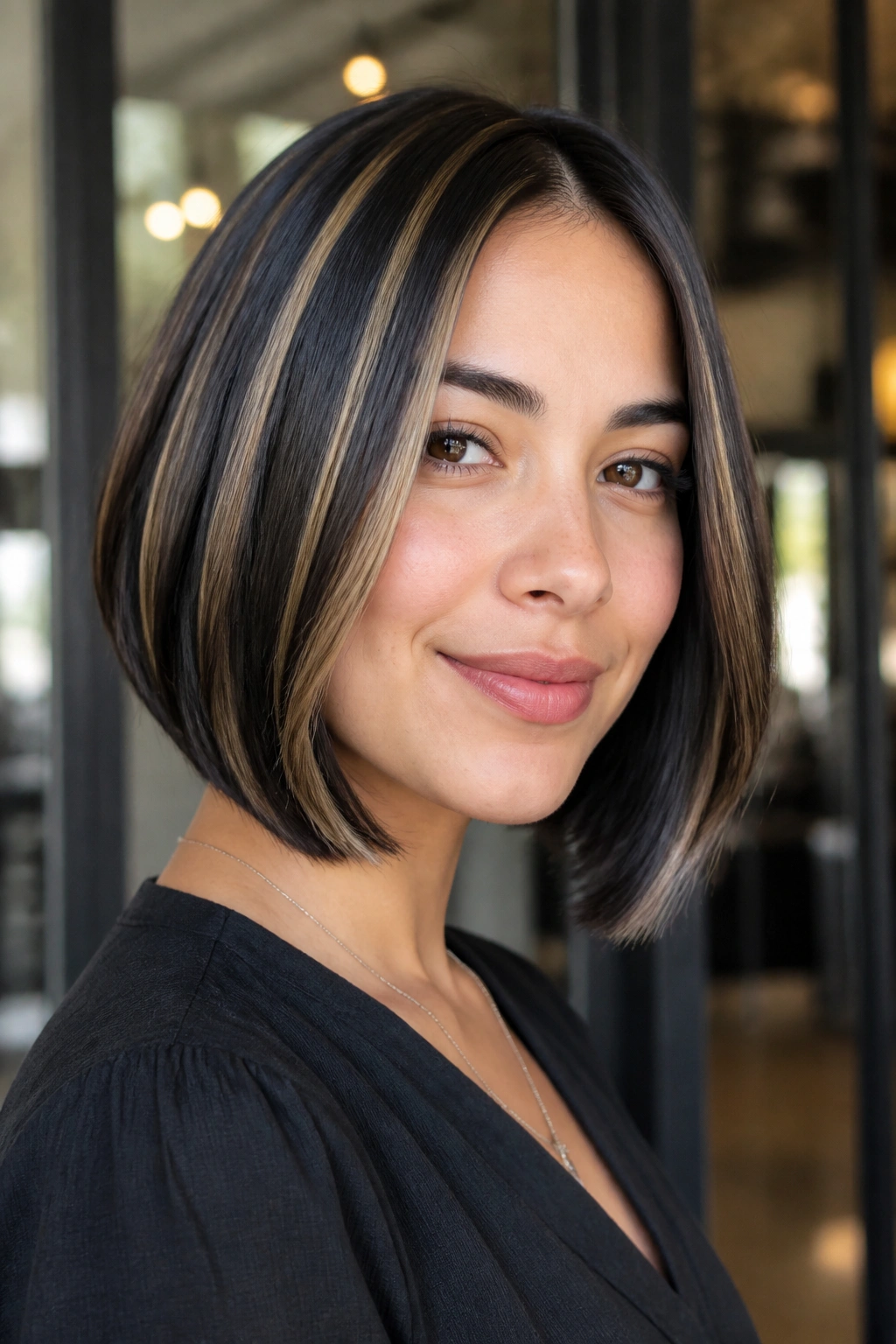
A black bob with toasted blonde ribbons is one of my favorite combos for a round face because it gives structure without weight. The bob already has a clean line, and the ribbons stop that line from feeling boxy. Thin, toasted pieces through the surface add movement while the dark base keeps the shape sleek.
The trick is not to overfill the bob with blonde. A few ribbons near the front, a few through the mid-lengths, and one or two closer to the ends are usually enough. Too much light in a blunt bob can widen the silhouette and make the cut lose its edge. I prefer the blonde to look painted through the movement of the hair rather than stamped across it.
This style looks especially good with a slight bend under at the ends. That bend helps the ribbons curve inward and keeps the face framed neatly. It’s neat, but not stiff. And that’s a useful difference.
If you want a bob that feels lighter without losing its shape, this one earns its place.
18. Wispy Blonde Ends That Keep Everything Light
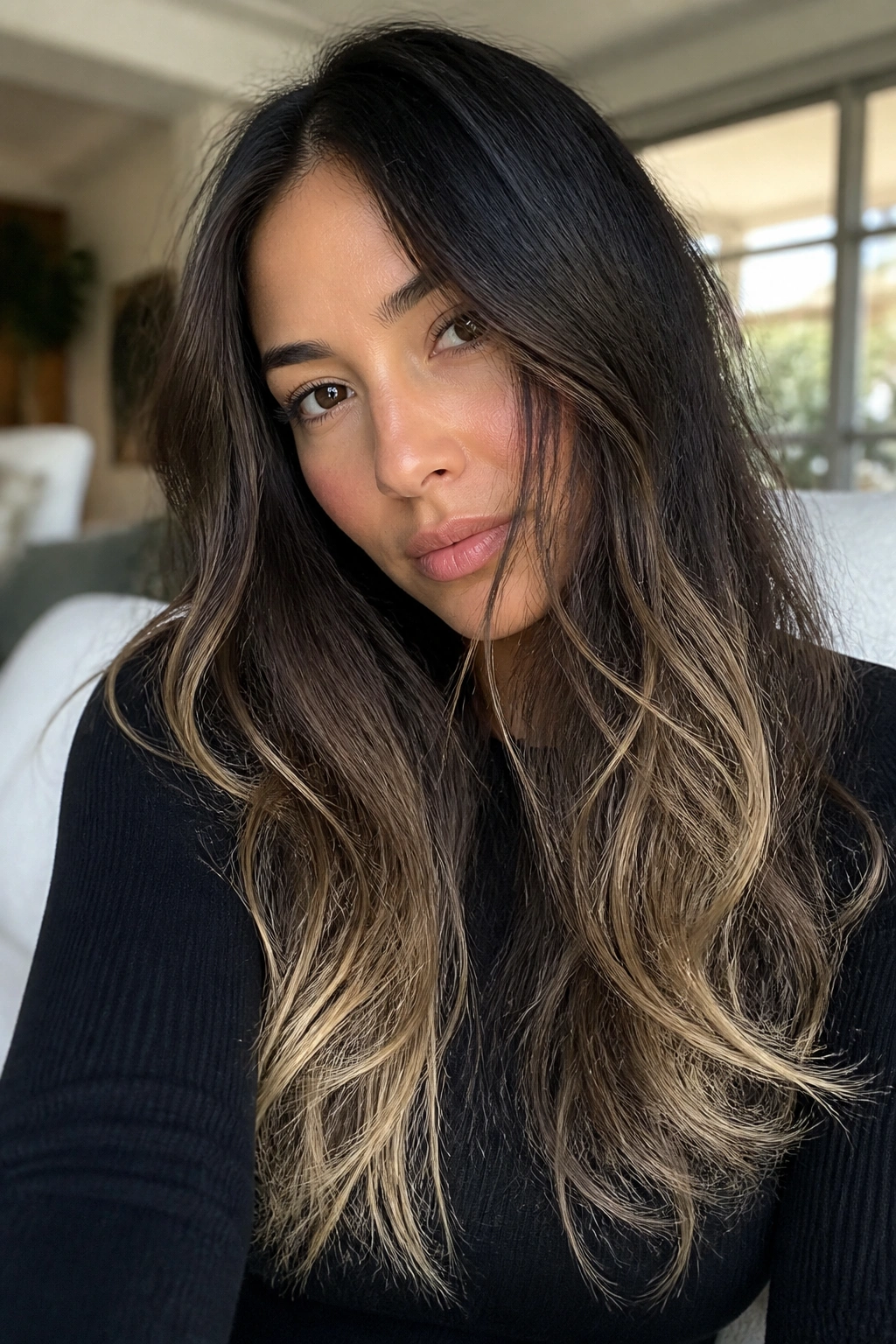
Wispy blonde ends are the quiet finish that people overlook. The root stays black, the mid-lengths stay mostly dark, and the blonde appears only at the tips, feathered and soft. On a round face, that pushes the visual weight downward and keeps the top half of the style from feeling crowded.
I like this look on longer cuts, especially when the hair has enough movement to let the ends separate a little. The wispy finish matters because blunt blonde ends can look heavy. Soft ends feel lighter, more fluid, and easier on the eye. They also make the black base look deeper, which gives the whole style more contrast.
If you’re asking for this at the salon, keep the light pieces narrow and slightly uneven. Not choppy. Uneven in a natural way, so the color doesn’t end in a hard line. A beige or soft golden tone usually works better than a super pale one, because the tone stays gentle against the black.
For a round face, this kind of finishing touch does a lot of quiet work. It gives length, keeps depth, and leaves the whole style feeling balanced without making a fuss.
