



Round faces can wear ash brown highlights beautifully, but the placement has to do a little work. If the brightest pieces sit right across the widest part of the cheeks, the face can look broader than it really is. Shift that light a few inches higher, lower, or off-center, and the whole shape changes.
That’s the part a lot of people miss. Ash brown is not only about tone — cool brunette ribbons, mushroom brown panels, smoky lowlights, soft babylights — it’s about where the light lands. On a round face, you want movement that pulls the eye down, around, or diagonally, not a thick band that stops at the cheeks and says, “Hello, here’s the widest point.”
I also love ash brown because it can be quiet or dramatic. A neutral ash on dark brunette hair can look almost satin-soft. Push it a shade lighter, and it gets crisp, modern, and a little edgy. Neither approach is wrong. The trick is matching the highlight map to the haircut, because a collarbone lob, curly mid-lengths, and a pixie all need different kinds of lift.
Some of these ideas are whisper-soft. Some have more bite. That’s on purpose.
1. Soft Ash Brown Money Piece That Starts Below the Brows
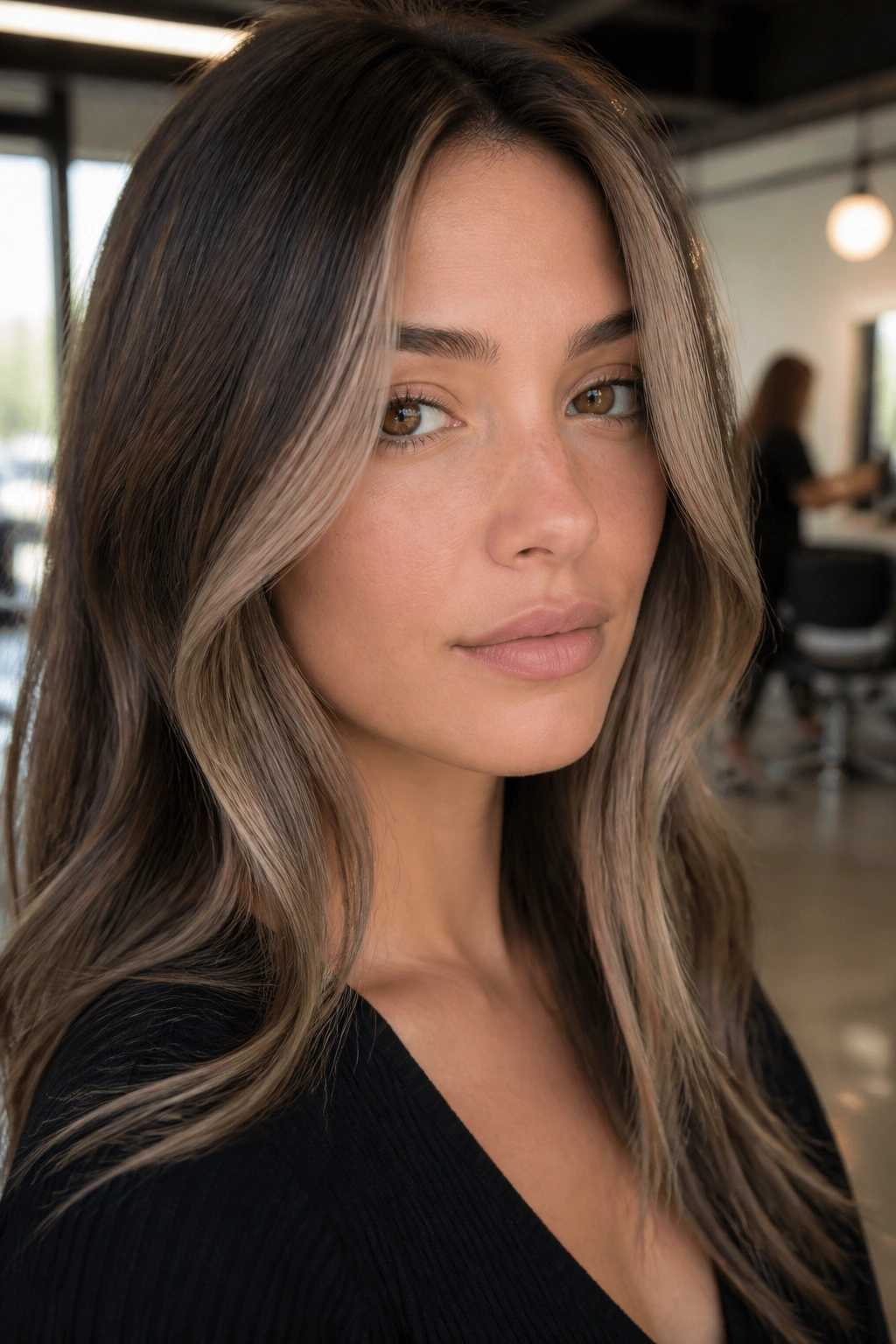
A money piece can be lovely on a round face, but only if it’s handled with some restraint. The brightest section should not begin right at the root and spread wide across the temples. Start the lightness just below the brows, keep it narrow near the part, and let it widen only a touch as it drops past the cheekbones.
What to Ask For
- Two slim face-framing panels in an ash brown shade that is one to two levels lighter than your base
- A soft root smudge so the highlight doesn’t look pasted on
- A gentle taper near the chin, not a blunt stripe at cheek level
This placement works because it gives the face a vertical line without adding bulk where the cheeks are fullest. I like it on shoulder-length hair especially, since the front pieces can swing forward and do the job naturally.
Best tip: keep the money piece soft around the temple and brighter near the ends. That tiny shift keeps the highlight from looking boxy.
2. Mushroom Brown Babylights That Keep the Crown Light
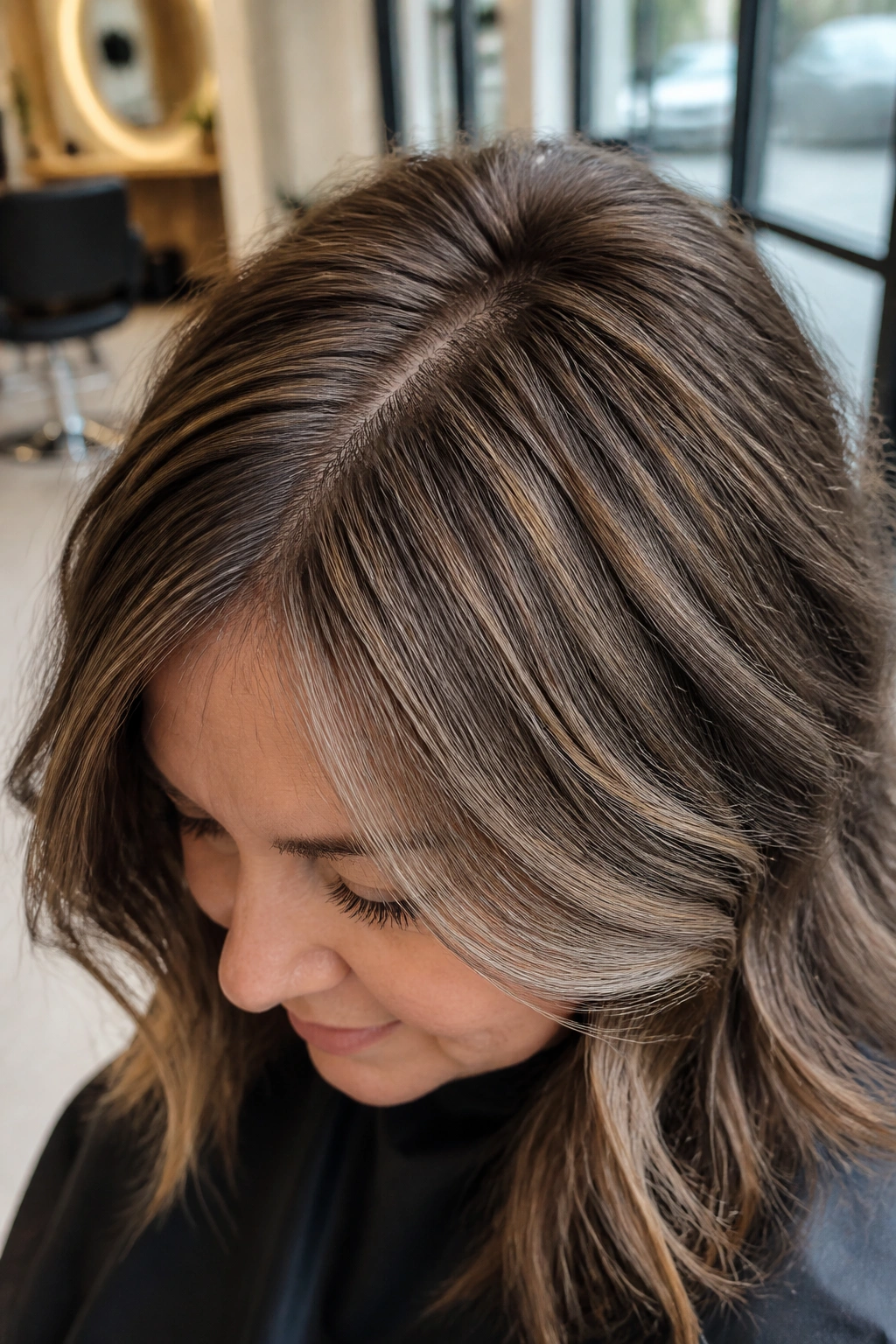
Tiny babylights through the top of the head are one of the smartest moves for a round face. They don’t scream for attention, which is exactly the point. The cool, smoky tone of mushroom brown gives you that soft, airy finish that makes the crown look a little taller and less flat.
This is the kind of color that reads as expensive in person, not because it’s flashy, but because it looks layered. The highlights thread through the top section in thin, almost whisper-thin lines, and that breaks up the width that can happen when hair is one solid tone from root to ends. A round face usually benefits from height, and lighter pieces at the crown give you that without teasing the life out of your hair.
It works especially well if your natural base is a medium brunette. Too light, and the effect can turn stripey. Keep the contrast controlled, and it stays soft.
3. Cheekbone-Skimming Balayage on a Deep Side Part
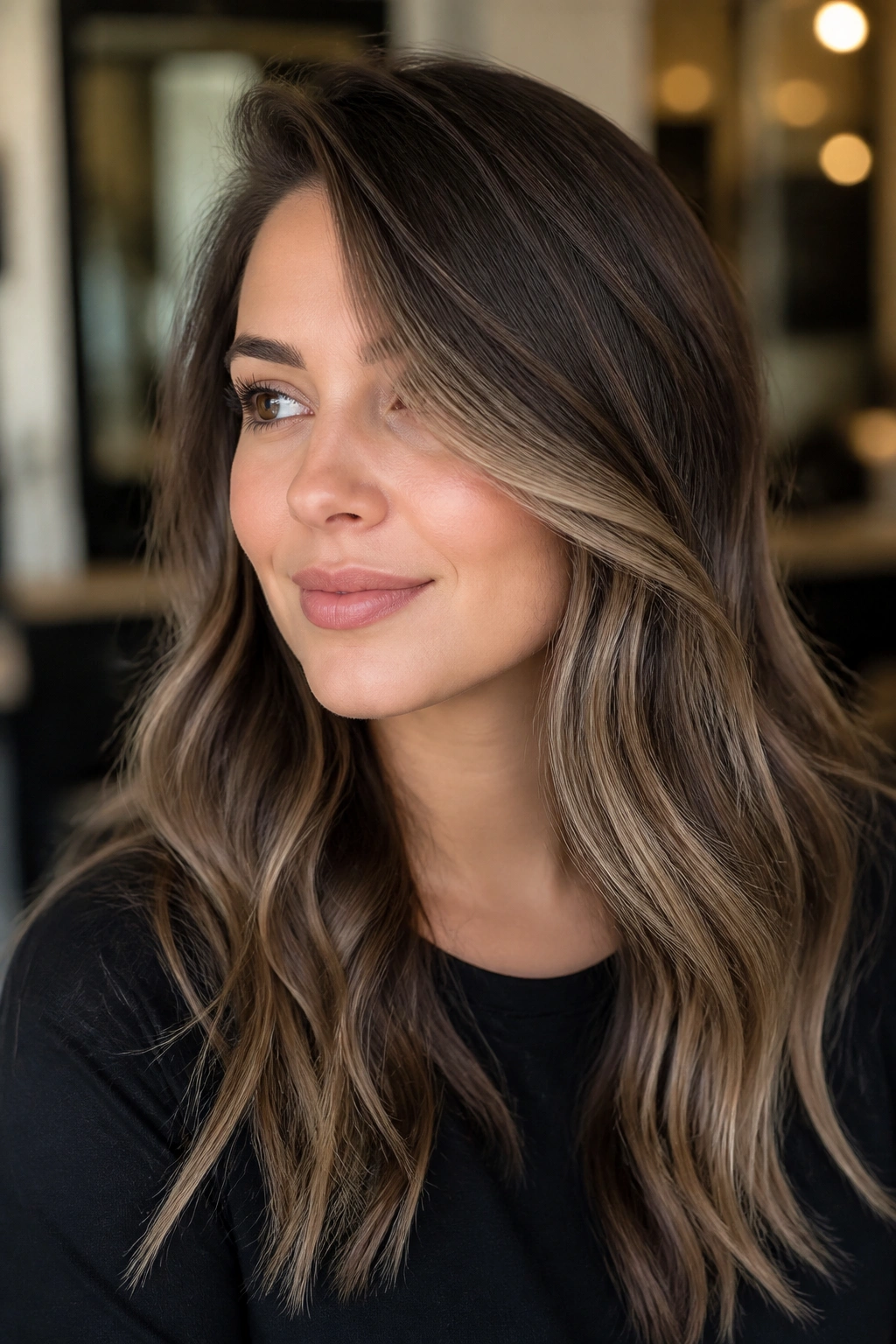
What if you want shape, but you hate obvious streaks? A deep side part with cheekbone-skimming balayage is the move. The part itself breaks the symmetry that can make a round face feel even rounder, and the highlight placement follows that diagonal rather than fighting it.
The lightest pieces should begin a little below the temple and drift toward the upper cheekbone, then soften out toward the jaw. That sounds subtle, and it is. Subtle is good here. The eye follows the diagonal line, not a horizontal band, so the face looks longer and a little leaner without anyone being able to point to one loud highlight and name it.
I prefer this on wavy hair because the bend helps the color sit in motion. Straight hair can wear it too, but you’ll want some bend around the face, or the placement can look too neat. Neat isn’t the goal. Shape is.
4. Root-Shadow Foilayage for Easy Grow-Out
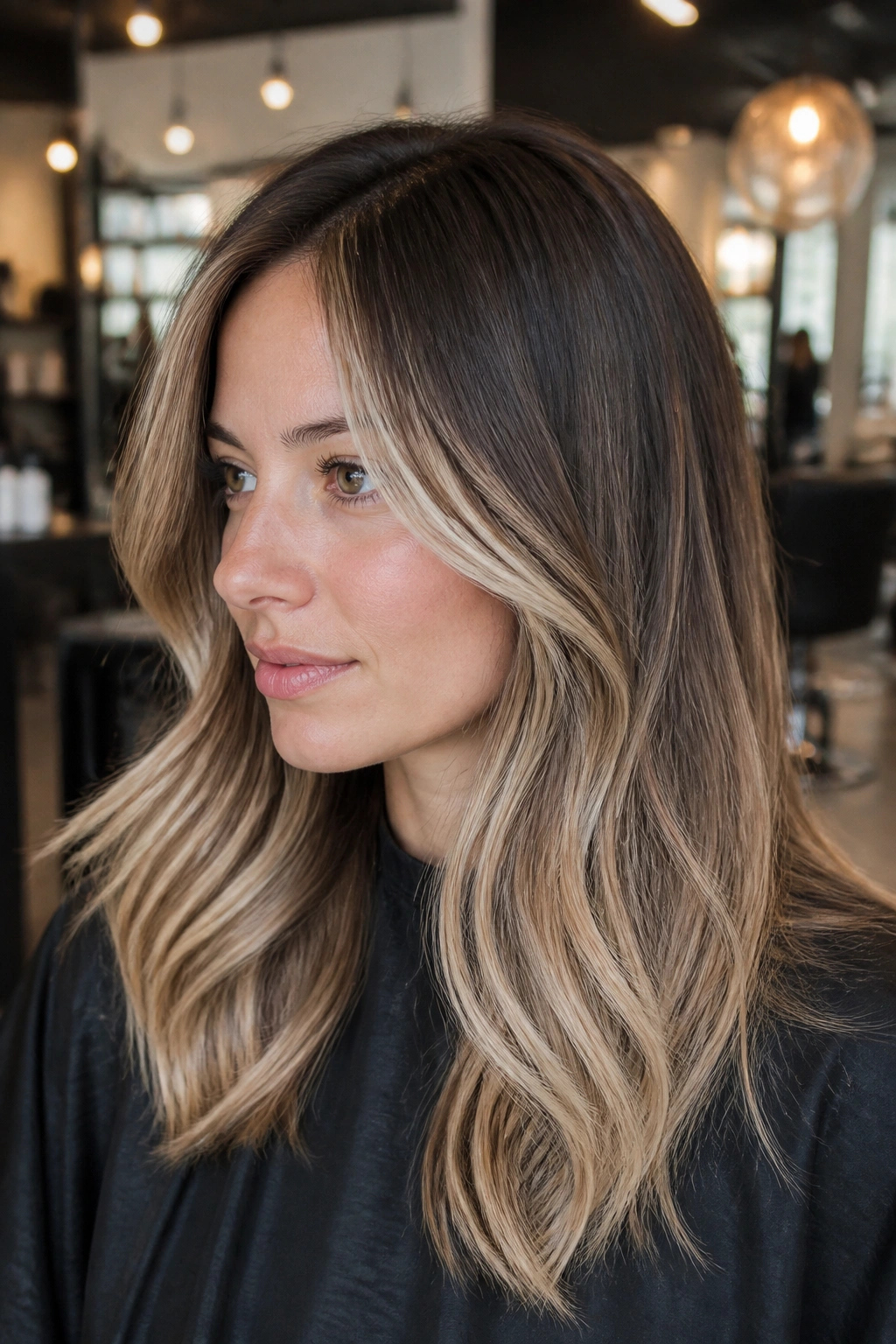
This is the version for people who do not want to babysit their color every few weeks. Root-shadow foilayage keeps the top darker, lifts the mids with ash brown lightness, and lets the ends carry the brightness. On a round face, that dark root is doing more work than people realize.
Where the Depth Should Sit
- Leave about 1 to 1½ inches of deeper root at the scalp
- Concentrate the lighter pieces below the widest part of the cheeks
- Keep the ends slightly brighter than the mid-lengths for a soft taper
That darker top section keeps the upper face from looking broad. Then the lighter lengths draw the eye downward, which is exactly what you want when the face reads soft and full. I like this on medium-to-long cuts because the color has space to stretch.
It also grows out better than hard foil placement. The line stays blurred, and that matters. Nobody wants a harsh stripe showing up three weeks later.
5. Curtain Bang Highlights That Split the Forehead
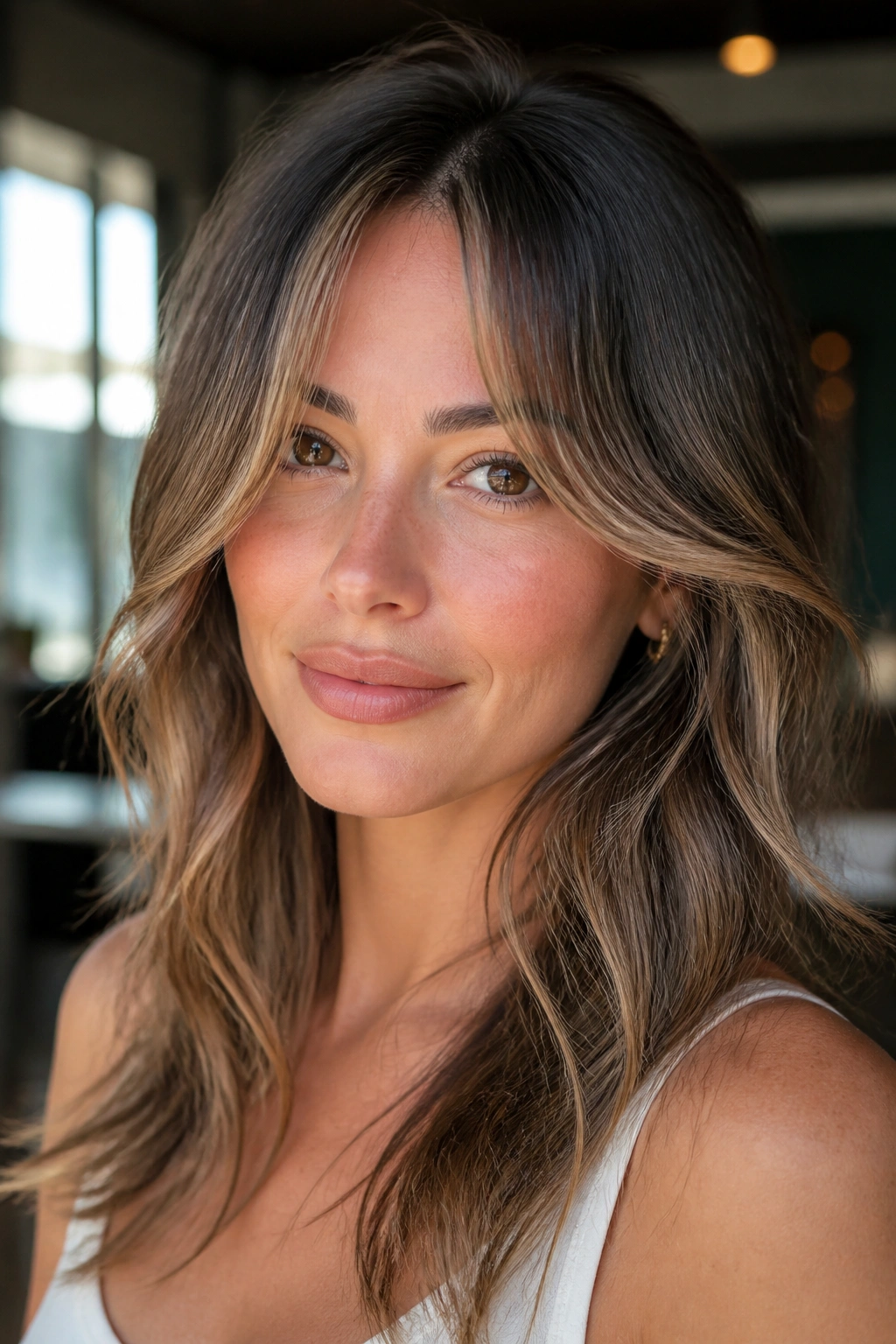
Curtain bangs can be a gift for round faces, but only if they’re not cut too short. Add ash brown highlights through the fringe and the first face-framing layers, and the result is a soft split right down the front of the face — not a blunt block of hair that ends at the cheeks.
The highlight should sit on the outer edge of each bang, with the brightest part around eye level and slightly below. That gives the fringe movement, not weight. A dense, solid bang can make a round face feel shorter. A lighter curtain bang, especially with cool brown threads, opens the center and lets the sides fall away a little more gently.
This is one of those styles that looks casual until you study it. Then you see the details: the soft root, the shadow through the middle, the brighter ends that hit right at the jaw. Small things. They matter.
6. Ribboned Ash Brown Pieces on a Collarbone Lob
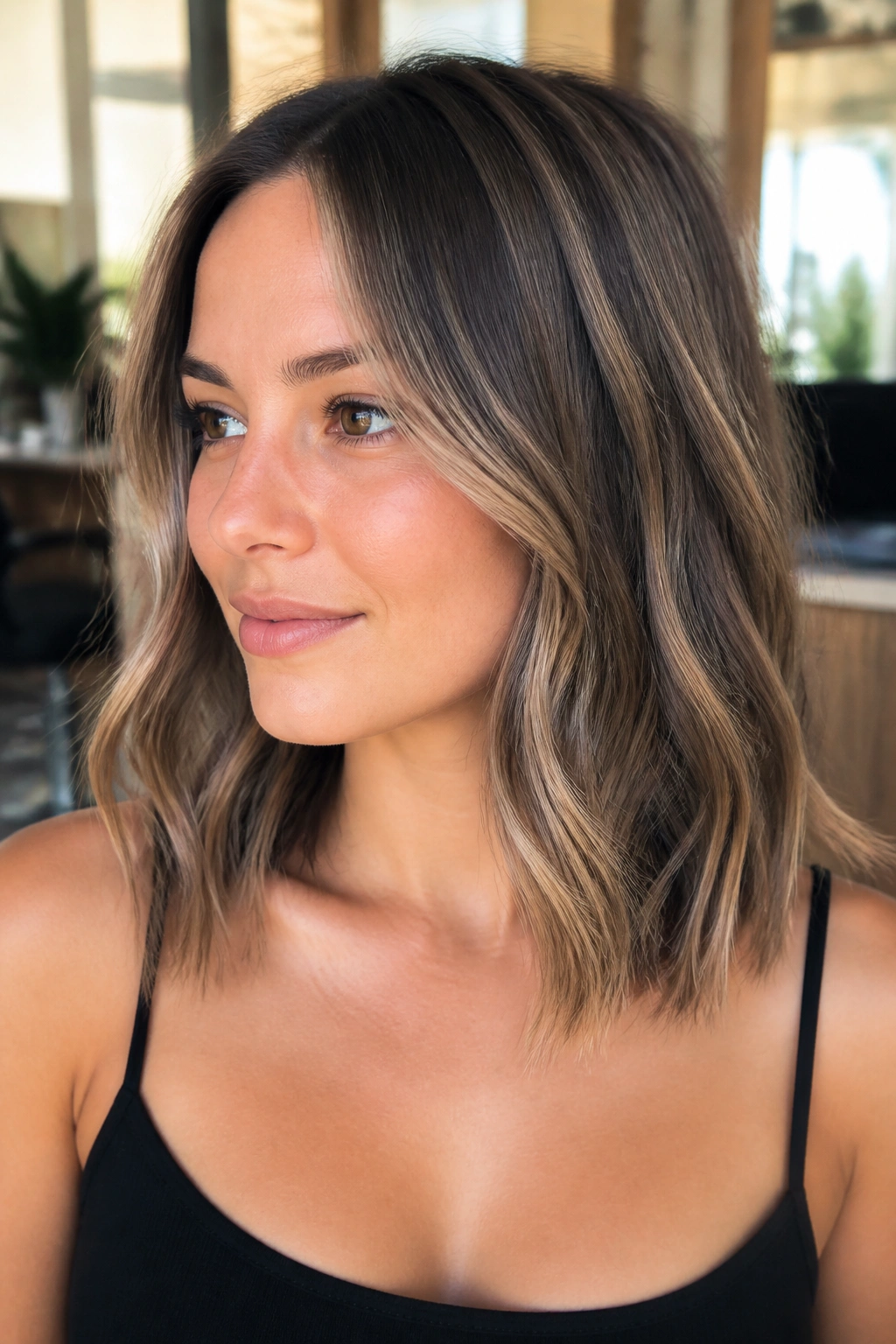
A collarbone lob already helps a round face because it builds a longer line around the jaw. Add ribboned ash brown highlights, and the cut stops feeling like one smooth block and starts moving in thin vertical lanes. That’s the real win.
Unlike chunky streaks, ribbon highlights are thin enough to follow the haircut instead of overpowering it. I like them placed in staggered bands — a few higher pieces near the cheekbone, then more through the lower mid-lengths, then a softer finish at the ends. The eye moves through the hair instead of across the widest part of the face.
This one is a good choice if your hair has a bit of natural wave. The bend makes the ribbons separate in a flattering way. On very straight hair, it can still work, but the pieces should stay fine or they’ll read like stripes. And nobody wants that.
7. Peekaboo Lowlights Beneath a Cool Brunette Base
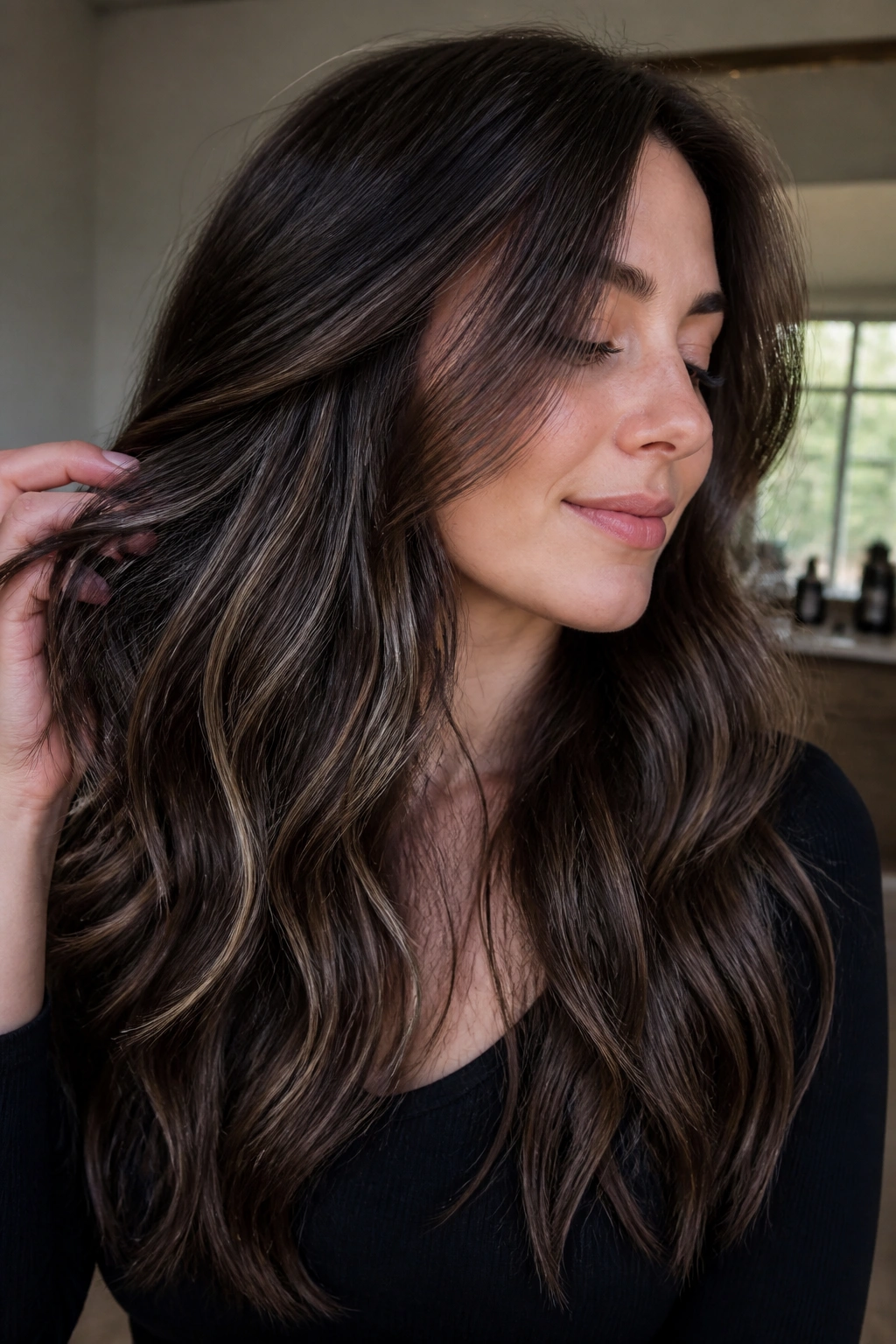
Not every round face needs lighter hair all over. Sometimes the smartest move is darker, not lighter. Peekaboo lowlights tucked under the top layer give the hair depth from below, which makes the outer shape look slimmer without adding visible bulk around the cheeks.
The best version keeps the surface cool brunette and drops in lowlights just underneath in taupe brown, smoky espresso, or a muted chestnut-ash mix. When you move, those hidden pieces show through. When you stand still, the top layer stays soft and even. That little bit of shadow is what stops the face from looking too wide.
I especially like this on thick hair. Thick hair can go puffy fast, and lowlights tame that a bit. If your hair is already fine, keep the lowlights subtle; too much darkness underneath can flatten the whole thing. You want contrast, not heaviness.
8. Feathered Ends With Lighter Ash Tips
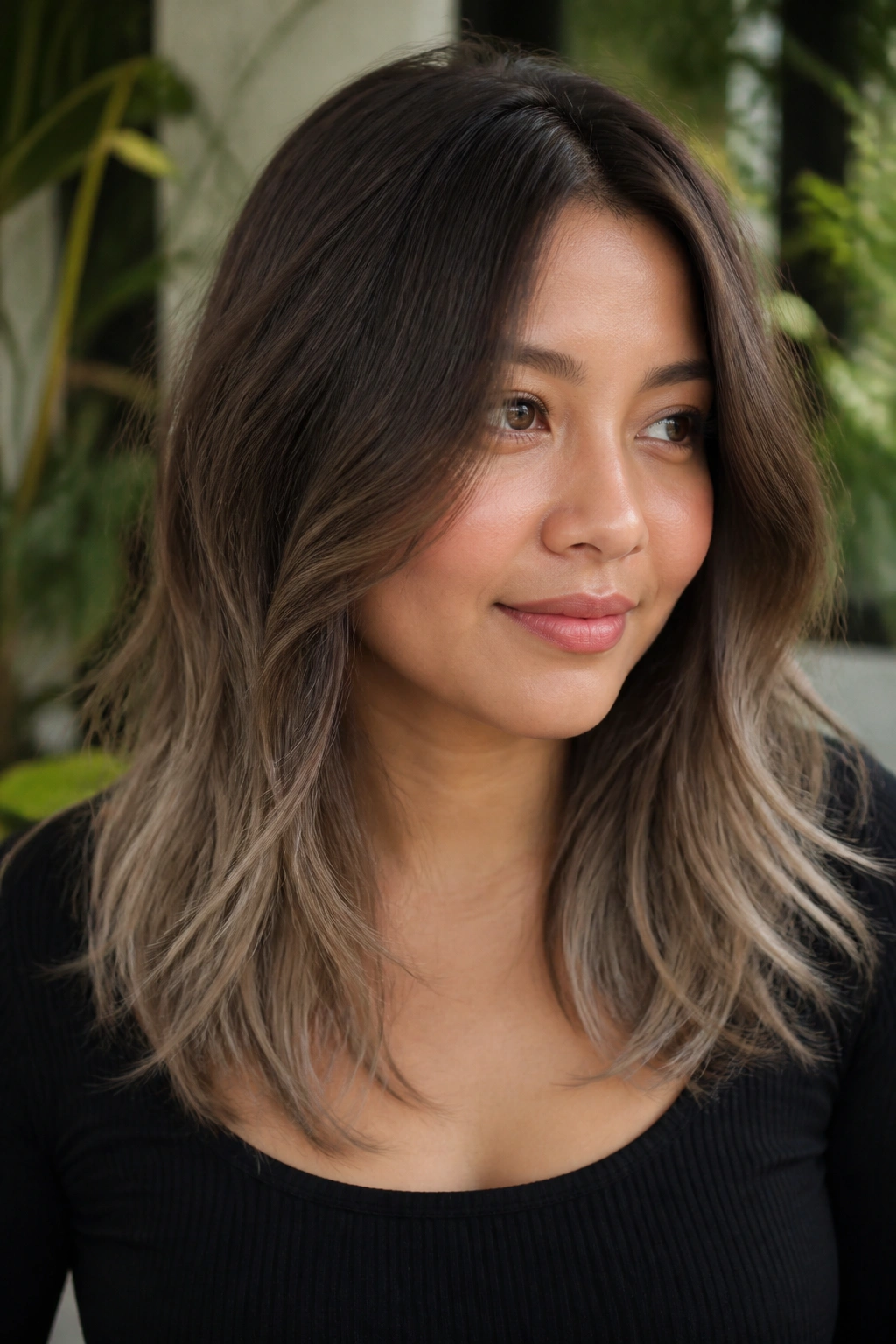
If you like a softer finish, lighten the ends and let the rest stay grounded. Feathered ash brown tips make the hair taper visually, which helps a round face look longer. The point is not to bleach the ends into oblivion. It’s to create a gentle fade.
How It Works
- Keep the lightest ash tone on the last 2 to 4 inches
- Ask for feathered layering so the ends don’t sit in one blunt line
- Leave the mid-lengths cooler and deeper so the face area stays quiet
This style is lovely on hair that already has movement. The ends catch light, but the cheeks aren’t surrounded by a bright halo. That’s the difference between flattering and fussy. Too much brightness around the face can widen it. Brightness near the bottom pulls the eye down.
A lot of people skip this look because they think all the action has to happen near the face. Not true. Sometimes the most flattering place to put the light is where the hair exits the picture.
9. Smoky Contour Highlights at the Temples and Jawline
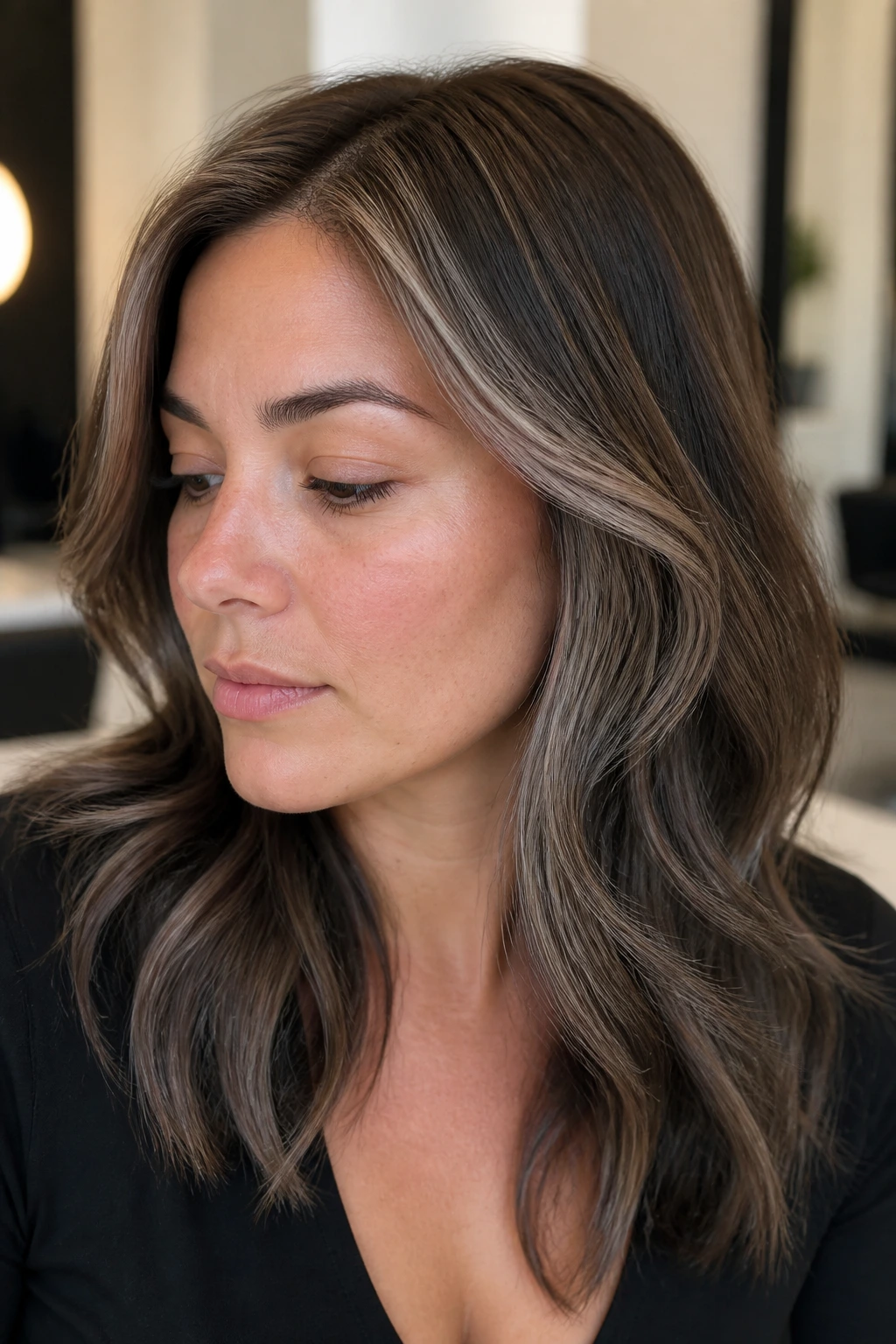
Hair contouring can sound gimmicky, but the idea is plain enough: place lighter pieces where you want lift, and keep deeper tones where you want the face to recede. On a round face, smoky ash brown contour highlights work best at the temples and then taper softly past the jaw.
The temple area gets a touch of brightness to open the top half of the face. The jawline gets a cooler, more shadowed piece so it doesn’t read as the widest point. That contrast creates shape. It’s a little like drawing with light and dark, except the result is softer because hair moves and shifts.
I like this approach on medium brown hair because the contrast can be controlled easily. Go too light, and it starts to feel harsh. Go too dark, and the contour disappears. The sweet spot is a cool brunette base with a few ash panels that show when the hair swings.
10. Wavy Ribbon Highlights on Long Layers
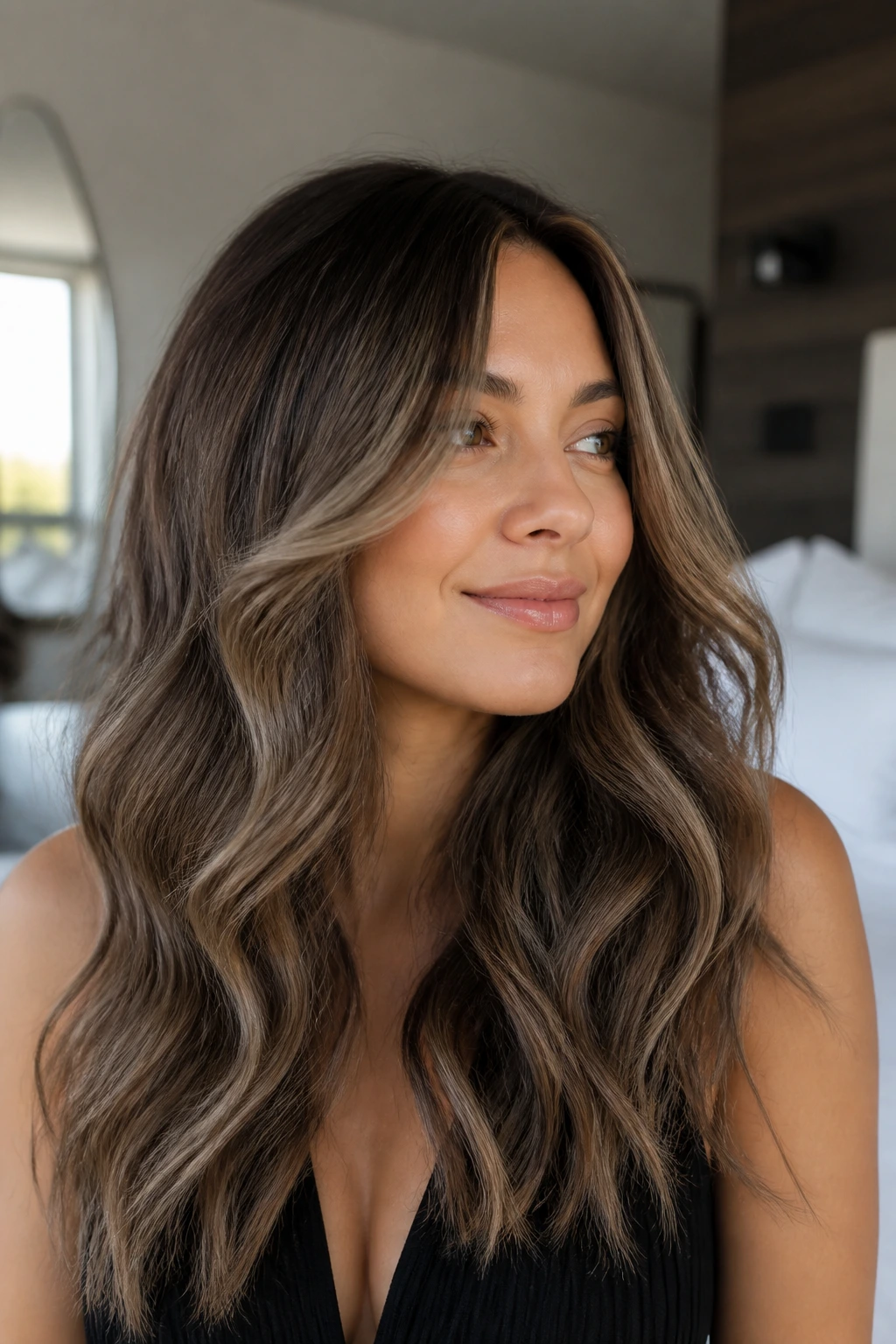
Long layers and ash brown ribbons are a strong pairing. The layers stop the hair from hanging like one heavy sheet, and the ribboning adds movement that keeps the face from feeling boxed in. On a round face, that break in the line matters a lot.
Why the Wave Pattern Matters
The wave itself is doing part of the face-shaping work. A loose bend creates vertical slips of light instead of one broad illuminated band, and that helps the eye move downward. A 1¼-inch curling iron or a flat iron bend works well here, as long as the curl is brushed out a bit so it doesn’t look too done.
- Ask for ribbons that start below the cheekbone
- Keep the root area deeper for contrast
- Style with a soft wave away from the face on the front sections
- Finish with a light gloss so the ash tone stays cool, not dusty
This is a nice choice when you want dimension without a dramatic color shift. It feels polished, but not stiff. Good hair should move.
11. Teased-Root Foils That Blur the Blend
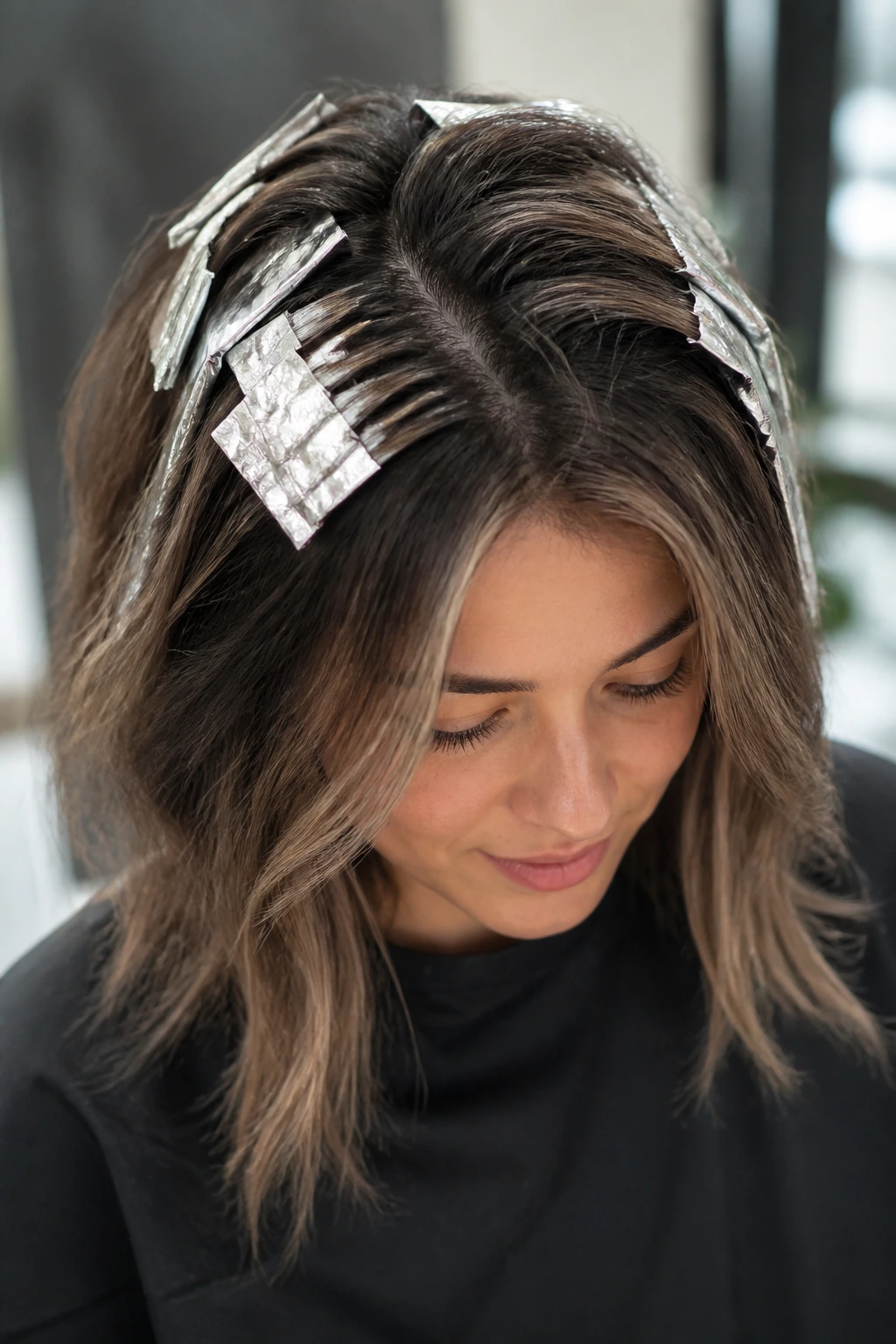
If you hate seeing harsh regrowth lines, teased-root foils are worth a serious look. The colorist backcombs a little at the root before placing the foil, which softens the transition between your base and the ash brown highlight. On a round face, that blurred start is more flattering than a hard line because it avoids a bright horizontal band up top.
The whole effect reads softer and more expensive, honestly. You get brightness where you want it, but the root stays a shade deeper and more natural-looking. That depth helps the top of the head feel less wide, which matters more than most people think.
This method is not the best choice if your hair is very fragile or breakage-prone, because teasing can be rough if it’s done badly. A good colorist will know how much to soften and how much to leave alone. If the hair is healthy, though, this is one of the easiest ways to keep ash brown highlights from looking obvious as they grow.
12. Cool Mocha and Ash Mixing on Medium Brown Hair
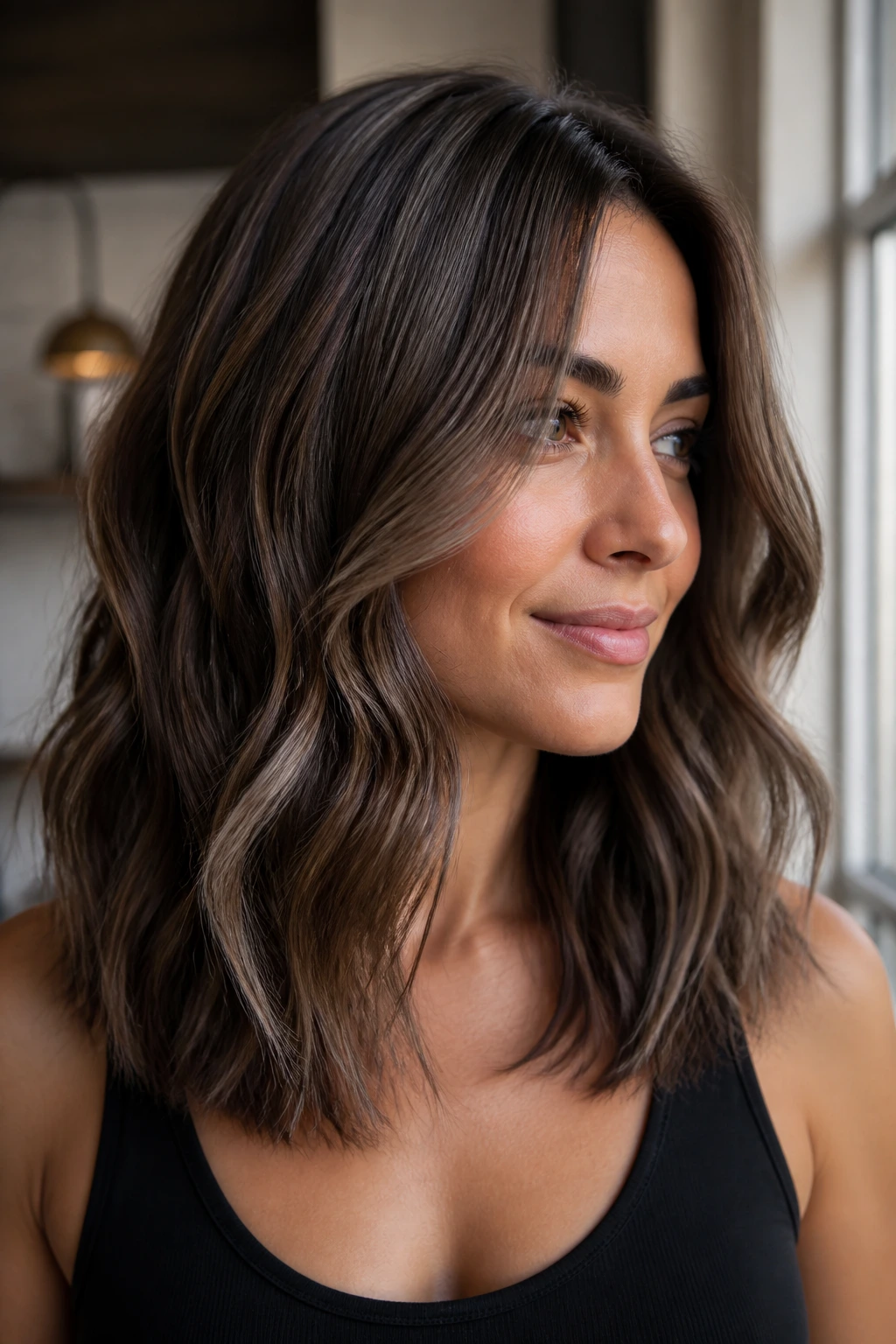
Pure ash can be a little flat on medium brown hair. I said it. Sometimes the answer is not more coolness, but a mix of cool mocha and ash so the hair keeps depth and doesn’t look chalky. Round faces need dimension more than they need one flat tone.
The mocha pieces add a touch of warmth, but the ash keeps them from drifting brassy. That combination gives the hair movement without making the face look broader. You get enough contrast for shape, enough softness for wearability, and enough depth that the color doesn’t disappear in indoor light.
I like this look on people who want something believable. Not quiet in a boring way. Just believable. It’s one of the easiest shades to live with because the tone sits between smoky and warm, which makes the whole style feel less high-strung than a very icy brunette.
13. Off-Center Ash Brown Ombré That Shifts the Eye
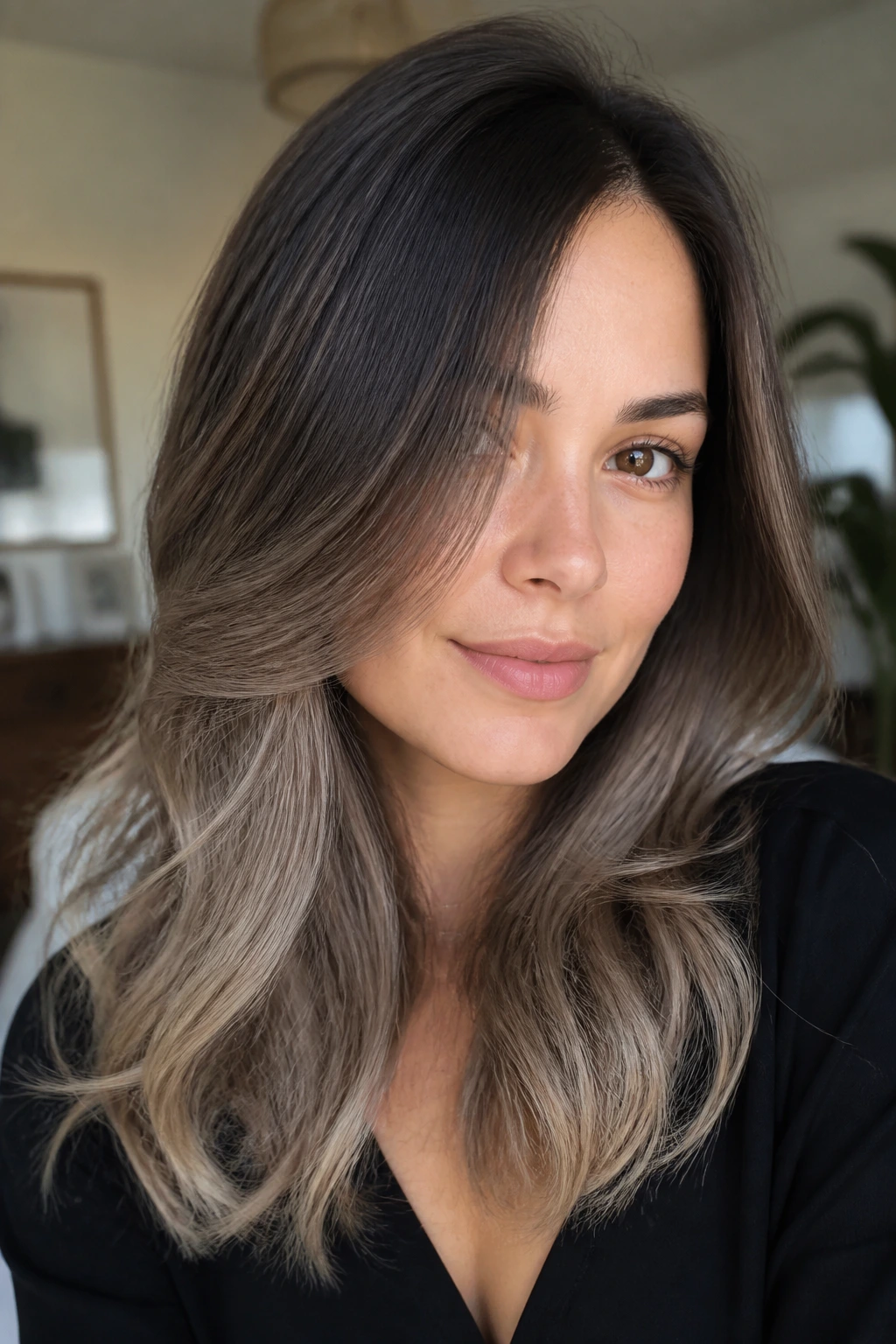
A center part can be too obedient on a round face. An off-center part, paired with a soft ash brown ombré, shifts the eye in a diagonal line and gives the face more shape. The roots stay deeper, the mids lighten gradually, and the ends finish with the coolest tone.
Best Pieces to Lighten
- Focus brightness from the mid-lengths down, not at the temples
- Keep the front section slightly lighter than the back
- Let the ombré end below the chin so the eye keeps traveling downward
This is a nice choice if you want low maintenance. The ombré keeps the grow-out soft, and the side shift makes the face feel less circular. I also like that it gives a little drama without loud contrast. You get the movement of color change, but not a harsh break.
A very even ombré can look heavy around the middle if the face is round. Lean into the off-center part, and that problem mostly disappears. Easy fix. Better shape.
14. Ash Brown Dimension for Curly Round Faces
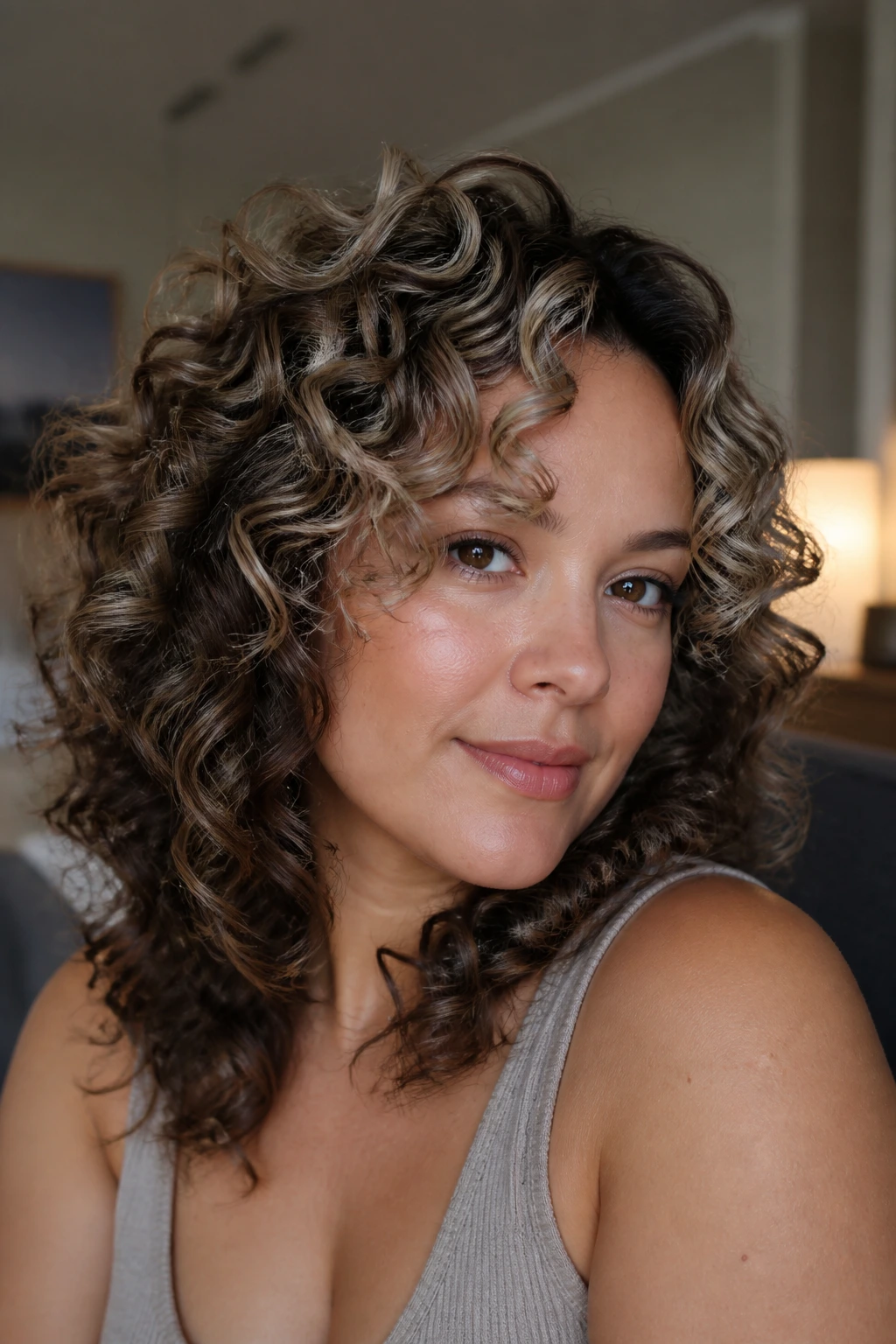
Curly hair needs its own logic. A round face with curls can look wider if the highlights are placed evenly all the way around, because the light keeps repeating in every direction. That’s why ash brown dimension works better when it’s concentrated on the upper layers, the front spirals, and a few vertical outer pieces.
The deeper underlayer keeps the silhouette from ballooning. The lighter top curls catch the light and create lift where the eye should travel first. I like cool brown or mushroom brown on curls because it softens the pattern instead of making every coil shout.
Do not place all the brightness at the exact cheek level. That is the trap. If the face is round and the curl is full, the cheek area can already be the widest point. Keep the brightest curls a little higher or a little lower, and let the midsection stay smoky. That one tweak changes the whole balance.
15. Razored Crop With Fine Ash Streaks
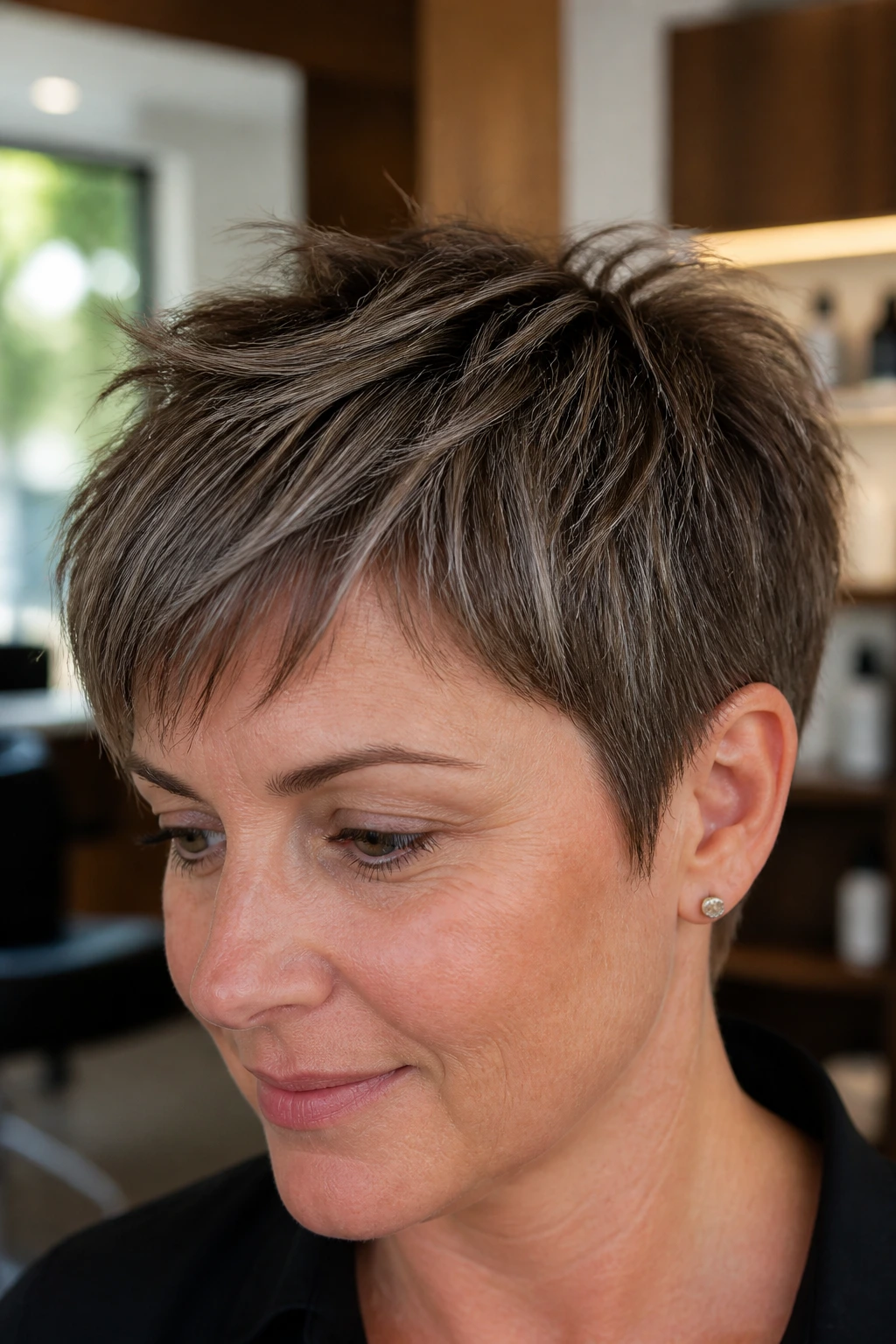
Short hair on a round face gets unfairly dismissed. It can look excellent when the cut has texture and the color supports the shape. A razored crop with fine ash streaks adds lift at the top and keeps the sides from feeling too boxy.
The streaks should follow the direction of the cut, not sit on top of it like decoration. Think thin, broken lines that move with the razored pieces. If the crop has a longer fringe or top section, a few cooler ash lights through that area can create height and draw the eye upward, which is the whole game with a round face.
What to Avoid
- Wide, chunky streaks through the sides
- One solid bright panel at the temples
- Heavy lightness across a blunt fringe
This look is sharp when it’s done well. It’s also unforgiving when it isn’t. A good cut matters here. So does restraint with the color.
16. Collarbone Lob With Bright Face-Frame Pieces
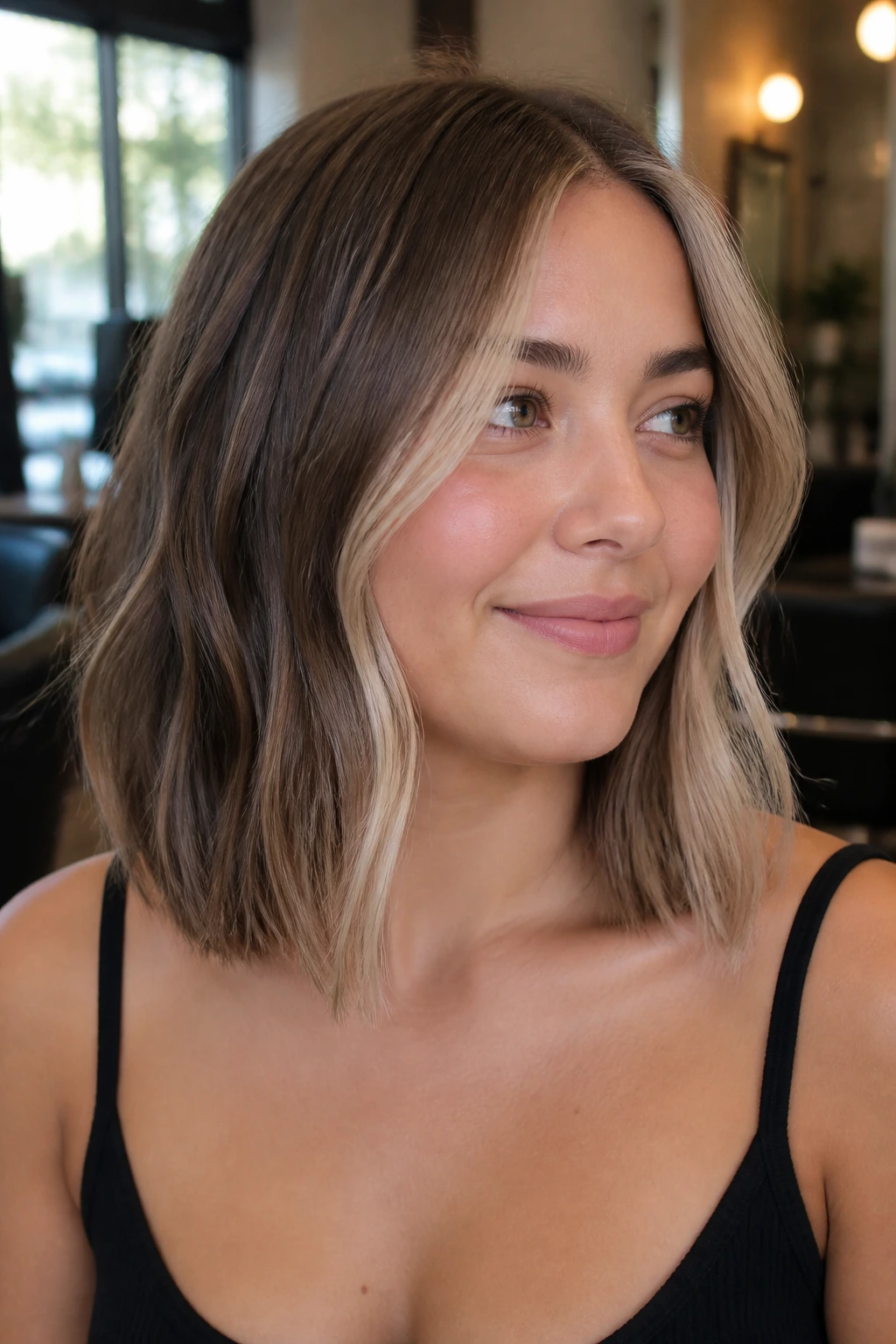
Not every round face needs a lot of color all over. Sometimes two bright face-frame pieces and a darker, cooler body of hair are enough. On a collarbone lob, that kind of controlled ash brown highlight placement gives structure without turning the whole head into a light show.
The front pieces should begin just under the cheekbone and stop around the collarbone or a touch below. That length matters. If the highlight ends right at the widest part of the face, it can make the cheeks look broader. Stretch it lower, and the eye follows the line down instead.
I like this version when someone wants a visible change but doesn’t want high upkeep. The face frame gives the style its energy. The rest of the hair stays grounded and easy to wear. You can curl it, air-dry it, or blow it smooth. It still holds up.
17. Underlayer Lowlights That Add Shape from Below
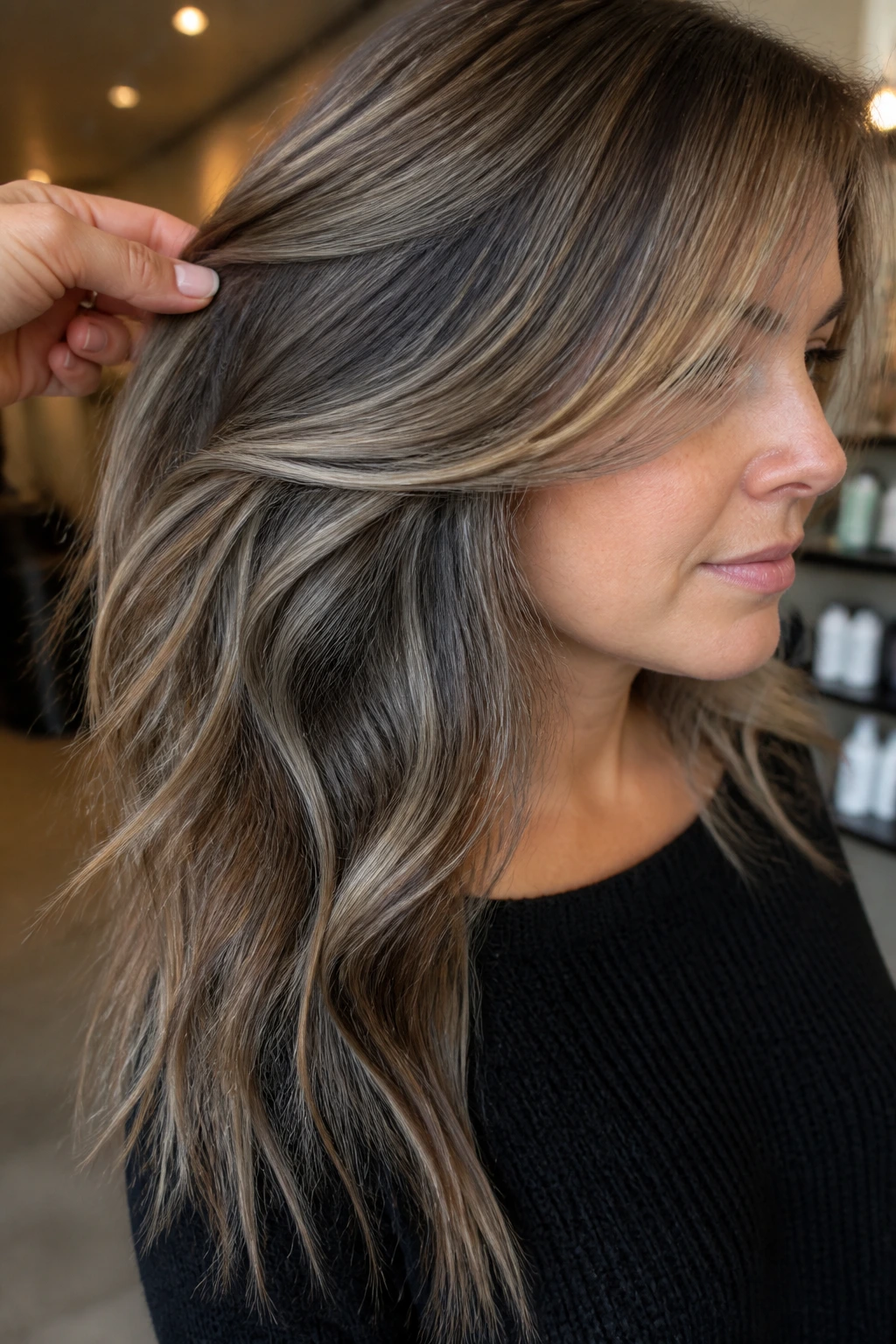
Underlayer lowlights are underrated. While everyone chases brightness, a round face often benefits from shadow at the bottom and around the inner sections of the hair. Those deeper pieces create the illusion of a narrower outline, especially on thick or fluffy hair.
The best underlayer work uses a cool brown that sits one to two levels darker than the surface. You’re not going for black streaks hiding under the hair. You want a soft darkness that makes the top pieces stand out a little more. That contrast gives shape to the haircut, and shape is what keeps the face from feeling too full.
This is a good choice if your highlights already feel a little too bright. A few deeper ribbons underneath can calm everything down fast. It’s a fix I reach for more than people expect, because once the balance is right, the face looks more defined without anyone knowing why.
18. Micro-Babylights for Fine Hair That Needs Soft Lift
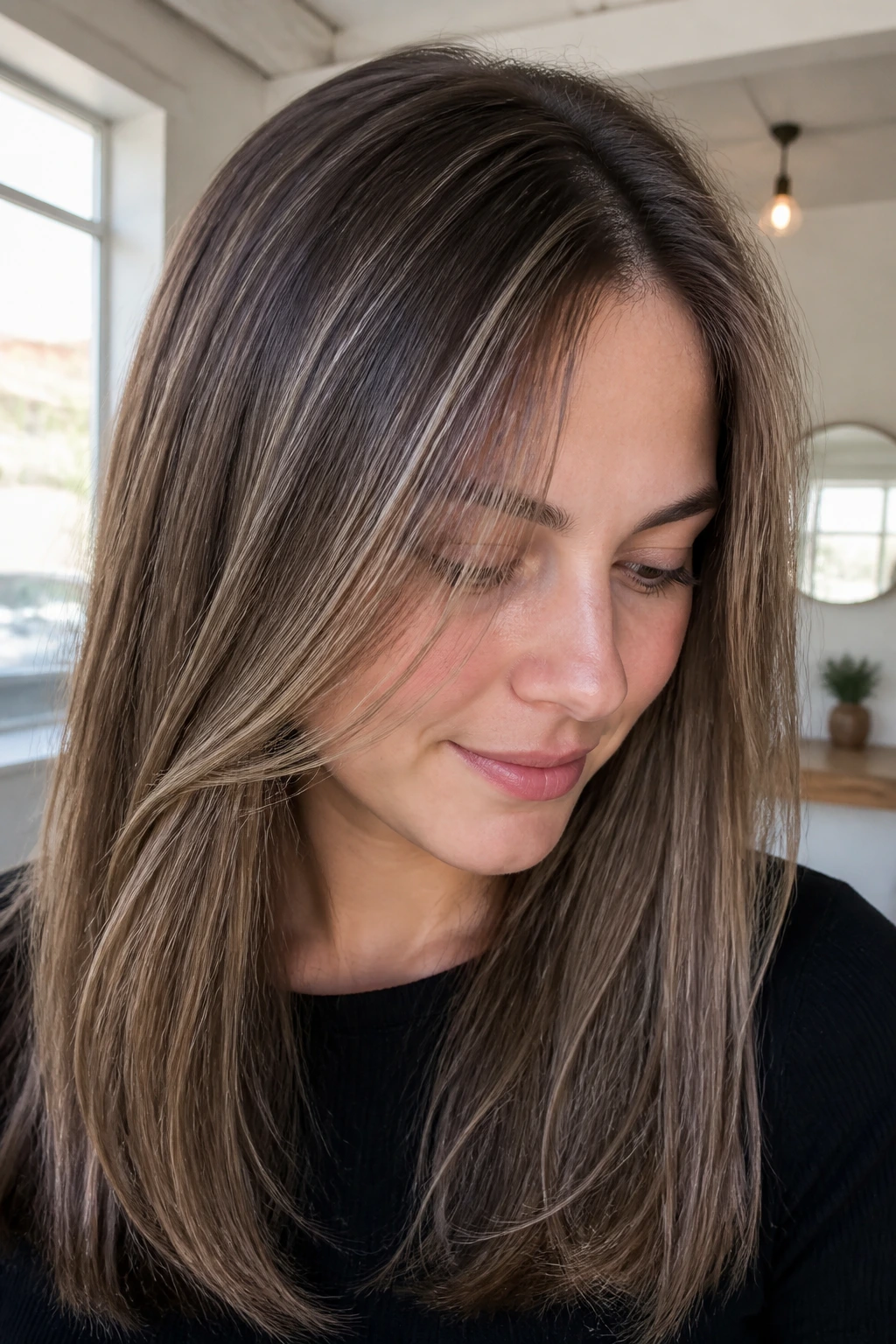
Fine hair can look stripey fast, and round faces do not need more visual width. That’s why micro-babylights are one of the safest, smartest choices. The light pieces are so fine that they blend into the base and create a soft veil instead of obvious streaks.
How to Ask for It
- Request very fine weaves through the crown and front
- Keep the ash brown tone close to your natural level
- Ask for more pieces near the top than the sides
- Leave the root soft so the highlights don’t feel blocky
The result is gentle lift, not drama. Good drama is nice, but not every cut needs it. On fine hair, tiny highlights create the illusion of density and dimension without crowding the face. They also grow out in a calmer way, which matters if you like low maintenance.
This style is especially good if you wear your hair straight or slightly bent. Big curls can swallow the detail. Fine, glossy movement lets it show.
19. S-Wave Ribbons on Thick Hair
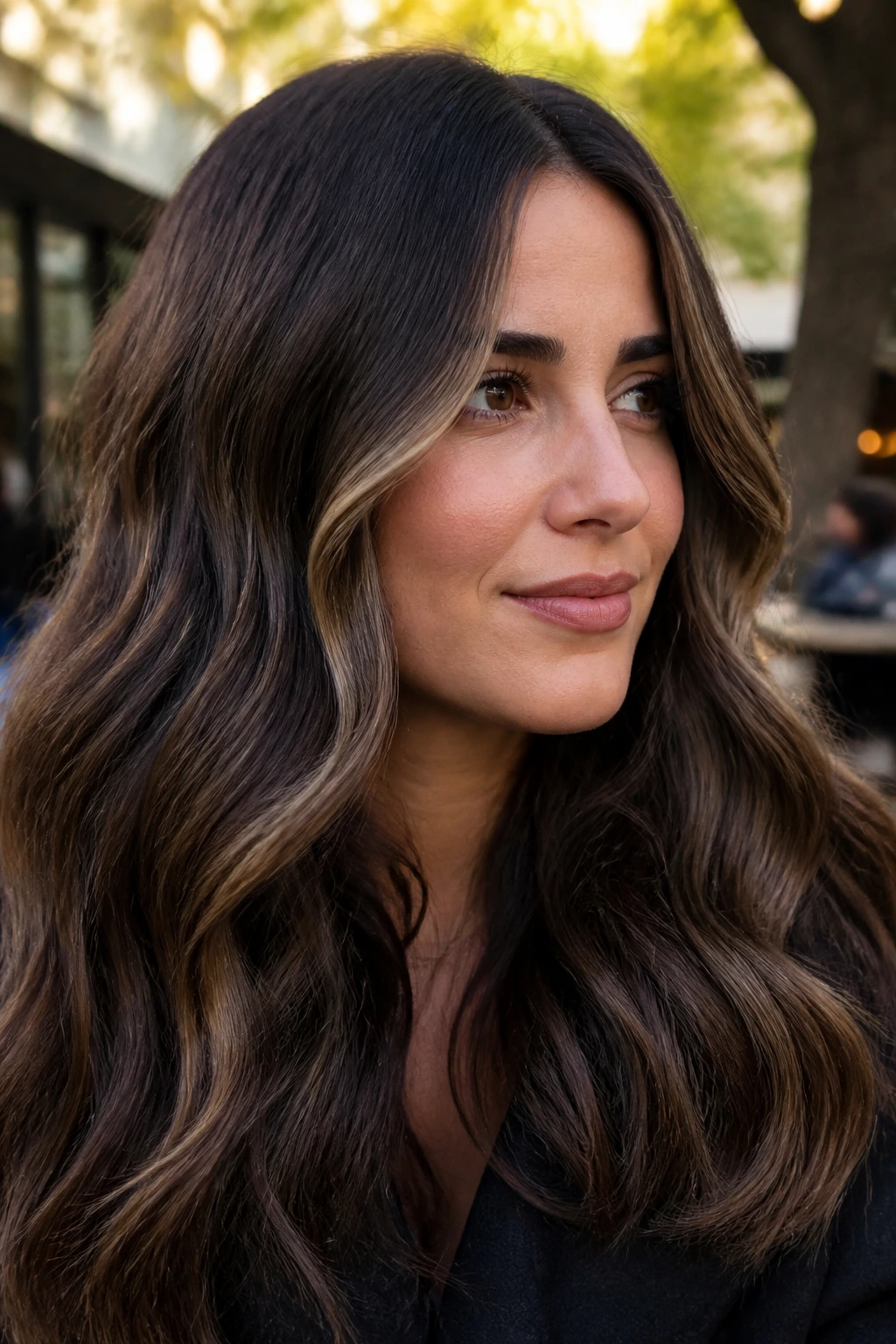
Thick hair can handle more structure, but it still needs the color placed with care. S-wave ribbons in ash brown give thick strands a broken, flowing line that stops the hair from reading as one heavy mass. On a round face, that broken line is gold.
What the S-Curve Does
The bend creates pockets of light and dark, so the eye keeps moving instead of landing on one broad area. That means the face feels less wide. It also helps thick hair lie in a more controlled shape, especially around the sides.
- Use a larger iron or a flat iron bend for soft S-waves
- Keep ribbons thin near the face and a little fuller through the lower lengths
- Add a cool gloss if the ash starts looking dull after a few washes
This is one of my favorite combinations because it feels styled even when it isn’t overworked. The color and the wave do half the shaping for you. Nice when hair has a mind of its own.
20. Muted Caramel-Ash Brunette Blend
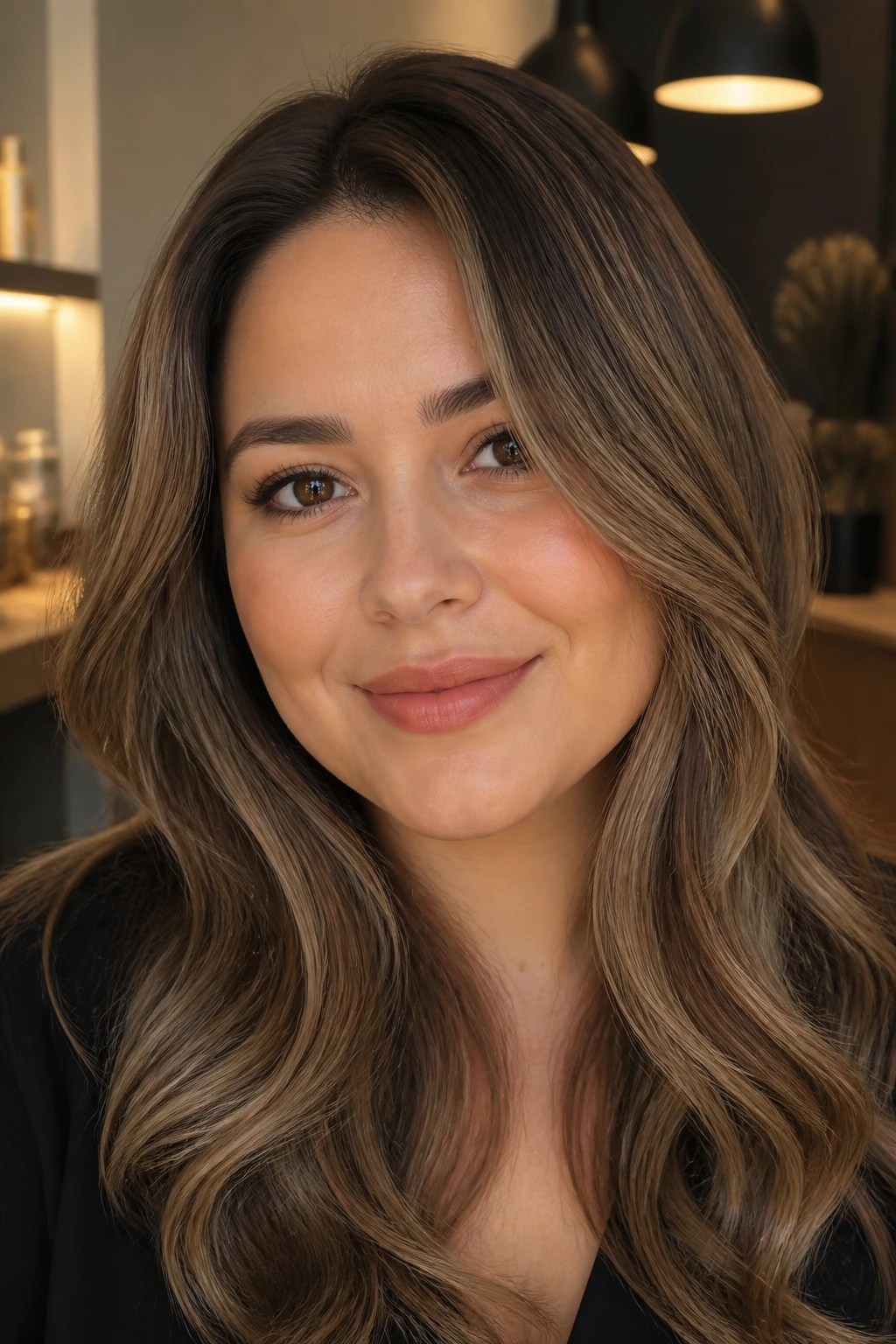
Pure ash brown isn’t the only answer. Sometimes a muted caramel base with ash overtones gives a round face more softness and keeps the hair from looking flat. That small touch of warmth can make the highlight pattern feel more natural, especially on deeper brunettes.
The trick is keeping the caramel muted. You do not want shiny orange ribbons drifting through the hair. You want beige-caramel pieces cooled down with ash, so the warmth is there but behaves itself. That blend is flattering because it gives depth without harsh contrast.
This is a better fit for people whose skin looks washed out by very cool color. The warmth lifts the complexion, and the ash keeps the tone from going brassy. It’s a compromise, sure, but a smart one. I’d take a believable brown over a cold, flat one any day.
21. Platinum-Tinged Ash Accents for Bold Contrast
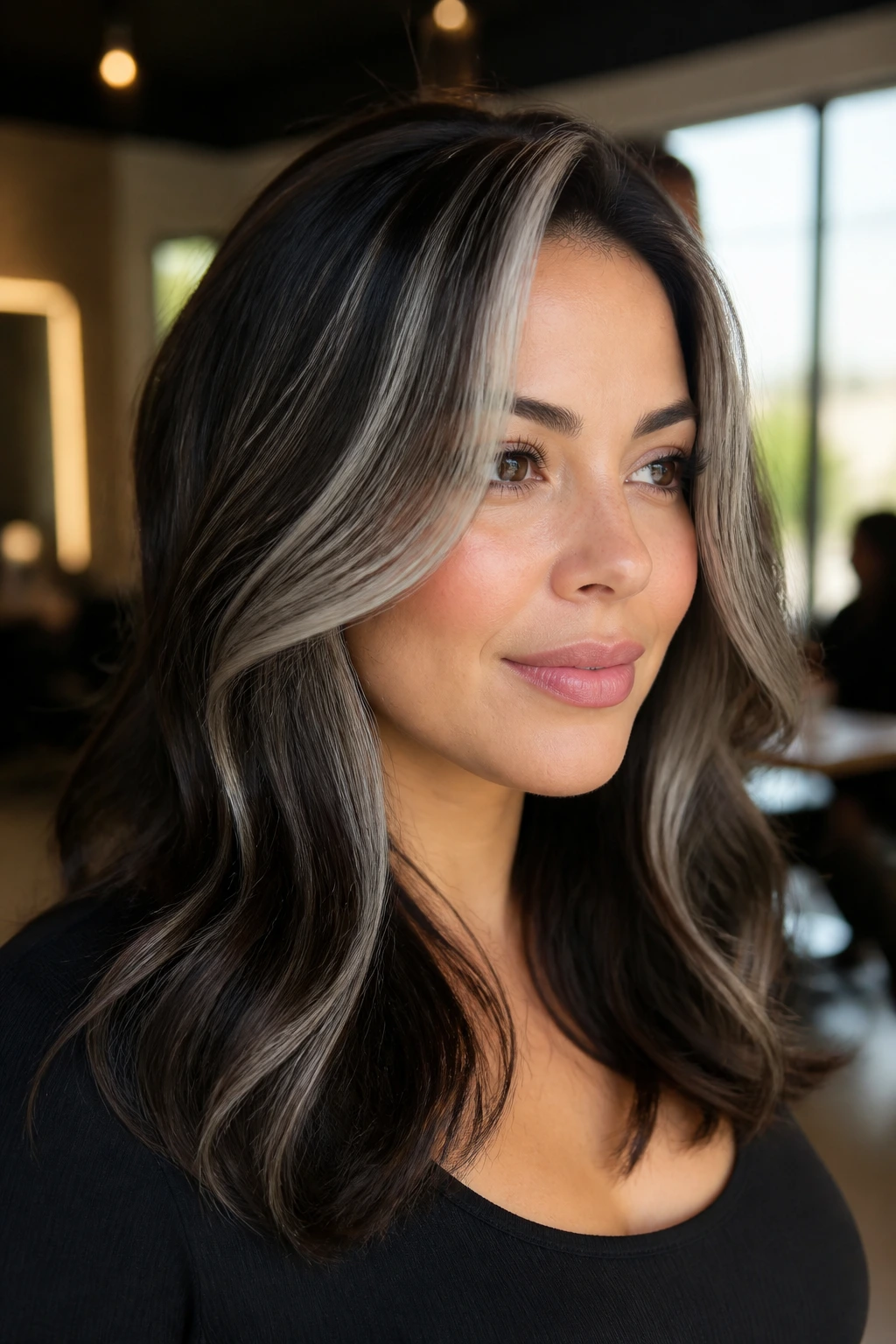
If you like a little edge, tiny platinum-tinged ash accents can sharpen a round face more than people expect. The key is to keep them small and strategic. A few brighter pieces around the top and just inside the face frame can create lift, but too many and the face starts to look wider instead of narrower.
This style needs balance. The darker base has to stay present, especially around the sides and lower lengths, or the bright accents will take over. I’d avoid spreading them evenly across the cheeks. That’s the wrong place. Put them higher, near the part and upper front, then let the rest of the hair stay smoky and deep.
It’s a bolder look, and not everyone wants that. Fair enough. But if you like contrast and your haircut has enough length to support it, this can look clean, sharp, and a little bit cool in the best sense of the word.
22. Long-Layer Cascade With Diffused Ends
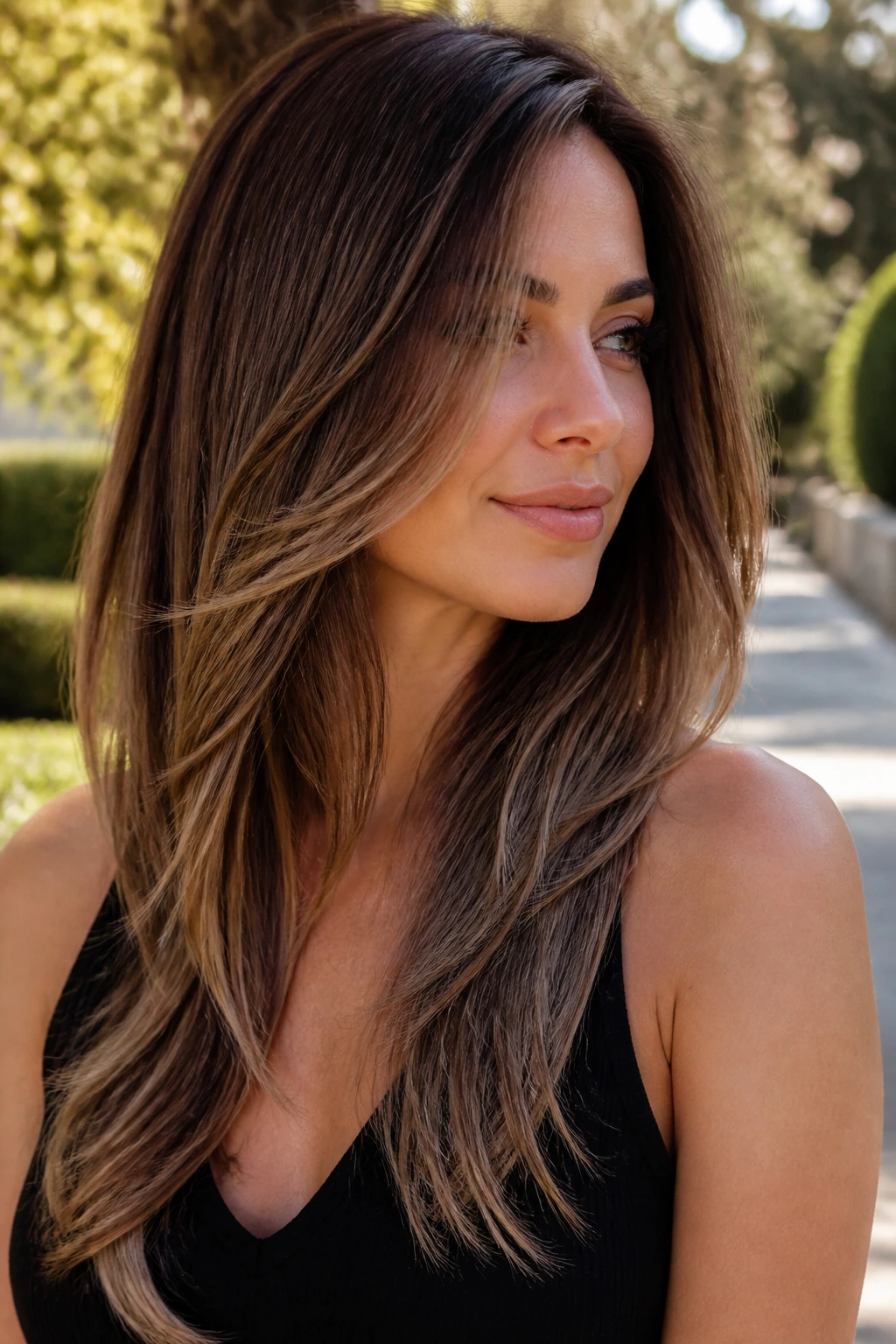
Long layers give a round face a built-in advantage because they stretch the silhouette downward. Add diffused ash brown ends, and the hair stops looking heavy at the bottom. It starts looking fluid. That’s the thing I’d point most people toward if they want one style that feels safest to wear.
The color should stay soft through the mids and get a little lighter only at the ends, where the layers already create movement. Keep the face frame understated. No big bright stripe. The cascade should do the work, not the highlight yelling for attention at cheek level.
If you want the shortest version of my opinion, here it is: soft ash brown highlights that stay off the widest part of the face are almost always kinder to a round shape than thick, centered brightness. Start there if you’re unsure. Then adjust upward or downward in contrast depending on how bold you like your color, because that part is easy to personalize once the placement is right.
