



Brown hair and violet highlights have a useful little trick: the color can look soft and expensive in one light, then turn moody and graphic in another. The difference comes down to tone, placement, and how much lift the hair got before the dye went on.
That’s why some violet streaks on brown hair look polished, while others look like they were dropped in with a marker. The same purple can behave like three different colors once it lands on chestnut, mocha, or espresso hair, and that’s the part people miss.
I’ve always thought violet is one of the smartest color choices for brunettes. It can cool down warmth, give darker hair some movement, and still feel a little daring without tipping into costume territory. The softer lilac pieces fade fast but leave a pretty haze; the deeper plum and amethyst shades hang on longer and keep their shape better between salon visits.
So the real question is not whether violet works on brown hair. It does. The real question is which version fits your base color, your haircut, and the amount of upkeep you’re willing to live with. Start there, and the rest gets a lot easier.
1. Fine Violet Ribbons on Chocolate Brown Hair
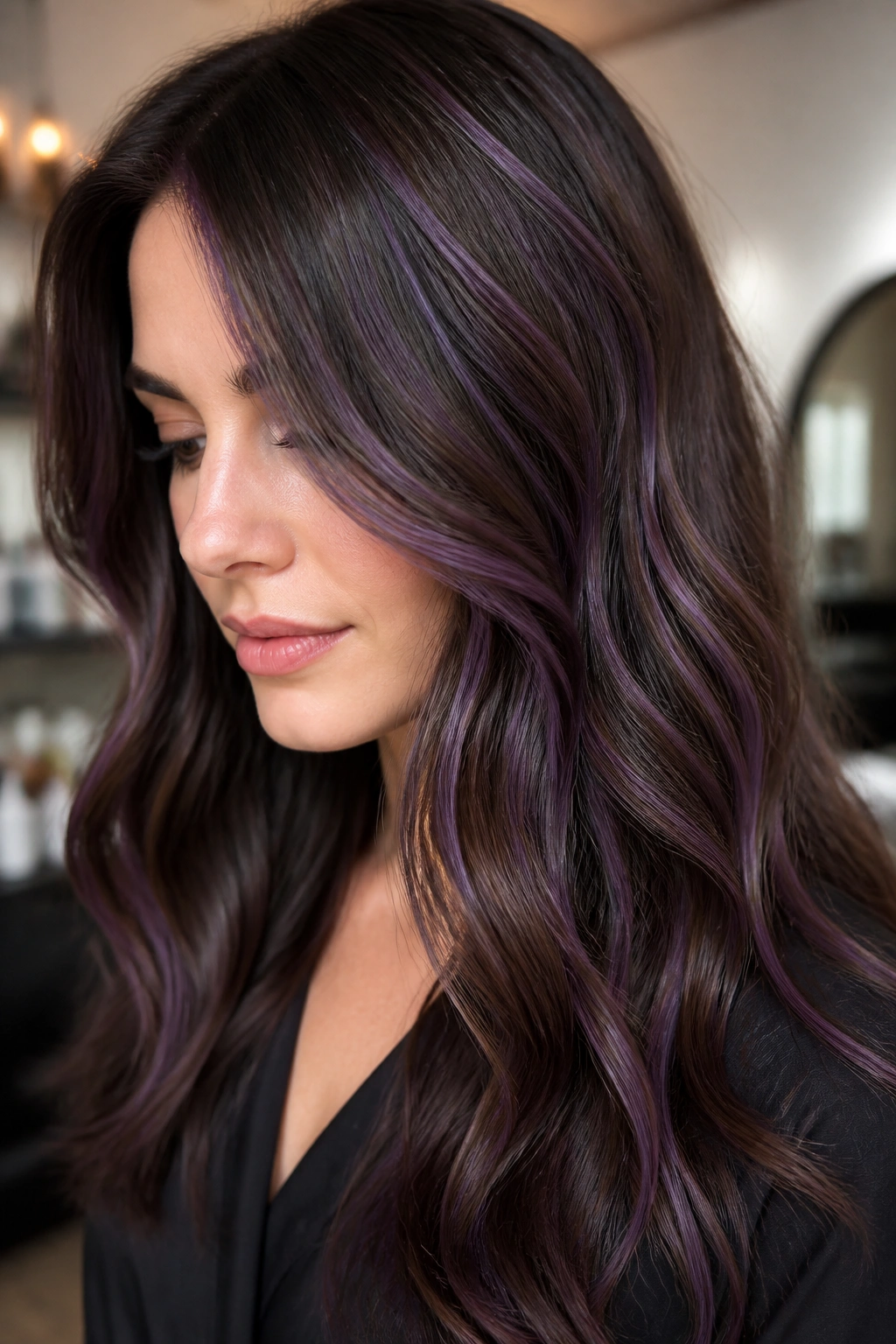
Tiny pieces. Big payoff.
Fine violet ribbons are the gentlest way to bring color into brown hair, and that is exactly why they work so well. The brown base stays visible, the contrast stays controlled, and the violet shows up as movement instead of a loud stripe. On chocolate brown hair, the shade often reads like blackberry in dim light and a little brighter at the bends.
Why it works
Thin placement keeps the look airy, not blocky. The hair moves, and the color moves with it.
- Best on medium to long hair where the ribbons can catch different angles
- Usually placed 1/8 to 1/4 inch apart for a soft weave
- Works especially well if your brown has a natural red or gold cast
- Easier to grow out than chunky streaks
Tip: Ask for a few slightly denser pieces around the face and a lighter scatter through the back so the color doesn’t look too even.
2. Peekaboo Violet Underlayers
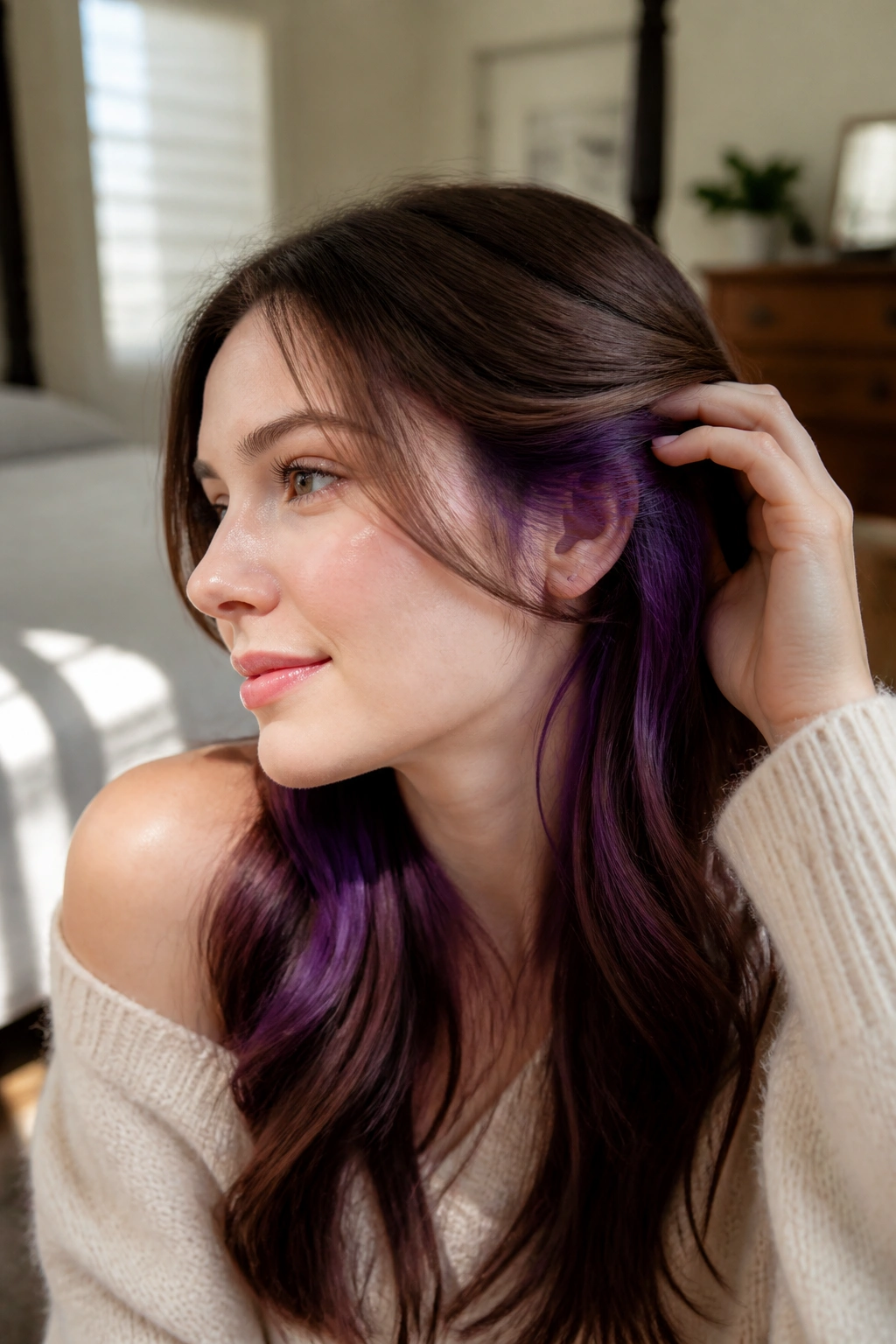
Want the color to show only when the hair swings? This is the one.
Peekaboo violet sits under the top layers, so the effect feels almost secret until you tuck your hair behind your ear or put it in a half-up style. That makes it a smart choice if you want something playful but not loud all day long. It also helps if you work with a strict dress code and still want a little personality under the surface.
The best part is the contrast. On brown hair, the hidden violet can look deeper and richer than it would on the outer layer, especially if the color is placed under a blunt bob or a shoulder-length cut. The top layer acts like a veil, so the whole style feels controlled rather than shouty. It’s color with a little manners.
If you like hair that changes when you move, this is where violet gets fun. One moment it’s a normal brunette look, the next it flashes plum under the light. No drama. Just enough.
3. Face-Framing Violet Money Piece on Brown Hair
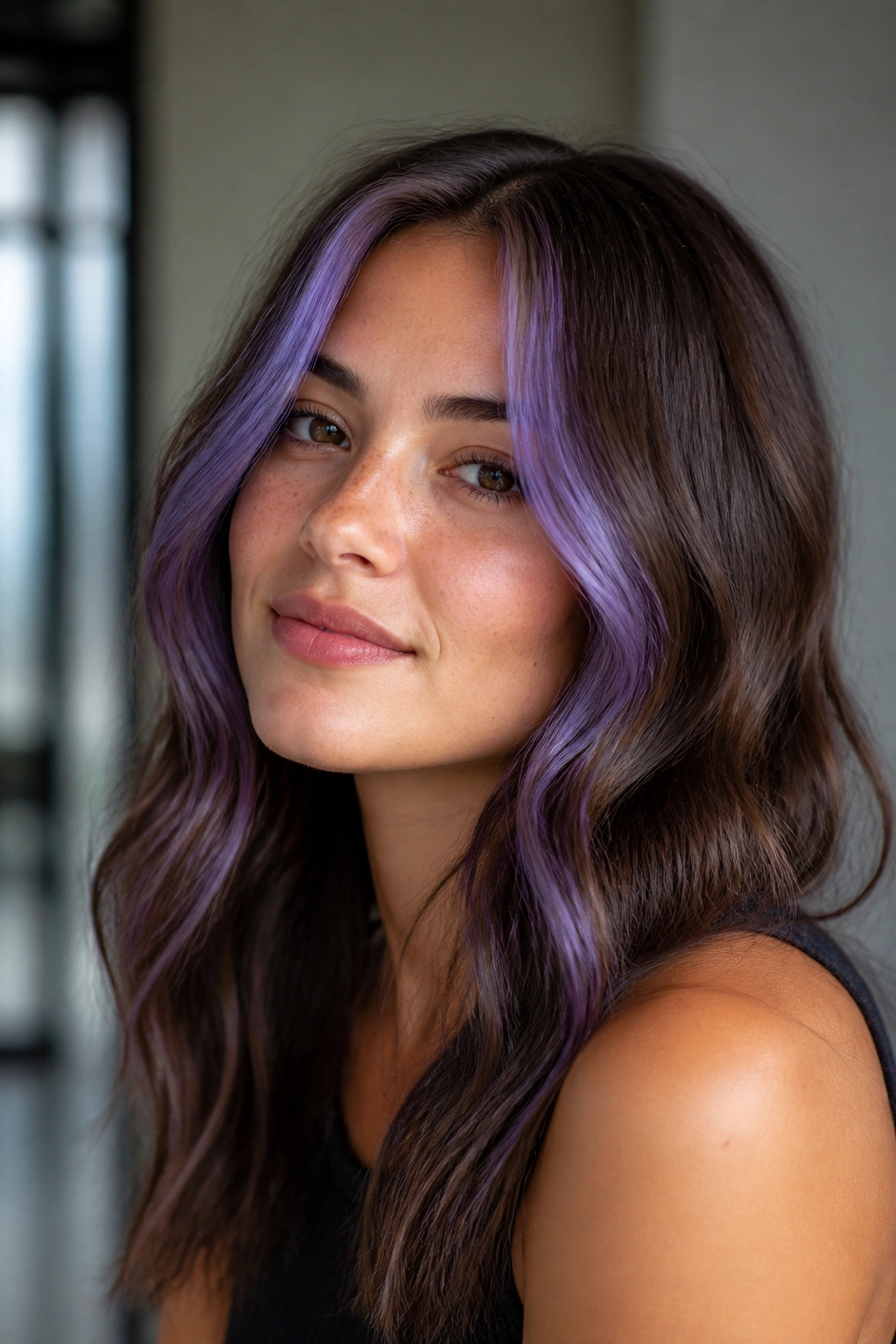
A violet money piece changes the whole face fast.
If you want the color to register right away, place it near the front hairline, usually in pieces about 1 to 2 inches wide. That strip of violet pulls attention toward the eyes and cheekbones, and it can make the rest of the brown hair look richer by contrast. On warmer brunettes, plum or berry-violet tends to look smoother than icy lilac.
How to ask for it
Tell your colorist you want two brighter face-framing pieces that blend into the rest of the hair, not a hard stripe. If you wear your hair parted in the middle, keep both sides even. If you side-part, ask for a slightly heavier piece on the heavier side so the shape doesn’t look lopsided.
The smartest thing about a money piece is that it gives you impact without making the whole head high maintenance. You can keep the rest of the violet subtle, then let the front pieces do the talking. That’s a clean move for people who want color, but don’t want to babysit every strand.
4. Plum-Violet Balayage Through Brown Hair
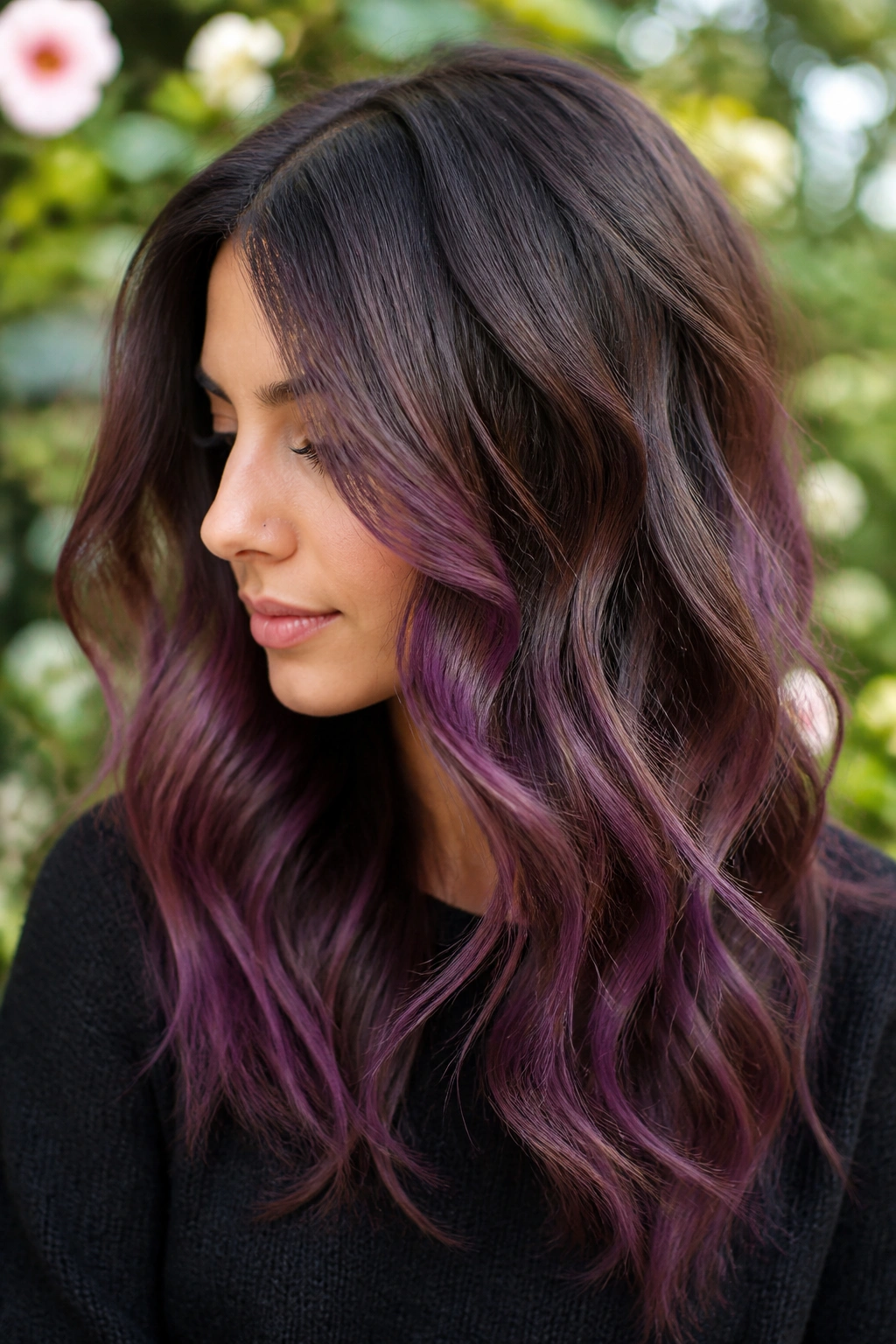
If you like seeing color in sunlight more than in a mirror selfie, balayage is the move.
Plum-violet balayage has a painted, feathered look that blends into brown hair instead of sitting on top of it. The color usually starts softer near the roots and gets stronger through the mid-lengths and ends, which helps the whole thing feel grown-in from day one. On chocolate or chestnut brown, plum can look almost wine-dark until it catches bright light.
Placement that matters
- Start the lightest pieces around the cheekbone or jawline
- Keep the root area darker for a softer grow-out
- Use wider hand-painted sections if the hair is thick
- Keep the ends a touch brighter, or the color can disappear on long hair
The reason I like plum-violet balayage is simple: it does not fight the haircut. Waves, bends, and layers make the color shift around, so even a modest amount of violet can look expensive and deliberate. Straight hair can wear it too, but the dimension really wakes up when there’s movement.
5. Smoky Violet on Espresso Brown Hair
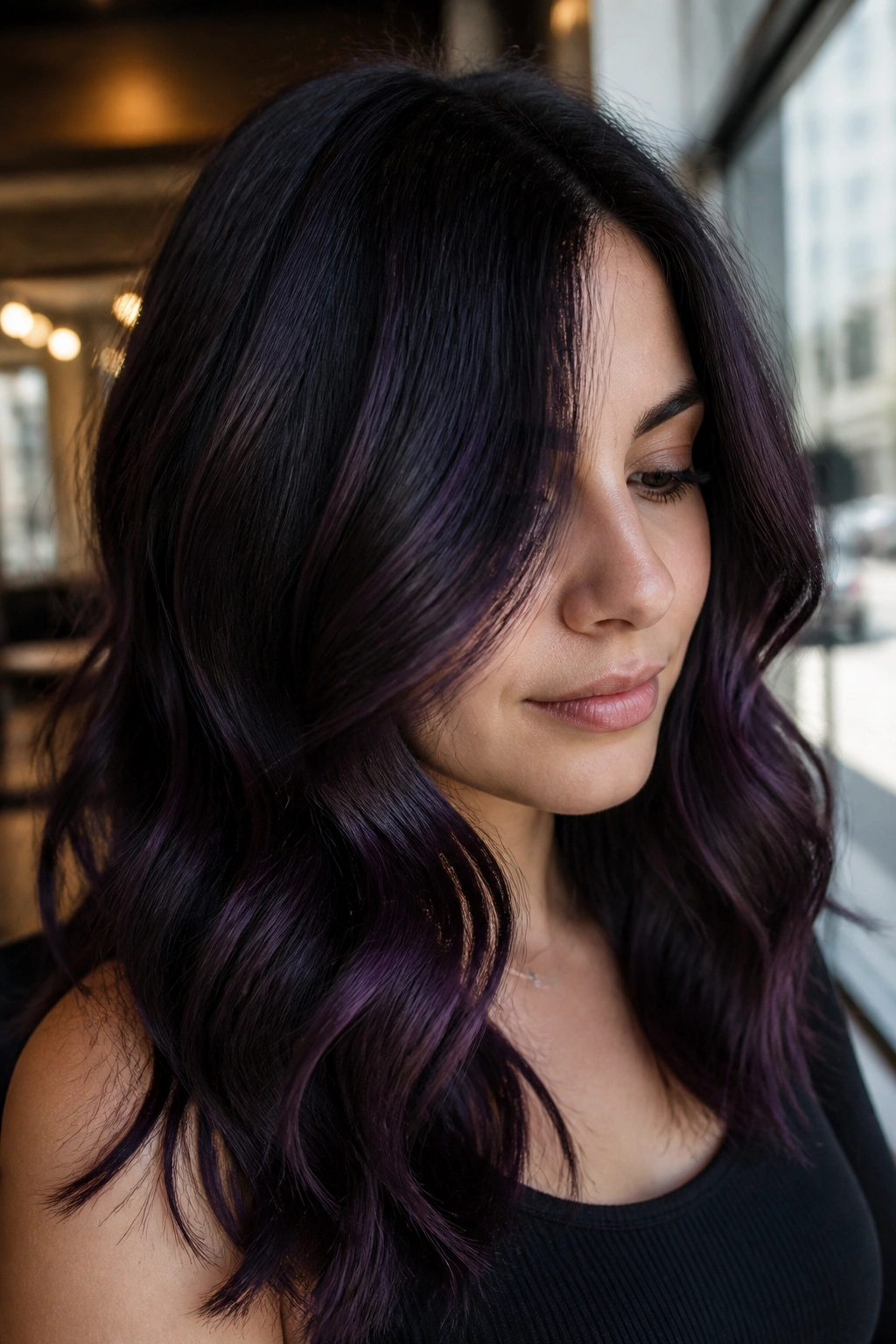
Smoky violet is the one I reach for when someone wants purple without the candy-shop tone.
On very dark brown hair, this shade sits close to the base and reads like a cool sheen first, color second. That matters. If the violet is too bright against espresso hair, it can look pasted on. Add a little smoke, a little gray, and the whole thing feels calmer, deeper, and more grown-up.
The finish is almost velvety. When the light hits, you get hints of blackberry, graphite, and muted plum instead of a flat purple block. It’s especially strong on layered cuts because every bend catches the tone a little differently. That slight shift is what keeps dark violet from feeling heavy.
This is not the shade for someone who wants everyone to know there’s purple in the room. It’s for the person who wants people to look twice.
6. Lilac Babylights on Light Brown Hair
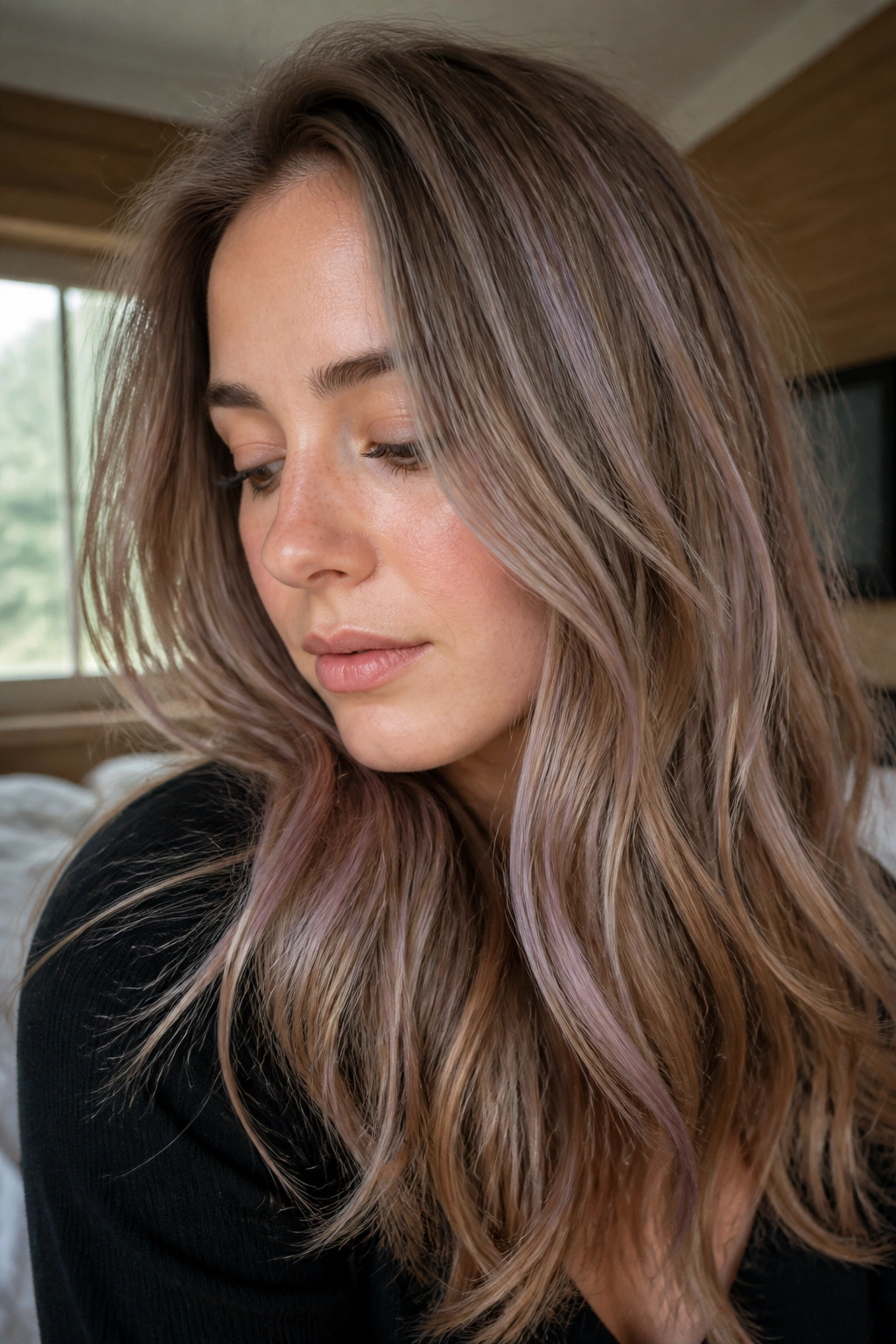
Unlike chunky streaks, babylights are about restraint.
Lilac babylights use very fine sections, often woven so thin they look almost dusted through the hair rather than painted in. On light brown hair, that gives you a soft pastel effect without a giant amount of contrast. The result is airy and pretty, which sounds vague, but in real life it means the hair still reads brown first and lilac second.
They’re also a smart choice if your hair is fine. Thick bands can overwhelm smaller strands fast, while babylights move with the cut and give the illusion of more texture. If the base is a lighter mocha or sandy brown, you usually get enough lift for the lilac to show without pushing the hair all the way into bright fashion color territory.
Best for people who hate obvious regrowth. The grow-out is gentle, and the color fades into a whisper instead of a hard line.
7. Amethyst Streaks in Long Layers
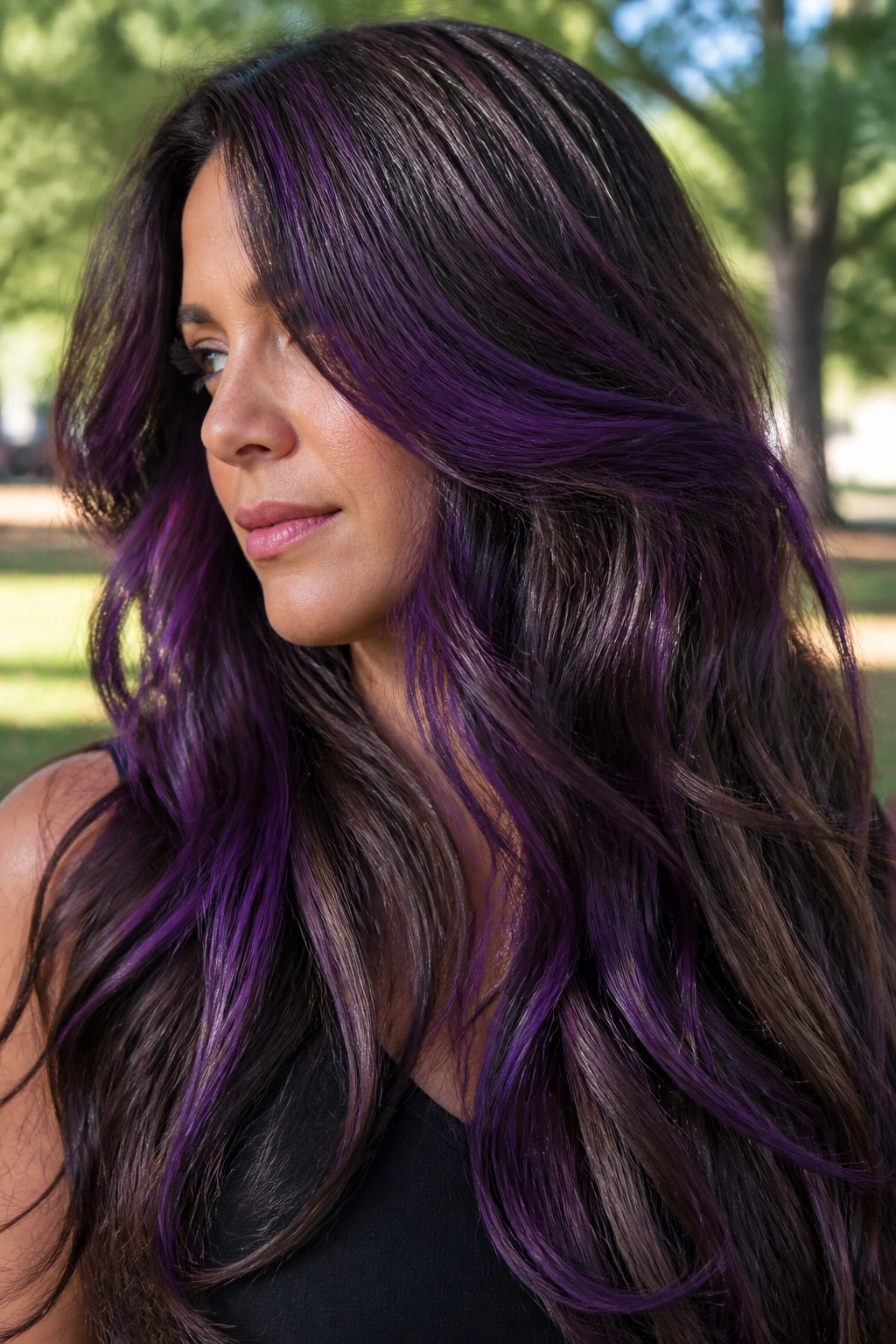
Long layers were made for streaks like this.
Amethyst is deeper and richer than lavender, so it holds up well inside longer cuts where the hair needs to keep some visual weight. A few well-placed streaks can run through the layers and bend with the movement instead of sitting in one stiff panel. On medium brown hair, that jewel tone can look especially good because it has enough depth to stay visible without screaming for attention.
Where to place them
- Through the outer layers for visible movement
- Around the crown if you wear your hair down a lot
- Underneath the top layer if you want a softer finish
- Concentrated near the ends if the haircut is heavily layered
The thing people miss with amethyst streaks is that they need room. Short, blunt cuts can make the color feel chopped up. Long layers give the violet space to breathe, and that makes the whole style feel more natural even when the shade is bold.
8. Violet Ombré Ends on Brunette Hair
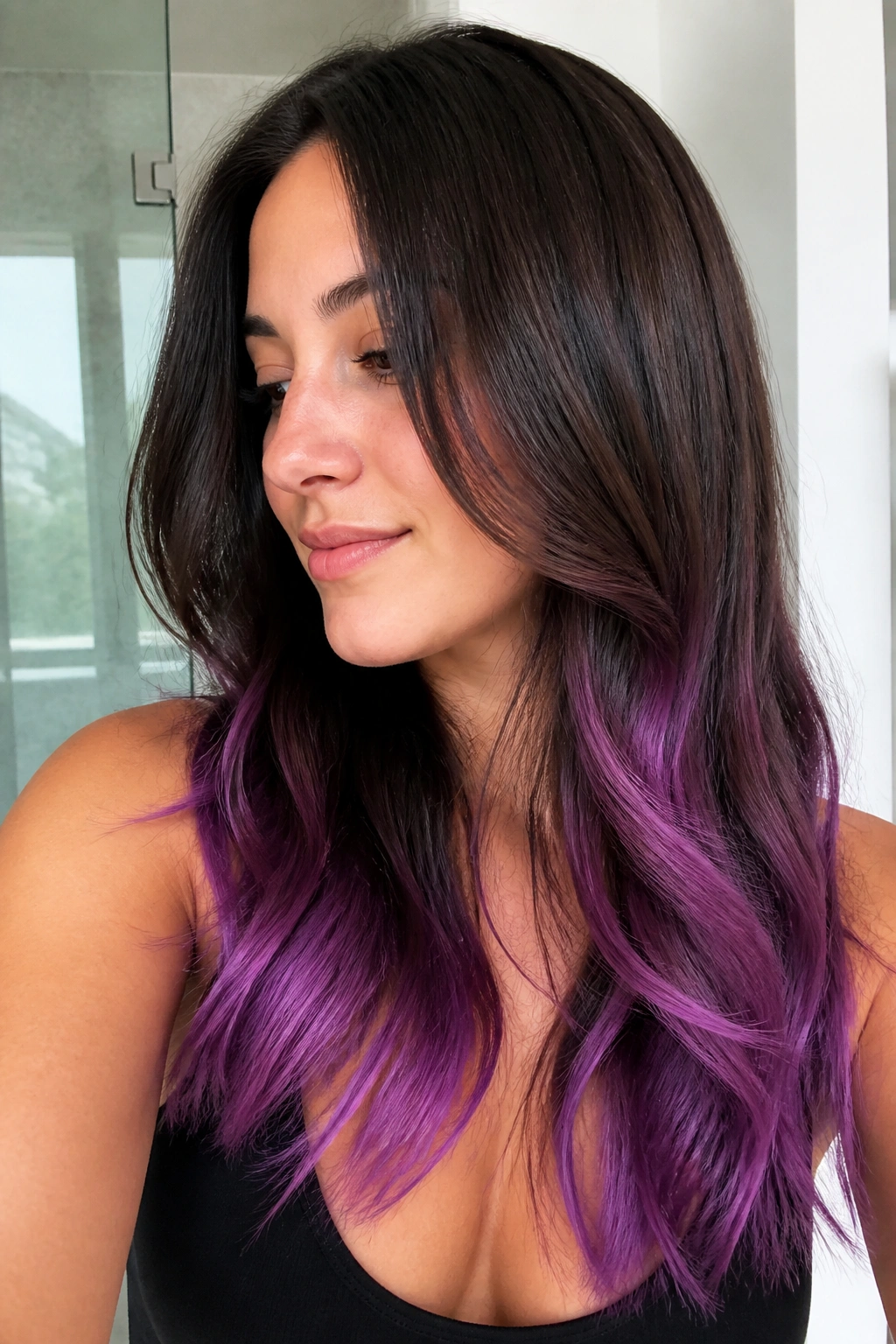
This is the easiest way to wear violet if you want to keep the roots calm.
Ombré lets the brown stay intact at the top while the violet gets stronger toward the ends. That gradient is useful because it gives the color a soft landing instead of a sudden switch. On darker brunettes, the violet often needs a little pre-lightening at the ends to really show, but once it’s there, the effect is clean and dramatic.
I like ombré for people who heat-style their hair a lot. The color is concentrated where the hair is already oldest and most weathered, so the root area stays low-maintenance while the ends carry the interest. You do want to keep those ends conditioned, though. Porous ends drink up color and lose it faster.
If you want a style that looks polished in a bun, in waves, and even half grown out, violet ombré is a strong bet.
9. Mulberry Highlights on Warm Brown Hair
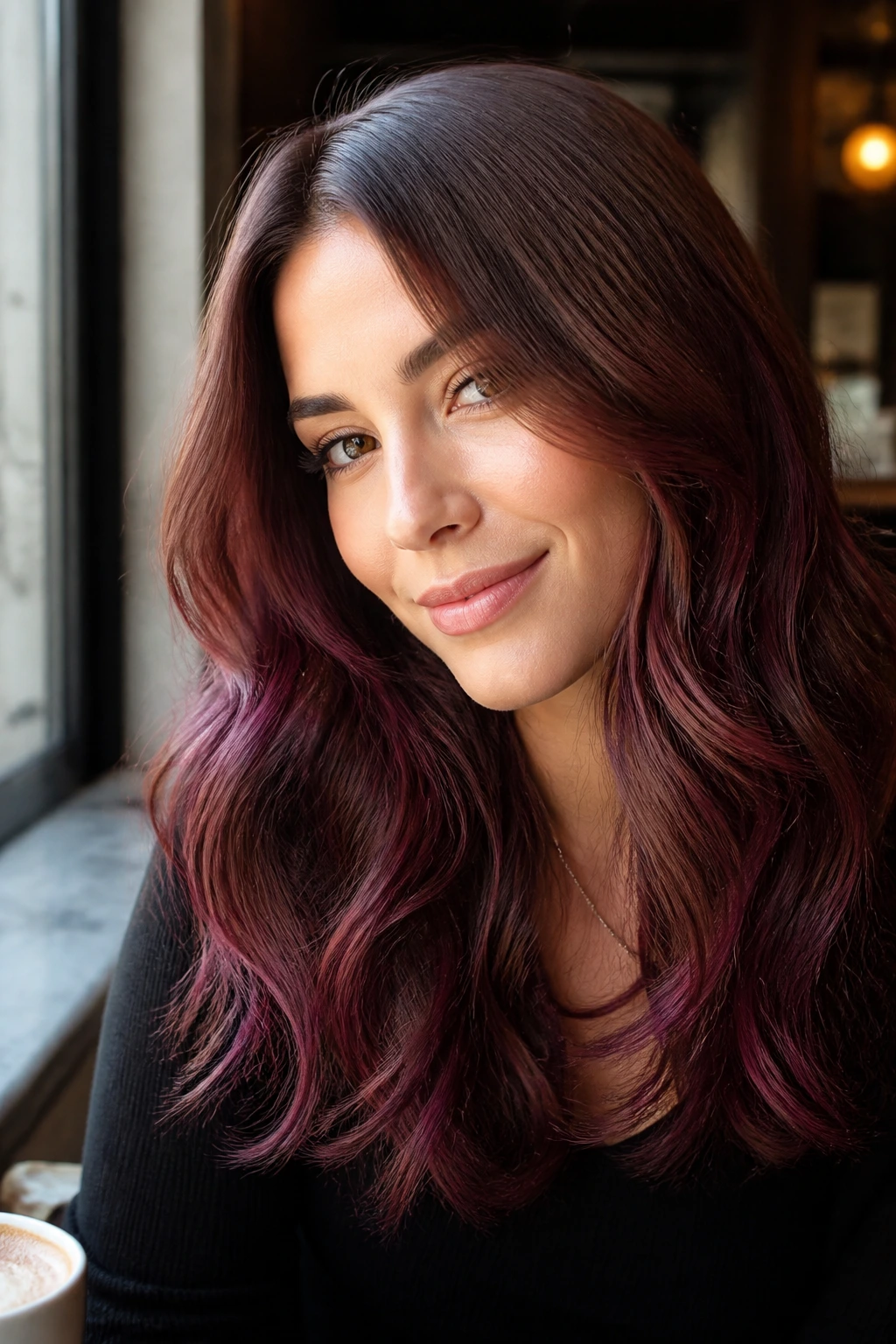
Why does mulberry often look better than true violet on golden brown hair?
Because warm brown bases can make pure violet go a little flat, while mulberry brings in enough berry-red to sit comfortably against the warmth. The color feels richer and less icy, which is useful if your hair already has caramel or chestnut tones. On warm brunettes, mulberry can look like a deep wine shade in shade and a fruity purple once the sun hits.
How to keep it from looking muddy
Choose a shade with some red in it, not a flat blue-purple. That tiny shift matters more than people expect.
If you like softer makeup tones and warmer clothes, mulberry is the easiest violet family to live with. It doesn’t fight gold jewelry, and it doesn’t demand a cold-toned wardrobe to make sense. A lot of purple shades need a clean, cool base. Mulberry is more forgiving.
10. Violet Peek-Through on Curls
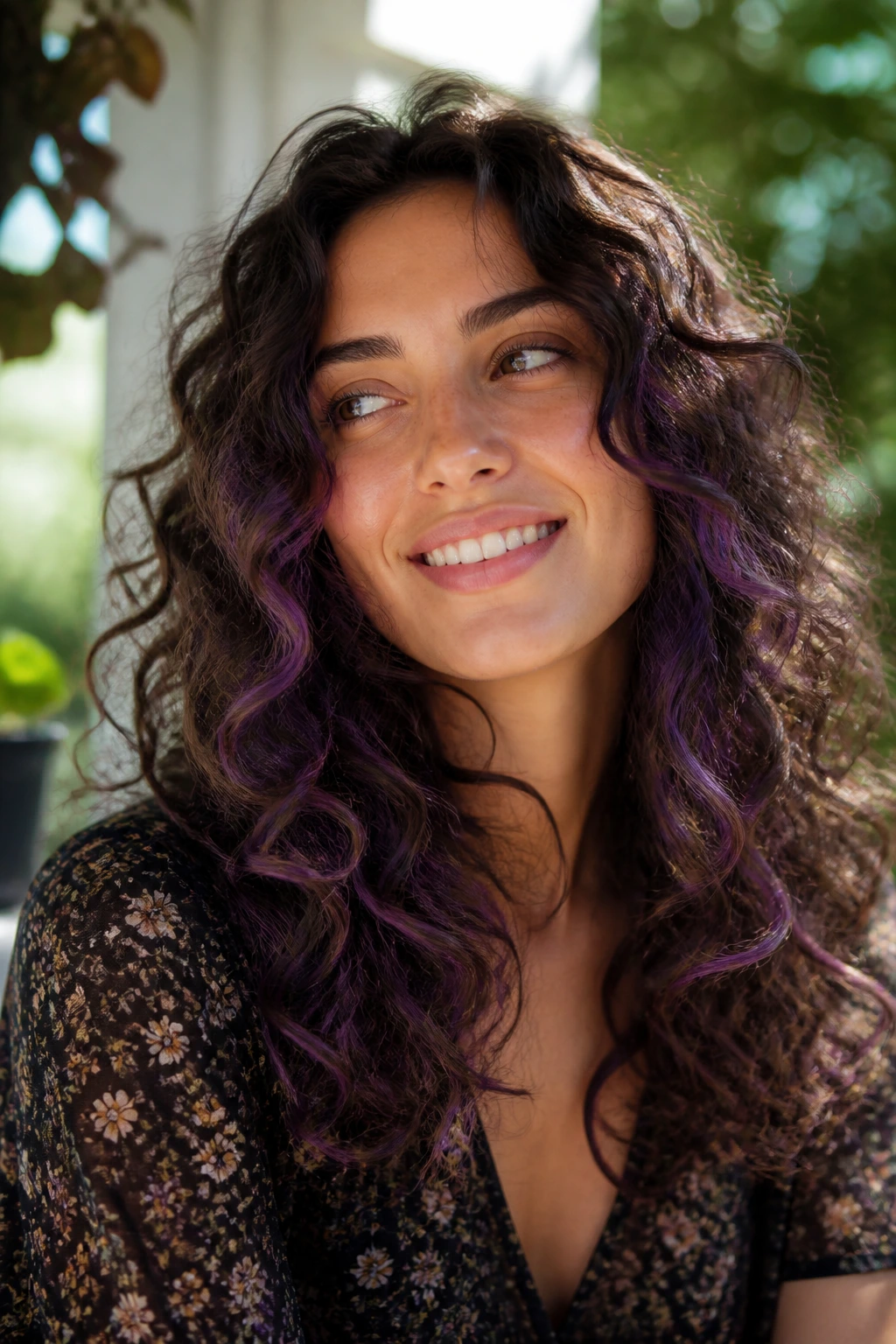
Curly hair hides color until it moves. That is the whole magic here.
With curls, violet highlights should be placed where the bend of the curl can show them off, not only on the very top layer. If the color sits in the wrong spot, it disappears into the pattern and looks patchy. Put the violet through the interior curves and a few face-framing pieces, and the whole head starts to shimmer when the curls separate.
This is one of those styles where too much perfection can be a problem. Curls want irregularity. A few thicker violet ribbons can work better than dozens of tiny ones because the curl pattern breaks them up naturally. The hair is doing half the design work for you.
If you wear your curls loose most days, the violet can feel playful without needing a full-head commitment. Tie it up, and the hidden pieces show off. Leave it down, and they peek through like they’re supposed to.
11. Cool Lavender Glaze Over Medium Brown Hair
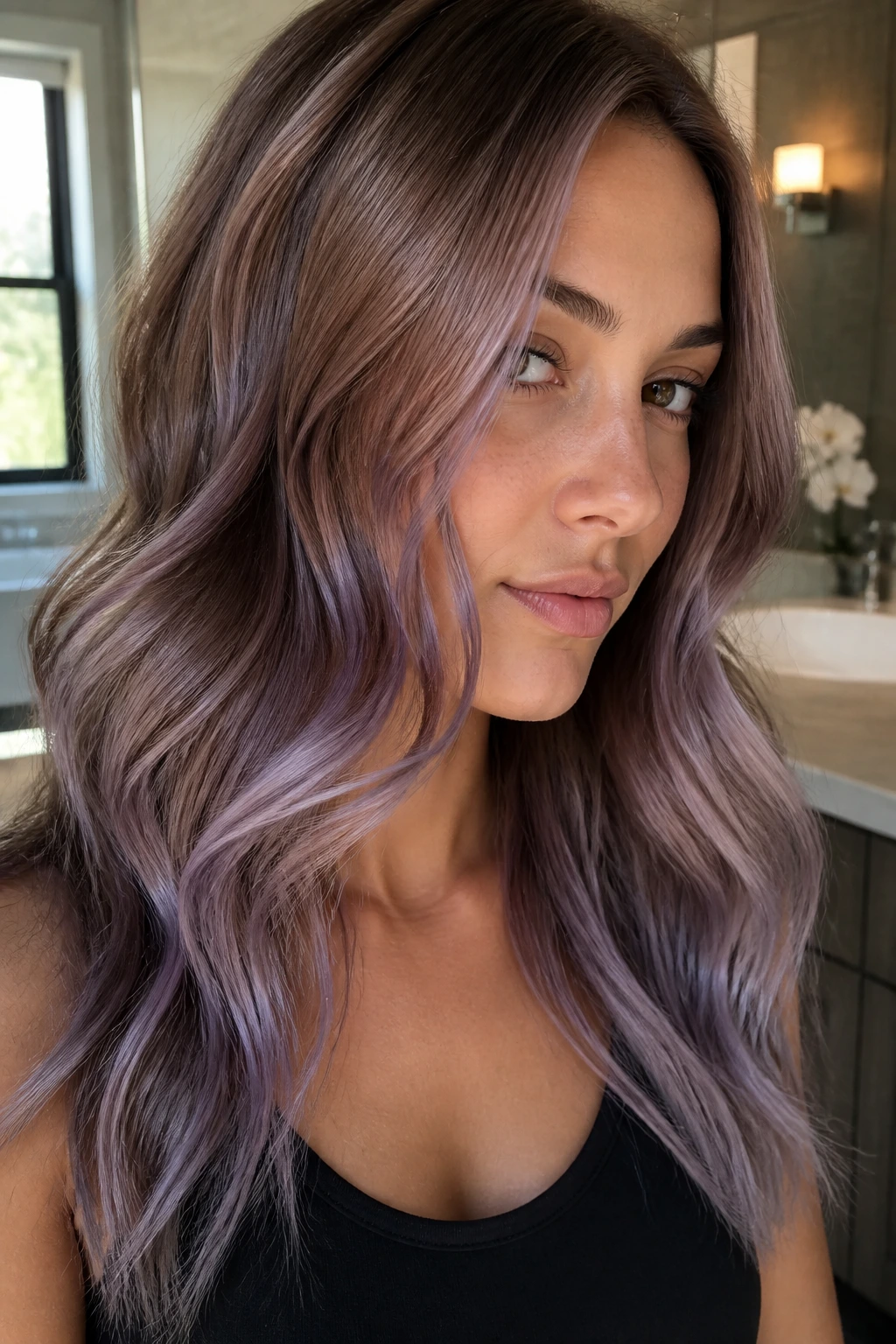
A lavender glaze is the closest thing to a soft filter for brown hair.
Instead of punching in strong purple, the glaze sits lightly over pre-lightened pieces and leaves a translucent finish. That’s what makes it feel airy. On medium brown hair, the result can look almost silver-lilac in the bright areas and more muted at the ends. It’s subtle, but not dull.
The best part is how the shade changes with texture. On straight hair, the lavender reads clean and smooth. On waves, it breaks into little flashes of cool color. If the base brown has gold in it, the glaze can calm it down without wiping out the warmth completely. You still get depth. You just get a cooler edge to it.
I like this look for people who want violet but do not want to explain their hair to strangers every time they leave the house.
12. Jewel-Tone Violet Panels for Thick Hair
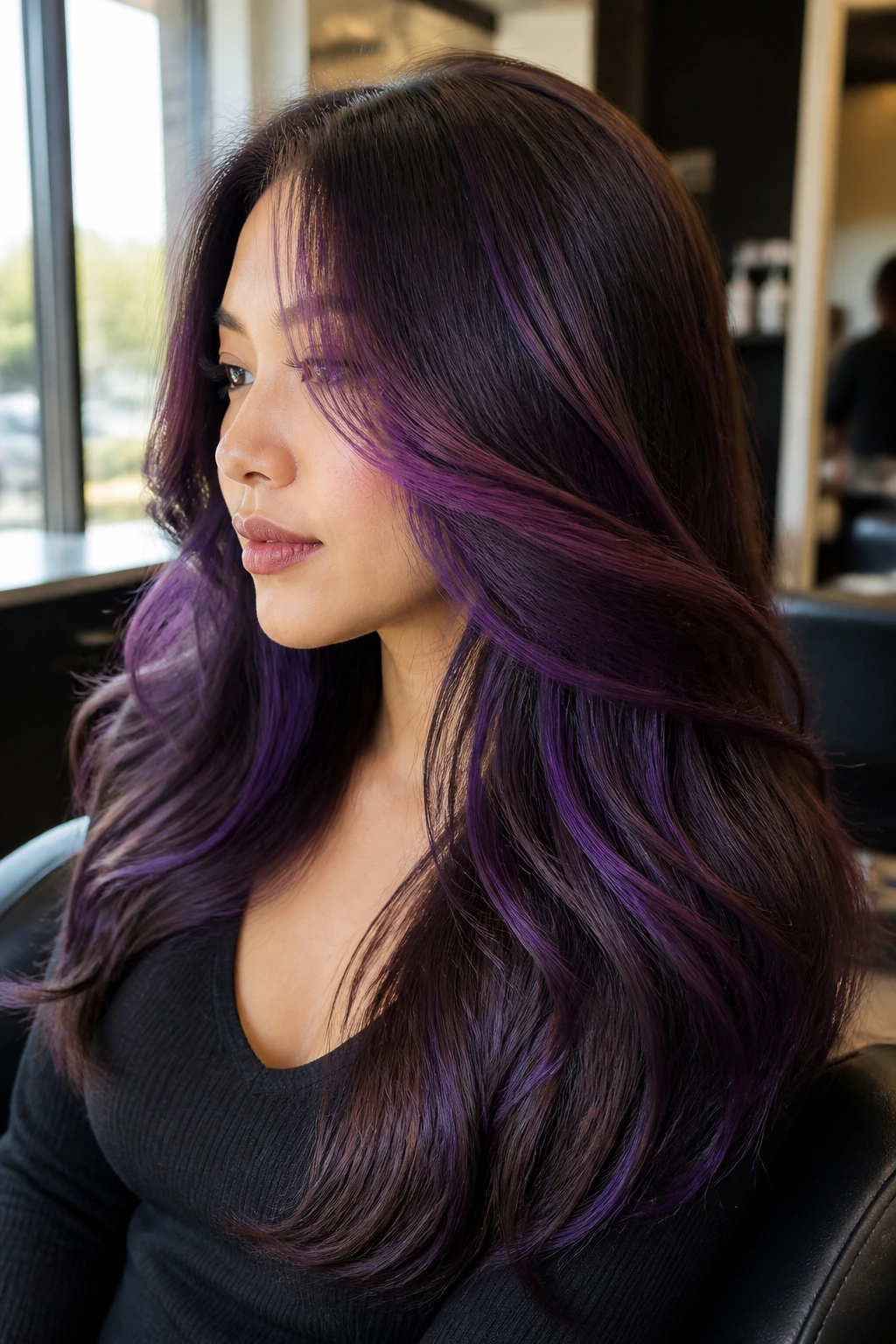
Thick hair can carry more color without getting messy.
Unlike babylights, which rely on delicacy, jewel-tone violet panels can be broader and still look balanced. On thick brunette hair, a half-inch to one-inch section can hold enough tone to stay visible between layers and through movement. That means you can use a richer amethyst or royal-violet shade and still keep the style organized.
The trick is spacing. Put the panels too close together and the hair starts to look crowded. Space them out, and the brown base becomes part of the design. That contrast is what gives thick hair some shape, especially if the cut is one length or only lightly layered. The color can help break up heaviness.
This is a strong choice if your hair tends to swallow lighter highlights. Thick hair often needs more presence, not more delicacy, and jewel tones can handle that job without fading into the background.
13. Subtle Violet Gloss Highlights
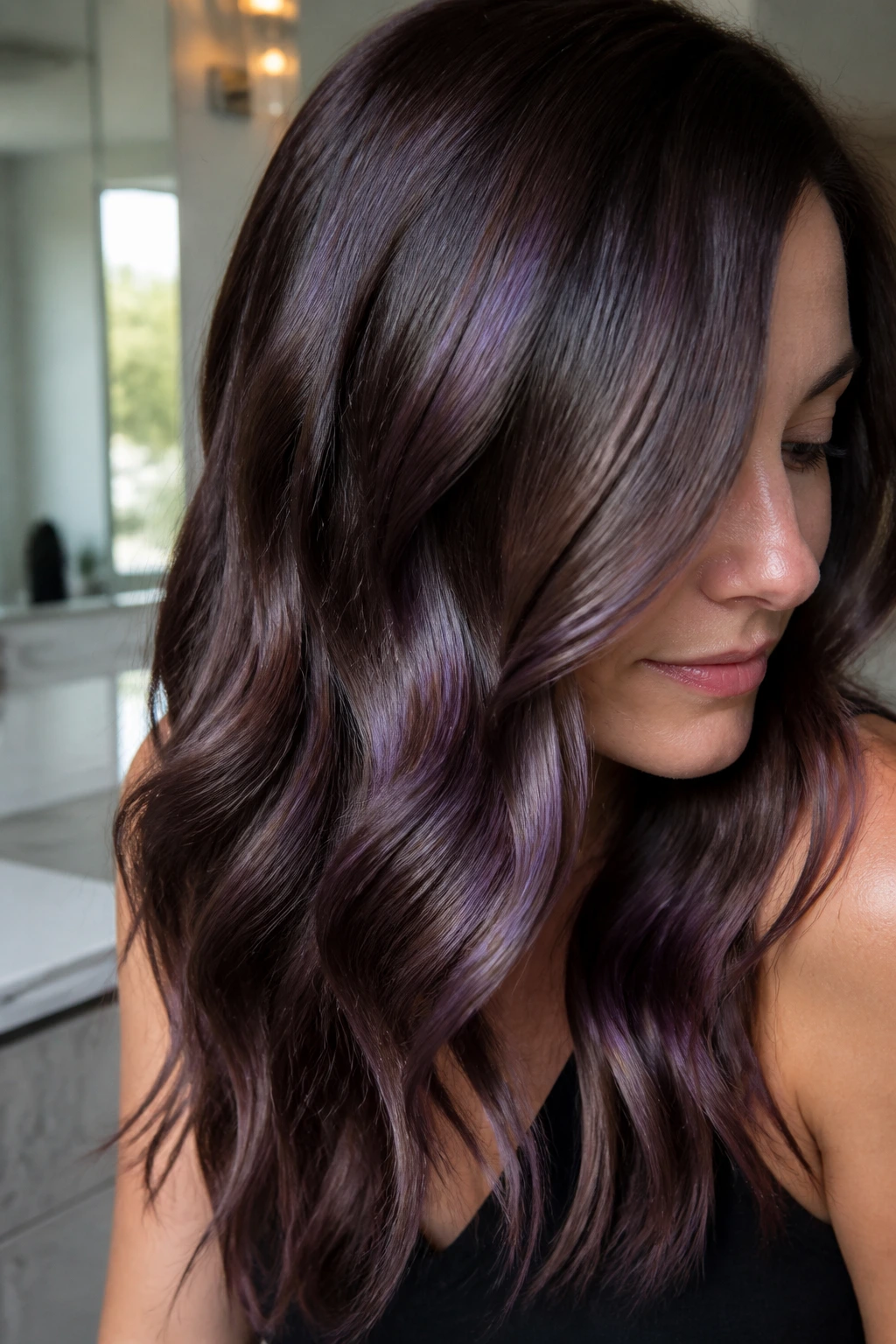
A gloss is for people who want sheen first and color second.
Instead of obvious streaks, subtle violet gloss highlights leave the hair looking softly tinted, like the shade is tucked into the shine rather than painted on top. On brown hair, that can read as plum in one light and a cool mauve in another. It’s low drama, which I like, because not every color idea needs to announce itself from across the room.
What to ask for
- A sheer violet or mauve gloss over selected pieces
- A gloss that sits between 5 and 10 minutes, depending on the base
- Softer placement through the top layer and crown
- A cool-toned finish, not a blue-heavy purple that can look flat
This is especially nice if your ends are a little porous and your color tends to fade fast. A gloss can smooth the cuticle and give the hair a fresher finish without the commitment of bright streaks. It’s the kind of color you notice most when the hair is freshly styled and glossy. Quiet. But not boring.
14. Chunky Retro Violet Stripes
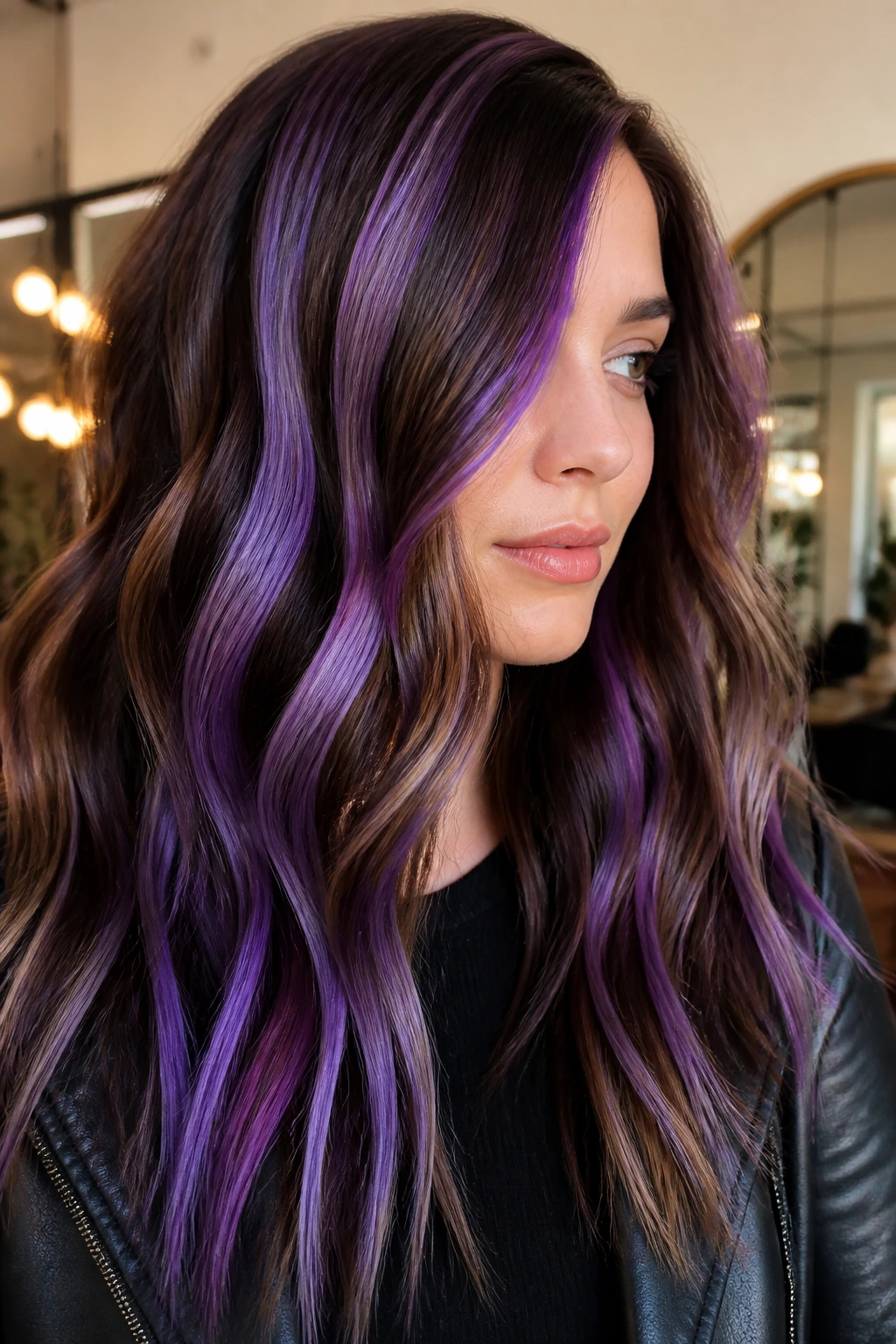
These are not shy.
Chunky violet stripes bring a bold, throwback feel to brown hair, and they work best when the haircut can support the contrast. Think blunt lob, long straight layers, or a sleek blowout. On those shapes, the wider sections look deliberate instead of accidental. A stripe around 1/2 inch to 1 inch wide can give the violet enough presence to hold its own against a dark brown base.
The real key is polish. If the hair is frizzy or the color placement is uneven, chunky highlights can turn messy fast. But when the finish is smooth, the look feels graphic and cool in a way finer highlights can’t quite match. This is the loudest violet on the list, and it knows it.
I would not recommend it to someone who wants a barely-there change. I would recommend it to someone who likes a clear line, a little nostalgia, and a color choice that reads from the back of the room.
15. Violet Balayage on a Lob
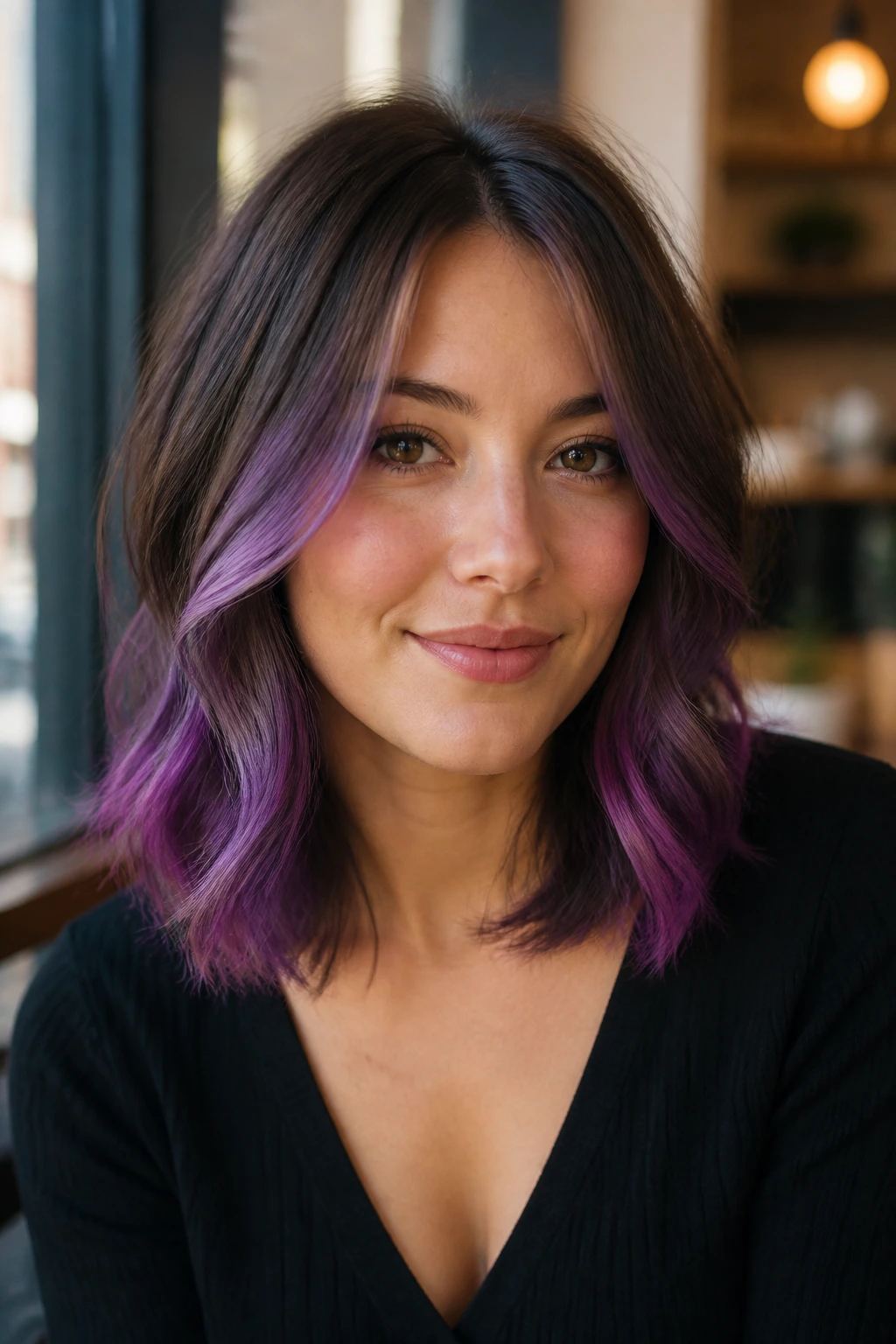
A lob gives violet a clean place to land.
The collarbone length gives balayage enough room to fade from brown into violet without feeling cramped. On a longer bob, the color can start low enough that the root stays low-maintenance, then travel through the ends and outer layers where the haircut naturally swings. That shape matters. Violet placed on a lob gets shown off every time the hair tucks under the jaw or flips at the collarbone.
Ask for this if you want
- Soft, hand-painted violet through the lower half
- A darker root that stays untouched or lightly shadowed
- A few brighter pieces near the front for balance
- A wave-friendly finish, since the bend helps the color show
This is a smart middle ground between subtle and bold. The cut keeps the color visible, but not busy. And because a lob usually gets styled often, the violet gets more chances to do its thing.
16. Under-Light Violet Panels
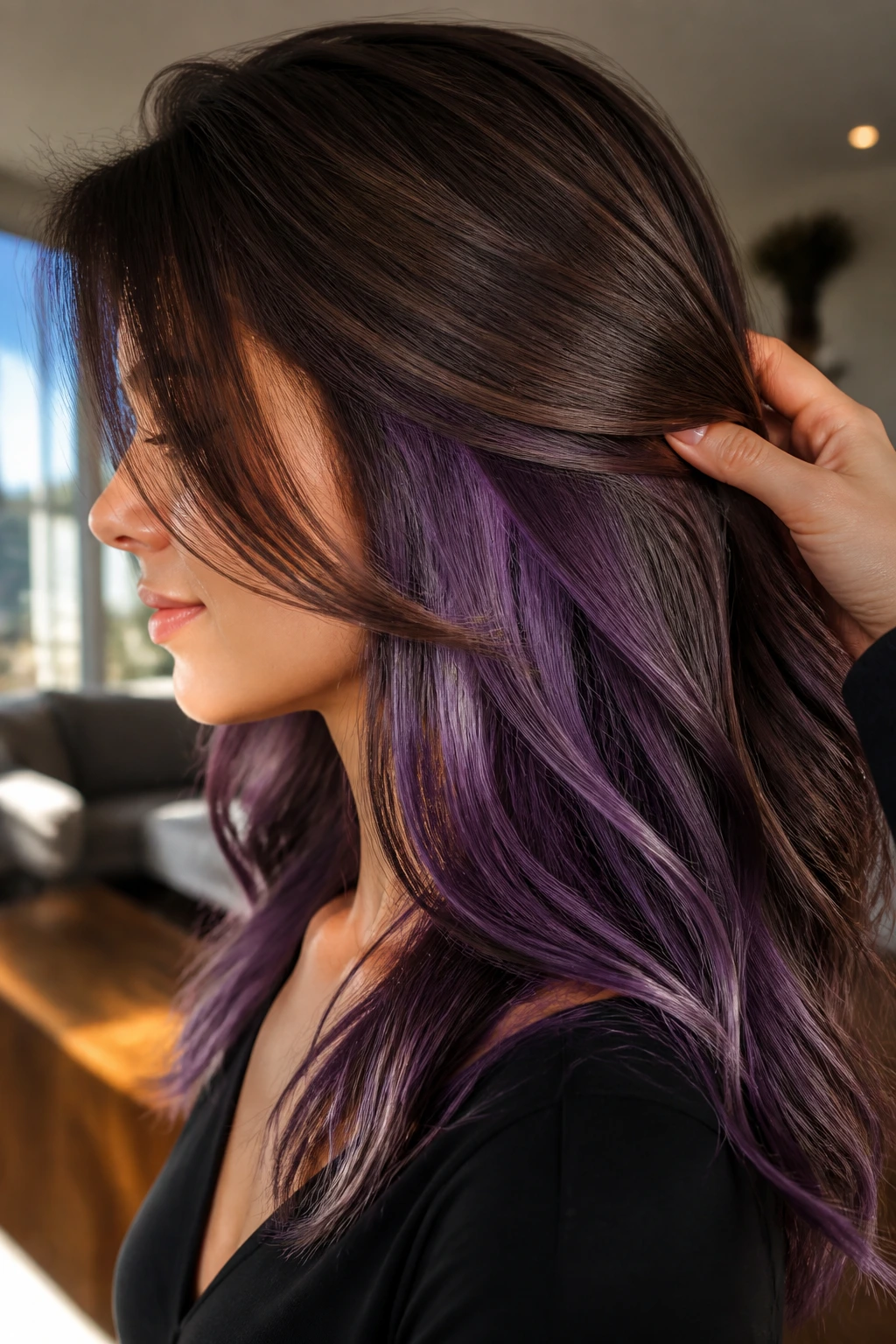
Under-light color is for people who like a little secret in their hair.
The violet sits in the lower layers, so most of the time the brown hair still reads as the main event. Then you twist the hair, pin it up, or catch it in a breeze, and the hidden violet starts to show. It’s a clever placement if you want something personal rather than obvious. You know it’s there. That’s enough.
This style works especially well on medium to long hair because there’s more space for the under-layer to move. It also makes sense if your top layers are heavily styled or textured. The hidden pieces can stay protected from too much sun and heat, which helps the color last a little longer. Color that lives underneath tends to age better.
I like this on people who get bored fast. You can wear it down on Monday, in a half-up knot on Wednesday, and in a claw clip on Friday, and each version shows a different amount of violet.
17. Black Cherry-Violet Mix
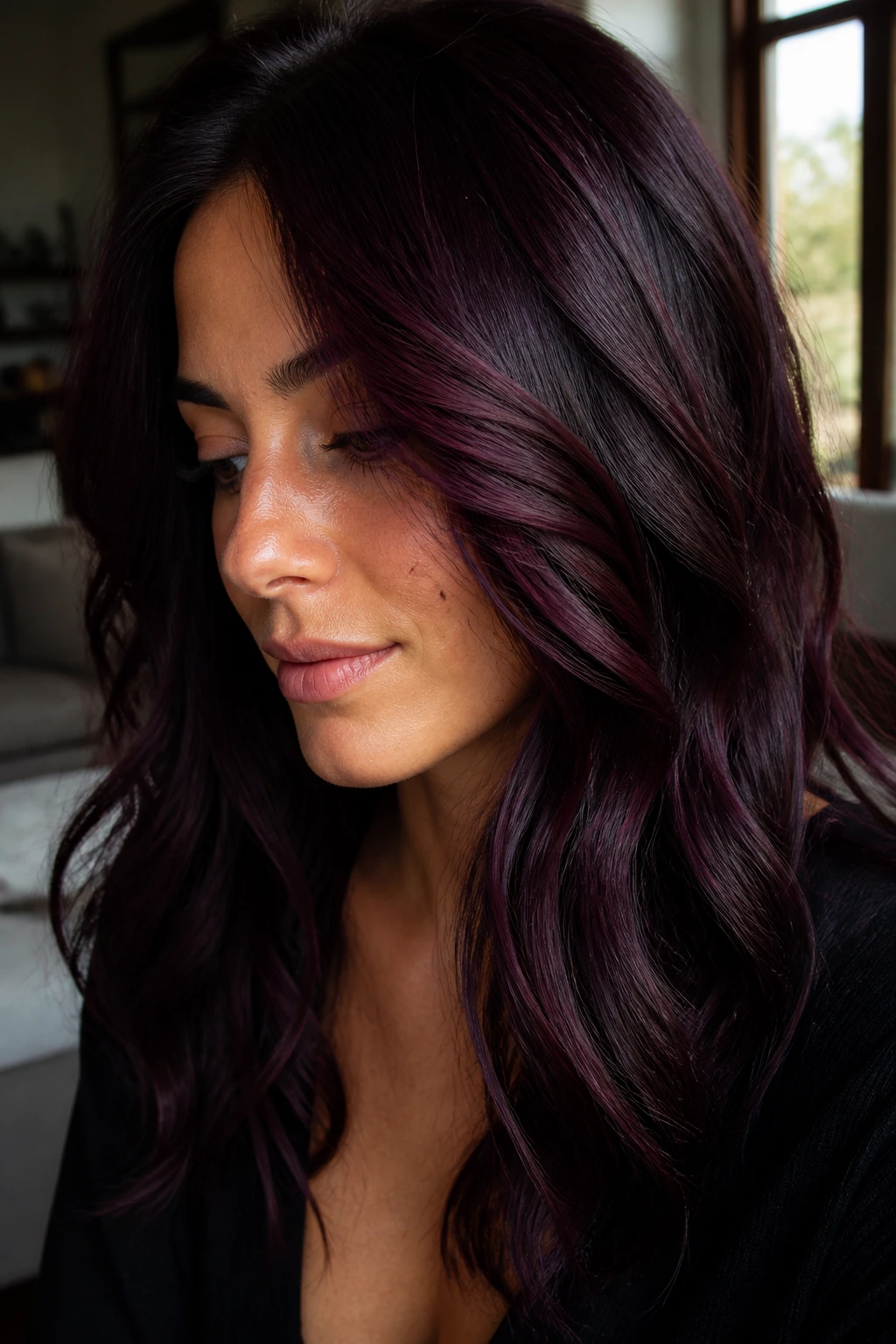
If you want violet that feels richer than purple, black cherry is the lane.
This shade leans wine-dark, with enough violet to keep it from turning red and enough red to keep it from looking cold. On deep brown hair, that balance can be gorgeous. The color can seem almost black in low light, then show a burnished purple edge when you step outside or stand near a window. That shift is the whole appeal.
The black cherry-violet mix also flatters brown hair that already has a little warmth in it. Instead of fighting the base, it borrows from it. The result feels less like a streak and more like depth layered into the hair. If you prefer darker clothes, deeper lipstick shades, or just a moody finish, this one fits easily.
It’s a strong option when you want something noticeable but not neon. The color does the work quietly, which is my favorite way for brunette hair to wear purple.
18. Dusty Iris Highlights
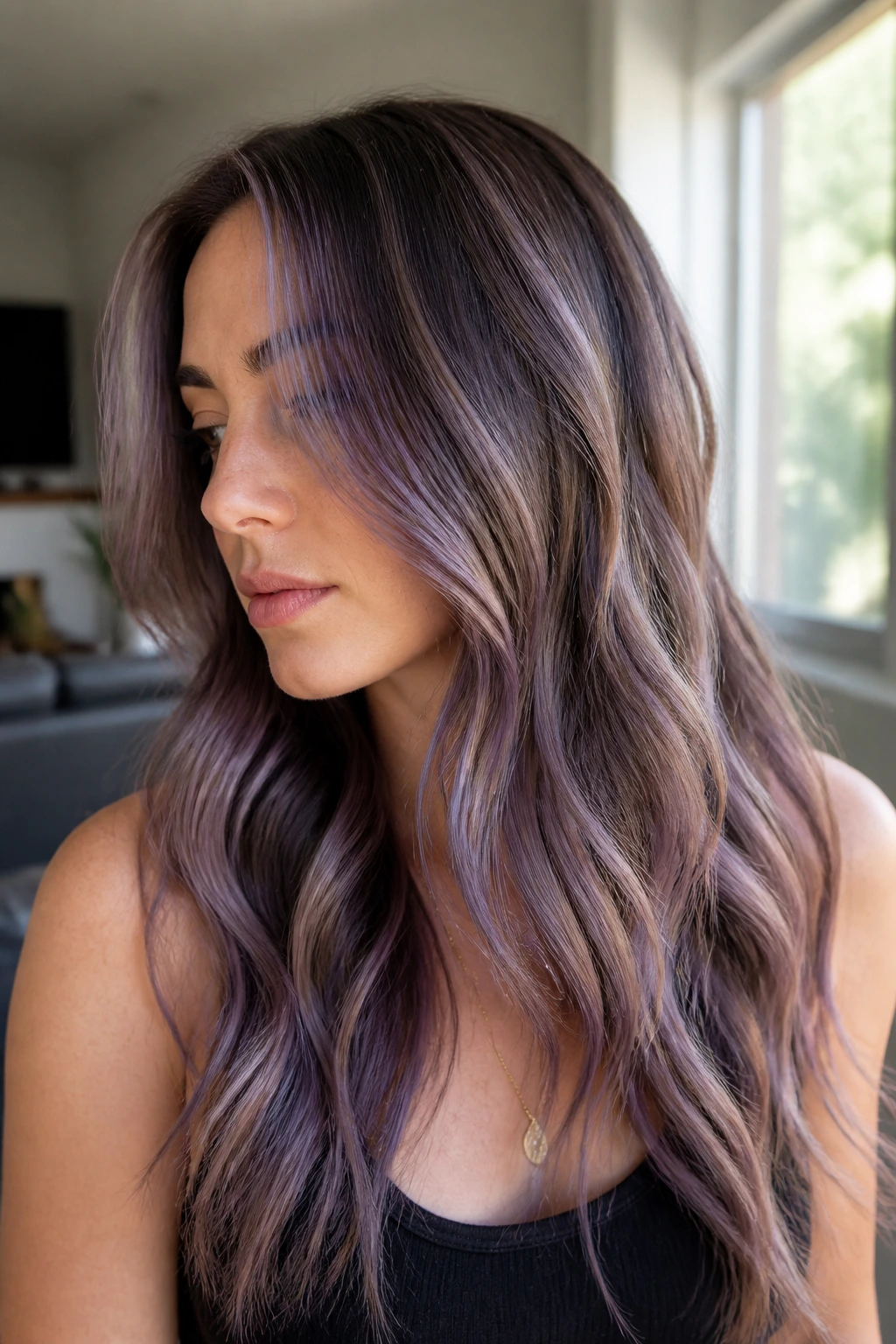
Dusty iris is what happens when violet loses the sugar and keeps the style.
Compared with bright orchid or lilac, dusty iris has a little gray in it, and that gray makes it easier to wear on brown hair that leans cool. The tone feels muted on purpose, which keeps the highlights from looking too cartoonish. On a medium or ash brown base, the shade can blend in during some moments and pop in others.
This is a good choice if you hate the look of obvious grow-out. The muted tone softens the edge between the dyed pieces and the natural hair, so the style stays wearable for longer stretches. It also works well on straight, glossy hair because the color can read almost satin-like instead of shiny in a loud way.
If you want violet but prefer your hair to stay calm, dusty iris is one of the smartest directions to take.
19. Purple Smoke Ribbons
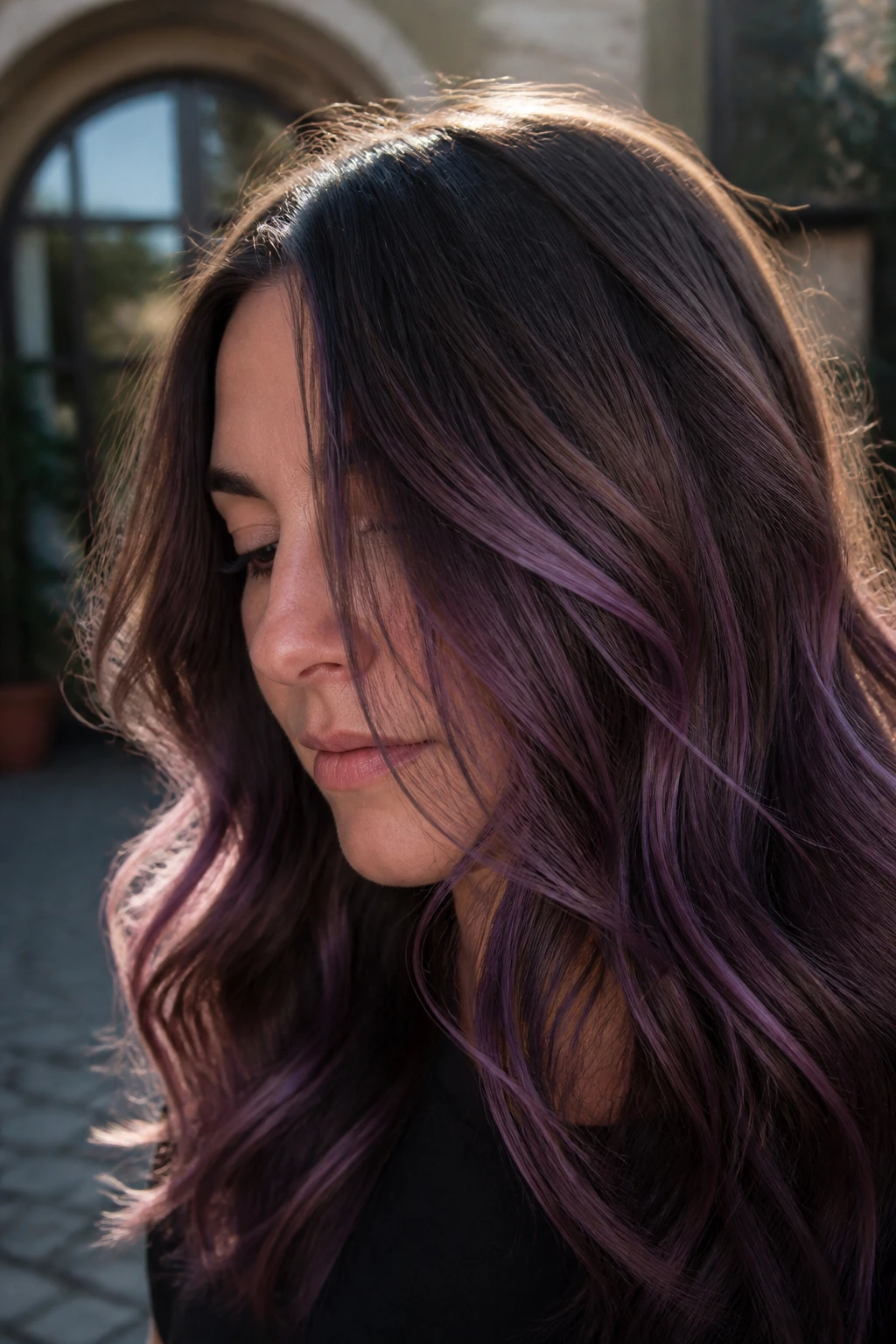
Smoke makes purple behave.
Purple smoke ribbons are a softer, cooler cousin to bright violet highlights, and they look especially good when brown hair has a little ash in it already. The color lands as a muted ribbon instead of a punchy stripe, which means it blends through the haircut more easily. On medium brunette hair, that can create a soft, smoky haze that looks richer than a standard purple and less flat than a brown-toned gloss.
What makes it different
- The tone is cooler and grayer than plum
- It works well with layered cuts and loose waves
- The ribbons can be placed wider or narrower depending on how much contrast you want
- It grows out gracefully because the edge stays soft
I like this shade for people who want purple that feels mature without feeling dull. It has edge, but not noise. The best versions look like the color was always part of the hair, even though it obviously wasn’t.
20. Bright Orchid Tips
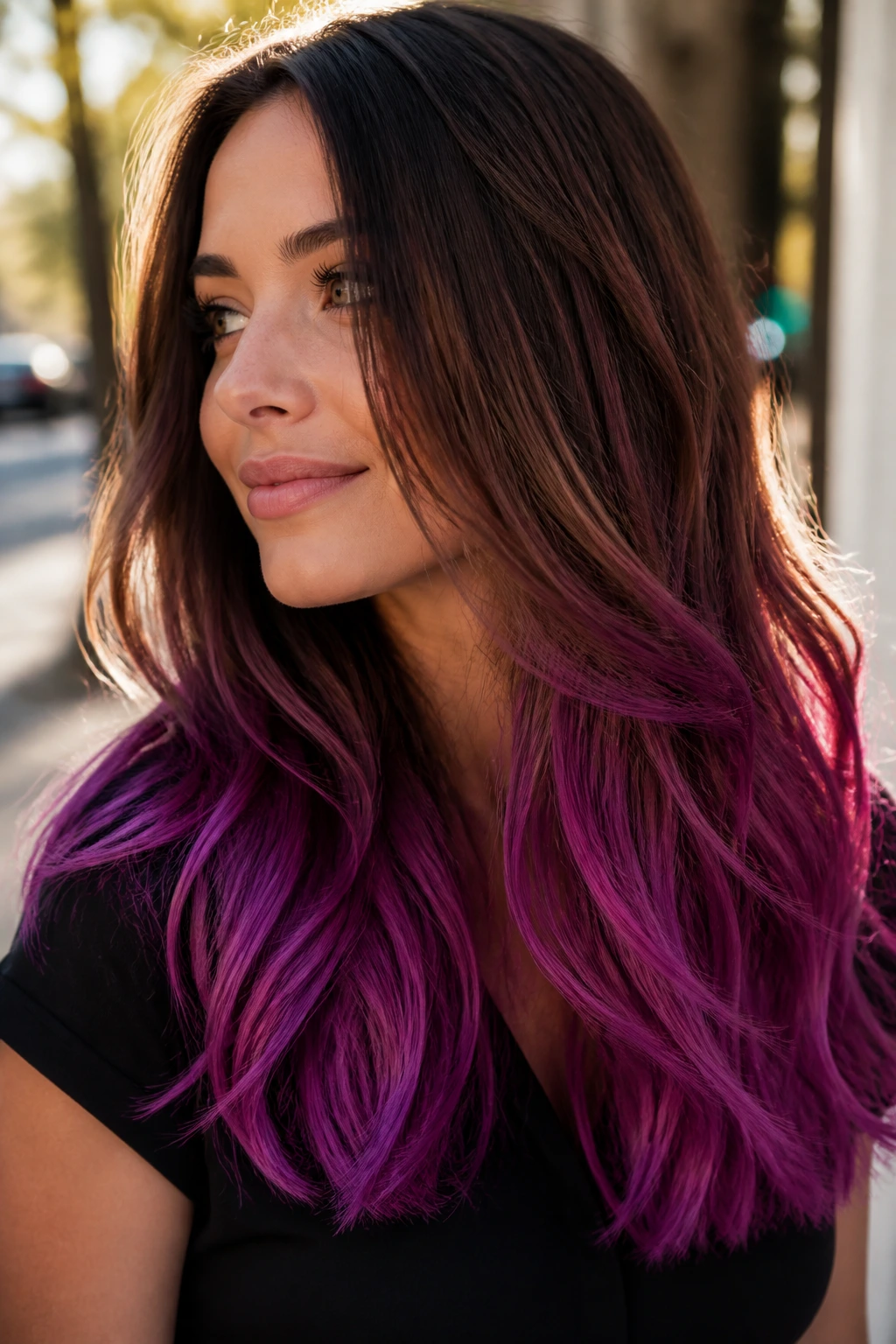
Bright orchid tips are the loudest way to wear violet on brown hair without coloring the whole head.
The brown stays in charge at the roots and mid-lengths, while the ends take on a sharp orchid tone that looks almost electric against a dark base. This works best on layered cuts, curls, or long hair that moves, because the brighter ends need motion to look balanced. If the hair is one length and heavy, the color can feel like a block. Give it some shape, and it wakes up.
Orchid tips also make sense if you want the color to fade in a controlled way. The ends can be trimmed off later, which is less painful than losing a full head of color you no longer want. Keep the finish glossy, use heat protection, and do not fry the ends into straw. That bright shade looks best when the hair still feels smooth.
If you want violet that leans playful, vivid, and a little irreverent, this is the one that leans hardest into that mood.
