



A good set of highlights for men should look like sunlight found its way into the hair, not like a strip-mall dye job. The right tone can soften a heavy haircut, wake up dull brown hair, and make curls or waves move in a way flat color never does.
Most guys get tripped up in the same place: they ask for “blonde” when they actually want contrast, or they ask for “subtle” and end up with strands no one can see. Tone matters. Placement matters more. And if your hair is already dry, bleached, or very dark, the colorist’s job changes fast.
There are plenty of ways to wear men’s hair highlights without looking try-hard. Caramel ribbons, ash pieces, frosted tips, silver blending, hidden underlights—each one sends a different message, and the best one depends on your haircut, how much upkeep you can stand, and how much attention you want to invite. Start with the quiet stuff.
1. Caramel Highlights on Dark Brown Hair
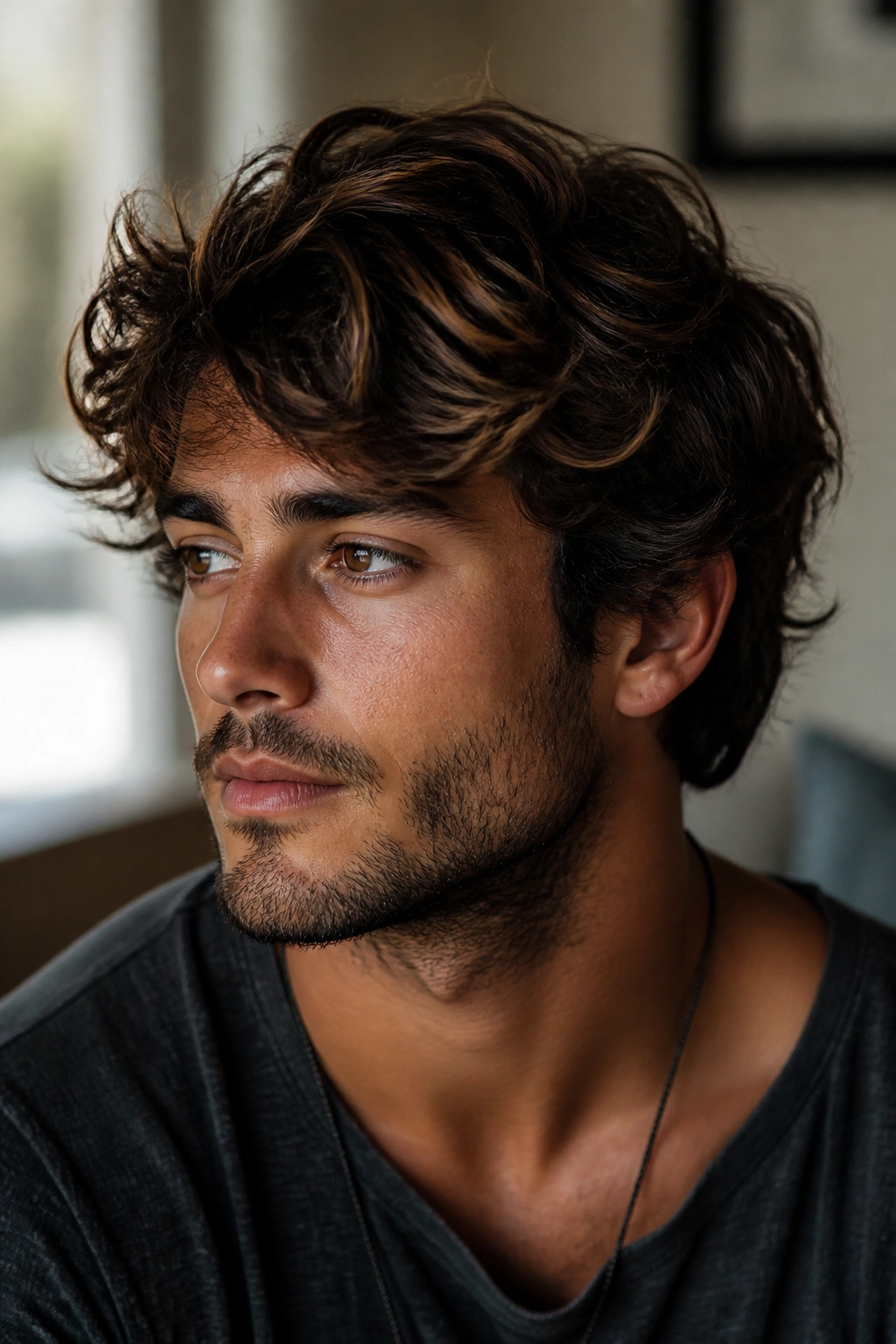
Caramel is the easy one people ignore. It softens dark brown hair without wiping out the depth, and it usually looks good even when the cut is simple. If you want men’s highlights that read as natural in daylight and still show up under indoor lighting, this is a smart place to start.
Why Caramel Works
Caramel sits in that sweet spot between brown and blonde, so it adds movement without shouting. On thick hair, it breaks up the blocky look that dark color can create. On shorter cuts, it gives the top a little lift so the fade or taper underneath doesn’t feel heavy.
- Best on medium brown to deep brown bases
- Looks strongest when the pieces are painted in thin, uneven ribbons
- Pairs well with a matte clay or paste, not glossy gel
- Needs less upkeep than ash blonde or platinum
Ask for a root shadow if you want the grow-out to stay soft. That little bit of depth at the base keeps the color from looking stripey after a few weeks.
2. Ash Blonde Highlights for Cool-Toned Men
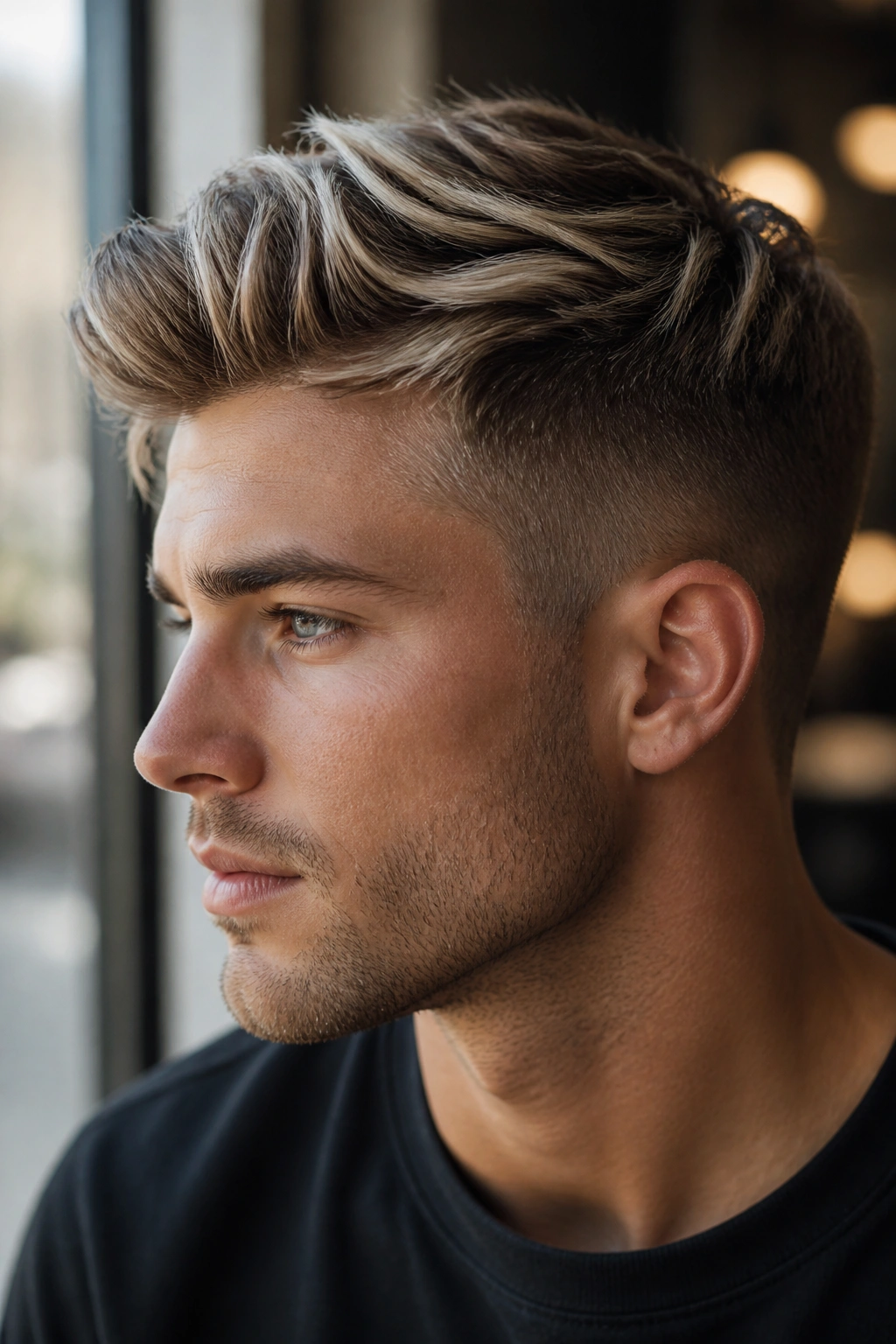
Ash blonde looks cleaner when it stays cool. That’s the whole appeal. It cuts through warm pigment and gives dark hair a sharper edge, which is why it works so well with fades, textured crops, and more angular haircuts.
Ash tones matter because they cancel some of the gold and orange that bleach can pull out. If your natural hair is brown, that brass can show fast, and ash blonde keeps the result from turning honey-colored. On the right head, it reads crisp. On the wrong one, it can go flat or even a little gray.
I like this look most on guys who wear their hair short on the sides and longer on top. The contrast between the cut and the cool streaks does most of the work for you. If you style with a blow-dry and a matte product, the highlights look deliberate instead of washed-out.
3. Platinum Tips on a Textured Crop
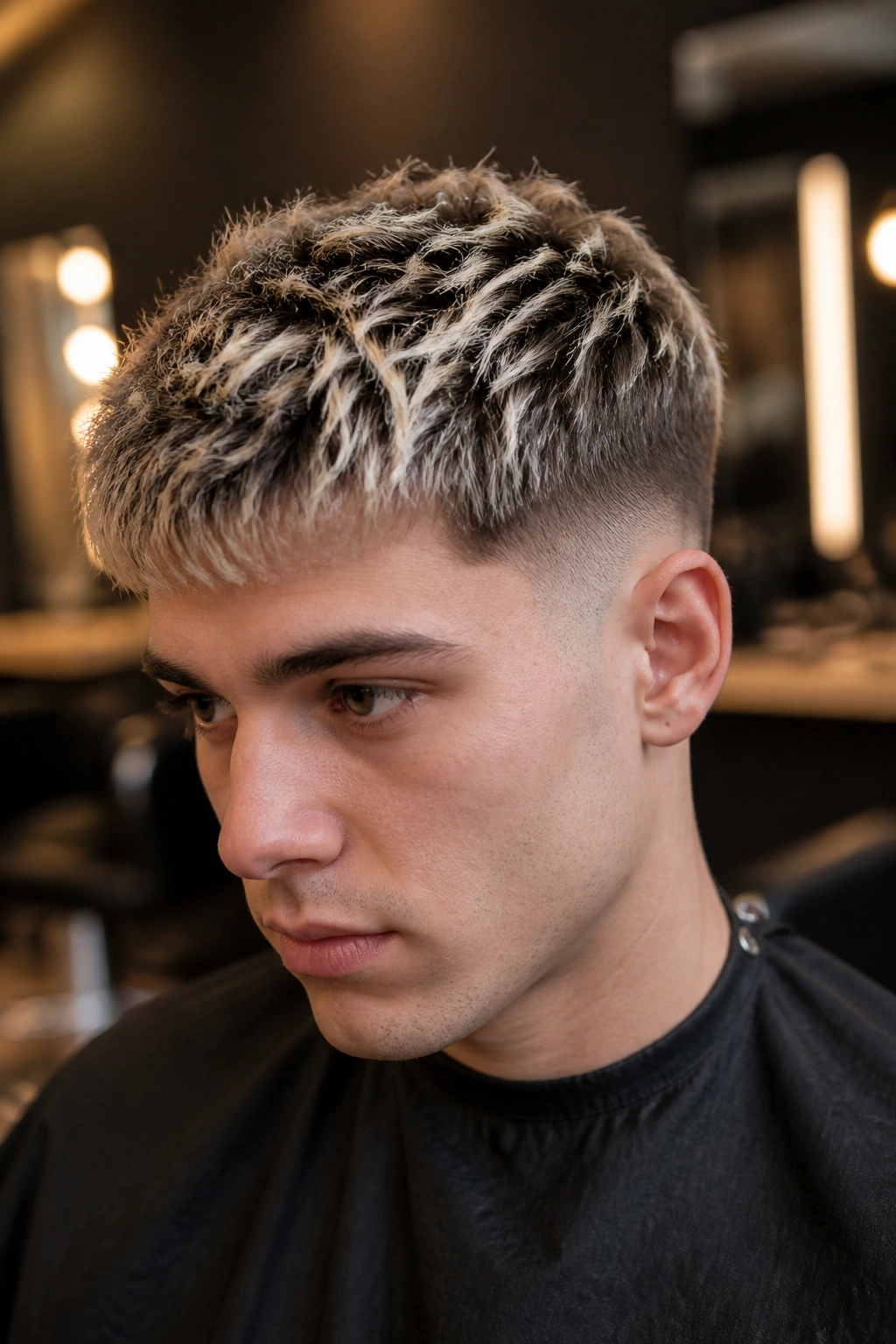
Want a lighter look without bleaching the whole head? Platinum tips do the job, and they do it fast. The trick is to keep the base darker and let the ends carry the brightness, especially on a textured crop or a messy fringe.
How to Wear It
Platinum tips work best when the haircut already has choppy layers. The lighter ends catch the eye first, so the shape of the cut matters more than usual. If the top is too blunt, the color can look like it was dropped on top instead of built in.
A few things to keep in mind:
- Keep the sides tight so the light ends don’t fight the rest of the haircut
- Leave enough length on top for texture, usually 1.5 to 3 inches
- Expect more upkeep, since platinum fades and yellows faster than warm blondes
- Use a purple shampoo once a week if the tone starts drifting warm
This is not a lazy-color choice. If you want a low-maintenance look, skip it. If you want sharp contrast and don’t mind toning sessions, it can look clean and modern.
4. Honey Ribbons for Wavy Medium-Length Hair
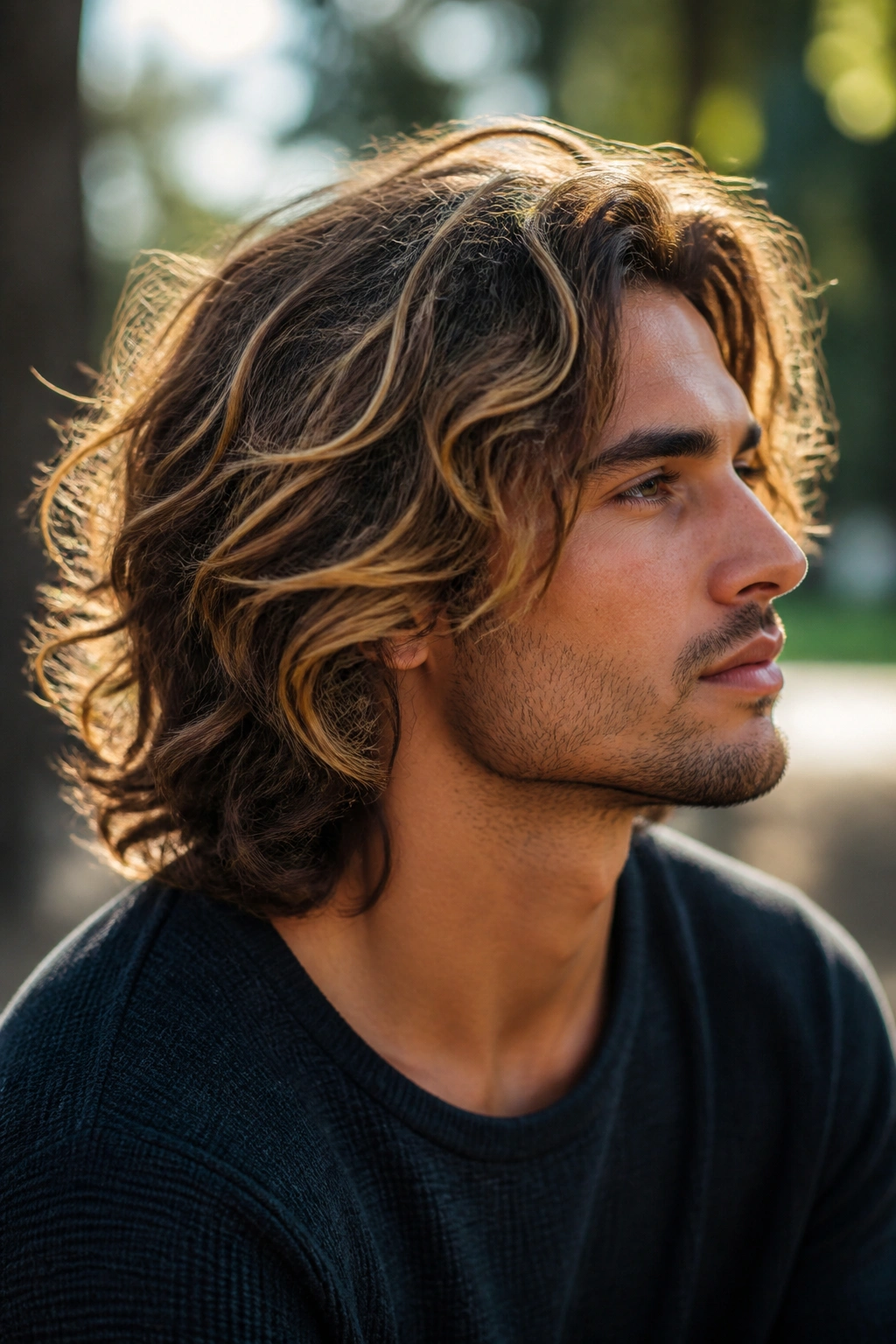
Picture a guy with loose waves, a little movement around the ears, and enough length on top for the color to travel through the bends. Honey ribbons are made for that setup. They slide between the strands instead of sitting on top, so the whole style looks fuller.
The color itself does a lot of work. Honey is warmer than ash and softer than bright gold, which means it flatters medium brown hair without turning it brassy. On wavy hair, the light and dark pieces fold into each other when the hair moves, and that’s where the style gets interesting.
Where It Works Best
- Medium-length cuts with 3 to 6 inches on top
- Waves that already have a loose bend
- Hair that needs more shape, not more drama
- Guys who want warmth without copper tones
One thing I’d avoid: packing too many foils into the top section. That kills the movement. A few well-placed ribbons are enough, and they look much better once the hair dries and the wave pattern comes back.
5. Chunky Streaks with a Sharp Part
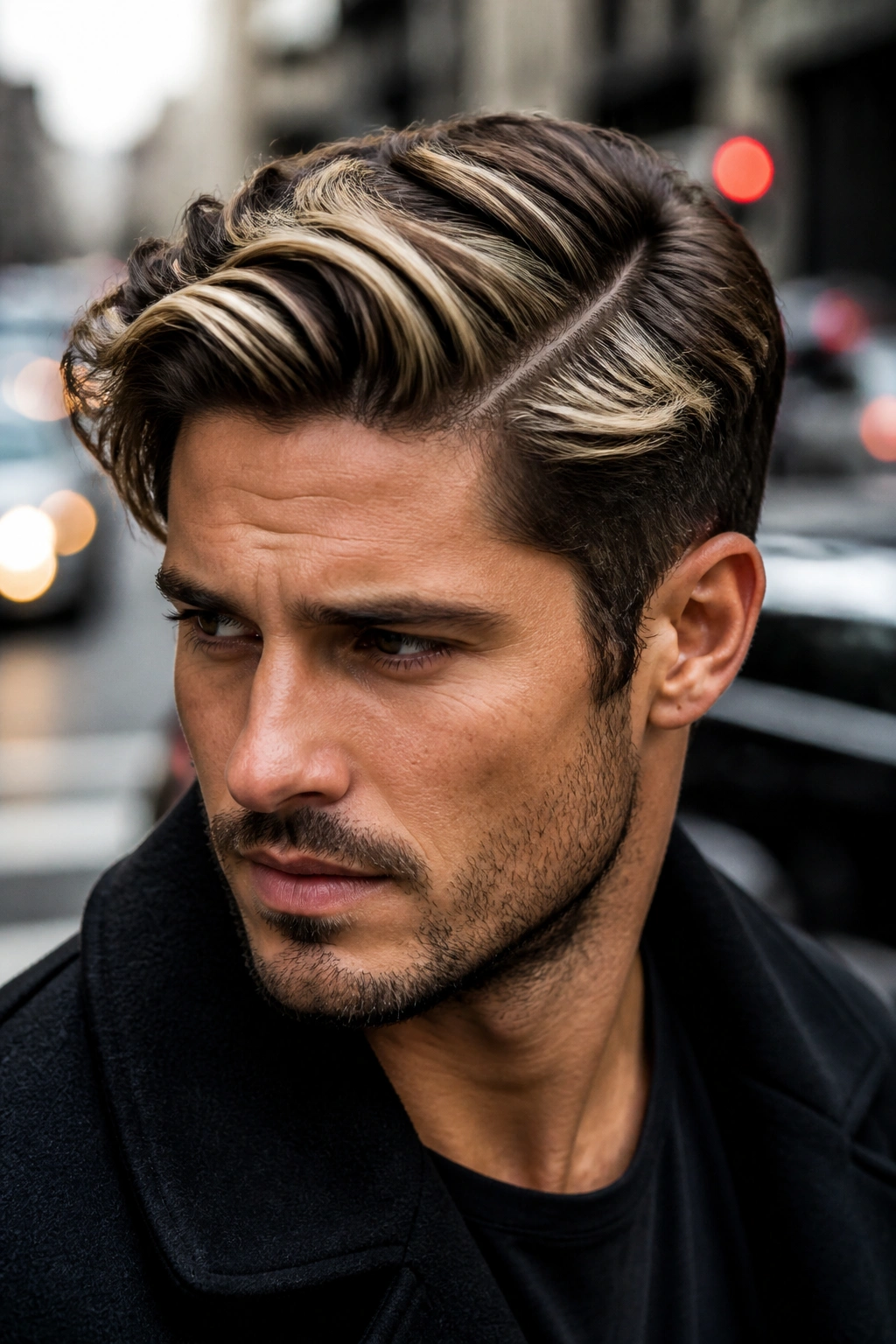
Chunky streaks are not subtle, and that is the point. When they’re done well, they give straight or slightly wavy hair a strong, graphic look that feels confident instead of noisy. Bad chunky highlights look like an accident. Good ones look edited.
The part matters more here than in almost any other style. A hard side part or a clean middle part helps the color read as intentional, because the lines of the cut give the streaks somewhere to live. On thick hair, that makes the whole shape easier to read from across a room.
I’d use this look on guys who like a little attitude in their haircut. It’s a good fit for streetwear styles, sharp fades, or longer fringe cuts that need some tension up top. If you want stealth, this is the wrong lane. If you want the hair to carry some personality, it’s a solid move.
6. Bronde Highlights for Men Who Want a Soft In-Between Shade
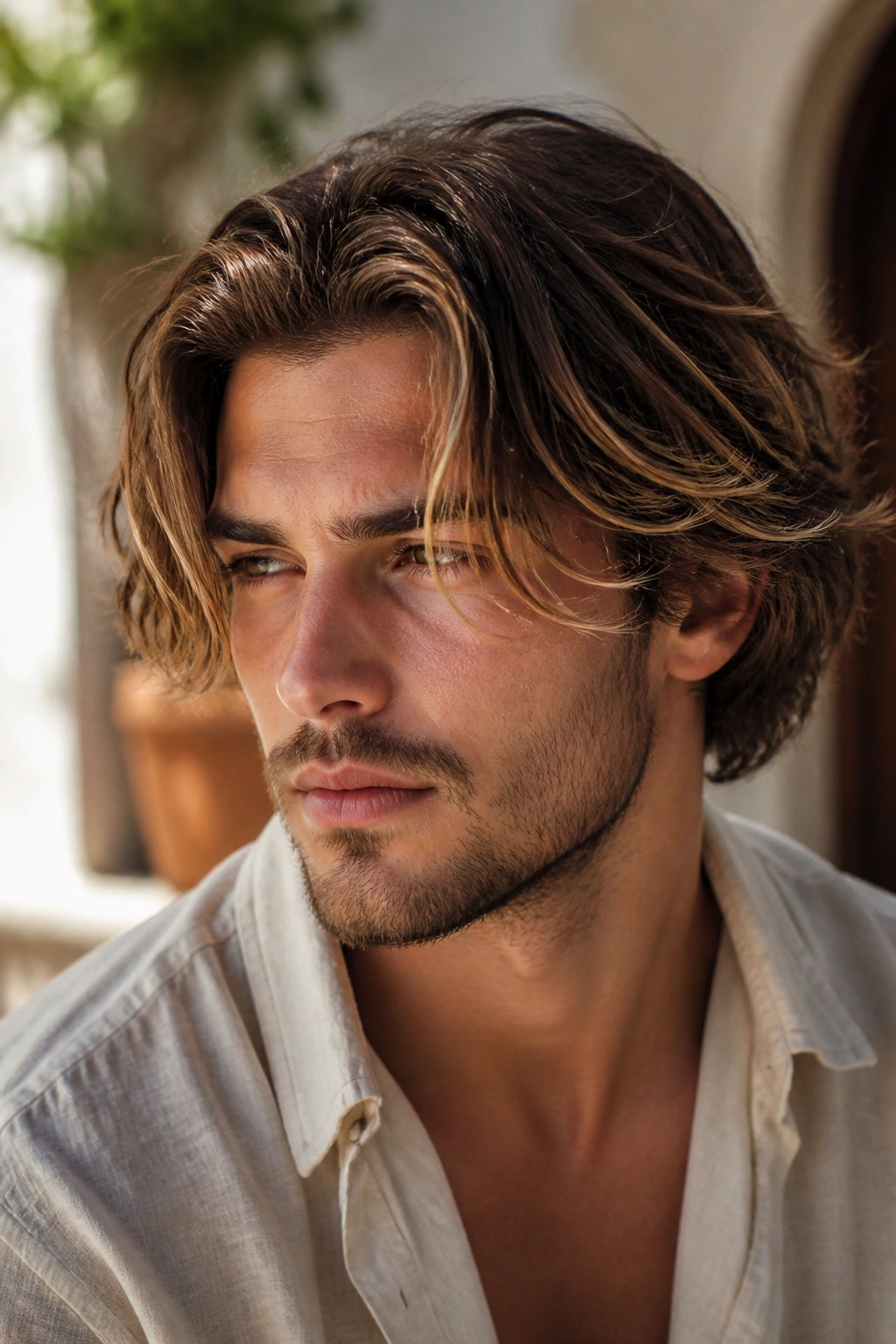
Bronde is the bridge between brown and blonde, and that is exactly why it works. It gives depth, lightness, and a slightly sun-faded finish without pushing the hair into obvious bleach territory. For a lot of men, that’s the sweet spot.
Compared with gold blonde, bronde looks calmer. Compared with plain brown, it looks more alive. That middle ground is useful if your natural color sits around light brown or dark blonde, because the change reads as believable instead of dramatic.
I’d recommend bronde for someone trying highlights for the first time. You get visible dimension without a harsh grow-out line, and the color tends to age better as the roots come back in. Ask for something one to two levels lighter than your base rather than chasing a bright blonde result.
7. Beige Babylights for a Low-Key Office-Friendly Look
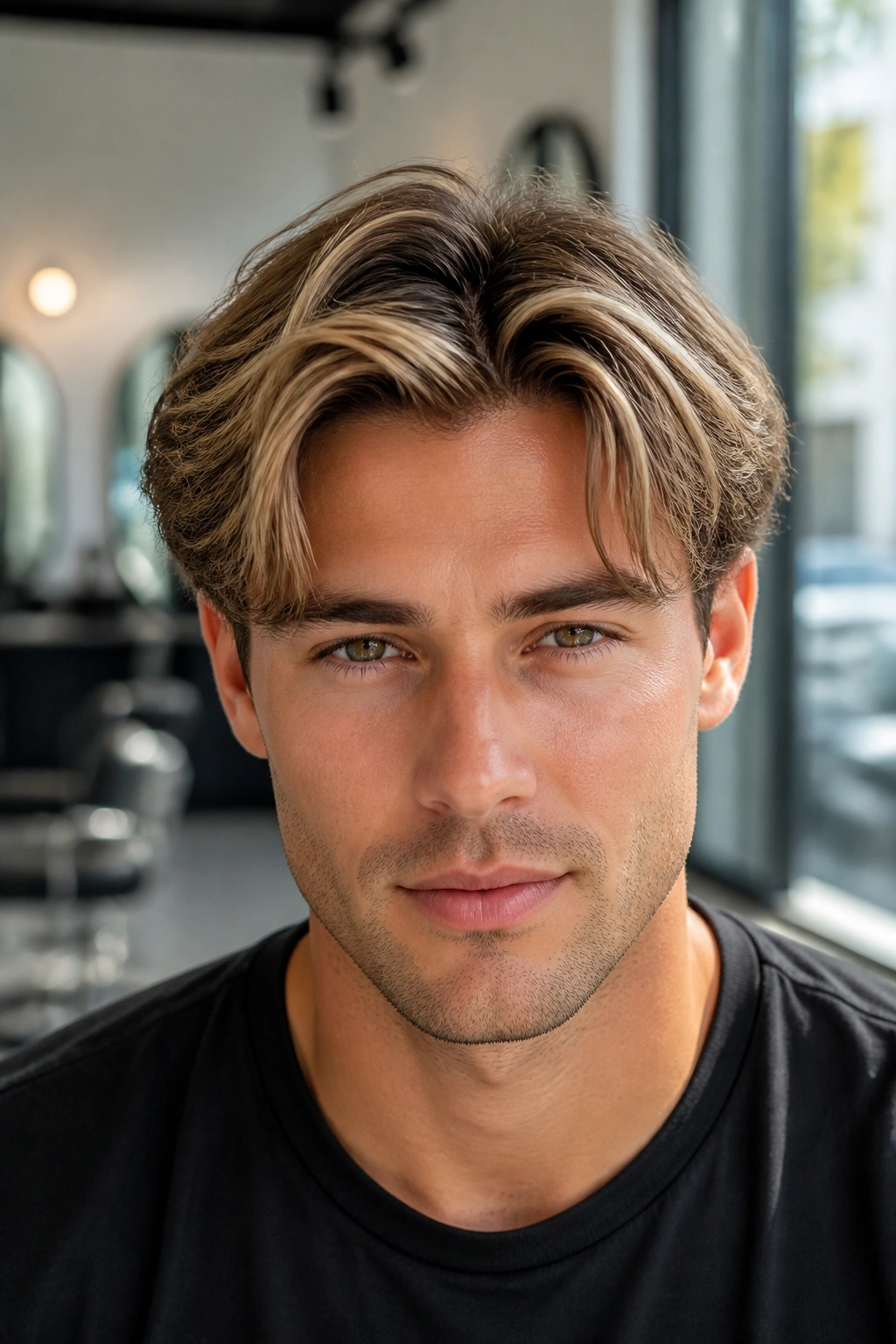
If you need something your coworkers will notice only after staring for a while, beige babylights are a smart choice. They sit softer than ash and less yellow than gold, which gives the hair a muted lift instead of a flashy streak pattern.
Why Beige Feels Different
Beige is one of those tones that looks simple in the chair and quietly expensive in daylight. It works especially well on straight or slightly wavy hair, where very fine strands can catch light without breaking the overall shape. Babylights help here because the sections are tiny, so the contrast stays restrained.
- Best for fine to medium hair
- Ideal on cuts with clean lines, like tapers or neat side parts
- Easier to grow out than chunky highlights
- Needs a toner more than a heavy color refresh
My advice: if you want color but hate obvious upkeep, ask for beige babylights around the crown and temples first. You can always add more later. You cannot easily hide a blocky highlight pattern once it’s in.
8. Copper Highlights for Warm Skin Tones
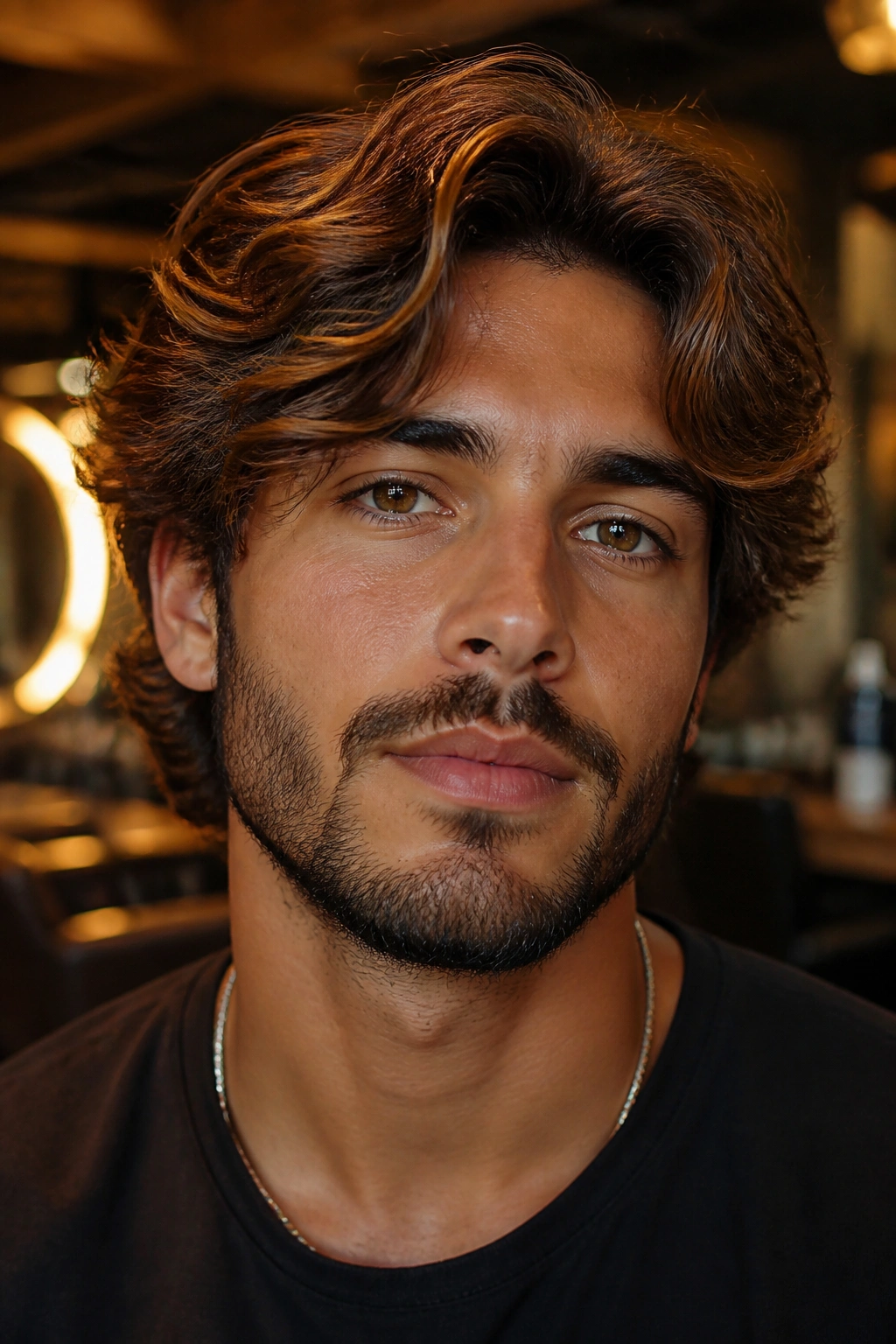
Copper is the move when brown hair feels flat. It brings warmth back into the hair and can make a beard look more connected to the rest of the face, which is a nice bonus if your facial hair and scalp hair are different shades.
The thing with copper is that it needs control. Too bright, and it starts looking costume-like. Kept in the right range—more rust, less fire engine—it adds depth and richness that works especially well on warm or neutral skin tones. It also looks good in low light, where the red-brown notes show up before the blonde ones do.
I tend to like copper on medium-length cuts and textured crops, especially when the hair has a little natural wave. Straight hair can wear it too, but the placement needs to be softer. A gloss finish helps here. Flat dye does not.
9. Silver Highlights for Blending Gray Hair
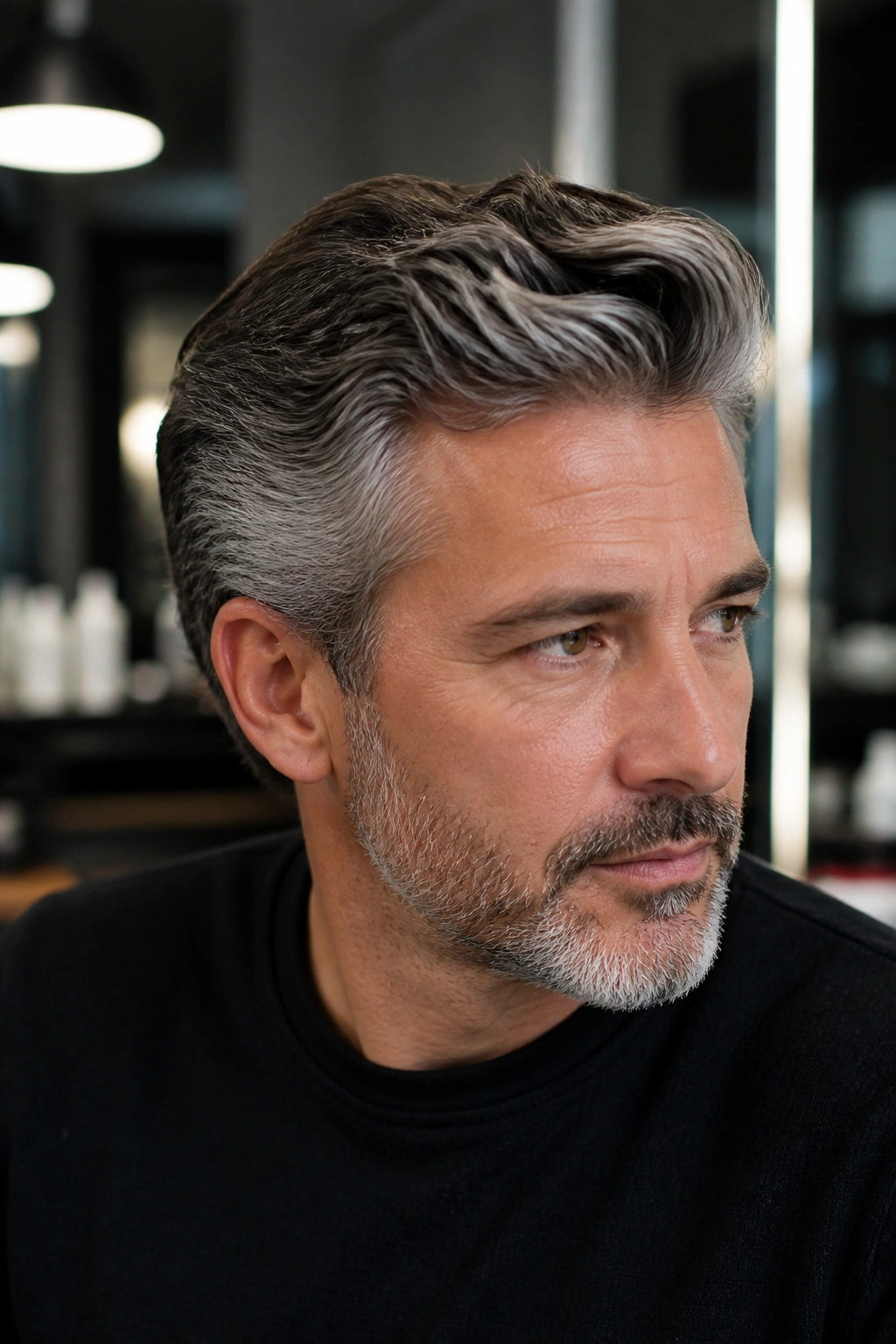
Trying to blend gray without looking painted? Silver highlights handle that better than most people expect. They don’t erase the gray; they make it look chosen, which is a huge difference.
How to Use It
Silver works best when it follows the natural pattern of graying, especially around the temples, crown, and part line. A good colorist won’t blanket the whole head in icy pieces. They’ll weave in lighter strands where the gray already wants to show, then tone everything so the finish sits in the same cool family.
This is a cleaner option than darkening the whole head, which can look harsh once the roots grow back. It’s also less fussy than trying to keep salt-and-pepper hair perfectly even. Leave some natural gray in the mix. That contrast is what gives the style its life.
If your hair has a lot of warmth in it, silver highlights can help cool things down. If your base is already very dark, the result may lean more smoky than metallic, and that’s fine. Not every silver look needs to shine like chrome.
10. Frosted Tips on Short Hair
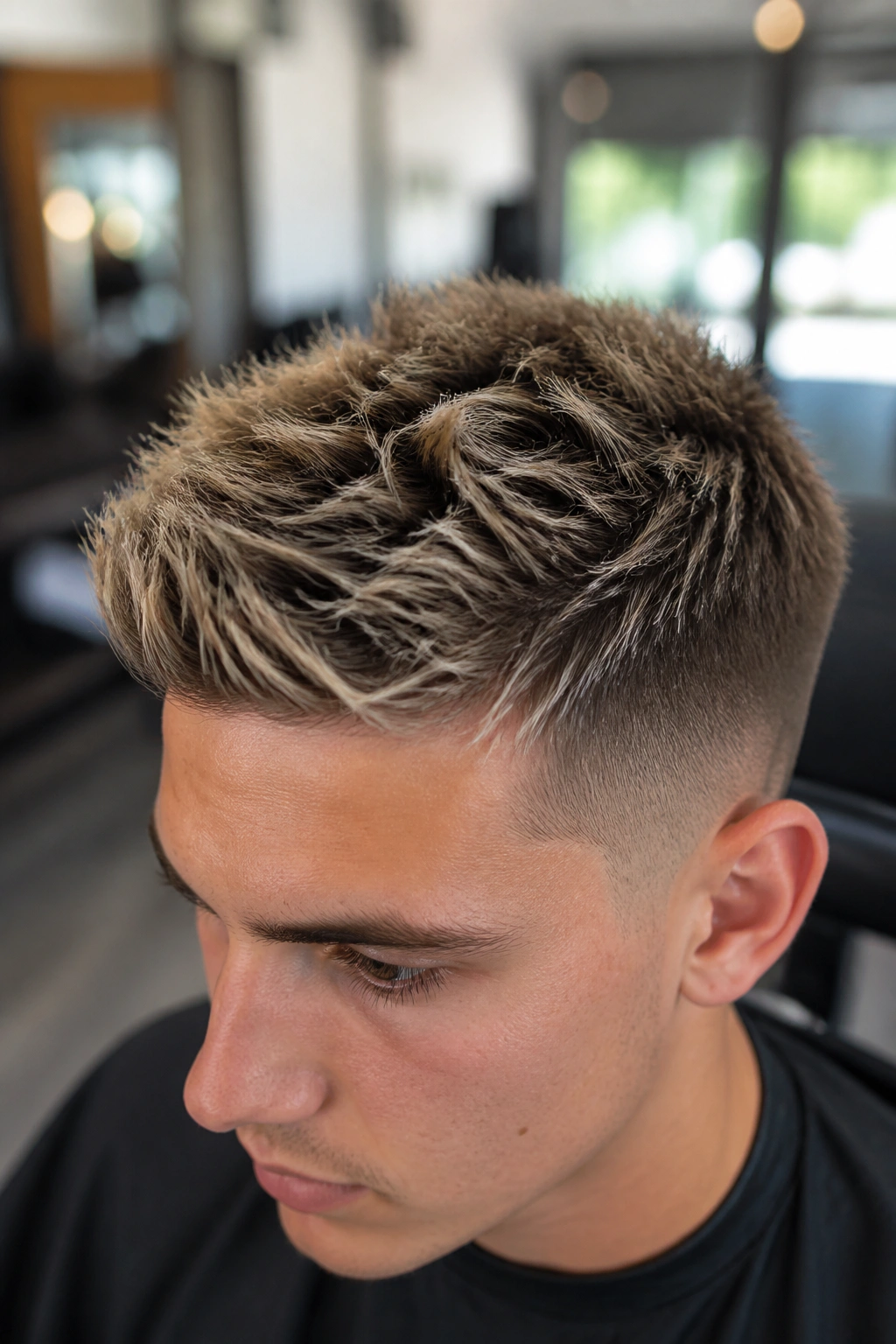
Frosted tips are one of those looks people joke about until they see a modern version done well. On short hair, the style can look sharp, especially when the tips are softened instead of bleached to a chalky finish.
The reason it works on short cuts is simple: there’s not much surface area for the color to go wrong. A crop, Caesar, or spiky short top gives the lightened ends enough definition to stand apart from the base. If the cut is too long, the effect can turn messy fast.
A few good targets for this style:
- Short textured tops with faded sides
- Hair that stands up a little with product
- Guys who like a playful but controlled finish
- Cuts where the ends can be chipped or sliced for texture
Keep the contrast moderate. Old-school frosted tips went too hard on the blonde. The modern version should feel sun-touched, not fried.
11. Money Piece Highlights Around the Hairline
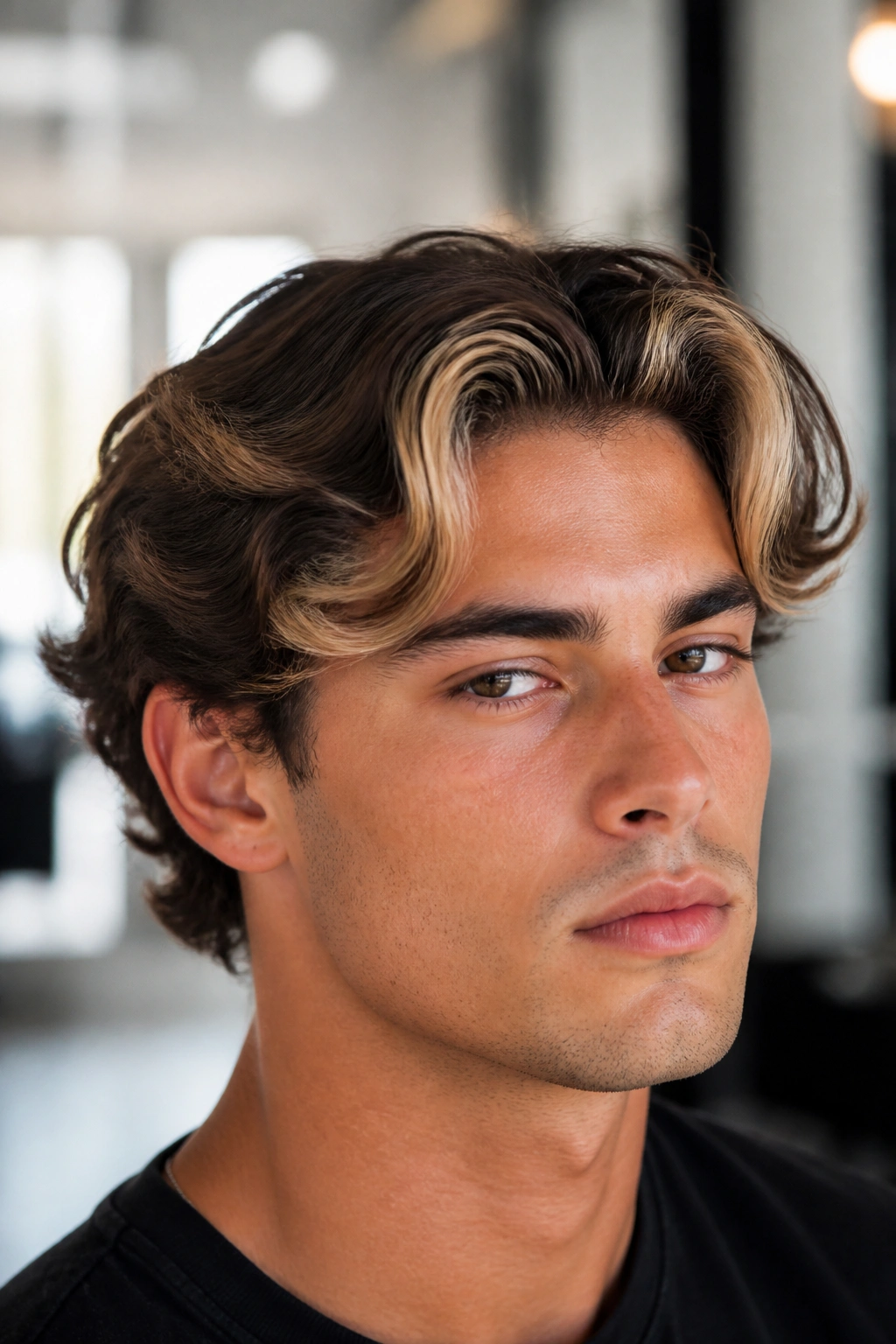
Money pieces are all about placement. Two brighter sections near the front can change the way the whole haircut reads, even when the rest of the hair stays close to its natural color. That’s why this style works on men who want a visible change without committing to all-over lightening.
The front hairline is where people look first. Brightening that area can open up the face, sharpen a fringe, and make longer top sections feel less heavy. It also works well with curtain styles, quiffs, and wavy hair that falls forward, because the lighter pieces keep the shape from going flat.
I like this option for guys who want the haircut to have a little architecture. It’s not about being loud. It’s about guiding the eye. A good colorist will keep the pieces soft enough that they blend into the rest of the hair when you push it back.
12. Hidden Underlights for Men Who Want Color Only When It Moves
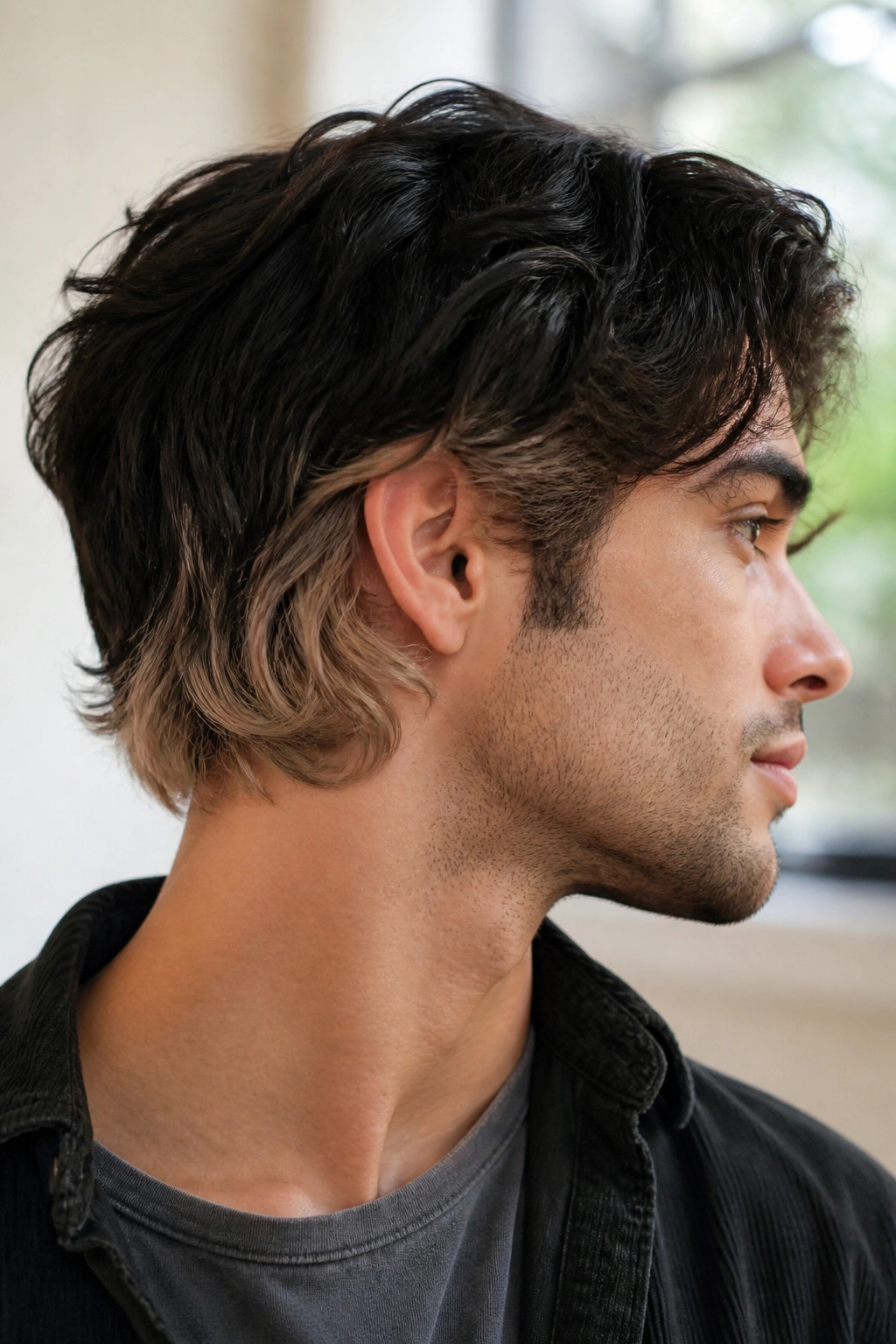
Underlights are the stealth pick. The top layer stays dark or natural, and the lighter color hides underneath until the hair shifts, lifts, or gets tucked behind the ear. If you want a private version of highlights, this is about as good as it gets.
Compared with all-over highlighting, underlights are easier to live with because the boldest pieces stay out of sight most of the time. That makes them a good fit for guys in conservative workplaces, or for anyone who wants something a little unexpected without making it the whole story. The effect shows up at the neckline, in the nape, and along the sides when the hair moves.
The best version of this style keeps the contrast controlled. Too much brightness under there can look like a strip of dye when the wind catches it. Keep the color a shade or two lighter than the top layer, and let the movement do the rest.
13. High-Contrast Blonde Highlights for Men with Black Hair
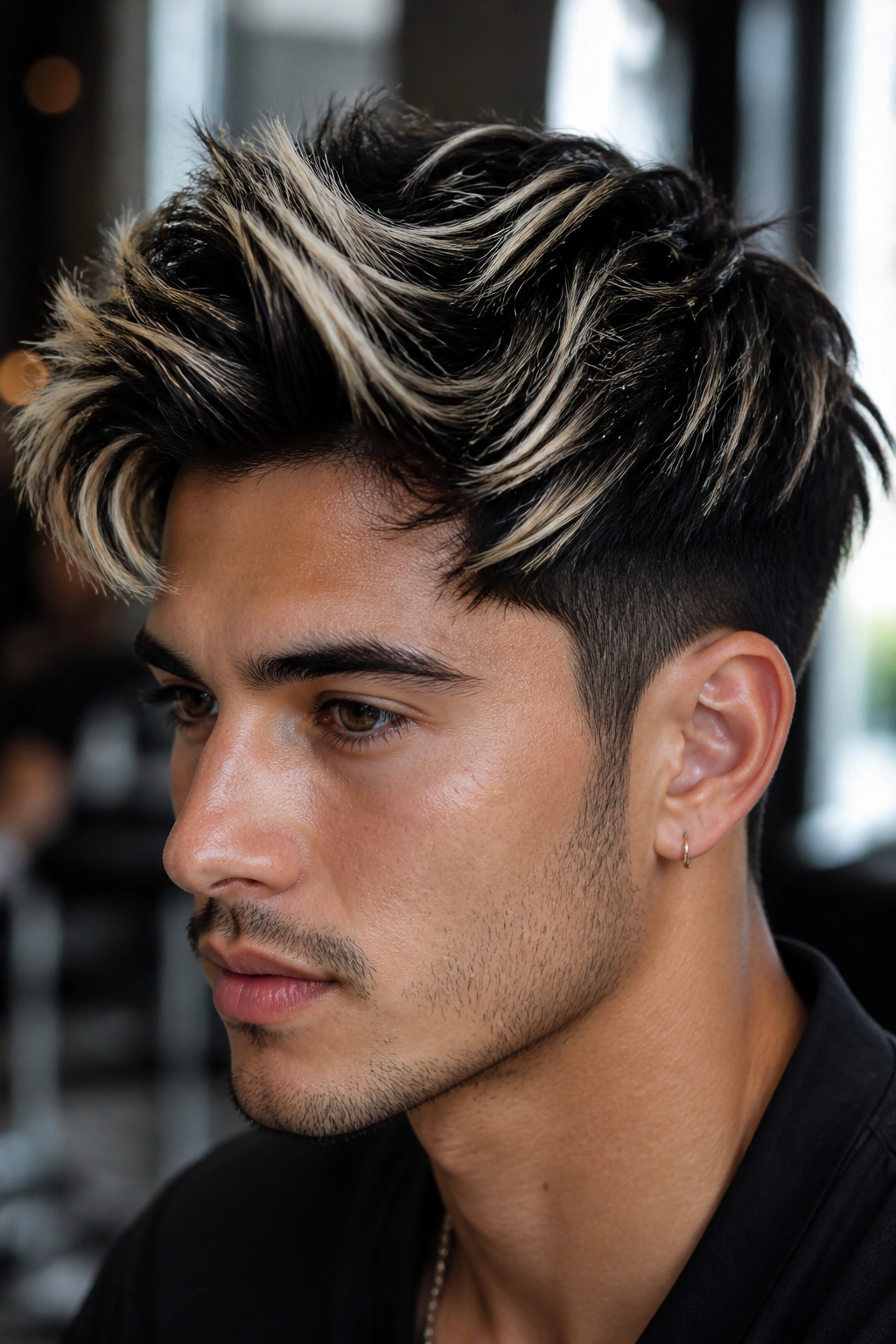
Black hair and blonde streaks can look sharp or disastrous. There is not much middle ground. When they’re placed well, the contrast gives the haircut a serious edge and makes even a simple style feel more deliberate.
What to Watch For
Lifting dark hair to blonde takes patience. Sometimes it takes more than one session, especially if the hair is dense or coarse. Going too fast can leave the pieces orange in the middle and brittle at the ends, which is exactly the kind of mess no one wants.
- Use foils or precision painting to control placement
- Ask for bond protection if the hair has been colored before
- Expect toner to do a lot of the finishing work
- Be ready for more home care than you’d need with caramel or bronde
This look hits hardest on haircuts with clean shape—tight fades, sharp fringes, or cropped tops. If your routine is low-maintenance and you hate salon visits, skip it. If you want the color to punch through from a distance, this is one of the strongest looks on the list.
14. Mushroom Brown Highlights for a Smoky Finish
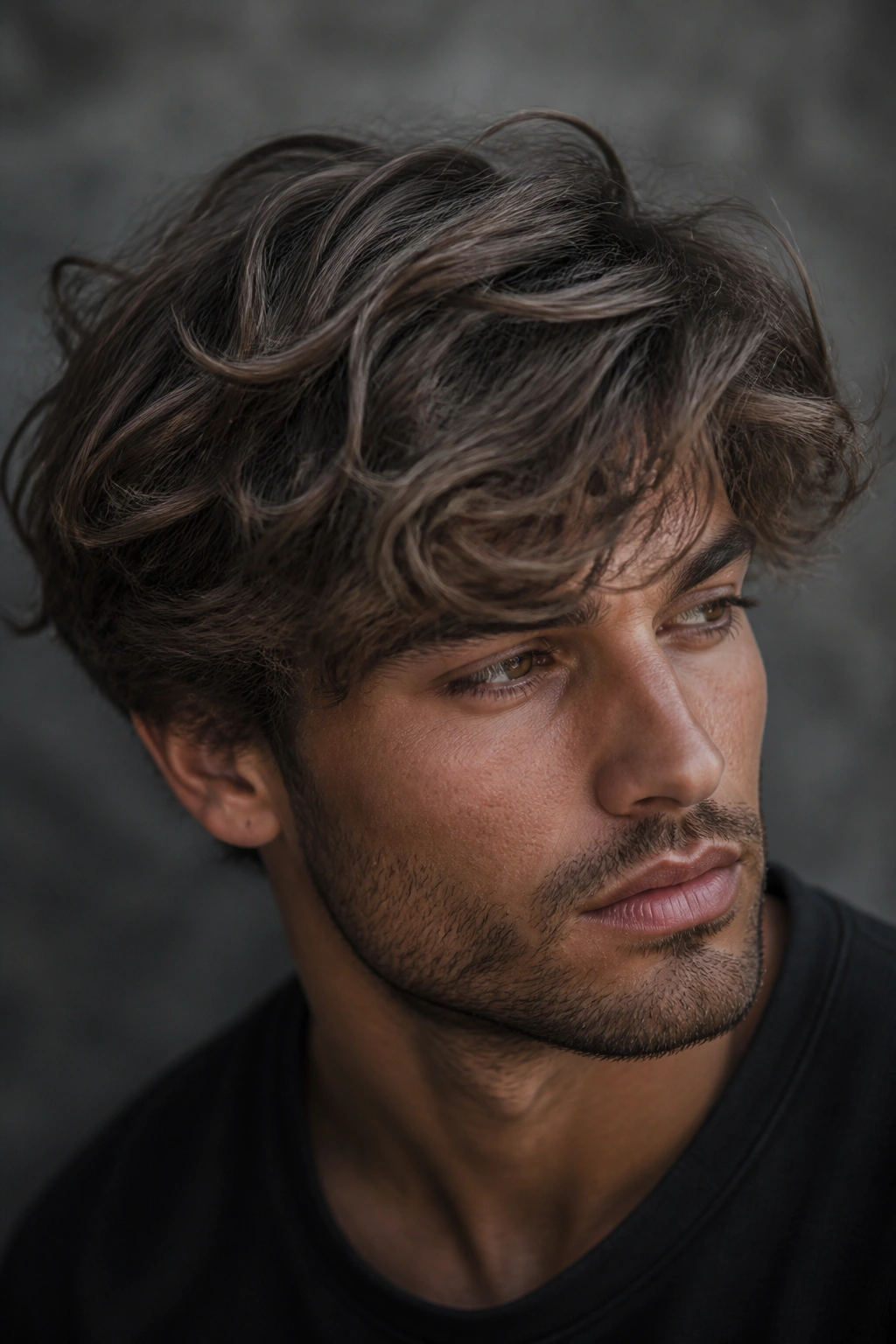
Mushroom brown is the cool cousin of regular brown. It has a muted, earthy feel that keeps the hair from looking flat, but it stops well short of blonde. On the right guy, it looks calm, modern, and a little mysterious without trying too hard.
This tone works especially well if your skin leans neutral or cool. Warm golden highlights can look off in that case, while mushroom tones stay closer to the natural shadow of the hair. The result is more depth than brightness, and honestly, I think that’s what a lot of men actually want when they ask for “subtle.”
It also pairs well with medium to longer cuts because the smoky shade can move through layers without calling attention to every strand. If you like texture but not flash, this is one of the nicer options. It is not the loudest choice in the room. That’s the appeal.
15. Burgundy Highlights for Men Who Want Depth
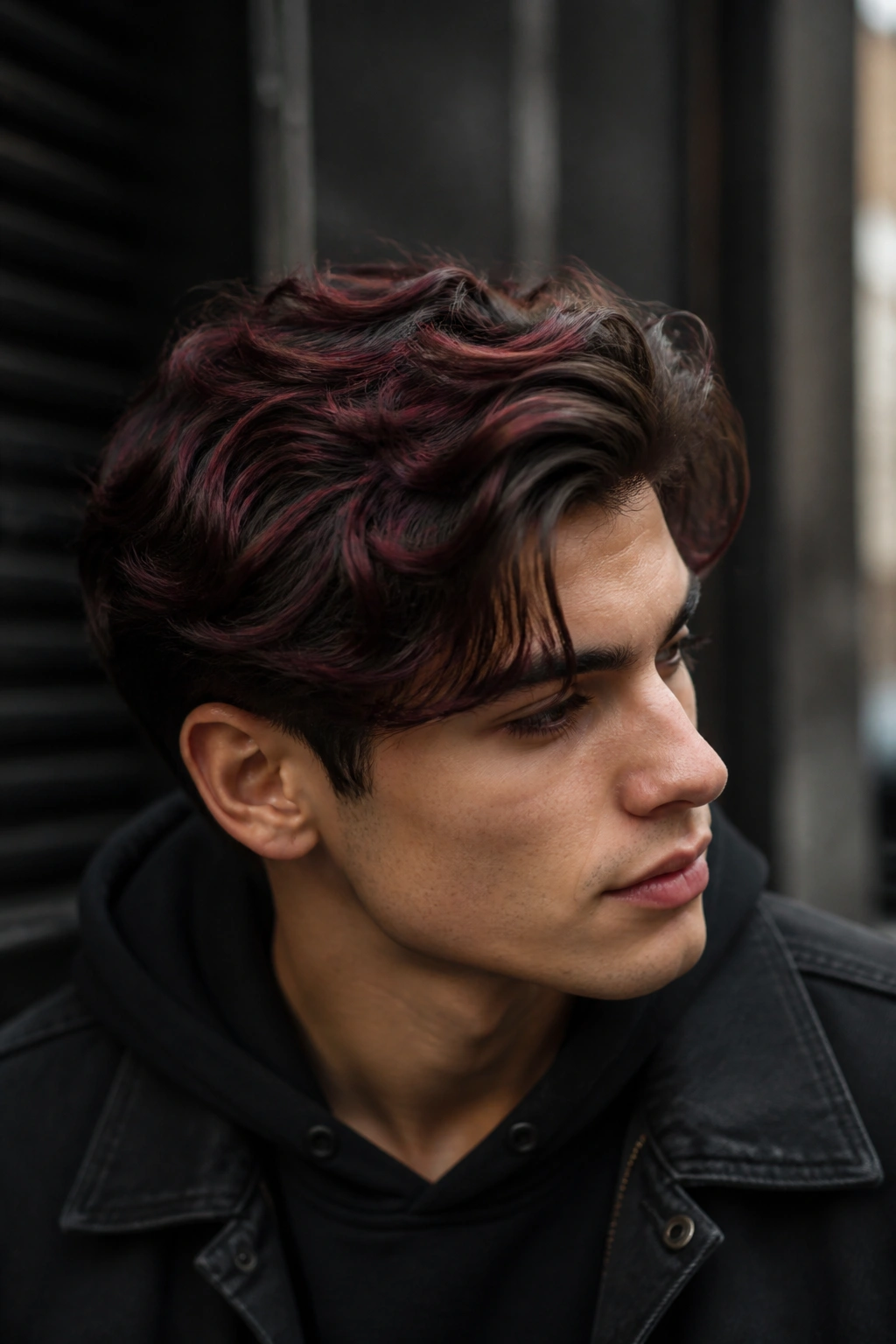
Want color that reads as rich instead of loud? Burgundy does that job well. The red-violet note gives dark hair a deeper finish, and in certain light it can look almost brown until the sun hits it.
How to Wear It
Burgundy works best when it’s woven through the hair in narrow ribbons or placed in a few stronger sections near the top. Too much, and it starts looking like a full dye job. Kept restrained, it adds a wine-dark sheen that feels grown-up and a little moody.
This shade is strong on dark brown and black hair, where it can hide in the base until the light catches it. It also looks good with short beards, especially if the beard has some natural warmth. If your wardrobe leans black, gray, navy, or denim, the color fits in easily.
The one catch: red tones fade faster than some others. If you want the look to stay rich, you’ll need to keep the shampoo gentle and avoid over-washing. Hot water is not your friend here.
16. Dirty Blonde Highlights for Straight Hair
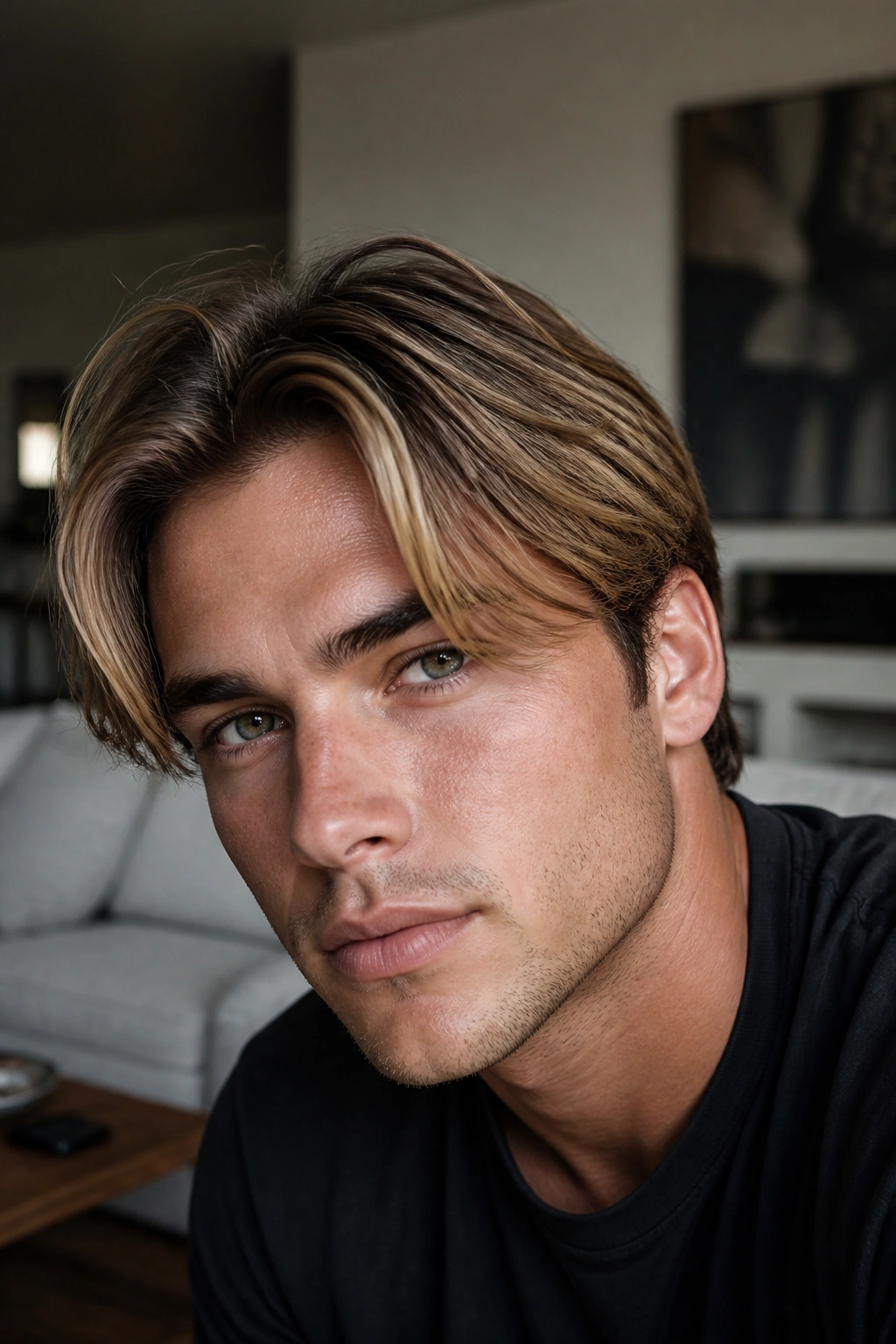
Straight hair can hide bad highlights fast. Every line shows. Every stripe shows. That’s why dirty blonde works better than a brighter, chunkier blonde on most straight cuts.
The tone itself matters because dirty blonde sits close to natural sun-faded hair. It doesn’t scream bleach, and it doesn’t carry the warm yellow that can make straight hair look flat. A thin ribbon here, a lighter streak there, and the haircut starts moving even if the strands don’t curl or wave much.
I’d use this on men with side parts, brushed-back styles, or layered medium cuts. Keep the brightness uneven so the hair doesn’t look painted. A soft root melt helps too, especially if your base color is medium brown.
Good Placement Choices
- Around the fringe for a lighter front edge
- Through the crown for lift
- A few lighter strands near the temples
- Softer pieces under the top layer so the color shows when the hair moves
17. Balayage for Medium-Length Men’s Cuts
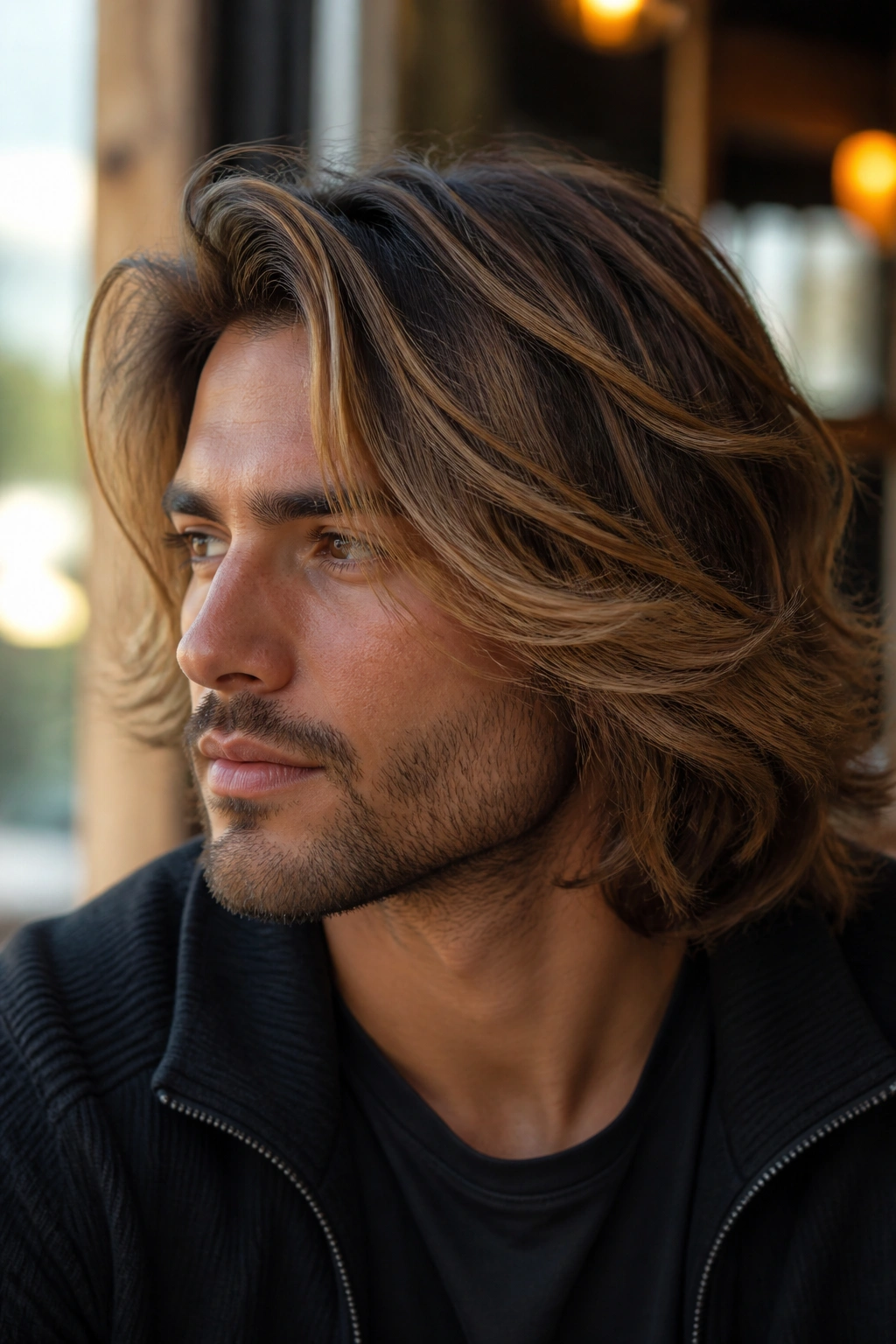
Balayage has a soft edge that barbers sometimes underestimate. Hand-painted pieces move through the hair more naturally than a hard foil line, which makes this technique useful when you want dimension without a clear stripe pattern.
It shines on medium-length cuts: bro flow, loose curtains, shaggy layers, and longer tops that still have some shape. The painted pieces can follow the way the hair falls, so the color feels connected to the cut instead of sitting on top of it. That matters more than people think.
The best part is grow-out. Because balayage doesn’t start with a hard root line, it usually stays wearable longer between appointments. If you like a slightly lived-in look and don’t want to babysit your color every month, this is one of the safer bets.
18. Babylights for Curly Hair That Needs Movement
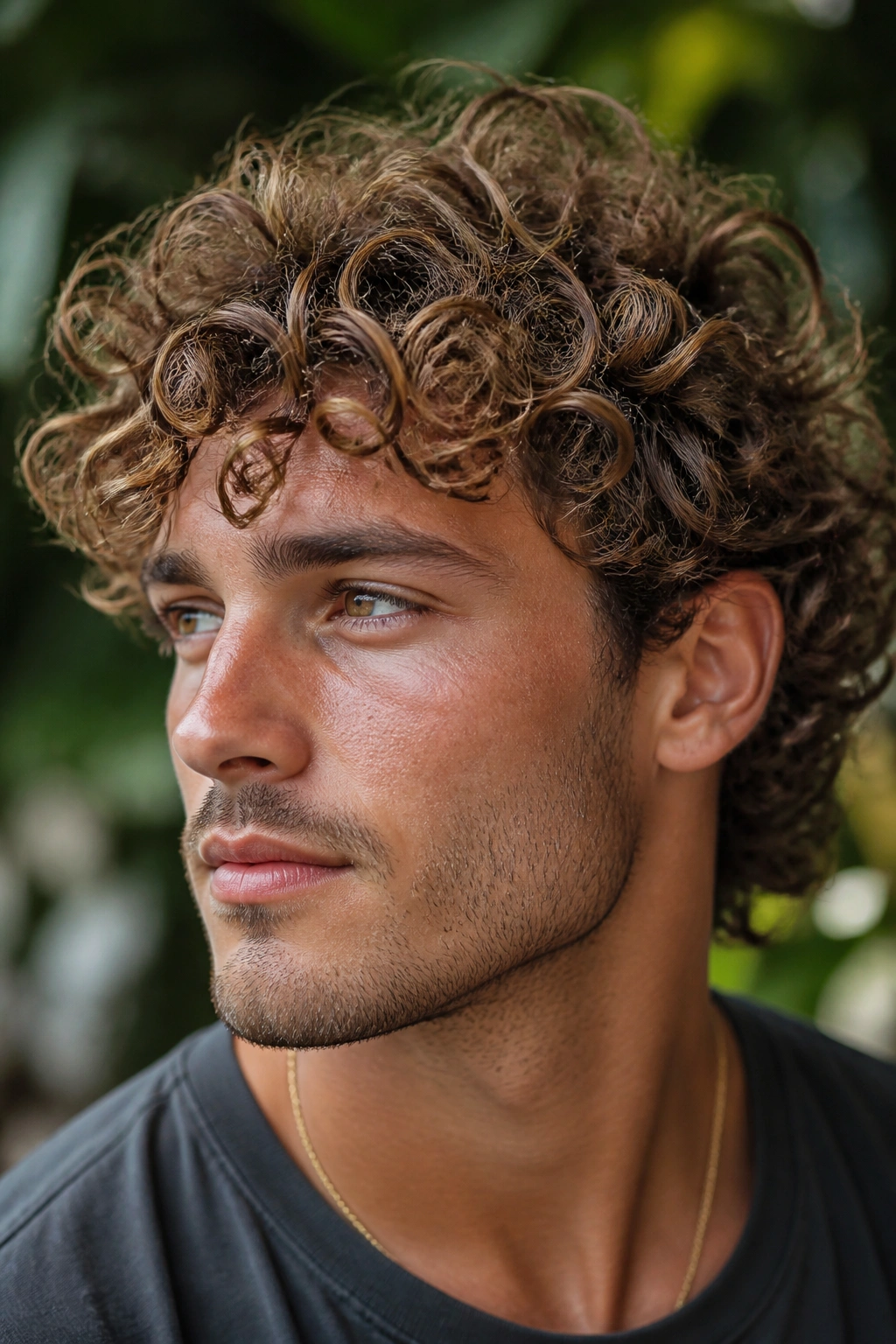
Curly hair does not want chunky strips. It wants lightness that follows the curl pattern instead of fighting it, and babylights handle that better than broad highlights ever will. Fine, tiny lightened pieces keep the curls defined while still giving the hair more depth.
How to Keep Curls Defined
The trick is placement. A colorist should place the lightest strands where the curl naturally opens, usually around the outer ring, the top surface, and a few areas near the front. That way the color appears when the curl shifts, but it doesn’t break the shape of the pattern.
- Use very fine sections instead of wide foils
- Keep the lift gentle so the curl stays springy
- Pair the color with moisture-heavy care at home
- Avoid over-brushing, which turns all that work into puff
Babylights are a quiet choice, but they can make curls look more alive than louder highlights ever do. If your hair already has texture, this is one of the cleanest ways to show it off.
19. Razor-Cut Ends with Lightened Pieces
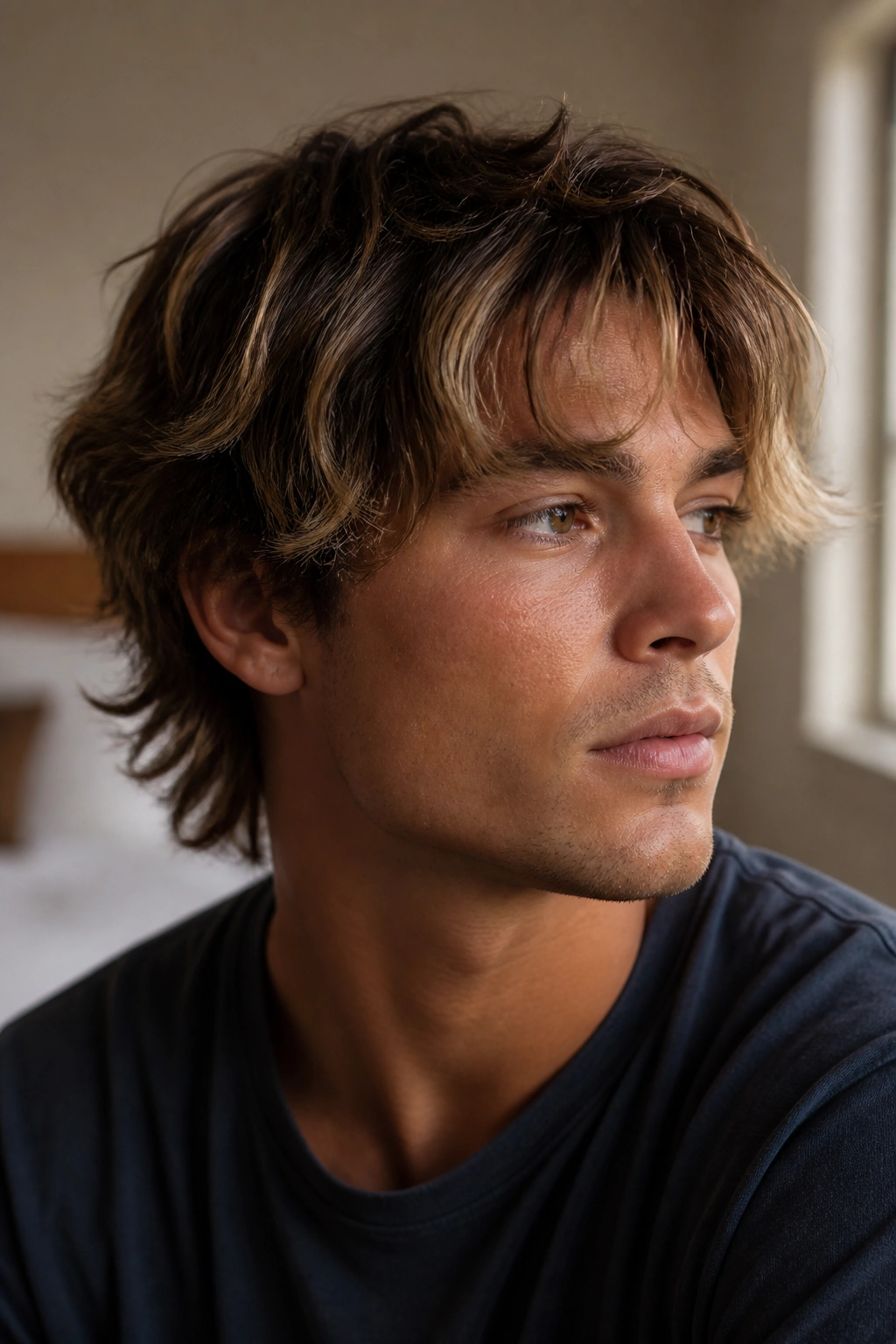
Razor-cut ends and lightened pieces work together because both of them create motion. The razor gives the haircut a sliced, airy edge, and the highlights follow those lines instead of fighting them.
This style is strongest on shaggy cuts, longer fringes, and hair that naturally falls in pieces rather than in one heavy sheet. If the lightening is placed right at the tips or along the broken layers, the whole haircut looks lighter without losing its shape. That’s the part people miss. The color is not doing the whole job. The cut is carrying half the weight.
Why the Finish Matters
A blunt, blocky highlight can make a razor-cut style look messy. A few narrow, uneven light pieces keep it sharp. Ask for irregular placement, not even spacing. Hair like this needs some mess in it.
I’d use this on men who already like texture spray or sea-salt mist. The color and the finish feed each other, and the haircut ends up looking intentional even when it’s loose.
20. Choosing Highlights for Men by Haircut and Maintenance
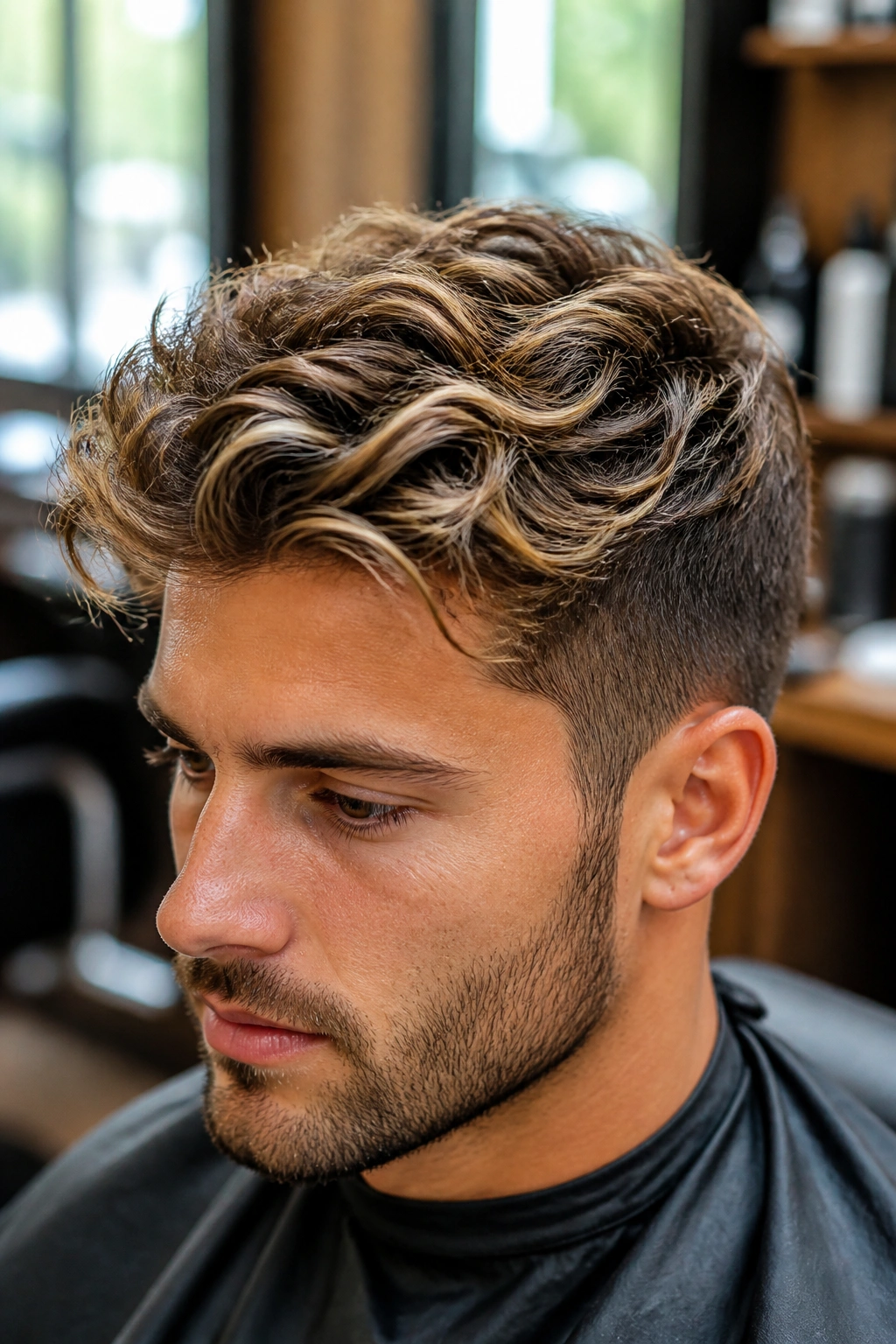
The best highlight is not the flashiest one. It is the one that fits your haircut, your schedule, and your tolerance for roots showing up again in six weeks. That sounds obvious, but a lot of bad color choices come from ignoring it.
A short crop can handle stronger contrast than a longer, softer cut. Thick hair can carry chunkier placement without looking busy. Curly hair usually needs finer sections. Gray blending wants a different plan entirely. So before you pick a shade, look at the shape first, then decide how bold you want to go.
Bring two or three photos to the salon, and make sure at least one shows the hair in natural light. Indoor pictures can lie. So can filters. Tell the colorist how much upkeep you’ll actually do, because there is no point asking for platinum if you only want to sit in a chair twice a year.
My favorite rule is simple: go one shade softer than your first instinct. Hair can always go lighter later. It is a pain to back down from a stripe that went too pale. That one little step down saves more men from regret than any fancy trend ever will.
