



Brunette hair goes flat faster than people expect. One minute it looks rich and glossy; the next it reads like one solid block, especially if the ends have faded from heat, washing, or too much sun through a car window.
That is where lowlights earn their keep. They sit a shade or two deeper than your base, tuck into the interior, and make the surface look thicker without screaming “color job” from across the room. Good lowlights for brunette hair do one thing especially well: they give the cut shape.
The mistake I see most is pushing brunettes too dark or too warm. A lowlight that lands near black can look hard. One that turns copper in the bowl can fight the rest of the hair. And if the hair is porous, the same formula that looks soft on virgin strands can grab like ink.
The shades below move from espresso to plum, from smoky taupe to deep red-brown. Some are barely-there shadows. Some bring warmth. A few have a little attitude, which is exactly what brunette hair needs when it starts looking sleepy.
1. Espresso Lowlights for Brunette Hair
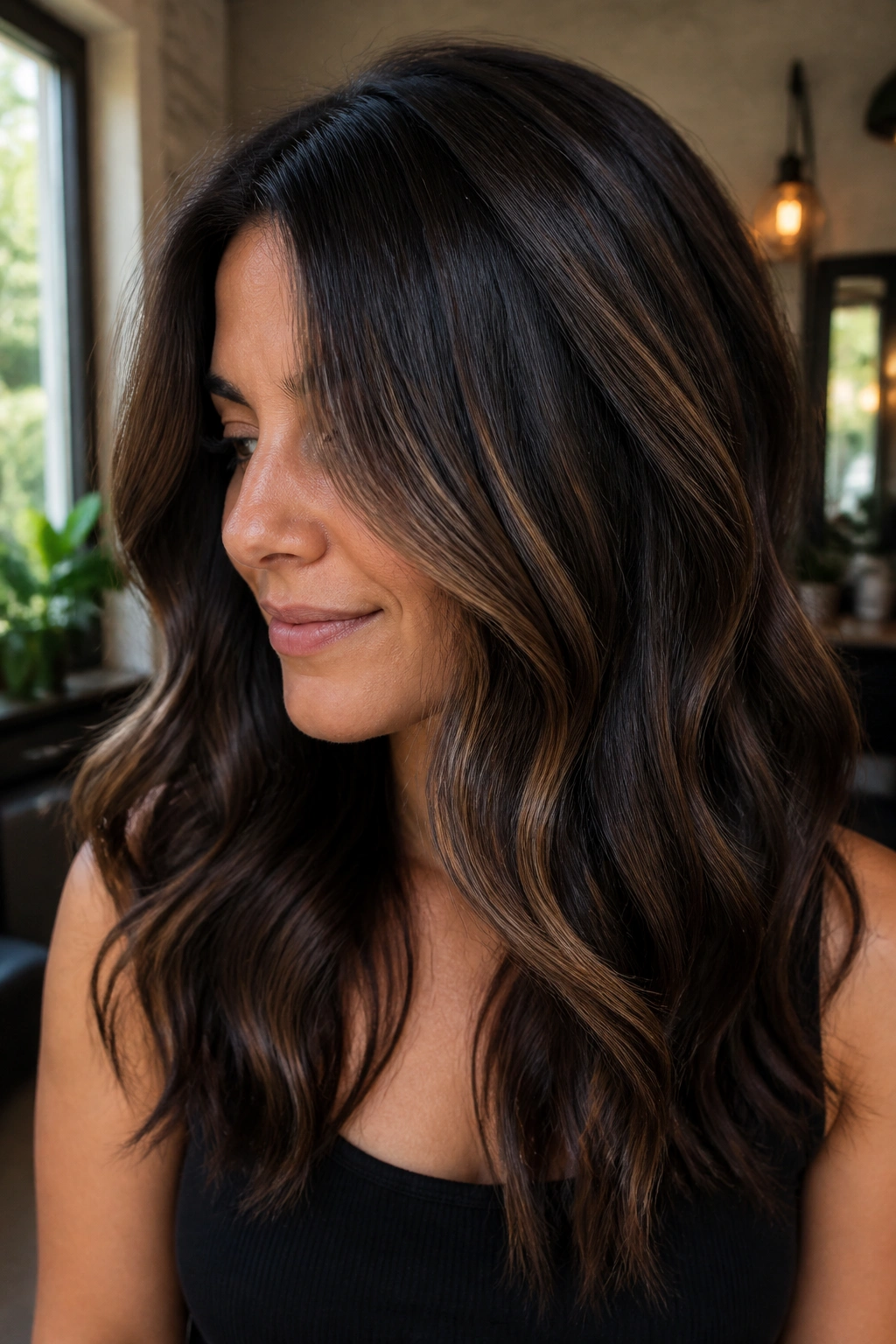
Espresso lowlights are the blunt instrument of brunette color, and I mean that as a compliment. They go almost black-brown, which makes the rest of the hair look richer and the cut look denser. On long, straight hair, that contrast can save you from the flat, one-note finish that shows up after a few months.
Where They Work Best
Paint espresso pieces under the crown and through the inner mid-lengths. Keep the top layer softer so the darker strands only peek through when the hair moves. A neutral-cool demi-permanent formula usually reads cleaner than permanent dye, especially on porous ends.
- Best on level 4 to 5 brunettes.
- Keep slices thin near the part.
- Avoid flooding the ends; they grab dark color fast.
- Ask for a gloss if the finish looks matte.
Tiny warning: if your hair is already very dark, espresso can disappear. In that case, ask for a half-step deeper, not a full black-brown leap.
2. Dark Chocolate Ribbons
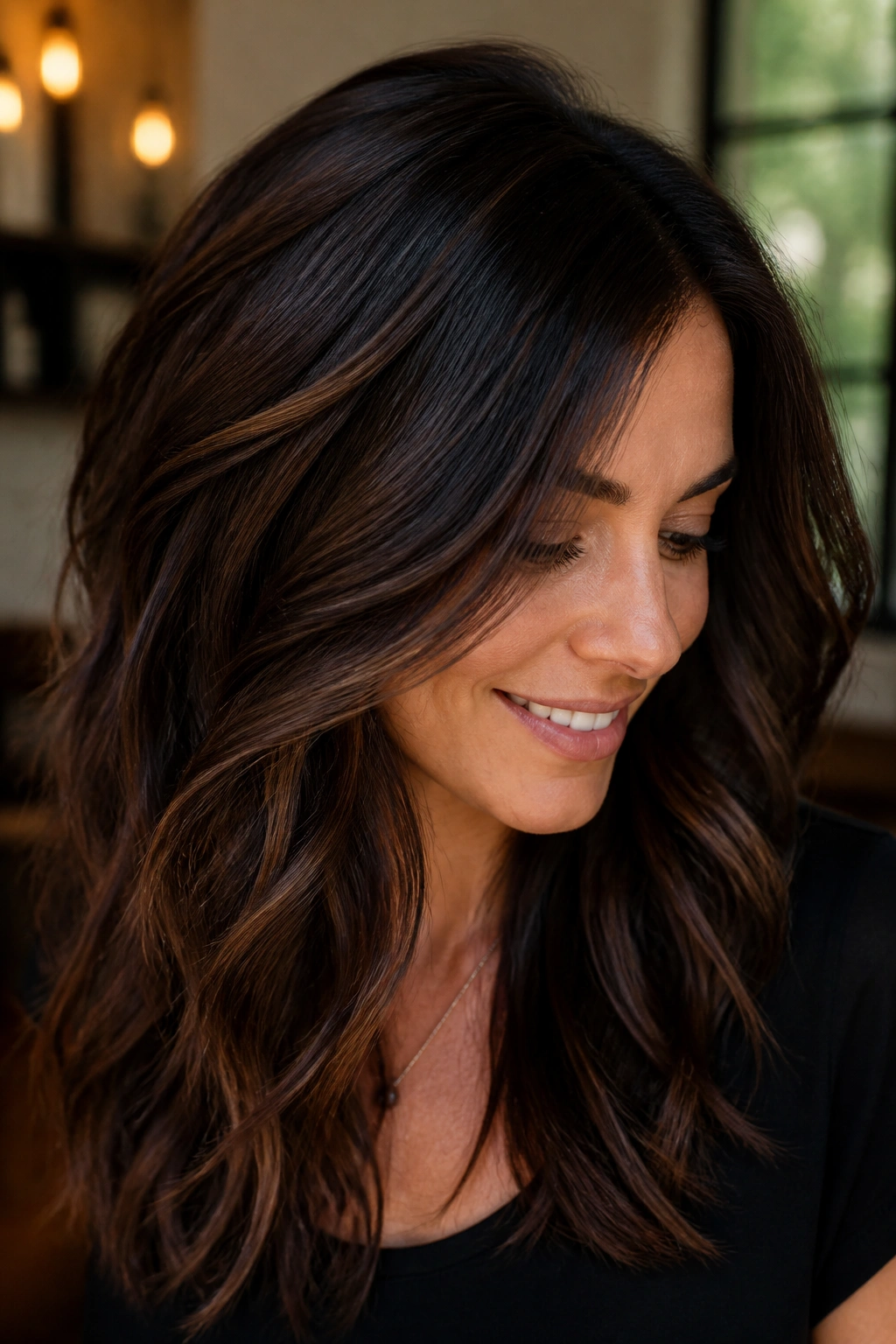
Why does dark chocolate look softer than espresso even when it is only a shade lighter? Because it keeps more brown in the mix. That tiny shift matters. It reads richer, less severe, and it gives medium brunette hair the kind of movement that looks natural in daylight.
Dark chocolate lowlights are the shade I reach for when the goal is depth, not drama. They work especially well on layered cuts, where the darker ribbons follow the shape of the ends. If the color sits under loose waves, the result feels expensive in the plainest sense of the word: full, glossy, and easy on the eye.
What Makes It Different
Ask for slices that are woven through the mid-lengths, not packed too close to the roots. That keeps the crown from looking heavy. This shade is also a smart pick if you wear your hair curled, because the bends catch the darker pieces and make the pattern look deliberate instead of striped.
3. Mocha Lowlights
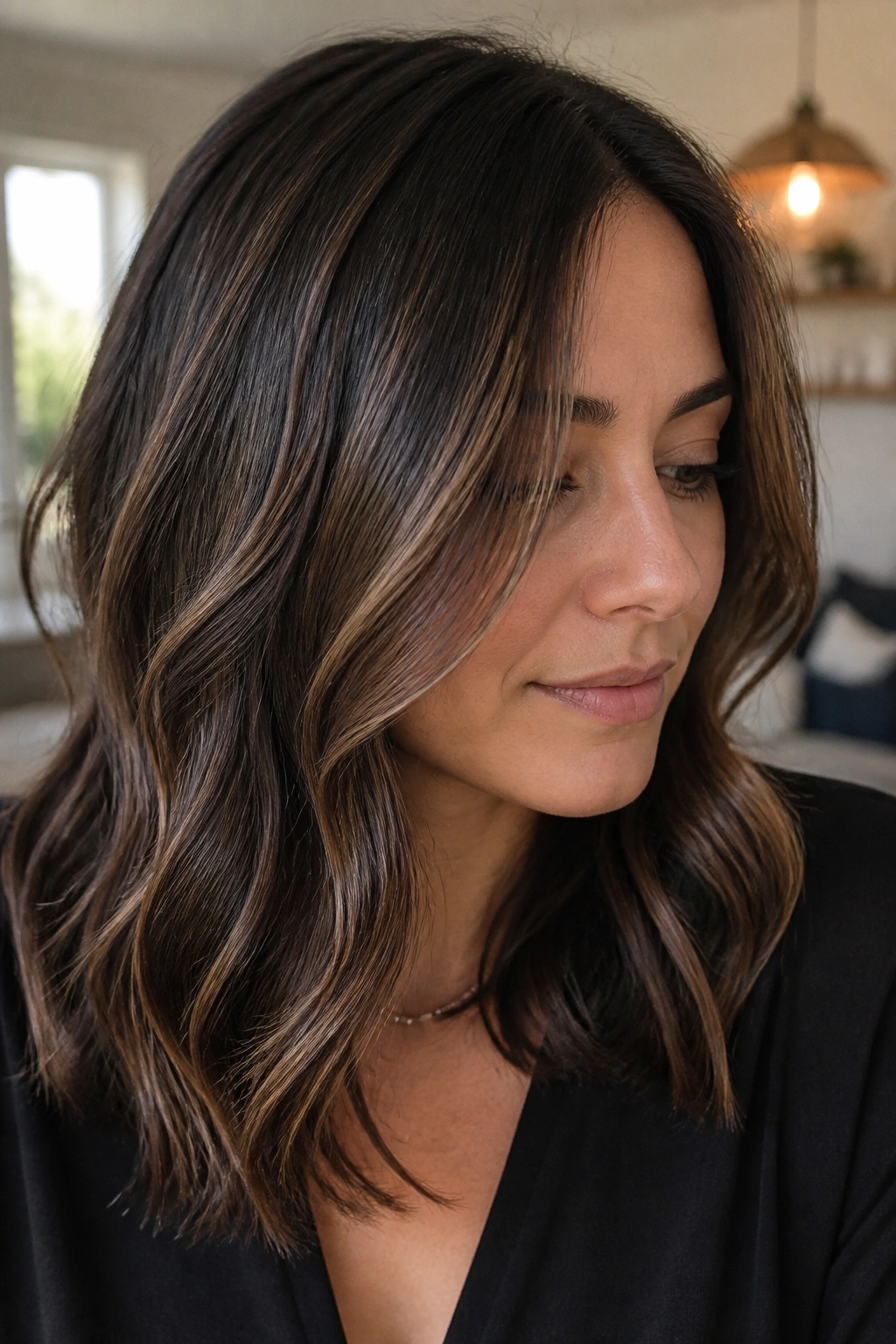
If your brunette color looks a little dry around the face, mocha lowlights can fix the problem without pulling the whole head darker. Mocha sits in that creamy middle zone between warm and cool, which is why it flatters so many bases. It softens hard edges.
Mocha is the shade that behaves itself. It does not shout, but it changes the way the hair falls. On shoulder-length cuts, it makes the layers separate a bit more. On longer hair, it keeps the color from reading like one large brown sheet.
- Best for level 5 to 6 brunettes.
- Works well with soft bends and blowouts.
- Ask for a neutral mocha, not a milk-chocolate caramel.
- Great when your ends look lighter than your roots.
A lot of stylists place mocha pieces just below the part and through the perimeter, which keeps the top looking fresh while the underside does the heavier visual work.
4. Cocoa Bean Shadows
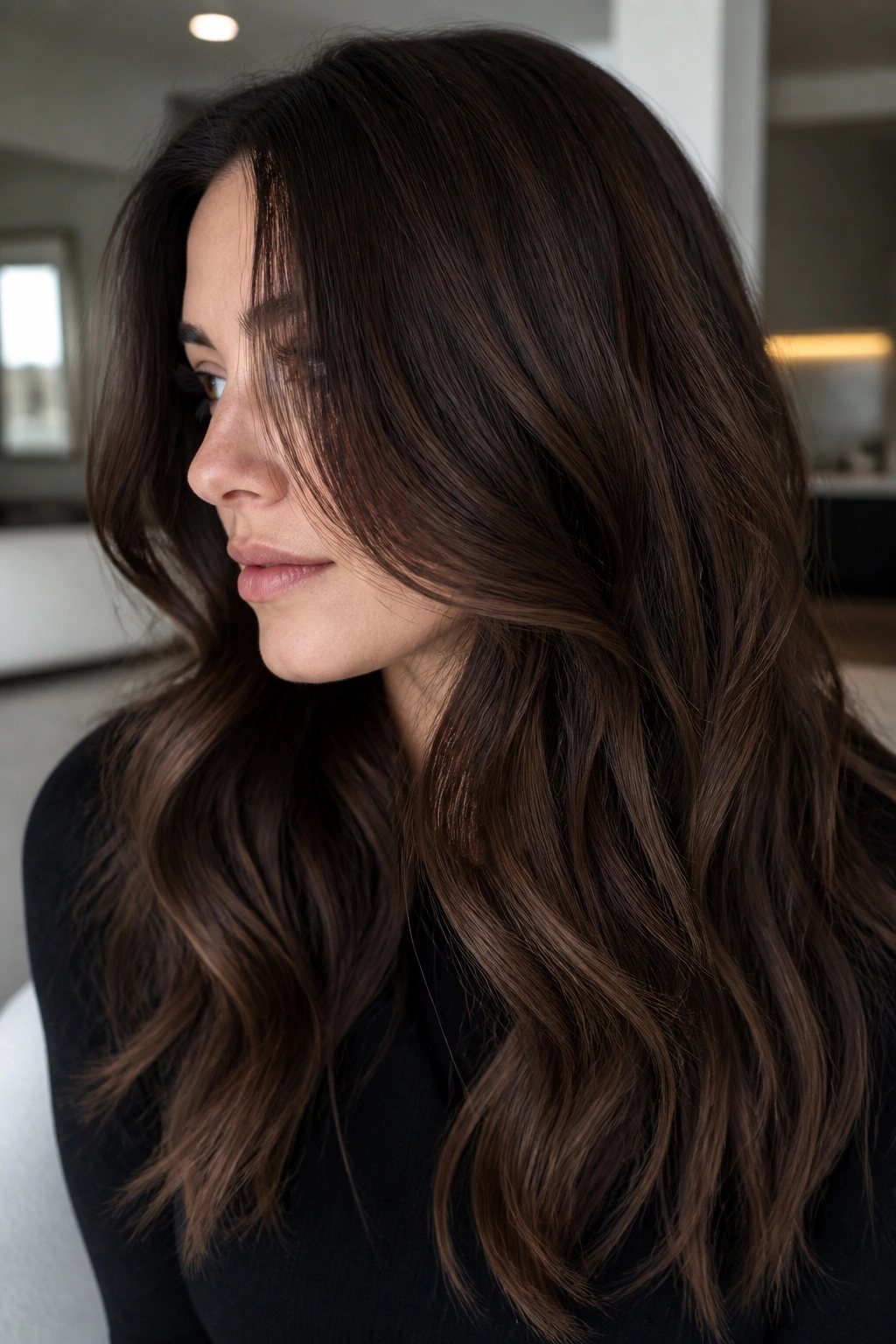
Cocoa bean lowlights are for brunettes who want cool depth without a gray cast. The tone is deep, dry, and slightly muted, like raw cocoa powder before it gets sweetened. It is one of my favorite choices for hair that pulls orange too fast, because the shade reins that warmth in fast.
Why It Works
The trick is contrast that stays soft. Cocoa bean pieces should be one to two levels deeper than your base, not four. That way the hair still moves, but the finish looks denser and cleaner. If you have fine hair, this shade can make the whole head look fuller without turning the color heavy.
Use it under the crown, around the nape, and in the interior layers. Skip big face-framing pieces unless you want the color to be obvious. This is a shade that works hardest when it stays a little hidden.
5. Mushroom Brown Lowlights
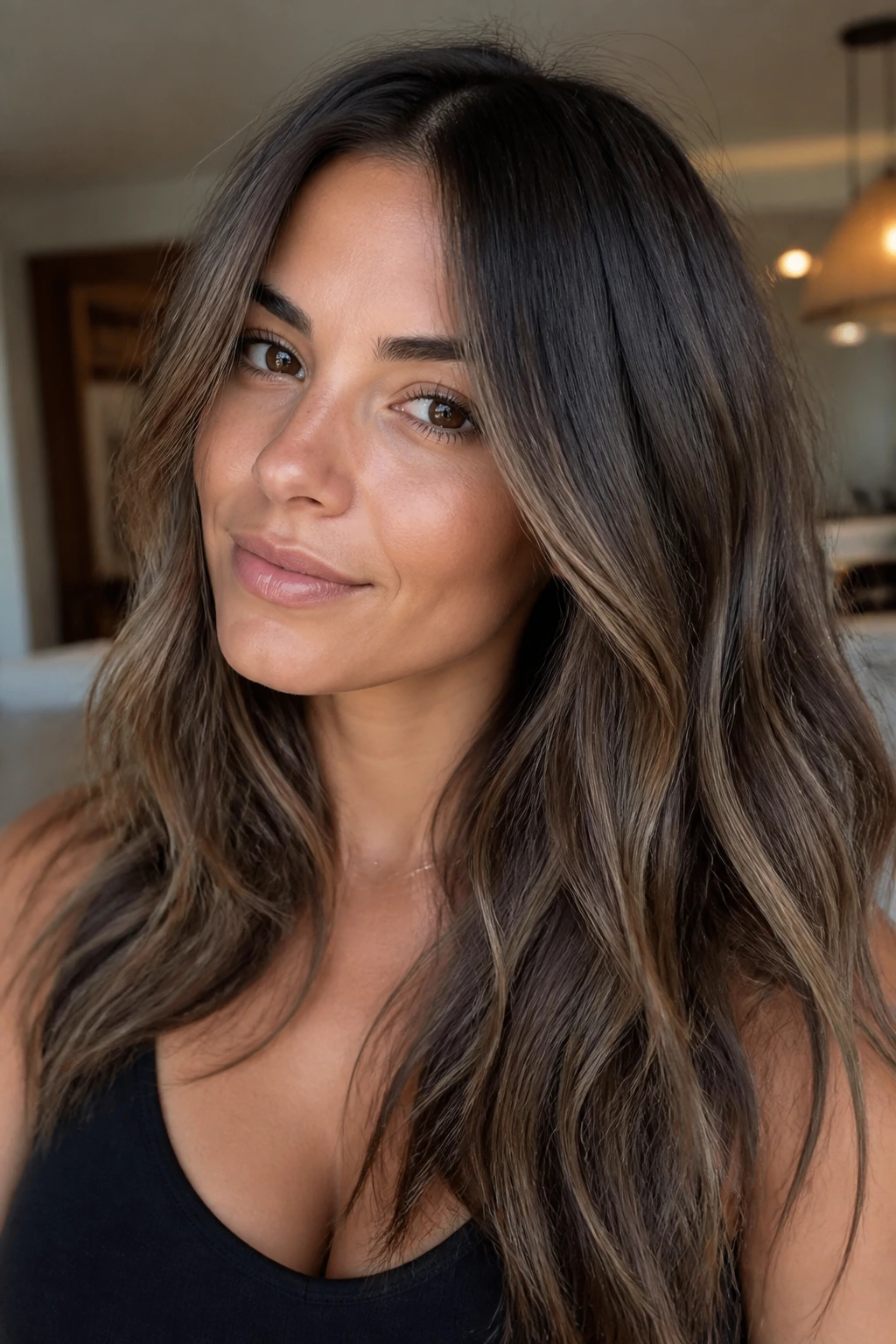
Can a brown look cool without looking dull? Yes, if it lives in the mushroom family. Mushroom brown lowlights mix taupe, smoke, and soft brown in a way that cuts brassiness without stealing warmth from the whole head.
On medium brunettes, this shade is the one that makes color look calm. It suits hair that lifts too golden after summer light or too orange after a gloss. Mushroom brown lowlights are not flashy. They are the opposite, and that is exactly why they work on layered lobs, blunt cuts, and blunt bobs that need shape more than shine.
How to Ask for It
Tell your colorist you want a smoky brown tone with no red kick. Keep the pieces fine near the hairline, then slightly wider in the back where the contrast hides better. If the hair is curly, go a touch deeper so the shade does not disappear when the curl shrinks.
6. Ash Brown Veils
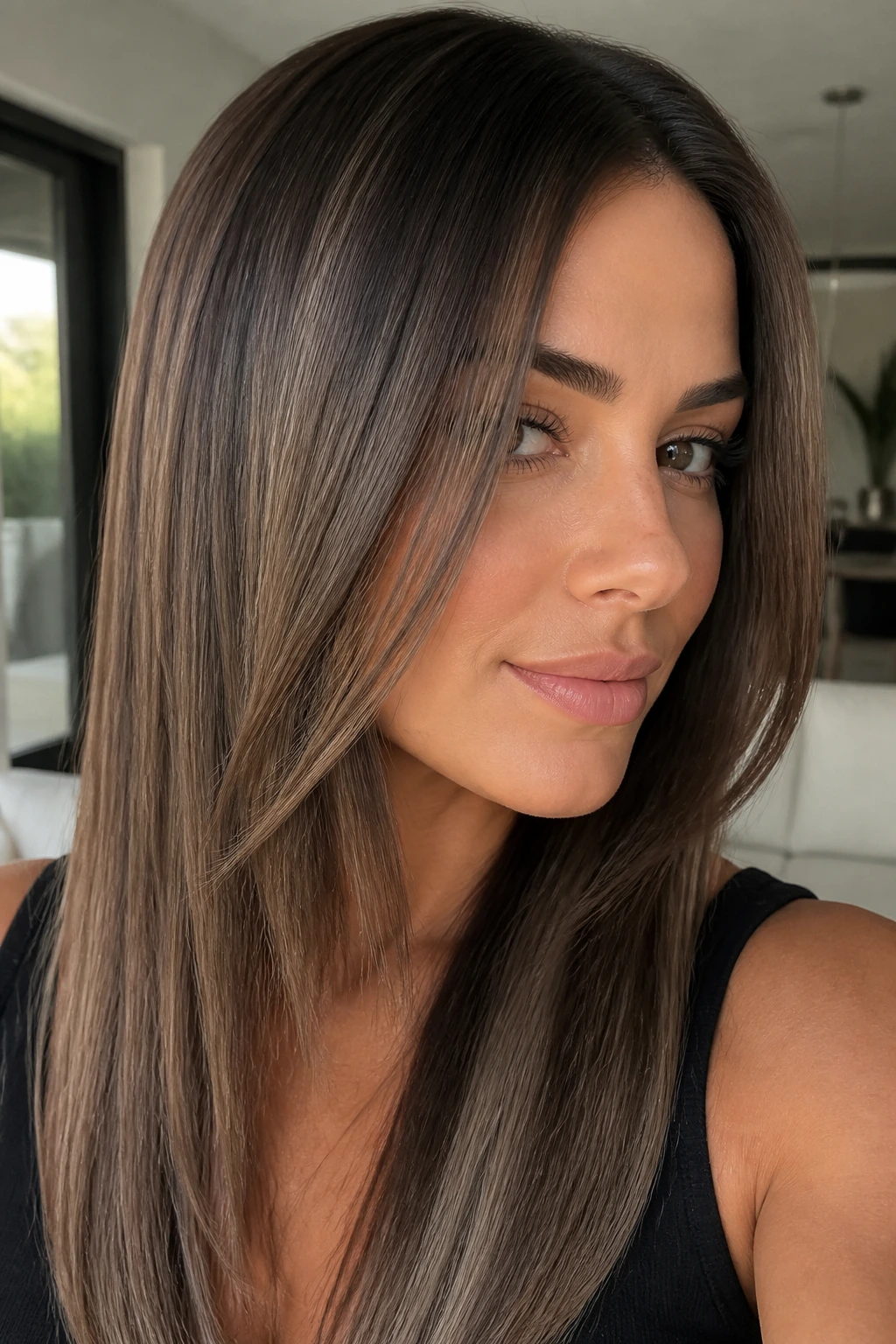
Ash brown lowlights are not for someone chasing warmth. They are for brunettes who look in the mirror and think, “Why is my hair suddenly copper again?” Ash brown cuts that problem down hard.
The finish is cool, muted, and tidy. That makes it a smart match for neutral or cool skin tones, especially when the hair has a lot of orange underneath. It also works on dense hair because the ash tone keeps the bulk from looking too heavy or too red.
- Ask for a blue-leaning brown, not a flat gray.
- Keep the placement under the top veil.
- Good on straight hair and polished blowouts.
- Use a color-safe shampoo so the tone stays clean.
If the lowlights start looking dusty, the color was probably mixed too cool. That is the line to avoid.
7. Sable Lowlights
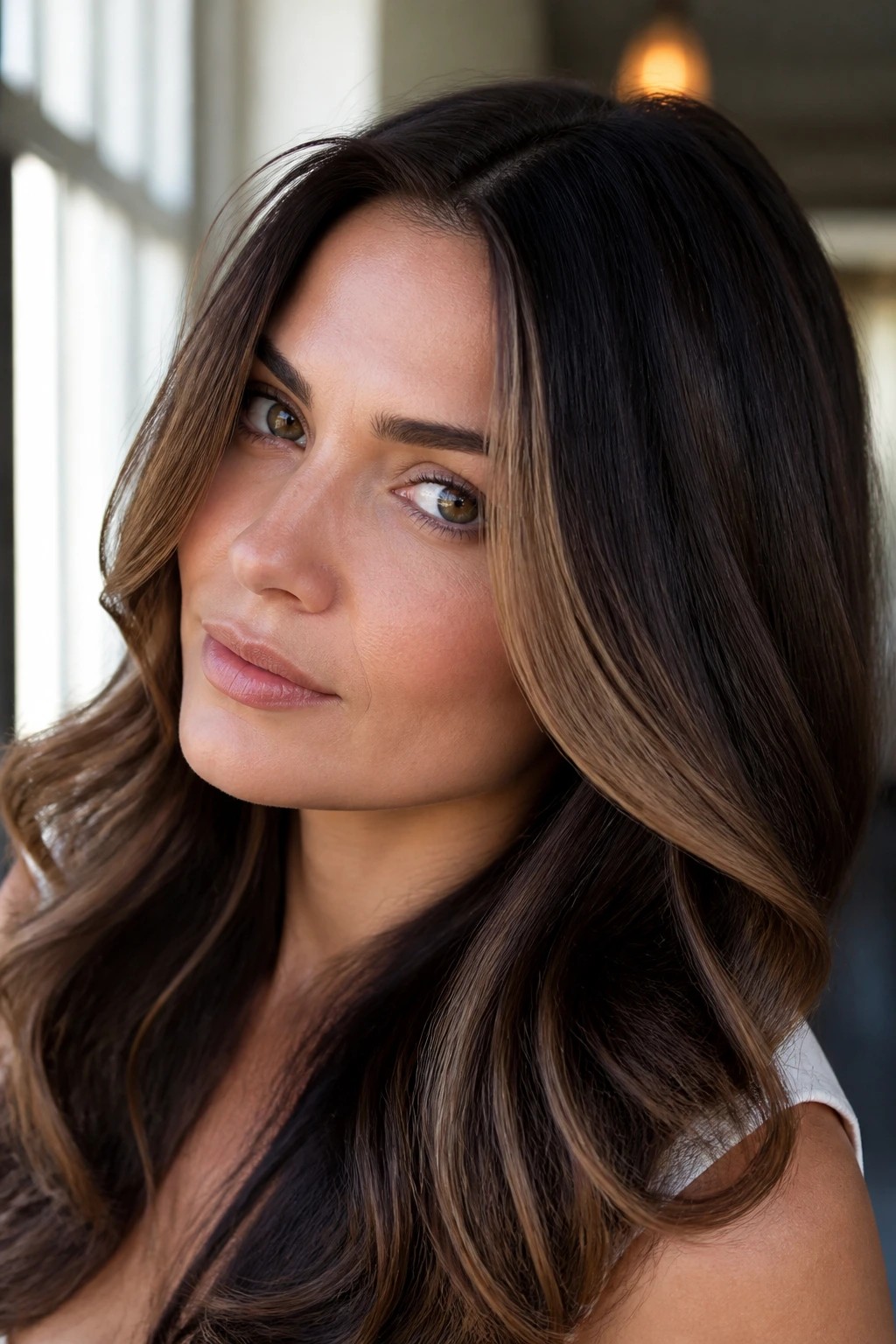
A good sable lowlight looks like a shadow, not a stripe. That is why it flatters thick brunette hair so well. The tone is deep black-brown with a polished finish, and it gives long hair a denser edge without making the whole head look harsh.
The Shape It Creates
On layered cuts, sable lowlights follow the bend of the ends and make the layers read more clearly. On straight styles, they can outline the cut in a subtle way, almost like soft contouring for hair. That matters when the base color has gone flat at the mids.
Use sable under the surface and keep the front lighter by comparison. It is a shade that does its best work in motion. Still. Too much of it on top and the look turns severe fast.
8. Walnut Brown Panels
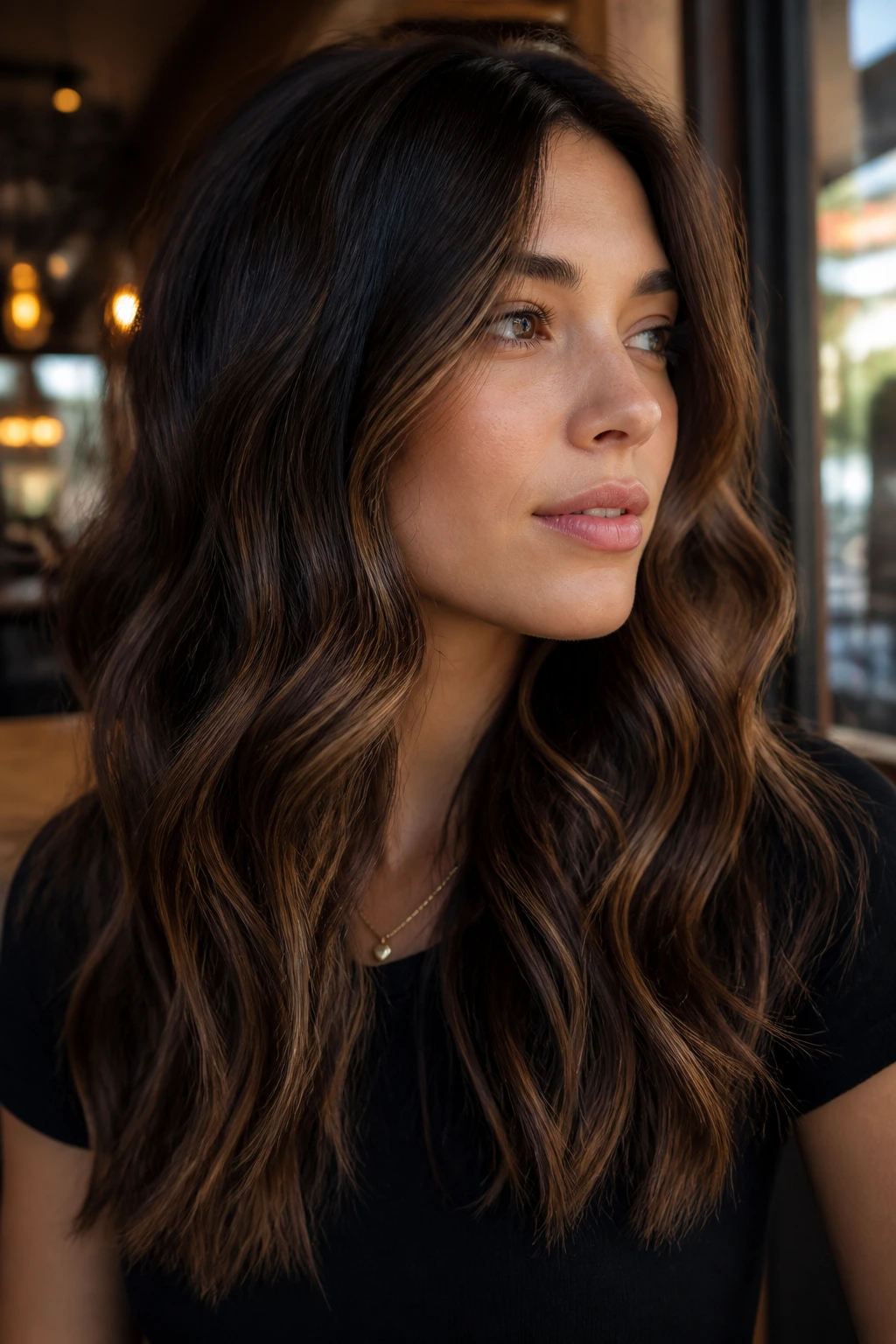
Walnut brown is one of the easiest lowlight shades to wear because it sits right in the middle of warm and cool. It has enough depth to change the shape of brunette hair, but it does not drag the color too far in either direction. That balance makes it a strong choice for first-time lowlights.
Walnut works especially well on wavy hair, where the darker pieces can move between the bends and make the texture look fuller. It also plays nicely with medium brunettes who want more contrast around the lower half of the hair, not right at the roots.
Ask for panels rather than tiny micro-weaves if you want the shade to show. If you want a softer result, keep the weave fine and concentrated through the mid-lengths.
9. Chestnut Lowlights
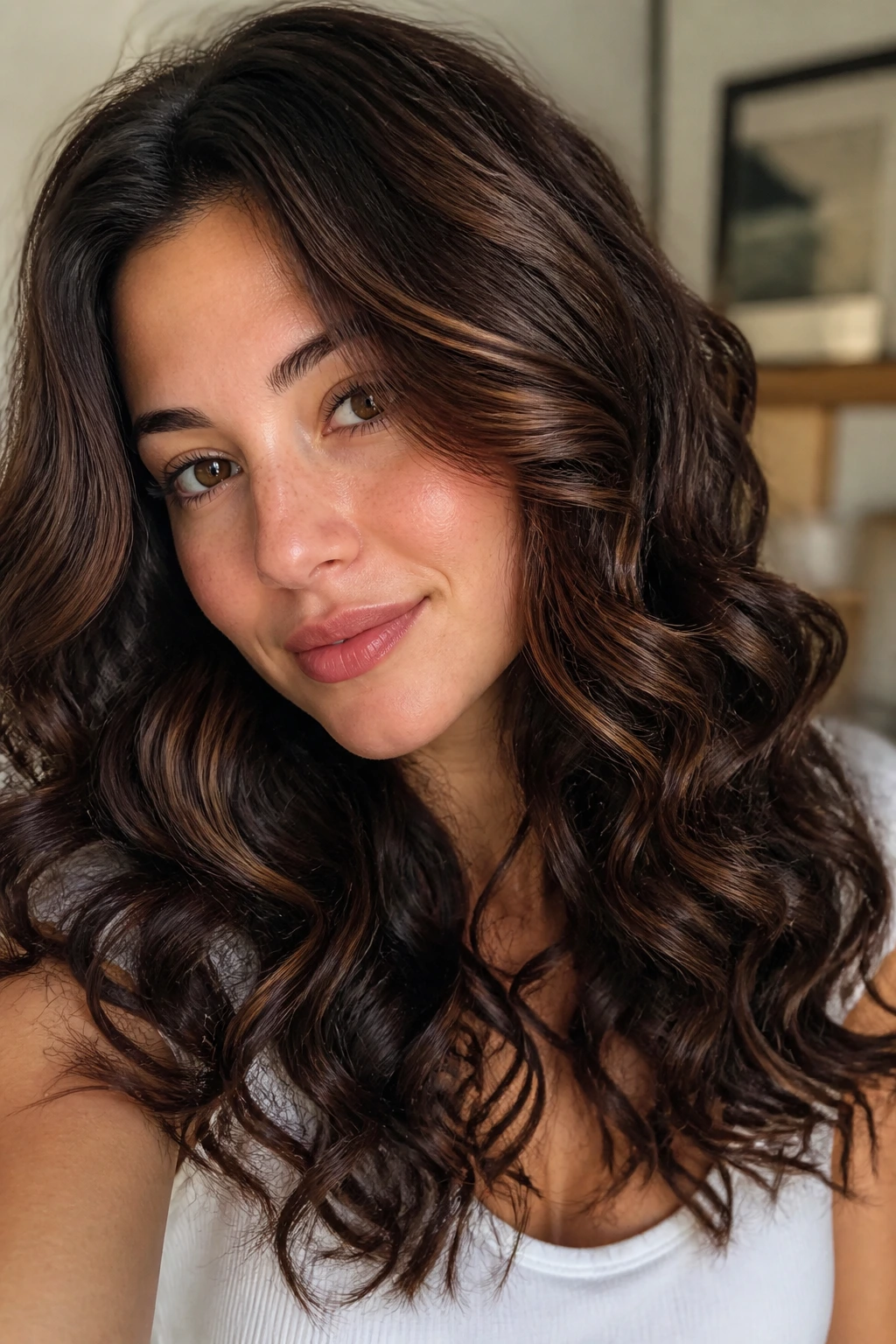
Why does chestnut never look boring on brunette hair? Because it carries a little warmth without tipping straight into red. That small bit of warmth can be a lifesaver on dark brown hair that needs life but does not need a copper flood.
Chestnut lowlights are especially good on layered curls, where the warmer pieces catch on the turns and make the pattern look natural. They also work well if your base color is already rich but missing movement. Chestnut makes the hair look lived-in, not stripped or overprocessed.
A lot of people ask for chestnut and end up with too much orange. Avoid that by asking for a brown base with a soft red undertone, not a red-brown stripe. It should feel like warmth under the surface.
10. Cinnamon Brown Threads
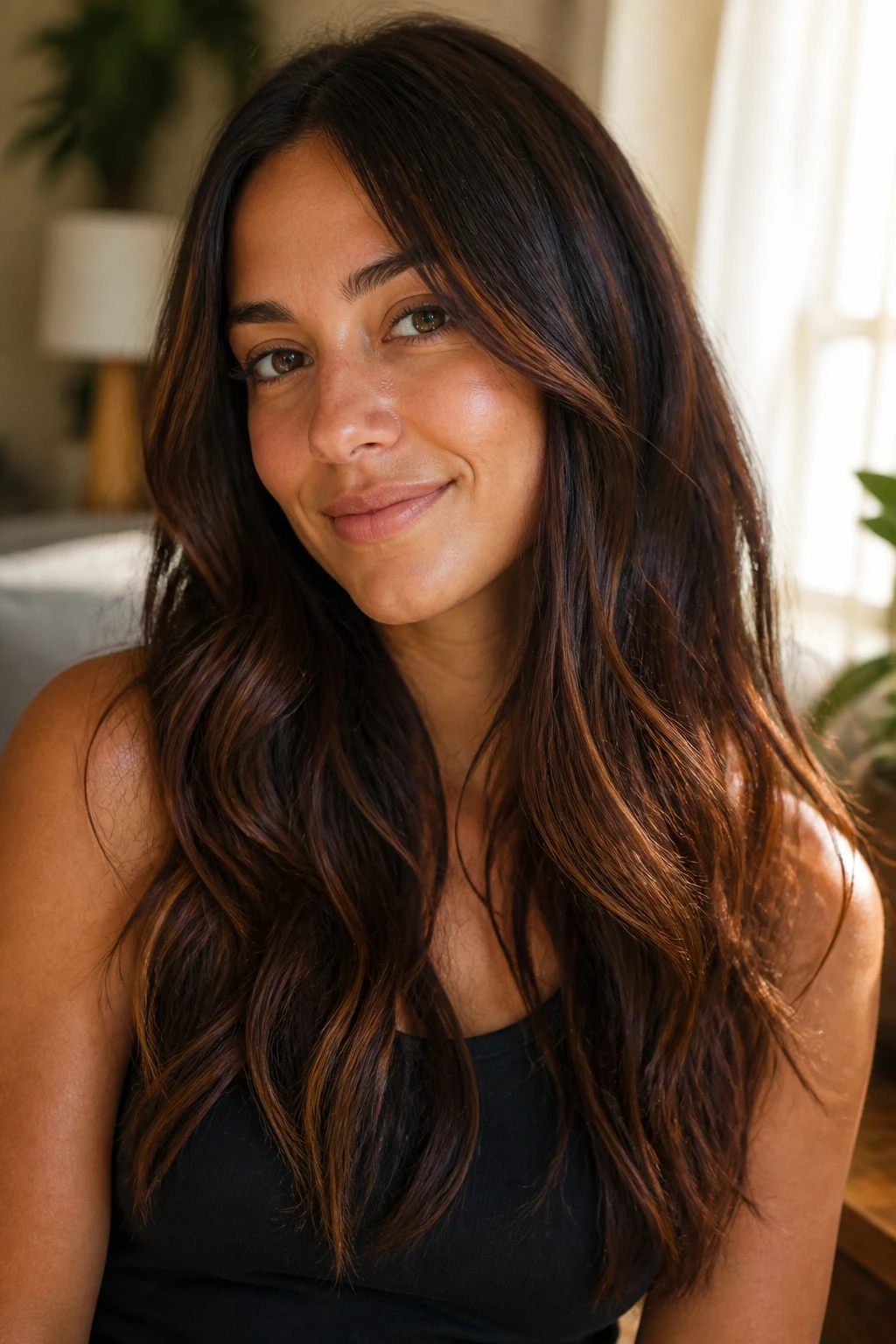
If you want brown hair with a little spice, cinnamon lowlights are the move. They bring a red-brown heat that sits lower and deeper than copper, which makes them easier to wear on brunette bases that can handle warmth.
The best way to place cinnamon is in thin threads through the mids and ends. That keeps the color from turning into a block of red. On long layered hair, those threads catch the bends and make the shape look softer. On a blunt cut, they create tiny flashes that keep the length from looking heavy.
- Best on medium to dark brunettes.
- Great when the hair already has a warm undertone.
- Ask for fine ribbons, not chunky blocks.
- Keep the root area quieter than the ends.
11. Toffee Lowlights
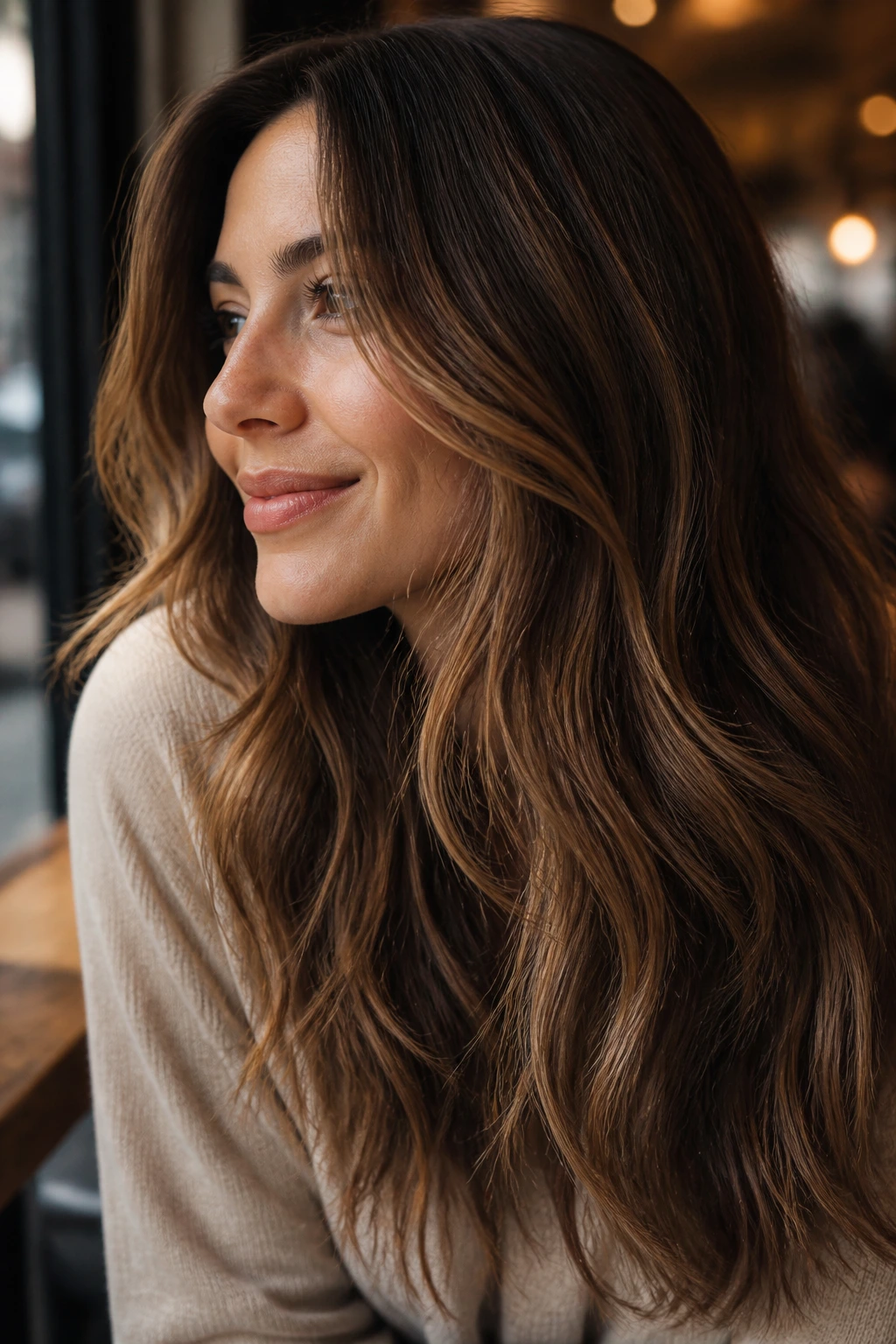
Toffee lowlights are warmer than mocha and softer than caramel. That middle ground is useful. It means you can warm up brunette hair without making it look blonded-out or streaky. On a rich brown base, toffee can make the whole color feel sunnier in a very controlled way.
The shade works well if your hair looks dull under indoor light. It adds a faint golden brown note that shows up when the hair moves, but it still reads brown first. That is a good thing. The second it starts reading as light caramel everywhere, it stops being a lowlight.
What To Watch For
Toffee can turn brassy on porous hair, so the formula matters. Ask for a soft golden brown, not a yellow blonde-brown blend. Place it below the surface if you want the warmth to stay quiet and expensive-looking.
12. Caramel Shadow Pieces
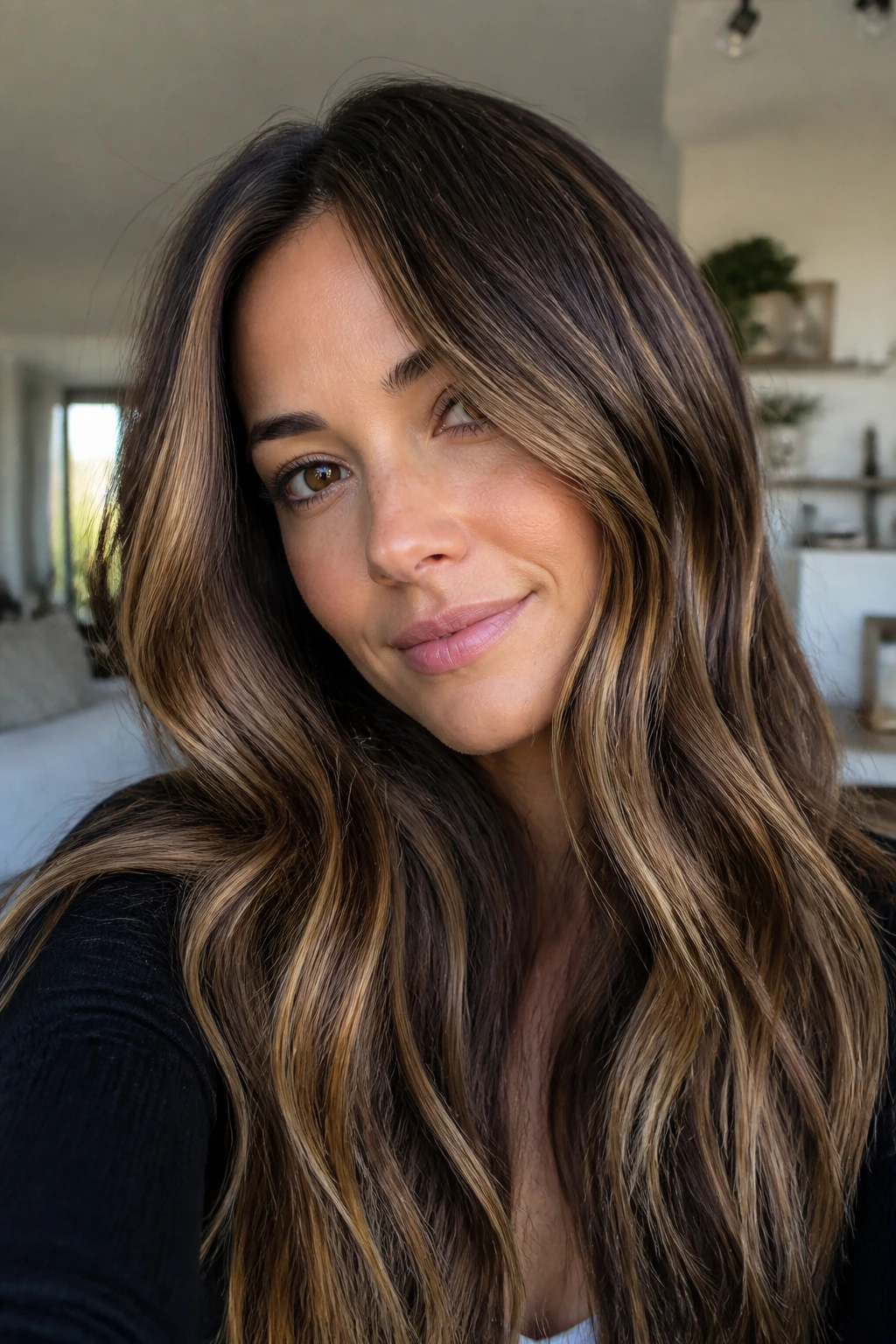
Caramel shadow pieces are the smarter cousin of standard caramel. They keep the sweetness, but the tone is deeper and less obvious. That makes them useful on brunette hair that needs lift around the face and movement through the ends without a bright highlight effect.
Why It Feels Softer
Caramel can get loud fast. Caramel shadow lowlights avoid that by staying a shade darker and leaning brown instead of gold. The result is a softer glow that works on medium brunettes and dark blondes who are growing back into brown.
Use them in small slices through the lower half of the head. If you place too many near the part, the color can start to look striped. The best version almost disappears indoors and wakes up when the light hits it sideways.
13. Honey Brown Lowlights for Brunette Hair
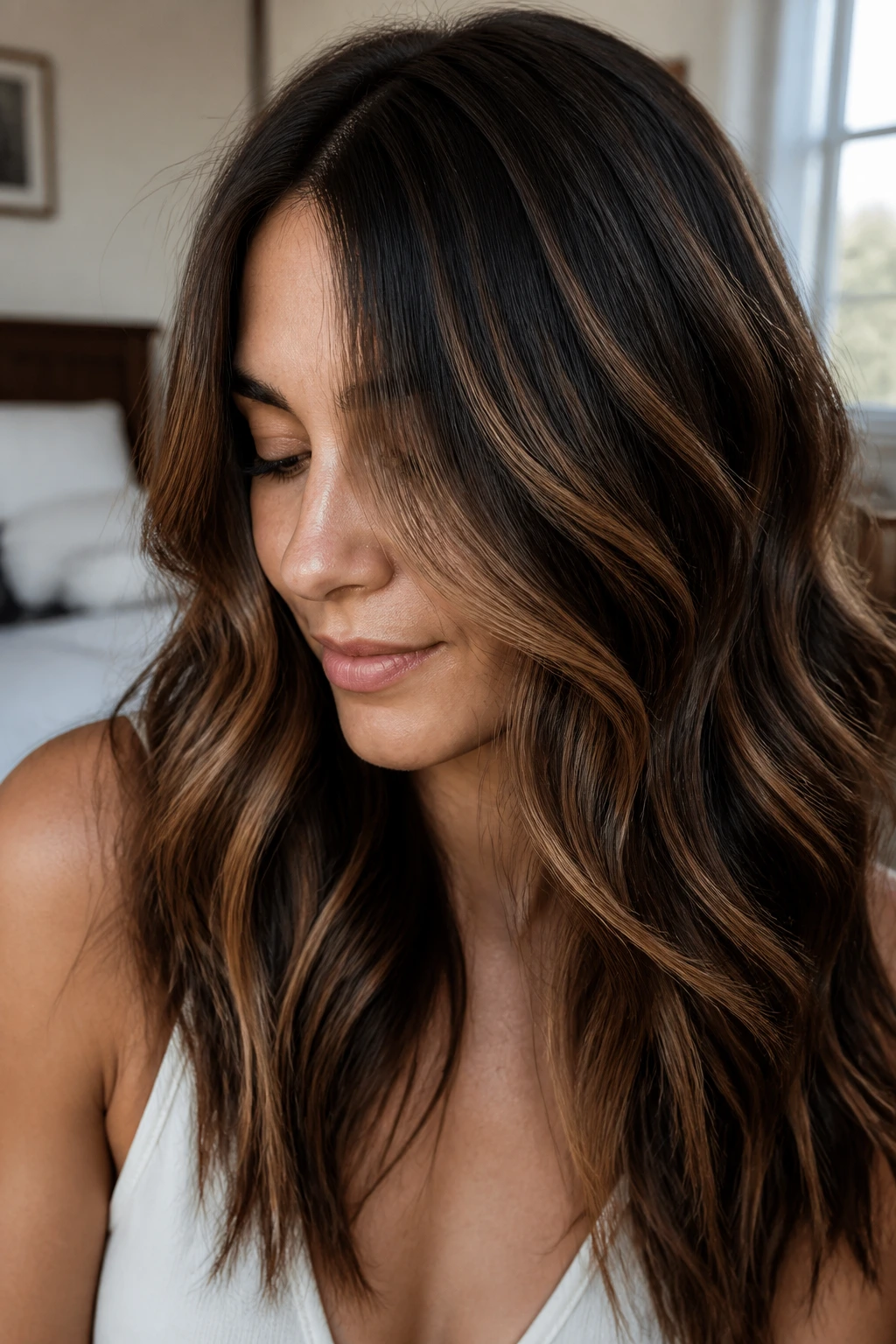
Honey lowlights sound bright, but on brunette hair they work best when they stay restrained. A soft honey brown adds warmth and brightness inside the hair, not on top of it. That makes the color feel lighter without turning the whole style golden.
This is a nice option if your brunette base looks muddy. It gives the hair a little air. On curls, the honey pieces pop in the bends and make the texture look more defined. On straight hair, they keep the finish from reading flat.
- Best on medium brunettes who want warmth.
- Keep the honey muted, not yellow.
- Use thin placement under the crown.
- Pair with soft waves for the best result.
If your skin tone is already warm, keep the honey low and sparse. Too much and the color starts to drift away from brunette altogether.
14. Bronze Brunette Ribbons
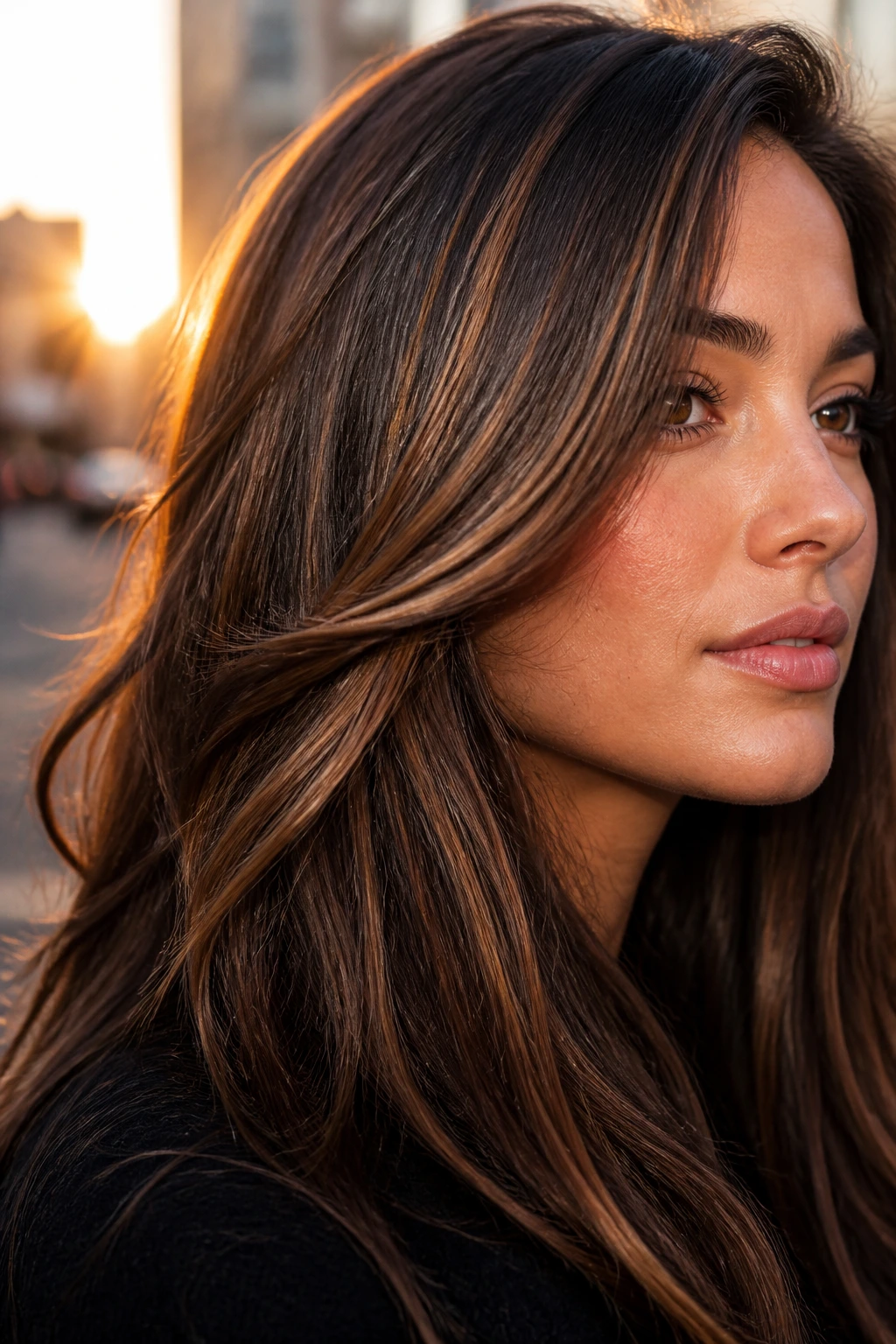
Bronze is a good choice when brunette hair needs shine more than depth. It has a metallic warmth that sits between brown and gold, so it can make the hair look reflective without crossing into blonde territory.
Bronze brunette ribbons suit thick hair and blunt cuts especially well. The slightly metallic tone can outline the shape of the ends and make a one-length cut feel less heavy. It also works on medium-deep brown hair that needs a little lift around the face.
Ask for bronze in thin ribbons, not wide panels. Wide bronze pieces can look brassy fast. The smart version stays woven through the mids, where the shine can do the work quietly.
15. Golden Brown Lowlights
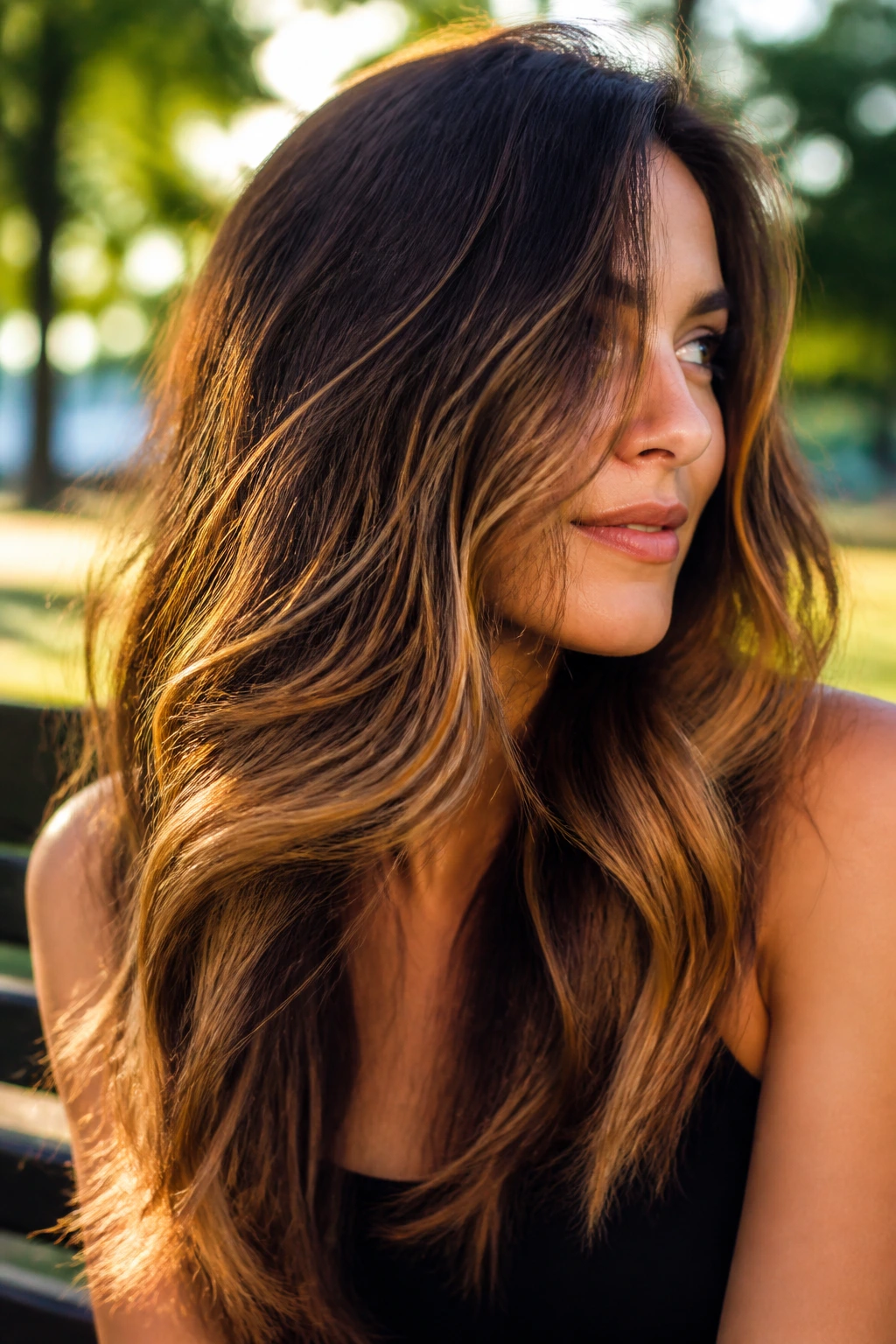
Golden brown lowlights are a little brighter than bronze and a touch softer than honey. That makes them a useful bridge shade for brunettes who want warmth without copper or red. They can change the mood of a haircut without changing the base color much.
The reason they work is simple: they catch light without stealing the show. On long layers, the gold-brown pieces ride the movement and create that soft flicker you see when hair swings. On shoulder-length cuts, they stop the ends from looking heavy.
Use golden brown lowlights if your brunette base is neutral or slightly cool and you want more warmth around the perimeter. Keep the root area darker so the result still reads as brunette, not light brown.
16. Copper Brown Veins
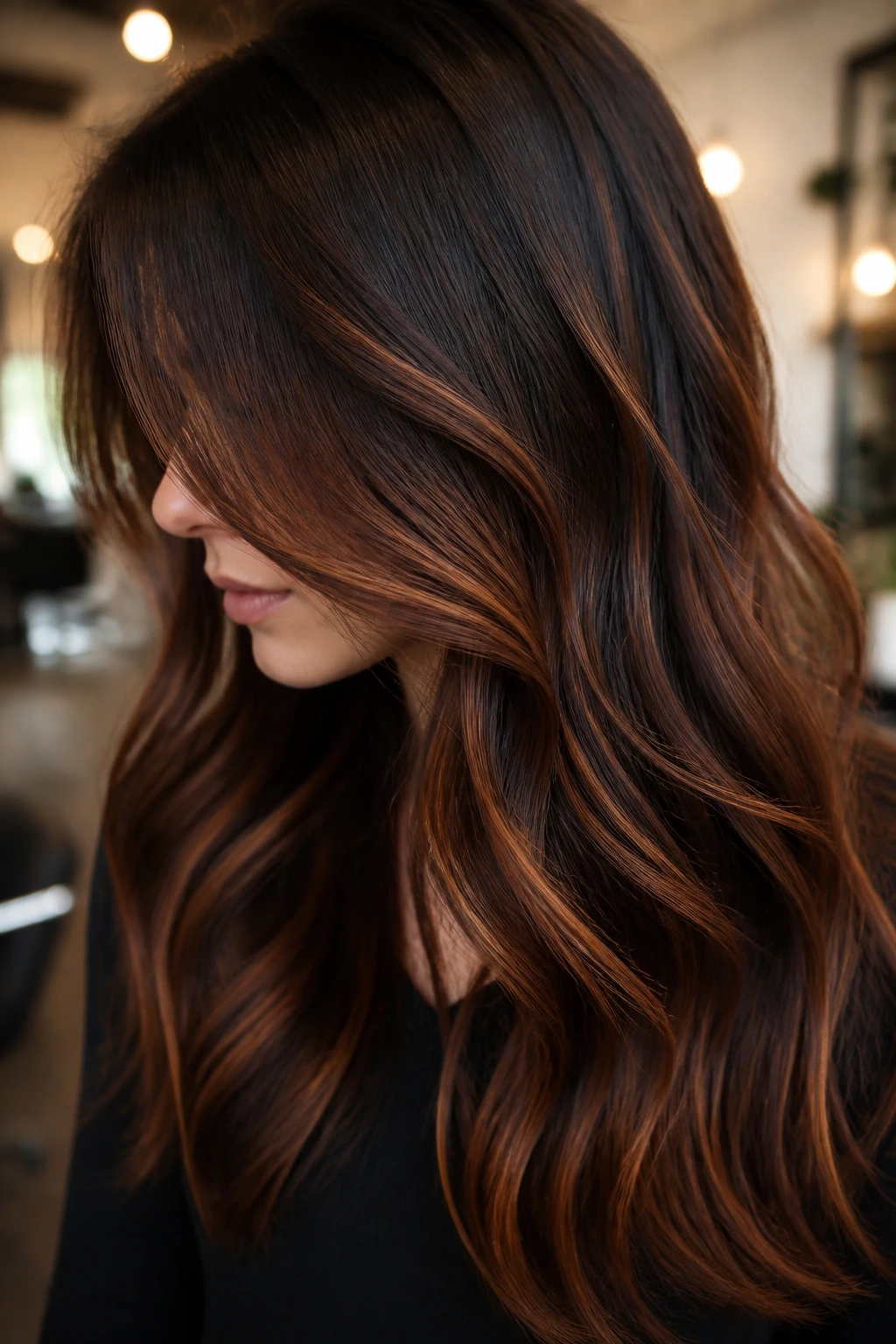
Copper brown lowlights are for people who want warmth with a pulse. They are bolder than cinnamon, redder than toffee, and more visible than honey. On the right brunette base, they can look rich and lively.
Where They Shine
Copper brown works best as a controlled accent. Think thin veins through the lower half of the hair or around face-framing layers, not a full-head copper wash. That keeps the color from getting loud. The shade is especially pretty on waves, where the movement breaks up the warmth and keeps it dimensional.
- Best on dark brunettes who can handle warmth.
- Use sparingly near the front.
- Ask for a brown-copper mix, not a pure copper.
- Refresh with a color-depositing gloss when the red starts fading.
17. Auburn Lowlights
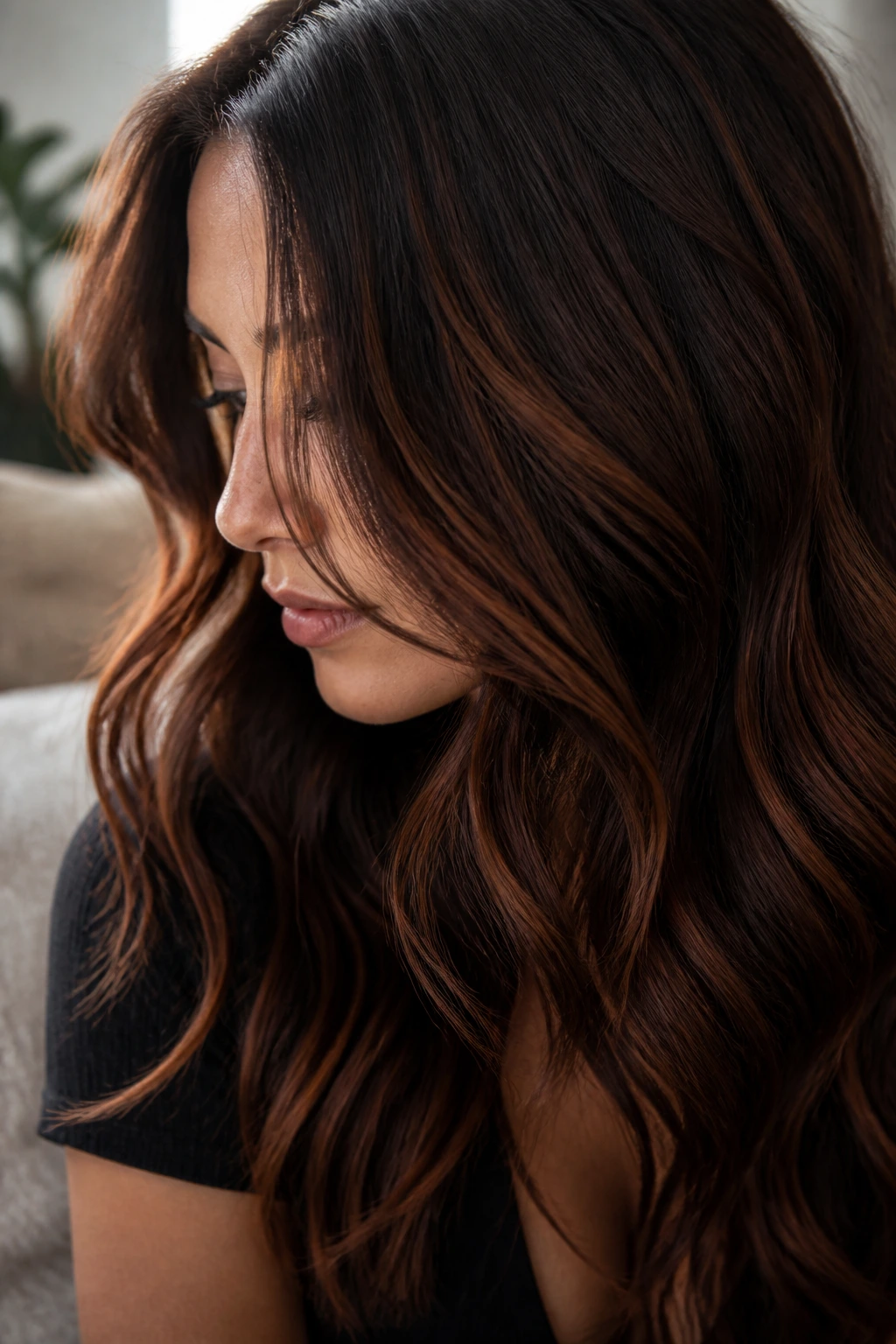
Do you want red-brown without going full red? Auburn lowlights are the classic answer. They sit deeper than copper and feel a little more grounded, which makes them easier to wear on brown hair that needs warmth but not brightness.
Auburn gives brunette hair a richer undertone, especially when the hair is thick or long. It makes the mids and ends look fuller, and it brings out movement in loose curls. If your eyes lean hazel or green, auburn can be especially nice because it keeps the warmth close to the brown side instead of drifting bright.
Use auburn in soft slices under the top layer. That way the color looks like part of the hair, not paint sitting on it.
18. Mahogany Ribbons
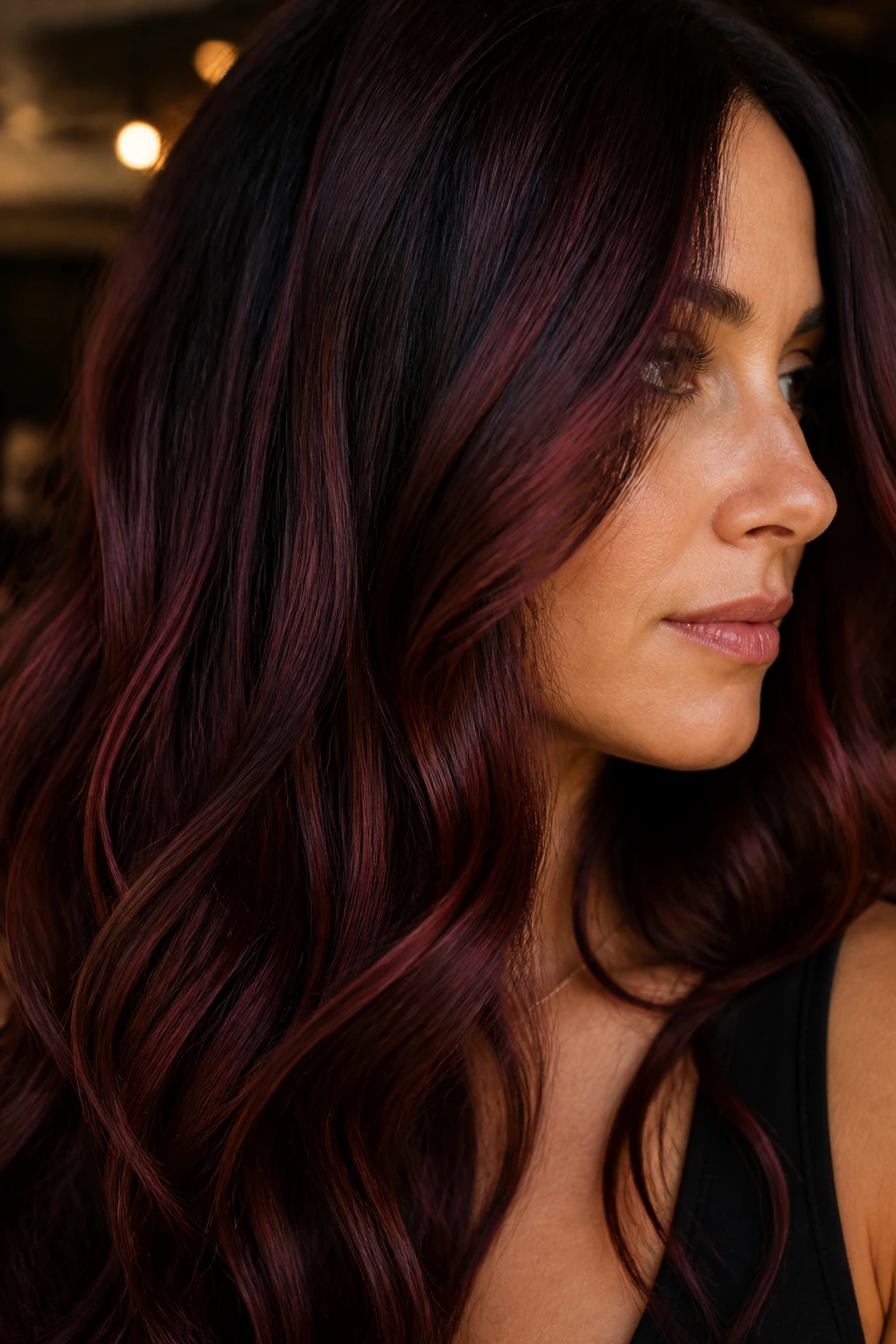
Mahogany lowlights have a darker, wine-like depth that suits brunettes who want richness with a little edge. The tone is red-brown, but the red sits deeper and cooler than auburn or copper. That matters. It keeps the finish from looking fiery.
Mahogany is one of those shades that looks expensive on straight hair and even better on polished waves. The darker red note can make the hair look glossy from a distance, then more complex up close. It is a good shade when you want people to notice the hair, not the dye.
Ask For This
Tell your colorist you want a deep red-brown with more brown than red. Place it through the interior and around the ends. If the pieces are too wide, mahogany can take over fast, so keep the weave controlled.
19. Burgundy Brown Lowlights
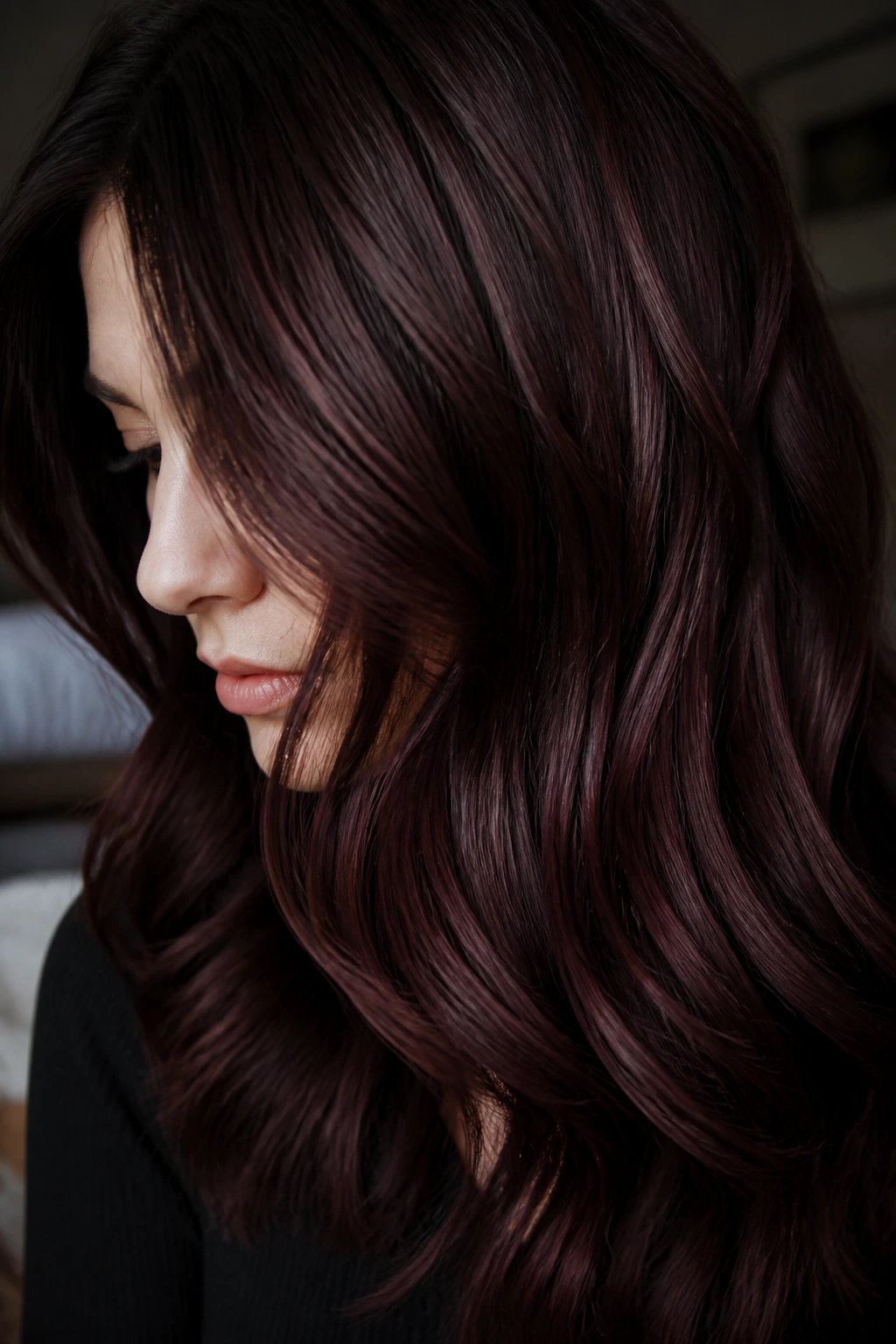
Burgundy brown is where brunette hair starts to feel moody in a good way. The shade has a cooler red-violet edge, which makes it different from the warmer red-browns above. It is darker, sharper, and a little more dramatic.
This shade works best on brunettes who hate orange. Burgundy brown keeps the warmth tucked inside the color instead of on the surface. It suits dense hair, layered cuts, and darker bases that need something richer than plain brown.
- Best on level 3 to 5 brunettes.
- Ask for violet-red undertones, not cherry red.
- Keep the placement lower through the mid-lengths.
- Works well with cool-toned makeup and dark wardrobes.
Because the tone is deeper, it can fade into a muted plum-brown over time, which is still flattering. That fade is part of the appeal.
20. Plum Brown Threads
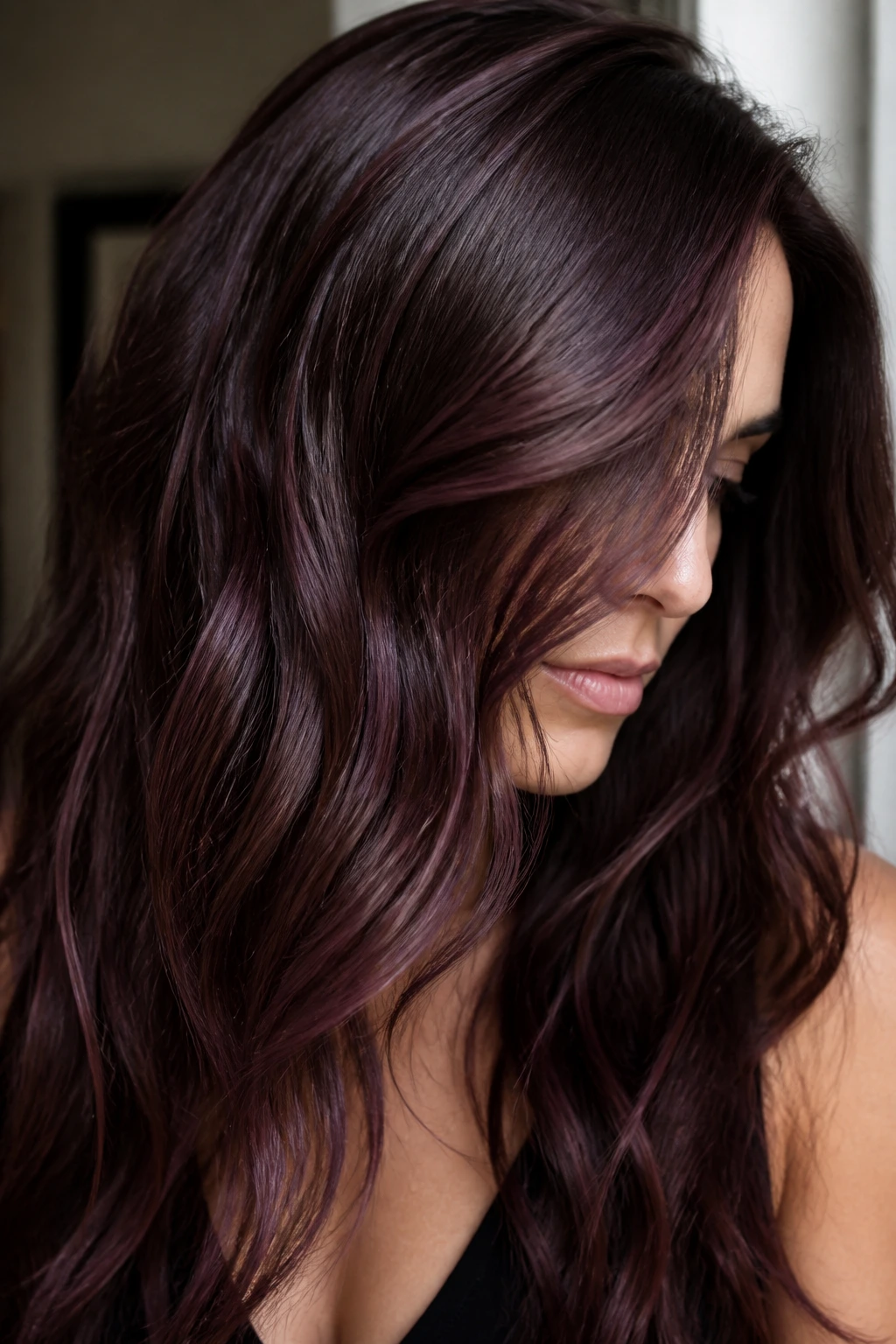
Plum brown lowlights are for the brunette who wants depth with a cooler edge. The purple note is subtle, but it changes the whole read of the hair. Instead of warm, the color feels smoky and a little more modern.
The best thing about plum brown is how it plays with shine. On smooth hair, it shows a soft violet-brown tint in the light. On textured hair, it can look almost neutral until movement reveals the color shift. That makes it a smart option if you want interest without obvious contrast.
Use plum brown as thin threads through the interior and lower sections. Too much near the hairline can make the face look cool in a very specific way, and not everyone wants that. Keep it tucked in, and it stays chic.
21. Maple Brown Lowlights
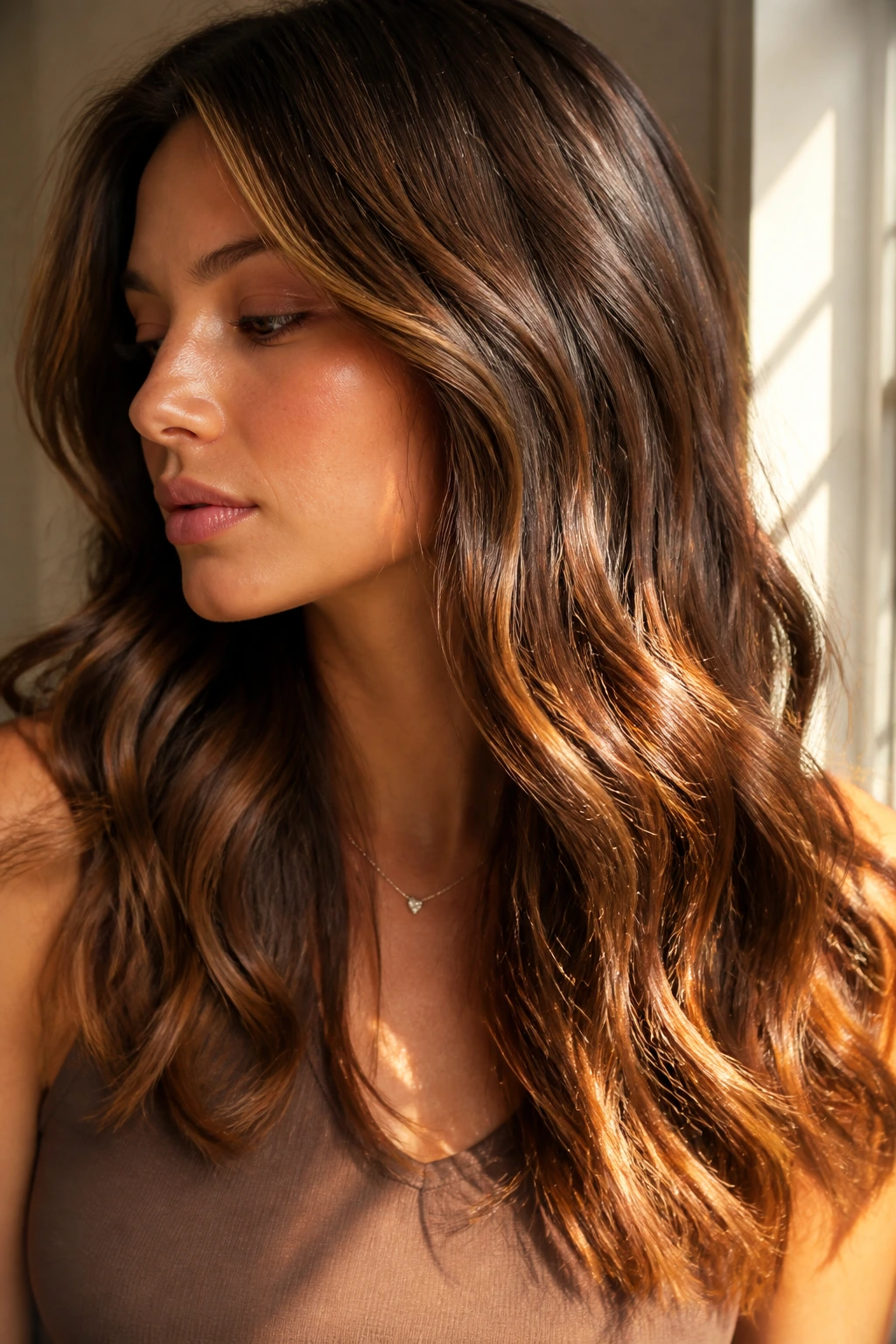
Why does maple brown feel easier to wear than a stronger red-brown? Because it keeps the warmth mellow. Maple sits somewhere between chestnut and cinnamon, with a little amber in the mix, and that gives brunette hair a softer glow.
Best Uses for Maple
Maple brown lowlights are lovely on layered cuts where the ends need a bit more life. They are also good when your base is medium brown and you want movement without going dark. The shade can make the hair look fuller through the ends, which matters if your length has thinned out a bit.
Maple reads best when it is woven in fine slices. If you use big panels, the amber note can look louder than planned. Keep it soft, and it behaves.
22. Taupe Brown Veils
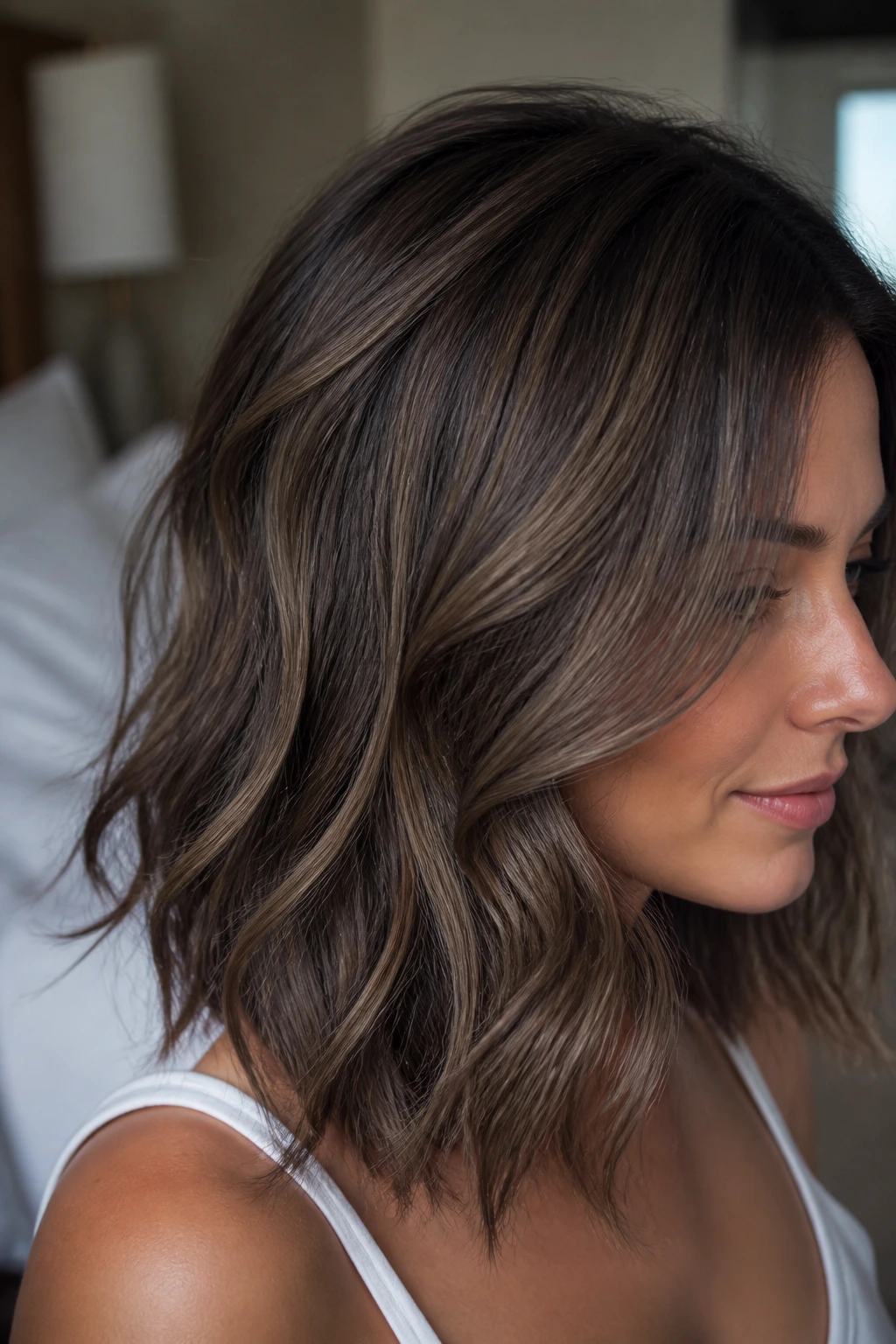
Taupe brown lowlights are the answer for brunettes who want the warmth taken down, not the depth turned up. Taupe is a beige-gray brown, so it cools the hair while still keeping it brown. That is a useful trick on naturally warm bases.
Taupe is especially good on hair that keeps reflecting orange under bathroom lights. It settles the color and gives the finish a cleaner line. On blunt bobs and long straight cuts, taupe can make the shape look sharper. On curls, it reads softer and more smoky.
- Great for neutral to cool skin tones.
- Best used as fine veils under the top layer.
- Ask for beige-brown with ash support.
- Avoid if your hair is already dull and flat.
If you want brunette color that feels tidy and calm, taupe is hard to beat.
23. Mink Lowlights
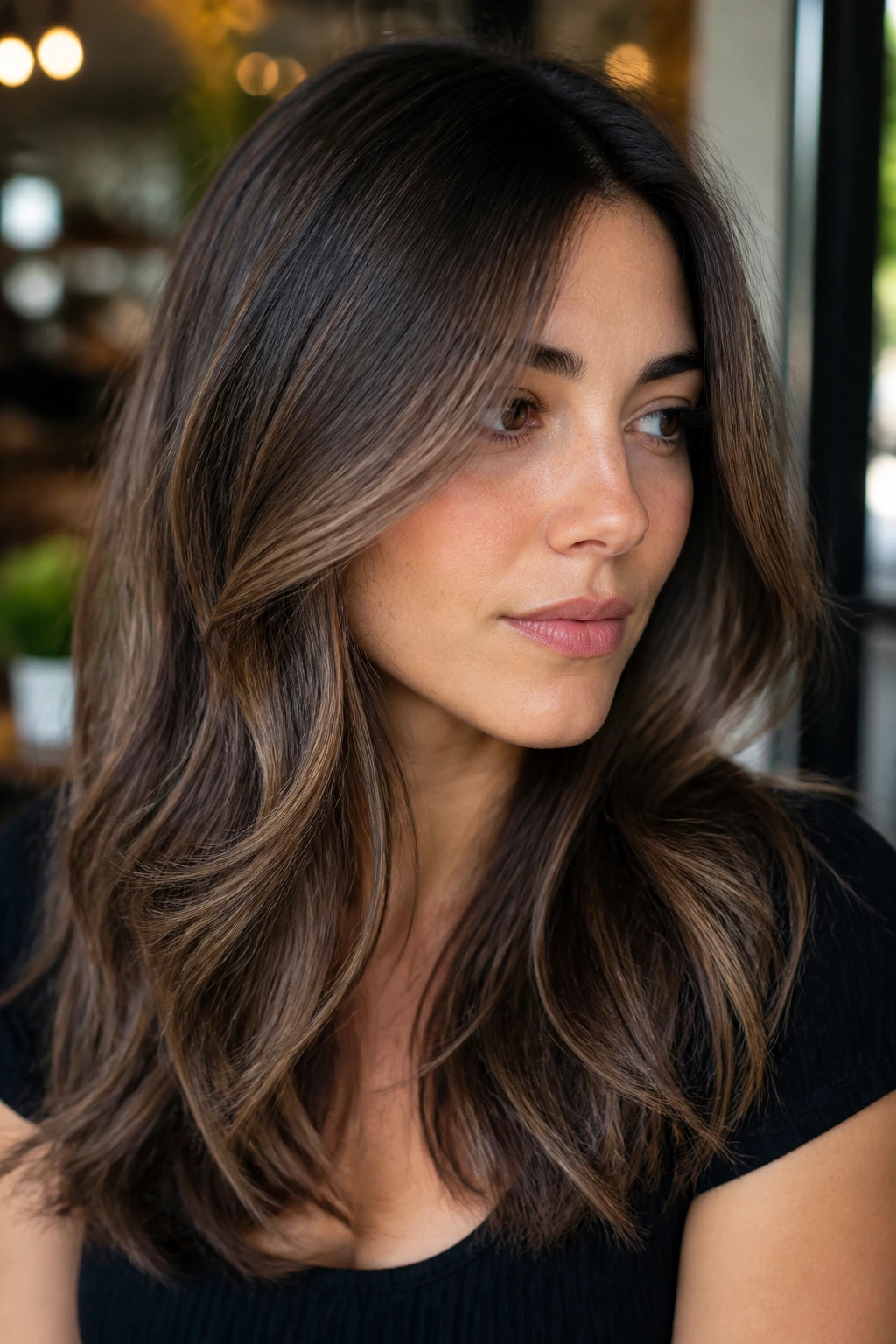
Mink lowlights sit in a sweet spot between cool and warm, which is why they look so natural on brunette hair. The tone is smoky, soft, and slightly muted, like a brown that has been toned down instead of dressed up.
On layered mid-lengths, mink gives the hair a plush finish. It can make dense hair look smoother and fine hair look fuller, which is a useful trick. The color works best when it stays underneath the brighter pieces on top. That keeps the finish dimensional instead of muddy.
A lot of people who think they want ash brown actually want mink. It is less sharp, more wearable, and easier to live with if you wash your hair often.
24. Smoky Chestnut Pieces
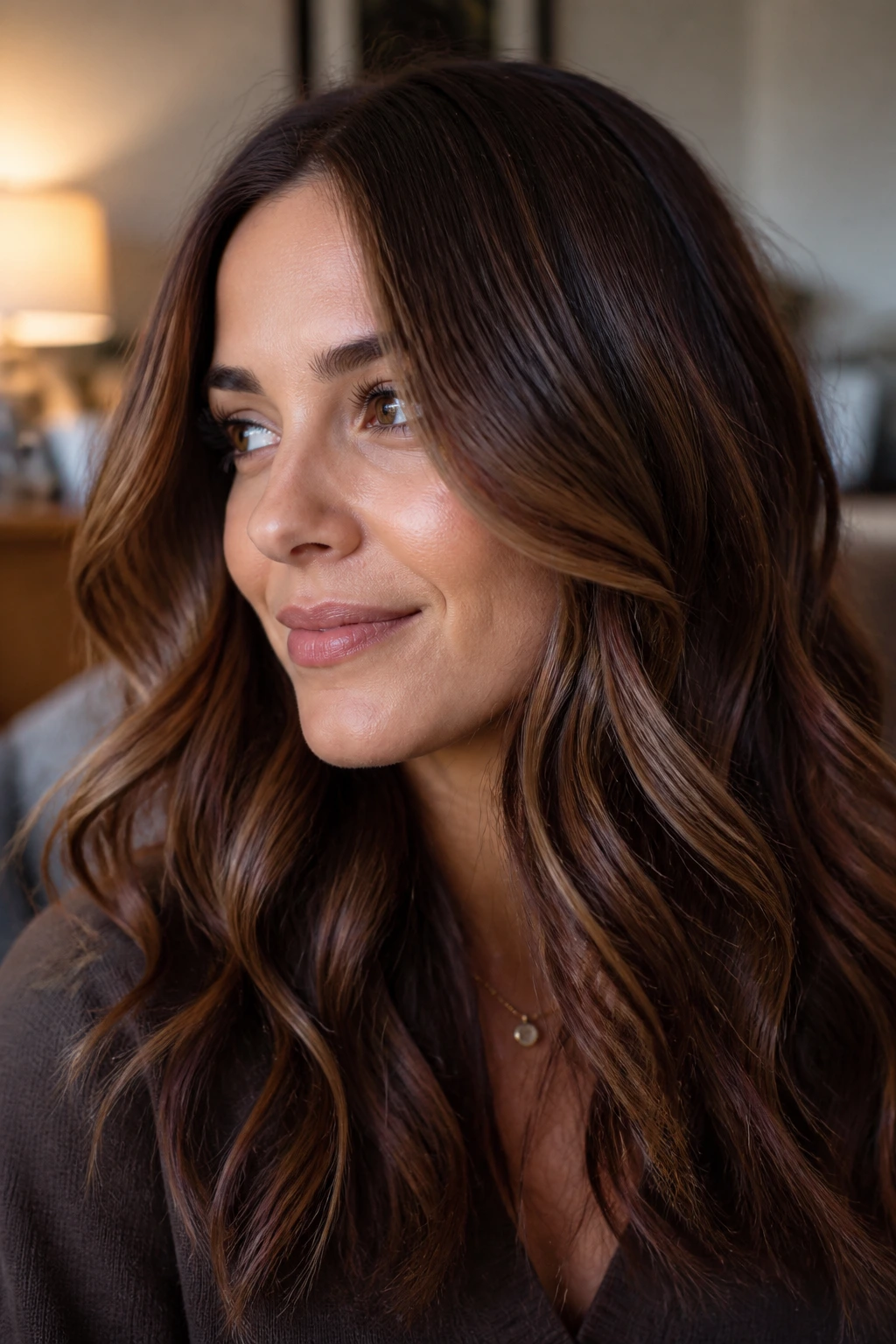
Smoky chestnut lowlights keep the warmth of chestnut but soften the red so it feels less obvious. That makes them good for brunettes who want richness with a little restraint. The finish is cozy, not loud.
How It Looks on Hair
Smoky chestnut is especially flattering on wavy hair and soft curls because the movement breaks the color into small flashes. On straight hair, it can outline layers in a subtle way and make the cut feel fuller. The smoky note also helps if your base tends to pull red too fast.
Ask for chestnut with ash mixed in, not pure red-brown. You want warmth sitting under the surface, not sitting on top of the strand.
25. Coffee Bean Lowlights
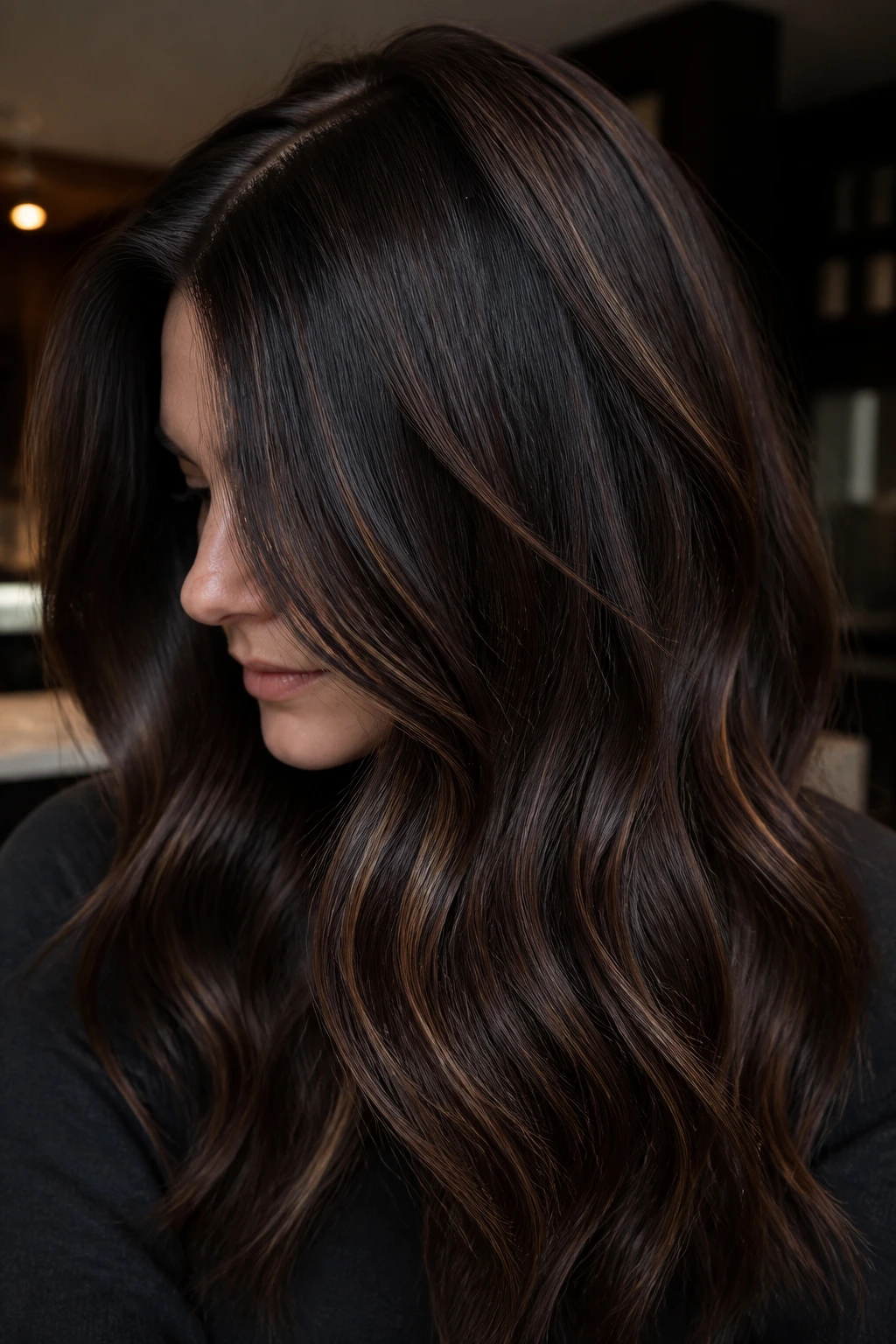
Coffee bean lowlights are almost the purest brunette shade on this list. They are deep, neutral, and grounded, which makes them one of the easiest options if you want dimension without a noticeable color shift.
The shade works on both warm and cool brunettes because it does not push hard in either direction. That neutrality is useful. It means the color can deepen the hair while still letting the base do the talking. Coffee bean is the lowlight version of a good black coffee: dark, clean, and surprisingly useful.
- Best for brunettes who want subtle contrast.
- Use under the surface and through the back.
- Good when the ends are lighter than the roots.
- Ask for a neutral brown with no red cast.
This is not the boldest choice. It is one of the smartest.
26. Cocoa-Milk Blends
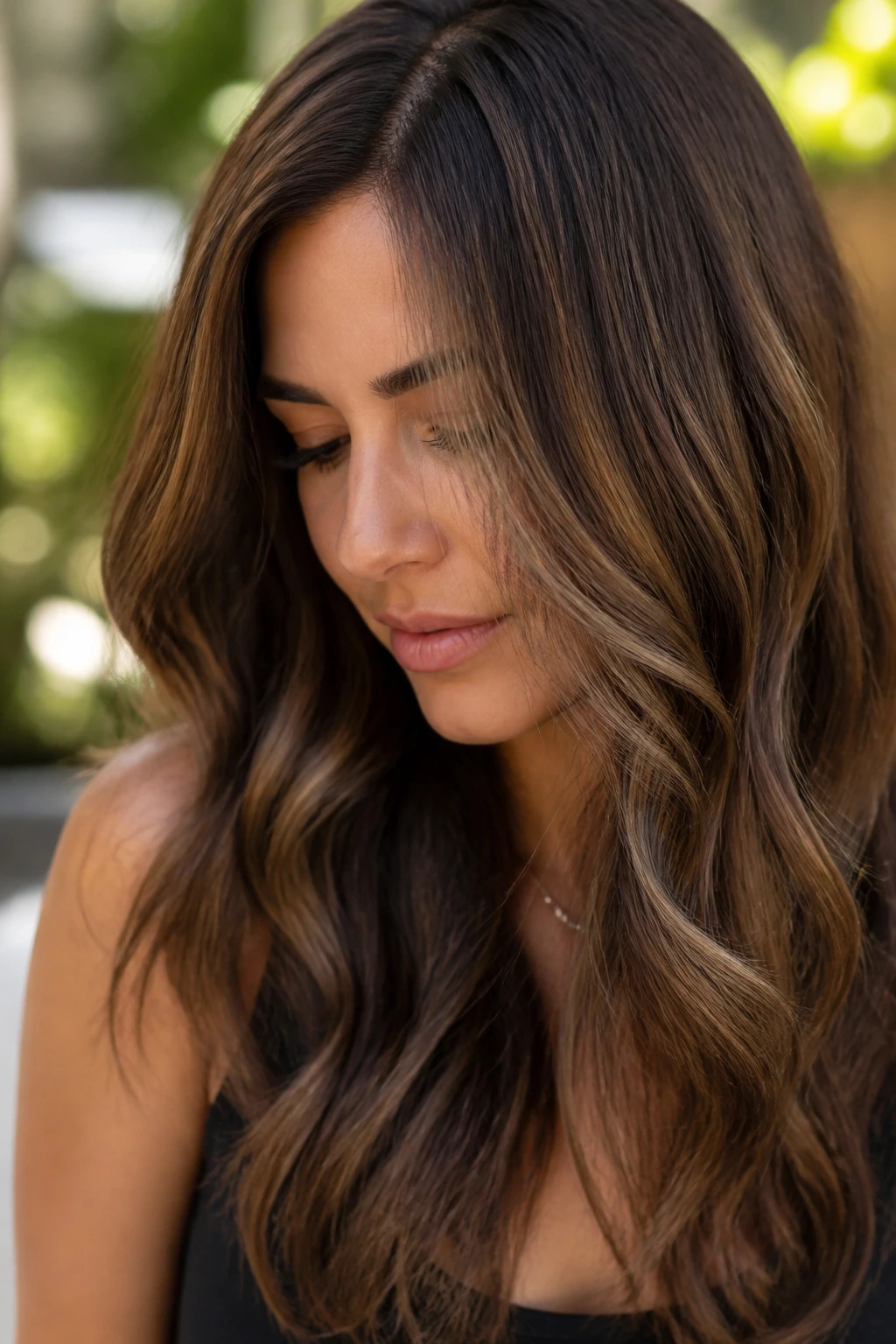
Cocoa-milk lowlights sound soft, and that is exactly the point. They keep the richness of cocoa but lighten the feel a bit, which works well on medium brunettes that need movement more than drama.
Because the tone is gentler, it suits finer hair and more delicate textures. You do not want a heavy shade stealing all the air from the style. Cocoa-milk keeps the finish brown, but the pieces look a little softer and less dense than espresso or sable.
Use this shade if you are nervous about going too dark. It gives you room to adjust later, and it usually grows out in a polite way. Not every color needs to make a statement.
27. Butterscotch Brown Lowlights
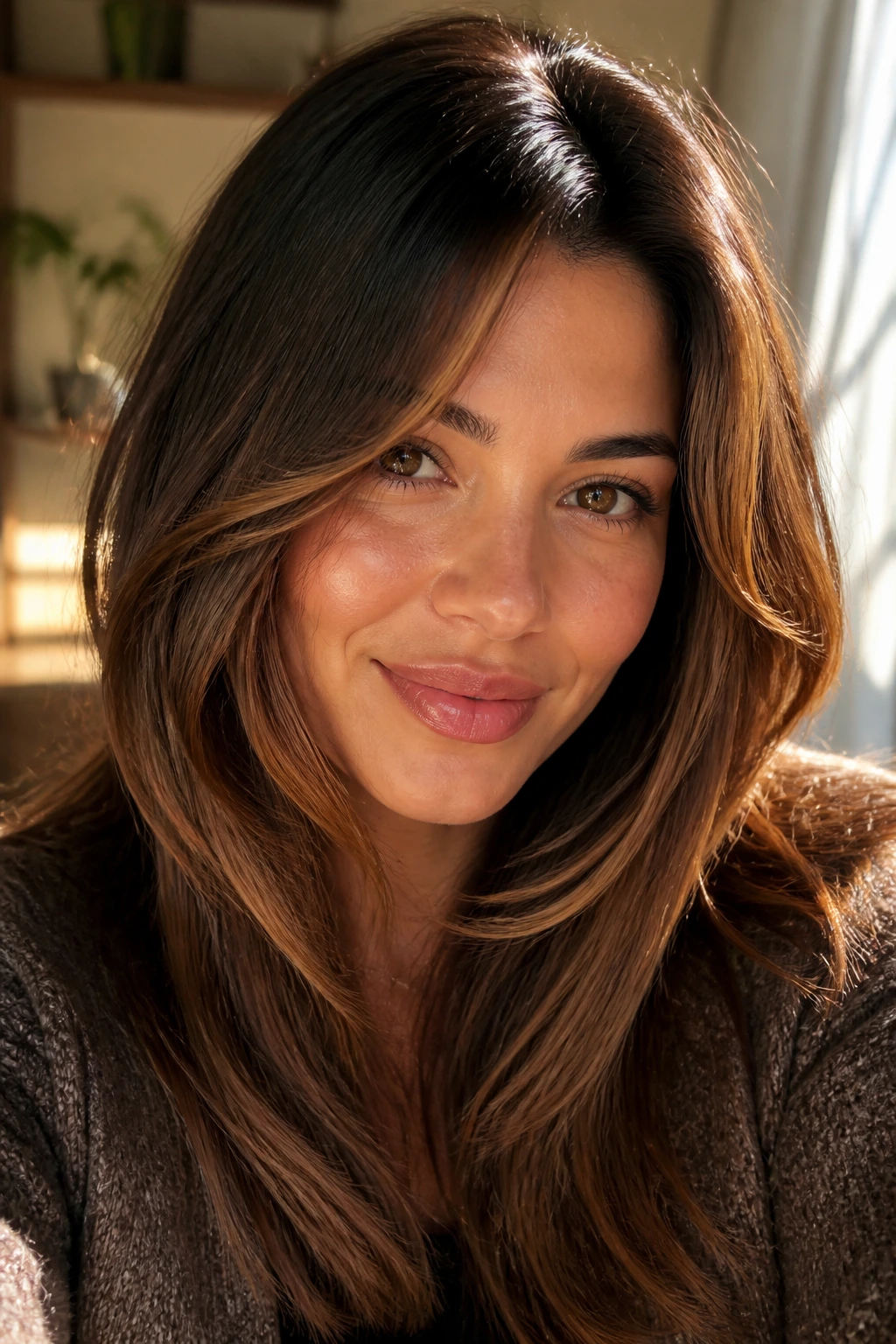
Butterscotch brown lowlights are warmer and lighter than most shades on this list, which makes them a useful option for brunettes who want brightness hidden inside the hair rather than painted on top. They can warm up flat brown hair fast.
The trick is restraint. Too much butterscotch and the hair starts drifting toward caramel highlights. Used lightly, though, the shade adds a soft glow through the ends and around the face. It is especially nice on long layers, where the lighter brown can make the shape feel airy.
Placement Matters
Keep butterscotch lowlights lower in the hair and away from the root area. That stops the warmth from taking over. If your base is dark, this shade works better as a whisper than a major shift.
28. Deep Redwood Lowlights for Brunette Hair
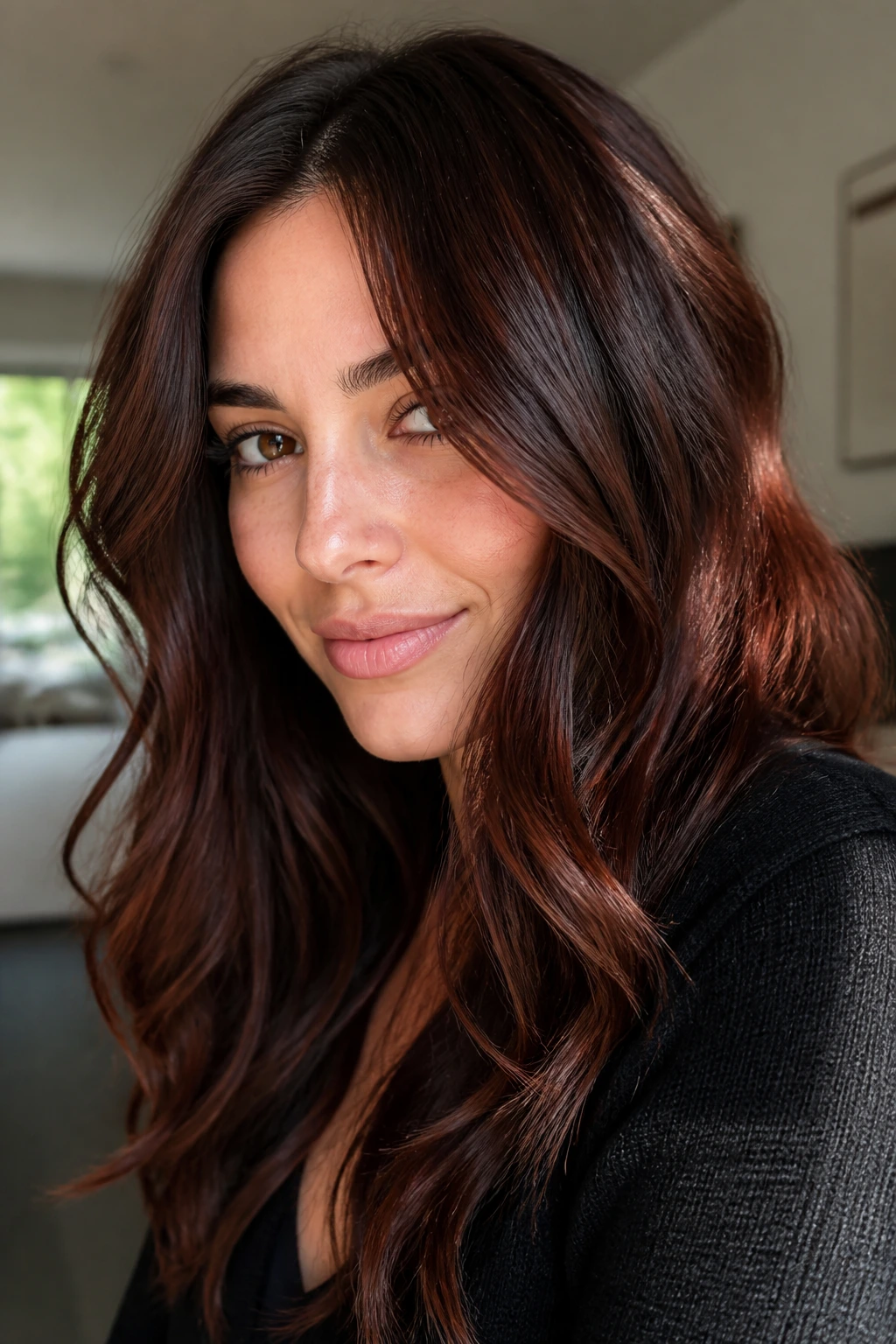
Deep redwood lowlights are for brunettes who want richness with backbone. The tone is dark red-brown, deeper than auburn and quieter than burgundy, which gives the hair a warm shadow without turning it bright. On dark brown hair, it looks luxurious in a way that feels natural rather than dressed up.
Why It Stays Interesting
Deep redwood has enough red to wake up the color, but enough brown to keep it grounded. That balance makes it useful on thick hair, textured hair, and layered cuts that need depth in the interior. It also looks good when the hair is pulled back, because the darker red-brown pieces peek through instead of sitting flat on the surface.
If you want brunette hair that feels rich indoors and even richer outdoors, this is one of the strongest shades on the list. Keep the pieces fine, keep the red deep, and let the brown do most of the work.
