



A shaved side changes the whole mood of a haircut in one move. Leave the other half long, and the eye goes straight to the contrast: skin, shadow, texture, then length. Shaved side cuts have that blunt honesty people either love or avoid. There’s no pretending they’re subtle.
What makes them work is not just the buzzed panel. It’s the balance. The top needs enough shape to do something interesting, and the shaved section has to sit in the right place — temple, sideburn, beneath the part, or all the way to the ear. Get that placement wrong and the cut feels off. Get it right and the whole head reads sharper from across the room.
I’ve always liked side-shaved cuts that respect the hair’s natural movement instead of fighting it. Curly hair wants room. Straight hair wants clean lines. Coils and locs need a cut that keeps the silhouette tidy without stealing the volume that makes them look alive. The best versions don’t beg for attention; they make the face, neck, and profile look more deliberate.
And there’s a practical side to all this, which people forget. A shaved panel can take bulk away, make thick hair easier to style, and give you a little breathing room around the ear and nape. It also grows out fast enough to matter, so the smartest version is the one you can live with when the edges soften. That’s where the differences between these ten cuts really show up.
1. Long Slick-Back with a Clean Shaved Side
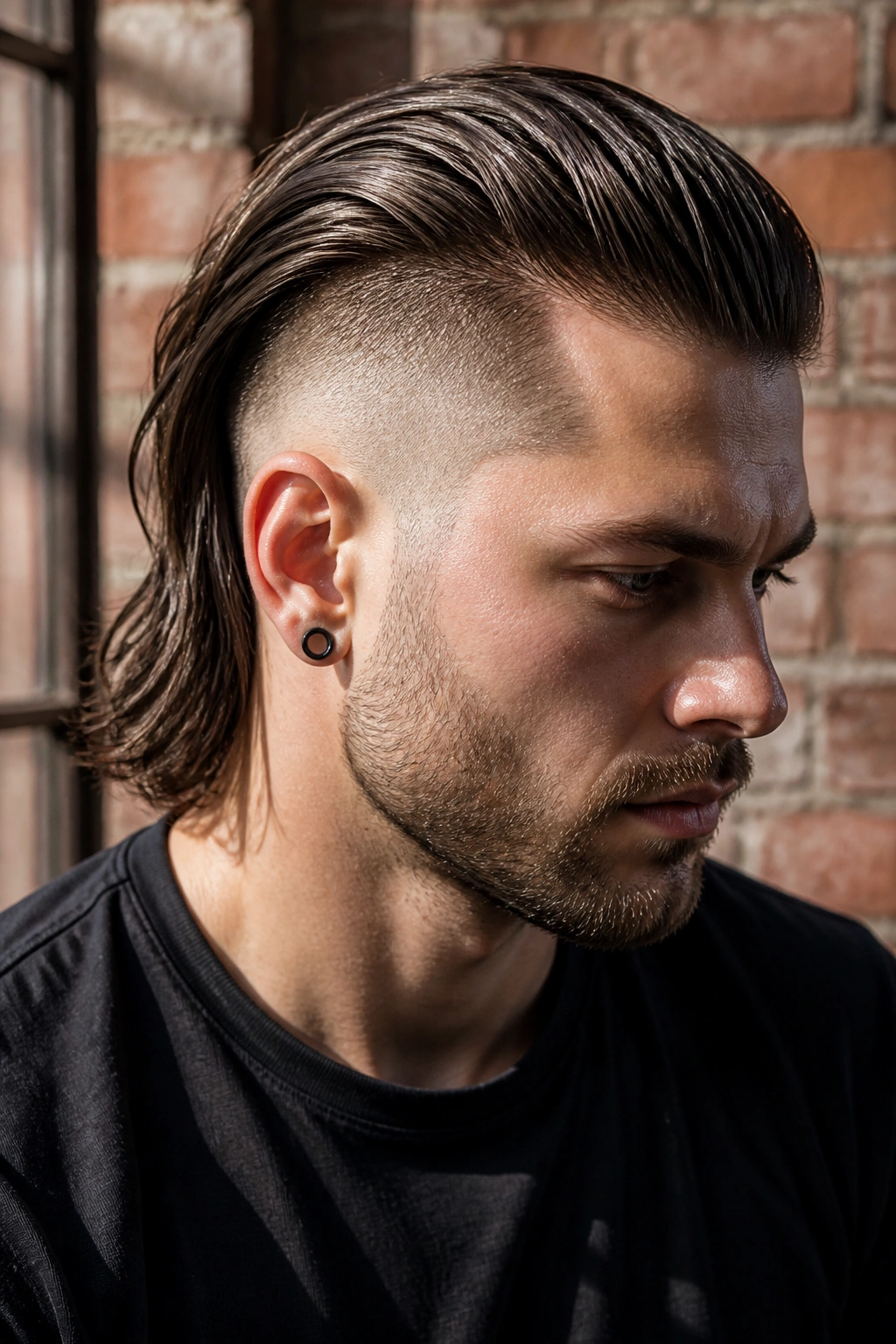
A long slick-back with one shaved side is the haircut equivalent of a sharp jacket thrown over a plain tee. It works because the contrast is immediate: one side is bare and clean, the other side carries enough length to look intentional, not random. If you like a bold look that still feels polished, this is one of the easiest places to start.
Why it works
The shape gives your face a strong line from temple to crown, and that line looks especially good on straight or slightly wavy hair. The top should be long enough to move — at least 4 inches is the sweet spot, with 5 to 7 inches giving you more slick-back height. Ask for the shaved side to be taken down to a #1 guard, skin fade, or even a clean razor finish if you want maximum contrast.
What to tell your barber
- Keep the top long and disconnected from the shaved side.
- Leave a little weight at the crown so the style does not collapse flat.
- Blend the back cleanly into the nape so the cut doesn’t look chopped off from behind.
- If your hairline is uneven, ask for a soft edge instead of a hard line.
The styling part is easier than it looks. Blow-dry the top back while it’s about 80 percent dry, then work in a small amount of matte pomade or cream. Too much product makes the hair look greasy and separates the strands in a bad way. Too little, and the top flops forward by noon.
Best of all, this cut gives you room to dress it up or down. Wear it smooth for a night out. Wear it looser if you want that slightly undone edge.
2. Curly Top with a Temple Shave
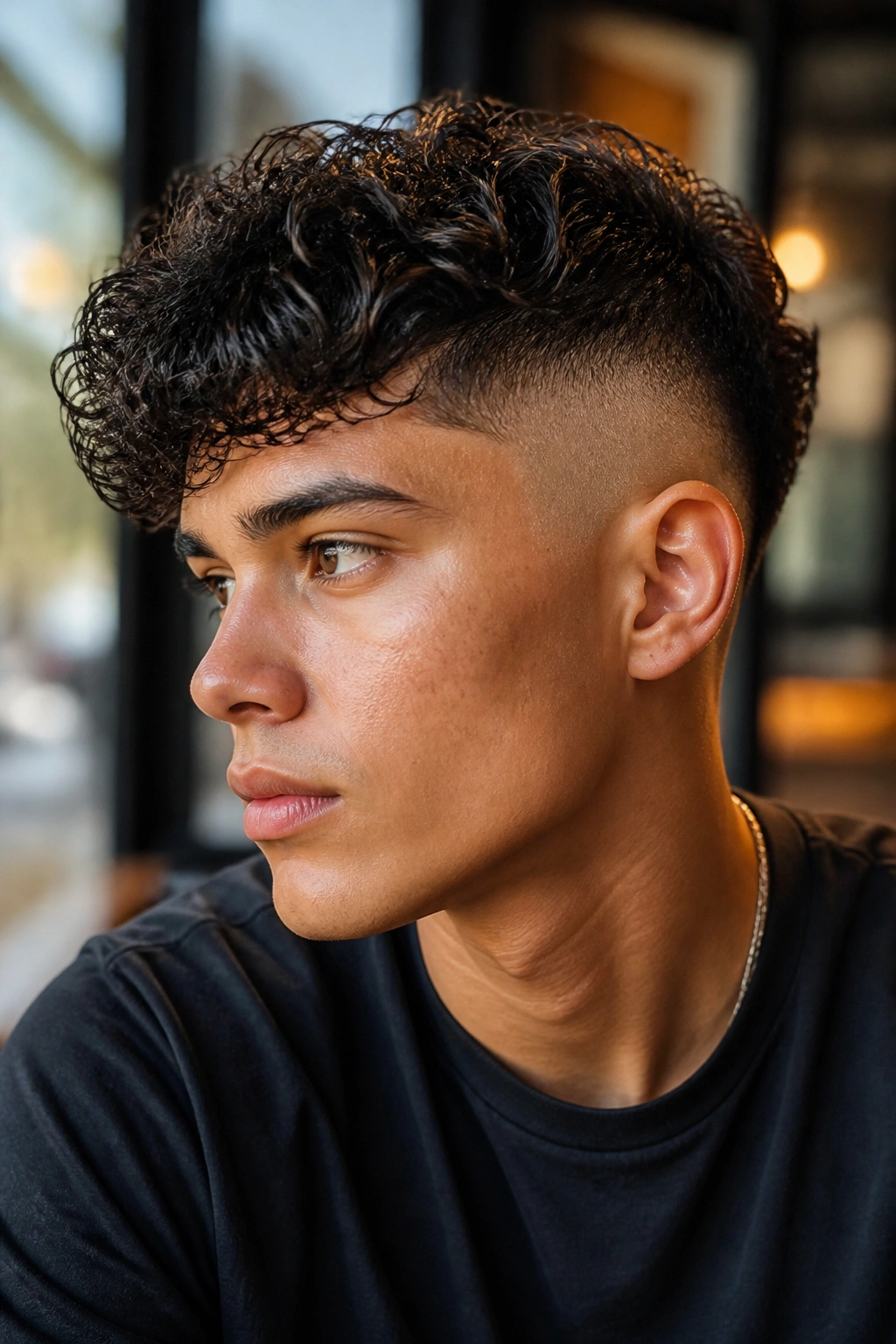
Can a shaved side still feel soft? Absolutely. A curly top with a temple shave keeps the shape light around the face while letting the curls stay full where they matter most. It’s one of those cuts that looks deliberate without feeling severe, which is a hard line to walk.
What makes it flattering
The trick is placement. A temple shave removes bulk right where curls often puff out the most, so your cheekbones and jawline show more clearly. That’s especially useful if your hair grows wide before it grows long. Keep the top around 3 to 5 inches so the curls have room to spring, and ask for the shaved area to stop above the ear rather than dropping too low.
Styling that actually helps
Use a curl cream or light gel on damp hair, then scrunch upward with your hands. A diffuser on low heat helps the curl pattern hold shape without turning frizzy at the edges. If your curls are tighter, a little leave-in conditioner first keeps the top from feeling dry and puffy.
A few things to watch
- Don’t shave too far into the side of the head if you want softness.
- Avoid heavy waxes; they crush curl pattern fast.
- Keep the temple line fresh every 2 to 3 weeks if you want the cut to stay crisp.
The nice part is that this version grows out better than a full undercut. The shave softens gradually, so the style still looks intentional between appointments.
3. Asymmetrical Bob with One Shaved Panel
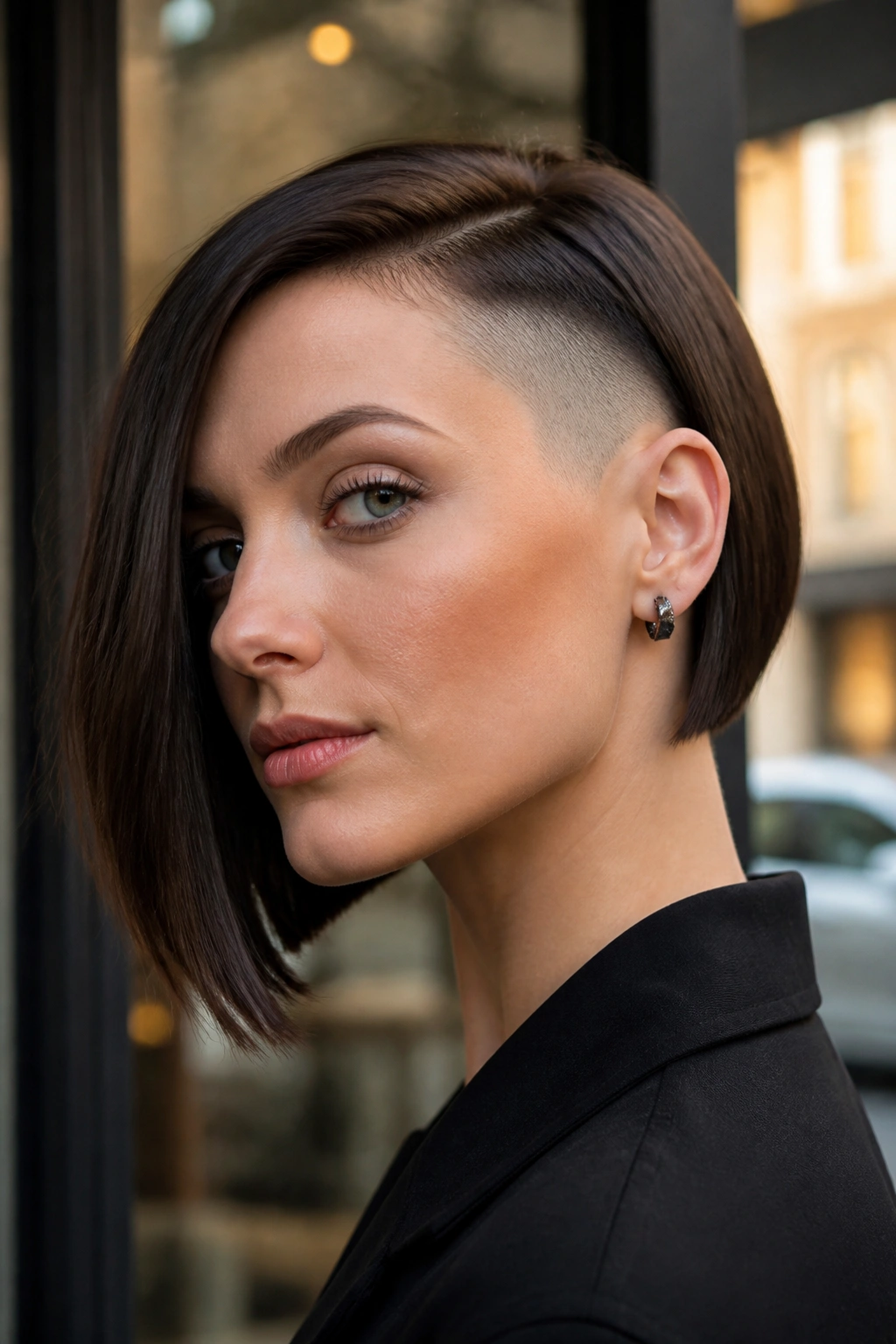
A bob with one shaved side has attitude without needing extra tricks. The asymmetry does the heavy lifting. One side sits sleek and blunt against the jaw, while the shaved panel on the other side opens the whole shape and keeps it from feeling heavy or boxy.
If your hair is fine, this cut can be a gift. The blunt bob line creates the illusion of more thickness, and the shaved panel takes away the bulk that usually makes shorter hair flip out at the wrong places. I like this cut on anyone who wants structure but does not want to spend half the morning wrestling with a round brush.
The shape to ask for
Keep the bob between chin length and just above the collarbone, depending on how dramatic you want the contrast. The shaved side can sit underneath a deep side part, or it can be visible all the way through the panel. A good barber or stylist should keep the line clean behind the ear so it doesn’t puff strangely when you tuck one side back.
A blunt perimeter works well here. So does a slightly beveled edge if you want movement. What you do not want is too much layering; that steals the graphic impact.
Best styling details
Use a flat iron only where needed, then add a light shine spray or a pea-sized amount of smoothing cream. If you want the cut to look expensive in the real sense — neat, tidy, finished — the ends need to sit clean. Choppy ends can work, but they change the mood fast.
This is a strong choice if you like earrings, strong brows, or a sharp neckline. The cut frames all of that instead of competing with it.
4. Pixie Crop with a Sharp Side Shave
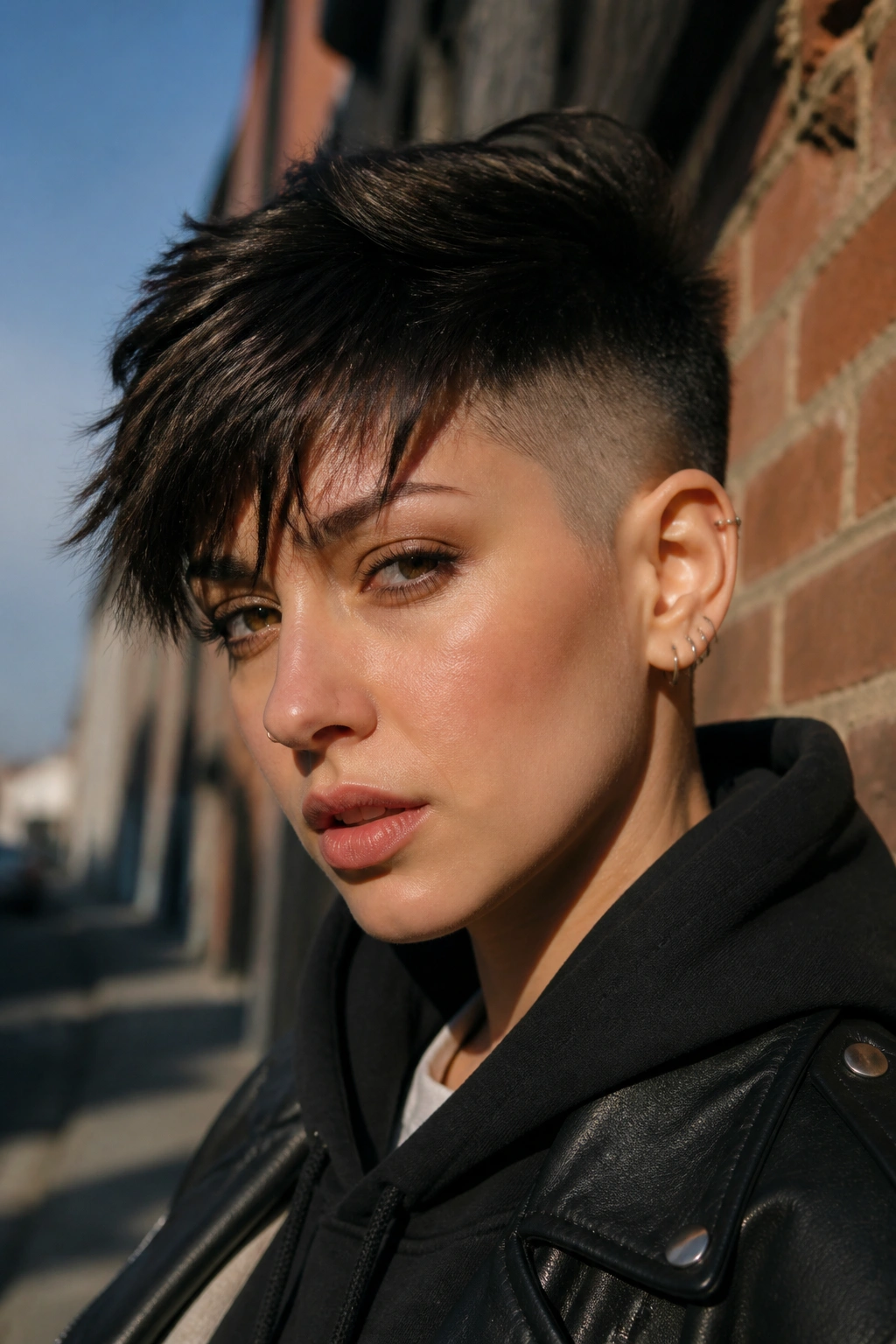
A pixie does not have to be sweet. In fact, the sharpest ones look better when they’ve got a shaved side that breaks the softness and keeps the whole head from reading too neat. The result is cropped, tough, and surprisingly easy to live with.
Why this version works
The shaved side strips away excess weight, which lets the top sit higher and look more piecey. Keep the crown slightly longer — around 2 to 4 inches — so you can push it forward, up, or over to one side. The contrast between a close shave and a textured top is what gives this cut its edge. Without that contrast, it can look like a plain short crop.
How to style it
A dab of texture paste is enough for most days. Rub it between your palms, then pinch the top into shape rather than smoothing it down. If the hair is straight, a quick blast with a blow dryer and your fingers can give the front some bend. If it’s wavy, let the natural movement stay in the cut instead of forcing it flat.
Good reasons to choose it
- It keeps the neck and ears open.
- It works well with bold lipstick or strong glasses.
- It dries fast, which matters more than people admit.
- It grows out into a soft crop before it turns awkward.
The downside is obvious: you will need regular cleanup on the shaved side. Every 2 to 4 weeks is usually enough, depending on how fast your hair grows. Miss that window and the whole shape loses its snap.
5. Braids with a Sculpted Shaved Side
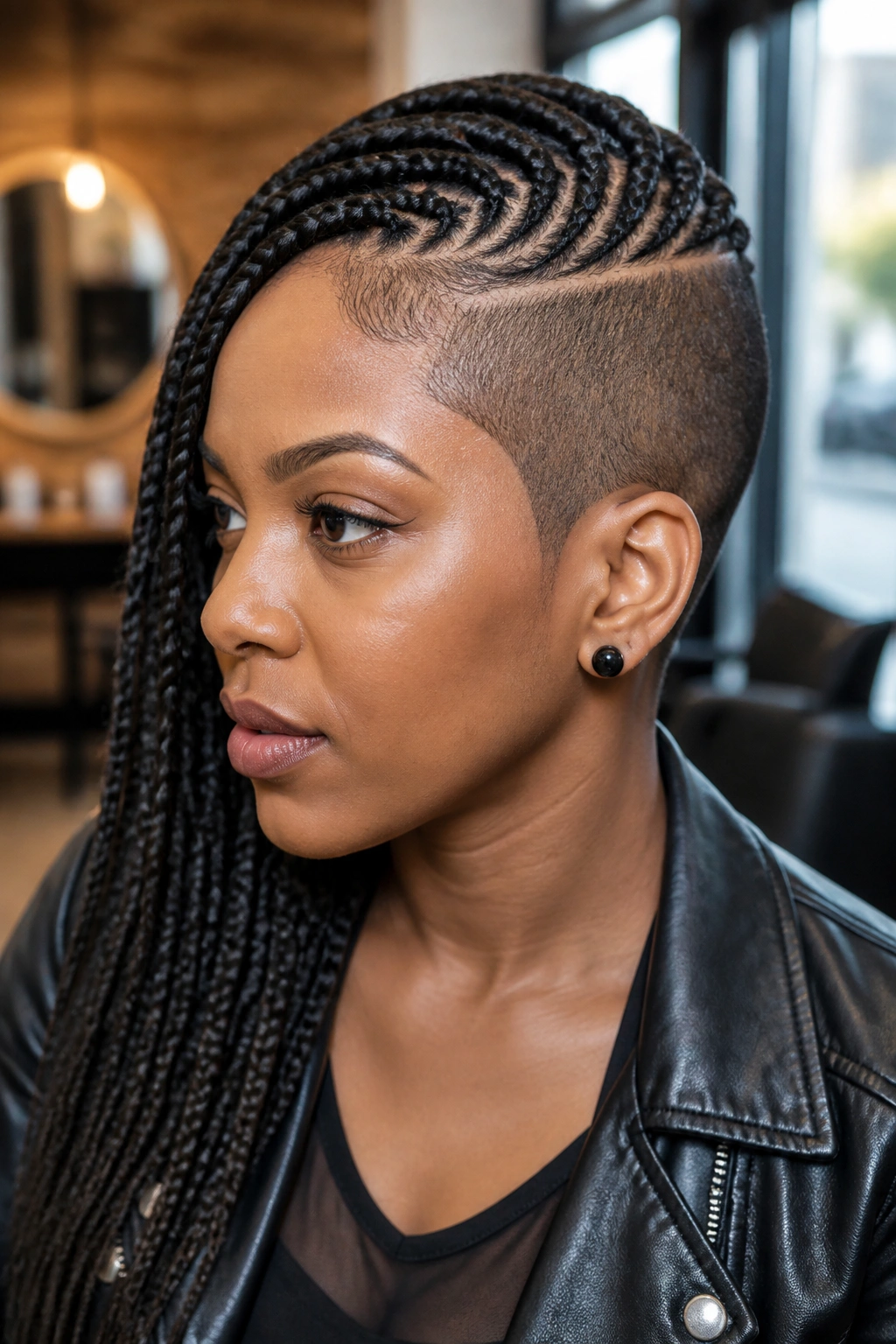
The best braided side shave is all clean scalp and neat parting. Messy braids plus a shaved panel can work, but the line between edgy and sloppy is thin, and I’d rather see crisp sections than a style that looks rushed. When the braids are well done, the shaved side acts like a frame around them.
What to ask for
Feed-in braids, knotless braids, or a set of medium box braids all work here. Keep the shaved side low and smooth, usually around the temple, sideburn, and above the ear. If you want a more dramatic look, leave the opposite side fuller and sweep the braids across that side instead of centering them.
The length of the braids matters. Short braids hit differently than waist-length ones. A medium length, around shoulder to upper-back level, usually gives the best balance because it lets the shaved side stay visible.
Scalp care matters
A side shave exposes more scalp, so the skin needs a little attention. A light oil on the part lines and a non-greasy moisturizer around the edges helps keep tightness from turning into irritation. Heavy products can build up fast, and braids already keep the scalp covered enough.
You also need a plan for the edge-up. Keep the line around the shaved section sharp every 1 to 2 weeks if you want the shape to stay clean. Letting it go too long makes the whole style look fuzzy, even if the braids themselves are fresh.
This is one of the most expressive shaved side cuts because it gives you movement, shape, and texture all at once.
6. Locs or Twists with a Low Side Fade
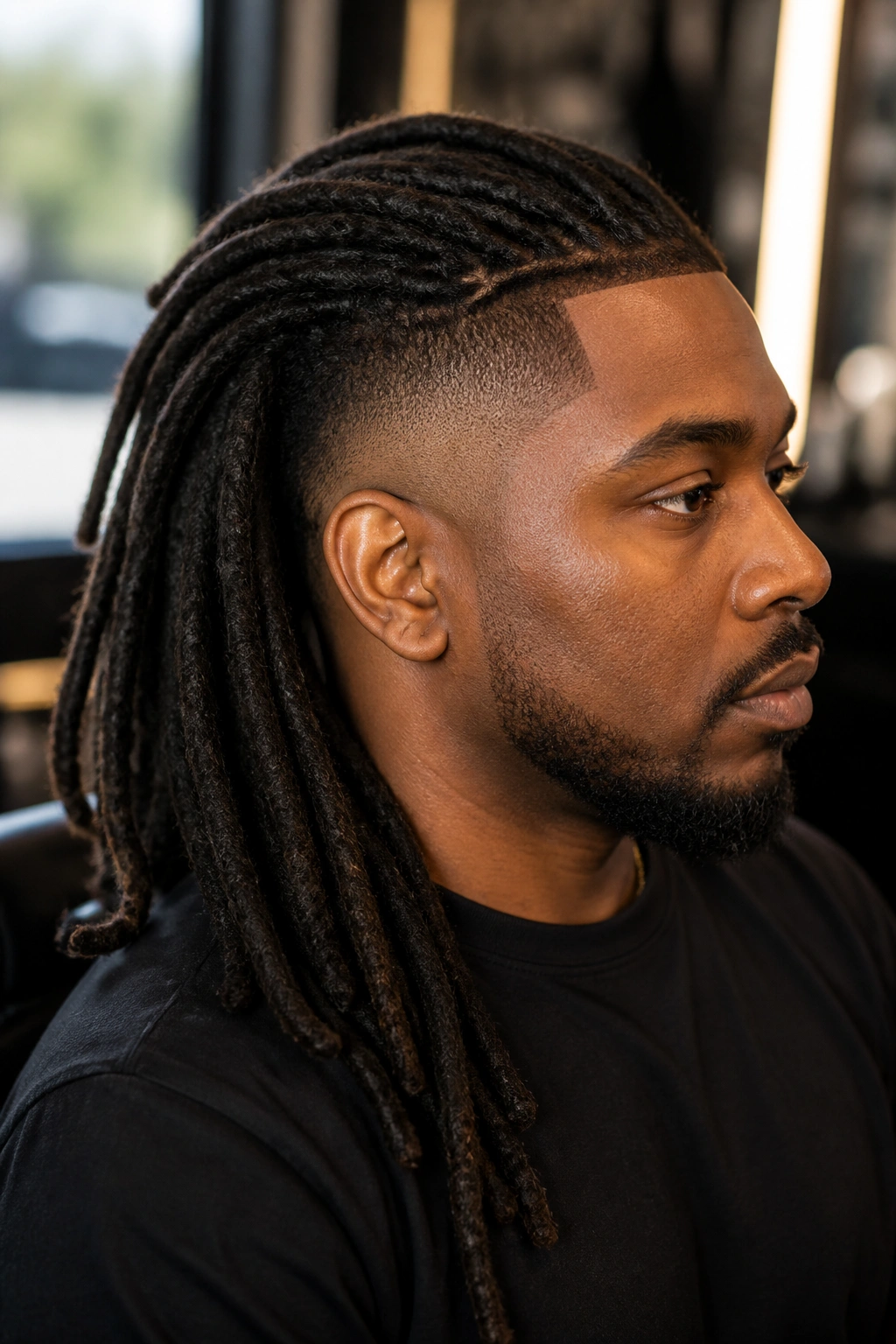
Unlike a full undercut, a low side fade with locs or twists keeps weight around the ear while still giving the cut a sharper edge. That matters. You still get the clean outline, but you don’t lose the fullness that makes locs and twists look rich.
Where this cut shines
A low fade works well when the locs are medium to long and you want the side profile to look neater. The fade can start at the temple and drop gently behind the ear, or it can sit lower and stay more subtle. Ask for the fade to be smooth rather than choppy; harsh steps can make the transition from shaved to textured hair look disconnected.
A useful detail most people skip
The hairline around locs and twists needs careful shaping. The parting should be clean, and the shaved side should not creep too close to the base of the style unless you want a harder look. A good barber will leave enough room so the locs or twists don’t bunch against the fade.
A quick care list
- Oil the scalp sparingly, not heavily.
- Keep the fade crisp with regular lineups.
- Protect the style at night with a silk scarf or bonnet.
- Avoid too much gel at the roots; buildup shows fast on shaved sections.
This cut reads especially well on thicker hair because it removes bulk without flattening the whole head. It also wears well with accessories — hoops, cuffs, wraps, whatever you like. The side fade just gives those details more room to show.
7. Graphic Linework on a Shaved Side
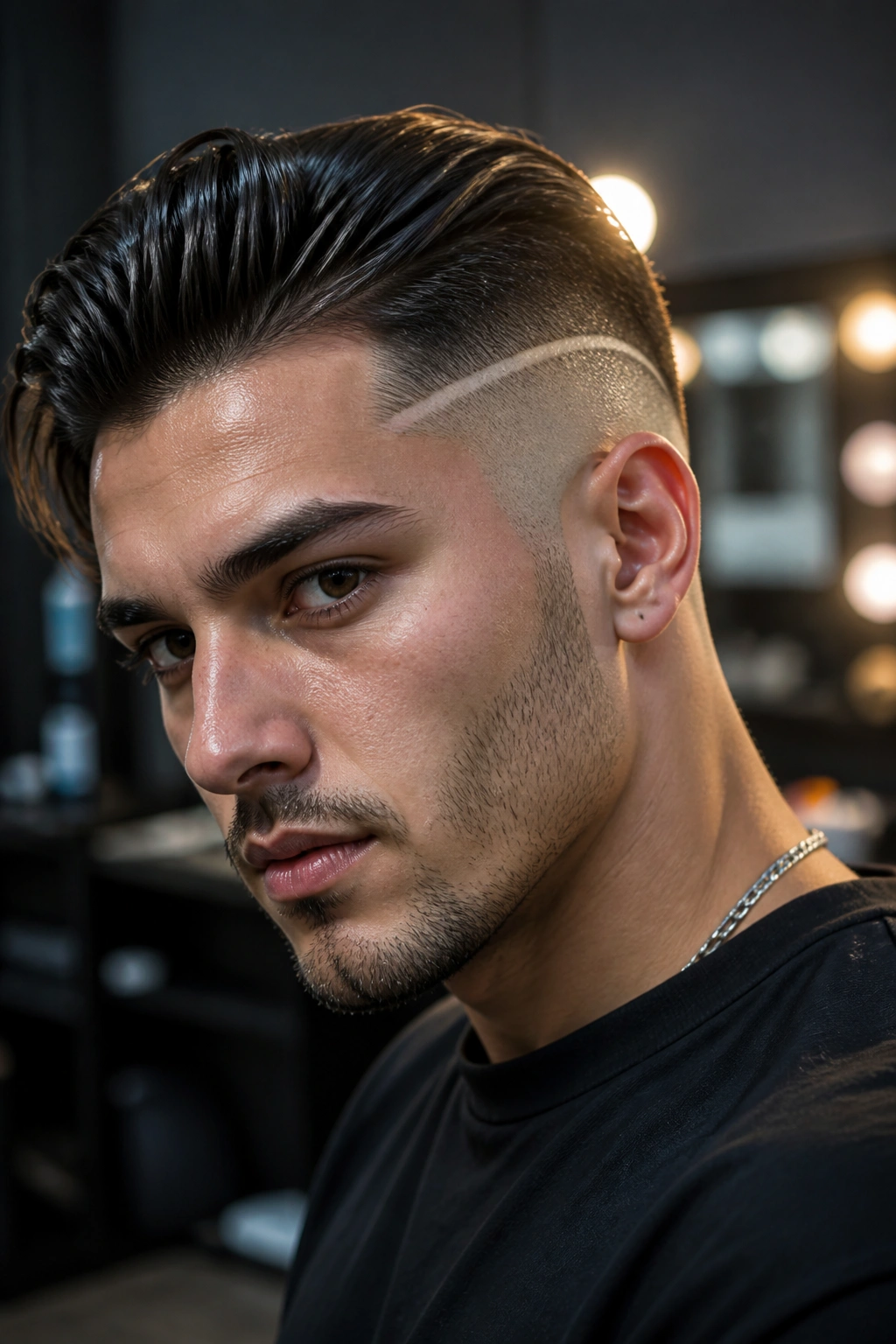
A plain shaved side is one thing. Add a clean line, curve, or geometric carve, and the haircut turns into a statement piece. Some people hate that kind of attention. Fair enough. But if you like barber art, this is where shaved side cuts get fun.
What to tell the barber
Start simple. One line is enough for most heads. A pair of parallel lines, a small curve above the ear, or a short zigzag near the temple can change the whole look without making it feel busy. If the top is long, keep the design crisp and the rest of the cut restrained so the eye has somewhere to land.
What not to do
Do not stack too many patterns into one side unless you want a very loud finish. Three symbols, two lines, and a fade all competing for attention can read chaotic fast. One strong design usually looks better than five small ones fighting for space.
The maintenance is the real thing here. Designs blur as soon as the side grows out, and some lines go fuzzy after just 7 to 10 days. If you want the artwork to stay sharp, you need upkeep. That’s the price of the look.
The upside is obvious. Even a small carved line changes the haircut’s whole personality. It makes a simple top feel deliberate, and it gives you a way to make the style feel personal without changing the whole shape.
8. Half Hawk with Serious Height
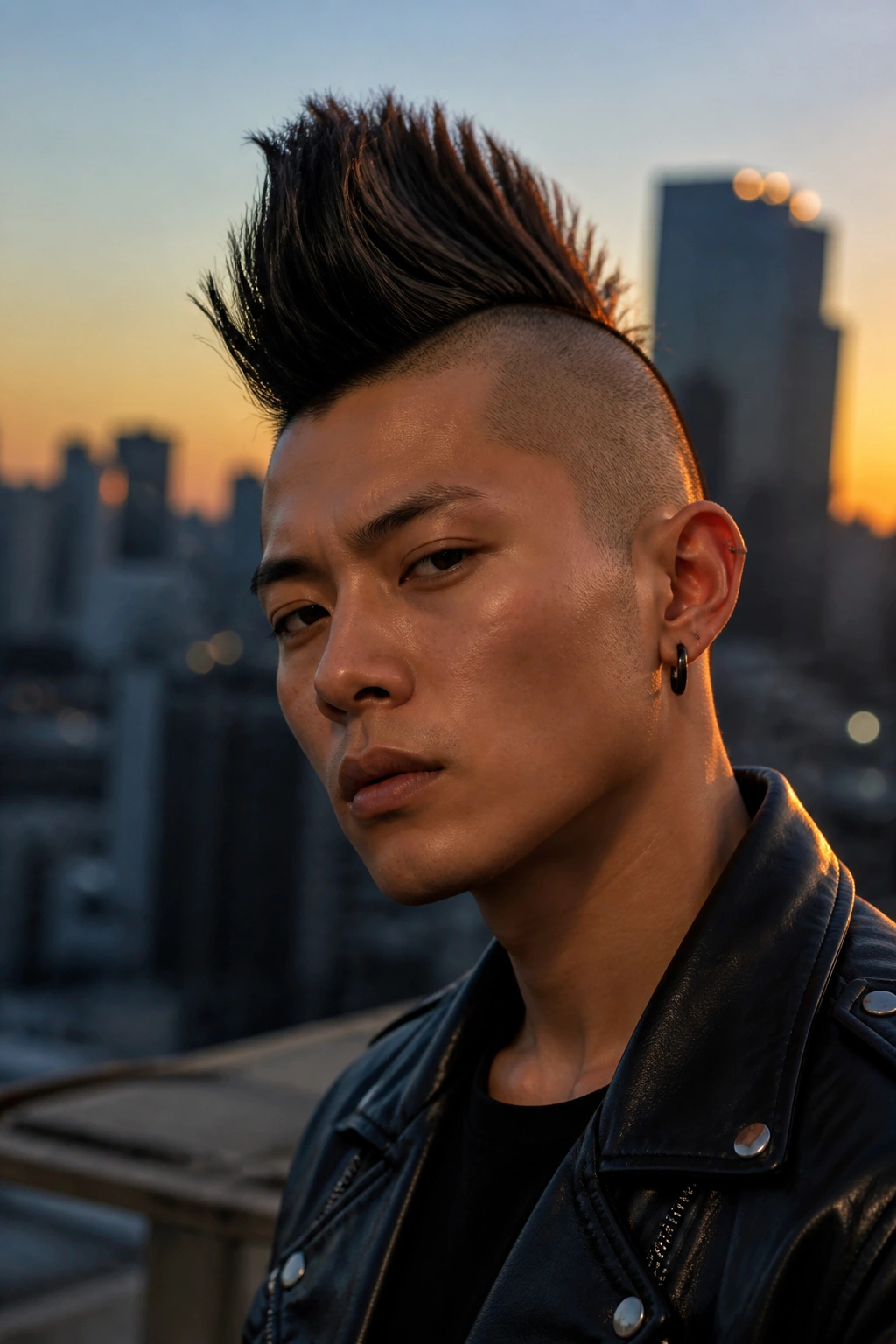
Some cuts look best when they lean a little reckless. A half hawk — shaved on both sides, with a thick strip of hair left through the center and tilted slightly to one side — has that energy. It’s not a shy haircut. It looks best when the top has enough lift to hold its own.
Why it hits hard
The center strip creates vertical movement, which makes the face look longer and the profile stronger. If your hair is straight, you can build the shape with blow-drying and product. If it’s wavy or curly, the natural texture does half the job for you. Keep the center section around 5 to 8 inches if you want true height, and trim the sides close enough that the contrast stays obvious.
How to style it without making it crunchy
Mousse at the roots gives the best lift if you’re blow-drying. After that, use a light paste or a touch of fiber cream on the ends. You want movement, not a shell. A lot of people overdo this cut and end up with stiff hair that looks more like costume than style.
Best fit and feel
- Good for anyone who wants a strong silhouette.
- Works well with sharp cheekbones and strong brows.
- Needs regular shaping so the hawk does not sag.
- Can be softened by leaving the top a little wider and less pointed.
There’s something satisfying about this one in real life. It has a little edge, but not in a fake way. It feels like a haircut that knows exactly what it wants to be.
9. Wavy Lob with a Hidden Side Shave
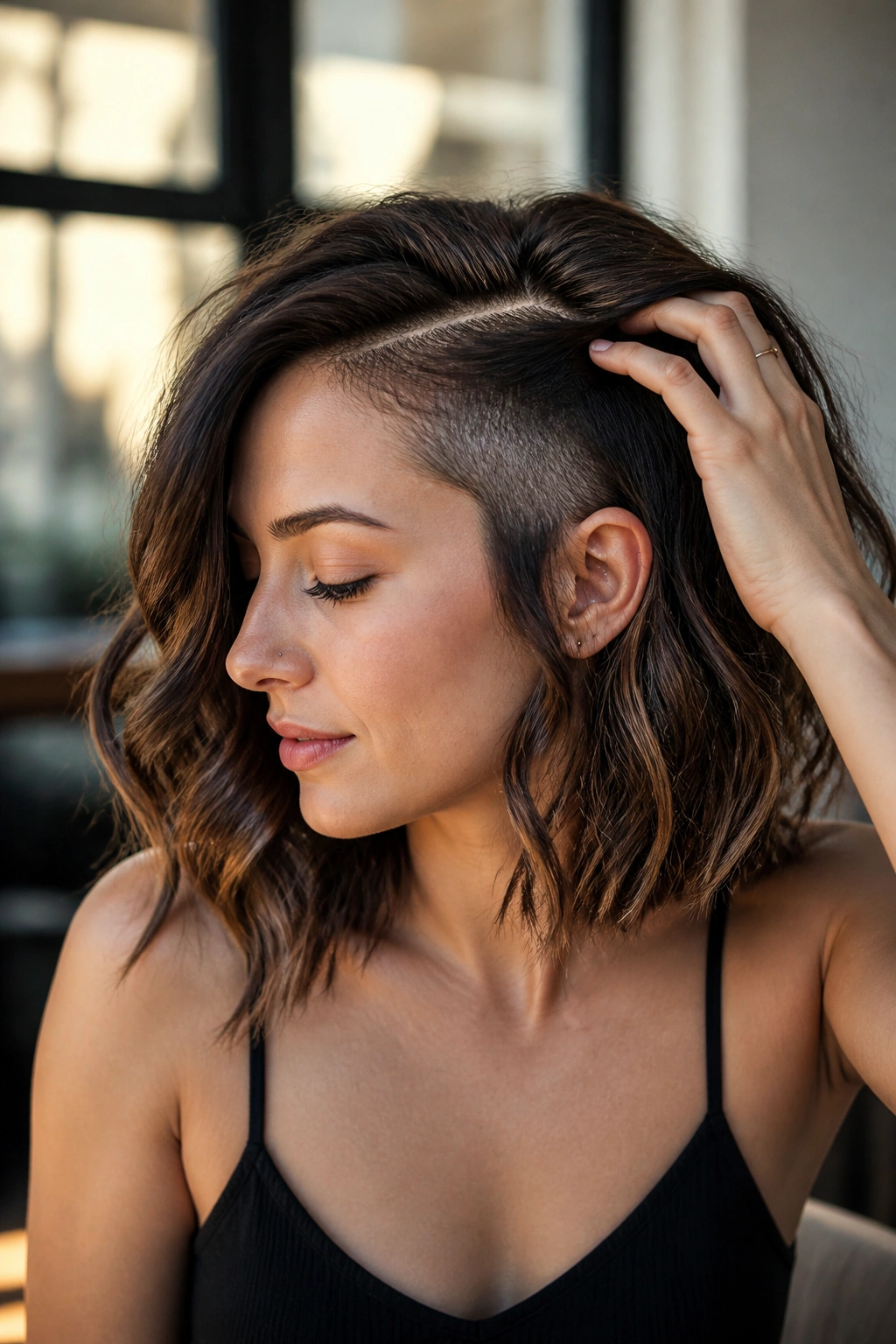
Want the edge without broadcasting it? A wavy lob with a hidden side shave is the sneaky one on the list. On the surface, it looks like a normal shoulder-grazing cut with a soft bend. Tuck the hair behind the ear, though, and the shaved panel flashes through like a private joke.
Why people like it
This version keeps the haircut wearable. You can leave the top loose, wave it with a flat iron or curling wand, and still hide the shaved section when you want a quieter look. That flexibility matters if you like bold hair but do not want the same level of drama every single day.
The shaved part usually sits underneath the top layer, near the temple or sideburn area. It should be low enough to disappear when the hair is down, but high enough to show when the hair shifts. That balance is the whole point.
Styling notes that save time
Use a sea salt spray or light wave mist on damp hair, then rough-dry with your hands. If you use a curling wand, keep the bends loose — about 1-inch sections wrapped away from the face work well. The hidden shave shows off best when the waves are touchable, not rigid.
This cut also grows out gracefully. The shaved part starts as a little reveal and then slowly turns into a soft underlayer. No sudden awkward stage. That alone makes it easier to keep.
There’s a reason this one has staying power: it gives you control. Some days you want the side to stay hidden. Other days you want the haircut to announce itself.
10. Mullet-Inspired Side Shave with a Choppy Fringe
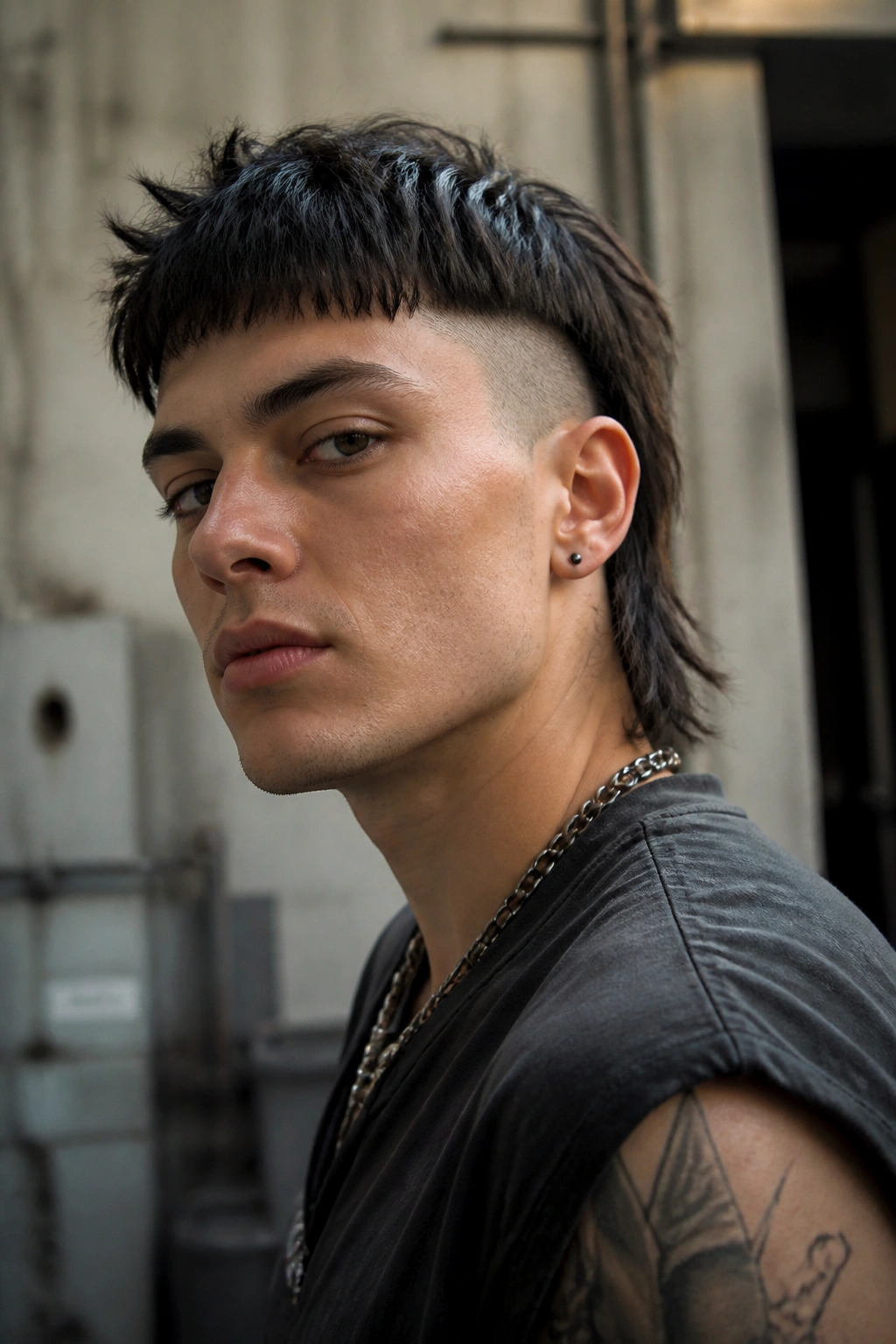
A mullet-inspired side shave is not for people who want their hair to disappear into the background. It’s blunt, a little rebellious, and far better when the front fringe has texture instead of perfect symmetry. The side shave keeps it from feeling heavy, while the back length gives the cut motion and attitude.
The shape that makes it work
Keep the front fringe around 3 to 4 inches, chopped enough to sit loose over the forehead. Leave the crown longer and let the nape taper into a softer tail or shaggy back section. The shaved side can be close to the skin or just buzzed short, depending on how hard you want the contrast to hit.
How to keep it from looking messy
The important part is the transition. The top should move into the back smoothly, even if the texture itself is choppy. A razor can help on the ends, but too much razor work can make fine hair frizz. On thicker hair, a controlled razor cut or point-cutting gives the fringe a broken-up feel without turning the whole head into fuzz.
A matte cream or texturizing paste works better here than shine-heavy product. You want grit. You want separation. If the hair clumps together, the shape loses its point.
Who should try it
- People who want the cut to feel expressive, not polished.
- Anyone with wave, curl, or coarse texture that holds shape.
- Folks who like a little edge around the face and neck.
- Anyone tired of haircuts that play safe.
This one ends the list for a reason. It has the most range, and maybe the most personality. With the right length balance, it can look raw in a good way — the kind of cut that looks better when it moves.
Shaved side cuts work because they change the silhouette fast. One side can open the face, one can sharpen the profile, and one can make thick hair easier to live with. The trick is choosing the version that matches your texture and your tolerance for upkeep.
And that’s really the part people should think about before they sit in the chair. A shaved panel is easy to love on day one. It still needs to make sense on day twenty.
