



A shaved hair design can change a haircut faster than almost anything else. One clean line on a temple, nape, or side panel can make hair feel sharper, lighter, and more deliberate in a way a simple trim never quite manages. That’s the appeal: instant contrast.
Placement matters more than the pattern. A tiny design in the wrong spot can vanish the moment hair grows in, while a bigger shape in the right place can carry an entire cut on its back. A good barber or stylist will look at your swirl pattern, your part, your neckline, and the way your hair falls before they ever pick up the trimmer.
That part gets overlooked a lot. Tiny lines blur quickly. Heavy-handed designs can look messy if the rest of the cut isn’t clean.
The best shaved hair designs do one thing well: they give the eye a place to land. Some are subtle and tucked away. Others announce themselves the second you turn your head. The first one on this list is usually where people start, and honestly, it earns that spot.
1. One-Side Shave That Leaves the Rest Long
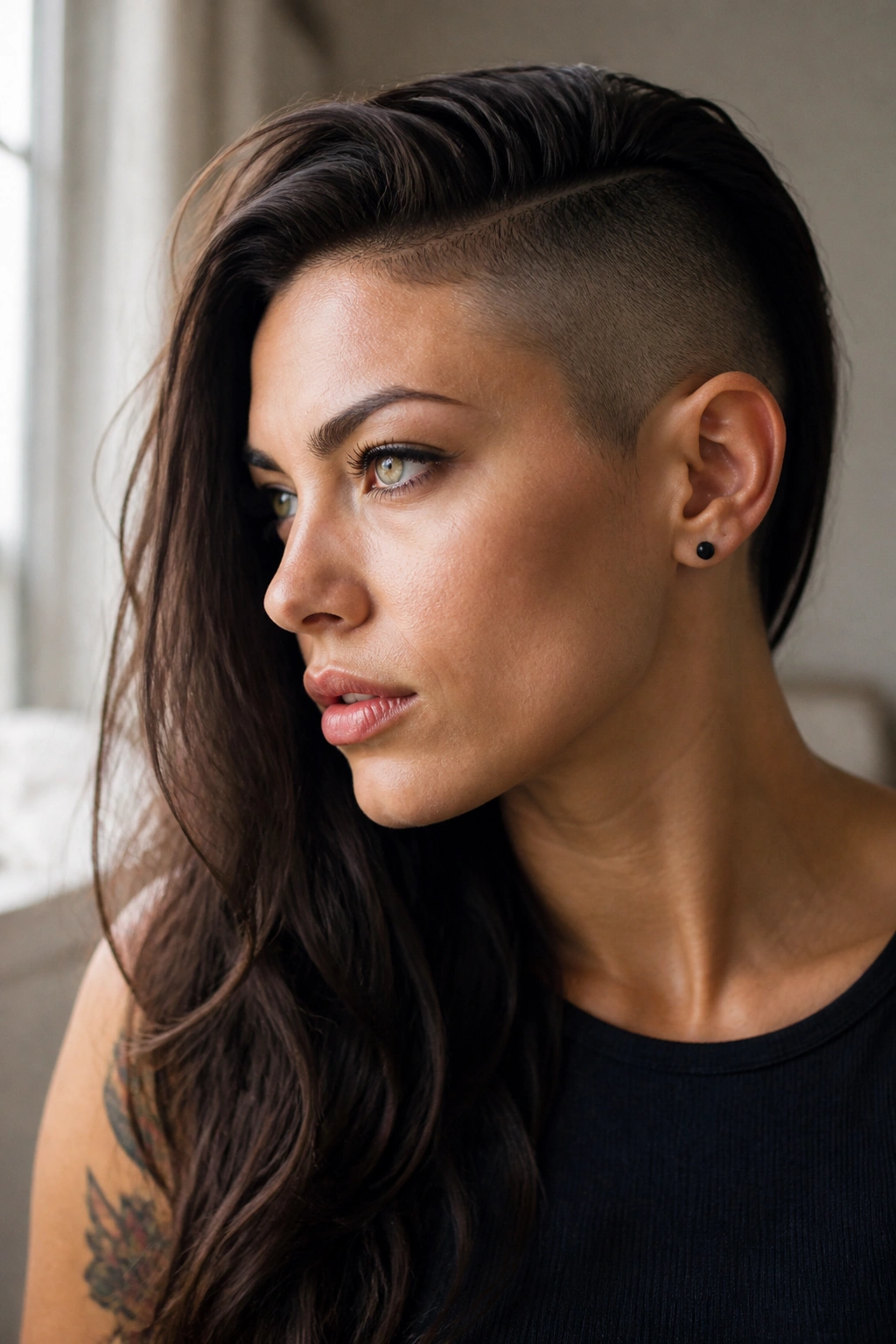
This is the easiest shaved design to wear if you want drama without giving up length. One side gets clipped down close, while the rest of the hair stays long enough to swing, tuck, braid, or pin back. The contrast does the work for you.
I like this look because it reads bold even when the styling is simple. You can wear the long side smooth and sleek, rough it up with texture spray, or pull it into a low ponytail and let the shaved side do the talking. It’s a strong option for people who want edge but do not want to commit to a full buzz or a severe crop.
What to ask for
- Shave one side panel with a #1 or #2 guard, depending on how close you want it.
- Keep the long side at least 4 to 8 inches if you want clear contrast.
- Ask for a clean part just above the temple so the top doesn’t collapse into the shaved area.
- Clean up the ear line and neckline, because sloppy edges ruin the whole effect.
The nicest part is the grow-out. It softens into a side-swept shape instead of turning into a hard correction job. That said, the shaved panel will need a touch-up every 2 to 3 weeks if you want it to stay crisp.
2. Temple Fade With a Sharp Parting Line
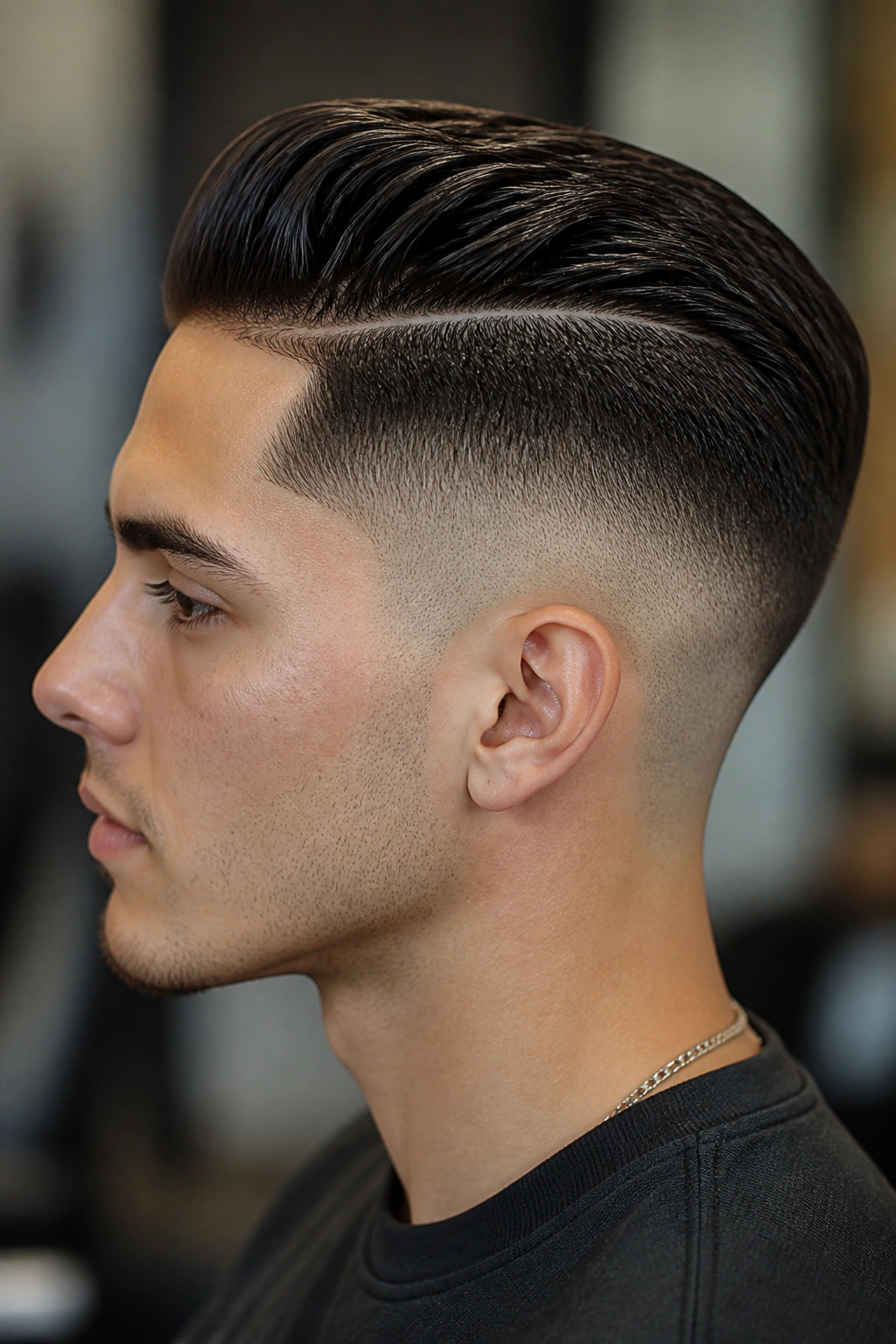
Want something sharp that still looks polished enough for a dressy setting? A temple fade with a hard line is a strong bet. The shaved area sits around the temple and sideburn zone, then fades upward into longer hair with a clean, visible part cutting through the transition.
The temple is a high-visibility spot, which is exactly why this design works so well. Your eye goes there first. A clean part gives the haircut structure, and the fade keeps it from looking blocky. On straight hair, it can look razor-sharp. On curly or coily hair, it adds shape and keeps the edges from feeling bulky.
How to wear it
A little pomade or styling cream helps the line stay visible, but you do not need a helmet of product. Keep the top directed away from the temple line so the design stays open. If the hair falls over it, the whole point disappears.
What to avoid
- A part that is too low and too short.
- A fade that stops awkwardly in the middle of the head.
- Overloading the top with product until it shines like plastic.
This is one of those cuts that looks better when it is fresh. Not every day. Fresh.
3. Hidden Undercut Beneath Long Layers
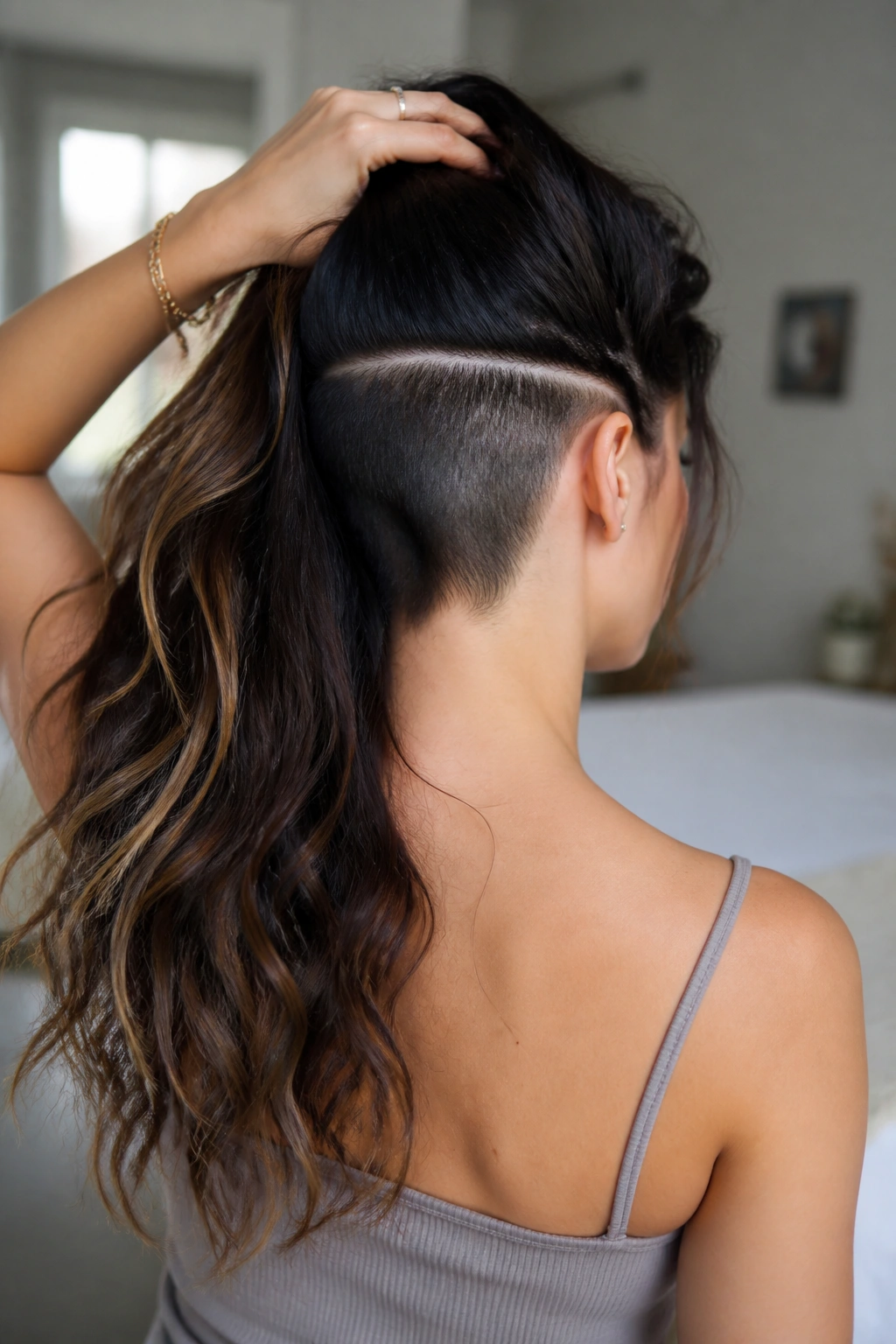
The best part about a hidden undercut is that nobody sees it until you move your hair. That sounds small, but it changes the whole feel of the cut. From the front, you can keep long layers, waves, or curls. From the back, you get a shaved section that removes weight and gives the shape more lift.
Thick hair loves this trick. It takes bulk out without forcing you into a short style everywhere. If your hair puffs out at the nape, or you spend half your life tying it up because it feels heavy, an undercut can be the most practical shaved design on this list.
A good hidden undercut usually sits under the crown and stops before the visible top layers begin to fall. Too high, and it stops being hidden. Too low, and it does not remove enough weight to matter. That balance is the whole game.
Where it shines
- Long wavy hair that feels too heavy at the bottom.
- Curly hair that mushrooms at the back.
- Ponytail wearers who want less bulk.
- People who need a low-key design for work or family settings.
One warning: fine hair can lose too much body if the undercut is too wide. Keep the shaved area narrow if your hair is already soft or thin. Otherwise, the top can collapse and start looking sparse.
4. Nape Shave Beneath a Bob
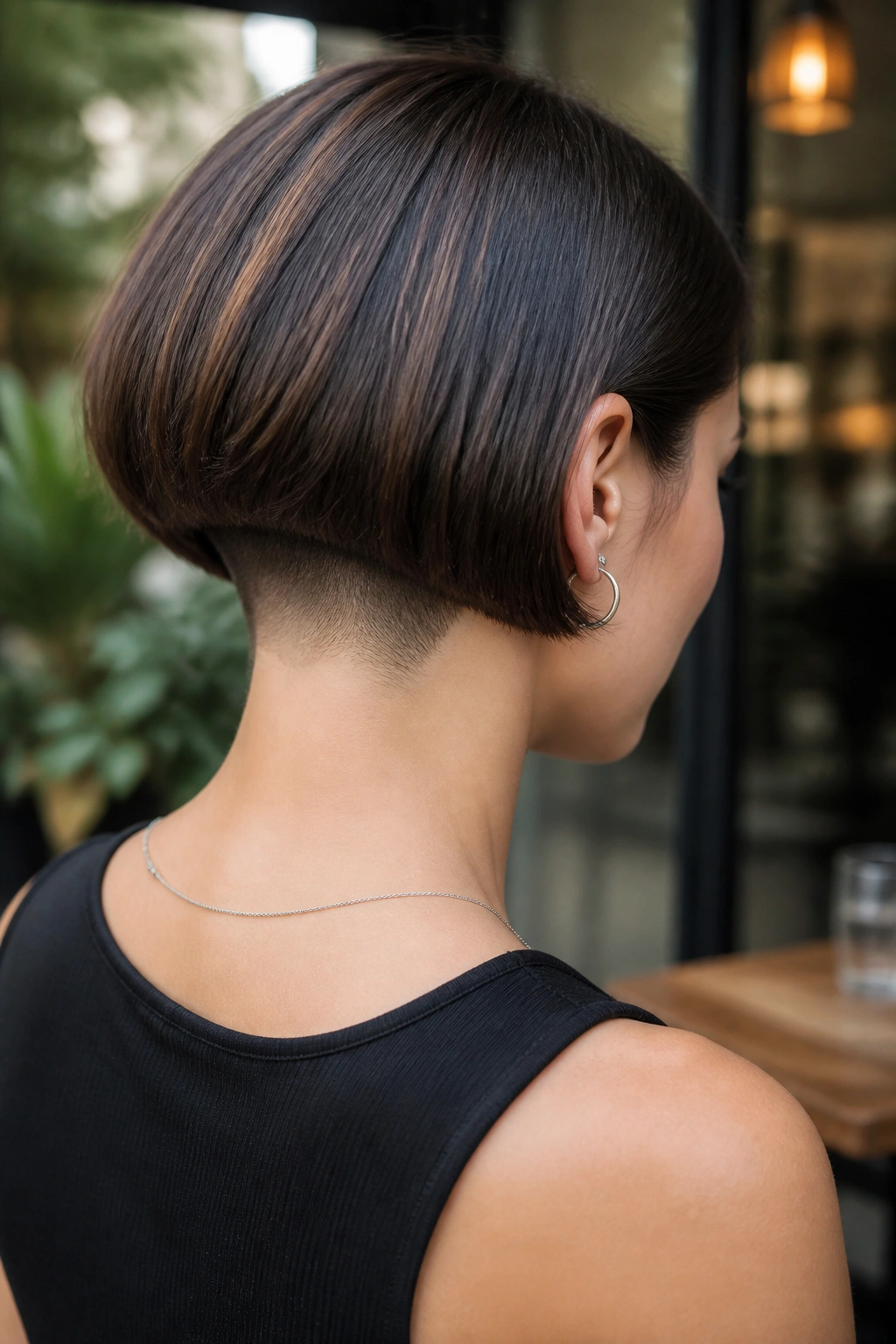
A bob with a shaved nape looks tidy from the front and a little rebellious when you turn your head. That’s a good mix. The front can stay blunt, curved, or softly layered, while the hair at the back of the neck gets clipped down to remove bulk and reveal a clean line.
The nape is one of the smartest places for a shaved design because it changes how the haircut sits on the neck. A blunt bob can feel heavy there. A shaved nape lifts that weight right off. It also keeps the neckline cleaner, which matters if your hair tends to grow into a fuzzy little shelf at the back.
I’m a fan of this one for coarse hair. It reduces that thick, boxy feeling that some bobs get after a few weeks. On finer hair, it works best when the shaved section stays narrow and subtle.
A small etched line at the nape can make the cut feel finished, but it does not need to be fancy. Sometimes the clean shave alone is enough. That simplicity is the point.
5. Geometric Line Art Across the Side
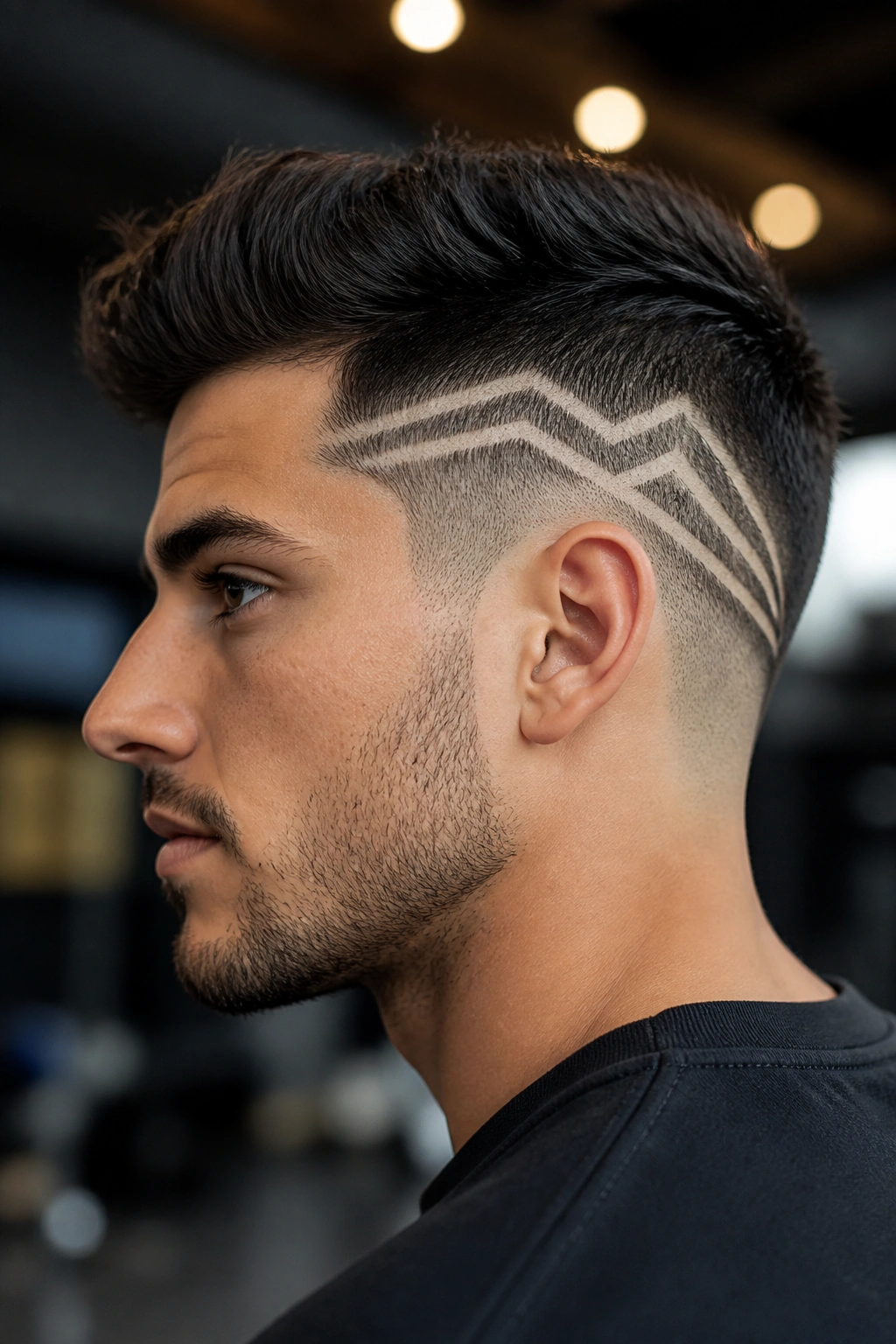
Unlike a simple shaved panel, geometric line art asks the barber to draw with the trimmer. Straight lines, angles, chevrons, triangles, and stacked cuts can all work, but they need control. This is not the place for a shaky hand or a rushed appointment.
Sharp geometry only looks sharp when the rest of the haircut is clean. If the fade around it is uneven, the design starts looking accidental instead of deliberate. That is why the best geometric shaved hair designs are usually built on a very neat base cut.
What makes it work
The lines need breathing room. A thin zigzag crammed between two other patterns tends to blur fast and look crowded. A single bold angle or a set of two parallel lines usually lasts longer and reads better from a distance.
What to ask for
- A side panel or temple area with enough open space for the shape.
- Lines at least 1/8 inch wide so they do not vanish too quickly.
- A surrounding fade that is smooth and even.
- Clear contrast between the design and the rest of the hair.
If you like precision, this is a strong choice. If you want something low-maintenance, skip it. Geometric line work exposes every mistake, and that is part of its charm.
6. Lightning Bolt or Star Design
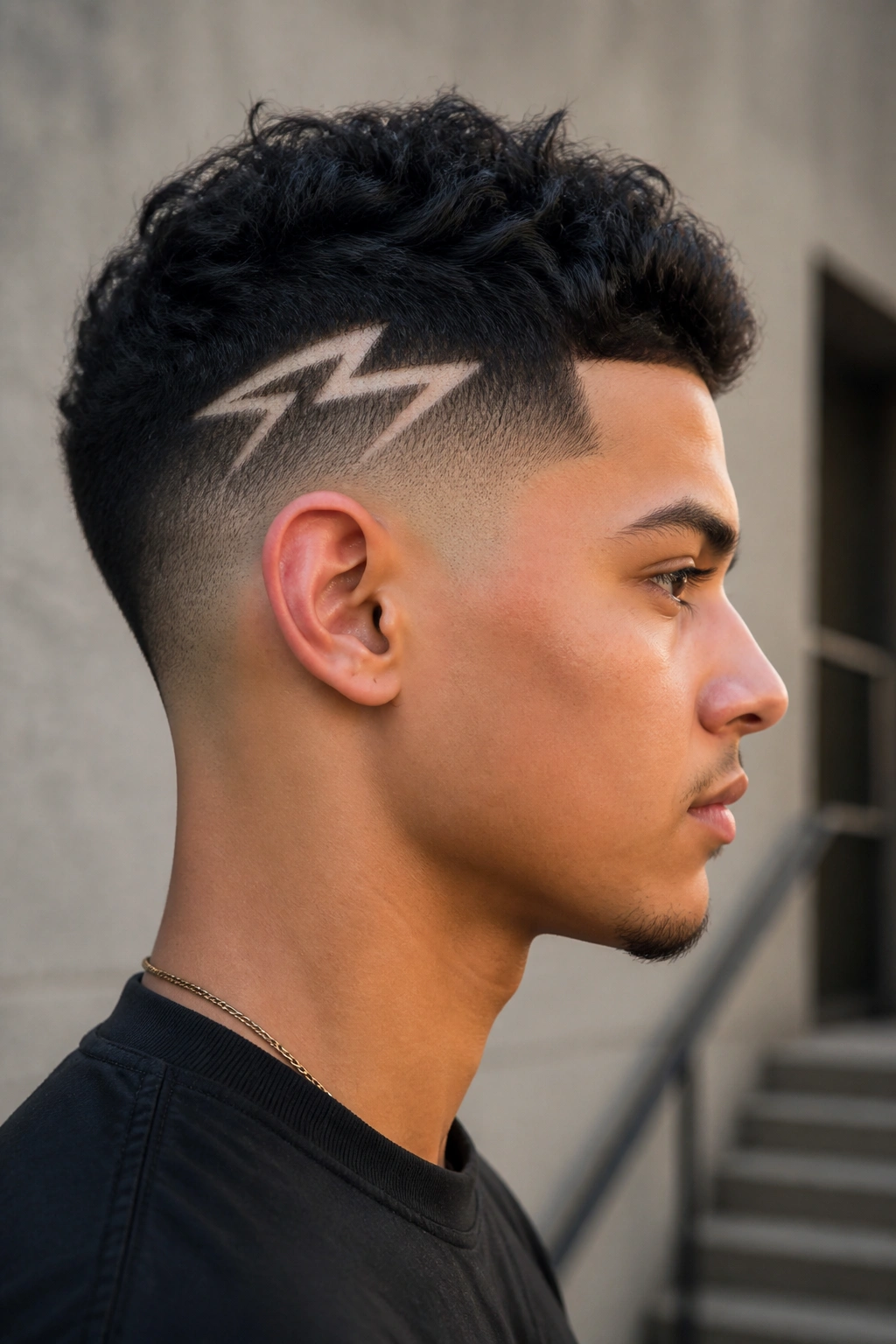
If you want a design people notice from six feet away, this is it. A lightning bolt, star, crescent, or similar motif turns the haircut into the statement, not just the detail. The shape itself does the talking, and the rest of the style needs to stay quiet enough to let it.
Bold motifs need room. A lightning bolt looks best when it has open space around it, usually on a temple, side panel, or near the back corner of the head. Cramming it into a crowded fade usually makes it look busy. Give it a clean field and it lands harder.
This kind of design works especially well with short fades, buzzed sides, or a cropped top. It can also sit under longer hair, but then it becomes more of a surprise reveal than a constant look. That can be fun. It can also be annoying if you want people to see the shape all the time.
A small practical note: tiny points blur first. Sharp corners soften faster than long straight runs, so a star or bolt will need touching up sooner than a simple line. If you like neat edges, be ready for upkeep every couple of weeks.
7. Curly Top With a Clean Shaved Sides
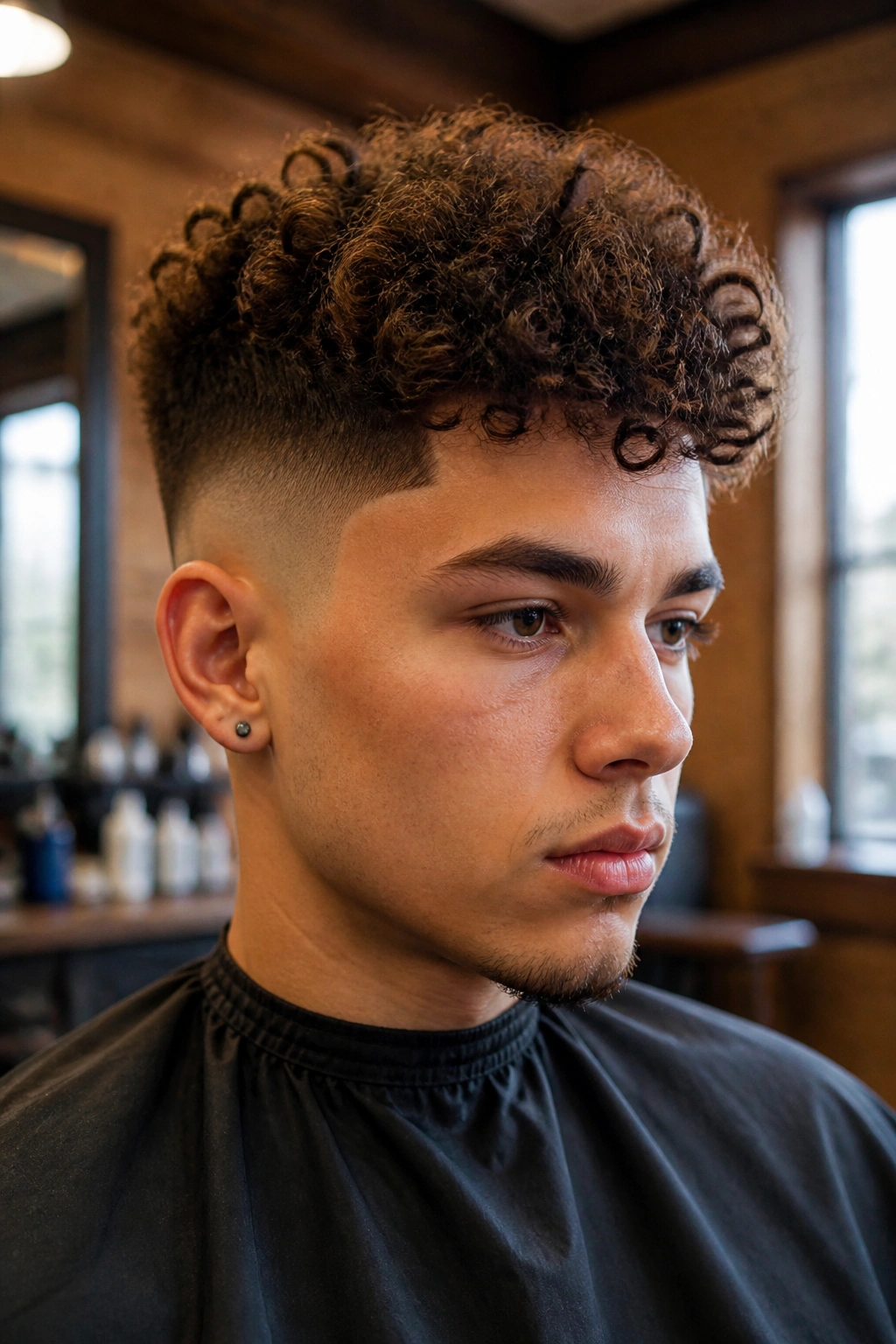
Curly hair and shaved sides create a clean contrast you can feel as much as see. The sides sit close to the head, and the curls on top rise up with shape and movement. The result is lively, not flat. That matters more than people think.
This is one of the smartest shaved hair designs for people with coils, curls, or strong waves because it removes weight where the hair tends to bulk up. The top keeps its personality, but the sides stop competing with it. You get height without a helmet shape.
How to keep the shape from ballooning
Keep enough length on top for the curls to spring back. If you cut the top too short, the style can puff out instead of stacking neatly. A curl cream or leave-in conditioner helps the top hold definition, and a diffuser can keep the curl pattern from getting crushed.
A good cut usually tapers the sides gradually instead of dropping straight to the scalp. That soft fade keeps the transition smooth. A hard line on curly hair can work, but it needs confidence.
This style works well when you want the curls to look intentional, not like they were left alone. Clean sides do that job fast.
8. Mohawk Strip With Tapered Sides
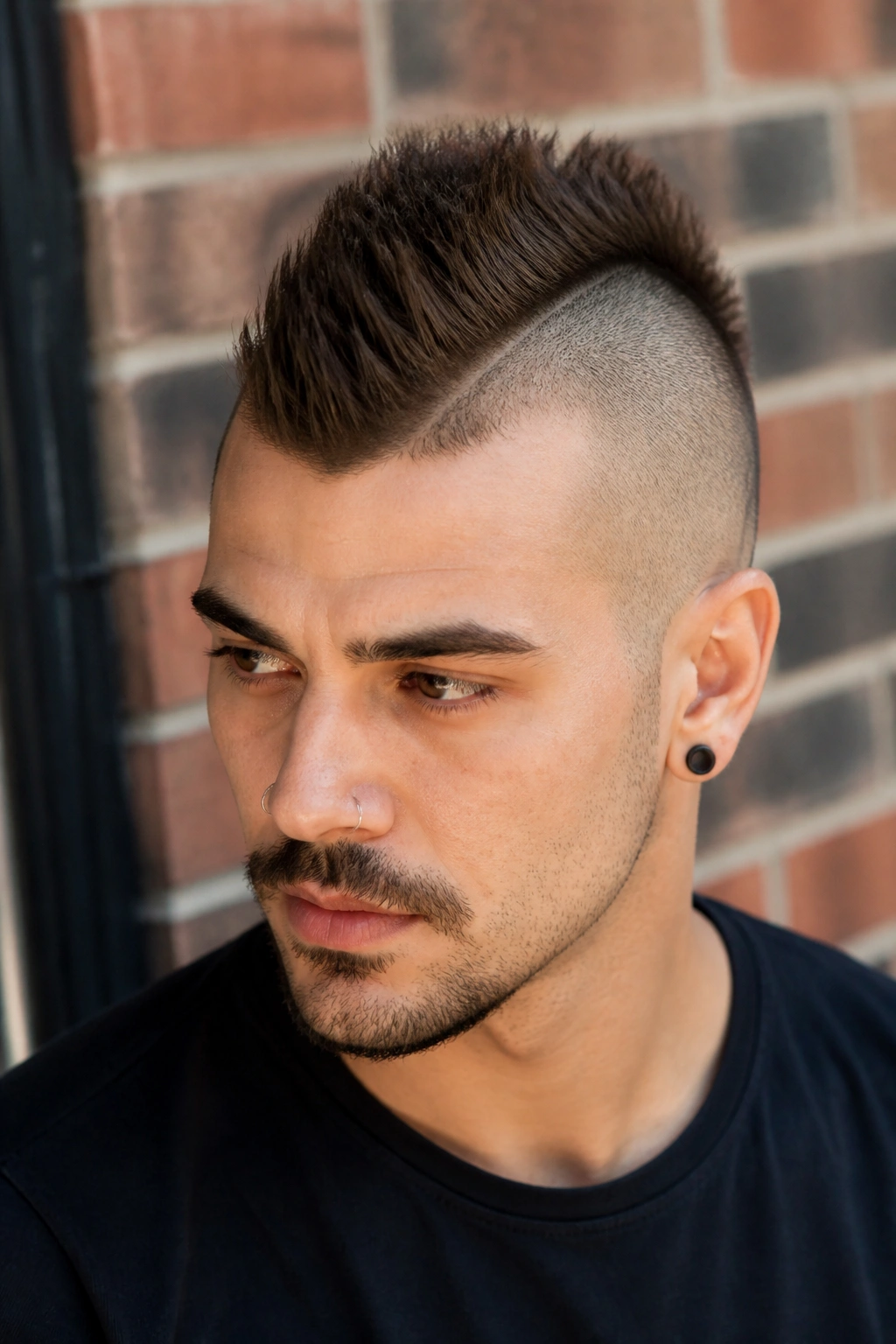
A mohawk strip is for the person who likes motion. Even if it is toned down, the central band of hair pulls the eye from front to back and gives the whole head a longer, more lifted shape. The sides are shaved or tapered close, and the strip in the middle stays longer, taller, or more textured.
A mohawk does not have to scream to work. A narrow strip with soft edges can feel sharp without looking theatrical. A wider strip, on the other hand, pushes straight into bold territory. Width changes everything.
Narrow vs. wide
A narrow strip feels cleaner and easier to wear. It works well if you want texture without turning the cut into a costume piece. A wide strip gives more drama and more surface area to style, but it also takes more upkeep.
Styling the strip
- Use matte paste for a rough, separated finish.
- Use gel if you want the strip to stand up more firmly.
- Keep the sides tight, or the shape loses power fast.
- Ask for the strip to be centered from forehead to nape so it does not drift sideways.
This one needs more maintenance than most. The shape is obvious when fresh, and equally obvious when it starts growing out unevenly. No hiding it.
9. Pixie Cut With Razor-Shaved Sides
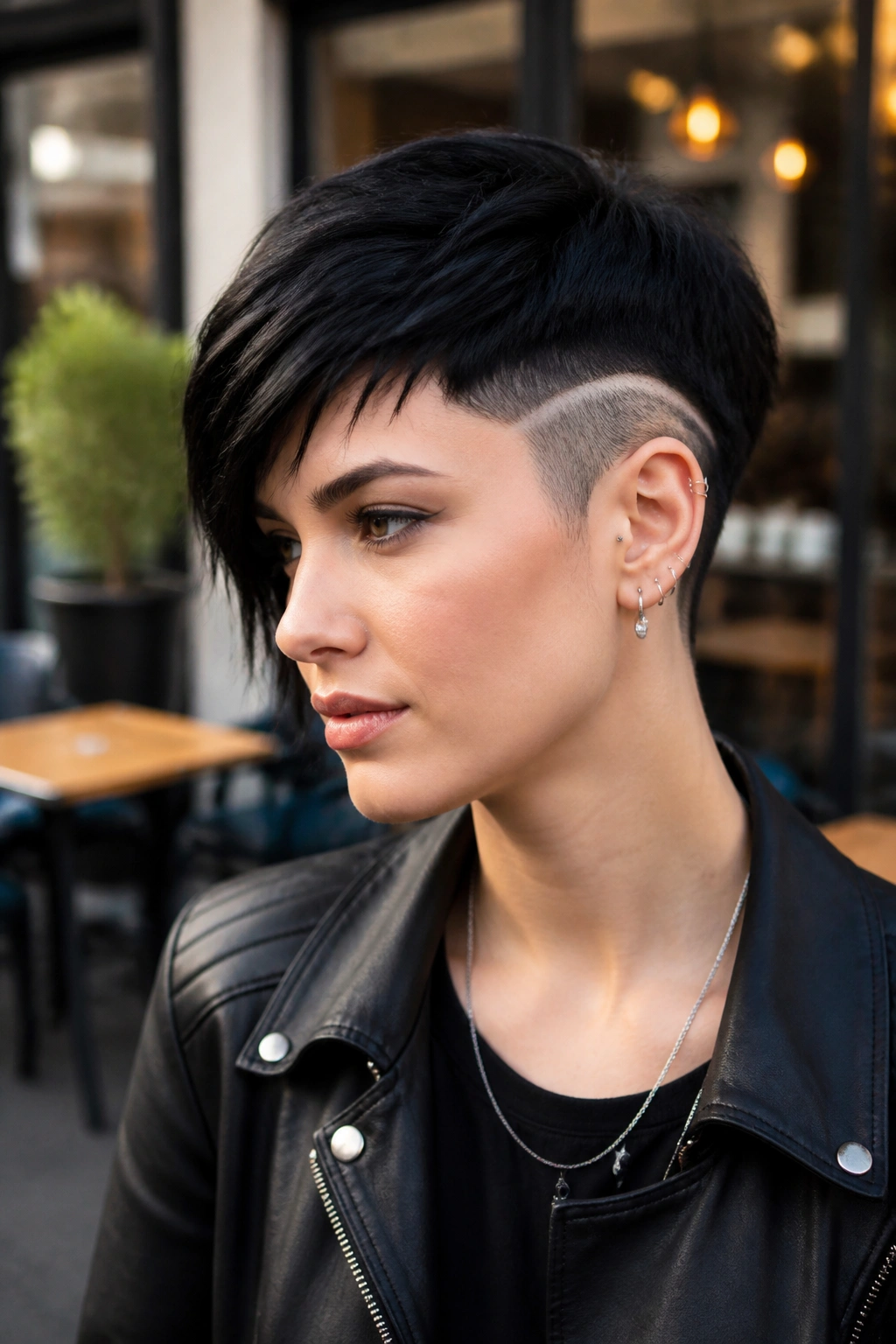
Unlike a soft pixie, this version has a hard edge on purpose. The shaved side turns a cute short cut into something more angular and a little bolder. It keeps the pixie from leaning too sweet or too ordinary.
I like this one for fine hair because the shaved section removes bulk at the side while the top stays lightweight and textured. That makes the crown look fuller without forcing you to pile on product. On thicker hair, the shaved side clears out some of the extra weight that can make a pixie feel boxy.
The nicest versions keep one side longer, or leave the fringe sweeping across the forehead. That softness balances the shaved area and keeps the cut from feeling severe. You want contrast, not a hard stop.
This design pairs well with strong brows, bold lipstick, or simple earrings, but the haircut does not need accessories to work. It stands on its own. If anything, too many competing details can make the cut feel cluttered, which is a shame because the shape is the whole point.
10. Double Temple Shave With Center Volume
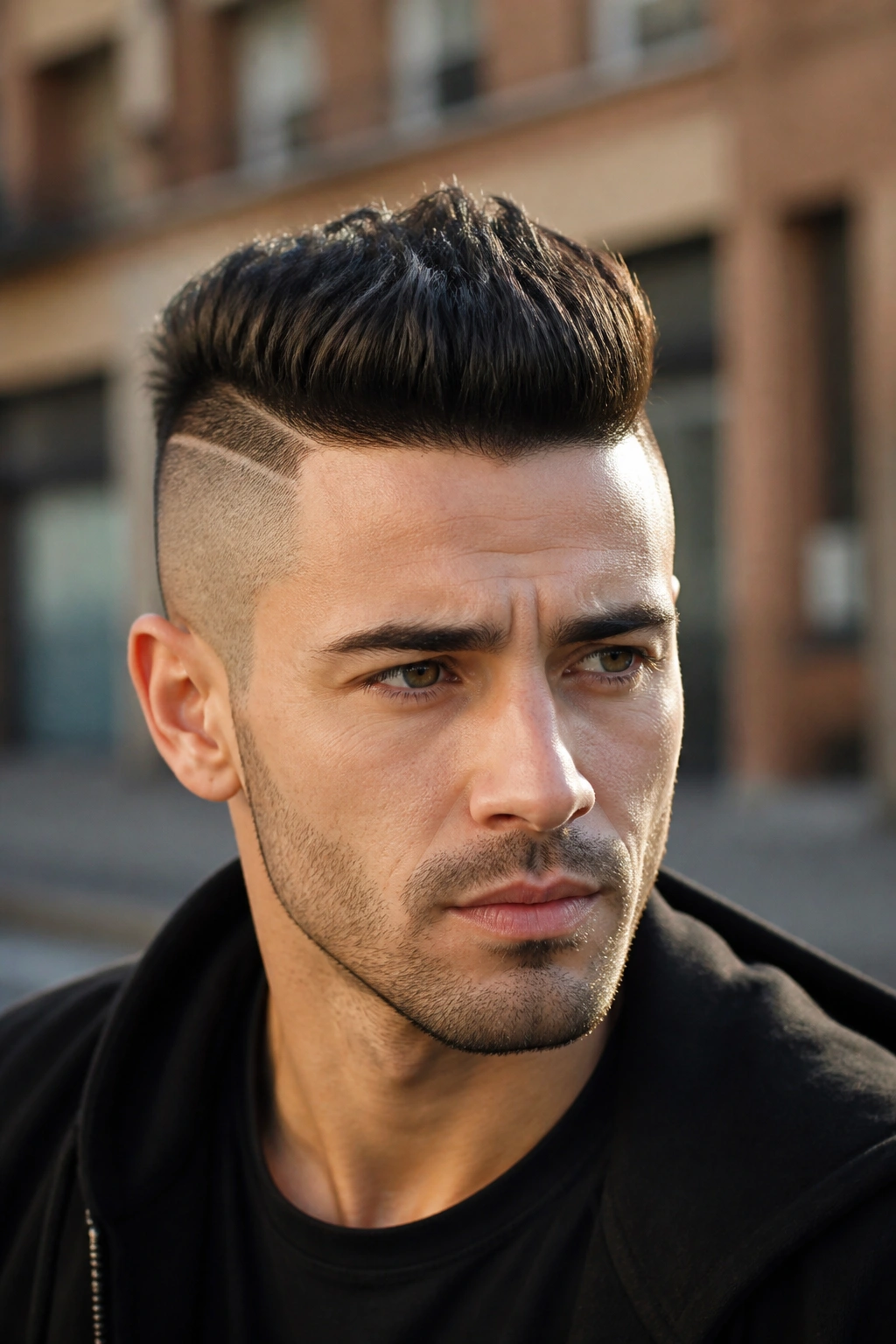
What if you want bold shape without shaving half your head? Double temple shaving is the answer. Both temples get clipped down or carved in, while the center section stays fuller and higher, which creates a strong frame around the face.
The balance here is the point. The shaved areas pull the eye inward, and the top adds height. It can be worn with a quiff, a puff, a slicked-back crown, or a twisted top knot. That flexibility makes it one of the more wearable shaved hair designs for people who like change.
Why symmetry matters
When both sides are shaved the same way, the design feels clean instead of lopsided. That symmetry is useful if you pull your hair back often or if you want the style to look deliberate from every angle. It also flatters faces that benefit from a little lift at the center.
Who it suits
- People who wear their hair up most days.
- Anyone who wants strong cheekbone framing.
- Hair that is medium to thick on top.
- Styles that need the sides to stay lean and crisp.
The upkeep is not terrible, but the temple area grows in fast. If you want the lines to stay clean, plan on touch-ups every 10 to 14 days.
11. Textured Crop With a Carved Hard Part
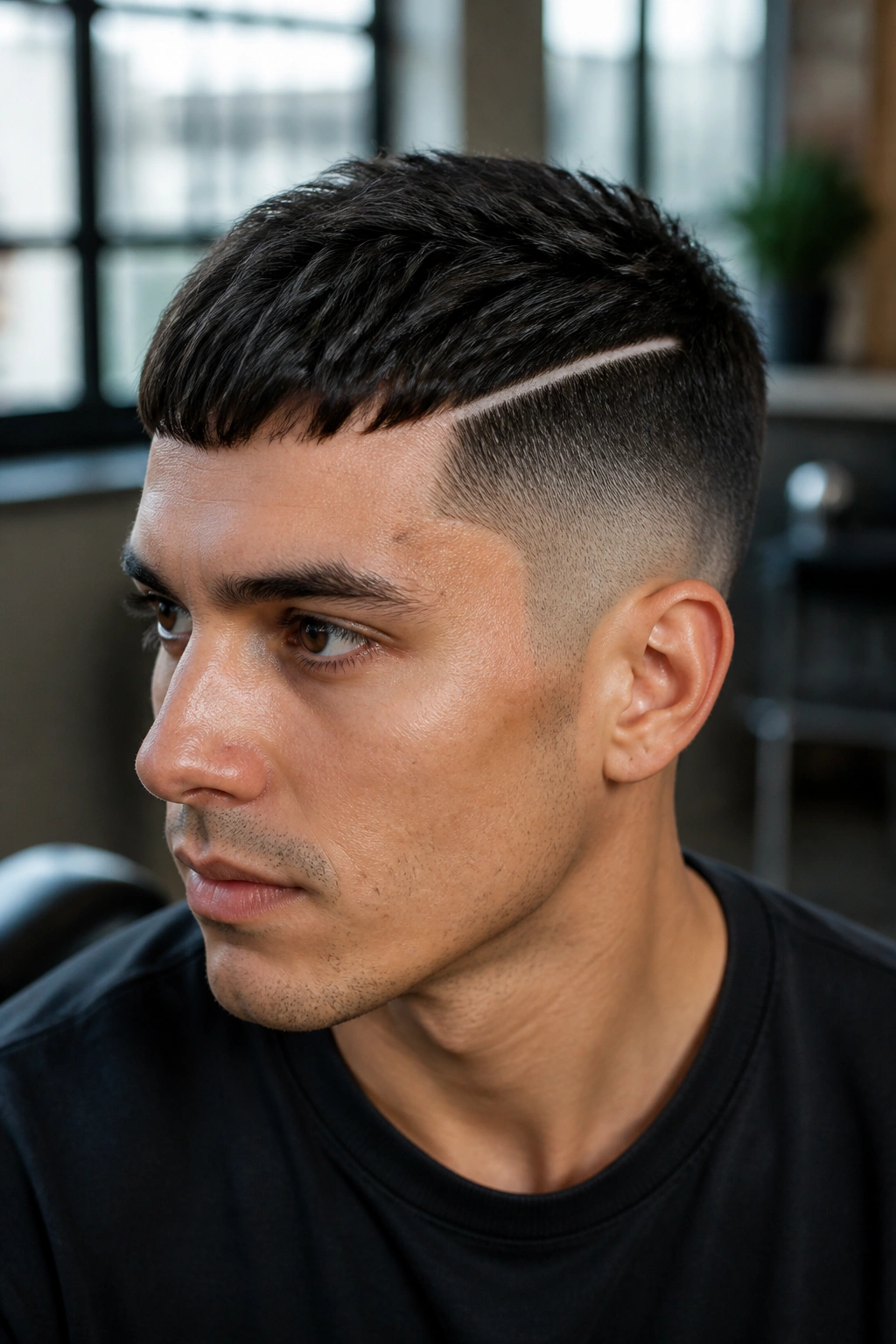
The hard part is not subtle, and that is exactly why it works. A textured crop already has short, layered movement on top; add a carved part, and the haircut suddenly has structure. It stops feeling like a generic short cut and starts looking intentional.
This style is strong on straight or wavy hair because the part stays visible and the texture on top separates well. On curls, it can still work, but the top should be cut with enough length to show texture rather than just fuzz. A crop without enough texture looks flat fast.
How to style it
- Keep the top around 1.5 to 3 inches.
- Ask for the part to be carved with a trimmer, not drawn in with product.
- Fade the sides down to a #1 or skin level.
- Work a small amount of matte clay through damp hair, then push it forward or slightly sideways.
What I like here is the speed. It takes minutes to style, and the part gives the eye a clean break line even on days when the top is a little messy. That’s useful. A lot of short cuts fall apart when they are not styled perfectly. This one has built-in structure.
12. Full Buzz With a Precision Etched Pattern
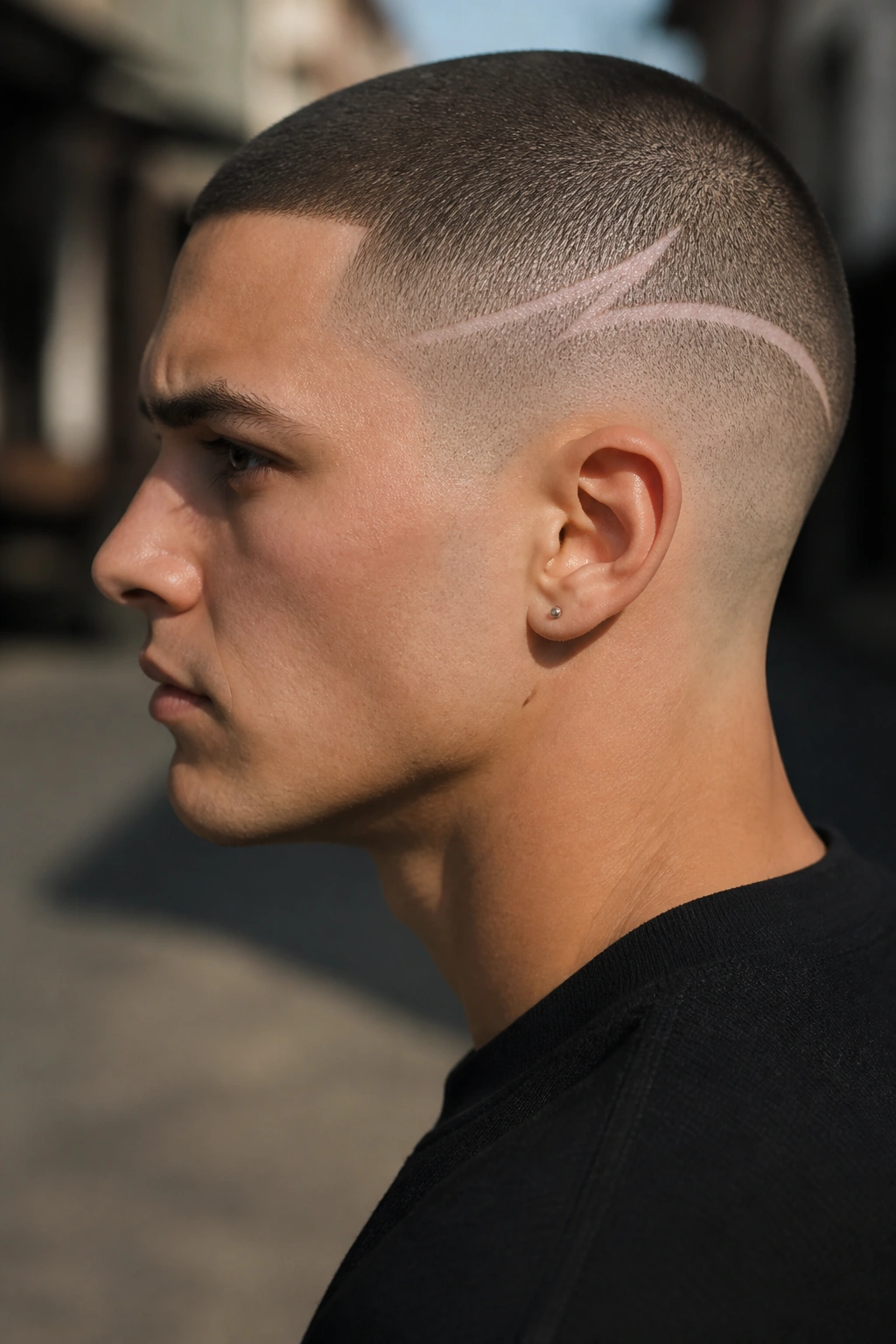
A buzz cut with an etched pattern is the bluntest version of a shaved design, and that is why it hits so hard. There is nowhere for the pattern to hide. The whole head becomes the canvas, so a single line, curve, or small symbol reads with more force than it would on longer hair.
This style works best when the pattern stays simple. One bold curve across the side, a short lightning shape near the temple, or a clean graphic line at the back will age better than a crowded design. Too much detail on a buzz can blur fast. The shorter the hair, the faster the edges soften.
A buzz with art also has a practical side. It needs almost no styling, it feels cool on the scalp, and it grows out with less awkwardness than a more sculpted cut. The downside is obvious: once it starts growing, the design loses definition quickly, so you need to like the look enough to keep it fresh.
My bias is to keep the pattern simple and strong. One symbol. One line. One curve with clear edges. The buzz itself already does half the work, and that’s the part people forget when they start asking for more shapes, more angles, more everything. Sometimes one clean idea is enough.
