



Nothing changes a haircut faster than a shaved nape. One clean strip at the neck can make a bob look sharper, a pixie feel lighter, and a long cut stop collapsing into a heavy block at the collar.
That is small work with a big payoff.
The appeal is partly the reveal. Hair down, the look stays neat and polished; hair up, the shaved section shows up like a hidden signature. And because the nape sits low on the head, the cut can feel bold without taking over the whole style.
The detail that matters most is placement. A shaved panel that sits too high can look choppy as it grows out; a panel that sits too low disappears under the neckline and loses the point. Good stylists pay close attention to the natural swirl at the nape, the way the hairline curves behind each ear, and whether your neck is short or long. Those tiny choices decide whether the cut feels sleek or a little off.
Some shaved nape cuts stay quiet. Some make a point. The good ones do both.
1. The Hidden Shaved Nape Bob
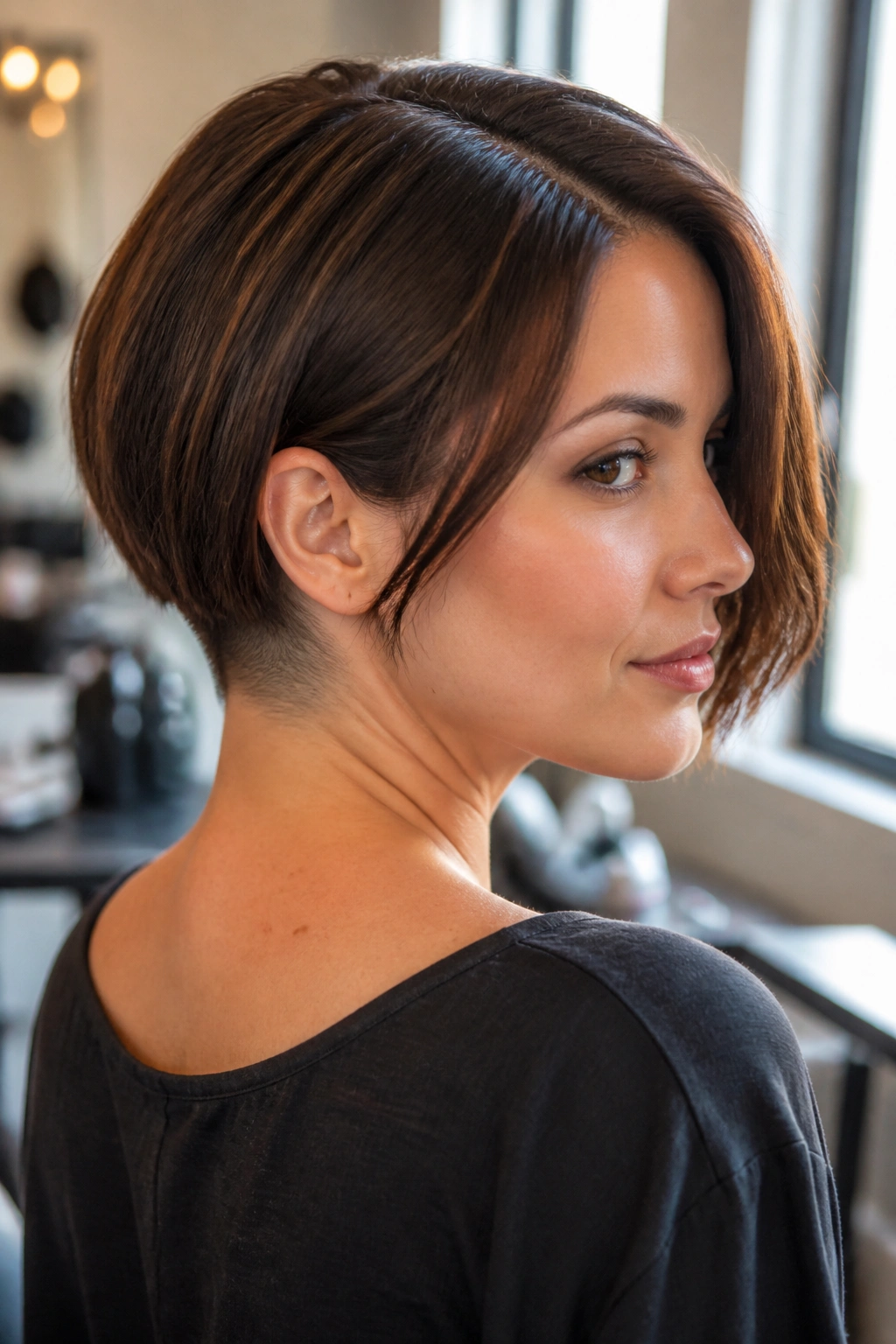
A hidden shaved nape bob is the move when you want the back of your haircut to feel lighter without turning the whole style into a statement piece. From the front, it can read as a clean bob, a soft A-line, or a blunt cut that sits right at the jaw. Turn around, and the bottom layer has been removed so the neckline lies flatter and the shape stops ballooning outward.
It works especially well on medium to thick hair. That extra density tends to push a bob out at the nape, and a concealed shave takes care of the bulk without touching the visible outline too much. The trick is to leave enough top length to cover the shave when the hair is down, then let the undercut show only when you tuck one side or throw the hair into a low bun.
What to Ask For
- Ask for a shaved panel about 1.5 to 2 inches high at the nape.
- Keep the top layer at least 2 to 3 inches longer so the shave stays hidden.
- Ask for a soft graduation into the bob, not a hard shelf.
- If your hairline is uneven, have the stylist follow the natural curve instead of forcing a straight line.
My take: this is the safest bold cut in the bunch. You get the secret. You also get the shape.
2. The V-Shaped Nape Line
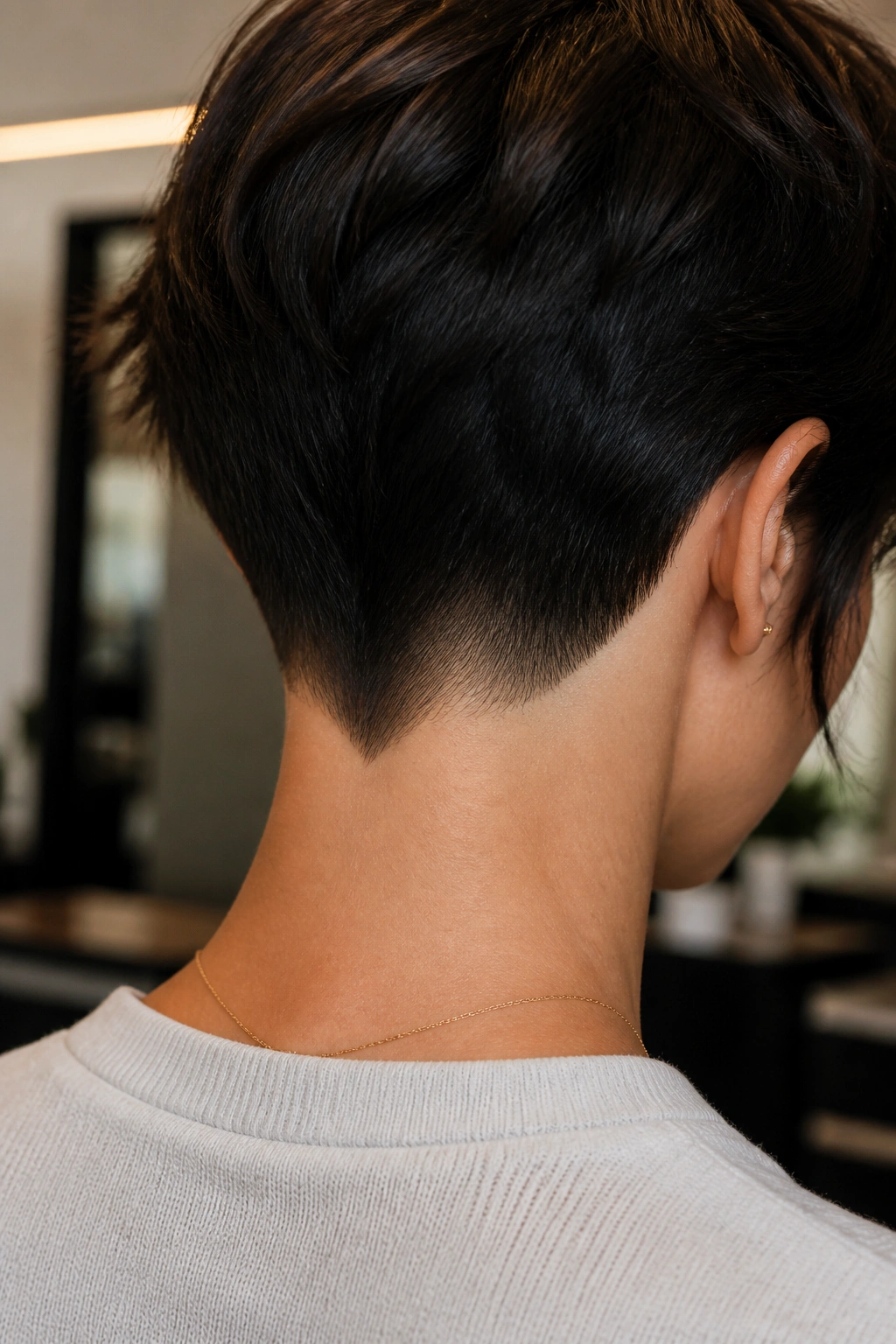
A V-shaped nape line is the fastest way to make thick hair look lighter from the back. The point pulls the eye inward, so the neckline stops reading as one wide block and starts feeling more tailored. On straight hair, the shape looks crisp right away. On wavy hair, it gives the cut a little tension, which I like more than a plain straight edge.
The key is restraint. If the point dips too low, the V starts to look fussy, and then you are stuck with a shape that needs constant clean-up. Keep the apex just above the collar line so it still looks sharp when the hair grows out. That small shift matters a lot, especially if your hair hits your shoulders or brushes the back of your jacket.
That angle matters.
I also like this cut for people who wear blazers, collared shirts, or anything with a structured neckline. The V echoes those shapes instead of fighting them. Ask for the sides to be slightly rounded into the point, not cut into hard corners, because a soft edge grows out with less drama and still gives you that clean view from behind.
3. Can a Curly Shag Carry a Shaved Nape?
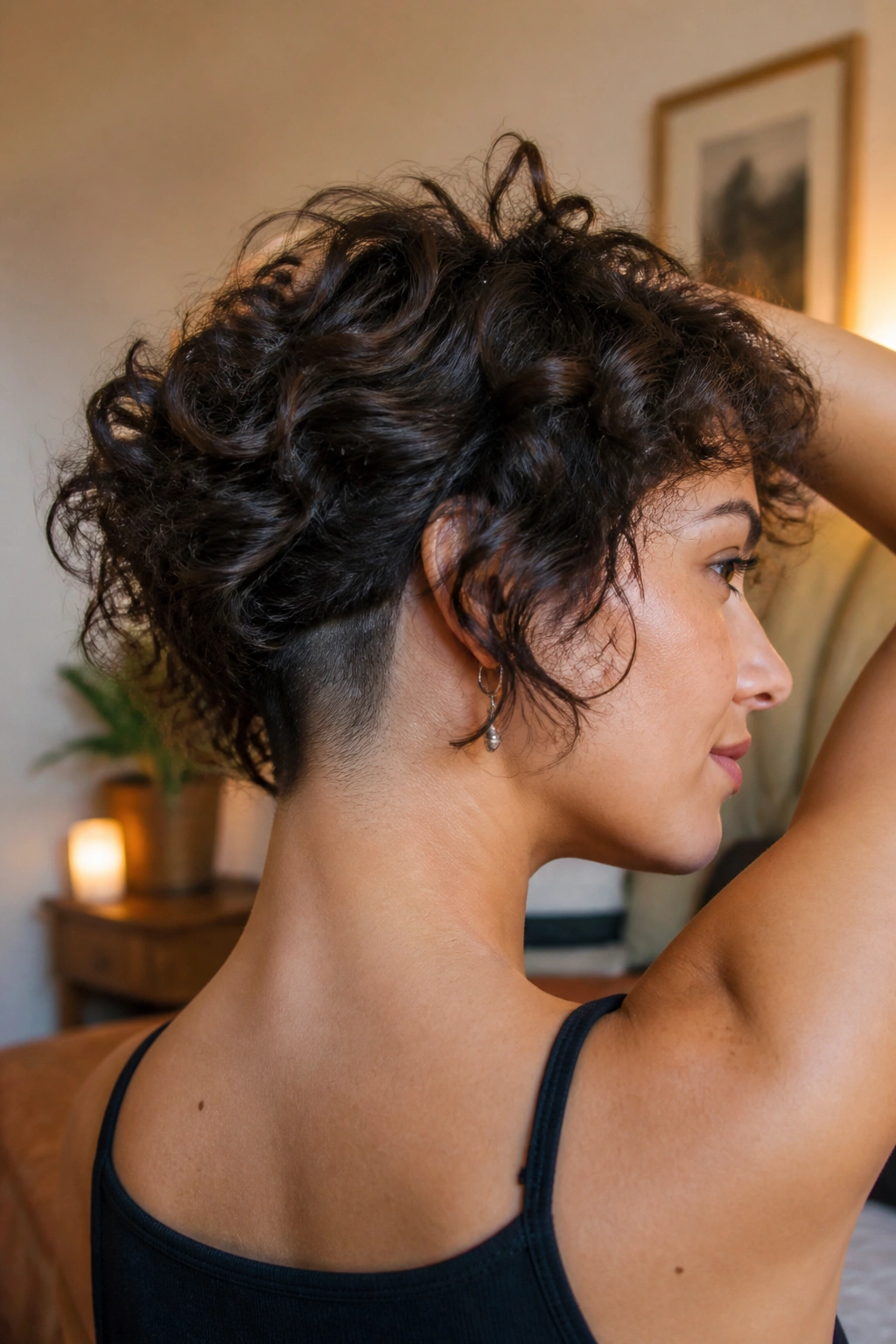
Yes, and in many cases it should. Curly hair collects bulk where the head curves into the neck, and that spot is where a shag can go from airy to puffy in a hurry. A small shaved nape removes weight right where the shape tends to feel heavy, while the curls above stay free to do their own thing.
The cut works best when the stylist follows the curl pattern instead of fighting it. I would not force a straight, square shave under springy curls; it can look abrupt once the hair shrinks. A rounded nape panel that sits low and narrow usually looks better, because it disappears cleanly when the curls are worn down and shows only when the hair lifts.
How to Wear It
- Diffuse to about 80% dry before touching the curls with your hands again.
- Use a light curl cream or foam, not a heavy butter that clumps the bottom layers.
- Ask for the shave to sit just inside the natural hairline so it stays hidden under the curl mass.
- Keep the top layers long enough to spring over the nape when you want coverage.
A curly shag with a shaved nape has attitude, but it still feels relaxed. That is the sweet spot.
4. The Asymmetrical Lob With One Shaved Side
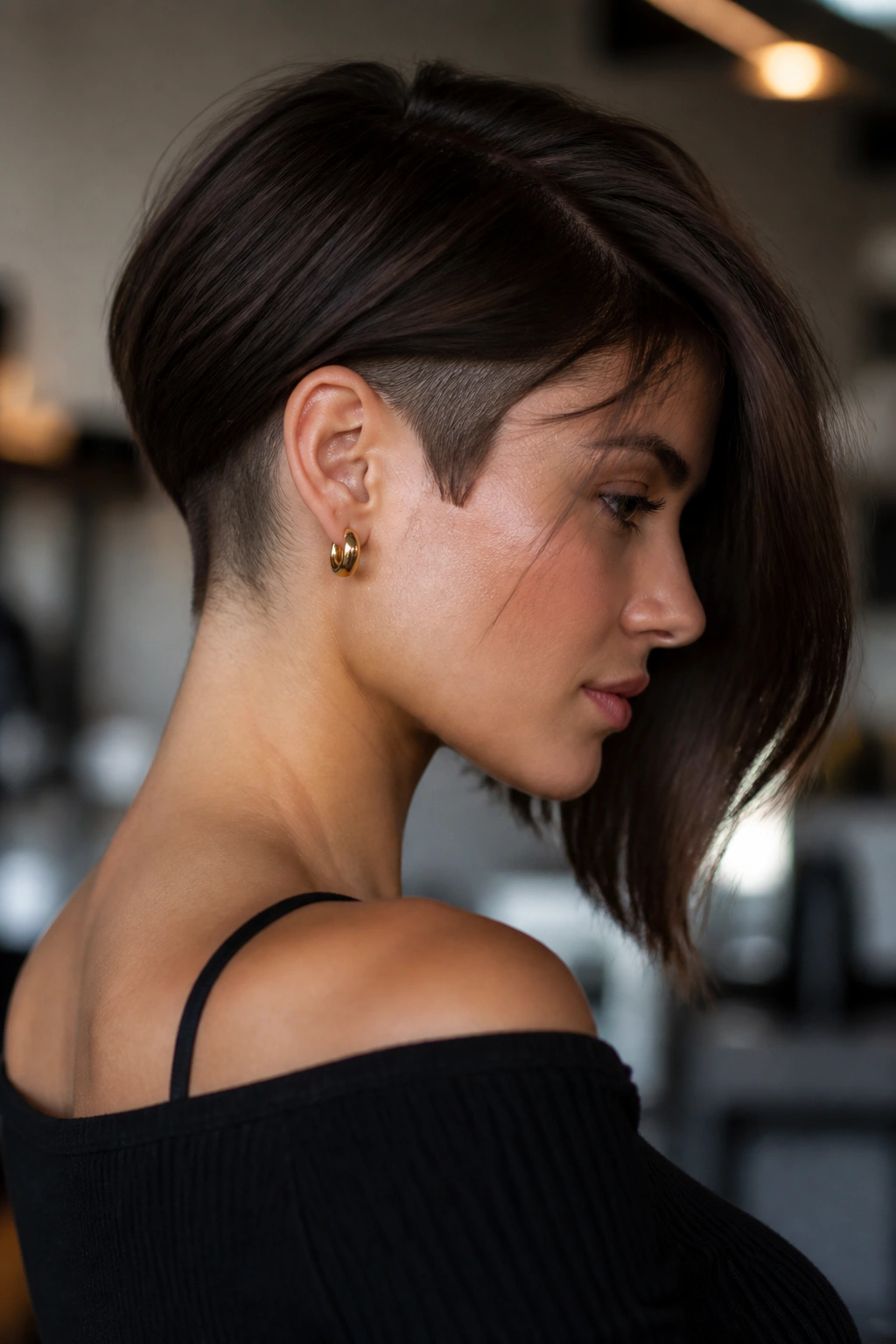
An asymmetrical lob gets a lot more interesting when one side hides a shaved nape panel underneath. The longer side skims the collarbone, the shorter side tucks cleanly behind the ear, and the underlayer keeps the whole cut from feeling too full at the base. It is a shape that looks deliberate from every angle, which matters more than people admit.
It also gives you movement without losing polish. You can wear the part off center, bend the ends slightly with a flat iron, and let one side swing a little longer when you move. The shave underneath helps the shorter side stay close to the head, so the asymmetry reads as design, not as a haircut that grew unevenly and gave up.
It moves.
I like this one for straight or softly wavy hair because the angle stays visible. If your hair is very curly, the asymmetry can disappear unless the length difference is strong enough to survive shrinkage. Ask the stylist to keep the shaved area tucked under the perimeter, not higher than the lower third of the cut. That way the reveal stays subtle unless you want it seen.
5. The Soft Pixie With a Low Nape Fade
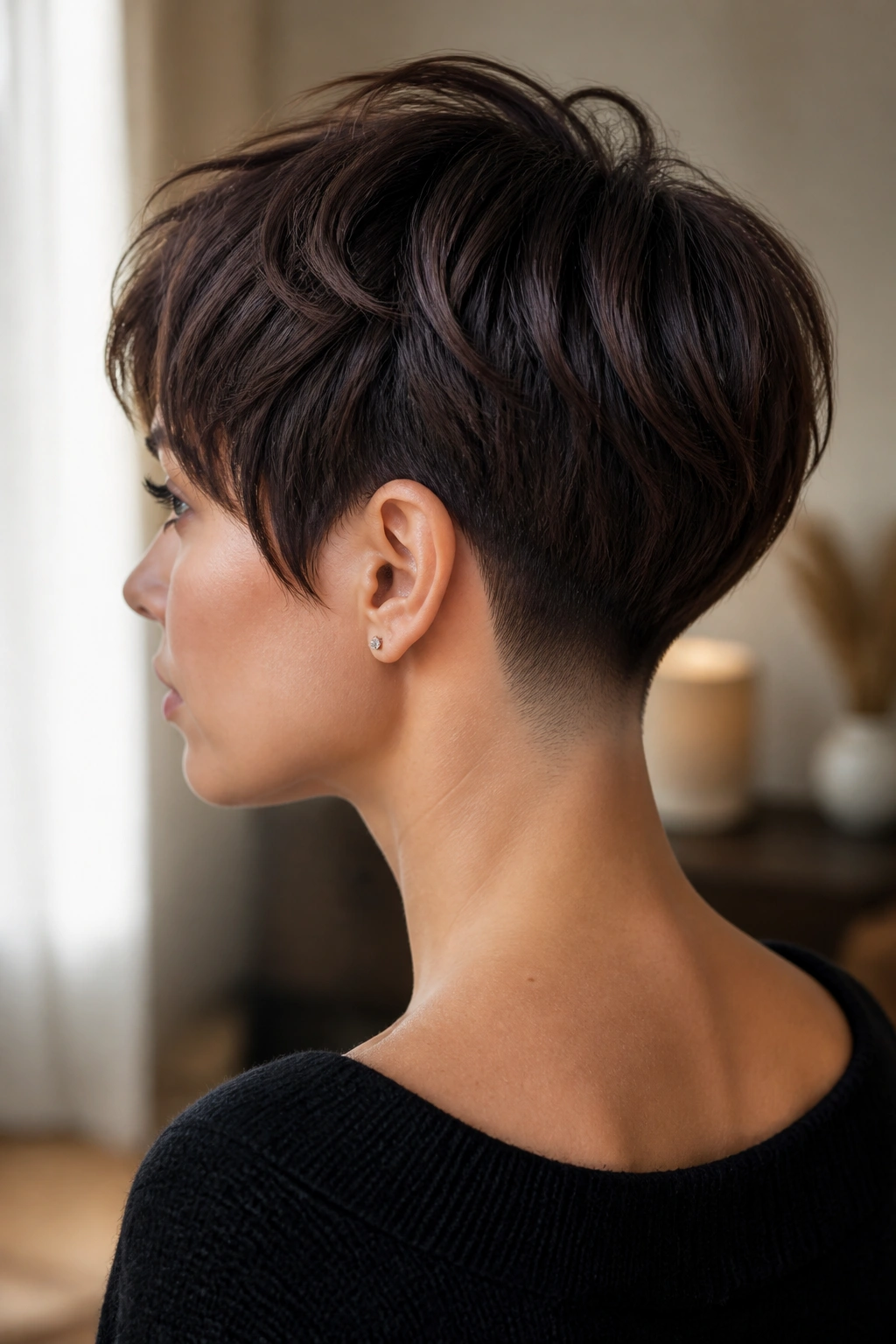
A soft pixie with a low nape fade is kinder than a full buzzed undercut, and that is exactly why it works. You still get the clean neck and the lifted shape, but the haircut keeps its softness around the ears and temple area. The result feels polished instead of severe.
This version is a smart fit for fine hair, weak density, or a strong cowlick at the back of the head. A tiny amount of removal at the nape—think clipper guard 1 or 2 fading into the neckline over about 1 inch—can stop the pixie from looking flat or lumpy. It also makes the grow-out stage less awkward, which is worth something. Short cuts can look great on day one and less great three weeks later. This one behaves better.
Unlike a full skin shave, the low fade keeps some visual softness when the hair is tucked behind the ears. That makes it easier to wear to work, to dress up with earrings, or to let air-dry without fussing. If you want a pixie that feels bold but not harsh, this is the version I would point you toward first.
6. The Geometric Nape Design
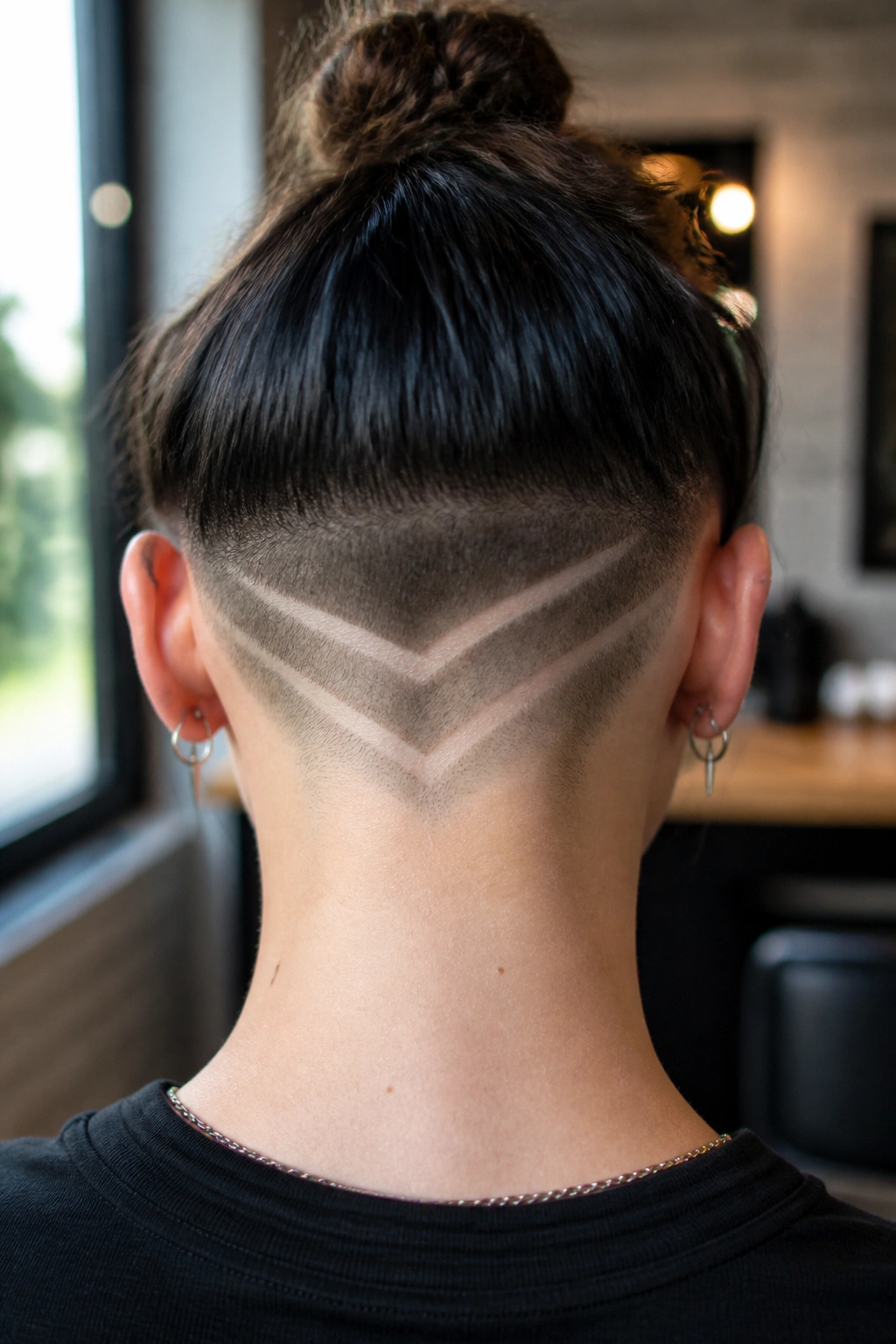
A geometric nape design turns the back of the haircut into a small piece of line work. It can be as quiet as two parallel slashes or as sharp as a triangle framed by clean borders. The point is not to fill the area with decoration for its own sake. The point is to make the neckline look intentional when the hair lifts.
What to Tell the Barber
- Keep the main shaved area around 1 to 1.5 inches high if you want the design to stay readable.
- Use two lines instead of three or four if you want the shape to grow out cleanly.
- Ask for the trimmer first, then a razor finish on the edges.
- Center the design on the spine line so it does not drift crooked when you wear your hair up.
I prefer simple geometry over busy patterning at the nape. Tiny motifs can look sharp in the chair and messy two weeks later. A strong V, a split line, or a narrow chevron tends to age better because the eye still understands the shape once a little regrowth comes in.
Tip: bring a photo of the back angle, not just the design itself. The curve of your neckline changes the whole effect.
7. The Stacked Bob With a Tight Shave
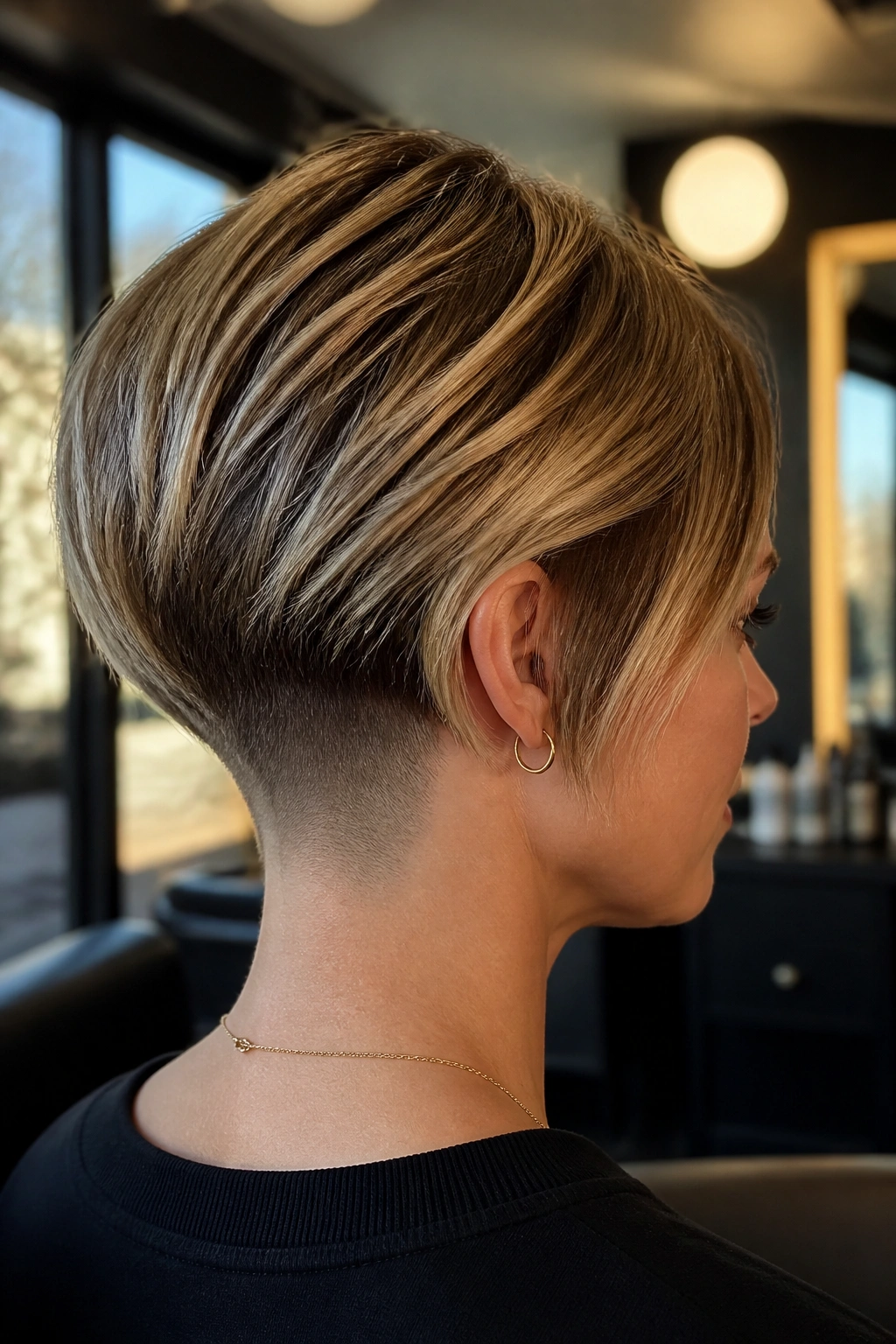
A stacked bob almost asks for a shaved nape. The whole point of stacking is to build shape at the back of the head, but dense hair can still puff out under all that layered cutting. Removing a small band at the neckline keeps the silhouette close and lets the stacked layers sit where they should.
Boxy is the enemy here.
What makes this cut work is the relationship between the short layers and the clean base. If the nape is left too full, the stack looks heavy and the crown can seem flattened by comparison. A tight shave under the lower section solves that fast. Ask for the shortest part to sit just under the occipital bone, with the layers above it blended so the top still has movement. Blow-drying with a round brush, pointing the ends under for the first few passes, gives the cut that tucked-in shape people want from a stacked bob.
This style is especially good for straight or slightly wavy hair with real density. Fine hair can wear it too, but the payoff is biggest when there is enough bulk to remove. If you like a bob that looks sharp from behind and does not flare out at the collar, this one earns its keep.
8. The Modern Mullet With a Cropped Nape Panel
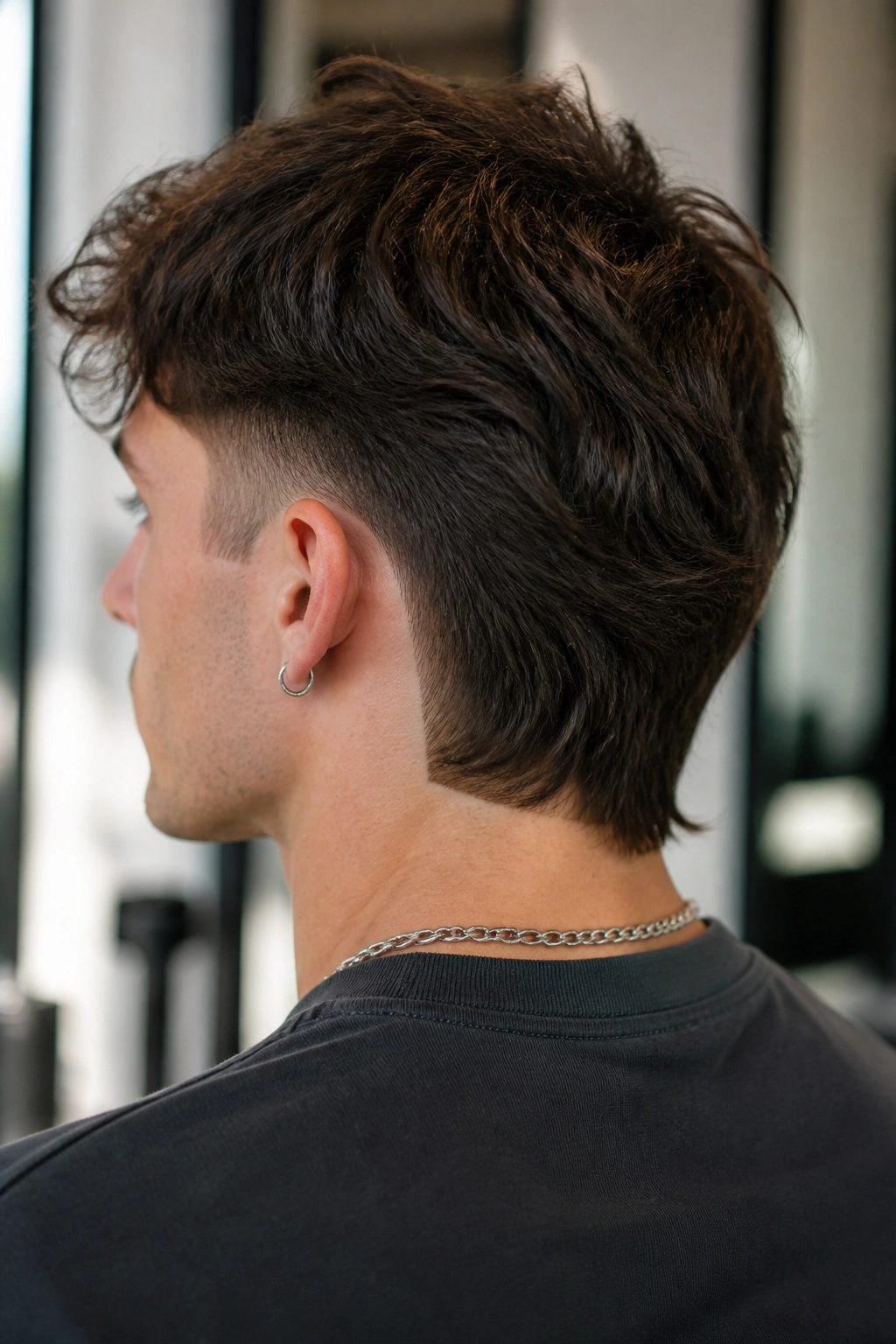
Why does a mullet need a shaved nape? Because the back of the haircut has to stay crisp if you want the shape to feel modern instead of costume-y. A cropped panel under the longer top and tail sections keeps the neckline clean, so the layers above can fall with more control. Without that little clearance, the back can turn muddy fast.
How to Keep It Modern
- Keep the crown and top layers around 3 to 5 inches, depending on how much movement you want.
- Let the back length hang longer, but trim the lower nape close so it does not puff.
- Use a matte paste or light cream, not a stiff gel that freezes the texture.
- Leave enough width in the sideburn area so the cut still connects to the face.
This version works well with wavy hair and loose texture because the movement is part of the look. If you want a softer finish, ask for the nape to be tapered rather than taken to skin. That gives you the shape without making the back look hard or over-edited. A good modern mullet should feel a little unruly on top and clean where it counts.
9. The Braided Style That Shows the Nape
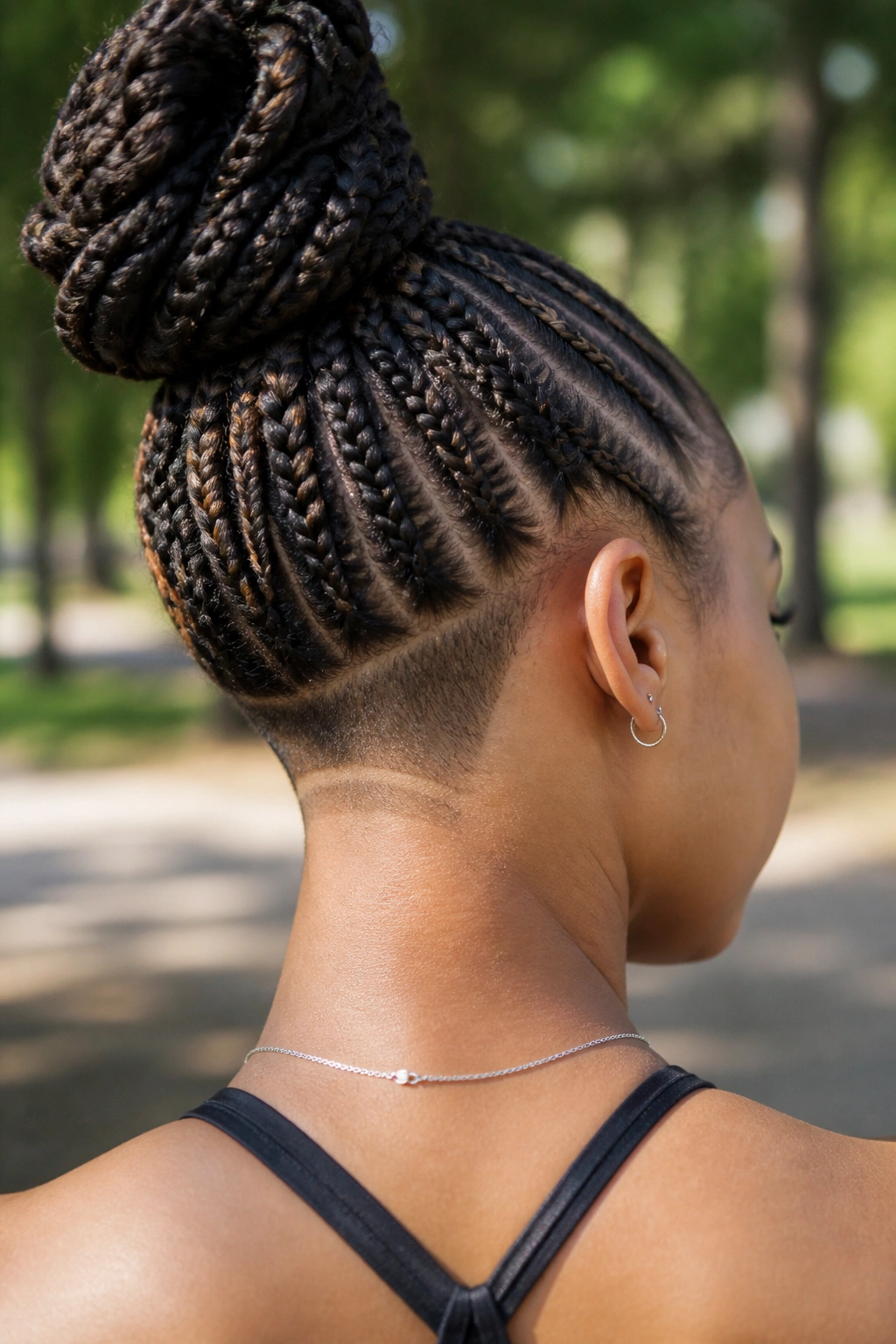
Braids and shaved napes make a strong pair because the braids carry the design and the nape clears the view. When the hair is pulled up into box braids, knotless braids, flat twists, or a braided bun, the shaved section acts like a frame under the style. It keeps the back of the neck from feeling crowded, and it gives the whole look a clean finish from behind.
This is the one to choose if you wear protective styles often or you like putting your hair up most days. A short shaved band under braids can make a heavy install feel less bulky at the neckline, and that matters when the hair is tied, pinned, or wrapped for hours. If you want patterns, keep them simple. A single line or a narrow chevron shows better under braids than a busy design that gets lost once the hair is gathered.
Best When Hair Is Up
- Ask for a shaved zone that sits about 1 to 1.5 inches above the neckline.
- Keep the edge soft if your braids already create a lot of visual detail.
- Use one design line if you want the nape to stay elegant instead of crowded.
- Make sure the shave does not interrupt the braid anchor line at the base.
There is a nice honesty to this look. It is not trying to hide the work. It is showing you exactly where the haircut gets interesting.
10. The Crescent Nape Cut
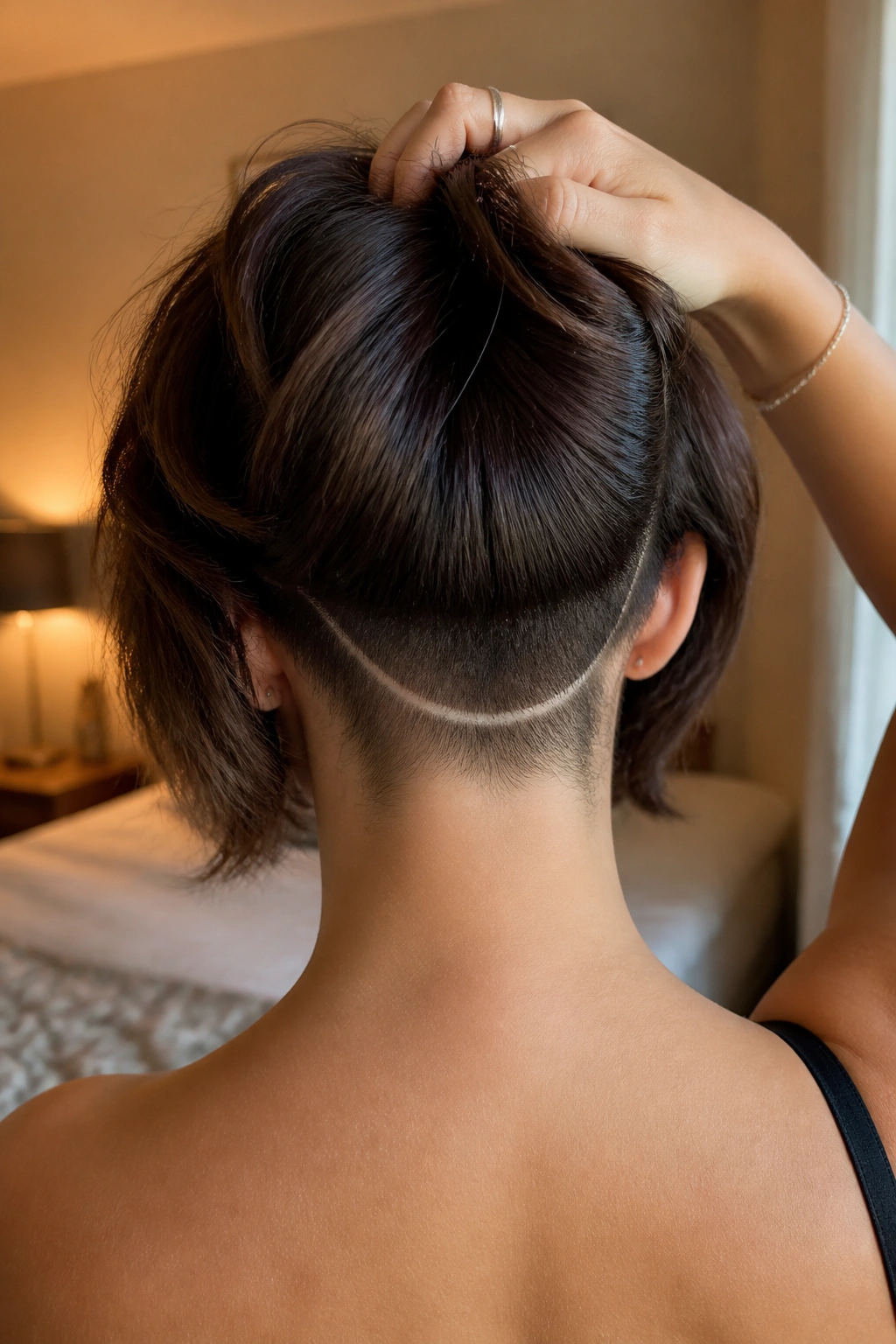
A crescent nape cut is one of the quietest bold choices you can make. Instead of a square block or a pointed V, the shaved area follows a soft arc that dips gently through the center and rises again near the ears. It feels smoother, almost like the haircut is tracing the natural shape of the head instead of arguing with it.
That curve matters more than it sounds. Hard corners at the nape can look clean for a week and then feel awkward once the first bit of regrowth appears. A crescent line tends to blur more gracefully, especially if your hair is medium length or layered. It is also easier to hide under a bob, because the arc follows the neck rather than creating a sharp shelf at the base of the haircut.
Sharp corners ruin the mood.
I like this shape on people who want a detail that reads as deliberate up close and subtle from a distance. It works with curls, with straight bobs, and with soft shoulder-length layers. Ask the stylist to keep the curve shallow in the center and to round the corners behind each ear. If the dip is too deep, the line starts looking like a horseshoe, and that is a different mood entirely.
11. The Color-Blocked Nape Look
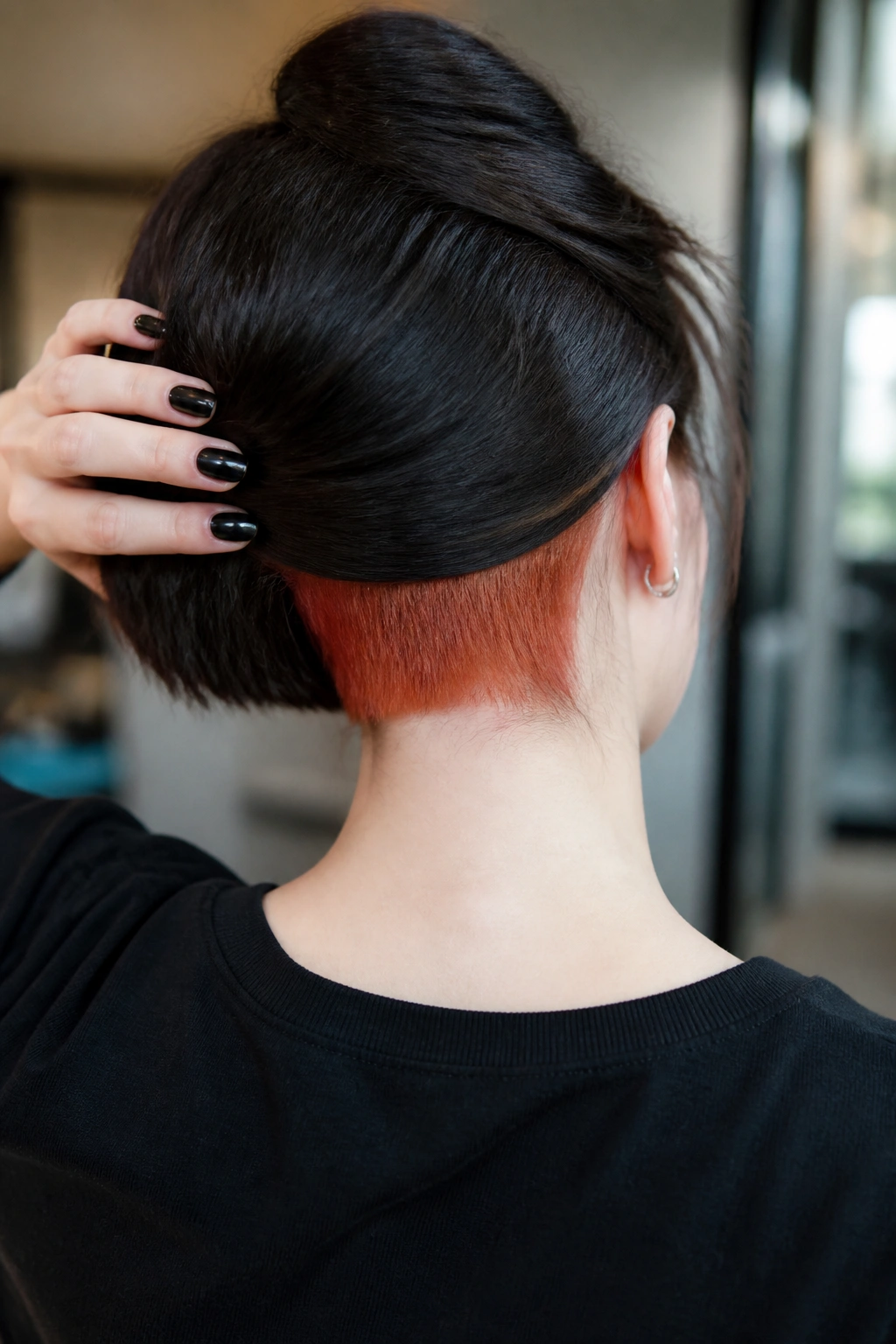
A color-blocked nape look is what happens when the shave stops being only about shape and starts playing with contrast too. The panel at the neck is clipped short, then colored in a way that makes it pop against the rest of the hair. Sometimes that means a bright copper under dark brown layers. Sometimes it means platinum against a deep root. Sometimes it is a single strip of black under a lighter bob so the hidden section still reads with force.
Unlike a plain shave, this version grabs attention the minute the hair moves. It is the right pick if you want the back of your haircut to feel like a reveal instead of a whisper. A narrow panel—about 1 inch to 1.5 inches high—usually gives enough surface area for color without turning the nape into a billboard. If you go wider, the maintenance gets heavier because regrowth shows faster and the contrast stays visible longer.
Best for someone who likes a little drama.
If you want the look but not the constant touch-up, choose a shade within two levels of your natural base. That still gives you contrast without demanding weekly correction. I also like semi-permanent color here because it fades softer than permanent dye on such a small panel. The whole point is to make the nape feel special, not to turn it into a project.
12. The Full Nape Undercut for Long Hair
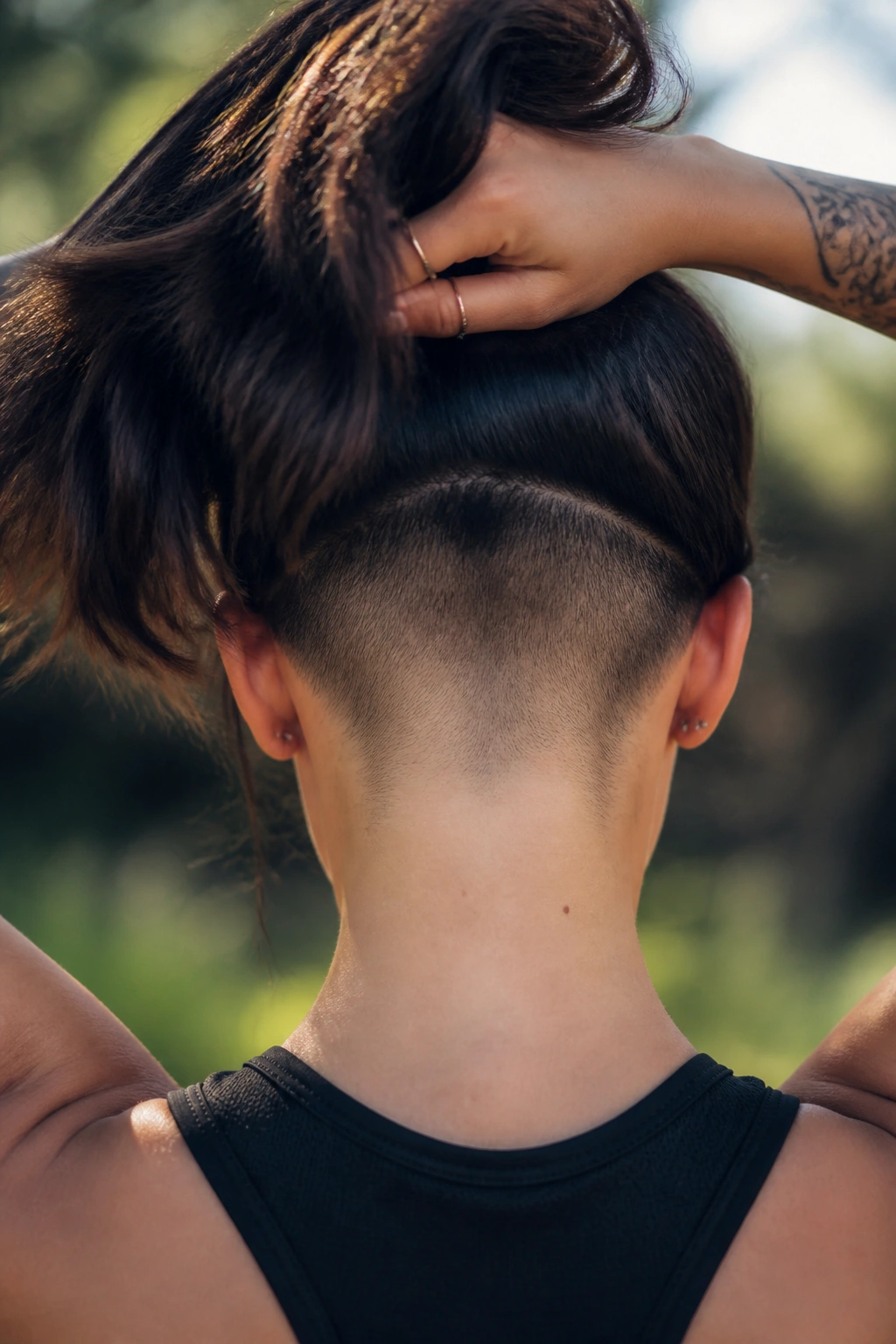
Long hair with a full nape undercut is the boldest version on this list, and probably the most practical if your hair is dense. You keep the length you like on top and through the sides, but the lower section underneath is clipped away so the weight stops dragging at the neck. Suddenly a heavy ponytail sits closer to the head, buns feel less bulky, and loose hair falls with more movement.
How to Wear the Reveal
- Ask for 2 to 3 inches of removal under the top layer if your hair is very dense.
- Keep the visible length on top at 4 inches or more so the undercut stays hidden when you wear it down.
- Tie the hair into a ponytail or low bun to show the shave on purpose, not by accident.
- Ask for a soft neckline if you want the grow-out to stay neat.
This cut is not only about shock value. It solves a real problem for people who are tired of a thick back section flattening their shape or making every updo feel heavy. It also gives you options. Hair down looks clean. Hair up shows the work. A good shaved nape cut should do that little switch without asking for permission.
And that is why the full nape undercut keeps winning. It is hidden when you need it hidden, obvious when you want the reveal, and blunt enough to feel brave without getting sloppy.
