



Twists are one of those styles that make natural hair look pulled together without flattening the texture that makes it interesting. The trouble is that “twists” covers a whole family of styles, and each one behaves differently once you sleep on it, sweat in it, or try to stretch it into a low bun.
A style that looks neat on day one can puff up by day three if the sections are too large, the product is too heavy, or the twist pattern does not match your curl density. That is why natural hair twists are worth talking about one by one instead of treating them like one big category.
Section size matters. So does hair length. So does whether you want your hair to hang, tuck, spiral, or sit close to the scalp.
The styles that hold best usually start on damp, detangled hair with a light leave-in and enough slip to keep the strands from snagging. The ones that look soft and airy usually ask for a little more patience, a little less product, and a lot of honest judgment about how much weight your hair can carry without getting cranky. The first few styles below are the workhorses; the later ones move into fuller, softer, or more dressed-up territory.
1. Classic Two-Strand Twists
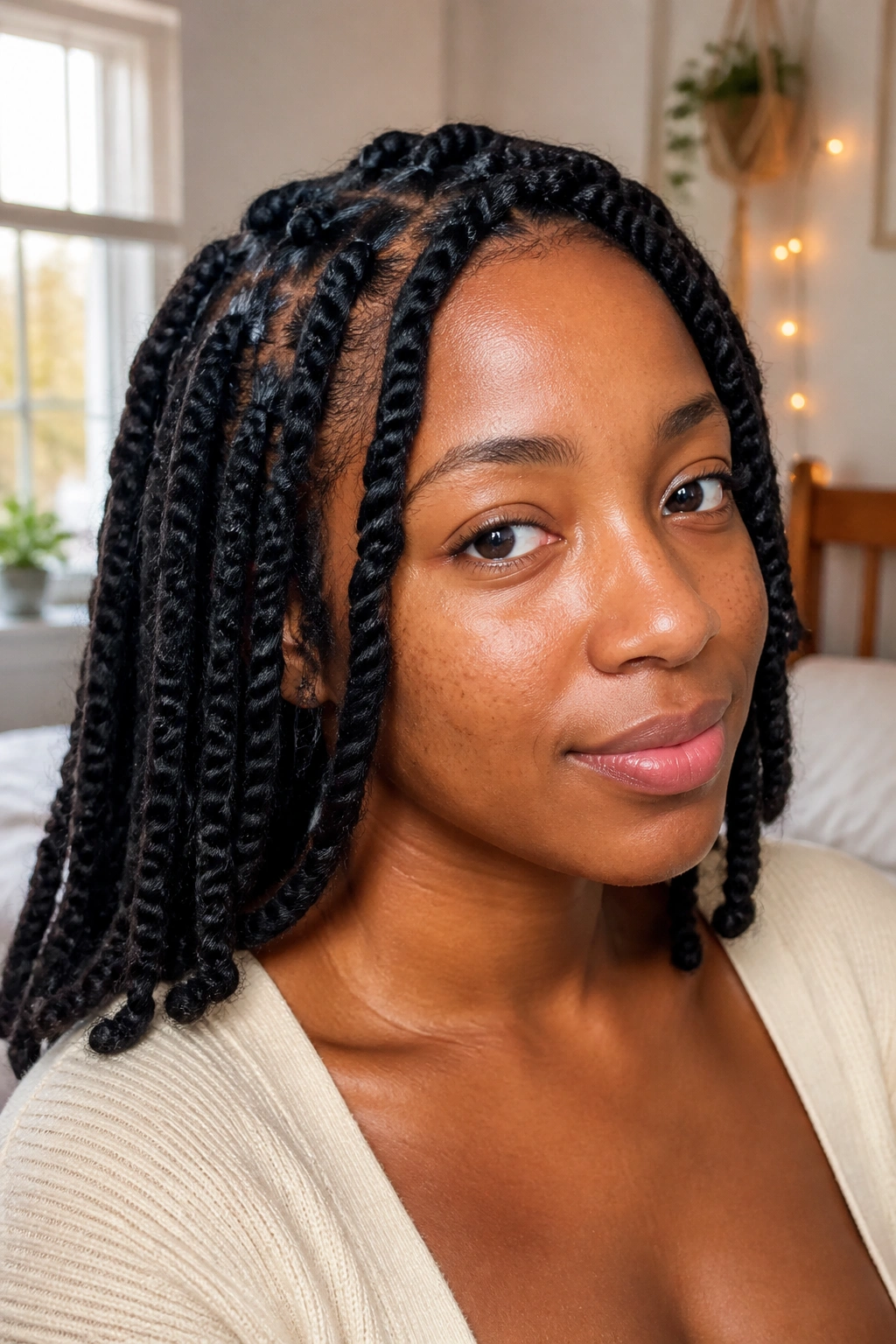
If you only learn one twist style, make it this one. Two-strand twists are the backbone of natural hair styling because they are simple, flexible, and easy to scale up or down depending on length and density.
They work on short hair, long hair, thick hair, and fine coils. The trick is sectioning. If you take pieces that are about half an inch to 1 inch wide, the twists stay neat without looking stiff. If you go much bigger, they unravel faster and can look lumpy at the root.
Why They Earn Their Keep
Two-strand twists are one of the few styles that can serve three jobs at once: a protective style, a stretched style, and the starting point for a twist-out later. That makes them useful in a way that a pretty photo does not really capture.
A clean install starts with detangled hair, a water-based leave-in, and a cream or soft styling butter that gives grip without turning the hair greasy. Twist each section until the strands wrap around each other with a taut, rope-like feel. If the ends fray, seal them with a tiny bit more product and keep rolling them between your fingers.
- Best for: beginners, short natural hair, and anyone who wants a low-drama style.
- Part size: half an inch for a tighter look; 1 inch for a fuller finish.
- Wear time: often 1 to 2 weeks with nighttime wrapping and a light refresh.
- Watch for: too much product at the root, which makes the twists sag.
Pro tip: If your twists puff at the base but stay neat through the length, the parts are probably too large or your hair needed a little more stretch before styling.
2. Mini Twists
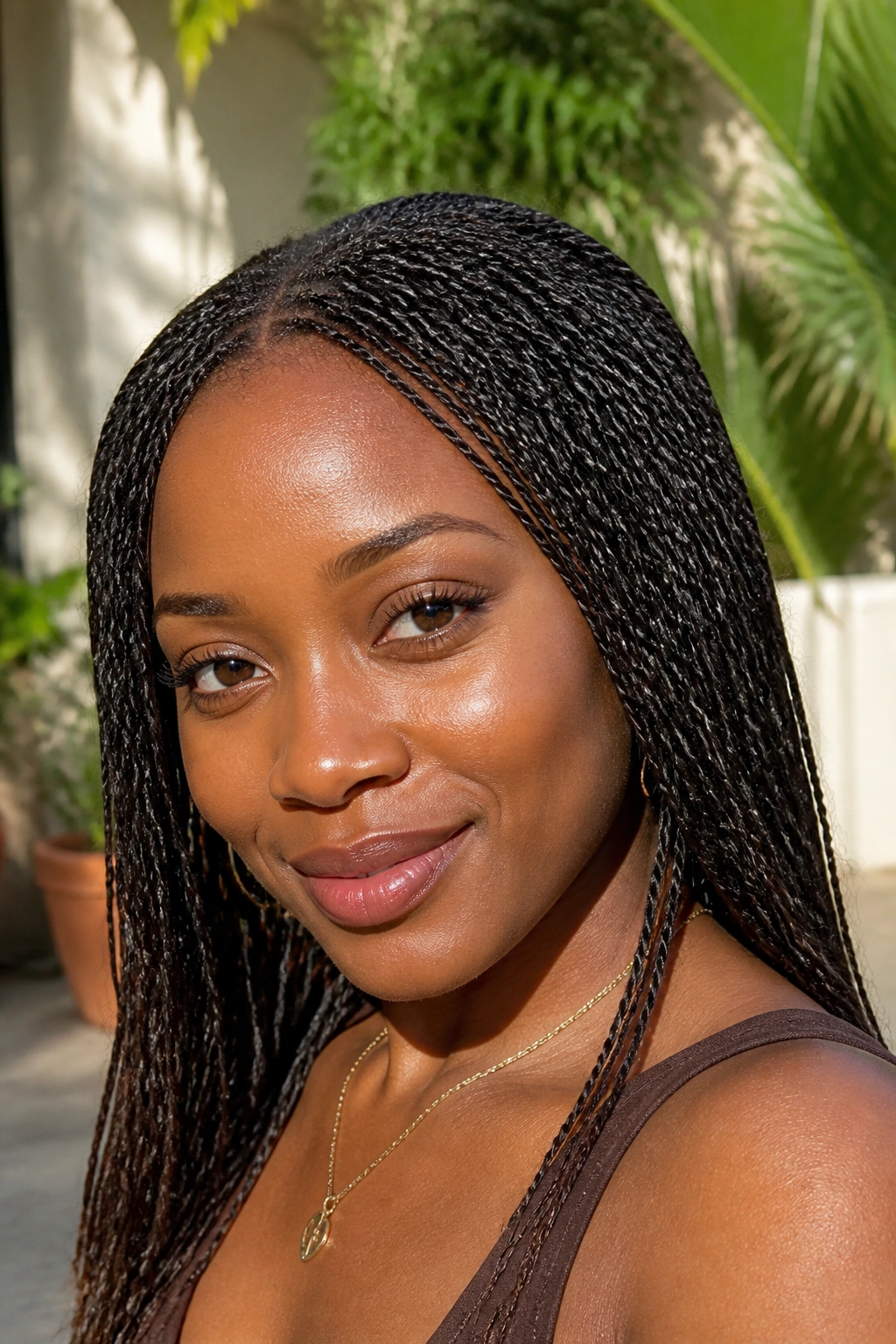
Why do mini twists stay put so well? Because they ask each section to do less work. Smaller twists have more points of grip, so they hold shape longer and tend to frizz more slowly than chunky versions.
Mini twists are the style I think people underestimate most. They are not fast. Not even close. But if you want a set-it-and-forget-it style, pencil-width sections can buy you days of easy hair, especially on dense coils that tend to collapse under heavier styles.
The trade-off is installation time. You can end up with 60 to well over 100 twists, depending on head size and hair density, and that is a long evening if you are working without help. Still, the payoff is a style that looks tidy, moves well, and can stretch your curls in a way that makes later styling easier.
How to Wear Them Without Losing Your Mind
Start on hair that has been fully detangled and lightly stretched, either by banding, blow-drying on cool and low heat, or letting it dry in loose twists first. Keep the products light. Mini twists do not need a thick coating; they need enough slip to keep the strands smooth and enough hold to keep the roots from swelling up too fast.
A satin bonnet matters here. So does scalp care. Use a pointed applicator bottle to place a little diluted cleanser or scalp toner between the parts if your roots get itchy. That tiny step keeps the style from feeling old too quickly.
Mini twists are the style for people who want a neat look without constant re-twisting. They’re also a smart choice if you like to wear your hair down on some days and tuck it away on others.
3. Chunky Twists
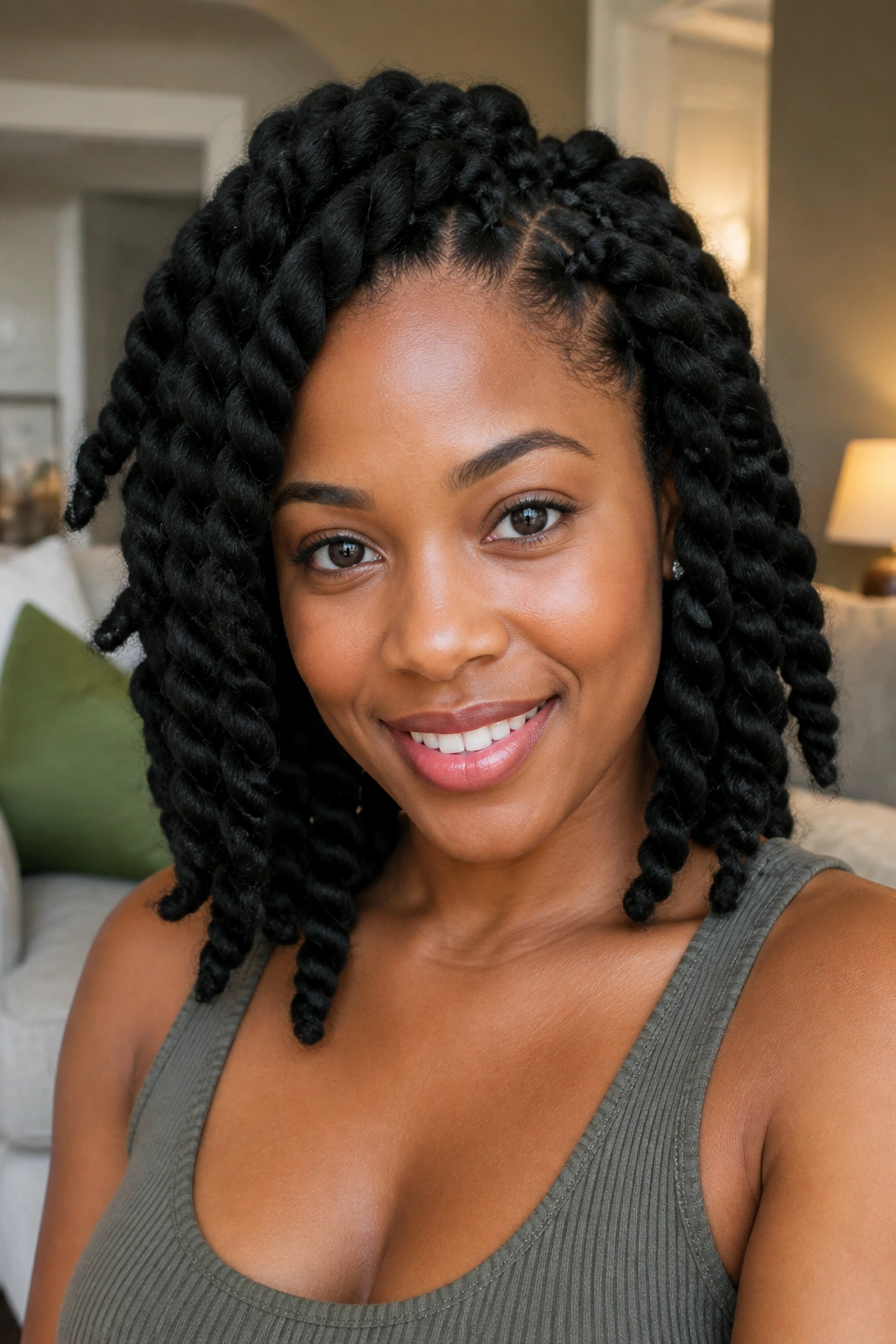
If you want a style you can finish in under an hour, chunky twists are the blunt instrument in the drawer. They are bigger, faster, and much less fussy than mini twists, which makes them a solid pick when your hair needs to be handled gently.
Chunky twists work best when the sections are wide enough to create shape but not so large that the twist loses definition. Think 1 to 2 inches per part, depending on your hair thickness and how much shrinkage you are trying to manage. On dense hair, that size gives you volume without turning the style into a puffball the minute the weather changes.
They are not a forever style. That is fine. Sometimes a style only needs to last through a work week or a weekend trip.
Where They Make Sense
- Quick installs when you do not want to spend half the day styling.
- Thick or coarse hair that can support bigger sections without unraveling.
- Cold-weather styling when a fuller look feels good under scarves and coats.
- A softer silhouette if you do not want the tight, grid-like look of mini twists.
The main mistake is product overload. Chunky twists can look heavy fast, especially if you add too much cream at the root. A little slip is enough. If the hair feels tacky between your fingers, stop adding more.
They also tend to frizz sooner than smaller twists. That is the deal. But the frizz can look good when you want texture, not perfection. Which is probably why people keep coming back to them.
4. Flat Twists
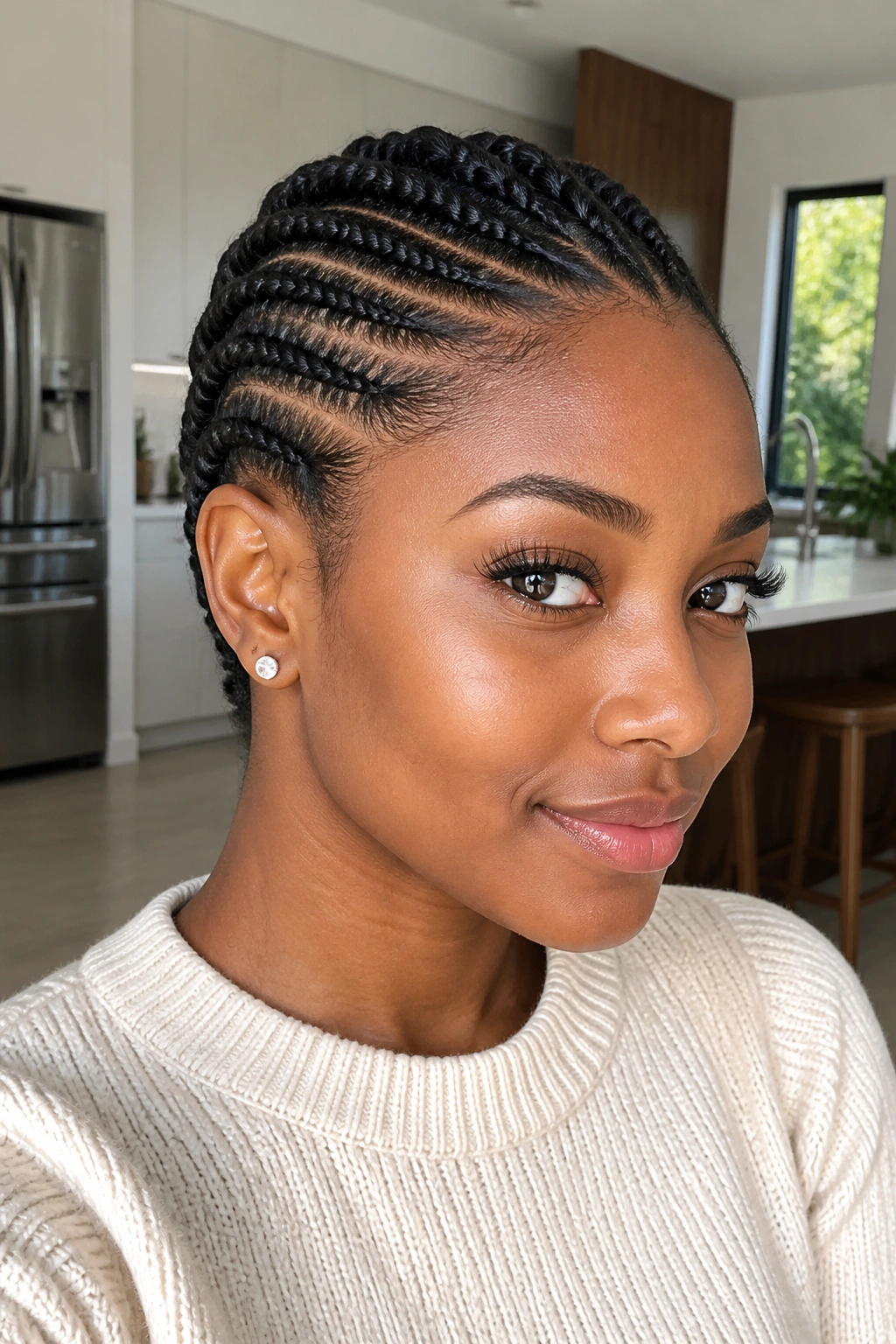
Flat twists are not just “braids without braids.” They sit closer to the scalp, follow the head shape more closely, and give natural hair a smooth, low-profile look that regular two-strand twists do not always deliver.
The style is especially useful when you want to stretch the roots, keep the sides tidy, or create a base for another style later. A lot of people use flat twists as a prep step before a twist-out, and that makes sense because the rows create a controlled pattern that sets the curl in a predictable way.
The neatness comes from the parting. Use a rat-tail comb, make your rows clean, and do not rush the first inch at the hairline. That little section sets the whole twist. If it is crooked or too tight, you will see it every time you look in the mirror.
What Flat Twists Do Well
They work beautifully for under-wig styles, gym weeks, and any day when you want your hair off your face without a bulky shape at the crown. They also make a nice base for updos because the scalp-hugging pattern gives you a smooth foundation.
- Ideal section count: 4 to 12 rows, depending on the design.
- Best hair state: stretched or lightly blown-out hair for a cleaner finish.
- Common issue: tension at the temples if the first pass is too tight.
- Good pairing: a twist-out after 2 to 5 days if you want more volume later.
Flat twists are not the style to rush if your fingers are tired. A sloppy row shows fast. But when the parts are clean, they have a calm, orderly look that feels polished without trying too hard.
5. Rope Twists
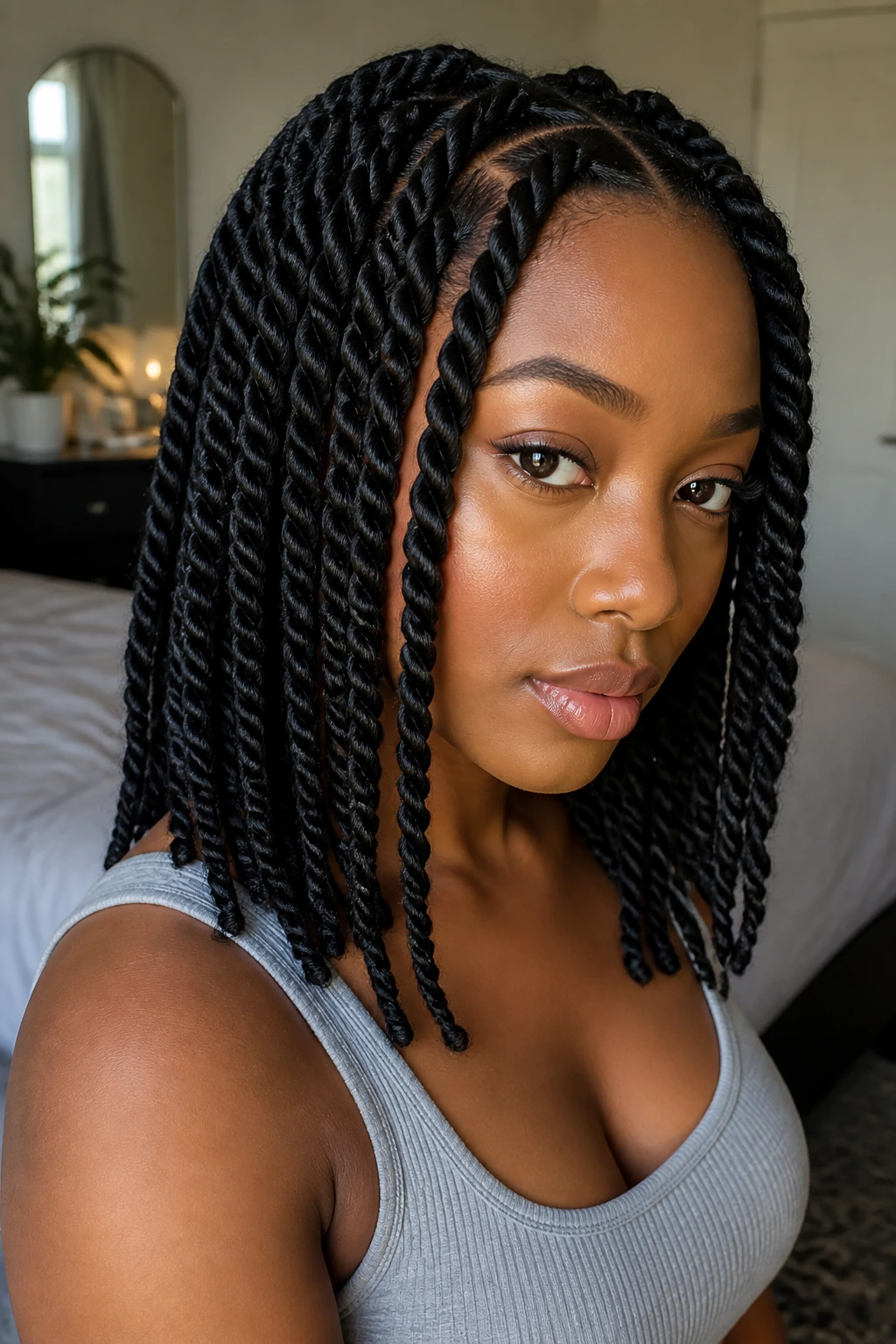
Rope twists look similar to two-strand twists at a glance, but the wrap is tighter and the spiral reads more clearly from root to tip. They have a firmer, more sculpted shape, which is part of the appeal.
Unlike a loose two-strand twist, rope twisting asks you to keep both strands under even tension while you wrap them around each other in the same direction. That little detail matters more than people think. If one side is tighter than the other, the whole twist starts to lean and can unravel at the ends.
This style is a sweet spot for people who want definition without heavy extensions. It works well on medium-length natural hair, especially when the hair has already been stretched a bit and is not trying to coil back on itself every five seconds.
What Makes It Different
Rope twists hold a cleaner spiral than a basic twist, and they often look more compact at the ends. That makes them a nice choice if you want a style that stays tidy in a scarf, under a hood, or tucked into a low bun.
They also pair well with a side part or a deep center part because the twists themselves bring enough texture. You do not need much else. A little leave-in, a light cream, clean sectioning, and a steady hand go further than a heavy styling jar ever will.
The downside? They can feel slippery while you are doing them. If your hair is freshly washed and too soft, wait until it is damp, not wet. Rope twists like grip.
6. Senegalese Twists
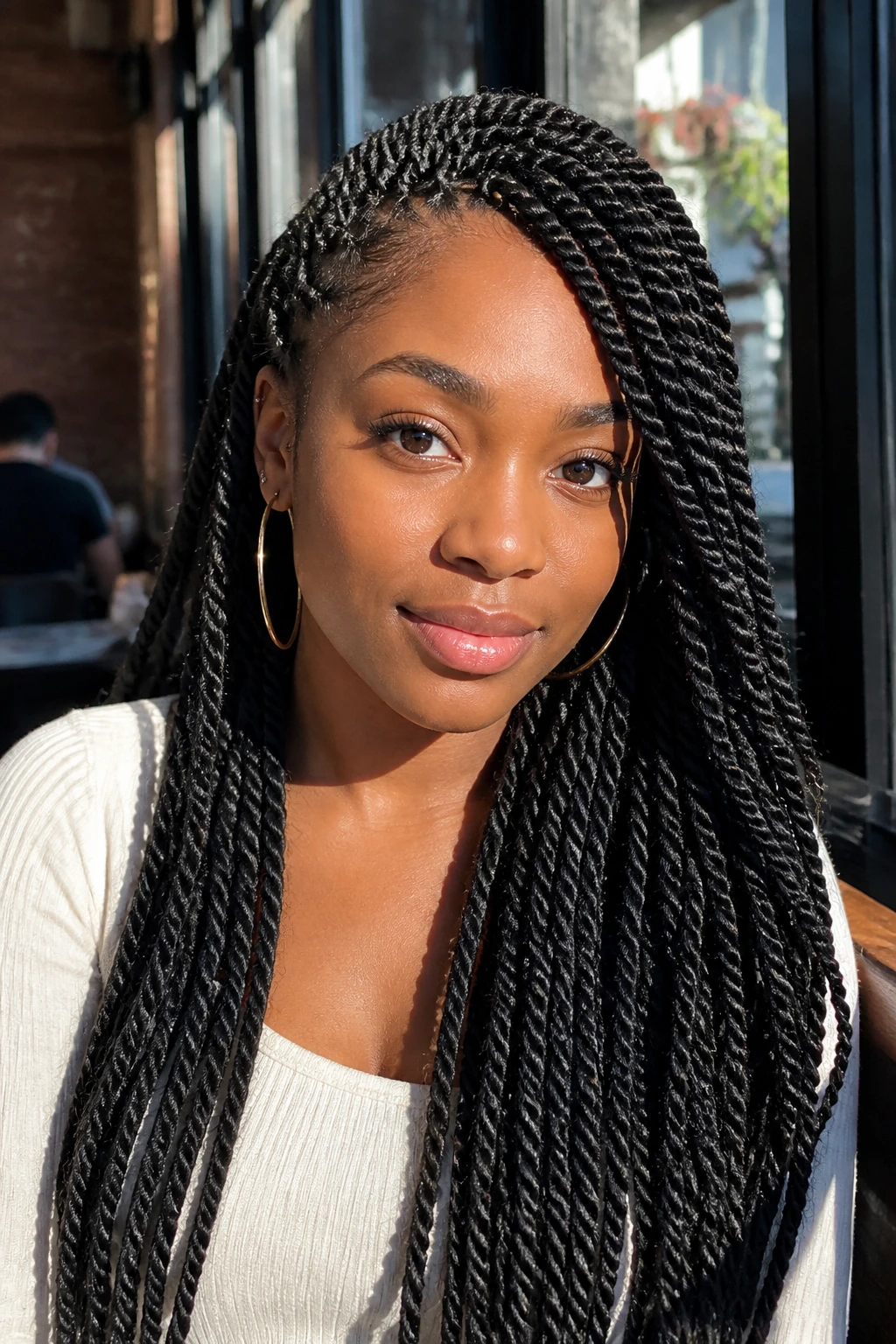
Senegalese twists are the polished cousin of the basic twist family. They use extension hair to create a smooth, sleek finish that can look long and elegant without needing your own hair to carry all the visual weight.
These twists are usually created with pre-stretched synthetic braiding hair, wrapped around your natural hair and twisted tightly enough to stay put but not so tightly that the scalp feels pulled. The finished style is clean and uniform, which is why people often reach for it when they want a longer protective style that can last longer than a simple natural-hair twist.
What matters most here is the balance between length and tension. Long Senegalese twists look lovely, but if the extension hair is too heavy for your roots, the style starts to tug. That is a headache you can avoid by keeping the part size moderate and asking for lighter-length bundles if your scalp is sensitive.
What to Ask For
- A lightweight install if your hairline is delicate.
- Medium parts for better movement and less tension.
- A sealed finish so the ends do not start fraying after a week.
- A shape that suits your face and neck rather than defaulting to one long curtain.
Senegalese twists are not the quickest style to install, and they are not the lightest either if the hair is very long. But they have a sharp, smooth look that a lot of other twists cannot match. If you want a style that feels dressed up without needing daily styling, this one earns its place.
7. Marley Twists
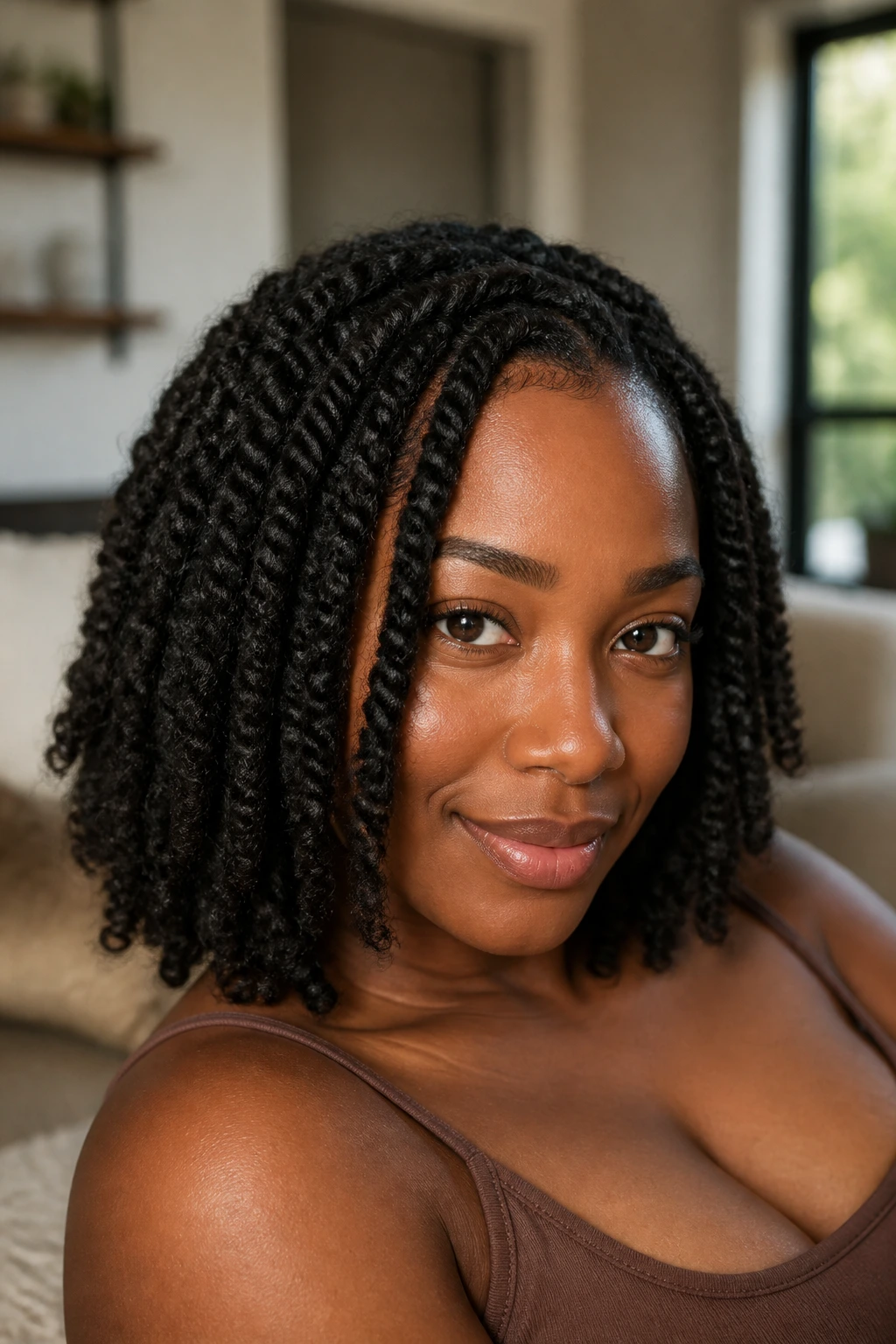
I keep coming back to Marley twists when I want texture to look intentional instead of hidden. The style uses kinky-textured extension hair that blends into natural coils in a way that shiny synthetic hair often does not.
Marley hair has a matte, slightly fuzzy surface, which sounds less glamorous than it looks in real life. In practice, that texture is the whole point. It makes the twist read fuller and softer, especially on coily or tightly curled hair. The finish is less sleek than Senegalese twists and far more textured, which is exactly why many people love it.
The twist itself is usually a little bigger than a mini twist and a little more relaxed than a rope twist. That middle ground makes it easy to wear in everyday life. You can pile Marley twists into a bun, wear them loose, or tuck them behind one ear and let the shape do the work.
Why They Stand Out
Marley twists are one of the better choices if you want a natural-looking protective style with body. They do carry more hair weight than some other options, so I would not recommend going too long if your scalp is sensitive or your hairline is fragile.
The best installs use even sections and a soft hand at the root. Too much pull at the base and the style loses its easy, textured feel. Too little structure and it starts to look messy before you want it to.
A lot of people like Marley twists for shoulder-length or lob-length hair because the texture lands in a flattering place without dragging on the shoulders all day. That matters more than people admit. Hair that keeps brushing your coat collar gets old fast.
8. Passion Twists
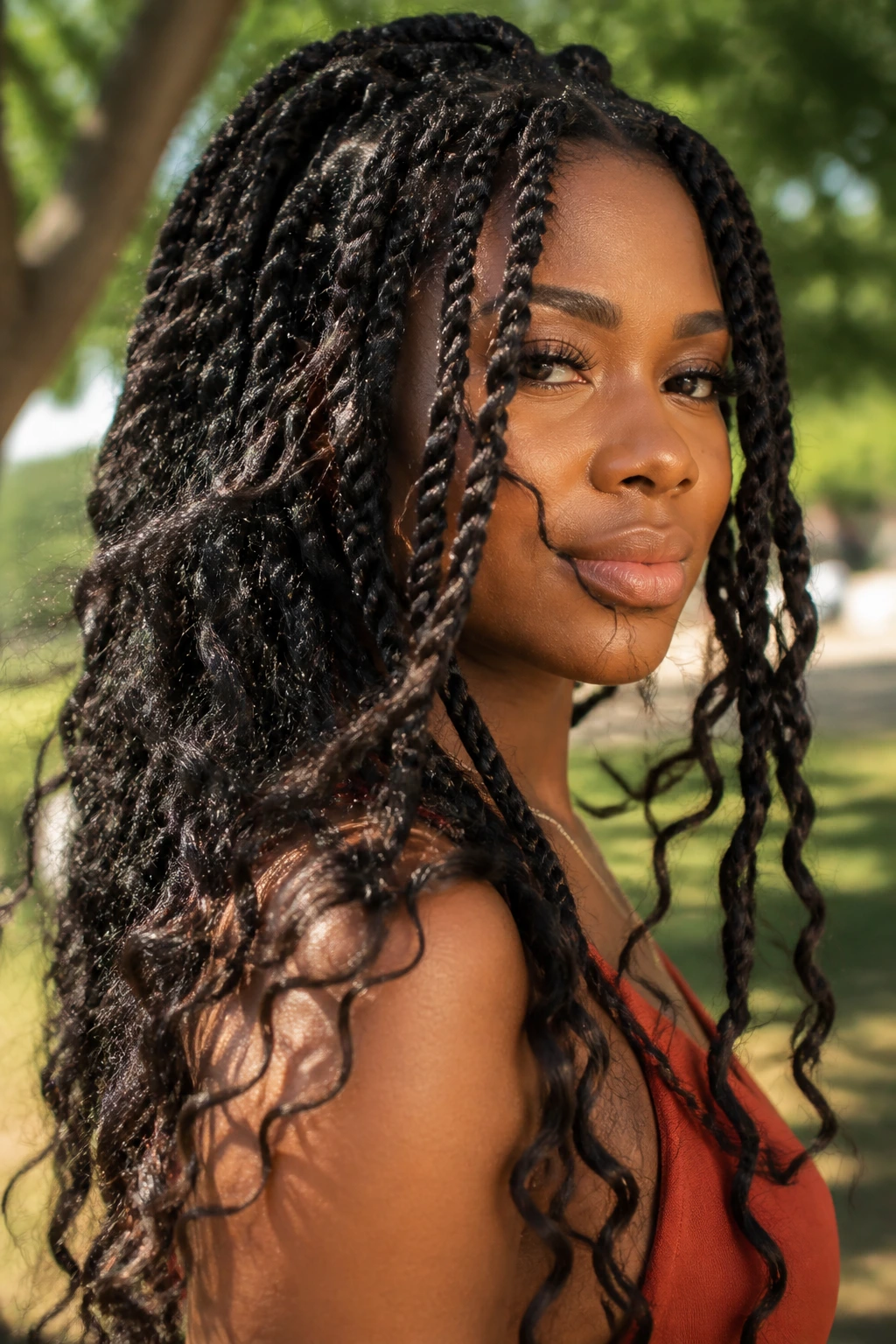
Passion twists feel airy, a little loose, and a touch chaotic in the best way. They use a wavy extension hair, often a water-wave texture, so the finished style has movement instead of the heavier rope look you get from classic twists.
That wave is why the style reads softer. The twists are still twists, but the curled pieces catch and release as you move, which gives the whole set a bit of bounce. If you like hair that looks lived-in rather than rigid, passion twists make a strong case.
The installation usually works best on medium sections. Too small, and you lose the point of the style. Too large, and the wavy hair gets sparse near the ends. There is a sweet spot where the twist looks full but still feather-light.
What Changes the Look
The hair you choose changes everything. Tighter wave patterns create a neater finish. Looser wave patterns create a more relaxed, boho feel. A mousse set at the end helps the strands settle, but do not drench the twists or you will spend the next day waiting for the hair to dry at the roots.
Passion twists are a good choice when you want a style that does not sit too close to the scalp and does not feel heavy after a long day. They do frizz. That is part of the texture story, not a failure. Still, the nape tends to wear faster than the crown, so sleeping in a satin bonnet is not optional.
They are softer than Marley twists and less polished than Senegalese twists. Right in the middle. That middle is where a lot of people live.
9. Havana Twists
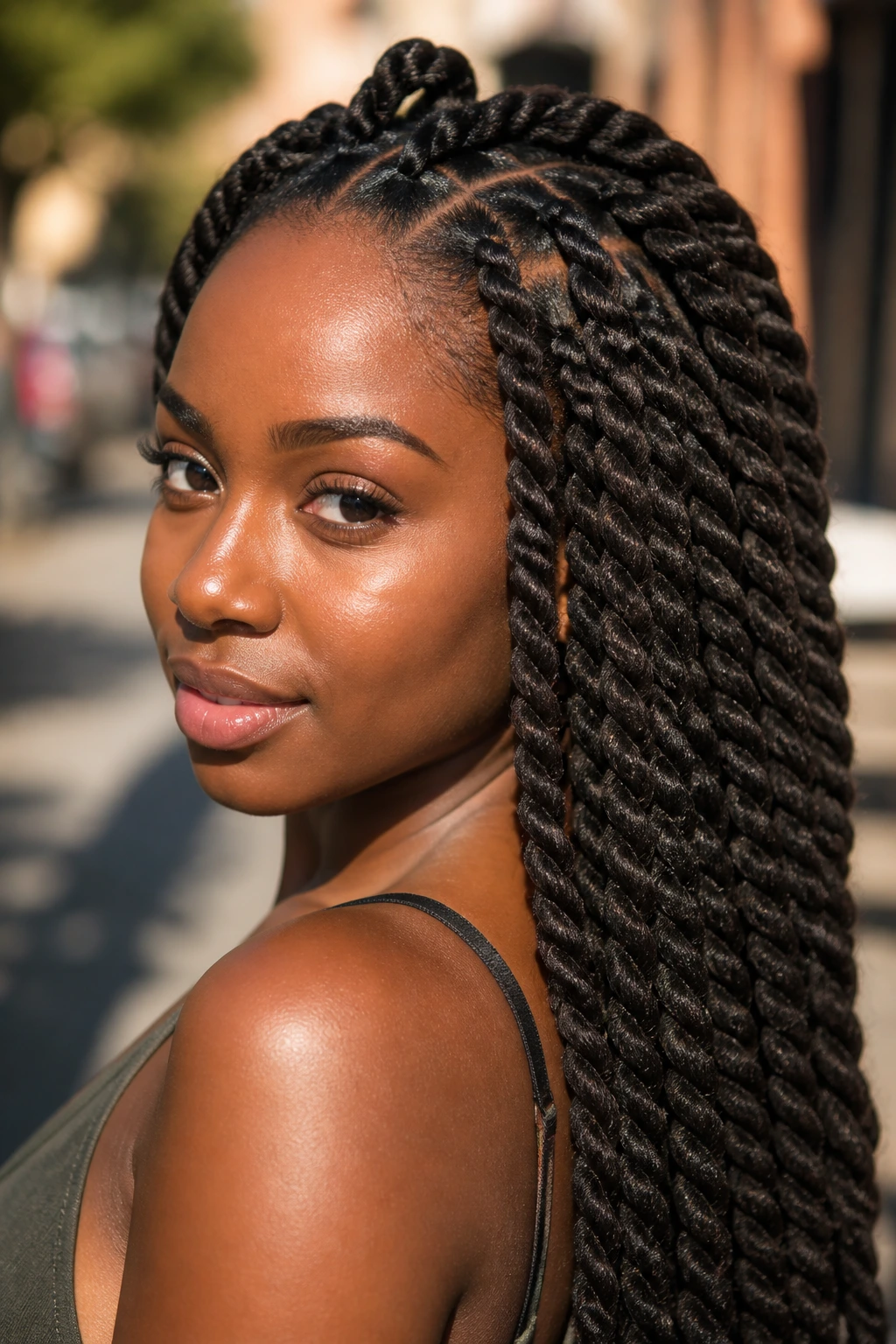
Choose Havana twists when you want size without the brick-like weight that some oversized styles can bring. They are big, textured, and dramatic, but they are usually installed with fewer pieces than micro-style twists, so the overall feel can be easier on the scalp than it looks.
Havana twists usually use Marley-style hair or a similar textured extension, but the sections are larger and the final shape is chunkier. That creates a bold silhouette that works especially well on medium to long natural hair. If you have ever wanted a twist style that reads full from across a room, this is the one.
The parts should be clean, but they do not need to be tiny. In fact, the style loses its point if you chase delicate little sections. Big twists are the point.
A Few Things Worth Knowing
- Install time: shorter than mini twists, longer than a simple ponytail.
- Scalp feel: generally lighter than a style with many tiny sections.
- Shape: fuller at the ends, with a rounder outline.
- Best use: statement styles, vacations, and times when you want less daily styling.
The one downside is bulk at the nape if the twists are too long. That can feel annoying against collars and jackets. Keep the length sensible if you know you will be in and out of layers all day.
Havana twists are not subtle. That is exactly why people reach for them.
10. Spring Twists
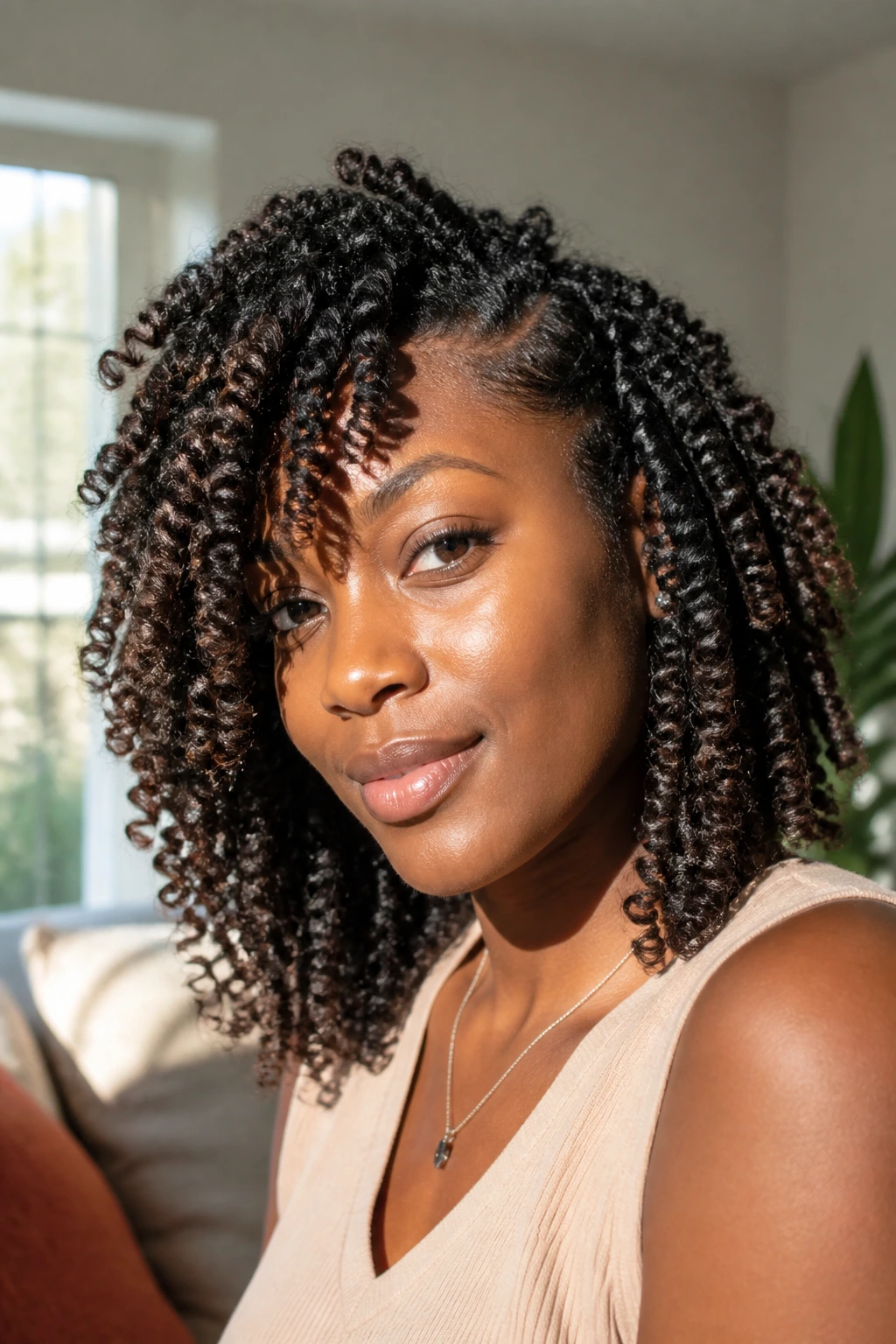
Spring twists have that soft, springy look that makes them feel almost playful the first time you move your head. The coils are tighter and bouncier than passion twists, and they have a more obvious curl pattern running through the length.
What I like about spring twists is the way they sit between polished and casual. They are not stiff. They are not heavy. And when the parts are done well, the style gives a lot of shape without making your hair feel pinned down.
They work best when the roots are tidy and the extensions are not overloaded with product. If you use too much cream or mousse, the springy texture gets dull and sticky fast. A clean, lightweight install lets the twist hold its bounce.
One-sentence truth: less product wins here.
Spring twists also reward careful separation. The synthetic hair can tangle if you rush through the ends, so finger-combing each twist before installation saves you frustration later. Once they are in, they tend to hang well on shoulder-length and longer hair, though shorter cuts can work if you want a more compact finish.
They are a nice middle ground for anyone who likes movement and shape but does not want the denser feel of Marley or Havana twists.
11. Flat-Twist Crown
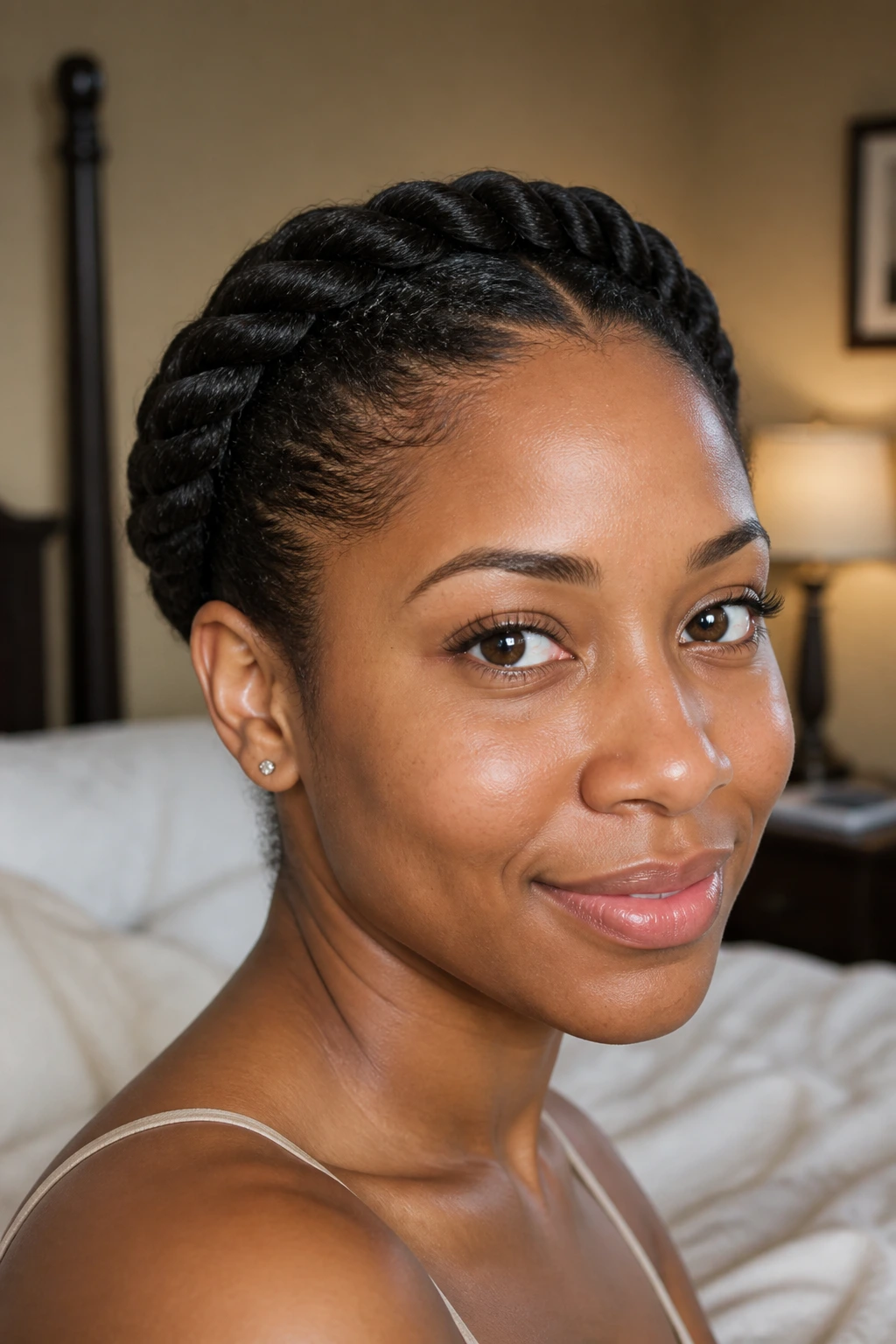
Need a style that gets the hair off your face and still looks deliberate? A flat-twist crown does that job without turning the style into a full updo battle.
The basic idea is simple: you flat twist the hair around the perimeter of the head, usually starting near one temple and moving around until the twists meet at the back or loop into a crown. The result is a halo-like shape that feels neat, secure, and a little more dressed up than a basic set of rows.
This works especially well on stretched natural hair. If your coils are extremely shrunken, the twists can puff before you finish shaping the crown, and the look loses some of its clean line. A little stretch helps the style sit where you want it.
Best Details to Get Right
- Use 4 to 8 flat twists if you want the crown to feel balanced.
- Keep the front section soft so the hairline does not look pulled.
- Pin the back carefully; hidden pins beat a bulky knot.
- Finish with a light oil on the parts if your scalp tends to dry out.
A crown twist can go from casual to formal without changing the actual structure. That is useful. It also means you can wear it to work, then keep it on for the weekend without feeling overstyled.
The only real mistake is making the front too tight. The style is meant to frame the face, not squeeze it.
12. Side-Swept Twists
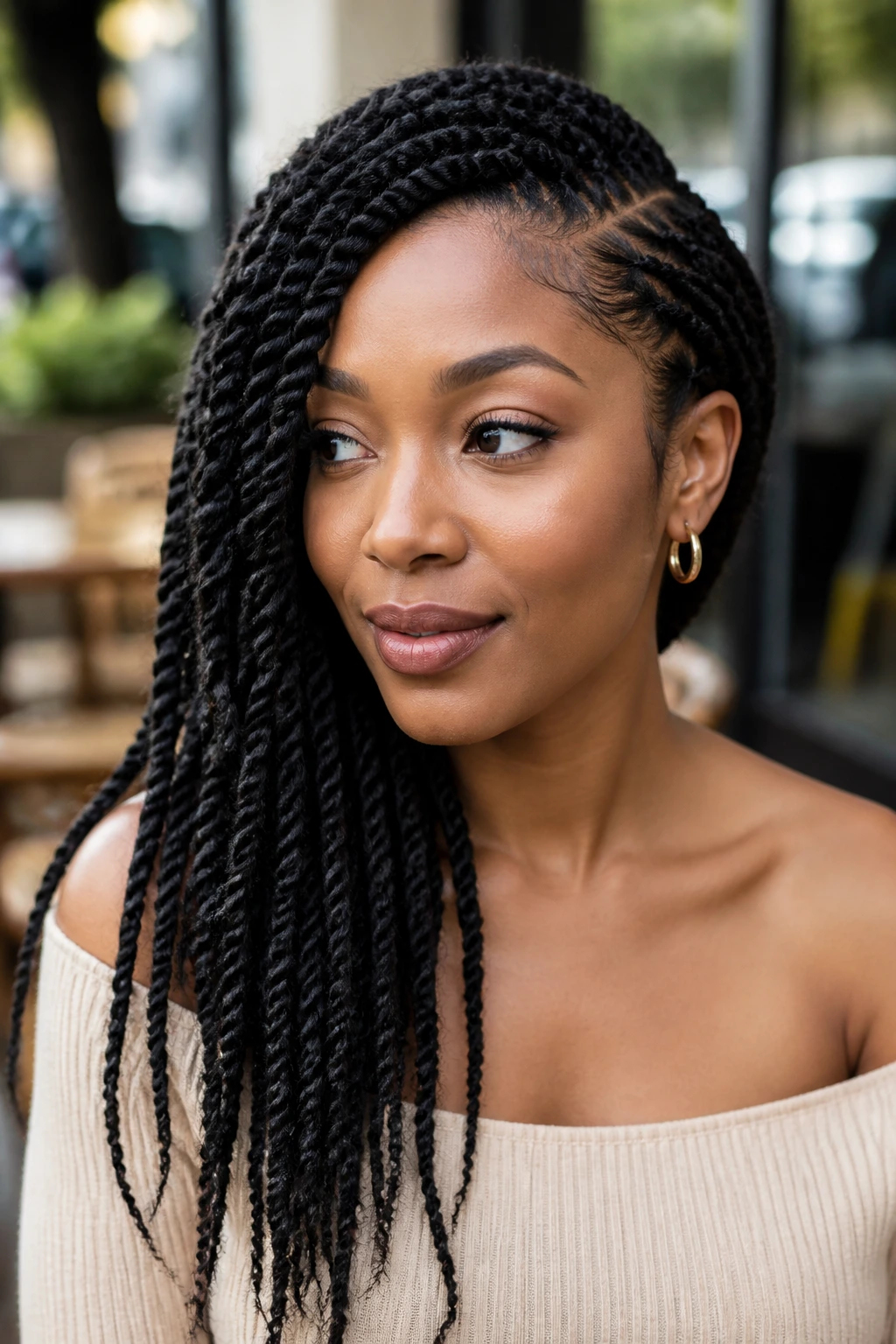
A deep side part changes the whole mood of a twist set. Side-swept twists feel softer and more directional than a center-part version, and that little shift can make a simple style look much more intentional.
This is one of those styles that works even when the twist pattern itself is basic. The asymmetry does the heavy lifting. If you have medium-length hair, side-swept twists can create a strong shape without needing extensions, and if your hair is longer, the drape falls in a way that keeps the style from looking too boxy.
The part can be shallow or dramatic. I prefer dramatic. A cleaner side section gives the front more lift and leaves one side of the style to fall naturally over the shoulder. That makes the hair feel more fluid, which matters when the twists themselves are neat and structured.
There is a practical side too. Side-swept twists can help if one side of your hairline is more delicate or if you want to balance a tapered cut. They also make it easier to tuck hair behind one ear without losing the shape of the style.
The key is to commit to the direction. Half-side, half-center looks indecisive. A full side sweep feels like a choice, and that is what gives it its edge.
13. Twisted Low Bun
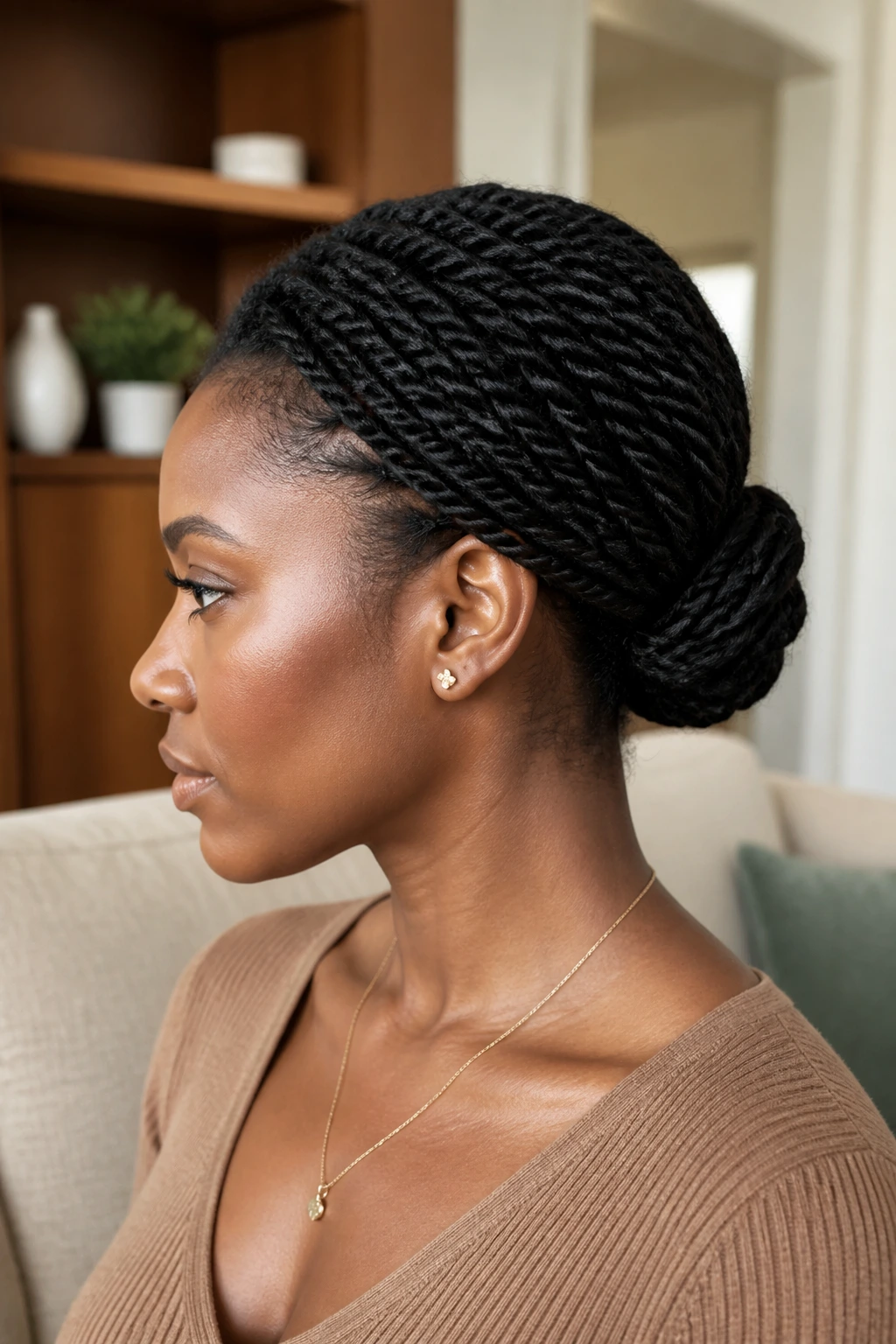
There are days when you want your hair out of the way but not scraped into a plain puff. A twisted low bun handles that beautifully. It feels calm. It also gives the neck a break, which people appreciate more once the weather warms up or the week gets busy.
The shape usually starts with medium two-strand twists or flat twists gathered at the nape. From there, the twists are wrapped into a bun, pinned, and tucked until the silhouette sits clean against the head. The bun can be compact or a little looser, depending on whether you want it to read polished or soft.
Low buns are gentler on the hairline than a high ponytail if you keep the tension modest. That alone makes them worth using more often. You can also vary the finish: smooth the front for a dressed-up look, or leave a few twists loose around the face for softness.
How to Keep It Smooth
- Use a snag-free tie if you need extra hold before pinning.
- Wrap the bun low and secure it with bobby pins that match your hair color.
- Keep gel light; too much makes the bun stiff and flaky.
- Tuck the ends fully if you want the style to last through sleep.
One thing I like about this style is that it can hide a slightly older twist set. If the roots have puffed a bit, the bun disguises that very well. It is practical without looking like you gave up.
14. Twisted Ponytail
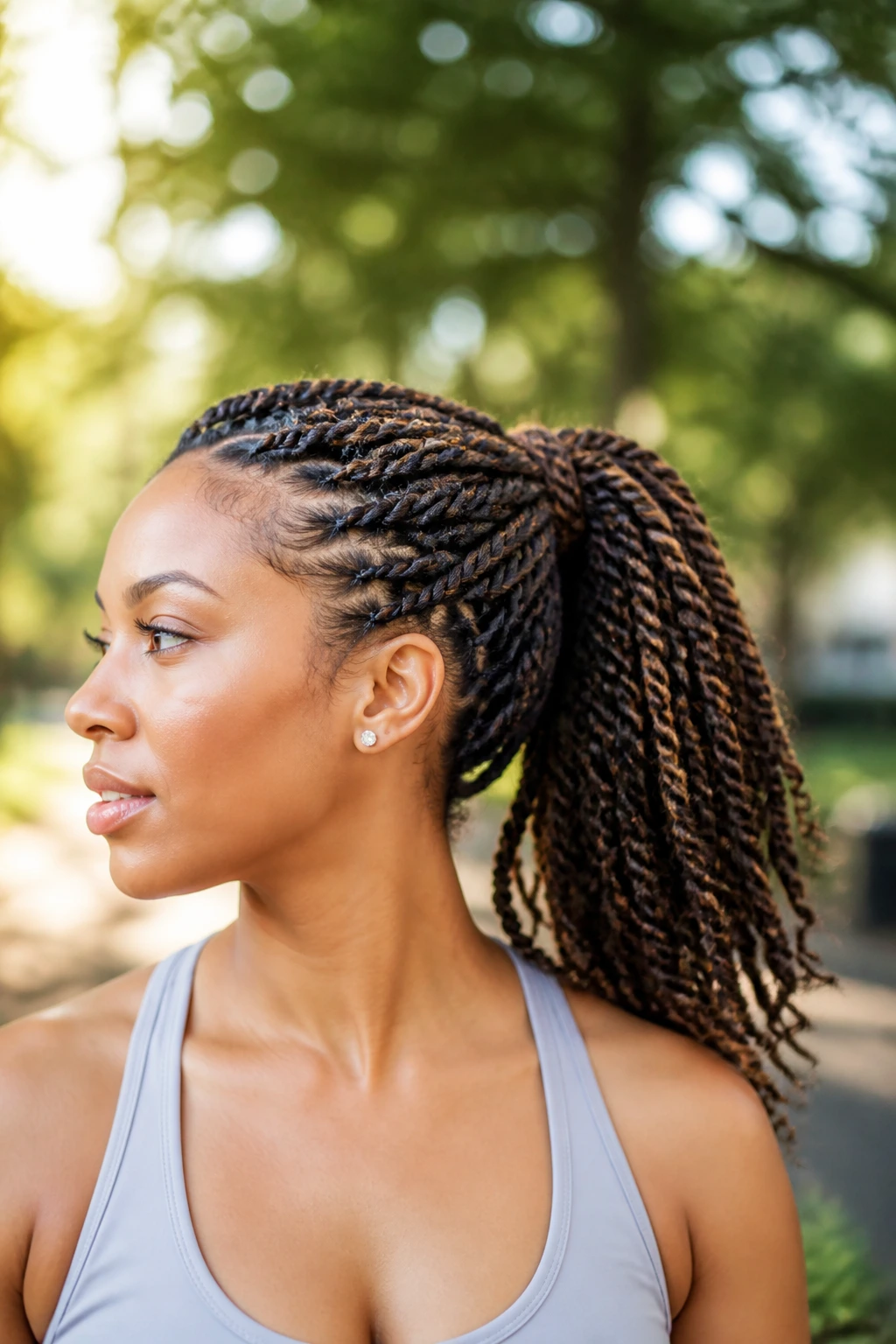
Unlike a bun, the twisted ponytail shows off length. That makes it feel a little more open, a little more playful, and a lot better when you want your twists to move.
The setup is straightforward: gather the twists into a ponytail, high or low, and let the lengths fall from that point. You can keep the crown smooth and the base wrapped, or you can leave a few front twists loose so the style does not look too severe. Both versions work.
What makes this style useful is how adaptable it is. A low version feels clean enough for work. A high version feels sportier. Add a side part and it leans dressy. Keep it centered and it reads more casual. Small adjustments change the whole attitude of the hair.
The hair tie matters. Use something snag-free, because rough elastic can fray the twist ends over time. If your hair is thick, a bungee tie or a sturdy wrap tie works better than a tiny band that keeps slipping out of place.
This is also a smart style when you need your hair up but still want the actual twist pattern to show. A bun hides too much. A ponytail shows enough.
15. Goddess Twists
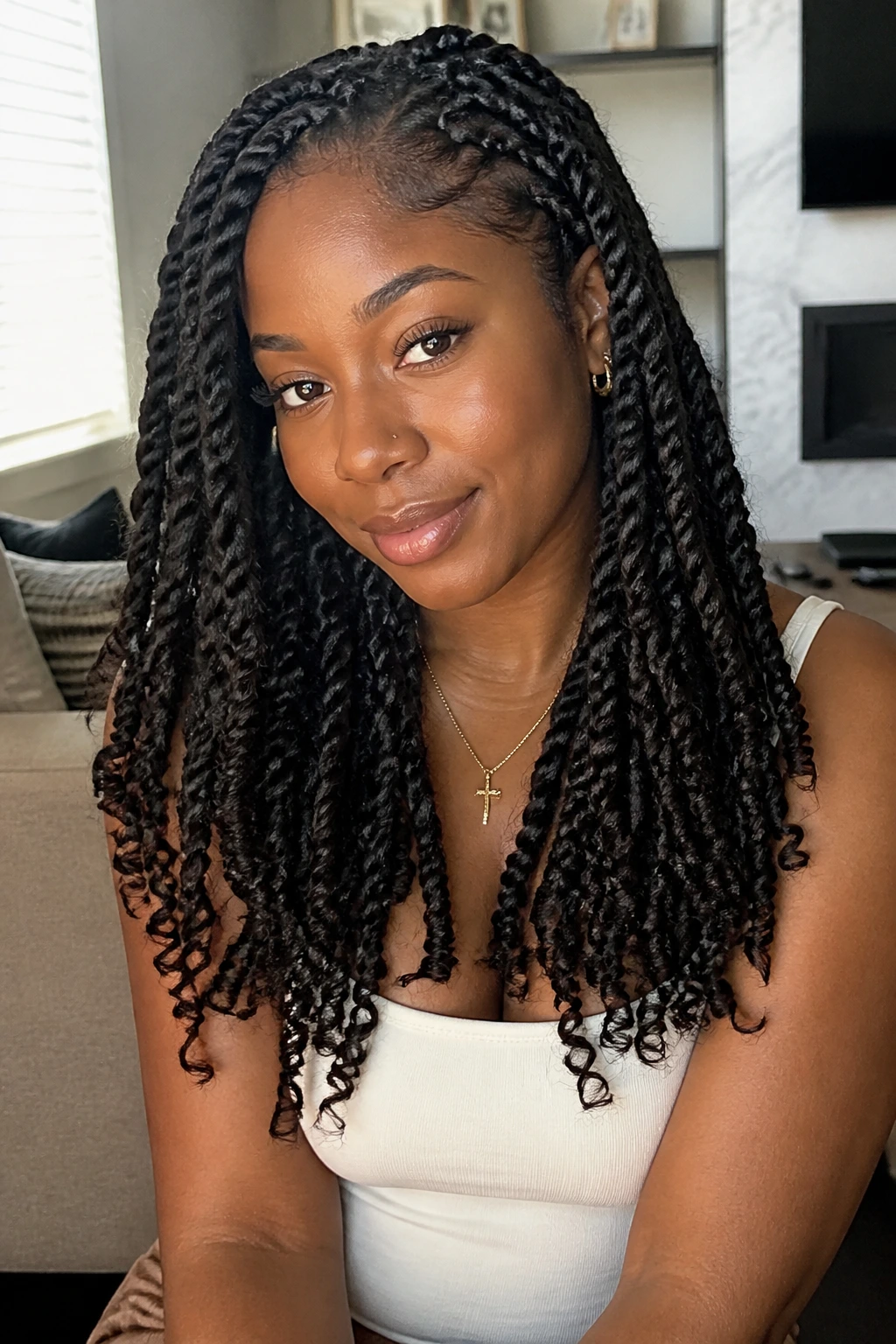
Goddess twists are the style you pick when you want softness, volume, and a little romance in the same look. They usually feature larger twists with curly pieces added through the length or left at the ends, which gives the whole style a more open, textured finish.
The curly bits matter. They soften the hard line that some twist styles can create, and they break up the silhouette in a way that looks flattering on a lot of face shapes. Because of that movement, goddess twists can feel lighter and less rigid than a fully sleek synthetic set.
They are not maintenance-free. The curls frizz. That is part of the charm, but it also means you need to accept a little fuzz at the ends and around the face. If you want glassy perfection, this is not your style. If you want something soft that still looks styled after a few days, it earns its place fast.
A few habits help:
- Sleep in a satin bonnet or scarf so the curls do not rough up overnight.
- Use a light mousse on the curly pieces, not the whole head.
- Separate the curls with your fingers, not a comb.
- Choose medium-sized twists if you want the style to stay balanced and not tip into too much bulk.
Goddess twists sit nicely at the intersection of protective styling and visible texture. They are one of the few twist looks that can feel relaxed and dressed up at the same time, which is probably why they stay in rotation for so many people.
